A Comprehensive Guide to CRISPR-Cas9 Knockout Screening: From Foundational Principles to Advanced Validation
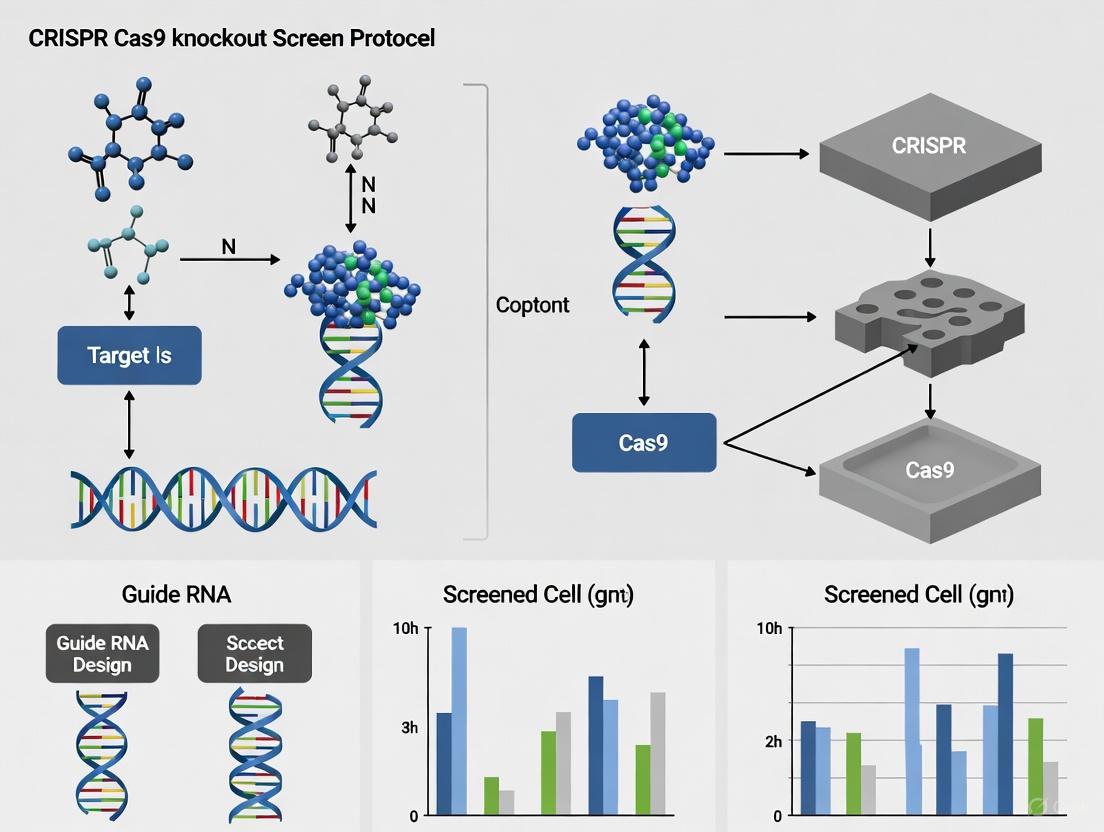
This article provides a complete roadmap for researchers and drug development professionals to design, execute, and validate genome-scale CRISPR-Cas9 knockout screens.
A Comprehensive Guide to CRISPR-Cas9 Knockout Screening: From Foundational Principles to Advanced Validation
Abstract
This article provides a complete roadmap for researchers and drug development professionals to design, execute, and validate genome-scale CRISPR-Cas9 knockout screens. It covers foundational principles of CRISPR screening, detailed step-by-step protocols for pooled library screening using lentiviral delivery, critical troubleshooting and optimization strategies for challenging cell models, and robust methods for hit confirmation and comparative analysis. By synthesizing current best practices and recent technological advances, this guide empowers scientists to systematically uncover gene function and identify novel therapeutic targets with high confidence and reproducibility.
Understanding CRISPR-Cas9 Screening: Principles and Evolution of Genetic Perturbation
The Clustered Regularly Interspaced Short Palindromic Repeats (CRISPR) and CRISPR-associated protein 9 (Cas9) system, derived from a natural immune mechanism in bacteria and archaea, has been repurposed as a powerful genome engineering tool [1]. This adaptive defense system allows bacteria to incorporate DNA fragments from invading bacteriophages into their genome, which are then used to recognize and cleave foreign genetic material during subsequent attacks using the Cas9 enzyme [1]. The groundbreaking work by Jennifer Doudna and Emmanuelle Charpentier, which earned them the Nobel Prize in Chemistry, involved engineering this system into a versatile gene-editing tool by creating a single-guide RNA (sgRNA) that directs the DNA-cutting process [1]. This innovation laid the foundation for modern genome engineering, with CRISPR-Cas9 knockout becoming an indispensable technique for studying gene function in disease and developing novel gene therapy modalities.
In the context of drug discovery and basic research, CRISPR knockout serves as a critical tool for functional genomics, allowing researchers to determine gene function by observing the phenotypic consequences of gene disruption [1]. The core mechanism involves using the Cas9 nuclease to create targeted double-strand breaks in DNA, which when repaired by the cell's natural repair machinery, often results in gene disruptions or "knockouts" that abolish the function of the targeted gene. This approach has been successfully applied across various biological systems, from industrial cell line engineering to the development of transformative therapies like Casgevy, the first FDA-approved CRISPR-based gene therapy for sickle cell disease [1].
Molecular Mechanisms of Cas9-Induced DNA Cleavage
CRISPR-Cas9 System Components
The CRISPR-Cas9 system consists of two fundamental molecular components that work in concert to achieve targeted DNA cleavage. The first is the Cas9 endonuclease, a multifunctional enzyme with DNA-cutting capabilities. The second is the single-guide RNA (sgRNA), a synthetic RNA molecule that combines two naturally occurring RNA components: the CRISPR RNA (crRNA), which specifies the target DNA sequence through complementary base pairing, and the trans-activating crRNA (tracrRNA), which serves as a structural scaffold that mediates Cas9 activation and stabilizes the complex for efficient target binding [1].
The process of DNA recognition and cleavage begins with the formation of a complex between Cas9 and the sgRNA. This ribonucleoprotein complex scans the genome searching for a specific DNA sequence adjacent to the target site known as the Protospacer Adjacent Motif (PAM) [1]. For the most commonly used Cas9 from Streptococcus pyogenes (SpCas9), the PAM sequence is 5'-NGG-3', where "N" can be any nucleotide [1] [2]. Once the Cas9-sgRNA complex identifies a PAM sequence, it initiates local DNA unwinding, allowing the sgRNA to check for complementarity with the adjacent DNA sequence. If the target DNA sequence is fully complementary to the sgRNA guide sequence, the Cas9 enzyme undergoes a conformational change that activates its nuclease domains [3].
The Cas9 enzyme contains two distinct nuclease domains: the HNH domain, which cleaves the DNA strand complementary to the sgRNA, and the RuvC domain, which cleaves the non-complementary strand [3]. These coordinated cleavage events result in a double-strand break (DSB) precisely 3 base pairs upstream of the PAM sequence [1]. Recent research using advanced profiling methods like BreakTag has revealed that Cas9 can cleave DNA in both blunt-end configurations and staggered configurations (creating overhangs), with approximately 35% of SpCas9 DSBs being staggered [2]. The specific configuration of the break is influenced by DNA:gRNA complementarity and the use of engineered Cas9 variants, with staggered breaks being particularly associated with predictable single-nucleotide insertions during repair [2].
DNA Double-Strand Break Repair Pathways
Once Cas9 induces a double-strand break, the cell activates one of two major DNA repair pathways to repair the damage. The choice between these pathways ultimately determines the editing outcome and is crucial for achieving successful gene knockout.
The Non-Homologous End Joining (NHEJ) pathway is the dominant and more error-prone repair mechanism in most mammalian cells [1]. NHEJ functions throughout the cell cycle and operates by directly ligating the broken DNA ends without requiring a repair template. This process often results in small random insertions or deletions of nucleotides at the cleavage site, collectively known as "indels" [1] [4]. When these indels occur within the protein-coding region of a gene, they can cause frameshift mutations that disrupt the reading frame, leading to premature stop codons and ultimately resulting in a loss-of-function mutation – the fundamental goal of CRISPR knockout [4]. The error-prone nature of NHEJ makes it the preferred pathway for creating gene knockouts, as these random insertions and deletions effectively disrupt the gene's coding capacity.
The alternative repair pathway, Homology-Directed Repair (HDR), is a more precise mechanism that requires a homologous DNA template to faithfully repair the break [1]. HDR is active primarily in the S and G2 phases of the cell cycle when sister chromatids are available to serve as repair templates. In CRISPR applications, researchers can exploit this pathway by providing an exogenous donor DNA template containing desired modifications flanked by homology arms matching the sequences surrounding the cut site [4]. While HDR offers the potential for precise genome editing, including gene corrections or specific insertions, it occurs at significantly lower efficiency compared to NHEJ in most experimental systems [4]. This lower efficiency presents a major challenge for applications requiring precise edits, though protocols combining p53 inhibition with pro-survival small molecules have achieved homologous recombination rates exceeding 90% in induced pluripotent stem cells [5].
Table 1: Comparison of DNA Double-Strand Break Repair Pathways
| Feature | Non-Homologous End Joining (NHEJ) | Homology-Directed Repair (HDR) |
|---|---|---|
| Repair Template | Not required | Requires homologous DNA template |
| Cell Cycle Phase | Active throughout all phases | Primarily S and G2 phases |
| Fidelity | Error-prone (generates indels) | High-fidelity |
| Efficiency in Mammalian Cells | High (dominant pathway) | Low (typically <10%) |
| Primary Application in CRISPR | Gene knockout | Precise gene editing, insertion |
| Outcome | Random insertions/deletions | Precise, predetermined sequence change |
Experimental Protocols for CRISPR Knockout
sgRNA Design and Validation
The foundation of a successful CRISPR knockout experiment lies in the careful design and validation of single-guide RNAs (sgRNAs). Proper sgRNA design is critical for ensuring target efficiency, maximizing on-target activity, and minimizing off-target effects [1]. The sgRNA design process begins by identifying a PAM sequence (5'-NGG-3' for SpCas9) downstream of the desired target sequence [1]. The 20-nucleotide targeting sequence should be selected immediately upstream of the PAM. Optimal sgRNAs should have a guanine-cytosine (GC) content between 40-60% for maximum stabilization of the DNA-sgRNA complex, which helps mitigate off-target binding [1].
Several computational tools and libraries have been developed to facilitate sgRNA design, overcoming the limitations of manual selection. These tools provide pre-designed gRNAs with information on on-target and off-target scores for various organisms, including humans, mice, rats, zebrafish, and C. elegans [1]. When designing sgRNAs, it's crucial to select guides with low similarity to other genomic sites to minimize off-target activity. Guide design software such as CRISPOR employs specialized algorithms for CRISPR off-target prediction, typically providing a CRISPR off-target score or ranking based on the predicted on-target to off-target activity ratio [6]. High-ranking gRNAs will have high on-target activity and lower risk of off-target editing. Additional strategies to minimize off-target effects include using modified gRNAs with 2'-O-methyl analogs (2'-O-Me) and 3' phosphorothioate bond (PS) modifications, which reduce off-target edits while increasing editing efficiency at the target site [6].
Table 2: Key Considerations for sgRNA Design and Optimization
| Parameter | Optimal Value/Range | Impact on Editing |
|---|---|---|
| GC Content | 40-60% | Higher stability of DNA:RNA duplex |
| Guide Length | 20 nucleotides or less | Reduces off-target activity |
| PAM Proximal Region | Perfect complementarity | Critical for R-loop formation and cleavage |
| Off-target Score | Varies by algorithm | Predicts specificity; higher scores indicate better specificity |
| Chemical Modifications | 2'-O-Me, PS bonds | Reduces off-target effects, increases nuclease stability |
| Target Complexity | Higher Shannon index | Reduces off-target activity [2] |
Delivery Methods for CRISPR Components
The success of CRISPR genome editing depends not only on successful sgRNA design but also on the efficient delivery of the system to target cells. Multiple delivery methods have been developed, each with distinct advantages and limitations depending on the target cell type and application.
Electroporation involves treating cells with pulses of electric current to increase membrane permeability, allowing CRISPR-Cas9 ribonucleoprotein (RNP) complexes to enter the cells [1]. This method is particularly beneficial for delivering the RNP with single-stranded donor DNA for homology-directed repair and offers the advantage of transient Cas9 exposure, reducing the risk of off-target effects. Microinjection provides direct physical delivery of CRISPR components into cells but is low-throughput and technically demanding [1].
Engineered viral vectors, particularly lentiviral and adenoviral vectors, can transduce sgRNA and Cas enzyme genes to the host [1] [4]. Lentiviral vectors enable stable integration into the genome, allowing long-term expression, while adenoviral vectors are efficient for transient expression without genomic integration [6]. However, viral delivery carries the caveat that Cas genes can integrate into the host genome and produce undesired changes, including prolonged Cas9 expression that increases off-target risks [1].
Nanoparticle-based delivery represents a promising non-viral approach. Lipid-based nanoparticles (LNP) can encapsulate RNP or plasmid DNA for delivery via lipofection [1]. LNPs reduce the risk of prolonged Cas9 expression, thereby minimizing off-target effects. Other nanomaterials, including gold and zinc nanoparticles, have also demonstrated high delivery efficiency [1]. The choice of delivery method significantly impacts editing efficiency and specificity, with RNP delivery generally providing the shortest window of Cas9 activity, making it ideal for reducing off-target effects [6].
Analytical Characterization of Knockout Clones
Following CRISPR-Cas9 delivery and selection, comprehensive characterization of the resulting knockout clones is essential to confirm successful gene editing and understand its functional consequences. Characterization occurs at multiple levels, from genomic sequence analysis to phenotypic assessment.
Genomic screening of knockout clones helps determine targeting efficiency and the functional impact of genomic modifications. Several methods are commonly employed: Sanger sequencing with chromatogram analysis allows direct sequencing of the target region and is accessible for low-throughput applications [1]. Next-generation sequencing (NGS) provides high-throughput sequencing of clones to identify indels, large deletions, and complex mutations across many samples simultaneously [1]. The BreakTag method represents an advanced NGS-based approach for profiling Cas9-induced DNA double-strand breaks genome-wide, enabling comprehensive analysis of both on-target and off-target activities [2]. Reverse Transcription Quantitative PCR (RT-qPCR) measures mRNA expression levels of the target gene to confirm loss of gene expression [1].
Phenotypic screening assesses the protein expression and cellular functions of knockout clones. Flow cytometry, ELISA assays, and Western Blots can screen for the presence or depletion of proteins and provide quantifiable protein expression levels [1]. Immunofluorescence and immunohistochemistry offer visual confirmation of gene knockout by demonstrating the absence of the target protein [1]. Arrayed CRISPR libraries enable high-throughput phenotypic screening through viability assays and fluorescent detection of proteins encoded by the target genes [1]. Functional assays, such as the phagocytosis assay used in pooled CRISPR screens for human iPSC-derived microglia, can link genetic perturbations to specific cellular phenotypes [7].
Advanced Applications in Research and Therapy
Drug Discovery and Functional Genomics
CRISPR knockout technology has revolutionized functional genomics and drug discovery by enabling systematic investigation of gene function. In cancer research, CRISPR screens are commonly used to identify genes central to tumorigenic pathways, including proliferation, metastasis, and immune evasion [1]. A 2022 Cell study used high-throughput knockout experiments to identify genes involved in immunosuppression, revealing that loss of function of the TGFβ receptor 2 (Tgfbr2) gene conferred immune resistance and growth advantage to lung tumors [1]. Similarly, a 2024 Nature study focusing on regulators of aging in neural stem cells identified Slc2a4, encoding a glucose transporter, as a key factor that decelerates neural stem cell activation and contributes to cognitive decline during aging [1].
The application of CRISPR screening has expanded to more physiologically relevant models, including primary human 3D organoids. Recent studies have demonstrated large-scale CRISPR-based genetic screens in human gastric organoids to systematically identify genes that affect sensitivity to chemotherapeutic agents like cisplatin [8]. These screens in 3D organoid models, which better preserve tissue architecture and cellular heterogeneity, have uncovered novel gene-drug interactions, including an unexpected link between fucosylation and cisplatin sensitivity, and identified TAF6L as a regulator of cell recovery from cisplatin-induced cytotoxicity [8].
Therapeutic Applications
The therapeutic potential of CRISPR-Cas9 knockout is exemplified by the FDA approval of Casgevy (exa-cel), the first CRISPR-based gene therapy for sickle cell disease and β-thalassemia [1] [6]. This landmark treatment works by isolating hematopoietic stem cells from patients, using CRISPR/Cas9 to disrupt the BCL11A gene – a repressor of fetal hemoglobin production – and reinfusing the edited cells back into patients, enabling production of functioning hemoglobin [1].
Several knockout strategies are currently under development for cancer therapy. Immune checkpoint inhibitors, transcription factors, and signaling proteins are common CRISPR targets [1]. Preliminary research has shown that knocking out the programmed cell death protein 1 gene (PD-1), which inhibits T cell activation, can reactivate killer T cells to combat tumor cells [1]. The expanding therapeutic pipeline includes treatments for various genetic disorders, with careful consideration of delivery methods and safety profiles tailored to each application.
Industrial Biotechnology
CRISPR-Cas9 gene knockout has significantly advanced industrial biotechnology and synthetic biology applications. In the development of industrial cell lines for biotherapeutic production, knockout combined with homologous recombination is employed to disrupt endogenous gene function, establishing stable and durable clones with high production rates [1]. For example, in the engineering of Komagataella phaffii (formerly Pichia pastoris), a yeast species widely used for recombinant protein production, CRISPR knockout has been applied to disrupt multiple protease genes (pep4 and prb1) to minimize protein degradation and enhance yields of target biologics [9]. Simplified methods using knockout fragments with short homology arms (30-50 bp) have enabled rapid and efficient gene disruption without the need for subcloning or sequencing-based screening, significantly accelerating the strain engineering process [9].
Table 3: Key Research Reagent Solutions for CRISPR Knockout Experiments
| Reagent/Resource | Function | Examples/Sources |
|---|---|---|
| Cas9 Nuclease | Creates double-strand breaks at target DNA sites | SpCas9, HiFi Cas9 variants [5] [6] |
| sgRNA | Guides Cas9 to specific genomic loci | Synthetic sgRNAs, with optional chemical modifications [6] |
| Delivery Vehicles | Introduces CRISPR components into cells | Electroporation systems, lipid nanoparticles, viral vectors [1] |
| HDR Templates | Enables precise gene editing via homologous recombination | ssODNs, double-stranded donor templates [4] [5] |
| Validation Tools | Confirms editing efficiency and specificity | ICE analysis, NGS, Western blot antibodies [6] [3] |
| Cell Culture Supplements | Enhances cell survival post-editing | CloneR, Revitacell, Alt-R HDR enhancer [5] |
| Plasmid Resources | Source of CRISPR machinery | Addgene repository, Santa Cruz Biotechnology [4] [3] |
Technical Challenges and Mitigation Strategies
Despite its transformative potential, CRISPR-Cas9 knockout faces several technical challenges that must be addressed for both research and clinical applications. Off-target effects represent a primary concern, where Cas9 cleaves at unintended genomic sites with sequence similarity to the target [1] [6]. These off-target edits can confound experimental results and pose significant safety risks in therapeutic contexts, particularly if they occur in oncogenes or tumor suppressor genes [6]. Strategies to minimize off-target activity include using high-fidelity Cas9 variants (e.g., SpCas9-HF1, eSpCas9), optimizing sgRNA design to maximize specificity, employing modified sgRNAs with chemical alterations, and selecting appropriate delivery methods that limit the duration of Cas9 expression [1] [6].
Genomic instability represents another significant challenge, as excessive double-strand breaks can lead to large deletions, chromosomal rearrangements, or activation of DNA damage response pathways, including p53-mediated apoptosis [1] [5]. Innovative approaches to mitigate these concerns include using Cas9 nickase variants (Cas9n) that create single-stranded breaks instead of double-strand breaks [1]. By using two Cas9n enzymes with two sgRNAs targeting opposite strands, researchers can generate staggered breaks that mimic DSBs but with enhanced specificity [1]. Additionally, p53 inhibition combined with pro-survival small molecules has been shown to significantly improve cell survival and editing efficiency in challenging cell types like induced pluripotent stem cells [5].
Advanced screening methods have been developed to comprehensively assess both on-target and off-target activities. The BreakTag method enables systematic profiling of Cas9-induced DNA double-strand breaks at nucleotide resolution, allowing researchers to map cleavage sites genome-wide and identify determinants of Cas9 incision specificity [2]. Other methods like GUIDE-seq, CIRCLE-seq, and DISCOVER-seq provide complementary approaches for nominating and validating off-target sites, while whole genome sequencing remains the gold standard for comprehensive analysis of CRISPR editing outcomes, including detection of chromosomal aberrations [2] [6].
CRISPR-Cas9 knockout (CRISPRko) screening has emerged as a powerful functional genomics tool for the unbiased discovery of gene function and therapeutic targets. This technology utilizes a library of guide RNAs (gRNAs) that direct the Cas9 nuclease to create targeted double-strand breaks in the genome, resulting in loss-of-function mutations. The core principle involves systematically perturbing thousands of genes in parallel and selecting for phenotypes under specific biological conditions or therapeutic treatments. Pooled CRISPR screens enable genome-scale functional assessment, allowing researchers to identify genes essential for cell viability, drug resistance, synthetic lethality, and pathway-specific functions without prior assumptions about which genes may be important. The versatility of CRISPR screening platforms has revolutionized target discovery and validation in biomedical research, providing a direct functional link between genetic perturbations and phenotypic outcomes [10] [11].
Experimental Design and Platform Selection
CRISPR Screening Systems and Applications
Different CRISPR systems offer unique advantages depending on the experimental goals. The selection of an appropriate gene editing tool is fundamental to screen design and impacts the biological questions that can be addressed.
Table 1: Comparison of Major CRISPR Screening Approaches
| System | Mechanism | Applications | Advantages |
|---|---|---|---|
| CRISPRko (CRISPR knockout) | Cas9-induced DNA double-strand breaks lead to frameshift mutations via NHEJ repair [10] | Identification of essential genes, drug targets, and genes involved in viability/proliferation [10] [12] | Strong, complete loss-of-function signals; well-established analysis methods [10] |
| CRISPRi (CRISPR interference) | dCas9 fused to transcriptional repressors (e.g., KRAB) blocks transcription [10] | Gene suppression studies, functional characterization of regulatory elements and lncRNAs [10] | Reversible knockdown; reduced off-target effects; tunable repression |
| CRISPRa (CRISPR activation) | dCas9 fused to transcriptional activators (e.g., SAM system) enhances gene expression [10] | Gain-of-function studies, genetic suppressor screens, pathway activation [10] | Enables study of gene overexpression; identifies synthetic rescues |
Essential Research Reagents and Materials
The successful execution of a CRISPR screen requires carefully selected reagents and materials that ensure efficient gene editing and phenotypic selection.
Table 2: Essential Research Reagent Solutions for CRISPR Screening
| Reagent/Material | Function | Specifications |
|---|---|---|
| CRISPR Library | Contains thousands of sgRNAs targeting genes of interest | Genome-wide (~20,000 genes) or focused libraries (specific pathways); 3-10 sgRNAs per gene recommended [11] |
| Cas9 Nuclease | Creates double-strand breaks at DNA target sites | Can be delivered as plasmid, mRNA, or protein; stable cell lines expressing Cas9 preferred |
| Lentiviral Vector | Delivers sgRNA library into cells for stable integration | High-titer production (>10^8 IU/mL); includes selection markers (e.g., puromycin) [11] |
| Cell Lines | Models for studying biological questions | Appropriate disease models (e.g., iPSC-derived microglia [7]); validated Cas9 expression and sgRNA delivery efficiency |
| Positive Control sgRNA | Validates editing efficiency and workflow optimization | Targets known essential genes (e.g., TRAC, RELA in human cells) [13] |
| Negative Control sgRNA | Establishes baseline for non-specific effects | Scrambled sequence with no genomic targets; controls for cellular stress responses [13] |
Experimental Controls
Proper controls are essential for validating screening results and interpreting hits accurately. The following controls should be incorporated into every CRISPR screen:
- Positive Editing Controls: Use validated sgRNAs with known high editing efficiencies to target common genes (e.g., TRAC, RELA, CDC42BPB in human cells; ROSA26 in mouse models) to verify that transfection conditions are optimized [13].
- Negative Editing Controls: Include scramble sgRNAs that lack complementary genomic sequences, sgRNA-only (no Cas9), or Cas9-only (no sgRNA) controls to distinguish true phenotype from cellular stress responses to transfection [13].
- Mock Controls: Subject cells to transfection conditions without delivering any CRISPR components to establish baseline phenotypes unaffected by gene editing [13].
Detailed Protocol for Pooled CRISPR Knockout Screens
sgRNA Library Design and Construction
Designing efficient and specific gRNA is the critical first step for a successful CRISPR screen experiment. The process requires careful bioinformatic planning and molecular biology execution.
- sgRNA Design Principles: sgRNA targeting sequences (typically 18-23 bases) must be highly specific to avoid off-target effects while maintaining 40-60% GC content for optimal stability and binding efficiency. Bioinformatic tools like CRISPOR and CHOPCHOP help identify optimal sequences by scanning genomes for unique targeting sites with minimal off-target potential [11].
- Library Configuration: For genome-wide screens, libraries should include 3-10 sgRNAs per gene to ensure statistical robustness, with a minimum of 30x coverage to maintain library representation during amplification. Focused libraries targeting specific pathways or gene families reduce workload while increasing screening depth for particular biological processes [11].
- Vector Construction: sgRNA oligonucleotides are cloned into lentiviral vectors using high-fidelity cloning strategies, often employing negative selection markers (e.g., ccdB) to improve accuracy. The resulting library plasmids are amplified in E. coli, purified, and packaged into lentiviral particles using packaging cell lines (e.g., 293T cells) [11].
Cell Line Preparation and Library Delivery
- Cell Line Selection: Choose appropriate cell models that accurately represent the biological context being studied. For neurodegenerative disease research, specialized models like human iPSC-derived microglia (iMGL) can be employed [7]. Cells should demonstrate robust growth characteristics and susceptibility to viral infection.
- Library Transduction: Perform pilot transductions to determine the optimal multiplicity of infection (MOI ~0.3) to ensure most cells receive a single sgRNA. Use liposome transfection, electroporation, or viral infection methods optimized for your cell type. For difficult-to-transduce cells, consider specialized approaches like co-transduction with VPX virus-like particles (VPX-VLPs) to enhance lentiviral delivery [7].
- Selection and Expansion: Apply selection pressure (e.g., puromycin) 24-48 hours post-transduction to eliminate untransduced cells. Expand the library population for 5-7 cell doublings to allow for complete protein turnover and phenotypic manifestation before phenotypic assessment.
Phenotypic Selection Strategies
Different phenotypic selection methods enable the identification of genes involved in diverse biological processes.
- Dropout Screens: Monitor sgRNA abundance changes over time in proliferating cells without specific selection pressure. Depleted sgRNAs indicate essential genes required for cell viability or proliferation [10].
- Fluorescence-Activated Cell Sorting (FACS): Use fluorescent reporters or antibodies to separate cells based on surface markers, intracellular signaling, or specific cell types. For example, a phagocytosis screen in iMGL can use pH-sensitive fluorescent probes to isolate cells with high vs. low phagocytic activity [10] [7].
- Drug Selection: Apply therapeutic compounds to identify genes involved in drug sensitivity or resistance. Genes whose targeting confers resistance will be enriched in surviving populations, while sensitizing genes will be depleted [12].
Bioinformatics Analysis of CRISPR Screen Data
Quality Control and Read Processing
Robust bioinformatics analysis is crucial for extracting meaningful biological insights from CRISPR screen data. The process begins with stringent quality control of the raw sequencing data.
- Sequencing Quality Assessment: Process raw FASTQ files to remove adapter sequences and low-quality reads. Evaluate data quality using Q20 (>90%) and Q30 (>85%) thresholds. Data failing these standards should be re-sequenced [12]. Tools like ShortRead in R can subsample and assess read quality, nucleotide distribution, and quality scores across sequencing cycles [14].
- Read Alignment and Quantification: Align quality-filtered reads to the reference sgRNA library using aligners like Bowtie or Rsubread. Calculate sgRNA abundance from aligned reads (mapped reads), ensuring a minimum sequencing depth of 300x (mapped reads/number of sgRNAs) for statistical reliability [12].
Hit Identification and Statistical Analysis
Multiple analytical approaches have been developed to identify significantly enriched or depleted genes from CRISPR screen data.
- MAGeCK Algorithm: The Model-based Analysis of Genome-wide CRISPR/Cas9 Knockout (MAGeCK) tool is specifically designed for CRISPR screen analysis. It uses a negative binomial distribution to model sgRNA abundance and a Robust Rank Aggregation (RRA) algorithm to identify significantly enriched or depleted genes. The RRA algorithm scores and ranks each gene, with lower scores indicating higher confidence hits [10] [12].
- Statistical Thresholds: Identify candidate genes using a combination of statistical measures: p-value (< 0.05), false discovery rate (FDR < 0.05), and log fold change (LFC). While FDR < 0.05 provides the most stringent control, p-value < 0.01 combined with LFC ≤ -2 can effectively identify true positives while minimizing false negatives [12].
Table 3: Key Bioinformatics Tools for CRISPR Screen Analysis
| Tool | Statistical Method | Key Features | Applications |
|---|---|---|---|
| MAGeCK | Negative binomial distribution; Robust Rank Aggregation (RRA) [10] | Comprehensive workflow; handles multiple sample comparisons; includes visualization [10] | Genome-scale knockout screens; essential gene identification |
| BAGEL | Reference gene set distribution; Bayes factor [10] | Bayesian approach; uses reference sets of essential/non-essential genes [10] | Essential gene identification with prior knowledge |
| PinAPL-Py | Negative binomial distribution; α-RRA, STARS [10] | Web-based interface; integrated analysis pipeline [10] | User-friendly analysis for non-bioinformaticians |
| CRISPRAnalyzeR | Multiple methods (DESeq2, MAGeCK, edgeR, etc.) [10] | Integrates eight different analysis approaches; web-based platform [10] | Comparative method evaluation; CRISPRi/CRISPRa screens |
Functional Enrichment Analysis
Following hit identification, functional annotation provides biological context to the candidate genes.
- Pathway Analysis: Perform Gene Set Enrichment Analysis (GSEA) to identify signaling pathways significantly overrepresented among hit genes, revealing biological processes affected by genetic perturbations [12].
- Gene Ontology Analysis: Conduct GO enrichment analysis to categorize hits into biological processes, molecular functions, and cellular components, helping to prioritize genes based on functional relevance to the screened phenotype [12].
Applications in Target Discovery and Validation
Case Studies in Therapeutic Target Identification
CRISPR knockout screens have successfully identified novel therapeutic targets across diverse disease areas, demonstrating the power of this unbiased approach.
- Cancer Immunotherapy Targets: A genome-scale in vivo CRISPR screen identified the E3 ligase Cop1 as a key modulator of macrophage infiltration and a potential cancer immunotherapy target. Researchers used RRA algorithm ranking to prioritize Cop1 from the top hits, followed by functional validation demonstrating that Cop1 depletion enhanced antitumor immunity [12].
- Chemotherapy Synergistic Targets: A CRISPR screen in resistant small-cell lung cancer identified CDC7 as a synergistic target of chemotherapy. Researchers combined p-value (< 0.01) and LFC (≤ -2) criteria to identify CDC7, demonstrating that targeting CDC7 sensitized resistant cancer cells to conventional chemotherapy [12].
- Neurodegenerative Disease Mechanisms: A pooled FACS-based CRISPR knockout screening protocol in human iPSC-derived microglia (iMGL) enabled the identification of genetic drivers of neurodegenerative risk. This approach combined genetic risk loci from genome-wide association studies (GWAS) with functional screening to pinpoint causal genes and pathways in Alzheimer's and Parkinson's disease [7].
Hit Validation and Translation
Initial hit identification requires rigorous validation to confirm biological relevance and therapeutic potential.
- Multi-modal Validation: Candidate genes should be validated using orthogonal approaches including individual sgRNA validation, complementary assays (e.g., RNAi), and pharmacological inhibition where possible.
- Mechanistic Studies: Investigate the biological mechanisms underlying hit genes through downstream experiments assessing pathway modulation, protein expression changes, and phenotypic rescue.
- Therapeutic Assessment: Evaluate the therapeutic potential of targets using disease-relevant models, assessing efficacy, toxicity, and potential resistance mechanisms.
The integrated workflow from screening to validation provides a powerful pipeline for translating genetic discoveries into potential therapeutic strategies, accelerating the drug development process from target identification to preclinical assessment.
Functional genomic screening using CRISPR-Cas9 is a powerful methodology for unraveling gene function and identifying novel therapeutic targets at a systems level. The core principle involves creating genetic perturbations in a population of cells and observing subsequent phenotypic changes to draw causal inferences between genes and biological outcomes [15]. The two principal experimental formats for conducting these large-scale investigations are pooled screening and arrayed screening. The choice between these formats is foundational to experimental design, impacting everything from initial library selection to final data analysis [16]. This application note provides a detailed comparison of these two approaches, outlining their respective protocols, advantages, and optimal applications within a drug discovery workflow.
Comparative Analysis: Pooled vs. Arrayed Screens
The decision to use a pooled or arrayed screen is multifaceted, hinging on the research question, available resources, and the biological model. The table below summarizes the core characteristics of each format.
Table 1: Key Characteristics of Pooled and Arrayed CRISPR Screens
| Feature | Pooled Screen | Arrayed Screen |
|---|---|---|
| Basic Principle | A mixture of sgRNAs is delivered to a single population of cells [16] [15]. | Each sgRNA or gene target is delivered to cells in separate wells of a multiwell plate [17] [16]. |
| Library Delivery | Primarily lentiviral transduction for genomic integration [16] [15]. | Transfection or transduction; includes synthetic sgRNA complexed as RNP [17] [15]. |
| Phenotype Assay Compatibility | Binary assays only (e.g., cell viability, FACS sorting) [16] [15]. | Both binary and multiparametric assays (e.g., high-content imaging, morphology, secretion) [17] [16] [15]. |
| Genotype-Phenotype Linkage | Requires sequencing and bioinformatic deconvolution [16] [15]. | Directly linkable, as each well corresponds to one known genetic perturbation [17] [16]. |
| Typical Scale | Genome-wide (thousands of genes) [17]. | Targeted (dozens to hundreds of genes) [17]. |
| Primary Cell Compatibility | Low, requires cell proliferation and stable integration [16]. | High, works with non-dividing cells [16]. |
| Relative Cost | Lower upfront cost [16]. | Higher upfront cost [16]. |
| Data Analysis | Complex, requires NGS and specialized computational tools [10] [16]. | Simpler, often analogous to standard plate-based assays [16]. |
| Safety | Involves lentiviral vectors [17]. | Safer; allows for non-integrating RNP delivery [17]. |
Experimental Protocols
Protocol for Pooled CRISPR Knockout Screens
This protocol is adapted for a FACS-based phenotype but can be modified for viability selection [7] [16].
1. Library Construction and Validation
- sgRNA Library: Obtain a pooled sgRNA plasmid library as a glycerol stock. Amplify the library via PCR and validate its composition and uniformity by next-generation sequencing (NGS) [16].
- Lentiviral Production: Package the sgRNA plasmids into lentiviral particles. Purify and concentrate the virus [16].
- Titration: Determine the viral titer by transducing target cells and selecting with an antibiotic (e.g., puromycin). Use this to calculate the Multiplicity of Infection (MOI) [16].
2. Library Delivery and Cell Preparation
- Cell Line: Use a Cas9-expressing cell line or co-transduce with Cas9 [16].
- Transduction: Transduce the cell population at a low MOI (e.g., ~0.3) to ensure most cells receive only one sgRNA. Include a non-transduced control [16].
- Selection: After 24-48 hours, apply antibiotic selection (e.g., puromycin) for 3-7 days to eliminate non-transduced cells and create a representation of the library [16]. Expand the selected cell population.
- Baseline Sample: Harvest a sample of cells representing the "T0" population before applying any phenotypic selection. Extract genomic DNA for NGS [16].
3. Phenotypic Selection and Analysis
- Apply Pressure: Subject the cell population to the experimental condition (e.g., drug treatment) or sort cells based on a marker using FACS [7] [16].
- Final Sample: Harvest the phenotypically selected cell population and extract genomic DNA.
- NGS and Bioinformatics: Amplify the integrated sgRNA sequences from the T0 and final samples via PCR for NGS. Map the sequencing reads to the reference library to obtain sgRNA counts [16]. Use bioinformatics tools like MAGeCK to identify significantly enriched or depleted sgRNAs, which point to genes affecting the phenotype [10].
Protocol for Arrayed CRISPR Knockout Screens
This protocol leverages ribonucleoprotein (RNP) complexes for high-efficiency editing without viral integration [17].
1. Library Preparation
- sgRNA Format: Obtain an arrayed library as crRNAs or synthetic sgRNAs, often pre-dispensed in multiwell plates. For Cas9, complex crRNA with tracrRNA to form guide RNA [17].
- RNP Complex Formation: Complex the guide RNA with recombinant Cas9 protein to form RNP complexes in each well [17].
2. Cell Transfection and Incubation
- Cell Seeding: Seed cells expressing Cas9 or co-transfect with Cas9 into wells of a multiwell plate.
- Delivery: Transfect the RNP complexes into cells using a high-throughput method, such as electroporation (e.g., Lonza 4D-Nucleofector System) or lipid-based transfection [17].
- Incubation: Incubate the cells for a sufficient duration to allow for gene editing and phenotypic manifestation.
3. Phenotypic Assessment
- Assay Application: Apply the relevant assay to the plates. This can be a simple binary readout or a complex, high-content analysis measuring multiple parameters like morphology, protein aggregation, or secreted factors [17] [15].
- Data Collection: Use automated microscopy, plate readers, or other instrumentation to collect phenotypic data from each well.
- Data Analysis: Since each well corresponds to a single gene target, the analysis directly correlates the phenotype measured in a well with the specific gene knockout [17] [16]. No NGS deconvolution is required.
Workflow Visualization
The following diagram illustrates the key procedural and decision-making differences between the two screening formats.
The Scientist's Toolkit: Essential Research Reagents and Materials
Successful execution of a CRISPR screen requires careful selection of reagents. The table below details key materials and their functions.
Table 2: Essential Reagents for CRISPR Screens
| Reagent/Material | Function | Application Notes |
|---|---|---|
| sgRNA Library | Contains the guide RNA sequences that target genes of interest for knockout. | Designed for high on-target and low off-target activity. Available as pooled plasmid libraries or arrayed oligonucleotides [17] [16] [15]. |
| Cas9 Nuclease | The enzyme that creates a double-strand break in the DNA at the site guided by the sgRNA. | Can be delivered via stable cell line, plasmid, or mRNA, or as a recombinant protein complexed with sgRNA as RNP [17] [15]. |
| Lentiviral Packaging System | Produces viral particles to deliver sgRNA constructs for stable genomic integration. | Essential for pooled screens. Requires careful titration of MOI [16] [15]. |
| Delivery Reagents | Facilitates the introduction of CRISPR components into cells. | For arrayed RNP screens, electroporation systems (e.g., Lonza 4D-Nucleofector) or lipid-based transfection reagents are used [17]. |
| Selection Agent (e.g., Puromycin) | Antibiotic for selecting successfully transduced cells in pooled screens. | Allows enrichment of cells that have integrated the sgRNA vector [16]. |
| Next-Generation Sequencing (NGS) Platform | For quantifying sgRNA abundance in pooled screens before and after selection. | Critical for the deconvolution step in pooled screening to identify hit genes [10] [16]. |
| Bioinformatics Software (e.g., MAGeCK) | Analyzes NGS data from pooled screens to rank genes based on sgRNA enrichment/depletion. | Uses statistical models to identify significant hits and control for false discoveries [10]. |
| High-Content Imaging System | Automatically captures and analyzes complex cellular phenotypes in arrayed screens. | Enables multiparametric readouts like cell morphology, protein localization, and more [16] [15]. |
| Ralinepag | Ralinepag, CAS:1187856-49-0, MF:C23H26ClNO5, MW:431.9 g/mol | Chemical Reagent |
| 2BAct | 2BAct, CAS:2143542-28-1, MF:C19H16ClF3N4O3, MW:440.8072 | Chemical Reagent |
Pooled and arrayed CRISPR screens are complementary tools in the functional genomics arsenal. Pooled screens offer a cost-effective method for genome-wideinterrogation with binary readouts, making them ideal for primary, discovery-phase research. In contrast, arrayed screens provide a versatile platform for targeted investigation of complex phenotypes in biologically relevant models, including non-dividing primary cells, and are perfectly suited for secondary validation and in-depth mechanistic studies [17] [16]. A strategic approach often involves using a pooled screen for initial, broad target identification, followed by an arrayed screen to validate hits and characterize their functional roles in a more physiologically relevant context [16] [15]. This combined workflow leverages the strengths of both formats to efficiently and rigorously advance therapeutic target discovery.
Executing a Successful Screen: A Step-by-Step Protocol from Library to Phenotype
In the realm of functional genomics, CRISPR-Cas9 knockout screens have emerged as a powerful method for unbiased discovery of gene function. A critical first step in designing a robust screen is the selection of an appropriate single guide RNA (sgRNA) library. This choice, between comprehensive genome-wide libraries and more targeted focused libraries, fundamentally shapes the scope, cost, and feasibility of the entire research project. This application note provides a structured comparison of these two library types and details the experimental protocols for their use, framed within the broader context of establishing a standardized CRISPR-Cas9 knockout screen pipeline.
The decision between a genome-wide and a focused sgRNA library hinges on the research objective, available resources, and the biological model system. The table below summarizes the core characteristics of each approach.
Table 1: Core Characteristics of Genome-Wide vs. Focused sgRNA Libraries
| Feature | Genome-Wide Library | Focused Library |
|---|---|---|
| Primary Objective | Unbiased discovery of novel genes and pathways [18] [19] | Targeted investigation of a predefined gene set (e.g., kinases, transcription factors) [18] |
| Scope | Targets all protein-coding genes in the genome [18] [20] | Targets a specific subset of genes, based on prior knowledge (e.g., RNA-seq data) [18] |
| Library Size & Cost | Large (>75,000 sgRNAs); higher cost for reagents and sequencing [18] [21] | Small (a few hundred to thousands of sgRNAs); lower cost [18] |
| Throughput & Feasibility | Resource-intensive; may be challenging for complex models (e.g., organoids, in vivo) [21] | Higher throughput and feasibility for complex models with limited cell numbers [21] |
| Key Strength | Comprehensive; avoids pre-test selection bias [18] | Manageable and cost-effective; allows for deeper screening of a specific pathway [18] |
| Example Libraries | GeCKO, Brunello, Yusa v3 [22] [18] [21] | Custom-designed libraries for pathways like IL-17 signaling [18] |
Recent advancements have led to the development of optimized, minimal genome-wide libraries. These libraries use advanced algorithms to select highly effective sgRNAs, reducing the number of guides per gene without sacrificing performance. For instance, a 2025 benchmark study demonstrated that libraries with only 2-3 top-performing guides per gene could perform as well or better than larger historical libraries containing 6-10 guides per gene, offering significant cost and efficiency benefits [21].
A Decision Framework for Library Selection
The following workflow diagram outlines the key questions and decision points for selecting the most appropriate sgRNA library for a research project.
Experimental Protocol for a Pooled CRISPR Knockout Screen
The following section provides a detailed, step-by-step protocol for performing a pooled screen using a lentiviral sgRNA library. The accompanying diagram visualizes the core workflow.
Table 2: Key Research Reagent Solutions for Pooled CRISPR Screens
| Reagent / Material | Function / Description | Examples & Considerations |
|---|---|---|
| sgRNA Library | Pooled collection of guide RNAs for gene knockout. | GeCKO, Brunello, or custom libraries [22] [18] [20]. Available as plasmid DNA or ready-to-use lentiviral particles. |
| Lentiviral Vectors | Delivery system for stably integrating sgRNAs and Cas9 into the host cell genome. | Ensures single sgRNA integration per cell for clear genotype-phenotype linkage [22] [19]. |
| Cas9-Expressing Cell Line | A cell line that constitutively expresses the Cas9 nuclease. | Can be generated by transducing cells with a Cas9-lentivirus and selecting with antibiotics (e.g., puromycin) [18] [19]. Using a stable line ensures uniform Cas9 expression. |
| Selection Antibiotics | To select for cells successfully transduced with the viral constructs. | Puromycin for sgRNA vector selection; Blasticidin for Cas9 vector selection if using a dual-vector system [19] [20]. |
| Next-Generation Sequencing (NGS) | For quantifying sgRNA abundance before and after screening to identify hits. | Essential for measuring enrichment/depletion of sgRNAs [22] [18] [19]. |
Pre-Screen Preparation
- sgRNA Library Reconstitution: If using a plasmid library, amplify it following a protocol designed to maintain library diversity, such as using extreme high-efficiency electrocompetent cells (e.g., Endura Duos) and ensuring colony counts are at least 1000-fold greater than the number of sgRNAs in the library [23].
- Cell Line Engineering: Generate a cell line that stably expresses Cas9. Transduce the target cells with a Cas9 lentiviral construct and select with the appropriate antibiotic (e.g., puromycin) for at least 7 days to create a homogeneous, Cas9-expressing population [19].
Screen Execution
- Lentivirus Production: Produce sgRNA library lentivirus by transfecting Lenti-X 293T cells with the sgRNA plasmid library and packaging plasmids. Collect virus-containing supernatant at 48 and 72 hours post-transfection [19].
- Cell Transduction: Transduce the Cas9-expressing cells at a low Multiplicity of Infection (MOI of 0.3-0.4) to ensure the majority of transduced cells receive only a single sgRNA. This is critical for directly linking a genotype to a phenotype [19]. After transduction, select cells with the appropriate antibiotic to eliminate non-transduced cells.
- Phenotypic Selection: Culture the transduced cell population under the selective pressure of interest (e.g., drug treatment, toxin, or simply cell growth for essential gene identification) for a sufficient duration (typically 10-14 days) to allow phenotypic manifestation [19].
- Harvest and Sequencing: Harvest genomic DNA from a population of at least 100 million cells to maintain sgRNA representation. Isolate the integrated sgRNA sequences via PCR and prepare them for next-generation sequencing (NGS) [22] [19].
Post-Screen Analysis
- Bioinformatic Analysis: Use dedicated software (e.g., MAGeCK) to compare the abundance of each sgRNA in the selected population to its abundance in the baseline control population [21]. Genes are considered "hits" when targeted by multiple, independently enriched or depleted sgRNAs, increasing confidence in the result [18] [20].
- Hit Validation: Candidate genes must be validated using orthogonal methods. This typically involves transducing cells with individual sgRNAs targeting the candidate gene and confirming the phenotype in a low-throughput assay [22].
The strategic selection between genome-wide and focused sgRNA libraries is a cornerstone of successful CRISPR screening. Genome-wide libraries offer an unbiased path to discovery, while focused libraries provide a cost-effective and efficient means to probe specific biological hypotheses. By following the decision framework and detailed protocols outlined in this application note, researchers can systematically design and execute CRISPR knockout screens to reliably identify genes critical to biological processes and therapeutic responses.
The advent of Clustered Regularly Interspaced Short Palindromic Repeats (CRISPR)-Cas9 technology has revolutionized functional genomics, enabling systematic loss-of-function studies on a genome-wide scale [24]. A critical component enabling these large-scale screens is the lentiviral delivery system, which serves as the primary vehicle for introducing CRISPR components into target cells. Lentiviral vectors (LVVs) are preferred for their ability to efficiently transduce a broad range of cell types, including both dividing and non-dividing cells, and their capacity for stable genomic integration, ensuring persistent expression of CRISPR elements throughout cell divisions [24] [25].
This application note details the core principles and methodologies for designing and producing lentiviral vectors specifically optimized for CRISPR-Cas9 knockout screens. We provide detailed protocols for vector system selection, library design, viral production, and quality control, framed within the context of genome-scale functional genomics research.
Vector System Design
The design of the vector system is a fundamental determinant of screening success, impacting viral titer, editing efficiency, and result consistency.
One-Vector vs. Two-Vector Systems
CRISPR-Cas9 lentiviral systems are configured as either one-vector or two-vector systems, each with distinct advantages and limitations.
| Feature | One-Vector System | Two-Vector System |
|---|---|---|
| Configuration | Cas9 and sgRNA on a single vector [26] | Cas9 and sgRNA on separate vectors [24] [27] |
| Lentiviral Titer | Lower, due to large provirus size (~8.2 kb) [27] | Higher, as each vector is smaller and packages efficiently [27] |
| Cas9 Expression | Variable across cells, leading to increased screening "noise" [27] | Consistent in pre-transduced cells, enabling uniform knockout efficiency [27] |
| Experimental Workflow | Simpler single transduction step [28] | Requires sequential transduction: Cas9 first, then sgRNA library [24] [27] |
| Ideal Use Case | Small-scale or single-gene knockout experiments [27] | Pooled genome-wide screens requiring high representation [24] [27] |
The two-vector system is generally recommended for genome-scale knockout screens. While the one-vector system simplifies experimental workflow, its poor viral packaging and heterogeneous Cas9 expression introduce significant bottlenecks and variability in large-scale screening contexts [27]. Pre-transducing cells with Cas9 to create a stable cell line ensures a uniform, high level of Cas9 protein, "setting the stage" for more rapid and reliable gene knockouts when the sgRNA library is introduced [27].
Key Vector Components and Design Considerations
Optimal vector design extends beyond the Cas9/sgRNA configuration. The following elements are critical for functionality and safety:
- Promoter Selection: The choice of promoter governs the expression levels of Cas9 and the sgRNA. Strong, ubiquitous promoters (e.g., EF1α, CMV) are often used for Cas9, while RNA Polymerase III promoters (e.g., U6) are standard for sgRNA expression [24] [29].
- Selection Markers: Antibiotic resistance genes (e.g., Puromycin, Blasticidin) are incorporated to enable selection of successfully transduced cells, ensuring a pure population for the screen [26] [28].
- Safety Features: Modern self-inactivating (SIN) designs, where enhancer and promoter elements in the 3' LTR are deleted, are essential to reduce the risk of insertional mutagenesis and improve vector safety [25] [29].
- Pseudotyping: The lentiviral envelope is commonly pseudotyped with the VSV-G protein, which confers a broad tropism, allowing the vector to infect a wide variety of human cell types [24] [25].
Diagram 1: Lentiviral Vector Design Overview. This chart outlines the core decisions and components involved in designing a lentiviral system for CRISPR screening, highlighting the trade-offs between one-vector and two-vector configurations.
sgRNA Library Design and Cloning
The quality of a genome-wide CRISPR screen is fundamentally dependent on the design of the single-guide RNA (sgRNA) library.
Design Principles for sgRNAs
Computational design of sgRNAs follows specific rules to maximize on-target efficiency and minimize off-target effects [24]:
- Target Location: sgRNAs are designed to target the 5' constitutive exons of protein-coding genes to maximize the probability of generating loss-of-function indels [26].
- Protospacer Adjacent Motif (PAM): The target site must be immediately followed by a 5'-NGG-3' PAM sequence, which is essential for Cas9 recognition and cleavage [24].
- Specificity and Efficiency: Potential sgRNAs are analyzed for predicted on- and off-target activity. Guides with high GC content or homopolymer stretches are typically avoided. Nucleotide preferences at specific positions (e.g., a guanine at position 20 adjacent to the PAM) are also considered to enhance cutting efficiency [24].
- Multiplicity: To control for false positives and off-target effects, a minimum of 4-6 sgRNAs per gene are included in the library. This ensures that phenotypic effects can be attributed to the targeted gene rather than an individual sgRNA [24].
Library Cloning and Validation
Designed sgRNA oligonucleotide libraries are synthesized in a pooled format, amplified by PCR, and cloned en masse into the chosen lentiviral backbone[s] [24]. The resulting plasmid library is then transformed into bacteria, which are grown in a pooled culture to amplify the plasmid DNA. It is critical to verify the representation and integrity of the library at this stage through next-generation sequencing (NGS) to ensure that all sgRNAs are present at the expected frequencies without bias or dropout [24] [30].
Lentiviral Vector Production
The production of high-titer, functional lentiviral vectors is a multi-step process centered on the transient transfection of packaging cells.
Production Workflow
The standard method involves co-transfecting HEK293T cells (typically grown in a cell factory or bioreactor) with a set of plasmids using methods like PEI or calcium phosphate transfection [24] [31]. The required plasmids are:
- Transfer Plasmid(s): Contains the CRISPR cargo (e.g., the sgRNA library or Cas9).
- Packaging Plasmids: Provide the structural (Gag) and enzymatic (Pol) viral proteins in trans.
- Envelope Plasmid: Encodes the VSV-G protein, which pseudotypes the viral particle and determines host cell tropism [24].
Following transfection, the cell culture supernatant containing the viral particles is harvested, concentrated via ultracentrifugation or tangential flow filtration, and aliquoted for storage at -80°C [24].
Stable Producer Cell Lines as an Alternative
While transient transfection is the most common method for research-scale production, the development of stable producer cell lines is an advanced alternative that offers improved consistency and scalability. Recent approaches utilize transposase-mediated integration (e.g., using the piggyBac system) to stably integrate the necessary components into the cell genome. This method requires less DNA, accelerates cell line recovery, and generates highly diverse producer pools, leading to more consistent performance compared to traditional concatemeric-array integration methods [31].
Diagram 2: Lentiviral Vector Production Workflow. This diagram charts the key steps in lentiviral vector production, from plasmid transfection in HEK293T cells to the final quality-controlled, high-titer stock.
Critical Process Parameters and Quality Control
Consistent viral production requires careful monitoring of key parameters. The table below summarizes critical quality control (QC) metrics for the final lentiviral preparation.
| QC Parameter | Description | Typical Target/Measurement |
|---|---|---|
| Functional Titer | Measures infectious units per mL (IU/mL). Determines the volume of virus needed for transduction. | Determined by transducing target cells and quantifying transgene expression (e.g., by flow cytometry) or antibiotic resistance [25]. |
| Physical Titer | Quantifies total viral particles per mL (VP/mL), including non-infectious particles. | Measured by p24 ELISA or qPCR for viral RNA [25]. |
| Vector Copy Number (VCN) | The average number of viral integrations per cell genome. A critical safety attribute. | Clinical programs generally maintain VCN below 5 copies per cell [25]. Measured by ddPCR [25]. |
| Replication-Competent Lentivirus (RCL) | Tests for the presence of replication-competent virus, a critical safety test for clinical applications. | Absence confirmed in release testing [25]. |
| Endotoxin and Sterility | Ensures the viral preparation is free from microbial contamination. | Must pass standard pharmacopeial tests [25]. |
Application in CRISPR-Cas9 Knockout Screens
With optimized lentiviral vectors in hand, researchers can proceed to perform the pooled CRISPR screen. The following protocol details the key steps from cell line preparation to hit analysis.
Protocol: Genome-Wide Knockout Screen with Pooled Lentiviral sgRNA Library
Objective: To identify genes essential for cell viability or involved in resistance to a therapeutic compound (e.g., Vemurafenib) through a pooled, loss-of-function genetic screen [26].
Materials:
- Target cells (e.g., A375 melanoma cell line [26] or iPSC-derived macrophages [28])
- High-titer lentiviral sgRNA library (e.g., GeCKO, TKOv3 [24] [28])
- Stable Cas9-expressing cell line or Cas9-encoding lentivirus
- Polybrene (transduction enhancer)
- Puromycin or other appropriate selection antibiotic
- Reagents for genomic DNA extraction
- PCR reagents and primers for NGS library preparation
Method:
Cell Line Preparation:
- If using a two-vector system, generate a stable Cas9-expressing cell line by transducing the target cells with a Cas9 lentivirus, followed by antibiotic selection and expansion. Validate Cas9 activity before proceeding [27].
- For difficult-to-transduce cells like primary macrophages, pre-treatment with Vpx virus-like particles (Vpx-VLPs) is recommended to degrade the restriction factor SAMHD1 and significantly enhance transduction efficiency [28].
Library Transduction:
- Transduce the Cas9-expressing cells with the pooled lentiviral sgRNA library at a low Multiplicity of Infection (MOI of 0.3-0.6). This ensures most cells receive only one sgRNA, simplifying hit deconvolution [24] [26].
- To enhance infection, include polybrene (e.g., 8 µg/mL) and use spinfection (centrifugation at 800-1000 x g for 30-120 minutes at 32-37°C) [28].
- Ensure high library representation by using a cell population large enough so that each sgRNA is represented in at least 200-500 cells [24] [30].
Selection and Phenotypic Induction:
- Antibiotic Selection: 24-48 hours post-transduction, begin puromycin selection (e.g., 1-10 µg/mL, depending on cell line sensitivity) for 3-7 days to eliminate non-transduced cells [26] [28].
- Phenotypic Selection: After selection, split the population into experimental and control arms.
- For a negative selection screen (e.g., identifying essential genes), simply passage the cells for 14-21 days. sgRNAs targeting essential genes will be depleted over time [26].
- For a positive selection screen (e.g., drug resistance), treat the experimental arm with the selective agent (e.g., Vemurafenib for A375 cells) while maintaining the control arm in a vehicle. Resistant clones will enrich over 14-28 days [26].
Genomic DNA Extraction and NGS Library Preparation:
- Harvest a sufficient number of cells (from both selected and control populations) to maintain library representation.
- Extract genomic DNA.
- Perform a two-step PCR to amplify the integrated sgRNA sequences and add Illumina adapters for sequencing [24] [26]. The first PCR uses gene-specific primers, while the second adds barcodes and flow cell binding sites.
Sequencing and Hit Analysis:
- Sequence the PCR products on an Illumina platform to a depth that allows counting of each sgRNA.
- Quantify the relative abundance of each sgRNA in the experimental condition compared to the control.
- Use specialized algorithms (e.g., RIGER, MAGeCK) to identify genes for which multiple targeting sgRNAs are significantly enriched or depleted, ranking them as high-confidence "hits" [24] [26].
The Scientist's Toolkit: Key Research Reagent Solutions
| Reagent/Cell Line | Function and Application Notes |
|---|---|
| HEK293T/17 Cells | Standard cell line for high-titer lentiviral production due to high transfection efficiency and robust growth in suspension [24] [31]. |
| GeCKO Library | A genome-scale CRISPR Knock-Out library from the Zhang lab. Targets 18,080 human genes with 64,751 sgRNAs. Available from Addgene [24] [26]. |
| TKOv3 Library | Toronto KnockOut version 3 library targets 18,053 genes with 4 sgRNAs per gene. Optimized for screens where cell numbers are limiting [28]. |
| Brunello Library | A high-performance, second-generation human knockout library from the Doench and Root labs. Exhibits high on-target efficiency and minimal off-target effects (Addgene #73178) [24]. |
| Vpx Virus-Like Particles (Vpx-VLPs) | Essential for efficient transduction of restrictive immune cells like macrophages and dendritic cells. Degrades the host restriction factor SAMHD1 [28]. |
| LentiCRISPRv2 Vector | A widely used all-in-one lentiviral vector from the Zhang lab expressing Cas9, a sgRNA, and a puromycin resistance marker (Addgene #52961) [26] [28]. |
| Polybrene | A cationic polymer that reduces charge repulsion between viral particles and the cell membrane, enhancing transduction efficiency [28]. |
| VSV-G Envelope Plasmid | Plasmid encoding the Vesicular Stomatitis Virus Glycoprotein (VSV-G) used for pseudotyping, which confers broad tropism to lentiviral vectors [24] [25]. |
| Acid-PEG9-NHS ester | Acid-PEG9-NHS ester, MF:C26H45NO15, MW:611.6 g/mol |
| Adh-503 | Adh-503, CAS:2055362-74-6, MF:C27H28N2O5S2, MW:524.7 g/mol |
The success of a CRISPR-Cas9 knockout screen is fundamentally dependent on the efficiency and precision with which gene editing occurs in a cell population. Central to this is the choice of an appropriate cell model and the strategies employed for the stable expression of the Cas9 nuclease. Optimizing Cas9 expression and transduction is not merely a preliminary step but a critical determinant that influences the reliability of gene knockout, the uniformity of the edited cell pool, and the overall quality of the screening data. Within the broader context of developing a robust CRISPR-Cas9 knockout screen protocol, this application note details key considerations and methodologies for establishing high-performance cellular systems for functional genetic screens.
Cas9 Expression Systems: Stable Cell Line Engineering
The foundation of a successful knockout screen is a cell line that consistently expresses the Cas9 nuclease. Two primary strategies for achieving this are through constitutive or inducible expression systems, each with distinct advantages.
Constitutive Cas9 Expression
In this approach, Cas9 is continually expressed in the cell line. A common method involves targeted knock-in of the Cas9 gene into a defined genomic locus to ensure stable expression and avoid gene silencing.
- Protocol: Generation of a Constitutive Cas9-EGFP iPSC Line
- Design: Select a genomic "safe harbor" locus, such as the GAPDH gene or the AAVS1 locus, for gene insertion to minimize disruption of native cellular functions.
- Vector Construction: Create a donor vector containing the Cas9-EGFP fusion gene flanked by homology arms (typically 500-800 bp) specific to the chosen locus. The construct should be driven by a strong, ubiquitous promoter (e.g., CAG, EF1α).
- Transfection: Co-transfect the donor vector and a plasmid expressing a guide RNA (gRNA) targeting the safe harbor locus into induced pluripotent stem cells (iPSCs) using a high-efficiency method such as nucleofection.
- Selection and Cloning: Apply appropriate antibiotics selection post-transfection. Isolate single-cell clones and expand them.
- Validation: Genotype the clones using junction PCR to confirm precise integration. Verify Cas9-EGFP fusion protein expression and functionality through Western blotting and a surrogate editing assay. Confirm that the edited cell line retains pluripotency markers [32].
Inducible Cas9 Expression
Inducible systems provide temporal control over Cas9 expression, which is crucial for targeting essential genes and minimizing potential cytotoxicity or pre-screening adaptation. The doxycycline (Dox)-inducible system is widely used.
- Protocol: Creating a Dox-Inducible spCas9 hPSC Line (hPSCs-iCas9)
- System Integration: Insert the doxycycline-inducible spCas9-puromycin cassette into the AAVS1 (PPP1R12C) safe harbor locus to ensure stable and uniform expression.
- Vector Co-electroporation: Co-electroporate two plasmids at a 1:1 weight ratio: one carrying the Tet-On 3G system and the spCas9 cassette with AAVS1 homology arms, and another expressing Cas9 and a gRNA targeting the AAVS1 locus.
- Selection and Subcloning: At 48 hours post-nucleofection, select cells with 0.5 μg/mL puromycin for one week. Pick and expand surviving single-cell clones.
- Validation: Validate correct integration via junction PCR and confirm Cas9 protein expression via Western blot upon doxycycline induction. Assess the pluripotency of the established cell line through teratoma formation assays or immunostaining for pluripotency markers [33].
Table 1: Comparison of Constitutive and Inducible Cas9 Expression Systems
| Feature | Constitutive System | Inducible System (Dox) |
|---|---|---|
| Cas9 Activity | Continuous | Temporally controlled |
| Best For | High-throughput screens; non-essential gene targets | Studying essential genes; minimizing off-target effects & adaptation |
| Cytotoxicity Risk | Higher, due to constant Cas9 activity | Lower, as expression is brief and controlled |
| Experimental Complexity | Lower | Higher, requires optimization of inducer concentration/timing |
| Reported INDEL Efficiency | Varies; can be susceptible to silencing | 82-93% for single-gene knockouts after optimization [33] |
Optimizing Transduction and Gene Knockout Efficiency
Once a Cas9-expressing cell line is established, achieving high-efficiency gene knockout requires optimization of gRNA delivery and editing conditions.
Guide RNA (gRNA) Design and Delivery
The selection of an effective gRNA is paramount. In silico prediction tools can be used for initial screening, but experimental validation is necessary to identify ineffective gRNAs that may yield high INDEL rates but fail to ablate protein expression [33].
- gRNA Design and Synthesis Protocol:
- Selection: Use algorithms (e.g., Benchling, CCTop) to design gRNAs targeting early exons of the gene of interest, prioritizing those with high predicted on-target and low off-target scores.
- Synthesis: gRNAs can be produced by in vitro transcription (IVT-sgRNA) or chemical synthesis with stabilization modifications (CSM-sgRNA). Chemically synthesized sgRNAs with 2’-O-methyl-3'-thiophosphonoacetate modifications at both ends demonstrate enhanced stability and editing efficiency [33].
- Validation: For critical targets, a rapid validation step is recommended. Transfert the gRNA into your Cas9-expressing cell line and use Western blotting to confirm loss of target protein, in addition to measuring INDEL frequency via sequencing.
Enhanced Knockout Efficiency via System Optimization
Systematic optimization of delivery parameters can dramatically increase knockout efficiency, especially in challenging cells like human pluripotent stem cells (hPSCs).
- Key Parameters for Optimization [33]:
- Cell Health and Density: Ensure high cell viability pre-nucleofection and use an optimal cell density (e.g., 8x10^5 cells per nucleofection).
- sgRNA Amount: Titrate sgRNA amounts; 5 μg per reaction has been shown effective in optimized systems.
- Nucleofection Frequency: A repeated nucleofection 3 days after the first round can significantly boost INDEL rates.
- Cell-to-sgRNA Ratio: A higher ratio of cells to a fixed amount of sgRNA can improve editing efficiency.
Table 2: Quantitative Outcomes of an Optimized Inducible Cas9 System in hPSCs
| Editing Target | Optimized Approach | Achieved Efficiency |
|---|---|---|
| Single-Gene Knockout | Refined nucleofection parameters & sgRNA stability | 82% - 93% INDELs [33] |
| Double-Gene Knockout | Co-nucleofection with two sgRNAs at 1:1 ratio | >80% INDELs [33] |
| Large Fragment Deletion | Use of two sgRNAs targeting distant sites | Up to 37.5% homozygous deletion [33] |
The Scientist's Toolkit: Essential Reagents for CRISPR Screening
Table 3: Key Research Reagent Solutions for CRISPR Cell Line Generation
| Reagent / Tool | Function | Application Notes |
|---|---|---|
| AAVS1 Targeting System | Safe harbor locus for predictable transgene expression | Ensures consistent Cas9 expression and maintains cell health in hPSCs [33]. |
| Tet-On 3G System | Doxycycline-inducible gene expression | Allows temporal control of Cas9 for inducible knockout screens [33]. |
| Stable Cas9-EGFP iPSC Line | Constitutive Cas9 with fluorescent reporter | Facilitates tracking of Cas9-expressing cells and enables FACS sorting [32]. |
| Chemically Modified sgRNA | Enhanced nuclease guide RNA | 2'-O-methyl-3'-thiophosphonoacetate modifications increase stability and editing efficiency [33]. |
| 4D-Nucleofector System | Physical delivery method | Enables high-efficiency RNP or nucleic acid delivery into hard-to-transfect cells like hPSCs [33]. |
| AF64394 | AF64394, MF:C21H20ClN5O, MW:393.9 g/mol | Chemical Reagent |
| Afacifenacin | Afacifenacin|SMP-986|Muscarinic Antagonist | Afacifenacin (SMP-986) is a novel antimuscarinic agent researched for overactive bladder. This product is for Research Use Only. Not for human use. |
Experimental Workflow and Decision Pathway
The following diagram outlines the logical process for selecting and implementing the optimal Cas9 expression strategy for a knockout screen.
The journey to a successful CRISPR-Cas9 knockout screen begins with meticulous preparation of the cellular tool. The choice between constitutive and inducible Cas9 expression systems must be guided by the biological question and the nature of the target genes. As demonstrated, employing optimized protocols for cell line engineering, gRNA delivery, and knockout validation can consistently yield editing efficiencies exceeding 80%, creating a uniform and reliable foundation for your screen. By integrating these cell line considerations and optimization strategies, researchers can significantly enhance the precision and functional output of their CRISPR knockout screens, thereby generating more robust and biologically relevant data for drug discovery and functional genomics.
In a pooled CRISPR-Cas9 knockout screen, a population of cells is perturbed by a library of guide RNAs (gRNAs) with the goal of linking specific genetic alterations to phenotypic outcomes. The reliability of this functional genomic exploration hinges on three critical experimental parameters: coverage, which ensures the library is adequately represented; the multiplicity of infection (MOI), which controls the number of genetic perturbations per cell; and selection parameters, which enable the enrichment of cells based on the phenotype of interest. Optimizing these factors is essential for minimizing noise, avoiding false positives and negatives, and generating statistically powerful, reproducible data [34] [18] [22]. This protocol details the methods for determining these key parameters, framed within the context of a genome-wide knockout screen.
Defining Critical Screening Parameters
The following parameters form the foundation of a well-executed screen. Their quantitative definitions and roles in screen quality are summarized in the table below.
Table 1: Key Definitions and Calculations for Screening Parameters
| Parameter | Definition | Role in Screen Quality | Calculation Formula |
|---|---|---|---|
| Coverage | The number of cells representing each sgRNA in the library at the start of the screen [22]. | Ensures statistical power and reproducibility; mitigates stochastic dropout of sgRNAs. | Coverage = (Total Cells Transduced) / (Library Size) |
| Multiplicity of Infection (MOI) | The ratio of transducing viral particles to target cells [34] [35]. | Controls the fraction of cells receiving a single genetic perturbation, simplifying phenotype-genotype linkage. | MOI = (Transducing Units) / (Number of Cells) |
| Selection Pressure | The application of a biological challenge (e.g., drug, toxin) to enrich or deplete specific genotypes [18] [36]. | Enables the identification of genes involved in the phenotype of interest. | Determined empirically via kill curves (see Section 4.3). |
Experimental Protocols for Parameter Determination
Protocol: Determining Multiplicity of Infection (MOI)
Purpose: To identify the viral titer that results in a low fraction of cells receiving multiple viral integrations, typically aiming for an MOI between 0.3 and 0.6 to ensure most transduced cells receive a single sgRNA [35] [36].
Materials:
- Cas9-expressing cell line of interest
- Packaged lentiviral sgRNA library (e.g., from a commercial source like Addgene [18])
- Appropriate culture medium and selective antibiotic (e.g., puromycin)
- Multi-well plates
Method:
- Seed Cells: Plate a fixed number of cells (e.g., 1 x 10^5) in multiple wells of a multi-well plate.
- Viral Transduction: Infect the cells with a range of serial dilutions of the lentiviral library. Include an uninfected control well.
- Antibiotic Selection: 24 hours post-transduction, begin selection with the appropriate antibiotic. The minimum antibiotic concentration required should be predetermined by a kill curve on non-transduced cells [35].
- Calculate Functional Titer: After 3-7 days of selection, compare the number of viable cells in transduced wells to the uninfected control. The functional titer (in transducing units per mL, TU/mL) is calculated based on the dilution that results in 30-60% survival relative to the control. This point corresponds to an MOI of ~0.3-0.6 [35].
- Validation: Using the calculated TU/mL, perform a final transduction at the desired MOI and confirm via flow cytometry or PCR that >90% of cells have been successfully transduced, while keeping the rate of multiple integrations low.
Protocol: Calculating Cell Number for adequate Coverage
Purpose: To calculate the total number of cells required at the time of transduction to achieve sufficient coverage for the entire sgRNA library.
Materials:
- Calculated functional viral titer (from Protocol 3.1)
- Knowledge of the sgRNA library size (e.g., ~100,000 sgRNAs for a genome-wide library)
Method:
- Establish Coverage Depth: For a genome-wide screen, a minimum coverage of 500 cells per sgRNA is recommended to ensure statistical confidence [34] [22]. For smaller, focused screens, a coverage of 200-300 cells per sgRNA may be sufficient.
- Calculate Total Cells Required:
Total Cells Required = (Library Size) × (Desired Coverage)- Example: For a 100,000 sgRNA library with 500x coverage, 50 million cells are required.
- Account for Transduction Efficiency: The total number of cells calculated above refers to successfully transduced cells. Therefore, the number of cells to be seeded for the actual screen must be adjusted based on the transduction efficiency (determined from the MOI optimization).
Cells to Seed = (Total Cells Required) / (Fraction of Transduced Cells)
Protocol: Establishing Selection Parameters with a Kill Curve
Purpose: To determine the minimum concentration of a selective agent (e.g., a drug, toxin, or antibiotic) that effectively kills all unperturbed control cells within a defined timeframe [35].
Materials:
- Cas9-expressing cell line
- Selective agent (e.g., drug for resistance screens, antibiotic for selection)
- Cell culture plates and counting equipment
Method:
- Seed Cells: Plate a consistent number of cells across multiple wells of a multi-well plate.
- Apply Selective Agent: Treat the cells with a range of concentrations of the selective agent. Include a vehicle control (0 concentration).
- Monitor Viability: Monitor cell viability every 24-48 hours for 1-2 weeks, using a reliable assay (e.g., trypan blue exclusion, ATP-based luminescence). Refresh the medium and selective agent every 3-4 days.
- Determine Optimal Concentration: The optimal concentration for the primary screen is the lowest concentration that achieves >90% cell death in the control group by the end of the desired treatment period. Using excessively high concentrations can induce non-specific biological effects and confound results.
The Scientist's Toolkit: Essential Research Reagents
Table 2: Key Reagents for Pooled CRISPR Knockout Screening
| Reagent / Solution | Function | Example & Notes |
|---|---|---|
| sgRNA Library | Encodes the pooled guide RNAs for genetic perturbation. | GeCKO or Brunello libraries [18] [22]. Can be genome-wide or focused. |
| Lentiviral Packaging System | Produces viral particles to deliver the sgRNA library into cells. | Co-transfection of library plasmid with psPAX2 and pMD2.G packaging plasmids [22]. |
| Cas9-Expressing Cell Line | Provides the nuclease for targeted DNA cleavage. | Stable cell lines (e.g., A375, HEK293T) ensure uniform Cas9 expression [35] [18]. |
| Selection Antibiotic | Selects for cells that have successfully integrated the sgRNA vector. | Puromycin is commonly used; concentration must be determined by a kill curve [35]. |
| Next-Generation Sequencing (NGS) | Quantifies sgRNA abundance before and after selection to identify hits. | Essential for deconvoluting pooled screen results [34] [36]. |
| Acoramidis | Acoramidis (AG-10)|High-Purity TTR Stabilizer | Acoramidis is a potent, oral transthyretin (TTR) stabilizer for ATTR-CM research. For Research Use Only. Not for human consumption. |
| Aganepag Isopropyl | Aganepag Isopropyl, CAS:910562-20-8, MF:C27H37NO4S, MW:471.7 g/mol | Chemical Reagent |
Experimental Workflow and Logical Relationships
The following diagram outlines the key stages of a pooled CRISPR screen, highlighting where coverage, MOI, and selection parameters are determined and applied.
Phenotypic Selection Strategies for Positive and Negative Screens
Functional genetic screens using CRISPR-Cas9 are a powerful tool for unraveling the genetic underpinnings of biological pathways at a systems level, employing a forward genetics approach where cellular phenotypes resulting from genome-wide perturbations are analyzed [15]. These screens have become indispensable in biological discovery, medical genetics, and drug development, enabling unbiased interrogation of gene function [37]. Phenotypic selection strategies form the core of these screens, allowing researchers to identify genes involved in specific biological processes or disease states by applying selective pressures and observing which genetic perturbations confer survival advantages or disadvantages.
The fundamental principle involves creating a population of cells with diverse genetic perturbations and subjecting them to biological challenges such as drug treatment, viral infection, or nutrient deprivation [37] [38]. Cells with perturbations that confer resistance or sensitivity to these challenges become enriched or depleted in the population, enabling identification of causal genes. These approaches are particularly valuable in drug discovery, where they help identify genes that, when disrupted, mimic therapeutic effects or confer resistance to treatment [15].
Fundamental Concepts and Screening Modalities
Positive vs. Negative Selection Strategies
Table 1: Comparison of Positive and Negative Selection Strategies
| Feature | Positive Selection | Negative Selection |
|---|---|---|
| Objective | Identify perturbations that confer survival advantage | Identify perturbations that confer survival disadvantage |
| Selection Pressure | Toxins, pathogen infection, nutrient deprivation | Essential gene disruption, core cellular processes |
| Outcome | Enrichment of specific gRNAs in surviving population | Depletion of specific gRNAs in surviving population |
| Typical Applications | Drug resistance genes, viral entry factors, nutrient transporters | Essential genes, synthetic lethal interactions, tumor dependencies |
| Experimental Challenge | Lower background false positives, requires high infection efficiency | Higher background noise, requires deep sequencing coverage |
| Hit Validation | Confirm enrichment in multiple replicates | Confirm depletion across experimental replicates |
Negative selection screens primarily identify genes essential for cell survival or proliferation under specific conditions [15]. When a gene essential for cell viability is disrupted, those cells are depleted from the population over time. These screens are crucial for identifying core essential genes and context-specific essential genes, such as those required for cancer cell survival but dispensable in normal cells [38]. The resulting data typically show depleted gRNAs targeting these essential genes after a selection period.
Positive selection screens identify genetic perturbations that confer a survival advantage under specific selective pressures [15]. For example, in a screen for resistance to a chemotherapeutic agent, cells with gRNAs targeting tumor suppressor genes or drug efflux pumps may survive and proliferate while others die. These screens have successfully identified genes involved in drug resistance mechanisms [38]. The sequencing results typically show specific gRNAs significantly enriched in the surviving cell population compared to the initial library.
Pooled vs. Arrayed Screening Formats
Table 2: Comparison of Pooled and Arrayed Screening Formats
| Feature | Pooled Screens | Arrayed Screens |
|---|---|---|
| Library Format | Mixed gRNA population in single vessel | Separate gRNAs in multiwell plates |
| Delivery Method | Lentiviral transduction | Transfection or transduction |
| Phenotypic Assays | Binary assays (FACS, viability) | Multiparametric assays (imaging, high-content) |
| Data Analysis | NGS sequencing and deconvolution | Direct genotype-phenotype linkage |
| Throughput | Higher number of genes screened | Lower throughput due to well-based format |
| Cost Effectiveness | Lower cost per gene | Higher cost per gene |
| Cell Models | Immortalized cell lines | Primary cells, iPSCs, complex models |
| Combinatorial Screening | More challenging with pooled format | Straightforward for gene interactions |
Pooled screening involves introducing a complex mixture of gRNAs into a single population of cells via lentiviral transduction [37] [15]. The major advantage is the ability to screen entire genomes in a single experiment, making it cost-effective for large-scale screens. However, pooled screens are generally limited to binary assays where cells can be physically separated based on a simple readout, such as fluorescence-activated cell sorting (FACS) or survival-based selection [15]. After selection, genomic DNA is extracted, and gRNAs are amplified and sequenced to determine their enrichment or depletion [38].
Arrayed screening involves delivering individual gRNAs separately across multiwell plates, enabling complex multiparametric assays including high-content microscopy and single-cell RNA sequencing [15]. This format provides direct genotype-phenotype linkage without requiring sequencing deconvolution. Arrayed screens are particularly valuable for secondary validation of hits from primary pooled screens in more physiologically relevant models [15]. The main limitation is the substantial infrastructure requirement for automation and high-throughput processing.
Experimental Design and Workflow
Core Screening Workflow
Optimal Cell Line Selection for Phenotypic Screens
Cell line selection critically impacts screen success, with optimal choices depending on the specific experimental goals [39]. Systematic evaluation of multiple cell lines across phenotypic profiling tasks reveals that performance varies significantly based on the biological context and target mechanism of action.
HEPG2 hepatocellular carcinoma cells often perform poorly in phenotypic screens due to their tendency to grow in highly compact colonies, limiting morphological variability and distinguishing compound-induced phenotypes [39]. Quantitative analysis shows these cells exhibit restricted variation in key features like cell nearest neighbor distance, reducing sensitivity in detecting phenoactivity [39].
In contrast, OVCAR4 ovarian cancer cells demonstrate superior performance in detecting phenoactivity across multiple mechanism-of-action categories, with systematic comparisons showing they outperform other cell lines in detecting active compounds [39]. However, no single cell line performs optimally for all targets, highlighting the value of multi-cell line screening approaches for comprehensive coverage.
The Scientist's Toolkit: Essential Research Reagents
Table 3: Key Research Reagent Solutions for CRISPR Screening
| Reagent Category | Specific Examples | Function and Application Notes |
|---|---|---|
| CRISPR Nucleases | SpCas9, Cas12a (Cpf1), dCas9-KRAB, dCas9-VPR | SpCas9 for knockout screens; Cas12a for multiplexing; dCas9 fusions for CRISPRi/a [38] |
| gRNA Libraries | Genome-wide knockout, CRISPRi, CRISPRa, focused sub-libraries | Optimized designs minimize off-target effects; specific libraries for different screening modalities [37] |
| Delivery Systems | Lentiviral vectors, lipid nanoparticles, electroporation | Lentiviral for stable integration; non-viral for transient delivery [37] [40] |
| Cell Models | Immortalized lines (A549, OVCAR4), primary cells, iPSCs, organoids | Choice depends on biological relevance and experimental feasibility [39] [38] |
| Selection Markers | Puromycin, blasticidin, GFP/RFP, surface epitopes | Enable selection of successfully transduced cells [15] |
| Assay Reagents | Cell Painting dyes, viability indicators, FACS antibodies | Enable phenotypic readouts and cell sorting [39] |
| Ald-Ph-PEG6-acid | Ald-Ph-PEG6-acid, MF:C23H35NO10, MW:485.5 g/mol | Chemical Reagent |
Advanced Methodological Considerations
High-Content Phenotypic Readouts
Recent advances have expanded CRISPR screening readouts beyond simple survival to high-content multidimensional phenotypes [37]. The Cell Painting assay represents a powerful approach that uses multiple fluorescent dyes to mark key cellular components, generating rich morphological profiles [39]. This method enables detection of subtle phenotypic changes across hundreds of quantitative features, providing unprecedented resolution for functional genomics.
Single-cell RNA sequencing coupled with CRISPR screening represents another transformative advance, enabling comprehensive transcriptomic characterization after gene perturbation [37] [38]. This approach simultaneously captures both the perturbation identity and the resulting transcriptional state within individual cells, uncovering novel gene regulatory networks with single-cell resolution.
Optimized Library Design Strategies
gRNA library design profoundly impacts screening outcomes, with several factors critical for success [15]. Modern libraries incorporate multiple gRNAs per gene (typically 4-6) to account for variable efficiency and confirm on-target effects [37]. Targeting early exons of protein-coding genes helps ensure frameshift mutations generate complete knockouts [15].
Advanced library designs address limitations of early approaches by incorporating bioinformatic optimization to minimize off-target effects while maximizing on-target activity [37]. Some newer libraries address the "frame-shift escape" problem where in-frame indels permit functional protein expression, instead using dual RNA-guided systems like Cas12a that generate larger deletions for more consistent knockout efficiency [37].
Specialized Screening Applications
Beyond standard knockout screens, specialized CRISPR screening modalities address distinct biological questions:
CRISPR interference and activation screens enable targeted gene repression or activation using nuclease-deficient Cas9 fused to transcriptional repressors or activators [38]. CRISPRi screens are particularly valuable for targeting long noncoding RNAs and transcriptional enhancers, while CRISPRa screens enable gain-of-function studies that complement loss-of-function approaches [38].
Variant scanning screens using base editors or prime editors facilitate functional analysis of genetic variants, generating libraries of point mutations for high-throughput functional annotation [38]. These approaches have identified clinically relevant mutations conferring drug resistance in genes like EGFR and MEK1 [38].
Protocol: Implementation of Positive/Negative Selection Screens
Pooled Library Positive Selection Screen for Drug Resistance Genes
Day 1-3: Cell Line Preparation and Library Transduction
- Culture Cas9-expressing cells in appropriate medium. For positive selection screens, use cells with high proliferation rates and sensitivity to the selective agent.
- Harvest cells during logarithmic growth phase, count, and seed at optimal density for viral transduction.
- Transduce cells with the pooled gRNA library at a low multiplicity of infection (MOI ~0.3) to ensure most cells receive single gRNAs. Include appropriate controls.
- After 24 hours, replace medium with fresh complete medium.
Day 4-7: Selection and Expansion
- Begin puromycin selection (or other appropriate selection) 48 hours post-transduction to eliminate untransduced cells.
- Maintain selection for 3-5 days until control cells (no virus) are completely dead.
- Expand transduced cells for 7-14 population doublings to allow phenotypic manifestation.
Day 8-21: Positive Selection Phase
- Split cells into two groups: treatment and control. Treatment group receives the selective pressure (e.g., chemotherapeutic drug), while control group continues in normal medium.
- Apply selective pressure at predetermined IC50-IC90 concentrations for 7-14 days, refreshing drug/media every 3-4 days.
- Maintain sufficient cell representation (≥500 cells per gRNA) throughout selection to avoid bottleneck effects.
Day 22-28: Sample Collection and Analysis
- Harvest ≥10^7 cells from both treatment and control groups for genomic DNA extraction.
- Extract genomic DNA using standardized protocols, ensuring high quality and quantity.
- Amplify integrated gRNA sequences via PCR with barcoded primers for multiplexing.
- Sequence amplified libraries using high-throughput sequencing platforms.
- Analyze sequencing data to identify significantly enriched gRNAs in treatment vs control groups using specialized computational tools.
Arrayed Negative Selection Screen for Essential Genes
Week 1: Library Formatting and Plate Preparation
- Obtain arrayed gRNA library in multiwell plate format (typically 96- or 384-well).
- Reverse transfect individual gRNAs into Cas9-expressing cells using appropriate transfection reagents.
- Include control wells: non-targeting gRNAs, essential gene gRNAs, and viability assay controls.
- Centrifuge plates briefly to ensure even cell distribution and incubate at 37°C.
Day 3-7: Phenotypic Assessment
- Monitor viability daily using automated microscopy or endpoint viability assays.
- For high-content analysis, perform Cell Painting assay by staining cells with fluorescent dyes targeting multiple organelles [39].
- Image plates using high-content imaging systems, capturing multiple fields per well.
- Extract quantitative morphological features using image analysis software.
Day 8-10: Data Analysis and Hit Identification
- Process extracted features to generate phenotypic profiles for each well.
- Compare profiles to control wells to identify gRNAs causing significant viability reduction or morphological changes.
- Normalize data to account for plate-based artifacts and batch effects.
- Apply statistical methods to identify significant hits, focusing on gRNAs that consistently produce phenotypes across replicates.
Troubleshooting and Quality Control
Low Library Representation can compromise screen quality. Maintain ≥500 cells per gRNA throughout the screen to ensure adequate representation. Calculate library representation by sequencing the initial transduced population before selection.
High False Positive Rates in positive selection screens may stem from off-target effects or multiple integrations. Validate hits using orthogonal methods such as CRISPRi or RNAi [15]. Employ secondary screens in biologically relevant models to confirm findings.
Poor Phenotypic Separation in negative selection screens may result from insufficient selection pressure or incomplete knockouts. Optimize experimental duration to allow complete phenotypic manifestation—typically 14-21 days for essential gene screens [37].
Batch Effects in arrayed screens can introduce technical variability. Include control gRNAs across all plates, randomize plate processing order, and apply normalization algorithms to remove technical artifacts [39].
Phenotypic selection strategies in CRISPR screening provide powerful approaches for functional genomics and drug target discovery. The choice between positive and negative selection, as well as between pooled and arrayed formats, depends on the specific biological question, available resources, and desired readouts. Proper experimental design, including careful selection of cell models and optimized library designs, is crucial for screen success. As CRISPR technologies continue to evolve, incorporating advanced perturbations and high-content readouts will further enhance our ability to connect genotypes to phenotypes, accelerating biological discovery and therapeutic development.
Next-Generation Sequencing Library Preparation and sgRNA Amplification
In CRISPR-Cas9 knockout screens, next-generation sequencing (NGS) library preparation and single-guide RNA (sgRNA) amplification are critical steps for accurately determining the genetic determinants of phenotypic outcomes. The fundamental principle involves tracking sgRNA abundance changes in a pooled cell population before and after functional selection to identify genes essential for specific biological processes. The quality of library preparation directly impacts the sensitivity and reliability of screen results, enabling researchers to connect genetic perturbations to functional outcomes in diverse applications from basic research to drug target identification [15].
Two primary screening formats dictate library preparation strategies. Pooled screens involve delivering a mixed population of sgRNA-containing viral constructs into a single population of cells, requiring sequencing to deconvolute which sgRNAs are enriched or depleted after selection [15]. In contrast, arrayed screens target individual genes separately across multiwell plates, where each well contains cells with a single known genetic perturbation, potentially simplifying downstream analysis [15]. For large-scale genetic screens, the pooled approach is more commonly employed, necessitating robust and reproducible NGS library preparation methods.
Essential Workflow for sgRNA Library Amplification and Sequencing
The general workflow for preparing NGS libraries from CRISPR screens begins with the extraction of genomic DNA (gDNA) from screened cells, followed by targeted amplification of integrated sgRNA sequences, addition of sequencing adapters, and final sequencing on an appropriate NGS platform. Successful implementation requires careful consideration of input material, amplification strategy, and indexing approach to ensure comprehensive representation of the original sgRNA library [41].
Key Critical Steps:
- Genomic DNA Extraction: High-quality, high-molecular-weight gDNA is essential, often requiring specialized buffers like STE buffer (containing NaCl, Tris-HCl, and EDTA) to maximize DNA recovery and integrity [41].
- Primary Amplification: PCR amplification of sgRNA sequences from gDNA using gene-specific primers flanking the target region.
- Secondary Amplification: A second PCR round adds full sequencing adapters and sample-specific barcodes to enable multiplexing.
- Library Quantification and Pooling: Accurate quantification of individual libraries followed by equimolar pooling ensures balanced representation.
- Sequencing: Running pooled libraries on an appropriate NGS platform with sufficient depth to cover all sgRNAs in the library.
Detailed Protocol for sgRNA Amplification
The following protocol outlines a robust method for sgRNA library preparation from genomic DNA of CRISPR-screened cells, incorporating best practices from established methodologies [41] [42].
Table 1: Key Reagents for sgRNA Library Preparation
| Reagent Category | Specific Examples | Function/Purpose |
|---|---|---|
| PCR Enzymes/Master Mix | NEBNext High-Fidelity 2X PCR Master Mix [41] | Provides high-fidelity amplification with minimal errors during PCR |
| Purification Kits | QIAquick PCR Purification Kit, QIAquick Gel Extraction Kit [41] | Clean up PCR products between amplification steps |
| Quantification Kits | Qubit 1X dsDNA HS Assay Kit [41] | Accurately measure DNA concentration for library normalization |
| Sequencing Adapters | Ion Xpress Barcode Adapters [42] | Enable multiplexing of samples on NGS platforms |
| Template Preparation Kits | Ion PGM Hi-Q OT2 Kit [42] | Prepare sequencing templates for semiconductor-based sequencing |
Step 1: Primary PCR Amplification
- Design Gene-Specific Primers: Create primers flanking the sgRNA target region. For Illumina platforms, append partial adapter sequences (e.g., 5′-CGCTCTTCCGATCTCTG-3′ for forward primers and 5′-TGCTCTTCCGATCTGAC-3′ for reverse primers) to the 5′ end of gene-specific portions [42].
- Set Up Primary PCR: Combine 500ng-1μg gDNA with high-fidelity PCR master mix and gene-specific primers.
- Amplify: Run PCR with cycling conditions optimized for the specific primer set and gDNA source.
Step 2: Secondary PCR for Full Adapter Addition
- Purify Primary PCR Products: Use silica membrane-based purification kits to remove primers and enzymes from the primary PCR.
- Set Up Secondary PCR: Use the purified primary PCR product as template with primers containing full sequencing adapters and sample-specific barcodes.
- Amplify: Run a limited-cycle PCR (typically 8-12 cycles) to add complete adapter sequences.
Step 3: Library Quality Control and Pooling
- Purify Final Library: Remove excess primers and reagents from the secondary PCR product.
- Quantify Libraries: Use fluorometric methods (e.g., Qubit) for accurate concentration measurement.
- Assess Library Quality: Check fragment size distribution using capillary electrophoresis (e.g., Bioanalyzer).
- Pool Libraries: Combine individual libraries in equimolar ratios based on quantification data.
Step 4: Template Preparation and Sequencing
- Prepare Sequencing Template: For Ion Torrent platforms, use the Ion PGM Hi-Q OT2 Kit on the Ion One Touch 2 instrument according to manufacturer's instructions [42].
- Enrich Templated Particles: Perform enrichment on Ion One Touch ES system.
- Sequence: Load enriched Ion Sphere Particles on appropriate sequencer (e.g., Ion Torrent PGM) using platform-specific sequencing kits.
- Demultiplex: Use platform-specific software (e.g., Torrent Suite) to separate barcoded samples before analysis [42].
Workflow Visualization
Critical Experimental Considerations
Technical Optimization Parameters
Successful NGS library preparation for CRISPR screens requires optimization of several key parameters to ensure high-quality results:
Input DNA Quality and Quantity: The method of gDNA extraction significantly impacts library quality. High-salt precipitation methods using STE buffer (0.1 M NaCl, 0.01 M Tris-HCl, 1 mM EDTA) facilitate thorough cell lysis while maintaining DNA integrity [41]. Input DNA amounts should be standardized across samples (typically 500ng-1μg per reaction) to prevent representation bias.
PCR Amplification Conditions: The number of PCR cycles must be carefully optimized to maintain library complexity while achieving sufficient yield for sequencing. Excessive cycling can lead to amplification bias and duplicate reads, while insufficient cycling yields inadequate material for sequencing. Typically, 15-20 cycles in the primary PCR and 8-12 cycles in the secondary PCR provide optimal results without significant bias [42].
Primer Design Considerations: Primer design significantly impacts amplification efficiency and specificity. Gene-specific portions should have appropriate Tm (typically 55-65°C) and minimal secondary structure. Added adapter sequences must be compatible with the intended sequencing platform. For studies requiring high multiplexing, ensure barcode combinations are balanced and orthogonal to prevent index hopping [42].
Computational Analysis and Quality Control
Following sequencing, appropriate bioinformatic tools are essential for processing the data and deriving meaningful biological insights:
Table 2: Computational Tools for CRISPR Screen Analysis
| Tool Name | Primary Function | Application Context |
|---|---|---|
| MAGeCK | Comprehensive analysis of CRISPR screen data; identifies positively and negatively selected genes [41] | Bulk analysis of pooled CRISPR screens |
| MAGeCK-Flute | Downstream analysis and visualization of MAGeCK results [41] | Result interpretation and visualization |
| CRISPResso | Quantification of CRISPR editing efficiency from sequencing data [42] | Analysis of editing outcomes at specific target sites |
| ICE (Inference of CRISPR Edits) | Analysis of Sanger sequencing chromatograms to quantify editing efficiency [33] | Rapid assessment of editing efficiency without NGS |
| clusterProfiler | Functional enrichment analysis of screen hits [41] | Biological interpretation of screening results |
Essential Quality Metrics:
- Library Complexity: Assess the number of unique sgRNAs detected compared to the original library size.
- Read Distribution: Evaluate evenness of read coverage across all sgRNAs in the library.
- Replicate Correlation: Calculate correlation coefficients between biological replicates (e.g., using the WBC score) to assess reproducibility [43].
- Positive Control Performance: Verify known essential genes show expected depletion patterns.
The Scientist's Toolkit: Essential Research Reagents
Table 3: Key Research Reagent Solutions for CRISPR Screen Sequencing
| Reagent/Resource | Supplier Examples | Function in Workflow |
|---|---|---|
| High-Fidelity PCR Master Mix | NEB [41] | Accurate amplification of sgRNA regions with minimal errors |
| Nucleic Acid Purification Kits | QIAGEN (PCR purification, gel extraction, plasmid kits) [41] | Cleanup of amplification products and preparation of sequencing templates |
| DNA Quantitation Assays | Invitrogen (Qubit dsDNA HS Assay) [41] | Accurate quantification of nucleic acids for library normalization |
| Sequencing Kits | Ion Torrent (PGM Hi-Q Sequencing Kit) [42] | Platform-specific sequencing reagents |
| sgRNA Synthesis Kits | New England Biolabs (EnGen sgRNA Synthesis Kit) [33] | Generation of sgRNA transcripts for screening |
| Endura Electrocompetent Cells | LGC (Lucigen) [41] | Library amplification for sgRNA library production |
| Bioinformatic Tools | MAGeCK, CRISPResso, ICE [41] [33] [42] | Computational analysis of screening results and editing efficiency |
Troubleshooting Common Challenges
Several technical challenges may arise during NGS library preparation for CRISPR screens:
Low Library Complexity: Often results from insufficient input DNA or overamplification. Solution: Increase input DNA amount and optimize PCR cycle numbers. Use fluorometric quantification rather than spectrophotometry for accurate DNA measurement.
Amplification Bias: Certain sgRNAs may amplify more efficiently than others due to sequence-specific factors. Solution: Incorporate unique molecular identifiers (UMIs) during reverse transcription to account for PCR duplicates. Use high-fidelity polymerases with minimal sequence bias.
High Index Hopping Rates: Incorrect assignment of reads to samples in multiplexed sequencing. Solution: Use dual indexing strategies with orthogonal barcode combinations. Follow platform-specific recommendations for balanced barcode usage.
Poor Replicate Correlation: Inconsistencies between biological replicates undermine result reliability. Solution: Standardize cell culture conditions, ensure consistent MOI during transduction, and implement reproducibility metrics like the WBC score for quality assessment [43].
Advanced Optimization and Troubleshooting for Robust Screening Results
In CRISPR-Cas9 genome editing, the single-guide RNA (sgRNA) serves as the precision targeting component, directing the Cas9 nuclease to specific genomic loci. While the CRISPR system has revolutionized genetic engineering, its efficiency can vary significantly based on sgRNA design and stability. Suboptimal sgRNA performance remains a substantial barrier to consistent, high-efficiency gene editing, particularly in sophisticated applications like genome-wide knockout screens. The inherent sequence-dependent variability in editing efficiency has prompted extensive research into sgRNA optimization strategies. Among these, structural and chemical modifications to the sgRNA molecule have emerged as powerful approaches to overcome limitations associated with conventional designs.
This application note focuses on empirically validated sgRNA modification strategies, with particular emphasis on the HEAT (Hybridization Extended AT inversion) modification and other innovative designs such as GOLD (Genome-editing Optimized Locked Design) gRNAs. We provide a comprehensive technical framework for implementing these optimized sgRNAs, including quantitative efficiency comparisons, detailed experimental protocols, and practical recommendations for researchers pursuing CRISPR-Cas9 knockout screens in therapeutic development contexts. The integration of these sgRNA enhancements into existing experimental workflows can significantly improve the reliability and efficacy of gene editing outcomes, reducing the resource-intensive trial-and-error often associated with sgRNA selection.
sgRNA Modification Strategies: Mechanisms and Efficiency Profiles
HEAT Modifications: Enhanced Structural Stability
The HEAT modification incorporates two specific alterations to the constant region of the sgRNA: an A-T inversion (AT) that eliminates a transcription termination signal, and a hairpin extension (HE) that stabilizes a critical stem-loop structure [44]. The AT modification addresses a practical limitation in U6 promoter-driven sgRNA expression where TTTT motifs can prematurely terminate transcription. By swapping an A-T base pair in this problematic motif, the modification allows for complete sgRNA transcription without altering the RNA's structural or functional properties. Meanwhile, the HE modification extends the length of complementary sequences in the tracrRNA region, potentially enhancing Cas9 binding affinity and sgRNA stability [44].
Experimental data demonstrates that HEAT-modified sgRNAs significantly improve knockout rates compared to standard designs. In viability screens using complex pooled libraries, HEAT-modified sgRNAs targeting essential genes showed stronger and more consistent depletion patterns than their wild-type counterparts [44]. Quantitative assessment via Z-score analysis confirmed that HEAT-modified guides produced the most robust and reproducible knockout effects across multiple time points, indicating more rapid and complete gene disruption [44].
GOLD Modifications: Preventing sgRNA Misfolding
The GOLD (Genome-editing Optimized Locked Design) approach addresses the challenge of sgRNA misfolding, which can occur when the spacer sequence forms non-canonical interactions with the constant regions of the sgRNA, effectively "tying the RNA in knots" and reducing Cas9 binding or activity [45]. GOLD-gRNAs incorporate a highly stable hairpin (with a melting temperature of 71°C) into the tracrRNA portion, which serves as a nucleation site for proper RNA folding regardless of the spacer sequence [45]. This structural innovation is further enhanced through optimized chemical modifications, including phosphorothioate bonds for terminal nucleotide protection and selective 2'OMe modifications that avoid critical functional regions like the nexus loop where polar contacts stabilize the active Cas9 ribonucleoprotein complex [45].
The performance advantages of GOLD-gRNAs are substantial, with reports of up to 1000-fold increases in editing efficiency (from 0.08% to 80.5%) at previously recalcitrant target sites, and a mean 7.4-fold improvement across diverse targets [45]. This approach is particularly valuable for targeting genomic sites containing PAM-proximal GCC motifs, which have been shown to abrogate cleavage with conventional sgRNAs [45].
Chemical Modifications: Enhancing Nuclease Resistance
Beyond structural optimizations, chemical modifications to sgRNAs significantly improve their performance by increasing resistance to cellular nucleases. Common approaches include phosphorothioate bonds at the 5' and 3' ends, which protect against exonuclease degradation, and internal 2'-O-methyl (2'OMe) modifications that increase overall RNA stability [45]. The strategic placement of these modifications is critical, as certain functional regions (notably the nexus loop) interact directly with Cas9 protein residues and should remain unmodified to preserve activity [45].
Synthetic sgRNAs incorporating these chemical modifications demonstrate superior editing efficiency compared to in vitro transcribed (IVT) alternatives, while also eliminating the labor-intensive purification and quantification steps required for IVT sgRNAs [46]. The combination of structural stabilization (via HEAT or GOLD designs) with strategic chemical modifications represents the current state-of-the-art in sgRNA engineering for research and therapeutic applications.
Table 1: Comparative Efficiency of Modified sgRNA Designs
| Modification Type | Key Features | Reported Efficiency Gain | Optimal Use Cases |
|---|---|---|---|
| HEAT | A-T inversion removes termination signal; Hairpin extension stabilizes structure | Stronger depletion in essential gene screens; Improved Z-scores in viability assays | Pooled knockout screens; U6 promoter-driven expression |
| GOLD | Super-stable hairpin prevents misfolding; Optimized chemical modifications | Up to 1000-fold increase at difficult sites; Mean 7.4-fold improvement | Therapeutically relevant targets; Sites with PAM-proximal GCC motifs |
| Chemical Modifications | Phosphorothioate end protection; Selective 2'OMe modifications | Significant improvement over unmodified guides | Synthetic sgRNA applications; In vivo editing |
| Length Optimization | 19-nt spacer length | Improved signal-to-noise ratio; Reduced off-target effects | High-specificity applications; Functional genomics screens |
Quantitative Assessment of sgRNA Modifications
The efficiency improvements afforded by sgRNA modifications have been quantitatively assessed through multiple systematic studies. In direct comparisons, HEAT-modified sgRNAs demonstrated superior knockout rates compared to standard designs when targeting GFP, with both the individual AT and HE modifications providing benefits, and the combined HEAT modification yielding the most consistent performance [44]. In pooled library screens, the differential between HEAT-modified and standard sgRNAs became more pronounced over time, with modified guides showing stronger depletion of essential genes after multiple cell doublings [44].
The GOLD-gRNA system has shown remarkable efficacy at previously intractable targets. In one comprehensive assessment, three spacers that showed no detectable editing with conventional gRNAs achieved efficiencies of 13.4%, 29.7%, and 21.9% respectively when paired with GOLD-tracrRNA [45]. This represents a game-changing improvement for clinical applications where specific therapeutically relevant sequences must be targeted regardless of their inherent editability.
Beyond these specific modifications, research has also identified optimal sgRNA length as a critical parameter. A 2018 study found that 19-nt spacers consistently provided the best signal-to-noise ratio in CRISPR screens, offering an optimal balance between on-target efficiency and off-target minimization [47]. This finding has been incorporated into modern library design principles, complementing the structural and chemical modifications described above.
Table 2: Experimental Performance Metrics for sgRNA Modifications
| Performance Metric | Standard sgRNA | HEAT-Modified | GOLD-Modified | Chemically Modified |
|---|---|---|---|---|
| Knockout Efficiency | Variable (often 20-60%) | Consistently high | High even at difficult sites | Improved over standard designs |
| Depletion Signal (Z-score) | Baseline | +0.5 to +1.5 improvement | Not reported | Not reported |
| Editing at Recalcitrant Sites | <1% at problem sites | Moderate improvement | Up to 1000-fold increase | Moderate improvement |
| Specificity (Signal:Noise) | Variable | Improved | Potential DNA damage concern | Improved with proper design |
| Temporal Consistency | Declines over time | Maintained across divisions | Not reported | Not reported |
Integrated Experimental Protocol for sgRNA Evaluation
sgRNA Design and Selection Workflow
Diagram 1: sgRNA Design and Selection Workflow
Protocol: High-Throughput sgRNA Validation Using eGFP-BFP Conversion Assay
This protocol enables rapid, quantitative assessment of sgRNA editing efficiency through a fluorescent reporter system, adapted from Walther et al. (2025) [48].
Materials and Reagents
- Reporter Cell Line: HEK293T cells with integrated eGFP sequence (can be generated via lentiviral transduction)
- Editing Components: Cas9 nuclease, sgRNAs targeting eGFP locus, HDR template for BFP conversion
- HDR Template: ssODN with sequence: caagctgcccgtgccctggcccaccctcgtgaccaccctgAGCCACggcgtgcagtgcttcagccgctaccccgaccacatgaagc (BFP-converting mutations in uppercase) [48]
- Culture Reagents: Complete DMEM medium, transfection reagent (e.g., Polyethylenimine or ProDeliverIN CRISPR), puromycin for selection, FACS buffer (PBS with 1% BSA)
- Equipment: Flow cytometer, cell culture incubator, electroporator (if using electroporation)
Step-by-Step Procedure
Day 1: Cell Seeding
- Seed HEK293T-eGFP cells in 24-well plates at 1.5×10^5 cells/well in complete medium.
- Incubate overnight at 37°C, 5% CO₂ to achieve 70-80% confluency at time of transfection.
Day 2: Transfection
- Prepare transfection complexes for each sgRNA variant (unmodified, HEAT-modified, GOLD-modified):
- For lipid-based transfection: Dilute 1 µg Cas9 protein and 1 µg sgRNA in 50 µL Opti-MEM
- Add 2 µL transfection reagent to separate 50 µL Opti-MEM
- Combine diluted nucleic acids with transfection reagent, incubate 15-20 minutes
- Add complexes to cells dropwise.
- For HDR efficiency assessment, include 1 µL of 10 µM ssODN HDR template.
- Include appropriate controls: non-targeting sgRNA, transfection-only, untreated cells.
Day 3: Media Change
- Replace transfection medium with fresh complete medium 24 hours post-transfection.
Days 4-6: Expression Analysis
- Harvest cells 72-96 hours post-transfection using trypsin-EDTA.
- Wash cells with PBS, resuspend in FACS buffer with 1% BSA.
- Analyze by flow cytometry using appropriate filters:
- eGFP: 488 nm excitation, 510/21 nm emission
- BFP: 405 nm excitation, 450/40 nm emission
- Collect at least 10,000 events per sample.
Data Analysis and Interpretation
- HDR Efficiency: Calculate as (BFP+ cells) / (total live cells) × 100
- NHEJ Efficiency: Calculate as (eGFP- cells) / (total live cells) × 100, then subtract background from control
- Total Editing Efficiency: Sum of HDR and NHEJ efficiencies
- Statistical Analysis: Perform triplicate experiments; compare modified vs. unmodified sgRNAs using Student's t-test
This protocol enables direct comparison of different sgRNA modifications under identical cellular conditions, providing quantitative data to inform selection of optimal guides for downstream applications.
Research Reagent Solutions for Optimized CRISPR Screening
Table 3: Essential Reagents for sgRNA Modification Studies
| Reagent Category | Specific Product/Format | Key Applications | Considerations |
|---|---|---|---|
| Modified sgRNAs | HEAT-modified synthetic sgRNAs; GOLD-tracrRNA | Knockout screens; Difficult targets | Chemical synthesis required for modifications; HPLC purification recommended |
| Control sgRNAs | Non-targeting controls; Safe harbor targeting (AAVS1) | Experimental normalization; Control for off-target effects | Essential for screen normalization and specificity assessment [47] |
| Cas9 Variants | High-fidelity Cas9; Cas9-NLS; iCas9 (inducible) | Specific applications; Reduced off-targets | Inducible systems enable temporal control [33]; HF-Cas9 reduces off-targets [49] |
| Delivery Systems | 4D-Nucleofector (Lonza); Lipid nanoparticles | Different cell types; Primary cells | Optimization required for each cell type [33]; RNP delivery preferred for reduced off-targets |
| Validation Tools | ICE (Synthego); TIDE; Next-generation sequencing | Editing efficiency quantification; Off-target assessment | ICE algorithm shows high accuracy with Sanger sequencing [33] |
| Reporters | eGFP-BFP conversion system; FACS instrumentation | Rapid efficiency screening; Protocol optimization | Enables high-throughput assessment of editing parameters [48] |
Implementation Recommendations for Knockout Screens
Algorithm Selection and sgRNA Prioritization
When designing sgRNAs for knockout screens, begin with computational prediction using established algorithms. Recent benchmarking indicates that Benchling provides the most accurate predictions among widely available tools [33], while Vienna Bioactivity CRISPR (VBC) scores have demonstrated excellent performance in empirical tests [21]. Prioritize sgRNAs targeting early coding exons common to all splice variants, with on-target scores >0.5 and minimal off-target potential (no off-target sites with 0-2 mismatches) [50]. The optimal spacer length is 19 nucleotides, which provides the best signal-to-noise ratio in screening contexts [47].
Modification Strategy Selection
The choice of sgRNA modification should be guided by the specific screening context. For genome-wide knockout screens, HEAT-modified sgRNAs offer an optimal balance of improved efficiency and practical implementation. When targeting specific problematic loci with known low efficiency, GOLD-gRNAs provide the most substantial improvement. In all cases, synthetic sgRNAs with chemical modifications (phosphorothioate bonds, selective 2'OMe) outperform in vitro transcribed alternatives, with the added benefit of simplified workflow and reduced experimental variability.
Library Size Optimization
Modern CRISPR libraries can be significantly compressed without sacrificing performance. Libraries employing the top 3 VBC-scored guides per gene perform as well or better than larger libraries with 6-10 guides per gene [21]. This compression enables more cost-effective screens with improved feasibility in complex model systems like organoids or in vivo applications. For the highest confidence results, dual-targeting libraries with paired sgRNAs per gene can provide stronger knockout phenotypes, though potential activation of DNA damage response should be considered [21].
The strategic implementation of sgRNA modifications represents a significant advancement in CRISPR-Cas9 technology, directly addressing the critical challenge of editing efficiency variability. HEAT and GOLD modifications, coupled with chemical stabilization, transform previously intractable targets into viable editing sites, thereby expanding the therapeutic and research potential of CRISPR-based approaches. The protocols and recommendations outlined here provide a framework for researchers to systematically integrate these enhancements into knockout screen workflows, enabling more reliable, reproducible, and efficient genome editing outcomes. As CRISPR technology continues to evolve, these sgRNA optimization strategies will play an increasingly vital role in translating genetic insights into functional discoveries and therapeutic applications.
In CRISPR-Cas9 knockout screens, the consistent high-level expression of the Cas9 nuclease is a fundamental determinant of success. It directly influences the efficiency with which double-strand breaks (DSBs) are induced, thereby driving the rate of insertions and deletions (INDELs) that lead to gene knockout. Variable or low Cas9 expression can result in incomplete editing, mosaic cell populations, and high false-negative rates in functional screens, ultimately compromising experimental reliability and reproducibility. This Application Note delineates the critical parameters and optimized protocols for establishing and maintaining high Cas9 expression, drawing on recent advancements to guide researchers in achieving highly efficient knockout systems.
Critical Parameters for High Cas9 Expression and Editing Efficiency
Achieving high knockout efficiency extends beyond merely introducing the Cas9 gene into cells. It requires a holistic optimization of the entire system, from Cas9 delivery to the handling of cells post-transfection. The table below summarizes the key parameters that require optimization and their documented impact on editing outcomes.
Table 1: Key Parameters for Optimizing Cas9 Expression and Knockout Efficiency
| Parameter | Optimization Strategy | Experimental Impact |
|---|---|---|
| Cas9 Expression System | Use of a doxycycline-inducible Cas9 (iCas9) system integrated into a safe-harbor locus (e.g., AAVS1) [33] [51]. | Enables tunable, high-level expression; minimizes variability and cellular stress associated with constitutive expression. |
| sgRNA Design & Quality | Selection of sgRNAs via high-prediction-accuracy algorithms (e.g., Benchling [33] [51]) and use of chemically synthesized modified sgRNAs (CSM-sgRNA) with 2'-O-methyl-3'-thiophosphonoacetate modifications [33]. | Increases sgRNA stability and resistance to nucleases, leading to higher cleavage activity and more consistent INDEL formation. |
| Cell Health & Transfection | Optimization of cell tolerance to nucleofection stress, cell-to-sgRNA ratio, and post-transfection recovery [33]. | Maintains high cell viability, ensuring that edited cells survive and expand. A ratio of 8×10^5 cells to 5 μg sgRNA has been used successfully [33]. |
| Editing Workflow | Implementation of repeated nucleofection (e.g., a second nucleofection 3 days after the first) [33]. | Increases the proportion of edited cells, effectively boosting the overall INDEL efficiency in the cell population. |
Established Experimental Protocols
Protocol: Establishing a Doxycycline-Inducible Cas9 (iCas9) Cell Line
This protocol is adapted from the generation of an iCas9 line in human pluripotent stem cells (hPSCs), a method applicable to other difficult-to-transfect cell types [33] [51].
1. Design of Targeting Vector:
- Clone the spCas9 sequence under a TRE3G (or similar) inducible promoter.
- Include a puromycin resistance gene (or another selectable marker) linked to the Cas9 expression cassette via a T2A "self-cleaving" peptide sequence.
- Flank the entire expression cassette (Inducible Promoter-spCas9-T2A-PuroR) with homology arms (typically ~800 bp) for the AAVS1 (PPP1R12C) safe-harbor locus.
2. Cell Transfection and Selection:
- Co-electroporate the target cell line (e.g., hPSCs) with two plasmids:
- Plasmid #1: The AAVS1-targeting vector containing the iCas9-puromycin cassette.
- Plasmid #2: A plasmid expressing Cas9 and a sgRNA targeting the AAVS1 locus.
- Use a 4D-Nucleofector with an optimized program (e.g., CA-137 for hPSCs) and a specialized nucleofection buffer (e.g., P3 Primary Cell 4D-Nucleofector X Kit).
- 48 hours post-nucleofection, begin selection with 0.5 μg/mL puromycin. Continue selection for approximately 7 days.
3. Clone Validation:
- Pick surviving single-cell clones and expand them.
- Genotype by junction PCR to confirm precise integration at the AAVS1 locus.
- Validate Cas9 protein expression via Western blot upon the addition of doxycycline (e.g., 1-2 μg/mL for 24-48 hours).
- Confirm the retention of pluripotency markers (via immunostaining or flow cytometry) and normal karyotype.
Protocol: High-Efficiency Knockout via Optimized Nucleofection
This protocol details the knockout procedure once the iCas9 cell line is established [33].
1. Pre-Nucleofection:
- Culture the iCas9 cells to ~80% confluency.
- Add doxycycline (1-2 μg/mL) to the culture medium 24 hours before nucleofection to pre-induce Cas9 expression.
- On the day of nucleofection, dissociate cells into a single-cell suspension using a gentle method (e.g., 0.5 mM EDTA for hPSCs).
2. Nucleofection:
- Pellet 8 × 10^5 cells by centrifugation at 250 g for 5 minutes.
- Resuspend the cell pellet in 100 μL of nucleofection buffer.
- Add 5 μg of CSM-sgRNA (for a single gene knockout) to the cell suspension and mix gently.
- Transfer the cell-RNA mixture to a nucleofection cuvette and electroporate using the pre-optimized program (CA-137).
- Immediately after nucleofection, add pre-warmed culture medium and transfer the cells to a coated plate.
3. Post-Nucleofection and Analysis:
- 3 days after the first nucleofection, repeat the nucleofection process (re-nucleofection) to enhance editing rates in the population.
- Allow cells to recover and expand for 5-7 days post-editing.
- Harvest cells for genomic DNA extraction.
- Assess INDEL efficiency by amplifying the target region via PCR and analyzing the products using Sanger sequencing and the ICE (Inference of CRISPR Edits) algorithm or TIDE analysis [33].
The logical workflow and the critical decision points for ensuring high Cas9 activity are summarized in the diagram below.
The Scientist's Toolkit: Essential Reagents and Materials
The following table lists key reagents and materials critical for successfully implementing the optimized high-efficiency knockout protocol.
Table 2: Essential Research Reagent Solutions for High-Efficiency Knockout
| Item | Function / Rationale | Specific Example / Note |
|---|---|---|
| Inducible Cas9 Cell Line | Provides a uniform, tunable, and high-yield source of Cas9 nuclease, minimizing experimental variability [33] [51]. | e.g., hPSCs-iCas9 with spCas9 integrated into the AAVS1 locus. |
| Chemically Modified sgRNA (CSM-sgRNA) | Enhanced nuclease resistance and stability within cells, leading to prolonged activity and higher editing efficiency compared to unmodified sgRNAs [33]. | Modification with 2'-O-methyl-3'-thiophosphonoacetate at 5' and 3' ends. |
| 4D-Nucleofector System | Enables efficient delivery of sgRNA into difficult-to-transfect cells, such as stem cells and primary cells, with pre-optimized programs [33]. | Use with cell-type specific Nucleofector kits (e.g., P3 Primary Cell Kit). |
| Doxycycline Hydate | The inducer molecule for the Tet-On system; triggers the expression of Cas9 from the integrated transgene [33] [51]. | A typical working concentration is 1-2 μg/mL. |
| ICE (Inference of CRISPR Edits) Analysis Tool | A computational tool for deconvoluting Sanger sequencing data to accurately quantify INDEL efficiency from a mixed pool of edited cells [33]. | More accurate than T7EI assay; validated against clonal sequencing data. |
Discussion and Concluding Remarks
Ensuring high Cas9 expression is not a single-step task but a multifaceted endeavor. As demonstrated, the use of an inducible system integrated into a defined genomic locus provides a stable and controllable foundation. This must be coupled with high-quality reagents, particularly stable sgRNAs, and a meticulously optimized delivery protocol that accounts for cell health and uses repeated transfections to maximize the edited population.
A critical lesson from recent studies is the necessity of functional validation. Even with INDEL efficiencies as high as 80%, some sgRNAs can be "ineffective" and fail to ablate protein expression, potentially due to in-frame edits or the targeting of non-essential exons [33] [51]. Therefore, high INDEL rates, while indicative of successful Cas9 activity, should be confirmed at the protein level (e.g., by Western blot) for critical targets. By systematically addressing the parameters outlined in this document, researchers can achieve the high and consistent knockout efficiencies required for robust and reliable CRISPR-Cas9 screening outcomes.
Efficient delivery of CRISPR-Cas9 components is a fundamental step in functional genomics and drug discovery research. While CRISPR knockout screens are powerful tools, their success is often limited by the low transfection efficiency and poor viability of challenging cell models, such as primary cells, suspension immune cells, and certain cancer cell lines. These "hard-to-transfect" cell types are crucial for physiologically relevant disease modeling and therapeutic development. This application note provides optimized protocols and data-driven solutions to overcome these barriers, enabling robust genome editing in difficult cellular substrates.
Optimized Delivery Methods for Challenging Cells
The choice of delivery method is critical and must be tailored to the specific cell type. The table below summarizes optimized approaches for various hard-to-transfect cells.
Table 1: Optimized Delivery Methods for Hard-to-Transfect Cell Types
| Cell Type | Recommended Method | Key Optimization Parameters | Reported Efficiency | Key Advantages |
|---|---|---|---|---|
| THP-1 (Suspension Immune) | Lentiviral Transduction [52] | - Specific sgRNA cloning into CRISPR vector- Viral packaging and titering- Colony PCR & Western blot validation | High efficiency compared to transfection/electroporation [52] | Stable gene delivery; Scalable for functional genomic studies [52] |
| Jurkat (Suspension T-Cell) | Electroporation of RNP Complexes [53] | - 3 pulses, 1600V, 10 ms pulse width- Use of carrier DNA (1.8 µM)- Alt-R CRISPR-Cas9 System with modified RNAs | >75% editing efficiency [53] | High editing efficiency; Use of nuclease-resistant, modified RNAs [53] |
| hPSCs (Pluripotent Stem Cells) | Nucleofection with iCas9 System [33] | - Doxycycline-inducible Cas9 expression- Refined cell-to-sgRNA ratio- Repeated nucleofection (3-day interval) | 82-93% INDEL efficiency (single gene) [33] | Tunable nuclease expression; High knockout efficiency for single and multiple genes [33] |
| Various Adherent Cancer Lines (e.g., A549) | Electroporation with Small Plasmid Co-delivery [54] | - Co-delivery of 3 kb small vector with large CRISPR vector (9-19 kb)- Equal mass ratio | Up to 40-fold increase in transfection efficiency; 6-fold increase in cell viability [54] | Simple, non-toxic, non-viral; Improves efficiency and viability dramatically [54] |
Detailed Experimental Protocols
This protocol is designed for hard-to-transfect suspension immune cells like THP-1, as demonstrated by the knockout of the GSDMD gene.
Workflow Overview
Materials & Reagents
- THP-1 cell line
- Specific sgRNAs targeting gene of interest
- CRISPR lentiviral vector system
- Lentiviral packaging plasmids (e.g., psPAX2, pMD2.G)
- HEK293T cells for viral production
- Polybrene or other transduction enhancers
- Appropriate selection antibiotic (e.g., Puromycin)
Step-by-Step Procedure
- sgRNA Design and Cloning: Design sgRNAs targeting early exons of your target gene using reliable algorithms (e.g., Benchling was found to provide accurate predictions [33]). Clone the annealed sgRNA oligos into the BsmBI site of your lentiviral CRISPR vector (e.g., lentiCRISPRv2).
- Lentivirus Production:
- Co-transfect the sgRNA-containing vector and packaging plasmids into HEK293T cells using a standard calcium phosphate or lipofection method.
- Change media 6-8 hours post-transfection.
- Collect virus-containing supernatant at 48 and 72 hours post-transfection.
- Concentrate the supernatant using ultracentrifugation or PEG-it virus precipitation solution. Determine viral titer.
- Cell Transduction:
- Culture THP-1 cells in appropriate growth media (e.g., RPMI-1640 with 10% FBS).
- Seed cells in a plate pre-coated with RetroNectin or add Polybrene (final concentration 4-8 µg/mL).
- Add the concentrated lentivirus to the cells. Centrifuge the plate at 800-1000 x g for 30-60 minutes at 32°C (spinoculation) to enhance infection efficiency.
- Incubate cells overnight and replace with fresh media the next day.
- Selection and Expansion:
- 48 hours post-transduction, add puromycin (typically 1-5 µg/mL) to select for transduced cells. Maintain selection for 3-7 days until all cells in the non-transduced control die.
- Expand the puromycin-resistant cell pool for downstream analysis.
- Validation of Knockout:
- Extract genomic DNA from the edited cell pool.
- Amplify the target region by PCR and subject the product to Sanger sequencing. Use algorithms like ICE (Inference of CRISPR Edits) or TIDE (Tracking of Indels by Decomposition) to quantify INDEL efficiency [33].
- Confirm loss of protein expression by Western blotting. This is critical, as high INDEL frequencies do not always guarantee protein knockout [33].
This protocol uses pre-assembled Cas9 ribonucleoprotein (RNP) complexes for high-efficiency editing in hard-to-transfect Jurkat T-cells.
Workflow Overview
Materials & Reagents
- Jurkat cells (Clone E6-1)
- Alt-R CRISPR-Cas9 System (Alt-R crRNA, Alt-R tracrRNA, S.p. Cas9 Nuclease 3NLS) [53]
- Neon Transfection System (Thermo Fisher Scientific) or similar electroporator
- Neon Resuspension Buffer R
- Sequence-optimized carrier DNA [53]
- HPRT crRNA (for optimization) or crRNA for your target gene
Step-by-Step Procedure
- RNP Complex Assembly:
- Resuspend Alt-R crRNA and tracrRNA to 100 µM in nuclease-free duplex buffer. Complex them in a 1:1 molar ratio (e.g., 4 µL of each for 45 µM final concentration) by heating to 95°C for 5 minutes and cooling slowly to room temperature.
- Dilute S.p. Cas9 Nuclease 3NLS to 18 µM in 1X PBS.
- Mix the Cas9 protein and the crRNA:tracrRNA complex in a 1:1.2 molar ratio (e.g., 5 µL Cas9 + 6 µL RNA complex). Incubate at room temperature for 10-20 minutes to form the RNP complex.
- Cell Preparation:
- Harvest and wash Jurkat cells with PBS. Count the cells.
- Resuspend 2 x 10^5 cells in 10 µL of Neon Resuspension Buffer R.
- Electroporation:
- Add 1 µL of the prepared RNP complex and 1 µL of carrier DNA (final concentration 1.8 µM) to the cell suspension. Mix gently.
- Aspirate the entire mixture (12 µL) into a 10 µL Neon Tip.
- Electroporate using the optimized conditions: 1600 Volts, 3 pulses, 10 milliseconds pulse width.
- Immediately transfer the electroporated cells into pre-warmed culture medium in a 96-well plate.
- Post-Electroporation Analysis:
- Allow cells to recover for 48-72 hours. Monitor cell density and viability.
- Extract genomic DNA and analyze editing efficiency at the target locus using the T7 Endonuclease I (T7EI) assay or next-generation sequencing. Note that the T7EI assay can underestimate total editing [53].
The Scientist's Toolkit: Essential Reagents & Solutions
Table 2: Key Research Reagent Solutions for CRISPR in Hard-to-Transfect Cells
| Reagent / Solution | Function / Purpose | Example / Note |
|---|---|---|
| Chemically Modified sgRNAs | Enhanced stability against nucleases; leads to higher editing efficiencies [33] [53]. | Alt-R CRISPR RNAs (IDT) with 2'-O-methyl-3'-phosphorothioate modifications [53]. |
| Cas9 Protein (NLS-tagged) | For RNP complex formation; enables rapid editing and reduces off-target effects. | S.p. Cas9 Nuclease 3NLS (IDT) [53]. |
| Inducible Cas9 Systems | Tunable nuclease expression; improves cell viability and editing efficiency in sensitive cells [33]. | Doxycycline-inducible spCas9 (iCas9) hPSC line [33]. |
| Carrier DNA | Enhances editing efficiency during electroporation by an unknown mechanism [53]. | Sequence-optimized carrier DNA supplied with Alt-R systems [53]. |
| Small Plasmid Vectors | Co-delivery improves transfection efficiency and viability when using large CRISPR vectors [54]. | ~3 kb empty vector co-electroporated with large (9-19 kb) CRISPR vectors [54]. |
| ICE / TIDE Analysis Tools | Quantify INDEL efficiency from Sanger sequencing data; more accurate than T7EI assay [33]. | ICE (Synthego); TIDE (Tracking of Indels by Decomposition). |
Critical Data & Validation
Successful genome editing must be confirmed through multiple validation methods. Western blotting is essential, as high INDEL frequencies from genomic assays do not always correlate with complete protein knockout. For example, one study noted an sgRNA targeting ACE2 exon 2 that showed 80% INDELs but retained ACE2 protein expression [33].
When analyzing editing outcomes, the algorithm used is important. A systematic evaluation of sgRNA scoring algorithms found that Benchling provided the most accurate predictions for sgRNA efficiency compared to other tools [33].
Table 3: Quantitative Optimization Data from Key Studies
| Optimization Parameter | Cell Line / System | Baseline Efficiency/Viability | Optimized Efficiency/Viability |
|---|---|---|---|
| Small Plasmid Co-delivery [54] | A549 (15 kb vector) | Transfection: 4.2%Viability: 9% | Transfection: 40%Viability: 55% |
| Electroporation Settings [53] | Jurkat (HPRT target) | Not specified | Editing: >75% |
| Inducible System & Workflow [33] | hPSCs-iCas9 | Variable (20-60%) [33] | INDELs: 82-93% (single), >80% (double) |
| Carrier DNA Addition [53] | Jurkat (with RNP) | Improves editing efficiency | Critical for high efficiency |
Robust CRISPR-Cas9 genome editing in hard-to-transfect cells is achievable through methodical optimization of delivery strategies and reagents. Key successes involve moving beyond standard protocols to adopt tailored approaches: using lentiviral transduction for suspension immune cells, RNP electroporation with carrier DNA for Jurkat cells, and innovative techniques like small plasmid co-delivery to boost efficiency and viability across diverse challenging cell models. Meticulous validation combining genomic and protein-level analysis is paramount to confirm true functional knockout. These optimized protocols provide a reliable framework for researchers to incorporate physiologically relevant but difficult-to-modify cell types into their CRISPR screening pipelines, thereby enhancing the translational impact of their work in drug development and basic science.
Clustered Regularly Interspaced Short Palindromic Repeats (CRISPR)-Cas9 technology has revolutionized genome editing by enabling precise modification of target genes or transcripts, with promising applications in developing treatments for human diseases [55] [56]. A major concern in its application, however, is the occurrence of off-target effects—unintended, unwanted, or even adverse alterations to the genome at sites other than the intended target [56] [6]. These effects arise primarily because CRISPR-Cas9 systems can tolerate mismatches between the guide RNA (gRNA) and genomic DNA, potentially creating double-strand breaks (DSBs) at multiple locations across the genome [56] [6]. The resulting genotoxicity poses significant challenges for both basic research reproducibility and clinical translation, necessitating robust strategies for prediction, detection, and mitigation [55] [56]. This application note details a comprehensive framework of computational and experimental approaches to manage off-target effects, providing essential protocols and resources for researchers conducting CRISPR-Cas9 knockout screens.
Computational Prediction of Off-Target Sites
Computational prediction serves as the first line of defense against off-target effects, leveraging in silico tools to nominate potential off-target sites during the guide RNA design phase [56] [6]. These tools primarily identify sgRNA-dependent off-target effects by scanning the genome for sequences with homology to the intended target.
Algorithm Classifications and Tools
Off-target prediction software can be classified into two main categories based on their operational algorithms [56]. The table below summarizes the key tools and their characteristics:
Table 1: Computational Tools for Off-Target Prediction
| Tool Name | Algorithm Type | Key Features | Advantages |
|---|---|---|---|
| CasOT [56] | Alignment-based | Exhaustive search with adjustable PAM and mismatch parameters (up to 6 mismatches) | First exhaustive tool for user-provided reference genomes |
| Cas-OFFinder [56] | Alignment-based | High tolerance for sgRNA length, PAM types, and number of mismatches or bulges | Widely applicable due to flexible parameter settings |
| FlashFry [56] | Alignment-based | High-throughput characterization of thousands of target sequences with GC content information | Rapid analysis of large target sets |
| Crisflash [56] | Alignment-based | sgRNA design and latent off-target discovery | Significantly faster than other software tools |
| MIT Scoring Model [56] | Scoring-based | Weights mismatch positions relative to the gRNA sequence | Position-sensitive scoring algorithm |
| CCTop [56] | Scoring-based | Considers distances of mismatches from the PAM site | User-friendly web interface |
| CFD [56] | Scoring-based | Based on experimentally validated datasets | Empirical validation of cutting frequency |
| DeepCRISPR [56] | Scoring-based | Incorporates both sequence and epigenetic features | Comprehensive feature integration using machine learning |
Practical Implementation Protocol
Protocol 1: In Silico Off-Target Assessment for Guide RNA Selection
Materials Required:
- Target DNA sequence
- Access to computational tools (e.g., CRISPOR, Benchling)
- Reference genome for target organism
Procedure:
- Input Sequence Preparation: Extract the 200-500 base pair genomic context surrounding your target site, including upstream and downstream sequences.
Multi-Tool Analysis: Run the target sequence through at least three different prediction tools (e.g., Cas-OFFinder, CCTop, and DeepCRISPR) to generate comprehensive off-target nominations.
Parameter Optimization: Set analysis parameters to allow for up to 5 nucleotide mismatches and include bulges of up to 2 nucleotides, as Cas9 can tolerate these deviations [56].
Score Evaluation: Prioritize gRNAs with high on-target efficiency scores (>80) and low off-target potential scores (as determined by the specific algorithm's metrics).
Genomic Context Assessment: Eliminate gRNAs with potential off-target sites in protein-coding regions, oncogenes, tumor suppressor genes, or other functionally significant genomic elements.
Final Selection: Choose 3-5 top-ranking gRNAs with minimal off-target predictions for experimental validation.
Note: Computational predictions require experimental validation as they insufficiently consider complex intranuclear microenvironments such as epigenetic states and chromatin organization [56].
Experimental Detection and Validation Methods
Experimental detection methods provide empirical data on off-target activity, complementing computational predictions. These approaches can be broadly categorized into cell-free methods, cell culture-based methods, and in vivo detection techniques [56].
Method Classifications and Characteristics
The table below compares the major experimental approaches for off-target detection:
Table 2: Experimental Methods for Off-Target Detection
| Method | Category | Principle | Sensitivity | Limitations |
|---|---|---|---|---|
| Digenome-seq [56] | Cell-free | Digests purified genomic DNA with Cas9/gRNA RNP followed by whole-genome sequencing | Highly sensitive | Expensive; requires high sequencing coverage |
| CIRCLE-seq [56] | Cell-free | Circularizes sheared genomic DNA, incubates with Cas9/gRNA RNP, then linearizes for NGS | Highly sensitive | Does not account for cellular context |
| GUIDE-seq [56] | Cell culture-based | Integrates double-stranded oligodeoxynucleotides (dsODNs) into DSB sites | Highly sensitive, low false positive rate | Limited by transfection efficiency |
| SITE-seq [56] | Biochemical | Uses selective biotinylation and enrichment of fragments after Cas9/gRNA digestion | Minimal read depth required | Lower sensitivity and validation rate |
| BLISS [56] | Cell culture-based | Captures DSBs in situ by dsODNs with T7 promoter sequence | Direct DSB capture; low-input needed | Only identifies off-target sites at detection time |
| DISCOVER-seq [56] | In vivo | Utilizes DNA repair protein MRE11 as bait for ChIP-seq | Highly sensitive in cellular contexts | Potential for false positives |
| Whole Genome Sequencing [56] | Comprehensive | Sequences entire genome before and after editing | Most comprehensive | Very expensive; limited clone analysis |
Core Experimental Protocol
Protocol 2: GUIDE-Seq for Unbiased Off-Target Detection
Materials Required:
- Cells expressing Cas9 or capable of Cas9 delivery
- GUIDE-seq dsODN oligo (5' phosphorylated, 5' -GTCTTCAGAGAAGAGTGGGAGGGTAGTAGTAGTAGTAGTAGTAG-3')
- Transfection reagent (Lipofectamine 2000 or similar)
- PCR reagents and NEXTflex GUIDE-seq Kit (Bioo Scientific)
- Next-generation sequencing platform
Procedure:
- Cell Preparation: Seed 2×10^5 cells per well in a 12-well plate and culture until 70-80% confluent.
Transfection Mixture:
- Combine 1 µg Cas9 expression plasmid or 2 µg precomplexed RNP
- Add 1 µL of 100 µM sgRNA
- Include 100 nM GUIDE-seq dsODN
- Complex with 5 µL Lipofectamine 2000 in Opti-MEM
Transfection and Culture: Apply mixture to cells and incubate for 72 hours.
Genomic DNA Extraction: Harvest cells and extract gDNA using standard phenol-chloroform method.
Library Preparation:
- Fragment 1 µg gDNA by sonication (300-500 bp)
- End-repair, A-tail, and ligate with Illumina adapters
- Perform GUIDE-seq-specific PCR with barcoded primers
- Enrich dsODN-integrated fragments using streptavidin beads
Sequencing and Analysis: Sequence on Illumina platform (minimum 5 million reads) and analyze with GUIDE-seq computational pipeline to identify off-target integration sites.
Validation: Include positive control gRNAs with known off-target profiles and negative controls without Cas9 or gRNA.
Advanced Screening Approaches for Enhanced Specificity
Recent methodological advances have addressed critical challenges in CRISPR screening, particularly for complex models where heterogeneity and bottleneck effects complicate off-target assessment.
CRISPR-StAR for In Vivo Applications
The CRISPR-StAR (Stochastic Activation by Recombination) method introduces internal controls on a single-cell level to overcome noise from complexity bottlenecks and clonal diversity in heterogeneous screening scenarios [57]. This approach uses Cre-inducible sgRNA expression and single-cell barcoding to generate clonal, single-cell-derived intrinsic controls.
Diagram 1: CRISPR-StAR workflow for in vivo screening with internal controls.
IntAC for Temporal Control
The IntAC (integrase with anti-CRISPR) system addresses timing issues in CRISPR screens by delaying Cas9 activity until after stable sgRNA integration has occurred [58]. This method co-transfects a plasmid expressing the anti-CRISPR protein AcrIIa4 alongside the sgRNA library, suppressing early CRISPR-Cas9 activity and improving phenotype-sgRNA linkage.
Protocol 3: Implementing IntAC for Pooled Screens
Materials Required:
- Cells stably expressing Cas9
- sgRNA library with attB sites
- IntAC plasmid (φC31 integrase-T2A-AcrIIa4)
- Appropriate cell culture media and transfection reagents
Procedure:
- Library Complexation: Complex the sgRNA library (with strong promoter dU6:3) with IntAC plasmid at 1:1 molar ratio.
Transfection: Deliver the complex to Cas9-expressing cells using appropriate transfection method.
Selection and Expansion: Apply selection 48 hours post-transfection and expand cells for 14-21 days.
Phenotypic Assessment: Apply relevant selective pressure or assay for phenotype of interest.
Sequencing and Analysis: Harvest genomic DNA, amplify integrated sgRNA sequences, and sequence with appropriate coverage.
Validation: Monitor editing delay using T7 endonuclease I assay on control gene (e.g., Rho1) at days 10, 14, and 18 post-transfection to confirm temporal control [58].
The Scientist's Toolkit: Essential Research Reagents
Successful implementation of off-target mitigation strategies requires carefully selected reagents and tools. The following table details essential components for a comprehensive off-target assessment workflow:
Table 3: Research Reagent Solutions for Off-Target Assessment
| Reagent Category | Specific Examples | Function & Application |
|---|---|---|
| Cas Nuclease Variants | High-fidelity SpCas9 (e.g., SpCas9-HF1) [6] | Engineered versions with reduced off-target cleavage while maintaining on-target activity |
| Alternative Editors | Base editors, Prime editors [6] | Enable precise editing without double-strand breaks, reducing off-target concerns |
| gRNA Modifications | 2'-O-methyl analogs (2'-O-Me), 3' phosphorothioate bonds (PS) [6] | Enhance gRNA stability and reduce off-target editing |
| Detection Kits | GUIDE-seq kit, DISCOVER-seq kit [56] | Streamlined experimental workflows for off-target identification |
| Analysis Software | ICE (Inference of CRISPR Edits) [6], MAGeCK [41] | Computational tools for analyzing editing efficiency and off-target effects |
| Control Elements | Non-targeting gRNAs, Safe-targeting controls [59] | Essential controls for distinguishing specific from non-specific effects |
| Delivery Systems | Lentiviral vectors with minimal MOI, RNP electroporation [6] [59] | Optimized delivery to limit duration of nuclease exposure and reduce off-targets |
Integrated Workflow for Comprehensive Off-Target Assessment
A robust off-target assessment strategy integrates both computational and experimental approaches in a sequential workflow. The following diagram illustrates this comprehensive approach:
Diagram 2: Comprehensive off-target assessment workflow.
Effective mitigation of CRISPR-Cas9 off-target effects requires a multi-layered approach that begins with careful computational prediction and extends through experimental validation using state-of-the-art detection methods. The integration of advanced screening approaches like CRISPR-StAR and IntAC addresses critical challenges in complex models and temporal control, while optimized reagent systems enhance specificity. By implementing the comprehensive framework outlined in this application note, researchers can significantly improve the reliability and safety of CRISPR-Cas9 knockout screens, accelerating both basic research and therapeutic development. As CRISPR technology continues to evolve, ongoing refinement of these approaches will be essential for addressing emerging challenges in genome editing applications.
Troubleshooting Poor Viral Transduction and Low Knockout Efficiency
In the context of a broader thesis on CRISPR-Cas9 knockout screen protocol research, achieving high efficiency in both viral transduction and gene knockout is paramount for generating reliable, high-quality data. These two interconnected processes form the foundation of successful functional genomics screens, where poor performance at either stage can introduce significant noise, false negatives, and ultimately compromise the validity of screening outcomes. This application note addresses the systematic troubleshooting of these critical bottlenecks, providing researchers with evidence-based strategies to optimize their experimental workflows for robust, reproducible results in drug discovery and basic research applications.
Diagnosing the Source of Inefficiency
Before implementing corrective measures, researchers must first accurately diagnose the root causes of poor performance. The following table summarizes key diagnostic assays and their interpretation for pinpointing transduction and knockout failures.
Table 1: Diagnostic Assays for Transduction and Knockout Efficiency
| Parameter to Assess | Method(s) | Target Metric | Interpretation of Suboptimal Results |
|---|---|---|---|
| Transduction Efficiency | Flow cytometry (for fluorescent reporters), qPCR for Vector Copy Number (VCN) [25] | 30-70% for many clinical T-cell applications [25] | Low percentage indicates fundamental delivery problem. |
| Post-Transduction Cell Viability | Trypan blue exclusion, Annexin V/7-AAD staining [25] | High viability, specific to cell type | High death rate suggests viral or transfection toxicity. |
| Vector Copy Number (VCN) | Droplet digital PCR (ddPCR) [25] | Typically below 5 copies/cell [25] | Excessively high VCN indicates potential safety risk; low VCN may explain weak editing. |
| Knockout Efficiency at Target Locus | Next-generation sequencing (NGS) of target site, T7E1 assay, Tracking of Indels by Decomposition (TIDE) | High frequency of indels (>70% often achievable) | Low indels suggest poor gRNA activity or insufficient Cas9 expression. |
| Functional Knockout (Protein Level) | Western blotting, flow cytometry for surface proteins [60] | Absence of target protein | Confirms that DNA-level edits result in functional knockout. |
| sgRNA Abundance & Distribution | Next-generation sequencing of the sgRNA pool [61] | Even representation across all sgRNAs in the library | Loss of specific sgRNAs indicates selective pressure or inefficient delivery. |
A Workflow for Systematic Diagnosis
The following diagram outlines a logical decision-making workflow to identify the most likely cause of poor screening outcomes.
Optimizing Viral Transduction
Viral transduction is a major gateway for introducing CRISPR components into target cells, particularly in hard-to-transfect primary cells and immune cells. Optimization requires a multi-parameter approach.
Key Process Parameters and Control Strategies
The efficiency of viral transduction is governed by a complex interaction of cell state, vector properties, and process conditions. The following table synthesizes critical parameters and evidence-based optimization strategies drawn from recent literature and established protocols.
Table 2: Critical Process Parameters for Viral Transduction Optimization
| Parameter Category | Specific Parameter | Optimization Strategy | Rationale & Evidence |
|---|---|---|---|
| Cell State | Cell Quality & Health | Use low-passage cells with >90% viability pre-transduction. | Healthy, actively dividing cells are more susceptible to transduction [25]. |
| Cell Activation State | Pre-activate primary T cells with CD3/CD28 agonists before transduction [25]. | Activation upregulates viral receptors and promotes cell cycling, enhancing integration [25]. | |
| Cell Type-Specific Considerations | Use tropism-engineered vectors (e.g., VSV-G pseudotyped LVs) for broad targeting; add cytokines (e.g., IL-2 for T cells, IL-15 for NK cells) [25]. | Susceptibility varies; NK cells have innate antiviral defenses [25]. | |
| Viral Vector | Multiplicity of Infection (MOI) | Titrate MOI for each cell type (e.g., start with MOI 1-10 for T cells) [25] [60]. | High MOI can cause toxicity and multiple integrations; low MOI yields poor efficiency [25]. |
| Viral Titer & Quality | Concentrate virus using ultracentrifugation or commercial concentrators to achieve high functional titer [60]. | Low titer is a primary cause of failure. Use consistent production and titration methods. | |
| Process Parameters | Transduction Enhancement Method | Employ spinoculation (centrifugation at 800-1000 × g for 30-120 min at 32°C) [25]. | Increases cell-vector contact, significantly boosting efficiency [25]. |
| Transduction Enhancers | Add polybrene (e.g., 4-8 µg/mL) or commercial reagents like Protamine Sulfate (4-8 µg/mL) [60]. | Neutralizes charge repulsion between viral particles and cell membranes [25] [60]. | |
| Timing & Duration | Transduce during active cell growth. Limit exposure time (e.g., 8-24 hours) before replacing media. | Prolonged exposure to viral supernatants and enhancers can be cytotoxic [25]. |
Protocol: Lentiviral Transduction of Hard-to-Transfect THP1 Cells
This detailed protocol, adapted from a peer-reviewed source, provides a robust method for achieving high knockout efficiency in suspension immune cells like THP1, which are commonly used in research [60].
A. sgRNA Design and Cloning (Time: ~1 week)
- Design: Use bioinformatics tools (e.g., Synthego CRISPR Design Tool, CRISPick) to design at least two sgRNAs with high on-target and low off-target scores. Target a common exon shared by all isoforms of your gene of interest [60].
- Anneal & Ligate: Anneal oligonucleotides and ligate them into the BsmBI (Esp3I)-digested site of the lentiviral CRISPR vector (e.g., LentiCRISPRv2).
- Transform & Validate: Transform the ligation product into stable, high-efficiency E. coli cells (e.g., Stbl3). Isolve plasmids and verify the insert by Sanger sequencing.
B. Viral Production (Time: ~3 days)
- Day 1: Seed HEK293FT (or Lenti-X) packaging cells in a T75 flask in DMEM with 10% FBS without antibiotics to reach 70-80% confluency the next day.
- Day 2: Co-transfect the sgRNA vector with packaging plasmids (psPAX2 and pMD2.G) using a transfection reagent like Lipofectamine 2000 with PLUS Reagent in Opti-MEM.
- Day 3 (6-8 hours post-transfection): Replace the transfection mixture with fresh complete culture medium.
- Day 4 (48 hours post-transfection): Harvest the viral supernatant, centrifuge at 500 × g for 10 minutes to remove cell debris, and filter through a 0.45 µm PVDF filter. Aliquot and store at -80°C or concentrate immediately.
C. Viral Transduction and Selection (Time: ~1 week)
- Day 1: Seed 2x10^5 to 5x10^5 viable THP1 cells per well in a 12-well plate in complete RPMI-1640 medium.
- Add Transduction Mix: To the cells, add the required volume of viral supernatant (determined by prior titration), polybrene to a final concentration of 4-8 µg/mL, and fresh medium to a total volume of 1-2 mL.
- Spinoculate: Centrifuge the plate at 800 × g for 30-120 minutes at 32°C. Then, incubate the plate at 37°C, 5% CO₂ for 24 hours.
- Day 2: Carefully remove the viral-containing medium and replace it with fresh, pre-warmed complete medium.
- Day 3: Begin selection by adding the appropriate antibiotic (e.g., 1-2 µg/mL Puromycin). Maintain selection pressure for at least 3-5 days until all cells in an untreated control well have died.
Optimizing Knockout Efficiency
Successful viral delivery does not guarantee efficient gene editing. The following section addresses maximizing knockout rates after successful transduction.
Key Reagents and Materials for CRISPR Knockout
Table 3: Research Reagent Solutions for CRISPR Knockout
| Reagent / Material | Function / Explanation | Example Products / Notes |
|---|---|---|
| CRISPR Vector System | Backbone for delivering Cas9 and sgRNA. Allows for stable selection. | LentiCRISPRv2 [60], all-in-one vectors. |
| Packaging Plasmids | Provide viral structural and envelope proteins for lentiviral production. | psPAX2 (packaging), pMD2.G (VSV-G envelope) [60]. |
| High-Efficiency Cloning Cells | E. coli strain for stable propagation of lentiviral plasmids with repetitive sequences. | Endura, Stbl3 [62] [60]. |
| Transfection Reagent | For delivering packaging plasmids into producer cells (e.g., HEK293FT). | Lipofectamine 2000, PEI MAX [62] [60]. |
| Transduction Enhancer | Increases infection efficiency by reducing electrostatic repulsion. | Polybrene, Protamine Sulfate [60]. |
| Selection Antibiotic | Enriches for cells that have successfully integrated the CRISPR construct. | Puromycin, Blasticidin, etc. |
| Nuclear Localization Signal (NLS) | Ensures Cas9 protein is imported into the nucleus where the genome is located. | Included in most modern Cas9 expression constructs [63]. |
Strategies to Enhance Gene Editing
- Validate sgRNA Efficiency: Not all sgRNAs are equally effective. Use pre-validated sgRNAs from reputable sources or design multiple (3-4) sgRNAs per gene and test their editing efficiency in small-scale pilot experiments before scaling up to a full screen [61].
- Optimize CRISPR Component Format and Delivery: The format of the Cas9 nuclease impacts kinetics and potential off-target effects.
- DNA Plasmid: Requires transcription and translation; slower onset, longer persistence.
- mRNA: Faster onset than DNA, but still requires translation.
- Ribonucleoprotein (RNP): Pre-complexed gRNA and Cas9 protein. Offers the fastest editing kinetics, reduces off-target effects due to short activity window, and is highly effective in hard-to-transfect cells [63]. Delivery often requires electroporation or nucleofection.
- Ensure Adequate Cas9 Expression and Nuclear Import: Verify that your vector system drives strong, consistent expression of Cas9. The Cas9 protein must contain a Nuclear Localization Sequence (NLS) to ensure it is directed to the nucleus, especially in non-dividing or slowly dividing cells [63].
- Address Cellular Repair Mechanisms: The outcome of a Cas9-induced double-strand break is determined by the cell's DNA repair machinery. Knocking out genes involved in the competing Homology-Directed Repair (HDR) pathway (e.g., using Ku70 inhibition) can sometimes shift the balance towards the error-prone Non-Homologous End Joining (NHEJ) pathway, increasing indel formation rates [64].
Validating Success in a Screening Context
For genome-wide or targeted pooled screens, validation extends beyond single-gene knockout confirmation.
- Assess Library Coverage: After generating the pooled cell pool, sequence the sgRNA library to ensure all sgRNAs are represented at sufficient depth. It is recommended to achieve a sequencing depth of at least 200x per sgRNA and maintain a library coverage of >99% to avoid losing specific clones from the outset [61]. The required data volume can be estimated as: Required Data Volume = Sequencing Depth × Library Coverage × Number of sgRNAs / Mapping Rate [61].
- Include Controls: Libraries must include positive control sgRNAs (targeting essential genes) and negative control sgRNAs (targeting non-functional genomic regions). The clear enrichment/depletion of these controls is a key indicator of a successful screen [61].
- Use Robust Bioinformatics Pipelines: Analyze sequencing data from pre- and post-selection samples with established tools like MAGeCK, which uses algorithms (RRA, MLE) to robustly identify enriched or depleted genes [62] [61].
Achieving high-efficiency viral transduction and knockout is not a single-step process but an integrated workflow requiring careful optimization and validation at each stage. By systematically diagnosing failures using the provided framework, rigorously optimizing critical parameters like MOI and spinoculation, and employing high-quality reagents and validated sgRNAs, researchers can significantly enhance the performance and reliability of their CRISPR-Cas9 knockout screens. This robust foundation is essential for generating meaningful functional genomics data that can accelerate drug discovery and the understanding of disease mechanisms.
Hit Validation and Comparative Analysis: Ensuring Biological Relevance
In the field of functional genomics, pooled CRISPR-Cas9 knockout screens have become a cornerstone for the unbiased discovery of gene functions and therapeutic targets. These large-scale screens generate vast lists of candidate genes, or "hits," but a significant bottleneck lies in the subsequent, critical step of hit validation. Traditional validation methods can be time-consuming, resource-intensive, and sometimes unreliable, leading to wasted effort on false positives or missed opportunities with false negatives.
The Cellular Fitness (CelFi) assay emerges as a powerful solution to this challenge. Developed to rapidly and robustly validate hits from pooled CRISPR knockout screens, CelFi provides a simple yet highly informative method to confirm whether the disruption of a candidate gene genuinely impacts cellular fitness. By directly tracking the fate of edited cells over time, it offers a reliable means to prioritize hits for further investigation, thereby accelerating research in drug discovery and basic biology [65] [66].
This application note details the principles, protocols, and key applications of the CelFi assay, providing researchers with a comprehensive guide for its implementation.
Principles of the CelFi Assay
Core Concept and Mechanism
The CelFi assay is a CRISPR-based method that measures the effect of a genetic perturbation on cell fitness by monitoring changes in the indel profile at the target gene over time. Unlike traditional viability assays, CelFi specifically tracks the proportion of out-of-frame (OoF) indels within a pool of edited cells as a proxy for cellular fitness [65].
The underlying principle is straightforward: when cells are transfected with CRISPR ribonucleoproteins (RNPs), a double-strand break is introduced at the target gene. The cell's repair via error-prone non-homologous end joining (NHEJ) creates a mixture of indels. This results in a population of cells with:
- Wild-type (WT) or 0-bp indels: Functional protein.
- In-frame indels: Often, but not always, functional protein.
- Out-of-frame (OoF) indels: Typically result in a loss-of-function (knockout) [65].
If gene knockout confers a growth disadvantage, cells carrying OoF indels will be progressively depleted from the population over subsequent cell divisions. Conversely, if the knockout provides a growth advantage, these cells will be enriched. A neutral gene shows no change in the OoF indel proportion [65] [67].
The following diagram illustrates this core principle and the resulting cellular outcomes:
Key Advantages
The CelFi assay offers several distinct advantages over traditional validation methods:
- Speed and Simplicity: It provides a "quick and reliable validation of fitness defects", complementing follow-up efforts for hits from pooled screens without the need for generating stable knockout lines for each candidate [66].
- Robustness: The assay is adaptable to different cell lines (both adherent and suspension) and is robust to variables such as sgRNA optimization, RNP concentration, and gene copy number [65].
- Identification of False Positives/Negatives: CelFi can identify both false positives (genes flagged as important in a screen but with no real fitness impact) and false negatives (genes missed in the primary screen) [66] [67].
- Flexibility: Beyond basic hit validation, it can be applied to study drug-gene interactions and mechanisms of action [66] [67].
CelFi Assay Protocol
This section provides a detailed, step-by-step protocol for performing a CelFi assay.
The entire CelFi assay workflow, from experimental design to data analysis, is summarized below:
Detailed Experimental Procedures
Step 1: sgRNA Design and RNP Complex Formation
- sgRNA Design: Design sgRNAs against the exonic regions of your target gene of interest. It is highly recommended to use multiple sgRNAs per gene (e.g., 2-3) to control for potential sgRNA-specific artifacts. A non-coding region, such as the AAVS1 "safe harbor" locus, should be included as a negative control [65].
- RNP Formation: Complex purified, synthetic sgRNAs with recombinant SpCas9 protein to form ribonucleoproteins (RNPs). A typical reaction might involve incubating 60 pmol of sgRNA with 40 pmol of Cas9 protein for 10-20 minutes at room temperature [65].
Step 2: Cell Transfection and Culture
- Cell Seeding: Seed the appropriate cell line (e.g., Nalm6, HCT116, DLD1) in a well of a culture plate to achieve 50-80% confluency at the time of transfection [65].
- RNP Delivery: Transfect the pre-formed RNPs into the cells. The method will depend on the cell type:
- Electroporation: Often the most efficient method for RNP delivery, especially in suspension cells.
- Lipid-based transfection: Can be used for adherent cells.
- The use of transient RNP transfection minimizes off-target effects compared to stable vector-based systems [65].
Step 3: Time-Course Sampling and Genomic DNA Extraction
- Initial Time Point: Harvest a portion of the transfected cells approximately 72 hours (Day 3) post-transfection. This serves as the baseline for measuring the initial editing efficiency and indel profile.
- Subsequent Time Points: Continue to passage the remaining cells, maintaining them in log-phase growth. Collect samples at later time points, such as Day 7, Day 14, and Day 21 [65].
- gDNA Extraction: At each time point, harvest cells and isolate high-quality genomic DNA using a standard extraction kit. The integrity and concentration of the gDNA should be verified.
Step 4: Target Amplification and Sequencing
- PCR Amplification: Design primers flanking the CRISPR target site. Amplify the target locus from the gDNA samples. To maximize throughput and reduce costs, use barcoded primers so that amplicons from different samples and time points can be pooled for a single sequencing run [65] [66].
- Sequencing: Perform targeted deep sequencing on the pooled amplicons using a next-generation sequencing platform (e.g., Illumina MiSeq). A sequencing depth of at least 50,000x reads per sample is recommended to ensure accurate quantification of indel frequencies.
Data Analysis and Interpretation
- Indel Classification: Process the sequencing data using an analysis tool, such as a modified version of the CRIS.py program mentioned in the original study, to categorize sequence reads into three groups [65]:
- Wild-type (0-bp indel)
- In-frame indels (insertions or deletions where the length is divisible by 3)
- Out-of-frame (OoF) indels (all other insertions or deletions)
Fitness Ratio Calculation: The key quantitative output of the CelFi assay is the Fitness Ratio. This is calculated as:
Fitness Ratio = (% OoF Indels at Day 21) / (% OoF Indels at Day 3) [65]
- A ratio less than 1 indicates a growth disadvantage; cells with knockouts of an essential gene are being lost.
- A ratio around 1 indicates a neutral effect; the knockout does not affect fitness.
- A ratio greater than 1 indicates a growth advantage; cells with the knockout are enriched.
Key Validation Data and Applications
Correlation with Established Dependency Scores
The CelFi assay was rigorously validated by testing genes with known essentiality profiles from the Cancer Dependency Map (DepMap). The assay's results showed strong concordance with DepMap's Chronos scores [65].
Table 1: CelFi Assay Validation with Known Genes. The fitness ratio (Day21/Day3 OoF indels) correlates with DepMap Chronos scores. A lower fitness ratio indicates a stronger fitness defect upon gene knockout [65].
| Target Gene | Cell Line | Chronos Score | Fitness Ratio | Biological Interpretation |
|---|---|---|---|---|
| AAVS1 (control) | Nalm6 | ~0 | ~1.0 | Neutral, as expected for non-coding safe harbor |
| MPC1 | Nalm6 | >0 (Non-essential) | ~1.0 | Neutral, gene is not essential in this context |
| NUP54 | Nalm6 | -0.998 | ~0.4 | Strong fitness defect, gene is essential |
| RAN | Nalm6 | -2.66 | ~0.1 | Very strong fitness defect, high essentiality |
Identification of False Positives and Negatives
A significant strength of CelFi is its ability to uncover errors in primary screens.
- Catching a False Negative: The gene SLC25A19 was not identified as a hit in the original DepMap screen for a particular cell line, but the CelFi assay revealed a clear fitness defect upon its knockout, indicating it is a false negative [66].
- Identifying a False Positive: Conversely, the gene OTOP1 had a low Chronos score in DepMap, suggesting it was essential. However, the CelFi assay showed no fitness impact from its knockout, revealing it to be a false positive [66].
Assessing Cell Line-Specific Vulnerabilities
The CelFi assay can effectively demonstrate that gene essentiality is not universal but can be highly context-dependent. By performing the assay for the same gene across multiple cell lines, researchers can identify cell line-specific vulnerabilities, which are crucial for targeted therapies [65].
Table 2: Key Research Reagent Solutions for the CelFi Assay. This table lists the essential materials required to implement the protocol successfully.
| Reagent / Tool | Function / Description | Recommendations for Use |
|---|---|---|
| Recombinant SpCas9 Protein | The core nuclease that creates the double-strand break at the target DNA site. | Use high-purity, commercial-grade Cas9. Complex with sgRNA to form RNPs for transient delivery. |
| Synthetic sgRNAs | Single guide RNAs that direct Cas9 to the specific genomic locus of interest. | Design 2-3 sgRNAs per target gene using established design tools. Include a non-targeting (e.g., AAVS1) control. |
| Cell Culture Reagents | Media, supplements, and vessels for maintaining and expanding the cell lines under investigation. | Use standard protocols for the chosen cell line (e.g., Nalm6, HCT116). Maintain cells in log-phase growth. |
| Transfection Reagent / System | Method for delivering RNP complexes into cells. | Electroporation is often most efficient for RNPs. Lipid-based transfection can work for amenable adherent lines. |
| gDNA Extraction Kit | For isolating high-quality genomic DNA from harvested cell samples at each time point. | Use a silica-membrane column-based kit for consistent yield and purity. |
| PCR Master Mix & Barcoded Primers | For amplifying the target locus from gDNA. Barcodes allow multiplexing of samples. | Use a high-fidelity polymerase. Design primers with overhangs containing unique barcodes and Illumina adapter sequences. |
| NGS Platform & Reagents | For targeted deep sequencing of the pooled amplicons to determine indel profiles. | Illumina MiSeq or similar. Aim for >50,000x read depth per sample for robust quantification. |
| Bioinformatics Tool (e.g., CRIS.py) | Software for processing NGS data, aligning sequences, and categorizing indels as in-frame or out-of-frame. | The tool should generate a report with counts and percentages for each indel category per sample. |
The CelFi assay represents a significant advancement in the functional genomics workflow, effectively addressing the critical bottleneck of hit validation following pooled CRISPR screens. Its elegant design, which links changes in out-of-frame indel profiles to cellular fitness, provides researchers with a rapid, robust, and reliable method to distinguish true genetic dependencies from false leads.
By integrating the CelFi assay into their research, scientists in drug discovery and basic research can confidently prioritize the most promising hits, uncover context-specific vulnerabilities, and ultimately accelerate the journey from genetic screen to biological insight and therapeutic candidate.
In CRISPR-Cas9 knockout screen research, the identification of candidate genes is merely the starting point. Robust validation of these hits is crucial for confirming genuine biological relationships and translating screening results into meaningful discoveries. Traditional validation approaches—Western blotting, sequencing, and functional assays—form an essential triad for confirming gene knockout efficiency, assessing molecular consequences, and verifying phenotypic outcomes. This application note provides detailed methodologies and protocols for implementing these validation strategies within the context of CRISPR screening workflows, specifically tailored for researchers, scientists, and drug development professionals.
Western Blot Validation
Western blotting provides direct confirmation of protein-level knockdown following CRISPR-Cas9 editing, serving as a critical validation step to ensure that genetic perturbations translate to expected changes in protein expression. The technique enables researchers to verify reduced or absent expression of target proteins in knockout cells and can additionally assess downstream molecular effects, such as changes in signaling pathway components or markers of specific cellular processes [68] [69].
Detailed Western Blot Protocol for Validation
Sample Preparation
- Harvest cells 72-96 hours post-transduction with CRISPR constructs
- Lyse cells using RIPA buffer supplemented with protease and phosphatase inhibitors
- Quantify protein concentration using BCA or Bradford assay
- Prepare samples with Laemmli buffer, denature at 95°C for 5 minutes
Gel Electrophoresis
- Load 20-50 μg of total protein per lane on SDS-polyacrylamide gels
- For most applications, 4-20% gradient gels provide optimal resolution
- Run electrophoresis at constant voltage (100-150V) until dye front reaches bottom
Protein Transfer
- Assemble transfer stack with gel and nitrocellulose or PVDF membrane
- For wet transfer, use constant current (300mA) for 90 minutes at 4°C
- For large proteins (>100kDa), extend transfer time or use high-efficiency systems
- Verify transfer efficiency with reversible protein stains [68]
Blocking and Antibody Incubation
- Block membrane with 5% non-fat dry milk or specialized commercial blocking buffers in TBST for 1 hour at room temperature
- Incubate with primary antibody diluted in blocking buffer overnight at 4°C
- Wash membrane 3×5 minutes with TBST
- Incubate with species-appropriate HRP-conjugated secondary antibody for 1 hour at room temperature
- Wash membrane 3×5 minutes with TBST [68]
Detection and Analysis
- Develop blots with enhanced chemiluminescent substrate
- Capture signal using CCD-based imaging systems or film
- Normalize target protein signal to loading controls (e.g., GAPDH, actin, tubulin)
- For quantitative comparisons, ensure detection occurs within the linear range and use multiplex fluorescent detection when possible [70]
Antibody Validation for CRISPR Applications
Antibody validation is particularly crucial when working with CRISPR-edited cells, as knockout efficiency depends on antibody specificity. The International Working Group for Antibody Validation recommends several strategies, with genetic approaches being most relevant for CRISPR validation [69]:
- Genetic Strategies: Compare signal in wild-type versus CRISPR knockout cells; specific antibodies should show absent or greatly diminished signal in knockout lines
- Independent Antibody Strategy: Use multiple antibodies targeting different epitopes of the same protein to confirm results
- Orthogonal Strategies: Correlate Western blot results with mass spectrometry-based proteomics data
Table 1: Comparison of Western Blot Detection Methods
| Method | Sensitivity | Dynamic Range | Multiplexing Capability | Best Use Cases |
|---|---|---|---|---|
| Chemiluminescence | High | Moderate | No (requires stripping) | Standard validation, low abundance targets |
| Fluorescence (NIR) | Moderate-High | Wide | Yes (simultaneous) | Quantitative comparisons, phosphorylation studies |
| Chromogenic | Low | Narrow | Limited | Quick assessment, educational use |
Sequencing-Based Validation
Sequencing provides the most direct evidence of CRISPR-induced mutations, enabling researchers to confirm the presence of indels at targeted genomic loci and assess the efficiency of gene knockout. Next-generation sequencing (NGS) approaches additionally allow for quantification of mutation rates and characterization of specific mutation patterns in pooled screening formats [71].
Genomic DNA Extraction and Library Preparation Protocol
Genomic DNA Isolation
- Harvest cells and isolate genomic DNA using commercial kits (e.g., DNeasy Blood and Tissue Kit)
- Use approximately 20 million cells as starting material to ensure sufficient coverage
- Quantify DNA using fluorometric methods and assess purity via spectrophotometry [71]
PCR Amplification of Target Loci
- Design primers flanking the CRISPR target site with Illumina adapter overhangs
- Set up 50μL PCR reactions with:
- 10μg genomic DNA template
- 20μL 5X HiFi Reaction Buffer
- 4μL each of forward and reverse primers (10μM)
- 3μL high-fidelity DNA polymerase
- Use the following cycling conditions:
- 98°C for 2 minutes (initial denaturation)
- 30 cycles of: 98°C for 10 seconds, 60°C for 15 seconds, 72°C for 45 seconds
- 72°C for 5 minutes (final extension) [71]
Library Purification and Quantification
- Purify PCR products using magnetic beads or spin columns
- Confirm amplicon size and quality by agarose gel electrophoresis or bioanalyzer
- Quantify library by qPCR for accurate normalization before sequencing
Sequencing and Analysis
- Sequence libraries using Illumina platforms (e.g., HiSeq 2500, MiSeq)
- Target approximately 10 million reads per sample for adequate coverage
- Analyze sequencing data using specialized tools (e.g., MAGeCK-VISPR, custom Python scripts) to quantify indel frequencies and gRNA representation [71] [72]
Special Considerations for Pooled Screens
In pooled CRISPR screening approaches, sequencing validation requires additional considerations:
- Maintain at least 500 cells per gRNA sequence to ensure statistical power
- Include control gRNAs (non-targeting and safe-targeting) for normalization
- Use redundant siRNA activity (RSA) algorithms to identify significantly enriched or depleted gRNAs
- Apply multiple testing corrections (e.g., Bonferroni) to minimize false discoveries [34] [71]
Functional Assay Validation
Functional assays provide the critical phenotypic bridge between genetic perturbation and biological outcome, confirming that gene knockout produces the expected functional consequences. These assays are particularly valuable in CRISPR screening as they validate whether identified hits directly contribute to the phenotype of interest, such as drug sensitivity, resistance, or pathway-specific functions [15] [72].
Flow Cytometry-Based Functional Assays
Autophagy Flux Assay (mCherry-GFP-LC3 Reporter)
- Generate cells stably expressing mCherry-GFP-LC3 reporter
- Induce autophagy with Torin1 (1-2μM) for 4-6 hours
- Analyze by flow cytometry or confocal microscopy
- Calculate GFP:mCherry ratio; increased ratio indicates impaired autophagic flux [72]
Cell Surface Marker Analysis
- Harvest cells and wash with cold FACS buffer (PBS + 2% FBS)
- Incubate with fluorescently conjugated primary antibodies for 30 minutes on ice
- Wash twice with FACS buffer
- Analyze by flow cytometry within 24 hours
- Include isotype controls for gating and compensation [8]
Phenotypic Screening Assays
Viability and Proliferation Assays
- Seed cells in 96-well plates at optimized density (e.g., 2,000-5,000 cells/well)
- Treat with compounds of interest (e.g., chemotherapeutics, targeted agents)
- Incubate for 72-96 hours
- Measure viability using ATP-based (e.g., CellTiter-Glo) or resazurin-based assays
- Normalize to untreated controls and calculate IC50 values [15] [8]
Migration and Invasion Assays
- For migration: Seed cells in serum-free medium in transwell inserts (8μm pores)
- For invasion: Coat inserts with Matrigel (200μg/mL) before seeding
- Place complete medium in lower chamber as chemoattractant
- Incubate 16-48 hours depending on cell type
- Fix and stain migrated cells with crystal violet (0.1%) or calcein-AM
- Quantify by counting cells or measuring fluorescence [72]
Complex Phenotypic Assays in Advanced Model Systems
Recent advances enable functional validation in more physiologically relevant systems:
3D Organoid Screening
- Establish organoids from primary tissue or cell lines
- Transduce with CRISPR libraries at MOI 0.2-0.3
- Maintain with >1000 cells per sgRNA throughout experiment
- Assess organoid growth, morphology, and drug response over 2-4 weeks
- Harvest for sequencing and functional analysis [8]
Single-Cell CRISPR Screening
- Combine CRISPR perturbations with single-cell RNA sequencing
- Transduce cells at low MOI to ensure single gRNA integration
- Process cells through single-cell RNA-seq workflow (10X Genomics)
- Analyze both transcriptomic profiles and gRNA identities simultaneously
- Identify gene regulatory networks affected by specific knockouts [8]
Table 2: Functional Assays for CRISPR Hit Validation
| Assay Type | Readout | Timeframe | Throughput | Information Gained |
|---|---|---|---|---|
| Viability/Survival | Luminescence, Fluorescence | 3-7 days | High | Essential genes, drug sensitivity |
| FACS-Based Sorting | Fluorescence intensity | 1-2 days | Medium | Protein localization, signaling activity |
| - Migration/Invasion | Cell counting, Fluorescence | 1-2 days | Medium | Metastatic potential, cytoskeletal function |
| - Autophagy Flux | Fluorescence ratio | 1 day | Medium | Autophagic activity, degradation processes |
| - 3D Organoid Growth | Organoid size, number | 2-4 weeks | Low | Tissue context, complex phenotypes |
Integrated Validation Workflow
A robust validation pipeline for CRISPR screening hits should incorporate multiple orthogonal approaches to build confidence in results. The following integrated workflow represents best practices for comprehensive hit validation:
Research Reagent Solutions
Table 3: Essential Reagents for CRISPR Validation Experiments
| Reagent Category | Specific Examples | Function in Validation | Considerations for Selection |
|---|---|---|---|
| CRISPR Library Systems | Lentiviral sgRNA pools, Arrayed formats | Introduce genetic perturbations | Choose based on screening format (pooled vs. arrayed) and coverage needs |
| Antibodies | Primary antibodies for target proteins, HRP or fluorescent secondaries | Detect protein expression changes | Validate specificity using knockout controls; select based on application |
| - Detection Reagents | Chemiluminescent substrates, Fluorescent dyes | Visualize and quantify signals | Match to imaging system capabilities; consider dynamic range and sensitivity |
| - Cell Culture Models | Immortalized lines, Primary cells, iPSC-derived cells | Provide biological context for validation | Select models relevant to biological question; consider transfection efficiency |
| - Functional Reporters | mCherry-GFP-LC3, pH-sensitive probes | Monitor dynamic cellular processes | Verify reporter functionality in your system; optimize expression levels |
| - Sequencing Reagents | High-fidelity polymerases, NGS library prep kits | Confirm genetic alterations | Ensure compatibility with sequencing platform; optimize coverage depth |
The integration of Western blotting, sequencing, and functional assays provides a comprehensive framework for validating hits from CRISPR-Cas9 knockout screens. While each approach offers distinct advantages, their combined application creates a robust validation pipeline that strengthens research conclusions and facilitates translation from genetic discovery to biological insight. As CRISPR screening technologies advance toward more complex model systems, including 3D organoids and single-cell approaches, these traditional validation methods remain fundamental to ensuring research rigor and reproducibility.
The Cancer Dependency Map (DepMap) portal represents a comprehensive public resource that systematically identifies genetic dependencies and therapeutic vulnerabilities across hundreds of cancer cell lines [73] [74]. Central to this effort are genome-wide CRISPR-Cas9 knockout screens, which enable researchers to determine which genes are essential for cancer cell survival and proliferation [75] [73]. These functional genomics screens provide unprecedented insights into cancer biology by linking genetic perturbations to phenotypic outcomes in a high-throughput manner.
For researchers conducting their own CRISPR screens, DepMap serves as an invaluable comparative resource, allowing benchmarking of internal results against a large-scale reference dataset [76]. The DepMap consortium, a strategic collaboration between the Broad and Wellcome Sanger Institutes, has established standardized processing methods and demonstrated high reproducibility between independent screening centers [73]. This consistency validates the use of DepMap as a reliable reference for comparative studies. The integration of CRISPR screening data with extensive multi-omics characterization of cell lines enables researchers to contextualize their findings within a rich biological framework [74] [77].
Understanding DepMap Data Structure and Metrics
Core Dependency Metrics and Their Interpretation
DepMap provides two primary metrics for quantifying gene essentiality, each serving distinct analytical purposes. Researchers must understand these metrics to properly compare their internal CRISPR screen results with DepMap data.
Table: DepMap Gene Dependency Metrics
| Metric | Description | Interpretation | Use Cases |
|---|---|---|---|
| Chronos Gene Effect | Continuous score estimating quantitative effect of gene knockout on cellular fitness [76] [77] | Negative values indicate essentiality (growth defect); more negative = stronger essentiality [76] | Correlation analyses; continuous measures of dependency [76] |
| Probability of Dependency | Probability (0-1) that a gene is essential in a given cell line [76] | Higher values indicate greater confidence in essentiality; not a p-value [76] | Binary classification (dependent vs. not dependent); population comparisons [76] |
The Chronos algorithm generates gene effect scores by normalizing against distributions of non-essential and pan-essential genes, while accounting for screen-specific biases [77]. The probability of dependency metric is derived from the gene effect and represents the confidence that an observed effect represents a true dependency [76].
Data Processing and Correction Methods
DepMap employs sophisticated computational methods to address technical artifacts in CRISPR screen data. The CERES algorithm corrects for copy-number effects and gene-independent responses to CRISPR-Cas9 targeting, significantly improving the specificity of essentiality calls [78]. Additional corrections address artifacts such as background correlation in dependency between genes located on the same chromosome arm [74].
The DepMap dataset represents a unified resource integrating initially independent efforts (Project Achilles at Broad and Project Score at Sanger), with demonstrated high concordance despite methodological differences [73]. This integration involved batch correction methods that preserve biological heterogeneity while removing technical artifacts [73].
Practical Framework for Comparative Analysis
Workflow for Comparing Internal CRISPR Screens with DepMap
The following diagram outlines a systematic approach for comparing internal CRISPR screen results with DepMap data:
This workflow begins with processing internal screening data using standardized tools such as MAGeCK-VISPR, which generates beta scores indicating positive or negative selection [76]. For optimal comparability, researchers should consider reprocessing their raw count data using the same Chronos algorithm employed by DepMap [74]. When downloading DepMap data, the 24Q4 release or newer should be utilized to access the most current dependency profiles [74].
Analytical Approaches for Comparative Assessment
Several analytical strategies enable robust comparison between internal and DepMap screens:
Correlation Analysis: Calculate Pearson correlation between internal gene scores (e.g., MAGeCK beta scores) and DepMap Chronos gene effects for shared cell lines [73] [76]. Strong correlation (typically >0.6) indicates good reproducibility [73].
Essential Gene Concordance: Compare sets of significantly essential genes identified in both datasets using the probability of dependency metric for binary classification [76].
Pathway-Level Analysis: Assess whether similar biological pathways emerge as essential in both datasets, which can reveal consistent biological themes despite differences in individual gene calls.
Cell Line Contextualization: Leverage DepMap's multi-omics data (mutations, copy number, expression) to investigate biological factors underlying discordant dependencies [77].
Researchers should apply appropriate multiple testing corrections to their internal screen analyses, though DepMap probability scores already account for false discovery in dependency classification [76].
Protocol for Target Prioritization Using DepMap
Pipeline for Cancer Type-Specific Dependency Prioritization
The following target prioritization pipeline adapts DepMap's pan-cancer data to specific research contexts, demonstrated here for head and neck squamous cell carcinoma (HNSCC):
This pipeline successfully identified 143 targetable dependencies in HNSCC, including both established targets and emerging target classes such as mitochondrial carriers and RNA-binding proteins [77]. Fourteen of these targets had clinical inhibitors with potential for repurposing, while others represented novel therapeutic opportunities [77].
Application Example: PAK2 Serine/Threonine Kinase
The prioritization pipeline revealed novel therapeutic potential for PAK2 inhibition in HNSCC [77]. Subsequent analysis identified biomarkers predictive of PAK2 dependency:
Genetic Biomarkers: PAK2 dependency was associated with wild-type p53 status, low PAK2 mRNA expression, and diploid status of the 3q amplicon containing PAK2 [77]
Validation Approach: Researchers compared inhibitor response data between cell lines with high versus low PAK2 dependency, confirming the functional significance of these genetic associations [77]
This case study demonstrates how DepMap data can be leveraged to identify novel targets and associated biomarkers for specific cancer types.
Specialized Methodologies and Tools
The FLEX Pipeline for Benchmarking CRISPR Screens
The Functional Evaluation of Experimental Perturbations (FLEX) pipeline provides a standardized approach for benchmarking CRISPR screen data and analysis methods [75]. Key capabilities include:
Reference Standards: Derives benchmarks from diverse functional resources including CORUM complexes, curated pathways, GO Biological Processes, and genomic data-derived functional networks [75]
Performance Metrics: Generates precision-recall statistics to assess how well genetic dependency profiles capture known functional relationships [75]
Diversity Assessment: Evaluates functional diversity using module-level precision-recall (mPR) metrics to prevent domination by large, well-performing gene sets [75]
FLEX analysis revealed that mitochondrial complexes, particularly the electron transport chain and 55S mitochondrial ribosome, dominate functional signals in many CRISPR screens, contributing approximately 76% of true-positive pairs at precision of 0.5 in initial DepMap data [75]. This bias appears to reflect screen dynamics and protein stability effects rather than purely biological essentiality [75].
Research Reagent Solutions for CRISPR Screening
Table: Essential Research Reagents and Resources
| Reagent/Resource | Function | Application Notes |
|---|---|---|
| DepMap Data Portal | Access to processed CRISPR screening data and analysis tools [74] | Provides CRISPRGeneEffect.csv and CRISPRGeneDependency.csv for comparative analysis [76] |
| CERES Algorithm | Computational correction of copy-number effects in CRISPR screens [78] | Improves specificity of essentiality calls; available as R package [78] |
| Chronos Algorithm | Gene effect score calculation normalized to essential and non-essential genes [77] | Standardized metric for cross-study comparison |
| MAGeCK-VISPR | Tool for identifying negatively and positively selected genes in CRISPR screens [76] | Generates beta scores for comparison with DepMap metrics [76] |
| FLEX Pipeline | Benchmarking pipeline for functional evaluation of CRISPR screens [75] | Assesses functional information capture in screening data |
Technical Considerations and Limitations
Addressing Technical Artifacts and Biases
Comparative analyses must account for several technical factors that can influence interpretation:
Mitochondrial Bias: CRISPR screens frequently show predominant signals from mitochondria-associated genes, particularly electron transport chain components and mitochondrial ribosomes [75]. This may reflect screen dynamics and protein stability effects rather than genuine genetic dependencies [75].
Copy Number Effects: Genes in amplified genomic regions can show false essentiality signals due to increased number of Cas9 cleavage sites [78]. CERES correction addresses this artifact [78].
Chromosomal Arm Artifacts: Background correlation in dependency between genes located on the same chromosome arm has been observed in DepMap data, necessitating specific corrections [74].
Methodological Variations and Their Impact
Different methodological choices in CRISPR screening can significantly affect results:
Similarity Metrics: Pearson correlation and Spearman correlation outperform cosine and dot product similarity measures for deriving co-essentiality networks from DepMap data [75]
Data Processing Methods: Alternative methods for correcting CRISPR-Cas9 specific biases (e.g., variable guide efficiencies, copy number effects) result in differences between datasets [73]
Library Design: gRNA design profoundly affects screen outcomes, with factors including targeting of early exons, minimization of off-target editing, and optimization for reading frame disruption influencing results [15]
DepMap provides an indispensable resource for comparative analysis of CRISPR screening data, offering standardized metrics, extensive cancer model coverage, and integration with multi-omics characterization. The frameworks and methodologies outlined in this application note enable researchers to rigorously benchmark their internal screens against this public resource, identify cancer type-specific dependencies, and prioritize targets for therapeutic development. As DepMap continues to expand with quarterly data releases, incorporating additional cell models and improved analytical methods, its utility for comparative analysis will further increase. Researchers should consult the DepMap portal regularly for the most current data and analytical tools to support their functional genomics research.
Within the context of CRISPR-Cas9 knockout screen protocol research, a critical step is to understand how this technology compares to and complements previous gold standards in genetic perturbation. For over a decade, RNA interference (RNAi) dominated functional genomics as the primary method for loss-of-function studies [79]. However, the advent of CRISPR-Cas9-based screening has provided researchers with a powerful alternative with distinct mechanistic advantages [24]. This application note provides a structured comparison between these technologies, offering benchmarked performance data, detailed protocols, and practical guidance for selecting the optimal approach based on specific research objectives in drug discovery and functional genomics.
The fundamental distinction lies in their level of action: RNAi reduces gene expression at the mRNA level (knockdown), while CRISPR-Cas9 generates permanent modifications at the DNA level (knockout) [80] [81]. This mechanistic difference translates into specific experimental outcomes, with each method exhibiting characteristic strengths in screening applications [82]. Rather than being purely competing technologies, they often provide complementary biological insights, and understanding their method-specific advantages is essential for robust target identification and validation in pharmaceutical development [83].
Comparative Performance Analysis
Key Characteristics and Applications
Table 1: Fundamental differences between RNAi and CRISPR-Cas9 technologies.
| Parameter | RNAi (Knockdown) | CRISPR-Cas9 (Knockout) |
|---|---|---|
| Mechanism of Action | Post-transcriptional mRNA degradation or translational inhibition [80] [79] | DNA double-strand breaks leading to frameshift mutations [80] [24] |
| Level of Effect | mRNA level [80] [81] | DNA level [80] [81] |
| Permanence | Transient/Reversible silencing [84] | Permanent, heritable modification [84] [81] |
| Typical Efficiency | Partial knockdown (variable reduction) [84] | Complete knockout (near-total elimination) [84] |
| Ideal Applications | Study of essential genes, dose-response studies, transient inhibition, therapeutic mimicry [84] | Complete loss-of-function studies, identification of non-coding elements, generating stable cell lines [80] [84] |
Quantitative Performance Benchmarking
Direct comparative studies have revealed significant differences in screening performance. A systematic comparison in K562 human leukemia cells demonstrated that while both methods effectively identify essential genes, they often reveal distinct biological processes due to their different mechanisms of action [82].
Table 2: Performance metrics from genome-scale screening studies.
| Performance Metric | RNAi (shRNA) | CRISPR-Cas9 | Experimental Context |
|---|---|---|---|
| Precision (AUC) | >0.90 [82] | >0.90 [82] | Identification of gold-standard essential genes in K562 cells [82] |
| False Positive Rate (at 10% FPR) | ~3,100 genes identified [82] | ~4,500 genes identified [82] | Growth phenotype screens in K562 cells [82] |
| Overlap Between Technologies | ~1,200 genes identified by both methods [82] | Same screening study in K562 cells [82] | |
| Library Performance (dAUC) | Baseline (from Project Achilles) [85] | Improved (ddAUC = +0.22 over GeCKOv2) [85] | Comparison of Brunello library to previous generations [85] |
| Off-Target Effects | High (sequence-dependent and independent) [80] [79] | Substantially reduced [80] [85] | Comparative analysis of screening technologies [80] |
The performance of CRISPR-Cas9 libraries has improved significantly with optimized designs. The Brunello library demonstrates a delta area under the curve (dAUC) improvement of 0.22 over the GeCKOv2 library, which is greater than the average improvement achieved when moving from RNAi to initial CRISPR libraries (ddAUC = 0.17) [85].
Experimental Protocols
Genome-wide CRISPR-Cas9 Knockout Screen
(Crispr Screening Workflow)
Detailed Methodology
sgRNA Library Design and Preparation
- Library Selection: Choose an optimized genome-wide library (e.g., Brunello with 77,441 sgRNAs, 4 sgRNAs/gene, and 1000 non-targeting controls) [85].
- Design Principles: Target conserved exons early in the coding sequence, avoid homopolymer tracts, and optimize GC content (30-70%) [24].
- Control Elements: Include non-targeting control sgRNAs and target positive and negative control genes with known phenotypes.
Lentiviral Production and Transduction
- Viral Production: Co-transfect 293T cells with the sgRNA library plasmid, packaging plasmids (psPAX2), and envelope plasmid (pMD2.G) using standard transfection reagents [24].
- Titer Determination: Measure viral titer to ensure proper multiplicity of infection (MOI).
- Cell Transduction: Transduce Cas9-expressing cells at a low MOI (0.3-0.6) to ensure most cells receive a single sgRNA. Maintain at least 500x coverage per sgRNA to preserve library complexity [85] [24].
Phenotypic Selection and Harvest
- Selection: Begin puromycin selection (or other appropriate selection) 24 hours post-transduction for 3-7 days to remove uninfected cells.
- Phenotypic Application: Split cells into experimental and control arms (e.g., drug treatment vs. vehicle). Culture cells for 14-21 days, passaging to maintain representation.
- Harvesting: Collect a minimum of 50 million cells per replicate at the endpoint (and a reference sample at day 0) for genomic DNA extraction [24].
Sequencing Library Preparation and Analysis
- gDNA Extraction: Use large-scale gDNA extraction kits with high yield and quality.
- sgRNA Amplification: Perform a two-step PCR to first amplify the sgRNA region from genomic DNA, then add Illumina adapter sequences and sample barcodes [24].
- Sequencing: Sequence on an Illumina platform to achieve sufficient depth (aim for >200 reads per sgRNA).
- Bioinformatic Analysis: Process data using specialized algorithms (e.g., MAGeCK) to identify significantly enriched or depleted sgRNAs and genes [86].
RNAi-Based Knockdown Screen
(Rnai Screening Workflow)
Detailed Methodology
RNAi Library Design and Delivery
- Reagent Format: Use either siRNAs (for transient transfection) or shRNAs encoded in lentiviral vectors (for stable integration) [79].
- Library Design: Employ algorithms to minimize seed-based off-target effects. Include multiple independent reagents per gene (typically 5-10) and scrambled control sequences.
- Delivery: For shRNAs, follow lentiviral transduction protocols similar to CRISPR screens. For siRNAs, use reverse transfection in multi-well plates for arrayed screens.
Knockdown Validation and Phenotypic Assay
- Timeline: RNAi screens typically have shorter durations (7-14 days) due to the transient nature of knockdown [80].
- Efficiency Validation: Measure knockdown efficiency at the mRNA level using quantitative RT-PCR 72-96 hours post-transfection/transduction. Assess protein level reduction when possible via immunoblotting [80].
- Phenotypic Readout: Apply phenotypic assays relevant to the biological question (e.g., cell viability, fluorescence-activated cell sorting, high-content imaging).
Research Reagent Solutions
The selection of appropriate reagents is fundamental to the success of genetic screens. The table below details essential materials and their functions.
Table 3: Key research reagents for genetic perturbation screens.
| Reagent Category | Specific Examples | Function & Application Notes |
|---|---|---|
| CRISPR Libraries | Brunello [85], GeCKO [24], TKO [24] | Genome-wide sgRNA collections. Brunello is optimized using Rule Set 2 for improved on-target activity and reduced off-target effects [85]. |
| RNAi Libraries | shRNA (e.g., TRC library) [82], siRNA (e.g., Silencer Select) | shRNAs for stable integration; siRNAs for transient knockdown. Include multiple constructs per gene to control for reagent-specific effects [82]. |
| Delivery Systems | Lentiviral vectors (3rd generation) [24], Lipid nanoparticles | Lentiviral vectors efficiently transduce dividing and non-dividing cells and provide stable genomic integration for long-term studies [24]. |
| Cas9 Variants | Wild-type SpCas9, High-fidelity Cas9 (SpCas9-HF1) [80] | Wild-type for standard knockout; high-fidelity variants to further reduce off-target cleavage in sensitive applications [80]. |
| Analysis Tools | MAGeCK [86], casTLE [82], edgeR [86] | Bioinformatics algorithms for hit identification. MAGeCK is specifically designed for CRISPR screen analysis and performs robustly across conditions [86]. |
The strategic choice between RNAi and CRISPR-Cas9 technologies depends fundamentally on the biological question and experimental requirements. CRISPR-Cas9 knockout screens generally provide superior specificity, more complete gene disruption, and higher confidence in hit identification, making them the preferred choice for most loss-of-function screening applications [80] [85]. However, RNAi knockdown approaches remain valuable for studying essential genes where complete knockout is lethal, for conducting dose-response analyses, and for modeling therapeutic effects that typically result in partial rather than complete inhibition [84].
Notably, empirical evidence suggests that these technologies can reveal distinct biological insights due to their different mechanisms of action [82]. Combining data from both CRISPR and RNAi screens using statistical frameworks like casTLE can improve performance and provide a more robust identification of essential genes, leveraging the complementary strengths of both perturbation methods [82]. For researchers engaged in CRISPR-Cas9 knockout screen protocol development, benchmarking against RNAi remains a critical exercise for validating screening methodologies and fully understanding the genetic dependencies underlying disease phenotypes.
CRISPR-Cas9 knockout (CRISPRko) screens represent a powerful functional genomics tool that has revolutionized the identification of genes essential for specific phenotypes, particularly in the context of disease biology and therapeutic development [87]. These genome-scale screens enable the systematic perturbation of thousands of genes, allowing researchers to identify candidates whose ablation influences cellular fitness, drug resistance, or other disease-relevant processes [88]. The initial screening phase typically generates a substantial list of candidate "hits" that must be rigorously prioritized for further validation, as low-activity guide RNAs (gRNAs) can introduce significant bias, leading to both false positive and false negative results [89].
The transition from initial screen hits to bona fide therapeutic targets presents substantial analytical challenges that extend beyond simple fold-change calculations. Variations in gRNA efficiency, on-target and off-target effects, and cellular context collectively influence screening outcomes and complicate hit selection [89] [10]. Effective prioritization strategies must therefore integrate multiple computational and experimental approaches to distinguish true biological signals from technical artifacts, ultimately enabling researchers to focus resources on the most promising therapeutic targets [89] [88]. This application note outlines a comprehensive framework for prioritizing CRISPR screen hits, with detailed protocols and analytical tools to enhance the efficiency of target identification and validation.
Computational Tools for Hit Identification
The initial analysis of CRISPR screen data requires specialized bioinformatics tools to identify significantly enriched or depleted gRNAs from next-generation sequencing data. Multiple algorithms have been developed specifically for this purpose, each employing distinct statistical approaches to rank genes based on their phenotypic impact [10].
Table 1: Bioinformatics Tools for Analyzing CRISPR Knockout Screens
| Tool | Statistical Foundation | Key Features | Reference |
|---|---|---|---|
| MAGeCK | Negative binomial distribution; Robust Rank Aggregation (RRA) | First workflow designed for CRISPR/Cas9 screen analysis; identifies positively and negatively selected genes simultaneously; includes quality control metrics | [10] |
| BAGEL | Reference gene set distribution; Bayes factor | Uses a reference set of essential and non-essential genes for comparison; outputs Bayes factor as confidence measure | [10] |
| CRISPhieRmix | Hierarchical mixture model; Expectation maximization algorithm | Integrates data from multiple gRNAs per gene while accounting for variable gRNA efficiency | [10] |
| JACKS | Bayesian hierarchical modeling | Models gRNA efficacy and variability across multiple conditions | [10] |
| RSA | Hypergeometric distribution | Originally designed for RNAi screens; adapted for CRISPR applications | [10] |
| RIGER | Kolmogorov-Smirnov test | RNAi method repurposed for CRISPR; uses signal-to-noise ratio and non-parametric statistics | [10] |
These tools typically follow a similar analytical workflow: (1) sequence quality assessment and read alignment, (2) gRNA count normalization, (3) statistical testing for significant abundance changes between conditions, and (4) aggregation of gRNA-level effects to gene-level scores [10]. The choice of tool often depends on experimental design, with some methods particularly suited for certain screen types, such as dropout screens, sorting-based screens, or single-cell CRISPR screens [10].
Accounting for gRNA Efficiency Bias
A critical advancement in hit prioritization involves correcting for variations in gRNA activity, which represents a major source of bias in CRISPR screens. Even in optimized sgRNA libraries, significant differences in indel generation efficiency can dramatically influence phenotypic outcomes, potentially leading to both false negative and false positive results [89].
Reporter Sequence Methodology
An innovative approach to address this challenge couples each gRNA with a "reporter sequence" that can be targeted by the same gRNA [89]. This design enables simultaneous measurement of both gRNA frequency and the actual, observed frequency of indel mutations generated by each gRNA. The measured gRNA activity is then used to correct fold changes in gRNA abundance, significantly improving the accuracy of essential gene identification [89].
Experimental validation has demonstrated that indel generation efficiency is the dominant factor contributing to bias in screening results, outweighing other potential confounding variables such as off-target effects, target position within coding sequences, or predicted frequency of in-frame mutations [89]. By implementing this correction method, researchers have achieved exceptional performance in essential gene identification, with receiver operating characteristic area under the curve (ROC-AUC) values exceeding 0.983 [89].
Diagram 1: gRNA Efficiency Correction Workflow
Protocol: gRNA Activity Correction in Dropout Screens
Principle: This protocol enables precise normalization of phenotypic scores based on empirically measured gRNA efficiency, reducing false negative rates in essential gene identification [89].
Materials:
- Custom sgRNA library with paired reporter sequences
- A375-Cas9 melanoma cell line (or other relevant Cas9-expressing line)
- Lentiviral packaging system
- Next-generation sequencing platform
- Computational resources for data analysis
Procedure:
- Library Design and Construction: Design a tiling array library containing all possible sgRNAs targeting genes of interest, with each sgRNA paired with its corresponding reporter sequence. Maintain a fold coverage of at least 500 to ensure even sgRNA representation [89].
- Cell Line Preparation: Confirm Cas9 activity in at least 87% of cells using flow cytometry before proceeding with library transduction [89].
- Library Transduction: Infect cells with the lentiviral library at low multiplicity of infection (MOI ~0.3) to ensure most cells receive a single sgRNA-reporter construct [89].
- Time-Course Experiment: Harvest cells at multiple time points over 3 weeks for genomic DNA extraction and deep sequencing to monitor dynamic changes in sgRNA and reporter representation [89].
- Sequencing and Data Acquisition: Perform paired-end sequencing of PCR amplicons derived from the lentiviral genome to simultaneously identify sgRNA identity and indel mutations in the reporter sequence [89].
- Data Analysis: Calculate fold changes in sgRNA frequency and correlate with indel mutation frequency in reporter sequences. Exclude sgRNAs with reads per thousand less than 0.1 due to potential genetic drift [89].
- Hit Identification: Correct phenotypic scores (e.g., fold changes in sgRNA abundance) using the measured indel efficiency for each gRNA to generate bias-adjusted hit lists [89].
Validation: The correlation between indel frequencies in reporter sequences and endogenous targets should be confirmed prior to full-scale implementation [89]. Additionally, reproducibility between biological replicates should demonstrate high correlation (Pearson's r > 0.98) for both fold change and mutation frequency measurements [89].
Advanced Applications in Therapeutic Target Discovery
CRISPR knockout screens have demonstrated particular utility in identifying genes that modulate response to chemotherapeutic agents, revealing potential targets for combination therapies. Large-scale screening efforts involving thirty genome-scale CRISPR knockout screens across seven chemotherapeutic agents have identified numerous chemoresistance genes whose ablation confers resistance to treatment [88].
Table 2: Case Study - Chemoresistance Genes Identified via CRISPR Screening
| Chemotherapeutic Agent | Mechanism of Action | Key Resistance Genes Identified | Potential Therapeutic Implications | |
|---|---|---|---|---|
| Oxaliplatin | DNA cross-linking; Alkylating-like agent | TP53, PLK4 | PLK4 inhibition antagonizes oxaliplatin resistance | [88] |
| Irinotecan | Topoisomerase inhibitor | KEAP1, Mitochondrial genes | Targeting oxidative phosphorylation may overcome resistance | [88] |
| 5-Fluorouracil | Antimetabolite | Various tumor suppressor genes | Combination with targeted therapies | [88] |
| Docetaxel/Paclitaxel | Microtubule inhibition | KIFC1, KATNA1, KIF18B | Microtubule-related pathways as resistance mechanisms | [88] |
| Doxorubicin | DNA intercalation; Topoisomerase inhibition | Cell cycle regulators | Cell cycle modulation impacts sensitivity | [88] |
In the context of oxaliplatin resistance in colorectal cancer, second-round CRISPR screens with druggable gene libraries identified Polo-like kinase 4 (PLK4) as a therapeutic vulnerability [88]. Both genetic ablation and pharmacological inhibition of PLK4 demonstrated efficacy in overcoming oxaliplatin resistance across various models, highlighting a promising single-agent strategy to antagonize evolutionarily distinct chemoresistance mechanisms [88].
Experimental Validation Framework
Protocol: Hit Validation Through Secondary Screening
Principle: Confirmation of primary screen hits through focused secondary screens using druggable gene libraries provides enhanced confidence in potential therapeutic targets [88].
Materials:
- Druggable gene library (subset of validated sgRNAs targeting hit genes)
- Appropriate cell line models (including disease-relevant contexts)
- Chemotherapeutic agents or other phenotypic inducers
- Next-generation sequencing infrastructure
Procedure:
- Hit Selection: Prioritize genes from primary screens based on statistical significance, effect size, and biological relevance.
- Library Design: Select 5-10 sgRNAs per gene from the primary hit list to ensure reproducible gene-level effects.
- Secondary Screening: Conduct focused screens under identical conditions to primary screening, including appropriate controls.
- Data Analysis: Apply consistent analytical pipelines (e.g., MAGeCK) to identify confirmed hits.
- Mechanistic Investigation: Perform functional enrichment and network analysis to place validated hits in biological context.
- Therapeutic Assessment: Evaluate druggability of validated targets and potential for clinical translation.
Validation: Successful hit validation is demonstrated by recapitulation of phenotypic effects in secondary screens and correlation with clinical datasets, such as tumor genomic data from The Cancer Genome Atlas [88].
Research Reagent Solutions
Table 3: Essential Research Reagents for CRISPR Screen Hit Prioritization
| Reagent/Category | Function | Examples/Specifications | Reference |
|---|---|---|---|
| CRISPRko Library | Gene perturbation | Genome-wide or focused sgRNA collections; Tiling arrays for specific genes | [89] [88] |
| Reporter-Integrated System | gRNA efficiency measurement | Paired sgRNA-reporter sequences for indel efficiency correction | [89] |
| Cas9-Expressing Cell Lines | CRISPR screen execution | A375-Cas9, HCT116-Cas9, etc.; Confirm >87% Cas9 activity | [89] [88] |
| Lentiviral Packaging System | Library delivery | Second/third-generation packaging plasmids; Low MOI (~0.3) recommended | [88] [90] |
| Bioinformatics Tools | Data analysis | MAGeCK, BAGEL, CRISPhieRmix for hit identification | [10] |
| Druggable Gene Library | Secondary validation | Focused sgRNA sets targeting therapeutically relevant genes | [88] |
Diagram 2: Comprehensive Hit Prioritization Framework
Effective prioritization of CRISPR screen hits requires a multi-faceted approach that integrates computational analytics with empirical validation. By implementing gRNA efficiency correction methods, utilizing robust bioinformatics tools, and employing structured validation protocols, researchers can significantly enhance their ability to distinguish true therapeutic targets from technical artifacts. The strategies outlined in this application note provide a systematic framework for transitioning from initial screening results to high-confidence targets, ultimately accelerating the drug discovery pipeline. As CRISPR screening technologies continue to evolve, incorporating additional dimensions such as single-cell readouts and artificial intelligence-driven analytics will further refine these prioritization strategies, enabling more efficient identification of promising therapeutic targets across diverse disease contexts.
Conclusion
CRISPR-Cas9 knockout screening has matured into an indispensable tool for functional genomics, enabling systematic mapping of gene-phenotype relationships with unprecedented precision. The integration of optimized sgRNA designs, robust lentiviral delivery, and novel validation methods like the CelFi assay creates a powerful pipeline for target discovery. Future directions will likely focus on expanding screening capabilities to more complex models including organoids and in vivo systems, integrating single-cell readouts, and developing more sophisticated computational tools for data interpretation. As these technologies converge, CRISPR screening will continue to accelerate both basic biological discovery and the development of novel therapeutics, solidifying its role as a cornerstone of modern biomedical research.
References
- 1. CRISPR Knockout: Gene Editing & Mechanism, Applications | Danaher Life Sciences [https://lifesciences.danaher.com/us/en/library/crispr-knockout.html]
- 2. Linking CRISPR–Cas9 double-strand break profiles to gene editing precision with BreakTag | Nature Biotechnology [https://www.nature.com/articles/s41587-024-02238-8]
- 3. CRISPR Systems | Santa Cruz Biotechnology [https://www.scbt.com/whats-new/crispr-systems]
- 4. Addgene: CRISPR Plasmids - Double-Strand Break (Cut) [https://www.addgene.org/crispr/cut/]
- 5. CRISPR/Cas9-Based Protocol for Precise Genome Editing ... [https://en.bio-protocol.org/en/bpdetail?id=5141&type=0]
- 6. CRISPR Off-Target Editing: Prediction, Analysis, and More [https://www.synthego.com/blog/crispr-off-target-editing/]
- 7. Protocol for pooled FACS-based CRISPR knockout ... [https://pubmed.ncbi.nlm.nih.gov/40975871/]
- 8. Large-scale CRISPR screening in primary human 3D ... [https://www.nature.com/articles/s41467-025-62818-3]
- 9. Simplified Gene Knockout by CRISPR-Cas9-Induced Homologous Recombination - PMC [https://pmc.ncbi.nlm.nih.gov/articles/PMC8787811/]
- 10. Bioinformatics approaches to analyzing CRISPR screen data [https://pmc.ncbi.nlm.nih.gov/articles/PMC10019185/]
- 11. CRISPR Screening Protocol: A Step-by-Step Guide [https://www.cd-genomics.com/biomedical-ngs/resource/crispr-screening-protocol-genetyping.html]
- 12. How to Analyze CRISPR Screen Data to Find Targets? [https://www.ubigene.us/application/crispr-screen-analysis.html]
- 13. Ensure Proper Controls in Your CRISPR Experiments [https://www.synthego.com/blog/controls-crispr-experiments/]
- 14. CrispR screen analysis using R and Bioconductor [https://rockefelleruniversity.github.io/RU_CrisprScreen/presentations/singlepage/crisprscreen.html]
- 15. CRISPR Screens: Approaches, Strategies, and Workflow [https://www.synthego.com/guide/crispr-methods/crispr-screen/]
- 16. Pooled Versus Arrayed Screens: Considerations Before ... [https://www.editco.bio/blog/pooled-versus-arrayed-screens]
- 17. Pooled vs. Arrayed CRISPR Screen [https://eu.idtdna.com/page/support-and-education/decoded-plus/applications-and-benefits-of-crispr-functional-genomics-screens-using-arrayed-guide-rna-libraries/]
- 18. Research Techniques Made Simple: CRISPR Genetic ... [https://pmc.ncbi.nlm.nih.gov/articles/PMC8525197/]
- 19. Everything you need to know about CRISPR library ... [https://www.takarabio.com/learning-centers/gene-function/gene-editing/genome-wide-screening/crispr-library-screening?srsltid=AfmBOooQME-B4qurbqCVJ1fnDnvlt_jdi3NaLyMH1eqnm-N3v_650VJb]
- 20. CRISPR gRNA Libraries [https://www.genscript.com/CRISPR-gRNA-library.html]
- 21. A benchmark comparison of CRISPRn guide-RNA design ... [https://bmcgenomics.biomedcentral.com/articles/10.1186/s12864-025-11386-3]
- 22. Genome-scale CRISPR-Cas9 Knockout and ... [https://pmc.ncbi.nlm.nih.gov/articles/PMC5526071/]
- 23. CRISPR Library Amplification [https://www.addgene.org/protocols/pooled-library-amplification/]
- 24. Genome-wide CRISPR - Cas - Wikipedia 9 knockout screens [https://en.wikipedia.org/wiki/Genome-wide_CRISPR-Cas9_knockout_screens]
- 25. Optimizing viral transduction in immune cell therapy ... [https://translational-medicine.biomedcentral.com/articles/10.1186/s12967-025-06524-0]
- 26. Genome-Scale CRISPR-Cas9 Knockout Screening in Human ... [https://pmc.ncbi.nlm.nih.gov/articles/PMC4089965/]
- 27. Two- Vector System Is Better Approach for CRISPR Knockout Screens [https://cellecta.com/blogs/news/two-vector-crispr-system-is-better-approach-for-knockout-screens]
- 28. Genome-wide CRISPR/Cas9-knockout in human induced ... [https://www.nature.com/articles/s41598-021-82137-z]
- 29. Rethinking lentiviral manufacturing for cell and gene ... [https://www.insights.bio/cell-and-gene-therapy-insights/journal/article/3577/rethinking-lentiviral-manufacturing-for-cell-and-gene-therapies-from-platform-design-to-pointofcare-delivery]
- 30. Genome-scale CRISPR - Cas and... | Nature 9 knockout Protocols [https://www.nature.com/articles/nprot.2017.016?error=cookies_not_supported&code=7f0c2881-3c0d-44e6-9ebb-2945aa180ca8]
- 31. Optimizing Lentiviral Vector Production: Insights Into ... [https://pmc.ncbi.nlm.nih.gov/articles/PMC12501403/]
- 32. Generation of stable Cas9-EGFP expressing human ... [https://www.sciencedirect.com/science/article/pii/S1873506125000601]
- 33. Optimization of gene knockout approaches and sgRNA ... [https://www.nature.com/articles/s41598-025-24184-4]
- 34. Introduction to CRISPR screening | IDT [https://www.idtdna.com/page/support-and-education/decoded-plus/overview-what-is-crispr-screening/]
- 35. The Researcher's Guide to Designing CRISPR and RNAi ... [https://www.sigmaaldrich.com/US/en/technical-documents/technical-article/genomics/functional-genomics-screening/crispr-rnai-screening-guide?srsltid=AfmBOoqyA03p4gnsKqG_hekZxtM9Ogr5VzW9TMuna6aUWHKPkyhjHy-b]
- 36. CRISPR: A Screener's Guide - PMC [https://pmc.ncbi.nlm.nih.gov/articles/PMC7036479/]
- 37. High-content CRISPR screening [https://www.nature.com/articles/s43586-021-00093-4]
- 38. Perturbomics: CRISPR–Cas screening-based functional ... [https://www.nature.com/articles/s12276-025-01487-0]
- 39. Selection of Optimal Cell Lines for High-Content ... [https://pmc.ncbi.nlm.nih.gov/articles/PMC10127200/]
- 40. High-throughput CRISPR technology: a novel horizon for solid ... [https://pmc.ncbi.nlm.nih.gov/articles/PMC10794540/]
- 41. In vivo CRISPR screening protocol to identify metastasis ... [https://pmc.ncbi.nlm.nih.gov/articles/PMC12478239/]
- 42. NGS library preparation and sequencing for CRISPR/CAS9 ... [https://bio-protocol.org/exchange/minidetail?id=2638742&type=30]
- 43. Reproducibility metrics for context-specific CRISPR screens [https://www.sciencedirect.com/science/article/pii/S2405471223001102]
- 44. Modified sgRNA Design Improves Results of CRISPR ... [https://cellecta.com/pages/modified-sgrna-design-improves-results-crispr-knockout-screens]
- 45. Improved gRNA secondary structures allow editing of ... [https://www.nature.com/articles/s41467-022-28137-7]
- 46. The Complete Guide to Understanding CRISPR sgRNA [https://www.synthego.com/guide/how-to-use-crispr/sgrna/]
- 47. Improved design and analysis of CRISPR knockout screens [https://pmc.ncbi.nlm.nih.gov/articles/PMC6247926/]
- 48. Protocol to rapidly screen CRISPR-Cas9 gene editing ... [https://pmc.ncbi.nlm.nih.gov/articles/PMC12282252/]
- 49. Current Strategies for Increasing Knock-In Efficiency ... [https://pmc.ncbi.nlm.nih.gov/articles/PMC10931195/]
- 50. How to Design CRISPR Guide RNAs with the ... [https://www.synthego.com/guide/how-to-use-crispr/design-tool-tutorial/]
- 51. Optimization of gene knockout approaches and sgRNA ... [https://pubmed.ncbi.nlm.nih.gov/41253931/?utm_source=FeedFetcher&utm_medium=rss&utm_campaign=None&utm_content=1B7BQ1Y5fH46sdL0btbwzrehvrNWOZZXEhW-baR6krOMZcfAjV&fc=None&ff=20251119092536&v=2.18.0.post22+67771e2]
- 52. Protocol for Generation of Single-Gene Knockout in Hard- ... [https://pubmed.ncbi.nlm.nih.gov/40655415/]
- 53. Successful CRISPR genome editing in hard-to-transfect ... [https://www.idtdna.com/page/support-and-education/decoded-plus/successful-crispr-genome-editing-in-hard-to-transfect-cells/]
- 54. Successful delivery of large-size CRISPR/Cas9 vectors in ... [https://www.nature.com/articles/s42003-020-1045-7]
- 55. Off-target effects in CRISPR-Cas genome editing for ... [https://www.sciencedirect.com/science/article/pii/S2162253125001908]
- 56. Off-target effects in CRISPR/Cas9 gene editing - PMC [https://pmc.ncbi.nlm.nih.gov/articles/PMC10034092/]
- 57. CRISPR-StAR enables high-resolution genetic screening ... [https://www.nature.com/articles/s41587-024-02512-9]
- 58. Higher resolution pooled genome-wide CRISPR knockout ... [https://www.nature.com/articles/s41467-025-61692-3]
- 59. Introduction to CRISPR screening | IDT [https://eu.idtdna.com/page/support-and-education/decoded-plus/overview-what-is-crispr-screening/]
- 60. Protocol for Generation of Single-Gene Knockout in Hard- ... [https://en.bio-protocol.org/en/bpdetail?id=5365&type=0]
- 61. CRISPR Screen Analysis: Expert Troubleshooting Q&A [https://www.ubigene.us/application/crispr-screening-data-analytics-faq.html]
- 62. Protocol for in vivo CRISPR knockout screening of ... [https://pmc.ncbi.nlm.nih.gov/articles/PMC12084073/]
- 63. CRISPR Transfection Protocols Guide: How To Select The ... [https://www.synthego.com/guide/how-to-use-crispr/transfection-protocols/]
- 64. CMN Weekly (17 October 2025) [https://crisprmedicinenews.com/news/cmn-weekly-17-october-2025-your-weekly-crispr-medicine-news/]
- 65. Rapid and robust validation of pooled CRISPR knockout ... [https://www.nature.com/articles/s41598-025-96095-3]
- 66. CelFi Assay Tracks Indels to Validate CRISPR Knockout ... [https://crisprmedicinenews.com/news/celfi-assay-tracks-indels-to-validate-crispr-knockout-screens/]
- 67. The CelFi Assay: A Simple Yet Powerful Way to Validate ... [https://www.linkedin.com/pulse/celfi-assay-simple-yet-powerful-way-validate-crispr-mohammed-ph-d--5gyme]
- 68. Western Blotting: Products, Protocols, & Applications [https://www.thermofisher.com/us/en/home/life-science/protein-biology/protein-biology-learning-center/protein-biology-resource-library/pierce-protein-methods/overview-western-blotting.html]
- 69. How and why you should validate your antibodies [https://azurebiosystems.com/blog/quantitative-western-blotting-how-and-why-you-should-validate-your-antibodies/]
- 70. What is the Most Accurate Way to Compare Western Blot ... [https://www.licorbio.com/blog/compare-western-blot-data-accurately]
- 71. Sequencing and analysis of CRISPR screens [https://bio-protocol.org/exchange/minidetail?id=8606329&type=30]
- 72. CRISPR-Cas9 screening reveals G2E3 as a novel ... [https://www.nature.com/articles/s41420-025-02717-0]
- 73. Unifying Pan-Cancer CRISPR Screens [https://depmap.org/broad-sanger/]
- 74. DepMap: The Cancer Dependency Map Project at Broad ... [https://depmap.org/]
- 75. A method for benchmarking genetic screens reveals a predominant mitochondrial bias - PMC [https://pmc.ncbi.nlm.nih.gov/articles/PMC8138267/]
- 76. CRISPR KO screens - Q&A - DepMap Community Forum [https://forum.depmap.org/t/crispr-ko-screens/4010]
- 77. A novel pipeline for prioritizing cancer typeâ€specific ... [https://pmc.ncbi.nlm.nih.gov/articles/PMC10850805/]
- 78. Broad Institute [https://depmap.org/ceres/]
- 79. Choosing the Right Tool for the Job: RNAi, TALEN or ... [https://pmc.ncbi.nlm.nih.gov/articles/PMC4441801/]
- 80. RNAi vs. CRISPR: Guide to Selecting the Best Gene ... [https://www.synthego.com/blog/rnai-vs-crispr-guide/]
- 81. RNAi and CRISPR: Promising Tool for Gene Silencing [https://biomedres.us/fulltexts/BJSTR.MS.ID.006444.php]
- 82. Systematic comparison of CRISPR-Cas9 and RNAi ... [https://pmc.ncbi.nlm.nih.gov/articles/PMC4900911/]
- 83. Will CRISPR Cut Out the Competition or Can RNAi Help ... [https://www.sciencedirect.com/science/article/pii/S2472555222072720]
- 84. Gene Silencing – RNAi or CRISPR? [https://www.lubio.ch/blog/gene-silencing-rnai-crispr]
- 85. Optimized libraries for CRISPR-Cas9 genetic screens with ... [https://www.nature.com/articles/s41467-018-07901-8]
- 86. MAGeCK enables robust identification of essential genes from ... [https://genomebiology.biomedcentral.com/articles/10.1186/s13059-014-0554-4]
- 87. CRISPR screening redefines therapeutic target ... [https://www.sciencedirect.com/science/article/pii/S2095177925001741]
- 88. CRISPR screens reveal convergent targeting strategies ... [https://www.nature.com/articles/s41467-024-49673-4]
- 89. Efficient prioritization of CRISPR screen hits by accounting ... [https://pmc.ncbi.nlm.nih.gov/articles/PMC9960226/]
- 90. Plan Your CRISPR Experiment [https://www.addgene.org/guides/crispr/plan-your-experiment/]