Functional Genomics Data Analysis Best Practices: From Raw Data to Biological Insight
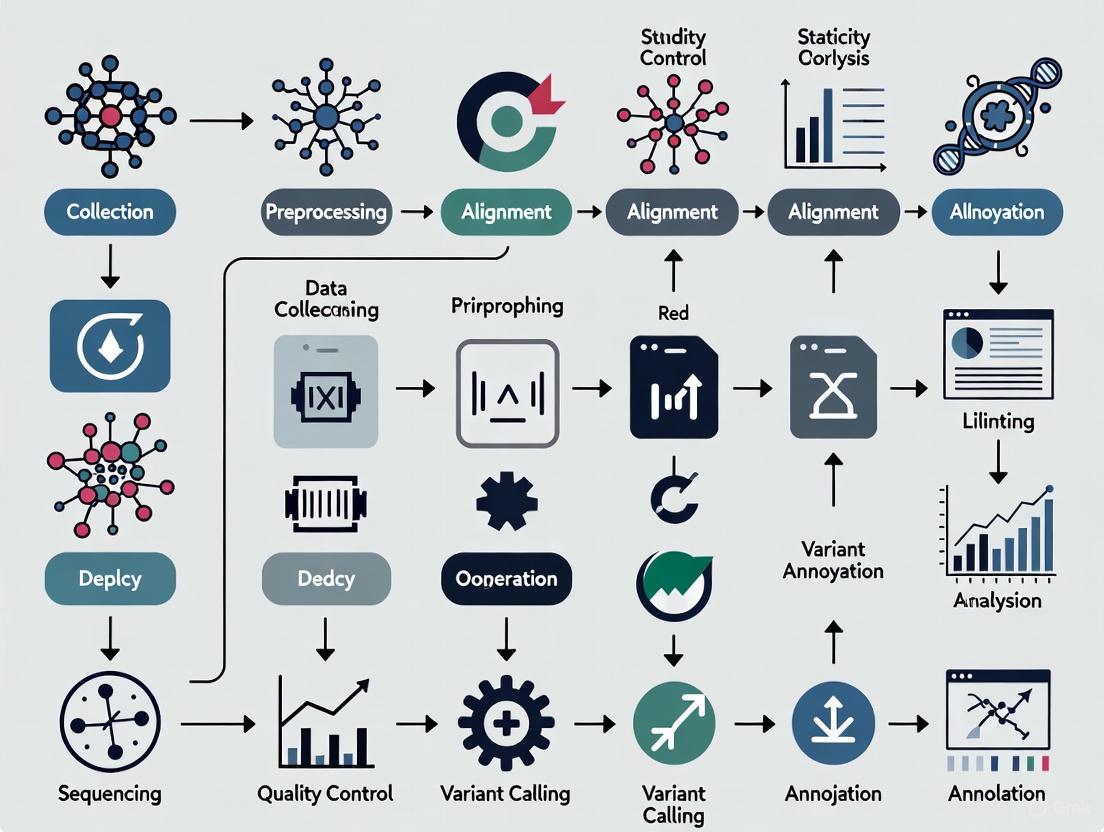
This article provides a comprehensive guide to best practices in functional genomics data analysis, tailored for researchers, scientists, and drug development professionals.
Functional Genomics Data Analysis Best Practices: From Raw Data to Biological Insight
Abstract
This article provides a comprehensive guide to best practices in functional genomics data analysis, tailored for researchers, scientists, and drug development professionals. It covers the entire workflow, from foundational concepts and experimental design to advanced analytical methodologies, troubleshooting common challenges, and validating findings. By addressing key intents—establishing a strong foundation, applying robust methods, optimizing workflows, and ensuring rigorous validation—this guide empowers scientists to extract meaningful, reproducible biological insights from complex genomic datasets, thereby accelerating discovery in biomedical research and therapeutic development.
Laying the Groundwork: Core Concepts and Experimental Design for Robust Genomic Analysis
Defining Functional Genomics and its Key Data Types (RNA-seq, ChIP-seq, ATAC-seq)
What is Functional Genomics? Functional genomics is a field of molecular biology that attempts to describe gene and protein functions and interactions on a genome-wide scale [1]. Unlike traditional genetics which might focus on single genes, functional genomics uses high-throughput methods to understand the dynamic aspects of biological systems, including gene transcription, translation, regulation of gene expression, and protein-protein interactions [1] [2].
How does it support drug discovery? In pharmaceutical research, functional genomics helps identify and validate drug targets by uncovering genes and biological processes associated with diseases [3]. By using technologies like CRISPR to systematically probe gene functions, researchers can better select therapeutic targets, thereby improving the chances of clinical success [3].
Key Data Types in Functional Genomics
RNA Sequencing (RNA-seq)
Description: RNA sequencing (RNA-seq) measures the quantity and sequences of RNA in a sample at a given moment, providing a comprehensive view of gene expression [1] [2]. It has largely replaced older technologies like microarrays and SAGE for transcriptome analysis [1].
Primary Applications:
- Gene Expression Profiling: Identifying which genes are active and their expression levels [4].
- Differential Expression Analysis: Comparing expression levels between different conditions (e.g., healthy vs. diseased) [5].
- Single-Cell Analysis: Resolving gene expression heterogeneity within tissues [5] [6].
Chromatin Immunoprecipitation Sequencing (ChIP-seq)
Description: ChIP-seq combines chromatin immunoprecipitation with sequencing to identify genome-wide binding sites for transcription factors and locations of histone modifications [7] [4]. It is a key assay for studying DNA-protein interactions and epigenetic regulation.
Primary Applications:
- Transcription Factor Binding Site Mapping: Finding where specific proteins interact with DNA [7].
- Histone Modification Profiling: Characterizing epigenetic marks that influence gene activity [7].
- Chromatin State Annotation: Defining functional regions of the genome (e.g., promoters, enhancers) [7].
Assay for Transposase-Accessible Chromatin using Sequencing (ATAC-seq)
Description: ATAC-seq identifies regions of open chromatin by using a hyperactive Tn5 transposase to insert sequencing adapters into accessible DNA regions [8]. It is a rapid, sensitive method that requires far fewer cells than related techniques like DNase-seq or FAIRE-seq [8].
Primary Applications:
- Mapping Chromatin Accessibility: Genome-wide discovery of regulatory elements [8].
- Nucleosome Positioning: Identifying the placement and occupancy of nucleosomes [8].
- TF Footprinting: Inferring transcription factor binding at base-pair resolution [8].
Integrated Multi-Omics Analysis
No single omics technique provides a complete picture. Integrating data from RNA-seq, ChIP-seq, and ATAC-seq is essential for constructing comprehensive models of gene regulatory networks [7] [4]. For instance, one can use ATAC-seq to find open chromatin regions, use ChIP-seq to validate the binding of a specific transcription factor in those regions, and use RNA-seq to link this binding to changes in the expression of nearby genes [4]. This multi-omics approach is a cornerstone of systems biology [1].
Troubleshooting Guides
ATAC-seq Troubleshooting
| Problem | Possible Cause | Solution |
|---|---|---|
| Missing nucleosome pattern in fragment size distribution [9] [8] | Over-tagmentation (over-digestion) of chromatin [9] | Optimize transposition reaction time and temperature. |
| Low TSS enrichment score (below 6) [9] | Poor signal-to-noise ratio; uneven fragmentation; low cell viability [9] | Check cell quality and ensure fresh nuclei preparation. |
| High mitochondrial read percentage [8] | Lack of chromatin packaging in mitochondria leads to excessive tagmentation [8] | Increase nuclei purification steps; bioinformatically filter out chrM reads. |
| Unstable or inconsistent peak calling [9] | Using a peak caller designed for sharp peaks (like MACS2 default) on broad open regions [9] | Try alternative peak callers like Genrich or HMMRATAC; ensure mitochondrial reads are removed before peak calling [9]. |
ChIP-seq & CUT&Tag Troubleshooting
| Problem | Possible Cause | Solution |
|---|---|---|
| Sparse or uneven signal (common in CUT&Tag) [9] | Very low background can make regions with few reads appear as false positives [9] | Visually inspect peaks in a genome browser (IGV); merge replicates before peak calling to increase coverage [9]. |
| Poor replicate agreement [9] | Variable antibody efficiency, sample preparation, or PCR bias [9] | Standardize protocols; use high-quality, validated antibodies; check IP efficiency. |
| Peak caller gives inconsistent results [9] | Using narrow peak mode for broad histone marks (e.g., H3K27me3) [9] | Use a peak caller with a dedicated broad peak mode (e.g., MACS2 in --broad mode) [9]. |
| Weak signal in reChIP/Co-ChIP [9] | Inherently low yield from sequential immunoprecipitation [9] | Increase starting material; use stringent validation and manual inspection in IGV. |
General NGS Library Preparation Troubleshooting
| Problem | Failure Signal | Corrective Action [10] |
|---|---|---|
| Low Library Yield | Low final concentration; broad/shallow electropherogram peaks. | Re-purify input DNA/RNA to remove contaminants (e.g., salts, phenol); use fluorometric quantification (Qubit) instead of Nanodrop; titrate adapter:insert ratios. |
| Adapter Dimer Contamination | Sharp peak at ~70-90 bp in Bioanalyzer trace. | Optimize purification and size selection steps (e.g., adjust bead-to-sample ratio); reduce adapter concentration. |
| Over-amplification Artifacts | High duplicate rate; skewed fragment size distribution. | Reduce the number of PCR cycles; use a high-fidelity polymerase. |
| High Background Noise | Low unique mapping rate; high reads in blacklisted regions. | Improve read trimming to remove adapters; use pre-alignment QC tools (FastQC) and post-alignment filtering (remove duplicates, blacklisted regions) [8]. |
Frequently Asked Questions (FAQs)
Q1: What is the main goal of functional genomics? A1: The primary goal is to understand the function of genes and proteins, and how all the components of a genome work together in biological processes. It aims to move beyond static DNA sequences to describe the dynamic properties of an organism at a systems level [1] [2].
Q2: When should I use ATAC-seq instead of ChIP-seq? A2: Use ATAC-seq when you want an unbiased, genome-wide map of all potentially active regulatory elements (open chromatin) without needing an antibody. Use ChIP-seq when you have a specific protein (transcription factor) or histone modification in mind and have a high-quality antibody for it [8].
Q3: My replicates show poor agreement in my ChIP-seq experiment. What should I do? A3: Poor replicate agreement often stems from technical variations in antibody efficiency, sample preparation, or sequencing depth. First, ensure your protocol is standardized. Then, check the IP efficiency and antibody quality. If the data is sparse, consider merging replicates before peak calling to improve signal-to-noise [9].
Q4: What are common pitfalls when integrating ATAC-seq and RNA-seq data? A4: A common mistake is naively assigning an open chromatin peak to the nearest gene, which ignores long-range interactions mediated by chromatin looping [9]. It's also important not to over-interpret gene activity scores derived from scATAC-seq data, as they are indirect proxies for expression and can be noisy [9].
Q5: What are chromatin states and how are they defined? A5: Chromatin states are recurring combinations of histone modifications that correspond to functional elements like promoters, enhancers, and transcribed regions. They are identified computationally by integrating multiple ChIP-seq data sets using tools like ChromHMM or Segway, which use hidden Markov models to segment the genome into states based on combinatorial marks [7].
Essential Research Reagent Solutions
| Item | Function in Experiment |
|---|---|
| Tn5 Transposase | The core enzyme in ATAC-seq that simultaneously fragments and tags accessible DNA [8]. |
| Validated Antibodies | Critical for ChIP-seq and CUT&Tag to specifically target transcription factors or histone modifications [9]. |
| CRISPR gRNA Library | Enables genome-wide knockout or perturbation screens for functional gene validation [3]. |
| Size Selection Beads | Used in library cleanup to remove adapter dimers and select for the desired fragment size range [10]. |
| Cell Viability Stain | Essential for single-cell assays (scRNA-seq, scATAC-seq) to ensure high-quality input material [9]. |
Experimental Workflow Visualization
A generalized workflow for a functional genomics study, from sample to insight, is shown below. This integrates elements from ATAC-seq, ChIP-seq, and RNA-seq analyses.
The Critical Role of Statistical Analysis in High-Dimensional Genomic Data
Troubleshooting Guides
Guide 1: Resolving Model Overfitting and Unreliable Feature Selection
Problem: My predictive model performs well on my dataset but fails when applied to new samples or independent datasets. Selected genomic features (e.g., genes, SNPs) change drastically with slight changes in the data.
Diagnosis: This typically indicates overfitting and failure to properly account for the feature selection process during validation. When the same data is used to both select features and validate performance, estimates become optimistically biased [11].
Solutions:
- Use Proper Validation Techniques: Employ resampling methods like bootstrapping or cross-validation that incorporate the entire feature selection process within each resample. This provides an unbiased estimate of model performance on new data [11].
- Apply Statistical Shrinkage: Use penalized regression methods (e.g., ridge regression, lasso, elastic net) that shrink coefficient estimates to avoid overfitting. Note that lasso, while producing sparse models, may exhibit instability in selected features [11].
- Ensure Adequate Sample Size: High-dimensional models are "data hungry." Some methods may require up to 200 events per candidate variable for stable performance in new samples [11].
Guide 2: Addressing Multiple Testing and False Discoveries
Problem: I am overwhelmed by the number of significant associations from my genome-wide analysis and cannot distinguish true signals from false positives.
Diagnosis: Conducting hundreds of thousands of statistical tests without correction guarantees numerous false positives due to multiple testing problems [11] [12].
Solutions:
- Go Beyond Simple Corrections: While False Discovery Rate (FDR) controls the proportion of false positives, it can be complemented with other approaches [11].
- Implement Ranking with Confidence Intervals: Instead of simple significance testing, rank features by association strength and use bootstrap resampling to compute confidence intervals for the ranks. This provides an honest assessment of feature importance and uncertainty, helping to avoid premature dismissal of potentially important features [11].
- Report Both False Discovery and Non-Discovery Rates: Focusing solely on false positives ignores the cost of false negatives (missing true biological signals). Consider and report both dimensions [11].
Guide 3: Correcting for Technical Biases in Multi-Platform Data
Problem: My integrated analysis of genomic data from different platforms (e.g., transcriptome and methylome) is dominated by technical artifacts and batch effects rather than biological signals.
Diagnosis: Technical biases from sample preparation, platform-specific artifacts, or batch effects can confound true biological patterns [13].
Solutions:
- Leverage Data Integration Methods: Use computational methods like MANCIE (Matrix Analysis and Normalization by Concordant Information Enhancement) designed for cross-platform normalization. MANCIE adjusts one data matrix (e.g., gene expression) using a matched matrix from another platform (e.g., chromatin accessibility) to enhance concordant biological information and reduce technical noise [13].
- Employ Robust Study Design: Randomize biospecimens across assay batches to avoid confounding batch effects with biological factors of interest. For case-control studies, balance cases and controls across batches [12].
- Validate with Biological Context: After correction, check if known biological patterns are enhanced. For example, after MANCIE correction, cell lines should cluster better by tissue type, and sequence motif analysis should reveal cell-type-specific transcription factors [13].
Guide 4: Choosing the Right Analytical Approach
Problem: I am unsure which statistical method to use for my high-dimensional genomic data, as many traditional methods are not applicable.
Diagnosis: Classical statistical methods designed for "large n, small p" scenarios break down in the "large p, small n" setting of genomics [12].
Solutions:
- Avoid One-at-a-Time (OaaT) Screening: OaaT testing (testing each feature individually against the outcome) is "demonstrably the worst approach" due to bias, false negatives, and ignorance of feature interactions [11].
- Select Methods Based on Your Goal:
- For Prediction: Use penalized regression (ridge, lasso, elastic net) or random forests. Be aware that random forests can suffer from poor calibration despite good discrimination [11].
- For Feature Discovery: Use multivariable modeling with bootstrap ranking instead of simple significance testing [11].
- For Data Exploration: Use dimension reduction techniques like Principal Component Analysis (PCA) before modeling [11].
- Consider Data Integration Frameworks: For multi-omics integration, tools like mixOmics in R provide a unified framework for exploration, selection, and prediction from combined datasets [14].
Frequently Asked Questions (FAQs)
FAQ 1: What is the single most common statistical mistake in high-dimensional genomic analysis? Answer: The most common mistake is "double dipping" - using the same dataset for both hypothesis generation (feature selection) and hypothesis testing (validation) without accounting for this selection process. This leads to optimistically biased results and non-reproducible findings [11].
FAQ 2: How much data do I actually need for a reliable high-dimensional genomic study? Answer: There is no universal rule, but traditional "events per variable" rules break down in high-dimensional settings. Studies are often underpowered, contributing to irreproducible results. Some evidence suggests that methods like random forests may require ~200 events per candidate variable for stable performance. Sample size planning should consider the complexity of both the biological question and the analytical method [12].
FAQ 3: My genomic data has many missing values. How should I handle this? Answer: Common approaches include:
- Deletion: Remove rows/columns exceeding a threshold of missingness (simplest but wasteful)
- Imputation: Replace missing values with zeros, mean/median values, or more sophisticated estimates
- The optimal approach depends on the mechanism of missingness and proportion of missing data [14]
FAQ 4: What is the difference between biological and technical replicates, and why does it matter? Answer: Biological replicates are measurements from different subjects/samples and are essential for making inferences about populations. Technical replicates are repeated measurements on the same subject/sample and help assess measurement variability. Confusing technical replicates with biological replicates is a fundamental flaw in study design, as technical replicates alone cannot support generalizable conclusions [12].
FAQ 5: How can I integrate genomic data from different sources (e.g., transcriptome and methylome)? Answer: Successful integration requires:
- Proper Data Matrix Design with consistent biological units (e.g., genes) across datasets
- Clear Biological Questions focused on description, selection, or prediction
- Tool Selection matched to your question (e.g., mixOmics for multiple analysis types)
- Data Preprocessing addressing missing values, outliers, normalization, and batch effects
- Preliminary Single-Dataset Analysis before integration [14]
Standard Experimental Protocols
Protocol 1: Differential Expression Analysis with RNA-Seq
Workflow Overview:
Methodology:
- Experimental Design: Implement best practices for bulk RNA-Seq studies, including adequate biological replication, randomization, and controlling for batch effects [15]
- Sequence Data Processing:
- Import FASTQ files and reference genomes
- Perform read quality control and diagnostics
- Trim reads to remove low-quality bases
- Map reads to reference genome
- Estimate read counts per gene [15]
- Statistical Analysis:
- Conduct diagnostic analyses on read counts
- Apply normalization procedures (e.g., DESeq2's median-of-ratios)
- Fit statistical models to test for differentially expressed genes
- Visualize results with heatmaps, volcano plots [15]
- Functional Interpretation:
- Perform gene set enrichment analysis using Gene Ontology and pathway annotations [15]
Protocol 2: Genomic Data Integration with mixOmics
Workflow Overview:
Methodology:
- Data Matrix Design: Structure data with genes as biological units (rows) and genomic variables (expression, methylation, etc.) as columns [14]
- Question Formulation: Define clear objectives focused on:
- Description: Major interplay between variables (e.g., how DNA methylation affects expression)
- Selection: Identification of biomarker genes with specific patterns
- Prediction: Inferring genomic behaviors across individuals/species [14]
- Tool Selection: Choose mixOmics for its versatility in addressing all three question types using dimension reduction methods [14]
- Data Preprocessing:
- Handle missing values via deletion or imputation
- Identify and address outliers
- Apply appropriate normalization
- Correct for batch effects [14]
- Preliminary Analysis: Conduct separate analyses of each dataset before integration to understand data structure [14]
- Integration Execution: Apply multivariate methods (e.g., PCA, PLS) to reduce dimensionality and identify cross-dataset patterns [14]
Research Reagent Solutions
Table: Essential Tools for Genomic Data Analysis
| Tool/Category | Specific Examples | Function/Purpose |
|---|---|---|
| Statistical Programming Environments | R Statistical Software | Data cleanup, processing, general statistical analysis, and visualization [16] |
| Genomics-Specific Packages | Bioconductor | Specialized tools for differential expression, gene set analysis, genomic interval operations [16] |
| Data Integration Platforms | mixOmics | Multi-omics data integration using dimension reduction methods for description, selection, and prediction [14] |
| Bias Correction Tools | MANCIE (Matrix Analysis and Normalization by Concordant Information Enhancement) | Cross-platform data normalization and bias correction by enhancing concordant information between datasets [13] |
| Sequencing Analysis Suites | Galaxy Platform, BaseSpace Sequence Hub | User-friendly interfaces for NGS data processing, quality control, and primary analysis [17] [15] |
| Differential Expression Packages | DESeq2 | Statistical analysis of RNA-Seq read counts for identifying differentially expressed genes [15] |
| Visualization Tools | ggplot2 (R), Circos | Create publication-quality plots, genomic visualizations, heatmaps, and circos plots [16] |
Functional genomics data analysis enables genome- and epigenome-wide profiling, offering unprecedented biological insights into cellular heterogeneity and gene regulation [18]. However, researchers consistently face three interconnected challenges that can compromise data integrity and lead to misleading conclusions: the high dimensionality of data spaces where samples are defined by thousands of features, pervasive technical noise including batch effects and dropout events, and inherent biological variability [18] [19]. This technical support guide provides troubleshooting protocols and FAQs to help researchers identify, resolve, and prevent these issues within their experimental workflows, ensuring robust and reproducible biological findings.
Troubleshooting Guides
Issue 1: Poor Cell Type Identification and Clustering in scRNA-seq Data
Problem Description
After sequencing and initial analysis, cells that should form distinct clusters appear poorly separated, or known cell types cannot be identified. Batch effects obscure biological signals, hindering rare-cell-type detection and cross-dataset comparisons [18].
Diagnostic Steps
- Visual Inspection: Perform dimensionality reduction (PCA, UMAP, t-SNE) coloring points by batch and suspected biological condition. If samples cluster primarily by processing date, sequencing lane, or other technical factors, batch effects are present [20].
- Quantitative Metrics: Calculate integration metrics:
Solutions
- Apply a Comprehensive Noise Reduction Tool: Use algorithms like iRECODE, which simultaneously reduces technical noise and batch effects by mapping data to an essential space and integrating correction, preserving full-dimensional data for downstream analysis [18].
- Leverage Procedural Batch-Effect Correction: For complex batch effects, employ methods like Harmony or the order-preserving method based on monotonic deep learning. These iteratively align cells across batches while preserving biological variation [18] [21].
- Experimental Design: For future studies, randomize samples across batches and ensure each biological condition is represented in every processing batch [20].
Issue 2: Technical Noise Obscuring Subtle Biological Signals
Problem Description
High-throughput data is dominated by technical artifacts, such as high sparsity ("dropout" events in scRNA-seq) or non-biological fluctuations, making it difficult to detect subtle but biologically important phenomena like tumor-suppressor events or transcription factor activities [18].
Diagnostic Steps
- Sparsity Analysis: Check the proportion of zero counts in your expression matrix. An unusually high rate suggests significant dropout [18].
- Variance Analysis: Examine the variance of housekeeping genes versus non-housekeeping genes. Effective noise reduction should diminish the variance of housekeeping genes (technical noise) while preserving or modulating the variance of other genes (biological signal) [18].
Solutions
- Utilize High-Dimensional Statistics: Apply tools like RECODE, which models technical noise from the entire data generation process as a probability distribution and reduces it using eigenvalue modification theory. This approach is effective across various single-cell modalities, including scRNA-seq, scHi-C, and spatial transcriptomics [18].
- Extend to Proteomics: For mass spectrometry-based proteomics, perform batch-effect correction at the protein level (e.g., using Ratio, Combat, or Harmony) after quantification, as this has been shown to be more robust than correction at the precursor or peptide level [22].
Issue 3: Loss of Biological Integrity During Data Integration
Problem Description
After batch correction or noise reduction, key biological relationships, such as inter-gene correlations or differential expression patterns, are lost or altered, leading to incorrect biological interpretations [21].
Diagnostic Steps
- Inter-gene Correlation: For a specific cell type, calculate the Spearman correlation coefficient for significantly correlated gene pairs before and after correction. A large deviation indicates loss of correlation structure [21].
- Order-Preserving Check: For a given gene, check if the relative ranking of expression levels across cells is maintained before versus after correction. This is crucial for preserving differential expression information [21].
Solutions
- Choose Order-Preserving Methods: Select batch-effect correction algorithms that inherently maintain the order of gene expression levels. The monotonic deep learning network-based method and ComBat have been shown to preserve these relationships better than methods that do not consider this feature [21].
- Validate with Biological Knowledge: Always check if known marker genes and pathways remain coherent and significant after correction. Use cross-validation with alternative methods (e.g., qPCR for RNA-seq) to confirm key findings [23].
Experimental Protocols
Protocol 1: A Workflow for Robust scRNA-seq Data Integration
This protocol details the steps for integrating multiple scRNA-seq datasets using a method that simultaneously addresses technical noise and batch effects.
- Input: Raw or normalized count matrices from multiple batches.
- Preprocessing and Quality Control:
- Filter cells based on mitochondrial content, number of features, and counts.
- Filter low-abundance genes.
- Normalize data using a method like SCTransform or log-normalization.
- Dual Noise Reduction with iRECODE:
- Map the gene expression data to an essential space using Noise Variance-Stabilizing Normalization (NVSN) and singular value decomposition.
- Integrate a batch-correction algorithm (e.g., Harmony) within this essential space to minimize computational cost and accuracy loss [18].
- Apply principal-component variance modification and elimination to reduce technical noise [18].
- Output: A denoised and batch-corrected full-dimensional gene expression matrix ready for downstream analysis (clustering, differential expression).
The following diagram illustrates the core computational workflow of the iRECODE algorithm for dual noise reduction.
Protocol 2: Benchmarking Batch-Effect Correction Methods in Proteomics
This protocol is adapted from large-scale benchmarking studies to select the optimal batch-effect correction strategy for MS-based proteomics data [22].
- Input: Protein abundance matrices from multiple batches or labs.
- Experimental Design:
- Use reference materials (e.g., Quartet project materials) or a simulated dataset with known ground truth.
- Design two scenarios: one where sample groups are balanced across batches, and another where they are confounded.
- Apply Correction Strategies:
- Test corrections at different data levels: precursor, peptide, and protein.
- Apply multiple Batch-Effect Correction Algorithms (BECAs) such as Combat, Median Centering, Ratio, and Harmony.
- Performance Assessment:
- Feature-based: Calculate the coefficient of variation (CV) within technical replicates.
- Sample-based: Compute Signal-to-Noise Ratio (SNR) from PCA and use Principal Variance Component Analysis (PVCA) to quantify contributions of biological vs. batch factors.
- Output Selection: Identify the most robust strategy (e.g., protein-level correction) and the best-performing BECA for your specific dataset.
Frequently Asked Questions (FAQs)
Q1: What is the fundamental difference between 'noise' and a 'batch effect' in my data?
- Noise refers to non-biological, stochastic fluctuations inherent to the technology, such as dropout events in scRNA-seq where some transcripts are not detected. Batch effects are systematic technical variations introduced when samples are processed in different groups (batches), such as on different days or by different technicians [18] [20]. Both can be mitigated with tools like RECODE and iRECODE [18].
Q2: Can batch correction accidentally remove true biological signal?
- Yes, overcorrection is a risk, particularly if batch effects are confounded with biological groups or if an inappropriate method is used [20]. To mitigate this, use methods designed to preserve biological variation (e.g., Harmony, order-preserving methods) and always validate results using known biological knowledge or independent experimental validation [21] [20].
Q3: For a new RNA-seq study, what is the minimum number of replicates needed to account for biological variability?
- While three replicates per condition is often considered a minimum standard, this is not universally sufficient. The required number depends on the expected effect size and the inherent biological variability within your system. For high variability, more replicates are necessary. Tools like
Scottycan help model power and estimate replicate needs during experimental design [24].
Q4: How do I choose between the many available batch correction methods?
- Selection should be based on your data type and needs. Consider the following comparison of popular methods:
| Method | Best For | Key Strength | Key Limitation |
|---|---|---|---|
| ComBat [20] | Bulk RNA-seq, known batches | Empirical Bayes framework; effective for known, additive effects. | Requires known batch info; may not handle nonlinear effects well. |
| Harmony [18] [20] | scRNA-seq, spatial transcriptomics | Iteratively clusters cells to align batches; preserves biological variation. | Output is an embedding, not a corrected count matrix. |
| iRECODE [18] | Multi-modal single-cell data | Simultaneously reduces technical and batch noise; preserves full-dimensional data. | Higher computational load due to full-dimensional preservation. |
| Order-Preserving Method [21] | Maintaining gene rankings | Uses monotonic network to preserve original order of gene expression. | --- |
| Ratio [22] | MS-based Proteomics | Simple scaling using reference materials; robust in confounded designs. | Requires high-quality reference samples. |
Q5: My data is high-dimensional, but my sample size is small. What is the main pitfall?
- This scenario, known as the "curse of dimensionality," is a major challenge [19]. In high-dimensional spaces, distances between data points become less meaningful, and the risk of finding spurious correlations or clusters increases dramatically [19]. The key is to use methods rooted in high-dimensional statistics (like RECODE) and to avoid overfitting by using simple models and independent validation whenever possible [18] [19].
The Scientist's Toolkit
This table lists key computational tools and resources essential for addressing the major challenges discussed.
| Tool/Resource | Function | Application Context |
|---|---|---|
| RECODE/iRECODE [18] | Dual technical and batch noise reduction | Single-cell omics (RNA-seq, Hi-C, spatial) |
| Harmony [18] [20] | Batch integration via iterative clustering | scRNA-seq, spatial transcriptomics |
| Monotonic Deep Learning Network [21] | Batch correction with order-preserving feature | scRNA-seq |
| FastQC [24] | Initial quality control of raw sequencing reads | RNA-seq |
| SAMtools [24] | Processing and QC of aligned reads | RNA-seq, variant calling |
| ComBat [20] [22] | Empirical Bayes batch adjustment | Bulk RNA-seq, Proteomics |
| Quartet Reference Materials [22] | Benchmarking and performance assessment | Proteomics, multi-omics studies |
| Trimmomatic/fastp [24] | Read trimming and adapter removal | RNA-seq |
| Lu AF21934 | Lu AF21934, MF:C14H16Cl2N2O2, MW:315.2 g/mol | Chemical Reagent |
| Macimorelin Acetate | Macimorelin Acetate | Macimorelin acetate is a synthetic growth hormone secretagogue for diagnostic research of adult GH deficiency. This product is For Research Use Only. |
## Hardware Requirements for Bioinformatics Analysis
Selecting appropriate hardware is crucial for efficient bioinformatics analysis. Requirements vary significantly based on the specific analysis type and data scale.
Table: Recommended Hardware Specifications for Common Analysis Types
| Analysis Type | Recommended RAM | Recommended CPU | Storage | Additional Notes |
|---|---|---|---|---|
| General / Startup Laptop [25] | 16 GB | i7 Quad-core | 1 TB SSD | Suitable for scripting in Python/R and smaller analyses; use cloud services for larger tasks. |
| De Novo Assembly (Large Genomes) [25] [26] | 32 GB - Hundreds of GB | 8-core i7/Xeon or AMD Ryzen/Threadripper | 2-4 TB+ | Highly dependent on read number and genome complexity; PacBio HiFi assembly requires ≥32 GB RAM [26]. |
| Read Mapping (Human Genome) [26] | 16 GB - 32 GB | ~40 threads | 500 GB+ | Little speed gain expected beyond ~40 threads or >32 GB RAM [26]. |
| PEAKS Studio (Proteomics) [27] | 70 GB - 128 GB+ | 30+ - 60+ threads | As required | Requires a compatible NVIDIA GPU (CUDA compute capability ≥ 8, 8GB+ memory) for specific workflows like DeepNovo [27]. |
A successful functional genomics project relies on a curated toolkit of software and high-quality reference data.
### Key Software Tools and Platforms
- Programming Languages: R and Python are essential for data manipulation, statistical analysis, and custom scripting [28].
- Workflow Management Systems: Platforms like Nextflow, Snakemake, and Galaxy streamline pipeline execution, enhance reproducibility, and provide error logs for troubleshooting [29].
- Alignment & Mapping Tools: BWA and STAR are widely used for aligning sequencing reads to reference genomes [29].
- Variant Calling & Annotation: GATK and SAMtools are standard for identifying genetic variants [29].
- Data Quality Control: FastQC and MultiQC are critical for assessing the quality of raw sequencing data before analysis [29].
### Public Data Repositories
Public data repositories are invaluable for accessing pre-existing data to inform experimental design or for integration with self-generated data [28].
Table: Key Public Data Repositories for Functional Genomics
| Repository Name | Primary Data Types | URL / Link |
|---|---|---|
| Gene Expression Omnibus (GEO) | Gene expression, epigenetics, genome variation profiling | www.ncbi.nlm.nih.gov/geo/ [28] |
| ENCODE | Epigenetics, gene expression, computational predictions | www.encodeproject.org [28] |
| ProteomeXchange (PRIDE) | Proteomics, protein expression, post-translational modifications | www.ebi.ac.uk/pride/archive/ [28] |
| GTEx Portal | Gene expression, genome sequences (for eQTL studies) | www.gtexportal.org [28] |
| cBioPortal | Cancer genomics: gene copy numbers, expression, DNA methylation, clinical data | www.cbioportal.org [28] |
| Single Cell Expression Atlas | Single-cell gene expression (RNA-seq) | www.ebi.ac.uk/gxa/sc [28] |
## Frequently Asked Questions (FAQs)
### Hardware and Setup
What is a reasonable hardware setup to get started with human genome analysis? A fast laptop with an i7 quad-core processor, 16 GB of RAM, and 1 TB of storage is a good starting point. For larger analyses like de novo assembly, which can require hundreds of gigabytes of RAM, you should plan to use institutional servers or cloud services [25].
Do I need a specialized Graphics Card (GPU) for bioinformatics? Most traditional bioinformatics tools do not require a powerful GPU. However, specific applications, particularly in proteomics like PEAKS Studio for its DeepNovo workflow, or machine learning tasks, do require a high-performance NVIDIA GPU with ample dedicated memory [27].
### Data and Analysis
Where can I find publicly available omics data to use in my research? There are many publicly available repositories. The Gene Expression Omnibus (GEO) is an excellent resource for processed gene expression data, while the ENCODE consortium provides high-quality multiomics data. For proteomics data, ProteomeXchange is the primary repository [28].
How can I ensure my bioinformatics pipeline is reproducible? Using workflow management systems like Nextflow or Snakemake is highly recommended. Additionally, always use version control systems like Git for your scripts and meticulously document the versions of all software and databases used [29].
### Troubleshooting Common Problems
My pipeline failed with a memory error. What should I do? This is common in memory-intensive tasks like assembly. First, check the log files to confirm the error. The solution is to rerun the analysis on a machine with more RAM. Always test pipelines on small datasets first to estimate resource needs [25] [26].
My analysis is taking an extremely long time to run. How can I speed it up? Check if the tools you are using can take advantage of multiple CPU cores. Ensure you have allocated sufficient threads. If computational resources are a bottleneck, consider migrating your analysis to a cloud computing platform which offers scalable computing power [29].
I am getting unexpected results from my pipeline. What are the first steps to debug this?
- Check Data Quality: Re-run quality control (e.g., with FastQC) on your raw input data.
- Isolate the Stage: Run the pipeline step-by-step to identify which component produces the anomalous output.
- Verify Tool Compatibility and Versions: Ensure all software dependencies are correctly installed and compatible.
- Consult Logs and Community: Scrutinize error logs and seek help from community forums specific to the tools you are using [29].
## Experimental Protocol: RNA-Seq Analysis Workflow
The following diagram outlines a standard bulk RNA-Seq analysis workflow, from raw data to biological insight.
RNA-Seq Experimental Workflow
### Protocol Steps
Data Acquisition and Quality Control (QC)
- Input: Raw sequencing reads in FASTQ format.
- Quality Control: Run FastQC on raw files to assess per-base sequence quality, adapter contamination, and other metrics. Use MultiQC to aggregate reports from multiple samples.
- Trimming/Filtering: Use tools like Trimmomatic to remove low-quality bases, adapters, and reads.
Alignment and Quantification
- Alignment: Map the trimmed high-quality reads to a reference genome using a splice-aware aligner such as STAR or HISAT2.
- Quantification: Count the number of reads mapping to each gene using tools like FeatureCounts or HTSeq-count. This generates a count table for downstream analysis.
Differential Expression and Interpretation
- Differential Expression Analysis: Input the count table into statistical software packages in R (DESeq2, edgeR) to identify genes that are significantly differentially expressed between experimental conditions.
- Visualization and Enrichment: Create visualizations (e.g., PCA plots, volcano plots) and perform functional enrichment analysis (e.g., Gene Ontology, KEGG pathways) to interpret the biological meaning of the results.
## The Scientist's Toolkit: Essential Research Reagents and Materials
Table: Key Resources for Functional Genomics Experiments
| Item | Function / Description |
|---|---|
| Reference Genome (FASTA) | A curated, high-quality DNA sequence of a species used as a baseline for read alignment and variant calling [26]. |
| Gene Annotation (GTF/GFF) | A file containing the genomic coordinates of features like genes, exons, and transcripts, essential for quantifying gene expression [29]. |
| Raw Sequencing Data (FASTQ) | The primary output of sequencing instruments, containing the nucleotide sequences and their corresponding quality scores [29]. |
| Alignment File (BAM/SAM) | The binary (BAM) or text (SAM) file format that stores sequences aligned to a reference genome, the basis for many downstream analyses [29]. |
| Variant Call Format (VCF) | A standardized file format used to report genetic variants (e.g., SNPs, indels) identified relative to the reference genome [29]. |
| Mal-amido-PEG6-acid | Mal-amido-PEG6-acid, CAS:1334177-79-5, MF:C22H36N2O11, MW:504.5 g/mol |
| Mal-amido-PEG9-amine | Mal-amido-PEG9-amine, MF:C27H49N3O12, MW:607.7 g/mol |
In functional genomics research, the analysis of high-throughput sequencing data relies on a foundational understanding of key file formats. The FASTQ, BAM, and BED formats are integral to processes ranging from raw data storage to advanced variant calling and annotation [30]. This guide provides a technical overview, troubleshooting advice, and best practices for handling these essential data types, framed within the context of robust and reproducible data analysis protocols.
Understanding the Core Data Formats
FASTQ: The Raw Sequence Data Container
The FASTQ format stores the raw nucleotide sequences (reads) generated by sequencing instruments and their corresponding quality scores [30] [31]. It is the primary format for archival purposes and the starting point for most analysis pipelines.
Structure: Each sequence in a FASTQ file occupies four lines [31]:
- Sequence Identifier: Begins with an '@' symbol, followed by a unique ID and an optional description.
- The Raw Sequence: The string of nucleotide bases (e.g., A, C, G, T, N).
- A Separator: A '+' character, which may be followed by the same sequence ID (optional).
- Quality Scores: A string of ASCII characters representing the Phred-scaled quality score for each base in the raw sequence. The ENCODE consortium and modern Illumina pipelines use Phred+33 encoding [30].
Table: Breakdown of a FASTQ Record
| Line Number | Content Example | Description |
|---|---|---|
| 1 | @SEQ_ID |
Sequence identifier line |
| 2 | GATTTGGGGTTCAAAGCAGTATCG... |
Raw sequence letters |
| 3 | + |
Separator line |
| 4 | !''*((((*+))%%%++)(%%%... |
Quality scores encoded in ASCII (Phred+33) |
Common Conventions:
- Paired-end Data: For paired-end experiments, the reads for each end are stored in two separate FASTQ files (often denoted
_1.fastqand_2.fastq), with the records in the same order [30]. - Unfiltered Data: FASTQ files from the ENCODE consortium are typically unfiltered, meaning they may still contain adapter sequences, barcodes, and spike-in reads, allowing users to apply their own trimming and filtering algorithms [30].
BAM: The Aligned Sequence Format
The Binary Alignment/Map (BAM) format is the compressed, binary representation of sequence alignments against a reference genome [30] [31]. It is the standard for storing and distributing aligned sequencing reads.
Structure: A BAM file contains a header section and an alignment section [31].
- Header: Includes critical metadata such as reference sequence names and lengths, the programs used for alignment, and the sequencing platform.
- Alignment Section: Each line represents a single read's alignment information, stored in a series of tab-delimited fields.
Table: Key Fields in a BAM/SAM Alignment Line
| Field Number | Name | Example | Description |
|---|---|---|---|
| 1 | QNAME | r001 |
Query template (read) name |
| 2 | FLAG | 99 |
Bitwise flag encoding read properties (paired, mapped, etc.) |
| 3 | RNAME | ref |
Reference sequence name |
| 4 | POS | 7 |
1-based leftmost mapping position |
| 5 | MAPQ | 30 |
Mapping quality (Phred-scaled) |
| 6 | CIGAR | 8M2I4M1D3M |
Compact string describing alignment (Match, Insertion, Deletion) |
| 10 | SEQ | TTAGATAAAGGATACTG |
The raw sequence of the read |
| 11 | QUAL | * |
ASCII of Phred-scaled base quality+33 |
Key Features:
- Efficiency: The binary format is compact and enables efficient storage and processing of large datasets [31].
- Indexing: BAM files are accompanied by a BAI (BAM Index) file, which allows for rapid random access to reads aligned to specific genomic regions without reading the entire file [31].
- Comprehensive Data: ENCODE BAM files retain unmapped reads and spike-in sequences, with mapping parameters and processing steps documented in the file header [30].
BED: The Genomic Annotation Format
The BED (Browser Extensible Data) format describes genomic annotations and features, such as genes, exons, ChIP-seq peaks, or other regions of interest [30]. It is designed for efficient visualization in genome browsers like the UCSC Genome Browser.
Structure: A BED file consists of one line per feature, with a minimum of three required columns and up to twelve optional columns [32].
Table: Standard Columns in a BED File
| Column Number | Name | Description |
|---|---|---|
| 1 | chrom |
The name of the chromosome or scaffold |
| 2 | chromStart |
The zero-based starting position of the feature |
| 3 | chromEnd |
The one-based ending position of the feature |
| 4 | name |
An optional name for the feature (e.g., a gene name) |
| 5 | score |
An optional score between 0 and 1000 (e.g., confidence value) |
| 6 | strand |
The strand of the feature: '+' (plus), '-' (minus), or '.' (unknown) |
Usage Notes:
- The fourth column (
name) can contain various identifiers. In some contexts, such as a BED file converted from a BAM file, this column may contain the original read name [32]. - The BED format is closely related to the binary bigBed format, which is indexed for rapid display of large annotation sets in the UCSC Genome Browser [30].
The logical flow of data analysis from raw sequences to biological insights can be visualized as a workflow where these core formats are interconnected.
Frequently Asked Questions (FAQs) and Troubleshooting
Q1: I converted my BAM file to FASTQ, but the resulting file has very few sequences. What went wrong?
This is a known issue that can occur if the BAM file is not properly sorted before conversion [33]. For paired-end data, it is essential to sort the BAM file by read name (queryname) so that paired reads are grouped correctly in the output FASTQ files.
Solution:
- Use
samtoolsto sort your BAM file by queryname before conversion: - Use the sorted BAM file (
aln.qsort.bam) withbedtools bamtofastq, specifying both the-fqand-fq2options for the two output files [34]: Alternative: Thesamtools bam2fqcommand can also be a reliable alternative for this conversion [33].
Q2: What is the difference between the Phred quality score encoding in FASTQ files?
The Phred quality score can be encoded using two different ASCII offsets. The modern standard, used by the Sanger institute, Illumina pipeline 1.8+, and the ENCODE consortium, is Phred+33 [30]. This uses ASCII characters 33 to 126 to represent quality scores from 0 to 93. Be sure your downstream tools are configured for the correct encoding to avoid quality interpretation errors.
Q3: How can I quickly view the alignments for a specific genomic region from a large BAM file?
You can use the samtools view command in combination with the BAM index file (BAI). The BAI file provides random access to the BAM file, allowing you to extract reads from a specific region efficiently [31].
Solution:
- Ensure your BAM file is indexed. If not, create an index:
This will generate an
aln.bam.baifile. - Use
samtools viewto query the specific region (e.g., chr1:10,000-20,000):
Q4: My BED file from a pipeline has a read name in the fourth column. Is this standard?
While the BED format requires only three columns, the fourth column is an optional name field. In the context of a BED file derived directly from a BAM file (e.g., using a conversion tool), it is common for this field to contain the original read name from the BAM file [32]. This can be useful for tracking the provenance of a specific genomic feature back to the raw sequence read.
The Scientist's Toolkit: Essential Research Reagents and Solutions
This table details key software tools and resources essential for working with FASTQ, BAM, and BED files in a functional genomics context.
Table: Essential Tools for Genomic Data Analysis
| Tool/Framework | Primary Function | Role in Data Analysis |
|---|---|---|
| bedtools [34] | Genome arithmetic | A versatile toolkit for comparing, intersecting, and manipulating genomic intervals in BED, BAM, and other formats. |
| SAMtools [30] [31] | SAM/BAM processing | A suite of utilities for viewing, sorting, indexing, and extracting data from SAM/BAM files. Critical for data management. |
| BWA [35] | Read alignment | A popular software package for mapping low-divergent sequencing reads to a large reference genome. |
| NVIDIA Clara Parabricks [35] | Accelerated analysis | A GPU-accelerated suite of tools that speeds up key genomics pipeline steps like alignment (fq2bam) and variant calling. |
| UCSC Genome Browser [30] | Data visualization | A web-based platform for visualizing and exploring genomic data alongside public annotation tracks. Supports BAM, bigBed, and BED. |
| Snakemake/Nextflow [5] | Workflow management | Frameworks for creating reproducible and scalable bioinformatics workflows, automating analyses from FASTQ to final results. |
| Mal-PEG2-acid | ||
| Mal-PEG2-NH-Boc | Mal-PEG2-NH-Boc, CAS:660843-21-0, MF:C15H24N2O6, MW:328.36 g/mol | Chemical Reagent |
Best Practices and Experimental Protocols
Protocol: Converting a BAM File to Paired FASTQ Files
This protocol is essential for re-analyzing sequencing data or re-mapping reads with a different aligner [34].
- Input: A BAM file (
input.bam) containing paired-end reads. - Sort the BAM file by queryname. This ensures the paired reads are in the same order in the output FASTQ files.
- Convert the sorted BAM to FASTQ. Use
bedtools bamtofastqwith separate output files for each read end. - Output: Two FASTQ files:
read1.fq(end 1) andread2.fq(end 2).
Protocol: From FASTQ to BAM - A Basic Alignment Workflow
This core protocol outlines the key steps for generating a BAM file from raw FASTQ sequences [35].
- Input: Paired-end FASTQ files (
sample_1.fq.gz,sample_2.fq.gz) and a reference genome (reference.fa). - Align reads to the reference. Use an aligner like BWA.
The
-Rargument adds a read group header, which is critical for downstream analysis. - Convert SAM to BAM.
- Sort the BAM file by coordinate. This is required for many downstream tools and for indexing.
- Index the sorted BAM file. This creates the
.baiindex file for rapid access. - Output: A coordinate-sorted BAM file (
aligned.sorted.bam) and its index (aligned.sorted.bam.bai).
Best Practices for Data Integrity and Reproducibility
- Document Parameters: Always record the mapping algorithm and key parameters (e.g., mismatches allowed, handling of multi-mapping reads) in the header of your BAM files, as done by the ENCODE consortium [30].
- Use Containerization: Leverage technologies like Docker and Singularity to package your analysis workflows, ensuring consistency and reproducibility across computing environments [5].
- Adopt Workflow Managers: Use frameworks like Snakemake or Nextflow to create automated, scalable, and self-documenting pipelines from FASTQ processing to variant calling [5].
- Prioritize Data Security: When handling human genomic data, implement strict access controls and leverage encrypted cloud storage solutions that comply with regulations like HIPAA and GDPR [6] [36].
Troubleshooting Guides: Common Data Submission and Access Issues
ProteomeXchange Submission Troubleshooting
ProteomeXchange provides a unified framework for mass spectrometry-based proteomics data submission, but researchers often encounter technical challenges during the process. The table below outlines common issues and their solutions.
Table 1: Common ProteomeXchange Submission Issues and Solutions
| Problem | Possible Causes | Solution | Prevention Tips |
|---|---|---|---|
| Large dataset transfer failures | Unstable internet connection; Firewall blocking ports; Aspera ports blocked by institutional IT [37] | Use Globus transfer service as an alternative to Aspera or FTP [37]; Break down very large datasets into smaller transfers | Generate the required submission.px file with metadata first, then use Globus for reliable large file transfers [37] |
| Resubmission process cumbersome | Need to resubmit entire dataset when modifying only a few files [37] | Use the new granular resubmission system in the ProteomeXchange submission tool to select specific files to update, delete, or add [37] | Ensure all files are correctly validated before initial submission |
| Dataset validation errors | Missing required metadata files; Incorrect file formats; Incomplete sample annotations | Use the automatic dataset validation process; Consult PRIDE submission guidelines and tutorials [37] | Follow PRIDE Archive data submission guidelines mandating MS raw files and processed results [37] |
| Private dataset access issues during review | Incorrect sharing links; Expired access credentials | Verify the private URL provided during submission; Contact PRIDE support if links expire [37] | Ensure accurate contact information is provided during submission for support communications |
Multi-Repository Data Integration Challenges
Integrating data across GEO, ENCODE, and ProteomeXchange presents unique technical hurdles due to differing metadata standards and data structures.
Table 2: Cross-Repository Data Integration Issues
| Integration Challenge | Impact on Research | Solution Approach | Tools/Resources |
|---|---|---|---|
| Heterogeneous data formats | Incompatible datasets that cannot be directly compared or combined | Implement FAIR data principles; Use PSI open standard formats (mzTab, mzIdentML, mzML) [37] | PSI standard formats [37]; SDRF-Proteomics format [37] |
| Metadata inconsistencies | Difficulty reproducing analyses; Batch effects in combined datasets | Use standardized ontologies (e.g., sample type, disease, organism) [37]; Implement SDRF-Proteomics format [37] | Ontology terms from established resources; Sample and Data Relationship File format [37] |
| Computational scalability issues | Inability to process combined datasets from multiple repositories | Utilize cloud-based platforms (AWS, GCP, Azure) with scalable infrastructure [5] [6] | AWS HealthOmics; Google Cloud Genomics; Illumina Connected Analytics [5] [6] |
| Cross-linking data references | Difficulty tracking related datasets across repositories | Use Universal Spectrum Identifiers (USI) for proteomics data [37]; Implement dataset version control | PRIDE USI service [37]; Dataset versioning pipelines |
Frequently Asked Questions (FAQs)
Repository Selection and Data Access
Q: How do I choose between GEO, ENCODE, and ProteomeXchange for my data deposition needs?
A: The choice depends on your data type and research domain. ProteomeXchange specializes in mass spectrometry-based proteomics data and is the preferred repository for such data [37]. GEO primarily hosts functional genomics data including gene expression, epigenomics, and other array-based data. ENCODE focuses specifically on comprehensive annotation of functional elements in genomes. For multi-omics studies, you may need to deposit different data types across multiple repositories, then use integration platforms like Expression Atlas or Omics Discovery Index that aggregate information across resources [37].
Q: How can I access individual spectra from a ProteomeXchange dataset?
A: Use the PRIDE USI (Universal Spectrum Identifier) service available at https://www.ebi.ac.uk/pride/archive/usi [38] [37]. This service provides direct access to specific mass spectra using standardized identifiers. Alternatively, you can browse ProteomeCentral to discover datasets of interest, then access the spectral data through the member repositories [38].
Q: What are the options for transferring very large datasets to ProteomeXchange?
A: ProteomeXchange currently supports three transfer protocols: Aspera (default for speed), FTP, and Globus [37]. For very large datasets or when facing institutional firewall restrictions that block Aspera ports, the Globus transfer service is recommended as it provides more reliable large-file transfers [37]. The ProteomeXchange submission tool generates the necessary submission.px file containing metadata, which can then be used with your preferred transfer method.
Data Submission and Management
Q: What are the mandatory file types for a ProteomeXchange submission?
A: PRIDE Archive submission guidelines require MS raw files and processed results (peptide/protein identification and quantification) [37]. Additional components may include peak list files, protein sequence databases, spectral libraries, scripts, and comprehensive metadata using controlled vocabularies and ontologies [37]. The specific requirements are aligned with ProteomeXchange consortium standards.
Q: How can I modify files in a private submission under manuscript review?
A: ProteomeXchange now offers a granular resubmission process [37]. Using the ProteomeXchange submission tool, select your existing private dataset and choose which specific files to update, delete, or add. The system only validates the new or modified files while maintaining dataset integrity, significantly simplifying the revision process compared to the previous requirement of resubmitting the entire dataset [37].
Q: How does ProteomeXchange support FAIR data principles?
A: As a Global Core Biodata Resource, ProteomeXchange implements multiple features supporting Findable, Accessible, Interoperable, and Reusable data [37] [39]. These include: (1) Common accession numbers for all datasets; (2) Standardized data submission and dissemination pipelines; (3) Support for PSI open standard formats; (4) Programmatic access via RESTful APIs; (5) Integration with added-value resources like UniProt, Ensembl, and Expression Atlas for enhanced data reuse [37].
Data Analysis and Integration
Q: What computational resources are needed to analyze public data from these repositories?
A: Analyzing integrated datasets typically requires robust computational infrastructure. Options include:
- High-performance computing (HPC) clusters: For large-scale genomic data processing [40]
- Cloud platforms (AWS, GCP, Azure): Provide scalable storage and analysis capabilities, particularly beneficial for smaller labs [5] [6] [40]
- Containerized workflows: Using Docker or Singularity with workflow managers like Nextflow or Snakemake for reproducible analyses [5] The choice depends on dataset size, analysis complexity, and available institutional resources.
Q: How can I integrate proteomics data from ProteomeXchange with genomic data from ENCODE or GEO?
A: Successful multi-omics integration requires:
- Data harmonization: Convert diverse data types into compatible formats using standards like mzTab for proteomics [37]
- Metadata alignment: Map sample identifiers across datasets and ensure consistent experimental condition annotations [37] [40]
- Computational frameworks: Utilize tools that support multi-omics data integration, such as those incorporating machine learning for pattern recognition across data layers [5] [40]
- Cross-referencing: Leverage resources like Expression Atlas that already integrate proteomics data with other omics data types [37]
Experimental Protocols for Data Repository Workflows
Standard ProteomeXchange Data Submission Protocol
This protocol outlines the step-by-step process for submitting mass spectrometry-based proteomics data to ProteomeXchange repositories, specifically through the PRIDE Archive.
Materials Required:
- Mass spectrometry raw files (vendor formats or converted to mzML)
- Processed identification/quantification results
- Sample metadata annotations
- Protein sequence databases or spectral libraries used for searching
- Computational environment with internet access and file transfer capability
Step-by-Step Procedure:
Pre-submission Preparation
- Gather all raw mass spectrometry files from your experiment
- Compile processed results from search engines (e.g., MaxQuant, ProteomeDiscoverer)
- Organize sample metadata using controlled vocabularies (species, tissues, cell types, diseases) [37]
- Ensure compliance with data quality standards for your mass spectrometer platform
Metadata Assembly
- Download the ProteomeXchange submission tool
- Input experiment details: title, description, sample annotations
- Select appropriate ontology terms for experimental factors
- Define sample-data relationships using SDRF-Proteomics format when applicable [37]
File Transfer and Validation
- Select transfer protocol: Aspera (default), FTP, or Globus (for large datasets) [37]
- Upload files to the PRIDE Archive system
- Run automatic validation checks to identify formatting or completeness issues
- Address any validation errors identified by the system
Submission Finalization
- Complete the submission process to receive a PXD identifier
- Private dataset URL will be provided for manuscript review purposes
- Dataset becomes public upon manuscript publication or after specified embargo period
Post-Submission Management
Troubleshooting Tips:
- For large dataset transfers (>100GB), use Globus to avoid connection timeouts [37]
- If submission tool freezes during transfer, restart and use alternative transfer protocol
- For resubmissions, use the granular system to modify only necessary files rather than entire datasets [37]
Cross-Repository Data Integration Protocol
This protocol enables researchers to integrate proteomics data from ProteomeXchange with genomic data from ENCODE or GEO for multi-omics analysis.
Data Integration Workflow
Materials Required:
- Dataset accessions from ProteomeXchange (PXD IDs), GEO (GSE IDs), and/or ENCODE
- Computational environment with R/Python and necessary packages
- Cloud computing or HPC access for large-scale data integration
- Containerization platform (Docker/Singularity) for reproducibility
Step-by-Step Procedure:
Data Retrieval
- Download proteomics data from ProteomeXchange via PRIDE API or FTP
- Retrieve corresponding genomics data from GEO or ENCODE using their access APIs
- Extract metadata and sample information from all sources
Data Harmonization
- Convert all data to standardized formats (e.g., mzTab for proteomics [37])
- Normalize quantitative measurements across platforms
- Apply quality control filters specific to each data type
- Resolve batch effects using statistical methods
Sample Matching
- Align sample identifiers across datasets
- Verify biological and technical replicates match appropriately
- Resolve inconsistencies in experimental condition annotations
Integrated Analysis
Visualization and Interpretation
- Generate multi-omics visualizations (heatmaps, network diagrams)
- Create unified pathway diagrams showing multi-layer regulation
- Interpret findings in biological context
- Validate using independent datasets or experimental approaches
Quality Control Measures:
- Verify sample matching accuracy through technical metadata
- Assess data quality using platform-specific metrics
- Validate integration through known relationships between omics layers
- Perform sensitivity analyses to ensure robust findings
Research Reagent Solutions for Functional Genomics Data Analysis
Table 3: Essential Computational Tools for Repository Data Analysis
| Tool Category | Specific Tools | Function | Application Context |
|---|---|---|---|
| Workflow Management | Nextflow, Snakemake, Cromwell [5] | Create reproducible, scalable analysis pipelines | Processing large-scale datasets from multiple repositories; Ensuring analysis reproducibility |
| Containerization | Docker, Singularity [5] | Package software and dependencies for portability | Maintaining consistent analysis environments across different computing platforms |
| Cloud Platforms | AWS, Google Cloud, Microsoft Azure [5] [6] | Provide scalable computational infrastructure | Handling terabyte-scale datasets from public repositories; Multi-institutional collaborations |
| Proteomics Data Processing | ProteomeXchange submission tool, PRIDE APIs [37] | Handle proteomics data submission and retrieval | Accessing and analyzing PRIDE datasets; Submitting new datasets to ProteomeXchange |
| Multi-Omics Integration | EpiMix, MEME, Cytoscape [40] | Integrate and visualize diverse data types | Combining proteomics, genomics, and epigenomics data from multiple repositories |
| AI/ML Tools | DeepVariant, DeepBind, Seurat [5] [40] | Apply machine learning to genomic data analysis | Variant calling; Transcription factor binding prediction; Single-cell data analysis |
| Specialized Algorithms | Minimap2, STAR, HISAT2, Bowtie2 [40] | Process specific data types (long-read, RNA-seq, etc.) | Handling diverse sequencing technologies represented in public repositories |
From Data to Discovery: Essential Processing, Analytical Methods, and Tools
Troubleshooting Guides and FAQs
This section addresses common challenges encountered during the quality control (QC) and preprocessing of next-generation sequencing (NGS) data, providing solutions based on established best practices.
Frequently Asked Questions
Q1: My FastQC report shows "Failed" for "Per base sequence quality". What should I do? A failed status for per-base sequence quality, typically indicated by low Phred scores in the later cycles of your reads, suggests a loss of sequencing quality over the course of the run. This is common and can be addressed through pre-processing:
- Trim Low-Quality Bases: Use trimming tools like Trimmomatic or Cutadapt to remove low-quality bases from the 3' end of reads. This prevents inaccurate base calls from affecting downstream analyses like variant calling or read alignment [41] [42].
- Set Appropriate Thresholds: The specific quality threshold for trimming can be determined from the FastQC report itself. A common practice is to use a sliding window that trims once the average quality falls below a Phred score of 20 (indicating a 1% error rate) [41].
Q2: How can I check if my sequencing data is contaminated? Contamination from exogenous sources (e.g., host DNA, laboratory reagents, or the PhiX control phage) can be detected using several methods [43]:
- Metagenomic Classification: Tools like Kraken2 or Centrifuge can classify all reads in your sample against a comprehensive database, quickly identifying reads that do not belong to your target organism [43].
- Reference-Based Mapping: Map your reads to the suspected contaminant genome (e.g., human, PhiX) using aligners like BWA or Bowtie. Reads that map successfully to these references should be removed from your dataset [43].
- Kmer-Based Comparison: Tools like Mash can calculate a distance measure between your sequence data and a reference genome, providing a fast way to check for large-scale contamination [43].
Q3: What is adapter contamination and how is it removed? Adapter contamination occurs when the synthetic oligonucleotides used during library preparation remain attached to your sequence reads. This can hinder alignment as these sequences do not exist in the biological genome [41].
- Detection: FastQC can often detect the presence of overrepresented adapter sequences in your data [42].
- Removal: Tools like Cutadapt or Trimmomatic are designed to identify and trim these adapter sequences from the ends of your reads [41] [42]. PathoQC integrates this functionality seamlessly into its workflow [42].
Q4: I have a single-cell RNA-seq dataset. How is QC different? For single-cell RNA-seq (scRNA-seq), quality control focuses on cell-level metrics to distinguish high-quality cells from empty droplets or dead/dying cells. This is performed by calculating QC covariates for each cell barcode [44]:
- Number of Counts per Barcode (Count Depth): Low total counts may indicate an empty droplet.
- Number of Genes per Barcode: Cells with very few detected genes are likely to be low-quality.
- Fraction of Mitochondrial Counts per Barcode: A high percentage suggests a dying cell with broken cytoplasmic membrane, releasing cytoplasmic mRNA. Mitochondrial genes are often identified by a prefix such as "MT-" in humans or "mt-" in mice [44].
- Filtering: Cells that are outliers for these metrics (e.g., using Median Absolute Deviations (MAD)) are typically filtered out [44].
Common Problems and Solutions Table
The following table summarizes specific QC failures, their potential causes, and recommended actions.
| Problem | Symptom | Possible Cause | Solution [41] [45] |
|---|---|---|---|
| Adapter Contamination | FastQC reports overrepresented adapter sequences; poor alignment rates. | Incomplete adapter removal during library prep. | Trim adapters with tools like Cutadapt or Trimmomatic. |
| Low-Quality Reads | Per-base sequence quality fails in FastQC; low Phred scores. | Degradation of sequencing quality over cycles. | Trim low-quality bases from read ends using quality trimming tools. |
| Sequence Contamination | Reads map to unexpected genomes (e.g., PhiX, E. coli, human). | Laboratory or reagent contamination during sample prep. | Identify and remove contaminant reads using Kraken2 or by mapping to contaminant genomes. |
| Failed QC Metric | A single QC rule (e.g., 12s) is violated. | Random statistical fluctuation or early warning of a systematic issue. | Avoid simply repeating the test. Investigate the root cause using a systematic approach, checking calibration, reagents, and instrumentation [45]. |
| Low Library Complexity | High levels of PCR duplication; few unique reads. | Over-amplification during PCR, or low input material. | Filter duplicate reads; optimize library preparation protocol. |
Experimental Protocols for Key QC Experiments
Protocol 1: Comprehensive QC for Bulk RNA-Seq or WGS Data
This protocol outlines a standard workflow for quality control and preprocessing of bulk sequencing data, such as from RNA-Seq or Whole Genome Sequencing (WGS) experiments [43] [41] [42].
1. Assess Raw Data Quality with FastQC and MultiQC
- Objective: Generate a comprehensive report on raw sequence data quality.
- Methodology:
- Run FastQC on your raw FASTQ files. This tool provides information on read length, quality scores along reads, GC content, adapter contamination, and more [43] [41].
- For multiple samples, use MultiQC to aggregate all FastQC reports into a single, interactive summary for efficient comparative assessment [43].
2. Remove Adapters and Trim Low-Quality Bases
- Objective: Eliminate technical sequences and low-confidence bases.
- Methodology:
- Use Cutadapt to search for and remove known adapter sequences. It performs an end-space free alignment to identify and trim these artifacts [42].
- Use a trimming tool (e.g., the one within Trimmomatic or Cutadapt) to remove low-quality bases from the 3' end of reads. A common strategy is sliding-window trimming [41].
3. Remove Contaminating Sequences
- Objective: Identify and exclude reads originating from contaminants.
- Methodology:
- Metagenomic Classification: Use Kraken2 or Centrifuge to taxonomically classify all reads against a database. Any read classified to an unexpected organism (e.g., PhiX, microbial species) can be filtered out [43].
- Alignment-Based Removal: Align reads to a database of known contaminant genomes (e.g., human, PhiX) using a fast aligner. Reads that map are considered contaminants and are removed from subsequent analysis [43].
4. (Optional) Filter Low-Quality Reads
- Objective: Remove entire reads that are too short or of overall poor quality after trimming.
- Methodology:
- Tools like PRINSEQ (integrated into PathoQC) can filter reads based on parameters such as minimum length, mean quality score, and complexity [42].
Protocol 2: Quality Control for Single-Cell RNA-Seq Data
This protocol details the unique QC steps required for scRNA-seq data, starting from a count matrix [44].
1. Calculate QC Metrics
- Objective: Compute cell-level metrics to distinguish high-quality cells.
- Methodology:
- Using a tool like Scanpy in Python, calculate the following key metrics for each cell barcode [44]:
total_counts: Total number of UMIs/molecules (library size).n_genes_by_counts: Number of genes with at least one count.pct_counts_mt: Percentage of total counts that map to mitochondrial genes.
- Mitochondrial genes are identified by a prefix (e.g., "MT-" for human, "mt-" for mouse). Ribosomal and hemoglobin genes can also be flagged [44].
- Using a tool like Scanpy in Python, calculate the following key metrics for each cell barcode [44]:
2. Filter Out Low-Quality Cells
- Objective: Remove barcodes that likely represent empty droplets or dead cells.
- Methodology:
- Automatic Thresholding: Use a robust statistical method like Median Absolute Deviation (MAD). A common practice is to filter out cells that are more than 5 MADs away from the median for any of the key QC metrics [44].
- Manual Thresholding: Based on visual inspection of the distributions (violin plots, scatter plots) of the QC metrics. For example, one might remove cells with a mitochondrial count percentage above 20% [44].
Protocol 3: Quality Control for Functional Genomics (e.g., ATAC-seq, ChIP-seq)
This protocol covers assay-specific QC for techniques where signal is concentrated in specific genomic regions [46].
1. Assess Enrichment with Cumulative Fingerprint
- Objective: Determine how well the signal can be differentiated from background noise.
- Methodology:
- Use the
plotFingerprintcommand from deepTools on your processed BAM files. - The tool samples the genome, counts reads in bins, sorts the counts, and plots the cumulative sums. A good quality sample with sharp, enriched peaks will show a steep curve, while a poor sample will have a flatter curve closer to the background [46].
- Use the
2. Evaluate Replicate Concordance
- Objective: Assess the overall similarity between biological replicates.
- Methodology:
- Use
multiBamSummary binsfrom deepTools to count reads in genomic bins across all samples. - Then, use
plotCorrelationto generate a heatmap of Pearson or Spearman correlation coefficients between the samples. High correlations between replicates indicate good reproducibility [46].
- Use
The Scientist's Toolkit: Research Reagent Solutions
The following table catalogs key software tools and their functions for establishing a robust NGS QC and preprocessing pipeline.
| Tool Name | Primary Function | Key Application / Notes |
|---|---|---|
| FastQC [43] [41] | Quality metric assessment for raw FASTQ data. | Provides an initial health check of sequencing data before any processing. |
| MultiQC [43] | Aggregates results from multiple tools (FastQC, etc.) into a single report. | Essential for reviewing results from large, multi-sample projects. |
| Cutadapt [41] [42] | Finds and trims adapter sequences and other tag sequences from reads. | Crucial for preventing adapter contamination from affecting alignment. |
| Trimmomatic [41] | A flexible tool for trimming adapters and low-quality bases. | Popular for its sliding-window trimming approach and efficiency. |
| Kraken2 [43] | Metagenomic sequence classifier. | Rapidly identifies the taxonomic origin of reads to detect contamination. |
| PathoQC [42] | Integrated, parallelized QC workflow. | Combines FastQC, Cutadapt, and PRINSEQ into a single, efficient pipeline. |
| Scanpy [44] | Python toolkit for single-cell data analysis. | Used for calculating and visualizing scRNA-seq-specific QC metrics. |
| deepTools [46] | Suite of tools for functional genomics data. | Used for QC methods like cumulative enrichment and replicate clustering. |
| DRAGEN [47] | Comprehensive secondary analysis platform. | Provides ultra-rapid, end-to-end pipelines for WGS, RNA-seq, etc., including QC. |
| Mal-PEG2-NHS ester | Mal-PEG2-NHS ester, CAS:1433997-01-3, MF:C15H18N2O8, MW:354.31 g/mol | Chemical Reagent |
| Mal-PEG3-NHS ester | Mal-PEG3-NHS ester, MF:C17H22N2O9, MW:398.4 g/mol | Chemical Reagent |
Workflow Visualization
NGS Quality Control and Preprocessing Workflow
The diagram below outlines the standard step-by-step procedure for preprocessing and controlling the quality of next-generation sequencing data, integrating steps from bulk, single-cell, and functional genomics protocols.
Best Practices for Data Normalization, Transformation, and Handling Missing Data
Frequently Asked Questions
Q1: Why is normalization necessary for functional genomics data, and what are the primary goals?
Normalization is a critical preprocessing step to control for technical variation introduced during experiments, such as differences in sequencing depth, capture efficiency, or sample quality, while preserving the biological variation of interest [48] [49]. Without normalization, these technical artifacts can bias downstream analyses like clustering, differential expression, and co-expression network construction, leading to invalid conclusions.
Q2: My single-cell RNA-seq analysis shows a strong correlation between cellular sequencing depth and the low-dimensional embedding of cells within a cell type. What might be the cause?
This is a known limitation of some standard normalization methods. While the widely used "log-normalization" (dividing by total counts and log-transforming) performs satisfactorily for broad cell type separation, it can fail to effectively normalize high-abundance genes. Consequently, the order of cells within a cluster may still reflect technical differences in sequencing depth rather than pure biology [48]. Alternative methods like SCTransform, which uses regularized negative binomial regression, are specifically designed to produce residuals that are independent of sequencing depth [48] [50].
Q3: What is the fundamental difference in how microarray and RNA-seq data should be normalized?
The goals differ slightly due to the nature of the technologies:
- Microarray data: Normalization primarily aims to remove unwanted technical variability (e.g., batch effects, RNA quality) without removing desired biological variability [49]. Methods like Robust Multi-Array Average (RMA) and quantile normalization are common [51] [49].
- Bulk RNA-seq data: Normalization must account for differences in both sequencing depth and gene length. Approaches like TPM (Transcripts Per Million) or FPKM (Fragments Per Kilobase Million) are standard [49]. For co-expression network analysis, a benchmark study found that between-sample normalization using size factors (e.g., TMM) on counts produces the most accurate networks [52].
Q4: How should I handle missing data in my genomic dataset?
The approach depends on the mechanism behind the missing data [53]:
- Prevention is best: Careful study design, detailed documentation, and rigorous training can minimize missing data [53].
- Understand the type: Identify if data is Missing Completely at Random (MCAR), Missing at Random (MAR), or Missing Not at Random (MNAR). This informs the best handling method [53] [54].
- Choose a robust method: Simple deletion (listwise deletion) is only unbiased for MCAR data. For MAR data, imputation methods are preferred. Benchmarking studies on genomic data have shown that machine learning methods like Random Forest (
missForest) and k-Nearest Neighbors (kNN) generally provide superior performance for imputation [54].
Q5: My NGS library preparation resulted in low yield. What are the most common causes and solutions?
Low library yield is a frequent issue with several potential root causes [10]:
| Cause | Mechanism of Yield Loss | Corrective Action |
|---|---|---|
| Poor Input Quality | Degraded DNA/RNA or contaminants (phenol, salts) inhibit enzymes. | Re-purify input sample; use fluorometric quantification (Qubit); check purity ratios (260/230 > 1.8) [10]. |
| Fragmentation & Ligation Issues | Over-/under-fragmentation or inefficient ligation reduces molecules for sequencing. | Optimize fragmentation parameters; titrate adapter-to-insert molar ratio; ensure fresh enzymes and buffers [10]. |
| Overly Aggressive Cleanup | Desired fragments are excluded during purification or size selection. | Optimize bead-to-sample ratios; avoid over-drying beads; use techniques that minimize sample loss [10]. |
Normalization Methodologies for Genomic Data
The choice of normalization method depends on the data type and the specific downstream analysis. Below is a comparison of common methods.
Table 1: Common Normalization and Transformation Methods for Single-Cell RNA-seq Data [48] [50]
| Method | Brief Description | Key Features | Best For |
|---|---|---|---|
| Log-Normalize | Raw counts are divided by a cell-specific size factor (e.g., total counts), scaled (e.g., ×10,000), and log1p-transformed. | Simple, fast, widely used. May not fully remove depth correlation for high-abundance genes [48]. | Standard clustering and visualization. |
| SCTransform | Uses regularized negative binomial regression to model technical noise and returns Pearson residuals. | Effectively removes sequencing depth influence; residuals are used directly for downstream analysis [48] [50]. | Variable gene selection, dimensionality reduction, and when technical bias is a concern. |
| Scran | Employs a deconvolution approach to pool cells and estimate size factors via linear regression. | More robust for datasets with cells of vastly different sizes and count depths [48] [50]. | Heterogeneous datasets and batch correction tasks. |
| Analytic Pearson Residuals | A similar approach to SCTransform implemented in Scanpy, using a negative binomial model. | Does not require heuristic steps; outputs can be positive or negative; helps preserve cell heterogeneity [50]. | Selecting biologically variable genes and identifying rare cell types. |
Table 2: A Selection of Methods for Handling Missing Data in Genomics [53] [54]
| Method | Category | Brief Description | Considerations |
|---|---|---|---|
| Listwise Deletion | Deletion | Removes any case (sample) that has a missing value for any variable. | Only unbiased for MCAR data; can lead to significant loss of statistical power [53]. |
| Mean/Median Imputation | Single Imputation | Replaces missing values with the mean or median of the observed data for that variable. | Simple but inaccurate; underestimates variance and ignores relationships between features [53] [54]. |
| k-Nearest Neighbors (kNN) | Machine Learning | Imputes missing values based on the average from the k most similar samples (using other features). | High performance in genomic data benchmarks; computationally efficient for large datasets [54]. |
Random Forest (missForest) |
Machine Learning | Uses a random forest model to predict missing values iteratively for each feature. | Often top-performing method; can model complex, non-linear relationships but is computationally intensive [54]. |
| MICE | Statistical Modeling | Uses Multiple Imputation by Chained Equations to create several plausible imputed datasets. | Accounts for uncertainty in imputation; good for MAR data; results require careful pooling [54]. |
The Scientist's Toolkit
Table 3: Essential Research Reagent Solutions for Genomic Experiments
| Item | Function | Example/Note |
|---|---|---|
| Fluorometric Quantification Kits | Accurately measure concentration of double-stranded DNA or RNA. | Qubit assays are preferred over spectrophotometric methods (NanoDrop) which can overestimate concentration due to contaminants [10] [55]. |
| Size Selection Beads | Clean up sequencing libraries by removing unwanted small fragments like adapter dimers. | Critical for high-quality libraries; the bead-to-sample ratio must be precisely optimized to avoid losing desired fragments [10]. |
| High-Fidelity Polymerases | Amplify library fragments with minimal errors and biases during PCR. | Reduces overamplification artifacts and duplicate rates, which are common causes of failed sequencing runs [10]. |
| Spike-in RNAs | Add known quantities of foreign RNA transcripts to a sample. | Used by some normalization methods (e.g., BASiCS) to technically distinguish and quantify variation [48]. |
| Mal-PEG5-NHS ester | Mal-PEG5-NHS ester, MF:C21H30N2O11, MW:486.5 g/mol | Chemical Reagent |
| Mal-PEG6-NHS ester | Mal-PEG6-NHS ester, MF:C23H34N2O12, MW:530.5 g/mol | Chemical Reagent |
Experimental Protocol: A Recommended Workflow for scRNA-seq Data Normalization
This protocol outlines the steps for normalizing a single-cell RNA-seq dataset using the analytic Pearson residuals method, which is robust for many downstream tasks.
1. Input Data and Quality Control:
- Start with a raw count matrix (cells x genes) that has already undergone quality control to remove low-quality cells, ambient RNA, and doublets [50].
2. Preliminary Processing for Scran (Optional but Recommended):
- If using the Scran method, a coarse clustering of cells is first required to improve size factor estimation.
- a. Perform a quick library size normalization (e.g.,
normalize_total) and log1p transformation (log1p) on a copy of the data. - b. Conduct PCA and build a nearest-neighbors graph.
- c. Cluster cells using a simple algorithm like Leiden at low resolution to obtain group labels [50].
- a. Perform a quick library size normalization (e.g.,
3. Compute Size Factors:
- For Scran: Use the cell groups from step 2 as input to Scran's
computeSumFactorsfunction to calculate pool-based size factors for each cell [48] [50]. - For Analytic Pearson Residuals: This method calculates its own model and does not require separate size factor computation.
4. Apply Normalization:
- Shifted Logarithm: Use the size factors (from Scran or calculated via
normalize_total) to scale the counts, followed by a log1p transformation:X_norm = log1p(X / size_factors)[50]. - Analytic Pearson Residuals: Use the
sc.experimental.pp.normalize_pearson_residualsfunction in Scanpy directly on the raw counts. This function fits a regularized negative binomial model and outputs the residuals, which are used for downstream analysis [50].
5. Downstream Analysis:
- The normalized data (whether log1p-transformed counts or Pearson residuals) can now be used for PCA, clustering, and UMAP visualization.
The following diagram illustrates the key decision points in this workflow:
Troubleshooting Guide: Sequencing Preparation Failures
The diagram below maps a systematic diagnostic strategy for addressing failed NGS library preparations, based on common failure signals and their root causes [10].
Frequently Asked Questions
Q1: What is the fundamental difference between clustering and dimensionality reduction in transcriptomic analysis? A1: Clustering is an unsupervised learning technique used to group cells or genes with similar expression profiles, helping to identify distinct cell types or co-expressed gene modules [56]. Dimensionality reduction transforms high-dimensional gene expression data into a lower-dimensional space for visualization and to reduce noise, preserving the essential structure of the data [57] [58]. While clustering assigns categories, dimensionality reduction provides a coordinate system for plotting and further analysis.
Q2: My differential expression analysis yielded a large number of significant genes. How can I interpret this biologically? A2: A large set of differentially expressed genes (DEGs) is common. To extract biological meaning, you can:
- Perform Functional Enrichment Analysis: Use tools to test for over-representation of gene ontology (GO) terms or Kyoto Encyclopedia of Genes and Genomes (KEGG) pathways within your DEG list. This identifies biological processes or pathways perturbed in your condition.
- Investigate Clustered Gene Modules: Apply clustering algorithms like K-Means or hierarchical clustering on the DEGs to find groups of genes with similar expression patterns across samples. These modules can then be interpreted as coordinated functional units [56].
Q3: Why is dimensionality reduction a critical step before clustering in single-cell or spatial transcriptomics? A3: High-dimensional gene expression data is noisy and suffers from the "curse of dimensionality." Dimensionality reduction mitigates this by:
- Removing Noise: It filters out technical and biological noise that can obscure true patterns.
- Improving Efficiency: It reduces computational cost and time for subsequent clustering.
- Enhancing Cluster Quality: Methods like PCA or STAMP create a more meaningful, lower-dimensional space where distances between data points better reflect biological similarity, leading to more accurate and interpretable clustering results [57].
Q4: How can I handle batch effects when integrating multiple datasets for a combined differential expression analysis? A4: Batch effects are technical variations between different experiment batches that can confound biological signals. Key strategies include:
- Experimental Design: Include biological replicates and, if possible, process samples from different conditions across batches in a balanced way [59].
- Bioinformatic Correction: Use statistical models that include a batch term. The
DESeq2andlimmapackages in R have built-in capabilities for this. For single-cell data, tools such as Harmony or Seurat's integration methods are commonly used [59] [60]. - Choosing Normalization Methods: Select normalization techniques like TMM (in
edgeR) or the median-of-ratios method (inDESeq2) that are robust to composition biases often introduced by batch effects [59].
Troubleshooting Guides
Problem: Poor Clustering Results with Uninterpretable Groups
- Potential Cause 1: Incorrect choice of the number of clusters (k) in K-Means.
- Solution: Do not rely on a single k. Use the Silhouette Score or Elbow Method over a range of k values to find the optimal number that maximizes cluster cohesion and separation [56].
- Potential Cause 2: High dimensionality and noise masking the true biological structure.
- Solution: Apply dimensionality reduction (e.g., PCA, STAMP) before clustering. This will allow the clustering algorithm to operate on a denoised, informative representation of your data [57].
- Potential Cause 3: The algorithm is not suited to the data's cluster geometry (e.g., using K-Means on non-spherical clusters).
- Solution: Experiment with different clustering algorithms. Use DBSCAN for data with dense clusters of arbitrary shape and noise, or Agglomerative clustering to explore hierarchical relationships [56].
Problem: Dimensionality Reduction Visualization Does Not Show Clear Separation of Groups
- Potential Cause 1: The method does not incorporate spatial information for spatial transcriptomics data.
- Potential Cause 2: High influence of confounding sources of variation (e.g., batch effects, cell cycle).
- Solution: Investigate your principal components (PCs). Color your PCA plot by technical covariates like batch or total reads. If they align with early PCs, you must correct for these confounders before visualization [59].
- Potential Cause 3: The biological signal of interest is weak.
- Solution: Ensure you have sufficient statistical power by having an adequate number of biological replicates. There may be no clear separation to visualize if the effect is subtle and the experiment is underpowered [59].
Problem: Inconsistent Differential Expression Results Between Analysis Pipelines
- Potential Cause 1: Different normalization methods handling library composition and depth differently.
- Solution: Understand and document your normalization choice. For bulk RNA-seq, use methods designed for differential expression like DESeq2's median-of-ratios or edgeR's TMM, not simple counts-per-million (CPM). Be consistent across comparisons [59].
- Potential Cause 2: Variations in read alignment and quantification methods.
- Potential Cause 3: Poor data quality or insufficient sequencing depth.
- Solution: Always start with rigorous quality control (QC). Use FastQC and MultiQC to check for adapter contamination, low base quality, and ensure sufficient sequencing depth (often 20-30 million reads per sample for bulk RNA-seq). Low-quality data will produce unreliable results regardless of the tool [59] [62].
Comparative Data Tables
Table 1: Common Dimensionality Reduction Methods for Transcriptomics
| Method | Type | Key Features | Interpretability | Ideal Use Case |
|---|---|---|---|---|
| PCA [56] | Linear, Non-spatial | Maximizes variance; linear combinations of genes. | Moderate (loadings) | General-purpose; initial exploratory analysis. |
| t-SNE / UMAP [58] | Non-linear, Non-spatial | Preserves local neighborhood structure; good for visualization. | Low (black-box) | Visualizing single-cell data to identify cell clusters. |
| STAMP [57] | Non-linear, Spatially-aware | Deep generative model; outputs topics and gene modules. | High (explicit gene rankings) | Spatial transcriptomics; identifying overlapping spatial domains. |
| SpaSNE [58] | Non-linear, Spatially-aware | Adapts t-SNE to integrate spatial and molecular information. | Moderate | Visualizing spatial transcriptomics data. |
Table 2: Troubleshooting Common Clustering and Differential Expression Issues
| Symptom | Potential Cause | Diagnostic Step | Solution |
|---|---|---|---|
| Too many/few DEGs | Incorrect FDR threshold, weak effect | Check positive control gene expression; validate with qPCR. | Adjust p-value threshold; increase replicates [59]. |
| Uninterpretable clusters | Wrong 'k', high noise, wrong algorithm | Calculate Silhouette scores; run PCA first. | Find optimal k; pre-process with dimensionality reduction [56]. |
| No spatial patterns in visualization | Using non-spatial reduction method | Check if spatial trends are visible in raw marker genes. | Apply a spatially-aware method like STAMP or SpaSNE [57] [58]. |
| Results not reproducible | Tool version changes, parameter drift | Use workflow managers (Nextflow, Snakemake); containerize (Docker). | Implement a version-controlled, automated pipeline [61] [63]. |
Workflow and Methodology
Standard Bulk RNA-seq Differential Expression Analysis Protocol This protocol outlines a robust workflow for identifying differentially expressed genes from raw sequencing reads.
- Quality Control (QC): Use
FastQCandMultiQCto visualize raw read quality. Check for per-base sequence quality, adapter contamination, and overrepresented sequences [59] [62]. - Read Trimming/Filtering: Remove adapters and low-quality bases using
fastporTrimmomaticbased on the QC report [62]. - Alignment & Quantification: Align reads to a reference genome using a splice-aware aligner like
STAR. Alternatively, for faster and often more accurate quantification, use a pseudo-aligner likeSalmonin alignment-based mode, which can useSTAR's output [61]. This generates a count matrix of reads per gene per sample. - Normalization and DE Analysis: Import the count matrix into
DESeq2oredgeRin R. These tools apply internal normalization (median-of-ratios or TMM) to correct for library size and composition. Then, fit a statistical model (e.g., negative binomial) and test for differential expression [59]. - Interpretation: Filter results based on False Discovery Rate (FDR) and log2 fold change. Perform functional enrichment analysis on the significant gene list.
Clustering and Validation Protocol for Gene Expression Profiles This protocol describes how to cluster samples or genes and validate the clusters.
- Data Preprocessing: Start with a normalized expression matrix (e.g., variance-stabilized counts from
DESeq2or TPMs). Filter out lowly expressed genes to reduce noise. - Dimensionality Reduction: Apply PCA to reduce dimensionality and check for major patterns or batch effects.
- Clustering: Choose and apply a clustering algorithm.
- For K-Means, determine the optimal number of clusters (k) using the Elbow Method (inertia vs. k) or by maximizing the average Silhouette Score [56].
- For Hierarchical Clustering, choose a distance metric (e.g., Euclidean, Pearson) and linkage method (e.g., Ward's, complete). Cut the dendrogram to obtain clusters.
- Validation:
- Internal Validation: Calculate the Silhouette Score to assess how well each sample fits its assigned cluster compared to other clusters [56].
- Biological Validation: Check if known marker genes or pathways are enriched in the clusters you discovered.
The Scientist's Toolkit
Table 3: Essential Research Reagent Solutions for Computational Genomics
| Tool / Resource | Function | Application Context |
|---|---|---|
| DESeq2 / edgeR [59] | Statistical testing for differential expression. | Identifying genes expressed differently between conditions in bulk RNA-seq. |
| STAR [61] | Spliced alignment of RNA-seq reads to a reference genome. | Mapping sequencing reads as part of a standard RNA-seq pipeline. |
| Salmon [61] | Fast transcript-level quantification from RNA-seq data. | Rapid and accurate estimation of transcript abundance. |
| STAMP [57] | Interpretable, spatially-aware dimension reduction. | Analyzing spatial transcriptomics data to find spatial domains and their marker genes. |
| FastQC / MultiQC [59] [62] | Quality control tool for high-throughput sequencing data. | Assessing the quality of raw sequencing reads and summarizing reports across many samples. |
| Cell Ranger [60] | Primary analysis pipeline for 10x Genomics single-cell data. | Processing raw sequencing data from 10x platforms to generate count matrices. |
| Nextflow [61] | Workflow management system. | Creating reproducible, portable, and scalable bioinformatics pipelines. |
| Mal-PEG8-NHS ester | Mal-PEG8-NHS ester, MF:C27H42N2O14, MW:618.6 g/mol | Chemical Reagent |
| MDR-652 | MDR-652, MF:C22H23ClFN3O2S, MW:448.0 g/mol | Chemical Reagent |
Workflow Diagrams
Diagram 1: A unified workflow for functional genomics data analysis, showing the progression from raw data to biological interpretation, highlighting the roles of differential expression, clustering, and dimensionality reduction.
Diagram 2: The iterative process of clustering and validating gene or cell groups, emphasizing the critical role of both internal metrics and biological knowledge for success.
FAQs and Troubleshooting Guides
This section addresses common challenges researchers face during multi-omics data integration and network analysis, providing practical solutions framed within functional genomics best practices.
Common Error Messages and Solutions
| Error Message | Possible Cause | Solution |
|---|---|---|
| "Convergence failure" in sGCCA/DIABLO | High-dimensional data ((p >> n)), highly correlated features, or incorrect tuning parameters [64]. | Perform stronger feature pre-filtering, increase sparsity penalty ((\lambda)), or reduce the number of components in the model [64]. |
| "Memory allocation failed" in R/Python | Large data matrices exhausting RAM, especially with full datasets in memory during integration [65] [64]. | Use the NHGRI AnVIL or similar cloud computing platform; process data in chunks; switch to sparse matrix representations [65]. |
| "Batch effect confounding clusters" | Technical variation between experimental batches is stronger than biological signal [64]. | Apply batch effect correction methods (e.g., ComBat) before integration; include batch as a covariate in probabilistic models (e.g., iCluster) [64]. |
| Clusters not biologically meaningful | Incorrect number of clusters ((k)), high noise-to-signal ratio, or data not properly normalized [64]. | Use multiple clustering metrics (e.g., silhouette width, consensus clustering) to determine optimal (k); ensure robust normalization per omics layer [64]. |
| Network is "hairball" structure | Too many connections from low-stringency correlation thresholds, obscuring key drivers [65]. | Increase correlation/association threshold; filter edges by significance (p-value, FDR); focus on top-weighted connections for each node [65]. |
Troubleshooting Data Quality and Analysis
1. Problem: Incomplete or Missing Data Across Omics Layers
Missing data for some samples in one or more omics assays is a frequent issue in multi-omics studies [64].
- Best Practice: For <10% missingness, use imputation methods specific to each data type (e.g., KNN for gene expression, MICE for methylation). For >10% missingness, consider integration methods designed for unpaired data, such as Multi-Omics Factor Analysis (MOFA+) or unsupervised kernel-based methods, which can handle mosaic integration [64].
- What to Avoid: Do not use simple mean/median imputation for large missing blocks, as it introduces severe bias. Do not discard samples with any missing data, as this drastically reduces cohort size [64].
2. Problem: Poor Integration Performance or Uninterpretable Models
The integrated model fails to find strong shared components, or the latent factors cannot be linked to biology.
- Solution Checklist:
- Preprocessing: Verify each omics dataset has been normalized, transformed, and scaled independently before integration. Data should be centered and scaled to unit variance for methods like sGCCA and JIVE [64].
- Parameter Tuning: Systematically perform grid search for key parameters (e.g., sparsity penalty in sGCCA, number of factors in iCluster). Use cross-validation or stability measures to guide selection [64].
- Benchmarking: Compare multiple integration methods (e.g., correlation-based, matrix factorization, deep learning) on your data using internal validation metrics (e.g., clustering purity, reconstruction error) to select the most appropriate one [64].
3. Problem: Network Analysis Identifies Too Many or Too Few Significant Modules
- Guidance: The resolution parameter in community detection algorithms (e.g., Louvain, Leiden) controls module size and number.
- For too many modules, decrease the resolution parameter to merge smaller modules.
- For too few modules, increase the resolution to break apart large, heterogeneous modules.
- Always validate modules by measuring their enrichment for biological pathways or association with clinical phenotypes [65].
Experimental Protocols and Methodologies
Protocol 1: Multi-Omics Data Preprocessing and Normalization
This protocol ensures data from different omics platforms (e.g., RNA-Seq, ChIP-Seq, DNA methylation arrays) is comparable and ready for integration [64].
- Data Cleaning: Remove features (genes, proteins) with excessive missingness (>20% across samples) and low variance (e.g., bottom 10%).
- Platform-Specific Normalization:
- RNA-Seq: Apply TMM (Trimmed Mean of M-values) or DESeq2's median-of-ratios method to correct for library composition, followed by log2 transformation (e.g., log2(CPM+1)) [66] [64].
- Microarray Data: Use quantile normalization to make probe intensity distributions consistent across arrays [64].
- DNA Methylation (Array): Perform background correction and subset-quantile within-array normalization (SWAN) [64].
- Batch Effect Assessment: Use Principal Component Analysis (PCA) on each normalized dataset to visualize clustering by batch. If strong batch effects are present, proceed to step 4.
- Batch Effect Correction: Apply a method like ComBat or remove technical variance using surrogate variable analysis (SVA), regressing out the batch effect while preserving biological signal [64].
- Final Scaling: Scale and center features (mean=0, variance=1) across samples to give all omics layers equal weight in the integration.
Protocol 2: Supervised Multi-Omics Integration with DIABLO
DIABLO (Data Integration Analysis for Biomarker discovery using Latent cOmponents) identifies co-varying features across omics datasets that are predictive of a phenotypic outcome [64].
Workflow Diagram: Supervised Multi-Omics Integration with DIABLO
Procedure:
- Input Preparation: Format preprocessed omics datasets into a list where each data matrix has matched samples (N) in rows and features (P) in columns. Prepare a ( Y ) vector of the outcome variable.
- Define Design Matrix: Specify the relationship between omics datasets. A full design (value of 1 between all) assumes all datasets are directly connected.
- Parameter Tuning: Use
tune.block.splsda()function to perform cross-validation and determine the optimal number of components and the number of features to select per dataset and per component (sparsity penalty). - Model Fitting: Run the final
block.splsda()model using the tuned parameters. - Output Interpretation:
- Examine the sample plot using the first two components to assess clustering and separation by outcome.
- Use the
circosPlot()function to visualize correlations between selected features from different omics types. - Use the
auroc()function to evaluate the model's prediction performance.
Protocol 3: Constructing and Analyzing Molecular Networks
This protocol builds a co-expression network from integrated omics results to identify functional modules and key regulators [65].
Workflow Diagram: Constructing and Analyzing Molecular Networks
Procedure:
- Network Construction:
- Start with a matrix of features (e.g., genes, proteins) selected by an integration method, with their values across samples.
- Compute pairwise correlations (e.g., Pearson, Spearman) between all features to create a correlation matrix.
- Apply a hard threshold (e.g., |r| > 0.8) or a soft threshold (Weighted Gene Co-expression Network Analysis, WGCNA) to transform the correlation matrix into an adjacency matrix.
- Module Detection:
- Use a community detection algorithm like the Louvain method on the adjacency matrix to identify densely connected groups of features (modules).
- Merge modules whose feature profiles are highly correlated (e.g., eigengene correlation > 0.85).
- Downstream Analysis:
- Hub Identification: Calculate intramodular connectivity for each feature. Features with high connectivity within a module are considered "hubs" and are potential key regulators.
- Functional Enrichment: Perform overrepresentation analysis (ORA) or Gene Set Enrichment Analysis (GSEA) using databases like KEGG or GO on features within each module.
- Module-Trait Association: Correlate the module eigengene (first principal component of a module) with clinical traits to link modules to phenotypes.
| Category | Item/Resource | Function/Benefit |
|---|---|---|
| Computational Platforms | NHGRI AnVIL (Genomic Data Science Analysis, Visualization, and Informatics Lab-space) [65] | Cloud-based platform for multi-omics analysis; avoids local installation issues and provides scalable computing power. |
| Software & Packages | R/Bioconductor [66] [64] | Open-source software for statistical computing; Bioconductor provides specialized packages for omics data analysis (e.g., mixOmics for DIABLO, MOFA2). |
| Data Repositories | TCGA (The Cancer Genome Atlas), ICGC (International Cancer Genome Consortium) [64] | Publicly available multi-omics datasets essential for benchmarking integration methods and developing new hypotheses. |
| Reference Databases | KEGG (Kyoto Encyclopedia of Genes and Genomes), GO (Gene Ontology) [65] | Used for functional annotation and pathway enrichment analysis of features identified in integrated models or network modules. |
| Training Resources | EMBL-EBI Functional Genomics Online Course [67] | Provides foundational knowledge in experimental technologies and data analysis methods for functional genomics. |
| Validation Tools | CRISPR-based functional screens [68] | Experimental method for validating the functional role of key genes or hubs identified through computational integration and network analysis. |
Leveraging Machine Learning and AI for Gene Function Prediction and Variant Calling
Troubleshooting Guide: FAQs for Functional Genomics Data Analysis
This technical support resource addresses common challenges researchers face when implementing machine learning (AI/ML) for functional genomics. The guidance is framed within best practices for robust and reproducible research.
Gene Function Prediction
1. How can I improve my model's performance when labeled gene function data is limited?
A common challenge in gene function prediction is the "limited labels" problem, where high-quality annotated data is scarce, especially for non-model organisms or less-studied genes [69].
- Recommended Action: Implement semi-supervised or unsupervised learning techniques. These methods can infer gene functions from a smaller set of labeled examples by leveraging patterns in large, unlabeled genomic datasets [69].
- Best Practice: Utilize data integration. Combine multiple data sources—such as gene expression, protein-protein interaction networks, and sequence information—to create a richer feature set for your model. This often results in more accurate and robust predictions [70] [69].
- Troubleshooting Tip: Be proactive about class imbalance. Biological datasets are often skewed toward well-studied gene functions. Use techniques like oversampling or synthetic data generation (e.g., SMOTE) to prevent your model from becoming biased toward the most common functions [69].
2. What should I do if my gene function predictions lack biological interpretability?
The "black box" nature of some complex ML models can make it difficult to extract biologically meaningful insights [70].
- Recommended Action: Incorporate explainable AI (XAI) methods. Tools like SHAP (SHapley Additive exPlanations) or LIME (Local Interpretable Model-agnostic Explanations) can help you understand which input features (e.g., specific sequence motifs or expression patterns) most influenced a given prediction [6] [69].
- Best Practice: Start with interpretable models. For initial exploration or when biological validation is costly, use models like Random Forests or support vector machines, which can provide feature importance rankings. Reserve deep learning for cases where its superior performance is necessary and you have the resources for subsequent validation [70].
- Troubleshooting Tip: Perform pathway enrichment analysis. If your model predicts a set of genes to be involved in a specific function, use tools like Enrichr or g:Profiler to see if these genes are statistically overrepresented in known biological pathways from databases like KEGG or GO. This can provide external validation for your model's output [70] [71].
Variant Calling
1. How do I reduce false positive variant calls in non-model organisms?
Non-model organisms often lack high-quality reference genomes and the population data needed to fine-tune variant callers, leading to higher error rates [72].
- Recommended Action: Use a combination of variant callers. Empirical studies show that leveraging multiple, orthogonal variant calling programs and taking the intersection of their results can significantly reduce false positives [72] [73]. For example, a pipeline might run both a traditional caller (like SAMtools or FreeBayes) and an AI-based caller (like DeepVariant).
- Best Practice: Implement rigorous filtering. The table below summarizes key metrics and recommended thresholds for filtering germline SNVs, based on benchmarking studies [74] [72].
Table 1: Key Filtering Metrics for Germline SNP Calls
| Filtering Metric | Description | Suggested Threshold |
|---|---|---|
| QUAL | Phred-scaled quality score of the variant call | ≥ 30 [74] |
| DP (Depth) | Read depth at the variant position | ≥ 15 [74] |
| MQ (Mapping Quality) | Root mean square mapping quality of reads at the site | ≥ 40 [73] |
| QD (Quality by Depth) | Variant confidence normalized by depth of supporting reads | ≥ 2.0 [73] |
- Troubleshooting Tip: Benchmark with a familial design if possible. In diploid organisms, using a parent-offspring trio or a similar structure allows you to check Mendelian inheritance errors, which is a powerful way to infer genotyping error rates [72].
2. My variant calling results are inconsistent between software releases. How can I ensure reproducibility?
Annotation databases and software algorithms are updated frequently, which can change the results for the same underlying data [71].
- Recommended Action: Practice version control for all software and databases. Record the exact version of the variant caller, reference genome, and any annotation databases used in your analysis [71] [73].
- Best Practice: Freeze your analysis environment. Use containerization technologies like Docker or Singularity to create a snapshot of your entire computational pipeline, ensuring that you and other researchers can reproduce the exact same results at a later date [5].
- Troubleshooting Tip: Be consistent with input identifier types. When providing gene lists to annotation or pathway analysis software, inconsistencies in the type of identifier used (e.g., RefSeq vs. GenBank) can lead to different results. Standardize on one identifier type, such as Entrez Gene IDs, throughout your analysis [71].
Experimental Protocols & Workflows
Protocol 1: A Basic Workflow for Variant Calling and Annotation Using AI
This protocol outlines the steps for identifying and annotating genetic variants from sequenced reads, incorporating AI-based tools for improved accuracy [74] [75] [73].
1. Sequence Read Preprocessing & Alignment
- Input: Raw sequencing reads in FASTQ format.
- Procedure:
- Quality Control & Trimming: Use tools like
fastpto remove adapter sequences, poly-G tails, and low-quality bases [72]. - Alignment: Map the processed reads to a reference genome using an aligner such as
BWA-MEM[72] [73]. - Post-processing: Convert the output to BAM format, sort, and mark PCR duplicates using
samtoolsandSambamba[74] [73]. Base Quality Score Recalibration (BQSR) is an optional but recommended step within the GATK best practices [73].
- Quality Control & Trimming: Use tools like
2. Variant Calling with an AI-Based Tool
- Input: Processed and aligned BAM file(s).
- Procedure:
- Call Variants: Use an AI/ML-powered variant caller. A widely adopted choice is DeepVariant, which uses a deep convolutional neural network to call variants from pileup images of the aligned reads, effectively replacing the need for many traditional heuristic filters [75] [6].
- Command Example (conceptual):
- Alternative Tools: Consider
DNAscopefor a balance of high accuracy and computational efficiency, orClair3for long-read sequencing data [75].
3. Variant Filtering and Annotation
- Input: Raw VCF file from DeepVariant.
- Procedure:
- Filtering: Although AI callers are accurate, apply basic filters (see Table 1) using
bcftoolsto remove very low-confidence calls [74] [73]. - Annotation: Use a tool like
Ensembl VEPorSnpEffto annotate variants with functional consequences (e.g., missense, synonymous), population frequency, and links to known databases [5] [73].
- Filtering: Although AI callers are accurate, apply basic filters (see Table 1) using
The following diagram illustrates this multi-stage workflow:
Protocol 2: Integrating Multi-Omics Data for Gene Function Prediction
This protocol describes a strategy for building a machine learning model to predict novel gene functions by integrating diverse biological data types [70] [6] [69].
1. Data Collection and Feature Engineering
- Inputs: Gather diverse omics data for the genes of interest.
- Procedure:
- Collect Features: Extract or download data including DNA sequence features (e.g., k-mers, motifs), RNA expression levels from transcriptomics, protein-protein interaction data, and epigenetic marks (e.g., chromatin accessibility) [70] [6].
- Feature Integration: Create a unified feature matrix where each row represents a gene and each column represents a data point from one of the omics layers. Normalize data across different sources [69].
- Handle Missing Data: Impute or mask missing values appropriately to avoid introducing bias.
2. Model Training and Validation
- Input: Unified feature matrix and known gene function labels (e.g., from Gene Ontology).
- Procedure:
- Model Selection: Choose a model capable of handling complex, high-dimensional data. Deep learning networks or ensemble methods like Random Forests are common choices [70] [69].
- Training: Split your data into training, validation, and test sets. Train the model on the training set to learn the mapping between integrated features and gene functions.
- Cross-Validation: Use k-fold cross-validation to ensure the model's performance is reliable and not dependent on a particular data split [69].
3. Prediction and Biological Validation
- Input: Trained model and features for genes with unknown function.
- Procedure:
- Generate Predictions: Use the trained model to predict potential functions for uncharacterized genes.
- Prioritize Candidates: Rank predictions based on the model's confidence score.
- Experimental Design: Design wet-lab experiments (e.g., CRISPR knockout, RNAi) to validate the top predicted gene-function relationships in a relevant biological system [69].
The logical flow of this integrative analysis is shown below:
Table 2: Key Computational Tools and Data Resources
| Category | Tool/Resource | Function | Key Features / Notes |
|---|---|---|---|
| AI Variant Callers | DeepVariant [75] [6] | Calls SNPs and Indels from NGS data using deep learning on pileup images. | High accuracy; replaces manual filtering; supports various sequencing tech. |
| DNAscope [75] | Optimized germline variant caller combining statistical methods with ML. | High speed and accuracy; reduced computational cost vs. some deep learning tools. | |
| Clair3 [75] | A deep learning tool for variant calling from long-read sequencing data. | Fast and accurate, particularly effective at lower sequencing coverages. | |
| Gene Function & Pathway Analysis | DAVID [71] | Functional annotation and pathway enrichment tool. | Free resource for ID conversion and GO/KEGG term enrichment. |
| Ingenuity Pathway Analysis (IPA) [71] | Commercial software for pathway analysis, network building, and data interpretation. | Requires careful version control due to changing annotations between releases [71]. | |
| Reference Databases | Genome in a Bottle (GIAB) [73] | Provides benchmark variant calls for reference human genomes. | Used to benchmark and validate the performance of variant calling pipelines. |
| Gene Ontology (GO) [70] | A structured, controlled vocabulary for gene functions across species. | Primary source of labels for training and testing gene function prediction models. | |
| Computational Frameworks | Snakemake/Nextflow [5] | Workflow management systems for creating scalable, reproducible data analyses. | Essential for automating and ensuring the reproducibility of complex NGS pipelines. |
| Docker/Singularity [5] | Containerization platforms. | Used to package an entire analysis environment (OS, code, dependencies) for portability. |
Essential Bioinformatics Tools for Sequencing, Alignment, and Variant Calling
In functional genomics, a robust bioinformatics pipeline is foundational for converting raw sequencing data into biologically meaningful insights. The typical workflow progresses through three critical stages: quality control, sequence alignment, and variant discovery. The table below summarizes the core tools that form the backbone of this pipeline. [29]
Table 1: Essential Bioinformatics Tools for Genomic Analysis
| Tool Name | Primary Function | Input | Output | Key Feature |
|---|---|---|---|---|
| FastQC [76] | Quality Control of Raw Sequence Data | BAM, SAM, or FastQ files | HTML-based quality report | Provides a modular set of analyses for a quick impression of data quality issues. |
| BLAST [77] | Sequence Similarity Search | Nucleotide or Protein Sequences | List of similar sequences with statistics | Compares sequences to large databases to infer functional and evolutionary relationships. |
| BWA [29] | Read Alignment to a Reference | Reference Genome & FastQ files | SAM/BAM alignment files | A standard tool for mapping low-divergent sequences against a large reference genome. |
| GATK [78] | Variant Discovery (SNPs & Indels) | Analysis-ready BAM files | VCF (Variant Call Format) files | Uses local de-novo assembly of haplotypes for highly accurate SNP and Indel calling. |
| DeepVariant [36] [79] | Variant Calling using Deep Learning | BAM files | VCF files | A deep learning-based variant caller that converts the task into an image classification problem. |
| SAMtools [80] | Processing Alignment Formats | SAM/BAM files | Processed/Sorted/Indexed BAMs, VCFs | A suite of utilities for manipulating alignments, including sorting, indexing, and variant calling. |
| VCFtools [80] | VCF File Processing | VCF files | Filtered/Compared VCF files | Provides utilities for working with VCF files, such as filtering, formatting, and comparisons. |
Standard Experimental Workflow and Protocols
A standardized workflow is crucial for reproducibility and accuracy in functional genomics. The following diagram and accompanying protocol outline the primary steps from raw data to validated variants.
Diagram 1: Standard workflow for sequencing data analysis from raw reads to final variant calls.
Detailed Protocol: Germline Short Variant Discovery with GATK
This protocol follows the GATK Best Practices for discovering germline single nucleotide polymorphisms (SNPs) and insertions/deletions (indels) from a cohort of samples. [78]
1. Input Data Preparation:
- Starting Material: A set of per-sample, analysis-ready BAM files. These should have been generated through a pre-processing pipeline that includes adapter trimming, alignment, marking of duplicates, and base quality score recalibration.
- Reference Genome: A high-quality, reference genome assembly appropriate for your species (e.g., GRCh38 for human).
2. Per-Sample Variant Calling with HaplotypeCaller in GVCF Mode:
- Tool: GATK HaplotypeCaller.
- Method: The tool operates on each sample individually. Instead of performing a final genotyping step, it runs a local de-novo assembly of haplotypes in genomic regions showing signs of variation. This produces an intermediate file called a genomic VCF (GVCF) that contains records for every genomic position, summarizing the evidence for variation or reference consistency. [78]
- Command Snippet (Conceptual):
3. Consolidate GVCFs:
- Tool: GATK GenomicsDBImport.
- Method: This step gathers the GVCFs from all samples in the cohort and consolidates them into a single, highly efficient GenomicsDB datastore. This is a critical scalability step for large cohorts, as it replaces the slower process of hierarchically merging GVCF files. Note that this is NOT equivalent to joint genotyping. [78]
4. Joint Genotyping of the Cohort:
- Tool: GATK GenotypeGVCFs.
- Method: The consolidated data from all samples is passed to the genotyping tool. This step performs the actual joint genotyping across the entire cohort, producing a single, squared-off VCF file where every sample has a genotype call at every variable site. This empowers sensitive detection of variants, even at difficult sites. [78]
5. Filter Variants using Variant Quality Score Recalibration (VQSR):
- Tools: GATK VariantRecalibrator and ApplyVQSR.
- Method: VQSR uses machine learning to model the annotation profiles of true variants versus false positives. It builds a recalibration model based on training sets of known variants (e.g., HapMap, 1000 Genomes) and then applies this model to the raw variant callset. Each variant is assigned a VQSLOD score (Variant Quality Score Log-Odds), which is a well-calibrated probability that the variant is real. The callset is then filtered based on this score to achieve the desired balance of sensitivity and specificity. [78]
- Note: For organisms without robust training resources, hard-filtering may be necessary as an alternative.
Troubleshooting Guides and FAQs
Common Data Quality Issues
Q: My FastQC report shows "Failed" for "Per base sequence quality." What does this mean and how can I fix it?
- A: This indicates that the quality scores of your bases are low, typically at the 3' ends of reads. This is a common issue due to declining reagent quality during the sequencing run. To resolve this, you should trim the low-quality ends of your reads using a pre-processing tool like Trimmomatic or the
fastpsoftware. Re-running FastQC on the trimmed FASTQ files should then show a "Pass" for this metric. [29] [76]
Q: After alignment, a significant percentage of my reads are unmapped. What are the potential causes?
- A: High rates of unmapped reads can stem from several sources:
- Contamination: Your sample may be contaminated with DNA from another organism (e.g., bacteria, fungus). Consider screening your reads against a contaminant database.
- Poor Quality DNA: Degraded DNA can result in reads that are too fragmented to map reliably.
- Incorrect Reference Genome: You may be using an incorrect or poorly assembled reference genome for your species. Verify the suitability of your reference.
- High Polymorphism Rate: For organisms with high genetic diversity relative to the reference, standard alignment parameters may be too stringent. You may need to adjust the aligner's settings to be more permissive of mismatches and gaps. [29]
Alignment and Variant Calling Challenges
Q: My variant caller (GATK) is reporting an unusually high number of false positive variant calls. What filtering strategies should I employ?
- A: A high false positive rate requires systematic filtering. The GATK Best Practices recommend a two-pronged approach:
- Variant Quality Score Recalibration (VQSR): This is the preferred method if you have a large enough dataset and validated training resources (like dbSNP) for your organism. VQSR uses machine learning to model the properties of true variants and filter out false positives based on a wide array of annotations (e.g., QD, FS, MQ). [78]
- Hard-Filtering: If VQSR is not feasible (e.g., for small datasets or non-model organisms), apply hard filters. For SNPs, a common filter is
"QD < 2.0 || FS > 60.0 || MQ < 40.0". For indels, use"QD < 2.0 || FS > 200.0". These thresholds should be adjusted based on your specific data. [78] [81]
Q: What are the main differences between GATK's HaplotypeCaller and DeepVariant, and when should I choose one over the other?
- A:
- GATK HaplotypeCaller uses a well-established method of local de-novo assembly of haplotypes in active regions to call variants. It is highly validated, especially for human data, and integrates seamlessly with the broader GATK Best Practices workflow. [78]
- DeepVariant, developed by Google, uses a deep learning model that converts aligned reads into an image and then identifies variants like a classification problem. Benchmarking has shown it to be extremely accurate, often outperforming traditional callers, especially in difficult genomic regions. [36] [79]
- Choice: DeepVariant is an excellent choice for maximizing accuracy without the need for extensive, dataset-specific parameter tuning. GATK remains a powerful and flexible option, particularly when used within its full ecosystem that includes robust filtering and cohort analysis tools. The decision may also be influenced by computational resources and institutional preferences.
Pipeline and Workflow Issues
Q: I am getting errors related to file formats (e.g., BAM, VCF). How can I ensure compatibility between tools?
- A: Format incompatibility is a common issue. Adhere to the following:
- Use Standard Specifications: Ensure your BAM files are properly formatted, sorted, and indexed. Use
samtools sortandsamtools indexto generate.bamand.baifiles. - Validate Files: Use built-in validation commands. For example, GATK has
ValidateSamFileto check BAM integrity, andValidateVariantsfor VCF files. - Check Headers: VCF file headers must correctly define all INFO and FORMAT fields used in the body. Errors here can cause downstream tools to fail.
- Use Converters: For non-standard formats, use dedicated converters like the one provided by the HIV Sequence Database or
picardtools to transform your files into the required format. [80] [82]
- Use Standard Specifications: Ensure your BAM files are properly formatted, sorted, and indexed. Use
Q: My bioinformatics pipeline runs very slowly or runs out of memory. How can I optimize it?
- A: Computational bottlenecks can be addressed through several strategies: [29]
- Parallelization: Use workflow management systems like Nextflow or Snakemake to inherently parallelize independent tasks (e.g., process multiple samples simultaneously).
- Resource Allocation: Allocate sufficient memory (
-Xmxparameter in Java-based tools) and CPUs. Monitor jobs to identify the specific step that is resource-intensive. - Cloud Scaling: Migrate your pipeline to a cloud computing platform (AWS, Google Cloud, Azure) which offers scalable computing power on demand, allowing you to handle large cohorts efficiently. [36]
- Optimize Workflow: Ensure you are not retaining intermediate files you don't need. Use efficient data formats like CRAM for long-term storage of aligned reads.
The Scientist's Toolkit: Key Research Reagents and Materials
Successful analysis depends not only on software but also on the quality of the underlying data and references. The following table lists essential non-software resources.
Table 2: Essential Research Reagents and Resources for Genomic Analysis
| Item | Function / Description | Example / Source |
|---|---|---|
| High-Quality Reference Genome | A curated, accurate, and annotated sequence of the species being studied. Serves as the baseline for read alignment and variant identification. | GRCh38 (human), GRCm39 (mouse) from Genome Reference Consortium. |
| Curated Variant Databases | Collections of known, high-confidence polymorphisms used for training variant filtration models and annotating novel calls. | dbSNP, 1000 Genomes Project, gnomAD. [78] |
| Training Resources for VQSR | Specific sets of known variants (e.g., SNPs, Indels) that are used as truth sets to train the VQSR machine learning model. | HapMap, Omni genotyping array sites, 1000G gold standard indels. [78] |
| Adapter Contamination File | A list of common adapter and contaminant sequences used by quality control tools to identify and flag non-biological sequences in raw data. | Provided with tools like FastQC and Trimmomatic. [76] |
| Barcodes/Indices | Short, unique DNA sequences ligated to each sample's DNA during library preparation, allowing multiple samples to be pooled and sequenced in a single lane. | Illumina TruSeq Indexes, Nextera XT Indexes. |
| PCR-free Library Prep Kits | Reagents for preparing sequencing libraries without a PCR amplification step, which reduces biases and duplicate reads, leading to more uniform coverage. | Illumina TruSeq DNA PCR-Free. [81] |
| Mesdopetam | Mesdopetam, CAS:1403894-72-3, MF:C12H18FNO3S, MW:275.34 g/mol | Chemical Reagent |
| Microginin 527 | Microginin 527|ACE Inhibitor|For Research | Microginin 527 is a cyanobacterial peptide with angiotensin-converting enzyme (ACE) inhibitory activity. This product is for research use only. |
Functional Annotation and Interpretation using GO, KEGG, and Cytoscape
Core Concepts and Definitions
What are Gene Ontology (GO), KEGG, and Cytoscape, and how do they complement each other in functional analysis?
Gene Ontology (GO) is a framework that provides a standardized way to describe the roles of genes and their products across all species. It comprises three independent aspects:
- Biological Processes (BP): Intricate biological events accomplished via a series of molecular activities (e.g., cell division, metabolic processes) [83].
- Molecular Functions (MF): Specific biochemical activities of gene products (e.g., enzymatic activity, ion transport) [83].
- Cellular Components (CC): Physical locations or cellular structures where gene products execute their functions (e.g., nucleus, mitochondrial membrane) [83].
KEGG (Kyoto Encyclopedia of Genes and Genomes) is a comprehensive database featuring manually drawn pathway maps representing molecular interaction, reaction, and relation networks. The most core databases within KEGG are KEGG PATHWAY and KEGG ORTHOLOGY [84].
Cytoscape is a de-facto standard software platform for biological network analysis and visualization, optimized for large-scale network analysis and offering flexible visualization functions [85].
These tools complement each other by providing different layers of biological insight. GO offers standardized functional terminology, KEGG provides curated pathway context, and Cytoscape enables integrated visualization and analysis of the resulting networks, creating a powerful workflow for functional genomics data interpretation [83] [85].
Troubleshooting Guides
Common GO Analysis Errors and Resolutions
Table: Frequent GO Analysis Challenges and Solutions
| Error Type | Description | Resolution |
|---|---|---|
| Annotation Bias | ~58% of GO annotations relate to only 16% of human genes, creating uneven distribution [83]. | Acknowledge this limitation in interpretation; consider complementary methods for less-studied genes. |
| Ontology Evolution | Low consistency between results from different GO versions due to ongoing updates [83]. | Always document the GO version used; use same version for comparative analyses. |
| Multiple Testing Issues | False positives arise from evaluating numerous GO terms simultaneously [83]. | Apply stringent corrections (Bonferroni, FDR); interpret results in biological context. |
| Generalization vs. Specificity | Balance between overly broad and excessively narrow GO terms challenges interpretation [83]. | Focus on mid-level terms; use tools like REVIGO to reduce redundancy. |
KEGG Pathway Analysis Troubleshooting
Table: Common KEGG Pathway Interpretation Mistakes
| Mistake Type | Description | Suggested Fix |
|---|---|---|
| Wrong Gene ID Format | Using gene symbols instead of Ensembl or KO IDs [84]. | Convert IDs using standard tools (e.g., BioMart). |
| Ensembl ID with Version | Including version suffix (e.g., ENSG00000123456.12) causes errors [84]. | Remove version suffix (use ENSG00000123456). |
| Species Mismatch | Selected species doesn't match gene list [84]. | Check species and genome version compatibility. |
| All p-values = 1 | Usually due to target ≈ background size [84]. | Reduce target list to focus on differential genes. |
| Mixed-color Boxes in Map | Red/green boxes confuse interpretation [84]. | Indicates mixed regulation in gene family. |
Cytoscape Visualization Issues
Problem: Network styling not reflecting expression data.
- Solution: Ensure proper data import and column mapping. Use File → Import → Table from File and match the key column correctly. For expression data, use Continuous Mapping in the Style tab to create color gradients [86].
Problem: STRING network images obstructing expression visualization.
- Solution: Disable structure images via Apps → STRING → Don't show structure images [86].
Problem: Node size and shape inconsistencies.
- Solution: Check "Lock node width and height" in the Style tab to maintain consistent proportions when mapping data to node size [86].
Experimental Protocols
Integrated GO/KEGG Enrichment Analysis Workflow
Step-by-Step Methodology:
- Input Preparation: Prepare a list of genes (e.g., differentially expressed genes) with proper identifiers [83].
- ID Conversion: Convert gene identifiers to appropriate formats (Ensembl or KEGG Orthology IDs) using tools like BioMart [84].
- Background Selection: Select appropriate organism-specific background dataset to avoid species mismatch [84].
Statistical Testing: Perform enrichment analysis using hypergeometric test or Fisher's exact test to identify significantly overrepresented GO terms or KEGG pathways [83]. The formula for hypergeometric distribution is:
[ P = 1 - \sum_{i=0}^{m-1} \frac{\binom{M}{i} \binom{N-M}{n-i}}{\binom{N}{n}} ]
Where:
- (N) = number of all genes annotated to the database
- (n) = number of differentially expressed genes annotated
- (M) = number of genes annotated to a specific pathway
- (m) = number of differentially expressed genes annotated to the same pathway [84]
Multiple Testing Correction: Apply Benjamini-Hochberg False Discovery Rate (FDR) correction to account for multiple comparisons [83].
- Interpretation: Examine significantly enriched terms (typically q-value < 0.05) to identify pertinent biological processes, molecular functions, cellular components, or pathways [84] [83].
- Visualization: Create intuitive graphics using bubble plots, enrichment maps, or pathway diagrams [83].
Cytoscape Network Analysis Protocol
Detailed Workflow:
Network Import:
- Option A - STRING: Paste gene names into STRING protein query in Cytoscape. Set confidence (score) cutoff to 0.8 and maximum additional interactors to 30 for high-quality results [86].
- Option B - KEGGscape: Use the KEGGscape app to import KEGG pathway diagrams from KGML files, reproducing hand-drawn pathway diagrams with detailed graphics information [85].
Data Integration: Import expression data using File → Import → Table from File. Ensure proper key column matching (e.g., "shared name" or "query term" for STRING networks) [86].
Network Styling:
Cluster Analysis: Use clusterMaker2 app for hierarchical or k-means clustering to identify expression patterns [86].
Functional Enrichment: Perform enrichment analysis on network clusters or selected node groups using appropriate Cytoscape apps [86].
Result Export: Save session and export publication-quality figures.
FAQ Section
General Questions
Q: What is the difference between GO and KEGG? A: GO provides standardized terms describing gene functions in three categories (Biological Process, Molecular Function, Cellular Component), while KEGG offers manually drawn pathway maps representing molecular interaction, reaction, and relation networks. They serve complementary purposes in functional annotation [83] [84].
Q: When should I use GO analysis versus KEGG pathway analysis? A: Use GO analysis when you want to understand the general functional categories enriched in your gene list. Use KEGG pathway analysis when you need to see how your genes interact in specific biological pathways. For comprehensive insights, use both approaches [84] [83].
Technical Questions
Q: What evidence codes are used in GO annotations? A: GO annotations use evidence codes describing the type of evidence: experimental evidence, sequence similarity or phylogenetic relation, as well as whether the evidence was reviewed by an expert biocurator. If not manually reviewed, the annotation is described as 'automated' [87].
Q: How do I handle the NOT modifier in GO annotations? A: The NOT modifier indicates that a gene product does NOT enable a Molecular Function, is not part of a Biological Process, or is not located in a specific Cellular Component. Contrary to positive annotations that propagate up the ontology, NOT statements propagate down to more specific terms [87].
Q: What are the common issues when mapping data to KEGG pathways in Cytoscape? A: Some pathway visualizations in Cytoscape may lack background compartmental annotations present in original KEGG diagrams because this graphics information is not encoded in KGML files [85].
Interpretation Questions
Q: What does it mean when I see mixed-color boxes in a KEGG pathway map? A: This indicates mixed regulation within a gene family, where some genes are upregulated (red) while others are downregulated (green) in your dataset [84].
Q: How reliable are automated GO annotations compared to manual annotations? A: Manual annotations are created by experienced biocurators reviewing literature or examining biological data, while automated annotations are generated computationally. Manual annotations are generally more reliable and are used to propagate functional predictions between related proteins [88].
The Scientist's Toolkit
Research Reagent Solutions
Table: Essential Tools for Functional Annotation and Interpretation
| Tool/Resource | Function | Application Context |
|---|---|---|
| clusterProfiler | R package for GO and KEGG enrichment analysis with visualization | High-throughput GO enrichment; ideal for complex datasets and R users [83] |
| KEGGscape | Cytoscape app for importing KEGG pathway diagrams | Pathway data integration and visualization; uses KGML files [85] |
| STRING App | Cytoscape app for protein-protein interaction networks | Retrieving functional protein association networks [86] |
| clusterMaker2 | Cytoscape app providing clustering algorithms | Identifying expression patterns via hierarchical or k-means clustering [86] |
| REVIGO | Web tool for reducing redundancy among GO terms | Creating concise and interactive visual summaries of GO analysis [83] |
| DAVID | Functional annotation and clustering tool | Basic GO analysis with comprehensive annotation capabilities [83] |
| PANTHER | Scalable GO term analysis tool | Large-scale datasets requiring fast processing [83] |
| Mitapivat | Mitapivat (AG-348)|Pyruvate Kinase Activator|RUO | Mitapivat is a first-in-class, oral small molecule allosteric activator of pyruvate kinase (PK) for research use only. Not for human consumption. |
| MitoPQ | MitoPQ, MF:C39H46I3N2P, MW:954.5 g/mol | Chemical Reagent |
Overcoming Hurdles: Managing Computational Complexity and Ensuring Reproducibility
FAQs: Core Concepts and Infrastructure
FAQ 1: What makes genomic data "big data" and what are its specific management challenges?
Genomic data possesses the classic "big data" characteristics of high Volume, Velocity, and Variety, but also introduces unique challenges [89]. The volume is staggering; global genomic data is projected to reach 40 billion gigabytes by the end of 2025 [90]. Data is generated at high speed from sequencing platforms and comes in a variety of unstructured formats (FASTQ, BAM, VCF) [89] [91]. Key management challenges include the 3-5x data expansion during analysis, the heterogeneity of data spread across hundreds of repositories, and the continuous evolution of surrounding biological knowledge required for interpretation [91] [63].
FAQ 2: My research group is setting up a new genomics project. What are the primary storage infrastructure options?
You have three main architectural choices, each with different advantages:
- Network-Attached Storage (NAS): Ideal for effective file hosting and sharing. It provides a dedicated, secure device that is simple to scale with a plug-and-play setup [92].
- Storage Area Network (SAN): A high-performance option that appears as a local drive to your servers. This allows you to not only store data but also install and run complex research tools directly on it. It offers high reliability, as the failure of individual hardware components within the SAN does not interrupt operations [92].
- Cloud Storage (e.g., AWS, Google Cloud, Azure): Offers virtually unlimited, scalable storage without the need for physical infrastructure management. It facilitates global collaboration and can be cost-effective, though users must correctly configure security settings to protect sensitive data [6] [92] [36].
FAQ 3: How can we scale our computational analysis to handle large datasets?
Computational scaling can be achieved through several strategies:
- Scale-Up (Vertical Scaling): Adding more power (CPU, RAM) to an existing single server. This is a straightforward solution but has physical and cost limits [89].
- Scale-Out (Horizontal Scaling): Using High-Performance Computing (HPC) clusters, where multiple nodes work in parallel using frameworks like Message Passing Interface (MPI), can scale to hundreds of thousands of cores [89].
- Cloud Computing: Platforms like AWS HealthOmics provide scalable, on-demand resources, eliminating the need for maintaining physical clusters and allowing for cost-effective handling of variable workloads [6] [89].
- Specialized Hardware: Using Graphics Processing Units (GPUs) or Field-Programmable Gate Arrays (FPGAs) can speed up specific, computationally intensive tasks like variant calling by 50 times or more [89].
Troubleshooting Guides
Issue 1: Slow or Failed Data Processing Jobs
| Symptom | Potential Cause | Solution |
|---|---|---|
| Job fails with "Out of Memory" error. | Data exceeds the RAM capacity of the node. | Scale Up: Use a shared-memory server with Terabytes of RAM (e.g., Amazon X1e instances with 4 TB) [89]. |
| Processing is slow with large, multi-sample datasets. | Inefficient use of computing resources; analysis is not running in parallel. | Scale Out: Refactor the workflow for an HPC cluster using MPI or use cloud-based solutions that automatically distribute tasks [89]. |
| Long wait times in a shared cluster queue. | High demand for cluster resources. | Cloud Bursting: Use a hybrid model. Run jobs on your local cluster but configure workflows to "burst" to the cloud during peak demand [6]. |
Issue 2: Managing Data Storage Costs and Growth
| Symptom | Potential Cause | Solution |
|---|---|---|
| Storage costs are escalating rapidly. | Storing all data, including massive intermediate files, on high-performance primary storage. | Implement Tiered Storage: Use high-performance storage for active projects and automatically archive old datasets to lower-cost, object-based cloud storage [92]. |
| Inability to locate or version datasets. | Lack of a formal data management policy and tracking system. | Establish a Data Policy: Implement a system to track storage utilization, define data retention rules, and document analysis provenance [63]. |
Issue 3: Ensuring Reproducibility and Collaboration
| Symptom | Potential Cause | Solution |
|---|---|---|
| Inability to reproduce a previous analysis. | Missing software versions, parameters, or input data. | Use Containerized Pipelines: Package entire workflows (code, software, dependencies) in containers (e.g., Docker, Singularity) for consistent execution [63]. |
| Difficulty collaborating on datasets with external partners. | Data is stored on internal, inaccessible servers. | Leverage Secure Cloud Platforms: Use compliant cloud platforms (AWS, Google Cloud) that support controlled data sharing and real-time collaboration with strict access controls [6] [36]. |
Experimental Protocols & Best Practices
Protocol 1: Best Practices for a Scalable and Reproducible Bioinformatics Pipeline
Adhering to these steps is fundamental for robust genomic analysis in both research and clinical settings [63].
- Raw Data Management: Store raw FASTQ files immutably, as they are the foundation of all analyses. Ensure they are backed up and have immutable checksums.
- Pipeline Selection & Containerization: Select established tools and execute them within containerized environments (e.g., Docker) to lock in all software versions and dependencies.
- Version Control All Components: Use a system like Git to version control not only your custom scripts but also the definitions of your containers and workflow descriptors.
- Provenance Tracking: Automatically record metadata for every analysis run, including input data hashes, software versions, parameters, and compute environment. This is now required for data sharing with repositories like the NCI's Genomics Data Commons (GDC) [63].
- Output Management and Archiving: Define a clear policy for which output files (e.g., final VCFs, BAMs) are kept long-term and which large intermediate files can be safely deleted to manage storage footprint [63].
Protocol 2: Implementing Sustainable Computing Practices
The carbon footprint of large-scale computation is a growing concern. The following methodology can reduce emissions by over 99% [90].
- Profile Before You Run: Use tools like the Green Algorithms calculator to model the carbon emissions of a planned computational task before execution. Input parameters include runtime, memory, processor type, and computation location [90].
- Optimize for Algorithmic Efficiency: "Lift the hood" on algorithms. Strip down and rebuild code to use only the necessary components, prioritizing streamlined code that uses significantly less processing power [90].
- Leverage Open-Access Resources: Before initiating a new, computationally intensive analysis, check open-access portals (e.g., AZPheWAS, All of Us) to see if the required analysis or dataset already exists, avoiding redundant computation [90].
Workflow Visualization
Genomic Data Storage Decision Workflow
Computational Scaling Strategies
The Scientist's Toolkit: Research Reagent Solutions
The following table details key computational "reagents" and platforms essential for modern genomic data analysis.
| Tool / Platform | Category | Primary Function |
|---|---|---|
| Illumina NovaSeq X | Sequencing Platform | Generates high-throughput sequencing data, forming the primary source of genomic big data [6]. |
| Oxford Nanopore | Sequencing Platform | Enables long-read, real-time sequencing, useful for resolving complex genomic regions [6]. |
| Cell Ranger | Analysis Pipeline | Processes raw Chromium single-cell data (FASTQ) into aligned reads and feature-barcode matrices [60]. |
| DeepVariant | AI-Based Tool | Uses a deep learning model to call genetic variants from sequencing data with high accuracy [6] [36]. |
| AWS HealthOmics / Google Cloud Genomics | Cloud Platform | Provides managed, scalable environments for storing, processing, and analyzing genomic data [6] [89]. |
| SPAdes | Assembly Tool | A multi-threaded assembler for single-cell and standard NGS data, used on shared-memory systems [89]. |
| Meta-HipMer | Assembly Tool | A UPC-based, parallel metagenome assembler designed to run on HPC clusters for massive datasets [89]. |
| Green Algorithms Calculator | Sustainability Tool | Models the carbon emissions of computational tasks, aiding in the design of lower-impact analyses [90]. |
| Sophia Genetics DDM | Data Platform | A cloud-based network used by 800+ institutions for secure data sharing and collaborative analysis [36]. |
Strategies for Integrating Heterogeneous Data Types and Ensuring Interoperability
Troubleshooting Guides
Guide 1: Resolving Data Format Incompatibility Issues
Problem: Analysis pipelines fail due to incompatible file formats between tools (e.g., FASTA vs. FASTQ, or HDF5 to BAM conversion).
Diagnosis Steps:
- Identify the exact point of failure in your workflow by checking tool error logs.
- Validate input file integrity using format-specific validators (e.g.,
seqtkorfastq-validatorfor FASTQ files) [93]. - Check for metadata loss, especially when converting from rich formats (like HDF5 or BAM) that can store quality scores and other run-specific information to simpler ones [94].
Solutions:
- Use standardized conversion tools: For instance, use
seqtk seq -A input.fastq > output.fastato convert FASTQ to FASTA without data corruption [93]. - Leverage interoperable platforms: Utilize systems like RGMQL within R/Bioconductor, which provides functions to extract, combine, and process genomic datasets and metadata from different sources, overcoming syntactic heterogeneity [95].
- Implement ontology-based mediation: For semantic heterogeneity, adopt ontology-based data integration models. These provide a shared knowledge base to resolve naming and semantic conflicts across data sources [96] [97].
Guide 2: Addressing Semantic Heterogeneity and Interoperability Failures
Problem: Data from different sources (e.g., EHRs and genomic databases) cannot be meaningfully combined or queried due to differing terminologies and standards.
Diagnosis Steps:
- Audit data sources for semantic misalignment in key metadata attributes.
- Check for use of common standards like HL7 FHIR for clinical data or SNOMED CT for clinical terminology, which are often points of failure [96] [98].
Solutions:
- Adopt a common data model: Implement a global schema or mediator that provides a unified virtual view of the data. This allows queries to be translated to the native language of each source [97].
- Utilize GA4GH standards: Implement Global Alliance for Genomics and Health (GA4GH) standards and frameworks to enable responsible international genomic data sharing and interoperability [99].
- AI-supported mapping: For complex, unstructured data, use AI and probabilistic semantic association methods to automate the creation of semantic maps and enhance integration accuracy [97].
Frequently Asked Questions (FAQs)
FAQ 1: What are the core strategies for integrating heterogeneous genomic and clinical data?
A multi-layered approach is recommended for robust integration:
- Virtual Data Integration: Use a mediator-wrapper architecture where a mediator coordinates data flow and wrappers interact with local sources. This is cost-effective for frequently updated sources [97].
- Ontology-Based Integration: Deploy domain ontologies to solve semantic heterogeneity, creating a common reference point for different data sources and users [96] [97].
- Cloud-Native & Scalable Tools: Leverage cloud-based platforms (e.g., AWS HealthOmics) and scalable Bioconductor packages like RGMQL, which can outsource computational tasks to high-performance remote services [95] [36] [6].
FAQ 2: How can we ensure data security and ethical governance in integrated systems?
- Implement Advanced Encryption: Use end-to-end encryption and strict, multi-factor access controls to protect sensitive genetic data both in transit and at rest [36] [6].
- Apply Data Governance Frameworks: Utilize blockchain-enabled data governance and adhere to FAIR principles (Findability, Accessibility, Interoperability, and Reusability) to ensure secure and ethically governed data-sharing infrastructures [96] [95] [6].
- Practice Data Minimization: Collect and store only the genetic information necessary for specific research goals to reduce risk exposure [36].
FAQ 3: What are the most common data format challenges, and how can they be overcome?
The table below summarizes common formats and their associated integration challenges.
| File Format | Primary Use | Key Integration Challenge | Recommended Mitigation Strategy |
|---|---|---|---|
| FASTA [100] [93] | Reference genomes, gene/protein sequences | Lack of standardized, structured metadata in header; no quality scores | Use soft-masking conventions; supplement with external quality metadata files. |
| FASTQ [100] [93] | Raw sequencing reads | Large file size; inconsistent quality score encoding; simple structure limits metadata | Compress files (e.g., with gzip); use tools like FastQC for quality control; validate files before processing. |
| HDF5 [94] | Storage of complex, hierarchical data (e.g., Nanopore, PacBio) | Rich structure can be difficult to parse with standard tools; risk of information loss when converting to simpler formats. | Use specialized libraries and languages (e.g., Julia); advocate for tools that use the full richness of the data. |
| BAM [94] | Aligned sequencing reads | Simple metadata storage (tag-value pairs); may not preserve all original signal data from runs. | Leverage its wide tool compatibility; push for specifications that preserve key metadata like IPD in new versions. |
FAQ 4: How can AI and machine learning improve data integration?
AI and ML are transforming data integration by:
- Enhancing Data Processing: AI-powered tools like DeepVariant use deep learning for more accurate variant calling, surpassing traditional methods [36] [6].
- Automating Semantic Mapping: Machine learning algorithms, such as the Attribute Conditional Dependency–Similarity Index (ACD-SI), can automate the integration of structured and unstructured datasets by computing attribute dependencies and similarity indices [97].
- Interpreting Complex Data: Large language models (LLMs) are being explored to "translate" nucleic acid sequences, potentially unlocking new ways to analyze and integrate DNA, RNA, and amino acid sequences by treating genetic code as a language [36].
The Scientist's Toolkit: Research Reagent Solutions
The following table details key resources for building an interoperable data integration system.
| Resource / Solution | Function in Integration | Explanation |
|---|---|---|
| RGMQL Package [95] | Scalable Data Processing | An R/Bioconductor package that allows seamless processing and combination of heterogeneous omics data and metadata from local or remote sources, enabling full interoperability with other Bioconductor packages. |
| Ontology Models [96] [97] | Semantic Harmonization | Provides a common vocabulary and knowledge base (e.g., SNOMED CT) to resolve semantic conflicts between different data sources, ensuring that data is interpreted consistently. |
| GA4GH Standards [99] | Policy & Technical Framework | A suite of free, open-source technical standards and policy frameworks (e.g., for data discovery, access, and security) that facilitate responsible international genomic and health-related data sharing. |
| Cloud Platforms (e.g., AWS HealthOmics) [36] [6] | Scalable Infrastructure | Provides on-demand, secure, and compliant computational resources to store, process, and analyze large-scale integrated datasets, enabling global collaboration without major local infrastructure investment. |
| AI-Based Toolkits (e.g., DeepVariant) [36] [6] | Enhanced Data Interpretation | Employs deep learning models to improve the accuracy of foundational analyses like variant calling from integrated NGS data, leading to more reliable downstream results. |
Experimental Protocols & Workflows
Protocol: An Ontology-Mediated Integration Workflow
This methodology enables the integration of genomic data from a public repository (e.g., in FASTQ format) with structured clinical data from an Electronic Health Record (EHR).
1. Materials (Data Sources)
- Dataset A: Raw genomic data (FASTQ files) from a sequence read archive [100].
- Dataset B: Clinical phenotype data from an EHR system, exported using HL7 FHIR standards [96] [98].
2. Procedure 1. Data Extraction and Wrapper Implementation: Develop wrappers for each data source. The wrapper for Dataset B (EHR) should translate its native schema into a common format. 2. Ontology Alignment: Map data elements from both sources to a shared ontology (e.g., SNOMED CT). For example, map the EHR's "HbA1c" lab code and the genomic dataset's "glycemic trait" annotation to a common ontology term. 3. Mediator Query Processing: Submit a unified query (e.g., "Find all samples from patients with elevated HbA1c and a specific genetic variant") to the mediator. 4. Data Materialization: The mediator uses the ontology and wrapper translations to decompose the query, execute sub-queries on each source, and integrate the results into a unified dataset for analysis.
The following diagram visualizes this ontology-mediated integration workflow.
Protocol: Implementing a Virtual Data Integration System
This protocol outlines the steps for creating a virtual integration system, where data remains in its original sources.
1. Materials (Infrastructure)
- Source Schemas: Structural definitions of all participating databases (e.g., genomic data warehouse, clinical data mart).
- Mediator Software: A system capable of processing global queries and performing query decomposition and optimization.
- Wrapper Components: Software modules for each data source that can translate sub-queries from the global schema to the local source schema [97].
2. Procedure 1. Global Schema Design: Define a unified schema that represents all entities and attributes from the underlying sources in a consistent manner. 2. Schema Mapping: Create precise mapping rules between the global schema and the local schema of each data source. This is a critical step for semantic alignment. 3. Wrapper Deployment: Deploy and test wrappers for each data source to ensure they can correctly execute translated queries and return results. 4. Query Execution & Optimization: A user submits a query to the mediator. The mediator uses the global schema and mappings to decompose the query, then the query optimizer creates an efficient execution plan across the sources. Wrappers execute the sub-queries and return results to the mediator for final integration.
The diagram below illustrates the architecture and data flow of a virtual data integration system.
Tackling Multiple Testing and Other Statistical Pitfalls in Genomic Studies
Frequently Asked Questions
What is the multiple testing problem? In genomic studies, researchers often perform thousands of statistical tests simultaneously, for instance, when assessing the expression levels of tens of thousands of genes. Each individual test carries a small probability of yielding a false positive result (a Type I error). When compounded over many tests, the overall chance of finding at least one false positive becomes very high. This inflation of false discoveries is known as the multiple testing problem [101].
Why is multiple testing a particular concern in genomics? Genomics is a "big data" science. A single experiment, such as a genome-wide association study (GWAS) or RNA-Seq analysis, can involve millions of genetic markers or thousands of genes, necessitating a correspondingly vast number of statistical comparisons [5] [6]. Without proper correction, the results are likely to be dominated by false positives, leading to wasted resources and invalid biological conclusions.
What is the difference between a Family-Wise Error Rate and a False Discovery Rate? The Family-Wise Error Rate (FWER) is the probability of making one or more false discoveries among all the hypotheses tested. Controlling the FWER is a conservative approach, suitable when false positives are very costly. The False Discovery Rate (FDR), by contrast, is the proportion of significant results that are expected to be false positives. Controlling the FDR is less stringent and often more appropriate for exploratory genomic studies where follow-up validation is planned [101].
What is data dredging or P-hacking? Data dredging, or P-hacking, refers to the practice of extensively analyzing a dataset in various ways—such as testing different subgroups, endpoints, or statistical models—until a statistically significant result is found. Because this process involves conducting a large number of implicit tests without controlling for multiplicity, the resulting "significant" finding is very likely to be a false positive [101] [102].
Besides multiple testing, what other statistical pitfalls are common?
- Insufficient Power: Underpowered studies, often due to small sample sizes, fail to detect true biological effects (Type II errors).
- Data Overfitting: Creating models that are too complex for the available data, causing them to fit the noise in the training data rather than the underlying biological signal, leading to poor performance on new data.
- Batch Effects: Technical variation introduced during different experimental runs can create spurious associations that are not biologically relevant.
- Improper Normalization: In sequencing data, failure to properly account for factors like library size and gene length can lead to incorrect conclusions about differential expression.
Troubleshooting Guides
Problem: A high number of significant hits in an initial analysis, but few validate in follow-up experiments.
| Potential Cause | Investigation Questions | Recommended Action |
|---|---|---|
| Inadequate multiple testing correction | Did you apply a correction (e.g., FDR) to your p-values? What was the threshold? | Re-analyze data applying an FDR correction (e.g., Benjamini-Hochberg) and focus on hits with an FDR < 0.05 or 0.01 [101]. |
| Hidden batch effects | Were all samples processed simultaneously? Does the signal correlate with technical variables (e.g., sequencing date, lane)? | Use Principal Component Analysis (PCA) to visualize data and check for clustering by technical batches. Apply batch correction methods if needed. |
| Population stratification (for GWAS) | Is the genetic background of your cases and controls fully matched? | Use genetic data to calculate principal components and include them as covariates in your association model to control for ancestry. |
| Overfitting the model | Is the number of features (e.g., genes) much larger than the number of samples? | Use cross-validation to assess model performance on unseen data. Apply regularization techniques (e.g., Lasso, Ridge regression) to prevent overfitting. |
Problem: After applying a multiple testing correction, no significant results remain.
| Potential Cause | Investigation Questions | Recommended Action |
|---|---|---|
| Overly conservative correction | Did you use a FWER method (e.g., Bonferroni) on an exploratory study with thousands of tests? | Switch to a less stringent method like FDR control, which is designed for high-dimensional data and aims to find a set of likely candidates [101]. |
| True biological effect is small | What is the estimated effect size (e.g., fold-change) of your top hits? Is the study sufficiently powered? | Report effect sizes and confidence intervals alongside p-values. Consider if the study was powered to detect the effects of interest and plan for larger replication cohorts. |
| High technical noise | What are the quality control metrics (e.g., sequencing depth, mapping rates, sample-level correlations)? | Re-check raw data quality. Remove low-quality samples. Consider if normalization methods are appropriate for the data type. |
Quantitative Data on Multiple Testing
The table below illustrates how the probability of at least one false positive finding increases dramatically with the number of independent tests, assuming a per-test significance level (α) of 0.05 [101].
| Number of Comparisons | Probability of at Least One False Positive |
|---|---|
| 1 | 5% |
| 5 | 23% |
| 10 | 40% |
| 20 | 64% |
| 50 | 92% |
| 100 | 99.4% |
This demonstrates why a standard p-value threshold of 0.05 is wholly inadequate for genomic studies, which can involve millions of tests.
Experimental Protocols for Robust Genomic Analysis
Protocol 1: A Basic Differential Expression Analysis Workflow with FDR Control
This protocol outlines a standard RNA-Seq analysis workflow designed to control the false discovery rate.
- Raw Read Quality Control: Use tools like
FastQCto assess sequencing quality, adapter contamination, and GC content. - Read Alignment & Quantification: Align reads to a reference genome using a splice-aware aligner (e.g.,
STARorHISAT2). Generate gene-level count data usingfeatureCountsor similar. - Data Normalization and Exploratory Analysis: Normalize raw counts to account for library size and composition bias (e.g., using the methods in
DESeq2oredgeR). Perform PCA to identify major sources of variation and potential batch effects. - Statistical Modeling and Testing: Using a specialized package like
DESeq2orlimma-voom, fit a statistical model to the normalized data to test for differential expression between conditions. This step generates an unadjusted p-value for each gene. - Multiple Testing Correction: Apply the Benjamini-Hochberg procedure to the set of p-values from step 4 to control the False Discovery Rate (FDR). This yields an adjusted p-value (or q-value) for each gene.
- Interpretation: Focus on genes that surpass a predefined FDR threshold (e.g., FDR < 0.05) and have a biologically meaningful effect size (e.g., log2 fold-change > 1).
Protocol 2: Addressing Multiplicity in Genome-Wide Association Studies (GWAS)
GWAS presents one of the most extreme multiple testing challenges, often testing millions of genetic variants.
- Quality Control (QC): Rigorously filter samples and variants based on call rate, minor allele frequency (MAF), and deviation from Hardy-Weinberg Equilibrium.
- Population Stratification Control: Use genetic principal components as covariates in the association model to prevent spurious associations due to ancestry differences.
- Association Testing: Perform a logistic (for case/control) or linear (for quantitative) regression for each genetic variant, typically using software like
PLINK. - Genome-Wide Significance Threshold: Account for the number of independent tests performed. A standard, conservative Bonferroni-derived threshold for genome-wide significance is ( p < 5 \times 10^{-8} ).
- FDR Control and Replication: While the primary threshold is FWER-oriented, FDR can be used for interpretation. Crucially, any significant findings from a discovery cohort must be replicated in an independent cohort.
The Scientist's Toolkit: Research Reagent Solutions
The table below lists key databases and software tools essential for conducting statistically sound genomic analyses.
| Item Name | Function & Application |
|---|---|
| DESeq2 / edgeR | Bioconductor packages for differential analysis of RNA-Seq data. They incorporate sophisticated normalization and use generalized linear models to test for expression changes, providing raw p-values for correction [5]. |
| PLINK | A whole toolkit for conducting GWAS and other population-based genetic analyses. It handles data management, QC, and association testing, generating the vast number of p-values that require correction [103]. |
| Benjamini-Hochberg Procedure | A statistical algorithm (implemented in R, Python, etc.) for controlling the False Discovery Rate (FDR). It is less conservative than Bonferroni and is widely used in genomics [101]. |
| NCBI dbGaP | The database of Genotypes and Phenotypes, an archive for storing and distributing the results of studies that investigate genotype-phenotype interactions, such as GWAS [104]. |
| Gene Expression Omnibus (GEO) | A public functional genomics data repository that stores MIAME-compliant data submissions, allowing for independent re-analysis and validation of published findings [104]. |
| DeepVariant | A deep learning-based variant caller that converts sequencing reads into mutation calls with higher accuracy than traditional methods, improving the quality of the input data for subsequent statistical tests [5] [6]. |
Workflow and Relationship Diagrams
Diagram 1: The consequence of omitting multiple testing correction in a genomic workflow.
Diagram 2: The Benjamini-Hochberg procedure for controlling the False Discovery Rate (FDR).
Troubleshooting Common Pipeline Issues
Frequently Encountered Problems and Solutions
| Problem Category | Specific Symptoms | Likely Causes | Recommended Solutions | Validation Method |
|---|---|---|---|---|
| Data Quality | Low-quality reads, failed QC metrics, high error rates. | Sequencing artifacts, adapter contamination, degraded samples. | Run FastQC/MultiQC for diagnosis; use Trimmomatic for adapter trimming [29]. | Compare QC reports pre- and post-cleaning; check sequence quality scores. |
| Tool Compatibility & Dependencies | Software crashes, version conflicts, missing libraries, inconsistent results. | Incorrect software versions, conflicting system libraries, broken dependencies [105]. | Use containerization (Docker/Singularity) to freeze environment [105]; employ version control (Git) for all scripts. | Run a known, small-scale test dataset to verify output matches expectations. |
| Computational Bottlenecks | Pipeline runs extremely slowly, runs out of memory, crashes on large datasets. | Insufficient RAM/CPU, inefficient resource allocation, non-scalable algorithms. | Allocate ~80% of total threads/memory to the tool [27]; use workflow managers (Nextflow/Snakemake) for resource management [5]. | Use system monitoring tools (e.g., top, htop) to track resource usage. |
| Reproducibility Failures | Inability to replicate published results or own previous analyses. | Missing data/code, undocumented parameters, changing software environments [106] [105]. | Implement the "Five Pillars": literate programming, version control, environment control, data sharing, and documentation [106]. | Attempt to re-run the entire analysis from raw data in a new, clean environment. |
| Variant Calling Errors | Low accuracy in variant identification, especially in complex genomic regions. | Limitations of traditional algorithms with complex variations. | Utilize AI-powered tools like DeepVariant, which uses deep learning for greater precision [6] [36]. | Validate against a known benchmark dataset (e.g., GIAB) and compare precision/recall. |
A Systematic Troubleshooting Workflow
The following diagram outlines a logical, step-by-step approach to diagnosing and resolving issues in a bioinformatics pipeline.
Frequently Asked Questions (FAQs)
Q1: What is the primary purpose of troubleshooting a bioinformatics pipeline? The core purpose is to identify and resolve errors or inefficiencies in computational workflows. This ensures the accuracy, integrity, and reliability of the data analysis, which is fundamental for producing valid, publishable research and for applications in clinical diagnostics and drug discovery [29].
Q2: Beyond sharing code and data, what is critical for ensuring true computational reproducibility? Merely sharing scripts is insufficient. True reproducibility requires controlling the entire compute environment. This includes the operating system, software versions, and all library dependencies. Containerization technologies like Docker are essential for packaging and freezing this environment, guaranteeing that the same results can be produced long into the future [105].
Q3: What are the most common tools used for workflow management and quality control?
- Workflow Management: Nextflow, Snakemake, and Galaxy are widely used to create scalable, reproducible pipelines [5] [29].
- Quality Control: FastQC is the standard for initial data quality assessment, while MultiQC aggregates results from multiple tools and samples into a single report [29].
- Version Control: Git is indispensable for tracking changes in your custom analysis scripts and documentation [29].
Q4: How can I handle randomness in algorithms (e.g., in machine learning or t-SNE) to ensure reproducible results? Many algorithms use pseudo-random number generators. To make their outputs reproducible, you must explicitly set the random seed. This initializes the generator to a fixed state, ensuring that every run of the pipeline produces identical results. This seed value must be recorded and documented as part of your workflow [106].
Q5: What security best practices should be followed when handling sensitive genomic data? Sensitive data, such as human genomic sequences, requires robust security protocols. Best practices include:
- Data Minimization: Only collect and store data essential for the research goal.
- End-to-End Encryption: Protect data both in storage and during transmission.
- Strict Access Controls: Implement the principle of "least privilege," where users only access data necessary for their specific tasks [36].
- Regular Security Audits: Proactively identify and address potential vulnerabilities.
Experimental Protocols for Reproducibility
Implementing a Containerized, Version-Controlled Pipeline
This protocol provides a detailed methodology for building a robust and reproducible bioinformatics analysis.
1. Project Initialization and Version Control Setup
- Create a new project directory and initialize a Git repository:
git init - Create a structured folder hierarchy (
/data,/scripts,/containers,/results). - Document all project metadata and objectives in a
README.mdfile. Commit these initial changes.
2. Containerization of the Computational Environment
- Define Dependencies: List all software, versions, and dependencies in a
Dockerfile. - Build Image: Build the Docker image:
docker build -t my_pipeline:2025.01 . - Version Tagging: Tag the image with a unique, descriptive version (e.g.,
YYYY.NN) to track the specific environment used [105].
3. Implementation with Literate Programming
- Script the entire analysis (quality control, alignment, variant calling) in a R Markdown or Jupyter Notebook.
- Weave code chunks with explanatory text and narrative to create an end-to-end automated process [106].
4. Execution and Provenance Tracking
- Run the analysis within the container, mounting the project directory.
- The workflow management system (e.g., Nextflow/Snakemake) automatically logs all computational events, parameters, and software versions [105].
- For any random operations, explicitly set and record the random seed.
5. Archiving and Sharing
- Push the final version of all code and documentation to a public Git repository (e.g., GitHub).
- Deposit the container image in a public repository (e.g., Docker Hub).
- Share raw and processed data via a persistent data repository (e.g., Zenodo, SRA).
| Category | Item / Tool | Function / Explanation |
|---|---|---|
| Workflow & Environment | Docker / Singularity | Containerization platforms that package code, dependencies, and the operating system into a single, portable unit, ensuring the computational environment is consistent and reproducible [105]. |
| Nextflow / Snakemake | Workflow management systems that allow for the creation of scalable, parallelized, and reproducible data analyses. They automatically handle software dependencies and track provenance [5] [29]. | |
| Git / GitHub | Version control systems for tracking all changes to analysis scripts, documentation, and configuration files, enabling collaboration and full historical tracking [29]. | |
| Data Analysis & QC | FastQC / MultiQC | Quality control tools for assessing the quality of raw sequencing data (FastQC) and aggregating results from multiple tools and samples into a single report (MultiQC) [29]. |
| R Markdown / Jupyter | Literate programming frameworks that combine narrative text, code, and its output (tables, figures) in a single document, making the analysis transparent and self-documenting [106]. | |
| Computing Infrastructure | AWS / Google Cloud | Cloud computing platforms that provide scalable storage and computational power, making high-performance bioinformatics accessible without local infrastructure [6] [36]. |
| Reference Data | Ensembl / NCBI | Curated genomic databases that provide the essential reference genomes, annotations, and variations needed for alignment, annotation, and interpretation [5]. |
The Framework for Reproducible Bioinformatics
The following diagram visualizes the five interconnected pillars that form the foundation of a reproducible bioinformatics project, as guided by best practices in the field.
Troubleshooting Common HPC & Cloud Issues in Genomics
This section addresses frequent challenges researchers face when using High-Performance Computing (HPC) and cloud infrastructure for functional genomics data analysis.
FAQ 1: My genomic data processing jobs are running slowly. What are the key areas to investigate?
Slow job execution typically stems from bottlenecks in compute resources, storage, or workflow configuration. Investigate these key areas:
- Compute Resources: Ensure you are using instance types optimized for your specific workload. GPU-accelerated instances can provide 40-60x faster performance for specific genomic tasks like basecalling and variant calling compared to CPU-only instances [107].
- Storage I/O: Genomic files are large, and slow read/write speeds can bottleneck your pipeline. Use high-performance parallel file systems like Amazon FSx for Lustre, which are designed for data-intensive HPC workloads [108].
- Workflow Parallelization: Check if your workflow management tool (e.g., Nextflow, Snakemake) is effectively parallelizing tasks across available cores and nodes. A well-parallelized pipeline can reduce a 40-hour workload to just 4 hours [107].
FAQ 2: How can I manage soaring cloud computing costs for large-scale genomic studies?
Cost overruns are a major concern. Implementing the following FinOps (Financial Operations) strategies can dramatically reduce expenses without sacrificing performance:
- Rightsizing Resources: Regularly analyze your compute and storage utilization. A common case study found that an HPC environment running 24/7, despite needing compute power only 30% of the time, achieved a 70% cost reduction after rightsizing and implementing Auto Scaling [109].
- Leverage Spot/Preemptible Instances: For fault-tolerant, non-time-sensitive jobs, use spot (AWS) or preemptible (GCP) instances. These can be significantly cheaper than standard on-demand instances and are ideal for many genomic analysis steps [110].
- Auto-Scaling: Implement auto-scaling policies so your compute cluster scales up during peak processing and down during off-hours, ensuring you only pay for what you use [109].
FAQ 3: My genomic workflow failed partway through. How can I ensure reproducibility and resume work efficiently?
Workflow failures can lead to significant lost time. Building reproducibility and resilience into your pipeline is critical.
- Use Containerized Workflows: Package your analysis tools in containers (e.g., Docker, Singularity) to ensure a consistent, reproducible software environment across different compute platforms [5].
- Implement Workflow Management Tools: Use robust, purpose-built workflow managers like Nextflow or Cromwell. These tools often have built-in checkpointing and resume capabilities, allowing you to restart a failed workflow from the last successful step without re-running completed jobs [107] [5].
- Enable Logging and Monitoring: Implement detailed logging and operational dashboards to quickly pinpoint the cause of failure, whether it's a software error, insufficient resources, or a data issue [108].
FAQ 4: What are the best practices for securing sensitive genomic data in the cloud?
Genomic data is highly sensitive and requires robust security measures.
- End-to-End Encryption: Ensure data is encrypted both in transit (between services) and at rest (in storage). Leading cloud platforms provide this by default [6] [36].
- Strict Access Controls: Adhere to the principle of "least privilege" by using identity and access management (IAM) policies to grant users and services only the permissions they absolutely need [36].
- Compliance with Regulations: Use cloud services that comply with relevant regulatory frameworks like HIPAA for healthcare data and GDPR for personal data from subjects in the European Union [6].
Performance Optimization & Cost Management Tables
The following tables consolidate quantitative data and strategies for optimizing your genomic computing infrastructure.
Table 1: Genomic HPC Cost Optimization Strategies
| Strategy | Description | Expected Impact | Best For |
|---|---|---|---|
| Rightsizing [109] | Matching instance types and sizes to actual workload requirements. | Up to 70% reduction in compute costs [109]. | All workloads, especially long-running clusters. |
| Spot/Preemptible Instances [110] | Using spare cloud capacity at a significant discount. | Up to 90% savings vs. on-demand pricing [110]. | Fault-tolerant, interruptible batch jobs. |
| Auto-Scaling [109] [110] | Automatically adding/removing resources based on workload. | Prevents over-provisioning; optimal resource use. | Variable workloads like cohort analysis. |
| Tiered Storage [107] | Moving old data from high-performance to cheaper, archival storage. | Significant storage cost reduction. | Raw data archiving, long-term project data. |
Table 2: HPC Performance Metrics for Genomic Workloads
| Workflow / Tool | Optimization Technique | Performance Improvement |
|---|---|---|
| General Pipeline (Theragen Bio) [107] | Migration to cloud HPC with optimized data path. | 10x faster (40 hrs to 4 hrs); 60% lower cost/run. |
| GPU-Accelerated Tools [107] | Using GPUs for basecalling, alignment, and variant calling. | 40-60x faster than standard CPU-based methods [107]. |
| AI-Powered Variant Callers [6] [36] | Using deep learning models (e.g., DeepVariant) for analysis. | Up to 30% higher accuracy with reduced processing time [36]. |
Experimental Protocol: Implementing a Scalable NGS Analysis Pipeline
This protocol outlines the methodology for deploying a reproducible, cloud-based NGS analysis pipeline, a cornerstone of modern functional genomics.
Objective: To establish a robust, scalable, and cost-effective bioinformatics pipeline for secondary analysis of whole genome sequencing (WGS) data on cloud HPC infrastructure.
Principal Reagents & Solutions:
Table: Key Research Reagent Solutions for NGS Analysis
| Reagent Solution | Function in Experiment |
|---|---|
| Workflow Manager (Nextflow/Cromwell) | Orchestrates the entire pipeline, managing software, execution, and compute resources for reproducibility [107] [5]. |
| Container Technology (Docker/Singularity) | Provides isolated, consistent software environments for each tool, ensuring identical results across runs [5]. |
| HPC Cluster Scheduler (Slurm/AWS Batch) | Manages and schedules computational jobs across the cluster of worker nodes [108]. |
| Reference Genome (e.g., GRCh38) | The baseline sequence to which sample reads are aligned to identify variants. |
| Genomic Databases (e.g., ClinVar, gnomAD) | Used in tertiary analysis to annotate and interpret the biological and clinical significance of identified variants [5]. |
Methodology:
Workflow Design and Containerization:
- Define your pipeline using a workflow definition language (e.g., WDL, Nextflow DSL). The pipeline should consist of the three main stages of genomic analysis: Primary, Secondary, and Tertiary [107].
- Create Docker containers for each bioinformatics tool in your pipeline (e.g., BWA for alignment, GATK for variant calling, DeepVariant for AI-based variant calling). This guarantees version control and reproducibility [5].
Cloud HPC Infrastructure Provisioning:
- Use infrastructure-as-code (IaC) tools like AWS Cloud Development Kit (CDK) or AWS ParallelCluster to programmatically define and create your HPC cluster [108]. This typically includes:
- Controller Node: Manages the cluster and job scheduler.
- Compute Nodes: Worker nodes (optionally with GPUs) that execute the jobs.
- High-Performance Storage: A parallel file system like FSx for Lustre for fast I/O.
- Low-Latency Networking: Elastic Fabric Adapter (EFA) for tightly coupled workloads [111] [108].
- Use infrastructure-as-code (IaC) tools like AWS Cloud Development Kit (CDK) or AWS ParallelCluster to programmatically define and create your HPC cluster [108]. This typically includes:
Pipeline Execution and Monitoring:
- Submit your workflow to the cluster. The workflow manager (Nextflow) will interact with the job scheduler (AWS Batch/Slurm) to dynamically provision compute nodes and execute each process in the pipeline [107].
- Monitor the pipeline's progress and resource consumption through operational dashboards built using cloud-native monitoring tools [108].
Data Management and Cost Control:
- Store raw sequencing data (FASTQ) and final analyzed results in durable, cost-effective object storage (e.g., Amazon S3, Google Cloud Storage).
- Implement the cost optimization strategies from Table 1, such as using Spot Instances for the compute-intensive secondary analysis and auto-scaling to terminate idle resources [110].
Visualizing Genomic Data Analysis Workflows and Infrastructure
The following diagrams illustrate the logical flow of a genomic analysis pipeline and the architecture of a cloud HPC cluster.
Genomic Analysis Pipeline
Cloud HPC Cluster Architecture
Troubleshooting Guides
KNIME-Specific Issues
Q: KNIME fails to start on Windows; the splash screen does not even appear. What should I do?
A: This is often caused by security software, such as Kaspersky anti-virus, interfering with Java's memory allocation [112].
- Solution 1: Modify your anti-virus settings. Try uninstalling the Kaspersky components "Anti-Dialer" and "Anti-Spam" [112].
- Solution 2: Manually reduce the memory allocation for KNIME. Locate the
knime.inifile in your KNIME installation directory and decrease the values for the-Xmxand-XX:MaxPermSizeoptions [112].
Q: How can I run KNIME workflows in batch mode from the command line?
A: KNIME can be executed without its Graphical User Interface (GUI) for automated workflow runs [112].
- Command (Linux):
- Command (Windows): Additional flags are needed to see log messages [112]:
- Key Options:
Q: The Node Description window or Layout Editor does not work on Linux and displays a browser error.
A: This is typically due to a missing or incompatible web browser component required by KNIME [112].
- Solution 1: Install the required WebKit package for your Linux distribution.
- Solution 2: Install the "KNIME XULRunner binaries for Linux" feature via the KNIME Update Site. You may need to disable "Group items by category" during installation to find it [112].
Q: How can I handle "out of memory" errors when processing large datasets in KNIME?
A: Increase the Java Heap Space allocated to KNIME [112].
- Navigate to your KNIME installation directory and open the
knime.inifile (on macOS, right-clickKNIME.app, select "Show Package Contents," and go toContents/Eclipse/) [112]. - Find the line that says
-Xmx1024mand change it to a higher value, for example,-Xmx4gto allocate 4 GB of RAM [112]. - Save the file and restart KNIME [112].
Galaxy-Specific Issues
Q: My workflow, which used to run successfully, is now failing with a memory error on tools like fastP or Medaka. The data input hasn't changed. What is happening?
A: Workflow failures on previously successful data can be due to changes in the data itself that are not immediately obvious, such as longer read lengths or different read content, which increase memory consumption during processing [113].
- Solution 1: Check your data for changes in sequence length or overall size. A history of successful runs with smaller datasets or shorter reads can indicate that your current data is more computationally demanding [113].
- Solution 2: If you are processing multiple files as a collection, try concatenating them into a single file before running the memory-intensive tool. Note that this may affect the tool's HTML report output [113].
- Solution 3: Run your workflow on a different Galaxy server (e.g., UseGalaxy.eu) where these tools may be allocated more processing memory by default [113].
General Workflow Organization & Best Practices
Q: How can I keep a large workflow organized and visually track the status of my data analysis?
A: While KNIME nodes have a default color scheme (orange for sources, yellow for manipulators, etc.), you can manually annotate nodes to reflect the quality or status of your data [114].
- Manual Color-Coding: Use node annotations to apply a personal color-coding system. For example:
- Green: Node contains data that is final and approved.
- Orange: Node contains data that is suspicious and needs review [114].
- Automated Annotation: For a more advanced solution, use community-developed nodes like the "Node Annotator" to automatically mark nodes based on data quality checks built into your workflow [114].
Q: What are the best practices for ensuring workflow reproducibility?
A: Reproducibility is a cornerstone of reliable bioinformatics [5] [36].
- Use Established Workflow Systems: Leverage platforms like Galaxy, KNIME, Nextflow, and Snakemake, which are designed to encapsulate the entire analysis process [5].
- Employ Containerization: Use technologies like Docker or Singularity to package your tools and their specific versions, ensuring the same environment is used every time the workflow is run [5].
- Version Control: Keep your workflows under version control (e.g., with Git) to track changes over time.
- Document Everything: Use comments within your workflows and maintain external documentation detailing parameters, software versions, and the rationale behind analytical choices.
Frequently Asked Questions (FAQs)
Q: I installed new nodes by extracting a ZIP file into the KNIME installation folder, but they don't appear. Why?
A: Modern versions of KNIME/Eclipse require nodes to be installed via the Update Manager, not by manually copying files [112].
- Solution: Use the
Help>Install New Softwaremenu in KNIME and provide the update site URL. If you only have a ZIP file, you can try extracting it into a "dropins" folder in the KNIME installation directory, but using the Update Manager is the recommended approach [112].
Q: Is there a way to automatically assign colors to clusters in a visualization?
A: Yes, in KNIME, this can be achieved by dynamically controlling the Color Manager node. While the GUI allows manual custom palette selection, automation is possible by passing the cluster center RGB values as flow variables to the node, allowing the color settings to update automatically when the number of clusters changes [115].
Q: The traffic light statuses on my KNIME nodes are hard to see. Can this be improved?
A: Yes, the contrast of node status indicators has been a focus for the KNIME design team. If you are using an older version (e.g., 3.x), consider upgrading to a newer release where these visibility issues are likely to have been addressed [116].
Q: What should I do if I'm new to bioinformatics and feel overwhelmed?
A: A blended learning approach is most effective [36].
- Start with Free Resources: Exhaust high-quality free materials first. The Galaxy Project offers extensive tutorials with practice datasets. Books like "Computational Genomics with R" are available online for free [36].
- Invest in Structured Learning: If you need more guidance, consider paid courses from platforms like Coursera or specialized workshops from organizations like bioinformatics.ca, which provide structure, accountability, and expert feedback [36].
- Seek Funding: Many employers or academic institutions are willing to fund professional development courses that enhance your research capabilities [36].
Visual Workflows and Diagrams
Troubleshooting a Failed Workflow
Troubleshooting a Failed KNIME Workflow
Memory Error Diagnosis
Diagnosing NGS Tool Memory Errors
Research Reagent Solutions
The following table details key resources used in modern genomic data analysis, from physical reagents to computational tools.
| Category | Item/Reagent | Function in Experiment/Analysis |
|---|---|---|
| Sequencing | Illumina NovaSeq X | Provides high-throughput, short-read sequencing for large-scale genomic projects [6]. |
| Oxford Nanopore Technologies | Enables long-read, real-time sequencing, useful for detecting structural variations and portable sequencing [6]. | |
| Data Analysis | DeepVariant (AI Tool) | Uses a deep learning model to identify genetic variants from sequencing data with high accuracy [6] [36]. |
| Nextflow/Snakemake | Workflow management systems that allow for the creation of reproducible and scalable bioinformatics pipelines [5]. | |
| Computational | AWS/Google Cloud Genomics | Provides scalable cloud infrastructure for storing and processing massive genomic datasets [6] [36]. |
| Docker/Singularity | Containerization technologies that package tools and dependencies to ensure consistent analysis environments across different systems [5]. | |
| Data Interpretation | Ensembl/NCBI Databases | Comprehensive genomic databases used for annotating variants, genes, and pathways with biological information [5]. |
Ensuring Rigor: Benchmarking, Biological Validation, and Translational Impact
Accurate Evaluation Frameworks for Functional Genomics Data and Methods
Troubleshooting Guide: Sequencing Preparation
Next-Generation Sequencing (NGS) Library Preparation
Encountering issues during NGS library preparation can halt progress and consume valuable resources. The table below outlines common failure categories, their signals, and root causes to facilitate rapid diagnosis [10].
| Problem Category | Typical Failure Signals | Common Root Causes |
|---|---|---|
| Sample Input / Quality | Low starting yield; smear in electropherogram; low library complexity | Degraded DNA/RNA; sample contaminants (phenol, salts); inaccurate quantification; shearing bias [10]. |
| Fragmentation & Ligation | Unexpected fragment size; inefficient ligation; adapter-dimer peaks | Over-shearing or under-shearing; improper buffer conditions; suboptimal adapter-to-insert ratio [10]. |
| Amplification / PCR | Overamplification artifacts; bias; high duplicate rate | Too many PCR cycles; inefficient polymerase or inhibitors; primer exhaustion or mispriming [10]. |
| Purification / Cleanup | Incomplete removal of small fragments or adapter dimers; sample loss; carryover of salts | Wrong bead-to-sample ratio; bead over-drying; inefficient washing; pipetting error [10]. |
Detailed Protocols and Corrective Actions
Addressing Low Library Yield: If final library yield is unexpectedly low, verify quantification methods (comparing Qubit vs. qPCR vs. BioAnalyzer) and examine electropherogram traces for broad peaks or adapter dominance. Corrective actions include [10]:
- For contaminants: Re-purify input sample using clean columns or beads; ensure wash buffers are fresh; target high purity (260/230 > 1.8, 260/280 ~1.8).
- For quantification errors: Use fluorometric methods (Qubit, PicoGreen) rather than UV for template quantification; calibrate pipettes; use master mixes.
- For ligation issues: Titrate adapter-to-insert molar ratios; ensure fresh ligase and buffer; maintain optimal temperature.
Resolving Adapter-Dimer Contamination: A sharp peak at ~70 bp (or ~90 bp if barcoded) in an electropherogram indicates adapter dimers. This is often caused by adapter carryover or inefficient ligation. Remedies include optimizing adapter concentration, ensuring proper cleanup steps, and using bead-based size selection with correct ratios [10].
Sanger Sequencing
For Sanger sequencing, always evaluate the accompanying chromatogram (.ab1 file) and not just the text file, as many issues are not recognized by the base-calling software alone [117]. The following table details common problems.
| Problem Identification | Causes & Corrections |
|---|---|
| Failed Reaction (Sequence contains mostly N's) | Cause #1: Template concentration too low or too high. Fix: Ensure concentration is between 100-200 ng/µL, using an instrument like NanoDrop for accuracy. Cause #2: Poor quality DNA or contaminants. Fix: Clean up DNA to remove excess salts and contaminants; ensure 260/280 OD ratio is 1.8 or greater [118]. |
| Good quality data that suddenly comes to a hard stop | Cause: Secondary structure (e.g., hairpins) in the template that the polymerase cannot pass through. Fix: Use an alternate "difficult template" sequencing protocol with a different dye chemistry, or design a primer that sits directly on or avoids the problematic region [118]. |
| Double sequence (2+ peaks in same location) | Cause #1: Colony contamination (sequencing more than one clone). Fix: Ensure only a single colony is picked. Cause #2: Toxic sequence in the DNA. Fix: Use a low-copy vector and do not overgrow the cells [118]. |
| Sequence gradually dies out / early termination | Cause: Too much starting template DNA, leading to over-amplification. Fix: Lower template concentration to the recommended 100-200 ng/µL range; use lower amounts for short PCR products under 400bp [118]. |
Frequently Asked Questions (FAQs)
Fundamental Concepts
Q1: What is genomic data analysis, and why is it important in functional genomics? Genomic data analysis refers to the process of examining and interpreting genetic material to uncover patterns, genetic variations, and their functional consequences. In functional genomics, it is crucial for moving beyond simply identifying DNA sequences to understanding their biological function, enabling the diagnosis of genetic disorders, identifying novel drug targets, and tailoring cancer treatments [6].
Q2: How has Next-Generation Sequencing (NGS) revolutionized functional genomics analysis? NGS has been a game-changer due to its ability to perform high-throughput sequencing of entire genomes, exomes, and transcriptomes at a fraction of the cost and time of traditional methods. This has democratized genomic research, enabled large-scale population projects, and made comprehensive functional analysis, such as identifying mutations in cancer genomes, accessible in clinical settings [6] [119].
Q3: What is multi-omics, and how does it enhance functional genomic studies? Multi-omics is an integrative approach that combines data from various biological layers, such as genomics (DNA), transcriptomics (RNA), proteomics (proteins), and metabolomics (metabolites). This provides a more comprehensive view of biological systems than genomic analysis alone, revealing how genetic information flows through molecular pathways to influence phenotype, which is essential for understanding complex diseases [6] [28].
Data Analysis and Tools
Q4: Where can I find publicly available data for integrative functional genomics studies? There are numerous public repositories hosting freely available omics data [28]. Key resources include:
- Gene Expression Omnibus (GEO): Contains processed gene expression, epigenetics, and genome variation data.
- ENCODE: Provides high-quality multi-omics data (gene expression, epigenetics) and computational annotations for human, mouse, worm, and fly models.
- ProteomeXchange: Stores published proteomics data sets from a multitude of species.
- cBioPortal: Focuses on cancer genomics, containing data on gene copy numbers, expression, and clinical data.
Q5: What role does AI and machine learning play in genomic data analysis? AI and machine learning algorithms are indispensable for interpreting the massive scale and complexity of genomic datasets. They uncover patterns and insights traditional methods might miss. Key applications include [6]:
- Variant Calling: Tools like Google’s DeepVariant use deep learning to identify genetic variants with greater accuracy.
- Disease Risk Prediction: AI models analyze polygenic risk scores to predict an individual's susceptibility to complex diseases.
- Drug Discovery: AI helps identify new drug targets by analyzing genomic data.
Experimental Best Practices
Q6: My NGS run showed a high duplication rate. What could be the cause? A high duplication rate is a classic signal of over-amplification during the PCR step of library preparation. Using too many PCR cycles can introduce these artifacts and bias. It is often better to repeat the amplification from leftover ligation product with a lower cycle number than to overamplify a weak product [10].
Q7: My Sanger sequencing chromatogram is noisy with multiple peaks from the start. What should I check? This indicates a mixed template or primer issue. Causes and solutions include [118]:
- Multiple Templates: Ensure only a single colony or clone is being sequenced.
- Multiple Primers: Confirm that only one primer was added per sequencing reaction tube.
- Multiple Priming Sites: Verify that your template DNA has only one binding site for the primer used.
- Unpurified PCR Product: Properly clean up your PCR reaction to remove residual salts and primers before sequencing.
Experimental Workflow & Signaling Pathways
Functional Genomics Analysis Workflow
The following diagram illustrates a generalized meta-level workflow for conducting an integrative functional genomics study, from data acquisition to insight generation, highlighting the iterative nature of the process [28].
From Variant Detection to Functional Analysis
This pathway outlines the critical decision-making process after identifying a genetic variant, moving from detection to determining its potential functional and pathological impact [119].
The Scientist's Toolkit: Research Reagent Solutions
This table details essential materials and reagents used in functional genomics workflows, with a brief explanation of each item's critical function [10] [119].
| Research Reagent | Function in Functional Genomics |
|---|---|
| Fluorometric Quantification Kits (Qubit) | Accurately measures the concentration of nucleic acids (DNA/RNA) without being affected by common contaminants, ensuring optimal input for library preparation [10]. |
| NGS Library Prep Kits | Integrated reagent sets that perform fragmentation, end-repair, adapter ligation, and amplification to convert a raw sample into a sequencer-compatible library [10]. |
| Bead-Based Cleanup Kits | Use magnetic beads to purify and size-select nucleic acid fragments, removing unwanted reagents, salts, primers, and adapter dimers between preparation steps [10]. |
| CRISPR-Cas9 System | A genome editing tool that allows for precise gene knockout or modification in model systems, enabling direct functional validation of genetic elements [6] [119]. |
| Bisulfite Conversion Reagents | Chemically modify unmethylated cytosine to uracil, allowing for the subsequent analysis of DNA methylation patterns, a key epigenetic mark [119]. |
| Chromatin Immunoprecipitation (ChIP) Kits | Enable the isolation of DNA fragments bound by specific proteins (e.g., transcription factors, histones), facilitating the study of gene regulation and epigenomics [119]. |
Best Practices for Interpreting Results in a Biological Context and Avoiding Over-Interpretation
Frequently Asked Questions (FAQs)
Q1: What is the fundamental difference between presenting 'data' and 'results'?
- A: In scientific writing, data are the facts and numbers you collect (e.g., "Mean fasting blood glucose was 180 mg/dL in group A and 95 mg/dL in group B"). Results are the statements that give meaning to this data, often summarizing or interpreting what the data show (e.g., "Mean fasting blood glucose was significantly higher in group A than in group B") [120]. The results section should be an objective description of your findings, using text, tables, and figures to tell a clear story without diversion [120].
Q2: How should I handle results that do not support my initial hypothesis?
- A: You should not ignore valid anomalous results that contradict your research hypothesis [120]. Reporting these so-called 'negative findings' is critical for unbiased science, as it can prevent other scientists from wasting time and resources and may lead to reexamining current scientific thinking [120]. A core scientific principle is to report everything that might make an experiment invalid, not just what you think is right about it [120].
Q3: My genomic dataset is massive and complex. How can I extract meaningful biological insights without getting lost in the data?
- A: This is a common challenge. A process of biological analysis is recommended, which involves using analytical tools to connect your molecular data (e.g., lists of differentially expressed genes) to a broader biological context [121]. Key steps include:
- Data Filtration: Dynamically filter your large dataset to focus on the most relevant results, such as genes involved in specific pathways or diseases related to your study [121].
- Data Exploration: Use tools that allow you to explore your data from multiple angles to identify interesting connections and gather supporting evidence from published literature [121].
- Visualization: Use network diagrams and other visual tools to see how molecules interact and relate to larger biological processes [121]. Leveraging AI-powered tools can also help uncover patterns in large genomic datasets that traditional methods might miss [6] [36].
Q4: How do I assess the certainty or quality of evidence when interpreting results, especially from published reviews?
- A: When interpreting results, particularly from systematic reviews or meta-analyses, avoid relying solely on statistical significance or treatment rankings. It is crucial to assess the certainty (or quality) of the evidence [122] [123]. This certainty is judged based on factors including risk of bias in the studies, imprecision (wide confidence intervals), inconsistency of results across studies, and indirectness (how closely the studied population and methods match your research question) [122] [123]. A result from low-certainty evidence is less trustworthy for making conclusions.
Q5: What are the key considerations for ensuring my results are applicable to a broader context?
- A: Consider both biological variation (e.g., differences in pathophysiology between men and women, or different causative agents of a disease) and variation in context (e.g., whether a non-pharmacological intervention would work in a different cultural or healthcare setting) [122]. Clearly report the populations and conditions of your study and discuss any known factors that might limit the generalizability of your findings [122].
Troubleshooting Guides
Problem: The biological significance of my results is unclear.
- Diagnosis: The data has been analyzed statistically, but its meaning within the larger biological system is not well defined.
- Solution:
- Contextualize with Existing Knowledge: Move from basic data analysis to a deeper biological analysis. Ask questions like: What are the top pathways involved in my dataset? Do the genes from my experiment work together as molecular modules? What is their known impact on higher-level biological processes and diseases? [121].
- Use Integrated Analysis Tools: Employ platforms that combine a high-quality, curated knowledge base of biological literature with powerful analytics. This helps you move from a simple list of genes to a cohesive biological story [121].
- Generate Testable Hypotheses: Use biological analysis tools to challenge your initial findings and design well-formed, testable hypotheses for your next experiments [121].
Problem: Potential for over-interpreting statistical results.
- Diagnosis: Placing too much emphasis on a P-value or a treatment ranking without considering the bigger picture.
- Solution:
- Avoid "Significant" Labels: Do not describe results as 'statistically significant' or 'non-significant' based on a P-value threshold alone. Instead, report confidence intervals together with the exact P-value to give a sense of the precision and magnitude of the effect [122].
- Look Beyond Rankings: In analyses comparing multiple treatments, a higher rank does not automatically mean a treatment is better. Always check the certainty of the underlying evidence and the magnitude of the differences between treatments. A treatment might be ranked best based on low-quality evidence or a very small effect size [123].
- Consider All Outcomes: A treatment that is best for one outcome (e.g., efficacy) may be the worst for another (e.g., side effects). Your interpretation must balance all relevant benefits and harms [123].
Problem: Inefficient or environmentally unsustainable analysis of large genomic datasets.
- Diagnosis: Computational analyses are slow, costly, and have a large carbon footprint.
- Solution:
- Optimize for Algorithmic Efficiency: "Lift the hood" on your algorithms. Re-engineer code to be more streamlined and use significantly less processing power, which can reduce compute time and CO2 emissions by over 99% compared to some standard approaches [90].
- Use Sustainability Calculators: Before running large analyses, use tools like the Green Algorithms calculator to model the carbon emissions of your computational task. This can help you decide if the potential insight is worth the environmental cost and identify areas for efficiency gains [90].
- Leverage Open-Access Resources: Use curated public data portals and analytical tools to avoid repeating energy-intensive computations that others have already performed. This promotes collaboration and reduces the collective environmental impact of research [90].
Experimental Protocols & Data Presentation
Table 1: Comparison of Modern Genomic Data Analysis Modalities
| Modality | Primary Function | Best Use Cases | Key Considerations |
|---|---|---|---|
| Next-Generation Sequencing (NGS) [6] [124] | High-throughput sequencing of DNA/RNA to identify genetic variations. | Whole-genome sequencing, rare genetic disorder diagnosis, cancer genomics. | Generates massive datasets; requires significant computational storage and power; cost continues to decrease. |
| Single-Cell Genomics [6] [124] | Reveals genetic heterogeneity and gene expression at the level of individual cells. | Identifying resistant subclones in tumors, understanding cell differentiation in development. | Higher cost per cell; requires specialized protocols to isolate single cells. |
| Spatial Transcriptomics [6] [124] | Maps gene expression data within the context of tissue structure. | Studying the tumor microenvironment, mapping gene expression in brain tissues. | Preserves spatial information lost in other methods; technologies are rapidly evolving. |
| Multi-Omics Integration [6] [124] | Combines data from genomics, transcriptomics, proteomics, and metabolomics for a systems-level view. | Unraveling complex disease pathways like cardiovascular or neurodegenerative diseases. | Integration of disparate data types is computationally and methodologically challenging. |
| AI/ML in Genomics [6] [36] [124] | Uses artificial intelligence to uncover patterns and insights from large, complex datasets. | Variant calling with tools like DeepVariant, disease risk prediction, drug discovery. | Requires large, high-quality datasets for training; "black box" nature can sometimes make interpretation difficult. |
Table 2: Framework for Interpreting Results and Avoiding Common Pitfalls
| Interpretation Step | Action | Goal | What to Avoid |
|---|---|---|---|
| 1. Contextualization | Relate your key findings back to the central research question from your introduction [120] [125]. | Ensure your results directly address the knowledge gap you set out to fill. | Discussing results that have no bearing on your stated research questions or hypothesis. |
| 2. Evidence Assessment | Evaluate the certainty of your own evidence or that of published studies. Consider risk of bias, imprecision, inconsistency, and indirectness [122] [123]. | Gauge the trustworthiness of the evidence before drawing conclusions. | Taking P-values or treatment rankings at face value without considering the underlying quality of the evidence [123]. |
| 3. Harmonization | Compare and contrast your results with other published works. Do they agree or disagree? [125] | Position your findings within the existing scientific landscape and discuss potential reasons for discrepancies. | Ignoring or dismissing findings from other studies that contradict your own. |
| 4. Implication | Discuss the biological and practical significance of your findings. What is the "so what?" factor? [125] | Explain how your work advances understanding in the field. | Making recommendations that depend on specific values, preferences, or resources; instead, highlight possible actions consistent with different scenarios [122]. |
| 5. Limitation | Acknowledge the weaknesses and constraints of your study, including any unexplained or unexpected findings [125]. | Demonstrate a critical and self-aware approach to your research. | Hiding or downplaying limitations and non-ideal results. |
The Scientist's Toolkit: Research Reagent Solutions
- High-Throughput Sequencers (e.g., Illumina NovaSeq X, Oxford Nanopore): Platforms that enable rapid, cost-effective whole-genome sequencing, forming the foundation of modern genomics data generation [6] [124].
- CRISPR-Cas9 Systems: Gene-editing tools used in functional genomics to precisely interrogate gene function and model genetic variants identified in sequencing studies [6].
- Cloud Computing Platforms (e.g., AWS, Google Cloud Genomics): Provide scalable infrastructure for storing and processing terabytes of genomic data, making advanced analysis accessible without major local computing investment [6] [36].
- AI-Powered Analytical Tools (e.g., DeepVariant): Software that uses deep learning to identify genetic variants from sequencing data with greater accuracy than traditional methods [6] [36].
- Open-Access Knowledge Bases & Portals (e.g., AZPheWAS, All of Us Resource): Curated databases and tools that provide researchers with pre-computed genetic associations and analytical workflows, minimizing redundant computation and accelerating discovery [90].
Visualizing the Workflow: From Data to Biological Insight
The diagram below outlines a robust workflow for interpreting functional genomics data, integrating key steps to ensure biological relevance and avoid over-interpretation.
Workflow for Robust Biological Interpretation
Visualizing the Pitfalls of Over-Interpretation
A common challenge in interpreting complex analyses, like network meta-analyses, is over-reliance on treatment rankings. The following diagram illustrates why a critical appraisal of the evidence is necessary.
Why a High Ranking Doesn't Guarantee a Better Treatment
Frequently Asked Questions
Q1: What is the primary purpose of using an orthogonal method for validation? Orthogonal validation uses a different technological or methodological approach to confirm a primary finding. This is crucial for verifying that results are not artifacts of a specific experimental platform. For instance, in genomics, a finding from a sequencing-based method should be confirmed with a different type of assay to ensure its biological reality and accuracy before proceeding with further research or clinical applications [126].
Q2: Our scRNA-seq analysis suggests new CNV subclones. What is the best orthogonal method for validation? Single-cell whole-genome sequencing (scWGS) is considered the gold-standard orthogonal method for validating CNVs predicted from scRNA-seq data, as it directly measures DNA copy number changes [127]. Other suitable methods include whole-exome sequencing (WES) or comparative genomic hybridization (array-CGH) [128] [127]. The key is to use a method that provides a direct measurement of DNA, unlike the indirect inference from RNA expression data.
Q3: What are common root causes for failed NGS library preparation that could invalidate a study? Common failure points in sequencing preparation that compromise data validity include [10]:
- Sample Input/Quality: Degraded DNA/RNA or contaminants (e.g., phenol, salts) that inhibit enzymes.
- Fragmentation/Ligation: Over- or under-shearing, or inefficient ligation leading to high adapter-dimer content.
- Amplification/PCR: Too many PCR cycles, introducing duplicates and biases.
- Purification/Cleanup: Incorrect bead ratios during size selection, leading to loss of desired fragments or carryover of contaminants.
Q4: Why might a predictive genomic signature developed in one study perform poorly in a new dataset? This often occurs due to overfitting during the initial development phase, where the model learns noise specific to the original dataset rather than general biological patterns. Other reasons include differences in patient populations, sample processing protocols, and bioinformatic processing pipelines between the original and new studies [126]. Independent validation on a new, prospectively collected dataset is essential to demonstrate real-world utility.
Troubleshooting Guide: Validating scRNA-seq CNV Predictions
CNV callers applied to scRNA-seq data (e.g., InferCNV, CaSpER, Numbat) infer copy number alterations indirectly from gene expression. Independent validation is a critical step to confirm these predictions.
Problem: Your scRNA-seq CNV analysis has identified potential subclones, but you are unsure if these are technical artifacts or true biological findings.
Diagnosis and Validation Strategy:
- Confirm Technically: First, re-check your scRNA-seq data processing and CNV caller parameters. Ensure you used an appropriate set of normal (diploid) reference cells for normalization, as this significantly impacts performance [127].
- Validate Biologically with an Orthogonal Method: The most robust confirmation comes from an orthogonal method that measures DNA directly.
Solution: Benchmarking Performance When validating your CNV caller's output against an orthogonal ground truth, use the following established metrics to quantify performance [127]:
| Metric Category | Specific Metrics | Interpretation |
|---|---|---|
| Threshold-Independent | Correlation; Area Under the Curve (AUC) | Measures how well the scRNA-seq prediction scores separate true gain/loss regions from diploid regions across all thresholds. |
| Threshold-Dependent | Sensitivity; Specificity; F1 Score | Measures performance after setting a specific threshold to call a region as a "gain" or "loss." The F1 score balances sensitivity and specificity. |
Performance Insight: A recent benchmarking study found that no single scRNA-seq CNV caller performs best in all situations. Methods that incorporate allelic frequency information (e.g., CaSpER, Numbat) often perform more robustly, especially in large, droplet-based datasets, though they require higher computational runtime [127].
Experimental Protocol: Orthogonal Validation for a Genomic Finding
This protocol outlines the steps to validate a genomic variant (e.g., a single-nucleotide variant or small insertion/deletion) initially identified by short-read genome sequencing (GS), using an orthogonal method.
Objective: To confirm the presence and zygosity of a genetic variant using a different technological principle than the discovery method.
Materials:
- DNA Sample: The same patient DNA sample used in the initial GS discovery.
- Research Reagent Solutions:
Methodology:
- Variant Coordination: Identify the precise genomic coordinates (GRCh38), sequence context, and zygosity of the variant from the GS data.
- Assay Design: Design PCR primers that flank the variant, ensuring a robust and specific amplification product of 300-600 base pairs.
- PCR Amplification: Perform a standard PCR reaction using the patient DNA and the designed primers.
- Sanger Sequencing: Purify the PCR product and subject it to Sanger sequencing from both directions (forward and reverse primers).
- Data Analysis: Align the resulting Sanger sequencing chromatograms to the reference genome sequence and visually inspect the base call at the variant position. A true positive variant will show a clear overlapping peak (for a heterozygous variant) or a clean alternative base (for a homozygous variant) at the same position identified by GS.
Quantitative Data: scRNA-seq CNV Caller Benchmarking
The following table summarizes key performance metrics for popular scRNA-seq CNV callers, as evaluated against orthogonal ground truth data (e.g., from WGS or WES) [127]. This data can guide your selection of a tool and set expectations for its performance.
| Method (Version) | Input Data | Key Model | Output Resolution | Performance Notes |
|---|---|---|---|---|
| InferCNV (v1.10.0) | Expression | Hidden Markov Model (HMM) & Bayesian Mixture Model | Gene & Subclone | Widely used; performance varies with dataset. |
| CaSpER (v0.2.0) | Expression & Genotypes | HMM & BAF signal shift | Segment & Cell | More robust in large datasets due to allelic information. |
| Numbat (v1.4.0) | Expression & Genotypes | Haplotyping & HMM | Gene & Subclone | Good performance; useful for cancer cell identification. |
| copyKat (v1.1.0) | Expression | Integrative Bayesian Segmentation | Gene & Cell | Can identify cancer cells; performance depends on reference. |
| SCEVAN (v1.0.1) | Expression | Variational Region Growing Algorithm | Segment & Subclone | Can identify cancer cells; groups cells into subclones. |
| CONICSmat (v0.0.0.1) | Expression | Mixture Model | Chromosome Arm & Cell | Lower resolution (arm-level); requires explicit reference. |
The Scientist's Toolkit: Essential Reagents for Genomic Validation
| Item | Function in Validation Experiments |
|---|---|
| Orthogonal Sequencing Platform (e.g., Illumina, PacBio, Oxford Nanopore) | Using a different sequencing chemistry/platform for confirmation reduces platform-specific bias [128]. |
| PCR and Sanger Sequencing Reagents | The gold-standard for orthogonal validation of specific genetic variants like SNVs or small indels [128]. |
| Reference DNA Samples | Commercially available control samples (e.g., from Coriell Institute) with well-characterized genomes for assay calibration. |
| DNA Quantitation Kits (Fluorometric) | Essential for accurate input quantification (e.g., Qubit assays) to avoid library preparation failures during validation sequencing [10]. |
| BioAnalyzer/TapeStation Kits | Provides quality control (size distribution, integrity) of nucleic acids before and during library preparation [10]. |
Workflow Visualization
The following diagram illustrates the logical workflow for designing and implementing an independent validation strategy for a genomic finding.
Independent Validation Workflow
This diagram details the experimental pathway for orthogonally validating a specific genetic variant, such as one discovered in a genome sequencing study.
Orthogonal Validation via Sanger Sequencing
Frequently Asked Questions (FAQs)
FAQ 1: What are the primary sources of noise in liquid biopsy data and how can they be mitigated? Liquid biopsies, which analyze circulating tumor DNA (ctDNA), are powerful but prone to specific noise sources. These include low tumor DNA fraction in the blood, contamination by non-tumor cell-free DNA, and clonal hematopoiesis (non-cancerous mutations from blood cells) [129]. Mitigation strategies involve:
- Using unique molecular identifiers (UMIs) during library preparation to correct for amplification biases and PCR errors.
- Applying duplex sequencing, where both strands of a DNA molecule are sequenced independently, to achieve ultra-high accuracy.
- Implementing robust bioinformatic filters that consider variant allele frequency, read depth, and the sequence context to distinguish true somatic mutations from artifacts [129].
FAQ 2: How do I determine if my biomarker discovery study is statistically powered to detect clinically relevant signals? Underpowered studies are a major cause of failure in biomarker discovery. Key considerations include:
- Pilot Data: Use preliminary data or published literature to estimate expected effect sizes (e.g., fold-change in gene expression, variant frequency).
- Sample Size Calculation: Prior to the wet-lab experiment, perform a sample size calculation using statistical software or power analysis modules in platforms like R (
pwrpackage) or Python. This must account for the multiple testing burden inherent in omics studies (e.g., Bonferroni correction) [130]. - Collaboration: Engage a biostatistician early in the experimental design phase to ensure the study is designed to yield statistically valid results [130].
FAQ 3: What are the best practices for validating a newly identified genomic biomarker? Discovery is only the first step; rigorous validation is crucial for clinical translation.
- Technical Validation: Assay the same set of samples repeatedly to determine the assay's precision, accuracy, sensitivity, and specificity.
- Biological Validation: Confirm the biomarker's association with the clinical phenotype (e.g., treatment response, prognosis) in a completely new, independent patient cohort. This cohort should be representative of the intended-use population [129].
- Functional Validation: Use in vitro or in vivo models (e.g., CRISPR, animal models) to establish a causal role for the biomarker in the disease mechanism or drug response [28].
FAQ 4: My multi-omics data integration is yielding uninterpretable results. What could be wrong? Failed data integration often stems from incorrect data pre-processing.
- Batch Effects: Ensure you have corrected for technical variance introduced by different processing dates, reagents, or sequencing batches. Methods like ComBat can be used.
- Data Normalization: Each omics data type (e.g., RNA-seq, proteomics) requires specific normalization to make samples comparable. Applying the wrong method can introduce severe biases.
- Dimensionality Mismatch: Confirm that your integration tool (e.g., MOFA+) can handle the different dimensionalities and sparsity profiles of your datasets. Start with a focused hypothesis and a limited set of features rather than throwing all data into the model at once [28].
FAQ 5: Which NGS variant caller should I use for my solid tumor WGS data in 2025? The choice depends on the sequencing technology and the type of variants you prioritize.
- For short-read data and high accuracy in single nucleotide variants (SNVs) and small indels, DeepVariant (a deep learning-based tool) is a leading choice as it often surpasses traditional methods [5].
- For long-read data (e.g., Oxford Nanopore, PacBio HiFi), you need specialized callers like Clair3 or DeepVariant in its long-read mode, which are designed to handle the different error profiles of these technologies [5].
- Always follow a best-practice pipeline that includes proper read alignment, base quality recalibration, and variant filtering post-calling [5].
Troubleshooting Guides
Table 1: Troubleshooting Common Biomarker Assay Issues
| Problem Area | Specific Symptom | Potential Root Cause | Recommended Solution |
|---|---|---|---|
| Liquid Biopsy (ctDNA) | Inconsistent variant calls between replicates; high false-positive rate. | Low tumor fraction; sequencing artifacts/errors; clonal hematopoiesis. | Use UMIs and duplex sequencing; apply robust bioinformatic filters; target deeper sequencing [129]. |
| Immunohistochemistry (IHC) | High background staining; non-specific signal. | Antibody concentration too high; non-specific antibody binding; over-fixation of tissue. | Titrate antibody to optimal dilution; include appropriate controls; optimize antigen retrieval protocol. |
| RNA-Sequencing | Poor correlation between RNA-seq and qPCR validation data. | Incorrect read normalization; RNA degradation; genomic DNA contamination. | Use TPM or DESeq2/edgeR for normalization; check RNA Integrity Number (RIN > 8); perform DNase treatment [130]. |
| Multi-Omics Integration | Models fail to converge or findings are not biologically plausible. | Uncorrected batch effects; improper data scaling between platforms; "garbage in, garbage out". | Perform batch effect correction (e.g., with ComBat); scale and transform data appropriately; curate input features based on biological knowledge [28]. |
| AI/ML Model Training | Model performs well on training data but poorly on validation/hold-out set. | Overfitting; data leakage between training and test sets; underrepresented patient subgroups. | Apply stronger regularization (e.g., L1/L2); implement nested cross-validation; ensure strict separation of training and test data; collect more diverse data [129]. |
Table 2: Troubleshooting Data Analysis & Computational Workflows
| Problem Area | Specific Symptom | Potential Root Cause | Recommended Solution |
|---|---|---|---|
| NGS Data Quality | Low mapping rates for sequencing reads. | Sample degradation; adapter contamination; poor-quality reference genome. | Check FastQC reports; trim adapters with Trimmomatic or Cutadapt; verify reference genome version and integrity. |
| Variant Calling | Too many or too few variants called. | Incorrect parameter settings for BQSR or VQSR; poor sample-specific quality thresholds. | Recalibrate base quality scores; adjust variant quality score log-odds (VQSLOD) threshold based on truth data; visually inspect variants in IGV. |
| Cloud Computing | Analysis pipeline fails on cloud platform with obscure errors. | Incorrect containerization; insufficient memory/CPU requested; permission errors. | Test container (Docker/Singularity) locally first; monitor resource usage and increase allocation; check IAM roles and file permissions on cloud storage [6]. |
| Workflow Reproducibility | Unable to reproduce published results from shared code. | Underspecified software/package versions; hard-coded file paths; missing dependencies. | Use containerization (Docker) and workflow managers (Nextflow, Snakemake); mandate use of renv or Conda environments; implement continuous integration testing [5]. |
Experimental Protocols & Methodologies
Protocol 1: A Multi-Omics Workflow for Biomarker Discovery from Matached Tumor and Normal Samples
This protocol outlines a comprehensive approach for discovering genomic and transcriptomic biomarkers using next-generation sequencing.
1. Sample Preparation & QC
- Input: Matched tumor tissue and peripheral blood (as a normal germline control).
- DNA Extraction: Use a silica-column or magnetic bead-based method for high molecular weight DNA. Assess quantity (Qubit) and quality (TapeStation/Agilent Bioanalyzer).
- RNA Extraction: Use a guanidinium-thiocyanate-phenol-chloroform method (e.g., TRIzol) or column-based kit. Assess RNA Integrity Number (RIN); values >8 are ideal for RNA-seq [130].
- Liquid Biopsy: Collect blood in Streck or EDTA tubes. Isolate plasma and extract cell-free DNA using a dedicated cfDNA kit. Quantify using a highly sensitive assay like qPCR or Bioanalyzer.
2. Library Preparation & Sequencing
- Whole Genome Sequencing (WGS): For genomic variant discovery. Fragment DNA, perform end-repair, A-tailing, and adapter ligation. Use PCR-free library prep if possible to reduce artifacts. Sequence on Illumina NovaSeq X or similar to a minimum coverage of 60x for tumor and 30x for normal [5].
- RNA-Sequencing: For transcriptomic profiling. Deplete ribosomal RNA or perform poly-A selection. Prepare stranded RNA-seq libraries. Sequence to a depth of 40-100 million reads per sample.
- Targeted Panel Sequencing: For focused, high-depth variant detection. Use hybrid-capture or amplicon-based panels (e.g., for a 500-gene oncology panel) to sequence to very high coverage (>500x) [129].
3. Bioinformatic Analysis
- Data QC: Run FastQC on raw reads. Trim adapters and low-quality bases with Trimmomatic.
- Alignment: Map WGS reads to a human reference genome (GRCh38) using BWA-MEM. Map RNA-seq reads with a splice-aware aligner like STAR.
- Variant Calling:
- Germline: Call variants from the normal sample using GATK HaplotypeCaller.
- Somatic: Call SNVs and indels from tumor-normal pairs using MuTect2 and Strelka2. Call copy number alterations (CNAs) using Control-FREEC or GATK CNV.
- Structural Variants: Call using Manta or Delly.
- RNA-seq Analysis: Quantify gene expression (e.g., counts with featureCounts). Perform differential expression analysis with DESeq2 or edgeR.
- Data Integration: Use R/Bioconductor packages (e.g.,
maftools) to integrate somatic mutations, CNAs, and gene expression to identify driver pathways and potential biomarkers.
Protocol 2: Functional Validation of a Candidate Biomarker Gene Using CRISPR-Cas9
This protocol describes a method to establish a causal link between a candidate gene and drug response.
1. Design and Cloning of sgRNAs
- Design two to three single-guide RNAs (sgRNAs) targeting exonic regions of your candidate gene using online tools (e.g., Broad Institute's GPP Portal).
- Clone the sgRNAs into a lentiviral CRISPR vector (e.g., lentiCRISPRv2) that expresses both the sgRNA and Cas9.
2. Generation of Knockout Cell Lines
- Cell Culture: Maintain relevant cancer cell lines (e.g., A549 for lung cancer, MCF-7 for breast cancer) under standard conditions.
- Lentiviral Production: Co-transfect the sgRNA vector with packaging plasmids (psPAX2, pMD2.G) into HEK293T cells using a transfection reagent like PEI.
- Transduction and Selection: Transduce target cancer cells with the harvested lentivirus. Select for successfully transduced cells using puromycin for 5-7 days.
3. Validation and Phenotyping
- Validation of Knockout: Confirm gene knockout by extracting genomic DNA and performing T7 Endonuclease assay or by sequencing the target site. Confirm at the protein level via Western blot.
- Drug Sensitivity Assay: Plate the knockout and control cells in 96-well plates. Treat with a range of concentrations of the relevant therapeutic agent (e.g., EGFR inhibitor for lung cancer). After 72-96 hours, measure cell viability using an assay like CellTiter-Glo.
- Analysis: Calculate IC50 values for the drug in both knockout and control cells. A significant shift in IC50 indicates the gene is involved in modulating response to the drug.
The Scientist's Toolkit: Research Reagent Solutions
Table 3: Essential Materials for Functional Genomics in Oncology
| Item | Function & Application | Example Products/Brands |
|---|---|---|
| Next-Generation Sequencer | High-throughput DNA/RNA sequencing for biomarker discovery. | Illumina NovaSeq X Series; Oxford Nanopore PromethION [6] [5]. |
| Liquid Biopsy Collection Tubes | Stabilize blood samples to prevent white blood cell lysis and preserve ctDNA profile. | Streck Cell-Free DNA BCT tubes; PAXgene Blood ccfDNA Tubes [129]. |
| CRISPR-Cas9 System | For precise gene editing to functionally validate biomarker candidates. | lentiCRISPRv2; Synthego sgRNA kits; Alt-R CRISPR-Cas9 System (IDT) [6]. |
| Multiplex Immunoassay Panels | Measure multiple protein biomarkers simultaneously from a small sample volume. | Olink Explore; Luminex xMAP Assays; MSD U-PLEX Assays [129]. |
| Bioinformatics Pipelines | Reproducible workflows for processing and analyzing NGS data. | GATK Best Practices; nf-core/sarek (Nextflow); ICA (Illumina) [5]. |
| AI/ML Modeling Software | Identify complex patterns in multi-omics data for biomarker development. | TensorFlow; PyTorch; H2O.ai; Scikit-learn [6] [129]. |
| Cloud Computing Platform | Scalable storage and computation for large genomic datasets. | Google Cloud Genomics; Amazon Omics; Microsoft Azure HPC [6]. |
| Digital Pathology Scanner | Digitize whole slide images for AI-powered image analysis and biomarker quantification. | Aperio (Leica Biosystems); VENTANA DP 200 (Roche); PhenoImager (Akoya Biosciences) [131]. |
Workflow and Pathway Visualizations
Biomarker Discovery and Validation Workflow
Multi-Omics Data Integration Pathway
Technical Support: Frequently Asked Questions (FAQs)
Q1: What is the fundamental advantage of using Functional Markers (FMs) over random DNA markers in a breeding program?
Functional Markers (FMs), also known as perfect markers, are derived from the polymorphic sites within genes that are directly responsible for phenotypic trait variation. Unlike random DNA markers (like RFLP or SSR), which may be located far from the gene of interest, FMs have a complete linkage with the target allele. This direct association provides key advantages:
- Population Independence: FMs can be applied across different breeding populations and genetic backgrounds without the need for re-validation, whereas the linkage between a random marker and a trait can be population-specific [132].
- Elimination of Linkage Drag: Using FMs for foreground selection minimizes the introgression of large, potentially undesirable donor chromosome segments, reducing "linkage drag" [132].
- No Need for Phenotypic Validation: Because the marker is part of the gene itself, there is no risk of recombination separating the marker from the trait, removing the necessity for extensive phenotypic validation during selection [132].
Q2: What are the essential considerations when selecting a molecular marker for a Marker-Assisted Selection (MAS) program?
The successful application of markers in breeding relies on several critical factors [133]:
- Reliability: The marker must be tightly linked (preferably less than 5 cM) to the target gene or QTL. Using flanking markers or intragenic (functional) markers greatly enhances reliability.
- Level of Polymorphism: The marker must show variation (polymorphism) between the parental genotypes used in the breeding program.
- Technical Simplicity & Cost: The assay should be high-throughput, simple, and cost-effective to allow for the screening of large populations.
- DNA Quality and Quantity: The chosen marker technology must be compatible with the available methods for DNA extraction in terms of the amount and purity of DNA required.
Q3: Our MAS program for a quantitative trait has been inconsistent. What are the common challenges and potential solutions?
MAS for quantitative traits (QTLs) is more challenging than for single-gene traits because they are controlled by multiple genes, each with a small effect, and are strongly influenced by the environment [133] [134].
- Challenge: A major issue is the QTL-by-environment interaction, where the effect of a QTL may not be consistent across different field locations or growing seasons [134].
- Solution: Implement Genomic Selection (GS). Instead of targeting only a few major QTLs, GS uses genome-wide marker coverage to estimate the breeding value of an individual, capturing the effects of all QTLs, including those with minor effects. This leads to more accurate predictions of complex trait performance [134].
Q4: What are the latest technological trends that can improve the accuracy and efficiency of FM development and application?
The field is rapidly evolving with several key trends [5] [6] [36]:
- AI and Machine Learning: Tools like Google's DeepVariant use deep learning for more accurate variant calling from sequencing data. AI models are also being used to predict disease risk and biological function from genomic data [6] [36].
- Multi-Omics Integration: Combining genomics with other data layers (transcriptomics, proteomics, metabolomics) provides a systems biology view, helping to validate gene function and understand complex biological pathways [6].
- Long-Read Sequencing Technologies: Platforms from Oxford Nanopore and PacBio generate longer DNA sequences, which greatly improves the ability to assemble complex genome regions and identify structural variations underlying important traits [5].
Troubleshooting Guide for Common Experimental Issues
The following table outlines common problems encountered in FM development and application, along with their potential causes and solutions.
| Problem | Potential Causes | Recommended Solutions |
|---|---|---|
| Poor linkage between marker and trait | Marker is too far from the causal gene; population-specific linkage. | Develop and use FMs derived from the causal gene sequence itself [132]. Use high-density mapping to find closer markers. |
| Failed marker amplification | Poor DNA quality/primer binding site mutation. | Re-extract DNA; re-design primers to a more conserved region; switch from CAPS to co-dominant SNP markers [133]. |
| Inconsistent phenotypic data | Environmental influence on trait; imprecise phenotyping protocols. | Implement robust, replicated phenotyping across multiple environments/locations. Use standardized scoring systems [134]. |
| Low genomic prediction accuracy | Insufficient marker density; small training population size. | Increase the number of genome-wide markers used. Expand the size and diversity of the training population for model development [134]. |
| High cost and time for analysis | Reliance on low-throughput marker systems; manual data processing. | Adopt high-throughput SNP genotyping platforms. Utilize automated, cloud-based bioinformatics pipelines (e.g., Nextflow, Snakemake) [5] [135]. |
Detailed Experimental Protocol: Development and Application of Functional Markers
This protocol details the key steps for identifying a candidate gene and deploying a Functional Marker in a breeding program, using examples from rice breeding [132] [136].
Objective: To pyramid the Giant Embryo (GE) and golden-like endosperm (OsALDH7) genes into a colored rice variety to create a high-yield, high-quality functional rice cultivar [136].
Key Research Reagent Solutions
| Reagent / Material | Function in the Experiment |
|---|---|
| Parental Lines: Donor (e.g., TNG78 with ge allele) and Recurrent (e.g., CNY922401) | Source of the favorable functional allele and the elite genetic background for trait introgression [136]. |
| Gene-Specific PCR Primers | For functional marker assays; designed from the polymorphic sequence of the target gene (e.g., GE, OsALDH7) [136]. |
| High-Fidelity DNA Polymerase | Ensures accurate amplification of target DNA sequences for genotyping. |
| Agarose Gel Electrophoresis System | For visualizing the results of PCR-based functional marker assays (e.g., CAPS, SCAR). |
| Next-Generation Sequencing (NGS) Platform | For background selection to genotype the recurrent parent's genome and for initial gene discovery and FM development [5] [136]. |
| SNP Genotyping Array | A high-throughput method for conducting background selection and recovering the recurrent parent genome quickly [133]. |
Methodology:
Step 1: Gene Discovery and Functional Marker Development
- Identify Candidate Genes: Use a combination of forward genetics (e.g., QTL mapping, Genome-Wide Association Studies - GWAS) and functional 'omics' (transcriptomics, metabolomics) to pinpoint candidate genes controlling the trait of interest. For example, the Waxy gene was identified as controlling amylose content in rice [132] [134].
- Validate Gene Function: Confirm the role of the candidate gene using techniques like TILLING (Targeting Induced Local Lesions in Genomes) or CRISPR-Cas9 to create mutants and study the resulting phenotype [137] [134].
- Develop the Functional Marker: Sequence the gene from parents with contrasting phenotypes to identify the causal single nucleotide polymorphism (SNP) or indel. Design a PCR-based marker (e.g., a CAPS marker or a derived CAPS marker) that can distinguish between the different alleles [132]. For the golden-like rice trait, the functional marker was designed based on the A-to-G mutation in exon 11 of the OsALDH7 gene [136].
Step 2: Marker-Assisted Backcrossing (MABC) Protocol
- Crossing and Backcrossing: Cross the Donor parent (carrying the target FM) with the elite Recurrent Parent (RP). The F1 hybrid is then backcrossed to the RP to generate BC1F1 populations [136].
- Foreground Selection: Use the specific FM to screen the BC1F1 population. Select only those plants that carry the desired functional allele for further backcrossing.
- Background Selection: Use a set of molecular markers (e.g., SSRs or SNPs) that are evenly distributed across the genome to screen the foreground-positive plants. Select the plants with the highest proportion of the RP's genetic background for the next round of backcrossing. The study by [136] achieved a recovery of the recurrent parent genome of over 89% using this method.
- Selfing and Homozygote Selection: After sufficient backcrossing (typically BC2 or BC3), self-pollinate the selected plants to generate a BC2F2 or BC3F2 population. Screen this population with the FM to identify individuals that are homozygous for the desired functional allele.
- Phenotypic Evaluation: Conduct multi-location and multi-season field trials to evaluate the selected lines for the target trait and overall agronomic performance, ensuring that the introgressed gene functions as expected in the new genetic background [136].
Workflow Visualization: Functional Marker-Assisted Breeding
The following diagram illustrates the integrated workflow for developing Functional Markers and applying them in a breeding program.
HERE IS THE TECHNICAL SUPPORT CENTER
Assessing Analytical Findings for Clinical and Translational Potential
A Technical Support Guide for Functional Genomics
This support center provides resources for researchers aiming to bridge the gap between functional genomics discoveries and their clinical application. The following guides and FAQs address common challenges in assessing the translational potential of your analytical findings.
Troubleshooting Guides
Guide: Diagnosing Low Translational Potential in Genomic Findings
Problem: Your genomic findings are scientifically sound but show low potential for clinical translation or adoption.
| Symptom | Potential Diagnostic Checks | Corrective Actions |
|---|---|---|
| Findings are never cited by clinical research | Check if your publication's Approximate Potential for Translation (APT) or Translational Science Score (TS) is low [138]. | Structure research questions around unmet clinical needs; engage clinical collaborators early. |
| Discovery lacks a clear path to patient impact | Use the Translational Science Benefits Model (TSBM) framework; cannot identify potential Clinical or Community benefits [139]. | Map a pathway to impact; define a clear clinical or community benefit during project planning. |
| Study design does not support clinical claims | Validate findings in relevant disease models or primary human tissues; ensure analytical rigor and reproducibility [140]. | Adopt robust experimental protocols; use benchmarked bioinformatics tools (e.g., DeepVariant for variant calling) [6]. |
Guide: Overcoming Barriers in Multi-Omic Data Integration
Problem: Inability to effectively integrate genomic data with other omics layers (e.g., transcriptomics, proteomics) to build a compelling clinical story.
| Symptom | Potential Diagnostic Checks | Corrective Actions |
|---|---|---|
| Data types are technically incompatible | Check for batch effects and differences in technical platforms; confirm data is in an analyzable format. | Use workflow managers (e.g., Nextflow, Snakemake) for reproducible pipeline creation [5]. |
| Biologically incoherent results | Assess if data harmonization and normalization methods are appropriate for the specific omics data types. | Employ AI and machine learning models designed for multi-omics integration to uncover complex patterns [6]. |
| No framework to interpret integrated results | Determine if you have defined a clear biological or clinical hypothesis that the multi-omics approach is testing. | Use knowledge bases (e.g., Ensembl) and pathway analysis tools for functional annotation [5]. |
Frequently Asked Questions (FAQs)
Q1: What are the key metrics for assessing the clinical translation intensity of a research paper? Several quantitative indicators can be used, often in combination [138]:
- Citations by Clinical Research (Cited by Clin.): The raw number of times a basic research paper is cited by clinical research articles.
- Approximate Potential for Translation (APT): A metric that estimates the probability a paper will be cited by future clinical studies.
- Translational Science Score (TS): An indicator of how much more valuable the paper is for clinical research compared to basic research. Traditional citation metrics (e.g., Relative Citation Ratio) measure academic impact but often correlate poorly with these translation-specific indicators, so both should be used [138].
Q2: Are there standardized frameworks to plan for and document translational impact? Yes. The Translational Science Benefits Model (TSBM) is a widely adopted framework designed specifically for this purpose. It helps researchers systematically document and report health and societal benefits across four key domains [139]:
- Clinical: Benefits to medical practice, interventions, and diagnosis.
- Community: Impacts on public health, community engagement, and health equity.
- Policy: Influences on health guidelines, regulations, or public policy.
- Economic: Contributions to reduced healthcare costs or commercialized products. Creating a TSBM Impact Profile is an effective way to co-develop and communicate a project's impact with diverse audiences [139].
Q3: How can I classify my research along the translational spectrum? A common model classifies translational research into phases (T0-T4). To ensure consistent classification, you can use a machine learning-based text classifier trained on agreed-upon definitions. This approach has been shown to achieve high performance (Area Under the Curve > 0.84) in categorizing publications, making large-scale analysis feasible [140]. The general spectrum is:
- T0: Basic research discovering fundamental mechanisms.
- T1: Applying discoveries towards candidate health applications.
- T2: Developing evidence-based guidelines for health practice.
- T3: Implementing research findings into real-world clinical settings.
- T4: Assessing the broader population health outcomes and impact.
Q4: What analytical tools can improve the clinical relevance of my genomic data? The field is rapidly evolving, with several key trends enhancing clinical relevance [5] [6] [36]:
- AI-Driven Variant Callers: Tools like DeepVariant use deep learning to identify genetic variants with accuracy surpassing traditional methods, which is critical for clinical diagnostics.
- Multi-Omics Integration Platforms: Sophisticated computational tools are now available to integrate genomic data with transcriptomic, proteomic, and metabolomic data, providing a more comprehensive view of biology and disease.
- Single-Cell and Spatial Transcriptomics: Specialized tools for analyzing gene expression at the single-cell level (e.g., Cell Ranger, Loupe Browser) or within the context of tissue structure provide unprecedented resolution for understanding cellular heterogeneity in disease [60].
Experimental Protocols & Methodologies
Protocol: Creating a Translational Science Benefits Model (TSBM) Impact Profile
This protocol provides a step-by-step method for systematically documenting the translational impact of a research project, as implemented by the UCSD ACTRI [139].
Phase 1: Outreach Identify and contact project investigators to gauge interest and inform them about the TSBM framework and the purpose of creating an Impact Profile.
Phase 2: Data & Information Gathering Complete a structured online survey based on the TSBM Toolkit's Impact Profile Builder. The survey collects information on:
- The challenge the project addresses.
- The approach taken.
- Research highlights.
- Selection and rationale for specific TSBM benefits (across Clinical, Community, Economic, and Policy domains), noting if they are potential or demonstrated.
- A final impact summary.
Phase 3: Creation & Refinement Synthesize the survey information into a draft TSBM Impact Profile. This profile is a concise, visually engaging document (often 1-2 pages) designed for broad dissemination. Review and refine the draft iteratively with the research team.
Phase 4: Dissemination Publish the finalized TSBM Impact Profile on a public-facing website and share it with academic and non-academic communities to communicate the project's societal and health impacts.
Protocol: Best Practices for Single-Cell RNA-Seq Analysis (10x Genomics)
A robust analytical workflow is foundational for generating clinically relevant insights. Below is a standard protocol for initial data processing and quality control [60].
Key Steps:
- Process Raw Data: Use the Cell Ranger multi pipeline (on the 10x Cloud or command line) to align reads, generate feature-barcode matrices, and perform initial cell calling and annotation [60].
- Initial Quality Control: Thoroughly examine the
web_summary.htmlfile. Look for:- Absence of critical alert messages.
- A high percentage of "Confidently mapped reads in cells".
- A "cliff-and-knee" shape in the Barcode Rank Plot.
- Median genes per cell that are within the expected range for your sample type [60].
- Manual Filtering in Loupe Browser: Open the
.cloupefile in Loupe Browser to visually filter out low-quality cells. Apply thresholds to:- UMI Counts: Remove barcodes with extremely high (potential multiplets) or low (ambient RNA) counts.
- Number of Features (Genes): Similarly, remove outliers.
- Mitochondrial Read Percentage: Set a sample-appropriate threshold (e.g., 10% for PBMCs) to remove dying or low-quality cells [60].
The Scientist's Toolkit
| Category | Tool/Resource | Primary Function |
|---|---|---|
| Translational Impact Frameworks | Translational Science Benefits Model (TSBM) [139] | Systematically plan and document clinical, community, policy, and economic impacts. |
| Translational Research Impact Scale (TRIS) [141] | A standardized tool with 72 indicators to measure the level of translational research impact. | |
| Publication & Citation Metrics | iCite (Relative Citation Ratio) [142] | NIH tool providing a field-normalized article-level citation metric. |
| Approximate Potential for Translation (APT), Translational Science Score (TS) [138] | Metrics specifically designed to gauge a paper's current or potential use in clinical research. | |
| Genomic Analysis Tools | DeepVariant [6] [36] | An AI-powered deep learning tool for highly accurate genetic variant calling. |
| Cell Ranger & Loupe Browser [60] | Official 10x Genomics suites for processing and visually exploring single-cell RNA-seq data. | |
| Nextflow/Snakemake [5] | Workflow managers to create reproducible and scalable bioinformatics pipelines. | |
| Computational Infrastructure | Cloud Platforms (AWS, Google Cloud, Azure) [6] [36] | Provide scalable storage and computing power for large genomic datasets and complex analyses. |
Conclusion
Mastering functional genomics data analysis requires a rigorous, end-to-end approach that integrates thoughtful experimental design, robust statistical methodologies, scalable computational infrastructure, and thorough validation. By adhering to these best practices—from foundational data quality control to the application of AI and multi-omics integration—researchers can transform complex datasets into reliable biological insights and actionable discoveries. The future of the field lies in enhancing reproducibility through standardized pipelines, improving the accessibility of tools for bench scientists, and leveraging the growing power of integrated multi-omics and machine learning. These advances will be crucial for unlocking the full potential of functional genomics in precision medicine, drug discovery, and addressing complex global challenges in human health and agriculture.
References
- 1. Functional genomics [https://en.wikipedia.org/wiki/Functional_genomics]
- 2. What is functional genomics? [https://www.ebi.ac.uk/training/online/courses/functional-genomics-i-introduction-and-design/what-is-functional-genomics/]
- 3. Functional genomics [https://www.astrazeneca.com/r-d/our-technologies/functional-genomics.html]
- 4. Integrated ATAC, ChIP, HiC and RNA Seq [https://rna.cd-genomics.com/resource-integrated-atac-chip-hic-and-rna-sequencing-shed-light-on-the-chromatin-interactions-puzzle.html]
- 5. Top NGS Data Analysis Tools of 2025 [https://www.dromicsedu.com/blog-details/revolutionizing-genomics-top-ngs-data-analysis-tools-of-2025]
- 6. 2025 and Beyond: The Future of Genomic Data Analysis ... [https://blog.crownbio.com/2025-and-beyond-the-future-of-genomic-data-analysis-and-innovations-in-genomics-services]
- 7. Integrating ChIP-seq with other functional genomics data [https://pmc.ncbi.nlm.nih.gov/articles/PMC5888983/]
- 8. From reads to insight: a hitchhiker's guide to ATAC-seq data ... [https://genomebiology.biomedcentral.com/articles/10.1186/s13059-020-1929-3]
- 9. Troubleshooting ATAC-seq, CUT&Tag, ChIP-seq & More [https://www.accurascience.com/blogs_16_0.html]
- 10. How to Troubleshoot Sequencing Preparation Errors (NGS ... [https://www.cd-genomics.com/resource-sequencing-preparation-troubleshooting.html]
- 11. 20 Challenges of Analyzing High-Dimensional Data [https://hbiostat.org/bbr/hdata]
- 12. Statistical analysis of high-dimensional biomedical data [https://pmc.ncbi.nlm.nih.gov/articles/PMC10186672/]
- 13. High-dimensional genomic data bias correction and ... [https://www.nature.com/articles/ncomms11305]
- 14. Genomic data integration tutorial, a plant case study [https://bmcgenomics.biomedcentral.com/articles/10.1186/s12864-023-09833-0]
- 15. Tutorials in Genomics & Bioinformatics: RNA-Seq Analysis 2026 [https://meetings.cshl.edu/courses.aspx?course=TGAC1]
- 16. 2.1 Steps of (genomic) data analysis [https://compgenomr.github.io/book/steps-of-genomic-data-analysis.html]
- 17. NGS Tutorials | Bioinformatics tutorials and more [https://www.illumina.com/science/technology/next-generation-sequencing/beginners/tutorials.html]
- 18. Comprehensive noise reduction in single-cell data with the ... [https://pmc.ncbi.nlm.nih.gov/articles/PMC12570323/]
- 19. The properties of high-dimensional data spaces: implications for exploring gene and protein expression data - PMC [https://www.ncbi.nlm.nih.gov/pmc/articles/PMC2238676/]
- 20. Why You Must Correct Batch Effects in Transcriptomics Data? [https://www.metwarebio.com/transcriptomics-batch-effect-correction/]
- 21. An order-preserving batch-effect correction method based ... [https://pmc.ncbi.nlm.nih.gov/articles/PMC12207412/]
- 22. Protein-level batch-effect correction enhances robustness ... [https://www.nature.com/articles/s41467-025-64718-y]
- 23. Garbage In, Garbage Out: Dealing with Data Errors ... [https://blog.omni-inc.com/blog/garbage-in-garbage-out-dealing-with-data-errors-bioinformatics]
- 24. From bench to bytes: a practical guide to RNA sequencing ... [https://www.frontiersin.org/journals/genetics/articles/10.3389/fgene.2025.1697922/full]
- 25. Hardware Requirements (specs) for Bioinformatics- ... [https://bioinformatics.stackexchange.com/questions/6936/hardware-requirements-specs-for-bioinformatics-dedicated-desktop]
- 26. Manuals - System requirements [https://resources.qiagenbioinformatics.com/manuals/clcserver/current/admin/index.php?manual=System_requirements.html]
- 27. Frequently Asked Questions [https://www.bioinfor.com/faq/]
- 28. A Primer on Data Analytics in Functional Genomics [https://pmc.ncbi.nlm.nih.gov/articles/PMC6318833/]
- 29. Bioinformatics Pipeline Troubleshooting [https://www.meegle.com/en_us/topics/bioinformatics-pipeline/bioinformatics-pipeline-troubleshooting]
- 30. Specifications of Common File Formats Used by the ... [https://genome.ucsc.edu/ENCODE/fileFormats.html]
- 31. Understanding Key File Formats in High-Through... [https://pluto.bio/resources/Learning%20Series/understanding-key-file-formats-in-high-throughput-research]
- 32. Interpreting bed file... [https://www.biostars.org/p/180702/]
- 33. bedtools doesn't work since Maintenance [https://help.galaxyproject.org/t/bedtools-doesnt-work-since-maintenance/12298]
- 34. bamtofastq — bedtools 2.31.0 documentation - Read the Docs [https://bedtools.readthedocs.io/en/latest/content/tools/bamtofastq.html]
- 35. FASTQ AND BAM PROCESSING OVERVIEW [https://docs.nvidia.com/clara/parabricks/v3.6.1/text/fastq_and_bam_processing.html]
- 36. The 2025 Bioinformatics Toolkit: From Sample Prep to AI- ... [https://blog.omni-inc.com/blog/the-2025-bioinformatics-toolkit-from-sample-prep-to-ai-driven-analysis]
- 37. The PRIDE database at 20 years: 2025 update - PMC [https://pmc.ncbi.nlm.nih.gov/articles/PMC11701690/]
- 38. ProteomeCentral Datasets - ProteomeXchange [https://proteomecentral.proteomexchange.org/]
- 39. ProteomeXchange [https://www.proteomexchange.org/]
- 40. Functional Genomics and Bioinformatics: Applications ... [https://www.biostatistics.ca/functional-genomics-and-bioinformatics-applications-challenges-and-case-studies/]
- 41. Best Practices for Quality Control of NGS Data [https://www.basepairtech.com/blog/best-practices-for-quality-control-and-pre-processing-of-ngs-data-a-guide-for-academic-researchers/]
- 42. PathoQC: Computationally Efficient Read Preprocessing and ... [https://pmc.ncbi.nlm.nih.gov/articles/PMC4429651/]
- 43. Quality control and preprocessing - OH SFS Handbook [https://oh-sfs-handbook.readthedocs.io/en/latest/Pipelines/quality_control.html]
- 44. 6. Quality Control [https://www.sc-best-practices.org/preprocessing_visualization/quality_control.html]
- 45. Troubleshoot QC Results [https://unityweb.qcnet.com/Documentation/Help/UnityWeb/1535.htm]
- 46. Quality Control for Functional Genomics [https://nbis-workshop-epigenomics.readthedocs.io/en/latest/content/tutorials/data-preproc/data-qc1.html]
- 47. DRAGEN apps and pipelines [https://www.illumina.com/products/by-type/informatics-products/dragen-secondary-analysis/pipelines-apps.html]
- 48. Single-cell RNA-seq Data Normalization [https://www.10xgenomics.com/analysis-guides/single-cell-rna-seq-data-normalization]
- 49. Transcriptomics (RNA-seq/microarray) data normalization - FAQ [https://community.brain-map.org/t/transcriptomics-rna-seq-microarray-data-normalization-faq/182]
- 50. 7. Normalization [https://www.sc-best-practices.org/preprocessing_visualization/normalization.html]
- 51. Normalisation | Functional genomics II [https://www.ebi.ac.uk/training/online/courses/functional-genomics-ii-common-technologies-and-data-analysis-methods/microarrays/analysis-of-microarray-data/normalisation/]
- 52. Robust normalization and transformation techniques for ... [https://genomebiology.biomedcentral.com/articles/10.1186/s13059-021-02568-9]
- 53. The prevention and handling of the missing data - PMC [https://pmc.ncbi.nlm.nih.gov/articles/PMC3668100/]
- 54. Evaluation of different approaches for missing data imputation ... [https://biodatamining.biomedcentral.com/articles/10.1186/s13040-021-00274-7]
- 55. Troubleshooting & result interpretation [https://eurofinsgenomics.eu/en/custom-dna-sequencing/eurofins-services/whole-plasmid-sequencing/wps-data-interpretation/]
- 56. Clustering differential expression: Techniques and ... [https://ui.adsabs.harvard.edu/abs/2025AIPC.3325g0017K/abstract]
- 57. Interpretable spatially aware dimension reduction of ... [https://www.nature.com/articles/s41592-024-02463-8]
- 58. Dimensionality reduction for visualizing spatially resolved ... [https://pmc.ncbi.nlm.nih.gov/articles/PMC11831803/]
- 59. a practical guide to RNA sequencing data analysis [https://pmc.ncbi.nlm.nih.gov/articles/PMC12599993/]
- 60. Best Practices for Analysis of 10x Genomics Single Cell ... [https://www.10xgenomics.com/analysis-guides/best-practices-analysis-10x-single-cell-rnaseq-data]
- 61. [Tutorial] Bulk RNA-seq DE analysis [https://informatics.fas.harvard.edu/resources/tutorials/differential-expression-analysis/]
- 62. A comprehensive workflow for optimizing RNA-seq data analysis [https://bmcgenomics.biomedcentral.com/articles/10.1186/s12864-024-10414-y]
- 63. Genomics pipelines and data integration: challenges and ... [https://pmc.ncbi.nlm.nih.gov/articles/PMC5580401/]
- 64. A technical review of multi-omics data integration methods [https://pmc.ncbi.nlm.nih.gov/articles/PMC12315550/]
- 65. Multi Omics NETwork Analysis Workshop (MONET) [https://coloradosph.cuanschutz.edu/research-and-practice/centers-programs/cida/learning/multi-omics-network-analysis-workshop]
- 66. Genomics Data Analysis [https://pll.harvard.edu/series/genomics-data-analysis]
- 67. Functional genomics II | EMBL-EBI Training [https://www.ebi.ac.uk/training/online/courses/functional-genomics-ii-common-technologies-and-data-analysis-methods]
- 68. Multiomics Trends in 2025 [https://aimed-analytics.com/blog/multiomics-trends-in-2025]
- 69. How Machine Learning is Revolutionizing Gene Function ... [https://joshuaberkowitz.us/blog/quick-research-reviews-4/how-machine-learning-is-revolutionizing-gene-function-prediction-234]
- 70. Editorial: Machine Learning Techniques on Gene Function ... [https://www.frontiersin.org/journals/genetics/articles/10.3389/fgene.2019.00938/full]
- 71. Pathway Analysis Software: Annotation Errors and Solutions [https://pmc.ncbi.nlm.nih.gov/articles/PMC2950253/]
- 72. Evaluating the accuracy of variant calling methods using ... [https://pmc.ncbi.nlm.nih.gov/articles/PMC9544674/]
- 73. Best practices for variant calling in clinical sequencing [https://genomemedicine.biomedcentral.com/articles/10.1186/s13073-020-00791-w]
- 74. A Beginner's Guide to Genomic Data Analysis: Variant calling [https://medium.com/@manabeel.vet/a-beginners-guide-to-genomic-data-analysis-variant-calling-ad8515eebddf]
- 75. Artificial intelligence in variant calling: a review [https://www.frontiersin.org/journals/bioinformatics/articles/10.3389/fbinf.2025.1574359/full]
- 76. FastQC A Quality Control tool for High Throughput ... [https://www.bioinformatics.babraham.ac.uk/projects/fastqc/]
- 77. BLAST: Basic Local Alignment Search Tool [https://blast.ncbi.nlm.nih.gov/Blast.cgi]
- 78. Germline short variant discovery (SNPs + Indels) - GATK [https://gatk.broadinstitute.org/hc/en-us/articles/360035535932-Germline-short-variant-discovery-SNPs-Indels]
- 79. Top 10 Bioinformatics Tools in 2025: Features, Pros, Cons ... [https://www.cotocus.com/blog/top-10-bioinformatics-tools-in-2025-features-pros-cons-comparison/]
- 80. Variant Call Format [https://en.wikipedia.org/wiki/Variant_Call_Format]
- 81. Best practices for evaluating single nucleotide variant ... [https://pmc.ncbi.nlm.nih.gov/articles/PMC4493402/]
- 82. Format Conversion [https://www.hiv.lanl.gov/content/sequence/FORMAT_CONVERSION/form.html]
- 83. Comprehensive Guide to Gene Ontology (GO) Analysis ... [https://www.cd-genomics.com/blog/gene-ontology-go-analysis-comprehensive-guide/]
- 84. Beginner for KEGG Pathway Analysis: The Complete Guide [https://www.metwarebio.com/kegg-pathway-analysis-complete-guide/]
- 85. KEGGscape: a Cytoscape app for pathway data integration [https://pmc.ncbi.nlm.nih.gov/articles/PMC4141640/]
- 86. Functional Enrichment Analysis [https://cytoscape.org/cytoscape-tutorials/protocols/functional-enrichment/]
- 87. Introduction to GO annotations [http://geneontology.org/docs/go-annotations/]
- 88. A guide to best practices for Gene Ontology (GO) manual ... [https://pmc.ncbi.nlm.nih.gov/articles/PMC3706743/]
- 89. Computational Strategies for Scalable Genomics Analysis [https://pmc.ncbi.nlm.nih.gov/articles/PMC6947637/]
- 90. Big data, smaller footprint: sustainability in genomics ... [https://www.nature.com/articles/d42473-025-00286-5]
- 91. A Big Data-Driven Approach for the Management of ... [https://www.sciencedirect.com/science/article/pii/S2214579621000708]
- 92. Big Data Storage Challenges And Solutions In Genomics [https://stonefly.com/blog/big-data-storage-challenges-solutions-genomics/]
- 93. Understanding FASTA and FASTQ: Core File Formats in ... [https://www.linkedin.com/posts/bulut-hamali_understanding-fasta-and-fastq-core-file-activity-7338194481399123968-oYpB]
- 94. The Road to Hell is Paved with Bioinformatics Formats [http://omicsomics.blogspot.com/2015/08/the-road-to-hell-is-paved-with.html]
- 95. RGMQL: scalable and interoperable computing of ... [https://bmcbioinformatics.biomedcentral.com/articles/10.1186/s12859-022-04648-4]
- 96. a systematic review and thematic synthesis [https://pubmed.ncbi.nlm.nih.gov/40621432/]
- 97. Heterogeneous data integration: Challenges and opportunities [https://pmc.ncbi.nlm.nih.gov/articles/PMC11402636/]
- 98. Challenges and strategies in building a foundational digital ... [https://www.frontiersin.org/journals/health-services/articles/10.3389/frhs.2025.1600689/full]
- 99. Advancing the dialogue on global health data sharing [https://www.ga4gh.org/news_item/advancing-the-dialogue-on-global-health-data-sharing-highlights-from-ga4gh-13th-plenary/]
- 100. Comparing FASTA and FASTQ Sequence Formats [https://sequenceserver.com/blog/fasta-vs-fastq-formats/]
- 101. Common pitfalls in statistical analysis: The perils of multiple ... [https://pmc.ncbi.nlm.nih.gov/articles/PMC4840791/]
- 102. Best (but oft-forgotten) practices: the multiple problems of ... [https://www.sciencedirect.com/science/article/pii/S0002916523136963]
- 103. Data Tools and Resources [https://www.genome.gov/research-at-nhgri/Data-Tools-and-Resources]
- 104. All Resources - Site Guide - NCBI - NIH [https://www.ncbi.nlm.nih.gov/guide/all/]
- 105. Reproducible bioinformatics project: a community for ... [https://bmcbioinformatics.biomedcentral.com/articles/10.1186/s12859-018-2296-x]
- 106. The five pillars of computational reproducibility: bioinformatics ... [https://pmc.ncbi.nlm.nih.gov/articles/PMC10591307/]
- 107. HPC & Cloud Pipelines for Genomic Data [https://hypersense-software.com/blog/2025/05/07/hpc-cloud-bioinformatics-genomic-data/]
- 108. Your Complete Guide to High Performance Computing ... [https://aws.amazon.com/blogs/hpc/aws-reinvent-2025-your-complete-guide-to-high-performance-computing-sessions/]
- 109. AWS HPC for Genomics: Reduce Costs & Boost Performance [https://ptp.cloud/aws-hpc-genomics-life-sciences/]
- 110. Scaling Genomics Research with Cloud HPC and FinOps ... [https://wetranscloud.com/blog/scaling-research-cloud-powered-high-performance-computing-in-genomics/]
- 111. What is High-Performance Computing (HPC)? [https://aws.amazon.com/what-is/hpc/]
- 112. FAQ [https://www.knime.com/faq]
- 113. Workflow troubleshooting post release 24.2 [https://help.galaxyproject.org/t/workflow-troubleshooting-post-release-24-2/14730]
- 114. How do you color-code "nodes" in your KNIME workflows? ... [https://forum.knime.com/t/how-do-you-color-code-nodes-in-your-knime-workflows-tips-for-visual-organization/89675]
- 115. Controlling Color Manager Palette with flow variables [https://forum.knime.com/t/controlling-color-manager-palette-with-flow-variables/27090]
- 116. KNIME 3.x node traffic light contrast [https://forum.knime.com/t/knime-3-x-node-traffic-light-contrast/8465]
- 117. Sanger Sequencing Services | Troubleshooting Guide [https://mugenomicscore.missouri.edu/troubleshootingguide.html]
- 118. Sanger DNA Sequencing: Troubleshooting [https://dnacore.mgh.harvard.edu/new-cgi-bin/site/pages/sequencing_pages/seq_troubleshooting.jsp]
- 119. The most common technologies and tools for functional ... [https://pmc.ncbi.nlm.nih.gov/articles/PMC5467957/]
- 120. The Principles of Biomedical Scientific Writing: Results - PMC [https://pmc.ncbi.nlm.nih.gov/articles/PMC6635678/]
- 121. Biological Analysis and Interpretation For Improved ... [https://www.ddw-online.com/biological-analysis-and-interpretation-for-improved-research-outcomes-923-201204/]
- 122. Chapter 15: Interpreting results and drawing conclusions [https://www.cochrane.org/authors/handbooks-and-manuals/handbook/current/chapter-15]
- 123. Approaches to interpreting and choosing the best treatments ... [https://systematicreviewsjournal.biomedcentral.com/articles/10.1186/s13643-017-0473-z]
- 124. 2025 Trends: NGS [https://www.genengnews.com/topics/genome-editing/2025-trends-ngs/]
- 125. Guide to Writing the Results and Discussion Sections of a ... [https://www.goldbio.com/blogs/articles/guide-to-results-and-discussion-section?srsltid=AfmBOooT-euerYFGrS5JXSmv84PzITesCCC8uz05epAEjSV9rWaUmub6]
- 126. Interpretation of Genomic Data Questions and Answers [https://pmc.ncbi.nlm.nih.gov/articles/PMC2528831/]
- 127. Benchmarking scRNA-seq copy number variation callers - PMC [https://pmc.ncbi.nlm.nih.gov/articles/PMC12491403/]
- 128. Evaluating genome sequencing strategies: trio, singleton, and ... [https://genomemedicine.biomedcentral.com/articles/10.1186/s13073-025-01516-7]
- 129. Cancer Biomarkers: Reflection on Recent Progress, Emerging ... [https://pmc.ncbi.nlm.nih.gov/articles/PMC12468363/]
- 130. Data analysis | Functional genomics I [https://www.ebi.ac.uk/training/online/courses/functional-genomics-i-introduction-and-design/designing-functional-genomics-experiments/data-analysis/]
- 131. Biomarkers and Precision Medicine 2025 [https://www.labcorp.com/education-events/events/biomarkers-2025]
- 132. Review of functional markers for improving cooking, eating ... [https://www.frontiersin.org/journals/plant-science/articles/10.3389/fpls.2015.00832/full]
- 133. Recent advancements in molecular marker -assisted selection and... [https://jgeb.springeropen.com/articles/10.1186/s43141-021-00231-1]
- 134. Making the most of 'omics' for crop breeding [https://www.sciencedirect.com/science/article/abs/pii/S0167779910001599]
- 135. Bioinformatics data analysis: Unlock breakthroughs 2025 [https://lifebit.ai/blog/bioinformatics-data-analysis/]
- 136. The Development of Two High-Yield and High-Quality ... [https://www.mdpi.com/1422-0067/23/9/4678]
- 137. for Precision Plant Functional Markers Breeding [https://pubmed.ncbi.nlm.nih.gov/32640763/]
- 138. Exploring the clinical translation intensity of papers ... [https://link.springer.com/article/10.1007/s11192-023-04634-4]
- 139. An iterative approach to evaluating impact of CTSA ... [https://www.frontiersin.org/journals/health-services/articles/10.3389/frhs.2025.1535693/full]
- 140. Classifying publications from the clinical and translational ... [https://pmc.ncbi.nlm.nih.gov/articles/PMC4974725/]
- 141. The Translational Research Impact Scale: Development ... [https://pmc.ncbi.nlm.nih.gov/articles/PMC4230009/]
- 142. Charting the Publication and Citation Impact of the NIH ... [https://pmc.ncbi.nlm.nih.gov/articles/PMC6028299/]