A Comprehensive Guide to FACS Sorting for High-Quality ATAC-seq Nuclei Preparation: Protocols, Optimization, and Best Practices
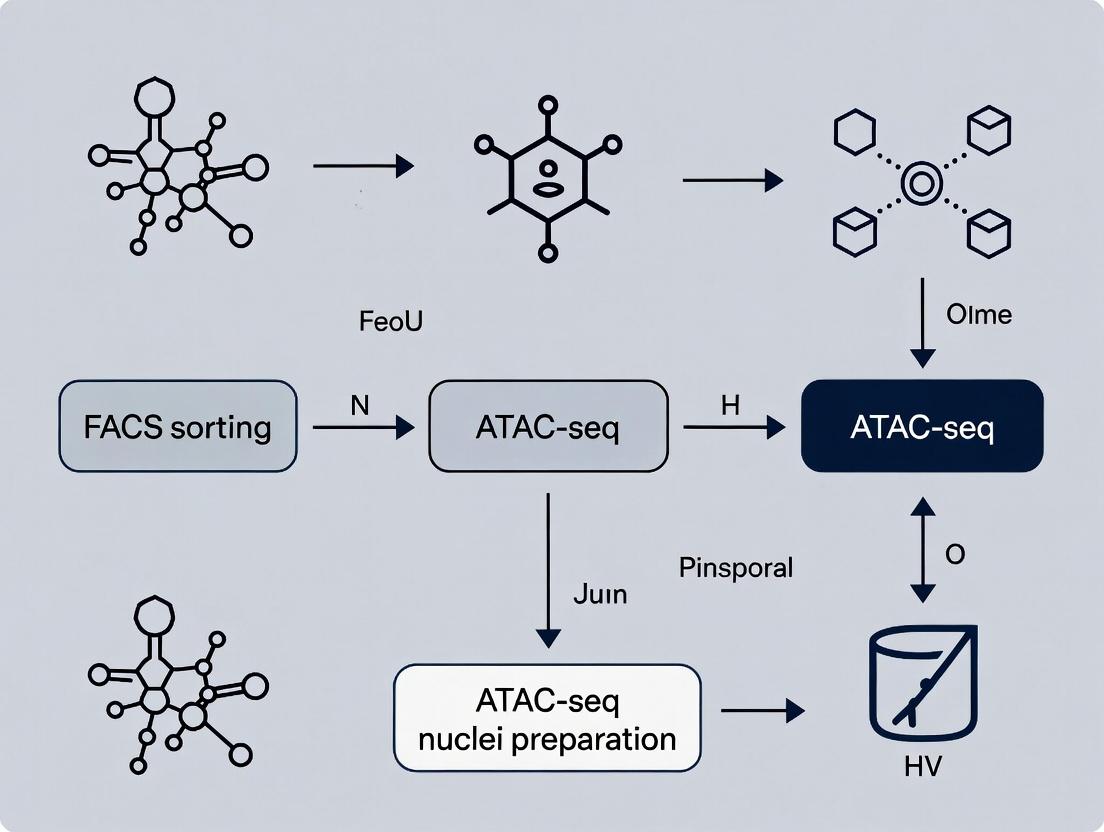
This article provides a detailed, step-by-step guide for researchers and drug development professionals on implementing fluorescence-activated cell sorting (FACS) for the isolation of high-quality nuclei for Assay for Transposase-Accessible Chromatin...
A Comprehensive Guide to FACS Sorting for High-Quality ATAC-seq Nuclei Preparation: Protocols, Optimization, and Best Practices
Abstract
This article provides a detailed, step-by-step guide for researchers and drug development professionals on implementing fluorescence-activated cell sorting (FACS) for the isolation of high-quality nuclei for Assay for Transposase-Accessible Chromatin with sequencing (ATAC-seq). It covers the foundational principles of why FACS is critical for ATAC-seq, presents a detailed methodological workflow from sample preparation to gating strategies, addresses common troubleshooting and optimization challenges, and validates the approach by comparing it to alternative methods. The guide synthesizes current best practices to ensure robust, reproducible chromatin accessibility profiles from complex or rare cell populations.
Why FACS Sorting is a Game-Changer for ATAC-seq: Principles, Advantages, and Core Applications
The success of ATAC-seq (Assay for Transposase-Accessible Chromatin using sequencing) hinges on the isolation of high-quality, intact nuclei. The challenge intensifies when working with complex samples like solid tissues (tumors, biopsies), frozen specimens, or fibrous materials where cellular heterogeneity and extracellular matrix complicate standard lysis. This application note, framed within a thesis on FACS sorting for ATAC-seq, details optimized protocols for robust nuclei isolation from diverse sample types, ensuring compatibility with downstream fluorescence-activated cell sorting (FACS) and transposase reaction.
Table 1: Comparison of Nuclei Isolation Buffers for Different Sample Types
| Sample Type | Recommended Buffer | Key Components (Typical) | Avg. Nuclei Yield (per mg tissue) | % Intact Nuclei (by DAPI) | Viability Post-Sort (ATAC-seq viable) | Key Citations (Recent) |
|---|---|---|---|---|---|---|
| Fresh/Fresh-frozen Spleen/Liver | Standard NP-40 Lysis | 10mM Tris-HCl, 10mM NaCl, 3mM MgCl2, 0.1% NP-40, 1% BSA | 50,000 - 100,000 | >85% | >90% | 10x Genomics CG000169 Rev D (2023) |
| Solid Tumors / Fibrous Tissue | Dounce Homogenization + Sucrose Cushion | 10mM Tris-HCl, 10mM NaCl, 3mM MgCl2, 0.1% IGEPAL, 0.25M Sucrose, RNase Inhibitor | 15,000 - 40,000 | 70-80% | 80-85% | Miltenyi Biotec, Nuclei Isolation Kit (2024) |
| Frozen Tissue (Archival) | EZ Prep Lysis Buffer | 10mM Tris-HCl, 10mM NaCl, 3mM MgCl2, 0.1% Tween-20, 0.1% Digitonin | 5,000 - 20,000 | 60-75% | 75-80% | Corces et al., Nat Methods, 2017; Updates (2023) |
| Cultured Cells (Adherent) | Hypotonic Lysis | 10mM Tris-HCl, 10mM NaCl, 3mM MgCl2, 0.1% IGEPAL | 90-95% of input cells | >90% | >95% | Buenrostro et al., Curr Protoc Mol Biol (2023) |
Table 2: Critical QC Metrics for FACS-Compatible Nuclei
| Metric | Method | Target Range for ATAC-seq | Impact on Downstream Assay |
|---|---|---|---|
| Concentration | Hemocytometer / Automated Counter | 1,000-5,000 nuclei/µL | Optimal sorting speed & event rate |
| Debris/Clumps | Microscopy (DAPI) / Flow Cytometry (FSC-A vs FSC-H) | <10% aggregates | Prevents nozzle clogging, ensures single-nuclei data |
| Nuclear Integrity | DAPI Staining & Microscopy | >70% intact, smooth membrane | Essential for transposase accessibility |
| RNase-free Environment | Use of RNase Inhibitors | 0.2 U/µL in all buffers | Preserves nascent RNA for multi-omics (e.g., ATAC-RNA) |
| Fluorescence Labeling (Optional) | Antibody Staining (e.g., H3K27me3) | Clear positive/negative population | Enables sorting of specific cell types from heterogeneous samples |
Detailed Protocols
Protocol 1: Nuclei Isolation from Fresh/Frozen Murine Spleen for FACS-ATAC-seq
Based on: 10x Genomics Demonstrated Protocol CG000169 Rev D (2023) & Buenrostro et al. (2023).
Materials:
- Nuclei Buffer (NB): 10mM Tris-HCl (pH 7.4), 10mM NaCl, 3mM MgCl2, 1% BSA, 0.1% IGEPAL CA-630. Filter sterilize (0.22 µm), store at 4°C. Add RNase Inhibitor (0.2 U/µL) fresh.
- Wash Buffer (WB): NB without IGEPAL.
- DAPI Stock Solution: 5 mg/mL in water.
- Cell Strainers: 40 µm and 20 µm.
- Refrigerated Centrifuge.
Method:
- Tissue Disaggregation: Place 10-20 mg fresh/frozen spleen in 1 mL ice-cold NB in a Dounce homogenizer. Homogenize with 10-15 strokes of the loose pestle (A), then 10-15 strokes of the tight pestle (B). Keep on ice.
- Filtration: Filter homogenate sequentially through a 40 µm and then a 20 µm cell strainer into a 15 mL conical tube. Rinse strainers with 1 mL WB.
- Centrifugation: Spin at 500 rcf for 5 minutes at 4°C. Carefully aspirate supernatant.
- Wash: Gently resuspend pellet in 1 mL WB. Spin at 500 rcf for 5 minutes at 4°C. Aspirate supernatant.
- Resuspension & Staining: Resuspend nuclei in 300-500 µL WB. Add DAPI to a final concentration of 1-5 µg/mL. Incubate on ice for 5-10 minutes, protected from light.
- Final Filtration: Filter through a 20 µm strainer-capped FACS tube immediately before sorting.
Protocol 2: Nuclei Isolation from Archived Frozen Solid Tumor Sections
Based on: Corces et al., Nat Methods (2017) with modifications from recent preprints (2024).
Materials:
- Homogenization Buffer (HB): 10mM Tris-HCl (pH 7.4), 10mM NaCl, 3mM MgCl2, 0.25M Sucrose. Store at 4°C.
- Lysis Buffer (LB): HB + 0.1% Tween-20 + 0.1% Digitonin.
- Wash Buffer (WB): HB + 0.1% BSA.
- RNase Inhibitor.
Method:
- Sectioning: Obtain one 50 µm cryosection in a 1.5 mL tube on dry ice.
- Homogenization: Add 500 µL ice-cold HB with RNase inhibitor. Vortex vigorously for 10 seconds. Incubate on ice for 2 minutes. Repeat vortex/incubation 3 times.
- Lysis: Add 500 µL ice-cold LB. Invert tube 10 times. Incubate on ice for 5 minutes with gentle inversion every minute.
- Filtration: Transfer lysate to a 40 µm strainer atop a 15 mL tube. Rinse with 1 mL WB.
- Centrifugation: Spin at 500 rcf for 5 minutes at 4°C.
- Wash & Resuspension: Resuspend in 1 mL WB, spin again. Resuspend final pellet in 100 µL WB with DAPI (1 µg/mL) and RNase inhibitor.
- QC: Assess clumping under microscope. If significant, perform a gentle 20 µm filtration.
Diagrams
Workflow for Nuclei Isolation & FACS-ATAC-seq
Logical Decision Tree for Buffer Selection
The Scientist's Toolkit: Key Research Reagent Solutions
Table 3: Essential Materials for Robust Nuclei Isolation
| Item/Reagent | Supplier Examples | Function in Protocol | Critical Note for ATAC-seq |
|---|---|---|---|
| IGEPAL CA-630 / NP-40 | Sigma-Aldrich, Thermo Fisher | Non-ionic detergent for plasma membrane lysis. | Concentration is critical (0.1-0.25%); too high disrupts nuclear membrane. |
| Digitonin | Sigma-Aldrich, Millipore | Mild, cholesterol-dependent detergent. | Preferred for frozen/archival samples; permeabilizes nuclear membrane for transposase entry. |
| Recombinant RNase Inhibitor | Takara, Lucigen | Inhibits RNase activity. | Mandatory for all buffers to preserve RNA integrity, especially for multi-omics. |
| UltraPure BSA (10% Solution) | Thermo Fisher | Reduces non-specific sticking, stabilizes nuclei. | Use nuclease-free grade. Helps prevent aggregation during FACS. |
| DAPI (4',6-diamidino-2-phenylindole) | Sigma-Aldrich, BioLegend | DNA intercalating dye for nuclei staining. | Standard for live nuclear detection in FACS. Use at low conc. (1-5 µg/mL). |
| Nuclease-Free Water | Thermo Fisher, Sigma | Diluent and buffer preparation. | Essential to prevent degradation of accessible chromatin ends. |
| 35 µm Cell Strainer Cap Tubes | Falcon, pluriSelect | Final filtration before FACS sorting. | Prevents nozzle clogging; key for high-throughput sorters. |
| Sucrose (Molecular Biology Grade) | Sigma-Aldrich | Osmotic stabilizer in homogenization buffers. | Protects nuclei from shear stress during homogenization of tough tissues. |
Within the broader research on optimizing FACS sorting for ATAC-seq nuclei preparation, the integrity and purity of isolated nuclei are the primary determinants of final data quality. ATAC-seq (Assay for Transposase-Accessible Chromatin using sequencing) requires high-quality nuclei to ensure accurate mapping of open chromatin regions. Compromised nuclei lead to background noise, inconsistent fragment size distributions, and poor signal-to-noise ratios, directly impacting downstream analyses such as transcription factor binding site identification and nucleosome positioning.
The Critical Role of Nuclear Quality in ATAC-seq
Nuclear integrity refers to the preservation of nuclear membrane and chromatin structure during isolation. Purity denotes the absence of cytoplasmic debris, cytoskeletal components, and intact cells. Both parameters are non-negotiable for successful tagmentation by the Tn5 transposase, which must access nucleosome-free regions.
Quantitative Impact of Nuclear Quality on Sequencing Metrics: The following table summarizes key data from recent studies correlating nuclear preparation quality with ATAC-seq outcomes.
Table 1: Impact of Nuclear Integrity and Purity on ATAC-seq Data Quality
| Quality Metric | High-Quality Nuclei | Low-Quality/Degraded Nuclei | Primary Effect on Data |
|---|---|---|---|
| Nuclear Purity (% nuclei) | >95% | <80% | High cytoplasmic contamination leads to mitochondrial read inflation (>50% reads possible). |
| Nuclear Integrity (Visual) | Intact, smooth membrane, no clumping. | Broken membranes, clumped chromatin, lysed debris. | Increased background noise, subnuclear fragments, poor library complexity. |
| Fraction of Reads in Peaks (FRiP) | 30-60% | <20% | Drastically reduced signal strength and specificity. |
| Transposition Efficiency (Unique Fragments) | 50,000 - 100,000 per nucleus | <10,000 per nucleus | Low library complexity and poor sequencing depth utilization. |
| TSS Enrichment Score | >10 | <5 | Poor enrichment for genuine open chromatin at transcription start sites. |
| Fragment Size Periodicity | Strong nucleosomal patterning (peaks at ~200bp, 400bp). | Loss of periodicity, smear. | Inability to call nucleosome positions accurately. |
Detailed Protocol: FACS-Based Isolation of High-Purity Nuclei for ATAC-seq
This protocol is designed within the thesis framework to maximize nuclear integrity and purity for bulk ATAC-seq.
Materials & Reagents:
- Tissue or Cultured Cells
- Nuclei Extraction Buffer (NEB): 10 mM Tris-HCl (pH 7.4), 10 mM NaCl, 3 mM MgCl2, 0.1% IGEPAL CA-630 (or NP-40), 1% BSA, 1x Protease Inhibitor. Keep ice-cold.
- Nuclei Wash Buffer: NEB without detergent.
- Staining Solution: 1x PBS, 1% BSA, 2-5 µg/mL DAPI (or suitable DNA dye compatible with FACS lasers).
- FACS Collection Tube: Lo-bind tube pre-filled with Collection Buffer (1x PBS, 1% BSA).
- Fluorescence-Activated Cell Sorter (FACS) with a 100 µm nozzle and chilling capability.
Procedure:
- Tissue/Cell Harvest: Harvest fresh tissue and mechanically dissociate in ice-cold NEB using a dounce homogenizer (loose pestle, 10-15 strokes). For cells, wash with cold PBS and proceed to lysis. All steps on ice.
- Nuclear Extraction: Filter homogenate/cell suspension through a 40 µm strainer. Incubate on ice for 5-10 minutes for detergent lysis. Monitor lysis under a microscope.
- Wash and Stain: Pellet nuclei at 500 rcf for 5 min at 4°C. Gently resuspend in 1 mL Nuclei Wash Buffer. Pellet again and resuspend in 300-500 µL Staining Solution. Incubate on ice, protected from light, for 15-30 min.
- FACS Gating Strategy (Critical for Purity):
- Gate 1 (P1 - Debris Exclusion): Plot FSC-A vs SSC-A. Gate on the population with higher FSC to exclude small debris.
- Gate 2 (P2 - Singlets): Plot FSC-H vs FSC-W from P1. Gate on the tight diagonal population to select single nuclei, excluding doublets and aggregates.
- Gate 3 (P3 - Nuclei Selection): Plot the DNA dye (e.g., DAPI-A) vs. SSC-A or a viability dye channel (if used). Select the DAPI-bright, homogeneous population. Exclude events with low DAPI signal (incomplete nuclei) or high side-scatter (cytoplasmic contamination).
- Sorting: Sort the gated population (P3) directly into pre-chilled collection tubes. Use a low pressure (20 psi) and a 100 µm nozzle. Collect 10,000-50,000 nuclei per sample as required.
- Post-Sort Processing: Immediately centrifuge sorted nuclei at 500 rcf for 5 min at 4°C. Proceed directly to the ATAC-seq tagmentation reaction without delay.
Visualization of Workflows and Relationships
Title: FACS Sorting Workflow for ATAC-seq Nuclei Prep
Title: Nuclear Quality Impact on ATAC-seq Outcomes
The Scientist's Toolkit: Research Reagent Solutions
Table 2: Essential Materials for High-Quality Nuclear Preparation
| Item | Function in Protocol | Key Consideration for Quality |
|---|---|---|
| Mild Detergent (IGEPAL CA-630/NP-40) | Lyses plasma membrane while leaving nuclear envelope intact. | Concentration and incubation time are critical; too harsh damages nuclei. |
| BSA (Bovine Serum Albumin) | Acts as a stabilizer and carrier, reduces non-specific binding and nuclei clumping. | Use nuclease-free, high-purity grade. Essential in all buffers. |
| Protease Inhibitor Cocktail | Prevents degradation of nuclear proteins and chromatin during isolation. | Must be added fresh to ice-cold buffers. |
| DNA-Specific Fluorescent Dye (DAPI, Hoechst) | Stains nuclear DNA for detection and sorting by FACS. | DAPI is cost-effective; confirm laser compatibility. |
| 40 µm Cell Strainer | Removes large cellular aggregates and tissue debris post-homogenization. | Pre-wet with buffer to prevent adhesion and loss of nuclei. |
| Low-Binding Microcentrifuge Tubes | For storing and processing nuclei. | Minimizes adhesion of nuclei to tube walls, increasing yield. |
| Sorted Nuclei Collection Buffer (PBS + BSA) | Provides a stable, protein-rich medium for collecting sorted nuclei. | Pre-fill tubes; maintains viability and prevents lysis from shear stress. |
| Tn5 Transposase (Commercial Kit) | Enzymatically fragments accessible chromatin and adds sequencing adapters. | Use a validated, high-activity kit; tagmentation time depends on nucleus count. |
Within the broader thesis on optimizing single-nucleus ATAC-seq (snATAC-seq) workflows, Fluorescence-Activated Cell Sorting (FACS) is evaluated not merely as a debris removal tool, but as a critical gatekeeper for data quality. This application note details its core advantages—precision isolation of intact, transcriptionally competent nuclei based on DNA content and exclusion of compromised cellular material—which are fundamental for generating high-quality, interpretable chromatin accessibility data in drug discovery and basic research.
Core Advantages and Quantitative Data
FACS provides quantifiable improvements over filter-based or differential centrifugation methods.
Table 1: Quantitative Comparison of Nuclei Isolation Methods for snATAC-seq
| Parameter | Filter/Centrifugation | FACS-Based Isolation | Impact on snATAC-seq Data |
|---|---|---|---|
| Nuclei Integrity (% DAPI+/PI-) | 70-85% | >95% | Reduces background noise from cytoplasmic contaminants. |
| Debris & Fragment Contamination | High (15-30% of events) | Very Low (<5% of sorted events) | Prevents sequencing of non-nuclear DNA, improving library complexity. |
| Ploidy-Based Selection | Not possible | Precise 2N (Diploid) Gating | Enables isolation of specific populations (e.g., tumor vs. stromal nuclei). |
| Multiplexing Sample Recovery | Limited, prone to cross-contam. | High-Fidelity, Sample-Tagged Recovery | Enables robust multiplexing with hashtag antibodies or genetic labels. |
| Throughput (Nuclei/hr) | Very High (>1M) | Moderate (50k-100k) | Balanced by vastly superior input quality for library prep. |
| Key snATAC-seq Metric: TSS Enrichment | 8-12 | 12-20+ | Directly correlates with higher data quality and interpretability. |
Detailed Protocol: FACS Isolation of Nuclei for snATAC-seq
Protocol: FACS-Based Isolation of Viable, Diploid Nuclei from Frozen Tissue
Adapted from current best practices for pre-processing nuclei for ATAC-seq.
I. Reagent Solutions & Key Materials
- Nuclei Extraction Buffer: (10 mM Tris-HCl pH 7.4, 10 mM NaCl, 3 mM MgCl2, 0.1% IGEPAL CA-630, 1% BSA, 1 mM DTT, 0.1 U/µL RNase inhibitor, 1x Protease Inhibitor). Function: Gently lyses plasma membrane while preserving nuclear envelope integrity.
- Nuclei Wash Buffer: (1x PBS, 1% BSA, 0.1 U/µL RNase inhibitor). Function: Removes detergents and provides isotonic conditions for sorting.
- Nuclei Staining Solution: DAPI (1-5 µg/mL) or TO-PRO-3 (1 µM) in Wash Buffer. Function: Impermeant DNA dye selectively stains free nucleic acids and dead/damaged nuclei with compromised membranes. Critical: Use at low concentration to minimize assay interference.
- Sorting Sheath Fluid: Sterile, nuclease-free 1x PBS or specific FACS buffer. Function: Maintains nuclei isotonicity and sterility during sorting.
- Collection Tube Buffer: (1x PBS, 2% BSA, 0.1 U/µL RNase inhibitor, 1 mM DTT). Function: Preserves nuclear integrity and activity post-sort for immediate tagmentation.
II. Step-by-Step Workflow
- Tissue Homogenization: Mince 10-50 mg frozen tissue on dry ice. Transfer to a Dounce homogenizer containing 2 mL cold Nuclei Extraction Buffer. Dounce (loose pestle, 15 strokes; tight pestle, 15 strokes) on ice.
- Filtration & Debris Removal: Filter homogenate through a 40 µm cell strainer into a 15 mL conical tube. Incubate on ice for 5 minutes.
- Centrifugation: Centrifuge at 500 rcf for 5 minutes at 4°C. Carefully aspirate supernatant.
- Staining: Resuspend pellet in 1 mL Nuclei Staining Solution. Incubate for 5-10 minutes on ice, protected from light.
- FACS Instrument Setup:
- Use a 100 µm nozzle.
- Set threshold on forward scatter (FSC) to eliminate small debris.
- Create a plot of FSC-A vs. DAPI-A (or TO-PRO-3-A).
- Gate on the primary nuclei population (high DAPI, moderate FSC).
- Create a second plot of DAPI-W vs. DAPI-A to exclude doublets.
- From the singlet gate, apply a final gate to select DAPI-high, DAPI-intermediate nuclei, excluding DAPI-low debris and DAPI-very-high aggregates/clumps.
- (For complex tissues) Use a plot of DAPI-A vs. a nuclear marker (e.g., H3K9me2 antibody) to further exclude non-nuclear events.
- Sorting: Sort the gated population into a low-bind microcentrifuge tube containing 200 µL Collection Tube Buffer. Keep samples on ice.
- Post-Sort QC & Processing: Count sorted nuclei with a hemocytometer. Proceed immediately with the ATAC-seq tagmentation reaction (e.g., using TN5 transposase). Recommended input: 5,000-20,000 nuclei.
Visualizing the Workflow and Advantage
FACS Nuclei Isolation & Gating Strategy for ATAC-seq
Core Advantage: Selective Exclusion for Quality
The Scientist's Toolkit: Key Reagent Solutions
Table 2: Essential Reagents for FACS-ATAC-seq Workflow
| Reagent/Material | Function/Role | Key Consideration for ATAC-seq |
|---|---|---|
| DAPI (4',6-diamidino-2-phenylindole) | Impermeant DNA dye for viability and ploidy gating. | Low concentration (1-5 µg/mL) minimizes interference with tagmentation. |
| TO-PRO-3 Iodide | Alternative far-red DNA dye for multiplexing with GFP/etc. | Compatible with blue/green laser instruments. |
| Nuclease-Free BSA | Carrier protein in buffers; reduces non-specific sticking. | Maintains nuclear stability and improves sort recovery. |
| RNase Inhibitor | Protects nuclear RNA if simultaneous RNA-seq is planned. | Critical for multi-omic applications (e.g., snATAC-seq + snRNA-seq). |
| IGEPAL CA-630 (Nonidet P-40) | Non-ionic detergent for plasma membrane lysis. | Concentration (0.1-0.5%) is critical; too high disrupts nuclei. |
| Low-Bind Microcentrifuge Tubes | For collecting sorted nuclei. | Prevents loss of low-abundance nuclei to tube walls. |
| Nuclei Hashtag Antibodies | (e.g., TotalSeq-A) for multiplexed sample pooling pre-sort. | Enables FACS to sort a clean, pooled population, reducing batch effects. |
Application Notes
Fluorescence-Activated Cell Sorting (FACS) for ATAC-seq nuclei preparation is a cornerstone technique for mapping chromatin accessibility in defined cellular subsets. Its power lies in the ability to isolate nuclei from specific, even extremely rare, cell populations from complex tissues or clinical specimens prior to tagmentation and sequencing. This enables the discovery of cell-type-specific regulatory landscapes and their alterations in disease states.
Recent advancements have focused on three key applications:
- Rare Cell Populations (<1% of total): Successfully profiling nuclei from rare stem/progenitor cells or circulating tumor cells requires high-yield, low-input protocols. A 2023 study demonstrated ATAC-seq from as few as 500 FACS-isolated nuclei from hematopoietic stem cells with high data quality (TSS enrichment >10).
- Frozen Clinical Specimens: The compatibility of FACS sorting with frozen tissue archives has revolutionized translational research. A standardized protocol for frozen human tumor biopsies enables consistent nuclei recovery (typically 50-70% of fresh yield) and robust ATAC-seq libraries.
- Immunophenotypically Complex Samples: Multi-parameter FACS (≥10 colors) allows for the simultaneous isolation of nuclei from multiple, closely related immune cell subsets from a single sample, dramatically increasing experimental throughput and reducing batch effects.
Table 1: Quantitative Comparison of Key FACS-ATAC-seq Applications
| Application | Typical Input (# of nuclei sorted) | Expected Nuclei Recovery Post-Sort | Minimum Recommended for Library | Key Quality Metric (TSS Enrichment) | Primary Challenge |
|---|---|---|---|---|---|
| Abundant Primary Cells (e.g., PBMC subsets) | 10,000 - 50,000 | 85-95% | 2,000 | >15 | Apoptosis during sort |
| Rare Cell Populations (<1%) | 500 - 5,000 | 70-85% | 500 | >8 - 12 | Background from non-target nuclei |
| Frozen Tissue / Biopsies | 20,000 - 100,000 | 50-70% | 5,000 | >10 | Cell wall/debris; increased fragmentation |
| FFPE Tissue Sections | 50,000+ | 20-40% | 20,000 | >6* | Crosslinking-induced damage; very low yield |
Note: FFPE requires specialized protocols for chromatin recovery.
Detailed Protocols
Protocol 1: FACS Sorting of Nuclei from Frozen Clinical Specimens for ATAC-seq
Objective: To isolate intact, immunolabeled nuclei from frozen tissue for chromatin accessibility profiling. Materials: See "The Scientist's Toolkit" below. Method:
- Tissue Disaggregation: Cryopulverize 10-30 mg frozen tissue in a pre-chilled mortar. Transfer powder to a Dounce homogenizer containing 2 mL of pre-chilled Lysis Buffer (10 mM Tris-HCl pH 7.4, 10 mM NaCl, 3 mM MgCl2, 0.1% IGEPAL CA-630, 1% BSA, 1 mM DTT, 0.1 U/µL RNase inhibitor, 1x Protease Inhibitor).
- Nuclei Isolation: Dounce with a loose pestle (15 strokes) and then a tight pestle (15 strokes). Filter through a 40 µm strainer. Centrifuge at 500 rcf for 5 min at 4°C. Resuspend pellet in 1 mL Wash Buffer (PBS, 1% BSA, 0.1 U/µL RNase inhibitor).
- Immunostaining: Add primary antibody (e.g., anti-NeuN-AF488 for neurons) at manufacturer's recommended dilution. Incubate for 30 min on ice in the dark. Wash with 1 mL Wash Buffer, centrifuge, and resuspend in 500 µL Sorting Buffer (PBS, 1% BSA, 0.1 U/µL RNase inhibitor, 2 mM EDTA). Add DAPI (1 µg/mL) for live/dead discrimination.
- FACS Sorting: Use a 100 µm nozzle. Gate on DAPI+ events to exclude debris. Apply a strict singlet gate based on FSC-H vs FSC-A. Sort the target (e.g., DAPI+ / AF488+) population directly into a low-bind microcentrifuge tube containing 50 µL Collection Buffer (Sorting Buffer with 10% DMSO). Keep samples on ice.
- Post-Sort Processing: Centrifuge sorted nuclei at 500 rcf for 5 min at 4°C. Carefully aspirate supernatant. Proceed immediately to the ATAC-seq tagmentation reaction using a low-input protocol (e.g., Omni-ATAC).
Protocol 2: Low-Input ATAC-seq on FACS-Sorted Rare Cell Nuclei
Objective: Generate high-quality ATAC-seq libraries from ≤ 5,000 sorted nuclei. Modifications to Standard ATAC-seq:
- Tagmentation: Use a reduced-volume tagmentation reaction (e.g., 10 µL total). Incubate transposase (Tn5) with nuclei for 30 min at 37°C with gentle shaking (300 rpm).
- Library Amplification: After tagmentation, directly add PCR master mix. Use a qPCR side-reaction to determine the optimal number of amplification cycles to avoid over-amplification. Typically, 10-13 cycles are sufficient for 500-5,000 nuclei.
- Clean-up: Use a double-sided SPRI bead cleanup (e.g., 0.5x and 1.2x ratios) to rigorously remove primer dimers and large fragments.
Visualizations
The Scientist's Toolkit
Table 2: Essential Research Reagent Solutions for FACS-ATAC-seq
| Item | Function & Importance | Example Product/Catalog # |
|---|---|---|
| Nuclei Lysis Buffer | Gently lyses plasma membrane while keeping nuclear membrane intact. Critical for clean DAPI signal and accessibility. | Homemade (10 mM Tris-HCl, 10 mM NaCl, 3 mM MgCl2, 0.1% IGEPAL CA-630) or commercial nuclei isolation kits. |
| Sorting Buffer (with BSA/EDTA) | Maintains nuclei stability and prevents clumping during sorting. EDTA inhibits nucleases. | PBS, 1% BSA, 2 mM EDTA, 0.1 U/µL RNase Inhibitor. |
| DAPI (1 µg/mL) | Vital dye for staining DNA. Allows discrimination of intact nuclei (DAPI bright) from debris and identification of aneuploidy in cancer cells. | Thermo Fisher Scientific, D1306. |
| Validated Antibody Conjugates | For nuclear antigen staining (e.g., NeuN, FOXP3, H3K27me3). Must be validated for use in fixed/permeabilized or native nuclei. | Anti-NeuN Alexa Fluor 488 (Millipore, MAB377X). |
| Low-Bind Microcentrifuge Tubes | Minimizes loss of low-abundance nuclei due to surface adhesion during collection and processing. | Eppendorf DNA LoBind Tubes (022431021). |
| Tagmentation Enzyme (Tn5) | Engineered transposase that simultaneously fragments and tags accessible chromatin with sequencing adapters. | Illumina Tagment DNA TDE1 Enzyme (20034197) or homemade Tn5. |
| SPRI Beads | For size-selective cleanup of tagmented DNA and final libraries. Essential for removing primer dimers. | Beckman Coulter AMPure XP beads (A63880). |
| RNase Inhibitor | Prevents RNA contamination during nuclei preparation, which can interfere with sorting and downstream reactions. | Takara, RNase Inhibitor (2313A). |
Essential FACS Hardware and Reagent Considerations for Nuclei Work
Within the broader thesis on FACS sorting for ATAC-seq nuclei preparation, the isolation of high-quality, intact nuclei is the critical first step. The success of downstream sequencing and data interpretation hinges on the precise selection and configuration of fluorescence-activated cell sorting (FACS) hardware, coupled with carefully optimized reagents. This application note details the essential considerations for establishing a robust workflow for nuclei sorting, focusing on hardware configurations that minimize shear stress and clogs, and reagent formulations that preserve nuclear integrity and epigenomic state.
Core FACS Hardware Configuration for Nuclei
Nuclei, lacking a protective cell membrane, are more fragile than whole cells. Standard cell sorters require specific modifications and settings to handle nuclei efficiently.
Nozzle and Fluidics Selection
A larger nozzle diameter reduces shear forces and minimizes the risk of clogging with nuclear aggregates or debris.
Table 1: Nozzle Size Recommendations for Nuclei Sorting
| Nozzle Diameter (µm) | System Pressure (PSI) | Sort Rate (events/sec) | Advantage | Consideration |
|---|---|---|---|---|
| 100 | 10-12 | 200-500 | Minimal shear, low clog risk | Lower sort purity due to larger droplet size |
| 70 | 20-25 | 1000-3000 | Balanced purity and viability | Standard for many nuclei protocols |
| 85 | 15-20 | 500-1500 | Good compromise for most applications | Preferred for ATAC-seq nuclei |
Critical Hardware Modifications and Settings
- Cooled Sample Chamber (4°C): Essential to maintain nuclear integrity and reduce enzymatic activity.
- Low System Pressure: Configure the fluidics for "low" or "precision" mode to reduce shear stress.
- Large Nozzle Tip Filter (e.g., 100 µm): Pre-filter the sample immediately before the nozzle to prevent clogs.
- Stream-in-Air vs. Cuvette: Stream-in-air systems are generally preferred for sorting into plates, but ensure the catch tube or plate is cooled.
Essential Reagents and Buffer Formulations
The choice of lysis and sorting buffers determines nuclear yield, purity, and epigenetic preservation.
Nuclear Isolation and Sorting Buffers
Buffers must provide osmotic stability and protect against nuclear clumping.
Table 2: Key Components of Nuclear Sorting Buffers
| Component | Typical Concentration | Function | Critical Note |
|---|---|---|---|
| Sucrose | 250-320 mM | Provides osmotic cushion to prevent nuclear swelling/lysis. | Must be ultra-pure; filter sterilize. |
| MgCl₂ | 5-10 mM | Stabilizes chromatin structure and nuclear lamina. | Excessive Mg²⁺ can promote aggregation. |
| BSA | 0.1-1% | Coats surfaces, reduces sticking, and buffers proteins. | Use molecular biology grade, nuclease-free. |
| EDTA/EGTA | 0.1-1 mM | Chelates divalent cations to inhibit nucleases. | Optimize balance with MgCl₂ for stability. |
| Detergent (e.g., NP-40, Triton X-100) | 0.01-0.1% | In sorting buffer, helps prevent re-aggregation of nuclei. | Use at minimal effective concentration. |
| RNase Inhibitor | 0.2 U/µL | Protects RNA content if simultaneous RNA-seq is planned. | Not always needed for pure ATAC-seq. |
| Protease Inhibitors | 1X cocktail | Preserves protein epitopes and histone modifications. | Essential for downstream ChIP or CUT&Tag. |
Viability and Sorting Dyes
- DAPI (4',6-diamidino-2-phenylindole): The most common viability stain for nuclei. It is permeable to intact membranes but binds strongly to double-stranded DNA. A distinct, bright DAPI signal identifies intact nuclei, while debris shows low signal.
- Propidium Iodide (PI): An alternative to DAPI. Note that PI requires an RNAse treatment step to reduce background from nuclear RNA.
- SYTOX Green/Blue: Viability dyes with different spectral properties useful for multi-parameter sorting.
- Fluorescent Antibodies: For sorting specific nuclear populations (e.g., using H3K27me3, NeuN, or lineage-specific transcription factor antibodies). Use validated, direct conjugates to avoid large antibody aggregates.
Detailed Protocol: Nuclei Preparation and FACS Sorting for ATAC-seq
Day 1: Tissue Harvest and Nuclear Isolation
- Fresh Tissue Dissociation: Mince tissue on ice in 1-2 mL of chilled Nuclear Isolation Buffer (NIB: 250 mM sucrose, 25 mM KCl, 5 mM MgCl₂, 10 mM Tris-HCl pH 7.4, 0.1% Triton X-100, 1x protease inhibitors, 0.2 U/µL RNase inhibitor). Use a loose dounce homogenizer (7-10 strokes).
- Filtration: Filter homogenate through a 40 µm cell strainer into a 15 mL conical tube. Wash strainer with 1 mL NIB.
- Centrifugation: Pellet nuclei at 500-800 x g for 5 min at 4°C. Gently resuspend pellet in 1 mL of chilled Nuclei Sorting Buffer (NSB: 1x PBS, 1% BSA, 0.1-0.2 U/µL RNase inhibitor, 1 mM EDTA).
- Staining: Add DAPI to a final concentration of 1-5 µg/mL. Incubate on ice for 5-10 min, protected from light.
- Final Filtration: Filter through a 35 µm cell strainer cap into a FACS tube. Keep on ice, protected from light, until sort.
Day 1: FACS Instrument Setup and Sorting
- Configure Sorter: Install a 100 µm nozzle and set system pressure to ~12 PSI. Ensure sample chamber is at 4°C. Use a 100 µm tip filter.
- Gating Strategy:
- Trigger: Use FSC-Area (FSC-A) with a low threshold to capture all particles.
- Singlets: Plot FSC-A vs. FSC-H to exclude doublets and aggregates.
- Nuclei Population: From singlets, plot DAPI-A vs. DAPI-W to select the bright, uniform DAPI-positive population and exclude DAPI-dim debris.
- Sort Purity: Use a 1.0 or 1.5-drop envelope for purity. Consider "Single-Cell" or "Single-Cell (16)" mask for plate sorting.
- Collection: Sort directly into a low-bind, pre-cooled microfuge tube or plate containing 20-50 µL of NSB + 0.1% Triton X-100. Immediately place sorted nuclei on ice.
- Post-Sort QC: Take a small aliquot (5-10 µL) and re-analyze on the sorter to assess sort purity (should be >95%).
Post-Sort: Proceed to ATAC-seq Tagmentation
- Centrifuge sorted nuclei at 500 x g for 5 min at 4°C. Carefully remove supernatant.
- Resuspend nuclear pellet in the appropriate volume of transposase reaction mix (e.g., from the Omni-ATAC or commercial ATAC-seq kit protocol).
- Proceed with the standard ATAC-seq tagmentation, PCR amplification, and library cleanup steps.
The Scientist's Toolkit: Key Research Reagent Solutions
Table 3: Essential Materials for FACS of Nuclei
| Item | Supplier Examples | Function in Workflow |
|---|---|---|
| UltraPure Sucrose | Thermo Fisher, Sigma | Provides precise osmotic pressure in buffers to prevent nuclear lysis. |
| Molecular Biology Grade BSA | New England Biolabs, Sigma | Reduces non-specific binding and nuclear loss on tube surfaces. |
| RNasin Plus RNase Inhibitor | Promega | Preserves nuclear RNA integrity for multi-omic assays (ATAC + RNA). |
| cOmplete Mini Protease Inhibitor Cocktail | Roche | Prevents degradation of nuclear proteins and histone marks. |
| DAPI (4',6-diamidino-2-phenylindole), Dihydrochloride | Thermo Fisher | Impermeant DNA dye for identifying intact nuclei during sorting. |
| Falcon 35 µm Cell Strainer Snap Cap | Corning | Final filtration step to prevent nozzle clogs during sorting. |
| Low-Bind Microcentrifuge Tubes/Plates | Eppendorf, Avygen | Minimizes loss of low-abundance nuclei during collection. |
| Pre-Separation Filters (100 µm) | Miltenyi Biotec, pluriSelect | For filtering sample directly in front of the nozzle fluidic line. |
Visualized Workflows
Title: Nuclear Isolation and FACS Sorting Workflow for ATAC-seq
Title: Hardware & Reagent Synergy for High-Quality Nuclei
Step-by-Step Protocol: From Tissue to Sorted Nuclei for ATAC-seq Library Prep
Within the broader thesis on Fluorescence-Activated Cell Sorting (FACS) for Assay for Transposase-Accessible Chromatin with sequencing (ATAC-seq) nuclei preparation, the pre-sorting phase is critical. The quality of final chromatin accessibility data is fundamentally constrained by the initial steps of tissue dissociation and nuclear isolation. Suboptimal buffers can lead to nuclear clumping, loss of rare cell populations, poor FACS resolution, and damaged or permeable nuclei that yield low-quality sequencing libraries. This application note details current, optimized protocols and reagent formulations to ensure the extraction of high-quality, intact nuclei for subsequent FACS sorting and ATAC-seq.
The Impact of Buffer Composition on Nuclear Integrity
The primary goals during the pre-sorting phase are to: 1) completely dissociate tissue into a single-nuclei suspension, 2) maintain nuclear membrane integrity and epigenetic state, 3) minimize endogenous nuclease activity, and 4) preserve antigenicity for any antibody-based sorting. Buffer ionic strength, detergent type and concentration, divalent cation chelation, and protease/nuclease inhibition are all tunable parameters.
Table 1: Comparison of Key Nuclear Extraction Buffer Components
| Component | Function | Optimal Concentration Range | Notes for ATAC-seq |
|---|---|---|---|
| Detergent (e.g., IGEPAL CA-630, NP-40) | Lyses plasma membrane while sparing nuclear envelope. | 0.1% - 0.5% (v/v) | Concentration is tissue-dependent; too high causes nuclear lysis. |
| Salt (e.g., KCl, NaCl) | Regulates osmotic pressure and chromatin condensation. | 10-250 mM | Low salt (<50mM) can cause swelling; high salt can promote aggregation. |
| Chelator (e.g., EDTA, EGTA) | Chelates Mg2+/Ca2+ to inhibit nucleases & chromatin remodeling. | 0.5 - 5.0 mM | EGTA is more specific for Ca2+. Combination often used. |
| Buffering Agent (e.g., Tris, HEPES) | Maintains physiological pH (~7.4). | 10-20 mM | HEPES recommended for cold temperatures. |
| Sucrose | Provides osmotic support and cushioning. | 250 - 340 mM | Critical for maintaining nuclear structure during centrifugation. |
| BSA / RNAse Inhibitor | Reduces sticking; inhibits RNAse activity. | 0.1% BSA; 0.2 U/μL | BSA reduces non-specific loss. RNAse inhibitor preserves RNA if needed. |
| Protease Inhibitors | Inhibits endogenous proteases. | 1X commercial cocktail | Essential for preserving nuclear proteins and epitopes. |
| Spermidine / DTT | Stabilizes chromatin; reducing agent. | 0.5 mM / 0.5-1.0 mM | Spermidine can reduce stickiness; DTT keeps cysteine residues reduced. |
Detailed Protocols
Protocol 1: Gentle Mechanical Dissociation for Murine Brain Cortex
This protocol is adapted from current best practices for complex neural tissues. Materials:
- Homogenizer (e.g., Dounce with loose pestle A)
- Refrigerated centrifuge
- Buffer NEB-1 (see Table 2).
Procedure:
- Dissect fresh brain cortex (~50 mg) in cold PBS.
- Mince tissue finely with a scalpel in 1 mL of ice-cold Buffer NEB-1.
- Transfer tissue slurry to a Dounce homogenizer. Perform 15-20 strokes with the loose pestle (clearance ~0.1 mm). Keep on ice.
- Filter the homogenate through a 40-μm cell strainer into a 15 mL conical tube.
- Centrifuge at 500 x g for 5 minutes at 4°C to pellet nuclei.
- Gently resuspend pellet in 1 mL Buffer NEB-1. Do not vortex.
- Filter through a 20-μm strainer. Keep on ice and proceed to FACS staining or QC.
Protocol 2: Enzymatic + Mechanical Dissociation for Human Frozen PBMCs
For frozen human peripheral blood mononuclear cells (PBMCs), a mild enzymatic step can improve recovery. Materials:
- Water bath (37°C)
- Buffer NEB-2 (see Table 2).
- Digestion Buffer: NEB-2 + 0.05% Collagenase P + 0.02 U/μL DNAse I.
Procedure:
- Thaw frozen PBMC vial rapidly in a 37°C water bath. Immediately transfer to 10 mL pre-warmed (37°C) Digestion Buffer.
- Incubate for 15 minutes at 37°C with gentle agitation.
- Add 10 mL of ice-cold Buffer NEB-2 to stop digestion.
- Pass solution 3-5 times through a 25-gauge needle attached to a 10 mL syringe.
- Centrifuge at 500 x g for 5 min at 4°C. Discard supernatant.
- Resuspend pellet in 1 mL ice-cold Buffer NEB-2.
- Filter through a 20-μm strainer. Keep on ice for FACS.
Table 2: Example Buffer Formulations for ATAC-seq Nuclear Extraction
| Component | Buffer NEB-1 (Gentle Lysis) | Buffer NEB-2 (Dense Tissue / Post-Enzyme) |
|---|---|---|
| Tris-HCl (pH 7.4) | 10 mM | 10 mM |
| NaCl | 10 mM | 50 mM |
| MgCl2 | 3 mM | 3 mM |
| Sucrose | 250 mM | 340 mM |
| IGEPAL CA-630 | 0.1% | 0.3% |
| EDTA | 0.1 mM | 1 mM |
| EGTA | 0.5 mM | 0.5 mM |
| Spermidine | 0.5 mM | 0.5 mM |
| DTT | 0.5 mM | 1.0 mM |
| BSA | 0.1% | 0.1% |
| RNAse Inhibitor | 0.2 U/μL | 0.2 U/μL |
| Protease Inhibitor Cocktail | 1X | 1X |
| Best For | Fresh, soft tissues (brain, spleen). | Frozen tissues, PBMCs, or fibrous tissues. |
The Scientist's Toolkit: Research Reagent Solutions
Table 3: Essential Materials for Nuclear Extraction
| Item | Function & Rationale |
|---|---|
| Dounce Homogenizer (loose & tight pestle) | Provides controlled mechanical shearing. Loose pestle is for initial tissue breakup; critical for consistency. |
| Cell Strainers (20μm, 40μm nylon) | Removes large debris and clumps to prevent FACS sorter clogging. Sequential filtering (40μm then 20μm) is recommended. |
| IGEPAL CA-630 (Octylphenoxy Polyethoxyethanol) | Non-ionic detergent standard for nuclear isolation. Preferred over NP-40 for consistency between lots. |
| UltraPure BSA (50 mg/mL) | Reduces non-specific adhesion of nuclei to plastic tubes and filters, improving yield. |
| Recombinant RNase Inhibitor (e.g., Murine) | Protects nuclear RNA if simultaneous RNA-seq is planned and prevents RNA-mediated clumping. |
| Protease Inhibitor Cocktail (EDTA-free) | Broad-spectrum inhibition of serine, cysteine, and metalloproteases. EDTA-free allows for Mg2+ dependent steps later. |
| Spermine/Spermidine (1M Stock) | Polycations that stabilize chromatin structure and reduce nuclear aggregation. |
| DTT (1M Stock) | Reducing agent added fresh to buffers to prevent oxidation of cysteine residues in nuclear proteins. |
| SYTOX Green / Red Dead Cell Stain | Impermeant DNA dye for flow cytometry to gate on intact (dye-excluding) nuclei. |
| Fluorescent Anti-Nuclear Pore Complex Antibody | Positive stain to identify intact nuclei during FACS, distinguishing them from cytoplasmic debris. |
Workflow and Buffer Optimization Logic
Title: Decision Workflow for Tissue Dissociation and Buffer Selection
Title: Buffer Optimization Logic to Prevent Nuclear Clumping
In the context of fluorescence-activated cell sorting (FACS) for Assay for Transposase-Accessible Chromatin with sequencing (ATAC-seq) nuclei preparation, accurate assessment of nuclei viability and integrity is paramount. The choice of viability dye directly impacts the quality of sorted nuclei and subsequent sequencing data. This application note compares three common nucleic acid-binding dyes—DAPI, SYTOX Green, and Propidium Iodide (PI)—within the experimental framework of preparing nuclei for ATAC-seq. These dyes are used to distinguish intact nuclei from permeable/debris, ensuring that only high-quality, viable nuclei are sorted for downstream transposition and library preparation.
Comparative Dye Properties and Selection Criteria
The selection of an appropriate viability stain depends on membrane permeability, excitation/emission spectra compatibility with other fluorochromes, and DNA binding affinity. The following table summarizes key properties.
Table 1: Comparative Properties of Nucleic Acid Stains for Nuclei Viability
| Property | DAPI | SYTOX Green | Propidium Iodide (PI) |
|---|---|---|---|
| Primary Use | Viability/Content | Viability | Viability |
| Membrane Permeability | Permeant (live cells), but impermeant to intact nuclei membranes. | Impermeant to intact nuclei. | Impermeant to intact nuclei. |
| Excitation/Emission (nm) | ~358/461 | ~504/523 | ~535/617 |
| DNA Binding Affinity | High (AT-selective) | High | High (intercalator) |
| Compatible Laser | UV (355nm) or 405nm | Blue (488nm) | Green (532nm) or Blue (488nm) |
| Typical Concentration | 0.1 - 1 µg/mL | 50 - 500 nM | 0.5 - 2 µg/mL |
| Staining Time | Can be used immediately | 5-15 minutes | 5-15 minutes |
| Key Consideration for ATAC-seq | UV excitation can cause DNA damage; use low concentration & short exposure. | High sensitivity; potential for high background if debris is abundant. | Standard for viability; compatible with GFP/FITC channels (requires spectral overlap consideration). |
Detailed Protocols
Protocol 1: Staining Nuclei with Propidium Iodide (PI) for FACS Sorting
This protocol is optimized for discriminating intact nuclei from debris and permeable nuclei prior to ATAC-seq sorting.
- Nuclei Preparation: Isolate nuclei from your tissue or cell sample using a validated method (e.g., gentle homogenization followed by lysis in ice-cold NP-40 or Igepal CA-630 containing buffer). Filter through a 30-40 µm cell strainer.
- Staining Solution: Prepare a working solution of PI at 1 µg/mL in your nuclei resuspension buffer (e.g., PBS with 1% BSA or Nuclei Buffer). Optional: Include RNase A (50 µg/mL) to minimize RNA binding.
- Staining: Add the PI working solution to the nuclei suspension at a 1:10 to 1:20 dilution (v/v). Mix gently by pipetting.
- Incubation: Incubate on ice or at 4°C for 5-15 minutes, protected from light.
- FACS Setup & Sorting: Analyze and sort using a 488nm laser and a 610/20nm or 585/42nm bandpass filter. Intact, viable nuclei (PI-negative/low) can be gated and sorted directly into collection tubes for immediate transposition.
Protocol 2: Co-staining with DAPI for Viability and ATAC-seq (Tn5) Compatibility Assessment
This protocol assesses viability while considering potential DNA damage from DAPI exposure.
- Prepare nuclei as in Protocol 1.
- Prepare a staining solution containing a low concentration of DAPI (0.2 µg/mL) in nuclei buffer.
- Stain nuclei for 3-5 minutes on ice, protected from light. Minimize exposure time to UV light during sort setup.
- Analyze and sort using a 355nm (UV) or 405nm (violet) laser and a 450/50nm bandpass filter. Sort DAPI-bright (debris/permeable) versus DAPI-dim (intact nuclei) populations.
- Critical Validation: Compare ATAC-seq library complexity (e.g., FRiP score, fraction of reads in peaks) from DAPI-sorted nuclei versus PI-sorted nuclei to assess potential UV-induced damage.
Visualization of Workflows and Decision Pathways
Title: Nuclei Viability Staining and FACS Workflow for ATAC-seq
Title: Dye Permeability and DNA Binding Mechanism
The Scientist's Toolkit: Research Reagent Solutions
Table 2: Essential Materials for Nuclei Viability Staining and FACS
| Reagent/Material | Function/Benefit | Example/Note |
|---|---|---|
| Propidium Iodide (PI) | Impermeant DNA intercalator; standard for dead cell/nuclei discrimination. | Use RNAse A to prevent RNA binding. Thermo Fisher P3566. |
| SYTOX Green Nucleic Acid Stain | High-affinity, impermeant green-fluorescent DNA stain; more sensitive than PI. | Excellent for flow cytometry. Thermo Fisher S7020. |
| DAPI (4',6-diamidino-2-phenylindole) | Cell-permeant, AT-selective DNA stain; labels all nuclei, intensity indicates permeability. | Potential for DNA damage; limit UV exposure. Sigma D9542. |
| IGEPAL CA-630 (NP-40 Alternative) | Non-ionic detergent for gentle cell membrane lysis during nuclei isolation. | Critical for preserving nuclear envelope integrity. Sigma I8896. |
| Nuclei Buffer (PBS/BSA) | Isotonic buffer with protein (BSA) to reduce nuclei aggregation and loss during sorting. | 1x PBS, 1% BSA, optional EDTA. Filter sterilize (0.22µm). |
| RNase A (DNase-free) | Degrades RNA to prevent dye binding to double-stranded RNA, ensuring DNA-specific signal. | Use at 50-100 µg/mL during staining. |
| 30-40 µm Cell Strainer | Removes large aggregates and tissue debris post-homogenization to prevent clogging. | Essential for smooth FACS operation. |
| DNA LoBind Tubes | Low-adhesion tubes for collecting sorted nuclei, maximizing recovery for ATAC-seq. | Eppendorf 022431021. |
Within the broader thesis investigating optimal FACS sorting parameters for ATAC-seq nuclei preparation, this application note details the critical instrument setup variables—nozzle size, applied pressure, and sterilization protocols—that directly impact nuclear integrity and nucleic acid quality. Proper configuration minimizes shear stress and maintains epigenetically representative chromatin for downstream sequencing.
Fluorescence-Activated Cell Sorting (FACS) of nuclei for Assay for Transposase-Accessible Chromatin with sequencing (ATAC-seq) presents unique challenges. Unlike whole cells, nuclei are more fragile and their chromatin must remain intact and accessible. The sorting process must preserve nucleic acid integrity by optimizing fluidics parameters and ensuring an aseptic, nuclease-free environment.
Table 1: Nozzle Size and Pressure Recommendations for Nuclei Sorting
| Nozzle Size (µm) | Typical Pressure (PSI) | Recommended Sample Core Size (µm) | Shear Stress Level | Ideal Application for ATAC-seq Nuclei | Key Outcome Metric (Post-sort Viability) |
|---|---|---|---|---|---|
| 100 | 10-12 | ~70 | Very Low | Large, fragile nuclei (e.g., neuronal) | >95% chromatin integrity |
| 70 | 25-30 | ~50 | Low | Standard mammalian nuclei | >90% chromatin integrity |
| 85 | 20-25 | ~60 | Low-Moderate | Balanced yield & integrity | >85% chromatin integrity |
| 100 (with reduced pressure) | 7-9 | ~70 | Minimal | Extremely delicate nuclei preparations | Maximized accessibility scores |
Table 2: Sterilization & Decontamination Protocols
| Method | Target Contaminant | Procedure Duration | Efficacy for Nucleic Acid Protection | Potential Impact on Sorter Fluidics |
|---|---|---|---|---|
| 10% Bleach Flush | RNase/DNase, microbes | 30 min system flush | High | Can corrode; requires thorough rinse |
| 70% Ethanol Flush | Microbial | 20 min system flush | Moderate for nucleases | Low; volatile |
| RNaseZap or equivalent treatment | RNase | 15 min soak/ flush | Very High for RNase | Must be fully purged |
| 0.5% Sodium Hypochlorite | General bioburden | 30 min | High | Similar to bleach |
| DEPC-Treated Water Rinse | RNase | 15 min flush | High for RNase | None |
| UV Treatment in reservoir | Nucleic acids, microbes | Overnight | Moderate | None |
Detailed Experimental Protocols
Protocol 1: Optimizing Nozzle Size and Pressure for Nuclear Integrity
Objective: To determine the combination that maximizes post-sort nuclear integrity and ATAC-seq library complexity. Materials: Pre-isolated nuclei from target tissue (e.g., murine spleen), DAPI or Hoechst 33342 stain, nuclei buffer (e.g., 1x PBS, 1% BSA, 0.2U/µL RNase inhibitor), FACS sorter with 70µm, 85µm, and 100µm nozzles. Procedure:
- Nuclei Preparation: Isolate nuclei using a gentle detergent-based lysis (e.g., 0.1% IGEPAL CA-630) and filter through a 35µm cell strainer. Stain with DAPI (1µg/mL).
- Sorter Setup: Install the first test nozzle (e.g., 100µm). Allect the laser and set appropriate detection parameters for DAPI.
- Pressure Titration: Set pressure to the lowest stable value (e.g., 7 PSI). Perform a test sort of 10,000 nuclei into a collection tube containing 200µL of nuclei buffer + 0.2% BSA.
- Assessment: Take a 20µL aliquot. Assess integrity via microscopy for intact nuclear membrane and absence of debris. Proceed to ATAC-seq protocol on the remainder.
- Repeat: Increase pressure in 1 PSI increments, repeating sort and assessment until instability occurs. Repeat entire process for 85µm and 70µm nozzles.
- Downstream Analysis: Generate ATAC-seq libraries from each condition. The optimal setup yields the highest fraction of fragments in the nucleosomal ladder (e.g., and lowest fraction of sub-nucleosomal debris (<100 bp).
Protocol 2: Decontamination for Nuclease-Free Sorting
Objective: To establish a sterilization protocol that eliminates RNase and DNase activity without damaging the sorter fluidics. Materials: 10% bleach (freshly diluted), RNaseZap, sterile, nuclease-free water, 70% ethanol, 0.22µm filtered sheath fluid. Procedure:
- Pre-cleaning: Run a standard water purge through the system for 10 minutes to remove debris.
- Bleach Decontamination: Flush the entire sample line and fluidic path with 10% bleach solution. Let it sit in the system for 30 minutes.
- Rinsing: Purge the bleach with at least 500mL of nuclease-free water.
- RNase-Specific Treatment: Flush the sample line and collector area with RNaseZap. Let sit for 10 minutes. Completely purge with nuclease-free water (minimum 1L).
- Final Sterilization: Flush with 70% ethanol for 15 minutes, followed by a final purge with 0.22µm filtered, certified nuclease-free sheath fluid.
- Validation: Perform a mock sort collecting nuclease-free water into a tube. Use the collected fluid in a sensitive assay (e.g., Qubit RNA HS assay) to confirm absence of contaminating nucleic acids or nucleases.
Diagrams
Diagram Title: Workflow for Optimizing FACS Setup for ATAC-seq Nuclei
Diagram Title: Shear Stress Impact on ATAC-seq Data Quality
The Scientist's Toolkit: Research Reagent Solutions
| Item | Function in FACS for ATAC-seq Nuclei | Key Consideration |
|---|---|---|
| Nuclease-Free Sheath Fluid (e.g., BD FACSFlow) | Provides the sterile, particle-free fluid stream for sorting. Must be certified nuclease-free to prevent degradation of accessible chromatin. | Always 0.22µm filter before use. Check for RNase/DNase certification. |
| RNase Inhibitor (e.g., Protector RNase Inhibitor) | Added to the nuclei suspension and collection buffer to inactivate contaminating RNases, preserving nascent RNA which can be important for integrated assays. | Must be compatible with ATAC-seq transposition chemistry. |
| BSA (Nuclease-Free Grade) | Used in sorting buffer (0.1-1%) to coat nuclei, reducing adhesion to tubing and collection tubes, thereby improving yield and reducing clogs. | Fatty-acid free is often preferred. |
| DAPI (1mg/mL stock) | A cell-impermeant DNA dye for staining and gating isolated nuclei based on DNA content. Critical for distinguishing intact nuclei from debris. | Titrate carefully; high concentrations can be toxic to chromatin. |
| Sodium Hypochlorite (Bleach) | Primary sterilizing agent for fluidics. Efficiently degrades nucleases and other proteins, and eliminates microbial contamination. | Requires complete purging to avoid corrosion and cytotoxicity in collected samples. |
| RNaseZap or Equivalent | A proprietary solution designed to rapidly inactivate RNases on surfaces (e.g., sample chamber, collection tube holders). | Avoid contact with optical components; rinse thoroughly with nuclease-free water. |
| Nuclei Isolation Kit (e.g., from Worthington or Miltenyi) | Provides optimized, gentle buffers and protocols for releasing intact nuclei from specific tissues, which is the critical first step before sorting. | Choice depends on tissue type (e.g., brain vs. spleen). |
Within the broader thesis on optimizing FACS for ATAC-seq nuclei preparation, the precise definition of the sort gate is the most critical determinant of data quality. Post-tissue dissociation and nuclear isolation, the sample is heterogeneous, containing intact nuclei (desired), nuclear debris, and doublet/multiplet events. Accurately discriminating the singlet nuclei population (P1) from debris and doublets (P2) via flow cytometry is essential for downstream sequencing library complexity and signal-to-noise ratios. This guide provides a visual and methodological framework for establishing this gate.
Key Parameters for Nuclear Discrimination
The following table summarizes the primary parameters used to distinguish nuclei from debris and doublets. These are typically displayed on a bi-axial plot.
Table 1: Quantitative Parameters for Nuclear Gating
| Parameter | Measurement | P1 (Nuclei) Typical Signal | P2 (Debris/Doublets) Typical Signal | Rationale |
|---|---|---|---|---|
| Forward Scatter (FSC-A) | Particle size | High | Debris: Very Low; Doublets: Very High | Intact nuclei scatter more light than debris. Doublets appear larger. |
| Side Scatter (SSC-A) | Internal complexity/granularity | Moderate to High | Debris: Variable; Doublets: High | Nuclei have moderate complexity. Doublets show increased complexity. |
| Fluorescence (e.g., DAPI) | DNA content | High, tight peak (2N) | Debris: Low & diffuse; Doublets: High (4N>), wider distribution | Intact nuclei have uniform DNA staining. Debris stains poorly. Doublets have double the DNA. |
| FSC-W vs. FSC-H | Pulse width vs. height | Tight correlation (low width for height) | Doublets: High width for given height | Singlet nuclei have consistent pulse shape. Doublets distort the pulse waveform. |
Core Experimental Protocol: FACS Sorting of Nuclei for ATAC-seq
Protocol: Gating and Sorting Nuclei from a Complex Suspension
Objective: To isolate a pure population of intact, singlet nuclei for ATAC-seq library preparation.
Reagents & Materials:
- Prepared single-nuclei suspension in sort buffer (e.g., PBS + 1% BSA + DAPI).
- Flow cytometer/sorter equipped with a 355nm or 405nm laser for DAPI excitation.
- 70µm cell strainer.
- Collection tubes with collection medium.
Procedure:
- Sample Preparation: Filter the nuclear suspension through a 70µm strainer immediately before sorting to remove large aggregates.
- Instrument Setup: Calibrate the sorter using appropriate calibration beads. Set up the lasers and detectors for FSC, SSC, and DAPI (or equivalent DNA dye) detection.
- Initial Gating (Plot 1: FSC-A vs. SSC-A):
- Create a dot plot of FSC-A vs. SSC-A.
- Draw a gate (R1) around the population with higher FSC and moderate SSC to exclude small debris (low FSC/SSC) and very large aggregates.
- Doublet Exclusion (Plot 2: FSC-W vs. FSC-H):
- From gate R1, display events on FSC-W vs. FSC-H.
- Draw a tight gate (R2) along the diagonal to select events with proportional pulse width and height, excluding doublets/aggregates which fall outside this linear relationship.
- DNA Content Gating (Plot 3: DAPI-A vs. Count):
- From gate R2, display the DAPI-A histogram.
- Set a gate (R3) around the dominant, tight 2N peak. Exclude the sub-2N debris (left) and the >2N doublet/aggregate region (right).
- Optional Confirmatory Plot (Plot 4: DAPI-W vs. DAPI-A):
- From gate R3, display DAPI-W vs. DAPI-A to exclude remaining anomalous events.
- Gate the tight, diagonal population (R4). This is your final P1 (Nuclei) gate.
- Define P2 (for analysis): P2 is typically defined as the events that pass the initial size gate (R1) but fail either the singlet gate (R2) or the DNA content gate (R3). This includes debris and doublets.
- Sorting: Set the sorter to sort P1 into a collection tube containing appropriate medium. Use a 100µm nozzle and a low pressure setting (e.g., 20 psi) to preserve nuclear integrity.
- Post-Sort Analysis: Re-analyze a sample of the sorted P1 population to confirm purity (>95% should re-appear in the P1 gate).
Visual Guide: The Gating Strategy Workflow
Diagram 1: Hierarchical Gating Strategy for P1 Isolation.
The Scientist's Toolkit: Essential Research Reagent Solutions
Table 2: Key Reagents and Materials for Nuclear FACS Sorting
| Item | Function in Experiment | Example/Note |
|---|---|---|
| DAPI (4',6-diamidino-2-phenylindole) | DNA intercalating dye. Allows quantification of DNA content for ploidy analysis and debris exclusion. | Use at low concentration (e.g., 1 µg/mL). Vital for identifying 2N peak. |
| BSA (Bovine Serum Albumin) | Additive to sort buffer. Reduces non-specific binding and nuclear clumping, improving viability and sort efficiency. | Typically used at 0.1-1% in PBS or nucleus-isolation buffer. |
| Nuclei Isolation Buffer | A hypotonic or detergent-free buffer optimized to maintain nuclear membrane integrity while lysing cytoplasmic components. | Commercial kits (e.g., from Covaris, 10x Genomics) or lab-formulated (e.g., sucrose-based). |
| Fluorescent Beads (Alignment/Calibration) | Used to calibrate the flow cytometer's lasers, detectors, and fluidics before the sort, ensuring consistency and accuracy. | Essential for reproducible gating between experiments. |
| Collection Medium | The solution into which nuclei are sorted. Must contain components to stabilize nuclei (e.g., BSA, EDTA) and inhibit nucleases. | Often contains 2-5% FBS or BSA. Keep on ice. |
| Low-Protein-Binding Tubes/Filters | Minimize adhesion and loss of nuclei during preparation and collection. | Use for final suspension filtration (strainers) and as collection tubes. |
Within the broader thesis investigating FACS sorting as a critical step for high-quality ATAC-seq nuclei preparation, the post-sort collection phase emerges as a pivotal determinant of experimental success. The period immediately following fluorescence-activated cell sorting (FACS) is characterized by nuclei that are potentially stressed, fragile, and susceptible to ambient nuclease activity. The buffer composition into which nuclei are sorted and the quality control (QC) measures performed prior to tagmentation directly influence chromatin accessibility profiles, data complexity, and signal-to-noise ratios in final sequencing libraries. This application note details the optimized protocols and buffer formulations designed to stabilize the epigenomic state of sorted nuclei, ensuring the integrity of the chromatin template for subsequent tagmentation by Tn5 transposase.
Critical Buffer Components and Rationale
The post-sort collection buffer must serve multiple functions: maintain nuclear integrity, prevent clumping, inhibit nuclease and protease activity, and preserve native chromatin architecture without introducing artifacts. Based on current literature and best practices, the following components are non-negotiable.
Table 1: Essential Components of Post-Sort Collection Buffer for ATAC-seq Nuclei
| Component | Typical Concentration | Primary Function | Critical Note |
|---|---|---|---|
| Sucrose | 10% (w/v) | Maintains osmolarity, stabilizes nuclear membrane. | Prevents nuclear lysis and chromatin leakage. |
| MgCl₂ | 5-10 mM | Stabilizes chromatin structure; cofactor for nuclei. | Excess can promote non-specific tagmentation. |
| Tris-HCl (pH 7.5-8.0) | 10 mM | Maintains physiological pH. | Critical for Tn5 activity later; do not use phosphate buffers. |
| NaCl | 10-50 mM | Provides ionic strength. | Low concentration maintains nuclear integrity. |
| Digitonin | 0.01-0.1% | Permeabilizes nuclear membrane for Tn5 entry. | Concentration must be titrated per cell type. |
| BSA (Nuclease-Free) | 0.1-1% | Reduces non-specific adhesion to tubes. | Must be nuclease-free to avoid sample degradation. |
| Protease Inhibitors | 1X EDTA-free cocktail | Inhibits endogenous proteases. | EDTA-free to avoid chelating essential Mg²⁺. |
| RNase Inhibitor | 0.5 U/μL | Suppresses RNase activity. | Preserves RNA content if multi-omics is planned. |
| Spermidine | 0.1 mM | Stabilizes DNA and chromatin. | Enhances nuclear recovery. |
| PMSF | 0.1 mM | Serine protease inhibitor. | Add fresh; unstable in aqueous solution. |
Detailed Post-Sort QC Protocol
Quality control after sorting and before tagmentation is a two-step process assessing nuclear integrity, concentration, and the absence of contaminants.
Protocol 3.1: Post-Sort Nuclear Integrity and Concentration Assessment
Objective: To quantify intact nuclei and confirm absence of cytoplasmic debris. Materials: Nuclease-free water, PBS, 0.4% Trypan Blue or DAPI, hemocytometer or automated cell counter, fluorescence microscope (if using DAPI). Procedure:
- Dilution: Gently mix the sorted nuclear suspension. Take a 10 μL aliquot and mix with 10 μL of 0.4% Trypan Blue or a defined concentration of DAPI (e.g., 1 μg/mL).
- Incubation: Incubate at room temperature for 2 minutes (Trypan Blue) or immediately proceed (DAPI).
- Loading: Load 10-15 μL onto a hemocytometer.
- Counting:
- For Trypan Blue: Count intact, non-blue (refractive) nuclei in all four corner grids. Blue-stained nuclei are lysed/debris. Calculate concentration:
(Total counted / 4) * Dilution Factor * 10^4 = nuclei/mL. - For DAPI (Fluorescence): Use a fluorescence microscope with a DAPI filter. Count fluorescent, intact nuclei. Calculate concentration as above.
- For Trypan Blue: Count intact, non-blue (refractive) nuclei in all four corner grids. Blue-stained nuclei are lysed/debris. Calculate concentration:
- Acceptance Criterion: Viability (intact nuclei) should be >90%. The concentration should align with the expected recovery from the sorter.
Protocol 3.2: QC for Contaminants and Purity via qPCR
Objective: To detect residual cytoplasmic or mitochondrial DNA that could lead to unwanted background in ATAC-seq libraries. Materials: Sybr Green qPCR master mix, primers for nuclear-specific (e.g., Tert) and mitochondrial-specific (e.g., Mt-nd1) loci, qPCR instrument. Procedure:
- Lysate Preparation: Take a 1000-nuclei equivalent aliquot from the post-sort collection. Centrifuge at 500 x g for 5 min at 4°C. Resuspend in 50 μL of lysis buffer (10 mM Tris-HCl pH 8.0, 1 mM EDTA, 0.1% SDS).
- DNA Release: Incubate at 55°C for 30 minutes, then 95°C for 5 minutes. Dilute lysate 1:10 in nuclease-free water.
- qPCR Setup: Prepare reactions in triplicate for both nuclear and mitochondrial targets using 2 μL of diluted lysate per 10 μL reaction.
- Run Program: Standard Sybr Green amplification protocol (95°C for 3 min; 40 cycles of 95°C for 15s, 60°C for 1 min).
- Analysis: Compare Cq values. A high Cq for mitochondrial DNA relative to nuclear DNA indicates effective cytoplasmic removal during sorting and preparation.
- Acceptance Criterion: ΔCq (Mt-Nuc) should be positive and consistent with historical controls for the cell type.
The Scientist's Toolkit: Research Reagent Solutions
Table 2: Essential Materials for Post-Sort Collection and QC
| Item | Function | Example Product/Brand |
|---|---|---|
| Nuclease-Free BSA | Reduces adsorption, stabilizes nuclei. | New England Biolabs BSA (Molecular Grade). |
| Digitonin | Permeabilizing agent for nuclei. | MilliporeSigma Digitonin (High Purity). |
| EDTA-Free Protease Inhibitor Cocktail | Inhibits proteases without chelating Mg²⁺. | Roche cOmplete, EDTA-Free. |
| Recombinant RNase Inhibitor | Prevents RNA degradation. | Takara Bio Ribonuclease Inhibitor. |
| Sucrose (Molecular Biology Grade) | Osmolarity control. | MilliporeSigma ≥99.5% purity. |
| Automated Cell Counter | Accurate, reproducible nuclear counts. | Bio-Rad TC20, Countess II FL. |
| DAPI Stain | Fluorescent nuclear stain for QC. | Thermo Fisher Scientific DAPI (1 mg/mL). |
| Sybr Green qPCR Master Mix | For mitochondrial contamination assay. | Applied Biosystems PowerUp Sybr. |
| Low-Binding Microcentrifuge Tubes | Minimizes loss of nuclei. | Eppendorf DNA LoBind Tubes. |
Workflow and Pathway Diagrams
Diagram 1: Post-Sort QC Workflow for ATAC-seq Nuclei (83 chars)
Diagram 2: Buffer Component Functional Roles (80 chars)
Solving Common FACS-ATAC-seq Pitfalls: Troubleshooting Guide and Optimization Tips
Application Notes: Optimizing Nuclei Preparation for Downstream FACS and ATAC-seq
Within the broader thesis on FACS sorting for ATAC-seq nuclei preparation, consistent nuclei yield and quality are paramount. A low nuclei yield or the presence of nuclei clogs in the FACS system directly compromises sorting efficiency, sample representation, and the success of subsequent ATAC-seq library construction. These issues predominantly originate from two critical upstream steps: tissue dissociation/cell lysis and the filtration strategy. This protocol outlines systematic troubleshooting adjustments to these steps.
Quantitative Impact of Protocol Adjustments on Nuclei Yield and Quality
Table 1: Effect of Homogenization and Filtration Parameters on Outcomes
| Variable Adjusted | Typical Baseline | Optimized for Tough Tissue | Result on Yield | Result on Clogging |
|---|---|---|---|---|
| Dounce Homogenization (Strokes) | 10-15 (Loose) | 20-30 (Loose + 5-10 Tight) | Increases by ~40-60%* | May increase if over-dounced |
| Detergent Concentration (e.g., IGEPAL CA-630) | 0.1% | 0.05% - 0.075% | May decrease slightly | Reduces significantly |
| First Filtration Mesh Size | 70 µm | 100 µm | Minimal loss | Reduces primary filter clogs |
| Secondary Filtration Mesh Size | 40 µm | 30 µm | May decrease by 10-15% | Critical for removing small aggregates |
| Buffer Additives (e.g., BSA, Sucrose) | None | 0.1% BSA, 0.25-0.5M Sucrose | Increases stability (~20% higher) | Reduces stickiness and clumping |
| Yield increase is tissue-dependent and can vary widely. |
Detailed Experimental Protocols
Protocol 1: Adjusted Mechanical Dissociation for Resilient Tissues Objective: Increase nuclei yield from fibrous or complex tissues without compromising integrity.
- Tissue Preparation: Mince 25-50 mg fresh tissue on ice in 1 mL of chilled Lysis Buffer (10 mM Tris-Cl pH 7.4, 10 mM NaCl, 3 mM MgCl2, 0.1% IGEPAL CA-630, 0.1% BSA, 0.25M Sucrose, 1x Protease Inhibitor).
- Dounce Homogenization: Transfer tissue to a 2 mL Dounce homogenizer.
- Perform 20-25 strokes with the loose (A) pestle.
- Perform 5-8 strokes with the tight (B) pestle.
- Keep the homogenizer on ice for 30 seconds between each set of 10 strokes.
- Incubation: Transfer the lysate to a microcentrifuge tube and incubate on ice for 5 minutes.
- First Filtration: Filter the lysate through a pre-wet 100 µm cell strainer into a 50 mL conical tube on ice.
- Proceed to Protocol 2 (Secondary Filtration).
Protocol 2: Two-Step Filtration for Clog Prevention Objective: Remove nuclei aggregates and debris to prevent FACS system clogging.
- Prepare Filtration Setup: Pre-wet a 40 µm and a 30 µm cell strainer sequentially with 1 mL of Wash/Resuspension Buffer (PBS, 1% BSA, 0.2% RNase Inhibitor).
- Primary Clarification: Take the filtrate from Protocol 1 (or a standard lysis) and pass it through the 40 µm strainer.
- Secondary Polish Filtration: Immediately pass the flow-through from the 40 µm strainer through the 30 µm strainer into a clean tube.
- Centrifugation and Resuspension: Centrifuge the filtered lysate at 500 rcf for 5 minutes at 4°C. Gently decant the supernatant.
- Resuspend the nuclei pellet in 1 mL of Wash/Resuspension Buffer by gentle pipetting (10-15 times) with a wide-bore P1000 tip.
- Staining and Sorting: Add DAPI (1 µg/mL final) or a viability dye. Pass through a 35 µm FACS tube-top strainer immediately prior to loading onto the sorter.
Visualization of Workflow and Decision Logic
Title: Troubleshooting Workflow for Nuclei Prep Issues
The Scientist's Toolkit: Key Research Reagent Solutions
Table 2: Essential Materials for Robust Nuclei Preparation
| Item | Function & Rationale |
|---|---|
| Dounce Homogenizer (Glass) | Provides controlled mechanical shearing. Loose pestle breaks tissue, tight pestle liberates nuclei. Critical for yield. |
| IGEPAL CA-630 (or NP-40) | Non-ionic detergent for lysing the plasma membrane while keeping the nuclear envelope intact. Concentration is key for purity vs. yield. |
| BSA (Bovine Serum Albumin) | Added to buffers (0.1-1%) to reduce nuclei sticking to tubes and filters, minimizing mechanical loss and clumping. |
| Sucrose (Optimal 0.25-0.5M) | Adds density and osmotic stability to the lysis buffer, preserving nuclear morphology and integrity during processing. |
| RNase Inhibitor | Prevents RNA degradation and the stickiness associated with released RNA, reducing aggregate formation pre-sort. |
| Cell Strainers (100µm, 40µm, 30µm, 35µm) | Sequential filtration removes debris (100µm), then fine aggregates (40/30µm). A final 35µm strainer is FACS-system-specific. |
| Wide-Bore/Low-Binding Pipette Tips | Prevents shear stress and nuclei loss due to sticking during resuspension and handling steps. |
| DAPI (4',6-diamidino-2-phenylindole) | DNA intercalating dye used for staining and gating intact, singular nuclei during FACS sorting. |
1. Introduction within the FACS-ATAC-seq Thesis Context The success of Assay for Transposase-Accessible Chromatin using sequencing (ATAC-seq) hinges on the isolation of high-quality, intact nuclei. Fluorescence-Activated Cell Sorting (FACS) is the gold standard for this purification. However, nuclei preparations are invariably contaminated with cytoplasmic debris, nuclear fragments, and degraded material. This high debris background directly compromises ATAC-seq data by increasing sequencing costs, obscuring biological signal, and confounding epigenetic analyses. This application note, framed within a broader thesis on robust FACS-ATAC-seq workflows, details optimized staining and gating strategies to overcome high debris background, ensuring the isolation of pristine nuclei for downstream sequencing.
2. Quantitative Impact of Debris on ATAC-seq Data Debris co-sorting introduces non-nuclear DNA, leading to identifiable artifacts in sequencing data. The following table summarizes key quantitative metrics affected by debris contamination.
Table 1: Impact of Nuclear Debris on ATAC-seq Data Quality
| Metric | High-Quality Nuclei | High Debris Background | Primary Consequence |
|---|---|---|---|
| Fraction of Reads in Peaks (FRiP) | 30-60% | 10-25% | Reduced signal-to-noise, poor peak calling. |
| Total Reads Required for Saturation | 25-50 million | 50-100+ million | Increased sequencing cost and depth needed. |
| Mitochondrial Read Percentage | 2-20% | 20-50%+ | Depletion of informative nuclear reads. |
| Transcription Start Site (TSS) Enrichment | >10 | 3-8 | Poor library complexity and nucleosome patterning. |
| Percentage of Duplicate Reads | 20-40% | 40-70%+ | Inefficient sequencing; reduced complexity. |
3. Optimized Staining Protocol for Nuclear Purity This protocol details a DRAQ7-based staining method optimized for viability and debris exclusion in fixed murine spleen nuclei.
Protocol 3.1: DRAQ7 Staining for Fixed Nuclei Objective: To stain DNA in intact, permeable nuclei for discrimination from a debris background. Key Reagent Solutions:
- Nuclei Buffer: 10 mM Tris-HCl (pH 7.4), 10 mM NaCl, 3 mM MgCl₂, 0.1% Tween-20, 0.1% BSA, 0.1 U/µL RNAse Inhibitor. Function: Maintains nuclear integrity and prevents clumping.
- Fixative Solution: 1% Formaldehyde in PBS. Function: Cross-links and stabilizes chromatin structure.
- Permeabilization Solution: 0.2% Triton X-100 in Nuclei Buffer. Function: Permeabilizes nuclear membranes for dye access.
- DRAQ7 Dye: 5 µM final concentration in Nuclei Buffer. Function: Far-red fluorescent DNA intercalator; stains all nucleated events.
- DAPI (Alternative): 1 µg/mL. Function: Blue fluorescent DNA stain; requires UV laser.
Procedure:
- Prepare a single-cell suspension and lyse cytoplasm using ice-cold lysis buffer (10 mM Tris-HCl pH 7.4, 10 mM NaCl, 3 mM MgCl₂, 0.1% NP-40).
- Pellet nuclei (500 x g, 5 min, 4°C) and resuspend in 1 mL of 1% formaldehyde fixative. Incubate for 10 min at room temperature.
- Quench fixation with 125 µL of 1.25 M Glycine for 5 min.
- Pellet nuclei, wash once with 1 mL Nuclei Buffer, and resuspend in 0.5 mL Permeabilization Solution. Incubate for 10 min on ice.
- Pellet nuclei and wash twice with 1 mL Nuclei Buffer.
- Resuspend the final pellet in 0.5 - 1 mL Nuclei Buffer containing 5 µM DRAQ7. Incubate protected from light for 15-30 min at 4°C.
- Filter through a 35 µm cell strainer cap tube immediately prior to sorting.
4. Hierarchical Gating Strategy for Debris Exclusion A sequential gating strategy is critical. The following diagram outlines the logical decision process.
5. The Scientist's Toolkit: Essential Reagent Solutions Table 2: Key Reagents for Debris-Free Nuclear Sorting
| Reagent/Material | Function & Rationale | Example/Concentration |
|---|---|---|
| DRAQ7 | Far-red, cell-permeant DNA dye. Ideal for fixed/permeabilized nuclei; minimizes spectral overlap with GFP/YFP. | 5 µM in Nuclei Buffer |
| DAPI | Classic DNA stain. Cost-effective; requires UV laser and permeabilization. | 1 µg/mL |
| SYTOX Green/Red | High-affinity nucleic acid stains. Excellent for dead cell/nuclei discrimination in unfixed samples. | 50-500 nM |
| RNase A | Degrades RNA. Prevents staining of RNA-containing debris, sharpening DNA dye peaks. | 10-50 µg/mL, 15 min @ 37°C |
| BSA (Nuclease-Free) | Carrier protein. Reduces non-specific sticking and nuclear clumping during sort. | 0.1-1.0% in buffers |
| RNAse Inhibitor | Protects nuclear RNA integrity. Critical if nuclei are for RNA+ chromatin assays (e.g., multi-omics). | 0.1-0.5 U/µL |
| 35 µm Cell Strainer Caps | Pre-filtration. Removes large aggregates immediately prior to sorting, preventing nozzle clogging. | Pre-sterilized |
| Sucrose or Glycerol | Density cushion. Can be used in initial prep to pellet nuclei away from lighter debris. | 30% Sucrose cushion |
6. Advanced Protocol: Using a Doublet Discriminator Dye For the highest purity, a doublet discriminator dye (Hoechst 33342) can be used in live cells prior to nuclei preparation to label intact nuclei and exclude anucleate debris derived from pre-sorted dead cells.
Protocol 6.1: Live-Cell Hoechst Staining for Pre-Debris Exclusion Objective: To label nuclear DNA in live cells, enabling downstream tracking and exclusion of cytoplasmic debris from dead cells after lysis. Procedure:
- Harvest live cells and resuspend in pre-warmed complete medium containing 1-10 µg/mL Hoechst 33342.
- Incubate for 15-45 minutes at 37°C, protected from light.
- Wash cells twice with cold PBS + 1% BSA.
- Proceed with nuclear extraction (Protocol 3.1, Step 1). The Hoechst signal will be retained in nuclei derived from live cells, while debris from pre-existing dead cells will be Hoechst-low/negative.
- During FACS, gate on Hoechst-high, DRAQ7-high events to select for nuclei originating from initially viable cells.
The workflow integrating this advanced staining is depicted below.
7. Conclusion Implementing these optimized staining and hierarchical gating strategies directly addresses the challenge of high debris background in FACS for ATAC-seq. By carefully selecting DNA dyes, employing pre-fixation live stains, and applying stringent doublet and pulse geometry gates, researchers can reliably isolate nuclei of the highest quality. This results in ATAC-seq libraries with superior FRiP scores, TSS enrichment, and data quality, directly supporting robust conclusions in chromatin accessibility research and drug discovery.
Application Notes and Protocols
Within the broader thesis on optimizing FACS sorting for ATAC-seq nuclei preparation, a critical challenge is the generation of poor sequencing signal, characterized by low library complexity, low fragment yield, and diminished signal-to-noise at accessible regions. This often stems from two interrelated factors: nuclear damage (encompassing both mechanical and enzymatic degradation) and sort pressure (the physical and temporal stresses imposed by fluorescence-activated cell sorting). These factors compromise nuclear integrity, leading to chromatin leakage, loss of accessible fragments, and increased background.
Table 1: Quantitative Impact of Sort Pressure and Nuclear Damage on ATAC-seq Metrics
| Experimental Condition | Total Fragments (M) | TSS Enrichment | FRiP Score | % Mitochondrial Reads | NRF (Non-Redundant Fraction) |
|---|---|---|---|---|---|
| Gentle, No-Sort Control | 65.2 | 18.5 | 0.42 | 12% | 0.85 |
| Standard Sort (70 µm, 20 psi) | 41.7 | 11.2 | 0.28 | 35% | 0.62 |
| High-Damage Lysis (Vortexed) | 22.1 | 6.8 | 0.15 | 58% | 0.41 |
| Optimized Sort (100 µm, 15 psi) | 59.8 | 16.9 | 0.38 | 18% | 0.79 |
Protocol 1: Preparation of Low-Damage Nuclei for FACS Sorting Objective: To isolate intact nuclei with minimal mechanical and enzymatic damage prior to sorting.
- Tissue Dissociation/Cell Harvest: Use gentle mechanical dissociation. For adherent cells, prefer accutase over trypsin. Immediately proceed to lysis.
- Hypotonic Lysis Buffer: Prepare ice-cold lysis buffer (10 mM Tris-HCl pH 7.4, 10 mM NaCl, 3 mM MgCl2, 0.1% IGEPAL CA-630, 1% BSA, 0.2 U/µL RNase inhibitor, 0.2 mM PMSF, 1x protease inhibitor cocktail). BSA reduces non-specific sticking.
- Gentle Lysis: Resuspend pellet in 1 mL lysis buffer. Incubate on ice for 5-8 minutes (monitor under microscope). Do not vortex. Invert tube gently 3-5 times.
- Wash & Resuspension: Dilute with 10 mL of wash buffer (PBS, 1% BSA, 0.2 U/µL RNase inhibitor). Centrifuge at 500 rcf for 5 min at 4°C. Gently resuspend in FACS Buffer (PBS, 1% BSA, 0.2 U/µL RNase inhibitor, 1 mM DTT, 0.2 mM PMSF). Filter through a 35 µm cell strainer cap.
- Staining for Sorting: Add DAPI (1 µg/mL final) or a viability dye (e.g., Sytox Green, 1 nM) to discriminate intact nuclei. Keep samples on ice and protected from light.
Protocol 2: Low-Pressure FACS Sorting to Minimize Nuclear Stress Objective: To sort nuclei while minimizing shear forces and sort duration.
- Instrument Setup:
- Use a 100 µm nozzle (reduces shear force compared to 70 µm).
- Set pressure to 15-20 psi.
- Cool sample chamber to 4°C.
- Use a "purity" or "single-cell" sort mode to ensure accuracy, but avoid the most stringent "single-cell" modes if they significantly prolong sort time.
- Gating Strategy:
- FSC-A vs SSC-A: Gate on the main population of nuclei, excluding debris.
- DAPI-A vs DAPI-W: Gate singlets to exclude aggregates.
- Sort the DAPI-positive, viability dye-negative population.
- Collection:
- Collect sorted nuclei into a low-binding microfuge tube pre-coated with FACS Buffer + 5% BSA.
- Collection tube should contain 200 µL of collection buffer (ATAC-seq Resuspension Buffer (RSB) with 0.2% IGEPAL, 1% BSA, 0.2 U/µL RNase inhibitor).
- Limit total sort time to <60 minutes per sample. If sorting multiple samples, use a cooled collection chamber.
- Post-Sort Processing:
- Gently mix collected nuclei. Perform a quick spin at 500 rcf for 5 min at 4°C.
- Immediately proceed to the tagmentation reaction of the ATAC-seq protocol without delay.
The Scientist's Toolkit: Key Reagent Solutions
| Item | Function & Rationale |
|---|---|
| IGEPAL CA-630 (Nonidet P-40 Substitute) | Non-ionic detergent for nuclear membrane lysis. Gentler than Triton X-100; concentration (0.1-0.2%) is critical for intact nuclei isolation. |
| BSA (Bovine Serum Albumin, Nuclease-Free) | Reduces non-specific adhesion of nuclei to tubes and filters, mitigating mechanical loss. Added to all buffers (0.5-1%). |
| RNase Inhibitor (e.g., Protector RNase Inhibitor) | Prevents RNA degradation which can destabilize chromatin. Essential in all buffers post-cell lysis. |
| DTT (Dithiothreitol) | Reducing agent that inhibits damaging oxidative processes during the sort and tagmentation. |
| Protease Inhibitor Cocktail (EDTA-free) | Prevents proteolytic degradation of nuclear proteins and chromatin. EDTA-free is crucial to avoid chelating Mg2+ required for Tn5 tagmentation. |
| DAPI (4',6-diamidino-2-phenylindole) | DNA stain for identifying nucleated events and excluding debris during FACS gating. |
| Sytox Green / Blue | Membrane-impermeant viability dye. Only stains nuclei with compromised membranes, allowing exclusion of damaged nuclei during sort. |
| Low-Binding Microfuge Tubes | Minimizes loss of nuclei due to adhesion to tube walls, especially critical for low-input post-sort samples. |
Diagram 1: Workflow for Low-Damage ATAC-seq Nuclear Prep
Diagram 2: FACS Gating Strategy for Intact Nuclei
Application Notes
In the context of FACS sorting for ATAC-seq nuclei preparation, precise discrimination of single nuclei from doublets and higher-order aggregates is critical. Doublets can lead to erroneous data interpretation, such as false-positive peaks in chromatin accessibility assays, confounding downstream analysis in drug development research. Pulse processing—specifically the analysis of signal pulse width and height—provides a robust physical method for identifying single particles in a fluid stream based on their time-of-flight and signal intensity characteristics.
Key principles:
- Pulse Height: Proportional to the maximum fluorescence or scatter intensity of a particle. For nuclei, it correlates with DNA content and staining intensity.
- Pulse Width: Proportional to the time it takes for a particle to pass through the laser intercept. It is directly related to particle size or physical length.
- Doublet Discrimination: A doublet of two nuclei passing through the laser together will generate a pulse of similar height to a large single nucleus but with approximately double the pulse width. Gating on a plot of Pulse Width vs. Pulse Height allows for the exclusion of these aggregated events.
Table 1: Quantitative Impact of Doublet Contamination on ATAC-seq Data
| Parameter | Single Nuclei (Ideal) | 10% Doublet Contamination | 20% Doublet Contamination |
|---|---|---|---|
| Estimated False Positive Peaks | <1% | 5-8% | 15-25% |
| Fragment Size Distribution | Clear nucleosomal periodicity | Smearing of periodicity | Significant loss of periodicity |
| Sequencing Saturation Required | Standard (e.g., 80%) | Increased by ~15% | Increased by ~30%+ |
| Differential Peak Calling FDR | Controlled (<0.05) | Increased significantly | Often unacceptably high |
Experimental Protocols
Protocol 1: Optimized Nuclei Preparation for FACS Sorting
Objective: To generate a suspension of intact, single nuclei from tissue/cells with minimal aggregation for ATAC-seq.
- Tissue Dissociation/Cell Harvest: Process tissue with appropriate mechanical and enzymatic digestion to a single-cell suspension. For cultured cells, use standard detachment methods.
- Lysis & Nuclei Isolation: Pellet cells (500g, 5 min, 4°C). Resuspend pellet in chilled, filtered Lysis Buffer (10 mM Tris-HCl pH 7.4, 10 mM NaCl, 3 mM MgCl2, 0.1% IGEPAL CA-630, 1% BSA, 0.1 U/µL RNase inhibitor). Incubate on ice for 3-10 minutes.
- Nuclei Wash & Resuspension: Dilute lysate with 10x volume of Wash Buffer (PBS, 1% BSA, 0.1 U/µL RNase inhibitor). Pellet nuclei (500g, 5 min, 4°C). Carefully resuspend in FACS Buffer (PBS, 1% BSA, 0.1 U/µL RNase inhibitor, optional: 1 µM DAPI or other viability dye).
- Filtration: Pass nuclei suspension through a pre-wet, cell-strainer capped FACS tube (e.g., 35 µm mesh) to remove large aggregates.
Protocol 2: FACS Gating Strategy for Single-Nuclei Sorting
Objective: To establish a reproducible FACS gate that selects single, viable nuclei for sorting onto ATAC-seq reaction plates.
- Instrument Setup: Calibrate the cell sorter with appropriate size beads. Use a 100 µm nozzle for nuclei sorting to minimize shear stress.
- Trigger & Threshold: Set the primary trigger on the forward scatter (FSC) or side scatter (SSC) channel. Adjust threshold to eliminate small debris but retain nuclei signals.
- Primary Gate (Morphology): Create a dot plot of FSC-Area vs. SSC-Area. Draw a gate (P1) around the main population to select intact nuclei, excluding debris and very large aggregates.
- Singlets Gate (Pulse Geometry): Create a dot plot of FSC-Width vs. FSC-Height. On the P1-gated population, draw a tight gate (P2) along the diagonal where events show a linear relationship between height and width. This excludes doublets/aggregates, which have increased width relative to height.
- Repeat this with fluorescence parameters (e.g., DAPI-Width vs. DAPI-Height) for superior nucleic acid-based discrimination.
- Viability/DNA Content Gate: From P2, create a histogram of DAPI-A (or similar DNA dye). Gate (P3) to select the population with uniform, high DNA content, excluding sub-G1 debris.
- Sorting: Sort single nuclei from gate P3 directly into a pre-chilled, low-binding microplate containing ATAC-seq Tagmentation Buffer. Keep samples at 4°C throughout.
Visualizations
Title: Nuclei Prep & FACS Gating Workflow for ATAC-seq
Title: Pulse Shape Logic for Particle Discrimination
The Scientist's Toolkit
Table 2: Essential Research Reagent Solutions for FACS-based ATAC-seq
| Item | Function & Rationale |
|---|---|
| IGEPAL CA-630 (NP-40 alternative) | Non-ionic detergent for cell membrane lysis while leaving nuclear envelope intact. Critical for clean nuclei isolation. |
| BSA (Bovine Serum Albumin) | Reduces nonspecific sticking of nuclei to tubes and filters, minimizing aggregate formation during preparation and sorting. |
| RNase Inhibitor | Preserves nuclear RNA content and integrity, which is crucial for multiomic assays (e.g., ATAC-RNA). |
| DAPI (4',6-diamidino-2-phenylindole) | Vital DNA intercalating dye. Allows for DNA content gating to exclude apoptotic debris and provides excellent pulse-width parameters for doublet discrimination. |
| Low-Binding Microplates/Tubes | Minimizes loss of low-input sorted nuclei due to surface adhesion during collection. |
| 35 µm Cell Strainer Caps | Physical removal of large aggregates prior to FACS, essential for preventing nozzle clogs and improving data quality. |
| PBS (Ca2+/Mg2+-free) | Standard ionic strength buffer for nuclei suspension compatible with sorting and subsequent enzymatic tagmentation. |
In the context of a broader thesis on FACS sorting for ATAC-seq nuclei preparation, optimizing protocols for low-input and rare cell populations is critical. These samples, often derived from limited clinical biopsies, rare immune subsets, or developmental stages, present significant challenges in nuclear yield, library complexity, and data quality. This application note details strategies to maximize recovery and experimental efficiency.
Table 1: Common Pitfalls and Impact on Low-Input ATAC-seq
| Challenge | Typical Yield Loss | Impact on Library Complexity |
|---|---|---|
| Nuclei Permeabilization Damage | 40-60% | Severe reduction in accessible fragments |
| Adhesion to Tubing/Plates | 15-30% | Increased technical noise |
| Over-digestion with Tn5 | N/A | Fragment size distribution skew (<100 bp) |
| Inadequate Blocking/BSA Use | 10-25% | High background, low signal-to-noise |
| PCR Amplification Bias | N/A | Duplication rates >50% for <10,000 nuclei |
Detailed Protocols
Protocol 1: FACS Sorting of Nuclei for Ultra-Low Input ATAC-seq
This protocol minimizes adhesion and maximizes post-sort viability of nuclei.
Pre-sort Setup:
- Coatin g: Pre-coat collection tubes (1.5 mL LoBind) with 1% BSA in PBS. Incubate for 30 min at 4°C, then aspirate completely before use.
- Sheath Fluid: Use PBS with 1% BSA and 0.2 U/µL RNase inhibitor. Filter through a 0.22 µm filter.
- Nozzle: Use a 100 µm nozzle. Lower pressure (20 psi) is gentler on nuclei than standard sorting pressures.
Sorting Parameters:
- Trigger on a combination of FSC-A and pulse-width to exclude debris and doublets.
- Sort directly into a minimal volume (10-15 µL) of pre-chilled collection buffer (1x PBS, 0.1% BSA, 0.2 U/µL RNase inhibitor, 0.1% Triton X-100) in the pre-coated tube.
- Use "Yield" or "Purity" mode; "Single Cell" mode is less efficient for nuclei.
- Keep the sample chamber at 4°C throughout the sort.
Post-sort Recovery:
- Centrifuge sorted nuclei immediately at 500 rcf for 5 min at 4°C.
- Carefully remove supernatant, leaving 5 µL above the pellet.
- Proceed directly to tagmentation.
Protocol 2: Microscale Tagmentation for Low-Input Nuclei
A scaled-down reaction to maintain optimal Tn5 concentration.
Reagent Preparation:
- Prepare a master mix for n+1 samples:
- 2x TD Buffer (Illumina): 12.5 µL
- TDE1 (Tn5 Transposase, Illumina): 2.5 µL
- Nuclease-free H2O: 5 µL
- Total per reaction: 20 µL
- Prepare a master mix for n+1 samples:
Tagmentation:
- Resuspend the sorted nuclei pellet (from 500-10,000 nuclei) in the 20 µL tagmentation master mix.
- Mix gently by pipetting 10 times.
- Incubate at 37°C for 30 minutes in a thermomixer with agitation at 300 rpm.
- Immediately add 2.5 µL of 0.5% SDS to quench the reaction and mix thoroughly.
- Incubate at 55°C for 10 min to fully inactivate Tn5.
Protocol 3: Library Amplification & Clean-up Optimization
Minimizes bias and maximizes recovery of amplified fragments.
PCR Setup:
- To the 22.5 µL quenched tagmentation reaction, add:
- Nuclease-free H2O: 11.5 µL
- NEBNext High-Fidelity 2x PCR Master Mix: 25 µL
- Custom Adapter 1 (25 µM): 1 µL
- Custom Adapter 2 (25 µM): 1 µL
- Total reaction volume: 61 µL. A larger volume reduces surface adhesion loss.
- To the 22.5 µL quenched tagmentation reaction, add:
Amplification Cycling:
- 72°C for 5 min (gap filling)
- 98°C for 30 sec
- Cycle N times: 98°C for 10 sec, 63°C for 30 sec.
- Determine N by nuclei count (see Table 2).
Table 2: Recommended PCR Cycles for Low-Input ATAC-seq
Estimated Number of Sorted Nuclei Recommended PCR Cycles (N) 50,000 - 100,000 8 - 10 10,000 - 50,000 10 - 12 1,000 - 10,000 12 - 14 < 1,000 14 - 16* (Consider using unique dual indices and post-PCR pooling to mitigate over-amplification artifacts.)*
Size Selection & Clean-up:
- Use a double-sided SPRI bead cleanup (e.g., 0.5x and 1.5x ratios) to isolate fragments primarily between 150-800 bp.
- Elute in 17 µL of 10 mM Tris-HCl, pH 8.0. Use 2 µL for Qubit/ Bioanalyzer and 15 µL for sequencing.
Visualizing Workflows and Pathways
The Scientist's Toolkit: Research Reagent Solutions
Table 3: Essential Reagents for Low-Input FACS-ATAC-seq
| Reagent/Kit | Vendor (Example) | Critical Function & Optimization Tip |
|---|---|---|
| Nuclei Isolation Buffer | Homemade or commercial (e.g., Millipore) | Maintains nuclear integrity. Add 0.2 U/µL RNase inhibitor to prevent clumping. |
| UltraPure BSA (50 mg/mL) | Invitrogen | Reduces adhesion. Use at 0.1-1% in all sorting and collection buffers. |
| RNAse Inhibitor (e.g., Protector) | Sigma-Aldrich | Prevents RNA-mediated degradation and aggregation of nuclei. |
| ATAC-seq Kit (Tn5 Transposase) | Illumina (Tagment DNA TDE1) | For consistent tagmentation. Aliquot to avoid freeze-thaw cycles. |
| NEBNext High-Fidelity 2X PCR MM | New England Biolabs | Provides robust amplification from low DNA amounts with high fidelity. |
| SPRIselect Beads | Beckman Coulter | For precise size selection. Calibrate bead: sample ratios for fragment recovery. |
| Low-Bind Microcentrifuge Tubes | Eppendorf | Minimizes loss of nuclei and DNA fragments via surface adsorption. |
| Custom Indexed PCR Adapters | IDT | Enables multiplexing of rare samples. Use unique dual indices (UDIs) to reduce index hopping. |
Benchmarking FACS-Sorted Nuclei: Data Quality, Comparison to Alternatives, and Best Practices
This application note details critical quality control (QC) metrics and protocols for nuclei preparation within a broader thesis research framework utilizing Fluorescence-Activated Cell Sorting (FACS) for Assay for Transposase-Accessible Chromatin with high-throughput sequencing (ATAC-seq). The success of ATAC-seq in elucidating chromatin accessibility landscapes in drug development and basic research hinges on the initial quality of isolated nuclei. FACS sorting offers a powerful method to purify intact, debris-free nuclei populations from complex tissues, directly impacting final library complexity and data interpretability. This document provides standardized protocols and benchmarks for researchers to assess nuclear integrity, purity, and subsequent library quality.
Quantitative QC Metrics & Benchmarks
The following tables summarize key quantitative metrics for assessing nuclei and ATAC-seq libraries.
Table 1: Nuclear QC Metrics Post-FACS Sorting
| Metric | Method of Assessment | Ideal Range/Result | Impact on ATAC-seq |
|---|---|---|---|
| Nuclear Integrity | Microscopy (DAPI), 7-AAD/Propidium Iodide flow cytometry | >85% intact nuclei; PI- or 7-AAD-low population | Low integrity leads to over-fragmentation and background. |
| Nuclear Purity | Flow cytometry scatter (FSC-A/SSC-A), DAPI+ vs. cellular markers (e.g., CD45-) | >95% DAPI+ events; minimal cellular marker co-staining | Cellular debris or whole cells cause clumping and poor transposition. |
| Concentration | Hemocytometer, automated cell counter | 50,000 - 100,000 nuclei/µL in sort buffer | Critical for accurate input into transposition reaction. |
| Aggregation/Clumping | Microscopy, flow cytometry (FSC-W vs FSC-H) | Single, distinct nuclei peak; low doublet rate (<5%) | Clumps cause uneven tagmentation and sequence bias. |
| RNase Treatment | Fluorescence assay (e.g., RiboGreen) | RNA signal reduction >95% | Reduces RNA contamination in final library. |
Table 2: ATAC-seq Library QC Metrics
| Metric | Assessment Method | Target Range | Indicates |
|---|---|---|---|
| Fragment Size Distribution | Bioanalyzer/TapeStation | Strong ~200 bp nucleosomal periodicity | Proper tagmentation and nucleosome positioning. |
| Library Complexity | Sequencing depth vs. non-redundant fraction (NRF) | NRF > 0.8 at 50k reads; PCR bottleneck coefficient (PBC) > 0.9 | Diversity of accessible fragments; low duplication. |
| Mitochondrial Read Percentage | Alignment to genome (e.g., hg38) | <20% (tissue-dependent); lower is better | Effective nuclei purification; cytoplasmic contamination. |
| Transposition Efficiency | qPCR on known open regions vs. silent loci | High ∆Cq (>5) between open/closed | Active Tn5 transposase and suitable reaction conditions. |
| Final Yield | Qubit, qPCR | >15 nM for sequencing | Sufficient material for sequencing. |
Detailed Protocols
Protocol 3.1: FACS-Based Nuclei Isolation and QC
Objective: To isolate a pure population of intact nuclei from fresh or frozen tissue for ATAC-seq using FACS.
Materials: See "The Scientist's Toolkit" below.
Procedure:
- Tissue Homogenization: Mechanically dissociate tissue in 1-2 mL of pre-chilled Lysis Buffer (10 mM Tris-HCl pH 7.4, 10 mM NaCl, 3 mM MgCl2, 0.1% IGEPAL CA-630, 1% BSA, 1 mM DTT, 1x protease inhibitors). Use a Dounce homogenizer (10-15 strokes).
- Filtration & Staining: Filter homogenate through a 40 µm cell strainer. Add DAPI to a final concentration of 1 µg/mL. Optionally, stain with 7-AAD (5 µL/test) and/or a fluorescent antibody against a cytoplasmic marker (e.g., anti-CD45-APC for immune cells) for 15 min on ice in the dark.
- FACS Sorting Setup: Use a 100 µm nozzle. Establish thresholds based on control samples (unstained, DAPI-only).
- Gating Strategy:
- Gate 1 (P1): FSC-A vs. SSC-A to exclude large debris and clumps.
- Gate 2 (P2): FSC-H vs. FSC-A to select single nuclei.
- Gate 3 (P3): DAPI+ (e.g., Pacific Blue channel) to select nucleic acid-containing particles.
- Gate 4 (Purity Check): DAPI+ vs. APC (for CD45) to exclude events positive for cytoplasmic markers.
- Gating Strategy:
- Collection: Sort the DAPI+, single-positive population directly into a low-bind microcentrifuge tube containing 200 µL of Collection Buffer (PBS with 2% BSA and 0.2 U/µL RNase inhibitor). Keep samples on ice.
- Post-Sort QC:
- Concentration & Viability: Re-analyze a small aliquot (10 µL) on the sorter or counter. Confirm concentration and re-assess DAPI/7-AAD staining.
- Microscopy: Spot 2 µL on a slide with DAPI, image to confirm intact nuclear morphology and absence of clumps.
Protocol 3.2: ATAC-seq Library Preparation & QC Assessment
Objective: To generate sequencing libraries from FACS-sorted nuclei and assess key complexity metrics.
Procedure (based on Omni-ATAC):
- Tagmentation: Pellet 50,000 sorted nuclei (500g, 5 min, 4°C). Resuspend pellet in 50 µL of transposition mix (25 µL 2x TD Buffer, 2.5 µL Tn5 Transposase, 16.5 µL PBS, 0.5 µL 1% Digitonin, 5 µL H2O). Incubate at 37°C for 30 min with shaking.
- Purification: Immediately purify tagmented DNA using a MinElute PCR Purification Kit. Elute in 21 µL of Elution Buffer.
- Library Amplification: Amplify the purified DNA using NEBNext High-Fidelity 2x PCR Master Mix and barcoded primers. Determine cycle number via qPCR side reaction to avoid over-amplification (typically 8-12 cycles).
- Double-Sized Selection: Clean amplified library with AMPure XP beads. Perform a double-size selection: first with 0.5x beads to remove large fragments, then 1.5x beads on the supernatant to recover the ~200-1000 bp fraction. Elute in 20 µL.
- Library QC:
- Fragment Analysis: Run 1 µL on a High Sensitivity DNA Bioanalyzer chip. Expect a periodical pattern with peaks at ~200 bp (nucleosome-free), ~400 bp (mononucleosome), etc.
- Quantification: Use Qubit dsDNA HS Assay and KAPA Library Quantification Kit for accurate concentration.
- Sequencing & Complexity Analysis: Sequence minimally to a depth of 25 million paired-end reads. Align reads (e.g., using Bowtie2). Calculate complexity metrics:
- Non-Redundant Fraction (NRF): (Number of distinct unique mapping reads) / (Total number of reads).
- PCR Bottleneck Coefficient (PBC): (Number of genomic locations with exactly one unique read) / (Number of genomic locations with at least one unique read).
Visualizations
Title: Workflow for FACS Sorted Nuclei ATAC-seq
Title: Nuclear QC Impact on ATAC-seq Data Outcome
The Scientist's Toolkit: Essential Reagents & Materials
| Item | Function & Rationale |
|---|---|
| DAPI (4',6-diamidino-2-phenylindole) | DNA-specific fluorescent stain for identifying and sorting nuclei via flow cytometry. |
| 7-AAD (7-Aminoactinomycin D) | Viability dye that permeates damaged membranes; used to exclude dead/damaged nuclei. |
| Digitonin | Mild detergent used in tagmentation buffer to permeabilize nuclear membranes for Tn5 entry. |
| Tn5 Transposase (Loaded) | Engineered transposase that simultaneously fragments and tags accessible chromatin with sequencing adapters. |
| AMPure XP Beads | Solid-phase reversible immobilization (SPRI) magnetic beads for size selection and purification of DNA libraries. |
| NEBNext High-Fidelity 2x PCR Master Mix | High-fidelity polymerase for limited-cycle amplification of tagmented DNA to minimize bias. |
| RNase Inhibitor | Protects RNA in nuclei during sorting if subsequent assays (e.g., multi-omics) are planned; reduces RNA contamination. |
| BSA (Bovine Serum Albumin) | Added to sorting and collection buffers to reduce non-specific binding and maintain nuclei stability. |
| Low-Bind Microcentrifuge Tubes | Minimizes loss of low-input material (nuclei, DNA libraries) due to surface adhesion. |
| High Sensitivity DNA Assay Kits (Bioanalyzer/Qubit) | Accurate quantification and sizing of low-concentration DNA libraries prior to sequencing. |
1. Introduction and Thesis Context This application note provides a detailed comparison of three primary nuclei isolation methods—Fluorescence-Activated Cell Sorting (FACS), Centrifugal, and Magnetic Bead-Based—for downstream single-nucleus ATAC-seq (Assay for Transposase-Accessible Chromatin). Within the broader thesis research on optimizing FACS for ATAC-seq nuclei preparation, this analysis evaluates each technique's efficiency, viability, technical accessibility, and compatibility with high-throughput sequencing. The goal is to guide researchers in selecting the most appropriate method for their specific experimental and resource constraints.
2. Comparison of Isolation Methods: Quantitative Data Summary
Table 1: Performance Metrics Comparison of Nuclei Isolation Methods
| Parameter | FACS-Based | Centrifugal (Density Gradient/BSA Cushion) | Magnetic Bead-Based |
|---|---|---|---|
| Median Nuclei Yield (%) | 60-75% (post-gating on DAPI+/debris-) | 40-60% | 70-85% |
| Viability/Integrity | High (>95% intact via pulse-width gating) | Moderate (70-85%, can have clumps) | High (>90% with gentle washing) |
| Purity | Very High (fluorescence exclusion of debris) | Variable (depends on tissue & homogenization) | High (specific binding to nuclear epitopes) |
| Processing Time | Slow (30-60 min post-suspension for sorting) | Moderate (20-40 min) | Fast (15-25 min with minimal hands-on) |
| Cost per Sample | High (instrument, sheath fluid, maintenance) | Low (tubes, reagents) | Medium-High (kit/bead cost) |
| Throughput | Low-Medium (serial processing) | Medium (batch processing) | High (batch, 96-well compatible) |
| Technical Skill Required | High (instrument operation, gating expertise) | Moderate (standard lab technique) | Low (simple incubations & magnetic rack) |
| Compatibility with FFPE | Poor (autofluorescence interference) | Poor | Excellent (commercial kits available) |
| Suitability for snATAC-seq | Excellent for pre-clearing debris/aggregates | Requires post-isolation QC filtering | Good, but may retain some non-nuclear material |
3. Detailed Experimental Protocols
Protocol 3.1: FACS-Based Nuclei Isolation for snATAC-seq (Thesis Core Method)
- Objective: Isolate high-purity, intact single nuclei from frozen tissue for snATAC-seq library prep.
- Key Reagents: Homogenization Buffer (10mM Tris-HCl pH7.5, 85mM KCl, 5mM MgCl2, 0.5% NP-40, 1% BSA, 1U/µl RNase Inhibitor, 1x Protease Inhibitor), DAPI (4',6-diamidino-2-phenylindole) or Hoechst 33342, 1% BSA-PBS, 40µm cell strainer.
- Procedure:
- Tissue Homogenization: Mince 25-50mg frozen tissue in 2mL cold Homogenization Buffer on ice. Use a loose Dounce homogenizer (15-20 strokes).
- Filtration & Lysis: Filter homogenate through a 40µm cell strainer. Incubate on ice for 5-10 min for complete lysis. Centrifuge at 500 rcf for 5 min at 4°C.
- Staining: Resuspend pellet in 1mL 1% BSA-PBS with DAPI (1µg/mL). Incubate on ice, protected from light, for 5 min.
- FACS Sorting: Using a 100µm nozzle and low pressure (20-25 psi), gate nuclei population on FSC-A/SSC-A to exclude large debris. Apply a pulse-width (FSC-W vs FSC-H) gate to exclude doublets/clumps. Finally, gate DAPI-positive single nuclei for sorting into a low-bind tube containing collection buffer (1% BSA, 1x Protease Inhibitor in PBS).
- Post-Sort QC: Count nuclei and assess integrity via microscopy before proceeding to transposition.
Protocol 3.2: Centrifugal Density Gradient Nuclei Isolation
- Objective: Rapid batch isolation of nuclei from cell cultures or soft tissues.
- Key Reagents: Sucrose Cushion Buffer (1.8M Sucrose, 10mM Tris-HCl pH7.5, 5mM MgCl2, 1% Triton X-100), Nuclei Storage Buffer (10mM Tris-HCl pH7.4, 10mM NaCl, 3mM MgCl2, 1% BSA, 1mM DTT).
- Procedure:
- Prepare homogenate as in Protocol 3.1, Step 1.
- Carefully layer the filtered homogenate over a 1.5mL sucrose cushion in a 5mL ultracentrifuge tube.
- Centrifuge at 13,000 rcf for 30 min at 4°C. Nuclei form a pellet; cytoplasmic debris remains at the interface.
- Carefully discard supernatant. Gently resuspend the pellet in 500µL Nuclei Storage Buffer.
- Count and proceed to QC.
Protocol 3.3: Magnetic Bead-Based Nuclei Isolation (Commercial Kit Example)
- Objective: Fast, standardized isolation of nuclei from complex or fixed samples.
- Key Reagents: Commercial Nuclei Isolation Kit (e.g., Miltenyi Biotec, CST), Anti-Nuclear Antigen (e.g., Lamin B1) Conjugated Magnetic Beads.
- Procedure:
- Prepare a single-cell suspension using kit-specific lysis buffer (designed to preserve nuclear epitopes).
- Incubate the suspension with conjugated magnetic beads for 15-30 min at 4°C with gentle rotation.
- Place the tube on a magnetic rack. Wait 2 min for beads (with bound nuclei) to collect.
- While tube is on the rack, carefully aspirate and discard the supernatant.
- Remove tube from rack. Wash beads/nuclei with 2mL wash buffer. Repeat magnetic separation.
- Elute nuclei by resuspending in an appropriate buffer for downstream assay.
4. Visualized Workflows and Logical Diagrams
Title: Comparative Workflow of Three Nuclei Isolation Methods
Title: Decision Tree for Selecting a Nuclei Isolation Method
5. The Scientist's Toolkit: Essential Research Reagents & Materials
Table 2: Key Reagent Solutions for Nuclei Isolation & snATAC-seq
| Reagent/Material | Function & Importance |
|---|---|
| DAPI (or Hoechst 33342) | DNA-intercalating fluorescent dye for staining and detecting nuclei; essential for FACS gating and viability assessment. |
| NP-40/Triton X-100 | Non-ionic detergents used in lysis buffers to dissolve cytoplasmic membranes while leaving nuclear envelope intact. |
| BSA (Bovine Serum Albumin) | Used as a stabilizer in buffers to prevent nuclei aggregation and non-specific binding to tubes. |
| RNase Inhibitor | Critical for preserving RNA integrity if simultaneous snRNA-seq is planned (multiome). |
| Protease Inhibitor Cocktail | Prevents proteolytic degradation of nuclear proteins and chromatin during isolation. |
| Sucrose Cushion | Density gradient medium for centrifugal isolation; allows debris separation via differential sedimentation. |
| Magnetic Beads (Conjugated) | Beads coated with antibodies against nuclear envelope proteins (e.g., Lamin) for positive selection of nuclei. |
| Low-Binding Microtubes | Minimizes adhesion and loss of low-abundance nuclei during processing and sorting. |
| Tn5 Transposase | The core enzyme in ATAC-seq that fragments and tags accessible chromatin regions. |
1. Application Notes: The Role of FACS in ATAC-seq Nuclei Preparation
Within the broader thesis on optimizing FACS for ATAC-seq nuclei preparation, the impact on downstream data quality is paramount. Fluorescence-Activated Cell Sorting (FACS) introduces a critical purification step that directly influences two core data metrics: the biological accuracy of chromatin accessibility profiles and the technical signal-to-noise ratio (SNR).
- Chromatin Accessibility Profiles: FACS enables the precise selection of intact nuclei based on DNA content (via DAPI stain) and the exclusion of debris and compromised nuclei. This selection enriches for a population where the Trs transposase can uniformly access chromatin, leading to more reproducible and cell-type-specific accessibility profiles. Contaminating debris or apoptotic nuclei result in non-biological open chromatin signals, skewing peak calling and differential analysis.
- Signal-to-Noise Ratio: SNR in ATAC-seq is defined by the proportion of high-quality, uniquely mapped reads from nucleosome-free regions (peaks) versus background from mitochondrial reads, duplicate reads, and reads in inaccessible regions. FACS improves SNR by removing cytoplasmic mitochondria (reducing mitochondrial reads) and ensuring nuclei are not lysed (reducing background genomic DNA). This yields libraries with higher enrichment for transcription start sites (TSS) and lower inter-sample variability.
The following table summarizes quantitative outcomes from recent studies comparing FACS-sorted nuclei to crude (filtered) nuclei preparations in mouse and human tissues.
Table 1: Quantitative Comparison of ATAC-seq Data from FACS-sorted vs. Crude Nuclei
| Metric | FACS-sorted Nuclei (Mean ± SD) | Crude/Filtered Nuclei (Mean ± SD) | Impact & Interpretation |
|---|---|---|---|
| TSS Enrichment Score | 18.5 ± 3.2 | 9.8 ± 4.1 | Higher score indicates superior signal-to-noise and library complexity. |
| Fraction of Reads in Peaks (FRiP) | 0.42 ± 0.07 | 0.25 ± 0.11 | Direct measure of signal; FACS yields more usable data per sequencing dollar. |
| Mitochondrial Read % | 4.2% ± 2.1% | 22.5% ± 15.8% | Major source of noise; Fastics efficient depletion of cytoplasmic organelles. |
| Nuclear Integrity (by Bioanalyzer) | High (Intact peak) | Variable (Fragmentation smear) | Confirms input quality, leading to consistent tagmentation efficiency. |
| Inter-Replicate Correlation (Pearson's R) | 0.98 ± 0.01 | 0.85 ± 0.09 | FACS dramatically improves reproducibility between technical replicates. |
2. Detailed Protocols
Protocol 2.1: FACS Sorting of Nuclei for ATAC-seq Objective: To isolate a pure population of intact, single nuclei from a complex tissue homogenate. Materials: See "Scientist's Toolkit" below. Procedure:
- Prepare nuclei suspension as per standard ATAC-seq protocols (e.g., using a dounce homogenizer or commercial lysis buffer in a sucrose cushion).
- Resuspend the crude nuclear pellet in 1-2 mL of ice-cold FACS Buffer (1x PBS, 1% BSA, 0.2 U/µL RNase inhibitor, 1 mM DTT). Filter through a 35 µm cell strainer cap into a FACS tube.
- Add DAPI to a final concentration of 1 µg/mL. Incubate on ice for 5 minutes, protected from light.
- Configure the sorter (e.g., 100 µm nozzle, 20-25 PSI, 4°C). Use a sample of unstained nuclei to set baseline fluorescence and side scatter (SSC).
- Create a gating strategy: a. Gate P1: On an FSC-A vs. SSC-A plot, draw a gate around the population of nuclei, excluding very small debris. b. Gate P2 (Doublet Discrimination): On an FSC-H vs. FSC-W plot (or DAPI-H vs. DAPI-W), gate the single nuclei population. c. Gate P3 (Intact Nuclei): On a DAPI-A vs. SSC-A plot, gate the DAPI-positive population. Set threshold to exclude DAPI-negative debris and DAPI-dim apoptotic debris.
- Sort the P1 ∧ P2 ∧ P3 population directly into a 1.5 mL LoBind tube containing 300 µL of Collection Buffer (FACS Buffer + 0.1% Triton X-100). Keep samples on ice.
- Centrifuge sorted nuclei at 500 rcf for 5 min at 4°C. Carefully remove supernatant. Proceed immediately to Trs transposition reaction.
Protocol 2.2: Assessing Signal-to-Noise in Processed Data
Objective: To calculate key QC metrics from aligned ATAC-seq BAM files.
Tools: samtools, picard, deeptools, MACS2.
Procedure:
- Alignment & Filtering: Align reads to a reference genome (e.g.,
bowtie2with--very-sensitive -X 2000parameters). Remove mitochondrial reads, duplicates (picard MarkDuplicates), and low-quality mappings. - TSS Enrichment Calculation:
a. Generate a TSS coverage profile using
deeptools computematrix reference-point --referencePoint TSS -b 1000 -a 1000. b. Plot withdeeptools plotProfile. The score is calculated as the ratio of the mean read coverage at the TSS (±50 bp) to the mean coverage in the flanking regions (e.g., ±900 to ±1000 bp). - FRiP Calculation:
a. Call peaks using
MACS2 callpeakon the pooled, filtered BAM files from replicates. b. Usingbedtools intersect, count reads falling within peak regions for each sample. c. FRiP = (reads in peaks) / (total filtered reads). - Mitochondrial Percentage: Calculate as
(reads aligning to chrM) / (total aligned reads) * 100.
3. Visualizations
Title: FACS Gating Strategy for ATAC-seq Nuclei Purification
Title: Input Quality Impact on ATAC-seq Data Signal-to-Noise
4. The Scientist's Toolkit: Key Research Reagent Solutions
Table 2: Essential Materials for FACS-assisted ATAC-seq
| Item | Function/Benefit | Example/Note |
|---|---|---|
| DAPI (4',6-diamidino-2-phenylindole) | DNA-intercalating dye for fluorescence-based detection and sorting of nuclei. Critical for gating intact nuclei. | Use at low concentration (1 µg/mL) to minimize transposase inhibition. |
| RNase Inhibitor | Protects RNA content during sorting if simultaneous RNA-seq is planned; stabilizes nuclei. | Use a non-porcine source if downstream applications are sensitive. |
| BSA (Bovine Serum Albumin) | Component of FACS buffer; reduces non-specific sticking of nuclei to tubes and fluidics. | Use molecular biology grade, nuclease-free. |
| 35 µm Cell Strainer Snap Cap | Pre-filtering step to remove large aggregates that could clog the sorter nozzle. | Essential for tissue-derived nuclei preparations. |
| Sucrose-based Nuclei Isolation Buffer | Maintains isotonicity during tissue homogenization, preserving nuclear integrity better than harsh detergents. | Commercial kits (e.g., from ATAC-seq specialists) ensure reproducibility. |
| Low-Binding Microcentrifuge Tubes | Minimizes loss of low-abundance nuclei during post-sort centrifugation and handling. | Critical for retaining sorted material. |
| Tris Transposase (Tn5) | Engineered enzyme that simultaneously fragments and tags accessible DNA. The core of ATAC-seq. | Batch-to-batch consistency is vital; commercial loaded enzymes are standard. |
Application Notes
Single-cell ATAC-seq (scATAC-seq) enables the profiling of chromatin accessibility landscapes at single-cell resolution, crucial for dissecting cellular heterogeneity within complex tissues. Successful application hinges on robust nuclei isolation and sorting, particularly from challenging, heterogeneous samples like solid tumors or brain tissue. The integration of Fluorescence-Activated Cell Sorting (FACS) for nuclei preparation ensures high viability, intact chromatin structure, and minimization of ambient RNA contamination, which are critical for downstream library complexity and data quality.
Recent advancements demonstrate that pre-sorting nuclei based on markers (e.g., lamin B1 for intact nuclear membrane) or DNA content significantly improves signal-to-noise ratios in scATAC-seq datasets. Furthermore, the combination of ATAC-seq with FACS sorting from genetically labeled cell populations allows for targeted profiling of rare cell types without the need for extensive computational deconvolution.
Table 1: Key Metrics from Recent scATAC-seq Studies Using FACS-Sorted Nuclei
| Study Focus (Tissue Type) | FACS Gating Strategy | Median Fragments per Nucleus (Post-QC) | TSS Enrichment Score | Cell Types Identified | Key Outcome |
|---|---|---|---|---|---|
| Pediatric Brain Tumor (Medulloblastoma) | DAPI+ (viable nuclei), SYTOX Blue- (dead cell exclusion) | 12,500 | 8.5 | 5 distinct malignant and microenvironment clusters | Identified tumor-specific regulatory programs driving subtypes. |
| Cardiac Fibrosis (Mouse Heart) | DAPI+, tdTomato+ (from Col1a1-CreER;Rosa26-tdTomato mice) | 18,200 | 10.2 | 4 fibroblast subpopulations | Discovered a pro-fibrotic fibroblast subtype with unique accessible enhancers. |
| Inflammatory Bowel Disease (Human Colon) | DAPI+, Hoechst 33342+, negative for debris (FSC/SSC) | 9,800 | 7.8 | 12 major immune and epithelial subsets | Linked disease-associated SNPs to cell-type-specific open chromatin. |
Protocols
Protocol 1: FACS-Based Nuclei Isolation from Frozen Solid Tissue for scATAC-seq
Objective: To obtain a pure, intact, and viable population of nuclei from snap-frozen, heterogeneous tissue for downstream scATAC-seq.
Key Research Reagent Solutions:
| Reagent/Material | Function/Explanation |
|---|---|
| Dounce Homogenizer (loose & tight pestle) | Mechanical disruption of tissue to release nuclei while preserving nuclear integrity. |
| Nuclei Purity Buffer (e.g., 1x PBS, 1% BSA, 0.2 U/µl RNase Inhibitor, 1x Protease Inhibitor) | Stabilizes nuclei, prevents clumping, and inhibits RNA degradation. |
| DAPI (4',6-diamidino-2-phenylindole) | Fluorescent DNA dye for stoichiometric labeling of nuclei; used for FACS gating on DNA content. |
| SYTOX Blue/Green Dead Cell Stain | Impermeant dye that labels DNA in nuclei with compromised membranes; used for dead cell exclusion. |
| Sucrose Cushion (e.g., 30% sucrose in 1x PBS) | Purifies nuclei by differential centrifugation, removing cellular debris. |
| Flow Cytometer with 100 µm nozzle | Gently sorts single nuclei based on fluorescence and light scatter parameters. |
| Low-DNA-Binding Microcentrifuge Tubes | Prevents loss and adhesion of nuclei during collection. |
Detailed Methodology:
- Tissue Homogenization: Mince ~25 mg frozen tissue on dry ice. Transfer to a Dounce homogenizer containing 2 mL of ice-cold Homogenization Buffer (e.g., 250 mM Sucrose, 25 mM KCl, 5 mM MgCl2, 10 mM Tris-HCl pH 8.0, 0.1% Triton X-100, 1x Protease/Rnase inhibitors). Dounce with loose pestle (15 strokes), then tight pestle (15 strokes) on ice.
- Debris Filtration & Purification: Filter homogenate through a 40 µm cell strainer. Layer filtrate over a 1 mL sucrose cushion (30% in Homogenization Buffer without Triton). Centrifuge at 1200 x g for 10 min at 4°C.
- Nuclei Staining: Carefully aspirate supernatant. Gently resuspend pellet in 500 µL Nuclei Purity Buffer. Add DAPI (final 1-5 µg/mL) and SYTOX Blue (1:1000). Incubate 5 min on ice, protected from light.
- FACS Sorting: Filter nuclei once more through a 20 µm strainer. Perform sorting using a 100 µm nozzle at low pressure (20-25 psi). Gate for singlets based on DAPI area vs. width, then select DAPI+ / SYTOX Blue- nuclei. Discard debris with low FSC. Collect 10,000-50,000 nuclei into a low-bind tube containing collection buffer (Nuclei Purity Buffer).
- Post-Sort QC: Count nuclei and assess integrity under a microscope. Proceed immediately to a transposition reaction (e.g., using the 10x Genomics Chromium Next GEM Single Cell ATAC protocol).
Protocol 2: Sorting of Genetically-Labeled Nuclei for Targeted scATAC-seq
Objective: To enrich for nuclei from a specific, genetically-defined cell population prior to scATAC-seq library generation.
Detailed Methodology:
- Tissue Processing: Generate a single-nuclei suspension from transgenic mice expressing a nuclear-localized fluorescent protein (e.g., nGFP) in the cell type of interest, following steps 1-2 of Protocol 1.
- Nuclear Staining: Resuspend nuclei in Nuclei Purity Buffer. Add DAPI (for DNA content) but omit general viability dyes like SYTOX if the nuclear marker is GFP-based.
- FACS Gating Strategy: Gate single nuclei on DAPI-A vs. DAPI-W. Within this population, create a secondary gate for nuclei positive for the specific marker (e.g., nGFP+). Optionally, apply a tertiary gate for high DAPI intensity to select 2N (diploid) nuclei, excluding potential aggregates or aneuploid cells.
- Collection: Sort the double-positive (DAPI+, nGFP+) population directly into transposition reaction mix or collection buffer. This enriched population is then used as input for scATAC-seq.
Visualizations
Title: Workflow for FACS Sorting Nuclei from Frozen Tissue
Title: Sequential FACS Gating Strategy for Nuclei
Establishing Rigorous Standards for Reproducibility and Cross-Study Comparisons
Introduction In the context of Fluorescence-Activated Cell Sorting (FACS) for ATAC-seq nuclei preparation, establishing rigorous, standardized protocols is paramount. Variability in nuclei isolation, staining, gating, and sorting directly impacts ATAC-seq data quality, confounding cross-study comparisons and meta-analyses. This document provides detailed application notes and protocols to enhance reproducibility.
Quantitative Data Summary: Key Variables Impacting Nuclei Quality
Table 1: Critical Metrics for FACS-Sorted Nuclei in ATAC-seq
| Parameter | Optimal Range | Measurement Tool | Impact on ATAC-seq |
|---|---|---|---|
| Nuclei Concentration Pre-Sort | 500-2000 nuclei/µL | Hemocytometer | Prevents clogs & ensures viability |
| DAPI (or Hoechst) Intensity | CV < 15% | Flow Cytometer | Accurate 2N peak selection |
| Debris/Background Gate | < 5% of events | FSC-A vs. SSC-A | Purity of sorted population |
| Sort Purity Mode | "Purity" or "Single Cell" | Sorter Settings | Minimizes doublet contamination |
| Post-Sort Viability | > 90% intact nuclei | Microscopy (trypan blue) | Library complexity |
| Target Nuclear Recovery | 10,000 - 50,000 nuclei | Cell Counter | Sufficient material for library prep |
Detailed Experimental Protocols
Protocol 1: Standardized Nuclei Preparation from Frozen Tissue for FACS Materials: Cryopreserved tissue, Dounce homogenizer, Nuclei Extraction Buffer (NEB: 10 mM Tris-HCl pH 7.4, 10 mM NaCl, 3 mM MgCl2, 0.1% NP-40, 0.1% Tween-20, 1% BSA, 1x protease inhibitors), 1x PBS, 40µm strainer.
- Homogenization: On ice, mince ~25 mg tissue in 1 mL ice-cold NEB. Use a loose Dounce pestle (15 strokes).
- Lysis: Incubate on ice for 5 minutes.
- Filtration: Homogenate through a pre-wet 40µm strainer into a clean tube. Rinse with 1 mL NEB.
- Centrifugation: Spin at 500 x g for 5 min at 4°C. Gently resuspend pellet in 1 mL 1x PBS + 1% BSA.
- Staining: Add DAPI to a final concentration of 1 µg/mL. Incubate on ice, protected from light, for 5-10 min.
- Final Filter: Pass through a 30µm pre-sort filter-cap FACS tube. Keep on ice until sort.
Protocol 2: FACS Gating Strategy for Diploid Nuclei Isolation Instrument Setup: Use a 355nm (UV) or 405nm (violet) laser for DAPI excitation; collect emission with a 450/50 nm filter.
- Trigger: Set threshold on FSC to eliminate small debris.
- Singlets (FSC-H vs. FSC-A): Gate the tight population to exclude aggregates.
- Nuclei vs. Debris (FSC-A vs. SSC-A): Gate the distinct nuclei population, excluding high-SSC debris.
- DNA Content (DAPI-A vs. DAPI-W or FSC-A): Create a dot plot of DAPI pulse area (DAPI-A) vs. DAPI pulse width (DAPI-W) or vs. FSC-A to identify the tight, single-nuclei population.
- Diploid Gate (DAPI-A histogram): On the gated single-nuclei population, apply a histogram of DAPI-A. Set a sort gate around the 2N (diploid) peak. Exclude sub-2N (apoptotic) and >2N (aggregates, polyploid) events.
- Sorting: Sort in "Purity" mode into a low-bind microfuge tube containing collection buffer (1x PBS, 2% BSA). Collect target number of nuclei.
Mandatory Visualization
Title: ATAC-seq Nuclei FACS Preparation Workflow
Title: Sequential FACS Gating Strategy for Diploid Nuclei
The Scientist's Toolkit: Research Reagent Solutions
Table 2: Essential Materials for Reproducible FACS-ATAC-seq
| Item | Function | Key Consideration |
|---|---|---|
| Nuclei Extraction Buffer (NEB) | Lyse cell membrane while keeping nuclear membrane intact. | Standardize recipe; include protease inhibitors; aliquot to prevent degradation. |
| DAPI (4',6-diamidino-2-phenylindole) | DNA intercalating dye for ploidy determination. | Titrate for optimal signal; protect from light; use consistent concentration. |
| 30µm Pre-Sort Cell Strainer Caps | Final filtration of nuclei suspension before sort. | Prevents nozzle clogging, critical for sort efficiency and purity. |
| Low-Binding Collection Tubes | Collection of sorted nuclei. | Minimizes nuclear loss due to adhesion to tube walls. |
| BSA (Bovine Serum Albumin) | Additive to PBS for wash and collection buffers. | Reduces non-specific sticking; use nuclease-free grade. |
| Nuclease-Free Water & Buffers | All solution preparation. | Prevents degradation of accessible chromatin ends. |
| Standardized Flow Cytometry Beads | Daily instrument calibration. | Ensizes consistent laser alignment and fluorescence quantification across days and machines. |
Conclusion
FACS sorting represents a powerful and often essential step in the ATAC-seq workflow, enabling the precise isolation of high-quality nuclei from complex biological samples. This guide has underscored its foundational role in ensuring data integrity, detailed a robust methodological pipeline, provided solutions for common technical challenges, and validated its superiority for specific applications compared to alternative isolation methods. For biomedical and clinical research, adopting optimized FACS protocols for nuclei preparation is crucial for unlocking accurate chromatin accessibility maps from rare cell types, patient biopsies, and heterogeneous tissues. Future directions will involve further integration with multiplexed staining for cell-type-specific sorting and the development of automated, low-input protocols to democratize high-resolution epigenomic profiling in translational research.