A Standardized CRISPR Screening Workflow: From Foundational Concepts to Clinical Translation
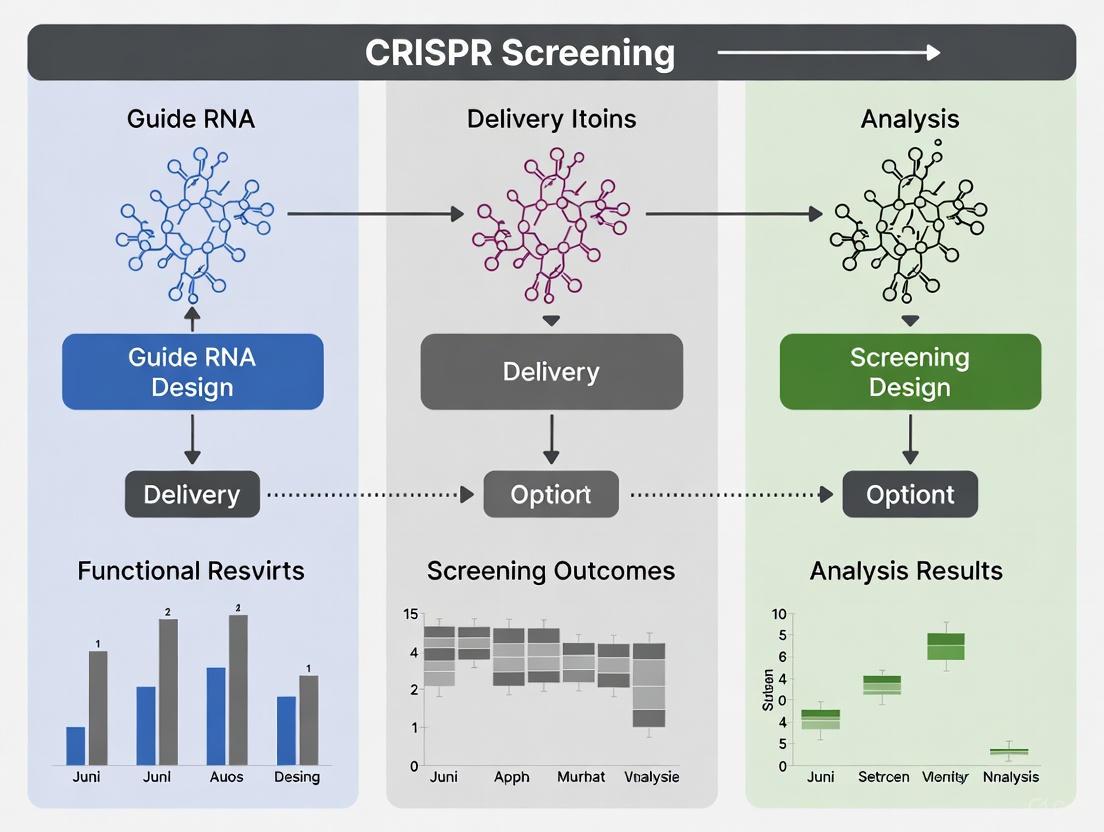
This article provides a comprehensive guide for standardizing CRISPR screening workflows, addressing the critical needs of researchers, scientists, and drug development professionals.
A Standardized CRISPR Screening Workflow: From Foundational Concepts to Clinical Translation
Abstract
This article provides a comprehensive guide for standardizing CRISPR screening workflows, addressing the critical needs of researchers, scientists, and drug development professionals. It covers the foundational principles of CRISPR technology, explores advanced methodological applications and single-cell integration, details robust troubleshooting and optimization strategies for enhanced efficiency and specificity, and establishes a framework for the analytical validation and comparative analysis of screening data. By synthesizing current best practices and emerging trends, this resource aims to enhance the reproducibility, reliability, and translational impact of CRISPR screens in biomedical research and therapeutic discovery.
Laying the Groundwork: Core Principles and System Selection for CRISPR Screening
Core Concepts: From Bacterial Immunity to Gene Editing
What is the CRISPR-Cas9 system and how did it originate?
The Clustered Regularly Interspaced Short Palindromic Repeats (CRISPR) and their associated protein (Cas-9) system originated as an adaptive immune mechanism in prokaryotes (bacteria and archaea) to defend against viruses or bacteriophages [1]. The system allows these organisms to "remember" past infections by integrating short fragments of viral DNA (spacers) into their own genomes at a specific locus called the CRISPR array [1]. Upon re-infection, this genetic memory is used to recognize and cleave the foreign DNA, neutralizing the threat [2]. This natural defense mechanism was later repurposed by scientists into a highly versatile and programmable genome-editing tool [1] [2].
What are the key components of the CRISPR-Cas9 machinery?
The engineered CRISPR-Cas9 system for genome editing consists of two essential components [1] [3]:
- Cas9 Nuclease: Often called "molecular scissors," this protein is responsible for cutting the double-stranded DNA at a specific location. The most commonly used version comes from Streptococcus pyogenes (SpCas9) [1] [3].
- Guide RNA (gRNA): This is a synthetic RNA molecule that combines two natural RNAs: the CRISPR RNA (crRNA), which specifies the target DNA sequence through complementary base-pairing, and the trans-activating CRISPR RNA (tracrRNA), which serves as a binding scaffold for the Cas9 protein [1] [3]. The gRNA directs the Cas9 protein to the precise site in the genome that needs to be edited.
How does the CRISPR-Cas9 system achieve targeted DNA cleavage?
The mechanism can be broken down into three main steps: recognition, cleavage, and repair [1].
- Recognition: The gRNA directs the Cas9 protein to a target DNA sequence that is complementary to the 5' end of the gRNA. However, Cas9 will only bind to a target site if it is immediately followed by a short DNA sequence known as the Protospacer Adjacent Motif (PAM) [3] [2]. For the common SpCas9, the PAM sequence is 5'-NGG-3' (where "N" is any nucleotide) [1] [3].
- Cleavage: Once the Cas9-gRNA complex binds to the target DNA with the correct PAM, the Cas9 protein undergoes a conformational change that activates its two nuclease domains: the HNH domain, which cleaves the DNA strand complementary to the gRNA, and the RuvC domain, which cleaves the non-complementary strand [1] [4]. This results in a precise Double-Strand Break (DSB) in the DNA [1].
- Repair: The cell's innate DNA repair machinery then attempts to fix the break. There are two primary pathways [1] [2]:
- Non-Homologous End Joining (NHEJ): This is an error-prone process that directly ligates the broken ends together, often resulting in small insertions or deletions (indels) that can disrupt the gene's function, effectively creating a knockout [1] [5].
- Homology-Directed Repair (HDR): This is a more precise pathway that uses a donor DNA template to repair the break. Researchers can supply a custom donor template to introduce specific genetic changes, such as inserting a new gene or correcting a mutation, achieving a knock-in [1] [2].
The following diagram illustrates this core mechanism and the resulting repair pathways:
Troubleshooting Common CRISPR Workflow Challenges
A standardized CRISPR workflow can encounter several technical hurdles. The table below outlines common issues, their potential causes, and recommended solutions.
| Problem | Root Cause | Troubleshooting Solution |
|---|---|---|
| Low Editing Efficiency [6] | Poor gRNA design, inefficient delivery, or low expression of components. | Verify gRNA targets a unique genomic site. Optimize delivery method (electroporation, lipofection, viral vectors) for your specific cell type. Use robust promoters and confirm component quality. [6] |
| High Off-Target Effects [6] [5] | gRNA binding to sequences with high similarity to the target. | Design highly specific gRNAs using prediction tools. Use high-fidelity Cas9 variants (e.g., eSpCas9, SpCas9-HF1). Employ paired nickase systems to double specificity requirements. [6] [5] |
| Cell Toxicity [6] | High concentrations of CRISPR components or prolonged Cas9 expression. | Titrate component concentrations to find balance between editing and viability. Use Cas9 protein or mRNA instead of plasmids for transient expression. Include a nuclear localization signal (NLS). [6] |
| Mosaicism [6] | Editing occurs after DNA replication in a subset of cells within a population. | Optimize timing of component delivery relative to cell cycle. Use inducible Cas9 systems. Isolate fully edited clonal cell lines via single-cell cloning. [6] |
| Inability to Detect Edits | Low sensitivity of genotyping method or inefficient editing. | Use robust detection methods: T7 Endonuclease I assay, Surveyor assay, or sequencing. Ensure your method is sensitive enough for the expected mutation rate. [6] |
The following workflow diagram integrates these troubleshooting steps into a standardized experimental pipeline:
Advanced Applications & Clinical Translation
How is CRISPR being applied in clinical trials and therapy development?
CRISPR technology has rapidly moved from the lab to the clinic, with the first CRISPR-based medicine, Casgevy, approved for treating sickle cell disease (SCD) and transfusion-dependent beta thalassemia (TBT) [7]. Clinical applications generally follow two strategies:
- Ex Vivo Editing: Cells (e.g., hematopoietic stem cells for SCD) are extracted from a patient, edited in the lab using CRISPR, and then infused back into the patient [8].
- In Vivo Editing: The CRISPR components are delivered directly into the patient's body to edit cells in situ [8]. A landmark case in 2025 involved a personalized in vivo therapy for an infant with a rare genetic liver disease (CPS1 deficiency), developed and delivered in just six months using lipid nanoparticles (LNPs) [7].
A major focus of current clinical research is on delivery. Lipid nanoparticles (LNPs) have proven highly successful for targeting the liver, enabling treatments for diseases like hereditary transthyretin amyloidosis (hATTR) and hereditary angioedema (HAE) [7]. LNPs also offer the potential for re-dosing, as they do not trigger the same immune responses as viral vectors [7].
What are the key regulatory and manufacturing challenges for clinical CRISPR therapies?
Translating CRISPR into approved therapies faces several hurdles [8] [9]:
- Regulatory Pathways: The existing FDA framework was designed for small-molecule drugs, not complex, living therapies. Navigating the requirements for Chemistry, Manufacturing, and Controls (CMC) and determining when to use Good Manufacturing Practice (GMP)-grade materials can be challenging [8] [9].
- GMP Reagents: Therapies for human trials require GMP-grade Cas nucleases and gRNAs to ensure purity, safety, and efficacy. The supply of true GMP reagents is complex and demand is high [8].
- Manufacturing Consistency: Maintaining consistency in the manufacturing process from research to commercial scale is critical for patient safety and regulatory approval. Changing vendors can introduce variability and invalidate clinical data [8].
The Scientist's Toolkit: Essential Reagents & Solutions
| Item | Function & Role in Standardization |
|---|---|
| High-Fidelity Cas9 Variants (e.g., SpCas9-HF1, eSpCas9) [6] [3] | Engineered versions of the Cas9 nuclease with reduced off-target effects, crucial for improving the specificity and safety of edits. |
| GMP-Grade gRNA & Cas Nuclease [8] | Manufactured under strict Current Good Manufacturing Practice regulations. These are mandatory for clinical trials to ensure product purity, safety, and consistency. |
| Lipid Nanoparticles (LNPs) [7] [5] | A non-viral delivery vehicle particularly efficient for in vivo delivery to the liver. LNPs are biocompatible and allow for potential re-dosing. |
| Viral Vectors (AAV, Lentivirus) [5] | Commonly used for efficient delivery of CRISPR components. Adeno-associated viruses (AAVs) are often used for in vivo therapy, while lentiviruses are common for ex vivo cell engineering. |
| Donor DNA Template | A synthetic DNA molecule that serves as the repair blueprint for the Homology-Directed Repair (HDR) pathway, enabling precise gene knock-in or correction. [2] |
Frequently Asked Questions (FAQs)
What are the biggest delivery challenges for in vivo CRISPR therapies?
The three biggest challenges are often cited as "delivery, delivery, and delivery" [7]. Key hurdles include ensuring the CRISPR components reach the correct cells and avoid off-target tissues, overcoming the limited packaging capacity of efficient viral vectors like AAV, and managing potential immune responses against the delivery vehicle or the bacterial-derived Cas9 protein itself [7] [5].
How can I improve the specificity of my gRNA and reduce off-target effects?
- Bioinformatic Design: Use established online tools and algorithms to design gRNAs and predict potential off-target sites before you begin your experiment. These tools can score gRNAs for predicted efficacy and specificity [6] [10].
- High-Fidelity Cas9: Replace the standard Cas9 with engineered high-fidelity variants (e.g., SpCas9-HF1, eSpCas9) that have reduced off-target activity while maintaining on-target efficiency [6].
- Alternative Systems: Consider using Cas9 nickases, which require two gRNAs to bind in close proximity to create a single DSB, dramatically increasing specificity [2].
What are the key regulatory milestones for taking a CRISPR therapy to clinical trials?
The path from the lab to clinical trials is rigorous [9]:
- Pre-clinical Research: Proof-of-concept studies in cells and animal models to demonstrate efficacy and initial safety.
- INTERACT Meeting: An informal meeting with the FDA for early advice on CMC, toxicology, and clinical plans.
- Pre-IND Meeting: A formal meeting with the FDA to discuss if the pre-clinical data package is sufficient to support a clinical trial application.
- IND Application: Submission of an Investigational New Drug application to the FDA. Approval allows clinical trials to begin.
- Clinical Trial Phases: Progression through Phase I (safety/dosage), Phase II (efficacy/side effects), and Phase III (large-scale efficacy monitoring) trials [9].
Clustered Regularly Interspaced Short Palindromic Repeats (CRISPR) technology has evolved beyond simple gene knockout, creating a versatile toolkit for precise genetic manipulation. For researchers aiming to standardize screening workflows, understanding the distinct applications and operational mechanisms of CRISPR knockout (CRISPRko), CRISPR interference (CRISPRi), and CRISPR activation (CRISPRa) is fundamental. These systems enable a range of functional genomic studies, from complete gene loss-of-function to tunable gene repression and activation.
Each tool functions through a guide RNA (gRNA) that directs a CRISPR-associated (Cas) protein to a specific DNA sequence [11] [12]. The choice of Cas protein and its functional state (active or deactivated) determines the outcome. This guide provides a comparative overview, detailed methodologies, and troubleshooting support to help you select and implement the optimal CRISPR system for your research goals, contributing to more standardized and reproducible screening outcomes.
CRISPR Knockout (CRISPRko)
- Mechanism: CRISPRko utilizes an active nuclease, most commonly Cas9, to create a double-strand break (DSB) in the target gene's DNA [12]. The cell's primary repair mechanism, non-homologous end joining (NHEJ), often results in small insertions or deletions (indels) that disrupt the coding sequence, leading to a permanent and complete loss of gene function [13] [14].
- Best For: Essential gene identification, functional gene screening, and generating stable gene knockouts [15].
CRISPR Interference (CRISPRi)
- Mechanism: CRISPRi employs a catalytically "dead" Cas9 (dCas9) that binds to DNA without cutting it [15]. When targeted to a gene's promoter region, dCas9 acts as a physical barrier to transcription. This effect is often enhanced by fusing dCas9 to transcriptional repressor domains (e.g., KRAB), resulting in robust and reversible gene silencing without altering the underlying DNA sequence [16] [15].
- Best For: Studying essential genes where knockout is lethal, analyzing reversible gene function, and modeling partial loss-of-function phenotypes.
CRISPR Activation (CRISPRa)
- Mechanism: Like CRISPRi, CRISPRa uses dCas9, but it is fused to potent transcriptional activator domains (e.g., VP64, p65) [15]. By targeting these dCas9-activator complexes to gene promoter regions, researchers can specifically upregulate gene expression, enabling gain-of-function studies [16].
- Best For: Gene overexpression studies, genetic rescue experiments, and identifying genes that confer specific phenotypes or drug resistance when activated.
Direct Comparison of CRISPR Modalities
The table below summarizes the key characteristics of CRISPRko, CRISPRi, and CRISPRa to guide your selection.
| Feature | CRISPRko (Knockout) | CRISPRi (Interference) | CRISPRa (Activation) |
|---|---|---|---|
| Cas Protein Used | Active Cas9 (or other nucleases like Cas12a) [12] | dCas9 (catalytically dead) [15] | dCas9 (catalytically dead) [15] |
| Molecular Mechanism | Creates double-strand breaks, repaired by error-prone NHEJ [13] [12] | Blocks RNA polymerase binding and recruitment of repressors [15] | Recruits transcriptional activators to the promoter [15] |
| Effect on Gene | Permanent gene disruption | Reversible gene knockdown | Targeted gene upregulation |
| Reversibility | No (Permanent) | Yes (Reversible) | Yes (Reversible) |
| Key Applications | Gene essentiality screens, functional knockout studies [15] | Silencing essential genes, tunable repression studies [15] | Gain-of-function screens, gene activation studies [15] |
| Primary Repair Pathway | Non-Homologous End Joining (NHEJ) [12] | Not Applicable | Not Applicable |
Diagram 1: A workflow to guide the selection of the appropriate CRISPR tool based on the experimental goal.
Experimental Protocols and Workflows
A standardized CRISPR screening workflow involves multiple critical steps, from initial design to final validation. The following diagram and detailed protocol outline this process.
Diagram 2: The four key phases of a standardized CRISPR gene editing workflow.
Detailed Step-by-Step Protocol
Step 1: Experiment Design and gRNA Selection
- CRISPR System and Cas Enzyme Selection: Choose your system (ko, i, a) based on the comparison in Section 2. For CRISPRko, the most common nuclease is Streptococcus pyogenes Cas9 (SpCas9), which requires a 5'-NGG-3' Protospacer Adjacent Motif (PAM) sequence adjacent to the target site [12]. Consider high-fidelity Cas9 variants to minimize off-target effects [6].
- gRNA Design: Design gRNAs to target the early exons of a gene for CRISPRko to maximize the chance of a disruptive frameshift. For CRISPRi and CRISPRa, gRNAs should be designed to target the promoter region or transcriptional start site (TSS) for optimal efficiency [16].
- Utilize Bioinformatics Tools: Use specialized tools (e.g., CHOPCHOP, CRISPResso) to design highly specific gRNAs and predict potential off-target sites [11]. Proprietary algorithms from commercial providers can also assess on-target efficiency [12].
- gRNA Format: Use a single-guide RNA (sgRNA) format, which combines crRNA and tracrRNA, for simplified design and delivery [12]. Consider chemical modifications (e.g., Alt-R modification) to enhance stability and reduce immune responses [12].
Step 2: Delivery of CRISPR Components
- Formulate Components: For highest efficiency and lowest off-target effects, pre-complex purified Cas9 protein (or dCas9 fusion proteins) with sgRNA to form a Ribonucleoprotein (RNP) complex for delivery [12].
- Choose Delivery Method: The optimal method depends on your cell type.
- Electroporation: Highly efficient for a wide range of cell types, including hard-to-transfect cells. Ideal for RNP delivery [12].
- Lipofection: A simpler, lipid-based method suitable for adherent cells that are easy to transfect [12].
- Lentiviral Transduction: Essential for pooled CRISPR screens as it allows for stable genomic integration and long-term expression. Ensure biosafety protocols are followed.
Step 3: Induction of Edits and Cellular Repair
- CRISPRko: After successful RNP delivery and Cas9-mediated DSB formation, the cell's innate NHEJ repair pathway is activated. No additional reagents are required to generate knockout indels [12].
- CRISPRi/a: The dCas9-effector fusion proteins (e.g., dCas9-KRAB for i, dCas9-VP64 for a) will bind to the target site upon delivery and immediately begin repressing or activating transcription without altering the DNA sequence [15].
Step 4: Analysis and Validation of Edits
- Genotypic Validation: Confirm editing efficiency.
- For CRISPRko: Use the T7 Endonuclease I or Surveyor assay to detect indels. Confirm with Sanger sequencing of cloned PCR products or next-generation sequencing (NGS) [6].
- For CRISPRi/a: Since the DNA is not cut, sequencing is not used for validation. Instead, measure mRNA levels using qRT-PCR to confirm knockdown or activation. Protein-level validation via western blotting is highly recommended [16].
- Phenotypic Validation: Perform functional assays relevant to your gene and biological question (e.g., proliferation assays, flow cytometry for surface markers, differentiation assays).
Troubleshooting Common Experimental Issues
Q1: My editing efficiency is low. What can I do to improve it?
- Cause: Poor gRNA design or low activity [6].
- Cause: Inefficient delivery of CRISPR components [6].
- Solution: Optimize your delivery method. For electroporation, titrate voltage and pulse length. For lipofection, test different lipid reagents. Consider using an RNP complex for more immediate and efficient activity [12]. Enrich for transfected cells by adding antibiotic selection or FACS sorting [17].
- Cause: The Cas9 nuclease or dCas9 effector is not expressing well.
- Solution: Confirm that the promoter driving Cas9/dCas9 expression is suitable for your cell type. Use codon-optimized versions of Cas9 for your host organism [6].
Q2: I suspect there are off-target effects. How can I minimize and detect them?
- Cause: The gRNA binds to and cleaves/modifies sequences with high similarity to the target.
- Prevention: Design gRNAs with high specificity using multiple prediction algorithms [11] [6]. Use high-fidelity Cas9 variants (e.g., SpCas9-HF1, eSpCas9) that have been engineered to reduce off-target cleavage [6]. For CRISPRko, using RNP complexes instead of plasmid DNA can reduce the temporal window for off-target activity [12].
- Detection: Perform whole-genome sequencing (WGS) on edited clones for a comprehensive view. Alternatively, use targeted sequencing of in silico predicted off-target sites.
Q3: For CRISPRko, I see a mixture of edited and unedited cells (mosaicism). How can I address this?
- Cause: Editing occurred after the target cells had already divided.
- Solution: To isolate a pure population, perform single-cell cloning (limiting dilution or FACS sorting) from the edited cell pool. Genotype individual clones to identify those with homogeneous edits [6].
Q4: My CRISPRi/a experiment is not showing the expected transcriptional change. What's wrong?
- Cause: The gRNA is not targeted to the optimal regulatory region.
- Cause: The dCas9-effector fusion is not potent enough.
- Solution: Use enhanced effector systems. For CRISPRi, dCas9-KRAB is standard. For CRISPRa, consider stronger synthetic activators like the SunTag system or VPR (VP64-p65-Rta) fusion [15].
The Scientist's Toolkit: Essential Research Reagents
| Reagent / Solution | Function | Key Considerations |
|---|---|---|
| Cas9 / dCas9 Effector Proteins | CRISPRko: Creates DSBs.CRISPRi/a: Serves as a targeting scaffold. | Use wild-type Cas9 for KO. Use dCas9 fused to KRAB (i) or VP64 (a) domains. High-fidelity variants reduce off-targets [6]. |
| Guide RNA (gRNA) | Directs the Cas/dCas protein to the specific DNA target sequence. | Chemically modified sgRNAs can increase stability and editing efficiency [12]. |
| Delivery Vectors/Reagents | Introduces CRISPR components into cells. | Plasmids/Lentivirus: For stable expression. RNP + Electroporation: For high efficiency and minimal off-targets [12]. |
| Selection Markers | Enriches for successfully transfected/transduced cells. | Puromycin is commonly used. Adding selection or FACS sorting improves editing efficiency [17]. |
| Genomic DNA Isolation Kit | Provides high-quality DNA for genotyping analysis. | Essential for post-editing validation. |
| Validation Assays | Confirms genetic and phenotypic edits. | T7E1/Surveyor Assay: For indel detection (KO). qRT-PCR: For transcript level changes (i/a). NGS: For comprehensive analysis. |
Frequently Asked Questions (FAQs)
Q: When should I choose CRISPRi over CRISPRko for a loss-of-function study?
A: Choose CRISPRi when studying essential genes, as a complete knockout might be lethal to the cell, preventing analysis. CRISPRi's reversible knockdown allows you to study the temporal effects of gene silencing. It is also preferable when you want to model partial loss-of-function or hypomorphic alleles [15].
Q: Can I use the same gRNA for CRISPRko, CRISPRi, and CRISPRa?
A: Not optimally. While a gRNA designed for CRISPRko might bind successfully in a CRISPRi/a context, its efficiency can vary. gRNAs for CRISPRko are designed to target coding exons and are selected for minimal off-targets across the genome. gRNAs for CRISPRi and CRISPRa are specifically designed to bind promoter regions and are optimized for their position relative to the transcriptional start site to maximize transcriptional modulation [16] [15].
Q: What are the primary regulatory and safety considerations when working with these systems?
A: All work should adhere to institutional biosafety committee (IBC) guidelines. A key consideration, especially for CRISPRko, is the potential for off-target effects and their impact on data interpretation and therapeutic applications [13] [6]. For any research with therapeutic potential, rigorous validation and adherence to evolving FDA/EMA guidelines on gene therapies are critical [13]. The use of lentiviral delivery systems requires appropriate biosafety level (BSL-2) containment.
This technical support guide addresses common questions and challenges in pooled CRISPR screening, providing standardized protocols and troubleshooting advice to ensure robust and reproducible results for functional genomics research.
Core Concepts and Library Design
What are the essential design principles for a genome-wide sgRNA library?
A well-designed sgRNA library is the foundation of a successful pooled CRISPR screen. The key is to maximize on-target efficiency while minimizing off-target effects.
Table 1: Comparison of Publicly Available Genome-Wide sgRNA Libraries [18]
| Library Name | Average Guides per Gene | Reported Performance in Essentiality Screens |
|---|---|---|
| Vienna-single (top3-VBC) | 3 | Strongest depletion of essential genes; performs as well or better than larger libraries. |
| Yusa v3 | 6 | Consistently one of the weaker-performing libraries in benchmark tests. |
| Croatan | 10 | One of the best-performing libraries, but larger in size. |
| MinLib-Cas9 (2-guide) | 2 | Incomplete benchmark data suggests it may be a top performer. |
Key design principles include:
- Guide Quantity and Quality: While traditional libraries use 4 or more guides per gene, newer, more efficient designs like the Vienna library (using the top 3 guides per gene selected by VBC scores) demonstrate that smaller libraries can preserve or even enhance sensitivity and specificity [18].
- Dual vs. Single Targeting: Dual-targeting libraries, where two sgRNAs target the same gene, can create more effective knockouts and show stronger depletion of essential genes. However, they may also trigger a heightened DNA damage response, as evidenced by a fitness reduction even in non-essential genes. This strategy is promising for library compression but requires caution [18].
- Control Elements: Libraries must include both positive and negative controls. Non-targeting control (NTC) guides are essential for establishing a baseline, while sgRNAs targeting known essential genes serve as positive controls for assay performance [18] [19].
How do I choose between a single-targeting and a dual-targeting library?
The choice depends on your experimental goals and model system.
Table 2: Single vs. Dual-Targeting sgRNA Library Strategy [18]
| Consideration | Single-Targeting Library | Dual-Targeting Library |
|---|---|---|
| Knockout Efficiency | Good, but depends on individual guide efficiency. | Superior; dual guides can create deletions for more effective knockouts. |
| Library Size | Larger, as it requires more guides for confidence. | Can be smaller, enabling screening in complex models. |
| Potential Pitfalls | Variable performance between guides for the same gene. | Possible fitness cost from increased DNA damage. |
| Ideal Use Case | Standard in vitro screens with ample cell numbers. | Screens with limited material (e.g., in vivo, organoids). |
Experimental Setup and Execution
What controls are critical for a pooled CRISPR screen?
Including the correct controls is non-negotiable for validating your screen and interpreting results [19].
- Positive Editing Controls: These are validated sgRNAs with known high editing efficiency, often targeting common genes like TRAC or RELA in human cells. They confirm that your transfection and editing conditions are working optimally [19].
- Negative Editing Controls: These establish the baseline cellular behavior and help distinguish true phenotype from experimental noise. Options include:
- Mock Control: Cells subjected to the transfection stress (e.g., electroporation) without receiving any CRISPR components. This controls for effects caused by the delivery process itself [19].
What is the recommended sequencing depth and coverage for a genome-wide screen?
Achieving sufficient sequencing depth and cellular coverage is critical to avoid stochastic noise and false positives.
- Sequencing Depth: It is generally recommended to sequence each sample to a depth of at least 200x per sgRNA. For a typical genome-wide library, this often translates to roughly 10 Gb of sequencing data per sample [20].
- Cellular Coverage: The gold standard for in vitro Cas9 knockout screens is to have at least 250-500 cells per sgRNA in your library at the start of the screen. This ensures each guide is adequately represented to withstand bottlenecks and drift [21]. However, note that for in vivo screens, achieving this coverage is often challenging due to engraftment bottlenecks [22].
Troubleshooting Common Experimental Issues
Why do I see high variability between different sgRNAs targeting the same gene?
This is a common observation due to the intrinsic properties of each sgRNA sequence, which lead to variable editing efficiencies [20]. Some guides simply work better than others. This is precisely why designing libraries with multiple sgRNAs (e.g., 3-4) per gene is crucial—it mitigates the impact of a single underperforming guide and provides a more robust, gene-level signal [20].
What should I do if no significant gene enrichment or depletion is observed?
The absence of significant hits is more often a problem of insufficient selection pressure rather than a statistical error [20]. If the selective pressure applied to the cells is too mild, the phenotypic difference between cells with different knockouts will be too small to detect. To address this, you should optimize your screen by increasing the selection pressure (e.g., a higher drug concentration) and/or extending the duration of the screen to allow for greater enrichment or depletion of specific sgRNAs [20].
If sequencing shows a large loss of sgRNAs, what does this indicate?
This depends on when the loss occurs [20]:
- In the initial library cell pool: This indicates insufficient initial sgRNA representation. The library pool must be re-established with a higher complexity to ensure all guides are present before selection begins.
- In the final experimental sample: This likely reflects excessive selection pressure, which has caused the loss of many guides and their corresponding cells. The selection conditions should be re-titrated to a less stringent level [20].
Essential Research Reagent Solutions
Table 3: Key Reagents for Pooled CRISPR Screening [19] [23] [24]
| Reagent / Tool | Function and Importance |
|---|---|
| Validated Positive Control sgRNAs | Essential for optimizing transfection and confirming editing efficiency (e.g., targeting human TRAC or mouse ROSA26) [19]. |
| Non-Targeting Control (NTC) sgRNAs | Critical for establishing a baseline and identifying false positives caused by the screening process [19]. |
| Chemically Modified Synthetic sgRNAs | Improves guide stability, increases editing efficiency, and reduces immune stimulation compared to in vitro transcribed (IVT) guides [24]. |
| Ribonucleoproteins (RNPs) | Complexing Cas9 protein with sgRNA into an RNP allows for high-efficiency, "DNA-free" editing and can reduce off-target effects [24]. |
| Single-Cell CRISPR Screening Kits | Enables high-resolution, multiomic readouts of perturbation effects (transcriptome, surface proteins, and guide identity) in single cells [23]. |
Standardized Pooled CRISPR Screening Workflow
The following diagram illustrates the key stages of a standardized pooled CRISPR screening workflow, highlighting critical quality control checkpoints.
Clustered Regularly Interspaced Short Palindromic Repeats (CRISPR) technology has revolutionized genetic research and therapeutic development. For researchers and drug development professionals working to standardize CRISPR screening workflows, understanding the capabilities and limitations of the available tools—from classic Cas9 nucleases to advanced base and prime editors—is fundamental. This guide provides a technical overview and troubleshooting resource for the most commonly used CRISPR genome editors, focusing on their mechanisms, applications, and solutions to common experimental challenges.
The Core Toolkit: Types of CRISPR Genome Editors
The CRISPR toolkit has expanded significantly beyond the original Cas9 nuclease. The table below summarizes the key types of editors, their mechanisms, and primary applications.
Table: Comparison of Major CRISPR Genome-Editing Tools
| Editor Type | Core Components | Editing Mechanism | Primary Editing Outcomes | Key Advantages | Common Applications |
|---|---|---|---|---|---|
| Cas9 Nuclease | Cas9 enzyme, sgRNA | Creates Double-Strand Breaks (DSBs) [1] | Indels via NHEJ; precise edits via HDR with a template [25] | Simple, effective gene knockout | Functional gene knockout, gene insertion (with HDR) |
| Base Editors (BEs) | Cas9 nickase fused to deaminase enzyme, sgRNA [26] | Chemical conversion of one base to another without DSBs [26] | C•G to T•A or A•T to G•C conversions [27] | High efficiency, no DSBs, low indels | Disease modeling, correcting point mutations |
| Prime Editors (PEs) | Cas9 nickase fused to Reverse Transcriptase, pegRNA [26] | "Search-and-replace" using RT and pegRNA template without DSBs [26] | All 12 base-to-base conversions, small insertions, deletions [26] | Unprecedented precision, broad editing scope, no DSBs | Correcting a wide range of pathogenic mutations |
The following diagram illustrates the fundamental mechanisms of these three core editor types.
Troubleshooting Common Experimental Issues
FAQ 1: How can I improve the efficiency of my prime editing experiments?
Low editing efficiency is a common hurdle with prime editing. The following solutions are recommended:
- Use Updated PE Systems: The efficiency of prime editing has improved with successive versions. If using an older system (e.g., PE1 or PE2), upgrade to PE3, PE4, or PE5. These systems incorporate additional strategies like nicking the non-edited strand (PE3) or suppressing the mismatch repair (MMR) pathway (PE4/PE5) to significantly boost efficiency [26].
- Optimize pegRNA Design: The pegRNA is critical. Use specialized bioinformatics tools to design pegRNAs with optimal length for the reverse transcriptase template (RTT) and primer binding site (PBS). Consider using engineered pegRNAs (epegRNAs) that include structured RNA motifs to enhance stability and reduce degradation [26].
- Modulate Cellular Repair Pathways: Co-expressing a dominant-negative MMR protein (MLH1dn) can increase prime editing efficiency by up to ~70% in HEK293T cells, as seen in PE4 and PE5 systems. This prevents the cell from rejecting the newly edited strand [26].
Table: Evolution of Prime Editor Systems and Their Efficiencies
| Prime Editor Version | Key Features and Modifications | Reported Editing Frequency (in HEK293T cells) | Reference |
|---|---|---|---|
| PE1 | Original version; Cas9 nickase (H840A) fused to M-MLV RT | ~10–20% | [26] |
| PE2 | Optimized reverse transcriptase for higher stability and processivity | ~20–40% | [26] |
| PE3 | PE2 + additional sgRNA to nick the non-edited strand | ~30–50% | [26] |
| PE4 | PE2 + dominant-negative MLH1 to inhibit mismatch repair | ~50–70% | [26] |
| PE5 | PE3 + dominant-negative MLH1 to inhibit mismatch repair | ~60–80% | [26] |
| PE6 & PE7 | Compact RT variants, stabilized epegRNAs, La protein fusion | ~70–95% | [26] |
FAQ 2: What can I do to minimize off-target effects?
Off-target editing remains a critical concern for all therapeutic applications.
- Choose High-Fidelity Cas Variants: Wild-type SpCas9 is prone to off-target effects. Use engineered high-fidelity variants like eSpCas9(1.1), SpCas9-HF1, or HypaCas9. These versions have mutations that reduce non-specific interactions with DNA [25].
- Utilize Cas Nickases: For edits requiring HDR, use a pair of Cas9 nickases (D10A mutation) that target opposite strands. A DSB is only formed when both nickases bind in close proximity, dramatically increasing specificity [25].
- Select Optimal gRNAs with Bioinformatics Tools: Always design gRNAs using rigorous computational tools. Software like CHOPCHOP and Cas-OFFinder can help select gRNAs with maximal on-target and minimal off-target activity by scanning the genome for similar sequences [11].
- Delivery Method Matters: Transient delivery of CRISPR components as ribonucleoproteins (RNPs) instead of using plasmid DNA that leads to prolonged expression can reduce off-target effects [27].
FAQ 3: Which delivery method should I use for my experiment?
The choice of delivery method is crucial and depends on the application (in vivo vs. in vitro) and the target cell type.
- In Vitro Delivery to Cultured Cells:
- Lipid Nanoparticles (LNPs): Highly effective for delivering CRISPR RNPs or mRNA to a wide range of cell types, including primary cells [7].
- Viral Vectors (Lentivirus, AAV): Provide high transduction efficiency but have limitations. AAV has a small packaging capacity, making it unsuitable for large Cas9 orthologues, and viral vectors can trigger immune responses [27].
- In Vivo Therapeutic Delivery:
- Lipid Nanoparticles (LNPs): The leading non-viral platform for systemic in vivo delivery. LNPs naturally accumulate in the liver, making them ideal for targeting liver-specific diseases, as demonstrated in clinical trials for hATTR and HAE [7]. A key advantage is the potential for re-dosing, which is difficult with viral vectors [7].
- Adeno-Associated Virus (AAV): Widely used but has limitations on cargo size and can elicit immune responses. Often used for ex vivo therapies.
The decision flow for selecting a delivery method is summarized below.
The Scientist's Toolkit: Essential Research Reagent Solutions
A successful CRISPR experiment relies on high-quality, well-characterized reagents. The following table lists essential materials and their functions.
Table: Essential Reagents for CRISPR Genome Editing Workflows
| Reagent / Material | Function | Key Considerations |
|---|---|---|
| Guide RNA (sgRNA) | Directs the Cas protein to the specific genomic target site. | Can be synthesized as crRNA+tracrRNA or as a single guide RNA (sgRNA). Quality is critical. |
| pegRNA | Specialized guide for Prime Editing; contains both targeting spacer and template for edit. | Design is more complex than sgRNA; requires optimization of PBS and RTT lengths [26]. |
| Cas9 Nuclease | Effector protein that creates a double-strand break at the target DNA. | Choose between wild-type (SpCas9), high-fidelity variants (SpCas9-HF1), or nickases (Cas9n). |
| Base Editor Protein | Fusion protein (e.g., Cas9 nickase-cytidine deaminase) for chemical base conversion. | Be aware of bystander editing within the activity window [26]. |
| Prime Editor Protein | Fusion protein (Cas9 nickase-Reverse Transcriptase) for precise template-driven edits. | Later versions (PE4, PE5, PE6) show dramatically improved efficiency [26]. |
| Delivery Vector | Plasmid, virus, or nanoparticle used to introduce CRISPR components into cells. | Choice affects kinetics and persistence; non-viral methods (LNPs, electroporation) are preferred for transient expression. |
| HDR Donor Template | DNA template containing the desired edit, used for precise repair after a DSB. | Can be single-stranded or double-stranded DNA; include homologous arms. |
| Validation Assays | Methods (e.g., Sanger sequencing, NGS, T7E1 assay) to confirm editing efficiency and specificity. | Essential for any experiment; use NGS for unbiased off-target assessment. |
Experimental Protocol: A Standard Workflow for a Prime Editing Experiment
This protocol outlines key steps for a prime editing experiment in cultured mammalian cells, based on the systems described in the literature [26].
Target Selection and pegRNA Design: Identify your target genomic locus. Design a pegRNA using a specialized tool. The pegRNA must contain:
- A spacer sequence (~20 nt) complementary to the target DNA.
- A primer binding site (PBS), typically 10-15 nucleotides long.
- A reverse transcription template (RTT) that encodes your desired edit.
Component Cloning: Clone your designed pegRNA sequence into an appropriate expression plasmid. Co-clone or obtain a separate plasmid expressing the prime editor protein (e.g., PE2, PE3, PE4).
Cell Transfection: Transfect your target cell line (e.g., HEK293T) with the prime editor and pegRNA plasmids (or deliver as mRNA and synthetic pegRNA). Include a negative control (cells only) and a non-targeting pegRNA control.
Harvest and DNA Extraction: Allow 48-72 hours for editing to occur. Harvest the cells and extract genomic DNA.
Efficiency Validation:
- PCR Amplification: Amplify the target genomic region by PCR.
- Sequencing Analysis: Subject the PCR product to Sanger sequencing or next-generation sequencing (NGS) to quantify the percentage of alleles containing the desired edit.
Off-Target Assessment: Use in silico tools (e.g., Cas-OFFinder) to predict potential off-target sites. Amplify and sequence the top predicted off-target sites from the edited cell population to assess specificity.
Executing the Screen: From Experimental Design to High-Content Readouts
The following diagram illustrates the complete standardized workflow for a pooled CRISPR-Cas9 screening experiment, from initial library design to final hit identification.
Step-by-Step Experimental Protocol
Phase 1: Experimental Design and sgRNA Library
Library Design Principles:
- Design 6-8 sgRNAs per gene to ensure comprehensive coverage [28]
- Include both negative controls (non-targeting sgRNAs) and positive controls (sgRNAs targeting known essential genes) [28]
- For genome-wide screens, ensure library contains sufficient complexity (typically 100,000+ sgRNAs) [28]
Representation Calculation:
- Infect at least 500 cells per sgRNA to ensure statistical power [28]
- Maintain multiplicity of infection (MOI) of 0.3 to ensure most cells receive only one sgRNA [28] [29]
- Calculate total cells needed based on: (Number of sgRNAs × 500) / MOI [28]
Phase 2: Library Transduction and Selection
Day 1-3: Cell Preparation
- Culture Cas9-expressing cells to 60-80% confluency [28]
- For lentiviral production, use approved biosafety level 2 facilities [28]
Day 4: Transduction
- Transduce cells with lentiviral sgRNA library at MOI of 0.3 in the presence of polybrene (8 μg/mL) [28] [29]
- Include untransduced control cells for selection optimization
Day 5-7: Selection
- Begin antibiotic selection (e.g., puromycin 1-5 μg/mL) 24-48 hours post-transduction [29]
- Maintain selection until all control cells are dead (typically 3-7 days)
- Harvest pre-selection sample (T0) for reference by collecting ~5 million cells [29]
Phase 3: Phenotypic Selection and Passaging
Experimental Setup:
- Split transduced cells into experimental and control conditions
- Apply selective pressure (drug treatment, nutrient stress, etc.) to experimental condition
- Maintain control condition in normal growth medium
Cell Passaging:
- Passage cells at consistent densities to maintain logarithmic growth
- Ensure minimum of 16 cell doublings to allow phenotypic manifestation [29]
- Maintain cell representation of at least 500 cells per sgRNA at each passage [28]
Cell Harvest:
- Harvest minimum number of cells based on library representation requirements (Table 1)
- Pellet cells at 300 × g for 3 minutes at 20°C [29]
- Store dry cell pellets at -80°C or proceed to gDNA extraction
Phase 4: Genomic DNA Extraction and NGS Library Preparation
gDNA Extraction:
- Extract gDNA using commercial kits (e.g., PureLink Genomic DNA Mini Kit) [29]
- Do not process more than 5 million cells per spin column to prevent clogging [29]
- Elute gDNA in Molecular Grade Water, aiming for concentration ≥190 ng/μL [29]
PCR Amplification:
- Perform PCR amplification in decontaminated workstation to avoid cross-contamination [29]
- Use staggered primers with Illumina adapters to increase sequence diversity [29]
- Include sample barcodes for multiplex sequencing
Quality Control:
- Quantify DNA using Qubit dsDNA BR Assay Kit [29]
- Verify amplification by running 5 μL PCR product on 2% agarose gel [29]
- Purify PCR products using commercial purification kits
Critical Parameters and Calculations
Table 1: Library Representation Calculations for gDNA Extraction
| Library Size (sgRNAs) | Minimum Cells for 300X Coverage | Total gDNA Required | Parallel PCR Reactions |
|---|---|---|---|
| 1,000-2,000 | 760,000 | 4 μg | 1 |
| 3,000-3,500 | 2,300,000 | 12 μg | 3 |
| 5,000+ | 4,600,000 | 24 μg | 6 |
Table 2: Troubleshooting Common Experimental Issues
| Problem | Potential Cause | Solution |
|---|---|---|
| Low editing efficiency | Poor gRNA design or delivery | Verify gRNA targets unique genomic sequence; optimize delivery method for cell type [6] |
| High off-target effects | Non-specific gRNA binding | Use high-fidelity Cas9 variants; design gRNAs with online prediction tools [6] |
| Cell toxicity | High CRISPR component concentration | Titrate component concentrations; use nuclear localization signals [6] |
| Mosaicism (mixed edited/unedited cells) | Suboptimal delivery timing | Synchronize cell cycle; use inducible Cas9 systems [6] |
| Inability to detect edits | Insensitive detection methods | Use T7 endonuclease I assay, Surveyor assay, or sequencing [6] |
The Scientist's Toolkit: Essential Research Reagents
Table 3: Key Reagents for CRISPR Screening
| Reagent Category | Specific Examples | Function | Critical Notes |
|---|---|---|---|
| sgRNA Library | Lentiviral sgRNA pools, Saturn V library [29] | Delivers genetic perturbations | Maintain >1000X coverage of library size [28] |
| Cas9 Source | Stable Cas9 cell lines, Cas9-lentivirus co-delivery [28] | Executes genomic cutting | Verify Cas9 activity before screening |
| Delivery Tools | Lentivirus, electroporation, lipofection [6] | Introduces CRISPR components | Optimize for specific cell type; use MOI ~0.3 [28] |
| Selection Agents | Puromycin, blasticidin, GFP sorting | Enriches for transduced cells | Determine optimal concentration beforehand |
| gDNA Extraction | PureLink Genomic DNA Mini Kit [29] | Isolates genomic DNA for NGS | Maximum 5 million cells per column [29] |
| Quantification | Qubit dsDNA BR Assay Kit [29] | Accurately measures DNA concentration | More accurate than spectrophotometry for gDNA |
| NGS Preparation | Herculase reagents, barcoded primers [29] | Amplifies sgRNA regions for sequencing | Perform in decontaminated workstation [29] |
Frequently Asked Questions
Q: What is the minimum library representation required for a successful screen? A: For high-quality NGS results, maintain library representation of at least 300X, though higher coverage (500-1000X) provides more robust results [29]. This means having at least 300 cells per sgRNA in your population.
Q: How do I calculate the number of cells needed for my specific library? A: Use this formula: Minimum cells = (Number of sgRNAs in library × Desired coverage) / Transduction efficiency. For example, a 5,000 sgRNA library with 500X coverage and 30% transduction efficiency requires: (5,000 × 500) / 0.3 = 8.3 million cells [28] [29].
Q: What are the essential controls to include in my screen? A: Your screen should include: (1) Non-targeting negative control sgRNAs; (2) sgRNAs targeting genomic "safe harbor" regions; and (3) Positive control sgRNAs targeting known essential genes relevant to your phenotype [28].
Q: How long should the phenotypic selection phase last? A: Most screens require 14-21 days (approximately 16+ cell doublings) to allow sufficient time for phenotypic manifestation and sgRNA enrichment/depletion [29]. The exact duration depends on your specific experimental model and selection pressure.
Q: What sequencing depth is required for the NGS step? A: Aim for 100-200 reads per sgRNA to ensure accurate quantification of sgRNA abundance. For a 5,000 sgRNA library, this translates to 500,000-1,000,000 total reads per sample [29].
Core Advantages of RNP Delivery
Ribonucleoprotein (RNP) complexes, which consist of a pre-assembled Cas protein and a guide RNA (sgRNA), offer a superior delivery format for CRISPR-Cas9 genome editing compared to DNA- or RNA-based methods. The principal benefits stem from their transient activity and immediate functionality upon delivery.
- Enhanced Specificity and Reduced Off-Target Effects: RNP complexes enter the nucleus and become active almost immediately, but their activity is short-lived as they are rapidly degraded by cellular proteases. This brief window of activity—typically around 24 hours—significantly reduces the opportunity for the Cas9 nuclease to cut at unintended, off-target sites in the genome. Studies have consistently shown a 28-fold lower ratio of off-target to on-target mutations when using RNPs compared to plasmid DNA transfection [30].
- High Editing Efficiency and Precision: Because the functional complex is formed in vitro prior to delivery, RNPs bypass the need for intracellular transcription and translation. This leads to a faster onset of editing and more predictable results. The quality of both the Cas9 protein and the sgRNA can be verified before transfection, ensuring a highly precise and efficient complex [30].
- Improved Cell Viability and Reduced Cytotoxicity: Transfection with CRISPR components as plasmids can be stressful to cells and often leads to significant cytotoxicity. In contrast, delivery of pre-formed RNPs is notably less toxic. Experiments have demonstrated that cell viability remains significantly higher with RNP delivery, often above 80%, even in sensitive primary cells and stem cells [31] [30].
- Elimination of Genomic Integration Risk: Unlike plasmid-based systems, which carry a risk of random parts of the plasmid DNA integrating into the host genome, RNP delivery involves no DNA. This completely avoids the risk of insertional mutagenesis, a critical safety advantage for both basic research and therapeutic applications [30] [32].
Quantitative Comparison of CRISPR Delivery Formats
The table below summarizes the key performance metrics of different CRISPR cargo formats, highlighting the distinct advantages of RNPs.
Table 1: Performance Comparison of CRISPR Cargo Formats [30] [32]
| Feature | Plasmid DNA | mRNA + gRNA | Ribonucleoprotein (RNP) |
|---|---|---|---|
| Onset of Activity | Slow (24-48 hrs) | Moderate (12-24 hrs) | Fast (<4 hrs) |
| Duration of Activity | Prolonged (days to weeks) | Moderate (a few days) | Short (~24 hrs) |
| Typical Editing Efficiency | Variable, often lower | Moderate | High (often >70%) |
| Off-Target Effect Risk | High | Moderate | Low |
| Risk of Host Genome Integration | Yes | No | No |
| Cytotoxicity | High | Moderate | Low |
| Experimental Timeline | Longer | Moderate | Shorter (up to 50% faster) |
Experimental Protocol: RNP Delivery via Electroporation
This protocol details a standard method for delivering RNPs into mammalian cells via electroporation, a highly efficient physical delivery method.
Materials and Reagents
- Purified Cas9 protein (e.g., SpCas9)
- Chemically synthesized or in vitro transcribed target-specific sgRNA
- Electroporation buffer (compatible with your cell type, e.g., PBS or proprietary buffers)
- The cell line of interest (e.g., primary T cells, iPSCs, immortalized cell lines)
- Electroporation device and corresponding cuvettes
- Pre-warmed complete cell culture medium
Step-by-Step Procedure
RNP Complex Formation:
- Resuspend the sgRNA in nuclease-free buffer to a stock concentration of 100 µM.
- In a sterile microcentrifuge tube, combine purified Cas9 protein and the sgRNA at a molar ratio typically between 1:1 and 1:2 (Cas9:sgRNA). For example, mix 5 µg of Cas9 (~0.1 nmol) with a 1.2x molar excess of sgRNA.
- Incubate the mixture at room temperature for 10-20 minutes to allow the RNP complex to form.
Cell Preparation:
- Harvest the target cells and wash them thoroughly with electroporation buffer to remove any residual media containing serum or antibiotics.
- Resuspend the cell pellet in electroporation buffer at a high concentration (e.g., 1-10 x 10^6 cells per 100 µL).
Electroporation:
- Combine the cell suspension with the pre-formed RNP complex. Gently mix.
- Transfer the entire mixture into an electroporation cuvette.
- Electroporate the cells using the optimized electrical parameters (voltage, pulse length, number of pulses) for your specific cell type. For many primary cells, a single pulse of 1500-2500 V for 10-20 ms is effective.
Post-Transfection Recovery:
- Immediately after electroporation, transfer the cells from the cuvette into a pre-warmed culture plate containing complete medium.
- Incubate the cells at 37°C and 5% CO₂. Analyze editing efficiency, typically 48-72 hours post-electroporation, using methods like T7E1 assay, TIDE analysis, or next-generation sequencing.
Advanced RNP Delivery: Optimized Lipid Nanoparticles (LNPs)
For in vivo applications, lipid nanoparticles (LNPs) provide a potent and clinically relevant method for systemic RNP delivery. Recent research has focused on optimizing LNP formulations specifically for RNP encapsulation.
LNP Formulation Optimization
- Ionizable Lipids: Screening of ionizable cationic lipids is crucial. The lipid SM102 has been identified as highly effective for RNP delivery, leading to a dramatic increase in editing efficiency [33].
- Stability Enhancement: Encapsulating the pre-assembled RNP, rather than its individual components, within LNPs protects the complex from degradation. The inclusion of stabilizers like 10% (w/v) sucrose in the formulation further enhances RNP stability [33].
- Efficiency Gains: Optimized LNP-RNP formulations have demonstrated remarkable results, achieving in vivo editing efficiency enhancements larger than 300-fold compared to the delivery of naked RNP, without detectable off-target edits [33].
Diagram 1: LNP-RNP delivery workflow.
Troubleshooting Common RNP Delivery Issues
Table 2: Troubleshooting Guide for RNP-Based Experiments
| Problem | Potential Cause | Solution |
|---|---|---|
| Low Editing Efficiency | RNP complex is unstable or degraded. | Verify protein and sgRNA quality. Form RNP complex immediately before use and use stabilizers like sucrose [33]. |
| Inefficient delivery into cells. | Optimize delivery parameters (e.g., voltage for electroporation, lipid ratios for LNPs). Consider different transfection reagents. | |
| Poor Cell Viability Post-Delivery | Excessive cytotoxicity from delivery method. | Titrate the RNP concentration to the lowest effective dose. For electroporation, optimize electrical parameters to reduce cell stress [32]. |
| Inconsistent Results Between Replicates | Variable RNP formation or delivery. | Standardize the RNP assembly protocol (incubation time, temperature, molar ratios). Ensure consistent cell quality and count. |
Frequently Asked Questions (FAQs)
Q1: For which cell types is RNP delivery particularly advantageous? RNP delivery is highly beneficial for hard-to-transfect cells, including primary cells (like T-cells and hematopoietic stem cells), induced pluripotent stem cells (iPSCs), and differentiated cells. Its high efficiency and low toxicity make it the preferred choice where cell health and precision are paramount [30] [32].
Q2: My RNP experiment is not yielding high editing efficiency. What should I check first? First, verify the quality and concentration of your Cas9 protein and sgRNA. Then, ensure your delivery method is optimized for your specific cell type. For electroporation, this means testing different voltage/pulse settings. For lipid-based methods, screen different reagents. Finally, titrate the RNP concentration to find the optimal dose for your experiment [30] [33].
Q3: Are there any downsides to using RNPs? The main challenges are the higher cost and more complex production of purified Cas9 protein compared to plasmids, and the relative instability of the protein complex, which requires careful handling and storage. However, the benefits of high efficiency, low off-targets, and superior safety often outweigh these limitations [32].
Q4: Can RNPs be used for homology-directed repair (HDR) or knock-in experiments? Yes. In fact, RNP delivery is excellent for HDR-based knock-in. The rapid and transient activity of RNPs creates a defined window for the Cas9 cut, which can be strategically timed with the delivery of a donor DNA template to enhance the relative efficiency of HDR over the error-prone NHEJ pathway [31].
The Scientist's Toolkit: Essential Reagents for RNP Workflows
Table 3: Key Research Reagent Solutions for RNP-Based CRISPR Screening
| Reagent / Material | Function | Key Considerations |
|---|---|---|
| Purified Cas9 Nuclease | The enzyme component of the RNP complex that performs the DNA cleavage. | Opt for high-purity, endotoxin-free grades. Cas9 variants with higher fidelity (e.g., HiFi Cas9) can further reduce off-target effects. |
| Synthetic sgRNA | The guide RNA that directs Cas9 to the specific genomic target. | Chemically synthesized sgRNA offers high consistency and allows for chemical modifications to enhance stability and reduce immunogenicity. |
| Electroporation System | A physical method to introduce RNPs into cells by creating temporary pores in the cell membrane. | Systems like the Neon (Thermo Fisher) or Nucleofector (Lonza) are industry standards. Cell-type-specific kits are available. |
| Lipid Nanoparticles (LNPs) | Synthetic nanocarriers for efficient in vivo RNP delivery. | Formulations must be optimized for RNP encapsulation. The ionizable lipid SM102 has shown high efficacy in recent studies [33]. |
| Cationic Polymers (e.g., Ppoly) | A class of non-viral delivery vehicles that can form stable complexes with RNPs via electrostatic interactions. | A modified cationic hyper-branched cyclodextrin-based polymer (Ppoly) has shown >90% encapsulation efficiency and minimal cytotoxicity [31]. |
What are the fundamental differences between Perturb-seq and CROP-seq?
Both Perturb-seq and CROP-seq are pioneering single-cell CRISPR screening methods that combine pooled CRISPR perturbations with single-cell RNA sequencing. They enable researchers to investigate functional genetic screening at single-cell resolution by linking guide RNA (gRNA) identities to transcriptomic profiles in individual cells. The key technical difference lies in how they capture the gRNA information [34].
Perturb-seq initially utilized indirect gRNA capture through polyadenylated barcode sequences. This approach placed a separate barcode with a poly-A tail on the lentiviral vector, which was captured alongside cellular mRNAs during standard single-cell RNA sequencing workflows. However, this method suffered from a significant limitation: the physical distance (approximately 2.5 kb) between the gRNA and its barcode sequence led to high "barcode-swapping" frequencies due to lentiviral recombination. This resulted in misassignment of gRNAs to cells, with approximately 50% of all gRNAs affected in early Perturb-seq implementations [34].
CROP-seq introduced a more integrated approach by engineering a polyadenylated gRNA transcript. The CROP-seq vector produces two transcripts: the functional gRNA (driven by a U6 promoter) and a separate transcript that includes both a selection cassette and the gRNA sequence, driven by an EF1a promoter. This design allows the gRNA itself to be detected in standard single-cell assays that capture poly-A tails without requiring specialized capture sequences [35].
Modern implementations, particularly commercial platforms, have evolved to use direct gRNA capture through Feature Barcode technology. This approach adds specific capture sequences directly to the sgRNA scaffold, enabling dedicated capture and sequencing of gRNAs separately from the transcriptome. This method eliminates barcode-swapping issues and reduces sequencing burdens compared to CROP-seq [23].
Method Comparison & Selection Guide
Table: Comparison of Single-Cell CRISPR Screening Methods
| Method | gRNA Capture Mechanism | Key Advantages | Key Limitations | Ideal Use Cases |
|---|---|---|---|---|
| Early Perturb-seq | Indirect capture via polyadenylated barcode | Compatible with standard scRNA-seq | High barcode-swapping rates (~50%) [34] | Historical reference only |
| CROP-seq | Polyadenylated gRNA transcript | No special capture sequences needed; all-in-one vector [35] | gRNA detection requires deeper transcriptome sequencing [23] | Academic labs with standard scRNA-seq capabilities |
| Direct Capture Perturb-seq | Feature Barcode technology | Minimal barcode swapping; separate CRISPR library reduces sequencing burden [23] | Requires capture sequence integration for 3' assays [23] | High-precision perturbation studies |
| 10x Genomics 5' CRISPR Screening | Direct capture of native gRNAs | Compatible with existing CRISPR libraries; multi-ome capability (transcriptome + surface proteins) [23] | Platform-specific | Studies requiring multi-omic readouts or using existing gRNA libraries |
Technical Support & Troubleshooting Guide
Experimental Design FAQs
What cellular processes are best suited for single-cell CRISPR screening?
Single-cell CRISPR screening is most effective when studying cell-autonomous processes with clear transcriptional phenotypes. The perturbation should primarily affect the cell's own phenotype rather than depending on interacting cells. Ideal applications include: transcription factor networks, signaling pathway activation, differentiation trajectories, and metabolic reprogramming. Processes with minimal transcriptional signatures (e.g., cell death mechanisms without characteristic gene expression changes) are less suitable [23].
How many cells and guides should I plan for my experiment?
For homogeneous sample types, plan for approximately 100 cells per gene to achieve sufficient statistical power. Scale your cell numbers accordingly—for thousands of genes, you'll need hundreds of thousands of cells. A single high-throughput run can analyze up to 320,000 cells, sufficient for approximately 3,200 genes [23].
Common Technical Issues & Solutions
Problem: Low gRNA detection efficiency
- Solution: Implement rigorous quality control steps during library preparation. Verify perturbation effect size in bulk before single-cell analysis. For CROP-seq, ensure adequate sequencing depth for transcriptome libraries to detect gRNAs [35] [36].
Problem: High noise and sparse data in scRNA-seq readouts
- Solution: Use computational tools like MUSIC that incorporate data imputation (SAVER) and specialized filtering. Filter out perturbed cells with invalid edits and perturbations with insufficient cells per guide (recommended minimum varies by experiment scale) [36].
Problem: Inaccurate gRNA-to-cell assignment
- Solution: For new experiments, choose direct capture methods (Feature Barcoding) over indirect capture to avoid barcode-swapping issues. If using historical Perturb-seq data, employ computational correction methods that account for swapping rates [34].
Problem: Weak perturbation effects
- Solution: Optimize gRNA design for efficiency. Consider alternative CRISPR modalities: CRISPRi (dCas9-KRAB) for enhanced repression, especially at regulatory elements; CRISPRa (dCas9-activators) for gene activation [35].
Experimental Protocols
Essential Protocol: CROP-seq Workflow
- Vector Design: Clone sgRNAs into the CROP-seq vector containing both U6-driven sgRNA and EF1a-driven selection cassette [35].
- Library Generation: Produce lentiviral sgRNA library at appropriate titer to ensure single integration events.
- Cell Transduction: Transduce Cas9-expressing cells at low MOI (<0.3) to ensure most cells receive single guides.
- Selection: Apply appropriate selection (e.g., puromycin) 24-48 hours post-transduction.
- Single-Cell Processing: Prepare single-cell suspensions for 3' scRNA-seq platforms.
- Library Sequencing: Sequence both transcriptome and gRNA libraries. For CROP-seq, sequence transcriptome library deeply enough to detect gRNAs [23].
Essential Protocol: Direct Capture Perturb-seq
- Library Design: Design sgRNAs with appropriate capture sequences for your platform (if using 3' assays) or use existing libraries (for 5' assays) [23].
- Cell Processing: Follow standard single-cell suspension protocols for your platform (10x Genomics 5' or 3').
- Library Preparation: Prepare separate libraries for gene expression and CRISPR guides using Feature Barcode technology.
- Sequencing: Balance sequencing depth between gene expression and CRISPR libraries based on platform recommendations.
Computational Analysis Pipeline
The analysis of single-cell CRISPR screening data presents unique computational challenges, including data sparsity, technical noise, and the need to link perturbations to transcriptional outcomes [36]. Below is a generalized workflow for data analysis:
Key Computational Tools:
- MUSIC: An integrated pipeline for model-based understanding of single-cell CRISPR screening data that uses topic models to quantify perturbation effects [36].
- CellOT: A neural optimal transport framework for predicting single-cell perturbation responses by learning maps between control and perturbed cell states [37].
- GLiMMIRS: A generalized linear modeling framework for interrogating enhancer effects from single-cell CRISPR experiments [38].
Research Reagent Solutions
Table: Essential Reagents for Single-Cell CRISPR Screening
| Reagent Category | Specific Examples | Function & Importance | Technical Considerations |
|---|---|---|---|
| CRISPR Vectors | CROP-seq plasmid, Perturb-seq vectors | Deliver sgRNA and enable detection in single-cell assays | CROP-seq: all-in-one design; Perturb-seq: requires separate barcode design [35] |
| gRNA Libraries | Custom-designed sgRNA libraries | Target genes of interest with minimal off-target effects | Genome-wide or focused designs; efficiency validation critical [39] |
| Cas9 Variants | Wild-type Cas9, dCas9-KRAB (CRISPRi), dCas9-activator (CRISPRa) | Enable knockout, inhibition, or activation | CRISPRi preferred for regulatory elements; CRISPRa for gene activation [35] |
| Capture Reagents | Feature Barcode oligos, poly-dT primers | Enable gRNA detection in single-cell platforms | Direct capture reduces barcode swapping [23] |
| Cell Preparation Kits | Single-cell suspension kits, viability stains | Ensure high cell quality and recovery | Critical for data quality; >85% viability recommended |
Frequently Asked Questions (FAQs) for CRISPR Screening
Q1: Why are my CRISPR screening results different from the expected or published outcomes?
Several factors can cause discrepancies in your results. A common issue is inconsistent data processing. Differences in parameters during sequencing adapter trimming, such as those set in tools like CutAdapt, can significantly alter downstream results [40]. Furthermore, using a subset of sequencing data for practice instead of the full dataset for final analysis will not yield the same graphics or enrichment results [40]. Finally, a low signal, where no significant gene enrichment is observed, is often not a statistical error but a result of insufficient selection pressure during the screening process. Increasing the selection pressure or extending the screening duration can help enrich for meaningful phenotypes [20].
Q2: How much sequencing depth is required for a reliable CRISPR screen?
Achieving adequate sequencing depth is critical for data quality. It is generally recommended to aim for a sequencing depth of at least 200x for each sample [20]. The required data volume can be calculated using the formula: Required Data Volume = Sequencing Depth × Library Coverage × Number of sgRNAs / Mapping Rate. For example, a typical human whole-genome knockout library might require approximately 10 Gb of sequencing data per sample [20].
Q3: Is a low mapping rate a concern for the reliability of my screening results?
A low mapping rate itself does not necessarily compromise the reliability of your results. The analysis pipeline focuses only on the reads that successfully map to the sgRNA library, excluding unmapped reads. The key concern is to ensure the absolute number of mapped reads is sufficient to maintain the recommended sequencing depth (≥200x). Insufficient data volume, not the mapping rate percentage, is what introduces variability and reduces accuracy [20].
Q4: Why do different sgRNAs targeting the same gene show variable performance?
Editing efficiency is highly influenced by the intrinsic properties of each sgRNA sequence. Some sgRNAs may exhibit little to no activity due to their specific sequence context [20]. To ensure robust and reliable results, it is recommended to design at least 3–4 sgRNAs per gene. This strategy mitigates the impact of variability from any single, poorly performing sgRNA [20].
Q5: How can I determine if my CRISPR screen was successful?
The most reliable method is to include well-validated positive-control genes and their corresponding sgRNAs in your library. If these controls are significantly enriched or depleted as expected, it strongly indicates effective screening conditions [20]. In the absence of known controls, you can evaluate performance by assessing the cellular response to selection pressure (e.g., degree of cell death) and examining bioinformatics outputs, such as the distribution and log-fold change of sgRNA abundance [20].
Troubleshooting Common Experimental Issues
Issue 1: Large Loss of sgRNAs in Sequencing Results
Problem: A substantial number of sgRNAs are missing from the sequencing data. Solution: The solution depends on when the loss occurs [20]:
- If the loss is in the initial library cell pool: This indicates insufficient initial sgRNA representation. You should re-establish the CRISPR library cell pool with adequate coverage to ensure all genes are represented.
- If the loss occurs in the experimental group after screening: This suggests excessive selection pressure was applied. You should optimize the screening conditions to reduce the pressure.
Issue 2: Interpreting Unexpected Log-Fold Change (LFC) Values
Problem: Positive LFC values appear in a negative screen (where sgRNAs should be depleted), or negative LFC values appear in a positive screen (where sgRNAs should be enriched). Solution: This can occur due to the statistical method used. When the Robust Rank Aggregation (RRA) algorithm calculates the gene-level LFC as the median of its sgRNA-level LFCs, extreme values from individual sgRNAs can skew the results and produce unexpected signs [20]. Inspecting the behavior of individual sgRNAs for the gene of interest is recommended.
Issue 3: Low or No Significant Gene Enrichment
Problem: The screen fails to identify any genes that are significantly enriched or depleted. Solution: This is typically caused by insufficient selection pressure [20]. The experimental group may not have exhibited a strong enough phenotype to distinguish from controls.
- Remedy: Increase the selection pressure (e.g., higher drug concentration, longer antibiotic treatment) and/or extend the duration of the screen to allow for greater enrichment of cells with the desired phenotype.
Key Experimental Protocols and Data Interpretation
CRISPR Screening Workflow
The following diagram illustrates the standard workflow for a CRISPR knockout screen, from library design to hit identification.
Distinguishing Between Positive and Negative Screening
Understanding your screening goal is fundamental to experimental design and data interpretation.
| Screening Type | Selection Pressure | Phenotypic Goal | sgRNA/Gene Outcome in Surviving Cells |
|---|---|---|---|
| Negative Screening | Relatively mild; only a small subset of cells die [20] | Identify genes essential for cell survival under the condition [20] | Depleted [20] |
| Positive Screening | Strong; most cells die, a small number survive [20] | Identify genes whose disruption confers a selective advantage (e.g., resistance) [20] | Enriched [20] |
Essential Research Reagents and Solutions
A successful screen relies on high-quality, well-validated reagents.
| Reagent / Solution | Function | Key Considerations |
|---|---|---|
| sgRNA Library | Collection of guides targeting genes of interest; the core of the screen. | Ensure >99% library coverage and low coefficient of variation (<10%) in the cell pool [20]. |
| CRISPR/Cas9 System | Executes the genomic cut. Can be delivered as plasmid, ribonucleoprotein (RNP), etc. | High-efficiency delivery is critical. For in vivo screens, consider delivery methods like Lipid Nanoparticles (LNPs) [7]. |
| Cell Line | The biological system for the screen. | Use a well-characterized line with high transduction efficiency. iPSC-derived cells are used for disease modeling [41]. |
| Selection Agents | Apply the pressure to select for a phenotype (e.g., antibiotics, drugs). | Titrate concentration and duration to avoid overly harsh (total sgRNA loss) or weak (no enrichment) pressure [20]. |
| GMP-Grade Reagents | Cas nuclease and gRNAs manufactured for clinical use. | Essential for therapeutic development. Ensure suppliers provide "true GMP," not just "GMP-like" materials [8]. |
Data Analysis Tools and Candidate Gene Selection
The table below summarizes common tools and strategies for analyzing CRISPR screening data.
| Tool / Metric | Description | Application Context |
|---|---|---|
| MAGeCK | A widely used tool for analyzing genome-wide CRISPR-Cas9 knockout screens [20]. | Incorporates RRA (for single-condition comparisons) and MLE (for multi-condition modeling) algorithms [20]. |
| RRA Score | A composite score from the RRA algorithm that provides a comprehensive ranking of genes [20]. | Prioritize candidate genes based on this rank. Genes with higher ranks (lower RRA scores) are more likely to be true hits [20]. |
| LFC & p-value | Traditional metrics for selecting differentially represented genes. | Allows explicit cutoff setting but may yield a higher proportion of false positives compared to RRA rank-based selection [20]. |
Advanced Applications and Integration
Pathway Identification Logic
CRISPR screens can reveal entire functional pathways. The diagram below outlines the logical process of going from a list of candidate genes to an identified signaling pathway.
Application in Cancer Target Discovery
CRISPR screening has proven powerful in identifying novel therapeutic targets for cancers. For example:
- In metastatic uveal melanoma, a CRISPR-Cas9 screen targeting chromatin regulators identified SETDB1 as essential for cancer cell survival. Its inhibition curtailed tumor growth, establishing it as a promising therapeutic target [42].
- In prostate cancer, a genome-scale CRISPRi screen using a live-cell androgen receptor (AR) reporter identified PTGES3 as a key modulator of AR protein stability. Targeting PTGES3 destabilized AR and induced cell death, positioning it as a potential target to overcome treatment resistance [42].
- In acute myeloid leukemia (AML), genome-wide screens identified the XPO7-NPAT pathway as a critical vulnerability in TP53-mutated cases, revealing a target for a notoriously resistant cancer [42].
Integration with Single-Cell Technologies
The convergence of CRISPR screening with single-cell multi-omics technologies (e.g., scRNA-seq, scATAC-seq) allows for the systematic investigation of gene function and perturbation effects at an unprecedented resolution [43]. This integration enables the identification of complex gene regulatory networks and cellular responses in heterogeneous populations, providing deeper insights into disease mechanisms and potential drug targets [43].
Enhancing Screen Performance: A Guide to Troubleshooting and Optimization
Core Guide RNA Design Principles
Q: What are the most critical factors to consider when designing a guide RNA for a gene knockout experiment?
A successful gene knockout (KO) experiment relies on generating frameshift mutations that disrupt protein function. The target site selection for your guide RNA (gRNA) is paramount [44].
- Target Early, Common Exons: To maximize the probability of a complete knockout, design your gRNA to target an exon that appears early in the gene sequence and is common to all major protein-coding isoforms [45] [44]. Targeting too close to the N- or C-terminus should be avoided, as the cell might find an alternative start codon or the edited region may code for a non-essential part of the protein [44].
- Maximize On-Target Activity: Use established scoring algorithms like the "Doench rules" to predict gRNA sequences with high on-target activity. These rules are implemented in modern design tools and help select guides with the highest likelihood of efficient cutting [44].
- Minimize Off-Target Effects: A key step in design is to computationally assess the gRNA sequence for potential off-target binding sites across the genome. Tools can compare the gRNA sequence with the rest of the genome to predict and limit unintended cuts, which is crucial for experimental validity [45] [44].
Q: How does the experimental goal influence gRNA design strategy?
The "perfect" gRNA does not exist; its design is heavily dependent on your final application [44]. The table below summarizes the key considerations for different experiment types.
Table: Guide RNA Design Parameters for Different CRISPR Applications
| Experiment Type | Primary Design Driver | Key Consideration | Optimal Target Location |
|---|---|---|---|
| Gene Knockout (KO) | On-target efficiency & specificity [44] | Disrupt protein function via frameshift [44] | Early exons common to all isoforms [45] [44] |
| Knock-in (KI) / HDR | Location relative to edit [44] | Efficiency drops if cut site is far from edit [44] | Immediately adjacent to the desired modification |
| CRISPRa / CRISPRi | Promoter accessibility [44] | Balance between sequence complementarity and optimized location [44] | Narrow range within the gene's promoter region |
The following workflow outlines the key decision points for designing and validating a gRNA for a knockout experiment:
Troubleshooting Common Experimental Issues
Q: My CRISPR experiment resulted in irregular or unexpected protein expression. What could have gone wrong?
Irregular protein expression after CRISPR editing can stem from several factors related to gRNA design and experimental execution [45].
- Incomplete Knockout due to Isoforms: If your gRNA targets an exon that is not present in all protein isoforms, some isoforms may still be expressed and functional. Always verify which isoforms are expressed in your cell line and target a common exon [45].
- Unexpected Protein Function: A frameshift mutation may not always result in a complete loss of function, especially if the cut site is near the end of the protein. Ensure you are targeting a region critical for protein function [44].
- Cell Line and Transfection Variability: Editing efficiency varies significantly between cell lines. Immortalized lines like HEK293 are typically easier to edit than primary cells. Furthermore, the transfection method (e.g., electroporation, lipofection) can impact delivery efficiency and needs to be optimized for your specific cell type [45].
Q: I am observing low editing efficiency. How can I improve it?
Low editing efficiency is a common challenge that can be addressed by systematically optimizing several parameters [46] [6].
- Test Multiple gRNAs: Bioinformatic predictions are not perfect. It is highly recommended to test two or three different gRNAs to determine which performs most efficiently in your specific experimental system [46].
- Verify gRNA and Cas9 Delivery: Confirm the concentration and quality of your gRNA and Cas9 nuclease (whether delivered as plasmid, mRNA, or protein). Inadequate expression levels will lead to poor editing. Using chemically synthesized, modified gRNAs can improve stability and editing efficiency [46].
- Optimize Delivery Method: Different cell types require different delivery strategies. If one method (e.g., lipofection) fails, consider alternatives like electroporation or ribonucleoprotein (RNP) delivery. RNPs can lead to high editing efficiency and reduce off-target effects [46].
- Use High-Fidelity Cas9 Variants: To minimize off-target activity while maintaining on-target cutting, consider using high-fidelity Cas9 variants, which have been engineered for improved specificity [6].
Guide RNA Validation & Analysis Methods
Q: What are the best methods to validate and quantify the success of my CRISPR edits?
Validating your CRISPR edits is a critical step. The choice of method depends on the required level of detail, your budget, and the throughput needs [47].
- Next-Generation Sequencing (NGS): This is the gold standard for CRISPR analysis. Targeted NGS provides a comprehensive and sensitive view of all insertion and deletion (indel) events at the target site. However, it is time-consuming, expensive, and requires bioinformatics expertise, making it best suited for large-scale projects [47].
- Inference of CRISPR Edits (ICE): ICE is a user-friendly online tool that uses Sanger sequencing data to determine editing efficiency and the spectrum of indels. It provides an "ICE score" (indel frequency) and a "Knockout Score," and its results are highly comparable to NGS data, offering a cost-effective alternative for most labs [47].
- Tracking of Indels by Decomposition (TIDE): Similar to ICE, TIDE analyzes Sanger sequencing traces to decipher indel mutations. It is a valid alternative, though it may have more limitations in detecting complex editing outcomes compared to ICE [47].
- T7 Endonuclease I (T7E1) Assay: This is a quick, non-sequencing based method that detects the presence of heteroduplex DNA formed by mismatches between edited and non-edited DNA. It is the cheapest and fastest option but is not quantitative and provides no information on the specific sequences of the indels [47].
Table: Comparison of Primary CRISPR Analysis Methods
| Method | Key Principle | Advantages | Limitations | Best For |
|---|---|---|---|---|
| Next-Generation Sequencing (NGS) | High-throughput sequencing of target locus [47] | High accuracy, sensitivity, details all indel sequences [47] | Expensive, time-consuming, needs bioinformatics [47] | Large-scale or projects requiring full sequence detail |
| Inference of CRISPR Edits (ICE) | Computational analysis of Sanger data [47] | Cost-effective, user-friendly, NGS-comparable detail [47] | Requires Sanger sequencing | Most knockout experiments needing detailed, quantitative data |
| Tracking of Indels by Decomposition (TIDE) | Decomposition of Sanger sequencing traces [47] | Cost-effective, provides statistical analysis [47] | Less capable with complex edits than ICE [47] | Basic knockout validation with limited budget |
| T7 Endonuclease I (T7E1) Assay | Cleavage of heteroduplex DNA at mismatches [47] | Very fast, inexpensive, no sequencing needed [47] | Not quantitative, no sequence information [47] | Initial, low-cost confirmation of editing activity |
The following chart illustrates a recommended workflow for validating a CRISPR knockout, from initial check to deep analysis:
Table: Essential Research Reagents and Tools for CRISPR Screening
| Item | Function / Description | Example / Note |
|---|---|---|
| CRISPR Design Tools | Bioinformatics platforms for designing and scoring gRNAs for on-target efficiency and off-target effects. | Synthego CRISPR Design Tool, Benchling, CRISPOR [44] [48] |
| Validated gRNA Libraries | Pre-designed sets of gRNAs targeting entire genomes or specific pathways. Smaller, optimized libraries (e.g., 3 guides/gene) can perform as well as larger ones [18]. | Vienna library (based on VBC scores), Brunello, Yusa v3 [18] |
| Analysis Software | Tools for quantifying editing efficiency from sequencing data without the need for full NGS. | ICE (Inference of CRISPR Edits), TIDE (Tracking of Indels by Decomposition) [47] |
| Chemically Modified gRNAs | Synthetic gRNAs with chemical modifications (e.g., 2'-O-methyl) to enhance stability, improve editing efficiency, and reduce immune stimulation [46]. | Alt-R CRISPR-Cas9 guide RNAs [46] |
| Ribonucleoproteins (RNPs) | Pre-complexed Cas9 protein and gRNA. RNP delivery can lead to high editing efficiency, reduced off-target effects, and is a "DNA-free" method [46]. | - |
| High-Fidelity Cas9 Variants | Engineered Cas9 enzymes with reduced off-target activity while maintaining high on-target cleavage [6]. | - |
## FAQs: Addressing Common CRISPR Off-Target Concerns
Q1: What are the primary factors that contribute to off-target effects in CRISPR-Cas9 editing? The primary factors include the design of the single-guide RNA (sgRNA), the choice of the Cas enzyme, and the cellular context. sgRNAs with similarity to multiple genomic sites, especially those with a few mismatches, bulges, or in repetitive genomic regions, are more likely to cause off-target activity. The high activity and processivity of the standard Cas9 nuclease can also increase the probability of cleavage at unintended, partially complementary sites [49] [50].
Q2: What are the best experimental methods for detecting off-target effects? A combination of in silico prediction and unbiased experimental methods is considered best practice. Key experimental methods include:
- Circle-Seq: An in vitro method that uses circularized genomic DNA and Cas9 cleavage to identify off-target sites with high sensitivity.
- GUIDE-Seq: An in cellulo method that uses integration of a double-stranded oligodeoxynucleotide to tag off-target sites for sequencing.
- DISCOVER-Seq: A method that relies on the recruitment of DNA repair factors to double-strand breaks to identify off-target sites in cells and tissues. The absence of standardized guidelines for these assays currently leads to inconsistent practices across studies [49] [50].
Q3: How can I computationally predict potential off-target sites for my sgRNA? Numerous bioinformatics tools are available for off-target prediction. These tools typically analyze the sequence of your sgRNA and scan the reference genome for sites with high sequence similarity, allowing for a specified number of mismatches and bulges. It is crucial to use the most recent version of the genome assembly and to run predictions using multiple different algorithms to get a comprehensive view of potential risky sites [49].
Q4: What strategies can be used to minimize off-target effects from the start of an experiment? Several strategies can be employed:
- Careful gRNA Design: Select sgRNAs with minimal off-target potential using computational tools and avoid those with seed regions that match multiple genomic loci.
- Use of High-Fidelity Cas Variants: Engineered Cas9 nucleases like eSpCas9(1.1) or SpCas9-HF1 have altered amino acids that reduce off-target activity while maintaining robust on-target cleavage.
- Modulating Delivery and Dosage: Using delivery methods and conditions that result in transient, rather than prolonged, expression of the CRISPR machinery can reduce off-target effects. The use of RNP (ribonucleoprotein) complexes is a common approach [49] [51].
Q5: Are there specific considerations for off-target control in CRISPR screening? Yes, CRISPR library screens have specific considerations. A well-designed library should include multiple independent sgRNAs per gene to control for off-target effects, as true hits will be supported by several sgRNAs. Furthermore, including non-targeting control sgRNAs (sgRNAs not targeting any genomic sequence) is essential to establish a baseline for screen noise and to help distinguish true signals from off-target effects [52] [51].
Q6: How does the choice of delivery method (e.g., LNP vs. Viral Vector) impact off-target risk? The delivery method influences the duration and level of CRISPR component expression. Viral vectors (e.g., lentivirus) can lead to long-term, high-level expression, which may increase off-target risk. In contrast, Lipid Nanoparticles (LNPs) delivering pre-assembled RNP complexes provide a transient, high-dose delivery that can achieve efficient editing with a shorter window of activity, potentially reducing off-target effects. LNPs also offer the unique possibility of re-dosing, as seen in recent clinical trials, without the strong immune reactions associated with viral vectors [7].
## Troubleshooting Guide: Off-Target Effects
| Symptom | Potential Cause | Recommended Solution |
|---|---|---|
| High frequency of unintended mutations in edited cell pool. | Prolonged expression of CRISPR machinery; low-specificity sgRNA. | Switch from plasmid/viral delivery to RNP delivery; use a high-fidelity Cas variant; re-design sgRNA. |
| Discrepancy between predicted and observed phenotypes in a CRISPR screen. | High false-positive rate from sgRNA off-target effects. | Re-analyze screen hits requiring agreement from multiple, independent sgRNAs targeting the same gene; filter results using non-targeting sgRNA controls. |
| Inconsistent editing outcomes between biological replicates. | Variable efficiency of delivery leading to different effective dosages. | Standardize delivery protocol; titrate the amount of CRISPR components to use the lowest effective dose. |
| Off-target effects detected in clinically relevant primary cell models (e.g., organoids). | Standard Cas9 is too active for the sensitive model. | Implement CRISPRi or CRISPRa systems (using dCas9) which modulate gene expression without cutting DNA, thereby eliminating off-target cleavage [52]. |
## Quantitative Comparison of Off-Target Detection Methods
The table below summarizes key characteristics of major off-target detection methods to aid in selection.
Table 1: Comparison of Off-Target Detection Methods
| Method | Principle | Detection Mode | Key Advantage | Key Limitation |
|---|---|---|---|---|
| GUIDE-Seq [50] | Integration of a dsODN tag into DSBs during repair. | In cellulo | Unbiased; works in a wide range of cell types. | Requires efficient delivery of the dsODN tag. |
| Circle-Seq [50] | In vitro cleavage of circularized genomic DNA by Cas9. | In vitro | Extremely high sensitivity; does not require living cells. | Can identify sites not necessarily cleaved in living cells (false positives). |
| DISCOVER-Seq [50] | Enrichment of sites bound by MRE11, a DNA repair protein. | In cellulo | Can identify off-targets in vivo; based on endogenous repair. | Lower sensitivity compared to other methods. |
| BLESS [50] | Direct ligation of adapters to DSBs in fixed cells. | In cellulo | Direct capture of breaks at a specific time point. | Captures all DSBs, not just Cas9-specific ones; requires a control. |
| Computational Prediction [49] | In silico alignment of sgRNA to a reference genome. | In silico | Fast, inexpensive; can be used pre-screening to select gRNAs. | Limited by genome assembly quality; cannot predict in vivo accessibility. |
## Experimental Protocol: A Combined Workflow for Off-Target Assessment
This protocol outlines a comprehensive strategy, integrating both computational and experimental methods to rigorously assess off-target effects in a cellular model.
Step 1: In Silico Prediction and gRNA Selection
- Input: Candidate sgRNA sequences and the relevant reference genome (e.g., GRCh38).
- Process: Use at least two distinct computational prediction tools (e.g., from CRISPRscan, CHOPCHOP, or E-CRISP) to identify a list of potential off-target sites for each sgRNA. Rank sites by predicted risk.
- Output: Selection of the sgRNA with the lowest predicted off-target risk for experimental use, and a list of top potential off-target loci for validation.
Step 2: Experimental Validation Using a Targeted Method
- Process: After delivering the CRISPR components into your cells, harvest genomic DNA.
- Analysis: Design PCR primers for the top ~10-20 predicted off-target loci from Step 1. Amplify these regions and sequence them using next-generation sequencing (NGS) to detect indels.
- Output: A quantitative measure (indel frequency) of off-target editing at the predicted sites.
Step 3: Genome-Wide Unbiased Screening (if required)
- Process: For a comprehensive, unbiased assessment, perform an assay like GUIDE-Seq or Circle-Seq following established protocols [50]. This will identify off-target sites missed by computational prediction.
- Output: A genome-wide list of off-target sites with evidence of cleavage.
Step 4: Data Integration and Final Report
- Process: Combine the results from the targeted validation and the genome-wide screen. The final report should confirm the on-target efficiency and list all verified off-target sites with their corresponding indel rates.
Workflow Diagram
## Research Reagent Solutions for Off-Target Mitigation
The following table lists key reagents and their functions for designing experiments with minimal off-target effects.
Table 2: Essential Reagents for Off-Target Control
| Reagent / Tool | Function / Purpose in Mitigation | Example Use Case |
|---|---|---|
| High-Fidelity Cas9 | Engineered Cas9 protein with point mutations that reduce off-target activity by weakening non-specific DNA binding. | Replacing wild-type SpCas9 in any editing experiment to universally lower off-target risk. |
| CRISPRi/a (dCas9) | Catalytically "dead" Cas9 fused to repressor/activator domains; silences/activates genes without DNA cleavage, eliminating off-target indels. | Functional genomics screens or gene modulation studies where double-strand breaks are undesirable [52]. |
| RNP Complex | Pre-complexing sgRNA with Cas9 protein before delivery; leads to rapid editing and degradation, shortening the window for off-target activity. | Editing sensitive primary cells (e.g., T-cells, organoids) to achieve high on-target with low toxicity and off-targets. |
| Validated sgRNA Library | A pooled library of sgRNAs designed for minimal off-target potential, often with multiple guides per gene and non-targeting controls. | Running a genome-wide knockout screen to ensure phenotypic hits are driven by on-target effects [51]. |
| Lipid Nanoparticles (LNPs) | A delivery vehicle for in vivo CRISPR therapy; can be loaded with RNP complexes and naturally targets the liver, enabling efficient and transient editing. | Systemic administration for liver-targeted therapies, allowing for potential re-dosing [7]. |
Troubleshooting Guide: FAQs for CRISPR Screening
This guide addresses frequent challenges encountered in CRISPR screening workflows, providing standardized solutions to enhance the reproducibility and reliability of your functional genomics research.
Q1: Our CRISPR screen showed no significant gene enrichment (hits). What is the most likely cause?
In most cases, this is not a statistical error but rather a result of insufficient selection pressure during the screening process. When selection pressure is too low, the experimental group fails to exhibit a strong enough phenotype, weakening the signal-to-noise ratio [20].
- Solution: Increase the stringency of your selection. This can be achieved by:
- Increasing drug concentration (in a drug-resistance screen).
- Extending the duration of the screening period under selection.
- Optimizing the dose of a toxin or other selective agent to ensure a robust phenotypic readout [20].
Q2: Why do different sgRNAs targeting the same gene produce variable results?
Gene editing efficiency is highly dependent on the intrinsic properties of each sgRNA sequence. Variability in on-target activity means that some sgRNAs will have little to no effect, even within a carefully designed set [20] [53].
- Solution:
- Design libraries with multiple sgRNAs per gene (typically 3-6) to mitigate the impact of individual sgRNA failure [20] [54].
- Utilize modern, optimized library designs (e.g., Brunello, Dolcetto) that employ machine learning on historical screening data to select sgRNAs with high predicted activity and specificity [54].
Q3: Sequencing revealed a large loss of sgRNAs from our library. What does this indicate?
The interpretation depends on when the loss occurred:
- If lost from the initial library pool: This indicates insufficient initial sgRNA representation. The library was not complex enough, and some targets were lost before selection began. Solution: Re-establish the CRISPR library cell pool with adequate coverage (typically 500-1000x per sgRNA) [20] [55].
- If lost after selection in the experimental group: This can indicate excessive selection pressure, where overly harsh conditions kill off even cells with sgRNAs that should confer a mild or neutral effect. Solution: Titrate the selection pressure to a less stringent level [20].
Q4: How can we assess the success of a screen in the absence of known positive controls?
While including validated positive-control genes is always best practice, screening performance can be evaluated by:
- Assessing Cellular Response: Monitor the degree of cell killing or survival under selection pressure. A successful negative selection (dropout) screen should show clear depletion of cells over time [20].
- Examining Bioinformatics Outputs: Analyze the distribution of sgRNA abundance and log-fold changes (LFC). A clear separation between negative controls and targeting sgRNAs is a good indicator [20].
- Using Essential Gene Sets: Many analysis tools compare the depletion of sgRNAs targeting known pan-essential genes against non-essential genes to gauge screen quality [54].
Q5: What are the primary causes of library representation bias, and how can they be minimized?
Bias is often introduced during the library preparation stage. Traditional methods that rely on PCR amplification and cloning can cause uneven representation of sgRNAs due to sequence-specific amplification efficiency and variations in melting temperature (Tm) [56] [57].
- Solutions for Reduced Bias:
- Improved Cloning Protocols: New methods involve ordering oligos in both forward and reverse orientations, minimizing PCR cycles, and performing gel purification at low temperatures (e.g., 4°C) to reduce Tm-dependent bias [56].
- PCR-Free Technologies: Novel platforms (e.g., Vivlion's 3Cs technology) generate libraries without PCR or cloning, preserving the original uniformity of the synthesized oligo pool [57].
Quantitative Data for CRISPR Screening Parameters
The table below summarizes key metrics and solutions for common screening pitfalls.
Table 1: Troubleshooting Common CRISPR Screening Pitfalls
| Pitfall | Root Cause | Key Metrics & Solutions | Reference |
|---|---|---|---|
| Low Editing Efficiency | Inactive sgRNAs; Poor Cas9 activity. | Use libraries with 4-6 sgRNAs/gene; Apply activity-corrected analysis; Validate Cas9 function in >87% of cells. | [20] [54] [53] |
| Library Representation Bias | PCR bias during library construction; Tm-dependent cloning efficiency. | Use libraries with low skew ratios (e.g., <2 for 90/10); Adopt PCR-free or improved cloning methods (4°C elution). | [56] [57] |
| Toxicity & Cell Death (Non-specific) | DNA damage response from excessive Cas9 cutting; Copy-number dependent effects. | Use CRISPRi/a for transient modulation; Switch to high-fidelity Cas9 variants; Titrate Cas9 expression. | [58] [59] [54] |
| Unclear Hit Enrichment | Insufficient selection pressure; Low signal-to-noise ratio. | Increase selection pressure; Ensure ≥200x sequencing depth; Extend screening duration. | [20] |
| High Off-Target Effects | Promiscuous sgRNA activity. | Use libraries designed with specificity scores (e.g., Brunello); Employ CRISPRi/a which has lower off-target rates. | [54] [55] |
Experimental Protocols for Addressing Key Challenges
Protocol 1: Implementing an Activity-Corrected Analysis for Improved Hit Calling
This protocol uses a "reporter sequence" to measure the actual cutting efficiency of each sgRNA, correcting phenotype scores for bias.
- Library Design: Construct a library where each sgRNA is paired with a unique reporter sequence that can be targeted by the same sgRNA [53].
- Cell Transduction: Deliver the library into Cas9-expressing cells at a high coverage (e.g., 500x) to maintain representation. Use a low MOI (~0.3) to ensure most cells receive a single sgRNA [53] [55].
- Phenotypic Selection: Culture cells under the selective pressure of interest (e.g., drug treatment) for several population doublings (e.g., 2-3 weeks) [53] [55].
- Sequencing and Analysis:
- Harvest genomic DNA at the start (T0) and end (T1) of the screen.
- Use paired-end sequencing to simultaneously identify the sgRNA and the indel mutations in its paired reporter sequence [53].
- Calculate the fold-change (FC) in sgRNA abundance and the frequency of indels in the reporter for each sgRNA.
- Correct the phenotype (FC) using the measured indel frequency as a proxy for sgRNA activity. This control significantly improves the identification of true essential genes [53].
Protocol 2: Adopting a Low-Bias Library Cloning Method
This optimized molecular biology protocol reduces skew in sgRNA representation.
- Oligo Pool Synthesis: Order the sgRNA-encoding oligonucleotide pool in both forward and reverse complement orientations to counteract synthesis biases [56].
- Insert Preparation:
- Use a high-fidelity, NGS-optimized polymerase (e.g., NEB Q5 Ultra II) for the initial amplification.
- Minimize the number of PCR cycles to avoid over-amplification, which exacerbates bias [56].
- Gel Purification:
- Perform gel electrophoresis on ice.
- Elute the DNA insert from the gel at a low temperature (4°C) to minimize the preferential elution of fragments with higher melting temperatures (Tm) [56].
- Ligation & Transformation: Ligate the purified insert into the lentiviral backbone and transform into high-efficiency bacterial cells. This protocol can achieve a 90/10 skew ratio of under 2, indicating high uniformity [56].
The Scientist's Toolkit: Essential Research Reagents
Table 2: Key Reagents for Robust CRISPR Screening
| Reagent | Function & Importance in Standardization | Examples |
|---|---|---|
| Optimized sgRNA Library | Pre-designed sets of sgRNAs with high on-target and low off-target activity; crucial for reproducible results. | Brunello (CRISPRko), Dolcetto (CRISPRi), Calabrese (CRISPRa) [54]. |
| Next-Generation Library Systems | PCR- and cloning-free library generation systems that minimize representation bias by design. | Vivlion PRCISR (3Cs technology) [57]. |
| Lentiviral Delivery System | Enables efficient, stable integration of the sgRNA library into a wide range of cell types, including primary and non-dividing cells. | lentiGuide, lentiCas9 vectors [55]. |
| Validated Control sgRNAs | Non-targeting controls (negative) and sgRNAs targeting essential genes (positive) are essential for normalizing data and assessing screen quality. | Included in optimized genome-wide libraries [57] [54]. |
| Analysis Software | Computational tools for processing NGS data, quantifying sgRNA enrichment/depletion, and identifying significant hits. | MAGeCK (incorporates RRA and MLE algorithms) [20]. |
Workflow Visualization for Improved Screening
The following diagram illustrates the core concepts of the activity-corrected screening method.
Activity-Corrected CRISPR Screening Workflow
The diagram below contrasts traditional and improved methods for generating sgRNA libraries.
Traditional vs. Improved Library Cloning Methods
Frequently Asked Questions (FAQs)
Q1: What are the main advantages of using modern deep learning tools like CRISPRon over earlier gRNA design tools? Modern deep learning tools, such as CRISPRon, demonstrate significantly higher prediction performance because they are trained on much larger and higher-quality datasets (e.g., 23,902 gRNAs) and can automatically extract complex features from the DNA sequence, including thermodynamic properties like gRNA-DNA binding energy (ΔGB). Earlier hypothesis-driven or conventional machine learning tools relied on smaller datasets and handcrafted features, which limited their predictive accuracy and generalizability [60] [61].
Q2: Why might different gRNA efficiency prediction tools provide conflicting scores for the same guide RNA? Different tools can give conflicting scores due to several factors:
- Training Data Variation: Models are trained on different experimental datasets, which can vary in cell type, CRISPR system, and measurement protocol [61].
- Feature Emphasis: Some models may prioritize certain sequence features (e.g., position-specific nucleotides) or structural features (e.g., gRNA folding energy) more than others [61] [62].
- Algorithmic Differences: Tools use different algorithms, ranging from simple rules to conventional machine learning and complex deep learning models [61]. Using an ensemble approach, which averages the scores from multiple top-performing tools, has been shown to improve prediction reliability and can mitigate the limitations of any single tool [62].
Q3: What are the key sequence and structural features that influence gRNA on-target efficiency? The table below summarizes the most consistent features associated with high and low gRNA efficiency, as identified by computational analyses of large-scale screens [61].
| Feature Category | Efficient Features | Inefficient Features |
|---|---|---|
| Nucleotide Content | High 'A' count; 'A' in the middle of the spacer | High 'U' and 'G' count; poly-N sequences (e.g., GGGG) |
| Position-Specific Nucleotides | 'G' or 'A' at position 19; 'C' at positions 16 & 18; 'C' in the PAM (CGG) | 'C' at position 20; 'U' in positions 17-20; 'T' in PAM (TGG) |
| GC Content | GC content between 40% and 60% | GC content >80% or <20% |
| Structural Features | Stable gRNA structure (Minimum Folding Energy > -7.5 kcal/mol) | Unstable gRNA structure (Minimum Folding Energy < -7.5 kcal/mol) |
Q4: My gRNAs have high predicted efficiency but are performing poorly in the lab. What could be the issue? High on-target efficiency predictions do not guarantee success in the lab. Other critical factors must be considered:
- Cellular Context: The chromatin state (open vs. closed) and DNA accessibility in your specific cell type greatly impact Cas9 binding. A gRNA targeting a region of closed chromatin will have low activity, regardless of its predicted score. Use contextual data like ATAC-Seq or DNase-Seq to inform your design [62].
- gRNA Specificity: Your gRNA may have high on-target efficiency but also have high off-target activity, leading to unintended edits and confounding results. Always use tools that perform comprehensive off-target scanning (allowing for up to 3 mismatches) and filter your gRNAs accordingly [61] [62].
- Biological Function: For gene knockout, ensure your gRNA targets an early constitutive exon present in all relevant transcript isoforms. Tools like CRISPRware can use RNA-Seq data to design guides against actively transcribed isoforms [62].
Troubleshooting Guides
Problem: Consistently Low Gene Editing Efficiency
Possible Causes and Solutions:
Cause: Suboptimal gRNA Selection.
- Solution: Do not rely on a single prediction tool. Use an ensemble of modern deep learning models like CRISPRon [60] and DeepSpCas9 [61] [62]. For a given target, select multiple gRNAs with the highest consensus scores for experimental testing.
- Check: Verify that your gRNAs do not have a very low GC content (<20%) or very high GC content (>80%), and that they avoid inefficient position-specific nucleotides (see Table 1) [61].
Cause: Ignoring Cellular Context and Genetic Variation.
- Solution: Leverage next-generation sequencing (NGS) data in your design process.
- Use ATAC-Seq or DNase-Seq data to design gRNAs that target genomically accessible regions [62].
- Use RNA-Seq data to ensure you are targeting exons that are expressed in your specific cell line.
- If working with non-model cell lines, check for genetic variants (SNPs) at the target site, as a mismatch can severely reduce cleavage efficiency. Tools like CRISPRware can account for this for allele-specific targeting [62].
- Solution: Leverage next-generation sequencing (NGS) data in your design process.
Problem: High Off-Target Effects
Possible Causes and Solutions:
Cause: Incomplete Off-Target Assessment.
- Solution: Use off-target prediction tools like GuideScan2 or FlashFry that are specifically designed to find all potential off-target sites with up to 3 mismatches. Avoid repurposed short-read aligners like Bowtie or BLAST, as they can miss valid off-targets [62].
- Check: Manually inspect the top predicted off-target sites. If they fall in coding regions or functional non-coding elements, discard the gRNA.
Cause: gRNA Sequence has High Similarity to Other Genomic Sites.
The Scientist's Toolkit: Research Reagent Solutions
The table below lists key materials and resources used in a modern, AI-enhanced CRISPR workflow.
| Item | Function in gRNA Selection & Validation |
|---|---|
| CRISPRon | A deep learning model for predicting gRNA on-target efficiency. It integrates sequence and thermodynamic data, and has demonstrated superior performance on independent test datasets [60]. |
| CRISPRware | A software package for designing context-specific gRNA libraries at genomic scale. It can incorporate NGS data (e.g., RNA-Seq, ATAC-Seq) and is compatible with multiple on-target scoring methods via the crisprVerse [62]. |
| crisprVerse | A Bioconductor package that provides a single, unified interface to run nine different on-target scoring methods (e.g., DeepSpCas9, Ruleset3), simplifying the ensemble approach [62]. |
| GuideScan2 | A robust off-target prediction algorithm, available as a Bioconda package, that guarantees the enumeration of all identical and mismatched off-target sequences for a given gRNA [62]. |
| CRISPR-GPT | An AI agent that assists researchers in end-to-end experiment planning, from selecting the CRISPR system and designing gRNAs to troubleshooting. It can help flatten the learning curve for new users [16] [63]. |
| Lipid Nanoparticles (LNPs) | A delivery method for in vivo CRISPR therapies, naturally accumulating in the liver. LNPs are used in clinical-stage programs to deliver CRISPR components systemically [7] [64]. |
Standardized CRISPR Screening Workflow
The following diagram illustrates a robust, end-to-end workflow for optimal gRNA selection, integrating machine learning tools and contextual data.
Troubleshooting Decision Flow
When experiments fail, use this logical diagram to diagnose the most likely causes related to gRNA design and selection.
From Data to Discovery: Analytical Validation and Hit Confirmation
CRISPR knockout screens have fundamentally altered the landscape of preclinical studies for identifying essential genes and novel cancer targets. The accuracy of these genome-scale screens, however, largely depends on the bioinformatics methods used to analyze the resulting data. Among the various computational tools developed, MAGeCK (Model-based Analysis of Genome-wide CRISPR-Cas9 Knockout) and BAGEL (Bayesian Analysis of Gene Essentiality) have emerged as cornerstone algorithms for robust hit identification. This guide provides a standardized framework for their implementation, addressing common challenges and providing troubleshooting insights to enhance the reliability of your CRISPR screening workflow [65] [66].
Frequently Asked Questions (FAQs)
General Pipeline Questions
Q1: What are the fundamental differences between MAGeCK and BAGEL?
MAGeCK and BAGEL employ distinct statistical approaches for identifying essential genes from CRISPR screen data. MAGeCK uses a negative binomial distribution to model sgRNA count data and incorporates the Robust Rank Aggregation (RRA) algorithm to rank genes based on the distribution of their targeting sgRNAs. It is particularly effective for identifying both positively and negatively selected genes simultaneously. In contrast, BAGEL is a supervised method that employs Bayesian analysis to calculate a log Bayes Factor (BF) for each gene, comparing its likelihood of belonging to predefined essential or non-essential reference sets. This makes BAGEL highly effective for classifying gene essentiality [66] [67].
Q2: How much sequencing depth is required per sample?
It is generally recommended that each sample achieves a sequencing depth of at least 200x. The total data volume can be estimated using the formula: Required Data Volume = Sequencing Depth × Library Coverage × Number of sgRNAs / Mapping Rate. For a typical human whole-genome knockout library, this often translates to approximately 10 GB of sequencing data per sample [20].
Q3: A low mapping rate was observed. Does this compromise result reliability?
A low mapping rate itself does not necessarily compromise reliability, as downstream analysis focuses solely on reads that successfully map to the sgRNA library. The critical factor is ensuring the absolute number of mapped reads is sufficient to maintain the recommended sequencing depth (≥200x). Insufficient data volume, not the mapping rate percentage, is the primary source of increased variability and reduced accuracy [20].
Troubleshooting Analysis and Results
Q4: The analysis finished, but no significant gene enrichment was found. Is this a statistical error?
In most cases, the absence of significant enrichment is less likely a statistical error and more commonly a result of insufficient selection pressure during the screening process. When selection pressure is too low, the experimental group may fail to exhibit a strong enough phenotype, weakening the signal-to-noise ratio. It is recommended to increase selection pressure and/or extend the screening duration to allow for greater enrichment of positively selected cells [20].
Q5: Why do different sgRNAs targeting the same gene show highly variable performance?
Gene editing efficiency is highly influenced by the intrinsic properties of each sgRNA sequence. This variability is a known characteristic of the CRISPR/Cas9 system. To mitigate its impact and ensure robust results, it is standard practice to design at least 3-4 sgRNAs per gene [20].
Q6: How can I determine if my CRISPR screen was successful?
The most reliable method is to include well-validated positive-control genes and their corresponding sgRNAs in your library. If these controls are significantly enriched or depleted as expected, it strongly indicates effective screening conditions. In the absence of such controls, screen performance can be evaluated by assessing cellular response (e.g., degree of cell killing) and examining bioinformatics outputs, including the distribution and log-fold change of sgRNA abundance [20].
Experimental Protocols and Workflows
Standardized CRISPR Screen Analysis Pipeline
The following diagram illustrates the core bioinformatics workflow for analyzing CRISPR screen data, from raw sequencing reads to hit identification.
Protocol 1: MAGeCK Workflow
1. Read Alignment and Count Generation:
- Align sequencing reads to the sgRNA library reference using Bowtie (version 1.1.2 or similar). For best accuracy, use parameters
-v 0 -m 1to search for reads with no mismatches and discard reads that map to multiple locations [65] [67]. - The resulting SAM file is parsed to generate a raw count table for each sgRNA in each sample.
2. Testing for Differential Expression:
- From a count file, run the MAGeCK
testfunction to identify differentially enriched sgRNAs and genes between conditions (e.g., treatment vs. control). - Command:
- The treatment and control labels must match those in the count file. This generates
.gene_summary.txtand.sgrna_summary.txtoutput files [67].
3. Alternative Analysis with MLE:
- For more complex experimental designs involving multiple conditions or time points, MAGeCK can use a maximum likelihood estimation (MLE) model.
- This requires a design matrix file specifying the experimental design. The output includes a beta score, which indicates the direction of selection for a gene (positive beta scores suggest positive selection) [67].
Protocol 2: BAGEL2 Workflow
BAGEL requires two main steps, starting from a count file, which can be generated by MAGeCK or Bowtie.
1. Fold Change Calculation:
- The first step involves calculating fold changes from the read count file.
- Command:
- This creates a
.foldchangefile containing the fold change values for each sgRNA or gene [67].
2. Bayes Factor Calculation:
- The core of BAGEL uses the fold change file to compute gene essentiality.
- Command:
- BAGEL is trained on gold-standard reference sets of core-essential genes (CEG) and non-essential genes (NEG). The resulting file contains Bayes factors for each gene, where positive BFs indicate that the gene is essential. BAGEL2 offers an improved model with a greater dynamic range, enabling better detection of both essential genes and tumor suppressor genes [65] [67].
Troubleshooting Guides
Common MAGeCK Errors
| Problem Area | Specific Issue | Potential Cause | Solution |
|---|---|---|---|
| Execution | Run fails or aborts. | Parameter/data mismatch; data lacks required information for processing. | Verify that parameters fit the data. Check the integrity and format of input count files. [68] |
| Results | No significant hits found. | Insufficient selection pressure; low screen quality. | Increase selection pressure, extend screen duration, and verify library coverage. [20] |
| Interpretation | Unexpected positive LFC in a negative screen (or vice versa). | The gene-level LFC is the median of its sgRNAs' LFCs; extreme values from one sgRNA can skew the sign. | Inspect the behavior of individual sgRNAs for the gene in question. [20] |
Common BAGEL Errors
| Problem Area | Specific Issue | Potential Cause | Solution |
|---|---|---|---|
| Reference Sets | Poor classification performance. | Inappropriate essential/non-essential gene sets for your cell type or context. | Ensure the reference gene sets (CEG, NEG) are appropriate for your biological context. |
| Input Data | Fold change file is not as detailed as MAGeCK's output. | BAGEL's fc function generates a simplified three-column format. |
This is normal for BAGEL. The fold change file is an intermediate for BF calculation. [67] |
| Model Performance | Inability to detect tumor suppressor genes (weaker depletions). | Using the original BAGEL, which had a capped dynamic range for Bayes Factors. | Use BAGEL2, which employs an improved model and linear regression to extrapolate log ratios, enabling detection of tumor suppressor genes. [65] |
Key Reagents and Computational Tools
The following table details the essential materials and software tools required for a successful CRISPR screening pipeline.
| Item Name | Function/Description | Key Considerations |
|---|---|---|
| CRISPRko Library | A pooled library of sgRNAs for genome-wide or focused gene knockout. | Ensure high coverage (>99%) and uniformity. Use 3-6 sgRNAs per gene to mitigate performance variability. [20] [69] |
| Reference Gene Sets | Curated lists of core-essential (CEG) and non-essential (NEG) genes. | Used by BAGEL to train its classifier. Critical for supervised analysis. Must be context-appropriate. [65] [67] |
| MAGeCK Software | A comprehensive workflow for CRISPR screen analysis, from count generation to hit identification. | The first dedicated CRISPR analysis tool. Supports RRA for simple comparisons and MLE for multi-condition studies. [66] [67] |
| BAGEL2 Software | A Bayesian classifier for accurate gene essentiality calling from knockout screen data. | Provides a Bayes Factor as output. BAGEL2 offers improved sensitivity, specificity, and run time over the original. [65] [66] |
| drugZ | A specialized tool for identifying synergistic (synthetic lethal) or suppressive drug-gene interactions. | Useful for chemogenetic screens. It evaluates differences in sgRNA counts to find genes that interact with a drug. [67] |
Advanced Topics and Integrative Analysis
Correcting for Technical and Biological Artifacts
To achieve robust hit identification, it is crucial to account for known artifacts in CRISPR screens:
- Multi-targeting gRNA Effects: sgRNAs can have off-target effects. BAGEL2 includes a multi-targeting correction algorithm that estimates and removes the "incremental BF" induced by off-target DNA cleavage sites, reducing false positives [65].
- Copy Number Effects: Genomic amplifications can create false essential gene calls. While not built into BAGEL2, a common practice is to preprocess fold changes using CRISPRcleanR to correct for copy number biases before running BAGEL [65].
Leveraging Multiple Algorithms for Robust Hit Calling
No single algorithm is perfect. A powerful strategy for standardizing workflows is to use MAGeCK and BAGEL in a complementary fashion. The following diagram illustrates a decision pipeline for integrative analysis and hit prioritization.
Transitioning to Single-Cell CRISPR Screens
While MAGeCK and BAGEL are designed for bulk pooled screens, new technologies like single-cell CRISPR screening (e.g., Perturb-seq) allow for the assessment of perturbation effects on the whole transcriptome. These methods use different computational tools (e.g., MIMOSCA, scMAGeCK) and provide a multiomic readout of guide RNAs and gene expression in single cells, dramatically expanding phenotypic depth [66] [23].
In the standardized CRISPR screening workflow, the data analysis phase is a pivotal juncture that determines the ultimate success and reliability of the entire experiment. Research indicates that nearly half of CRISPR researchers (48%) report spending approximately 14 hours of hands-on time analyzing their CRISPR edits, making it the second-most time-consuming step after transfection optimization [70]. This substantial investment underscores the critical need for efficient, accurate, and standardized analytical methods. The choice of statistical tool directly impacts the identification of true biological signals, with benchmarking studies revealing significant performance variations between algorithms in both essentiality screens and drug-gene interaction studies [18] [71]. As CRISPR screens evolve toward higher-content readouts including single-cell RNA sequencing and spatial imaging, robust bioinformatic analysis has become increasingly essential for biological discovery across medical genetics, cancer research, immunology, and infectious diseases [59]. This technical support center provides comprehensive troubleshooting guidance and performance benchmarks to help researchers navigate the complex landscape of CRISPR screen analysis tools, enabling more reproducible and impactful research outcomes.
FAQ: CRISPR Screen Analysis Troubleshooting
Q1: How much sequencing depth is typically required for a pooled CRISPR screen?
For pooled CRISPR screens, it is generally recommended that each sample achieves a minimum sequencing depth of 200× coverage. The required data volume can be estimated using the formula: Required Data Volume = Sequencing Depth × Library Coverage × Number of sgRNAs / Mapping Rate. For a typical human whole-genome knockout library, this translates to approximately 10 Gb of sequencing data per sample [20].
Q2: Why do different sgRNAs targeting the same gene show variable performance in my screen?
In the CRISPR/Cas9 system, gene editing efficiency is highly influenced by the intrinsic properties of each sgRNA sequence. Different sgRNAs targeting the same gene can exhibit substantial variability in editing efficiency due to factors including local chromatin accessibility, sequence-specific features, and secondary structure. To enhance reliability and robustness, design at least 3-4 sgRNAs per gene to mitigate the impact of individual sgRNA performance variability [20].
Q3: What should I do if no significant gene enrichment is observed in my screen?
The absence of significant gene enrichment is more commonly due to insufficient selection pressure during the screening process rather than statistical analysis errors. When selection pressure is too low, the experimental group may fail to exhibit the intended phenotype, weakening the signal-to-noise ratio. Recommended solutions include increasing selection pressure and/or extending the screening duration to allow greater enrichment of positively selected cells [20].
Q4: How can I determine whether my CRISPR screen was successful?
The most reliable assessment method involves including well-validated positive-control genes with corresponding sgRNAs in your library. If these controls show significant enrichment or depletion in the expected direction, it strongly indicates effective screening conditions. Alternatively, evaluate cellular response metrics (degree of cell killing/survival under selection) and bioinformatic outputs (distribution and log-fold changes of sgRNA abundance across conditions) [20].
Q5: What are the key differences between negative and positive screening approaches?
In negative screening, mild selection pressure is applied, resulting in death of only a small cell subset. The focus is identifying loss-of-function genes whose knockout causes reduced viability, detected through sgRNA depletion in survivors. In positive screening, strong selection pressure kills most cells, with only a small resistant population surviving. The focus shifts to identifying genes whose disruption confers selective advantage, detected through sgRNA enrichment in survivors [20].
Performance Benchmarking of Statistical Methods
Comparative Performance in Essentiality and Drug-Gene Interaction Screens
Recent benchmarking studies have systematically evaluated the performance of different analysis approaches and library designs. A 2025 benchmark comparison of CRISPR guide-RNA design algorithms demonstrated that libraries with fewer, well-chosen guides can perform as well as or better than larger libraries [18].
Table 1: Library Performance in Essentiality Screens
| Library Type | Guides per Gene | Essential Gene Depletion Performance | Best Application Context |
|---|---|---|---|
| Vienna (top3-VBC) | 3 | Strongest depletion curve | Lethality screens, minimal library applications |
| Yusa v3 | 6 | Moderate performance | Standard essentiality screens |
| Croatan | 10 | Good performance | Dual-targeting approaches |
| MinLib | 2 | Strong average depletion | Highly compressed screens |
| Bottom3-VBC | 3 | Weakest performance | Not recommended |
In drug-gene interaction resistance screens using HCC827 and PC9 lung adenocarcinoma cell lines, the Vienna-single (top 3 VBC guides per gene) and Vienna-dual libraries exhibited the strongest resistance log fold changes for seven independently validated resistance genes. The Yusa 6-guide library was consistently the lowest performer in 9 out of 14 comparisons [18].
Table 2: Algorithm Performance in CRISPR Screen Analysis
| Algorithm | Statistical Approach | Strengths | Limitations | Implementation |
|---|---|---|---|---|
| MAGeCK | Negative binomial model with RRA for single-condition and MLE for multi-condition comparisons | Comprehensive prioritization of sgRNAs, genes, and pathways; widely adopted | Can be computationally intensive for very large datasets | Python, R [71] [20] |
| BAGEL | Bayesian framework using core essential and non-essential gene references | High precision in essential gene identification | Requires predefined reference sets | Python [71] |
| CERES | Computational correction for copy number effects | Unbiased gene dependency estimation across copy number variations | Specifically designed for cancer datasets with copy number alterations | R [71] |
| DrugZ | Identifies synergistic and suppressor drug-gene interactions | Optimized for chemogenetic screens (CRISPR + drug perturbation) | Limited to dual perturbation contexts | Python [71] |
| CRISPhieRmix | Mixture modeling with broad-tailed null distribution | Robust to outliers using negative control sgRNAs | Less standardized for gene-level scoring | R [71] |
Dual vs. Single Targeting Approaches
Benchmark studies have revealed that dual-targeting libraries (where two sgRNAs target the same gene) demonstrate stronger depletion of essential genes in lethality screens compared to single-targeting approaches. However, researchers should note that dual targeting also exhibits weaker enrichment of non-essential genes, potentially indicating a fitness cost associated with creating twice the number of dsDNA breaks in the genome [18]. This may trigger a heightened DNA damage response that could be undesirable in certain screening contexts.
Experimental Protocols for Method Validation
Benchmarking Library Design Protocol
To fairly compare the performance of CRISPR analysis tools, follow this standardized benchmarking approach:
Library Construction: Assemble a benchmark human CRISPR-Cas9 library comprising sgRNA sequences targeting defined sets of essential and non-essential genes. Include early essential (101 genes), mid essential (69 genes), late essential (77 genes), and non-essential genes (493 genes) based on established databases [18].
sgRNA Selection: Incorporate guides from multiple pre-existing libraries (Brunello, Croatan, Gattinara, Gecko V2, Toronto v3, Yusa v3) to ensure comprehensive representation. Use VBC scores or Rule Set 3 scores to identify top-performing guides [18].
Cell Line Selection: Conduct screens in multiple relevant cell lines (e.g., HCT116, HT-29, RKO, and SW480 for colorectal cancer models) to assess consistency across biological contexts [18].
Dual-Targeting Design: For dual-targeting assessment, create a benchmark-dual library using the same genes and guides but paired so both guides target the same gene. Include non-targeting controls (NTCs) to enable direct comparison between single- and dual-targeting approaches [18].
Analysis Workflow Validation Protocol
Validate computational tools using this standardized workflow:
Data Preprocessing: Begin with raw read count matrices where rows represent individual sgRNAs and columns represent samples/replicates.
Normalization: Apply median normalization or similar approaches to prevent comparisons of extreme values that increase false positives in downstream analysis.
Quality Control: Calculate mapping rates and ensure sufficient absolute numbers of mapped reads (not just percentage mapping). Verify correlation between replicates (Pearson correlation >0.8 indicates high reproducibility) [20].
Statistical Analysis: Apply multiple algorithms to the same dataset to compare hit identification consistency. For multi-condition experiments, use methods supporting complex modeling (e.g., MAGeCK MLE).
Hit Confirmation: Compare identified hits with previously validated genes where possible. For novel hits, conduct secondary validation experiments.
Figure 1: Standardized CRISPR screen analysis workflow
Table 3: Essential Research Reagent Solutions for CRISPR Screening
| Reagent/Resource | Function | Application Notes |
|---|---|---|
| Alt-R CRISPR-Cas9 System (IDT) | Efficient CRISPR editing using Streptococcus pyogenes Cas9 | PAM sequence: NGG; suitable for lipofection or electroporation [72] |
| Alt-R CRISPR-Cas12a System (IDT) | Alternative editing system for targeting AT-rich regions | PAM sequence: TTTV; expanded targeting range [72] |
| Synthetic sgRNA (Synthego) | High-purity guide RNA for improved editing efficiency | Chemical synthesis reduces off-target effects; cited in 1700+ publications [73] |
| ICE Analysis Tool (Synthego) | Free analysis software for Sanger sequencing of CRISPR edits | Deconvolutes Sanger traces to determine editing efficiency; HDR analysis capability [70] |
| rhAmpSeq CRISPR Analysis System (IDT) | End-to-end solution for on- and off-target interrogation | NGS-based comprehensive editing assessment [72] |
| Vienna Bioactivity CRISPR (VBC) Scores | Genome-wide sgRNA efficiency prediction | Enables selection of high-performance guides; correlates with experimental results [18] |
| Brunello Library | Genome-wide human CRISPR knockout library | Optimized sgRNA design; commonly used as benchmark [18] |
| MiniLib-Cas9 (MinLib) | Highly compressed 2-guide library | Maintains performance with minimal guides; ideal for complex models [18] |
The adoption of CRISPR-Cas9 technology for functional genomics and therapeutic development necessitates robust methods to validate editing efficiency. Accurate validation is the cornerstone of any CRISPR-based experiment, ensuring that observed phenotypic effects genuinely stem from the intended genetic perturbations. This technical support center guide provides a comparative analysis of four widely used validation techniques—T7 Endonuclease I (T7EI) assay, Tracking of Indels by Decomposition (TIDE), Inference of CRISPR Edits (ICE), and droplet digital PCR (ddPCR)—framed within the broader context of standardizing CRISPR screening workflows. For researchers, scientists, and drug development professionals, selecting the appropriate validation method is paramount for generating reliable, reproducible data. Each method offers distinct advantages and limitations in terms of quantitative accuracy, sensitivity, cost, throughput, and operational complexity. This guide provides detailed troubleshooting resources and frequently asked questions to address common experimental challenges, enabling researchers to optimize their validation protocols and effectively integrate them into a standardized CRISPR research pipeline.
Core Principles of Each Validation Method
T7 Endonuclease I (T7EI) Assay: This method relies on a structure-selective enzyme that detects and cleaves heteroduplex DNA formed when wild-type and indel-containing PCR amplicons are re-annealed. The cleavage products are visualized via gel electrophoresis, and band intensity quantification provides an estimate of editing efficiency [74] [75]. Its simplicity and cost-effectiveness have made it a traditional first-choice method.
TIDE (Tracking of Indels by Decomposition): TIDE utilizes Sanger sequencing of PCR amplicons from edited and control cell populations. Its algorithm decomposes the complex sequencing chromatogram from the edited pool by comparing it to the control, quantifying the spectrum and frequency of indel mutations around the CRISPR cut site [76].
ICE (Inference of CRISPR Edits): Similar to TIDE, ICE is a software tool that analyzes Sanger sequencing traces from edited samples. It calculates overall editing efficiency, characterizes the profile of specific indels, and provides a confidence score (R²). It can also report a Knockout Score, estimating the proportion of edits likely to cause a functional gene knockout [77].
Droplet Digital PCR (ddPCR): This method provides absolute quantification of editing efficiency without the need for standard curves. For CRISPR validation, a duplex assay is typically designed with one probe binding a reference sequence and a second "drop-off" probe binding the nuclease target site. Edited alleles fail to bind the drop-off probe, allowing for precise counting of wild-type and mutated sequences [78] [79].
Quantitative Comparison of Key Performance Metrics
The following table summarizes the critical parameters for selecting an appropriate validation method.
Table 1: Performance Comparison of CRISPR Validation Methods
| Method | Theoretical Accuracy & Dynamic Range | Sensitivity (Lower Limit of Detection) | Cost & Throughput | Key Advantages | Major Limitations |
|---|---|---|---|---|---|
| T7EI Assay | Low accuracy; Saturates around 30-40% efficiency [74] | ~5-10% [78] | Low cost; Medium throughput | Technically simple, cost-effective [74] | Prone to inaccuracy, requires heteroduplex formation, cannot identify specific indels [74] |
| TIDE/ICE | High correlation with NGS for pools [74] [77] | ~1-5% (dependent on sequence quality) | Low cost; High throughput (especially ICE batch analysis) | Identifies specific indels, cost-effective, simple workflow [76] [77] | Can miscall complex edits or alleles in clones [74] |
| ddPCR | High accuracy, absolute quantification [78] | ~0.1-1% [78] | High cost; Low to medium throughput | Excellent sensitivity, distinguishes mono-allelic from bi-allelic edits, no PCR bias [78] [79] | Requires specialized equipment, probe design is critical, not for identifying unknown indels |
| NGS (Reference) | Gold standard, highest accuracy [74] [80] | ~0.1% (dependent on depth) | Highest cost; Lower throughput | Unbiased detection of all indels, reveals exact sequences | Expensive, complex data analysis, overkill for simple efficiency checks [80] |
Visualizing the CRISPR Validation Workflow
The diagram below outlines the general decision-making workflow for selecting and applying these validation methods within a CRISPR project.
Troubleshooting Guides and FAQs
T7EI Assay Troubleshooting
Q: My T7EI assay shows faint or no cleavage bands, even though my CRISPR controls suggest editing should have occurred. What are the potential causes?
- A:
- Low Editing Efficiency: The T7EI assay has a sensitivity threshold of ~5-10%. If editing efficiency is below this, cleavage bands may be undetectable. Solution: Validate with a more sensitive method like ddPCR or NGS [78].
- Suboptimal Heteroduplex Formation: The assay requires efficient re-annealing of wild-type and mutant alleles to form heteroduplexes. Solution: Ensure the PCR product is purified and carefully follow the denaturation/renaturation protocol (typically heat to 95°C, then cool slowly to room temperature) [75].
- Enzyme Activity: The T7E1 enzyme may have lost activity. Solution: Include a positive control, such as a synthetic heteroduplex DNA, to confirm enzyme functionality.
Q: Why do my T7EI results not match the deep sequencing data, especially for highly edited samples?
- A: This is a well-documented limitation. The T7EI assay is not reliable at high editing efficiencies (>30-40%) because its signal depends on the formation of heteroduplexes. In a highly edited pool, the probability of a wild-type allele pairing with a mutant allele decreases, leading to an underestimation of true efficiency. Solution: For samples with suspected high editing efficiency, use TIDE, ICE, or NGS for a more accurate quantification [74].
TIDE and ICE Analysis Troubleshooting
Q: The TIDE/ICE analysis returns a low R² value or a poor model fit. What does this mean and how can I improve it?
- A: A low R² value indicates that the decomposition model does not fit the experimental sequencing trace well. This can be caused by:
- Poor Quality Sanger Sequencing: Noisy or low-quality chromatograms are difficult to deconvolute. Solution: Start with a high-quality, clean PCR product for sequencing. Ensure the sequencing trace has a low baseline and sharp, distinct peaks [77].
- Complex Editing Patterns: The presence of very large indels, complex rearrangements, or multiple overlapping edits can challenge the algorithm. Solution: Visually inspect the chromatogram for significant noise or double peaks around the cut site. If the editing is highly complex, NGS may be required for full characterization [74] [77].
- Incorrect gRNA Sequence Input: Solution: Double-check that the gRNA target sequence and PAM are correctly entered into the software.
Q: Can TIDE and ICE be used to analyze edits from nucleases other than SpCas9?
- A: The standard TIDE tool is designed for SpCas9. The ICE platform has broader compatibility, supporting a curated list of nucleases including SpCas9, hfCas12Max, Cas12a (Cpf1), and MAD7. Solution: Check the documentation of your chosen tool to confirm compatibility with your specific nuclease [77].
ddPCR Troubleshooting
Q: My ddPCR assay shows a high rate of false-positive "drop-off" events in my wild-type control sample. What could be wrong?
- A: False positives can arise from:
- Probe Design Issues: The "NHEJ/drop-off" probe may not be perfectly optimized for the wild-type sequence. Solution: Carefully design probes with appropriate Tm and ensure they bind specifically to the intended wild-type target site. In-silico validation is crucial [78].
- Suboptimal Thermal Cycling Conditions: Solution: Perform a temperature gradient during assay optimization to establish the ideal annealing temperature for maximum specificity.
- PCR Inhibition or Poor Quality DNA: Solution: Purify the genomic DNA template and ensure it is not degraded.
Q: How can I use ddPCR to distinguish between heterozygous and homozygous knockouts in single-cell clones?
- A: This is a key strength of ddPCR. The assay is absolute and quantitative. For a heterozygous clone, you expect a ratio of approximately 1:1 between wild-type droplets (FAM+HEX+) and mutant droplets (FAM+HEX-). For a homozygous knockout clone, you would expect almost all droplets to be mutant (FAM+HEX-), with a very low number of wild-type droplets. This clear distinction is not possible with T7EI and is more challenging with TIDE/ICE [78].
Detailed Experimental Protocols
Protocol: T7EI Mismatch Detection Assay
This protocol is adapted from the EnGen Mutation Detection Kit (NEB #E3321) and related literature [74] [75].
- PCR Amplification: Design primers to amplify a 400-800 bp region surrounding the CRISPR target site. Perform PCR on purified genomic DNA from edited and control cells.
- Product Purification: Purify the PCR product using a commercial PCR purification kit or gel extraction. Measure the DNA concentration.
- Heteroduplex Formation:
- Combine 200-400 ng of purified PCR product in a thin-walled PCR tube with 1x NEBuffer 2.1 in a total volume of 19 µL.
- Denature and re-anneal using a thermal cycler: 95°C for 10 minutes, ramp down to 85°C at -2°C/second, then ramp down to 25°C at -0.1°C/second, and hold at 4°C.
- T7E1 Digestion:
- Add 1 µL of T7 Endonuclease I (or similar mismatch detection enzyme like Authenticase) to the re-annealed product.
- Incubate at 37°C for 15-60 minutes.
- Analysis: Separate the digestion products on a 2-2.5% agarose gel. Compare the banding pattern of the edited sample to the undigested control and a digested wild-type control. Calculate the indel frequency using densitometry software with the formula: % Indel = 100 × (1 - [1 - (b + c)/(a + b + c)]^1/2), where a is the intensity of the uncut band, and b and c are the intensities of the cleavage products.
Protocol: Genotyping for TIDE/ICE Analysis
- PCR Amplification: Design primers to generate a PCR amplicon of a suitable size for Sanger sequencing (typically 300-500 bp around the cut site).
- Sample Preparation: Perform PCR on genomic DNA from both the edited cell pool and a non-edited control. Purify the PCR products.
- Sanger Sequencing: Submit the purified PCR products for Sanger sequencing, using one of the PCR primers as the sequencing primer. It is critical that the sequencing trace is of high quality.
- Data Analysis:
- For TIDE: Upload the sequencing trace files (.ab1) from the edited and control samples to the TIDE web tool. Input the gRNA target sequence and analyze.
- For ICE: Upload the sequencing traces to the Synthego ICE tool. Input the gRNA sequence and select the nuclease used. The tool will generate an ICE score and indel breakdown [77].
Protocol: ddPCR for CRISPR Edit Quantification
This protocol is based on methods described in PMID: 27093562 [78].
- Assay Design: Design a primer pair that amplifies a 60-150 bp region spanning the CRISPR cut site. Design two probes: a Reference Probe (e.g., labeled with HEX) that binds to a stable region within the amplicon, and a Drop-off Probe (e.g., labeled with FAM) that binds directly to the wild-type sequence encompassing the cut site.
- Droplet Generation: Prepare a 20 µL reaction mix containing ddPCR Supermix, primers and probes at optimized concentrations, and genomic DNA (typically 10-100 ng). Generate droplets using a droplet generator.
- PCR Amplification: Transfer the emulsified samples to a 96-well plate and run endpoint PCR on a thermal cycler using optimized cycling conditions.
- Droplet Reading and Analysis: Place the plate in a droplet reader. The software will count the droplets and plot them in a 2D amplitude plot. The populations are classified as:
- FAM+HEX+: Wild-type sequence (both probes bound).
- FAM-HEX+: Mutant sequence (drop-off probe did not bind due to an indel).
- The ratio of (FAM-HEX+) / (Total droplets) × 100% gives the percentage of edited alleles.
The Scientist's Toolkit: Research Reagent Solutions
Table 2: Essential Reagents and Kits for CRISPR Validation
| Reagent/Kits | Supplier Examples | Primary Function |
|---|---|---|
| EnGen Mutation Detection Kit | New England Biolabs (NEB) | Provides optimized buffers and T7E1 enzyme for mismatch cleavage assays [75]. |
| Authenticase | New England Biolabs (NEB) | A mixture of structure-specific nucleases reported to outperform T7E1 for detecting a broader range of mutations [75]. |
| ddPCR Supermix for Probes | Bio-Rad | A specialized reaction mix for droplet digital PCR, optimized for probe-based assays like the NHEJ drop-off assay. |
| NEBNext Ultra II DNA Library Prep Kits | New England Biolabs (NEB) | Used for preparing high-quality sequencing libraries from amplicons or genomic DNA for NGS-based validation [75]. |
| All-in-one CRISPR/Cas9 Plasmid | Various | A single plasmid system expressing Cas9 and the gRNA, often including fluorescent or antibiotic selection markers for enriching edited cells [78]. |
| High-Fidelity DNA Polymerase | Multiple (e.g., NEB, Thermo Fisher) | For accurate and unbiased amplification of the target locus from genomic DNA prior to any validation method. |
In CRISPR screening, a "hit" is a gene identified as being associated with your phenotype of interest. Moving from this initial discovery to a validated therapeutic candidate requires a rigorous process to rule out false positives resulting from technical artifacts, such as off-target effects or insufficient on-target efficacy. Orthogonal validation—the use of independent methods to perturb the same gene—is the cornerstone of this confirmation process, providing confidence that the observed phenotype is genuine and directly linked to the target [81].
This guide addresses common challenges and provides standardized protocols to ensure your validation is robust and reproducible.
FAQs on Hit Validation and Troubleshooting
FAQ 1: Why is orthogonal validation critical after a primary CRISPR screen?
Primary CRISPR screens are powerful for discovery but can produce false positives due to inherent limitations of any single technology. For instance, off-target effects can occur when a guide RNA causes unintended genetic modifications [81] [82]. Orthogonal validation uses a different method (e.g., using RNAi to validate a CRISPRko hit) to perturb the same gene. Because the two methods have different mechanisms of action and unique off-target profiles, observing the same phenotype with both strongly implies it is caused by the intended on-target effect [83] [81].
FAQ 2: We identified several hits, but no significant gene enrichment. What went wrong?
A lack of significant gene enrichment is often not a statistical error but a result of insufficient selection pressure during the screen. When the selection pressure is too low, the experimental group fails to exhibit a strong, discernible phenotype, weakening the signal-to-noise ratio [20]. To address this, you can:
- Increase the selection pressure (e.g., higher drug concentration, more stringent sorting gates).
- Extend the screening duration to allow for greater enrichment or depletion of cells with the phenotype [20].
FAQ 3: Different sgRNAs targeting the same gene show variable performance. Is this normal?
Yes, this is a common observation. The gene-editing efficiency of individual sgRNAs is highly influenced by their specific sequence and the local chromatin environment of the target site [20]. This variability is precisely why libraries are designed with multiple sgRNAs per gene. To ensure robust results, it is recommended to design and test at least 3–4 sgRNAs per gene during validation [20].
FAQ 4: How should we prioritize candidate genes from a screen?
Two common approaches are:
- RRA Score Ranking: The Robust Rank Aggregation (RRA) algorithm integrates multiple metrics into a single composite score. Genes ranked higher by RRA are generally more reliable candidates [20].
- LFC and p-value Thresholds: Setting cutoffs for log-fold change (LFC) and p-value is a straightforward method, but it may include more false positives [20].
It is generally recommended to prioritize RRA rank-based selection, though consulting both methods can provide complementary insights [20].
Orthogonal Validation Experimental Protocols
Protocol 1: Confirmatory Secondary Screening with Orthogonal Modalities
This protocol uses a different technology to replicate the phenotype observed in the primary screen.
- Objective: To validate primary CRISPR screen hits using an independent loss-of-function method.
Principle: If a gene knockout using CRISPR produces a phenotype, knocking down the same gene's expression via RNAi should produce a similar, dose-dependent phenotypic effect, confirming the initial finding [81].
Materials:
- Validated hits from primary CRISPR screen.
- Orthogonal reagent, e.g., siRNA or shRNA pools targeting the candidate genes.
- Appropriate control reagents (non-targeting siRNA/scrambled shRNA).
- Relevant cell line (ideally the same as used in the primary screen).
- Transfection or viral transduction reagents.
Method:
- Reagent Design: Select 2-3 independent siRNA or shRNA sequences for each candidate gene. Ensure they target sequences different from the CRISPR gRNAs used in the primary screen [81].
- Cell Transduction/Transfection: Introduce the orthogonal reagents into your cell model. Include both negative controls (non-targeting) and positive controls if available.
- Assay Phenotype: After a suitable incubation period (e.g., 72-96 hours for siRNA), perform the same functional assay that identified the phenotype in the primary screen.
- Measure Knockdown Efficiency: Quantify the knockdown efficiency at the mRNA level (via qRT-PCR) or protein level (via western blot) to correlate the degree of gene suppression with the phenotypic strength [81].
Troubleshooting:
- Low Knockdown Efficiency: Optimize transfection conditions or switch to viral delivery for shRNA for more stable knockdown.
- No Phenotype Observed: The primary screen hit may be a false positive. Alternatively, the level or duration of knockdown with RNAi may be insufficient to elicit the phenotype, unlike permanent CRISPRko [81].
Protocol 2: Deconvolution of Pooled Hits in an Arrayed Format
This protocol tests individual gene perturbations to confirm they recapitulate the pooled screen result.
- Objective: To validate that individual sgRNAs or siRNA reagents targeting a hit gene consistently produce the expected phenotype outside of the complex pooled environment.
Principle: In a primary pooled screen, multiple reagents per gene are tested together. Deconvolution involves testing each sgRNA or siRNA individually in separate wells to confirm which specific reagents are responsible for the effect, increasing confidence in the hit [83].
Materials:
- List of sgRNAs or siRNAs for the candidate gene.
- Arrayed format library or custom-synthesized reagents.
- Multiwell plates (e.g., 96-well).
- Equipment for high-throughput transduction/transfection and phenotyping.
Method:
- Plate Formatting: Aliquot cells into individual wells of a multiwell plate.
- Individual Perturbation: Introduce a single sgRNA (for CRISPR) or a single siRNA sequence into each well, targeting one gene per well.
- Phenotypic Analysis: After an appropriate incubation period, assay each well for the phenotype of interest. Because each well contains a single perturbation, complex multiparametric assays like high-content imaging can be easily applied [82].
- Analysis: A true hit is confirmed if the majority of individual reagents targeting the same gene produce a consistent and significant phenotypic change compared to controls.
Troubleshooting:
Protocol 3: Phenotypic Consolidation Using Knockout Cell Lines
This protocol uses a clonal knockout cell line for definitive validation and rescue experiments.
- Objective: To create a stable, isogenic knockout cell line for a candidate gene to enable complex phenotypic assays and rescue experiments.
Principle: Generating a clonal cell line with a confirmed knockout of the target gene provides a clean background to study phenotypic consequences. Re-introducing the wild-type gene ("rescue") should reverse the phenotype, providing the strongest possible evidence for a specific gene-phenotype link [83].
Materials:
- CRISPR-Cas9 components (e.g., Cas9 protein, sgRNAs).
- Parental cell line.
- Selection antibiotics (if using plasmid-based systems).
- Donor DNA template for HDR (for knock-in rescue).
- Limiting dilution plates or flow cytometer for single-cell sorting.
Method:
- Knockout Generation: Transfect cells with CRISPR components targeting your candidate gene.
- Single-Cell Cloning: Isolate single cells by limiting dilution or FACS into 96-well plates to expand clonal populations.
- Genotype Validation: Screen clones by sequencing the target locus to identify those with frameshift indels or by western blot to confirm loss of protein.
- Phenotypic Assay: Characterize the validated knockout clones using your functional assay.
- Rescue Experiment: Re-introduce a cDNA copy of the target gene (resistant to the sgRNA used) into the knockout clone. Demonstrate that this rescues or reverses the original phenotype [83].
Troubleshooting:
- No Viable Clones: The gene knockout may be essential for cell survival. Consider using inducible knockout systems or conducting assays in a polyclonal population.
- Rescue Fails: The gene's function may require specific regulatory elements not present in the cDNA construct, or the phenotype may be indirect.
Comparison of Key Loss-of-Function Technologies
The table below summarizes the characteristics of common technologies used for orthogonal validation, allowing for an informed selection.
Table 1: Orthogonal Validation Tool Comparison [81]
| Feature | RNAi | CRISPRko (Knockout) | CRISPRi (Interference) |
|---|---|---|---|
| Mode of Action | Degrades mRNA in the cytoplasm via the endogenous RNAi machinery. | Creates permanent double-strand breaks in DNA, leading to indels and gene disruption. | Uses a dead Cas9 (dCas9) to block transcription without altering DNA. |
| Effect Duration | Short-term (siRNA: 2-7 days) to long-term (shRNA: stable). | Permanent and heritable. | Transient (2-14 days) to long-term with stable expression. |
| Efficiency | ~75–95% target knockdown. | Variable editing (10–95% per allele); clonal selection enables 100% knockout. | ~60–90% target knockdown. |
| Ease of Use | Simplest; efficient knockdown with standard transfection. | Requires delivery of Cas9 and gRNA; more complex. | Requires delivery of dCas9-repressor fusion and gRNA. |
| Key Off-Target Concerns | miRNA-like off-targeting; suppression of non-target mRNAs. | Permanent, heritable edits at unintended genomic sites. | Nonspecific binding to non-target transcriptional start sites. |
The Scientist's Toolkit: Essential Research Reagent Solutions
Table 2: Key Reagents for Validation Workflows
| Item | Function in Validation | Examples & Notes |
|---|---|---|
| sgRNA Libraries | Target specific genes for knockout in primary screens. | Designed with multiple sgRNAs per gene to mitigate variable performance [20]. |
| siRNA/shRNA Pools | Orthogonal reagents for mRNA knockdown. | siRNA for transient, shRNA for stable knockdown; used to confirm CRISPR hits [81]. |
| Cas9 & dCas9 Effectors | Enzymatic core for CRISPRko and CRISPRi, respectively. | High-fidelity Cas9 variants reduce off-target effects [6]. |
| HDR Donor Templates | Used for rescue experiments to reintroduce wild-type gene function. | Can be short donor oligos or long double-stranded DNA fragments [72]. |
| Delivery Vehicles | Introduce genetic material into cells. | Lipofection, electroporation (for RNP delivery), or viral transduction (lentivirus/AAV) [12]. |
Standardized CRISPR Hit Validation Workflow
The following diagram visualizes the step-by-step process for moving from a primary screen hit to a validated therapeutic candidate, incorporating the orthogonal strategies discussed.
Validating a CRISPR screening hit requires multiple, complementary experimental approaches to build confidence in the result before proceeding to therapeutic development.
Conclusion
The standardization of the CRISPR screening workflow is paramount for transforming high-throughput genetic perturbation into reliable, reproducible biological insights and clinical breakthroughs. By integrating a foundational understanding of CRISPR systems with optimized experimental methodologies, rigorous troubleshooting protocols, and robust analytical validation, researchers can significantly enhance the quality of their data. The convergence of CRISPR with single-cell multi-omics and advanced computational tools like MAGeCK and machine learning-based gRNA predictors is setting a new standard for precision. Future directions point toward increasingly complex in vivo screens, the clinical maturation of in vivo delivery systems like LNPs, and the development of unified analytical platforms. Embracing these standardized practices will accelerate the translation of CRISPR screens from powerful discovery engines into direct pathways for novel therapeutic development, ultimately fulfilling the promise of precision genomic medicine.
References
- 1. Mechanism and Applications of CRISPR/Cas-9-Mediated ... [https://pmc.ncbi.nlm.nih.gov/articles/PMC8388126/]
- 2. CRISPR Cas 9 Nuclease RNA-guided Genome Editing [https://www.sigmaaldrich.com/US/en/technical-documents/protocol/genomics/advanced-gene-editing/crispr-cas9-genome-editing?srsltid=AfmBOoqYOCgw1PZ9xUrhZwg5cl4AZTrUhOqBW2RNNIoMPThJWWfsUw11]
- 3. Components of CRISPR/Cas9 [https://blog.addgene.org/components-of-crispr/cas9-our-new-crispr-101-ebook]
- 4. File:The schematic diagram of CRISPR-Cas9.webp [https://commons.wikimedia.org/wiki/File:The_schematic_diagram_of_CRISPR-Cas9.webp]
- 5. Challenges and Opportunities in the Application of CRISPR ... [https://pmc.ncbi.nlm.nih.gov/articles/PMC12503735/]
- 6. Troubleshooting Guide for Common CRISPR-Cas9 Editing ... [https://synapse.patsnap.com/article/troubleshooting-guide-for-common-crispr-cas9-editing-problems]
- 7. CRISPR Clinical Trials: A 2025 Update [https://innovativegenomics.org/news/crispr-clinical-trials-2025/]
- 8. CRISPR Cell and Gene Therapies: Key Challenges in ... [https://www.synthego.com/blog/crispr-cell-gene-therapy-obstacles/]
- 9. Understanding CRISPR Clinical Trials [https://www.synthego.com/blog/understanding-crispr-clinical-trials/]
- 10. Troubleshooting CRISPR [https://hms.harvard.edu/news/troubleshooting-crispr]
- 11. CRISPR-Cas9 and Its Bioinformatics Tools: A Systematic ... [https://pmc.ncbi.nlm.nih.gov/articles/PMC12109910/]
- 12. CRISPR Gene Editing Workflow: A Step-by-Step Guide [https://www.cd-genomics.com/blog/crispr-gene-editing-workflow-a-step-by-step-guide/]
- 13. Comparing Gene Editing Platforms: CRISPR vs. Traditional ... [https://blog.crownbio.com/comparing-gene-editing-platforms-crispr-vs-traditional-methods]
- 14. The CRISPR tool kit for genome editing and beyond - PMC [https://pmc.ncbi.nlm.nih.gov/articles/PMC5953931/]
- 15. A Comprehensive Guide on CRISPR Methods [https://www.synthego.com/guide/crispr-methods/]
- 16. CRISPR-GPT for agentic automation of gene-editing ... [https://www.nature.com/articles/s41551-025-01463-z]
- 17. CRISPR-Based Genome Editing Support—Troubleshooting [https://www.thermofisher.com/us/en/home/technical-resources/technical-reference-library/genome-editing-support-center/crispr-based-genome-editing-support/crispr-based-genome-editing-support-troubleshooting.html]
- 18. A benchmark comparison of CRISPRn guide-RNA design ... [https://bmcgenomics.biomedcentral.com/articles/10.1186/s12864-025-11386-3]
- 19. Ensure Proper Controls in Your CRISPR Experiments [https://www.synthego.com/blog/controls-crispr-experiments/]
- 20. CRISPR Screen Analysis: Expert Troubleshooting Q&A [https://www.ubigene.us/application/crispr-screening-data-analytics-faq.html]
- 21. A roadmap toward genome-wide CRISPR screening ... [https://pmc.ncbi.nlm.nih.gov/articles/PMC11960495/]
- 22. CRISPR-StAR enables high-resolution genetic screening ... [https://www.nature.com/articles/s41587-024-02512-9]
- 23. Answering your questions about Single Cell 5' CRISPR ... [https://www.10xgenomics.com/blog/answering-your-questions-about-single-cell-5-crispr-screening]
- 24. 5 tips when starting a CRISPR-Cas9 experiment | IDT [https://www.idtdna.com/page/support-and-education/decoded-plus/quick-tips-when-starting-a-crispr-experiment/]
- 25. CRISPR Guide [https://www.addgene.org/guides/crispr/]
- 26. Emerging trends in prime editing for precision genome ... [https://pmc.ncbi.nlm.nih.gov/articles/PMC12322275/]
- 27. CRISPR/Cas9 therapeutics: progress and prospects [https://www.nature.com/articles/s41392-023-01309-7]
- 28. Introduction to CRISPR screening | IDT [https://www.idtdna.com/page/support-and-education/decoded-plus/overview-what-is-crispr-screening/]
- 29. An optimized NGS sample preparation protocol for in vitro ... [https://pmc.ncbi.nlm.nih.gov/articles/PMC9680194/]
- 30. 5 Reasons Why Ribonucleoproteins Are a Better ... [https://www.synthego.com/blog/crispr-plasmid-pitfalls/]
- 31. Efficient Delivery of CRISPR-Cas9 RNP Complexes with ... [https://pmc.ncbi.nlm.nih.gov/articles/PMC12608112/]
- 32. CRISPR This Way: Choosing Between Delivery System [https://en.vectorbuilder.com/resources/vector-academy/lessons/crispr-delivery-systems.html]
- 33. Safer and efficient base editing and prime editing via ... [https://www.nature.com/articles/s41551-024-01296-2]
- 34. Uniting High-Throughput Perturbations with Single-Cell ... [https://pmc.ncbi.nlm.nih.gov/articles/PMC10872607/]
- 35. Single-cell CRISPR Screen – Perturbations at scale [https://www.scdiscoveries.com/blog/single-cell-crispr-screen-perturbations-at-scale/]
- 36. Model-based understanding of single-cell CRISPR screening [https://www.nature.com/articles/s41467-019-10216-x]
- 37. Learning single-cell perturbation responses using neural ... [https://www.nature.com/articles/s41592-023-01969-x]
- 38. Analysis of single-cell CRISPR perturbations indicates that ... [https://www.sciencedirect.com/science/article/pii/S2666979X2400291X]
- 39. Perturbomics: CRISPR–Cas screening-based functional ... [https://pmc.ncbi.nlm.nih.gov/articles/PMC12322284/]
- 40. Different Results in CRISPR Screening Tutorial [https://help.galaxyproject.org/t/different-results-in-crispr-screening-tutorial/14547]
- 41. Characterizing and controlling CRISPR repair outcomes in ... [https://www.nature.com/articles/s41467-025-66058-3]
- 42. CMN Weekly (31 October 2025) [https://crisprmedicinenews.com/news/cmn-weekly-31-october-2025-your-weekly-crispr-medicine-news/]
- 43. Unraveling the future of genomics: CRISPR, single-cell ... [https://www.frontiersin.org/journals/genome-editing/articles/10.3389/fgeed.2025.1565387/full]
- 44. How To Design Guide RNA for CRISPR [https://www.synthego.com/guide/how-to-use-crispr/design-grna-crispr/]
- 45. Irregular Protein Expression After CRISPR Edits [https://www.synthego.com/blog/crispr-irregular-protein-expression/]
- 46. 5 tips when starting a CRISPR-Cas9 experiment [https://eu.idtdna.com/pages/community/blog/post/quick-tips-when-starting-a-crispr-experiment]
- 47. How to Pick the Best CRISPR Data Analysis Method for ... [https://www.synthego.com/guide/how-to-use-crispr/analysis-methods/]
- 48. Unlocking the potential of CRISPR tools and databases for ... [https://www.frontiersin.org/journals/plant-science/articles/10.3389/fpls.2025.1563711/full]
- 49. Off-target effects in CRISPR-Cas genome editing for ... [https://www.sciencedirect.com/science/article/pii/S2162253125001908]
- 50. Methods for detecting off-target effects of CRISPR/Cas9 [https://pubmed.ncbi.nlm.nih.gov/41213415/]
- 51. CRISPR libraries: A powerful screening tool for function ... [https://www.sciencedirect.com/science/article/pii/S3050538025000389]
- 52. Large-scale CRISPR screening in primary human 3D ... [https://www.nature.com/articles/s41467-025-62818-3]
- 53. Efficient prioritization of CRISPR screen hits by accounting ... [https://pmc.ncbi.nlm.nih.gov/articles/PMC9960226/]
- 54. Optimized libraries for CRISPR-Cas9 genetic screens with ... [https://www.nature.com/articles/s41467-018-07901-8]
- 55. Genome-scale CRISPR-Cas9 Knockout and ... [https://pmc.ncbi.nlm.nih.gov/articles/PMC5526071/]
- 56. Compact CRISPR genetic screens enabled by improved ... [https://genomebiology.biomedcentral.com/articles/10.1186/s13059-023-03132-3]
- 57. Next-Generation CRISPR Screening Libraries Without ... [https://crisprmedicinenews.com/news/next-generation-crispr-screening-libraries-without-pcr-bias-and-cloning-hassle-interview-with-vivl/]
- 58. Tips, Tricks, and Potential Pitfalls of CRISPR Genome ... [https://pmc.ncbi.nlm.nih.gov/articles/PMC9190257/]
- 59. High-content CRISPR screening [https://www.nature.com/articles/s43586-021-00093-4]
- 60. Enhancing CRISPR-Cas9 gRNA efficiency prediction by ... [https://www.nature.com/articles/s41467-021-23576-0]
- 61. CRISPR–Cas9 gRNA efficiency prediction: an overview of ... [https://pmc.ncbi.nlm.nih.gov/articles/PMC9023298/]
- 62. CRISPRware: a software package for contextual gRNA library ... [https://bmcgenomics.biomedcentral.com/articles/10.1186/s12864-025-11775-8]
- 63. AI-powered CRISPR could lead to faster gene therapies ... [https://med.stanford.edu/news/all-news/2025/09/ai-crispr-gene-therapy.html]
- 64. CRISPR Therapeutics Highlights Strategic Priorities and ... [https://ir.crisprtx.com/news-releases/news-release-details/crispr-therapeutics-highlights-strategic-priorities-and]
- 65. Improved analysis of CRISPR fitness screens and reduced off ... [https://genomemedicine.biomedcentral.com/articles/10.1186/s13073-020-00809-3]
- 66. Bioinformatics approaches to analyzing CRISPR screen data [https://pmc.ncbi.nlm.nih.gov/articles/PMC10019185/]
- 67. CCBR/CRISPRSeq_Screens [https://github.com/CCBR/CRISPRSeq_Screens]
- 68. Troubleshooting Mageck Count - genome-annotation [https://help.galaxyproject.org/t/troubleshooting-mageck-count/12911]
- 69. 一文快速了解CRISPR文库 [https://www.ubigene.com/literature/how-to-use-crispr-library]
- 70. Insights on Analyzing CRISPR Edits [https://www.synthego.com/blog/crispr-analysis-benchmark/]
- 71. Common computational tools for analyzing CRISPR screens [https://pmc.ncbi.nlm.nih.gov/articles/PMC8786280/]
- 72. CRISPR workflow for genome editing | IDT [https://www.idtdna.com/pages/technology/crispr/crispr-workflow]
- 73. The Complete Guide to Understanding CRISPR sgRNA [https://www.synthego.com/guide/how-to-use-crispr/sgrna/]
- 74. A Survey of Validation Strategies for CRISPR-Cas9 Editing [https://www.nature.com/articles/s41598-018-19441-8]
- 75. Validation of CRISPR-based Gene Editing [https://www.neb.com/en-us/products/crispr-cas-gene-editing/crispr-validation?srsltid=AfmBOopXojnfLJm8zE21vLXBKNZyBW86vWD23Tj9JvxbDDsUFR6Xhw42]
- 76. TIDE [https://tide.nki.nl/]
- 77. How To Use ICE: A Detailed Guide for Analyzing CRISPR ... [https://www.synthego.com/guide/how-to-use-crispr/ice-analysis-guide/]
- 78. A Digital PCR-Based Method for Efficient and Highly ... [https://pmc.ncbi.nlm.nih.gov/articles/PMC4835065/]
- 79. Application of CRISPR/Cas9 editing and digital droplet ... [https://www.sciencedirect.com/science/article/pii/S1873506119302867]
- 80. CRISPR Validation Tools Selection Chart [https://www.neb.com/en-us/tools-and-resources/selection-charts/crispr-validation-tools-selection-chart?srsltid=AfmBOorm0dDGcSEqLpbcwTgogB2X75hmXVMESNxdKRbpPyZBScenV34U]
- 81. Orthogonal Validation: A Means To Strengthen Gene ... [https://www.technologynetworks.com/genomics/articles/orthogonal-validation-a-means-to-strengthen-gene-editing-and-gene-modulation-research-377821]
- 82. CRISPR Screens: Approaches, Strategies, and Workflow [https://www.synthego.com/guide/crispr-methods/crispr-screen/]
- 83. Mastering screening: Validating and following up on hits ... [https://www.revvity.com/blog/mastering-screening-validating-and-following-hits-loss-function-screens]