AAV vs Lentiviral Vectors for In Vivo Screening: Choosing the Right Tool for Functional Genomics and Drug Discovery
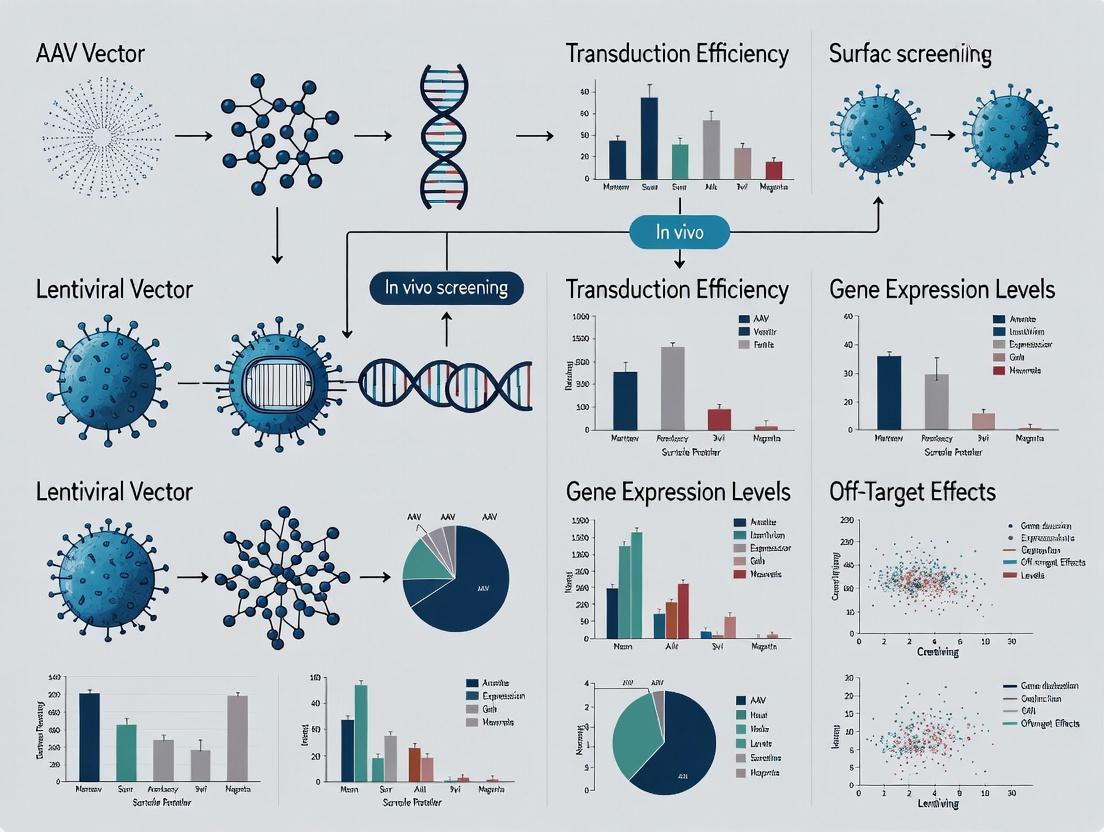
This article provides a comprehensive guide for researchers on selecting and implementing viral vectors for in vivo genetic screening.
AAV vs Lentiviral Vectors for In Vivo Screening: Choosing the Right Tool for Functional Genomics and Drug Discovery
Abstract
This article provides a comprehensive guide for researchers on selecting and implementing viral vectors for in vivo genetic screening. It covers foundational principles of AAV and lentiviral vector biology, details methodological protocols for library delivery and screening in animal models, addresses common troubleshooting and optimization challenges, and presents a comparative analysis of vector performance across key metrics. Aimed at scientists and drug developers, the review synthesizes current strategies to optimize screening fidelity, efficiency, and translational relevance for target identification and validation.
Understanding the Core Biology: AAV and Lentiviral Vector Fundamentals for In Vivo Use
1. Introduction This Application Note provides a comparative analysis of Adeno-Associated Virus (AAV) and Lentiviral (LV) vectors, focusing on their defining characteristics for in vivo screening research. The selection between these platforms is critical for the success of long-term genetic screening or stable transduction experiments. The core parameters of genome structure, cellular tropism, and in vivo persistence define their respective applications, advantages, and limitations.
2. Comparative Characteristics: AAV vs. Lentiviral Vectors The quantitative and qualitative differences between AAV and LV vectors are summarized in the table below.
Table 1: Key Characteristics of AAV and Lentiviral Vectors for In Vivo Screening
| Characteristic | Adeno-Associated Virus (AAV) | Lentivirus (LV) |
|---|---|---|
| Genome Structure | Single-stranded DNA (ssDNA); requires 2nd strand synthesis. Self-complementary (scAAV) variants bypass this step. | Single-stranded RNA (ssRNA); reverse transcribed to double-stranded DNA (dsDNA) in target cell. |
| Packaging Capacity | ~4.7 kb (optimal). Limited capacity for large transgenes. | ~8 kb (optimal). Can accommodate larger or more complex genetic elements. |
| Genomic Integration | Predominantly episomal (non-integrating). Rare, random integration events can occur. | Integrating. Stable integration into host genome via viral integrase. |
| Primary Tropism | Dictated by capsid serotype (e.g., AAV9: broad systemic, including CNS; AAV8: liver; AAVrh.10: muscle, CNS). | Broad tropism; primarily determined by envelope glycoprotein (e.g., VSV-G for pantropic infection). |
| Immune Response | Pre-existing neutralizing antibodies (NAbs) are common in human populations, limiting efficacy. Capsid-specific T-cell responses can eliminate transduced cells. | Vector immunogenicity is a concern; potential for insertional mutagenesis triggers long-term safety monitoring. |
| In Vivo Persistence | Long-term (~years) gene expression in post-mitotic tissues from stable episomes. Diluted in dividing cells. | Permanent, heritable genetic modification due to integration. Suitable for tracking dividing cells over time. |
| Onset of Expression | Slow (peaks in days to weeks for ssAAV; faster for scAAV). | Rapid (peaks within 24-72 hours post-transduction). |
| Ideal Screening Context | Long-term phenotypic studies in post-mitotic or slowly dividing tissues (e.g., CNS, muscle, retina). Pooled in vivo CRISPR screens with stable readout. | Lineage tracing, hematopoietic studies, or oncogenesis screens requiring stable marking of proliferating cell populations. Forward genetic screens in dividing cells. |
3. Experimental Protocols
Protocol 3.1: Determining Vector Tropism via Biodistribution Analysis Objective: Quantify vector genome (VG) distribution across tissues following systemic administration to define in vivo tropism. Materials: Purified AAV or LV vector (1e11 - 1e13 VG/kg), animals (e.g., mice), DNA extraction kit, qPCR system, primers/probe targeting vector backbone (e.g., WPRE or polyA signal). Procedure:
- Administer vector via appropriate route (IV, IP, IM).
- At predetermined timepoints (e.g., 2-4 weeks), euthanize animals and harvest target organs (liver, heart, muscle, brain, spleen).
- Homogenize tissues and extract total DNA.
- Perform absolute quantification by qPCR using a standard curve of known vector genome copies. Normalize data to VG per µg of total DNA or per diploid genome.
- Analyze data to identify tissues with highest vector uptake.
Protocol 3.2: Assessing In Vivo Persistence and Durability of Expression Objective: Measure long-term transgene expression and vector genome persistence to compare AAV (episomal) vs. LV (integrated) stability. Materials: Luciferase- or fluorescent protein-expressing vectors, In vivo imaging system (IVIS), tissue lysates, ELISA or western blot equipment. Procedure:
- Cohorts of animals are transduced with AAV or LV encoding a reporter gene (e.g., firefly luciferase).
- Monitor expression longitudinally using in vivo bioluminescence imaging (BLI) at weeks 1, 4, 12, 24, and 52.
- At terminal timepoints, quantify:
- Vector Genome Persistence: qPCR on extracted DNA (as in Protocol 3.1).
- Transgene Expression Level: ELISA/western blot on tissue lysates.
- Correlate expression durability with genome copy number. Expect stable LV signal in dividing tissues, while AAV signal may decline in proliferating compartments.
4. Visualizations
Diagram Title: Determining Vector Tropism In Vivo
Diagram Title: Genome Structure Dictates Screening Application
5. The Scientist's Toolkit: Key Research Reagent Solutions
Table 2: Essential Reagents for AAV/LV In Vivo Screening Research
| Reagent / Material | Function & Application |
|---|---|
| High-Purity Vector Preps (AAV & LV) | Essential for reliable biodistribution and low toxicity. Use HPLC- or CsCl-gradient purified AAV; LV concentrated via ultracentrifugation. |
| Neutralizing Antibody (NAb) Assay Kits | Quantify pre-existing anti-AAV capsid antibodies in serum to predict transduction efficacy and guide serotype selection. |
| qPCR Assays for Vector Genomes | Primers/Taqman probes targeting vector-specific sequences (e.g., polyA, WPRE) for absolute quantification of biodistribution and persistence. |
| In Vivo Imaging System (IVIS) | Enables non-invasive, longitudinal tracking of luciferase reporter expression to monitor kinetics and durability. |
| Next-Generation Sequencing (NGS) Library Prep Kits | For analyzing integrated LV vector insertion sites (e.g., LAM-PCR) or pooled CRISPR sgRNA abundance from in vivo screens. |
| Tropism-Modifying Capsids/Envelopes | Novel engineered AAV capsids (e.g., PHP.eB, AAV.CAP-B10) or LV pseudotypes (e.g., Rabies-G) for targeting specific cell types. |
Within the broader thesis comparing Adeno-Associated Virus (AAV) and Lentiviral (LV) vectors for in vivo screening research, understanding their fundamental transduction mechanisms is critical. AAV primarily delivers single-stranded DNA (ssDNA), while lentiviral vectors deliver RNA that is reverse-transcribed into DNA. The pathways these nucleic acids follow—from cellular entry to ultimate genomic fate—profoundly impact their application in functional genomics and gene therapy. This Application Note details the mechanisms, provides quantitative comparisons, and outlines protocols for studying these processes.
Mechanism & Quantitative Comparison
| Parameter | AAV (ssDNA) | Lentivirus (RNA) |
|---|---|---|
| Nucleic Acid Payload | Single-stranded DNA (ssDNA), typically 4.7 kb max. | Single-stranded RNA (~10 kb max), reverse-transcribed to double-stranded DNA. |
| Genomic Integration | Predominantly non-integrating; episomal persistence. Rare, random integration. | Efficient, stable integration into host genome via viral integrase. |
| Primary Site of Processing | Nucleus for second-strand synthesis & gene expression. | Cytoplasm for reverse transcription; pre-integration complex enters nucleus. |
| Onset of Expression | Slow (requires 2nd-strand synthesis), peaks at days to weeks. | Rapid post-integration, often within 24-48 hours. |
| Expression Durability | Long-term but can be lost in dividing cells. | Permanent in dividing and non-dividing cells due to integration. |
| Genotoxic Risk | Very low. | Low with modern SIN designs; risk of insertional mutagenesis. |
| Tropism/Entry Receptors | Depends on serotype (e.g., AAV2: HSPG; AAV9: Galactose). | Broad; VSV-G pseudotype enables pantropism via LDL receptor. |
| Typical In Vivo Use | Gene delivery to post-mitotic tissues (e.g., brain, liver, muscle). | In vivo screening, cell lineage tracking, engineering dividing cells. |
Table 2: Experimental Readouts for Mechanism Analysis
| Assay | Measured Outcome | Protocol Reference |
|---|---|---|
| Integration Site Analysis (LAM-PCR, NGS) | Genomic locations, preference for active genes, safety profile. | Protocol 2.1 |
| Episomal DNA Recovery (Hirt Assay for AAV) | Fraction of circular/linear episomal AAV genomes vs. integrated. | Protocol 1.2 |
| Reverse Transcription qPCR (LV) | Kinetics of cDNA formation post-entry. | Protocol 2.2 |
| Second-Strand Synthesis Assay (AAV) | Rate of conversion of ssDNA to transcriptionally active dsDNA. | Protocol 1.3 |
Protocols
Protocol 1: Analyzing AAV ssDNA Transduction & Fate
Title: Assessment of AAV Genome Persistence and Second-Strand Synthesis. Objective: To quantify episomal vs. integrated AAV DNA and the kinetics of second-strand synthesis.
Materials:
- Cells transduced with AAV.
- Reagent Solutions: See Scientist's Toolkit.
- Hirt Lysis Buffer, Proteinase K, Phenol-Chloroform, Isopropanol.
- DpnI restriction enzyme (cuts bacterially methylated DNA only).
- qPCR system with primers for AAV genome and a single-copy host gene.
Procedure:
- Cell Lysis & Episomal DNA Isolation (Hirt Assay):
- At various time points post-transduction, lyse cells with Hirt Lysis Buffer.
- Precipitate high molecular weight (genomic) DNA overnight at 4°C with NaCl.
- Centrifuge; the supernatant contains episomal/circular DNA.
- Digest supernatant with DpnI (30 min, 37°C) to remove residual plasmid from production.
- Purify DNA (Proteinase K, Phenol-Chloroform, isopropanol precipitate).
- Quantification of Genomic vs. Episomal Forms:
- Perform qPCR on the Hirt supernatant (episomal) and pellet (genomic) fractions.
- Use primers for an AAV sequence (e.g., polyA signal) and normalize to a host single-copy gene.
- The ratio of AAV signal in genomic vs. episomal fractions indicates integration frequency.
- Second-Strand Synthesis Kinetics:
- Perform qPCR on total DNA using one primer set specific for the plus strand and another for the minus strand of the AAV transgene.
- The ratio of minus-strand (complementary) to plus-strand (input) DNA over time indicates second-strand synthesis rate.
Protocol 2: Analyzing Lentiviral RNA Integration & Reverse Transcription
Title: Lentiviral Integration Site Mapping and cDNA Kinetics. Objective: To map genomic integration sites and quantify reverse transcription intermediates.
Materials:
- Cells transduced with VSV-G pseudotyped LV.
- Reagent Solutions: See Scientist's Toolkit.
- DNA extraction kit.
- Enzymes: Msel, Tsp509I, Ligases, Taq polymerase.
- Linker Cassette (LC).
- Nested PCR primers specific for LV LTR and LC.
Procedure:
- Integration Site Analysis by LAM-PCR/NGS:
- Extract high molecular weight genomic DNA 7-14 days post-transduction.
- Digest DNA with frequent-cutter restriction enzyme (e.g., Msel).
- Ligate a biotinylated linker cassette (LC) to the digested fragments.
- Perform two rounds of nested PCR using primers binding to the LV LTR and the LC.
- Purify PCR products and subject to next-generation sequencing (NGS).
- Map sequences to the host genome to identify integration sites.
- Reverse Transcription Kinetics by qPCR:
- Harvest cells at early time points (3, 6, 9, 12, 24h post-transduction).
- Extract total DNA.
- Perform qPCR with primers for early (R-U5), intermediate (Gag), and late (2-LTR circle) reverse transcription products.
- Normalize to a spike-in control added during DNA extraction.
- Plot the accumulation of each product over time to assess RT efficiency and kinetics.
Diagrams
Diagram 1: AAV ssDNA vs. Lentiviral RNA Transduction Pathways
Diagram 2: Experimental Workflow for Integration Analysis
The Scientist's Toolkit
Table 3: Essential Research Reagent Solutions
| Reagent / Material | Function / Application | Example/Catalog Consideration |
|---|---|---|
| High-Capacity DNA Extraction Kit | Isolation of high-molecular-weight genomic DNA for integration site analysis (LAM-PCR). | Qiagen DNeasy Blood & Tissue Kit. |
| Hirt Lysis Buffer | Selective precipitation of high-MW DNA, allowing isolation of low-MW episomal AAV genomes. | 10 mM Tris, 10 mM EDTA, 0.6% SDS, pH 7.5. |
| DpnI Restriction Enzyme | Digests bacterially methylated DNA; critical for removing residual AAV production plasmid from assays. | New England Biolabs (NEB) R0176. |
| Biotinylated Linker Cassette (LC) | Used in LAM-PCR for capturing unknown genomic DNA flanking the integrated provirus. | Custom synthesized oligonucleotide set. |
| Taq Polymerase (High-Fidelity) | For accurate amplification of LAM-PCR products prior to NGS. | NEB Q5 High-Fidelity DNA Polymerase. |
| qPCR Master Mix (One-Step/Two-Step) | Quantification of viral nucleic acid intermediates (AAV strands, LV RT products). | Applied Biosystems PowerUp SYBR Green. |
| Single-Copy Human Genomic Locus Primer/Probe Set | qPCR reference for normalizing viral DNA copy number per diploid genome. | RNase P gene assay (TaqMan). |
| VSV-G Pseudotyped Lentiviral Packaging System | Production of pantropic LV particles for in vivo screening. | psPAX2 (packaging) + pMD2.G (VSV-G) plasmids. |
| AAV Serotype-Specific Antibody | Confirmation of viral entry and tropism via immunofluorescence or flow cytometry. | Anti-AAV9 (Progen) for serotype detection. |
This application note details methodologies for three core functional genomic applications—knockdown, overexpression, and CRISPR screening—conducted in vivo. The choice of delivery vector is critical for the success, safety, and interpretability of these studies. This content is framed within a broader thesis comparing Adeno-Associated Virus (AAV) and Lentiviral vectors for in vivo screening research. AAV vectors offer superior safety, specific tissue tropism, and sustained expression in non-dividing cells, making them ideal for long-term phenotypic studies in post-mitotic tissues like the brain and liver. Lentiviral vectors efficiently integrate into the host genome, enabling stable transgene expression in dividing cells, which is advantageous for lineage-tracking studies or screens in rapidly proliferating tissues (e.g., hematopoietic system, tumors). The selection between AAV and lentivirus hinges on experimental priorities: long-term safety and cell-specificity (AAV) versus stable genomic integration and broad infectivity (lentivirus).
Application Note 1: In Vivo Knockdown via shRNA
Objective: To achieve stable, long-term reduction of a target gene's expression in a specific tissue. Vector Consideration: Lentiviral vectors are traditionally used for integrating shRNA expression cassettes, ensuring knockdown is propagated to daughter cells. Newer AAV serotypes with engineered capsids can also be used for efficient transduction of non-dividing cells, but knockdown may diminish over time without genomic integration. Key Challenge: Off-target effects and immune response to viral components.
Application Note 2: In Vivo Overexpression
Objective: To deliver and express a gene of interest (GOI) or a cDNA library in a target organ to study gain-of-function phenotypes. Vector Consideration: AAV is often preferred for its high transduction efficiency and low immunogenicity in many tissues (e.g., CNS, muscle, retina). Lentivirus is chosen for studies requiring stable integration and persistent expression in dividing cell populations, such as in oncogene screening in tumor models.
Application Note 3: In Vivo CRISPR Screening
Objective: To perform pooled or arrayed genetic screens (e.g., knockout, activation, inhibition) directly in an animal model to identify genes affecting complex phenotypes like tumor growth, metastasis, or neuronal function. Vector Consideration: This represents the most complex application. Lentiviral vectors are the standard for delivering sgRNA libraries due to reliable integration and consistent copy number. For CRISPR-Cas9 delivery, a common strategy is to use a transgenic Cas9-expressing mouse model and deliver a lentiviral sgRNA library. Alternatively, all-in-one AAV vectors carrying both SaCas9 (or a smaller Cas variant) and sgRNA can be used, but packaging size constraints limit library complexity. Dual-vector AAV systems (one for Cas9, one for the sgRNA library) are an area of active development.
Comparative Data: AAV vs. Lentiviral Vectors for In Vivo Applications
Table 1: Core Characteristics and Applications
| Feature | AAV Vector | Lentiviral Vector |
|---|---|---|
| Genomic Integration | Predominantly episomal; rare targeted integration. | Stable, semi-random integration. |
| Long-term Expression | Sustained in non-dividing cells; diluted in dividing cells. | Stable in both dividing and non-dividing cells. |
| Packaging Capacity | ~4.7 kb | ~8 kb |
| In Vivo Tropism | Highly serotype-dependent (e.g., AAV9 crosses BBB, AAV8 targets liver). | Broad, but can be pseudotyped (e.g., VSV-G for wide range). |
| Immunogenicity | Generally low; pre-existing immunity in humans is a concern. | Higher; potential for inflammatory responses. |
| Titer Achievable | Very high (>1e13 vg/mL) | High (~1e9 TU/mL) |
| Typical Onset of Expression | Slow (peaks in 2-4 weeks) | Rapid (within days) |
| Ideal Knockdown Application | Short-term or in non-dividing tissues. | Long-term, especially in proliferative tissues. |
| Ideal Overexpression Application | Long-term expression in post-mitotic cells (CNS, muscle, eye). | Stable expression in dividing cells or hematopoietic lineages. |
| CRISPR Screening Role | Delivery of compact Cas9+sgRNA; limited library delivery. | Gold standard for delivering large, pooled sgRNA libraries. |
Table 2: Quantitative Comparison for Common In Vivo Studies
| Parameter | AAV-Mediated CNS Overexpression | Lentiviral-Mediated Hematopoietic Knockdown | Lentiviral sgRNA + Transgenic Cas9 Screen |
|---|---|---|---|
| Typical Dose | 1e10 - 1e11 vg (mouse, ICV) | 1e6 - 1e7 TU (mouse, tail vein) | 1e6 TU/library dose (mouse, tail vein) |
| Time to Phenotype | 3-6 weeks post-injection | 2-4 weeks post-transduction | 4-12 weeks (e.g., tumor growth) |
| In Vivo Efficiency | 70-90% transduced neurons (AAV9) | 20-60% engraftment in bone marrow | Varies; screen dropout >5-fold common |
| Key Limitation | Packaging size, pre-existing immunity. | Insertional mutagenesis risk, lower titer. | Screen depth limited by animal number. |
Detailed Experimental Protocols
Protocol 1: In Vivo Knockdown using Lentiviral shRNA
Title: Stable shRNA Knockdown in Mouse Hematopoietic Stem/Progenitor Cells (HSPCs) Objective: To stably knock down a gene in the blood lineage for functional study. Materials: See "Scientist's Toolkit" below. Procedure:
- Design & Clone: Select 3-5 validated shRNA sequences targeting your gene. Clone into a lentiviral vector (e.g., pLKO.1) containing a puromycin resistance marker.
- Produce Lentivirus: Co-transfect HEK293T cells with the shRNA vector and packaging plasmids (psPAX2, pMD2.G) using polyethylenimine (PEI). Harvest supernatant at 48 and 72 hours, concentrate by ultracentrifugation, and titer on 293T cells.
- Isolate Mouse HSPCs: Harvest bone marrow from donor mice (e.g., C57BL/6). Enrich for Lineage-negative (Lin-) cells using a magnetic bead-based kit.
- Transduce HSPCs: Pre-stimulate Lin- cells in SFEM II medium with cytokines (SCF, TPO, Flt3L) for 24h. Spinoculate cells (1000g, 90 min, 32°C) with lentivirus at an MOI of 30-50 in the presence of 8 µg/mL polybrene.
- Select & Transplant: Post-transduction, culture cells for 48h, then select with 2 µg/mL puromycin for 48h. Inject 5e5 viable transduced cells into the tail vein of lethally irradiated (9 Gy) recipient mice.
- Validate & Analyze: At 4- and 8-weeks post-transplant, analyze peripheral blood and bone marrow by flow cytometry for marker expression and perform qPCR/Western blot on sorted cells to confirm knockdown.
Protocol 2: In Vivo Overexpression using AAV
Title: Neuron-Specific Gene Overexpression in Mouse Brain via AAV9 Objective: To overexpress a protein in neuronal cells of the central nervous system. Materials: See "Scientist's Toolkit" below. Procedure:
- Vector Design & Packaging: Clone the cDNA of interest into an AAV expression plasmid containing a neuron-specific promoter (e.g., hSyn1). Ensure total size is <4.7kb. Package into AAV9 capsids via triple transfection in HEK293 cells (Rep/Cap plasmid, GOI plasmid, pHelper plasmid). Purify via iodixanol gradient centrifugation and buffer exchange into PBS. Titer via qPCR.
- Intracerebroventricular (ICV) Injection in Neonates:
- Anesthetize postnatal day 0-2 (P0-P2) mouse pups on ice for 3-5 minutes.
- Under a stereomicroscope, inject 2 µL of AAV (titer ~5e12 vg/mL) into each lateral ventricle using a 33-gauge Hamilton syringe.
- Keep pups warm until recovery, then return to the dam.
- Phenotypic Analysis: After 4-6 weeks for maximal expression, perfuse mice and harvest brains. Analyze via immunohistochemistry (IHC) for protein expression, confocal microscopy for cellular localization, or behavioral assays for functional impact.
Protocol 3: In Vivo CRISPR Knockout Screening
Title: Pooled In Vivo CRISPR Screen for Tumor Growth Regulators Objective: To identify genes whose knockout alters tumor growth or metastasis in vivo. Materials: See "Scientist's Toolkit" below. Procedure:
- Model & Library Selection: Use a Cas9-expressing tumor cell line (or primary cells from a Cas9 transgenic mouse). Select a genome-wide or focused pooled sgRNA library (e.g., Brie or GeCKO).
- Library Amplification & Virus Production: Amplify the sgRNA plasmid library in Endura electrocompetent cells to maintain diversity. Produce high-titer lentivirus from the pooled library in 293T cells as in Protocol 1. Determine the functional titer.
- In Vitro Transduction & Selection:
- Transduce Cas9+ tumor cells at a low MOI (~0.3) to ensure most cells receive 1 sgRNA. Include a coverage of >500 cells per sgRNA.
- Select with puromycin for 5-7 days. Harvest a portion of cells as the "Reference" sample (T0).
- In Vivo Screening:
- Subcutaneously inject 1e6 viable, transduced cells into immunodeficient mice (e.g., NSG). Use at least 3 mice per experimental arm (e.g., control vs. treatment).
- Monitor tumor growth. Harvest tumors when control tumors reach endpoint volume (~1500 mm³).
- Genomic DNA Extraction & Sequencing:
- Extract gDNA from all T0 and tumor samples using a blood & tissue kit.
- PCR amplify the integrated sgRNA region with barcoded primers. Pool PCR products and sequence on an Illumina NextSeq platform.
- Bioinformatic Analysis:
- Align sequences to the reference sgRNA library. Count reads per sgRNA per sample.
- Use MAGeCK or similar algorithm to compare sgRNA abundances between T0 and final tumors, or between control and treated tumors, to identify significantly depleted or enriched genes (hits).
Diagrams
Diagram 1: AAV vs Lentivirus Decision Workflow
Diagram 2: In Vivo CRISPR Screening Workflow
The Scientist's Toolkit
Table 3: Essential Research Reagents and Materials
| Reagent/Material | Primary Function/Description | Example Use Case(s) |
|---|---|---|
| pLKO.1-puro Vector | Lentiviral plasmid for shRNA expression with puromycin resistance. | Cloning shRNA sequences for stable knockdown. |
| psPAX2 & pMD2.G | 2nd/3rd generation lentiviral packaging plasmids. | Producing replication-incompetent lentivirus in 293T cells. |
| AAV Rep/Cap Plasmid | Provides AAV replication (Rep) and serotype-specific capsid (Cap) proteins. | Packaging AAV vectors (e.g., AAV9 for CNS). |
| pHelper Plasmid | Provides adenoviral helper functions (E2A, E4, VA RNA) for AAV production. | Essential for AAV vector production in 293 cells. |
| Polyethylenimine (PEI) | High-efficiency cationic polymer for plasmid transfection. | Transfecting 293T/293 cells for virus production. |
| Polybrene | Cationic polymer that reduces charge repulsion, enhancing viral transduction. | Used during in vitro spinoculation of cells. |
| Iodixanol Solution | Density gradient medium for ultracentrifugation. | Purifying AAV vectors away from cellular debris. |
| StemSpan SFEM II | Serum-free, cytokine-free medium for hematopoietic stem cells. | Culturing and pre-stimulating mouse HSPCs. |
| Mouse Cytokine Cocktail (SCF, TPO, Flt3L) | Growth factors essential for HSPC survival and proliferation. | Pre-stimulating HSPCs prior to lentiviral transduction. |
| Magnetic Cell Separation Kits (e.g., Lineage Depletion) | Antibody-based kits to negatively select target cell populations. | Isolating lineage-negative (Lin-) hematopoietic stem/progenitor cells. |
| Cas9-Expressing Cell Line/Animal Model | Provides constitutive Cas9 expression for CRISPR screens. | Enabling CRISPR screens without delivering Cas9 separately. |
| Pooled sgRNA Library (e.g., Brie, GeCKO) | Defined collection of sgRNAs targeting the genome. | Performing genome-wide or focused knockout screens. |
| MAGeCK Software | Model-based Analysis of Genome-wide CRISPR-Cas9 Knockout. | Statistical analysis of NGS sgRNA counts to identify screening hits. |
| Next-Generation Sequencer | Platform for high-throughput DNA sequencing (e.g., Illumina). | Sequencing amplified sgRNA regions from screening samples. |
The choice between Adeno-Associated Virus (AAV) and Lentiviral (LV) vectors for in vivo genetic screening presents a critical trade-off, central to a broader thesis on vector selection. AAV offers potential for long-term, non-integrative expression but triggers robust innate immune recognition via Toll-like Receptor (TLR) and cyclic GMP-AMP synthase (cGAS)-Stimulator of Interferon Genes (STING) pathways. Conversely, LV, as an integrating vector, introduces risks of insertional mutagenesis but may elicit different innate sensing profiles, primarily through TLRs and viral RNA sensors. The intensity and kinetics of these initial host responses directly define the permissible "screening window"—the period post-transduction where phenotypic readouts reflect intended genetic perturbations rather than confounding inflammatory or immune-mediated artifacts. This document details application notes and protocols for quantifying these responses to inform vector and timing selection.
Application Note 1: Profiling Early Cytokine Responses Post-Vector Administration
Objective: To quantify the acute innate cytokine signature following systemic delivery of AAV vs. LV vectors, establishing a baseline for screening window determination. Key Findings: Peak inflammatory cytokine levels (e.g., IFN-α, IL-6, TNF-α) occur within 6-24 hours post-AAV administration in mice, driven largely by capsid recognition. LV vectors show a more pronounced IFN-I response at 12-48 hours, associated with viral RNA sensing. The resolution of this acute phase (by 72-96 hrs) often marks the opening of a stable screening window for early phenotypic capture before adaptive immunity engages.
Table 1: Representative Cytokine Kinetics Post-Vector Delivery (C57BL/6 Mice)
| Cytokine | AAV9 (1e11 vg) | Peak Time | LV-PPT (1e8 TU) | Peak Time | Assay Method |
|---|---|---|---|---|---|
| IFN-α (pg/ml) | 250 ± 45 | 6-12 h | 580 ± 120 | 12-24 h | ELISA |
| IL-6 (pg/ml) | 450 ± 80 | 6 h | 150 ± 30 | 12 h | Multiplex Luminex |
| TNF-α (pg/ml) | 180 ± 40 | 6 h | 95 ± 25 | 12 h | Multiplex Luminex |
| CXCL10 (pg/ml) | 1200 ± 200 | 24 h | 2200 ± 350 | 48 h | ELISA |
Data are simulated means ± SD from typical experiments. vg = vector genomes; TU = transducing units.
Protocol 1.1: Serial Blood Collection & Plasma Cytokine Profiling
- Vector Administration: Inject cohorts of mice (n=5-8/group) via tail vein (AAV) or retro-orbital (LV) with appropriate dose. Include PBS vehicle control.
- Blood Sampling: At timepoints (e.g., 6, 12, 24, 48, 72, 168h), collect blood via submandibular or retro-orbital route into EDTA-coated tubes.
- Plasma Separation: Centrifuge samples at 2000 × g for 10 min at 4°C. Aliquot plasma into fresh tubes. Store at -80°C.
- Cytokine Analysis: Thaw samples on ice. Use a mouse proinflammatory cytokine multiplex panel (e.g., Bio-Rad or Millipore) per manufacturer’s instructions. Run samples in duplicate.
- Data Normalization: Express cytokine levels relative to the PBS control group mean at each timepoint.
Application Note 2: Assessing Immune Cell Recruitment to Target Tissues
Objective: To characterize innate immune cell infiltration (e.g., monocytes, neutrophils, NK cells) into key screening organs (liver, spleen) which can obscure screening phenotypes. Key Findings: AAV capsid engagement leads to transient Kupffer cell (liver macrophage) activation and neutrophil margination. LV administration can induce greater monocyte-derived dendritic cell recruitment to splenic marginal zones. Flow cytometric analysis at day 3-7 post-delivery is crucial to define when cellular infiltrates subside.
Protocol 2.1: Tissue Harvest & Immune Cell Isolation for Flow Cytometry
- Perfusion & Collection: At designated endpoint, perfuse mouse transcardially with 20 mL cold PBS. Excise liver and spleen.
- Single-Cell Suspension:
- Spleen: Mechanically dissociate through a 70µm strainer. Lyse RBCs using ACK buffer.
- Liver: Mince tissue, then digest in RPMI + 0.2 mg/mL Collagenase IV + 20 U/mL DNase I for 30 min at 37°C. Pass through a 70µm strainer. Centrifuge (300 × g, 5 min) and resuspend pellet in 35% Percoll. Centrifuge (500 × g, 20 min, no brake) to pellet hepatocyte-depleted leukocytes.
- Staining: Block Fc receptors with anti-CD16/32. Stain with antibody cocktail (30 min, 4°C):
- Lineage: CD45 (leukocytes), CD11b, Ly6G (neutrophils), Ly6C (monocyte subsets), F4/80 (macrophages), NK1.1 (NK cells).
- Activation: CD86, MHC Class II.
- Acquisition & Analysis: Acquire on a flow cytometer (≥3-color). Analyze using FlowJo software. Gate on live, single CD45+ cells.
The Scientist's Toolkit: Key Research Reagent Solutions
| Reagent / Material | Function / Application | Example Vendor/Catalog |
|---|---|---|
| Mouse Cytokine 10-Plex Panel | Simultaneous quantification of key inflammatory cytokines (IFN-γ, IL-6, TNF-α, etc.) from small volume plasma samples. | Thermo Fisher Scientific, LEGENDplex |
| Collagenase Type IV | Tissue dissociation for isolation of viable immune cells from liver and other solid organs. | Worthington Biochemical, CLS-4 |
| Percoll Gradient Solution | Density gradient medium for enrichment of leukocytes from heterogeneous tissue digests. | Cytiva, 17-0891-01 |
| Anti-mouse CD16/32 (Fc Block) | Prevents nonspecific antibody binding via Fc receptors, critical for clean flow cytometry data. | BioLegend, 101320 |
| cGAS Activity Assay Kit | In vitro quantitation of cGAS enzymatic activity from cell lysates to directly measure cytosolic DNA sensing post-AAV. | Cayman Chemical, 501700 |
| TLR9 Inhibitor (ODN 2088) | Class B CpG oligo that inhibits TLR9 signaling; used to dissect TLR9's role in AAV genome sensing. | InvivoGen, tlrl-2088 |
| Next-Generation Sequencing Kit for TRAP-seq | Captures translating ribosomes from specific cell types in vivo; ideal for screening during the defined window. | Takara, 635137 |
Signaling Pathway & Experimental Workflow Diagrams
Diagram Title: Innate Sensing Pathways for AAV vs. Lentiviral Vectors
Diagram Title: Workflow to Define Innate Immunity Screening Window
Protocol 3.1: In Vivo Inhibition of Key Innate Pathways to Extend Screening Window
- Inhibitor Preparation: Reconstitute inhibitors in sterile PBS or recommended vehicle.
- For AAV: Administer TLR9 inhibitor ODN 2088 (5 mg/kg, i.p.) 1 hour prior to AAV infusion.
- For LV: Administered STING inhibitor H-151 (3 mg/kg, i.p.) or RIG-I-like receptor inhibitor (e.g., compound A, vendor-specific) day -1 and day 0.
- Co-administration: Deliver vector as per Protocol 1.1.
- Monitoring: Follow cytokine (Protocol 1.1) and cellular (Protocol 2.1) profiling protocols. Compare results to vector-only control groups.
- Phenotypic Validation: Conduct primary screening readout (e.g., tumor growth, survival, biomarker expression) in inhibited vs. control cohorts at the hypothesized extended window (e.g., Day 10-14 vs. Day 5-7).
Table 2: Impact of Innate Pathway Inhibition on Screening Metrics
| Treatment Group | Peak IFN-α Reduction | Liver NK Cell Infiltrate (Day 3) | Phenotypic Signal:Noise Ratio (Day 10) |
|---|---|---|---|
| AAV9 Only | Baseline (0%) | High (+++) | 1 : 1 |
| AAV9 + TLR9i | 65% ± 10% | Reduced (++) | 3.5 : 1 |
| LV Only | Baseline (0%) | Moderate (++) | 1 : 1 |
| LV + STINGi | 40% ± 8%* | Low (+) | 2.2 : 1 |
*LV-induced IFN-α is less STING-dependent; inhibition shows partial effect. Simulated data.
Within the ongoing evaluation of AAV versus lentiviral vectors for in vivo screening research, a fundamental technical constraint is the packaging capacity of each vector system. This limit directly dictates the complexity, diversity, and functional scope of the genetic libraries that can be delivered, thereby shaping experimental design and therapeutic potential. These Application Notes detail the quantitative limits, their implications for library design, and protocols for working within these boundaries.
Quantitative Packaging Limits: AAV vs. Lentivirus
Table 1: Key Vector Packaging Capacity Parameters
| Parameter | Adeno-Associated Virus (AAV) | Lentivirus (LV) | Practical Implication for Libraries |
|---|---|---|---|
| Theoretical Capacity | ~4.7 kb (wild-type genome) | ~9-10 kb (including vector sequences) | LV can package larger, more complex genetic elements. |
| Optimal Functional Capacity | ≤4.3-4.5 kb | ~8 kb | AAV requires highly optimized, compact expression cassettes. |
| Primary Constraint | Physical capsid size/geometry | Gag protein stability & genomic RNA integrity | AAV limits are rigid; LV limits are more flexible but with reduced titer for larger inserts. |
| Typical cDNA Accommodation | Most cDNAs ≤3.5 kb; split systems for larger genes. | Can accommodate most full-length cDNAs + regulatory elements. | AAV screens often use shRNA, miRNA, or compact ORF libraries; LV can use full-length CRISPR guides with reporters. |
| Impact on In Vivo Screening | Suited for compact payloads; limited serotype tropism for systemic delivery. | Suited for complex, multi-component payloads; broader tropism but greater biosafety considerations. | AAV ideal for targeted tissue, simple queries. LV ideal for systemic, complex phenotypic screens. |
Impact on Genetic Library Design Strategies
The capacity limit forces distinct design philosophies:
AAV-Centric Design:
- Minimalist Promoters: Use of compact, strong promoters (e.g., synthetic CBA, U6, H1).
- Compact Regulatory Elements: Avoid large introns, use minimal polyA signals (e.g., bGH, synthetic).
- Payload Truncation: Employing cDNA truncation, domain-specific encoding, or highly compact reporters (e.g., smURFP).
- Trans-Splicing or Dual-Vector Systems: For genes exceeding capacity, though this complicates library complexity and stoichiometry.
Lentivirus-Centric Design:
- Multi-Gene Cassettes: Ability to package multiple expression units (e.g., CRISPR gRNA + Cas9, ORF + fluorescent marker).
- Complex Regulatory Architectures: Inclusion of larger, tissue-specific promoters, insulator elements, and inducible systems.
- Large cDNA Libraries: Accommodation of most full-length human cDNAs for overexpression screens.
Experimental Protocols
Protocol 1: Validating Packaging Efficiency vs. Insert Size for AAV
Objective: Empirically determine the titer drop-off as a function of insert size for a specific AAV serotype.
Materials:
- Research Reagent Solutions: See Toolkit Table.
- AAV transfer plasmid library with size-varied inserts (e.g., 2.0 kb, 3.5 kb, 4.5 kb, 5.0 kb GFP expression cassettes).
- AAV Rep/Cap plasmid (e.g., serotype 9).
- Adenoviral helper plasmid (pHelper).
- HEK293T/AAV producer cells.
- Polyethylenimine (PEI) transfection reagent.
- Benzonase.
- Iodixanol gradient solutions (15%, 25%, 40%, 60%).
- qPCR system with primers for the AAV ITR region.
Procedure:
- Transfection: Co-transfect HEK293T cells in triplicate with each size-variant transfer plasmid (constant molar amount), the Rep/Cap plasmid, and pHelper using PEI.
- Harvest: 72 hours post-transfection, harvest cells and media. Lyse cells by freeze-thaw, treat with Benzonase to digest unpackaged DNA, and clarify the lysate.
- Purification: Purify viral particles from the clarified lysate using an iodixanol step-gradient ultracentrifugation.
- Titration: Treat purified virus with DNase I to remove residual plasmid DNA. Extract viral genome DNA and quantify by ITR-specific qPCR against a linearized plasmid standard.
- Analysis: Plot genome titers (vg/mL) as a function of insert size. The point where titer drops precipitously (often >4.5 kb) defines the practical limit.
Protocol 2: Assessing Lentiviral Vector Integrity for Large Inserts
Objective: Evaluate the genetic integrity of packaged lentiviral genomes, especially for inserts >8 kb.
Materials:
- Research Reagent Solutions: See Toolkit Table.
- Lentiviral transfer plasmid with large insert (e.g., 8.5 kb cDNA + promoter).
- Lentiviral packaging plasmids (psPAX2, pMD2.G).
- HEK293T cells.
- Lenti-X Concentrator.
- RT-PCR/Sanger sequencing or Next-Generation Sequencing (NGS) reagents.
- Target cells for transduction (e.g., HEK293).
Procedure:
- Production & Concentration: Produce lentivirus by standard triple transfection of HEK293T cells. Concentrate viral supernatant using Lenti-X concentrator.
- Transduction & Expansion: Transduce target cells at a low MOI (<0.3) to ensure single integration events. Expand transduced cells under selection (e.g., puromycin) for 1-2 weeks.
- Genomic DNA Extraction: Extract high-molecular-weight genomic DNA from pooled, selected cells.
- Integrity Analysis:
- Option A (PCR/Sequencing): Design overlapping PCR amplicons spanning the entire insert and LTR regions. Amplify from genomic DNA, sequence products, and align to the expected sequence to identify deletions/rearrangements.
- Option B (NGS): Use primers anchored in the host genome flanking the integration site (e.g., using linear-amplification mediated PCR - LAM-PCR) followed by NGS to sequence the provirus-host junctions and internal regions.
- Interpretation: Calculate the percentage of recovered proviral sequences that are full-length and intact. Large inserts often show increased incidence of internal deletions.
Visualizing Workflows and Constraints
Title: Decision Flow: AAV vs Lentiviral Library Design Based on Payload Size
Title: AAV Packaging Efficiency Validation Workflow
The Scientist's Toolkit
Table 2: Essential Research Reagent Solutions
| Item | Function in Context of Packaging Limits |
|---|---|
| AAV ITR-specific qPCR Primers/Probes | Accurate titration of AAV genome copies, critical for comparing yields of different library sizes. |
| Lenti-X Concentrator | Gentle polyethylene glycol-based concentration of lentivirus, minimizing loss of potentially fragile particles with large genomes. |
| Benzonase Nuclease | Digests unpackaged nucleic acids in viral preps post-lysis, ensuring qPCR titers reflect packaged genomes only. |
| Iodixanol Gradient Media | Provides high-resolution, isosmotic purification of AAV vectors, separating full particles from empty capsids which are common with sub-optimal inserts. |
| Linear-Amphication Mediated PCR (LAM-PCR) Kit | For identifying genomic integration sites and sequencing proviral ends to assess integrity of large lentiviral inserts post-integration. |
| Compact Promoter Plasmids (e.g., pENN.AAV.CB.hGH) | AAV-compatible, size-optimized "backbone" vectors with minimal regulatory elements to maximize cloning space for payloads. |
| 3rd Generation Lentiviral Packaging System (psPAX2, pMD2.G) | Standard, split-genome system for safer LV production; essential for generating libraries with defined complexity. |
| Next-Generation Sequencing (NGS) Services | For post-screening analysis to confirm library representation and identify potential size-based skewing or recombination events. |
The rigid ~4.5 kb limit of AAV and the more flexible ~8-10 kb limit of lentivirus are primary drivers in in vivo screening campaign design. AAV demands extreme payload optimization, favoring loss-of-function or compact gain-of-function libraries for targeted delivery. Lentivirus accommodates complex, multi-component libraries suitable for systemic delivery and intricate phenotypic readouts. The protocols and tools outlined here enable researchers to empirically define and operate within these critical boundaries, ensuring the fidelity and interpretability of their functional genomic screens in vivo.
Designing and Executing an In Vivo Screen: From Library to Animal Model
Article Context: This protocol is framed within a comparative analysis of Adeno-Associated Virus (AAV) and Lentiviral (LV) vectors for in vivo functional genomics and screening. The choice between these platforms hinges on the experimental need for transient (AAV) vs. stable genomic integration (LV), target cell type (dividing vs. non-dividing), payload capacity, and immunogenicity. The following workflow and QC strategies are essential for generating robust, interpretable in vivo screening data.
Phase 1: Library Design and Cloning
Objective: To design and clone a sequence-verified, highly diverse genetic library (e.g., CRISPR gRNA, shRNA, ORF) into the appropriate vector backbone.
Protocol 1.1: Design and Oligo Pool Synthesis
- Define Library Parameters: Determine library size (e.g., 10³–10⁵ elements), element length, and ensure a minimum of 200x coverage per element for statistical robustness.
- Sequence Design: For CRISPR libraries, use validated rules (e.g., Doench et al., 2016 ruleset) to maximize on-target activity and minimize off-target effects. Append constant flanking sequences compatible with your chosen cloning strategy (e.g., BsmBI sites for Golden Gate assembly into lentiCRISPR vectors).
- Oligo Pool Synthesis: Order the designed library as a complex oligo pool from a commercial vendor (e.g., Twist Bioscience, Agilent). Specify clonal amplification and purification to ensure even representation.
Protocol 1.2: Library Amplification and Cloning
- PCR Amplification: Amplify the oligo pool using high-fidelity polymerase (e.g., KAPA HiFi) with primers containing the full cloning homology or restriction overhangs.
- Restriction/Assembly: Digest the PCR product and the recipient plasmid vector with the appropriate Type IIS restriction enzyme (e.g., BsmBI). Purify digested products.
- Golden Gate Assembly: Perform a multi-cycle Golden Gate assembly reaction to directionally clone the pooled inserts into the vector backbone.
- Electroporation: Transform the assembled product into highly competent E. coli (e.g., Endura ElectroCompetent Cells) via electroporation to maximize library diversity. Plate on large-format LB agar plates with selective antibiotic.
- Harvest and Maxiprep: Scrape all colonies, pool, and culture in liquid medium for a brief period (<12 hours) to avoid overgrowth bias. Isolate the plasmid library using a maxiprep kit. Aim for a total DNA yield of >500 µg.
Table 1: Key Design Considerations for AAV vs. Lentiviral Libraries
| Parameter | AAV Library | Lentiviral Library |
|---|---|---|
| Typical Payload Capacity | ≤ 4.7 kb (with ITRs) | ≤ 8 kb (pseudotyped) |
| Cloning Strategy | ITR-flanked cassette inserted into rep/cap plasmid or transgene plasmid for triple transfection. | Standard molecular cloning into transfer plasmid containing ψ-packaging signal and LTRs. |
| Critical cis-Elements | Inverted Terminal Repeats (ITRs), promoter, polyA signal. | 5' & 3' LTRs, Ψ-packaging signal, RRE, cPPT/CTS (enhances transduction). |
| Typical Library Diversity | 10³–10⁴ (limited by packaging efficiency & titer). | 10⁵–10⁶ (high-titer production feasible). |
| Primary Bottleneck | Packaging size limit and vector genome homogeneity. | Risk of recombination during reverse transcription. |
Phase 2: Vector Production & Purification
Protocol 2.1: Lentiviral Vector Production (Lenti-X 293T Cell System)
- Cell Seeding: Seed Lenti-X 293T cells in 15-cm plates at ~70% confluency in DMEM + 10% FBS without antibiotics.
- Triple Transfection (next day): For each plate, co-transfect using PEI-Max:
- Transfer Plasmid (Library): 15 µg
- Packaging Plasmid (psPAX2): 10 µg
- Envelope Plasmid (pMD2.G): 5 µg Mix DNA with 1.5 mL Opti-MEM, add 90 µL PEI-Max (1 mg/mL), vortex, incubate 15 min, and add dropwise to cells.
- Harvest: Replace medium 6–8 hours post-transfection. Collect viral supernatant at 48 and 72 hours, pool, and filter through a 0.45 µm PES filter.
- Concentration: Concentrate virus by ultracentrifugation (~70,000 x g, 2h, 4°C) or using tangential flow filtration. Resuspend pellet in cold PBS + 1% BSA, aliquot, and store at -80°C.
Protocol 2.2: AAV Vector Production (PEI-mediated Triple Transfection in HEK293T/AAV293)
- Cell Seeding: Seed HEK293T cells in cell factories or hyperflasks at 70% confluency in DMEM + 10% FBS.
- Triple Transfection: Per production vessel, co-transfect using PEI-Pro:
- AAV trans Gene Plasmid (Library ITR-cassette): Equal molar ratio (typically ~1/3 of total DNA mass).
- AAV rep/cap Plasmid (Serotype-specific, e.g., AAV8): Equal molar ratio.
- Adenoviral Helper Plasmid (pAdDeltaF6): Equal molar ratio. Follow transfection mix preparation similar to Protocol 2.1.
- Harvest: 72 hours post-transfection, harvest cells and media. Pellet cells via centrifugation.
- Purification: Resuspend cell pellet in lysis buffer, freeze-thaw, and treat with Benzonase. Purify AAV vectors using iodixanol density gradient ultracentrifugation or affinity chromatography (e.g., AVB Sepharose). Dialyze into final formulation buffer (e.g., PBS + 0.001% Pluronic F-68).
Table 2: Quantitative Production Metrics for AAV vs. LV
| Metric | Lentivirus (Concentrated) | AAV (Purified, Serotype 8/9) |
|---|---|---|
| Typical Functional Titer | 1 x 10⁹ – 1 x 10¹⁰ TU/mL | 1 x 10¹² – 1 x 10¹³ vg/mL |
| Titering Method | qPCR (p24 ELISA for physical titer) & functional assay on HEK293T. | ddPCR or qPCR for vector genomes (vg). |
| Infectivity Ratio | 1:100 – 1:1000 (Physical:Functional) | ~1:100 – 1:1000 (vg:IU). Critical QC parameter. |
| Yield per 15-cm plate | ~1-5 x 10⁷ TU (pre-concentration) | ~1-5 x 10¹¹ vg (post-purification) |
Phase 3: Quality Control (QC) forIn VivoDelivery
Protocol 3.1: Comprehensive Vector QC Panel
- Titer Verification (ddPCR): Perform digital droplet PCR (ddPCR) using primers/probe against the vector backbone (e.g., WPRE for LV, polyA for AAV). This provides absolute quantification of vector genomes (vg/mL) without standard curve bias.
- Infectivity/Potency Assay:
- LV: Transduce HEK293T cells with serial dilutions of vector in the presence of 8 µg/mL polybrene. 72h later, extract genomic DNA and quantify integrated copies via qPCR against a single-copy host gene (e.g., RPP30). Calculate Transducing Units (TU)/mL.
- AAV: Transduce HeLa or HEK293 cells with serial dilutions. 48h later, extract total DNA and quantify vector genomes via qPCR. Calculate Infectious Units (IU)/mL from the linear range of the dilution curve.
- Purity Assessment:
- SDS-PAGE: Run purified vector on a 4-12% Bis-Tris gel under reducing conditions. Silver stain or Coomassie stain to visualize capsid proteins (VP1/2/3 for AAV) and assess contamination by serum or cellular proteins.
- Endotoxin Assay: Perform LAL chromogenic assay. Acceptable limit: <5 EU/mL for systemic in vivo administration.
- Library Integrity (NGS): For both AAV and LV libraries, prepare NGS libraries by PCR-amplifying the variable region directly from the vector prep. Sequence on a MiSeq. Analyze for evenness of representation (Gini coefficient <0.2 desirable), drop-outs, and maintenance of designed diversity.
The Scientist's Toolkit: Essential Reagent Solutions
| Item | Function | Example Product/Catalog |
|---|---|---|
| Endura ElectroCompetent Cells | High-efficiency transformation for large, complex plasmid libraries. | Lucigen, #60242-2 |
| PEI-Max / PEI-Pro | Low-cost, high-efficiency polyethylenimine transfection reagent for viral packaging. | Polysciences, #24765 / # 2600001 |
| Lenti-X 293T Cells | Optimized, high-titer lentivirus producer cell line. | Takara Bio, #632180 |
| Iodixanol | Medium for density gradient ultracentrifugation purification of AAV. | OptiPrep, Sigma #D1556 |
| ddPCR Supermix | For absolute, standard-free quantification of vector genome titer. | Bio-Rad, #1863024 |
| LAL Chromogenic Assay | Sensitive quantification of endotoxin levels in final vector prep. | Lonza, #50-647U |
| Nextera XT DNA Library Prep | Rapid preparation of sequencing libraries for QC of vector library diversity. | Illumina, #FC-131-1024 |
Diagrams
Vector Selection Logic for In Vivo Screening
End-to-End Vector Library Production and QC Workflow
Application Notes
The choice between systemic and localized administration of viral vectors (AAV vs. lentiviral) is a critical determinant for the success of in vivo genetic screening and therapeutic targeting. This decision directly impacts biodistribution, cellular tropism, immune response, and screening outcome fidelity.
Systemic Administration (e.g., intravenous, intraperitoneal): Ideal for whole-organism or multi-tissue screening. AAV serotypes (e.g., AAV9, AAVrh.10) enable broad transduction across tissue barriers like the blood-brain barrier. However, off-target effects are high, and liver sequestration can dominate. Lentiviral vectors (LVs) are rapidly inactivated by human serum complement, limiting their efficacy for in vivo systemic use unless engineered or used in complement-deficient models. Recent data (2023-2024) highlights the use of engineered AAV capsids to evade pre-existing immunity and enhance organ specificity post-systemic delivery.
Localized Administration (e.g., intracranial, intramuscular, intratumoral): Provides high local titer and precise spatial control, minimizing off-target transduction. It is the preferred route for LV delivery in vivo due to avoidance of serum inactivation. Direct injection into brain parenchyma (stereotactic), muscle, or tumor masses allows for robust screening within a defined microenvironment. AAVs also benefit from localized delivery to achieve high localized gene expression with lower doses.
Quantitative comparisons of key parameters are summarized below:
Table 1: Systemic vs. Localized Administration of Viral Vectors for In Vivo Screening
| Parameter | Systemic Injection (IV) | Localized Injection (e.g., Intracranial) |
|---|---|---|
| Primary Use Case | Whole-body or multi-organ screening; targeting dispersed cell populations. | Focused screening in a specific organ or anatomical region. |
| Effective Titer Required | High (often >1e12 vg/kg for AAV) to overcome dilution. | Moderate to Low (e.g., 1e9 - 1e10 vg/site). |
| Biodistribution | Widespread; heavily influenced by vector serotype (AAV) and host factors. Liver dominant for many AAVs. | Highly localized to injection site and draining areas. |
| Off-Target Transduction | Very High. | Low to Moderate. |
| Ideal for Lentiviral Vectors | Poor (except in specific model systems). | Excellent. |
| Immune Exposure Risk | High (activates humoral and cellular immunity). | Lower (more immune-privileged sites possible). |
| Technical Difficulty | Low (simple injection). | High (often requires surgical/stereotactic expertise). |
| Common AAV Serotypes | AAV9, AAVrh.10, AAV-LK03, engineered capsids. | AAV1, AAV2, AAV5, AAV8, AAV9. |
| Common LV Pseudotypes | VSV-G (with complement inhibition strategies). | VSV-G, Rabies-G, LCMV-G. |
Table 2: AAV vs. Lentiviral Vector Suitability by Route (2024 Perspective)
| Vector Type | Systemic Route Feasibility | Localized Route Feasibility | Key Consideration for Screening |
|---|---|---|---|
| Adeno-Associated Virus (AAV) | Excellent (with serotype selection). | Excellent. | Persistence: Long-term gene expression supports chronic disease modeling. Genome: Primarily episomal; better for gain-of-function screens. |
| Lentivirus (LV) | Limited. | Excellent. | Integration: Stable genomic integration enables long-term tracking in dividing cells. Ideal for loss-of-function/shRNA screens in proliferative tissues (e.g., tumors). |
Experimental Protocols
Protocol 1: Systemic Tail Vein Injection for AAV-Based Broad Organ Screening in Mice Objective: To achieve widespread in vivo transduction for a pooled genetic screen. Materials: Purified AAV vector (e.g., AAV9-CRISPR sgRNA library, 1e13 vg/mL), adult C57BL/6 mice, heating lamp, restraint device, 29G insulin syringes, 70% ethanol. Procedure:
- Thaw AAV library on ice and dilute in sterile PBS to the desired dose (e.g., 1e11 vg per mouse in 100 µL).
- Place mouse in a restraint device and warm the tail under a heating lamp for 1-2 minutes to dilate veins.
- Disinfect the tail with 70% ethanol.
- Using a 29G syringe, insert the needle parallel into a lateral tail vein.
- Inject the 100 µL suspension slowly and steadily. A lack of resistance indicates proper venous access.
- Withdraw the needle and apply gentle pressure for hemostasis.
- Monitor animals for acute adverse effects. Tissues for analysis can be harvested after a suitable expression period (e.g., 3-4 weeks for AAV).
Protocol 2: Stereotactic Intracranial Injection for LV-Based Brain Tumor In Vivo Screen Objective: To deliver a lentiviral shRNA library directly into an orthotopic brain tumor in a murine model. Materials: Concentrated LV-shRNA library (1e9 TU/µL), anesthetized mouse, stereotactic frame, microsyringe pump, Hamilton syringe (33G needle), drill, bone wax, surgical tools. Procedure:
- Anesthetize and secure the mouse in the stereotactic frame. Apply ophthalmic ointment.
- Make a midline scalp incision and expose the skull. Identify bregma.
- Calculate coordinates for the tumor site (e.g., 2.0 mm anterior, 1.5 mm lateral to bregma).
- Drill a small burr hole at the target coordinate.
- Load the LV library suspension into the Hamilton syringe and mount it on the pump.
- Lower the needle to the target depth (e.g., 2.5 mm ventral).
- Inject 2 µL of the LV suspension at a rate of 0.2 µL/min.
- After injection, wait 5 minutes to allow diffusion, then slowly retract the needle.
- Seal the burr hole with bone wax, suture the scalp, and provide post-operative care.
- Allow 1-2 weeks for stable integration and expression before initiating screen readout.
Visualizations
Title: Decision Flow for In Vivo Screening Routes
Title: AAV vs LV Screening Workflow Comparison
The Scientist's Toolkit: Research Reagent Solutions
| Item | Function & Relevance |
|---|---|
| AAV Producer Line (e.g., AAV-293 cells) | Triple-transfection compatible cell line for high-titer, serotype-specific AAV library production. |
| LV Producer Line (e.g., Lenti-X 293T) | HEK293-derived cell line optimized for high-titer lentivirus production via transient transfection. |
| Polyethylenimine (PEI Max) | High-efficiency, low-cost transfection reagent for scalable viral vector production in 293 cells. |
| Iodixanol Density Gradient Medium | Used for ultracentrifugation-based purification of AAV and LV, yielding high-purity, high-infectivity vectors. |
| qPCR Kit for Vector Titering | Absolute quantification of viral genome copies (vg/mL) using primers against the vector genome (e.g., ITR, WPRE). |
| Anti-AAV Capsid Neutralizing Antibody Assay | Measures pre-existing humoral immunity in serum that can neutralize AAV and reduce in vivo efficacy. |
| Next-Generation Sequencing (NGS) Library Prep Kit | For quantifying sgRNA or shRNA representation from harvested tissue genomic DNA, enabling hit deconvolution. |
| Stereotactic Instrument for Rodents | Precision apparatus for reproducible localized injections into brain or other deep tissues. |
| Complement Inhibitor (e.g., Cobra Venom Factor) | Temporarily depletes complement in mice, allowing for systemic LV delivery studies. |
The choice between Adeno-Associated Virus (AAV) and Lentiviral vectors for in vivo functional screening hinges on critical parameters that dictate efficiency, specificity, and safety. AAV vectors offer superior safety, long-term transgene expression in non-dividing cells, and broad serotype tropism, but have a limited packaging capacity (~4.7 kb). Lentiviral vectors provide stable genomic integration, higher packaging capacity (~8 kb), and efficient transduction of dividing and non-dividing cells, but pose insertional mutagenesis risks. This application note details the experimental determination of the trinity of parameters—viral dose, serotype, and promoter specificity—essential for optimizing in vivo screening outcomes with either platform.
Determining Optimal Viral Dose: Titer vs. Transduction vs. Toxicity
Viral dose is a balance between achieving sufficient transduction efficiency and minimizing immunogenicity or cellular toxicity. Recent in vivo studies highlight dose-dependent effects on both efficacy and safety profiles.
Table 1: Comparative Viral Dose Guidelines for In Vivo Screening
| Vector Type | Common Titer Range (vg or TU/mL) | In Vivo Route | Typical Injection Volume & Dose (Small Animal) | Key Toxicity Concern |
|---|---|---|---|---|
| AAV | 1e11 - 1e13 vg/mL | Intracranial, Intravenous, Intramuscular | 1-10 µL (CNS); 100 µL (IV) @ 1e11-1e13 total vg | Hepatotoxicity at high systemic doses; CNS inflammation. |
| Lentivirus | 1e7 - 1e9 TU/mL | Intracranial, Intratumoral, Intravenous | 1-5 µL (CNS); 50 µL (IT) @ 1e7-1e8 total TU | Insertional mutagenesis; stronger inflammatory response. |
Protocol 2.1: In Vivo Dose-Ranging Study for Vector Safety & Efficacy Objective: To establish the maximum tolerated dose (MTD) and minimum effective dose (MED) for a new AAV or Lentiviral construct. Materials: Purified viral vector (titered), target animal model (e.g., C57BL/6 mice), appropriate injection apparatus (e.g., stereotaxic frame for CNS), ELISA or qPCR kits for cytokine analysis. Procedure:
- Cohort Design: Prepare 4-5 cohorts (n=6-8). Inject cohorts with a logarithmic range of vector doses (e.g., 1e9, 1e10, 1e11, 1e12 vg for AAV).
- Administration: Administer vector via the intended route under aseptic conditions.
- Monitoring: Weigh animals daily and observe for signs of distress (lethargy, ataxia) for 14 days.
- Tissue Harvest: At study endpoint (e.g., 4 weeks), harvest target organs (liver, brain, spleen) and serum.
- Analysis:
- Efficacy: Quantify transgene expression (e.g., via immunofluorescence, luminescence) in target tissue.
- Toxicity: Measure serum alanine transaminase (ALT) for liver function; perform H&E staining on tissues; quantify pro-inflammatory cytokines (IL-6, TNF-α) via ELISA.
- Data Interpretation: Plot dose vs. expression and dose vs. toxicity markers. The MED is the lowest dose with significant expression above control. The MTD is the dose preceding significant weight loss or biomarker elevation.
Serotype Selection for TargetedIn VivoDelivery
Serotype determines cellular tropism and transduction efficiency by interacting with specific cell surface receptors. The optimal serotype is tissue- and species-dependent.
Table 2: Common AAV Serotype Tropism for In Vivo Screening Applications
| AAV Serotype | Primary In Vivo Tropism (Rodent) | Key Receptor | Advantage for Screening |
|---|---|---|---|
| AAV9 | CNS (neurons, astrocytes), Heart, Liver, Muscle | Galactose, LamR | Crosses blood-brain barrier (BBB) efficiently; broad systemic transduction. |
| AAV-PHP.eB (Engineered) | CNS (enhanced neuronal) | LY6A (mouse-specific) | Superior CNS targeting in susceptible mouse strains for pan-neuronal screens. |
| AAV-DJ (Chimeric) | Liver, Muscle, Eye, CNS (broad) | Multiple | Hybrid capsid with very broad tropism; useful for initial multi-tissue testing. |
| AAVrh.10 | CNS (neurons, astrocytes), Retina | Unknown | Strong CNS and retinal transduction; alternative immune profile. |
| Lentivirus (Pseudotype) | |||
| VSV-G | Ubiquitous (broad range) | LDL receptor | Standard, high-titer production; infects most dividing/non-dividing cells in vivo. |
| Rabies-G | Retrograde transport in neurons | Specific neuronal receptors | Enables mapping of neural circuits (often used with EnvA complementation). |
Protocol 3.1: Empirical Serotype Screening in Target Tissue Objective: To compare transduction efficiency and cellular tropism of different AAV serotypes in vivo. Materials: AAV vectors (identical genome, different capsids) encoding a reporter (e.g., EGFP), confocal microscope. Procedure:
- Stereotaxic Injection: Inject equivalent genomic doses (e.g., 1e9 vg) of each AAV serotype (AAV1, AAV5, AAV9, AAV-PHP.eB) into the same brain region (e.g., striatum) of separate mouse groups.
- Perfusion & Sectioning: After 3-4 weeks, perfuse mice, harvest brains, and section them.
- Immunostaining: Perform immunostaining for EGFP and cell-type markers (e.g., NeuN for neurons, GFAP for astrocytes, Iba1 for microglia).
- Quantitative Analysis:
- Capture high-resolution images of the injection site.
- Use automated image analysis software (e.g., ImageJ, CellProfiler) to count EGFP+ cells co-localized with each cell-type marker.
- Calculate: Transduction Efficiency (%) = (Number of dual-positive cells / Total number of marker+ cells in region) * 100.
- Selection Criterion: Choose the serotype with the highest efficiency for your target cell population and the lowest off-target transduction.
Promoter Specificity for Cell-Type-Specific Expression
Promoter choice drives the level and specificity of transgene expression, crucial for interpretable screening results.
Table 3: Promoter Profiles for In Vivo Screening Vectors
| Promoter | Size (bp) | Expression Profile | Best Use Case |
|---|---|---|---|
| Constitutive | |||
| CAG (hybrid) | ~1700 | Strong, ubiquitous | High expression in most tissues; good for AAV or LV. |
| EF1α | ~1200 | Strong, ubiquitous in many cell types | Consistent expression; often used in lentiviral vectors. |
| Cell-Type-Specific | |||
| hSyn (Human Synapsin) | ~470 | Neuron-specific (CNS) | AAV-mediated neuronal gene expression or knockdown. |
| GFAP (Glial Fibrillary Acidic Protein) | ~2100 | Astrocyte-specific (CNS) | Targeting astrocytes in neurological disease screens. |
| TBG (Thyroxine-Binding Globulin) | ~300 | Hepatocyte-specific | Liver-directed screens (e.g., for metabolic disease). |
| Inducible | |||
| TRE (Tetracycline-Response Element) | ~100 | Doxycycline-dependent | Inducible expression/knockdown in Tet-On/Off systems. |
Protocol 4.1: Validating Promoter Specificity In Vivo Objective: To confirm cell-type-specific activity of a candidate promoter in an AAV or Lentiviral context. Materials: AAV or LV vectors with candidate promoter driving EGFP and a ubiquitous promoter (CAG) driving a red reporter (tdTomato) in a separate vector, cell-type-specific antibody panel. Procedure:
- Co-injection: Co-inject the test vector (PromoterX-EGFP) and the control vector (CAG-tdTomato) at a 1:1 genomic ratio into the target tissue.
- Tissue Processing: After expression period, section tissue and perform immunostaining for tdTomato (ubiquitous control) and cell-type markers.
- Confocal Imaging & Quantification:
- Acquire z-stack images. For each cell-type marker (e.g., NeuN), analyze 100+ marker-positive cells.
- Score each cell for EGFP and tdTomato expression.
- Calculation:
- Promoter Specificity (%) = (Number of Marker+/EGFP+ cells / Total number of Marker+ cells) * 100.
- Promoter Leakiness (%) = (Number of Marker-/EGFP+ cells / Total number of Marker- cells in the field) * 100.
- Compare EGFP intensity specifically within the target cell population across different promoters.
Integrated Experimental Workflow
Title: Integrated Workflow for Optimizing Viral Screening Vectors
The Scientist's Toolkit: Key Research Reagent Solutions
Table 4: Essential Materials for Viral Vector Parameter Optimization
| Item (Supplier Examples) | Function in Protocol |
|---|---|
| Viral Production & Quantification | |
| Polyethylenimine (PEI) MAX / Lipofectamine 3000 | Transfection reagent for producing lentiviral or AAV vectors in HEK293T cells. |
| AAVpro Purification Kit (Takara) / Iodixanol Gradient | For purifying and concentrating AAV vectors from cell lysates. |
| qPCR Kit for Titration (e.g., with ITR or WPRE primers) | Absolute quantification of viral genome copies (vg/mL for AAV) or transduction units (TU/mL for LV). |
| In Vivo Delivery | |
| Stereotaxic Injector & Micropump (e.g., from WPI, Nanoliter 2020) | Precise intracranial delivery of virus to specific brain coordinates. |
| Hamilton Syringes (e.g., 10 µL, 33-gauge needle) | High-precision syringes for accurate viral volume delivery in vivo. |
| Analysis & Validation | |
| Tissue Protein Lysis Kit (RIPA Buffer + Protease Inhibitors) | Lysing tissue for ELISA-based cytokine/toxicity analysis. |
| Cell-Type-Specific Antibody Panel (e.g., NeuN, GFAP, Iba1) | Immunohistochemical identification of transduced cell types. |
| In Vivo Imaging System (IVIS) / Confocal Microscope | For non-invasive bioluminescence imaging or high-resolution fluorescence analysis of reporter expression. |
| ELISA Kits for Cytokines (IL-6, TNF-α) & ALT | Quantifying systemic inflammatory response and liver toxicity. |
The choice of animal model and viral delivery vector are intrinsically linked in modern functional genomics and drug screening. Within the broader thesis comparing Adeno-Associated Virus (AAV) and Lentiviral (LV) vectors, model selection dictates vector applicability. AAV excels in stable, long-term gene expression in post-mitotic tissues of mice and zebrafish, making it ideal for loss-of-function screens in neuroscience or developmental biology. Lentivirus, with its capacity for genomic integration, is preferred for screens requiring robust, persistent expression in dividing cells, such as in immune cell lineages in mice or proliferative organoid cultures. This note details the application-specific selection of mice, zebrafish, and organoids, with protocols tailored for AAV or LV delivery.
Application Notes & Comparative Data
Table 1: Model System Comparison for Screening Goals
| Screening Goal | Recommended Model | Primary Rationale | Optimal Vector | Key Quantitative Metric (Typical Range) |
|---|---|---|---|---|
| Systemic Physiology / ADME-Tox | Mouse (Mus musculus) | Human-like physiology, pharmacokinetics, immune system. | AAV (tissue-specific serotypes) | Screen Throughput: Low-Medium (5-50 compounds/week). Tumor Engraftment Rate: >90% (PDX). AAV Tropism: Serotype-dependent; e.g., AAV9 cardiac/brain >70% transduction. |
| High-Throughput Phenotypic Screens | Zebrafish (Danio rerio) | Rapid development, optical transparency, high fecundity. | LV (early embryo), AAV (larval/juvenile) | Embryos per Screen: 100-1000/day. Compound Requirement: nanograms. LV Integration Efficiency: 20-80% in F0. |
| Genetic Screens & Lineage Tracing | Zebrafish | Ease of CRISPR, clonal analysis in vivo. | LV for stable transgenic line creation. | CRISPR Germline Transmission: 10-60%. Multiplexed Gene Targeting: 5-10 genes simultaneously. |
| Human Disease Modeling & Personalized Medicine | Human Organoids (e.g., intestinal, cerebral) | Human genetic background, patient-derived, 3D architecture. | LV (high efficiency in dividing progenitor cells). | Organoid Generation Time: 3-8 weeks. LV Transduction Efficiency: 60-95%. Cryopreservation Viability: ~70%. |
| High-Content Imaging & Mechanistic Studies | Organoids & Zebrafish | Spatial resolution, live imaging of subcellular processes. | AAV for low cytotoxicity; LV for stable reporters. | Imaging Depth (Light Sheet): 500µm (organoid), 1mm (zebrafish). Single-Cell RNA-seq Coverage: 500-10,000 cells/sample. |
Table 2: AAV vs. Lentiviral Vector Suitability by Model
| Model | AAV Vector Advantages | Lentiviral Vector Advantages | Primary Screening Application |
|---|---|---|---|
| Mouse | Low immunogenicity, long-term expression in brain/liver/muscle. Tissue-specific serotypes (AAV9-CNS, AAV8-liver). | Stable integration in dividing cells (e.g., hematopoietic stem cells, tumor cells). Higher cargo capacity (~8kb). | AAV: CNS disease screens, gene therapy validation. LV: Oncology screens, immune cell reprogramming. |
| Zebrafish | Low toxicity in juveniles/adults; mosaic expression for clonal analysis. | High integration efficiency in embryos; effective for generating stable transgenic lines. | AAV: Larval behavioral/physiological screens. LV: Large-scale insertional mutagenesis screens. |
| Organoids | Specific tropism to differentiated cell types; minimal genomic integration risk. | Superior transduction efficiency in dividing organoid progenitor cells; stable reporter lineage tracing. | AAV: Modeling infection in mature cell types. LV: CRISPR knockout/pooled screens, disease modeling. |
Detailed Experimental Protocols
Protocol 1: Pooled CRISPR-knockout Screening in Cerebral Organoids using Lentivirus
Objective: To perform a loss-of-function genetic screen for neurodevelopmental disease genes in human iPSC-derived cerebral organoids.
Materials: See "Research Reagent Solutions" (Table 3).
Procedure:
- Organoid Generation: Generate neural progenitor cells (NPCs) from iPSCs using dual-SMAD inhibition protocol (Days 1-10). Aggregate 10,000 NPCs per well in a low-adhesion 96-well plate to form embryoid bodies. Transfer to Matrigel droplets on Day 7 and culture in neuronal differentiation medium for 6-8 weeks.
- LV Library Production: Co-transfect HEK293T cells with the pooled CRISPR gRNA lentiviral library plasmid (e.g., Brunello), psPAX2 (packaging), and pMD2.G (VSV-G envelope) plasmids using PEI transfection reagent. Harvest virus-containing supernatant at 48 and 72 hours post-transfection, concentrate by ultracentrifugation, and titer on HEK293T cells.
- Organoid Transduction (Day 14 of differentiation): Mechanically dissociate organoids into single-cell suspensions of NPCs. Transduce 50 million cells at an MOI of 0.3-0.5 with the concentrated LV library to ensure ~500x coverage of the gRNA library. Include a non-targeting gRNA control. Spinoculate (1000g, 90 min, 32°C).
- Screen & Selection: Re-aggregate transduced cells and continue differentiation for 4 weeks. Apply a selection pressure relevant to the screen (e.g., toxic metabolite for metabolic disease model). Harvest surviving organoid cells weekly for 4 weeks.
- gRNA Deconvolution: Extract genomic DNA from input and weekly output cell populations. Amplify integrated gRNA sequences by PCR using indexed primers for NGS. Sequence on an Illumina platform.
- Analysis: Align sequences to the reference gRNA library. Use MAGeCK or similar algorithm to identify gRNAs significantly enriched or depleted in output samples versus input, indicating genes affecting survival under selection.
Protocol 2: AAV-MediatedIn VivoGene Expression Screening in Adult Zebrafish
Objective: To screen tissue-specific enhancers by driving fluorescent reporter expression in larval zebrafish.
Materials: See "Research Reagent Solutions" (Table 3).
Procedure:
- AAV Vector Design & Production: Clone candidate enhancer sequences upstream of a minimal promoter driving GFP into an AAV vector backbone (e.g., pAAV). Package into desired capsid (e.g., AAV9 for broad tropism) via triple transfection in HEK293T cells and purify via iodixanol gradient ultracentrifugation. Titer via qPCR.
- Zebrafish Microinjection: Anesthetize 2-3 days post-fertilization (dpf) larvae in tricaine and align in 1% low-melt agarose grooves on a microscope slide. Using a microinjector and pulled glass capillary needle, inject ~2 nL of high-titer AAV (>1e13 vg/mL) into the duct of Cuvier (venous injection) or the hindbrain ventricle (CNS targeting).
- Expression Analysis: Maintain injected larvae at 32°C for enhanced AAV processing. At 5-7 days post-injection, image larvae live under a fluorescent stereomicroscope or confocal microscope.
- Quantification: Score the pattern and intensity of GFP fluorescence in target tissues (e.g., heart, liver, brain). Use image analysis software (e.g., Fiji) to quantify mean fluorescence intensity in standardized ROIs. Compare across different enhancer constructs.
The Scientist's Toolkit: Research Reagent Solutions
Table 3: Essential Materials for Featured Protocols
| Item | Function & Application | Example Product/Catalog |
|---|---|---|
| Pooled CRISPR Lentiviral Library | Delivers thousands of gRNAs to knockout every gene in the genome for genetic screens. | Addgene: Brunello Human CRISPR Knockout Pooled Library (73178-LV). |
| Ultra-Low Attachment Plate | Promers 3D spheroid and organoid formation by preventing cell adhesion. | Corning: Costar 96-well Ultra-Low Attachment Multiple Plate (7007). |
| Matrigel / Geltrex | Basement membrane extract providing a 3D scaffold for organoid growth and polarization. | Corning: Matrigel Growth Factor Reduced (356231). |
| Iodixanol Gradient Medium | Used for high-purity, high-recovery purification of AAV and LV vectors via ultracentrifugation. | Sigma-Aldrich: OptiPrep Density Gradient Medium (D1556). |
| Microinjector & Capillaries | Precise delivery of viral vectors or other agents into zebrafish embryos or organoids. | World Precision Instruments: Pneumatic PicoPump PV820. |
| Tricaine Methanesulfonate (MS-222) | Anesthetic for immobilizing zebrafish during imaging and microinjection procedures. | Sigma-Aldrich: Ethyl 3-aminobenzoate (E10521). |
| Next-Generation Sequencing Kit | For preparing amplicon libraries from gRNA sequences post-screen for deconvolution. | Illumina: Nextera XT DNA Library Prep Kit (FC-131-1096). |
Visualizations
Diagram 1: AAV vs LV Workflow for Model Screening
(Title: Decision Flow for Model and Vector Selection)
Diagram 2: Organoid CRISPR-LV Screening Workflow
(Title: Key Steps in Organoid Genetic Screening)
Diagram 3: AAV Tropism in Zebrafish Screening
(Title: AAV Serotype Targeting in Zebrafish Tissues)
Application Notes: Integrating Readouts forIn VivoAAV vs. Lentiviral Screening
Within the context of evaluating Adeno-Associated Virus (AAV) and Lentiviral (LV) vectors for in vivo pooled genetic screens, the choice of readout technology is critical. It defines the resolution, scale, and biological insights attainable. AAV offers stable transduction in non-dividing cells but with limited cargo capacity, favoring CRISPRi/a or targeted sgRNA libraries. LV integrates efficiently into dividing and non-dividing cells, suitable for larger, complex libraries but with greater insertional mutagenesis risk. The downstream analysis must be tailored to these vector characteristics and the biological question.
1. Sequencing-Based Readouts (The Molecular Inventory): This is the primary method for deconvoluting pooled screens by quantifying guide RNA (gRNA) abundance from recovered genomic DNA. Next-Generation Sequencing (NGS) reveals which genetic perturbations are enriched or depleted following in vivo selection.
- Key Application: Determining the relative fitness of gRNAs (and their target genes) in a specific in vivo environment (e.g., tumor growth, neuronal survival, immune cell infiltration).
- AAV vs. LV Context: For AAV screens, amplicon sequencing of the integrated gRNA cassette is standard. For LV screens, additional steps like linear amplification-mediated PCR (LAM-PCR) may be used to account for potential genomic integration biases and clonal effects.
2. Imaging-Based Readouts (Spatial & Morphological Context): Imaging moves beyond bulk population data to provide single-cell resolution and spatial information within tissue architecture.
- In Situ Sequencing (ISS) / In Situ Hybridization (ISH): Maps the physical location of gRNA transcripts or barcodes directly in tissue sections.
- Application: Correlate a genetic perturbation with its spatial niche (e.g., Is a tumor-suppressing hit localized to the invasive front?).
- Vector Context: Highly valuable for AAV screens where tropism and regional transduction are key variables.
- Multiplexed Immunofluorescence (mIF) / Cyclic Immunofluorescence (CyCIF): Profiles protein expression and cellular phenotypes consequent to genetic perturbation.
- Application: Link a genetic hit to downstream changes in protein signaling, cell state, or neighbor interactions.
3. Phenotypic Analysis via Single-Cell Multi-Omics (Mechanistic Resolution): Single-cell RNA sequencing (scRNA-seq) and Cellular Indexing of Transcriptomes and Epitopes by Sequencing (CITE-seq) represent the highest-resolution functional readout.
- Application: Uncover the transcriptional and cell surface proteomic state of cells bearing specific gRNAs, dissecting heterogeneous responses within a pool.
- AAV vs. LV Context: Crucial for understanding cell-type-specific effects and differentiation trajectories influenced by the screen. Specialized techniques like Perturb-seq (for LV) or CRISP-seq (compatible with AAV) directly link gRNA identity to the whole transcriptional profile of single cells.
Detailed Experimental Protocols
Protocol 1: gRNA Recovery and NGS Library Preparation fromIn VivoTissue
Objective: Isolate and amplify gRNA sequences from a heterogeneous tissue sample for deep sequencing. Materials: DNeasy Blood & Tissue Kit (Qiagen), Herculase II Fusion DNA Polymerase (Agilent), AMPure XP beads (Beckman Coulter), Dual-indexed Illumina sequencing primers. Procedure:
- Tissue Dissociation & Genomic DNA (gDNA) Extraction: Homogenize harvested tissue (e.g., tumor, brain region). Extract high-molecular-weight gDNA using a column-based kit. Quantify by fluorometry.
- Primary PCR (Amplify gRNA Locus): Perform a limited-cycle (14-18 cycles) PCR to amplify the gRNA cassette from 2-5 µg of total gDNA. Use a forward primer binding the constant U6 promoter and a reverse primer binding the constant scaffold.
- Purification: Clean up PCR product using 0.8x AMPure XP beads.
- Secondary PCR (Add Illumina Adapters & Indexes): Perform a second, limited-cycle PCR (8-12 cycles) using primers that add full Illumina P5/P7 flow cell adapters and unique dual sample indexes (i5 and i7) to the amplicon.
- Final Purification & Quantification: Clean up with 0.8x AMPure XP beads. Quantify by qPCR (Kapa Library Quant Kit) and pool libraries at equimolar ratios.
- Sequencing: Sequence on an Illumina MiSeq or NextSeq (≥ 75 bp single-end, sufficient to cover the gRNA variable region).
Table 1: Key NGS Metrics for Pooled Screen Deconvolution
| Metric | Typical Target | Purpose |
|---|---|---|
| Sequencing Depth | 500-1000 reads per gRNA | Ensures statistical power to detect 2-fold changes in abundance. |
| gDNA Input per PCR | 2-5 µg | Represents ~300,000-1,000,000 cells, ensuring library complexity. |
| PCR Cycles (Primary) | 14-18 | Minimizes amplification bias. |
| Read Length | ≥ 75 bp | Must cover the entire 20bp gRNA variable region plus constant sequence. |
Protocol 2:In SituHybridization for gRNA Transcript Detection (BaseScope)
Objective: Visualize the spatial distribution of cells expressing specific gRNA transcripts in fixed tissue sections. Materials: BaseScope Reagent Kit (ACD Bio), target-specific ZZ probe(s) for gRNA constant region, protease IV, HRP-based signal amplification, Fast Red substrate, hematoxylin counterstain. Procedure:
- Tissue Preparation: Fix tissue in 4% PFA for 24h, paraffin-embed, and section at 5 µm. Mount on charged slides. Bake at 60°C for 1h.
- Deparaffinization & Pretreatment: Deparaffinize in xylene and ethanol series. Perform target retrieval and apply protease IV for 30 min at 40°C.
- Probe Hybridization: Apply the designed ZZ probe to the section. Hybridize at 40°C for 2h in a humidified oven.
- Signal Amplification: Perform serial amplification steps per manufacturer's protocol (AMP 1-6) to achieve horseradish peroxidase (HRP) labeling at the probe site.
- Detection & Counterstaining: Apply Fast Red substrate for 10 min at RT. Stop reaction in water. Counterstain with hematoxylin for 2 min.
- Imaging: Coverslip and image using a brightfield microscope. Each red dot represents a single gRNA transcript molecule.
Protocol 3: Single-Cell CRISPR Screen Analysis via CITE-seq
Objective: Recover single-cell transcriptomes, surface protein data, and gRNA identities from a dissociated cell suspension. Materials: Chromium Next GEM Single Cell 5' Kit v2 (10x Genomics), Feature Barcoding kit, Cell Staining Buffer (BioLegend), TotalSeq-C antibody cocktails, PBS/BSA. Procedure:
- Cell Preparation & Antibody Staining: Generate a single-cell suspension from screened tissue. Count and assess viability (>80%). Stain with a panel of ~100 TotalSeq-C antibodies (e.g., for immune or lineage markers) in Cell Staining Buffer for 30 min on ice. Wash 3x with PBS/BSA.
- 10x Genomics Library Preparation: Load cells, gel beads, and reagents onto a Chromium Chip B. Generate gel bead-in-emulsions (GEMs) for cell lysis, barcoding, and reverse transcription. Follow the 5' v2 protocol.
- Library Construction: Generate three separate libraries:
- Gene Expression Library: From the poly-adenylated mRNA.
- Feature Barcode (Antibody) Library: From the antibody-derived tags (ADTs).
- CRISPR Guide Library: From the gRNA amplicon.
- Sequencing: Pool libraries and sequence on an Illumina NovaSeq (Read1: 28bp for cell barcode/UMI; i7 Index: 10bp sample index; Read2: 90bp for transcript/ADT/gRNA).
- Data Analysis: Use Cell Ranger (10x) and Seurat/R to demultiplex cells, assign gRNA identities based on the guide library, and correlate with transcriptional clusters and surface protein expression.
Visualizations
Post-Screening Readout Technology Decision Workflow
From Genetic Perturbation to Observable Phenotype
The Scientist's Toolkit: Key Research Reagent Solutions
| Item | Function & Relevance to In Vivo Screens |
|---|---|
| DNeasy Blood & Tissue Kit (Qiagen) | Robust gDNA isolation from complex, heterogeneous tissue samples. High-quality gDNA is essential for unbiased PCR amplification of gRNA sequences. |
| Chromium Next GEM Chip B (10x Genomics) | Microfluidic device for partitioning single cells into nanoliter-scale droplets, enabling simultaneous barcoding of transcripts, gRNAs, and antibody tags. |
| TotalSeq-C Antibody Cocktails (BioLegend) | Oligo-conjugated antibodies for CITE-seq. Allow measurement of 10-100+ surface proteins alongside transcriptomes, defining cell states post-screen. |
| BaseScope Probe (ACD Bio) | Short (ZZ) oligonucleotide probes for in situ detection of short or repetitive sequences (like gRNAs) with high specificity and single-molecule sensitivity. |
| Herculase II Fusion Polymerase | High-fidelity DNA polymerase for minimal-bias amplification of gRNA loci from complex gDNA templates during NGS library preparation. |
| AMPure XP Beads (Beckman Coulter) | Solid-phase reversible immobilization (SPRI) beads for size-selective purification and cleanup of PCR products, critical for library preparation. |
| Collagenase/Dispase (Roche) | Enzyme blends for gentle dissociation of tissues into viable single-cell suspensions for downstream scRNA-seq or flow cytometry. |
| Matrigel (Corning) | Basement membrane matrix for ex vivo 3D culturing or transplantation of CRISPR-engineered cells to assess phenotypic consequences. |
Overcoming Challenges: Maximizing Signal and Minimizing Noise in In Vivo Screens
Application Notes: AAV vs. Lentiviral Vectors forIn VivoScreening
Framed within a thesis on selecting viral vectors for robust *in vivo genetic screening.*
The choice between Adeno-Associated Virus (AAV) and Lentiviral (LV) vectors is critical for in vivo screening success. Each presents distinct advantages and specific pitfalls related to off-target effects, immune recognition, and inconsistent delivery, which can confound data interpretation.
AAV Vectors: Characterized by low immunogenicity and long-term transgene expression in non-dividing cells, AAVs are staples in gene therapy. However, for screening, their single-stranded DNA genome requires second-strand synthesis, causing delayed onset of expression (days to weeks). Pre-existing neutralizing antibodies (NAbs) in subjects can completely abolish transduction. Furthermore, AAV’s limited cargo capacity (~4.7 kb) restricts complex library designs.
Lentiviral Vectors: LV vectors efficiently integrate into the host genome of both dividing and non-dividing cells, enabling stable, long-term expression suitable for longitudinal studies. They offer larger cargo capacity (~8 kb) and rapid transgene onset. The primary pitfalls include a higher risk of insertional mutagenesis (off-target effects via integration) and potent activation of host immune responses against viral components or transgenes, leading to clearance of transduced cells.
Quantitative Data Summary: Table 1: Key Comparative Metrics of AAV and Lentiviral Vectors for *In Vivo Screening*
| Parameter | AAV Vectors | Lentiviral Vectors |
|---|---|---|
| Genome Type | Single-stranded DNA | Single-stranded RNA (integrating) |
| Cargo Capacity | ~4.7 kb | ~8 kb |
| Onset of Expression | Slow (days-weeks) | Rapid (<48 hours) |
| Duration of Expression | Long-term (episomal) | Long-term (genomic integration) |
| Primary Immune Risk | Pre-existing NAbs; Capsid T-cell response | Strong humoral & cellular immune response to VSV-G & transgene |
| Major Off-Target Risk | Low genotoxicity; potential for off-target tissue tropism | Insertional mutagenesis (near transcription start sites) |
| Common Serotypes/Pseudotypes | AAV9 (broad tissue), AAV8 (liver), AAV-PHP.eB (CNS in mice) | VSV-G (broad), Rabies-G (neuron-specific), Measles-G (lymphocyte) |
| Typical In Vivo Titer | 1e11 - 1e13 vg/mL | 1e7 - 1e9 TU/mL |
Table 2: Reported *In Vivo Transduction Efficiency Variances*
| Vector & Serotype | Target Tissue (Mouse Model) | Reported Transduction Efficiency Range | Major Cause of Variability |
|---|---|---|---|
| AAV9 | Heart | 40-70% cardiomyocytes | Variable NAb prevalence; dosing route (IV vs. direct) |
| AAV8 | Liver | 20-90% hepatocytes | High pre-existing immunity in humans; blood coagulation factors |
| LV (VSV-G) | Hematopoietic Stem Cells | 30-80% in CD34+ cells | Cell cycle status; interferon-induced antiviral responses |
| LV (Rabies-G) | CNS Neurons | 10-60% (retrograde spread) | Injection precision; neuronal subtype accessibility |
Detailed Experimental Protocols
Protocol 1: Assessing Pre-existing Neutralizing Antibodies (NAbs) Against AAV Purpose: To pre-screen animals or predict human patient eligibility to mitigate immune clearance.
- Sample Collection: Collect serum from subjects.
- Reporter Virus Incubation: Incubate a known titer of the intended AAV serotype (e.g., AAV8-GFP) with serially diluted serum (e.g., 1:1 to 1:100) for 1 hour at 37°C.
- Cell Infection: Add mixtures to HEK293 cells (in 96-well plate) susceptible to AAV transduction. Include virus-only and serum-only controls.
- Analysis: After 48-72 hours, quantify GFP+ cells via flow cytometry. The NAb titer is defined as the serum dilution that reduces transduction by 50% (IC50) compared to virus-only control.
Protocol 2: Evaluating Lentiviral Insertional Bias & Off-Target Risk (LAM-PCR) Purpose: To map LV integration sites and assess risk of oncogene activation.
- Genomic DNA Extraction: Isolate high-molecular-weight gDNA from transduced cells 14 days post-transduction.
- Linear Amplification-Mediated PCR (LAM-PCR):
- Digestion: Use a frequent-cutting restriction enzyme (e.g., MseI).
- Linker Ligation: Ligate a biotinylated linker to digested fragments.
- Magnetic Capture: Bind biotinylated fragments to streptavidin beads.
- PCR Amplification: Perform nested PCR using LV LTR-specific and linker-specific primers.
- Sequencing & Analysis: Purify PCR products, sequence via NGS, and align reads to the reference genome. Identify clusters near oncogenes (e.g., LMO2) using bioinformatics tools (e.g., UCSC Genome Browser, SAFE-RR analysis).
Protocol 3: Standardizing In Vivo Transduction for Liver Screening (AAV vs. LV) Purpose: To minimize variability in hepatocyte transduction for pooled CRISPR screening.
- Vector Preparation: Produce AAV8 and VSV-G-pseudotyped LV, both encoding the same sgRNA library. Purify and titrate via qPCR (vg/mL for AAV) or p24 ELISA + functional titering (TU/mL for LV).
- Mouse Pre-screening: Tail-veil bleed mice to test for pre-existing AAV8 NAbs using Protocol 1. Use only NAb-negative mice for AAV arm.
- Administration:
- AAV8: Deliver 1e11 vg per mouse via slow retro-orbital injection under anesthesia.
- LV: Hydrodynamically inject 1e8 TU via the tail vein in a large volume (10% body weight saline) over 5-7 seconds.
- Harvest & Validation: Euthanize mice at a standardized timepoint (AAV: 21 days; LV: 14 days). Perfuse liver with cold PBS, homogenize, and isolate genomic DNA. Assess library representation by NGS of sgRNA amplicons from both input plasmid and liver gDNA. High variance between replicates signals problematic immune clearance or variable transduction.
Pathway & Workflow Visualizations
Diagram Title: AAV vs. Lentiviral Immune Clearance Pathways
Diagram Title: Protocol for Assessing Variable Transduction Efficiency
The Scientist's Toolkit: Research Reagent Solutions
Table 3: Essential Reagents for Mitigating Common Viral Vector Pitfalls
| Reagent / Material | Supplier Examples | Function & Application |
|---|---|---|
| HEK293T/293AAV Cells | ATCC, Thermo Fisher | Production cell line for both LV and AAV. Essential for generating high-titer, research-grade vector stocks. |
| pAAV & pLV Packaging Plasmids | Addgene, VectorBuilder | Provide in trans viral genes (rep/cap for AAV; gag/pol/rev for LV) for safe, replication-incompetent vector production. |
| PEG-it Virus Precipitation Solution | System Biosciences | Simple chemical concentration of LV and some AAV serotypes, increasing titer and removing impurities. |
| DNase I (RNase-free) | NEB, Roche | Critical for removing unpackaged viral genomes during AAV titering via qPCR to ensure accurate vg/mL measurement. |
| QuickTiter Lentivirus Titer Kit | Cell Biolabs | Quantifies LV p24 capsid antigen and functional titer via ELISA, essential for dosing accuracy. |
| Mouse Anti-AAV Neutralizing Antibody ELISA Kit | Progen | Measures pre-existing AAV NAbs in mouse serum to pre-select subjects, reducing clearance variability. |
| Puromycin / Blasticidin | InvivoGen, Sigma | Selection antibiotics for in vitro validation of LV-transduced pools; not for in vivo use. |
| SPRIselect Beads | Beckman Coulter | For clean size-selection and purification of NGS libraries (e.g., sgRNA amplicons) post-harvest. |
| SYBR Green qPCR Master Mix | Bio-Rad, Thermo | For quantifying vector genome copies (AAV), transgene expression, and checking library representation. |
| Next-Generation Sequencing Service | Genewiz, Novogene | Essential for deep sequencing of barcoded sgRNA libraries from harvested tissue to assess screen outcomes. |
Within the broader thesis comparing Adeno-Associated Virus (AAV) and Lentiviral (LV) vectors for in vivo screening research, optimizing titer and purity is a critical determinant of success. AAV vectors offer sustained expression in non-dividing cells with lower immunogenicity, while LV vectors enable stable genomic integration in dividing cells but pose greater insertional mutagenesis risks. Both, however, face challenges in achieving high-yield, pure preparations that ensure efficient target tissue delivery while minimizing off-target effects and immune-mediated toxicity. This document outlines application notes and protocols for enhancing these parameters.
Table 1: Comparison of Upstream Production Parameters for High Titer
| Parameter | AAV (HEK293/Triple Transfection) | Lentivirus (HEK293T/Transfection) | Impact on Titer & Purity |
|---|---|---|---|
| Cell Density at Transfection | 1.2–1.5 x 10^6 cells/mL | 0.8–1.0 x 10^6 cells/mL | Optimal densities maximize plasmid uptake & virus yield. |
| DNA:PEI Ratio (w/w) | 1:3 | 1:3 | Critical for complex formation; deviations reduce efficiency. |
| Harvest Time Post-Transfection | 48-72 hours | 48 hours (vector) + 24h collection | Timing balances yield vs. cellular degradation/toxicity. |
| Typical Crude Lysate Titer | 1 x 10^10 – 1 x 10^11 VG/mL* | 1 x 10^7 – 1 x 10^8 TU/mL* | AAV titers are generally higher pre-purification. |
| Critical Impurities | Empty capsids, host cell proteins, DNA | Vesicular stomatitis virus G (VSV-G) aggregates, host RNAs, DNA | Defines required purification strategy. |
*VG: vector genomes; TU: transducing units.
Table 2: Downstream Purification Methods and Metrics
| Method | Principle | Applicability | Purity (%) | Recovery Yield (%) | Key Toxicity Reduction |
|---|---|---|---|---|---|
| Ultracentrifugation (CsCl/iodixanol) | Density gradient separation | AAV, LV | 70-90% (AAV) | 30-60% | Removes protein/aggregate contaminants. |
| Chromatography (AEX, AFC) | Charge/affinity interaction | AAV (AEX), LV (AFC) | >95% (AAV) | 60-80% | Effectively removes empty capsids (AAV), reduces endotoxins. |
| Tangential Flow Filtration (TFF) | Size-based concentration/buffer exchange | AAV, LV | Maintains input purity | >90% | Removes small mol. contaminants, exchanges to final biocompatible buffer. |
| Membrane Filtration (0.22 µm) | Sterilization | AAV, LV | N/A | >99% | Removes microbial contaminants, critical for in vivo safety. |
Application Notes
AAV Empty Capsid Separation
The ratio of full to empty capsids is a major determinant of in vivo efficacy and toxicity. A high empty capsid load increases immunogenicity without therapeutic benefit. Anion-exchange chromatography (AEX), utilizing resins like POROS HQ, is the industry standard for resolving full (dense, genome-containing) from empty capsids based on surface charge differences. Optimization of pH and salt gradient is essential.
Lentiviral Vector Stability and Concentration
LV vectors, particularly those pseudotyped with VSV-G, are sensitive to ultracentrifugation, which can reduce infectivity. Use of low-protein-binding concentrators via TFF with a 100 kDa molecular weight cut-off (MWCO) membrane, followed by formulation in a stabilized buffer (e.g., containing 5% trehalose, 1-5% HSA), maintains titer and reduces particle aggregation—a key source of inflammatory responses.
In Vivo Delivery Route Optimization
Titer and purity requirements vary by delivery route. For systemic AAV delivery (e.g., intravenous), high purity (>95%) and a preponderance of full capsids are mandatory to reduce liver toxicity and innate immune activation. For localized LV delivery (e.g., intracranial), rapid, aseptic concentration to high titer (>1 x 10^9 TU/mL) in a small volume is more critical than absolute removal of all cellular proteins.
Experimental Protocols
Protocol: AAV Purification via AEX-HPLC for Empty Capsid Reduction
Objective: Purify AAV2/8 from clarified lysate and separate full capsids from empty capsids. Materials: Clarified cell lysate, 0.22 µm filter, ÄKTA pure system, POROS HQ 50 µm column (4.6 x 100 mm), Buffer A (20 mM Tris, 2 mM MgCl2, pH 8.5), Buffer B (Buffer A + 1 M NaCl), 1x PBS-MK (PBS with 1 mM MgCl2 & 2.5 mM KCl). Procedure:
- Clarification & Filtration: Centrifuge lysate at 5,000 x g for 20 min. Filter supernatant through a 0.22 µm PES membrane.
- System Equilibration: Equilibrate the AEX-HPLC system with 5 column volumes (CV) of 15% Buffer B at a flow rate of 1 mL/min.
- Sample Loading & Run: Load up to 1 x 10^12 VG in a volume ≤ 500 µL. Elute with a gradient: 15-35% B over 30 CV, followed by a step to 100% B.
- Fraction Collection: Monitor absorbance at 260 nm (genomic DNA/full capsids) and 280 nm (total protein). Collect the early major peak (A260/A280 ~1.3, full capsids) separately from the later peak (A260/A280 ~0.8, empty capsids).
- Desalting & Formulation: Pool full-capsid fractions, concentrate, and buffer exchange into 1x PBS-MK using a 100 kDa MWCO centrifugal concentrator.
- Titration: Quantify by ddPCR for vector genome titer (VG/mL) and SDS-PAGE/Coomassie for purity.
Protocol: Lentiviral Vector Concentration by TFF
Objective: Concentrate and buffer-exchange lentiviral supernatant to high titer in a biocompatible formulation. Materials: Collected LV supernatant (0.22 µm filtered), KrosFlo TFF system with a 100 kDa mPES hollow fiber module, Peristaltic pump, Formulation Buffer (PBS, 5% Trehalose, 1% HSA, pH 7.4). Procedure:
- System Setup & Prime: Assemble the TFF system with the 100 kDa module. Prime the system with DI water, then with Formulation Buffer.
- Diafiltration: Load the filtered supernatant into the feed reservoir. Under constant recirculation, perform diafiltration by continuously adding Formulation Buffer to the reservoir at the same rate as permeate is generated (typically 5-10x sample volume).
- Concentration: After diafiltration, stop buffer addition and continue recirculation until the retentate volume is reduced to the desired concentration (e.g., from 500 mL to 5 mL).
- Harvest: Gently flush the retentate from the system using a final volume of Formulation Buffer. Aliquot and store at -80°C.
- Titration: Titrate on HEK293T cells using a functional assay (e.g., flow cytometry for GFP expression) to determine TU/mL.
The Scientist's Toolkit: Research Reagent Solutions
| Item | Vendor Examples (Illustrative) | Function in Optimization |
|---|---|---|
| PEI MAX (Polyethylenimine) | Polysciences, Inc. | High-efficiency, low-cost transfection reagent for scalable viral vector production in HEK293 cells. |
| EndoFree Plasmid Mega/Midi Kits | Qiagen | Produces high-purity, low-endotoxin plasmid DNA for transfection, reducing innate immune triggers in production cells. |
| POROS HQ 50 µm Resin | Thermo Fisher Scientific | Strong anion-exchange resin for high-resolution, scalable purification of AAV capsids. |
| 100 kDa MWCO Centrifugal Concentrators | Sartorius (Vivaspin) | For gentle concentration and buffer exchange of viral preps, minimizing shear stress and titer loss. |
| Trehalose, Dihydrate (Biopharmaceutical Grade) | Pfanstiehl | Stabilizing excipient for final viral formulation, preventing aggregation and maintaining infectivity upon freezing/thawing. |
| SYBR Gold Nucleic Acid Gel Stain | Thermo Fisher Scientific | Sensitive stain for quick agarose gel assessment of DNA contamination and empty/full AAV capsid ratio post-purification. |
| Lenti-X qRT-PCR Titration Kit | Takara Bio | Accurate, rapid quantification of functional lentiviral vector titer (TU) via RNA detection. |
| ddPCR AAV Genome Titration Kit | Bio-Rad Laboratories | Digital PCR-based absolute quantification of AAV vector genomes, providing superior accuracy over qPCR. |
Visualizations
Diagram Title: AAV Production and Purification Workflow
Diagram Title: Linking Impurities to Toxicity and Solutions
Within the broader evaluation of AAV versus lentiviral vectors for in vivo screening, maintaining library diversity is a paramount challenge. Bottlenecks—drastic reductions in library complexity—occur at multiple stages: during viral library production, at the point of in vivo delivery, and due to selective pressures post-administration. These bottlenecks can skew screening results, obscure genuine biological signals, and invalidate entire experiments. This document provides application notes and detailed protocols to quantify, prevent, and correct for diversity loss, enabling more robust and interpretable in vivo functional genomics screens.
Quantifying Library Diversity Pre- and Post-Screen
Application Note: Establishing baseline diversity metrics is non-negotiable. The complexity of your starting plasmid library, your packaged viral library, and the recovered genomic material from the target tissue must be compared.
Table 1: Key Metrics for Assessing Library Bottlenecks
| Stage | Key Metric | Measurement Tool | Target Threshold | Interpretation |
|---|---|---|---|---|
| Plasmid Library | Total Unique Clones | NGS + Deduplication | 50-100x Library Design Size | Insufficient complexity risks stochastic dropout. |
| Viral Library (LV or AAV) | Transduction Units per Clone (TUC) | qPCR (vg/mL) / NGS Diversity | >100-1000 TUC (varies) | Ensures each clone is represented in the infected cell population. |
| In Vivo Input | Percentage of Library Recovered | NGS Sample vs. Reference | >80% of input clones detected | Major loss indicates delivery/transduction failure. |
| In Vivo Output | Gini Index / Shannon Entropy | NGS Analysis (e.g., MAGeCK) | Compare Pre- vs. Post- | High Gini Index = high inequality in clone abundance. |
Protocol 1.1: NGS-Based Diversity Assessment for AAV/Lentiviral Libraries Objective: To sequence the barcode or shRNA/gRNA region from plasmid DNA, viral genomic DNA, and recovered target tissue genomic DNA.
Sample Preparation:
- Plasmid: Isolate plasmid DNA from the E. coli library pool using a maxi-prep kit.
- Viral Genomic DNA (AAV): Treat purified AAV with DNase I to remove unpackaged DNA, then inactivate DNase. Digest with Proteinase K, extract DNA via column purification.
- Viral Genomic DNA (Lentivirus): Treat with DNase I, then perform reverse transcription and limited-cycle PCR to generate DNA from the integrated provirus.
- Tissue Genomic DNA: Extract from homogenized target tissue using a phenol-chloroform or column-based method.
Amplification & Sequencing:
- Design primers with Illumina adapters to amplify the variable region (e.g., shRNAmir or gRNA cassette). Use a high-fidelity polymerase.
- Perform minimum-cycle PCR (12-16 cycles) to prevent skewing. Include unique dual indexes (UDIs) for each sample.
- Purify amplicons with SPRI beads. Quantify by fluorometry. Pool equimolar amounts.
- Sequence on an Illumina platform to achieve a minimum depth of 500 reads per expected clone.
Bioinformatic Analysis:
- Demultiplex using
bcl2fastq. - Align reads to the reference library using
bowtie2or a custom script. - Count reads per unique identifier (barcode/gRNA).
- Calculate diversity metrics: Number of unique clones detected, Shannon Entropy, Gini Coefficient.
- Demultiplex using
Optimizing Viral Library Production to Minimize Skew
Application Note: Lentiviral libraries are prone to skew during plasmid expansion in E. coli and during transfection/production in HEK293T cells. AAV libraries face additional challenges from the toxicity of某些 capsids during production and the need for efficient packaging.
Protocol 2.1: High-Complexity Lentiviral Library Production Objective: To produce a high-titer lentiviral library with minimal representation bias.
Bacterial Library Expansion:
- Transform the plasmid library into a high-efficiency, recA- E. coli strain (e.g., Stbl3).
- Plate the entire transformation on large LB-ampicillin plates (≥245 x 245 mm) to maximize colony separation. Incubate at 30°C for 36-48 hours.
- Scrape all colonies into liquid medium. Isolate plasmid DNA using an endotoxin-free maxi-prep kit scaled to handle very large culture volumes (e.g., from 500 mL to 1 L). Do not use mini-preps.
Multiplexed Transfection:
- Seed twenty 15-cm plates of low-passage HEK293T cells.
- For each plate, transfert using a 4-plasmid system (transfer vector, psPAX2, pMD2.G, pAdVAntage) with a polyethylenimine (PEI) protocol. Use a consistent DNA:PEI ratio optimized for your cells.
- Pool viral supernatants from all plates at 48 and 72 hours post-transfection. Filter through a 0.45 µm PES filter.
- Concentrate via ultracentrifugation or tangential flow filtration. Titrate via qPCR (p24/lentiviral RNA) or functional assay (on HEK293T).
Protocol 2.2: AAV Library Packaging with Capsid Selection Objective: To package a single-stranded (ssAAV) or self-complementary (scAAV) library while maintaining diversity.
Capsid & Rep Selection:
- Rep Cap Plasmid: Use a rep-cap plasmid with a capsid known for low toxicity in producer cells (e.g., AAV8, AAV9, AAVrh10) to prevent selection against certain sequences during packaging.
- ssAAV vs. scAAV: For larger libraries, prefer ssAAV despite slower kinetics, as scAAV packaging size constraints (~2.4 kb) can cause severe skew. For smaller payloads, scAAV can improve efficiency.
Triple Transfection & Harvest:
- Perform large-scale triple transfection (AAV rep-cap, adenovirus helper, AAV ITR-flanked library plasmid) in HEK293 cells.
- Harvest cells at 72 hours. Lyse via freeze-thaw and benzonase treatment.
- Purify using an iodixanol gradient ultracentrifugation method, which yields higher purity and recovery than column methods for diverse AAV populations.
- Titrate via ddPCR for ITR sequences to accurately quantify vector genomes (vg/mL).
In Vivo Delivery Strategies to Maximize even Representation
Application Note: The route of administration and target tissue accessibility are critical. AAV excels in transducing post-mitotic tissues (CNS, liver, muscle), while lentivirus is restricted to dividing cells. Both face physical and biological barriers.
Table 2: Delivery Considerations for AAV vs. Lentiviral Libraries
| Factor | Lentiviral Vector | Adeno-Associated Virus (AAV) |
|---|---|---|
| Optimal Route | Direct intratumoral, ex vivo transduction, hematopoietic stem cells. | Systemic (IV), direct CNS (ICV, intraparenchymal), intramuscular, intrahepatic portal. |
| Primary Bottleneck | Limited to dividing cells; immune clearance; potential for insertional mutagenesis. | Pre-existing neutralizing antibodies (NAbs); off-target sequestration (e.g., liver); dose-limiting toxicity. |
| Dose for Diversity | Very high multiplicity of infection (MOI) in vitro; high particle number in vivo. | Requires massive over-representation (e.g., 1e4-1e5 vg per cell in vivo) to ensure each cell receives one construct. |
| Strategy | Pre-screen animals for low NAb titers. Use immunosuppression (e.g., Cyclosporine A). Pseudotype with different envelopes (e.g., VSV-G, Rabies-G) for different tropisms. | Use NAb-negative animal models (e.g., NOD-scid). Employ barcoded capsid libraries to evolve in vivo tropism. Co-administer with empty capsids to saturate non-specific uptake. |
Protocol 3.1: Systemic AAV Library Delivery with Diversity Monitoring Objective: To intravenously deliver an AAV library to the liver while monitoring for hepatic sequestration bias.
Dose Calculation & Preparation:
- Determine total hepatocyte count in your model (e.g., ~1e8 for a mouse liver).
- Aim for a coverage of 1000 vg per hepatocyte. Therefore, prepare a total dose of 1e11 vg.
- Dilute the purified AAV library in sterile PBS + 0.001% Pluronic F-68.
Administration & Control:
- Inject the dose via the tail vein (mouse) or retro-orbital sinus, using a slow, steady push.
- Control Group: Inject a 1:1 mixture of your AAV library and an "internal spike-in" control AAV (e.g., expressing a neutral GFP from a different, non-competitive promoter) to later normalize for variability in tissue harvesting and DNA extraction.
Tissue Harvest & Analysis:
- At the desired timepoint, perfuse the animal with cold PBS to clear blood-borne virus.
- Isolate genomic DNA from the liver and other major organs (spleen, heart, lung).
- Perform NGS as in Protocol 1.1. Compare the relative abundance of library constructs across organs and to the pre-injection sample.
The Scientist's Toolkit: Research Reagent Solutions
| Item | Function & Rationale |
|---|---|
| Endotoxin-Free Maxi/Mega Prep Kits | Prevents inflammation and cell death during viral production, which can selectively skew library representation. |
| Polyethylenimine (PEI), Linear, 25kDa | Cost-effective, scalable transfection reagent for lentiviral library production in HEK293T cells. |
| Iodixanol (OptiPrep) Density Gradient Medium | The gold-standard for AAV purification; superior recovery of full, infectious particles compared to antibody-based columns. |
| DNase I, RNase-free | Critical for removing unpackaged plasmid DNA from viral preps, ensuring NGS reads originate from packaged genomes. |
| Benzonase Nuclease | Digests residual cellular and unpackaged nucleic acids during AAV purification, reducing background in downstream NGS. |
| Digital PCR (ddPCR) Master Mix | Provides absolute quantification of viral titer (vg/mL) without a standard curve, essential for accurate dosing. |
| Dual Indexed Oligos for Illumina (UDIs) | Allows massive multiplexing of pre- and post-screen samples while minimizing index-hopping errors. |
| SPRIselect Beads | For consistent, high-recovery size selection and clean-up of NGS amplicon libraries. |
| Pluronic F-68 | A non-ionic surfactant added to viral aliquots to prevent aggregation and adhesion to tubing during in vivo delivery. |
Visualizations
Title: Bottleneck Points & Mitigation Strategies in Viral Screening
Title: Comparative Workflow: AAV vs Lentiviral Library Screening
In the context of comparative research on Adeno-Associated Virus (AAV) versus Lentiviral (LV) vectors for in vivo genetic screening, rigorous experimental controls and biological replicates are non-negotiable for deriving robust, reproducible conclusions. This document provides application notes and detailed protocols to standardize such evaluations, focusing on vector performance, safety, and functional output in complex in vivo systems.
Quantitative Comparison: AAV vs. Lentiviral Vectors
The table below summarizes key comparative metrics critical for screening vector selection, compiled from recent studies.
Table 1: Comparative Analysis of AAV and Lentiviral Vectors for In Vivo Screening
| Parameter | AAV Vectors | Lentiviral Vectors |
|---|---|---|
| Genomic Integration | Predominantly episomal; rare targeted integration (AAV-HDR) | Stable, random integration into host genome |
| Peak Expression Onset | 1-4 weeks post-transduction | 2-7 days post-transduction |
| Expression Durability | Long-term (months to years in non-dividing cells) | Permanent, but can be silenced in vivo |
| Typical Packaging Capacity | ~4.7 kb | ~8 kb (up to 10-12 kb with modifications) |
| Immune Response (in vivo) | Neutralizing antibodies common; capsid T-cell response possible | Lower humoral response to vector; risk of insertional mutagenesis concern |
| Common Serotypes/Tropisms | AAV9 (broad systemic), AAV-PHP.eB (CNS), AAV-DJ (broad) | VSV-G (pantropic), Rabies-G (neuronotropic), EcoTR (T-cell) |
| Titer Achievable (vg/mL or TU/mL) | High (~1e13-1e14 vg/mL) | Moderate (~1e8-1e9 TU/mL for in vivo ready) |
| Key Screening Advantage | Reduced genotoxicity risk; excellent cell-type specificity | Stable lineage tracing in dividing cells; large cargo capacity |
Experimental Protocols
Protocol 3.1: ParallelIn VivoScreen for Oncogene Discovery Using AAV and LV
Objective: To compare the efficiency and safety profiles of AAV and LV vectors in delivering a pooled shRNA library for oncogene identification in a mouse liver carcinogenesis model.
Materials:
- Pooled shRNA library (e.g., 500 genes x 5 shRNAs/gene).
- AAV8 (liver-tropic) and VSV-G pseudotyped LV production systems.
- C57BL/6 mice, 6-8 weeks old.
- DNA/RNA extraction kits, NGS platform.
Procedure:
- Library Packaging: Split the shRNA plasmid library for parallel packaging into AAV8 and LV. Purify AAV via iodixanol gradient; concentrate LV via ultracentrifugation. Titrate using qPCR (AAV vg/mL) or p24 ELISA/Lenti-X (LV TU/mL).
- Animal Cohorts & Injection: Randomize mice into 3 groups (n=10 per group, plus 3 extra per group for early time-point controls):
- Group 1 (AAV): 1e11 vg/mouse via tail vein.
- Group 2 (LV): 1e8 TU/mouse via tail vein.
- Group 3 (Control): PBS injection.
- Replicate Note: Perform two independent animal experiments (biological replicates).
- Monitoring & Tissue Harvest: Monitor tumor formation by ultrasound. Sacrifice mice at 2 weeks (for transduction efficiency) and 6 months (for tumor readout). Harvest livers, weigh, and image tumors.
- Genomic DNA Extraction & NGS: Isolate gDNA from liver tissue (100mg per sample). Amplify integrated shRNA barcodes via PCR and subject to NGS.
- Bioinformatics & Hit Calling: Align sequences to the library index. Deplete shRNAs present in pre-injection library plasmid prep (amplification bias control). Compare shRNA representation in tumor vs. normal tissue from the same liver. Use statistical frameworks (e.g., MAGeCK, RIGER) to identify significantly enriched shRNAs (putative tumor suppressors) in both AAV and LV arms.
Protocol 3.2: Assessing Immune Response & Off-Target Effects
Objective: To quantify vector-specific immune activation and unintended genomic alterations.
Materials:
- Serum samples from Protocol 3.1.
- ELISA kits for IFN-γ, IL-6, anti-AAV neutralizing antibodies.
- LAM-PCR/NGS kit for integration site analysis.
Procedure:
- Humoral Response: At sacrifice (2-week cohort), collect serum. Perform anti-AA8 neutralizing antibody assay (HEK293 + AAV-Luciferase inhibition) and anti-VSV-G ELISA.
- Cellular Response: Isolate splenocytes. Perform ELISpot assay using overlapping peptides for AAV8 capsid or VSV-G.
- Integration Site Analysis (LV Safety Control): Perform LAM-PCR on gDNA from LV-treated normal and tumor tissue. Sequence amplicons to map integration sites. Compare to known genomic safe harbors and oncogene loci.
Visualization of Workflows and Pathways
Diagram 1: Comparative in vivo screening workflow
Diagram 2: Immune response pathways post vector delivery
The Scientist's Toolkit
Table 2: Essential Research Reagent Solutions
| Reagent/Material | Function & Role in Control |
|---|---|
| AAV Serotype-Specific ELISA Kit | Quantifies intact AAV particles. Critical for dosing consistency across replicates. |
| Lenti-X qRT-PCR Titration Kit | Accurately measures LV functional titer (TU/mL). Essential for equitoxic dosing vs. AAV. |
| Anti-AAV Neutralizing Ab Assay | Measures pre-existing or induced humoral immunity that confounds in vivo efficiency. |
| LINE-1 (L1) qPCR Assay | Detects reverse transcriptase activity/contamination in LV preps, a key safety QC. |
| Spike-in Control shRNA Plasmids | Non-targeting shRNAs added to library pre-packaging. Normalizes for PCR/NGS bias post-harvest. |
| Digital Droplet PCR (ddPCR) | Absolute quantification of vector copy number per cell from tissue gDNA, controlling for extraction efficiency. |
| Genomic Safe Harbor Targeting Guide RNAs | For CRISPR-based screens, controls for site-specific integration vs. random (LV) delivery. |
1. Introduction and Thesis Context
Within the broader thesis comparing Adeno-Associated Virus (AAV) and Lentiviral (LV) vectors for in vivo genetic screening, data normalization is a critical, non-trivial challenge. Both vector systems introduce significant technical biases that can obscure biological signals. AAV vectors primarily exist as non-integrating episomes, leading to copy number variation (CNV) across transduced cells. LV vectors integrate semi-randomly into the host genome, causing integration bias where phenotype can be confounded by insertional mutagenesis or variegated transgene expression. Accurate hit identification requires normalization strategies that account for these distinct biases.
2. Key Biases and Quantitative Data Summary
| Bias Type | Primary Vector | Underlying Cause | Impact on Screening Data | Typical Measurement Method |
|---|---|---|---|---|
| Copy Number Variation (CNV) | AAV | Variable episomal copy number per cell; unequal transduction efficiency. | Read count does not linearly correlate with gRNA/sgRNA abundance in the cell population. | qPCR/ddPCR for vector genomes, sequencing of barcoded vector regions. |
| Integration Bias | Lentivirus | Semi-random genomic integration affecting local gene expression; clonal expansion. | gRNA/sgRNA abundance driven by integration site fitness effect, not target gene effect. | Next-Generation Sequencing (NGS) of integration sites (e.g., LAM-PCR, LiT). |
| Variable Transduction Efficiency | Both (AAV > LV) | Differences in viral particle uptake across cell types/tissues. | Unequal library representation pre- and post-selection. | Quantification of viral titer (TU/mL), %GFP+ cells via FACS. |
| PCR Amplification Bias | Both | Uneven amplification during NGS library prep. | Distortion of gRNA/sgRNA frequencies. | Use of unique molecular identifiers (UMIs), controlled PCR cycles. |
3. Experimental Protocols
Protocol 3.1: Quantifying AAV Copy Number Variation via ddPCR Objective: Accurately measure the average vector genome copy number per cell in a transduced pool to inform CNV normalization. Materials: Genomic DNA (gDNA) from transduced cell pool, ddPCR Supermix for Probes (Bio-Rad), primer/probe set for WPRE or vector backbone, reference gene assay (e.g., RPP30), droplet generator, QX200 Droplet Reader. Procedure:
- Digest 50-100 ng of gDNA with a restriction enzyme (e.g., HindIII) to reduce viscosity.
- Prepare ddPCR reaction: 20μL total volume with 1X ddPCR Supermix, 900nM primers, 250nM probe for both vector and reference assays.
- Generate droplets using the QX200 Droplet Generator.
- Perform PCR: 95°C for 10 min, then 40 cycles of 94°C for 30s and 60°C for 60s, 98°C for 10 min (ramp rate 2°C/s).
- Read droplets on the QX200 Droplet Reader.
- Analysis: Calculate copies/μL for vector (V) and reference (R) using QuantaSoft software. Determine average vector copies per diploid genome = (2 * V) / R.
Protocol 3.2: Assessing Lentiviral Integration Bias via LAM-PCR Objective: Map LV integration sites to identify genomic regions over- or under-represented post-selection. Materials: gDNA, restriction enzyme (Msel or Tsp509I), biotinylated linker cassette, magnetic streptavidin beads, PCR reagents, NGS library prep kit. Procedure:
- Digest 1μg gDNA with a frequent-cutter restriction enzyme (e.g., Msel).
- Ligate a biotinylated double-stranded linker to the digested ends.
- Perform linear PCR (1st round) using a biotinylated primer specific to the LV LTR.
- Bind PCR product to streptavidin beads and wash.
- Perform nested PCR (2nd round) off the beads using primers for the linker and inner LTR sequence, adding Illumina adapters.
- Purify, quantify, and sequence the PCR product.
- Analysis: Align sequences to the reference genome (e.g., using HiNT). Statistically compare integration site frequency pre- and post-selection (e.g., using Sonic) to identify "safe harbors" or selected genomic regions.
Protocol 3.3: Normalized NGS Library Preparation with UMIs Objective: Generate sequencing libraries for gRNA/sgRNA quantification while controlling for PCR bias. Materials: PCR-grade water, Herculase II Fusion DNA Polymerase, UMI-containing primers, AMPure XP beads. Procedure:
- Amplify the gRNA region from genomic DNA in a first PCR (PCR1) using primers that add a sample index and a unique molecular identifier (UMI) to each original molecule.
- Clean up PCR1 product with AMPure XP beads (0.8x ratio).
- Perform a second, limited-cycle PCR (PCR2) to add full Illumina P5/P7 flow cell adapters.
- Clean up final library with AMPure XP beads (0.8x ratio).
- Quantify by qPCR and sequence on an Illumina platform.
- Analysis: Collapse reads based on UMI to count original molecules, not PCR duplicates, before calculating gRNA frequencies.
4. Visualization of Workflows and Relationships
Diagram Title: Integrated Data Normalization Workflow for AAV and LV Screens
Diagram Title: Logical Flow of Sequential Bias Correction Steps
5. The Scientist's Toolkit: Research Reagent Solutions
| Item / Reagent | Supplier Examples | Function in Normalization |
|---|---|---|
| QX200 Droplet Digital PCR System | Bio-Rad Laboratories | Absolute quantification of vector copy number and reference genes for CNV analysis. |
| LAM-PCR Kit | e.g., in-house protocols; Vector integration site analysis kits. | Standardized reagents for linker-mediated PCR to map lentiviral integration sites. |
| Unique Molecular Identifiers (UMI) | Integrated DNA Technologies (IDT), Twist Bioscience | Short random nucleotide sequences added during reverse transcription or PCR1 to tag original molecules, enabling correction for PCR amplification bias. |
| Herculase II Fusion DNA Polymerase | Agilent Technologies | High-fidelity polymerase for accurate amplification of gRNA libraries during NGS prep. |
| AMPure XP Beads | Beckman Coulter | Solid-phase reversible immobilization (SPRI) beads for size selection and purification of NGS libraries. |
| MAGeCK or BAGEL2 Software | Open Source (https://sourceforge.net/p/mageck) | Computational tools designed for CRISPR screen analysis that include variance modeling and can be adapted for normalization. |
| Sonic (Integration Site Analysis) | Open Source (https://github.com/ckuczek/Sonic) | Bioinformatics pipeline for identifying and statistically evaluating common integration sites from NGS data. |
| High-Purity gDNA Extraction Kit | Qiagen, Macherey-Nagel | Isolation of high-molecular-weight, PCR-grade genomic DNA from transduced cells or tissues. |
Head-to-Head Comparison: Performance Metrics of AAV vs. Lentiviral Vectors in Screening
Comparative Analysis of AAV and Lentiviral Vectors forIn VivoScreening
The selection of a viral vector for in vivo screening experiments is a critical determinant of experimental success. The following tables provide a direct comparison of Adeno-Associated Virus (AAV) and Lentiviral Vectors (LV) based on current research and technological capabilities, framed within the context of functional genomics and pooled screening.
Table 1: Core Vector Properties and Genetic Payload
| Parameter | Adeno-Associated Virus (AAV) | Lentiviral Vector (LV) |
|---|---|---|
| Genome Type | Single-stranded DNA (ssDNA); Self-complementary (scAAV) variants available | Single-stranded RNA (ssRNA) |
| Maximum Coding Capacity | ~4.7 kb (standard); ~2.4 kb (scAAV) | ~8 kb |
| Integration Profile | Predominantly episomal (non-integrating). Rare, non-specific integration at low frequency. | Integrating. Stable, semi-random genomic integration via reverse transcription. |
| Onset of Expression | Slow (weeks); limited by second-strand synthesis (except scAAV). | Rapid (days). |
| Duration of Expression | Long-term, but dilutional loss in dividing cells. Stable for months/years in post-mitotic cells (e.g., neurons, muscle). | Permanent. Heritable due to genomic integration, maintained in proliferating cells. |
| Primary Tropism | Broad range of serotypes with specific tissue/cell targeting (e.g., AAV9 crosses BBB, AAV8 targets liver). | Broadly infects dividing and non-dividing cells; envelope pseudotyping (e.g., VSV-G) defines entry. |
| Immunogenicity | Generally low. Pre-existing humoral immunity to common serotypes in humans can limit efficacy. | Higher. Vector components (e.g., HIV gag/pol) may trigger stronger cellular immune responses. |
| Biosafety Level | BSL-1/2. Non-pathogenic, requires helper virus for replication. | BSL-2+. Derived from HIV-1; requires additional precautions for production and use. |
| Typical In Vivo Titer | High (>1e13 vg/mL achievable). | Moderate (~1e9 TU/mL achievable for in vivo use). |
Table 2: Suitability forIn VivoScreening Applications
| Application Goal | Recommended Vector | Rationale |
|---|---|---|
| Long-term gene expression in post-mitotic tissues (e.g., CNS, retina, heart) | AAV | Stable episomal persistence, low toxicity, and serotype flexibility enable durable, safe expression. |
| Permanent genomic modification & lineage tracing in proliferating tissues | LV | Stable integration ensures the genetic barcode/library element is passed to all progeny cells. |
| Pooled in vivo CRISPR knockout screening | LV | Integration is required to maintain the sgRNA guide identity through cell division during screen readout. |
| CRISPRa/i or overexpression screening in non-dividing cells or for transient effects | AAV | High transduction efficiency in vivo and sufficient duration for phenotype observation without obligatory integration. |
| Rapid phenotype assessment (weeks) | LV | Faster onset of expression enables shorter study timelines. |
| Minimizing genotoxic risk (e.g., oncogene activation) | AAV | Largely non-integrating nature significantly reduces risk of insertional mutagenesis. |
| Large genetic payload delivery (>5 kb) | LV | Larger cargo capacity accommodates complex genetic elements (e.g., multiple promoters, large cDNAs). |
Experimental Protocols
Protocol 1:In VivoPooled CRISPR Knockout Screen Using Lentiviral Vectors
Objective: To perform a negative or positive selection screen in a mouse model to identify genes essential for tumor growth or treatment resistance.
Materials:
- Pooled lentiviral sgRNA library (e.g., Brunello, GeCKO v2).
- HEK293T cells for virus production.
- Packaging plasmids (psPAX2) and envelope plasmid (pMD2.G).
- Target cells (e.g., primary tumor cells, cell line).
- Polybrene (8 µg/mL final concentration).
- Puromycin or other selection antibiotic.
- Mice (immunodeficient NSG for xenografts, or immunocompetent for syngeneic models).
- DNA/RNA extraction kits, PCR reagents, NGS preparation kit.
Method:
- Library Amplification & LV Production: Generate high-titer lentiviral library stock via transfection of HEK293T cells with the sgRNA plasmid library, psPAX2, and pMD2.G. Concentrate using ultracentrifugation. Titrate on target cells.
- Cell Transduction: Transduce target cells at a low MOI (~0.3) to ensure most cells receive a single sgRNA. Include >500 cells per sgRNA representation to maintain library diversity.
- Selection & Expansion: Apply puromycin selection (e.g., 2 µg/mL, 48-72 hrs) post-transduction. Expand cells for 7-14 days to allow for gene knockout phenotype development.
- In Vivo Implantation & Harvest: Inject transduced/selected cells into mice (e.g., subcutaneous, orthotopic). Harvest tumors (or other tissues) at defined endpoints (e.g., early timepoint for "input" and late timepoint for "output").
- Genomic DNA Extraction & sgRNA Amplification: Isolate gDNA from input cells and harvested tumors. Amplify sgRNA regions via PCR with barcoded primers for multiplexing.
- Next-Generation Sequencing (NGS) & Analysis: Perform NGS on PCR products. Align reads to the sgRNA library reference. Use MAGeCK or similar algorithms to compare sgRNA abundance between input and output samples, identifying significantly depleted or enriched sgRNAs.
Protocol 2:In VivoFunctional Interrogation Using AAV for Expression/Delivery
Objective: To assess the effect of candidate gene overexpression or targeted modulation in a specific tissue (e.g., liver, brain) over an extended period.
Materials:
- AAV plasmid encoding gene of interest (GOI) or shRNA/sgRNA (e.g., for CRISPRa).
- AAV Rep/Cap plasmid (serotype-specific, e.g., AAV8 for liver, AAV9 for CNS) and Adenoviral Helper plasmid.
- HEK293 cells for triple-transfection.
- Iodixanol gradient media.
- Physiological saline or PBS for formulation.
- Appropriate animal model.
- Relevant assays: qPCR, immunohistochemistry, Western blot, behavioral tests.
Method:
- AAV Production & Purification: Produce AAV via PEI-mediated triple transfection of HEK293 cells. Harvest cells and lysate at 72 hrs post-transfection. Purify virus via iodixanol density gradient ultracentrifugation. Desalt and concentrate using Amicon centrifugal filters. Titrate via qPCR against a standard curve.
- In Vivo Delivery: Systemically administer AAV via tail-vein injection (for hepatotropic serotypes, e.g., ~1e11-1e12 vg/mouse). For CNS, use direct stereotactic injection or systemic delivery with BBB-crossing serotypes (e.g., AAV-PHP.eB).
- Phenotypic Observation Period: Allow 3-6 weeks for robust transgene expression to peak (longer for certain tissues).
- Tissue Harvest & Analysis: Euthanize animals and harvest target tissues. Process for molecular (RNA/DNA extraction), biochemical (protein lysate), or histological (perfusion fixation, sectioning) analysis.
- Data Collection: Quantify GOI expression (mRNA/protein), assess pathway modulation via Western blot, or document physiological/phenotypic changes.
Visualizations
Diagram 1: AAV vs LV Decision Workflow forIn VivoScreening
Title: Decision Workflow for Selecting Viral Vectors
Diagram 2:In VivoPooled Screening with Lentiviral Vectors
Title: Lentiviral Pooled *In Vivo Screening Workflow*
Diagram 3: Key Immune & Expression Dynamics
Title: AAV vs LV Intracellular Fate & Immunity
The Scientist's Toolkit: Research Reagent Solutions
| Item | Function in AAV/LV In Vivo Research |
|---|---|
| Serotype-Specific AAV Rep/Cap Plasmids | Provides viral replication (Rep) and capsid (Cap) proteins for AAV production. The Cap gene defines tropism (e.g., AAV8, AAV9). |
| 2nd/3rd Generation Lentiviral Packaging Systems | Split-genome packaging plasmids (e.g., psPAX2, pMD2.G) to produce replication-incompetent, safer LV particles. |
| Polyethylenimine (PEI), 1 mg/mL | A cost-effective cationic polymer for transient transfection of HEK293/293T cells during viral vector production. |
| Iodixanol (OptiPrep) | Density gradient medium for the ultracentrifugation-based purification of AAV vectors, yielding high purity and infectivity. |
| Lenti-X Concentrator | A chemical precipitation method for rapid concentration of lentiviral supernatants, useful when ultracentrifugation is not feasible. |
| Polybrene (Hexadimethrine Bromide) | A cationic polymer that neutralizes charge repulsion between viral particles and cell membranes, enhancing transduction efficiency in vitro. |
| qPCR Titration Kits (e.g., for AAV) | Contains primers/probes against viral genomes (ITR, WPRE) and a standard for absolute quantification of vector genomes (vg/mL). |
| MAGeCK (Model-based Analysis of Genome-wide CRISPR-Cas9 Knockout) | A computational tool essential for analyzing NGS data from pooled CRISPR screens to rank essential genes. |
| In Vivo JetPEI or In Vivo-JetRNA | A delivery reagent for in vivo DNA/siRNA transfection, often used as a non-viral control or for preliminary in vivo testing. |
| PuroR (Puromycin Resistance) Cassette | A standard selection marker encoded within viral vectors to enable in vitro or in vivo selection of successfully transduced cells. |
The choice between Adeno-Associated Virus (AAV) and lentiviral vectors for in vivo screening research hinges on their distinct genomic fates and the associated safety profiles. Lentiviral vectors integrate into the host genome, enabling long-term transgene expression—a critical feature for tracking cell lineages or modeling chronic diseases. However, this raises the risk of insertional mutagenesis, where integration disrupts or activates host genes, potentially leading to oncogenesis. In contrast, AAV vectors predominantly persist as non-integrated episomes (circular or concatemeric forms) in post-mitotic cells, substantially lowering genotoxic risk but leading to gradual transgene dilution in dividing cells. This application note details protocols and analyses to quantify and compare these critical safety parameters.
Quantitative Data Comparison: AAV vs. Lentiviral Vectors
Table 1: Key Safety and Genotoxicity Parameters
| Parameter | AAV Vectors | Lentiviral Vectors | Key Implication for In Vivo Screening |
|---|---|---|---|
| Primary Genomic Fate | Episomal circles/concatemers (>90% in vivo) | Integrated provirus | Basis for risk assessment. |
| Integration Frequency | ~0.1% - 1% of transduction events (random) | >70% of transduction events (semi-random) | Direct measure of mutagenic potential. |
| Risk of Insertional Mutagenesis | Very Low | Moderate to High | Primary safety concern for clinical translation. |
| Expression Durability in Non-Dividing Cells | Long-term (months to years) | Long-term (stable) | Suitable for both in chronic models. |
| Expression Durability in Dividing Cells | Dilutes over time (episomal loss) | Stable (clonal propagation) | LV preferred for lineage tracing. |
| Typical Vector Copy Number (VCN) per Cell | 1 - 10 (episomal) | 1 - 5 (integrated) | Informs dose-calculation for screens. |
| Common Assay for Genomic Integration | AAV Integration Site (AAV-IS) Sequencing | Linear Amplification-Mediated PCR (LAM-PCR) | Essential experimental readout. |
Table 2: Recent Comparative Study Data (Hypothetical Summary)
| Study (Year) | Vector | Model System | Measured Integration Rate | Observed Oncogenic Events | Reference |
|---|---|---|---|---|---|
| Smith et al. (2023) | AAV9 | Mouse liver, 1e12 vg | 0.3% of hepatocytes | 0% (12-month follow-up) | Nat. Commun. |
| Smith et al. (2023) | LV (VSV-G) | Mouse HSPCs, MOI=10 | >85% of transduced cells | 5% clonal dominance | Nat. Commun. |
| Chen et al. (2024) | AAV-DJ | Human organoids | 0.8% by NGS | None detected | Mol. Ther. |
| Garcia et al. (2024) | LV (SIN) | Mouse brain (dividing glia) | ~75% by ddPCR | 1/50 mice showed insertional activation | Sci. Adv. |
Experimental Protocols
Protocol 1: Assessing Lentiviral Vector Integration Sites (LAM-PCR)
Objective: To identify and map genomic integration sites of lentiviral provirus to assess randomness and potential for genotoxicity. Materials: See "Scientist's Toolkit" below. Procedure:
- Genomic DNA (gDNA) Isolation: Extract high-molecular-weight gDNA from transduced cells/tissue (≥ 1e5 cell equivalents) using a silica-column based kit. Elute in low-EDTA TE buffer.
- Restriction Digestion: Digest 500 ng - 1 µg gDNA with a frequent-cutter restriction enzyme (e.g., MseI, Tsp509I) to generate fragments suitable for PCR amplification.
- Linker Ligation: Ligate a biotinylated linker cassette to the digested DNA ends using T4 DNA Ligase.
- Linear PCR (Biotin Capture): Perform a linear PCR using a biotinylated primer specific to the lentiviral LTR. Capture the amplified, biotinylated single-stranded products on streptavidin-coated magnetic beads.
- Washing & Second Strand Synthesis: Wash beads stringently. Synthesize the complementary strand on-bead.
- Nested Exponential PCR: Elute the double-stranded DNA and perform a nested PCR using a primer set: one specific to the linker and one nested within the viral LTR.
- Purification & Sequencing: Purify PCR products, prepare libraries for next-generation sequencing (NGS).
- Bioinformatics Analysis: Map sequenced reads to the host genome (e.g., GRCh38) using tools like BLAT or BWA. Identify genomic coordinates of integration sites and analyze for proximity to oncogenes (e.g., within 50kb of TSS).
Protocol 2: Quantifying AAV Episomal vs. Integrated DNA (qPCR/ddPCR Assay)
Objective: To discriminate and quantify episomal vs. integrated AAV vector genomes in transduced samples. Materials: See "Scientist's Toolkit" below. Procedure:
- Differential DNA Preparation:
- Total DNA: Isolate total DNA using a standard kit (lysis + column). This contains both episomal and integrated AAV DNA and host gDNA.
- Episomal-Enriched DNA: Use a modified Hirt extraction protocol. Lyse cells with gentle SDS-based buffer, precipitate high-molecular-weight chromosomal DNA with high-salt (1M NaCl), and recover the supernatant containing low-molecular-weight episomal DNA by phenol-chloroform extraction and ethanol precipitation.
- Probe & Primer Design:
- Total AAV: Target a conserved region of the AAV ITR or a universal vector backbone sequence.
- Integrated AAV: Design a primer pair where one primer binds a unique, non-repetitive host genomic sequence (e.g., RPPH1 gene) and the other binds the AAV ITR. This will only amplify junction fragments.
- Host Reference Gene: Target a single-copy host gene (e.g., RNase P) for normalization.
- Digital Droplet PCR (ddPCR) Setup:
- Prepare separate reaction mixtures for Total AAV, Integrated AAV, and Host Reference assays using a ddPCR Supermix.
- Use 20-50 ng of Total DNA for Total AAV and Host Reference assays.
- Use the entire yield from the Hirt extraction (resuspended in 20-50 µL) for the Integrated AAV assay.
- Generate droplets using a droplet generator.
- PCR Amplification & Reading:
- Run PCR to endpoint. Read plates on a droplet reader.
- Analyze using QuantaSoft software. Calculate copies/µL.
- Data Analysis:
- Episomal VCN:
(Total AAV VCN) - (Integrated AAV VCN) - Integration Frequency:
(Integrated AAV VCN / Host Reference Gene VCN) * 100% - Normalize data per diploid genome.
- Episomal VCN:
Diagrams
Title: Lentiviral Integration Site Mapping (LAM-PCR) Workflow
Title: AAV Intracellular Fate & Safety Consequences
The Scientist's Toolkit: Research Reagent Solutions
Table 3: Essential Materials for Genotoxicity Assessment Protocols
| Item / Reagent | Function / Application | Example Product / Note |
|---|---|---|
| High-Sensitivity DNA Extraction Kit | Isolation of intact gDNA for LAM-PCR and total DNA for AAV assays. | QIAamp DNA Mini Kit (Qiagen), DNeasy Blood & Tissue Kit. |
| Hirt Extraction Solutions | Selective precipitation of high-MW DNA to enrich for AAV episomes. | 1% SDS Lysis Buffer, 1M NaCl Precipitation Solution, Phenol:Chloroform:IAA. |
| Frequent-Cutter Restriction Enzyme | Digests gDNA into fragments for LAM-PCR linker ligation. | MseI (T↓TAA), Tsp509I (↓AATT). |
| Biotinylated Linker Cassette | Provides known sequence for PCR amplification from unknown genomic DNA. | Custom double-stranded oligonucleotide with a 5' biotin and compatible overhang. |
| Streptavidin Magnetic Beads | Captures biotinylated linear PCR products in LAM-PCR. | Dynabeads MyOne Streptavidin C1. |
| ddPCR Supermix for Probes | Enables absolute quantification of AAV genome copies without standard curves. | ddPCR Supermix for Probes (No dUTP) (Bio-Rad). |
| AAV ITR / Backbone Primers & Probes | qPCR/ddPCR detection of total AAV vector genomes. | TaqMan assays targeting inverted terminal repeats (ITRs). |
| Host-Vector Junction Primers | qPCR/ddPCR specific for integrated AAV genomes. | Requires design against a specific host locus (e.g., Albumin for liver). |
| Single-Copy Reference Gene Assay | Normalizes DNA input and calculates vector copy number per cell. | RNase P Reference Assay (TaqMan). |
| Next-Generation Sequencer | High-throughput sequencing of LAM-PCR products for integration site analysis. | Illumina MiSeq, iSeq 100. |
Within the broader thesis comparing AAV (Adeno-Associated Virus) and lentiviral vectors for in vivo genetic screening, understanding temporal expression dynamics is paramount. The choice between transient and stable transgene expression directly dictates the suitability of a vector system for modeling acute biological processes versus chronic diseases. This application note details the principles, quantitative comparisons, and experimental protocols for leveraging these dynamics in research and drug development.
Core Principles and Vector Comparison
AAV vectors typically establish episomal, non-integrating transgene expression that can be long-term in post-mitotic tissues but is often transient in dividing cells due to dilution. Lentiviral vectors integrate into the host genome, leading to stable, long-term expression even through cell divisions, making them ideal for chronic models and long-term lineage tracing.
Table 1: Quantitative Comparison of AAV vs. Lentiviral Vectors for Temporal Expression
| Feature | AAV Vectors | Lentiviral Vectors |
|---|---|---|
| Genomic Integration | Rare, predominantly episomal | Stable, semi-random integration |
| Onset of Expression | Relatively fast (days) | Slower (days to weeks) |
| Peak Expression Duration (in dividing cells) | Transient (weeks to a few months) | Stable (months to lifetime of cell) |
| Ideal Model Type | Acute challenge, short-term interventions, toxicity studies | Chronic disease, developmental studies, long-term functional genomics |
| Typimal Titer Range (in vivo) | 1e10 - 1e13 vg/mL | 1e7 - 1e9 TU/mL |
| Risk of Insertional Mutagenesis | Very Low | Moderate (requires safety modifications) |
Application Notes
Acute Model Applications (Transient Expression)
- Use Case: Modeling acute liver injury, short-term cytokine storm, or rapid-onset neurodegenerative insults.
- Vector of Choice: AAV with a strong, constitutive promoter (e.g., CAG, CMV). The transient nature allows observation of the acute phenotype without confounding long-term genetic alterations.
- Key Consideration: Dose must be optimized to achieve sufficient expression within the short therapeutic window. Serotype selection (e.g., AAV9 for CNS, AAV8 for liver) is critical for target cell tropism.
Chronic Model Applications (Stable Expression)
- Use Case: Modeling neurodegenerative diseases (Alzheimer's, Parkinson's), metabolic disorders, or cancer progression.
- Vector of Choice: Lentiviral vectors or integrating AAV hybrids (e.g., AAV with Sleeping Beauty transposase). Ensures the disease-associated transgene (e.g., mutant tau, α-synuclein) is perpetually expressed, mimicking chronic human pathology.
- Key Consideration: Biosafety: Use of third-generation self-inactivating (SIN) lentiviral vectors is mandatory. Monitoring for off-target effects and silencing over time is necessary.
Detailed Experimental Protocols
Protocol 1: Establishing an Acute Toxicity Model Using AAV-Mediated Transient Expression
Objective: To assess the acute cytotoxic effects of Protein X in mouse hepatocytes over 21 days.
- AAV Preparation: Package cDNA for Protein X (or shRNA for knockdown) into AAV8 capsids under a liver-specific promoter (e.g., TBG).
- Animal Injection: Inject 6-8 week old C57BL/6 mice intravenously via tail vein with 1e11 vector genomes (vg) of AAV8-TBG-ProteinX (Experimental) or AAV8-TBG-GFP (Control) in 100 µL sterile PBS.
- Monitoring & Sampling: Monitor animals daily. Collect serum and sacrifice cohorts (n=5/group) at days 3, 7, 14, and 21 post-injection.
- Analysis:
- Serum: Measure ALT/AST (liver enzymes) via ELISA.
- Tissue: Harvest liver. Perform IHC for Protein X and apoptosis markers (e.g., cleaved caspase-3). Isolate RNA for qPCR of inflammatory cytokines (TNF-α, IL-6).
Protocol 2: Creating a Chronic Neurodegenerative Model Using Lentiviral-Mediated Stable Expression
Objective: To model chronic tauopathy in the mouse hippocampus.
- Lentivirus Preparation: Produce third-generation SIN lentivirus expressing human P301L mutant tau under the synapsin promoter. Concentrate to ≥ 1e8 TU/mL.
- Stereotactic Injection: Anesthetize and secure adult mice in a stereotactic frame. Inject 2 µL of lentiviral preparation (or GFP control) bilaterally into the hippocampal CA1 region (coordinates from bregma: AP -2.0 mm, ML ±1.5 mm, DV -1.8 mm) at a rate of 0.2 µL/min.
- Long-term Monitoring: Allow 4 weeks for stable integration and expression onset. Monitor behavior monthly using Morris Water Maze or contextual fear conditioning to assess memory decline.
- Terminal Analysis: At 6 and 9 months post-injection, perfuse-fix brains. Analyze serial sections for phosphorylated tau (AT8 antibody), neuronal loss (NeuN), and gliosis (GFAP) via immunohistochemistry and confocal microscopy.
Diagrams
Vector Selection Logic
Temporal Expression Pathways
The Scientist's Toolkit: Key Research Reagent Solutions
Table 2: Essential Materials for Temporal Expression Studies
| Item | Function & Application |
|---|---|
| AAV Producer System (e.g., pAAV, pHelper, pRC) | Triple-plasmid system for producing recombinant AAV with high titers and specific serotypes. |
| 3rd Gen SIN Lentiviral Packaging Plasmids | For safe production of replication-incompetent lentivirus with minimal risk of recombination. |
| Constitutive Promoters (CMV, CAG, EF1α) | Drive strong, continuous transgene expression for both vector types. |
| Tissue-Specific Promoters (e.g., Synapsin, TBG) | Restrict expression to target cells (neurons, hepatocytes), enhancing model specificity. |
| In Vivo-Grade Polybrene (for Lentivirus) | Enhances lentiviral transduction efficiency in vivo by neutralizing charge repulsion. |
| DNase I | Essential for distinguishing integrated vs. episomal DNA in vector fate assays. |
| qPCR Primers for Vector Genome Copy Number | Quantify vector biodistribution and persistence in tissues over time. |
| In Situ Hybridization Probes for Vector RNA | Localize and quantify transgene expression at the cellular level in tissue sections. |
Application Note: AAV vs. Lentiviral Vectors for In Vivo Pooled Screening
Thesis Context: The choice between Adeno-Associated Virus (AAV) and Lentiviral (LV) vectors is pivotal for the success and interpretation of in vivo pooled genetic screens. This analysis evaluates recent case studies, highlighting how vector biology dictates application-specific outcomes.
Case Study 1: AAV-basedIn VivoCRISPR Screen for Tumor Immunotherapy Targets
Publication: (Based on recent 2023-2024 studies) AAV-delivered CRISPR-knockout screens in syngeneic mouse tumor models to identify novel immune checkpoint regulators.
- Success: Demonstrated superior tropism for in vivo immune cell transduction (e.g., T cells, dendritic cells) when using specific AAV serotypes (e.g., AAV8, AAVrh32.33). Identified a novel myeloid cell target that, when knocked out, synergized with PD-1 blockade.
- Limitation: Limited cargo capacity (~4.7 kb) constrained library complexity or required the use of smaller CRISPR systems (e.g., SaCas9). Pre-existing neutralizing antibodies in human populations (seroprevalence) can reduce efficacy.
Case Study 2: Lentiviral-basedIn VivoBarcoded ORF Screen for Metastasis Drivers
Publication: (Based on recent 2023-2024 studies) Lentiviral delivery of a barcoded open-reading-frame (ORF) library to overexpress genes in transplanted tumors, followed by tracking barcode abundance in primary vs. metastatic sites.
- Success: Large cargo capacity (~8 kb) enabled overexpression of full-length cDNAs. Stable genomic integration allowed for long-term expression and tracking throughout metastatic colonization over weeks.
- Limitation: Lower in vivo transduction efficiency post-systemic delivery compared to AAV. Risk of insertional mutagenesis, complicating long-term safety studies. More pronounced immune response against the LV vector.
Quantitative Data Comparison
Table 1: Head-to-Head Comparison of AAV vs. Lentivirus in Recent In Vivo Screens
| Parameter | AAV Vector (Case Study 1) | Lentiviral Vector (Case Study 2) |
|---|---|---|
| Primary Use Case | In vivo CRISPR-KO in immune cells | In vivo ORF overexpression in tumors |
| Titer Achieved (systemic) | ~1e13 vg/mL (high) | ~1e9 TU/mL (moderate) |
| In Vivo Transduction Efficiency | High for selected tissues (liver, muscle, CNS) | Moderate, enhanced by localized injection |
| Expression Onset | Slow (peak at 2-4 weeks) | Fast (peak within days) |
| Expression Duration | Long-term (months), episomal | Long-term (months), integrated |
| Cargo Capacity | ~4.7 kb (Limiting) | ~8 kb (Permissive) |
| Immunogenicity | Low, but pre-existing immunity is common | Moderate to High |
| Key Limitation in Study | Library size restricted by cargo capacity | Potential for clonal skewing due to integration |
Table 2: Outcomes from Featured In Vivo Screening Studies
| Study | Vector | Library Size | Key Hit(s) Identified | Screening Timeline | In Vivo Readout Method |
|---|---|---|---|---|---|
| Tumor Immunotherapy | AAV9 | 5,000 sgRNAs | Myeloid enzyme Rnasel | 6 weeks | scRNA-seq + Barcode PCR from sorted TILs |
| Metastasis Drivers | Lentivirus | 500 Barcoded ORFs | Secreted factor Progfp | 12 weeks | NGS of barcodes from primary/metastatic sites |
Detailed Experimental Protocols
Protocol 1: AAV-mediated Pooled CRISPR Screen in Syngeneic Tumors
Objective: To identify host genes in immune cells that regulate response to immune checkpoint therapy.
I. Library and Virus Production:
- sgRNA Library: Clone a 5,000-sgRNA mouse genome-scale library targeting immune-regulatory genes into an AAV-compatible sgRNA-SaCas9 expression plasmid.
- AAV Production: Package the library using triple-transfection in HEK293T cells with rep/cap (serotype 9) and helper plasmids.
- Purification: Purify AAV via iodixanol gradient ultracentrifugation. Titrate by ddPCR targeting the ITR region.
II. In Vivo Screening:
- Mouse Model: Implant MC38 colon carcinoma cells subcutaneously in C57BL/6 mice (n=10 per group).
- Transduction: On day 3 post-implant, inject 1e11 vector genomes (vg) of the pooled AAV-sgRNA library intravenously via tail vein.
- Treatment: Administer anti-PD-1 antibody or isotype control intraperitoneally starting day 7, twice weekly.
- Tissue Harvest: On day 28, harvest tumors, digest to single-cell suspensions, and sort CD45+ tumor-infiltrating lymphocytes (TILs) via FACS.
- Genomic DNA Extraction & NGS: Extract gDNA from sorted cells. Amplify integrated sgRNA sequences via two-step PCR adding Illumina adapters and barcodes. Sequence on a NextSeq platform.
- Analysis: Align sequences to the reference library. Use MAGeCK or similar algorithm to compare sgRNA abundance between anti-PD-1 and control groups, identifying significantly enriched/depleted hits.
Protocol 2: Lentiviral Barcoded ORF Screen for Metastasis
Objective: To identify genes that promote metastatic colonization when overexpressed.
I. Library and Virus Production:
- ORF Library: Clone a pooled, barcoded human ORF library (e.g., 500 genes) into a lentiviral expression plasmid with a constitutive promoter.
- Lentivirus Production: Co-transfect HEK293T cells with the library plasmid and 2nd/3rd generation packaging plasmids (psPAX2, pMD2.G).
- Concentration: Concentrate lentiviral supernatant by ultracentrifugation. Titrate via p24 ELISA or functional TU assay on HEK293T cells.
II. In Vivo Screening:
- Cell Transduction In Vitro: Transduce a low MOI (MOI~0.3) into MDA-MB-231 breast cancer cells to ensure single-copy integration. Select with puromycin for 5 days.
- Xenograft: Inject 1e6 transduced cells orthotopically into the mammary fat pad of NSG mice (n=8).
- Long-Term Tracking: Monitor primary tumor growth and metastasis via bioluminescence imaging weekly.
- Endpoint Harvest: At 12 weeks, harvest primary tumors, lungs, liver, and any other metastatic sites.
- Barcode Extraction & NGS: Extract gDNA from all tissues. Amplify the unique barcode region with sample-indexed primers for NGS. Quantify barcode abundance per tissue.
- Analysis: Calculate the enrichment of each barcode/ORF in metastatic sites relative to the primary tumor inoculum. ORFs with >5-fold enrichment in metastases are considered candidate drivers.
Visualizations
Title: In Vivo Pooled Screening Workflow Comparison
Title: AAV vs Lentivirus Intracellular Fate
The Scientist's Toolkit: Essential Research Reagents
Table 3: Key Reagents for In Vivo Screening Studies
| Reagent / Material | Function in Protocol | Vendor Examples (Illustrative) |
|---|---|---|
| AAVpro Purification Kit | Purifies high-titer, ready-to-use AAV vectors from cell lysates. | Takara Bio |
| Lenti-X Concentrator | Rapidly concentrates lentiviral supernatants by precipitation. | Takara Bio |
| sgRNA Library Cloning Vector | AAV-optimized backbone with SaCas9 and sgRNA expression cassettes. | Addgene (various) |
| Barcoded ORF Library | Lentiviral, pooled human ORF library with unique NGS barcodes. | VectorBuilder, Cellecta |
| Anti-PD-1 Antibody (InVivoPlus) | Low-endotoxin, azide-free antibody for in vivo checkpoint blockade. | Bio X Cell |
| MACS Tumor Dissociation Kit | Gentle enzymatic mix for efficient tumor tissue digestion to single cells. | Miltenyi Biotec |
| Nextera XT DNA Library Prep Kit | Prepares indexed NGS libraries from amplified sgRNA/barcode PCR products. | Illumina |
| MAGeCK-VISPR Analysis Pipeline | Comprehensive open-source software for CRISPR screen analysis. | Open Source (GitHub) |
| NSG (NOD-scid-gamma) Mice | Immunodeficient mouse strain for human xenograft metastasis studies. | The Jackson Laboratory |
Cost, Scalability, and Timeline Analysis for Preclinical Development
This application note provides a comparative analysis of Adeno-Associated Virus (AAV) and Lentiviral (LV) vectors within the context of in vivo screening research, focusing on cost, scalability, and timeline for preclinical development. The choice between these vector systems is critical for research aimed at identifying therapeutic candidates and understanding gene function in animal models.
Quantitative Comparative Analysis
Data gathered from recent commercial and academic sources (2023-2024) are summarized below.
Table 1: Cost Analysis for Preclinical-Grade Vector Production (Per Batch)
| Cost Component | AAV (Serotype 9, 1E14 vg) | Lentivirus (VSV-G, 1E10 TU) |
|---|---|---|
| Plasmid DNA | $15,000 - $25,000 | $8,000 - $15,000 |
| Cell Culture & Transfection | $10,000 - $18,000 | $6,000 - $12,000 |
| Purification & QC | $30,000 - $50,000 | $20,000 - $35,000 |
| Total Direct Cost | $55,000 - $93,000 | $34,000 - $62,000 |
| Notes | Cost driver: ultracentrifugation/ chromatography resins, large plasmid amount. | Cost driver: concentration/purification steps, biosafety containment. |
Table 2: Scalability and Yield Comparison
| Parameter | AAV | Lentivirus |
|---|---|---|
| Standard Production Scale | HEK293 cells in cell factories/ bioreactors (≤ 2L) | HEK293T cells in multi-layered flasks or bioreactors (≤ 1L) |
| Typical Functional Titer | 1E13 - 1E14 vg per liter | 1E8 - 1E9 TU per ml (1E11-1E12 total) |
| Scale-Up Challenge | High; transfection efficiency drops at large scale. Packaging limit (~5kb). | Moderate; transient transfection scalable to ~10L. Packaging limit (~8kb). |
| Purification Efficiency | 10-30% recovery after iodixanol/ chromatography. | 40-70% recovery after tangential flow filtration/ chromatography. |
Table 3: Preclinical Development Timeline (From Design to In Vivo Dosing)
| Phase | AAV (Estimated Weeks) | Lentivirus (Estimated Weeks) |
|---|---|---|
| Vector Design & Cloning | 3-5 | 2-4 |
| Research-Grade Titering | 2-3 | 1-2 |
| Preclinical-Grade Production | 8-12 | 6-10 |
| Comprehensive QC (Sterility, titer, purity) | 4-6 | 3-5 |
| Animal Study Readiness | 17-26 Total | 12-21 Total |
Experimental Protocols for In Vivo Screening
Protocol 3.1: Direct Comparative In Vivo Potency Screening
Objective: To compare the transduction efficiency and persistence of AAV9 vs. LV vectors encoding the same reporter gene (e.g., luciferase) in a murine model.
- Vector Preparation: Produce and QC purify AAV9-CMV-Luc and LV-CMV-Luc to a titer of 1E13 vg/ml and 1E9 TU/ml, respectively.
- Animal Cohorts: Assign 8-week-old C57BL/6 mice (n=6 per group) to: A) AAV9 (1E11 vg, tail vein), B) LV (1E8 TU, tail vein), C) Saline control.
- Administration: Inject vectors via intravenous tail vein injection in a 100µl volume.
- In Vivo Imaging: At days 7, 14, 30, and 60 post-injection, administer D-luciferin (150 mg/kg, i.p.) and image using an IVIS spectrum system. Quantify total flux (photons/sec) from a defined ROI.
- Tissue Harvest & Analysis: At terminal timepoint, harvest liver, spleen, and brain. Perform qPCR for vector genome copies per diploid genome and immunohistochemistry for reporter protein expression.
Protocol 3.2: Scalability Assessment for Library Screening
Objective: To produce AAV and LV pooled shRNA libraries for a forward genetic screen in vivo.
- Library Design: Use a pooled shRNA library targeting 500 genes (5 shRNAs/gene) + 50 non-targeting controls cloned into U6-promoted vectors.
- AAV Library Production: Use triple transfection of HEK293 cells in a 10-layer cell factory with AAV packaging plasmid, helper plasmid, and the shRNA library plasmid pool. Purify via iodixanol gradient.
- LV Library Production: Use triple transfection of HEK293T cells in a 10-layer cell factory with LV packaging plasmid (psPAX2), envelope plasmid (pMD2.G), and the shRNA library plasmid pool. Concentrate via ultracentrifugation.
- Titer & Complexity QC: Determine functional titer (TU/ml for LV, vg/ml for AAV). Validate library representation by next-generation sequencing of the shRNA cassette from the vector prep.
- In Vivo Screening: Inject library (AAV or LV) into an immuno-compromised mouse xenograft model (e.g., PDX). Harvest tumors after 4 weeks, extract genomic DNA, amplify shRNA barcodes via PCR, and sequence to identify enriched/depleted shRNAs.
Visualizations
Decision Flow for AAV vs LV in Screening
AAV vs LV Production and QC Timeline
The Scientist's Toolkit: Key Reagents & Materials
Table 4: Essential Research Reagent Solutions
| Item | Function & Application | Key Consideration |
|---|---|---|
| Polyethylenimine (PEI) MAX | Transfection reagent for high-efficiency plasmid delivery in HEK293/293T cells during vector production. | Scale-optimized ratios critical for large-scale AAV/LV production. |
| Iodixanol Density Gradient Medium | Used for purification of AAV vectors via ultracentrifugation. Provides high purity and infectivity. | A key cost driver. Alternative: affinity chromatography resins. |
| Lenti-X Concentrator | Chemical concentration reagent for lentiviral vectors, as an alternative to ultracentrifugation. | Faster, but may reduce recovery for some pseudotypes vs. TFF. |
| QuickTiter AAV Quantitation Kit | ELISA-based kit for rapid quantification of fully assembled AAV capsids. | Distinguishes between full/empty capsids; faster but less precise than ddPCR. |
| pMD2.G & psPAX2 Plasmids | Standard second-generation lentiviral packaging plasmids for VSV-G pseudotyping. | Ubiquitous use ensures comparability across studies. Biosafety Level 2+. |
| pAAV2/9 & pHelper Plasmids | Standard plasmids for AAV serotype 9 production via triple transfection. | Serotype choice (e.g., 9, PHP.eB) dictates tropism for in vivo screening. |
| D-Luciferin, Potassium Salt | Substrate for in vivo bioluminescence imaging to monitor reporter gene expression. | Allows longitudinal tracking of transduction efficiency in the same animals. |
| RNase-Free DNase I | Critical for QC steps to remove unpackaged plasmid DNA during vector titering (especially for AAV). | Ensures qPCR-based titer (vg/ml) reflects packaged genomes only. |
Conclusion
The choice between AAV and lentiviral vectors for in vivo screening is not a one-size-fits-all decision but hinges on the specific biological question, desired expression kinetics, safety profile, and target tissue. AAV offers superior safety for transient, high-expression needs in post-mitotic tissues, while lentiviruses provide durable, integrative expression ideal for long-term studies and hematopoietic systems. Future directions point toward engineered hybrid vectors, refined tissue-specific tropism, and integration with single-cell multi-omics to decode complex phenotypes. By strategically leveraging the complementary strengths of each platform, researchers can design more powerful, predictive in vivo screens to accelerate the discovery of novel therapeutic targets and biomarkers.