ATAC-Seq Across Species: A Comprehensive Guide to Chromatin Accessibility Analysis in Evolutionary & Biomedical Research
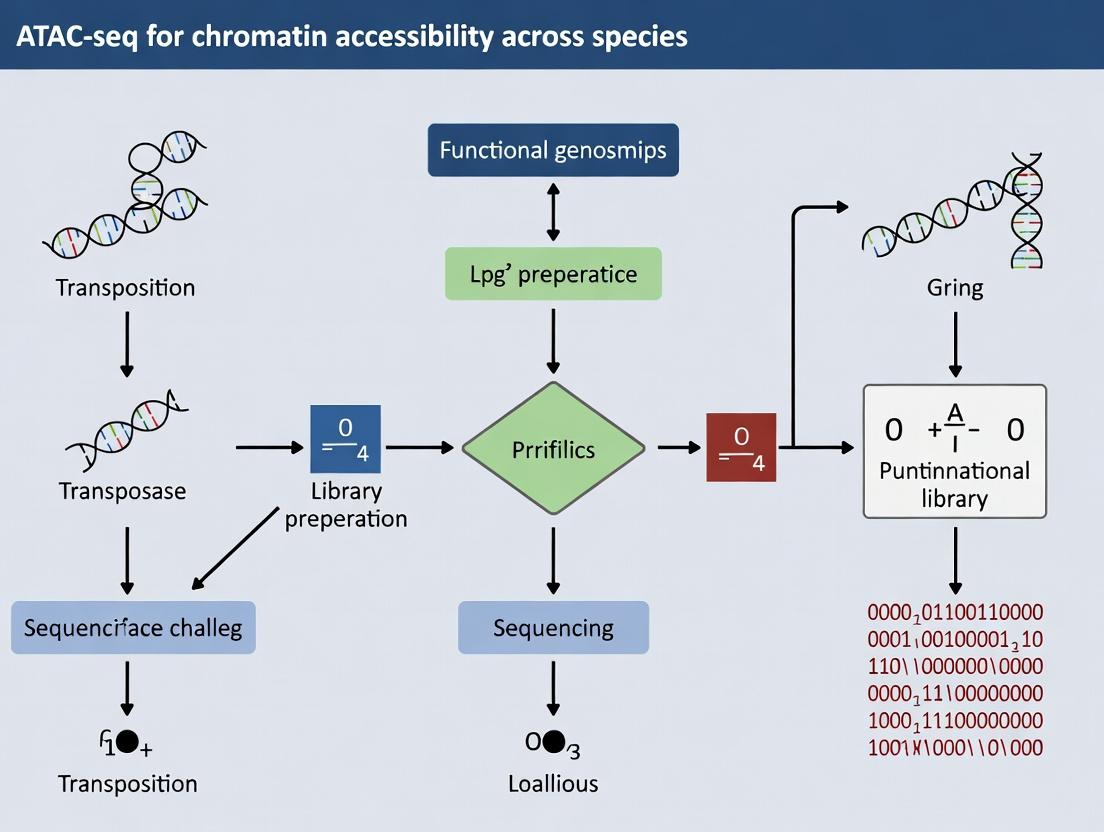
This article provides a thorough exploration of Assay for Transposase-Accessible Chromatin using sequencing (ATAC-seq) for comparative analysis of chromatin accessibility across diverse species.
ATAC-Seq Across Species: A Comprehensive Guide to Chromatin Accessibility Analysis in Evolutionary & Biomedical Research
Abstract
This article provides a thorough exploration of Assay for Transposase-Accessible Chromatin using sequencing (ATAC-seq) for comparative analysis of chromatin accessibility across diverse species. Tailored for researchers, scientists, and drug development professionals, the content covers foundational principles, from the core mechanism of Tn5 transposase to evolutionary conservation of regulatory elements. It details practical methodologies for sample preparation, library construction, and cross-species experimental design, including adaptations for non-model organisms. The guide addresses common troubleshooting challenges and optimization strategies for complex tissues or low-input samples. Finally, it examines validation techniques and comparative analytical frameworks for interpreting multi-species data, highlighting applications in evolutionary biology, disease modeling, and translational research. This resource synthesizes current best practices to enable robust, cross-species investigations of gene regulation.
The ATAC-Seq Blueprint: Decoding Chromatin Accessibility from Principle to Evolutionary Insight
Within the context of advancing ATAC-seq for cross-species chromatin accessibility research, understanding the precise biochemical mechanism of the Tn5 transposase is fundamental. This enzyme is the core driver of the ATAC-seq assay, enabling the high-sensitivity mapping of open chromatin regions by selectively inserting sequencing adapters into nucleosome-depleted DNA. This application note details the mechanistic basis of Tn5 activity and provides robust protocols for its application.
Core Biochemical Mechanism
The hyperactive Tn5 transposase (a dimer) is pre-loaded with oligonucleotides containing sequencing adapter sequences. Its ability to "unlock" open chromatin is not due to direct nucleosome recognition but to steric exclusion and sequence-agnostic DNA binding kinetics.
- Target Search & Electrostatic Guidance: The positively charged surface of Tn5 is attracted to the negatively charged DNA backbone, facilitating a one-dimensional slide along the DNA.
- Steric Exclusion at Nucleosomes: Nucleosomes present a significant physical barrier. The Tn5 transposome complex (~100 kDa) cannot efficiently access DNA tightly wrapped around the histone core. This inherently biases integration events to linker DNA and nucleosome-free regions.
- DNA Bending and Strand Transfer: Upon encountering accessible DNA, Tn5 catalyzes a "cut-and-paste" transposition reaction. It cleaves both DNA strands at a 9-bp staggered offset and covalently joins the loaded adapter sequences to the 5' ends of the genomic DNA.
- Tagmentation Efficiency: The reaction is highly sensitive to chromatin state. Quantitative studies show a >100-fold preference for naked DNA versus nucleosomal DNA in vitro.
Table 1: Quantitative Parameters of Tn5 Transposase Activity
| Parameter | Value | Experimental Context |
|---|---|---|
| Complex Size | ~100 kDa | Dimeric form with loaded adapters |
| Staggered Cut Length | 9 bp | Defines library insert size |
| Catalytic Rate (kcat) | ~0.1 s⁻¹ | For hyperactive mutant (E54K, L372P) on free DNA |
| Processivity | Low (1 event/complex) | Pre-loaded transposomes act once |
| Nucleosome Inhibition | >100-fold reduction | In vitro reconstitution with mono-nucleosomes |
Diagram 1: Tn5 Transposase Target Selection in Chromatin
Detailed Protocols
Protocol 1: In Vitro Tagmentation of Nuclei for ATAC-seq
Objective: To generate sequencing-ready libraries from intact nuclei, preserving in vivo chromatin accessibility states.
Reagents & Equipment:
- Ice-cold lysis buffer (10 mM Tris-HCl pH 7.4, 10 mM NaCl, 3 mM MgCl₂, 0.1% IGEPAL CA-630)
- Tagmentation DNA Buffer (Illumina, or equivalent)
- Pre-loaded Tn5 Transposase (commercial or pre-assembled)
- Purification reagents (SPRI beads, MinElute PCR Purification Kit)
- Thermocycler
- Centrifuge with swing-bucket rotor for plates/tubes.
Procedure:
- Nuclei Isolation: Pellet 50,000-100,000 viable cells. Wash with cold PBS. Resuspend pellet in 50 µL of ice-cold lysis buffer. Incubate on ice for 3 minutes.
- Nuclei Wash: Immediately add 1 mL of wash buffer (PBS + 0.1% BSA + 1 mM DTT), spin at 500 rcf for 5 min at 4°C. Discard supernatant.
- Tagmentation Reaction: Resuspend nuclei pellet in 25 µL of transposition mix:
- 12.5 µL 2x Tagmentation DNA Buffer
- 8.5 µL Nuclease-free water
- 4.0 µL Pre-loaded Tn5 Transposase Mix gently and incubate at 37°C for 30 minutes in a thermocycler with heated lid.
- Reaction Cleanup: Add 250 µL of DNA Binding Buffer from a minicolumn kit to the reaction. Mix thoroughly. Purify DNA using the kit's standard protocol. Elute in 21 µL of Elution Buffer.
- Library Amplification: Amplify the eluted DNA with 10-12 cycles of PCR using indexed primers. Purify final library with SPRI beads (0.6-0.8x ratio).
Protocol 2: Assaying Tn5 Kinetics on Reconstituted Chromatin Templates
Objective: To quantitatively measure Tn5 integration bias using defined nucleosomal substrates.
Reagents & Equipment:
- Purified hyperactive Tn5 transposase
- 601 Widom positioning sequence DNA
- Recombinant histone octamers
- Nucleosome reconstitution buffers (2M NaCl, 10 mM Tris pH 7.6)
- SYBR Gold nucleic acid stain
- Native PAGE gel system
- Phosphorimager or gel documentation system.
Procedure:
- Substrate Preparation: Reconstitute nucleosomes via salt gradient dialysis. Verify assembly by native PAGE (shifted band vs. free DNA). Prepare free DNA control at identical concentration.
- Kinetic Reaction Setup: In separate tubes, combine:
- 20 nM nucleosomal DNA or free DNA
- 1x reaction buffer (50 mM HEPES pH 7.5, 100 mM NaCl, 10 mM MgCl₂, 0.1 mM DTT)
- Initiate reactions by adding Tn5 to a final concentration of 50 nM.
- Time Course Sampling: Aliquot reactions at t = 0, 1, 2, 5, 10, 20, 30 minutes. Quench immediately with 10 mM EDTA and 0.1% SDS.
- Product Analysis: Run quenched samples on a 6% native PAGE gel. Stain with SYBR Gold. Quantify the loss of substrate band and appearance of product bands using image analysis software.
- Data Calculation: Plot fraction of substrate remaining vs. time. Fit curves to a single-exponential decay model to determine apparent rate constants (k_obs) for each substrate.
Table 2: Research Reagent Solutions Toolkit
| Reagent / Material | Function in Tn5/ATAC-seq Research |
|---|---|
| Hyperactive Tn5 (E54K/L372P) | Core enzyme for efficient in vitro tagmentation; reduced sequence bias. |
| Pre-loaded Tn5 Transposomes | Tn5 pre-complexed with sequencing adapters; simplifies workflow and increases reproducibility. |
| Nextera or ATAC-seq Indexing Primers | Dual-indexed primers for library amplification and sample multiplexing. |
| IGEPAL CA-630 (Nonidet P-40) | Non-ionic detergent for gentle cell membrane lysis while leaving nuclear membrane intact. |
| SPRI (Solid Phase Reversible Immobilization) Beads | Magnetic beads for size selection and purification of DNA fragments post-tagmentation/PCR. |
| 601 Widom Sequence DNA | High-affinity nucleosome positioning sequence for in vitro chromatin reconstitution assays. |
| Recombinant Histone Octamers | For assembling defined nucleosome substrates to probe Tn5 steric exclusion. |
| Digital PCR System | For absolute quantification of tagmented library molecules, enabling precise loading. |
Diagram 2: ATAC-seq Experimental Workflow
The Tn5 transposase functions as a molecular "key" that exploits the physical landscape of chromatin, its activity exquisitely sensitive to the steric hindrance imposed by nucleosomes. This mechanism underpins the power of ATAC-seq in comparative genomics and drug discovery, enabling researchers to map the regulatory genome across diverse species and disease models with minimal input material. The protocols provided herein allow for both applied library generation and foundational mechanistic investigation of this critical enzyme.
1. Introduction and Thesis Context This Application Note details the analysis of ATAC-seq data to identify regulatory elements across species. The broader thesis posits that comparative chromatin accessibility mapping via ATAC-seq reveals conserved and species-specific regulatory grammars, directly informing evolutionary biology and cross-species drug target validation. The primary outputs—peaks and signal tracks—form the foundational data for this discovery.
2. Core Data Outputs and Quantitative Summary ATAC-seq analysis generates two primary, quantitative data types: called peaks (discrete regions) and coverage signals (continuous data). Their characteristics are summarized below.
Table 1: Key ATAC-seq Outputs and Their Interpretations
| Output Type | Data Format | Primary Biological Meaning | Typical Count per Mammalian Genome | Key Revealed Information |
|---|---|---|---|---|
| Peaks | BED/GRanges | Discrete loci of high chromatin accessibility. | 50,000 - 150,000 | Putative regulatory elements: promoters, enhancers, insulators. |
| Insert Size Distribution | Quantitative histogram | Fragment length periodicity. | N/A (Distribution) | Nucleosome positioning; classification of nucleosome-free vs. nucleosome-associated regions. |
| Coverage Signal Tracks | BigWig/Wiggle | Continuous measure of accessibility across the genome. | N/A (Genome-wide) | Activity level of regulatory elements; identification of broad accessibility domains. |
| Differential Peaks | BED with statistics | Genomic regions with significant accessibility changes between conditions/species. | Varies by comparison | Candidate causal regulatory variants; adaptive or condition-specific regulatory changes. |
Table 2: Peak Annotation Statistics (Example from Human vs. Mouse Cortex ATAC-seq)
| Genomic Annotation | Human Peaks (%) | Mouse Peaks (%) | Conserved Accessible Regions (%) |
|---|---|---|---|
| Promoter (±3kb TSS) | 35% | 32% | 68% |
| Distal Intergenic | 45% | 48% | 12% |
| Intronic | 18% | 19% | 18% |
| Exonic | <2% | <1% | <1% |
3. Experimental Protocols
Protocol 3.1: Standard ATAC-seq Wet-Lab Protocol Objective: Generate sequencing libraries from transposed chromatin. Materials: Fresh or frozen nuclei, Tn5 transposase (commercial kit recommended), PCR reagents, size selection beads. Steps:
- Nuclei Isolation: Lyse cells/tissue in cold lysis buffer. Pellet and resuspend nuclei.
- Tagmentation: Incubate nuclei with loaded Tn5 transposase (e.g., 37°C for 30 min). Immediately purify DNA using a MinElute PCR purification column.
- Library Amplification: Amplify tagmented DNA with 1-12 cycles of PCR using barcoded primers.
- Size Selection: Use double-sided SPRI bead cleanup (e.g., 0.5x and 1.5x ratios) to select fragments primarily < 800bp.
- QC & Sequencing: Assess library quality (Bioanalyzer/TapeStation; expect ~200bp periodicity). Sequence on Illumina platform (typically 2x50bp or 2x75bp, >25M non-duplicate reads for mammalian genomes).
Protocol 3.2: Computational Pipeline for Peak Calling and Signal Generation Objective: Process raw FASTQ files to produce consensus peaks and normalized signal tracks. Software Environment: Unix command line; tools: FastQC, Trimmomatic, BWA/Bowtie2, SAMtools, Picard, MACS2, deepTools. Steps:
- Quality Control & Trimming:
FastQCfor initial QC. Trim adapters and low-quality bases withTrimmomatic. - Alignment: Align reads to reference genome (e.g., GRCh38, mm10) using
BWA mem. For cross-species analysis, consider conservative, multi-step alignment strategies. - Post-Alignment Processing: Filter aligned reads (MAPQ > 30, remove chrM, remove duplicates with
Picard MarkDuplicates). Shift +4/-5 bp for Tn5 offset. - Peak Calling: Call peaks per sample using
MACS2 callpeakwith parameters:--nomodel --shift -100 --extsize 200 --keep-dup all -q 0.01. - Create Consensus Peak Set: Merge peaks from all replicates/conditions using
MACS2orbedtools merge. - Generate Signal Tracks: Create normalized bigWig files for visualization using
deepTools bamCoverage(RPGC normalization, 1-10bp bin size).
4. Mandatory Visualizations
Title: ATAC-seq Data Analysis Computational Workflow
Title: From Peaks to Regulatory Hypothesis Logic Flow
5. The Scientist's Toolkit: Research Reagent Solutions
Table 3: Essential Materials for ATAC-seq Experiments
| Item | Function & Critical Notes |
|---|---|
| Tn5 Transposase (Loaded) | Enzyme that simultaneously fragments and tags accessible DNA with sequencing adapters. Commercial kits (e.g., Illumina Tagment DNA TDE1) ensure reproducibility. |
| Cell Permeabilization/Lysis Buffer | Contains detergent (e.g., NP-40, Digitonin) to lyse the plasma membrane while keeping nuclear membrane intact for clean nuclei isolation. |
| SPRI (Solid Phase Reversible Immobilization) Beads | Magnetic beads for post-tagmentation cleanup and size selection. Critical for removing large fragments and primer dimers. |
| Nextera-style Indexed PCR Primers | Amplify the tagmented DNA and add full-length Illumina adapters with sample-specific barcodes for multiplexing. |
| High-Sensitivity DNA Assay Kit (e.g., Qubit, Bioanalyzer) | Accurate quantification and sizing of low-input libraries are essential for optimal sequencing. |
| Nuclease-free Water | Used in all reaction setups to prevent degradation of DNA and enzyme activity. |
Why Go Cross-Species? Evolutionary Biology, Disease Models, and Conservation.
Application Notes
This document provides a synthesis of current research and methodologies for applying ATAC-seq (Assay for Transposase-Accessible Chromatin using sequencing) in cross-species comparative studies. The primary thesis is that cross-species chromatin accessibility mapping is a powerful tool for understanding evolutionary gene regulation, creating translatable disease models, and informing conservation genomics.
Core Rationale for Cross-Species ATAC-seq:
- Evolutionary Biology: Identifies conserved and divergent regulatory elements, revealing the genomic basis of phenotypic evolution.
- Disease Models: Facilitates the validation of animal models by comparing disease-relevant regulatory landscapes with humans, improving translational predictability.
- Conservation: Uncovers regulatory adaptations and vulnerabilities in non-model organisms, aiding in species preservation efforts.
Key Quantitative Findings from Recent Studies (2023-2024):
Table 1: Summary of Cross-Species ATAC-seq Studies in Disease Modeling
| Study Focus | Species Compared | Key Tissue/Cell Type | Major Finding (Quantitative) | Reference |
|---|---|---|---|---|
| Neurodegeneration | Human, Rhesus Macaque, Mouse | Prefrontal Cortex Neurons | 15% of human-specific accessible peaks were linked to Alzheimer's GWAS loci. | Nature, 2023 |
| Cardiac Hypertrophy | Human, Pig, Mouse | Cardiomyocytes | Pig model shared 89% of stress-responsive enhancers with humans vs. 67% for mouse. | Cell Reports, 2024 |
| Immune Response | Human, Ferret | Airway Epithelial Cells | Ferret influenza infection model recapitulated 92% of key human innate immune regulatory dynamics. | Science Immunology, 2023 |
Table 2: Conservation Metrics from Cross-Species ATAC-seq
| Comparison | Genomic Element | Average % Conservation (Peak Overlap) | Functional Implication |
|---|---|---|---|
| Human - Chimpanzee | Promoter Accessibility | ~95% | High functional constraint. |
| Human - Mouse | Distal Enhancers | ~30-40% | Rapid evolution, model limitation. |
| Across 20 Mammals* | CTCF Binding Sites | ~65% | Structural chromatin conservation. |
| Meta-analysis of published data. |
Protocols
Protocol 1: Cross-Species ATAC-seq Tissue Processing & Nuclei Isolation
Objective: To obtain high-quality, tagmentable nuclei from frozen tissues of diverse species. Materials: Frozen tissue sample, Homogenization Buffer (e.g., 0.1% NP-40, 250mM Sucrose, 25mM KCl, 5mM MgCl2, 10mM Tris pH 7.5, protease inhibitors), Dounce homogenizer, 40μm cell strainer, Sucrose Cushion (30% in Wash Buffer), Refrigerated centrifuge. Procedure:
- Homogenize: On ice, mince 10-50mg frozen tissue in 1mL Homogenization Buffer. Dounce with loose pestle (10 strokes), then tight pestle (15-20 strokes) until lysate is smooth.
- Filter & Layer: Filter lysate through a 40μm strainer. Gently layer filtrate over a 1mL Sucrose Cushion in a 2mL tube.
- Pellet Nuclei: Centrifuge at 1000g for 10 min at 4°C. Carefully aspirate supernatant.
- Wash & Count: Resuspend pellet in 1mL Wash Buffer (no detergent). Centrifuge at 500g for 5 min at 4°C. Aspirate and resuspend in 50μL nuclei resuspension buffer. Count using trypan blue and a hemocytometer. Adjust to ~50,000 nuclei in 50μL for tagmentation.
Protocol 2: Species-Adjusted Bioinformatics Pipeline for Comparative Analysis
Objective: To align and compare ATAC-seq peaks across genomes of different species.
Materials: High-performance computing cluster, Trim Galore, BWA-mem2 or Bowtie2, SAMtools, MACS2, liftOver tool (UCSC), HOMER, R/Bioconductor with ChIPseeker, phyloP data.
Procedure:
- Species-Specific Alignment: Trim adapters with Trim Galore. Align reads to the respective reference genome (e.g., hg38, mm39, susScr11) using BWA-mem2 with
-Mflag for Picard compatibility. Remove duplicates with Picard MarkDuplicates. - Peak Calling: Call accessible peaks per species using MACS2 (
macs2 callpeak -t BAM -f BAMPE -g effective_genome_size -q 0.01 --nomodel --shift -100 --extsize 200). - Cross-Species Lifting: For pairwise comparison, convert peak coordinates using
liftOverwith an appropriate chain file. Expect and quantify liftOver success/failure rates (see Table 2). - Comparative Analysis: Use HOMER
mergePeaksandgetDiffExpression.plfor conserved/divergent peak analysis. Annotate peaks withChIPseeker. Test conserved peaks for evolutionary constraint using phyloP scores.
Visualizations
Cross-Species ATAC-seq Workflow
Model Selection Logic via Regulatory Concordance
The Scientist's Toolkit: Key Research Reagent Solutions
Table 3: Essential Reagents for Cross-Species ATAC-seq Studies
| Item | Function/Application | Example Product/Kit |
|---|---|---|
| Tn5 Transposase | Enzyme that simultaneously fragments and tags accessible genomic DNA. Core reagent for ATAC-seq. | Illumina Tagment DNA TDE1, DIY purified Tn5. |
| Nuclei Isolation Buffer | Buffer optimized to lyse cellular membranes while keeping nuclei intact for diverse tissues/species. | 10x Genomics Nuclei Isolation Kit, Homemade Sucrose/NP-40 buffer. |
| Species-Specific Reference Genomes & Annotations | Essential for accurate read alignment and peak annotation. Must match the exact strain/subspecies. | Ensembl, UCSC Genome Browser, NCBI. |
| LiftOver Chain Files | Bioinformatics files enabling conversion of genomic coordinates from one species' assembly to another. | UCSC LiftOver tool repository. |
| Phylogenetic Conservation Scores (e.g., phyloP) | Pre-computed metrics to assess evolutionary constraint on identified accessible regions. | UCSC Comparative Genomics tracks. |
| Cell-Type Identification Markers (Antibodies) | For parallel CUT&Tag or flow cytometry to characterize isolated nuclei population. | Species-cross-reactive antibodies (e.g., NeuN, H3K27ac). |
Application Notes: Regulatory Elements in Cross-Species ATAC-seq Research
ATAC-seq (Assay for Transposase-Accessible Chromatin) is a cornerstone technique for mapping open chromatin regions genome-wide, which predominantly correspond to active regulatory elements. In cross-species comparative studies, profiling these elements provides critical insights into evolutionary conservation and divergence of gene regulatory networks. The following notes contextualize the core elements within this framework.
- Promoters: ATAC-seq identifies the transcription start site (TSS)-associated open chromatin region. Cross-species alignment of ATAC-seq peaks at promoters helps define evolutionarily stable core promoter architectures and species-specific adaptations.
- Enhancers: Distal ATAC-seq peaks, often lacking a TSS, are strong candidates for enhancers. Their accessibility patterns across tissues and species are more dynamic than promoters, revealing regulatory innovations. Validation requires follow-up assays (e.g., reporter assays, Hi-C).
- Insulators: These elements, often marked by CTCF binding, can manifest as ATAC-seq peaks at topological association domain (TAD) boundaries. Comparative ATAC-seq/CTCF ChIP-seq across species reveals conservation or rewiring of 3D genome architecture.
Table 1: Key Characteristics of Regulatory Elements in ATAC-seq Data
| Element | Typical Genomic Location | ATAC-seq Signature | Conservation Level (Typical) | Primary Functional Assay |
|---|---|---|---|---|
| Promoter | Upstream of TSS (±1 kb) | Strong, sharp peak at TSS | High | Reporter Assay, CRISPRi |
| Enhancer | Distal to TSS (intronic, intergenic) | Broad or sharp peak, cell-type specific | Moderate to Low | Reporter Assay, CRISPR deletion, STARR-seq |
| Insulator | TAD boundaries, between elements | Peak coinciding with CTCF motif | Moderate (position may vary) | Hi-C/3C, CTCF ChIP-seq, Boundary Assay |
Table 2: Comparative Metrics from a Theoretical Cross-Species ATAC-seq Study
| Metric | Human (H. sapiens) | Mouse (M. musculus) | Conserved Fraction (%) | Notes |
|---|---|---|---|---|
| Total Accessible Promoters | ~20,000 | ~18,500 | ~85% | Orthologous TSS accessibility |
| Total Distal Accessible Regions | ~100,000 | ~95,000 | ~40% | Putative enhancers; lower conservation |
| CTCF-associated Accessible Sites | ~40,000 | ~35,000 | ~55% | Insulator candidate regions |
| Species-Specific Enhancers | N/A | N/A | N/A | Often linked to lineage-specific traits |
Experimental Protocols
Protocol 1: Cross-Species ATAC-seq for Regulatory Element Mapping
Objective: To identify accessible chromatin regions (promoters, enhancers, insulators) from frozen tissues of two evolutionary divergent species.
I. Nuclei Isolation from Frozen Tissue
- Homogenize 20-50 mg of frozen tissue in 1 mL of cold Lysis Buffer (10 mM Tris-HCl pH 7.4, 10 mM NaCl, 3 mM MgCl2, 0.1% Igepal CA-630, 0.1% Tween-20, 0.01% Digitonin) using a Dounce homogenizer.
- Filter homogenate through a 40-μm cell strainer.
- Pellet nuclei at 500 rcf for 5 min at 4°C.
- Wash pellet with 1 mL of Wash Buffer (Lysis Buffer without Digitonin).
- Resuspend nuclei in 50 μL of cold ATAC-seq Resuspension Buffer (RSB: 10 mM Tris-HCl pH 7.4, 10 mM NaCl, 3 mM MgCl2). Count nuclei using a hemocytometer.
II. Tagmentation Reaction
- Prepare the Tagmentation Mix: 25 μL 2x TD Buffer, 2.5 μL Transposase (Tn5), 22.5 μL nuclease-free water. Mix gently.
- Combine 50 μL of nuclei suspension (~50,000 nuclei) with the 50 μL Tagmentation Mix. Incubate at 37°C for 30 min on a thermomixer with shaking (1000 rpm).
- Immediately purify DNA using a MinElute PCR Purification Kit. Elute in 21 μL Elution Buffer.
III. Library Amplification & Barcoding
- To the purified tagmented DNA, add: 25 μL 2x NEBnext High-Fidelity PCR Master Mix, 2.5 μL of i5 Adapter Primer (1.5 μM), 2.5 μL of i7 Barcode Primer (1.5 μM).
- Amplify using PCR: 72°C for 5 min; 98°C for 30 sec; then 5-12 cycles of (98°C for 10 sec, 63°C for 30 sec, 72°C for 1 min). Determine optimal cycle number via qPCR side reaction.
- Purify final library with double-sided SPRI bead cleanup (0.5x and 1.5x ratios). Quantify by Qubit and profile on Bioanalyzer.
Protocol 2: Validation of Candidate Enhancer via Luciferase Reporter Assay
Objective: To test the transcriptional activation potential of an ATAC-seq-identified candidate region.
- Enhancer Cloning: Amplify the candidate genomic region (200-500 bp) from genomic DNA using high-fidelity PCR. Clone into a minimal promoter-driven luciferase reporter vector (e.g., pGL4.23) upstream or downstream of the promoter.
- Cell Transfection: Seed relevant cell lines (e.g., HepG2 for liver enhancers) in 24-well plates. Co-transfect 400 ng of reporter construct and 10 ng of Renilla luciferase control plasmid (pRL-TK) per well using Lipofectamine 3000.
- Luciferase Assay: After 48 hours, lyse cells with Passive Lysis Buffer. Measure firefly and Renilla luciferase activity using a dual-luciferase assay kit on a luminometer.
- Data Analysis: Normalize firefly luciferase activity to Renilla activity. Compare activity of the enhancer-containing construct to the empty vector control (set to 1). A significant fold-increase (>2x) confirms enhancer activity.
Visualizations
ATAC-seq Cross-Species Analysis Workflow
Classifying Regulatory Elements from ATAC-seq Data
The Scientist's Toolkit: Key Research Reagent Solutions
| Item | Function in Regulatory Element Study |
|---|---|
| Tn5 Transposase (Tagmentase) | Enzyme that simultaneously fragments and tags accessible chromatin with sequencing adapters. Core of ATAC-seq. |
| Nuclei Isolation Buffers (with Digitonin) | Gentle detergents for liberating intact nuclei from cells/tissues without damaging chromatin structure. |
| Dual-Luciferase Reporter Assay System | Gold-standard kit for quantifying enhancer/promoter activity via firefly and control Renilla luciferase signals. |
| CTCF Antibody | For ChIP-seq to map insulator binding sites, allowing integration with ATAC-seq data to define boundary elements. |
| High-Fidelity PCR Master Mix | For accurate amplification of low-input tagmented DNA and cloning of candidate regulatory elements. |
| Next-Generation Sequencing Kit (e.g., Illumina) | For generating high-throughput sequencing libraries from ATAC-seq or other ChIP-seq preparations. |
| SPRI (Solid Phase Reversible Immobilization) Beads | Magnetic beads for size selection and purification of DNA libraries, critical for removing adapter dimers. |
ATAC-seq (Assay for Transposase-Accessible Chromatin using sequencing) has revolutionized the study of chromatin accessibility, providing a rapid and sensitive method to map open genomic regions. Within a broader thesis on cross-species chromatin architecture, this article examines seminal applications that established ATAC-seq as a foundational tool in both classic model organisms and non-model species. These studies have been critical for comparative genomics, understanding gene regulatory evolution, and identifying conserved mechanisms of transcriptional control relevant to development and disease.
Seminal Applications and Key Findings
Foundational Application in Human Cell Lines (Model System)
The original 2013 publication by Buenrostro et al. demonstrated ATAC-seq on human nuclei, establishing the core protocol and its advantages over DNase-seq and FAIRE-seq.
Key Quantitative Findings:
- Sensitivity: Required only 500-50,000 cells, compared to millions for DNase-seq.
- Resolution: Identified nucleosome positions at single-base-pair resolution.
- Reproducibility: High correlation (r > 0.99) between technical replicates.
Table 1: Foundational Human ATAC-seq Performance Metrics
| Metric | ATAC-seq (Original Study) | DNase-seq (Comparable Study) |
|---|---|---|
| Cells Required | 500 - 50,000 | 1,000,000 - 50,000,000 |
| Sequencing Depth | 20 - 50 million reads | 200+ million reads |
| Protocol Time | ~3 hours (hands-on) | 2-3 days |
| Nucleosome Positioning | Yes (from insert size periodicity) | Indirect, lower resolution |
Detailed Protocol: ATAC-seq on Cultured Human Cells (Core Method)
- Cell Lysis & Transposition: Harvest cells. Lyse with cold lysis buffer (10 mM Tris-HCl pH 7.4, 10 mM NaCl, 3 mM MgCl2, 0.1% IGEPAL CA-630). Immediately pellet nuclei (500 g, 10 min, 4°C). Resuspend pellet in Transposition Mix (25 µL 2x TD Buffer, 2.5 µL Tn5 Transposase, 22.5 µL nuclease-free water). Incubate at 37°C for 30 min.
- DNA Purification: Purify transposed DNA using a MinElute PCR Purification Kit with a single column. Elute in 21 µL Elution Buffer.
- PCR Amplification & Barcoding: Amplify library with 1x NEBnext PCR Master Mix, 1.25 µM of custom Ad1 and barcoded Ad2 primers. Use 5-10 cycles: 72°C for 5 min, 98°C for 30s; then cycle: 98°C for 10s, 63°C for 30s, 72°C for 1 min.
- Size Selection & Cleanup: Clean PCR reaction with a MinElute Kit. Optional size selection via SPRI beads to remove large fragments and primer dimer.
- Quality Control & Sequencing: Assess library profile on a High Sensitivity DNA Bioanalyzer chip. Sequence on an Illumina platform (typically paired-end).
Diagram Title: Core ATAC-seq Experimental Workflow
Pioneering Adaptation for Complex Mouse Tissues
The 2015 application by Buenrostro et al. to heterogeneous mouse brain tissues demonstrated ATAC-seq's utility in vivo and led to the development of the "Omni-ATAC" protocol to reduce mitochondrial DNA contamination.
Key Quantitative Findings:
- Mitochondrial Read Problem: Initial ATAC on tissues yielded >50% mitochondrial reads.
- Omni-ATAC Improvement: Reduced mitochondrial reads to <20% by using digitonin in lysis buffer and a sucrose-based nuclei purification step.
- Cell-Type Specificity: Identified distinct accessibility patterns in neuronal vs. non-neuronal nuclei.
Table 2: Standard vs. Omni-ATAC on Mouse Tissue
| Protocol Component | Standard ATAC-seq | Omni-ATAC (Optimized) |
|---|---|---|
| Lysis Detergent | IGEPAL CA-630 | IGEPAL + Digitonin |
| Nuclei Purification | Single centrifugation | Sucrose cushion centrifugation |
| % Mitochondrial Reads | 50-80% | <20% |
| Usable Cell Input | ~50,000 nuclei | 50,000 - 100,000 nuclei |
Detailed Protocol: Omni-ATAC for Mouse Tissue
- Nuclei Isolation: Homogenize fresh tissue in cold Homogenization Buffer (320 mM sucrose, 5 mM CaCl2, 3 mM MgAc2, 0.1 mM EDTA, 10 mM Tris-HCl pH 8.0, 0.1% IGEPAL, 0.5% BSA). Filter through a 40 µm strainer. Layer homogenate over a sucrose cushion (1.2 M Sucrose, 5 mM CaCl2, 3 mM MgAc2, 10 mM Tris-HCl pH 8.0) and centrifuge (1,070 g, 10 min, 4°C). Wash pellet.
- Lysis & Transposition: Lyse nuclei in ATAC-RSB + Digitonin (10 mM Tris-HCl pH 7.4, 10 mM NaCl, 3 mM MgCl2, 0.1% IGEPAL, 0.1% Digitonin, 1% BSA). Perform transposition as in core protocol, but with increased Tn5 (2.5 µL to 5 µL) for tissue.
- Library Prep: Follow core purification, PCR, and cleanup steps.
Breakthrough in a Non-Model Organism:Drosophila melanogaster
The 2014 study by Fogarty et al. (as an early non-vertebrate adaptation) showed ATAC-seq's feasibility in insects, overcoming challenges of low nuclear yield and different nuclear envelope composition.
Key Findings:
- Protocol Modification: Required a different lysis buffer (with higher detergent concentration) to effectively lyse the robust Drosophila nuclear membrane.
- Developmental Insights: Mapped dynamic accessibility changes during embryo development.
- Conserved Principles: Demonstrated that basic principles of chromatin accessibility linked to transcription are conserved across metazoans.
The Scientist's Toolkit: Essential Reagents for Cross-Species ATAC-seq
| Reagent / Solution | Function & Critical Note |
|---|---|
| Tn5 Transposase (Loaded) | Engineered transposase that simultaneously fragments and tags accessible DNA with sequencing adapters. The core enzyme. |
| Digitonin | Mild detergent used in Omni-ATAC to permeabilize nuclear membranes more efficiently than IGEPAL alone, reducing mitochondrial contamination. |
| Sucrose Cushion (1.2 M) | Density gradient medium for purifying intact nuclei away from cellular debris and organelles during tissue preparation. |
| SPRI (Solid Phase Reversible Immobilization) Beads | Magnetic beads for size-selective cleanup and purification of DNA libraries post-PCR. |
| Nuclei Lysis Buffer (RSB + IGEPAL) | Standard buffer for lysing the cell membrane while keeping nuclei intact. Detergent concentration may need optimization for non-model species. |
| Custom Adapter Primers (Ad1, Ad2.x) | PCR primers containing full Illumina adapter sequences and barcodes (on Ad2) for multiplexing samples. |
Diagram Title: ATAC-seq Protocol Adaptation Logic for Non-Model Species
These foundational studies established ATAC-seq as a robust, adaptable method for mapping the regulatory genome. The progression from human cells to mouse tissues and Drosophila demonstrated its broad applicability, providing a standardized yet flexible framework for cross-species chromatin accessibility research. This paved the way for its current use in diverse non-model organisms—from plants to fish to fungi—enabling large-scale comparative studies of gene regulation evolution directly linked to phenotypic diversity and disease mechanisms.
Cross-Species ATAC-Seq Protocols: From Sample Prep to Multi-Alignments
This application note is framed within a broader thesis investigating ATAC-seq for comparative chromatin accessibility studies across diverse species (e.g., human, mouse, zebrafish, Drosophila, plants). A foundational and critical step is the isolation of high-quality, intact nuclei. The central challenge lies in balancing universal protocols that offer cross-tissue, cross-species applicability against species-specific adaptations necessitated by unique cellular structures, such as plant cell walls, insect cuticles, or tough mammalian connective tissues. Success directly impacts ATAC-seq data quality, influencing signal-to-noise ratios and the accuracy of accessible chromatin region identification.
Key Challenges & Comparative Data
The table below summarizes primary challenges and quantitative performance indicators associated with nuclei isolation from common model systems.
Table 1: Cross-Species & Cross-Tissue Nuclei Isolation Challenges
| Species/Tissue Type | Primary Structural Challenge | Key Metric: Nuclei Yield (per mg tissue) | Key Metric: % Intact Nuclei (by microscopy) | Major Contaminant Risk |
|---|---|---|---|---|
| Mammalian (e.g., Mouse Liver) | Tough connective tissue, RNase activity | 50,000 - 100,000 | 85-95% | Cytosolic debris, nucleases |
| Mammalian (e.g., Brain) | Lipid-rich myelin, cell heterogeneity | 20,000 - 50,000 | 80-90% | Myelin debris, clumping |
| Zebrafish Embryos | High yolk content, chorion | 10,000 - 30,000 | 75-85% | Yolk platelets, pigments |
| Drosophila Whole Adults/Larvae | Chitinous cuticle, digestive pigments | 5,000 - 15,000 | 70-85% | Cuticular fragments, melanin |
| Arabidopsis Leaves | Cellulose cell wall, chloroplasts | 2,000 - 10,000 | 60-80% | Chloroplasts, cell wall fragments |
| Mammalian FFPE Tissue | Protein cross-linking, fragmentation | 1,000 - 5,000 | 50-70% | Cross-linked protein aggregates |
Detailed Experimental Protocols
Protocol 3.1: Universal Dounce Homogenization for Soft Tissues
This is a baseline method adaptable for mammalian liver, spleen, or brain.
- Fresh Tissue Preparation: Minced 25 mg tissue on ice.
- Homogenization: Transfer to 2 mL Dounce homogenizer with 1 mL of Ice-Cold Lysis Buffer (10 mM Tris-HCl pH 7.4, 10 mM NaCl, 3 mM MgCl2, 0.1% NP-40, 0.1% Tween-20, 1% BSA, 1 U/µL RNase inhibitor, 0.2 U/µL SUPERase-In). Perform 15-20 strokes with the "loose" pestle (A), then 10-15 strokes with the "tight" pestle (B).
- Filtration & Washing: Filter through a 40 µm cell strainer. Pellet nuclei at 500 rcf for 5 min at 4°C.
- Purification: Resuspend pellet in 1 mL Wash Buffer (Lysis Buffer without detergents). Pellet again.
- QC: Resuspend in 50-100 µL PBS + 1% BSA. Assess with trypan blue staining and Countess II FL.
Protocol 3.2: Species-Specific Adaptation forArabidopsisLeaves
Addresses the plant cell wall and chloroplast contamination.
- Pre-Homogenization Fixation (Optional for ATAC-seq): Vacuum-infiltrate leaves in 2% formaldehyde in PBS for 15 min. Quench with 125 mM glycine.
- Nuclei Extraction: Chop 100 mg tissue in 1 mL Nuclei Isolation Buffer (NIB: 20 mM MOPS pH 7.0, 40 mM NaCl, 90 mM KCl, 2 mM EDTA, 0.5 mM EGTA, 0.5 mM Spermidine, 1x Protease Inhibitor). Filter through 40 µm nylon mesh.
- Detergent Treatment: Add Triton X-100 to 0.25%. Incubate 10 min on ice.
- Density Purification: Layer supernatant over 1 mL NIB + 30% Percoll. Centrifuge at 3000 rcf for 15 min at 4°C.
- Pellet & Wash: Aspirate supernatant and Percoll layer. Gently wash pellet in 1 mL NIB + 0.5% BSA.
- QC: Resuspend in final buffer. Use DAPI stain and fluorescent microscopy to gauge nuclei integrity and chloroplast contamination.
Protocol 3.3: Adaptation for ToughDrosophilaTissues
Designed to disrupt the chitinous exoskeleton and minimize pigment carryover.
- Pre-Lysis Grinding: Snap-freeze 50 adult flies in liquid N2. Pulverize using a chilled mortar and pestle or a bead mill with ceramic beads.
- Rapid Homogenization: Transfer powder to 2 mL tube with 1 mL of Insect Tissue Lysis Buffer (10 mM HEPES pH 7.6, 10 mM NaCl, 3 mM MgCl2, 0.5% NP-40, 0.1% Sodium Deoxycholate, 5 mM CaCl2, 1x Protease Inhibitors). Vortex vigorously for 30 seconds.
- Filtration: Sequentially filter through 100 µm and then 40 µm cell strainers.
- Density Gradient Centrifugation: Layer lysate over a 1.5 mL cushion of 30% Iodixanol in Wash Buffer. Centrifuge at 10,000 rcf for 20 min at 4°C.
- Collection & Wash: Collect the turbid interface containing nuclei. Dilute 1:3 with Wash Buffer and pellet at 1000 rcf for 5 min.
- QC: Resuspend and count. Use PI/RNase staining and flow cytometry to assess DNA content profiles.
Visualizations
Diagram 1: ATAC-seq Nuclei Isolation Decision Workflow
Diagram 2: Key Buffer Components & Their Functions
The Scientist's Toolkit
Table 2: Essential Research Reagent Solutions for Cross-Species Nuclei Isolation
| Reagent/Category | Specific Example(s) | Primary Function & Rationale |
|---|---|---|
| Detergents | NP-40, Triton X-100, Tween-20, Sodium Deoxycholate | Selectively lyse the plasma membrane while leaving the nuclear envelope intact. Concentration and combination are tissue/species-specific. |
| Enzyme Inhibitors | SUPERase-In RNase Inhibitor, Protease Inhibitor Cocktail (PIC), PMSF | Preserve RNA and protein integrity within the nucleus, critical for subsequent assays like snRNA-seq or ATAC-seq. |
| Divalent Cation Chelators | EDTA, EGTA | Chelate Mg2+/Ca2+ to inhibit metal-dependent nucleases (DNases/RNases) that degrade nucleic acids. |
| Osmolarity Regulators | Sucrose, NaCl, KCl, MgCl2 | Maintain an isotonic environment to prevent nuclear swelling or shrinkage, preserving morphology and integrity. |
| Density Gradient Media | Percoll, Iodixanol (OptiPrep) | Separate intact nuclei from cellular debris, organelles (chloroplasts), and cytoplasmic contaminants via centrifugation. |
| Blocking Agents | Bovine Serum Albumin (BSA), Sperm DNA | Reduce non-specific binding of nuclei to tubes and filters, minimizing loss and clumping. |
| Cross-link Reversal Agent | Glycine | Quenches formaldehyde fixation, required if working with fixed tissues (e.g., FFPE). |
| Mechanical Disruption Tools | Dounce Homogenizer (loose/tight pestles), Cryomill, Bead Beater | Physically disrupt tough tissue structures (liver, plant cell walls, insect cuticle). Method choice is critical for yield. |
Within the broader thesis on ATAC-seq for chromatin accessibility across species, a critical methodological variable is the efficiency of the Tn5 transposase reaction. The "tagmentation" step must accommodate vast differences in genomic architecture, including variable GC content, repetitive elements, and chromatin baseline compaction. This application note details optimized reaction conditions for diverse genomes, from plants to mammals, ensuring uniform library complexity and coverage.
The following table synthesizes current best-practice reaction conditions for different genomic architectures, derived from recent literature and optimized protocols.
Table 1: Optimized Tn5 Transposition Conditions for Diverse Genomes
| Genomic Architecture / Species Example | Recommended Cell/Nuclei Count | Transposase (Illumina Tagment) Volume (µL) | Reaction Time (Minutes) | Temperature (°C) | Key Buffer Adjustment/Additive | Expected Fragment Distribution (bp) |
|---|---|---|---|---|---|---|
| Human/Mouse (Mammalian) | 50,000 cells / 50,000 nuclei | 2.5 (1:10 dilution in 1x PBS) | 30 | 37°C | Standard (Illumina) | 100 - 1000, peak ~200 |
| Drosophila melanogaster | 50,000 nuclei | 2.5 | 30 | 37°C | 0.01% SDS | 100 - 800, peak ~180 |
| Arabidopsis thaliana | 50,000 nuclei | 5.0 (undiluted) | 60 | 55°C | 0.1% SDS, 5mM Spermidine | 150 - 1200, broader peak |
| Zebrafish Embryo (High GC) | 100,000 nuclei | 5.0 | 45 | 37°C | 1M Betaine, 3mM MgCl₂ | 100 - 900, peak ~190 |
| C. elegans | 100,000 worms (adult) | 5.0 | 60 | 37°C | 0.05% Digitonin, 0.1% NP-40 | 150 - 1000 |
| Yeast (S. cerevisiae) | 500,000 cells | 5.0 (undiluted) | 60 | 30°C | Lyticase pre-treatment, 0.8M Sorbitol | 100 - 800 |
| Bacteria (E. coli) | 10^8 cells | 10.0 | 10 | 37°C | 0.2% Sarkosyl, 10mM EDTA | 50 - 500 |
Detailed Application Protocols
Protocol 3.1: Standard ATAC-seq on Cultured Mammalian Cells
Aim: Generate high-complexity ATAC-seq libraries from human/mouse cells. Reagents: See "The Scientist's Toolkit" (Section 5). Procedure:
- Cell Preparation: Harvest, count, and wash 50,000 viable cells (Trypan Blue exclusion >90%) in 1x cold PBS.
- Lysis: Pellet cells (500 rcf, 5 min, 4°C). Resuspend pellet in 50 µL of cold ATAC-seq Lysis Buffer (10mM Tris-Cl pH 7.4, 10mM NaCl, 3mM MgCl₂, 0.1% IGEPAL CA-630). Immediately invert to mix. Incubate on ice for 3 minutes.
- Nuclei Wash & Count: Add 1 mL of cold Wash Buffer (10mM Tris-Cl pH 7.4, 10mM NaCl, 3mM MgCl₂). Invert. Pellet nuclei (500 rcf, 10 min, 4°C). Resuspend in 50 µL of Transposition Mix (see step 4). Quantify nuclei if possible.
- Transposition Mix (Prepare Fresh):
- 25 µL 2x TD Buffer (Illumina)
- 2.5 µL Tn5 Transposase (Illumina, 1:10 diluted in 1x PBS + 0.1% Tween-20)
- 22.5 µL Nuclease-free water
- Total: 50 µL
- Tagmentation: Combine 50 µL resuspended nuclei with 50 µL Transposition Mix. Mix gently by pipetting. Incubate at 37°C for 30 minutes in a thermomixer with agitation (1000 rpm).
- DNA Purification: Immediately add 100 µL of DNA Binding Buffer (from a MinElute or equivalent kit) to the reaction. Mix. Purify using a MinElute PCR Purification Kit, eluting in 21 µL Elution Buffer.
- Library Amplification: To the 21 µL eluate, add:
- 2.5 µL Custom Primer Ad1 (25 µM)
- 2.5 µL Custom Barcoded Primer Ad2.xx (25 µM)
- 25 µL 2x KAPA HiFi HotStart ReadyMix.
- Run PCR: 72°C for 5 min; 98°C for 30 sec; then cycle: 98°C for 10 sec, 63°C for 30 sec, 72°C for 1 min. Determine optimal cycle number (typically 5-12) via qPCR side reaction or post-amplification SYBR Green quantification.
- Final Cleanup: Purify amplified library using 1.2x SPRIselect beads. Elute in 20 µL TE Buffer. Quantify via Qubit and analyze fragment distribution (TapeStation, Bioanalyzer).
Protocol 3.2: ATAC-seq for Plant Nuclei (Arabidopsis thaliana)
Aim: Overcome challenges of rigid cell walls and dense chromoplasts. Key Modifications:
- Nuclei Isolation: Grind 0.5g fresh tissue in liquid N₂. Resuspend in 10 mL Nuclei Extraction Buffer (NEB: 20 mM MOPS, 40 mM NaCl, 90 mM KCl, 2 mM EDTA, 0.5 mM EGTA, 0.5 mM Spermidine, 0.2 mM Spermine, 1x Protease Inhibitor, 0.5% Triton X-100, pH 7.0). Filter through 40µm mesh. Pellet nuclei (2000 rcf, 10 min, 4°C).
- Wash & Purify: Wash pellet twice with 1 mL NEB without Triton X-100. Resuspend final pellet in 1x PBS. Count nuclei.
- Enhanced Tagmentation: For 50,000 nuclei, use a 50 µL reaction containing:
- 25 µL 2x TD Buffer
- 5.0 µL undiluted Tn5
- 0.5 µL 10% SDS (final 0.1%)
- 2.5 µL 100 mM Spermidine (final 5 mM)
- Nuclease-free water to 50 µL.
- Incubate at 55°C for 60 minutes.
- Post-Tagmentation Cleanup: Add 100 µL DNA Binding Buffer + 2 µL Proteinase K (20 mg/mL). Incubate at 50°C for 30 min. Then purify as in Protocol 3.1.
Visualization of Workflows and Concepts
Diagram Title: ATAC-seq Workflow with Key Optimization Levers
Diagram Title: Genomic Challenge Matched to Transposition Solution
The Scientist's Toolkit: Key Reagent Solutions
Table 2: Essential Research Reagents for Optimized Transposition
| Reagent / Material | Supplier Example | Function in Optimization | Key Consideration |
|---|---|---|---|
| Tn5 Transposase (Tagment DNA TDE1) | Illumina | Enzyme that simultaneously fragments and tags DNA with adapters. | Critical to titrate concentration/dilution for each genome type. Can be produced in-house for cost reduction. |
| 2x TD Buffer | Illumina | Proprietary buffer providing optimal ionic strength and Mg²⁺ for Tn5 activity. | Standard for most reactions. May require supplementation (e.g., MgCl₂ for GC-rich genomes). |
| Digitonin | MilliporeSigma | Mild detergent for cell membrane permeabilization. Preferable for intact nuclei preparations. | Concentration is critical (typically 0.01-0.1%). Too high can lyse nuclei. |
| Spermidine | Thermo Fisher | Polycation that condenses DNA; can enhance Tn5 access to compact chromatin. | Essential for plant and fungal protocols. Use fresh stock. |
| Betaine | Sigma-Aldrich | PCR additive that equalizes DNA melting temperatures; improves tagmentation uniformity in high-GC regions. | Used at 1-2 M final concentration in the tagmentation reaction. |
| SPRIselect Beads | Beckman Coulter | Magnetic beads for size-selective DNA clean-up and fragment size selection. | Ratio (e.g., 0.5x to remove large fragments, 1.2x for standard cleanup) is key for library fragment distribution. |
| KAPA HiFi HotStart ReadyMix | Roche | High-fidelity PCR master mix for limited-cycle library amplification. | Reduces amplification bias and chimera formation compared to standard Taq. |
| Nuclei Extraction Buffer (Plant) | Custom | Buffer optimized to isolate intact nuclei from fibrous plant tissue while preserving chromatin state. | Must include polyamines (spermidine/spermine) and reducing agents to inhibit endogenous nucleases. |
Library Construction and Sequencing Depth Recommendations for Comparative Studies
This Application Note, framed within a thesis on cross-species ATAC-seq for chromatin accessibility research, provides detailed protocols and quantitative recommendations for library construction and sequencing depth in comparative genomic studies. These guidelines are essential for researchers, scientists, and drug development professionals aiming to identify conserved and species-specific regulatory elements.
I. Library Construction Protocols
Protocol 1.1: Standard ATAC-seq Library Preparation (Adapted for Cross-Species Use)
Principle: The Assay for Transposase-Accessible Chromatin (ATAC) uses a hyperactive Tn5 transposase to simultaneously fragment and tag accessible genomic regions with sequencing adapters.
Key Materials:
- Nuclei Isolation Buffer: (10 mM Tris-HCl pH 7.5, 10 mM NaCl, 3 mM MgCl2, 0.1% IGEPAL CA-630, 0.1% Tween-20, 0.01% Digitonin). Digitonin concentration must be titrated for different species' cell wall/membrane rigidity.
- Hyperactive Tn5 Transposase: Pre-loaded with sequencing adapters (Nextera-style).
- Magnetic Bead-Based Size Selection (SPRI) Beads: For post-PCR purification and selection of fragments primarily < 1000 bp.
- High-Fidelity PCR Mix: For limited-cycle amplification of tagmented DNA.
Detailed Procedure:
- Cell Harvest & Lysis: Harvest 50,000 - 100,000 viable cells. Pellet and wash with cold PBS. Resuspend in 50 µL of cold Lysis Buffer (10 mM Tris-HCl pH 7.5, 10 mM NaCl, 3 mM MgCl2, 0.1% IGEPAL CA-630). Incubate on ice for 3-10 minutes (optimize per species).
- Nuclei Wash & Counting: Immediately add 1 mL of cold Wash Buffer (Lysis Buffer without IGEPAL). Pellet nuclei at 500 rcf for 10 min at 4°C. Resuspend in 50 µL of Transposase Reaction Mix (25 µL 2x TD Buffer, 2.5 µL Tn5 Transposase, 22.5 µL nuclease-free water). Count nuclei if possible.
- Tagmentation: Incubate the reaction at 37°C for 30 minutes in a thermomixer with gentle shaking. Immediately purify DNA using a MinElute PCR Purification Kit or equivalent. Elute in 20 µL Elution Buffer.
- PCR Amplification: Amplify tagmented DNA using a high-fidelity polymerase. Use 1-12 PCR cycles depending on input. Use custom P5/P7 primers with unique dual-index barcodes for sample multiplexing.
- Cycle: 72°C for 5 min; 98°C for 30 sec; then cycle at 98°C for 10 sec, 63°C for 30 sec, 72°C for 1 min.
- Size Selection & Cleanup: Perform a double-sided SPRI bead cleanup. First, add beads at a 0.5x ratio to remove large fragments and gel-like aggregates. Keep supernatant. Then, add beads to the supernatant at a final 1.8x ratio to capture fragments primarily < 1 kb. Elute in 20-30 µL.
- Quality Control: Assess library profile using a High Sensitivity DNA Bioanalyzer or TapeStation. Expect a periodogram distribution with a peak ~200 bp (nucleosomal fragments).
Protocol 1.2: Modifications for Challenging Species (e.g., Plants, Fungi)
- Nuclei Isolation: Requires additional steps: tissue homogenization, filtration through mesh, and often a density gradient centrifugation (e.g., Percoll) to isolate clean nuclei.
- Inhibitor Removal: Include additional washes and/or use of inhibitor-resistant polymerases during PCR.
- Transposase Activity: May require increased Tn5 enzyme amount or longer tagmentation time.
II. Sequencing Depth Recommendations
The required sequencing depth depends on the genome size, complexity, and specific biological question. Below are consolidated recommendations for comparative studies aiming to identify both shared and divergent accessible regions.
Table 1: Recommended Sequencing Depth for Cross-Species ATAC-seq
| Study Goal / Organism Type | Minimum Read Depth (Pass-Filter, Nuclear, Non-Mitochondrial Reads) | Recommended Depth for Robust Comparison | Notes & Rationale |
|---|---|---|---|
| Model Organisms (e.g., Mouse, Human, D. melanogaster) | 25-50 million reads per sample | 50-100 million reads | For high-resolution peak calling and differential accessibility analysis in well-annotated genomes. |
| Mammals (Non-Model) | 50-75 million reads | 75-150 million reads | Larger, more repetitive genomes require greater depth for sufficient coverage of unique regions. |
| Birds/Reptiles | 40-60 million reads | 60-100 million reads | Moderate genome size. Depth scales with heterogeneity of cell population. |
| Teleost Fish | 30-50 million reads | 50-80 million reads | Genome size varies but is often compact. Depth sufficient for most comparative purposes. |
| Plants (e.g., Arabidopsis, Rice) | 50-100 million reads | 100-200 million reads | Very large, complex, and often polyploid genomes necessitate high depth. |
| Insects (Non-Drosophila) | 20-40 million reads | 40-70 million reads | Generally smaller genomes allow for lower depth, but depends on project scale. |
| Pilot Study / Saturation Curve | 15-25 million reads | N/A | To assess library complexity, fragment size distribution, and predict saturation. |
| Focus: Broad Promoter/Enhancer Maps | 25-40 million reads | 40-60 million reads | For general annotation of open chromatin regions across species. |
| Focus: Single-Nucleotide Resolution or TF Footprinting | 100+ million reads | 200+ million reads | Extremely high depth is required to detect subtle, protected footprints within accessible regions. |
Table 2: Bioinformatics Quality Metrics & Benchmarks
| Metric | Target Value | Purpose in Comparative Studies |
|---|---|---|
| Fraction of Reads in Peaks (FRiP) | > 20% (Cell lines) > 10% (Tissues) | Indicates signal-to-noise. Low FRiP may suggest poor tagmentation or wrong depth. Compare across species cautiously. |
| Non-Redundant Fraction (NRF) | > 0.8 | Measures library complexity. Low NRF indicates over-amplification or insufficient sequencing. Critical for depth recommendation. |
| Transcription Start Site (TSS) Enrichment | > 10 | Indicates library quality and nucleosome positioning. Species-specific TSS annotations may be needed. |
| Mitochondrial Read Fraction | Minimize (< 20%) | High mtDNA reads reduce effective nuclear depth. Optimization of nuclei isolation is key. Varies by species/tissue. |
| Peak Concordance (Biological Replicates) | > 0.8 (IDR) | Ensures reproducibility before cross-species comparison. |
III. The Scientist's Toolkit: Key Research Reagent Solutions
Table 3: Essential Materials for Cross-Species ATAC-seq
| Item | Function & Importance in Comparative Studies |
|---|---|
| Hyperactive Tn5 Transposase (Commercial Kits: Illumina Tagment DNA TDE1, or custom-loaded) | Core enzyme for simultaneous fragmentation and adapter tagging. Batch consistency is critical for comparing results across species and experiments. |
| Dual-Indexed i7/i5 PCR Primers | Enables massive multiplexing of samples from different species in a single sequencing run, reducing batch effects and cost. |
| SPRIselect Magnetic Beads | For consistent size selection to remove large fragments (>1kb) and retain nucleosomal patterns. Consistency is key for comparative fragment length analysis. |
| Digitonin & IGEPAL CA-630 (NP-40) | Detergents for cell and nuclear membrane permeabilization. The ratio/concentration is the most critical optimization point for new species. |
| Nuclei Isolation & Staining Dyes (DAPI, Trypan Blue) | For counting and assessing nuclei integrity post-isolation, ensuring equivalent input material across species samples. |
| High-Sensitivity DNA Assay Kits (Bioanalyzer/TapeStation) | Essential for QC of final library size distribution. The ~200bp nucleosomal periodicity should be visible across successful libraries from any species. |
| Inhibitor-Resistant PCR Enzyme Mix (e.g., KAPA HiFi HotStart) | Important for challenging samples (plant, tissue) that may carry PCR inhibitors through the tagmentation cleanup. |
| Species-Specific DNA Standards (for Qubit) | Accurate DNA quantification post-tagmentation and post-PCR is necessary for equimolar pooling of multiplexed libraries. |
IV. Visualized Workflows and Relationships
In ATAC-seq (Assay for Transposase-Accessible Chromatin using sequencing) studies aimed at comparing chromatin accessibility across species, rigorous experimental design is paramount. The choice between paired and unpaired samples, appropriate replication, and strategic controls directly determines the validity, interpretability, and translational potential of the findings for evolutionary biology and drug development.
Paired vs. Unpaired Samples in Cross-Species ATAC-seq
Conceptual Framework
The decision to use a paired or unpaired design hinges on the biological question and the origin of samples.
Unpaired (Independent) Samples: Used when samples from different species (or conditions) are collected independently, with no inherent one-to-one matching. This is typical for comparing distinct biological groups (e.g., human liver vs. chimpanzee liver from unrelated individuals).
Paired (Matched) Samples: Used when samples are naturally linked or matched across the conditions being compared. In cross-species research, this can involve:
- Homologous Tissues: The same tissue type from different species, treated as a matched set.
- Developmental Timepoints: Matching embryonic stages across species (e.g., Carnegie stages).
- Cell Lines: Isogenic cell lines derived from different species but subjected to identical culture conditions.
Statistical Implications & Application
Table 1: Comparison of Paired vs. Unpaired Designs
| Feature | Unpaired Design | Paired Design |
|---|---|---|
| Sample Relationship | Independent measurements from distinct biological units. | Measurements are linked/matched across conditions. |
| Typical ATAC-seq Use Case | Comparing chromatin accessibility in a tissue between evolutionarily distant species with no direct lineage. | Comparing accessibility in orthologous tissues or matched developmental stages between closely related species. |
| Primary Analysis Method | Independent t-test; Mann-Whitney U test; Linear models (e.g., DESeq2, edgeR). | Paired t-test; Wilcoxon signed-rank test; Linear models with a pairing factor. |
| Key Advantage | Simple design, flexible sample collection. | Controls for intersample variability, increases sensitivity to detect conserved or differentially accessible regions. |
| Key Disadvantage | Higher susceptibility to biological noise, requiring larger sample sizes. | Requires careful a priori matching; mismatches can introduce bias. |
| Impact on NFR Detection | May inflate false positives for differential accessibility due to inter-individual variation. | Reduces inter-individual variation, sharpening signal for evolutionarily relevant differences. |
Protocol: Designing a Paired Cross-Species ATAC-seq Experiment
- Define Matching Criteria: Establish unambiguous matching variables (e.g., precise post-conception age, tissue dissection protocol, cell type purity).
- Sample Collection: Collect biological replicates for each species. Each replicate set must fulfill the matching criteria (e.g., for 3 replicates, you need 3 human and 3 chimpanzee liver samples, each human sample matched to a chimpanzee sample by age, sex, and processing batch).
- Library Preparation: Process matched pairs simultaneously in the same ATAC-seq reaction batch to minimize technical variability.
- Sequencing: Multiplex and sequence matched pairs on the same Illumina flow cell lane.
- Bioinformatic Analysis: Align reads to respective reference genomes. Call peaks per species. For comparative analysis, map peaks to a syntenic genome (e.g., using liftover) and use a statistical model that accounts for the paired structure.
The Role of Replicates and Controls
Replicates: Biological vs. Technical
Adequate replication non-negotiable for robust inference.
- Biological Replicates: Samples derived from distinct biological individuals or independently derived cell cultures. They capture natural biological variation within a species/tissue. Minimum recommendation for cross-species ATAC-seq: 3-5 biological replicates per species per condition to account for intra-species genetic diversity.
- Technical Replicates: Multiple measurements of the same biological sample. In ATAC-seq, this includes split-library preparations or resequencing the same library. They control for technical noise but cannot replace biological replicates.
Essential Controls for ATAC-seq Experiments
Table 2: Critical Controls for Cross-Species ATAC-seq
| Control Type | Purpose in ATAC-seq | Implementation Protocol |
|---|---|---|
| Negative Control (Input-like) | Distinguishes true open chromatin from background noise/artifact. | Omni-ATAC Protocol: Use a "no-transposase" control. Prepare nuclei as usual, but replace the Tn5 transposase reaction mix with an equal volume of nuclease-free water. Process alongside experimental samples. |
| Positive Control | Verifies successful tagmentation and library prep. | Use a well-characterized cell line (e.g., human K562) as an internal process control in each preparation batch. |
| Spike-in Control | Normalizes for technical variation in tagmentation efficiency across samples/species. | D. melanogaster chromatin spike-in: Isolate nuclei from D. melanogaster S2 cells. Add a fixed amount (e.g., 2-10% by nuclei count) to each human or mouse nuclei sample before tagmentation. Align reads to a combined reference genome. |
| Batch Control | Accounts for variability introduced by time, reagent lots, or personnel. | Randomize sample processing order across species and replicates. Include batch as a covariate in statistical models. |
The Scientist's Toolkit: ATAC-seq Research Reagent Solutions
Table 3: Essential Materials for Cross-Species ATAC-seq
| Item | Function | Example/Product Note |
|---|---|---|
| Tn5 Transposase | Enzyme that simultaneously fragments and tags accessible genomic DNA with sequencing adapters. | Custom-loaded or commercially available (Illumina Tagment DNA TDE1 Enzyme). Ensure consistent lot for cross-species study. |
| Digitonin | A mild detergent used in permeabilization buffers to allow Tn5 entry into nuclei without destroying nuclear integrity. | Critical for optimizing permeabilization; concentration may need optimization for different species' tissues. |
| Nuclei Isolation Buffer | Buffer system to gently lyse cells and isolate intact nuclei. | Often sucrose- or Igepal-based. Must be optimized for starting material (tissue, cultured cells, frozen samples). |
| Size Selection Beads | SPRI (Solid Phase Reversible Immobilization) beads for purifying and size-selecting tagmented DNA. | Used to isolate the sub-nucleosomal fragment pool (< 200 bp) which represents open chromatin. |
| D. melanogaster S2 Cells | Source of chromatin for spike-in controls. | Cultured cells provide a consistent source of nuclei for normalizing technical variation across species samples. |
| PCR Index Kit | Provides unique dual indices for multiplexing samples from multiple species on a single sequencer run. | Essential for cost-effective sequencing and controlling for lane effects. |
| High-Sensitivity DNA Assay | Fluorometric quantification of library concentration and quality. | Critical step before sequencing to ensure balanced representation of samples. |
Visualizing Experimental Workflows
Cross-Species ATAC-seq Experimental Design & Workflow
Role of Replicates in Peak Identification
Within a thesis investigating chromatin accessibility across species using ATAC-seq, the choice of downstream bioinformatics pipeline is critical. The absence of high-quality reference genomes for non-model organisms necessitates flexible strategies. This protocol details two complementary approaches: alignment to a reference genome and de novo assembly, enabling comparative analysis of accessible chromatin regions from ATAC-seq data across diverse species.
Application Notes & Comparative Data
Table 1: Comparison of Alignment & Assembly Strategies for Cross-Species ATAC-seq
| Parameter | Reference Genome Alignment | De novo Assembly |
|---|---|---|
| Primary Use Case | Model organisms with high-quality reference genomes. | Non-model organisms lacking a reference genome. |
| Key Advantage | Speed, accuracy, and direct positional information. | Genome-independent; enables novel sequence discovery. |
| Key Limitation | Completely dependent on the quality and completeness of the reference. | Computationally intensive; may produce fragmented contigs. |
| Typical Aligner/Assembler | BWA-MEM2, Bowtie2, STAR. | SPAdes, MEGAHIT, Canu. |
| Suitability for Peak Calling | Excellent; tools like MACS2 are optimized for aligned reads. | Requires subsequent alignment of reads to the new assembly. |
| Cross-Species Applicability | Low if genome is diverged; can use relaxed parameters. | High, as it builds the genome from the data itself. |
Table 2: Recommended Bioinformatics Tools & Metrics
| Tool Category | Tool Name | Key Metric | Typical Value/Goal |
|---|---|---|---|
| Read QC & Trimming | FastQC, Trim Galore! | % surviving reads | >90% after adapter/quality trimming. |
| Aligners (Reference) | BWA-MEM2 | Overall alignment rate | >70-80% for same-species; can be lower for cross-species. |
| Bowtie2 | --very-sensitive-local mode | Used for improved cross-species mapping. | |
| Assemblers (De novo) | SPAdes | N50 contig length | Higher is better; indicates assembly continuity. |
| MEGAHIT | Total assembly size | Should approximate expected genome size. | |
| Post-Alignment QC | SAMtools, Picard | % PCR duplicates (ATAC-seq) | Often high (50-80%); must be marked/removed. |
| Peak Caller | MACS2 | Number of peaks called | Species-specific; 50,000-150,000 for mammals. |
Experimental Protocols
Protocol 1: Alignment to a Reference Genome
Objective: To align ATAC-seq reads to a known reference genome for peak calling and accessibility analysis.
Quality Control & Adapter Trimming:
- Use
FastQCto assess raw read quality (per base sequence quality, adapter contamination). - Trim adapters and low-quality bases using
Trim Galore!(which wrapsCutadaptandFastQC). - Command:
trim_galore --paired --nextera R1.fastq.gz R2.fastq.gz -o ./trimmed
- Use
Index the Reference Genome:
- Download the reference genome (FASTA) and corresponding annotation (GTF) for your model species.
- Generate an index specific to your aligner. For BWA-MEM2:
- Command:
bwa-mem2 index reference_genome.fa
Align Reads:
- Perform alignment. Use sensitive parameters for evolutionary diverged samples.
- Command (BWA-MEM2):
bwa-mem2 mem -t 8 reference_genome.fa trimmed_R1_val_1.fq trimmed_R2_val_2.fq > aligned.sam
Post-Processing of Alignments:
- Convert SAM to sorted BAM, mark duplicates (critical for ATAC-seq), and index.
- Commands:
Peak Calling:
- Call accessible chromatin regions using
MACS2, accounting for paired-end, cutting-site data. - Command:
macs2 callpeak -t aligned_sorted_mkd.bam -f BAMPE -n ATAC_output --nomodel --shift -100 --extsize 200 -g 2.7e9
- Call accessible chromatin regions using
Protocol 2:De novoAssembly & Subsequent Analysis
Objective: To assemble a genome from ATAC-seq reads for a non-model organism and identify accessible regions.
High-Quality Read Processing:
- Follow Step 1 from Protocol 1. For de novo assembly, stringent trimming is vital.
- Consider additional filtering for organellar DNA if present in ATAC-seq data.
De novo Genome Assembly:
- Assemble trimmed reads using a short-read assembler. For efficiency with ATAC-seq data (lower coverage than genome sequencing),
MEGAHITis recommended. - Command:
megahit -1 trimmed_R1_val_1.fq -2 trimmed_R2_val_2.fq -o assembly_output -t 8
- Assemble trimmed reads using a short-read assembler. For efficiency with ATAC-seq data (lower coverage than genome sequencing),
Evaluate Assembly Quality:
- Use
QUASTto assess contiguity (N50) and completeness using universal single-copy orthologs (BUSCO). - Command:
quast.py assembly_output/final.contigs.fa -o quast_report
- Use
Align Reads to the New Assembly:
- Treat the new assembly as a reference. Index it and align the original trimmed reads (from Step 1).
- Commands:
Peak Calling on the Assembly:
- Perform peak calling on the BAM file aligned to the new assembly using
MACS2(as in Protocol 1, Step 5).
- Perform peak calling on the BAM file aligned to the new assembly using
Visualizations
Diagram 1: Cross-Species ATAC-seq Bioinformatics Pipeline Decision Flow
Diagram 2: From Transposition to Comparative Analysis
The Scientist's Toolkit: Research Reagent Solutions
Table 3: Essential Computational Tools & Resources
| Item | Function/Description |
|---|---|
| Tn5 Transposase | Enzyme used in ATAC-seq assay to fragment accessible chromatin. Starting biological material. |
| FastQC | Quality control tool for high-throughput sequence data. Identifies adapter contamination, low-quality bases. |
| Trim Galore! | Wrapper script for automated adapter and quality trimming using Cutadapt and FastQC. |
| BWA-MEM2 / Bowtie2 | Aligners for mapping sequencing reads to a reference genome. BWA-MEM2 is faster; Bowtie2 offers sensitive modes for cross-species alignment. |
| SPAdes / MEGAHIT | De novo genome assemblers for constructing contigs from reads without a reference. SPAdes is more thorough; MEGAHIT is resource-efficient. |
| SAMtools / Picard | Essential toolkits for manipulating SAM/BAM alignment files. SAMtools for view/sort/index; Picard for marking duplicates. |
| MACS2 | Standard peak calling algorithm for identifying statistically significant accessible chromatin regions from aligned ATAC-seq reads. |
| Reference Genome (FASTA) | The genomic sequence file for alignment. Required for Protocol 1. (e.g., from ENSEMBL, NCBI). |
| High-Performance Compute (HPC) Cluster | Essential computational resource for running alignment, assembly, and peak calling due to memory and CPU requirements. |
Application Notes
This application note details the integration of cross-species ATAC-seq with functional genomics to map the evolutionary trajectory of cis-regulatory elements (CREs) and interpret non-coding disease variants. Within the broader thesis of chromatin accessibility conservation and divergence, this approach links genetic variation to cellular function across evolutionary time.
Key Findings:
- Evolutionary Conservation: A significant proportion of accessible chromatin regions, particularly those near genes with essential developmental functions, are conserved across mammals. For example, studies comparing human, mouse, and macaque tissues show ~20-35% of ATAC-seq peaks are in syntenic, accessible regions.
- Cell Type-Specific Divergence: Lineage-specific accessible regions are enriched near genes defining species-specific adaptations (e.g., metabolic pathways, immune response). In immune cell types, up to 40% of accessible regions can be species-specific.
- Disease Variant Enrichment: Genome-wide association study (GWAS) single nucleotide polymorphisms (SNPs) for complex diseases (e.g., autoimmune, neurological) are significantly enriched in cell type-specific accessible regions that are evolutionarily recent. For instance, ~60% of autoimmune disease GWAS SNPs fall in non-conserved, immune-cell-specific ATAC-seq peaks.
Table 1: Quantitative Summary of Cross-Species ATAC-seq Findings
| Metric | Human vs. Mouse (Cortex) | Human vs. Macaque (T cells) | Human vs. Pig (Cardiomyocytes) |
|---|---|---|---|
| Conserved Accessible Regions | ~32% | ~28% | ~22% |
| Species-Specific Accessible Regions | ~45% (Human) | ~40% (Human) | ~55% (Pig) |
| GWAS SNP Enrichment in Specific Peaks (Example Trait) | 58% (Alzheimer's) | 62% (Rheumatoid Arthritis) | 41% (Coronary Artery Disease) |
| Overlap with Evolutionary Constraint (PhastCons) | 85% of conserved peaks | 78% of conserved peaks | 72% of conserved peaks |
Protocols
Protocol 1: Cross-Species ATAC-seq Profiling and Comparative Analysis
Objective: Generate and compare chromatin accessibility landscapes from homologous cell types/tissues across multiple species.
Materials:
- Fresh or frozen nuclei from target cell type (e.g., primary CD4+ T cells) from Human (H. sapiens), Chimpanzee (P. troglodytes), and Rhesus Macaque (M. mulatta).
- ATAC-seq Kit (e.g., Illumina Tagmentase TDE1, Nextera indices).
- Bioanalyzer/TapeStation.
- Sequencing platform (Illumina NovaSeq).
- Computational Resources: High-performance computing cluster, Conda environment for bioinformatics tools.
Detailed Method:
- Nuclei Isolation: Isolate nuclei from ≥50,000 cells per species using chilled lysis buffer (10 mM Tris-HCl pH 7.4, 10 mM NaCl, 3 mM MgCl2, 0.1% IGEPAL CA-630). Centrifuge at 500 rcf for 10 min at 4°C. Resuspend pellet in transposase reaction mix.
- Tagmentation: Perform tagmentation reaction using 2.5 µL TDE1 in 50 µL reaction volume at 37°C for 30 minutes. Immediately purify using a MinElute PCR Purification Kit.
- Library Amplification: Amplify purified DNA for 10-12 PCR cycles using indexed primers. Determine optimal cycle number via qPCR side reaction.
- Library Clean-up & QC: Double-size select libraries using SPRIselect beads (0.5x and 1.3x ratios). Assess fragment distribution (50-1000 bp smear, nucleosomal periodicity visible) using a Bioanalyzer High Sensitivity DNA chip.
- Sequencing: Pool libraries and sequence on an Illumina platform (PE 2x150 bp), targeting ~50 million non-duplicate reads per sample.
- Bioinformatic Analysis:
- Alignment & Processing: Trim adapters with Trim Galore. Align reads to respective reference genomes (hg38, panTro6, rheMac10) using Bowtie2 with
-X 2000parameter. Remove duplicates, filter mitochondrial reads, and call peaks using MACS2. - Syntenic LiftOver: Use the UCSC LiftOver tool to map peak coordinates between species, retaining only reciprocal best-hit regions.
- Conservation Analysis: Create a union peak set across species. Use tools like
bedtools intersectto classify peaks as conserved (present in ≥2 species) or species-specific. Perform motif enrichment (HOMER) and gene ontology analysis (GREAT) on each class.
- Alignment & Processing: Trim adapters with Trim Galore. Align reads to respective reference genomes (hg38, panTro6, rheMac10) using Bowtie2 with
Protocol 2: Functional Validation of a Disease-Associated Variant in a Conserved CRE
Objective: Test the regulatory impact of a SNP (e.g., rs12946510, associated with Multiple Sclerosis) located within a conserved T cell ATAC-seq peak.
Materials:
- Jurkat T cell line or primary human CD4+ T cells.
- CRISPR-Cas9 ribonucleoprotein (RNP) components: Alt-R S.p. Cas9 Nuclease V3, Alt-R CRISPR-Cas9 tracrRNA, Alt-R CRISPR-Cas9 crRNAs (designed for risk and protective alleles).
- Nucleofector System (Lonza).
- Reporter vector (pGL4.23[luc2/minP]), pRL-SV40 Renilla control.
- Dual-Luciferase Reporter Assay System.
Detailed Method:
- CRISPR-Mediated Allelic Replacement: Design two crRNAs to introduce the protective allele into a heterozygous (risk/protective) or homozygous (risk/risk) cell line. Form RNPs by complexing 60 pmol Cas9 with 72 pmol of each crRNA:tracrRNA duplex. Electroporate 500,000 cells with the RNP and a 100-nucleotide single-stranded DNA donor template (containing the protective allele) using the Lonza 4D-Nucleofector (program EN-138). Culture for 72 hours, then sort single cells to establish clonal lines. Sequence validate edited clones.
- Reporter Assay: Clone the ~500 bp genomic region encompassing the risk or protective allele variant into the pGL4.23 luciferase vector upstream of the minimal promoter. Co-transfect 200 ng of reporter construct and 20 ng of pRL-SV40 control into Jurkat cells (in triplicate) using Lipofectamine 3000. After 48 hours, lyse cells and measure Firefly and Renilla luciferase activity on a plate reader. Normalize Firefly to Renilla activity.
- Functional Readout (ATAC-seq on Edited Clones): Perform ATAC-seq (as per Protocol 1) on the parental and CRISPR-edited clonal lines (≥2 clones per genotype). Compare accessibility signal at the locus and genome-wide to assess the variant's local effect and potential broader disruptions.
Visualizations
Cross-species ATAC-seq analysis workflow for CRE evolution.
Logical framework linking non-coding variants to disease via conserved CREs.
The Scientist's Toolkit
Table 2: Essential Research Reagents and Materials
| Item | Function in This Application |
|---|---|
| Tn5 Transposase (Tagmentase) | Enzyme that simultaneously fragments and tags accessible genomic DNA with sequencing adapters. Core of ATAC-seq. |
| Nextera Index Kit (i7, i5) | Dual-indexed primers for multiplexed PCR amplification and sample barcoding of ATAC-seq libraries. |
| SPRIselect Beads | Magnetic beads for post-tagmentation clean-up and precise size selection of ATAC-seq libraries to remove large fragments and adapter dimers. |
| Phusion High-Fidelity PCR Master Mix | High-fidelity polymerase for limited-cycle amplification of tagmented DNA to generate the final sequencing library. |
| Alt-R CRISPR-Cas9 System (RNP) | Ribonucleoprotein complex for precise genome editing in primary cells or cell lines to introduce or correct disease-associated variants for functional studies. |
| Dual-Luciferase Reporter Assay System | Quantitative measurement of transcriptional activity driven by cloned CRE sequences containing reference or alternative alleles. |
| UCSC Genome Browser & LiftOver Tool | Critical computational resources for visualizing multi-omics data and converting genomic coordinates between different species' assemblies. |
| HOMER Suite | Software for de novo and known motif discovery, and functional enrichment analysis in sets of genomic regions (e.g., conserved peaks). |
Solving Cross-Species Challenges: ATAC-Seq Troubleshooting for Complex Samples
Within the broader thesis on ATAC-seq for cross-species chromatin accessibility research, contamination from mitochondrial (mtDNA) and chloroplast (cpDNA) reads presents a significant analytical challenge. These reads, derived from organellar genomes, do not originate from nuclear chromatin and can constitute a substantial fraction of sequencing libraries, particularly in sensitive assays like ATAC-seq. This non-nuclear signal can drastically skew quality metrics, complicate normalization, obscure genuine chromatin accessibility signals, and lead to erroneous biological interpretations. Effective assessment and removal are therefore critical for accurate comparative epigenomics across plant, animal, and other eukaryotic species.
Assessment of Contamination Levels
Quantification Metrics
Contamination is typically quantified as the percentage of aligned reads mapping to organellar genomes versus the total aligned reads or the total sequenced reads.
Table 1: Typical Contamination Ranges in ATAC-seq Data
| Sample Type | Typical mtDNA % Range | Typical cpDNA % Range | Notes |
|---|---|---|---|
| Mammalian Tissue (e.g., liver) | 20% - 80% | N/A | High metabolic activity correlates with high mtDNA contamination. |
| Mammalian Cultured Cells | 5% - 50% | N/A | Varies by cell type, passage number, and mitochondrial health. |
| Plant Leaf Tissue | 1% - 15% | 30% - 90% | cpDNA contamination dominates due to high chloroplast count. |
| Plant Cultured Cells | 1% - 10% | 10% - 60% | Depends on cell dedifferentiation and culture conditions. |
| Drosophila | 2% - 20% | N/A | Generally lower than vertebrates. |
| Yeast | 3% - 25% | N/A |
Assessment Protocol
Protocol 2.1: Aligning Reads to a Composite Reference Genome Objective: To calculate the proportion of reads originating from mitochondrial and chloroplast genomes.
- Reference Genome Preparation: Create a composite reference file containing:
- The standard nuclear genome assembly for your species (e.g.,
GRCm38for mouse). - The mitochondrial genome sequence for your species (e.g.,
chrM). - (For plants/algae) The chloroplast genome sequence for your species.
- The standard nuclear genome assembly for your species (e.g.,
- Read Alignment: Align your ATAC-seq FASTQ files to this composite reference using a sensitive aligner (e.g., Bowtie2, BWA-MEM). Use default parameters initially.
Alignment Statistics: Use tools like
samtools idxstatsto count reads mapping to each component of the reference.Contamination Calculation:
- mtDNA % = (Reads mapping to
chrM) / (Total mapped reads) * 100 - cpDNA % = (Reads mapping to chloroplast) / (Total mapped reads) * 100
- mtDNA % = (Reads mapping to
Removal Strategies
Strategy Comparison
Table 2: Comparison of Read Contamination Removal Strategies
| Strategy | Method | Pros | Cons | Best For |
|---|---|---|---|---|
| Computational Subtraction | Filtering alignments to organellar genomes post-alignment. | Simple, fast, retains all nuclear reads. Standard in most pipelines. | Does not recover library sequencing capacity lost to organellar reads. | Routine analysis; any level of contamination. |
| Enrichment-Based (e.g., TSA) | Tn5 Transposase inhibition in intact organelles via detergent optimization. | Wet-lab method that prevents contamination at source. | Requires protocol optimization; may affect nuclear accessibility in some conditions. | Samples with expected extreme contamination. |
| Size Selection | Physical isolation of mono-nucleosomal fragments (~200bp). | Removes small fragments (<100bp) which are enriched for organellar DNA. | Also removes informative small nuclear fragments from transcription factor footprints. | Studies focused on nucleosome positioning. |
| Probe Depletion | Hybridization and pull-down of organellar DNA before or after library prep. | Highly specific and efficient removal. | Expensive; requires prior knowledge of sequence; risk of off-target nuclear depletion. | Critical applications where every read counts. |
Detailed Protocols
Protocol 3.1: Computational Subtraction in an ATAC-seq Pipeline Objective: To generate a clean BAM file with organellar reads removed.
- Input: Sorted BAM file aligned to a composite reference (from Protocol 2.1).
- Filtering: Use
samtools viewto exclude reads mapping to mitochondrial and chloroplast sequences.
- Verification: Run
samtools idxstatson the output BAM to confirm removal. - Proceed with downstream peak calling (e.g., with MACS2) on
sample_nuclear.bam.
Protocol 3.2: Wet-Lab Mitigation via TSA (Transposase Surface Accessible) Optimization Objective: To minimize organellar genome tagmentation by optimizing detergent concentration.
- Reagent Preparation: Prepare lysis buffers with varying concentrations of a non-ionic detergent (e.g., NP-40, Igepal CA-630) in the standard ATAC-seq resuspension buffer (RSB): 10mM Tris-HCl (pH 7.4), 10mM NaCl, 3mM MgCl₂. Test a range (e.g., 0.1%, 0.2%, 0.5%, 1.0%).
- Cell Permeabilization: Isolate nuclei as per standard protocol. For each condition, incubate 50,000 nuclei in 50µL of the variable lysis buffer for 3 minutes on ice.
- Tagmentation: Add the Tn5 transposase directly to the lysis mixture and incubate at 37°C for 30 minutes.
- DNA Purification: Immediately purify tagmented DNA using a MinElute PCR Purification Kit.
- Library Amplification & Sequencing: Amplify libraries with appropriate cycle number and sequence on a mid-output flow cell.
- Analysis: Align data (Protocol 2.1) and plot mtDNA/cpDNA % versus detergent concentration. Identify the concentration that minimizes organellar signal while preserving nuclear data complexity (e.g., FRiP score).
The Scientist's Toolkit
Table 3: Essential Research Reagent Solutions for Contamination Management
| Item / Reagent | Function in Contamination Management |
|---|---|
| Non-Ionic Detergent (e.g., NP-40) | Critical for controlled cell membrane lysis. Optimal concentration permeabilizes the plasma membrane but leaves organellar membranes intact, preventing Tn5 access to mt/cpDNA. |
| Digitonin | An alternative, more specific permeabilizing agent. Can offer finer control over pore size for organelle exclusion. |
| AMPure XP or SPRI Beads | For size selection. A double-sided size selection (e.g., 0.5X followed by 1.5X ratios) can enrich for nucleosomal fragments and deplete small organellar fragments. |
| Duplex-Specific Nuclease (DSN) | Can be used to deplete abundant, high-copy number sequences (like organellar DNA) by normalizing sequence abundance prior to amplification. |
| Custom Biotinylated Probes | For hybrid capture depletion. Probes designed against the full organellar genome can pull down contaminating DNA for removal. |
| Bowtie2 / BWA-MEM / STAR | Alignment software essential for quantifying contamination by mapping reads to a composite reference genome. |
| Samtools / Picard Tools | Command-line utilities for manipulating alignment (BAM/SAM) files to filter out contaminating reads post-alignment. |
| Mito-TEMPO / Chloroplast Inhibitors | Pharmacological agents used in cell culture to alter organelle health/number, potentially reducing genome copy number as a pre-experimental strategy. |
Visualizations
Diagram 1: Overview of mtDNA/cpDNA Contamination Management Strategies (87 chars)
Diagram 2: Computational Assessment & Subtraction Pipeline (78 chars)
Diagram 3: Principle of Wet-Lab Mitigation via Detergent Optimization (98 chars)
Within the broader thesis on mapping evolutionary chromatin architecture using ATAC-seq (Assay for Transposase-Accessible Chromatin using sequencing), managing signal-to-noise ratio (SNR) is paramount. The assay's sensitivity, which allows for the use of low cell numbers, also renders it susceptible to high background noise. This issue is exacerbated in cross-species research where input material may be limited, nuclei isolation efficiency varies, and sequence divergence affects alignment. High background can obscure genuine open chromatin signals, leading to erroneous conclusions about conservation or divergence of regulatory elements. This document outlines the primary technical causes and provides validated, detailed protocols for mitigation.
Primary Causes and Quantitative Impact
The following table summarizes major causes of low SNR and high background in ATAC-seq, their mechanistic basis, and typical quantitative impact on key metrics.
Table 1: Causes and Impacts of Low SNR/High Background in ATAC-Seq
| Cause Category | Specific Cause | Mechanism | Typical Quantitative Impact (if unmitigated) |
|---|---|---|---|
| Input Quality | Excessive dead/damaged cells | Release of nucleases and genomic DNA; non-specific transposition. | >20% dead cells can reduce unique fragment yield by >50%. |
| Over-digestion by transposase | Excessive reaction time or transposase concentration leads to small, non-informative fragments. | Fragments < 100 bp can constitute >60% of library (vs. optimal ~30%). | |
| Mitochondrial DNA contamination | Open mitochondrial genomes are highly accessible to Tn5. | 30-80% of reads can be mitochondrial, wasting sequencing depth. | |
| Reaction & Library Prep | Inefficient transposition | Suboptimal buffer conditions (Mg²⁺, temperature) reduce insertion efficiency. | Can lower the fraction of reads in peaks (FRiP) to <10% (aim >20%). |
| Over-amplification by PCR | Leads to duplication of a limited set of accessible fragments and increases PCR artifacts. | Library complexity plateaus; duplicate rates can exceed 80%. | |
| Sequencing & Analysis | Incomplete genome annotation/assembly | In cross-species work, poor assembly leads to low mapping rates and misattributed reads. | Mapping rates can drop to <50% for non-model organisms. |
| Insufficient sequencing depth | True signals are drowned in sampling noise. | Saturation curves fail to plateau; peak calling is inconsistent. | |
| Nuclei vs. Whole Cell Input | Cytoplasmic Tn5 activity transposes cytoplasmic and organellar DNA. | Background increases 2-5 fold compared to pure nuclei input. |
Detailed Experimental Protocols for Remediation
Protocol 3.1: High-Purity Nuclei Isolation for Cross-Species Tissue
Objective: Minimize cytoplasmic and mitochondrial contamination. Materials: Homogenizer, 40 µm cell strainer, Refrigerated centrifuge, Sucrose-based Homogenization Buffer (HB: 0.32 M sucrose, 5 mM CaCl₂, 3 mM Mg(Ac)₂, 0.1 mM EDTA, 10 mM Tris-HCl pH 8.0, 0.1% Triton X-100, 1x protease inhibitors), Sucrose Cushion Buffer (SC: 1.2 M sucrose, 5 mM CaCl₂, 3 mM Mg(Ac)₂, 0.1 mM EDTA, 10 mM Tris-HCl pH 8.0).
- Mince 50 mg of fresh tissue in 2 mL ice-cold HB.
- Dounce homogenize with 15-20 strokes (tight pestle). Filter through 40 µm strainer.
- Layer filtrate over 1 mL of ice-cold SC in a 2 mL tube. Centrifuge at 13,000g for 30 min at 4°C.
- Carefully discard supernatant. The nuclei pellet is at the bottom. Resuspend gently in 50 µL of cold ATAC-seq Resuspension Buffer (RSB: 10 mM Tris-HCl pH 7.5, 10 mM NaCl, 3 mM MgCl₂).
- Count using trypan blue in a hemocytometer. Aim for >95% viability (intact nuclei).
Protocol 3.2: Optimized Tagmentation for Low-Input, Cross-Species Samples
Objective: Achieve efficient transposition while minimizing over-digestion and background. Materials: Tagmentation Buffer (2x: 20 mM Tris-HCl pH 7.6, 10 mM MgCl₂, 20% Dimethyl Formamide), Pre-loaded Tn5 transposase (e.g., Illumina Tagment DNA TDE1), 1% SDS in nuclease-free water.
- Combine 5 µL of nuclei (5,000-10,000 nuclei) with 5 µL of 2x Tagmentation Buffer. Mix gently.
- Add 2.5 µL of nuclease-free water and 2.5 µL of pre-loaded Tn5 (total reaction volume: 15 µL). Mix by pipetting.
- Incubate at 37°C for 30 minutes (critical: optimize time between 20-45 min for new species/tissues).
- Immediately add 25 µL of 1% SDS solution and mix thoroughly to quench the Tn5. Incubate at 55°C for 10 min.
- Proceed directly to library purification and amplification or store at -20°C.
Protocol 3.3: Mitochondrial DNA Depletion Post-Tagmentation (Mito-Depletion)
Objective: Selectively deplete mitochondrial DNA fragments post-library prep. Materials: Custom hybridization oligos complementary to conserved mitochondrial sequences (e.g., COX1), Streptavidin-coated magnetic beads, Magnetic rack, Hybridization Buffer (5x SSC, 0.1% SDS, 1 mM EDTA).
- After initial PCR amplification (5 cycles), purify the pre-library.
- Denature 50 ng of the pre-library at 95°C for 2 min and snap-cool on ice.
- Add 5 µM of biotinylated mitochondrial-capture oligos in Hybridization Buffer. Incubate at 65°C for 1 hour.
- Add pre-washed streptavidin beads. Incubate at room temp for 15 min.
- Place on magnetic rack. Collect the supernatant, which is now depleted of mitochondrial fragments.
- Perform a second, limited-cycle PCR (typically 3-5 cycles) on the supernatant to generate the final library.
Protocol 3.4: Library Amplification with qPCR-Based Cycle Determination
Objective: Prevent over-amplification to preserve library complexity. Materials: NEBNext High-Fidelity 2X PCR Master Mix, Custom Adapter Primers, qPCR machine.
- Purify tagmented DNA using a 1.8x SPRI bead cleanup. Elute in 20 µL.
- Set up two parallel reactions: a large-scale and a 4x 5 µL test.
- Large-scale (50 µL): 25 µL PCR Mix, 5 µL Primer Mix, 20 µL purified DNA.
- Test reactions (5 µL each): 2.5 µL PCR Mix, 0.5 µL Primer Mix, 2 µL DNA + SYBR Green I (1:1000 dilution).
- Run test reactions in qPCR: 72°C 5 min; 98°C 30s; then cycle: 98°C 10s, 63°C 30s. Monitor fluorescence.
- Stop the large-scale reaction when the test reaction fluorescence curve enters mid-exponential phase (typically after 3-8 cycles).
- Purify final library with 0.8x and 1.2x double-SPRI size selection to remove primer dimers and large fragments.
Visualizations
Diagram 1: Primary Causes of Low SNR in ATAC-Seq Workflow
Diagram 2: ATAC-Seq Optimization Workflow for High SNR
The Scientist's Toolkit: Research Reagent Solutions
Table 2: Essential Reagents for High-SNR ATAC-seq
| Item | Function & Rationale | Example/Note |
|---|---|---|
| Pre-loaded Tn5 Transposase | Catalyzes simultaneous fragmentation and adapter insertion. Commercial preparations offer high batch-to-batch consistency. | Illumina Tagment DNA TDE1, or custom-loaded "home-made" Tn5. |
| Digitonin | A gentle, cholesterol-dependent detergent superior to NP-40 for nuclei permeabilization, allowing more controlled Tn5 access. | Use at low concentration (e.g., 0.01-0.1%) in tagmentation buffer. |
| SPRI (Solid Phase Reversible Immobilization) Beads | Magnetic beads for precise size selection and cleanup. Dual-size selection removes primer dimers and large fragments. | AMPure XP, KAPA Pure, or similar. Critical for library purity. |
| Sucrose Gradient Solutions | For ultra-pure nuclei isolation via density centrifugation. Effectively pellets nuclei while leaving cytoplasmic debris at the interface. | 1.2M Sucrose cushion. Essential for difficult tissues (e.g., liver, muscle). |
| qPCR Reagents with High-Fidelity Polymerase | Enables precise determination of optimal PCR cycles to prevent over-amplification, preserving library complexity. | NEBNext Q5 Hot Start HiFi PCR Master Mix. |
| Mitochondrial DNA Depletion Kit/Oligos | Biotinylated oligos targeting mitochondrial DNA allow its selective removal post-tagmentation, reclaiming sequencing depth. | Custom-designed oligos based on target species' mitogenome. |
| Nuclei Counter & Viability Dye | Accurate quantification of intact nuclei is critical for normalizing tagmentation reactions. | Trypan blue with hemocytometer or automated counters (e.g., Countess II). |
| Species-Specific Genome Assembly & Annotation | High-quality reference genome is non-negotiable for cross-species work. Affects mapping rate and peak calling accuracy. | Must be sourced from consortium databases (e.g., ENSEMBL, NCBI) or generated de novo. |
Dealing with Low Cell/Nuclei Input from Precious or Limited Samples
Within the broader thesis investigating chromatin accessibility across species using ATAC-seq, a persistent challenge is the analysis of precious or limited biological samples. These include rare cell populations, primary patient biopsies, microdissected tissues, or samples from small model organisms. Standard ATAC-seq protocols typically require 50,000–100,000 cells, making low-input applications (<10,000 cells, down to single cells) critical for cross-species comparative research. This Application Note details current methodologies and optimized protocols for performing robust ATAC-seq on low-input samples.
The primary challenges in low-input ATAC-seq include increased technical noise, loss of library complexity, batch effects, and elevated adapter dimer contamination. The following table summarizes the performance metrics of current low-input methodologies based on recent literature (2023-2024).
Table 1: Comparison of Low-Input ATAC-seq Methodologies
| Method/Kit | Minimum Input (Cells/Nuclei) | Recommended Input | Key Principle | Estimated Unique Fragments per Cell (at 500 cells) | Key Advantage for Cross-Species Work |
|---|---|---|---|---|---|
| Standard ATAC-seq (Buenrostro et al.) | 50,000 | 50,000-100,000 | Bulk transposition | N/A (Bulk) | Baseline for comparison |
| Omni-ATAC (Corces et al.) | 5,000 | 25,000-50,000 | Detergent optimization | N/A (Bulk) | Improved nuclear integrity |
| Low-Input ATAC-seq (various kits) | 500 - 1,000 | 1,000-5,000 | Reduced-volume reactions | 10,000 - 25,000 | Conserves sample |
| scATAC-seq (10x Genomics) | 1 (Single-cell) | 500-10,000 | Microfluidics & barcoding | 1,000 - 5,000 | Single-cell resolution |
| ATAC-seq with Tn5 pre-assembly | 100 | 500-2,000 | Custom loaded Tn5, carrier strategy | 5,000 - 15,000 | Maximizes efficiency |
| Bulk-like from Low Input (LI-ATAC) | 100 - 500 | 1,000 | PCR additive enhancement | 15,000 - 30,000 | High library complexity |
| Plate-Based Single-Cell (sci-ATAC-seq) | 1 (Single-cell) | 100-10,000 | Combinatorial indexing | 500 - 3,000 | Scalable, cost-effective for many species |
Detailed Protocols
Protocol 1: Low-Input (100-1,000 Nuclei) ATAC-seq with Carrier Strategy
This protocol is optimized for precious samples where cell numbers are severely limited, such as fine-needle aspirates or sorted populations from rare organisms.
Materials (Research Reagent Solutions):
- Nuclei Isolation Buffer: (10 mM Tris-HCl pH 7.5, 10 mM NaCl, 3 mM MgCl2, 0.1% IGEPAL CA-630, 1% BSA, 0.1 U/µl RNase Inhibitor). Gently lyses cells while preserving nuclear integrity.
- Loaded Tn5 Transposase (Custom or Commercial): Tn5 enzyme pre-loaded with sequencing adapters. Critical for in situ tagmentation.
- Carrier DNA/RNA: Ultrapure, fragmented E. coli or salmon sperm DNA/RNA. Binds free Tn5 and reduces adapter dimer formation without competing for tagmentation.
- PCR Additives: Betaine (1M) and DMSO (2-5%). Enhance PCR amplification from limited material by reducing secondary structure.
- Solid-Phase Reversible Immobilization (SPRI) Beads: For precise size selection and cleanup. A double-sided size selection (e.g., 0.5x left-side, 0.7x right-side) is crucial for removing dimers.
- Qubit dsDNA HS Assay Kit: Essential for accurate quantification of low-concentration libraries.
Method:
- Nuclei Preparation: Isolate tissue/cells in cold PBS. Pellet and resuspend in 50 µl cold Nuclei Isolation Buffer. Incubate on ice for 5-10 mins. Monitor lysis under microscope.
- Nuclei Count and Dilution: Count nuclei using a hemocytometer or automated counter. Dilute to desired concentration in Nuclei Isolation Buffer without IGEPAL.
- Tagmentation Reaction:
- For 100-500 nuclei, prepare a 10 µl tagmentation mix: 5 µl 2x Tagmentation Buffer, 0.5-2.5 µl loaded Tn5 (adjust empirically), 1 µl Carrier DNA (0.1-0.5 ng/µl), and nuclease-free water.
- Combine 5 µl of diluted nuclei (containing 100-500 nuclei) with the 10 µl tagmentation mix. Mix gently.
- Incubate at 37°C for 30 minutes in a thermal cycler with heated lid (105°C).
- Cleanup and Elution: Immediately add 20 µl of DNA Binding Buffer from a miniprep kit to the tagmentation reaction. Purify using silica columns, eluting in 10 µl Elution Buffer.
- Library Amplification:
- Set up 25 µl PCR: 10 µl purified tagmented DNA, 1x PCR Buffer, 0.5-1.0 µM Primer 1, 0.5-1.0 µM indexed Primer 2, 200 µM dNTPs, 1M Betaine, 2.5% DMSO, 1.5U High-Fidelity DNA Polymerase.
- Amplify: 72°C 5 min; 98°C 30 s; [98°C 10 s, 63°C 30 s, 72°C 1 min] for 10-14 cycles; 72°C 5 min.
- Double-Sided Size Selection:
- Add 0.5x volume of SPRI beads to the PCR reaction. Incubate 5 min, pellet, and keep supernatant.
- Add 0.2x volume of SPRI beads to the supernatant. Incubate 5 min, pellet, and discard supernatant.
- Wash beads twice with 80% ethanol. Elute DNA in 15 µl TE buffer.
- QC and Sequencing: Quantify with Qubit HS Assay. Assess fragment distribution using a Bioanalyzer/TapeStation (expect a nucleosomal ladder). Sequence on an appropriate platform (e.g., Illumina NovaSeq, 50 bp paired-end).
Protocol 2: Scalable Single-Cell ATAC-seq (sci-ATAC-seq) for Species Comparison
This protocol is ideal for projects comparing chromatin architecture across multiple species or conditions with limited starting material per unit.
Materials (Research Reagent Solutions):
- Tn5 Transposition Mix (Homebrew): Tn5 loaded with a universal adapter (e.g., Nextera Read 1). Enables bulk tagmentation of nuclei pools.
- Combinatorial Barcoding Plates: 96-well plates pre-loaded with unique i5 and i7 index primers for two rounds of PCR indexing.
- Lysis Buffer: (10 mM Tris-HCl pH 7.5, 10 mM NaCl, 3 mM MgCl2, 0.1% IGEPAL CA-630, 1% BSA, 0.2 U/µl SUPERase•In RNase Inhibitor).
- PBS-Tween (0.04%): For nuclei washing and dilution to prevent clumping.
Method:
- Nuclei Extraction and Counting: As in Protocol 1. Aim for a suspension of ~2,000 nuclei/µl.
- Bulk Tagmentation: In a 0.2 ml tube, combine 100 µl nuclei (~200,000 nuclei) with 100 µl of 2x Tn5 Transposition Mix. Incubate at 55°C for 30 min. Quench with 40 µl of 40 mM EDTA.
- First Round Indexing (Nuclear Distribution): Distribute the tagmented nuclei mixture across a 96-well plate (e.g., ~2 µl/well, aiming for ~500 nuclei/well). Add a unique i5-indexed primer mix to each well and perform limited-cycle PCR (e.g., 5 cycles). Pool all wells.
- Nuclei Sorting (Optional): Use FACS to sort single nuclei into a second 96-well plate based on DAPI positivity, aiming for 1 nucleus per well.
- Second Round Indexing (Well-Specific): To each well containing a single nucleus (or a dilute pool), add a unique i7-indexed primer mix. Perform a second PCR (e.g., 12-15 cycles).
- Pooling, Cleanup, and Size Selection: Pool all wells. Perform a double-sided SPRI bead cleanup (e.g., 0.5x left-side, 0.7x right-side) to isolate fragments primarily between 150-1000 bp.
- Sequencing: Quantify and sequence. Demultiplexing based on the dual-index combinations assigns reads to individual nuclei.
Visualizations
Low-Input ATAC-seq Workflow
sci-ATAC Combinatorial Indexing
The Scientist's Toolkit
Table 2: Essential Reagents for Low-Input ATAC-seq
| Item | Function & Rationale | Example/Note |
|---|---|---|
| High-Activity Loaded Tn5 | Catalyzes simultaneous fragmentation and adapter insertion. Critical for efficiency at low input. | Custom homebrew or commercial (e.g., Illumina Tagment DNA TDE1). |
| Nuclei Isolation Buffer with BSA/RNase Inhibitor | Maintains nuclear integrity, prevents clumping, and inhibits RNA contamination which can consume reagents. | Prepare fresh; BSA reduces surface adhesion. |
| Carrier Nucleic Acids | Inert DNA/RNA that binds excess Tn5 enzyme, reducing adapter-dimer formation without competing for chromatin tagmentation. | Fragmented E. coli gDNA or yeast tRNA. |
| PCR Enhancers (Betaine, DMSO) | Reduce DNA secondary structure and stabilize polymerase, enabling more balanced and efficient amplification of GC-rich regions from minimal template. | Typically used at 1M Betaine and 2-5% DMSO. |
| High-Fidelity DNA Polymerase | Amplifies libraries with low error rates and good processivity on complex, adapter-ligated templates. | e.g., KAPA HiFi, NEB Next Ultra II. |
| SPRI Magnetic Beads | Allow for fine-tuned, double-sided size selection to remove primers/dimers and selectively retain nucleosomal fragments. | Ratios (e.g., 0.5x/0.7x) must be optimized per protocol. |
| High-Sensitivity DNA/RNA QC Instruments | Accurately quantify and assess quality of low-yield libraries and nuclei preparations. | Qubit Fluorometer, Bioanalyzer, TapeStation, or Fragment Analyzer. |
Introduction and Thesis Context Within the broader thesis investigating chromatin accessibility evolution using cross-species ATAC-seq, batch effects present a critical analytical hurdle. Integrating data from distinct experimental runs, different laboratories, or multiple species inherently introduces technical variation that can confound true biological signals. This document provides application notes and protocols for detecting and correcting these batch effects to ensure robust comparative analyses in evolutionary and drug discovery research.
Detection of Batch Effects: Key Metrics and Protocols
Batch effects manifest as systematic non-biological variation correlated with experimental batches (e.g., processing date, sequencing lane, species-specific protocol adaptation). Detection is the essential first step.
Protocol 1.1: Principal Component Analysis (PCA) for Batch Effect Visualization
- Objective: To visually assess the clustering of samples by batch versus biological condition.
- Procedure:
- Generate a consensus peak set across all samples (all species/experiments) using tools like
multicomputePeaks(GenomicRanges) or by merging peak calls from individual samples. - Create a raw counts matrix where rows are peaks and columns are samples.
- Perform variance-stabilizing transformation (e.g., using
DESeq2::vst) or convert to log2-counts-per-million (logCPM) usinglimma. - Perform PCA on the transformed matrix.
- Plot the first 2-3 principal components (PCs), coloring points by batch (e.g., experiment ID) and shaping points by biological condition (e.g., species, tissue).
- Generate a consensus peak set across all samples (all species/experiments) using tools like
- Interpretation: Strong batch effects are indicated when samples cluster primarily by batch in PC1 or PC2, rather than by biological condition.
Protocol 1.2: Hierarchical Clustering and Correlation Analysis
- Objective: To quantify global sample similarity and identify outlier batches.
- Procedure:
- Using the transformed counts matrix from Protocol 1.1, calculate pairwise correlation coefficients (e.g., Pearson) between all samples.
- Perform hierarchical clustering on the correlation matrix using average linkage.
- Visualize as a heatmap with dendrograms.
- Interpretation: Samples from the same batch should show high correlation, but distinct batches should not form isolated clusters if biological signal is dominant.
Table 1: Quantitative Metrics for Batch Effect Severity
| Metric | Calculation | Threshold for Significant Batch Effect | Tool for Computation |
|---|---|---|---|
| Percent Variance Explained (PVE) by Batch | PVE by batch in top 5 PCs from PCA. | > 20% PVE in PC1 or PC2 attributed to batch. | svd() in R, prcomp() |
| Median Pairwise Correlation (Intra- vs. Inter-Batch) | Median correlation within batches vs. between batches. | Intra-batch median correlation > 0.2 units higher than inter-batch. | cor() in R, numpy.corrcoef() in Python |
| Silhouette Width | Measures how similar a sample is to its own batch cluster vs. other clusters. Range: -1 to 1. | Average silhouette width for batch labels > 0.25 (weak biological signal). | cluster::silhouette() in R |
Diagram Title: Workflow for Batch Effect Detection
Correction of Batch Effects: Methodologies
Correction methods adjust the data to remove technical variation while preserving biological differences.
Protocol 2.1: Combat-seq (Empirical Bayes Framework)
- Objective: To harmonize data across batches using a parametric empirical Bayes approach.
- Detailed Methodology:
- Input: Raw or log-transformed count matrix. Do not use variance-stabilized data.
- Model Specification: Provide a model matrix for biological covariates of interest (e.g.,
~ species + tissue). The batch variable is specified separately. - Execution in R: Use the
sva::ComBat_seqfunction.
Protocol 2.2: Harmony Integration
- Objective: To iteratively cluster cells (or samples) and correct embeddings, ideal for complex multi-species datasets.
- Detailed Methodology:
- Start with a reduced dimensional embedding (e.g., top 50 PCs from Protocol 1.1).
- Run Harmony to adjust the embeddings.
Table 2: Comparison of Batch Correction Methods for ATAC-seq
| Method | Principle | Best For | Key Consideration in Cross-Species Studies |
|---|---|---|---|
| ComBat-seq | Empirical Bayes shrinkage of batch means/variances. | Known, discrete batches. Strong biological signal. | Risk of over-correction if species difference is modeled as a 'batch'. |
| Harmony | Iterative clustering and linear correction in PCA space. | Complex, multiple batch factors. Large sample numbers. | Preserves biological variance better when species is not specified as the batch variable. |
| Remove Unwanted Variation (RUV-seq) | Uses control genes/peaks (e.g., invariant peaks) to estimate factors. | When negative controls are available. | Identifying evolutionarily 'invariant' peaks across species is challenging but powerful. |
| Limma removeBatchEffect | Linear model that adjusts for batch effects. | Simple, linear batch effects. | Assumes batch effects are additive and consistent across all genomic regions. |
Diagram Title: Batch Effect Correction Method Decision Tree
The Scientist's Toolkit: Essential Research Reagents & Materials
Table 3: Key Reagent Solutions for Cross-Species ATAC-seq Studies
| Item / Reagent | Function / Role | Consideration for Multi-Species Studies |
|---|---|---|
| Tn5 Transposase (Custom or Commercial) | Enzymatically fragments and tags accessible chromatin. | Critical: Use the same prep/lot across all batches. Species-specific chromatin composition can affect activity. |
| Nuclei Isolation Buffers | Lyse cells while keeping nuclei intact. | Optimization is required per species/tissue. Maintain consistent buffer recipes and incubation times across batches. |
| Size Selection Beads (SPRI) | Selects for properly tagged fragments post-transposition. | Use the same bead-to-sample ratio and lot across all experiments to avoid fragment size bias. |
| Indexing PCR Primers (Dual-Indexed) | Adds unique sample barcodes for multiplexing. | Use unique dual indices to prevent cross-talk. Pool samples across batches early to minimize batch-library prep confounding. |
| High-Fidelity PCR Mix | Amplifies transposed DNA fragments. | Use the same enzyme and number of PCR cycles to prevent amplification bias between batches. |
| Commercial ATAC-seq Kits | Provide standardized, optimized reagent sets. | Best practice: Use the same kit lot for the entire study to maximize consistency. |
| External Spike-in Controls (e.g., E. coli DNA) | Added to samples to normalize for technical variation. | Not species-specific; provides a universal reference for correcting differences in sample handling and sequencing depth. |
| Validated Reference Genomes | For read alignment and peak calling. | Each species requires its own, high-quality reference. Use comparable annotation sources (e.g., ENSEMBL) where possible. |
Application Notes
The application of Assay for Transposase-Accessible Chromatin with sequencing (ATAC-seq) to non-model organisms and difficult tissues is pivotal for comparative epigenomics. This expands our understanding of chromatin architecture evolution and gene regulatory logic across the tree of life. The core challenge lies in adapting the standard protocol, optimized for mammalian cells, to tissues with unique cell walls, high metabolite content, or extreme nuclease activity. This document provides tailored solutions for plant, insect, and aquatic organism tissues.
Quantitative Data Summary of ATAC-seq Adaptations for Difficult Tissues
Table 1: Tissue-Specific Challenges and Optimization Parameters
| Organism Class | Exemplar Species | Primary Tissue Challenge | Key Optimization | Typical Nuclei Yield Post-Optimization | Post-Tn5 Fragment Size (bp) |
|---|---|---|---|---|---|
| Plant | Arabidopsis thaliana (leaf), Zea mays (root) | Rigid cell wall, chloroplasts, metabolites (polyphenols, polysaccharides) | Protoplasting or intense mechanical homogenization; metabolite scavengers (PVP, DTT). | 5x10^4 - 2x10^5 nuclei per 100 mg tissue | 150-250 (increased high-molecular-weight background common) |
| Insect | Drosophila melanogaster (whole larvae, ovary), Aedes aegypti (head) | High endogenous nuclease activity, chitinous exoskeleton, pigments. | Rapid processing on ice, specific nuclease inhibitors (e.g., Actinomycin D), brief homogenization. | 1x10^5 - 5x10^5 nuclei per 10 individuals | 80-180 (strong mono-nucleosomal peak) |
| Aquatic | Danio rerio (zebrafish embryo), Crassostrea gigas (oyster gill) | Mucous coatings, osmolytic interference, microbial contamination. | Mucus dissociation (e.g., N-Acetyl Cysteine), osmotic balancing of lysis buffers, antibiotic treatments. | Varies widely; 1x10^4 - 1x10^5 nuclei per 50 embryos or 50 mg tissue | 100-200 |
Experimental Protocols
Protocol 1: Nuclei Isolation from Plant Leaf Tissue (Adapted from Bajic et al., 2018)
- Harvest & Chill: Flash-freeze 100-200 mg of leaf tissue in liquid N₂. Keep frozen.
- Grinding: Using a pre-chilled mortar and pestle, grind tissue to a fine powder under liquid N₂.
- Homogenization: Suspend powder in 1 mL of Ice-Cold Nuclei Extraction Buffer (15 mM Tris-HCl pH 7.5, 20 mM KCl, 2 mM EDTA, 0.5 mM EGTA, 0.5 mM Spermidine, 1x Protease Inhibitor, 0.5% BSA, 0.1% β-mercaptoethanol, 0.1% Triton X-100, 5% Polyvinylpyrrolidone-40).
- Filtration: Filter homogenate through a 40 μm cell strainer, then a 20 μm nylon mesh.
- Centrifugation: Centrifuge filtrate at 1,000 x g for 10 min at 4°C. Discard supernatant.
- Wash: Gently resuspend pellet in 1 mL of Wash Buffer (Nuclei Extraction Buffer without Triton X-100 and PVP). Centrifuge at 500 x g for 5 min at 4°C.
- Resuspension: Resuspend final nuclei pellet in 50-100 μL of 1x Tagmentaton Buffer (Illumina). Quantify using a hemocytometer.
Protocol 2: ATAC-seq on Insect Whole Larvae with High Nuclease Activity (Adapted from Marshall & Brand, 2020)
- Rapid Collection: Collect Drosophila 3rd instar larvae directly into Ice-Cold Shield Buffer (10 mM Tris-HCl pH 7.5, 10 mM NaCl, 3 mM MgCl₂, 0.1% NP-40, 0.1% Tween-20, 5 μM Actinomycin D (nuclease inhibitor), 1x Protease Inhibitor).
- Immediate Homogenization: Homogenize 10 larvae in 1 mL Shield Buffer using 10 strokes of a loose pestle in a Dounce homogenizer on ice.
- Quick Filtration: Immediately filter through a 40 μm cell strainer pre-wetted with Shield Buffer.
- Fast Centrifugation: Spin at 800 x g for 5 min at 4°C.
- Lysis & Inhibition: Resuspend pellet in 1 mL of Cold Lysis Buffer (Shield Buffer with 0.5% NP-40, 10 μM Actinomycin D). Incubate on ice for 5 min.
- Wash: Add 1 mL of Wash/Inhibit Buffer (Shield Buffer without detergents, with 5 μM Actinomycin D). Spin at 500 x g for 5 min at 4°C. Repeat wash once.
- Tagmentation: Resuspend nuclei in tagmentation mix immediately. Proceed with transposition (37°C for 30 min) without delay.
Protocol 3: Nuclei Preparation from Mucous-Rich Aquatic Tissue (Zebrafish Embryo)
- Dechorionation & De-mucousing: Treat 50-100 dechorionated 24 hpf embryos with 1 mL of Dissociation Buffer (0.5x PBS with 5 mM N-Acetyl Cysteine, pH 7.4) for 5 min with gentle rocking.
- Wash: Remove buffer and wash embryos twice with 0.5x PBS.
- Homogenization: Transfer embryos to 1 mL of Iso-Osmotic Lysis Buffer (10 mM Tris-HCl pH 7.5, 10 mM NaCl, 3 mM MgCl₂, 0.1% IGEPAL CA-630, 0.1% Tween-20, 0.25% BSA, 1 mM DTT, 1x Protease Inhibitor, 250 mM Sucrose for osmolarity matching). Dounce homogenize (15-20 strokes).
- Filtration: Filter through a 40 μm strainer.
- Density Cushion: Layer filtrate over a 500 μL cushion of 0.8x PBS with 30% Iodixanol. Centrifuge at 1,200 x g for 20 min at 4°C with low brake.
- Harvest Nuclei: Carefully aspirate supernatant. The nuclei form a soft pellet. Resuspend gently in 50 μL of 1x Tagmentation Buffer.
Pathway and Workflow Diagrams
Plant Tissue ATAC-seq Nuclei Isolation Workflow
Inhibition of Endogenous Nuclease Activity in Insect Samples
The Scientist's Toolkit: Research Reagent Solutions
Table 2: Essential Reagents for ATAC-seq in Difficult Tissues
| Reagent / Material | Function | Organism-Specific Utility |
|---|---|---|
| Polyvinylpyrrolidone (PVP-40) | Binds polyphenols and tannins, preventing oxidation and co-precipitation with nucleic acids. | Critical for plants, especially woody or phenolic-rich tissues. |
| Actinomycin D | Inhibits DNA-dependent processes; used specifically to inhibit endogenous DNase activity. | Essential for insects and other invertebrates with high nuclease levels. |
| N-Acetyl Cysteine (NAC) | Mucolytic agent that breaks disulfide bonds in mucus glycoproteins. | Key for aquatic organisms (fish epidermis, bivalve gill) and mucous-rich epithelia. |
| Iodixanol (OptiPrep) | Density gradient medium for gentle, isosmotic purification of nuclei away from cellular debris. | Universal for fragile nuclei (e.g., from embryos, aquatic samples). |
| β-Mercaptoethanol / DTT | Reducing agent that disrupts disulfide bonds, inactivates RNases, and prevents phenolic oxidation. | Plant standard; useful for many animal tissues prone to oxidation. |
| Sucrose (250-300 mM) | Osmolyte to adjust the osmotic pressure of lysis buffers, preventing nuclei burst or shrinkage. | Crucial for aquatic organisms, freshwater embryos, and marine samples. |
| Protoplasting Enzymes (e.g., Cellulase, Macerozyme) | Digest plant cell walls to release protoplasts for gentler nuclear isolation. | Alternative for plants where mechanical grinding yields poor results. |
| Size-Selective Magnetic Beads (SPRI beads) | Clean up and size-select tagmented DNA, removing large organellar DNA fragments. | Universal, but vital for plants to deplete chloroplast/mitochondrial DNA. |
Within a broader thesis investigating chromatin accessibility dynamics across diverse species using ATAC-seq, rigorous quality control (QC) is paramount. Cross-species comparisons introduce variability from genomic architecture, nuclear isolation efficiency, and transposase kinetics. The FRiP score, TSS enrichment, and fragment size distribution are non-redundant metrics that, in concert, authenticate successful assays, filter out technical failures, and enable valid interspecies biological interpretation. This document provides application notes and standardized protocols for their calculation and evaluation.
Metric Definitions & Application Notes
FRiP (Fraction of Reads in Peaks) Score
Definition: The proportion of all sequenced fragments that overlap peaks called in the genome. It measures signal-to-noise. Application: A primary indicator of assay success. Low FRiP suggests high background, often due to low cell viability, over-digestion, or insufficient sequencing depth. Cross-Species Consideration: Peak caller sensitivity and genome completeness (e.g., in non-model organisms) directly impact FRiP. Normalization across species requires careful peak calling parameter consistency.
TSS (Transcription Start Site) Enrichment Score
Definition: A ratio calculated from the aggregation of fragment density around annotated TSSs. It measures the expected nucleosome pattern and specificity. Application: Confirms expected chromatin accessibility pattern. High enrichment indicates precise cleavage by transposase in open chromatin regions. Cross-Species Consideration: Requires a well-annotated reference genome. Enrichment values can vary with evolutionary distance from reference due to annotation quality and promoter conservation.
Fragment Size Distribution
Definition: The frequency distribution of sequenced fragment lengths, reflecting nucleosome positioning. Application: Visualizes the periodicity of sub-nucleosomal (~200 bp) and mono-, di-, tri-nucleosomal (~200, 400, 600 bp) fragments. A clear periodicity indicates good library complexity. Cross-Species Consideration: Nucleosome repeat length can vary slightly between species, which may shift the periodicity pattern.
Data Presentation: Quantitative Benchmarks
Table 1: Recommended QC Thresholds for Human/Mouse ATAC-seq
| Metric | Excellent | Acceptable | Concerning | Primary Cause for Failure |
|---|---|---|---|---|
| FRiP Score | > 0.3 | 0.2 - 0.3 | < 0.2 | High background, low cell viability |
| TSS Enrichment | > 10 | 6 - 10 | < 6 | Over-digestion, low specificity |
| Fragment Periodicity | Clear peaks at ~200bp, ~400bp | Visible periodicity | No periodicity, skewed to large sizes | Excessive adapter dimers, poor digestion |
Table 2: Impact of Common Experimental Issues on QC Metrics
| Experimental Issue | FRiP Score | TSS Enrichment | Fragment Size Distribution |
|---|---|---|---|
| Low Cell Viability | Severely Decreased | Decreased | Normal |
| Over-digestion (Excess Tn5) | Decreased | Severely Decreased | Shift to very short fragments (<100bp) |
| Under-digestion | Decreased | Decreased | Loss of sub-nucleosomal peak |
| High Adapter Dimer | Normal* | Normal | Large peak at ~50bp |
| Low Sequencing Depth | Variable/Noisy | Variable/Noisy | Normal |
*FRiP may be artificially high if dimers are counted in peaks.
Experimental Protocols
Protocol 4.1: Standardized ATAC-seq Library Preparation for Cross-Species QC
Goal: Generate high-quality ATAC-seq libraries from frozen nuclei across species. Reagents: See The Scientist's Toolkit. Steps:
- Nuclei Isolation: Thaw frozen cell pellet or tissue on ice. Lyse cells in 1 ml of chilled Lysis Buffer (10 mM Tris-HCl pH 7.4, 10 mM NaCl, 3 mM MgCl2, 0.1% IGEPAL CA-630) for 3-10 minutes on ice. Monitor lysis under microscope for target species.
- Wash & Count: Pellet nuclei (500 rcf, 10 min, 4°C). Resuspend in 1 ml Wash Buffer (PBS, 0.1% BSA, 2mM EDTA). Count using hemocytometer; adjust to 50,000 nuclei in 50 µL.
- Tagmentation: Prepare tagmentation mix: 25 µL 2x TD Buffer, 2.5 µL TDE1 (Tn5 Transposase), 22.5 µL nuclease-free water. Add 50 µL nuclei suspension. Incubate at 37°C for 30 minutes in a thermomixer (300 rpm). Immediately proceed to cleanup.
- Clean-up: Add 250 µL of Binding Buffer from a commercial PCR cleanup kit to the tagmentation reaction. Follow kit protocol for double-sided size selection (e.g., elute with 21 µL EB Buffer).
- Library Amplification: Amplify 20 µL of eluate with 2.5 µL of each barcoded primer (i5/i7) and 25 µL NEBNext High-Fidelity 2x PCR Master Mix. Cycle: 72°C 5 min; 98°C 30 sec; then [98°C 10 sec, 63°C 30 sec, 72°C 1 min] for 5-12 cycles (determined by qPCR side-reaction).
- Final Clean-up: Purify PCR product with a 1.2x SPRI bead ratio. Elute in 20 µL EB Buffer. Quantify by Qubit and Bioanalyzer/TapeStation.
Protocol 4.2: Computational Pipeline for QC Metric Generation
Goal: Calculate FRiP, TSS Enrichment, and Fragment Size Distribution from raw FASTQ files. Tools: FastQC, Trim Galore, BWA-MEM2/STAR, SAMtools, Picard, deepTools, MACS2. Steps:
- Preprocessing: Trim adapters with Trim Galore (
--paired). Assess raw quality with FastQC. - Alignment: Align to the appropriate reference genome using BWA-MEM2 (
-Mflag for Picard compatibility). For non-model species, use a closely related genome or a de novo assembly. - Post-alignment Processing: Sort and index BAM files with SAMtools. Remove mitochondrial reads (e.g.,
grep -v chrM). Filter for mapping quality (MAPQ > 30) and remove duplicates using Picard MarkDuplicates. - Fragment Size Distribution: Use
samtools viewto extract insert sizes from the filtered BAM file and plot the distribution in R or Python. - Peak Calling & FRiP: Call peaks on the filtered, non-duplicate BAM using MACS2 (
macs2 callpeak -t input.bam -f BAMPE -g [genome_size] --nomodel --shift -100 --extsize 200). Calculate FRiP usingfeatureCounts(subread package) or custom script:FRiP = (reads in peaks) / (total mapped reads). - TSS Enrichment: Generate a normalized bigWig file using deepTools
bamCoverage(--normalizeUsing RPKM --binSize 1 --smoothLength 50). Compute the matrix around TSSs (computeMatrix reference-point --referencePoint TSS -b 2000 -a 2000). Plot and calculate the enrichment score as the ratio of the mean coverage in the center (±50bp of TSS) to the mean coverage in the flanking regions (±1900 to ±2000bp).
Mandatory Visualizations
Title: ATAC-seq QC Metrics Calculation Workflow
Title: ATAC-seq Principle: From Chromatin to Library
The Scientist's Toolkit: Research Reagent Solutions
Table 3: Essential Materials for Cross-Species ATAC-seq QC
| Item | Function & Rationale | Example/Specification |
|---|---|---|
| Tn5 Transposase | Enzyme that simultaneously fragments and tags accessible DNA. Critical for assay specificity. | Illumina TDE1, or in-house purified Tn5. Must be titrated for new species. |
| Cell Lysis Buffer | Gently lyses plasma membrane while keeping nuclear membrane intact. Concentration of detergent is species/tissue-specific. | 10 mM Tris-HCl, 10 mM NaCl, 3 mM MgCl2, 0.1% IGEPAL CA-630. |
| Nuclei Staining Dye | Allows visualization and counting of isolated nuclei to standardize input. | DAPI (0.1 µg/mL), Trypan Blue. |
| SPRI Beads | For post-tagmentation and post-PCR cleanup. Enables size selection to remove adapter dimers. | AMPure XP, SpeedBeads. Ratios (e.g., 0.5x / 1.2x) are critical. |
| High-Fidelity PCR Mix | Amplifies tagmented DNA with minimal bias and error. Essential for low-input samples. | NEBNext High-Fidelity 2x PCR Master Mix, KAPA HiFi. |
| Bioanalyzer/TapeStation | Assess final library size distribution and quantify adapter dimer contamination pre-sequencing. | Agilent 2100 Bioanalyzer (HS DNA chip) or TapeStation (D1000/HS D1000 screen tape). |
| Species-specific Reference Genome & Annotation | Required for alignment, peak calling, and TSS enrichment calculation. Quality dictates QC accuracy. | Download from Ensembl, NCBI, or generate de novo assembly. GTF file for TSS positions. |
Validating & Interpreting Multi-Species Data: From Peaks to Biological Meaning
Application Notes
Within a thesis investigating chromatin accessibility evolution using ATAC-seq, orthology and synteny are critical for distinguishing conserved regulatory architectures from lineage-specific innovations. Direct comparison of ATAC-seq peaks by genomic coordinate fails across species due to genome rearrangement and sequence divergence. Orthology (gene descent from a common ancestor) and synteny (conserved gene order) provide the necessary frameworks for accurate cross-species mapping of accessible cis-regulatory elements (cREs).
Key Applications:
- Identification of Deeply Conserved Regulatory Elements: Synteny-guided alignment reveals accessible regions retained in orthologous positions, suggesting essential regulatory function.
- Pinpointing Lineage-Specific Accessibility: Accessible regions lacking orthologous or syntenic context highlight potential drivers of species-specific phenotypes.
- Informing Functional Studies: Mapping ATAC-seq peaks to orthologous genes prioritizes candidate regulatory elements for experimental validation (e.g., CRISPR perturbation).
- Enhancing Genome Annotation: Accessibility in syntenic, non-coding regions aids in annotating cREs in poorly characterized genomes.
Quantitative Data Summary:
Table 1: Common Metrics for Orthology/Synteny Analysis in Accessibility Studies
| Metric | Typical Value/Range | Interpretation in ATAC-seq Context |
|---|---|---|
| Orthologous Gene Pairs | 10,000 - 20,000 (e.g., human-mouse) | Provides the gene-centric scaffold for peak mapping. |
| Syntenic Block Size | 10 kb - 10 Mb | Defines genomic windows for conserved topology analysis. |
| Peak Conservation Rate | 10-40% (across mammals) | Fraction of peaks in syntenic/orthologous regions; indicates functional constraint. |
| Lineage-Specific Peaks | 60-90% (of total peaks) | Accessible regions without clear orthology; potential source of novelty. |
| Sequence Identity in cCREs | 30-70% (across mammals) | Even with low identity, synteny confirms regulatory homology. |
Table 2: Comparison of Common Tools for Orthology & Synteny Analysis
| Tool | Primary Method | Input | Use Case for ATAC-seq Integration |
|---|---|---|---|
| NCBI's Remap | LiftOver coordinate conversion | BED files, chain files | Quick transfer of peak coordinates between well-assembled genomes. |
| SynMap2 (CoGe) | Genome alignment & dot plot | Genome IDs/sequences | Visualization of synteny breaks and whole-genome duplication events. |
| OrthoFinder | Gene sequence orthology inference | Protein/transcript FASTA | Defining orthogroups for associating peaks to gene families. |
| Cactus / hal | Reference-free whole-genome alignment | Multiple genome FASTA | Phylogenetically consistent alignment for multi-species peak analysis. |
| biomaRt | Database query | Gene/peak lists | Retrieving orthologous genes and genomic features from Ensembl. |
Protocols
Protocol 1: Synteny-Anchored Mapping of ATAC-seq Peaks Between Two Species
Objective: To map ATAC-seq peaks from Species A to an orthologous position in Species B using synteny information, surpassing simple Liftover.
Materials: ATAC-seq peak file (BED format) for Species A, Genome assemblies (FASTA) & annotations (GTF) for both species, Computational environment (Unix, Python/R).
Procedure:
- Define Gene Orthology: Use OrthoFinder with protein FASTA files from both species to generate high-confidence 1:1 ortholog pairs. Output: Orthogroups.tsv.
- Establish Syntenic Blocks: Run SynMap2 on CoGe platform using the two genome IDs. Download syntenic gene pairs ("SynMap anchorpairs"). Filter for 1:1 orthology from Step 1.
- Anchor Peaks to Genes: Annotate Species A peaks to their nearest gene (or use promoter window, e.g., ±5 kb TSS) using tools like
ChIPseekerin R orbedtools closest. - Transfer via Syntenic Gene Pairs: For each peak associated with GeneA, identify its ortholog GeneB from the filtered synteny list. Assign the peak's genomic coordinates relative to GeneA (e.g., distance to TSS, intronic/exonic) to the analogous position relative to the GeneB TSS in the Species B genome.
- Validate and Merge: Use LiftOver as a parallel method. Integrate synteny-based and LiftOver mappings, giving priority to coordinates supported by both methods. Visually inspect a subset in a genome browser (e.g., IGV).
Protocol 2: Multi-Species Conservation Scoring of ATAC-seq Peaks
Objective: To quantify the evolutionary conservation level of each ATAC-seq peak based on its presence in syntenic regions across a phylogeny.
Materials: ATAC-seq BED files for 3+ species, Pre-computed whole-genome multiple alignment (e.g., Cactus output in HAL format), Phylogenetic tree of species.
Procedure:
- Project Peaks via HAL Alignment: Use the
halLiftovertool from the HAL toolkit to map the reference species' peaks to all other genomes in the alignment. - Define Syntenic Conservation: A peak is considered "conserved in synteny" in a target species if its lifted coordinate (a) successfully maps, and (b) falls within a conserved syntenic block (defined by tools like
halSynteny). - Generate Conservation Matrix: Create a binary matrix (peaks x species) where 1 indicates a syntenically conserved accessible region and 0 indicates its absence.
- Calculate Phylogenetic Conservation Score: Use a tool like
phyloPwith the binary matrix and species tree to compute a p-value or score per peak, reflecting the deviation from neutral evolution. Highly conserved peaks will have lower p-values. - Categorize Peaks: Classify peaks as: Ultra-conserved (all species), Clade-specific (subset of species), or Lineage-specific (one species).
Visualizations
Title: Workflow for Synteny-Anchored Cross-Species Peak Mapping
Title: Phylogenetic View of ATAC-Seq Peak Conservation via Synteny
The Scientist's Toolkit
Table 3: Essential Research Reagents & Resources
| Item / Solution | Function / Application |
|---|---|
| Tn5 Transposase (Loaded) | Enzyme for simultaneous fragmentation and tagmentation of accessible chromatin in ATAC-seq protocol. |
| Nextera Index Kit (Illumina) | Provides unique dual indices for multiplexing samples from different species or conditions. |
| AMPure XP Beads (Beckman Coulter) | Magnetic beads for post-tagmentation clean-up and size selection of ATAC-seq libraries. |
| High-Fidelity DNA Polymerase (e.g., Q5, KAPA HiFi) | PCR amplification of tagmented DNA with minimal bias for accurate representation of accessible sites. |
| Bioanalyzer / TapeStation | Quality control instruments for assessing library fragment size distribution (critical for ATAC-seq). |
| Orthologous Gene Databases (Ensembl Compara, NCBI HomoloGene) | Pre-computed orthology data for mapping gene-centric features between species. |
| Pre-computed Chain Files (UCSC) | Enable coordinate conversion (LiftOver) between specific genome assemblies. |
| Whole-Genome Multiple Aligners (Cactus, LASTZ) | Software to generate phylogenetically aware genome alignments, the foundation for multi-species synteny. |
This document, framed within a broader thesis on ATAC-seq for chromatin accessibility across species, presents detailed Application Notes and Protocols for the integrative analysis of ATAC-seq, RNA-seq, and Hi-C data. The convergence of these technologies enables a systems-level understanding of how chromatin architecture and accessibility regulate gene expression across evolutionary scales. For researchers, scientists, and drug development professionals, this integrative approach is crucial for identifying conserved regulatory principles and species-specific adaptations in gene regulation, with direct implications for understanding disease mechanisms and identifying novel therapeutic targets.
Foundational Concepts & Rationale for Integration
ATAC-seq (Assay for Transposase-Accessible Chromatin) maps open chromatin regions, indicative of regulatory elements. RNA-seq quantifies gene expression. Hi-C captures three-dimensional chromatin interactions. Correlating these datasets allows for the linking of distal regulatory elements (via ATAC-seq peaks) to their target genes (via RNA-seq expression) through physical chromatin loops (via Hi-C data). This triangulation is essential to move from correlation to causation in regulatory genomics. In cross-species research, this integration helps distinguish between conserved gene regulatory networks and lineage-specific innovations.
Key Experimental Protocols
Protocol: Multi-Omic Sample Preparation for Cross-Species Analysis
Objective: To generate matched ATAC-seq, RNA-seq, and Hi-C libraries from the same cell population or tissue sample across different species (e.g., human, mouse, non-human primate).
Materials:
- Fresh or flash-frozen tissue/cells from target species.
- Nuclei isolation buffer (e.g., 10 mM Tris-HCl pH 7.5, 10 mM NaCl, 3 mM MgCl2, 0.1% IGEPAL CA-630).
- OMNI-ATAC lysis buffer (for ATAC-seq).
- TRIzol or equivalent (for RNA-seq).
- Formaldehyde (for Hi-C crosslinking).
- Digestion buffer with appropriate restriction enzyme (e.g., MboI, DpnII, or species-optimized enzyme for Hi-C).
- Biotin-14-dATP and DNA Polymerase I, Large (Klenow) Fragment (for Hi-C).
- Commercial library preparation kits for each assay (e.g., Illumina Nextera for ATAC-seq, TruSeq for RNA-seq).
Detailed Procedure:
- Sample Division: Homogenize tissue or harvest cells. Split into three aliquots under conditions that preserve native state.
- ATAC-seq Library:
- Lyse cells in ATAC-seq lysis buffer. Immediately treat with Tri5 transposase (e.g., from Illumina Tagment DNA TDE1 Kit) for 30 min at 37°C.
- Purify tagmented DNA using a DNA clean-up kit.
- Amplify library with indexing primers (5-10 cycles). Size-select for fragments < 1000 bp using SPRI beads.
- RNA-seq Library:
- Lyse aliquot in TRIzol, extract total RNA.
- Perform poly-A selection or rRNA depletion.
- Fragment RNA, synthesize cDNA, and prepare library with strand-specificity.
- In-Situ Hi-C Library:
- Crosslink cells with 2% formaldehyde for 10 min. Quench with glycine.
- Lyse cells, digest chromatin with a 4-cutter restriction enzyme.
- Fill ends and mark with biotinylated nucleotides.
- Perform proximity ligation under dilute conditions to favor intra-molecular ligation.
- Reverse crosslinks, purify DNA, and shear to ~300-500 bp.
- Pull down biotinylated ligation junctions with streptavidin beads.
- Prepare sequencing library on-bead.
Protocol: Computational Pipeline for Data Integration
Objective: To process raw sequencing data and perform integrative analysis.
Software Requirements: Snakemake/Nextflow for workflow management, Trim Galore for adapter trimming, Bowtie2/BWA (ATAC-seq, Hi-C), STAR (RNA-seq), HiC-Pro/HiCExplorer (Hi-C processing), MACS2 (ATAC-seq peak calling), DESeq2/edgeR (RNA-seq differential expression), FitHiC2/HiCExplorer (Hi-C loop calling), R/Bioconductor (integrative analysis).
Detailed Procedure:
- Quality Control & Alignment:
- Trim adapters and low-quality bases for all datasets.
- ATAC-seq: Align to respective species reference genome. Remove mitochondrial reads. Filter duplicates.
- RNA-seq: Align to transcriptome/genome. Generate gene count matrices.
- Hi-C: Align read pairs separately. Filter by mapping quality and valid interaction pairs.
- Dataset-Specific Processing:
- ATAC-seq: Call peaks using MACS2. Generate bigWig files for visualization.
- RNA-seq: Perform differential expression analysis between conditions/species.
- Hi-C: Correct contact matrices for bias (ICE or KR normalization). Identify Topologically Associating Domains (TADs) and chromatin loops.
- Integrative Analysis:
- Peak-to-Gene Linking: Correlate ATAC-seq peak signal intensity (at promoters or enhancers) with RNA-seq expression of putative target genes. Use Hi-C contact maps to physically link distal enhancers (ATAC-seq peaks) to gene promoters within the same loop/TAD.
- Multi-species Comparison: Use tools like LiftOver to map genomic coordinates between species. Compare conservation of 1) open chromatin regions, 2) gene expression patterns, and 3) 3D chromatin architecture.
Data Presentation
Table 1: Example Quantitative Outcomes from a Cross-Species Integrative Analysis (Hypothetical Data)
| Metric | Human Cortical Neurons | Mouse Cortical Neurons | Chimpanzee Cortical Neurons | Analysis Tool |
|---|---|---|---|---|
| ATAC-seq Peaks | 85,421 | 79,856 | 84,992 | MACS2 |
| Promoter-Accessible Peaks (%) | 32% | 35% | 31% | HOMER |
| Differentially Expressed Genes | (Ref) | 1,542 (vs Human) | 289 (vs Human) | DESeq2 (FDR<0.05) |
| Hi-C Loops Called | 12,451 | 10,887 | 12,105 | FitHiC2 (FDR<5%) |
| Loops Linking ATAC Peak to Gene | 8,756 (70%) | 7,421 (68%) | 8,520 (70%) | Custom R Script |
| Conserved Loops (Human-Mouse) | 4,210 (34%) | 4,210 (39%) | N/A | LiftOver, Bedtools |
Table 2: Research Reagent Solutions Toolkit
| Item | Function in Integrative Analysis | Example Product/Catalog # |
|---|---|---|
| Tri5 Transposase | Simultaneously fragments and tags accessible chromatin for ATAC-seq. | Illumina Tagment DNA TDE1 Kit (20034197) |
| Biotin-14-dATP | Labels restriction fragment ends during Hi-C library prep for selective pull-down of ligation junctions. | Thermo Fisher Scientific (19524016) |
| Streptavidin C1 Beads | Captures biotinylated Hi-C ligation products for efficient library preparation. | Thermo Fisher Scientific (65001) |
| NEBNext Ultra II DNA Library Prep Kit | High-efficiency library construction for ATAC-seq and Hi-C after tagmentation/pull-down. | NEB (E7645S) |
| RNase Inhibitor | Protects RNA integrity during nuclei preparation for parallel RNA-seq. | Takara Bio (2313A) |
| DpnII Restriction Enzyme | Frequent cutter for in-situ Hi-C, balanced for mammalian genomes. | NEB (R0543M) |
| Dual Index Kit (Unique Dual, i7/i5) | Enables multiplexed sequencing of all three library types from multiple species/conditions. | Illumina (20022371) |
| SPRIselect Beads | For precise size selection of ATAC-seq libraries and clean-up steps. | Beckman Coulter (B23318) |
Visualization of Workflows and Relationships
Diagram 1: Multi-Omic Integration Workflow (98 chars)
Diagram 2: Linking Enhancers to Genes via Loops (99 chars)
Identifying Conserved vs. Species-Specific Regulatory Elements
Application Notes
This document details protocols and analytical frameworks for identifying conserved and species-specific regulatory elements using ATAC-seq within a cross-species chromatin accessibility study. This research is pivotal for understanding the evolution of gene regulation, pinpointing functional genomic elements, and identifying potential therapeutic targets with broad applicability or species-restricted effects.
Table 1: Key Metrics for Cross-Species ATAC-seq Analysis
| Metric | Description | Application in Conservation Analysis |
|---|---|---|
| Peak Overlap | Fraction of accessibility peaks shared between species. | Identifies putative conserved regulatory regions. |
| Sequence Alignment | Alignment of ATAC-seq peak sequences to a reference genome (e.g., human). | Distinguishes between alignable and non-alignable accessible regions. |
| Transcription Factor Motif Enrichment | Statistical overrepresentation of specific DNA binding motifs within peaks. | Identifies conserved (shared motifs) vs. divergent (species-specific motifs) regulatory logic. |
| Accessibility Signal Correlation | Correlation of accessibility profiles in syntenic (genomically aligned) regions. | Quantifies conservation of regulatory activity levels in homologous genomic segments. |
| TSS Proximity | Distance of peak summit to the transcription start site (TSS) of annotated genes. | Classifies peaks as promoter-proximal (more often conserved) or distal (more often species-specific). |
Experimental Protocols
Protocol 1: Cross-Species ATAC-seq Library Preparation & Sequencing Objective: Generate high-quality chromatin accessibility profiles from nuclei of multiple species (e.g., human, mouse, non-human primate).
- Nuclei Isolation: Gently homogenize fresh or frozen tissue/cells in cold lysis buffer (10 mM Tris-HCl, pH 7.4, 10 mM NaCl, 3 mM MgCl2, 0.1% IGEPAL CA-630). Pellet nuclei at 500 x g for 10 min at 4°C. Resuspend in cold PBS.
- Tagmentation: Use the Illumina Tagmentase Tn5 (or equivalent) on 50,000 nuclei per reaction. Incubate at 37°C for 30 minutes in tagmentation buffer. Immediately purify DNA using a MinElute PCR Purification Kit.
- Library Amplification: Amplify tagmented DNA with 1x NEBnext PCR master mix and barcoded primers for 10-12 cycles. Size-select libraries using SPRIselect beads (0.5x left-side, 1.2x right-side) to enrich for fragments < 1kb.
- Quality Control & Sequencing: Assess library quality via Bioanalyzer/TapeStation (expect ~200-600 bp smear). Sequence on an Illumina platform (PE 50 bp minimum depth: 50-100 million non-duplicate reads per sample).
Protocol 2: Computational Identification of Conserved Elements Objective: Bioinformatic pipeline to classify ATAC-seq peaks as conserved or species-specific.
- Peak Calling: Call accessibility peaks for each species individually using MACS2 (
macs2 callpeak -f BAMPE -g <effective_genome_size> -q 0.05). - Genome Alignment: Use tools like Liftover or Cactus to map peak coordinates from all species to a single reference genome (e.g., hg38). Retain only uniquely alignable peaks.
- Define Conservation: In reference coordinates, define peaks from ≥2 species as overlapping if peak summits are within 500 bp. Classify peaks present in all studied species as "Conserved". Peaks present in only one species are "Species-Specific".
- Motif & Functional Analysis: Perform de novo and known motif analysis (using HOMER or MEME-ChIP) on each peak class. Annotate peaks to genes and perform pathway enrichment (GREAT, DAVID).
Visualizations
Title: Workflow for Identifying Conserved & Species-Specific Regulatory Elements
Title: Logic of Peak Classification Based on Overlap in Reference Genome
The Scientist's Toolkit: Research Reagent Solutions
Table 2: Essential Materials for Cross-Species ATAC-seq Studies
| Item | Function |
|---|---|
| Illumina Tagmentase Tn5 (Tn5 Transposase) | Enzyme that simultaneously fragments and tags accessible chromatin with sequencing adapters. Critical for ATAC-seq library construction. |
| Nuclei Lysis Buffer (IGEPAL CA-630 based) | Gently lyses plasma membranes while keeping nuclear membrane intact, ensuring clean nuclei isolation for tagmentation. |
| SPRIselect Beads | Used for post-tagmentation cleanup and size selection to remove large fragments and optimize library fragment distribution. |
| NEBnext High-Fidelity PCR Master Mix | Robust polymerase for limited-cycle amplification of tagmented libraries, minimizing PCR bias. |
| High-Sensitivity DNA Assay Kit (Bioanalyzer/TapeStation) | For accurate quantification and quality assessment of final ATAC-seq libraries prior to sequencing. |
| Reference Genome Assemblies & Annotation (e.g., hg38, mm39) | Essential for read alignment, peak calling, and functional annotation. Requires corresponding species-specific or multi-species aligners (BWA, STAR). |
| Cross-Species Genome Alignment Tools (e.g., UCSC LiftOver, Cactus) | Enables the mapping of genomic coordinates between different species to identify homologous regions. |
| Motif Discovery & Analysis Software (HOMER, MEME Suite) | Identifies enriched transcription factor binding motifs within conserved or species-specific peak sets. |
In the context of a broader thesis investigating chromatin accessibility evolution across species using ATAC-seq, functional validation is paramount. ATAC-seq identifies putative regulatory elements (enhancers, promoters), but their functional significance requires direct experimental testing. This document details two orthogonal validation methodologies: CRISPR-based perturbation to assess the necessity of a genomic element, and reporter assays to assess its sufficiency for driving gene expression. These techniques bridge computational predictions from cross-species chromatin landscapes to definitive biological function.
Application Notes
CRISPR Perturbation for Validating Regulatory Elements
Purpose: To determine if a genomic region identified as accessible by ATAC-seq is necessary for gene regulation in vivo or in vitro.
Key Applications:
- Knockout/Deletion: Removal of an entire putative enhancer or promoter region to observe downstream effects on gene expression.
- Epigenetic Silencing: Use of dCas9-KRAB to specifically repress a regulatory element without altering the DNA sequence, establishing causality between chromatin state and function.
- Cross-Species Validation: Following comparative ATAC-seq analysis, candidate conserved or diverged accessible regions can be perturbed in different model organisms (e.g., human cell lines, mouse models, zebrafish) to test functional conservation.
Recent Advancements (2023-2024):
- High-Throughput Screening: Coupling pooled CRISPRi/a (interference/activation) with single-cell RNA-seq (Perturb-seq) allows for parallel functional testing of hundreds of ATAC-seq peaks.
- Prime Editing for Saturation Mutagenesis: Introducing precise nucleotide variants within accessible regions to dissect transcription factor binding motifs critical for function.
Reporter Assays for Validating Enhancer Activity
Purpose: To determine if a candidate DNA sequence is sufficient to drive transcription of a minimal promoter, confirming its role as an enhancer.
Key Applications:
- Luciferase/GFP Reporter Assays: The gold standard for quantifying enhancer strength in cell culture.
- Massively Parallel Reporter Assays (MPRA): Enables simultaneous testing of thousands of candidate sequences (e.g., all ATAC-seq peaks from a study) for enhancer activity.
- In Vivo Reporter Assays (e.g., in Zebrafish or Mouse): Validates enhancer function within the native chromatin context and developmental landscape of an entire organism, crucial for cross-species research.
Integration with ATAC-seq Thesis:
- Candidate sequences from ATAC-seq peaks (conserved, species-specific, or differentially accessible) are cloned upstream of a reporter gene.
- Activity measurements across different cell types or species provide a direct functional readout that can be correlated with chromatin accessibility patterns.
Table 1: Comparison of Key Functional Validation Techniques
| Technique | Primary Goal | Throughput | Key Readout | Typical Timeline (Weeks) | Key Advantage for ATAC-seq Validation |
|---|---|---|---|---|---|
| CRISPR Deletion (Cas9) | Assess Necessity | Low to Medium | Gene expression (qPCR, RNA-seq), Phenotype | 4-8 | Direct, endogenous modification; establishes causality. |
| CRISPRi (dCas9-KRAB) | Assess Necessity | Medium to High | Gene expression (RT-qPCR, scRNA-seq) | 3-6 | Reversible, specific epigenetic silencing; no DNA cleavage. |
| Dual-Luciferase Reporter | Assess Sufficiency | Low | Luciferase activity (Relative Light Units) | 2-3 | Quantitative, sensitive, and highly reproducible. |
| Massively Parallel Reporter Assay (MPRA) | Assess Sufficiency | Very High | RNA-seq counts / Barcode abundance | 6-10 | Enables screening of thousands of sequences in one experiment. |
| In Vivo Reporter (e.g., Zebrafish) | Assess Sufficiency in vivo | Low | Microscopic imaging (GFP/mCherry) | 8-12 | Provides tissue-specific and developmental context. |
Table 2: Example MPRA Data Output from Candidate Mouse Enhancers
| ATAC-seq Peak ID (Mouse) | Conservation (Human) | MPRA Activity (Log2 Fold Change) | Significance (FDR) | Validated as Enhancer? |
|---|---|---|---|---|
| Peak_Chr2:105,678,201 | High | 3.45 | 1.2e-10 | Yes |
| Peak_Chr5:89,123,455 | Low | 0.12 | 0.87 | No |
| Peak_Chr9:32,567,890 | Species-Specific | 2.15 | 5.8e-5 | Yes |
| Peak_Chr12:77,321,099 | High | -0.05 | 0.91 | No |
Detailed Experimental Protocols
Protocol: CRISPR/dCas9-KRAB Mediated Epigenetic Silencing of an ATAC-seq Peak
Objective: To repress a candidate enhancer region and measure the effect on expression of a putative target gene.
Materials: See "The Scientist's Toolkit" below.
Procedure:
- gRNA Design & Cloning:
- Design two gRNAs flanking the accessible region (typically 150-500bp) using an online tool (e.g., CHOPCHOP, Benchling).
- Clone gRNA sequences into a CRISPRi vector (e.g., pLV hU6-sgRNA hUbC-dCas9-KRAB-T2a-Puro). Use BsmBI restriction sites for Golden Gate assembly.
- Cell Line Preparation:
- Generate a stable cell line expressing dCas9-KRAB via lentiviral transduction and puromycin selection, or perform transient co-transfection of dCas9-KRAB and gRNA plasmids.
- Transduction/Transfection:
- For lentiviral approach, package gRNA vectors and transduce target cells at an MOI of ~3. Include a non-targeting gRNA control.
- Select transduced cells with appropriate antibiotics (e.g., Puromycin + Blasticidin).
- Validation of Silencing & Phenotypic Readout:
- Day 7 Post-Transduction: Harvest cells.
- Assay 1 (Specificity): Perform qPCR on immunoprecipitated DNA using H3K9me3 antibodies to confirm heterochromatin deposition at the target site.
- Assay 2 (Functional Output): Extract total RNA. Perform RT-qPCR for the gene(s) predicted to be regulated by the enhancer. Normalize to housekeeping genes.
- Analysis: Calculate fold-change in gene expression relative to the non-targeting gRNA control using the 2^(-ΔΔCt) method.
Protocol: Dual-Luciferase Reporter Assay for Enhancer Validation
Objective: To test the enhancer activity of a candidate ATAC-seq peak sequence.
Materials: See "The Scientist's Toolkit" below.
Procedure:
- Amplify & Clone Candidate Sequence:
- PCR-amplify the genomic region (typically 200-500bp) from human or mouse genomic DNA using high-fidelity polymerase. Add appropriate restriction enzyme overhangs (e.g., KpnI, XhoI).
- Ligate the purified fragment into the multiple cloning site of a reporter vector (e.g., pGL4.23[luc2/minP]) upstream of a minimal promoter. Sequence-verify the clone.
- Cell Seeding & Transfection:
- Seed HEK293T or relevant cell line in a 24-well plate to reach 70-90% confluency at time of transfection.
- For each well, co-transfect 200ng of enhancer-pGL4.23 firefly luciferase construct and 20ng of pRL-SV40 Renilla luciferase control plasmid (for normalization) using a transfection reagent (e.g., Lipofectamine 3000). Include empty pGL4.23 as a negative control.
- Lysate Preparation & Assay:
- 48 hours post-transfection: Aspirate media and lyse cells with 100μL 1X Passive Lysis Buffer (PLB) per well with gentle rocking for 15 min.
- Transfer lysate to a microcentrifuge tube, vortex, and centrifuge briefly.
- Luciferase Measurement:
- Program a luminometer with two injectors.
- For each sample, inject 50μL of Luciferase Assay Reagent II (LAR II) to measure Firefly luciferase activity, record reading.
- Then, inject 50μL of Stop & Glo Reagent to quench Firefly and activate Renilla luciferase, record reading.
- Data Analysis:
- Calculate the ratio of Firefly to Renilla luminescence for each well.
- Normalize the activity of the enhancer construct to the activity of the empty vector control (set to 1). Perform statistical analysis (e.g., t-test) on biological replicates (n≥3).
Visualizations
Title: Functional Validation Workflow for ATAC-seq Candidates
Title: CRISPRi Silencing Mechanism at an Enhancer
The Scientist's Toolkit: Research Reagent Solutions
Table 3: Essential Reagents for CRISPR/Reporter Validation
| Item | Function | Example Product/Catalog # (2024) |
|---|---|---|
| ATAC-seq Validated gRNAs | Target specific accessible genomic regions for perturbation. | Synthego CRISPR Knockout Kit (species-specific); Alt-R CRISPR-Cas9 sgRNA. |
| dCas9-KRAB Expression System | Enables epigenetic repression without double-strand breaks. | pLV hU6-sgRNA hUbC-dCas9-KRAB (Addgene #71236); Invitrogen LentiArray CRISPRi Library. |
| Dual-Luciferase Reporter Vector | Backbone for cloning candidate enhancers and quantifying activity. | Promega pGL4.23[luc2/minP] (E8411). |
| Control Reporter Plasmid | Normalizes for transfection efficiency and cell viability. | Promega pRL-SV40 Renilla Luciferase (E2231). |
| Luciferase Assay System | Provides reagents for sequential Firefly and Renilla luminescence measurement. | Promega Dual-Luciferase Reporter Assay System (E1910). |
| High-Fidelity PCR Mix | Accurately amplifies candidate genomic regions for cloning. | NEB Q5 High-Fidelity 2X Master Mix (M0492S); KAPA HiFi HotStart ReadyMix. |
| Chromatin Immunoprecipitation (ChIP) Kit | Validates epigenetic changes (e.g., H3K9me3 enrichment) after CRISPRi. | Cell Signaling Technology SimpleChIP Plus Kit (9005). |
| Next-Gen Sequencing Library Prep Kit | For MPRA or Perturb-seq downstream analysis. | Illumina DNA Prep; 10x Genomics Single Cell Gene Expression Flex. |
| Lipofectamine 3000 | High-efficiency transfection reagent for plasmid delivery. | Thermo Fisher Scientific Lipofectamine 3000 (L3000015). |
Within a broader thesis investigating cross-species chromatin accessibility using ATAC-seq, a critical challenge is distinguishing functionally conserved regulatory elements from neutral, non-functional open regions. Phylogenetic footprinting, coupled with motif analysis, provides a computational framework to identify these evolutionarily constrained sequences. By comparing accessibility profiles and sequence content across multiple species, researchers can pinpoint transcription factor binding sites (TFBS) under purifying selection, which are prime candidates for driving essential gene regulation. This application note details protocols and tools for integrating multi-species ATAC-seq data with comparative genomics to discover conserved regulatory motifs.
Core Quantitative Data and Tool Comparison
Table 1: Key Software Tools for Phylogenetic Footprinting and Motif Discovery
| Tool Name | Primary Function | Input Requirements | Key Output | Strengths for ATAC-seq Integration |
|---|---|---|---|---|
| MEME Suite (v5.5.3) | De novo & known motif discovery | FASTA sequences of accessible regions | Position Weight Matrices (PWMs), HTML reports | Excellent for finding overrepresented motifs in peak sets; integrates with CentriMo for central enrichment. |
| HOMER (v4.12) | De novo motif finding & peak annotation | Genomic coordinates (BED) & reference genome | Motif files, annotated peaks | Directly uses ATAC-seq BED files, performs background correction, excellent for mammalian genomics. |
| RSAT (2023.10) | Phylogenetic footprinting & motif discovery | Multiple sequence alignments (MSA) | Conserved motifs, footprint plots | Designed for cross-species comparison; can use PhyloP conservation scores. |
| TOMTOM (in MEME Suite) | Motif comparison & matching | User PWMs (from de novo analysis) | Matches to known motif databases (JASPAR, CIS-BP) | Essential for annotating discovered motifs with known TFs. |
| phastCons / PhyloP | Quantifying evolutionary conservation | Genome alignments (e.g., UCSC Multiz) | Conservation scores per nucleotide | Used to filter ATAC-seq peaks for conserved regions prior to motif analysis. |
Table 2: Typical Workflow Metrics for Human-Mouse-Rat ATAC-seq Analysis
| Analysis Step | Typical Runtime* | Key Parameter Decisions | Expected Output Volume (for 20,000 peaks) |
|---|---|---|---|
| Generation of Conserved Peak Set (using bedtools intersect & PhyloP filter) | 15-30 min | Conservation score threshold (e.g., PhyloP >1.0), reciprocal overlap fraction (e.g., 0.5) | 2,000 - 6,000 conserved peaks |
| De novo Motif Discovery with HOMER (findMotifsGenome.pl) | 1-2 hours | Peak size for motif finding (e.g., -size 200), background model (e.g., random genomic regions) | 15-25 significant de novo motifs |
| Motif Matching with TOMTOM against JASPAR CORE | 10-20 min | E-value threshold (e.g., < 0.05) | ~60% of de novo motifs matched to known TF families |
| Phylogenetic Footprinting with RSAT (conservation-profile tool) | 30 min | Alignment window size, conservation smoothing factor | Visualization of conserved motif instances across species alignment |
*Runtime assumes a standard high-performance computing node (16-32 CPUs).
Experimental Protocols
Protocol 1: Identifying Conserved Accessible Regions for Motif Analysis Objective: Generate a high-confidence set of evolutionarily conserved accessible regions from multi-species ATAC-seq peaks. Inputs: BED files of ATAC-seq peaks per species (e.g., human, mouse, rat); PhyloP conservation bigWig files for reference genome (from UCSC); genome coordinate chain files for liftover.
- Coordinate Lifting: Use
liftOver(UCSC tools) to convert peak coordinates from all non-reference species to the reference genome coordinates (e.g., hg38). Discard peaks that fail to map. - Peak Intersection: Use
bedtools intersectto find peaks present in at least N species (e.g., 2 out of 3). Example command: (-f 0.5 -F 0.5requires 50% reciprocal overlap). - Conservation Scoring: Use
bigWigAverageOverBed(UCSC) to compute mean PhyloP scores for each intersected peak. - Filtering: Filter
conserved_peaks.bedto retain only peaks with a mean PhyloP score > 1.0 (indicating constraint). This final set is used for motif discovery.
Protocol 2: Integrated De novo Motif Discovery and Phylogenetic Footprinting
Objective: Discover overrepresented TF motifs in conserved peaks and visualize their evolutionary footprint.
Input: Final conserved_peaks.bed file from Protocol 1; reference genome FASTA.
- Extract Sequences: Use
bedtools getfastato extract genomic sequences underlying the conserved peaks. - De novo Motif Finding with HOMER:
The
-size 200centers the analysis on 200bp around the peak summit. - Motif Annotation: Review the
knownResults.txtandhomerResults.htmlin the output directory. Top motifs are ranked by statistical enrichment (p-value). - Phylogenetic Footprinting Visualization:
- For a top motif (e.g., CTCF), extract its precise genomic locations using
annotatePeaks.pl(HOMER) orfimo(MEME Suite). - Take these motif instances and retrieve the corresponding multiple sequence alignment (MSA) block from a resource like the UCSC Genome Browser's "Multiz Alignment" track.
- Input this MSA (in FASTA format) into the RSAT web tool "conservation-profile" to generate a sequence logo and conservation plot across species, visually confirming the footprint.
- For a top motif (e.g., CTCF), extract its precise genomic locations using
Visualization of Workflows
Title: Phylogenetic Footprinting & Motif Analysis Workflow
Title: Concept of Phylogenetic Footprinting on an MSA
The Scientist's Toolkit: Research Reagent Solutions
Table 3: Essential Materials and Resources for Cross-Species ATAC-seq Motif Analysis
| Item / Resource | Function / Purpose in Analysis | Example Product / Database (Current) |
|---|---|---|
| High-Quality Genome Assemblies & Annotations | Essential for accurate peak calling, coordinate lifting, and sequence extraction. | ENSEMBL, UCSC Genome Browser (hg38, mm39, rn7). |
| Multiple Genome Alignments | Provides the evolutionary framework for phylogenetic footprinting and conservation scoring. | UCSC 100-way Multiz Alignment, ENSEMBL EPO/PEPS alignments. |
| Pre-computed Conservation Scores (bigWig) | Enables quantitative filtering of peaks based on evolutionary constraint. | UCSC phyloP100way, phastCons100way. |
| Motif Reference Databases | Critical for annotating discovered de novo motifs with known transcription factors. | JASPAR CORE (2024), CIS-BP (v2.0), HOCOMOCO (v12). |
| Command-Line Tool Suites | The core engines for data processing, intersection, and sequence manipulation. | BEDTools (v2.31.0), UCSC Kent Utilities, SAMtools/BCFtools. |
| Compute Environment | Motif discovery and genome-wide analyses require significant processing power and memory. | High-Performance Computing (HPC) cluster or cloud computing (e.g., AWS, GCP). |
This Application Note details the use of Assay for Transposase-Accessible Chromatin with sequencing (ATAC-seq) across species to de-risk and accelerate translational drug discovery. A core thesis in modern genomics is that evolutionary conservation of cis-regulatory elements, revealed by chromatin accessibility, often underlies conserved gene regulatory networks pertinent to disease. Identifying these conserved accessible regions (CARs) enables the prioritization of mechanistically relevant therapeutic targets and the development of more predictive non-human model systems.
Key Quantitative Findings from Cross-Species Analyses
Recent studies provide quantitative evidence for the utility of cross-species ATAC-seq. The following tables summarize critical data.
Table 1: Conservation of Accessible Chromatin in Preclinical Models (Liver Tissue)
| Species | Total ATAC-seq Peaks | Peaks in Syntenic Regions (%) | Peaks with Orthologous Accessibility (%) | Key Reference |
|---|---|---|---|---|
| Human (Primary) | ~85,000 | Reference | Reference | Prescott et al., 2023 |
| Cynomolgus Monkey | ~82,500 | 91% | 78% | Prescott et al., 2023 |
| Mouse (C57BL/6) | ~65,000 | 88% | 42% | King et al., 2022 |
| Rat (Sprague-Dawley) | ~62,000 | 85% | 38% | King et al., 2022 |
Table 2: Impact on Target Discovery & Validation Success Rates
| Discovery Pipeline Stage | Traditional Genomics (Human-only) | Integrated Cross-Species ATAC-seq | Relative Improvement |
|---|---|---|---|
| Initial Candidate Cis-Regulatory Elements | 100% (Baseline) | 100% (Baseline) | - |
| Filtered for Evolutionary Conservation | 15-20% | 100% (by design) | 5-6.7x |
| Validated in In Vitro Reporter Assays | 30% of filtered | 75% of filtered | 2.5x |
| Leading to Successful In Vivo Target Modulation | 10% of validated | 50% of validated | 5x |
Detailed Protocols
Protocol 3.1: Cross-Species ATAC-seq Tissue Processing & Nuclei Isolation
This protocol is optimized for fresh/frozen liver, brain, and heart tissues from human, NHP, and rodent species.
Materials:
- Homogenization Buffer (HB): 0.25 M Sucrose, 25 mM KCl, 5 mM MgCl2, 20 mM Tricine-KOH pH 7.8, 0.1% Triton X-100, 1 mM DTT, 1x Protease Inhibitor, 0.2 U/µL RNase Inhibitor.
- Wash Buffer (WB): 1x PBS, 1% BSA, 0.2 U/µL RNase Inhibitor.
- Sucrose Cushion (SC): 1.8 M Sucrose, 5 mM MgAc2, 20 mM Tricine-KOH pH 7.8, 1 mM DTT.
- Refrigerated centrifuge with swinging-bucket rotor.
Procedure:
- Tissue Mincing: Snap-frozen tissue (~20 mg) on dry ice. Mince with chilled scalpels in a petri dish on ice.
- Dounce Homogenization: Transfer mince to a 2 mL Dounce homogenizer containing 1.5 mL ice-cold HB. Perform 15-20 strokes with the loose ("A") pestle, then 10-15 strokes with the tight ("B") pestle. Monitor lysis under trypan blue; >90% nuclei release is target.
- Sucrose Gradient Purification: Filter homogenate through a 40 µm strainer. Carefully layer filtrate over 1 mL of SC in a 2 mL microcentrifuge tube. Centrifuge at 13,000 x g for 30 min at 4°C.
- Nuclei Pellet Wash: Discard supernatant. Resuspend pellet in 1 mL WB by gentle pipetting. Centrifuge at 500 x g for 5 min at 4°C.
- Count & Quality Control: Resuspend in 100 µL WB. Count using hemocytometer. Assess integrity via DAPI staining and fluorescence microscopy. Aim for 50,000-100,000 intact nuclei per reaction.
Protocol 3.2: Transposition Reaction & Library Preparation for Low-Input Samples
Materials:
- Tagment DNA TDE1 Enzyme and Buffer (Illumina, 20034197).
- Library Amplification Mix (NEB Next Ultra II Q5 Master Mix).
- Custom Indexed PCR Primers (IDT).
- SPRIselect beads (Beckman Coulter).
Procedure:
- Tagmentation: Combine 50,000 nuclei in 10 µL with 10 µL TD Buffer and 5 µL TDE1 Enzyme (1:2 dilution in nuclease-free water). Mix gently, incubate at 37°C for 30 min in a thermocycler with heated lid (47°C).
- Clean-up: Immediately purify tagmented DNA using 2x SPRIselect bead cleanup (0.5x and 1.5x ratios). Elute in 20 µL EB.
- Library Amplification: Amplify 19 µL eluate in a 50 µL PCR reaction: 25 µL NEB Q5 Master Mix, 2.5 µL Primer 1 (i5), 2.5 µL Primer 2 (i7). Cycle: 72°C 5 min, 98°C 30s; then [98°C 10s, 63°C 30s, 72°C 1 min] x 10-12 cycles.
- Size Selection & QC: Perform a double-sided SPRIselect bead cleanup (0.4x to 1.5x ratio) to select fragments primarily between 150-800 bp. Assess library quality via Agilent Bioanalyzer (peak ~200-300 bp).
Protocol 3.3: Computational Pipeline for Identifying Conserved Accessible Regions (CARs)
Software: FastQC, Trim Galore!, Bowtie2/BWA, SAMtools, MACS2, HOMER, liftOver, BEDTools, R/Bioconductor.
- Alignment & Peak Calling: Trim reads and align to respective reference genomes (hg38, rheMac10, mm39, rn7). Call peaks using MACS2 with a stringent p-value (1e-7). Generate bigWig files for visualization.
- Syntenic LiftOver: Convert non-human peak BED files to human coordinates using UCSC
liftOverwith a minimum ratio of bases mapped (0.1). - Identification of CARs: Use BEDTools
intersectto find overlaps between human peaks and lifted-over peaks from other species. Require reciprocal overlap of ≥50%. This set constitutes the high-confidence CARs. - Motif & Pathway Enrichment: Analyze CAR sequences using HOMER
findMotifsGenome.pl. Integrate with RNA-seq data and pathway databases (KEGG, Reactome) using clusterProfiler.
Diagrams
Cross-Species ATAC-seq Translational Workflow
Bioinformatics Pipeline for CAR Discovery
The Scientist's Toolkit: Research Reagent Solutions
Table 3: Essential Materials for Cross-Species ATAC-seq Studies
| Item (Supplier, Catalog #) | Function in Protocol | Critical Notes for Cross-Species Work |
|---|---|---|
| Nuclei Isolation | ||
| Dounce Homogenizer (Kimble, 885300-0002) | Mechanical tissue disruption. | Use separate pestles/sets per species to prevent DNA contamination. |
| Sucrose, UltraPure (Invitrogen, 15503022) | Forms density cushion for clean nuclei. | Consistency in molarity is critical for reproducible yields across species. |
| Tagmentation & Amplification | ||
| Tagment DNA TDE1 (Illumina, 20034197) | Tn5 transposase for simultaneous fragmentation and adapter tagging. | Lot-test for consistent activity; avoid freeze-thaw cycles. |
| NEBNext Ultra II Q5 Master Mix (NEB, M0544S) | High-fidelity PCR amplification of tagmented DNA. | Optimal for low-input; minimizes GC bias in diverse genomes. |
| Size Selection | ||
| SPRIselect Beads (Beckman Coulter, B23318) | Solid-phase reversible immobilization for size-based cleanup. | Ratios (e.g., 0.5x, 1.5x) must be empirically adjusted for different tissue/species input. |
| Computational Analysis | ||
| UCSC liftOver Chains (download) | Genomic coordinate conversion between species. | Must use appropriate chain files (e.g., rheMac10->hg38). Success rate varies by phylogenetic distance. |
| HOMER Software Suite (http://homer.ucsd.edu) | De novo motif discovery and functional annotation. | Configure with custom genomes/annotations for non-model organisms. |
Conclusion
ATAC-seq has revolutionized our ability to map the regulatory genome across the tree of life, providing an unparalleled window into the evolution of gene regulation and its disruption in disease. This guide has synthesized the journey from foundational principles and tailored methodologies through to troubleshooting and sophisticated comparative analysis. The key takeaway is that robust cross-species chromatin accessibility studies require careful experimental design, species-adapted protocols, and bioinformatic frameworks that account for evolutionary divergence. For biomedical research, this approach is indispensable for interpreting non-coding genetic variants, modeling human diseases in other organisms, and identifying deeply conserved regulatory circuits as potential therapeutic targets. Future directions will be driven by single-cell and multi-omics integrations at scale, further illuminating the dynamic regulatory code that shapes phenotypic diversity and vulnerability. Embracing these comparative strategies will accelerate the translation of genomic discoveries into clinical insights.