ATAC-seq Differential Accessibility Analysis: A Complete Guide for Biomedical Research and Drug Discovery
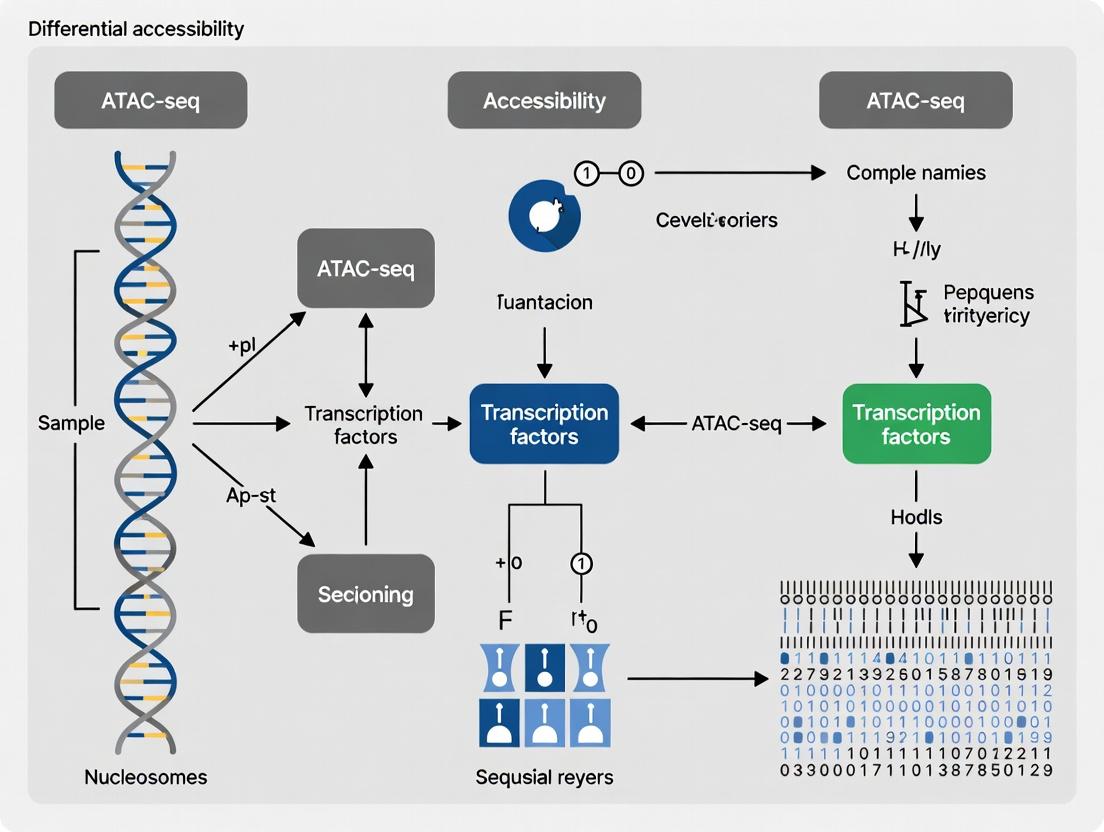
This article provides a comprehensive guide to ATAC-seq differential accessibility analysis, tailored for researchers, scientists, and drug development professionals.
ATAC-seq Differential Accessibility Analysis: A Complete Guide for Biomedical Research and Drug Discovery
Abstract
This article provides a comprehensive guide to ATAC-seq differential accessibility analysis, tailored for researchers, scientists, and drug development professionals. It covers the foundational principles of chromatin accessibility, detailed methodological workflows from library preparation to bioinformatic analysis, and strategies for troubleshooting and optimizing experiments. Furthermore, it explores the validation of results and comparative analyses with other epigenetic assays. The goal is to equip the target audience with the practical knowledge needed to robustly identify regulatory genomic changes critical for understanding disease mechanisms and identifying therapeutic targets.
Understanding Chromatin Accessibility: The Biological Foundation of ATAC-seq
Chromatin architecture refers to the three-dimensional organization of DNA and associated proteins within the nucleus. This spatial arrangement is not random but is functionally linked to gene regulation. For a thesis focused on ATAC-seq (Assay for Transposase-Accessible Chromatin using sequencing) for differential accessibility analysis, understanding chromatin architecture is foundational. ATAC-seq identifies regions of open chromatin, which are typically associated with active regulatory elements like enhancers and promoters. These accessible regions are a direct product of chromatin remodeling and higher-order folding. Differential accessibility analysis via ATAC-seq allows researchers to compare chromatin landscapes between conditions (e.g., disease vs. healthy, treated vs. untreated), linking architectural changes to alterations in gene expression programs relevant to development, disease, and drug response.
Core Concepts of Chromatin Architecture
Chromatin is organized in a hierarchical manner:
- Nucleosomes: The basic repeating unit, consisting of ~147 bp of DNA wrapped around a histone octamer.
- Chromatin Fibers: Strings of nucleosomes folded into a 30-nm fiber (in vitro model).
- Chromatin Loops: Mediated by cohesin and CTCF, these loops bring distal regulatory elements (enhancers) into proximity with gene promoters.
- Topologically Associating Domains (TADs): Self-interacting genomic regions, typically 100 kb - 1 Mb in size, that insulate regulatory crosstalk.
- Compartments (A/B): Larger-scale associations of active (A) and inactive (B) chromatin regions.
Signaling and Remodeling Pathways Governing Chromatin State
Gene regulation is driven by the dynamic interplay of chromatin-modifying complexes and transcription factors (TFs). Key pathways include:
- ATP-dependent Chromatin Remodelers: Complexes like SWI/SNF use ATP to slide, evict, or restructure nucleosomes, creating accessible regions.
- Histone Modifying Enzymes: Writers (e.g., HATs, KMTs), Erasers (e.g., HDACs, KDMs), and Readers (e.g., bromodomains, chromodomains) of post-translational modifications (e.g., acetylation, methylation).
- Transcriptional Co-activators and Co-repressors: Multi-protein complexes recruited by sequence-specific TFs to facilitate or inhibit transcription.
Diagram 1: Chromatin Remodeling and Gene Activation Pathway
Quantitative Data on Chromatin Features
Table 1: Hierarchical Scales of Chromatin Organization
| Architectural Feature | Approximate Size Scale | Key Structural Proteins | Primary Functional Role |
|---|---|---|---|
| Nucleosome Core Particle | ~11 nm diameter, 147 bp DNA | Histones H2A, H2B, H3, H4 | DNA compaction; regulation of basic DNA access |
| Chromatosome | ~167 bp DNA | Histones + Linker Histone H1 | Stabilizes nucleosome; promotes fiber formation |
| Chromatin Loop | 10 kb - 3 Mb | Cohesin, CTCF | Enforces enhancer-promoter specificity |
| Topologically Associating Domain (TAD) | 100 kb - 1 Mb | Cohesin, CTCF (boundaries) | Insulates regulatory neighborhoods |
| Compartment A (Active) | >1 Mb | N/A (epigenetic feature) | Association of active, gene-rich regions |
| Compartment B (Inactive) | >1 Mb | N/A (epigenetic feature) | Association of inactive, gene-poor regions |
Table 2: Common Histone Modifications and Their Interpretations
| Histone Modification | Typical Associated State | Common Genomic Location | Interpretation in ATAC-seq Context |
|---|---|---|---|
| H3K4me3 | Active | Promoters | Marks active transcription start sites; correlates with open chromatin. |
| H3K27ac | Active | Enhancers, Promoters | Marks active regulatory elements; strong predictor of accessibility. |
| H3K4me1 | Poised/Active | Enhancers | Distinguishes enhancers from promoters; often paired with H3K27ac or H3K27me3. |
| H3K27me3 | Repressed (Polycomb) | Promoters, Enhancers | Facultative heterochromatin; associated with closed, inaccessible chromatin. |
| H3K9me3 | Repressed (Constitutive) | Heterochromatin, repeats | Constitutive heterochromatin; very low accessibility. |
| H3K36me3 | Active | Gene bodies | Associated with transcriptional elongation. |
Experimental Protocols for Key Chromatin Architecture Assays
Protocol 5.1: Standard ATAC-seq for Chromatin Accessibility Mapping
- Objective: To map genome-wide regions of open chromatin.
- Principle: A hyperactive Tn5 transposase simultaneously cuts and inserts sequencing adapters into accessible DNA regions.
- Detailed Steps:
- Cell Lysis & Transposition: Isolate 50,000-100,000 viable nuclei. Incubate with Tn5 transposase (e.g., Illumina Nextera) for 30 min at 37°C in a shaking thermomixer.
- DNA Purification: Clean up transposed DNA using a SPRI bead-based cleanup (e.g., AMPure XP beads).
- PCR Amplification: Amplify library using a limited-cycle PCR (e.g., 12 cycles) with indexed primers. Determine optimal cycle number via qPCR side-reaction if needed.
- Library Cleanup & QC: Perform a double-sided SPRI bead cleanup to remove primers and large fragments. Quantify using Qubit and check fragment distribution on a Bioanalyzer/TapeStation (characteristic ~200 bp periodicity).
- Sequencing: Sequence on an Illumina platform (typically 2x75 bp or 2x150 bp), aiming for 25-50 million non-duplicate reads per sample for mammalian genomes.
Protocol 5.2: Hi-C for 3D Chromatin Architecture
- Objective: To capture genome-wide chromatin interactions.
- Principle: Crosslink chromatin, digest with a restriction enzyme, ligate crosslinked fragments in situ, then sequence chimeric DNA pairs derived from interacting loci.
- Detailed Steps:
- Crosslinking & Digestion: Crosslink cells with 2% formaldehyde. Lyse cells, digest chromatin with a 4-cutter restriction enzyme (e.g., MboI, DpnII, or Hinfl).
- Fill-in & Ligation: Fill in overhangs with biotinylated nucleotides. Perform proximity ligation in a large volume with T4 DNA ligase to favor intramolecular ligation of crosslinked fragments.
- Reverse Crosslink & Purification: Reverse crosslinks with Proteinase K, purify DNA, and shear to ~300-500 bp.
- Biotin Pull-down & Library Prep: Capture biotin-labeled ligation junctions with streptavidin beads. Prepare sequencing library on-bead.
- Sequencing & Analysis: Sequence deeply (e.g., 500M-1B+ read pairs). Process data using pipelines (e.g., HiC-Pro, Juicer) to generate interaction matrices.
Diagram 2: ATAC-seq and Hi-C Experimental Workflow
The Scientist's Toolkit: Key Research Reagent Solutions
Table 3: Essential Reagents and Kits for Chromatin Architecture Studies
| Reagent / Kit Name | Supplier Examples | Function in Experiment | Critical Application Notes |
|---|---|---|---|
| Hyperactive Tn5 Transposase | Illumina (Nextera), Diagenode, Vazyme | Engineered enzyme for simultaneous fragmentation and tagging of accessible DNA in ATAC-seq. | Pre-loaded with sequencing adapters. Activity and lot consistency are critical for reproducibility. |
| ATAC-seq Kit | Active Motif, 10x Genomics (Chromium), Qiagen | All-in-one solution containing Tn5, buffers, and purification reagents optimized for ATAC-seq. | Simplifies protocol, improves robustness, especially for low-input or single-cell applications. |
| Formaldehyde (37%) | Sigma-Aldrich, Thermo Fisher | Crosslinking agent for Hi-C, ChIP-seq to preserve protein-DNA interactions. | Use fresh, high-purity grade. Quench with glycine. Optimization of crosslinking time is essential. |
| HindIII or DpnII Restriction Enzymes | NEB, Thermo Fisher | Used in Hi-C to digest crosslinked chromatin, defining the resolution of interaction maps. | Inactivated by SDS in lysis buffer. Choose enzyme based on genome's cutting frequency. |
| Streptavidin Magnetic Beads | Thermo Fisher, Sigma-Aldrich | Capture biotin-labeled ligation junctions in Hi-C post-ligation. | Crucial for enriching for true chimeric ligation products over self-ligated fragments. |
| SPRIselect / AMPure XP Beads | Beckman Coulter, Thermo Fisher | Solid-phase reversible immobilization beads for size selection and cleanup of DNA libraries. | Ratio of beads to sample determines size selection window (e.g., 0.5x to remove large fragments). |
| Chromatin Shearing System | Covaris, Bioruptor (Diagenode) | For sonicating chromatin to desired fragment size (200-500 bp) for ChIP-seq or post-Hi-C DNA. | Covaris uses focused ultrasonication; Bioruptor uses bath sonication. Avoid overheating samples. |
| High-Sensitivity DNA Assay Kits | Agilent (Bioanalyzer/TapeStation), Qubit (Thermo) | Quantify and quality-check DNA library concentration and fragment size distribution. | Bioanalyzer provides precise sizing; Qubit provides accurate concentration for pooling libraries. |
What is ATAC-seq? Core Principles of the Assay for Transposase-Accessible Chromatin
ATAC-seq (Assay for Transposase-Accessible Chromatin using sequencing) is a high-throughput genomics technique for mapping chromatin accessibility genome-wide. It identifies regions of open chromatin by probing DNA accessibility with a hyperactive mutant Tn5 transposase, which simultaneously fragments and tags accessible DNA with sequencing adapters. Within the context of a thesis on differential accessibility analysis, ATAC-seq serves as a foundational tool for identifying regulatory elements (e.g., enhancers, promoters) that are dynamically altered between biological conditions, cell types, or in response to drug treatments. This enables researchers to infer transcriptional regulatory mechanisms underlying development, disease, and therapeutic response.
The fundamental principle relies on the Tn5 transposase's ability to insert sequencing adapters into nucleosome-free regions of chromatin. Open chromatin is more accessible to Tn5 integration, leading to a higher density of sequenced fragments in these regions. The protocol involves cell lysis to isolate nuclei, tagmentation (fragmentation and tagging) with the loaded Tn5 transposase, purification of tagged DNA, PCR amplification, and sequencing. Paired-end sequencing allows for the identification of nucleosome positioning based on fragment size distribution.
Detailed Experimental Protocol for Differential Accessibility Analysis
1. Cell Preparation and Nuclei Isolation
- Harvest and wash 50,000 - 100,000 viable cells per condition. For adherent cells, use gentle dissociation.
- Lyse cells in cold lysis buffer (10 mM Tris-HCl, pH 7.4, 10 mM NaCl, 3 mM MgCl2, 0.1% IGEPAL CA-630) for 3-10 minutes on ice.
- Immediately pellet nuclei at 500 x g for 5 minutes at 4°C in a fixed-angle centrifuge. Resuspend pellet in cold PBS.
- Count nuclei using a hemocytometer and adjust concentration to 1,000-10,000 nuclei/µL. Keep on ice.
2. Tagmentation Reaction
- Combine in a nuclease-free tube:
- 10 µL: Nuclei (50,000 - 100,000 nuclei total)
- 10 µL: 2X Tagmentation Buffer (Illumina)
- 5 µL: Loaded Tn5 Transposase (Illumina Tagment DNA TDE1)
- Mix gently and incubate at 37°C for 30 minutes in a thermomixer with gentle shaking (300 rpm).
- Immediately purify DNA using a MinElute PCR Purification Kit (Qiagen) or equivalent. Elute in 20 µL Elution Buffer.
3. PCR Amplification and Library Clean-up
- Set up a 50 µL PCR reaction:
- 20 µL: Tagmented DNA
- 2.5 µL: Custom Primer Ad1 (25 µM)
- 2.5 µL: Custom Barcoded Primer Ad2 (25 µM)
- 25 µL: 2X KAPA HiFi HotStart ReadyMix
- Amplify using minimal cycles (typically 8-12) to avoid skewing representation:
- 72°C for 5 min (gap fill)
- 98°C for 30 sec
- Cycle (8-12x): 98°C for 10 sec, 63°C for 30 sec, 72°C for 1 min.
- Clean up amplified libraries using double-sided SPRI bead purification (e.g., 0.5X then 1.2X bead ratios). Elute in 20 µL TE buffer.
- Assess library quality and concentration using an Agilent Bioanalyzer/TapeStation and qPCR.
4. Sequencing and Data Analysis for Differential Accessibility
- Sequence on an Illumina platform (typically NovaSeq 6000, NextSeq 2000, or HiSeq 4000) using paired-end sequencing (PE42 + PE42 or longer).
- For differential analysis, sequence to a minimum depth of 50 million non-duplicate, mapped reads per sample, with biological replicates (n≥3).
- Bioinformatics Pipeline: Align reads to reference genome (e.g., GRCh38/hg38 using BWA-MEM or Bowtie2). Call peaks per sample (using MACS2 or Genrich). Perform differential accessibility testing across conditions using tools like DESeq2 (on count matrices) or specialized packages (DiffBind, csaw).
ATAC-seq Workflow to Differential Analysis
Tn5 Tagmentation Core Principle
Research Reagent Solutions Toolkit
| Item | Function in ATAC-seq |
|---|---|
| Loaded Tn5 Transposase (Illumina Tagment DNA TDE1 or equivalent) | Engineered enzyme complex that simultaneously fragments accessible DNA and adds sequencing adapters. The core reagent. |
| Digitonin (Alternative lysis reagent) | Used in permeabilization buffers for certain sample types (e.g., tissue) to improve nuclear isolation and Tn5 access. |
| Nuclei Isolation & Staining Buffer (BioLegend #424201) | Commercial buffer for simultaneous nuclei isolation and fluorescent staining (e.g., with DAPI) for FACS sorting of specific nuclei populations. |
| KAPA HiFi HotStart ReadyMix (Roche) | High-fidelity PCR enzyme mix recommended for amplifying tagmented DNA due to its low bias and high efficiency with GC-rich regions. |
| SPRIselect Beads (Beckman Coulter) | Magnetic beads for size selection and clean-up of DNA libraries, critical for removing primer dimers and large contaminants. |
| NEBNext High-Fidelity 2X PCR Master Mix (NEB) | Alternative high-fidelity PCR mix, often used in scaled or automated ATAC-seq protocols. |
| Qiagen MinElute PCR Purification Kit | For efficient purification of DNA after tagmentation, minimizing loss of small fragments. |
| Cell Viability Stain (e.g., DRAQ7, Trypan Blue) | Essential for assessing viability prior to nuclei isolation, as dead cells can create background noise. |
Table 1: Typical ATAC-seq Sequencing and Analysis Metrics
| Metric | Target or Typical Value | Importance for Differential Analysis |
|---|---|---|
| Cells/Nuclei Input | 50,000 - 100,000 | Higher input improves library complexity. Consistency across replicates is critical. |
| Tagmentation Time | 30 min at 37°C | Must be optimized per cell type; over-digestion creates small fragment bias. |
| PCR Amplification Cycles | 8 - 12 cycles | Minimize to prevent amplification bias and duplicate reads. |
| Final Library Size Distribution | Broad peak < 1,000 bp, periodicity ~200 bp | Indicates nucleosomal patterning. Quality control metric. |
| Sequencing Depth per Sample | > 50 million non-duplicate reads | Enables robust peak calling and statistical power for differential testing. |
| Fraction of Reads in Peaks (FRiP) | > 20-30% | Measures signal-to-noise; a key QC metric reported by ENCODE. |
| Peak Number per Sample (Mammalian) | 50,000 - 150,000 | Varies by cell type and analysis parameters. Used for normalization. |
| Biological Replicates | n ≥ 3 per condition | Mandatory for accurate statistical modeling of variance in differential analysis. |
Table 2: Comparison of Common Differential Analysis Tools for ATAC-seq
| Tool/Method | Core Algorithm | Input | Key Strength | Consideration |
|---|---|---|---|---|
| DiffBind (Bioconductor) | DESeq2 or edgeR | Consensus peak set & read counts | Manages replicates and controls effectively; user-friendly. | Less sensitive to subtle shifts in peak boundaries. |
| DESeq2 (Direct Use) | Negative Binomial GLM | Count matrix from merged peaks | Highly robust for count data; allows complex designs. | Requires careful generation of count matrix from peaks. |
| csaw (Bioconductor) | Negative Binomial Model | Window-based counts (e.g., 150bp bins) | Detects diffuse or broad changes in accessibility. | Computationally intensive; requires effective normalization. |
| MACS2 bdgdiff | Local Poisson | Peak calls and fold-change | Part of common MACS2 workflow; simple. | Does not formally model biological variance. Use only for exploratory analysis. |
| limma-voom | Linear Modeling | Count matrix with TMM normalization | Fast; good performance with good replicate numbers. | Assumes mean-variance trend is correct. |
Application Notes
Disease Mechanisms and Biomarker Discovery
Accessible chromatin profiling via ATAC-seq enables the systematic identification of non-coding regulatory elements (enhancers, promoters, insulators) linked to disease. Recent genome-wide association studies (GWAS) have shown that over 90% of disease- or trait-associated variants lie in non-coding regions, predominantly within cell-type-specific accessible chromatin. For example, in autoimmune diseases like rheumatoid arthritis, ATAC-seq of patient-derived CD4+ T cells has identified differentially accessible regions (DARs) that colocalize with GWAS risk loci, pinpointing causal enhancers regulating pathogenic gene expression programs.
Table 1: Key Disease Associations from ATAC-seq Studies
| Disease Category | Cell/Tissue Type Studied | Key Finding | Statistical Significance (FDR) | Reference (Year) |
|---|---|---|---|---|
| Alzheimer's Disease | Prefrontal Cortex Neurons (post-mortem) | Increased accessibility near BIN1 and CLU risk loci in disease cohorts. | q < 0.01 | (Nott et al., 2023) |
| Triple-Negative Breast Cancer | Patient Tumor Biopsies | Accessible enhancers driving MYC and EGFR oncogene expression linked to poor prognosis. | p < 1e-8 | (Corces et al., 2022) |
| Systemic Lupus Erythematosus | Peripheral Blood Monocytes | 1,245 DARs associated with interferon-response genes; predictive of flare activity. | q < 0.05 | (Huang et al., 2023) |
| Type 2 Diabetes | Human Pancreatic Islets | Islet-specific open chromatin sites enriched for genetic variants affecting insulin secretion. | p < 5e-9 | (Miguel-Escalada et al., 2022) |
Developmental Trajectories and Cell Fate Decisions
ATAC-seq time-course experiments map the dynamic rewiring of the chromatin landscape during differentiation. In embryonic stem cell (ESC) to cardiomyocyte differentiation, sequential opening and closing of distinct enhancer modules regulate core transcription factor networks (e.g., OCT4, NKX2-5). Single-cell ATAC-seq (scATAC-seq) has revolutionized this field by deconvoluting heterogeneity and reconstructing lineage trajectories.
Table 2: Chromatin Dynamics During Development
| Developmental Process | System | Number of DARs Identified | Key Regulated Pathway | Functional Validation Method |
|---|---|---|---|---|
| Hematopoiesis | Human CD34+ HSPCs | ~12,000 | GATA/PU.1 switch | CRISPRi of enhancers + flow cytometry |
| Neural Tube Formation | Mouse Embryo (E8.5-E12.5) | ~8,500 | Wnt/β-catenin signaling | In situ Hi-C + luciferase reporter assay |
| T-cell Exhaustion | Tumor-Infiltrating Lymphocytes | ~3,200 | NFAT/TOX-dependent regulatory network | ChIP-seq + exhaustion marker staining |
Predicting and Modulating Treatment Response
Chromatin accessibility can serve as a predictive biomarker for therapy response and a map for therapeutic intervention. In cancer, the pre-treatment chromatin state of tumors can predict sensitivity to immunotherapy (e.g., anti-PD-1). Accessible chromatin at checkpoint inhibitor genes like PD-L1 correlates with response. Furthermore, mapping open chromatin reveals regulatory dependencies ("Achilles' enhancers") that can be targeted by small molecules or epigenome editors.
Table 3: Treatment Response Correlations
| Therapy Type | Disease | Cohort Size (N) | Predictive Accessibility Signature | AUC (Prediction) | Study Design |
|---|---|---|---|---|---|
| Anti-PD-1 immunotherapy | Metastatic Melanoma | 45 patients | Accessibility at IFNG and CXCL13 enhancers in CD8+ T cells | 0.89 | Prospective observational |
| Glucocorticoids | Severe Asthma | 120 patients | Baseline chromatin openness of FKBP5 gene in airway epithelial cells | 0.76 | Randomized controlled trial |
| HDAC Inhibitors (Panobinostat) | Multiple Myeloma | 33 patient samples | Closed chromatin at pro-apoptotic gene promoters pre-treatment correlates with resistance. | 0.81 | Pre-clinical trial correlative |
Detailed Protocols
Protocol: ATAC-seq for Differential Accessibility Analysis from Frozen Tissue
Context within Thesis: This protocol is central for generating robust, reproducible chromatin accessibility data from biobanked samples, enabling retrospective disease cohort studies.
I. Sample Preparation & Nuclei Isolation
- Cryopreserved Tissue Lysis: Weigh 10-20 mg of frozen tissue. Mince on dry ice. Transfer to a Dounce homogenizer containing 1 mL of chilled Homogenization Buffer (10 mM Tris-HCl pH 7.4, 10 mM NaCl, 3 mM MgCl2, 0.1% NP-40, 0.1% Tween-20, 0.01% Digitonin, 1% BSA). Dounce 15-20 times with the loose pestle (A), then 15-20 times with the tight pestle (B) on ice.
- Nuclei Purification: Filter homogenate through a 40-μm cell strainer into a 15-mL conical tube. Underlay with 1 mL of Sucrose Cushion Buffer (10 mM Tris-HCl pH 7.4, 10 mM NaCl, 3 mM MgCl2, 0.1% Tween-20, 32% sucrose). Centrifuge at 1300 x g for 10 min at 4°C. Carefully aspirate supernatant.
- Nuclei Count & Quality Control: Resuspend pellet in 50 μL of Nuclei Resuspension Buffer (10 mM Tris-HCl pH 7.4, 10 mM NaCl, 3 mM MgCl2, 0.1% Tween-20). Count using a hemocytometer with Trypan Blue. Assess integrity by DAPI staining under a fluorescence microscope. Aim for 50,000 intact nuclei per reaction.
II. Tagmentation Reaction (Tn5 Transposase)
- Prepare the Tagmentation Mix:
- 25 μL 2x TD Buffer (Illumina)
- 2.5 μL Transposase (Illumina, 100 nM final)
- 22.5 μL Nuclease-free water
- Total Volume: 50 μL
- Combine 50,000 nuclei (in ≤2 μL volume) with the 50 μL Tagmentation Mix. Mix gently by pipetting. Do not vortex.
- Incubate at 37°C for 30 minutes in a thermal mixer with agitation (300 rpm).
- Immediately purify DNA using a MinElute PCR Purification Kit (Qiagen). Elute in 20 μL of Elution Buffer (10 mM Tris-HCl, pH 8.0).
III. Library Amplification & Barcoding
- Set up the PCR reaction:
- 20 μL Purified Tagmented DNA
- 2.5 μL Custom Adapter 1 (i7 index, 25 μM)
- 2.5 μL Custom Adapter 2 (i5 index, 25 μM)
- 25 μL NEBNext High-Fidelity 2x PCR Master Mix
- Total Volume: 50 μL
- Amplify using the following thermocycler program:
- 72°C for 5 min (gap filling)
- 98°C for 30 sec
- Cycle (5-12 cycles, see note below): 98°C for 10 sec, 63°C for 30 sec, 72°C for 1 min.
- Hold at 4°C.
- Cycle Number Determination: Run a 5 μL aliquot after 5 cycles on a 2% agarose gel. The ideal library appears as a smooth smear from 100-1000 bp, peaking at ~200-300 bp. Add 2-3 more cycles if the smear is faint.
- Purify the final library using double-sided SPRI bead cleanup (0.5x and 1.5x ratios to remove primer dimers and large fragments). Elute in 25 μL TE buffer.
- QC: Assess library concentration (Qubit) and profile (Bioanalyzer/TapeStation). Sequence on an Illumina platform (paired-end, 50-150 bp reads).
Protocol: Computational Pipeline for Differential Accessibility
Context within Thesis: This bioinformatics workflow is essential for translating raw sequencing data into biologically interpretable DARs linked to phenotypes.
I. Preprocessing & Alignment
- Quality Control: Use
FastQC(v0.11.9) on raw FASTQ files. - Adapter Trimming: Use
Trim Galore!(v0.6.7) with default parameters to remove Nextera adapters. - Alignment: Align reads to the reference genome (e.g., hg38) using
Bowtie2(v2.4.5) with parameters-X 2000 --very-sensitive. Discard mitochondrial reads. - Post-Alignment Processing: Sort and index BAM files with
samtools(v1.15). Remove PCR duplicates usingpicardMarkDuplicates (v2.27.5).
II. Peak Calling & Count Matrix Generation
- Peak Calling: Call peaks per sample using
MACS2(v2.2.7.1) withcallpeak -f BAMPE --keep-dup all -g hs --nomodel --shift -100 --extsize 200 -B --SPMR. - Create Consensus Peak Set: Merge all sample peaks using
bedtools merge(v2.30.0) to create a unified set of candidate peaks for the experiment. - Generate Count Matrix: Use
featureCounts(from Subread package, v2.0.3) orATACseqQCto count fragments overlapping each peak in the consensus set.
III. Differential Accessibility Analysis
- Load the count matrix and sample metadata into
R(v4.2+). - Use
DESeq2(v1.38.0) for statistical testing. Normalize using median of ratios method. Model design:~ condition + batch. Call DARs with an adjusted p-value (FDR) < 0.05 and |log2 fold change| > 0.5. - Visualization: Generate MA plots, volcano plots, and heatmaps of normalized counts for top DARs.
- Annotation & Interpretation: Annotate DARs to nearest genes and genomic features using
ChIPseeker(v1.34.0). Perform motif enrichment analysis withHOMER(v4.11) orMEME-ChIPto identify putative transcription factors driving accessibility changes.
Visualizations (Graphviz DOT Scripts)
Diagram Title: Disease Mechanism Linking GWAS to Chromatin
Diagram Title: ATAC-seq Experimental Workflow
Diagram Title: Transcription Factor Cascade in Chromatin Opening
The Scientist's Toolkit: Key Research Reagent Solutions
| Item | Vendor/Example Catalog # | Function in ATAC-seq/Chromatin Analysis |
|---|---|---|
| Tn5 Transposase (Loaded) | Illumina (20034197), Diagenode (C01080010) | Enzyme that simultaneously fragments and tags accessible genomic DNA with sequencing adapters. Core reagent. |
| Nuclei Isolation Buffer (with Digitonin) | 10x Genomics (Chromium Next GEM Chip K), Prepito | Optimized detergent buffer for liberating intact nuclei from complex tissues/cells while preserving chromatin state. |
| SPRIselect Beads | Beckman Coulter (B23318) | Size-selective magnetic beads for post-tagmentation and post-PCR cleanups. Critical for library size selection. |
| NEBNext High-Fidelity 2X PCR Master Mix | New England Biolabs (M0541S) | High-fidelity polymerase for limited-cycle amplification of tagmented DNA. Minimizes PCR bias. |
| Dual-Indexed PCR Adapters (i5 & i7) | IDT for Illumina | Unique barcode combinations for multiplexing samples. Essential for cohort studies. |
| Cell Staining Buffer (for scATAC) | BioLegend (420201) | Antibody staining buffer compatible with transposase activity, used for cell surface protein indexing in multimodal single-cell assays. |
| ATAC-seq Control Samples (e.g., GM12878) | Coriell Institute, ENCODE | Reference cell line with well-characterized open chromatin profile for pipeline benchmarking and quality control. |
| Methylcellulose-Based Cryopreservation Media | STEMCELL Technologies (100-1065) | For optimal freezing of primary cells/tissues to preserve native chromatin architecture for later ATAC-seq. |
Application Notes on Core Terminology
Peaks: Regions of the genome with a statistically significant enrichment of aligned ATAC-seq sequencing reads, representing putative open chromatin regions. Peaks are called using algorithms like MACS2 or Genrich. In differential analysis, a peak's read count is the fundamental quantitative unit.
Footprints: Short (~10-150 bp) regions of protected DNA within an ATAC-seq peak, caused by the binding of a transcription factor (TF) or other protein complex, which blocks Tn5 transposase cleavage. Their detection requires high-depth sequencing and specialized tools (e.g., TOBIAS, HINT-ATAC).
Nucleosome Positioning: The pattern of nucleosome occupancy inferred from the periodic spacing of ATAC-seq inserts. Mono-nucleosome-protected DNA (~200 bp inserts) yields a fragment size distribution peak at ~200 bp. Positioning analysis identifies phased arrays of nucleosomes flanking regulatory elements.
Differential Accessibility (DA): The statistical comparison of chromatin accessibility between two or more biological conditions (e.g., treated vs. control, disease vs. healthy) to identify genomic regions with significant changes in open chromatin. Tools like DESeq2 (on peak counts) or edgeR are commonly employed.
Quantitative Summary of Key Metrics
Table 1: Typical ATAC-seq Data Metrics and Interpretation
| Metric | Typical Value/Range | Interpretation |
|---|---|---|
| Total Reads per Sample | 50-100 million | Sufficient for peak calling & footprinting |
| Fraction of Reads in Peaks (FRiP) | 20-40% | Indicator of signal-to-noise; >20% is good |
| TSS Enrichment Score | >10 | Higher score indicates better library quality |
| Nucleosomal Periodicity | Clear ~200 bp periodicity in fragment size distribution | Indicates preserved nucleosome structure |
| Peak Number (Human) | 50,000 - 150,000 | Depends on cell type and condition |
| Footprint Detection Depth | >100 million reads | High depth required for robust TF footprint calling |
Table 2: Common Tools for ATAC-seq Analysis
| Analysis Step | Common Tools | Primary Output |
|---|---|---|
| Peak Calling | MACS2, Genrich | BED file of open chromatin regions |
| Differential Accessibility | DESeq2, edgeR, diffBind | List of differentially accessible peaks (DA peaks) |
| Footprint Analysis | TOBIAS, HINT-ATAC, PIQ | BED file of footprint regions & inferred TF binding |
| Nucleosome Positioning | NucleoATAC, DANPOS2 | Positions of nucleosome dyads & occupancy scores |
| Motif Analysis | HOMER, MEME-ChIP | Enriched transcription factor motifs in DA peaks |
Detailed Protocols
Protocol 2.1: Comprehensive ATAC-seq Wet Lab Protocol
Title: Omni-ATAC Protocol for Frozen or Fresh Cells.
Key Reagent Solutions:
- Cell Lysis Buffer: (10 mM Tris-HCl pH 7.4, 10 mM NaCl, 3 mM MgCl2, 0.1% IGEPAL CA-630). Gently lyses plasma membrane, preserving nuclear integrity.
- Tagmentation Buffer (TD): (Illumina). Contains the engineered Tn5 transposase pre-loaded with sequencing adapters.
- Tagmentation Stop Buffer: (40 mM EDTA, 0.1% SDS). Chelates Mg2+ and denatures Tn5 to halt reaction.
- Library Amplification Reagents: (NEB Next High-Fidelity 2X PCR Master Mix, Custom Indexed PCR Primers). Amplifies tagmented DNA fragments.
Procedure:
- Nuclei Preparation: Pellet 50,000-100,000 viable cells. Resuspend pellet in 50 µL cold Lysis Buffer. Incubate on ice for 3 minutes. Immediately add 1 mL of cold Wash Buffer (PBS + 0.1% BSA + 0.1 U/µl RNasin). Centrifuge at 500 rcf for 5 min at 4°C. Carefully remove supernatant.
- Tagmentation: Resuspend the nuclei pellet in 50 µL of transposition mix (25 µL 2x TD Buffer, 22.5 µL PBS, 2.5 µL TDE1 enzyme (Illumina), 0.5 µL 1% Digitonin). Mix gently and incubate at 37°C for 30 minutes in a thermomixer with shaking (1000 rpm).
- DNA Purification: Immediately add 50 µL of Tagmentation Stop Buffer and mix. Purify DNA using a MinElute PCR Purification Kit (Qiagen). Elute in 21 µL Elution Buffer.
- Library Amplification: To the purified DNA, add 25 µL 2x NEB Next PCR Master Mix, 2.5 µL of a 25 µM forward primer (Ad1_noMX), and 2.5 µL of a uniquely barcoded 25 µM reverse primer (Ad2.x). Amplify using the following PCR program: 72°C for 5 min; 98°C for 30 sec; then 5-12 cycles of (98°C for 10 sec, 63°C for 30 sec, 72°C for 1 min); hold at 4°C. Determine optimal cycle number via qPCR side reaction.
- Clean-up & QC: Purify amplified library using SPRI beads (1.0-1.2x ratio). Quantify by Qubit and profile fragment size distribution using a Bioanalyzer/TapeStation. Sequence on Illumina platform (typically 2x50 bp or 2x75 bp paired-end).
Protocol 2.2: Computational Pipeline for Differential Accessibility Analysis
Title: Bioinformatic Analysis from FASTQ to Differential Peaks.
Key Software & Databases:
- FastQC/MultiQC: For initial quality control of raw sequencing reads.
- Trimmomatic or Cutadapt: To remove adapter sequences and low-quality bases.
- Bowtie2 or BWA: For alignment of reads to the reference genome (e.g., hg38).
- Samtools/Picard: For file format manipulation, sorting, and duplicate marking.
- MACS2: For peak calling on individual or pooled samples.
- featureCounts or htseq-count: To generate a count matrix of reads overlapping consensus peaks.
- DESeq2 (R/Bioconductor): For statistical testing of differential accessibility.
Procedure:
- Alignment: Trim adapters. Align paired-end reads to reference genome using
bowtie2with parameters-X 2000 --very-sensitive. Filter for properly paired, uniquely mapped, and non-mitochondrial reads. Remove PCR duplicates usingpicard MarkDuplicates. - Peak Calling: Call peaks on each replicate individually using
macs2 callpeakwith parameters-f BAMPE --keep-dup all -g <genome size> -q 0.05. Generate a consensus peak set by merging peaks from all conditions usingbedtools merge. - Count Matrix Generation: Count the number of fragments (properly paired reads) overlapping each consensus peak in each sample using
featureCounts(from Subread package) in paired-end mode. - Differential Analysis: Import the count matrix into R. Using DESeq2, normalize counts (median of ratios method), model counts with a negative binomial distribution, and test for significant differences between conditions. Apply independent filtering and multiple testing correction (Benjamini-Hochberg). Significant DA peaks are typically defined as
|log2FoldChange| > 1 & adjusted p-value < 0.05.
Diagrams
DOT Code for ATAC-seq Experimental Workflow
DOT Code for Differential Accessibility Analysis Logic
The Scientist's Toolkit
Table 3: Essential Research Reagent Solutions for ATAC-seq
| Item | Supplier/Example | Function |
|---|---|---|
| Tn5 Transposase | Illumina (Tagment DNA TDE1), DIY homemade | Engineered enzyme that simultaneously fragments and tags open chromatin DNA with sequencing adapters. |
| Cell Permeabilization Reagent | Digitonin (Sigma), NP-40 | Gently permeabilizes nuclear membrane to allow Tn5 entry while maintaining nuclear structure. |
| SPRI Magnetic Beads | Beckman Coulter, Sigma | Size-selective purification and clean-up of DNA libraries; replaces column-based purification. |
| DNA High-Sensitivity Assay Kits | Qubit dsDNA HS (Thermo Fisher) | Accurate quantification of low-concentration DNA libraries prior to sequencing. |
| High-Fidelity PCR Master Mix | NEB Next Ultra II, KAPA HiFi | Robust amplification of tagmented DNA with minimal bias for final library construction. |
| Dual Indexed PCR Primers | Illumina IDT for Illumina | Unique combination of i5 and i7 indexes for multiplexing samples in a single sequencing run. |
| Size Selection Ladders | Pippin HT (Sage Science), BluePippin | Precise isolation of nucleosome-free (<120 bp) and mono-nucleosome (~200-300 bp) fragments for specialized assays. |
| RNase Inhibitor | RNasin (Promega) | Protects RNA if analyzing nuclei for multi-omics (e.g., ATAC + RNA from same sample). |
A Step-by-Step ATAC-seq Workflow: From Bench to Bioinformatics
A robust experimental design is paramount for generating reliable and interpretable data in Assay for Transposase-Accessible Chromatin using sequencing (ATAC-seq), particularly for differential accessibility analysis. This document provides detailed application notes and protocols for key considerations—sample selection, replication strategy, and control implementation—framed within a thesis aiming to identify chromatin accessibility changes in disease models or in response to drug treatment.
Core Experimental Design Considerations
Sample Considerations
Key factors influencing sample choice in ATAC-seq experiments are summarized below.
Table 1: Critical Sample Considerations for ATAC-seq
| Consideration | Description & Rationale | Impact on Design |
|---|---|---|
| Cell Type & Origin | Primary cells, cell lines, or tissue samples. Primary cells best reflect in vivo states but may have lower yield. | Defines isolation protocol and required cell numbers. |
| Cell Viability & Number | >95% viability is critical. Standard protocol requires 50,000-100,000 viable cells per reaction. | Low viability increases background from mitochondrial reads. Insufficient cells lead to poor library complexity. |
| Cell Cycle Phase | Accessibility can vary across cell cycle phases (e.g., G1 vs. M phase). | For asynchronous cultures, report distribution. For sensitive assays, consider synchronization. |
| Genetic/Epigenetic Background | Strain, genotype, or patient cohort variability. | Must be documented and, where possible, matched or controlled statistically. |
| Treatment Conditions | Drug dose, duration, and vehicle control for perturbation studies. | Requires parallel untreated/vehicle-treated controls from the same cell pool. |
Replication Strategy
Replicates are essential to distinguish biological signal from technical noise.
Table 2: Replication Guidelines for Differential ATAC-seq
| Replicate Type | Definition | Recommended Minimum | Justification |
|---|---|---|---|
| Biological Replicate | Cells or tissues harvested from distinct biological units (e.g., different mice, separate cell culture passages). | 3-5 per condition | Accounts for biological variability. Required for statistical confidence in differential analysis. |
| Technical Replicate | Multiple libraries prepared from the same biological sample aliquot. | 2-3 (if used) | Assesses technical noise from library prep and sequencing. Often omitted in favor of sequencing depth in modern designs. |
| Sequencing Depth | Total number of high-quality, non-mitochondrial, non-duplicate reads per sample. | 50-100 million reads for mammalian genomes | Ensures sufficient coverage for peak calling and quantitative comparison across conditions. |
Control Implementation
Appropriate controls are necessary for data normalization and quality assessment.
Table 3: Essential Controls in ATAC-seq Experiments
| Control Type | Purpose | Protocol Notes |
|---|---|---|
| Negative Control (Input/Background) | A no-transposase reaction or genomic DNA control. | Helps identify assay artifacts but is not always routinely used in ATAC-seq. |
| Positive Control (Reference Sample) | A well-characterized cell line (e.g., K562) processed in parallel. | Serves as a cross-experiment baseline for quality metrics (e.g., fragment size distribution, ENCODE quality thresholds). |
| Within-Experiment Control | An untreated/vehicle-treated sample for every batch of a perturbation study. | Controls for batch effects. Must be processed identically and concurrently with treated samples. |
| Spike-in Control | Exogenous chromatin (e.g., D. melanogaster nuclei) added to human cells. | Not yet routine but valuable for normalizing global shifts in accessibility, especially for drug treatments affecting nuclear activity. |
Detailed Protocols
Protocol: Isolation of Nuclei for ATAC-seq from Cultured Cells
Objective: To obtain clean, intact nuclei from mammalian cell cultures.
Materials: See "The Scientist's Toolkit" below. Procedure:
- Cell Harvest & Wash: Collect ~100,000 cells. Pellet at 500 x g for 5 min at 4°C. Wash once with 1 mL of cold 1x PBS.
- Cell Lysis: Resuspend cell pellet in 50 µL of Cold ATAC-seq Lysis Buffer (10 mM Tris-HCl, pH 7.4, 10 mM NaCl, 3 mM MgCl2, 0.1% IGEPAL CA-630). Mix immediately by pipetting 5 times.
- Nuclei Wash & Count: Immediately add 1 mL of Cold ATAC-seq Wash Buffer (10 mM Tris-HCl, pH 7.4, 10 mM NaCl, 3 mM MgCl2) to stop lysis. Pellet nuclei at 500 x g for 10 min at 4°C. Carefully aspirate supernatant.
- Resuspend nuclei in 50 µL of Transposition Mix (see 3.2) or freeze pellet at -80°C in Wash Buffer with 10% DMSO.
Protocol: Tagmentation and Library Preparation (Omni-ATAC Protocol)
Objective: To fragment accessible chromatin and add sequencing adapters simultaneously.
Procedure:
- Prepare Transposition Mix: For 1 reaction (50 µL total): 25 µL 2x TD Buffer (Illumina), 2.5 µL Tn5 Transposase (Illumina, 100 nM final), 16.5 µL PBS, 0.5 µL 1% Digitonin, 5 µL nuclease-free H2O. Mix and keep on ice.
- Tagment Nuclei: Add 50 µL of Transposition Mix directly to the 50 µL nuclei suspension from 3.1. Mix by pipetting 10 times. Incubate at 37°C for 30 min in a thermomixer with shaking at 1000 rpm.
- Clean DNA: Immediately purify tagmented DNA using a MinElute PCR Purification Kit (Qiagen). Elute in 21 µL Elution Buffer.
- Amplify Library: In a PCR tube, combine: 21 µL tagmented DNA, 2.5 µL Primer Adapter 1 (25 µM), 2.5 µL Primer Adapter 2 (25 µM), 25 µL NEBNext High-Fidelity 2x PCR Master Mix. Amplify: 72°C 5 min; 98°C 30 sec; then 5 cycles of: 98°C 10 sec, 63°C 30 sec, 72°C 1 min.
- Determine Additional Cycles: Remove 5 µL of the PCR reaction to a separate tube with SYBR Green I. Resume PCR on main reaction. Run the 5 µL aliquot in a qPCR to determine the additional cycles (Cq) needed to reach 1/3 of maximum fluorescence. Typically, 3-7 more cycles are added.
- Final Amplification & Clean-up: Perform the determined number of additional cycles on the main reaction. Purify final library using SPRI beads (1.0x ratio). Quantify by Qubit and profile by Bioanalyzer/TapeStation.
Diagrams
The Scientist's Toolkit: Essential Research Reagent Solutions
Table 4: Key Reagents for Robust ATAC-seq Experiments
| Item | Function in ATAC-seq | Example Product/Notes |
|---|---|---|
| Tn5 Transposase | Enzyme that simultaneously fragments accessible chromatin and adds sequencing adapters. | Illumina Tagment DNA TDE1 Enzyme, or custom-loaded "home-made" Tn5. |
| Digitoxin/Digitonin | Mild detergent used to permeabilize nuclear membranes for improved Tn5 access. | Critical for the "Omni-ATAC" protocol on challenging samples. |
| NEBNext High-Fidelity 2X PCR Master Mix | Polymerase for limited-cycle amplification of tagmented DNA. Minimizes GC bias. | Preferred for high-fidelity amplification post-tagmentation. |
| SPRI (Solid Phase Reversible Immobilization) Beads | Magnetic beads for size-selective purification and cleanup of DNA libraries. | Beckman Coulter AMPure XP or equivalent. Used for post-tagmentation and post-PCR cleanups. |
| Cell Strainer (40 µm) | Removes cell clumps and debris during nuclei preparation from tissues. | Essential for tissue samples to obtain a single-nuclei suspension. |
| DAPI or Trypan Blue | Viability and nuclei counting stains. | Confirm >95% viability and accurate nuclei count before tagmentation. |
| K562 Genomic DNA or Nuclei | Positive control for assay performance. | Well-characterized reference material (e.g., from ENCODE) for cross-run QC. |
| Qiagen MinElute PCR Purification Kit | Efficient recovery of low-DNA amounts after tagmentation. | Alternative to SPRI beads for the initial post-tagmentation cleanup step. |
This protocol details best practices for Assay for Transposase-Accessible Chromatin with sequencing (ATAC-seq) library preparation, specifically optimized for differential accessibility analysis in drug discovery and basic research. The procedure focuses on obtaining high-quality, nucleosome-free chromatin fragments from isolated nuclei, followed by efficient tagmentation and library amplification to minimize batch effects and ensure reproducibility.
Materials and Reagent Solutions
The Scientist's Toolkit: Essential reagents and their functions.
| Reagent / Material | Function in ATAC-seq Protocol |
|---|---|
| Digitonin | Permeabilizes cell and nuclear membranes to allow transposase entry. Critical concentration optimization required. |
| Tn5 Transposase (Loaded) | Engineered enzyme that simultaneously fragments and tags accessible chromatin with sequencing adapters. |
| Nuclei Isolation Buffer (NIB) | Sucrose/MgCl2-based isotonic buffer to maintain nuclear integrity during isolation. |
| PMSF (Protease Inhibitor) | Serine protease inhibitor to prevent nuclear protein degradation. |
| SPRI Beads | Magnetic beads for post-tagmentation clean-up and size selection. |
| Qubit dsDNA HS Assay Kit | Fluorometric quantification of low-concentration library DNA. |
| Indexing PCR Primers | Adds dual indices and completes adapter sequences for multiplexing. |
| Bioanalyzer/TapeStation | Assess library fragment size distribution and quality. |
Detailed Stepwise Protocols
Nuclei Isolation from Cultured Cells
Objective: Isolate intact, clean nuclei without clumping.
- Harvest ~50,000 viable cells. Centrifuge at 500 x g for 5 min at 4°C. Discard supernatant.
- Resuspend cell pellet in 50 µL of cold Lysis Buffer (10 mM Tris-HCl pH 7.4, 10 mM NaCl, 3 mM MgCl2, 0.1% IGEPAL CA-630, 0.1% Tween-20, 0.01% Digitonin).
- Incubate on ice for 3 minutes. Invert tube gently twice during incubation.
- Immediately add 1 mL of Wash Buffer (10 mM Tris-HCl pH 7.4, 10 mM NaCl, 3 mM MgCl2, 0.1% Tween-20).
- Invert to mix and centrifuge at 500 x g for 10 min at 4°C. Carefully aspirate supernatant.
- Resuspend nuclei pellet in 50 µL of Tagmentation Buffer (33 mM Tris-acetate pH 7.8, 66 mM Potassium acetate, 11 mM Magnesium acetate, 16% DMF, 0.01% Digitonin). Keep on ice.
- Count nuclei using a hemocytometer. Dilute to a target concentration of ~1,000 nuclei/µL.
Tagmentation Reaction
Objective: Fragment accessible DNA and tag with adapters.
- Combine the following in a nuclease-free PCR tube:
- 10 µL nuclei suspension (~10,000 nuclei)
- 10 µL 2x Tagmentation Buffer (from commercial kit, e.g., Illumina Tagment DNA TDE1)
- 5 µL Loaded Tn5 Transposase (commercially available)
- Mix gently by pipetting. Do not vortex.
- Incubate in a thermocycler at 37°C for 30 minutes.
- Immediately add 25 µL of DNA Binding Buffer (from a SPRI bead kit) to stop the reaction.
- Proceed directly to clean-up.
Library Clean-up and Amplification
Objective: Purify tagmented DNA and amplify library.
- Add 40 µL of room-temperature SPRI beads to the 50 µL tagmentation stop mixture.
- Mix thoroughly and incubate for 5 minutes at room temperature.
- Place on a magnetic stand. After solution clears, discard supernatant.
- Wash beads twice with 200 µL of freshly prepared 80% ethanol.
- Air-dry beads for 2-3 minutes. Elute DNA in 21 µL of Elution Buffer (10 mM Tris pH 8.0).
- Set up PCR reaction:
- 21 µL Eluted DNA
- 2.5 µL Index Primer 1 (i7)
- 2.5 µL Index Primer 2 (i5)
- 25 µL 2x NEB Next High-Fidelity PCR Master Mix
- Amplify using the following thermocycler program:
- 72°C for 5 min (gap filling)
- 98°C for 30 sec
- Cycle 5-12x: 98°C for 10 sec, 63°C for 30 sec
- 72°C for 1 min
- Hold at 4°C.
- Note: Use the minimum number of cycles (determined by qPCR side-reaction) to prevent over-amplification.
- Purify final library with a 1.2x SPRI bead ratio to remove primer dimers and large fragments. Elute in 20-30 µL.
Critical metrics for assessing protocol success.
| QC Step | Target Metric | Implication of Deviation |
|---|---|---|
| Nuclei Count & Integrity | >70% intact, 10,000 per reaction | Low yield leads to over-tagmentation; debris causes background. |
| Post-Tagmentation Fragment Size | Major peak < 1,000 bp; strong nucleosomal laddering | No ladder indicates over-digestion or poor nuclei quality. |
| Post-Amplification Library Concentration | 10-50 nM (Qubit) | Low concentration suggests poor tagmentation or PCR failure. |
| Library Fragment Distribution (Bioanalyzer) | Peak ~200-500 bp; minimal adapter dimer (<100 bp) | High dimer peak indicates inefficient SPRI bead clean-up. |
| Sequencing Saturation | >80% of fragments unique (from sequencing) | Low complexity indicates over-amplification or insufficient starting material. |
Diagram Title: ATAC-seq Wet-Lab Protocol Workflow & Critical Checkpoints
Diagram Title: Molecular to Analytical Path in ATAC-seq for Differential Analysis
This application note details the standardized computational pipeline for processing ATAC-seq data from raw sequencing files to a count matrix, as implemented within a thesis investigating differential chromatin accessibility in disease models for drug target discovery.
The core workflow involves sequential steps of quality control, alignment, post-processing, peak calling, and quantification. Key performance metrics for each stage are summarized below.
Table 1: Key Performance Metrics and Thresholds by Pipeline Stage
| Pipeline Stage | Key Metric | Typical Threshold/Value | Purpose/Rationale |
|---|---|---|---|
| Raw Read QC (FastQC) | Per base sequence quality | Q-score ≥ 30 | Identifies low-quality bases for trimming. |
| Adapter content | ≤ 5% | High adapter content necessitates trimming. | |
| Trimming (Trim Galore!) | % of reads trimmed | 5-20% | Indicates adapter/quality issue severity. |
| Alignment (Bowtie2) | Overall alignment rate | ≥ 80% | Measures efficiency of mapping to genome. |
| Mitochondrial reads | < 20% (Target) | High % indicates poor nuclear enrichment. | |
| Duplicate Marking (Picard) | Duplication rate | 20-50% (ATAC-seq typical) | Identifies PCR/optical duplicates. |
| Peak Calling (MACS2) | Number of peaks | 50,000 - 150,000 (human) | Indicates breadth of open chromatin detected. |
| FRiP (Fraction of reads in peaks) | ≥ 20% | Key metric for signal-to-noise. | |
| Quantification (featureCounts) | Genes/features with counts | Varies by annotation | Final matrix dimensions. |
Detailed Experimental Protocols
Protocol 1: Initial Quality Control and Adapter Trimming
- Tool: FastQC v0.11.9 & Trim Galore! v0.6.10.
- Command:
- Parameters:
--quality 20: Trim bases with Q<20.--length 25: Discard reads shorter than 25bp post-trimming.--paired: Maintain paired-end integrity.
Protocol 2: Alignment to Reference Genome
- Tool: Bowtie2 v2.4.5, using a pre-built genome index (e.g., GRCh38/hg38).
- Command:
- Parameters:
-p 8: Use 8 CPU threads. Redirect stderr (2>) to a log file to capture alignment statistics.
Protocol 3: Post-Alignment Processing and Filtering
- Tools: SAMtools v1.15, Picard Tools v2.27.
- Steps:
a. Convert SAM to BAM and sort:
samtools view -bS sample.sam | samtools sort -o sample_sorted.bamb. Filter for properly paired, mapped, non-mitochondrial reads:samtools view -b -h -f 2 -F 1804 -q 30 sample_sorted.bam | grep -v chrM | samtools sort -o sample_filtered.bamc. Mark duplicates:java -jar picard.jar MarkDuplicates I=sample_filtered.bam O=sample_final.bam M=dup_metrics.txt
Protocol 4: Peak Calling and Consensus Peak Set Generation
- Tool: MACS2 v2.2.7.1.
- Command for a single sample (BAM from Protocol 3):
- Parameters:
-f BAMPE: Use paired-end data.--nomodel --shift -100 --extsize 200: Use fixed shift for ATAC-seq fragments.-q 0.05: FDR cutoff. - Consensus Set: Use
bedtools mergeoridron replicate peaks, then merge all sample peaks to create a universal set for quantification.
Protocol 5: Quantification to Generate Count Matrix
- Tool: featureCounts (from Subread package v2.0.3).
- Command:
- Parameters:
-p: Count fragments (pairs).-t exon -g gene_id: Use gene annotation. Final input is the consensus peak BED file and all filtered BAMs.
Visualized Workflows
ATAC-seq Data Processing Pipeline
The Scientist's Toolkit: Essential Research Reagents & Solutions
Table 2: Key Research Reagent Solutions for ATAC-seq Wet Lab & Analysis
| Item | Function/Application |
|---|---|
| Tn5 Transposase (Illumina) | Enzyme that simultaneously fragments chromatin and inserts sequencing adapters. Critical for library construction. |
| Nuclear Extraction Buffer (e.g., with IGEPAL) | Gently lyses the cell membrane to isolate intact nuclei for transposition. |
| DNA Clean-up Beads (SPRI) | Size selection and purification of transposed DNA fragments post-amplification. |
| High-Fidelity PCR Mix (e.g., KAPA HiFi) | Amplifies adapter-ligated DNA fragments with minimal bias for sequencing. |
| Bowtie2/Picard Tools (Software) | Aligns reads to reference genome and marks PCR duplicates, respectively. Essential for data processing. |
| MACS2 (Software) | Identifies regions of significant enrichment (peaks) representing open chromatin from aligned reads. |
| R/Bioconductor (DESeq2, edgeR) | Statistical packages used downstream of the count matrix for differential accessibility analysis. |
Alignment, Peak Calling, and Quality Control Metrics (e.g., TSS Enrichment, Fragment Size Distribution)
Application Notes
This protocol provides a comprehensive framework for processing and quality-controlling ATAC-seq data within a research pipeline aimed at differential accessibility analysis. The identification of reproducible peaks and the removal of low-quality data are critical for robust downstream statistical comparison between experimental conditions (e.g., drug-treated vs. control samples). The following metrics are paramount for assessing data quality prior to differential analysis.
Key Quality Control Metrics and Interpretation
The table below summarizes the primary QC metrics, their ideal values, and implications for data quality and downstream analysis.
Table 1: Essential ATAC-seq QC Metrics for Differential Accessibility Analysis
| Metric | Ideal Value/Range | Measurement Purpose | Implication for Differential Analysis |
|---|---|---|---|
| Fraction of Reads in Peaks (FRiP) | > 20-30% | Proportion of sequenced fragments falling within called peak regions. | Low FRiP (<15%) indicates high background noise, reducing power to detect significant differences. |
| TSS Enrichment Score | > 10 (Higher is better) | Ratio of fragment density at transcription start sites (TSS) to flanking regions. | Low enrichment (<5) suggests poor chromatin accessibility or technical issues; may confound cell-type-specific signals. |
| Nuclear Fragment Size Distribution | Major peak ~200 bp (nucleosome-free), periodicity ~200 bp (mono-, di-nucleosome). | Histogram of insert sizes from aligned read pairs. | Deviation indicates over-digestion, insufficient chromatin, or contamination with mitochondrial or cytoplasmic DNA. |
| Non-Redundant Fraction (NRF) | > 0.8 | Fraction of unique mapped reads out of total mapped. | Low NRF indicates high PCR duplicates, leading to spurious peak calls and inflated significance. |
| Mitochondrial Read Proportion | < 20% (cell type dependent) | Percentage of reads mapping to the mitochondrial genome. | High proportion (>50%) signifies cell death or inappropriate lysis, depleting signal from nuclear chromatin. |
| Peak Count per Sample | 20,000 - 100,000 (cell type dependent) | Number of high-confidence accessible regions called. | Drastic deviations from group median can indicate outliers that should be investigated or excluded. |
Impact on Differential Analysis
Poor performance on TSS Enrichment and FRiP metrics directly correlates with increased false negatives in differential testing. Samples with high mitochondrial read percentage or abnormal fragment size distributions may represent failed experiments and should be considered for exclusion to prevent batch effects. Consistent peak calling parameters across all samples in a study are mandatory for a valid comparative framework.
Experimental Protocols
Protocol 1: Alignment and Post-Alignment Processing for ATAC-seq
Objective: To map sequenced paired-end reads to the reference genome, mark PCR duplicates, and generate filtered, coordinate-sorted BAM files for peak calling.
Materials & Reagents:
- High-performance computing cluster or server.
- Reference genome (e.g., GRCh38/hg38, mm10) and corresponding BWA index.
- BWA-MEM2 (v2.2.1) or later for alignment.
- Samtools (v1.15+) and sambamba (v0.8.2+) or Picard Tools (v2.27+) for file manipulation.
- GNU Parallel for efficient job processing.
Procedure:
- Adapter Trimming: Use
trim_galore(v0.6.10) with--pairedand--nexterasettings to remove Nextera transposase adapter sequences.
Alignment: Align trimmed reads to the reference genome using BWA-MEM2. Retain properly paired reads and mapQ > 30.
Duplicate Marking: Mark PCR duplicates using
sambamba markdup(preferred for speed).Mitochondrial Read Filtering: Remove reads mapping to the mitochondrial chromosome.
Indexing: Create a final BAM index.
Protocol 2: Peak Calling with MACS2
Objective: To identify statistically significant regions of chromatin accessibility from the processed BAM files.
Materials & Reagents:
- MACS2 (v2.2.7.1).
- BEDTools (v2.30.0+) for file operations.
- UCSC
bedGraphToBigWigtool.
Procedure:
- Call Peaks: Use MACS2 in BAMPE mode to account for paired-end data. Use a relaxed p-value cutoff for the initial call.
Generate Signal Tracks: Create a normalized genome-wide signal bedGraph file for visualization.
Generate Consensus Peak Set (for multiple replicates): For biological replicates, take the reproducible peaks using an irreproducible discovery rate (IDR) framework or by intersecting peak files from high-quality replicates using BEDTools.
Protocol 3: Calculation of Key QC Metrics
Objective: To compute TSS Enrichment, Fragment Size Distribution, and FRiP scores.
Materials & Reagents:
- Python with
pyatacordeeptools(v3.5.1+) for fragment size and TSS metrics. - R with
ChIPQCor custom scripts for FRiP calculation. - BED file of Transcription Start Sites (TSS) for the relevant genome build.
Procedure:
- Fragment Size Distribution:
TSS Enrichment Score Calculation:
FRiP Score Calculation:
Visualizations
ATAC-seq Data Processing and QC Workflow
Title: ATAC-seq Analysis Pipeline from FASTQ to QC
Logic of ATAC-seq QC for Differential Analysis
Title: QC Decision Tree for Differential ATAC-seq Samples
The Scientist's Toolkit
Table 2: Essential Research Reagent Solutions for ATAC-seq Wet Lab & Analysis
| Item | Function in ATAC-seq Protocol |
|---|---|
| Nextera DNA Library Prep Kit (Illumina) | Contains the engineered Tn5 transposase ("Tagmentase") that simultaneously fragments chromatin and adds sequencing adapters. Critical for the assay. |
| Digitonin | A mild detergent used in the lysis buffer to permeabilize the nuclear membrane while keeping the nuclear chromatin intact. Concentration is critical. |
| Tagmented DNA Cleanup Beads (e.g., AMPure XP) | For post-tagmentation cleanup and size selection to remove large fragments and optimize library fragment distribution. |
| NEBNext High-Fidelity 2X PCR Master Mix | Used for limited-cycle PCR to amplify the tagmented DNA library. High-fidelity polymerase minimizes PCR errors. |
| Dual-Size Selection SPRI Beads | Allows precise selection of nucleosome-free (< ~120 bp) and mononucleosome (~180-250 bp) fragments to enrich for open chromatin. |
| Bioanalyzer High Sensitivity DNA Kit (Agilent) or TapeStation | For quality control of the final library, assessing fragment size distribution prior to sequencing. |
| BWA-MEM2 Index Files | Pre-built genome index files for the alignment software, drastically reducing computation time for read mapping. |
| ENCODE Blacklist Regions File | A BED file of problematic genomic regions (e.g., high repeats, artifacial signals). Used to filter spurious peaks from final peak calls. |
| UCSC Genome Browser Session | Cloud-based visualization platform to overlay called peaks, signal tracks, and public annotation tracks for manual QC and interpretation. |
Introduction Within the broader thesis investigating ATAC-seq for differential accessibility analysis in disease models, the selection and application of appropriate statistical methods are critical. This document provides application notes and detailed protocols for three primary tools: DESeq2, edgeR, and diffBind. These tools enable the robust identification of genomic regions with statistically significant changes in chromatin accessibility between experimental conditions.
Core Statistical Tools: Comparison and Application
Table 1: Comparison of Differential Accessibility Tools
| Feature | DESeq2 | edgeR | diffBind |
|---|---|---|---|
| Core Model | Negative binomial GLM with shrinkage estimation. | Negative binomial GLM with quantile-adjusted conditional maximum likelihood. | Utilizes DESeq2 or edgeR backends on consensus peak sets. |
| Primary Input | Count matrix (reads per peak). | Count matrix (reads per peak). | Set of peak calls from each sample (BED files) and read alignment files (BAMs). |
| Normalization | Median of ratios method (default). | Trimmed Mean of M-values (TMM) (default). | Library size normalization, optionally with background normalization (e.g., Blacklist, Greylist). |
| Handling Replicates | Excellent, robust with low replicate numbers. | Excellent, flexible designs. | Essential for consensus peak building and statistical power. |
| Key Strength | Stable dispersion estimation, handling of small sample sizes. | Speed, flexibility in dispersion trends. | End-to-end workflow for peak-based data, including peak set management and affinity scores. |
| Typical Output | Log2 fold change, p-value, adjusted p-value for each genomic region. | Log2 fold change, p-value, adjusted p-value for each genomic region. | Consensus peak set with read counts, statistical results for differential binding/accessibility. |
Detailed Experimental Protocols
Protocol 1: Differential Analysis with DESeq2 from a Count Matrix Objective: To identify differentially accessible regions (DARs) from an ATAC-seq count matrix using DESeq2.
- Input Preparation: Generate a count matrix where rows are genomic regions (peaks) and columns are samples. A sample metadata table (CSV) detailing experimental conditions must be prepared.
- DESeqDataSet Creation: In R, load the
DESeq2package. Create aDESeqDataSetobject from the count matrix and metadata. The design formula should be specified (e.g.,~ condition).
- Pre-filtering: Remove peaks with very low counts across all samples (e.g.,
rowSums(counts(dds)) >= 10). Run DESeq2: Execute the main function which performs estimation of size factors, dispersion, and fits the model.
Extract Results: Contrast results are extracted, and p-values are adjusted for multiple testing using the Benjamini-Hochberg procedure.
Visualization: Generate diagnostic plots (e.g.,
plotMA(res),plotPCA(vst(dds))) and export results.
Protocol 2: Differential Analysis with diffBind for Peak-centric Analysis Objective: To perform a differential analysis starting from individual sample peak calls using diffBind.
- Input Preparation: Prepare a sample sheet (CSV) with columns for SampleID, Condition, Replicate, bamReads (path to BAM), and Peaks (path to peak file, e.g., BED/NarrowPeak).
- Read in Peak Data: Create a
DiffBindobject which builds a consensus peak set across all samples.
Count Reads: For each consensus peak, count the aligned reads from each BAM file.
Establish Contrast & Analyze: Specify the contrast and perform differential analysis using a selected backend (DESeq2 default).
Retrieve Results: Extract the statistically significant DARs.
Visualization: Use
dba.plotMA(atac),dba.plotPCA(atac)for quality assessment.
Mandatory Visualizations
Title: ATAC-seq DAR Analysis Workflow: DESeq2/edgeR vs. diffBind
Title: DESeq2/edgeR Statistical Modeling Pipeline
The Scientist's Toolkit: Research Reagent Solutions
Table 2: Essential Materials for ATAC-seq Differential Analysis
| Item | Function in Analysis |
|---|---|
| High-Quality ATAC-seq Libraries | Input data. Must have sufficient sequencing depth, low duplication rates, and clear fragment periodicity. |
| Genomic Alignment Software (Bowtie2, BWA) | Aligns sequenced reads to a reference genome to determine genomic coordinates. |
| Peak Caller (MACS2) | Identifies regions of significant chromatin accessibility (peaks) in each sample. |
| R/Bioconductor Environment | The computational platform required to run DESeq2, edgeR, and diffBind. |
| diffBind R Package | Provides an integrated pipeline for managing peak sets, counting reads, and statistical testing. |
| DESeq2 or edgeR R Packages | Core statistical engines for modeling count data and identifying significant differences. |
| Annotation Database (e.g., TxDb, org.Hs.eg.db) | Annotates identified DARs with nearby genes and genomic features for biological interpretation. |
| Visualization Tools (IGV, ggplot2, pheatmap) | Enables exploration of data quality, genomic tracks, and presentation of results. |
Solving Common ATAC-seq Challenges: Troubleshooting and Enhancing Data Quality
Diagnosing and Fixing Poor Library Complexity or Low Yield
Within the broader thesis on ATAC-seq for differential accessibility analysis, ensuring high library complexity and yield is paramount for robust statistical power. Poor complexity leads to inadequate coverage of open chromatin regions, confounding differential accessibility calls. Low yield prevents sufficient sequencing depth, increasing technical noise. This application note details diagnostic procedures and remedial protocols.
Diagnostic Framework: Identifying the Root Cause
The first step is to quantify the problem and identify its likely origin in the ATAC-seq workflow.
Table 1: Quantitative Metrics for Assessing Library Quality
| Metric | Ideal Value (Nextera-based) | Indicator of Problem | Measurement Tool |
|---|---|---|---|
| Final Library Yield | > 50 nM for 50k cells | Overall procedure failure | Qubit/Bioanalyzer |
| Library Size Distribution | Major peak ~200-600 bp | Over/under-digestion; Size selection issues | Bioanalyzer/TapeStation |
| PCR Amplification Cycles | ≤ 12 cycles for 50k cells | Low transposition efficiency | qPCR side reaction |
| Fraction of Reads in Peaks (FRiP) | > 20% (cell lines) | Poor signal-to-noise; Complexity | Sequencing data |
| Non-Mitochondrial Read % | > 80% | Excessive mitochondrial digestion | Sequencing data (chrM) |
| PCR Duplication Rate | Low (library complexity high) | Low input/transposition efficiency | Sequencing data (Picard) |
A logical diagnostic workflow is essential for systematic troubleshooting.
Diagram Title: ATAC-Seq Library QC Diagnostic Decision Tree
Experimental Protocols for Remediation
Protocol 1: Optimized Cell Preparation & Lysis for Low Yield
Goal: Ensure intact nuclei input and prevent mitochondrial DNA over-representation.
- Cell Counting & Viability: Use trypan blue. Use only samples with >90% viability. For tissue, ensure complete dissociation.
- Nuclei Isolation & Wash:
- Pellet 50,000-100,000 cells (200-500 x g, 5 min, 4°C).
- Gently resuspend in 50 µL of cold ATAC-seq Lysis Buffer (10 mM Tris-HCl pH 7.4, 10 mM NaCl, 3 mM MgCl2, 0.1% IGEPAL CA-630).
- Immediately pellet nuclei (500 x g, 10 min, 4°C). Remove supernatant completely.
- Mitochondrial Depletion (Optional): Resuspend nuclei pellet in 50 µL of 1x PBS with 0.1U/µL RNase-free DNase I. Incubate on ice for 15 min. Quench with 50 µL of 2x Stop Solution (20 mM EDTA, 2% SDS). Proceed to cleanup.
Protocol 2: Modified Transposition Reaction for Improved Complexity
Goal: Maximize efficient fragmentation and adapter insertion.
- Transposition Master Mix: Prepare on ice for n+1 samples:
- 25 µL 2x TD Buffer (Illumina)
- 2.5 µL Tn5 Transposase (Custom-loaded or Illumina)
- 22.5 µL Nuclease-free H2O
- Reaction Assembly: Resuspend the isolated nuclei pellet (from Protocol 1, Step 2 or 3) directly in 50 µL of the transposition mix. Mix gently by pipetting 10x.
- Incubation: Place in a thermocycler at 37°C for 30 minutes. Immediately proceed to DNA purification.
Protocol 3: Library Amplification with qPCR-Guided Cycle Determination
Goal: Prevent over- and under-amplification.
- Purify Transposed DNA: Use a MinElute PCR Purification Kit (Qiagen). Elute in 21 µL EB buffer.
- qPCR Side Reaction:
- Prepare qPCR master mix: 1x SYBR Green I, 1x NPM, 0.5 µM Forward Primer, 0.5 µM Reverse Primer.
- Combine 5 µL purified DNA with 15 µL master mix.
- Run in real-time cycler: 72°C 5 min; 98°C 30s; then cycle (98°C 10s, 63°C 30s, 72°C 1min) with fluorescence read.
- Determine the cycle number where fluorescence reaches 1/3 of maximum (Cq). Use N = Cq + 2 for the large-scale PCR.
- Large-Scale PCR: Amplify the remaining 16 µL of DNA using N cycles determined above. Use a size-selection cleanup (SPRI beads) post-PCR.
Signaling Pathways Impacting Chromatin Accessibility
Understanding biological variables is key to diagnosing sample-specific failures.
Diagram Title: Signaling to Chromatin Accessibility Pathway
The Scientist's Toolkit: Key Research Reagent Solutions
Table 2: Essential Reagents for Robust ATAC-seq
| Item | Function & Rationale | Example/Product Note |
|---|---|---|
| Viability Stain | Distinguish live/dead cells; dead cells cause background. | Trypan Blue, AO/PI on automated counters. |
| Digitonin (Alternative Lysis) | More controlled nuclear membrane permeabilization vs. IGEPAL. Can improve consistency. | Use optimized concentration (e.g., 0.01%). |
| Custom-Loaded Tn5 | Transposase pre-loaded with desired adapters. Increases efficiency and reduces batch effects. | Can be produced in-house or purchased. |
| SPRI Size Selection Beads | Cleanup and size selection (e.g., removal of <100bp fragments). Critical for signal-to-noise. | AMPure XP, homemade PEG/NaCl beads. |
| High-Sensitivity DNA Assay | Accurate quantification of low-yield libraries pre-sequencing. | Qubit dsDNA HS Assay, TapeStation HS D1000. |
| Dual-Indexed PCR Primers | Enable multiplexing, reduce index hopping. Essential for drug screening cohorts. | Illumina Nextera, IDT for Illumina. |
| PCR Enzyme for GC-Rich | Robust amplification of potentially GC-rich open chromatin fragments. | KAPA HiFi HotStart, NEB Next Ultra II. |
Addressing High Mitochondrial Read Contamination
Within the broader thesis on ATAC-seq for differential accessibility analysis, mitochondrial read contamination presents a significant analytical challenge. It can consume sequencing depth, obscure true nuclear signals, and confound differential accessibility testing. This Application Note details protocols for identifying, mitigating, and bioinformatically correcting high mitochondrial contamination to ensure robust chromatin accessibility data.
Quantification of Mitochondrial Contamination
Mitochondrial read percentages vary widely based on sample type and protocol. The following table summarizes typical contamination ranges and implications.
Table 1: Mitochondrial Read Contamination Levels and Impact
| Sample Type / Condition | Typical mtDNA % Range | Threshold for Concern | Primary Impact on DA Analysis |
|---|---|---|---|
| Cultured Cell Lines (Fresh) | 5-20% | >30% | Reduced power for subtle changes |
| Primary Tissue (e.g., Liver) | 20-50% | >60% | Major loss of nuclear complexity |
| Frozen/Archived Samples | 30-70% | >50% | False-negative peak calls |
| Post-Nuclei Isolation Purity | 2-15% | >20% | Minimal if well-controlled |
| Cell Death / Apoptosis | 50-90% | >40% | Severe technical artifact |
Experimental Protocols for Mitigation
Protocol 1: Optimized Nuclei Isolation for ATAC-seq
Objective: To obtain pure, intact nuclei with minimal mitochondrial carryover. Reagents: (See Scientist's Toolkit below) Procedure:
- Harvest up to 50,000 cells. Wash once with 1x PBS.
- Lyse cells in 50 µL of Cold Lysis Buffer (10 mM Tris-HCl, pH 7.4, 10 mM NaCl, 3 mM MgCl2, 0.1% IGEPAL CA-630, 0.1% Tween-20, 0.01% Digitonin). Incubate on ice for 3 minutes.
- Immediately add 1 mL of Wash Buffer (10 mM Tris-HCl, pH 7.4, 10 mM NaCl, 3 mM MgCl2, 0.1% Tween-20) to stop lysis.
- Pellet nuclei at 500 rcf for 5 minutes at 4°C. Carefully remove supernatant.
- Resuspend pellet in 50 µL of Resuspension Buffer (1x PBS, 0.1% BSA). Filter through a 40 µm flow-through cell strainer.
- Count nuclei using a hemocytometer. Proceed to transposition.
Protocol 2: DNase I Treatment of Isolated Nuclei (Pre-Transposition)
Objective: To degrade contaminating mitochondrial DNA outside intact nuclei. Reagents: DNase I (RNase-free), RPMI Buffer (without serum), MgCl₂, CaCl₂. Procedure:
- After step 4 of Protocol 1, resuspend the nuclei pellet in 100 µL of RPMI buffer containing 5 mM MgCl₂ and 2 mM CaCl₂.
- Add 2 Units of DNase I. Incubate at 37°C for 10 minutes.
- Immediately add 10 µL of 50 mM EDTA to chelate divalent cations and halt DNase activity.
- Proceed with two washes using 1 mL of Wash Buffer (as in Protocol 1, step 4). Continue to transposition.
Bioinformatics Correction Pipeline
When experimental mitigation is insufficient, computational removal of mitochondrial reads is essential prior to peak calling and differential analysis.
Diagram Title: Bioinformatic Pipeline for mtDNA Read Removal
The Scientist's Toolkit
Table 2: Essential Reagents for Mitigating Mitochondrial Contamination
| Reagent / Material | Function & Role in Mitigation | Example Product/Catalog # |
|---|---|---|
| Digitonin | Precise plasma membrane permeabilization; critical for clean nuclei release without organelle lysis. | Sigma-Aldrich, D141 |
| IGEPAL CA-630 (NP-40) | Non-ionic detergent for nuclear membrane stabilization post-lysis. | Sigma-Aldrich, 18896 |
| DNasel (RNase-free) | Degrades exposed genomic DNA (e.g., from damaged mitochondria) prior to transposition. | Qiagen, 79254 |
| Sucrose Gradient Media | Enables density gradient centrifugation for ultra-pure nuclei isolation from complex tissues. | Nycodenz, AN1002423 |
| Flow-through Cell Strainer (40 µm) | Removes cell aggregates and large debris to improve nuclei homogeneity. | Falcon, 352340 |
| Tn5 Transposase (Loaded) | Engineered hyperactive transposase for simultaneous fragmentation and tagmentation of accessible nuclear chromatin. | Illumina, 20034197 / DIY prep |
| SPRI Beads | Size-selective purification to remove small DNA fragments (<100bp), which are enriched for mtDNA. | Beckman Coulter, B23318 |
| Mitochondrial DNA Depletion Kit | Optional post-amplification kit to selectively remove mtDNA amplicons from libraries. | NEB, E7405S |
Optimizing Tagmentation Time and Transposase Concentration
This application note is framed within a broader thesis research project investigating differential chromatin accessibility in T-cells upon drug treatment using ATAC-seq (Assay for Transposase-Accessible Chromatin using sequencing). A core hypothesis of the thesis is that batch effects and technical variability, particularly from the tagmentation step, can confound the identification of true biological differences in accessibility. Therefore, systematic optimization of tagmentation time and transposase concentration is critical to generate high-quality, reproducible data suitable for robust differential analysis.
The tagmentation reaction, where a hyperactive Tn5 transposase simultaneously fragments and tags accessible DNA with sequencing adapters, is the most critical step in ATAC-seq. Two primary variables govern the outcome: transposase concentration and reaction time.
Table 1: Effect of Tagmentation Parameters on ATAC-seq Outcomes
| Parameter | Low Setting | High Setting | Optimal Range (Current Consensus) | Primary Effect on Library |
|---|---|---|---|---|
| Transposase Concentration | Too Low (e.g., < 0.5x) | Too High (e.g., > 2.5x) | 1x - 2x (vendor-defined) | Fragment length distribution, library complexity. High conc. yields shorter fragments. |
| Tagmentation Time | Too Short (e.g., < 5 min) | Too Long (e.g., > 60 min) | 30 - 45 min at 37°C | Fragment length distribution, reaction completeness. Longer time yields shorter fragments. |
| Nuclear Count Input | < 10,000 nuclei | > 100,000 nuclei | 50,000 - 70,000 nuclei | Data complexity, duplicate rate. Low input increases PCR duplicates. |
Table 2: Diagnostic Metrics from Parameter Optimization
| Optimized Metric | Under-Tagmentation Indicator | Over-Tagmentation Indicator | Ideal Profile (Bioanalyzer/TapeStation) |
|---|---|---|---|
| Fragment Size Distribution | Large peak > 1000 bp | Smear concentrated < 150 bp | Prominent nucleosomal periodicity (~200, ~400, ~600 bp peaks) |
| Fraction of Reads in Peaks (FRiP) | Low (< 15%) | May be low due to short fragments | > 20-30% for cell lines, > 15% for primary cells |
| PCR Duplicate Rate | High (insufficient complexity) | Can be high (over-fragmentation) | Minimized with proper titration |
| Sequencing Saturation | Reaches plateau quickly | Reaches plateau quickly | Increases steadily with depth |
Detailed Optimization Protocols
Protocol 3.1: Titration of Transposase Concentration
Objective: To determine the optimal transposase volume for a fixed number of nuclei and tagmentation time.
Reagents & Equipment:
- Pre-treated nuclei suspension (50,000 nuclei in 5 µL)
- Commercially available ATAC-seq Tagmentation Buffer (2x)
- Commercially available Tagmentase (Tn5) enzyme
- Nuclease-free water
- Thermal cycler or heat block at 37°C
- 1.5 mL DNA LoBind tubes
- 1% SDS Stop Solution
Procedure:
- Prepare a master mix of 2x Tagmentation Buffer and nuclease-free water. Keep on ice.
- Aliquot the master mix into 5 tubes for a transposase gradient (e.g., 0.5x, 1x, 1.5x, 2x, 2.5x of the vendor's recommended volume).
- Add the pre-treated nuclei (50,000 in 5 µL) to each tube. Mix gently.
- Add the corresponding volume of Tagmentase enzyme to each tube. Mix thoroughly by pipetting.
- Incubate at 37°C for 30 minutes in a thermal cycler with heated lid (105°C).
- Immediately add 10 µL of 1% SDS Stop Solution and mix. Proceed to DNA purification.
- Purify tagmented DNA using a commercial silica-membrane cleanup kit (e.g., MinElute). Elute in 21 µL.
- Amplify 20 µL of eluate via PCR (as per standard ATAC-seq protocol) using 1/2 reaction SYBR Green I to monitor cycles.
- Stop amplification 2 cycles after the quantitative (q)PCR curve plateaus. Perform final library cleanup.
- Assess libraries using a high-sensitivity DNA bioanalyzer chip for fragment distribution.
Protocol 3.2: Titration of Tagmentation Time
Objective: To determine the optimal incubation time for a fixed number of nuclei and transposase concentration.
Procedure:
- Prepare a single master mix containing 2x Tagmentation Buffer, the optimal transposase concentration (determined in Protocol 3.1), nuclease-free water, and nuclei (50,000 nuclei per reaction).
- Aliquot the master mix into 5 separate tubes.
- Place all tubes in a 37°C thermal cycler simultaneously.
- Remove tubes at different time points (e.g., 5, 15, 30, 45, 60 minutes) and immediately add 10 µL of 1% SDS Stop Solution to halt the reaction.
- Purify, amplify, and quality-check libraries as described in Protocol 3.1 (Steps 7-10).
The Scientist's Toolkit: Research Reagent Solutions
Table 3: Essential Materials for ATAC-seq Optimization
| Item | Function & Importance in Optimization |
|---|---|
| Hyperactive Tn5 Transposase | Engineered enzyme for simultaneous DNA fragmentation and adapter tagging. The primary variable for concentration titration. |
| Tagmentation Buffer (2x) | Provides Mg²⁺, a critical cofactor for Tn5 activity. Consistent buffer composition is key for reproducibility. |
| Digitonin or NP-40 | Permeabilization agent to allow Tn5 access to chromatin. Concentration must be optimized prior to tagmentation studies. |
| SYBR Green I qPCR Mix | Used during library amplification to prevent over-cycling, which is crucial when comparing libraries from different tagmentation conditions. |
| High-Sensitivity DNA Assay (Bioanalyzer/TapeStation/Fragment Analyzer) | Essential for visualizing nucleosomal periodicity and fragment size distribution, the primary readout for optimization. |
| SPRIselect Beads | For post-tagmentation cleanup and size selection to remove very short fragments (< 100 bp) from over-tagmentation. |
| Qubit dsDNA HS Assay Kit | Accurate quantification of low-concentration tagmented DNA pre-amplification. |
Visualizations
Diagram Title: ATAC-seq Tagmentation Optimization Workflow
Diagram Title: Tagmentation Parameters Impact on Data & Thesis
Batch Effect Correction and Normalization Strategies
In ATAC-seq-based differential accessibility analysis research, batch effects—systematic technical variations from non-biological factors (e.g., sequencing run, reagent lot, personnel)—can confound true biological signals. A core thesis chapter must establish robust, reproducible workflows to distinguish technical artifacts from genuine chromatin accessibility changes. This document provides application notes and protocols for effective batch correction and normalization.
Quantitative Comparison of Strategies
Table 1: Comparison of Batch Effect Correction Methods for ATAC-seq Data
| Method Name | Category | Key Principle | Pros for ATAC-seq | Cons for ATAC-seq |
|---|---|---|---|---|
| Trimmed Mean of M-values (TMM) | Scaling Normalization | Multiplicative scaling based on a stable set of peaks. | Simple, fast, good for broad normalization between libraries. | Does not model complex batch factors; assumes most features are non-DA. |
| Remove Unwanted Variation (RUV) | Factor-based Correction | Uses control features (e.g., invariant peaks) or replicates to estimate unwanted variation. | Flexible (RUVs, RUVr); explicitly models unwanted factors. | Requires negative controls or replicates; choice of k factors is subjective. |
| ComBat (sva) | Model-based Adjustment | Empirical Bayes framework to adjust for known batches. | Powerful for known batch designs; preserves biological variation well. | Assumes parametric distributions; may over-correct with small sample sizes. |
| Harmony | Integration & Correction | Iterative clustering and dataset integration based on PCA. | Effective for complex batches; also integrates across conditions. | Computationally intensive for very large peak sets; requires tuning. |
| Cyclic LOESS (M vs A plots) | Non-linear Normalization | Fits a loess curve to log-ratio vs. average count plots. | Removes intensity-dependent bias non-parametrically. | Typically applied to sample pairs; scaling to many samples is complex. |
| DESeq2 Median of Ratios | Internal Scaling Normalization | Estimates size factors from geometric means of counts. | Standard for count data; robust to large numbers of zero counts. | Designed for gene expression; may be sensitive when applied to sparse peak data. |
Table 2: Recommended Strategy Selection Based on Experimental Design
| Experimental Scenario | Primary Challenge | Recommended Normalization | Recommended Batch Correction |
|---|---|---|---|
| Simple design, 1-2 batches | Library size & composition differences | DESeq2 Median of Ratios or TMM | ComBat (if batches are known) |
| Complex multi-batch study (>3 batches) | Multiple technical confounders | DESeq2 Median of Ratios | Harmony (on PCA of normalized counts) |
| Replicates within batches | Disentangling batch from biology using replicates | DESeq2 Median of Ratios | RUVs (using replicate samples) |
| Suspected unknown covariates | Unmodeled technical variation | Cyclic LOESS on high-count peaks | RUVr (using residuals from a first-fit model) |
Detailed Experimental Protocols
Protocol 2.1: Pre-correction Quality Assessment
Objective: Diagnose the presence and magnitude of batch effects.
- Generate Raw Count Matrix: From aligned ATAC-seq reads (e.g., using
featureCountson a consensus peak set), create a samples (columns) x peaks (rows) raw count matrix. - Perform Exploratory Analysis:
- Calculate log2(CPM + 1) transformed counts.
- Perform Principal Component Analysis (PCA) on the top 5000 most variable peaks.
- Visualization: Create PCA plots (PC1 vs. PC2, PC1 vs. PC3) colored by known batch (e.g., sequencing date) and biological condition. Clustering by batch indicates a strong batch effect.
- Quantify Batch Strength: Calculate the Adjusted Rand Index (ARI) or Silhouette Width between batch labels and PCA cluster assignments. Higher values indicate stronger batch-driven clustering.
Protocol 2.2: Normalization and Correction using DESeq2 & ComBat-seq
Objective: Apply a standard count-based normalization followed by explicit batch adjustment.
- Input: Raw integer count matrix and metadata table (samples, condition, batch).
- DESeq2 Normalization:
Variance Stabilization:
ComBat-seq Batch Correction (operates on raw counts, preserving integers):
Post-correction Assessment: Repeat PCA on the
corrected_counts. Successful correction is indicated by reduced clustering by batch in PCA space.
Protocol 2.3: Integration-Based Correction using Harmony
Objective: Correct for batch effects in a low-dimensional embedding, suitable for complex designs.
- Input: VST-normalized matrix from Protocol 2.2, Step 3.
- Dimensionality Reduction:
Harmony Integration:
Downstream Analysis: Use the
harmony_embeddingfor clustering, visualization, or as covariates in differential testing models (e.g., in DESeq2:design = ~ condition + harmony1 + harmony2).
Visualization of Workflows
Title: ATAC-seq Batch Effect Correction Decision Workflow
The Scientist's Toolkit: Research Reagent Solutions
Table 3: Essential Tools for ATAC-seq Batch Effect Management
| Item / Reagent | Vendor Examples | Function in Batch Correction Context |
|---|---|---|
| Nextera DNA Library Prep Kit | Illumina | Standardized reagent for library construction. Using a single lot across a study minimizes batch effects at this stage. |
| Validated ATAC-seq Control Cells (e.g., K562) | ATCC | Provide a biologically stable reference across experiments. Processed in each batch to assess technical variability. |
| Unique Dual Index (UDI) Kits | Illumina, IDT | Enable high-level multiplexing, allowing samples from different conditions to be pooled and sequenced together in one lane, mitigating sequencing batch effects. |
| High-Fidelity PCR Enzyme | NEB, Takara | Ensures uniform and faithful amplification during library PCR, reducing batch-specific amplification biases. |
| Quant-iT PicoGreen dsDNA Assay | Thermo Fisher | Provides accurate, standardized library quantification for equitable pooling, preventing read-depth batch effects. |
| Bioanalyzer / TapeStation | Agilent | Standardized quality control of fragment size distribution. Critical for identifying failed libraries that could become batch outliers. |
| Tn5 Transposase (Custom, in-house) | Lab-prepared | Homemade consistent enzyme batches can reduce variability compared to commercial kit lot changes. Requires rigorous QC. |
| Reference Epigenome Data (e.g., ENCODE) | Public Repositories | Provides external benchmark datasets for comparing and correcting global technical profiles using methods like RUV. |
Within the broader thesis on ATAC-seq for differential accessibility analysis, a critical frontier is the transition from bulk to low-input and single-cell assays (scATAC-seq). This enables the profiling of chromatin accessibility landscapes across heterogeneous cell populations, such as tumors or developing tissues, which is indispensable for drug development targeting specific cellular states. This protocol outlines best practices for experimental execution and computational analysis of such data.
Key Challenges & Quantitative Benchmarks
The primary challenges in low-input/scATAC-seq relate to data sparsity, technical noise, and batch effects. The following table summarizes current performance benchmarks from recent literature.
Table 1: Performance Benchmarks for scATAC-seq Platforms & Protocols
| Platform/Assay | Typical Cell Recovery | Median Fragments per Cell | TSS Enrichment Score | Key Application Note |
|---|---|---|---|---|
| 10x Genomics Chromium | 5,000 - 10,000 | 3,000 - 25,000 | 10 - 30 | High-throughput profiling for large, complex tissues. |
| sci-ATAC-seq | 10,000 - 100,000+ | 1,000 - 5,000 | 5 - 15 | Extremely scalable, cost-effective for population-scale studies. |
| Fluidigm C1 | 96 - 800 | 10,000 - 100,000+ | 15 - 40 | High-depth profiling for focused cell numbers. |
| Low-Input Bulk (100-500 cells) | N/A (bulk) | 5 - 20 Million (total) | 8 - 20 | Profiling rare, FACS-sorted populations where single-cell resolution is not required. |
Detailed Experimental Protocol: 10x Genomics scATAC-seq v2
A. Cell Preparation & Nuclei Isolation
- Materials: Fresh or cryopreserved cells, chilled PBS, Lysis Buffer (10mM Tris-HCl pH 7.4, 10mM NaCl, 3mM MgCl2, 0.1% IGEPAL CA-630, 1% BSA, 0.2U/µl RNase Inhibitor), Wash Buffer (1x PBS, 1% BSA, 0.2U/µl RNase Inhibitor).
- Procedure:
- Pellet 50,000 - 200,000 cells. Wash twice with chilled PBS+0.04% BSA.
- Resuspend pellet in 50µl Lysis Buffer. Incubate on ice for 3-5 minutes (monitor under microscope).
- Immediately add 1ml Wash Buffer to stop lysis. Centrifuge at 500 rcf for 5 min at 4°C.
- Carefully aspirate supernatant. Resuspend nuclei in Wash Buffer. Filter through a 40µm flow-cell strainer. Count with trypan blue or AO/PI on a hemocytometer.
- Adjust concentration to 700-1,200 nuclei/µl. Keep on ice.
B. Tagmentation & Library Construction
- Follow the manufacturer's protocol (10x Genomics Chromium Next GEM Chip K) precisely.
- Combine nuclei with ATAC Buffer and Tn5 Transposase in the Master Mix.
- Load the sample into a Chromium Chip along with Gel Beads and Partitioning Oil to generate single-cell GEMs (Gel Bead-In-Emulsions).
- Perform tagmentation inside each GEM (37°C for 60 min).
- Break emulsions, pool barcoded fragments, and purify via SPRIselect beads.
- Perform PCR amplification (12-14 cycles) to add sample indexes and sequencing adapters.
- Perform a double-sided SPRI size selection (0.55x and 0.65x ratios) to remove large fragments (>1,200 bp) and excess primers/small fragments.
- QC: Assess library fragment distribution using a Bioanalyzer High Sensitivity DNA chip (expect a nucleosomal ladder pattern).
Computational Analysis Workflow
The analysis involves transforming raw sequencing data into interpretable cell-by-peak matrices for differential accessibility.
Diagram 1: scATAC-seq Data Analysis Pipeline
Signaling Pathway Integration for Drug Discovery
ScATAC-seq data can be integrated with signaling pathway databases to predict drug response. The diagram below illustrates the logical flow from accessibility data to target identification.
Diagram 2: From Chromatin Data to Target Hypothesis
The Scientist's Toolkit: Research Reagent Solutions
Table 2: Essential Reagents & Kits for Low-Input/scATAC-seq
| Item | Function & Application Note |
|---|---|
| Chromium Next GEM Chip K (10x Genomics) | Microfluidic device for partitioning single nuclei into nanoliter-scale droplets (GEMs). Critical for high-cell-throughput barcoding. |
| Tn5 Transposase (Tagmentase) | Engineered transposase that simultaneously fragments chromatin and adds sequencing adapters. Activity and purity are paramount for low-input success. |
| SPRIselect Beads (Beckman Coulter) | Solid-phase reversible immobilization (SPRI) beads for precise size selection and purification of DNA libraries. The double-sided size selection is crucial for signal-to-noise. |
| Nuclei Isolation Buffer (1% BSA, RNase Inhibitor) | A protective, detergent-based buffer for liberating intact nuclei while minimizing RNA degradation and ambient activity. |
| Cell Ranger ATAC Software (10x Genomics) | Primary analysis pipeline for demultiplexing, alignment, barcode counting, and peak calling. Provides the foundational cell-by-peak matrix. |
| ArchR / Signac (R Packages) | Comprehensive analysis suites for downstream scATAC-seq analysis, including LSI, clustering, trajectory inference, and motif enrichment. |
Validating and Contextualizing Results: Integration with Multi-Omics Data
Within the broader thesis on ATAC-seq for differential accessibility analysis, validation through orthogonal methods is a critical step to establish biological relevance. ATAC-seq identifies regions of chromatin accessibility, but these findings require correlation with transcriptional output (RNA-seq) and transcription factor or histone mark occupancy (ChIP-seq) to infer functional regulatory elements. This protocol outlines a multi-omics integration strategy for robust validation.
Core Validation Strategies & Data Integration
Table 1: Expected Correlation Patterns for Validating ATAC-seq Peaks
| Genomic Context of ATAC-seq Peak | Expected RNA-seq Correlation | Expected ChIP-seq Correlation | Interpretation of Validated Function |
|---|---|---|---|
| Promoter (≤ 1kb from TSS) | Positive: Increased accessibility with increased gene expression. | H3K4me3, H3K27ac, General TF signals (e.g., TBP). | Active transcriptional promoter. |
| Enhancer (distal intergenic/intronic) | Variable: May correlate with expression of distal gene(s) via looping. | H3K27ac, H3K4me1, P300/CBP, specific lineage-determining TFs. | Candidate regulatory enhancer. |
| Repressed/Inaccessible Region | Negative or No Correlation. | H3K27me3 (Polycomb), H3K9me3. | Confirms silenced chromatin state. |
| Heterochromatin | No Correlation. | HP1 proteins, H3K9me3. | Confirms closed chromatin. |
Table 2: Quantitative Metrics for Multi-omics Integration Analysis
| Analysis Type | Primary Tool/Software | Key Metric | Interpretation Threshold |
|---|---|---|---|
| Peak-Gene Linkage | GREAT, ChIPseeker, HOMER | Binomial fold enrichment, Distance to TSS | p-value < 0.05 (FDR-corrected), peak within 10-100kb of gene. |
| Correlation (Accessibility vs. Expression) | DESeq2 (paired samples), Spearman's Rank | Spearman's Rho (ρ), p-value | |ρ| > 0.5, p-value < 0.05 suggests strong functional link. |
| Colocalization (ATAC-seq & ChIP-seq) | bedtools, ChIPpeakAnno | Jaccard Index, % Overlap | Overlap > 30% and statistically significant (Fisher's Exact p < 0.01). |
| Motif Enrichment in Differential Peaks | HOMER, MEME-ChIP | p-value, Log Odds Ratio | p-value < 1e-5, identifies putative regulating TFs. |
Detailed Experimental Protocols
Protocol 1: Paired Sample Preparation for ATAC-seq and RNA-seq
Objective: Generate matched chromatin accessibility and transcriptome data from the same cell population. Materials: Fresh cells (>50,000 viable), Nuclei isolation buffer, Tn5 transposase, RNase inhibitor.
- Cell Harvesting: Split cell suspension into two aliquots: one for ATAC-seq (≥ 50k cells), one for RNA-seq (≥ 100k cells). Process in parallel.
- ATAC-seq Nuclei Preparation: Pellet cells, lyse in cold lysis buffer (10mM Tris-HCl pH7.4, 10mM NaCl, 3mM MgCl2, 0.1% IGEPAL CA-630). Immediately pellet nuclei.
- Tagmentation: Resuspend nuclei in transposition mix (25 μL 2x TD Buffer, 2.5 μL Tn5 Transposase, 22.5 μL nuclease-free water). Incubate at 37°C for 30 min. Purify DNA with a MinElute PCR Purification Kit.
- RNA-seq Stabilization: Lyse the RNA aliquot in TRIzol or compatible lysis buffer immediately. Store at -80°C or proceed to RNA extraction.
- Library Prep: Generate ATAC-seq libraries via limited-cycle PCR. Generate RNA-seq libraries using a stranded poly-A selection kit (e.g., Illumina Stranded mRNA Prep).
Protocol 2: Integrative Bioinformatics Analysis Workflow
Objective: Correlate differential accessibility peaks with gene expression and TF binding.
- Primary Analysis:
- ATAC-seq: Align reads (Bowtie2/BWA), call peaks (MACS2), identify differential peaks (DESeq2/edgeR).
- RNA-seq: Align reads (STAR/HISAT2), quantify gene counts (featureCounts), identify differential expression (DESeq2).
- ChIP-seq (Public/Existing): Align reads, call peaks (MACS2).
- Assignment of Peaks to Genes: Annotate differential ATAC-seq peaks to the nearest transcription start site (TSS) using
ChIPseekerin R/Bioconductor. For enhancers, use tools likeGREATfor genomic regulatory domain assignment. - Correlation Analysis: For paired samples, create a scatter plot of log2 fold-change (ATAC-seq peak signal) vs. log2 fold-change (RNA-seq gene expression) for assigned peak-gene pairs. Calculate Spearman's correlation. Significant pairs (FDR < 0.1) validate direct regulatory potential.
- Colocalization Analysis: Use
bedtools intersectto find overlaps between differential ATAC-seq peaks and ChIP-seq peaks for relevant histone marks (H3K27ac) or TFs. Perform statistical enrichment via Fisher's Exact Test.
Visualizations
Title: Multi-omics Validation Workflow for ATAC-seq Findings
Title: Paired ATAC-seq and RNA-seq Correlation Protocol
The Scientist's Toolkit: Research Reagent Solutions
Table 3: Essential Reagents and Kits for Validation Workflow
| Item | Function in Validation | Example Product/Assay |
|---|---|---|
| Viable Cell Preparation Reagents | Ensure high-quality nuclei for ATAC-seq and intact RNA for RNA-seq. | Trypan Blue, Nuclei Isolation Buffer (10x Genomics), Cell Staining Buffer (BioLegend). |
| Tn5 Transposase | Key enzyme for simultaneous fragmentation and tagging of accessible DNA in ATAC-seq. | Illumina Tagment DNA TDE1 Enzyme, Diagenode Hyperactive Tn5. |
| Dual Index PCR Primers | For multiplexed library preparation of both ATAC-seq and RNA-seq libraries. | Illumina Dual Index UD Indexes, Nextera XT Index Kit. |
| Stranded mRNA Library Prep Kit | Generates strand-specific RNA-seq libraries from total or poly-A RNA. | Illumina Stranded mRNA Prep, NEB Next Ultra II Directional RNA. |
| Chromatin Shearing Reagents | For ChIP-seq validation step (if performed). Covaris sonication system or Micrococcal Nuclease. | Covaris microTUBEs, MNase (Worthington). |
| TF/Histone Mark Antibodies | For ChIP-seq validation of specific regulatory elements identified by ATAC-seq. | Validated ChIP-seq grade antibodies (Abcam, Cell Signaling, Diagenode). |
| DNA/RNA Clean-up Beads | Size selection and purification of libraries. | SPRIselect Beads (Beckman Coulter). |
| High-Sensitivity DNA/RNA Assay | Accurate quantification of libraries prior to sequencing. | Agilent Bioanalyzer HS DNA/RNA chips, Qubit dsDNA HS Assay. |
In the broader thesis research focused on ATAC-seq for differential chromatin accessibility analysis, understanding its predecessors—DNase-seq and MNase-seq—is critical. These methods form the historical and technical foundation for mapping open chromatin and nucleosome positions. A comparative analysis highlights the evolutionary path of accessibility assays, justifying the adoption of ATAC-seq in modern epigenomics and drug discovery workflows aimed at identifying regulatory elements dysregulated in disease.
Table 1: Core Methodological Comparison
| Feature | DNase-seq | MNase-seq | ATAC-seq (Context) |
|---|---|---|---|
| Primary Target | DNase I hypersensitive sites (DHS) | Nucleosome positioning & occupancy | Open chromatin regions & nucleosome positions |
| Enzyme/Agent | DNase I endonuclease | Micrococcal Nuclease (MNase) | Th5 Transposase |
| Assay Principle | Cleavage of accessible DNA, followed by fragment isolation & sequencing. | Digestion of linker DNA, protecting nucleosome-bound DNA. | Tagmentation of accessible DNA by hyperactive Th5. |
| Typical Resolution | ~100-200 bp (precise cleavage sites). | Mononucleosome (~147 bp) & subnucleosomal fragments. | Single-nucleotide (insertion site). |
| Cell Number Required | High (500k - 50 million). | High (1 - 10 million for standard, ~50k for low-input). | Low (500 - 50,000 cells). |
| Hands-on Time | High (>2 days). | High (>2 days). | Low (~3-4 hours). |
| Sequencing Depth | High (50-200 million reads). | High (20-100 million reads). | Moderate (20-50 million reads for nuclei). |
| Key Output | Genome-wide map of DHSs. | Nucleosome occupancy, positioning, and occupancy score. | Open chromatin peaks & nucleosome positioning inference. |
| Primary Limitation | High cell number, complex protocol, GC bias. | Under-represents highly accessible regions, bias for A/T-rich sequences. | Mitochondrial read contamination, more complex data analysis. |
| Primary Strength | Gold standard for DHS mapping, long historical data. | Gold standard for nucleosome positioning, can map occupied regions. | Fast, low-input, integrated protocol, simultaneous mapping of open chromatin & nucleosomes. |
Table 2: Quantitative Performance Metrics (Typical Ranges)
| Metric | DNase-seq | MNase-seq | ATAC-seq |
|---|---|---|---|
| Peak/Region Count per Cell Type | 50,000 - 200,000 DHSs | N/A (output is nucleosome positions) | 50,000 - 150,000 peaks |
| Signal-to-Noise Ratio | Moderate to High | High for nucleosomes, Low for open regions | Moderate to High |
| Reproducibility (Pearson R between replicates) | 0.8 - 0.95 | 0.85 - 0.98 | 0.85 - 0.98 |
| Fragment Size Distribution Peaks | Smear (centered ~200 bp) | Sharp peak at ~147 bp (mononucleosome) | Peaks at ~200 bp (nucleosome-free), ~400 bp (mononucleosome) |
| Protocol Duration | 3-4 days | 2-3 days | 1 day |
Detailed Application Notes & Protocols
DNase-seq Protocol for Mapping DNase I Hypersensitive Sites
Application Note: This protocol is used to identify all classes of cis-regulatory elements, including promoters, enhancers, insulators, and locus control regions. It is critical for creating foundational maps of the regulatory genome in projects like ENCODE.
Detailed Protocol:
Day 1: Cell Lysis and DNase I Titration
- Cell Preparation: Harvest 10-50 million cells. Wash twice with cold PBS. Centrifuge at 500 x g for 5 min at 4°C.
- Cell Lysis: Resuspend cell pellet in 5 mL of cold Lysis Buffer (15 mM Tris-HCl pH 8.0, 15 mM NaCl, 60 mM KCl, 1 mM EDTA, 0.5 mM EGTA, 0.5 mM Spermidine, 0.15 mM Spermine, 0.3 M Sucrose, 0.1% NP-40). Incubate on ice for 10 min.
- Nuclei Isolation: Layer lysate over 5 mL of cushion buffer (Lysis Buffer with 0.9 M Sucrose, no NP-40). Centrifuge at 2500 x g for 20 min at 4°C. Carefully discard supernatant.
- DNase I Digestion: Resuspend nuclei in 1 mL of Digestion Buffer (15 mM Tris-HCl pH 8.0, 15 mM NaCl, 60 mM KCl, 0.15 mM Spermine, 0.5 mM Spermidine, 1 mM CaCl2, 0.3 M Sucrose). Aliquot 100 µL per titration point (e.g., 0, 2, 4, 8, 16 units of DNase I). Incubate at 37°C for 3 min.
- Reaction Stop: Add 100 µL of Stop Buffer (50 mM Tris-HCl pH 8.0, 100 mM NaCl, 0.1% SDS, 100 mM EDTA, 1 mM Spermidine, 0.3 mM Spermine) and 5 µL of Proteinase K (20 mg/mL). Incubate at 55°C overnight.
Day 2: DNA Purification and Size Selection
- DNA Extraction: Add 200 µL of Phenol:Chloroform:Isoamyl Alcohol (25:24:1) to each sample. Vortex and centrifuge at 16,000 x g for 5 min. Transfer aqueous phase to a new tube. Precipitate DNA with 2.5 volumes of 100% ethanol and 1/10 volume of 3 M NaOAc. Wash with 70% ethanol.
- Size Selection: Resuspend DNA in 50 µL TE buffer. Run on a 1.5% agarose gel. Excise the smear of fragments between 100-500 bp. Purify using a gel extraction kit.
- Library Preparation: Use 10-50 ng of size-selected DNA for standard Illumina library prep (end repair, A-tailing, adapter ligation, PCR amplification). Clean up with SPRI beads.
MNase-seq Protocol for Nucleosome Positioning
Application Note: This protocol maps nucleosome occupancy and positioning, revealing the chromatin landscape's organization. It is essential for studying gene regulation mechanisms involving nucleosome remodeling, histone variants, and epigenetic states.
Detailed Protocol:
Day 1: Nuclei Isolation and MNase Titration
- Nuclei Preparation: Harvest 1-10 million cells. Wash with PBS. Lyse cells in 1 mL of NP-40 Lysis Buffer (10 mM Tris-HCl pH 7.4, 10 mM NaCl, 3 mM MgCl2, 0.1% NP-40, 0.15 mM Spermine, 0.5 mM Spermidine) on ice for 10 min. Centrifuge at 500 x g for 5 min at 4°C. Wash nuclei once in MNase Digestion Buffer (10 mM Tris-HCl pH 7.4, 15 mM NaCl, 60 mM KCl, 0.15 mM Spermine, 0.5 mM Spermidine, 1 mM CaCl2).
- MNase Digestion: Resuspend nuclei in 100 µL of Digestion Buffer. Aliquot for titration (e.g., 0, 0.5, 2, 5, 10 units of MNase). Incubate at 37°C for 10 min.
- Reaction Stop: Add 10 µL of Stop Solution (110 mM EDTA, 1.1% SDS) and 5 µL of Proteinase K (20 mg/mL). Incubate at 55°C for 2 hours or overnight.
Day 2: DNA Purification and Mononucleosome Selection
- DNA Cleanup: Purify DNA using Phenol:Chloroform extraction and ethanol precipitation as in DNase-seq.
- Gel Purification: Resuspend DNA in TE buffer. Load on a 2% agarose gel. Excise the strong band at ~147 bp (mononucleosome). Avoid the dinucleosome (~294 bp) and subnucleosomal (<147 bp) fragments unless specifically desired. Gel extract and purify.
- Library Preparation: Construct sequencing libraries from the purified mononucleosomal DNA using a standard Illumina kit, with minimal PCR cycles (8-12) to avoid bias.
Diagrams
Title: DNase-seq Experimental Workflow
Title: MNase-seq Experimental Workflow
Title: Evolution of Chromatin Accessibility Assays
The Scientist's Toolkit: Research Reagent Solutions
Table 3: Essential Reagents for Chromatin Accessibility Studies
| Reagent | Function | Key Consideration |
|---|---|---|
| DNase I (RNase-free) | Enzyme that cleaves DNA in accessible, nucleosome-depleted regions. | Requires careful titration to avoid over-digestion. Activity is Ca2+/Mg2+ dependent. |
| Micrococcal Nuclease (MNase) | Enzyme that cleaves linker DNA, protecting nucleosome-wrapped DNA. | Requires Ca2+ for activity. Titration is critical to obtain primarily mononucleosomes. |
| Hyperactive Tn5 Transposase | Engineered transposase that simultaneously fragments and tags accessible DNA with sequencing adapters. | Core enzyme in ATAC-seq. Commercial loaded kits (e.g., Illumina) ensure reproducibility. |
| Spermine & Spermidine | Polyamines added to lysis and digestion buffers. | Stabilize nuclei and chromatin structure during isolation and enzymatic reactions, preventing clumping. |
| SPRI (Solid Phase Reversible Immobilization) Beads | Magnetic beads for DNA size selection and clean-up. | Faster and more consistent than traditional column-based methods. Ratio determines size cut-off. |
| Phenol:Chloroform:Isoamyl Alcohol | Organic mixture for protein removal and DNA purification after enzymatic digest. | Essential for clean DNA recovery in DNase/MNase-seq. Requires careful handling and proper waste disposal. |
| Proteinase K | Broad-spectrum serine protease. | Inactivates nucleases (DNase I, MNase) and digests histones/proteins after chromatin digestion. |
| PMSF (Phenylmethylsulfonyl fluoride) | Serine protease inhibitor. | Added to lysis buffers to inhibit endogenous proteases during nuclei isolation. Unstable in aqueous solution. |
| Dual-Size DNA Marker | DNA ladder with low (e.g., 50-500 bp) and high range fragments. | Critical for accurate excision of correctly sized fragments (DHS smear or mononucleosome band) from gels. |
Integrating Differential Accessibility with TF Motif Analysis and Pathway Enrichment
Application Notes
This integrated analytical workflow transforms ATAC-seq-derived differential accessibility (DA) data into a multi-layered biological interpretation, connecting chromatin regulatory landscapes with transcription factor (TF) drivers and downstream functional pathways. It is designed to bridge the gap between chromatin state changes and their phenotypic consequences, a critical step in both basic research and target discovery for drug development.
The core logic proceeds in three stages:
- Identification of Differential Accessibility: Statistical testing of ATAC-seq peak intensities identifies genomic regions with significant chromatin openness changes between conditions (e.g., disease vs. control, treated vs. untreated).
- Inference of Transcriptional Regulators: De novo and known TF motif analysis within DA regions predicts which TFs are likely responsible for or responding to the observed chromatin alterations.
- Functional Pathway Mapping: Genes associated with DA regions are subjected to pathway enrichment analysis, revealing biological processes, molecular functions, and disease pathways implicated by the chromatin dynamics.
This sequential integration allows researchers to generate testable hypotheses: e.g., "The activation of an inflammatory pathway in our disease model is driven by increased chromatin accessibility at enhancers bound by the TF NF-κB."
Table 1: Typical Output Metrics from Key Workflow Stages
| Analysis Stage | Key Metric | Typical Value/Range | Interpretation | |
|---|---|---|---|---|
| Differential Accessibility | Number of DA Peaks | 5,000 - 50,000 | Scale of chromatin remodeling. | |
| Up/Down Accessible Ratio | Varies by experiment | Indicates global increase or decrease in chromatin openness. | ||
| FDR (Q-value) Cutoff | < 0.05 or < 0.01 | Statistical significance threshold for calling DA peaks. | ||
| Log2 Fold Change (LFC) | ~2| > 1 | Magnitude of accessibility change. | ||
| TF Motif Analysis | Motif Enrichment (-log10(p-value)) | 3 to >50 (e.g., 10^−10) | Higher value indicates stronger, more significant motif enrichment in DA peaks vs. background. | |
| Odds Ratio | 1.5 - 5+ | Likelihood of motif occurrence in DA set compared to control. | ||
| Top Enriched TF Families | E.g., AP-1, ETS, bZIP | Points to overarching regulatory programs. | ||
| Pathway Enrichment | Enriched Pathways (FDR) | < 0.05 | Statistically significant pathways. | |
| Enrichment Score (e.g., NES) | ~1.5| > 1 | Strength of pathway signal. | ||
| # of Genes in Overlap | 5 - 100+ | Number of DA-associated genes contributing to a pathway. |
Detailed Experimental Protocols
Protocol 1: ATAC-seq for Differential Accessibility Analysis
Objective: To generate genome-wide chromatin accessibility profiles from biological samples for comparative analysis.
Reagents & Materials: See "The Scientist's Toolkit" below.
Procedure:
- Cell Lysis & Tagmentation: Isolate 50,000-100,000 viable, nuclei. Resuspend nuclei in transposase reaction mix (25 μL 2x TD Buffer, 2.5 μL Tn5 Transposase, 22.5 μL nuclease-free water). Incubate at 37°C for 30 minutes in a thermomixer with agitation.
- DNA Purification: Immediately clean up tagmented DNA using a column-based PCR purification kit. Elute in 21 μL of Elution Buffer.
- Library Amplification: Amplify the tagmented DNA using a high-fidelity PCR master mix with 1-12 cycles (determined by a qPCR side reaction). Use barcoded primers for sample multiplexing.
- PCR Program: 72°C for 5 min; 98°C for 30 sec; then cycle: 98°C for 10 sec, 63°C for 30 sec, 72°C for 1 min; final extension at 72°C for 5 min.
- Library Clean-up & QC: Purify the amplified library using SPRI beads (e.g., 0.55x-1.8x double-sided size selection). Quantify using fluorometry and assess fragment distribution on a Bioanalyzer/TapeStation (expected peak ~200-600 bp).
- Sequencing: Pool multiplexed libraries and sequence on an Illumina platform (typically 2x 50 bp or 2x 75 bp paired-end, aiming for 25-50 million reads per sample).
- Bioinformatic DA Analysis:
- Alignment & Peak Calling: Align reads to a reference genome (e.g., hg38) using
BWAorBowtie2. Call peaks per sample usingMACS2. - Consensus Peak Set: Create a unified set of all peaks across all samples using tools like
bedtools. - Read Counting: Count fragments overlapping each consensus peak per sample (
featureCounts). - Differential Analysis: Perform statistical testing for DA using
DESeq2oredgeRon the count matrix. DA peaks are defined by FDR < 0.05 and |log2 fold change| > 1.
- Alignment & Peak Calling: Align reads to a reference genome (e.g., hg38) using
Protocol 2: TF Motif Analysis on DA Regions
Objective: To identify transcription factor binding motifs enriched in differentially accessible genomic regions.
Procedure:
- Input Preparation: Generate a BED file of DA peak genomic coordinates (e.g., all DA peaks, or separate lists for gained and lost accessibility). Define a suitable background set (e.g., all non-DA consensus peaks, or genomic regions matched for GC content and accessibility).
- De Novo Motif Discovery: Use tools like
MEME-ChIPorHOMERfindMotifsGenome.plin de novo mode.- Example HOMER command:
findMotifsGenome.pl <DA_Peaks.bed> <genome.fa> <output_dir> -size 200 -mask -bg <Background_Peaks.bed> - This identifies overrepresented de novo sequence patterns without prior bias.
- Example HOMER command:
- Known Motif Enrichment Analysis: Use the same tools to test for enrichment against databases of known TF motifs (JASPAR, CIS-BP, HOCOMOCO).
- Example HOMER command:
findMotifsGenome.pl <DA_Peaks.bed> <genome.fa> <output_dir> -size given -mask -bg <Background_Peaks.bed> -mknown <known_motifs.motifs>
- Example HOMER command:
- Interpretation: Analyze the output, which includes motif logos, enrichment p-values, odds ratios, and the percentage of target/background peaks containing the motif. Annotate enriched motifs with candidate TFs.
Protocol 3: Pathway Enrichment Analysis
Objective: To determine biological pathways significantly associated with genes linked to DA regions.
Procedure:
- Gene Annotation: Assign DA peaks to genes based on genomic proximity (e.g., nearest transcription start site (TSS)) or chromatin interaction data (e.g., Hi-C) using tools like
ChIPseekerin R orHOMERannotatePeaks.pl. Generate a ranked list of genes (e.g., by LFC or -log10(p-value) of their most significant associated peak). - Gene Set Enrichment Analysis (GSEA):
- Use the GSEA software (Broad Institute) or the
fgsea/clusterProfilerR packages. - Input the ranked gene list and a pathway database (e.g., MSigDB Hallmarks, KEGG, Reactome, GO).
- Run pre-ranked GSEA (10,000 permutations).
- Identify pathways with a normalized enrichment score (NES) and FDR < 0.25 (per GSEA convention) or adjusted p-value < 0.05.
- Use the GSEA software (Broad Institute) or the
- Over-Representation Analysis (ORA):
- For a binary list of significant genes (e.g., genes associated with gained accessibility peaks), use tools like
clusterProfiler'senricherfunction or web platforms like Enrichr. - Input the gene list and a background (e.g., all genes expressed in the system). Identify pathways with a significant hypergeometric test (FDR < 0.05).
- For a binary list of significant genes (e.g., genes associated with gained accessibility peaks), use tools like
Visualization
Diagram 1: Integrated ATAC-seq Analysis Workflow
Integrated Analysis Workflow
Diagram 2: Key Signaling Pathway from Enrichment
Example Inflammatory Signaling Pathway
The Scientist's Toolkit
Table 2: Essential Research Reagent Solutions for ATAC-seq & Integrated Analysis
| Item | Function in Workflow | Example/Notes |
|---|---|---|
| Tn5 Transposase | Enzyme that simultaneously fragments ("tagments") accessible chromatin and adds sequencing adapters. Core reagent of ATAC-seq. | Illumina Tagment DNA TDE1 Enzyme, or homemade loaded Tn5. |
| Nuclei Isolation Buffer | Gently lyses the plasma membrane while keeping nuclei intact for tagmentation. | 10mM Tris-HCl, pH 7.4, 10mM NaCl, 3mM MgCl2, 0.1% IGEPAL CA-630. |
| SPRI Beads | Magnetic beads for size selection and clean-up of DNA libraries. Critical for removing adapter dimers and large fragments. | AMPure XP, KAPA Pure, or similar. |
| High-Fidelity PCR Mix | Amplifies the tagmented DNA library with minimal bias and error for sequencing. | NEBNext Ultra II Q5, KAPA HiFi. |
| Dual-Indexed PCR Primers | Adds unique barcode combinations during PCR for multiplexing samples on a sequencing run. | Illumina Nextera-compatible indexes. |
| Bioinformatics Pipelines | Pre-configured software suites for processing ATAC-seq data from raw reads to peaks. | snATAC-seq (SnapATAC2), ENCODE ATAC-seq pipeline, or in-house Nextflow/Snakemake workflows. |
| Motif Discovery Software | Identifies enriched DNA sequence patterns in genomic regions. | HOMER, MEME Suite (MEME-ChIP), STREME. |
| Motif Databases | Collections of known transcription factor binding motifs for enrichment testing. | JASPAR, CIS-BP, HOCOMOCO. |
| Pathway Analysis Tools | Statistical packages for linking gene lists to biological pathways. | clusterProfiler (R), GSEA (Java), Enrichr (web). |
| Pathway/Gene Set Databases | Curated collections of biologically defined gene sets. | MSigDB Hallmarks, Gene Ontology (GO), KEGG, Reactome. |
Application Notes: Integrating Public Data for ATAC-seq Benchmarking
Within a thesis on ATAC-seq for differential accessibility analysis, benchmarking novel findings against established public datasets is crucial for validation and context. Public repositories like ENCODE and Cistrome provide standardized, high-quality reference data, while tools like ArchR enable integrative analysis. This protocol details their use for benchmarking chromatin accessibility profiles.
Table 1: Key Public Resource Repositories for Benchmarking
| Resource | Primary Content | Key Use-Case in Benchmarking | Typical Data Format |
|---|---|---|---|
| ENCODE (encyclopedia.org) | Comprehensive, uniformly processed ChIP-seq, ATAC-seq, DNase-seq, RNA-seq across cell/tissue types. | Gold-standard reference for chromatin state and gene regulation in defined cell models. | Processed peaks (BED), signal tracks (bigWig), metadata (JSON). |
| Cistrome DB (cistrome.org) | Curated collection of ChIP-seq, ATAC-seq, and DNase-seq datasets from public sources, including GEO. | Broad survey of transcription factor binding and accessibility across diverse experiments. | Raw FASTQ, aligned BAM, and peak files (if available). |
| GEO / SRA (ncbi.nlm.nih.gov) | Primary repository for raw sequencing data and associated metadata. | Sourcing raw ATAC-seq data for custom re-analysis and direct comparison. | SRA, FASTQ, processed matrices. |
Table 2: Quantitative Metrics for Benchmarking Analysis
| Metric | Calculation / Tool | Interpretation for Benchmarking |
|---|---|---|
| Peak Overlap (Jaccard Index) | Intersection(Query, Reference) / Union(Query, Reference) | Measures reproducibility of peak calls. >0.5 suggests high concordance. |
| Spearman Correlation of Signal | deepTools plotCorrelation on genome-wide bins. |
Assesses global similarity of accessibility profiles. >0.8 indicates strong similarity. |
| Fraction of Peaks in Regulatory Domains (FPRD) | Overlap with ENCODE cCREs (Candidate Cis-Regulatory Elements). | Evaluates biological relevance of called peaks. Higher FPRD (>70%) is favorable. |
| Differential Peak Concordance | Overlap of differentially accessible peaks (DAPs) with cell-type-specific ENCODE peaks. | Validates the biological context of identified DAPs. |
I. Preprocessing of Novel ATAC-seq Data
- Alignment & Filtering: Align FASTQ files to reference genome (e.g., hg38) using
bowtie2orBWA mem. Remove mitochondrial reads, duplicate reads, and low-quality alignments usingsamtoolsandpicard. - Peak Calling: Call peaks using
MACS2(macs2 callpeak -f BAMPE --keep-dup all -g hs -q 0.05). - Generate Signal Tracks: Create normalized bigWig files for visualization using
deepTools bamCoverage(--normalizeUsing RPKM --binSize 10 --extendReads 200).
II. Downloading and Processing Reference Data from ENCODE/Cistrome
- Identify Relevant Datasets: Use the ENCODE portal or Cistrome DB toolkit to search for ATAC-seq/ChIP-seq data in your cell type or tissue of interest. Filter for "released" data with high-quality metrics (e.g., replication consistency scores).
- Download Processed Data: Directly download uniformly processed peak files (BED) and signal tracks (bigWig). Note the ENCODE experiment accession (e.g., ENCFFxxx) for provenance.
- Harmonize Genomic Builds: Ensure all reference data is lifted over to the same genome build (e.g., hg38) using
CrossMapor the UCSC liftOver tool.
III. Integrative Analysis and Benchmarking with ArchR Objective: Create a unified project for joint analysis of novel and public data.
- Create an Arrow Files: For each sample (novel and public BAM files), use ArchR's
createArrowFiles()function, specifyingminTSS=4andminFrags=1000for quality control. - Build an ArchRProject: Load all Arrow files into a single
ArchRProject. Add acellColDatacolumn labeling data source (e.g., "Novel", "ENCODE_Reference"). - Perform Iterative LSI Dimensionality Reduction and Clustering: Follow the standard ArchR workflow (
addIterativeLSI(),addClusters()). This embeds all cells from both datasets in a shared latent space. - Benchmarking Visualizations:
- Integration Concordance: Plot UMAPs colored by data source (
plotEmbedding()). Successful integration shows mixing, not separation by source. - Peak Set Comparison: Generate a consensus peak set (
addReproduciblePeakSet()). Create a heatmap showing peak accessibility scores grouped by original sample source to identify shared and unique patterns. - Marker Peak Validation: Compare marker peaks identified from your novel data against cell-type-specific peaks in the ENCODE reference via overlap analysis.
- Integration Concordance: Plot UMAPs colored by data source (
IV. Direct Quantitative Comparison Using Command-Line Tools
- Calculate Peak Overlap: Use
bedtools jaccardto compute Jaccard indices between your novel peak set and relevant ENCODE peak sets. - Compute Genome-wide Correlation: Use
deepTools multiBigwigSummary binsandplotCorrelationto generate a correlation matrix and heatmap including your novel and public bigWig files. - Annotate with cCREs: Use
bedtools intersectto calculate the Fraction of Peaks in Regulatory Domains (FPRD) by overlapping your peaks with the ENCODE V3 cCRE file.
Visualizations
Title: ATAC-seq Benchmarking Workflow
Title: Core Benchmarking Metrics & Validation
| Item / Resource | Function in Benchmarking Protocol |
|---|---|
| ENCODE Uniformly Processed Data | Provides the gold-standard reference set for chromatin states, enabling direct comparison of peak calls and accessibility signals. |
| Cistrome Data Browser (Cistrome DB) | Facilitates discovery and download of relevant public ChIP-seq/ATAC-seq datasets beyond ENCODE, expanding the reference universe. |
| ArchR (R Package) | Enforces a standardized, scalable framework for analyzing, integrating, and visualizing single-cell chromatin accessibility data, including public and novel datasets. |
| UCSC Genome Browser / LiftOver Tool | Critical for harmonizing genomic coordinates to a common build (e.g., hg38) before comparative analysis. |
| BEDTools Suite | Performs efficient genomic arithmetic (intersect, jaccard, merge) for quantitative overlap analysis between peak sets. |
| deepTools | Generates normalized signal tracks and calculates genome-wide correlation matrices to assess technical and biological reproducibility. |
| MACS2 (Peak Caller) | Standard algorithm for identifying regions of significant chromatin enrichment from sequenced fragments. Used for processing both novel and, if needed, raw public data. |
| High-Performance Computing (HPC) Cluster | Essential for handling the large computational and memory requirements of processing and integrating multiple ATAC-seq datasets. |
This case study contributes to the broader thesis on ATAC-seq for differential accessibility analysis by demonstrating its pivotal application in oncology. The core thesis posits that differential chromatin accessibility, measured via ATAC-seq, is a primary regulator of transcriptional plasticity in disease. Here, we validate this by identifying and functionally characterizing enhancers that drive transcriptional programs conferring resistance to targeted therapies, moving beyond promoter-centric analyses.
Key Quantitative Findings from a Recent Study (Model: EGFR-mutant NSCLC with Osimertinib Resistance)
Table 1: Differential ATAC-seq Peak Statistics in Drug-Resistant vs. Parental Cells
| Comparison | Total Peaks | Increased Accessibility (Gained/Up) | Decreased Accessibility (Lost/Down) | Top Associated Transcription Factor Motif (Enriched in Gained Peaks) |
|---|---|---|---|---|
| Resistant vs. Parental | 58,421 | 3,205 | 1,847 | FOS::JUN (AP-1) |
| Resistant + Drug vs. Parental + Drug | 59,102 | 4,118 | 2,433 | TEAD1 |
Table 2: Functional Validation of Candidate Enhancers
| Candidate Enhancer (Nearest Gene) | Fold Change Accessibility (Resistant/Parental) | Effect on Gene Expression (CRISPRi) | Impact on IC50 (Osimertinib) |
|---|---|---|---|
| Enhancer A (AXL) | +8.5 | AXL mRNA ↓ 70% | Increased sensitivity by 4.2-fold |
| Enhancer B (TGFBR2) | +6.2 | TGFBR2 mRNA ↓ 65% | Increased sensitivity by 3.1-fold |
| Intergenic Region 7 | +10.1 (N/A) | No significant change | No change |
Detailed Application Notes & Protocols
Protocol 3.1: Differential ATAC-seq Workflow for Drug-Resistance Models
A. Cell Culture & Treatment:
- Culture paired isogenic cell lines: parental (drug-sensitive) and established resistant (e.g., via chronic low-dose exposure to osimertinib, paclitaxel, etc.).
- Treat both lines with vehicle (DMSO) or the relevant drug at IC50 for 72 hours. Include biological triplicates.
- Harvest 50,000 viable cells per condition using trypsinization and gentle centrifugation.
B. ATAC-seq Library Preparation (Adapted from Omni-ATAC):
- Cell Lysis: Resuspend cell pellet in 50 µL cold lysis buffer (10 mM Tris-HCl pH 7.4, 10 mM NaCl, 3 mM MgCl2, 0.1% IGEPAL CA-630). Immediately invert to mix and centrifuge at 500 RCF for 10 min at 4°C.
- Tagmentation: Prepare tagmentation reaction mix: 25 µL 2x TD Buffer, 2.5 µL Tn5 Transposase (Illumina), 22.5 µL nuclease-free water. Resuspend the nuclei pellet in the 50 µL tagmentation mix. Incubate at 37°C for 30 min in a thermomixer with shaking.
- DNA Clean-up: Immediately purify tagmented DNA using a MinElute PCR Purification Kit. Elute in 21 µL Elution Buffer.
- Library Amplification: Amplify the eluted DNA using Nextera indexing primers and NEB Next High-Fidelity 2X PCR Master Mix. Determine cycle number via qPCR side reaction to avoid over-amplification. Typical cycles: 8-12.
- Size Selection & QC: Clean final PCR reaction with SPRIselect beads (0.5x ratio to remove large fragments, then 1.2x to select library). Assess library quality on Bioanalyzer (peak ~200-600 bp). Sequence on Illumina NovaSeq (PE 150 bp).
Protocol 3.2: Bioinformatic Analysis for Differential Enhancer Calling
- Preprocessing: Trim adapters with
cutadapt. Align reads to reference genome (hg38) usingbowtie2with-X 2000parameter. Remove mitochondrial reads, PCR duplicates, and low-quality alignments. - Peak Calling: Call accessible peaks per sample using
MACS2 callpeakwith parameters-f BAMPE --keep-dup all -g hs -q 0.01. - Differential Analysis: Generate a consensus peakset using
DiffBind. Perform differential accessibility analysis withDESeq2on count data from the consensus peaks. Threshold: |log2FoldChange| > 1, adjusted p-value < 0.05. - Enhancer Annotation & Prioritization: Annotate differential peaks relative to genes with
ChIPseeker. Filter for distal intergenic/intronic peaks (>3kb from TSS). Integrate with matching RNA-seq data usingROSEorGREATto link super-enhancers to upregulated resistance genes. Motif enrichment analysis viaHOMERfindMotifsGenome.pl.
Protocol 3.3: Functional Validation via CRISPRi-Enhancer Deletion
- sgRNA Design: Design two sgRNAs flanking the candidate enhancer (spanning 300-1000 bp) using CRISPR design tools (e.g., CRISPick). Include non-targeting control sgRNAs.
- Lentiviral Delivery: Clone sgRNAs into a dCas9-KRAB lentiviral vector (e.g., pLV hU6-sgRNA hUbC-dCas9-KRAB-T2A-Puro). Package lentiviruses in HEK293T cells.
- Transduction & Selection: Transduce resistant cancer cells at low MOI. Select with puromycin (1-2 µg/mL) for 72 hours.
- Validation: Harvest genomic DNA to confirm deletion via PCR across the junction. Assess changes in target gene expression via qRT-PCR (primers for the linked gene). Evaluate drug sensitivity via 7-day cell viability assay (CellTiter-Glo).
Diagrams
The Scientist's Toolkit: Key Research Reagent Solutions
Table 3: Essential Materials for Differential ATAC-seq Studies in Drug Resistance
| Item | Function/Description | Example Product/Catalog |
|---|---|---|
| Tn5 Transposase | Enzyme that simultaneously fragments and tags accessible chromatin with sequencing adapters. Core of ATAC-seq. | Illumina Tagmentase TDE1 / Nextera Tn5 |
| Nuclei Isolation & Lysis Buffer | Gently lyses plasma membrane without damaging nuclear integrity, critical for clean background. | Omni-ATAC Lysis Buffer formulation |
| SPRIselect Beads | For precise size selection of tagmented libraries, removing large genomic fragments and small adapters. | Beckman Coulter SPRIselect |
| dCas9-KRAB Lentiviral System | Enables stable, transcriptional repression for functional validation of enhancers via CRISPRi. | Addgene #71236 / pLV hU6-sgRNA-hUbC-dCas9-KRAB |
| Cell Viability Assay Kit | Quantifies cell survival/proliferation post-treatment for dose-response curves (IC50). | Promega CellTiter-Glo 2.0 |
| DESeq2 / DiffBind R Packages | Statistical software for robust identification of differentially accessible regions from count data. | Bioconductor packages |
| HOMER Suite | For de novo and known transcription factor motif discovery within differential peaks. | http://homer.ucsd.edu |
Conclusion
ATAC-seq has revolutionized our ability to map the regulatory landscape of the genome efficiently. Mastering differential accessibility analysis—from robust experimental design and meticulous troubleshooting to sophisticated bioinformatic integration—empowers researchers to pinpoint precise epigenetic drivers of phenotype. The convergence of ATAC-seq with transcriptomic, proteomic, and genetic data is paving the way for systems-level understanding of disease. Future directions, including single-cell multi-omics and long-read sequencing integration, promise to uncover cell-type-specific regulatory dynamics in complex tissues, directly informing the development of novel epigenetic diagnostics and therapies in precision medicine.