ATAC-Seq Explained: A Comprehensive Guide to Open Chromatin Mapping for Gene Regulation and Disease Research
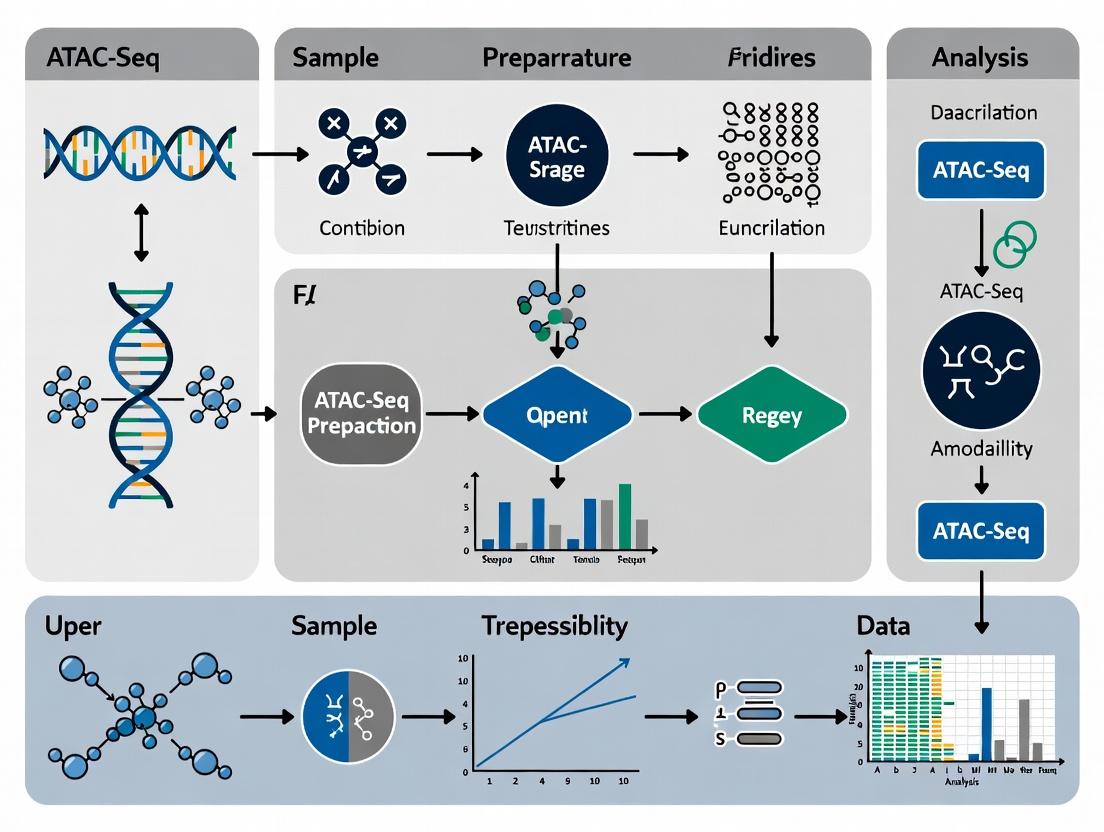
This article provides a detailed guide to Assay for Transposase-Accessible Chromatin using sequencing (ATAC-Seq), a pivotal technique in functional genomics.
ATAC-Seq Explained: A Comprehensive Guide to Open Chromatin Mapping for Gene Regulation and Disease Research
Abstract
This article provides a detailed guide to Assay for Transposase-Accessible Chromatin using sequencing (ATAC-Seq), a pivotal technique in functional genomics. It covers the foundational principles of chromatin accessibility and its link to gene regulation, offering a step-by-step methodological walkthrough from sample preparation to data analysis for researchers. We address common troubleshooting and optimization challenges to ensure robust results and compare ATAC-Seq with alternative methods like DNase-Seq and MNase-Seq, highlighting its advantages in sensitivity and sample requirements. Finally, we explore validation strategies, integrative multi-omics approaches, and the transformative applications of ATAC-Seq in deciphering disease mechanisms and identifying novel therapeutic targets in drug development.
Unlocking the Genome: The Foundational Principles of Chromatin Accessibility and ATAC-Seq
What is Chromatin Accessibility? Defining Open vs. Closed Chromatin
Chromatin accessibility refers to the degree of physical compaction of DNA and its associated histone proteins, which determines the availability of regulatory DNA sequences for transcription factors (TFs) and other DNA-binding machinery. It is a fundamental epigenetic property governing gene expression programs.
Open Chromatin: Regions of the genome where the nucleosome structure is disrupted or loosened, making DNA sequences accessible. These are typically regulatory elements like promoters, enhancers, and insulators. Open chromatin is associated with active or potentially active genes.
Closed Chromatin: Regions where DNA is tightly wrapped around nucleosomes and further compacted into higher-order structures, rendering them inaccessible to most DNA-binding proteins. This state is generally associated with transcriptional repression.
Quantitative Metrics of Chromatin States
Table 1: Core Characteristics of Open vs. Closed Chromatin
| Feature | Open Chromatin | Closed Chromatin |
|---|---|---|
| Nucleosome Positioning | Depleted, disrupted, or loosely bound | Ordered and tightly packed |
| Histone Modifications | H3K27ac, H3K4me3, H3K4me1 | H3K9me3, H3K27me3 |
| DNA Methylation | Typically low at regulatory sites | Often high (CpG islands excluded) |
| Transcription Factor Access | High | Negligible |
| Transcriptional Activity | Permissive or Active | Repressed |
| Primary Assays | ATAC-seq, DNase-seq, FAIRE-seq | MNase-seq (protected regions) |
| Typical Genomic Elements | Promoters, Enhancers, Insulators | Heterochromatin, Repetitive regions |
Table 2: Common Assays for Chromatin Accessibility Profiling (2024-2025)
| Assay | Principle | Resolution | Required Cells | Key Advantage |
|---|---|---|---|---|
| ATAC-seq | Transposase (Tn5) inserts into open regions | Single-base (footprints) | 500 - 50,000 | Fast, sensitive, low input |
| DNase-seq | DNase I cleaves accessible DNA | ~10-50 bp | 1-10 million | Historic gold standard |
| MNase-seq | Digests linker DNA, protects nucleosomes | ~147 bp (nucleosome) | 1-10 million | Maps nucleosome positions |
| FAIRE-seq | Phenol-chloroform extraction of open DNA | 100-1000 bp | 5-10 million | No enzyme bias |
| SC-ATAC-seq | Combinatorial indexing / microfluidics | Single-base | Single-cell | Single-cell resolution |
Protocols for Chromatin Accessibility Analysis
Protocol 1: Standard ATAC-seq for Bulk Cell Populations (Omnibus Tn5 Protocol)
Objective: Identify genome-wide open chromatin regions from cultured cells or tissue samples. Materials: Nuclei isolation buffer, Tagmentase buffer, Tn5 Transposase, DNA purification beads, PCR reagents. Procedure:
- Cell Lysis & Nuclei Preparation: Harvest 50,000-100,000 viable cells. Lyse cells in cold lysis buffer (10 mM Tris-Cl, pH 7.4, 10 mM NaCl, 3 mM MgCl2, 0.1% IGEPAL CA-630). Pellet nuclei.
- Tagmentation: Resuspend nuclei in transposition reaction mix (25 μL TD Buffer, 2.5 μL Tn5 Transposase, nuclease-free water). Incubate at 37°C for 30 minutes.
- DNA Purification: Immediately purify tagmented DNA using silica bead-based purification.
- Library Amplification: Amplify the purified DNA with 10-12 cycles of PCR using indexed primers. Determine optimal cycle number via qPCR.
- Library Clean-up & QC: Perform double-sided bead purification to remove primer dimers. Assess library quality via Bioanalyzer (peak ~200-600 bp).
- Sequencing: Sequence on Illumina platform (typically 2x50 bp or 2x75 bp), aiming for 25-50 million non-duplicate reads per sample.
Protocol 2: Nucleosome Positioning Analysis via ATAC-seq Data
Objective: Map nucleosome dyads and infer transcription factor footprints from ATAC-seq data. Procedure:
- Data Processing: Align sequencing reads to reference genome (using BWA or Bowtie2). Filter for mapped, properly paired, non-mitochondrial reads.
- Insert Size Analysis: Calculate fragment length distribution from alignment files. Fragments < 100 bp represent nucleosome-free regions. Fragments ~200 bp (mononucleosome) and ~400 bp (dinucleosome) indicate protected nucleosomal DNA.
- Nucleosome Dyad Calling: Use tools like
nucleoatacorNucleoATACon the subset of long fragments (>180 bp) to identify precise nucleosome centers. - Footprint Analysis: On the subset of short fragments (< 100 bp), use tools like
HINT-ATACorTOBIASto identify TF binding sites as local dips in cleavage signal.
Diagrams of Key Concepts and Workflows
Title: Open vs. Closed Chromatin Regulatory Outcomes
Title: Standard ATAC-seq Experimental Workflow
The Scientist's Toolkit: Key Reagent Solutions
Table 3: Essential Reagents for ATAC-seq Research
| Reagent / Kit | Function in Experiment | Key Considerations |
|---|---|---|
| Hyperactive Tn5 Transposase | Simultaneously fragments and tags open chromatin with sequencing adapters. | Commercial kits (Illumina, Diagenode) ensure batch consistency. Activity level critical for library complexity. |
| Nuclei Isolation Buffers | Lyse plasma membrane while keeping nuclear membrane intact for clean tagmentation. | Must be optimized for cell/tissue type (e.g., primary cells, brain tissue). |
| SPRI Beads (e.g., AMPure) | Size-select DNA fragments post-tagmentation/PCR; remove primers, dimers, and large debris. | Bead-to-sample ratio is crucial for proper size selection. |
| Indexed PCR Primers | Amplify tagmented DNA and add unique sample barcodes for multiplexing. | Use dual-indexed primers to reduce index hopping artifacts in sequencing. |
| High-Sensitivity DNA Assay | Quantify final library yield and quality (e.g., Qubit, Bioanalyzer, TapeStation). | Essential for accurate pooling and sequencing loading. |
| Cell Viability Stain | Assess viability before lysis (e.g., Trypan Blue). | Dead cells release genomic DNA, creating background noise. |
| Nuclease-Free Water & Tubes | All reaction setups. | Prevents degradation of samples and enzymes. |
| Sequencing Control DNA | Spike-in controls (e.g., from E. coli, D. melanogaster) for data normalization. | Enables correction for technical variation between samples. |
Application Notes & Protocols
1. Introduction Within the context of ATAC-Seq research for open chromatin region identification, understanding the biological significance of these regions is paramount. Open chromatin, characterized by nucleosome depletion and accessibility to transposases and transcription factors (TFs), is a definitive genomic and epigenomic feature linking regulatory DNA to gene expression output. This document details the protocols and application notes for investigating how open chromatin landscapes dictate gene regulation programs that establish and maintain cellular identity, with direct implications for developmental biology and disease (e.g., cancer, immune disorders).
2. Key Quantitative Data Summary Table 1: Correlation Metrics Between Open Chromatin, TF Binding, and Gene Expression
| Metric | Typical Range/Value | Experimental Support | Biological Implication |
|---|---|---|---|
| Overlap of ATAC-Seq peaks with known regulatory elements (ENCODE) | 70-85% | Integration with public ChIP-Seq data | High validation rate for identified accessible regions. |
| Correlation coefficient (r) between chromatin accessibility and gene expression | 0.6 - 0.8 | RNA-Seq on matched samples | Accessibility is a strong predictor of transcriptional potential. |
| Percentage of cell-type-specific ATAC-Seq peaks | 15-40% | Comparative analysis across cell lineages | Direct link to lineage-defining regulatory circuits. |
| Fraction of variance in gene expression explained by accessibility (R²) | ~0.3 - 0.5 | Multivariate regression models | Accessibility is a major, but not sole, determinant of expression. |
Table 2: Protocol Performance Benchmarks
| Protocol Step | Key Parameter | Optimal Value/Range | Impact on Data Quality |
|---|---|---|---|
| Nuclei Isolation | Viable nuclei count | >50,000 | Prevents overtagmentation & ensures library complexity. |
| Transposition | Reaction time | 30 min (37°C) | Balance between fragment length distribution and signal-to-noise. |
| PCR Amplification | Number of cycles | Determined via qPCR (5-12 cycles) | Prevents over-amplification and GC bias. |
| Sequencing | Read depth (Human) | 50-100 million paired-end reads | Saturation for peak calling in complex genomes. |
3. Detailed Experimental Protocols
Protocol 3.1: Integrated ATAC-Seq and RNA-Seq for Linking Accessibility to Expression Objective: To correlate cell-type-specific open chromatin regions with transcriptional output. Materials: Fresh or frozen cell pellets, ATAC-Seq kit (e.g., Illumina Tagment DNA TDE1 Enzyme), RNase inhibitor, TRIzol, dual-indexed PCR primers, SPRI beads. Procedure:
- Parallel Sample Processing: Split a single cell suspension into two aliquots (>50,000 cells each).
- ATAC-Seq Library Preparation: a. Lyse cells in cold lysis buffer (10 mM Tris-HCl pH 7.4, 10 mM NaCl, 3 mM MgCl2, 0.1% IGEPAL) to isolate nuclei. b. Perform tagmentation reaction on isolated nuclei using the TDE1 transposase (37°C for 30 min). c. Purify tagmented DNA using a Qiagen MinElute kit. d. Amplify library with indexed primers using a limited-cycle PCR program. Determine cycle number via a 5-cycle pre-amplification qPCR side reaction. e. Clean up final library with SPRI beads and validate on a Bioanalyzer.
- RNA-Seq Library Preparation: From the second aliquot, extract total RNA using TRIzol. Prepare poly-A enriched or ribosomal RNA-depleted libraries using a standard stranded mRNA-Seq kit.
- Sequencing & Analysis: Sequence both libraries on an Illumina platform (PE 2x150 bp). Map ATAC-Seq reads to reference genome, call peaks (MACS2). Map RNA-Seq reads, quantify gene expression (STAR/featureCounts). Perform integrative analysis (e.g., correlation, motif enrichment in peaks near differentially expressed genes).
Protocol 3.2: TF Footprinting and Motif Disruption Analysis on ATAC-Seq Data Objective: To infer TF binding sites within open chromatin and assess impact on cellular identity. Materials: High-depth ATAC-Seq data (>100M reads), Computational tools (HINT-ATAC, TOBIAS). Procedure:
- Generate High-Depth ATAC-Seq Data: Follow Protocol 3.1, aiming for high sequencing depth.
- TF Footprint Calling:
a. Process aligned BAM files to correct for Tn5 insertion bias (e.g., using
alignCutSite). b. Run footprinting tool (e.g.,HINT-ATAC) to identify regions of protected cleavage patterns within ATAC-Seq peaks. c. Annotate footprints with known TF motifs from databases (JASPAR, CIS-BP). - Motif Disruption Analysis (e.g., using TOBIAS): a. Calculate per-nucleotide chromatin accessibility scores across the genome. b. Score all instances of a TF's motif within open regions. c. Compare motif scores between two conditions (e.g., wild-type vs. TF knockout). A significant drop in score indicates motif "disruption," suggesting loss of TF binding.
- Validation: Correlate disrupted motifs with changes in target gene expression from RNA-Seq.
4. Visualization Diagrams
Title: Linking Open Chromatin to Gene Regulation & ATAC-Seq Detection
Title: ATAC-Seq Library Preparation Workflow
5. The Scientist's Toolkit: Research Reagent Solutions Table 3: Essential Materials for ATAC-Seq Based Mechanistic Studies
| Item | Function/Benefit | Example Product/Catalog |
|---|---|---|
| Tn5 Transposase (Loaded) | Enzyme that simultaneously fragments and tags accessible DNA with sequencing adapters. Critical for ATAC-Seq. | Illumina Tagment DNA TDE1 / Nextera Tn5. |
| Nuclei Isolation & Lysis Buffer | Gently lyses plasma membrane while keeping nuclear membrane intact, preventing cytoplasmic contamination. | 10x Genomics Nuclei Buffer ATAC (Cat# 2000153) or homemade (see Protocol 3.1). |
| SPRI (Solid Phase Reversible Immobilization) Beads | For size selection and cleanup of DNA libraries. Removes short fragments (e.g., primer dimers) and buffers. | Beckman Coulter AMPure XP. |
| Dual-Indexed PCR Primers | Allow multiplexing of many samples in a single sequencing run. Unique barcodes minimize index hopping effects. | Illumina Nextera Index Kit. |
| High-Fidelity PCR Master Mix | For limited-cycle amplification of tagmented DNA. Minimizes PCR errors and bias. | NEB Next High-Fidelity 2x PCR Master Mix. |
| RNase Inhibitor | Protects RNA during parallel RNA-Seq sample prep from the same cell population. Essential for co-assay studies. | Takara Ribonuclease Inhibitor. |
| Cell Line/Tissue-Specific Media & Differentiation Kits | To establish or maintain the cellular identity being studied (e.g., stem, neuronal, immune cells). | Various (e.g., STEMCELL Technologies kits). |
| TF Motif Databases & Analysis Suites | Computational tools to annotate ATAC-Seq peaks and footprints with putative TF binding sites. | JASPAR, CIS-BP, HOMER, TOBIAS. |
Core Principles and Applications
ATAC-Seq (Assay for Transposase-Accessible Chromatin using sequencing) is a pivotal method for genome-wide identification of open chromatin regions. It leverages a hyperactive Tn5 transposase pre-loaded with sequencing adapters to simultaneously fragment and tag accessible genomic DNA. These tagged fragments are then PCR-amplified and sequenced, yielding a map of chromatin accessibility that correlates with regulatory activity.
Key Advantages:
- Low Cell Input: Can profile chromatin accessibility from as few as 500-50,000 cells.
- Speed: Library preparation can be completed in under 3 hours.
- Integration: Data correlates with nucleosome positioning, transcription factor occupancy, and histone modification marks.
Primary Applications in Drug Development:
- Identification of disease-specific enhancers and promoters.
- Characterization of cellular responses to therapeutic compounds.
- Understanding epigenetic mechanisms of drug resistance.
Table 1: Comparison of Chromatin Profiling Methods
| Method | Principle | Minimum Cells | Time (Days) | Resolution | Primary Output |
|---|---|---|---|---|---|
| ATAC-Seq | Tn5 transposition into open chromatin | 500 - 50,000 | 1 - 2 | Nucleosome (~200 bp) | Open chromatin regions, nucleosome positioning |
| DNase-Seq | DNase I cleavage of open chromatin | 500,000 - 1,000,000 | 3 - 5 | ~50 bp | DNase I hypersensitive sites (DHS) |
| MNase-Seq | Micrococcal nuclease digestion of linker DNA | 1,000,000+ | 3 - 5 | Nucleosome (~10 bp) | Nucleosome positioning, protected DNA |
| FAIRE-Seq | Phenol-chloroform extraction of open chromatin | 1,000,000+ | 2 - 3 | ~200 bp | Nucleosome-depleted regions |
Table 2: Typical ATAC-Seq Sequencing Metrics
| Metric | Recommended Value | Purpose |
|---|---|---|
| Sequencing Depth | 50 - 100 million reads per sample (human) | Sufficient saturation for peak calling |
| Read Length | Paired-end 50 bp (PE50) minimum; PE150 ideal | Accurate alignment and fragment size analysis |
| Fraction of Reads in Peaks (FRiP) | > 20% (cell lines), > 10% (primary tissue) | Measure of signal-to-noise ratio |
| Duplicate Rate | < 50% (post-filtering) | Indicator of PCR over-amplification |
| Mitochondrial Read Percentage | < 20% (after Tn5 optimization) | Quality control for sample integrity |
Detailed Protocol: ATAC-Seq on Cultured Cells
Reagent Preparation
- Lysis Buffer: 10 mM Tris-HCl pH 7.4, 10 mM NaCl, 3 mM MgCl2, 0.1% IGEPAL CA-630, 0.1% Tween-20, 0.01% Digitonin (freshly added).
- Tagmentation Buffer: 33 mM Tris-acetate pH 7.8, 66 mM Potassium acetate, 10 mM Magnesium acetate, 16% DMF.
- Pre-loaded Tn5 Transposase: Commercially available (e.g., Illumina Tagmentase) or custom assembled.
Procedure
Day 1: Cell Preparation and Tagmentation (~3 hours)
- Harvest Cells: Collect 50,000 viable cells. Centrifuge at 500 rcf for 5 min at 4°C. Aspirate supernatant completely.
- Cell Lysis: Resuspend cell pellet in 50 µL of cold Lysis Buffer. Incubate on ice for 3 min.
- Wash: Immediately add 1 mL of cold Wash Buffer (Lysis Buffer without Digitonin/IGEPAL). Invert to mix. Centrifuge at 500 rcf for 10 min at 4°C. Aspirate supernatant.
- Tagmentation Reaction: Resuspend the nuclei pellet in 25 µL of Tagmentation Mix:
- 12.5 µL Tagmentation Buffer
- 2.5 µL Pre-loaded Tn5 Transposase (or 10 µL of in-house assembled Tn5)
- Nuclease-free water to 25 µL.
- Mix gently by pipetting.
- Incubate: Place the reaction in a thermocycler at 37°C for 30 minutes. Immediately proceed to cleanup.
Day 1: Clean-up and PCR Amplification (~2.5 hours)
- DNA Purification: Add 25 µL of DNA Binding Buffer (from a MinElute or equivalent kit) to the tagmentation reaction. Mix. Purify using a MinElute column. Elute in 21 µL of Elution Buffer.
- PCR Amplification: To the 21 µL eluate, add:
- 2.5 µL Custom Primer Ad1 (25 µM)
- 2.5 µL Custom Primer Ad2 (25 µM)
- 25 µL 2x NEBnext High-Fidelity PCR Master Mix.
- Mix gently.
- Amplify with Minimal Cycles: Run PCR:
- 72°C for 5 min (gap filling)
- 98°C for 30 sec
- Cycle (5-12x): 98°C for 10 sec, 63°C for 30 sec, 72°C for 1 min.
- Hold at 4°C.
- Note: Use qPCR or a side reaction to determine the optimal cycle number (just before saturation).
Day 1: Final Clean-up and QC
- PCR Purification: Purify the final PCR reaction using 1.8x SPRIselect beads. Elute in 20 µL Elution Buffer.
- Quality Control: Analyze 1 µL on a Bioanalyzer or Tapestation (High Sensitivity DNA assay). Expect a nucleosomal ladder pattern (periodic ~200 bp fragments). Quantify by Qubit.
- Sequencing: Pool libraries equimolarly and sequence on an Illumina platform (PE150 recommended).
Visualization of Core Concepts
Diagram 1: ATAC-Seq Core Workflow
Diagram 2: Tn5 Transposition Mechanism
The Scientist's Toolkit: Essential Reagents and Materials
Table 3: Key Research Reagent Solutions for ATAC-Seq
| Item | Function & Critical Notes | Example Vendor/Product |
|---|---|---|
| Hyperactive Tn5 Transposase | Enzyme that cuts and ligates adapters simultaneously. Activity and lot consistency are critical. | Illumina (Tagmentase TDE1), Diagenode (Hyperactive Tn5). |
| Tagmentation Buffer | Provides optimal ionic and cofactor conditions (Mg2+) for Tn5 activity. DMF enhances efficiency. | Illumina, Homemade from published recipes. |
| Cell Permeabilization Reagent | Digitonin is optimal for nuclear membrane permeabilization while preserving nuclear integrity. | Sigma-Aldrich (Digitonin), included in kits. |
| SPRIselect Beads | For size-selective cleanup of tagmented and PCR-amplified DNA. Ratios critical for fragment selection. | Beckman Coulter (SPRIselect). |
| High-Fidelity PCR Master Mix | For limited-cycle amplification of tagmented DNA. Minimizes PCR bias and errors. | NEB (Next High-Fidelity), Kapa HiFi. |
| Dual Indexed PCR Primers | Add full-length Illumina P5/P7 flowcell adapters and sample-specific indexes during PCR. | Illumina Nextera Index kits, custom synthesized. |
| High-Sensitivity DNA Assay | For quality control of final libraries to verify nucleosomal ladder pattern and concentration. | Agilent (Bioanalyzer/TapeStation HS DNA kit). |
| Nuclei Isolation/Counter | Accurate counting of nuclei post-lysis is essential for optimizing tagmentation input. | Bio-Rad (TC20 cell counter), Trypan Blue. |
Within the broader thesis on the identification of open chromatin regions, Assay for Transposase-Accessible Chromatin with high-throughput sequencing (ATAC-Seq) has emerged as the preeminent method, fundamentally displacing older techniques like DNase-Seq and FAIRE-Seq. Its revolutionary impact is anchored in three core advantages: speed, sensitivity, and low input requirements, which collectively enable experimental designs previously deemed impractical.
Quantitative Advantages: ATAC-Seq vs. Traditional Methods
The following table summarizes the key operational and performance metrics that differentiate ATAC-Seq from its predecessors.
Table 1: Comparative Analysis of Chromatin Accessibility Profiling Methods
| Feature | ATAC-Seq | DNase-Seq | FAIRE-Seq |
|---|---|---|---|
| Primary Assay Time | ~3 hours (from nuclei) | 1-2 days | 2 days |
| Hands-on Time | Low | High | Medium |
| Cell Number Requirement | 500 - 50,000 cells (standard); <100 cells (optimized) | 1 - 10 million | 1 - 10 million |
| Sensitivity (Signal-to-Noise) | High (direct insertion) | High | Lower (higher background) |
| Resolution | Single-nucleotide (insertion sites) | ~50-100 bp (cleavage sites) | Broad (region enrichment) |
| Key Enzymatic Step | Hyperactive Tn5 transposase | DNase I | None (chemical fixation) |
| Primary Challenge | Mitochondrial DNA contamination | DNase I titration, fragmentation | High background noise |
Detailed Protocol: Standard ATAC-Seq for Cultured Cells
This protocol is designed for 50,000 viable cells, highlighting the speed and efficiency central to ATAC-Seq's advantage.
Day 1: Cell Lysis and Tagmentation
- Cell Preparation & Lysis: Harvest and count cells. Pellet 50,000 cells, wash with cold PBS. Lyse cells in 50 µL of cold Lysis Buffer (10 mM Tris-HCl pH 7.4, 10 mM NaCl, 3 mM MgCl2, 0.1% Igepal CA-630) for 3 minutes on ice. Immediately pellet nuclei at 500 RCF for 10 minutes at 4°C.
- Tagmentation Reaction: Resuspend the crude nuclei pellet in 25 µL of Transposition Mix (12.5 µL 2x TD Buffer, 2.0 µL Tn5 Transposase, 10.5 µL Nuclease-free water). Incubate at 37°C for 30 minutes in a thermomixer with gentle shaking (1000 rpm).
- DNA Purification: Immediately purify the tagmented DNA using a MinElute PCR Purification Kit or equivalent SPRI beads. Elute in 21 µL of Elution Buffer (10 mM Tris-HCl, pH 8.0).
Day 1: Library Amplification and Clean-up
- PCR Amplification: To the 21 µL of eluate, add 2.5 µL of a uniquely barcoded forward primer (i5), 2.5 µL of a uniquely barcoded reverse primer (i7), and 25 µL of 2x NEB Next High-Fidelity PCR Master Mix. Amplify using the following PCR program:
- 72°C for 5 minutes (gap filling)
- 98°C for 30 seconds
- Cycle 5-12 times: 98°C for 10 seconds, 63°C for 30 seconds, 72°C for 1 minute.
- Note: Determine optimal cycle number via qPCR side-reaction or by using a fluorescent DNA stain in a pilot reaction.
- Library Purification: Purify the final library using a 1.0x SPRI bead clean-up. Elute in 20-30 µL of Elution Buffer. Quantify by Qubit and profile by Bioanalyzer/TapeStation.
Sequencing: Sequence on an Illumina platform using paired-end sequencing (PE 2x50 bp or 2x75 bp is standard). Begin sequencing with a 5-9 cycle "custom read 1" to read the Nextera adapter sequence.
Visualization of Core Concepts
ATAC-Seq Speed & Low Input Workflow
Mechanistic Basis of ATAC-Seq Sensitivity
The Scientist's Toolkit: Essential Research Reagents & Materials
Table 2: Key Reagent Solutions for ATAC-Seq Experiments
| Item | Function & Critical Role |
|---|---|
| Hyperactive Tn5 Transposase | Engineered enzyme that simultaneously fragments accessible DNA and ligates sequencing adapters. This single enzyme is the core of ATAC-Seq's speed and simplicity. |
| 2x Tagmentation DNA (TD) Buffer | Provides optimal ionic conditions (Mg2+) for Tn5 activity. Consistent buffer quality is critical for reproducible tagmentation efficiency. |
| Cell Lysis Buffer (with Detergent) | Gently lyses the plasma membrane while leaving nuclear membrane intact, preventing cytoplasmic contamination and maintaining chromatin state. |
| Dual-Size SPRI Selection Beads | Used for post-tagmentation purification and final library clean-up. A dual-size selection (e.g., 0.5x followed by 1.8x ratio) is often applied to remove small mitochondrial fragments and large contaminants, improving library specificity. |
| Indexed i5 & i7 PCR Primers | Amplify the tagmented DNA and add unique combinatorial barcodes for multiplexing samples in a single sequencing run. |
| Nuclei Isolation Buffer (for tissue) | For complex tissues (e.g., brain, tumor), a dedicated homogenization and nuclei purification buffer (e.g., with sucrose gradient) is essential to obtain clean, intact nuclei for accurate profiling. |
| PCR Inhibitor Removal Beads | Critical for profiling low-input or certain cell types (e.g., adipocytes) that may release compounds that inhibit the library amplification PCR. |
The central thesis of this research posits that Assay for Transposase-Accessible Chromatin with high-throughput sequencing (ATAC-Seq) provides a critical, integrative lens to dissect the functional genomic grammar defined by promoters, enhancers, insulators, and nucleosome positioning. These elements collectively orchestrate gene expression programs, and their dysregulation is a hallmark of disease. ATAC-Seq, by mapping open chromatin regions, enables the genome-wide identification of these cis-regulatory elements (CREs) and the inference of nucleosome occupancy in a single assay. This application note details the protocols and analytical frameworks for leveraging ATAC-Seq data to functionally annotate these essential genomic features, with direct implications for understanding transcriptional mechanisms and identifying novel therapeutic targets in drug development.
Core Genomic Elements: Functions & Identification via ATAC-Seq
Promoters: Core regions, typically upstream of transcription start sites (TSSs), for basal transcription machinery assembly. ATAC-Seq shows sharp, pronounced peaks at active promoters due to accessibility for TF binding and pre-initiation complex formation.
Enhancers: Distal cis-regulatory elements that boost transcription rates. In ATAC-Seq data, they appear as broad, sometimes cell-type-specific, peaks of accessibility, often marked by specific histone modifications (e.g., H3K27ac) and TF co-occupancy.
Insulators/Boundaries: Elements that block enhancer-promoter interactions or form topological domain boundaries. They are often associated with the binding of CTCF and appear as accessible sites in ATAC-Seq, frequently at the edges of open chromatin domains.
Nucleosome Positioning: The arrangement of nucleosomes along DNA. ATAC-Seq fragment size distribution is bimodal: short fragments (<100 bp) indicate transcription factor (TF) footprints, while fragments ~200 bp (mononucleosome) and periodicity thereafter (~400 bp, 600 bp for di-, tri-nucleosomes) reveal nucleosome positions and occupancy.
Table 1: Key Characteristics and ATAC-Seq Signatures of Genomic Elements
| Genomic Element | Primary Function | Typical Distance from TSS | ATAC-Seq Peak Shape | Key Protein Binders |
|---|---|---|---|---|
| Promoter | Initiate transcription | At or near TSS (<= 1 kb) | Sharp, high-intensity | RNA Pol II, TATA-box BP, General TFs |
| Enhancer | Enhance transcription rate | Variable (up to 1 Mb) | Broad, variable intensity | Cell-type-specific TFs, Coactivators (p300) |
| Insulator | Block enhancer, define TAD boundaries | Variable | Sharp, medium intensity | CTCF, Cohesin complex |
| Nucleosome-Depleted Region (NDR) | Facilitate protein binding | At active promoters/enhancers | Trough in nucleosome signal | - |
Experimental Protocols
Protocol 3.1: Standard ATAC-Seq Library Preparation from Cultured Cells
Adapted from Buenrostro et al., 2015 & 2023 updates.
I. Cell Preparation & Lysis
- Harvest 50,000-100,000 viable cells. Pellet at 500 x g for 5 min at 4°C.
- Wash once with 50 µL cold 1x PBS. Centrifuge again.
- Lyse cells in 50 µL cold Lysis Buffer (10 mM Tris-HCl pH 7.4, 10 mM NaCl, 3 mM MgCl2, 0.1% IGEPAL CA-630). Invert to mix. Incubate on ice for 3 min.
- Immediately add 1 mL of Wash Buffer (10 mM Tris-HCl pH 7.4, 10 mM NaCl, 3 mM MgCl2). Invert to mix.
- Pellet nuclei at 500 x g for 10 min at 4°C. Carefully remove supernatant.
II. Tagmentation Reaction
- Prepare the Tagmentation Mix: 25 µL 2x TD Buffer, 2.5 µL Tn5 Transposase (Illumina), and 22.5 µL nuclease-free water per sample.
- Resuspend the pelleted nuclei in the 50 µL Tagmentation Mix by gentle pipetting.
- Incubate the reaction at 37°C for 30 min in a thermomixer with shaking (300 rpm).
- Immediately purify DNA using a MinElute PCR Purification Kit (Qiagen). Elute in 21 µL Elution Buffer (10 mM Tris-HCl, pH 8.0).
III. Library Amplification & Clean-up
- To the 21 µL eluate, add 25 µL NEBNext High-Fidelity 2X PCR Master Mix, and 2.5 µL of each custom barcoded PCR primer (1.25 µM stock).
- Amplify using the following PCR program:
- 72°C for 5 min (gap filling)
- 98°C for 30 sec
- Cycle 5-12x: [98°C for 10 sec, 63°C for 30 sec, 72°C for 1 min]
- Hold at 4°C.
- Note: Determine optimal cycle number using a qPCR side reaction.
- Purify the final library using a double-sided SPRI bead cleanup (0.5x and 1.5x ratios). Elute in 20 µL.
- Assess library quality using a Bioanalyzer/TapeStation (peak ~200-1000 bp) and quantify by qPCR.
Protocol 3.2: Computational Identification of Genomic Elements from ATAC-Seq Data
A standard bioinformatics workflow.
I. Preprocessing & Alignment
- Quality Control: Use
FastQCon raw FASTQ files. - Adapter Trimming & Filtering: Use
Trim Galoreorcutadapt. - Alignment: Align reads to a reference genome (e.g., hg38) using
Bowtie2orBWAin end-to-end mode with-X 2000parameter. - Post-alignment Processing:
- Remove mitochondrial reads and PCR duplicates (
samtools,picard). - Filter for properly paired, mapped reads (MAPQ > 30).
- Create a final BAM file.
- Remove mitochondrial reads and PCR duplicates (
II. Peak Calling & Signal Generation
- Call peaks using
MACS2(macs2 callpeak -t ATAC.bam -f BAMPE -g hs --nomodel --shift -100 --extsize 200 -n output). These represent open chromatin regions. - Generate a genome-wide signal track (bigWig) for visualization using
deepTools bamCoverage(--normalizeUsing RPKM --binSize 10 --smoothLength 50).
III. Functional Annotation of Peaks
- Annotate peaks relative to genes using
ChIPseekerorHOMER annotatePeaks.pl. - Promoter Identification: Select peaks within ±1 kb of an annotated TSS.
- Enhancer Prediction: Identify distal peaks (>3 kb from TSS). Integrate with public histone mark ChIP-Seq data (e.g., H3K27ac from ENCODE) using
bedtools intersectto predict active enhancers. - Insulator Prediction: Overlap peaks with publicly available CTCF ChIP-Seq peaks (
bedtools intersect). Peaks co-localizing with CTCF sites are candidate insulators/boundaries.
IV. Nucleosome Positioning Analysis
- Extract fragment sizes from the BAM file.
- Generate a fragment size distribution plot. The periodicity of fragments > 180 bp indicates nucleosome patterning.
- Use tools like
NucleoATACornuCposto call precise nucleosome positions and infer nucleosome-depleted regions (NDRs) from the ATAC-Seq data.
The Scientist's Toolkit: Research Reagent Solutions
Table 2: Essential Materials for ATAC-Seq-based Regulatory Genomics
| Item/Catalog | Supplier | Function in Experiment |
|---|---|---|
| Tn5 Transposase (Tagmentase) | Illumina (20034197) / DIY | Enzyme that simultaneously fragments and tags accessible DNA with sequencing adapters. |
| NEBNext High-Fidelity 2X PCR Master Mix | New England Biolabs (M0541) | High-fidelity polymerase for limited-cycle amplification of tagmented DNA. |
| MinElute PCR Purification Kit | Qiagen (28004) | For efficient purification of tagmented DNA and final libraries. |
| AMPure XP Beads | Beckman Coulter (A63880) | SPRI beads for size selection and clean-up of DNA libraries. |
| Nuclei Isolation & Lysis Buffers | Homemade / Commercial Kits | Gently lyse plasma membrane while keeping nuclei intact for tagmentation. |
| Dual Indexed PCR Primers (i5/i7) | Integrated DNA Technologies | Add unique sample barcodes and full sequencing adapters during PCR. |
| Bioanalyzer High Sensitivity DNA Kit | Agilent (5067-4626) | Accurate sizing and quantification of final sequencing libraries. |
| Qubit dsDNA HS Assay Kit | Thermo Fisher (Q32851) | Fluorometric quantification of DNA concentration. |
| Cell Permeabilization Reagent (Digitonin) | MilliporeSigma (14187) | Optional, for combined ATAC-Seq/protein staining (multimodal analysis). |
Visualizations
ATAC-Seq Experimental Workflow
Bioinformatics Pipeline for ATAC-Seq Analysis
Fragment Sizes Map Chromatin Features
From Cells to Data: A Step-by-Step ATAC-Seq Protocol and Its Research Applications
Within the broader thesis on utilizing ATAC-Seq for genome-wide identification of open chromatin regions, the initial sample preparation stage is the most critical determinant of experimental success. This phase, encompassing cell type selection, nuclei isolation, and rigorous quality control (QC), directly influences data quality, signal-to-noise ratio, and biological interpretation. Optimized protocols are essential for generating reproducible and accurate maps of chromatin accessibility.
Cell Type Considerations
The starting biological material dictates specific experimental adjustments. Primary considerations include cell origin, availability, and inherent characteristics.
Table 1: Cell Type-Specific Considerations for ATAC-Seq Sample Preparation
| Cell Type Category | Key Considerations | Recommended Cell Number (Input) | Special Handling Notes |
|---|---|---|---|
| Adherent Cell Lines | Requires gentle detachment (e.g., enzyme-free); wash thoroughly to remove EDTA. | 50,000 - 100,000 cells | Minimize mechanical stress during scraping/detachment. |
| Suspension Cell Lines | Typically straightforward; ensure high viability (>95%). | 50,000 - 100,000 cells | Pellet gently; remove supernatant completely. |
| Primary Immune Cells | Highly sensitive to activation; work quickly on ice. | 50,000 - 500,000 cells | Use pre-chilled solutions; include protease inhibitors. |
| Fresh/Frozen Tissue | Requires effective dissociation and debris removal. | ~1 mg tissue or 50,000 nuclei | Homogenize thoroughly; filter nuclei post-isolation. |
| Formalin-Fixed Tissue | Requires specialized reversal of cross-linking. | ~1 mm³ section | Extensive optimization needed; not recommended for beginners. |
| Rare/Circulating Cells | Requires prior enrichment; very low input protocols needed. | 500 - 10,000 cells | Use carrier molecules (e.g., BSA); maximize lysis efficiency. |
Protocols for Nuclei Isolation
A high-quality nuclei preparation is non-negotiable for successful tagmentation. Intact, clean nuclei free of cellular contaminants ensure the Th5 transposase accesses only chromatin.
Protocol 2.1: Standard Nuclei Isolation from Cultured Mammalian Cells
Objective: Isolate intact nuclei from single-cell suspensions of cultured cells for immediate tagmentation.
Reagents:
- Cold PBS: For washing.
- Nuclei Lysis Buffer: 10 mM Tris-HCl (pH 7.4), 10 mM NaCl, 3 mM MgCl₂, 0.1% (v/v) IGEPAL CA-630, 0.1% (v/v) Tween-20, 0.01% (v/v) Digitonin (added fresh). Keep ice-cold.
- Nuclei Wash Buffer: 10 mM Tris-HCl (pH 7.4), 10 mM NaCl, 3 mM MgCl₂, 0.1% (v/v) Tween-20. Keep ice-cold.
- 1% (w/v) BSA in PBS: Optional, for low-input samples.
Procedure:
- Cell Harvest & Count: Harvest cells, pellet at 500 x g for 5 min at 4°C. Wash once with cold PBS. Resuspend in cold PBS and count using a hemocytometer or automated counter. Target: 50,000 viable cells.
- Cell Lysis: Pellet required cell count. Aspirate supernatant completely. Gently resuspend the cell pellet in 50 µL of cold Nuclei Lysis Buffer by pipetting up and down 5-10 times. Incubate on ice for 3-5 minutes. Monitor lysis under a microscope (>90% lysed cells with intact nuclei).
- Nuclei Wash: Immediately add 1 mL of cold Nuclei Wash Buffer to the lysate. Invert tube gently to mix.
- Pellet Nuclei: Pellet nuclei at 500 x g for 10 minutes at 4°C. Carefully aspirate the supernatant.
- Resuspend Nuclei: Gently resuspend the nuclei pellet in 50 µL of Nuclei Wash Buffer or the recommended tagmentation buffer from your commercial kit. Keep on ice. Proceed immediately to tagmentation or assess quality (Protocol 3.1).
Protocol 2.2: Nuclei Isolation from Frozen Tissue
Objective: Isolate nuclei from snap-frozen tissue samples for ATAC-Seq.
Reagents:
- Homogenization Buffer: 320 mM sucrose, 5 mM CaCl₂, 3 mM MgAc₂, 10 mM Tris-HCl (pH 7.8), 0.1 mM EDTA, 0.1% (v/v) IGEPAL CA-630, 1 mM DTT (fresh), 0.1 U/µL RNase Inhibitor.
- Density Cushion Buffer: 1.2 M sucrose, 5 mM CaCl₂, 3 mM MgAc₂, 10 mM Tris-HCl (pH 7.8), 1 mM DTT (fresh).
Procedure:
- Homogenize: In a pre-chilled Dounce homogenizer, add ~10-20 mg of frozen tissue in 1 mL of cold Homogenization Buffer. Dounce with loose pestle (10 strokes), then tight pestle (15-20 strokes) on ice.
- Filter: Filter homogenate through a 40 µm cell strainer into a cold tube.
- Layer & Centrifuge: Carefully layer the filtered homogenate over 1 mL of Density Cushion Buffer in a 2 mL tube. Centrifuge at 10,000 x g for 20 min at 4°C.
- Collect Nuclei: Discard supernatant. The nuclei pellet will be visible. Resuspend gently in 100 µL of Nuclei Wash Buffer (from Protocol 2.1). Filter through a 20 µm strainer if needed. Proceed to QC.
Quality Control Protocols
QC must be performed at multiple stages to ensure nuclei integrity and library quality.
Protocol 3.1: Microscopic Assessment of Nuclei Integrity
- Materials: Fluorescence microscope, DAPI or Hoechst stain, hemocytometer or glass slide.
- Procedure: Mix 2 µL of nuclei suspension with 2 µL of DAPI (1 µg/mL). Load onto hemocytometer. Image using DAPI channel.
- QC Metric: Nuclei should be singular, round, and uniformly stained. Clumping, debris, or irregular shapes indicate poor isolation. Count nuclei to confirm yield.
Protocol 3.2: Quantitative QC via Automated Cell Counter or Flow Cytometry
- Materials: Automated cell counter (e.g., Countess) with DAPI staining capability, or flow cytometer.
- Procedure: Follow manufacturer's instructions for staining with DAPI or SYTOX Green. Analyze particle size and fluorescence.
- QC Metric: A distinct population of DAPI-positive events with consistent forward/side scatter. Target: >80% of events are intact nuclei.
Protocol 3.3: Bioanalyzer/TapeStation QC of ATAC-Seq Libraries
- Objective: Assess final library fragment size distribution.
- Procedure: After PCR amplification and cleanup, run 1 µL of library on a High Sensitivity DNA chip (Agilent Bioanalyzer) or D5000/High Sensitivity tape (Agilent TapeStation).
- QC Metric: Expect a nucleosomal ladder pattern (~200 bp mono-, 400 bp di-, 600 bp tri-nucleosome fragments). A strong peak < 100 bp indicates excess adapter dimers. A smear with no ladder suggests over- or under-tagmentation.
Visualization of Key Workflows
Title: ATAC-Seq Sample Preparation & QC Workflow
Title: Th5 Tagmentation Principle at Open Chromatin
The Scientist's Toolkit: Essential Research Reagents & Materials
Table 2: Key Reagent Solutions for ATAC-Seq Sample Preparation
| Item | Function & Rationale | Example/Note |
|---|---|---|
| IGEPAL CA-630 (NP-40 alternative) | Non-ionic detergent for cell membrane lysis. Critical concentration (0.1-0.5%) lyses plasma membrane while keeping nuclear envelope intact. | Optimize concentration per cell type. |
| Digitonin | Mild, cholesterol-dependent detergent. Used at low concentration (0.01-0.1%) to permeabilize nuclear membranes for Th5 entry after initial lysis. | Add fresh; concentration is critical. |
| Sucrose Cushion Solution | High-density buffer for purifying nuclei via centrifugation. Separates intact nuclei from cellular debris and unlysed cells. | Essential for complex samples (tissue, whole blood). |
| Th5 Transposase (Loaded) | Engineered enzyme that simultaneously fragments ("tagments") accessible DNA and adds sequencing adapters. The core enzyme of ATAC-Seq. | Available commercially from multiple vendors (Illumina, Diagenode). |
| DAPI / Hoechst 33342 | Cell-impermeable and permeable DNA stains, respectively. Used for fluorescent visualization and quantification of isolated nuclei. | DAPI for post-lysis counts; Hoechst for live-cell staining. |
| RNase Inhibitor | Protects RNA in the nucleus during isolation. Prevents RNA degradation that can release ribonucleoproteins and cause nuclei clumping. | Include in all buffers for nuclei isolation. |
| BSA (Molecular Biology Grade) | Used as a carrier protein in low-input protocols and to block non-specific binding of Th5. Reduces loss of nuclei to tube walls. | Use at 0.1-1% in resuspension buffers. |
| SPRI Beads | Magnetic beads for size-selective purification of DNA (e.g., post-tagmentation cleanup, PCR purification). Remove salts, primers, and very small fragments. | Ratio of beads:sample determines size cut-off. |
Within the broader thesis on ATAC-Seq for open chromatin region identification, the Th5 transposition reaction represents the foundational biochemical step. This protocol optimization is critical for generating high-quality sequencing libraries that accurately reflect the native chromatin accessibility landscape, a key metric in epigenetic research and drug discovery for diseases driven by dysregulated gene expression.
Principles of the Th5 Transposition Reaction
The hyperactive Th5 transposase catalyzes the simultaneous fragmentation of DNA and adapter integration ("tagmentation"). In ATAC-Seq, this occurs in permeabilized nuclei, where the transposase inserts adapters preferentially into nucleosome-free regions, thereby marking open chromatin for subsequent amplification and sequencing.
Key Optimization Parameters and Quantitative Data
Optimization centers on balancing DNA yield, fragment size distribution, and library complexity. The following tables summarize critical quantitative data from recent optimization studies.
Table 1: Effect of Transposase Reaction Time on Output Metrics
| Reaction Time (min) | Mean Fragment Size (bp) | Library Complexity (M Unique Reads) | % of Reads in Peaks |
|---|---|---|---|
| 5 | > 1000 | 15.2 | 35% |
| 10 (Recommended) | 200 - 600 | 48.7 | 62% |
| 30 | 150 - 300 | 52.1 | 65% |
| 60 | < 150 | 40.3 | 58% |
Table 2: Impact of Cell Number Input on Library Quality
| Number of Cells | Recommended Transposase Volume (µL) | Percent Duplicate Reads | TSS Enrichment Score |
|---|---|---|---|
| 500 | 2.5 | 45-60% | 8-12 |
| 50,000 | 25 | 15-25% | 15-25 |
| 500 (Optimized) | 5.0 (2x) | 20-35% | 12-18 |
Table 3: Tagmentation Buffer Composition Effects
| Component | Standard Concentration | Optimized Concentration | Effect of Increase |
|---|---|---|---|
| MgCl₂ | 10 mM | 5 - 20 mM | Shorter fragments, higher yield |
| Dimethylformamide | 0% | 0.01 - 0.1% | Improved nuclear permeabilization, efficiency |
| Digitonin | 0.01% | 0.01 - 0.05% | Enhanced nuclear access, cell-type specific |
Detailed Optimized Protocol for ATAC-Seq Library Construction
Part A: Nuclei Preparation from Cultured Cells
- Cell Harvest & Lysis: Pellet 50,000 - 100,000 viable cells. Wash once with 50 µL cold PBS. Resuspend pellet in 50 µL of cold ATAC-Seq Lysis Buffer (10 mM Tris-HCl pH 7.4, 10 mM NaCl, 3 mM MgCl₂, 0.1% IGEPAL CA-630, 0.01% Digitonin). Incubate on ice for 3 minutes.
- Nuclei Wash: Immediately add 1 mL of cold Wash Buffer (10 mM Tris-HCl pH 7.4, 10 mM NaCl, 3 mM MgCl₂, 0.1% Tween-20) to stop lysis. Invert to mix.
- Pellet Nuclei: Centrifuge at 500 x g for 5 minutes at 4°C. Carefully aspirate supernatant without disturbing the pellet.
- Resuspend Nuclei: Resuspend the pellet in 50 µL of Transposase Reaction Mix from Part B. Do not vortex. Pipette mix gently.
Part B: Tagmentation Reaction
- Prepare Reaction Mix (for 1 sample):
- 25 µL 2x TD Buffer (Illumina or homemade: 20 mM Tris-HCl pH 7.6, 10 mM MgCl₂, 20% Dimethylformamide)
- 2.5 µL Transposase (Illumina Th5, ~100 nM final)
- 22.5 µL Nuclease-free H₂O
- Total: 50 µL
- Combine and Incubate: Add the 50 µL Reaction Mix directly to the 50 µL resuspended nuclei from Part A. Pipette mix gently 5-6 times.
- Incubate: Place samples in a thermocycler at 37°C for 30 minutes. For a tighter fragment distribution, reduce time to 10-15 minutes.
- Clean-up: Immediately purify tagmented DNA using a MinElute PCR Purification Kit (Qiagen). Elute in 21 µL of Elution Buffer (10 mM Tris-HCl, pH 8.0).
Part C: Library Amplification & Purification
- Prepare PCR Mix (for 1 sample):
- 21 µL Tagmented DNA
- 2.5 µL Indexed i7 Primer (1.5 µM final)
- 2.5 µL Indexed i5 Primer (1.5 µM final)
- 25 µL 2x NEB Next High-Fidelity PCR Master Mix
- Total: 51 µL
- Amplify with Limited-Cycle PCR:
- 72°C for 5 min (gap filling)
- 98°C for 30 sec
- Cycle: 98°C for 10 sec, 63°C for 30 sec, 72°C for 1 min.
- Determine cycle number (N) using qPCR side-reaction or empirical guidance:
- For 50,000 cells: N = 5-7 cycles.
- For 500 cells: N = 10-12 cycles.
- Clean-up & Size Selection: Purify the PCR reaction with a 1.2x ratio of AMPure XP beads. Perform a double-sided size selection (0.5x / 1.2x bead ratios) to remove large genomic DNA and short primer dimers. Elute in 20 µL EB.
- Quality Control: Assess library profile using a High Sensitivity DNA Bioanalyzer or TapeStation chip. Expected peak: 200-600 bp. Quantify via qPCR.
The Scientist's Toolkit: Research Reagent Solutions
Table 4: Essential Materials for Th5 Tagmentation Optimization
| Reagent / Kit | Supplier Examples | Function in Protocol |
|---|---|---|
| Hyperactive Th5 Transposase | Illumina, Diagenode, homemade | Engineered enzyme for simultaneous DNA fragmentation and adapter tagging. |
| 2x TD Buffer | Illumina, homemade | Provides optimal Mg²⁺ and chemical environment for transposase activity. |
| Digitonin | MilliporeSigma | Detergent for precise plasma membrane permeabilization while keeping nuclei intact. |
| AMPure XP Beads | Beckman Coulter | SPRI bead-based purification and size selection for DNA fragments. |
| NEB Next High-Fidelity PCR Master Mix | New England Biolabs | High-fidelity polymerase for minimal-bias amplification of tagmented DNA. |
| MinElute PCR Purification Kit | Qiagen | Silica-membrane column for efficient cleanup of small-volume reactions. |
| High Sensitivity DNA Analysis Kit | Agilent, Thermo Fisher | Capillary electrophoresis for precise library fragment size distribution analysis. |
| Dual Indexed PCR Primers (i5 & i7) | Illumina, IDT | Adds unique sample indices and sequencing adapters during PCR. |
Visualizations
Diagram Title: ATAC-Seq Th5 Workflow Overview
Diagram Title: Th5 Tagmentation Biochemical Mechanism
Diagram Title: Parameter Effects on Fragment Size & Yield
This Application Note provides detailed protocols and guidelines for the library amplification and sequencing phases of Assay for Transposase-Accessible Chromatin using sequencing (ATAC-Seq). Within the broader thesis on identifying open chromatin regions for epigenetic research in drug development, precise library preparation and sequencing parameter determination are critical for generating high-quality data. Accurate read depth and sequencing parameter selection directly impact the statistical power to detect differentially accessible regions, the resolution of nucleosome positioning, and the validity of conclusions drawn in downstream analyses for target identification and mechanistic studies.
Recommended Sequencing Depth Based on Experimental Goals
The required read depth for ATAC-Seq varies significantly based on the biological question, organism complexity, and desired resolution.
Table 1: Recommended Sequencing Depth for ATAC-Seq Applications
| Experimental Goal | Organism (Genome Size) | Recommended Paired-End Reads per Sample | Primary Rationale |
|---|---|---|---|
| Genome-wide chromatin accessibility landscape | Human (3.2 Gb) | 50 - 100 million | Balanced coverage for peak calling across the genome. |
| Differential analysis between conditions | Human (3.2 Gb) | > 50 million per condition (Higher for subtle changes) | Enables statistical power to detect significant differences in accessibility. |
| Nucleosome positioning analysis | Human (3.2 Gb) | > 200 million | Very high depth required to map fragment length periodicity with confidence. |
| Single-cell ATAC-Seq (aggregated) | Human (3.2 Gb) | 25,000 - 100,000 reads per cell | Lower per-cell depth, but aggregate from tens of thousands of cells. |
| Genome-wide landscape | Mouse (2.7 Gb) | 40 - 80 million | Scales approximately with genome size relative to human. |
| Genome-wide landscape | Drosophila (140 Mb) | 5 - 20 million | Significantly lower depth required due to smaller, less repetitive genome. |
Sequencing Configuration and Parameter Selection
Table 2: Standard Sequencing Parameters for ATAC-Seq Libraries
| Parameter | Recommended Setting | Technical Justification |
|---|---|---|
| Sequencing Type | Paired-End (PE) | Essential for mapping insert size, which informs nucleosome positioning (short fragments = nucleosome-free, ~200bp fragments = mononucleosome). |
| Read Length (PE) | 2 x 50 bp to 2 x 150 bp | 50bp is often sufficient for mapping. Longer reads (≥75bp) improve mapping efficiency in repetitive regions. |
| Read 1 Indexing | Include i5 index (if dual indexing) | Enables sample multiplexing and reduces index hopping risk. |
| Read 2 Indexing | Include i7 index (dual indexing recommended) | Essential for robust sample multiplexing. The i7 index is read during the Read 2 sequencing primer step. |
| Sequencing Platform | Illumina NovaSeq 6000, NextSeq 2000, HiSeq 4000 | High-output platforms are cost-effective for achieving the required depths. |
| Minimum Cluster Density | Platform-specific (e.g., ~200 K/mm² for NovaSeq S4) | Follow manufacturer's guidelines to ensure optimal data quality and yield. |
| % Bases ≥ Q30 | > 80% | Indicates high base-calling accuracy, ensuring reliable downstream variant and peak calling. |
Detailed Experimental Protocols
Protocol: Post-Tagmentation PCR Amplification of ATAC-Seq Libraries
Objective: To amplify the tagmented DNA fragments while adding full adapter sequences required for Illumina sequencing and incorporating sample-specific indexes for multiplexing.
Materials:
- Purified tagmented DNA from the ATAC-Seq tagmentation reaction.
- NEBNext High-Fidelity 2X PCR Master Mix.
- Customized Nextera PCR Primer Cocktail (i5 and i7 primers).
- Ad1_noMX: Universal forward primer.
- Ad2.1 to Ad2.xx: Reverse index primers containing i7 index.
- (Optional) Ad3 / i5 primers: For dual indexing configurations.
- Nuclease-free water.
- Certified PCR tubes/strips and plates.
- Thermal cycler with heated lid.
Procedure:
- Prepare PCR Reaction Mix on ice:
- 25 µL NEBNext High-Fidelity 2X PCR Master Mix
- 2.5 µL Custom Primer Cocktail (e.g., 2.5µM each final concentration)
- Up to 22.5 µL Purified tagmented DNA (entire elution volume recommended)
- Total Volume: 50 µL
- Mix thoroughly by pipetting gently. Centrifuge briefly.
Amplify using the following thermal cycling conditions:
- 72°C for 5 minutes (Extension of tagmented ends)
- 98°C for 30 seconds (Initial denaturation)
- Cycle 5-12 times (See Optimization Note Below):
- 98°C for 10 seconds (Denaturation)
- 63°C for 30 seconds (Annealing)
- 72°C for 1 minute (Extension)
- Hold at 4°C.
Determine Optimal Cycle Number (qPCR Side Reaction):
- To prevent over-amplification, run a parallel 15-20 µL qPCR reaction with SYBR Green using the same master mix.
- Monitor the cycle number where the amplification curve begins to plateau (typically Cq 15-20).
- The optimal number of cycles for the main reaction is Cq + 1 or 2.
Cleanup: Purify the amplified library using a 1.8X ratio of AMPure XP beads to remove primers, dimers, and salts. Elute in 20-30 µL of 10 mM Tris-HCl, pH 8.0.
Quality Control: Assess library concentration (Qubit dsDNA HS Assay) and fragment size distribution (Bioanalyzer/TapeStation High Sensitivity DNA assay).
Protocol: Pooling Libraries and Loading for Sequencing
Objective: To combine uniquely indexed libraries in equimolar ratios for multiplexed sequencing and prepare the final pool for platform-specific loading.
Materials:
- Individually quantified and QC-checked ATAC-Seq libraries.
- Qubit Fluorometer and dsDNA HS Assay Kit.
- Agilent Bioanalyzer/TapeStation.
- Nuclease-free water or Tris-EDTA buffer.
- Platform-specific loading reagents (e.g., Illumina HT1 buffer).
Procedure:
- Calculate Pooling Volumes: Based on Qubit concentration and average fragment size from the Bioanalyzer, calculate the molarity (nM) of each library.
- Molarity (nM) = [Concentration (ng/µL) * 10^6] / [Library Size (bp) * 650].
- Normalize to Lowest Concentration: Dilute all libraries to the same molar concentration (e.g., 2-4 nM) using elution buffer.
- Create Equimolar Pool: Combine equal volumes of each normalized library into a single microfuge tube. Mix thoroughly.
- Final Pool QC: Quantify the pooled library and check its size profile. Denature and dilute the pool according to the sequencing platform's specific instructions (e.g., for NovaSeq, denature with NaOH and dilute to 200 pM, then further dilute to a final loading concentration of 100-300 pM with HT1 buffer).
- Sequencing Run Setup: Load the denatured and diluted library onto the sequencer's flow cell. Input the sample sheet containing the correct index sequences for demultiplexing.
Visualizations
ATAC-Seq Library Prep & Sequencing Workflow
Determining Sequencing Parameters Logic Flow
The Scientist's Toolkit: Research Reagent Solutions
Table 3: Essential Materials for ATAC-Seq Library Amplification and Sequencing
| Item | Function | Example Product/Catalog |
|---|---|---|
| High-Fidelity PCR Master Mix | Amplifies tagmented DNA with low error rate and high yield. Critical for maintaining sequence fidelity. | NEBNext Ultra II Q5 Master Mix (NEB, M0544) |
| Dual Indexing Primer Sets | Provides unique combinatorial barcodes (i5 and i7) for each sample, enabling robust multiplexing and reducing index hopping artifacts. | Illumina IDT for Illumina - Nextera UD Indexes |
| SPRI Size Selection Beads | Purifies PCR products, removes primer dimers, and can be used for fine size selection (e.g., to exclude very short fragments). | AMPure XP Beads (Beckman Coulter, A63881) |
| DNA High Sensitivity Assay Kits | Accurately quantifies low-concentration libraries and assesses fragment size distribution prior to pooling. | Agilent High Sensitivity DNA Kit (5067-4626) |
| DNA Fluorometric Quantitation Kit | Precisely measures double-stranded DNA library concentration without interference from RNA or free nucleotides. | Qubit dsDNA HS Assay Kit (Thermo Fisher, Q32851) |
| Library Normalization Beads | Alternative to manual calculation; enables rapid, hands-free normalization of multiple libraries to equal molarity for pooling. | SeqWell NORMALIZE Beads |
| Platform-Specific Sequencing Kit | Contains all necessary reagents (polymerase, nucleotides, buffers) for the sequencing-by-synthesis chemistry on the chosen instrument. | Illumina NovaSeq 6000 S4 Reagent Kit (200 cycles) |
This document details the standard bioinformatics pipeline for analyzing ATAC-seq data within a thesis focused on open chromatin region identification. The goal is to process raw sequencing reads into high-confidence peaks while rigorously assessing data quality.
Experimental Protocols
Protocol 1.1: Raw Data Preprocessing and Alignment Objective: To prepare raw FASTQ files for alignment and map reads to the reference genome.
- Quality Control: Use FastQC (v0.12.1) on raw FASTQ files to assess per-base sequence quality, adapter contamination, and GC content.
- Adapter Trimming: Employ Trimmomatic (v0.39) or Cutadapt (v4.6) to remove Illumina adapters (e.g., Nextera Transposase sequence:
CTGTCTCTTATACACATCT). Parameters:ILLUMINACLIP:2:30:10 LEADING:3 TRAILING:3 MINLEN:36. - Alignment: Align trimmed reads to a reference genome (e.g., GRCh38/hg38) using Bowtie2 (v2.5.1) in end-to-end sensitive mode. For ATAC-seq, it is critical to account for the 9-bp duplication created by the Tn5 transposase. Use the
--very-sensitive -X 2000parameters. - Post-alignment Processing:
a. Sort and Index: Sort SAM files and convert to BAM using samtools (v1.17):
samtools sort -o sorted.bam -@ 8 aligned.sam; then index:samtools index sorted.bam. b. Filtering: Remove reads that are unmapped, non-primary alignments, duplicates (PCR duplicates), or mapped to mitochondrial DNA (chrM):samtools view -b -h -f 2 -F 1804 -q 30 sorted.bam | samtools view -b -h -L autosomal_regions.bed > final.bam. c. Shift Reads: Account for Tn5 offset using a tool likealignmentSievefrom deepTools (v3.5.5):alignmentSieve --bam final.bam --ATACshift --outFile shifted.bam.
Protocol 1.2: Peak Calling with MACS2 Objective: To identify genomic regions with statistically significant enrichment of transposition events (peaks).
- Input: Use the
shifted.bamfile from Protocol 1.1. - Command: Call peaks using MACS2 (v2.2.9.1). A no-input control is highly recommended. If unavailable, use the
--nomodel --shift -100 --extsize 200parameters to model the shifted fragment.macs2 callpeak -t shifted.bam -f BAMPE -g hs -n ATAC_Exp --nomodel --shift -100 --extsize 200 --call-summits -q 0.05 - Output Interpretation: The primary output
ATAC_Exp_peaks.narrowPeakcontains genomic coordinates, peak scores, and significance metrics (p-value, q-value). The_summits.bedfile indicates the point of maximum signal within each peak.
Protocol 1.3: Calculation of Key Quality Metrics Objective: To compute metrics that determine the success of the ATAC-seq experiment.
- FRiP Score: Calculate the Fraction of Reads in Peaks (FRiP). This is the proportion of all mapped reads (from
final.bam) that fall within peak regions. a. UsefeatureCountsfrom subread (v2.0.6) orbedtools intersect(v2.31.0). b. Command (bedtools):bedtools intersect -a final.bam -b ATAC_Exp_peaks.narrowPeak -u | wc -lto get reads in peaks. c. Total reads:samtools view -c final.bam. d. FRiP = (Reads in Peaks) / (Total Mapped Reads). - TSS Enrichment: Calculate signal enrichment at transcription start sites (TSS) using a reference annotation file (e.g., RefSeq TSS). Use
computeMatrixandplotProfilefrom deepTools. - Fragment Size Distribution: Plot the distribution of fragment lengths from the
final.bamfile using Picard (v3.0.0)CollectInsertSizeMetricsor custom scripts. A periodic distribution with a strong sub-nucleosomal (~200bp) fragment peak indicates good library quality.
Data Presentation
Table 1: Key Quality Metrics and Interpretation for ATAC-seq Data
| Metric | Calculation / Tool | Ideal Outcome | Interpretation of Poor Score |
|---|---|---|---|
| FRiP Score | (Reads in Peaks) / (Total Mapped Reads) | > 0.2 - 0.3 for human cells | < 0.1 suggests high background, low signal-to-noise, or failed assay. |
| TSS Enrichment | DeepTools computeMatrix |
> 10 (varies by cell type) | < 5 indicates poor chromatin accessibility or technical issues. |
| Non-Mitochondrial Reads | 1 - (chrM reads / total reads) | > 80-90% | High mitochondrial read % (>50%) suggests excessive cell death or low nuclei quality. |
| Peak Number | Count in narrowPeak file |
50,000 - 150,000 for human | Very high (>300k) may indicate over-digestion; low (<20k) suggests failed experiment. |
| Fragment Size Periodicity | Plot of fragment length | Clear peaks at ~200bp (mono-nucleosome) and 400bp (di-nucleosome) | Lack of periodicity suggests degraded chromatin or over-digestion. |
Table 2: Comparison of Common Peak-Calling Tools for ATAC-seq
| Tool | Primary Model | Key Strength for ATAC-seq | Key Consideration |
|---|---|---|---|
| MACS2 | Poisson distribution | Widely used, well-documented, good default parameters. | Requires careful parameter tuning (--shift/--extsize) for shifted reads. |
| Genrich (v0.6.1) | Negative binomial | Designed for ATAC-seq; includes auto-shifting and duplicate removal. | Less community validation compared to MACS2. |
| HMMRATAC | Hidden Markov Model | Integrates fragment size analysis directly into peak calling. | Computationally intensive; can be sensitive to parameter choices. |
Visualizations
ATAC-seq Primary Analysis Workflow
ATAC-seq Data Quality Decision Logic
The Scientist's Toolkit: Research Reagent Solutions
Table 3: Essential Materials for ATAC-seq Wet Lab & Analysis
| Item | Function in ATAC-seq Protocol |
|---|---|
| Tn5 Transposase | Enzyme that simultaneously fragments and tags accessible chromatin with sequencing adapters. The core reagent. |
| Nuclei Isolation Buffer | (e.g., NP-40 or Digitonin-based) Gently lyses the cell membrane without disrupting the nuclear envelope. |
| DNA Clean-up Beads | (e.g., SPRI beads) For size selection and purification of transposed DNA fragments post-PCR. |
| High-Fidelity PCR Mix | Amplifies the transposed library. Critical for low-input material and maintaining representation. |
| Size Selection Kit | (e.g., Pippin HT) Optional but recommended for stringent selection of sub-nucleosomal fragments (< 300bp). |
| Bowtie2 Index Files | Pre-compiled genome index for the reference organism (e.g., hg38). Essential for fast and accurate read alignment. |
| Blacklist Regions File | (e.g., ENCODE DAC Blacklist) A BED file of problematic genomic regions to exclude from final peak calls. |
| TSS Annotation File | A BED file of transcription start site coordinates for calculating TSS enrichment scores. |
Application Notes
Within a thesis focused on ATAC-Seq for open chromatin region identification, advanced applications bridge fundamental chromatin biology with translational impact. The convergence of high-throughput single-cell technologies and sophisticated bioinformatics now enables researchers to deconvolute heterogeneity, profile elusive rare cell populations, and directly measure the epigenetic effects of pharmacological intervention. These applications are critical for understanding disease mechanisms, identifying novel therapeutic targets, and characterizing drug mode-of-action.
1. Profiling Rare Cell Populations: Rare cell types, such as stem cells, metastatic precursors, or drug-resistant clones, often drive biological processes and disease progression but are masked in bulk assays. scATAC-seq allows for the unbiased identification of these populations based on their unique chromatin accessibility landscapes. Computational tools like latent semantic indexing (LSI) and clustering (e.g., Louvain, Leiden) are used to distinguish rare subpopulations. Subsequent integration with scRNA-seq data via multimodal intersection analysis (MIA) or coupled assay for transposase-accessible chromatin with RNA sequencing (SHARE-seq) can link regulatory elements to gene expression in these rare cells.
2. Single-Cell ATAC-Seq (scATAC-seq): This protocol extends the bulk ATAC-seq principle to thousands of individual cells, generating sparse binary matrices of chromatin accessibility. Key challenges include data sparsity, batch effects, and the need for specialized analysis pipelines (e.g., ArchR, Signac, Cicero). The output enables the construction of cell type-specific regulons, trajectory inference for dynamic processes like differentiation, and the discovery of candidate cis-regulatory elements (cCREs) active in specific lineages.
3. Drug Treatment Studies: scATAC-seq applied pre- and post-drug treatment provides a high-resolution map of epigenetic plasticity and cellular response. It can identify:
- Resistance mechanisms: Emergence of subpopulations with distinct chromatin states conferring drug tolerance.
- Target engagement: Direct changes in chromatin accessibility at the binding sites of targeted transcription factors or epigenetic modifiers.
- Cellular reprogramming: Global shifts in chromatin landscape indicating cell fate changes induced by therapy.
Table 1: Comparison of Key scATAC-seq Studies in Drug Treatment Contexts
| Disease/Model | Cell Type | Drug/Treatment | Key Epigenetic Finding | Resolution |
|---|---|---|---|---|
| Acute Myeloid Leukemia (AML) | Primary blasts | BET inhibitor (JQ1) | Specific closure of enhancers linked to MYC and CDK6 oncogenes in responsive cells. | ~10,000 cells |
| Rheumatoid Arthritis | Synovial tissue | TNF-α inhibitor | Reversion of inflammatory fibroblast chromatin state towards a homeostatic profile. | ~15,000 cells |
| CAR-T Cell Therapy | Engineered T cells | Ex vivo expansion | Chromatin opening at memory-associated loci correlates with in vivo persistence. | ~5,000 cells |
Experimental Protocols
Protocol A: scATAC-seq on Drug-Treated Cell Cultures Using a Droplet-Based System
Objective: To assess chromatin accessibility changes in response to drug treatment at single-cell resolution.
Materials: Cultured cells, small molecule drug/DMSO vehicle, PBS, Trypsin, Nuclei Buffer (10mM Tris-HCl pH 7.4, 10mM NaCl, 3mM MgCl2, 0.1% Tween-20, 0.1% Nonidet P-40, 1% BSA, 0.1 U/µL RNase inhibitor), Transposase (Tn5), Commercial scATAC-seq microfluidic kit & beads, Lysis Buffer (10mM Tris-HCl pH 7.4, 10mM NaCl, 3mM MgCl2, 0.1% Tween-20, 0.1% Nonidet P-40), SPRIselect beads, Qubit fluorometer, Bioanalyzer/TapeStation.
Procedure:
- Treatment: Treat cells with drug or vehicle control for a predetermined duration (e.g., 24-72 hours). Include biological replicates.
- Nuclei Isolation: a. Harvest cells with trypsin, wash 2x with cold PBS. b. Resuspend pellet (~50,000-100,000 cells) in 50 µL cold Nuclei Buffer. Incubate on ice for 5 min. c. Immediately add 1 mL of cold Lysis Buffer, mix gently, and incubate on ice for 3 min. d. Pellet nuclei at 500 rcf for 5 min at 4°C. Carefully remove supernatant. e. Resuspend nuclei in Diluted Nuclei Buffer (1x PBS, 1% BSA, 0.1 U/µL RNase inhibitor). Filter through a 40 µm flow-cell strainer. Count using a hemocytometer.
- Tagmentation: a. Adjust nuclei concentration to ~1,000-2,000 nuclei/µL. b. Prepare tagmentation mix: 25 µL nuclei suspension, 5 µL Tn5 transposase, 10 µL 5x Tagmentation Buffer. c. Incubate at 37°C for 30 min. Immediately place on ice.
- Post-Tagmentation Cleanup: Add 20 µL of 5% SDS and incubate at 55°C for 5 min to stop reaction. Add 200 µL of Binding Buffer (from SPRIselect kit) and perform a 1.5x SPRI bead cleanup. Elute in 25 µL Elution Buffer.
- Library Construction & Sequencing: Load tagmented DNA and indexing reagents onto a commercial microfluidic device (e.g., 10x Genomics Chromium) per manufacturer's instructions. Perform PCR amplification (12-14 cycles). Quality check library size distribution (~200-600 bp peak). Sequence on an Illumina platform (Paired-end 50 bp, aiming for ~25,000-50,000 read pairs per cell).
Protocol B: Bioinformatics Analysis Pipeline for Drug Treatment scATAC-seq
Objective: To process raw sequencing data, identify cell clusters, perform differential accessibility analysis, and infer regulatory networks.
Input: Paired-end FASTQ files, reference genome (e.g., hg38), genome annotation file.
Software: Cell Ranger ATAC, Seurat, Signac, ArchR, Cicero, Motif enrichment tools (HOMER, chromVAR).
Procedure:
- Alignment & Peak Calling: Use
cellranger-atac countto align reads to reference genome, call peaks, and generate a cell-by-peak binary matrix. Filter cells based on unique nuclear fragments (>1,000), transcription start site (TSS) enrichment score (>4), and nucleosomal banding pattern. - Dimensionality Reduction & Clustering: Create a Latent Semantic Indexing (LSI) model on the filtered matrix. Perform dimensionality reduction (UMAP/t-SNE) on the top LSI components. Cluster cells using a graph-based algorithm (Louvain/Leiden).
- Differential Accessibility & Motif Analysis: a. For each cluster vs. all others (or drug vs. control within a cluster), perform differential analysis using a logistic regression model (e.g., in Signac) to find peaks with significantly changed accessibility (FDR < 0.05, log2FC > 0.5). b. Annotate differential peaks to nearest genes. Perform motif enrichment analysis on differentially accessible peaks to identify transcription factors (TFs) whose binding sites are gained or lost.
- Trajectory & Regulon Analysis: For time-course or differentiation data, use tools like Cicero to predict co-accessible networks and construct single-cell trajectories (e.g., with Monocle3) to model chromatin state dynamics. Link distal peaks to target genes based on correlation of accessibility and integrated gene expression (if multi-omics data is available).
Diagrams
Title: scATAC-seq Drug Study Workflow
Title: Drug Mechanism Inference Pathway
The Scientist's Toolkit: Key Research Reagent Solutions
Table 2: Essential Materials for scATAC-seq Drug Studies
| Item | Function/Benefit | Example/Note |
|---|---|---|
| High-Activity Tn5 Transposase | Engineered for efficient tagmentation in intact nuclei. Critical for high signal-to-noise and library complexity. | Illumina Tagment DNA TDE1, or custom loaded Tn5. |
| Nuclei Isolation Buffer with Detergent | Gently lyses plasma membrane while preserving nuclear integrity and chromatin state. | Commercial buffers (10x Genomics) or lab-made with NP-40/Tween-20. |
| Single-Cell Partitioning System | Encapsulates single nuclei with barcoded gel beads for parallel library construction. | 10x Genomics Chromium Controller, Bio-Rad ddSEQ. |
| SPRIselect Beads | For precise size selection and cleanup of tagmented DNA, removing small fragments. | Beckman Coulter SPRIselect. |
| Indexed PCR Primers | Contains i5 and i7 indices for sample multiplexing and P5/P7 flow cell adapters. | Included in commercial kits or custom synthesized. |
| Bioanalyzer/TapeStation | Quality control of final library fragment size distribution prior to sequencing. | Agilent Bioanalyzer (High Sensitivity DNA chip). |
| Validated Small Molecule Inhibitor/Agonist | Pharmacological tool to perturb specific epigenetic regulators or signaling pathways. | Use lot-controlled compounds from reputable suppliers (e.g., Tocris, Selleckchem). |
| Cell Viability Stain | To exclude dead cells/debris during nuclei preparation, improving data quality. | DAPI (for counting), Propidium Iodide, or Sytox Green. |
Mastering ATAC-Seq: Troubleshooting Common Pitfalls and Optimizing Your Assay
Diagnosing and Fixing Low Library Complexity or Yield
Application Notes for ATAC-Seq in Open Chromatin Research
Low library complexity or yield in ATAC-Seq compromises the identification of open chromatin regions, leading to unreliable data on transcriptional regulation and candidate drug targets. This protocol outlines a systematic diagnostic and remediation workflow.
Table 1: Common Causes and Diagnostic Metrics for Low-Quality ATAC-Seq Libraries
| Symptom | Potential Cause | Diagnostic Metric (QC Step) | Acceptable Range |
|---|---|---|---|
| Low Yield | Insufficient starting cells/nuclei | Cell/Nuclei Count (Post-Lysis) | 50,000 - 100,000 viable nuclei |
| Low Yield | Inefficient Transposition | Post-Transposition DNA QC (Qubit/Bioanalyzer) | > 50% of input DNA recovered |
| Low Complexity | Over-/Under-digestion by Tn5 | Fragment Size Distribution (Bioanalyzer/TapeStation) | Pronounced ~200bp periodicity |
| Low Complexity | PCR Over-Amplification | PCR Cycle Validation (qPCR side-reaction) | Cycle number before plateau (< 12-14 cycles) |
| Low Complexity | High Mitochondrial Read Contamination | FASTQC / Alignment Stats | < 20-30% mtDNA reads |
| Low Yield & Complexity | Poor Cell Lysis / Nuclear Integrity | Microscopy / Bioanalyzer | Intact nuclei, minimal cytoplasmic debris |
Table 2: Troubleshooting Solutions and Expected Outcomes
| Problem Identified | Recommended Fix | Reagent/Protocol Adjustment | Expected Outcome |
|---|---|---|---|
| Low Nuclei Recovery | Optimize lysis conditions | Titrate detergent (e.g., NP-40, Digitonin) concentration; use viability dye. | Increased intact nuclei count. |
| High mtDNA Contamination | Enhanced nuclei purification | Centrifugation through sucrose cushion or commercial nuclei isolation kit. | mtDNA reads < 15%. |
| Poor Transposition Efficiency | Fresh Tn5 enzyme & optimized reaction | Use commercial ATAC-seq kit; ensure reaction buffer is ice-cold and contains correct Mg2+. | Improved DNA recovery post-transposition. |
| PCR Over-Amplification | Reduce PCR cycles; use qPCR to calibrate | Perform qPCR on a small aliquot to determine saturation cycle; subtract 1-2 cycles. | Increased library complexity (higher post-filtering unique reads). |
| Adapter Dimer Formation | Optimized bead-based size selection | Increase ratio of sample volume to SPRI beads (e.g., 0.5x to 0.55x) to exclude small fragments. | >90% of fragments in 200-1000bp range. |
Experimental Protocols
Protocol A: Nuclei Isolation & QC for ATAC-Seq
Objective: Obtain intact, viable nuclei with minimal mitochondrial contamination.
- Cell Harvest: Wash 50,000-100,000 cells with cold PBS. Centrifuge at 500 rcf for 5 min at 4°C.
- Cell Lysis: Resuspend pellet in 50 µL of cold Lysis Buffer (10 mM Tris-HCl pH 7.4, 10 mM NaCl, 3 mM MgCl2, 0.1% IGEPAL CA-630, 0.1% Digitonin). Incubate on ice for 3-7 min (optimize duration).
- Quench & Pellet: Add 1 mL of cold Wash Buffer (10 mM Tris-HCl pH 7.4, 10 mM NaCl, 3 mM MgCl2, 0.1% Tween-20). Invert to mix. Centrifuge at 500 rcf for 10 min at 4°C.
- Nuclei QC: Resuspend in 50 µL PBS + 0.1% BSA + 1µg/mL DAPI. Count using hemocytometer or automated cell counter. Integrity can be checked via microscopy.
- Optional Purification: For difficult samples, layer lysate over a 1.6M sucrose cushion and centrifuge at 13,000 rcf for 30 min at 4°C to pellet pure nuclei.
Protocol B: qPCR-based Determination of Optimal PCR Cycles
Objective: Prevent over-amplification to preserve library complexity.
- Post-Ligation Aliquot: After transposition and ligation of adapters, remove a 10 µL aliquot of the library.
- Prepare Master Mix: Create a SYBR Green qPCR master mix with primers complementary to the adapter sequences.
- Amplify & Monitor: Add master mix to the aliquot. Run qPCR with extended cycles (e.g., 30). Determine the cycle number (Cq) where fluorescence begins to plateau (∆Rn decreases).
- Calculate Optimal Cycles: The optimal cycle number for the main library PCR = (Cq at plateau) - 2. Typically ranges from 8-14 cycles.
Protocol C: Mitochondrial DNA Depletion (Post-Lysis)
Objective: Reduce sequencing reads mapping to mitochondrial genome.
- After nuclei isolation (Protocol A, Step 4), resuspend pellet in 50 µL of 1x CutSmart Buffer (NEB).
- Add 5 units of Exonuclease V (RecBCD) or a similar dsDNA exonuclease with ATP-dependence.
- Incubate at 37°C for 30 minutes. This digests accessible linear DNA (e.g., released mitochondrial DNA) while leaving chromatin-protected nuclear DNA intact.
- Immediately proceed to transposition reaction.
Mandatory Visualizations
ATAC-Seq Low Quality Diagnostic Flowchart
ATAC-Seq Workflow with Key QC Checkpoints
The Scientist's Toolkit
Table 3: Essential Research Reagent Solutions for Robust ATAC-Seq
| Reagent/Material | Supplier Examples | Critical Function | Optimization Tip |
|---|---|---|---|
| Digitonin | MilliporeSigma, Thermo Fisher | Selective plasma membrane permeabilization; preserves nuclear envelope. | Titrate concentration (0.01%-0.1%) and time (3-10 min) for each cell type. |
| PMSF (Protease Inhibitor) | Roche, Sigma | Inhibits serine proteases released during lysis, protecting chromatin. | Always add fresh to cold buffers immediately before use. |
| Tagment DNA Buffer & Tn5 | Illumina (Nextera), Diagenode | Enzyme complex that simultaneously fragments and tags open chromatin with adapters. | Aliquot and avoid freeze-thaw cycles; keep reaction assembly ice-cold. |
| SPRIselect Beads | Beckman Coulter | Size selection and purification of post-tagmentation DNA; removes adapter dimers. | Adjust bead-to-sample ratio (0.5x-1.8x) to fine-tune fragment size selection. |
| NEBNext High-Fidelity 2X PCR Master Mix | New England Biolabs | High-fidelity amplification with minimal bias during limited-cycle library PCR. | Use qPCR side-reaction (Protocol B) to determine minimum required cycles. |
| DAPI (4',6-diamidino-2-phenylindole) | Thermo Fisher, Sigma | Fluorescent nuclear stain for counting and assessing nuclei integrity via microscopy. | Use at low concentration (1 µg/mL) for quick viability assessment post-lysis. |
| Sucrose (Ultra-Pure) | MilliporeSigma | Component of density cushion for purification of nuclei away from cytoplasmic debris. | Prepare cushion fresh or store aliquots at -20°C to prevent microbial growth. |
Addressing High Background and Mitochondrial Read Contamination
Within the broader thesis on ATAC-Seq for open chromatin region identification, a primary technical challenge is the high proportion of non-informative sequencing reads. These arise from excessive background noise and mitochondrial DNA contamination, which can consume over 50% of sequencing depth, severely compromising the sensitivity and cost-efficiency of identifying transcription factor binding sites and nucleosome positions. This application note details protocols to diagnose, mitigate, and analyze these issues.
Table 1: Common Sources and Impact of Contaminating Reads in ATAC-Seq
| Contaminant Source | Typical % of Total Reads (Range) | Primary Impact on Data |
|---|---|---|
| Mitochondrial DNA | 20% - 80%+ | Depletes sequencing depth; obscures nuclear chromatin signal. |
| Cytoplasmic/Background Chromatin | 10% - 40% | Increases diffuse, low-signal noise; reduces peak sharpness. |
| PCR Duplicates (from over-amplification) | 15% - 60% | Misrepresents true library complexity; biases quantitative analysis. |
| Uninserted Primer Dimers | 1% - 15% | Wastes sequencing capacity on non-informative fragments. |
Table 2: Efficacy of Mitigation Strategies
| Mitigation Strategy | Typical Reduction in MT% | Potential Impact on Nuclear DNA Complexity |
|---|---|---|
| Intact Nuclei Isolation (Sucrose Gradient) | 60% - 85% | Preserves or improves complexity. |
| Digitoxin Permeabilization | 40% - 70% | Good preservation of sensitive cell states. |
| Post-Lysis MT Depletion (Probe-based) | 70% - 95% | Risk of nuclear DNA co-depletion if not optimized. |
| Bioinformatic Filtering (Read alignment) | 100% (of aligned MT reads) | No wet-lab impact; purely computational salvage. |
Detailed Experimental Protocols
Protocol 1: High-Quality Nuclei Isolation via Sucrose Gradient for ATAC-Seq
Objective: To obtain pure, intact nuclei free of cytoplasmic and mitochondrial contamination. Reagents: Cell lysis buffer (10 mM Tris-HCl pH 7.4, 10 mM NaCl, 3 mM MgCl2, 0.1% IGEPAL CA-630), Sucrose cushion buffer (10 mM Tris-HCl pH 7.4, 10 mM NaCl, 3 mM MgCl2, 10% Sucrose w/v, 0.1% IGEPAL CA-630), 1x PBS, 1% BSA in PBS. Procedure:
- Harvest up to 1x10^6 cells. Wash twice with cold 1x PBS.
- Resuspend pellet gently in 1 mL of cold cell lysis buffer. Incubate on ice for 3-5 minutes.
- Carefully layer the lysate over 1 mL of cold sucrose cushion buffer in a 2 mL microcentrifuge tube.
- Centrifuge at 850 x g for 10 minutes at 4°C. The nuclei will form a pellet; cytoplasmic debris remains at the interface.
- Discard the supernatant completely. Resuspend the pellet gently in 1 mL of 1% BSA/PBS.
- Count nuclei using a hemocytometer. Proceed immediately to the Tn5 transposition reaction (standard ATAC-Seq protocol).
Protocol 2: Mitochondrial DNA Depletion Using Targeted Probes (Post-Lysis)
Objective: To selectively remove mitochondrial DNA fragments after nuclear lysis but before PCR amplification. Reagents: Tn5-transposed DNA, Mitochondrial-targeting DNA probes (biotinylated), Streptavidin magnetic beads, Binding buffer (5 mM Tris-HCl pH 7.5, 0.5 mM EDTA, 1 M NaCl), Magnetic rack. Procedure:
- After stopping the Tn5 reaction and purifying the DNA, resuspend DNA in 50 µL Binding Buffer.
- Add 5 µL of biotinylated mitochondrial DNA probe mix (designed against species-specific mtDNA). Denature at 95°C for 5 min and hybridize at 55°C for 15 min.
- Pre-wash 20 µL of streptavidin magnetic beads with Binding Buffer. Add the bead slurry to the DNA-probe mix.
- Incubate at room temperature for 15 min with rotation to bind probe-mtDNA complexes to beads.
- Place tube on a magnetic rack for 2 min. Carefully transfer the supernatant (containing depleted nuclear DNA) to a new tube.
- Purify the supernatant via a standard DNA clean-up protocol. Elute in a small volume (e.g., 15 µL) and proceed to PCR amplification.
Protocol 3: Bioinformatic Pipeline for Contaminant Read Filtering & Analysis
Objective: To identify and exclude contaminating reads, salvaging usable nuclear data. Software: FASTQC, Trim Galore!, Bowtie2/BWA, SAMtools, Picard Tools, deepTools. Procedure:
- Quality Control: Run
FastQCon raw FASTQ files. UseTrim Galore!(--paired --nextera) to remove adapters and low-quality bases. - Alignment: Create a combined reference genome (nuclear + mitochondrial). Align reads using
Bowtie2(-X 2000 --very-sensitive) orBWA mem. - Filtering: Use
samtools viewto isolate reads aligning to the mitochondrial chromosome. Calculate the MT% contamination. - Remove Contaminants: Filter out mitochondrial and unaligned reads to create a clean BAM file.
- Remove PCR Duplicates: Use
Picard MarkDuplicatesorsamtools markdupon the nuclear BAM file. - Peak Calling: Proceed with peak calling (e.g., MACS2) on the final, filtered BAM file.
Visualizations
ATAC-Seq Contamination Mitigation Strategy Overview
Nuclei Isolation via Sucrose Gradient Protocol
The Scientist's Toolkit: Research Reagent Solutions
Table 3: Essential Reagents for Contamination Control in ATAC-Seq
| Item | Function & Rationale | Key Considerations |
|---|---|---|
| Digitonin | A mild, cholesterol-dependent detergent. Permeabilizes plasma membrane but leaves nuclear membrane intact during lysis, reducing cytoplasmic contamination. | Concentration is critical (typically 0.01%-0.1%). Test for each cell type. |
| IGEPAL CA-630 (NP-40) | Non-ionic detergent for standard nuclear membrane lysis after isolation. Used in sucrose cushion protocols. | More stringent than digitonin; requires prior intact nuclei isolation. |
| Sucrose (Molecular Biology Grade) | Forms a dense cushion for differential centrifugation. Allows intact nuclei to pellet through while debris is retained. | Must be prepared in appropriate ionic buffer (e.g., with MgCl2) to maintain nuclear integrity. |
| Biotinylated mtDNA Probes | Oligonucleotides complementary to species-specific mitochondrial genome. Enable post-lysis depletion via streptavidin pulldown. | Design against multiple regions of mtDNA. Risk of nuclear DNA depletion if probes are non-specific. |
| Streptavidin Magnetic Beads | High-affinity capture of biotinylated probe-mtDNA complexes for magnetic separation. | High-quality beads reduce non-specific binding of nuclear DNA. |
| Tn5 Transposase (Loaded) | Engineered hyperactive transposase for simultaneous fragmentation and tagmentation of accessible chromatin. | Commercial kits (Nextera) ensure consistent enzyme-to-DNA ratio, reducing background. |
| SPRI (Solid Phase Reversible Immobilization) Beads | Magnetic beads for size selection and clean-up. Critical for removing primer dimers and selecting optimal fragment sizes (e.g., < 700 bp). | Bead-to-sample ratio dictates size cut-off; optimization is required. |
| Dual-Size SPRI Selection Kits | Enable sequential selection of short (nucleosome-free) and long (nucleosome-bound) fragments in one workflow. | Improves signal-to-noise by separating distinct chromatin accessibility features. |
Optimizing Th5 Transposase Concentration and Reaction Time
Within the broader thesis on ATAC-Seq for open chromatin region identification, optimizing the enzymatic reaction is paramount. The Th5 transposase, which simultaneously fragments and tags accessible genomic DNA with sequencing adapters, is the core of the assay. Its concentration and the reaction incubation time are critical variables that directly influence data quality, including library complexity, insertion specificity, and signal-to-noise ratio. This application note provides a detailed protocol and data-driven recommendations for optimizing these parameters to achieve robust and reproducible open chromatin profiles.
The following table summarizes empirical data from optimization experiments, illustrating the impact of Th5 concentration and reaction time on ATAC-Seq outcomes. Metrics such as library yield and fraction of reads in peaks (FRiP) are key indicators of success.
Table 1: Impact of Th5 Concentration and Reaction Time on ATAC-Seq Outcomes
| Th5 Concentration (nM) | Reaction Time (min) | Median Fragment Size (bp) | Library Yield (nM) | FRiP Score | Recommended Use Case |
|---|---|---|---|---|---|
| 10 | 30 | > 1000 | 2.5 | 0.15 | Not recommended; low efficiency |
| 25 | 30 | 500-800 | 12.1 | 0.38 | Starting point for optimization |
| 50 | 30 | 200-600 | 25.7 | 0.52 | Standard for most cell types |
| 50 | 60 | 150-500 | 28.3 | 0.50 | May increase duplicate rate |
| 100 | 30 | < 200 | 30.5 | 0.48 | High background; over-fragmentation |
| 25 | 60 | 400-700 | 20.4 | 0.45 | Alternative for sensitive samples |
Detailed Experimental Protocols
Protocol 1: Titration of Th5 Transposase Concentration
Objective: To determine the optimal Th5 transposase concentration for balanced fragmentation and tagmentation efficiency in a fixed reaction time.
Materials:
- Nuclei isolated from 50,000 target cells (e.g., human PBMCs).
- Th5 Transposase (commercial kit, e.g., Illumina Tagment DNA TDE1 Enzyme or equivalent).
- Tagmentation Buffer (TD Buffer).
- Nuclease-free water.
- 0.2% SDS (for reaction quenching).
- 1X PBS.
- 0.04% Trypan Blue.
- Hemocytometer or automated cell counter.
- Thermal cycler or water bath set to 37°C.
- Magnetic beads for DNA purification (e.g., SPRIselect).
- Qubit dsDNA HS Assay Kit.
Procedure:
- Nuclei Preparation: Isolate nuclei from cells using a lysis buffer (e.g., 10 mM Tris-HCl, pH 7.4, 10 mM NaCl, 3 mM MgCl₂, 0.1% IGEPAL CA-630). Count nuclei using Trypan Blue and a hemocytometer. Adjust concentration to 5,000-10,000 nuclei/µL.
- Master Mix Preparation: Prepare a master mix containing TD Buffer and nuclease-free water. Aliquot equal volumes into five PCR tubes.
- Enzyme Addition: To each tube, add Th5 transposase to final concentrations of 10 nM, 25 nM, 50 nM, 75 nM, and 100 nM. Include a no-enzyme control.
- Tagmentation Reaction: Add 5 µL of nuclei suspension (~25,000 nuclei) to each reaction mix (total volume: 25 µL). Mix gently and incubate at 37°C for 30 minutes in a thermal cycler.
- Quenching: Immediately add 5 µL of 0.2% SDS to each reaction, mix thoroughly, and incubate at room temperature for 5 minutes.
- DNA Purification: Purify tagmented DNA using SPRIselect magnetic beads at a 1:1 ratio. Elute in 20 µL of nuclease-free water or 10 mM Tris-HCl, pH 8.0.
- Library Amplification: Amplify the eluted DNA by PCR using indexed primers for 8-12 cycles.
- QC & Analysis: Quantify final library yield with Qubit. Analyze fragment size distribution using a Bioanalyzer or TapeStation. Proceed with sequencing and assess FRiP scores.
Protocol 2: Time-Course of Tagmentation Reaction
Objective: To establish the optimal incubation time for tagmentation at a fixed, optimized Th5 concentration.
Materials: As per Protocol 1, using the optimal Th5 concentration determined (e.g., 50 nM).
Procedure:
- Reaction Setup: Set up a single, large-scale tagmentation reaction master mix containing nuclei and the optimal Th5 concentration.
- Aliquoting and Timing: Aliquot the master mix into six PCR tubes (25 µL each). Place all tubes in a pre-heated 37°C thermal cycler.
- Time Points: Remove one tube at each time point: 5, 15, 30, 45, 60, and 90 minutes.
- Quenching and Processing: Immediately quench each aliquot with 5 µL of 0.2% SDS. Purify, amplify, and QC libraries as described in Protocol 1, steps 6-8.
- Analysis: Plot library yield, fragment size distribution, and subsequent FRiP scores against reaction time to identify the point of diminishing returns.
Visualizing the Optimization Workflow and Logic
Title: ATAC-Seq Th5 Optimization Experimental Logic Flow
The Scientist's Toolkit: Essential Reagents & Materials
Table 2: Key Research Reagent Solutions for Th5/ATAC-Seq Optimization
| Item | Function & Role in Optimization |
|---|---|
| Tagment DNA (TDE1) Enzyme (Illumina) | Commercial, pre-loaded Th5 transposase. The key reagent being titrated to balance tagmentation efficiency and over-fragmentation. |
| Tagmentation DNA (TD) Buffer | Provides optimal ionic and chemical conditions (Mg²⁺) for Th5 transposase activity. Must be matched with the enzyme. |
| Cell Lysis/Nuclei Extraction Buffer | Gently lyses plasma membrane while leaving nuclear envelope intact. Critical for preventing cytoplasmic DNA contamination. |
| SPRIselect Magnetic Beads | For post-tagmentation DNA clean-up and size selection. Ratios can be adjusted to remove very small fragments (<100 bp). |
| Indexed PCR Primers (Nextera) | Amplify tagmented DNA to create sequencing-ready libraries. Cycle number must be optimized alongside Th5 conditions. |
| Qubit dsDNA HS Assay Kit | Accurately quantifies low-concentration DNA libraries after purification and amplification. |
| Bioanalyzer/TapeStation HS DNA Kit | Provides precise fragment size distribution, the primary readout for assessing tagmentation efficiency. |
| High-Sensitivity DNA Buffer | Essential for accurate library quantification prior to sequencing pool normalization. |
Within the context of ATAC-Seq research for open chromatin region identification, stringent quality control (QC) is paramount for generating reliable and interpretable data. Two critical phases for QC assessment are the pre-sequencing stage, evaluated via Bioanalyzer profiles, and the post-sequencing stage, analyzed through post-alignment metrics. This protocol details the application notes and methodologies for implementing these checkpoints to ensure high-quality ATAC-Seq libraries and downstream analyses.
Pre-Sequencing QC: Bioanalyzer/TapeStation Profile Analysis
The Agilent Bioanalyzer or TapeStation system provides electrophoretic traces critical for assessing library fragment size distribution, which is directly informative for ATAC-Seq.
Protocol 1.1: Assessing ATAC-Seq Library Quality on the Bioanalyzer
Objective: To evaluate the size distribution and purity of ATAC-Seq libraries prior to sequencing.
Materials:
- Agilent High Sensitivity DNA Kit (or TapeStation D1000/High Sensitivity D1000 Kit).
- Prepared ATAC-Seq library.
- Thermo-shaker or heat block.
- Bioanalyzer instrument or TapeStation.
Methodology:
- Prepare the gel-dye mix and priming stations as per the kit instructions.
- Load 1 µL of the High Sensitivity DNA marker into the appropriate well.
- Load 1 µL of the ATAC-Seq library (undiluted or diluted 1:10 in nuclease-free water, as required) into a sample well.
- Vortex the chip for 1 minute at 2400 rpm and run immediately on the Bioanalyzer.
- Analyze the resulting electrophoregram and virtual gel image.
Interpretation & QC Checkpoint: A successful ATAC-Seq library should show a nucleosomal laddering pattern. The primary peak should correspond to the nucleosome-free fragment (<100 bp), followed by periodic peaks approximately 200 bp apart (mono-, di-, tri-nucleosome fragments). Adapter dimer contamination appears as a sharp peak near ~50-100 bp. Libraries with a dominant adapter dimer peak (>15-20% of total area) should be purified (e.g., via double-sided SPRI bead cleanup) or re-prepared.
Table 1: Ideal Bioanalyzer Profile Characteristics for ATAC-Seq Libraries
| Metric | Optimal Range/Profile | Action Threshold | Potential Issue |
|---|---|---|---|
| Primary Fragment Peak | 150-250 bp (nucleosome-free) | Absent or very low | Over-digestion, poor transposition |
| Nucleosomal Ladder | Clear peaks ~200 bp apart | Smeared or absent pattern | Insufficient digestion, poor nuclear prep |
| Adapter Dimer Peak | < 10% of total area | > 15-20% of total area | Inadequate cleanup, low input |
| Total Library Concentration | > 2 nM (post-amplification) | < 1 nM | Low cell input, inefficient PCR |
Diagram Title: Bioanalyzer QC Decision Workflow for ATAC-Seq
Post-Alignment QC Metrics
Following sequencing and alignment to the reference genome, specific metrics must be evaluated to determine data quality and suitability for peak calling.
Protocol 2.1: Generating and Interpreting Post-Alignment Metrics
Objective: To compute standard alignment statistics and ATAC-Seq-specific metrics from sequencing data.
Software Tools:
- FastQC (raw read quality).
- Trim Galore! or Cutadapt (adapter trimming).
- Aligner (Bowtie2, BWA).
- SAMtools (file processing).
- Picard Tools (duplicate marking, metrics).
- deepTools or custom scripts (fragment size distribution, TSS enrichment).
Methodology:
- Raw Read QC: Run FastQC on raw FASTQ files. Trim adapters and low-quality bases if necessary.
- Alignment: Align reads to the reference genome (e.g., hg38) using Bowtie2 with parameters
-X 2000 --very-sensitive. Retain properly paired reads. - Duplicate Marking: Mark PCR duplicates using Picard MarkDuplicates. For ATAC-Seq, retain duplicates for initial analysis as they can inform on saturation.
- Mitochondrial Read Filtering: Remove reads aligning to the mitochondrial chromosome (chrM). A high percentage (>50%) is common but should be filtered out.
- Shift Reads: For downstream peak calling, shift the + strand reads by +4 bp and the - strand reads by -5 bp to account for the 9-bp overlap created by Tn5 transposase.
- Generate Final BAM: Create a final, filtered, shifted BAM file.
- Calculate Metrics: Use a combination of SAMtools flagstat, Picard CollectInsertSizeMetrics, and custom scripts to calculate TSS enrichment and fragment size distribution.
Key Metrics & QC Checkpoints: Table 2: Critical Post-Alignment Metrics for ATAC-Seq QC
| Metric | Calculation/Tool | Optimal Range | Poor Performance Indicator |
|---|---|---|---|
| Total Reads | SAMtools flagstat | > 50M (for human) | < 25M reads |
| Alignment Rate (%) | SAMtools flagstat | > 80% | < 65% |
| Mitochondrial Read % | SAMtools idxstats | Variable, but often < 50% after QC | > 70% (indicates poor nuclear isolation) |
| Non-Redundant Fraction (NRF) | (Deduplicated reads / Total) | > 0.8 (High complexity) | < 0.6 (Low complexity, over-amplified) |
| TSS Enrichment Score | Calculate signal at TSSs | > 10 (Higher is better) | < 5 (Poor signal-to-noise) |
| Fragment Size Distribution Peak | Picard CollectInsertSizeMetrics | ~200 bp (nucleosome-free) | Peak > 400 bp (indicates improper digestion) |
Diagram Title: ATAC-Seq Post-Alignment Processing & QC Metrics
The Scientist's Toolkit: Research Reagent Solutions
Table 3: Essential Materials for ATAC-Seq Library Preparation and QC
| Item | Function in ATAC-Seq | Example Product/Kit |
|---|---|---|
| Tn5 Transposase | Simultaneously fragments and tags open chromatin regions with sequencing adapters. | Illumina Tagment DNA TDE1, or homemade Tn5. |
| Nuclei Isolation & Lysis Buffer | Gently lyses cells while keeping nuclei intact, crucial for avoiding cytoplasmic contamination. | 10mM Tris-HCl pH 7.4, 10mM NaCl, 3mM MgCl2, 0.1% IGEPAL CA-630. |
| Magnetic SPRI Beads | Size-selective purification of DNA fragments to remove adapter dimers and select desired size range. | AMPure XP, SPRIselect. |
| High-Sensitivity DNA Assay Kit | Quantifies and assesses size distribution of libraries pre-sequencing. | Agilent High Sensitivity DNA Kit (Bioanalyzer), D1000 ScreenTape (TapeStation). |
| qPCR Master Mix with SYBR Green | Quantifies library yield after amplification and assesses potential PCR bias. | KAPA SYBR Fast qPCR Kit. |
| Indexed PCR Primers | Adds unique dual indices to libraries for multiplexed sequencing. | Illumina TruSeq, Nextera indexes. |
| High-Fidelity PCR Enzyme | Amplifies the tagmented DNA library with minimal bias. | KAPA HiFi HotStart, NEB Next High-Fidelity 2X PCR Master Mix. |
| DNA Elution Buffer | Low TE or nuclease-free water for eluting DNA from beads, preserving stability. | 10 mM Tris-HCl, pH 8.0-8.5 (Low TE). |
Implementing the described QC checkpoints at the Bioanalyzer and post-alignment stages is non-negotiable for robust ATAC-Seq research. The pre-sequencing profile ensures that only properly constructed libraries with minimal contamination are sequenced, conserving resources. The post-alignment metrics validate the biological success of the experiment, confirming that the data reflects true open chromatin signal. Together, these protocols form the foundation for generating high-quality data essential for accurate identification of open chromatin regions in drug discovery and basic research.
Best Practices for Sample Handling, Reagent Quality, and Experimental Reproducibility
Within the context of ATAC-Seq (Assay for Transposase-Accessible Chromatin using sequencing) research for open chromatin region identification, reproducibility is paramount. Inconsistent results often stem from pre-analytical variables related to sample integrity, reagent performance, and protocol adherence. This document outlines critical best practices and standardized protocols to ensure robust, reproducible ATAC-Seq data, forming a foundational chapter for a thesis on chromatin accessibility studies.
I. Sample Handling: From Cell to Library
Critical Variables and Quantitative Benchmarks
Proper sample handling is the first defense against experimental noise. Key parameters are summarized below.
Table 1: Quantitative Benchmarks for ATAC-Seq Sample Quality
| Parameter | Optimal Range / Target | Measurement Tool | Impact on Data |
|---|---|---|---|
| Cell Viability | >95% | Trypan Blue, Flow Cytometry | Low viability increases background from dead cell nuclei. |
| Cell Count Input | 50,000 - 100,000 viable cells | Hemocytometer, Automated Counter | Low count increases technical noise; high count causes over-tagmentation. |
| Nuclei Integrity | Intact, non-clumped | Microscopy (DAPI stain) | Lysed nuclei release genomic DNA, causing oversized libraries. |
| Post-Tagmentation DNA Size | Major peak < 1,000 bp | Bioanalyzer/TapeStation | Smear >1kb indicates over-tagmentation or mitochondrial contamination. |
| Library Concentration | > 2 nM (qPCR) | qPCR with library standards | Critical for accurate sequencing cluster density. |
| Mitochondrial Read % | < 20% (optimized) < 50% (acceptable) | Sequencing Data Analysis | High % reduces unique nuclear reads; can be mitigated by detergent optimization. |
Detailed Protocol: Cryopreserved Cell Thawing and Processing for ATAC-Seq
Objective: To recover viable, single-cell suspensions from cryopreserved stocks suitable for ATAC-Seq. Reagents: Pre-warmed complete growth medium, DNase I (optional), 1x PBS (Ca2+/Mg2+-free), Trypan Blue solution.
Procedure:
- Rapid Thaw: Remove vial from liquid nitrogen and immediately place in a 37°C water bath. Gently agitate until only a small ice crystal remains (~1-2 min).
- Dilution: Transfer cell suspension to a 15 mL conical tube. Slowly add 9 mL of pre-warmed complete medium drop-wise while gently swirling the tube.
- Centrifugation: Spin at 300 x g for 5 minutes at room temperature (RT).
- DNase Step (if clumpy): Aspirate supernatant. Gently resuspend pellet in 1 mL of medium containing 10 U/mL DNase I. Incubate for 5 minutes at RT.
- Wash: Add 10 mL of 1x PBS. Centrifuge at 300 x g for 5 minutes at RT. Aspirate supernatant.
- Resuspend & Count: Resuspend cells in 1 mL of cold 1x PBS. Mix 10 µL with 10 µL Trypan Blue. Count viable cells.
- Proceed to ATAC-Seq: Adjust concentration to 100,000 cells/mL in cold PBS. Keep on ice until nuclei isolation.
II. Reagent Quality and Standardization
The Scientist's Toolkit: Essential Research Reagent Solutions
Table 2: Key Reagents for Reproducible ATAC-Seq
| Reagent / Kit | Function | Critical Quality Check |
|---|---|---|
| Tn5 Transposase | Simultaneously fragments and tags accessible DNA with sequencing adapters. | Lot-to-lot activity validation using a standardized control DNA. Monitor tagmentation efficiency. |
| Digitonin | Mild detergent used to permeabilize nuclear membranes for Tn5 entry. | Solubility and batch variability. Titrate for each new batch to minimize mitochondrial reads. |
| SPRI Beads | Size-selection and clean-up of DNA libraries. | Bead-to-supernatant ratio calibration. Verify binding efficiency for fragments >100 bp. |
| PCR Master Mix | Amplifies tagmented DNA fragments. | High-fidelity enzyme to minimize bias. Validate performance with low-input DNA. |
| Nuclei Isolation Buffer | Lyse cell membrane while keeping nuclei intact. | pH and detergent concentration stability. Test with cell type of interest. |
| DNA High-Sensitivity Assay | Quantifies low-concentration DNA (post-tagmentation, pre-PCR). | Calibrate against a standard curve. Essential for preventing PCR over-cycling. |
| Indexed PCR Primers | Adds unique barcodes for sample multiplexing. | Resuspend to accurate, consistent concentration. Validate lack of primer-dimer formation. |
Protocol: Titration of Digitonin for Optimal Nuclear Permeabilization
Objective: To determine the optimal digitonin concentration that minimizes mitochondrial contamination while maximizing nuclear accessibility.
Reagents: Varying concentrations of digitonin stock (e.g., 0.01%, 0.05%, 0.1%, 0.5% w/v) in Nuclei Isolation Buffer, DAPI solution, cell suspension.
Procedure:
- Prepare Nuclei: Aliquot 50,000 cells into four separate 1.5 mL microtubes. Pellet at 500 x g for 5 min at 4°C.
- Permeabilize: Carefully aspirate supernatant. Gently resuspend each pellet in 50 µL of a different digitonin concentration. Incubate on ice for 3 minutes.
- Quench: Immediately add 1 mL of cold Wash Buffer (1x PBS, 0.1% BSA). Centrifuge at 500 x g for 5 min at 4°C.
- Assess: Aspirate supernatant. Resuspend nuclei in 50 µL PBS with DAPI. Visualize under a fluorescence microscope.
- Optimal: Nuclei are brightly stained, intact, and non-clumped.
- Under-permeabilized: Nuclei appear faint (Tn5 will not enter efficiently).
- Over-permeabilized: Nuclei are lysed or missing; debris is visible.
- Validate by ATAC-Seq: Perform small-scale ATAC-Seq (through PCR amplification) using nuclei from each condition. Sequence and compare the percentage of mitochondrial reads (alignments to chrM). Select the concentration yielding the lowest mitochondrial read percentage while maintaining high library complexity.
III. Comprehensive ATAC-Seq Workflow Protocol
Objective: To generate sequencing-ready libraries from mammalian cells for open chromatin profiling.
Part A: Nuclei Isolation & Tagmentation
- Harvest & Wash: Collect 50,000-100,000 viable cells. Wash once with 1 mL cold 1x PBS.
- Lyse & Wash: Lyse cells in 50 µL of Cold Lysis Buffer (10 mM Tris-Cl pH 7.4, 10 mM NaCl, 3 mM MgCl2, 0.1% IGEPAL CA-630, 0.1% Digitonin [optimized concentration]). Incubate on ice for 3 min.
- Immediately add 1 mL of Cold Wash Buffer (10 mM Tris-Cl pH 7.4, 10 mM NaCl, 3 mM MgCl2, 0.1% BSA). Invert to mix.
- Pellet nuclei at 500 x g for 5 min at 4°C. Carefully aspirate supernatant.
- Tagment: Prepare Tagmentation Mix (25 µL 2x TD Buffer, 2.5 µL Tn5 Transposase, 22.5 µL nuclease-free water per reaction). Resuspend nuclei pellet in 50 µL of Tagmentation Mix by pipetting gently. Incubate at 37°C for 30 min in a thermal mixer with shaking (300 rpm).
- Purify DNA: Immediately add 250 µL of DNA Binding Buffer from a SPRI kit. Follow bead cleanup protocol (e.g., 1:1 ratio). Elute in 21 µL of Elution Buffer (10 mM Tris pH 8.0).
Part B: Library Amplification & Clean-up
- PCR Setup: To the 21 µL eluate, add 2.5 µL of Indexed Primer i7, 2.5 µL of Indexed Primer i5, and 25 µL of 2x High-Fidelity PCR Master Mix.
- Amplify: Cycle as follows: 72°C for 5 min (gap fill); 98°C for 30 sec; then N cycles of: 98°C for 10 sec, 63°C for 30 sec, 72°C for 1 min. (Determine optimal N via qPCR side-reaction or by adding 5 µL of reaction to SYBR Green at cycles 5, 10, 15; stop 1-2 cycles before saturation).
- Final Clean-up: Purify the total PCR reaction using SPRI beads at a 0.8x ratio to remove large fragments and primer dimers. Elute in 20 µL Elution Buffer.
- QC: Analyze 1 µL on a High-Sensitivity DNA Bioanalyzer/TapeStation. Quantify by qPCR. Pool equimolar amounts for sequencing.
IV. Visualizing Workflows and Relationships
Diagram 1: ATAC-Seq Experimental Workflow
Diagram 2: Factors Impacting ATAC-Seq Reproducibility
Validating and Contextualizing ATAC-Seq Data: Comparisons and Integrative Analysis
Within the broader thesis research on ATAC-Seq for open chromatin region identification, peak validation is a critical step to confirm biological relevance. While ATAC-Seq identifies regions of putative chromatin accessibility, these peaks require orthogonal validation to link them to functional genomic elements, transcriptional regulation, and 3D chromatin architecture. This protocol details integrative methods using ChIP-Seq, RNA-Seq, and HI-C data to robustly validate ATAC-Seq peaks, moving from correlation to causation in epigenetic studies.
Table 1: Benchmark Correlations Between ATAC-Seq Peaks and Orthogonal Datasets
| Validation Method | Expected Overlap/Correlation Metric | Typical Threshold for Validation | Key Interpretation |
|---|---|---|---|
| ChIP-Seq (Active Marks) | % of ATAC peaks overlapping H3K27ac or H3K4me3 peaks | 40-70% | Confirms peaks are in active regulatory regions. |
| ChIP-Seq (TF Binding) | % of ATAC peaks overlapping specific TF (e.g., CTCF) peaks | 20-60% (TF-dependent) | Links accessibility to specific trans-factor binding. |
| RNA-Seq Correlation | Spearman's ρ between ATAC signal at promoters & gene expression | ρ = 0.4 - 0.7 | Validates that accessible promoters are transcriptionally active. |
| HI-C / 3C Data | % of ATAC peaks overlapping loop anchors or TAD boundaries | 25-50% | Places accessible regions within 3D interaction hubs. |
Table 2: Tools for Integrative Analysis and Their Outputs
| Software/Package | Primary Use | Key Output for Validation |
|---|---|---|
| BEDTools | Genomic interval overlap analysis | Counts & statistics of overlapping peaks. |
| ChIPseeker | Annotation & comparison of ChIP-seq peaks | Genomic feature distribution & overlap profiles. |
| DESeq2 / edgeR | Differential RNA-Seq analysis | Lists of differentially expressed genes. |
| HOMER | Motif discovery & annotation | De novo motifs in ATAC peaks vs. background. |
| FitHiC2 / HiCExplorer | HI-C loop/TAD calling | Significant loops & TAD boundaries for overlap. |
Experimental Protocols for Integrated Validation
Protocol 3.1: Co-Localization Analysis with ChIP-Seq Data
Objective: To determine the overlap between ATAC-Seq peaks and histone modification or transcription factor binding sites.
Materials: Processed ATAC-Seq peak BED files, public or in-house ChIP-Seq peak BED files for relevant marks (e.g., H3K27ac, CTCF).
Method:
- Data Preparation: Ensure all BED files are aligned to the same reference genome assembly (e.g., hg38). Use
bedtools slopto extend ATAC-Seq peak summits by ±250 bp to account for nucleosome positioning. - Overlap Calculation: Use BEDTools intersect to find overlapping regions.
- Statistical Assessment: Calculate the fraction of ATAC peaks overlapping ChIP-Seq peaks. Compare to a background model (e.g., random genomic regions matched for GC content) using a Fisher's exact test to determine significance of enrichment.
- Motif Enrichment (Optional): Use HOMER (
findMotifsGenome.pl) on ATAC peaks that overlap a specific TF's ChIP-Seq peaks to identify enriched binding motifs.
Protocol 3.2: Functional Correlation with RNA-Seq Data
Objective: To correlate chromatin accessibility at gene regulatory regions with transcriptional output.
Materials: ATAC-Seq bigWig signal files, processed RNA-Seq count matrix (e.g., TPM, FPKM).
Method:
- Peak Annotation: Annotate ATAC-Seq peaks to their nearest transcription start site (TSS) using tools like ChIPseeker in R.
- Signal Quantification: Use
bigWigAverageOverBedto calculate the mean ATAC-Seq signal intensity for each peak. - Correlation Analysis: For each gene, pair the ATAC signal of its promoter-associated peak (-1 to +0.5 kb from TSS) with its RNA-Seq expression value. Perform a non-parametric (Spearman) correlation across all genes.
- Differential Analysis: For condition-specific studies (e.g., treatment vs. control), correlate the log2 fold-change in ATAC signal at distal enhancers with the log2 fold-change in expression of putative target genes (defined by chromatin conformation data if available).
Protocol 3.3: 3D Chromatin Context Validation with HI-C Data
Objective: To position ATAC-Seq peaks within the framework of chromatin loops and topologically associating domains (TADs).
Materials: High-resolution HI-C contact matrix (cooler or .hic format), called loop lists and TAD boundaries.
Method:
- Data Alignment: Convert ATAC peak coordinates to match the resolution and assembly of the HI-C data.
- Loop Anchor Overlap: Intersect ATAC peak locations with called loop anchors (typically two genomic bins showing significant contact). Use BEDTools as in Protocol 3.1.
- TAD Boundary Analysis: Assess the enrichment of ATAC peaks at TAD boundaries (±50 kb). Compare the density of ATAC peaks in boundary regions versus the genomic average.
- Enhancer-Promoter Linking: If ATAC peaks are found in enhancer-like regions, use the HI-C contact matrix to check for significant interactions between the peak location and the promoter of a differentially expressed gene from Protocol 3.2.
Visualization of Workflows and Relationships
Title: Multi-Omics Workflow for ATAC-Seq Peak Validation
Title: Logical Evidence Pathway for Peak Validation
The Scientist's Toolkit: Research Reagent Solutions
Table 3: Essential Reagents and Kits for Validation Experiments
| Item | Function in Validation Context | Example Product/Assay |
|---|---|---|
| Chromatin Shearing Enzymes | Generate ChIP-seq grade sheared chromatin for orthogonal TF validation. | MNase, Micrococcal Nuclease. |
| High-Affinity ChIP-Grade Antibodies | For ChIP-seq of histone marks or TFs to validate ATAC peak identity. | Anti-H3K27ac, Anti-CTCF. |
| Strand-Specific RNA Library Prep Kit | Generate high-quality RNA-seq libraries to correlate expression with accessibility. | Illumina Stranded mRNA Prep. |
| Crosslinking Reagents | For Hi-C library preparation to capture 3D contacts for spatial validation. | Formaldehyde, DSG (Disuccinimidyl glutarate). |
| Chromatin Conformation Capture Kit | Streamlined protocol for Hi-C or related (e.g., ChIA-PET) library prep. | Arima-HiC Kit, HiChIP Kit. |
| High-Fidelity PCR Mix | Critical for final library amplification in all sequencing-based validation assays. | KAPA HiFi HotStart ReadyMix. |
| Magnetic Beads (Size Selection) | For precise size selection of ATAC, ChIP, or Hi-C libraries. | SPRIselect Beads. |
| Commercial ATAC-Seq Kit | Provides standardized reagents for reproducible primary ATAC-Seq data generation. | Illumina Tagmentase TDE1 Kit. |
This application note provides a detailed comparative analysis of three principal methodologies for chromatin accessibility profiling: Assay for Transposase-Accessible Chromatin with sequencing (ATAC-Seq), DNase I hypersensitive sites sequencing (DNase-Seq), and Micrococcal Nuclease sequencing (MNase-Seq). The analysis is framed within a broader thesis research focus on employing ATAC-Seq for open chromatin region identification, emphasizing its role in elucidating gene regulatory landscapes in health, disease, and drug discovery.
The core principle of each assay differs, defining their applications.
- ATAC-Seq: Utilizes a hyperactive Tn5 transposase to simultaneously fragment and tag accessible DNA regions with sequencing adapters.
- DNase-Seq: Relies on the enzyme DNase I to cleave accessible DNA, followed by isolation and sequencing of the cleaved ends.
- MNase-Seq: Employs Micrococcal Nuclease to digest linker DNA, primarily mapping nucleosome positions and protected DNA, indirectly revealing accessible regions as nucleosome-depleted valleys.
Table 1: Head-to-Head Quantitative Comparison of Key Performance Metrics
| Metric | ATAC-Seq | DNase-Seq | MNase-Seq |
|---|---|---|---|
| Primary Output | Open chromatin & nucleosome positions | DNase I Hypersensitive Sites (DHS) | Nucleosome positions & occupancy |
| Sensitivity (Signal-to-Noise) | High (Modern protocols) | Very High (Gold standard) | High for nucleosomes, lower for open regions |
| Resolution (Base Pairs) | ~10-100 bp (Single-base for footprints) | ~10-100 bp (Single-base for footprints) | ~10-147 bp (Nucleosome-centric) |
| Starting Material | 50K - 500K cells (Standard), as low as 1 cell (scATAC-Seq) | 1M - 10M cells | 1M - 10M cells |
| Hands-on Time | ~3-4 hours (Fast library prep) | ~2 days (Complex protocol) | ~1-2 days |
| Sequencing Depth | 50-100 million reads (standard) | 200-300 million reads (for saturation) | 20-50 million reads (for nucleosome mapping) |
| Key Practical Advantage | Speed, low input, simultaneous nucleosome phasing | Established, high sensitivity for DHS | Gold standard for nucleosome positioning |
Table 2: Practicality & Application Suitability
| Consideration | ATAC-Seq | DNase-Seq | MNase-Seq |
|---|---|---|---|
| Best For | Fast profiling, low cell numbers, single-cell assays, labs new to epigenomics | Benchmarking, definitive DHS catalogs, complex tissues requiring high sensitivity | Nucleosome positioning, occupancy, and phasing studies |
| Integration with Thesis | Core method for hypothesis-driven open chromatin mapping in diverse conditions. Enables rapid screening. | Validation tool for confirming key regulatory elements discovered via ATAC-Seq. | Complementary assay to refine nucleosome architecture at ATAC-identified regions. |
| Throughput | High | Low to Medium | Medium |
| Cost per Sample | Low | High | Medium |
| Data Complexity | Medium (mitochondrial read bias) | High (background cleavage noise) | Medium (digestion optimization critical) |
Detailed Experimental Protocols
Protocol 1: Omni-ATAC-Seq for Challenging/Biological Samples (Core Thesis Protocol)
- Cell Lysis & Tagmentation: Isolate nuclei from 50,000-100,000 cells using a hypotonic lysis buffer (10 mM Tris-HCl pH 7.4, 10 mM NaCl, 3 mM MgCl2, 0.1% IGEPAL CA-630). Pellet nuclei. Resuspend in transposition mix (25 µL 2x TD Buffer, 2.5 µL Tn5 Transposase (Illumina), 0.01% Digitonin, 0.1% Tween-20, 0.01% NP-40 in nuclease-free water). Incubate at 37°C for 30 min.
- DNA Purification: Immediately clean up reaction using a SPRI bead-based cleanup (e.g., Zymo DNA Clean & Concentrator-5). Elute in 21 µL EB buffer.
- Library Amplification: Amplify purified DNA using 1x NPM mix, 1.25 µL of a unique dual-indexed primer set (i5 and i7), and 15 µL of transposed DNA. PCR cycle: 72°C 5 min; 98°C 30 sec; then 12 cycles of: 98°C 10 sec, 63°C 30 sec, 72°C 1 min.
- Clean-up & QC: Perform a double-sided SPRI bead size selection (e.g., 0.5x followed by 1.2x ratio) to remove primer dimers and large fragments. Quantify with qPCR or bioanalyzer. Sequence on Illumina platform (PE 50-150 bp).
Protocol 2: Standard DNase-Seq for High-Sensitivity DHS Mapping
- Nuclei Isolation & DNase I Titration: Isolate nuclei from >1 million cells. Aliquot nuclei and digest with a gradient of DNase I concentration (e.g., 0.5 U to 5 U) in digestion buffer on ice for 1 min. Stop reaction with 50 mM EDTA.
- DNA Extraction & Size Selection: Purify DNA by Phenol:Chloroform extraction. Run DNA on a 1% agarose gel. Excise the smear of fragments in the 100-500 bp range.
- Library Construction: Repair DNA ends, add an 'A' base to 3' ends, and ligate to double-stranded adapters. Amplify with 8-12 PCR cycles. Perform size selection (100-400 bp) via SPRI beads or gel extraction.
- Sequencing: Sequence on Illumina platform (PE 50 bp sufficient).
Protocol 3: MNase-Seq for Nucleosome Positioning
- Chromatin Digestion: Isolate nuclei. Resuspend in MNase digestion buffer (with CaCl2). Add MNase enzyme (0.5-5 U per 1M nuclei) and incubate at 37°C for 5-20 min. Quench with EGTA.
- Mononucleosome Isolation: Purify DNA (Phenol:Chloroform). Run on a 2% agarose gel. Precisely excise the ~147 bp mononucleosome band.
- Library Prep: Proceed with standard Illumina library prep (end repair, A-tailing, adapter ligation, limited PCR amplification ~6-10 cycles).
- Sequencing: Sequence on Illumina platform (SE 50 bp often used).
Visualization of Workflows & Relationships
Title: Technology Selection Workflow for Thesis
Title: Enzyme Mechanism Comparison
The Scientist's Toolkit: Essential Research Reagents & Materials
Table 3: Key Reagent Solutions for Chromatin Accessibility Assays
| Reagent/Material | Function | Primary Assay |
|---|---|---|
| Hyperactive Tn5 Transposase | Simultaneously fragments and tags accessible DNA with sequencing adapters. Core enzyme of ATAC-Seq. | ATAC-Seq |
| DNase I (RNase-free) | Endonuclease that cleaves DNA preferentially at accessible, protein-free regions. | DNase-Seq |
| Micrococcal Nuclease (MNase) | Endo-exonuclease that digests linker DNA, protecting nucleosome-bound DNA. | MNase-Seq |
| Digitonin | Mild detergent used to permeabilize nuclear membranes for Tn5 or DNase I access in intact nuclei. | ATAC-Seq, DNase-Seq |
| SPRI (Solid Phase Reversible Immobilization) Beads | Magnetic beads for size selection and purification of DNA fragments during library construction. | All |
| Dual-Indexed PCR Primers (i5 & i7) | Allows multiplexing of numerous samples in a single sequencing run by adding unique barcodes. | All (Library Prep) |
| Protease Inhibitor Cocktail | Prevents degradation of nuclear proteins and histone cores during nuclei isolation. | All |
| EDTA/EGTA | Chelators used to stop enzymatic reactions (EDTA for DNase/Tn5, EGTA for Ca²⁺-dependent MNase). | All |
| Sucrose Gradient/Gel Electrophoresis System | For precise size selection of mononucleosomal or cleaved DNA fragments. | DNase-Seq, MNase-Seq |
Application Notes
The ENCODE (Encyclopedia of DNA Elements) consortium provides the definitive reference framework for benchmarking ATAC-Seq experiments aimed at open chromatin region identification. Its rigorously generated datasets and standardized protocols are essential for validating experimental reproducibility, assessing data quality, and contextualizing novel findings within a broader regulatory landscape.
Table 1: Key ENCODE Standards for ATAC-Seq Benchmarking
| Standard / Metric | Description | Target/Benchmark Value (Human) |
|---|---|---|
| Data Quality | ||
| Sequencing Depth | Recommended unique, non-mitochondrial aligned reads | 50-100 million fragments |
| Fraction of Reads in Peaks (FRiP) | Proportion of reads falling within called peak regions | >0.3 (≥30%) for good signal |
| Non-Redundant Fraction (NRF) | Fraction of distinct, uniquely mapped reads | >0.8 (≥80%) |
| Peak Concordance | ||
| Irreproducible Discovery Rate (IDR) | Measures reproducibility between replicates. | IDR < 0.05 for high-confidence peak sets |
| Peak Overlap (Jaccard Index) | Overlap between replicate peak calls | Typically >0.5 for strong replicates |
| Reference Datasets | ||
| Primary Cell/Tissue Assays | DNase-seq, ATAC-seq, H3K27ac ChIP-seq from ENCODE | Used for sensitivity/specificity comparison |
| Unified Peak Calls | Merged, consensus peak sets from multiple labs/methods | Gold standard for genome annotation |
Table 2: Core Public Dataset Repositories for ATAC-Seq Context
| Repository | Primary Content | Key Utility for ATAC-Seq |
|---|---|---|
| ENCODE Portal (encodeproject.org) | >15,000 experiments across assays, cell types, and species. | Direct download of processed peaks, signal tracks, and quality metrics for side-by-side comparison. |
| Cistrome DB (cistrome.org) | Curated ChIP-seq, ATAC-seq, and DNase-seq data. | Toolkit for quality control, peak calling, and integrative analysis. |
| NIH Epigenomics Roadmap | Reference epigenomes for stem cells and primary tissues. | Complementary dataset for cross-consortium validation. |
| GEO / SRA (NCBI) | Repository for user-submitted sequencing data. | Source for ad-hoc benchmarking against published studies. |
Protocols
Protocol 1: Benchmarking Experimental ATAC-Seq Data Against ENCODE Standards
Objective: To assess the quality and reproducibility of a newly generated ATAC-Seq dataset using ENCODE-defined metrics.
Materials:
- Processed ATAC-Seq alignment files (BAM format) from biological replicates.
- High-confidence peak calls (BED format) for each replicate and a pooled replicate.
- Unix/Linux computational environment with necessary tools installed.
Procedure:
- Data Preparation: Filter BAM files to remove mitochondrial reads and duplicates. Use
samtoolsandpicard. - Quality Metric Calculation:
- NRF & Library Complexity: Calculate using
preseqorpicard CollectInsertSizeMetrics. - FRiP Score: Call peaks on each replicate individually using an appropriate peak caller (e.g.,
MACS2). Usebedtools coverageto calculate the fraction of reads intersecting these peak regions.
- NRF & Library Complexity: Calculate using
- Reproducibility Assessment (IDR):
- Re-run peak calling on each replicate and the pooled data in a relaxed mode (e.g.,
MACS2 callpeakwith p-value 0.05). - Sort peaks by p-value or signal value. Apply the IDR pipeline (
idr) to compare replicates pairwise. - Extract peaks passing IDR threshold (IDR < 0.05) to create a high-confidence consensus set.
- Re-run peak calling on each replicate and the pooled data in a relaxed mode (e.g.,
- Benchmarking: Compare calculated FRiP, NRF, and total high-confidence peak count against ENCODE targets listed in Table 1.
Protocol 2: Validating Discovered Regions Against Public ENCODE Datasets
Objective: To determine the overlap and novelty of identified open chromatin regions relative to established public data.
Materials:
- High-confidence ATAC-Seq peak set (BED format) from Protocol 1.
- Relevant ENCODE open chromatin (DNase-seq/ATAC-seq) and histone mark (H3K27ac ChIP-seq) BED files for a comparable cell or tissue type, downloaded from the ENCODE Portal.
Procedure:
- Dataset Selection: Identify and download the most biologically relevant ENCODE dataset (e.g., "Dermal Fibroblast" ATAC-seq signal and peaks).
- Overlap Analysis: Use
bedtools intersectto compute the proportion of your peaks that overlap with ENCODE peaks (sensitivity) and vice-versa (specificity). Calculate Jaccard indices. - Visual Correlation: Generate aggregate plots of ENCODE signal (e.g., bigWig) centered on your called peaks using
computeMatrixandplotProfilefromdeepTools. This visualizes the concordance of signal profiles. - Interpretation: High overlap with ENCODE open chromatin and active enhancer (H3K27ac) marks validates your data. Unique peaks may represent cell-type-specific, condition-specific, or technical artifacts requiring further validation.
Visualizations
Title: ATAC-Seq Benchmarking Workflow with ENCODE
Title: Ecosystem of Public Datasets for Benchmarking
The Scientist's Toolkit: Research Reagent Solutions
Table 3: Essential Reagents & Kits for ATAC-Seq Studies
| Item | Function | Example/Note |
|---|---|---|
| Tn5 Transposase | Enzyme that simultaneously fragments and tags genomic DNA at accessible regions. | Custom-loaded with adapters or commercial kit (e.g., Illumina Nextera). Core reagent. |
| Cell Permeabilization Buffer | Gently lyses the cell membrane while keeping the nucleus intact for transposase entry. | Typically contains Digitonin. Critical for optimization. |
| Magnetic Beads (SPRI) | For size selection and clean-up of transposed DNA fragments. | Beads with specific binding capacity (e.g., AMPure XP). |
| High-Fidelity PCR Mix | Amplifies the transposed DNA fragments with minimal bias. | Includes unique dual-index primers for sample multiplexing. |
| Nuclei Isolation/Purification Kit | For tissues or cells requiring gentle nuclei extraction prior to transposition. | Commercial kits (e.g., from Covaris or Active Motif) ensure high-quality nuclei. |
| DNA High-Sensitivity Assay | Accurately quantifies low-concentration, small-fragment libraries. | Essential for final library QC (e.g., Agilent Bioanalyzer/TapeStation, Qubit). |
| ENCODE-Approved Cell Lines | Reference biological materials for benchmarking studies. | e.g., K562, GM12878, HepG2. Ensures direct comparability to public data. |
This protocol provides a framework for the integrative analysis of chromatin accessibility (ATAC-Seq), gene expression (RNA-Seq), and transcription factor (TF) binding (ChIP-Seq or motif analysis). Within the broader thesis on ATAC-Seq for open chromatin region identification, this application note demonstrates how to move beyond cataloging accessible regions and establish causal, mechanistic links between chromatin state, regulatory protein occupancy, and transcriptional output. This integration is pivotal for identifying master regulatory TFs, understanding gene regulatory networks in disease, and nominating novel drug targets.
Table 1: Common Multi-Omics Integration Tools and Their Applications
| Tool Name | Primary Function | Input Data Types | Key Output |
|---|---|---|---|
| ArchR | Scalable ATAC-Seq analysis & integration | ATAC-Seq, RNA-Seq (sc/sn) | Linked peaks & genes, TF activity scores |
| Seurat | Single-cell multimodal integration | scATAC-Seq, scRNA-Seq | Co-embedded cells, label transfer |
| Cicero | Predicts cis-regulatory interactions | scATAC-Seq | Co-accessibility networks |
| MAESTRO | Pipeline for sc multi-omics | scATAC-Seq, scRNA-Seq | Integrated clusters, TF regulators |
| DESeq2 / edgeR | Differential expression/accessibility | RNA-Seq, ATAC-Seq (counts) | Significantly changed genes/peaks |
Table 2: Expected Correlation Metrics from Integrative Analysis
| Correlation Type | Typical Assay Pair | Analysis Method | Expected Range (Strong Correlation) | ||
|---|---|---|---|---|---|
| Peak-Gene Linkage | ATAC-Seq & RNA-Seq (bulk) | Correlation of accessibility & expression | Spearman's ρ > | 0.6 | |
| TF Motif Activity | ATAC-Seq & RNA-Seq | NicheNet, DoRothEA, SCENIC | Enrichment p-value < 1e-5 | ||
| Chromatin State & Expression | H3K27ac ChIP & RNA-Seq | Correlation near TSS | Pearson's r > 0.7 | ||
| Footprint Depth & TF Expression | ATAC-Seq (footprinting) & RNA-Seq | Regression analysis | Varies by TF; significant p-value |
Detailed Experimental Protocols
Protocol 3.1: Bulk Multi-Omics Sample Preparation from a Single Cell Population
Objective: Generate matched, high-quality ATAC-Seq and RNA-Seq libraries from the same homogeneous cell population.
- Cell Harvesting: Culture and treat cells as required. Wash 2x with cold PBS.
- Aliquot Splitting: Count cells and split into two equal aliquots (minimum 50,000 cells each) in cold PBS.
- Parallel Processing:
- ATAC-Seq Aliquot: Pellet cells (500 rcf, 5 min, 4°C). Proceed immediately with transposition using the Illumina Tagment DNA TDE1 Enzyme and Buffer Kits per the standard protocol. Purify libraries with SPRI beads.
- RNA-Seq Aliquot: Pellet cells. Lyse with TRIzol or a compatible lysis buffer. Isolate total RNA using a column-based kit (e.g., RNeasy Mini Kit) with on-column DNase I digestion.
- Library Construction:
- ATAC-Seq: Amplify transposed DNA (5-12 cycles using NEB Next High-Fidelity 2X PCR Master Mix). Size-select for fragments < 700 bp using double-sided SPRI bead purification.
- RNA-Seq: Assess RNA integrity (RIN > 8). Prepare stranded mRNA-seq libraries using kits like Illumina TruSeq Stranded mRNA.
- Sequencing: Pool and sequence on an Illumina platform.
- ATAC-Seq: Paired-end 2x50 bp or 2x75 bp, 50-100M reads per sample.
- RNA-Seq: Single-end 50 bp or Paired-end 2x75 bp, 30-50M reads per sample.
Protocol 3.2: Computational Pipeline for Correlation Analysis
Objective: Process matched ATAC-Seq and RNA-Seq data to identify linked regulatory elements and candidate TFs.
- Data Processing:
- ATAC-Seq: Align reads to reference genome (hg38/mm10) using
BWA memorBowtie2. Call peaks withMACS2. Generate a consensus peak set across all samples. Create a raw count matrix (featureCounts). - RNA-Seq: Align with
STARorHISAT2. Quantify gene-level counts using the aligner orfeatureCounts.
- ATAC-Seq: Align reads to reference genome (hg38/mm10) using
- Differential Analysis:
- Perform independent differential analysis for ATAC-Seq peaks and RNA-Seq genes using
DESeq2(oredgeR). Identify significantly (FDR < 0.05) up/down-regulated features between conditions.
- Perform independent differential analysis for ATAC-Seq peaks and RNA-Seq genes using
- Peak-to-Gene Linking:
- Proximity-based: Assign peaks to the promoter of the nearest transcription start site (TSS) within a defined window (e.g., ±500 kb).
- Correlation-based: Using
R, correlate variance-stabilized counts of all peaks with expression of all genes across samples. Retain significant (p.adj < 0.01, ρ > 0.6) peak-gene pairs.
- TF Motif and Footprinting Analysis:
- Scan differential ATAC-Seq peaks for known TF motifs using
HOMER(findMotifsGenome.pl) orMEME-ChIP. - Perform footprinting analysis with
TOBIASon BAM files to identify sites of significant TF binding and infer activity changes between conditions.
- Scan differential ATAC-Seq peaks for known TF motifs using
- Triangulation: Overlap 1) peaks linked to differentially expressed genes (DEGs), 2) peaks containing motifs for a specific TF, and 3) footprints showing altered binding for that TF. This integrated set represents high-confidence, functional regulatory events.
Mandatory Visualizations
Diagram 1: Bulk multi-omics analysis workflow
Diagram 2: Logic of accessibility, TF binding, & expression
The Scientist's Toolkit: Research Reagent Solutions
Table 3: Essential Materials for Integrative Multi-Omics Experiments
| Item | Function in Protocol | Example Product/Catalog # |
|---|---|---|
| Nuclei Isolation Buffer | Lyse cell membrane while preserving nuclear integrity for ATAC-Seq. | 10mM Tris-HCl, 10mM NaCl, 3mM MgCl2, 0.1% IGEPAL CA-630 |
| Tn5 Transposase | Simultaneously fragments and tags accessible genomic DNA with sequencing adapters. | Illumina Tagment DNA TDE1 (20034197) |
| SPRI Beads | Size selection and purification of DNA libraries. | Beckman Coulter AMPure XP (A63881) |
| RNA Stabilization Reagent | Prevents degradation during RNA sample collection. | TRIzol (15596026), QIAzol (79306) |
| DNase I, RNase-free | Removes genomic DNA contamination from RNA prep. | Qiagen RNase-Free DNase Set (79254) |
| Stranded mRNA Library Prep Kit | Converts purified mRNA into sequencing-ready libraries. | Illumina TruSeq Stranded mRNA (20020594) |
| High-Fidelity PCR Mix | Amplifies ATAC-Seq libraries with low bias. | NEB Next Ultra II Q5 (M0544) |
| Dual Index Kit Sets | Allows multiplexing of both ATAC-Seq and RNA-Seq samples. | Illumina IDT for Illumina UD Indexes (20027213) |
A core thesis in modern genomics posits that mapping open chromatin regions via Assay for Transposase-Accessible Chromatin using sequencing (ATAC-Seq) provides a foundational map of the cis-regulatory genome. This map is critical for interpreting non-coding genetic variation. While genome-wide association studies (GWAS) have overwhelmingly implicated variants in non-coding regions, linking these statistical signals to functional regulatory elements and, ultimately, to dysregulated genes and pathways requires the functional annotation provided by techniques like ATAC-Seq. This document outlines application notes and protocols for translating ATAC-Seq-derived insights into actionable targets for drug discovery.
Application Notes: From Open Chromatin to Drug Targets
Prioritizing Non-Coding Variants in Disease Loci
ATAC-Seq profiles from disease-relevant cell types or tissues (e.g., neuronal progenitors for neuropsychiatric disorders, immune cells for autoimmunity) are overlapped with GWAS loci. Variants falling within open chromatin peaks are prioritized as likely functional. Quantitative trait locus (QTL) mapping (e.g., caQTL, eQTL) further links variants to chromatin accessibility or gene expression changes.
Table 1: Prioritization Framework for Non-Coding Variants
| Filtering Step | Data Input | Tool/Resource | Output & Purpose |
|---|---|---|---|
| Disease Association | GWAS summary statistics | GWAS Catalog, LDSC | Lead SNPs and linked variants (r² > 0.8) |
| Regulatory Potential | Cell-type-specific ATAC-Seq peaks | ENCODE, ROADMAP, custom data | Variants intersecting open chromatin regions |
| Functional Validation | Motif databases, QTL maps | JASPAR, HaploReg, GTEx | Disrupted TF motif or association with expression (eQTL) |
| Target Gene Linking | Chromatin conformation data (Hi-C) | 3D Genome Browser, Promoter Capture Hi-C | Physically interacting gene(s) affected by variant |
Identifying Druggable Regulatory Pathways
Co-accessibility analysis (e.g., using Cicero) on ATAC-Seq data can predict enhancer-promoter connections. Genes linked to disease-associated regulatory elements are subjected to pathway enrichment analysis (KEGG, Reactome) to identify dysregulated biological processes. Pathways enriched for "druggable" targets (kinases, GPCRs, ion channels, nuclear receptors) are highlighted for therapeutic intervention.
Table 2: Pathway Analysis of Target Genes from Regulatory Elements
| Pathway Database | # of Enriched Pathways (Example Output) | Key Druggable Gene Classes Identified | Example Potential Drug Modality |
|---|---|---|---|
| KEGG | 5 (p<0.001) | JAK-STAT signaling, Chemokine signaling | Kinase inhibitors, Biologics |
| Reactome | 8 (p<0.001) | GPCR downstream signaling, Neuronal System | Small molecule antagonists |
| GO Biological Process | 12 (p<0.001) | Inflammatory response, Synaptic transmission | Monoclonal antibodies |
Detailed Protocols
Protocol: Integrative Analysis of GWAS and ATAC-Seq Data
Objective: To identify and prioritize putative functional non-coding variants within disease-associated loci. Materials: High-performance computing cluster, GWAS summary statistics, ATAC-Seq peak files (BED format). Software: BEDTools, PLINK, R/Bioconductor packages (ChIPseeker, VariantAnnotation).
Procedure:
- Data Preprocessing:
- Convert GWAS lead SNP coordinates (hg38) and calculate linkage disequilibrium (LD) proxies using a reference panel (e.g., 1000 Genomes) with PLINK:
plink --bfile reference --r2 --ld-snp-list lead_snps.txt --ld-window-kb 1000 --ld-window-r2 0.8. - Convert ATAC-Seq peak files to BED format, ensuring coordinate consistency (hg38).
- Convert GWAS lead SNP coordinates (hg38) and calculate linkage disequilibrium (LD) proxies using a reference panel (e.g., 1000 Genomes) with PLINK:
Variant Intersection:
- Use BEDTools
intersectto find all LD-proxy SNPs overlapping ATAC-Seq peaks:bedtools intersect -a snps.bed -b atac_peaks.bed -wa -wb > overlapping_variants.txt.
- Use BEDTools
Functional Annotation:
- In R, use the
ChIPseekerpackage to annotate the genomic context (promoter, intron, intergenic enhancer) of the overlapping peaks. - Use the
motifbreakRpackage to assess if the variant alters transcription factor (TF) binding motifs.
- In R, use the
Target Gene Assignment:
- Annotate each variant-peak pair with the nearest gene (genomic distance).
- For higher confidence: Integrate with chromatin conformation data (Hi-C/HiChIP). Assign the variant to genes whose promoters are in significant contact with the variant-containing enhancer.
Protocol: CRISPR-Based Functional Validation of a Regulatory Element
Objective: To experimentally validate the regulatory activity of an ATAC-Seq peak containing a candidate SNP and its impact on target gene expression. Materials: Relevant cell line (e.g., iPSC-derived), sgRNA design tool, Cas9 nuclease or dCas9-KRAB, transfection reagents, qPCR reagents.
Procedure:
- sgRNA Design:
- Design 2-3 sgRNAs targeting the candidate regulatory element (wild-type sequence) and, separately, sgRNAs specifically targeting the risk allele or reference allele sequence.
- Design a negative control sgRNA targeting a genomic region with no known regulatory function.
Cell Transfection/Transduction:
- For deletion: Co-transfect cells with plasmids expressing Cas9 and sgRNAs.
- For repression: Transduce cells with lentivirus expressing dCas9-KRAB and sgRNA.
- Include appropriate controls (non-targeting sgRNA).
Phenotypic Readout (72 hrs post-transfection):
- Harvest Cells: Split into two aliquots.
- Assay 1 (Chromatin Effect): Perform ATAC-Seq on a subset of cells to confirm loss of accessibility at the target peak.
- Assay 2 (Expression Effect): Extract RNA from the remaining cells. Perform RT-qPCR to measure expression changes of the putative target gene(s) identified in Protocol 3.1.
Diagrams
Title: Integrative Genomics for Variant Prioritization
Title: CRISPR Validation Workflow for Regulatory Elements
The Scientist's Toolkit: Key Research Reagent Solutions
Table 3: Essential Materials for ATAC-Seq-Driven Translational Research
| Item | Function/Application | Example (Research Use Only) |
|---|---|---|
| ATAC-Seq Kit | Standardized library preparation from nuclei for open chromatin profiling. | Illumina Tagmentase TDE1-based kits. |
| Cell-Type-Specific Nuclei Isolation Reagents | Clean nuclei isolation from complex tissues or frozen samples. | Sucrose-based gradient buffers or commercial nuclei isolation kits. |
| CRISPR/Cas9 System | Functional validation via knockout (Cas9) or repression (dCas9-KRAB). | Lentiviral dCas9-KRAB constructs, synthetic sgRNAs. |
| Chromatin Conformation Capture Kit | Mapping enhancer-promoter interactions for target gene assignment. | Hi-C or HiChIP library preparation kits. |
| Multiplexed qPCR Assays | Rapid, medium-throughput validation of gene expression changes. | TaqMan gene expression assays for putative target genes. |
| TF Motif Disruption Software | In silico prediction of variant impact on TF binding. | FIMO, motifbreakR. |
Conclusion
ATAC-Seq has firmly established itself as a cornerstone technique for mapping the regulatory landscape of the genome with unprecedented efficiency and resolution. By understanding its foundational principles, researchers can design robust experiments to probe chromatin dynamics. A meticulous methodological approach, coupled with informed troubleshooting, is crucial for generating high-quality, reproducible data. Validating findings through complementary assays and comparative analysis strengthens biological interpretations. Looking forward, the integration of ATAC-Seq with other omics technologies—especially single-cell modalities and spatial transcriptomics—is poised to unravel cell-type-specific regulatory networks in development and disease with finer detail. For drug development professionals, this convergence offers powerful avenues to identify novel, disease-relevant regulatory targets and biomarkers, accelerating the path from genomic insight to therapeutic intervention. The future of ATAC-Seq lies in its continued evolution towards higher throughput, lower input, and more sophisticated integrative analysis frameworks.