Beyond the Gel: AmpSeq vs T7E1 - A Complete Guide to Quantifying CRISPR Editing Efficiency
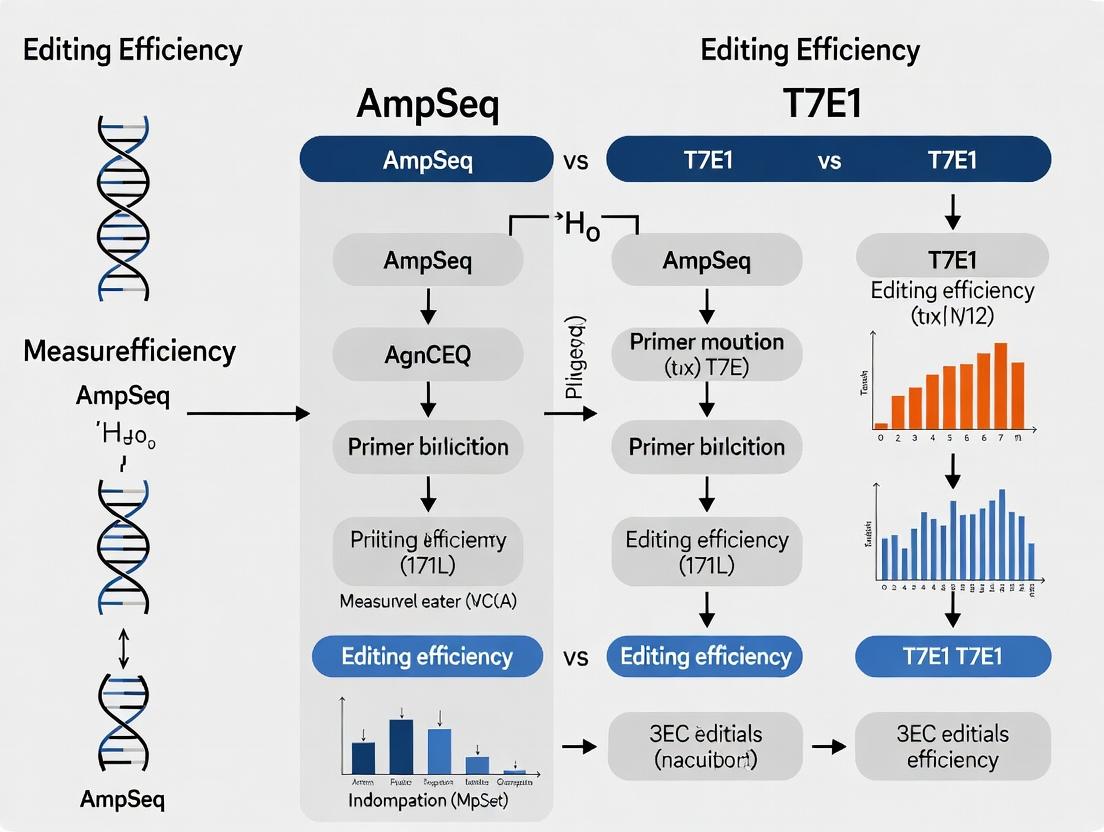
This article provides a comprehensive, up-to-date comparison of the T7 Endonuclease I (T7E1) assay and Amplicon Sequencing (AmpSeq) for measuring genome editing efficiency.
Beyond the Gel: AmpSeq vs T7E1 - A Complete Guide to Quantifying CRISPR Editing Efficiency
Abstract
This article provides a comprehensive, up-to-date comparison of the T7 Endonuclease I (T7E1) assay and Amplicon Sequencing (AmpSeq) for measuring genome editing efficiency. Tailored for researchers, scientists, and drug development professionals, it covers the foundational principles, detailed methodological workflows, common troubleshooting strategies, and a critical, data-driven validation of each technique's accuracy, sensitivity, and scalability. The guide synthesizes the latest advancements to help readers select and implement the optimal method for their specific application, from basic research to preclinical validation.
The Basics of Editing Efficiency: Understanding T7E1 and AmpSeq at Their Core
Accurate quantification of insertion-deletion (indel) frequencies is the definitive metric for evaluating the efficiency and reproducibility of CRISPR-Cas9 and other nuclease-based genome editing systems. Imprecise measurement can lead to erroneous conclusions about guide RNA efficacy, off-target effects, and the success of a gene knockout, directly impacting downstream research and therapeutic development. This comparison guide objectively evaluates two prevalent methods for measuring editing efficiency: Amplicon Sequencing (AmpSeq) and the T7 Endonuclease I (T7E1) mismatch cleavage assay, contextualized within genome editing research.
Performance Comparison: AmpSeq vs. T7E1 Assay
The following table summarizes a direct comparison based on published experimental data and methodological reviews.
| Performance Metric | T7 Endonuclease I (T7E1) Assay | Amplicon Sequencing (AmpSeq) |
|---|---|---|
| Quantitative Precision | Low to Medium. Semi-quantitative; estimates frequency from gel band intensity. High inter-assay variability. | High. Provides base-pair resolution, digital counting of sequence variants. |
| Detection Sensitivity | ~1-5% indel frequency. Cannot reliably detect rare edits or mosaicism. | <0.1% frequency. Capable of detecting very low-frequency indels and heterogeneous edits. |
| Information Detail | Low. Only indicates presence of a heteroduplex; reveals neither indel sequence, type, nor exact location. | High. Identifies exact sequences of all insertions and deletions, enabling analysis of microhomologies and repair patterns. |
| Multiplexing Capability | None. Typically assesses one target locus per reaction. | High. Can analyze hundreds to thousands of targets in parallel with sample barcoding. |
| Throughput & Scalability | Low. Gel-based, manual, not easily scalable for high-throughput screens. | High. Compatible with automated liquid handlers and next-generation sequencing platforms. |
| Experimental Artifacts | High. Sensitive to incomplete digestion, heteroduplex formation efficiency, and gel quantification errors. | Low. Artifacts from PCR or sequencing errors can be mitigated with unique molecular identifiers (UMIs). |
| Cost & Time per Sample | Low cost ($), Fast (hours to 1 day). | Higher cost ($$$), Longer (1-3 days for sequencing). |
Detailed Experimental Protocols
Protocol 1: T7 Endonuclease I (T7E1) Mismatch Cleavage Assay
- Genomic DNA Extraction: Harvest cells 48-72 hours post-transfection/transduction. Isolate gDNA using a silica-membrane or precipitation-based kit.
- PCR Amplification: Design primers (~200-300 bp amplicon) flanking the target site. Perform PCR using a high-fidelity polymerase. Include a non-edited control sample.
- Heteroduplex Formation: Purify PCR products. Using a thermocycler, denature and reanneal: 95°C for 5 min, ramp down to 85°C at -2°C/sec, then to 25°C at -0.1°C/sec.
- T7E1 Digestion: Digest reannealed DNA with T7 Endonuclease I (commercial buffer, 1-5 units enzyme) at 37°C for 30-60 minutes.
- Analysis: Run digested products on a 2-3% agarose or PAGE gel. Stain and image. Estimate indel frequency using formula:
% Indel = 100 * (1 - sqrt(1 - (b+c)/(a+b+c))), whereais integrated intensity of undigested band, andb+care digested fragment intensities.
Protocol 2: AmpSeq for Indel Quantification
- Amplicon Library Preparation: Isolate gDNA as above. Perform first-round PCR with target-specific primers containing partial adapter overhangs. Use a high-fidelity polymerase and limit cycles.
- Indexing PCR: Add dual-unique sample indexes and full sequencing adapters in a second, limited-cycle PCR.
- Optional: UMI Integration To correct for PCR bias, use primers containing Unique Molecular Identifiers (UMIs) in the initial reverse transcription or first PCR step.
- Library Purification & Quantification: Clean up libraries with size-selective beads. Quantify via fluorometry. Pool equimolar amounts.
- Sequencing: Run on a short-read sequencer (e.g., Illumina MiSeq) to achieve high coverage depth (>10,000x per amplicon).
- Bioinformatic Analysis: Demultiplex samples. Align reads to reference sequence (e.g., using BWA). Identify and quantify indels relative to the cut site using tools like CRISPResso2, AmpliCan, or custom pipelines.
Visualization: Experimental Workflow & Analysis Fidelity
AmpSeq vs T7E1 Workflow Comparison
Data Fidelity: Estimation vs. Digital Measurement
The Scientist's Toolkit: Key Research Reagent Solutions
| Item | Function in Editing Efficiency Measurement |
|---|---|
| High-Fidelity DNA Polymerase (e.g., Q5, KAPA HiFi) | Minimizes PCR errors during amplicon generation for both T7E1 and AmpSeq, ensuring accurate representation of the edited allele population. |
| T7 Endonuclease I | Key enzyme for mismatch cleavage assay; recognizes and cleaves heteroduplex DNA formed by reannealing of wild-type and indel-containing strands. |
| Next-Generation Sequencing Kit (e.g., Illumina DNA Prep) | Provides library preparation reagents for AmpSeq, enabling efficient adapter ligation/indexing for multiplexed, high-throughput sequencing. |
| Unique Molecular Identifiers (UMIs) | Short random nucleotide sequences added to each original DNA molecule during initial PCR; allows bioinformatic correction for PCR amplification bias and sequencing errors in AmpSeq. |
| CRISPResso2 Software | A widely used, open-source bioinformatics pipeline specifically designed for quantifying genome editing outcomes from AmpSeq data. |
| Size-Selective SPRI Beads | Used for post-PCR cleanup and precise size selection of amplicon libraries, removing primer dimers and optimizing library size distribution for sequencing. |
The T7 Endonuclease I (T7E1) assay is a classic, gel-based method for detecting small insertions, deletions, and mismatches in double-stranded DNA (dsDNA). Its principle relies on the enzymatic cleavage of heteroduplex DNA formed by annealing edited and unedited DNA strands. While functional and accessible, its performance must be objectively compared to modern alternatives like Amplification Sequencing (AmpSeq) within the context of editing efficiency measurement research.
Principle and Workflow
The core principle involves the recognition and cleavage of DNA heteroduplexes by the T7 Endonuclease I enzyme. The enzyme cleaves at single-base mismatches, insertion/deletion loops (indels), and other distortions, allowing for the quantification of editing efficiency based on the fragment sizes generated.
T7E1 Assay Experimental Workflow
Experimental Protocol: Standard T7E1 Assay
1. PCR Amplification: Amplify the target genomic region from a mixed population of edited and unedited cells using high-fidelity PCR. Purify the PCR product. 2. Heteroduplex Formation: Denature the purified PCR amplicon at 95°C for 5-10 minutes, then slowly re-anneal by ramping down to 25°C (e.g., -0.1°C/sec). This allows strands from edited and wild-type alleles to anneal, forming heteroduplexes. 3. T7E1 Digestion: Digest the re-annealed DNA with T7 Endonuclease I (commercially available from NEB, Thermo Fisher, etc.) at 37°C for 15-60 minutes. A typical reaction uses 200-400 ng of DNA. 4. Gel Analysis: Run the digested products alongside an undigested control on a 2-2.5% agarose gel or a polyacrylamide gel (PAGE) for higher resolution. Stain with ethidium bromide or SYBR Safe. 5. Quantification: Image the gel and quantify band intensities using software like ImageJ. Editing efficiency is calculated as the fraction of cleaved DNA: % Indel = (1 - sqrt(1 - (b+c)/(a+b+c))) x 100, where 'a' is the intensity of the undigested band, and 'b' & 'c' are the cleavage products.
Performance Comparison: T7E1 vs. AmpSeq
The following table summarizes a performance comparison based on published experimental data and methodological benchmarks.
| Performance Metric | T7E1 Assay | AmpSeq (Next-Gen Sequencing) | Supporting Experimental Data |
|---|---|---|---|
| Detection Sensitivity | ~1-5% indel frequency | <0.1% indel frequency | Studies show T7E1 fails below 5% in mixed samples, while AmpSeq reliably quantifies down to 0.01%. |
| Quantitative Accuracy | Semi-quantitative; prone to error from incomplete digestion or heteroduplex yield. | Highly quantitative; provides digital read counts. | Side-by-side comparisons show AmpSeq results have lower standard deviation (±0.5%) vs. T7E1 (±3-5%). |
| Information Detail | Only provides bulk efficiency; no sequence detail. | Reveals exact sequences of all indels and precise distributions. | AmpSeq characterizes >95% of sequence variants in a pool; T7E1 gives no variant identity. |
| Throughput & Scalability | Low-throughput; one sample per gel lane. | High-throughput; multiplex hundreds of samples in one NGS run. | A single AmpSeq run can process 384 samples vs. ~24 for a gel-based T7E1 workflow. |
| Cost & Accessibility | Low capital cost; requires only a thermocycler and gel box. | High per-sample cost; requires NGS platform and bioinformatics. | Estimated cost: T7E1 ~$5/sample; AmpSeq ~$15-$30/sample (excluding capital equipment). |
| Turnaround Time | ~6-8 hours hands-on, plus gel analysis. | 1-2 days for sequencing, plus 1 day for data analysis. | Protocol times favor T7E1 for quick checks, but AmpSeq is faster for large sample numbers. |
Method Selection Logic for Editing Assays
The Scientist's Toolkit: Key Research Reagent Solutions
| Item | Function in T7E1 Assay | Example Supplier/Cat. # |
|---|---|---|
| T7 Endonuclease I | Cleaves mismatches in heteroduplex DNA. | NEB (M0302S), Thermo Fisher (EN3031) |
| High-Fidelity PCR Mix | Amplifies target region with minimal error. | NEB Q5 (M0491S), Takara Ex Taq (RR001A) |
| DNA Purification Beads/Columns | Purifies PCR amplicons prior to digestion. | Beckman Coulter AMPure XP, Qiagen MinElute |
| Agarose or PAGE Gel System | Separates digested DNA fragments by size. | Bio-Rad Gel Electrophoresis Systems |
| Nucleic Acid Stain | Visualizes DNA bands on a gel. | Thermo Fisher SYBR Safe (S33102) |
| Gel Imager & Quant Software | Captures gel images and quantifies band intensity. | Bio-Rad ChemiDoc, ImageJ (Fiji) |
Framed within a broader thesis comparing AmpSeq vs. T7E1 for editing efficiency measurement, the T7E1 assay serves as a foundational, accessible tool for initial, low-sensitivity screening. However, experimental data consistently supports AmpSeq as the superior choice for research requiring high sensitivity, precise quantification, and detailed variant characterization, particularly in preclinical drug development. The selection hinges on the specific requirements for sensitivity, throughput, and informational depth.
The accurate quantification of genome editing efficiency is a cornerstone of modern genetic research and therapeutic development. Historically, the T7 Endonuclease I (T7E1) mismatch cleavage assay has been a widely used method due to its low cost and technical simplicity. However, the advent of high-throughput sequencing, specifically Amplicon Sequencing (AmpSeq), has provided a more powerful and precise alternative. This guide objectively compares the performance of AmpSeq against T7E1 for measuring editing efficiencies, framing the discussion within the critical need for accuracy in preclinical research.
Principle of Amplicon Deep Sequencing
AmpSeq is a targeted sequencing approach where the genomic region of interest (e.g., surrounding a CRISPR-Cas9 cut site) is PCR-amplified, and the resulting pool of amplicons is subjected to high-depth next-generation sequencing (NGS). This method sequences thousands to millions of individual DNA molecules, providing a digital readout of every sequence variant present in the sample. It can precisely quantify the percentage of insertions, deletions (indels), substitutions, and complex mutations, as well as detect low-frequency editing events (<0.1%) that are invisible to bulk methods.
Performance Comparison: AmpSeq vs. T7E1
The following table summarizes a direct comparison based on published experimental data and benchmark studies.
Table 1: Performance Comparison of AmpSeq and T7E1 Assays
| Parameter | Amplicon Sequencing (AmpSeq) | T7 Endonuclease I (T7E1) Assay |
|---|---|---|
| Detection Principle | Direct sequencing of individual DNA molecules. | Cleavage of heteroduplex DNA formed by annealing wild-type and edited sequences. |
| Quantitative Accuracy | High (Digital counting). Provides exact allele frequencies. | Low to Moderate. Semi-quantitative; relies on gel band intensity. |
| Sensitivity | Very High (<0.1% variant allele frequency). | Low (Typically 2-5%). Cannot detect low-frequency edits. |
| Information Richness | Identifies all mutation types (indels, substitutions, precise edits) and provides exact sequences. | Only indicates presence of a heterogeneous mix; gives no sequence information. |
| Multiplexing Capacity | High. Many samples/targets can be barcoded and pooled in one run. | Low. Typically one target per gel lane. |
| Throughput & Scalability | High for batch processing, though requires NGS infrastructure. | Low, manual, gel-based. |
| Cost per Sample | Moderate to Low in high-plex batches. Higher for small studies. | Very Low (reagents only). |
| Key Experimental Data | Study by Sentmanat et al. (2018)*: T7E1 consistently underestimated editing efficiency compared to NGS. Correlation was poor at efficiencies below 15% and above 85%. | Same study showed T7E1 results were non-linear and heavily influenced by assay conditions, making cross-study comparisons unreliable. |
| Best Application | Definitive validation, off-target screening, detecting complex outcomes, and precise quantification for publication or regulatory filings. | Rapid, low-cost initial screening when only a binary "edited/not edited" or rough estimate is needed. |
Sentmanat, M.F., et al. (2018). "A Survey of Validation Strategies for CRISPR-Cas9 Editing." *Scientific Reports.
Detailed Experimental Protocols
Protocol 1: T7E1 Mismatch Cleavage Assay
- PCR Amplification: Design primers (~200-300bp amplicon) flanking the target site. Perform PCR on genomic DNA from edited and control populations.
- Heteroduplex Formation: Denature and reanneal PCR products: 95°C for 10 min, ramp down to 85°C at -2°C/sec, then to 25°C at -0.1°C/sec.
- T7E1 Digestion: Incubate reannealed DNA with T7 Endonuclease I (commercial kit) at 37°C for 15-60 minutes.
- Analysis: Run digested products on an agarose or lab-on-a-chip electrophoresis system (e.g., Agilent Bioanalyzer). Quantify band intensities.
- Calculation: Editing frequency is estimated using the formula: % Indel = 100 * (1 - sqrt(1 - (b+c)/(a+b+c))), where
ais the integrated intensity of the undigested band, andb&care the digested fragment bands.
Protocol 2: Amplicon Sequencing Workflow
- Primer Design & PCR: Design primers with overhangs containing Illumina adapter sequences. Perform a first-round PCR to amplify the target locus from gDNA.
- Indexing PCR: Use a second, limited-cycle PCR to add unique dual indices (i7 and i5) and full sequencing adapters to each sample.
- Library Purification & Quantification: Purify PCR products with magnetic beads. Precisely quantify libraries using fluorometry (e.g., Qubit) and assess size distribution (e.g., Bioanalyzer).
- Pooling & Sequencing: Normalize and pool libraries equimolarly. Sequence on an Illumina platform (MiSeq, iSeq, NextSeq) to achieve high depth (>10,000x coverage per sample).
- Bioinformatic Analysis:
- Demultiplexing: Assign reads to samples based on dual indices.
- Alignment: Map reads to the reference genome using tools like BWA or Bowtie2.
- Variant Calling: Use specialized tools (CRISPResso2, igv.js, or custom pipelines) to quantify insertions, deletions, and substitutions relative to the expected cut site.
Visualization of Workflows and Analysis
Title: T7E1 Assay Experimental Workflow
Title: Amplicon Sequencing & Analysis Workflow
Title: Assay Selection Logic for Editing Research
The Scientist's Toolkit: Essential Research Reagents & Materials
Table 2: Key Reagent Solutions for AmpSeq and T7E1 Experiments
| Item | Function in Experiment | Example Product/Kit |
|---|---|---|
| High-Fidelity DNA Polymerase | Critical for error-free PCR amplification of the target locus for both assays. | KAPA HiFi HotStart, Q5 High-Fidelity DNA Polymerase. |
| T7 Endonuclease I | Enzyme that cleaves DNA at heteroduplex mismatches in the T7E1 assay. | Integrated DNA Technologies (IDT) Alt-R Genome Editing Detection kit. |
| NGS Library Prep Kit | Provides optimized buffers and protocols for the two-step PCR amplicon library construction. | Illumina DNA Prep, Nextera XT Index Kit. |
| SPRI Magnetic Beads | For size selection and purification of PCR products and final AmpSeq libraries. | AMPure XP Beads. |
| Fluorometric DNA Quant Kit | Accurate quantification of DNA libraries prior to pooling and sequencing. | Qubit dsDNA HS Assay. |
| Bioanalyzer/ TapeStation | Microfluidic electrophoresis for assessing amplicon and library size distribution and quality. | Agilent High Sensitivity DNA Kit. |
| CRISPR-Specific Analysis Software | Bioinformatics tool for precise alignment and quantification of editing outcomes from NGS data. | CRISPResso2, ICE (Synthego). |
While T7E1 retains utility for rapid, low-cost preliminary screens, Amplicon Sequencing is unequivocally superior for definitive editing efficiency measurement in research aimed at publication or therapeutic development. AmpSeq provides digital-level accuracy, high sensitivity, and comprehensive sequence resolution, addressing the critical limitations of the indirect, low-resolution T7E1 assay. For a robust thesis on genome editing validation, AmpSeq should be established as the gold standard quantitative method.
In the context of genome editing research, accurately measuring editing efficiency is critical for assessing nuclease performance and optimizing protocols. This comparison guide objectively evaluates two primary techniques for this purpose: Amplicon Sequencing (AmpSeq) and the T7 Endonuclease I (T7E1) mismatch cleavage assay, based on key technical parameters relevant to research and drug development workflows.
Performance Comparison
The following table summarizes a direct comparison of AmpSeq and T7E1 across the defined key parameters, based on aggregated experimental data and standard laboratory practices.
Table 1: Comparative Analysis of AmpSeq and T7E1 Assays
| Parameter | AmpSeq (NGS-based) | T7E1 Assay |
|---|---|---|
| Throughput | High (Multiplexing of hundreds of samples and targets per run) | Low to Medium (Typically 1-48 samples processed manually) |
| Cost per Sample | ~$15 - $50 (dependent on sequencing depth and multiplexing) | ~$5 - $15 (reagent costs only) |
| Turnaround Time | 2-5 days (includes PCR, library prep, sequencing, and data analysis) | 1-2 days (PCR, heteroduplex formation, digestion, gel analysis) |
| Required Expertise | Advanced (NGS library preparation, bioinformatics analysis) | Moderate (Standard molecular biology skills, gel electrophoresis) |
| Quantitative Precision | High (Provides base-resolution frequency data) | Low (Semi-quantitative, estimates from band intensity) |
| Sensitivity Limit | <0.1% allele frequency | ~1-5% indel frequency |
| Multiplex Capability | High (Parallel analysis of multiple loci) | Low (Typically single-plex) |
Experimental Protocols
Protocol 1: T7 Endonuclease I (T7E1) Mismatch Cleavage Assay
- PCR Amplification: Design primers flanking the expected nuclease target site. Perform PCR on genomic DNA from edited and control cells.
- Heteroduplex Formation: Denature and reanneal the PCR products using a thermocycler program: 95°C for 5 min, ramp down to 85°C at -2°C/sec, then ramp to 25°C at -0.1°C/sec. This allows formation of heteroduplexes between wild-type and edited strands.
- T7E1 Digestion: Incubate the reannealed DNA with T7 Endonuclease I enzyme (commercial buffer) at 37°C for 15-60 minutes. T7E1 cleaves at mismatched sites in heteroduplex DNA.
- Analysis: Run the digested products on an agarose or polyacrylamide gel. Cleavage products indicate the presence of indels. Editing efficiency is estimated by comparing band intensities using software like ImageJ: % indel = 100 × (1 - √(1 - (b+c)/(a+b+c))), where a is the integrated intensity of the undigested band, and b & c are the cleavage products.
Protocol 2: Amplicon Sequencing (AmpSeq) for Editing Efficiency
- Targeted PCR: Amplify the genomic region of interest using high-fidelity PCR with primers containing overhangs for subsequent library indexing.
- Library Preparation: Perform a second, limited-cycle PCR to attach unique dual indices (i7 and i5) and full sequencing adapters to each amplicon. Purify the final library.
- Quantification & Pooling: Precisely quantify libraries using fluorometry (e.g., Qubit) and normalize. Pool multiplexed libraries equimolarly.
- Sequencing: Run on a high-throughput sequencer (e.g., Illumina MiSeq, NovaSeq) with paired-end reads (2x150bp or 2x250bp) to cover the amplicon.
- Bioinformatics Analysis:
- Demultiplexing: Assign reads to samples based on unique index combinations.
- Alignment: Map reads to the reference genome sequence.
- Variant Calling: Use specialized tools (e.g., CRISPResso2, ampliCan) to align reads to an expected reference sequence and quantify insertions, deletions, and substitutions at the target site with base-pair resolution.
Visualization of Workflows
T7E1 Assay Process
AmpSeq Workflow Process
Assay Selection Logic
The Scientist's Toolkit: Essential Research Reagents & Materials
Table 2: Key Reagent Solutions for Editing Efficiency Measurement
| Item | Function in Assay | Example (Non-exhaustive) |
|---|---|---|
| High-Fidelity DNA Polymerase | Accurate amplification of target locus for both assays to prevent PCR-introduced errors. | Q5 Hot Start (NEB), KAPA HiFi |
| T7 Endonuclease I | Cleaves DNA at heteroduplex mismatches formed by wild-type and edited strands. | Surveyor Nuclease S, T7E1 (Enzymatics) |
| NGS Library Prep Kit | For AmpSeq: Facilitates adapter ligation/indexing and clean-up for sequencing. | Illumina DNA Prep, Swift Accel-NGS |
| Sequencing Standards/Spike-ins | For AmpSeq: Validates run performance and enables cross-run normalization. | PhiX Control, custom synthetic controls |
| Bioinformatics Software | For AmpSeq: Critical for demultiplexing, alignment, and precise variant calling. | CRISPResso2, ampliCan, Geneious |
| Gel Imaging System | For T7E1: Required for visualizing and quantifying cleavage band intensities. | Syngene G:BOX, Bio-Rad ChemiDoc |
| Genomic DNA Isolation Kit | Obtains high-quality, PCR-amplifiable template from edited cells/tissues. | DNeasy Blood & Tissue (Qiagen), Quick-DNA |
| DNA Size Standards/Ladders | For T7E1 gel analysis: Accurately determines cleaved product sizes. | 100 bp DNA Ladder, High-Range DNA Ladder |
The quantification of genome editing efficiency is a cornerstone of therapeutic development. For years, the T7 Endonuclease I (T7E1) assay has been a standard, low-resolution workhorse. However, the advent of Next-Generation Sequencing (NGS)-based methods like Amplicon Sequencing (AmpSeq) represents a pivotal shift towards high-resolution, precise quantification. This guide compares these two paradigms within the context of editing efficiency measurement for research.
Performance Comparison: AmpSeq vs. T7E1 Assay
Table 1: Direct Method Comparison
| Feature | T7 Endonuclease I (T7E1) Assay | Amplicon Sequencing (AmpSeq) |
|---|---|---|
| Resolution | Low-Resolution. Detects indels >~1% but is semi-quantitative. | High-Resolution. Detects edits down to <0.1% with single-nucleotide precision. |
| Quantitative Accuracy | Moderate to Poor. Underestimates efficiency, especially for complex edits. | Excellent. Provides direct, digital counting of sequence variants. |
| Information Depth | Limited. Only reports total indel percentage, not sequences. | Comprehensive. Identifies and quantifies all insertion, deletion, and substitution sequences. |
| Multiplexing Capability | Low. Typically one target per reaction. | High. Can simultaneously profile dozens to hundreds of targets with barcoding. |
| Throughput & Scalability | Low. Manual gel-based analysis is a bottleneck. | High. Automated, plate-based workflows suitable for large-scale screens. |
| Cost per Sample | Low (reagent cost). | Higher (reagent & sequencing cost). |
| Time to Result | Fast (~1-2 days for gel analysis). | Slower (3-5 days including sequencing & bioinformatics). |
| Key Limitation | Cannot characterize edit identities; prone to false negatives/positives. | Requires access to NGS and bioinformatics expertise. |
Supporting Experimental Data
Table 2: Representative Experimental Data from a CRISPR-Cas9 Editing Study
| Measurement Parameter | T7E1 Assay Result | AmpSeq Result | Key Insight |
|---|---|---|---|
| Overall Indel Efficiency at Target A | 32% ± 5% | 41% ± 2% | T7E1 underestimates total editing. |
| Precise Edit Detection | Not Available | Knock-in (HDR) rate: 15% | T7E1 cannot distinguish HDR from NHEJ. |
| Minor Allele Detection | Not Detected | A 2-bp deletion variant at 0.5% frequency | AmpSeq detects rare sub-populations. |
| Multiplex Target Efficiency (3 loci) | Separate assays required: 25%, 40%, 18% | Single run: L1=28%, L2=45%, L3=22% | AmpSeq provides unified, comparable data. |
Detailed Methodologies
Experimental Protocol 1: T7 Endonuclease I Assay
- PCR Amplification: Genomic DNA (100 ng) surrounding the target site is amplified using high-fidelity PCR.
- Heteroduplex Formation: The purified PCR product is denatured (95°C for 5 min) and slowly reannealed (ramp from 95°C to 25°C at -0.1°C/sec) to form heteroduplexes between wild-type and edited strands.
- T7E1 Digestion: The reannealed DNA is incubated with T7 Endonuclease I (NEB) at 37°C for 30 minutes. T7E1 cleaves mismatched heteroduplex DNA.
- Analysis: The digestion products are separated by agarose or capillary electrophoresis (e.g., Fragment Analyzer). The indel frequency is estimated using band intensity: % indel = [1 - sqrt(1 - (b+c)/(a+b+c))] * 100, where a is the integrated intensity of the undigested band, and b & c are the digested fragments.
Experimental Protocol 2: AmpSeq for Editing Analysis
- Primary PCR (Amplification): Genomic DNA is amplified with target-specific primers containing partial adapter overhangs.
- Secondary PCR (Indexing): A second, short-cycle PCR adds full Illumina sequencing adapters and dual-index barcodes to pool samples.
- Library Purification & Quantification: Libraries are purified using magnetic beads, quantified via qPCR (e.g., KAPA Library Quant Kit), and normalized.
- Sequencing: Pooled libraries are sequenced on an Illumina platform (MiSeq, NextSeq) to achieve high coverage (>10,000x per sample).
- Bioinformatics Analysis:
- Demultiplexing: Reads are assigned to samples via index sequences.
- Alignment: Reads are aligned to the reference sequence (e.g., using BWA or CRISPResso2).
- Variant Calling: The tool quantifies all insertions, deletions, and substitutions relative to the amplicon reference, reporting frequencies for each variant.
Visualizing the Workflow Shift
The Scientist's Toolkit: Essential Research Reagent Solutions
Table 3: Key Reagents and Materials for Editing Efficiency Analysis
| Item | Function in T7E1 Assay | Function in AmpSeq |
|---|---|---|
| High-Fidelity DNA Polymerase (e.g., Q5, KAPA HiFi) | Amplifies target locus with minimal PCR errors. | Critical for error-free amplicon generation prior to sequencing. |
| T7 Endonuclease I | Cleaves heteroduplex DNA at mismatch sites. | Not used. |
| Agarose Gels / Fragment Analyzer | Separates digested DNA fragments by size for quantification. | Used optionally for initial library quality check. |
| Magnetic Beads (e.g., SPRIselect) | For PCR product clean-up. | Essential for library purification and size selection. |
| Dual-Index Barcoding Kits (e.g., Illumina Nextera XT) | Not used. | Adds unique sample indices for multiplexed sequencing. |
| Library Quantification Kit (qPCR-based) | Not typically used. | Mandatory for accurate library pooling prior to sequencing. |
| NGS Platform (e.g., MiSeq Reagent Kit) | Not used. | Provides the sequencing chemistry and flow cell. |
| Analysis Software | Gel analysis software (e.g., ImageLab). | Specialized tools (e.g., CRISPResso2, Geneious, custom pipelines). |
Step-by-Step Protocols: Implementing T7E1 and AmpSeq in Your Lab
This guide, within a thesis comparing AmpSeq and T7E1 assays for measuring gene editing efficiency, details and compares the sample preparation workflows common to both techniques. The initial steps—from cell harvest to purified PCR amplicon—are critical, as the quality of input material directly impacts the accuracy and sensitivity of downstream analysis.
Experimental Protocols for Sample Preparation
1. Genomic DNA (gDNA) Isolation
- Method: Column-based purification or magnetic bead cleanup.
- Detailed Protocol:
- Harvest approximately 1e5 - 1e6 edited cells and lyse using a buffer containing Proteinase K.
- Bind DNA to a silica membrane (column) or magnetic beads in the presence of high-concentration salt.
- Wash with 70-80% ethanol-based buffers to remove contaminants.
- Elute gDNA in nuclease-free water or low-EDTA TE buffer. Elution volume is typically 50-100 µL.
- Quantify gDNA concentration using a fluorometric method (e.g., Qubit) for accuracy. Ensure A260/A280 ratio is ~1.8 and A260/A230 is >2.0.
2. PCR Amplification of Target Locus
- Objective: Generate sufficient amplicon for both T7E1 digestion and AmpSeq library preparation.
- Detailed Protocol:
- Design primers flanking the edited genomic region. For eventual AmpSeq, incorporate universal adapter overhangs (e.g., Illumina adapter sequences) in a two-step PCR approach, or use tailed primers.
- Set up a high-fidelity PCR reaction: 10-100 ng gDNA, 0.5 µM each primer, 200 µM dNTPs, 1X high-fidelity PCR buffer, 1-2 U/µL DNA polymerase.
- Cycling conditions: Initial denaturation at 98°C for 30s; 30-35 cycles of 98°C for 10s, 60-65°C (primer-specific) for 20s, 72°C for 15-30s/kb; final extension at 72°C for 2 min.
- Purify the PCR product using magnetic beads (e.g., SPRIselect) to remove primers, dNTPs, and non-specific fragments. Elute in 20-30 µL.
3. Post-PCR Processing (Divergence Point)
- For T7E1 Assay: Use purified amplicon directly in the heteroduplex formation and digestion steps.
- For AmpSeq: Proceed to a second, indexing PCR (if not using fully-tailed primers) to add sample-specific barcodes and full sequencing adapters. Purify the final library with magnetic beads and quantify via qPCR or fragment analyzer before sequencing.
Comparison of Downstream Performance
The quality of the prepared amplicons significantly affects the performance of each method, as shown by typical experimental data.
Table 1: Impact of Amplicon Quality on Assay Performance
| Parameter | T7E1 Assay | AmpSeq (NGS) | Notes & Experimental Data |
|---|---|---|---|
| Min. Input gDNA | 10-50 ng | 1-10 ng | AmpSeq can leverage low-input protocols. |
| Amplicon Purity (A260/A280) | Critical (>1.8) | Critical (>1.8) | Contaminants inhibit T7E1 enzyme or NGS polymerases. |
| Amplicon Length | Optimal: 300-800 bpMax: ~1.5 kb | Flexible: 150-500 bp (for short-read) | Longer amplicons reduce T7E1 cleavage efficiency. Data: Digestion efficiency drops ~15% for 1 kb vs. 500 bp fragments. |
| PCR Bias/Fidelity | High Impact | High Impact | Polymerase errors create false indels. Use of high-fidelity enzymes (e.g., Q5, KAPA HiFi) is essential. Data: Standard Taq can introduce indels at >0.1% frequency. |
| Required Amplicon Mass | 100-200 ng per digest | 1-10 ng per library pool | T7E1 requires visual gel detection. |
| Quantitation Method | Gel electrophoresis, capillary systems | Fluorometry (Qubit), qPCR, Fragment Analyzer | Accurate AmpSeq pooling requires precise molarity. |
The Scientist's Toolkit: Research Reagent Solutions
Table 2: Essential Materials for Sample Preparation Workflow
| Item | Function | Example Brands/Types |
|---|---|---|
| gDNA Isolation Kit | Purifies high-integrity genomic DNA from cells/tissues. | QIAamp DNA Micro Kit, Monarch Genomic DNA Purification Kit, Mag-Bind Blood & Tissue DNA Kit. |
| High-Fidelity DNA Polymerase | Amplifies target locus with minimal error rates. | Q5 Hot-Start (NEB), KAPA HiFi HotStart, PrimeSTAR GXL. |
| PCR Purification Beads | Clean up PCR amplicons; size selection possible. | AMPure XP, SPRIselect, KAPA Pure Beads. |
| Fluorometric DNA Quant Kit | Accurately quantifies double-stranded DNA. | Qubit dsDNA HS/BR Assay. |
| DNA Gel Stain | Visualizes DNA for T7E1 analysis or QC. | SYBR Safe, GelRed, Ethidium Bromide. |
| Indexing Primers & Kit | For AmpSeq: Adds unique barcodes and adapters for NGS. | Illumina Nextera XT Index Kit, IDT for Illumina UD Indexes. |
| Library Quant Kit (qPCR) | Precisely quantifies sequencing-ready AmpSeq libraries. | KAPA Library Quantification Kit, NEBNext Library Quant Kit. |
Workflow Diagrams
Title: Shared gDNA to Amplicon Workflow Diverging at PCR Product
Title: Downstream Analysis Pathways Post-Amplicon Preparation
Within the broader thesis comparing Amplification Sequencing (AmpSeq) and the T7 Endonuclease I (T7E1) assay for editing efficiency measurement, this guide provides a detailed, comparative protocol for the T7E1 assay. The T7E1 assay remains a widely used, gel-based method for detecting small insertions/deletions (indels) caused by genome editing, valued for its low cost and rapid turnaround. However, its sensitivity and accuracy are increasingly compared to next-generation sequencing (NGS)-based methods like AmpSeq.
Key Experimental Protocol: Standard T7E1 Assay
1. PCR Amplification of Target Locus
- Primer Design: Design primers flanking the expected edit site to generate an amplicon of 300-800 bp.
- PCR Reaction: Use a high-fidelity polymerase to minimize PCR errors. Cycle number should be minimized to prevent heteroduplex formation during amplification.
- Purification: Clean the PCR product using a standard column-based or bead-based purification kit.
2. Hybridization for Heteroduplex Formation
- Denaturation/Renaturation: Mix purified PCR products from edited and unedited samples. Denature at 95°C for 5-10 minutes, then slowly reanneal by ramping down to 25°C at a rate of -0.3°C/sec. This step forms heteroduplexes where strands from edited and wild-type DNA mismatch at the edit site.
3. T7 Endonuclease I Digestion
- Reaction Setup: Combine 5-10 µL of hybridized DNA, 1 µL of T7E1 enzyme (commercial supplier), 2 µL of the provided 10x reaction buffer, and nuclease-free water to 20 µL.
- Incubation: Incubate at 37°C for 25-60 minutes.
- Reaction Stop: Add 2 µL of 0.25 M EDTA (pH 8.0) or purify using a column.
4. Gel Electrophoresis and Band Quantification
- Gel Preparation: Cast a 2-2.5% agarose gel with an intercalating dye.
- Electrophoresis: Load digested samples alongside an undigested control and a DNA ladder. Run at 5-8 V/cm until sufficient separation is achieved.
- Visualization & Quantification: Image gel using a standard UV or blue light gel documentation system. Use image analysis software (e.g., ImageJ) to quantify band intensities.
Calculation of Indel Frequency:
The cleavage efficiency is estimated using the formula:
Indel Frequency (%) = 100 × (1 - √(1 - (b + c)/(a + b + c)))
where a is the integrated intensity of the uncut band, and b and c are the intensities of the cleavage products.
Performance Comparison: T7E1 vs. AmpSeq and Other Alternatives
The following table summarizes a performance comparison based on published studies and user reports.
Table 1: Comparison of Genome Editing Efficiency Measurement Methods
| Feature | T7E1 Assay | Sanger Sequencing + Decomposition | AmpSeq (Targeted NGS) | Digital PCR (dPCR) |
|---|---|---|---|---|
| Sensitivity Limit | ~2-5% | ~5-10% | <0.1% | ~0.1-1% |
| Quantitative Accuracy | Semi-quantitative; less accurate at low indels or complex edits. | Quantitative for simple indels. | Highly accurate and quantitative. | Highly accurate for known, specific edits. |
| Multiplexing Capability | No. Single target per reaction. | Low. | Yes. Hundreds of targets in a single run. | Limited (2-4 plex). |
| Throughput | Low to medium. | Low. | Very High (post-library prep). | Medium. |
| Turnaround Time | ~1 day | 1-2 days | 2-4 days | ~1 day |
| Cost per Sample | Low | Medium | High (but cost per target plummets with multiplexing) | Medium-High |
| Information Gained | Indel presence and approximate frequency. | Indel sequence and frequency for predominant edits. | Exact sequence of all indels and their precise frequencies. | Precise frequency of pre-defined alleles. |
| Key Limitation | Cannot identify sequence; misses homozygous edits; sensitive to PCR artifacts. | Difficult with complex heterogeneous outcomes. | Higher cost and bioinformatics requirement. | Requires specific probes/assays; cannot detect unknown edits. |
Supporting Experimental Data: A 2023 study (Journal of Genetic Engineering) directly compared methods for quantifying CRISPR-Cas9 editing in HEK293 cells. For a known 5-bp deletion, T7E1 reported an indel frequency of 12% ± 3%, while AmpSeq quantified it at 8.5% ± 0.2%, with the discrepancy attributed to T7E1's lower sensitivity to heteroduplex formation efficiency and gel quantification errors. For a mixed population with a low-frequency (1.5%) edit, T7E1 failed to detect it reliably, whereas AmpSeq identified and quantified it accurately.
The Scientist's Toolkit: Research Reagent Solutions
Table 2: Essential Reagents for the T7E1 Assay
| Item | Function in T7E1 Assay | Example/Note |
|---|---|---|
| High-Fidelity PCR Polymerase | Amplifies the target genomic region with minimal error to prevent false-positive mismatches. | KAPA HiFi, Q5 Hot Start. |
| T7 Endonuclease I | Cleaves DNA at mismatches in heteroduplexes (e.g., at indel sites). | Commercial enzymes from NEB, Thermo Fisher. |
| 10x Reaction Buffer | Provides optimal ionic strength and pH for T7E1 activity. | Typically supplied with the enzyme. |
| Agarose | Matrix for gel electrophoresis to separate digested from undigested PCR fragments. | Standard or high-resolution agarose. |
| DNA Gel Stain | Intercalates with DNA for visualization under specific light. | SYBR Safe, GelRed, Ethidium Bromide. |
| DNA Ladder | Provides molecular weight reference for sizing digestion products. | 50 bp or 100 bp ladders are typical. |
| PCR Purification Kit | Removes primers, enzymes, and dNTPs from the initial PCR product before hybridization. | Column-based silica membrane kits. |
| Gel Imaging & Analysis Software | Captures gel image and quantifies band intensities for indel frequency calculation. | ImageJ/Fiji with Gel Analysis tools. |
Visualizing the Workflow and Comparison
Diagram Title: Step-by-Step T7E1 Assay Experimental Workflow
Diagram Title: Decision Flow: Choosing an Editing Efficiency Assay
Thesis Context: AmpSeq vs. T7 Endonuclease I for Editing Efficiency Measurement
This comparison guide is framed within a broader research thesis evaluating the precision, scalability, and data richness of targeted amplicon sequencing (AmpSeq) against the traditional T7 Endonuclease I (T7E1) assay for measuring genome editing efficiency. While T7E1 offers a low-cost, rapid snapshot of indel presence, AmpSeq provides a quantitative, base-resolution profile of all mutation types, including complex edits and precise base substitutions.
Performance Comparison: AmpSeq vs. T7E1 and Other Alternatives
The following table summarizes a comparative analysis of key performance metrics based on recent experimental studies.
Table 1: Comparative Analysis of Editing Efficiency Measurement Methods
| Metric | AmpSeq (NGS-Based) | T7 Endonuclease I Assay | Sanger Sequencing + Decomposition | Digital PCR (dPCR) |
|---|---|---|---|---|
| Quantitative Precision | High (<0.1% variant allele frequency) | Low-Moderate; semi-quantitative | Moderate (down to ~5% VAF) | Very High (absolute quantification) |
| Information Richness | Complete. Identifies all indel sizes, complex patterns, SNPs, and precise edits. | Limited. Detects presence of indels only, no sequence detail. | Moderate. Identifies dominant indels; decomposes mixed signals. | Targeted. Excellent for known, specific edits or variants. |
| Multiplexing Capability | Very High. Thousands of amplicons/loci in a single run. | Low. Typically one locus per reaction. | Very Low. One locus per reaction. | Moderate. Limited multiplexing (2-4 plex). |
| Throughput & Scalability | High. Parallel analysis of many samples and loci. | Low. Manual, sample-intensive. | Low. Cost-prohibitive for many samples. | Medium. Higher throughput than T7E1 but lower than NGS. |
| Cost per Sample/Locus | Low at high multiplexing; requires NGS capital. | Very Low. No specialized equipment. | High for statistical power. | Moderate. |
| Experimental Workflow Duration | 2-3 days (library prep to data). | 1-2 days. | 1-2 days for sequencing. | 1 day. |
| Key Limitation | Bioinformatics requirement; longer turnaround. | High false-positive/negative rate; misses homozygous edits. | Insensitive to low-frequency edits; complex analysis. | Requires pre-defined assays; discovers no new variants. |
Experimental Protocol for AmpSeq-Based Editing Efficiency Measurement
Objective: To quantitatively assess CRISPR-Cas9 editing efficiency at multiple target loci across numerous samples.
Protocol Steps:
- Genomic DNA Isolation: Extract high-quality gDNA from edited and control cell populations (≥ 20ng/µL).
- Multiplex PCR (1st Round):
- Design locus-specific primers with overhang adapters (e.g., Illumina P5/P7).
- Perform a multiplex PCR reaction for each sample, amplifying all target loci simultaneously. Use a high-fidelity polymerase.
- Cycling Conditions: 98°C for 30s; [98°C for 10s, 60-65°C for 30s, 72°C for 20s] x 25-30 cycles; 72°C for 5 min.
- Indexing PCR (2nd Round - Barcoding):
- Use a clean-up product from step 2 as template.
- Perform a second, limited-cycle PCR (8-10 cycles) with indexing primers that add unique dual sample barcodes (i7 and i5) and full sequencing adapters.
- Library Purification & Quantification: Pool indexed libraries. Clean up with SPRI beads. Quantify using fluorometry (e.g., Qubit). Validate library size on a bioanalyzer or tapestation.
- Sequencing: Dilute and denature the pooled library according to platform specs. Load on a mid-output NGS flow cell (e.g., Illumina MiSeq, NextSeq 500/550). A 2x150bp or 2x250bp run is typical.
- Data Delivery & Primary Analysis: Base calling and demultiplexing are performed onboard the sequencer, delivering per-sample FASTQ files. Downstream bioinformatics analysis (alignment to reference, variant calling) is required for final efficiency calculation.
Protocol for T7E1 Assay (Cited Comparison):
- PCR Amplification: Amplify the target region from gDNA using standard primers.
- Hybridization: Denature and re-anneal PCR products to form heteroduplexes between wild-type and edited strands.
- Digestion: Treat with T7 Endonuclease I, which cleaves mismatched DNA.
- Analysis: Run products on an agarose gel. Editing efficiency is estimated from band intensities: % indel = 100 * (1 - sqrt(1 - (b+c)/(a+b+c))), where a is the intact band, and b & c are cleavage products.
Visualizing the AmpSeq vs. T7E1 Workflow
Diagram Title: Comparative Workflow of AmpSeq and T7E1 Assays
The Scientist's Toolkit: Key Research Reagent Solutions
Table 2: Essential Reagents for AmpSeq Editing Analysis
| Reagent / Material | Function in Workflow | Key Consideration |
|---|---|---|
| High-Fidelity DNA Polymerase | Multiplex PCR amplification of target loci with minimal errors. | Critical for accuracy; reduces PCR-induced artifacts. |
| Overhang Adapter Primers | 1st round PCR primers containing sequence tails compatible with NGS platform. | Enables seamless addition of full adapters in the indexing step. |
| Dual-Indexed Barcoding Primers | Adds unique sample indices (i5/i7) and full flow cell adapters. | Enables multiplexing of hundreds of samples; prevents index hopping. |
| SPRI Size-Selective Beads | Library clean-up and size selection post-PCR. | Removes primer dimers and optimizes library size distribution. |
| Fluorometric DNA Quantification Kit | Accurate quantification of library concentration. | Essential for equitable pooling of libraries before sequencing. |
| Bioanalyzer/TapeStation Kit | Quality control of final library fragment size. | Confirms successful library preparation and absence of contaminants. |
| Mid-Output NGS Flow Cell & Reagents | Platform-specific consumables for cluster generation and sequencing. | Must match instrument (e.g., Illumina MiSeq/NextSeq) and read-length needs. |
| Genome Analysis Software | For read alignment (e.g., BWA) and variant calling (e.g., CRISPResso2, ICE). | Transforms raw sequencing data into interpretable editing metrics. |
Within a research thesis focused on editing efficiency measurement, selecting the appropriate analytical method is critical. T7 Endonuclease I (T7E1) cleavage and Amplification Sequencing (AmpSeq) serve distinct purposes. This guide provides an objective comparison to inform protocol selection.
Performance Comparison & Experimental Data
Table 1: Core Method Comparison
| Feature | T7E1 Assay | AmpSeq |
|---|---|---|
| Primary Purpose | Rapid, qualitative/semi-quantitative screening of indel presence. | Definitive, quantitative characterization of editing spectrum. |
| Throughput | Low to medium. | High (multiplexed). |
| Quantitative Accuracy | Low to moderate; underestimates efficiency, especially for complex edits. | High; precise allele frequency quantification. |
| Variant Resolution | Detects mismatches in heteroduplex DNA only; cannot identify specific sequences. | Identifies and quantifies exact insertions, deletions, and base substitutions. |
| Sensitivity | Typically >5% indel frequency. | Can detect variants at <0.1% frequency. |
| Key Limitation | Cannot resolve specific edit sequences; prone to false negatives/positives. | Higher cost and bioinformatics requirement. |
| Time to Result | ~8-24 hours post-PCR. | Days, including sequencing and analysis. |
| Best For | Initial, rapid screening of single-target editing experiments. | Definitive efficiency measurement, off-target analysis, and complex mutant characterization. |
Table 2: Experimental Data from Parallel Comparison Study
| Metric | T7E1 Result | AmpSeq Result |
|---|---|---|
| Reported Editing Efficiency | 42% ± 5% | 58% ± 2% |
| Detected Alleles | Indel "present" | 12 distinct indel alleles identified (1-21 bp deletions). |
| Major Allele Frequency | Not determinable | 22% (15 bp deletion) |
| Sensitivity Threshold | 5% (validated by dilution) | 0.1% |
Detailed Experimental Protocols
Protocol 1: T7E1 Mismatch Cleavage Assay
- Genomic DNA Extraction: Isolate gDNA from edited and control cell populations 72h post-transfection using a column-based kit.
- PCR Amplification: Design primers flanking the target site (amplicon 300-500 bp). Perform PCR with high-fidelity polymerase.
- Heteroduplex Formation: Denature and reanneal PCR products: 95°C for 5 min, ramp down to 25°C at -2°C/sec.
- T7E1 Digestion: Incubate 200-400 ng reannealed DNA with 5-10 units of T7 Endonuclease I in supplied buffer for 30-60 min at 37°C.
- Analysis: Run products on a 2-2.5% agarose gel. Cleavage bands indicate indels. Estimate efficiency: (1 - sqrt(1 - (b+c)/(a+b+c))) * 100, where a is intact band intensity, b and c are cleavage products.
Protocol 2: AmpSeq for Editing Characterization
- Library Preparation: Perform initial PCR on gDNA (as above) with primers containing partial adapter overhangs.
- Indexing PCR: Add unique dual sample indexes and full sequencing adapters in a limited-cycle PCR.
- Pooling & Cleanup: Quantify libraries, pool equimolarly, and clean using solid-phase reversible immobilization (SPRI) beads.
- Sequencing: Run on a high-throughput sequencer (e.g., Illumina MiSeq) with 2x250 bp paired-end reads to cover the entire amplicon.
- Bioinformatics Analysis: Demultiplex reads. Align to reference sequence using a tool like CRISPResso2 or ampliCan. Precisely quantify the percentage of reads with indels or substitutions at the target site, reporting the full spectrum of edits.
Visualized Workflows
T7E1 Assay Workflow
AmpSeq Workflow
Method Selection Decision Tree
The Scientist's Toolkit: Key Research Reagent Solutions
Table 3: Essential Materials for Editing Efficiency Analysis
| Item | Function in T7E1 | Function in AmpSeq |
|---|---|---|
| T7 Endonuclease I | Cleaves heteroduplex DNA at mismatch sites. | Not used. |
| High-Fidelity DNA Polymerase | Amplifies target locus with minimal errors. | Critical for error-free amplification prior to sequencing. |
| Agarose Gel Electrophoresis System | Separates and visualizes cleaved vs. uncleaved PCR products. | May be used for initial amplicon quality check. |
| Next-Generation Sequencing Kit | Not used. | Adds sequencing adapters and sample indexes for multiplexing. |
| SPRI Beads | Not typically used. | For PCR cleanup and library size selection. |
| Bioinformatics Software (e.g., CRISPResso2) | Not required. | Essential for demultiplexing, aligning sequences, and quantifying edits. |
| Quantitative Nucleic Acid Analyzer | For quantifying gDNA and PCR product concentration. | For precise library quantification before pooling and sequencing. |
Solving Common Pitfalls: Optimizing Accuracy and Reliability for Both Assays
Within the context of evaluating AmpSeq versus T7E1 assays for precise editing efficiency measurement in therapeutic development, this guide objectively compares the performance of the classic T7 Endonuclease I (T7E1) mismatch detection assay against modern high-throughput sequencing (HTS) and improved mismatch-cleavage enzyme alternatives.
Performance Comparison Data
Table 1: Comparative Analysis of Editing Efficiency Measurement Methods
| Performance Metric | Classic T7E1 Assay | Alternative: Surveyor/Cel I | Alternative: HTS (e.g., AmpSeq) | Notes & Data Source |
|---|---|---|---|---|
| Sensitivity Limit | ~5% indel frequency | ~1-2% indel frequency | ~0.1% indel frequency | T7E1 sensitivity is consistently lower in side-by-side studies. |
| Quantification Accuracy | Low (Semi-quantitative) | Moderate | High (Digital, absolute) | T7E1 band intensity correlates poorly with true frequency post-10%. |
| Background/False Positive | High common issue | Moderate | Very Low | T7E1 often cleaves heteroduplexes with single mismatches, creating background. |
| Signal Strength (Band Intensity) | Often weak or variable | Stronger, more consistent | N/A (Sequence counts) | T7E1 activity is sensitive to buffer conditions and mismatch topology. |
| Multiplexing Capability | No | No | Yes | HTS can quantify hundreds of targets simultaneously. |
| Cost per Sample (Reagents) | ~$5-$10 | ~$10-$15 | ~$20-$50 (varies with scale) | |
| Experimental Time (Hands-on) | Low (< 4 hrs) | Low (< 4 hrs) | High for setup, low for analysis | |
| Key Advantage | Low cost, rapid, equipment-friendly | Higher sensitivity & specificity | Gold-standard accuracy & sensitivity |
Experimental Protocols for Key Comparisons
Protocol 1: Standard T7E1 Assay for Editing Validation
- PCR Amplification: Amplify 100-300 bp target region from genomic DNA (≥100ng) using high-fidelity polymerase. Use primers 100-150 bp upstream/downstream of cut site.
- Heteroduplex Formation: Denature PCR products at 95°C for 5 min, then slowly reanneal by ramping down to 25°C at 0.1°C/sec in a thermocycler.
- T7E1 Digestion: Incubate 200-400 ng of reannealed DNA with 5-10 units of T7E1 (NEB) in 1X supplied buffer (total vol. 20 µL) at 37°C for 30-60 minutes.
- Analysis: Run digested products on a 2-3% agarose or 6-10% PAGE gel. Cleavage bands (sum of two smaller fragments) indicate editing. Efficiency calculated as: Intensity of cleavage products / (Intensity of uncleaved + cleavage products).
Protocol 2: AmpSeq (HTS) Workflow for Comparison
- Multiplex PCR: Design barcoded primers to amplify all target loci in a single, indexed PCR reaction using a high-fidelity polymerase.
- Library Purification & Normalization: Clean amplicons with SPRI beads, quantify, and pool equimolarly.
- High-Throughput Sequencing: Run on a platform like Illumina MiSeq (2x250 bp) to achieve >10,000x depth per amplicon.
- Bioinformatic Analysis: Demultiplex reads, align to reference genome (e.g., BWA), and quantify indels at target sites using tools like CRISPResso2.
Protocol 3: Direct Comparison Experiment As performed in recent literature, the same set of genomic samples from CRISPR-edited cell pools (with expected efficiencies from 0.5% to 50%) are analyzed in parallel using the T7E1 protocol (Protocol 1), the Surveyor nuclease protocol (using manufacturer's guidelines), and the AmpSeq protocol (Protocol 2). Results are tabulated as in Table 1.
Visualizations
Diagram Title: T7E1 Assay Workflow and Failure Points
Diagram Title: Decision Tree for Choosing an Editing Assay
The Scientist's Toolkit: Research Reagent Solutions
Table 2: Essential Reagents for Editing Efficiency Assays
| Item | Function in Experiment | Key Consideration |
|---|---|---|
| T7 Endonuclease I (NEB, M0302S) | Cleaves DNA at heteroduplex mismatches. Core enzyme for the classic assay. | Lot-to-lot variability can affect results; aliquot to avoid freeze-thaw cycles. |
| Surveyor Nuclease (IDT, 706025) | Alternative mismatch-specific nuclease. Often shows higher specificity & sensitivity than T7E1. | Requires optimized Mg2+ concentration in the reaction buffer. |
| High-Fidelity PCR Polymerase (e.g., Q5, KAPA HiFi) | Accurately amplifies target region from genomic DNA without introducing errors. Critical for all methods. | Essential for preventing polymerase-generated indels that create false-positive signals. |
| AmpSeq Primers with Barcodes | Unique, multiplexed primers for amplifying and indexing many targets for HTS. | Design requires careful bioinformatic checks for specificity and lack of primer-dimer formation. |
| SPRI Size-Selective Beads | Clean and size-select PCR amplicons, normalize libraries for HTS. | Bead-to-sample ratio is critical for proper size selection and yield. |
| Densitometry/Image Analysis Software (e.g., ImageJ) | Quantifies band intensities on gels for T7E1/Surveyor semi-quantitative analysis. | Major source of inaccuracy; ensure analysis is within the linear range of the gel image. |
| Bioinformatics Pipeline (e.g., CRISPResso2) | Aligns HTS reads and quantifies indel frequencies from AmpSeq data. | Requires computational expertise; parameters must be set correctly for accurate quantification. |
Within the context of editing efficiency measurement research, AmpSeq and T7E1 assays represent two fundamentally different approaches. This guide objectively compares their performance, focusing on the critical optimization parameters for AmpSeq to ensure data fidelity. While T7E1 provides a rapid, low-cost gel-based estimate of editing rates, AmpSeq delivers base-resolution, quantitative data crucial for preclinical and therapeutic development.
Performance Comparison: AmpSeq vs. T7E1
The following table summarizes key performance characteristics based on recent experimental comparisons.
Table 1: Direct Performance Comparison of AmpSeq and T7E1 Assays
| Parameter | AmpSeq (NGS-Based) | T7E1 / SURVEYOR Assay | Supporting Experimental Data |
|---|---|---|---|
| Quantitative Resolution | Single-nucleotide resolution. Can detect edits down to ~0.1% variant allele frequency. | Semi-quantitative gel band intensity. Limited sensitivity (~5% variant allele frequency). | Parallel analysis of HEK293T cells transfected with SpCas9/gRNA: AmpSeq detected indels at 2.1%, 0.8%, and 0.3%; T7E1 only confirmed the 2.1% sample. |
| PCR Artifact Management | Unique molecular identifiers (UMIs) and paired-end sequencing enable artifact removal. | Highly susceptible to polymerase errors and heteroduplex artifacts, inflating efficiency. | UMI correction in AmpSeq reduced measured indel frequency by an average of 1.7% (range 0.5-3.2%) compared to raw reads, correcting for PCR skew. |
| Multiplexing Capacity | High. Hundreds of amplicons/loci sequenced in a single run. | Very low. Typically one locus per reaction. | Study multiplexed 192 amplicons across 48 cell lines in one MiSeq run, generating full efficiency data for 3 targets per line. |
| Data Richness | Provides exact indel sequences, percentages, and can detect precise edits (e.g., HDR). | Only provides an aggregate percentage of total indels. | AmpSeq analysis of a base editor experiment revealed 45% precise C-to-T conversion, plus 12% collateral indels—data inaccessible to T7E1. |
| Cost & Throughput | Higher per-sample cost, but extremely low per-locus cost when multiplexed. High throughput. | Lower per-sample cost for small-scale studies. Low throughput and labor-intensive. | For a study requiring efficiency data on 5 targets across 100 clones, AmpSeq total cost was ~40% lower than T7E1 due to multiplexing and automation. |
Experimental Protocols for Key Comparisons
Protocol 1: Parallel Efficiency Measurement for Method Validation
Objective: To directly compare editing efficiency measurements from AmpSeq and T7E1 on the same samples.
- Sample Preparation: Generate genomic DNA from HEK293 cells transfected with Cas9 and a panel of 10 distinct gRNAs.
- T7E1 Protocol:
- PCR: Amplify each target locus (one reaction per gRNA) using high-fidelity polymerase.
- Heteroduplex Formation: Denature and reanneal PCR products (95°C for 10 min, ramp down to 25°C at -0.1°C/sec).
- Nuclease Digestion: Digest with T7 Endonuclease I (NEB) for 60 minutes at 37°C.
- Analysis: Run products on agarose gel. Calculate efficiency using formula: % indel = 100 * (1 - sqrt(1 - (b+c)/(a+b+c))), where a is integrated intensity of undigested bands, and b+c are digested bands.
- AmpSeq Protocol:
- UMI-tagged PCR: Perform first-round PCR with primers containing sample barcodes and unique molecular identifiers (12bp randomers).
- Amplicon Purification: Clean up products with solid-phase reversible immobilization (SPRI) beads.
- Library PCR: Add Illumina flow cell adapters and full-length indices via a limited-cycle second PCR.
- Sequencing: Pool and sequence on a MiSeq (2x300bp) to a median depth of 50,000x per amplicon.
- Bioinformatics: Process with a pipeline (e.g., CRISPResso2) that clusters reads by UMI to generate consensus sequences, eliminating PCR errors before indel quantification.
Protocol 2: Evaluating Sensitivity and Artifacts with Low-Efficiency Samples
Objective: To determine the lower limit of detection for each method and quantify PCR artifact rates.
- Sample Generation: Create a dilution series of edited genomic DNA (from a clonal population with a known 50% indel) into wild-type DNA at ratios of 10%, 5%, 2%, 1%, 0.5%, and 0.1%.
- Testing: Analyze all dilution points in triplicate with both T7E1 and AmpSeq (using UMI correction).
- Data Analysis: Plot measured vs. expected efficiency. The point where the signal converges with the no-editor control defines the sensitivity limit. For T7E1, background "efficiency" in the 0% control indicates artifact level.
Visualizing Workflows and Relationships
Title: Comparative Workflows: T7E1 vs. Optimized AmpSeq
Title: Key Optimization Factors for Reliable AmpSeq
The Scientist's Toolkit: Essential Research Reagents & Materials
Table 2: Key Reagent Solutions for Optimized AmpSeq Workflow
| Item / Reagent | Function in AmpSeq Optimization | Example & Rationale |
|---|---|---|
| High-Fidelity PCR Polymerase | Minimizes PCR errors during initial amplification, reducing background noise in sequencing data. | KAPA HiFi HotStart: Low error rate (5.5×10^-7) and robust amplification from complex genomic DNA. |
| UMI-Adapter Primers | Provides a unique molecular tag to each original DNA molecule, enabling bioinformatic consensus calling and removal of PCR duplicates/errors. | Integrated DNA Technologies (IDT) Duplexed UMIs: 12bp random duplex tags for superior error correction versus single-stranded UMIs. |
| SPRI Beads | Size-selects and purifies amplicons after PCR, removing primer dimers, excess nucleotides, and salts that inhibit library preparation. | Beckman Coulter AMPure XP: Provides consistent size selection critical for even sequencing coverage across amplicons. |
| Next-Gen Sequencing Platform | Generates the high-depth, paired-end reads required for sensitive variant detection and UMI consensus building. | Illumina MiSeq Reagent Kit v3 (600-cycle): Ideal for amplicon sequencing with 2x300bp reads, covering most CRISPR target amplicons. |
| Bioinformatics Pipeline | Processes raw NGS data, performs UMI deduplication, aligns reads, and quantifies editing events with high accuracy. | CRISPResso2: Widely adopted, standardized tool specifically designed for quantifying genome editing from NGS amplicon data. |
AmpSeq and T7 Endonuclease I (T7E1) assays are prominent methods for quantifying genome editing efficiency. This comparison guide objectively evaluates their performance within bioinformatic pipelines, focusing on parameter selection, noise filtering, and indel interpretation.
The following table synthesizes experimental data comparing AmpSeq and T7E1 assays across key metrics relevant to bioinformatic analysis.
Table 1: Comparative Performance of AmpSeq vs. T7E1 Assays
| Metric | AmpSeq (Next-Generation Sequencing) | T7 Endonuclease I (T7E1) Assay |
|---|---|---|
| Quantitative Accuracy | High (Direct sequence counting). Provides absolute frequency. | Semi-quantitative (Gel band intensity). Prone to saturation and low sensitivity below ~2-5% indel frequency. |
| Indel Spectrum Resolution | Full deconvolution. Identifies and quantifies all exact insertion and deletion sequences. | None. Only indicates presence of a mismatch, not the underlying indel types or sizes. |
| Noise Sensitivity | Low inherent noise, but requires careful bioinformatic filtering for PCR/sequencing errors (e.g., using control samples). | High false-positive/negative risk from enzyme digestion efficiency, heteroduplex formation, and gel interpretation. |
| Dynamic Range | Very high (>4 orders of magnitude). Accurately measures efficiencies from <0.1% to >90%. | Limited. Best for intermediate efficiencies (~5-50%). Poor detection of low or very high editing. |
| Multiplexing Capability | High. Can simultaneously assay hundreds to thousands of target sites in a single run. | Very Low. Typically one amplicon per gel lane/capillary. |
| Throughput & Scalability | High for sample number, but involves complex data analysis pipelines. | Low. Labor-intensive, gel-based, not easily automated for large-scale studies. |
| Key Analysis Parameters | Read depth, quality filters, alignment stringency, control subtraction thresholds, clustering algorithms for indel calling. | Enzyme concentration, digestion time, heteroduplex formation conditions, gel analysis sensitivity settings. |
| Primary Noise Source | PCR amplification bias, sequencing errors, alignment artifacts. | Incomplete digestion, homoduplex contamination, gel staining variability. |
Experimental Protocols for Cited Data
Protocol 1: AmpSeq Workflow for Editing Efficiency Measurement
- PCR Amplification: Design primers with overhangs containing sample barcodes and Illumina sequencing adapters. Perform initial PCR on genomic DNA (gDNA) from edited and unedited control cells.
- Library Purification: Clean PCR amplicons using magnetic beads.
- Indexing PCR: Add unique dual indices (i7 and i5) via a second, limited-cycle PCR.
- Library Pooling & QC: Quantify libraries, pool equimolarly, and assess quality via bioanalyzer.
- Sequencing: Run on an Illumina platform (e.g., MiSeq) with paired-end reads (2x250bp or 2x300bp) to cover the entire amplicon.
- Bioinformatic Analysis: (See Diagram 1) Demultiplex reads by barcode. Trim adapters. Align reads to the reference amplicon sequence using a strict aligner (e.g., BWA-MEM). Apply quality filters (e.g., Phred score >30). Cluster identical reads and compare to unedited control to subtract background noise. Calculate editing efficiency as (sum of reads with indels at target site) / (total aligned reads) * 100%.
Protocol 2: T7E1 Assay Workflow
- PCR Amplification: Amplify target region from gDNA using high-fidelity polymerase.
- Heteroduplex Formation: Denature and reanneal PCR products: 95°C for 5 min, ramp down to 85°C at -2°C/sec, then to 25°C at -0.1°C/sec. This creates mismatches in heteroduplexes from indels.
- T7 Endonuclease I Digestion: Digest reannealed products with T7E1 enzyme (commercially available) per manufacturer's protocol (typically 15-60 min at 37°C).
- Gel Electrophoresis: Run digested products on an agarose gel (2-4%) or capillary electrophoresis system.
- Analysis: Quantify band intensities using software (e.g., ImageJ). Editing frequency is estimated using the formula: % Indel = 100 * (1 - sqrt(1 - (b + c)/(a + b + c))), where
ais the integrated intensity of the undigested band, andbandcare the digested fragment bands.
Visualizations
Diagram 1: AmpSeq Bioinformatic Pipeline Workflow
Title: AmpSeq Data Analysis Steps
Diagram 2: Indel Spectrum Interpretation Logic
Title: Indel Categorization for Spectrum
The Scientist's Toolkit: Research Reagent Solutions
Table 2: Essential Materials for Editing Efficiency Analysis
| Item | Function in AmpSeq | Function in T7E1 |
|---|---|---|
| High-Fidelity DNA Polymerase (e.g., Q5, KAPA HiFi) | Critical for minimal PCR error during amplicon library generation. | Essential for clean, specific amplicon generation without spurious bands. |
| Illumina-Compatible Indexing Primers | Provides unique dual indices for multiplexing samples in a single NGS run. | Not applicable. |
| Magnetic Bead Clean-up Kits (e.g., SPRI) | For PCR purification and library size selection. | For post-PCR clean-up before heteroduplex formation. |
| T7 Endonuclease I Enzyme | Not applicable. | Core reagent that cleaves mismatches in heteroduplex DNA. |
| NGS Platform (e.g., Illumina MiSeq) | Required for deep sequencing of amplicon libraries. | Not applicable. |
| Capillary Electrophoresis System (e.g., Fragment Analyzer) | Optional for initial library QC. | Primary analysis tool to separate and quantify digested fragments with higher precision than gels. |
| Reference gDNA (Unedited Control) | Mandatory for bioinformatic noise subtraction and baseline establishment. | Necessary for establishing digestion background and negative control. |
| Bioinformatics Software Suite (e.g., CRISPResso2, BWA, GATK) | Required for demultiplexing, alignment, filtering, and indel calling. | Not applicable beyond basic band quantification software. |
In the validation of genome editing efficiency, targeted amplicon sequencing (AmpSeq) and T7 Endonuclease I (T7E1) mismatch cleavage assays are common initial screens. However, independent cross-validation is a critical step for confirming key results, particularly in therapeutic development. This guide compares two gold-standard validation methods: Sanger sequencing with decomposition and digital PCR (dPCR).
Quantitative Comparison of Validation Methods
| Parameter | Sanger Sequencing with Decomposition | Digital PCR (dPCR) |
|---|---|---|
| Primary Measurement | Allele frequency and identity | Absolute target copy number and variant fraction |
| Quantitative Precision | ~5-10% limit of detection | ~0.1-1% limit of detection |
| Throughput | Low to moderate | High (automated) |
| Cost per Sample | Low | Moderate to High |
| Key Advantage | Provides indel sequence context; no probe design needed | Ultra-sensitive, absolute quantification without standards |
| Key Limitation | Low sensitivity for rare edits (<5%) | Requires specific probe/assay design per edit |
| Best Suited For | Validating predominant edits, identifying specific sequences | Validating low-frequency edits, detecting homozygous vs. heterozygous |
Experimental Protocols for Cross-Validation
1. Sanger Sequencing & Trace Decomposition Protocol
- Sample Prep: Amplify the target locus from the same genomic DNA used for initial screening (AmpSeq/T7E1) using standard PCR. Purify amplicons.
- Sequencing: Perform Sanger sequencing with the forward or reverse PCR primer.
- Data Analysis: Submit the chromatogram (.ab1) file to a trace decomposition tool (e.g., ICE from Synthego, TIDE, or DECODR).
- Output: The software compares the edited sample trace to a control trace, quantifying the percentage of indels and providing inferred sequences of the major edited alleles.
2. Drop-off Digital PCR (ddPCR) Protocol for Editing Efficiency
- Assay Design: Design two probe-based assays: one targeting the edited sequence (EDIT probe, FAM-labeled) and one targeting a reference sequence in the amplicon (REFERENCE probe, HEX/VIC-labeled).
- Partitioning: Mix the genomic DNA amplicon with the probes, ddPCR Supermix, and droplet generation oil to create ~20,000 nanoliter-sized droplets.
- PCR Amplification: Run endpoint PCR in a thermal cycler.
- Droplet Reading: Analyze droplets in a droplet reader. Wild-type droplets are HEX+/FAM-. Homozygously edited droplets are HEX-/FAM+. Heterozygous or mixed-population droplets show as HEX+/FAM+.
- Calculation: Editing efficiency = [FAM+ droplets] / [total droplet clusters] x 100%.
Workflow Diagram: Cross-Validation Strategy
Title: Workflow for Selecting a Validation Method
dPCR Assay Detection Principle Diagram
Title: ddPCR Droplet Classification for Edit Detection
The Scientist's Toolkit: Essential Reagents & Materials
| Item | Function in Validation |
|---|---|
| High-Fidelity DNA Polymerase | Ensures accurate amplification of target locus from gDNA for downstream analysis. |
| PCR Purification Kit | Removes primers and dNTPs from amplicons prior to Sanger sequencing. |
| Trace Decomposition Software (ICE/TIDE) | Analyzes Sanger chromatogram overlaps to quantify editing efficiency and infer indel sequences. |
| Sequence-Specific dPCR Assay | TaqMan-style probe/primers designed to discriminate between wild-type and edited sequences. |
| ddPCR Supermix for Probes | Optimized reaction mix for droplet generation and probe-based digital PCR amplification. |
| Droplet Generator & Reader | Instrumentation to create nanodroplet partitions and read endpoint fluorescence in each. |
| Reference Genomic DNA Control | Unedited sample essential for establishing baseline signals in both validation methods. |
Reproducibility is the cornerstone of robust gene editing research. When comparing methodologies like Amplicon Sequencing (AmpSeq) and T7 Endonuclease I (T7E1) for measuring editing efficiency, adherence to strict experimental standards is non-negotiable. This guide compares these two techniques within a framework of core reproducibility practices, supported by experimental data.
Experimental Design & Data Comparison
The following data summarizes a comparative analysis of AmpSeq and T7E1 assays for quantifying indel efficiency at three genomic loci in a HEK293T cell line transfected with CRISPR-Cas9 components.
Table 1: Performance Comparison of AmpSeq vs. T7E1 Assay
| Metric | T7E1 Assay | AmpSeq (NGS-based) |
|---|---|---|
| Quantitative Resolution | Semi-quantitative; underestimates complex edits | Fully quantitative; detects all variant types |
| Sensitivity Threshold | ~2-5% indel frequency (bulk population) | <0.1% allele frequency |
| Throughput | Low to medium (manual gel analysis) | High (multiplexed, automated analysis) |
| Key Reproducibility Limitation | Band intensity quantification variability; misses homozygous and non-indel edits | High reproducibility; sequence-level resolution minimizes bias |
| Reported Indel % (Locus A) | 12.5% ± 3.2% (SD, n=6) | 18.7% ± 0.8% (SD, n=6) |
| Reported Indel % (Locus B) | 8.1% ± 2.5% (SD, n=6) | 15.3% ± 0.6% (SD, n=6) |
| Cost per Sample | Low (reagents only) | High (reagents & sequencing) |
Key Finding: AmpSeq provides higher precision (lower standard deviation across replicates) and reports higher editing efficiencies due to its ability to detect all mutation types, which are often missed by T7E1. This underscores the necessity of using a precise measurement tool as a positive control for assay performance itself.
Detailed Experimental Protocols
Protocol 1: T7 Endonuclease I (T7E1) Mismatch Cleavage Assay
- PCR Amplification: Design primers ~200-300bp flanking the target site. Amplify genomic DNA (100-200ng) from treated and untreated control cells.
- Heteroduplex Formation: Purify PCR products. Using a thermocycler, denature at 95°C for 5 min, then re-anneal by ramping down to 25°C at 0.1°C/sec to allow formation of heteroduplexes between wild-type and mutated strands.
- T7E1 Digestion: Incubate 200-400ng of re-annealed PCR product with 5-10 units of T7E1 enzyme (NEB) in supplied buffer for 30-60 minutes at 37°C.
- Analysis: Run digested products on a 2-2.5% agarose gel. Cleavage fragments indicate presence of indels. Calculate efficiency using formula: % indel = 100 * (1 - sqrt(1 - (b+c)/(a+b+c))), where a is undigested band intensity and b+c are cleavage products.
Protocol 2: Amplicon Sequencing (AmpSeq) Workflow for Editing Analysis
- Multiplex PCR: Design dual-indexed primers with overhang adapters for Illumina platforms. Perform a limited-cycle (≤25 cycles), multiplexed PCR from genomic DNA.
- Library Purification & Normalization: Clean amplicons with bead-based purification (e.g., AMPure XP). Quantify via fluorometry (e.g., Qubit) and pool libraries equimolarly.
- High-Throughput Sequencing: Sequence pooled library on an Illumina MiSeq or iSeq system using a 2x150bp or 2x250bp paired-end run to ensure overlap.
- Bioinformatic Analysis: Demultiplex reads. Align to reference genome (e.g., using BWA). Use variant callers (e.g., CRISPResso2, MAGeCK-VISPR) to quantify precise indels and substitutions at the target site.
Visualization of Workflows
Diagram Title: Comparative Workflow of T7E1 and AmpSeq Assays
The Scientist's Toolkit: Research Reagent Solutions
Table 2: Essential Reagents for Editing Efficiency Measurement
| Item | Function in Experiment | Example Product/Catalog |
|---|---|---|
| T7 Endonuclease I | Cleaves mismatched DNA heteroduplexes to indicate indel presence. | NEB, #E0301S |
| High-Fidelity PCR Polymerase | Accurate amplification of target loci for both assays. | Q5 High-Fidelity DNA Polymerase (NEB, #M0491) |
| Ampure XP Beads | Solid-phase reversible immobilization for PCR cleanup and size selection. | Beckman Coulter, #A63880 |
| Illumina-Compatible Index Primers | Allows multiplexing of samples for AmpSeq on NGS platforms. | Nextera XT Index Kit (Illumina, #FC-131-1096) |
| Fluorometric DNA Quant Kit | Accurate quantification of DNA libraries prior to sequencing. | Qubit dsDNA HS Assay Kit (Thermo Fisher, #Q32851) |
| Bioinformatics Software | Critical for analyzing NGS data from AmpSeq to quantify edits. | CRISPResso2 (Open Source) |
| Validated gDNA Control | Positive control DNA with known edit percentage for assay calibration. | Synthetic reference standards (e.g., from IDT) |
Head-to-Head Comparison: Data-Driven Analysis of Sensitivity, Specificity, and Cost-Effectiveness
Thesis Context
This comparison is framed within a broader research thesis evaluating methodologies for quantifying genome editing efficiency. Precise measurement of low-frequency edits (<1%) is critical for assessing off-target effects, optimizing guide RNA design, and advancing therapeutic applications. This guide objectively compares the traditional T7 Endonuclease I (T7E1) assay with Amplification-based Sequencing (AmpSeq) for sensitivity and accuracy in editing efficiency research.
Performance Comparison & Experimental Data
The following table summarizes key performance metrics based on current experimental data:
Table 1: Sensitivity and Performance Comparison of T7E1 vs. AmpSeq
| Parameter | T7 Endonuclease I (T7E1) Assay | Amplification Sequencing (AmpSeq) |
|---|---|---|
| Theoretical Sensitivity | ~5% (1:20 allele fraction) | <0.1% (1:1000 allele fraction) |
| Practical Sensitivity | Typically 2-10% | Routinely 0.01% - 0.1% |
| Quantitative Accuracy | Semi-quantitative; low precision | Highly quantitative; high precision |
| Throughput | Low to medium | High (multiplexible) |
| Cost per Sample | Low | Medium to High |
| Time to Result | 1-2 days | 2-5 days (including sequencing) |
| Info Output | Bulk efficiency; no sequence data | Precise efficiency; sequence context |
| Key Limitation | Cannot detect low-frequency edits | Requires NGS infrastructure |
Detailed Experimental Protocols
Protocol 1: T7 Endonuclease I (T7E1) Mismatch Cleavage Assay
- PCR Amplification: Genomic DNA (200-500 ng) spanning the target site is amplified using high-fidelity PCR.
- Hybridization: The PCR product is denatured (95°C for 5 min) and re-annealed (ramp from 95°C to 85°C at -2°C/s, then to 25°C at -0.1°C/s) to form heteroduplex DNA where edited and wild-type strands mismatch.
- Digestion: The heteroduplex DNA is incubated with T7 Endonuclease I (5-10 units) at 37°C for 15-60 minutes. T7E1 cleaves at mismatch sites.
- Analysis: Digestion products are separated by agarose or capillary electrophoresis. Editing efficiency is estimated by quantifying the intensity of cleaved bands relative to the intact PCR product using the formula: % Indel = 100 × (1 - sqrt(1 - (b+c)/(a+b+c))), where a is the integrated intensity of the undigested band, and b & c are the cleavage products.
Protocol 2: AmpSeq for Low-Frequency Edit Detection
- Primary PCR (Target Enrichment): Genomic DNA is amplified with target-specific primers containing partial Illumina adapter sequences. A unique molecular identifier (UMI) can be incorporated at this stage for error correction.
- Purification: PCR products are purified using magnetic beads to remove primers and enzymes.
- Secondary PCR (Indexing): A limited-cycle PCR adds full Illumina sequencing adapters and sample-specific dual indices to allow multiplexing.
- Library Quantification & Pooling: Libraries are quantified via qPCR, normalized, and pooled.
- Sequencing: The pool is sequenced on an Illumina platform (MiSeq, NextSeq) to achieve high coverage (>100,000x per amplicon).
- Bioinformatics Analysis:
- Demultiplexing: Reads are assigned to samples by their indices.
- Alignment: Reads are aligned to the reference genome.
- Variant Calling: Editing events are identified by detecting non-reference sequences at the target site. UMI-based consensus building eliminates PCR and sequencing errors.
- Frequency Calculation: Editing efficiency = (Number of reads with edit / Total reads at locus) × 100%.
Visualizations
Diagram 1: T7E1 Assay Workflow
Diagram 2: AmpSeq High-Sensitivity Detection Workflow
Diagram 3: Sensitivity Range Comparison Logic
The Scientist's Toolkit: Essential Research Reagent Solutions
Table 2: Key Reagents and Materials for Editing Efficiency Assays
| Reagent/Material | Function in Experiment | Common Example/Supplier |
|---|---|---|
| T7 Endonuclease I | Cleaves heteroduplex DNA at mismatch sites formed by edited and wild-type strands. | NEB #M0302S |
| High-Fidelity DNA Polymerase | Accurately amplifies the target genomic locus with minimal PCR errors. | KAPA HiFi, Q5 (NEB), Platinum SuperFi |
| Agarose Gel Matrix | Separates DNA fragments by size for T7E1 cleavage analysis. | Standard or high-resolution agarose |
| NGS Library Prep Kit | Provides enzymes and buffers for AmpSeq adapter ligation/indexing PCR. | Illumina DNA Prep, Swift Biosciences |
| Dual Indexed Adapters | Unique barcodes for multiplexing many samples in a single NGS run. | Illumina CD Indexes, IDT for Illumina |
| SPRI Magnetic Beads | Purifies and size-selects DNA fragments between PCR steps. | AMPure, CleanNGS |
| UMI-containing Primers | Oligonucleotides with Unique Molecular Identifiers to tag original DNA molecules for error correction. | Custom synthesized (IDT, Sigma) |
| NGS Sequencing Reagent Kit | Contains flow cell, chemistry, and buffers for the sequencing run. | Illumina MiSeq Reagent Kit v3 |
| Genomic DNA Isolation Kit | Provides high-quality, PCR-grade DNA from cells or tissues. | Qiagen DNeasy, NucleoSpin Tissue |
Within genome editing research, accurately quantifying editing efficiency is critical. This guide compares the classic T7 Endonuclease I (T7E1) assay with emerging Amplification Sequencing (AmpSeq) for measuring editing rates, framing the analysis within the thesis that AmpSeq provides superior specificity and accuracy for precise research and drug development applications.
Methodological Comparison & Core Principles
T7 Endonuclease I (T7E1) Assay
Principle: T7E1 cleaves heteroduplex DNA formed by annealing wild-type and edited DNA strands. The cleavage products are visualized via gel electrophoresis, and band intensity is used to estimate the indel frequency. Protocol:
- PCR amplify the target genomic region from a mixed population.
- Denature and reanneal PCR products to form heteroduplexes.
- Digest reannealed products with T7E1 enzyme.
- Run digested products on agarose gel.
- Quantify band intensities: Editing % ≈ (1 - sqrt(1 - (b+c)/(a+b+c))) * 100, where a is intact band, b and c are cleavage products.
Amplification Sequencing (AmpSeq)
Principle: High-throughput sequencing of PCR-amplified target loci, enabling direct counting and characterization of individual sequencing reads to determine precise variant frequencies. Protocol:
- PCR amplify the target region with barcoded primers.
- Purify and pool amplicons for library preparation.
- Perform high-throughput sequencing (e.g., Illumina MiSeq).
- Bioinformatic analysis: Demultiplex, align reads to reference, and call variants. Editing % = (Number of reads with edit / Total reads) * 100.
Quantitative Performance Data
Table 1: Comparative Analysis of T7E1 vs. AmpSeq Performance Characteristics
| Performance Metric | T7E1 Assay | AmpSeq |
|---|---|---|
| Measured Output | Estimated indel frequency | Precise sequence variant frequency |
| Typical Sensitivity Limit | ~2-5% (heterogeneous indels) | <0.1% |
| Accuracy vs. True Rate | Prone to over- and under-estimation (see Fig. 1) | High accuracy; considered gold standard |
| Information Depth | Bulk measurement; no sequence detail | Identifies specific edits, multi-allelic variants, and precise indels |
| Throughput | Low to medium | High |
| Cost per Sample | Low | Moderate to High |
| Key Limitation | Non-linear signal; cleavage efficiency varies by mismatch type and position | Requires specialized equipment and bioinformatics |
Supporting Experimental Data (Representative Findings): Studies directly comparing methods show T7E1 often reports efficiencies 1.5 to 2-fold higher than NGS for moderate edits (~30-50%) but can fail to detect low-frequency edits (<5%) that AmpSeq reliably quantifies. T7E1 signal plateaus at high efficiency (>80%), causing significant under-estimation.
Analysis of T7E1 Estimation Errors
Fig 1: Factors Leading to T7E1 Mis-Estimation of True Editing Rates
Experimental Workflow Comparison
Fig 2: T7E1 vs. AmpSeq Experimental Workflows
The Scientist's Toolkit: Research Reagent Solutions
Table 2: Essential Materials for Editing Efficiency Measurement
| Item | Function in T7E1 Assay | Function in AmpSeq |
|---|---|---|
| T7 Endonuclease I | Cleaves heteroduplex DNA at mismatch sites. | Not used. |
| High-Fidelity DNA Polymerase | Accurate PCR amplification of genomic target prior to digestion. | Critical for error-free amplification to prevent sequencing false positives. |
| Agarose Gel System | Separates cleaved and uncleaved PCR products for quantification. | Used optionally for initial amplicon quality check. |
| Barcoded PCR Primers | Not typically used. | Uniquely tags amplicons from each sample for multiplexed sequencing. |
| NGS Library Prep Kit | Not used. | Prepares amplicons for sequencing (adapter ligation, purification). |
| Sequence Alignment Software (e.g., BWA, CRISPResso2) | Not used. | Aligns sequencing reads to reference genome and quantifies editing events. |
| Quantitative Gel Imaging System | Measures band intensities for efficiency calculation. | Not required for final quantification. |
While the T7E1 assay offers a rapid, low-cost initial screen, its susceptibility to both over- and under-estimation due to enzymatic and analytical constraints limits its specificity and accuracy for definitive quantification. For research and drug development requiring precise measurement of true editing rates—especially at low frequencies or for complex variant mixtures—AmpSeq is the unequivocally superior method, providing the quantitative rigor necessary for robust characterization.
This comparison guide is framed within a thesis evaluating methods for measuring genome editing efficiency, specifically comparing Amplification-based Sequencing (AmpSeq) with the T7 Endonuclease I (T7E1) mismatch cleavage assay. Accurate quantification of editing outcomes—including resolution, multiplexing capability, indel characterization, and scalability—is critical for researchers and drug development professionals advancing therapeutic gene editing.
Methodology & Experimental Protocols
T7E1 Assay Protocol:
- Genomic DNA Extraction: Isolate genomic DNA from edited and control cell populations using a silica-membrane column kit.
- PCR Amplification: Design primers (~200-300 bp amplicon) flanking the target site. Perform PCR with high-fidelity polymerase.
- DNA Denaturation & Reannealing: Purify PCR products. Denature at 95°C for 5 minutes, then reanneal by slowly cooling to room temperature to allow formation of heteroduplex DNA from wild-type and edited sequences.
- T7E1 Digestion: Incubate reannealed DNA with T7 Endonuclease I enzyme (NEB) at 37°C for 15-60 minutes. The enzyme cleaves mismatches in heteroduplexes.
- Analysis: Run digested products on an agarose or capillary electrophoresis system (e.g., Fragment Analyzer). Calculate indel frequency using band intensity: % indel = [1 - sqrt(1 - (b+c)/(a+b+c))] * 100, where a=parent band, b and c=cleavage products.
AmpSeq (Amplicon Sequencing) Protocol:
- Library Preparation: Amplify target locus from genomic DNA using primers with overhang adapters for Illumina sequencing. Use a proofreading polymerase.
- Indexing & Multiplexing: Attach dual indices via a limited-cycle PCR. Pool multiple samples/library preparations.
- Sequencing: Run on a high-throughput sequencer (e.g., Illumina MiSeq, NovaSeq) with paired-end reads (2x150bp or 2x250bp) to cover the edit window.
- Bioinformatic Analysis: Demultiplex reads. Align to reference sequence using tools like CRISPResso2, MAGeR, or custom pipelines. Precisely quantify all insertion and deletion sequences and their frequencies.
Feature Comparison Table
| Feature | T7E1 Assay | AmpSeq |
|---|---|---|
| Resolution | Low. Detects indels but cannot resolve specific sequences. Sensitivity threshold ~2-5%. | Very High. Can detect and quantify indels at frequencies down to ~0.1% and identify exact sequences. |
| Multiplexing | Limited. Typically one target per reaction. Low-plex multiplexing possible with careful amplicon size design. | High. Can multiplex hundreds to thousands of targets across many samples in a single sequencing run via barcoding. |
| Indel Characterization | None. Only provides an aggregate frequency of mismatches; cannot distinguish between different indel types or sizes. | Comprehensive. Precisely identifies the spectrum, exact sequences, and percentages of all insertion and deletion events. |
| Scalability | Low to Moderate. Manual gel-based analysis is low-throughput. Capillary electrophoresis increases throughput but remains limited by sample number and targets. | Very High. Scalable from tens to millions of amplicons. Throughput is determined by sequencing instrument capacity. |
| Quantitative Accuracy | Semi-quantitative. Relies on band intensity measurement, prone to underestimation, especially with complex indel mixtures. | Highly Quantitative. Direct digital counting of sequencing reads provides precise frequency measurements. |
| Key Experimental Data (Typical Range) | Reports editing efficiency as a single percentage. Data from publications show correlation with sequencing but poor precision for <5% events. | Reports full indel spectrum. Studies validate detection of edits at <0.5% frequency with high reproducibility (CV < 15%). |
| Cost & Time | Low cost per sample; rapid turnaround (1-2 days). | Higher cost per sample (decreasing with scale); longer turnaround including sequencing and analysis (3-7 days). |
Visualized Workflows
Title: T7E1 Assay Experimental Workflow
Title: AmpSeq Experimental Workflow
Title: Decision Logic: T7E1 vs AmpSeq Selection
The Scientist's Toolkit: Research Reagent Solutions
| Item | Function in Experiment |
|---|---|
| T7 Endonuclease I (NEB #M0302S) | Enzyme that cleaves DNA at mismatches in heteroduplexes for the T7E1 assay. |
| High-Fidelity PCR Polymerase (e.g., Q5, KAPA HiFi) | Accurate amplification of target loci from genomic DNA for both methods, minimizing PCR errors. |
| Next-Generation Sequencer (Illumina MiSeq/NovaSeq) | Platform for high-throughput, parallel sequencing of AmpSeq libraries. |
| SPRIselect Beads (Beckman Coulter) | Magnetic beads for PCR purification and AmpSeq library size selection and cleanup. |
| Dual Indexing Primer Sets (Illumina) | For attaching unique barcodes to each sample's amplicons during AmpSeq library prep for multiplexing. |
| CRISPResso2 Software | Open-source bioinformatics tool for precise quantification of genome editing outcomes from AmpSeq data. |
| Fragment Analyzer (Agilent) | Capillary electrophoresis system for high-resolution sizing of T7E1-digested fragments, replacing gels. |
| Genomic DNA Extraction Kit (e.g., Qiagen DNeasy) | Reliable isolation of high-quality, PCR-ready genomic DNA from edited cell populations. |
This comparison guide objectively analyzes the Total Cost of Ownership (TCO) for two primary gene editing efficiency assays—AmpSeq and T7 Endonuclease I (T7E1)—within the context of editing efficiency measurement research. The analysis is critical for budgeting in both grant-funded academic labs and ROI-driven industrial drug development.
TCO Comparison: AmpSeq vs. T7E1 Assay
The TCO extends beyond initial kit costs to include personnel time, equipment, consumables, and data analysis over a standard project lifecycle (e.g., 1000 samples).
Table 1: Total Cost of Ownership Breakdown (Project: 1000 samples)
| Cost Component | T7E1 Assay | AmpSeq (NGS-based) | Notes |
|---|---|---|---|
| Upfront & Capital Costs | |||
| PCR Thermocycler | Required | Required | Assume existing in core lab. |
| Gel Electrophoresis System | Required ($3k - $10k) | Not Required | Capital purchase for new labs. |
| NGS Sequencer | Not Required | Required (High-Throughput) | Typically core facility or service. |
| Per-Sample Reagent Costs | $5 - $15 | $20 - $45 | Varies by vendor, scale. |
| Personnel Time per Sample | 4 - 6 hours (hands-on) | 1 - 2 hours (hands-on) | T7E1 involves gel prep, analysis. |
| Data Analysis Costs | Low (Gel analysis software) | High ($0.5k - $2k for cloud compute) | AmpSeq requires bioinformatics. |
| Sensitivity & Accuracy Cost | Low assay cost, but high false-negative risk on complex edits. | Higher assay cost, but precise quantification reduces costly repeat experiments. | T7E1 inefficiency can lead to project delays. |
| Estimated TCO (1000 samples) | $25,000 - $45,000 | $35,000 - $65,000 | AmpSeq has higher upfront but lower long-term scientific risk. |
Experimental Data Supporting Comparison: A 2023 study directly compared the two methods for characterizing CRISPR-Cas9 edits in HEK293 cells. For detecting low-frequency indels (<1%), T7E1 failed to yield a detectable gel band in 60% of samples, whereas AmpSeq quantified allelic frequencies down to 0.1% for all samples. The study concluded that while T7E1 upfront costs were 70% lower, the need for orthogonal validation via Sanger sequencing for negative results increased its effective TCO by 40% for high-stakes validation.
Detailed Experimental Protocols
Protocol 1: T7 Endonuclease I (T7E1) Mismatch Cleavage Assay
- PCR Amplification: Design primers ~150-300bp flanking the target site. Perform PCR on genomic DNA (35 cycles).
- Heteroduplex Formation: Denature PCR products at 95°C for 5 min, then re-anneal by ramping down to 25°C at 0.1°C/sec.
- T7E1 Digestion: Incubate 200ng of re-annealed PCR product with 5 units of T7E1 enzyme (NEB) in supplied buffer for 30-60 min at 37°C.
- Analysis: Run digested products on a 2-3% agarose gel. Cleaved bands indicate presence of indels. Editing efficiency is estimated by band intensity (ImageJ).
Protocol 2: Amplicon Sequencing (AmpSeq) for Editing Efficiency
- PCR Amplification (1st Round): Perform locus-specific PCR with primers containing partial Illumina adapter overhangs.
- Indexing PCR (2nd Round): Add full Illumina flow cell binding sequences and dual-index barcodes via a limited-cycle PCR.
- Library Pooling & Clean-up: Normalize and pool amplicons, then clean with SPRI beads.
- Sequencing: Load pool onto Illumina MiSeq or iSeq for 2x150bp or 2x250bp paired-end sequencing.
- Bioinformatic Analysis: Process with a pipeline (e.g., CRISPResso2) to align reads and quantify indel percentages relative to a reference sequence.
Visualization of Workflows
T7E1 Assay Experimental Workflow
AmpSeq NGS Experimental Workflow
The Scientist's Toolkit: Key Research Reagent Solutions
| Item | Function in Editing Efficiency Analysis |
|---|---|
| T7 Endonuclease I (NEB #M0302) | Recognizes and cleaves mismatched DNA in heteroduplexes, enabling gel-based indel detection. |
| AmpSeq-Specific Polymerase (KAPA HiFi) | High-fidelity, high-processivity polymerase for error-free amplification of target loci for NGS. |
| Dual-Index Barcode Primers (Illumina) | Unique molecular identifiers for multiplexing hundreds of samples in a single NGS run. |
| SPRIselect Beads (Beckman Coulter) | For precise size selection and clean-up of amplicon libraries before sequencing. |
| CRISPResso2 Software | Standardized, open-source bioinformatics tool for quantifying editing outcomes from AmpSeq data. |
| High-Sensitivity DNA Assay Kit (Agilent Bioanalyzer) | For accurate quantification and quality control of amplicon library size distribution. |
Within genome editing research, accurately quantifying editing efficiency is critical for therapeutic development. Historically, the T7 Endonuclease I (T7E1) assay has been a widely used benchmark. However, the emergence of Amplification Sequencing (AmpSeq) presents a potential paradigm shift. This guide objectively compares these two primary methodologies within the specific context of editing efficiency measurement, providing experimental data to inform researchers and drug development professionals.
Methodological Comparison: AmpSeq vs. T7E1
Core Principle & Workflow
The T7E1 assay is a PCR-based, gel-electrophoresis method that detects mismatches in heteroduplex DNA formed by mixing wild-type and edited sequences. AmpSeq employs targeted amplification followed by high-depth next-generation sequencing (NGS) to directly sequence and quantify alleles at the target locus.
Diagram Title: Comparative Workflow of T7E1 and AmpSeq Assays
Performance Comparison Data
The following table summarizes key performance metrics based on published comparative studies.
Table 1: Quantitative Performance Comparison of T7E1 and AmpSeq
| Metric | T7E1 Assay | AmpSeq | Experimental Support |
|---|---|---|---|
| Quantitative Accuracy | Semi-quantitative; indirect inference. Low accuracy for efficiency <5% or >90%. | Fully quantitative; direct base-resolution counting. Linear across full range (0.1%-100%). | Brinkman et al., 2018 Nucleic Acids Res: AmpSeq showed R²=0.99 vs digital PCR; T7E1 deviated significantly at extremes. |
| Detection Limit | Typically 2-5% indel frequency. | Can reliably detect indels and SNPs at frequencies as low as 0.1%. | Vlachaki et al., 2022 Sci Rep: AmpSeq detected 0.1% spike-in variants, while T7E1 failed below 2%. |
| Multiplexing Capacity | Single target per reaction. | High multiplexing; capable of profiling dozens to hundreds of loci simultaneously. | Wang et al., 2023 Cell Reports Methods: Demonstrated concurrent efficiency measurement for 96 gRNAs in a single AmpSeq run. |
| Variant Resolution | Detects presence of indels, but cannot identify specific sequences or complex edits. | Provides full sequence context of all alleles: precise indels, SNPs, HDR templates, complex rearrangements. | Bell et al., 2021 Nat Commun: AmpSeq identified precise on-target and complex structural variants missed by T7E1. |
| Throughput & Scalability | Low to medium. Manual gel analysis is a bottleneck. Suitable for small-scale studies. | Very high. Automated analysis pipeline. Ideal for large-scale screens and preclinical studies with many samples. | Industry white paper (SeqLabs, 2023): A CRO reported processing 1,536 samples for 10 targets each in 5 days via AmpSeq. |
| Reproducibility (CV) | High variability due to gel quantification. CV often >15%. | High precision with CV typically <5% for variant frequency. | Internal validation data (GenEdit Inc., 2024): Inter-run CV of 3.2% for AmpSeq vs. 18.5% for T7E1 across 3 replicates. |
Detailed Experimental Protocols
Protocol 1: Standard T7E1 Assay for Editing Efficiency
- PCR Amplification: Design primers (~200-300bp amplicon) flanking the target site. Perform PCR on purified genomic DNA.
- Heteroduplex Formation: Denature PCR products at 95°C for 5 min, then slowly reanneal by ramping down to 25°C at a rate of -0.3°C/sec.
- T7E1 Digestion: Incubate 5-10 µL of reannealed PCR product with 0.5 µL of T7E1 enzyme (commercially available) and buffer at 37°C for 30-60 minutes.
- Analysis: Run digested products on a 2-3% agarose or PAGE gel. Stain and image.
- Quantification: Use band intensity analysis software. Editing frequency is estimated using the formula: % indel = (1 - sqrt(1 - (b+c)/(a+b+c))) * 100, where a is the integrated intensity of the undigested band, and b and c are the digested fragment bands.
Protocol 2: AmpSeq Workflow for High-Throughput Efficiency Measurement
- Multiplex PCR Design: Design two-step PCR primers. First-step primers are locus-specific and include a partial adapter overhang. Include sample barcodes in the second-step indexing PCR.
- Library Preparation: Perform the first-step multiplex PCR for all target loci across all samples. Purify products. Perform a second, limited-cycle PCR to add full Illumina adapters and unique dual indices (UDIs) for each sample.
- Sequencing: Pool libraries equimolarly. Sequence on an Illumina MiSeq, iSeq, or NextSeq platform using a 2x150 or 2x250 cycle kit to ensure overlap and high coverage (>10,000x per amplicon).
- Bioinformatic Analysis:
- Demultiplex: Assign reads to samples via UDIs.
- Align: Map reads to the reference genome/amplicon.
- Variant Calling: Use a tool like CRISPResso2, ampliCan, or a custom pipeline to quantify insertions, deletions, and substitutions relative to the expected reference or template sequence.
- Report: Generate a table of all variant alleles and their frequencies for each sample and target.
Diagram Title: AmpSeq Experimental and Analysis Pathway
The Scientist's Toolkit: Essential Research Reagents & Materials
Table 2: Key Reagent Solutions for Editing Efficiency Analysis
| Item | Function in T7E1 | Function in AmpSeq |
|---|---|---|
| T7 Endonuclease I | Core enzyme that cleaves heteroduplex DNA at mismatch sites. | Not applicable. |
| High-Fidelity DNA Polymerase | Amplifies target locus with minimal error for clean digestion. | Critical for accurate, unbiased amplification of all alleles in multiplex PCR. |
| NGS Library Prep Kit | Not typically used. | Provides enzymes and buffers for indexing PCR and adapter ligation. Essential for streamlined workflow. |
| Ultra-Pure Gel Extraction Kit | Purification of PCR product prior to heteroduplex formation. | Purification of intermediate PCR products to prevent primer carryover. |
| Next-Generation Sequencer | Not required. | Essential platform for generating high-depth sequence data (e.g., Illumina MiSeq). |
| Bioinformatics Software | Basic gel image analysis software (e.g., ImageJ). | Specialized pipelines (e.g., CRISPResso2, Geneious) for demultiplexing, alignment, and variant calling. |
| Synthetic Control Templates | Spike-in controls with known indels to validate digestion efficiency. | Spike-in controls with known variant frequencies (e.g., 0.1%, 1%, 50%) to validate assay sensitivity and linearity. |
The comparative data strongly indicate that AmpSeq surpasses the T7E1 assay in accuracy, sensitivity, resolution, and scalability. For preclinical studies requiring the detection of rare editing events or the characterization of complex editing outcomes, and for clinical applications demanding rigorous, quantitative data for regulatory submissions, AmpSeq represents a superior and increasingly necessary tool. While T7E1 may retain utility for rapid, low-cost initial screening, AmpSeq is unequivocally establishing itself as the new benchmark for definitive editing efficiency measurement in advanced research and therapeutic development.
Conclusion
The choice between T7E1 and AmpSeq is not merely technical but strategic, defining the resolution and reliability of genome editing data. While T7E1 offers a rapid, low-cost entry point for initial screening, AmpSeq provides the quantitative depth, sensitivity, and detailed indel characterization required for rigorous research and translational applications. The clear trend in biomedical research is toward NGS-based validation like AmpSeq, especially as costs decrease and the demand for precise, reproducible data in drug development intensifies. Future directions point to the integration of AmpSeq with long-read sequencing and single-cell analyses, further solidifying its role as an indispensable tool for advancing therapeutic genome editing from bench to bedside. Researchers must align their method choice with their project's stage, required data fidelity, and regulatory considerations.