Beyond the Model: A Practical Guide to Chromatin Profiling with ChIP-seq in Non-Model Organisms
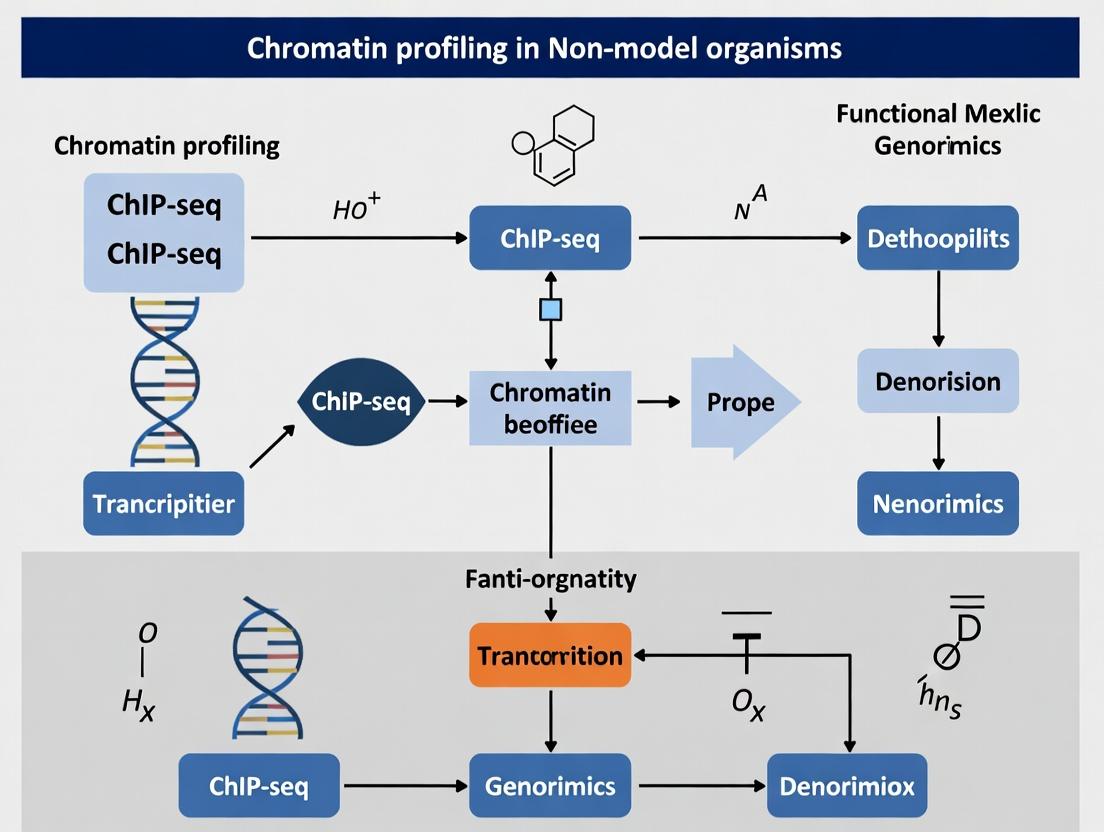
Chromatin immunoprecipitation followed by sequencing (ChIP-seq) is a cornerstone technique for mapping protein-DNA interactions in vivo, yet its application in non-model organisms presents unique challenges and opportunities.
Beyond the Model: A Practical Guide to Chromatin Profiling with ChIP-seq in Non-Model Organisms
Abstract
Chromatin immunoprecipitation followed by sequencing (ChIP-seq) is a cornerstone technique for mapping protein-DNA interactions in vivo, yet its application in non-model organisms presents unique challenges and opportunities. This guide provides researchers and drug development professionals with a comprehensive framework for successful chromatin profiling outside traditional model systems. We cover the foundational rationale for studying epigenetic landscapes in diverse species, detail adapted and novel methodological pipelines, offer solutions for common technical and bioinformatic hurdles, and establish robust validation and comparative analysis strategies. By bridging the gap between established protocols and the realities of non-model research, this article empowers scientists to unlock the regulatory blueprints of evolutionarily and biomedically significant organisms.
Why Go Non-Model? The Rationale and Rewards of Chromatin Profiling Beyond Established Systems
1. Introduction and Scope Within the context of advancing chromatin profiling via ChIP-seq in non-model organism research, a precise definition of 'non-model' is critical for experimental design and resource allocation. This term has evolved beyond the simple absence of a reference genome.
2. Defining the 'Non-Model' Spectrum: A Quantitative Framework The classification is multidimensional. The following table synthesizes key quantitative and qualitative metrics that define the "non-model" status in genomics research.
Table 1: Operational Metrics for Defining Non-Model Organisms in Genomics
| Metric Category | Traditional Model Organism (e.g., Mouse, Drosophila) | Emerging Model Organism | Wild/Non-Model Organism |
|---|---|---|---|
| Genomic Resources | Complete, annotated reference genome; multiple assembled haplotypes. | Draft genome available (scaffold-level); preliminary gene annotation. | No genome assembly; or highly fragmented draft (contig-level). |
| Genetic Tools | CRISPR, transgenic lines, mutant libraries readily available. | CRISPR proven; limited transgenic or mutant lines. | No established genetic manipulation protocols. |
| Omics Data Availability | Extensive public datasets (ChIP-seq, ATAC-seq, single-cell). | RNA-seq datasets common; few epigenetic datasets. | Limited to no orthogonal omics data for validation. |
| ChIP-seq Specific Challenges | Species-specific validated antibodies for histone marks/tFs. | Commercial antibodies may cross-react; need validation. | No commercial antibodies; require custom immunogen generation. |
| Key Enabling Requirement | Standardized protocols. | De novo genome assembly & annotation; antibody validation. | Genome assembly, antibody development, and protocol adaptation. |
3. Core Protocol: Cross-species Antibody Validation for Histone-Mark ChIP-seq A pivotal step for chromatin profiling in non-models is validating antibody specificity.
3.1. Materials & Reagent Solutions
- Peptide ELISA Kit: To quantitatively test antibody affinity against target and non-target peptide sequences.
- Species-Specific Peptide Arrays: Synthetic peptides containing the histone modification (e.g., H3K27ac) from the target species' sequence.
- Western Blot Controls: Nuclear extracts from a model organism (positive control) and the non-model organism.
- Dot Blot Apparatus: For rapid semi-quantitative assessment of antibody cross-reactivity.
- Protein A/G Magnetic Beads: For subsequent ChIP-seq protocol compatibility.
3.2. Methodology
- In silico Epitope Analysis: Compare the protein sequence flanking the modification site between model and non-model organism. Identify amino acid substitutions.
- Peptide-Based Dot Blot: a. Spot 1 µg of target and off-target peptides onto a nitrocellulose membrane. b. Probe with the candidate antibody. Quantify signal intensity. A valid antibody shows >10-fold higher signal for the target peptide.
- Whole-Cell Western Blot: a. Isolate nuclei from the non-model organism tissues. b. Perform acid extraction to enrich for histone proteins. c. Run blot alongside model organism extract. Confirm a single band at the correct molecular weight.
- Immunofluorescence Microscopy: Confirm expected nuclear and chromatin localization pattern in fixed cells/tissue sections.
4. Protocol: ChIP-seq in a Non-Model Organism with a Draft Genome This protocol assumes a fragmented, annotated genome is available.
4.1. Reagent Solutions
- Crosslinking Reagent: Disuccinimidyl glutarate (DSG) for reversible fixation, often followed by formaldehyde, to preserve protein-DNA interactions in diverse tissue types.
- Chromatin Shearing Reagent: Validated micrococcal nuclease (MNase) for species with fragile nuclei, or focused-ultrasonication with optimized buffers.
- ChIP-Grade Antibody: Validated per Protocol 3.
- Size-Selection Magnetic Beads: For post-IP DNA cleanup and library preparation.
- Low-Input Library Prep Kit: For sub-nanogram DNA input, common in preliminary experiments.
4.2. Step-by-Step Workflow
- Tissue Dissociation & Crosslinking: Optimize DSG/formaldehyde concentration and timing on fresh tissue.
- Nuclei Isolation & Chromatin Shearing: Isolate nuclei in a sucrose gradient. Shear chromatin to 200-500 bp fragments; verify size on bioanalyzer.
- Immunoprecipitation: Pre-clear chromatin. Incubate with validated antibody overnight at 4°C. Use Protein A/G beads for capture.
- Washing & Elution: Perform stringent washes. Elute DNA and reverse crosslinks.
- Library Prep & Sequencing: Use a low-input kit. Sequence on an appropriate platform (e.g., Illumina NovaSeq) to sufficient depth (>20 million mapped reads for histone marks).
- Bioinformatic Analysis: a. Map reads to the draft genome using an aligner tolerant of gaps (e.g., BWA-MEM). b. Call peaks relative to a matched input control (e.g., using MACS2). c. Annotate peaks to nearest gene using the available annotation file.
5. Visualizing Workflows and Relationships
Title: Decision Tree for Defining Non-Model Status & Workflow
Title: Core ChIP-seq Workflow for Non-Models
The Scientist's Toolkit: Key Research Reagent Solutions
| Reagent / Material | Function in Non-Model Research | Key Consideration |
|---|---|---|
| DSG (Disuccinimidyl glutarate) | Reversible amine-to-amine crosslinker; stabilizes protein-protein interactions before formaldehyde fixation, crucial for tough tissues or specific complexes. | Optimization of concentration and time is essential to avoid over-crosslinking. |
| MNase (Micrococcal Nuclease) | Enzyme-based chromatin shearing; ideal for organisms where sonication efficiency is low due to nuclear composition or lack of optimized buffers. | Produces nucleosome-centered fragments; requires titration for mononucleosome enrichment. |
| Protein A/G Magnetic Beads | Capture antibody-antigen complexes. Protein A/G mixtures offer broad species compatibility for non-traditional primary antibodies. | Superior recovery and lower background compared to agarose beads for low-abundance targets. |
| Species-Specific Peptide | Custom synthetic peptide matching the exact epitope sequence in the target organism. Used for antibody validation and competition assays. | Critical step to confirm antibody specificity when commercial antibodies are used. |
| Low-Input DNA Library Kit | Enables library construction from <10 ng of ChIP DNA, common in exploratory experiments where yield is unknown. | Often incorporates post-PCR size selection to improve final library quality. |
Core Biological Questions Uniquely Addressed by Non-Model Organism ChIP-seq
Chromatin immunoprecipitation followed by sequencing (ChIP-seq) is a cornerstone of epigenomics, predominantly applied in model organisms. However, its application in non-model organisms—spanning plants, fungi, invertebrates, and non-mammalian vertebrates—unlocks unique biological insights inaccessible through traditional systems. This Application Note, framed within a broader thesis on chromatin profiling in non-model species, details how such research addresses fundamental questions in evolution, adaptation, and specialized biology, providing protocols and tools for researchers and drug development professionals.
Unique Biological Questions and Case Studies
The following table summarizes core questions and recent findings enabled by non-model organism ChIP-seq, highlighting quantitative data.
Table 1: Core Questions & Findings from Non-Model Organism ChIP-seq Studies
| Core Biological Question | Example Non-Model Organism | Key Target | Quantitative Finding | Biological Insight |
|---|---|---|---|---|
| How do chromatin states evolve to regulate novel traits? | Heliconius butterflies (Wing patterning) | H3K27ac (active enhancers) | 831 conserved active enhancers in wing tissue; 15 novel candidate cis-regulatory elements near patterning genes. | Identified evolutionary innovation in regulatory landscapes underlying mimicry. |
| How do environmental adaptions reprogram the epigenome? | Artemia franciscana (Brine shrimp, extreme stress) | H3K4me3 (active promoters) | ~2,000 gene promoters showed significant H3K4me3 changes upon desiccation. | Epigenetic priming facilitates survival in anhydrobiosis. |
| How is symbiotic gene expression spatially coordinated? | Medicago truncatula (Plant, root nodules) | H3K9ac (active genes) | 1,452 genes in nodule zones showed differential H3K9ac enrichment vs. roots. | Chromatin state defines cell-type-specific programs in nitrogen-fixing symbiosis. |
| How do pathogens manipulate host chromatin? | Botrytis cinerea (Fungal pathogen) | H3K27me3 (facultative heterochromatin) | Silencing of plant defense genes correlated with 12 fungal effector binding sites in host promoter regions. | Revealed a cross-kingdom histone modification-based attack mechanism. |
| What defines the chromatin basis of extreme longevity? | Arctica islandica (Ocean quahog, 500+ year lifespan) | H3K9me3 (constitutive heterochromatin) | 23% higher genome-wide H3K9me3 signal compared to short-lived clam species. | Proposed link between heterochromatin stability and negligible senescence. |
Detailed Experimental Protocols
Protocol 1: Cross-Species ChIP-seq for Histone Modifications in Non-Model Tissues
This protocol is adapted for organisms with no existing, validated ChIP-grade antibodies.
1. Tissue Fixation & Nuclei Isolation
- Materials: Fresh tissue, 1% Formaldehyde (in PBS), 2.5M Glycine, Nuclei Isolation Buffer (NIB: 10 mM Tris-HCl pH 8.0, 10 mM NaCl, 0.5% NP-40, protease inhibitors).
- Steps:
- Finely dissect 0.5-1g tissue in cold PBS.
- Fix in 1% formaldehyde for 15 minutes under vacuum infiltration for dense tissues.
- Quench with 125 mM glycine for 5 minutes. Wash 2x with cold PBS.
- Homogenize tissue in 5 mL NIB on ice using a Dounce homogenizer (15-20 strokes).
- Filter homogenate through 70µm and 40µm cell strainers. Pellet nuclei (2000g, 10 min, 4°C).
2. Chromatin Shearing & Immunoprecipitation
- Materials: Sonication buffer (50 mM HEPES pH 7.9, 140 mM NaCl, 1 mM EDTA, 1% Triton X-100, 0.1% Na-deoxycholate, 0.1% SDS), Protein A/G magnetic beads, antibody (see Toolkit), ChIP Wash Buffers.
- Steps:
- Resuspend nuclei in 1 mL sonication buffer. Sonicate using a Covaris or Bioruptor to achieve 200-500 bp fragments (optimize empirically).
- Clear lysate (16,000g, 10 min). Keep 50 µL as "Input."
- Incubate 50-100 µg chromatin with 2-5 µg cross-reactive antibody (e.g., anti-H3K27ac antibody validated in related phylum) overnight at 4°C.
- Add pre-blocked Protein A/G beads for 2 hours. Wash sequentially with: Low Salt, High Salt, LiCl, and TE buffers.
- Elute chromatin (Elution Buffer: 1% SDS, 0.1M NaHCO3). Reverse crosslinks (65°C overnight with 200 mM NaCl).
3. Library Prep & Sequencing for Low-Input DNA
- Materials: ThruPLEX or KAPA HyperPrep kits.
- Steps:
- Purify DNA using SPRI beads.
- Use a low-input, dual-index compatible library prep kit. 8-12 PCR cycles are typical.
- Validate library size (~300 bp) on Bioanalyzer. Sequence on Illumina platform (≥ 20 million paired-end 150 bp reads recommended).
Protocol 2: CUT&RUN for Non-Model Organisms with Low Cell Numbers
For samples where tissue is extremely limited (e.g., insect neurons, early embryos).
1. Permeabilization & Antibody Binding
- Materials: Concanavalin A-coated magnetic beads, Digitonin buffer, primary antibody, pA-MNase fusion protein.
- Steps:
- Isolate cells/nuclei. Wash 2x in Digitonin Wash Buffer (20 mM HEPES pH 7.5, 150 mM NaCl, 0.5 mM Spermidine, 0.1% Digitonin, protease inhibitors).
- Bind to ConA beads for 10 minutes at room temperature.
- Incubate bead-bound cells with 1:50-1:100 primary antibody in 100 µL Digitonin Antibody Buffer for 2 hours at 4°C.
- Wash 2x with Digitonin Wash Buffer.
2. MNase Cleavage & DNA Release
- Steps:
- Resuspend in 100 µL Digitonin Antibody Buffer with pA-MNase (1:100 dilution). Incubate 1 hour at 4°C.
- Wash 2x. Place tubes on ice.
- Induce cleavage by adding 2 µL of 100 mM CaCl₂. Incubate exactly 30 minutes on ice.
- Stop reaction with 100 µL Stop Buffer (32 mM EDTA, 200 mM NaCl, 4 µg/mL glycogen).
- Incubate at 37°C for 10 min to release fragments. Collect supernatant containing cleaved chromatin.
3. DNA Purification & Library Preparation
- Purify DNA with SPRI beads and proceed with low-input DNA library kit as in Protocol 1, Section 3.
Visualization of Workflows and Pathways
Title: Non-Model Organism ChIP-seq Experimental Workflow
Title: Chromatin-Mediated Adaptation Pathway
The Scientist's Toolkit: Research Reagent Solutions
Table 2: Essential Materials for Non-Model Organism ChIP-seq
| Reagent/Material | Function/Challenge Addressed | Example Product/Consideration |
|---|---|---|
| Cross-Reactive Antibodies | Primary challenge: lack of species-specific validated antibodies. | Millipore Sigma's "ChIP-Validated Ab" tested in multiple phyla; Diagenode's "dCODE" antibodies. Validate with peptide blocking or western blot. |
| Low-Input Library Prep Kits | Limited starting material (e.g., insect ganglia, small biopsies). | Takara Bio ThruPLEX DNA-Seq, KAPA HyperPrep. Designed for < 50 ng input DNA, high efficiency. |
| Magnetic Beads (Protein A/G) | Efficient capture of antibody-chromatin complexes; reduced background. | Invitrogen Dynabeads, Sera-Mag SpeedBeads. Allow rapid washing and buffer exchange. |
| Chromatin Shearing Optimizer | Non-standard nuclear composition affects shearing efficiency. | Covaris truChIP Tissue Chromatin Shearing Kit. Includes optimized buffers for diverse tissues. |
| Universal Positive Control Spike-in | Normalization across samples when absolute enrichment levels vary. | Drosophila S2 chromatin (Active Motif) or E. coli DNA for CUT&RUN. Enables quantitative comparisons. |
| De Novo Genome Assembly Tools | Often required due to poor reference genomes. | SOAPdenovo2, Canu for long-reads. Essential for accurate read mapping. |
| Epigenomic Analysis Pipeline | Analysis without species-specific annotation. | nf-core/chipseq (Nextflow), or custom pipelines using MACS2 for peak calling and HOMER for motif analysis. |
Within the broader thesis on advancing chromatin profiling in non-model organisms, this document addresses the three primary, interconnected challenges that impede robust ChIP-seq experimentation: the absence of high-quality reference genomes, the scarcity of species-specific validated antibodies, and the lack of established, optimized protocols. Overcoming these hurdles is critical for expanding epigenetic research into novel species with unique biological and pharmacological relevance.
Application Notes & Strategic Approaches
Overcoming the Lack of a Reference Genome
De novo genome assembly and alternative alignment strategies are essential.
Table 1: Strategies for Genome-Independent and Genome-Assisted ChIP-seq Analysis
| Strategy | Description | Typical Tools/Pipelines | Key Metric | Consideration |
|---|---|---|---|---|
| De Novo Assembly | Assemble sequencing reads into a genome without a reference. | SOAPdenovo, SPAdes, Canu, Hi-C scaffolding | N50 > 1 Mb, BUSCO completeness > 90% | Computationally intensive; requires high-quality, high-coverage sequencing. |
| Cross-Species Alignment | Map reads to a closely related model organism's genome. | BWA-MEM, Bowtie2 | Mapping rate > 30% | High false-positive peak calls due to sequence divergence. |
| Reference-Free Peak Calling | Identify enriched regions without alignment using k-mer frequency. | k-mer based methods, EPIC2 in --broad mode | Number of reproducible peaks (IDR) | Useful for transcription factor mapping; less effective for broad histone marks. |
| Transcriptome-Guided Analysis | Use a high-quality RNA-seq assembly as a pseudo-genome. | Align to de novo transcriptome assembly | Peak association with gene loci | Limited to genic regions; misses intergenic regulatory elements. |
Experimental Protocol: De Novo Genome Assembly for ChIP-seq Scaffolding
- Library Preparation & Sequencing: Generate paired-end (150-250 bp) and long-read (Oxford Nanopore, PacBio HiFi) genomic libraries. Complement with Hi-C or Chicago library data for scaffolding.
- Quality Control: Use FastQC to assess raw read quality. Trim adapters and low-quality bases with Trimmomatic or Cutadapt.
- Genome Assembly:
- Initial Assembly: Assemble trimmed short reads using
SPAdes(--carefulmode) orSOAPdenovo(config file with optimal k-mer). - Long-Read Polishing: Use
Flyefor long-read-only assembly, or usePilonwith long reads to polish the short-read assembly. - Scaffolding: Utilize Hi-C data with
Juicerand3D-DNAorSalmonto order and orient contigs into chromosomes.
- Initial Assembly: Assemble trimmed short reads using
- Assembly Validation: Assess completeness with
BUSCOusing a relevant lineage dataset. Check contiguity via N50/L50 statistics. - Genome Annotation (for peak context): Use
BRAKER2with RNA-seq data to predict gene structures. Repeat masking withRepeatModelerandRepeatMasker.
Addressing the Scarcity of Specific Antibodies
Validating antibody specificity in the absence of positive controls is paramount.
Table 2: Solutions for Antibody Challenges in Non-Model Organisms
| Solution Type | Specific Approach | Validation Method | Success Rate (Estimated) | Key Advantage |
|---|---|---|---|---|
| Cross-Reactivity Testing | Screen antibodies raised against conserved epitopes of model organisms. | Western blot (single band), peptide competition assay in ChIP. | 10-30% for highly conserved targets | Leverages existing commercial reagents. |
| Custom Antibody Generation | Design immunogens against unique or conserved regions of the target protein. | ELISA against immunogen, ChIP-qPCR on known positive regions. | 50-80% (cost-dependent) | Highest potential for specificity. |
| Epitope Tagging | CRISPR/Cas9 or transgenics to introduce a tag (e.g., 3xFLAG, GFP) on the endogenous target. | ChIP with anti-tag antibody, compare to wild-type. | >90% for tagging | Universal, highly specific reagent; requires genetic engineering. |
| Alternative Binders | Use engineered nanobodies or recombinant binders (e.g., dCas9 fusions for locus-specific profiling). | Comparison to orthogonal methods (e.g., CUT&Tag with a different binder). | Varies | Can be highly specific and renewable. |
Experimental Protocol: Cross-Reactive Antibody Validation for Histone Mark ChIP
- Target Selection: Choose an antibody against a highly conserved histone mark (e.g., H3K4me3, H3K9ac, H3K27me3).
- Western Blot Analysis: Isolate core histones via acid extraction from the non-model organism's nuclei. Run on a 15% SDS-PAGE gel, transfer, and probe with the candidate antibody. A single band at the expected molecular weight (~15-20 kDa) suggests specificity.
- Peptide Blocking Control: Pre-incubate the antibody with a 10-fold molar excess of the immunogen peptide (or a synthetic peptide matching the target epitope from the non-model organism) for 2 hours at 4°C before adding to the ChIP reaction. Perform parallel ChIP with blocked and unblocked antibody.
- ChIP-qPCR Validation: Design qPCR primers for genomic regions expected to be enriched (e.g., transcription start sites for H3K4me3) and depleted (e.g., gene deserts). A significant enrichment (>5-fold) in positive regions that is abolished by peptide blocking confirms antibody functionality.
Developing Established Protocols
Protocols must be adapted for species-specific tissue/cell properties and reagent limitations.
Table 3: Key Protocol Variables Requiring Optimization for Non-Model Organisms
| Protocol Stage | Typical Challenge | Optimization Parameters to Test | Success Criterion |
|---|---|---|---|
| Tissue Homogenization & Crosslinking | Tough cell walls (plants, fungi), excessive mucilage. | Grinding method (liquid N2 vs. bead beater), crosslinker concentration (0.5-2% formaldehyde), time (5-30 min). | High chromatin yield, fragment size 200-700 bp post sonication. |
| Nuclei Isolation | Poor lysis, contaminating organelles, starch granules. | Buffer detergent (Triton, NP-40), sucrose gradient centrifugation, filtration steps. | Clean nuclei by microscopy, minimal cytoplasmic contamination. |
| Chromatin Shearing | Variable nuclease accessibility, difficult sonication. | Sonication power/time (Covaris), MNase digestion concentration/time, combination (MNase + sonication). | Majority of fragments between 100-500 bp (gel electrophoresis). |
| Immunoprecipitation | High non-specific background due to shared epitopes. | Antibody amount (1-10 µg), wash stringency (salt concentration, detergent), bead type (Protein A/G). | High signal-to-noise in qPCR validation (>5-fold enrichment). |
Experimental Protocol: Adapted ChIP-seq for Fibrous or Complex Tissues
- Crosslinking & Quenching: Finely grind 1g of flash-frozen tissue in liquid N2. Resuspend in 30 mL PBS with 1.5% formaldehyde. Vacuum infiltrate for 15 min. Quench with 125 mM glycine for 5 min.
- Nuclei Isolation: Filter homogenate through Miracloth. Pellet nuclei (2000g, 10min). Resuspend in Nuclei Lysis Buffer (50mM Tris-HCl pH8.0, 10mM EDTA, 1% SDS) with protease inhibitors. Incubate on ice for 15 min.
- Chromatin Shearing: Split lysate into 1 mL aliquots. Sonicate using a Covaris S220 (Peak Power 140, Duty Factor 5%, Cycles/Burst 200, time 6-8 cycles of 30 sec ON/30 sec OFF). Centrifuge to pellet debris.
- Immunoprecipitation: Dilute sheared chromatin 10-fold in ChIP Dilution Buffer. Pre-clear with Protein A/G beads for 1h. Incubate 50 µL chromatin with 5 µg validated antibody overnight at 4°C. Add 40 µL beads, incubate 2h. Wash sequentially: Low Salt (1x), High Salt (1x), LiCl (1x), TE (2x).
- Elution & Decrosslinking: Elute in 250 µL Fresh Elution Buffer (1% SDS, 0.1M NaHCO3). Add 10 µL 5M NaCl. Incubate at 65°C overnight. Add RNase A and Proteinase K. Purify DNA with SPRI beads.
Diagrams
Title: Overcoming Key Challenges in Non-Model Organism ChIP-seq
Title: Adapted ChIP-seq Workflow with Optimization Points
The Scientist's Toolkit: Research Reagent Solutions
Table 4: Essential Reagents and Materials for Non-Model Organism ChIP-seq
| Item | Category | Function & Rationale |
|---|---|---|
| Anti-Histone Antibodies (H3K4me3, H3K27me3, etc.) | Primary Antibody | Target highly conserved epigenetic marks. Serve as the best entry point for testing cross-reactivity and protocol establishment. |
| Protein A/G Magnetic Beads | Immunoprecipitation | Provide a universal capture matrix for antibody complexes. Magnetic separation minimizes background and is adaptable to low-concentration samples. |
| Covaris AFA Tubes | Chromatin Shearing | Ensure consistent, controlled acoustic shearing across samples, crucial for standardizing fragment size from diverse tissue types. |
| Formaldehyde (37%) | Crosslinking | Creates reversible protein-DNA crosslinks. Concentration and time must be optimized for each tissue type to balance fixation and chromatin accessibility. |
| SPRI (Solid Phase Reversible Immobilization) Beads | DNA Purification | Enable high-efficiency, high-throughput clean-up of ChIP DNA and sequencing libraries without phenol-chloroform extraction. |
| Commercial Cross-Species ChIP Kit | Protocol Foundation | Provides a baseline buffer system and protocol that can be systematically optimized (e.g., Cell Signaling Technology's ChIP kits). |
| Synthetic Immunogen Peptide | Antibody Validation | Used in blocking experiments to confirm antibody specificity in the target organism's genetic context. |
| Universal KAPA Library Prep Kit | Sequencing | Robust, high-yield library preparation from low-input DNA, essential given the typically low yields from exploratory ChIP experiments. |
Within the broader thesis on expanding chromatin profiling via ChIP-seq to non-model organisms, strategic pre-planning is the critical determinant of success. This phase moves beyond standard protocols to confront foundational challenges: the absence of a reference genome, undefined epigenetic landscapes, and unverified reagent compatibility. This document provides application notes and protocols to systematically assess biological suitability and define experimentally achievable objectives, thereby de-risking projects in novel species.
Application Notes: Key Suitability Assessment Criteria
A systematic evaluation of the target organism against the following criteria is required before experimental design commences.
Table 1: Non-Model Organism Suitability Assessment Matrix
| Assessment Category | Key Parameters | Ideal Status | High-Risk Status | Mitigation Strategy |
|---|---|---|---|---|
| Genomic Resources | Reference genome assembly quality (N50, completeness) | Chromosome-level, high BUSCO score (>90%) | Fragmented scaffolds, BUSCO <70% | De novo assembly; Hi-C scaffolding; use closest relative's genome. |
| Chromatin Conservation | Known histone modifications (e.g., H3K4me3, H3K27ac) | Documented in literature for organism/clade | No prior epigenetic studies | Perform western blot/immunofluorescence with cross-reactive antibodies. |
| Antibody Compatibility | Antibody cross-reactivity for target epitope | Validated in related species (family/genus level) | No validation data available | Peptide array or epitope sequence alignment; custom antibody generation. |
| Tissue/Cell Availability | Sample source & homogeneity | Cultured cells or homogeneous tissue | Heterogeneous whole-organism samples | Develop nuclei isolation protocol; use fluorescence-activated nuclei sorting (FANS). |
| Input Material Requirements | Cell/nuclei count per ChIP | >1 million cells per assay (mammalian standard) | Limited biomass (e.g., small insects, early embryos) | Scalable cell culture; nuclei extraction from pooled samples; microChIP protocols. |
Table 2: Quantitative Feasibility Thresholds for Common Organism Types
| Organism Class | Minimum Recommended Cells per ChIP | Estimated Cross-Reactivity Success Rate* for Common Histone Marks | Typical Chromatin Input per IP (μg) | Genome Size Consideration |
|---|---|---|---|---|
| Plants (e.g., non-crop) | 0.5 - 1 million (cultured cells) | 60-80% (H3K4me3, H3K27me3) | 2-5 μg | Large, polyploid genomes require higher sequencing depth. |
| Invertebrates (e.g., insect, worm) | 50,000 - 200,000 (whole organism pool) | 40-70% (H3K4me3, H3K9ac) | 1-3 μg | Smaller genomes allow lower depth but micro-dissection may be needed. |
| Fungi (non-yeast) | 1 - 5 million (spores/mycelia) | 50-75% (H3K9me3, H3K27me3) | 3-7 μg | Repetitive regions may complicate mapping. |
| Fish/Amphibians | 0.2 - 0.5 million (cell line) | 70-90% (H3K27ac, H3K4me1) | 2-4 μg | Potential genome duplication events. |
| Based on aggregate data from recent cross-species studies (2020-2024). Success defined by specific enrichment in positive control regions. |
Core Pre-Planning Experimental Protocols
Protocol 3.1: Epitope Conservation & Antibody Cross-Reactivity Validation
Goal: Determine if commercially available antibodies recognize the target protein/epitope in the non-model organism. Materials: See "Scientist's Toolkit" (Section 6.0). Procedure:
- Sequence Alignment: Retrieve the protein sequence of your target (e.g., histone H3, a specific transcription factor) from the organism's or a close relative's database. Perform a multiple sequence alignment with the species for which the antibody was validated (e.g., human, mouse).
- Epitope Analysis: Visually inspect the exact epitope sequence (provided by antibody vendor) within the alignment. >90% identity is promising; <70% requires experimental validation.
- Western Blot Validation: a. Extract total protein from target organism tissue/cells. b. Run 10-20 μg on a 4-20% gradient SDS-PAGE gel alongside a positive control (if available). c. Transfer to PVDF membrane and probe with the candidate antibody at manufacturer's recommended dilution. d. A single band at the expected molecular weight is a positive indicator. Non-specific bands or no signal suggests incompatibility.
- Immunofluorescence/Nuclear Dot Blot (Alternative): For histone marks, use fixed cells or spot purified nuclei on a membrane. Stain with antibody. A clear, distinct nuclear signal supports cross-reactivity.
Protocol 3.2: Pilot Chromatin Solubility & Fragmentation Assessment
Goal: Establish a nuclei isolation and chromatin shearing protocol optimized for the novel cell/tissue type. Procedure:
- Nuclei Isolation: Homogenize tissue or lyse cells in ice-cold Buffer A (10 mM HEPES pH 7.9, 10 mM KCl, 0.1 mM EDTA, 0.1 mM EGTA, 1 mM DTT, 0.5 mM PMSF, with plant/fungal-specific additions like 0.15% Triton X-100 and sucrose gradient). Pellet nuclei (1000g, 5 min, 4°C).
- Chromatin Extraction: Resuspend nuclei pellet in SDS Lysis Buffer (1% SDS, 10 mM EDTA, 50 mM Tris-HCl pH 8.1). Incubate on ice for 10 min. Centrifuge (13,000g, 10 min, 4°C); supernatant is soluble chromatin.
- Sonication Optimization: Aliquot soluble chromatin. Shear using a Covaris or Bioruptor. Test a time-course (e.g., 3, 6, 9, 12 minutes). Run 2 μl of each sheared sample on a 1.5% agarose gel.
- Analysis: Ideal fragment size is 200-600 bp. Determine the optimal sonication time. Quantify chromatin yield via Qubit fluorometer. Note: Some organisms may require micrococcal nuclease (MNase) digestion instead of sonication.
Protocol 3.3: Feasibility Pilot (Mini-ChIP-qPCR)
Goal: Conduct a small-scale ChIP to test the entire workflow and confirm antibody enrichment prior to full-scale ChIP-seq. Procedure:
- Use 10% of the chromatin yield from Protocol 3.2 for each IP. Dilute chromatin 10-fold in ChIP Dilution Buffer.
- Set up IPs: Test Antibody IP, Species-Matched IgG (Negative Control IP), and reserve 1% as Input.
- Add 2-5 μg of antibody to each IP. Incubate with rotation overnight at 4°C.
- Add pre-washed Protein A/G beads for 2 hours. Wash sequentially with Low Salt, High Salt, LiCl, and TE buffers.
- Elute chromatin and reverse crosslinks. Purify DNA.
- qPCR Analysis: Design 3-5 primer pairs: putative Positive Control Regions (e.g., conserved active promoter like rRNA gene), putative Negative Control Regions (gene desert, silent repeat). Calculate %Input. Successful enrichment is indicated by a >5-fold enrichment in Test IP vs. IgG control at positive regions.
Visual Workflows and Decision Pathways
Pre-Planning Decision Pathway for Non-Model ChIP-seq
Pilot Validation Workflow Before Full ChIP-seq
Defining Scientifically Feasible Goals
Based on assessment and pilot data, explicitly define:
- Scope: Limit initial study to 1-2 key histone marks or one transcription factor, not a full panel.
- Resolution: For large, complex genomes, aim for broad peak profiling rather than single-nucleotide resolution.
- Sequencing Depth: Adjust based on genome size and complexity. Refer to Table 2 and scale from model organism standards (e.g., for a 1 Gb genome, aim for ~20-30 million reads per sample for a broad mark).
- Replicates: A minimum of two biological replicates is critical for non-model systems to account for variability. Three is ideal if resources allow.
- Controls: Plan for matched IgG control and Input DNA for each experiment. A positive control species (if available) is highly recommended.
The Scientist's Toolkit: Research Reagent Solutions
Table 3: Essential Materials for Pre-Planning Phase
| Item | Function & Rationale | Example Product/Cat. No. |
|---|---|---|
| Cross-Reactive Antibody (Core) | Immunoprecipitation of target epitope. Prioritize antibodies validated in multiple species or against highly conserved epitopes. | Active Motif H3K27ac (Cat# 39133), Diagenode C15210011 (H3K4me3) |
| Species-Matched Normal IgG | Critical negative control for ChIP to assess non-specific background. Must match host species of primary antibody (e.g., rabbit IgG). | Millipore Sigma, I8140 (Rabbit) |
| Protein A/G Magnetic Beads | Efficient capture of antibody-antigen complexes. Magnetic beads simplify washing and are adaptable to low-input protocols. | Pierce Protein A/G Magnetic Beads (88802) |
| Covaris microTUBE or equivalent | For reproducible acoustic shearing of chromatin to optimal fragment size. | Covaris microTUBE, 520045 |
| BUSCO Software & Lineage Dataset | Assess genome assembly completeness using universal single-copy orthologs. Critical for evaluating genomic resources. | busco.sourceforge.net (Use appropriate lineage: eukaryota, metazoa, etc.) |
| Chromatin Shearing Optimization Kit | Pre-packaged reagents and protocols for establishing shearing conditions for new cell/tissue types. | Covaris truChIP Chromatin Shearing Kit |
| Microvolume Fluorometer | Accurate quantification of low-yield DNA and chromatin samples from pilot studies (e.g., post-ChIP DNA). | Qubit 4 Fluorometer with dsDNA HS Assay Kit |
| Epitope Peptide for Blocking | Synthetic peptide matching the immunogen. Used in a blocking control to confirm antibody specificity during validation. | Custom synthesis from vendors like GenScript. |
Building Your Pipeline: Adapted ChIP-seq Protocols for Non-Model Systems
Within chromatin immunoprecipitation followed by sequencing (ChIP-seq) for profiling histone modifications, transcription factors, or chromatin regulators in non-model organisms, antibody specificity is the paramount concern. Cross-reactivity—where an antibody binds to off-target epitopes—poses a significant risk, potentially leading to erroneous biological interpretations. This application note details validation strategies and protocols to ensure reliable ChIP-seq data in evolutionarily diverse systems where validated, species-specific reagents are often lacking.
The Challenge: Quantifying the Cross-Reactivity Problem
The reliance on antibodies in epigenetic research, particularly for non-model organisms, is fraught with validation gaps. Studies indicate a high failure rate for antibodies in common applications.
Table 1: Reported Antibody Validation and Cross-Reactivity Statistics
| Metric | Reported Value (%) | Source Context | Implication for Non-Model Organisms |
|---|---|---|---|
| Antibodies failing specificity tests | 25-50% | Multiple immunoassay studies (2020-2023) | High baseline risk for spurious ChIP-seq peaks. |
| Commercial ChIP-grade antibodies with independent validation | < 50% | Survey of major suppliers (2024) | "ChIP-grade" label is not a guarantee of specificity. |
| Histone modification antibodies showing major cross-reactivity issues | ~30% | Histone antibody specificity database (2023) | Critical for interpreting chromatin states. |
| Success rate of cross-reactive antibodies in distantly related species | 10-30% | Empirical studies in invertebrates/plants (2022) | Highlights need for rigorous in-house validation. |
Core Validation Strategies and Protocols
A multi-pronged validation approach is essential prior to committing to large-scale ChIP-seq in a non-model organism.
In Silico Epitope Analysis Protocol
Objective: Predict potential cross-reactivity by comparing the target epitope sequence across the proteome of the study organism. Methodology:
- Epitope Mapping: Obtain the immunogen sequence from the antibody datasheet. If unavailable, use the full protein sequence of the canonical target (e.g., human H3K4me3).
- Proteome BLAST: Perform a local BLASTp search of the epitope (8-15 amino acids) against the predicted proteome of your non-model organism. Use a relaxed e-value threshold (e.g., 1e-3).
- Analysis: Tabulate all hits with >60% sequence similarity. Pay particular attention to other histone variants or family proteins (e.g., other H3 variants, H1 family). Hits with high similarity are high-risk candidates for cross-reactivity.
Peptide Dot Blot (Array) Specificity Assay
Objective: Empirically test antibody binding to the target modification and related, potentially cross-reactive epitopes. Materials: Nitrocellulose membrane, synthetic peptides (biotinylated), blocking buffer (5% BSA/TBST), primary antibody, HRP-conjugated secondary antibody, chemiluminescent substrate. Protocol:
- Peptide Array: Spot 1 µL (100 ng) of synthetic peptides onto a nitrocellulose membrane. Include: a) Target peptide (e.g., H3K9ac), b) Unmodified version (e.g., H3), c) Related modification (e.g., H3K14ac), d) Other common similar motifs (e.g., H4K5ac).
- Air dry, then block membrane for 1 hour.
- Incubate with primary antibody (at ChIP dilution) overnight at 4°C.
- Wash, incubate with HRP-secondary for 1 hour.
- Develop and image. Interpretation: Signal should be strong only for the target peptide. Any signal for related peptides indicates cross-reactivity, disqualifying the antibody for ChIP-seq.
Western Blot on Whole-Cell Lysate
Objective: Confirm antibody recognizes a single protein of the expected size in the study organism's chromatin extract. Protocol:
- Prepare acid-extracted histones or nuclear extracts from the organism.
- Run 5-20 µg of protein on a 4-20% SDS-PAGE gel, alongside a relevant positive control (if available).
- Transfer to PVDF membrane and block.
- Probe with the ChIP antibody. Key Outcome: A single, sharp band at the correct molecular weight (e.g., ~17 kDa for core histones) is acceptable. Multiple bands or a smear indicate non-specific binding or degradation, but a single band does not guarantee ChIP suitability.
Knockdown/Knockout (KD/KO) Validation (Gold Standard)
Objective: Provide definitive evidence of specificity by loss of signal upon depletion of the target protein/modification. Protocol for CRISPR/Cas9 or RNAi:
- Design gRNAs or RNAi constructs to target the gene encoding the chromatin protein of interest (e.g., a specific histone methyltransferase) or the histone gene itself in a cell line/organism.
- Generate KD/KO and control samples.
- Perform Western blot and ChIP-qPCR on known positive genomic regions using the antibody.
- Interpretation: A significant reduction in both western and ChIP-qPCR signal in the KD/KO versus control confirms antibody specificity. This is often pre-publication requirement for high-profile journals.
Integrated Validation Workflow for Non-Model Organisms
Antibody Validation Workflow for ChIP-seq
The Scientist's Toolkit: Research Reagent Solutions
Table 2: Essential Reagents for Cross-Reactivity Testing
| Item | Function & Rationale |
|---|---|
| Synthetic Peptide Arrays | Custom arrays containing the target epitope and a panel of related/modified peptides. Provides the most direct test of epitope specificity. |
| CRISPR/Cas9 Knockout Kits | For creating definitive negative control cell lines/lines in your organism to prove antibody dependency. |
| Recombinant Epitope Tag Proteins | Expressing the target protein (e.g., histone) with an epitope tag (e.g., FLAG) in the study organism provides a positive control for antibody function. |
| Competitive Peptide Blocks | Pre-incubation of antibody with excess target peptide should abolish signal; use of non-target peptide should not. A classic specificity control. |
| ChIP-seq Spike-in Controls | Synthetic chromatin (e.g., Drosophila or S. cerevisiae) spiked into samples. Normalizes technical variation and can reveal differential enrichment efficacy. |
| Isotype Control IgG | Same species and isotype as the primary antibody. Critical for setting baseline in ChIP-qPCR/seq to assess non-specific background pull-down. |
| Proteome-Wide Database Access | Subscription to comprehensive protein sequence databases (UniProt, NCBI) for in-depth in silico cross-reactivity screening. |
Robust antibody validation is non-negotiable for generating credible ChIP-seq data in non-model organisms. The sequential application of in silico analysis, peptide arrays, western blotting, and ultimately genetic knockout controls forms a defensive barrier against cross-reactivity. Integrating these protocols and tools into the experimental workflow mitigates risk and ensures that observed chromatin profiles reflect true biology rather than artifact.
Sample Collection & Chromatin Preparation from Diverse Tissues and Life Stages
This protocol is a foundational chapter within a broader thesis focused on adapting and applying Chromatin Immunoprecipitation followed by sequencing (ChIP-seq) to non-model organisms. The primary challenge in such research is the immense variability in tissue composition, cellularity, developmental stages, and the lack of species-specific reagents. Standardized methods from model systems often fail. Therefore, rigorous, adaptable protocols for sample collection and chromatin preparation are critical first steps to generate high-quality, interpretable chromatin profiles across diverse biological contexts.
Key Considerations for Diverse Samples
Variability across tissues and life stages impacts chromatin preparation significantly. The table below summarizes critical parameters that must be optimized.
Table 1: Quantitative Parameters for Sample Collection & Processing
| Sample Type / Life Stage | Recommended Starting Mass | Fixation (1% Formaldehyde) Time | Homogenization Method | Expected Chromatin Yield (DNA) | Key Challenge |
|---|---|---|---|---|---|
| Animal Embryo (Early) | 50-100 embryos | 10-15 min | Dounce homogenizer | 50-150 ng | Low cell number, high yolk/lipid content |
| Animal Embryo (Late) | 5-10 embryos | 15-20 min | Dounce homogenizer | 200-500 ng | Tissue differentiation, variable cell types |
| Adult Animal Tissue (Soft, e.g., Liver) | 20-30 mg | 15 min | Dounce homogenizer | 1-3 µg | High nuclease & protease activity |
| Adult Animal Tissue (Hard, e.g., Muscle) | 50-100 mg | 20-25 min | Mechanical disaggregation (sonicator) followed by Dounce | 0.5-2 µg | Tough extracellular matrix, low nuclear density |
| Plant Seedling | 100-200 mg | 20 min under vacuum infiltration | Polytron/Blender | 1-4 µg | Cell wall, pigments, secondary metabolites |
| Plant Mature Leaf | 500 mg - 1 g | 20-25 min under vacuum | Polytron with crosslinking buffer | 2-5 µg | High chloroplast content, starch granules |
| Insect Larvae | 10-20 individuals | 15-20 min | Dounce homogenizer | 200-800 ng | Chitin, high fat body content |
| Cultured Cells (Non-model) | 1x10^6 - 5x10^6 cells | 10 min for adherent, 8 min for suspension | Lysis buffer vortexing | 0.5-2 µg | Often slow-growing, limited biomass |
Detailed Protocols
Protocol 3.1: Universal Crosslinking & Quenching
Materials:
- PBS (ice-cold)
- 16% Formaldehyde, methanol-free (Thermo Fisher, 28906)
- 2.5M Glycine (sterile-filtered)
- Liquid nitrogen
Method:
- In vivo crosslinking: For tissues/embryos, immediately submerge in PBS + 1% formaldehyde (from 16% stock). Use volumes at least 10x the sample volume.
- Incubate with gentle agitation for times specified in Table 1. For plants, perform vacuum infiltration (2x 10 min) to ensure penetration.
- Quench by adding glycine to a final concentration of 125 mM. Incubate for 5 min with gentle agitation.
- Wash sample 2x with copious amounts of ice-cold PBS.
- Flash-freeze sample in liquid nitrogen. Store at -80°C until use.
Protocol 3.2: Nuclei Isolation & Chromatin Preparation from Complex Tissues
Materials:
- Nuclei Isolation Buffer (NIB): 10 mM Tris-HCl pH 8.0, 10 mM NaCl, 3 mM MgCl2, 0.1% NP-40, 10% glycerol, 1x protease inhibitor cocktail (PIC), 1 mM PMSF.
- Lysis Buffer: 50 mM Tris-HCl pH 8.0, 10 mM EDTA, 1% SDS, 1x PIC.
- Dounce homogenizer (tight pestle)
- Miracloth (Merck, 475855)
- Sucrose cushions: 1.2M sucrose in NIB (without NP-40).
Method:
- Grind frozen tissue under liquid nitrogen using a pre-chilled mortar and pestle to a fine powder.
- Suspend powder in 10 volumes of ice-cold NIB. For fibrous tissues, add 0.5% sodium deoxycholate.
- Homogenize with 15-20 strokes in a Dounce homogenizer on ice. Filter through two layers of Miracloth.
- Layer the filtrate over a ½ volume sucrose cushion. Centrifuge at 10,000 x g for 20 min at 4°C.
- Discard supernatant. Resuspend the nuclei pellet (often gelatinous) in 1 mL of NIB. Count nuclei if possible.
- Pellet nuclei again at 2,000 x g for 5 min. Resuspend in 500 µL Lysis Buffer. Incubate on ice for 10 min.
- Shear chromatin via sonication. Optimal conditions must be determined empirically for each tissue/organism using a focused ultrasonicator (e.g., Covaris or Diagenode Bioruptor). Typical starting conditions: 5-10 cycles of 30 sec ON/30 sec OFF at high power.
- Centrifuge sheared lysate at 16,000 x g for 10 min at 4°C. Transfer supernatant (soluble chromatin) to a new tube. Aliquot and store at -80°C.
Experimental Workflow & Pathway Diagrams
Title: Chromatin Prep Workflow for Non-Model Organisms
Title: ChIP-seq Crosslinking & Immunoprecipitation Logic
The Scientist's Toolkit: Research Reagent Solutions
Table 2: Essential Materials for Chromatin Prep from Diverse Samples
| Reagent/Material | Supplier (Example) | Function & Critical Note |
|---|---|---|
| Methanol-Free Formaldehyde (16%) | Thermo Fisher (28906) | In vivo crosslinking agent. Methanol-free is critical for efficient crosslinking and downstream antibody epitope recognition. |
| Protease Inhibitor Cocktail (PIC), EDTA-free | Roche (4693132001) | Prevents proteolytic degradation of transcription factors and histones during nuclei isolation. EDTA-free is often preferable for later steps. |
| Dounce Homogenizer (Glass), Tight Pestle | Kimble (885300-0002) | Mechanical cell lysis with minimal nuclear damage. Essential for soft tissues and embryos. Pestle clearance (~0.0025 in) is key. |
| Diagenode Bioruptor Pico | Diagenode (B01060001) | Reproducible, water bath-based sonication for simultaneous processing of multiple samples. Ideal for optimizing shearing across new sample types. |
| Covaris microTUBES | Covaris (520045) | Aerosol-free tubes for focused ultrasonication. Provides the most consistent and efficient chromatin shearing for critical samples. |
| Miracloth | Merck (475855) | Filters homogenates to remove large debris and connective tissue without retaining nuclei, superior to common cheesecloth. |
| Dynabeads Protein A/G | Thermo Fisher (10002D/10004D) | Magnetic beads for antibody capture during ChIP. Crucial for low-input samples common in non-model organism work. |
| Qubit dsDNA HS Assay Kit | Thermo Fisher (Q32851) | Accurate, dye-based quantification of dilute, sheared chromatin DNA. Fluorometric measurement is essential over spectrophotometry. |
| High Sensitivity DNA Kit (Fragment Analyzer/Bioanalyzer) | Agilent (DNF-474) | Evaluates chromatin shearing size distribution (goal: 100-500 bp). The primary QC step before committing to ChIP. |
Modified Native vs. Crosslinking ChIP (X-ChIP) for Challenging Specimens
Application Notes
Chromatin immunoprecipitation followed by sequencing (ChIP-seq) is pivotal for mapping protein-DNA interactions in vivo. In non-model organism research, specimens are often "challenging" due to unique tissue composition, low cell numbers, or the presence of endogenous nucleases or metabolites that degrade chromatin. The choice between Modified Native ChIP (MN-ChIP) and Crosslinking ChIP (X-ChIP) is critical for success.
- Modified Native ChIP (MN-ChIP): This protocol omps formaldehyde crosslinking. Chromatin is prepared via micrococcal nuclease (MNase) digestion, releasing primarily mononucleosomes. It is ideal for mapping core histone modifications (e.g., H3K4me3, H3K27ac) in specimens where crosslinking efficiency is poor or where epitope masking is a concern. It provides higher resolution but risks artifacts from chromatin redistribution during isolation.
- Crosslinking ChIP (X-ChIP): Uses formaldehyde to covalently link proteins to DNA and stabilize transient interactions. It is essential for mapping transcription factors, co-factors, and chromatin regulators. In challenging specimens, extended or optimized crosslinking conditions may be required to capture fragile complexes.
Table 1: Quantitative Comparison of MN-ChIP vs. X-ChIP for Challenging Specimens
| Parameter | Modified Native ChIP (MN-ChIP) | Crosslinking ChIP (X-ChIP) |
|---|---|---|
| Primary Application | Core histone modifications | Transcription factors, polymerases, chromatin remodelers |
| Typical Input | 50,000 - 200,000 cells | 100,000 - 1,000,000 cells |
| Crosslinking Time | Not applicable | 5-30 min (may require optimization) |
| Chromatin Fragmentation | Enzymatic (MNase) | Sonication (physical shearing) |
| Typical Resolution | Nucleosome-level (~150 bp) | 200-500 bp (depends on shearing) |
| Key Artifact Risk | Nuclease digestion bias, chromatin redistribution | Over-crosslinking (epitope masking), under-crosslinking (poor yield) |
| Success Rate in Difficult Tissues (e.g., fibrous, fatty) | Higher - Less dependent on crosslinking penetration | Variable - Highly dependent on fixation protocol |
| Compatibility with Low-Input/Ancient DNA | Good - Less DNA damage from crosslinking/reversal | Poorer - Crosslinking reversal causes DNA damage |
Detailed Protocols
Protocol 1: Modified Native ChIP for Low-Cell-Number Insect Ovaries Specimen Challenge: Limited cell numbers (~10,000), high protease activity.
- Dissection & Homogenization: Dissect ovaries in cold PBS with 0.1% Triton X-100 and protease inhibitors (PI). Homogenize with a loose pestle in 500 µL Nuclei Isolation Buffer (10 mM Tris-HCl pH 7.5, 10 mM NaCl, 3 mM MgCl₂, 0.1% NP-40, PI).
- Nuclei Isolation & MNase Digestion: Pellet nuclei (600 x g, 5 min, 4°C). Resuspend in 100 µL MNase Digestion Buffer (10 mM Tris-HCl pH 7.5, 15 mM NaCl, 60 mM KCl, 0.15 mM spermine, PI). Add 2 µL MNase (2 U/µL, NEB) and incubate 10 min at 37°C. Stop with 10 µL 0.5 M EGTA.
- Chromatin Solubilization: Lyse nuclei in 200 µL MNase Lysis Buffer (10 mM Tris-HCl pH 7.5, 1 mM EDTA, 0.2% SDS, PI) on ice for 10 min. Dilute 10-fold with ChIP Dilution Buffer.
- Immunoprecipitation: Add 1-2 µg of target-specific antibody (e.g., anti-H3K27me3) and incubate overnight at 4°C with rotation. Add pre-blocked Protein A/G beads for 2 hours.
- Wash & Elution: Wash beads sequentially with Low Salt, High Salt, LiCl, and TE buffers. Elute DNA in Elution Buffer (50 mM NaHCO₃, 1% SDS) at 65°C for 30 min. Reverse crosslinks (if any secondary fixation was used) and purify DNA.
Protocol 2: Enhanced Crosslinking ChIP for Plant Root Tips Specimen Challenge: Rigid cell wall, high nuclease and metabolite content.
- Vacuum-Infiltration Crosslinking: Harvest roots in PBS. Submerge in 1% formaldehyde solution under vacuum for 15 minutes. Release vacuum to infiltrate fixative. Quench with 0.125 M glycine for 5 min under vacuum.
- Nuclei Extraction: Flash-freeze tissue. Grind to powder under liquid N₂. Resuspend powder in Nuclei Extraction Buffer I (0.4 M sucrose, 10 mM Tris-HCl pH 8.0, 10 mM MgCl₂, 5 mM β-mercaptoethanol, PI). Filter through mesh. Pellet nuclei through a sucrose cushion (Buffer II: 1.7 M sucrose, 10 mM Tris-HCl pH 8.0, 2 mM MgCl₂, PI).
- Sonication: Lyse nuclei in Sonication Buffer (50 mM HEPES pH 7.5, 140 mM NaCl, 1 mM EDTA, 1% Triton X-100, 0.1% Na-deoxycholate, 0.1% SDS, PI). Sonicate using a Covaris S220 (Peak Power: 140, Duty Factor: 5%, Cycles/Burst: 200, time: 12-18 min) to shear chromatin to 200-500 bp.
- Immunoprecipitation & Reverse Crosslinks: Clarify lysate. For IP, use 5-10 µg of antibody (e.g., anti-RNA Polymerase II). Incubate overnight. Recover chromatin with beads. Wash stringently. Elute in Elution Buffer.
- Decrosslinking & Cleanup: Add NaCl to 200 mM and RNase A. Incubate at 65°C overnight. Add Proteinase K, incubate at 55°C for 2 hours. Purify DNA with SPRI beads.
Visualizations
Decision Workflow: ChIP Method Selection
MN-ChIP Target: Histone Modification on Nucleosome
The Scientist's Toolkit: Key Reagent Solutions
| Reagent/Material | Function in Challenging Specimens |
|---|---|
| Micrococcal Nuclease (MNase) | Enzyme for native chromatin digestion; critical for MN-ChIP to generate nucleosome-sized fragments without crosslinking. |
| Ultra-Pure Formaldehyde (Methanol-free) | Reliable, consistent crosslinker for X-ChIP; methanol-free reduces background and is crucial for sensitive tissues. |
| Protease Inhibitor Cocktail (Broad-Spectrum) | Essential to prevent protein degradation during isolation from protease-rich challenging tissues. |
| Magnetic Protein A/G Beads | Enable low-background, rapid IP and washing; ideal for small-scale and low-input ChIP protocols. |
| Covaris Focused-Ultrasonicator | Provides consistent, controllable chromatin shearing for X-ChIP, vital for tough tissues (e.g., plant, fungal). |
| Species-Specific Validated Antibodies | For non-model organisms, antibodies validated for cross-reactivity are mandatory; histone modification antibodies are more likely to cross-react. |
| SPRI (Solid Phase Reversible Immobilization) Beads | Enable efficient DNA cleanup and size selection post-IP, maximizing recovery from precious low-yield samples. |
| Glycine (Quenching Solution) | Stops crosslinking reaction; optimization of quenching time is key to prevent over-fixation in permeable tissues. |
Application Notes: Optimizing ChIP-seq for Non-Model Organisms
In the context of a broader thesis on chromatin profiling in non-model organisms, sequencing considerations are paramount. These organisms often lack well-annotated genomes and established protocols, making the judicious allocation of resources critical. Key factors include sequencing depth, biological and technical replication, and library preparation efficiency.
Depth: For histone modification ChIP-seq in a non-model organism with a moderate-sized genome (~1-1.5 Gb), a depth of 20-30 million aligned reads per sample is often sufficient for robust peak calling. For transcription factors with sharp, localized binding sites, 15-25 million reads may be adequate. Insufficient depth leads to poor peak resolution and false negatives.
Replicates: Biological replicates (samples derived from independent biological experiments) are non-negotiable for statistical rigor. A minimum of two replicates is standard, though three are strongly recommended for reliable peak identification using tools like IDR (Irreproducible Discovery Rate). Technical replicates (re-library preps from the same sample) are less critical but can be useful for troubleshooting library preparation protocols.
Cost-Effective Library Prep: Commercial kits (e.g., NEBNext, KAPA) offer reliability but at a premium. For cost-sensitive projects, "homebrew" protocols utilizing T4 DNA polymerase, Klenow fragment, and T4 PNK for end repair, along with user-validated adapters and PCR additives, can reduce costs by >50%. This is particularly valuable when processing many samples from novel organisms where initial optimization is required.
Quantitative Data Summary:
Table 1: Recommended Sequencing Parameters for Non-Model Organisms
| Factor | Histone Modifications | Transcription Factors | Notes |
|---|---|---|---|
| Read Depth (Aligned) | 20-40 million reads | 15-30 million reads | Scale with genome size. |
| Biological Replicates | 2 (minimum), 3 (ideal) | 2 (minimum), 3 (ideal) | Essential for statistical confidence. |
| Read Length | 50-75 bp SE or 75-150 bp PE | 50-75 bp SE or 75-150 bp PE | PE aids in mapping complexity. |
| Control Sample | Input DNA or IgG | Input DNA | Mandatory for peak calling. |
Table 2: Library Prep Cost Comparison
| Method | Approx. Cost per Sample | Time | Reliability | Best For |
|---|---|---|---|---|
| Commercial Ultra II Kit | $40-$60 | 4-6 hours | High | Standardized workflows, precious samples |
| "Homebrew" Protocol | $15-$25 | 6-8 hours | Medium (user-dependent) | High-throughput screens, pilot studies, tight budgets |
Detailed Experimental Protocols
Protocol 1: Cost-Effective "Homebrew" ChIP-seq Library Preparation This protocol follows chromatin immunoprecipitation and DNA elution.
Materials:
- Purified ChIP DNA and Input DNA (in 50 µL EB buffer).
- End Repair Enzyme Mix (see Reagent Solutions).
- Klenow Fragment (3'→5' exo-).
- dATP for A-tailing.
- T4 DNA Ligase.
- User-validated indexed adapters (1.5 µM).
- PCR primers and a high-fidelity polymerase (e.g., Q5).
- SPRIselect beads (or equivalent).
Procedure:
- End Repair: Combine 50 µL DNA, 7 µL 10X T4 Ligase Buffer, 5 µL dNTP mix (10 mM), 3 µL T4 DNA Polymerase (3 U/µL), 1 µL Klenow Fragment (5 U/µL), and 1 µL T4 PNK (10 U/µL). Incubate at 20°C for 30 min. Purify with 1.8X SPRI beads, elute in 42 µL EB.
- A-Tailing: To 42 µL DNA, add 5 µL 10X NEBuffer 2, 3 µL dATP (10 mM), and 1 µL Klenow Fragment (exo-). Incubate at 37°C for 30 min. Purify with 1.8X SPRI beads, elute in 22 µL EB.
- Adapter Ligation: Add 25 µL 2X Quick Ligase Buffer, 1 µL of indexed adapter (1.5 µM), and 2 µL Quick T4 DNA Ligase. Incubate at 20°C for 15 min. Purify with 1.8X SPRI beads, elute in 22 µL EB.
- Size Selection: Perform double-sided SPRI bead selection (e.g., 0.5X to 0.8X ratio) to isolate fragments ~250-500 bp. Elute in 25 µL EB.
- PCR Amplification: Set up a 50 µL PCR: 25 µL DNA, 5 µL each forward and reverse primer (10 µM), 10 µL 5X Q5 Buffer, 1 µL dNTPs (10 mM), 0.5 µL Q5 Polymerase. Cycle: 98°C 30s; 10-14 cycles of [98°C 10s, 65°C 30s, 72°C 30s]; 72°C 5 min. Purify with 1X SPRI beads. Quantify by qPCR or bioanalyzer.
Protocol 2: Determining Optimal Sequencing Depth via Saturation Analysis
- Subsampling: Using alignment files (BAM) from a deep-sequenced pilot sample, randomly subsample reads at increasing depths (e.g., 5M, 10M, 15M... up to total depth) using
samtools view -s. - Peak Calling: Call peaks from each subsampled BAM file using your chosen peak caller (e.g., MACS2) against the input control.
- Peak Counting: Count the number of high-confidence peaks (e.g., from IDR for replicates, or a set FDR threshold for a single sample) at each depth.
- Plotting: Graph the number of peaks (y-axis) against sequencing depth (x-axis). The point where the curve begins to plateau indicates the sufficient depth for your experiment.
Mandatory Visualizations
Cost-Effective Library Prep Workflow
Sequencing Depth Saturation Analysis
Strategic Balance for Non-Model Organism ChIP-seq
The Scientist's Toolkit: Research Reagent Solutions
Table 3: Essential Materials for Cost-Effective ChIP-seq Library Prep
| Item | Function / Rationale | Example/Alternative |
|---|---|---|
| SPRIselect Beads | Size selection and purification; more flexible and cost-effective than column-based kits. | AMPure XP, homemade SPRI beads. |
| "Homebrew" Enzyme Mixes | User-assembled enzymes for end-repair, A-tailing, ligation. Reduces cost significantly. | T4 DNA Pol + Klenow + T4 PNK; Klenow (exo-); T4 DNA Ligase. |
| User-Validated Adapters | In-house synthesized and annealed adapters with dual-index barcodes for multiplexing. | Diluted from stocked oligos to 1.5 µM working concentration. |
| High-Fidelity PCR Mix | Amplifies library with minimal bias and errors. Critical for low-input samples. | NEB Q5, KAPA HiFi, homemade mix with proofreading polymerase. |
| Fragment Analyzer/Bioanalyzer | Quality control for insert size distribution post-library prep. Essential before pooling. | TapeStation, LabChip GX. |
| qPCR Quantification Kit | Accurate quantification of library concentration for pooling and sequencing loading. | KAPA Library Quant, qPCR with SYBR Green and known standards. |
Within the broader thesis on chromatin profiling in non-model organisms, this protocol addresses the core computational challenge: analyzing ChIP-seq data in the absence of a reference genome. This is common in ecological, evolutionary, and drug discovery research involving novel or understudied species. We present a de-novo-centric workflow for alignment, peak detection, and motif discovery that does not rely on pre-existing annotation.
Table 1: Comparison of De Novo Genome Assembly Tools for ChIP-seq Input DNA
| Tool | Key Algorithm | Recommended Use Case | Estimated Runtime (for 50M reads) | Key Metric (N50 >) |
|---|---|---|---|---|
| SPAdes | Multi-kmer assembly | Bacterial, small eukaryotic genomes | 6-12 hours | 20 kb |
| MaSuRCA | Hybrid (OLC + de Bruijn) | Larger, more complex eukaryotes | 18-36 hours | 50 kb |
| MEGAHIT | Succinct de Bruijn graph | Metagenomic, large-scale data | 4-8 hours | 10 kb |
| minia | Bloom filter de Bruijn | Memory-constrained environments | 3-6 hours | 15 kb |
Table 2: Peak Callers Compatible with De Novo Assemblies
| Peak Caller | Reference Requirement | Strengths in Non-Model Context | Key Parameter to Adjust |
|---|---|---|---|
| MACS2 | De novo assembly FASTA | Robust signal-shifting model; widely used. | --nomodel --extsize (estimate fragment size) |
| EPIC2 | De novo assembly FASTA | Efficient for broad marks (H3K9me3). | --bin-size (adjust for contig length) |
| SICER2 | De novo assembly FASTA | Designed for diffuse histone marks; contig-aware. | --fragment-size=200 (critical for accuracy) |
| HOMER | De novo assembly FASTA | Integrated de novo motif discovery. | -size 200 (peak region size) |
Table 3: De Novo Motif Discovery Tools
| Tool | Algorithm | Maximum Motif Length | Key Output | Best for |
|---|---|---|---|---|
| MEME-ChIP | EM, OOPS, ZOOPS | 30 bp | HTML report with motifs | Initial discovery, diverse results |
| HOMER (findMotifs.pl) | Hypermutability | 20 bp | Known motif comparison | Immediate contextual analysis |
| STREME | Differential enrichment | 15 bp | MEME format motifs | Large, differential datasets |
| DREME | Regular Expression | 8 bp | Short, core motifs | Rapid discovery of short motifs |
Experimental Protocols
Protocol 1:De NovoGenome Assembly from Input Control DNA
Objective: Generate a reference assembly from the organism's Input DNA.
- Quality Control: Use FastQC on Input FASTQ files. Trim adapters and low-quality bases with Trimmomatic:
java -jar trimmomatic.jar PE -phred33 input_R1.fq input_R2.fq output_forward_paired.fq output_forward_unpaired.fq output_reverse_paired.fq output_reverse_unpaired.fq ILLUMINACLIP:adapters.fa:2:30:10 LEADING:3 TRAILING:3 SLIDINGWINDOW:4:15 MINLEN:36 - Assembly: Assemble using SPAdes (for smaller genomes):
spades.py -1 output_forward_paired.fq -2 output_reverse_paired.fq -o assembly_output --careful -t 8 - Assessment: Evaluate assembly using QUAST:
quast.py assembly_output/contigs.fasta -o quast_report - Indexing: Index the assembly for alignment:
bwa index contigs.fastaandsamtools faidx contigs.fasta.
Protocol 2: Alignment and Peak Calling on aDe NovoAssembly
Objective: Map ChIP and Input reads to the new assembly and identify enrichment sites.
- Alignment: Map reads using BWA-MEM:
bwa mem -t 8 contigs.fasta chip_R1.fq chip_R2.fq | samtools sort -o chip_sorted.bam - Post-processing: Mark duplicates (Picard) and index BAM files.
- Peak Calling: Use MACS2 in de novo mode:
macs2 callpeak -t chip_sorted.bam -c input_sorted.bam -f BAMPE -n experiment_name --outdir peaks --nomodel --extsize 200 -g 1e7(adjust-gfor estimated genome size). - Peak Annotation: Use the generated assembly FASTA with HOMER:
annotatePeaks.pl peaks.narrowPeak contigs.fasta > annotated_peaks.txt.
Protocol 3:De NovoMotif Discovery from Called Peaks
Objective: Identify overrepresented DNA sequence motifs in peak regions.
- Sequence Extraction: Use
bedtools getfastato extract sequences:bedtools getfasta -fi contigs.fasta -bed peaks.narrowPeak -fo peak_sequences.fa - Discovery with MEME-ChIP:
meme-chip -o meme_chip_output -db motif_databases/JASPAR/JASPAR2024_CORE_vertebrates_non-redundant.meme peak_sequences.fa - Differential Analysis with HOMER:
findMotifs.pl peak_sequences.fa fasta motif_output_dir -fasta background_sequences.fa -size 200 -len 8,10,12 - Validation: Compare discovered motifs to known databases (JASPAR, CIS-BP) using TOMTOM.
Visualization of Workflows
Workflow for ChIP-seq Analysis Without a Reference Genome
De Novo Motif Discovery and Validation Pathway
The Scientist's Toolkit: Research Reagent Solutions
Table 4: Essential Computational Tools & Resources
| Item | Function & Purpose | Example/Version |
|---|---|---|
| High-Quality Input DNA | Critical for de novo assembly; acts as the reference and control. | Phenol-chloroform or column extracted DNA, RIN > 8.5. |
| ChIP-seq Library Prep Kit | For generating sequencing libraries from immunoprecipitated DNA. | Illumina TruSeq ChIP, NEBNext Ultra II DNA. |
| Cluster Computing/Cloud Access | Essential for memory- and CPU-intensive de novo assembly. | AWS EC2 (r6i.4xlarge), SLURM HPC cluster. |
| Adapter & Contaminant Databases | For trimming non-genomic sequences from reads. | FastQC adapters list, PhiX genome. |
| Motif Reference Databases | For annotating discovered motifs. | JASPAR, CIS-BP, HOCOMOCO. |
| Genome Assessment Suite | To evaluate assembly completeness and contiguity. | QUAST, BUSCO (with lineage dataset). |
Navigating Pitfalls: Troubleshooting ChIP-seq in Non-Model Organisms
Within the broader thesis on adapting Chromatin Immunoproliferation and sequencing (ChIP-seq) for chromatin profiling in non-model organisms, a primary challenge is achieving a high signal-to-noise ratio. Low signal-to-noise manifests as high background, diffuse peaks, and poor peak calling, critically obscuring genuine protein-DNA interactions in genomes with potentially divergent chromatin architecture. This application note systematically addresses three core pillars of optimization: antibody validation, fixation conditions, and chromatin shearing via sonication.
Antibody Selection and Validation
The antibody is the most critical variable. For non-model organisms, cross-reactivity must be empirically determined.
Protocol: Cross-Reactivity Validation via Western Blot & Dot Blot
- Protein Extract Preparation: Prepare nuclear extracts from the target organism's tissue/cells and a positive control (e.g., human or mouse cells if antibody is raised against a conserved epitope).
- Western Blot: Resolve extracts by SDS-PAGE, transfer to membrane, and probe with the ChIP-grade antibody. A single band at the expected molecular weight indicates specificity.
- Dot Blot (Rapid Alternative): Spot serial dilutions of nuclear extract directly onto a nitrocellulose membrane. Air dry, block, and probe with the antibody. A concentration-dependent signal confirms recognition of the native protein.
- Peptide Competition: Pre-incubate the antibody with its immunizing peptide (or a synthesized peptide matching the conserved domain in the target organism) for 1 hour at 4°C before ChIP. Loss of signal in the ChIP-qPCR validation confirms specificity.
Table 1: Antibody Validation Checklist & Data
| Validation Step | Target Outcome | Quantitative Metric | Pass/Fail Criteria |
|---|---|---|---|
| Western Blot | Single, correct band | Band intensity ratio (target/background) | >10:1 |
| Dot Blot | Concentration-dependent signal | Linear fit R² of dilution series | >0.95 |
| Peptide Competition | Signal reduction in ChIP-qPCR | % Enrichment lost vs. non-competed | >80% loss |
| ChIP-qPCR (Positive Locus) | Significant enrichment | Fold enrichment over IgG control | >10-fold |
Fixation Optimization
Balancing cross-linking efficiency with epitope masking is crucial. Over-fixation increases background; under-fixation reduces yield.
Protocol: Formaldehyde Titration & Time Course
- Prepare cell aliquots.
- Concentration Titration: Fix separate aliquots with final formaldehyde concentrations of 0.5%, 1%, and 2% for a constant 10 minutes at room temperature.
- Time Course: Fix separate aliquots with 1% formaldehyde for 5, 10, and 15 minutes.
- Quench all reactions with 125 mM glycine for 5 min. Wash cells with cold PBS.
- Process all samples identically through sonication and a mini-ChIP protocol targeting a known, conserved histone mark (e.g., H3K4me3) or factor.
- Analyze by qPCR at one positive and one negative genomic region. Calculate % Input and Signal/Background ratio.
Table 2: Fixation Optimization Results (Example Data)
| Condition | % Input (Positive Locus) | % Input (Negative Locus) | Signal/Background Ratio | DNA Fragment Size Post-Sonication |
|---|---|---|---|---|
| 0.5%, 10 min | 0.15% | 0.020% | 7.5 | 500-800 bp |
| 1%, 10 min | 0.85% | 0.015% | 56.7 | 200-500 bp |
| 2%, 10 min | 0.90% | 0.040% | 22.5 | >1000 bp |
| 1%, 5 min | 0.35% | 0.018% | 19.4 | 300-600 bp |
| 1%, 15 min | 0.88% | 0.035% | 25.1 | 700-1000 bp |
Sonication Optimization for Chromatin Shearing
Aim for 200-500 bp fragments. Optimal conditions depend on cell type, cross-linking, and equipment.
Protocol: Systematic Sonication Test
- Fix cells uniformly (e.g., 1% formaldehyde, 10 min).
- Lyse cells to obtain nuclei pellets.
- Resuspend nuclei in sonication buffer. Keep samples on ice.
- Bioruptor/Q800R2 (Cup Horn) Example: Aliquot chromatin into identical tubes. Sonicate with cycles of "30 seconds ON, 30 seconds OFF" for varying total ON times (e.g., 5, 10, 15, 20 min) at high power (4°C water bath).
- After each time point, reverse cross-link one aliquot and purify DNA.
- Analyze fragment size using a Bioanalyzer (Agilent) or TapeStation.
Table 3: Sonication Optimization Data & Goals
| Total ON Time | Primary Fragment Range | Peak Fragment Size | Recommendation for ChIP |
|---|---|---|---|
| 5 min | 500-1500 bp | ~800 bp | Under-sheared; reject. |
| 10 min | 300-700 bp | ~450 bp | Optimal for broad marks. |
| 15 min | 150-500 bp | ~250 bp | Optimal for point-source factors. |
| 20 min | <100-300 bp | ~150 bp | Risk of over-shearing & epitope damage. |
Fixation & QC Experimental Workflow
Diagnostic Path for Low ChIP-seq Signal/Noise
The Scientist's Toolkit: Key Reagent Solutions
| Reagent/Material | Function & Rationale |
|---|---|
| ChIP-validated Antibody | Specificity is paramount. Use antibodies with published ChIP-seq data in related species, or those validated for cross-reactivity. |
| Protein A/G Magnetic Beads | Efficient, low-background immunoprecipitation. Bead choice depends on antibody species/isotype. |
| Glycine (125 mM stock) | Quenches formaldehyde to stop fixation, preventing over-crosslinking. |
| Protease Inhibitor Cocktail (PIC) | Added to all lysis/buffers to prevent protein degradation during sample prep. |
| RNase A & Proteinase K | Essential for post-IP DNA purification; RNase removes RNA contamination, Proteinase K digests proteins. |
| Dual Crosslinkers (e.g., DSG + FA) | For challenging factors: Disuccinimidyl glutarate (DSG) stabilizes protein-protein interactions before FA fixation. |
| Covaris AFA Tubes | For focused ultrasonication; ensure consistent, tunable shearing with minimal heat transfer. |
| Size Selection Beads (SPRI) | For post-ChIP DNA cleanup and selection of optimal fragment sizes (e.g., 200-600 bp) prior to library prep. |
| ChIP-qPCR Primers | Validated primers for a positive control locus (e.g., active promoter) and negative control locus (e.g., gene desert). |
Managing High Background and Non-Specific Binding
In chromatin profiling via ChIP-seq for non-model organisms, high background and non-specific binding present significant challenges. These issues are exacerbated by the absence of species-specific validated antibodies and standardized protocols, leading to noisy data that obscures true biological signals. Effective management of these factors is critical for generating reliable epigenomic maps in novel species, which is foundational for downstream research in comparative genomics and drug target discovery.
Key Challenges & Quantitative Analysis
Table 1: Common Sources of High Background in Non-Model Organism ChIP-seq
| Source | Description | Typical Impact on Background (% of reads in peaks) |
|---|---|---|
| Cross-Reactive Antibodies | Antibodies raised against conserved epitopes may bind multiple chromatin proteins. | 15-40% |
| Non-Optimized Sonication | Fragment size inconsistency leads to non-specific pull-down. | Increases background by 10-25% |
| Genomic DNA Contamination | Incomplete removal of unbound DNA during washes. | Can contribute 5-20% of total reads |
| Carrier Effect | Use of non-specific carrier DNA (e.g., salmon sperm) in non-model systems. | Variable, can add 10-30% noise |
| Chromatin Complexity | Higher repetitive genome content common in many non-model organisms. | Directly correlates with background |
Table 2: Efficacy of Different Mitigation Strategies
| Strategy | Protocol Modification | Average Reduction in Background Signal |
|---|---|---|
| Pre-Clearing with Beads | Incubate chromatin with beads prior to antibody addition. | 20-35% |
| Increased Wash Stringency | Use of high-salt (500mM LiCl) or detergent washes. | 25-45% |
| Blocking with Non-Specific DNA | Pre-incubation with sheared, non-genomic DNA (e.g., E. coli). | 15-30% |
| Dual-Bead Subtraction | Sequential use of Protein A and G beads for cleaner pulls. | 10-25% |
| Titrated Antibody Use | Reducing antibody concentration below standard recommendations. | 30-50% |
Detailed Experimental Protocols
Protocol 1: Pre-Clearing and High-Stringency ChIP for Non-Model Organisms
Objective: To significantly reduce non-specific binding prior to immunoprecipitation. Materials: Fixed chromatin, Protein A/G magnetic beads, ChIP-grade antibody, wash buffers.
- Chromatin Preparation: Shear chromatin to 200-500 bp fragments. Verify size by gel electrophoresis.
- Pre-Clearing: Aliquot 50 µL of bead slurry per IP. Wash beads twice in ChIP Dilution Buffer. Incubate 100 µg of sheared chromatin with 50 µL of washed beads for 2 hours at 4°C with rotation.
- Collect Supernatant: Place tube on magnet, transfer pre-cleared supernatant to a new tube.
- Immunoprecipitation: Add optimized amount of antibody (start at 1-5 µg per 100 µg chromatin) to pre-cleared chromatin. Incubate overnight at 4°C.
- Bead Capture: Add 40 µL of fresh, washed beads. Incubate for 2 hours.
- High-Stringency Washes: Perform sequential 5-minute washes on a rotating platform at 4°C:
- Once with Low Salt Wash Buffer.
- Once with High Salt Wash Buffer (500mM NaCl).
- Once with LiCl Wash Buffer.
- Twice with TE Buffer.
- Elution & Decrosslinking: Proceed with standard elution and DNA purification.
Protocol 2: Background Subtraction using Input DNA
Objective: To computationally identify and subtract regions prone to non-specific enrichment.
- Generate High-Quality Input: Process an input control sample (1% of starting chromatin) alongside IPs, including reverse crosslinking and purification.
- Sequencing & Alignment: Sequence Input library to a depth of at least 2x the IP sample depth. Align reads to the available genome assembly.
- Peak Calling with Input: Use peak callers (e.g., MACS2) with the
--call-summitsand-c(input control) parameters to statistically subtract input-enriched regions. - Filtering: Post-calling, filter peaks that have a fold-enrichment over input < 2 and a p-value > 1e-5.
Visualizing Workflows and Relationships
Title: Strategy for Managing ChIP-seq Background Noise
Title: High-Stringency ChIP Experimental Workflow
The Scientist's Toolkit
Table 3: Essential Research Reagent Solutions for Background Mitigation
| Item | Function & Rationale |
|---|---|
| Protein A/G Magnetic Beads | High-binding-capacity beads for efficient pre-clearing and IP; reduce non-specific sticking vs. agarose. |
| Species-Specific Blocking Reagents | Non-specific DNA (e.g., sheared E. coli, salmon sperm) and proteins (BSA) to block bead and antibody sites. |
| High-Salt Wash Buffers | Buffers containing 300-500 mM NaCl or LiCl to disrupt weak, non-specific ionic interactions. |
| RNase A | Removes RNA that can co-purify with chromatin and contribute to background signal. |
| Protease Inhibitor Cocktail (PIC) | Prevents degradation of chromatin and target epitopes during lengthy protocols. |
| Dual Crosslinkers (e.g., DSG + Formaldehyde) | In some non-model systems, combined crosslinking improves fixation specificity. |
| Validated Positive Control Antibody | Antibody against a conserved mark (e.g., H3K4me3) to benchmark protocol performance. |
| Size-Selection Magnetic Beads | For post-IP DNA clean-up to remove primer dimers and optimize library fragment size. |
Optimizing Input DNA and Controls for Reliable Peak Calling
Chromatin immunoprecipitation followed by sequencing (ChIP-seq) is a cornerstone technique for profiling protein-DNA interactions. In non-model organisms, where annotated genomes, validated antibodies, and established protocols are often lacking, achieving reliable peak calling is particularly challenging. The integrity and appropriateness of the input DNA control are the most critical, yet frequently underestimated, factors governing data fidelity. This application note details protocols and strategies for optimizing input DNA and experimental controls to ensure robust, reproducible peak calling in phylogenetically diverse systems.
The Critical Role of Input DNA and Controls
The input DNA control is a genomic DNA sample prepared concurrently with the ChIP samples but without immunoprecipitation. It accounts for technical biases such as:
- Sequencing and mapping biases: Regional variations in GC content, chromatin accessibility, and mappability.
- Background noise: Open chromatin regions that fragment more easily.
- Experimental artifact: Sonication non-uniformity and PCR amplification bias.
In non-model organisms, additional confounding factors include variable genome complexity, high repeat content, and incomplete genome assemblies. A poorly matched or prepared input sample can lead to both false positive and false negative peak calls.
Quantitative Guidelines for Input DNA
Based on current literature and community standards, the following quantitative parameters are essential.
Table 1: Quantitative Specifications for Input DNA & Library Preparation
| Parameter | Optimal Specification | Rationale & Impact on Peak Calling |
|---|---|---|
| Input DNA Mass (Pre-Sonication) | 2-5x the chromatin mass used per ChIP reaction | Ensures sufficient material for library prep after fragmentation losses; <2x increases stochastic noise. |
| Fragment Size Range (Post-Sonication) | 100-500 bp, tight distribution (e.g., 200-300 bp) | Matches ChIP fragment size; wide distributions reduce resolution and complicate peak shifting. |
| Input DNA Purity (A260/A280) | 1.8 - 2.0 | Lower ratios indicate protein/phenol contamination affecting enzymatic steps. |
| Input Library Complexity | > 80% non-duplicate read rate (NDR) | High duplication indicates insufficient starting material, leading to biased background. |
| Sequencing Depth | ≥ 1x coverage of effective genome size; often matched to ChIP sample depth. | Under-sequenced input fails to model background accurately. For large/complex genomes, depth must scale accordingly. |
| ChIP-to-Input Read Ratio | 1:1 to 1:1.5 (for point-source factors) | Ensures statistical power for differential enrichment tests in peak callers. |
Detailed Experimental Protocols
Protocol 4.1: Generation of Matched Input DNA from Chromatin
This protocol generates input DNA that is perfectly matched to the ChIP samples in terms of cell source, crosslinking, and fragmentation.
Materials:
- Cell/Tissue Lysate: From the same batch used for ChIP.
- Dilution Buffer: 1% SDS, 10 mM EDTA, 50 mM Tris-HCl, pH 8.1.
- RNase A (10 mg/mL).
- Proteinase K (20 mg/mL).
- Phenol:Chloroform:Isoamyl Alcohol (25:24:1).
- Glycogen (20 mg/mL).
- 3 M Sodium Acetate, pH 5.2.
- 100% Ethanol.
Procedure:
- After sonication and prior to immunoprecipitation, remove an aliquot of chromatin supernatant equivalent to 2-5x the volume used per IP.
- Reverse Crosslinks: Add 5 M NaCl to a final concentration of 200 mM and 10 μL of RNase A. Incubate at 65°C for 4-6 hours.
- Digest Proteins: Add 10 μL of Proteinase K. Incubate at 45°C for 2 hours.
- DNA Purification:
- Extract once with an equal volume of Phenol:Chloroform:Isoamyl Alcohol.
- Precipitate the aqueous phase with 1/10 volume Sodium Acetate, 2 μL glycogen, and 2.5 volumes ice-cold 100% ethanol at -20°C overnight.
- Centrifuge at >12,000 x g for 30 min at 4°C. Wash pellet with 70% ethanol.
- Air-dry and resuspend in nuclease-free water or TE buffer.
- Quantify using a fluorometric assay (e.g., Qubit dsDNA HS Assay).
Protocol 4.2: Spike-in Control Implementation for Non-Model Organisms
When comparing conditions in non-model systems with variable chromatin extraction efficiency, exogenous spike-in controls (e.g., Drosophila melanogaster S2 chromatin + antibody) are vital for normalization.
Materials:
- Spike-in Chromatin: Commercially available (e.g., D. melanogaster S2 chromatin).
- Spike-in Antibody: Species-specific antibody targeting a conserved epitope (e.g., anti-Dm histone H2Av).
- Crosslinking Reagents (if using unfixed spike-in).
Procedure:
- Spike-in Addition: Add a fixed, small mass (typically 1-10% of total sample chromatin) of spike-in chromatin to your experimental sample prior to sonication.
- Co-processing: Subject the combined sample to the identical sonication, IP, and wash conditions as the main experiment.
- Dual Analysis: Generate separate sequencing libraries or bioinformatically separate reads mapping to the experimental vs. spike-in reference genomes.
- Normalization: Use the enrichment ratio of spike-in peaks between conditions to calculate a normalization factor, scaling samples to account for technical variation in ChIP efficiency.
Visualization of Experimental Strategy and Pitfalls
Title: Optimal vs. Suboptimal Input DNA Strategy for Reliable Peaks
Title: Workflow for Generating Matched Input DNA Control for ChIP-seq
The Scientist's Toolkit: Essential Reagents & Materials
Table 2: Research Reagent Solutions for Input & Control Optimization
| Item | Function & Relevance to Input Optimization | Example/Notes |
|---|---|---|
| Covaris S-Series Sonicator | Provides consistent, tunable acoustic shearing for reproducible fragment size distributions in both ChIP and input samples. Critical for matched fragmentation. | Alternative: Bioruptor Pico. Key is reproducibility. |
| dsDNA HS Assay Kit (Fluorometric) | Accurate quantification of low-concentration, sheared input DNA. Avoids overestimation by absorbance (A260) from contaminants. | e.g., Qubit dsDNA HS Assay, Invitrogen. |
| High-Fidelity PCR Master Mix | For library amplification. Minimizes PCR duplicate formation, preserving library complexity from limited input material. | e.g., KAPA HiFi, NEB Next Ultra II Q5. |
| D. melanogaster S2 Spike-in Chromatin & Antibody | Exogenous normalization control. Added to sample pre-IP to correct for technical variation in ChIP efficiency, crucial for non-model organism comparisons. | Available from Active Motif (#61686) or similar. |
| SPRIselect Beads | For precise size selection and clean-up of sheared input DNA and final libraries. Ensures removal of primer dimers and large fragments. | e.g., Beckman Coulter AMPure XP. |
| Commercial Input DNA Kits | Provide optimized buffers and enzymes for efficient crosslink reversal and purification of input DNA, minimizing loss. | e.g., ChIP DNA Clean & Concentrator (Zymo). |
| Peak Calling Software with Spike-in Norm | Bioinformatics tools capable of using spike-in reads for between-sample normalization. | e.g., spp, MACS2 with scaling factors, ChIP-seq SpIKI. |
Within a broader thesis on chromatin profiling in non-model organisms via ChIP-seq, computational data quality is paramount. Non-model systems present unique challenges: the absence of a high-quality, annotated reference genome often leads to poor mapping efficiencies and subsequent high PCR duplication rates. These issues confound genuine biological signals, leading to spurious peak calls and inaccurate chromatin state assessments. This Application Note provides targeted protocols and analytical strategies to diagnose, troubleshoot, and mitigate these pervasive computational challenges.
Table 1: Common Causes and Metrics for Duplication and Mapping Issues
| Issue | Typical Metric | Acceptable Range | Problematic Range | Primary Cause in Non-Model Organisms |
|---|---|---|---|---|
| Mapping Rate | Percentage of reads aligned to reference | >70-80% | <50% | Fragmented, incomplete, or divergent reference genome. |
| Duplication Rate | Percentage of PCR duplicates | <20-50% (varies by depth) | >50% | Low library complexity from over-amplification or insufficient starting material. |
| Mitochondrial Reads | % reads mapping to mtDNA | <5-10% (cell type dependent) | >30% | Cytoplasmic contamination during nuclei isolation. |
| Fraction of Reads in Peaks (FRiP) | Fraction of reads under called peaks | >1% (broad marks) >5% (sharp marks) | <0.5% | Poor antibody efficacy or poor mapping inflating background. |
Table 2: Comparative Performance of Mapping Algorithms for Divergent Genomes
| Algorithm | Speed | Memory Use | Handles Indels | Best for Divergent Genomes | Spliced Alignment |
|---|---|---|---|---|---|
| BWA-MEM | Medium | Low | Yes | Good with complete reference. | No |
| Bowtie2 | Fast | Low | Limited | Good with low polymorphism. | No |
| STAR | Fast (after index) | High | Yes | Excellent, allows for large gaps/divergence. | Yes |
| minimap2 | Very Fast | Medium | Yes | Excellent for genome-genome alignment. | No (for DNA) |
Experimental Protocols
Protocol 1: Pre-Alignment Assessment and Read Trimming
Objective: To assess raw read quality and remove adapter sequences and low-quality bases.
- Use
FastQCfor initial quality report generation on rawfastqfiles. - Use
MultiQCto aggregate reports from multiple samples. - Trim adapters and low-quality bases using
Trimmomaticorfastp: - Re-run
FastQCon trimmed files to confirm improvement.
Protocol 2: Optimized Mapping for a Divergent Genome
Objective: To maximize mapping rate using an alignment tool tolerant of large gaps and sequence divergence.
- Index the Reference Genome: Use the most contiguous assembly available.
- Perform Alignment: Allow for soft-clipping and large gaps.
- Post-Processing: Index the resulting BAM file with
samtools index.
Protocol 3: Duplicate Marking and Assessment in Non-Model Systems
Objective: To identify and mark PCR duplicates, with consideration for potential biological duplicates common in repetitive genomes.
- Standard Marking: Use
picardorsamtoolsmarkdup. - Critical Analysis: Scrutinize
sample_dup_metrics.txt. A uniformly high duplication rate across all samples suggests a technical issue (e.g., over-amplification). If the rate correlates with sequencing depth or specific sample types, consider biological explanations (e.g., genuine enrichment on highly repetitive elements). - Conservative Filtering: For downstream peak calling, use the marked BAM file but consider using a tool like
deeptoolsto assess reproducibility between true replicates before aggressively removing duplicates.
Visualizations
Diagram 1: Troubleshooting Workflow for ChIP-seq Data
Diagram 2: ChIP-seq Wet-lab to Analysis Pipeline
The Scientist's Toolkit: Research Reagent Solutions
Table 3: Essential Tools for Computational ChIP-seq Troubleshooting
| Item / Tool | Category | Function & Relevance to Troubleshooting |
|---|---|---|
| FastQC / MultiQC | Quality Control | Provides visual reports on per-base sequence quality, adapter contamination, and duplication levels. First step in diagnosing issues. |
| Trimmomatic / fastp | Read Processing | Removes adapter sequences and low-quality bases, which can dramatically improve mapping rates. |
| STAR | Alignment | Spliced-aware aligner that can be configured for DNA. Excels at mapping reads to divergent genomes due to its seed-and-extend algorithm. |
| Picard Tools | BAM Processing | Suite of tools. MarkDuplicates identifies PCR duplicates. CollectAlignmentSummaryMetrics provides detailed mapping statistics. |
| samtools | BAM Processing | Versatile toolkit for manipulating alignments (sort, index, filter, view). Essential for intermediate file handling. |
| MACS2 | Peak Calling | Standard tool for identifying enrichment regions. Input BAM quality (mapping/duplicates) directly affects its output. |
| deepTools | Visualization/QC | Generates enrichment heatmaps and coverage plots. plotFingerprint assesses library complexity and signal-to-noise. |
| High-Molecular-Weight DNA Kit | Wet-lab Reagent | For constructing a better de novo genome assembly, improving the reference long-term. |
| Dynabeads Protein A/G | Wet-lab Reagent | For efficient immunoprecipitation. Poor IP efficiency is a root cause of low complexity libraries and high duplication. |
| SPRIselect Beads | Wet-lab Reagent | For precise size selection during library prep, reducing adapter-dimer contamination that hampers mapping. |
This Application Note details protocols for chromatin immunoprecipitation followed by sequencing (ChIP-seq) in non-model organisms, where sample material is severely limited. The strategies presented here are designed to enable robust chromatin profiling from minute quantities of input cells or tissue, a common challenge in evolutionary biology, zoology, and plant sciences. These methods are framed within the broader thesis that adapting scalable, low-input molecular techniques is critical for expanding our understanding of chromatin biology across the tree of life.
Key Low-Input ChIP-seq Strategies & Comparative Data
Table 1: Comparison of Low-Input ChIP-seq Methodologies
| Strategy | Minimum Cell Number | Key Principle | Typical Yield (Libraries) | Relative Cost | Best Suited For |
|---|---|---|---|---|---|
| Ultra-low Input Native ChIP (ULI-NChIP) | 1,000 - 10,000 | Uses native chromatin; omits cross-linking. | 1-5 ng | Low | Histone modifications (H3K4me3, H3K27ac). |
| Carrier-Assisted ChIP (CA-ChIP) | 500 - 5,000 | Adds inert carrier chromatin (e.g., Drosophila) to aid precipitation. | 5-15 ng | Medium | Any ChIP target; requires bioinformatic carrier subtraction. |
| Tagmentation-Based ChIP (ChIPmentation) | 5,000 - 50,000 | Uses Tn5 transposase for simultaneous fragmentation and tagging. | 2-8 ng | Medium-High | Transcription factors & histone marks; fast workflow. |
| Micrococcal Nuclease-based (MNase) ChIP | 10,000 - 100,000 | Enzymatic fragmentation for precise nucleosome positioning. | 3-10 ng | Medium | Nucleosome mapping, labile modifications. |
| Methylase-Assisted ChIP (MA-ChIP) | 100 - 1,000 | Uses exogenous methylase to tag chromatin for enhanced pulldown. | 1-3 ng | High | Extreme low-input scenarios; requires specific antibody. |
Detailed Experimental Protocols
Protocol 3.1: Ultra-low Input Native ChIP (ULI-NChIP) for Histone Marks
A. Cell Lysis and Micrococcal Nuclease (MNase) Digestion
- Isolate nuclei from 10,000 cells in ice-cold NP-40 lysis buffer.
- Resuspend nuclei in 50 µL MNase Digestion Buffer. Add 0.5 µL of MNase (2 U/µL) and incubate at 37°C for 5 min. Stop with 5 µL of 0.5 M EDTA.
- Centrifuge at 10,000g for 5 min. Retain supernatant containing soluble chromatin (mostly mononucleosomes).
B. Immunoprecipitation
- Dilute chromatin 1:5 in ChIP Dilution Buffer (0.01% SDS, 1.1% Triton X-100, 1.2 mM EDTA, 16.7 mM Tris-HCl pH 8.1, 167 mM NaCl).
- Add 1-2 µg of target-specific antibody (e.g., anti-H3K27ac) and incubate with rotation overnight at 4°C.
- Add 20 µL of pre-blocked Protein A/G magnetic beads and incubate for 2 hours.
- Wash beads sequentially for 5 min each with: Low Salt Wash Buffer, High Salt Wash Buffer, LiCl Wash Buffer, and twice with TE Buffer.
C. DNA Elution and Library Preparation
- Elute DNA in 50 µL Elution Buffer (1% SDS, 0.1 M NaHCO3) at 65°C for 15 min with shaking.
- Reverse cross-links (if any) and purify DNA using SPRI beads at a 2:1 bead-to-sample ratio.
- Use a ultra-low input library kit (e.g., Takara Bio SMART-ChIP-seq, NuGEN Ovation Ultralow) for amplification and adapter ligation. Perform 12-15 PCR cycles.
Protocol 3.2: Carrier-Assisted ChIP (CA-ChIP) for Scarce Tissues
A. Chromatin Preparation with Carrier
- Cross-link cells/tissue from non-model organism (e.g., 5,000 cells) with 1% formaldehyde for 10 min. Quench with glycine.
- Lyse cells and sonicate to shear chromatin to 200-500 bp fragments.
- Add 100 ng of purified Drosophila melanogaster S2 cell chromatin as an inert carrier.
- Dilute sample in RIPA buffer.
B. Immunoprecipitation and Clean-up
- Follow standard ChIP protocol with antibody and magnetic beads.
- After final TE wash, elute in 100 µL elution buffer.
- Treat with RNase A and Proteinase K. Purify DNA with SPRI beads.
C. Bioinformatic Carrier Subtraction
- Sequence the library as normal.
- During analysis, align reads first to the carrier genome (e.g., D. melanogaster), discard these alignments.
- Align remaining reads to the target non-model organism genome or de novo assembly.
Visualizations
Low-Input ChIP-seq Core Workflow
Strategies to Overcome Sample Limitation
The Scientist's Toolkit: Research Reagent Solutions
Table 2: Essential Reagents for Low-Input ChIP-seq in Non-Model Organisms
| Reagent / Kit | Supplier Examples | Function in Protocol | Critical for Low-Input? |
|---|---|---|---|
| Magnetic Protein A/G Beads | Dynabeads, Sera-Mag | Capture antibody-chromatin complexes; enable clean washes. | Yes - Higher binding efficiency reduces loss. |
| Ultra-Low Input Library Prep Kit | Takara SMART-ChIP, NuGEN Ovation Ultralow, Swift Accel-NGS | Amplifies picogram DNA inputs to nanogram libraries with minimal bias. | Absolutely essential. |
| MNase (Micrococcal Nuclease) | NEB, Worthington | Enzymatic chromatin fragmentation for native ChIP; efficient for few cells. | Yes for ULI-NChIP. |
| Tn5 Transposase (Tagmentase) | Illumina, Diagenode | Simultaneously fragments and tags chromatin in ChIPmentation. | Yes - Reduces steps and material loss. |
| Inert Carrier Chromatin | Prepared in-lab (e.g., from Drosophila), Active Motif | Provides mass for efficient precipitation in CA-ChIP. | Critical for CA-ChIP. |
| SPRI (Solid Phase Reversible Immobilization) Beads | Beckman Coulter, Sigma | Clean and size-select DNA after elution; highly efficient for small volumes. | Yes - Replaces column losses. |
| Crosslinking Reagent (DSG or Formaldehyde) | Thermo Fisher | Stabilizes protein-DNA interactions. Low concentrations (0.5-1%) recommended for small samples. | Standard, but concentration critical. |
| Species-Validated Antibodies | Active Motif, Abcam, Cell Signaling | Target-specific immunoprecipitation. Must be validated for cross-reactivity in non-model organism. | The core of any ChIP. |
Ensuring Rigor: Validation, Interpretation, and Evolutionary Context
Within a thesis on chromatin profiling in non-model organisms using ChIP-seq, validation is not a formality but a fundamental necessity. The absence of extensive genomic annotation, characterized antibodies, and established protocols elevates the risk of artifacts. This document details three tiers of validation—quantitative PCR (qPCR) for target verification, orthogonal nuclease-based assays (CUT&RUN/Tag) for method confirmation, and biological replicates for statistical robustness—to ensure the credibility of epigenetic findings in novel species.
Validation Tier 1: Quantitative PCR (qPCR)
Application Note: qPCR provides a gold-standard, low-throughput validation of ChIP-seq enrichment at specific genomic loci. In non-model organisms, it is critical for confirming antibody specificity and the success of the ChIP procedure before costly sequencing.
Protocol: ChIP-qPCR Validation
- Primer Design: Design 18-22 bp primers (amplicon size: 60-150 bp) using available genomic sequence.
- Target Regions: 2-3 peaks from your ChIP-seq data.
- Positive Control Region: A genomic locus known or suspected to be enriched for the mark (e.g., promoter of a highly active gene for H3K4me3).
- Negative Control Region: A gene desert or inactive promoter (e.g., for H3K9me3).
- Template Preparation: Use your ChIP-enriched DNA and Input DNA (diluted 1:10 to 1:100).
- qPCR Reaction Setup:
- Master Mix: 1X SYBR Green Master Mix, 200 nM each primer, template DNA (2-5 µL of ChIP or diluted Input) in a 20 µL reaction.
- Samples: Run all primer sets on both ChIP and Input DNA samples in technical triplicates.
- Run Program: Standard two-step cycling (95°C for 3 min, then 40 cycles of 95°C for 10 sec, 60°C for 30 sec) with melt curve analysis.
- Data Analysis: Calculate % Input for each region.
- ΔCt (ChIP) = Ct(ChIP) - Ct(Input)
- % Input = 2^(-ΔCt) * 100% * Input Dilution Factor
Table 1: Example ChIP-qPCR Validation Data for H3K4me3 in a Non-Model Insect
| Genomic Region | ChIP Ct (Mean ± SD) | Input Ct (Mean ± SD) | % Input | Enrichment (Fold over Negative) |
|---|---|---|---|---|
| Peak 1 (Target) | 24.5 ± 0.2 | 27.8 ± 0.3 | 10.5% | 35x |
| Peak 2 (Target) | 25.1 ± 0.3 | 28.5 ± 0.2 | 7.1% | 24x |
| Positive Control | 23.8 ± 0.1 | 27.2 ± 0.2 | 12.9% | 43x |
| Negative Control | 32.1 ± 0.4 | 27.5 ± 0.3 | 0.3% | 1x |
Validation Tier 2: Orthogonal Assays (CUT&RUN/Tag)
Application Note: CUT&RUN (Cleavage Under Targets and Release Using Nuclease) and CUT&Tag (Cleavage Under Targets and Tagmentation) are orthogonal, antibody-dependent methods that map protein-DNA interactions in situ with low background. They validate ChIP-seq peaks by confirming they are not technical artifacts of crosslinking or fragmentation.
Protocol: CUT&Tag for H3K27ac Validation (Adapted for Non-Model Organisms) Key Reagent: Concanavalin A-coated magnetic beads are essential for immobilizing nuclei.
- Nuclei Isolation: Homogenize tissue in nuclei isolation buffer, filter, and centrifuge to pellet nuclei.
- Bead Binding: Wash Concanavalin A magnetic beads. Resuspend nuclei pellet in bead activation buffer and incubate with beads for 15 minutes at room temperature.
- Antibody Binding: Permeabilize bead-bound nuclei with Digitonin-containing buffer. Incubate with primary antibody (e.g., anti-H3K27ac) overnight at 4°C.
- Secondary Antibody Binding: Wash and incubate with Guinea Pig anti-Rabbit IgG (if primary is rabbit) for 1 hour at room temperature.
- pA-Tn5 Assembly: Wash and incubate with protein A-Tn5 transposase pre-loaded with adapters for 1 hour at room temperature.
- Tagmentation: Wash beads, then resuspend in Tagmentation buffer containing Mg2+. Incubate at 37°C for 1 hour.
- DNA Extraction & Purification: Add SDS + Proteinase K to stop reaction and release DNA. Incubate at 50°C for 1 hour. Purify DNA using SPRI beads.
- Library Amplification: Amplify purified DNA with indexed primers for 12-15 cycles using a high-fidelity polymerase. Sequence on an Illumina platform.
CUT&Tag Experimental Workflow for Orthogonal Validation
Validation Tier 3: Biological Replicates
Application Note: Biological replicates (samples derived from distinct biological subjects) are non-negotiable for measuring experimental variability and ensuring findings are generalizable. They are especially vital in genetically diverse non-model populations.
Protocol: Design and Analysis of Biological Replicates
- Minimum Number: Perform at least two (ideally three or more) independent ChIP-seq experiments starting from separate animal/plant cohorts or tissue cultures.
- Experimental Design: Process replicates in parallel using identical protocols, reagents, and sequencing depths.
- Quality Assessment:
- Calculate Peak Reproducibility using tools like IDR (Irreproducible Discovery Rate) or Bedtools to find overlapping peaks.
- Assess correlation (Pearson's r) of read counts in peak regions or genome-wide bins.
- Consensus Peak Calling: Only peaks identified reproducibly across replicates should be used for downstream biological interpretation.
Table 2: Biological Replicate Quality Metrics for a ChIP-seq Experiment
| Replicate Pair | Total Peaks (Rep1) | Total Peaks (Rep2) | Overlapping Peaks | IDR < 0.05 | Correlation (Pearson's r) |
|---|---|---|---|---|---|
| Rep1 vs Rep2 | 15,842 | 14,907 | 12,511 | 11,890 | 0.94 |
| Rep1 vs Rep3 | 15,842 | 16,322 | 13,205 | 12,450 | 0.92 |
| Rep2 vs Rep3 | 14,907 | 16,322 | 12,988 | 12,100 | 0.93 |
| Consensus Set | 11,250 high-confidence peaks |
Integration of Biological Replicates for Robust Results
The Scientist's Toolkit: Research Reagent Solutions
| Reagent / Material | Function in Non-Model Organism Research |
|---|---|
| Species-Specific or Cross-Reactive Antibody | Primary validation reagent. Must be verified via qPCR/Western for specificity in the target species. |
| Concanavalin A Coated Magnetic Beads | Essential for CUT&RUN/Tag. Binds glycosylated nuclear pores to immobilize nuclei for in situ assays. |
| Protein A/G-Tn5 Fusion Protein | Engineered transposase for CUT&Tag. Binds antibody and fragments/genomic DNA in situ. |
| MNAse or pA-MN (for CUT&RUN) | Micrococcal Nuclease fusion protein for antibody-targeted cleavage of DNA. |
| Digitonin | A gentle, cholesterol-binding detergent used for permeabilizing nuclear membranes in CUT&RUN/Tag. |
| SPRI (Solid Phase Reversible Immobilization) Beads | Magnetic beads for size-selective purification and cleanup of DNA (ChIP, CUT&RUN/Tag libraries). |
| Indexed PCR Primers | For multiplexed, high-throughput sequencing of multiple libraries from different replicates/conditions. |
| IDR (Irreproducible Discovery Rate) Software | Statistical tool for assessing consistency between biological replicates and defining a high-confidence peak set. |
Interpreting Results in the Context of Incomplete Genomic Annotation
The expansion of chromatin immunoprecipitation followed by sequencing (ChIP-seq) to non-model organisms presents unique challenges, chief among them being the incomplete annotation of their genomes. This Application Note provides a structured framework for interpreting ChIP-seq data when reference genomes lack comprehensive gene models, functional element annotation, and comparative epigenetic data. We detail protocols and analytical strategies to maximize biological insight while explicitly acknowledging the limitations imposed by sparse annotation.
Within a broader thesis on chromatin profiling in non-model organisms, accurate interpretation of ChIP-seq peaks is paramount. Incomplete genomic annotation—characterized by missing or putative gene boundaries, unknown non-coding regulatory elements, and a lack of validated orthogonal data—transforms peak calling from a straightforward genomic localization task to a complex inferential process. This document guides researchers through this process, emphasizing rigorous control experiments and integrative analysis to generate hypotheses rather than definitive assignments.
Core Challenges & Quantitative Benchmarks
The impact of annotation completeness on ChIP-seq interpretation can be quantified. The following table summarizes key metrics from recent studies comparing model and non-model systems.
Table 1: Impact of Genome Annotation Completeness on ChIP-seq Analysis Outcomes
| Metric | Well-Annotated Model Organism (e.g., Human, Mouse) | Poorly-Annotated Non-Model Organism | Implication for Interpretation |
|---|---|---|---|
| Peaks in Annotated Promoters | 30-60% (H3K4me3) | 10-25% | Majority of peaks fall in regions of unknown function. |
| Peaks Assigned to ANY Gene | 70-90% | 30-50% | Functional enrichment analysis is severely underpowered. |
| False Positive Rate in Peak Calling | 1-5% (estimated) | 5-15% (estimated) | Increased reliance on statistical stringency and controls. |
| Availability of Orthologous Regulatory Data | Extensive (ENCODE, etc.) | Minimal to None | Context-specific patterns cannot be assumed. |
Protocols for Robust Experimentation & Analysis
Protocol 1: Pre-Experimental Design & Control Selection
Objective: To establish a baseline and controls that compensate for the lack of annotated elements.
- Input DNA Control: Always perform a matched-input DNA control sequencing experiment. This is non-negotiable for non-model organisms to identify regions of high background (e.g., repetitive elements) that may be falsely called as peaks.
- Positive Control Target: If antibodies are available, target a conserved, broad histone mark (e.g., H3K27me3). Its expected broad domains serve as a technical validation of the ChIP procedure.
- Biological Replication: Perform a minimum of n=3 biological replicates. This is critical for reliable peak calling in the absence of validated positive sites.
- Cross-Species Antibody Validation: Perform Western blot on nuclear extracts to confirm antibody specificity. Include peptide competition assays if possible.
Protocol 2: Integrative Peak Annotation Pipeline
Objective: To contextualize peaks using all available evidence despite incomplete annotation.
- De Novo Motif Discovery: Use MEME-ChIP or HOMER on the top 500-1000 high-confidence peaks to identify over-represented DNA sequence motifs. Compare motifs to databases (JASPAR) to infer potential transcription factor binding.
- Comparative Genomics: Lift peak coordinates to the genomes of 2-3 related, better-annotated species. Assess conservation of peak regions using phastCons scores. Annotate conserved peaks using the sister species' gene models.
- Proximal Gene Assignment (Cautious): Assign peaks to genes using a liberal window (e.g., ±10 kb from a Transcription Start Site (TSS) if known, or from any annotated gene boundary). Clearly flag all assignments as "putative".
- Integration with Omics Data: If RNA-seq data is available, correlate peak presence/gene assignment with expression changes. This functional link provides stronger evidence than proximity alone.
Protocol 3: Functional Validation Workflow
Objective: To experimentally test hypotheses generated from bioinformatic analysis.
- Selection of Candidate Regions: Select 3-5 high-confidence peaks from de novo motif and conservation analyses for validation.
- PCR Primer Design: Design primers flanking the peak summit. Include control primers for a non-enriched genomic region.
- Validation by qPCR: Perform quantitative PCR on the original ChIP samples. Calculate % input enrichment. A valid peak should show significant enrichment (>2-fold) over the Input DNA and the negative control region.
- Reporter Assay: Clone the peak region (200-500 bp) into a minimal promoter luciferase vector. Transfert into an appropriate cell line and measure reporter activity vs. a control vector.
Diagram Title: Analysis Pipeline for ChIP-seq with Incomplete Annotation
The Scientist's Toolkit: Research Reagent Solutions
Table 2: Essential Materials for ChIP-seq in Non-Model Organisms
| Item | Function & Rationale |
|---|---|
| Cross-Linked Chromatin Shearing Kit (Covaris-focused or enzymatic) | Reproducible shearing to 200-600 bp fragments is critical. Enzymatic kits can be advantageous for tough cell walls common in non-model systems. |
| Validated Histone Modification Antibody (e.g., H3K27me3) | Serves as a positive control for the ChIP procedure. Broad, conserved marks are more reliable for technical validation. |
| Protein A/G Magnetic Beads | For antibody-chromatin complex pulldown. Magnetic beads facilitate handling and reduce background. |
| High-Fidelity PCR Kit for Library Prep | Essential for minimizing amplification bias during low-input library preparation, which is common. |
| Dual-Indexed Adapter Kit (Illumina-compatible) | Enables multiplexing of samples and the critical matched Input control on a single sequencing run. |
| Spike-in Control DNA (e.g., D. melanogaster chromatin) | Allows for normalization of technical variation between samples, though requires a species-specific antibody. |
| MEME Suite & HOMER Software | For de novo motif discovery and basic annotation against de novo generated genomic features. |
| UCSC Genome Browser / IGV | For manual visualization of peaks in genomic context, integrating any custom annotation tracks. |
Interpreting ChIP-seq data in non-model organisms requires a paradigm shift from annotation-dependent assignment to evidence-weighted hypothesis generation. By implementing the rigorous controls, integrative bioinformatic pipelines, and functional validation protocols outlined here, researchers can extract meaningful biological insights about chromatin architecture and regulatory elements, directly contributing to the foundational knowledge of the organism under study. This approach turns the challenge of incomplete annotation into an opportunity for discovery.
Comparative epigenomics enables the identification of conserved and divergent regulatory elements by analyzing chromatin profiles across species. This approach is critical in non-model organism research to infer functional genomic regions when functional validation is limited.
Table 1: Key Public Repositories for Comparative Epigenomic Data Integration
| Repository Name | Primary Data Type | Key Species Coverage (Beyond Human/Mouse) | Integration Tools/APIs |
|---|---|---|---|
| ENCODE (encodeproject.org) | ChIP-seq, ATAC-seq, RNA-seq | D. melanogaster, C. elegans, S. cerevisiae | REST API, File download portal, UCSC Genome Browser integration |
| NCBI Epigenomics (ncbi.nlm.nih.gov/epigenomics) | Diverse epigenomic assays | Broad (varies by study) | SRA Toolkit, dbGaP for controlled access, BioSample metadata |
| ArrayExpress (ebi.ac.uk/arrayexpress) | ChIP-seq, microarray | Broad (metazoan, plants, fungi) | REST API, direct ftp download, R/Bioconductor package ArrayExpress |
| Cistrome DB (cistrome.org) | ChIP-seq, DNase-seq | Limited, but includes Macaca mulatta, canine | Cistrome Toolkit (GUI), data browser |
| NIH Roadmap Epigenomics (roadmapepigenomics.org) | Histone marks, DNA methylation | Primarily human | Data harmonized through uniform processing pipelines |
Table 2: Quantitative Challenges in Cross-Species ChIP-seq Alignment
| Challenge Metric | Typical Range/Example | Impact on Comparative Analysis |
|---|---|---|
| Genome Assembly Quality | Contig N50: 10 kb (draft) to >100 Mb (chromosome-level) | Defines mappability and confidence in peak calling. |
| Sequence Divergence | 5-20% nucleotide divergence in syntenic regions | Reduces read alignment rate; requires adjusted parameters. |
| Peak Conservation Rate | 5-40% for transcription factor binding sites (TFBS) | Varies by TF and phylogenetic distance; indicates functional constraint. |
Detailed Protocols
Protocol 2.1: Cross-Species Alignment and Peak Calling for H3K4me3 ChIP-seq
Objective: To map histone modification data from a non-model organism to a reference genome and identify enriched regions, facilitating comparison with model organism data from public repositories.
Materials:
- Software: FastQC, Trim Galore!, BWA-MEM2 or HISAT2, SAMtools, deepTools, MACS2.
- Input Files: Paired-end ChIP-seq FASTQ files (non-model organism), Input/Control FASTQ files, Reference genome FASTA (target species), Annotation file (GTF, if available).
- Computational Resources: High-performance computing cluster with minimum 32GB RAM.
Procedure:
- Quality Control & Trimming:
fastqc *.fq.gztrim_galore --paired --cores 4 --output_dir trimmed/ chip_1.fq.gz chip_2.fq.gz - Alignment to Reference Genome:
Index genome (if first time):
bwa-mem2 index reference_genome.faAlign:bwa-mem2 mem -t 8 reference_genome.fa trimmed/chip_1_val_1.fq.gz trimmed/chip_2_val_2.fq.gz | samtools view -@ 2 -bS - | samtools sort -@ 2 -o aligned/chip_sorted.bam - - Post-Alignment Processing:
samtools index aligned/chip_sorted.bamsamtools flagstat aligned/chip_sorted.bam > alignment_stats.txtMark duplicates (optional for histone marks): Use Picard MarkDuplicates. - Peak Calling with MACS2:
macs2 callpeak -t aligned/chip_sorted.bam -c aligned/input_sorted.bam -f BAMPE -g <effective_genome_size> -n H3K4me3 -B --outdir peaks/Note:<effective_genome_size>must be estimated for the non-model organism. - Generating Signal Tracks for Visualization:
bamCoverage -b aligned/chip_sorted.bam -o tracks/chip_signal.bw --binSize 10 --normalizeUsing RPGC --effectiveGenomeSize <size> --extendReads 200
Protocol 2.2: Lifting Genomic Annotations and Peaks Across Species
Objective: To transfer coordinate information of called peaks from Species A to Species B using pairwise genome alignments, enabling direct comparison.
Materials: UCSC Kent Utilities (liftOver), Chain file for pairwise alignment (from UCSC or generated via LASTZ/Blat), Peak file (BED format) from Species A.
Procedure:
- Obtain Chain File: Download appropriate
*.chain.gzfile from UCSC Genome Browser (e.g.,mm10ToHg38.over.chain.gz) or generate using whole-genome alignment tools for non-UCSC species. - Execute LiftOver:
liftOver speciesA_peaks.bed speciesAtoSpeciesB.chain speciesB_lifted.bed unmapped.bed - Process Output: The
speciesB_lifted.bedcontains successfully converted coordinates. Analyzeunmapped.bedto assess fraction of unconserved regions. - Validation (Recommended): Check a subset of lifted peaks by visualizing the corresponding signal in Species B's genomic context (e.g., using IGV).
Visualizations
Title: Workflow for Cross-Species Epigenomic Data Integration
Title: Data Flow for Cross-Species Comparative Database
The Scientist's Toolkit: Research Reagent Solutions
Table 3: Essential Tools and Resources for Comparative Epigenomics
| Item | Function/Application | Example/Supplier |
|---|---|---|
| Cross-reactive Antibodies | Chromatin immunoprecipitation for conserved epitopes (e.g., H3K4me3, H3K27ac) in non-model species. | Active Motif, Abcam (validated for multiple species). |
| Universal Kits for Low Input | ChIP-seq library prep from limited starting material common in non-model organism studies. | Takara Bio SMART-ChIP, Diagenode MicroChIP. |
| Whole Genome Amplification Kits | Generate sufficient DNA for sequencing from microgram quantities of isolated nuclei. | Qiagen REPLI-g, Sigma WGA4. |
| High-Fidelity Polymerase | Accurate amplification during library preparation to minimize bias. | NEB Q5, KAPA HiFi. |
| Commercial LiftOver Services | Custom genome alignment and coordinate conversion services for species not in public databases. | Ensembl Compara, commercial bioinformatics providers. |
| Integrated Analysis Suites | Software for unified analysis of multi-species epigenomic data. | Cistrome Toolkit, deepTools, R/Bioconductor (GenomicAlignments, rtracklayer). |
Application Notes
The integration of chromatin profiling via ChIP-seq into studies of non-model organisms represents a paradigm shift, enabling the mechanistic dissection of phenotypic variation from ecological adaptations to disease states. This approach links environmental or evolutionary pressures to epigenetic regulation and ultimately, to observable traits. Below are key applications and supporting data.
Table 1: Key Studies Linking Chromatin States to Phenotype in Non-Model Systems
| Organism | Phenotype/Context | Chromatin State Target | Key Finding | Ref. |
|---|---|---|---|---|
| Darwin's Finches | Beak morphology evolution | H3K27ac (enhancers) | Specific enhancer activity differences linked to ALX1 gene expression and beak shape. | (1) |
| Three-spined Stickleback | Freshwater adaptation | H3K4me3 (promoters) | Differential promoter methylation in developmental genes under divergent selection. | (2) |
| Cavefish | Eye loss & sensory enhancement | H3K27me3 (repression) | Polycomb-mediated repression of eye-field transcription factors in cave morphs. | (3) |
| Ruff (Bird) | Alternative mating strategies | ATAC-seq (accessibility) | SDR4 inversion allele linked to distinct chromatin landscapes in morphs. | (4) |
| PanCancer (Human) | Drug resistance in tumors | H3K9me3 (heterochromatin) | Heterochromatin expansion silences tumor suppressors, conferring chemoresistance. | (5) |
Table 2: Quantitative Metrics from Representative ChIP-seq in Non-Model Organisms
| Metric | Typical Range (Non-Model) | Considerations vs. Model Organisms |
|---|---|---|
| Mapped Read Depth | 20-40 million reads | Often higher depth required due to lower-quality or divergent reference genomes. |
| Peak Call Number (Transcription Factor) | 5,000 - 30,000 | Highly variable; depends on antibody specificity and genome complexity. |
| Peak Call Number (Histone Mark) | 20,000 - 100,000 | Broader marks (e.g., H3K27me3) require deeper sequencing. |
| Fraction of Reads in Peaks (FRiP) | 1% - 20% | Lower FRiP common due to cross-reactivity or suboptimal antibody performance. |
| Reproducibility (IDR p-value) | < 0.05 | Critical for noisy data; stringent irreproducible discovery rate (IDR) filtering advised. |
Experimental Protocols
Protocol 1: Cross-Species Chromatin Immunoprecipitation (X-ChIP) for Non-Model Organisms
Principle: Isolate protein-bound DNA fragments using antibodies, adapted for potential cross-reactivity issues in species without validated reagents.
Reagents & Materials:
- Tissue Fixative: 1% Formaldehyde in PBS.
- Lysis Buffers: LB1 (50mM HEPES-KOH pH7.5, 140mM NaCl, 1mM EDTA, 10% Glycerol, 0.5% NP-40, 0.25% Triton X-100), LB2 (10mM Tris-HCl pH8.0, 200mM NaCl, 1mM EDTA, 0.5mM EGTA), LB3 (10mM Tris-HCl pH8.0, 100mM NaCl, 1mM EDTA, 0.5mM EGTA, 0.1% Na-Deoxycholate, 0.5% N-lauroylsarcosine).
- Immunoprecipitation Antibody: Validated for cross-reactivity (see Toolkit).
- Magnetic Beads: Protein A/G beads.
- Elution Buffer: 50mM Tris-HCl pH8.0, 10mM EDTA, 1% SDS.
- Reverse Crosslinking: 5M NaCl, Proteinase K.
- DNA Purification: Phenol:chloroform:isoamyl alcohol, Glycogen, 100% Ethanol.
Procedure:
- Crosslinking: Finely dissect tissue. Fix in 1% formaldehyde for 10-15 min at room temperature. Quench with 125mM glycine.
- Nuclei Isolation & Sonication: Wash tissue. Homogenize in LB1. Pellet nuclei. Resuspend in LB3. Sonicate on ice to shear DNA to 200-500 bp fragments. Centrifuge to clear debris.
- Immunoprecipitation: Dilute chromatin supernatant 1:10 in ChIP Dilution Buffer. Pre-clear with beads. Incubate supernatant with antibody overnight at 4°C. Add beads, incubate 2 hrs. Wash sequentially with: Low Salt Wash Buffer, High Salt Wash Buffer, LiCl Wash Buffer, TE Buffer.
- Elution & Reverse Crosslinking: Elute DNA twice in Elution Buffer at 65°C for 15 min. Add NaCl to 200mM and reverse crosslink overnight at 65°C.
- DNA Recovery: Treat with RNase A, then Proteinase K. Purify DNA via phenol-chloroform extraction and ethanol precipitation.
- Library Preparation & Sequencing: Use a low-input compatible library kit. Sequence on an Illumina platform (PE 50-150 bp recommended).
Protocol 2: Phenotypic Correlation Analysis Pipeline
Principle: Integrate ChIP-seq peaks with phenotypic data (e.g., morphometric, physiological, survival) to identify regulatory elements associated with trait variation.
Procedure:
- Peak Annotation: Annotate called peaks to the nearest gene transcription start site (TSS) using tools like
ChIPseeker(R/Bioconductor). - Differential Binding Analysis: Use
DiffBindto identify statistically significant differences in chromatin mark occupancy between phenotypic groups (e.g., high vs. low trait value). - Motif Enrichment: Analyze sequences from differential peaks using
HOMERorMEME-ChIPto identify overrepresented transcription factor binding motifs. - Gene Ontology & Pathway Analysis: Perform GO term and KEGG pathway enrichment on genes linked to differential peaks using
clusterProfiler. - Correlation Modeling: Use multivariate models (e.g., linear regression, LASSO) to test the predictive power of chromatin accessibility/mark levels at specific loci on the continuous phenotypic measure.
The Scientist's Toolkit: Research Reagent Solutions
Table 3: Essential Materials for Chromatin Profiling in Non-Model Organisms
| Item | Function | Key Consideration for Non-Model Work |
|---|---|---|
| Cross-reactive Antibodies | Bind to conserved epitopes of histone marks (e.g., H3K4me3, H3K27ac) across species. | Validate via dot-blot or western against target species histone extract. |
| Protein A/G Magnetic Beads | Capture antibody-antigen complexes. | Ensure consistent performance with various antibody isotypes. |
| Low-Input Library Prep Kit | Construct sequencing libraries from nanogram ChIP DNA. | Critical for small tissue samples common in field-collected specimens. |
| Species-specific Reference Genome | Map sequencing reads for peak calling. | A high-quality, chromosome-level assembly is ideal but not always available. |
| UCSC Genome Browser Track Hub | Visualize and share ChIP-seq data. | Allows comparison of chromatin states across multiple phenotypes/species. |
Visualizations
Title: From Environment to Phenotype via Chromatin
Title: ChIP-seq to Phenotype Integration Workflow
Reporting Standards and Data Deposition for Non-Model Organism ChIP-seq Studies
Application Notes
Chromatin immunoprecipitation followed by sequencing (ChIP-seq) is a cornerstone technique for profiling protein-DNA interactions in vivo. Its application in non-model organisms presents unique challenges due to the frequent absence of standardized reagents, high-quality reference genomes, and established protocols. This document outlines rigorous reporting standards and data deposition practices essential for ensuring reproducibility, facilitating data reuse, and advancing comparative chromatin biology.
Key Challenges and Reporting Imperatives
- Antibody Validation: Non-model organisms lack commercially validated, ChIP-grade antibodies. Reporting must include exhaustive validation data.
- Genomic Resource Limitations: Draft genomes may be fragmented or unannotated. The quality and source of the genomic assembly used for alignment must be meticulously documented.
- Experimental and Bioinformatics Optimization: Parameters for cross-linking, sonication, and peak calling often require organism-specific optimization. These steps cannot be assumed from model systems.
Protocols
Protocol 1: Antibody Validation for Non-Model Organism ChIP-seq
Objective: To establish the specificity and efficacy of an antibody for ChIP-seq in a non-model organism.
Materials:
- Target protein antigen (recombinant protein or synthesized peptide)
- Pre-immune serum (if using a custom antibody)
- Western blotting apparatus
- Immunofluorescence microscopy setup
- Relevant positive and negative control cell/tissue samples
Method:
- Immunoblot Analysis:
- Prepare protein extracts from target tissue.
- Perform SDS-PAGE and western blotting. Reporting Standard: The blot must show a single band at the expected molecular weight. Include a lane with recombinant protein as a positive control and a lane with pre-immune serum or IgG isotype control.
Immunofluorescence/Immunohistochemistry:
- Fix tissues/cells and perform staining with the antibody. Reporting Standard: Report staining pattern and co-localization with known markers if available. Include a control with antigen pre-absorption or siRNA knockdown to demonstrate signal loss.
Peptide Competition Assay (for peptide-derived antibodies):
- Repeat the ChIP experiment in parallel with antibody pre-incubated with a 10-fold molar excess of the immunizing peptide. Reporting Standard: Significant reduction (>70%) in enrichment of positive control regions confirms specificity. Quantitative data (e.g., qPCR values) must be reported.
Protocol 2: Optimized ChIP-seq Workflow for Non-Model Tissues
Objective: To isolate and sequence protein-bound DNA from frozen or complex tissues of a non-model organism.
Detailed Methodology:
- Cross-linking & Quenching: Optimize formaldehyde concentration (0.5-2%) and incubation time (5-30 min) for tissue penetration. Quench with 125 mM glycine.
- Nuclei Isolation & Sonication: Homogenize tissue in lysis buffer. Shear chromatin using a focused ultrasonicator to achieve 100-500 bp fragments. Critical Step: Determine optimal sonication cycles empirically; report settings (peak power, duty factor, cycles).
- Immunoprecipitation: Incubate sheared chromatin with validated antibody-bound beads overnight at 4°C. Include an input DNA control (1-10% of chromatin) and a matched IgG control.
- Washing, Elution, & Decrosslinking: Wash beads with low-salt, high-salt, LiCl, and TE buffers. Elute complexes in freshly prepared elution buffer (1% SDS, 100 mM NaHCO3). Reverse cross-links at 65°C overnight.
- Library Preparation & Sequencing: Purify DNA. Use a low-input library preparation kit. Sequence on an appropriate platform (e.g., Illumina) to a minimum depth (see Table 1).
Protocol 3: Bioinformatics Processing for Draft Genome Alignment
Objective: To map sequencing reads and call peaks against a fragmented or incomplete reference genome.
Method:
- Quality Control & Trimming: Use FastQC and Trimmomatic to remove adapters and low-quality bases.
- Genome Alignment: Map reads using a splice-aware aligner like BWA-MEM or Bowtie2. Reporting Standard: Document genome assembly version, source, and basic statistics (N50, number of scaffolds).
- Duplicate Marking & Filtering: Mark PCR duplicates using Picard Tools. Filter out low-quality mappings and multi-mapping reads.
- Peak Calling: Use MACS2 with the
--broadflag for histone marks or--nomodelif fragment size prediction is unreliable. Use the input DNA sample as control. - Downstream Analysis: Perform motif analysis (e.g., with HOMER or MEME-ChIP) and functional annotation relative to available gene models.
Data Presentation
Table 1: Minimum Reporting Standards and Data Deposition Requirements
| Item | Minimum Requirement | Rationale | Recommended Repository |
|---|---|---|---|
| Sequencing Depth | 20-30 million non-duplicate reads for punctate factors; 40-50 million for broad marks. | Ensures sufficient coverage for statistical power in peak calling. | N/A |
| Antibody Validation | RRID (if available), vendor, catalog#, lot#, immunogen, and all validation data (western, IF, competition). | Critical for assessing specificity in absence of commercial validation. | Cite data in manuscript; store full blots/images in Figshare or Zenodo. |
| Reference Genome | Assembly version, source (e.g., NCBI accession), N50, total length, and annotation source. | Allows accurate assessment of mapping limitations and data re-analysis. | NCBI, ENSEMBL, organism-specific database. |
| Raw Data | FASTQ files for ChIP and all control samples (Input, IgG). | Foundational for reproducibility. | Sequence Read Archive (SRA), European Nucleotide Archive (ENA). |
| Processed Data | Aligned BAM files and called peaks (BED or narrowPeak format). | Enables re-analysis and integration with other datasets. | Gene Expression Omnibus (GEO), ArrayExpress. |
| Peak Call Metrics | Total peaks, FRiP (Fraction of Reads in Peaks) score, correlation plots between replicates. | Indicates ChIP signal strength and reproducibility. | Report in manuscript; upload full stats to GEO. |
| Metadata | Experimental conditions, organism/strain details, sex, tissue, fixation time, sonication parameters. | Essential for contextual interpretation and meta-analysis. | Include in GEO/SRA submission using standardized templates. |
Table 2: Research Reagent Solutions Toolkit
| Item | Function in Non-Model Organism ChIP-seq | Example/Note |
|---|---|---|
| Validated Custom Antibody | Target-specific immunoprecipitation. | Must be generated against a conserved peptide region; requires full validation (Protocol 1). |
| Magna ChIP Protein A/G Beads | Efficient capture of antibody-antigen complexes. | Magnetic beads simplify washing steps and reduce background. |
| Low-Input DNA Library Prep Kit | Amplifies picogram quantities of ChIP DNA for sequencing. | Critical when starting material is limited (e.g., small tissues). |
| Covaris S220 Focused-ultrasonicator | Reproducible chromatin shearing to optimal fragment size. | Preferred over bath sonication for consistency, especially with tough tissues. |
| SPRI Beads (e.g., AMPure XP) | Size selection and clean-up of DNA fragments post-ChIP and post-library prep. | Replaces traditional gel extraction, improving recovery and throughput. |
| Digital PCR System | Absolute quantification of ChIP enrichment at control loci before sequencing. | Provides robust, amplification-independent QC. |
| Cross-linking Reagent (DSG/DSP) | For challenging factors, use reversible cross-linkers or combine with formaldehyde. | Can improve yield for proteins that associate indirectly with DNA. |
Mandatory Visualization
Non-Model Organism ChIP-seq Workflow & Critical Checkpoints
ChIP-seq Data Reporting & Deposition Framework
Conclusion
Successfully applying ChIP-seq to non-model organisms demands a flexible, problem-solving mindset that merges robust molecular biology with innovative bioinformatics. By understanding the foundational rationale, meticulously adapting methodologies, proactively troubleshooting, and employing rigorous validation, researchers can generate high-quality chromatin maps that were previously unattainable. These efforts are critical for expanding our understanding of gene regulatory evolution, discovering novel epigenetic mechanisms, and identifying conserved therapeutic targets across the tree of life. The future of non-model chromatin profiling lies in the continued development of antibody-independent techniques, long-read sequencing for de novo genome-epigenome integration, and collaborative frameworks for sharing protocols and data, ultimately democratizing access to the regulatory code of all biological systems.