CRISPR-Cas9 Guide: Functional Validation of Genetic Variants in Disease Research and Drug Discovery
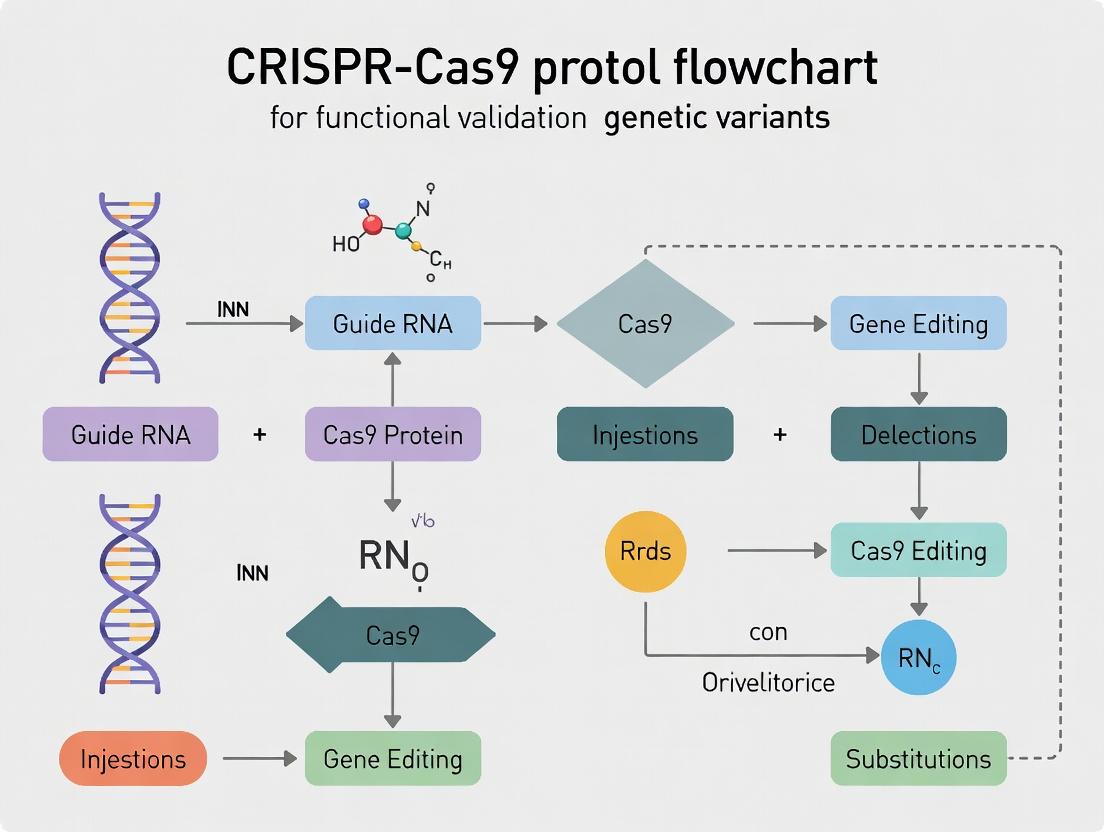
This comprehensive protocol provides researchers and drug development professionals with a step-by-step framework for using CRISPR-Cas9 to functionally validate genetic variants.
CRISPR-Cas9 Guide: Functional Validation of Genetic Variants in Disease Research and Drug Discovery
Abstract
This comprehensive protocol provides researchers and drug development professionals with a step-by-step framework for using CRISPR-Cas9 to functionally validate genetic variants. The article covers foundational knowledge on linking variants to phenotype, detailed methodologies for knock-in and knock-out strategies, common troubleshooting and optimization techniques for editing efficiency, and rigorous validation assays to confirm functional impact. By synthesizing current best practices, this guide aims to accelerate the translation of genomic discoveries into mechanistic insights and therapeutic targets.
From Sequence to Consequence: The Critical Role of Functional Validation in Genomic Medicine
Genome-wide association studies (GWAS) have successfully identified thousands of genetic variants linked to diseases and traits. However, the vast majority (>90%) of these variants lie in non-coding regions, making their functional consequences and causal mechanisms difficult to interpret. This creates a "functional validation gap" between statistical association and biological understanding, which is a critical bottleneck in translational research. Bridging this gap requires direct experimental interrogation of variants, a need addressed by modern CRISPR-Cas9 protocols for functional validation.
The following table summarizes key quantitative insights into the scale of the functional validation challenge, based on recent GWAS catalogs and genomic annotations.
Table 1: The Scale of the Functional Validation Challenge in Human Genetics
| Metric | Current Estimate | Implication for Functional Validation |
|---|---|---|
| Total GWAS-indexed SNPs (NHGRI-EBI Catalog) | ~ 500,000 | Vast number of candidate variants requiring prioritization and testing. |
| % of GWAS SNPs in non-coding regions | > 90% | Direct link to protein function is rare; mechanisms often involve regulation. |
| % of GWAS loci with a identified causal gene/variant | < 10% | Statistical association is insufficient to pinpoint the effector. |
| Average number of candidate causal variants per locus (due to LD) | Dozens to Hundreds | Fine-mapping and editing are required to isolate the true causal variant. |
| Estimated heritability explained by common SNPs | 25-50% for most traits | A significant portion of genetic influence remains uncharacterized at a functional level. |
Detailed Protocols for CRISPR-Cas9 Mediated Functional Validation
The following protocols provide a framework for moving from a GWAS-associated locus to a functionally validated mechanism.
Protocol 1: CRISPR-based Saturation Prime Editing for Variant Scanning
Application: Systematically testing all possible single-nucleotide changes within a non-coding regulatory element (e.g., an enhancer) linked by GWAS.
Materials (Research Reagent Solutions): Table 2: Key Reagents for Saturation Prime Editing
| Reagent | Function & Rationale |
|---|---|
| Prime Editor 2 (PE2) Plasmid | Contains the fusion of Cas9 nickase (H840A) and reverse transcriptase. Enables precise installation of all 12 possible point mutations without double-strand breaks. |
| Prime Editing Guide RNA (pegRNA) Library | A pooled library of synthesized oligonucleotides encoding both the spacer sequence (targeting the enhancer) and the primer binding site (PBS) with all desired nucleotide edits. Critical for saturation mutagenesis. |
| NGS-based Reporter Construct | A plasmid with a minimal promoter driving a fluorescent protein (e.g., GFP), cloned downstream of the putative enhancer sequence. Serves as a readout for enhancer activity. |
| HEK293T or Relevant Cell Line | A model cell line with high transfection efficiency and appropriate chromatin context for the target enhancer. |
| Next-Generation Sequencing (NGS) Kit | For library preparation and deep sequencing of pegRNA representations pre- and post-selection to identify variants impacting activity. |
Methodology:
- Design & Cloning: Design a pooled pegRNA library targeting the entire GWAS-linked enhancer region (e.g., 500bp). For each base position, design pegRNAs to install all three alternative nucleotide changes.
- Reporter Assay Setup: Stably integrate the NGS-based reporter construct (enhancer-GFP) into the host cell line to create a uniform reporter background.
- Library Delivery & Editing: Co-transfect the stable reporter cell line with the PE2 plasmid and the pooled pegRNA library using a high-efficiency method (e.g., electroporation).
- Phenotypic Sorting: After 7-10 days, use Fluorescence-Activated Cell Sorting (FACS) to isolate cell populations with high GFP (enhancer-active) and low GFP (enhancer-inactive) expression.
- NGS & Analysis: Extract genomic DNA from each sorted population and the initial library. Amplify the pegRNA cassette via PCR and perform deep sequencing. Calculate the enrichment/depletion score for each pegRNA variant between high and low GFP populations. Statistically significant depletion of a specific variant in the high-GFP pool indicates a mutation that disrupts enhancer function.
Protocol 2: Endogenous Gene Tagging and Phenotypic Screening in Disease-Relevant Cells
Application: Validating the functional impact of a coding or regulatory variant on endogenous gene expression and downstream cellular phenotypes in a physiologically relevant model (e.g., iPSC-derived cells).
Materials (Research Reagent Solutions): Table 3: Key Reagents for Endogenous Tagging and Phenotyping
| Reagent | Function & Rationale |
|---|---|
| CRISPR-Cas9 RNP Complex | Ribonucleoprotein complex of purified Cas9 protein and synthetic sgRNA. Enables high-efficiency, footprint-free editing with reduced off-target effects compared to plasmid delivery. |
| ssODN or AAV6 Donor Template | Single-stranded oligodeoxynucleotide (for short tags) or AAV6 vector (for larger inserts) containing the desired edit (e.g., SNP correction, V5 tag, degron) and homology arms. |
| Fluorescent Protein-Nanoluciferase Tag Donor | Donor template designed to fuse a bifunctional reporter (e.g., HaloTag/mNeonGreen) to the C-terminus of the endogenous target protein via a P2A skipping peptide for simultaneous quantification and imaging. |
| Induced Pluripotent Stem Cells (iPSCs) | Patient-derived or engineered iPSCs allow differentiation into disease-relevant cell types (cardiomyocytes, neurons) for functional assays in the correct genetic background. |
| High-Content Imaging System | For automated, multi-parameter phenotypic analysis (e.g., cell morphology, protein localization, signaling reporter intensity) in edited versus control cells. |
Methodology:
- Cell Model Generation: Differentiate iPSCs (with GWAS risk variant) into the relevant cell type (e.g., cortical neurons).
- CRISPR Editing: Electroporate the cells with Cas9 RNP complex and the appropriate donor template. For a regulatory variant, the donor may correct the risk allele to the protective allele (isogenic control). For a coding variant, the donor may introduce a C-terminal tag.
- Clonal Isolation & Validation: Single-cell sort edited cells and expand clones. Genotype clones by PCR and Sanger sequencing to identify correctly edited homozygous clones. Validate protein expression and tagging via Western blot.
- Functional Phenotyping: Subject isogenic paired cell lines (risk variant vs. corrected) to a battery of cell-type-specific assays.
- For Neurons: Measure electrophysiological activity (Multi-Electrode Array), neurite outgrowth, or synaptic marker expression via high-content imaging.
- For Immune Cells: Perform cytokine profiling via ELISA or flow cytometry after stimulation.
- Quantitative Readout: Lyse tagged cells to measure nanoluciferase signal as a proxy for endogenous protein abundance under different conditions.
- Data Integration: Correlate the genetic change with quantitative changes in molecular (protein levels), cellular (morphology), and functional (activity) phenotypes to establish causality.
Visualizing the Workflow and Biological Relationships
Title: Bridging the Gap from GWAS to Mechanism
Title: Non-coding Variant Scanning Workflow
Title: Endogenous Validation in iPSC Models
Genetic variants are alterations in the DNA sequence that can influence phenotype and disease susceptibility. In the context of functional validation using CRISPR-Cas9, precisely defining the target variant is the critical first step. The primary classes are:
- Single Nucleotide Polymorphisms (SNPs): Single base-pair substitutions. They are the most common type of genetic variation.
- Insertions/Deletions (Indels): The addition or removal of one or more nucleotide base pairs. Frameshift indels alter the reading frame of a protein-coding sequence.
- Copy Number Variations (CNVs): Larger-scale duplications or deletions of genomic regions, typically >1 kb in size, leading to a deviation from the normal diploid copy number.
Pathogenic Potential and Functional Impact
The pathogenic potential of a variant is determined by its type, genomic context, and functional consequence. The following table summarizes key characteristics.
Table 1: Comparative Analysis of Genetic Variant Types
| Feature | SNPs | Indels (Small, <50bp) | CNVs (>1kb) |
|---|---|---|---|
| Typical Size | 1 bp | 1-50 bp | >1,000 bp |
| Primary Detection Method | Sequencing, Microarrays | Sequencing (PCR, NGS) | Microarrays, NGS (read-depth) |
| Key Functional Consequences | Missense, Nonsense, Synonymous, Splice-site | Frameshift, In-frame, Splice disruption | Gene Dosage (Deletion/Loss, Duplication/Gain), Gene Disruption |
| Pathogenic Mechanism | Altered protein function/ stability, aberrant splicing | Premature Stop (Nonsense-Mediated Decay), altered protein sequence | Haploinsufficiency, Triplosensitivity, Gene Fusion |
| Approx. Frequency in Human Genome | ~1 per 1,000 bp | ~1 per 7,500 bp | Cover ~4-9% of genome |
| CRISPR-Cas9 Validation Approach | HDR-mediated precise base editing or SNP knock-in | HDR or NHEJ-mediated precise sequence insertion/deletion | CRISPR-mediated large deletion, duplication, or HDR-based segmental editing |
Research Reagent Solutions Toolkit
Table 2: Essential Reagents for CRISPR-Cas9 Functional Validation of Genetic Variants
| Reagent/Material | Primary Function in Variant Validation |
|---|---|
| CRISPR-Cas9 Nuclease (e.g., SpCas9) | Creates a targeted double-strand break (DSB) in the DNA near the variant locus. |
| Single-Guide RNA (sgRNA) | Guides the Cas9 nuclease to the specific genomic target sequence via Watson-Crick base pairing. |
| Homology-Directed Repair (HDR) Donor Template | A DNA template (ssODN or dsDNA) containing the desired variant, flanked by homologous arms, used for precise editing via HDR. |
| Reporter/Counter-selection Plasmids (e.g., GFP, puromycin) | Enables enrichment or selection of successfully transfected or edited cells. |
| NHEJ Inhibitors (e.g., SCR7) | Can be used to bias DNA repair toward HDR over NHEJ, improving precise editing efficiency. |
| Next-Generation Sequencing (NGS) Library Prep Kit | For deep amplicon sequencing of the target locus to quantify editing efficiency and verify variant introduction. |
| Genomic DNA Isolation Kit | To harvest high-quality DNA from edited cell pools or clones for downstream analysis. |
| Cell Line with Wild-type Genotype | A relevant in vitro model (e.g., iPSCs, primary cells, immortalized lines) for introducing the variant de novo. |
Experimental Protocols for Functional Validation
Protocol 1: Design and Synthesis of CRISPR Components for Variant Introduction
- A. Target Selection & sgRNA Design: Identify the genomic locus of your target variant (SNP, Indel, CNV breakpoint). Use tools like CRISPOR or ChopChop to design sgRNAs with the 5'-NGG-3' PAM, placing the cut site as close as possible (<10 bp) to the variant site. Prioritize on-target efficiency and predict off-targets.
- B. HDR Donor Template Design (for SNPs/Indels): Synthesize a single-stranded oligodeoxynucleotide (ssODN) donor. It should contain the variant sequence, flanked by ~60-90 bp homology arms on each side. For safety, introduce silent "blocking" mutations in the PAM sequence or the sgRNA seed region within the donor to prevent re-cutting of the edited allele.
- C. Cloning or Complex Formation: Clone the sgRNA sequence into an appropriate expression vector (e.g., pSpCas9(BB)). Alternatively, for rapid testing, form a Ribonucleoprotein (RNP) complex by annealing chemically synthesized crRNA and tracrRNA, then mixing with purified Cas9 protein.
Protocol 2: CRISPR-Cas9 Transfection and HDR-Mediated Variant Knock-in
- A. Cell Preparation: Seed relevant cells (e.g., HEK293T, iPSCs) to achieve 70-80% confluence at transfection.
- B. Transfection: For plasmid-based delivery, co-transfect the Cas9-sgRNA plasmid and the ssODN donor using a suitable reagent (e.g., Lipofectamine 3000). For RNP delivery, electroporate the pre-formed Cas9 RNP complex and ssODN donor. Include a non-targeting sgRNA control.
- C. Selection and Enrichment (Optional): If using a plasmid with a fluorescent reporter or antibiotic resistance, begin selection (e.g., puromycin) 24-48h post-transfection for 3-5 days.
- D. Single-Cell Cloning: After recovery, dissociate cells and dilute to ~0.5 cells/well in a 96-well plate to derive isogenic clones.
Protocol 3: Genotyping and Validation of Edited Clones
- A. Initial Screening (PCR & Restriction Digest): Isolate genomic DNA from pooled cells or clones. Perform PCR amplification of the target region. If the edit introduces or removes a restriction site, perform a digest and analyze fragments by gel electrophoresis.
- B. Sanger Sequencing: Sequence PCR products from candidate clones to confirm the presence of the intended variant and the absence of random indels at the cut site.
- C. Deep Amplicon Sequencing: For quantitative assessment of editing efficiency in pools or to confirm clonal purity, prepare NGS libraries from the target amplicon. Sequence to high depth (>10,000x). Analyze reads for precise HDR events, NHEJ indels, and the percentage of wild-type vs. variant alleles.
- D. Off-Target Analysis: Use computational predictions (from Step 1A) to identify top potential off-target sites. Amplify and sequence these loci from your edited clone to confirm no unintended modifications.
Protocol 4: Functional Assay for Pathogenic Potential
- A. Gene Expression (qRT-PCR): For all variants, especially putative regulatory SNPs or CNVs, quantify mRNA levels of the target gene and relevant pathway genes.
- B. Protein Analysis (Western Blot/Immunofluorescence): For missense SNPs and indels, assess protein expression level, size, and cellular localization.
- C. Phenotypic Assays: Design assays relevant to the gene's function and associated disease (e.g., proliferation, apoptosis, migration, electrophysiology, metabolite quantification).
- D. Rescue Experiment: Revert the variant back to wild-type in the edited clone using a second round of CRISPR-HDR. A rescue of the abnormal phenotype to wild-type levels is the strongest evidence of variant pathogenicity.
The functional validation of genetic variants, a cornerstone of modern genomics and drug target discovery, demands precise and versatile genetic tools. While RNA interference (RNAi) and traditional homologous recombination (HR) have been instrumental, CRISPR-Cas9 has emerged as the superior platform. The table below quantifies the key advantages.
Table 1: Quantitative Comparison of Genome Engineering Tools
| Feature | CRISPR-Cas9 | RNAi | Traditional Homologous Recombination |
|---|---|---|---|
| Targeting Efficiency | High (often >70% in cultured cells) | Variable (30-90% knockdown) | Extremely Low (<0.01% in most cells) |
| Mechanism of Action | Catalytic DNA cleavage (knockout) or templated repair (knock-in) | Post-transcriptional mRNA degradation/destabilization (knockdown) | Requires endogenous HR machinery (knock-in/out) |
| Specificity | High; potential for off-targets, design-mitigable | Moderate to Low; pervasive off-target transcriptional effects | Very High; precise, sequence-defined |
| Multiplexing Capacity | High (easily >5 loci simultaneously) | Moderate (2-4 shRNAs typically) | Very Low (single locus, labor-intensive) |
| Development Timeline | Fast (days to design/validate gRNAs) | Moderate (weeks for shRNA design/validation) | Very Slow (months for vector construction) |
| Primary Application | Gene knockout, knock-in, activation, repression | Transient or stable gene knockdown | Precise allele replacement in models (e.g., ES cells) |
| Phenotype Certainty | Complete loss-of-function (null) | Partial reduction (hypomorph) | Designed allele (precise mutation) |
Core Protocol: CRISPR-Cas9 for Functional Validation of a Genetic Variant
This protocol details the generation of an isogenic cell line pair to validate a single-nucleotide variant (SNV) linked to a disease phenotype.
Materials & Reagents: The Scientist's Toolkit
Table 2: Key Research Reagent Solutions
| Reagent/Material | Function in Protocol | Example/Note |
|---|---|---|
| CRISPR-Cas9 Nuclease | Creates a double-strand break (DSB) at the target genomic locus. | S. pyogenes Cas9 protein or expression plasmid. |
| sgRNA (single guide RNA) | Directs Cas9 to the specific DNA sequence via a 20-nt spacer. | Chemically synthesized or in vitro transcribed. |
| ssODN (single-stranded Oligodeoxynucleotide) | Serves as the repair template for HDR to introduce the desired SNV. | ~100-200 nt, phosphorothioate-modified ends, contains variant. |
| HDR Enhancer (e.g., Rad51 agonist) | Increases the relative frequency of Homology-Directed Repair over NHEJ. | RS-1 or small molecule; boosts knock-in efficiency 2-5x. |
| NHEJ Inhibitor (e.g., SCR7) | Suppresses the Non-Homologous End Joining pathway to favor HDR. | Can be used in combination with HDR enhancers. |
| Transfection Reagent | Delivers RNP complexes and repair template into target cells. | Lipofectamine CRISPRMAX or Neon Electroporation system. |
| Selection Antibiotic/Puromycin | Enriches for cells that have taken up CRISPR components. | Used if sgRNA vector contains a selectable marker. |
| Genomic DNA Isolation Kit | Extracts high-quality DNA for screening. | Essential for PCR and sequencing validation. |
| T7 Endonuclease I or Surveyor Nuclease | Detects indel mutations from NHEJ at the target site (for initial testing). | Measures cutting efficiency. |
| Next-Generation Sequencing Kit | Enables deep sequencing of the target locus for precise variant validation. | Confirms HDR and assesses off-targets (e.g., amplicon-seq). |
Detailed Methodology
Day 1-2: Design and Preparation
- sgRNA Design: Design two sgRNAs flanking (<50 bp) the target SNV using a validated tool (e.g., ChopChop, Benchling). Prioritize on-target efficiency scores >60 and minimize off-target potential.
- Repair Template Design: Design a ~120-nt ssODN repair template. Center the SNV, include 50-60 nt of homologous sequence on each side. Introduce silent "blocking" mutations in the PAM site of the chosen sgRNA to prevent re-cutting.
- Form RNP Complex: Complex 10 µg of purified Cas9 protein with 5 µg of synthetic sgRNA (molar ratio ~1:2) in nuclease-free buffer. Incubate 10 min at 25°C.
Day 3: Cell Delivery
- Cell Preparation: Seed 2.5 x 10⁵ HEK293T or relevant diploid cell line per well in a 24-well plate.
- Transfection (Electroporation Example): Mix the prepared RNP complex with 100 pmol of ssODN repair template. Resuspend cells in buffer R, combine with RNP/ssODN mix, and electroporate (e.g., 1100V, 20ms, 2 pulses using the Neon system).
- Plate Transfected Cells: Immediately transfer cells to pre-warmed culture medium. Include a control transfected with RNP only (no ssODN) to assess background NHEJ.
Day 4-7: Recovery & Enrichment
- Recovery: Culture cells for 48-72 hours without disturbance.
- Optional Enrichment: If a puromycin-resistant sgRNA plasmid was used, begin puromycin selection (e.g., 1-2 µg/mL) 48 hours post-transfection for 3-5 days.
Day 8-14: Screening & Validation
- Initial Screening: Isolate genomic DNA from a pooled population of edited cells. PCR-amplify the target region (amplicon ~300-500 bp).
- Efficiency Check (T7E1 Assay):
- Hybridize and reanneal 200 ng of purified PCR product.
- Digest with T7 Endonuclease I for 30 min at 37°C.
- Run on a 2% agarose gel. Cleaved bands indicate presence of indels (NHEJ), confirming cutting activity.
- Clone Isolation: Single-cell sort or serially dilute cells into 96-well plates to derive clonal populations.
- Deep Sequencing Validation:
- From candidate clones, re-amplify the target locus.
- Prepare sequencing libraries using a targeted amplicon-seq kit.
- Sequence on an Illumina MiSeq (≥10,000x coverage).
- Analysis: Use CRISPResso2 or similar tool to quantify the percentage of reads containing the precise HDR-mediated SNV versus indels.
Visualizations
Title: CRISPR-Cas9 HDR Workflow for SNV Introduction
Title: DNA Repair Pathways After CRISPR Cleavage
Application Notes
The Role of Isogenic Controls in CRISPR-Cas9 Functional Validation
In CRISPR-Cas9 studies for variant validation, an isogenic control is a cell line genetically identical to the edited cell line except for the variant of interest. This precise matching controls for genomic background noise, ensuring observed phenotypes are attributable to the specific edit. Recent analyses indicate that using non-isogenic controls can lead to a false positive rate of up to 30% in phenotype calls due to confounding genetic and epigenetic variation.
Cell Model Selection: Primary vs. Immortalized Cell Lines
The choice between primary and immortalized cell models hinges on the research question's balance between physiological relevance and experimental tractability.
| Characteristic | Primary Cell Models | Immortalized Cell Lines |
|---|---|---|
| Physiological Relevance | High; maintain native genotype, phenotype, and tissue-specific functions. | Low to Moderate; accumulated genetic drift and adaptations alter native biology. |
| Proliferative Capacity | Limited (finite lifespan), complicating lengthy protocols and clonal expansion. | Essentially unlimited, facilitating large-scale experiments and clonal isolation. |
| Genetic Background | Genetically diverse, reflecting population heterogeneity. | Homogeneous, but often aneuploid with a mutated background. |
| Experimental Reproducibility | Lower due to donor-to-donor variability and passage-dependent changes. | Higher due to consistency across labs and time, though drift occurs. |
| Typical Use Case | Disease modeling where native context is critical (e.g., neuronal function, metabolism). | High-throughput screens, mechanistic studies requiring large cell numbers, protocol development. |
| CRISPR Editing Efficiency | Often lower; challenging to transfert and select clonally. | Generally high; optimized protocols for delivery and single-cell cloning exist. |
| Key Consideration | Use >3 donor replicates to account for variability. Phenotype must be assayable within cellular lifespan. | Regularly authenticate (STR profiling) and monitor for mycoplasma. Use early passages. |
Phenotype Selection for Robust Functional Validation
Phenotypes must be directly linked to the gene/variant's predicted function and be quantifiable with high sensitivity and specificity. Multiplexed phenotypic assessment is increasingly recommended to capture complex genotype-phenotype relationships. A 2023 survey of published CRISPR validation studies found that projects measuring 2-3 orthogonal phenotypes had a 50% higher validation rate in follow-up studies compared to those relying on a single readout.
| Phenotype Category | Example Assays | Throughput | Key Quantitative Metrics |
|---|---|---|---|
| Cellular Fitness | Proliferation, Apoptosis, CellTiter-Glo, Annexin V flow | High | Doubling time (hours), IC50 (nM), % apoptosis relative to control, AUC from growth curves. |
| Morphological | High-content imaging (cell size, shape, organelle features) | Medium | Z-score for >5 morphological features, clustering distance from control population. |
| Molecular | Western blot, qPCR, Targeted Mass Spectrometry | Low-Medium | Fold-change (log2) in protein or mRNA, phosphorylation ratio, metabolite concentration. |
| Functional/Pathway | Reporter assays (Luciferase), Calcium flux, Phagocytosis | Medium | Reporter activity (RLU), peak fluorescence intensity (RFU), kinetic parameters (e.g., rate). |
| Complex/Integrated | Barrier integrity (TEER), 3D spheroid invasion, Contraction | Low | TEER (Ω*cm²), spheroid area over time (µm²), force generation (Pa). |
Protocols
Protocol 1: Generation of Isogenic Controls via CRISPR-Cas9 HDR
Objective: To introduce a specific single nucleotide variant (SNV) into a diploid immortalized cell line and isolate an isogenic clone where only the desired allele is modified.
Materials:
- Cells: HEK293T or relevant immortalized line.
- CRISPR Components: Alt-R S.p. Cas9 Nuclease V3, synthetic crRNA targeting locus, trans-activating crRNA (tracrRNA).
- Donor Template: Single-stranded oligodeoxynucleotide (ssODN, 100-200 nt) containing the variant, flanked by ~60 nt homology arms.
- Transfection Reagent: Lipofectamine CRISPRMAX.
- Culture Media: Appropriate complete growth medium.
- Isolation Tools: Cloning discs, trypsin, 96-well plates.
- Screening Reagents: Lysis buffer, PCR mix, restriction enzymes (if RFLP assay used), Sanger sequencing primers.
Procedure:
- Design & Complex Formation: Design crRNA proximal to the target site. Resuspend crRNA, tracrRNA, and ssODN in nuclease-free buffer. Complex crRNA and tracrRNA (1:1 molar ratio) to form guide RNA (gRNA) by heating to 95°C for 5 min and cooling. Mix Cas9 protein with gRNA (1:2 molar ratio) to form ribonucleoprotein (RNP). Add ssODN donor (final 100-200 nM).
- Cell Transfection: Seed 2e5 cells/well in a 24-well plate 24h prior. Transfect with RNP/donor complex using Lipofectamine CRISPRMAX per manufacturer's protocol.
- Recovery & Expansion: 48h post-transfection, passage cells at low density into 10cm dishes. Allow colonies to form for 10-14 days.
- Clone Isolation: Pick 24-48 individual colonies using cloning discs or by limited dilution in 96-well plates. Expand each clone.
- Genotypic Screening: Lyse a fraction of cells from each clone. Perform PCR amplification of the target locus.
- Primary Screen: Use a restriction fragment length polymorphism (RFLP) assay if the edit creates/disrupts a site. Alternatively, use a mismatch-specific cleavage assay (T7E1 or Surveyor).
- Secondary Screen: Sequence PCR products from positive clones by Sanger sequencing. Identify clones heterozygous for the desired SNV.
- Final Validation: For confirmed heterozygous clones, perform TA subcloning of the PCR product or digital droplet PCR to ensure no random integration of the ssODN. Sequence both alleles separately.
- Isogenic Control Derivation: From the original transfection, also isolate a clone that underwent the entire process but screened as wild-type at the target locus. This serves as the ideal isogenic control. Alternatively, use a sibling clone edited with a non-targeting guide.
Protocol 2: Functional Phenotyping in Primary vs. Immortalized Cells
Objective: To compare the proliferative phenotype of a gene knockout in matched primary human dermal fibroblasts (HDFs) and an immortalized fibroblast line (e.g., BJ-5ta).
Materials:
- Cells: Primary HDFs (passage <6), Immortalized BJ-5ta cells.
- CRISPR Tools: Lentiviral particles for Cas9 and sgRNA (vs. non-targeting control).
- Selection Antibiotic: Puromycin.
- Assay Reagents: CellTiter-Glo 2.0 Reagent, luminometer-compatible plates.
- Culture Vessels: 96-well white-walled assay plates.
Procedure: Part A: Cell Line Preparation & Editing
- Infection: For both cell types, seed 5e4 cells/well in a 12-well plate. The next day, transduce with lentivirus encoding Cas9 and gene-specific sgRNA or non-targeting sgRNA (MOI=5) in the presence of 8 µg/mL polybrene.
- Selection: 48h post-transduction, apply puromycin (primary HDFs: 1 µg/mL; BJ-5ta: 2 µg/mL) for 72h to select for transduced cells. Maintain a non-transduced control to confirm selection efficacy.
- Recovery: Culture cells in complete medium without puromycin for 96h before phenotyping.
Part B: Proliferation Assay (CellTiter-Glo 2.0)
- Seeding: Harvest edited and control populations. Seed triplicate wells of a 96-well assay plate at 1000 cells/well in 100 µL complete medium for both cell types. Include a medium-only background control.
- Time Course: For immortalized BJ-5ta, measure proliferation at 0, 24, 48, 72, and 96h. For primary HDFs, measure at 0, 24, 48, 72, 96, and 120h (slower growth).
- Luminescence Measurement: At each time point, equilibrate plate to room temperature for 30 min. Add 100 µL of CellTiter-Glo 2.0 Reagent to each well. Orbital shake for 2 min, then incubate in the dark for 10 min. Record luminescence (integration time: 0.5-1 second/well).
- Data Analysis: Subtract average background luminescence. Normalize all values to the average Day 0 luminescence for the respective cell line and condition. Plot normalized luminescence (mean ± SD) vs. time. Calculate area under the curve (AUC) for each condition for statistical comparison (e.g., unpaired t-test between sgGene and sgNT for each cell type).
Diagrams
Title: Experimental Design Workflow for CRISPR Validation
Title: Cell Model Selection Decision Table
The Scientist's Toolkit: Research Reagent Solutions
| Item | Function & Application | Example Vendor/Product |
|---|---|---|
| CRISPR-Cas9 Nuclease | Creates double-strand breaks at genomic target specified by guide RNA. Essential for initiating edits. | Integrated DNA Technologies Alt-R Cas9 |
| Synthetic crRNA & tracrRNA | Guide RNA components. crRNA provides target specificity. Synthetic forms increase reproducibility and reduce off-target effects. | Dharmacon Edit-R Synthetic crRNA |
| Single-Stranded Oligo Donor | Provides template for homology-directed repair (HDR) to introduce precise point mutations or small insertions. | IDT Ultramer DNA Oligonucleotides |
| Cloning Discs / Dilution Plate | For physical isolation of single-cell clones post-editing to establish pure populations. | Sigma-Aldrich cloning discs, Corning plates |
| CellTiter-Glo 2.0 | Luminescent assay to quantify viable cells based on ATP content. Standard for cellular proliferation/fitness phenotyping. | Promega CellTiter-Glo 2.0 |
| High-Content Imaging System | Automated microscopy and image analysis to quantify complex morphological phenotypes in situ. | PerkinElmer Operetta, Thermo Fisher CQ1 |
| Genomic DNA Extraction Kit | Rapid, clean isolation of genomic DNA from cell clones for PCR-based genotyping and sequencing. | Qiagen DNeasy Blood & Tissue Kit |
| ddPCR Assay | Digital droplet PCR for absolute quantification of allele frequency or copy number, validating edits without bias. | Bio-Rad ddPCR CRISPR Assay |
| Mycoplasma Detection Kit | Critical for routine screening to prevent experimental artifacts caused by mycoplasma contamination. | Lonza MycoAlert Detection Kit |
| Cell Line Authentication Service | Short tandem repeat (STR) profiling to confirm cell line identity and avoid cross-contamination, especially for immortalized lines. | ATCC STR Profiling Service |
Step-by-Step CRISPR-Cas9 Protocol: Designing and Delivering Your Functional Assay
Within the framework of a thesis focused on using CRISPR-Cas9 for the functional validation of genetic variants, the design and validation of single guide RNAs (sgRNAs) is the most critical determinant of experimental success. This process balances two competing objectives: maximizing on-target cleavage efficiency at the intended genomic locus and minimizing off-target effects at sequences with partial homology. This protocol details a systematic, bioinformatics-driven pipeline for sgRNA design, followed by experimental validation methodologies essential for robust variant modeling and phenotype assessment.
In Silico sgRNA Design and Selection Protocol
Protocol: Computational sgRNA Design Workflow
This protocol outlines the steps for designing high-fidelity sgRNAs targeting a genetic variant of interest.
- Define Target Sequence: Identify the genomic coordinates (GRCh38/hg38) of the variant. Extract a 23 bp sequence directly upstream of the Protospacer Adjacent Motif (PAM, 5'-NGG-3' for Streptococcus pyogenes Cas9) with the variant positioned centrally within the protospacer for homology-directed repair (HDR) strategies, or overlapping the PAM for knock-out via non-homologous end joining (NHEJ).
- Generate Candidate sgRNAs: Use a local script or tool to generate all possible 20-23 nt protospacer sequences flanking the target locus on both DNA strands, constrained by the PAM.
- Predict On-Target Efficiency: Submit the candidate list to multiple algorithms (e.g., DeepSpCas9, CRISPRon, Rule Set 2). Aggregate scores to rank candidates.
- Predict Off-Target Sites: For each top candidate, perform a genome-wide search for potential off-target loci allowing up to 3-5 mismatches, with particular penalty for mismatches in the "seed" region (positions 1-12 proximal to PAM). Use tools like Cas-OFFinder or COSMID.
- Final Selection: Prioritize sgRNAs with the highest aggregate on-target score and no predicted off-target sites with ≤3 mismatches, especially in coding or regulatory regions. Always design a minimum of 2-3 sgRNAs per target.
Data Presentation: Comparative Analysis of sgRNA Design Tools
Table 1: Key Features of Primary sgRNA Design and Scoring Tools
| Tool Name | Key Algorithm/Model | Primary Output | Key Strength | Accessibility |
|---|---|---|---|---|
| ChopChop | Rule Set 2, MIT specificity | Efficiency & specificity scores, off-target list | User-friendly web interface, in-depth visualizations | Web, standalone |
| CRISPick (Broad) | Rule Set 2, CFD specificity | Ranked sgRNA list with off-target info | Integrated with broader ScerGKO library design | Web |
| CRISPRscan | Gradient Boosting Model | Efficiency score (0-100) | Optimized for microinjection in zebrafish/mouse | Web |
| DeepSpCas9 | Deep learning (CNN) | Highly accurate efficiency prediction | State-of-the-art prediction accuracy | Web, local |
| Cas-OFFinder | Burrows-Wheeler transform | Genome-wide off-target identification | Speed and flexibility for any PAM sequence | Web, local |
Table 2: Quantitative Off-Target Analysis for Representative sgRNA Candidates Targeting rs123456 (Hypothetical Data)
| sgRNA Sequence (5'-3') | On-Target Score (Aggregate) | No. of Predicted Off-Targets (≤3 mismatches) | Top Predicted Off-Target Locus (Mismatches) | CFD Specificity Score |
|---|---|---|---|---|
| AGCTAGCGTAGCAGCTAGCAT | 0.89 | 0 | None | 0.99 |
| TCAGCTAGCTACGATCGTAGC | 0.78 | 2 | Intron of Gene X (3) | 0.85 |
| GCTAGCATCGATCGATGCATG | 0.95 | 5 | Exon of Gene Y (2) | 0.65 |
Experimental Validation Protocols
Protocol: Validation of On-Target Editing Efficiency (T7 Endonuclease I Assay)
Objective: Quantify the indel formation frequency at the predicted on-target locus in transfected cells.
- Cell Transfection: Transfect your target cell line (e.g., HEK293T) with the ribonucleoprotein (RNP) complex (Cas9 + selected sgRNA) or plasmid constructs using an appropriate method (lipofection, electroporation). Include a non-targeting sgRNA control.
- Genomic DNA (gDNA) Extraction: 72 hours post-transfection, harvest cells and extract gDNA using a silica-column based kit.
- PCR Amplification: Design primers ~300-500 bp flanking the target site. Amplify the target locus from purified gDNA using a high-fidelity polymerase.
- Heteroduplex Formation: Denature and reanneal the PCR products to allow formation of heteroduplexes between wild-type and indel-containing strands.
- Digestion & Analysis: Treat the reannealed product with T7 Endonuclease I, which cleaves mismatched heteroduplexes. Run digested products on an agarose gel. Quantify the cleavage band intensity using gel analysis software.
- Calculation: Use the formula: % Indel = 100 * (1 - sqrt(1 - (b + c)/(a + b + c))), where a is the integrated intensity of the undigested band, and b & c are the digested product bands.
Protocol: Validation of Off-Target Effects (Targeted NGS)
Objective: Empirically assess editing at the top in silico predicted off-target sites.
- Sample Preparation: Use gDNA from Step 3.1 (from cells transfected with test sgRNA and non-targeting control).
- Amplicon Library Construction: Design PCR primers to generate ~250 bp amplicons encompassing each top predicted off-target locus (e.g., top 5-10) and the on-target locus.
- Two-Step PCR (Barcoding): Perform a first PCR to amplify each locus. Purify products. Perform a second, limited-cycle PCR to add Illumina sequencing adapters and dual-index barcodes.
- Sequencing & Analysis: Pool libraries and sequence on a MiSeq (2x250 bp). Process reads: demultiplex, align to reference amplicons, and use tools like CRISPResso2 or AmpliCan to quantify indel frequencies at each site.
- Interpretation: Compare indel frequencies at off-target loci between the test sgRNA and control sample. Frequencies significantly above background (e.g., >0.1%) indicate detectable off-target activity.
The Scientist's Toolkit: Research Reagent Solutions
Table 3: Essential Materials for sgRNA Validation Experiments
| Item | Function/Application | Example Product/Type |
|---|---|---|
| High-Fidelity DNA Polymerase | Accurate amplification of genomic target loci for validation assays. | Q5 (NEB), KAPA HiFi |
| T7 Endonuclease I | Detection of mismatches in heteroduplex DNA; used for initial on-target efficiency screening. | NEB T7EI |
| Next-Generation Sequencing Kit | Preparation of sequencing libraries for comprehensive on- and off-target analysis. | Illumina DNA Prep |
| CRISPResso2 Software | Computational tool for precise quantification of genome editing outcomes from NGS data. | Open-source (GitHub) |
| Synthetic sgRNA or gRNA Scaffold Plasmid | Delivery of the guide RNA component; synthetic RNA offers faster action and reduced off-target risk. | Synthego (sgRNA), Addgene plasmid #62988 |
| Genomic DNA Extraction Kit | High-quality, PCR-ready gDNA isolation from transfected cells. | DNeasy Blood & Tissue (Qiagen) |
| Electroporation/Lipofection Reagent | Efficient delivery of RNP complexes or plasmid DNA into hard-to-transfect cell lines. | Lipofectamine CRISPRMAX, Neon Electroporation System |
Visualizations: Workflows and Pathway
Title: sgRNA Design and Selection Pipeline
Title: T7 Endonuclease I Assay Workflow
In the context of a CRISPR-Cas9 functional validation pipeline for genetic variants research, the selection of an appropriate delivery system for genome editing components is a critical determinant of experimental success. The three primary modalities—plasmid DNA, pre-assembled ribonucleoprotein (RNP) complexes, and viral vectors—each present distinct advantages and trade-offs in terms of efficiency, specificity, timing, and biosafety. This application note provides a comparative analysis and detailed protocols to guide researchers and drug development professionals in selecting and implementing the optimal delivery strategy for their specific experimental needs in variant validation.
Comparative Analysis of Delivery Systems
Table 1: Key Quantitative Parameters for Delivery System Comparison
| Parameter | Plasmid Delivery | RNP Delivery | Viral Delivery (Lentiviral/Adeno-associated) |
|---|---|---|---|
| Time to Onset of Editing | 24-48 hrs | 1-4 hrs | 24-72 hrs (transduction + expression) |
| Typical Editing Efficiency | 10-40% | 50-80% | 30-90% (depends on MOI & tropism) |
| Risk of Off-target Effects | High (prolonged Cas9 expression) | Low (transient activity) | Moderate-High (prolonged expression) |
| Immunogenicity Risk | Moderate | Low | High (viral antigens) |
| Integration Risk | Very Low (non-integrative) | None | High (lentiviral) / Low (AAV) |
| Payload Capacity | Very High (>10 kb) | Limited (Cas9 protein + gRNA) | Moderate (~4.7 kb for LV, ~4.8 kb for AAV) |
| Suitability for In Vivo Use | Low | Moderate (with carrier) | High (specific serotypes) |
| Protocol Complexity | Low | Moderate | High (production & titration) |
| Relative Cost per Experiment | $ | $$ | $$$ |
Table 2: System Selection Guide Based on Research Context
| Primary Research Goal | Recommended System | Key Rationale |
|---|---|---|
| High-throughput screening | Lentiviral Vector | Stable genomic integration, uniform delivery across cell populations. |
| Rapid knock-out in primary cells | Electroporated RNP | High efficiency, low toxicity, minimal off-targets in sensitive cells. |
| Multiplexed editing (>2 genes) | All-in-one Plasmid | Large cargo capacity for multiple gRNA expression cassettes. |
| In vivo somatic editing | AAV Vector | High infectivity for specific tissues, long-term expression in non-dividing cells. |
| Validation of screening hits | Transfected RNP or Plasmid | Fast turnaround, avoids confounding viral integration effects. |
| Editing in immune cells (T-cells, NK cells) | Electroporated RNP | Industry standard, high efficiency, meets clinical translation guidelines. |
Detailed Experimental Protocols
Protocol 3.1: Plasmid-Based Delivery via Lipofection
Application: Functional validation of multiple variants via co-transfection of Cas9 and gRNA expression plasmids.
- Day 0: Seed HEK293T or target cells in a 24-well plate to reach 70-80% confluency at transfection.
- Day 1 (Transfection):
- Prepare two tubes:
- Tube A (DNA mix): Dilute 0.5 µg of Cas9 plasmid (e.g., pSpCas9(BB)-2A-Puro) and 0.5 µg of gRNA expression plasmid (e.g., pU6-gRNA) in 50 µL of serum-free Opti-MEM.
- Tube B (Lipid mix): Dilute 2 µL of Lipofectamine 3000 reagent in 50 µL of serum-free Opti-MEM. Incubate for 5 minutes.
- Combine Tube A and Tube B. Mix gently and incubate for 15-20 minutes at RT.
- Add the 100 µL complex dropwise to cells with complete medium. Gently swirl.
- Prepare two tubes:
- Day 2: Replace medium with fresh complete medium.
- Day 3-5: Assay editing efficiency via T7E1 or ICE assay. For stable pool generation, begin puromycin selection (1-2 µg/mL) 48 hours post-transfection.
Protocol 3.2: RNP Delivery via Electroporation (for Adherent Cells)
Application: High-efficiency, transient editing for rapid functional assessment of a genetic variant's role.
- Prepare RNP Complex:
- Resuspend 6 µg (≈60 pmol) of purified S. pyogenes Cas9 protein in 10 µL of sterile duplex buffer.
- Anneal 3.6 µg (≈120 pmol) of crRNA and 1.2 µg (≈120 pmol) of tracrRNA by heating to 95°C for 5 min, then cooling to RT.
- Combine Cas9 protein and annealed gRNA at a 1:2 molar ratio. Incubate at room temperature for 10-20 minutes to form the RNP complex.
- Prepare Cells:
- Harvest target cells (e.g., HeLa) using trypsin-EDTA. Wash once with PBS.
- Resuspend 1x10^5 cells in 20 µL of P3 Primary Cell Solution (Lonza) or equivalent electroporation buffer.
- Mix cell suspension with the pre-formed RNP complex.
- Electroporation:
- Transfer mixture to a certified 100 µL cuvette.
- Electroporate using the Amaxa 4D-Nucleofector (Program: CM-137 for HeLa).
- Recovery: Immediately add 80 µL of pre-warmed complete medium. Transfer cells to a 24-well plate prefilled with medium. Analyze editing efficiency after 48-72 hours via flow cytometry (if using a fluorescent reporter) or NGS.
Protocol 3.3: Lentiviral Delivery for Stable Cell Line Generation
Application: Creating isogenic cell lines with a variant knocked out for long-term phenotypic studies.
- Day 1: Producer Cell Seeding. Seed HEK293T cells in a 6-well plate to reach 90% confluency the next day.
- Day 2: Transfection for Virus Production. Co-transfect using PEI Max:
- Transfer Plasmid (1.5 µg): Lentiviral vector expressing Cas9 and gRNA (e.g., lentiCRISPRv2).
- Packaging Plasmids (µg): psPAX2 (1.0 µg) and pMD2.G (0.5 µg).
- Mix DNA with 150 µL of Opti-MEM. Add 9 µL of PEI Max (1 mg/mL). Vortex, incubate 15 min, add dropwise to cells.
- Day 3: Replace medium with 2 mL of fresh complete medium.
- Day 4 & 5: Harvest Virus. Collect supernatant (contains lentivirus) at 48 and 72 hours post-transfection. Pool harvests, filter through a 0.45 µm PES filter, aliquot, and store at -80°C.
- Day 6: Transduction of Target Cells. Seed target cells. Thaw virus supernatant and add to cells with 8 µg/mL Polybrene. Spinfect at 600 x g for 90 min at 32°C. Replace medium after 6-24 hours.
- Day 7 Onward: Begin puromycin selection (dose titrated for cell line) 48 hours post-transduction. Maintain selection for 5-7 days before expanding polyclonal population for analysis.
Visualization of Workflows and Decision Logic
Title: Plasmid Delivery Workflow Timeline
Title: RNP Delivery Workflow Timeline
Title: CRISPR Delivery System Decision Tree
The Scientist's Toolkit: Key Research Reagent Solutions
Table 3: Essential Reagents for CRISPR-Cas9 Delivery
| Reagent/Material | Function & Description | Example Product/Brand |
|---|---|---|
| High-Efficiency Cas9 Plasmid | Expresses Cas9 nuclease and optional selection marker in mammalian cells. Essential for plasmid-based workflows. | pSpCas9(BB)-2A-Puro (Addgene #62988) |
| Lipofection Reagent | Forms lipid nanoparticles that encapsulate and deliver nucleic acids into cells via endocytosis. | Lipofectamine 3000 (Thermo Fisher) |
| Purified Cas9 Nuclease | Recombinant, ready-to-use Cas9 protein for in vitro complexing with gRNA to form RNP. | Alt-R S.p. Cas9 Nuclease V3 (IDT) |
| Synthetic crRNA & tracrRNA | Chemically modified, single-guide RNA components for RNP assembly; increase stability and reduce immunogenicity. | Alt-R CRISPR-Cas9 crRNA & tracrRNA (IDT) |
| Nucleofector Kit & Device | Electroporation system optimized for hard-to-transfect cells (primary, stem, immune cells) using cell-specific buffers & programs. | 4D-Nucleofector System (Lonza) |
| Lentiviral Packaging Mix | Second/third-generation plasmids (psPAX2, pMD2.G) providing gag/pol, rev, and VSV-G envelope for safe, high-titer lentivirus production. | Lenti-X Packaging Single Shots (Takara Bio) |
| Polybrene (Hexadimethrine Bromide) | Cationic polymer that neutralizes charge repulsion between viral particles and cell membrane, enhancing transduction efficiency. | Polybrene (Merck Millipore) |
| AAVpro Purification Kit | System for high-purity, high-recovery purification of Adeno-Associated Virus vectors, critical for in vivo applications. | AAVpro Purification Kit (Takara Bio) |
| T7 Endonuclease I | Enzyme that cleaves mismatched heteroduplex DNA, enabling quick assessment of indel formation efficiency (T7E1 assay). | T7E1 (NEB) |
| Next-Generation Sequencing Library Prep Kit | For deep, quantitative analysis of on- and off-target editing events. Essential for rigorous variant validation studies. | Illumina CRISPR Amplicon Sequencing Kit |
Within the broader thesis on applying CRISPR-Cas9 for functional validation of genetic variants, a fundamental decision point is the choice between creating a gene knock-out (KO) via Non-Homologous End Joining (NHEJ) or a precise gene knock-in (KI) via Homology-Directed Repair (HDR). This document provides detailed application notes and protocols to guide researchers in selecting and implementing the optimal strategy for their variant validation studies.
Core Mechanism & Strategic Decision Framework
CRISPR-Cas9 induces a site-specific double-strand break (DSB). The cellular repair pathway that subsequently engages determines the outcome.
Quantitative Comparison of NHEJ vs. HDR
Table 1: Strategic Comparison of NHEJ and HDR Editing
| Parameter | Knock-Out (NHEJ) | Knock-In (HDR) |
|---|---|---|
| Primary Repair Pathway | Non-Homologous End Joining | Homology-Directed Repair |
| Template Requirement | Not required | Essential (ssODN or dsDNA donor) |
| Primary Cell Cycle Phase | All phases, but active in G0/G1/S | Late S and G2 phases |
| Typical Editing Efficiency | High (often 20-80% indels in bulk populations) | Lower than NHEJ (often 1-20% in bulk, higher in sorted) |
| Precision | Imprecise; small insertions/deletions (indels) | Precise; single-nucleotide changes or large insertions |
| Key Application | Gene disruption, loss-of-function studies | Precise variant introduction, tag insertion, gene correction |
| Common Cell Types | All, including non-dividing (post-mitotic) cells | Actively dividing cells |
| Major Byproduct | Frameshift mutations leading to premature stop codons | Random integration, NHEJ at the target site |
Decision Workflow Diagram
Detailed Experimental Protocols
Protocol A: Knock-Out via NHEJ
Title: CRISPR-Cas9 Mediated Gene Knock-Out Using NHEJ.
Objective: To disrupt a target gene by introducing frameshift mutations via CRISPR-Cas9-induced DSB repair through the error-prone NHEJ pathway.
Materials: See "Scientist's Toolkit" (Section 5).
Procedure:
- gRNA Design & Validation: Design a gRNA targeting an early coding exon of the target gene. Validate on-target efficiency and predict off-target sites using current tools (e.g., CRISPick, CHOPCHOP).
- Ribonucleoprotein (RNP) Complex Formation: For a single reaction, combine:
- 3 µL of 10 µM purified Cas9 nuclease.
- 3 µL of 10 µM synthetic crRNA:tracrRNA duplex or sgRNA.
- 4 µL of sterile 1X PBS or Opti-MEM. Incubate at 25°C for 10-20 minutes.
- Cell Delivery (Electroporation for Immortalized Cells):
- Harvest and count cells. Wash once with PBS.
- Resuspend cells in appropriate electroporation buffer at a concentration of 1-5 x 10^5 cells per 10 µL aliquot.
- Mix 10 µL cell suspension with the pre-formed RNP complex (10 µL total). Transfer to a 96-well electroporation cuvette.
- Electroporate using a pre-optimized program (e.g., 1400V, 20ms, 1 pulse for many mammalian cell lines).
- Recovery & Analysis:
- Immediately add pre-warmed culture media to cells.
- Seed cells into appropriate plates. Allow recovery for 48-72 hours.
- Assessment: Harvest genomic DNA. Use T7 Endonuclease I or Surveyor assay on PCR products spanning the target site to assess bulk indel frequency. For clonal analysis, single-cell sort and expand colonies. Sanger sequence PCR amplicons to confirm frameshift mutations.
Protocol B: Knock-In via HDR
Title: Precise Variant Introduction Using HDR with a Single-Stranded Oligodeoxynucleotide (ssODN) Donor.
Objective: To introduce a specific nucleotide variant or small tag by co-delivering CRISPR-Cas9 and a homologous donor template.
Materials: See "Scientist's Toolkit" (Section 5).
Procedure:
- gRNA & Donor Design: Design gRNA to cut close to (<10 bp) the intended edit. Synthesize an ssODN donor template (~100-200 nt) with the desired variant(s) flanked by homology arms (35-90 nt each). Incorporate silent mutations in the gRNA PAM site or seed sequence within the donor to prevent re-cutting.
- Complex Assembly with Donor: Combine:
- 3 µL of 10 µM Cas9.
- 3 µL of 10 µM gRNA.
- 4 µL of 10 µM Ultramer ssODN donor (final high concentration critical).
- Incubate at 25°C for 10 minutes.
- Cell Delivery & Cell Cycle Synchronization (Critical):
- To increase HDR efficiency, synchronize cells at the S/G2 boundary prior to editing. Treat cells with 2 mM thymidine or 9 µM RO-3306 (CDK1 inhibitor) for 18-24 hours, then release into fresh media 1-3 hours before electroporation.
- Electroporation & Recovery: Follow electroporation steps from Protocol A, delivering the RNP + ssODN complex.
- Post-Editing NHEJ Suppression (Optional): After recovery, add 1-5 µM SCR7 (DNA Ligase IV inhibitor) or 1 µM NU7026 (DNA-PKcs inhibitor) to culture media for 48-72 hours to bias repair toward HDR.
- Analysis: Screen clones via PCR and restriction fragment length polymorphism (RFLP) if a silent restriction site was introduced. For point mutations, use mismatch detection assays or Sanger sequencing. Always confirm precise integration by sequencing both alleles across the entire homology arm region.
Table 2: Example HDR Optimization Conditions & Outcomes
| Condition Tested | Cell Line | Target Gene | HDR Efficiency (Bulk %) | Clonal Isolation Efficiency |
|---|---|---|---|---|
| RNP + ssODN (Standard) | HEK293T | AAVS1 | 5-10% | 15-30% of screened clones |
| + Cell Cycle Sync (RO-3306) | HEK293T | AAVS1 | 12-18% | 30-50% of screened clones |
| + NHEJ Inhibitor (SCR7) | iPSC | OCT4 | 2-4% | 5-10% of screened clones |
| + Sync + Inhibitor | RPE1 | EMX1 | 8-12% | 20-40% of screened clones |
Pathway & Workflow Visualization
DNA Repair Pathway Decision Diagram
The Scientist's Toolkit
Table 3: Essential Reagents & Materials for CRISPR Editing
| Reagent/Material | Function & Purpose | Example Product/Catalog |
|---|---|---|
| SpCas9 Nuclease, NLS-tagged | The effector protein that creates the double-strand break at the genomic site specified by the gRNA. | Integrated DNA Technologies (IDT) Alt-R S.p. Cas9 |
| Chemically Modified sgRNA | Guides Cas9 to the target DNA sequence. Chemical modifications (e.g., 2'-O-methyl, phosphorothioate) enhance stability. | Synthego sgRNA EZ Kit, IDT Alt-R CRISPR-Cas9 sgRNA |
| Single-Stranded DNA Donor (ssODN) | Serves as the repair template for HDR to introduce precise edits. Ultramers allow for long, high-fidelity synthesis. | IDT Ultramer DNA Oligonucleotides |
| Electroporation System | Enables highly efficient delivery of RNP complexes into a wide range of cell types. | Lonza Nucleofector, Bio-Rad Gene Pulser |
| Cell Cycle Synchronization Agent | Increases the proportion of cells in S/G2 phase to favor the HDR pathway over NHEJ. | RO-3306 (CDK1 inhibitor), Aphidicolin |
| NHEJ Pathway Inhibitor | Temporarily suppresses the dominant NHEJ pathway to increase relative HDR efficiency. | SCR7 (DNA Ligase IV inhibitor), NU7026 |
| Editing Analysis Assay | Detects and quantifies indels (NHEJ) or precise edits (HDR) in bulk populations or clones. | T7 Endonuclease I, IDT ICE Analysis Suite, RFLP |
Within a CRISPR-Cas9 workflow for the functional validation of genetic variants, the precise enrichment and isolation of successfully edited cells is a critical downstream step. This application note details three core methodologies—antibiotic selection, fluorescence-activated cell sorting (FACS), and single-cell cloning—providing comparative data and step-by-step protocols to ensure the generation of high-quality, clonal cell lines for subsequent phenotypic analysis.
Comparative Analysis of Enrichment Methods
Table 1: Quantitative Comparison of Cell Enrichment & Isolation Methods
| Method | Typical Enrichment Efficiency | Time to Clonal Population | Throughput | Relative Cost | Primary Application |
|---|---|---|---|---|---|
| Antibiotic Selection | 10-60% of surviving cells | 2-4 weeks | High | $ | Bulk enrichment, simple knockouts |
| FACS-Based Sorting | >90% purity post-sort | 1-3 weeks | Medium | $$ | Enrichment based on surface markers, fluorescent reporters |
| Single-Cell Cloning (Manual) | 100% clonality (if successful) | 3-6 weeks | Very Low | $ | Gold standard for clonal line generation |
| Single-Cell Cloning (Automated) | 100% clonality (if successful) | 3-5 weeks | Medium-High | $$$ | High-efficiency clonal line generation |
Table 2: Key Reagents and Their Functions
| Reagent/Material | Function in Enrichment Protocol | Example Product/Catalog Number |
|---|---|---|
| Puromycin | Antibiotic for selection of cells expressing resistance genes (e.g., puromycin N-acetyl-transferase). | Thermo Fisher Scientific, A1113803 |
| Fluorescent Conjugated Antibody | For labeling surface markers altered by editing for FACS detection. | BioLegend, various |
| 96-Well Single-Cell Sorting Plate | Low-attachment plate pre-filled with media for direct single-cell deposition by FACS. | Corning, 4515 |
| CloneR Supplement | Enhances single-cell survival and growth to reduce clonal extinction. | STEMCELL Technologies, 05888 |
| Limit Dilution Plate | For manual serial dilution to statistically achieve single cells per well. | Greiner Bio-One, 655180 |
| Cas9 Nuclease | Engineered nuclease for inducing double-strand breaks. | Integrated DNA Technologies, 1081058 |
| HDR Donor Template | DNA template for precise knock-in or base editing. | Synthesized gBlocks Gene Fragments |
Detailed Protocols
Protocol 1: Antibiotic Selection for Bulk Enrichment
Application: Rapid enrichment of cells expressing a CRISPR-Cas9 construct coupled with an antibiotic resistance gene.
- Transduction/Transfection: Deliver your CRISPR-Cas9 plasmid (e.g., lentiCRISPRv2) containing both the guide RNA and a puromycin resistance gene to the target cells.
- Recovery: Allow cells to recover for 48 hours in standard growth media.
- Determination of Kill Curve: Prior to the main experiment, perform a kill curve by treating non-transduced cells with a range of puromycin concentrations (e.g., 0.5 - 10 µg/mL) for 5-7 days. The minimum concentration that kills all cells in 3-5 days is the optimal selection dose.
- Selection: Apply the predetermined puromycin concentration to the transfected cell population.
- Maintenance: Change media with antibiotic every 2-3 days for 5-7 days, until all non-transfected control cells are dead and distinct resistant colonies appear.
- Expansion: Pool surviving colonies and expand for genomic DNA extraction and editing efficiency analysis (e.g., T7E1 assay, NGS).
Protocol 2: Fluorescence-Activated Cell Sorting (FACS)
Application: High-purity enrichment based on fluorescent markers (e.g., GFP reporter knock-in, surface protein knockout).
- Design: Implement a CRISPR strategy that results in a fluorescent phenotype (loss of a fluorescent protein tag, gain of a reporter).
- Editing & Expression: Perform CRISPR delivery and allow 72-96 hours for editing and reporter expression.
- Sample Preparation: Harvest cells using a gentle detachment method (e.g., Accutase). Resuspend in FACS buffer (PBS + 2% FBS + 1mM EDTA). Filter through a 35-40 µm cell strainer.
- Staining (If Required): For surface markers, incubate with a fluorescently conjugated antibody (1:100 dilution) for 30 minutes on ice in the dark. Wash twice with FACS buffer.
- Sorting: Use a calibrated flow cytometer/sorter. Define the target population using appropriate negative (untransfected) and positive controls. Sort the desired population (e.g., GFP+) into a collection tube with complete media.
- Post-Sort Culture: Plate sorted cells at high density for expansion or directly into a 96-well single-cell plate for cloning.
Protocol 3: Single-Cell Cloning by Limit Dilution
Application: Generation of isogenic clonal cell lines from a pre-enriched, edited population.
- Prepare Cell Suspension: Start with a pre-enriched population (from Antibiotic Selection or FACS). Harvest and count cells accurately.
- Serial Dilution: Perform serial dilutions in complete media to a final concentration of 5-10 cells/mL. Optional: Add CloneR or similar supplement to media.
- Plate Cells: Plate 100 µL of the final dilution into each well of a 96-well plate. Statistically, this yields 0.5-1 cell/well.
- Incubation and Screening: Incubate plate undisturbed for 7-10 days. Visually screen wells using a microscope to identify those with a single colony.
- Expansion: Mark wells containing a single colony. Once the colony reaches ~50% confluence, trypsinize and expand sequentially to a 24-well, then a 6-well plate.
- Validation: Harvest an aliquot of each expanded clone for genomic DNA extraction. Validate edits via Sanger sequencing, PCR, or targeted NGS.
Visualization of Workflows
Diagram 1: CRISPR Enrichment and Cloning Workflow Decision Tree
Diagram 2: Single-Cell Cloning Protocol from Sorted Population
Within a comprehensive thesis on CRISPR-Cas9 protocols for functional validation of genetic variants, precise genotyping of edited cell pools or clonal lines is a critical, multi-step process. Initial editing is followed by confirmation of the intended genetic alteration and assessment of editing efficiency and purity. This application note details three cornerstone techniques for edit verification—Sanger Sequencing, T7 Endonuclease I (T7E1) Assay, and Next-Generation Sequencing (NGS)—providing a comparative framework for their application in a functional genomics pipeline.
Comparative Analysis of Genotyping Methods
The choice of genotyping method depends on the required resolution, throughput, and resource availability. The following table summarizes key characteristics.
Table 1: Comparison of CRISPR-Cas9 Genotyping Verification Methods
| Parameter | Sanger Sequencing | T7E1 Assay | Next-Gen Sequencing (NGS) |
|---|---|---|---|
| Primary Purpose | Sequence confirmation of clonal lines; small indels. | Rapid detection of editing efficiency in heterogeneous pools. | Comprehensive characterization of edits, HDR, and off-targets. |
| Throughput | Low (single amplicons). | Medium (multiple amplicons). | Very High (multiplexed libraries). |
| Quantitative Output | No (qualitative sequence). | Semi-quantitative (% indel efficiency). | Highly quantitative (% allele frequency). |
| Detection Sensitivity | ~15-20% minor allele. | ~1-5% indels. | <0.1% variant frequency. |
| Key Advantage | Gold standard for base-pair resolution. | Fast, inexpensive, no specialized equipment. | Unbiased, deep, multiplexable analysis. |
| Major Limitation | Low throughput; poor for mixed populations. | Does not provide exact sequence. | Higher cost, complex data analysis. |
| Ideal Use Case | Verification of homozygous/biallelic edits in clones. | Initial screening of transfection/electroporation efficiency. | Detailed profiling of editing outcomes in pooled screens. |
Detailed Experimental Protocols
Protocol 1: Sanger Sequencing for Clone Verification
Objective: To obtain the exact DNA sequence of the CRISPR-targeted region from a putative edited clonal cell line.
- Genomic DNA Extraction: Harvest clonal cell population. Isolate gDNA using a silica-membrane column or magnetic bead-based kit. Elute in 10 mM Tris-HCl, pH 8.5.
- PCR Amplification: Design primers ~300-500 bp flanking the target site.
- Reaction Mix: 50 ng gDNA, 0.5 µM each primer, 1x PCR Master Mix (Hot Start Taq, dNTPs, MgCl₂). Total volume: 25 µL.
- Cycling Conditions: 95°C for 3 min; 35 cycles of (95°C for 30s, 60°C for 30s, 72°C for 45s/kb); 72°C for 5 min.
- PCR Purification: Treat amplicons with ExoSAP-IT or use a PCR clean-up kit. Verify amplicon size and yield via agarose gel electrophoresis.
- Sequencing Reaction & Clean-up: Perform sequencing reaction using BigDye Terminator v3.1 kit.
- Mix: 1-10 ng purified PCR product, 3.2 pmol primer, 2 µL 5x Sequencing Buffer, 0.5 µL BigDye. Total volume: 10 µL.
- Cycling: 96°C for 1 min; 25 cycles of (96°C for 10s, 50°C for 5s, 60°C for 4 min).
- Clean-up: Use ethanol/sodium acetate precipitation or magnetic beads.
- Capillary Electrophoresis: Run samples on a sequencer. Analyze chromatograms using software (e.g., SnapGene, EditR, ICE Synthego) to identify indels or precise edits.
Protocol 2: T7 Endonuclease I (T7E1) Mismatch Cleavage Assay
Objective: To rapidly assess the indel mutation rate in a heterogeneous cell population post-transfection.
- gDNA Isolation & PCR: Extract gDNA from the pooled, edited cell population (3-5 days post-transfection). Amplify target region as in Protocol 1, Step 2.
- PCR Product Quantification: Measure DNA concentration. Dilute a fixed amount (e.g., 200 ng) of purified PCR product in 1x NEBuffer 2.
- Heteroduplex Formation: Denature and reanneal the PCR amplicons to form heteroduplexes at mismatched indel sites.
- Program: 95°C for 5 min; ramp down to 85°C at -2°C/s; then to 25°C at -0.1°C/s. Hold at 4°C.
- T7E1 Digestion: Add 1 µL of T7 Endonuclease I enzyme to 9 µL of heteroduplex DNA. Incubate at 37°C for 25 minutes.
- Analysis: Run digested products on a 2-2.5% agarose gel. Cleavage products indicate presence of indels. Quantify efficiency using band intensities: % indel = [1 - sqrt(1 - (b+c)/(a+b+c))] x 100, where a is the integrated intensity of the undigested band, and b & c are the cleavage products.
Protocol 3: Next-Generation Sequencing for Comprehensive Edit Analysis
Objective: To perform deep, quantitative sequencing of the target region(s) for precise edit characterization and off-target assessment.
- Library Preparation (Amplicon-Based): Amplify the on-target region (and predicted off-target sites) from sample and control gDNA using primers with overhang adapters.
- Indexing PCR: Perform a limited-cycle PCR to add unique dual indices (i7 & i5) and full sequencing adapters (Illumina) to each amplicon.
- Library Pooling & Clean-up: Quantify libraries by qPCR or fluorometry. Pool equimolar amounts of all samples. Clean the final pool with SPRI beads.
- Sequencing: Denature and dilute the pool to appropriate loading concentration (e.g., 1.4 pM for MiSeq). Sequence on an Illumina platform (MiSeq, NextSeq) with paired-end reads (2x150 bp or 2x250 bp) to cover the entire amplicon.
- Bioinformatic Analysis:
- Demultiplexing: Assign reads to samples via index sequences.
- Alignment: Map reads to the reference genome (e.g., using BWA-MEM).
- Variant Calling: Use CRISPR-specific tools (CRISPResso2, Cas-analyzer, Genome Analysis Toolkit) to quantify indel percentages, HDR efficiencies, and allele frequencies.
Visualization of Workflows and Relationships
Title: CRISPR Genotyping Method Selection Workflow
Title: T7E1 Assay Step-by-Step Protocol
The Scientist's Toolkit: Research Reagent Solutions
Table 2: Essential Reagents and Kits for CRISPR Genotyping
| Item | Function & Application | Example Vendor/Product |
|---|---|---|
| gDNA Extraction Kit | Isolation of high-quality, PCR-ready genomic DNA from cultured cells. | QIAamp DNA Micro Kit, Quick-DNA Miniprep Kit. |
| High-Fidelity PCR Master Mix | Accurate amplification of target loci for Sanger, T7E1, and NGS library prep. | Q5 Hot-Start, KAPA HiFi HotStart, Platinum SuperFi II. |
| T7 Endonuclease I | Enzyme that cleaves DNA at mismatches in heteroduplexes, enabling indel detection. | NEB T7E1, Surveyor Nuclease S. |
| PCR & Sequencing Clean-up Kits | Purification of amplicons and sequencing reaction products. | AMPure XP Beads, ExoSAP-IT, BigDye XTerminator. |
| Sanger Sequencing Reagents | Fluorescent dye-terminator chemistry for capillary electrophoresis sequencing. | BigDye Terminator v3.1 Cycle Sequencing Kit. |
| NGS Library Prep Kit | Adds sequencing adapters and indices for multiplexing on Illumina platforms. | Illumina DNA Prep, KAPA HyperPlus, NEBNext Ultra II. |
| CRISPR-Specific Analysis Software | Bioinformatics tools for analyzing Sanger traces and NGS data for edits. | ICE Synthego (Sanger), CRISPResso2 (NGS), TIDE. |
Solving Common CRISPR Challenges: Boosting Efficiency and Specificity for Reliable Results
Introduction Within a thesis on CRISPR-Cas9 protocols for functional validation of genetic variants, editing efficiency is the critical gateway to robust phenotypic data. Low efficiency obstructs the generation of isogenic cell lines and confounds the interpretation of variant effects. This document provides a structured diagnostic framework and protocols to systematically troubleshoot the three primary determinants: guide RNA (gRNA) design, Cas9 delivery, and cellular context.
Quantitative Factors Impacting Editing Efficiency
The following tables summarize key experimental parameters and their typical impact on editing outcomes.
Table 1: Guide RNA Design & Validation Parameters
| Factor | Optimal Range / Feature | Impact on Efficiency | Diagnostic Assay |
|---|---|---|---|
| On-target Score | >60 (Tool-specific, e.g., from IDT, Broad) | High: Predicts binding & cleavage | In silico design tools |
| Off-target Potential | ≤3 mismatches in seed region | High: Competes for Cas9; confounds data | NGS-based off-target profiling (e.g., GUIDE-seq) |
| gRNA Length | 20 nt spacer (for SpCas9) | Moderate: Shorter can reduce specificity | N/A (Design choice) |
| Polymerase Used | High-fidelity (e.g., Q5, KAPA HiFi) | Critical: Prevents indels in gRNA template | Sanger sequencing of plasmid/U6 PCR product |
| Chemical Modifications | Full-length 2'-O-methyl 3' phosphorothioate | High for primary cells; enhances stability | Comparison of modified vs. unmodified by NGS |
Table 2: Cas9 Delivery & Cellular Health Metrics
| Factor | High-Efficiency Condition | Typical Low-Efficiency Pitfall | Measurement Method |
|---|---|---|---|
| Delivery Method | RNP > Lentivirus > Plasmid (varies by cell type) | Poor RNP formation/transfection; low viral titer | Fluorescence (for co-transfected markers), qPCR (viral copy #) |
| Cas9 Expression Level | Consistent, moderate (avoid prolonged expression) | Weak promoter activity; silencing (for viral) | Western Blot, Flow Cytometry (if fluorescently tagged) |
| Cell Confluence | 50-70% at transfection/nucleofection | Too low (<40%) or too high (>90%) | Microscope observation |
| Cell Doubling Time | <24 hours (for dividing cells) | Slow proliferation (>36 hrs) reduces HDR/NHEJ activity | Growth curve analysis |
| Apoptosis Post-Delivery | <15% cell death at 24h | High toxicity (>25%) selects for non-edited population | Flow cytometry (Annexin V/PI) |
| p53 Activation | Minimal induction | Strong p53 response halts cell cycle, reduces edits | Western Blot (p53, p21), RT-qPCR for target genes |
Detailed Diagnostic Protocols
Protocol 2.1: Guide RNA On-target Efficacy Validation via T7E1 Assay
Objective: Rapidly assess nuclease activity prior to full NGS validation. Materials: PCR reagents, T7 Endonuclease I (NEB), gel electrophoresis system. Steps:
- Amplify Target Region: 72h post-editing, isolate genomic DNA. Design primers ~300-500bp flanking the cut site. Perform PCR (35 cycles, high-fidelity polymerase).
- Heteroduplex Formation: Purify PCR product. Denature at 95°C for 5 min, then slowly re-anneal by ramping down to 25°C at -0.1°C/sec.
- Digestion: Incubate 200ng re-annealed product with 5 U T7E1 enzyme at 37°C for 30 min.
- Analysis: Run on 2% agarose gel. Cleaved bands indicate presence of indels. Calculate efficiency: % Indel = 100 × (1 - √(1 - (b+c)/(a+b+c))), where a=uncut band intensity, b+c=cut band intensities.
Protocol 2.2: Functional Assessment of Cellular Health Post-Transfection
Objective: Quantify cytotoxicity and proliferation status. Materials: Flow cytometer, Annexin V/PI kit, Cell viability dye (e.g., CTG). Steps:
- Seed & Transfert: Seed cells in 12-well plate. Include untransfected control. Perform Cas9/gRNA delivery in triplicate.
- Harvest: At 24h and 72h, collect supernatant and trypsinize adherent cells. Pool.
- Stain for Apoptosis: Wash cells with PBS. Resuspend in Annexin V binding buffer. Add Annexin V-FITC and Propidium Iodide (PI). Incubate 15 min dark. Analyze via flow cytometry (Annexin V+/PI- for early apoptosis, Annexin V+/PI+ for late apoptosis/necrosis).
- Assay Proliferation: At 0h, 24h, 48h, 72h post-delivery, add CellTiter-Glo reagent to designated wells. Measure luminescence. Plot relative growth curve.
Visualization of Diagnostic Workflows
Title: Three-Step Diagnostic Path for Low CRISPR Efficiency
Title: p53 Pathway Impact on CRISPR Editing Outcomes
The Scientist's Toolkit: Research Reagent Solutions
| Item | Function & Rationale | Example Product/Brand |
|---|---|---|
| Chemically Modified sgRNA | Enhances nuclease stability and reduces immune activation in sensitive cells; critical for primary cell editing. | Alt-R CRISPR-Cas9 sgRNA (IDT), Synthego sgRNA EZ Kit |
| Recombinant Cas9 Protein | For RNP delivery; enables rapid action, reduces off-target DNA exposure, and avoids DNA integration concerns. | Alt-R S.p. Cas9 Nuclease V3 (IDT), TruCut Cas9 Protein (Thermo) |
| HDR Enhancer Molecules | Small molecules that transiently inhibit NHEJ or promote HDR, boosting precise knock-in efficiencies. | Alt-R HDR Enhancer (IDT), L755507, SCR7 |
| p53 Inhibitor (Transient) | Short-term use can mitigate p53-driven cell cycle arrest in difficult-to-edit cell lines, improving viability. | pifithrin-α (PFTα) |
| High-Sensitivity NGS Kit | Quantifies low-frequency indels and complex edits with high accuracy for definitive efficiency measurement. | Illumina CRISPResso2 kit, Archer VariantPlex |
| Cell Health Assay Kits | Multiparametric, luminescence-based kits to simultaneously assess viability, cytotoxicity, and apoptosis. | CellTiter-Glo 2.0, RealTime-Glo MT Cell Viability (Promega) |
| Electroporation Enhancer | Non-toxic small molecule that improves cell survival and macromolecule uptake during nucleofection. | Alt-R Cas9 Electroporation Enhancer (IDT) |
Application Notes
Within the functional validation of genetic variants using CRISPR-Cas9, precise knock-ins via Homology-Directed Repair (HDR) are essential for accurately modeling patient-derived mutations or introducing reporter tags. However, the efficiency of HDR is inherently limited by the dominant, error-prone Non-Homologous End Joining (NHEJ) pathway and the cell cycle dependency of HDR, which is restricted to the S and G2 phases. This document details a combined chemical and biological strategy to tilt the DNA repair balance toward HDR, thereby increasing the yield of precise edits for robust downstream phenotypic analysis.
The synergistic application of small molecule inhibitors targeting key NHEJ proteins and cell cycle synchronization protocols significantly enhances HDR rates. Inhibitors such as SCR7 and NU7026 suppress DNA Ligase IV and DNA-PKcs, respectively, creating a permissive window for the HDR machinery. Concurrently, synchronizing cells at the S/G2 boundary using compounds like thymidine or nocodazole maximizes the population of cells competent for HDR when CRISPR-Cas9 ribonucleoproteins (RNPs) and donor templates are delivered.
Table 1: Efficacy of Small Molecule Inhibitors in Enhancing HDR
| Inhibitor | Target | Mechanism | Typical Working Concentration | Reported HDR Increase (vs. Control) | Key Considerations |
|---|---|---|---|---|---|
| SCR7 | DNA Ligase IV | Competitively inhibits final ligation step of NHEJ. | 1–10 µM | 2- to 8-fold | Can be cytotoxic with prolonged exposure; specificity debated. |
| NU7026 | DNA-PKcs | Potent and selective inhibitor of DNA-PK-dependent NHEJ. | 10 µM | 3- to 6-fold | Well-characterized; often used in research settings. |
| KU-0060648 | DNA-PKcs | Dual DNA-PK and PI3K inhibitor; potent NHEJ blockade. | 1 µM | Up to 10-fold | High potency requires careful titration to manage toxicity. |
| RS-1 | Rad51 | Stimulates Rad51 nucleoprotein filament activity, promoting HDR. | 5–10 µM | 2- to 5-fold | Directly enhances HDR rather than inhibiting NHEJ. |
| L755507 | β3-AR/Rad51? | Reported Rad51 stimulator; mechanism not fully defined. | 7.5 µM | ~3-fold | Requires empirical validation in different cell types. |
Table 2: Cell Cycle Synchronization Methods for HDR Enhancement
| Method | Target Phase | Compound/Protocol | Typical Duration | Mechanism | Impact on HDR Rate |
|---|---|---|---|---|---|
| Double Thymidine Block | S phase | 2 mM Thymidine | ~16-18 hrs block, release, second block | Inhibits DNA synthesis by depleting dCTP pools, causing arrest at G1/S. | Can increase HDR-competent cells to >50%; requires precise timing. |
| Nocodazole Arrest | G2/M phase | 100 ng/mL Nocodazole | 12-16 hrs | Disrupts microtubule polymerization, activating spindle assembly checkpoint. | Enriches for G2 cells; HDR increase of 2- to 4-fold post-release. |
| Aphidicolin Block | S phase | 1-2 µg/mL Aphidicolin | 16-24 hrs | Directly inhibits DNA polymerase α, δ, and ε, halting DNA synthesis. | Similar efficacy to thymidine block; may be less stressful for some cells. |
| Serum Starvation | G0/G1 phase | 0.1-0.5% FBS | 48-72 hrs | Induces quiescence; upon re-feeding, cells synchronously enter cell cycle. | Cost-effective but slow; synchronization can be less tight. |
Experimental Protocols
Protocol 1: Combined NHEJ Inhibition and S-Phase Synchronization for HDR Enhancement
Objective: To synchronize cells at the S-phase and treat with an NHEJ inhibitor during CRISPR-Cas9 RNP and HDR donor template delivery to maximize precise knock-in efficiency.
Materials:
- Adherent cells (e.g., HEK293, HCT116)
- Complete growth medium
- Thymidine (2 mM stock in PBS, sterile-filtered)
- NHEJ inhibitor (e.g., NU7026, 10 mM stock in DMSO)
- Cas9 protein and synthetic sgRNA
- HDR donor template (ssODN or dsDNA with homology arms)
- Transfection reagent (e.g., Lipofectamine CRISPRMAX) or Nucleofector kit
Procedure:
- Day 0: Seed Cells. Plate cells at ~25% confluence in complete medium.
- Day 1: First Thymidine Block. Add thymidine to culture medium at a final concentration of 2 mM. Incubate for 18 hours.
- Day 2: Release and Second Block.
- Aspirate medium, wash cells gently with 1x PBS twice to remove thymidine.
- Add fresh, pre-warmed complete medium. Incubate for 9 hours.
- Add thymidine again to 2 mM final concentration for a second block of 17 hours.
- Day 3: Synchronized Transfection/Nucleofection.
- Release cells by aspirating medium and washing twice with PBS.
- Trypsinize, count, and resuspend cells in complete medium without thymidine.
- Prepare RNP/Donor Complex: Complex purified Cas9 protein (e.g., 30 pmol) with sgRNA (e.g., 36 pmol) to form RNP. Mix with HDR donor template (e.g., 100 pmol ssODN). Add NU7026 to the mixture at a final planned concentration of 10 µM from the culture medium.
- Transfect/Nucleofect: Perform transfection (lipofection or nucleofection) according to manufacturer's protocols using the synchronized cell suspension and the RNP/donor/inhibitor complex.
- Seed transfected cells into appropriate plates.
- Day 3-4: Inhibitor Treatment. Maintain cells in medium containing 10 µM NU7026 for 24-48 hours post-transfection.
- Day 5-7: Analysis. Allow cells to recover in fresh complete medium for several days before analyzing knock-in efficiency via flow cytometry (for fluorescent reporters), PCR/restriction digest (Surveyor/T7E1 assay on amplicons spanning the edit), or next-generation sequencing.
Protocol 2: Rapid G2/M Synchronization via Nocodazole for HDR
Objective: To rapidly enrich for G2-phase cells using nocodazole immediately prior to gene editing to boost HDR efficiency.
Procedure:
- Seed Cells. Plate cells at ~50% confluence and grow overnight.
- Nocodazole Arrest. Add nocodazole from a 1 mg/mL DMSO stock to culture medium at a final concentration of 100 ng/mL. Incubate for 12-16 hours. Monitor cells; a majority should become rounded up.
- Mitotic Shake-off & Release.
- Gently tap the flask and collect the detached mitotic and G2-enriched cells in the medium. (For non-mitotic populations, simply wash out nocodazole).
- Centrifuge cells (200 x g, 5 min), wash once with PBS.
- Resuspend cell pellet in fresh, pre-warmed complete medium.
- Immediate Gene Editing. Within 1 hour of release, perform CRISPR-Cas9 RNP and HDR donor delivery via nucleofection (preferred for high efficiency on suspended cells). Include an NHEJ inhibitor like SCR7 (5 µM) in the post-transfection medium.
- Culture and Analyze. Proceed as in Protocol 1, steps 5-6.
Pathway and Workflow Diagrams
Diagram 1: Balancing DNA Repair for Precise Knock-Ins
Diagram 2: Enhanced HDR Experimental Workflow
The Scientist's Toolkit: Research Reagent Solutions
| Category | Reagent/Kit | Function & Application in HDR Enhancement |
|---|---|---|
| NHEJ Inhibitors | SCR7 (XcessBio), NU7026 (Tocris) | Chemical suppressors of DNA Ligase IV or DNA-PKcs to impede error-prone repair and favor HDR. Used during/after editing. |
| HDR Enhancers | RS-1 (Sigma), L755507 (MedChemExpress) | Small molecules that stabilize or stimulate Rad51, the core recombinase of the HDR pathway, directly boosting its efficiency. |
| Cell Cycle Agents | Thymidine (Sigma), Nocodazole (Cayman Chemical) | Reversible inhibitors used in block-and-release protocols to synchronize cell populations at S-phase or G2/M phase. |
| Editing Components | Alt-R S.p. Cas9 Nuclease V3 (IDT), TrueCut Cas9 Protein v2 (Thermo) | High-purity, carrier-free Cas9 proteins for efficient RNP complex formation, ensuring rapid DNA cleavage and reduced off-target effects. |
| Donor Templates | Ultramer DNA Oligos (IDT), Gene Strings (Thermo) | Long, high-fidelity single-stranded or double-stranded DNA donors with homology arms, designed for specific integration. |
| Delivery | Neon/4D-Nucleofector (Lonza), Lipofectamine CRISPRMAX (Thermo) | High-efficiency physical (electroporation) or chemical delivery systems for RNP and donor templates into synchronized cells. |
| Analysis | Guide-it Genotype Confirmation Kit (Takara), ICE Analysis (Synthego) | Post-editing validation tools using PCR and restriction digest or NGS data decomposition to quantify HDR and NHEJ outcomes. |
Within a thesis focused on establishing a robust CRISPR-Cas9 protocol for the functional validation of human genetic variants, a primary concern is the specificity of gene editing. Confidently attributing an observed phenotypic change to the intended on-target edit requires the minimization and rigorous assessment of off-target effects. This document details a three-pronged strategy: in silico prediction, the use of high-fidelity Cas9 variants, and empirical validation assays.
Computational Prediction of Off-Target Sites
Application Notes
Bioinformatic tools predict potential off-target sites by scanning the genome for sequences with homology to the single-guide RNA (sgRNA) spacer sequence. These are ranked based on likelihood, guiding empirical validation efforts.
Key Tools & Algorithms:
- Cas-OFFinder: Searches for potential off-target sites allowing up to a user-defined number of mismatches and DNA/RNA bulges.
- CRISPOR: Integrates multiple scoring algorithms (e.g., Doench ‘16, Moreno-Mateos) for on-target efficiency and off-target prediction using CFD (Cutting Frequency Determination) and MIT specificity scores.
- CHOPCHOP: Provides off-target predictions with MIT scores and visualization.
Quantitative Data: Tool Comparison
| Tool Name | Primary Prediction Method | Key Output Metrics | Input Requirements | Live Database Updates |
|---|---|---|---|---|
| CRISPOR | MIT specificity score, CFD score | Off-target list ranked by aggregate score, potential impact on coding regions. | Target sequence (≥20nt) & genome assembly. | Yes, via UCSC genome browser. |
| Cas-OFFinder | Exact string search with mismatches/bulges | List of genomic coordinates with mismatch/bulge patterns. | sgRNA sequence & mismatch/bulge tolerance. | No, uses local genome file. |
| CCTop | Bowtie-based alignment | Off-targets ranked by mismatch count/position, predicts cleavage probability. | sgRNA sequence & selected genome. | Yes, for pre-indexed genomes. |
Protocol: Off-Target Prediction Using CRISPOR
- Navigate: Go to the CRISPOR website (crispor.tefor.net).
- Input: Paste your 20-23nt sgRNA spacer sequence (including the NGG PAM) into the target sequence field.
- Select Genome: Choose the appropriate reference genome assembly (e.g., hg38 for human).
- Execute: Click “Submit”. The tool will generate on-target efficiency scores and an off-target table.
- Analyze: Review the list of predicted off-target sites. Prioritize sites with:
- CFD score > 0.1 or MIT score < 100.
- Fewer than 5 mismatches, especially in the "seed" region (positions 1-12 proximal to PAM).
- Location within exons or regulatory regions of clinically relevant genes.
Hi-Fi Cas9 Variants
Application Notes
Engineered high-fidelity Cas9 variants reduce off-target cleavage while maintaining robust on-target activity, making them superior tools for functional validation studies.
Quantitative Data: Hi-Fi Cas9 Variant Performance
| Variant Name | Key Mutations (from S. pyogenes Cas9) | Reported Off-Target Reduction (vs. Wild-Type) | On-Target Efficiency Relative to WT | Primary Supplier Examples |
|---|---|---|---|---|
| SpCas9-HF1 | N497A, R661A, Q695A, Q926A | >85% reduction across tested sites | Comparable to WT for most sgRNAs | IDT, Addgene |
| eSpCas9(1.1) | K848A, K1003A, R1060A | ~70-90% reduction | Comparable to WT | Thermo Fisher, Addgene |
| HiFi Cas9 | A262T, K526R, R661Q | 50-90% reduction, high on-target retention | Often exceeds WT efficiency | IDT (as Alt-R S.p. HiFi Cas9) |
| evoCas9 | M495V, Y515N, K526E, R661Q | 10- to 150-fold improvement in specificity | High, but sgRNA-dependent | Addgene |
Protocol: Designing RNP Complexes with Hi-Fi Cas9
- sgRNA Preparation: Synthesize and purify tracrRNA and target-specific crRNA, or purchase synthetic sgRNA. Resuspend in nuclease-free buffer.
- Complex Formation:
- Calculate amounts: For a 10µL reaction, use 100pmol of sgRNA and 60pmol of Hi-Fi Cas9 protein (a slight molar excess of sgRNA).
- Mix:
sgRNA (100pmol) + Hi-Fi Cas9 (60pmol) + Opti-MEM (to 10µL). - Incubate at room temperature for 10-20 minutes to form the Ribonucleoprotein (RNP) complex.
- Delivery: Use the pre-formed RNP complex for transfection (e.g., lipofection, electroporation) into your target cells. RNP delivery minimizes exposure time and further reduces off-target risk.
Off-Target Validation Assays
Application Notes
Empirical validation is essential to confirm the specificity profile of your editing experiment. GUIDE-seq and CIRCLE-seq are leading, sensitive methods.
The Scientist's Toolkit: Key Reagents & Kits
| Item | Function & Rationale |
|---|---|
| Alt-R S.p. HiFi Cas9 Nuclease V3 (IDT) | High-fidelity nuclease protein for RNP formation, balancing specificity and activity. |
| Synthetic sgRNA or crRNA:tracrRNA | Chemically modified for stability; enables precise RNP formulation. |
| GUIDE-seq Oligonucleotide (Tag) | A short, double-stranded, phosphorothioate-modified DNA oligo that integrates into DSBs for genome-wide off-target discovery. |
| CIRCLE-seq Kit | In vitro method using circularized genomic DNA and Cas9 nuclease to cleave potential off-target sites, followed by NGS. Highly sensitive. |
| T7 Endonuclease I or Surveyor Nuclease | Detects indels at specific predicted off-target sites via mismatch cleavage of PCR heteroduplexes. |
| NEXTflex GUIDE-seq Kit (Bioo Scientific) | Commercial kit providing optimized reagents for the entire GUIDE-seq workflow. |
Protocol A: Validation at Predicted Sites (T7E1 Assay)
- PCR Amplification: Design primers flanking (within ~200-400bp) each predicted off-target locus and the on-target site. Perform PCR on genomic DNA from edited and control cells.
- Heteroduplex Formation:
- Purify PCR products.
- Denature and reanneal: Heat to 95°C for 10 min, then ramp-cool to 25°C at -0.1°C/sec.
- Digestion:
- Set up reaction:
~200ng reannealed PCR product, 1µL T7 Endonuclease I (NEB), 2µL reaction buffer, Nuclease-free water to 20µL. - Incubate at 37°C for 60 minutes.
- Set up reaction:
- Analysis: Run products on a 2% agarose gel. Cleaved bands indicate presence of indels. Calculate indel frequency from band intensities.
Protocol B: Genome-Wide Validation (GUIDE-seq)
- Transfection with Tag: Co-deliver the Cas9-sgRNA RNP complex with the GUIDE-seq dsDNA tag oligonucleotide (e.g., 50-100nM final) into cells using nucleofection.
- Genomic DNA Extraction & Processing: Harvest cells 72h post-transfection. Extract gDNA. Sonicate or digest to ~500bp fragments, end-repair, and A-tail.
- Tag-Specific Enrichment: Ligate sequencing adaptors with a biotinylated primer complementary to the integrated tag. Perform streptavidin pull-down to enrich tag-containing fragments.
- Library Prep & NGS: Amplify enriched fragments with indexed primers for NGS. Sequence on an Illumina platform.
- Bioinformatic Analysis: Use the GUIDE-seq analysis software (from the Joung lab) to align reads, identify tag integration sites, and call bona fide off-target loci.
Visualizations
Title: CRISPR-Cas9 Specificity Validation Workflow
Title: How Hi-Fi Cas9 Variants Reduce Off-Target Effects
Title: GUIDE-seq Experimental Workflow
Within the context of CRISPR-Cas9 functional validation of genetic variants, phenotypic variability among clonal populations is a significant confounding factor. Clonal heterogeneity—stemming from off-target effects, genetic drift, epigenetic differences, and stochastic gene expression—can obscure genuine genotype-phenotype relationships. These Application Notes outline the sources of this variability and provide detailed protocols and strategies for designing robust, reproducible assays to ensure reliable data interpretation in drug discovery and basic research.
Table 1: Primary Sources of Phenotypic Variability in CRISPR-Generated Clonal Lines
| Source of Variability | Description | Impact on Phenotypic Assays |
|---|---|---|
| Off-Target Genetic Lesions | Unintended indels or structural variations at genomic sites with sequence homology to the sgRNA. | Introduces confounding mutations, leading to false positives/negatives in functional validation. |
| On-Target Genotypic Diversity | Heterogeneous indels at the target locus within a polyclonal population or sibling clones. | Different frameshifts or amino acid changes yield a spectrum of phenotypic severities. |
| Clonal Selection Bottleneck | Stress and genetic drift during single-cell cloning and expansion. | Selects for subpopulations with growth advantages unrelated to the edited gene. |
| Epigenetic & Transcriptional Noise | Stable epigenetic differences or transient stochastic expression fluctuations between clones. | Masks or mimics the phenotypic effect of the genetic variant under study. |
| Copy Number Variations (CNVs) | Large, random duplications or deletions arising during cell division post-editing. | Alters gene dosage and creates broad genomic instability. |
Strategies for Robust Experimental Design
- Multi-Clonal Analysis: Always analyze a minimum of 3-5 biologically independent clones per genotype (e.g., knockout, variant knock-in, isogenic control).
- Isogenic Control Generation: Derive control clones from the same parental line, using a non-targeting sgRNA or a mock transfection, undergoing identical clonal expansion protocols.
- Comprehensive Genotypic Validation: Employ a multi-modal validation pipeline beyond Sanger sequencing (see Protocol I).
- Phenotypic Assay Redundancy: Utilize orthogonal assays (e.g., viability + imaging + biochemical) to measure the same biological outcome.
- Bulk-Edited Population Controls: Include transiently transfected, polyclonal populations as a rapid benchmark for expected clonal phenotype.
Protocols
Protocol I: Multi-Modal Genotypic Validation of CRISPR Clones
Objective: To thoroughly characterize the genotype of single-cell derived clones, confirming on-target editing and screening for major off-target events. Materials: Clone genomic DNA, PCR reagents, Sanger sequencing primers, T7 Endonuclease I or Surveyor nuclease, next-generation sequencing (NGS) library prep kit for amplicon sequencing, qPCR reagents for CNV analysis. Procedure:
- Extract Genomic DNA from expanded clones (≥1x10^6 cells) using a silica-membrane column kit.
- On-Target Locus PCR: Amplify a 500-800bp region surrounding the target site. Purify amplicons.
- Primary Screening via T7E1 Assay:
- Re-anneal purified PCR products (95°C, cool slowly to 25°C).
- Digest with T7 Endonuclease I (37°C, 30 min). This enzyme cleaves heteroduplex DNA formed from wild-type/mutant strands.
- Analyze fragments on a 2% agarose gel. A cleavage pattern indicates editing but is not clonal.
- Sanger Sequencing & Deconvolution:
- Sequence the purified PCR product directly.
- Analyze chromatograms using decomposition tools (e.g., ICE from Synthego, TIDE). This quantifies editing efficiency in a mixed population but is insufficient for clonal confirmation.
- Clonal Sequence Confirmation via TOPO-TA Cloning:
- Ligate the purified PCR product into a TOPO-TA vector.
- Transform into competent E. coli. Pick 10-12 colonies per clone.
- Perform colony PCR and Sanger sequence individual plasmids. ≥90% of sequences should show the identical, intended edit to confirm clonality.
- Off-Target Screening:
- Identify top 5-10 potential off-target sites in silico (e.g., using CRISPOR, Cas-OFFinder).
- Amplify and perform T7E1 assay or, preferably, NGS on these loci for high-priority clones.
- CNV Screening via qPCR: Perform a multi-copy reference gene assay (e.g., RNase P) relative to a single-copy control genomic region for each clone to identify large-scale anomalies.
Table 2: Genotypic Validation Workflow Summary
| Step | Method | Purpose | Outcome for Validated Clone |
|---|---|---|---|
| 1 | T7E1 / Surveyor Nuclease | Initial screen for editing | Positive cleavage pattern. |
| 2 | Sanger Sequencing + Deconvolution | Estimate editing efficiency | High editing index (>90% suggested). |
| 3 | TA-Cloning & Colony Sequencing | Confirm clonality and exact sequence | ≥9/10 colonies show identical edit sequence. |
| 4 | In silico Off-Target PCR & NGS | Screen for predicted off-targets | No indels detected at high-risk sites. |
| 5 | qPCR Copy Number Assay | Screen for gross CNVs | Diploid ratio maintained (~1.0). |
Protocol II: A Redundant Phenotypic Assay Suite for Viability
Objective: To reliably assess the impact of a genetic variant on cell viability/proliferation using orthogonal methods. Materials: Cell culture reagents, CellTiter-Glo 2.0 Assay, Real-Time Cell Analyzer (RTCA, e.g., xCELLigence), Annexin V/Propidium Iodide (PI) staining kit, flow cytometer. Procedure:
- Seeding for Assays: Seed isogenic control and variant clones in triplicate across 3-4 independent plates for staggered assay readouts.
- Metabolic Activity (Day 3):
- Equilibrate a 96-well plate containing cells to room temperature.
- Add equal volume of CellTiter-Glo 2.0 Reagent, mix, incubate for 10 minutes.
- Record luminescence. Data reflects cellular ATP levels.
- Impedance-Based Proliferation (Days 1-5):
- Seed E-Plates for RTCA system. Allow cells to settle for 30 min in hood.
- Place plate in RTCA analyzer for continuous, label-free monitoring of cell index.
- Analyze slope during logarithmic growth phase.
- Apoptosis/Necrosis Assay (Day 4):
- Harvest cells, wash with PBS.
- Resuspend in 1X Annexin V binding buffer containing Annexin V-FITC and PI.
- Incubate for 15 min at RT in the dark.
- Analyze by flow cytometry within 1 hour. Quantify % viable (Annexin V-/PI-), early apoptotic (Annexin V+/PI-), and late apoptotic/necrotic (Annexin V+/PI+) cells.
- Data Integration: A robust viability phenotype is confirmed when 2+ assays show a consistent, statistically significant difference between variant and isogenic control clones.
Workflow for Robust CRISPR Validation
Phenotype-Confounder Relationship
The Scientist's Toolkit: Research Reagent Solutions
Table 3: Essential Reagents for Addressing Clonal Heterogeneity
| Reagent / Material | Function in Protocol | Key Consideration |
|---|---|---|
| CRISPR-Cas9 Ribonucleoprotein (RNP) | Direct delivery of Cas9 protein and sgRNA reduces off-target effects and transient exposure. | Higher specificity compared to plasmid DNA transfection. |
| CloneSelect Single-Cell Printer or FACS | Ensures truly clonal derivation with documented proof. | Minimizes "pseudo-clonality" from cell aggregates. |
| PCR-Free NGS Library Prep Kit | For accurate, deep sequencing of on- and off-target loci without PCR bias. | Essential for low-frequency off-target detection. |
| CellTiter-Glo 3D or Equivalent | Optimized lytic reagent for more accurate viability readouts in 3D cultures. | Critical if using spheroids/organoids for phenotypic assays. |
| RNase P Copy Number Reference Assay (qPCR) | Reliable TaqMan-based reference for detecting genomic CNVs. | Normalizes to a stable, multi-copy genomic region. |
| Isogenic Control Pool | A polyclonal, edited population not subjected to single-cell bottleneck. | Serves as a crucial intermediate phenotypic benchmark. |
| Epigenetic Modifiers (e.g., 5-Azacytidine, TSA) | Controls to test stability of phenotype against epigenetic resetting. | Helps rule out epigenetic drift as cause of variability. |
Rigorous control of clonal heterogeneity is non-negotiable for the functional validation of genetic variants using CRISPR-Cas9. By implementing the multi-modal genotypic validation and redundant phenotypic screening protocols outlined here, researchers can significantly increase the robustness, reproducibility, and interpretability of their assays, thereby delivering higher-confidence data for downstream drug development decisions.
Beyond the Edit: Rigorous Assays and Comparative Analysis for Definitive Functional Proof
This document details the application of multi-omic profiling as a critical downstream analytical pillar within a broader thesis framework focused on CRISPR-Cas9-mediated Functional Validation of Disease-Associated Genetic Variants. Following precise genetic editing in an appropriate cellular or model organism system, comprehensive phenotypic characterization is required. Isogenic cell lines (edited vs. wild-type) are subjected to parallel transcriptomic, proteomic, and metabolomic analyses to map the cascading molecular consequences of the variant. This multi-layered data integration moves beyond single-gene validation, revealing affected biological pathways, potential compensatory mechanisms, and candidate biomarkers for therapeutic targeting.
Experimental Workflow: From Editing to Multi-Omic Analysis
Diagram Title: Post-CRISPR Multi-Omic Profiling Workflow
Detailed Protocols for Key Experiments
Protocol 3.1: Transcriptomic Profiling via Bulk RNA-Sequencing Objective: To quantify genome-wide changes in gene expression between isogenic pairs. Materials: See Section 5, Reagent Solutions. Steps:
- Cell Lysis & RNA Extraction: Harvest ~1x10^6 cells per clone using TRIzol. Isolve total RNA following manufacturer's protocol. Include DNase I treatment.
- RNA QC: Assess purity (A260/A280 ~2.0), integrity (RIN > 9.0 via Bioanalyzer), and concentration.
- Library Preparation: Using 1 µg total RNA, perform poly-A selection, fragmentation, first and second-strand cDNA synthesis, adapter ligation, and PCR enrichment (e.g., Illumina Stranded mRNA Prep).
- Sequencing: Pool libraries and sequence on an Illumina platform (e.g., NovaSeq 6000) to a minimum depth of 30 million paired-end 150 bp reads per sample.
- Bioinformatic Analysis:
- Alignment: Map reads to reference genome (e.g., GRCh38) using STAR aligner.
- Quantification: Generate gene-level counts using featureCounts.
- Differential Expression: Analyze with DESeq2 in R (|log2FC| > 1, adjusted p-value < 0.05).
Protocol 3.2: Label-Free Quantitative Proteomics (LC-MS/MS) Objective: To identify and quantify changes in protein abundance and post-translational modifications. Steps:
- Protein Extraction & Digestion: Lyse cell pellets in 8M urea buffer. Reduce (DTT), alkylate (IAA), and digest with trypsin/Lys-C overnight at 37°C.
- Peptide Cleanup: Desalt peptides using C18 solid-phase extraction tips.
- LC-MS/MS Analysis:
- Chromatography: Separate peptides on a C18 nano-column (75 µm x 25 cm) with a 90-minute gradient (3-25% acetonitrile) on a nano-UPLC system.
- Mass Spectrometry: Acquire data in data-dependent acquisition (DDA) mode on a Q-Exactive HF or timsTOF Pro. MS1 scan (120k resolution), top 20 precursors fragmented.
- Data Processing: Search raw files against a human UniProt database using MaxQuant or FragPipe. Use LFQ algorithm for quantification. Filter for ≥2 unique peptides/protein.
Protocol 3.3: Untargeted Metabolomics (LC-MS) Objective: To profile global changes in small molecule metabolites. Steps:
- Metabolite Extraction: Quench 1x10^6 cells in 80% ice-cold methanol. Vortex, sonicate, and centrifuge at 16,000 x g for 15 min at 4°C. Collect supernatant and dry under vacuum.
- Sample Reconstitution: Reconstitute in 100 µL of water:acetonitrile (1:1) for LC-MS analysis.
- LC-MS Analysis (HILIC & RPLC):
- HILIC (Polar Metabolites): Use a ZIC-pHILIC column (150 x 2.1 mm). Gradient: 20mM ammonium carbonate (pH 9.2) and acetonitrile.
- RPLC (Lipophilic Metabolites): Use a C18 column (100 x 2.1 mm). Gradient: Water and methanol, both with 0.1% formic acid.
- MS: Acquire in both positive and negative ionization modes on a high-resolution mass spectrometer (e.g., Q-Exactive) in full-scan mode (70-1050 m/z).
- Data Processing: Use XCMS or MS-DIAL for peak picking, alignment, and annotation against public libraries (e.g., HMDB, MassBank).
Integrated Data Analysis & Pathway Mapping
Diagram Title: Multi-Omic Data Integration Logic
Table 1: Example Multi-Omic Data Summary from a Hypothetical p53 Editing Experiment
| Omic Layer | Analytical Platform | Key Metric | Wild-Type | p53-/- Clone | Change | Significance (q-value) |
|---|---|---|---|---|---|---|
| Transcriptomics | RNA-seq (Illumina) | CDKN1A (p21) Expression | 120.5 FPKM | 15.2 FPKM | -7.9 log2FC | < 0.001 |
| Proteomics | LC-MS/MS (Label-Free) | MDM2 Protein Abundance | 1.00e6 LFQ Intensity | 2.45e6 LFQ Intensity | +1.29 log2FC | 0.005 |
| Metabolomics | LC-MS (HILIC, Neg Mode) | Lactate Level | 1.00 (Norm. Area) | 2.85 (Norm. Area) | +1.51 log2FC | 0.002 |
The Scientist's Toolkit: Research Reagent Solutions
Table 2: Essential Materials for Post-Editing Multi-Omic Profiling
| Item | Function/Benefit | Example Product/Catalog |
|---|---|---|
| CRISPR-Cas9 Editing Reagents | Precise generation of isogenic controls. | TrueCut Cas9 Protein v2, Synthetic sgRNA. |
| TRIzol Reagent | Simultaneous extraction of RNA, DNA, and protein from a single sample. | Invitrogen TRIzol. |
| High-Sensitivity RNA Assay Kit | Accurate quantification and integrity assessment of limited RNA samples. | Agilent RNA 6000 Pico Kit. |
| Stranded mRNA Library Prep Kit | Maintains strand orientation, improving transcriptome mapping. | Illumina Stranded mRNA Prep. |
| Trypsin/Lys-C Mix, MS Grade | Highly specific protease for reproducible protein digestion for MS. | Promega Trypsin/Lys-C Mix. |
| C18 StageTips | Robust, in-house desalting and cleanup of peptide samples. | Empore C18 Solid Phase Extraction Disks. |
| HILIC & C18 LC Columns | Comprehensive separation of polar (HILIC) and non-polar (C18) metabolites. | SeQuant ZIC-pHILIC; Waters Acquity UPLC BEH C18. |
| High-Resolution Mass Spectrometer | Enables accurate mass measurement for proteome/metabolome coverage. | Thermo Q-Exactive HF series; Bruker timsTOF Pro. |
| Multi-Omic Integration Software | Statistical integration and visualization of layered omics data. | XCMS Online, MetaboAnalyst 6.0, 3Omics. |
High-content screening (HCS) represents a cornerstone of modern functional genomics and drug discovery. Within the broader thesis on CRISPR-Cas9 protocols for the functional validation of genetic variants, imaging-based readouts provide the critical phenotypic bridge between genotype and cellular function. Following the generation of isogenic cell lines—where a variant of interest (VOI) is introduced via precise CRISPR-Cas9 editing—high-content assays enable quantitative, multiparametric analysis of resulting phenotypes. This application note details protocols for assaying three fundamental cellular characteristics: proliferation, morphology, and protein localization, thereby enabling comprehensive variant functional annotation.
Application Notes & Core Assays
High-content imaging transforms microscope images into quantifiable datasets. Key assays relevant to variant validation include:
- Proliferation & Viability: Measures cell count over time, cell cycle distribution, and apoptosis. Essential for variants in genes related to growth control, DNA repair, or oncogenesis.
- Morphometric Analysis: Quantifies subtle changes in cell shape, size, membrane roughness, and cytoskeletal architecture. Critical for variants affecting cytoskeletal, adhesion, or structural proteins.
- Subcellular Localization: Measures the distribution and intensity of fluorescently tagged proteins within compartments (e.g., nucleus, cytoplasm, mitochondria). Vital for understanding variants that may disrupt signaling pathways, protein trafficking, or organelle function.
Table 1: Quantitative Metrics from High-Content Assays
| Assay Type | Primary Readout | Example Measured Parameters | Typical Output (Example Data) |
|---|---|---|---|
| Proliferation | Cell Number & Cycle | • Total Cell Count • Nuclei Intensity (DNA content) • Mitotic Index | Control: 1000 ± 120 cells VOI Line: 650 ± 95 cells (p<0.01) |
| Morphology | Shape Descriptors | • Cell Area • Perimeter • Eccentricity • Texture | Control Eccentricity: 0.2 ± 0.05 VOI Line Eccentricity: 0.5 ± 0.08 (p<0.001) |
| Localization | Spatial Intensity | • Nucleus/Cytoplasm Ratio • Spot Count (e.g., foci) • Colocalization Coefficients | N/C Ratio Control: 2.5 ± 0.3 VOI Line: 1.1 ± 0.4 (p<0.0001) |
Detailed Experimental Protocols
Protocol 1: Multiplexed Proliferation and Nuclear Morphology Assay
Application: Validate variants in cell cycle or DNA damage response genes. Materials: CRISPR-edited isogenic cells, 96-well imaging plate, complete growth medium, nuclear dye (e.g., Hoechst 33342), fixative (4% PFA), high-content imager. Procedure:
- Seed Cells: Plate 2,000-5,000 cells per well in a 96-well plate. Include technical replicates for each isogenic line (Control and VOI).
- Incubate: Culture for 24, 48, and 72 hours.
- Label Nuclei: At each timepoint, add Hoechst 33342 (1 µg/mL final) directly to medium. Incubate 30 min at 37°C.
- Fix: Gently replace medium with 4% PFA for 15 min at RT. Wash 2x with PBS.
- Image: Acquire whole-well images using a 10x objective (DAPI channel).
- Analyze: Use HCS software to:
- Segment nuclei based on Hoechst signal.
- Measure total object count (proliferation).
- Measure integrated intensity per nucleus (cell cycle/DNA content).
- Measure nuclear area and shape (morphology).
Protocol 2: Cytoskeletal and Cell Morphology Assay
Application: Validate variants in cytoskeletal, adhesion, or motor proteins. Materials: CRISPR-edited cells, imaging plate, growth medium, fixative (4% PFA), permeabilization buffer (0.1% Triton X-100), actin stain (e.g., Phalloidin-488), nuclear dye, blocking buffer (1% BSA). Procedure:
- Seed Cells: Plate cells at low density (1,000-2,000/well) to allow spreading. Culture for 24h.
- Fix & Permeabilize: Fix with 4% PFA for 15 min. Wash, then permeabilize with 0.1% Triton X-100 for 10 min.
- Stain: Incubate with Phalloidin-488 (1:1000) and Hoechst in blocking buffer for 1h at RT. Wash 3x.
- Image: Acquire 20x images (FITC and DAPI channels).
- Analyze: Segment whole cells (actin channel) and nuclei.
- Calculate cell area, perimeter, and eccentricity.
- Measure actin filament texture (e.g., contrast, alignment).
Protocol 3: Protein Localization and Foci Formation Assay
Application: Validate variants affecting nuclear-cytoplasmic shuttling, organelle targeting, or foci formation (e.g., DNA repair, stress granules). Materials: CRISPR-edited cells expressing a fluorescently tagged protein of interest (POI), live-cell imaging medium, 96-well plate, high-content imager with environmental control. Procedure:
- Seed Transfected Cells: Plate cells expressing fluorescent POI (e.g., GFP-tagged).
- Live-Cell Imaging: Replace medium with pre-warmed imaging medium. Place plate in imager (37°C, 5% CO₂).
- Acquire Z-stacks: For each field, acquire images at multiple Z-planes (e.g., 0.5 µm steps) using a 40x or 60x objective.
- Analyze: Use 3D analysis tools:
- Segment nucleus (from a co-stain like Hoechst) and cytoplasm.
- Calculate fluorescence intensity ratio (Nucleus/Cytoplasm or Organelle/Cytoplasm).
- Apply spot-detection algorithms to quantify number, size, and intensity of fluorescent foci within the cell.
Signaling and Workflow Diagrams
Diagram 1: HCS in CRISPR Variant Validation Workflow
Diagram 2: Generic High-Content Screening Assay Flow
The Scientist's Toolkit: Key Research Reagent Solutions
Table 2: Essential Materials for High-Content Cellular Assays
| Item Category | Specific Example | Function in Assay |
|---|---|---|
| Fluorescent Dyes | Hoechst 33342, DAPI | DNA intercalators for nuclear segmentation and cell counting. |
| Cytoskeletal Probes | Phalloidin (Alexa Fluor conjugates) | Binds F-actin for visualizing and quantifying cytoskeletal morphology. |
| Viability/Live-Cell Dyes | Propidium Iodide, CellMask dyes | Labels dead cells or general cell cytoplasm for viability/segmentation. |
| Fixation & Permeabilization | 4% Paraformaldehyde (PFA), 0.1% Triton X-100 | Preserves cellular structure and allows entry of antibodies/dyes. |
| Live-Cell Imaging Media | FluoroBrite DMEM, CO₂-independent medium | Maintains cell health while minimizing background fluorescence during live imaging. |
| CRISPR-Editing Reagents | Synthetic sgRNA, HDR donor template, Cas9 nuclease | For creating the isogenic cell lines with specific genetic variants. |
| Validated Antibodies | Phospho-Histone H3 (pH3) Alexa Fluor 647 conjugate | Marker for mitotic cells, enabling quantitation of mitotic index. |
| Analysis Software | CellProfiler, Harmony (PerkinElmer), HCS Studio (Thermo) | Open-source or commercial platforms for automated image analysis and data management. |
Within the framework of a CRISPR-Cas9 protocol for functional validation of genetic variants, primary screening results require rigorous secondary validation to exclude artifacts from off-target effects, clonal variation, or unexpected cellular adaptations. This Application Note details the essential protocols for comparative benchmarking using two established orthogonal methods: Antisense Oligonucleotides (ASOs) and cDNA Rescue. These approaches provide independent confirmation of genotype-phenotype relationships, strengthening conclusions for both basic research and drug target validation.
Core Comparative Methodologies
Antisense Oligonucleotide (ASO) Knockdown
This method uses gapmer ASOs to induce RNase H-mediated degradation of target mRNA, providing a rapid, transient knockdown to mimic the loss-of-function phenotype observed in CRISPR-Cas9 knockout cells.
Detailed Protocol: ASO Validation of CRISPR-Cas9 Knockout Phenotype
- Day 1: Seed target cells (e.g., HeLa, HepG2) in growth medium without antibiotics in a 96-well plate at 30-50% confluence.
- Day 2: Transfect cells with target-specific ASO and scrambled control ASO. For lipid-based transfection in a 96-well plate: Dilute 5 µL of 10 µM ASO stock in 45 µL Opti-MEM. In a separate tube, dilute 0.3 µL of lipid transfection reagent in 45 µL Opti-MEM. Incubate both for 5 min, combine, incubate 20 min, then add 10 µL complex per well containing 90 µL medium. Final ASO concentration typically 25-50 nM.
- Day 3 (48h post-transfection): Replace medium with fresh growth medium.
- Day 4-5 (72-96h post-transfection): Harvest cells for phenotypic assay (e.g., viability, imaging, qPCR). Assess knockdown efficiency via qRT-PCR (target mRNA reduction of 70-80% is optimal).
cDNA Rescue
This method reintroduces a wild-type or mutant version of the gene into the CRISPR-generated knockout cell line to determine if it can restore the wild-type phenotype, confirming the specificity of the observed effect.
Detailed Protocol: cDNA Rescue in Isoclonal Knockout Lines
- Step 1 - cDNA Construct Design: Clone the target gene open reading frame (ORF) into a mammalian expression vector. For mutant rescue, introduce the specific variant(s) of interest via site-directed mutagenesis. Include a selectable marker (e.g., puromycin resistance) or a fluorescent tag (e.g., GFP) for tracking.
- Step 2 - Cell Line Generation: Electroporate or transfect the isoclonal CRISPR-Cas9 knockout line with the rescue construct and an empty vector control. Use 2-5 µg plasmid DNA per 1e6 cells.
- Step 3 - Selection and Expansion: Begin antibiotic selection (e.g., 1-2 µg/mL puromycin) 48 hours post-transfection. Maintain selection for 5-7 days to establish a polyclonal rescue population.
- Step 4 - Phenotypic Analysis: Assay the rescue line alongside the parental wild-type, the CRISPR knockout, and the empty vector-transfected knockout controls. Successful rescue is demonstrated by reversion of the knockout phenotype toward the wild-type state.
Data Comparison and Benchmarking Metrics
Table 1: Quantitative Benchmarking of Validation Methods
| Method | Typical Efficiency (Perturbation) | Time to Result (Excluding Prep) | Key Readout | Concordance Threshold with CRISPR Data | Primary Artifacts to Monitor |
|---|---|---|---|---|---|
| CRISPR-Cas9 Knockout | >90% frameshift (NGS) | 3-5 weeks (clonal isolation) | Functional phenotype in clonal line | N/A | Off-target effects, clonal variation |
| ASO Knockdown | 70-90% mRNA reduction (qPCR) | 5-7 days | Phenotype in transfected pool | ≥80% phenotypic recapitulation | Off-target transcript knockdown, cytotoxicity |
| cDNA Rescue | 2-10x overexpression (WB/qPCR) | 2-3 weeks (selection) | Phenotypic reversion | ≥60% phenotypic reversion | Overexpression artifacts, ectopic expression |
Table 2: Decision Matrix for Method Selection
| Research Scenario | Preferred Primary Validation | Rationale |
|---|---|---|
| Rapid prioritization of hits from a screen | ASO Knockdown | Speed; can test multiple targets in parallel on pooled populations. |
| Validation of essential gene phenotype | cDNA Rescue | Distinguishes true on-target effect from viability-impacting off-targets. |
| Studying specific pathogenic point mutants | cDNA Rescue (Mutant) | Enables direct test of variant function in an isogenic background. |
| Target has multiple splice isoforms | ASO (Splice-Switching) | Can be designed for isoform-specific knockdown. |
The Scientist's Toolkit: Essential Reagents
Table 3: Key Research Reagent Solutions
| Item | Function & Critical Feature |
|---|---|
| Gapmer ASOs (Chemically Modified) | RNase H-dependent mRNA degradation. Must have >18-20 nt DNA gapmer core with phosphorothioate backbones and 2'-O-MOE wings for stability. |
| cDNA Expression Vector | Mammalian expression plasmid (e.g., pcDNA3.1, pLVX) with strong constitutive promoter (CMV, EF1α) and optional tag (GFP, FLAG) for rescue. |
| Lipid-Based Transfection Reagent | For efficient ASO delivery (e.g., Lipofectamine RNAiMAX) with low cytotoxicity. |
| Electroporation System/Reagent | For high-efficiency plasmid delivery into hard-to-transfect or primary CRISPR-edited cells (e.g., Neon, Amaxa systems). |
| RNase H Activity Assay Kit | Confirm mechanism of ASO action in cell lysates. |
| Isoclonal CRISPR Knockout Cell Line | The foundational reagent; fully characterized by NGS and western blot to confirm bi-allelic knockout. |
Experimental Workflow and Pathway Diagrams
Diagram 1: Validation Strategy Decision Workflow (100 chars)
Diagram 2: ASO Mechanism and Rescue Logic (99 chars)
Within the thesis "CRISPR-Cas9 Protocol for Functional Validation of Genetic Variants," this document provides application notes and protocols to translate in vitro cellular findings into physiologically relevant in vivo contexts. The functional validation of genetic variants identified in human genome-wide association studies (GWAS) requires a multi-tiered approach, moving from engineered cell lines to animal models and, ultimately, to insights into human physiology and therapeutic target identification.
Application Notes: A Tiered Translational Strategy
Tier 1: Cellular Model Functionalization
CRISPR-Cas9 is used to introduce or correct GWAS-identified variants in immortalized human cell lines (e.g., HEK293, HUVEC, iPSCs) to establish direct causality and measure primary cellular phenotypes.
Key Quantitative Outcomes:
| Phenotype Category | Assay | Typical Measurement | Translational Relevance |
|---|---|---|---|
| Gene Expression | qPCR, RNA-seq | Fold-change (2^-ΔΔCt) | Links variant to regulatory function. |
| Protein Function | Western Blot, ELISA | % change in abundance/activity | Indicates effect on signaling pathways. |
| Cellular Phenotype | Proliferation, Migration | % change vs. control | Models disease-relevant cell behavior. |
| High-Throughput | CRISPR Screens | Log2 fold-change survival | Identifies genetic interactions. |
Tier 2: Animal Model Validation
Genetically engineered mouse models (GEMMs) or xenografts using CRISPR-edited cells are employed to study systemic physiology, tissue-tissue interactions, and complex disease phenotypes.
Key Quantitative Outcomes:
| Model Type | Key Readout | Data Type | Translational Bridge |
|---|---|---|---|
| Germline GEMM | Survival, Histopathology | Kaplan-Meier curves, pathology scores | Recapitulates whole-organism pathophysiology. |
| Xenograft/Organoid | Tumor growth, Metastasis | Volume (mm³), lesion count | Tests oncogenic variant function in vivo. |
| Physiological | Blood pressure, Glucose tolerance | mmHg, AUC for glucose | Connects variant to integrated physiology. |
Tier 3: Correlation with Human Data
Findings are bridged to human physiology by comparing molecular signatures from engineered models with human biospecimen data (e.g., GTEx, UK Biobank).
Key Quantitative Outcomes:
| Data Source | Comparative Analysis | Outcome Metric | Relevance |
|---|---|---|---|
| Human eQTL/pQTL | Overlap with model signatures | Statistical enrichment (p-value) | Confirms pathway relevance in humans. |
| Clinical Cohorts | Variant association with drug response | Hazard Ratio (HR), Odds Ratio (OR) | Informs pharmacogenomics and trial design. |
Detailed Protocols
Protocol 1: CRISPR-Cas9 Mediated Knock-in of a GWAS Variant in Human iPSCs for Cardiomyocyte Differentiation
Application: Functional validation of a cardiovascular disease-associated variant.
Materials:
- Human iPSC Line (e.g., WTC-11)
- CRISPR-Cas9 RNP: Alt-R S.p. Cas9 Nuclease V3, synthetic sgRNA, and ssODN HDR template containing the variant.
- Delivery: Neon Transfection System (Thermo Fisher).
- Differentiation Kit: PSC-Derived Cardiomyocyte Differentiation Kit (e.g., from STEMCELL Technologies).
- Analysis: NGS validation primers, Patch Clamp rig for electrophysiology.
Methodology:
- Design: Design sgRNA proximal to the target SNP. Synthesize a 100-nt ssODN HDR template with the variant flanked by 50-bm homology arms.
- Electroporation: Complex 20 µM sgRNA with 10 µM Cas9 protein to form RNP. Mix 2e5 iPSCs with RNP and 2 µM ssODN. Electroporate using 1400V, 20ms, 2 pulses.
- Clonal Isolation: Recover cells for 72 hours, then single-cell sort into 96-well plates. Expand clonal lines for 2-3 weeks.
- Genotype Validation: Isolate genomic DNA. Perform PCR and Sanger sequencing. Confirm absence of off-target edits via targeted NGS of predicted sites.
- Phenotypic Assay: Differentiate validated isogenic iPSC clones into cardiomyocytes per kit protocol. At day 30, perform patch clamp analysis to measure action potential duration (APD), a key electrophysiological parameter.
- Translation: Compare APD between variant and control lines. Correlate findings with clinical QT interval data from carriers of the human variant.
Protocol 2: Validating an Oncogenic VariantIn VivoUsing CRISPR-Engineered Xenografts
Application: Assessing tumorigenic potential of a variant identified in cancer GWAS.
Materials:
- Cells: Immortalized human bronchial epithelial cells (HBEC).
- CRISPR Tools: LentiCRISPRv2 vector for stable knockout/knock-in.
- Animal Model: NOD-scid-IL2Rγ[null] (NSG) mice, 6-8 weeks old.
- Imaging: IVIS Spectrum In Vivo Imaging System.
- Reagents: Luciferin, Matrigel.
Methodology:
- Cell Line Engineering: Generate two HBEC lines via lentiviral transduction: (a) Control (non-targeting), (b) Engineered (express Cas9 and sgRNA to knock-in variant via HDR).
- Xenograft Implantation: Resuspend 1e6 cells in 50 µL PBS + 50 µL Matrigel. Inject subcutaneously into the right flank of NSG mice (n=10 per group).
- Longitudinal Monitoring: Weekly, inject mice intraperitoneally with 150 mg/kg D-luciferin. Acquire bioluminescent images 10 minutes post-injection. Quantify total flux (photons/sec).
- Endpoint Analysis: At 6 weeks or when tumor volume reaches 1500 mm³, euthanize mice. Harvest tumors for weight measurement, histology (H&E, Ki67 staining), and RNA-seq.
- Translation: Compare tumor growth curves (bioluminescent flux over time) between groups. Correlate gene expression signatures from xenograft RNA-seq with human tumor transcriptomic data (e.g., TCGA) to assess pathway overlap.
Diagrams
Title: Three-Tier Strategy for Translational Research
Title: CRISPR iPSC to Physiology Workflow
The Scientist's Toolkit: Research Reagent Solutions
| Item | Function in Translational Pipeline |
|---|---|
| Alt-R CRISPR-Cas9 Systems (IDT) | High-fidelity Cas9 enzymes and modified sgRNAs for precise editing in cell lines. |
| STEMdiff Differentiation Kits (STEMCELL) | Reproducible protocols to differentiate iPSCs into disease-relevant cell types (neurons, cardiomyocytes). |
| LentiCRISPRv2 Vector (Addgene) | Lentiviral all-in-one vector for stable Cas9 and sgRNA expression in hard-to-transfect cells. |
| NSG Mice (The Jackson Lab) | Immunodeficient mouse strain for efficient engraftment of human cells in xenograft studies. |
| IVIS Imaging System (PerkinElmer) | Enables non-invasive, longitudinal tracking of bioluminescent cells in live animals. |
| GTEx Portal Database | Public resource of human tissue gene expression to correlate model findings with human data. |
| CloneAmp HiFi PCR Kit (Takara) | High-fidelity polymerase for accurate amplification of genomic loci for sequencing validation. |
Conclusion
Functional validation using CRISPR-Cas9 has become an indispensable bridge between genetic association studies and mechanistic understanding. This protocol underscores that success relies on a holistic approach: robust experimental design, meticulous optimization of editing conditions, and comprehensive, multi-layered validation of the resulting phenotype. By implementing these steps, researchers can confidently assign causality to genetic variants, deconvolute complex disease mechanisms, and identify high-confidence targets for therapeutic intervention. Future directions will involve scaling these protocols with pooled CRISPR screens for variant libraries, integrating base and prime editing for more precise modeling, and establishing standardized validation pipelines to accelerate the path from genomic discovery to clinical application.