CRISPR-Cas9 Pooled Screening Protocol: Comprehensive Guide to Optimization for Robust Genetic Discovery
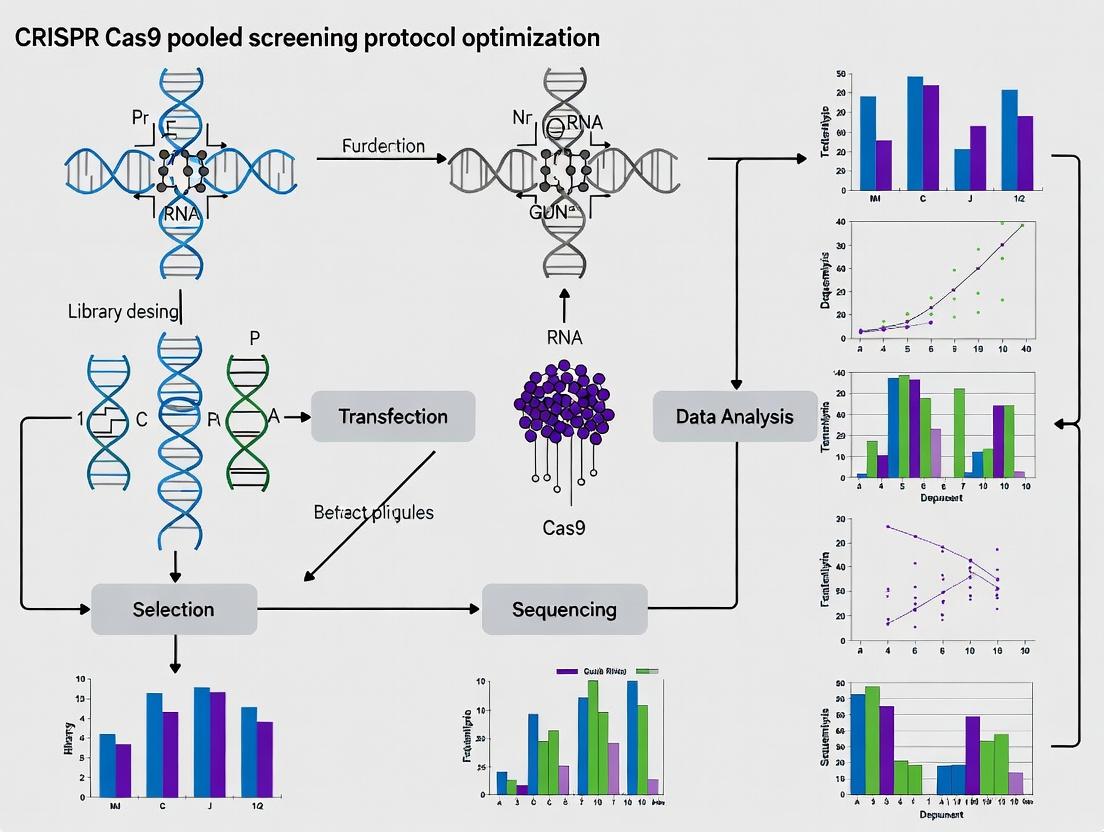
This article provides a detailed roadmap for researchers, scientists, and drug development professionals to optimize CRISPR-Cas9 pooled screening protocols.
CRISPR-Cas9 Pooled Screening Protocol: Comprehensive Guide to Optimization for Robust Genetic Discovery
Abstract
This article provides a detailed roadmap for researchers, scientists, and drug development professionals to optimize CRISPR-Cas9 pooled screening protocols. Covering foundational principles, advanced methodological applications, systematic troubleshooting for common pitfalls, and best practices for validation and benchmarking, it synthesizes current best practices to enhance screening robustness, reproducibility, and biological relevance for target identification and functional genomics.
Laying the Groundwork: Core Principles of CRISPR Pooled Screening Design
Within the broader research on CRISPR-Cas9 pooled screening protocol optimization, the precise definition of the screening goal is the critical first step that dictates all subsequent experimental design and analytical choices. This phase transitions the project from a conceptual idea to a validated, actionable biological hypothesis. It encompasses two primary, sequential objectives: primary Discovery of genes involved in a phenotype, followed by rigorous Validation of identified hits.
The Screening Goal Framework: Key Stages & Outputs
| Stage | Primary Objective | Typical Screening Approach | Key Deliverable | Common Assay Readout Examples |
|---|---|---|---|---|
| Discovery | Identify a comprehensive set of genes modulating a phenotype. | Genome-wide or sub-genome (e.g., kinome, druggable genome) pooled screening. | A ranked list of candidate genes (hits) from the primary screen. | Cell viability (dropout/enrichment), Fluorescence (FACS), Luminescence, Barcode sequencing (for multiplexed assays). |
| Validation | Confirm the phenotype is directly caused by the genetic perturbation. | Focused, arrayed validation using individual sgRNAs/gene. | A refined, high-confidence gene list for downstream research. | Dose-response curves (e.g., to a drug), High-content imaging, Western blot, RNA-seq on knockout cells. |
Detailed Experimental Protocols
Protocol 1: Defining Parameters for a Discovery Pooled Screen
Objective: To establish the core experimental parameters for a CRISPR-Cas9 negative selection (dropout) screen to discover genes essential for cell proliferation.
Cell Line Selection & Preparation:
- Utilize a cell line stably expressing Cas9 (or transduce with Cas9 prior to screening).
- Confirm Cas9 activity via a surrogate reporter assay (e.g., GFP disruption flow cytometry).
- Culture cells for >2 passages post-Cas9 activation to ensure stable expression.
Library Selection & Amplification:
- Select a genome-wide CRISPR knockout library (e.g., Brunello, Brie).
- Amplify the plasmid library following the provider's protocol (use low-cycle PCR, high-fidelity polymerase, and ≥1000x coverage to maintain diversity).
- Purify amplified DNA and determine concentration via fluorometry.
Virus Production & Titering:
- Produce lentiviral particles in HEK293T cells by co-transfecting the sgRNA library plasmid with packaging plasmids (psPAX2, pMD2.G).
- Harvest supernatant at 48 and 72 hours post-transfection, concentrate via ultracentrifugation.
- Titer virus on target cells to determine the volume needed for a Multiplicity of Infection (MOI) of 0.3-0.4, ensuring most cells receive a single sgRNA.
Cell Infection & Selection:
- Infect cells at a library coverage of 500-1000x (e.g., for a 75k sgRNA library, infect 3.75e7 to 7.5e7 cells).
- Add polybrene (8 µg/mL) to enhance transduction.
- At 48 hours post-infection, begin puromycin selection (2-5 µg/mL, dose determined by kill curve) for 5-7 days to eliminate uninfected cells.
Phenotype Induction & Sampling:
- After selection, split cells into replicate populations. Maintain cells by passaging every 2-3 days, keeping coverage >500x.
- Harvest Timepoint T0 genomic DNA (gDNA) from ~1e7 cells immediately post-selection.
- Continue culturing cells for ~14 population doublings.
- Harvest Timepoint T_end gDNA from ~1e7 cells per replicate.
Next-Generation Sequencing (NGS) Library Prep:
- Isolate gDNA using a large-scale kit (e.g., Qiagen Blood & Cell Culture DNA Maxi Kit).
- Amplify integrated sgRNA sequences from 30-50 µg gDNA per sample via a two-step PCR protocol:
- PCR1: Amplify sgRNA region with primers containing partial Illumina adapters.
- PCR2: Add full Illumina adapters and sample barcodes.
- Purify PCR products, quantify, pool equimolarly, and sequence on an Illumina platform (aim for >500 reads per sgRNA).
Protocol 2: Validation of Screening Hits in an Arrayed Format
Objective: To validate top gene hits from a primary screen using individual sgRNAs in an arrayed, multiparametric assay.
sgRNA Design & Cloning:
- Select 3-5 top-ranking sgRNAs per target gene from the primary screen. Include 2-3 non-targeting control (NTC) sgRNAs.
- Clone individual sgRNAs into a lentiviral sgRNA expression vector (e.g., lentiCRISPRv2) via BsmBI restriction cloning.
- Sequence-verify all constructs.
Arrayed Viral Production & Cell Line Generation:
- Produce lentivirus for each sgRNA individually in a 96-well plate format using HEK293T cells and transfection reagent.
- Transduce target cells in a 96-well plate, using a low MOI (<1) to ensure single integration.
- Select with puromycin for 5-7 days to generate polyclonal knockout pools for each sgRNA.
Phenotypic Validation Assay:
- Seed validated knockout pools and control cells (NTC, known positive control) into assay plates.
- For a drug sensitivity screen: Treat cells with a 10-point, half-log dilution series of the compound of interest. Incubate for 5-7 days.
- Assess viability using a luminescent (e.g., CellTiter-Glo) or resazurin-based assay.
- Perform the assay in biological triplicates across technical triplicates.
Downstream Molecular Validation:
- Confirm gene knockout efficiency via western blot (if antibody available) or Surveyor/T7E1 assay on genomic DNA.
- For high-confidence hits, perform rescue experiments by re-expressing a cDNA-resistant to sgRNA targeting.
Visualizations
Title: Screening Goal Workflow from Question to Validation
Title: Pooled Lentiviral Library Production & Infection
The Scientist's Toolkit: Essential Reagents & Materials
| Item | Function & Rationale |
|---|---|
| Validated CRISPR Knockout Library (e.g., Brunello) | A pre-designed, sequenced-confirmed pool of sgRNAs providing genome-wide coverage with high on-target efficiency. Essential for discovery. |
| Lentiviral Packaging Plasmids (psPAX2, pMD2.G) | Second- and third-generation packaging plasmids required for the production of replication-incompetent lentiviral particles. |
| Polybrene (Hexadimethrine bromide) | A cationic polymer that reduces charge repulsion between viral particles and cell membranes, increasing transduction efficiency. |
| Puromycin Dihydrochloride | A selection antibiotic linked to the sgRNA expression cassette; critical for eliminating non-transduced cells post-infection. |
| CellTiter-Glo Luminescent Assay | A homogeneous, luminescent method to quantify viable cells based on ATP content. Gold standard for viability readouts in validation. |
| High-Fidelity PCR Polymerase (e.g., KAPA HiFi) | Crucial for accurate amplification of the sgRNA library for both NGS prep and virus production without introducing skewing errors. |
| BsmBI Restriction Enzyme | A Type IIS enzyme used for golden gate assembly cloning of individual sgRNA sequences into CRISPR vectors for validation studies. |
| Next-Generation Sequencing Platform (Illumina) | Required for deep sequencing of sgRNA barcodes from pooled screens to determine their relative abundance pre- and post-selection. |
Pooled CRISPR-Cas9 screening is a cornerstone of functional genomics, enabling systematic interrogation of gene function across the genome. The selection of an appropriate screening library is a critical first step that dictates the biological questions that can be answered. This protocol optimization research is framed within a thesis focused on enhancing screening efficacy, reducing noise, and improving hit identification through systematic parameter testing. The core decision lies in choosing between genome-wide and focused libraries for CRISPR knockout (CRISPRko), CRISPR activation (CRISPRa), or CRISPR interference (CRISPRi) modalities.
Library Type Comparison & Selection Guidelines
Table 1: Genome-wide vs. Focused Library Characteristics
| Parameter | Genome-wide Library | Focused/Subset Library |
|---|---|---|
| Scope | Targets every protein-coding gene (e.g., ~18-20k genes). | Targets a curated gene set (e.g., kinases, epigenetic regulators, druggable genome). |
| Typical Size | 70,000 - 120,000 sgRNAs. | 1,000 - 20,000 sgRNAs. |
| Primary Application | Unbiased discovery, novel pathway identification, genome-scale functional profiling. | Hypothesis-driven research, validation, screening in specialized models (e.g., primary cells). |
| Screen Depth (Coverage) | Lower (3-10 sgRNAs/gene). | Higher (5-20 sgRNAs/gene). |
| Cost & Scalability | Higher cost, requires greater sequencing depth and cell numbers. | More cost-effective, enables higher replicate number or complex assays. |
| Hit Identification | Broad, can yield unexpected targets; requires stringent statistical cut-offs. | Focused on biological area of interest; statistical power is higher for the set. |
| Best for Thesis Context | Optimizing protocols for maximum dynamic range in large-scale screens. | Optimizing protocols for sensitivity in specific biological contexts. |
Table 2: CRISPR Modality Selection Guide
| Modality | Mechanism | Effector | Primary Use | Key Consideration |
|---|---|---|---|---|
| CRISPRko | Disrupts gene function via DSBs and NHEJ. | Wild-type Cas9 (nuclease). | Loss-of-function screening, essential gene identification. | Gold standard; watch for confounding p53 response in some cells. |
| CRISPRa | Activates gene transcription. | dCas9 fused to transcriptional activator (e.g., VPR, SAM). | Gain-of-function screening, identifying gene overexpression phenotypes. | Activation efficiency is highly dependent on sgRNA design and chromatin context. |
| CRISPRi | Suppresses gene transcription. | dCas9 fused to transcriptional repressor (e.g., KRAB). | Knockdown-like screening, tunable suppression, essential gene profiling. | Highly specific with minimal off-target effects; repression is reversible. |
Detailed Experimental Protocols
Protocol 1: Lentiviral Pooled Library Production & Titering
Objective: Produce high-titer, high-complexity lentivirus from a plasmid library for transduction.
Materials: HEK293T cells, library plasmid pool, psPAX2 packaging plasmid, pMD2.G envelope plasmid, polyethylenimine (PEI), 0.45 µm filter, serum-free medium.
- Day 1: Seed 15 million HEK293T cells in a 15-cm dish.
- Day 2: Transfect using PEI method:
- Combine 22.5 µg library plasmid, 16.5 µg psPAX2, 6 µg pMD2.G in 1.5 mL serum-free medium.
- Add 135 µL of 1 mg/mL PEI, vortex, incubate 15 min.
- Add dropwise to cells.
- Day 3: Replace medium with 20 mL fresh complete medium.
- Day 4 & 5: Harvest viral supernatant (48h and 72h post-transfection), filter through a 0.45 µm filter. Pool harvests, aliquot, and store at -80°C.
- Titer Determination: Transduce target cells with serial dilutions of virus in the presence of polybrene (8 µg/mL). 72 hours later, select with puromycin (1-5 µg/mL, pre-determined) for 3-4 days. Calculate titer based on percentage of surviving cells and dilution factor. Aim for a titer >1x10^7 TU/mL.
Protocol 2: Pooled Screen Transduction & Selection (CRISPRko)
Objective: Achieve low-MOI transduction to ensure one sgRNA per cell, then select and expand for screening.
Materials: Target cells (e.g., A375, K562), library virus, polybrene (or protamine sulfate), puromycin, genomic DNA extraction kit.
- Pre-test: Determine the puromycin kill curve (minimum concentration that kills all cells in 3-5 days) and the cell doubling time.
- Seed Cells: Seed 200 million cells at a density ensuring they will be in log phase during transduction. This number provides >1000x coverage of the library.
- Transduce: Calculate virus volume for an MOI of ~0.3. Mix cells, virus, and polybrene (final 4-8 µg/mL). Spinoculate by centrifuging plates at 800-1000 x g for 30-60 min at 32°C, then incubate at 37°C.
- Selection: 24h post-transduction, begin puromycin selection. Maintain selection for 5-7 days until all cells in a non-transduced control are dead.
- Harvest Reference Sample (T0): Collect at least 20 million cells (representing >500x coverage) post-selection. Pellet, wash with PBS, and store at -80°C for gDNA extraction.
- Apply Selection Pressure: Split the remaining population into experimental arms (e.g., drug-treated vs. DMSO control). Passage cells, maintaining >500x library coverage at all times for 14-21 population doublings.
- Harvest Endpoint Samples (T14/T21): Collect >20 million cells from each arm. Pellet, wash, and freeze.
Protocol 3: Next-Generation Sequencing (NGS) Library Preparation from gDNA
Objective: Amplify and barcode the integrated sgRNA sequences from genomic DNA for sequencing.
Materials: gDNA, Herculase II Fusion DNA Polymerase, NEBNext Ultra II Q5 Master Mix, PCR purification kits, dual-indexed sequencing primers.
- Primary PCR (Amplify sgRNA): In a 50 µL reaction, combine 2.5 µg gDNA (per sample), Herculase II buffer, dNTPs, and forward/reverse primers that bind the constant regions flanking the sgRNA.
- Cycling: 95°C 3 min; [98°C 20s, 60°C 30s, 72°C 30s] x 18-22 cycles; 72°C 5 min.
- Purify PCR product using a spin column.
- Secondary PCR (Add Indices & Adaptors): Use 5-20 ng of purified primary PCR product as template. Use NEBNext Ultra II Q5 Master Mix and indexed primers that add Illumina adaptors and sample-specific barcodes.
- Cycling: 98°C 30s; [98°C 10s, 65°C 30s, 72°C 30s] x 10-12 cycles; 72°C 5 min.
- Pool & Quantify: Pool secondary PCR products from all samples, quantify by qPCR or bioanalyzer, and sequence on an Illumina platform (MiSeq/HiSeq/NextSeq) with a 20-30% spike-in of PhiX to mitigate low diversity issues.
Visualization & Workflow Diagrams
Title: CRISPR Library Selection and Screening Workflow
Title: CRISPRko, CRISPRa, and CRISPRi Mechanism Comparison
The Scientist's Toolkit: Key Research Reagent Solutions
Table 3: Essential Reagents for Pooled CRISPR Screening
| Reagent / Material | Supplier Examples | Function in Protocol |
|---|---|---|
| Brunello (CRISPRko) or Calabrese (CRISPRa/i) Library | Addgene | Curated, high-quality genome-wide sgRNA library plasmid pools. |
| psPAX2 & pMD2.G | Addgene | 2nd generation lentiviral packaging plasmids for virus production. |
| Polyethylenimine (PEI) | Polysciences | High-efficiency transfection reagent for lentivirus production in HEK293T cells. |
| Hexadimethrine bromide (Polybrene) | Sigma-Aldrich | Cationic polymer that enhances viral transduction efficiency. |
| Puromycin dihydrochloride | Thermo Fisher | Selection antibiotic for cells transduced with puromycin-resistant vectors. |
| NucleoSpin Blood/Plasmid Kits | Macherey-Nagel | For high-yield, high-quality genomic DNA extraction from cell pellets. |
| Herculase II Fusion DNA Polymerase | Agilent | Robust polymerase for high-fidelity amplification of sgRNAs from gDNA (Primary PCR). |
| NEBNext Ultra II Q5 Master Mix | New England Biolabs | For efficient indexing and adaptor addition during NGS library prep (Secondary PCR). |
| Illumina Sequencing Primers | Integrated DNA Technologies | Custom primers for sequencing the amplified sgRNA region. |
| MAGeCK or CRISPResso2 Software | Open Source | Essential bioinformatics tools for analyzing screen NGS data and quantifying enrichment/depletion. |
Within the context of optimizing CRISPR-Cas9 pooled screening protocols, the design of the guide RNA (gRNA) library is the most critical determinant of experimental success. A well-designed library maximizes on-target efficacy while minimizing off-target effects, ensures comprehensive coverage of the target genomic space, and incorporates redundancy to account for variable gRNA performance. This Application Note details the core principles and practical protocols for designing robust pooled screening libraries.
gRNA Design Rules: Balancing Efficacy and Specificity
The ideal gRNA sequence (typically 20 nucleotides) directs Cas9 to a specific genomic locus with high cleavage efficiency and minimal off-target activity. Key parameters are summarized below.
Table 1: Key gRNA Design Parameters and Optimal Ranges
| Parameter | Optimal Value/Range | Rationale & Notes |
|---|---|---|
| Seed Region (PAM-proximal) | Last 8-12 bases | Critical for specificity; mismatches here often abolish cleavage. |
| GC Content | 40-60% | Low GC reduces stability; high GC may increase off-target effects. |
| TTTT (Poly-T) | Avoid | Acts as a Pol III termination signal; will truncate gRNA. |
| On-target Efficacy Score | Top quartile (e.g., >70) | Use algorithms like Doench '16 (Rule Set 2), Moreno-Mateos, or CRISPRscan. |
| Off-target Score | Minimize (e.g., <5 exact matches) | Predicts off-target sites; use CFD (Cutting Frequency Determination) or MIT specificity scores. |
| 5' Base (for U6 promoter) | G or A |
Preferred for optimal U6 transcription initiation. Improves expression. |
Protocol 2.1: In Silico gRNA Selection Workflow
- Input: Provide the target gene identifier (e.g., Ensembl ID) or genomic coordinate range.
- Generate Candidates: Use design tools (e.g., Broad Institute's GPP Portal, ChopChop, CRISPick) to extract all possible 20bp sequences flanking a 5'-NGG-3' PAM.
- Filter: Remove all candidates containing a
TTTTsequence or with GC content outside 40-60%. - Rank: Score remaining candidates using an on-target efficacy algorithm (e.g., Rule Set 2). Select the top 4-6 per gene for redundancy.
- Specificity Check: Perform a genome-wide alignment (e.g., using Bowtie) for each selected candidate. Discard guides with >3 exact genomic matches or with high-scoring off-targets (CFD score >0.2) in coding/exonic regions.
- Final Selection: Prioritize guides with high on-target and low off-target scores. If a 5'-G is required for your vector, select guides starting with
Gor add it to the 5' end of the spacer if the native base is anA.
Title: Computational gRNA Selection and Filtering Workflow
Coverage and Redundancy: Ensuring Robust Screening
Coverage refers to the breadth of genetic elements targeted (e.g., all exons of all kinases), while redundancy refers to the number of distinct gRNAs targeting each element. High redundancy mitigates the high failure rate of individual guides.
Table 2: Library Coverage and Redundancy Standards
| Screening Type | Recommended Redundancy | Target Region | Library Size Example | Justification |
|---|---|---|---|---|
| Genome-wide (Knockout) | 4-6 gRNAs/gene | All annotated protein-coding genes (e.g., ~20,000 genes) | 80,000 - 120,000 gRNAs | Accounts for variable activity; enables robust hit confidence. |
| Focused/Sub-library | 5-10 gRNAs/gene | Specific gene family or pathway (e.g., 500 kinases) | 2,500 - 5,000 gRNAs | Enables deeper interrogation and higher confidence per target. |
| Non-coding Region | 8-12 gRNAs/region | Enhancers, promoters, lncRNAs (per functional element) | Highly variable | Larger elements require tiling; functional sites are poorly defined. |
| Minimum Effective | ≥3 active gRNAs/gene | N/A | N/A | Required for statistical significance in MAGeCK or BAGEL analysis. |
Protocol 3.1: Determining Library Size and Coverage
- Define Target Set: List all genes or genomic elements for screening.
- Set Redundancy: Based on Table 2, choose the number of gRNAs per target (e.g., 5).
- Calculate Size: Multiply the number of targets by the redundancy. (e.g., 500 kinases * 5 gRNAs = 2,500 gRNA library).
- Account for Controls: Add necessary non-targeting control gRNAs (≥100) and positive essential gene controls (e.g., 50-100).
- Final Library Size: Total = (Targets × Redundancy) + Controls. Ensure your viral packaging and sequencing capabilities can handle this complexity.
Pooled Library Cloning and Quality Control Protocol
Protocol 4.1: Oligo Pool to Viral Library
- Oligo Synthesis: Order a single-stranded oligo pool containing all designed gRNA sequences flanked by required cloning sites (e.g.,
BsmBIorBbsIsites for lentiCRISPR vectors). - PCR Amplification: Amplify the oligo pool with primers adding full cloning overhangs. Purify the product.
- Restriction Digest & Ligation: Digest the PCR product and the lentiviral backbone vector with the appropriate Type IIS enzyme. Gel-purify both. Ligate at a high vector:insert molar ratio (e.g., 1:5).
- Electroporation: Transform the ligation product into high-efficiency E. coli (e.g., Endura ElectroCompetent cells). Plate a dilution series to estimate colony count. Aim for at least 200x library coverage (e.g., for a 5,000-guide library, pick ≥1,000,000 colonies).
- Plasmid Harvest: Scrape all colonies and perform a maxi- or gigaprep to create the Plasmid Library.
- Sequencing QC: Amplify the gRNA inserts from the plasmid library and submit for NGS. Analyze to confirm even representation (>90% of gRNAs within 0.1-10x of median read count).
Protocol 4.2: Lentiviral Production & Titering
- Transfection: In a 10cm plate, co-transfect HEK293T cells with: the Plasmid Library, psPAX2 (packaging), and pMD2.G (VSV-G envelope) plasmids.
- Harvest Virus: Collect supernatant at 48 and 72 hours post-transfection. Concentrate via ultracentrifugation or PEG precipitation.
- Functional Titer (TU/mL): Serially dilute virus on target cells with polybrene. After 48hrs, select with puromycin for 5-7 days. Stain and count colonies. Calculate titer: (Colonies × Dilution Factor) / Infection Volume.
- Library Infection: Infect target cells at a low MOI (<0.3) to ensure most cells receive ≤1 gRNA. Include a non-infected control. Apply puromycin selection for 5-7 days until all control cells are dead. This creates the Screening Pool.
Title: From Oligo Pool to Screening-Ready Cell Pool
The Scientist's Toolkit: Essential Research Reagents
Table 3: Key Reagents for Pooled CRISPR Screening
| Reagent / Material | Function & Critical Notes |
|---|---|
| Cloning Vector (e.g., lentiCRISPRv2, lentiGuide-Puro) | Lentiviral backbone expressing gRNA, Cas9, and a selection marker (puromycin). |
| Type IIS Restriction Enzyme (e.g., BsmBI-v2, BbsI) | Creates non-palindromic overhangs for efficient, directional oligo insertion. |
| Electrocompetent E. coli (e.g., Endura, Stbl4) | High transformation efficiency for maintaining large, complex plasmid libraries. |
| Lentiviral Packaging Plasmids (psPAX2, pMD2.G) | Required for production of 3rd generation, VSV-G pseudotyped lentivirus. |
| HEK293T Cells | Standard cell line for high-titer lentivirus production due to SV40 T-antigen expression. |
| Polybrene (Hexadimethrine bromide) | A cationic polymer that enhances viral infection efficiency by neutralizing charge repulsion. |
| Puromycin Dihydrochloride | Selection antibiotic; kill curve must be performed on target cells prior to screening. |
| Next-Generation Sequencing Platform (e.g., Illumina NextSeq) | For library QC and deconvoluting screening results via gRNA read counts. |
Within the broader thesis on CRISPR-Cas9 pooled screening protocol optimization, the inclusion of rigorous controls is not a mere suggestion but a fundamental requirement for data integrity and biological interpretation. Controls serve as the critical benchmarks against which the phenotypic effects of targeted gene perturbations are measured. Their proper design and implementation directly impact the statistical power, false discovery rate (FDR), and translational validity of a screening campaign.
Non-targeting Control gRNAs (NTCs) are designed not to target any genomic sequence in the organism of interest. They account for confounding variables such as:
- Cellular responses to the Cas9 machinery and gRNA introduction (e.g., DNA damage response, immune activation).
- Stochastic variations in cell growth and viability.
- Baseline noise inherent to the screening technology (e.g., sequencing depth, transduction efficiency).
Positive Control gRNAs target essential genes known to produce a strong, predictable phenotype (e.g., cell death in viability screens). They validate that the screening system is functioning correctly—that Cas9 is active, gRNAs are expressed, and the assay robustly detects a known signal.
Negative Control gRNAs typically target genomic "safe harbor" sites or genes known to be non-essential under the screening conditions. They work in tandem with NTCs to define the null phenotype distribution, which is crucial for calculating Z-scores, p-values, and hit thresholds.
Recent analyses underscore the quantitative impact of control selection. A 2023 benchmark study of public screening datasets revealed that the choice and number of control gRNAs significantly influence hit-calling reproducibility.
Table 1: Impact of Control gRNA Quantity on Screening Metrics
| Metric | 5 Control gRNAs per Gene | 10 Control gRNAs per Gene | 20 Control gRNAs per Gene |
|---|---|---|---|
| False Discovery Rate (FDR) | 15-20% | 8-12% | <5% |
| Hit List Reproducibility | 65% | 85% | 95% |
| Required Screen Depth | Higher | Moderate | Lower |
Detailed Experimental Protocols
Protocol 2.1: Design and Cloning of Control gRNAs for a Pooled Library
Objective: To integrate non-targeting, positive, and negative control gRNAs into a pooled lentiviral CRISPR-Cas9 knockout (KO) library.
Materials: See The Scientist's Toolkit below. Procedure:
- Design:
- Non-targeting Controls: Use established scrambled sequences with no significant homology (≤17-nt contiguous match) to the target genome. A minimum of 50 unique NTCs is recommended. Tools like
Cas-OFFinderorBowtieshould be used for specificity verification. - Positive Controls: Select 3-5 essential genes (e.g., RPA3, PSMC1, PCNA). Design 5-10 gRNAs per gene from validated resources (e.g., Brunello or TKOv3 library designs).
- Negative Controls: Select 3-5 non-essential genomic "safe harbor" loci (e.g., AAVS1, ROSA26) or confirmed non-essential genes. Design 5-10 gRNAs per target.
- Non-targeting Controls: Use established scrambled sequences with no significant homology (≤17-nt contiguous match) to the target genome. A minimum of 50 unique NTCs is recommended. Tools like
- Oligo Pool Synthesis: Order the designed gRNA sequences (including flanking cloning sites, e.g., BsmBI sites for lentiGuide) as an oligo pool.
- Library Cloning:
- Digest the lentiviral backbone plasmid (e.g., lentiGuide-Puro) with BsmBI and purify.
- Amplify the oligo pool by PCR to add necessary overhangs.
- Perform Golden Gate assembly using T4 DNA Ligase with the digested backbone and PCR-amplified insert.
- Transform the assembly reaction into Endura electrocompetent cells. Aim for a library representation of at least 500x.
- Harvest plasmid DNA (Maxiprep) for the final library pool.
Protocol 2.2: Validating Control Performance in a Pilot Screen
Objective: To functionally assess positive and negative control gRNAs prior to a full-scale screen.
Materials: HEK293T cells, Cas9-expressing cell line of interest, lentiviral packaging plasmids, puromycin. Procedure:
- Virus Production: Produce lentivirus for the sub-pool containing only the control gRNAs (NTCs, positives, negatives) as per standard protocols.
- Cell Transduction: Transduce the Cas9-expressing cell line at a low MOI (<0.3) to ensure most cells receive a single gRNA. Include an untransduced control.
- Selection: Apply puromycin (or relevant selection) 48 hours post-transduction for 5-7 days.
- Phenotypic Assessment:
- For viability screens: Perform a cell viability assay (e.g., CellTiter-Glo) at Day 0 (post-selection) and Day 7. Calculate fold-change for each control gRNA.
- For FACS-based screens: Analyze fluorescence at relevant time points.
- Analysis: Positive control gRNAs should show significant depletion (e.g., log2 fold-change < -2). Negative controls and NTCs should cluster around log2 fold-change = 0. This defines the dynamic range and baseline of the assay.
Visualization of Experimental Workflow and Logic
Title: Control gRNA Design and Validation Workflow
Title: Data Analysis Logic Using Control Distributions
The Scientist's Toolkit
Table 2: Essential Reagents and Materials for Control Implementation
| Item | Function & Rationale | Example Product/Catalog |
|---|---|---|
| Validated Control gRNA Sequences | Pre-designed, functionally tested sequences for positive/negative controls ensure reliability. | Horizon Discovery, "Brunello" library controls; Addgene #73178. |
| BsmBI-v2 Restriction Enzyme | High-fidelity enzyme for Golden Gate assembly of gRNA oligos into lentiviral backbones. | NEB #R0739S. |
| Endura ElectroCompetent Cells | High-efficiency cells for large, complex plasmid library transformation, ensuring full representation. | Lucigen #60242-2. |
| Lenti-Guide-Puro Backbone | Common lentiviral vector for expression of gRNA and puromycin resistance in pooled screens. | Addgene #52963. |
| PsPAX2 Packaging Plasmid | 2nd generation lentiviral packaging plasmid for production of VSV-G pseudotyped virus. | Addgene #12260. |
| pMD2.G (VSV-G) Envelope Plasmid | Provides VSV-G glycoprotein for broad tropism lentiviral packaging. | Addgene #12259. |
| Polybrene (Hexadimethrine Bromide) | A cationic polymer that enhances viral transduction efficiency. | Sigma-Aldrich #H9268. |
| Puromycin Dihydrochloride | Selective antibiotic for cells transduced with puromycin-resistant vectors. | Thermo Fisher #A1113803. |
| CellTiter-Glo Luminescent Assay | Gold-standard for quantifying cell viability (ATP content) in proliferation/death screens. | Promega #G7570. |
| Next-Generation Sequencing Kit | For quantifying gRNA abundance pre- and post-screen. Essential for MAGeCK/RSA analysis. | Illumina NovaSeq 6000 kits. |
Application Notes
In the context of optimizing CRISPR-Cas9 pooled screening protocols, understanding the interplay between different screening readouts is paramount. These readouts—cell fitness/proliferation, cell survival/death, and deep molecular phenotyping via FACS and NGS—define the biological resolution and statistical power of a functional genomics screen.
Cell Fitness & Survival: The foundational readout for arrayed or pooled screens. Fitness screens (positive selection) identify genes essential for proliferation under a given condition (e.g., cancer cell growth). Survival screens (negative selection) identify genes whose loss confers resistance or sensitivity to a therapeutic agent. The core quantitative output is the change in gRNA abundance over time, measured by NGS.
FACS Sorting as a Phenotypic Bridge: Fluorescence-Activated Cell Sorting (FACS) enables high-resolution, medium-throughput phenotypic screening. Cells are stained for markers of interest (e.g., apoptosis, cell cycle, surface proteins) post-CRISPR perturbation. Sorting distinct populations (e.g., CD44-high vs. CD44-low) followed by NGS of gRNA abundance links genetic perturbations to complex cellular states, beyond simple viability.
NGS as the Unifying Quantifier: Next-Generation Sequencing is the final, quantitative readout for pooled screens. It translates sorted cell populations or bulk cultured cells into gRNA count data. Statistical analysis (using tools like MAGeCK or CRISPResso2) compares counts between conditions (e.g., initial plasmid library vs. final population, or treated vs. control) to assign significance to each gRNA and its target gene.
Integration for Protocol Optimization: A key thesis in protocol optimization involves strategically combining these readouts. For instance, a primary survival screen against a drug can be followed by FACS-based profiling of resistant populations to unravel mechanisms of resistance. Optimizing the timing of sorting, the depth of NGS sequencing, and the library complexity are active areas of research to reduce noise and cost while enhancing biological discovery.
Table 1: Typical NGS Sequencing Depth Requirements for Pooled CRISPR Screens
| Library Size (gRNAs) | Minimum Reads per Sample (for Bulk Fitness) | Recommended Reads per Sample (for FACS-sorted fractions) | Goal Coverage |
|---|---|---|---|
| 1,000 - 5,000 | 500 - 1,000 reads per gRNA | 1,000 - 2,000 reads per gRNA | 500x - 1000x |
| ~10,000 | 200 - 500 reads per gRNA | 500 - 1,000 reads per gRNA | 200x - 500x |
| 50,000 - 100,000 | 50 - 200 reads per gRNA | 200 - 500 reads per gRNA | 50x - 200x |
| >200,000 (Genome-wide) | 20 - 50 reads per gRNA | 100 - 200 reads per gRNA | 20x - 100x |
Table 2: Common FACS Parameters for Phenotypic Screening Readouts
| Phenotype of Interest | Typical Marker(s) | Sorting Strategy | Post-Sort Application |
|---|---|---|---|
| Apoptosis/Cell Death | Annexin V, PI, 7-AAD | Isolate live (Annexin V-/PI-) vs. early apoptotic (Annexin V+/PI-) vs. dead (PI+) populations. | NGS to identify pro- or anti-apoptotic genes. |
| Cell Cycle Arrest | DAPI, Hoechst, EdU | Sort cells in G1, S, and G2/M phases based on DNA content. | NGS to find genes regulating cell cycle checkpoints. |
| Surface Protein Expression | Fluorophore-conjugated antibodies (e.g., CD44-APC) | Sort top 10-20% (high) vs. bottom 10-20% (low) expressors. | NGS to find regulators of protein expression or shedding. |
| Reporter Gene Activation | GFP, mCherry | Sort positive vs. negative populations based on fluorescence threshold. | NGS to identify pathway regulators. |
| Senescence | β-galactosidase (fluorogenic substrate) | Sort SA-β-Gal+ cells. | NGS to discover senescence-inducing or -escaping genes. |
Detailed Protocols
Protocol 1: FACS-Mediated Phenotypic Screening Following Pooled CRISPR-Cas9 Perturbation
Objective: To isolate cells based on a specific surface or intracellular marker phenotype after pooled CRISPR knockout, for subsequent gRNA deconvolution by NGS.
Materials: See "Research Reagent Solutions" table.
Methodology:
- Cell Preparation:
- Generate a Cas9-expressing cell line (e.g., via lentiviral transduction and blasticidin selection) with high editing efficiency.
- Transduce cells with your pooled gRNA lentiviral library at a low MOI (~0.3-0.4) to ensure most cells receive a single gRNA. Include a non-targeting control (NTC) gRNA population.
- Select transduced cells with puromycin (or appropriate antibiotic) for 5-7 days. Maintain cells at a minimum coverage of 500x library representation throughout.
- Culture cells under experimental conditions (e.g., with/without drug) for the desired duration (typically 10-21 days for fitness screens).
Staining for FACS:
- Harvest cells (include NTC and untransduced controls for gating).
- Wash twice with cold FACS Buffer (PBS + 2% FBS + 1mM EDTA).
- Resuspend cell pellet in FACS Buffer at ~10⁷ cells/mL.
- For surface markers: Add titrated, fluorochrome-conjugated antibody. Incubate for 30 min on ice in the dark. Wash twice with cold FACS Buffer.
- For intracellular markers (e.g., phospho-proteins): Fix cells with 4% PFA for 10 min, permeabilize with ice-cold 90% methanol for 30 min on ice, wash, then stain with antibody in FACS Buffer containing 0.5% saponin.
- Pass cells through a 35-70 μm cell strainer.
- Add DAPI or PI (1 μg/mL) for live/dead discrimination immediately before sorting.
FACS Sorting:
- Using a high-speed sorter (e.g., BD FACSAria, Beckman Coulter MoFlo), set gates based on control samples.
- First, gate on single cells using FSC-A vs. FSC-H.
- Gate on live cells (DAPI-/PI-).
- Gate on the phenotypic populations of interest (e.g., Marker-High vs. Marker-Low). Collect a minimum of 1-5 million cells per population to maintain library representation.
- Sort cells directly into collection tubes containing growth medium or lysis buffer.
Genomic DNA (gDNA) Extraction & NGS Library Prep:
- Pellet sorted cells and extract gDNA using a large-scale kit (e.g., Qiagen Blood & Cell Culture DNA Maxi Kit). For large pellets, split into multiple columns.
- Measure gDNA concentration by fluorometry (e.g., Qubit).
- Perform a two-step PCR to amplify the integrated gRNA sequences from the gDNA and add Illumina adapters and sample barcodes.
- PCR1: Use ~1-5 μg of gDNA per reaction with primers specific to the lentiviral backbone flanking the gRNA. Cycle number should be minimized (typically 18-22 cycles) to prevent skewing.
- PCR2: Use a small aliquot of purified PCR1 product (e.g., 1:50 dilution) with indexing primers to add full Illumina adapters. Run for 10-12 cycles.
- Purify the final PCR product, validate on a Bioanalyzer, and pool samples for sequencing on an Illumina NextSeq or HiSeq platform (minimum 75bp single-end run).
Bioinformatic Analysis:
- Demultiplex sequences.
- Align reads to the gRNA library reference file using a simple exact match or short-read aligner (e.g., Bowtie).
- Count reads per gRNA in each sample (e.g., Input, Marker-High, Marker-Low).
- Use a robust statistical pipeline (MAGeCK, CRISPResso2, edgeR) to test for enrichment or depletion of gRNAs between populations. Significant hits identify genes whose knockout drives the observed phenotype.
Protocol 2: Cell Fitness/Survival Screening Readout via Longitudinal NGS Sampling
Objective: To quantify changes in gRNA abundance over time in a pooled CRISPR screen to identify genes affecting cellular fitness or drug sensitivity.
Methodology:
- Screen Setup & Sampling:
- Perform steps 1-3 from Protocol 1 to generate the transduced, selected cell pool. This is the "T0" or "Initial" time point.
- Harvest a representative sample of ~5-10 million cells for gDNA as the T0 baseline.
- Split the remaining cells into experimental (e.g., +Drug) and control (e.g., DMSO) arms. Maintain each arm at sufficient population representation (e.g., 500x library coverage) by scaling culture vessels.
- Passage cells as needed. Harvest ~5-10 million cells from each arm at predetermined time points (e.g., Day 7, Day 14, Day 21) for gDNA extraction.
gDNA Extraction & NGS Library Preparation:
- Extract gDNA from all time point samples (T0, Day7 Ctrl, Day7 Drug, etc.) in parallel.
- Perform the two-step PCR amplification as described in Protocol 1, using identical PCR cycles and conditions for all samples to allow direct comparison.
- Use unique dual indexes in PCR2 to barcode each sample.
- Pool and sequence all samples in a single sequencing run to avoid batch effects.
Bioinformatic Analysis:
- Process reads to generate count tables for each gRNA in each sample.
- The standard analysis compares gRNA abundances in the final time point (e.g., Day 21 Drug) versus the T0 sample or the Day 21 Control.
- Fitness genes (essential for growth) will show gRNA depletion in both control and drug conditions over time.
- Drug-sensitizing genes will show specific depletion of their gRNAs in the drug condition only.
- Drug-resistance genes will show specific enrichment of their gRNAs in the drug condition.
- Normalize counts and calculate log2 fold changes and statistical significance (e.g., MAGeCK RRA algorithm).
Visualizations
Title: Integrated Workflow for Pooled CRISPR Screening Readouts
Title: Logical Link Between Perturbation, Phenotype, and Readout
Research Reagent Solutions
Table 3: Essential Toolkit for CRISPR Screening with FACS/NGS Readouts
| Item | Function & Rationale |
|---|---|
| Lentiviral gRNA Library | Pooled delivery vector (e.g., lentiCRISPRv2, Brunello library) containing thousands of barcoded guide RNAs for high-throughput gene knockout. |
| Stable Cas9-Expressing Cell Line | A clonal or polyclonal cell line with constitutive, inducible, or ribonucleoprotein (RNP)-compatible Cas9 expression to ensure efficient editing. |
| Selection Antibiotics (Puromycin, Blasticidin) | For selecting cells successfully transduced with the gRNA vector and/or the Cas9 vector. |
| Fluorophore-Conjugated Antibodies | High-quality, titrated antibodies for FACS staining against surface or intracellular target proteins to define phenotypic populations. |
| Viability Stains (DAPI, PI, 7-AAD) | Impermeant DNA dyes to exclude dead cells from analysis and sorting, critical for clean data. |
| Large-Scale gDNA Extraction Kit | Reliable kit for high-yield, high-purity genomic DNA extraction from millions of sorted or bulk cells (e.g., Qiagen Maxi kits). |
| High-Fidelity PCR Master Mix | For minimal-bias amplification of gRNA sequences from genomic DNA during NGS library preparation (e.g., KAPA HiFi, Q5). |
| Illumina-Compatible Index Primers | Custom primers for the second-stage PCR that add unique dual indexes and full adapters for multiplexed sequencing. |
| NGS Platform (Illumina NextSeq 500/550) | Provides the required read depth (20-100 million reads per sample) for quantifying hundreds of thousands of gRNAs in multiple samples. |
| Bioinformatics Software (MAGeCK, CRISPResso2) | Essential computational pipelines for aligning NGS reads, counting gRNAs, and performing robust statistical analysis to identify hit genes. |
From Theory to Bench: Executing a High-Efficiency Pooled Screen
This protocol, integral to a broader thesis on CRISPR-Cas9 pooled screening optimization, details the production, quantification, and use of lentiviral libraries. High-titer, high-diversity lentiviral particles are critical for maintaining library representation and ensuring screen validity.
Lentiviral Library Production
Principle
Third-generation, replication-incompetent lentiviral particles are produced via transient co-transfection of a packaging plasmid mix and the lentiviral transfer plasmid (containing the sgRNA library) into HEK293T cells. The supernatant is harvested, concentrated, and stored.
Materials
- Cell Line: HEK293T (ATCC CRL-3216)
- Plasmids: Transfer plasmid (e.g., lentiGuide-Puro), psPAX2 (packaging), pMD2.G (VSV-G envelope)
- Transfection Reagent: Polyethylenimine (PEI) Max, 1 mg/mL
- Media: DMEM + 10% FBS, Opti-MEM I Reduced Serum Medium
Detailed Protocol
- Day 1: Seed 12 x 10^6 HEK293T cells in 20 mL complete medium per 15-cm dish. Aim for 70-80% confluency at transfection.
- Day 2 (Transfection):
- For one dish, prepare DNA mix in 1.5 mL Opti-MEM:
- 20 µg Transfer plasmid (sgRNA library)
- 15 µg psPAX2
- 10 µg pMD2.G
- In a separate tube, mix 135 µL PEI Max with 1.5 mL Opti-MEM. Incubate 5 min.
- Combine DNA and PEI mixtures. Vortex immediately, then incubate 20 min at RT.
- Add dropwise to dish. Gently swirl.
- For one dish, prepare DNA mix in 1.5 mL Opti-MEM:
- Day 3 (Media Change): 16-18h post-transfection, aspirate medium, replace with 25 mL fresh pre-warmed complete medium.
- Day 4 & 5 (Harvest): Collect supernatant (~25 mL/dish) 48h and 72h post-transfection into 50 mL conical tubes. Centrifuge at 500 x g for 10 min to remove cell debris. Filter through a 0.45 µm PES filter. Pool harvests.
- Concentration (Day 5): Concentrate filtered supernatant using Lenti-X Concentrator (Takara Bio) per manufacturer's instructions. Resuspend pellet in 1/100th original volume in ice-cold PBS + 25 mM HEPES. Aliquot and store at -80°C.
Lentiviral Titering
Principle
Viral titer is determined by transducing HEK293T cells with serial dilutions of virus, followed by selection or reporter analysis. Functional titer (Transducing Units per mL, TU/mL) is calculated.
Materials
- Target Cells: HEK293T
- Polybrane: Hexadimethrine bromide, 8 mg/mL stock
- Selection Agent: e.g., Puromycin
Detailed Protocol (qPCR Titering)
- Day 1: Seed 1 x 10^5 HEK293T cells/well in a 12-well plate.
- Day 2: Prepare virus dilutions (e.g., 10^-2 to 10^-5) in medium containing 8 µg/mL polybrane. Infect cells.
- Day 3: Replace with fresh medium.
- Day 4: Isolate genomic DNA from infected cells using a commercial kit.
- Quantification: Perform qPCR on genomic DNA using primers specific to the lentiviral backbone (e.g., WPRE) and a reference gene (e.g., RPP30). Calculate titer:
- TU/mL = (C x N x D x 1000) / V
- C = WPRE copy # (from standard curve), N = cell # at transduction, D = dilution factor, V = volume of diluted virus (µL).
Table 1: Common Titering Methods Comparison
| Method | Principle | Time | Output | Notes |
|---|---|---|---|---|
| qPCR | Quantifies viral genome integration | 4-5 days | Physical Titer (vg/mL) | Fast, but includes non-functional particles. |
| FACS (for reporters) | Measures % of fluorescent cells | 3-4 days | Functional Titer (TU/mL) | Requires a fluorescent marker (e.g., GFP). |
| Puromycin Selection | Measures % of resistant colonies | 7-10 days | Functional Titer (TU/mL) | Applicable for resistance-based vectors. Common for CRISPR libraries. |
| Lenti-X GoStix | Immunoassay for p24 capsid | 20 min | Relative p24 level | Rapid, semi-quantitative quality check. |
Typical Yield: Optimized production should yield concentrated library virus at >1 x 10^8 TU/mL.
Lentiviral Transduction for Pooled Screening
Principle
Target cells are transduced at a low Multiplicity of Infection (MOI) to ensure most cells receive a single viral integration, maintaining library representation. The optimal transduction conditions are determined by a pilot "MOI Kill Curve."
Materials
- Target cells for screening (e.g., A375, HAP1)
- Polybrane or other transduction enhancer (cell type-dependent)
- Selection antibiotic (e.g., Puromycin, Blasticidin)
Detailed Protocol
- MOI Kill Curve (Pilot Experiment):
- Seed cells in 24-well plate. Next day, transduce with a non-targeting control virus at a range of volumes (e.g., equivalent to MOI 0.1, 0.3, 0.5, 1, 3).
- Include uninfected controls +/- selection drug.
- 24h post-transduction, replace medium with medium containing selection drug.
- Change medium + drug every 2-3 days.
- After 5-7 days, count viable cells. Choose the virus volume yielding ~30-50% survival, corresponding to an MOI of ~0.3-0.4.
- Library Transduction at Scale:
- Calculate total cells needed for ~500x library coverage (e.g., for a 100k sgRNA library, transduce 50 million cells).
- Using the MOI determined from the kill curve, perform the transduction in replicate plates/dishes to achieve the required cell number.
- Include a non-transduced control plate for selection monitoring.
- Critical: Maintain library representation by ensuring the total number of transduced cells is large enough that each sgRNA is delivered to hundreds of cells.
- Selection:
- 24h post-transduction, replace medium with selection medium.
- Apply selection until all cells in the non-transduced control plate are dead (typically 5-7 days).
- Harvest & Genomic DNA Extraction:
- Harvest a representative sample of selected cells for genomic DNA extraction. This sample serves as the "T0" time point for the screen.
- The remaining cells are passaged for the screen's experimental treatment.
The Scientist's Toolkit
Table 2: Key Research Reagent Solutions
| Item | Function / Rationale |
|---|---|
| HEK293T Cells | Standard production cell line due to high transfectability and robust virus production. |
| psPAX2 & pMD2.G | Third-gen packaging plasmids providing gag/pol/rev and VSV-G envelope proteins, respectively, for safe, high-titer production. |
| Polyethylenimine (PEI) Max | Cost-effective, high-efficiency cationic polymer for transient transfection of plasmid DNA. |
| Polybrene | Cationic polymer that neutralizes charge repulsion, enhancing viral attachment to target cells during transduction. |
| Lenti-X Concentrator | PEG-based solution for gentle precipitation and concentration of viral particles, increasing titer 100-fold. |
| Puromycin Dihydrochloride | Common selection antibiotic for CRISPR vectors; rapidly kills non-transduced mammalian cells. |
| Quick-DNA Midiprep Plus Kit | For high-yield, high-quality genomic DNA extraction from transduced cell pellets for downstream sgRNA sequencing. |
Visualizations
Title: Lentiviral Library Production & Transduction Workflow
Title: Lentiviral Titer Determination Methods
Within the broader thesis on CRISPR-Cas9 pooled screening protocol optimization, achieving and validating optimal multiplicity of infection (MOI) and library representation is the critical foundation. This protocol ensures that the complexity of the pooled guide RNA (gRNA) library is accurately captured in the transduced cell population, minimizing screening noise and false positives/negatives. This document provides updated application notes and detailed protocols for calculating MOI, assessing pre- and post-screen coverage, and implementing best practices for maintaining library diversity.
Core Calculations: MOI, Cell Number, and Guide Representation
The following calculations are fundamental to experimental design. Key variables are defined, and formulas are presented.
Key Variables:
- MOI: Multiplicity of Infection. The average number of viral particles per target cell.
- TU/mL: Titer of the lentiviral library in Transducing Units per milliliter.
- N_cells: Number of target cells to be transduced.
- Library Size: Total number of unique gRNA constructs in the pooled library.
- Coverage: The average number of cells receiving each unique gRNA construct.
- Infection Efficiency (IE): The percentage of cells that are successfully transduced, typically measured by a fluorescent reporter (e.g., GFP).
Table 1: Core Calculation Formulas
| Calculation | Formula | Purpose |
|---|---|---|
| Virus Volume (µL) | (MOI * N_cells) / (TU/mL * 10^-3) |
Determine volume of library needed for transduction. |
| Theoretical Guide Representation | (N_cells * IE) / Library Size |
Calculate the average number of cells per gRNA post-transduction. |
| Minimum Cells for Coverage (X) | Library Size * Desired Coverage (e.g., 500) |
Determine the absolute minimum number of transduced cells required. |
| Actual MOI (via qPCR or Sequencing) | -ln(1 - (Percentage Transduced/100)) |
Calculate the empirical MOI based on measured infection efficiency. |
Recommended Parameters: For a genome-wide library (e.g., ~90,000 gRNAs), a coverage of 500-1000x is standard. This requires a minimum of 45-90 million successfully transduced cells. An MOI of ~0.3-0.4 is typically targeted to ensure >95% of cells receive a single integration, minimizing multiple gRNA integrations per cell.
Detailed Protocols
Protocol 3.1: Pre-Screen Titer Determination and Transduction for Optimal MOI
Objective: To transduce the target cell population at a defined, low MOI to ensure high representation and single-integration events.
Materials: See "Scientist's Toolkit" (Section 5). Procedure:
- Cell Preparation: Harvest and count cells. Seed
N_cellsin an appropriate vessel (e.g., 6-well plate) in growth medium with polybrene (4-8 µg/mL). - Virus Dilution & Transduction: Based on the preliminary titer (determined separately via qPCR or serial dilution FACS), calculate the virus volume needed for MOI=0.3, 0.4, and 0.5. Prepare virus-medium mixes.
- Infection: Add virus dilutions to cells. Spinoculate (centrifuge at 800-1000 x g, 32°C, 30-120 min) to enhance infection efficiency.
- Post-Transduction: Replace medium with fresh growth medium 12-24 hours post-transduction.
- Infection Efficiency Assay: 48-72 hours post-transduction, assay for infection efficiency (e.g., by FACS for GFP+ percentage if using a reporter construct).
- MOI Validation: Calculate the empirical MOI using the formula in Table 1. Proceed with the population transduced at the MOI closest to 0.3-0.4.
Protocol 3.2: Assessing Library Coverage via NGS Pre- and Post-Selection
Objective: To quantify gRNA representation before and after selection pressure to ensure adequate coverage and identify significant hits.
Materials: Genomic DNA extraction kit, PCR primers for gRNA amplification, High-fidelity PCR mix, NGS library purification beads, Qubit fluorometer, Bioanalyzer/TapeStation. Procedure:
- Genomic DNA (gDNA) Harvest: Extract gDNA from a minimum of 1e7 cells (or a number representing >500x library coverage) pre-selection (Day 3-5 post-transduction) and post-selection using a standard column-based or magnetic bead-based kit. Quantify DNA precisely.
- gRNA Amplification (1st PCR): Amplify the integrated gRNA cassette from 10-20 µg of gDNA per sample using library-specific primers containing partial Illumina adapter sequences. Use a high-fidelity polymerase and keep PCR cycles minimal (typically 18-22) to avoid skewing.
- Indexing (2nd PCR): Add full Illumina adapters and sample-specific dual indices in a second, limited-cycle (8-12 cycles) PCR.
- Library Purification & QC: Purify PCR products using size-selection beads. Quantify with Qubit and assess size distribution via Bioanalyzer.
- Sequencing: Pool libraries and sequence on an Illumina platform to achieve a minimum read depth of 100-200 reads per gRNA for the pre-selection sample.
- Data Analysis: Process FASTQ files using a standard pipeline (e.g.,
MAGeCK,CRISPResso2, orPinAPL-Py). Key outputs:- Read Count Table: Raw and normalized counts per gRNA per sample.
- Coverage Plot: Visual representation of gRNA distribution.
Table 2: Expected NGS Metrics for Coverage Validation
| Metric | Pre-Selection (Target) | Post-Selection (Quality Check) |
|---|---|---|
| % gRNAs Detected | >95% of library | Variable |
| Reads per gRNA (Mean) | >100-200 | Dependent on screen strength |
| Reads per gRNA (Median) | Close to mean | Variable |
| Gini Index | <0.2 (Indicates even representation) | Typically increases |
Visualization of Workflows
Title: Pooled Library Screening Coverage Workflow
Title: MOI Impact on Single gRNA per Cell Rate
The Scientist's Toolkit
Table 3: Essential Research Reagent Solutions
| Item | Function & Importance |
|---|---|
| Validated Lentiviral gRNA Library | Pre-cloned, sequenced pooled library (e.g., Brunello, GeCKO). Quality of initial pool dictates screen success. |
| High-Titer Lentivirus Packaging Mix | 2nd/3rd generation systems (psPAX2, pMD2.G or equivalent) for producing high-TU/mL virus. |
| Polybrene (Hexadimethrine bromide) | A cationic polymer that enhances viral transduction efficiency by neutralizing charge repulsion. |
| Puromycin (or appropriate antibiotic) | For stable selection of transduced cells post-infection. Critical for establishing the screened population. |
| PCR Additives (e.g., Betaine, DMSO) | Improve amplification of high-GC content gRNA cassettes from genomic DNA, reducing bias. |
| Dual-Indexed NGS Primer Sets | For specific, barcoded amplification of the gRNA region. Essential for multiplexing and minimizing index hopping. |
| gRNA Read-Count Analysis Software (MAGeCK) | Standardized computational pipeline for quantifying gRNA abundance and performing statistical tests for essentiality/enrichment. |
Application Note: Cell Line Suitability for CRISPR-Cas9 Pooled Screens
The success of a CRISPR-Cas9 pooled screening campaign is fundamentally dependent on the cellular model. Key quantitative parameters must be assessed prior to screen initiation. The following table summarizes critical benchmarks for suitability.
Table 1: Quantitative Benchmarks for Cell Line Suitability in Pooled Screens
| Parameter | Target Benchmark | Measurement Method | Rationale |
|---|---|---|---|
| Doubling Time | < 30 hours | Population doubling time assay over 72h | Ensures library representation over ~14 population doublings. |
| Transduction Efficiency | > 70% (with low MOI) | Flow cytometry for GFP/RFP (lentiviral reporter) | Enables high library coverage without excessive viral load. |
| Cas9 Activity / Editing Efficiency | > 80% indels in target locus | T7E1 or TIDE assay on a known essential gene (e.g., RPA3) | Confirms functional Cas9/gRNA machinery. |
| Baseline Proliferation Rate | Consistent, low CV between replicates | Incucyte/MTT assay over 5 days | Low variance ensures robust detection of fitness phenotypes. |
| Plating Efficiency / Clonogenicity | > 60% (for arrayed validation) | Colony formation assay | Critical for downstream validation of hits. |
| Library Representation (Post-Transduction) | > 500x coverage per guide | NGS sequencing of gDNA pre-selection | Maintains library diversity and reduces false-positive dropouts. |
Protocol 1: Assessment of Cas9 Activity and Baseline Fitness
Objective: To quantify editing efficiency and establish baseline proliferation kinetics for candidate cell lines. Materials: Candidate cell line, Cas9-expressing line (if not endogenous), lentivirus encoding gRNA targeting a core essential gene (e.g., RPA3) and a non-targeting control (NTC), puromycin, genomic DNA extraction kit, T7 Endonuclease I assay kit or reagents for PCR and Sanger sequencing. Workflow:
- Transduction: Plate 2e5 cells per well in a 6-well plate. Transduce with RPA3 gRNA or NTC virus at MOI ~0.3. Include untransduced control.
- Selection: 24h post-transduction, apply puromycin (concentration pre-determined by kill curve) for 48h.
- Recovery & Expansion: Culture cells for 5-7 days post-selection to allow phenotype manifestation.
- Proliferation Analysis: Count cells daily using an automated cell counter or Incucyte system. Calculate population doubling time.
- Editing Efficiency: Harvest genomic DNA. Amplify target region of RPA3 by PCR. Perform T7E1 assay per manufacturer's instructions. Calculate indel percentage from gel band intensity or send PCR product for Sanger sequencing and analyze via TIDE web tool.
Diagram 1: Cell Line Suitability Assessment Workflow
Protocol 2: Cell Line Expansion for Library Transduction
Objective: To generate a homogenous, high-viability cell population at optimal scale for lentiviral library transduction while maintaining library complexity. Key Principle: Maintain cells in mid-log phase growth, never allowing confluence >80%. Scale-up should be planned from a validated, low-passage master cell bank. Workflow:
- Thawing: Rapidly thaw a vial from the master cell bank. Seed at high density in pre-warmed medium.
- Recovery Passage: Passage cells at least twice post-thaw before experimental use.
- Large-Scale Expansion: Calculate total cells needed: N = (Library Coverage x Library Size) / Transduction Efficiency. Add 20% surplus. Use a staggered expansion strategy, using multiple T175 flasks or cell factories.
- Harvest for Transduction: Harvest cells at ~70% confluence using gentle dissociation reagent. Perform a viability count (target >95% by trypan blue exclusion). Pellet and resuspend in fresh medium + polybrene (8 µg/mL) at the precise density for transduction (e.g., 2e5 cells/mL).
The Scientist's Toolkit: Key Reagents for CRISPR Pooled Screen Cell Culture
| Reagent / Material | Function & Critical Consideration |
|---|---|
| Validated, Low-Passage Master Cell Bank | Foundation for screen. Minimizes genetic drift and phenotypic variance. Must be mycoplasma-free. |
| Lentiviral gRNA Library | Pooled construct. Titer must be accurately determined for low-MOI (0.3-0.5) transduction. |
| Polybrene (Hexadimethrine Bromide) | Cationic polymer enhancing viral adhesion to cell membrane. Optimal concentration is cell line-specific. |
| Puromycin (or appropriate antibiotic) | Selection agent for cells with stably integrated lentiviral gRNAs. A kill curve must precede the screen. |
| Gentle Cell Dissociation Reagent | Non-trypsin enzyme (e.g., TrypLE) to maintain high viability during repeated harvesting for library maintenance. |
| PCR-Free Genomic DNA Extraction Kit | For high-molecular-weight gDNA preparation prior to NGS. Must minimize bias in gRNA representation. |
Diagram 2: Cell Expansion & Library Transduction Logic
Application Note: Selection of Isogenic Pairs and Genetically Engineered Lines
For mechanistic follow-up, isogenic pairs (e.g., WT vs. gene knockout, mutant vs. corrected) are essential. The generation and selection of these lines must be rigorously controlled.
Protocol 3: Generation and Validation of Clonal Isogenic Lines
Objective: To derive and validate genetically uniform clonal lines from a pooled screen hit or for control experiments. Workflow:
- Clonal Derivation: Following arrayed transfection/transduction with a specific gRNA, perform limiting dilution in 96-well plates to achieve 0.5 cells/well. Confirm single clones by microscopic inspection.
- Expansion: Expand single clones over 3-4 weeks to generate sufficient material for banking and analysis.
- Genotypic Validation:
- Perform genomic PCR across the target locus and sequence to confirm the exact indel mutation.
- For knockouts, perform Western blot to confirm protein loss.
- Phenotypic Validation: Re-test the phenotype of interest (e.g., drug sensitivity, proliferation defect) in the clonal line versus the parental or NTC control.
Table 2: Comparison of Cell Line Model Types for CRISPR Screens
| Model Type | Typical Use Case | Advantages | Considerations for Screening |
|---|---|---|---|
| Immortalized Cell Line (e.g., HEK293, HeLa) | Pathway dissection, essential gene identification. | Robust growth, high transfection efficiency, cost-effective. | May have aberrant genetics; relevance to physiology may be limited. |
| Cancer Cell Line (e.g., A549, HCT-116) | Oncology target ID, synthetic lethality. | Disease-relevant context, extensive genomic data available. | Heterogeneity; polyploidy can complicate complete knockout. |
| Induced Pluripotent Stem Cell (iPSC) | Disease modeling, differentiation studies. | Patient-specific, can differentiate into multiple cell types. | Difficult culture, high cost, variable differentiation efficiency. |
| Primary Cells | Physiological relevance, translational research. | Most biologically relevant model. | Limited lifespan, low transduction efficiency, donor variability. |
| Isogenic Pairs | Mechanistic validation of specific gene function. | Controlled genetic background isolates variable of interest. | Time-consuming to generate; potential for clonal artifacts. |
Application Notes
This document details a critical, often overlooked, aspect of CRISPR-Cas9 pooled screening: defining the optimal screening window. The "screening window" is the period post-transduction during which phenotypic readouts are most robust and specific, balancing the time required for gene knockout, phenotypic manifestation, and the onset of confounding compensatory adaptations. Optimizing this window is central to our broader thesis on enhancing signal-to-noise ratios in genome-wide screens.
Key Considerations:
- Knockout Maturation: The time required for Cas9-mediated double-strand breaks to be converted to frameshift indels via error-prone non-homologous end joining (NHEJ) and for target protein depletion. This is influenced by protein half-life.
- Phenotypic Lag: The delay between protein depletion and the observable cellular phenotype (e.g., proliferation defect, altered reporter signal, surface marker expression).
- Population Dynamics: Extended passaging can lead to the overgrowth of "bystander" cells or the emergence of secondary adaptive mutations that obscure the primary screening phenotype.
- Assay Integration: The screening window must align with the kinetics of the assay readout (e.g., end-point cell viability vs. longitudinal fluorescence-based sorting).
Quantitative Data Summary:
Table 1: Typical Timeframes for Phenotype Development in Common Screening Modalities
| Screening Phenotype | Minimum Duration (Days Post-Transduction) | Typical Optimal Window (Days) | Key Risk with Over-Passaging |
|---|---|---|---|
| Cell Viability / Proliferation | 5-7 | 10-14 | Overgrowth of non-targeting controls; compensatory adaptation. |
| Fluorescence-Based Sorting (FACS) | 7 | 10-21 | Loss of signal resolution; increased technical noise. |
| Drug Resistance / Sensitivity | 7 | 14-21 | Development of drug-tolerant persister states unrelated to target. |
| Differentiation or Morphology | 10-14 | 21-28 | Heterogeneity and asynchrony in phenotypic development. |
Table 2: Impact of Passaging Regime on Screen Quality Metrics
| Passaging Frequency | Library Representation | Phenotype Penetrance | Screen Noise (False Discovery Rate) |
|---|---|---|---|
| Too Infrequent (Over-confluence) | Poor (Bottlenecks) | High but non-specific | High (Nutrient stress effects) |
| Optimal (70-80% confluence) | Excellent | High and specific | Low |
| Too Frequent (Low density) | Good | Low (inadequate time for phenotype) | Moderate (Increased edge effects) |
Experimental Protocols
Protocol 1: Empirical Determination of Optimal Screening Duration
Objective: To identify the time point where the phenotypic signal between positive control and non-targeting guides is maximized.
Materials: See "The Scientist's Toolkit" below.
Method:
- Setup Control Arms: Transduce your target cell line with the pooled library. In parallel, set up separate control transductions using:
- A small pool of known essential gene sgRNAs (positive control).
- A small pool of non-targeting (NT) sgRNAs (negative control).
- Longitudinal Sampling: For the control arms, harvest cell pellets or perform the functional assay (e.g., cell counting, FACS staining) at multiple time points (e.g., days 5, 7, 10, 14, 18 post-transduction).
- Calculate Enrichment/Depletion: For each time point, quantify the relative abundance of positive control sgRNAs vs. NT sgRNAs via NGS and MAGeCK or pinAPL analysis.
- Define Optimal Window: Plot the log2(fold-change) of positive control guides over time. The optimal screening window centers on the time point where the log2FC is most negative (for essential genes) and has the smallest variance within the control group.
- Validate with Library: Apply the chosen duration to the full-library screen and assess the distribution of guide-level p-values and the ranking of known essential genes.
Protocol 2: Monitoring Library Complexity and Representation
Objective: To ensure passaging does not introduce bottlenecks that degrade screen quality.
Method:
- Calculate Library Coverage: At each passage, harvest a sample of at least 500 cells per sgRNA in the library (e.g., for a 100,000-guide library, harvest ≥ 50 million cells). Isolate genomic DNA and prepare sequencing libraries for the sgRNA locus.
- Sequencing and Analysis: Perform shallow sequencing (~50-100 reads per guide). Analyze the read counts.
- Key Metric - Percent Representation: Determine the percentage of sgRNAs in the library that are recovered with a minimum read count (e.g., ≥ 30 reads). A drop below 80% representation indicates a potential bottleneck.
- Adjust Passaging: If representation falls sharply, increase the number of cells carried forward at each passage to maintain coverage.
Mandatory Visualization
Title: Screening Window Determination Workflow
Title: Signal vs. Noise Over Screening Duration
The Scientist's Toolkit
Table 3: Key Research Reagent Solutions for Screening Window Optimization
| Item | Function & Rationale |
|---|---|
| Validated Positive/Negative Control sgRNA Sub-Libraries | Small pools of sgRNAs targeting known essential genes and non-targeting controls. Crucial for titrating phenotypic lag and setting the screening window. |
| Puromycin (or appropriate selection antibiotic) | Selects for cells successfully transduced with the CRISPR vector. The duration of selection (typically 3-7 days) is part of the knockout maturation phase. |
| Cell Viability Stain (e.g., Trypan Blue) | For accurate cell counting at each passage to maintain consistent library coverage and monitor proliferation phenotypes. |
| gDNA Extraction Kit (Scalable) | For high-quality genomic DNA extraction from large cell pellets (≥10^7 cells) at multiple time points. |
| PCR & NGS Library Prep Reagents for sgRNA Amplicons | To track sgRNA representation over time and calculate fold-changes. Must have high fidelity and low bias. |
| Bioinformatics Pipeline (e.g., MAGeCK, pinAPL) | Software to quantitatively compare sgRNA abundance across time points and calculate statistical significance of enrichment/depletion. |
| Fluorescent Cell Viability Dye (e.g., CFSE) | For longitudinal tracking of proliferation dynamics of specific cell populations without the need for lysis. |
Harvesting and Sample Preparation for Next-Generation Sequencing (NGS)
Within the framework of CRISPR-Cas9 pooled screening protocol optimization, the harvesting and preparation of samples for NGS is a critical determinant of data quality and screen success. This phase directly impacts the accuracy of gRNA abundance quantification, which is essential for identifying genes essential for specific phenotypes. Optimized protocols minimize bias, preserve representation, and ensure library compatibility with high-throughput sequencers.
Key Quantitative Parameters for Optimal Harvesting
Table 1: Critical Cell Harvesting & Sample Metrics for Pooled Screens
| Parameter | Optimal Range or Value | Rationale & Impact on NGS |
|---|---|---|
| Cell Viability at Harvest | >90% | Low viability increases gRNA representation noise from lysed cells. |
| Minimum Cell Coverage | 500-1000x cells per gRNA | Ensures statistical representation of each gRNA in the population. |
| Genomic DNA Yield | 2-5 µg per 1e6 cells | Sufficient yield for robust PCR amplification of gRNA library. |
| gPCR Cycle Number | As low as possible (12-18 cycles) | Minimizes PCR amplification bias and duplication artifacts. |
| Final Library Concentration | >10 nM | Required for accurate quantitation and loading on sequencer. |
| Fragment Size Distribution | Sharp peak at ~200-300 bp | Ideal for Illumina platforms (e.g., NovaSeq). |
Detailed Protocols
Protocol 1: Harvesting Cells from a Pooled CRISPR Screen
Objective: To collect cell pellets containing genomic DNA (gDNA) with minimal bias and maximal viability for downstream gDNA extraction.
Materials:
- Cultured cells from pooled CRISPR-Cas9 screen post-selection.
- PBS, sterile.
- Trypsin-EDTA or appropriate dissociation reagent.
- Complete growth media.
- Centrifuge and conical tubes.
- Hemocytometer or automated cell counter.
Method:
- Cell Collection: For adherent cells, wash once with PBS, then dissociate with trypsin. Neutralize with complete media.
- Viability Assessment: Centrifuge cell suspension at 300 x g for 5 min. Resuspend in PBS. Count cells and assess viability via trypan blue exclusion. Target viability >90%.
- Pellet Formation: Centrifuge required cell number (see Table 1) at 300 x g for 5 min. Aspirate supernatant completely.
- Storage: Flash-freeze cell pellet in dry ice or liquid nitrogen. Store at -80°C until gDNA extraction.
Protocol 2: gDNA Extraction and gRNA Amplification for NGS Library Prep
Objective: To isolate high-quality gDNA and amplify the integrated gRNA cassette with minimal bias for sequencing.
Materials:
- Frozen cell pellet.
- gDNA extraction kit (e.g., Qiagen Blood & Cell Culture DNA Maxi Kit).
- PCR reagents: high-fidelity polymerase (e.g., KAPA HiFi), dNTPs, primers specific to the gRNA library backbone.
- SPRI beads (e.g., AMPure XP) for size selection and cleanup.
- Qubit fluorometer and dsDNA HS assay kit.
- Bioanalyzer or TapeStation.
Method:
- gDNA Isolation: Extract gDNA from the frozen pellet according to the manufacturer's protocol. Elute in nuclease-free water or TE buffer.
- Quantification: Measure gDNA concentration using Qubit. Ensure yield meets requirements in Table 1.
- 1st PCR (gRNA Amplification): Set up multiple parallel PCR reactions using 2-5 µg of total gDNA as template to avoid amplification bias. Use a high-fidelity polymerase and cycle number as low as possible (determined empirically, target 12-18 cycles). Cycle Conditions: 98°C for 45 sec; [98°C for 15 sec, 60°C for 30 sec, 72°C for 30 sec] x N cycles; 72°C for 1 min.
- PCR Cleanup: Pool PCR reactions. Purify and size-select using SPRI beads at a 0.8x ratio. Elute in water.
- 2nd PCR (Indexing & Adapter Addition): Using 1-10 ng of purified 1st PCR product as template, perform a second, limited-cycle PCR (4-8 cycles) to add full Illumina adapter sequences and unique dual indices (UDIs) for sample multiplexing.
- Final Library Cleanup: Purify the final PCR product with SPRI beads at a 0.8x ratio. Elute in water or EB buffer.
- Library QC: Quantify final library concentration via Qubit. Assess fragment size distribution and library purity using a Bioanalyzer High Sensitivity DNA chip. Verify expected peak at ~200-300 bp.
The Scientist's Toolkit
Table 2: Essential Research Reagent Solutions for NGS Sample Prep from Pooled Screens
| Item | Function & Rationale |
|---|---|
| High-Quality gDNA Extraction Kit | Ensures high-molecular-weight, pure gDNA free of RNase and PCR inhibitors. Critical for unbiased gPCR. |
| Ultra-High-Fidelity DNA Polymerase | Minimizes PCR errors during gRNA amplification, preventing false gRNA counts. Essential for accuracy. |
| SPRI (Solid Phase Reversible Immobilization) Beads | For reproducible size selection and cleanup of PCR products, removing primer dimers and large contaminants. |
| Fluorometric DNA Quantitation Kit (dsDNA HS) | Accurately measures low-concentration DNA samples (libraries, PCR products) without contaminant interference. |
| Bioanalyzer/TapeStation High Sensitivity DNA Kit | Provides precise sizing and quality assessment of final NGS libraries, confirming correct adapter ligation. |
| Unique Dual Index (UDI) Primer Sets | Enables error-free multiplexing of many samples, eliminating index hopping cross-talk between pooled libraries. |
| Nuclease-Free Water | Used in all reaction setups and elutions to prevent degradation of nucleic acids by environmental nucleases. |
Visualizations
Title: NGS Sample Prep Workflow for CRISPR Screens
Title: Minimizing PCR Bias in gRNA Library Prep
Solving Common Pitfalls: Optimization Strategies for Screen Fidelity
Within the context of optimizing CRISPR-Cas9 pooled screening protocols, achieving high and consistent viral transduction efficiency is paramount. Poor efficiency can lead to insufficient library representation, confounding screening results, and wasted resources. These Application Notes systematically outline the primary causes of suboptimal transduction and provide detailed, actionable protocols for troubleshooting and resolution.
Key Causes & Quantitative Fixes
The following table summarizes common issues, their impact, and recommended solutions.
Table 1: Primary Causes of Poor Transduction Efficiency and Corresponding Fixes
| Cause Category | Specific Issue | Typical Impact on Titer/ Efficiency | Recommended Fix |
|---|---|---|---|
| Viral Vector & Packaging | Suboptimal plasmid purity/quality | Up to 10-fold titer reduction | Use endotoxin-free plasmid prep (e.g., Maxiprep kits). |
| Incorrect packaging plasmid ratio | 2- to 100-fold titer reduction | Optimize ratio (e.g., for 3rd gen lentivirus: 3:2:1 - psPAX2:pMD2.G:Transfer). | |
| Target Cells | Low receptor expression | Up to 90% reduction in efficiency | Select appropriate envelope (e.g., VSV-G broad tropism). Confirm receptor presence. |
| Slow cell division (for LV) | Up to 80% reduction in non-dividing cells | Use cell-specific enhancers (e.g., Poloxamer 407). Spinoculation. | |
| Transduction Protocol | Suboptimal MOI (Multiplicity of Infection) | Library skewing (low); cytotoxicity (high) | Perform MOI titration (e.g., 0.3, 1, 3, 10) with each new batch. |
| Inadequate transduction enhancers | 50-70% reduction in "hard-to-transduce" cells | Use polybrene (4-8 µg/mL) or protamine sulfate (5-10 µg/mL). | |
| Viral Harvest & Storage | Improper concentration/ purification | Significant activity loss | Use appropriate method (e.g., PEG-it virus precipitation, ultracentrifugation). |
| Repeated freeze-thaw cycles | ~50% loss per cycle | Aliquot virus, store at -80°C, thaw on ice. |
Detailed Experimental Protocols
Protocol 1: Functional Viral Titer Determination via Puromycin Selection
Objective: To accurately determine the functional titer (Transducing Units/mL, TU/mL) of a lentiviral batch for calculating MOI.
Materials:
- Target cells (e.g., HEK293T, HeLa).
- Viral supernatant.
- Puromycin (appropriate concentration for cell line, determined by kill curve).
- Complete growth medium.
- Polybrene.
- 6-well or 12-well tissue culture plates.
Procedure:
- Day 1: Seed target cells in a 12-well plate at 2 x 10^4 cells/well in 1 mL of growth medium without antibiotics. Aim for ~30% confluence after 24 hours. Prepare enough wells for a dilution series and controls.
- Day 2: Prepare serial dilutions of the viral supernatant (e.g., 1:10, 1:100, 1:1000, 1:10,000) in fresh medium containing 8 µg/mL polybrene.
- Aspirate medium from cells and add 1 mL of each virus dilution to respective wells. Include a "no virus" control (medium + polybrene only).
- Day 3 (~24h post-transduction): Aspirate virus-containing medium and replace with 2 mL fresh growth medium.
- Day 4 (~48h post-transduction): Split cells from each well. Trypsinize, count, and re-seed into two new wells or dishes: one with puromycin-containing medium and one without (to assess total cell number). Use the puromycin concentration previously determined to kill 100% of non-transduced cells in 3-5 days.
- Day 8-11: Replace puromycin medium every 3-4 days. Monitor control cells for complete death.
- Calculate Titer: Once all non-transduced control cells are dead and colonies are visible in transduced wells, stain colonies with crystal violet or count under microscope. Select a well with 10-100 colonies.
- TU/mL = (Number of colonies) / (Volume of virus in mL * Dilution factor)
- Example: 50 colonies from 1 mL of a 1:10,000 dilution -> Titer = 50 / (0.0001) = 5 x 10^5 TU/mL.
Protocol 2: MOI Calibration for Pooled Library Transduction
Objective: To establish the optimal viral volume for a multiplicity of infection (MOI) of ~0.3-0.4, ensuring single integration events and high library coverage in a pooled screen.
Materials:
- Cells for screening (e.g., Cas9-expressing cell line).
- Pre-titered lentiviral sgRNA pool library.
- Polybrene or other transduction enhancer.
- Puromycin.
- 6-well plates.
Procedure:
- Day 1: Seed cells in a 6-well plate. The cell number is critical. Calculate based on the viral titer (from Protocol 1) and desired MOI. For an MOI of 0.3, seed
(X / 0.3) * Fcells per well, whereXis the expected number of transduced cells desired post-selection andFis the estimated cell survival/multiplication factor during selection (often 3-10). A common starting point is 5 x 10^5 cells/well. - Day 2: Prepare infection medium with polybrene (e.g., 8 µg/mL). Add a range of viral volumes to separate wells (e.g., corresponding to calculated MOI of 0.1, 0.3, 0.5, 1.0 based on titer). Include a "no virus" control.
- Transduce cells.
- Day 3: Change to fresh growth medium.
- Day 4: Begin puromycin selection. Maintain selection for 5-7 days, passaging as needed.
- Day 10-12: Harvest genomic DNA from each MOI condition and the "no virus" control.
- Assess MOI: Perform qPCR on the genomic DNA targeting the vector backbone and a reference genomic locus. Calculate the vector copy number (VCN) per cell.
- Alternatively, if a fluorescent reporter is present, analyze by flow cytometry. The percentage of fluorescent cells pre-selection can estimate MOI using the Poisson distribution: MOI = -ln(1 - Fraction of Positive Cells).
- Select Optimal Condition: Choose the virus volume that yields a VCN or pre-selection positivity rate closest to MOI=0.3 for the large-scale screen transduction.
The Scientist's Toolkit
Table 2: Essential Research Reagent Solutions for Viral Transduction
| Item | Function & Rationale |
|---|---|
| Polybrene (Hexadimethrine Bromide) | A cationic polymer that neutralizes charge repulsion between viral particles and cell membrane, enhancing viral adsorption. Typical working concentration: 4-8 µg/mL. |
| Protamine Sulfate | Alternative cationic agent to polybrene, often less toxic to sensitive primary cells. Typical working concentration: 5-10 µg/mL. |
| Lenti-X Concentrator (Takara Bio) | A simplified, precipitation-based method for concentrating lentivirus from supernatant, improving titer 100-fold with good recovery of infectivity. |
| RetroNectin (Recombinant Fibronectin) | Enhances transduction of hematopoietic cells by co-localizing viral particles and target cells. Used for pre-coating plates. |
| ViraSafe Lentiviral Packaging System (Cell Biolabs) | A 2nd or 3rd generation, biosafety-optimized plasmid set for producing high-titer, replication-incompetent lentivirus. |
| Polybrene Alternative (e.g., TransDux) | Commercial, often proprietary formulations designed to boost transduction while reducing cytotoxicity compared to standard polybrene. |
| QuickTiter Lentivirus Titer Kit (Cell Biolabs) | ELISA-based kit for rapid physical titer (p24 capsid concentration) estimation, useful for batch-to-batch consistency checks. |
Visualizations
Title: Troubleshooting Pathway for Viral Transduction Efficiency
Title: Functional Viral Titer Assay Workflow (7-Day Protocol)
Addressing Loss of Library Diversity and Representation Bottlenecks
Application Note AN-PS-2024-01: Protocol for Monitoring and Mitigating Diversity Loss in CRISPR-Cas9 Pooled Screens
1. Introduction Within CRISPR-Cas9 pooled screening optimization research, a critical bottleneck is the loss of library diversity and representation between library construction and screen readout. This attrition, caused by bottlenecks at transduction, proliferation, and selection steps, skews screen results and reduces statistical power. This document provides protocols for quantifying and mitigating these losses.
2. Quantitative Overview of Diversity Loss Points Table 1: Common Bottlenecks and Typical Representation Loss
| Process Stage | Key Bottleneck | Typical Loss Metric | Impact on Library Diversity |
|---|---|---|---|
| Viral Production | Inefficient sgRNA library packaging | 10-40% sgRNAs drop below detection | Initial skewing of representation |
| Cell Transduction | Low MOI & Variable infection efficiency | 30-70% dropout of low-abundance guides | Severe founder effect bottleneck |
| Post-Transduction Expansion | Differential guide effects on proliferation | 5-25% fold-change in guide abundance | Early biological selection confounder |
| Selection/Phenotyping | Stringent selection conditions (e.g., high drug dose) | 60-90% overall guide dropout | Extreme loss of complexity for analysis |
3. Protocols for Monitoring Library Representation
Protocol 3.1: Quantitative PCR (qPCR) for Pre- and Post-Transduction Library Titering Objective: Quantify the absolute and relative abundance of sgRNA sequences in plasmid libraries and produced lentivirus to identify packaging bias. Materials: sgRNA library plasmid pool, Lenti-X HEK293T cells, packaging plasmids, qPCR reagents, sgRNA-amplification primers. Procedure: 1. Amplify the sgRNA cassette from 50ng of plasmid library and from 1µL of produced viral supernatant using a 20-cycle PCR. 2. Perform qPCR in triplicate on serial dilutions of the PCR products using a reference primer set targeting the constant region of the sgRNA scaffold. 3. Compare Cq values to a standard curve generated from a known, homogeneous sgRNA plasmid. Calculate the relative representation skew by analyzing the distribution of Cq values across different sgRNA sequences sampled via sequencing a portion of the qPCR product.
Protocol 3.2: Sequencing-Based Census at Critical Junctures Objective: Track the population dynamics of the sgRNA library across experimental stages. Materials: Genomic DNA extraction kit, Herculase II Fusion DNA Polymerase, Illumina sequencing adapters, NEBNext Ultra II DNA Library Prep Kit. Procedure: 1. Sample Points: Collect cells and extract gDNA at: (i) Post-transduction (after puromycin selection), (ii) Pre-selection baseline (T0), (iii) Post-selection endpoint (Tend). 2. Amplification: Amplify integrated sgRNA sequences from 2µg gDNA per sample in 50µL reactions using primers containing partial Illumina adapter sequences. Keep PCR cycles minimal (≤20) to prevent skewing. 3. Indexing & Sequencing: Add full Illumina adapters and sample indices via a second, limited-cycle PCR. Pool libraries equimolarly and sequence on an Illumina platform to achieve >500 reads per sgRNA. 4. Analysis: Process fastq files with MAGeCK or PinAPL-Py. Calculate the percentage of sgRNAs lost (reads = 0) and the Gini coefficient for population evenness at each stage.
4. Protocols for Mitigating Diversity Loss
Protocol 4.1: Optimized High-Complexity Transduction Objective: Achieve high MOI while maintaining library coverage. Materials: Polybrene (8µg/mL), Spinoculation-compatible plates, Low-serum transduction medium. Procedure: 1. Titration: Perform a pilot transduction with a small-scale virus prep to determine the volume yielding 30-40% transduction efficiency (by GFP or RFP reporter), aiming for an MOI of ~0.3-0.4. 2. Scaled Transduction: For the main screen, scale up cell and virus volumes proportionally. Use spinoculation (centrifuge plate at 800 × g for 60 min at 32°C) to enhance infection. 3. Coverage: Transduce a minimum number of cells to ensure 200-500x representation of each sgRNA after selection. Calculate as: (Number of Surviving Cells) / (Library Size) > 500. 4. Harvest: 24-48h post-transduction, apply selection antibiotic. Maintain cells for a minimum of 5-7 days, harvesting the "T0" baseline only when the population has fully recovered and is proliferating normally.
Protocol 4.2: Incorporation of Non-Targeting and Positive Control Guides Objective: Normalize for non-specific bottleneck effects and monitor selection pressure. Materials: Pre-designed non-targeting control (NTC) sgRNAs (≥1000 sequences), essential gene-positive control sgRNAs (e.g., targeting POLR2A, RPL30). Procedure: 1. Library Design: Include a minimum of 1000 distinct NTCs and 5-10 essential gene targets (with multiple sgRNAs each) distributed throughout the sgRNA library synthesis pool. 2. Analysis Benchmarking: Use the distribution of NTC sgRNA counts to model technical noise. Use the depletion of essential gene guides as an internal metric for successful positive selection and to correct for bottleneck effects using algorithms like MAGeCK-RRA or BAGEL.
5. The Scientist's Toolkit: Essential Reagents & Materials Table 2: Key Research Reagent Solutions
| Item | Function & Rationale |
|---|---|
| Lenti-X HEK293T Cells | High-titer, consistent lentiviral packaging cell line for sgRNA library production. |
| Third-Generation Packaging Plasmids (psPAX2, pMD2.G) | Essential for producing replication-incompetent lentivirus with high biosafety. |
| Polybrene (Hexadimethrine bromide) | Cationic polymer that enhances viral transduction efficiency by neutralizing charge repulsion. |
| Puromycin Dihydrochloride | Standard selection antibiotic for cells transduced with puromycin-resistance containing vectors. |
| Herculase II Fusion DNA Polymerase | High-fidelity polymerase for accurate, minimal-bias amplification of sgRNA regions from gDNA. |
| NEBNext Ultra II DNA Library Prep Kit | For efficient, high-yield preparation of sequencing libraries from amplified sgRNA products. |
| MAGeCK (Computational Tool) | Standard computational pipeline for analyzing CRISPR screen count data, identifying essential genes, and correcting for bottlenecks. |
6. Visualizations
Diagram Title: CRISPR Screen Bottlenecks and Mitigation Pathways
Diagram Title: Pooled Screen Workflow with Key QC Steps
Introduction Within CRISPR-Cas9 pooled screening, next-generation sequencing (NGS) of gRNA libraries is paramount for quantifying enrichment or depletion of specific guides. The amplification of these libraries via PCR is a critical, yet vulnerability-laden, step. Suboptimal PCR can introduce significant bias and duplication artifacts, skewing NGS read counts and compromising screen validity. This application note details strategies to minimize these artifacts, framed within the context of optimizing a pooled screening protocol.
Sources of Bias and Duplication
- PCR Bias: Arises from differences in amplification efficiency due to gRNA sequence (GC content, secondary structure), primer compatibility, and template concentration.
- PCR Duplicates: Identical sequencing reads derived from a single original template molecule, inflating count precision and masking true biological diversity. This is exacerbated by low input DNA and excessive cycle numbers.
Key Optimization Strategies
1. Input DNA Quality and Quantity Begin with high-quality, high molecular weight genomic DNA extracted from pooled screening cells. Use fluorometric quantification. A minimum input of 1 µg is recommended to ensure sufficient template complexity.
2. Primer Design and Validation
- Design: Use standardized, well-tested adapter sequences compatible with your NGS platform. Ensure primers have balanced melting temperatures (Tm ~60-65°C) and minimal secondary structure or self-complementarity.
- Validation: Test primer pairs on a control pool. Analyze amplification evenness via qPCR or capillary electrophoresis.
3. PCR Cycle Minimization Use the minimum number of PCR cycles necessary for sufficient library yield. Determine this empirically via a cycle test.
Protocol: PCR Cycle Optimization
- Set up 8 identical 50 µL PCR reactions using your standard library amplification master mix and 100 ng of pooled genomic DNA.
- Amplify using a gradient or set cycler. Remove tubes after cycles: 12, 14, 16, 18, 20, 22, 24, 26.
- Purify all products using a bead-based clean-up (0.9x ratio).
- Quantify yield via Qubit. Analyze fragment size and smear via TapeStation.
- Select the lowest cycle number that yields >200 nM of library with the correct size profile.
4. Polymerase Selection and Reaction Conditions Use a high-fidelity, low-bias polymerase mix specifically formulated for NGS library amplification. These often incorporate enzymes with minimal sequence preference and optimized buffers.
5. Computational Duplicate Removal Post-sequencing, use bioinformatic tools to identify and collapse PCR duplicates based on unique molecular identifiers (UMIs) or read positional start sites.
Table 1: Comparison of PCR Optimization Strategies
| Strategy | Parameter to Optimize | Target Outcome | Quantitative Metric |
|---|---|---|---|
| Input DNA | Quantity & Quality | Maximal Complexity | ≥1 µg, A260/280 ~1.8-2.0 |
| PCR Cycles | Number | Minimal Duplication | ≤18 cycles (empirically determined) |
| Polymerase | Type | High Fidelity/Low Bias | Use NGS-specialized enzymes |
| Primer Design | Tm, Specificity | Uniform Amplification | Tm 60-65°C, ∆G > -5 kcal/mol |
| Bioinformatics | Duplicate Marking | Accurate Counting | UMI-based deduplication |
Detailed Protocol: Two-Step PCR for NGS Library Preparation from Pooled Screens Materials: High-quality genomic DNA from screen cells, High-fidelity NGS PCR mix, P5/P7 indexed primers, SPRIselect beads, Qubit dsDNA HS Assay.
Step A: Primary Amplification (Add Sequencing Adaptors)
- Reaction Setup: In a 50 µL volume: 100-500 ng gDNA, 1x HiFi PCR Master Mix, 0.5 µM each forward and reverse primer (containing partial adapter sequences).
- Thermocycling:
- 98°C for 2 min (initial denaturation)
- Cycle 12-18x: 98°C for 20s, 60°C for 30s, 72°C for 30s
- 72°C for 5 min (final extension)
- Purification: Clean up reaction with SPRIselect beads at a 0.9x ratio. Elute in 25 µL EB buffer.
Step B: Indexing PCR (Add Dual Indices)
- Reaction Setup: In a 50 µL volume: 5 µL purified primary PCR product, 1x HiFi PCR Master Mix, 5 µM each unique P5 and P7 index primer.
- Thermocycling: Use 8-10 cycles only, with same cycling conditions as above.
- Purification: Clean up with SPRIselect beads at a 0.9x ratio. Elute in 30 µL EB buffer.
- QC: Quantify with Qubit. Assess size distribution (~250-350 bp) via TapeStation. Pool libraries equimolarly for sequencing.
Visualization of Workflow and Bias Mitigation
Title: PCR Workflow and Bias Control in NGS Library Prep
Title: How Experimental Factors Create NGS Artifacts
The Scientist's Toolkit: Key Research Reagent Solutions
Table 2: Essential Materials for Bias-Aware PCR in CRISPR Screens
| Item | Function & Rationale |
|---|---|
| High-Fidelity NGS PCR Mix | Polymerase/blend optimized for even amplification of diverse sequences, minimizing GC-bias. |
| SPRIselect Beads | For consistent, high-recovery size selection and clean-up, maintaining library complexity. |
| Fluorometric DNA Quant Kit | Accurate dsDNA quantification (Qubit) to standardize input mass, unlike absorbance. |
| Fragment Analyzer/TapeStation | Assess gDNA quality and final library size distribution, detecting adapter dimer. |
| Unique Dual Index Primers | Enable multiplexing and accurate sample identification, reducing index hopping artifacts. |
| UMI-Adapter Primers | Incorporate unique molecular identifiers during reverse transcription or early PCR to bioinformatically distinguish true biological duplicates from PCR duplicates. |
Within the broader thesis on CRISPR-Cas9 pooled screening protocol optimization, managing technical noise is paramount. Batch effects and experimental variation introduce systematic errors that can obscure true biological signals, leading to false positives/negatives in hit identification. These Application Notes detail protocols and analytical strategies to mitigate such noise, ensuring robust, reproducible screening data for researchers and drug development professionals.
Key sources of variation in pooled CRISPR screens include:
- Library Preparation: Variation in plasmid library representation, PCR amplification bias, and viral titer differences.
- Cell Handling: Passage number drift, confluency effects, and viability differences between batches.
- Infection & Selection: Fluctuations in Multiplicity of Infection (MOI) and antibiotic selection efficiency.
- DNA Extraction & Sequencing: Inefficient gDNA recovery and sequencing depth/library preparation biases.
Table 1: Quantitative Impact of Common Batch Effects
| Source of Variation | Typical Measurable Effect | Potential Fold-Change Error |
|---|---|---|
| Library Amplification Bias | Skew in sgRNA abundance pre-infection | 2-5x |
| MOI Variability (>0.8 vs. 0.3) | Altered multiplicity of infection | 3-10x in essential gene depletion |
| Cell Confluency at Passage | Differential proliferation rates | 1.5-4x in proliferation screens |
| gDNA Extraction Yield Variance | Incomplete representation of pool | Up to 2x |
| Sequencing Depth (Reads per sgRNA) | Increased variance in low-count guides | CV* can increase by >50% |
*CV: Coefficient of Variation
Protocol: A Robust CRISPR-Cas9 Pooled Screen with Batch Effect Mitigation
This protocol integrates controls and standardized steps to minimize variation.
Part A: Pre-Screen Preparation & Library Amplification
- Aliquot Master Library: Upon receipt, amplify the pooled sgRNA library (e.g., Brunello, Human CRISPR Knockout) once at high-coverage (>200x). Create single-use, aliquoted stocks to serve as the consistent source for all future screens.
- Titer Viral Library in Batches: Produce a large, single batch of lentivirus, titer it comprehensively on the target cell line, and aliquot. Use the same virus aliquot batch for an entire screen replicate set.
Part B: Cell Line Maintenance & Infection
- Standardize Cell Culture: Document and fix passage numbers for screen initiation. Maintain cells in logarithmic growth phase for at least three passages pre-infection. Use consistent media lots and schedule regular cell line authentication.
- Infection with Controlled MOI: Perform pilot infections to determine the viral volume yielding an MOI of ~0.3-0.4, ensuring most cells receive a single sgRNA. Aim for >200x representation of the library (e.g., for a 50k sgRNA library, infect ≥10 million cells).
- Include Control Cells: Always infect a separate population with a non-targeting control (NTC) virus at the same MOI. This serves as a baseline for cell growth and assay performance.
- Pooled Puromycin Selection: Begin selection (e.g., 1-2 µg/mL puromycin) 24-48 hours post-infection. Maintain selection for 3-7 days until >90% of non-transduced control cells are dead. Use the same antibiotic lot for related screens.
Part C: Harvesting, gDNA Extraction, and Sequencing
- Harvest Reference (T0) and Endpoint Samples: Harvest a representative sample (maintaining ≥200x coverage) immediately after selection (T0). Harvest endpoint samples at the desired time point (e.g., 14-21 population doublings). Count cells precisely for each harvest.
- High-Yield gDNA Extraction: Use a scalable, column-based gDNA extraction kit designed for large cell numbers (e.g., 20-50 million cells). Critical Step: For endpoint samples, extract gDNA from the same absolute number of cells across all replicates and conditions, not from confluent flasks. Normalize T0 sample cell numbers equivalently.
- Two-Step PCR for NGS Libraries: Perform two PCR amplifications. PCR1: Amplify the sgRNA insert from constant genomic regions using barcoded primers to allow sample multiplexing. Use a high-fidelity, low-bias polymerase and the minimum number of cycles to produce sufficient product (typically 12-16 cycles). PCR2: Add full Illumina adapters and sample indices (typically 8-10 cycles). Pool PCR products equimolarly based on qPCR quantification, not gel intensity.
Analytical Normalization Methods
Post-sequencing, employ these analytical corrections:
- Median Ratio Normalization: Scale sgRNA counts so that the median count across all non-targeting controls (or all sgRNAs) is equal between samples.
- Batch Correction Algorithms: Use tools like ComBat (in the
svaR package) or RUVseq to model and remove unwanted variation using control sgRNAs (non-targeting and/or stable essential genes).
Table 2: Comparison of Batch Effect Correction Tools
| Tool/Method | Principle | Input Requirements | Best For |
|---|---|---|---|
| Median Ratio | Linear global scaling | Raw sgRNA count matrix | Correcting library size differences. |
| ComBat (sva) | Empirical Bayes framework | Count matrix, batch identifier | Removing strong known batch effects. |
| RUVseq | Factor analysis using controls | Count matrix, list of negative control sgRNAs | Correcting for unknown sources of variation. |
| MAGeCK RRA | Robust Rank Aggregation | Raw count matrix, sample grouping | Within-analysis normalization during hit calling. |
The Scientist's Toolkit: Research Reagent Solutions
| Item | Function & Rationale |
|---|---|
| Aliquoted sgRNA Plasmid Library | Single-use stocks prevent amplification bias drift between screens, ensuring consistent starting representation. |
| Large-Batch Lentiviral Aliquot | A single, titered virus batch eliminates inter-production variability in infectivity and library representation. |
| Validated, Low-Passage Cell Bank | A characterized master cell bank reduces genetic drift and phenotypic variation as a screen variable. |
| Non-Targeting Control (NTC) sgRNA Pool | A set of sgRNAs with no known targets, essential for normalizing counts and modeling technical noise. |
| Stable Essential Gene sgRNA Set | sgRNAs targeting core essential genes (e.g., ribosomal proteins) serve as positive controls for depletion kinetics. |
| High-Fidelity, Low-Bias PCR Kit | Enzymes like KAPA HiFi minimize over-amplification artifacts and preserve true sgRNA abundance ratios during NGS prep. |
| Scalable gDNA Extraction Kit | Ensures high yield and purity from millions of cells, critical for accurate representation of the complex pool. |
| Dual-Indexed NGS Primers | Allow for multiplexing of many samples in one sequencing run, reducing inter-run sequencing batch effects. |
Visualizations
Title: Pooled CRISPR Screen Workflow for Noise Mitigation
Title: Batch Effect Correction Pipeline
Troubleshooting Weak Phenotypes and Enhancing Signal-to-Noise Ratio
1. Introduction Within CRISPR-Cas9 pooled screening, weak phenotypes—characterized by minimal differences in sgRNA abundance between experimental conditions—pose a significant challenge. These weak signals, often obscured by technical and biological noise, can lead to false negatives and hinder the identification of genuine hits. This application note, framed within a thesis on pooled screen optimization, details strategies to troubleshoot weak phenotypes and enhance the signal-to-noise ratio (SNR) at critical stages of the screening protocol.
2. Key Sources of Noise and Weak Phenotypes
| Source of Noise/Phenotype Weakness | Impact on Screen | Potential Corrective Action |
|---|---|---|
| Low Library Coverage (Low MOI) | Increases sampling error, stochastic dropout. | Increase infection efficiency; ensure >500x coverage per sgRNA. |
| Inefficient Gene Knockout | Incomplete protein depletion, residual function. | Use high-activity Cas9 cell lines; validate sgRNA cutting efficiency. |
| High Technical Variability (PCR, Sequencing) | Introduces batch effects, obscures true biological signal. | Use unique molecular identifiers (UMIs); implement replicate PCRs. |
| Biological Heterogeneity | Diverse cellular responses dilute phenotype. | Use synchronized cell populations; employ longer selection periods. |
| Suboptimal Screening Duration | Phenotype not fully penetrant or saturated. | Perform multiple timepoint harvests (e.g., Day 7, 14, 21). |
| Insufficient Replication | Inability to distinguish signal from random noise. | Minimum of 3 biological replicates for robust statistics. |
3. Core Optimization Protocols
Protocol 3.1: Titering for Optimal Multiplicity of Infection (MOI) Objective: Achieve a low MOI (~0.3) to ensure most cells receive a single sgRNA, while maintaining high library coverage. Materials: Lentiviral sgRNA library, polybrene (8 µg/mL), target cells, puromycin. Procedure:
- Virus Serial Dilution: Plate cells in 24-well format. Infect with viral library at dilutions (e.g., 1:2, 1:5, 1:10, 1:20) in the presence of polybrene.
- Selection: 24h post-infection, apply puromycin selection for 48-72h.
- Calculation: Count surviving cells in each well. The optimal dilution yields ~30% survival relative to a non-infected, selected control. Calculate viral titer (TU/mL) and the required volume for library-scale infection at MOI=0.3, ensuring >500 cells per sgRNA in the population.
Protocol 3.2: Incorporating Unique Molecular Identifiers (UMIs) in Library Amplification Objective: Mitigate PCR amplification bias and sequencing noise. Materials: UMI-adapter primers, High-fidelity PCR master mix, Purification beads. Procedure:
- First-Strand Synthesis: During reverse transcription of sgRNA amplicons from genomic DNA, use a primer containing a random 8-12nt UMI and a sample barcode.
- Library PCR: Amplify with primers adding Illumina adapters. Use minimal PCR cycles (≤18).
- Bioinformatic Deduplication: Post-sequencing, group reads by UMI and sgRNA sequence to collapse PCR duplicates into a single, accurate count.
Protocol 3.3: Multiplexed Timepoint Harvesting for Dynamic Phenotypes Objective: Capture phenotypes that evolve over time. Materials: Cell culture reagents, genomic lysis buffer. Procedure:
- Experimental Setup: Post-infection and selection, maintain the pooled population in culture, passaging as needed.
- Harvesting: Extract a minimum of 1e7 cells (to maintain coverage) at predefined intervals (e.g., Day 7, 14, 21 post-selection). Pellet cells and store at -80°C or lyse immediately for gDNA extraction.
- Analysis: Process each timepoint independently. Enriched/depleted sgRNAs at later timepoints often reveal genes with subtle but critical phenotypes.
4. The Scientist's Toolkit: Research Reagent Solutions
| Item | Function in Screen Optimization |
|---|---|
| High-Efficiency Cas9 Cell Line | Constitutively expresses Cas9, ensuring consistent and potent DNA cutting across the cell population. |
| Arrayed sgRNA Validation Library | A mini-library of known effective sgRNAs for essential genes. Used in pilot screens to benchmark knockout efficiency and phenotype strength before deploying a genome-wide library. |
| Next-Generation Sequencing Spike-in Controls | Synthetic oligonucleotides added in known ratios prior to PCR. Used to quantify and correct for amplification bias across samples. |
| MAGeCK-VISPR Software Suite | A comprehensive statistical pipeline designed for CRISPR screen analysis. It incorporates quality control, normalization, robust rank-ordering, and UMI-aware count modeling to maximize SNR in hit calling. |
| Pooled Non-Targeting Control sgRNAs | A set of 100+ sgRNAs with no known target in the genome. Essential for modeling the null distribution of sgRNA counts and determining statistical significance of gene hits. |
5. Visualizing Optimization Workflows
Title: Troubleshooting Workflow for Weak Phenotypes
Title: How UMIs Improve Count Accuracy
Ensuring Robust Results: Validation, Analysis, and Benchmarking
Application Notes
Pooled CRISPR-Cas9 screening is a cornerstone of functional genomics, enabling genome-scale interrogation of gene function. The bioinformatics pipeline translating raw sequencing data into high-confidence hit genes is critical for success. Within a thesis focused on protocol optimization, understanding the nuances, assumptions, and comparative performance of analysis tools like MAGeCK and BAGEL is paramount.
MAGeCK (Model-based Analysis of Genome-wide CRISPR-Cas9 Knockout) is a robust, widely-used algorithm that employs a negative binomial model or robust rank aggregation (RRA) to identify enriched or depleted sgRNAs and genes from both positive and negative selection screens. BAGEL (Bayesian Analysis of Gene Essentiality) employs a Bayesian framework, comparing sgRNA abundance changes to a pre-compiled reference set of essential and non-essential genes, making it particularly sensitive for essential gene identification in negative selection screens.
Recent benchmarking studies emphasize that tool selection profoundly impacts hit lists. Optimization involves matching the tool to screen design (e.g., positive vs. negative selection) and leveraging complementary strengths.
Table 1: Comparative Analysis of MAGeCK and BAGEL (Representative Data)
| Feature | MAGeCK | BAGEL |
|---|---|---|
| Core Algorithm | Negative Binomial / Robust Rank Aggregation (RRA) | Bayesian Inference with Reference Sets |
| Primary Screening Type | Both Positive & Negative Selection | Optimized for Negative Selection (Essentiality) |
| Key Input Requirement | sgRNA count matrix, sample labels | sgRNA count matrix, reference gene sets (Essential/Non-essential) |
| Key Output | Gene p-value (RRA), log2 fold change, FDR | Bayes Factor (BF), Probability of Essentiality |
| Benchmarked Precision (Recall)* | 0.82 (0.79) for essential genes | 0.88 (0.85) for essential genes |
| Strengths | Flexible, no reference needed, good for novel phenotypes. | High precision for known biological essentials, handles low-count sgRNAs well. |
| Considerations | May be less precise for core essentials vs. BAGEL. | Requires high-quality reference set; less generic for novel/positive selection. |
*Synthetic benchmarking data from typical comparisons; actual values vary by dataset.
Experimental Protocols
Protocol 1: Core Bioinformatics Pipeline from FASTQ to Count Matrix
Objective: To demultiplex, align, and quantify sgRNA reads from pooled screening FASTQ files. Materials: High-performance computing cluster or server, Linux environment, required software. Procedure:
- Quality Control: Use
FastQC(v0.12.1) on raw FASTQ files. Trim low-quality bases or adapters withcutadapt(e.g.,cutadapt -a CTTGTGGAAAGGACGAAACACCG... -q 20 -m 15 -o output.fastq input.fastq). - sgRNA Extraction: For libraries where sgRNA sequence is embedded within a longer amplicon, use a tool like
MAGeCK countwith the--extract-fromoption or a custom script (e.g.,awk 'NR%4==2 {print substr($0, START, 20)}') to extract the 20bp guide sequence. - Alignment & Quantification: Using
MAGeCK countis standard. Example command: This generates a count matrix file (sample_label.count.txt) where rows are sgRNAs and columns are samples. - Count Normalization: Assess read distribution across samples. Within
MAGeCK test, median normalization is automatically applied. For extreme outliers, consider alternative methods (e.g., DESeq2's median of ratios).
Protocol 2: Hit Calling with MAGeCK RRA
Objective: To identify significantly enriched or depleted genes from a time-course or endpoint screen. Procedure:
- Run MAGeCK RRA: Execute the
testcommand, specifying control and treatment samples. - Interpret Output: Key files:
mageck_rra_results.gene_summary.txt(containsneg|p-value,neg|fdr,neg|score(log10 transformed p-value) for depletion;pos|*columns for enrichment). Genes withneg|fdr< 0.05 (orpos|fdr) are typically considered hits. - Visualization: Generate rank plots and waterfall plots using
MAGeCKutilities (e.g.,mageck plot) or R (ggplot2).
Protocol 3: Hit Calling with BAGEL
Objective: To identify essential genes with high precision using a Bayesian framework. Procedure:
- Prepare Reference Files: Obtain or curate reference essential (
ref_essential.txt) and non-essential (ref_non_essential.txt) gene lists appropriate for your cell line (e.g., from DepMap or prior screens). - Prerequisite - Generate Log2 Fold Change File: BAGEL requires a file of log2 fold changes (LFC). Generate this from the count matrix using, for example,
MAGeCK mle(with--output-prefixto get LFC) or a simple script calculating LFC = log2((T+1)/(C+1)). - Run BAGEL Core: Execute the
BAGEL.pyscript. - Interpret Output: The primary output
bagel_output.BFcontains aBayesFactorfor each gene. A common threshold is BF > 10 for strong evidence of essentiality. Thebagel_output.prfile provides a probability of essentiality.
Visualizations
Title: Core Workflow: FASTQ to Hit Genes
Title: MAGeCK vs BAGEL Algorithm Comparison
The Scientist's Toolkit: Research Reagent Solutions
Table 2: Essential Materials & Tools for Analysis Pipeline
| Item | Function & Explanation |
|---|---|
| Validated sgRNA Library Plasmid Pool | Physical DNA template for sequencing alignment. Must match the reference library file used in analysis. |
sgRNA Library Reference File (.txt) |
Tab-separated file linking sgRNA ID, sequence, and target gene. Critical for MAGeCK count. |
| Reference Gene Sets (for BAGEL) | Curated lists of core essential and non-essential genes specific to your cell background. Determines analytical sensitivity. |
| MAGeCK Software Suite | Integrated toolkit for count quantification, normalization, statistical testing (RRA, MLE), and visualization. |
| BAGEL Python Scripts | Bayesian analysis tool for essentiality screening. Requires Python environment and pre-computed LFCs. |
| High-Quality Control Samples | Genomic DNA or plasmid samples sequenced at multiple depths. Used to assess PCR bias, sequencing saturation, and normalization efficacy. |
| Benchmarking Datasets | Publicly available screen data with known essentials (e.g., pan-essential genes). Used to validate and optimize pipeline parameters. |
1. Introduction within CRISPR Screening Optimization In pooled CRISPR-Cas9 knockout screens, identifying genes essential for cell survival or drug resistance requires robust statistical frameworks. Raw sequencing read counts of single-guide RNAs (sgRNAs) are subject to technical and biological noise. This section details critical statistical methodologies for optimizing hit calling, minimizing false positives, and ensuring reproducible results in therapeutic target discovery.
2. Key Statistical Metrics and Data Presentation
Table 1: Comparison of Statistical Adjustment Methods for CRISPR Screen Hit Calling
| Method | Core Principle | Typical Threshold | Key Advantage | Key Limitation |
|---|---|---|---|---|
| p-value (Nominal) | Probability of observed data under null hypothesis (no effect). | p < 0.05 | Simple, intuitive. | Does not control for multiple testing; high false discovery rate. |
| Bonferroni Correction | Adjusts α threshold by dividing by number of tests (genes/sgRNAs). | p < (0.05 / N) | Stringent control of family-wise error rate. | Overly conservative; high false negative rate in genomic screens. |
| Benjamini-Hochberg (FDR) | Controls the expected proportion of false positives among called hits. | FDR < 0.05 / 0.10 | Balances discovery power and false positives; standard for genomics. | Control is proportional, not absolute. |
| STARS (STochastic TAndem Ranking) | Ranks genes based on reproducibility of sgRNA rankings across replicates. | Score > Threshold (e.g., 0.05 FDR) | Leverages reproducibility; less sensitive to raw count magnitude. | Requires multiple experimental replicates. |
Table 2: Quantitative Outcomes from Different p-value/Threshold Strategies in a Simulated Screen
| Analysis Strategy | Genes Called at Threshold | Estimated True Positives | Estimated False Discoveries | Sensitivity (%) |
|---|---|---|---|---|
| Nominal p < 0.05 | 1250 | 750 | 500 | 95 |
| Bonferroni (p < 4e-6) | 200 | 195 | 5 | 25 |
| BH-FDR < 0.05 | 650 | 620 | 30 | 78 |
| FDR < 0.10 | 850 | 770 | 80 | 96 |
3. Experimental Protocols for Statistical Validation
Protocol 1: Implementing the Benjamini-Hochberg Procedure for Hit Calling Objective: To adjust p-values from a gene-level test (e.g., MAGeCK RRA) and control the False Discovery Rate. Materials: Gene-level p-values from CRISPR screen analysis pipeline, computational environment (R/Python). Procedure:
- Rank p-values: Sort all tested genes by their nominal p-value in ascending order (smallest to largest).
- Calculate q-values: For each gene at rank i, compute the adjusted q-value as: q(i) = (p(i) * N) / i, where N is the total number of genes tested.
- Apply correction: Starting from the largest p-value (bottom of list), ensure q-values are monotonically increasing. If q(i-1) > q(i), set q(i-1) = q(i).
- Determine hits: Select all genes where the adjusted q-value (FDR) is less than the chosen threshold (e.g., 0.05).
Protocol 2: Calculating and Applying the Redundant siRNA Activity (RSA) Scoring Method Objective: To score gene essentiality based on the collective rank distribution of multiple targeting sgRNAs, prioritizing consistent effects. Materials: Normalized sgRNA read counts (log2 fold-change), gene-to-sgRNA mapping file. Procedure:
- Rank sgRNAs: Rank all sgRNAs in the library from the most depleted (negative fold-change) to most enriched.
- Gene-centric ranking: For each gene, identify the ranks of its k targeting sgRNAs.
- Calculate RSA score: Use a one-sided Kolmogorov-Smirnov or Mann-Whitney U test to assess if the ranks for a gene's sgRNAs are significantly skewed toward depletion/enrichment versus a uniform distribution. Generate an enrichment score (ES) and associated p-value.
- Adjust for multiple testing: Apply the BH-FDR procedure (Protocol 1) to the gene-level p-values from RSA.
4. Visualization of Statistical Workflows
Title: CRISPR Screen Statistical Analysis Workflow
Title: FDR Concept: Outcomes of Hypothesis Testing
5. The Scientist's Toolkit: Research Reagent Solutions
Table 3: Essential Materials for CRISPR Screen Statistical Analysis
| Item | Function in Statistical Context | Example/Note |
|---|---|---|
| MAGeCK (Model-based Analysis of Genome-wide CRISPR-Cas9 Knockout) | Comprehensive computational pipeline for normalization, LFC calculation, gene scoring (RRA), and FDR estimation. | https://sourceforge.net/p/mageck |
| CRISPRcleanR | Algorithm to correct gene-independent biases in sgRNA fold-change distributions (e.g., copy-number effects). | Improves signal-to-noise for downstream stats. |
| EdgeR or DESeq2 | Robust negative binomial models for initial sgRNA-level differential representation analysis. | Adapted from RNA-seq; useful for complex designs. |
| R/Bioconductor or Python Environment | Flexible programming platforms for implementing custom statistical workflows and visualizations. | Essential for running protocols 1 & 2. |
| Positive Control sgRNA Set | Targeting known essential genes (e.g., ribosomal proteins). | Validates screen potency; sets expected effect size for power calculations. |
| Non-Targeting Control sgRNA Set | sgRNAs with no target in the genome. | Defines null distribution for LFCs; critical for false positive estimation. |
Pooled CRISPR-Cas9 knockout screens enable genome-wide identification of genes affecting a phenotype of interest. However, primary screening hits require rigorous validation to eliminate false positives arising from off-target effects, screen noise, and cell line-specific artifacts. This critical validation phase is optimally performed in an arrayed format, where each single guide RNA (sgRNA) or combination is transfected into separate wells. This transition is a cornerstone of robust screening protocol optimization, allowing for precise dose-response assays, combination studies, and mechanistic follow-up in controlled, replicate formats.
Comparative Analysis: Pooled vs. Arrayed Validation
Table 1: Key Characteristics of Pooled Screening vs. Arrayed Validation
| Aspect | Primary Pooled Screening | Arrayed Hit Validation |
|---|---|---|
| Format | Mixed library of transduced cells in bulk culture. | Individual sgRNAs/cells in separate wells (96-, 384-well). |
| Scale | Genome-wide or sub-library (1,000s of genes). | Focused (10s-100s of candidate hits). |
| Readout | NGS-based sgRNA abundance. | Direct, per-well measurement (luminescence, fluorescence, imaging). |
| Key Advantage | Unbiased, cost-effective at scale. | Low noise, high reproducibility, enables complex assays. |
| Primary Goal | Hit identification. | Hit confirmation and characterization. |
| Typical Replicates | 3-6 (deep sequencing). | 3-12 (technical & biological). |
| Cost per Target Gene | Very low. | High. |
| Assay Flexibility | Limited to bulk, population-level phenotypes. | High: viability, synergy, morphology, high-content imaging. |
Table 2: Quantitative Performance Metrics from Recent Studies (2023-2024)
| Study Focus | Pooled Screen False Positive Rate | Arrayed Validation Confirmation Rate | Critical Reagent for Validation |
|---|---|---|---|
| Oncology Target ID | ~20-40% (based on noise & selection stringency) | 60-80% | Arrayed sgRNA libraries (e.g., Edit-R) |
| Synthetic Lethality | Up to 50% (from off-target effects) | 40-70% | Validated Cas9-expressing cell lines |
| Immuno-Oncology Modulators | 30-60% (assay-dependent) | 70-90% | Lentiviral arrayed sgRNA formats |
Detailed Experimental Protocols
Protocol 1: Transitioning from Pooled Hits to Arrayed sgRNA Plates Objective: To reformat candidate sgRNA sequences into an arrayed, ready-to-use plasmid format for validation.
- sgRNA Selection: Select 2-3 top-ranking sgRNAs per candidate gene from pooled screen NGS data. Include non-targeting control (NTC) and essential gene (e.g., POLR2A) controls.
- Cloning into Arrayed Vectors: Use BsmBI or Esp3I restriction sites to clone individual annealed oligos into lentiviral sgRNA expression vectors (e.g., lentiGuide-Puro).
- Arrayed Plate Preparation: Transform, sequence-verify, and midi-prep each plasmid. Normalize to 50 ng/µL in 10 mM Tris-EDTA buffer. Dispense into 96-well or 384-well source plates (one sgRNA/well).
- Quality Control: Confirm plasmid integrity via analytical digestion or PCR across the cloning site for a subset (≥10%) of wells.
Protocol 2: Arrayed CRISPR Transfection & Phenotypic Assay (96-well format) Objective: To validate hit genes via cell viability assay in an arrayed format. Materials: Cas9-expressing cell line, arrayed sgRNA plasmid plate, transfection reagent (e.g., Lipofectamine 3000), Opti-MEM, complete growth medium, CellTiter-Glo 2.0. Workflow:
- Day 0: Cell Seeding: Seed 1,500 cells/well (optimized for 96-well plate) in 90 µL of antibiotic-free medium. Incubate 24h.
- Day 1: Reverse Transfection: a. Dilute 0.3 µL Lipofectamine 3000 in 9.7 µL Opti-MEM per well (Master Mix A). b. Dilute 50 ng sgRNA plasmid + 0.1 µL P3000 reagent in 9.7 µL Opti-MEM per well (Master Mix B). c. Combine A and B, incubate 15 min at RT. d. Add 20 µL complex to each well. Include NTC and essential gene control wells. e. Spin plate briefly (300 x g, 1 min).
- Day 2: Selection: Replace medium with 100 µL containing appropriate selection antibiotic (e.g., Puromycin at predetermined kill curve concentration).
- Day 5/6: Assay: Replace medium with 50 µL fresh medium. Add 50 µL CellTiter-Glo 2.0, shake 2 min, incubate 10 min in dark. Record luminescence.
- Analysis: Normalize luminescence of test wells to the median of NTC wells (set to 100%). Hits are confirmed if ≥2 sgRNAs reduce viability to <50% of NTC.
Visualization
Title: Workflow from Pooled Screen to Arrayed Validation
Title: Arrayed Plate Layout and Data Analysis Pipeline
The Scientist's Toolkit
Table 3: Essential Research Reagent Solutions for Arrayed Validation
| Reagent/Material | Function & Importance | Example Products/Formats |
|---|---|---|
| Arrayed sgRNA Libraries | Pre-cloned, sequence-verified sgRNAs in microplates; saves months of cloning work. | Horizon Discovery Edit-R, Synthego Arrayed Libraries. |
| Cas9-Expressing Cell Lines | Stable, inducible, or transient Cas9 expression; ensures consistent editing efficiency. | Thermo Fisher Gibco TrueCut Cas9 Protein, ATCC HEK293-Cas9. |
| Reverse Transfection Reagents | High-efficiency, low-toxicity reagents for co-delivery of sgRNA plasmid/Cas9 to arrayed cells. | Lipofectamine 3000, Fugene HD. |
| Arrayed Lentiviral Particles | Pre-produced lentiviral sgRNAs for consistent MOI and high transduction efficiency in difficult cells. | VectorBuilder arrayed services. |
| Validated Control sgRNAs | Non-targeting (negative) and essential gene (positive) controls critical for plate QC and normalization. | Broad Institute GPP Web Portal controls. |
| Cell Viability Assays (Luminescent) | Robust, homogeneous "add-mix-read" assays for quantifying cell viability in arrayed format. | Promega CellTiter-Glo 2.0. |
| High-Content Imaging Systems | Enable multiplexed, phenotypic readouts (morphology, biomarker expression) beyond simple viability. | PerkinElmer Operetta, Cytation. |
| Automated Liquid Handlers | For precise, reproducible dispensing of reagents, cells, and plasmids in 96/384-well formats. | Beckman Coulter Biomek, Integra Viaflo. |
Benchmarking Different Screening Protocols and Library Performers
Within the broader thesis on CRISPR-Cas9 pooled screening protocol optimization, benchmarking various library designs and experimental protocols is critical for determining robust, reproducible workflows for functional genomics and drug target discovery. This Application Note details current methodologies, key performance metrics, and optimized protocols for conducting comparative analyses.
Core Screening Protocols & Quantitative Benchmarks
Table 1: Performance Comparison of Major CRISPR Library Suppliers
| Library Supplier/Performer | Library Name (Example) | Approx. # of sgRNAs | Avg. Fold Coverage | Primary Screening Protocol Compatibility | Reported Positive Hit Rate | Key Design Feature |
|---|---|---|---|---|---|---|
| Broad Institute GPP | Brunello | 77,441 | 4 sgRNAs/gene | Lentiviral, Dropout/Phenotypic | 10-15% | Rule Set 2 |
| Addgene (Various) | Human GeCKO v2 | 123,411 | 3-6 sgRNAs/gene | Lentiviral, FACS-based | 8-12% | Dual-sgRNA option |
| Horizon Discovery | DECIPHER | ~100,000 | 5-10 sgRNAs/gene | Lentiviral, Viability/Resistance | 12-18% | miRNA-adapted sgRNA |
| Cellecta | Human CRISPRa v2 | 70,948 | 5 sgRNAs/gene | Lentiviral, Activation/Reporter | 5-10% | Optimized for CRISPRa/i |
| Synthego | Custom Arrayed | Variable | Variable (2-5) | RNP Transfection, Arrayed Format | 15-25% | Chemically modified sgRNA |
Table 2: Benchmarking of Common Screening Protocols
| Protocol Step | Protocol A (Standard Lentiviral) | Protocol B (RNP Transfection) | Protocol C (In-Drop CRISPR) |
|---|---|---|---|
| Delivery Method | Lentiviral transduction | Electroporation of RNP | Lentiviral + Microfluidics |
| Critical MOI | 0.3 - 0.5 | N/A | <0.3 |
| Cell Coverage (Library Scale) | >500 cells/sgRNA | ~200 cells/sgRNA (arrayed) | >1000 cells/sgRNA |
| Screening Duration | 14-21 days (phenotype) | 5-7 days (arrayed) | 10-14 days |
| Primary Readout | NGS of sgRNA locus | Imaging/Plate reader | Single-cell RNA-seq |
| Typical False Discovery Rate (FDR) | 5-10% | 1-5% (arrayed validation) | 5-15% |
| Key Advantage | Scalability, stable integration | Speed, minimal off-target | Single-cell resolution |
Detailed Experimental Protocols
Protocol 1: Benchmarking Lentiviral Pooled Screening (Brunello Library)
Objective: To compare gene essentiality profiles across two different screening protocols using the same library.
Materials:
- HEK293T or relevant cancer cell line (Cas9-expressing)
- Brunello whole-genome CRISPR knockout library (Broad)
- Lentiviral packaging plasmids (psPAX2, pMD2.G)
- Polybrene (8 µg/mL final)
- Puromycin (for selection)
- Tissue culture plastics and media
- Genomic DNA extraction kit (e.g., QIAamp DNA Blood Maxi Kit)
- PCR primers for sgRNA amplification, High-fidelity PCR mix
- Illumina sequencing platform
Procedure:
- Virus Production: Co-transfect HEK293T cells with library plasmid and packaging plasmids using PEI. Harvest supernatant at 48h and 72h, concentrate via ultracentrifugation.
- Library Transduction: Seed Cas9-expressing cells. Transduce at MOI~0.3 in the presence of polybrene. Include a non-transduced control.
- Selection: Begin puromycin selection (2 µg/mL) 48h post-transduction. Maintain until control plate is dead (~5-7 days).
- Cell Passaging & Harvest: Passage cells every 3-4 days, maintaining a minimum representation of 500 cells per sgRNA. Harvest 1x10^7 cells at T0 (post-selection) and at T14/T21 (final phenotype) for genomic DNA extraction.
- sgRNA Amplification & Sequencing: Isolate gDNA. Perform two-step PCR to add Illumina adaptors and sample barcodes to the sgRNA cassette. Pool and purify amplicons. Sequence on an Illumina NextSeq (75bp single-end).
- Analysis: Align reads to the library reference. Calculate sgRNA depletion/enrichment using MAGeCK or similar. Compare gene-level scores (RRA) between protocols.
Protocol 2: Arrayed Validation Screening using RNP Transfection
Objective: To validate hits from pooled screens in an arrayed, high-confidence format.
Materials:
- Synthesized, chemically modified sgRNAs (Synthego) or in vitro transcribed sgRNAs
- Alt-R S.p. Cas9 Nuclease V3 (IDT)
- Electroporation system (e.g., Lonza 4D-Nucleofector)
- 96-well tissue culture plates
- Cell viability assay (e.g., CellTiter-Glo)
- Automated liquid handler (optional)
Procedure:
- RNP Complex Formation: For each sgRNA, complex 50 pmol Cas9 protein with 150 pmol sgRNA in duplex buffer. Incubate 10 min at room temperature.
- Cell Preparation & Electroporation: Harvest and count cells. Resuspend in appropriate nucleofection solution. Mix 20 µL cell suspension (e.g., 2x10^5 cells) with 2 µL RNP complex per well of a 96-well nucleofection plate. Electroporate using a pre-optimized program (e.g., CM-150).
- Plating & Incubation: Immediately transfer cells to a pre-filled 96-well assay plate containing culture medium. Incubate for 5-7 days, allowing phenotypic manifestation.
- Phenotype Assessment: Add CellTiter-Glo reagent, incubate, and measure luminescence. Normalize to non-targeting sgRNA controls.
- Data Analysis: Calculate % viability relative to controls. Confirm hits showing >50% reduction in viability.
Diagrams
Diagram 1: Pooled CRISPR Screen Workflow
Diagram 2: Key Signaling Pathways Interrogated in Screens
Diagram 3: Protocol Decision Logic
The Scientist's Toolkit
Table 3: Essential Research Reagent Solutions
| Item/Category | Example Product/Supplier | Primary Function in Screening |
|---|---|---|
| CRISPR Knockout Library | Brunello (Broad) | Provides genome-wide collection of sgRNAs for loss-of-function screening. |
| Cas9 Stable Cell Line | LentiCas9-Blast (Addgene #52962) | Constitutive Cas9 expression enables efficient cutting upon sgRNA delivery. |
| Lentiviral Packaging Mix | Lenti-X Packaging Single Shots (Takara) | Simplifies and standardizes production of high-titer lentivirus. |
| sgRNA Synthesis Kit | GeneArt Precision gRNA Synthesis Kit (Thermo) | For in-house generation of high-quality sgRNAs for validation. |
| Electroporation System | 4D-Nucleofector X Unit (Lonza) | Enables high-efficiency delivery of RNP complexes into hard-to-transfect cells. |
| NGS Library Prep Kit | NEBNext Ultra II Q5 (NEB) | For robust and unbiased amplification of sgRNA sequences from gDNA. |
| Analysis Software | MAGeCK (Li et al.) | Computationally identifies enriched/depleted sgRNAs and genes from NGS data. |
| Cell Viability Assay | CellTiter-Glo 2.0 (Promega) | Luminescent assay for quantifying cell viability in arrayed validation plates. |
| Genomic DNA Isolation Kit | QIAamp DNA Blood Maxi Kit (Qiagen) | Scalable, high-yield gDNA extraction required for pooled screen sequencing. |
| Anti-CRISPR Protein | AcrIIA4 (Sigma) | Control for Cas9 activity; validates on-target effects. |
Integrating Screening Data with Multi-omics for Biological Insight
Application Notes
The convergence of CRISPR-Cas9 pooled screening with multi-omics profiling represents a paradigm shift in functional genomics. This integration moves beyond simple hit identification, enabling researchers to deconvolve complex genotype-phenotype relationships, uncover novel signaling pathways, and identify high-confidence therapeutic targets. Within the broader thesis of CRISPR-Cas9 pooled screening protocol optimization, the primary application is the rigorous validation and mechanistic elucidation of screening hits. By layering transcriptomic (RNA-seq), proteomic (mass spectrometry), and epigenomic (ATAC-seq, ChIP-seq) data onto screening viability or signal readouts, one can distinguish direct drivers from bystander genes, understand compensatory network adaptations, and predict mechanisms of resistance.
Key applications include:
- Hit Triage & Prioritization: Multi-omics confirms on-target effects, revealing if gene perturbation induces expected changes in pathway mRNA/protein levels or chromatin accessibility.
- Pathway Discovery: Unsupervised clustering of multi-omics data from screen hits can reveal novel functional modules and signaling cascades not previously annotated.
- Mechanism of Action (MoA) Elucidation: For drug target identification, integrating screening data with post-treatment omics profiles can map the downstream consequences of targeting a candidate gene.
- Biomarker Identification: Correlating omics baselines with screening phenotypes can reveal predictive biomarkers for genetic vulnerability or drug response.
Table 1: Quantitative Outcomes from Integrated Screening-Multi-omics Studies
| Study Focus | Screening Hit Count (# Genes) | Multi-omics Validation Rate | Key Discovered Pathways | Primary Omics Layer Used |
|---|---|---|---|---|
| Cancer Dependency Mapping | ~2,000 | 85% (Transcriptomics) | SWI/SNF complex, Splicing | RNA-seq, Proteomics |
| Immuno-oncology Modulator Discovery | ~150 | 72% (Cytokine Profiling) | IFN-γ, Chemokine signaling | Secretomics, scRNA-seq |
| DNA Damage Response | ~500 | 91% (Phosphoproteomics) | ATR/CHK1, Homologous Recombination | Phospho-proteomics, RNA-seq |
| Viral Infection Host Factors | ~300 | 78% (Transcriptomics/Proteomics) | Unfolded Protein Response, Vesicular Trafficking | RNA-seq, LC-MS/MS |
Detailed Experimental Protocols
Protocol 2.1: Integrated Pooled CRISPR Screen with Single-Cell RNA Sequencing (Perturb-seq)
Objective: To link genetic perturbations to transcriptomic states at single-cell resolution. Materials: Optimized CRISPR library (e.g., Brunello), lentiviral packaging components, target cells (e.g., A375), sgRNA amplification primers, 10x Genomics Chromium Controller, Single Cell 3’ Reagent Kits.
Procedure:
- Library Transduction & Selection: Transduce target cells at an MOI of ~0.3 to ensure most cells receive one sgRNA. Select with puromycin (2 µg/mL) for 5-7 days.
- Cell Harvest & Preparation: Harvest cells at the desired endpoint. Prepare a single-cell suspension with >90% viability and a target cell recovery of 20,000-50,000 cells.
- Single-Cell Partitioning & Library Prep: Load cells onto the 10x Chromium Chip per manufacturer's instructions. The Gel Bead-In-Emulsions (GEMs) capture poly-adenylated mRNA and sgRNA transcripts.
- cDNA Amplification & Library Construction: Perform reverse transcription, cDNA amplification, and fragmentation. Construct separate libraries for cell gene expression (with poly-dT priming) and for sgRNA capture (using custom primers targeting the sgRNA scaffold).
- Sequencing: Pool libraries and sequence on an Illumina platform. Target: 50,000 reads/cell for gene expression, 5,000 reads/cell for sgRNA.
- Data Analysis: Use Cell Ranger (10x) for alignment and counting. Employ DEMUXLET or genetic barcoding to assign cells to experimental batches. Use computational tools (e.g., Seurat, Scanpy) for clustering and differential expression. Link sgRNA identities to transcriptional clusters using tools like
CITE-seq-CountandMAGeCK.
Protocol 2.2: Post-Screening Validation via Proteomic Profiling
Objective: To validate screening hits by quantifying protein-level changes following candidate gene knockout. Materials: Validated sgRNAs/CRISPR ribonucleoprotein (RNP), control sgRNA, lipofectamine or electroporation device, cell lysis buffer (RIPA with protease inhibitors), BCA assay kit, trypsin, LC-MS/MS system.
Procedure:
- Precise Gene Knockout: Transfect cells with validated sgRNA:Cas9 RNP complexes via nucleofection for high efficiency. Include a non-targeting control (NTC) sgRNA.
- Protein Harvest: 72-96 hours post-transfection, lyse cells in RIPA buffer. Quantify protein concentration using BCA assay.
- Sample Preparation for MS: Digest 100 µg of protein per sample with trypsin. Desalt peptides using C18 columns.
- TMT Labeling & Fractionation: Label digested peptides from different conditions (e.g., KO vs. NTC) with unique Tandem Mass Tag (TMT) reagents. Pool samples and fractionate using high-pH reverse-phase HPLC.
- LC-MS/MS Analysis: Analyze fractions on a high-resolution mass spectrometer coupled to a nano-LC system.
- Data Processing: Search raw data against a human protein database using software (e.g., MaxQuant, Proteome Discoverer). Normalize data and perform statistical analysis (t-test) to identify significantly dysregulated proteins. Overlap with screening hit list.
Visualization Diagrams
Title: Integrated Screening to Insight Workflow
Title: Multi-omics Validation Strategies Post-Screening
The Scientist's Toolkit
Table 2: Essential Research Reagent Solutions for Integrated Studies
| Item | Function & Application | Example Product/Technology |
|---|---|---|
| Optimized sgRNA Library | Defines the genetic perturbations screened; must have high on-target efficiency and minimal off-target effects. Essential for the initial screening phase. | Brunello, Calabrese, Custom libraries (Addgene) |
| Lentiviral Packaging System | Produces high-titer lentivirus for efficient, stable delivery of the CRISPR library into target cells. | psPAX2, pMD2.G packaging plasmids |
| Single-Cell Partitioning System | Enables coupling of genetic perturbation identity (sgRNA) with transcriptomic readout in thousands of single cells. | 10x Genomics Chromium Controller, Parse Biosciences kits |
| Tandem Mass Tag (TMT) Reagents | Allows multiplexed quantitative proteomics, enabling parallel comparison of protein abundance from multiple knockout conditions in one MS run. | Thermo Scientific TMTpro 16-plex |
| Cell Viability/Phenotypic Assay | Measures the functional outcome of the screen (e.g., fitness, reporter signal). Must be compatible with pooled formats. | CellTiter-Glo (viability), FACS for reporters, NucleoCounter |
| Nucleic Acid Extraction & Clean-up Kits | High-quality, high-yield recovery of genomic DNA (for sgRNA sequencing) and total RNA (for transcriptomics) from limited cell numbers. | QIAamp DNA Mini, Qiagen RNeasy, Zymo Clean-up kits |
| Next-Generation Sequencing Service/Platform | Provides the deep sequencing capacity required for both sgRNA deconvolution from pooled screens and multi-omics library reading. | Illumina NovaSeq, NextSeq; services from Genewiz, Novogene |
| Bioinformatics Analysis Pipeline | Critical software for analyzing integrated datasets, from sgRNA count analysis to multi-omics integration. | MAGeCK, Cell Ranger, Seurat, MaxQuant, Custom R/Python scripts |
Conclusion
Optimizing a CRISPR-Cas9 pooled screening protocol is a multi-faceted process that integrates meticulous planning, precise execution, rigorous troubleshooting, and robust validation. By carefully considering library design, maintaining representation, standardizing workflows, and applying stringent statistical analysis, researchers can dramatically enhance the reliability and translational value of their screens. As screening technologies evolve with advancements in base editing, prime editing, and single-cell readouts, these optimization principles will remain foundational. Ultimately, a well-optimized pooled screen is a powerful engine for functional genomics, accelerating the discovery of novel drug targets, synthetic lethal interactions, and key regulators of disease biology.