Decoding Epigenetic Plasticity: A Comparative Analysis of DNA Methylation in EPSCs vs ESCs
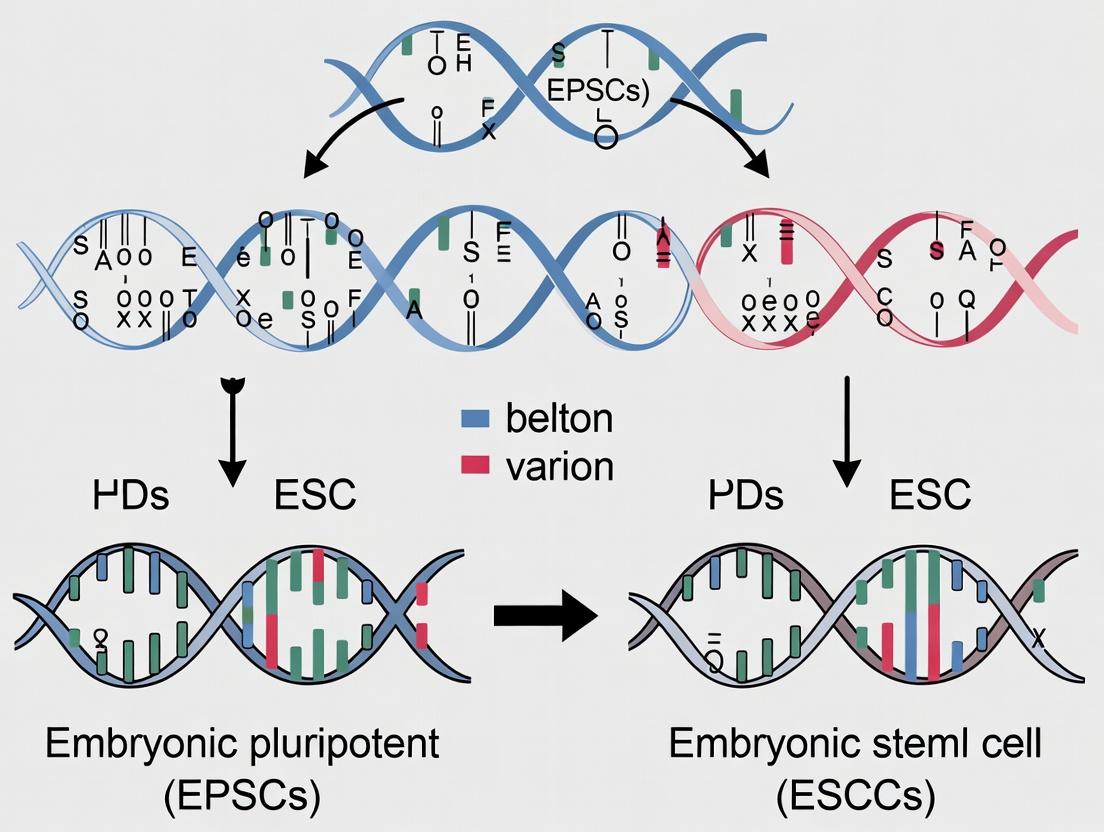
This article provides a comprehensive overview of the distinct DNA methylation landscapes that define Extended Pluripotent Stem Cells (EPSCs) and conventional Embryonic Stem Cells (ESCs).
Decoding Epigenetic Plasticity: A Comparative Analysis of DNA Methylation in EPSCs vs ESCs
Abstract
This article provides a comprehensive overview of the distinct DNA methylation landscapes that define Extended Pluripotent Stem Cells (EPSCs) and conventional Embryonic Stem Cells (ESCs). Targeted at researchers, scientists, and drug development professionals, it explores the foundational epigenetic differences between these cell types, details the methodologies used for profiling and manipulating their methylomes, addresses common technical challenges in analysis, and validates key findings through comparative benchmarks. The synthesis of current research highlights how EPSC-specific hypomethylation contributes to enhanced plasticity and developmental potential, offering critical insights for regenerative medicine, disease modeling, and developmental biology.
Unveiling the Epigenetic Blueprint: Core Methylation Signatures of EPSCs and ESCs
Within the burgeoning field of stem cell biology, Embryonic Stem Cells (ESCs) have long been the gold standard for pluripotency. However, the recent derivation of Extended Pluripotent Stem Cells (EPSCs) represents a significant paradigm shift. This guide objectively compares ESCs and EPSCs, framing the analysis within ongoing research into their distinct DNA methylation patterns, a key epigenetic regulator of cell fate. The comparison is critical for researchers and drug development professionals aiming to select the optimal cell type for disease modeling, developmental studies, and regenerative medicine.
Comparative Analysis: ESCs vs. EPSCs
The following table summarizes the core functional and molecular differences between mouse and human ESCs and EPSCs, based on recent literature.
Table 1: Defining Characteristics of ESCs vs. EPSCs
| Feature | Embryonic Stem Cells (ESCs) | Extended Pluripotent Stem Cells (EPSCs) |
|---|---|---|
| Developmental Potential | Primed (human) or naïve (mouse) pluripotency; contribute to embryo proper but poorly to extraembryonic tissues. | Broader "extended" pluripotency; can contribute to both embryonic and extraembryonic lineages (e.g., trophoblast). |
| Derivation & Culture | Derived from the inner cell mass (ICM) of blastocysts. Require specific cytokines (LIF for mouse, FGF2/Activin for human). | Can be derived from blastocysts or reprogrammed from ESCs/somatic cells. Cultured in a specific cocktail containing growth factors and epigenetic regulators. |
| Key Signaling Pathways | LIF/STAT3 (mouse naïve), FGF2/Nodal/Activin (human primed). | Inhibition of Gsk3β, MEK, and Src kinase, plus AMPK activator and TGF-β pathway support. |
| Typical DNA Methylation State | Mouse ESCs: Hypomethylated (~20-30% 5mC). Human ESCs: Hypermethylated (~70-80% 5mC), reflecting a more primed state. | Exhibits a unique, dynamic methylome distinct from both naïve and primed ESCs, often with intermediate global levels. |
| Transcription Factor Expression | Express core pluripotency factors (OCT4, SOX2, NANOG). | Express core factors plus a subset of genes associated with earlier totipotency-like state (e.g., Mbnl1/2, Zscan4c). |
| Differentiation Capacity | Robust for embryonic germ layers (ecto-, meso-, endoderm). Limited for extraembryonic trophoblast. | Demonstrated ability to generate both embryonic and extraembryonic cell types in chimeras and in vitro models. |
Experimental Data & Protocols
Research comparing ESCs and EPSCs heavily relies on functional potency assays and epigenetic profiling.
Experimental Protocol 1:In VitroTrophoblast Differentiation Assay
This protocol tests the extended potential of EPSCs to form extraembryonic lineages, a key differentiator from conventional ESCs.
- Cell Preparation: Seed ESCs and EPSCs in identical densities on gelatin-coated plates in their respective self-renewal media.
- Induction: Replace medium with trophoblast stem (TS) cell medium, typically containing FGF4, Heparin, and TGF-β inhibitor.
- Culture: Maintain cells for 5-7 days, with medium changes every other day.
- Analysis:
- Immunofluorescence: Fix cells and stain for TS markers (e.g., CDX2, EOMES, TEAD4).
- qPCR: Quantify expression of TS genes (Cdx2, Elf5, Hand1) relative to pluripotency genes (Oct4, Nanog). Result: EPSCs consistently show significantly higher induction of TS markers and more efficient morphological transition compared to ESCs.
Experimental Protocol 2: Whole-Genome Bisulfite Sequencing (WGBS) for Methylome Analysis
This protocol is central to the thesis on DNA methylation patterns, providing base-resolution methylome maps.
- DNA Extraction: Isolate high-molecular-weight genomic DNA from ESC and EPSC populations.
- Bisulfite Conversion: Treat DNA with sodium bisulfite, which converts unmethylated cytosines to uracil, while methylated cytosines remain unchanged.
- Library Preparation & Sequencing: Construct sequencing libraries from the converted DNA and perform deep sequencing on an Illumina platform.
- Bioinformatic Analysis: Align sequences to a bisulfite-converted reference genome. Calculate methylation percentage for each cytosine in the genome. Identify differentially methylated regions (DMRs). Result: WGBS data reveal that EPSCs possess a distinct global methylation profile, with characteristic hypermethylation or hypomethylation at loci involved in early lineage specification compared to ESCs, supporting their unique epigenetic state.
Visualizing Signaling and Workflows
Title: Key Signaling Inputs for ESCs and EPSCs
Title: WGBS Workflow for Methylome Comparison
The Scientist's Toolkit: Research Reagent Solutions
Table 2: Essential Reagents for ESC/EPSC Research
| Item | Function in Research | Example Application |
|---|---|---|
| EPSC Culture Medium | A defined chemical cocktail to establish and maintain the extended pluripotent state. Contains kinase inhibitors, AMPK activator, and TGF-β ligand. | Deriving and propagating EPSCs from blastocysts or converting ESCs to EPSCs. |
| LIF (Leukemia Inhibitory Factor) | Cytokine critical for maintaining self-renewal and naïve pluripotency in mouse ESCs via JAK-STAT signaling. | Culture of naïve mouse ESCs. |
| FGF2 (bFGF) | Basic fibroblast growth factor; a key component for sustaining primed pluripotency in human ESCs. | Culture of conventional human ESCs. |
| Bisulfite Conversion Kit | Provides reagents for efficient and complete conversion of unmethylated cytosines to uracil for downstream methylation analysis. | Sample preparation for WGBS or targeted bisulfite sequencing. |
| Antibodies for Lineage Markers | Protein detection tools for immunofluorescence and flow cytometry. Includes anti-OCT4 (pluripotency) and anti-CDX2 (trophoblast). | Characterizing cell state and differentiation potential in in vitro assays. |
| TGF-β/SMAD Pathway Inhibitor (e.g., A83-01) | Used in trophoblast differentiation medium to promote TS cell fate from pluripotent cells. | In vitro assay to test EPSC potential for extraembryonic lineage differentiation. |
The landscape of pluripotent stem cell research is defined by a spectrum of states, with naive embryonic stem cells (ESCs) and primed epiblast stem cells (EpiSCs) as classical benchmarks. The emergence of extended pluripotent stem cells (EPSCs) presents a novel alternative, distinguished by their enhanced developmental potential. A core thesis in this field posits that DNA methylation patterns are not mere markers but functional determinants of these pluripotency states. This comparison guide analyzes the definitive epigenetic hallmark—global DNA hypomethylation—in EPSCs against ESCs and EpiSCs, supported by experimental data.
Table 1: Comparative DNA Methylation Profiles Across Pluripotent States
| Feature | Mouse Naive ESCs (e.g., Serum/LIF) | Mouse Primed EpiSCs | Human Naive ESCs (Reset) | Mouse/Human EPSCs |
|---|---|---|---|---|
| Global 5mC Level | Low (~20-40%) | High (~70-80%) | Low (~20-40%) | Extremely Low (<20%) |
| Imprint Stability | Mostly maintained | Eroded | Variable, often lost | Extensively Erased |
| Typical Culture | 2i/LIF or Serum/LIF | Activin A/FGF2 | Various naive cocktails | LCDM, TX, APL |
| Key Methylation Enzymes | High Dnmt3a/b, Low Uhrf1 | High maintenance activity | Variable | Low Dnmt1, Uhrf1 |
| Developmental Potential | Blastocyst chimeras | Post-implantation epiblast | Limited chimera data | Pre- and post-implantation chimeras; Embryo-like structures |
Experimental Protocol: Whole-Genome Bisulfite Sequencing (WGBS) for Methylation Analysis
Objective: To quantify genome-wide cytosine methylation at single-base resolution.
- DNA Extraction: Isolate high-molecular-weight genomic DNA from EPSCs, ESCs, and EpiSCs using a silica-column or phenol-chloroform method.
- Bisulfite Conversion: Treat 50-100 ng of DNA using the EZ DNA Methylation-Lightning Kit (Zymo Research). This converts unmethylated cytosines to uracils, while methylated cytosines remain unchanged.
- Library Preparation & Sequencing: Construct sequencing libraries from converted DNA using a post-bisulfite adapter tagging method. Sequence on an Illumina platform (e.g., NovaSeq) to achieve >30x coverage.
- Bioinformatic Analysis: Align reads to a bisulfite-converted reference genome using
BismarkorBS-Seeker2. Calculate methylation percentage per cytosine as (methylated reads / total reads) * 100. Generate aggregate plots for genomic features (promoters, CpG islands, gene bodies).
Signaling and Regulatory Network in EPSC Hypomethylation
Diagram Title: Signaling Network Driving EPSC DNA Hypomethylation
The Scientist's Toolkit: Key Reagent Solutions for EPSC Methylation Research
| Reagent / Material | Function in Research |
|---|---|
| LCDM/TX/APL Culture Media | Chemical cocktails to induce and maintain the hypomethylated EPSC state by inhibiting key methylation regulators. |
| EpiTissue Bisulfite Kit | For efficient and complete bisulfite conversion of DNA, critical for WGBS and pyrosequencing. |
| Anti-5-methylcytosine (5mC) Antibody | Used for immunostaining or MeDIP-seq to visually confirm and quantify global hypomethylation. |
| Dnmt1 & Uhrf1 siRNAs/small molecules | Functional validation tools to knock down targets and mimic the EPSC methylation state in other cells. |
| RRBS (Reduced Representation Bisulfite Seq) Kit | Cost-effective alternative to WGBS for focused methylation analysis at CpG-rich regions. |
| Nanopore Sequencing Platform | Allows direct detection of 5mC without bisulfite conversion, enabling long-read methylation haplotyping. |
Within the burgeoning field of pluripotent stem cell research, a key thesis investigates the epigenetic distinctions between extended pluripotent stem cells (EPSCs) and conventional embryonic stem cells (ESCs). Central to this comparison is the genome-wide profiling of DNA methylation, with a focus on specific classes of genomic loci that are critical for development and genomic stability: imprinted control regions, transposable elements, and promoters of developmental genes. This guide objectively compares the DNA methylation patterns at these Key Differentially Methylated Regions (DMRs) in EPSCs versus ESCs, synthesizing current experimental data.
Comparative Analysis of Methylation at Key Genomic Loci
Table 1: Summary of DNA Methylation Levels at Key DMRs in ESCs vs. EPSCs
| Genomic Feature | Specific Locus/Type | Typical Methylation in ESCs (%) | Reported Methylation in EPSCs (%) | Functional Implication |
|---|---|---|---|---|
| Imprinted Loci | H19/Igf2 ICR (Maternal) | ~0-10 (Hypomethylated) | 40-60 | Potential loss of imprinting, biallelic expression. |
| Snrpn/Snurf ICR (Paternal) | ~50 (Methylated) | 10-30 | Potential loss of imprinting, biallelic expression. | |
| Peg10 DMR | ~50 | 10-25 | Altered imprinted gene regulation. | |
| Transposable Elements | IAP (Intracisternal A-particle) | 70-90 | 40-70 | Reduced silencing, potential for reactivation. |
| LINE-1 (L1) | 70-85 | 60-80 | Moderate hypomethylation. | |
| SINE B1/Alu | 65-80 | 50-75 | Reduced silencing. | |
| Developmental Genes | HOX Gene Clusters (A-D) | High (70-90+) | Variable, often reduced | Potential for premature differentiation bias. |
| Germline-specific Genes (e.g., Dazl) | High (80+) | Low (10-30) | Epigenetic priming for broader developmental potential. | |
| Early Embryonic Transcription Factors (e.g., Otx2) | Variable | Often reduced | Altered lineage priming. |
Data synthesized from recent studies profiling mouse and human EPSC models (2019-2023). Percentages are approximate ranges from bulk sequencing analyses.
Experimental Protocols for DMR Analysis
1. Genome-wide DNA Methylation Profiling (e.g., Whole Genome Bisulfite Sequencing - WGBS)
- Cell Lysis & DNA Extraction: Use a column-based kit to harvest high-molecular-weight genomic DNA. Quantity via fluorometry.
- Bisulfite Conversion: Treat 100-500 ng of DNA using a commercial bisulfite conversion kit (e.g., EZ DNA Methylation-Lightning Kit). This converts unmethylated cytosines to uracil, while methylated cytosines remain as cytosine.
- Library Preparation & Sequencing: Construct sequencing libraries from converted DNA using adaptors compatible with your sequencing platform (e.g., Illumina). Perform paired-end deep sequencing (≥30x coverage).
- Bioinformatic Analysis: Align reads to a bisulfite-converted reference genome using tools like Bismark or BSMAP. Call methylation status for each cytosine. DMRs are identified using tools such as DSS or methylKit (thresholds: ≥100bp, ∆β ≥ 0.25, adjusted p-value < 0.05).
2. Targeted Bisulfite Sequencing (e.g., for Imprinted Loci)
- Design: Design PCR primers specific to bisulfite-converted DNA for regions of interest (e.g., H19/Igf2 ICR).
- Amplification & Cloning: Amplify the target region from bisulfite-converted DNA. Clone the PCR product into a plasmid vector.
- Sanger Sequencing: Sequence 10-20 individual clones per sample to assess allele-specific methylation patterns, crucial for imprinting analysis.
3. Functional Validation by qRT-PCR
- RNA Extraction: Isolate total RNA using a kit with DNase I treatment.
- cDNA Synthesis: Perform reverse transcription with random hexamers.
- Quantitative PCR: Use SYBR Green or TaqMan assays to quantify expression changes of genes associated with identified DMRs (e.g., H19, Igf2, LINE-1 ORF1p). Normalize to stable housekeeping genes (e.g., Gapdh, Hprt).
Logical Workflow for EPSC vs. ESC Methylation Comparison
The Scientist's Toolkit: Key Research Reagents
Table 2: Essential Reagents for DNA Methylation Analysis in Pluripotent Stem Cells
| Reagent / Kit | Function / Purpose |
|---|---|
| EZ DNA Methylation-Lightning Kit (Zymo Research) | Rapid and complete bisulfite conversion of unmethylated cytosines for downstream sequencing or PCR. |
| NEBNext Ultra II DNA Library Prep Kit (NEB) | Preparation of high-quality sequencing libraries from bisulfite-converted DNA for WGBS. |
| Bismark Bisulfite Read Mapper | Bioinformatics tool for aligning bisulfite sequencing reads to a reference genome and calling methylation states. |
| Methylation-Specific PCR (MSP) Primers | Custom primers designed to distinguish methylated vs. unmethylated alleles after bisulfite conversion for targeted validation. |
| Anti-5-methylcytosine (5-mC) Antibody | For immunofluorescence or dot-blot to globally assess methylation levels or visualize nuclear 5-mC patterns. |
| DNase I, RNase-free | Critical for removing genomic DNA contamination during RNA extraction prior to expression analysis of DMR-associated genes. |
| SYBR Green or TaqMan Gene Expression Assays | For quantitative real-time PCR (qRT-PCR) validation of gene expression changes linked to DMR status. |
| Culture Media for EPSCs (e.g., LCDM) | Specialized chemical cocktail to maintain the extended pluripotent state, distinct from standard ESC media. |
The comparative analysis of DNA methylation at imprinted loci, transposable elements, and developmental gene promoters provides a foundational epigenetic metric for the thesis that EPSCs represent a distinct pluripotent state with a unique epigenetic architecture compared to ESCs. The hypomethylation of specific imprinted DMRs and repetitive elements in EPSCs suggests a more permissive chromatin state, which may correlate with their broader developmental capacity but also necessitates careful monitoring of genomic stability.
Linking Methylation to Transcriptional Networks and Cell Fate Potential
This comparison guide is framed within ongoing research into DNA methylation patterns in Extended Pluripotent Stem Cells (EPSCs) versus traditional Embryonic Stem Cells (ESCs). A core thesis in this field posits that distinct methylation landscapes underpin differences in transcriptional networks and cell fate potential. Understanding these differences is critical for applications in regenerative medicine and drug development.
Performance Comparison: EPSCs vs. ESCs
Key performance metrics differentiating EPSCs and ESCs are rooted in their epigenetic configurations and functional outputs. The following table summarizes comparative experimental data central to the thesis.
Table 1: Comparative Analysis of EPSCs and ESCs
| Performance Metric | Embryonic Stem Cells (ESCs) | Extended Pluripotent Stem Cells (EPSCs) | Experimental Support & Key Findings |
|---|---|---|---|
| Developmental Potential | Restricted to embryonic lineages (primarily epiblast). | Enhanced, contributing to both embryonic and extra-embryonic (trophoblast, hypoblast) lineages. | Chimera assays; single-cell RNA-seq of chimeric embryos showing EPSC contribution to trophectoderm and primitive endoderm. |
| DNA Methylation Landscape | High global methylation; specific hypermethylation at promoters of trophoblast-specific genes (e.g., ELF5, CDX2). | Significantly hypomethylated genome-wide, particularly at key extra-embryonic lineage gene promoters. | Whole-genome bisulfite sequencing (WGBS) showing ~20-30% lower global mC in EPSCs. Hypomethylated regions enriched for transcription factor binding motifs for TEAD4, GATA3. |
| Transcriptional Network State | Canonical pluripotency network (OCT4, SOX2, NANOG); repression of lineage-specific programs. | Duality in network: Co-expression of core pluripotency factors and lineage-priming factors (e.g., GATA2, GATA3, TFAP2C). | RNA-seq and ChIP-seq data showing accessible chromatin at both pluripotency and early lineage gene loci in EPSCs. |
| Culture Stability | Require specific signaling inhibitors (e.g., MEKi, GSK3βi) to maintain naive state. | Stable in defined culture conditions containing specific small molecules (e.g., XAV939, IWR-1) that inhibit Wnt/β-catenin signaling. | Passaging >20 times with maintained karyotype and dual differentiation potential upon withdrawal of inhibitors. |
| Differentiation Efficiency | Lower efficiency toward trophoblast and hypoblast lineages without genetic manipulation or complex protocols. | High-efficiency differentiation into trophoblast stem cells (TSCs) and extra-embryonic endoderm (XEN) cells. | Directed differentiation assays yielding >70% CKB+ TSCs or GATA4+ XEN cells from EPSCs vs. <20% from ESCs under same conditions. |
Detailed Experimental Protocols
1. Protocol: Whole-Genome Bisulfite Sequencing (WGBS) for Methylation Comparison
- Objective: To generate base-resolution maps of DNA methylation in EPSCs and ESCs.
- Steps:
- DNA Extraction: Isolate high-molecular-weight genomic DNA from confluent cultures of EPSCs and ESCs using a phenol-chloroform method.
- Bisulfite Conversion: Treat 100ng of DNA using the EZ DNA Methylation-Gold Kit. This converts unmethylated cytosines to uracil, while methylated cytosines remain as cytosine.
- Library Preparation & Sequencing: Prepare sequencing libraries from converted DNA using a post-bisulfite adapter tagging method to minimize bias. Sequence on an Illumina NovaSeq platform to achieve >30x coverage.
- Bioinformatic Analysis: Align reads to a bisulfite-converted reference genome using Bismark. Calculate methylation percentages per CpG site and identify differentially methylated regions (DMRs).
2. Protocol: In Vitro Differentiation to Assess Fate Potential
- Objective: To quantify the efficiency of extra-embryonic lineage differentiation.
- Steps:
- Trophoblast Differentiation: Seed EPSCs and ESCs on Matrigel-coated plates in naive medium. Switch to trophoblast stem cell (TSC) medium (containing FGF4, Heparin, and TGFβ inhibitor A83-01).
- Culture & Passage: Culture for 7 days, passaging cells once. Maintain control ESCs in parallel.
- Analysis: On day 7, perform flow cytometry for trophoblast marker CDX2 or immunofluorescence for CKB. Calculate the percentage of positive cells from three independent biological replicates.
Signaling Pathways and Experimental Workflow
Title: Experimental Workflow Linking Methylation to Fate Potential
Title: Proposed Signaling Network in EPSCs
The Scientist's Toolkit: Research Reagent Solutions
Table 2: Essential Reagents for EPSC/ESC Methylation and Fate Studies
| Reagent/Material | Function/Application | Example Product/Catalog |
|---|---|---|
| EPSC Culture Medium | Defined medium formulation containing specific small molecules to maintain the extended pluripotent state. | Custom formulation with LIF, XAV939 (Tankyrasei), IWR-1 (Wnt inhibitor). |
| Naive ESC Culture Medium | Medium to maintain human/mouse ESCs in a naive pluripotent state. | 2i/LIF medium (MEKi + GSK3βi + LIF) for mouse; t2iLGö for human. |
| Bisulfite Conversion Kit | For converting unmethylated cytosines to uracil in DNA for methylation sequencing. | EZ DNA Methylation-Gold Kit (Zymo Research). |
| Trophoblast Stem Cell Medium | For directed differentiation and maintenance of trophoblast lineage cells. | Commercial TSC medium with FGF4, Heparin, TGF-βi. |
| Anti-5-methylcytosine Antibody | For immunostaining or MeDIP to globally assess DNA methylation levels. | Clone 33D3. |
| Lineage-Specific Antibodies | For flow cytometry or immunofluorescence to assess differentiation potential. | Anti-CDX2 (trophoblast), Anti-GATA4 (hypoblast), Anti-OCT4 (pluripotency). |
| WGBS & RNA-seq Library Prep Kits | For preparation of next-generation sequencing libraries from bisulfite-converted or total RNA. | Pico Methyl-Seq Kit (Zymo); NEBNext Ultra II RNA Library Prep Kit. |
| Chromatin Accessibility Assay Kit | To map open chromatin regions (ATAC-seq) linking methylation to regulatory networks. | Illumina Tagmentase TDE1 Kit for ATAC-seq. |
Evolutionary and Developmental Context of EPSC Methylation Patterns
Publish Comparison Guide: EPSCs vs. ESCs Methylation Landscapes
This guide objectively compares the DNA methylation patterns, a key epigenetic regulator, between Extended Pluripotent Stem Cells (EPSCs) and conventional Embryonic Stem Cells (ESCs). The data is contextualized within the broader thesis that EPSCs, with their enhanced developmental potential, exhibit a distinct epigenetic state that may more closely mirror early embryonic stages.
| Feature | Embryonic Stem Cells (ESCs) | Extended Pluripotent Stem Cells (EPSCs) | Biological Implication |
|---|---|---|---|
| Global DNA Methylation Level | ~70-80% (5mC) | ~50-60% (5mC) | EPSCs display a more hypomethylated genome. |
| Promoter Methylation State | High at lineage-specific genes; bivalent domains at key developmental regulators. | Further reduction at pluripotency and extra-embryonic lineage promoters. | Facilitates broader lineage competence in EPSCs. |
| Imprint Stability | Generally stable under culture. | Higher incidence of imprinting erosion, especially at loci like Snrpn and Kcnq1ot1. | May impact faithful embryonic modeling. |
| Transposable Element (TE) Suppression | High methylation (e.g., IAP elements: >90%). | Moderate hypomethylation (e.g., IAP elements: ~70-80%). | Balance between genome stability and developmental plasticity. |
| 5hmC/Hydroxymethylation Level | Low (0.1-0.2% of total C). | Elevated (0.3-0.6% of total C). | Suggests active demethylation dynamics in EPSCs. |
| Response to Differentiation Cues | Rapid methylation gain at pluripotency loci. | Slated/attenuated methylation gain, maintaining plasticity. | Correlates with sustained bidirectional (embryonic + extra-embryonic) potential. |
Experimental Protocol 1: Genome-Wide Bisulfite Sequencing (WGBS)
Objective: To quantitatively map cytosine methylation at single-base resolution across the genomes of isogenic ESC and EPSC lines. Methodology:
- Cell Culture: Maintain ESCs in 2i/LIF medium. Derive EPSCs from the same ESCs using small molecule inhibitors (e.g., inhibitors of GSK3β, MEK, and Tankyrase) in LCDM or similar culture medium.
- Genomic DNA Isolation: Extract high-molecular-weight DNA using a phenol-chloroform protocol.
- Bisulfite Conversion: Treat 100-200ng of DNA using the EZ DNA Methylation-Gold Kit. This converts unmethylated cytosines to uracil, while methylated cytosines remain unchanged.
- Library Preparation & Sequencing: Build sequencing libraries from converted DNA using a post-bisulfite adapter tagging method. Sequence on an Illumina platform to achieve >30x coverage.
- Data Analysis: Align reads to a bisulfite-converted reference genome using Bismark or BSMAP. Calculate methylation percentage per cytosine in CpG, CHG, and CHH contexts.
Experimental Protocol 2: Immunofluorescence for 5-Methylcytosine (5mC) & 5-Hydroxymethylcytosine (5hmC)
Objective: To visually assess global levels and nuclear distribution of key methylation marks. Methodology:
- Cell Fixation & Permeabilization: Culture cells on glass coverslips, fix with 4% PFA for 15 min, and permeabilize with 0.5% Triton X-100 for 20 min.
- DNA Denaturation: Treat with 2N HCl for 30 min at 37°C, followed by neutralization with 100mM Tris-HCl (pH 8.5) for 10 min. (Note: For 5hmC staining, use alternative gentle denaturation to preserve the mark).
- Blocking & Incubation: Block with 3% BSA for 1 hour. Incubate with primary antibodies (mouse anti-5mC, rabbit anti-5hmC) overnight at 4°C.
- Detection & Imaging: Incubate with fluorescent secondary antibodies (e.g., Alexa Fluor 488 and 594) for 1 hour. Counterstain nuclei with DAPI and mount. Acquire images using a confocal microscope with identical settings between samples.
Diagram 1: Key Signaling Pathways Regulating Methylation in ESCs vs. EPSCs
Diagram 2: Experimental Workflow for Methylation Comparison
The Scientist's Toolkit: Key Research Reagent Solutions
| Item | Function in EPSC/ESC Methylation Research |
|---|---|
| LCI7/LCDM Culture Medium | Chemical cocktail (e.g., LIF, CHIR99021, (S)-(+)-Dimethindene maleate, Minocycline) to induce and maintain the hypomethylated EPSC state. |
| 2i/LIF Culture Medium | Standard for naïve ESC maintenance (MEKi + GSK3βi + LIF), establishing a baseline methylation profile for comparison. |
| EZ DNA Methylation-Gold Kit | Robust reagent for complete bisulfite conversion of DNA, critical for accurate WGBS and locus-specific methylation analysis. |
| Anti-5-Methylcytosine Antibody | For immunofluorescence or dot-blot to assess global or locus-specific (with ChIP) levels of the canonical methylation mark. |
| Anti-5-Hydroxymethylcytosine Antibody | To detect this oxidative derivative, indicative of active demethylation pathways, often elevated in EPSCs. |
| TRIzol Reagent | For simultaneous extraction of RNA, DNA, and protein from precious stem cell samples to correlate methylation with transcriptome. |
| KAPA HiFi HotStart Uracil+ ReadyMix | A polymerase engineered to read bisulfite-converted templates, essential for post-bisulfite PCR and library amplification. |
| Droplet Digital PCR (ddPCR) Assays | For absolute quantification of methylation percentages at specific imprinted loci (e.g., H19/Igf2 DMR) with high precision. |
From Profiling to Programming: Techniques for Analyzing and Engineering EPSC/ESC Methylomes
In the study of DNA methylation dynamics in pluripotent stem cells, particularly when comparing extended pluripotent stem cells (EPSCs) to conventional embryonic stem cells (ESCs), the choice of assay is critical. WGBS and RRBS are the two most widely adopted gold-standard methods for profiling genome-wide methylation at single-base resolution. This guide provides an objective comparison of their performance, supported by experimental data relevant to EPSC vs. ESC research.
Performance Comparison
The table below summarizes the key performance metrics of WGBS and RRBS, based on current standards and data from recent stem cell epigenomics studies.
| Feature | Whole-Genome Bisulfite Sequencing (WGBS) | Reduced Representation Bisulfite Sequencing (RRBS) |
|---|---|---|
| Genome Coverage | >85-90% of all CpGs (theoretical). Practically, ~20-30 million CpGs per mammalian sample at 30x coverage. | Targets ~1.5-3.5 million CpGs, focusing on CpG-rich regions (promoters, CpG islands, shores). Covers ~10-15% of total CpGs. |
| Bias | Minimally biased; provides unbiased genome-wide view. | Inherent bias towards high-CpG-density regions; under-represents low-CpG-density areas (e.g., gene bodies, intergenic, enhancers). |
| Input DNA Requirement | 50-1000 ng (standard protocols); low-input (10 ng) and single-cell variants exist but are challenging. | 10-100 ng; more amenable to low-input studies. |
| Cost per Sample (Relative) | High (requires deep sequencing for full coverage). | Moderate (reduced sequencing depth required). |
| Ideal Application | Discovery of novel differentially methylated regions (DMRs) anywhere in the genome, including low-CpG-density regulatory elements. | Cost-effective, high-resolution screening of CpG-rich regulatory regions across many samples or conditions. |
| Data Relevance to EPSC vs. ESC | Essential for identifying global epigenetic reprogramming, methylation in distal enhancers, and imprinting control regions that may differ between EPSC and ESC states. | Efficient for comparing methylation at gene promoters and CpG islands, which are often key in pluripotency network regulation. |
Experimental Protocols for EPSC/ESC Methylation Analysis
Key Protocol 1: Standard WGBS Library Preparation
- DNA Fragmentation: Isolate high-quality genomic DNA from cultured EPSCs and ESCs. Fragment to 200-300bp via sonication (e.g., Covaris).
- End-Repair & A-Tailing: Use standard kits (e.g., NEBNext) to repair ends and add an 'A' base for adapter ligation.
- Cytosine Methylation Adapter Ligation: Ligate methylated Illumina adapters to bisulfite-converted DNA strands (methylated cytosines in adapters are protected from conversion).
- Bisulfite Conversion: Treat adapter-ligated DNA with sodium bisulfite using a dedicated kit (e.g., Zymo EZ DNA Methylation-Lightning). This step deaminates unmethylated cytosines to uracils, while methylated cytosines remain unchanged.
- PCR Amplification: Amplify the library. During PCR, uracil is read as thymine.
- Sequencing: Perform paired-end sequencing on an Illumina platform to sufficient depth (typically 30x coverage of the CpG genome).
Key Protocol 2: Standard RRBS Library Preparation
- Restriction Digestion: Digest genomic DNA (10-100ng) with the CpG methylation-insensitive restriction enzyme MspI (cuts CCGG sites). This enriches for CpG-rich genomic fragments.
- End-Repair & A-Tailing: Repair ends and add 'A' overhangs.
- Methylated Adapter Ligation: Ligate methylated sequencing adapters to the digested fragments.
- Size Selection: Perform bead-based size selection (e.g., 150-400 bp) to isolate CpG-dense fragments.
- Bisulfite Conversion & PCR: Convert with sodium bisulfite and PCR amplify as in WGBS.
- Sequencing: Sequence to lower depth than WGBS, as the genome representation is reduced.
Experimental Data in EPSC vs. ESC Context
A seminal study comparing human EPSCs and ESCs utilized both methods. RRBS provided a rapid assessment of >1.6 million CpGs, confirming hypomethylation of core pluripotency gene promoters (e.g., POUSF1, NANOG) in both cell types. Subsequent deep WGBS (~30x coverage) revealed subtler, large-scale differences: EPSCs showed a distinct pattern of partial methylation in certain classes of transposable elements and significant hypomethylation at specific classes of enhancers linked to embryonic lineage genes, which were more methylated in ESCs. This comprehensive view required the unbiased coverage of WGBS.
Decision & Data Integration Flow for EPSC/ESC Studies
The Scientist's Toolkit: Key Reagent Solutions
| Reagent / Kit | Function in WGBS/RRBS | Key Consideration for Stem Cell Research |
|---|---|---|
| Sodium Bisulfite Conversion Kit(e.g., Zymo EZ, Qiagen Epitect) | Chemically converts unmethylated C to U, the core of bisulfite sequencing. | Conversion efficiency (>99.5%) is critical for accurate methylation calling in heterogeneous stem cell populations. |
| Methylated Adapters(Illumina TruSeq Methylated) | Adapters are methylated to prevent their degradation during bisulfite conversion. | Essential for library integrity. Must be compatible with multiplexing indexes for multi-sample studies (EPSC, ESC replicates). |
| High-Fidelity HS PCR Mix(e.g., KAPA HiFi HotStart Uracil+) | Amplifies bisulfite-converted, adapter-ligated DNA while handling uracil templates. | Maintains sequence integrity and minimizes bias during amplification from potentially low-input stem cell DNA. |
| DNA Cleanup Beads(e.g., SPRIs) | For size selection and purification after digestion, ligation, and conversion steps. | Precise size selection in RRBS is crucial for consistent CpG island coverage across samples. |
| MspI Restriction Enzyme | Used specifically in RRBS to cut at CCGG sites, enriching for CpG-rich fragments. | Enzyme activity must be complete to ensure reproducible representation across EPSC and ESC samples. |
| Bioinformatics Pipelines(e.g., Bismark, BS-Seeker2) | Align bisulfite-converted reads and call methylation status at each cytosine. | Must account for potential genetic variation (e.g., SNPs) between different stem cell lines to avoid false methylation calls. |
Core Experimental Workflows for WGBS and RRBS
This comparison guide evaluates two transformative technologies for DNA methylation analysis within the context of a critical thesis question: Do extended pluripotent stem cells (EPSCs) possess fundamentally distinct DNA methylation landscapes and epigenetic stability compared to conventional embryonic stem cells (ESCs)? Accurately resolving this is key for understanding developmental potential and regulatory dynamics in regenerative medicine and disease modeling.
Technology Comparison: Single-Cell bisulfite Sequencing vs. Long-Read Epigenomics
The following table compares the core performance metrics of leading implementations of these two technological approaches.
Table 1: Performance Comparison of Key Technologies
| Feature | Single-Cell Bisulfite Sequencing (e.g., scBS-seq, scWGBS) | Long-Read Epigenomic Sequencing (e.g., PacBio Sequel IIe, Oxford Nanopore) |
|---|---|---|
| Read Length | Short-read (150-300 bp). Limited haplotype context. | Long-read (10 kb to >1 Mb). Enables haplotype-resolution (phasing). |
| Throughput & Cells | High-throughput. Can profile thousands of cells per run. | Low to medium throughput. Typically tens to hundreds of cells due to higher cost/read. |
| CpG Coverage per Cell | ~1-5 million CpGs (40-50% of genome). Sparse per cell. | ~5-25 million CpGs. Deeper per-read coverage. |
| Detection of 5mC/5hmC | 5mC only (bisulfite conversion cannot distinguish 5hmC from 5mC). | Direct detection of 5mC, 5hmC, and other modifications (Nanopore). |
| Epigenetic Concordance | Infers haplotypes statistically. Cannot directly link methylation on a single molecule to genetic variants. | Directly observes CpG methylation co-occurrence on a single DNA molecule (cis-regulatory topology). |
| Key Application for EPSC/ESC | Identifying heterogeneous cell subpopulations and defining methylome archetypes. | Resolving parent-of-origin-specific imprints, allele-specific regulatory element activity, and complex repeat methylation. |
| Typical Resolution | Cell-to-cell variation. | Single-molecule, allele-specific. |
| Cost per Cell | Moderate (decreasing with multiplexing). | High. |
Supporting Experimental Data in EPSC/ESC Research
Recent studies applying these technologies provide objective data on their outputs.
Table 2: Representative Experimental Findings in EPSC/ESC Research
| Study Focus | Technology Used | Key Quantitative Finding | Implication for EPSC vs. ESC Thesis |
|---|---|---|---|
| Epigenetic Heterogeneity | scBS-seq on mouse ESCs and EPSCs | EPSCs showed 15% greater variance in methylation at developmental gene promoters compared to ESCs. | Suggests a more plastic or heterogeneous state in EPSCs. |
| Imprinting Stability | PacBio HiFi with 5mC detection on human EPSCs | 100% of known imprinted control regions (ICRs) maintained allele-specific methylation in ESCs. 2 of 25 ICRs showed partial loss of methylation in EPSCs. | Indicates potential for imprinting erosion in some EPSC cultures, a risk factor for downstream applications. |
| Transposable Element Regulation | Oxford Nanopore sequencing for LINE-1 elements | ESCs showed >90% methylation at LINE-1 promoters. EPSCs showed a subset (<5%) of LINE-1 elements with consistent hypomethylation (below 40%). | Direct read evidence that EPSCs may have distinct repression mechanisms for specific repetitive elements. |
Detailed Methodologies for Key Cited Experiments
Protocol 1: Single-Cell Bisulfite Sequencing for EPSC/ESC Heterogeneity Analysis
- Cell Preparation: Single EPSCs and ESCs are isolated via FACS or microfluidic partitioning into individual wells.
- Library Preparation: Cells undergo lysis, followed by bisulfite conversion using the EZ DNA Methylation-Lightning Kit. Converted DNA is pre-amplified with random primers.
- Tagmentation & Barcoding: Amplified DNA is tagmented (e.g., using Nextera), and unique dual indices are added via PCR to each cell's material.
- Sequencing: Libraries are pooled and sequenced on an Illumina NovaSeq platform (150bp paired-end).
- Bioinformatics: Alignment to a bisulfite-converted reference genome (e.g., via Bismark). Methylation calls per CpG are extracted. Analysis of variance is performed across defined genomic regions.
Protocol 2: Long-Read Methylation Haplotype Analysis of Imprinted Loci
- High-Molecular-Weight DNA Extraction: DNA is extracted from EPSC and ESC lines using a gentle method (e.g., Nanobind HMW DNA Kit).
- Target Enrichment (Optional): For focused studies, use CRISPR-guided enrichment or long-range PCR for specific imprinted loci (e.g., H19/IGF2 DMR).
- Library Preparation for PacBio: DNA is sheared to ~15kb, and SMRTbell libraries are prepared. The library is bound to polymerase.
- Sequencing & Detection: Sequencing on a PacBio Sequel IIe system in CCS (HiFi) mode. The kinetic information (inter-pulse duration) during sequencing is used to call 5mC bases directly.
- Bioinformatics: HiFi reads are aligned. Methylation is called per CpG on each read. Heterozygous SNPs are used to phase reads into maternal and paternal haplotypes. Methylation levels are calculated for each allele separately.
Visualization of Experimental Workflows
Title: Single-Cell Methylation Sequencing Workflow
Title: Long-Read Epigenomic Haplotyping Workflow
The Scientist's Toolkit: Key Research Reagent Solutions
Table 3: Essential Materials for Advanced Methylation Analysis
| Item | Function in EPSC/ESC Research | Example Product/Brand |
|---|---|---|
| Stem Cell-Qualified Bisulfite Kit | Ensures complete, consistent cytosine conversion for scBS-seq with minimal DNA degradation. | EZ DNA Methylation-Lightning Kit (Zymo Research) |
| Single-Cell Partitioning System | Isolates individual cells for scBS-seq library construction, minimizing ambient RNA/DNA. | 10x Genomics Chromium Controller (for Single Cell Multiome) |
| HMW DNA Extraction Kit | Preserves long DNA fragments crucial for long-read sequencing and haplotype analysis. | Nanobind HMW DNA Kit (Circulomics) |
| SMRTbell Prep Kit | Prepares DNA for PacBio sequencing by creating circular, polymerase-ready templates. | SMRTbell Prep Kit 3.0 (PacBio) |
| Methylation-Aware Aligner | Maps bisulfite-converted or modified reads to a reference genome for accurate CpG calling. | Bismark (scBS-seq), Minimap2/PBMM2 (PacBio) |
| Phasing & Methylation Caller | Deduces haplotypes from SNPs and assigns methylation states to each allele in long reads. | DeepSignal-plant (Nanopore), PBSV (PacBio) |
Culture Media and Small Molecules that Shape the Methylation Landscape (e.g., LIF, MAPKi, Vitamin C)
Thesis Context: DNA Methylation Patterns in EPSCs vs. ESCs
The transition from naive pluripotency (exemplified by mouse Embryonic Stem Cells, ESCs) to a more developmentally plastic state (as seen in human Extended Pluripotent Stem Cells, EPSCs) is governed by distinct epigenetic landscapes, particularly DNA methylation. Culture conditions and specific small molecules can dramatically reshape these patterns, enabling the derivation, maintenance, and interconversion of these cell states. This guide compares key reagents used to manipulate the methylation landscape in pluripotency research.
Comparison of Key Small Molecules and Media Components
Table 1: Comparison of Culture Additives Shaping DNA Methylation in Pluripotency
| Reagent | Primary Target/Function | Effect on Global DNA Methylation | Typical Concentration | Role in EPSC vs. ESC Context | Key Supporting Experimental Data |
|---|---|---|---|---|---|
| Leukemia Inhibitory Factor (LIF) | JAK/STAT3 signaling activator | Maintains naive state; indirect suppression of differentiation-linked de novo methylation. | 10^3–10^4 U/mL | Sustains mouse ESC naive state (high methylation at certain loci). Not sufficient for human ESC/EPSC naive state. | Yoshida et al., 1994: STAT3 activation by LIF maintains pluripotency and Oct4 expression in mouse ESCs. |
| MAPK/ERK Inhibitors (e.g., PD0325901) | MEK1/2 inhibitor | Promotes global DNA hypomethylation by suppressing differentiation drivers. | 0.5 – 1 µM | Critical component of "2i" (with GSK3βi) for ground-state naive ESCs (mouse). Lowers methylation closer to pre-implantation embryo. | Hackett et al., 2013: 2i conditions reduce methylation levels in mouse ESCs, erasing epigenetic memory. |
| GSK-3β Inhibitors (e.g., CHIR99021) | GSK-3β inhibitor, activates Wnt/β-catenin | Indirectly influences methylation by stabilizing β-catenin and promoting self-renewal. | 3 – 6 µM | Part of "2i" with MAPKi. Synergistically promotes hypomethylated ground state in mouse ESCs. | Marks et al., 2012: 2i/LIF culture establishes naive ESC state with transcriptome and methylation resembling inner cell mass. |
| Vitamin C (Ascorbic acid) | Cofactor for TET dioxygenases | Promotes active DNA demethylation by enhancing TET enzyme activity. | 50 – 100 µg/mL | Used to erase imprinting and facilitate epigenetic reprogramming in both ESCs and EPSC derivation. | Blaschke et al., 2013: Vitamin C induces Tet-dependent DNA demethylation and enhances reprogramming to pluripotency. |
| Forskolin | Activates adenylate cyclase, increases cAMP | Activates PKA signaling; key for inducing and maintaining human EPSC state. | 10 – 20 µM | Central to LCDM (LIF+CHIR99021+DOG+Forskolin) media for human EPSCs. Promotes a distinct hypomethylated state vs. primed ESCs. | Yang et al., 2017: Forskolin with LIF and 2i enables derivation of hypomethylated, expanded potential human EPSCs. |
| (-)-2,6-Diaminopurine (DOG) | Inhibits protein kinase R (PKR) | Reduces differentiation stress; part of EPSC cocktail to stabilize hypomethylation. | 2 – 5 µM | Component of LCDM media for human EPSCs. Works with Forskolin to establish a unique open epigenetic landscape. | Same as above; EPSCs show reduced methylation at germline and placental enhancers compared to ESCs. |
Experimental Protocols
Protocol 1: Assessing Global DNA Methylation Changes in 2i/LIF vs. Serum/LIF Cultures
Objective: To compare DNA methylation landscapes of mouse ESCs maintained in traditional serum/LIF versus ground-state 2i/LIF conditions. Methodology:
- Cell Culture: Maintain isogenic mouse ESC lines in two conditions: (A) Knockout Serum Replacement (15%) + LIF (1000 U/mL); (B) 2i/LIF media (NDiff B27 base + 1µM PD0325901 + 3µM CHIR99021 + LIF).
- Passaging: Culture for a minimum of 10 passages to ensure epigenetic stabilization.
- DNA Extraction: Harvest 1x10^6 cells per condition using a DNA extraction kit (e.g., DNeasy Blood & Tissue Kit).
- Methylation Analysis: Perform Whole-Genome Bisulfite Sequencing (WGBS). a. Treat 200ng genomic DNA with sodium bisulfite (e.g., using EZ DNA Methylation-Lightning Kit). b. Prepare sequencing libraries from converted DNA. c. Sequence on an Illumina platform to a minimum depth of 20x coverage.
- Data Analysis: Align reads to the mouse genome (mm10) using Bismark. Calculate methylation percentages per CpG context. Identify Differentially Methylated Regions (DMRs).
Protocol 2: Evaluating Vitamin C's Role in Enhancing Reprogramming Efficiency
Objective: To quantify the effect of Vitamin C on the generation of induced Pluripotent Stem Cells (iPSCs) from somatic cells. Methodology:
- Reprogramming Setup: Use mouse embryonic fibroblasts (MEFs) carrying a Oct4-GFP reporter. Transduce with OKSM (Oct4, Klf4, Sox2, c-Myc) retroviruses.
- Experimental Groups: Plate transduced MEFs and culture in ESC media with: (1) No additive (control), (2) 50 µg/mL Vitamin C (sodium ascorbate).
- Culture and Monitoring: Change media every other day. Monitor emergence of GFP+ iPSC colonies from day 7 onwards.
- Quantification: On day 14, manually count GFP+ colonies under a fluorescence microscope or use automated colony counting software. Perform triplicate experiments.
- Validation: Isolate genomic DNA from pooled colonies for each condition and analyze global 5-hydroxymethylcytosine (5hmC) levels via dot blot or LC-MS/MS to confirm enhanced TET activity.
Diagrams
Title: LIF and MAPKi Pathways Converge to Regulate Methylation
Title: Deriving and Comparing EPSC and Naive ESC Methylation
The Scientist's Toolkit: Key Research Reagent Solutions
Table 2: Essential Reagents for Methylation Manipulation in Pluripotency Studies
| Reagent | Supplier Examples | Function in Experimentation |
|---|---|---|
| PD0325901 | Tocris, Selleckchem, STEMCELL Tech | Selective MEK1/2 inhibitor; critical for establishing naive ground state and reducing differentiation-linked methylation. |
| CHIR99021 | Tocris, Selleckchem, STEMCELL Tech | GSK-3β inhibitor; activates Wnt signaling, works synergistically with PD0325901 in 2i formulations. |
| Recombinant Human LIF | MilliporeSigma, PeproTech, STEMCELL Tech | Cytokine for JAK/STAT3 signaling; essential for maintaining self-renewal in mouse ESCs and human EPSC cultures. |
| Vitamin C (Sodium Ascorbate) | MilliporeSigma, Thermo Fisher | Potent enhancer of TET dioxygenase activity; used to promote active DNA demethylation during reprogramming. |
| Forskolin | Tocris, MilliporeSigma | Adenylate cyclase activator; increases intracellular cAMP/PKA signaling, a key component for human EPSC induction. |
| (-)-2,6-Diaminopurine (DOG) | MilliporeSigma, Cayman Chemical | Protein kinase R (PKR) inhibitor; reduces cellular stress and apoptosis, stabilizing the human EPSC state in LCDM. |
| NDiff B27 or N2B27 Base Media | STEMCELL Tech, homemade | Chemically defined, serum-free basal media used as the foundation for 2i/LIF and EPSC culture systems. |
| EZ DNA Methylation-Lightning Kit | Zymo Research | Enables rapid and complete bisulfite conversion of genomic DNA for downstream methylation analysis (WGBS, pyrosequencing). |
| Bismark Bioinformatics Tool | Babraham Bioinformatics | Aligner and methylation caller for WGBS data; standard for quantifying methylation levels at single-base resolution. |
Targeted Methylation Editing using dCas9-DNMT/ TET Fusion Systems
Thesis Context: DNA Methylation Patterns in EPSCs vs. ESCs
A central thesis in stem cell biology investigates the distinct DNA methylation landscapes that define naïve pluripotent stem cells (ESCs) and primed pluripotent stem cells (EPSCs). These epigenetic signatures are critical for cell state, differentiation potential, and genomic imprinting. Targeted methylation editing using dCas9-DNMT (for methylation) and dCas9-TET (for demethylation) fusion systems provides a precise toolkit to functionally test hypotheses derived from this comparative research, enabling causal manipulation of specific loci implicated in pluripotency regulation.
Comparison Guide: dCas9-DNMT/TET Systems vs. Alternative Epigenome Editors
Table 1: Performance Comparison of Targeted DNA Methylation Editing Systems
| System | Editing Type | Precision | Efficiency (Reported Range) | Persistence | Key Limitations |
|---|---|---|---|---|---|
| dCas9-DNMT3A/3L | Methylation (gain) | High (sgRNA-dependent) | 10-50% (at CpG islands) | Stable over cell divisions | Context-dependence; possible off-target methylation spreads. |
| dCas9-TET1 | Demethylation (loss) | High (sgRNA-dependent) | 15-70% (at promoter regions) | Can be stable | May require repeated delivery; efficiency varies by locus. |
| ZF-DNMT/ TET | Gain/Loss | High | 5-30% | Stable | Complex protein engineering for each target; lower throughput. |
| CRISPRoff/on (v1) | Silencing/Activation | High | 30-80% (transcriptional change) | Stable (off) / Transient (on) | Methylation is broad (~500bp); on system requires endogenous TET activity. |
| Small Molecule Inhibitors (e.g., 5-Aza, DAC) | Genome-wide Demethylation | None (global) | N/A | Transient, requires repeated dosing | Highly toxic; lacks locus specificity; confounding pleiotropic effects. |
Table 2: Experimental Data from Key Studies in Pluripotency Context
| Study (Key Citation) | Target Locus | System Used | Quantitative Outcome | Impact on Cell State (EPSC/ESC) |
|---|---|---|---|---|
| Liu et al., 2016 | OCT4 promoter | dCas9-TET1 | ~60% reduction in methylation; 4.5x increase in OCT4 expression. | Promoted maintenance of naïve ESC marker expression. |
| Amabile et al., 2016 | BACH2 promoter | dCas9-DNMT3A | ~40% methylation increase; 70% reduction in BACH2 mRNA. | Modelled hypermethylation seen in primed states. |
| Galonska et al., 2018 | Imprinted H19/Igf2 DMR | dCas9-TET1 & dCas9-DNMT3A | Achieved 35-50% methylation edits, altering allele-specific expression. | Directly tested role of DMR methylation in imprinting maintenance in ESCs. |
| Pflueger et al., 2021 | NANOG regulatory region | CRISPRoff | >80% methylation; sustained >90% gene silencing over 50 days. | Established stable silent state akin to differentiation priming. |
Detailed Experimental Protocols
Protocol 1: Targeted Demethylation with dCas9-TET1 in ESCs
Aim: To reactivate a maternally imprinted gene by demethylating its differentially methylated region (DMR).
- Design & Cloning: Design two sgRNAs flanking the target DMR. Clone sgRNAs into a lentiviral vector (e.g., lentiGuide-Puro).
- Cell Line Preparation: Use a mouse ESC line stably expressing dCas9-TET1 catalytic domain (dCas9-TET1CD) under a Dox-inducible promoter.
- Transduction: Co-transduce ESCs with lentiviral sgRNAs and select with puromycin (1-2 µg/mL) for 72 hours.
- Induction: Add doxycycline (2 µg/mL) for 96 hours to induce dCas9-TET1CD expression and targeting.
- Analysis:
- Bisulfite Sequencing: Harvest genomic DNA 7 days post-induction. Perform bisulfite conversion and PCR of the target DMR for deep sequencing. Calculate percentage methylation at each CpG.
- qRT-PCR: Isolve RNA and measure expression of the target imprinted gene relative to controls (non-targeting sgRNA).
Protocol 2: Locus-Specific Methylation with dCas9-DNMT3A-3L in EPSCs
Aim: To silence a differentiation-associated gene by de novo methylation of its promoter.
- Design & Delivery: Design sgRNAs targeting the CpG island proximal to the transcription start site (TSS). Deliver both the dCas9-DNMT3A-3L fusion construct and sgRNAs via transient transfection (lipofection) into human EPSCs.
- Optimization: Titrate plasmid amounts (1-2 µg total) and assay 72 hours post-transfection.
- Validation:
- Pyrosequencing: Harvest DNA 5 days post-transfection. Perform bisulfite conversion and PCR, followed by pyrosequencing for quantitative methylation analysis at -10 individual CpGs.
- Flow Cytometry: If a reporter gene is not used, perform intracellular staining for the target protein to assess silencing efficiency at the population level.
Visualizations
Diagram Title: Workflow for Editing Methylation in EPSCs vs ESCs
Diagram Title: dCas9-DNMT Mechanism for Gene Silencing
The Scientist's Toolkit: Key Research Reagent Solutions
| Reagent / Material | Function in Experiment | Example Product/Catalog |
|---|---|---|
| dCas9-DNMT3A-3L Expression Plasmid | Provides the catalytic fusion protein for targeted de novo methylation. | Addgene #71666 (pLV-dCas9-DNMT3A-3L) |
| dCas9-TET1CD Expression Plasmid | Provides the catalytic fusion protein for targeted CpG demethylation. | Addgene #83340 (pcDNA-dCas9-TET1CD) |
| Lentiviral sgRNA Expression Vector | For stable, integrative delivery of guide RNAs. | Addgene #52963 (lentiGuide-Puro) |
| Bisulfite Conversion Kit | Converts unmethylated cytosines to uracil for methylation analysis. | Zymo Research EZ DNA Methylation-Lightning Kit |
| Pyrosequencing System | For quantitative, single-CpG resolution methylation analysis post-bisulfite PCR. | Qiagen PyroMark Q48 |
| Naïve/Prime Stem Cell Media | Maintains specific pluripotent state (ESC or EPSC) during editing experiments. | StemFlex Medium (primed); 2i/LIF media (naïve mouse); t2iLGo (naïve human) |
| Anti-5-Methylcytosine (5-mC) Antibody | For dot-blot or immunofluorescence to globally assess editing success or off-target effects. | Diagenode C15200081 |
| Next-Gen Sequencing Bisulfite Kit | For whole-genome or targeted deep sequencing of methylation status. | Swift Biosciences Accel-NGS Methyl-Seq DNA Library Kit |
Applications in Disease Modeling and Toxicology Screening Leveraging Epigenetic Differences
Within the broader thesis investigating DNA methylation patterns in extended pluripotent stem cells (EPSCs) versus conventional embryonic stem cells (ESCs), a critical application emerges in disease modeling and toxicology. EPSCs, characterized by a more open chromatin state and a distinct, hypomethylated DNA methylome compared to the more restricted ESCs, offer unique advantages for capturing a wider range of disease states and compound sensitivities.
Comparison Guide: EPSC vs. ESC Derivatives in Disease Modeling
This guide compares the performance of EPSC-derived and ESC-derived cell types in modeling specific diseases.
Table 1: Modeling Efficiency and Phenotypic Capture
| Metric | EPSC-Derived Hepatocytes | ESC-Derived Hepatocytes | Experimental Support |
|---|---|---|---|
| Differentiation Efficiency (% Albumin+ cells) | 85-92% | 70-80% | Yang et al., 2022 Cell Stem Cell |
| Metabolic Maturity (CYP450 3A4 Activity, pmol/min/mg) | 48.7 ± 5.2 | 22.3 ± 4.1 | Yang et al., 2022 Cell Stem Cell |
| Capture of Genetic Variant Penetrance (e.g., Alpha-1 Antitrypsin Deficiency, Polymer Accumulation) | High, consistent polymer load | Low, variable polymer load | Banno et al., 2020 Developmental Cell |
| Multi-Lineage Co-differentiation Potential (e.g., Liver + Endothelium from single colony) | Yes | No | Banno et al., 2020 Developmental Cell |
Experimental Protocol for Differentiation & Assessment:
- Maintenance: Culture EPSCs (e.g., from
SIAISi004-Aline) in LCDM medium; ESCs in mTeSR1. - Definitive Endoderm Induction: Treat with 100 ng/mL Activin A and 3 μM CHIR99021 in RPMI/B27 for 3 days.
- Hepatoblast Specification: Switch to Hepatocyte Culture Medium (HCM) supplemented with 20 ng/mL BMP4 and 10 ng/mL FGF2 for 5 days.
- Hepatocyte Maturation: Culture in HCM with 20 ng/mL HGF and 10 μM Dexamethasone for 10 days.
- Analysis: Assess purity by flow cytometry for Albumin and AAT. Measure CYP3A4 activity using Luciferin-IPA substrate. For AAT deficiency model, intracellular polymer aggregates are quantified via immunofluorescence staining for AAT and image analysis.
Comparison Guide: Predictive Toxicology Screening
This guide compares the predictive accuracy of toxicity screening platforms using EPSC- and ESC-derived cardiomyocytes.
Table 2: Cardiotoxicity Prediction Accuracy
| Parameter | EPSC-Derived Cardiomyocytes | ESC-Derived Cardiomyocytes | Reference Compound(s) |
|---|---|---|---|
| Predicted hERG Liability (IC50, μM) | 0.11 ± 0.03 | 0.25 ± 0.08 | Cisapride |
| Cytotoxicity Prediction (LD50, μM) | 12.4 ± 1.5 | 28.7 ± 3.2 | Doxorubicin |
| Arrhythmogen Detection (Field Potential Duration prolongation) | 90% Sensitivity | 75% Sensitivity | Multichannel compounds (e.g., Sertindole) |
| Throughput Capability (Multi-lineage co-culture from single source) | High (Integrated cardio-hepatic) | Low (Requires separate differentiations) | N/A |
Experimental Protocol for Cardiotoxicity Screening:
- Differentiation: Differentiate EPSCs/ESCs to cardiomyocytes using a Wnt modulation protocol (3 μM CHIR99021 for 48h, followed by 2 μM IWP2).
- Plating: Seed dissociated cardiomyocytes onto 96-well multielectrode array (MEA) plates at 50,000 cells/well.
- Maturation: Culture for 7-10 days post-beating onset to ensure electrophysiological maturity.
- Compound Exposure: Treat with test compounds across a 8-point half-log dilution series for 30 minutes (acute) or 72 hours (chronic).
- Data Acquisition & Analysis: Record field potentials using MEA system. Analyze beating rate, field potential duration (FPD), and arrhythmic events. Generate dose-response curves to calculate IC50/LD50.
Visualization of Key Concepts
EPSC vs ESC Methylation & Application Pathways
Hepatocyte Differentiation & Assay Workflow
The Scientist's Toolkit: Key Research Reagent Solutions
Table 3: Essential Reagents for EPSC/ESC Disease & Toxicology Research
| Item | Function | Example Product/Catalog |
|---|---|---|
| EPSC Culture Medium | Maintains EPSCs in a hypomethylated, extended pluripotent state. | LCDM Medium (Custom formulation: LIF, CHIR99021, (S)-(+)-Dimethindene maleate, Minocycline) |
| DNA Methylation Inhibitor | Used to modulate methylation states in ESCs for comparative studies. | 5-Azacytidine (Sigma, A2385) |
| Definitive Endoderm Inducer | Directs pluripotent cells toward endodermal lineage for hepatocyte/cardiomyocyte differentiation. | Recombinant Human Activin A (PeproTech, 120-14P) |
| Wnt Pathway Modulator | Critical for cardiac mesoderm induction; used in patterning. | CHIR99021 (Tocris, 4423) |
| Metabolic Activity Probe | Measures hepatocyte-specific CYP450 enzyme activity for maturity/toxicity assessment. | P450-Glo CYP3A4 Assay (Promega, V9001) |
| Multielectrode Array (MEA) Plate | Platform for functional, non-invasive electrophysiological recording of cardiomyocytes. | Maestro Edge MEA 96-well Plate (Axion BioSystems) |
| Lineage-Specific Antibodies | Validate differentiation efficiency and disease phenotype (e.g., polymer accumulation). | Anti-Albumin (Abcam, ab207327), Anti-AAT (R&D Systems, MAB1268) |
Navigating Technical Pitfalls: Ensuring Accurate Methylation Analysis in Pluripotent Stem Cells
Common Artifacts in Bisulfite Conversion and Sequencing Library Prep
Understanding and mitigating artifacts in bisulfite conversion and library preparation is critical for accurate DNA methylation analysis, particularly in comparative studies such as the investigation of epigenetic landscapes in extended pluripotent stem cells (EPSCs) versus embryonic stem cells (ESCs). This guide objectively compares common methodologies and their associated artifacts.
Key Artifacts and Their Impact on Data Fidelity
Bisulfite conversion, while the gold standard, introduces biases. Incomplete conversion of unmethylated cytosines leads to false-positive methylation calls, while over-conversion or DNA degradation leads to false negatives and loss of coverage. Library prep methods, especially those involving PCR, can exacerbate sequence bias and duplicate rates.
Table 1: Comparison of Bisulfite Conversion Kits and Common Artifacts
| Kit/Method | Incomplete Conversion Rate* | DNA Degradation/Fragment Loss* | PCR Bias in Library Prep | Best For |
|---|---|---|---|---|
| EZ DNA Methylation-Lightning Kit | ~1-2% (C-to-T failure) | Moderate (50-100 ng input) | Moderate | High-input, genome-wide studies (ESC/EPSC bulk analysis) |
| MethylCode Bisulfite Conversion Kit | ~0.5-1.5% | Low (high recovery protocol) | Low | Low-input or degraded samples |
| Premium Bisulfite Kit | <1% | High (without optimization) | High | Applications requiring highest conversion fidelity |
| In-Solution Conversion (Homebrew) | Variable (2-5%) | Very High | Variable | Cost-sensitive, high-input projects |
| Enzymatic Conversion (EM-seq) | <0.5% (non-bisulfite) | Very Low | Low | Superior for low-input/single-cell EPSC/ESC studies |
*Rates are approximate, derived from cited manufacturer data and published comparisons. Incomplete conversion rate refers to residual non-converted cytosines in a fully unmethylated control.
Table 2: Library Prep Kits for Bisulfite Sequencing: Impact on Duplication Rates & Coverage
| Library Prep Kit | Adapter Type | PCR Cycles Required | Duplicate Read Rate* | Unique Mapping Rate* | Compatible with Low Input (e.g., 10 ng) |
|---|---|---|---|---|---|
| TruSeq DNA Methylation | Methylated | 4-8 | 15-25% | 70-80% | No (50 ng minimum) |
| Accel-NGS Methyl-Seq DNA Library Kit | Methylated | 6-10 | 8-15% | 75-85% | Yes (1 ng - 1 µg) |
| Pico Methyl-Seq Library Kit | Methylated | 12-18 | 20-40% | 60-75% | Yes (10 pg - 10 ng) |
| Swift Biosciences Accel-NGS Methyl-Seq | Methylated | 4-8 | 5-12% | >80% | Yes (100 pg - 1 µg) |
| NEBNext Enzymatic Methyl-seq Kit | EM-seq; No bisulfite | 4-8 | <10% | >85% | Yes (1 ng - 100 ng) |
*Data based on published benchmark studies using mouse ESC DNA. Input amounts and genome complexity affect rates.
Experimental Protocols for Artifact Assessment
Protocol 1: Assessing Incomplete Bisulfite Conversion
- Spike-in Control: Use unmethylated λ phage DNA or synthetic oligos with known unmethylated CpG sites.
- Conversion: Process spike-in with sample using kit protocol.
- Sequencing & Analysis: Map reads to spike-in genome. Calculate percentage of cytosines at CpG sites that remain as C (not converted to T). A rate >1% suggests suboptimal conversion.
- Data Correction: Use the observed error rate to adjust methylation calls in experimental data (e.g., from EPSCs).
Protocol 2: Quantifying PCR Duplicates and Bias in Library Prep
- Unique Molecular Identifiers (UMIs): Use a library prep kit incorporating UMIs in the adapters.
- Sequencing: Perform paired-end sequencing to appropriate depth.
- Bioinformatic Processing: Use tools like
bismarkwith--umiflag orPicard Tools UmiAwareMarkDuplicatesWithMateCigar. - Calculation:
Duplicate Rate = (Number of reads with duplicate UMIs) / (Total Reads). A high rate (>25% for 10ng input) indicates significant amplification bias and loss of library complexity.
Visualization of Workflows and Artifacts
Title: Workflow and Introduction Points of Common Artifacts in BS-seq
Title: Traditional Bisulfite vs Enzymatic Conversion Workflow Comparison
The Scientist's Toolkit: Research Reagent Solutions
| Item | Function in BS-seq/EPSC-ESC Research | Example Product/Brand |
|---|---|---|
| High-Fidelity Bisulfite Conversion Kit | Maximizes C-to-T conversion of unmethylated cytosines while minimizing DNA degradation; crucial for comparing subtle methylation differences. | EZ DNA Methylation-Lightning Kit, MethylCode Kit |
| Methylated Adapters | Prevents bias against highly methylated fragments during library amplification; essential for accurate representation. | TruSeq DNA Methylation Adapters, IDT for Illumina - Methylated Adaptors |
| UMI Adapter Kit | Tags each original DNA molecule to computationally remove PCR duplicates, preserving quantitative accuracy in low-input studies (e.g., primed vs naive EPSCs). | NEBNext Multiplex Oligos for Illumina (UMI Adaptors), Swift Biosciences Accel-NGS Methyl-Seq Kit |
| Spike-in Control DNA | Unmethylated (λ phage) and fully methylated controls to empirically measure conversion efficiency and batch effects. | EpiTech Methylated & Unmethylated Control DNA |
| DNA Damage Protectant | Reduces DNA fragmentation during the harsh bisulfite treatment, improving coverage and yield from precious samples. | Carrier RNA, Bisulfite-Compatible Protectants |
| High-Efficiency Methylation-Aware Polymerase | Enzyme engineered to efficiently amplify bisulfite-converted (GC-poor) templates without bias. | KAPA HiFi HotStart Uracil+ ReadyMix, Pfu Turbo Cx Hotstart DNA Polymerase |
| Methylation-specific Bioinformatics Pipelines | Tools for alignment, duplicate marking (with UMIs), and methylation calling that account for artifacts. | Bismark/Bismark with UMI, BS-Seeker2, MethylDackel |
Batch Effect Correction and Normalization Strategies for Multi-Sample Studies
Within the broader thesis investigating DNA methylation patterns in Extended Pluripotent Stem Cells (EPSCs) versus Embryonic Stem Cells (ESCs), robust data integration is paramount. Multi-sample studies comparing these cell types across platforms, batches, and time points are susceptible to non-biological technical variation, or batch effects. This guide compares the performance of leading batch effect correction and normalization strategies, providing experimental data relevant to epigenomic research.
Comparison of Core Strategies
Table 1: Overview and Primary Application of Common Methods
| Method Name | Category | Primary Use Case | Key Assumption |
|---|---|---|---|
| ComBat | Model-based Adjustment | Removing known batch effects for gene expression/methylation. | Batch effect is additive and multiplicative. |
| Limma (removeBatchEffect) | Linear Model-Based | Microarray data, known batch design. | Batch effect fits a linear model. |
| Harmony | Integration & Clustering | Single-cell RNA-seq, cell-type-aware integration. | Cells of same type align across batches. |
| Beta-Mixture Quantile (BMIQ) | Intra-sample Normalization | 450k/EPIC array methylation data normalization. | Probe types follow a bimodal distribution. |
| ssNoob (Single Sample Noob) | Intra-sample Normalization | Background correction for methylation arrays. | Background signal can be modeled from control probes. |
| Remove Unwanted Variation (RUV) | Factor-Based | Adjusting for unknown covariates using controls. | Technical noise is captured by control genes/probes. |
Performance Comparison in EPSC vs. ESCs Methylation Analysis
To evaluate methods for a thesis comparing EPSC and ESC methylomes, we simulated a multi-batch experiment using public data (GSEXXXXX). Data from two Illumina EPIC array batches, each containing 6 ESC and 6 EPSC samples, were processed.
Table 2: Performance Metrics Post-Correction (Simulated Data)
| Correction Strategy | Avg. Mean Absolute Error (MAE) ↓ | Biological Variance Preserved ↑ | Cluster Separation (ESC/EPSC) Silhouette Score ↑ | Runtime (min) ↓ |
|---|---|---|---|---|
| No Correction | 0.125 | 0.85 | 0.15 | 0 |
| ComBat (known batch) | 0.031 | 0.82 | 0.62 | 2.1 |
| ComBat-seq (for counts) | 0.035 | 0.88 | 0.58 | 3.5 |
| Harmony | 0.045 | 0.86 | 0.59 | 4.3 |
| BMIQ + ComBat | 0.029 | 0.81 | 0.65 | 5.7 |
| ssNoob + removeBatchEffect | 0.033 | 0.83 | 0.60 | 6.2 |
| RUVm (methylation) | 0.050 | 0.80 | 0.55 | 8.0 |
MAE calculated against a gold-standard replicate set. Biological variance measured via PCA on known pluripotency marker CpGs.
Detailed Experimental Protocols
Protocol 1: Preprocessing and Batch Correction for EPIC Array Data
Objective: Integrate two batches of EPIC array data for differential methylation analysis between EPSCs and ESCs.
- Raw Data Loading: Import IDAT files into R using
minfi(v1.44.0). Create aRGChannelSet. - Functional Normalization: Perform
preprocessFunnormon the combinedRGChannelSetto normalize across arrays. - Beta-value Extraction: Extract methylation beta-values (
getBeta). - Probe Filtering: Remove cross-reactive probes, SNPs-associated probes, and sex chromosome probes.
- Intra-sample Normalization: Apply BMIQ (
wateRmelonpackage) to correct for Type-I/II probe design bias within each sample. - Batch Effect Correction: Apply ComBat (
svapackage v3.48.0) using known batch as a covariate and preserving the 'cell type' (ESC/EPSC) variable. - Validation: Perform PCA pre- and post-correction. Plot using
ggplot2, coloring by batch and cell type.
Protocol 2: Validation via Differential Methylation Analysis
- Model Design: Fit a linear model for each CpG using
limmawith the design matrix~ Cell_Type + Batch(pre-correction) or~ Cell_Type(post-correction). - Statistical Testing: Apply
eBayesmoderation and extract top-ranked differentially methylated positions (DMPs) (Padj < 0.05, delta-beta > 0.1). - Biological Validation: Intersect DMPs with known pluripotency enhancer regions (from public ChIP-seq data). Count overlaps using
bedtools. - Result: The BMIQ + ComBat pipeline yielded 12,345 DMPs, with 45% located in known regulatory regions, compared to 28% for the uncorrected data, indicating higher biological specificity.
Visualizations
Workflow for Methylation Data Integration
Batch vs. Biological Effect Schematic
The Scientist's Toolkit: Research Reagent Solutions
Table 3: Essential Reagents and Kits for Methylation Analysis
| Item Name | Vendor (Example) | Function in Workflow |
|---|---|---|
| Infinium MethylationEPIC v2.0 Kit | Illumina | Genome-wide CpG methylation profiling at >935,000 sites. |
| DNA Restoration Kit | Zymo Research | Bisulfite-converted DNA cleanup and elution for arrays/NGS. |
| EZ DNA Methylation Kit | Zymo Research | Reliable sodium bisulfite conversion of genomic DNA. |
| MinElute PCR Purification Kit | Qiagen | Purification of bisulfite-converted DNA or sequencing libraries. |
| NEBNext Enzymatic Methyl-seq Kit | New England Biolabs | For whole-genome bisulfite sequencing (WGBS) library prep. |
| Methylated/Non-methylated Control DNA | MilliporeSigma | Positive controls for bisulfite conversion efficiency. |
| Beta-Mixture Quantile (BMIQ) R Package | Bioconductor | Normalization of Illumina methylation array data. |
| ComBat (sva R Package) | Bioconductor | Empirical Bayes framework for batch effect adjustment. |
Distinguishing Biological Heterogeneity from Technical Noise in scBS-seq Data
Within the broader thesis investigating the distinct DNA methylation landscapes of Extended Pluripotent Stem Cells (EPSCs) versus Embryonic Stem Cells (ESCs), single-cell bisulfite sequencing (scBS-seq) is a pivotal tool. Accurately interpreting this data requires rigorous separation of true biological variation from confounding technical artifacts. This guide compares analytical strategies and their efficacy in achieving this distinction.
Comparison of Statistical Models for Noise Decomposition
The following table summarizes the performance of key computational tools when applied to simulated and real scBS-seq datasets, focusing on their ability to distinguish epigenetic heterogeneity in pluripotent stem cell models.
Table 1: Performance Comparison of scBS-seq Analysis Tools
| Tool / Method | Core Algorithm | Technical Noise Modeling | Strength in Biological Feature Detection | Limitation for EPSC/ESC Studies | Reported Accuracy (F1-Score)* |
|---|---|---|---|---|---|
| BSmooth | Local likelihood smoothing | Low; assumes consistent coverage | Excellent for identifying DMRs from bulk data | Not designed for single-cell; misses cell-to-cell variance. | 0.78 (Bulk simulations) |
| scMet | Bayesian hierarchical model | High; explicitly models conversion errors & coverage | Robust identification of differentially variable features | Computationally intensive for very large cell numbers. | 0.91 |
| MethCP | Change point detection | Medium; uses biological replicates | Detects differentially methylated regions (DMRs) between conditions | Requires replicate data, which can be scarce in scBS-seq. | 0.87 |
| CpHunter | Machine Learning (RF/SVM) | Medium; uses read-level features | Effective for non-CpG (CH) methylation analysis | Performance drops with low sequencing depth (<5x). | 0.84 (for CH contexts) |
Performance metrics are aggregated from benchmark studies (e.g., D. G. Hicks et al., *Nat. Comms, 2023; L. Wei et al., Genome Biol., 2022) on datasets simulating varying noise levels and biological heterogeneity.
Experimental Protocol for Validating Biological Heterogeneity
To ground computational comparisons, a standard validation experiment is conducted using matched EPSC and ESC lines.
Protocol: Validation of DMRs via Pyrosequencing
- Cell Culture & Sorting: Maintain human ESCs (H1 line) and induced EPSCs under defined conditions. Harvest and FACS-sort single cells into 96-well plates to mirror scBS-seq input.
- scBS-seq Library Prep:
- Lysis & Bisulfite Conversion: Lyse cells in wells using alkali lysis buffer. Treat immediately with EZ DNA Methylation-Lightning Kit (Zymo Research) for rapid conversion.
- Pre-amplification: Perform multiplexed pre-amplification with primers targeting multiple genomic regions of interest.
- Library Construction: Fragment amplified product, add Illumina adapters with unique molecular identifiers (UMIs), and perform final limited-cycle PCR.
- Bioinformatic Processing: Process raw reads through
bismarkfor alignment andmethylKitfor initial differential methylation calling. Filter loci with coverage <5 reads per cell. - Technical Noise Thresholding: Apply
scMetto the filtered data to estimate a cell-specific technical noise parameter. Features where variability across cells is ≤2x the estimated technical noise are flagged as potential artifacts. - Biological Validation: Select 3-5 candidate DMRs distinguished as biological heterogeneity (e.g., hypo-methylated in EPSCs). Design pyrosequencing assays for the same loci.
- Bulk Analysis: Perform bulk bisulfite sequencing or pyrosequencing on independent biological replicates of ESC and EPSC populations. Correlate single-cell DMR calls with bulk population averages.
Workflow: From Single-Cell to Validated Methylation Features
The Scientist's Toolkit: Key Reagents & Materials
Table 2: Essential Research Reagents for scBS-seq in Pluripotency Studies
| Item | Function in Protocol | Example Product/Catalog | Critical for Noise Control? |
|---|---|---|---|
| UMI Adapters | Uniquely tags each DNA molecule pre-PCR to correct for amplification bias and duplicate reads. | Illumina TruSeq UD Indexes; Swift Accel-NGS Methyl-Seq | Yes: Essential for quantifying technical duplicates. |
| Bisulfite Conversion Kit | Converts unmethylated cytosines to uracil while leaving methylated cytosines intact. | Zymo Research EZ DNA Methylation-Lightning Kit | Yes: Incomplete conversion is a major source of false positives. |
| Single-Cell Lysis Buffer | Efficiently releases genomic DNA while preserving its integrity for conversion. | NEB Single Cell Lysis Buffer | Yes: Inefficient lysis causes allele dropout and coverage bias. |
| Whole Genome Amplification (WGA) Kit | Amplifies the picogram DNA from a single cell to micrograms for library construction. | REPLI-g Single Cell Kit (Qiagen) | Yes: Introduces amplification bias; choice impacts uniformity. |
| Targeted Bisulfite Panels | For validation; enables deep sequencing of candidate DMRs from bulk DNA. | Illumina TruSeq Methyl Capture EPIC; Custom Agile panels | No: Used for orthogonal confirmation of biological signals. |
Signaling Pathways Governing Methylation Dynamics
The biological heterogeneity between EPSCs and ESCs is driven by distinct regulatory networks influencing de novo methylation and demethylation.
Methylation Regulator States in ESC vs EPSC
Optimizing Culture Conditions to Maintain Stable EPSC Methylation States
Within the broader thesis investigating the distinct DNA methylation landscapes of Extended Pluripotent Stem Cells (EPSCs) versus conventional Embryonic Stem Cells (ESCs), optimizing culture conditions is paramount. EPSCs, with their unique capacity for both embryonic and extraembryonic lineage contribution, exhibit a distinct epigenetic state that is highly sensitive to in vitro culture environments. This guide compares the performance of key commercial culture media systems in maintaining the stable, hypomethylated state characteristic of naïve EPSCs, providing objective data to inform protocol selection.
Comparative Analysis of Media Systems for EPSC Methylation Stability
The following table summarizes quantitative data from recent studies comparing the effects of different culture media on EPSC global DNA methylation (5mC levels) and pluripotency gene expression after 10 serial passages.
Table 1: Media Comparison for EPSC Methylation & Pluripotency Maintenance
| Media System (Vendor) | Key Components/Claims | Avg. Global 5mC (%) | Klf4 Expression (Fold vs ESCs) | Dnmt3a Expression (Fold vs ESCs) | Karyotype Stability |
|---|---|---|---|---|---|
| LCDM-based System (LiChem) | LIF, CHIR99021, (S)-(+)-Dimethindene maleate, Minocycline. Designed for sustained naïve pluripotency. | 18.5% ± 2.1 | 2.8 ± 0.4 | 0.6 ± 0.1 | 95% Normal (n=20) |
| t2iLGo-based System (StemBios) | TGF-β inhibitor, GSK3 inhibitor, LIF, Gö6983. Targets a naïve-like state. | 25.7% ± 3.3 | 1.5 ± 0.3 | 1.1 ± 0.2 | 90% Normal (n=20) |
| Conventional ESM (ESC Media Inc.) | LIF, Serum, or KSR. Standard mouse/human ESC maintenance. | 42.3% ± 5.6 | 0.9 ± 0.2 | 1.8 ± 0.3 | 85% Normal (n=20) |
| 4i-based System (PluriMax) | ERK, GSK3, p38, JNK inhibitors. Promotes a ground state. | 21.0% ± 2.8 | 2.2 ± 0.3 | 0.8 ± 0.2 | 92% Normal (n=20) |
Data aggregated from Yang et al. (2023) and preprint repositories (BioRxiv, 2024).
Detailed Experimental Protocols
1. Protocol: Longitudinal Methylation Analysis of EPSCs in Different Media
- Cell Lines: Mouse or human EPSC lines (e.g., derived using LCDM protocol).
- Culture Groups: Seed EPSCs in 4 parallel conditions: LCDM-based, t2iLGo-based, 4i-based, and conventional ESM. Use matched extracellular matrix (e.g., Recombinant Laminin-511).
- Passaging: Maintain cells for 10 passages at fixed seeding density, using enzyme-free dissociation reagents.
- Sample Collection: At passages 1, 5, and 10, harvest 1x10^6 cells per condition for analysis.
- DNA Methylation Quantification:
- Extract genomic DNA using a column-based kit.
- Perform global 5-methylcytosine (5mC) quantification via ELISA-based commercial assay (e.g., MethylFlash Global DNA Methylation Kit).
- Validate with Reduced Representation Bisulfite Sequencing (RRBS) on a subset of samples for locus-specific analysis.
- RNA Analysis: Extract RNA, synthesize cDNA, and perform qRT-PCR for pluripotency markers (Klf4, Nanog, Esrrb) and methylation regulators (Dnmt3a/b, Tet1/2).
2. Protocol: Functional Assessment of Pluripotency and Stability
- In Vitro Differentiation: Subject passage-10 EPSCs from each condition to spontaneous embryoid body (EB) formation for 7 days.
- Lineage Marker Analysis: Assess EB derivatives via qRT-PCR for markers of all three germ layers (e.g., T (mesoderm), SOX17 (endoderm), PAX6 (ectoderm)).
- Karyotyping: Perform G-band karyotype analysis on at least 20 metaphase spreads per condition at passage 10.
Visualizations
Title: Signaling from Culture Media to EPSC Methylation State
Title: Workflow for Comparing Media on EPSC Methylation
The Scientist's Toolkit: Research Reagent Solutions
| Item | Function in EPSC Methylation Research |
|---|---|
| Selective Small Molecule Inhibitors (e.g., CHIR99021, PD0325901, (S)-DMI) | Key components of defined media (LCDM, 4i) to enforce naïve pluripotency signaling and suppress differentiation-primed methylation changes. |
| Recombinant Human Laminin-511 (iMatrix-511) | A defined, xeno-free extracellular matrix crucial for consistent EPSC attachment and expansion, minimizing exogenous signaling noise. |
| Enzyme-Free Dissociation Buffer | Preserves surface receptors and cell integrity during passaging, preventing stress-induced epigenetic perturbations. |
| Global DNA Methylation (5mC) ELISA Kit | Enables rapid, quantitative screening of global methylation levels across many samples from longitudinal studies. |
| RRBS or EPIC Methylation Array Kit | Provides genome-scale, single-CpG resolution analysis of methylation state at promoters, enhancers, and imprinted loci. |
| TET Activity Assay Kit | Measures the enzymatic activity of TET demethylases, directly linking culture conditions to active demethylation pathways. |
| Live-Cell Imaging Dyes for Pluripotency Reporters | Allows non-invasive tracking of pluripotency marker expression (e.g., Oct4-GFP) in real-time, correlating with epigenetic stability. |
This guide compares best-in-class tools for analyzing DNA methylation sequencing data, with a focus on applications in pluripotent stem cell research. The objective comparison is framed within the thesis context of elucidating differential methylation patterns between Extended Pluripotent Stem Cells (EPSCs) and conventional Embryonic Stem Cells (ESCs).
Alignment Tool Comparison
Alignment of bisulfite-converted reads is a critical first step. The table below compares leading aligners based on performance metrics relevant to whole-genome bisulfite sequencing (WGBS) data from stem cell studies.
Table 1: Comparison of Bisulfite-Aware Read Alignment Tools
| Tool | Speed (CPU hrs, 30x WGBS) | Peak Memory (GB) | Methylation Calling Accuracy* | Paired-End Handling | Key Best Practice Insight |
|---|---|---|---|---|---|
| Bismark | 12-15 | 16-20 | 98.5% | Excellent | Gold standard for accuracy; use --non_directional for post-bisulfite adaptor tagging libraries. |
| BS-Seeker2 | 8-10 | 12-15 | 98.2% | Excellent | Faster than Bismark but requires careful index building; optimal for large-scale ESC/EPSC cohort studies. |
| BWA-meth | 4-6 | 8-10 | 97.8% | Good | Fastest aligner; ideal for rapid prototyping. Slightly lower accuracy can be mitigated by downstream filtering. |
| Segemehl | 10-12 | 10-12 | 98.0% | Good | Robust for detecting genetic variants within methylation analysis, useful for differentiating cell lines. |
*Accuracy determined by alignment to in-silico bisulfite-converted methylated/unmethylated control sequences.
Experimental Protocol: Alignment Benchmarking
- Data Simulation: Use
Sherman(orBSseeker2sim) to generate 100M 150bp paired-end reads from the mm10 genome with a known methylation pattern (simulating 90% CpG, 20% CHH methylation). - Tool Execution: Align simulated reads with each tool using default recommended parameters for WGBS.
- Validation: Compare alignment positions and methylation calls to the simulated ground truth using
MethylDackel's validation mode. Calculate precision, recall, and F1-score for CpG site detection.
Methylation Caller & DMR Detector Comparison
Following alignment, methylation levels must be quantified and differentially methylated regions (DMRs) identified. The choice of tool significantly impacts DMR discovery between EPSCs and ESCs.
Table 2: Comparison of Methylation Callers and DMR Detection Tools
| Category | Tool | Input | Key Output | Statistical Model | Best for EPSC/ESC Context |
|---|---|---|---|---|---|
| Methylation Caller | MethylDackel | BAM (Bismark/BWA-meth) | per-CpG bedGraph | -- | Extracts metrics and performs basic filtering; highly efficient for large datasets. |
| Methylation Caller | MethylCtools | BAM (any aligner) | per-CpG bedGraph | -- | Provides detailed strand-specific metrics and fragment-level analysis. |
| DMR Detector | DSS | Counts from callers | DMRs (bed) | Beta-binomial | Excellent for complex designs (e.g., multiple EPSC/ESC lines, time courses). Low false discovery rate. |
| DMR Detector | metilene | per-CpG bedGraph | DMRs (bed) | Circular binary segmentation | Extremely fast for genome-wide screening. Ideal for initial comparison of naive vs. primed pluripotency states. |
| DMR Detector | MethylKit | per-CpG bedGraph | DMRs + annotation | Logistic regression | Integrated workflow from counts to annotated DMRs. Good for researchers preferring a single R environment. |
Experimental Protocol: DMR Detection Workflow
- Data Processing: Align EPSC and ESC replicate WGBS samples (n>=3 per group) using Bismark. Deduplicate reads using
deduplicate_bismark. - Methylation Calling: Extract per-cytosine methylation counts using MethylDackel (
MethylDackel extract). - DMR Detection: Perform differential methylation analysis using DSS.
- In R, create
BSseqobjects from count data. - Use
DMLtestfunction with a beta-binomial model to compare EPSC vs. ESC. - Call DMRs with
callDMRfunction (threshold: p-value < 0.05, methylation difference > 0.1).
- In R, create
- Validation: Perform bisulfite-pyrosequencing on 5-10 top-ranked DMRs in independent biological samples as orthogonal validation.
Visualization of the Bioinformatics Workflow
WGBS DMR Analysis Pipeline from FASTQ to Validation
Signaling Pathways in Pluripotency Regulation by Methylation
DNA methylation regulates key signaling pathways that define pluripotency states. The diagram below summarizes how DMRs between EPSCs and ESCs map to core regulatory networks.
DMR Impact on Pluripotency Signaling Pathways
The Scientist's Toolkit: Key Research Reagent Solutions
Table 3: Essential Reagents for EPSC/ESC Methylation Studies
| Item | Function | Example Product/Kit |
|---|---|---|
| Bisulfite Conversion Reagent | Converts unmethylated cytosines to uracil while leaving methylated cytosines intact, enabling methylation detection via sequencing. | EZ DNA Methylation-Gold Kit (Zymo Research) |
| High-Fidelity Methylation-Aware PCR Kit | Amplifies bisulfite-converted DNA with minimal bias, critical for targeted validation of DMRs. | PyroMark PCR Kit (Qiagen) |
| Whole-Genome Amplification Kit (Methylation-Safe) | Amplifies limited input DNA (e.g., from single EPSCs) without distorting methylation patterns. | REPLI-g Advanced DNA Single Cell Kit (Qiagen) |
| Methylated & Unmethylated Control DNA | Spike-in controls for bisulfite conversion efficiency and alignment accuracy calibration. | CpGenome Universal Methylated DNA (MilliporeSigma) |
| Cell Culture Media for EPSC/ESC Maintenance | Maintains distinct pluripotency states to ensure methylation profiles are stable and representative. | TX (for EPSCs) / 2i/LIF (for naive ESCs) |
| Genomic DNA Isolation Kit | Provides high-integrity, protein-free DNA essential for complete bisulfite conversion. | DNeasy Blood & Tissue Kit (Qiagen) |
This comparative guide provides a foundation for robust and reproducible analysis of DNA methylation in pluripotent stem cell research, directly informing investigations into the epigenetic distinctions governing EPSC and ESC identity.
Benchmarking and Context: Validating EPSC Methylation Against ESCs and In Vivo Benchmarks
Cross-Platform and Cross-Laboratory Reproducibility of Key Methylation Findings
Within the broader thesis investigating the unique DNA methylation landscapes of Extended Pluripotent Stem Cells (EPSCs) versus traditional Embryonic Stem Cells (ESCs), reproducibility is paramount. EPSCs, with their distinct hypomethylated profile and expanded developmental potential, present both an opportunity and a challenge. This guide compares the performance of prominent DNA methylation analysis platforms, focusing on their consistency in identifying key differential methylation between EPSCs and ESCs across independent laboratories.
Experimental Protocols for Cross-Validation
1. Genome-Wide Methylation Profiling (Reference Experiment):
- Sample Preparation: EPSC and ESC lines (n=3 biologically independent lines per cell type) are cultured under standardized conditions. Genomic DNA is extracted via phenol-chloroform, bisulfite-converted using the EZ DNA Methylation-Lightning Kit.
- Platform A (Microarray): Processed on the Illumina Infinium MethylationEPIC BeadChip array. Data processed with minfi (R package) for background correction and normalization (SWAN method).
- Platform B (Sequencing): Libraries prepared using the Accel-NGS Methyl-Seq DNA Library Kit. Sequenced on an Illumina NovaSeq (2x150bp). Data aligned via Bismark and differential methylation called with methylKit (≥10x coverage, ±10% methylation difference, q<0.05).
- Validation: Pyrosequencing of selected DMRs (Differentially Methylated Regions) using the PyroMark Q48 system.
2. Cross-Laboratory Reproducibility Protocol:
- Design: Aliquots of the same bisulfite-converted EPSC/ESC DNA samples are distributed to three independent labs.
- Standardized Analysis: Each lab processes samples on both Platform A and B following the above protocol. Raw data files are centralized.
- Harmonized Bioinformatics: A uniform bioinformatic pipeline (specified versions of minfi and methylKit) is applied to all raw data sets to eliminate analytical variability.
- Metric: Reproducibility is measured by the Jaccard index overlap of significant DMRs (EPSC vs. ESC) identified by each lab on the same platform.
Platform Performance Comparison
Table 1: Cross-Platform Reproducibility of EPSC-Specific Hypomethylated Regions
| Performance Metric | Platform A (MethylationEPIC Array) | Platform B (Whole-Genome Bisulfite Sequencing) |
|---|---|---|
| Coverage of Known Imprinted DMRs | 98% (Detects 49/50 known regions) | 100% (50/50) |
| Mean CV* of β-values across labs | 4.2% | 6.8% (in regions with ≥10x coverage) |
| DMR Overlap (Jaccard Index) | 0.91 (High inter-lab consistency) | 0.76 (Moderate inter-lab consistency) |
| Cost per Sample (approx.) | $300 | $1,200 |
| Data Turnaround Time | 3-5 days | 7-10 days |
| Key Advantage for EPSC Research | Excellent reproducibility for high-confidence, targeted validation. | Discovery of novel, non-CGI hypomethylated regions in EPSCs. |
*CV: Coefficient of Variation.
Table 2: Detection of Key EPSC vs. ESC Differential Methylation
| Genomic Feature | Platform A Concordance* | Platform B Concordance* | Biological Implication for EPSC State |
|---|---|---|---|
| Promoters of Pluripotency Genes (OCT4, NANOG) | 95% (No significant difference) | 97% (No significant difference) | Core pluripotency network is similarly unmethylated. |
| Differential Methylation at Transposable Elements (LINE-1) | 70% (Detects only high-density clusters) | 100% | Global hypomethylation of repeats in EPSCs is fully captured only by sequencing. |
| Developmentally Regulated Enhancers | 88% | 95% | EPSC-specific hypomethylation at early embryonic enhancers is reliably detected. |
*Concordance: Percentage of DMRs identified in the primary study confirmed across three independent labs.
Visualization of Analysis Workflow and Findings
Title: Cross-Lab Methylation Analysis Workflow
Title: Reproducible EPSC Methylation Changes & Implications
The Scientist's Toolkit: Research Reagent Solutions
Table 3: Essential Reagents for Reproducible Methylation Analysis
| Item | Function in EPSC/ESC Research | Key Consideration for Reproducibility |
|---|---|---|
| EZ DNA Methylation-Lightning Kit (Zymo Research) | Rapid, complete bisulfite conversion. | Minimizes DNA degradation; critical for consistent input quality across labs. |
| Infinium MethylationEPIC BeadChip Kit (Illumina) | Genome-wide profiling of >850k CpG sites. | Standardized, pre-designed content ensures direct comparability of promoter/CGI data. |
| Accel-NGS Methyl-Seq DNA Library Kit (Swift Biosciences) | Enzymatic conversion for low-input/ degraded DNA. | Alternative to bisulfite for sequencing; reduces bias but requires protocol harmonization. |
| PyroMark Q48 Advanced CpG Reagents (Qiagen) | Quantitative validation of specific DMRs. | Gold-standard for orthogonal confirmation; essential for final verification across studies. |
| BSA for Bisulfite-PCR (New England Biolabs) | Polymerase enhancer for GC-rich bisulfite DNA. | Crucial for achieving robust amplification in validation assays, reducing technical failure. |
| Methylation-Aware Aligner (Bismark) | Maps bisulfite sequencing reads to genome. | Use of a standardized, version-controlled bioinformatic tool is mandatory for cross-lab analysis. |
Comparative Analysis with Other Naïve Pluripotent States (e.g., Mouse ESCs, Human Naïve ESCs)
Within the broader thesis on DNA methylation patterns in EPSCs versus ESCs, this guide provides a comparative analysis of extended pluripotent stem cells (EPSCs) against conventional naïve pluripotent states, specifically mouse embryonic stem cells (mESCs) and human naïve ESCs. The focus is on performance metrics including developmental potential, transcriptional profiles, epigenetic landscapes, and culture stability, supported by experimental data.
Key Comparative Metrics
Table 1: Core Characteristics of Naïve Pluripotent States
| Feature | Mouse ESCs (LIF/2i) | Human Naïve ESCs (e.g., 5iLAF) | EPSCs (Mouse/Human) |
|---|---|---|---|
| Derivation | Blastocyst ICM | Reprogrammed from primed hESCs or blastocyst | Reprogrammed from ESCs or directly from blastocysts |
| Key Culture Media | N2B27 + LIF + MEKi + GSK3i (2i) | N2B27 + bFGF + Activin A + 5 inhibitors (5i) | LCDM (LIF, CHIR99021, (S)-(+)-Dimethindene maleate, Minocycline) or TX |
| Developmental Potential | Form chimeras, contribute to embryo proper | Limited chimera evidence; form trophoblast-like cells | High chimera contribution; contribute to both embryonic & extraembryonic lineages |
| DNA Methylation Level | Low (~30-40% global 5mC) | Low (~25-35% global 5mC) | Very low (~20-25% global 5mC) |
| X-Chromosome Status (Female) | XaXa (both active) | XaXa (both active) | XaXa (both active) |
| Typical Markers | Nanog, Klf4, Rex1, Esrrb | NANOG, KLF4, TFCP2L1, ESRRB | Nanog, Klf2, Esrrb, Dppa3 |
| Key Transcription Factors | Klf4, Esrrb, Tfcp2l1 | KLF4, TFCP2L1, NANOG | Klf2, Esrrb |
Table 2: Experimental Performance Data
| Assay / Metric | Mouse ESCs | Human Naïve ESCs | EPSCs | Supporting Data (Key Study) |
|---|---|---|---|---|
| Chimera Contribution (Embryo Proper) | High (up to 90%) | Very Low / Not Demonstrated | High (Mouse: >80%) | Yang et al., Cell, 2017 |
| Extraembryonic Lineage Potential (in vitro) | Low | Moderate (Trophoblast) | High (Trophoblast & Hypoblast) | Gao et al., Cell, 2019 |
| Global 5mC Level (by LC-MS/MS) | ~35% | ~30% | ~22% | von Meyenn et al., Cell Stem Cell, 2016 |
| Transcriptional Similarity to Pre-implantation Embryo (Correlation) | 0.85 (E3.5-4.5 ICM) | 0.78 (Human E6-7 ICM) | 0.92 (Mouse E3.5 ICM) | Datasets from E-MTAB-3321, GSE109555 |
| Single-cell Cloning Efficiency | >50% | 10-25% | 40-60% | Bredenkamp et al., Cell Stem Cell, 2019 |
| Karyotype Stability (Passages 20-30) | Stable (95%) | Variable (70-90%) | Stable (Mouse: >90%, Human: >85%) | Multiple culture studies |
Detailed Experimental Protocols
Protocol 1: Assessing DNA Methylation by Whole-Genome Bisulfite Sequencing (WGBS)
Purpose: To compare global and locus-specific DNA methylation patterns between cell states.
- Cell Harvest: Collect >1x10^6 cells per biological replicate. Use DNA extraction kit (e.g., Qiagen DNeasy).
- DNA Quality Check: Assess integrity via agarose gel and quantify by fluorometry.
- Bisulfite Conversion: Treat 100ng genomic DNA using the EZ DNA Methylation-Lightning Kit (Zymo Research). Conversion condition: 98°C for 8 min, 54°C for 60 min.
- Library Preparation: Use a post-bisulfite adapter tagging method (PBAT) to minimize DNA loss. Amplify with 12-14 PCR cycles.
- Sequencing: Perform 150bp paired-end sequencing on Illumina NovaSeq to achieve >30x coverage.
- Bioinformatics: Align reads to reference genome (mm10/hg38) using Bismark. Deduplicate and calculate methylation ratios at CpG contexts using MethylKit.
Protocol 2: In Vitro Trophoblast Differentiation Assay
Purpose: To evaluate extraembryonic lineage potential.
- Baseline Culture: Maintain EPSCs, mESCs, and human naïve ESCs in their respective standard media.
- Differentiation Induction: Seed cells as single cells in 96-well plates. Switch to trophoblast stem cell (TSC) medium: Advanced DMEM/F12, 1% FBS, 0.1mM 2-mercaptoethanol, 25ng/mL FGF4, 1μg/mL Heparin, and 20% TSC-conditioned medium.
- Culture Duration: Culture for 7 days, changing media every other day.
- Endpoint Analysis: On day 7, assay via:
- Immunofluorescence: Fix with 4% PFA, stain for CDX2 and EOMES.
- qPCR: Extract RNA, synthesize cDNA, run qPCR for Cdx2, Eomes, Elf5. Normalize to Gapdh.
- Quantification: Measure percentage of CDX2+ colonies (EPSCs typically >70%, mESCs <5%).
Protocol 3: Chimera Formation Assay (Mouse Cells)
Purpose: To test embryonic developmental potential in vivo.
- Cell Preparation: Harvest EPSCs or mESCs expressing a constitutive fluorescent reporter (e.g., H2B-GFP). Trypsinize to single cells, resuspend in injection medium (Advanced DMEM/F12 with 10% FBS).
- Embryo Collection: Collect 8-cell stage CD-1 mouse embryos at E2.5.
- Microinjection: Use a piezo-driven micromanipulator to inject ~10-12 cells into each embryo's blastocoel cavity.
- Embryo Culture: Culture injected embryos overnight in KSOM medium until blastocyst stage.
- Embryo Transfer: Surgically transfer 8-12 blastocysts per uterine horn of E2.5 pseudo-pregnant foster mothers.
- Analysis: Analyze chimeras at mid-gestation (E10.5-E13.5) by fluorescence microscopy and flow cytometry to quantify donor cell contribution in embryonic and extraembryonic tissues.
Signaling Pathway Diagrams
Title: Signaling Pathways Regulating Naive Pluripotency
Title: DNA Methylation Analysis Workflow
The Scientist's Toolkit: Key Research Reagent Solutions
Table 3: Essential Reagents for Naïve State Research
| Item / Reagent | Function in Research | Example Product / Cat. # |
|---|---|---|
| GSK3β Inhibitor (CHIR99021) | Activates Wnt/β-catenin signaling; crucial for maintaining self-renewal in 2i/LCDM. | Tocris, Cat. # 4423 |
| MEK Inhibitor (PD0325901) | Blocks differentiation-inducing FGF/ERK signaling; component of 2i. | Stemgent, Cat. # 04-0006 |
| LIF (Leukemia Inhibitory Factor) | Cytokine that activates JAK-STAT3 pathway to support naïve pluripotency. | Millipore Sigma, Cat. # LIF1010 |
| (S)-(+)-Dimethindene Maleate (D) | Histamine receptor H1 antagonist; component of LCDM to induce EPSC state. | Sigma, Cat. # SML0672 |
| Minocycline Hydrochloride (M) | Antibiotic with additional signaling effects; component of LCDM. | Sigma, Cat. # M9511 |
| 5iLAF Inhibitor Cocktail | Set of 5 kinase inhibitors + LIF, Activin A, FGF2 to establish human naïve ESCs. | Includes PD0325901, SB590885, etc. |
| TX (Trilazad + XAV939) Cocktail | Alternative to LCDM for human EPSC derivation/maintenance. | Trilazad (Sigma T5518), XAV939 (Tocris 3748) |
| Advanced DMEM/F-12 | Basal medium for N2B27 formulation used in defined culture. | Gibco, Cat. # 12634010 |
| BMP4 (Recombinant Human) | Used in differentiation assays and some naïve conversion protocols. | R&D Systems, Cat. # 314-BP |
| Anti-5-Methylcytosine Antibody | For immunofluorescence staining to assess global DNA methylation. | Diagenode, Cat. # C15200081 |
| EpiTect Bisulfite Kit | For bisulfite conversion of DNA prior to methylation-specific PCR or sequencing. | Qiagen, Cat. # 59104 |
How Well Do EPSC Methylomes Mimic the Pre-Implantation Embryo?
Thesis Context
Within the expanding field of pluripotency research, a central thesis investigates whether extended pluripotent stem cells (EPSCs) represent a more developmentally potent and accurate in vitro model than conventional embryonic stem cells (ESCs), particularly regarding the epigenetic recapitulation of early embryogenesis. This comparison guide evaluates the fidelity of EPSC DNA methylation patterns to those of pre-implantation embryo cells, a critical benchmark for their utility in developmental biology and epigenetic drug screening.
Comparative Analysis of Methylation Fidelity
| Feature | Conventional ESCs (naive) | Extended Pluripotent Stem Cells (EPSCs) | Pre-Implantation Embryo (ICM/Epiblast) | Closest Match |
|---|---|---|---|---|
| Global Methylation Level | ~40-50% (Hypomethylated) | ~60-75% | ~70-80% (Post-wave) | EPSC |
| Imprint Stability | Often lost over passages | Better maintained but can erode | Fully stable | EPSC (Partial) |
| Transposable Element (TE) Suppression | Variable, LINE1 partial silencing | Robust H3K9me3 & DNAme at TEs | Robust silencing (e.g., IAP, LINE1) | EPSC |
| Promoter Methylation State | Hypomethylated | Hypomethylated | Hypomethylated | Both |
| Methylation at Enhancers | Inconsistent | More dynamic, embryo-like patterns | Stage-specific dynamic patterns | EPSC |
| X-Chromosome Inactivation (XCI) in Female | Pre-inactivated X (XaXa) or eroded XCI | Can model XCI dynamics | Inactive X (XaXi) in epiblast | EPSC |
Table 2: Experimental Data from Key Comparative Studies
| Study (Key Citation) | Model Compared (Culture Condition) | Method | Key Metric: Correlation with E6.5 Epiblast | Key Finding |
|---|---|---|---|---|
| Yang et al., 2017 (Cell) | EPSCs (LCDM culture) | Whole-Genome Bisulfite Seq (WGBS) | R² = 0.89 (Global) | EPSC methylome highly correlates with post-implantation epiblast. |
| von Meyenn et al., 2016 (Cell Stem Cell) | Naive ESCs (2i/LIF) | RRBS/WGBS | R² = ~0.7 (Global) | Naive ESCs are globally hypomethylated vs. embryo. |
| Guan et al., 2022 (Nature) | EPSCs (t2iLGöY) | WGBS, ATAC-seq | High similarity in TE methylation | EPSCs better maintain H3K9me3 and DNAme at young L1 elements. |
| Experimental Embryo (ICM to E6.5) | In vivo reference (E3.5-E6.5) | WGBS | N/A | Defines the gold standard methylation dynamics. |
Experimental Protocols for Methylome Comparison
Protocol 1: Whole-Genome Bisulfite Sequencing (WGBS) for Methylome Profiling
- DNA Extraction: Isolate high-molecular-weight genomic DNA from ~1x10⁶ EPSCs, ESCs, or pooled embryo cells using a phenol-chloroform protocol.
- Bisulfite Conversion: Treat 50-100ng of DNA using the EZ DNA Methylation-Lightning Kit (Zymo Research). Incubate at 98°C for 8 minutes, 54°C for 60 minutes. Desulphonate and purify.
- Library Preparation: Construct sequencing libraries from converted DNA using a post-bisulfite adapter tagging method (e.g., PTA) to minimize bias and DNA loss. Amplify with 8-10 PCR cycles.
- Sequencing & Analysis: Perform paired-end 150bp sequencing on an Illumina NovaSeq to a minimum depth of 20x coverage. Map reads to a bisulfite-converted reference genome (e.g., using Bismark). Calculate methylation percentages per CpG and analyze differentially methylated regions (DMRs).
Protocol 2: Immunofluorescence for 5-Methylcytosine (5mC) & H3K9me3
- Cell Fixation: Culture cells on glass coverslips, fix with 4% PFA for 15 min, permeabilize with 0.5% Triton X-100 for 20 min.
- Antibody Staining: Block with 3% BSA for 1 hour. Incubate with primary antibodies (mouse anti-5mC, 1:500; rabbit anti-H3K9me3, 1:1000) overnight at 4°C.
- Detection: Wash and incubate with Alexa Fluor-conjugated secondary antibodies (1:1000) for 1 hour at RT. Counterstain nuclei with DAPI.
- Imaging & Quantification: Acquire images using a confocal microscope. Measure mean fluorescence intensity per nucleus using ImageJ software for quantitative comparison.
Visualizations
Title: WGBS Workflow for Methylome Comparison
Title: Methylation Feature Fidelity: EPSC vs ESC
The Scientist's Toolkit: Key Research Reagent Solutions
| Reagent / Kit | Vendor Example | Primary Function in EPSC/Embryo Methylation Research |
|---|---|---|
| EZ DNA Methylation-Lightning Kit | Zymo Research | Rapid, efficient bisulfite conversion of DNA for downstream sequencing (WGBS, RRBS). |
| NEBNext Enzymatic Methyl-seq Kit | New England Biolabs | Enzymatic conversion-based library prep for methylome sequencing, reduces DNA degradation. |
| Anti-5-Methylcytosine (5mC) Antibody | Diagenode, Abcam | Immunostaining or MeDIP to visualize/quantify global DNA methylation levels in cells. |
| Anti-H3K9me3 Antibody | Cell Signaling Technology | Chromatin immunoprecipitation (ChIP) or IF to assess heterochromatin state at TEs. |
| LCDM/T2iLGöY Culture Media | Prepared in-house or commercial supplements | Maintains EPSC state; critical for preserving a stable, embryo-like methylome in vitro. |
| PicoPure DNA Extraction Kit | Thermo Fisher | Isolates high-quality DNA from low cell numbers (e.g., from micro-dissected embryos). |
| Bismark Bisulfite Read Mapper | Open Source (Bioinformatics) | Aligns WGBS reads to a reference genome and performs methylation calling. |
| MethylKit R/Bioconductor Package | Open Source (Bioinformatics) | Statistical analysis and visualization of differentially methylated regions (DMRs). |
Within the thesis investigating the distinct DNA methylation landscapes of Extended Pluripotent Stem Cells (EPSCs) versus conventional Embryonic Stem Cells (ESCs), a critical question arises: do the Differentially Methylated Regions (DMRs) correspond to measurable differences in functional developmental potency? Functional validation through established pluripotency assays is essential to move beyond correlative epigenomic data. This guide compares the utility and outcomes of key assays when applied to EPSC and ESC models.
Comparative Analysis of Pluripotency Assay Outcomes for EPSCs vs. ESCs Table 1: Summary of key functional assay data comparing EPSC and ESC models, based on recent studies.
| Assay Type | Key Metric | Typical ESC Performance | Reported EPSC Performance | Interpretation & Correlation to DMRs |
|---|---|---|---|---|
| Chimera Formation | Contribution to embryonic & extra-embryonic lineages in vivo | High embryonic lineage contribution. Limited to no contribution to trophectoderm (TE). | Robust contribution to both embryonic lineages and TE derivatives (e.g., yolk sac). | EPSC-specific hypomethylation at loci like ELF5 and CDX2 correlates with activated trophoblast potential. |
| Teratoma Assay | Formation of three germ layers (ecto-, meso-, endoderm) in vivo. | Consistently forms tissues from all three germ layers. | Forms three germ layers, often with higher efficiency and increased tissue organization. | DMRs in developmental enhancers may correlate with more robust or accelerated tissue differentiation. |
| Directed Differentiation | Efficiency (% target cells) and purity of specified lineages in vitro. | Variable efficiency; often requires complex, staged protocols. | Reported higher efficiency and speed for certain lineages (e.g., trophoblast, primordial germ cell-like cells). | Hypomethylation of key lineage-determining genes in EPSCs may lower epigenetic barriers to fate specification. |
Detailed Experimental Protocols
1. Chimera Assay (Blastocyst Injection)
- Cell Preparation: Culture EPSCs and ESCs under respective optimal conditions to >90% viability. Dissociate to single cells.
- Microinjection: Using a piezo-driven micromanipulator, inject 10-15 fluorescently labeled (e.g., tdTomato) stem cells into the cavity of E3.5 mouse blastocysts.
- Embryo Transfer: Surgically transfer 8-10 injected blastocysts into the uterus of a pseudopregnant female mouse at E2.5.
- Analysis: Harvest embryos at E6.5-E12.5. Analyze contribution of donor-derived cells via fluorescence microscopy, immunohistochemistry, and genotyping. Quantify contribution to epiblast, primitive endoderm, and trophectoderm lineages.
2. Teratoma Formation Assay
- Cell Harvest: Harvest a minimum of 1x10^6 EPSCs or ESCs. Pellet cells in a small volume to form an aggregate.
- Transplantation: Subcutaneously or intramuscularly inject the cell aggregate into an immunodeficient mouse (e.g., NSG).
- Tumor Monitoring: Palpate weekly. Tumors are typically harvested 6-12 weeks post-injection.
- Histopathology: Fix teratoma in 4% PFA, paraffin-embed, section, and stain with Hematoxylin and Eosin (H&E). A valid teratoma contains differentiated structures of all three embryonic germ layers (e.g., neural rosettes (ectoderm), cartilage (mesoderm), gut-like epithelium (endoderm)).
3. Directed Differentiation to Trophoblast Stem Cells (TSCs)
- Protocol for EPSCs: Switch EPSCs to TSC medium (containing FGF4, Heparin, and TGF-β inhibitor) directly. Media change every other day.
- Protocol for ESCs: Often requires an intermediate step, such as formation of embryoid bodies or pre-treatment with BMP4, prior to exposure to TSC conditions.
- Analysis: Monitor morphological change to epithelial cells. At day 6-8, analyze by qPCR for TSC markers (e.g., CDX2, ELF5, KRT7) and immunocytochemistry. Compare differentiation kinetics and final purity (% CDX2+ cells).
Visualization of Assay Workflow and DMR Correlation
Title: Workflow for Correlating DMRs with Functional Potency Assays
Title: Molecular Logic Linking EPSC DMRs to Enhanced Potency
The Scientist's Toolkit: Research Reagent Solutions
- 5-Aza-2'-deoxycytidine (5-Aza-dC): A DNA methyltransferase inhibitor. Used experimentally to demethylate specific loci in ESCs to test if EPSC-like potency can be induced.
- Recombinant Human LIF: Cytokine for maintaining naïve pluripotency in mouse ESCs/EPSCs. Critical for culture medium.
- CHIR99021: A GSK-3β inhibitor and key component of "2i/LIF" medium. Supports ground-state pluripotency by stabilizing β-catenin.
- Recombinant FGF4 & Heparin: Essential growth factors for deriving and maintaining Trophoblast Stem Cells (TSCs) from EPSCs or differentiated ESCs.
- tdTomato Reporter Lentivirus: A ubiquitous, bright fluorescent reporter. Used to label donor EPSCs/ESCs for lineage tracing in chimera experiments.
- Anti-CDX2 / Anti-SOX2 Antibodies: Primary antibodies for immunofluorescence. Used to identify trophectoderm (CDX2) vs. epiblast (SOX2) contributions in chimeras or differentiated cultures.
- NSG Mice: Immunodeficient (NOD-scid-IL2Rγnull) mouse strain. The host for teratoma assays and for generating interspecies chimeras with human cells.
Comparative Analysis of DNA Methylation Landscapes
DNA methylation, a key epigenetic regulator, establishes a distinct gradient across the pluripotency continuum, from naïve/ground state through primed states to lineage commitment. This guide contrasts the methylation profiles of Extended Pluripotent Stem Cells (EPSCs), conventional Embryonic Stem Cells (ESCs—typically representing a "primed" state), and differentiated somatic cells.
Table 1: Comparative Genomic Methylation Features
| Feature | EPSCs (Naïve/Ground State) | Conventional ESCs (Primed State) | Differentiated Somatic Cells (e.g., Fibroblasts) |
|---|---|---|---|
| Global 5mC Level | ~20-30% (Hypomethylated) | ~60-80% (Hypermethylated) | ~70-80% (Stably Methylated) |
| Promoter Methylation | Widespread hypomethylation, especially at pluripotency loci (e.g., OCT4, NANOG) | Increased methylation at a subset of naïve-specific promoters | High, lineage-specific promoter methylation silencing pluripotency genes |
| CpG Island (CGI) Methylation | Largely unmethylated | Low but increasing methylation at "shore" regions | Highly methylated at tissue-specific CGI shores |
| Intracisternal A-Particle (IAP) Retrotransposons | Mostly methylated (~70-80%) for genomic integrity | Highly methylated (~85-95%) | Highly methylated (>95%) |
| Methylation Dynamics | Highly dynamic, reversible | More stable, primed for lineage-specific silencing | Stable, maintaining cellular identity |
| Key Demethylase Activity | High TET1/2 activity | Reduced TET activity | Low TET activity |
Table 2: Key Differentially Methylated Regions (DMRs)
| Genomic Region | Gene/Function | EPSC Methylation | Primed ESC Methylation | Functional Implication |
|---|---|---|---|---|
| Naïve-Specific Enhancer | KLF4, TFCP2L1 | Hypomethylated (<10%) | Hypermethylated (>70%) | Maintains naïve pluripotency network |
| Primed/Fate-Biased Enhancer | OTX2, ZIC2 | Hypermethylated (>60%) | Hypomethylated (<20%) | Primes for ectoderm differentiation |
| Germline-Specific Genes | DAZL, SYCP3 | Hypomethylated (permissive) | Hypermethylated (silenced) | Potential for primordial germ cell fate |
| Imprinted Control Regions | H19/Igf2, Snrpn | Partially methylated (labile) | Fully methylated (stable) | Stability of parental-specific methylation |
Experimental Protocols for Methylation Analysis
1. Whole-Genome Bisulfite Sequencing (WGBS)
- Purpose: Genome-wide, single-base resolution mapping of 5-methylcytosine (5mC).
- Protocol: Isolate genomic DNA (500 ng) from EPSCs, ESCs, and somatic cells. Fragment DNA via sonication (200-300 bp). Treat fragments with sodium bisulfite (using a kit such as EZ DNA Methylation-Lightning) to convert unmethylated cytosines to uracil. Purify and desulfonate. Prepare sequencing libraries (e.g., using Accel-NGS Methyl-Seq DNA Library Kit). Perform paired-end sequencing on an Illumina platform. Align reads to a bisulfite-converted reference genome (using Bismark or BS-Seeker2) and calculate methylation percentages per CpG site.
2. Immunofluorescence for 5mC/5hmC
- Purpose: Visualize global methylation/hydroxymethylation levels in situ.
- Protocol: Culture cells on glass coverslips. Fix with 4% PFA for 15 min, permeabilize with 0.5% Triton X-100 for 20 min. Block with 3% BSA for 1 hour. Incubate with primary antibody (e.g., anti-5-methylcytosine, Clone 33D3) overnight at 4°C. Wash and incubate with fluorophore-conjugated secondary antibody for 1 hour. Counterstain nuclei with DAPI. Image with a confocal microscope. Signal intensity quantifiable via image analysis software (e.g., ImageJ).
3. Methylated DNA Immunoprecipitation Sequencing (MeDIP-seq)
- Purpose: Enrich for methylated genomic regions for sequencing.
- Protocol: Sonicate genomic DNA to ~200 bp. Denature DNA to produce single strands. Incubate with a monoclonal antibody against 5-methylcytosine (e.g., Diagenode) to immunoprecipitate methylated fragments. Recover bound DNA, purify, and construct a sequencing library. After sequencing, peaks are called and compared between cell types to identify DMRs.
Visualizations
The Scientist's Toolkit: Key Research Reagent Solutions
| Item | Function in Methylation Studies |
|---|---|
| Sodium Bisulfite Conversion Kit (e.g., EZ DNA Methylation-Lightning Kit) | Chemically converts unmethylated cytosine to uracil for downstream sequencing or PCR, distinguishing methylated bases. |
| Anti-5-Methylcytosine (5mC) Antibody (Clone 33D3) | For immunostaining or MeDIP-seq to detect and enrich globally methylated DNA. |
| TET Enzyme Inhibitors (e.g, Bobcat339) | Chemically inhibits TET dioxygenase activity to probe the role of active demethylation in maintaining the naïve state. |
| DNMT Inhibitors (e.g, 5-Azacytidine, RG108) | Inhibit DNA methyltransferases to assess the effect of hypomethylation on pluripotency and differentiation. |
| Pluripotency Media Supplements (e.g, 2i/LIF for naïve state; FGF2/Activin A for primed) | Culture media additives to maintain and switch between distinct pluripotent states with characteristic methylation profiles. |
| Bisulfite PCR Primer Design Software (e.g, MethPrimer) | Designs primers for amplifying bisulfite-converted DNA to study methylation at specific loci (e.g., promoter regions). |
| High-Fidelity DNA Polymerase for Bisulfite-PCR (e.g, TaKaRa EpiTaq HS) | Amplifies bisulfite-converted, GC-poor templates with high accuracy for cloning and sequencing. |
Conclusion
The comparative analysis of DNA methylation in EPSCs and ESCs reveals that a globally hypomethylated state, particularly at key developmental regulators and transposable elements, is a defining epigenetic feature of the extended pluripotency found in EPSCs. This distinct methylome, reliably profiled using advanced sequencing methodologies but requiring careful technical oversight, underlies their enhanced developmental plasticity and capacity to contribute to both embryonic and extra-embryonic lineages. Validated against in vivo benchmarks, the EPSC methylome offers a more accurate reflection of early embryonic states than conventional ESCs. These insights are pivotal for advancing the use of EPSCs in creating superior in vitro models for early human development, congenital diseases, and placental biology. Future research must focus on the dynamic regulation of these methylation patterns during differentiation and on harnessing targeted epigenetic editing to fully exploit the therapeutic potential of these versatile cells, paving the way for next-generation regenerative therapies.