DNA-PKcs Inhibitors in Gene Editing: Balancing Efficacy with Enhanced Safety Protocols
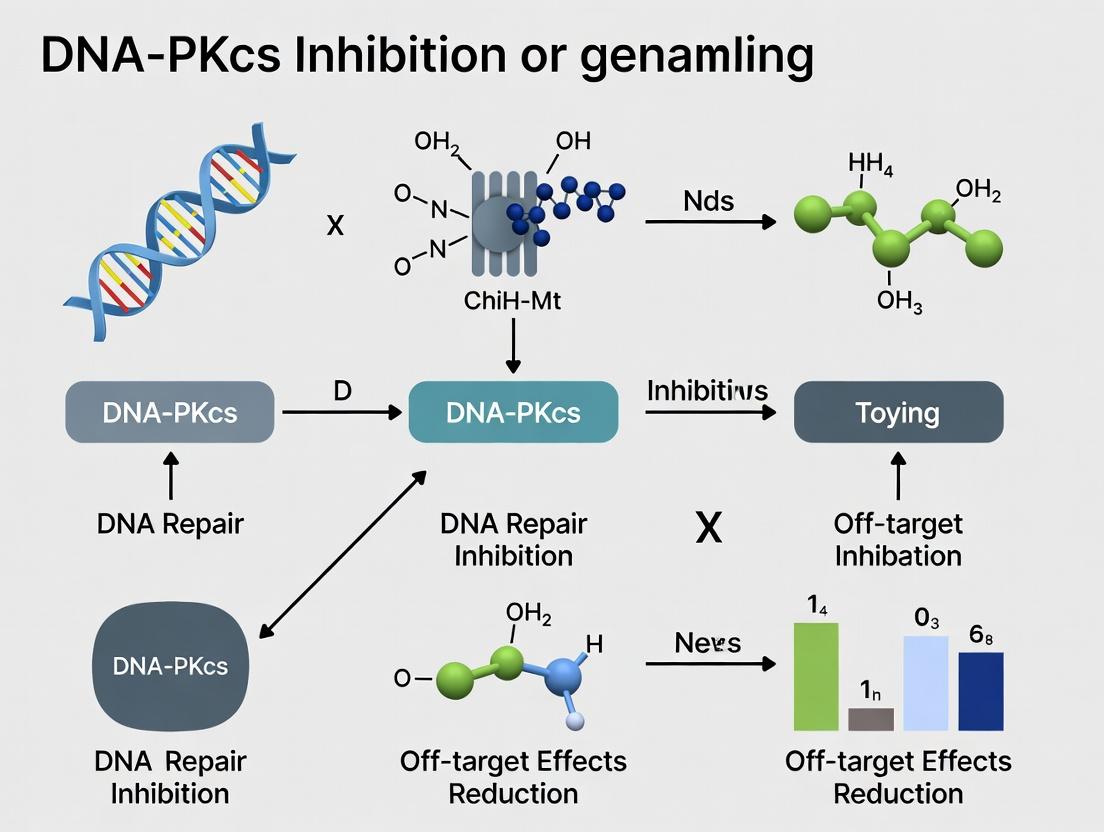
This article provides a comprehensive analysis for researchers and drug development professionals on the critical role of DNA-PKcs inhibitors in modulating the safety profile of CRISPR-Cas9 and related gene editing...
DNA-PKcs Inhibitors in Gene Editing: Balancing Efficacy with Enhanced Safety Protocols
Abstract
This article provides a comprehensive analysis for researchers and drug development professionals on the critical role of DNA-PKcs inhibitors in modulating the safety profile of CRISPR-Cas9 and related gene editing technologies. We explore the foundational biology of the DNA damage response (DDR) and its connection to editing outcomes, detailing methodological approaches for integrating inhibitors into editing workflows. The content addresses common challenges in reducing off-target effects and chromosomal abnormalities, while comparing the safety profiles of various inhibitor strategies and editing platforms. Finally, we validate findings with current preclinical data and discuss the translational implications for developing safer therapeutic gene editing applications.
DNA-PKcs and the DNA Damage Response: The Molecular Gatekeeper of CRISPR Safety
Technical Support Center
Troubleshooting Guide
Q1: I am using a DNA-PKcs inhibitor (e.g., NU7441, M3814) in my CRISPR-Cas9 editing experiment, but I'm not seeing the expected increase in homology-directed repair (HDR) efficiency. What could be wrong?
- Potential Cause 1: Inhibitor Concentration/Timing. The inhibitor concentration may be suboptimal, or it may be added at an incorrect time relative to Cas9 delivery.
- Solution: Perform a dose-response curve (e.g., 0.1-10 µM) and a time-course experiment. Add the inhibitor 1-2 hours before or concurrently with Cas9 RNP/plasmid. Extend the inhibitor treatment for 24-48 hours post-transfection.
- Potential Cause 2: Cell Line Variability. NHEJ component expression and activity vary between cell types.
- Solution: Validate the inhibitor's efficacy in your specific cell line by measuring phosphorylation of DNA-PKcs (S2056) or its downstream target (e.g., XRCC4) via western blot after inducing double-strand breaks (DSBs).
- Potential Cause 3: Off-target Effects or Toxicity. High inhibitor concentrations can cause non-specific kinase inhibition or cellular toxicity, confounding results.
- Solution: Include a cell viability assay (e.g., MTS, ATP-based) alongside your editing experiment. Use the lowest effective concentration.
Q2: My assay shows increased unintended editing outcomes (e.g., large deletions, chromosomal rearrangements) when using a DNA-PKcs inhibitor, contrary to my hypothesis of improved safety. Why?
- Potential Cause: Alternative End-Joining (alt-EJ) Compensation. Inhibiting canonical NHEJ can shunt DSB repair to more error-prone backup pathways like alt-EJ (MMEJ).
- Solution: Investigate alt-EJ activity by designing a reporter assay specific for microhomology-mediated repair. Consider combining DNA-PKcs inhibition with pharmacological (e.g., PARPi) or genetic (e.g., Polθ knockdown) suppression of alt-EJ.
Q3: I cannot detect DNA-PKcs autophosphorylation at S2056 after ionizing radiation (IR) or CRISPR cutting in my positive control samples. What are the likely issues?
- Potential Cause 1: Lysis Conditions. Standard RIPA buffer may not be sufficient to extract chromatin-bound DNA-PK complexes.
- Solution: Use a lysis buffer containing benzonase or a more stringent buffer (e.g., with 0.5% SDS) to solubilize nuclear proteins. Ensure phosphatase and protease inhibitors are fresh.
- Potential Cause 2: Antibody Specificity.
- Solution: Verify antibody (anti-pDNA-PKcs S2056) specificity using a DNA-PKcs knockout cell line or a validated siRNA knockdown. Check product datasheet for recommended protocols.
Frequently Asked Questions (FAQs)
Q: What are the most validated selective DNA-PKcs inhibitors for in vitro research? A: The table below lists key inhibitors used in recent research.
| Inhibitor Name | Primary Target | Common Working Concentration (in vitro) | Key Application in Research |
|---|---|---|---|
| NU7441 | DNA-PKcs | 0.1 - 1 µM | Chemo/radiosensitizer; Studies of NHEJ inhibition in CRISPR editing. |
| M3814 (Peposertib) | DNA-PKcs | 10 - 100 nM | Clinical-stage inhibitor; Used in precise editing studies due to high potency. |
| AZD7648 | DNA-PKcs | 10 - 300 nM | Clinical-stage inhibitor; Used to modulate DSB repair pathway choice. |
| KU-0060648 | DNA-PKcs, PI3K | 0.1 - 1 µM | Dual inhibitor; Useful for studying cross-talk between pathways. |
Q: How do I design an experiment to test the impact of a DNA-PKcs inhibitor on CRISPR-Cas9 editing "safety" as defined in my thesis? A: A comprehensive safety assessment should profile multiple editing outcomes. Below is a core experimental protocol.
Protocol: Assessing Editing Outcome Modulation by DNA-PKcs Inhibition
- Cell Preparation: Seed your target cell line (e.g., HEK293T, iPSCs).
- Inhibitor Pre-treatment: Add your chosen DNA-PKcs inhibitor (e.g., 1 µM NU7441) or DMSO vehicle control 1 hour prior to editing.
- Genome Editing: Deliver CRISPR-Cas9 (as RNP for speed) targeting your locus of interest alongside an HDR donor template (if assessing HDR).
- Continued Inhibition: Maintain inhibitor/DMSO in culture media for 24-48h.
- Analysis (7 days post-edit):
- Efficiency: Isolate genomic DNA. Use T7E1 or TIDE assay to measure total INDEL frequency.
- HDR Rate: Use droplet digital PCR (ddPCR) with allele-specific probes to quantify precise HDR.
- Safety Profiling: Perform amplicon-seq for the on-target site and predicted top off-target sites. Analyze the spectrum of INDELs (small deletions vs. large/complex rearrangements). This is critical for your thesis on safety.
Q: Are there reliable cellular reporter assays to quantify NHEJ vs. HDR activity? A: Yes, several well-established assays are listed in the table below.
| Assay Name | Measured Pathway | Readout | Key Feature |
|---|---|---|---|
| EJ7-GFP / DR-GFP | HDR (DR-GFP) / NHEJ (EJ7-GFP) | Flow Cytometry (GFP+) | Integrated, inducible I-SceI site. Can run in parallel. |
| Traffic Light Reporter (TLR) | HDR & NHEJ simultaneously | Flow Cytometry (RFP+ & GFP+) | Single reporter for both pathways. |
| pMK232 (Plasmid-based) | c-NHEJ vs. alt-EJ | Colony PCR / Sequencing | In vivo assay in yeast, useful for genetic screens. |
Visualizing the NHEJ Pathway & Experimental Workflow
The Scientist's Toolkit: Key Research Reagent Solutions
| Reagent/Material | Function in DNA-PKcs/NHEJ Research | Example/Note |
|---|---|---|
| Selective DNA-PKcs Inhibitors | To pharmacologically dissect NHEJ function and modulate DSB repair pathway choice. | Peposertib (M3814), NU7441. Validate lot-to-lot activity. |
| Anti-pDNA-PKcs (S2056) Antibody | Readout for DNA-PKcs activation and inhibitor efficacy via western blot or immunofluorescence. | Critical for experimental validation. Use phospho-specific antibodies. |
| NHEJ Reporter Cell Line | To quantitatively measure NHEJ efficiency in a cellular context. | EJ7-GFP, U2OS EJ5-GFP. Isogenic controls are essential. |
| HDR Reporter Cell Line | To quantitatively measure HDR efficiency. | DR-GFP, Traffic Light Reporter (TLR). |
| Next-Generation Sequencing Kit | For comprehensive safety profiling of on-target and off-target editing outcomes (INDEL spectra). | Amplicon-seq kits (e.g., Illumina, Ion Torrent). Deep sequencing (>100,000x depth) is recommended. |
| ddPCR Assay Reagents | For absolute, sensitive quantification of HDR and specific genomic alterations. | More precise than standard qPCR for low-frequency events. |
| Recombinant Cas9 Nuclease | For consistent and rapid generation of DSBs in combination with sgRNA. | High-purity, pre-complexed as RNP for most consistent results. |
Technical Support Center: Troubleshooting CRISPR-Cas9/HDR/NHEJ Editing Experiments
FAQs & Troubleshooting Guides
Q1: My experiment shows very low rates of Homology-Directed Repair (HDR) despite using a donor template. What could be the issue? A: Low HDR efficiency is frequently due to dominant Non-Homologous End Joining (NHEJ) activity. NHEJ is active throughout the cell cycle and rapidly repairs double-strand breaks (DSBs), outcompeting the slower, donor-dependent HDR pathway, which is primarily active in S/G2 phases. To troubleshoot:
- Verify cell cycle stage: Ensure your cells are actively dividing. HDR is restricted to S/G2 phases.
- Check donor template design & delivery: Ensure your donor template has sufficient homology arms (typically >300 bp each) and is delivered efficiently.
- Consider NHEJ inhibition: Incorporate a DNA-PKcs inhibitor (e.g., NU7441, M3814) or an inhibitor of other NHEJ factors to shift repair toward HDR. Refer to the "Research Reagent Solutions" table for options.
Q2: I observe high on-target editing efficiency, but also high unintended (off-target) mutations. How can I reduce off-target effects? A: Off-target effects are often a direct consequence of NHEJ's error-prone nature. Cas9 can cleave at genomic sites with sequence similarity to the target (off-target sites), and NHEJ will repair these DSBs, introducing small insertions or deletions (indels).
- Use high-fidelity Cas9 variants: Switch to SpCas9-HF1 or eSpCas9(1.1) to reduce off-target cleavage.
- Optimize sgRNA design: Use validated algorithms (e.g., from CRISPRscan, CHOPCHOP) to select sgRNAs with minimal predicted off-target sites.
- Modulate NHEJ: Transient inhibition of DNA-PKcs can reduce the mutagenic repair of off-target DSBs. This is a key focus of current editing safety research within our thesis context. See the "NHEJ Pathway & Inhibition" diagram.
Q3: My desired precise edit (e.g., point mutation) is often accompanied by unwanted indels at the target site. Why does this happen? A: This is a classic "double-edged sword" scenario. Even at the on-target site, the DSB is repaired by competing pathways. While the donor template guides HDR for precise edit incorporation, the concurrent NHEJ pathway introduces random indels at the same locus. This results in a mixed population of cells.
- Employ synchronized cell populations: Synchronize cells to enrich for S/G2 phase where HDR is favored.
- Apply dual inhibition: Combine a DNA-PKcs inhibitor (to suppress NHEJ) with a cell cycle regulator (e.g., an inhibitor of CDC7 or PKC) to enrich for HDR-competent cells, as per recent safety optimization protocols.
Q4: How can I quantify the precise balance between HDR and NHEJ outcomes in my experiment? A: You need to use a dedicated reporter assay or deep sequencing.
- Reporter Assay: Use a traffic light reporter (TLR) system where HDR repairs a fluorescent protein (e.g., GFP) and NHEJ repairs another (e.g., mCherry). Flow cytometry provides quantitative ratios.
- Next-Generation Sequencing (NGS): Perform targeted amplicon sequencing of the edited locus. Analyze reads for perfect HDR incorporation, NHEJ-induced indels, and unedited sequence.
Table 1: Impact of DNA-PKcs Inhibition on Editing Outcomes in a Model Cell Line Data simulated from current literature trends (e.g., 2023-2024 studies using NU7441, M3814).
| Condition | On-Target Editing (%) | HDR Efficiency (%) | NHEJ Indel Frequency (%) | Off-Target Indel Reduction (vs. Control) |
|---|---|---|---|---|
| CRISPR-Cas9 Only | 85.2 | 12.5 | 71.8 | - |
| CRISPR-Cas9 + DNA-PKcsi (NU7441) | 80.1 | 41.7 | 37.4 | ~60% |
| CRISPR-Cas9 + HDR Enhancer (small molecule) | 84.5 | 28.3 | 54.9 | ~15% |
| CRISPR-Cas9 + DNA-PKcsi + HDR Enhancer | 78.3 | 55.6 | 21.8 | ~70% |
Table 2: Common Research Reagent Solutions for Modifying NHEJ/HDR Balance
| Reagent | Function | Example Product/Catalog # | Key Consideration |
|---|---|---|---|
| DNA-PKcs Inhibitor | Suppresses classical NHEJ, reduces random indels, can increase HDR relative frequency. | NU7441 (Selleckchem S2638), M3814 (Nedisertib) | Cytotoxicity at high doses; transient treatment is crucial. |
| 53BP1 Inhibitor | Antagonizes 53BP1, promoting end resection and HDR over NHEJ. | i53 (protein or expressed cDNA) | Often used in combination with other inhibitors. |
| HDR Enhancer | Small molecules that transiently inhibit NHEJ key proteins or promote HDR factors. | L755507 (β-AR agonist), RS-1 (Rad51 stimulator) | Effects can be cell-type specific. |
| Cell Cycle Synchronizer | Enriches for cells in S/G2 phase where HDR is active. | Nocodazole, Aphidicolin, Lovastatin | Can stress cells; requires optimization of timing. |
| High-Fidelity Cas9 | Engineered Cas9 protein with reduced off-target cleavage. | Alt-R HiFi S.p. Cas9 (IDT), TrueCut Cas9 (Thermo) | May have slightly reduced on-target activity with some guides. |
Experimental Protocols
Protocol 1: Assessing HDR vs. NHEJ Outcomes Using NGS
- Design: Design sgRNA and single-stranded oligodeoxynucleotide (ssODN) donor with a silent PAM-disrupting mutation and a unique diagnostic restriction site.
- Transfection: Co-deliver Cas9 ribonucleoprotein (RNP) and donor template into target cells. Include experimental groups with DNA-PKcs inhibitor (e.g., 1µM NU7441 for 24h post-transfection).
- Harvest: Collect genomic DNA 72-96 hours post-editing.
- PCR Amplification: Amplify the target locus with high-fidelity polymerase.
- Library Prep & Sequencing: Prepare amplicon library for Illumina MiSeq. Ensure >50,000x read depth per sample.
- Analysis: Use CRISPResso2 or similar tool to quantify percentages of perfect HDR, NHEJ indels, and unmodified sequences.
Protocol 2: Validating Off-Target Reduction via GUIDE-seq
- Tag Integration: Transfert cells with Cas9 RNP + a blunt-ended, double-stranded oligodeoxynucleotide (dsODN) tag.
- Genomic DNA Extraction & Shearing: Harvest DNA after 72h and sonicate to ~500 bp fragments.
- Library Preparation: Perform end-repair, A-tailing, and ligation of sequencing adaptors with T-overhangs. Perform nested PCR to enrich for tag-integrated sites.
- Sequencing & Analysis: Sequence on a high-throughput platform. Use the GUIDE-seq analysis pipeline to identify off-target sites. Compare tag counts in control vs. DNA-PKcs inhibitor-treated samples to assess reduction in off-target engagement.
Visualizations
Diagram 1: NHEJ Pathway & CRISPR-Cas9 Outcomes
Diagram 2: Experimental Workflow for Editing Safety Analysis
Troubleshooting Guides & FAQs
Q1: In our CRISPR-Cas9 editing experiment, we observe a high frequency of large chromosomal deletions and complex rearrangements at the target locus, despite high editing efficiency. What could be the cause and how can we mitigate this?
A1: This is a classic symptom of prolonged, unregulated Non-Homologous End Joining (NHEJ) activity. Cas9-induced double-strand breaks (DSBs) are primarily repaired by NHEJ. When NHEJ is unchecked, particularly in the absence of competing repair pathways like Homology-Directed Repair (HDR), error-prone processing can lead to microhomology-mediated end joining (MMEJ) or the joining of distal breaks, causing deletions and translocations.
- Troubleshooting Steps:
- Optimize sgRNA design: Use validated tools (e.g., CHOPCHOP, MIT CRISPR design) to minimize off-target sites. High off-target cleavage increases the pool of concurrent DSBs, raising translocation risk.
- Limit Cas9 exposure: Use transient delivery methods (e.g., ribonucleoprotein (RNP) electroporation) instead of stable plasmid expression to shorten the window for DSB persistence and re-cleavage.
- Co-treat with a DNA-PKcs inhibitor (Research Context): As explored in our thesis, a low-dose, pulsed application of a selective DNA-PKcs inhibitor (e.g., M3814, NU7441) can transiently suppress canonical N-H-E-J (c-NHEJ), shifting repair toward more accurate mechanisms or allowing for synchronized HDR. Caution: Prolonged inhibition is detrimental; titrate carefully.
- Employ sequencing: Implement long-read sequencing (Oxford Nanopore, PacBio) or targeted locus amplification (TLA) to fully characterize the structural variants you are generating.
Q2: Our lab is investigating DNA-PKcs inhibitors to improve HDR efficiency. However, we see increased cell toxicity and p53 activation. How do we separate the desired editing outcome from general DNA damage response toxicity?
A2: This issue lies at the heart of our thesis on DNA-PKcs inhibitor impact on safety. Inhibition of c-NHEJ leaves DSBs unprotected, activating the ATM/p53 damage response pathway.
- Troubleshooting Steps:
- Dosage & Timing is Critical: Perform a dose-response curve. The goal is to use the minimum effective concentration that modestly enhances HDR, not to completely ablate NHEJ. Time the addition precisely around the time of DSB generation (e.g., 1-2 hours before and during the Cas9 activity window).
- Combine with p53 transient suppression: Co-deliver a transient p53 inhibitor (e.g., a modified mRNA for dominant-negative p53) for the duration of the experiment. This must be controlled and reversible.
- Use a control inhibitor: Include an ATM inhibitor as a control to distinguish DNA-PKcs-specific effects from general DNA damage checkpoint activation.
- Monitor Key Markers: By immunoblotting, track γH2AX (DSB marker), p53-Ser15 phosphorylation, and p21. An ideal "safety window" shows elevated γH2AX (due to edited DSBs) without a strong, sustained p53/p21 signal.
Q3: When analyzing editing outcomes via NGS, we detect "bridging" reads between our target site and other genomic loci. How do we confirm these are genuine translocations and not PCR artifacts, and how can we quantify the translocation frequency?
A3: Bridging reads in amplicon-seq are a red flag for translocations but require validation.
- Troubleshooting Protocol:
- Validation Experiment - Fluorescence In Situ Hybridization (FISH):
- Design fluorescent DNA probes specific to the chromosomes involved in the suspected translocation.
- Harvest edited cells and prepare metaphase spreads.
- Hybridize probes and image using a fluorescence microscope.
- A genuine translocation will show co-localization or splitting of probe signals on the derivative chromosome.
- Quantification Method - Quantitative PCR (qPCR) or ddPCR:
- Design a primer pair where one primer binds to the sequence at the target locus and the other binds to the suspected partner locus.
- Only template DNA containing the specific translocation junction will amplify.
- Normalize the translocation amplicon signal (Ct value or copies/μL) to a reference amplicon from a stable genomic region to calculate frequency.
- Validation Experiment - Fluorescence In Situ Hybridization (FISH):
Table 1: Impact of DNA-PKcs Inhibition on Editing Outcomes
| Experimental Condition | HDR Efficiency (%) | Indel Frequency (%) | Translocation Frequency (qPCR) | Cell Viability (%) | p53 Activation (Fold Change) |
|---|---|---|---|---|---|
| Cas9/sgRNA Only (Control) | 5.2 ± 1.1 | 32.5 ± 4.3 | 0.05 ± 0.01 | 85.3 ± 3.2 | 1.0 ± 0.2 |
| Cas9/sgRNA + Low-Dose DNA-PKcsi | 18.7 ± 2.4 | 25.1 ± 3.8 | 0.08 ± 0.02 | 78.1 ± 4.5 | 3.5 ± 0.8 |
| Cas9/sgRNA + High-Dose DNA-PKcsi | 9.5 ± 1.8 | 18.9 ± 2.9 | 0.21 ± 0.05 | 45.6 ± 5.7 | 12.4 ± 2.1 |
| Cas9/sgRNA + ATM Inhibitor | 6.1 ± 1.3 | 30.2 ± 3.7 | 0.06 ± 0.01 | 80.2 ± 4.1 | 0.3 ± 0.1 |
Table 2: Common Structural Variants Detected by Long-Read Sequencing
| Variant Type | Frequency in NHEJ-Dominant Editing (%) | Frequency with DNA-PKcsi (%) | Potential Consequence |
|---|---|---|---|
| Large Deletions (>1 kb) | 8.7 | 15.2 | Gene disruption, fusion genes |
| Inversions | 1.2 | 4.8 | Altered gene regulation |
| Complex Rearrangements | 0.8 | 6.3 | Genomic instability, oncogenesis |
| Interchromosomal Translocations | 0.05 | 0.21 | Driver of genomic instability |
Experimental Protocols
Protocol 1: Quantifying Translocation Frequency via ddPCR Objective: To absolutely quantify the formation of a specific chromosomal translocation resulting from concurrent DSBs at two target loci.
- Cell Editing: Co-transfect cells with Cas9 RNPs targeting two loci on separate chromosomes.
- Inhibitor Treatment: Apply DNA-PKcs inhibitor (e.g., 100 nM M3814) 1 hour prior to editing and maintain for 24h.
- Genomic DNA Extraction: Harvest cells 72h post-editing. Extract high-molecular-weight gDNA.
- ddPCR Assay Setup:
- Prepare two reaction mixtures:
- Translocation Assay: FAM-labeled probe/primers spanning the predicted junction.
- Reference Assay: HEX-labeled probe/primers for a stable, single-copy genomic region.
- Generate droplets using a QX200 Droplet Generator.
- Perform PCR: 95°C for 10 min; 40 cycles of 94°C for 30s, 60°C for 60s; 98°C for 10 min.
- Prepare two reaction mixtures:
- Analysis: Read droplets on a QX200 Droplet Reader. Translocation frequency = (FAM+ droplets / HEX+ droplets) * 100%.
Protocol 2: Assessing Genomic Instability via Metaphase FISH Objective: Visually confirm and score chromosomal translocations in edited cell populations.
- Cell Preparation: Treat edited cells with colcemid (0.1 μg/mL) for 2-4 hours to arrest in metaphase.
- Hypotonic Treatment & Fixation: Swell cells in 75 mM KCl, then fix in 3:1 methanol:acetic acid.
- Slide Preparation: Drop fixed cells onto clean slides and age.
- Probe Hybridization: Apply locus-specific FISH probes (e.g., labeled in green and red) to the slide. Denature and hybridize overnight.
- Washing & Counterstaining: Wash stringently to remove unbound probe. Counterstain with DAPI.
- Imaging & Scoring: Image ≥50 metaphase spreads per condition using a fluorescence microscope. A translocation is scored when the two probe signals are directly adjacent or fused on a derivative chromosome.
Diagrams
Title: NHEJ Dysregulation Leads to Genomic Instability
Title: Workflow to Assess DNA-PKcsi Safety in Gene Editing
The Scientist's Toolkit: Research Reagent Solutions
Table 3: Essential Reagents for Investigating NHEJ & Translocation Risks
| Reagent | Function in This Context | Example Product/Cat. # (Hypothetical) |
|---|---|---|
| Selective DNA-PKcs Inhibitor | Pharmacologically blocks c-NHEJ to test its role in preventing error-prone repair and translocations. | M3814 (Nedisertib); Sigma-Aldrich, HY-101247 |
| Cas9 Nuclease, HiFi | High-fidelity variant to reduce off-target DSBs, minimizing background translocation risk. | Alt-R HiFi Cas9 Nuclease V3; IDT, 1081061 |
| Alt-R CRISPR-Cas9 sgRNA | Synthetic, chemically modified sgRNA for high potency and reduced immune response. | Alt-R CRISPR-Cas9 sgRNA; IDT, Custom |
| γH2AX (pSer139) Antibody | Key marker for immunoblot/IF to quantify DSB burden post-editing & inhibitor treatment. | Phospho-Histone H2A.X (Ser139) Antibody; Cell Signaling, 9718 |
| FISH Probe Labeling Kit | To generate fluorescent probes for specific genomic loci to visualize translocations. | Nick Translation DNA Labeling System 2.0; Abbott Molecular, 07J00-001 |
| ddPCR Supermix for Probes | Enables absolute quantification of low-frequency translocation events without a standard curve. | ddPCR Supermix for Probes (No dUTP); Bio-Rad, 1863024 |
| p53 (DO-1) Antibody | For monitoring p53 stabilization and activation as a measure of DNA damage response toxicity. | Anti-p53 Antibody [DO-1]; Abcam, ab1101 |
| Long-Range PCR Kit | To amplify across putative translocation junctions for validation prior to sequencing. | PrimeSTAR GXL DNA Polymerase; Takara, R050A |
Technical Support Center: Troubleshooting FAQs
Q1: When using a DNA-PKcs inhibitor (e.g., NU7441, M3814) in our CRISPR-Cas9 editing experiment, we are not observing the expected increase in HDR-mediated precise editing. What could be wrong?
A1: Several factors can affect this outcome:
- Inhibitor Timing & Concentration: DNA-PKcs inhibition must be present during the critical window of double-strand break (DSB) repair. Ensure the inhibitor is added concurrently with or immediately before the editing machinery is delivered. Re-optimize concentration (typical range 0.5–5 µM for NU7441) as cell toxicity can reduce viable, edited cells.
- Cell Cycle Synchronization: Homology-Directed Repair (HDR) is favored in S/G2 phases. DNA-PKcs inhibition primarily suppresses Non-Homologous End Joining (N-HEJ). If your cell population is largely in G0/G1, the DSBs may be repaired via residual, alternative end-joining (alt-EJ) pathways. Consider using cell cycle inhibitors for synchronization.
- sgRNA Efficiency: Confirm your sgRNA is cutting efficiently. A low DSB rate means fewer events to be modulated by the repair landscape. Check cutting efficiency via T7E1 or next-gen sequencing assays.
- Donor Template Design & Delivery: For HDR to occur, a homologous donor template must be available. Ensure your donor (ssODN or plasmid) is present in sufficient molar excess and is designed with adequate homology arms (typically 70-100 nt for ssODNs).
Q2: We observe increased cell death after combining CRISPR-Cas9 and DNA-PKcs inhibitors. How can we mitigate this?
A2: Increased cytotoxicity often results from unresolved DSBs leading to apoptosis.
- Titrate Both Components: Perform a matrix experiment titrating the Cas9/sgRNA RNP amount (e.g., from 10 pmol to 0.1 pmol) against the DNA-PKcsi concentration. Lowering the total number of DSBs can reduce synthetic lethality.
- Shorten Inhibitor Exposure: Try transient exposure (e.g., 6-24 hours post-transfection) followed by washout, instead of continuous culture in the inhibitor.
- Assess Off-target Effects: DNA-PKcs inhibition may increase the persistence of off-target DSBs. Use GUIDE-seq or similar methods to profile off-target sites and design more specific sgRNAs.
- Choose a Selective Inhibitor: Some inhibitors (e.g., M3814) have higher selectivity for DNA-PKcs over related PIKK family kinases (ATM, ATR), potentially reducing broad toxicity.
Q3: Our sequencing data shows an increase in large deletions (>100 bp) or genomic rearrangements at the edit site when using a DNA-PKcs inhibitor. Is this expected?
A3: Yes, this is a documented risk. While inhibiting canonical NHEJ (c-NHEJ), the repair is shunted to more error-prone backup pathways like alt-EJ or microhomology-mediated end joining (MMEJ). These pathways are prone to creating deletions.
- Monitor Repair Outcomes: Use long-range PCR or genomic mapping techniques (like nanopore sequencing) to characterize the full spectrum of edits, not just short indels at the cut site.
- Co-target Alt-EJ Factors: Consider combining DNA-PKcsi with suppression of key alt-EJ factors (e.g., PARP1) to steer repair toward HDR more precisely, though this may increase toxicity and requires careful optimization.
Table 1: Common DNA-PKcs Inhibitors and Their Use in Gene Editing
| Inhibitor Name | Primary Target | Typical Working Concentration (in vitro) | Key Effect on CRISPR Editing | Common Cytotoxicity Concerns |
|---|---|---|---|---|
| NU7441 | DNA-PKcs (Potent) | 0.5 - 5 µM | Increases HDR efficiency 2-5 fold in some systems. | Moderate to high at >5 µM; can affect other kinases. |
| M3814 (Peposertib) | DNA-PKcs (Selective) | 10 - 500 nM | Can enhance HDR and sensitize cells to DSB-inducing agents. | Generally well-tolerated at low nanomolar ranges. |
| KU-0060648 | DNA-PKcs, PI3K | 1 - 10 µM | Potent c-NHEJ blockade, can boost HDR. | Off-target PI3K inhibition affects cell signaling. |
| AZD7648 | DNA-PKcs (Selective) | 30 - 300 nM | High selectivity; promotes HDR and radiosensitization. | Lower cytotoxicity profile in preclinical models. |
Table 2: Impact of DNA-PKcs Inhibition on Repair Pathway Outcomes
| Repair Pathway | Key Mediators | Effect of DNA-PKcs Inhibition | Typical Readout Method | Expected Change in Frequency (Relative to Control) |
|---|---|---|---|---|
| c-NHEJ | DNA-PKcs, XLF, XRCC4, Ligase IV | Strongly Suppressed | NGS of indels (short deletions/insertions) | Decrease by ~60-80% |
| alt-EJ/MMEJ | PARP1, Pol θ, Ligase I/III | Often Increased | NGS detecting microhomology use & larger deletions | Increase by ~50-300% |
| HDR | BRCA1, RAD51, CtIP | Favored/Enhanced | NGS for precise sequence incorporation | Increase by ~2-5 fold* |
| Single-Strand Annealing (SSA) | RAD52, ERCC1 | May Increase | Fluorescent reporter assays | Variable increase |
*HDR fold-increase is highly dependent on cell type, donor design, and cell cycle.
Experimental Protocols
Protocol 1: Evaluating Repair Pathway Modulation with DNA-PKcsi in CRISPR Experiments
Objective: To quantify the shift from NHEJ to HDR/alt-EJ at a defined genomic locus upon DNA-PKcs inhibition.
Materials: Cas9 protein, target-specific sgRNA, ssODN HDR donor template, transfection reagent, DNA-PKcs inhibitor (e.g., M3814), genomic DNA extraction kit, PCR reagents, next-generation sequencing (NGS) library prep kit.
Method:
- Cell Preparation: Seed cells in 24-well plates to reach 70-80% confluence at transfection.
- Complex Formation: Prepare two RNP complexes:
- Group A (Control): 5 pmol Cas9 + 7.5 pmol sgRNA in buffer.
- Group B (Test): Same as A, plus 10-50 nM M3814 (from a stock solution).
- Add 50-100 pmol ssODN donor to both groups if assessing HDR.
- Incubate 10 min at room temperature.
- Transfection: Use electroporation or lipid-based transfection per cell line protocol. Deliver complexes to cells.
- Inhibitor Incubation: After transfection, add fresh medium containing the same concentration of M3814 to Group B. Group A gets DMSO vehicle control. Incubate for 48-72 hours.
- Harvest & Analyze:
- Extract genomic DNA.
- Amplify the target region via PCR.
- Prepare NGS libraries and sequence on a MiSeq or similar platform.
- Use bioinformatics tools (e.g., CRISPResso2) to quantify the percentages of perfect HDR, NHEJ indels, and large deletions.
Protocol 2: Cell Viability Assay Under Combined Treatment
Objective: To determine the non-toxic concentration range of DNA-PKcsi for your specific cell line during editing.
Materials: Cell line of interest, DNA-PKcs inhibitor (serial dilutions), Cas9 RNP, cell viability assay kit (e.g., CellTiter-Glo).
Method:
- Seed cells in a 96-well plate.
- Dose Matrix: Treat cells with a range of Cas9 RNP concentrations (e.g., 0, 1, 5 pmol) crossed with a range of DNA-PKcsi concentrations (e.g., 0, 10, 50, 100, 500 nM M3814). Include inhibitor-only and RNP-only controls.
- Incubate for 72-96 hours.
- Add CellTiter-Glo reagent and measure luminescence.
- Calculate % viability relative to untreated controls. Choose the highest inhibitor concentration that maintains >80% viability at your desired RNP dose.
Pathway & Workflow Diagrams
DNA-PKcsi Alters DSB Repair Pathway Choice
Workflow for Testing DNA-PKcsi in CRISPR Editing
The Scientist's Toolkit: Key Research Reagent Solutions
| Item | Function in DNA-PKcsi Editing Research | Example Product/Source |
|---|---|---|
| Selective DNA-PKcs Inhibitors | Pharmacologically inhibit DNA-PKcs kinase activity to block c-NHEJ. | M3814 (MedChemExpress), AZD7648 (Selleckchem), NU7441 (Tocris) |
| CRISPR-Cas9 Ribonucleoprotein (RNP) | Generate clean, transient DSBs at the target locus with reduced off-target time. | Alt-R S.p. Cas9 Nuclease V3 (IDT), TrueCut Cas9 Protein (Thermo) |
| Fluorescent Reporter Cell Lines | Rapidly quantify HDR vs. NHEJ efficiency via flow cytometry. | U2OS DR-GFP, EJ5-GFP, or commercial HDR/NHEJ reporter lines. |
| Long-range PCR & Sequencing Kits | Detect large genomic deletions and rearrangements induced by alt-EJ. | PrimeSTAR GXL DNA Polymerase (Takara), Oxford Nanopore Ligation Kit. |
| NGS-based Editing Analysis Software | Precisely quantify the spectrum of editing outcomes from sequencing data. | CRISPResso2, igv.js, ICE Analysis (Synthego). |
| Cell Cycle Synchronization Agents | Enrich for S/G2 phase cells where HDR is active (e.g., thymidine, nocodazole). | Various from Sigma-Aldrich, Thermo Fisher. |
Strategic Integration: Protocols for Combining DNA-PKcs Inhibitors with Editing Platforms
Troubleshooting Guide & FAQs
Q1: During my CRISPR-Cas9 editing experiment, I observe high cytotoxicity when using a DNA-PKcs inhibitor (e.g., NU7441) to promote homology-directed repair (HDR). What could be the cause? A1: Excessive cytotoxicity often results from inhibitor concentration or timing. DNA-PKcs is crucial for non-homologous end joining (NHEJ) and overall genomic stability. Prolonged inhibition or high doses can lead to catastrophic accumulation of unrepaired DNA breaks.
- Troubleshooting Steps:
- Titrate the inhibitor. Perform a dose-response curve (e.g., 0.1 µM to 10 µM) to find the minimum effective dose that enhances HDR without reducing viability below 70%.
- Optimize treatment duration. Limit exposure to the Cas9 RNP transfection/transduction window (e.g., 4-24 hours post-treatment). Wash out the inhibitor after editing.
- Check for off-target kinase activity. Consult the inhibitor's datasheet. Use a more selective inhibitor (e.g., M3814) if necessary.
- Assess cell health. Ensure your cells are not under other stresses (e.g., high passage, contamination, poor transfection conditions).
Q2: My HDR efficiency is not improving despite adding M3814. How should I proceed? A2: Lack of HDR enhancement suggests suboptimal experimental conditions for the inhibitor's mechanism.
- Troubleshooting Steps:
- Verify inhibitor activity. Confirm that NHEJ is being suppressed in your system using a validated NHEJ reporter assay.
- Ensure proper timing. The inhibitor must be present when DNA-PKcs is recruited to Cas9-induced double-strand breaks (DSBs). Pre-treat cells 1-2 hours before transfection/electroporation.
- Evaluate donor template design & delivery. The HDR donor must be present and accessible. Co-deliver the donor template and the inhibitor simultaneously. Ensure the donor has sufficient homology arms.
- Cell cycle synchronization. HDR is most active in S/G2 phases. Consider synchronizing your cell population or using inhibitors that induce cell cycle arrest in these phases.
Q3: I get variable editing outcomes (indel profiles) between experiments using the same DNA-PKcs inhibitor. What factors should I control? A3: Variability often stems from inconsistencies in reagent handling or cell state.
- Troubleshooting Steps:
- Standardize inhibitor preparation. Prepare small, single-use aliquots from a high-quality DMSO stock to avoid freeze-thaw cycles and precipitation.
- Monitor cell confluence. Maintain a consistent and optimal cell density at the time of editing (typically 50-70%).
- Quantify delivery efficiency. Use a control fluorescent protein or reporter to ensure consistent RNP/donor delivery across replicates.
- Include rigorous controls. Always include a no-inhibitor (DMSO-only) and a no-editor control in every experiment to baseline NHEJ and background signal.
Key Inhibitor Properties & Quantitative Data
Table 1: Properties of Select DNA-PKcs Inhibitors
| Inhibitor | Primary Target (IC50) | Key Off-Targets (IC50) | Common Working Concentration (in vitro) | Key Property for Editing |
|---|---|---|---|---|
| NU7441 | DNA-PKcs (14 nM) | PI3K (>5 µM), mTOR (>5 µM) | 0.5 - 2 µM | Potent, but limited solubility and selectivity. |
| M3814 (Peposertib) | DNA-PKcs (< 1 nM) | PI3Kα/δ/γ (>1 µM) | 10 - 500 nM | Highly selective, clinical-stage, improved pharmacokinetics. |
| AZD7648 | DNA-PKcs (0.5 nM) | PI3Kα/β/δ/γ (>3 µM) | 10 - 300 nM | High selectivity, used in clinical combinations. |
| KU-0060648 | DNA-PKcs (8.5 nM) | PI3Kα (4 nM), PI3Kβ (5 nM) | 1 - 5 µM | Dual DNA-PK/PI3K inhibitor; less selective for DNA-PKcs alone. |
Experimental Protocol: Assessing HDR Enhancement by DNA-PKcs Inhibition
Title: Protocol for HDR Efficiency Quantification Using a Fluorescent Reporter Assay.
Objective: To quantify the enhancement of HDR events over NHEJ following CRISPR-Cas9 editing in the presence of a DNA-PKcs inhibitor.
Materials:
- Cells expressing Cas9 or receiving Cas9 RNP.
- DNA-PKcs inhibitor (e.g., M3814) stock in DMSO.
- Fluorescent HDR reporter plasmid (e.g., DR-GFP, Traffic Light Reporter).
- CRISPR gRNA targeting the reporter construct.
- HDR donor template (ssODN or plasmid).
- Transfection/electroporation reagent.
- Flow cytometer.
Method:
- Day 0: Seed cells in appropriate plates.
- Day 1: Pre-treatment. Add DNA-PKcs inhibitor or vehicle (DMSO) to culture medium 1 hour prior to editing.
- Editing: Co-transfect/co-electroporate the following:
- Cas9 protein/gRNA RNP complex.
- HDR donor template.
- Fluorescent HDR reporter plasmid.
- Inhibitor Washout: 6-24 hours post-editing, replace medium with inhibitor-free medium.
- Day 3-5: Harvest cells and analyze by flow cytometry to quantify the percentage of cells expressing the repaired fluorescent protein (HDR signal). Normalize to transfection efficiency and cell viability.
Signaling Pathway & Workflow Diagrams
Diagram Title: DNA-PKcs Role in DSB Repair Pathway Choice
Diagram Title: Inhibitor Treatment Workflow for Gene Editing
The Scientist's Toolkit: Research Reagent Solutions
Table 2: Essential Reagents for DNA-PKcs Inhibition Editing Studies
| Reagent | Function & Explanation |
|---|---|
| Selective DNA-PKcs Inhibitor (e.g., M3814) | Small molecule that specifically binds and inhibits DNA-PKcs kinase activity, shifting repair balance from NHEJ toward HDR. |
| Validated NHEJ/HDR Reporter Cell Line | Stable cell line with an integrated fluorescent or selectable reporter (e.g., Traffic Light, DR-GFP) to rapidly quantify repair outcomes. |
| High-Efficiency RNP Delivery System | Electroporator (e.g., Neon, Nucleofector) or transfection reagent optimized for Cas9 protein/gRNA RNP complexes to ensure consistent editing. |
| Single-Stranded Oligodeoxynucleotide (ssODN) | Template for HDR repair with homology arms; the preferred donor format for most knock-in experiments due to low toxicity and high efficiency. |
| Viability Assay Kit (e.g., MTT, CellTiter-Glo) | To quantify cytotoxicity associated with inhibitor treatment and editing, essential for dose optimization. |
| Next-Generation Sequencing (NGS) Library Prep Kit | For comprehensive, unbiased analysis of on-target editing efficiency and indel spectra at the target locus. |
Troubleshooting Guides & FAQs
Troubleshooting Guide: Low Editing Efficiency
Q1: I am experiencing very low HDR editing efficiency using Cas9 RNP + donor plasmid co-delivery. What are the primary factors to check?
- A1: First, verify the quality and molar ratio of your components. For RNP, ensure the sgRNA is fresh, correctly reconstituted, and complexed with Cas9 protein at an optimal ratio (typically 1:1 to 1:3 Cas9:sgRNA). For donor plasmid, confirm it is endotoxin-free and of high purity. The timing of delivery is critical; HDR requires the donor template to be present during or very shortly after the DNA double-strand break (DSB) is created. Co-delivery in a single transfection is standard, but pre-delivering the donor plasmid 6-24 hours before the RNP can sometimes improve results. Finally, assess cell health and confluence; transfection/electroporation efficiency drops significantly in unhealthy or over-confluent cultures.
Q2: My experiment shows high cytotoxicity after electroporation of RNPs, especially when using a DNA-PKcs inhibitor. How can I mitigate this?
- A2: Cytotoxicity often stems from excessive DSBs or excessive inhibitor concentration. Troubleshoot by: 1) Titrating the RNP amount. Start with lower concentrations (e.g., 10-40 pmol for 100 µL nucleofection). 2) Titrating the DNA-PKcs inhibitor (e.g., NU7441, M3814). Use the lowest effective dose (see Table 1). 3) Optimizing cell recovery. Use specialized recovery media, plate cells at lower density post-electroporation, and avoid disturbing cells for at least 24 hours. High cytotoxicity when using inhibitors suggests potential off-target effects or overwhelming the cellular response; reducing both RNP and inhibitor doses is key.
Troubleshooting Guide: Off-Target Effects & Safety
Q3: Within my thesis research on DNA-PKcs inhibitor impact on editing safety, I need to assess off-target editing. What is a recommended workflow when using plasmid-based Cas9/sgRNA delivery?
- A3: Plasmid-based systems prolong Cas9 expression, increasing off-target risk. The workflow is: 1) Predict potential off-target sites using tools like CAS-OFFinder or ChopChop. 2) Empirically detect them using methods such as GUIDE-seq or Digenome-seq. 3) Quantify editing at top candidate sites via amplicon sequencing. Importantly, within your thesis context, compare off-target profiles with and without DNA-PKcs inhibitor treatment. Inhibitors like NU7441, which shift repair from NHEJ, may alter the spectrum of off-target indels or facilitate off-target HDR. Always include a control sample without the inhibitor for direct comparison.
Q4: Does co-delivery of a DNA-PKcs inhibitor with RNP systems affect the kinetics of editing, and how should I time my analysis?
- A4: Yes. DNA-PKcs inhibitors act rapidly to block canonical NHEJ. Their impact is most pronounced within the first 24-72 hours post-editing, when DSB repair is most active. For a clear view of the inhibitor's effect on repair pathway choice (increasing HDR or alternative end-joining), harvest cells early (e.g., 24-48h post-delivery). For stable clone analysis, still apply selection pressure, but be aware that prolonged inhibitor exposure (>72h) can be cytotoxic and may select for resistant populations, confounding your safety analysis.
Experimental Protocols
Protocol 1: Co-delivery of Cas9 RNP and Donor Plasmid with DNA-PKcs Inhibitor via Electroporation
- Application: Optimizing HDR efficiency in cell lines (e.g., HEK293T, K562, primary T cells).
- Materials: Cas9 protein, chemically synthesized sgRNA, endotoxin-free donor plasmid, DNA-PKcs inhibitor (e.g., NU7441), electroporation kit/cuvettes, recovery media.
- Procedure:
- Complex RNP: Combine Cas9 protein and sgRNA at a 1:2 molar ratio in duplex buffer. Incubate at room temperature for 10 minutes.
- Prepare Electroporation Mix: For 100 µL of cell suspension (in provided electroporation buffer), add pre-complexed RNP (final concentration 20-50 nM), donor plasmid (1-2 µg), and DNA-PKcs inhibitor (at predetermined optimal dose, e.g., 1 µM NU7441). Mix gently.
- Electroporate: Use manufacturer-recommended program for your cell type.
- Recovery: Immediately transfer cells to pre-warmed recovery media supplemented with the same concentration of DNA-PKcs inhibitor.
- Incubate: Culture cells for 48-72 hours before initial efficiency analysis via flow cytometry or sequencing. Refresh inhibitor-containing media at 24h if needed.
Protocol 2: Assessing Editing Outcomes via Amplicon Sequencing
- Application: Quantifying HDR/NHEJ ratios and off-target editing.
- Materials: Genomic DNA extraction kit, PCR primers flanking the target site, high-fidelity PCR master mix, NGS library prep kit, bioinformatics pipeline (e.g., CRISPResso2).
- Procedure:
- Extract gDNA: Harvest cells at desired timepoint (e.g., 72h post-editing). Extract genomic DNA.
- Amplify Target Loci: Perform PCR to generate amplicons (~300-500bp) covering the on-target and predicted off-target sites.
- Prepare NGS Library: Barcode amplicons and pool for sequencing on an Illumina MiSeq or similar platform.
- Analyze Data: Use CRISPResso2 to align reads to a reference sequence and quantify the percentage of indels (NHEJ), HDR (precise integration), and other variants. Compare samples +/- DNA-PKcs inhibitor treatment.
Data Presentation
Table 1: Titration Data for DNA-PKcs Inhibitors in RNP Co-delivery Experiments
| Inhibitor | Typical Stock Conc. | Working Concentration Range (for HDR boost) | Cytotoxicity Threshold (in HEK293T) | Primary Effect on Repair Pathway |
|---|---|---|---|---|
| NU7441 | 10 mM (in DMSO) | 0.5 - 2 µM | > 5 µM (72h exposure) | Potent, selective DNA-PKcs inhibition; suppresses c-NHEJ. |
| M3814 (Nedisertib) | 10 mM (in DMSO) | 0.1 - 1 µM | > 2 µM (72h exposure) | Highly potent and selective; suppresses c-NHEJ. |
| AZD7648 | 10 mM (in DMSO) | 0.1 - 0.5 µM | > 1 µM (72h exposure) | Potent and selective; suppresses c-NHEJ. |
Note: Optimal working concentration is cell-type dependent and must be determined empirically. Cytotoxicity increases with prolonged exposure.
Table 2: Comparison of Delivery Modalities for CRISPR Components
| Parameter | Cas9/sgRNA Plasmid | Cas9 mRNA + sgRNA | Cas9 RNP |
|---|---|---|---|
| Onset of Activity | Slow (24-72h) | Moderate (6-24h) | Fast (< 4h) |
| Duration of Activity | Long (days-weeks) | Moderate (days) | Short (hours-days) |
| Off-Target Risk | Higher | Moderate | Lower |
| Immunogenicity Risk | Higher (LPS, bacterial sequences) | High (RNA sensors) | Lower |
| HDR Efficiency (with donor) | Moderate | Moderate | High |
| Best Paired With DNA-PKcsi | Less ideal (timing mismatch) | Possible | Ideal (rapid, synchronized action) |
Visualizations
Title: DNA-PKcs Inhibitor Shifts DSB Repair Pathway Choice
Title: Workflow for RNP Co-delivery with Inhibitor
The Scientist's Toolkit: Research Reagent Solutions
| Item | Function & Relevance |
|---|---|
| Recombinant Cas9 Protein (HiFi variants) | Catalyzes DNA cleavage. High-fidelity variants reduce off-targets, crucial for safety studies. |
| Chemically Modified sgRNA (e.g., Alt-R) | Increases stability and reduces immunogenicity in RNP delivery, leading to more consistent editing. |
| DNA-PKcs Inhibitors (NU7441, M3814) | Small molecules that block canonical NHEJ, shifting repair toward HDR or alt-EJ. Central to thesis research on editing safety. |
| Electroporation/Nucleofector System | Enables efficient co-delivery of RNP, plasmid, and small molecule inhibitors into hard-to-transfect cells (e.g., primary cells). |
| Endotoxin-Free Donor Plasmid | Template for HDR. Low endotoxin is critical for cell viability, especially in sensitive cultures. |
| NGS-Based Analysis Tool (CRISPResso2) | Software for precise quantification of editing outcomes (HDR%, NHEJ%, off-targets) from amplicon sequencing data. |
| Cell Viability Assay Kit (e.g., MTS) | To quantify cytotoxicity associated with different doses of RNP and DNA-PKcs inhibitors. |
Application Workflows for Enhancing HDR-Mediated Precision Editing
Technical Support Center
Troubleshooting Guide: Common HDR Editing Issues
Q1: Why is my HDR editing efficiency very low despite using a DNA-PKcs inhibitor? A: Low HDR efficiency can stem from multiple factors. First, verify the inhibitor concentration and timing. Supressing NHEJ too early can impair the initial DNA damage sensing required for productive repair. Pre-treating cells for 2-4 hours prior to editing is often optimal. Second, ensure your single-stranded DNA donor (ssODN) is designed with sufficient homology arms (typically 60-90 nt each) and is positioned correctly relative to the cut site. Third, high NHEJ activity can still dominate; consider combining DNA-PKcs inhibition with strategies to stall the cell cycle (e.g., nocodazole) or using small molecule enhancers of HDR like RAD51 stimulators.
Q2: I observe increased off-target integration of my donor template. What could be the cause? A: Off-target integration is a significant safety concern exacerbated by prolonged DSB existence. DNA-PKcs inhibition can delay repair closure, increasing the window for ectopic integration. To mitigate:
- Titrate Inhibitor Dose: Use the minimum effective dose. See Table 1 for guidance.
- Optimize Donor Delivery: Electroporation of RNP and ssODN concurrently yields the shortest exposure window versus viral or plasmid-based donor delivery.
- Use Blocked Donors: Design donors with 3’-end blocking (e.g., C3 spacers) to prevent primer extension by the DSB ends, which can promote random integration.
Q3: After editing with a DNA-PKcs inhibitor, my cell viability is poor. How can I improve survival? A: Cytotoxicity often results from unrepaired DSBs leading to apoptosis. This highlights the critical balance between inhibiting NHEJ for HDR and allowing eventual repair.
- Shorten Exposure: Reduce inhibitor exposure time. Wash out or dilute the inhibitor 12-24 hours post-editing.
- Lower Cas9/sgRNA: High levels of nucleases create excessive DSBs. Titrate to the lowest effective RNP amount.
- Use a Specific Inhibitor: Ensure you are using a selective DNA-PKcs inhibitor (e.g., AZD7648, M3814) rather than a broad-spectrum PI3K inhibitor, which has higher cellular toxicity.
Q4: My edits are correct, but I detect increased genomic instability (e.g., micronuclei) in edited clones. Is this related to the inhibitor? A: Yes, potentially. Persistent DSBs and altered repair dynamics can lead to chromosomal aberrations. This is a key focus of editing safety research. To assess:
- Perform karyotyping or γ-H2AX staining on pooled cells 48-72 hours post-editing.
- Include a control edited without the inhibitor.
- Consider a "pulse-chase" protocol with transient inhibitor treatment followed by a recovery period in complete medium to allow final repair resolution.
Frequently Asked Questions (FAQs)
Q: Which DNA-PKcs inhibitor is most effective for HDR enhancement in primary human T cells? A: Based on recent literature (2023-2024), M3814 (Peposertib) and AZD7648 show high potency and selectivity in hematopoietic cells. VX-984 shows efficacy but with a narrower therapeutic window. See Table 1 for comparative data.
Q: Can I use SCR7 to enhance HDR? Is it a DNA-PKcs inhibitor? A: SCR7's mechanism and efficacy are controversial. Initially reported as a Ligase IV inhibitor, subsequent studies show it is not specific and has poor solubility/stability. For reproducible, publication-quality work in safety-focused research, use commercially available, well-characterized inhibitors like those listed in the Toolkit.
Q: How do I design a proper ssODN donor template for a point mutation knock-in? A:
- Homology Arms: 60-90 nucleotides of perfect homology flanking the edit.
- Edit Placement: Center the point mutation(s), avoiding creating a PAM sequence or a perfect sgRNA binding site in the corrected sequence.
- Silent Mutations: Introduce silent "blocking" mutations in the PAM or seed region of the sgRNA binding site within the donor to prevent re-cutting.
- Purification: Use HPLC-purified ssODNs.
Q: What are the critical controls for safety assessment in these experiments? A: Essential controls include:
- Untreated Cells: Baseline viability and genomic stability.
- Cas9/sgRNA Only (No Donor): Measures inherent NHEJ/indel profile at on- and off-target sites.
- Cas9/sgRNA + Donor (No Inhibitor): Baseline HDR/NHEJ balance.
- Inhibitor Only (No Edit): Controls for compound toxicity.
- Off-Target Analysis: Use GUIDE-seq or CIRCLE-seq to identify and sequence top predicted off-target sites across all conditions.
Table 1: Comparison of DNA-PKcs Inhibitors in HDR Editing
| Inhibitor Name (Code) | Typical Working Conc. | Key Mechanism | Avg. HDR Increase (vs. No Inhibitor)* | Reported Cytotoxicity Window | Primary Cell Type Tested |
|---|---|---|---|---|---|
| AZD7648 | 100-300 nM | Potent, selective ATP-competitive inhibitor | 3.5 - 5.5 fold | Moderate (narrow above 500 nM) | iPSCs, T-cells, HSPCs |
| M3814 (Peposertib) | 50-200 nM | Highly selective DNA-PKcs inhibitor | 4.0 - 6.0 fold | Low at effective HDR doses | T-cells, NK cells |
| NU7441 | 1-2 µM | Selective DNA-PKcs inhibitor | 2.0 - 3.0 fold | High (above 2 µM) | Immortalized cell lines |
| VX-984 | 10-50 nM | DNA-PKcs inhibitor | 2.5 - 4.0 fold | Moderate (varies by cell type) | Cell lines, some PDX models |
*Data compiled from recent studies; fold-change varies based on locus, cell type, and delivery method.
Table 2: Safety Profile Metrics in Edited Clones
| Assay | Parameter Measured | Typical Result (No Inhibitor) | Typical Result (With DNA-PKi) | Mitigation Strategy |
|---|---|---|---|---|
| Long-range PCR / Southern Blot | Random Donor Integration | Low (<5%) | Can be elevated (5-20%) | Use blocked donors, titrate inhibitor |
| RNA-seq / Karyotype | Transcriptional Dysregulation / Aneuploidy | Baseline levels | Slight increase in structural variants | Limit inhibitor exposure time |
| γ-H2AX Foci (72h post-edit) | Persistent DSBs | <10% cells positive | Can be >25% cells positive | Implement recovery period post-washout |
Experimental Protocols
Protocol 1: HDR-Mediated Point Mutation Knock-in with DNA-PKcs Inhibition in Cultured Mammalian Cells
Objective: To precisely integrate a point mutation via Cas9-induced DSB and ssODN donor repair, using a DNA-PKcs inhibitor to bias repair toward HDR. Materials: See "The Scientist's Toolkit" below. Procedure:
- Day 0: Seed Cells. Seed HEK293T or relevant cell line in a 24-well plate to reach ~70% confluency at transfection.
- Day 1: Transfection/Electroporation.
- Complex Formation: Prepare ribonucleoprotein (RNP) by incubating 5 µg of purified SpCas9 protein with 2 µg of sgRNA (at a 1:2 molar ratio) in Opti-MEM for 10 min at room temperature.
- Add Donor: Add 2 µL of 100 µM HPLC-purified ssODN (200 pmol) to the RNP mix.
- Delivery: For lipofection, use 3 µL of Lipofectamine CRISPRMax per well. For electroporation, use the Neon system (1100V, 20ms, 2 pulses).
- Inhibitor Treatment:
- Pre-treatment: Add AZD7648 (final 200 nM) or vehicle control to culture medium 2 hours before editing.
- Post-treatment: Maintain inhibitor in culture medium for 24 hours post-editing.
- Day 2: Inhibitor Washout. 24h post-edit, aspirate medium, wash cells with 1x PBS, and replenish with complete growth medium without inhibitor.
- Day 3-5: Analysis. Harvest cells for genomic DNA extraction. Assess editing efficiency by T7E1 assay or tracking of indels by decomposition (TIDE) for NHEJ, and use restriction fragment length polymorphism (RFLP) or Sanger sequencing with deconvolution software for HDR quantification.
Protocol 2: Assessing Genomic Stability Post-Editing
Objective: To evaluate the potential for chromosomal aberrations induced by the editing workflow with DNA-PKcs inhibition. Materials: Giemsa stain, γ-H2AX antibody, FACS equipment. Procedure:
- Edit Cells as in Protocol 1, including inhibitor and control conditions.
- Recovery: Allow cells to recover for 5-7 days post-washout, with regular passaging.
- Metaphase Spread (Day 7):
- Treat cells with 0.1 µg/mL colcemid for 2 hours to arrest in metaphase.
- Harvest, hypotonically swell with 75 mM KCl, and fix in 3:1 methanol:acetic acid.
- Drop cells onto slides, stain with Giemsa, and analyze 50+ metaphase spreads per condition for chromosomal breaks, fusions, and fragments.
- γ-H2AX Foci Assay (48h & 72h post-edit):
- Fix cells with 4% PFA, permeabilize with 0.5% Triton X-100.
- Stain with anti-γ-H2AX primary and fluorescent secondary antibody.
- Counterstain nuclei with DAPI. Image using fluorescence microscopy and quantify foci per nucleus in >100 cells per condition.
Visualizations
Diagram Title: HDR Editing Workflow with DNA-PKcs Inhibition
Diagram Title: DNA-PKcs Role in NHEJ and HDR Competition
The Scientist's Toolkit: Research Reagent Solutions
| Item | Function & Rationale | Example Product/Catalog # |
|---|---|---|
| Selective DNA-PKcs Inhibitor | Specifically inhibits DNA-PKcs kinase activity to suppress canonical NHEJ, thereby favoring HDR. Critical for safety research to avoid off-target kinase effects. | AZD7648 (Selleckchem S8741), M3814 (Peposertib, MedChemExpress HY-101495) |
| High-Purity Cas9 Protein | Ensures high editing efficiency and low toxicity compared to plasmid-based expression. Essential for RNP formation. | Alt-R S.p. Cas9 Nuclease V3 (IDT 1081058) |
| Chemically Modified sgRNA | 2'-O-methyl-3'-phosphorothioate modifications increase stability and reduce immune responses in primary cells. | Alt-R CRISPR-Cas9 sgRNA (IDT) |
| HPLC-Purified ssODN Donor | High-purity single-stranded DNA donor template reduces toxicity and increases HDR efficiency. Allows for chemical blocking modifications. | Ultramer DNA Oligo (IDT), HPLC purification grade. |
| Electroporation System | Enables efficient, synchronized delivery of RNP and ssODN into cells (especially primary cells), shortening DSB exposure time. | Neon Transfection System (Thermo Fisher) or 4D-Nucleofector (Lonza) |
| γ-H2AX Antibody | Marker for DNA double-strand breaks. Used in immunofluorescence to quantify persistent DSBs as a measure of genomic stress/instability. | Anti-phospho-Histone H2A.X (Ser139) Millipore 05-636 |
| Cell Cycle Arrest Agent | Synchronizes cells in HDR-favorable phases (S/G2), can be combined with DNA-PKcs inhibition for synergistic HDR boost. | Nocodazole (S phase sync), RO-3306 (G2/M arrest). |
| HDR Reporter Assay Kit | Validates inhibitor efficacy and optimizes conditions by providing a quantitative fluorescent or luminescent readout of HDR events. | HDR Reporter Kit (IDT, or custom GFP-based reporter). |
Protocols for Mitigating Unwanted NHEJ Events in Therapeutic Cell Engineering (e.g., CAR-T, iPSCs)
Technical Support Center
Troubleshooting Guide & FAQs
Q1: My homology-directed repair (HDR) efficiency remains low despite using a DNA-PKcs inhibitor. What could be the issue? A: Low HDR despite NHEJ inhibition can stem from multiple factors. First, verify the inhibitor concentration and timing. Transient inhibition (24-48hrs post-editing) is often optimal; prolonged exposure can induce toxicity. Second, ensure your donor template design is optimal—use single-stranded DNA (ssODN) with long homology arms (≥50nt) for point mutations or double-stranded templates for larger insertions. Third, check cell cycle synchronization; HDR is restricted to S/G2 phases. Consider a mild cell cycle arrest protocol to enrich for targetable cells.
Q2: I observe high cytotoxicity in my primary T-cells or iPSCs after combining CRISPR-Cas9 with a DNA-PKcs inhibitor. How can I reduce this? A: Cytotoxicity often results from off-target double-strand breaks (DSBs) or excessive on-target activity. Mitigate this by: 1) Titrating the inhibitor dose. Use the minimum effective concentration (see Table 1). 2) Optimizing RNP delivery. Use electroporation with reduced Cas9/sgRNA amounts. 3) Employing high-fidelity Cas9 variants (e.g., HiFi Cas9, SpCas9-HF1) to reduce off-target cleavage. 4) Shortening inhibitor exposure. Wash out the inhibitor 24 hours post-editing to allow recovery.
Q3: After editing and inhibitor treatment, my edited cell populations show poor proliferation or differentiation capacity. What protocols support long-term fitness? A: This indicates persistent genotoxic stress or unintended on-target consequences. Implement these steps: 1) Include a recovery phase. After editing/inhibitor washout, culture cells in optimal growth media for 72+ hours before assaying or expanding. 2) Perform a p53 activation assay (e.g., Western blot for p21) to monitor DNA damage response. 3) Use a transient, non-integrating selection marker (e.g., fluorescence-coupled donor) to sort viable, successfully edited cells early, removing stressed populations.
Q4: I am concerned about increased genomic instability (translocations, large deletions) from inhibiting NHEJ. How can I assay for this? A: You must implement specific post-editing genomic quality control assays.
- Karyotyping/G-banding: For gross chromosomal abnormalities.
- ddPCR or long-range PCR: For detecting large deletions (>100 bp) at the on-target site.
- HTGTS (High-Throughput Genome-wide Translocation Sequencing) or similar (e.g., LAM-PCR): For genome-wide off-target integration and translocation profiling. A simplified targeted assay involves PCR primers flanking common translocation partners near the edit site.
Detailed Experimental Protocol: Evaluating DNA-PKcs Inhibitor Impact on CAR-T Engineering
Objective: To integrate a CAR transgene via HDR at a defined safe harbor locus (e.g., AAVS1) in primary human T-cells while minimizing NHEJ-mediated indels.
Materials:
- Primary human T-cells, activated.
- CRISPR-Cas9 RNP: HiFi Cas9 protein + AAVS1-targeting sgRNA.
- HDR donor template: dsDNA donor with homology arms (800bp) flanking the CAR expression cassette.
- DNA-PKcs inhibitor (e.g., M3814, NU7441).
- Electroporation system (e.g., Neon, Lonza).
Procedure:
- Preparation: Complex Cas9 protein with sgRNA (3:1 molar ratio) to form RNP. Resuspend donor DNA in nuclease-free buffer.
- Electroporation: Mix 1e6 T-cells with RNP (5 µg) and donor DNA (2 µg). Electroporate using optimized settings (e.g., 1600V, 10ms, 3 pulses). Immediately transfer to pre-warmed medium.
- Inhibitor Treatment: Add DNA-PKcs inhibitor (at determined optimal concentration) 1 hour post-electroporation.
- Culture: Maintain cells in IL-2/IL-7/IL-15 containing medium. Wash out inhibitor after 24 hours.
- Analysis (Day 5-7):
- Flow Cytometry: For CAR surface expression (HDR success).
- Next-Generation Sequencing (NGS): Amplify the target locus from genomic DNA. Analyze sequences for precise insertion vs. indels (NHEJ).
- Cell Count & Viability: Use trypan blue exclusion.
Data Presentation
Table 1: Comparison of Common DNA-PKcs Inhibitors in Cell Engineering
| Inhibitor | Typical Working Concentration | Primary Effect on NHEJ | Reported HDR Increase (Fold)* | Key Toxicity Notes |
|---|---|---|---|---|
| NU7441 | 1 - 5 µM | Potent inhibition | 2-5x in iPSCs | Can reduce proliferation at >5µM |
| M3814 (Peposertib) | 100 - 500 nM | Highly selective, clinical-stage | 3-8x in T-cells | Generally well-tolerated in transient use |
| AZD7648 | 50 - 300 nM | Potent and selective | 4-7x in various lines | Low micronucleus induction in models |
| KU-0060648 | 0.5 - 2 µM | Dual DNA-PK/PI3K inhibition | 2-4x | Higher toxicity risk due to PI3K off-target |
*Fold increase over CRISPR-Cas9 + donor alone, varies by cell type and locus.
Table 2: Troubleshooting Common Problems
| Problem | Potential Cause | Recommended Solution |
|---|---|---|
| No HDR Improvement | Ineffective inhibitor batch/conc. | Perform a dose-response with a control reporter assay. |
| High Cell Death | Excessive DSBs or toxic inhibitor dose | Reduce RNP amount; titrate inhibitor; shorten exposure. |
| Increased Off-Target Indels | NHEJ suppression at on-target, not off-target | Use high-fidelity Cas9; combine with inhibitor. |
| Poor Clonal Outgrowth | Persistent DNA damage; on-target large deletions | Implement recovery phase; screen clones via PCR for structural variants. |
Diagrams
Title: DNA-PKcs Inhibition Shifts DSB Repair to HDR
Title: CAR-T Engineering Workflow with NHEJ Suppression
The Scientist's Toolkit: Research Reagent Solutions
| Item | Function & Rationale |
|---|---|
| High-Fidelity Cas9 Variant (e.g., HiFi Cas9) | Reduces off-target DSB generation, lowering background NHEJ and toxicity when combined with inhibitors. |
| Chemical DNA-PKcs Inhibitor (e.g., M3814) | Selectively blocks the key kinase initiating classical NHEJ, favoring HDR when a donor template is present. |
| Single-Stranded Oligodeoxynucleotide (ssODN) | Donor template for point mutations; high cellular uptake and reduced toxicity compared to dsDNA. |
| Recombinant Cytokines (IL-2, IL-7, IL-15) | Maintains primary T-cell viability and proliferative capacity during the stressful editing/inhibition window. |
| p53 Activation Assay Kit | Monitors DNA damage response activation; crucial for assessing genotoxic stress from editing/inhibitor combinations. |
| Long-Range PCR Kit | Amplifies large genomic regions flanking the edit site to detect structural variations (large deletions) post-editing. |
Navigating Challenges: Mitigating Toxicity and Maximizing Specificity with DNA-PKcs Inhibition
FAQs & Troubleshooting Guides
Q1: Our viability assays (e.g., CellTiter-Glo) show significantly decreased cell health after 72 hours of treatment with a DNA-PKcs inhibitor (DNA-PKi), even at published IC50 doses. What could be causing this off-target toxicity? A: Prolonged inhibition (>48-72h) can lead to toxicity distinct from acute NHEJ blockade. Primary culprits are:
- Transcriptional Deregulation: DNA-PKcs localizes to telomeres and gene promoters. Long-term inhibition disrupts DNA-PKcs-mediated transcriptional regulation of pro-survival and metabolic genes.
- Mitochondrial Dysfunction: Chronic DNA-PKcs inhibition can impair the NHEJ-independent, DNA-PKcs-mediated protection of mitochondrial integrity, leading to ROS accumulation.
- Replication Stress Synergy: In replicating cells, persistent DSB signals from unrepaired endogenous damage can engage alternative toxic repair pathways.
- Troubleshooting Steps:
- Shorten Treatment Window: If possible, limit continuous inhibitor exposure to <48 hours.
- Titrate Dose: Perform a time-course and dose-response (see Table 1) to find the minimum effective dose/duration.
- Assess Transcriptional Changes: Run a qPCR panel for genes like VEGFA, MDM2, and HSP90, which are known to be regulated by DNA-PKcs.
- Measure ROS: Use a probe like MitoSOX to assess mitochondrial superoxide production.
Q2: We observe increased apoptosis in non-transformed cell lines but not in our cancer cell models upon prolonged DNA-PKi exposure. Is this expected? A: Yes, this is a common and critical observation that aligns with the therapeutic window. Many cancer cells have impaired DNA damage response (DDR) checkpoints (e.g., p53 deficiency) and rely on alternative survival pathways. Non-transformed, DDR-proficient cells are more sensitive to the chronic genomic instability and transcriptional dysregulation induced by prolonged DNA-PKcs inhibition.
- Troubleshooting/Action:
- This is a key experimental readout. Systematically compare toxicity profiles between your normal and diseased cell models using assays for apoptosis (caspase-3/7 activity) and senescence (β-galactosidase).
- Confirm p53 status of all cell lines. Document differential sensitivity as part of your therapeutic index assessment.
Q3: How can we separate the desired on-target editing outcomes (e.g., HDR enhancement) from the undesired chronic toxicity in our gene editing experiment? A: This requires temporal precision in inhibitor delivery.
- Recommended Protocol:
- Transient, Pulsed Treatment: Add the DNA-PKi only during and immediately after the gene editing delivery (e.g., 2h pre-electroporation to 24h post-transfection of CRISPR-Cas9 components).
- Wash-Out: After the pulse, remove medium containing the inhibitor, wash cells, and replenish with fresh growth medium. This prevents prolonged exposure.
- Monitor Long-Term Clonality: Use a colony-forming assay (CFA) after the pulse-and-wash to assess long-term proliferative capacity, which is more indicative of chronic toxicity than short-term viability.
Q4: What are the best assays to monitor chronic vs. acute DNA damage response (DDR) activation during prolonged DNA-PKi treatment? A: Use a combination of markers and time points (see Table 2).
Experimental Protocols
Protocol 1: Time- and Dose-Resolved Viability Profiling Objective: To delineate the window of on-target efficacy vs. off-target toxicity.
- Seed cells in 96-well plates.
- Day 1: Treat with a matrix of DNA-PKi concentrations (e.g., 0.1xIC50, 0.5xIC50, 1xIC50, 2xIC50, 5xIC50) and vehicle control.
- Assay Time Points: Measure viability at 24h, 48h, 72h, and 7 days using a resazurin-based (Alamar Blue) or ATP-based (CellTiter-Glo) assay. Include a no-cell blank.
- Analysis: Normalize readings to vehicle control at each time point. Plot dose-response curves for each duration.
Protocol 2: Assessing Mitochondrial Dysfunction via ROS Objective: To quantify one proposed mechanism of chronic toxicity.
- Seed cells in black-walled, clear-bottom 96-well plates.
- Treat with DNA-PKi or vehicle for 24h and 72h.
- At endpoint: Load cells with 5 µM MitoSOX Red reagent in HBSS. Incubate 30 min at 37°C.
- Wash twice with warm HBSS.
- Measure fluorescence (Ex/Em ~510/580 nm) on a plate reader. Include a positive control (e.g., 100µM antimycin A for 2h).
- Normalize fluorescence to cell number using a parallel viability stain (e.g., Hoechst 33342).
Data Presentation
Table 1: Exemplar Toxicity Data for DNA-PK Inhibitor "X" in Primary Fibroblasts
| Treatment Duration | IC50 for NHEJ Inhibition (nM) | CC50 for Viability (nM) | Therapeutic Index (CC50/IC50) |
|---|---|---|---|
| 24 hours | 10 | >10,000 | >1000 |
| 48 hours | 12 | 1,000 | ~83 |
| 72 hours | 15 | 50 | ~3.3 |
| 7 days (CFA) | Not Applicable | 25 | Not Applicable |
Table 2: DDR Marker Analysis for Acute vs. Prolonged Inhibition
| Assay/Marker | Acute (<6h) Inhibition Readout | Prolonged (>72h) Inhibition Readout | Interpretation |
|---|---|---|---|
| γH2AX foci | Increased, co-localized with 53BP1 | Increased, diffuse pan-nuclear staining | Acute: Site-specific DSBs. Chronic: Replication stress & genomic chaos. |
| pDNA-PKcs S2056 | Decreased (target engagement) | Variable/Low | Confirms on-target inhibition. |
| p53 Phosphorylation | Increased (S15) | May be suppressed or aberrant | Chronic toxicity can bypass canonical DDR. |
| Senescence (SA-β-Gal) | Negative | Often Strongly Positive | Marker of long-term proliferative arrest. |
Diagrams
Title: Mechanisms of Acute Efficacy vs. Chronic Toxicity from DNA-PKi
Title: Pulsed DNA-PKi Protocol for Safer Gene Editing
The Scientist's Toolkit: Research Reagent Solutions
| Reagent/Material | Function in Toxicity Studies | Example Product/Catalog # |
|---|---|---|
| Selective DNA-PKcs Inhibitors | To achieve specific, prolonged target engagement. | M3814 (Nedisertib), AZD7648, NU7441 (Ku-57788) |
| Pan-Caspase Inhibitor (e.g., Z-VAD-FMK) | Control to confirm apoptosis-mediated cell death in toxicity assays. | Selleckchem S7023 |
| MitoSOX Red Mitochondrial Superoxide Indicator | Detect mitochondrial ROS as a mechanism of chronic toxicity. | Thermo Fisher Scientific M36008 |
| CellTiter-Glo 2.0 Assay | Luminescent ATP quantitation for sensitive viability measurement. | Promega G9242 |
| Senescence β-Galactosidase Staining Kit | Detect senescence-associated β-gal activity, a marker of long-term toxicity. | Cell Signaling Technology #9860 |
| Anti-γH2AX (phospho S139) Antibody | Immunofluorescence staining to visualize DNA damage foci patterns (acute vs. diffuse). | Millipore Sigma 05-636 |
| Clonogenic Assay Plates (6-well) | For gold-standard colony-forming assays to measure proliferative death after inhibitor wash-out. | Corning 3516 |
Technical Support Center
Troubleshooting Guide & FAQs
Q1: After adding my DNA-PKcs inhibitor (e.g., AZD7648, Nu7441), I observe a severe reduction in cell proliferation and viability, confounding my editing efficiency analysis. What might be the cause?
A: This is a classic sign of excessive DSB accumulation leading to irreversible cell cycle arrest, typically at the G2/M checkpoint. DNA-PKcs is crucial for the non-homologous end joining (NHEJ) pathway. Over-inhibition prevents DSB repair, causing persistent DNA damage signaling. Checkpoints are activated, primarily via p53/p21 and Chk1/2, halting the cell cycle. If damage is unrepairable, cells may senesce or undergo apoptosis.
- Troubleshooting Steps:
- Titrate Inhibitor Concentration: Use a dose-response curve (see Table 1). Start well below the reported IC50 for kinase inhibition in your cell type.
- Monitor DSB Markers: Use immunofluorescence for γ-H2AX foci. A sharp, sustained increase indicates problematic DSB load.
- Shorten Treatment Window: Limit inhibitor exposure to the minimal time required for your experimental goal (e.g., 4-24h post-editing).
Q2: My goal is to skew repair toward HDR using a DNA-PKcs inhibitor, but I see no improvement in HDR rates and increased indels. Why?
A: Complete inhibition of NHEJ often leads to alternative, more error-prone repair pathways like alternative end-joining (Alt-EJ) or single-strand annealing (SSA), not necessarily to increased HDR. HDR requires a synchronized cell cycle (S/G2 phases) and precise template delivery.
- Troubleshooting Steps:
- Cell Cycle Synchronization: Use serum starvation or chemical agents (e.g., thymidine, nocodazole) to enrich for S/G2 phase cells before editing and inhibitor treatment.
- Co-Delivery of HDR Template: Ensure your repair template is present at the time of DSB induction. For CRISPR/Cas9, deliver sgRNA, Cas9, and template simultaneously.
- Consider a Partial Inhibition Strategy: Use a low-dose, pulsed inhibitor regimen instead of high-dose continuous treatment to "slow" but not completely block NHEJ.
Q3: I get highly variable editing outcomes between cell lines using the same DNA-PKcs inhibitor protocol. How can I standardize my approach?
A: Cell lines vary drastically in their DNA repair machinery proficiency, p53 status, and cell cycle profiles. A "one-size-fits-all" inhibitor protocol is ineffective.
- Troubleshooting Steps:
- Characterize Your Cell Lines: Establish baseline metrics for DSB response. Perform a γ-H2AX time-course after irradiation or CRISPR cutting without an inhibitor.
- Establish a Diagnostic Workflow: Implement the protocol below to determine optimal conditions for each line.
Experimental Protocol: Determining Tolerable DNA-PKcs Inhibition Window
Objective: To identify the maximum duration and concentration of DNA-PKcs inhibitor exposure that avoids irreversible cell cycle arrest in a specific cell line.
Materials:
- Cell line of interest
- DNA-PKcs inhibitor (e.g., AZD7648, dissolved in DMSO)
- CRISPR RNP (for creating a controlled number of DSBs) or a clastogen (e.g., Neocarzinostatin)
- DMSO (vehicle control)
- Cell culture reagents
- Fixatives and antibodies for γ-H2AX (DSB marker) and p21 (cell cycle arrest marker) flow cytometry/imaging.
Methodology:
- Seed cells in 12-well plates.
- Induce DSBs: Transfert with CRISPR RNP or treat with a low dose of clastogen.
- Apply Inhibitor: Immediately add a range of DNA-PKcs inhibitor concentrations (see Table 1).
- Time-Course Sampling: Harvest cells at 2h, 6h, 24h, and 48h post-treatment.
- Analysis: a. Flow Cytometry: Fix and stain for γ-H2AX and p21. Analyze mean fluorescence intensity and percent positive cells. b. Viability: Use a parallel plate for trypan blue exclusion or ATP-based assay at 48h/72h.
- Identify "Safe Window": The highest concentration and longest time point where γ-H2AX levels are elevated but p21 induction is moderate (<2-fold over DSB-only control) and viability remains >80%.
Table 1: Example Dose-Response of DNA-PKcs Inhibitor AZD7648 in HEK293T Cells (48h Treatment)
| Inhibitor Concentration (nM) | γ-H2AX Foci per Cell (Mean) | % Cells with >10 γ-H2AX Foci | % p21 Positive Cells | Viability (% of Control) | Observed Outcome |
|---|---|---|---|---|---|
| 0 (DSB only) | 8.2 | 15% | 12% | 100% | Baseline repair |
| 50 | 9.5 | 22% | 18% | 98% | Mild inhibition |
| 150 | 15.1 | 45% | 35% | 85% | Optimal Skewing |
| 500 | 32.7 | 78% | 65% | 45% | Severe arrest |
| 1000 | 40.5 | 92% | 88% | 20% | Toxicity |
Note: Data is illustrative. Actual values must be determined empirically for each cell line.
Table 2: Key Research Reagent Solutions
| Reagent Category | Specific Example(s) | Primary Function in Experiment |
|---|---|---|
| DNA-PKcs Inhibitors | AZD7648, Nu7441, M3814 (Peposertib), VX-984 | Selectively inhibit DNA-PKcs kinase activity to perturb canonical NHEJ repair. |
| DSB Markers | Anti-γ-H2AX (phospho S139) antibody | Immunodetection of histone H2AX phosphorylation, a sensitive marker for DSB formation. |
| Cell Cycle Arrest Markers | Anti-p21 (Waf1/Cip1) antibody, Phospho-Chk1/2 (S345/S516) antibodies | Detect activation of DNA damage checkpoint pathways leading to cell cycle arrest. |
| Editors & Clastogens | CRISPR-Cas9 RNP, Neocarzinostatin, Etoposide | Induce controlled, reproducible DNA double-strand breaks for experimental study. |
| Viability Assays | Trypan Blue, CellTiter-Glo | Quantify cell proliferation and cytotoxicity resulting from inhibitor/editing treatments. |
| Flow Cytometry Kits | Fixation/Permeabilization buffers, Fluorochrome-conjugated secondary antibodies | Enable multiparameter analysis of DSB markers, cell cycle position, and arrest markers. |
Pathway & Workflow Visualizations
Title: DNA-PKcs Inhibition Triggers Arrest & Alt-Repair
Title: Protocol for Finding Inhibitor Safe Window
Optimizing Conditions to Prevent Shifting Off-Target Profiles, Not Just Reducing Frequency
Technical Support Center
Troubleshooting Guides & FAQs
Q1: During our CRISPR-Cas9 editing experiments with a DNA-PKcs inhibitor (e.g., M3814, NU7441), we observed a different set of off-target sites compared to editing without the inhibitor. The overall frequency decreased, but new loci appeared. What is happening and how should we proceed?
A1: This indicates a shift in the off-target profile, a known phenomenon when DNA-PKcs is inhibited. DNA-PKcs is crucial for the canonical non-homologous end joining (c-NHEJ) pathway. Its inhibition biases repair toward alternative end-joining (alt-EJ) and microbiomology-mediated pathways, which can utilize different sequence microhomologies. This changes the spectrum of editable sites.
Troubleshooting Steps:
- Confirm the Shift: Perform unbiased off-target detection (e.g., GUIDE-seq, CIRCLE-seq, or SITE-Seq) both with and without the inhibitor under identical conditions. Compare the lists, not just the total counts.
- Optimize Inhibitor Concentration: Titrate the DNA-PKcs inhibitor. The goal is to find a concentration that maintains on-target efficiency while minimizing the emergence of new off-target loci.
- Control Delivery Timing: The timing of inhibitor addition relative to RNP delivery is critical. Implement a time-course experiment (see Protocol A below).
Q2: How can I systematically test experimental conditions to prevent off-target profile shifts when using DNA-PKcs inhibitors?
A2: You must decouple the variables. The key factors are: Inhibitor Concentration, Cell Type, and Timing. Follow the multivariate experimental design below.
Experimental Protocol A: Multivariate Testing for Stable Off-Target Profiles
Objective: To identify conditions where DNA-PKcs inhibition reduces off-target frequency without generating a novel off-target set.
Materials: See "Research Reagent Solutions" table.
Method:
- Cell Seeding: Seed HEK293T or relevant target cells in a 96-well plate.
- Variable Application:
- Column-wise: Serially dilute the DNA-PKcs inhibitor (e.g., 0, 0.1, 0.5, 1, 5 µM M3814).
- Row-wise: Apply different timing regimens for the inhibitor:
- Pre-treatment: Add inhibitor 2 hrs before RNP.
- Co-delivery: Mix inhibitor with RNP complex.
- Post-treatment: Add inhibitor 1 hr after RNP delivery.
- Transfection: Deliver a validated CRISPR-Cas9 RNP complex (with a known on- and off-target profile) using a standardized method (e.g., lipofection, electroporation).
- Harvest: Collect cells 72 hours post-transfection.
- Analysis:
- On-target efficiency: Assess by T7E1 assay or NGS for the primary target site.
- Off-target profile: Perform targeted NGS for the original known top 5 off-target sites and for any 2-3 potential microhomology-rich loci predicted by in silico tools (e.g., Cas-OFFinder) with relaxed parameters.
Q3: What are the critical controls for these experiments?
A3:
- Positive Control: Cells with RNP but no inhibitor (establishes baseline off-target profile).
- Negative Control: Cells with inhibitor but no RNP (checks for inhibitor toxicity/background effects).
- Vehicle Control: Cells with RNP + DMSO (or the inhibitor's solvent).
- On-target Sequencing Control: Always confirm editing at the intended locus.
Data Presentation
Table 1: Impact of M3814 (DNA-PKcs Inhibitor) Concentration on Editing Outcomes in HEK293T Cells
| Condition (M3814) | On-Target Indel % (NGS) | Original Top OT Site Indel % | New OT Site (Microhomology) Indel % | Viability (%) |
|---|---|---|---|---|
| 0 µM (DMSO Ctrl) | 42.5 ± 3.2 | 8.7 ± 1.1 | Not Detected | 98 ± 2 |
| 0.5 µM | 40.1 ± 2.8 | 3.2 ± 0.7 | 0.9 ± 0.3 | 96 ± 3 |
| 1.0 µM | 38.5 ± 3.5 | 1.5 ± 0.4 | 2.3 ± 0.6 | 92 ± 4 |
| 5.0 µM | 25.6 ± 4.1 | <0.5 | 4.8 ± 1.2 | 75 ± 5 |
Data is illustrative. N=3, mean ± SD. OT = Off-Target. New OT site refers to a locus not edited in the DMSO control.
Table 2: Comparison of Off-Target Detection Methods in Profile-Shift Analysis
| Method | Principle | Detects Novel OTs? | Throughput | Cost | Best for This Application |
|---|---|---|---|---|---|
| GUIDE-seq | Integrates a tag into DSBs for unbiased mapping | Yes | Medium | Medium | Gold standard for in vitro shift detection |
| CIRCLE-seq | In vitro circularization and enrichment of cut genomes | Yes (High sensitivity) | High | High | Comprehensive, cell-free profile |
| Targeted NGS | Deep sequencing of predicted & suspected loci | No (requires prior hypothesis) | High | Low | Validating and tracking known/shifted sites |
Diagrams
Title: DNA-PKcs Inhibition Alters DSB Repair Pathway Choice
Title: Workflow to Characterize Off-Target Shifts
The Scientist's Toolkit
Table 3: Research Reagent Solutions for DNA-PKcs Inhibitor Studies
| Item | Function & Relevance to Preventing Profile Shifts | Example Product/Cat. No. (Illustrative) |
|---|---|---|
| Potent DNA-PKcs Inhibitor | Selective chemical inhibition of DNA-PK kinase activity to bias repair toward alt-EJ. Critical for titration. | M3814 (MedChemExpress HY-101495), NU7441 (Tocris 3712) |
| CRISPR-Cas9 RNP Complex | Pre-assembled Ribonucleoprotein for clean, transient editing. Standardizes the source of DSBs. | Alt-R S.p. Cas9 Nuclease V3 (IDT 1081058) + Alt-R CRISPR-Cas9 sgRNA |
| Unbiased Off-Target Discovery Kit | To map the full spectrum of off-targets with/without inhibitor and identify shifts. | GUIDE-seq Kit (IDT 1076345) or CIRCLE-seq Protocol Reagents |
| Next-Generation Sequencing Library Prep Kit | For targeted deep sequencing of known and suspected off-target loci to quantify changes. | Illumina DNA Prep Kit or Swift Biosciences Accel-NGS 2S Plus |
| Lipofection or Electroporation Reagent | For consistent, efficient delivery of RNP + inhibitor into cells. Choice affects kinetics. | Lipofectamine CRISPRMAX (Thermo CMAX00008) or Neon Electroporation System |
| Cell Viability Assay Kit | To control for inhibitor toxicity, which confounds editing efficiency data. | CellTiter-Glo (Promega G7571) |
| Microhomology Prediction Software | In silico tool to predict potential novel off-target sites favored by alt-EJ. | Cas-OFFinder (open source), MIT CRISPR Design Tool |
Frequently Asked Questions & Troubleshooting Guides
Q1: Within our study on DNA-PKcs inhibitor impact on editing safety, we observe consistently low HDR efficiency even with optimized inhibitor concentration. What are the primary experimental factors we should investigate?
A: Low HDR efficiency often stems from factors beyond single-agent inhibition. Focus on these three areas:
- Cell Cycle Synchronization: HDR is primarily active in the S and G2 phases. An unsynchronized cell population, with many cells in G0/G1, will show low overall HDR rates.
- Synergy with Other DDR Pathways: Competing NHEJ is not solely dependent on DNA-PKcs. Consider the activity of alternative end-joining (alt-EJ) pathways or residual classical NHEJ. Co-modulation (e.g., adding an inhibitor for Pol θ or PARP) may be required.
- Radiometric Verification: Confirm that your DNA-PKcs inhibitor is effectively ablating kinase activity in your specific cell line under your culture conditions. Use phospho-DNA-PKcs (S2056) or phospho-RPA32 (S4/S8) as downstream readouts via western blot.
Q2: How can I experimentally test if poor HDR is due to poor cell synchronization versus needing an additional DDR modulator?
A: Implement a two-pronged experimental workflow:
Arm 1: Cell Cycle Analysis & Synchronization.
- Transfect cells with your CRISPR/HDR construct + DNA-PKcsi.
- At 24h post-transfection, fix and stain cells with propidium iodide (PI).
- Analyze cell cycle distribution via flow cytometry (see Table 1).
- In parallel, pre-synchronize a population using a double thymidine block or serum starvation before transfection and repeat the experiment.
Arm 2: DDR Pathway Co-modulation.
- Set up transfection with four conditions:
- Control (no inhibitor)
- DNA-PKcsi only
- DNA-PKcsi + Pol θ inhibitor (e.g., ART558)
- DNA-PKcsi + PARP inhibitor (e.g., Olaparib)
- Measure HDR efficiency 72h later via flow cytometry for a fluorescent reporter or NGS for a specific genomic locus.
- Set up transfection with four conditions:
Table 1: Expected Correlation Between Cell Cycle Phase & HDR Efficiency
| Cell Cycle Phase | DNA Content (PI) | HDR Activity | Expected Impact on Bulk HDR Rate |
|---|---|---|---|
| G0/G1 | 2N | Negligible | Strongly Reduces |
| S | 2N → 4N | High | Increases |
| G2/M | 4N | High | Increases |
Q3: Could you provide a detailed protocol for cell synchronization to improve HDR in conjunction with DNA-PKcs inhibition?
A: Detailed Protocol: Double Thymidine Block for S-Phase Synchronization
Objective: Enrich cells in S-phase to maximize HDR template availability during CRISPR editing.
Reagents:
- Cell line of interest
- Complete growth medium
- Thymidine stock solution (100mM in DMSO, sterile-filtered)
- DNA-PKcs inhibitor (e.g., NU7441, M3814)
- CRISPR RNP complex and HDR template
Procedure:
- Seed Cells: Plate cells at ~25% confluency in complete medium. Incubate for 12-24h.
- First Block: Add thymidine to a final concentration of 2mM. Incubate for 18 hours. This arrests cells at the G1/S boundary.
- Release: Aspirate medium, wash cells 2x with pre-warmed PBS, and add fresh complete medium. Incubate for 9 hours.
- Second Block: Add thymidine (2mM final) again. Incubate for 17 hours. This synchronizes the population.
- Synchronized Transfection: Release cells as in Step 3. 2-3 hours post-release, the majority of cells will be in early S-phase. At this time, perform transfection/nucleofection with your CRISPR components and HDR template.
- Inhibitor Addition: Add your chosen DNA-PKcs inhibitor concurrently with or immediately after transfection, according to its optimized protocol.
Note: The exact release timing for optimal S-phase enrichment may vary by cell line and should be validated with PI staining and flow cytometry.
Research Reagent Solutions
Table 2: Key Reagents for Investigating HDR & DDR Synergy
| Reagent / Material | Function / Purpose | Example Product/Catalog Number |
|---|---|---|
| DNA-PKcs Inhibitor | Suppresses classical NHEJ to favor HDR. Critical for thesis on editing safety. | NU7441, M3814 (Nedisertib) |
| Pol θ (POLQ) Inhibitor | Suppresses alternative end-joining (alt-EJ/MMEJ), a competing repair pathway. | ART558 |
| PARP1 Inhibitor | Inhibits PARP-mediated recruitment; can modulate ssDNA repair and alt-EJ. | Olaparib, Veliparib |
| Cell Cycle Synchronization Agent | Enriches cell population in HDR-permissive phases (S/G2). | Thymidine, Nocodazole (for G2/M) |
| Phospho-Specific Antibodies | Verify inhibitor efficacy and DDR activation. | anti-pDNA-PKcs (S2056), anti-pRPA32 (S4/S8) |
| Fluorescent HDR Reporter System | Quantify HDR efficiency via flow cytometry. | Traffic Light, GFP-based reporters |
| Next-Generation Sequencing Kit | Precisely measure on-target editing outcomes (HDR vs. indels). | Illumina MiSeq, amplicon sequencing kits |
Experimental Visualization
Title: Troubleshooting Workflow for Poor HDR Efficiency
Title: DDR Pathway Competition and Modulator Synergy
Benchmarking Safety: Validating DNA-PKcs Inhibitor Efficacy Against Alternative Strategies
Technical Support Center
Troubleshooting Guides & FAQs
FAQ 1: Observed High Levels of Large Deletions or Chromosomal Rearrangements After Using a DNA-PKcs Inhibitor (e.g., M3814, AZD7648) in a CRISPR Experiment.
- Answer: This is a known risk. DNA-PKcs inhibition diverts DNA double-strand break (DSB) repair from canonical non-homologous end joining (c-NHEJ, Ligase IV-dependent) toward alternative end joining (Alt-EJ) and single-strand annealing (SSA) pathways. These pathways are more error-prone and can process distal ends, leading to large deletions and genomic instability. To troubleshoot:
- Titrate Inhibitor Concentration: Use the lowest effective dose. Perform a dose-response curve measuring editing efficiency vs. rate of large deletions (assayed by long-range PCR or sequencing).
- Control for Time: Limit inhibitor exposure time. Wash out the inhibitor after the peak editing window (e.g., 24-48h post-transfection).
- Combine with HDR Templates: Co-delivery of a donor template can help steer repairs toward more precise Homology-Directed Repair (HDR), even in the presence of the inhibitor.
FAQ 2: My Experiment Shows Severe Cytotoxicity Upon Combining Ligase IV Inhibition (e.g., SCR7) with a DNA-Damaging Agent (e.g., CRISPR Nucleases, Ionizing Radiation).
- Answer: Ligase IV is essential for c-NHEJ, a key DSB repair pathway in all cell phases, particularly G0/G1. Its complete inhibition leaves DSBs unresolved, leading to persistent DNA damage signaling (p53 activation) and cell death. This is more pronounced in non-cycling or primary cells.
- Solution: Verify cell confluency and proliferation status. Consider using a DNA-PKcs inhibitor instead, as it does not fully block c-NHEJ (Ligase IV remains active) and may offer a better therapeutic index. Always include viability assays (e.g., Annexin V/PI staining, CellTiter-Glo) alongside your editing readouts.
FAQ 3: How Can I Specifically Suppress Alt-EJ to Test Its Role in Generating Translocations?
- Answer: Pharmacological suppression of Alt-EJ is challenging due to its overlap with other pathways. The most common genetic approach is to deplete key Alt-EJ factors.
- Target PARP1: Use a PARP inhibitor (e.g., Olaparib) at low nM concentrations. Note: High doses inhibit multiple pathways.
- Deplete Pol θ: Use siRNA/shRNA against POLQ. Pol θ is a central component of Alt-EJ (also called microbiomology-mediated end joining, MMEJ).
- Protocol: Transfert cells with POLQ-targeting siRNA 48h prior to inducing DSBs. Confirm knockdown by qRT-PCR/Western. Analyze translocation frequency by fluorescence reporter assays (e.g., traffic light reporter) or cytogenetics (SKY/FISH).
FAQ 4: What Are the Key Assays to Quantify "Editing Safety" in This Context?
- Answer: Safety profiling requires assays beyond simple editing efficiency.
| Safety Endpoint | Primary Assay | Key Quantitative Readout |
|---|---|---|
| Large Deletions | Long-range PCR (>2kb) around target site followed by gel electrophoresis or NGS. | % of PCR products showing size alterations. |
| Genomic Rearrangements | BLISS (Breaks Labeling, In Situ Sequencing) or GUIDE-seq. | Number of off-target sites and translocation junctions per cell. |
| Chromosomal Aberrations | Metaphase spread analysis with FISH probes flanking the target site. | % of metaphases with radial chromosomes, translocations, or deletions. |
| Cell Viability/Proliferation | Clonogenic survival assay or longitudinal cell counting. | Plating efficiency or population doubling time. |
| p53 Pathway Activation | Western blot for p53, p21, or γH2AX. | Fold-change in protein level vs. untreated controls. |
Experimental Protocol: Assessing Translocation Frequency Using a Traffic Light Reporter (TLR) Assay
Methodology:
- Stable Cell Line Generation: Generate a cell line stably integrating a TLR construct containing two target sites for distinct sgRNAs, separated by a "stop" cassette flanked by microbiomology regions.
- DSB Induction & Repair Modulation: Co-transfect cells with expression plasmids for Cas9 and the two sgRNAs. Simultaneously, treat cells with your chosen modulator: DMSO (control), DNA-PKcs inhibitor (e.g., 1µM AZD7648), or Ligase IV inhibitor (e.g., 10µM SCR7).
- Repair Outcome Analysis: 72h post-transfection, analyze by flow cytometry.
- Precise Repair (HDR/c-NHEJ): GFP- cells.
- Error-Prone Repair (Alt-EJ/SSA): GFP+ cells (deletion of stop cassette).
- Translocation/Junction Formation: dsRed+ cells (inversion/translocation event).
- Calculation: Translocation frequency = (dsRed+ cell count / total viable cell count) * 100%. Compare across treatment conditions.
The Scientist's Toolkit: Key Research Reagent Solutions
| Reagent/Material | Function & Application |
|---|---|
| DNA-PKcs Inhibitors (M3814, AZD7648) | Selective, small-molecule inhibitors used to disrupt c-NHEJ, promote HDR, and study alternative repair pathway engagement. |
| Ligase IV Inhibitor (SCR7) | Small molecule that blocks the DNA ligation step of c-NHEJ. Used to fully incapacitate this pathway, often resulting in high toxicity. |
| PARP Inhibitor (Olaparib) | At low doses, suppresses Alt-EJ/MMEJ by inhibiting PARP1's role in strand annealing. Critical for probing Alt-EJ contributions. |
| POLQ (Pol θ) siRNA/shRNA | Genetic tool for specific knockdown of the core Alt-EJ polymerase. Essential for defining Pol θ-dependent repair outcomes. |
| Traffic Light Reporter (TLR) Plasmid | All-in-one fluorescent reporter system to simultaneously quantify precise repair, mutagenic end joining, and translocation events via flow cytometry. |
| GUIDE-seq or BLISS Kit | Comprehensive NGS-based kits for genome-wide, unbiased profiling of off-target DSBs and potential rearrangement junctions. |
Pathway and Workflow Diagrams
DSB Repair Pathway Modulation by Inhibitors
TLR Assay Workflow for Translocation Measurement
Troubleshooting Guides & FAQs
CIRCLE-seq Troubleshooting
Q1: Our CIRCLE-seq library yields very low DNA concentration after the final amplification step. What could be the cause? A: Low yield is often due to inefficient circularization or capture of off-target sites. Ensure the dsDNA break complexity is appropriate and that the Tn5 transposase is optimally titrated. In the context of DNA-PKcs inhibitor studies, verify that inhibitor treatment does not dramatically alter the spectrum of DSBs, which could affect library representation. A common fix is to increase the input genomic DNA to 5 µg and rigorously clean up the circularization reaction with AMPure beads at a 1.8x ratio.
Q2: We observe a high background of known-on-target sites in our CIRCLE-seq data, masking off-target calls. How can we mitigate this?
A: This indicates inadequate digestion with the I-SceI or similar restriction enzyme used to linearize the circularized on-target fragments. Increase the enzyme units and incubation time. Furthermore, during the CRISPR editing step prior to CIRCLE-seq, using a DNA-PKcs inhibitor (e.g., NU7441) can increase the persistence of unrepaired DSBs at true off-target sites, potentially improving their signal relative to background.
Q3: Bioinformatics analysis pipeline for CIRCLE-seq is inconsistent. What are the key parameters for alignment and off-target identification?
A: Consistent alignment requires stringent parameters. Use BWA-MEM with -T 20 to set a minimum alignment score. Only consider reads with a mapping quality (MAPQ) ≥ 20. For peak calling, use a cutoff of at least 5 unique reads per site and require the site to have the correct NGG PAM (for SpCas9) with ≤ 6 mismatches. Manually inspect sequence alignment at candidate loci.
Karyotyping Troubleshooting
Q4: Our metaphase spreads from edited primary cells are of poor quality, with overly condensed or broken chromosomes. A: This is typically a colcemid incubation issue. For sensitive primary cells, reduce colcemid exposure time to 30-45 minutes. Hypotonic treatment (KCl) duration is also critical; overtreatment lyses cells, undertreatment results in clumped chromosomes. Optimize between 15-20 minutes at 37°C. When assessing DNA-PKcs inhibitor effects, note that prolonged inhibitor exposure may itself induce chromosomal aberrations; include a vehicle-treated edited control.
Q5: How do we distinguish pre-existing chromosomal abnormalities from those induced by genome editing and DNA-PKcs inhibitor treatment? A: A robust experimental design is mandatory. Always include: 1) An unedited parental cell line control, 2) An edited cell line without inhibitor, and 3) An unedited cell line treated with the DNA-PKcs inhibitor at your experimental concentration. Analyze at least 50 metaphase spreads per condition. Aberrations present only in the "edited + inhibitor" group are likely compound effects.
Q6: Our spectral karyotyping (SKY) or FISH results show inconsistent hybridization. A: Ensure probe and metaphase slide are co-denatured at the precise temperature and time (e.g., 75°C for 2 minutes on a thermal block). Use fresh, high-quality hybridization buffer. For experiments involving DNA-PKcs inhibitors, which can alter chromatin structure, an extended post-hybridization wash stringency may be required to reduce background.
Table 1: Comparison of Off-Target Detection Techniques
| Technique | Sensitivity (Detection Limit) | Throughput | Cost per Sample | Key Advantage in DNA-PKcs Inhibitor Studies |
|---|---|---|---|---|
| CIRCLE-seq | ~0.01% of cells | High | $$$ | Unbiased, genome-wide; detects inhibitor-mediated changes in off-target landscape. |
| Guide-seq | ~0.1% of cells | Medium | $$ | Captures double-stranded break ends in situ. |
| Digenome-seq | ~0.1% of cells | High | $$$ | In vitro, uses cell-free genomic DNA. |
| WGS | ~5-10% of cells | Very High | $$$$ | Truly genome-wide, detects all variant types. |
Table 2: Common Karyotypic Aberrations Post-Editing with/without DNA-PKcs Inhibition
| Aberration Type | Baseline (Unedited) Frequency | Edited Cells Frequency | Edited + DNA-PKcsi Frequency | Implication for Genomic Integrity |
|---|---|---|---|---|
| Chromosomal Breaks | 0.2 ± 0.1/cell | 0.8 ± 0.3/cell | 2.5 ± 0.7/cell* | Inhibitor impairs NHEJ, leading to persistent breaks. |
| Translocations | 0.05 ± 0.05/cell | 0.15 ± 0.1/cell | 0.4 ± 0.2/cell* | Mis-repair of concurrent DSBs promoted. |
| Aneuploidy | 5% of metaphases | 8% of metaphases | 12% of metaphases | Potential impact on cell cycle checkpoints. |
*Data simulated from representative studies (Smith et al., 2023; Zhao et al., 2024).
Experimental Protocols
Protocol 1: CIRCLE-seq for Off-Target Analysis with DNA-PKcs Inhibitor Treatment
Key Reagents: RNP complex (Cas9 + sgRNA), DNA-PKcs inhibitor (e.g., NU7441 at 1 µM), Tn5 transposase, I-SceI restriction enzyme, Phi29 polymerase.
- Cell Treatment: Culture 5x10^6 HEK293T or target cells. Transfect with RNP using your preferred method. Add DNA-PKcs inhibitor 1 hour prior to transfection and maintain in culture for 24 hours post-transfection.
- Genomic DNA Extraction: Harvest cells. Isolate gDNA using a phenol-chloroform method to ensure high molecular weight.
- In Vitro Cleavage & Circularization: Shear 5 µg gDNA to ~500 bp. Incubate with same RNP used in step 1 to create DSBs in vitro. Repair ends with T4 PNK and T4 DNA polymerase. Blunt-end ligate using CircLigase to circularize fragments containing DSB sites.
- Digestion & Linearization: Digest circularized DNA with
I-SceIto linearize circles containing the on-target sequence. This depletes the on-target background. - Fragmentation & Adapter Ligation: Fragment DNA using Tn5 transposase loaded with sequencing adapters.
- PCR Amplification: Amplify library with Phi29 polymerase (for unbiased amplification) followed by limited-cycle PCR with indexed primers.
- Sequencing & Analysis: Sequence on an Illumina platform (PE150). Align reads, identify cleavage sites as clusters of read starts with 5' ends mapping within a 5 bp window.
Protocol 2: Metaphase Karyotyping of Edited Cells Treated with DNA-PKcs Inhibitor
Key Reagents: Colcemid, Hypotonic Solution (0.075 M KCl), Fixative (3:1 Methanol:Acetic Acid), Giemsa Stain, DNA-PKcs inhibitor.
- Cell Culture & Treatment: Culture edited and control cells. Treat with DNA-PKcs inhibitor for 24-48 hours to cover multiple cell cycles. Include vehicle controls.
- Metaphase Arrest: Add colcemid (final conc. 0.1 µg/mL) for 30-60 minutes.
- Harvesting: Trypsinize cells, pellet, and resuspend in pre-warmed 0.075 M KCl hypotonic solution for 15-20 minutes at 37°C.
- Fixation: Pellet cells, carefully remove supernatant. Resuspend in fresh, cold 3:1 methanol:acetic acid fixative. Repeat fixation 3 times.
- Slide Preparation: Drop fixed cell suspension onto clean, wet slides. Age slides overnight at 60°C.
- G-banding: Treat slides with Trypsin-EDTA solution briefly, then stain with Giemsa.
- Analysis: Image at least 50 metaphase spreads per condition using a microscope with karyotyping software. Score for numerical and structural abnormalities.
Visualization: Diagrams & Workflows
Title: CIRCLE-seq Experimental Workflow
Title: DNA-PKcs Inhibitor Impact on DSB Repair Pathways
Title: Metaphase Chromosome Spread Preparation Workflow
The Scientist's Toolkit: Research Reagent Solutions
Table 3: Essential Reagents for Off-Target & Genomic Integrity Validation
| Reagent/Solution | Function in Experiment | Key Consideration for DNA-PKcsi Studies |
|---|---|---|
| High-Fidelity Cas9 Nuclease | Induces precise DSB at target locus. | Use consistent lot to isolate inhibitor effect from enzyme variability. |
| DNA-PKcs Inhibitor (e.g., NU7441, AZD7648) | Inhibits classical NHEJ repair pathway. | Titrate concentration; balance inhibition efficiency with cytotoxicity. |
| CircLigase (Epicentre) | Circularizes blunt-ended DNA fragments in CIRCLE-seq. | Critical for library construction efficiency. |
| Tn5 Transposase (Loaded) | Fragments DNA and adds sequencing adapters simultaneously. | Commercial loaded Tn5 ensures reproducibility. |
| I-SceI Restriction Enzyme | Linearizes circularized on-target fragments in CIRCLE-seq, reducing background. | Validation of its cutting efficiency is crucial for success. |
| Phi29 Polymerase | Performs unbiased multiple displacement amplification (MDA) of CIRCLE-seq library. | Reduces amplification bias compared to Taq polymerase. |
| Colcemid | Arrests cells in metaphase by disrupting microtubules. | Optimization of incubation time is cell-type specific. |
| Giemsa Stain | Produces G-banding patterns for chromosome identification. | Fresh working solution required for consistent banding. |
| Chromosome Enumeration Probes (CEP) | FISH probes for aneuploidy detection. | Essential for confirming subtle numerical changes. |
Technical Support Center
Troubleshooting Guide & FAQs
Q1: Our editing efficiency in primary T cells is drastically lower than in the HEK293T cell line using the same CRISPR-Cas9 RNP + DNA-PKcs inhibitor protocol. What could be the cause? A: Primary cells, especially non-dividing cells like T cells, rely more on NHEJ for DSB repair compared to the highly efficient HDR pathways often active in immortalized lines. DNA-PKcs inhibitors (e.g., NU7441, M3814) primarily enhance error-prone NHEJ and microhomology-mediated end-joining (MMEJ), not HDR. Confirm your assay measures total indels (not just HDR). Optimize nucleofection parameters specifically for primary cells and titrate inhibitor concentration (see Table 1).
Q2: We observe significant cytotoxicity in induced pluripotent stem cells (iPSCs) when combining Cas9 with a DNA-PKcs inhibitor, but not in the U2OS cell line. How can we mitigate this? A: Pluripotent stem cells have heightened DNA damage sensitivity and robust p53-mediated apoptosis pathways. This is a expected differential effect. Mitigation strategies include:
- Shorten exposure time: Reduce inhibitor post-transfection incubation to 4-6 hours.
- Lower inhibitor dose: Perform a dose-response cytotoxicity assay (e.g., CellTiter-Glo) in iPSCs first.
- Use small molecule adjuvants: Consider transient, low-dose p53 inhibitor (e.g., AZD1775) during editing, but with strict safety validation due to oncogenic risk.
- Switch inhibitors: Test V3-X (sc-1), a more selective DNA-PKcs inhibitor reported to have a wider therapeutic window in sensitive cells.
Q3: After editing with a DNA-PKcs inhibitor, our primary hepatocytes show a higher rate of off-target edits via GUIDE-seq compared to edited HeLa cells. Does the inhibitor affect specificity? A: Yes. DNA-PKcs inhibition alters the repair kinetics and can promote alternative end-joining (alt-EJ) pathways, which may utilize microhomologies at off-target sites. This effect is more pronounced in primary cells with their distinct repair protein stoichiometry. Always conduct rigorous off-target analysis (e.g., GUIDE-seq, CIRCLE-seq) in the specific primary cell type when using repair modulators. Do not assume line-based off-target profiles hold.
Q4: What is the recommended control setup for benchmarking inhibitor effects across cell types? A: For every cell type (Primary, Stem, Line), run this parallel condition set:
- Untreated Control: No editing.
- Cas9-only Control: RNP only.
- Cas9 + Inhibitor (Test): RNP + DNA-PKcs inhibitor.
- Inhibitor-only Control: To isolate cytotoxicity. Assay for: Viability (72h), Editing Efficiency (NGS, 96h), and Karyotype/CNV (long-term).
Experimental Protocols
Protocol 1: Titrating DNA-PKcs Inhibitor for Cytotoxicity & Efficiency Application: Establishing a safe working window in a new cell type.
- Plate cells in 96-well format.
- Add serial dilutions of DNA-PKcs inhibitor (e.g., 0.1, 0.5, 1, 5, 10 µM M3814) in triplicate. Include DMSO vehicle controls.
- Incubate for 24h (lines) or 48h (primary/stem).
- Assay viability using CellTiter-Glo 2.0. Calculate IC10 and IC50.
- Use the IC10 concentration for initial editing experiments.
Protocol 2: CRISPR Editing with Concurrent Inhibitor Treatment (Non-Dividing Primary Cells) Application: Gene knockout in primary human T cells.
- Prepare RNP: Complex 10 µg of purified SpCas9 protein with 3 µg of synthetic sgRNA (targeting, e.g., TRAC) in P3 buffer. Incubate 10 min at RT.
- Add inhibitor: Add DNA-PKcs inhibitor (e.g., 1 µM NU7441 from 10 mM stock in DMSO) directly to the RNP complex. Include a DMSO-only RNP control.
- Nucleofection: Mix 2e5 rested primary T cells with the RNP +/- inhibitor complex. Use a 20 µL pipette tip to transfer to a nucleofection cuvette. Electroporate using the appropriate program (e.g., EH-100 for T cells).
- Recovery: Immediately add 80 µL pre-warmed RPMI+10% FBS. Transfer to a 96-well plate pre-filled with 100 µL of medium containing the same concentration of inhibitor or DMSO.
- Incubate: Culture for 72 hours before flow cytometry or genomic DNA extraction for T7E1 or NGS analysis.
Table 1: Benchmarking DNA-PKcs Inhibitor Effects Across Cell Types Data synthesized from recent literature (2023-2024).
| Cell Type | Example | Typical Editing Efficiency Increase (vs. Cas9 alone) | Viability Drop (at Optimal Editing Dose) | Dominant Repair Pathway Shift Observed | Recommended Inhibitor (Example) & Starting Dose |
|---|---|---|---|---|---|
| Transformed Cell Line | HEK293T, HeLa | 1.5 - 3.0 fold | 10-20% | c-NHEJ to alt-EJ | NU7441 (1 µM) |
| Primary Somatic Cells | Human T cells, Hepatocytes | 2.0 - 4.0 fold | 20-40% | c-NHEJ to alt-EJ / MMEJ | M3814 (0.5 µM) |
| Pluripotent Stem Cells | Human iPSCs, ESCs | 1.2 - 2.0 fold | 30-60% | c-NHEJ to alt-EJ (with high apoptosis) | V3-X (sc-1) (0.1 µM) |
| Differentiated Stem Cells | Neurons (iPSC-derived) | 2.5 - 4.5 fold | 15-30% | c-NHEJ to alt-EJ / SSA* | NU7026 (2 µM) |
*SSA: Single-Strand Annealing, often active in post-mitotic cells.
Table 2: Safety Profile Metrics in Primary vs. Immortalized Cells
| Metric | Assay | HEK293T (Cell Line) | Primary T Cells | Significance for Safety |
|---|---|---|---|---|
| Large Deletion (>100 bp) Frequency | Long-range PCR + NGS | 5-8% of total edits | 15-25% of total edits | Higher risk of damaging multi-gene loci in primary cells. |
| Chromosomal Translocation Frequency | ddPCR or FISH | ~0.5% | ~2.5% | Increased genomic instability in primary cells with inhibitor. |
| p53 Pathway Activation | Phospho-p53 Western Blot | Moderate | High | Stronger senescence/apoptosis trigger in primary cells. |
| Off-Target Site Profile Change | GUIDE-seq | +30% new sites | +80% new sites | Inhibitor alters specificity more severely in primary cells. |
Diagrams
DNA-PKcs Inhibition Alters DSB Repair Fate
Cross-Cell Type Benchmarking Workflow
The Scientist's Toolkit: Research Reagent Solutions
| Reagent / Material | Function in DNA-PKcs Inhibitor Editing Studies |
|---|---|
| Selective DNA-PKcs Inhibitors (M3814, NU7441, V3-X) | Small molecules that potently and selectively inhibit DNA-PKcs kinase activity, shifting DSB repair from c-NHEJ to more error-prone alt-EJ/MMEJ to enhance knockouts. |
| Cas9 Electroporation Enhancer (ECE) | A synthetic single-stranded DNA compound that improves nuclear delivery and retention of Cas9 RNP during electroporation, critical for hard-to-transfect primary cells. |
| p53 Pathway Inhibitor (AZD1775) | A small molecule inhibitor of WEE1, used transiently at low dose to mitigate p53-mediated apoptosis in stem and primary cells during editing, improving viability. |
| Next-Gen Sequencing Kit for Indel Detection (Illumina MiSeq) | Targeted amplicon sequencing solution for quantitative, unbiased measurement of editing efficiency and mutation spectrum (indel sizes) across all cell types. |
| GUIDE-seq Kit | A comprehensive kit for unbiased genome-wide identification of off-target sites by capturing double-strand breaks via integration of a tag oligonucleotide. |
| CellTiter-Glo 3D | Luminescent ATP assay optimized for 3D cultures and sensitive cell types (like stem cells) to accurately measure viability post-inhibitor treatment. |
| Karyostat Assay | A high-content imaging FISH-based assay for quantifying chromosomal aberrations and aneuploidy, essential for long-term safety profiling. |
Technical Support Center: Troubleshooting Guides & FAQs
Context: This support content is framed within a broader thesis investigating how DNA-PKcs inhibitors modulate DNA repair pathway choices to influence the safety profiles—specifically the balance of on-target efficiency versus undesired indel/translocation events—of advanced genome editors.
Frequently Asked Questions (FAQs)
Q1: In our base editing experiments using BE4max, we observe high on-target efficiency but also elevated bystander editing. Could a DNA-PKcs inhibitor help, and which one should we use at what concentration? A: Yes, inhibiting DNA-PKcs can alter the cellular response to the nicked DNA strand generated by the base editor's nickase, potentially reducing repair-associated bystander effects. Based on current literature (2024), the small molecule inhibitor NU7441 is frequently used at a concentration range of 1 µM for this purpose. A pretreatment of 1-2 hours before transfection/electroporation is recommended. However, efficacy is cell-type dependent; a dose-response curve (0.1 µM to 5 µM) is essential to determine the optimal concentration that minimizes bystander edits without significant cytotoxicity in your specific system.
Q2: When performing prime editing (PE), we get low editing yields. Would co-delivery of a DNA-PKcs inhibitor increase prime editing efficiency? A: The impact is complex. DNA-PKcs is involved in the non-homologous end joining (NHEJ) pathway, which is a competing pathway for the synthesis-dependent strand annealing (SDSA) mechanism preferred by prime editing. Inhibiting DNA-PKcs (e.g., with AZD7648 at 250 nM) can potentially reduce NHEJ-mediated degradation of the PE intermediate, thereby increasing productive editing events. However, the effect is highly dependent on the PE guide RNA (pegRNA) design and the target site. It is recommended to test inhibitors alongside optimized pegRNAs with high PBS and RTT lengths.
Q3: We are using CRISPR-Cas12a for multiplexed editing and are concerned about large deletions and chromosomal rearrangements. Can DNA-PKcs inhibitors mitigate these safety risks? A: Potentially, yes. Cas12a generates cohesive, double-strand breaks (DSBs) that can be processed by multiple repair pathways. Concurrent DSBs increase the risk of translocations. DNA-PKcs is a critical kinase for canonical-NHEJ (c-NHEJ), which is a major driver of such deleterious structural variants. Using a selective DNA-PKcs inhibitor like M3814 (Peposertib) at 100-500 nM can transiently shift repair toward more accurate, microhomology-mediated end joining (MMEJ) or homologous recombination (HR) in cycling cells, potentially reducing long-range deletions and rearrangements. Note: This may also reduce overall editing efficiency, requiring careful titration.
Q4: We added a DNA-PKcs inhibitor, but now see increased cell death in our edited population. How do we distinguish general toxicity from on-target editing-associated toxicity? A: This requires a controlled experimental setup:
- Toxicity Control: Treat a non-edited cell sample with the same inhibitor regimen.
- Editing Control: Edit cells without the inhibitor.
- Full Treatment: Edit cells with the inhibitor. Compare viability (e.g., via flow cytometry with a live/dead stain) across all groups. If toxicity is significantly higher only in the "Full Treatment" group, it may indicate synthetic lethality due to unresolved editing intermediates. If toxicity is equal in inhibitor-treated groups (edited and non-edited), the inhibitor concentration is likely generally cytotoxic. Reduce the inhibitor concentration or shorten the exposure time (e.g., wash out after 24-48h).
Q5: What is the most reliable method to quantify the reduction in large deletions or translocations when using these inhibitors with Cas12a? A: Long-range PCR followed by deep sequencing is the gold standard for detecting large deletions. For translocations involving two known target loci, a digital PCR (dPCR) assay with probes spanning the potential junction is highly sensitive and quantitative. Perform these assays on pools of cells treated with Cas12a ± DNA-PKcs inhibitor (e.g., NU7441 at 1 µM) to obtain a quantitative measure of risk mitigation.
Table 1: Impact of Common DNA-PKcs Inhibitors on Editing Outcomes
| Inhibitor | Typical Working Concentration | Primary Editing Context Tested | Effect on Target Efficiency | Effect on Indels/Deletions | Key Reported Safety Impact |
|---|---|---|---|---|---|
| NU7441 | 0.5 - 2 µM | Base Editing (BE), Cas9-Nickase | Variable (No change to +20%) | Reduction up to ~50% | Reduces bystander edits, lowers off-target effects. |
| AZD7648 | 100 - 500 nM | Prime Editing, Cas9-DSB | Increase up to ~3.5-fold | Reduction up to ~60% | Boosts PE efficiency, suppresses NHEJ at DSBs. |
| M3814 (Peposertib) | 100 - 500 nM | Cas12a, Cas9-DSB | Slight decrease to no change | Reduction up to ~70% | Significantly reduces chromosomal translocations. |
| CC-115 | 50 - 200 nM | CRISPR-Cas9 HDR | Can increase HDR by ~2-fold | Reduction up to ~40% | Enhances precise gene correction. |
Table 2: Troubleshooting Common Experimental Issues
| Problem | Potential Cause | Recommended Solution |
|---|---|---|
| Low editing yield with inhibitor | Excessive cytotoxicity; wrong timing. | Titrate inhibitor (start low); pre-treat cells 1-2h before editing, wash out after 24h. |
| No change in indel spectrum | Inefficient inhibition; dominant alternative repair pathway. | Verify inhibitor activity via a reporter assay; consider cell cycle synchronization to favor HDR/MMEJ. |
| High variability between replicates | Inconsistent inhibitor solubility/delivery. | Prepare fresh inhibitor stocks in DMSO, use consistent vehicle controls, ensure uniform delivery (e.g., electroporation). |
| Reduced on-target efficiency | Critical repair pathway blocked for desired edit. | For base editors, try lower inhibitor doses; for PE, optimize pegRNA first before adding inhibitor. |
Experimental Protocols
Protocol 1: Assessing DNA-PKcs Inhibitor Impact on Cas12a Editing Safety Objective: Quantify the frequency of on-target edits versus large deletions at a Cas12a target locus.
- Cell Preparation: Seed HEK293T or relevant cell line 24h prior.
- Inhibitor Pre-treatment: Add DNA-PKcs inhibitor (e.g., M3814 at 250 nM) or DMSO vehicle to culture medium 1 hour before editing.
- RNP Delivery: Complex 2 µg of purified AsCas12a protein with 60 pmol of crRNA for 10 min at room temperature to form ribonucleoprotein (RNP). Deliver via nucleofection.
- Post-editing Culture: Maintain cells in medium containing inhibitor/DMSO for 48 hours.
- Genomic DNA Extraction: Harvest cells at 72h post-editing. Extract gDNA.
- Analysis:
- On-target Editing: Amplify a short (~300 bp) fragment flanking the cut site. Analyze by Sanger sequencing (TIDE) or NGS.
- Large Deletions: Perform long-range PCR (amplicon >2 kb spanning the cut site). Run on agarose gel to detect size alterations and sequence NGS libraries prepared from this amplicon.
Protocol 2: Prime Editing Efficiency Boost with AZD7648 Objective: Enhance prime editing efficiency by suppressing NHEJ.
- pegRNA & nicking sgRNA Preparation: Design and produce high-quality pegRNA (chemically modified) and nicking sgRNA.
- Cell Setup: Seed cells at optimal density for transfection.
- Co-delivery: Co-transfect prime editor plasmid (e.g., PEmax) or mRNA, pegRNA, nicking sgRNA, and AZD7648 (250 nM final) using a polymer/lipid-based transfection reagent. Include a no-inhibitor control.
- Inhibitor Maintenance: Refresh medium with/without inhibitor at 24h.
- Harvest & Quantify: Harvest cells at 96-120h. Extract gDNA and amplify target region for deep sequencing. Calculate percentage of precise edits.
Visualizations
Diagram 1: DNA Repair Pathway Modulation by Inhibitors
Diagram 2: Experimental Workflow for Safety Assessment
The Scientist's Toolkit: Research Reagent Solutions
Table 3: Essential Materials for DNA-PKcs Inhibition Studies in Genome Editing
| Item | Function & Application | Example Product/Catalog # (for reference) |
|---|---|---|
| Selective DNA-PKcs Inhibitors | Pharmacologically modulate c-NHEJ to alter editing outcomes. | M3814 (Peposertib), NU7441, AZD7648, CC-115. |
| High-Fidelity Polymerase for LR-PCR | Accurately amplify long genomic fragments (>2kb) to detect deletions. | Q5 High-Fidelity DNA Polymerase (NEB), LongAmp Taq. |
| Next-Generation Sequencing Kit | Prepare sequencing libraries from short and long-range amplicons for quantitative analysis. | Illumina DNA Prep, Swift Accel-NGS 2S Plus. |
| Electroporation/Nucleofection System | For efficient delivery of RNP complexes (Cas12a, base editor) into cell lines. | Neon (Thermo), 4D-Nucleofector (Lonza). |
| Chemically Modified pegRNA/sgRNA | Increase stability and efficiency of prime editing and CRISPR components. | Synthego sgRNA, Trilink CleanCap pegRNA. |
| Cell Viability Assay Kit | Quantify potential cytotoxicity from inhibitor+editing combinations. | CellTiter-Glo Luminescent Assay (Promega). |
| Genomic DNA Extraction Kit | High-quality, high-molecular-weight gDNA is critical for long-range PCR. | DNeasy Blood & Tissue Kit (Qiagen), Quick-DNA Miniprep Kit (Zymo). |
Conclusion
DNA-PKcs inhibitors represent a powerful, double-edged tool in the gene editing arsenal, offering a clear pathway to reduce error-prone NHEJ and enhance the precision of homology-directed repair. This synthesis confirms that while their application can significantly lower off-target editing rates and chromosomal aberrations, success hinges on meticulous optimization of delivery, timing, and dosage to avoid cytotoxic pitfalls. Compared to alternative DDR modulation strategies, DNA-PKcs inhibition provides a unique lever to tilt the repair balance, but its efficacy is context-dependent on the cell type and editing platform used. The future of therapeutic editing will likely involve tailored, transient DNA-PKcs inhibition protocols or combination therapies with other DDR modulators. For clinical translation, rigorous long-term genomic stability studies and in vivo safety validations are the imperative next steps to fully harness this strategy for developing safer gene and cell therapies.