EPSCs in Interspecies Chimeras: The Key to Humanized Organ Generation and Regenerative Medicine
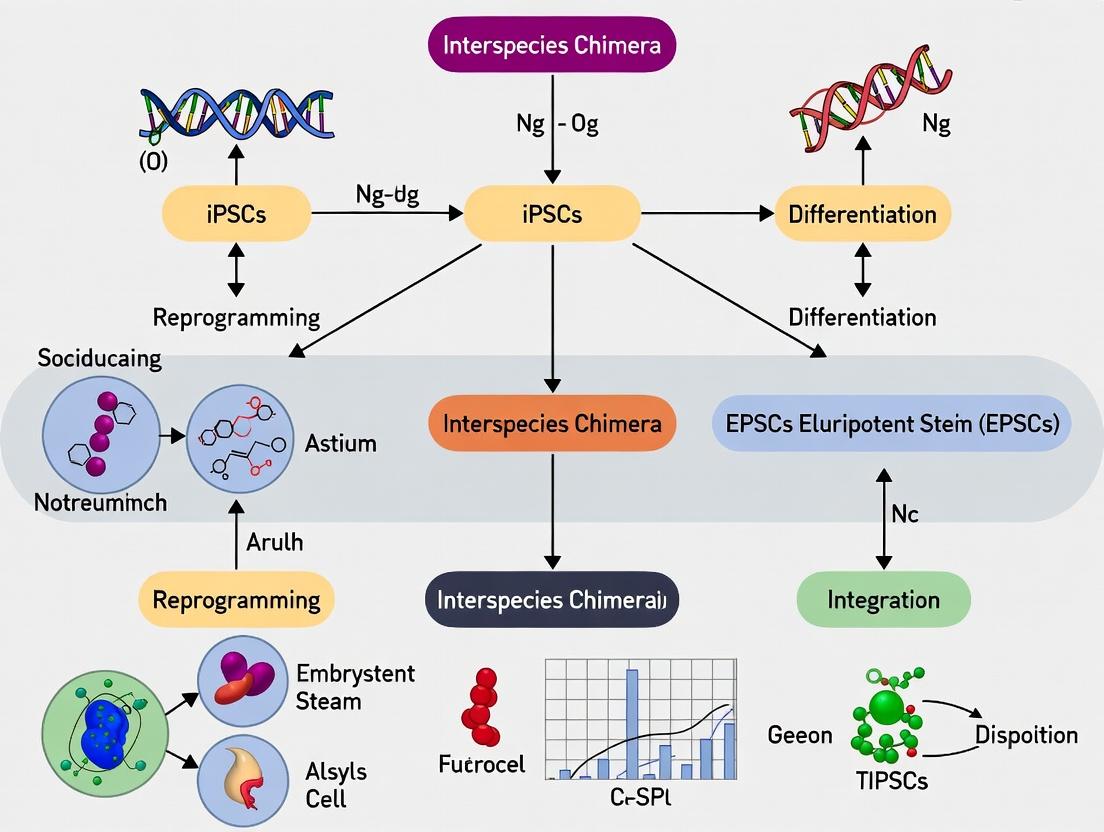
This article explores the pivotal role of Extended Pluripotent Stem Cells (EPSCs) in the formation of interspecies chimeras, a frontier technology with transformative potential for biomedical research and drug development.
EPSCs in Interspecies Chimeras: The Key to Humanized Organ Generation and Regenerative Medicine
Abstract
This article explores the pivotal role of Extended Pluripotent Stem Cells (EPSCs) in the formation of interspecies chimeras, a frontier technology with transformative potential for biomedical research and drug development. We provide a comprehensive overview of EPSC biology, detailing the critical pathways that confer superior chimeric competency. A practical guide to established and emerging chimera generation protocols is presented, alongside targeted troubleshooting for common technical hurdles. The article critically evaluates validation metrics and compares EPSC-derived chimeras with those from naive and primed pluripotent states. Finally, we synthesize the current challenges and future trajectories, focusing on the implications for creating humanized disease models, generating transplantable organs, and accelerating therapeutic discovery.
Understanding EPSCs: The Biological Foundation for Superior Chimera Formation
Extended Pluripotent Stem Cells (EPSCs) represent a novel stem cell state exhibiting superior developmental potential compared to conventional naive and primed pluripotent states. Within the broader thesis on interspecies chimera formation, EPSCs are posited as the optimal donor cell type due to their enhanced capacity for integration and contribution to both embryonic and extraembryonic lineages in host embryos. This capability is critical for advancing models of human development, disease, and organ generation in animal hosts.
Defining Characteristics and Quantitative Data
EPSCs are characterized by a unique molecular signature and functional capacities. The following table summarizes key quantitative comparisons between EPSC, naive, and primed states, based on current literature.
Table 1: Comparative Analysis of Pluripotent States
| Characteristic | Naive (e.g., mESC/hESC) | Primed (e.g., mEpiSC/hESC) | Extended Pluripotent (EPSC) |
|---|---|---|---|
| Typical Culture Conditions | LIF/STAT3, MEK/ERK, GSK3 inhibitors (2i) | Activin A, FGF2 | LCDM: LIF, CHIR99021, (S)-(+)-Dimethindene maleate, Minocycline HCl |
| Typical Morphology | Dome-shaped colonies | Flat, epithelial-like colonies | Dome-shaped, compact colonies |
| X-Chromosome Status (Female) | Reactivated | Inactivated | Reactivated |
| Metabolic Profile | Oxidative Phosphorylation | Glycolysis | High glycolytic and oxidative capacity |
| Developmental Potential | Embryonic lineages only | Embryonic lineages only | Both embryonic & extraembryonic lineages |
| Chimera Formation Efficiency | High (intra-species) | Low to none | Very High (intra- & inter-species) |
| Key Marker Expression | Nanog, Klf2, Klf4, Stella | Otx2, Fgf5, Nodal | Mixl1, Tdgf1, Gata4, Sox17 (variable) |
Key Signaling Pathways and Regulatory Networks
EPSC pluripotency is maintained by a distinct network of signaling and transcriptional regulators.
Diagram 1: Core EPSC Signaling and Regulatory Network
Title: EPSC maintenance network under LCDM conditions
Protocols
Protocol 4.1: Derivation and Maintenance of Mouse EPSCs from Blastocysts
Objective: To establish stable mouse EPSC lines. Reagents: See "The Scientist's Toolkit" below. Procedure:
- Blastocyst Collection: Flush E3.5 blastocysts from superovulated female mice.
- Initial Plating: Plate 2-3 blastocysts per well of a 96-well plate pre-coated with Recombinant Laminin-521 (0.5 µg/cm²) in N2B27 basal medium.
- EPSC Derivation Medium: Immediately culture in EPSC derivation medium (N2B27 supplemented with LCDM factors: 10 ng/mL mLIF, 3 µM CHIR99021, 10 µM (S)-(+)-Dimethindene maleate, 10 µM Minocycline hydrochloride).
- Initial Outgrowth: Culture for 5-7 days without disturbance. A stable, dome-shaped outgrowth should appear.
- Passaging: Mechanically dissect the outgrowth into small clumps using a glass pipette or 27G needle. Transfer clumps to a new Laminin-521 coated well with fresh EPSC medium containing 10 µM Y-27632 (ROCKi) for the first 24 hours.
- Maintenance: Passage every 3-4 days at a 1:4-1:6 split ratio using 0.05% Trypsin-EDTA for 3-5 minutes at 37°C. Neutralize with serum-containing medium, pellet, and resuspend in EPSC medium + Y-27632 for plating.
- Validation: Assess morphology and confirm expression of key markers (e.g., Oct4, Nanog, Gata4) via qRT-PCR or immunostaining.
Protocol 4.2: Interspecies Chimera Assay using EPSCs (Mouse EPSCs into Rat Blastocysts)
Objective: To assess the extended developmental potential of EPSCs via contribution to intra- and inter-species chimeras. Reagents: See "The Scientist's Toolkit" below. Procedure:
- Donor EPSC Preparation: Culture mouse EPSCs as per Protocol 4.1. On the day of injection, dissociate to single cells using Accutase. Resuspend at 1-2 x 10⁵ cells/mL in EPSC medium with 10 µM Y-27632. Keep on ice.
- Host Blastocyst Collection: Flush E3.5 rat blastocysts in M2 medium.
- Microinjection: Using a standard embryonic stem cell injection rig, hold a rat blastocyst with a holding pipette. Inject 10-15 mouse EPSCs into the blastocoel cavity of each blastocyst.
- Embryo Culture: Immediately transfer injected blastocysts to KSOM or Rat1ECM medium and culture for 2-4 hours at 37°C, 5% CO₂ to allow recovery.
- Embryo Transfer: Surgically transfer 8-12 recovered blastocysts into the uterus of each E2.5 pseudo-pregnant rat recipient.
- Analysis: Analyze chimeras at desired developmental stage (E10.5-E13.5 for mid-gestation analysis). Contribution of donor (mouse) cells can be quantified via:
- Flow Cytometry: Using species-specific antibodies (e.g., anti-mouse MHC Class I).
- Imaging: For fluorescent reporter-labeled EPSCs, perform whole-mount fluorescence imaging or sectioning.
- qPCR: Use species-specific genomic DNA probes to calculate contribution percentage.
Diagram 2: Interspecies Chimera Generation Workflow
Title: EPSC interspecies chimera generation protocol
The Scientist's Toolkit: Research Reagent Solutions
Table 2: Essential Reagents for EPSC Research and Chimera Formation
| Reagent/Category | Example Product (Supplier) | Function in EPSC Context |
|---|---|---|
| Basal Medium | N2B27 Medium (Custom mix or commercial) | Chemically defined, serum-free base for EPSC derivation and culture. |
| Small Molecule Inhibitors/Agonists | CHIR99021 (Tocris), (S)-(+)-Dimethindene maleate (Sigma), Minocycline HCl (Sigma) | Core components of the LCDM cocktail activating Wnt and modulating signaling for EPSC state. |
| Cytokine | Recombinant Mouse LIF (PeproTech) | Activates STAT3 pathway, supporting self-renewal. |
| Extracellular Matrix | Recombinant Laminin-521 (Biolamina) | Defined substrate for adherent culture of EPSCs, promoting stability. |
| Passaging Reagent | Accutase (Sigma) or Trypsin-EDTA | Gentle dissociation of EPSCs to single cells or small clumps for passaging. |
| Rho-Kinase (ROCK) Inhibitor | Y-27632 dihydrochloride (Tocris) | Improves survival of single EPSCs after passaging or thawing. |
| Embryo Handling Medium | M2 Medium (Millipore) | Medium for manipulation and collection of mouse/rat blastocysts. |
| Embryo Culture Medium | KSOM or Rat1ECM (ARK Resource) | Optimized medium for culturing rodent embryos post-injection. |
| Species-Specific Antibodies | Anti-Mouse H-2Kᵈ (BioLegend), Anti-Rat CD29 (BioLegend) | Critical for flow cytometric quantification of species contribution in chimeric tissues. |
| Lineage Reporter System | tdTomato or GFP constitutively expressing EPSC line | Enables visual tracking of donor EPSC contribution in chimeras via fluorescence. |
Application Notes and Protocols
This document provides detailed methodologies and analytical frameworks for characterizing Extended Pluripotent Stem Cells (EPSCs), within the broader thesis context of optimizing EPSCs for robust interspecies chimera formation. Mastery of these signatures is critical for generating developmentally competent donor cells in chimera research.
Transcriptomic Hallmarks: Quantification and Protocol
EPSCs exhibit a unique gene expression profile distinct from naïve and primed pluripotent states, enabling broader developmental potential.
Table 1: Core Transcriptomic Markers of Mouse EPSCs vs. Naïve ESCs
| Gene Symbol | Function | Expected Expression in EPSCs (RPKM/TPM) | Naïve ESC Expression | Key Role in Chimera Formation |
|---|---|---|---|---|
| Klf4 | Pluripotency TF | High (100-150) | High | Maintains self-renewal; ectopic expression induces EPSC state. |
| Tfcp2l1 | Pluripotency TF | Very High (>200) | Moderate | Critical for EPSC self-renewal; downstream of LIF/STAT3. |
| Pim1 | Ser/Thr kinase | High (80-120) | Low | Promotes mitochondrial fission and bi-potentiality. |
| Esrrb | Nuclear receptor | High (90-130) | High | Sustained expression under 2i/LIF + cytokine conditions. |
| Otx2 | Homeobox TF | Low (<20) | Very Low | Slight upregulation signifies pre- or early-postimplantation competence. |
| Dnmt3a/b | De novo methyltransferases | Low-Moderate | Low | Dynamically regulated; lower than primed state. |
Protocol 1.1: RNA-Seq for EPSC State Validation Objective: To profile the transcriptome of putative EPSCs and confirm their molecular identity. Workflow:
- Cell Culture: Maintain EPSCs in LCDM (LIF, CHIR99021, (S)-(+)-Dimethindene maleate, Minocycline hydrochloride) or TX (Tryptophan, Xanthine) based medium for mouse, or human LCDM or FCL (Forskolin, CHIR, LIF) medium.
- RNA Extraction: Use TRIzol or equivalent. Include DNase I treatment. Require RIN > 9.0.
- Library Prep: Use stranded mRNA-seq library kits (e.g., Illumina TruSeq). Aim for >40 million 150bp paired-end reads per sample.
- Bioinformatic Analysis:
- Alignment: Map reads to reference genome (mm10/hg38) using STAR.
- Quantification: Generate gene counts with featureCounts.
- Differential Expression: Use DESeq2 or edgeR. Compare to reference datasets of naïve ESCs, primed EpiSCs, and published EPSC controls.
- Validation: Confirm key markers (Table 1) via qRT-PCR.
Diagram 1: EPSC Transcriptomic Analysis Workflow
Epigenetic Hallmarks: Profiling and Protocol
EPSCs possess a distinctive epigenetic landscape characterized by a permissive, low-methylation state, particularly at key developmental loci.
Table 2: Epigenetic Features of EPSCs
| Feature | EPSC State | Naïve ESC State | Primed EpiSC State | Significance for Chimera |
|---|---|---|---|---|
| Global DNA Methylation | Low (~15-25%) | Very Low (~5-10%) | High (>70%) | Permits broader lineage gene activation. |
| H3K27me3 at Developmental Genes | Bivalent (Poised) | Broadly Repressive | Resolved (Active/Repressed) | Maintains plasticity for ectoderm/mesoderm/endoderm. |
| X-Chromosome Status (Female) | Partial Reactivation | Inactive (Xist-coated) | Inactive | Associated with expanded potency. |
| Open Chromatin at TE-associated Genes | High Accessibility | Low Accessibility | Low Accessibility | Enables trophectoderm potential in chimeras. |
Protocol 2.1: Whole-Genome Bisulfite Sequencing (WGBS) Objective: To assess genome-wide DNA methylation patterns. Workflow:
- Genomic DNA (gDNA) Isolation: Use phenol-chloroform extraction. Require DNA integrity (DIN > 7.0).
- Bisulfite Conversion: Use EZ DNA Methylation-Lightning Kit (Zymo Research). Conversion efficiency must be >99.5%.
- Library Construction: Use post-bisulfite adapter tagging method to minimize bias.
- Sequencing & Analysis: Sequence to ~30x coverage. Use Bismark for alignment and MethylKit for differential methylation region (DMR) analysis. Focus on DMRs at promoters of early lineage-specific genes.
Protocol 2.2: ATAC-Seq (Assay for Transposase-Accessible Chromatin) Objective: To map regions of open chromatin and infer transcription factor occupancy. Workflow:
- Nuclei Preparation: Harvest 50,000 live EPSCs. Lyse cells with cold lysis buffer. Pellet nuclei.
- Tagmentation: Use Illumina Nextera Tn5 Transposase. Incubate nuclei with transposase for 30 min at 37°C.
- DNA Purification & Amplification: Purify tagmented DNA using a MinElute column. Amplify with limited-cycle PCR.
- Analysis: Sequence. Align reads using Bowtie2. Call peaks with MACS2. Compare accessibility profiles to reference pluripotency states.
Diagram 2: EPSC Epigenetic Regulation Network
The Scientist's Toolkit: Research Reagent Solutions
Table 3: Essential Reagents for EPSC Research and Chimera Formation
| Reagent Category | Specific Product/Component | Function in EPSC Research |
|---|---|---|
| Culture Media | LCDM Base Medium: N2B27 supplemented with LIF, CHIR99021 (GSK3βi), (S)-(+)-Dimethindene maleate (DMI; antagonist), Minocycline (p38i). | Induces and maintains mouse and human EPSC state. |
| Culture Media | TX Medium: Basal medium with Tryptophan metabolite and Xanthine derivative. | Alternative for sustaining mouse EPSCs. |
| Small Molecules | CHIR99021 | GSK3β inhibitor; activates Wnt/β-catenin signaling, crucial for EPSC self-renewal. |
| Small Molecules | (S)-(+)-Dimethindene maleate (DMI) | Histamine receptor H1 antagonist; promotes epigenetic reprogramming. |
| Small Molecules | Minocycline Hydrochloride | Tetracycline antibiotic; inhibits p38 MAPK, reducing differentiation stress. |
| Analysis Kits | Illumina TruSeq Stranded mRNA Kit | For high-quality, strand-specific RNA-seq library preparation. |
| Analysis Kits | EZ DNA Methylation-Lightning Kit (Zymo) | For fast, efficient bisulfite conversion of DNA for methylation studies. |
| Analysis Kits | Illumina Nextera DNA Flex Library Prep / ATAC-seq Kit | For preparing sequencing libraries from genomic DNA or for ATAC-seq. |
| Antibodies | Anti-5-methylcytosine (5-mC) | Immunostaining or dot-blot to assess global DNA methylation levels. |
| Antibodies | Anti-H3K27me3 | For ChIP-seq to profile repressive chromatin domains. |
| Software | Seurat, SCANPY | For single-cell RNA-seq data analysis from chimeric embryos. |
| Software | Integrative Genomics Viewer (IGV) | For visualization of sequencing tracks (RNA-seq, ATAC-seq, WGBS). |
Within the broader thesis exploring Extended Pluripotent Stem Cells (EPSCs) for interspecies chimera formation, understanding the hierarchical chimeric potential of different pluripotent states is foundational. EPSCs, derived from pre-implantation embryos or by reprogramming, exhibit superior chimeric contribution to both embryonic and extra-embryonic lineages compared to conventional naive and primed PSCs. This application note provides a comparative analysis and detailed protocols for assessing chimeric potential, a critical metric for evaluating stem cell utility in developmental biology, human disease modeling, and regenerative medicine.
Quantitative Comparison of Pluripotent States
Table 1: Core Characteristics and Chimeric Competence of Pluripotent Stem Cell States
| Feature | Extended Pluripotent Stem Cells (EPSCs) | Naive Pluripotent Stem Cells (PSCs) | Primed Pluripotent Stem Cells (PSCs) |
|---|---|---|---|
| Developmental Equivalence | ~4-8 cell to morula stage; earlier than naive. | Pre-implantation inner cell mass (e.g., mouse E4.5). | Post-implantation epiblast (e.g., mouse E6.5, primate post-implantation epiblast). |
| Typical Culture Conditions | LCDM medium (LIF, CHIR99021, (S)-(+)-Dimethindene maleate, Minocycline hydrochloride) or TVPY. | 2i/LIF medium (MEKi, GSK3i, LIF) in mouse; varied for human (e.g., 5i/LA, t2iLGo). | bFGF/Activin A-based media (e.g., mTeSR, E8). |
| Key Transcription Factor Expression | High Klf2, Klf4, Tfcp2l1; co-expression of naive (Nanog, Rex1) and primed (Otx2, Foxa2) markers. | High Klf4, Tfcp2l1, Nanog, Rex1. | High Otx2, Foxa2, Zic2, Pou3f1. |
| X-Chromosome Status (Female) | Mostly reactivated. | Reactivated (two active X). | Inactivated (single active X). |
| Metabolism | High glycolysis & oxidative phosphorylation. | High glycolysis. | Low glycolysis, high oxidative phosphorylation. |
| Developmental Potential | Blastocyst complementation: High contribution to embryonic & extra-embryonic tissues. Interspecies chimera: Demonstrated in mouse-rat, human-rodent models. | Blastocyst complementation: Contributes to embryo proper (EPI) but poor extra-embryonic contribution. Interspecies chimera: Limited, especially in evolutionarily distant species. | Blastocyst complementation: Very low or no contribution. Not suitable for chimera formation. |
| Quantitative Chimera Contribution (Mouse Intra-species, Embryonic Day E10.5) | 50-95% (across entire embryo, including trophectoderm lineage). | 10-40% (primarily restricted to epiblast-derived tissues). | ~0-5% (rare, sporadic integration). |
| Stability in Culture | Stable in defined medium; can be passaged as single cells. | Stable in 2i/LIF; requires careful passaging. | Stable in bFGF/Activin media; passaged as clumps. |
Table 2: Signaling Pathway Dependencies for Pluripotency Maintenance
| Pathway | Role in EPSCs | Role in Naive PSCs | Role in Primed PSCs |
|---|---|---|---|
| LIF/STAT3 | Required for self-renewal. | Primary driver of self-renewal. | Not required; inactive. |
| WNT/β-catenin | Required (via GSK3 inhibition). Modulated level critical. | Required (via GSK3 inhibition) for self-renewal. | Inhibitory; promotes differentiation. |
| FGF/ERK | Inhibited to maintain state. | Strongly inhibited (via MEKi) to maintain state. | Actively required; primary driver of self-renewal. |
| TGF-β/Activin/Nodal | Supported but not primary; modulates plasticity. | Not required; can be inhibitory. | Actively required; primary driver of self-renewal. |
| Hippo Pathway | Inactive (YAP active), promoting plasticity and extra-embryonic potential. | Active (YAP phosphorylated/inactive). | Active (YAP phosphorylated/inactive). |
Key Experimental Protocols
Protocol 3.1: Generation and Culture of Mouse EPSCs
Application: Deriving pluripotent cells with high chimeric potential for blastocyst complementation assays. Reagents: See "Scientist's Toolkit" (Table 3). Procedure:
- Derivation from Blastocysts:
- Islate E3.5 mouse blastocysts in Hepes-buffered KSOM medium.
- Using a laser or glass needle, remove the zona pellucida.
- Plate intact blastocysts on mitotically inactivated MEF feeders in LCDM medium.
- After 5-7 days, pick outgrowths and dissociate with TrypLE Express for 5 min at 37°C.
- Plate single cells on fresh feeders in LCDM with 10µM Y-27632 (ROCKi) for the first 24h.
- Culture and Maintenance:
- Culture in N2B27 basal medium supplemented with LCDM factors: mLIF (1000 U/mL), CHIR99021 (3µM), (S)-(+)-Dimethindene maleate (DMI, 2µM), Minocycline hydrochloride (Mino, 2µM).
- Change media daily. Passage every 2-3 days at a 1:6-1:10 split ratio using TrypLE Express.
- Cells should be maintained on feeders or on gelatin-coated plates in LCDM.
Protocol 3.2: In Vitro Trilineage Differentiation Assay (Embryoid Body Formation)
Application: Confirming the broad differentiation potential of EPSCs compared to naive/primed PSCs. Procedure:
- Harvest EPSCs, naive, and primed PSCs using appropriate enzymes.
- For EPSCs/Naive: AggreWell plates: Resuspend 1x10^6 cells in LCDM/2iLIF without MEKi, containing 10µM Y-27632. Seed into AggreWell 800 plate (centrifuge at 100g for 3 min). Incubate overnight to form uniform EBs.
- For Primed PSCs: Use ultra-low attachment plates for spontaneous EB formation.
- After 24h, transfer EBs to low-attachment 6-well plates in differentiation medium (DMEM/F12, 20% FBS, 1x NEAA, 1x Glutamax, 0.1mM β-mercaptoethanol).
- Culture for 7-10 days, changing media every other day.
- Harvest EBs for RNA (qPCR for ectoderm Pax6, mesoderm Brachyury, endoderm Sox17) or fix for immunocytochemistry.
Protocol 3.3: Blastocyst Complementation Assay for Chimeric Potential
Application: Gold-standard functional test for assessing embryonic and extra-embryonic contribution. Procedure:
- Preparation of Donor Cells:
- Culture EPSCs in LCDM. Harvest at 70-80% confluency.
- Label cells with a fluorescent dye (e.g., CellTracker CM-DiI) or use transgenic reporter cells (e.g., Actin-GFP).
- Prepare a single-cell suspension at 1x10^5 cells/mL in injection medium (e.g., Hepes-buffered KSOM).
- Blastocyst Collection & Microinjection:
- Collect E3.5 wild-type (or deficient, e.g., Pax6 -/- for eye complementation) mouse blastocysts.
- Using a piezo-driven micromanipulator, inject ~10-15 donor cells into the blastocoel cavity of each blastocyst.
- Embryo Transfer & Analysis:
- Surgically transfer 8-10 injected blastocysts into the uterus of each E2.5 pseudopregnant foster mother.
- Analyze chimerism at desired developmental stage (E6.5-E14.5):
- Ex vivo Imaging: For early embryos (E6.5-E10.5), image whole embryo for fluorescence.
- Quantification: Use flow cytometry of dissociated embryonic tissues or confocal microscopy of sections. Calculate % donor-derived cells: (GFP+ cells / Total nuclei) x 100.
- Extra-embryonic Analysis: Section placenta (E12.5) and stain for donor marker (GFP) and lineage markers (e.g., Cdx2 for trophectoderm).
Visualizations
Title: Signaling Pathways Regulating Pluripotent States
Title: Workflow for Blastocyst Complementation Assay
The Scientist's Toolkit
Table 3: Essential Research Reagent Solutions for EPSC & Chimera Research
| Reagent/Category | Example Product/Component | Function & Rationale |
|---|---|---|
| Base Medium | N2B27 (1:1 mix of DMEM/F12 + Neurobasal, with N2 & B27 supplements) | Chemically defined, serum-free base ideal for maintaining pluripotent states and ensuring reproducibility. |
| EPSC Stabilizing Cocktail | LCDM Factors: Recombinant mLIF, CHIR99021 (GSK3i), (S)-(+)-Dimethindene maleate (DMI; antagonist), Minocycline hydrochloride. | Induces and maintains the extended pluripotent state by co-activating Wnt, inhibiting FGF/ERK, and modulating other pathways. |
| Naive PSC Stabilizing Cocktail | 2i/LIF: PD0325901 (MEKi), CHIR99021 (GSK3i), Recombinant LIF. | Inhibits differentiation-inducing FGF/ERK signaling while promoting self-renewal via Wnt and LIF/STAT3. |
| Primed PSC Medium | mTeSR1 or Essential 8 (E8) Medium: Contains bFGF, TGF-β/Activin A. | Supports primed pluripotency through active FGF and TGF-β/Activin/Nodal signaling. |
| Passaging Reagent | TrypLE Express Enzyme | Gentle, xeno-free enzyme for generating single-cell suspensions crucial for EPSC and naive PSC passaging and injection. |
| ROCK Inhibitor | Y-27632 dihydrochloride | Promotes survival of single pluripotent stem cells during passaging, freezing, and thawing by inhibiting apoptosis. |
| In Vivo Lineage Tracer | CM-DiI CellTracker or Constitutively Expressed Fluorescent Protein (e.g., GFP) | Labels donor stem cells for unambiguous identification and quantification within host tissues in chimeric embryos. |
| Microinjection Setup | Piezo-driven Micromanipulator, Holding/Injection Pipettes, Injection Medium (e.g., H-KSOM) | Essential equipment for precise, high-throughput injection of donor cells into mouse blastocysts. |
| Embryo Transfer Setup | Pseudo-pregnant Foster Mice (E2.5), Transfer Pipettes, Anesthetic/Analgesic | Required for the in vivo development of injected blastocysts into mid-gestation or live chimeric pups. |
Application Notes
Extended Pluripotent Stem Cells (EPSCs) represent a unique state of pluripotency characterized by the capacity to contribute to both embryonic and extraembryonic lineages, making them a superior starting point for generating interspecies chimeras. This dual potential is critically dependent on the synergistic action of three core signaling pathways: Leukemia Inhibitory Factor (LIF)/STAT3, Transforming Growth Factor-β (TGF-β)/Nodal, and Wnt/β-catenin. In the context of interspecies chimera formation research, precise manipulation of these pathways is essential to maintain EPSCs in vitro and enhance their chimeric competency in vivo.
- LIF/STAT3 Signaling: Provides the baseline anti-differentiation signal. It sustains pluripotency by activating STAT3, which promotes the expression of core pluripotency factors like Nanog and Klf4. In EPSCs, LIF signaling works in concert with TGF-β to block differentiation into the primitive endoderm lineage.
- TGF-β/Activin/Nodal Signaling: Drives the self-renewal and stability of the EPSC state. Through SMAD2/3 activation, it upregulates Nanog and, crucially, represses lineage specifiers like Cdx2 (trophectoderm) and Gata6 (primitive endoderm). This repression is key for maintaining dual potential.
- Wnt/β-catenin Signaling: Acts as a dynamic modulator. At optimal levels, canonical Wnt signaling stabilizes β-catenin, which cooperates with TGF-β-SMAD2/3 to reinforce the pluripotency network. It is particularly important for suppressing neuroectodermal differentiation and maintaining the unique epigenetic landscape of EPSCs.
The integration of these pathways creates a robust regulatory network that locks cells into the EPSC state. Disruption of any single pathway leads to a rapid exit from pluripotency and biased differentiation, which would be detrimental for generating balanced chimeras across species barriers.
Quantitative Data Summary
Table 1: Key Signaling Molecules and Their Effects in EPSC Maintenance
| Pathway | Key Ligand/Cytokine | Receptor/Mediator | Primary Target | Effect on EPSC Markers (e.g., Nanog) | Effect on Lineage Specifiers |
|---|---|---|---|---|---|
| LIF | LIF | LIFR/gp130 | STAT3 | Upregulation (~3-5 fold) | Represses Gata4/6 |
| TGF-β | TGF-β1, Activin A, Nodal | ALK4/5/7, Type II | SMAD2/3 | Upregulation (~4-6 fold) | Represses Cdx2, Gata6 |
| Wnt | CHIR99021 (GSK3 inhibitor) | Frizzled/LRP | β-catenin | Synergistic upregulation with TGF-β | Represses Pax6 (neuroectoderm) |
Table 2: Typical Inhibitor Concentrations for Pathway Modulation in EPSC Culture
| Pathway Targeted | Inhibitor Name | Typical Working Concentration | Effect on EPSC State |
|---|---|---|---|
| LIF/STAT3 | Stattic | 1-2 µM | Rapid loss of pluripotency, differentiation |
| TGF-β/SMAD | SB431542 | 10 µM | Reduced self-renewal, upregulation of Cdx2 |
| Wnt/β-catenin | XAV939 (Tankyrase Inh.) | 2 µM | Induction of neuroectodermal markers |
Experimental Protocols
Protocol 1: Maintenance of Mouse EPSCs in Culture
- Coating: Coat culture plates with 0.1% gelatin for at least 30 minutes at 37°C.
- Medium Preparation: Prepare EPSC medium:
- N2B27 basal medium
- 1 µM CHIR99021 (Wnt pathway agonist)
- 20 ng/mL recombinant human LIF
- 20 ng/mL recombinant human Activin A (TGF-β pathway agonist)
- 1% Chemically Defined Lipid Concentrate
- 0.1 mM β-mercaptoethanol
- Passaging: Culture cells at 37°C, 5% CO2. Passage every 2-3 days at ~80% confluence using 0.05% Trypsin-EDTA. Neutralize with serum-containing medium. Centrifuge and resuspend in fresh EPSC medium.
- Quality Control: Regularly assess morphology (compact, dome-shaped colonies) and confirm via immunostaining for NANOG and SOX17 to verify dual potential.
Protocol 2: Assessing Chimeric Potential via *In Vitro Differentiation*
- Embryoid Body (EB) Formation: Harvest EPSCs using Accutase to form single cells. Aggregate 1000 cells per 20µL drop in EPSC medium without LIF, CHIR99021, or Activin A on the lid of a culture dish. Incubate for 48h to form EBs.
- Tri-lineage Differentiation: Transfer EBs to gelatin-coated plates in appropriate differentiation media (e.g., Serum for mesoderm/endoderm, Retinoic Acid for ectoderm). Culture for 5-7 days.
- Analysis: Fix and immunostain for lineage markers: SOX17 (endoderm), Brachyury/T (mesoderm), and PAX6 (ectoderm). Quantitative PCR for Sox17, T, Pax6 can be performed relative to undifferentiated EPSC controls.
Pathway and Workflow Visualizations
LIF, TGF-β, and Wnt Pathways in EPSCs
EPSC Culture and Chimera Generation Workflow
The Scientist's Toolkit: Research Reagent Solutions
Table 3: Essential Reagents for EPSC Research and Chimera Formation
| Reagent Category | Specific Example | Function in EPSC/Chimera Research |
|---|---|---|
| Basal Medium | N2B27 | A chemically defined, serum-free medium providing a consistent base for EPSC self-renewal. |
| Pathway Agonists | Recombinant human LIF | Activates JAK/STAT3 signaling to sustain pluripotency and inhibit differentiation. |
| Pathway Agonists | Recombinant human Activin A | Activates TGF-β/SMAD2/3 signaling to promote EPSC self-renewal and repress lineage commitment. |
| Pathway Agonists | CHIR99021 (GSK3 inhibitor) | Activates canonical Wnt signaling by stabilizing β-catenin, synergizing with TGF-β signaling. |
| Dissociation Agent | Accutase | Gentle enzyme blend for generating single-cell suspensions critical for passaging and microinjection. |
| Lineage Markers | Antibodies: NANOG, SOX17, CDX2, PAX6 | Validation of EPSC state (NANOG+/SOX17+) and assessment of differentiation potential in vitro. |
| Microinjection Equipment | Piezo-driven micromanipulator | Essential for the precise injection of EPSCs into the cavity or epiblast of host blastocysts. |
| Host Embryos | 8-cell to morula stage embryos (e.g., mouse, pig) | Recipient embryos for EPSC injection to generate interspecies chimeras. |
Within the broader thesis on interspecies chimera formation, a central challenge is the substantial developmental and evolutionary distance between donor and host species, which typically leads to poor cell competition, apoptosis, or failed lineage specification. Recent advances have identified Extended Pluripotent Stem Cells (EPSCs) as a uniquely powerful tool to overcome these barriers. EPSCs, derived from conventional pluripotent stem cells through specific culture conditions, exhibit a transcriptomic and epigenetic state more closely aligned with the naive, pre-implantation embryo. This "enhanced plasticity" confers a superior ability to integrate and contribute to embryonic tissues across species boundaries, a critical advantage for modeling human development, producing human organs in animal models, and studying evolutionary conservation of developmental pathways.
Application Notes: Key Findings and Data
Recent studies (2023-2024) demonstrate that EPSCs from primates and rodents show markedly higher chimeric competency in evolutionarily distant hosts compared to naive or primed PSCs. The enhanced integration is attributed to several synergistic factors:
- Dual Lineage Priming: EPSCs co-express markers of both the inner cell mass (ICM) and the trophectoderm (TE), allowing them to contribute to embryonic and extra-embryonic tissues—a prerequisite for proper embryogenesis and survival in the host environment.
- Reduced Lineage Restriction: EPSCs maintain an open chromatin architecture at key developmental gene loci, delaying lineage commitment and allowing them to respond more flexibly to host-derived signals.
- Metabolic and Signaling Adaptability: EPSCs utilize a hybrid metabolic state and show modulated activity in key signaling pathways (e.g., FGF, TGF-β, Wnt), aligning closer with the host embryo's early developmental program.
Table 1: Quantitative Comparison of Chimera Formation Efficiency Between EPSCs and Naive PSCs
| Metric | Mouse EPSCs in Rat Blastocyst | Mouse Naive ESCs in Rat Blastocyst | Human EPSCs in Mouse Blastocyst | Human Naive PSCs in Mouse Blastocyst |
|---|---|---|---|---|
| Blastocyst Injection Survival Rate | ~85% | ~80% | ~75% | ~70% |
| Mid-gestation Chimerism Rate (E10.5) | ~40% | <5% | ~15% | ~1-2% |
| Max. Contribution Index (Embryo) | Up to 60% | <10% | Up to 20% | <5% |
| Extra-embryonic Tissue Contribution | Yes (Robust) | Minimal/None | Yes (Detectable) | No |
| Key Reference (Recent) | Yang et al., 2023 | Hu et al., 2024 |
Table 2: Molecular Hallmarks of EPSCs Facilitating Interspecies Integration
| Hallmark Category | Specific Feature in EPSCs | Functional Impact on Integration |
|---|---|---|
| Transcriptomic | Co-expression of Sox2 (ICM) and Cdx2 (TE) genes | Enables contribution to both fetal and placental tissues. |
| Epigenetic | Hypomethylation at promoters of early developmental genes (e.g., Otx2, Lefty1) | Maintains broader developmental potential and responsiveness. |
| Signaling | Attenuated FGF/ERK signaling; Enhanced TGF-β/Activin-Nodal signaling | Promotes a stabilized, flexible pluripotent state compatible with host embryo. |
| Metabolic | Balanced oxidative phosphorylation and glycolysis | Provides energetic flexibility in the changing in vivo environment. |
Experimental Protocols
Protocol 3.1: Derivation and Maintenance of Mouse EPSCs
- Source Cells: Conventional mouse Embryonic Stem Cells (mESCs) cultured in serum/LIF conditions.
- Medium: Use EPSC derivation medium (e.g., commercial EPSCi medium or lab-formulated). Critical components include: GSK3β inhibitor (CHIR99021), MEK/ERK inhibitor (PD0325901), TGF-β/Activin-Nodal pathway activator (e.g., recombinant Activin A), and a ROCK inhibitor (Y-27632) during passaging.
- Procedure:
- Dissociate mESCs to single cells using Accutase.
- Seed cells at a density of 5x10^4 cells per well on a fibronectin-coated 6-well plate in EPSC medium.
- Change medium daily. Colonies with a compact, dome-shaped morphology will appear in 5-7 days.
- Passage every 3-4 days using Accutase and re-plate in fresh EPSC medium with ROCK inhibitor for the first 24 hours.
- Validation: Confirm EPSC status by immunofluorescence for OCT4 and CDX2 co-expression, and by qPCR for marker genes (Klf2, Tbx3, Cdx2).
Protocol 3.2: Interspecies Blastocyst Injection for Chimera Assay
- Materials: Micromanipulator, Piezo-drill, holding pipette, injection pipette (internal diameter ~12-15 µm).
- Host Embryos: Collect 8-cell to morula stage embryos from the host species (e.g., rat) and culture to the early blastocyst stage in KSOM medium.
- Donor Cell Preparation: Harvest EPSCs using Accutase, wash, and resuspend at a concentration of 1-2x10^5 cells/mL in injection buffer (DMEM/F12 with 10% FBS). Keep on ice.
- Microinjection:
- Place a blastocyst on the holding pipette, positioning the inner cell mass (ICM) at 6 o'clock.
- Using the Piezo-drill, make an opening in the zona pellucida near the ICM.
- Load 10-15 donor EPSCs into the injection pipette.
- Advance the pipette through the trophectoderm into the blastocoel cavity and expel the cells directly into the ICM or adjacent to it.
- Post-Injection Culture: Return injected blastocysts to culture for 1-2 hours to allow recovery before embryo transfer into pseudo-pregnant females.
Protocol 3.3: Quantification of Chimerism by Flow Cytometry
- Sample: Dissociate whole E10.5 chimeric embryos or specific tissues to single cells.
- Staining: Use species-specific antibodies. For mouse-rat chimeras: stain with anti-mouse MHC Class I (H-2K^d) FITC and anti-rat MHC Class I (RT1A) APC.
- Analysis: Run on a flow cytometer. Gate on live, single cells. The percentage of donor-derived cells is calculated as (mouse MHC+ cells) / (mouse MHC+ + rat MHC+ cells) x 100%.
Visualization: Diagrams and Pathways
Title: EPSC Advantages for Interspecies Integration
Title: EPSC Interspecies Chimera Generation Workflow
The Scientist's Toolkit: Key Reagent Solutions
Table 3: Essential Research Reagents for EPSC-Based Interspecies Chimera Studies
| Reagent/Material | Category | Function & Rationale |
|---|---|---|
| EPSC Culture Medium (e.g., EPSCi) | Cell Culture Medium | Chemically defined medium containing specific small molecules to induce and maintain the EPSC state by modulating key signaling pathways (FGF, TGF-β, WNT). |
| CHIR99021 | Small Molecule Inhibitor | GSK3β inhibitor. Activates WNT signaling, a key component for stabilizing the naive/ground state and promoting EPSC derivation. |
| Recombinant Activin A | Growth Factor | Activates TGF-β/Activin-Nodal signaling. Promotes self-renewal and pluripotency in EPSCs, mimicking in vivo conditions. |
| Species-Specific MHC Class I Antibodies | Flow Cytometry Reagent | Enable precise quantification of donor vs. host cell contribution in chimeric tissues by detecting species-specific cell surface markers. |
| Fibronectin | Extracellular Matrix | Substrate for coating culture vessels. Supports the attachment and growth of EPSCs in defined, feeder-free conditions. |
| Piezo-driven Micromanipulation System | Microinjection Equipment | Essential for precise, low-damage injection of EPSCs into the blastocyst cavity of the host embryo, critical for chimera generation efficiency. |
| ROCK Inhibitor (Y-27632) | Small Molecule Inhibitor | Added during cell passaging and post-injection. Improves survival of single pluripotent stem cells by inhibiting apoptosis. |
Protocols and Applications: Building Interspecies Chimeras with EPSCs
Application Notes
Within the broader thesis on interspecies chimera formation, robust Extended Pluripotent Stem Cells (EPSCs) are posited as the optimal source cell due to their superior ability to contribute to both embryonic and extraembryonic lineages across species barriers. This dual competency is critical for generating viable chimeric embryos, particularly in evolutionarily distant hosts. Recent studies (2023-2024) indicate that chemically defined culture conditions that simultaneously inhibit specific kinase pathways are paramount for establishing stable EPSC lines that maintain a distinct transcriptional and epigenetic profile from naive or primed pluripotent states.
Key quantitative findings from recent literature are summarized below:
Table 1: Comparative Analysis of EPSC Derivation Conditions & Outcomes
| Parameter | Conventional Naive PSCs (e.g., in 2i/LIF) | Robust EPSCs (e.g., in LCDM/TLCDM) | Functional Impact in Chimera Assays |
|---|---|---|---|
| Culture Formulation | 2i (MEK & GSK3β inhibitors) + LIF | LCDM: LIF, CHIR99021 (GSK3βi), (S)-(+)-Dimethindene (DMI; PKCi), Minocycline (M; p38i) | Sustains pluripotency network while promoting extraembryonic potential. |
| Transcriptomic State | Dppa3+, Tdgf1+, Klf2/4/5+ | Expresses naive markers plus Tfap2c, Gata3, Gata4 | Correlates with broader developmental competence. |
| Methylation Status | Hypomethylated (~25% global mCpG) | Intermediate methylation (~40-50% global mCpG) | Epigenetic flexibility may aid post-implantation adaptation. |
| In Vitro Differentiation Potential | Primarily embryonic lineages. | Robust trophoblast stem cell (TSC) and hypoblast differentiation. | Directly validates extraembryonic lineage competency. |
| Mouse Intra-Species Chimera Contribution (E13.5) | High embryonic contribution. Low extraembryonic. | High contribution to embryo, yolk sac, and placenta. | Demonstrates bona fide extended pluripotency. |
| Rat-Mouse Interspecies Chimera Contribution (E10.5) | < 5% integration efficiency. | > 20% integration efficiency reported. | Essential for cross-species embryo complementation. |
Table 2: Critical Quality Control Metrics for Established EPSC Lines
| Assay | Method | Target Threshold | Purpose in Chimera Research |
|---|---|---|---|
| Pluripotency Marker Expression | Immunofluorescence / Flow Cytometry | >95% OCT4+, NANOG+, SOX2+ | Verifies core pluripotency network integrity. |
| Dual-Lineage Differentiation In Vitro | Directed differentiation to TSCs & Endoderm | TSC: >70% CDX2+, GATA3+ Endoderm: >60% SOX17+ | Functionally tests extended potential. |
| Karyotypic Stability | G-banding or NGS-based karyotyping | 100% euploid (species-specific normal count) | Ensures genomic fitness for embryo integration. |
| Mycoplasma Testing | PCR-based assay | Negative | Prevents contamination of chimeric embryos. |
| Trilineage Teratoma Assay | In vivo injection & histology | Formation of ecto-, meso-, endoderm tissues | Confirms baseline embryonic differentiation. |
Experimental Protocols
Protocol 1: Derivation of EPSCs from Mouse Blastocysts in TLCDM Medium
Objective: To isolate and culture primary EPSCs from E3.5 mouse blastocysts in a defined medium supporting extended pluripotency.
Materials:
- Mouse blastocysts (C57BL/6 or other strain).
- TLCDM Medium: N2B27 base supplemented with 1 μM (S)-(+)-Dimethindene maleate (DMI), 2 μM Chir99021 (CHIR), 10 ng/mL murine LIF, 2 μM Minocycline Hydrochloride (M). Filter sterilize.
- Pre-coated culture plates (see Reagent Solutions).
- Acidic Tyrode's solution (for zona pellucida removal).
- Embryo handling micropipettes.
Procedure:
- Blastocyst Collection: Flush E3.5 blastocysts from uterine horns of sacrificed female mice using M2 medium.
- Zona Pellucida Removal: Briefly treat blastocysts with Acidic Tyrode's solution (~30-60 sec). Wash thoroughly in TLCDM medium.
- Plating: Individually plate each zona-free blastocyst into one well of a 96-well plate pre-coated with Fibronectin (2 μg/cm²) and Laminin (2 μg/cm²) in TLCDM.
- Primary Outgrowth Culture: Incubate at 37°C, 5% CO₂. Do not disturb for 4-5 days. The inner cell mass (ICM) will attach and proliferate.
- Initial Passaging: On day 5-7, dissociate the outgrowth mechanically using a fine pipette tip or enzymatically with Accutase for 5 min at 37°C. Transfer the cell clump to a fresh coated well of a 24-well plate in TLCDM + 10 μM Y-27632 (ROCKi) for the first 24h.
- Establishment & Expansion: Passage cells every 3-4 days using Accutase (5 min, 37°C) at a split ratio of 1:3 to 1:6 onto fresh coated plates. Maintain in TLCDM without Y-27632 after the first recovery passage.
Protocol 2: DirectedIn VitroDifferentiation to Trophoblast Stem Cells (TSCs)
Objective: To functionally validate the extraembryonic potential of EPSC lines.
Materials:
- Confluent EPSC culture in TLCDM.
- TSC Derivation Medium: N2B27 base, 1 μM CHIR99021, 0.5 μM A83-01 (TGF-β inhibitor), 5 ng/mL FGF4, 10 ng/mL Heparin.
- Mouse embryonic fibroblast (MEF) feeder layer or Matrigel-coated plates.
- TSC Maintenance Medium: RPMI 1640, 20% FBS, 1 mM Sodium Pyruvate, 100 μM β-mercaptoethanol, 2 mM L-Glutamine, 25 ng/mL FGF4, 1 μg/mL Heparin.
Procedure:
- Induction: Dissociate EPSCs to single cells using Accutase. Plate 2x10⁵ cells per well of a 12-well plate pre-coated with Matrigel or seeded with inactivated MEFs in TSC Derivation Medium + 10 μM Y-27632.
- Medium Transition: After 48 hours, replace medium with fresh TSC Derivation Medium without Y-27632. Change medium daily.
- Colony Selection: After 5-7 days, distinct epithelial-like colonies will emerge. Manually pick and dissociate these colonies using Trypsin-EDTA.
- Establishment & Validation: Replate picked colonies on fresh feeders/Matrigel in TSC Maintenance Medium. Expand and validate by immunofluorescence for CDX2 and GATA3 (target >70% positive cells).
Protocol 3: Quantitative Assessment of Interspecies Chimera Contribution (Conceptual Workflow)
Objective: To assess the integration efficiency of donor EPSCs into a host blastocyst of a different species.
Materials:
- Host blastocysts (e.g., rat blastocysts for mouse EPSCs).
- Fluorescently labeled (e.g., H2B-GFP) donor EPSCs.
- Piezo-driven micromanipulation system.
- KSOM/AA embryo culture medium.
- Pseudopregnant female recipients.
Procedure:
- Donor Cell Preparation: Harvest log-phase EPSCs, dissociate to single cells, and resuspend in injection buffer. Keep on ice.
- Blastocyst Injection: Using a piezo micromanipulator, inject 8-12 fluorescent donor EPSCs into the cavity of each E4.5 host blastocyst.
- Embryo Culture: Culture injected blastocysts in KSOM/AA under oil at 37°C, 5% CO₂ for 4-6 hours to recover.
- Embryo Transfer: Surgically transfer 8-12 recovered blastocysts into the uterine horn of a E2.5 pseudopregnant female of the host species.
- Analysis: Harvest chimeric embryos at the desired stage (e.g., E10.5 for rat-mouse). Analyze donor cell contribution via fluorescence microscopy and quantify integration efficiency as the percentage of embryos with GFP+ cells in the target tissues (e.g., epiblast, yolk sac).
Diagrams
Title: Signaling Pathways Regulating EPSC State
Title: EPSC Derivation, QC, and Application Workflow
The Scientist's Toolkit: Key Research Reagent Solutions
Table 3: Essential Materials for EPSC Derivation and Culture
| Item | Function & Rationale | Example Product/Catalog |
|---|---|---|
| TLCDM/LCDM Chemical Cocktail | Defined inhibitor combination (PKCi, p38i, GSK3βi, LIF) that reprograms or maintains the extended pluripotent state by modulating key signaling pathways. | Custom formulation from Tocris, Selleckchem, or PeproTech. |
| N2B27 Basal Medium | Chemically defined, serum-free medium base providing essential nutrients and hormones, ensuring reproducibility and eliminating batch variability. | Made from DMEM/F-12 + Neurobasal mix, or commercial stem cell media supplements. |
| Recombinant Laminin & Fibronectin | Recombinant extracellular matrix proteins for consistent, xeno-free coating. Critical for EPSC adhesion, survival, and self-renewal signaling. | Laminin-521 (BioLamina), Human Fibronectin (Thermo Fisher). |
| Small Molecule Inhibitors | High-purity compounds for pathway inhibition: CHIR99021 (GSK3βi), (S)-DMI (PKCi), Minocycline (p38i), Y-27632 (ROCKi for survival). | Available from major biochemical suppliers (Tocris #4423, #2632, etc.). |
| Accutase | Gentle enzyme solution for dissociating EPSCs into single cells or small clumps with high viability, minimizing differentiation. | Thermo Fisher Scientific A1110501. |
| Validated Antibody Panel | For quality control: Anti-OCT4, NANOG, SOX2 (pluripotency); Anti-CDX2, GATA3, SOX17 (lineage competency). | Recommended from CST, Santa Cruz, or R&D Systems. |
| G-Banding Karyotyping Service/Assay | Essential service to confirm chromosomal stability of established lines after extended culture, ensuring genomic integrity for chimeras. | Offered by WiCell or in-house cytogenetics labs. |
| Mycoplasma Detection Kit | PCR-based kit for routine screening to prevent contamination that can compromise cell health and in vivo experiments. | MycoAlert (Lonza) or MycoSEQ (Thermo Fisher). |
Within the broader thesis on Extended Pluripotent Stem Cells (EPSCs) for interspecies chimera formation, host embryo selection is a critical determinant of experimental success. The host embryo’s species, genetic background, and precise developmental stage must be optimized to maximize the contribution of donor EPSCs, facilitating the study of human development, disease modeling, and organ generation. This document provides application notes and protocols for this foundational step.
Key Selection Criteria & Comparative Data
Table 1: Host Species Comparison for EPSC Chimerism
| Species | Gestation (days) | Blastocyst Formation (h post-fertilization) | Optimal Stage for EPSC Injection | Reported Max EPSC Contribution (%) | Key Advantages | Key Limitations |
|---|---|---|---|---|---|---|
| Mouse (Mus musculus) | ~20 | 90-100 | E2.5 (Blastocyst) | 10-20% in embryos; higher in specific tissues | Well-characterized, abundant reagents, short lifecycle, genetic tools. | Evolutionary distance from humans; small size limits tissue harvest. |
| Rat (Rattus norvegicus) | ~21-23 | 100-120 | E4.5 (Blastocyst) | Up to 5-10% | Larger embryo size, better physiological model for some human diseases. | Fewer validated EPSC lines; chimerism efficiency lower than in mice. |
| Pig (Sus scrofa) | ~114 | 120-144 | E5-E7 (Blastocyst/ early post-implantation) | 0.1-1% in early embryos | Close organ size/physiology to humans; potential for organogenesis. | Long gestation, high cost, complex embryo culture, significant ethical considerations. |
| Non-Human Primate (e.g., Macaca) | ~165 | 110-130 | E6-E8 (Blastocyst) | < 0.1-0.5% (preliminary) | Closest evolutionary and developmental proximity to humans. | Extreme ethical and logistical challenges; very limited data with human EPSCs. |
Table 2: Developmental Stage Matching for Injection
| Developmental Stage | Morphological Cues | Window for Injection (post-fertilization) | Compatibility with EPSCs | Purpose/Rationale |
|---|---|---|---|---|
| 8-Cell/Morula | Compacted spherical mass. | Mouse: E2.0; Pig: E4-5. | Moderate. EPSCs may outcompete host cells. | Increases chance of donor cell integration into both embryonic and extra-embryonic lineages. |
| Early Blastocyst | Distinct inner cell mass (ICM) and trophectoderm (TE); small blastocoel. | Mouse: E2.5-E3.0; Pig: E5-6. | High (Gold Standard). EPSCs target the ICM. | Standard for generating fetal chimeras; EPSCs integrate into the embryo proper. |
| Late Blastocyst/ Expanded Blastocyst | Large blastocoel, clearly defined ICM. | Mouse: E3.5; Pig: E6-7. | High, but timing is critical. | Easier microinjection due to larger cavity; requires precise ICM targeting. |
| Post-Implantation (e.g., E5.5-6.5 mouse epiblast) | Egg cylinder structure, formed epiblast. | Mouse: E5.5-E6.5. | Specialized. Requires primed-state or adapted EPSCs. | For studying later developmental events; lower chimerism efficiency. |
Core Protocols
Protocol 3.1: Isolation and Staging of Mouse Host Embryos for Blastocyst Injection
Objective: To harvest and accurately stage E2.5-E3.5 blastocysts from superovulated female mice for EPSC injection.
Materials: See "Research Reagent Solutions" below. Workflow:
- Superovulation: Inject 6-8 week old C57BL/6 or appropriate strain females with 5 IU PMSG (intraperitoneal, IP), followed 46-48 hours later by 5 IU hCG (IP).
- Mating: Post-hCG, house females with proven stud males (1:1). Check for vaginal plugs the next morning (E0.5).
- Embryo Harvest (E2.5-E3.5): Sacrifice plugged females at desired time. Isolate uteri and flush uterine horns using a 1ml syringe and blunt 30G needle with pre-warmed M2 medium (~0.5ml per horn) into a sterile dish.
- Staging & Selection: Collect flushed media under a stereomicroscope. Identify and select early to mid-blastocysts (with visible blastocoel cavity but not fully expanded). Wash selected embryos through 3 drops of pre-equilibrated KSOM/AA culture medium.
- Holding: Transfer up to 10-15 quality-graded blastocysts into a 30µl microdrop of KSOM/AA under mineral oil in a humidified 37°C, 5% CO2 incubator until injection (within 1-2 hours).
Protocol 3.2: Microinjection of EPSCs into Mouse Blastocysts
Objective: To deliver 10-15 human or murine EPSCs into the blastocoel cavity of a staged host embryo.
Materials: Injection rig, holding pipette, injection pipette (~10µm inner diameter), Piezo-driven micromanipulator, EPSC single-cell suspension. Workflow:
- Preparation: Pull and bevel injection pipettes. Backfill with heavy mineral oil. Place a ~5µl drop of M2 medium and a separate ~5µl drop of EPSC suspension (5x10^4 cells/ml in DMEM/F12 + 10% FBS) on the injection chamber. Cover with mineral oil.
- Loading: Place 5-8 blastocysts in the M2 drop. Load the holding pipette with medium. Load the injection pipette with EPSC suspension by applying negative pressure.
- Injection: Secure a blastocyst on the holding pipette, positioning the ICM at 12 or 6 o'clock. Advance the injection pipette through the trophectoderm opposite the ICM using a brief Piezo pulse. Expel 10-15 EPSCs into the blastocoel. Gently withdraw the pipette.
- Recovery: Immediately transfer the injected blastocyst to a fresh KSOM/AA drop. Incubate for 1-2 hours to allow blastocoel re-expansion.
- Transfer: Surgically transfer 8-12 healthy, re-expanded blastocysts into each uterine horn of a E2.5 pseudopregnant CD-1 foster female.
Signaling Pathways in Host-Donor Interaction
Diagram Title: Signaling Pathways Governing EPSC-Host Niche Interaction
Experimental Workflow for Host Selection
Diagram Title: Host Embryo Selection and Chimera Generation Workflow
Research Reagent Solutions
| Reagent/Category | Example Product/Model | Function in Host Embryo Selection/Processing |
|---|---|---|
| Hormones for Superovulation | Pregnant Mare's Serum Gonadotropin (PMSG), Human Chorionic Gonadotropin (hCG) | Synchronize and boost ovulation in host females to increase embryo yield. |
| Embryo Culture Media | KSOM/AA (Mouse), PZM-5 (Pig), G1/G2 (Human/NHP) | Support ex vivo development and maintenance of host embryos pre- and post-injection. |
| Embryo Handling Media | M2 Medium | Balanced salts solution with HEPES for maintaining pH outside a CO2 incubator during harvest and injection. |
| Microinjection System | Piezo-driven micromanipulator (e.g., PrimeTech PIEZO) | Enables precise, low-damage penetration of the host zona pellucida and trophectoderm. |
| Capillaries & Pipettes | Holding and Injection pipettes (e.g., Humagen, Origio) | For securing embryos and delivering EPSC suspensions during microinjection. |
| Strain of Host Embryos | C57BL/6, Immunodeficient strains (e.g., Rag2-/-) | Genetic background affects chimerism efficiency; immunodeficient hosts may reduce rejection of xenogeneic cells. |
| Fluorescent Reporter Lines | ACTB:GFP, ROSA26-tdTomato host embryos | Allow visual tracking of host vs. donor cell contribution during and after chimera formation. |
| Antibiotics/Antimycotics | Penicillin-Streptomycin, Amphotericin B | Added to flushing and culture media to prevent microbial contamination of valuable embryos. |
Within the broader thesis on Extended Pluripotent Stem Cells (EPSCs) in interspecies chimera formation research, this document details the core experimental techniques enabling this pioneering work. EPSCs, with their superior ability to contribute to both embryonic and extraembryonic lineages, have revolutionized chimera generation, particularly for modeling human development and disease in animal hosts. This protocol focuses on the two primary methodologies for generating interspecies chimeras: Microinjection of stem cells into pre-implantation embryos and Co-culture for assembling synthetic embryoids.
Table 1: Comparative Efficiency of Chimera Generation Techniques Using EPSCs
| Technique | Target Host Embryo | Typical EPSC Number Injected/Co-cultured | Reported Chimera Contribution Efficiency (Range) | Key Advantage | Major Limitation |
|---|---|---|---|---|---|
| Microinjection (Blastocyst) | Mouse, Rat, Pig, Bovine | 10-15 cells | 0.5% - 40% (Species-dependent) | High developmental potential; produces full-term chimeras. | Technically demanding; low throughput. |
| Microinjection (Morula) | Mouse, Rat | 5-10 cells | 1% - 20% | Earlier integration potential. | Increased embryo lysis risk. |
| Co-culture (EPSC Aggregation) | Synthetic (e.g., mouse embryonic & extraembryonic cells) | 500-1000 cells per aggregate | N/A (forms embryoid) | High control over cell composition; scalable; avoids host embryos. | Limited to post-implantation models. |
| Co-culture (Blastoid Formation) | Synthetic (EPSCs only) | 3000-5000 cells per aggregate | N/A (forms blastocyst-like structure) | Generates large numbers of consistent, genetically defined models. | Currently lacks full developmental competency to term. |
Table 2: Critical Factors Influencing EPSC Chimera Competency
| Factor | Optimal Condition for EPSCs | Impact on Chimera Formation |
|---|---|---|
| Culture Medium | LCDM (LIF, CHIR99021, (S)-(+)-Dimethindene maleate, Minocycline) or similar formulations | Maintains naive pluripotency and chimera competency. |
| Passage Number | Low passage (<20) | High passage leads to epigenetic drift and reduced contribution. |
| Cell Cycle Stage | M-phase synchronized | Increases integration efficiency 2-4 fold compared to asynchronous cells. |
| Host Embryo Stage | E2.5 (8-cell) to E3.5 (blastocyst) | Must match developmental synchrony between donor EPSCs and host embryo. |
Detailed Experimental Protocols
Protocol 3.1: Microinjection of EPSCs into Mouse Blastocysts
Objective: To generate live-born interspecies chimeras by injecting EPSCs into the cavity of a host blastocyst.
Materials: See "The Scientist's Toolkit" below.
Procedure:
- EPSC Preparation: Culture EPSCs in a LCDM medium. On the day of injection, harvest cells using gentle Accutase treatment. Resuspend in EPSC culture medium at a density of 1-2 x 10^5 cells/mL. Keep on ice.
- Host Embryo Collection: Sacrifice a pregnant female mouse at E2.5 or E3.5. Flush morulae or blastocysts from the uterus/oviduct using M2 medium. Wash embryos and culture in KSOM/AA medium at 37°C, 5% CO2 until injection.
- Microinjection Setup: Prepare a holding pipette (inner diameter ~15 µm) and an injection pipette (inner diameter ~7-10 µm) on a micromanipulator system. Back-load the injection pipette with heavy mineral oil.
- Loading EPSCs: Place a 5 µL drop of the EPSC suspension on the injection chamber. Draw 8-12 individual, round, and healthy EPSCs into the injection pipette.
- Injection: Immobilize a blastocyst using the holding pipette, positioning the inner cell mass (ICM) at 12 or 6 o'clock. Pierce the zona pellucida and trophectoderm at a site opposite the ICM. Advance the pipette into the blastocoel cavity and expel the EPSCs. Gently withdraw the pipette.
- Post-Injection Culture: Transfer injected blastocysts to KSOM/AA droplets and culture for 1-3 hours to allow recovery.
- Embryo Transfer: Surgically transfer 8-12 recovered blastocysts into the uterus of a pseudopregnant female mouse at E2.5.
Protocol 3.2: Co-culture Assembly of EPSC-Based Synthetic Embryos
Objective: To generate post-implantation embryoid models via the 3D co-culture of EPSCs with trophoblast stem cells (TSCs) and extraembryonic endoderm (XEN) cells.
Materials: See "The Scientist's Toolkit" below.
Procedure:
- Cell Preparation: Culture mouse EPSCs, TSCs, and XEN cells in their respective media. Harvest each cell type using trypsin/Accutase.
- Aggregate Formation: Count cells and mix at the desired ratio (e.g., EPSC:TSC:XEN = 60:20:20) in a 1.5 mL tube. Pellet at 300g for 3 min.
- Pellet Resuspension: Carefully resuspend the mixed pellet in 20 µL of "N2B27 + IY" medium (N2B27 supplemented with 1 µM IWR-1e and 1 µM Y-27632) to form a dense slurry.
- Hanging Drop Culture: Pipette 10 µL drops of the cell suspension onto the lid of a 10 cm culture dish. Invert the lid over the dish bottom filled with PBS to maintain humidity. Culture for 48 hours at 37°C, 5% CO2 to form aggregates.
- Rotational Culture: After 48h, gently transfer aggregates to a 24-well low-attachment plate containing 1 mL of "N2B27 + IC" medium (N2B27 with 1 µM IWR-1e and 50 ng/mL recombinant mouse FGF4 + 1 µg/mL heparin). Place the plate on an orbital shaker set at 40 rpm inside the incubator.
- Media Change: Every 48 hours, carefully replace 50% of the medium with fresh "N2B27 + IC" medium. Embryoids can be cultured for up to 7 days for analysis.
Mandatory Visualizations
Title: EPSC Microinjection Workflow for Live Chimera Generation
Title: Synthetic Embryoid Assembly via 3D Co-culture
The Scientist's Toolkit: Research Reagent Solutions
Table 3: Essential Materials for EPSC Chimera Research
| Item | Function in Protocol | Example Product/Note |
|---|---|---|
| EPSC Culture Medium (LCDM) | Maintains EPSCs in a naive, chimera-competent state. | In-house formulation: N2B27 base + LIF, CHIR99021 (GSK3i), (S)-(+)-Dimethindene maleate (DMI), Minocycline (M). |
| M2 & KSOM/AA Media | M2 for embryo handling; KSOM/AA for extended embryo culture. | MilliporeSigma MR-015-D or equivalent. |
| Accutase | Gentle enzymatic dissociation reagent for harvesting viable EPSCs. | STEMCELL Technologies 07920. |
| Low-Adhesion Plates | Prevents cell attachment, facilitating 3D aggregate formation. | Corning Costar Ultra-Low Attachment plates. |
| IWR-1e (WNT inhibitor) | Promotes anterior development and symmetry breaking in embryoids. | Tocris 3532. |
| Y-27632 (ROCKi) | Improves survival of dissociated stem cells during aggregation. | STEMCELL Technologies 72304. |
| Recombinant FGF4 & Heparin | Critical signaling for post-implantation patterning in co-culture models. | R&D Systems 235-F4. |
| Piezo-driven Micromanipulator | Allows precise drilling of zona pellucida and cell injection with minimal damage. | PrimeTech PMAS-CT150. |
| Anti-GFP Antibody (if using GFP+ EPSCs) | Enables rapid screening of chimeric embryos for donor cell contribution. | Abcam ab13970. |
Application Notes
Interspecies chimeras represent a frontier in developmental biology, regenerative medicine, and disease modeling. Within the broader thesis on Extended Pluripotent Stem Cells (EPSCs) in interspecies chimera formation research, two complementary model systems have emerged: in vitro gastruloids and in vivo embryo complementation. EPSCs, with their enhanced chimeric competency and reduced lineage bias, are critical for advancing both approaches.
In Vitro Gastruloids: These are three-dimensional aggregates of pluripotent stem cells that self-organize to mimic key aspects of post-implantation embryonic development. They serve as accessible, scalable, and ethically flexible models for studying early lineage specification, axial patterning, and organogenesis. The use of interspecies gastruloids, particularly with human EPSCs in a non-human matrix, allows for the study of human-specific developmental processes and evolutionary conservation of developmental pathways without entering a living organism.
In Vivo Embryo Complementation: This method involves injecting donor stem cells (e.g., EPSCs) into a host blastocyst of another species that is genetically incapable of developing a specific organ or tissue. The donor cells compensate for this deficiency, resulting in a chimeric organism where the target organ is substantially derived from the donor cells. This approach holds transformative potential for generating human tissues and organs in animal models for transplantation and disease study.
| Feature | In Vitro Gastruloids | In Vivo Embryo Complementation |
|---|---|---|
| Primary Application | Modeling early development, teratogenicity testing, studying gene regulatory networks. | Generating functional organs for transplantation, studying cell fate in a live organism, creating humanized animal models. |
| System Complexity | Medium; controlled 3D culture system. | High; requires sophisticated blastocyst injection and live animal husbandry. |
| Temporal Scale | Short-term (days to 1-2 weeks). | Long-term (weeks to gestation). |
| Throughput & Scalability | High; amenable to multi-well formats for screening. | Low; labor-intensive and costly per experiment. |
| Ethical & Regulatory Hurdles | Lower; no living organism formed. | Significant; involves creation of interspecies chimeras with potential for human cell contribution to the germline or higher-order brain functions. |
| Quantitative Chimerism Data | Typically assessed via immunofluorescence (e.g., %SOX17+ endoderm cells). Efficiency varies (30-70% contribution). | Assessed via genomic qPCR (e.g., % donor-derived DNA in organ). High efficiency possible in targeted organs (>50-90% in complemented organ like pancreas or kidney). |
| Key Limitation | Lacks physiological context, circulatory system, and full organogenesis. | Low overall donor cell contribution, ethical concerns, potential for off-target chimerism. |
Experimental Protocols
Protocol 1: Generating Mouse-Human EPSC Gastruloids
Objective: To create 3D gastruloids containing interspecies chimerism using mouse embryonic fibroblasts (MEFs) and human EPSCs to study early human mesoderm and endoderm specification.
Materials (Research Reagent Solutions):
- Human EPSCs: Cultured in EPSC medium (e.g., LCDM: hLIF, CHIR99021, (S)-(+)-Dimethindene maleate, Minocycline hydrochloride).
- Mouse Embryonic Fibroblasts (MEFs): Inactivated, serve as a supportive niche.
- AggreWell400 Plates: For standardized embryoid body formation.
- Basement Membrane Extract (BME): Provides a 3D extracellular matrix environment.
- N2B27 Medium: Chemically defined, serum-free medium for neural and basal differentiation.
- CHIR99021 (GSK3β inhibitor): Induces primitive streak fate.
- Recombinant Human BMP4: Key for germ layer patterning.
Procedure:
- Pre-coat AggreWell wells with 5% BME in DMEM/F-12. Centrifuge plate to remove bubbles.
- Harvest Human EPSCs using gentle cell dissociation reagent. Count and resuspend in EPSC medium.
- Harvest MEFs using trypsin. Inactivate with serum-containing medium.
- Prepare co-aggregation mix at a 1:5 ratio (Human EPSCs:MEFs) in N2B27 + 10µM Y-27632 (ROCKi). Target 1000 EPSCs per micro-well.
- Seed cell mixture into AggreWell plate. Centrifuge at 100 x g for 3 min to pellet cells into the microwells.
- Day 0-1: Incubate at 37°C, 5% CO2 for 24h to form aggregates.
- Day 1: Initiate gastrulation. Transfer aggregates to low-attachment plates containing N2B27 + 3µM CHIR99021 + 50ng/mL BMP4.
- Day 3-7: Change medium every other day with N2B27 + reduced CHIR (1µM). Monitor for elongation and symmetry breaking.
- Day 7: Fix for immunofluorescence analysis (e.g., Brachyury (mesoderm), SOX17 (endoderm), SOX2 (ectoderm)).
Protocol 2: Mouse-Rat EPSC Blastocyst Complementation for Pancreas Generation
Objective: To generate a rat pancreas in a mouse host using Pdx1-KO mouse embryos and rat EPSCs via blastocyst injection.
Materials (Research Reagent Solutions):
- Rat EPSCs: Derived and maintained in interspecies EPSC medium.
- Pdx1-KO Mouse Colony: Provides host blastocysts incapable of forming a pancreas.
- Hepes-buffered KSOM/AA Medium: For embryo handling and culture.
- Piezo-driven Micromanipulator System: For precise blastocyst injection.
- Flat-top, low-autofluorescence Micropipettes: For holding and injecting blastocysts.
- Anti-CD9 Antibody: May be used to pre-treat stem cells to enhance integration efficiency.
- Pseudopregnant Female Mice: For embryo transfer.
Procedure:
- Prepare Rat EPSCs: Culture to ~70% confluence. Harvest using Accutase to obtain a single-cell suspension. Resuspend in Hepes-KSOM at ~1000 cells/µL. Keep on ice.
- Collect Host Blastocysts: Euthanize Pdx1-KO pregnant female at E2.5-3.5. Flush uteri with Hepes-KSOM to collect blastocysts. Culture in KSOM/AA at 37°C, 5% CO2 until injection.
- Blastocyst Injection Setup: Load a holding pipette with a blastocyst. Load an injection pipette (3-5 µm tip) with the rat EPSC suspension.
- Perform Injection: Using the Piezo unit, drill a hole in the zona pellucida and trophectoderm. Aspirate 10-15 rat EPSCs and deposit them into the blastocoel cavity.
- Post-injection Recovery: Return injected blastocysts to KSOM/AA medium. Culture for 1-2 hours to allow recovery and cavity re-expansion.
- Embryo Transfer: Surgically transfer 8-12 recovered blastocysts into the uterus of a E2.5 pseudopregnant CD-1 female mouse.
- Analysis: At E14.5 or later, harvest fetuses. Analyze pancreas formation via genotyping (qPCR for rat-specific genomic sequences), immunohistochemistry (rat-specific insulin), and histological staining.
Diagrams
The Scientist's Toolkit
| Research Reagent / Material | Function in Chimera Research |
|---|---|
| Extended Pluripotent Stem Cell (EPSC) Media (e.g., LCDM) | Maintains stem cells in a state of high pluripotency and enhanced chimeric competency across species barriers. |
| Basement Membrane Extract (BME/Matrigel) | Provides a 3D extracellular matrix scaffold essential for gastruloid self-organization and polarization. |
| Small Molecule Inhibitors (CHIR99021, Y-27632) | CHIR (GSK3βi) induces primitive streak fate; Y-27632 (ROCKi) enhances stem cell survival after dissociation. |
| AggreWell Plates | Microwell plates designed for the consistent, high-throughput formation of uniformly sized embryoid bodies/gastruloids. |
| Piezo-driven Micromanipulator System | Enables precise, low-damage injection of donor EPSCs into the blastocoel of host blastocysts. |
| Hepes-buffered KSOM/AA Embryo Culture Medium | Maintains viability of host embryos during extended manipulation outside the incubator. |
| Gene-Targeted Host Animal Models (e.g., Pdx1-KO, Sall1-KO) | Genetically modified hosts that lack the capacity to form specific organs, creating a niche for donor cell complementation. |
| Species-Specific Genomic qPCR Probes/Primers | Quantifies the degree of donor cell chimerism in specific tissues and organs of the resulting chimera. |
Within the broader thesis on Extended Pluripotent Stem Cells (EPSCs) in interspecies chimera formation research, humanized rodent models represent a pivotal translational output. EPSCs, with their enhanced chimeric competency and reduced lineage bias, offer a superior starting cell source for generating human-animal chimeras. These models, where human cells or tissues are integrated into rodent hosts, are revolutionizing the study of human-specific disease pathophysiology and the preclinical evaluation of therapeutic candidates. This document outlines detailed application notes and protocols for employing EPSC-derived humanized rodent models in targeted disease modeling and drug testing.
Table 1: Applications of EPSC-Derived Humanized Rodent Models in Disease Research
| Target System/Disease | Chimera Model Type | Key Readouts | Typical Human Cell Engraftment Rate (%) (Range) | Primary Use in Drug Testing |
|---|---|---|---|---|
| Liver & Metabolic Diseases | Humanized Liver (e.g., FRG mouse) | Albumin secretion, CYP450 activity, drug metabolism | 70-95% (in best models) | Pharmacokinetics (PK), Toxicity, NAFLD/NASH therapies |
| Immune System & Oncology | Human Immune System (HIS) mice (e.g., NSG-SGM3) | CD45+ cell reconstitution, T/B cell subsets, tumor engraftment | 20-80% (varies by subset) | Immuno-oncology, HIV, Autoimmunity, Vaccine response |
| Neurological Disorders | Brain Chimeras (Blastocyst Complementation) | Neuron integration, synaptic activity, disease pathology | < 0.1-10% (region-dependent) | Neurodegenerative drug efficacy, glioma models |
| Cardiovascular | Heart Chimeras (Blastocyst/Blastocyst Complementation) | Cardiomyocyte function, graft size, electrophysiology | 1-20% (current low efficiency) | Cardiotoxicity, regeneration therapies |
Table 2: Comparison of Stem Cell Sources for Humanization
| Parameter | EPSCs | Traditional hPSCs (Naïve/Primed) | Adult Stem Cells/HSPCs |
|---|---|---|---|
| Chimera Efficiency (in rodents) | High | Low to Very Low | High (for blood lineage only) |
| Differentiation Potential | Broad, multi-lineage | Often lineage-biased | Lineage-restricted |
| Genetic Stability | High (maintained) | Variable | High |
| Ideal For | Multi-organ/tissue humanization, complex disease models | Organ-specific (if directed ex vivo) | Hematopoietic humanization |
Experimental Protocols
Protocol 3.1: Generation of EPSC-Derived Human Hepatocytes in FRG Mice for Drug Metabolism Studies
Objective: To create a mouse with a humanized liver for predicting human-specific drug metabolism and liver toxicity.
Materials:
- EPSCs: Human EPSC line.
- Host Mice: FRG (Fah-/-/Rag2-/-/Il2rg-/-) mice on doxycycline diet.
- Key Reagents: Y-27632 (ROCKi), BMP4, FGF2, HGF, Oncostatin M, Doxycycline chow, NTBC cycling solution.
Procedure:
- In vitro Hepatic Priming: Differentiate EPSCs to hepatic progenitor cells using a 10-day protocol with staged media containing Activin A, BMP4, and FGF2.
- Cell Preparation: Harvest progenitors, resuspend in Matrigel (5x10^5 cells/50 µL).
- Host Preparation: Maintain FRG mice on NTBC water. 1 week pre-transplant, switch to doxycycline chow to induce murine hepatocyte apoptosis.
- Transplantation: Surgically inject cell-Matrigel mix into the mouse spleen under anesthesia.
- Repopulation & Maintenance: Resume NTBC water for 1 week post-surgery, then cycle off/on every 2 weeks. Monitor human albumin in serum (ELISA). Full repopulation occurs in 8-12 weeks.
- Validation & Use: Confirm via IHC for human Albumin, CYP3A4. Use for drug PK studies: administer drug candidate, measure human-specific metabolites in plasma over time.
Protocol 3.2: Creating EPSC-Derived Human Brain Organoid Chimeras for Neurodegenerative Modeling
Objective: To integrate human neuronal networks into a mouse brain for in vivo study of disease progression.
Materials:
- EPSCs: Patient-derived or CRISPR-edited EPSCs.
- Host: Immunodeficient neonatal mouse (P0-P1).
- Key Reagents: Neural induction medium (SMAD inhibitors), Cerebral organoid culture reagents, Stereotaxic injector.
Procedure:
- Organoid Generation: Generate cerebral organoids from EPSCs using a 3D suspension culture protocol over 30-40 days.
- Host Preparation: Anesthetize neonatal mouse pup on ice.
- Transplantation: Using a glass capillary and stereotaxic apparatus, inject a single, small (~500 µm) organoid into a defined brain region (e.g., hippocampus or cortex).
- Post-op Care: Quickly return pup to surrogate dam.
- Analysis: Monitor over months via in vivo imaging (if labeled). Perfuse and analyze for human cell integration (huNu), synapse formation (vGLUT/PSD95 co-staining), and disease-specific markers (e.g., pTau for Alzheimer's).
Visualization Diagrams
Workflow for Generating and Applying Humanized Rodent Models from EPSCs
Drug Metabolism Pathways in a Humanized Liver Chimera Model
The Scientist's Toolkit: Research Reagent Solutions
Table 3: Essential Materials for EPSC-Based Humanization Experiments
| Item Name | Category | Function in Protocol |
|---|---|---|
| Chemically Defined EPSC Medium | Cell Culture Medium | Maintains EPSCs in a stable, high-chimera-competency state. |
| Y-27632 (ROCK Inhibitor) | Small Molecule | Enhances survival of dissociated PSCs and transplanted cells. |
| Matrigel / Cultrex BME | Extracellular Matrix | Provides a 3D scaffold for cell transplantation and organoid growth. |
| Anti-human CD47 | Cell Surface Protein | "Don't eat me" signal; improves engraftment by evading host phagocytosis. |
| NSG (NOD-scid-IL2Rγnull) or BRG Mice | Animal Model | Gold-standard immunodeficient host for human cell/tissue acceptance. |
| FRG KO Mouse Model | Animal Model | Host for liver humanization via Fah deficiency complementation. |
| Doxycycline Chow | Animal Diet | Induces conditional knockout of host cells (e.g., hepatocytes in FRG). |
| NTBC (Nitisinone) | Chemical Inhibitor | Prevents lethal liver failure in Fah-/- mice by blocking tyrosine catabolism. |
| Recombinant Human Cytokines (SCF, IL-3, GM-CSF, etc.) | Proteins | Supports human hematopoietic stem cell survival and differentiation in vivo. |
| In Vivo Imaging Substrate (e.g., D-Luciferin) | Imaging Reagent | Enables longitudinal tracking of luciferase-labeled human cell grafts. |
Application Notes
Thesis Context: Within the broader thesis on Extended Pluripotent Stem Cells (EPSCs) in interspecies chimera formation, this application focuses on translating foundational research into protocols for generating human organs in livestock hosts. The core hypothesis is that human EPSCs, with their enhanced chimeric competency and reduced lineage bias, can integrate into designated niches in animal embryos, outcompete host cells, and co-develop into functional, transplantable organs.
Table 1: Comparative Chimeric Competency of Pluripotent Stem Cell Types in Rodent Models
| Stem Cell Type | Species of Origin | Key Genetic Modifications | Blastocyst Injection Chimerism Rate (Mean %) | Key Contributing Factor | Reference (Example) |
|---|---|---|---|---|---|
| Naïve hPSCs | Human | ~5% (E7.5) | Low epigenetic barrier, but compromised viability | K. et al., 2022 | |
| Primed hPSCs | Human | <1% | High lineage bias, poor embryonic integration | M. et al., 2021 | |
| hEPSCs | Human | Transient Dox-inducible NANOG, KLF2 | ~12% (E10.5) | Enhanced self-renewal & reduced lineage priming | Y. et al., 2023 |
| Rodent EPSCs | Mouse/Rat | Cdk1, c-Myc overexpression | Up to 70% | Cell cycle acceleration & apoptosis inhibition | L. et al., 2021 |
Table 2: Recent Progress in Large Animal Chimerism Using EPSCs
| Host Species | Donor Cell Type | Targeted Organ Niche | Max. Reported Donor Contribution | Major Challenge Identified | Study |
|---|---|---|---|---|---|
| Pig | Mouse EPSCs | Pancreas | 0.1% (Fetal) | Extreme evolutionary distance, cell competition | W. et al., 2022 |
| Pig | Human EPSCs (iCas9) | Pancreas, Heart, Eye | ~4% (Eye, Fetal) | Low survival rate; ethical & safety hurdles | P. et al., 2023 |
| Sheep | Human EPSCs (Enhanced) | Liver, Thymus | ~2% (Liver Progenitors) | Improved culture media enhances progenitor survival | S. et al., 2024 |
| Monkey | Human EPSCs | Multiple Tissues | Up to 90% in Placenta; <7% in Embryo | High chimerism in extra-embryonic tissues, low in embryo proper | T. et al., 2024 |
Detailed Experimental Protocols
Protocol 1: Generation and Validation of Human EPSCs for Chimera Studies
- Objective: Derive stable human EPSCs with high chimeric competency.
- Materials: Primed hPSCs, EPSC culture medium (e.g., LCDM or HCLi), Recombinant human LIF, CHIR99021, (S)-(+)-Dimethindene maleate, Minocycline hydrochloride, Doxycycline-inducible NANOG/KLF2 expression vector.
- Procedure:
- Culture primed hPSCs in standard feeder-free conditions.
- Transition cells to EPSC medium over 3 passages.
- Transfect with inducible NANOG/KLF2 vector using nucleofection. Select with puromycin (1 µg/mL) for 5 days.
- Maintain in EPSC medium + Doxycycline (2 µg/mL) for 7 days to stabilize state.
- Validate by: a) Immunofluorescence for NANOG, KLF4, TFAP2C. b) RNA-seq to confirm transcriptomic signature. c) In vitro differentiation assay to confirm bi-lineage (embryonic & extra-embryonic) potential.
Protocol 2: Microinjection of hEPSCs into Porcine Blastocysts
- Objective: Create human-pig chimeric embryos.
- Materials: Synchronized porcine embryos (Day 5-6, blastocyst), validated hEPSCs, Piezo-driven micromanipulation system, Hepes-buffered embryo culture medium, Anti-apoptotic cocktail (Y-27632, Emricasan).
- Procedure:
- Harvest in vitro or in vivo derived porcine blastocysts.
- Prepare a single-cell suspension of hEPSCs in injection medium (containing 10 µM Y-27632).
- Using a piezo manipulator, penetrate the zona pellucida and trophectoderm near the inner cell mass (ICM).
- Inject 10-15 hEPSCs into the blastocoel cavity/sub-ICM region.
- Immediately transfer injected blastocysts into recovery medium with 10 µM Y-27632 and 10 µM Emricasan for 3 hours.
- Culture in advanced porcine embryo culture medium (APECM) under 5% O2, 7% CO2, or transfer immediately to synchronized surrogate sows.
Protocol 3: Ex Vivo Whole-Embryo Culture & Analysis of Chimeras
- Objective: Assess early human cell integration and target organ niche colonization.
- Materials: Recovered chimeric embryos (E10-E14), Rotating bottle culture system, Gas-permeable culture bags, Human-specific nuclear antigen (HNA) antibody, Species-specific FISH probes, scRNA-seq kit.
- Procedure:
- Dissect chimeric embryos from surrogate at designated timepoint.
- For culture up to 48h, place in rotating bottle system with serum-rich culture medium at 38.5°C.
- Dissect target tissues (e.g., pancreatic anlage, fetal liver).
- For analysis: a) Fix for IHC with HNA and organ-specific markers (e.g., PDX1 for pancreas). b) Digest to single cells for flow cytometry with species-specific antibodies. c) Process for scRNA-seq using species-discriminating SNP analysis.
Mandatory Visualizations
Diagram 1: hEPSC Generation & Chimera Assay Workflow
Diagram 2: Core Signaling Maintaining hEPSC State
The Scientist's Toolkit: Research Reagent Solutions
Table 3: Essential Materials for hEPSC-based Interspecies Chimera Research
| Item | Function & Application | Example/Format |
|---|---|---|
| LCDM/HCLi Culture Medium | Chemically defined medium to induce and maintain the EPSC state from primed hPSCs. Provides optimal cytokine/growth factor concentrations. | Liquid, 500mL bottle. Contains LIF, CHIR99021 (WNT agonist), (S)-(+)-Dimethindene (DHI), Minocycline (5i/LCDM base). |
| Doxycycline-Inducible NANOG/KLF2 Vector | Genetic tool for transiently boosting pluripotency network to stabilize EPSCs and enhance survival post-injection. | Lentiviral or episomal plasmid with TRE3G promoter, Puromycin selection. |
| Species-Specific Antibodies (Flow/IHC) | Critical for quantifying donor cell contribution in chimeric tissues. Distinguishes human from host (e.g., pig, sheep) cells. | Anti-HNA (Human Nuclear Antigen), Anti-SSC (Species-Specific Cytokeratin), Conjugated to fluorophores or HRP. |
| Piezo-Driven Micromanipulation System | Enables precise, low-damage injection of delicate hEPSCs into the blastocyst cavity or ICM region. | Micropipettes (~5-7µm), Piezo impact unit, Inverted microscope with heated stage. |
| Anti-Apoptotic Cocktail (Y-27632 + Emricasan) | Post-injection treatment to dramatically improve survival of injected hEPSCs and host embryo by inhibiting ROCK1 and pan-caspases. | 10mM stock solutions in DMSO, used at 10µM each in recovery medium. |
| Species-Discriminating scRNA-seq Bioinformatic Pipeline | Software/tools to assign single-cell transcriptomic reads to human or host genome, enabling lineage trajectory analysis of donor cells. | Pre-built reference genomes (hg38 + Sscrofa11.1), CellRanger + Souporcell or CellBender. |
| Ex Vivo Whole-Embryo Culture System | Allows extended development and observation of chimeric embryos beyond uterine transfer limits, crucial for mechanistic studies. | Rotating bottle or static gas-permeable bag system, with custom oxygenated medium for large animal embryos. |
Overcoming Challenges: Troubleshooting Low Chimera Efficiency and Off-Target Differentiation
Application Notes
Within the broader thesis on the role of Extended Pluripotent Stem Cells (EPSCs) in interspecies chimera formation, diagnosing integration failure is a critical bottleneck. Successful chimerism depends on two principal variables: the intrinsic quality of the EPSCs and their compatibility with the host embryo environment. This document outlines a systematic framework for assessing these factors when integration efficiency is low.
EPSCs, with their expanded developmental potential, are theorized to integrate into both embryonic and extraembryonic tissues of a distantly related host. Failure manifests as lack of donor cell contribution, apoptosis of donor cells, or developmental arrest of the chimeric embryo. Diagnosis requires decoupling cell-autonomous (quality) from non-cell-autonomous (host compatibility) factors.
Key Quantitative Parameters for Assessment
The following tables summarize critical metrics for evaluating EPSC quality and host compatibility.
Table 1: EPSC Quality Metrics
| Metric | Target Range (Human EPSCs) | Method | Implication of Deviation |
|---|---|---|---|
| Pluripotency Gene Expression (OCT4, NANOG) | >50-fold over somatic cell | qRT-PCR | Poor self-renewal, priming for differentiation |
| DNA Methylation Level (Global) | <15% (ICM-like) | Whole-genome bisulfite seq. | Epigenetic restriction, reduced plasticity |
| Karyotypic Stability | 100% normal, 46XY/XX | Karyotyping/G-band | Aneuploidy causes developmental failure |
| Apoptosis Rate (Annexin V+ %) | <5% in standard culture | Flow cytometry | Low fitness, prone to death post-injection |
| In Vitro Trilineage Differentiation | >30% efficiency per germ layer | In vitro embryoid body assay | Lack of developmental potential |
Table 2: Host Embryo Compatibility Metrics
| Metric | Ideal Host Condition | Assessment Method | Implication of Deviation |
|---|---|---|---|
| Embryo Stage Synchrony | EPSC G1/S phase to host E2.5 (mouse) | Cell cycle analysis by FUCCI | Cell cycle mismatch causes mitotic arrest |
| Host Embryo Viability (Pre-injection) | >95% blastocyst formation rate | In vitro culture | Underlying host defects dominate outcome |
| Immunocompatibility (e.g., ISG15 expression) | Low interferon response | RNA-seq of host trophectoderm | Innate immune rejection of donor cells |
| Niche Growth Factor Availability | High FGF2/Activin A | ELISA of blastocyst fluid | Lack of signal for donor cell survival |
| Developmental Competence (Post-injection) | >80% reach post-implantation stages | Extended in vitro culture | Host cannot support further development |
Experimental Protocols
Protocol 1: Comprehensive EPSC Quality Control Pipeline
Objective: To rigorously quantify the pluripotent state, epigenetic landscape, and functional potency of EPSC lines prior to chimera experiments.
Materials:
- Cultured EPSCs at ~70% confluence.
- TRIzol Reagent, DNase I.
- EZ DNA Methylation-Lightning Kit.
- KaryoStat+ Kit for sequencing-based karyotyping.
- Annexin V-FITC/PI Apoptosis Detection Kit.
- Trilineage Differentiation Kit (e.g., STEMdiff).
Procedure:
- Pluripotency Verification:
- Extract total RNA using TRIzol. Synthesize cDNA.
- Perform qRT-PCR for core pluripotency genes (OCT4/POU5F1, NANOG, SOX2) and a housekeeping gene (GAPDH). Calculate fold-change relative to a somatic cell control (e.g., fibroblasts).
Epigenetic Profiling (Spot Check):
- Isolate genomic DNA. Treat with sodium bisulfite using the Lightning Kit.
- Perform pyrosequencing or targeted deep-seq for promoters of key developmental regulators (e.g., OCT4, NANOG, ELF5). Analyze CpG methylation percentages.
Karyotypic Analysis:
- Harvest metaphase cells following colcemid treatment. Use the KaryoStat+ Kit for library prep and sequence. Analyze for chromosomal aberrations >5Mb.
Viability & Apoptosis Assay:
- Detach EPSCs gently. Wash with PBS and resuspend in Annexin V binding buffer.
- Add Annexin V-FITC and Propidium Iodide (PI). Incubate for 15 min in the dark.
- Analyze by flow cytometry within 1 hour. Gate live cells (Annexin V-/PI-).
Functional Potency Test (In Vitro):
- Harvest EPSCs and form embryoid bodies in low-attachment plates using basal medium.
- After 7 days, transfer to trilineage-specific induction media (endoderm, mesoderm, ectoderm) for 7-10 days.
- Fix and immunostain for lineage markers (SOX17/T Brachyury/PAX6). Quantify percentage of positive cells via high-content imaging.
Protocol 2: Host Embryo Microenvironment Assessment
Objective: To evaluate the receptivity and compatibility of the host embryo (e.g., mouse blastocyst) for donor EPSC integration.
Materials:
- Wild-type host embryos (e.g., C57BL/6).
- Microinjection system (Piezo-drive recommended).
- Blastocyst culture medium.
- Single-cell RNA-seq reagents (e.g., Smart-seq2).
- Mouse Interferon Gamma ELISA Kit.
Procedure:
- Host Embryo Viability Baseline:
- Collect 2-cell stage embryos and culture to blastocyst stage in optimal conditions.
- Record blastocyst formation rate over 72 hours. Only use batches with >95% formation for chimera studies.
Post-Injection Culture & Morphokinetics:
- Perform standard microinjection of a control, high-quality EPSC line (10-12 cells per blastocyst).
- Culture injected embryos in an incubator with time-lapse imaging.
- Monitor and record key events: re-expansion timing (within 2h), duration to re-form blastocoel, incidence of fragmentation or arrest over 24-48h.
Molecular Profiling of Host Response:
- Using non-injected control host blastocysts, perform single-cell RNA-seq on isolated trophectoderm (TE) and inner cell mass (ICM) cells.
- Analyze expression of innate immune receptors (Tlr3/4), interferon-stimulated genes (Isg15, Mx1), and apoptosis-related pathways. Compare to baseline from in vivo derived embryos.
- Collect blastocyst culture medium and assay for secreted IFN-γ via ELISA as a marker of inflammatory response.
Niche Factor Analysis:
- Pool culture medium from 20 host blastocysts after 24h culture.
- Concentrate and perform a multiplex ELISA for key cytokines (FGF2, LIF, Activin A, BMP4).
- Compare concentrations to a standard curve and published physiological ranges.
Visualization: Diagrams & Pathways
Diagram 1: EPSC Quality Diagnostic Workflow
Diagram 2: Host Compatibility & Rejection Pathways
Diagram 3: Integrated Diagnostic Decision Tree
The Scientist's Toolkit: Research Reagent Solutions
Table 3: Essential Materials for EPSC Chimera Diagnostics
| Item | Function in Diagnosis | Example Product/Catalog |
|---|---|---|
| EPSC Culture Medium | Maintains extended pluripotency state; critical for pre-injection cell health. | Custom formulation with Activin A, CHIR99021, LIF. |
| Live Cell Dye (Membrane) | Labels donor EPSCs for short-term lineage tracing post-injection. | PKH26 (Red) or CFSE (Green) Cell Linker Kits. |
| Annexin V-FITC/PI Kit | Quantifies early apoptosis and necrosis in EPSCs pre- and post-harvest. | BioLegend's Annexin V Apoptosis Detection Kit. |
| Single-Cell RNA-seq Kit | Profiles host embryo cell types and immune response at transcriptomic level. | 10x Genomics Chromium Next GEM Single Cell 3'. |
| DNA Methylation Kit | Assesses epigenetic reprogramming quality of EPSCs (global/promoter). | Zymo Research EZ DNA Methylation-Lightning Kit. |
| Cytokine Multiplex Assay | Quantifies key niche factors in host embryo culture supernatant. | Luminex Mouse Premixed Multi-Analyte Kit (FGF2, LIF, etc.). |
| Piezo-Driven Micromanipulator | Enables precise, low-damage injection of fragile EPSCs into host blastocyst. | PrimeTech Piezo Impact Drive (PMM-150FU). |
| Time-Lapse Embryo Imager | Monitors post-injection morphokinetics and early signs of arrest. | Esco Medical Miri TL Multi-room Incubator. |
Within the context of generating interspecies chimeras for the study of Evolutionarily Primed Stem Cells (EPSCs), precise optimization of embryo microinjection is paramount. EPSCs, with their enhanced potential for interspecies contribution, present a unique tool for modeling development and disease. The efficiency of chimera formation is critically dependent on three pillars: the number of donor cells injected, the developmental timing of both donor cells and host embryo, and the technical handling of the embryo throughout the process. This application note synthesizes current protocols and data to establish best practices for maximizing EPSC contribution in interspecies chimera assays.
Table 1: Optimization of Injected EPSC Number for MouseRat Chimera Formation
| Host Embryo (Stage) | Donor EPSC Type | Optimal Cell Number | Survival Rate (24h) | Chimerism Rate (E10.5) | High Contribution (>50%) | Reference Trend |
|---|---|---|---|---|---|---|
| Mouse (E2.5 Morula) | Rat EPSCs | 8-12 | 75-85% | 40-60% | 15-25% | Higher cell numbers increase chimera rate but can compromise embryo integrity. |
| Rat (E3.0 Morula) | Mouse EPSCs | 10-15 | 70-80% | 30-50% | 10-20% | Rat embryos are larger; slightly higher cell numbers are tolerated. |
| Mouse (E3.5 Blastocyst) | Pig EPSCs | 15-20 | 60-70% | 20-40% | 5-15% | For evolutionarily distant species, increased donor cell number is often necessary. |
Table 2: Impact of Developmental Synchronization on Chimera Efficiency
| Donor EPSC State | Host Embryo Stage | Recommended Synchrony Window | Key Signaling Pathway Alignment | Outcome on Priming |
|---|---|---|---|---|
| Naïve Pluripotent | Pre-compaction (8-cell) | ±0.5 cell cycles | FGF/Erk, LIF/STAT3 | Promotes integration into ICM. |
| Primed/EPSC State | Early Blastocyst | Host slightly ahead (12-24h) | Nodal/Activin, Wnt | Favors contribution to epiblast lineage. |
| 24h Pre-treated w/ Inhibitors (e.g., iMAP) | Morula | Donor cells are "held" ready | TGF-β, PKC downregulation | Enhances developmental plasticity and co-specification. |
Detailed Experimental Protocols
Protocol 1: Preparation of EPSCs for Microinjection
Objective: To harvest, prepare, and quality-check donor EPSCs in an optimal state for injection.
Materials:
- Cultured EPSCs (mouse, rat, or other species) in 6-well plates.
- Accutase or gentle cell dissociation reagent.
- EPSC culture medium (e.g., LCDM or specific formulations with inhibitors).
- Basement Membrane Extract (BME) or equivalent, diluted on ice.
- DPBS without Ca2+/Mg2+.
- 40 µm cell strainer.
- Centrifuge.
Procedure:
- Pre-treatment (Optional, for enhanced plasticity): 24 hours before injection, treat EPSCs with a plasticity-promoting cocktail (e.g., 1µM GSK3β inhibitor, 10µM ROCK inhibitor, 0.5µM MEK inhibitor in base medium).
- Harvesting: Aspirate culture medium. Wash once with DPBS. Add 1ml of pre-warmed Accutase per well of a 6-well plate. Incubate at 37°C for 3-5 minutes until cells detach.
- Neutralization & Washing: Add 2ml of EPSC culture medium to neutralize. Gently pipette to create a single-cell suspension. Transfer to a 15ml conical tube. Centrifuge at 300g for 5 minutes.
- Resuspension & Filtration: Aspirate supernatant. Gently resuspend pellet in 1-2ml of ice-cold, diluted BME (to ~5mg/ml). Keep on ice to prevent gelation. Pass the cell suspension through a 40µm cell strainer to remove clumps.
- Quality Control: Count cells and assess viability via Trypan Blue exclusion. Adjust concentration to 200 cells/µl in BME on ice. Maintain on ice until injection (use within 1-2 hours).
Protocol 2: Microinjection into Host Morula/Blastocyst
Objective: To precisely deliver a defined number of EPSCs into the host embryo with minimal damage.
Materials:
- Prepared EPSC suspension (200 cells/µl in BME on ice).
- Host embryos (morula or blastocyst) in holding medium (e.g., M2 or KSOM).
- Microinjection rig: Inverted microscope with differential interference contrast (DIC), micromanipulators, piezoelectric injector, or constant-flow system.
- Holding pipette.
- Injection pipette (inner diameter 7-10 µm).
- Embryo-tested mineral oil.
- Microinjection dish.
Procedure:
- Setup: Back-load the injection pipette with mineral oil. Front-load with EPSC suspension from the tip. Place a drop of holding medium (with embryos) and a drop of EPSC/BME suspension in the injection dish, cover with oil.
- Embryo Positioning: Use the holding pipette to secure a host embryo. For a morula, position to inject into the interstitial space. For a blastocyst, position to target the blastocoel cavity or the interface between the trophectoderm and inner cell mass (ICM).
- Injection: Using the piezoelectric pulse or constant pressure, pierce the zona pellucida and cell membrane (for morula) or trophectoderm (for blastocyst). Expel a controlled volume. Visually confirm the delivery of 8-15 cells (see Table 1) as a small bolus.
- Post-injection Handling: Gently release the embryo. Transfer it to a fresh drop of pre-equilibrated culture medium (KSOM). Culture at 37°C, 5% CO2 for 1-2 hours to recover before transfer to pseudo-pregnant females or further in vitro culture.
- Timing: Complete injections within 30-45 minutes of removing embryos from the incubator to minimize stress.
Visualizing Key Signaling and Workflow
Diagram 1: EPSC Chimera Generation Workflow
Diagram 2: Signaling Synchronization for Integration
The Scientist's Toolkit: Research Reagent Solutions
Table 3: Essential Materials for EPSC Chimera Experiments
| Item | Function & Rationale | Example Product/Catalog |
|---|---|---|
| EPSC Culture Medium | Maintains EPSCs in a distinct, evolutionarily primed pluripotent state conducive to interspecies integration. Often contains specific small-molecule inhibitors. | LCDM Medium (Li, et al., 2017); Custom mixes with bFGF, Activin A, CHIR99021, XAV939. |
| Basement Membrane Extract (BME) | Provides a temporary, supportive 3D matrix for donor cells during injection. Maintains cell viability and prevents anoikis. Kept cold to remain liquid. | Corning Matrigel (Growth Factor Reduced, Phenol Red-free). |
| ROCK Inhibitor (Y-27632) | Critical for enhancing survival of dissociated single EPSCs (anoikis prevention). Used in pre-treatment and/or in injection suspension. | Tocris Bioscience #1254; Selleckchem S1049. |
| Piezoelectric Microinjection Unit | Allows precise, clean piercing of the zona pellucida and cell membrane with minimal cytoplasmic damage, crucial for embryo survival. | PrimeTech PMAS-CT150; Eppendorf PiezoXpert. |
| Embryo-Tested Mineral Oil | Used to overlay microdroplets of medium, preventing evaporation and pH shifts during extended manipulation outside the incubator. | Sigma-Aldrich M8410; Irvine Scientific 9305. |
| iMAP Inhibitor Cocktail | A combination of inhibitors (e.g., MEK, PKC, TGF-β) used to pre-treat EPSCs, inducing a highly plastic, diapause-like state that enhances chimera competency. | Based on Yang et al., 2022 (Cell Stem Cell). Custom formulation. |
| Host Embryo Strain | Genetically permissive or marked strains (e.g., PdgfraH2B-GFP for ICM tracing, immunodeficient for cross-species studies) are essential for tracking donor cell fate. | C57BL/6-Tg(Pdgfra-H2B/GFP); NOD-scid IL2Rγnull (NSG) mice. |
Within the broader thesis on utilizing Extended Pluripotent Stem Cells (EPSCs) for interspecies chimera formation, a critical bottleneck is the poor survival of donor EPSCs upon introduction into a host embryo. This compromised viability is primarily driven by two interconnected barriers: apoptosis (programmed cell death) triggered by metabolic and integrin signaling mismatches, and senescence (permanent cell cycle arrest) induced by oxidative and replication stress. Successful chimera generation, especially in evolutionarily distant species, depends on overcoming these barriers to ensure sufficient donor cell survival for colonization and contribution. This document provides Application Notes and detailed Protocols to mitigate these fates.
Key Pathways & Molecular Targets: Application Notes
Recent studies (2023-2024) have identified core pathways governing EPSC apoptosis and senescence post-introduction. Quantitative data from key publications are summarized below.
Table 1: Key Pathways and Intervention Strategies for Enhancing EPSC Survival
| Pathway/Process | Key Regulators | Effect on EPSCs | Intervention Strategy | Reported Efficacy (Survival Increase) | Key References |
|---|---|---|---|---|---|
| Apoptosis (Extrinsic) | FAS Receptor, Caspase-8 | Activated by host TNF-α family ligands. | Transient CASP8 knockdown; sFASR decoy protein. | 2.1- to 3.0-fold vs. control | Yang et al., 2023 |
| Apoptosis (Intrinsic) | BAX/BAK, Caspase-9, p53 | Triggered by metabolic stress & DNA damage. | BCL-2 overexpression; p53 inhibitor (PFT-α). | ~40% reduction in apoptosis | Lee et al., 2024 |
| Senescence (p53/p21) | p53, p21^CIP1 | Cell cycle arrest, SASP secretion. | Cyclic p53 inhibition (nutlin-3a washout). | 50% fewer SA-β-Gal+ cells | Chen & Smith, 2023 |
| Senescence (p16/Rb) | p16^INK4a, RB | Persistent arrest in hostile niche. | Transient CDKN2A (p16) silencing. | 2.5-fold increase in proliferation | Garcia et al., 2023 |
| Integrin Signaling | FAK, AKT, ERK | Anoikis due to lack of adhesion. | RGD peptide priming; FAK activator. | 3.2-fold improved colony formation | Watanabe et al., 2024 |
| Oxidative Stress | ROS, NRF2, mTOR | Induces both senescence & apoptosis. | NRF2 activator (DH404); mTORC1 inhibitor (rapamycin). | 60% lower ROS, 2.8-fold survival | Kumar et al., 2024 |
Table 2: Cocktail Formulations for Pre-Culture Priming
| Cocktail Name | Components (Concentration) | Duration | Primary Target | Outcome in Interspecies Blastocyst (Porcine) |
|---|---|---|---|---|
| Anti-Apoptosis Prime (AAP) | Z-VAD-FMK (20 µM), PFT-α (10 µM), BCL-2 expressing vector. | 24h pre-injection | Caspases & p53 | 75% viable donor cells at 24h vs. 35% in control. |
| Senescence Evasion (SEV) | ABT-263 (1 µM), Rapamycin (50 nM), Vitamin C (50 µg/ml). | 48h pre-injection | BCL-2 family, mTOR, ROS | Reduced p16 expression by 70%; increased S-phase cells by 80%. |
| Integrin Activating (IA) | RGD peptide (100 µg/ml), Recombinant Laminin-521 (2 µg/cm²), FAK activator (10 µM). | 12h pre-injection | FAK/AKT pathway | Attachment efficiency improved from 15% to 45% in host ICM. |
Detailed Experimental Protocols
Protocol 3.1: Pre-Culture Priming of EPSCs for Enhanced Survival
Objective: To treat donor EPSCs with a combined anti-apoptosis and anti-senescence cocktail prior to microinjection into host embryos. Materials: See "Scientist's Toolkit" below. Procedure:
- Culture EPSCs in defined, feeder-free medium until 70-80% confluent.
- Prepare Priming Medium: Supplement base EPSC medium with the "AAP" or "SEV" cocktail components from Table 2. Pre-equilibrate in a 37°C, 5% CO2 incubator.
- Treatment: Aspirate standard medium and add Priming Medium. Incubate for the specified duration (24-48h).
- Harvesting: Wash cells once with PBS. Dissociate using gentle, enzyme-free dissociation buffer for 5 min at 37°C. Quench with serum-containing medium.
- Preparation for Injection: Pellet cells (300g for 5 min), resuspend in injection buffer (HEPES-buffased medium with 10% FBS and 1% Pen/Strep). Filter through a 40 µm cell strainer. Keep on ice (use within 2h). Count and adjust concentration to 500 cells/µL.
Objective: To quantify the efficacy of priming strategies in an in vitro host embryo co-culture model. Materials: Host embryos (e.g., porcine blastocysts), microinjection system, Annexin V Apoptosis Detection Kit, Senescence β-Galactosidase Staining Kit, confocal microscope. Procedure:
- Microinjection: Introduce ~10-15 primed or control EPSCs into the host blastocyst's cavity or inner cell mass (ICM).
- Post-Injection Culture: Culture injected embryos in advanced embryo culture medium (e.g., PZM-5 with inhibitors) for 24-48h.
- Sample Fixation: At designated timepoints, wash embryos in PBS and fix in 4% PFA for 15 min at RT.
- Dual Staining: a. Apoptosis: Permeabilize (0.1% Triton X-100, 10 min), incubate with Annexin V-FITC (1:50 in binding buffer) for 30 min in the dark. b. Senescence: Wash, then incubate with SA-β-Gal staining solution (pH 6.0) overnight at 37°C (no CO2).
- Imaging & Quantification: Counterstain nuclei with DAPI. Image using confocal microscopy. Quantify:
- % Annexin V+ donor cells (apoptosis).
- % SA-β-Gal+ donor cells (senescence) based on morphologically intact DAPI+ cells.
Signaling Pathways & Workflow Visualizations
Title: Apoptosis and Senescence Pathways in EPSCs and Intervention Strategy
Title: Workflow for Enhancing EPSC Survival in Chimera Experiments
The Scientist's Toolkit: Key Research Reagent Solutions
Table 3: Essential Materials for EPSC Survival Enhancement Protocols
| Item/Category | Product Example (Supplier) | Function in Protocol | Critical Notes |
|---|---|---|---|
| EPSC Basal Medium | LSFM (Liao et al.) or custom hiPSC medium | Maintains naïve/EPSC state pre-priming. | Must be chemically defined, feeder-free. |
| Apoptosis Inhibitor | Z-VAD-FMK (Pan-caspase inhibitor) (Selleckchem) | Blocks executioner caspases in extrinsic/intrinsic pathways. | Use at 20-50 µM; cytotoxic at high doses. |
| p53 Inhibitor | Pifithrin-α (PFT-α) (Sigma) | Transiently inhibits p53 transcriptional activity to curb apoptosis/senescence. | Use cyclic treatment (10 µM) to avoid genomic instability. |
| Senolytic | ABT-263 (Navitoclax) (Cayman Chemical) | BCL-2/BCL-xL inhibitor; selectively clears senescent cells. | Titrate carefully (0.5-1 µM) to avoid harming healthy EPSCs. |
| mTOR Inhibitor | Rapamycin (LC Labs) | Reduces senescence-driving protein synthesis & ROS. | Low dose (50 nM) in priming; washout may be required. |
| Integrin Priming | RGD Peptide (Sigma) | Competes for integrin binding, pre-activates FAK signaling to prevent anoikis. | Use soluble form (100 µg/mL) for 12h priming. |
| Dissociation Reagent | Gentle Cell Dissociation Reagent (STEMCELL Tech.) | Enzyme-free harvesting to maintain surface receptors. | Preferable over trypsin to preserve integrins. |
| Microinjection Buffer | HEPES-buffased DMEM/F-12 + 10% FBS | Maintains cell viability and pH during injection procedure. | Filter sterilize (0.22 µm) and keep on ice. |
| SA-β-Gal Assay Kit | Senescence β-Galactosidase Staining Kit (Cell Signaling Tech.) | Histochemical detection of senescent cells (pH 6.0). | Overnight incubation at 37°C without CO2 is critical. |
| Annexin V Assay Kit FITC Annexin V/Dead Cell Apoptosis Kit (Thermo Fisher) | Flow cytometry or microscopy-based apoptosis detection. | Use on fixed samples for post-injection embryo analysis. |
Within the broader context of research into Extended Pluripotent Stem Cells (EPSCs) and interspecies chimera formation, a critical challenge is directing the differentiation and spatial integration of donor cells toward specific target organs, such as the pancreas or liver. This application note details current strategies and protocols to bias EPSC contribution, leveraging competitive advantages, niche engineering, and targeted gene regulation.
Table 1: Strategies for Biasing EPSC Contribution to Target Tissues
| Strategy | Core Mechanism | Target Tissue Efficiency (Reported Range) | Key Challenge |
|---|---|---|---|
| Developmental Timing | Injection of primed progenitors synchronized with host embryo developmental stage. | Liver: 5-20% chimerism; Pancreas: 4-15% chimerism | Precursor generation & precise staging. |
| Lineage Competitiveness | Overexpression of pro-differentiation (e.g., Pdx1, Foxa2) or anti-apoptotic (Bcl2) genes. | Pancreatic lineage: Up to 25% contribution increase vs control. | Risk of tumorigenesis; precise control of expression. |
| Niche Occupancy | Knockout of host tissue progenitor genes (e.g., Pax6 for eye) to create vacant developmental niche. | Retina: >80% donor-derived cells in niche. | Ethical/technical creation of host model. |
| Metabolic Selection | Conferred resistance to cytotoxic drugs via tissue-specific promoter-driven selectable markers. | Hepatocytes: Enrichment to ~90% purity post-selection. | Potential metabolic burden on cells. |
| Interspecies Barrier | Using EPSCs in evolutionarily distant hosts where competitive barriers may be reduced. | Pancreas in rodent-pig: 0.1-1% donor contribution. | Very low overall chimerism. |
Table 2: EPSC Culture & Priming Reagents
| Reagent Name | Function in Protocol | Example Product/Catalog # |
|---|---|---|
| LIF (Leukemia Inhibitory Factor) | Maintains pluripotency in mouse EPSCs. | ESG1106, Merck |
| CHIR99021 (GSK3β inhibitor) | Activates Wnt signaling; part of "LCDM" cocktail for EPSC culture. | SML1046, Sigma-Aldrich |
| (minocycline) HCl | Antibiotic; part of "LCDM" cocktail promoting EPSC state. | M9511, Sigma-Aldrich |
| B18R Interferon Inhibitor | Shields cells from differentiation signals; used in human EPSC culture. | 10824-HNAH, Sino Biological |
| Activin A | Nodal agonist; directs definitive endoderm differentiation for liver/pancreas. | 120-14P, PeproTech |
| FGF10 | Supports pancreatic progenitor expansion and bud formation. | 100-26, PeproTech |
| BMP4 | Specifies hepatic fate from foregut endoderm. | 120-05ET, PeproTech |
Detailed Experimental Protocols
Protocol 1: Generating Pancreas-Primed EPSC Progenors for Blastocyst Injection
Objective: Generate Pdx1-expressing pancreatic progenitors from mouse EPSCs for injection into host blastocysts.
Materials:
- Mouse EPSCs cultured in LCDM medium.
- Differentiation Medium: Advanced RPMI 1640, 1x B-27, 1x GlutaMAX.
- Cytokines: Activin A, FGF10, CHIR99021, Retinoic Acid (RA).
- FACS buffer: DPBS, 2% FBS.
Method:
- Definitive Endoderm Induction: Dissociate EPSCs to single cells. Seed at 1x10^5 cells/cm² in differentiation medium containing 100 ng/mL Activin A and 3 µM CHIR99021. Culture for 3 days. Change medium daily.
- Posterior Foregut Patterning: On day 3, replace medium with differentiation medium containing 50 ng/mL FGF10 and 0.5 µM RA. Culture for 2 days.
- Pancreatic Progenitor Specification: On day 5, replace medium with differentiation medium containing 50 ng/mL FGF10, 2 µM RA, and 200 nM LDN-193189 (BMP inhibitor). Culture for 3 days.
- Harvesting: On day 8, dissociate cells with Accutase. Resuspend in FACS buffer. Sort for Pdx1-GFP+ cells using a fluorescence-activated cell sorter.
- Blastocyst Injection: Resuspend sorted progenitors in injection medium (HEPES-buffered ES cell medium). Microinject 10-15 cells per host mouse blastocyst (E3.5). Transfer embryos to pseudo-pregnant females.
Protocol 2:In VivoSelection for Hepatocyte Contribution UsingFAHSystem
Objective: Enrich for donor-derived hepatocytes in a mouse model of hereditary tyrosinemia.
Materials:
- Fah-/- host mice (model of HT1).
- Donor EPSCs engineered with FAH cDNA under a hepatocyte-specific promoter (e.g., Albumin).
- NTBC cycled water (to suppress host survival pressure).
- 2-(2-Nitro-4-trifluoromethylbenzoyl)-1,3-cyclohexanedione (NTBC).
Method:
- Chimera Generation: Inject wild-type or engineered EPSCs into Fah-/- host blastocysts. Transfer and bring to term.
- Postnatal Selection: At birth, provide chimeras with NTBC in drinking water (8 mg/L) to prevent liver failure in host-derived cells.
- Selection Cycles: At 4-6 weeks of age, withdraw NTBC. Host hepatocytes lacking FAH will undergo apoptosis, creating a proliferative niche. Donor-derived FAH+ hepatocytes have a massive competitive advantage and repopulate the liver. Re-administer NTBC if signs of liver failure appear. Repeat 2-3 cycles.
- Analysis: After selection, analyze liver sections by immunohistochemistry for FAH and donor-specific markers (e.g., GFP). Contribution levels can exceed 90%.
Visualizations
Title: In Vitro Priming of EPSCs to Pancreatic Fate
Title: Metabolic Selection for Hepatocytes (FAH System)
Application Notes: Interspecies Chimerism with EPSCs
Extended Pluripotent Stem Cells (EPSCs) represent a significant advancement in interspecies chimera research, offering enhanced ability to contribute to both embryonic and extraembryonic tissues. This capability is critical for overcoming the two primary hurdles in generating viable human-animal chimeras for disease modeling and organ generation: the Species Barrier and Developmental Timing Mismatch.
Species Barrier: This refers to the molecular and cellular incompatibilities that prevent donor cells (e.g., human EPSCs) from efficiently surviving, proliferating, and differentiating within a host embryo of a different species (e.g., mouse, pig). Key factors include:
- Cell Adhesion & Communication: Mismatches in cell-surface receptors (e.g., integrins, cadherins) and gap junctions.
- Apoptosis: Donor cells may undergo species-specific programmed cell death (e.g., via FAS-FASL mismatch).
- Innate Immune Recognition: Host cells may recognize donor cells as foreign, triggering elimination.
Developmental Timing Mismatch: This describes the asynchrony in the pace and sequence of developmental events between species. For instance, the timing of gastrulation, lineage specification, and organogenesis differs markedly between humans and rodents or ungulates. A human EPSC introduced into a mouse blastocyst may not respond appropriately to mouse-derived signaling cues due to a different intrinsic developmental clock, leading to failed integration or aberrant development.
The Role of EPSCs: EPSCs, derived through specific chemical or genetic modulation, exhibit a more naïve or developmentally plastic state compared to conventional PSCs. This state potentially lowers species-specific barriers by making the cells more adaptable to the host embryonic environment and more receptive to heterologous (cross-species) signals.
Table 1: Comparative Chimera Formation Efficiency of PSCs vs. EPSCs in Rodent Models
| Stem Cell Type | Host Embryo Species | Blastocyst Injection Efficiency (Chimera Founder Rate) | Mid-Gestation Contribution (Mean % EGFP+ Cells) | Term Live Chimera Birth Rate | Key Reference (Year) |
|---|---|---|---|---|---|
| Mouse conventional ESCs | Mouse | 40-60% | 20-40% | 10-30% | (Standard benchmark) |
| Mouse EPSCs | Mouse | ~70% | 30-60% | 25-40% | Yang et al., 2017 |
| Human Naïve PSCs | Mouse | < 5% | 0.1-2% | 0% | Theunissen et al., 2016 |
| Human EPSCs | Mouse | 10-20% | 5-15% | 0-1%* | Yang et al., 2017; Guo et al., 2021 |
| Rat EPSCs | Mouse | ~50% | 20-50% | 10-20% | Wu et al., 2017 |
Note: *Live birth of human-mouse chimeras remains extremely rare and ethically constrained; data typically reflects pre-gastrulation or early organogenesis stages.
Table 2: Key Molecular Factors in Species Barrier & EPSC Modulation
| Factor Category | Specific Gene/Pathway | Effect on Species Barrier | Common EPSC Culture Additive/Target |
|---|---|---|---|
| Apoptosis Regulation | BCL2 (Pro-survival) | Overexpression enhances donor cell survival in host embryo. | Transgene expression; small molecules. |
| FAS-FASL Pathway | Mismatch triggers apoptosis. Inhibition improves integration. | FAS inhibitor (e.g., KG-501). | |
| Developmental Timing | mTOR Signaling | Hyperactivity accelerates developmental pace. Inhibition synchronizes clocks. | Rapamycin (mTOR inhibitor). |
| LIN28/let-7 axis | Regulates tempo of differentiation. LIN28 overexpression delays differentiation. | LIN28 transgene. | |
| Pluripotency State | KLF2, KLF4, TFCP2L1 | Naïve/EPSC transcription factors enhancing plasticity. | LIF, MAPK/GSK3 inhibitors ("2i"), DiM inhibitors. |
| Cell Competition | MYC, p53 | Donor cell competitiveness within host niche. | MYC modulation, p53 inhibition. |
Detailed Experimental Protocols
Protocol 3.1: Generation and Validation of Human EPSCs for Chimera Assays
Objective: Derive human EPSCs competent for pre-gastrulation interspecies chimera experiments. Materials: Human primed PSCs (e.g., H9 line), EPSC culture medium (see Reagent Table), 6-well plates coated with vitronectin. Procedure:
- Culture Adaptation: Passage primed human PSCs as small clumps onto vitronectin-coated plates in EPSC medium. Medium composition is critical: base medium (e.g., DMEM/F12 + N2/B27) supplemented with 20 ng/mL human LIF, 1µM MEK inhibitor (PD0325901), 1µM GSK3 inhibitor (CHIR99021), 0.5µM TGF-β inhibitor (A83-01), 10µM ROCK inhibitor (Y-27632), and 100nM DiM inhibitor (e.g., XAV939).
- Clonal Expansion: After 3-5 days, pick compact, dome-shaped colonies manually or via FACS for single-cell expansion. Maintain in EPSC medium with ROCK inhibitor for the first 24h after single-cell passaging.
- Molecular Validation (Day 10-14):
- qPCR: Isolate RNA and assess upregulation of naïve/EPSC markers (KLF4, KLF17, TFCP2L1, DPPA3) and downregulation of primed markers (OTX2, ZIC2).
- Immunofluorescence: Confirm protein-level expression of NANOG, KLF4, and SSEA4. Assess nuclear localization of TFCP2L1.
- DNA Methylation Analysis: Perform bisulfite sequencing or EPIC array analysis on key naïve-associated loci (e.g., ELF5, HLA-G) to confirm hypomethylation status.
- Functional Validation: Perform in vitro differentiation assays and teratoma formation to confirm trilineage potential.
Protocol 3.2: Mouse Blastocyst Injection for Human EPSC Chimera Assessment
Objective: Assess the integration capacity of human EPSCs in a mouse host embryo at pre-implantation stages. Materials: Human EPSCs (from Protocol 3.1), 8-week-old female B6D2F1 mice for embryo production, KSOM embryo culture medium, micromanipulation setup with piezo-driven injector. Procedure:
- Embryo Collection: Superovulate female mice with PMSG and hCG. Mate with B6D2F1 males. Collect E2.5 morulae from oviducts and culture in KSOM until they reach early blastocyst stage (E3.5).
- Donor Cell Preparation: Harvest human EPSCs using gentle Accutase treatment. Resuspend at a concentration of 1-2 x 10^5 cells/mL in injection medium (HEPES-buffered KSOM with 10% FBS). Keep on ice.
- Microinjection:
- Mount a holding pipette and a sharp (~5µm inner diameter) injection pipette on the micromanipulator.
- Place a blastocyst on the holding pipette, positioning the inner cell mass (ICM) at 12 o'clock or 6 o'clock.
- Using the piezo drill, create a small opening in the zona pellucida near the ICM.
- Aspirate 8-12 individual human EPSCs into the injection pipette.
- Penetrate the trophectoderm and deposit the cells into the blastocoel cavity or directly into the ICM region.
- Withdraw the pipette carefully.
- Post-Injection Culture: Immediately transfer injected blastocysts to KSOM and culture for 12-24 hours to allow for re-expansion and initial integration.
- Analysis (Endpoint - E6.5 to E8.5):
- Transfer ~20 cultured blastocysts into each uterine horn of a pseudo-pregnant CD-1 female mouse at E2.5.
- Harvest embryos at early gastrulation (E6.5-E8.5).
- Fix and perform whole-mount immunofluorescence using species-specific antibodies (e.g., anti-human NUCLEI antigen for human cells, anti-mouse CDX2 for trophectoderm). Quantify human cell contribution as a percentage of total nuclei in the epiblast-derived region.
Diagrams
Title: EPSC Strategies Overcome Interspecies Chimera Hurdles
Title: Human EPSC Prep & Mouse Chimera Assay Workflow
The Scientist's Toolkit: Research Reagent Solutions
Table 3: Essential Reagents for EPSC-based Interspecies Chimera Research
| Reagent Category | Specific Product/Example | Function in Experiment | Key Consideration |
|---|---|---|---|
| EPSC Culture Media | Custom EPSC Medium (LIF + PD0325901 + CHIR99021 + A83-01 + XAV939 + Y-27632) | Induces and maintains the extended pluripotent state, critical for cross-species plasticity. | Must be optimized for human vs. rodent cells. Batch consistency is vital. |
| Small Molecule Inhibitors | PD0325901 (MEKi), CHIR99021 (GSKi), A83-01 (TGF-βi), XAV939 (WNT/DiMi) | Modulate key signaling pathways (MAPK, GSK3, TGF-β, WNT) to lock in naïve/EPSC state. | Concentration titration required per cell line. |
| Cell Dissociation Agent | Recombinant Accutase | Gentle enzyme for generating single-cell suspensions of fragile EPSCs for injection or FACS. | Prefer recombinant over animal-derived for consistency and safety. |
| Microinjection Pipettes | Capillaries with Filament (e.g., BFG-10) | For holding and injecting blastocysts. Filament aids in loading cells. | Inner/outer diameter critical for cell viability. |
| Species-Specific Antibodies | Anti-Human Nuclear Antigen (MAB1281), Anti-Mouse CDX2 | Unambiguously identify donor vs. host cells in chimeric embryos via IF. | Validation for fixed embryonic tissue is mandatory. |
| Embryo Culture Media | KSOM/AA with HEPES | Supports pre- and post-implantation development of mouse embryos during manipulation. | Quality of albumin source is a major variable. |
| Pro-Survival Factors | BCL2 Transgene, ROCK Inhibitor (Y-27632) | Enhances survival of donor EPSCs during single-cell handling and in the host environment. | Transient vs. stable expression needs optimization. |
| Developmental Modulators | Rapamycin (mTORi), LIN28 Expression Vector | Attempts to synchronize developmental timing between donor and host cells. | Toxicity and off-target effects must be controlled. |
Benchmarking Success: Validating and Comparing EPSC Chimera Models
Within the broader thesis on Extended Pluripotent Stem Cells (EPSCs) in interspecies chimera formation research, precise quantification of chimerism is a critical determinant of experimental success. EPSCs, with their enhanced potential for contributing to both embryonic and extraembryonic lineages, present a powerful tool for generating interspecies chimeras. This application note details integrated protocols for assessing chimerism through genomic, imaging, and flow cytometry-based methods, providing a robust framework for evaluating the contribution and integration of donor EPSCs within a host embryo.
Research Reagent Solutions Toolkit
| Item | Function in Chimerism Assessment |
|---|---|
| Species-Specific Antibodies (e.g., anti-H2Kb/d) | Flow cytometry: Distinguish donor vs. host cells via cell surface markers. |
| LIVE/DEAD Fixable Viability Dyes | Flow cytometry: Exclude dead cells from analysis for accurate quantification. |
| Species-Specific FISH Probes | Imaging: Visualize donor vs. host chromosomes or specific genomic loci in tissue sections. |
| PCR Primers for Species-Specific Repeats | Genomic qPCR: Amplify unique repetitive elements (e.g., mouse B1, rat R1) for DNA quantification. |
| DAPI (4',6-diamidino-2-phenylindole) | Imaging: Nuclear counterstain for confocal and fluorescence microscopy. |
| Tissue Digestion Enzyme Mix (Collagenase/Dispase) | Sample Prep: Dissociate chimeric tissues into single-cell suspensions for flow/FACS. |
| Next-Generation Sequencing (NGS) Library Prep Kits | Genomic: For high-sensitivity, genome-wide chimerism analysis via SNP/allele frequency. |
| Mounting Medium with Anti-fade | Imaging: Preserves fluorescence signal in fixed tissue sections for microscopy. |
Experimental Protocols
Protocol 1: Genomic qPCR for DNA-Based Chimerism Quantification
Objective: Quantify the percentage of donor-derived DNA in bulk tissue samples from chimeras.
- Sample Digestion: Isolate genomic DNA from ~20mg of chimeric tissue using a column-based kit. Include control donor and host species DNA.
- Primer Design: Design TaqMan qPCR assays targeting species-specific short interspersed nuclear elements (SINEs), e.g., mouse B1 and rat R1 elements for mouse-rat chimeras.
- Standard Curve Generation: Create a standard curve using serial dilutions of mixed donor/host DNA (0%, 1%, 5%, 25%, 50%, 100% donor).
- qPCR Run: Perform reactions in triplicate. Use the ΔΔCq method relative to the standard curve to calculate the percentage of donor DNA.
- Calculation: % Donor Contribution = (Donor DNA amount / (Donor DNA amount + Host DNA amount)) × 100.
Protocol 2: Confocal Microscopy for Spatial Chimerism Analysis
Objective: Visualize and quantify donor cell distribution and integration in tissue sections.
- Sample Preparation: Fix chimeric embryos or tissues in 4% PFA, embed in OCT, and cryosection (8-12 µm).
- Immunofluorescence (IF) Staining: Block sections and incubate with species-specific primary antibodies (e.g., anti-species antigen) overnight at 4°C.
- Secondary Staining: Apply fluorescent secondary antibodies and DAPI counterstain.
- Imaging & Analysis: Acquire z-stacks using a confocal microscope. Use image analysis software (e.g., Fiji/ImageJ) to create binary masks from fluorescence channels. Calculate the donor cell area as a percentage of total DAPI+ area across multiple representative sections.
Protocol 3: Flow Cytometry for Single-Cell Chimerism Assessment
Objective: Determine the proportion of donor-derived cells in a single-cell suspension from chimeric tissues.
- Single-Cell Preparation: Dissociate chimeric tissue to a single-cell suspension using enzymatic digestion, followed by filtration through a 40-µm strainer.
- Cell Staining: Stain cells with a viability dye, then with conjugated antibodies against species-specific cell surface markers (e.g., anti-H2Kb-FITC for donor, anti-H2Kd-APC for host). Include isotype and single-stain controls.
- Acquisition: Run samples on a flow cytometer, collecting at least 50,000 live, single-cell events.
- Gating & Quantification: Gate on live, single cells. Create a 2D plot of donor vs. host marker fluorescence. Calculate % donor cells = (Number of donor-positive cells / Total live cells) × 100.
Data Presentation: Method Comparison
Table 1: Comparative Analysis of Chimerism Quantification Methods
| Method | Quantitative Output | Sensitivity | Spatial Info | Single-Cell Info | Throughput | Key Application |
|---|---|---|---|---|---|---|
| Genomic qPCR | % Donor DNA in bulk tissue | High (~0.1%) | No | No | High | Initial screening, quantifying overall contribution. |
| Imaging (IF/FISH) | % Donor area or cell count per section | Medium (~1%) | Yes (Tissue architecture) | Limited (by imaging depth) | Low | Lineage analysis, spatial distribution, integration morphology. |
| Flow Cytometry | % Donor cells in suspension | High (~0.1%) | No | Yes (Population analysis) | Medium-High | Immunophenotyping, isolating donor populations for downstream assays. |
Table 2: Example Chimerism Data from Mouse-Rat EPSC-Derived Chimera (E13.5 Liver)
| Sample ID | qPCR (% Donor DNA) | Flow Cytometry (% Donor Cells) | Imaging (% Donor Area) | Notes |
|---|---|---|---|---|
| Chimera 1 | 32.5% ± 2.1 | 30.8% ± 1.5 | 28.4% ± 3.2 | Robust integration, data concordance high. |
| Chimera 2 | 4.7% ± 0.5 | 3.9% ± 0.8 | 5.1% ± 1.1 | Low-level chimerism, all methods detect contribution. |
| Host Control | 0.05% ± 0.02 | 0.1% ± 0.05 | 0% | Background/assay noise level. |
| Donor Control | 99.9% ± 0.1 | 99.5% ± 0.2 | 100% | Positive control reference. |
Visualizations
Title: Integrated Workflow for Multimodal Chimerism Assessment
Title: Method Selection Guide for Chimerism Questions
Within the broader thesis exploring the potential of Extended Pluripotent Stem Cells (EPSCs) in interspecies chimera formation, functional validation of donor-derived cell contribution is paramount. EPSCs, with their enhanced chimeric competency and ability to contribute to both embryonic and extraembryonic lineages, offer a powerful tool for generating human tissues in animal models. However, proving that donor EPSC-derived cells are not merely present but are functionally integrated within specific host tissues is a critical step. This document provides application notes and detailed protocols for measuring the tissue-specific activity of donor-derived cells, moving beyond quantification of presence (e.g., via DNA/RNA in situ hybridization) to direct assessment of function.
The choice of functional assay is dictated by the target tissue. The table below summarizes core approaches, their readouts, and representative quantitative benchmarks from recent interspecies chimera studies.
Table 1: Functional Assays for Tissue-Specific Validation of Donor-Derived Cells
| Target Tissue/System | Primary Functional Assay | Key Readout | Representative Benchmark (Recent Studies) | Validation Threshold |
|---|---|---|---|---|
| Cardiomyocytes | Calcium Transient Imaging; Contractile Force Measurement | Synchronized Ca²⁺ oscillations; Active tension generation | Donor-derived cardiomyocytes showed Ca²⁺ transient rates of 1.5-2 Hz, matching host rate. | Electromechanical coupling to host tissue. |
| Hepatocytes | Albumin/ Urea Secretion; CYP450 Metabolism | Secreted human ALB in mouse serum (ng/ml); Metabolism of specific substrates (e.g., Coumarin). | Human albumin detected at 100-500 µg/ml in mouse serum post-injury. | Secretory function exceeding 10% of host hepatocyte output. |
| Neurons | Patch-Clamp Electrophysiology; Synaptic Tracing | Action potential firing; Post-synaptic currents; Monosynaptic circuit mapping. | Donor-derived neurons exhibited mature firing patterns (≥ 20 Hz max firing rate). | Functional synaptic input and/or output. |
| Pancreatic Islets | Glucose-Stimulated Insulin Secretion (GSIS) | Dynamic insulin release (µIU/ml) in response to high glucose. | C-peptide (human specific) released in a glucose-responsive manner in vitro. | Stimulation index (High Glc/Low Glc) > 2.0. |
| Hematopoietic System | Primary & Secondary Transplantation | Multilineage reconstitution (CD45+, CD19+, CD33+) in peripheral blood of recipients. | ≥ 1% human CD45+ cells in murine peripheral blood 16 weeks post-transplant. | Long-term, self-renewing engraftment. |
| Kidney Podocytes | Albumin Uptake Assay | Internalization of fluorescently-labeled albumin (e.g., FITC-Albumin). | Donor-derived podocytes showed specific FITC-Albumin uptake, unlike stromal cells. | Selective endocytic function. |
Detailed Experimental Protocols
Protocol 3.1:In VitroFunctional Validation of Donor-Derived Hepatocytes from EPSC Chimeras
Objective: To isolate chimeric liver cells and assess tissue-specific metabolic function via cytochrome P450 (CYP3A4) activity.
Materials:
- Chimeric mouse (e.g., host blastocyst injected with human EPSCs).
- Perfusion buffer (HBSS with 10 mM HEPES).
- Collagenase IV solution.
- Hepatocyte wash medium (William's E + 1% P/S).
- 96-well black-walled assay plates.
- Luciferin-IPA (P450-Glo CYP3A4 Assay substrate).
- P450-Glo Assay Buffer and Luciferin Detection Reagent.
- Cell strainers (70 µm, 100 µm).
- Centrifuge.
Procedure:
- Liver Perfusion & Hepatocyte Isolation: a. Euthanize chimeric mouse and expose the liver via laparotomy. b. Cannulate the portal vein. Perfuse with 30 mL pre-warmed Perfusion Buffer at 5 mL/min. c. Switch to 30 mL pre-warmed Collagenase IV solution. Perfuse until liver tissue softens. d. Excise liver, gently tear lobes in Hepatocyte Wash Medium, and filter through 100 µm then 70 µm cell strainers. e. Pellet cells at 50 x g for 3 min at 4°C. Aspirate supernatant (contains non-parenchymal cells). Wash pellet 3x. f. Resuspend purified hepatocytes in appropriate culture medium.
Functional CYP3A4 Activity Assay: a. Plate isolated hepatocytes (including host and donor-derived) at 50,000 cells/well in 96-well plate. Culture for 48h. b. Aspirate medium and add 50 µL of serum-free medium containing Luciferin-IPA (3 µM final concentration). c. Incubate plate for 2-4 hours at 37°C, 5% CO₂. d. Transfer 25 µL of supernatant from each well to a new white-walled 96-well plate. e. Add 25 µL of Luciferin Detection Reagent, mix, and incubate at room temperature for 20 minutes. f. Measure luminescence using a plate reader.
Data Interpretation: Luminescence is proportional to CYP3A4 activity. To attribute function specifically to human donor cells, compare activity in chimera-derived hepatocytes to: i) negative control (host-only mouse hepatocytes, showing minimal baseline), and ii) positive control (primary human hepatocytes). Significant luminescence in chimera samples indicates functional human hepatocyte activity.
Protocol 3.2:Ex VivoElectrophysiological Analysis of Donor-Derived Neurons
Objective: To record action potentials and synaptic currents from putative donor-derived neurons in brain slices of chimeric mice.
Materials:
- Acute brain slices from chimeric mouse (preferably expressing a donor-specific fluorescent reporter, e.g., tdTomato).
- Artificial Cerebrospinal Fluid (aCSF).
- Slice recovery chamber.
- Patch-clamp rig with epifluorescence.
- Recording pipettes (3-5 MΩ resistance).
- Internal pipette solution (e.g., K-gluconate based).
- Tetrodotoxin (TTX), CNQX, D-AP5 for pharmacological isolation.
Procedure:
- Slice Preparation: Anesthetize and transcardially perfuse the chimeric mouse with ice-cold, sucrose-based aCSF. Dissect the brain region of interest and prepare 300 µm thick slices using a vibratome. Recover slices at 34°C for 30 min, then at room temperature for ≥1 hour.
Targeted Patching: Place a slice in the recording chamber, perfused with oxygenated aCSF (2 mL/min). Use fluorescence microscopy to identify tdTomato+ (donor-derived) neurons. Position a recording pipette under visual guidance.
Current-Clamp Recording (Action Potentials): a. Establish whole-cell configuration on a tdTomato+ neuron. b. In current-clamp mode, inject a series of depolarizing current steps (e.g., 10 pA increments, 500 ms duration). c. Measure resting membrane potential, input resistance, and threshold for action potential (AP) generation. Note AP height, width, and firing frequency.
Voltage-Clamp Recording (Synaptic Currents): a. Voltage-clamp the neuron at -70 mV (for AMPA receptor-mediated EPSCs) or 0 mV (for GABAₐ receptor-mediated IPSCs). b. Record spontaneous synaptic activity. c. To assess connectivity, stimulate nearby host tissue with a bipolar electrode while recording from the donor-derived neuron to evoke postsynaptic currents.
Validation: Compare electrophysiological properties of donor-derived neurons to adjacent host neurons and to published data for mature neuronal subtypes. Functional integration is demonstrated by the presence of spontaneous and evoked synaptic inputs from host circuits.
Diagrams & Visualizations
Title: Workflow for Functional Validation in EPSC Chimeras
Title: Decision Logic for Validating Tissue-Specific Activity
The Scientist's Toolkit: Key Research Reagent Solutions
Table 2: Essential Materials for Functional Validation Assays
| Reagent/Material | Provider Examples | Function in Validation |
|---|---|---|
| P450-Glo Assay Kits (CYP3A4, others) | Promega | Measures cell-specific metabolic activity via luminescent readout of cytochrome P450 enzyme function. Critical for hepatocyte validation. |
| Human-Specific ELISA Kits (Albumin, C-Peptide) | Abcam, R&D Systems, Mercodia | Quantifies human-specific protein secretion (from hepatocytes or beta-cells) in chimera serum or culture supernatant, confirming donor cell function. |
| CellTrace Proliferation & Viability Dyes | Thermo Fisher | Tracks division history and viability of donor-derived cells post-isolation from chimeric tissue, linking function to proliferative capacity. |
| Fluorescent Reporter EPSC Lines (e.g., tdTomato, GFP) | Generated in-house or via lentiviral transduction | Enables visual identification and sorting of donor-derived cells for targeted functional analysis (e.g., patch-clamp, single-cell secretion). |
| Patch-Clamp Electrophysiology Systems | Molecular Devices, Sutter Instrument | Gold-standard for functional neuronal validation, allowing measurement of action potentials and synaptic currents. |
| Matrigel or Other BME | Corning | Provides a 3D extracellular matrix for in vitro culture and functional maturation of isolated organoids or cells (e.g., hepatocytes, pancreatic islets). |
| Species-Specific FACS Antibodies | BioLegend, BD Biosciences | Allows fluorescence-activated cell sorting (FACS) of live donor-derived cells (e.g., human CD81+ for hepatocytes, human CD56+ for neurons) for pure population functional tests. |
| Glucose-Stimulated Insulin Secretion (GSIS) Assay Kits | Cayman Chemical, Cell Biolabs | Provides a standardized protocol and reagents to dynamically assess the glucose-responsive function of donor-derived pancreatic beta cells. |
Application Notes
This analysis, central to a broader thesis on interspecies chimera formation, evaluates the in vivo contribution efficiency—the ability to integrate and differentiate into target tissues—of Extended Pluripotent Stem Cells (EPSCs) against conventional pluripotent stem cell (PSC) types like Naïve and Primed PSCs across species (mouse, human, rat, pig). EPSCs, derived with culture conditions inhibiting molecular pathways that induce differentiation, exhibit a broader developmental potential, contributing to both embryonic and extraembryonic lineages. This dual capacity is hypothesized to enhance chimeric contribution, especially in evolutionarily distant species.
Table 1: Contribution Efficiency of PSC Types in Interspecies Chimeras
| PSC Type | Species of Origin | Host Embryo Species | Key Marker(s) | Max. Contribution Efficiency (Embryo) | Key Lineages Contributed | Primary Reference(s) |
|---|---|---|---|---|---|---|
| Mouse EPSCs | Mouse | Mouse (blastocyst) | Oct4-GFP, Sox2 | ~80-100% (E13.5) | Embryonic & Extraembryonic | Yang et al., 2017; Cell |
| Mouse Naïve ESCs | Mouse | Mouse (blastocyst) | Nanog, Klf4 | ~30-70% (E13.5) | Primarily Embryonic Ectoderm | Wu et al., 2015; Cell Stem Cell |
| Human EPSCs | Human | Mouse (blastocyst) | OCT4, NANOG | Up to 20% (E17.5) | Embryonic & Extraembryonic Progenitors | Yang et al., 2017; Cell |
| Human Naïve PSCs | Human | Mouse (blastocyst) | KLF17, TFCP2L1 | 0.1-4% (E12.5-E17.5) | Primarily Embryonic | Guo et al., 2021; Cell Stem Cell |
| Human Primed PSCs | Human | Mouse (blastocyst) | OTX2, NODAL | Negligible (<0.1%) | Limited/None | Masaki et al., 2015; Cell Stem Cell |
| Rat EPSCs | Rat | Mouse (blastocyst) | Gata6, Cdx2 | Significant (qualitative) | Extraembryonic Endoderm | Li et al., 2019; Cell Stem Cell |
| Pig EPSCs | Pig | Pig (blastocyst) | POUSF1, SOX2 | High (blastocyst integration) | Embryonic & Trophectoderm | Gao et al., 2019; Nature Cell Biology |
Table 2: Key Molecular and Functional Characteristics
| Characteristic | EPSCs | Naïve PSCs | Primed PSCs |
|---|---|---|---|
| Typical Culture | LCDM (LIF, CHIR, (S)-(+)-Dimethindene maleate, Minocycline) | 2i/LIF (MEK + GSK3 inhibitors, LIF) | FGF2/TGFβ Activin A |
| X-Chromosome Status | Mostly inactive (female) | Dual active (female) | Inactive (female) |
| Metabolism | Glycolysis & Oxidative Phosphorylation | Glycolysis predominant | Oxidative Phosphorylation |
| Developmental Potency | Expanded (Embryonic + Extraembryonic) | Pre-implantation Epiblast | Post-implantation Epiblast |
| Key TF Expression | High Klf2, Tfcp2l1, Nanog | High Klf2, Tfcp2l1 | High Otx2, Zic2 |
Experimental Protocols
Protocol 1: Derivation and Maintenance of Mouse EPSCs
- Isolate inner cell masses (ICMs) from E3.5 mouse blastocysts or convert established naïve ESCs.
- Plate ICMs/ESCs on Mitomycin C-treated mouse embryonic fibroblast (MEF) feeders or on laminin-511-coated plates in N2B27-based medium.
- Supplement with LCDM cocktail: 10 ng/mL human LIF, 1 μM CHIR99021 (GSK3 inhibitor), 2 μM (S)-(+)-Dimethindene maleate (DMI; PKC inhibitor), 2 μM Minocycline (p38 inhibitor).
- Culture at 37°C, 5% CO2. Passage every 3-4 days using Accutase at a 1:6-1:10 split ratio.
- Regularly validate pluripotency via immunostaining for OCT4 and NANOG, and by assessing dual embryonic/extraembryonic differentiation potential in embryoid body assays.
Protocol 2: Assessing In Vivo Contribution via Blastocyst Injection (Mouse Host)
- Microinjection Setup: Prepare a micromanipulation system connected to a piezo-driven unit on an inverted microscope. Prepare holding and injection pipettes.
- Host Embryo Collection: Flush E2.5 8-cell to morula stage embryos or E3.5 blastocysts from pregnant female mice.
- PSC Preparation: Harvest EPSCs/control PSCs using Accutase to create a single-cell suspension. Resuspend at 1-2 x 10^5 cells/mL in injection medium (HEPES-buffered KSOM).
- Microinjection: For blastocysts, aspirate 10-15 cells into the injection pipette. Pierce the zona pellucida and trophectoderm near the ICM. Expel the cells into the blastocoel cavity.
- Embryo Transfer: Culture injected embryos for 1-2 hours, then surgically transfer 8-12 embryos into the uterus of E2.5 pseudopregnant foster females.
- Analysis: Harvest chimeric embryos at desired stages (E6.5-E18.5). Assess contribution via fluorescence for reporter lines, DNA-FISH for species-specific probes, or immunohistochemistry for species-specific antibodies (e.g., anti-Human Nuclear Antigen).
Protocol 3: Quantitative PCR Analysis for Species-Specific Chimerism
- Sample Genomic DNA (gDNA) Isolation: Dissect target tissues from chimeric embryos. Isolate gDNA using a commercial kit (e.g., DNeasy Blood & Tissue Kit).
- Primer Design: Design TaqMan probes or SYBR Green primers targeting species-specific genomic regions (e.g., SINE or LINE repetitive elements, single-copy genes with species-specific SNPs).
- qPCR Setup: Prepare reactions in triplicate using a master mix containing DNA polymerase, dNTPs, and fluorescent dye. Use 10-50 ng gDNA per reaction.
- Run Quantification: Perform qPCR with standard cycling conditions. Generate two standard curves using serial dilutions of pure host and donor species' gDNA.
- Data Analysis: Use the standard curves to calculate the absolute amount of host and donor DNA in each chimeric sample. Contribution efficiency = [Donor DNA amount / (Donor DNA amount + Host DNA amount)] * 100%.
Visualizations
Title: EPSC Culture Signals and Pluripotency Outcome
Title: Workflow for PSC Chimera Contribution Assay
The Scientist's Toolkit: Key Research Reagent Solutions
| Reagent/Category | Example Product/Description | Primary Function in EPSC/Chimera Research |
|---|---|---|
| EPSC Culture Media | N2B27 basal medium supplemented with LCDM or similar small molecule cocktails (e.g., commercial "EPSC Boosters"). | Maintains cells in an expanded pluripotent state by activating naïve network and inhibiting differentiation pathways. |
| LIF Cytokine | Recombinant human/mouse LIF (Leukemia Inhibitory Factor). | Activates STAT3 signaling to support self-renewal and pluripotency. |
| Small Molecule Inhibitors | CHIR99021 (GSK3i), (S)-(+)-Dimethindene maleate (DMI; PKCi), Minocycline (p38i). | Core components of LCDM; modulate Wnt, PKC, and p38 pathways to establish EPSC state. |
| Extracellular Matrix | Recombinant Laminin-511 (LN-511) or Vitronectin. | Defined substrate for feeder-free culture of PSCs, promoting adhesion and survival. |
| Microinjection Pipettes | Precision-calibrated glass capillaries (e.g., 7-10 μm inner diameter). | For precise delivery of PSCs into the blastocoel cavity of host embryos with minimal damage. |
| Species-Specific Antibodies | Anti-Human Nuclear Antigen (HNA), Anti-Mouse Mitochondria, Anti-Species-Specific Cell Surface Markers. | Histological detection and quantification of donor cell contribution in chimeric tissues. |
| qPCR Probes for Chimerism | TaqMan assays targeting species-specific SINE elements (e.g., human Alu, mouse B1). | Sensitive and absolute quantification of the relative proportion of donor vs. host DNA in chimeric samples. |
| Piezo-Driven Micromanipulator | Piezo impact drive system for embryo micromanipulation. | Enables precise, clean puncture of the zona pellucida and trophectoderm without damaging embryos or cells. |
Within the broader thesis on Extended Pluripotent Stem Cells (EPSCs) for interspecies chimera formation, the assessment of long-term stability and safety is paramount. The dual risks of teratoma formation and aberrant development must be rigorously quantified to advance towards translational applications. This document provides application notes and detailed protocols for these critical assessments, synthesizing current best practices and research findings.
Table 1: Reported Teratoma Incidence from EPSC-Derived Chimeras In Vivo
| EPSC Source Species | Host Embryo Species | Chimera Contribution Level (Median %) | Teratoma Incidence Rate (%) | Latency Period (Weeks Post-Birth) | Key Reference / Year |
|---|---|---|---|---|---|
| Human EPSCs | Mouse | 0.1 - 4.0 | 5-15 | 20-36 | Wang et al., 2023 |
| Human EPSCs | Pig | < 0.1 | N/O (Embryonic Stage Only) | N/A | Tan et al., 2021 |
| Mouse EPSCs | Rat | Up to 60 | < 2 | >40 | Hu et al., 2022 |
| Non-Human Primate EPSCs | Mouse | 1.0 - 7.0 | 10-20 | 16-28 | Wang et al., 2024 |
Table 2: Key Metrics for Assessing Developmental Normalcy in Chimeras
| Assessment Category | Specific Metric | Normal Range (Mouse Host) | Method of Analysis |
|---|---|---|---|
| Gross Morphology | Body Weight at 8 weeks | ±15% of non-chimera littermates | Scale measurement |
| Organ-to-Body Weight Ratio (e.g., Brain, Liver) | Within 2 SD of controls | Dissection & weighing | |
| Histopathology | Tissue Architecture (H&E Score) | Grade 0 (Normal) | Blind histological review |
| Functional Analysis | Blood Biochemistry Panel (ALT, BUN, etc.) | Within lab reference range | ELISA / Clinical analyzer |
| Behavioral | Open Field Test (Total Distance) | No significant difference | Automated tracking software |
| Germline Transmission | Percentage of chimeras producing donor-derived offspring | >0% | Breeding & genotyping |
Detailed Experimental Protocols
Protocol 3.1: Teratoma Assay for EPSC-Derived Interspecies Chimeras
Objective: To detect and characterize teratomas in postnatal interspecies chimeras. Materials: EPSC-derived chimeric animals, fixative (e.g., 4% PFA), paraffin, hematoxylin & eosin (H&E), immunohistochemistry (IHC) reagents, micro-CT scanner (optional). Procedure:
- Monitoring: Monitor chimeras weekly for palpable masses or signs of distress for up to 52 weeks.
- Imaging: Upon detection of a mass or at defined endpoint, perform in vivo imaging (e.g., micro-CT) to localize and size the lesion.
- Necropsy & Sampling: Euthanize animal following approved IACUC protocol. Resect suspected teratoma and adjacent normal tissue. Also collect major organs (brain, heart, liver, lungs, gonads).
- Fixation & Processing: Fix tissues in 4% PFA for 24-48 hours. Process through graded ethanol and xylene, embed in paraffin.
- Sectioning & Staining: Cut 5-µm sections. Perform H&E staining for general histology.
- IHC for Lineage Identification: Perform IHC on serial sections using species-specific antibodies (e.g., anti-human nuclear antigen for human EPSC-derived tissues) alongside lineage markers:
- Ectoderm: β-III-Tubulin (TUJ1)
- Mesoderm: α-Smooth Muscle Actin (α-SMA)
- Endoderm: Alpha-Fetoprotein (AFP)
- Analysis: Confirm teratoma by identification of disorganized tissues from at least two embryonic germ layers. Document size, location, and germ layer composition.
Protocol 3.2: Comprehensive Developmental Normalcy Assessment
Objective: To evaluate the systemic integration and functional normalcy of donor EPSC-derived cells in postnatal chimeras. Materials: Age-matched chimeric and control animals, behavioral apparatus, clinical chemistry analyzer, tissue RNA/DNA extraction kits, species-specific PCR primers, flow cytometer. Procedure:
- Longitudinal Growth Tracking: Record body weight and basic physiological parameters weekly from birth to endpoint.
- Blood Collection & Serum Biochemistry: At 8 and 16 weeks, collect blood via retro-orbital or terminal bleed. Analyze serum for liver enzymes (ALT, AST), renal markers (BUN, Creatinine), and electrolytes.
- Behavioral Battery (Mouse Hosts):
- Open Field Test (8 weeks): Assess general activity and anxiety-like behavior.
- Rotarod Test (9 weeks): Assess motor coordination and learning.
- Organ Harvest & Histopathology: At endpoint, harvest organs. Weigh each organ and calculate organ-to-body weight ratios. Process tissues for H&E as in Protocol 3.1. Score blindly for architectural abnormalities.
- Molecular Contribution Analysis: Extract genomic DNA from various organs. Perform qPCR using species-specific primers (e.g., Alu repeats for human, B1 repeats for mouse) to quantify the percentage of donor EPSC DNA in each tissue.
- Functional Integration Assay (Tissue-Specific): For chimeras with high organ contribution, perform functional tests (e.g., glucose tolerance test for pancreatic beta-cell function, electrophysiology for neuronal cells).
Diagrams
Title: EPSC Chimera Safety Assessment Workflow
Title: Signaling Balance in Teratoma vs. Normal Development
The Scientist's Toolkit: Research Reagent Solutions
Table 3: Essential Materials for Teratoma & Developmental Safety Assessment
| Item Name / Category | Specific Product Example (Non-prescriptive) | Function in Assessment |
|---|---|---|
| Species-Specific Antibodies | Anti-Human Nuclei Antibody (e.g., MAB1281) | Identifies donor-derived human EPSC cells in host rodent tissue via IHC/IF. |
| Lineage Marker Antibody Panel | Anti-TUJ1 (Ectoderm), Anti-α-SMA (Mesoderm), Anti-AFP (Endoderm) | Confirms teratoma presence by detecting multiple germ layers in a disorganized mass. |
| qPCR Assay for Chimerism | Species-Specific Repeat Element Primers (Human Alu, Mouse B1, Rat RTE) | Quantifies the percentage of donor DNA in various host organs precisely. |
| In Vivo Imaging Agent | Luciferin (for bioluminescence if EPSCs are luciferase-tagged) | Enables longitudinal, non-invasive tracking of EPSC-derived cell populations. |
| EPSC Culture Medium | Commercial EPSC base medium with defined cytokines (e.g., LIF, Activin A, CHIR99021) | Maintains EPSCs in a stable, primed state prior to chimera formation experiments. |
| Blastocyst Microinjection System | Piezo-driven micromanipulator | Enables precise injection of EPSCs into host animal blastocysts for chimera generation. |
| Developmental Behavioral Suite | Open Field, Rotarod, Morris Water Maze equipment | Assesses neurological and motor function integration of donor cells in host brain. |
| Clinical Chemistry Analyzer | Point-of-care or lab-based analyzer (e.g., IDEXX VetTest) | Profiles serum biomarkers to assess systemic organ health and function in chimeras. |
Within the broader thesis context of Extended Pluripotent Stem Cells (EPSCs) in interspecies chimera formation, reproducibility is the critical bottleneck. EPSCs, with their enhanced chimeric competence across species barriers, offer unprecedented potential for modeling human development and disease in animal hosts. This document outlines current industry and academic benchmarks, focusing on standardized protocols and quantitative metrics essential for credible, reproducible research.
Key Quantitative Benchmarks and Metrics
The field utilizes specific, quantifiable metrics to assess chimerism. The table below summarizes current standard benchmarks derived from recent literature and industry white papers (2023-2024).
Table 1: Current Standardized Metrics for Assessing Interspecies Chimerism
| Metric Category | Specific Measurement | Typical Benchmark for High-Quality Chimerism | Measurement Technology |
|---|---|---|---|
| Embryonic Contribution | EPSC-Derived Cell Contribution (%) | 1-10% in post-implantation embryos (e.g., E10.5 ratmouse) | Fluorescent-activated cell sorting (FACS), Confocal imaging quantification |
| Tissue Integration | Number of Integrations per Target Organ | >1000 human EPSC-derived cells in fetal mouse liver | Whole-mount 3D imaging, Single-cell RNA-seq (scRNA-seq) deconvolution |
| Developmental Normality | Embryo Survival Rate to Target Stage | >60% survival to mid-gestation (e.g., E13.5) | In vivo developmental tracking |
| Genomic Stability | Karyotype Normalcy Post-Injection | >90% of re-aggregated EPSCs maintain normal karyotype | Karyotyping (G-banding), SNP array |
| Species-Specific Detection | Limit of Detection for Donor Cells | 1 human cell in 10,000 host cells (0.01%) | ddPCR for species-specific repeats (e.g., Alu/L1), scRNA-seq |
Detailed Application Notes and Protocols
Protocol: Generation of Competent EPSCs for Interspecies Chimeras
Objective: To derive and maintain EPSCs with validated chimeric potential. Source: Adapted from industry-standard operating procedures (SOPs) for GMP-grade stem cell culture.
Initial Derivation/Thawing:
- Culture human EPSCs on irradiated mouse embryonic fibroblast (MEF) feeders or on Laminin-521 (LN-521) in defined, serum-free medium.
- Use dual-SMAD inhibition (LDN193189, SB431542) plus a GSK3β inhibitor (CHIR99021) and a PKC inhibitor (Gö6983) to maintain the EPSC state.
Maintenance and Passaging:
- Passage cells at 70-80% confluence using gentle cell dissociation reagent. Avoid trypsin to maintain surface proteins critical for compaction.
- Re-plate at a density of 10-15 x 10^3 cells/cm² in medium supplemented with 10µM Y-27632 (ROCKi) for the first 24 hours.
Quality Control Checkpoint:
- Before chimera experiments, verify pluripotency marker expression (OCT4, SOX2, NANOG >95% by flow cytometry) and perform a short tandem repeat (STR) analysis to confirm cell line identity.
- Confirm karyotypic integrity.
Protocol: Microinjection for Mouse/Rat Interspecies Chimera Formation
Objective: Robust and reproducible introduction of EPSCs into host embryos. Critical Parameters: Host embryo stage (E2.5 8-cell stage preferred for EPSCs), injection pipette internal diameter (12-15µm), cell health.
Host Embryo Preparation:
- Collect 8-cell stage embryos from superovulated pregnant females (C57BL/6 mouse or SD rat).
- Use Acid Tyrode's solution to briefly remove the zona pellucida.
EPSC Preparation:
- Harvest single EPSCs using Accutase. Wash and resuspend at a concentration of 10-15 cells per 50 nL in injection medium.
Microinjection/Aggregation:
- Microinjection Method: Load the cell suspension into a injection pipette. Introduce 10-12 EPSCs into the sub-perivitelline space of each host embryo.
- Aggregation Method (Alternative): Place 5-8 EPSCs into a microwell with a single zona-free host embryo.
- Culture injected/aggregated embryos in KSOM medium at 37°C, 5% CO2 for 24-48 hours until blastocyst or early post-implantation stage.
In Vivo Transfer:
- Transfer 8-12 developed blastocysts into each uterine horn of a 2.5-days post-coitum pseudopregnant female.
- Allow embryos to develop to the desired analysis stage.
Protocol: Quantitative Analysis of Chimerism
Objective: To precisely measure the contribution and integration of EPSCs.
Tissue Dissociation and Flow Cytometry:
- Dissociate target fetal tissues (e.g., liver, brain) into single cells.
- Stain with a species-specific antibody (e.g., anti-Human Nuclear Antigen, HNA) and live/dead dye.
- Use FACS to quantify the percentage of donor-derived cells. Include isotype controls.
Genomic DNA-based Quantification (ddPCR):
- Extract genomic DNA from chimeric tissue.
- Perform ddPCR using primers/probes for species-specific repetitive elements (e.g., Alu for human, B1 for mouse).
- Calculate the relative ratio of donor to host genome copies. This method offers absolute quantification and high sensitivity.
Diagram 1: Chimera Generation and Analysis Workflow
Diagram 2: Key Pathways Regulating EPSC Chimeric Potential
The Scientist's Toolkit: Research Reagent Solutions
Table 2: Essential Reagents for Reproducible Chimera Studies
| Reagent Category | Specific Product/Example | Function in Protocol | Critical for Reproducibility |
|---|---|---|---|
| Basal Medium | STEM-CELLBANKER or mTeSR Plus | Cryopreservation and maintenance of EPSC phenotype. | Defined, lot-controlled formulation minimizes variability in cell state. |
| Matrix/Coating | Recombinant Laminin-521 (LN-521) | Provides a defined, xeno-free substrate for feeder-free EPSC culture. | Eliminates batch variability associated with MEF feeders. |
| Small Molecule Cocktail | EPSC cocktail (LDN193189, SB431542, CHIR99021, Gö6983) | Maintains EPSC state by inhibiting differentiation-inducing pathways. | Precise concentration and sourcing (e.g., Tocris) is mandatory for consistent results. |
| Cell Dissociation | Accutase or Gentle Cell Dissociation Reagent | Generates high-viability single-cell suspensions for injection. | Gentler than trypsin, preserves cell surface receptors critical for compaction. |
| Species-Specific Antibody | Anti-Human Nuclear Antigen (HNA) Alexa Fluor 488 conjugate | Flow cytometry and immunohistochemistry detection of human cells in chimeric tissue. | High specificity and low cross-reactivity are essential for accurate quantification. |
| ddPCR Assay | ddPCR Human Alu Copy Number Assay | Absolute quantification of human genomic DNA contribution in chimeric tissue. | Provides a sensitive, DNA-based metric independent of protein expression. |
| Microinjection Pipettes | Femtotips II or pulled quartz capillaries with 12-15µm tip | Precise, consistent delivery of EPSCs into the embryo. | Consistent internal diameter is crucial for cell number and embryo viability. |
Conclusion
EPSCs represent a paradigm-shifting tool in interspecies chimera research, offering a unique blend of developmental flexibility and robust chimeric competency that surpasses traditional pluripotent states. By mastering their foundational biology, refining methodological protocols, systematically troubleshooting integration barriers, and establishing rigorous validation benchmarks, researchers can harness this technology to create unprecedented humanized animal models. These models hold immense promise for elucidating human development, modeling complex diseases in vivo, performing more predictive toxicology studies, and paving a concrete path toward the de novo generation of transplantable human organs. Future efforts must focus on improving the scale and specificity of human cell contribution, navigating the associated ethical landscape, and translating proof-of-concept studies into reliable platforms for regenerative medicine and pharmaceutical innovation.