Functional Genomics Databases and Resources: A Comprehensive Guide for Biomedical Research and Drug Discovery
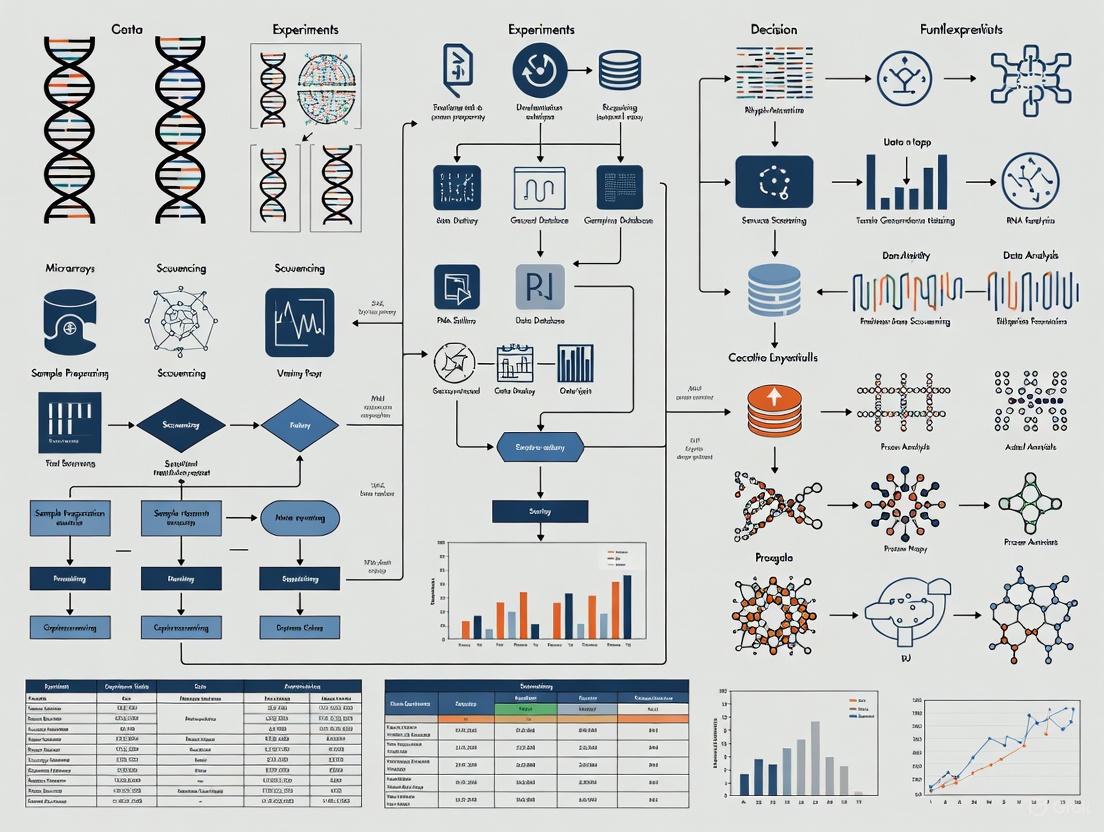
This article provides researchers, scientists, and drug development professionals with a systematic guide to functional genomics databases and resources.
Functional Genomics Databases and Resources: A Comprehensive Guide for Biomedical Research and Drug Discovery
Abstract
This article provides researchers, scientists, and drug development professionals with a systematic guide to functional genomics databases and resources. It covers foundational databases for exploration, methodological applications in disease research and drug discovery, strategies for troubleshooting and optimizing analyses, and finally, techniques for validating results and comparing resource utility. The guide integrates current tools and real-world applications to empower effective genomic data utilization in translational research.
Navigating the Core Landscape of Functional Genomics Databases
Genomic databases serve as the foundational infrastructure for modern biological research, enabling the storage, organization, and analysis of nucleotide and protein sequence data. These resources have transformed biological inquiry by providing comprehensive datasets that support everything from basic evolutionary studies to advanced drug discovery programs. Among these resources, four databases form the core of public genomic data infrastructure: GenBank, the EMBL Nucleotide Sequence Database, the DNA Data Bank of Japan (DDBJ), and the Reference Sequence (RefSeq) database. Understanding their distinct roles, interactions, and applications is essential for researchers navigating the landscape of functional genomics and drug development.
The International Nucleotide Sequence Database Collaboration (INSDC) represents one of the most significant achievements in biological data sharing, creating a global partnership that ensures seamless access to publicly available sequence data. This collaboration, comprising GenBank, EMBL, and DDBJ, synchronizes data daily to maintain consistent worldwide coverage [1] [2]. Alongside this archival system, the RefSeq database provides a curated, non-redundant set of reference sequences that serve as a gold standard for genome annotation, gene characterization, and variation analysis [3] [4]. Together, these resources provide the essential data backbone for functional genomics research, supporting both discovery-based science and applied pharmaceutical development.
Database Fundamentals and Architecture
The International Nucleotide Sequence Database Collaboration (INSDC)
The INSDC establishes the primary framework for public domain nucleotide sequence data through its three partner databases: GenBank (NCBI, USA), the EMBL Nucleotide Sequence Database (EBI, UK), and the DNA Data Bank of Japan (NIG, Japan) [1] [2]. This tripartite collaboration operates on a fundamental principle of daily data exchange, ensuring that submissions to any one database become automatically accessible through all three portals while maintaining consistent annotation standards and data formats [2] [5]. This synchronization mechanism creates a truly global resource that supports international research initiatives and eliminates redundant submission requirements.
The INSDC functions as an archival repository, preserving all publicly submitted nucleotide sequences without curatorial filtering or redundancy removal [3]. This inclusive approach captures the complete spectrum of sequence data, ranging from individual gene sequences to complete genomes, along with their associated metadata. The databases accommodate diverse data types, including whole genome shotgun (WGS) sequences, expressed sequence tags (ESTs), sequence-tagged sites (STS), high-throughput cDNA sequences, and environmental sequencing samples from metagenomic studies [2] [6]. This comprehensive coverage makes the INSDC the definitive source for primary nucleotide sequence data, forming the initial distribution point for many specialized molecular biology databases.
Table 1: International Nucleotide Sequence Database Collaboration Members
| Database | Full Name | Host Institution | Location | Primary Role |
|---|---|---|---|---|
| GenBank | Genetic Sequence Database | National Center for Biotechnology Information (NCBI) | Bethesda, Maryland, USA | NIH genetic sequence database, part of INSDC |
| EMBL | European Molecular Biology Laboratory Nucleotide Sequence Database | European Bioinformatics Institute (EBI) | Hinxton, Cambridge, UK | Europe's primary nucleotide sequence resource |
| DDBJ | DNA Data Bank of Japan | National Institute of Genetics (NIG) | Mishima, Japan | Japan's nucleotide sequence database |
Reference Sequence (RefSeq): A Curated Alternative
The Reference Sequence (RefSeq) database represents a distinct approach to sequence data management, providing a curated, non-redundant set of reference standards derived from the INSDC archival records [3] [4]. Unlike the inclusive archival model of GenBank/EMBL/DDBJ, RefSeq employs sophisticated computational processing and expert curation to synthesize the current understanding of sequence information for numerous organisms. This synthesis creates a stable foundation for medical, functional, and comparative genomics by providing benchmark sequences that integrate data from multiple sources [3] [2].
RefSeq's distinctive character is immediately apparent in its accession number format, which utilizes a two-character underscore convention (e.g., NC000001 for a complete genomic molecule, NM000001 for an mRNA transcript, NP_000001 for a protein product) [3] [2]. This contrasts with the INSDC accession numbers that never include underscores. Additional distinguishing features include explicit documentation of record status (PROVISIONAL, VALIDATED, or REVIEWED), consistent application of official nomenclature, and extensive cross-references to external databases such as OMIM, Gene, UniProt, CCDS, and CDD [3]. These characteristics make RefSeq records particularly valuable for applications requiring standardized, high-quality reference sequences, such as clinical diagnostics, mutation reporting, and comparative genomics.
Table 2: RefSeq Accession Number Prefixes and Their Meanings
| Prefix | Molecule Type | Description | Example Use Cases |
|---|---|---|---|
| NC_ | Genomic | Complete genomic molecules | Chromosome references, complete genomes |
| NG_ | Genomic | Genomic regions | Non-transcribed pseudogenes, difficult-to-annotate regions |
| NM_ | Transcript | Curated mRNA | Mature messenger RNA transcripts with experimental support |
| NR_ | RNA | Non-coding RNA | Curated non-protein-coding transcripts |
| NP_ | Protein | Curated protein | Protein sequences with experimental support |
| XM_ | Transcript | Model mRNA | Predicted mRNA transcripts (computational annotation) |
| XP_ | Protein | Model protein | Predicted protein sequences (computational annotation) |
Technical Specifications and Data Structure
The Feature Table: A Universal Annotation Framework
The INSDC collaboration maintains data consistency through the implementation of a shared Feature Table Definition, which establishes common standards for annotation practice across all three databases [7] [8]. This specification, currently at version 11.3 (October 2024), defines the syntax and vocabulary for describing biological features within nucleotide sequences, creating a flexible yet standardized framework for capturing functional genomic elements [7]. The feature table format employs a tabular structure consisting of three core components: feature keys, locations, and qualifiers, which work in concert to provide comprehensive sequence annotation.
Feature keys represent the biological nature of annotated features through a controlled vocabulary that includes specific terms like "CDS" (protein-coding sequence), "reporigin" (origin of replication), "tRNA" (mature transfer RNA), and "proteinbind" (protein binding site on DNA) [7] [8]. These keys are organized hierarchically within functional families, allowing for both precise annotation of known elements and flexible description of novel features through "generic" keys prefixed with "misc" (e.g., miscRNA, misc_binding). The location component provides precise instructions for locating features within the parent sequence, supporting complex specifications including joins of discontinuous segments, fuzzy boundaries, and alternative endpoints. Qualifiers augment the core annotation with auxiliary information through a standardized system of name-value pairs (e.g., /gene="adhI", /product="alcohol dehydrogenase") that capture details such as gene symbols, protein products, functional classifications, and evidence codes [7].
Data Submission and Processing Workflows
The INSDC databases have established streamlined submission processes to accommodate contributions from diverse sources, ranging from individual researchers to large-scale sequencing centers. GenBank provides web-based submission tools (BankIt) for simple submissions and command-line utilities (table2asn) for high-volume submissions such as complete genomes and large batches of sequences [1] [6]. Similar submission pathways exist for EMBL and DDBJ, with all data flowing into the unified INSDC system through the daily synchronization process. Following submission, sequences undergo quality control procedures including vector contamination screening, verification of coding region translations, taxonomic validation, and bibliographic checks before public release [1] [9].
The RefSeq database employs distinct generation pipelines that vary by organism and data type. For many eukaryotic genomes, the Eukaryotic Genome Annotation Pipeline performs automated computational annotation that may integrate transcript-based records with computationally predicted features [3]. For a subset of species including human, mouse, rat, cow, and zebrafish, a curation-supported pipeline applies manual curation by NCBI staff scientists to generate records that represent the current consensus of scientific knowledge [3]. This process may incorporate data from multiple INSDC submissions and published literature to construct comprehensive representations of genes and their products. Additionally, RefSeq collaborates with external groups including official nomenclature committees, model organism databases, and specialized research communities to incorporate expert knowledge and standardized nomenclature [3].
Access Methods and Bioinformatics Applications
Database Querying and Sequence Retrieval
Researchers access genomic databases through multiple interfaces designed for different use cases and technical expertise levels. The Entrez search system provides text-based querying capabilities across NCBI databases, allowing users to retrieve sequences using accession numbers, gene symbols, organism names, or keyword searches [1] [3]. Search results can be filtered to restrict output to specific database subsets, such as limiting Nucleotide database results to only RefSeq records using the "srcdb_refseq[property]" query tag [3]. Programmatic access is available through E-utilities, which enable automated retrieval and integration of sequence data into software applications and analysis pipelines [1] [6].
The BLAST (Basic Local Alignment Search Tool) family of algorithms represents the most widely used method for sequence similarity searching, allowing researchers to compare query sequences against comprehensive databases to identify homologous sequences and infer functional and evolutionary relationships [1] [6] [9]. NCBI provides specialized BLAST databases tailored to different applications, including the "nr" database for comprehensive searches, "RefSeq mRNA" or "RefSeq proteins" for curated references, and organism-specific databases for targeted analyses [3] [6]. For bulk data access, all databases provide FTP distribution sites offering complete dataset downloads in various formats, with RefSeq releases occurring every two months and incremental updates provided daily between major releases [1] [3] [4].
Applications in Drug Discovery and Development
Genomic databases have become indispensable tools in modern drug development, particularly in the critical early stages of target identification and validation. Bioinformatics analyses leveraging these resources can significantly accelerate the identification of potential drug targets by enabling researchers to identify genes and proteins with specific functional characteristics, disease associations, and expression patterns relevant to particular pathologies [10] [9]. The integration of high-throughput data from genomics, transcriptomics, proteomics, and metabolomics makes substantial contributions to mechanism-based drug discovery and drug repurposing efforts by establishing comprehensive molecular profiles of disease states and potential therapeutic interventions [10].
The application of genomic databases extends throughout the drug development pipeline. Molecular docking and virtual screening approaches use protein structure information derived from sequence databases to computationally evaluate potential drug candidates, prioritizing the most promising compounds for experimental validation [10]. In the realm of pharmacogenomics, these databases support the identification of genetic variants that influence individual drug responses, enabling the development of personalized treatment strategies that maximize efficacy while minimizing adverse effects [9]. Natural product drug discovery has been particularly transformed by specialized databases that catalog chemical structures, physicochemical properties, target interactions, and biological activities of natural compounds with anti-cancer potential [10]. These resources provide valuable starting points for the development of novel therapeutic agents, especially in oncology where targeted therapies have revolutionized treatment paradigms.
Table 3: Specialized Databases for Cancer Drug Development
| Database | URL | Primary Focus | Data Content |
|---|---|---|---|
| CancerResource | http://data-analysis.charite.de/care/ | Drug-target relationships | Drug sensitivity, genomic data, cellular fingerprints |
| canSAR | http://cansar.icr.ac.uk/ | Druggability assessment | Chemical probes, biological activity, drug combinations |
| NPACT | http://crdd.osdd.net/raghava/npact/ | Natural anti-cancer compounds | Plant-derived compounds with anti-cancer activity |
| PharmacoDB | https://pharmacodb.pmgenomics.ca/ | Drug sensitivity screening | Cancer datasets, cell lines, compounds, genes |
Experimental Protocols and Practical Implementation
Protocol 1: Submitting Sequences to GenBank Using BankIt
The BankIt system provides a web-based submission pathway for individual researchers depositing one or a few sequences to GenBank. Before beginning submission, researchers should prepare the following materials: complete nucleotide sequence in FASTA format, source organism information, author and institutional details, relevant publication information (if available), and annotations describing coding regions and other biologically significant features.
The submission protocol consists of five key stages: (1) Sequence entry through direct paste input or file upload, with automatic validation of sequence format; (2) Biological source specification using taxonomic classification tools and organism-specific data fields; (3) Annotation of coding sequences, RNA genes, and other features using the feature table framework; (4) Submitter information including contact details and release scheduling options; and (5) Final validation where GenBank staff perform quality assurance checks before assigning an accession number and releasing the record to the public database [1] [6]. For sequences requiring delayed publication to protect intellectual property, BankIt supports specified release dates while ensuring immediate availability once associated publications appear.
Protocol 2: Utilizing BLAST for Functional Annotation of Novel Sequences
The Basic Local Alignment Search Tool (BLAST) provides a fundamental method for inferring potential functions for newly identified sequences through homology detection. This protocol outlines the standard workflow for annotating a novel nucleotide sequence:
Sequence Preparation: Obtain the query sequence in FASTA format. For protein-coding regions, consider translating to amino acid sequence for more sensitive searches.
Database Selection: Choose an appropriate BLAST database based on research objectives. Options include:
- nr/nt: Comprehensive nucleotide database for general searches
- RefSeq mRNA: Curated transcript sequences for specific homolog identification
- Genome-specific databases: For organism-restricted searches
Parameter Configuration: Adjust search parameters including expect threshold (E-value), scoring matrices, and filters for low-complexity regions based on the specific application.
Result Interpretation: Analyze significant alignments (E-value < 0.001) for consistent domains, conserved functional residues, and phylogenetic distribution of homologs.
Functional Inference: Transfer putative functions from best-hit sequences while considering alignment coverage, identity percentages, and consistent domain architecture [6] [9].
This methodology enables researchers to quickly establish preliminary functional hypotheses for orphan sequences discovered through sequencing projects, guiding subsequent experimental validation strategies.
The Scientist's Toolkit: Essential Bioinformatics Reagents
Table 4: Essential Bioinformatics Tools and Resources for Genomic Analysis
| Tool/Resource | Function | Application in Research |
|---|---|---|
| BLAST Suite | Sequence similarity searching | Identifying homologous sequences, inferring gene function |
| Entrez Programming Utilities (E-utilities) | Programmatic database access | Automated retrieval of sequence data for analysis pipelines |
| ORF Finder | Open Reading Frame identification | Predicting protein-coding regions in novel sequences |
| Primer-BLAST | PCR primer design with specificity checking | Designing target-specific primers for experimental validation |
| Sequence Viewer | Graphical sequence visualization | Exploring genomic context and annotation features |
| VecScreen | Vector contamination screening | Detecting and removing cloning vector sequence from submissions |
| BioSample Database | Biological source metadata repository | Providing standardized descriptions of experimental materials |
Future Directions and Emerging Applications
The ongoing expansion of genomic databases continues to enable new research paradigms in functional genomics and drug development. Several emerging trends are particularly noteworthy: the integration of multi-omics data layers creates unprecedented opportunities for understanding complex biological systems and disease mechanisms; the application of artificial intelligence and machine learning to genomic datasets accelerates the identification of novel therapeutic targets; and the development of real-time pathogen genomic surveillance platforms exemplifies the translation of database resources into public health interventions [10] [9].
The NCBI Pathogen Detection Project represents one such innovative application, combining automated pipelines for clustering bacterial pathogen sequences with real-time data sharing to support public health investigations of foodborne disease outbreaks [6]. Similarly, the growth of the Sequence Read Archive (SRA) as a repository for next-generation sequencing data creates new opportunities for integrative analyses that leverage both raw sequencing reads and assembled sequences [6]. As biomedical research increasingly embraces precision medicine approaches, the role of genomic databases as central hubs for integrating diverse data types will continue to expand, supporting the development of targeted therapies tailored to specific molecular profiles and genetic contexts [10] [9].
Functional annotation is a cornerstone of modern genomics, enabling the systematic interpretation of high-throughput biological data. This whitepaper provides an in-depth technical examination of three pivotal resources in functional genomics: Gene Ontology (GO), KEGG, and Pfam. We detail their underlying frameworks, data structures, and practical applications while providing experimentally validated protocols for their implementation. Designed for researchers and drug development professionals, this guide integrates quantitative comparisons, visualization workflows, and essential reagent solutions to facilitate informed resource selection and experimental design in functional genomics research.
The post-genomic era has generated vast amounts of sequence data, creating an urgent need for systematic functional interpretation tools. Functional annotation resources provide the critical bridge between molecular sequences and their biological significance by categorizing genes and proteins according to their molecular functions, involved processes, cellular locations, and pathway associations. These resources form the foundational infrastructure for hypothesis generation, experimental design, and data interpretation across diverse biological domains.
Each major resource employs distinct knowledge representation frameworks: Gene Ontology (GO) provides a structured, controlled vocabulary for describing gene products across three independent aspects: molecular function, biological process, and cellular component [11]. KEGG (Kyoto Encyclopedia of Genes and Genomes) offers a database of manually drawn pathway maps representing molecular interaction and reaction networks [12]. Pfam is a comprehensive collection of protein families and domains based on hidden Markov models (HMMs) that enables domain-based functional inference [13]. Together, these resources create a multi-layered annotation system that supports everything from basic characterisation of novel genes to systems-level modeling of cellular processes.
Gene Ontology (GO): Framework and Applications
Core Structure and Annotation Principles
The Gene Ontology comprises three independent ontologies (aspects) that together provide a comprehensive descriptive framework for gene products: Molecular Function (MF) describes elemental activities at the molecular level, such as catalytic or binding activities; Biological Process (BP) represents larger processes accomplished by multiple molecular activities; and Cellular Component (CC) describes locations within cells where gene products are active [11]. Each ontology is structured as a directed acyclic graph where terms are nodes connected by defined relationships, allowing child terms to be more specialized than their parent terms while permitting multiple inheritance.
GO annotations are evidence-based associations between specific gene products and GO terms. The annotation process follows strict standards to ensure consistency and reliability across species [14]. Each standard GO annotation minimally includes: (1) a gene product identifier; (2) a GO term; (3) a reference source; and (4) an evidence code describing the type of supporting evidence [15]. A critical feature is the transitivity principle, where a positive annotation to a specific GO term implies annotation to all its parent terms, enabling hierarchical inference of gene function [15].
Table 1: Key Relations in Standard GO Annotations
| Relation | Application Context | Description |
|---|---|---|
| enables | Molecular Function | Links a gene product to a molecular function it executes |
| involved in | Biological Process | Connects a gene product to a biological process its molecular function supports |
| located in | Cellular Component | Indicates a gene product has been detected in a specific cellular anatomical structure |
| part of | Cellular Component | Links a gene product to a protein-containing complex |
| contributes to | Molecular Function | Connects a gene product to a molecular function executed by a macromolecular complex |
Advanced GO Frameworks: GO-CAM and the NOT Modifier
GO-CAM (GO Causal Activity Models) represents an evolution beyond standard annotations by providing a system to extend GO annotations with biological context and causal connections between molecular activities [15]. Unlike standard annotations where each statement is independent, GO-CAMs link multiple molecular activities through defined causal relations to model pathways and biological mechanisms. The fundamental unit in GO-CAM is the activity unit, which consists of a molecular function, the enabling gene product, and the cellular and biological process context where it occurs.
The NOT modifier is a critical qualification in GO annotations that indicates a gene product has been experimentally demonstrated not to enable a specific molecular function, not to participate in a particular biological process, or not to be located in a specific cellular component [15]. Importantly, NOT annotations are only used when users might reasonably expect the gene product to have the property, and they propagate in the opposite direction of positive annotations—downward to more specific terms rather than upward to parent terms.
Figure 1: GO Annotation Workflow. This diagram illustrates the sequential process of assigning GO annotations to gene products, from initial sequence data to final annotated output.
KEGG: Pathway-Based Annotation
Database Organization and Annotation System
KEGG (Kyoto Encyclopedia of Genes and Genomes) is a database resource for understanding high-level functions and utilities of biological systems from molecular-level information [16]. The core of KEGG comprises three main components: (1) the GENES database containing annotated gene catalogs for sequenced genomes; (2) the PATHWAY, BRITE, and MODULE databases representing molecular interaction, reaction, and relation networks; and (3) the KO (KEGG Orthology) database containing ortholog groups that define functional units in the KEGG pathway maps [17].
KEGG pathway maps are manually drawn representations of molecular interaction networks that encompass multiple categories: metabolism, genetic information processing, environmental information processing, cellular processes, organismal systems, human diseases, and drug development [12]. Each pathway map is identified by a unique identifier combining a 2-4 letter prefix code and a 5-digit number, where the prefix indicates the map type (e.g., "map" for reference pathway, "ko" for KO-based reference pathway, and organism codes like "hsa" for Homo sapiens-specific pathways) [12].
Table 2: KEGG Pathway Classification with Representative Examples
| Pathway Category | Subcategory | Representative Pathway | Pathway Code |
|---|---|---|---|
| Metabolism | Global and overview maps | Carbon metabolism | 01200 |
| Metabolism | Biosynthesis of other secondary metabolites | Flavonoid biosynthesis | 00941 |
| Genetic Information Processing | Transcription | Basal transcription factors | 03022 |
| Environmental Information Processing | Signal transduction | MAPK signaling pathway | 04010 |
| Cellular Processes | Transport and catabolism | Endocytosis | 04144 |
| Organismal Systems | Immune system | NOD-like receptor signaling pathway | 04621 |
| Human Diseases | Neurodegenerative diseases | Alzheimer disease | 05010 |
KO-Based Annotation and Implementation
The foundation of KEGG annotation is the KO (KEGG Orthology) system, which assigns K numbers to ortholog groups that represent functional units in KEGG pathways [17]. Automatic KO assignment can be performed using KEGG Mapper tools or sequence similarity search tools like BlastKOALA and GhostKOALA, which facilitate functional annotation of genomic and metagenomic sequences [16]. The resulting KO assignments enable the reconstruction of pathways and inference of higher-order functional capabilities.
KEGG annotation extends beyond pathway mapping to include BRITE functional hierarchies and MODULE functional units, providing a multi-layered functional representation. Signature KOs and signature modules can be used to infer phenotypic features of organisms, enabling predictions about metabolic capabilities and other biological properties directly from genomic data [17].
Figure 2: KEGG Pathway Mapping Workflow. This diagram outlines the process of assigning KEGG Orthology (KO) identifiers to gene sequences and subsequent pathway reconstruction for functional interpretation.
Pfam: Protein Domain Annotation
Database Structure and Domain Classification
Pfam is a database of protein families that includes multiple sequence alignments and hidden Markov models (HMMs) for protein domains [13]. The database classifies entries into several types: families (indicating general relatedness), domains (autonomous structural or sequence units found in multiple protein contexts), repeats (short units that typically form tandem arrays), and motifs (shorter sequence units outside globular domains) [13]. As of version 37.0 (June 2024), Pfam contains 21,979 families, providing extensive coverage of known protein domains.
For each family, Pfam maintains two key alignments: a high-quality, manually curated seed alignment containing representative members, and a full alignment generated by searching sequence databases with a profile HMM built from the seed alignment [13]. This two-tiered approach ensures quality while maximizing coverage. Each family has a manually curated gathering threshold that maximizes true matches while excluding false positives, maintaining annotation accuracy as the database grows.
Clan Architecture and Community Curation
A significant innovation in Pfam is the organization of related families into clans, which are groupings of families that share a single evolutionary origin, confirmed by structural, functional, sequence, and HMM comparisons [13]. As of version 32.0, approximately three-fourths of Pfam families belong to clans, providing important evolutionary context for protein domain annotation. Clan relationships are identified using tools like SCOOP (Simple Comparison Of Outputs Program) and information from external databases such as ECOD.
Pfam employs community curation through Wikipedia integration, allowing researchers to contribute and improve functional descriptions of protein families [13]. This collaborative approach helps maintain current and comprehensive annotations despite the rapid growth of sequence data. Pfam also specifically tracks Domains of Unknown Function (DUFs), which represent conserved domains with unidentified roles. As their functions are determined through experimentation, DUFs are systematically renamed to reflect their biological activities.
Table 3: Pfam Entry Types and Characteristics
| Entry Type | Definition | Coverage in Pfam | Example |
|---|---|---|---|
| Family | Related sequences with common evolutionary origin | ~70% of entries | PF00001: 7 transmembrane receptor (rhodopsin family) |
| Domain | Structural/functional unit found in multiple contexts | ~20% of entries | PF00085: Thioredoxin domain |
| Repeat | Short units forming tandem repeats | ~5% of entries | PF00084: Sushi repeat/SCR domain |
| Motif | Short conserved sequence outside globular domains | ~5% of entries | PF00088: Anaphylatoxin domain |
| DUF | Domain of Unknown Function | Growing fraction | PF03437: DUF284 |
Comparative Analysis and Integration
Quantitative Comparison of Resource Scope
The three annotation resources differ significantly in their scope, data types, and coverage, making them complementary rather than redundant. GO provides the most comprehensive coverage of species, with annotations for >374,000 species including experimental annotations for 2,226 species [14]. KEGG offers pathway coverage with 537 pathway maps as of November 2025 [12], while Pfam covers 76.1% of protein sequences in UniProtKB with at least one Pfam domain [13].
Table 4: Comparative Analysis of Functional Annotation Resources
| Feature | Gene Ontology (GO) | KEGG | Pfam |
|---|---|---|---|
| Primary Scope | Gene product function, process, location | Pathways and molecular networks | Protein domains and families |
| Data Structure | Directed acyclic graph | Manually drawn pathway maps | Hidden Markov Models (HMMs) |
| Annotation Type | Terms with evidence codes | Ortholog groups (K numbers) | Domain assignments |
| Species Coverage | >374,000 species | KEGG organisms (limited taxa) | All kingdoms of life |
| Update Frequency | Continuous | Regular updates (Sept 2024) | Periodic version releases |
| Evidence Basis | Experimental, phylogenetic, computational | Manual curation with genomic context | Sequence similarity, HMM thresholds |
| Key Access Methods | AmiGO browser, annotation files | KEGG Mapper, BlastKOALA | InterPro website, HMMER |
Integrated Annotation Workflow
In practice, these resources are often used together in a complementary workflow. A typical integrated annotation pipeline begins with domain identification using Pfam to establish potential functional units, proceeds to GO term assignment for standardized functional description, and culminates in pathway mapping using KEGG to establish systemic context. This multi-layered approach provides robust functional predictions that leverage the unique strengths of each resource.
Figure 3: Integrated Functional Annotation Pipeline. This workflow demonstrates how GO, KEGG, and Pfam complement each other in a comprehensive protein annotation strategy.
Experimental Protocols and Applications
Transcriptome Analysis Protocol for Biosynthetic Pathways
The application of these annotation resources is exemplified in transcriptomic studies of specialized metabolite biosynthesis. The following protocol, adapted from Frontiers in Bioinformatics (2025), details an integrated approach for identifying genes involved in triterpenoid saponin biosynthesis in Hylomecon japonica [18]:
Step 1: RNA Extraction and Sequencing
- Collect fresh plant tissues (leaves, roots, stems) and immediately freeze in liquid nitrogen
- Extract total RNA using commercial kits (e.g., Omega Bio-Tek)
- Assess RNA purity (Nanodrop), concentration, and integrity (Agilent 2100 bioanalyzer)
- Construct cDNA library using mRNA enrichment and rRNA removal methods
- Sequence using DNA nanoball sequencing (DNB-seq) platform
Step 2: Data Processing and Assembly
- Filter raw reads using SOAPnuke (v1.5.2) to remove adapters, low-quality reads, and reads with >10% unknown bases
- Assemble clean reads using Trinity (v2.0.6) to generate transcripts
- Cluster and deduplicate transcripts using CD-HIT (v4.6) to obtain unigenes
Step 3: Functional Annotation
- Annotate unigenes against seven databases: NR, NT, SwissProt, KOG, KEGG, GO, and Pfam
- Use hmmscan (v3.0) for Pfam domain identification
- Employ Blast2GO (v2.5.0) for GO term assignment
- Calculate gene expression levels using Bowtie2 and RSEM with FPKM normalization
- Identify differentially expressed genes (DEGs) using Poisson distribution methods
Step 4: Targeted Pathway Analysis
- Identify key enzyme genes in the triterpenoid saponin biosynthesis pathway
- Analyze transcription factors using getorf and hmmsarch against PlantTFDB
- Model protein structures (e.g., squalene synthase) using ExPASy and ESPrip
- Construct phylogenetic trees using MEGA and CLUSTALX
This protocol successfully identified 49 unigenes encoding 11 key enzymes in triterpenoid saponin biosynthesis and nine relevant transcription factors, demonstrating the power of integrated functional annotation [18].
Table 5: Essential Research Reagents and Computational Tools for Functional Annotation
| Resource/Reagent | Function/Application | Specifications/Alternatives |
|---|---|---|
| RNA Extraction Kit (Omega Bio-Tek) | High-quality RNA isolation for transcriptome sequencing | Alternative: TRIzol method, Qiagen RNeasy kits |
| DNB-seq Platform | DNA nanoball sequencing for transcriptome analysis | Alternative: Illumina NovaSeq X, Oxford Nanopore |
| Trinity Software (v2.0.6) | De novo transcriptome assembly from RNA-Seq data | Reference: Haas et al., 2023 [18] |
| HMMER Software Suite | Profile hidden Markov model searches for Pfam annotation | Usage: hmmscan for domain detection [13] |
| Blast2GO (v2.5.0) | Automated GO term assignment and functional annotation | Reference: Conesa et al., 2005 [18] |
| KEGG Mapper | Reconstruction of KEGG pathways from annotated sequences | Access: KEGG website tools [17] |
| Bowtie2 & RSEM | Read alignment and expression quantification | Implementation: FPKM normalization [18] |
| InterPro Database | Integrated resource including Pfam domains | Access: EBI website [13] |
Gene Ontology, KEGG, and Pfam represent foundational infrastructure for functional genomics, each contributing unique strengths to biological interpretation. GO provides a standardized framework for describing gene functions, processes, and locations across species. KEGG offers pathway-centric annotation that places genes in the context of systemic networks. Pfam delivers deep protein domain analysis that reveals evolutionary relationships and functional modules. Their integrated application, as demonstrated in the transcriptome analysis protocol, enables comprehensive functional characterization that supports advancements in basic research, biotechnology, and drug development. As functional genomics evolves, these resources continue to adapt—incorporating new biological knowledge, improving computational methods, and expanding species coverage to meet the challenges of interpreting increasingly complex genomic data.
Functional genomics relies on specialized databases to decipher the roles of genes and proteins across diverse organisms. Orthology and protein family databases provide the foundational framework for predicting gene function, understanding evolutionary relationships, and elucidating molecular mechanisms. These resources are indispensable for translating genomic sequence data into biological insights with applications across biomedical and biotechnological domains. This technical guide examines three essential resources: eggNOG for orthology-based functional annotation, Resfams for antibiotic resistance profiling, and dbCAN for carbohydrate-active enzyme characterization. Each database employs distinct methodologies to address specific challenges in functional genomics, enabling researchers to annotate genes, predict protein functions, and explore biological systems at scale.
Table 1: Core Characteristics of eggNOG, Resfams, and dbCAN
| Feature | eggNOG | Resfams | dbCAN |
|---|---|---|---|
| Primary Focus | Orthology identification & functional annotation | Antibiotic resistance protein families | Carbohydrate-Active enZYmes (CAZymes) |
| Classification Principle | Evolutionary genealogy & orthologous groups | Protein family HMMs with antibiotic resistance ontology | Family & subfamily HMMs based on CAZy database |
| Key Methodology | Hierarchical orthology inference & phylogeny | Curated hidden Markov models (HMMs) | Integrated HMMER, DIAMOND, & subfamily HMMs |
| Coverage Scope | Broad: across 5090 organisms & 2502 viruses [19] [20] | Specific: 166 profile HMMs for major antibiotic classes [21] | Specific: >800 HMMs (families & subfamilies); updated annually [22] |
| Unique Strength | Avoids annotation transfer from close paralogs [20] | Optimized for metagenomic resistome screening with high precision [21] | Predicts glycan substrates & identifies CAZyme gene clusters [22] [23] |
| Typical Application | Genome-wide functional annotation [19] [20] | Identification of resistance determinants in microbial genomes [19] [21] | Analysis of microbial carbohydrate metabolism & bioenergy [19] [22] |
eggNOG: Evolutionary Genealogy of Genes
Core Principles and Framework
The eggNOG (evolutionary genealogy of genes: Non-supervised Orthologous Groups) database provides a comprehensive framework for orthology analysis and functional annotation across a wide taxonomic spectrum. The resource is built on a hierarchical classification system that organizes genes into orthologous groups (OGs) at multiple taxonomic levels, including prokaryotic, eukaryotic, and viral clades [19]. This structure enables researchers to infer gene function based on evolutionary conservation and to trace functional divergence across lineages. eggNOG's value proposition lies in its use of fine-grained orthology for functional transfer, which provides higher precision than traditional homology searches (e.g., BLAST) by avoiding annotation transfer from close paralogs that may have undergone functional divergence [20].
Annotation Methodology and Workflow
Figure 1: eggNOG-mapper Functional Annotation Workflow
The eggNOG-mapper tool implements this orthology-based annotation approach through a multi-step process. The workflow begins with query sequences (nucleotide or protein), which are searched against precomputed orthologous groups and phylogenies from the eggNOG database using fast search algorithms such as HMMER or DIAMOND [20]. The system then assigns sequences to fine-grained orthologous groups based on evolutionary relationships. Finally, functional annotations—including Gene Ontology (GO) terms, KEGG pathways, and enzyme classification (EC) numbers—are transferred from the best-matching orthologs within the assigned groups [19] [20]. This method is particularly valuable for annotating novel genomes, transcriptomes, and metagenomic gene catalogs with high accuracy.
Resfams: Antibiotic Resistance Profiling
Database Structure and Validation
Resfams is a curated database of protein families and associated profile hidden Markov models (HMMs) specifically designed for identifying antibiotic resistance genes in microbial sequences. The core database was constructed by training HMMs on unique antibiotic resistance protein sequences from established sources including the Comprehensive Antibiotic Resistance Database (CARD), the Lactamase Engineering Database (LacED), and a curated collection of beta-lactamase proteins [21]. This core was supplemented with additional HMMs from Pfam and TIGRFAMs that were experimentally verified through functional metagenomic selections of soil and human gut microbiota [21].
The current version of Resfams contains 166 profile HMMs representing major antibiotic resistance gene classes, including defenses against beta-lactams, aminoglycosides, fluoroquinolones, glycopeptides, macrolides, and tetracyclines, along with efflux pumps and transcriptional regulators [21]. Each HMM has been optimized with profile-specific gathering thresholds to establish inclusion bit score cut-offs, achieving nearly perfect precision (99 ± 0.02%) and high recall for independent antibiotic resistance proteins not used in training [21].
Experimental Workflow for Resistome Analysis
Figure 2: Resfams-Based Antibiotic Resistance Analysis
The standard analytical protocol for resistome characterization using Resfams begins with gene prediction from microbial genomes or metagenomic assemblies using tools like Prodigal. The resulting protein sequences are then searched against the Resfams HMM database using HMMER. Researchers must select the appropriate database version: the Core database for general annotation without functional confirmation, or the Full database when previous functional evidence of antibiotic resistance exists (e.g., from functional metagenomic selections) [21]. The search results are filtered using optimized bit score thresholds to ensure high precision. Compared to BLAST-based approaches against ARDB and CARD, Resfams demonstrates significantly improved sensitivity, identifying 64% more antibiotic resistance genes in soil and human gut microbiota studies while maintaining zero false positives in validation tests [21].
dbCAN: Carbohydrate-Active Enzyme Annotation
Database Architecture and Substrate Prediction
dbCAN is a specialized resource for annotating carbohydrate-active enzymes (CAZymes) in genomic and metagenomic datasets. The database employs a multi-tiered classification system that organizes enzymes into families based on catalytic activities: glycoside hydrolases (GHs), glycosyl transferases (GTs), polysaccharide lyases (PLs), carbohydrate esterases (CEs), and auxiliary activities (AAs) [22] [24]. A key innovation in dbCAN3 is its capacity for substrate prediction, enabling researchers to infer the specific glycan substrates that CAZymes target [22] [23].
The annotation pipeline integrates three complementary methods: HMMER search against the dbCAN CAZyme domain HMM database, DIAMOND search for BLAST hits in the CAZy database, and HMMER search for CAZyme subfamily annotation using the dbCAN-sub HMM database [22]. This multi-algorithm approach increases annotation confidence and coverage. The database is updated annually to incorporate the latest CAZy database releases, with recent versions containing over 800 CAZyme HMMs covering both families and subfamilies [22].
CAZyme Gene Cluster Identification
Figure 3: dbCAN Workflow for CGC Identification & Substrate Prediction
A distinctive feature of dbCAN is its ability to identify CAZyme Gene Clusters (CGCs)—genomic loci where CAZyme genes are co-localized with other genes involved in carbohydrate metabolism, such as transporters, regulators, and accessory proteins [25]. The dbCAN pipeline incorporates CGCFinder to detect these clusters by analyzing gene proximity and functional associations [25]. For CGC substrate prediction, dbCAN3 implements two complementary approaches: dbCAN-PUL homology search, which compares query CGCs to experimentally characterized Polysaccharide Utilization Loci (PULs), and dbCAN-sub majority voting, which infers substrates based on the predominant substrate annotations of subfamily HMMs within the cluster [22] [23]. These methods have been applied to nearly 500,000 CAZymes from 9,421 metagenome-assembled genomes, providing substrate predictions for approximately 25% of identified CGCs [23].
Table 2: Key Research Reagents and Computational Tools
| Resource | Type | Primary Function | Application Context |
|---|---|---|---|
| HMMER [21] [20] | Software Suite | Profile HMM searches for protein family detection | Identifying domain architecture & protein families (Resfams, dbCAN, eggNOG) |
| DIAMOND [22] [20] | Sequence Aligner | High-speed BLAST-like protein sequence search | Large-scale sequence comparison against reference databases |
| CARD [19] [21] | Curated Database | Reference data for antibiotic resistance genes | Training set and validation resource for Resfams |
| CAZy Database [22] [24] | Curated Database | Expert-curated CAZyme family classification | Foundation for dbCAN HMM development and validation |
| run_dbcan [22] [25] | Software Package | Automated CAZyme annotation & CGC detection | Command-line implementation of dbCAN pipeline |
| eggNOG-mapper [20] | Web/Command Tool | Functional annotation via orthology assignment | Genome-wide gene function prediction |
| Prodigal [20] | Software Tool | Prokaryotic gene prediction | Identifying protein-coding genes in microbial sequences |
eggNOG, Resfams, and dbCAN represent specialized approaches to the challenge of functional annotation in genomics. eggNOG provides broad orthology-based functional inference across the tree of life, Resfams enables precise identification of antibiotic resistance determinants with minimal false positives, and dbCAN offers detailed characterization of carbohydrate-active enzymes and their metabolic contexts. As sequencing technologies continue to generate vast amounts of genomic data, these resources will remain essential for translating genetic information into biological understanding, with significant implications for drug development, microbial ecology, and biotechnology. Future developments will likely focus on expanding substrate predictions for uncharacterized protein families, improving integration between databases, and enhancing scalability for large-scale metagenomic analyses.
The completion of genome sequencing for numerous agriculturally important species revealed a critical bottleneck: the transition from raw sequence data to biological understanding. Agricultural species, including livestock and crops, provide food, fiber, xenotransplant tissues, biopharmaceuticals, and serve as biomedical models [26] [27]. Many of their pathogens are also human zoonoses, increasing their relevance to human health. However, compared to model organisms like human and mouse, agricultural species have suffered from significantly poorer structural and functional annotation of their genomes, a consequence of smaller research communities and more limited funding [26] [27] [28].
The AgBase database (http://www.agbase.msstate.edu) was established as a curated, web-accessible, public resource to address this exact challenge [26] [27]. It was the first database dedicated to functional genomics and systems biology analysis for agriculturally important species and their pathogens [26]. Its primary mission is to facilitate systems biology by providing both computationally accessible structural annotation and, crucially, high-quality functional annotation using the Gene Ontology (GO) [28]. By integrating these resources into an easy-to-use pipeline, AgBase empowers agricultural and biomedical researchers to derive biological significance from functional genomics datasets, such as microarray and proteomics data [27].
Resource Architecture and Technical Implementation
Database Construction and Design Principles
AgBase was constructed with a clear focus on the unique needs of the agricultural research community. The underlying technical infrastructure is built on a server with a dual Xeon 3.0 processor, 4 GB of RAM, and a RAID-5 storage configuration, running on the Windows 2000 Server operating system [26] [27]. The database is implemented using the mySQL 4.1 database management system, with NCBI Blast and custom scripts written in Perl CGI for functionality [26].
The database schema is protein-centric and represents an adaptation of the Chado schema, a modular database design for biological data, with extensions to accommodate the storage of expressed peptide sequence tags (ePSTs) derived from proteogenomic mapping [26] [27]. AgBase follows a multi-species database paradigm and is focused on plants, animals, and microbial pathogens that have significant economic impact on agricultural production or are zoonotic diseases [26]. A key design philosophy of AgBase is the use of standardized nomenclature based on the Human Genome Organization Gene Nomenclature guidelines, promoting consistency and data integration across species [26] [27].
Data Integration and Content Management
AgBase synthesizes both internally generated and external data. In-house data includes manually curated GO annotations and experimentally derived ePSTs [26]. Externally, the database integrates the Gene Ontology itself, the UniProt database, GO annotations from the EBI GOA project, and taxonomic information from the NCBI Entrez Taxonomy [26]. This integration provides users with a unified view of available functional information. The system is updated from these external sources every three months, while locally generated data is loaded continuously as it is produced [26]. To facilitate data exchange and reuse, gene association files containing all gene products annotated by AgBase are accessible in a tab-delimited format for download [26] [28].
Table: AgBase Technical Architecture Overview
| Component | Specification | Function |
|---|---|---|
| Hardware | Dual Xeon 3.0 processor, 4 GB RAM, RAID-5 storage | Core computational and storage platform |
| Database System | MySQL 4.1 | Data management and query processing |
| Core Technologies | NCBI Blast, Perl CGI | Sequence analysis and web interface scripting |
| Data Schema | Adapted Chado schema | Protein-centric data organization with ePST extensions |
| Update Cycle | External sources quarterly; local data continuously | Ensures data currency |
Methodologies for Genomic Annotation
Experimental Structural Annotation via Proteogenomic Mapping
A fundamental aim of AgBase is to improve the structural annotation of agricultural genomes through experimental validation. Initial genome annotations rely heavily on computational predictions, which can have false positive and false negative rates as high as 70% [28]. AgBase addresses this via proteogenomic mapping, a method that uses high-throughput mass spectrometry-based proteomics to provide direct in vivo evidence for protein expression [27] [28].
The proteogenomic mapping pipeline, implemented in Perl, identifies novel protein fragments from experimental proteomics data and aligns them to the genome sequence [26] [27]. These aligned sequences are extended to the nearest 3' stop codon to generate expressed Peptide Sequence Tags (ePSTs) [27] [28]. The results are visualized using the Apollo genome browser, allowing for manual curation and quality checking by AgBase biocurators [26]. This methodology has proven highly effective. For instance, in the prokaryotic pathogen Pasteurella multocida (a cause of fowl cholera and bovine respiratory disease), the pipeline identified 202 novel ePSTs with recognizable start codons, including a 130-amino-acid protein in a previously annotated intergenic region [27]. This demonstrates the power of this experimental approach in refining and validating genome structure.
Functional Annotation Using the Gene Ontology (GO)
For functional annotation, AgBase employs the Gene Ontology (GO), which is the de facto standard for representing gene product function [26] [28]. GO annotations in AgBase are generated through two primary methods:
- Manual Curation: Expert biocurators, trained in formal GO curation courses, annotate gene products based on experimental evidence from the peer-reviewed literature. All such annotations are quality-checked to meet GO Consortium standards [26].
- Sequence Similarity: The GOanna tool is used for annotations "inferred from sequence similarity" (ISS). GOanna performs BLAST searches against user-selected databases of GO-annotated proteins. The resulting alignments are manually inspected to ensure reliability before the ISS annotation is assigned [26] [29].
A critical innovation of AgBase is its two-tier system for GO annotations, which allows users to choose between maximum reliability or maximum coverage [28]:
- The GO Consortium gene association file contains only the most rigorous annotations based on experimental data.
- The Community gene association file includes additional annotations from expert community knowledge, author statements, predicted proteins, and ISS annotations that may not meet the strictest current GO Consortium evidence standards.
This system acknowledges the evolving nature of functional annotation while providing a transparent framework for researchers to select data appropriate for their analysis.
Table: Two-Tiered GO Annotation System in AgBase
| Annotation Tier | Content | Quality Control | Use Case |
|---|---|---|---|
| GO Consortium File | Annotations based solely on experimental evidence | Fully quality-checked to GO Consortium standards | High-reliability analyses (e.g., publication) |
| Community File | Annotations from community knowledge, author statements, predicted proteins, and some ISS | Checked for formatting errors only | Maximum coverage and exploratory analysis |
Analytical Tools and Workflows
The Functional Genomics Analysis Pipeline
AgBase provides a suite of integrated computational tools designed to support the analysis of large-scale functional genomics datasets. These tools are designed to work together in a cohesive pipeline, enabling researchers to move seamlessly from a list of gene identifiers to biological interpretation [26] [28].
The core tools in this pipeline are:
- GORetriever: This tool accepts a list of database identifiers (e.g., from a microarray experiment) and retrieves all existing GO annotations for those proteins from designated databases. It returns the data in multiple formats, including a downloadable Excel file and a simplified GO Summary file for use in the next tool [28].
- GOanna: For proteins without existing GO annotations, GOanna performs BLAST searches against a user-defined database of GO-annotated proteins (e.g., AgBase Community, SwissProt, or species-specific databases) [28] [29]. It returns potential orthologs with their GO annotations, which the researcher can then manually evaluate and transfer based on sequence similarity [28].
- GOSlimViewer: This tool uses the GO Summary file from GORetriever to map the dataset onto higher-level, broad functional categories (GO slims). This provides a statistical overview of the biological processes, molecular functions, and cellular components that are over- or under-represented in the experimental dataset, facilitating high-level interpretation [28].
Proteomics Support Tools
Beyond transcriptomic analysis, AgBase offers specialized tools for proteomics research. The proteogenomic pipeline, as described previously, is available for generating ePSTs and improving genome structural annotation [27] [28]. Additionally, the ProtIDer tool assists with proteomic analysis in species that lack a sequenced genome. It creates a database of highly homologous proteins from Expressed Sequence Tags (ESTs) and EST assemblies, which can then be used to identify proteins from mass spectrometry data [28]. AgBase also provides a GOProfiler tool, which gives a statistical summary of existing GO annotations for a given species, helping researchers understand the current state of functional knowledge for their organism of interest [28].
To effectively utilize AgBase and conduct functional genomics research in agricultural species, researchers rely on a collection of key bioinformatics resources and reagents. The following table details these essential components.
Table: Key Research Reagent Solutions for Agricultural Functional Genomics
| Resource/Reagent | Type | Primary Function | Relevance to AgBase |
|---|---|---|---|
| GOanna Databases [29] | Bioinformatics Database | Provides a target for sequence similarity searches (BLAST) to transfer GO annotations from annotated proteins to query sequences. | Core to the ISS annotation process; includes general (UniProt, AgBase Community) and species-specific (Chick, Cow, Sheep, etc.) databases. |
| Gene Ontology (GO) [26] [28] | Controlled Vocabulary | Provides standardized terms (and their relationships) for describing gene product functions across three domains: Biological Process, Molecular Function, and Cellular Component. | The foundational framework for all functional annotations within AgBase. |
| UniProt Knowledgebase (UniProtKB) [26] | Protein Sequence Database | A central repository of expertly curated (Swiss-Prot) and automatically annotated (TrEMBL) protein sequences. | A primary source of protein sequences and existing GO annotations imported into AgBase. |
| Expressed Sequence Tags (ESTs) [26] [28] | Experimental Data | Short sub-sequences of cDNA molecules, used as evidence for gene expression and to aid in gene discovery and structural annotation. | Used by the ProtIDer tool to create databases for proteomic identification in non-model species. |
| Proteomics Data (Mass Spectrometry) [27] [28] | Experimental Data | Experimental data identifying peptide sequences derived from proteins expressed in vivo. | The raw material for the proteogenomic mapping pipeline, generating ePSTs for experimental structural annotation. |
| NCBI Taxonomy [26] | Classification Database | A standardized classification of organisms, each with a unique Taxon ID. | Used to organize AgBase by species and to build species-specific databases and search tools. |
Discussion and Future Perspectives
AgBase represents a critical community-driven solution to the challenges of functional genomics in agricultural species. By providing high-quality, experimentally supported structural and functional annotations, along with a suite of accessible analytical tools, it empowers researchers to move beyond simple sequence data to meaningful biological insight. The resource is directly relevant not only to agricultural production but also to diverse fields such as cancer biology, biopharmaceuticals, and evolutionary biology, given the role of many agricultural species as biomedical models [26].
The core challenges that motivated AgBase's creation—smaller research communities and less funding compared to human and mouse research—necessitate a collaborative approach. AgBase's two-tiered annotation system and its mechanism for accepting and acknowledging community submissions are designed to foster such collaboration [26] [28]. As the volume of functional genomics data continues to grow, resources like AgBase will become increasingly vital for integrating this information and enabling systems-level modeling. The experimental methods and bioinformatics tools developed for AgBase are not only applicable to agricultural species but also serve as valuable models for functional annotation efforts in other non-model organisms [26]. Through continued curation and community engagement, AgBase will remain a cornerstone for advancing functional genomics in agriculture.
Within the field of functional genomics, genome browsers are indispensable tools that provide an interactive window into the complex architecture of genomes. They enable researchers to visualize and interpret a vast array of genomic annotations—from genes and regulatory elements to genetic variants—in an integrated genomic context. The UCSC Genome Browser and Ensembl stand as two of the most pivotal and widely used resources in this domain. While both serve the fundamental purpose of genomic data visualization, their underlying philosophies, data sources, and tooling ecosystems differ significantly. This whitepaper provides an in-depth technical comparison of these two platforms, framed within the context of functional genomics databases and resources. It is designed to equip researchers, scientists, and drug development professionals with the knowledge to select and utilize the appropriate browser for their specific research needs, from exploratory data analysis to clinical variant interpretation.
The distinct utility of the UCSC Genome Browser and Ensembl stems from their foundational design principles and data aggregation strategies.
The UCSC Genome Browser, developed and maintained by the University of California, Santa Cruz, operates on a "track" based model [30]. This architecture is designed to aggregate a massive collection of externally and internally generated annotation datasets, making them viewable as overlapping horizontal lines on a genomic coordinate system. UCSC functions as a central hub, curating and hosting data from a wide variety of sources, including RefSeq, GENCODE, and numerous independent research consortia like the Consortium of Long Read Sequencing (CoLoRS) [30]. This approach provides researchers with a unified view of diverse data types. Recent developments highlight its commitment to integrating advanced computational analyses, such as tracks from Google DeepMind's AlphaMissense model for predicting pathogenic missense variants and VarChat tracks that use large language models to condense scientific literature on genomic variants [31].
In contrast, Ensembl, developed by the European Molecular Biology Laboratory's European Bioinformatics Institute (EMBL-EBI) and the Wellcome Trust Sanger Institute, is built around an integrated and automated genome annotation pipeline [32] [33]. While it also displays externally generated data, a core strength is its own systematic gene builds, which produce definitive gene sets for a wide range of organisms. Ensembl assigns unique Ensembl gene IDs (e.g., ENSG00000123456) and focuses on providing a consistent and comparative genomics framework across species [32]. Its annotation is comprehensive, with one study noting that Ensembl's broader gene coverage resulted in a significantly higher RNA-Seq read mapping rate (86%) compared to RefSeq and UCSC annotations (69-70%) in a "transcriptome only" mapping mode [34].
Table 1: Core Characteristics of UCSC Genome Browser and Ensembl
| Feature | UCSC Genome Browser | Ensembl |
|---|---|---|
| Primary Affiliation | University of California, Santa Cruz [32] | EMBL-EBI & Wellcome Sanger Institute [32] |
| Core Data Model | Track-based hub [30] | Integrated annotation pipeline [32] |
| Primary Gene ID System | UCSC Gene IDs (e.g., uc001aak.4) [32] |
Ensembl Gene IDs (e.g., ENSG00000123456) [32] |
| Key Gene Annotation | GENCODE "knownGene" (default track) [30] | Ensembl Gene Set [32] |
| Update Strategy | Frequent addition of new tracks and data from diverse sources [30] | Regular versioned releases with updated gene builds [33] |
| Notable Recent Features | AlphaMissense, VarChat, CoLoRSdb, SpliceAI Wildtype tracks [30] [31] | Expansion of protein-coding transcripts and new breed-specific genomes [33] |
Comparative Analysis of Features and Tools
A deeper examination of the platforms' functionalities reveals distinct strengths suited for different analytical workflows.
Data Visualization and Browser Interface
The UCSC Genome Browser interface is often praised for its simplicity and user-friendliness, making it highly accessible for new users [35]. Its configuration system allows for extensive customization of the visual display, such as showing non-coding genes, splice variants, and pseudogenes on the GENCODE knownGene track [30]. The tooltips and color-coding in various tracks, such as the Developmental Disorders Gene2Phenotype (DDG2P) track which uses colors to indicate the strength of gene-disease associations, enable rapid visual assessment of data [30].
Ensembl's browser also provides powerful visualization capabilities but can present a steeper learning curve due to the density of information and integrated nature of its features [35]. Its strength lies in displaying its own rich gene models and comparative genomics data, such as cross-species alignments, directly within the genomic context.
Data Access and Mining Tools
Both platforms provide powerful tool suites for data extraction, but with different implementations.
- UCSC Table Browser and REST API: The UCSC Table Browser is a cornerstone tool for downloading and filtering data from any of the thousands of annotation tracks available in the browser [36]. It allows researchers to perform complex queries based on genomic regions, specific genes, or track attributes. For programmatic access, the UCSC REST API returns data in JSON format, facilitating integration into custom analysis pipelines [36].
- Ensembl BioMart and REST API: Ensembl's primary data-mining tool is BioMart, a highly sophisticated system that enables users to retrieve, filter, and export complex datasets across multiple species and data types [32] [33]. This is particularly powerful for projects requiring multi-factorial queries. Similar to UCSC, Ensembl also provides a comprehensive REST API for programmatic data retrieval [37].
Specialized Analytical Tools
Each browser offers unique tools for specific genomic analyses.
- UCSC Tools: The platform provides several specialized utilities, including BLAT for ultra-fast sequence alignment, the In-Silico PCR tool for verifying primer pairs, LiftOver for converting coordinates between different genome assemblies, and the Variant Annotation Integrator for annotating genomic variants with functional predictions [36].
- Ensembl Tools: A key analytical tool provided by Ensembl is the Variant Effect Predictor (VEP), which analyzes genomic variants and predicts their functional consequences on genes, transcripts, and protein sequence, as well as regulatory regions [33].
Table 2: Key Tools for Data Retrieval and Analysis
| Tool Type | UCSC Genome Browser | Ensembl |
|---|---|---|
| Data Mining | Table Browser [36] | BioMart [32] [33] |
| Sequence Alignment | BLAT [36] | BLAST/BLAT [33] |
| Variant Analysis | Variant Annotation Integrator [36] | Variant Effect Predictor (VEP) [33] |
| Programmatic Access | REST API (returns JSON) [36] | REST API & Perl API [37] |
| Assembly Conversion | LiftOver [36] | Assembly Converter |
Experimental Protocols and Data Interpretation
The choice of genome browser and its underlying annotations has a profound, quantifiable impact on downstream genomic analyses, particularly in transcriptomics.
Impact of Annotation on RNA-Seq Analysis
A critical study evaluating Ensembl, RefSeq, and UCSC annotations in the context of RNA-seq read mapping and gene quantification demonstrated that the choice of gene model dramatically affects results [34]. The following protocol and findings illustrate this impact:
Experimental Protocol: Assessing Gene Model Impact on RNA-Seq Quantification
- Data Acquisition: Obtain a high-quality RNA-Seq dataset, such as the 16-tissue dataset from the Human Body Map 2.0 Project used in the study [34].
- Two-Stage Mapping:
- Stage 1 (Read Filtering): Filter out all RNA-Seq reads that are not covered by the gene model being evaluated (e.g., Ensembl, UCSC). This ensures a fair assessment limited to annotated regions.
- Stage 2 (Comparative Mapping): Map the remaining reads to the reference genome both with and without the assistance of the gene model (which provides splice junction information) [34].
- Quantification and Comparison: Quantify gene expression levels using each gene model's annotation. Compare the expression levels for common genes across the different models to assess consistency.
Key Findings from the Protocol:
- Junction Read Mapping: The study found that for a 75 bp RNA-Seq dataset, only 53% of junction reads (which span exon-exon boundaries) were mapped to the exact same genomic location when different gene models were used. Approximately 30% of junction reads failed to align without the assistance of a gene model [34].
- Gene Quantification Discrepancies: When comparing gene quantification results between RefSeq and Ensembl annotations, only 16.3% of genes had identical expression counts. Notably, for 9.3% of genes (2,038 genes), the relative expression levels differed by 50% or more [34]. This level of discrepancy can significantly alter biological interpretations.
Workflow for Clinical Variant Interpretation
For researchers and clinicians investigating the pathogenic potential of genetic variants, a structured workflow using both browsers is highly effective.
Diagram: A workflow for clinical variant interpretation integrating UCSC Genome Browser and Ensembl tools.
- Initial Visualization in UCSC Genome Browser: Input the variant coordinates into the UCSC Browser. Visualize its location relative to high-quality gene annotations like the GENCODE knownGene track [30] and examine its overlap with regulatory tracks.
- Literature and Functional Context in UCSC:
- Check the VarChat track to see a summary of available scientific literature on the variant [31].
- Consult the AlphaMissense track to assess a predicted pathogenicity score [31].
- View the DDG2P track to see if the gene has established gene-disease associations and the associated allelic requirements [30].
- Consequence Prediction with Ensembl VEP: Use the variant coordinates as input for the Ensembl Variant Effect Predictor (VEP). This tool will provide a detailed prediction of the variant's effect on all overlapping transcripts (e.g., missense, stop-gain, splice site disruption) [33].
- Evidence Integration: Synthesize the evidence from both platforms—visual context and literature from UCSC, and functional predictions from Ensembl—to form a holistic assessment of the variant's potential clinical significance.
The following table details key resources available on these platforms that are essential for functional genomics research.
Table 3: Key Research Reagent Solutions in Genome Browsers
| Resource Name | Platform | Function in Research |
|---|---|---|
| GENCODE knownGene | UCSC Genome Browser [30] | Default gene track providing high-quality manual/automated gene annotations; essential for defining gene models in RNA-Seq or variant interpretation. |
| AlphaMissense Track | UCSC Genome Browser [31] | AI-predicted pathogenicity scores for missense variants; serves as a primary filter for prioritizing variants in disease studies. |
| Variant Effect Predictor (VEP) | Ensembl [33] | Annotates and predicts the functional consequences of known and novel variants; critical for determining a variant's molecular impact. |
| CoLoRSdb Tracks | UCSC Genome Browser [30] | Catalog of genetic variation from long-read sequencing; provides improved sensitivity in repetitive regions for structural variant analysis. |
| Developmental Disorders G2P Track | UCSC Genome Browser [30] | Curated list of genes associated with severe developmental disorders, including validity and mode of inheritance; used for diagnostic filtering. |
| BioMart | Ensembl [33] | Data-mining tool to export complex, customized datasets (e.g., all transcripts for a gene list); enables bulk downstream analysis. |
| SpliceAI Wildtype Tracks | UCSC Genome Browser [30] | Shows predicted splice acceptor/donor sites on the reference genome; useful for evaluating new transcript models and potential exon boundaries. |
The UCSC Genome Browser and Ensembl are both powerful, yet distinct, pillars of the functional genomics infrastructure. The UCSC Genome Browser excels as a centralized visualization platform and data aggregator, offering unparalleled access to a diverse universe of annotation tracks and user-friendly tools for rapid exploration and data retrieval. Its recent integration of AI-powered tracks like AlphaMissense and VarChat demonstrates its commitment to providing cutting-edge resources for variant interpretation. Ensembl's strength lies in its integrated, consistent, and comparative annotation system, supported by powerful data-mining tools like BioMart and analytical engines like the Variant Effect Predictor.
For researchers in drug development and clinical science, the choice is not necessarily mutually exclusive. A synergistic approach is often most effective: using the UCSC Genome Browser for initial data exploration and to gather diverse evidence from literature and functional predictions, and then leveraging Ensembl for deep, systematic annotation and consequence prediction. As the study on RNA-Seq quantification conclusively showed, the choice of genomic resource can dramatically alter analytical outcomes [34]. Therefore, a clear understanding of the capabilities, data sources, and inherent biases of each platform is not just an academic exercise—it is a fundamental requirement for robust and reproducible genomic science.
Applying Functional Genomics Databases in Disease Research and Target Discovery
Linking Genetic Variations to Disease Using dbSNP and GWAS Catalogs
The translation of raw genomic data into biologically and clinically meaningful insights is a cornerstone of modern precision medicine. This process, central to functional genomics, relies heavily on the use of specialized databases to link genetic variations to phenotypic outcomes and disease mechanisms. Two foundational resources in this endeavor are the Database of Single Nucleotide Polymorphisms (dbSNP) and the NHGRI-EBI GWAS Catalog. The dbSNP archives a vast catalogue of genetic variations, including single nucleotide polymorphisms (SNPs), small insertions and deletions, and provides population-specific frequency data [38] [39]. In parallel, the GWAS Catalog provides a systematically curated collection of genotype-phenotype associations discovered through genome-wide association studies (GWAS) [40] [41]. For researchers and drug development professionals, the integration of these resources enables the transition from variant identification to functional interpretation, a critical step for elucidating disease biology and identifying novel therapeutic targets [42]. This guide provides a technical overview of the methodologies and best practices for leveraging these databases to connect genetic variation to human disease.
A successful variant-to-disease analysis depends on a clear understanding of the available core resources and their interrelationships. The following table summarizes the key databases and their primary functions.
Table 1: Key Genomic Databases for Variant-Disease Linking
| Database Name | Primary Function and Scope | Key Features |
|---|---|---|
| dbSNP [38] [39] | A central repository for small-scale genetic variations, including SNPs and indels. | Provides submitted variant data, allele frequencies, genomic context, and functional consequence predictions. |
| GWAS Catalog [40] [41] | A curated resource of published genotype-phenotype associations from GWAS. | Contains associations, p-values, effect sizes, odds ratios, and mapped genes for reported variants. |
| ClinVar [38] | Archives relationships between human variation and phenotypic evidence. | Links variants to asserted clinical significance (e.g., pathogenic, benign) for inherited conditions. |
| dbGaP [38] [39] | An archive and distribution center for genotype-phenotype interaction studies. | Houses individual-level genotype and phenotype data from studies, requiring controlled access. |
| Alzheimer’s Disease Variant Portal (ADVP) [43] | A disease-specific portal harmonizing AD genetic associations from GWAS. | Demonstrates a specialized resource curating genetic findings for a complex disease, integrating annotations. |
The relationships and data flow between these resources, from raw data generation to biological interpretation, can be visualized as a cohesive workflow.
Methodological Framework: From Variants to Function
The process of linking genetic variations to disease involves a structured pipeline that moves from raw data to biological insight. A major challenge in this process is that the majority of disease-associated variants from GWAS lie in non-coding regions of the genome, such as intronic or intergenic spaces [42]. These variants often do not directly alter protein structure but instead exert their effects by modulating gene regulation. Therefore, a comprehensive functional annotation must extend beyond coding regions to include regulatory elements like promoters, enhancers, and transcription factor binding sites [42].
Key Experimental and Analytical Protocols
Protocol 1: Systematic Curation and Harmonization of GWAS Findings This protocol, as exemplified by the Alzheimer’s Disease Variant Portal (ADVP), involves the extraction and standardization of genetic associations from the literature to create a searchable resource [43].
- Data Collection: Identify relevant GWAS publications through systematic searches of PubMed and consortia-specific resources (e.g., ADGC). Use MeSH terms like "Alzheimer’s Disease" (D000544) for comprehensive retrieval [43].
- Data Extraction: Systematically extract all genetic associations reported in the main tables of publications. Key data fields include variant identifier (rsID), p-value, effect size (odds ratio or beta), effect allele, cohort/population, and sample size [43].
- Data Harmonization: Recode and categorize extracted information to ensure consistency. This includes mapping diverse phenotypic descriptions to standardized terms and aligning genomic coordinates to both GRCh37/hg19 and GRCh38/hg38 reference genomes using resources like dbSNP [43].
- Annotation Integration: Programmatically integrate functional genomic annotations for each harmonized variant and gene record from external databases to facilitate biological interpretation [43].
Protocol 2: Functional Annotation of Non-Coding Variants This protocol focuses on determining the potential mechanistic impact of variants located outside protein-coding exons.
- Regulatory Element Mapping: Annotate variants against databases of regulatory elements, such as ENCODE, to determine if they co-localize with features like promoters, enhancers, or DNAse I hypersensitivity sites [42] [44]. Tools like ANNOVAR are commonly used for this region-based annotation [44].
- Expression Quantitative Trait Loci (eQTL) Colocalization: Assess whether the variant is an eQTL, meaning its genotype is associated with the expression levels of a nearby or distant gene. This can provide a direct link between the variant and a candidate target gene [42].
- 3D Chromatin Interaction Analysis: Utilize data from techniques like Hi-C to identify long-range physical interactions between the variant's genomic location and gene promoters. This helps connect non-coding variants to the genes they may regulate [42].
- In Silico Pathogenicity Prediction: Apply computational tools to predict the functional impact of non-coding variants, though this remains a challenging and evolving field [42].
The following table details key bioinformatic tools and resources that are essential for executing the described methodologies.
Table 2: Key Research Reagent Solutions for Functional Genomic Analysis
| Tool/Resource | Category | Function and Application |
|---|---|---|
| ANNOVAR [44] | Annotation Tool | Annotates genetic variants with functional consequences on genes, genomic regions, and frequency in population databases. |
| Ensembl VEP [42] | Annotation Tool | Predicts the functional effects of variants (e.g., missense, regulatory) on genes, transcripts, and protein sequences. |
| GA4GH Variant Annotation (VA) [45] | Standardization Framework | Provides a machine-readable schema to represent knowledge about genetic variations, enabling precise and computable data sharing. |
| Hi-C [42] | Experimental Technique | Maps the 3D organization of the genome, identifying long-range interactions between regulatory elements and gene promoters. |
| ADVP [43] | Specialized Database | Serves as a harmonized, disease-specific resource for exploring high-confidence genetic findings and annotations for Alzheimer's disease. |
The practical application of these tools and databases forms a logical workflow for variant analysis, as shown below.
Current Challenges and Future Directions
Despite advanced tools and databases, several challenges persist in linking genetic variations to disease. Linkage Disequilibrium (LD) complicates the identification of true causal variants, as a disease-associated SNP may simply be in LD with the actual functional variant [42]. Polygenic architectures, where numerous variants each contribute a small effect, further complicate the picture. Finally, the functional interpretation of non-coding variants remains a significant hurdle, requiring the integration of diverse and complex genomic datasets [42].
Future progress depends on several key developments. The field is moving towards efficient, comprehensive, and largely automated functional annotation of both coding and non-coding variants [42]. International initiatives like the Global Alliance for Genomics and Health (GA4GH) are promoting the adoption of standardized, machine-readable formats for variant annotation, such as the Variant Annotation (VA) specification, to improve data sharing and interoperability [45]. There is also a strong push for broader sharing of GWAS summary statistics in findable, accessible, interoperable, and reusable (FAIR) formats, which will empower larger meta-analyses and enhance the resolution of genetic mapping [46]. These efforts, combined with the growth of large-scale, diverse biobanks, will deepen our understanding of disease biology and accelerate the development of novel therapeutics.
The integration of databases like dbSNP and the GWAS Catalog with advanced functional annotation pipelines is an indispensable strategy for translating genetic discoveries into biological understanding. This process, while methodologically complex, provides a powerful framework for identifying disease-risk loci, proposing mechanistic hypotheses, and ultimately informing drug target discovery and validation. As the field moves toward more automated, standardized, and comprehensive analyses, researchers and drug developers will be increasingly equipped to decipher the functional impact of genetic variation across the entire genome, paving the way for advances in genomic medicine.
Studying Host-Pathogen Interactions with PHI-base and VFDB
The study of host-pathogen interactions is fundamental to understanding infectious diseases and developing novel therapeutic strategies. Functional genomics databases have become indispensable resources for researchers investigating the molecular mechanisms of pathogenesis, virulence, and host immune responses. Among these resources, two databases stand out for their specialized focus and complementary strengths: the Pathogen-Host Interactions Database (PHI-base) and the Virulence Factor Database (VFDB). These curated knowledgebases provide experimentally verified data that support computational predictions, experimental design, and drug discovery efforts against medically and agriculturally important pathogens.
PHI-base has been providing expertly curated molecular and biological information on genes proven to affect pathogen-host interactions since 2005 [47]. This database catalogs experimentally verified pathogenicity, virulence, and effector genes from fungal, bacterial, and protist pathogens that infect human, animal, plant, insect, and fungal hosts [48] [49]. Similarly, VFDB has served as a comprehensive knowledgebase and analysis platform for bacterial virulence factors for over two decades, with recent expansions to include anti-virulence compounds [50]. Together, these resources enable researchers to rapidly access curated information that would otherwise require extensive literature review, facilitating the identification of potential targets for therapeutic intervention and crop protection.
The Pathogen-Host Interactions Database (PHI-base)
PHI-base is a web-accessible database that provides manually curated information on genes experimentally verified to affect the outcome of pathogen-host interactions [48]. The database specializes in capturing molecular and phenotypic data from pathogen genes tested through gene disruption and/or transcript level alteration experiments [47]. Each entry in PHI-base is curated by domain experts who extract relevant information from peer-reviewed articles, including full-text evaluation of figures and tables, to create computable data records using controlled vocabularies and ontologies [51]. This manual curation approach generates a unique level of detail and breadth compared to automated methods, providing instant access to gold standard gene/protein function and host phenotypic information.
The taxonomic coverage of PHI-base has expanded significantly since its inception. The current version contains information on genes from 264 pathogens tested on 176 hosts, with pathogenic species including fungi, oomycetes, bacteria, and protists [52]. Host species belong approximately 70% to plants and 30% to other species of medical and/or environmental importance, including humans, animals, insects, and fish [47]. This broad taxonomic range enables comparative analyses across diverse pathogen-host systems and facilitates the identification of conserved pathogenicity mechanisms.
Data Content and Organization
PHI-base organizes genes into functional categories based on their demonstrated role in pathogen-host interactions. Pathogenicity genes are those where mutation produces a qualitative effect (disease/no disease), while virulence/aggressiveness genes show quantitative effects on disease severity [47]. Effector genes (formerly known as avirulence genes) either activate or suppress plant defense responses. Additionally, PHI-base includes information on genes that, when mutated, do not alter the interaction phenotype, providing valuable negative data for comparative studies [49].
Table 1: PHI-base Content Statistics by Version
| Version | Genes | Interactions | Pathogen Species | Host Species | References |
|---|---|---|---|---|---|
| v3.6 (2014) | 2,875 | 4,102 | 160 | 110 | 1,243 |
| v4.2 (2016) | 4,460 | 8,046 | 264 | 176 | 2,219 |
| v4.17 (2024) | - | - | - | - | - |
| v5.0 (2025) | - | - | - | - | - |
Note: Latest versions show 19% increase in genes and 23% increase in interactions from v4.12 (2022) [49]
The phenotypic outcomes in PHI-base are classified using a controlled vocabulary of nine high-level terms: reduced virulence, unaffected pathogenicity, increased virulence (hypervirulence), lethal, loss of pathogenicity, effector (plant avirulence determinant), enhanced antagonism, altered apoptosis, and chemical target [47]. This standardized phenotype classification enables consistent data annotation and powerful comparative analyses across different pathogen-host systems.
Access Methods and Interface Features
PHI-base provides multiple access methods to accommodate diverse research needs. The primary web interface (www.phi-base.org) offers both simple and advanced search tools that allow users to query the database using various parameters, including pathogen and host species, gene names, phenotypes, and experimental conditions [48] [51]. The advanced search functionality supports complex queries with multiple filters, enabling researchers to precisely target subsets of data relevant to their specific interests.
For sequence-based queries, PHI-base provides PHIB-BLAST, a specialized BLAST tool that allows users to find homologs of their query sequences in the database along with their associated phenotypes [48]. This feature is particularly valuable for predicting the potential functions of novel genes based on their similarity to experimentally characterized genes in PHI-base. Additionally, complete datasets can be downloaded in flat file formats, enabling larger comparative biology studies, systems biology approaches, and richer annotation of genomes, transcriptomes, and proteome datasets [51].
A significant recent development is the introduction of PHI-Canto, a community curation interface that allows authors to directly curate their own published data into PHI-base [48] [49]. This tool, based on the Canto curation tool for PomBase, facilitates more rapid and comprehensive data capture from the expanding literature on pathogen-host interactions.
The Virulence Factor Database (VFDB)
The Virulence Factor Database (VFDB, http://www.mgc.ac.cn/VFs/) is a comprehensive knowledge base and analysis platform dedicated to bacterial virulence factors [50]. Established over two decades ago, VFDB has become an essential resource for microbiologists, infectious disease researchers, and drug discovery scientists working on bacterial pathogenesis. The database systematically catalogs virulence factors from various medically important bacterial pathogens, providing detailed information on their functions, mechanisms, and contributions to disease processes.
Unlike PHI-base, which covers multiple pathogen types including fungi, oomycetes, and protists, VFDB specializes specifically in bacterial virulence factors. This focused approach allows for more comprehensive coverage of the complex virulence mechanisms employed by bacterial pathogens. The database includes information on a wide range of virulence factor categories, including adhesins, toxins, invasins, evasins, and secretion system components, among others [50].
Data Content and Organization
VFDB organizes virulence factors into functional categories based on their roles in bacterial pathogenesis. The classification system has been refined over multiple database versions to reflect advancing understanding of bacterial virulence mechanisms. Major categories include:
- Adherence factors: Molecules that facilitate attachment to host cells and surfaces
- Toxins: Proteins that damage host cells and tissues
- Iron acquisition systems: Mechanisms for scavenging essential iron from the host
- Secretion systems: Specialized machinery for delivering effector proteins
- Immune evasion molecules: Factors that help bacteria avoid host immune responses
- Biofilm formation components: Proteins involved in forming protective bacterial communities
Table 2: VFDB Anti-Virulence Compound Classification
| Compound Superclass | Number of Compounds | Primary VF Targets | Development Status |
|---|---|---|---|
| Organoheterocyclic compounds | ~200 | Biofilm, effector delivery systems, exoenzymes | Mostly preclinical |
| Benzenoids | ~150 | Biofilm, secretion systems | Mostly preclinical |
| Phenylpropanoids and polyketides | ~120 | Multiple VF categories | Preclinical |
| Organic acids and derivatives | ~100 | Exoenzymes | Preclinical |
| Lipids and lipid-like molecules | ~80 | Membrane-associated VFs | Preclinical |
| Organic oxygen compounds | ~70 | Multiple VF categories | Preclinical |
| Other superclasses | ~182 | Various | Preclinical |
Note: Data based on 902 anti-virulence compounds curated in VFDB [50]
A significant recent addition to VFDB is the comprehensive collection of anti-virulence compounds. As of 2024, the database has curated 902 anti-virulence compounds across 17 superclasses reported by 262 studies worldwide [50]. These compounds are classified using a hierarchical system based on chemical structure and mechanism of action, with information including chemical structures, target pathogens, associated virulence factors, effects on bacterial pathogenesis, and maximum development stage (in vitro, in vivo, or clinical trial phases).
Access Methods and Interface Features
VFDB provides a user-friendly web interface with multiple access points to accommodate different research needs. Users can browse virulence factors by bacterial species, virulence factor category, or specific pathogenesis mechanisms. The database also offers search functionality that supports queries based on gene names, functions, keywords, and sequence similarity through integrated BLAST tools.
For the anti-virulence compound data, VFDB features a dedicated summary page providing an overview of these compounds with a hierarchical classification tree [50]. Users can explore specific drug categories of interest and access interactive tables displaying key information, including compound names, 2D chemical structures, target pathogens, associated virulence factors, and development status. Clicking on compound names provides access to full details, including chemical properties, mechanisms of action, and supporting references.
The database also incorporates cross-referencing and data integration features, linking virulence factor information with relevant anti-virulence compounds and vice versa. This integrated approach helps researchers identify potential therapeutic strategies targeting specific virulence mechanisms and understand the landscape of existing anti-virulence approaches for particular pathogens.
Practical Applications and Experimental Protocols
Identification of Novel Virulence Factors
Both PHI-base and VFDB support the identification of novel virulence factors through homology-based searches and comparative genomic approaches. The following protocol outlines a standard workflow for identifying potential virulence factors in a newly sequenced pathogen genome:
Sequence Acquisition and Annotation: Obtain the genome sequence of the pathogen of interest and perform structural annotation to identify coding sequences.
Homology Searching: Use the PHIB-BLAST tool in PHI-base or the integrated BLAST function in VFDB to identify genes with sequence similarity to known virulence factors or pathogenicity genes.
Functional Domain Analysis: Examine identified hits for known virulence-associated domains using integrated domain databases such as Pfam or InterPro.
Contextual Analysis: Investigate genomic context, including proximity to mobile genetic elements, pathogenicity islands, or other virulence-associated genes.
Phenotypic Prediction: Based on similarity to characterized genes in the databases, generate hypotheses about potential roles in pathogenesis that can be tested experimentally.
This approach has been successfully used in multiple studies to identify novel virulence factors in bacterial and fungal pathogens, enabling more targeted experimental validation [47] [51].
Computational Prediction of Host-Pathogen Interactions
Recent advances in machine learning and deep learning have enabled the computational prediction of host-pathogen protein-protein interactions (HP-PPIs), with databases like PHI-base and VFDB providing essential training data. The following methodology, adapted from current research, demonstrates how these resources support predictive modeling [53]:
Positive Dataset Construction: Extract known interacting host-pathogen protein pairs from PHI-base and VFDB. For example, one study used HPIDB (which integrates PHI-base data) to obtain 45,892 interactions between human hosts and bacterial/viral pathogens after filtering and cleaning [53].
Negative Dataset Generation: Create a set of non-interacting protein pairs using databases like Negatome, which contains experimentally derived non-interacting protein pairs and protein families. One approach selects host proteins from one protein family (e.g., PF00091) and pathogen proteins from a non-interacting family (e.g., PF02195) [53].
Feature Extraction: Compute relevant features from protein sequences using methods such as monoMonoKGap (mMKGap) with K=2 to extract sequence composition features [53].
Model Training: Implement machine learning algorithms (e.g., Random Forest, Support Vector Machines) or deep learning architectures (e.g., Convolutional Neural Networks) to distinguish between interacting and non-interacting pairs.
Validation and Application: Evaluate model performance using cross-validation and independent test sets, then apply the trained model to predict novel interactions in pathogen genomes.
This approach has achieved accuracies exceeding 99% in some studies, demonstrating the power of combining curated database information with advanced computational methods [53].
Diagram 1: Computational Prediction of Host-Pathogen Protein-Protein Interactions. This workflow illustrates the integration of database resources with machine learning approaches to predict novel interactions.
Image-Based Analysis of Host-Pathogen Interactions
For experimental validation of host-pathogen interactions, advanced image analysis platforms like HRMAn (Host Response to Microbe Analysis) provide powerful solutions for quantifying infection phenotypes [54]. HRMAn is an open-source image analysis platform based on machine learning algorithms and deep learning that can recognize, classify, and quantify pathogen killing, replication, and cellular defense responses.
The experimental workflow for HRMAn-assisted analysis includes:
Sample Preparation and Imaging:
- Infect host cells with fluorescently labeled pathogens (e.g., GFP-expressing Toxoplasma gondii or Salmonella typhimurium)
- Stain for relevant host factors (e.g., ubiquitin, p62, other defense proteins)
- Fix cells at appropriate time points post-infection
- Acquire high-content images using automated microscopy
Image Analysis with HRMAn:
- Load images into HRMAn platform, which works with various file types from different microscope systems
- Automated pre-processing and illumination correction
- Stage 1: Segmentation of images into pathogen and host cell features using decision tree algorithms
- Stage 2: Analysis of host protein recruitment to pathogens using convolutional neural networks (CNN)
Data Output and Interpretation:
- HRMAn outputs ≥15 quantitative descriptions of pathogen-host interactions
- Population-level statistics (infection rates, replication indices)
- Single-cell analysis (host protein recruitment, pathogen viability)
- Statistical analysis and visualization of results
This approach has demonstrated human-level accuracy in classifying complex phenotypes such as host protein recruitment to pathogens, while providing the throughput necessary for systematic functional studies [54].
Database Interoperability and Data Exchange
Both PHI-base and VFDB are designed to interoperate with complementary databases, enhancing their utility in broader research contexts. PHI-base data is directly integrated with several major bioinformatics resources:
Ensembl Genomes: PHI-base phenotypes are displayed in pathogen genome browsers available through Ensembl Fungi, Bacteria, and Protists [47] [51]. This integration allows researchers to view virulence-associated phenotypes directly in genomic context.
PhytoPath: A resource for plant pathogen genomes that incorporates PHI-base data for functional annotation of genes [47].
FRAC database: PHI-base includes information on the target sites of anti-infective chemistries in collaboration with the FRAC team [48].
VFDB also maintains numerous connections with complementary databases, including:
PubMed and PubChem: For literature and chemical compound information [50]
Gene Ontology (GO): For standardized functional annotation
Specialized virulence factor databases: Such as TADB (toxin-antitoxin systems) and SecReT4/SecReT6 (secretion systems) [50]
These connections facilitate comprehensive analyses that combine multiple data types and support more robust conclusions about gene function and potential therapeutic targets.
Researchers studying host-pathogen interactions can benefit from utilizing PHI-base and VFDB in conjunction with other specialized databases. Key complementary resources include:
HPIDB: Host-Pathogen Interaction Database focusing on protein-protein interaction data, particularly for human viral pathogens [47]
CARD: Comprehensive Antibiotic Resistance Database, specializing in antibiotic resistance genes and mechanisms [19]
FungiDB: An integrated genomic and functional genomic database for fungi and oomycetes [47]
TCDB: Transporter Classification Database, providing information on membrane transport proteins [19]
Victors: Database of virulence factors in bacterial and fungal pathogens [50]
Each of these resources has particular strengths, and using them in combination with PHI-base and VFDB enables more comprehensive analyses of pathogen biology and host responses.
Table 3: Essential Research Reagent Solutions for Host-Pathogen Studies
| Reagent Category | Specific Examples | Function in Host-Pathogen Research |
|---|---|---|
| Database Resources | PHI-base, VFDB, HPIDB | Provide curated experimental data for hypothesis generation and validation |
| Bioinformatics Tools | PHIB-BLAST, HRMAn, CellProfiler | Enable sequence analysis, image analysis, and phenotypic quantification |
| Experimental Models | J774A.1 macrophages, HeLa cells, animal infection models | Provide biological systems for functional validation |
| Molecular Biology Reagents | siRNA libraries, CRISPR-Cas9 systems, expression vectors | Enable genetic manipulation of hosts and pathogens |
| Imaging Reagents | GFP-labeled pathogens, antibody conjugates, fluorescent dyes | Facilitate visualization and quantification of infection processes |
| Proteomics Resources | SILAC reagents, iTRAQ tags, mass spectrometry platforms | Enable quantitative analysis of host and pathogen proteomes |
Future Directions and Research Opportunities
The continued development of PHI-base, VFDB, and related resources points to several exciting research directions and opportunities. Recent updates to PHI-base include the migration to a new gene-centric version (PHI-base 5) with enhanced display of diverse phenotypes and additional data curated through the PHI-Canto community curation interface [48] [49]. The database has also adopted the Frictionless Data framework to improve data accessibility and interoperability.
VFDB's integration of anti-virulence compound information creates new opportunities for drug repurposing and combination therapy development [50]. The systematic organization of compounds by chemical class, target virulence factors, and development status facilitates the identification of promising candidates for further development and reveals gaps in current anti-virulence strategies.
Emerging methodological approaches are also expanding the possibilities for host-pathogen interaction research. The combination of high-content imaging with artificial intelligence-based analysis, as exemplified by HRMAn, enables more nuanced and high-throughput quantification of infection phenotypes [54]. Similarly, advances in quantitative proteomics, including metabolic labeling (SILAC) and chemical tagging (iTRAQ) approaches, provide powerful methods for characterizing global changes in host and pathogen protein expression during infection [55].
Diagram 2: Future Directions in Host-Pathogen Interaction Research. This diagram outlines emerging trends and their potential impacts on therapeutic development and disease management.
These developments collectively support a more integrated and systematic approach to understanding host-pathogen interactions, with applications in basic research, therapeutic development, and clinical management of infectious diseases. As these resources continue to evolve, they will likely incorporate more diverse data types, including single-cell transcriptomics, proteomics, and metabolomics data, providing increasingly comprehensive views of the complex interplay between hosts and pathogens.
PHI-base and VFDB represent essential resources in the functional genomics toolkit for host-pathogen interaction research. Their expertly curated content, user-friendly interfaces, and integration with complementary databases provide researchers with efficient access to critical information on virulence factors, pathogenicity genes, and anti-infective targets. The experimental and computational methodologies supported by these resources—from sequence analysis and machine learning prediction to high-content image analysis and proteomic profiling—enable comprehensive investigation of infection mechanisms.
As infectious diseases continue to pose significant challenges to human health and food security, these databases and the research they facilitate will play increasingly important roles in developing novel strategies for disease prevention and treatment. The ongoing expansion of PHI-base and VFDB, particularly through community curation efforts and integration of chemical and phenotypic data, ensures that these resources will remain at the forefront of host-pathogen research, supporting both basic scientific discovery and translational applications in medicine and agriculture.
Investigating Antibiotic Resistance Mechanisms via CARD and Resfams
The rise of antimicrobial resistance (AMR) represents a critical global health threat, undermining the effectiveness of life-saving treatments and placing populations at heightened risk from common infections [56]. According to the World Health Organization's 2025 Global Antibiotic Resistance Surveillance Report, approximately one in six laboratory-confirmed bacterial infections globally showed resistance to antibiotic treatment in 2023, with resistance rates exceeding 40% for some critical pathogen-antibiotic combinations [57]. Within this challenging landscape, functional genomics databases have emerged as indispensable resources for deciphering the molecular mechanisms of resistance, tracking its global spread, and developing countermeasures.
The Comprehensive Antibiotic Resistance Database (CARD) and Resfams represent two complementary bioinformatic resources that enable researchers to identify resistance determinants in bacterial genomes and metagenomes through different but harmonizable approaches. CARD provides a rigorously curated collection of characterized resistance genes and their associated phenotypes, organized within the Antibiotic Resistance Ontology (ARO) framework [58]. In contrast, Resfams employs hidden Markov models (HMMs) based on protein families and domains to identify antibiotic resistance genes, offering particular strength in detecting novel resistance determinants that may lack close sequence similarity to known genes [59] [60]. Together, these resources form a powerful toolkit for functional genomics investigations into AMR mechanisms, serving the needs of researchers, clinicians, and drug development professionals working to address this pressing public health challenge.
Database Fundamentals and Resistance Mechanisms
The Comprehensive Antibiotic Resistance Database (CARD)
The CARD database is built upon a foundation of extensive manual curation and incorporates multiple data types essential for comprehensive AMR investigation. As of its latest release, the database contains 8,582 ontology terms, 6,442 reference sequences, 4,480 SNPs, and 3,354 publications [58]. This rich dataset supports 6,480 AMR detection models that enable researchers to predict resistance genes from genomic and metagenomic data. The database's resistome predictions span 414 pathogens, 24,291 chromosomes, and 482 plasmids, providing unprecedented coverage of known resistance determinants [58].
CARD organizes resistance information through its Antibiotic Resistance Ontology (ARO), which classifies resistance mechanisms into several distinct categories. This systematic classification enables precise annotation of resistance genes and their functional consequences [60]. The database also includes specialized modules for particular research needs, including FungAMR for investigating fungal mutations associated with antimicrobial resistance, TB Mutations for Mycobacterium tuberculosis mutations conferring AMR, and CARD:Live, which provides a dynamic view of antibiotic-resistant isolates being analyzed globally [58].
Table 1: Key Features of CARD and Resfams Databases
| Feature | CARD | Resfams |
|---|---|---|
| Primary Approach | Curated reference sequences & ontology | Hidden Markov Models (HMMs) of protein domains |
| Classification System | Antibiotic Resistance Ontology (ARO) | Protein family and domain structure |
| Key Strength | Comprehensive curation of known resistance elements | Discovery of novel/distantly related resistance genes |
| Detection Method | BLAST, RGI (Perfect/Strict/Loose criteria) | HMM profile searches |
| Update Status | Regularly updated | No recent update information |
| Mutation Data | Includes 4,480 SNPs | Limited mutation coverage |
| Mobile Genetic Elements | Includes associated mobile genetic element data | Limited direct association |
Resfams Database Architecture
Resfams employs a fundamentally different approach from sequence-based databases by focusing on the conserved protein domains that confer resistance functionality. The database is constructed using hidden Markov models trained on the core domains of resistance proteins from CARD and other databases [59]. This domain-centric approach allows Resfams to identify resistance genes that have diverged significantly in overall sequence while maintaining the essential functional domains that confer resistance.
The Resfams database typically predicts a greater number of resistance genes in analyzed samples compared to CARD, suggesting enhanced sensitivity for detecting divergent resistance elements [59]. However, it is important to note that some sources indicate Resfams may not have been regularly updated in recent years, which could impact its coverage of newly discovered resistance mechanisms [60]. Despite this potential limitation, Resfams remains valuable for detecting distant evolutionary relationships between resistance proteins that might be missed by sequence similarity approaches alone.
Molecular Mechanisms of Antibiotic Resistance
Both CARD and Resfams catalog resistance genes according to their molecular mechanisms of action, which typically fall into several well-defined categories. CARD specifically classifies resistance mechanisms into seven primary types: antibiotic target alteration through mutation or modification; target replacement; target protection; antibiotic inactivation; antibiotic efflux; reduced permeability; and resistance through absence of target (e.g., porin loss) [60].
These mechanistic categories correspond to specific biochemical strategies that bacteria employ to circumvent antibiotic activity. For instance, antibiotic inactivation represents one of the most common resistance mechanisms, accounting for 55.7% of the total ARG abundance in global wastewater treatment plants according to a recent global survey [61]. The efflux pump mechanism is particularly significant in clinical isolates, with research showing it constitutes approximately 30% of resistance mechanisms in Klebsiella pneumoniae and up to 60% in Acinetobacter baumannii for meropenem resistance [62]. Understanding these mechanistic categories is essential for predicting cross-resistance patterns and developing strategies to overcome resistance.
Experimental Protocols and Workflows
Genome Analysis Using CARD's Resistance Gene Identifier (RGI)
The Resistance Gene Identifier (RGI) software serves as the primary analytical interface for the CARD database, providing both web-based and command-line tools for detecting antibiotic resistance genes in genomic data. The software employs four distinct prediction models to provide comprehensive resistance gene annotation [60]:
- Protein Homolog Models: Detect AMR genes through functional homologs using BLASTP or DIAMOND.
- Protein Variant Models: Differentiate susceptible intrinsic genes from mutated versions that confer AMR using curated SNP matrices.
- rRNA Mutation Models: Detect resistance-conferring mutations in rRNA target sequences.
- Protein Overexpression Models: Identify mutations associated with overexpression of efflux pumps and other resistance elements.
The installation of RGI can be accomplished through conda package management or source code compilation. The conda approach provides the simplest installation method:
For custom installations, the software can be compiled from source:
The RGI software provides three stringency levels for predictions: Perfect (requires strict sequence identity and coverage), Strict (high stringency for clinical relevance), and Loose (sensitive detection for novel discoveries). This flexible approach allows researchers to balance specificity and sensitivity according to their research goals [59].
RGI Analysis Workflow: The Resistance Gene Identifier employs four complementary models to predict antibiotic resistance genes from input genomic data.
Metagenomic Analysis Using Resfams
The Resfams database utilizes hidden Markov models (HMMs) to identify antibiotic resistance genes in metagenomic datasets through their conserved protein domains. The typical analytical workflow involves:
Sequence Quality Control: Raw metagenomic reads should undergo quality filtering and adapter removal using tools like FastQC and Trimmomatic.
Gene Prediction: Prodigal or similar gene prediction software is used to identify open reading frames (ORFs) in metagenomic assemblies.
HMM Search: The predicted protein sequences are searched against the Resfams HMM profiles using HMMER3 with an e-value threshold of 1e-10.
Domain Annotation: Significant hits are analyzed for their domain architecture to confirm resistance functionality.
Abundance Quantification: Read mapping tools like Bowtie2 or BWA are used to quantify the abundance of identified resistance genes.
This domain-focused approach allows Resfams to identify divergent resistance genes that might be missed by sequence similarity-based methods, making it particularly valuable for discovery-oriented research in complex microbial communities.
Integrated CARD and Resfams Analysis Protocol
For comprehensive resistance gene analysis, researchers can implement an integrated approach that leverages the complementary strengths of both CARD and Resfams:
Data Preparation: Quality filter raw sequencing data and perform assembly for metagenomic samples.
Parallel Annotation: Process data through both RGI (CARD) and Resfams HMM searches.
Result Integration: Combine predictions from both databases, resolving conflicts through manual curation.
Mechanistic Classification: Categorize identified genes according to their resistance mechanisms.
Statistical Analysis: Calculate abundance measures and diversity metrics for the resistome.
This integrated approach was successfully implemented in a global survey of wastewater treatment plants, which identified 179 distinct ARGs associated with 15 antibiotic classes across 142 facilities worldwide [61]. The study revealed 20 core ARGs that were present in all samples, dominated by tetracycline, β-lactam, and glycopeptide resistance genes [63].
Data Integration and Analysis Frameworks
Machine Learning Approaches for Resistance Prediction
The integration of CARD and Resfams data with machine learning (ML) approaches has emerged as a powerful strategy for predicting antibiotic resistance phenotypes from genomic data. Recent studies have demonstrated the effectiveness of various ML algorithms in this domain, with the XGBoost method providing particularly strong performance for resistance prediction [64].
A notable example comes from Beijing Union Medical College Hospital, where researchers developed a random forest model using CARD-annotated genomic features to predict resistance in Klebsiella pneumoniae. The model achieved an average accuracy exceeding 86% and AUC of 0.9 across 11 different antibiotics [64]. Similarly, research on meropenem resistance in Klebsiella pneumoniae and Acinetobacter baumannii employed support vector machine (SVM) models that identified key genetic determinants including carbapenemase genes (blaKPC-2, blaKPC-3, blaOXA-23), efflux pumps, and porin mutations, achieving external validation accuracy of 95% and 94% for the two pathogens respectively [62].
Table 2: Machine Learning Applications in Antibiotic Resistance Prediction
| Study | Pathogen | Algorithm | Key Features | Performance |
|---|---|---|---|---|
| Beijing Union Medical College Hospital [64] | Klebsiella pneumoniae | Random Forest | Antibiotic resistance genes from CARD | 86% accuracy, AUC 0.9 |
| Global Meropenem Resistance Study [62] | K. pneumoniae & A. baumannii | Support Vector Machine | Carbapenemase genes, mutations | 94-95% external accuracy |
| Liverpool University PGSE Algorithm [64] | Multiple pathogens | Progressive k-mer | Whole genome k-mers | Reduced memory usage by 61% |
| German ML Resistance Study [64] | E. coli, K. pneumoniae, P. aeruginosa | k-mer analysis | Known & novel resistance genes | Identified 8% of genes contributing to resistance |
Global Surveillance and Cross-Resistance Patterns
The integration of CARD and Resfams data within global surveillance networks has revealed important patterns in resistance prevalence and co-resistance relationships. WHO's 2025 report highlights critical resistance rates among key pathogens, with over 40% of Escherichia coli and 55% of Klebsiella pneumoniae isolates resistant to third-generation cephalosporins, rising to over 70% in some regions [57].
Association rule mining using Apriori algorithms on CARD-annotated genomes has uncovered significant co-resistance patterns, revealing that meropenem-resistant strains frequently demonstrate resistance to multiple other antibiotic classes [62]. In Klebsiella pneumoniae, meropenem resistance was associated with co-resistance to aminoglycosides and fluoroquinolones, while in Acinetobacter baumannii, meropenem resistance correlated with resistance to nine different antibiotic classes [62].
Data Integration Framework: Combining CARD annotations with clinical resistance data enables training of machine learning models for resistance prediction.
Essential Research Reagents and Computational Tools
Successful investigation of antibiotic resistance mechanisms requires both laboratory reagents and bioinformatic tools. The following table outlines key resources for conducting comprehensive resistance studies:
Table 3: Essential Research Resources for Antibiotic Resistance Investigation
| Resource Category | Specific Tools/Reagents | Function/Application |
|---|---|---|
| Reference Databases | CARD, Resfams, ResFinder | Curated resistance gene references for annotation |
| Analysis Software | RGI, HMMER, SRST2 | Detection of resistance genes in genomic data |
| Sequence Analysis | BLAST, DIAMOND, Bowtie2 | Sequence alignment and mapping tools |
| Machine Learning | Scikit-learn, XGBoost, TensorFlow | Resistance prediction model development |
| Laboratory Validation | AST panels, PCR reagents, Growth media | Phenotypic confirmation of resistance predictions |
| Specialized Modules | CARD Bait Capture, FungAMR, TB Mutations | Targeted resistance detection applications |
The CARD Bait Capture Platform deserves particular note as it provides a robust, frequently updated targeted bait capture method for metagenomic detection of antibiotic resistance determinants in complex samples. The platform includes synthesis and enrichment protocols along with bait sequences available for download [58].
Future Directions and Integrated Surveillance
The future of antibiotic resistance investigation increasingly points toward integrated systems that combine CARD and Resfams data with clinical, environmental, and epidemiological information. The "One Health" approach recognizes that resistance genes circulate among humans, animals, and the environment, requiring comprehensive surveillance strategies [64]. The Global Antimicrobial Resistance and Use Surveillance System (GLASS), which now includes data from 104 countries, represents a crucial framework for this integrated monitoring [56].
Emerging technologies are also expanding the applications of resistance databases. CRISPR-based detection systems, phage therapy approaches, and AI-driven drug design all leverage the functional annotations provided by CARD and Resfams to develop next-generation solutions [64]. Furthermore, the integration of machine learning with large-scale genomic data is enabling the prediction of future resistance trends, with research demonstrating the feasibility of forecasting hospital antimicrobial resistance prevalence using temporal models [64].
Integrated Surveillance Approach: Combining data from multiple sources enables comprehensive understanding of resistance emergence and spread.
The investigation of antibiotic resistance mechanisms through CARD and Resfams represents a cornerstone of modern antimicrobial resistance research. These complementary resources provide the functional genomics foundation necessary to track the emergence and spread of resistance determinants across global ecosystems. As resistance continues to evolve – with WHO reporting annual increases of 5-15% for key pathogen-antibiotic combinations [57] – the continued refinement and integration of these databases will be essential for guiding clinical practice, informing public health interventions, and developing next-generation therapeutics. The integration of machine learning approaches with the rich functional annotations provided by CARD and Resfams offers particular promise for advancing predictive capabilities and moving toward personalized approaches to infection management.
Functional genomics has revolutionized the drug discovery pipeline by enabling the systematic interrogation of gene function on a genome-wide scale. This approach moves beyond the static information provided by genomic sequences to dynamically assess what genes do, how they interact, and how their perturbation influences disease phenotypes. The field leverages high-throughput technologies to explore the functions and interactions of genes and proteins, contrasting sharply with the gene-by-gene approach of classical molecular biology techniques [65]. In the context of drug discovery, functional genomics provides powerful tools for identifying and validating novel therapeutic targets, significantly de-risking the early stages of pipeline development.
The integration of functional genomics into drug discovery represents a paradigm shift from traditional methods. Where target identification was once a slow, hypothesis-driven process, it can now be accelerated through unbiased, systematic screening of the entire genome. By applying technologies such as RNA interference (RNAi) and CRISPR-Cas9 gene editing, researchers can rapidly identify genes essential for specific disease processes or cellular functions [66]. The mission of functional genomics shared resources at leading institutions is to catalyze discoveries that positively impact patient lives by facilitating access to tools for investigating gene function, providing protocols and expertise, and serving as a forum for scientific exchange [67]. This comprehensive guide examines the entire workflow from initial target identification through rigorous validation, highlighting the databases, experimental protocols, and analytical frameworks that make functional genomics an indispensable component of modern therapeutic development.
The infrastructure supporting functional genomics research relies on comprehensive, publicly accessible databases that provide annotated genomic information and experimental reagents. The National Center for Biotechnology Information (NCBI) maintains several core resources that form the foundation for functional genomics investigations. GenBank serves as a comprehensive, public data repository containing 34 trillion base pairs from over 4.7 billion nucleotide sequences for 581,000 formally described species, with daily data exchange with international partners ensuring worldwide coverage [68]. The Reference Sequence (RefSeq) resource leverages both automatic processes and expert curation to create a robust set of reference sequences spanning genomic, transcript, and protein data across the tree of life [68].
For variant analysis, ClinVar has emerged as a critical resource, functioning as a free, public database of human genetic variants and their relationships to disease. The database contains over 3 million variants submitted by more than 2,800 organizations worldwide and was recently updated to include three types of classifications: germline, oncogenicity, and clinical impact for somatic variants [68]. The Single Nucleotide Polymorphism Database (dbSNP), established in 1998, has been a critical resource in genomics for cataloging small genetic variations and has expanded to include various genetic variant types [68]. For chemical biology approaches, PubChem provides a large, highly integrated public chemical database resource with significant updates made in the past two years. It now contains over 1,000 data sources, 119 million compounds, 322 million substances, and 295 million bioactivities [68].
Table 1: Key NCBI Databases for Functional Genomics Research
| Database Name | Primary Function | Current Contents (2025) | Application in Drug Discovery |
|---|---|---|---|
| GenBank | Nucleic acid sequence repository | 34 trillion base pairs, 4.7 billion sequences, 581,000 species | Reference sequences for design of screening reagents |
| RefSeq | Reference sequence database | Curated genomic, transcript, and protein sequences | Standardized annotations for gene targeting |
| ClinVar | Human genetic variant interpretation | >3 million variants with disease relationships | Linking genetic targets to disease relevance |
| dbSNP | Genetic variation catalog | Expanded beyond SNPs to various genetic variants | Understanding population genetic variation |
| PubChem | Chemical compound database | 119 million compounds, 295 million bioactivities | Connecting genetic targets to chemical modulators |
Specialized screening centers provide additional critical resources for the research community. The DRSC/TRiP Functional Genomics Resources at Harvard Medical School, for example, has been developing technology and resources for the Drosophila and broader research community since 2004, with recent work including phage-displayed synthetic libraries for nanobody discovery and higher-resolution pooled genome-wide CRISPR knockout screening in Drosophila cells [69]. Similarly, the Functional Genomics Shared Resource at the Colorado Cancer Center provides access to complete lentiviral shRNA collections from The RNAi Consortium, the CCSB-Broad Lentiviral Expression Library for human open reading frames, and CRISPR pooled libraries from the Zhang lab at the Broad Institute [67].
Experimental Methodologies and Workflows
Loss-of-Function Screening Approaches
Loss-of-function screening represents a cornerstone methodology in functional genomics for identifying genes essential for specific biological processes or disease phenotypes. RNA interference (RNAi) technologies apply sequence-specific double-stranded RNAs complementary to target genes to achieve silencing [66]. The standard practice in the field requires that resulting phenotypes be confirmed with at least two distinct, non-overlapping siRNAs targeting the same gene to enhance confidence in the findings [66]. RNAi screens can be conducted using arrayed formats with individual siRNAs in each assay well or pooled formats that require deconvolution.
CRISPR-Cas9 screening has rapidly transformed approaches toward new target discovery, with many hoping these efforts will identify novel dependencies in disease that remained undiscovered by analogous RNAi-based screens [70]. The ease of programming Cas9 with a single guide RNA (sgRNA) presents an abundance of potential target sites, though the on-target activity and off-target effects of individual sgRNAs can vary considerably [70]. CRISPR technology has become an asset for target validation in the drug discovery process with its ability to generate full gene knockouts, with efficient CRISPR-mediated gene knockout obtained even in complex cellular assays mimicking disease processes such as fibrosis [70].
Diagram 1: Loss-of-function screening workflow for target identification. The process begins with careful experimental design and proceeds through library selection, genetic perturbation, phenotypic selection, and bioinformatic analysis before culminating in hit validation.
Gain-of-Function Screening Approaches
Gain-of-function screens typically employ cDNA overexpression libraries to define which ectopically expressed proteins overcome or cause the phenotype being studied [66]. These cDNA libraries are derived from genome sequencing and designed to encode proteins expressed by most known open reading frames. While early approaches used plasmid vector systems, current methodologies more frequently employ retroviral or lentiviral cDNA libraries that can infect a wide variety of cells and produce extended expression of the cloned gene through integration into the cellular genome [66].
A representative example of cDNA-based gain-of-function screening can be found in a study by Stremlau et al., which elucidated host cell barriers to HIV-1 replication. Researchers cloned a cDNA library from primary rhesus monkey lung fibroblasts into a murine leukemia virus vector, transduced human HeLa cells, infected them with HIV-1, and used FACS sorting to isolate non-infected cells. Through this approach, they identified TRIM5α as specifically responsible for blocking HIV-1 infection, demonstrating how forced cDNA expression can identify factors of significant biological interest when applied to appropriate biological systems with clear phenotypes [66].
High-Content and Phenotypic Screening
The application of image-based high-content screening represents a significant advancement in functional genomics, combining automated microscopy and quantitative image analysis platforms to extract rich phenotypic information from genetic screens [66]. This approach can significantly enhance the acquisition of novel targets for drug discovery by providing multiparametric data on cellular morphology, subcellular localization, and complex phenotypic outcomes. However, the technical, experimental, and computational parameters have an enormous influence on the results, requiring careful optimization and validation [66].
Recent innovations in readout technologies include 3'-Digital Gene Expression (3'-DGE) transcriptional profiling, which was developed as a single-cell sequencing method but can be implemented as a low-read density transcriptome profiling method. In this approach, a few thousand cells are plated and treated in 384-well format, with 3'-DGE libraries sequenced at 1-2 million reads per sample to yield 4,000-6,000 transcripts per well. This method provides information about drug targets, polypharmacology, and toxicity in a single assay [70].
Table 2: Experimental Approaches in Functional Genomics Screening
| Screening Type | Genetic Perturbation | Library Format | Key Applications | Considerations |
|---|---|---|---|---|
| Loss-of-Function (RNAi) | Gene knockdown via mRNA degradation | Arrayed or pooled siRNA/shRNA | Identification of essential genes; pathway analysis | Potential off-target effects; requires multiple siRNAs for confirmation |
| Loss-of-Function (CRISPR) | Permanent gene knockout via Cas9 nuclease | Pooled lentiviral sgRNA | Identification of genetic dependencies; synthetic lethality | Improved specificity compared to RNAi; enables complete gene disruption |
| Gain-of-Function | cDNA overexpression | Arrayed or pooled ORF libraries | Identification of suppressors; functional compensation | May produce non-physiological effects; useful for drug target identification |
| CRISPRa/i | Gene activation or interference | Pooled sgRNA with dCas9-effector | Tunable gene expression; studying dosage effects | Enables study of gene activation and partial inhibition |
From Screening Hits to Validated Targets
Hit Confirmation and Counter-Screening
The initial hits identified in functional genomic screens represent starting points rather than validated targets, requiring rigorous confirmation through secondary screening approaches. Technical validation begins with confirming that the observed phenotype is reproducible and specific to the intended genetic perturbation. For RNAi screens, this involves testing at least two distinct, non-overlapping siRNAs targeting the same gene to rule off-target effects [66]. For CRISPR screens, this may involve using multiple independent sgRNAs or alternative gene editing approaches.
Orthogonal validation employs different technological approaches to perturb the same target and assess whether similar phenotypes emerge. For example, hits from an RNAi screen might be validated using CRISPR-Cas9 knockout or pharmaceutical inhibitors where available. Jason Sheltzer's work at Cold Spring Harbor Laboratory demonstrates the importance of this approach, showing that cancer cells can tolerate CRISPR/Cas9 mutagenesis of many reported cancer drug targets with no loss in cell fitness, while RNAi hairpins and small molecules designed against those targets continue to kill cancer cells. This suggests that many RNAi constructs and clinical compounds exhibit greater target-independent killing than previously realized [70].
Mechanistic Deconvolution and Resistance Modeling
Once initial hits are confirmed, mechanistic deconvolution explores how the target functions within relevant biological pathways. CRISPR mutagenesis scanning represents a powerful approach for target deconvolution, particularly for small-molecule inhibitors. As presented by Dirk Daelemans of KU Leuven, a high-density tiling CRISPR genetic screening approach can rapidly deconvolute the target protein and binding site of small-molecule inhibitors based on drug resistance mutations [70]. The discovery of mutations that confer resistance is recognized as the gold standard proof for a drug's target.
The development of clinically relevant screening models remains crucial for improving the translational potential of functional genomics findings. As noted by Roderick Beijersbergen of the Netherlands Cancer Institute, the large genomic and epigenomic diversity of human cancers presents a particular challenge. The development of appropriate cell line models for large-scale in vitro screens with strong predictive powers for clinical utility is essential for discovering novel targets, elucidating potential resistance mechanisms, and identifying novel therapeutic combinations [70].
Multi-Omics Integration and Systems Biology
Functional genomics data gains greater biological context when integrated with other data types through multi-omics approaches. This integrative strategy combines genomics with additional layers of biological information, including transcriptomics (RNA expression levels), proteomics (protein abundance and interactions), metabolomics (metabolic pathways and compounds), and epigenomics (epigenetic modifications such as DNA methylation) [65] [71]. Multi-omics provides a comprehensive view of biological systems, linking genetic information with molecular function and phenotypic outcomes.
In cancer research, multi-omics helps dissect the tumor microenvironment, revealing interactions between cancer cells and their surroundings. For cardiovascular diseases, combining genomics and metabolomics identifies biomarkers for heart diseases. In neurodegenerative diseases, multi-omics studies unravel the complex pathways involved in conditions like Parkinson's and Alzheimer's [71]. The integration of information from various cellular processes provides a more complete picture of how genes give rise to biological functions, ultimately helping researchers understand the biology of organisms in both health and disease [65].
Research Reagent Solutions for Functional Genomics
The implementation of functional genomics screens relies on specialized reagents and libraries designed for comprehensive genomic perturbation. The core components of a functional genomics toolkit include curated libraries for genetic perturbation, delivery systems, and detection methods.
Table 3: Essential Research Reagents for Functional Genomics Screening
| Reagent Category | Specific Examples | Function & Application | Source/Provider |
|---|---|---|---|
| RNAi Libraries | TRC shRNA collection | Genome-wide gene knockdown; 176,283 clones targeting >22,000 human genes | RNAi Consortium (TRC) [67] |
| CRISPR Libraries | Sanger Arrayed Whole Genome CRISPR Library | Gene knockout screening; >35,000 clones, 2 unique gRNA per gene | Sanger Institute [67] |
| ORF Libraries | CCSB-Broad Lentiviral ORF Library | Gain-of-function screening; >15,000 sequence-confirmed human ORFs | CCSB-Broad [67] |
| Delivery Systems | Lentiviral, retroviral vectors | Efficient gene delivery to diverse cell types, including primary cells | Various core facilities |
| Detection Reagents | High-content imaging probes | Multiparametric phenotypic analysis; cell painting | Commercial vendors |
The Functional Genomics Shared Resource at the Colorado Cancer Center exemplifies the comprehensive reagent collections available to researchers. They provide the complete lentiviral shRNA collection from The RNAi Consortium, containing 176,283 clones targeting >22,000 unique human genes and 138,538 clones targeting >21,000 unique mouse genes. They also offer the CCSB-Broad Lentiviral Expression Library for human open reading frames with over 15,000 sequence-confirmed CMV-driven human ORFs, the Sanger Arrayed Whole Genome Lentiviral CRISPR Library with >35,000 clones, and CRISPR pooled libraries from the Zhang lab at the Broad Institute [67]. These resources enable both genome-wide and pathway-focused functional genomic investigations.
Custom services have also become increasingly important for addressing specific research questions. These include custom cloning for shRNA, ORF, and CRISPR constructs; custom CRISPR libraries tailored to specific gene sets; genetic screen assistance; and help with cell engineering [67]. The availability of these specialized resources significantly lowers the barrier to implementing functional genomics approaches in drug discovery.
Emerging Technologies and Future Directions
Artificial Intelligence and Machine Learning
Artificial intelligence (AI) and machine learning (ML) algorithms have emerged as indispensable tools for interpreting the massive scale and complexity of genomic datasets. These technologies uncover patterns and insights that traditional methods might miss, with applications including variant calling, disease risk prediction, and drug discovery [71]. Tools like Google's DeepVariant utilize deep learning to identify genetic variants with greater accuracy than traditional methods, while AI models analyze polygenic risk scores to predict an individual's susceptibility to complex diseases [71].
The integration of AI with multi-omics data has further enhanced its capacity to predict biological outcomes, contributing to advancements in precision medicine. As noted in the conference on Target Identification and Functional Genomics, exploring artificial intelligence for improving drug discovery and healthcare has become a significant focus, with dedicated sessions examining how these tools can be put to good use for addressing biological questions [70].
Single-Cell and Spatial Technologies
Single-cell genomics and spatial transcriptomics represent transformative approaches for understanding cellular heterogeneity and tissue context. Single-cell genomics reveals the diversity of cells within a tissue, while spatial transcriptomics maps gene expression in the context of tissue structure [71]. These technologies have enabled breakthrough applications in cancer research (identifying resistant subclones within tumors), developmental biology (understanding cell differentiation during embryogenesis), and neurological diseases (mapping gene expression in brain tissues affected by neurodegeneration) [71].
The DRSC/TRiP Functional Genomics Resources has contributed to advancing these methodologies, with recent work on "Higher Resolution Pooled Genome-Wide CRISPR Knockout Screening in Drosophila Cells Using Integration and Anti-CRISPR (IntAC)" published in Nature Communications in 2025 [69]. Such technological improvements continue to enhance the resolution and reliability of functional genomics screens.
Cloud Computing and Data Security
The volume of genomic data generated by modern functional genomics approaches often exceeds terabytes per project, creating significant computational challenges. Cloud computing has emerged as an essential solution, providing scalable infrastructure to store, process, and analyze this data efficiently [71]. Platforms like Amazon Web Services (AWS) and Google Cloud Genomics can handle vast datasets with ease, enabling global collaboration as researchers from different institutions can work on the same datasets in real-time [71].
As genomic datasets grow, concerns around data security and ethical use have amplified. Breaches in genomic data can lead to identity theft, genetic discrimination, and misuse of personal health information [71]. Cloud platforms comply with strict regulatory frameworks such as HIPAA and GDPR, ensuring secure handling of sensitive genomic data. Nevertheless, ethical challenges remain, particularly regarding informed consent for data sharing in multi-omics studies and ensuring equitable access to genomic services across different regions [71].
Functional genomics has established itself as an indispensable component of modern drug discovery pipelines, providing systematic approaches for identifying and validating novel therapeutic targets. The integration of CRISPR screening technologies, high-content phenotypic analysis, and multi-omics data integration has created a powerful framework for understanding gene function in health and disease. As these technologies continue to evolve—enhanced by artificial intelligence, single-cell resolution, and improved computational infrastructure—their impact on therapeutic development will undoubtedly grow.
The future of functional genomics in drug discovery will likely focus on improving the clinical translatability of screening findings through more physiologically relevant model systems, better integration of human genetic data, and enhanced validation frameworks. The ultimate goal remains the same: to efficiently transform basic biological insights into effective therapies for human disease. By providing a comprehensive roadmap from initial target identification through rigorous validation, this guide aims to support researchers in leveraging functional genomics approaches to advance the drug discovery pipeline.
Utilizing shRNA and CRISPR Libraries for High-Throughput Screening
High-throughput genetic screening technologies represent a cornerstone of modern functional genomics, enabling the systematic investigation of gene function on a genome-wide scale. The development of pooled shRNA (short hairpin RNA) and CRISPR (Clustered Regularly Interspaced Short Palindromic Repeats) libraries has revolutionized this approach by allowing researchers to simultaneously perturb thousands of genes in a single experiment. These technologies operate within a broader ecosystem of genomic resources, including those cataloged by the National Center for Biotechnology Information (NCBI), which provides essential databases and tools for analyzing screening outcomes [72] [38]. Functional genomics utilizes these genomic data resources to study gene and protein expression and function on a global scale, often involving high-throughput methods [73].
The fundamental principle behind pooled screening involves introducing a complex library of genetic perturbations into a population of cells, then applying selective pressure (such as drug treatment or viral infection), and finally using deep sequencing to identify which perturbations affect the phenotype of interest. shRNA libraries achieve gene knockdown through RNA interference (RNAi), while CRISPR-based libraries typically create permanent genetic modifications, most commonly gene knockouts via the CRISPR-Cas9 system. As these technologies have matured, they have become indispensable tools for identifying gene functions, validating drug targets, and unraveling complex biological pathways in health and disease [74] [75].
shRNA and CRISPR Screening Platforms: A Technical Comparison
shRNA Screening Technology
shRNA screening relies on the introduction of engineered RNA molecules that trigger the RNA interference (RNAi) pathway to silence target genes. The process involves designing short hairpin RNAs that are processed into small interfering RNAs (siRNAs) by the cellular machinery, ultimately leading to degradation of complementary mRNA sequences. Early shRNA libraries faced challenges with off-target effects and inconsistent knockdown efficiency, which led to the development of high-coverage libraries featuring approximately 25 shRNAs per gene along with thousands of negative control shRNAs to improve reliability [74]. This enhanced design allows for more robust statistical analysis and hit confirmation, addressing previous limitations in RNAi screening technology.
The experimental workflow for shRNA screening begins with library design and cloning into lentiviral vectors for efficient delivery into target cells. After transduction, cells are selected for successful integration of the shRNA constructs, then subjected to the experimental conditions of interest. Following the selection phase, genomic DNA is extracted from both control and experimental populations, and the shRNA sequences are amplified and quantified using next-generation sequencing to identify shRNAs that become enriched or depleted under the selective pressure [72] [74].
CRISPR Screening Technology
CRISPR screening represents a more recent technological advancement that leverages the bacterial CRISPR-Cas9 system for precise genome editing. In this approach, a single-guide RNA (sgRNA) directs the Cas9 nuclease to specific genomic locations, creating double-strand breaks that result in frameshift mutations and gene knockouts during cellular repair. CRISPR libraries typically include 4-6 sgRNAs per gene along with negative controls, providing comprehensive coverage of the genome with fewer constructs than traditional shRNA libraries [74] [76].
The versatility of CRISPR technology has enabled the development of diverse screening modalities beyond simple gene knockout. CRISPR interference (CRISPRi) utilizes a catalytically inactive Cas9 (dCas9) fused to repressive domains to reversibly silence gene expression without altering the DNA sequence. Conversely, CRISPR activation (CRISPRa) employs dCas9 fused to transcriptional activators to enhance gene expression. More recently, base editing and epigenetic editing CRISPR libraries have further expanded the toolbox for functional genomics research [76] [75]. These approaches demonstrate remarkable advantages in deciphering key regulators for tumorigenesis, unraveling underlying mechanisms of drug resistance, and remodeling cellular microenvironments, characterized by high efficiency, multifunctionality, and low background noise [75].
Table 1: Comparison of shRNA and CRISPR Screening Approaches
| Feature | shRNA Screening | CRISPR Screening |
|---|---|---|
| Mechanism of Action | RNA interference (knockdown) | Cas9-induced double-strand breaks (knockout) |
| Typical Library Size | ~25 shRNAs/gene | ~4-6 sgRNAs/gene |
| Perturbation Type | Transient or stable knockdown | Permanent genetic modification |
| Technical Variants | shRNA, miRNA-adapted shRNA | KO, CRISPRi, CRISPRa, base editing |
| Primary Target Location | mRNA transcripts | Genomic DNA |
| Common Applications | Drop-out screens, synthetic lethality | Essential gene identification, drug target discovery |
| Advantages | Well-established protocol, tunable knockdown | Higher efficiency, fewer off-target effects, multiple functional modalities |
Complementary Strengths of Both Platforms
While CRISPR screening has largely surpassed shRNA for many applications due to its more direct mechanism and higher efficiency, both platforms continue to offer unique advantages that make them complementary rather than mutually exclusive. Research has demonstrated that parallel genome-wide shRNA and CRISPR-Cas9 screens can provide a more comprehensive understanding of drug mechanisms than either approach alone [74].
In a landmark study investigating the broad-spectrum antiviral compound GSK983, parallel screens revealed distinct but complementary biological insights. The shRNA screen prominently identified sensitizing hits in pyrimidine metabolism genes (DHODH and CMPK1), while the CRISPR screen highlighted components of the mTOR signaling pathway (NPRL2, DEPDC5) [74]. Genes involved in coenzyme Q10 biosynthesis appeared as protective hits in both screens, demonstrating how together they can illuminate connections between biological pathways that might be missed using a single screening method.
This complementary relationship extends to practical considerations as well. shRNA screens may be preferable when partial gene knockdown is desired to model hypomorphic alleles or avoid complete loss of essential genes. CRISPR screens excel when complete gene knockout is needed to uncover phenotypes, particularly for genes with long protein half-lives where RNAi may be insufficient. The choice between platforms should therefore be guided by the specific biological question, cell system, and desired perturbation strength.
Experimental Framework for Pooled Genetic Screens
Library Design and Construction Considerations
The foundation of a successful genetic screen lies in careful library design and construction. For shRNA libraries, advancements have led to next-generation designs with improved hairpin structures and expression parameters that enhance knockdown efficiency and reduce off-target effects [74]. These libraries typically feature high complexity, with comprehensive coverage of the protein-coding genome and extensive negative controls to account for positional effects and non-specific cellular responses.
For CRISPR libraries, several design considerations impact screening performance. sgRNA specificity scores can be calculated using algorithms that search for potential off-target sites with ≤3 mismatches in the genome, providing a quantitative measure (0-100) of targeting specificity [76]. Additionally, researchers must choose between single-gRNA and dual-gRNA libraries, with the latter enabling the generation of large deletions that may more reliably produce loss-of-function mutations, particularly for multi-domain proteins or genes with redundant functional domains [76].
Library construction services are available from core facilities and commercial providers, with options for delivery as E. coli stock, plasmid DNA, or recombinant virus [76] [77]. Quality control through next-generation sequencing is essential to verify library complexity, uniformity, and coverage, with optimal libraries typically achieving >98% coverage of designed gRNAs [76].
Table 2: Key Research Reagent Solutions for Genetic Screens
| Reagent/Resource | Function/Purpose | Examples/Specifications |
|---|---|---|
| shRNA Library | Gene knockdown via RNAi | ~25 shRNAs/gene, 10,000 negative controls [74] |
| CRISPR Library | Gene knockout/editing | ~4 sgRNAs/gene, 2,000 negative controls [74] |
| Lentiviral Vectors | Efficient gene delivery | Third-generation replication-incompetent systems |
| Cas9 Variants | Diverse editing functions | Wildtype (KO), dCas9-KRAB (CRISPRi), dCas9-VP64 (CRISPRa) [76] |
| NGS Platforms | Screen deconvolution | Illumina sequencing with >500× coverage [76] |
| Bioinformatics Databases | Data analysis and interpretation | NCBI resources, KEGG, Gene Ontology [38] [16] |
Core Screening Protocol
The implementation of a pooled genetic screen follows a systematic workflow that can be divided into distinct phases:
Pre-screen Preparation: Establish Cas9-expressing cell lines for CRISPR screens or optimize transduction conditions for shRNA delivery. Determine the appropriate viral titer to achieve a low multiplicity of infection (MOI ~0.3) to ensure most cells receive a single genetic perturbation [72] [74]. Conduct pilot studies to identify positive controls and establish screening parameters.
Library Transduction and Selection: Transduce the pooled library into the target cell population at a scale that maintains >500× coverage of library complexity to prevent stochastic loss of perturbations [76]. Apply selection markers (e.g., puromycin for shRNA constructs) to eliminate non-transduced cells and establish a representative baseline population.
Experimental Selection and Phenotypic Sorting: Split the transduced cell population into experimental and control arms, applying the selective pressure of interest (e.g., drug treatment, viral infection, or other phenotypic challenges). For drop-out screens, this typically involves propagating cells for multiple generations to allow depletion of perturbations that confer sensitivity [74]. Alternative screening formats may leverage fluorescence-activated cell sorting (FACS) or other selection methods to isolate populations based on specific phenotypic markers.
Sample Processing and Sequencing: Harvest cells at endpoint (and optionally at baseline), extract genomic DNA, and amplify the shRNA or sgRNA sequences using PCR with barcoded primers. The amplified products are then subjected to next-generation sequencing to quantify the abundance of each perturbation in the different populations [74].
Bioinformatic Analysis and Hit Identification: Process sequencing data through specialized pipelines to normalize counts, calculate fold-changes, and apply statistical frameworks to identify significantly enriched or depleted perturbations. For shRNA screens, methods like the maximum likelihood estimator (MLE) can integrate data from multiple shRNAs targeting the same gene [74], while CRISPR screens often employ median-fold change metrics and specialized tools like MAGeCK or CRISPResso for robust hit calling.
The following workflow diagram illustrates the key steps in a typical pooled CRISPR screening experiment:
Hit Validation and Mechanistic Follow-up
Initial hits from primary screens require rigorous validation through secondary assays to confirm their biological relevance. This typically involves:
- Individual sgRNA/shRNA Validation: Testing individual perturbations from the library in the relevant phenotypic assay to confirm they recapitulate the screening results [74].
- Orthogonal Approaches: Using complementary methods such as cDNA rescue, pharmacological inhibition, or alternative gene editing techniques to verify the phenotype.
- Mechanistic Studies: Employing biochemical, cellular, and molecular biology techniques to elucidate the precise mechanism by which the genetic perturbation influences the phenotype.
In the GSK983 study, validation experiments confirmed that DHODH knockdown sensitized cells to the compound, while perturbation of CoQ10 biosynthesis genes conferred protection [74]. Furthermore, mechanistic follow-up revealed that exogenous deoxycytidine could ameliorate GSK983 cytotoxicity without compromising antiviral activity, illustrating how genetic screens can inform therapeutic strategies to improve drug therapeutic windows.
The analysis and interpretation of shRNA and CRISPR screening data heavily relies on integration with established bioinformatics resources and functional genomics databases. The National Center for Biotechnology Information (NCBI) provides numerous essential resources, including Gene, PubMed, OMIM, and BioProject, which support the annotation and contextualization of screening hits [38]. The Gene Ontology (GO) knowledgebase enables enrichment analysis to identify biological processes, molecular functions, and cellular compartments overrepresented among screening hits [78].
Pathway databases such as the Kyoto Encyclopedia of Genes and Genomes (KEGG) facilitate the mapping of candidate genes onto known biological pathways, helping to elucidate mechanistic networks [16]. Specialized resources like the Alliance of Genome Resources provide integrated genomic information across model organisms, enhancing the translation of findings from experimental systems to human biology [78].
For cancer-focused screens, databases such as ClinVar and the Catalog of human genome-wide association studies offer opportunities to connect screening results with clinical observations and human genetic data [38] [78]. The growing integration of artificial intelligence with spatial omics is further propelling the development of CRISPR screening toward greater precision and intelligence [75].
The following diagram illustrates how genetic screening data integrates with these bioinformatics resources to generate biological insights:
Applications in Drug Discovery and Functional Genomics
shRNA and CRISPR screening technologies have dramatically accelerated both basic biological discovery and translational applications in drug development. In target identification, these approaches can rapidly connect phenotypic screening hits with their cellular mechanisms, as demonstrated by the discovery that GSK983 inhibits dihydroorotate dehydrogenase (DHODH) through parallel shRNA and CRISPR screens [74]. In drug mechanism studies, genetic screens can elucidate both on-target effects and resistance mechanisms, informing combination therapies and patient stratification strategies.
In oncology research, CRISPR libraries have proven particularly valuable for identifying synthetic lethal interactions that can be exploited therapeutically, uncovering mechanisms of drug resistance, optimizing immunotherapy approaches, and understanding tumor microenvironment remodeling [75]. The ability to perform CRISPR screens in diverse cellular contexts, including non-proliferative states like senescence and quiescence, further expands the biological questions that can be addressed [73].
Beyond conventional coding gene screens, technological advances now enable the systematic investigation of non-coding genomic regions, regulatory elements, and epigenetic modifications through CRISPRi, CRISPRa, and epigenetic editing libraries [76] [75]. These approaches are shedding new light on the functional elements that govern gene regulation and cellular identity in health and disease.
shRNA and CRISPR library technologies have established themselves as powerful, complementary tools for high-throughput functional genomics screening. While CRISPR-based approaches generally offer higher efficiency and greater versatility, shRNA screens continue to provide valuable insights, particularly when partial gene suppression is desired. The integration of these technologies with expanding bioinformatics resources and multi-omics approaches is creating unprecedented opportunities to systematically decode gene function and biological networks.
Looking forward, several emerging trends are poised to further transform the field. The convergence of CRISPR screening with artificial intelligence is enhancing the design and interpretation of screens, while single-cell CRISPR technologies enable the assessment of complex molecular phenotypes in addition to fitness readouts [76] [75]. The application of these methods to increasingly complex model systems, including patient-derived organoids and in vivo models, promises to bridge the gap between simplified cell culture systems and physiological contexts. As these technologies continue to evolve and integrate with the broader ecosystem of functional genomics resources, they will undoubtedly remain at the forefront of efforts to comprehensively understand gene function and its implications for human health and disease.
Optimizing Functional Genomics Analyses: Best Practices and Common Challenges
Addressing Annotation Quality and Data Currency Issues
In functional genomics research, the quality of genome annotation and the currency of genomic data are foundational to deriving accurate biological insights. These elements are critical for applications ranging from basic research to drug discovery and personalized medicine. However, researchers face significant challenges due to inconsistent annotation quality, rapidly evolving data, and increasingly complex computational requirements. The global genomics data analysis market, projected to grow from USD 7.91 billion in 2025 to USD 28.74 billion by 2034, reflects both the escalating importance and computational demands of this field [79]. This technical guide examines current challenges and provides actionable strategies for enhancing annotation quality and maintaining data currency within functional genomics databases and resources.
The Critical Challenge of Annotation Quality
Consequences of Poor Annotation Quality
Inaccurate genome annotation creates cascading errors throughout downstream biological analyses. Misannotated genes can lead to incorrect functional assignments, flawed experimental designs, and misinterpreted variant consequences. Evidence suggests that draft genome assemblies frequently contain errors in gene predictions, with issues particularly prevalent in non-coding regions and complex genomic areas [80]. These inaccuracies become exponentially problematic when integrated into larger databases, potentially misleading multiple research programs.
Key Strategies for Improved Annotation
Multi-Tool Integration
Relying on a single annotation pipeline introduces method-specific biases. Integrating multiple annotation tools significantly enhances accuracy by leveraging complementary strengths:
- BASys2 employs over 30 bioinformatics tools and 10 different databases, generating up to 62 annotation fields per gene/protein with particular strength in metabolite annotation and structural proteome generation [81].
- Evidence-based approaches combine ab initio gene predictors (e.g., AUGUSTUS, BRAKER) with experimental evidence (e.g., RNA-Seq, protein homology) to improve gene model accuracy [80].
- Consensus methods leverage tools like EVidenceModeler to weight and combine predictions from multiple sources, often yielding more reliable annotations than any single approach [80].
Table 1: Comparison of Genome Annotation Tools and Their Features
| Tool/Platform | Annotation Depth | Special Features | Processing Speed | Visualization Capabilities |
|---|---|---|---|---|
| BASys2 | ++++ | Extensive metabolite annotation, 3D protein structures | 0.5 min (average) | Genome viewer, 3D structure, chemical structures |
| Prokka w. Galaxy | + | Standard prokaryotic annotation | 2.5 min | JBrowse genome viewer |
| BV-BRC | +++ | Pathway analysis, 3D structures | 15 min | JBrowse, Mol*, KEGG pathways |
| RAST/SEED | +++ | Metabolic modeling | 51 min | JBrowse, KEGG pathways |
| GenSASv6.0 | +++ | Multi-tool integration | 222 min | JBrowse |
Experimental Validation
Computational predictions require experimental validation to confirm accuracy:
- Transcriptome integration using RNA-Seq data (e.g., via StringTie) provides crucial evidence for gene models, particularly for alternative splicing and UTR boundaries [80].
- Proteomic validation through mass spectrometry data can confirm protein-coding predictions and refine translational start sites.
- Orthogonal validation using techniques like RACE PCR for transcript boundaries and functional assays for putative assignments adds additional confidence layers.
The Data Currency Challenge
Genomic knowledge evolves rapidly, with new discoveries constantly refining our understanding of gene function, regulatory elements, and variant interpretations. This creates significant currency challenges for functional genomics databases:
- NCBI's Prokaryotic Genome Annotation Pipeline (PGAP) processes approximately 4,000 microbial genomes daily, highlighting the explosive growth in genomic data [81].
- Regulatory element discovery projects like ENCODE continually identify new functional elements, requiring frequent database updates.
- Variant interpretation evolves as population genomics data expands, changing pathogenicity assessments.
Strategies for Data Currency Maintenance
Automated Update Mechanisms
Implementing systematic update protocols ensures databases remain current:
- Scheduled releases with version-controlled annotations allow reproducible research while incorporating the latest information.
- Continuous integration of key resources (e.g., ClinVar, gnomAD, UniProt) through automated pipelines maintains variant interpretation currency.
- Change logging and version transparency enable researchers to track annotation revisions and their potential impact on previous analyses.
Real-time Annotation Capabilities
Next-generation systems address currency challenges through innovative approaches:
- BASys2's annotation transfer strategy leverages similarities to previously annotated genomes, reducing processing time from 24 hours to as little as 10 seconds while maintaining comprehensive annotation depth [81].
- Cloud-native platforms enable on-demand reannotation with the latest tools and databases, circumventing static database limitations.
Enhanced Validation and Quality Control Frameworks
Quality Assessment Metrics
Rigorous quality control is essential for both newly generated and existing annotations:
- BUSCO assessments evaluate annotation completeness based on evolutionarily informed expectations of gene content [80].
- GeneValidator and similar tools identify problematic gene predictions through consistency checks against known proteins [80].
- Variant effect predictor consistency checks ensure that annotation changes don't radically alter variant interpretations without justification.
Community Curation and Standardization
- Apollo platforms enable collaborative manual curation by domain experts, particularly valuable for non-model organisms and complex genomic regions [80].
- Standardized ontologies (e.g., GO, SO) ensure consistent functional annotations across databases and facilitate computational integration.
- Data sharing initiatives like the NIH Genomic Data Sharing Policy establish frameworks for responsible data exchange while protecting participant privacy [82].
Experimental Protocols for Annotation Quality Assessment
Multi-Tool Annotation Consensus Protocol
This protocol provides a framework for generating high-confidence annotations through integration of multiple evidence sources:
Workflow for Multi-Tool Annotation Consensus
Procedure:
- Evidence Collection Phase: Gather all available transcriptional (RNA-Seq) and proteomic evidence for the target genome. For non-model organisms, include data from closely related species [80].
- Multi-Tool Annotation: Execute parallel annotations using at least three complementary tools (e.g., BRAKER for ab initio prediction, MAKER for evidence integration, and BASys2 for comprehensive functional annotation) [81] [80].
- Evidence Integration: Use consensus tools like EVidenceModeler or TSEBRA to generate weighted consensus annotations from the various evidence sources [80].
- Quality Assessment: Validate the integrated annotation using BUSCO for completeness analysis and GeneValidator for identification of problematic predictions [80].
- Iterative Refinement: Manually review and curate problematic regions using tools like Apollo, particularly for genes of specific research interest [80].
Regulatory Element Annotation Protocol for Non-Coding Regions
This protocol addresses the specific challenge of annotating functional elements in non-coding regions:
Regulatory Element Annotation Workflow
Procedure:
- Data Integration: Compile regulatory element annotations from ENCODE, FANTOM, and other epigenomic resources, focusing on cell types relevant to your research context [42].
- Epigenomic Mapping: Annotate chromatin states, histone modifications, and DNA accessibility patterns using tools like ChromHMM or Segway to predict regulatory regions [42].
- 3D Genome Integration: Incorporate chromatin interaction data (e.g., from Hi-C, ChIA-PET) to connect regulatory elements with their target genes, overcoming the limitation of linear proximity [42].
- Variant Impact Prediction: Use specialized tools (e.g., DeepSEA, FATHMM-MKL) to predict the functional consequences of non-coding variants on transcription factor binding and regulatory activity [42].
- Functional Enrichment: Connect non-coding variants to biological pathways and processes through their target genes and the regulatory networks they influence.
Table 2: Key Research Reagent Solutions for Genomic Annotation and Analysis
| Category | Specific Tools/Resources | Primary Function | Application Context |
|---|---|---|---|
| Comprehensive Annotation Systems | BASys2, BV-BRC, MAKER | Automated genome annotation with functional predictions | Bacterial (BASys2) or eukaryotic (MAKER) genome annotation projects |
| Variant Annotation Tools | Ensembl VEP, ANNOVAR | Functional consequence prediction for genetic variants | WGS/WES analysis, GWAS follow-up studies |
| Quality Assessment Tools | BUSCO, GeneValidator | Assessment of annotation completeness and gene model quality | Quality control for genome annotations |
| Data Integration Platforms | Apollo, Galaxy | Collaborative manual curation and workflow management | Community annotation projects, multi-step analyses |
| Reference Databases | NCBI RefSeq, UniProt, ENSEMBL | Reference sequences and functional annotations | Evidence-based annotation, functional assignments |
| Specialized Functional Resources | RHEA, HMDB, MiMeDB | Metabolic pathway and metabolite databases | Metabolic reconstruction, functional interpretation |
Addressing annotation quality and data currency issues requires a systematic, multi-layered approach that integrates computational tools, experimental evidence, and community standards. The strategies outlined in this guide provide a framework for creating and maintaining high-quality functional genomics resources. As the field evolves with emerging technologies like long-read sequencing, single-cell omics, and AI-driven annotation, these foundational practices will remain essential for ensuring that genomic data delivers on its promise to advance biological understanding and therapeutic development. Implementation of robust annotation pipelines and currency maintenance protocols will empower researchers to generate more reliable findings and accelerate translation from genomic data to clinical insights.
Selecting Appropriate Databases for Specific Research Questions
Functional genomics research relies heavily on biological databases to interpret high-throughput data within a meaningful biological context. The exponential growth of omics technologies—including genomics, transcriptomics, proteomics, and metabolomics—has generated vast amounts of complex data, making the selection of appropriate databases and analytical resources a critical first step in any research pipeline [83]. With hundreds of specialized databases available, each with distinct strengths, curation philosophies, and applications, researchers face the challenge of navigating this complex ecosystem to extract biologically relevant insights efficiently.
The selection of an inappropriate database can lead to incomplete findings, misinterpretation of results, or failed experimental validation. This guide provides a structured framework for evaluating and selecting databases based on specific research questions, with practical comparisons, methodologies, and visualization tools to empower researchers in making informed decisions. We focus particularly on applications within functional genomics, where understanding gene function, regulation, and interaction networks drives discoveries in basic biology and drug development.
Classification Systems and Functional Hierarchies
Functional classification systems provide structured vocabularies and hierarchical relationships that enable systematic analysis of gene and protein functions. The most widely used systems differ significantly in their structure, content, and underlying curation principles.
Table 1: Comparison of General-Purpose Functional Classification Databases
| Database | Primary Focus | Structure & Organization | Sequence Content | Key Strengths |
|---|---|---|---|---|
| eggNOG | Orthologous groups | Hierarchical (4 median depth) | 7.5M sequences | Low sequence redundancy, clean structure, evolutionary relationships [84] |
| KEGG | Pathways & orthology | Hierarchical (5 median depth) | 13.2M sequences | Manually curated pathways, metabolic networks, medical applications [84] |
| InterPro:BP | Protein families & GO | GO Biological Process mapping | 14.8M sequences | Comprehensive family coverage, GO integration [84] |
| SEED | Subsystems | Hierarchical (5 median depth) | 47.7M sequences | Clean hierarchy, functional subsystems, microbial focus [84] |
These general-purpose systems complement specialized databases focused on specific biological themes. For metabolic pathways, MetaCyc provides experimentally verified, evidence-based data with strict curation, while KEGG offers broader coverage across more organisms but with less transparent curation sources [84] [85]. For protein-protein interactions, APID integrates multiple primary databases to provide unified interactomes, distinguishing between binary physical interactions and indirect interactions based on experimental detection methods [86].
Domain-Specific Database Comparisons
Specialized databases provide enhanced coverage and accuracy for focused research questions. The comparative properties of these resources reflect their different curation approaches and applications.
Table 2: Specialized Functional Databases for Targeted Research Questions
| Database | Primary Focus | Curation Approach | Sequence Content | Research Applications |
|---|---|---|---|---|
| CARD | Antimicrobial resistance | Highly curated, experimental evidence | 2.6K sequences | AMR gene identification, strict evidence requirements [84] |
| MEGARes | Antimicrobial resistance | Manually curated for HTP data | ~8K sequences | Metagenomics analysis, optimized for high-throughput [84] |
| VFDB | Virulence factors | Two versions: core (validated) & full (predicted) | Variable by version | Pathogen identification, host-pathogen interactions [84] |
| MetaCyc | Metabolic pathways | Experimentally determined | 12K sequences | Metabolic engineering, enzyme characterization [84] |
| Enzyme (EC) | Enzyme function | IUBMB recommended nomenclature | >230K proteins | Metabolic annotation, enzyme commission numbers [84] |
A Framework for Database Selection
Decision Parameters for Database Evaluation
Selecting the optimal database requires evaluating multiple parameters against your specific research needs:
- Biological Focus: Match the database's specialization to your research domain. Metabolic studies benefit from KEGG or MetaCyc, while protein interaction studies require APID or BioGRID [84] [86].
- Curation Quality: Assess whether the database uses manual curation (e.g., MetaCyc, CARD), computational prediction, or hybrid approaches. Manually curated resources typically offer higher reliability but smaller coverage [84].
- Organism Coverage: Verify that your model organism is well-represented. While KEGG covers many species, specialized databases like EcoCyc provide deeper coverage for specific organisms [85].
- Data Currency: Check update frequency and version history. Resources like the DRSC/TRiP Functional Genomics Resources continually update their tools and annotations [87].
- Interoperability: Consider how easily the database integrates with other resources and analysis pipelines. Reactome offers superior interoperability through BioPAX and SBML support [85].
- Evidence Transparency: Prefer databases that provide traceable evidence for annotations. KEGG has been criticized for lacking references, while Reactome and MetaCyc include supporting literature [85].
Selection Workflow Visualization
The following diagram illustrates a systematic workflow for selecting appropriate databases based on research goals and data types:
Database Selection Workflow
Experimental Protocols for Database Utilization
KEGG Pathway Enrichment Analysis Protocol
KEGG pathway analysis is a cornerstone of functional interpretation in omics studies. The following protocol ensures accurate and reproducible results:
Step 1: Data Preparation and ID Conversion
- Obtain a list of differentially expressed genes or proteins from your analysis pipeline. Ensure identifiers are consistent and appropriate for KEGG mapping.
- Convert gene symbols to KEGG-compatible identifiers (e.g., Ensembl IDs without version numbers, KO IDs). Common mistakes include using gene symbols directly or including version suffixes in Ensembl IDs [88].
- Use conversion tools like BioMart or the clusterProfiler R package for efficient ID mapping.
Step 2: Statistical Enrichment Analysis
- Apply the hypergeometric test to identify significantly enriched pathways using the formula:
[ P = 1 - \sum_{i=0}^{m-1} \frac{\binom{M}{i}\binom{N-M}{n-i}}{\binom{N}{n}} ]
Where:
- ( N ) = number of all genes annotated to KEGG database
- ( n ) = number of differentially expressed genes annotated to KEGG
- ( M ) = number of genes annotated to a specific pathway
- ( m ) = number of differentially expressed genes in that pathway [88]
- Use q-value < 0.05 as the threshold for statistical significance after multiple testing correction.
Step 3: Results Interpretation and Visualization
- Generate pathway maps that color-code differentially expressed components (red for up-regulated, green for down-regulated).
- Interpret mixed-color boxes (both red and green) as indicating complex regulation within gene families.
- Use platforms like Metware Cloud or clusterProfiler for standardized visualization [88].
RNA-Sequencing Analysis Pipeline with Database Integration
The following workflow integrates multiple database resources for comprehensive RNA-seq analysis:
Experimental Workflow Overview
RNA-seq Analysis Pipeline
Key Methodological Considerations:
- Trimming Strategy: Apply adapter removal and quality trimming (Phred score > 20) while maintaining read length > 50bp to prevent unpredictable changes in gene expression [89].
- Alignment Selection: Choose aligners based on accuracy and computational efficiency. Studies comparing 192 alternative pipelines found significant performance variations across tools [89].
- Differential Expression Analysis: Select statistical methods based on sample size and experimental design. For small sample sizes, tools like edgeR and DESeq2 generally perform well, while non-parametric methods like SAMseq require larger sample sizes (at least 4-5 per group) [90].
- Functional Interpretation: Integrate multiple databases for comprehensive annotation. Combine KEGG for pathways, GO for functional terms, and specialized resources like APID for protein interactions [87] [86].
Protein-Protein Interaction Network Analysis
Protocol for Binary Interactome Construction:
- Data Integration: Unified protein interactomes should integrate primary databases (BioGRID, DIP, HPRD, IntAct, MINT) while removing duplicate records [86].
- Evidence Filtering: Distinguish between "binary" physical direct interaction methods (e.g., yeast two-hybrid) and "indirect" methods (e.g., co-immunoprecipitation) [86].
- Quality Assessment: The APID database implements a systematic pipeline to collect experimental evidence for each PPI, indicating whether interactions can be considered binary [86].
- Network Analysis: Apply topological metrics to identify hub proteins and functional modules within the interaction network.
Table 3: Computational Tools and Reagent Databases for Functional Genomics
| Resource | Type | Primary Function | Application Context |
|---|---|---|---|
| DIOPT | Ortholog prediction | Ortholog search across 10 species, 18 algorithms | Cross-species functional translation [87] |
| Find CRISPRs | sgRNA design | Fly sgRNA designs with genome view | CRISPR knockout/knockin experiments [87] |
| SNP CRISPR | Allele-specific design | Design allele-specific sgRNAs for major model organisms | Targeting specific genetic variants [87] |
| UP-TORR | RNAi reagent search | Cell and in vivo RNAi reagent search | Loss-of-function studies [87] |
| edgeR | Statistical software | Differential expression analysis using negative binomial models | RNA-seq statistical analysis [90] |
| DESeq2 | Statistical software | Differential expression analysis using generalized linear models | RNA-seq with complex designs [90] |
| SAMseq | Statistical software | Non-parametric differential expression testing | RNA-seq with larger sample sizes [90] |
| BioLitMine | Literature mining | Advanced mining of biomedical literature | Evidence collection and hypothesis generation [87] |
The landscape of functional genomics databases continues to evolve with several key trends shaping their development:
- AI Integration: Machine learning tools like Google's DeepVariant are being incorporated into analysis pipelines, improving variant calling accuracy and functional prediction [71].
- Multi-Omics Convergence: Resources like the Omics Discovery Index provide global integration of diverse data types according to FAIR principles, enabling more comprehensive biological insights [83].
- Single-Cell Focus: Specialized databases like Single Cell Expression Atlas and SCPortalen are emerging to address the unique analytical challenges of single-cell technologies [83].
- Cloud-Based Platforms: Resources like Metware Cloud are simplifying database access and analysis through user-friendly interfaces that reduce technical barriers [88].
Selecting appropriate databases for specific research questions requires careful consideration of biological focus, data quality, organism coverage, and analytical needs. By applying the structured framework presented in this guide—including comparative evaluations, standardized protocols, and appropriate visualization tools—researchers can navigate the complex database landscape more effectively. As functional genomics continues to evolve with emerging technologies and data sources, the principles of critical evaluation and integration of complementary resources will remain essential for extracting meaningful biological insights and advancing drug development efforts.
In the field of functional genomics, the ability to integrate multiple data sources has become a pivotal factor in driving research success and therapeutic innovation. With the exponential growth of data from next-generation sequencing (NGS), proteomics, metabolomics, and other omics technologies, research organizations increasingly recognize the critical importance of integrating data from diverse sources to achieve comprehensive biological insights [71]. According to recent industry analysis, effectively integrated data environments can increase research decision-making efficiency by approximately 30% compared to siloed approaches [91].
The landscape of genomic data integration is rapidly evolving, with emerging trends reshaping how research institutions approach this challenge. As we advance, key developments such as AI-powered automation, real-time data integration, and the adoption of data mesh and fabric architectures are leading this transformation [91]. These developments enable research teams to build strategic, scalable, and highly automated data connections that align with scientific objectives. Furthermore, the adoption of cloud-native and hybrid multi-cloud environments provides unparalleled flexibility and scalability for handling massive genomic datasets [71].
This technical guide examines comprehensive methodologies for integrating diverse data sources within functional genomics research, providing detailed protocols, architectural patterns, and practical implementations specifically tailored for researchers, scientists, and drug development professionals working to advance precision medicine.
Foundational Concepts: Data Integration Approaches
Defining Data Integration in Genomics Context
Data integration represents the systematic, comprehensive consolidation of multiple data sources using established processes that clean and refine data, often into standardized formats [92]. In functional genomics, this involves combining diverse datasets from nucleic acid sequences, protein structures, metabolic pathways, and clinical biomarkers into unified analytical environments. The fundamental goal is to create clean, consistent data ready for analysis, ensuring that when researchers pull reports or access dashboards, they're viewing consistent information rather than multiple conflicting versions of biological truth [93].
Within genomics research, several distinct but related approaches exist for combining datasets:
- Data Integration: The comprehensive consolidation process that cleanses and refines data systematically, typically handled by bioinformatics specialists or IT staff [92].
- Data Blending: Combining multiple datasets into a single dataset for analysis without extensive pre-cleaning, often performed directly by research scientists [92].
- Data Joining: Combining datasets from the same source or with overlapping columns and definitions, frequently used by researchers working with related datasets from consistent platforms [92].
Comparative Analysis of Integration Methods
Table 1: Comparison of Data Combination Methods in Research Environments
| Characteristic | Data Integration | Data Blending | Data Joining |
|---|---|---|---|
| Combines multiple sources? | Yes | Yes | Yes |
| Typically handled by | IT/Bioinformatics staff | Research scientist | Research scientist |
| Cleans data prior to output? | Yes | No | No |
| Requires cleansing after output? | No | Yes | Yes |
| Recommended for same source? | No | No | Yes |
| Process flow | Extract, transform, load | Extract, transform, load | Extract, transform, load |
Data Integration Architecture Patterns for Genomic Research
ETL (Extract, Transform, Load)
The ETL pattern represents the classical approach for data integration between multiple sources [94]. This process involves extracting data from various genomic sources, transforming it for analytical consistency, and then loading the transformed data into the target environment—typically a specialized data warehouse. ETL is particularly valuable for structured data, compliance-heavy research environments, and situations where researchers don't want raw, unprocessed data occupying analytical warehouse resources [93].
Technical Implementation Example:
ELT (Extract, Load, Transform)
The ELT approach represents a modern paradigm built for cloud-scale genomic research [94]. Researchers extract raw data, load it directly into a powerful data warehouse like Snowflake or Google BigQuery, and transform it within that environment. ELT is particularly advantageous for large, complex genomic datasets where flexibility in analysis is crucial. This method handles large volumes of data more efficiently and accommodates both semi-structured and unstructured data processing [94].
Technical Implementation Example:
Change Data Capture (CDC) for Real-Time Genomics
The Change Data Capture pattern enables real-time tracking of modifications made to genomic data sources [94]. With CDC, researchers record and store changes in a separate database, facilitating efficient analysis of data modifications over time. Capturing changes in near real-time supports timely research decisions and ensures that genomic data remains current across analytical systems.
Technical Implementation Example:
Data Integration Workflow Visualization
Diagram 1: Genomic data integration workflow showing the sequential process from extraction through analysis.
Functional genomics research draws upon diverse data sources, each with unique characteristics and integration requirements:
- Nucleic Acid Databases: Resources such as EXPRESSO for multi-omics of 3D genome structure and NAIRDB for Fourier transform infrared data provide foundational genomic information [95].
- Protein Databases: Structural databases including ASpdb for human protein isoforms and BFVD for viral proteins offer proteomic insights [95].
- Metabolic and Signaling Pathway Resources: Established resources like STRING, KEGG, and CAZy document metabolic processes and molecular interactions [95].
- Microbe-Oriented Databases: Specialized resources including Enterobase, VFDB, and PHI-base focus on microbial genomics [95].
- Biomedical Databases: Clinically-oriented resources such as ClinVar, PubChem, and DrugMAP support translational research [95].
- Genomics Resources: Comprehensive platforms including Ensembl, UCSC Genome Browser, and dbSNP provide genomic context and variation data [95].
Table 2: Genomic Database Inventory from Nucleic Acids Research 2025 Issue
| Database Category | New Databases | Updated Resources | Total Papers |
|---|---|---|---|
| Nucleic Acid Sequences & Structures | 15 | 22 | 37 |
| Protein Sequences & Structures | 12 | 18 | 30 |
| Metabolic & Signaling Pathways | 8 | 14 | 22 |
| Microbial Genomics | 11 | 16 | 27 |
| Human & Model Organism Genomics | 13 | 19 | 32 |
| Human Variation & Disease | 9 | 12 | 21 |
| Plant Genomics | 5 | 0 | 5 |
| Total | 73 | 101 | 174 |
Implementation Framework for Genomic Data Integration
Strategic Implementation Methodology
Successful genomic data integration requires a structured approach with clearly defined phases:
Phase 1: Establish Research Objectives and Strategy
Before initiating technical integration, research teams must establish clear scientific objectives. Whether improving variant discovery accuracy or enhancing multi-omics correlation analysis, the data strategy should align with these research goals. According to industry surveys, 67% of organizations report improved performance after aligning data integration efforts with strategic objectives [91]. Teams should define key performance indicators for integration that directly support research outcomes rather than merely fulfilling technical requirements.
Phase 2: Data Source Identification and Cataloging
Once objectives are established, researchers must comprehensively identify and catalog data sources. This involves detailed understanding of each source's format, schema, quality, and research use cases. Creating a data catalog that serves as a metadata repository enables research teams to quickly locate and utilize appropriate genomic data. Financial services firms have reported 40% reductions in time spent on data discovery through implementation of detailed data catalogs [91].
Phase 3: Technology Selection and Architecture Design
Selecting appropriate integration technologies depends on multiple factors: data volume, velocity, variety, research team technical capacity, and existing infrastructure. Research organizations should consider:
- Cloud-native platforms for scalable genomic data processing
- Hybrid approaches combining ETL and ELT based on data characteristics
- Specialized genomic data platforms with built-in integration capabilities
- API-based integration for real-time data access from live sources
Multi-Omics Data Integration Architecture
Diagram 2: Multi-omics integration architecture showing convergence of diverse biological data types.
Research Reagent Solutions for Genomic Data Integration
Table 3: Essential Research Reagents and Computational Tools for Genomic Data Integration
| Resource Category | Specific Tools/Platforms | Primary Function |
|---|---|---|
| NGS Platforms | Illumina NovaSeq X, Oxford Nanopore | High-throughput DNA/RNA sequencing generating genomic raw data |
| Cloud Computing | AWS, Google Cloud Genomics, Microsoft Azure | Scalable infrastructure for genomic data storage and computation |
| AI/ML Tools | DeepVariant, TensorFlow, PyTorch | Variant calling, pattern recognition in complex datasets |
| Data Warehouses | Snowflake, Google BigQuery, Amazon Redshift | Large-scale structured data storage and processing |
| Integration Platforms | Skyvia, Workato, Apache NiFi | Automated data pipeline construction and management |
| Bioinformatics Suites | Galaxy, Bioconductor, GATK | Specialized genomic data processing and analysis |
| Containerization | Docker, Singularity, Kubernetes | Reproducible computational environments for analysis |
Best Practices for Genomic Data Integration
Technical Implementation Guidelines
Implementing robust genomic data integration requires adherence to established technical best practices:
- Adopt Scalable Architectures: Data mesh and data fabric architectures enable decentralized data management while maintaining governance, with 74% of adopting organizations reporting improved agility and up to 30% reduction in integration time [91].
- Implement Robust Orchestration: AI-powered automation tools revolutionize pipeline orchestration, with organizations reporting 40% reductions in data processing time through AI-driven workflow management [91].
- Ensure Strong Governance: Automated governance frameworks with real-time observability maintain data integrity and compliance. By 2025, over 60% of enterprises are expected to use AI-driven observability tools to enhance data governance [91].
- Standardize Metadata Annotation: Consistent metadata application enables discoverability and interoperability across genomic datasets.
- Implement Progressive Data Quality Validation: Multi-stage validation checks at extraction, transformation, and loading phases ensure genomic data integrity.
Quality Assurance and Validation Framework
Diagram 3: Sequential quality assurance framework for genomic data validation.
The integration of multiple data sources represents a transformative capability for functional genomics research. By implementing systematic approaches to combining diverse genomic, transcriptomic, proteomic, and metabolomic datasets, research organizations can unlock deeper biological insights and accelerate therapeutic development. The architectural patterns, technical implementations, and best practices outlined in this guide provide a foundation for building robust, scalable genomic data integration infrastructures that support the evolving needs of precision medicine and functional genomics research.
As genomic technologies continue to advance and data volumes grow exponentially, the principles of effective data integration will become increasingly critical to research success. Organizations that strategically implement these approaches will be positioned to leverage the full potential of multi-omics data, driving innovation in biological understanding and therapeutic development.
Leveraging Computational Tools for Large-Scale Data Interpretation
The field of functional genomics is being reshaped by an unprecedented deluge of data, generated through next-generation sequencing (NGS) and various high-throughput omics technologies [71]. This data explosion presents both extraordinary opportunities and significant challenges for researchers seeking to understand the complex regulatory networks governing biological systems. The scale and complexity of modern genomic datasets demand sophisticated computational strategies for effective management, processing, and interpretation [96]. This whitepaper provides an in-depth technical guide to contemporary computational tools and methodologies for large-scale data interpretation, with particular emphasis on applications within functional genomics and drug development. By synthesizing current best practices and emerging innovations, we aim to equip researchers with the knowledge needed to navigate this rapidly evolving landscape and extract biologically meaningful insights from complex, multi-dimensional genomic data.
Next-Generation Sequencing Data Management and Analysis
Advances in NGS Technology and Data Characteristics
Next-generation sequencing has revolutionized genomics by making large-scale DNA and RNA sequencing faster, cheaper, and more accessible [71]. Modern NGS platforms continue to evolve, delivering significant improvements in speed, accuracy, and affordability. Key platforms include Illumina's NovaSeq X, which offers unmatched speed and data output for large-scale projects, and Oxford Nanopore Technologies, which provides long-read capabilities enabling real-time, portable sequencing [71]. The data generated by these technologies is characterized by its massive volume, often exceeding terabytes per project, and its inherent complexity, requiring specialized computational approaches for meaningful interpretation.
NGS Data Processing Frameworks
Processing raw NGS data into analyzable formats requires a structured bioinformatics workflow. The following table summarizes essential tools and their functions in standard NGS data processing pipelines:
Table 1: Essential Computational Tools for NGS Data Processing
| Tool Name | Function | Key Applications | Methodology |
|---|---|---|---|
| BBMap | Read alignment and mapping | Aligns sequencing reads to reference genomes | Uses short-read aligner optimized for speed and accuracy [97] |
| fastp | Quality control and preprocessing | Performs adapter trimming, quality filtering, and read correction | Implements ultra-fast all-in-one FASTQ preprocessing [97] |
| SAMtools | Variant calling and file operations | Processes alignment files, calls genetic variants | Utilizes mpileup algorithm for variant detection [98] |
| GATK | Variant discovery and genotyping | Identifies SNPs and indels in eukaryotic genomes | Employs best practices workflow for variant calling [98] |
| DeepVariant | Advanced variant calling | Detects genetic variants with high accuracy | Uses deep learning to transform variant calling into image classification [71] [98] |
| SPAdes | Genome assembly | Assembles genomes from NGS reads | Implements de Bruijn graph approach for assembly [97] |
Cloud Computing for Scalable NGS Analysis
The computational demands of NGS data analysis have made cloud computing platforms essential for modern genomics research. Platforms like Amazon Web Services (AWS) and Google Cloud Genomics provide scalable infrastructure to store, process, and analyze massive genomic datasets efficiently [71]. These environments offer several critical advantages:
- Scalability: Elastic computational resources that can handle datasets ranging from individual samples to population-scale studies
- Global Collaboration: Enable researchers from different institutions to collaborate on the same datasets in real-time
- Cost-Effectiveness: Allow smaller laboratories to access advanced computational tools without significant infrastructure investments
- Security: Compliance with regulatory frameworks including HIPAA and GDPR for sensitive genomic data [71]
Cloud platforms also facilitate the implementation of reproducible bioinformatics workflows through containerization technologies like Docker and workflow management systems such as Nextflow and Snakemake, ensuring analytical consistency across research projects.
Multi-Omics Data Integration Strategies
The Multi-Omics Paradigm in Functional Genomics
While genomics provides valuable insights into DNA sequences, it represents only one layer of biological complexity. Multi-omics approaches integrate genomics with complementary data types to provide a more comprehensive view of biological systems [71]. Key omics layers include:
- Transcriptomics: RNA expression levels and alternative splicing events
- Proteomics: Protein abundance, post-translational modifications, and interactions
- Metabolomics: Metabolic pathway activities and compound abundances
- Epigenomics: DNA methylation, histone modifications, and chromatin accessibility [71]
This integrative approach enables researchers to link genetic information with molecular function and phenotypic outcomes, particularly in complex diseases like cancer, cardiovascular conditions, and neurodegenerative disorders [71].
Computational Methods for Multi-Omics Integration
Effective integration of multi-omics data requires specialized computational approaches that can handle diverse data types and scales. The following methodologies represent current best practices:
Table 2: Computational Methods for Multi-Omics Data Integration
| Method Category | Representative Tools | Key Functionality | Applications in Functional Genomics |
|---|---|---|---|
| Correlation-based Approaches | WGCNA, SIMLR | Identify co-expression patterns across omics layers | Gene module discovery, cellular heterogeneity analysis [99] [98] |
| Regression Models | Penalized regression (LASSO) | Model relationship between molecular features and phenotypes | Feature selection, regulatory impact quantification [100] |
| Dimensionality Reduction | OPLS, MOFA | Reduce data complexity while preserving biological signal | Multi-omics visualization, latent factor identification [98] |
| Network Integration | iDREM | Construct integrated networks from temporal multi-omics data | Dynamic network modeling, pathway analysis [98] |
| Deep Learning | Autoencoders, Multi-layer perceptrons | Learn complex non-linear relationships across omics layers | Predictive modeling, feature extraction [100] |
Experimental Protocol: Multi-Omics Data Integration Workflow
A standardized protocol for multi-omics data integration ensures reproducible and biologically meaningful results:
Data Preprocessing and Quality Control
- Perform platform-specific normalization for each omics dataset
- Conduct quality assessment using tools like MultiQC [97]
- Apply batch effect correction when integrating multiple datasets
Feature Selection and Dimensionality Reduction
- Identify highly variable features within each omics layer
- Remove technical confounders using regression-based approaches
- Apply dimensionality reduction techniques (PCA, UMAP) to each data type
Multi-Omics Integration
- Employ integration methods appropriate for the biological question:
- Unsupervised integration: Identify shared patterns across omics layers using methods like MOFA+
- Supervised integration: Model relationship between omics features and specific phenotypes
- Time-series integration: Analyze temporal patterns using tools like iDREM [98]
- Employ integration methods appropriate for the biological question:
Biological Validation and Interpretation
- Conduct pathway enrichment analysis on integrated features
- Validate findings using orthogonal experimental approaches
- Perform network analysis to identify key regulatory hubs
The following diagram illustrates the logical workflow for multi-omics data integration:
Gene Regulatory Network Inference
Foundations of GRN Reconstruction
Gene regulatory networks (GRNs) serve as useful abstractions to understand transcriptional dynamics in developmental systems and disease states [99]. Computational prediction of GRNs has been successfully applied to genome-wide gene expression measurements, with recent advances significantly improving inference accuracy through multi-omics integration and single-cell sequencing [99]. The core challenge in GRN inference lies in distinguishing direct, causal regulatory interactions from indirect correlations, requiring sophisticated computational approaches that incorporate diverse biological evidence.
Methodological Approaches for GRN Inference
Modern GRN inference methods leverage diverse mathematical and statistical frameworks to reconstruct regulatory networks:
Table 3: Computational Methods for Gene Regulatory Network Inference
| Methodological Approach | Theoretical Foundation | Representative Tools | Strengths and Limitations |
|---|---|---|---|
| Correlation-based | Guilt-by-association principle | WGCNA, ARACNe | Captures co-expression patterns but cannot distinguish direct vs. indirect regulation [99] [100] |
| Regression Models | Statistical dependency modeling | GENIE3, LASSO | Estimates regulatory strength but struggles with correlated predictors [99] [100] |
| Probabilistic Models | Bayesian networks, Graphical models | Incorporates uncertainty but requires distributional assumptions [100] | |
| Dynamical Systems | Differential equations | Models temporal dynamics but requires time-series data [100] | |
| Deep Learning | Neural networks | Enformer, RNABERT | Captures complex patterns but requires large datasets [100] [98] |
Experimental Protocol: Multi-Omics GRN Inference
Comprehensive GRN inference leveraging multi-omics data follows a structured experimental and computational protocol:
Data Acquisition and Preprocessing
- Generate or acquire matched multi-omics data (e.g., scRNA-seq + scATAC-seq)
- Process sequencing data using appropriate tools (Cell Ranger, ArchR)
- Perform quality control and normalization for each modality
Regulatory Element Identification
- Identify candidate cis-regulatory elements (cCREs) using chromatin accessibility data (ATAC-seq, DNase-seq)
- Annotate cCREs with transcription factor binding motifs from databases like JASPAR
- Link cCREs to target genes using chromatin conformation data (Hi-C, ChIA-PET) or distance-based heuristics [99]
Network Inference
- Select appropriate inference method based on data availability and biological question
- For single-cell multi-omics: Use tools like FigR, SCENIC+ that leverage paired measurements
- For bulk multi-omics: Employ regression-based approaches that integrate expression and accessibility
- Estimate regulatory confidence scores for each transcription factor-target gene pair
Network Validation and Refinement
- Validate network topology using orthogonal data (TF perturbation, ChIP-seq)
- Compare with known regulatory interactions from curated databases
- Perform functional enrichment analysis to assess biological relevance
The following workflow diagram illustrates the GRN inference process:
Artificial Intelligence in Functional Genomics
Machine Learning and Deep Learning Applications
Artificial intelligence has emerged as a transformative force in functional genomics, enabling researchers to extract meaningful patterns from complex genomic data [71] [98]. Machine learning (ML) and deep learning (DL) algorithms have become indispensable for various genomic applications, including variant calling, gene annotation, and regulatory element prediction. The massive scale and complexity of genomic datasets demand these advanced computational tools for accurate interpretation [71].
Key AI Applications and Tools
AI-based approaches are being deployed across multiple domains within functional genomics:
Variant Calling and Prioritization: Tools like DeepVariant utilize deep learning to identify genetic variants with greater accuracy than traditional methods, treating variant calling as an image classification problem [71] [98]. For variant interpretation, methods like BayesDel provide deleteriousness meta-scores for coding and non-coding variants [101].
Gene Function Prediction: AI systems predict gene function from sequence using informatics, multiscale simulation, and machine-learning pipelines [96]. These approaches incorporate evolutionary analysis and structural modeling to infer gene function more accurately than homology-based methods alone.
Regulatory Element Prediction: Deep learning models like Enformer predict chromatin states and gene expression from DNA sequence, capturing long-range regulatory interactions [98]. The ImpactHub utilizes machine learning to provide predictions across transcription factor-cell type pairs for regulatory element activity [101].
Protein Structure Prediction: AlphaFold 2 has achieved remarkable accuracy in predicting protein structures from amino acid sequences, transforming functional genomics by enabling structure-based function annotation [98].
Experimental Protocol: AI-Based Functional Genomic Analysis
Implementing AI approaches in functional genomics requires careful experimental design and validation:
Training Data Curation
- Assemble high-quality, balanced training datasets from public repositories (ENCODE, Roadmap Epigenomics)
- Perform rigorous quality control and remove batch effects
- Partition data into training, validation, and test sets
Model Selection and Training
- Select appropriate model architecture based on data characteristics and biological question
- For sequence-based predictions: Use convolutional or transformer-based architectures
- For heterogeneous data integration: Employ multi-modal learning approaches
- Implement appropriate regularization to prevent overfitting
Model Validation and Interpretation
- Evaluate model performance on held-out test datasets using domain-relevant metrics
- Employ interpretation techniques (saliency maps, attention mechanisms) to extract biological insights
- Validate predictions using orthogonal experimental approaches
Biological Application and Discovery
- Apply trained models to novel datasets for hypothesis generation
- Prioritize predictions based on confidence scores and biological plausibility
- Design experimental validation for high-confidence novel predictions
Essential Research Reagent Solutions
Successful implementation of computational genomics workflows relies on access to comprehensive data resources and software tools. The following table details essential "research reagents" in the form of key databases, platforms, and computational resources:
Table 4: Essential Research Reagent Solutions for Computational Genomics
| Resource Category | Specific Resources | Function and Application | Access Method |
|---|---|---|---|
| Genome Browsers | UCSC Genome Browser, Ensembl | Genomic data visualization and retrieval | Web interface, API [102] [101] |
| Sequence Repositories | NCBI SRA, ENA, DDBJ | Raw sequencing data storage and retrieval | Command-line tools, web interface [97] |
| Variant Databases | gnomAD, DECIPHER | Population genetic variation and interpretation | Track hubs, file download [101] |
| Protein Databases | UniProt, Pfam | Protein family and functional annotation | API, file download [96] |
| Gene Expression Repositories | GEO, ArrayExpress | Functional genomic data storage | R/Bioconductor packages, web interface [99] |
| Cloud Computing Platforms | AWS, Google Cloud Genomics | Scalable computational infrastructure | Web console, command-line interface [71] [102] |
| Workflow Management Systems | Nextflow, Snakemake | Reproducible computational workflow execution | Local installation, cloud deployment [102] |
The accelerating pace of technological innovation in genomics continues to generate data of unprecedented scale and complexity, creating both challenges and opportunities for biological discovery. Computational tools for large-scale data interpretation have become indispensable for extracting meaningful biological insights from these datasets. This whitepaper has outlined key computational strategies and methodologies spanning NGS data analysis, multi-omics integration, gene regulatory network inference, and artificial intelligence applications. As the field continues to evolve, successful functional genomics research will increasingly depend on the integration of diverse computational approaches, leveraging scalable infrastructure and interdisciplinary expertise. Future advancements will likely focus on improving the interpretability of complex models, enhancing methods for data integration across spatiotemporal scales, and developing more sophisticated approaches for predicting the functional consequences of genetic variation. By staying abreast of these computational innovations and adhering to established best practices, researchers can maximize the biological insights gained from large-scale genomic datasets, ultimately advancing our understanding of fundamental biological processes and accelerating therapeutic development.
Shared Research Resources (SRRs), commonly known as core facilities, are centralized hubs that provide researchers with access to sophisticated instrumentation, specialized services, and deep scientific expertise that would be cost-prohibitive for individual investigators to obtain and maintain [103]. For nearly 50 years, SRRs have been main drivers for integrating advanced technology into the scientific community, serving as the foundational infrastructure that enables all research-intensive institutions to conduct cutting-edge biomedical research [103] [104]. The evolution of SRRs from providers of single-technology access to central hubs for team science represents a significant shift in how modern research is conducted, particularly in data-intensive fields like functional genomics [103].
In the context of functional genomics research, SRRs provide indispensable support throughout the experimental lifecycle. The strategic importance of these facilities has been recognized at the national level, with the National Institutes of Health (NIH) investing more than $2.5 billion through its Shared Instrumentation Grant Program (S10) since 1982 to ensure broad access to centralized, high-tech instrumentation [103]. Institutions that fail to invest adequately in SRRs potentially place their investigators at a significant disadvantage compared to colleagues at other research organizations, especially in highly competitive funding environments [103].
Benefits and Strategic Importance of SRRs
Operational and Scientific Advantages
The strategic implementation of shared resources within research institutions delivers multifaceted benefits that extend far beyond simple cost-sharing. SRRs create a collaborative ecosystem where instrument-based automation, specialized methodologies, and expert consultation converge to accelerate scientific discovery [103]. Core facility directors and staff now deliver more than technical services; they serve as essential collaborators, co-authors, and scientific colleagues who contribute intellectually to research outcomes [103].
Evidence demonstrates that SRRs have led to a significant number of high-impact publications and a considerable increase in funding for investigators [103]. Furthermore, SRRs have contributed directly to Nobel Prize-winning discoveries and critical scientific advancements, including the Human Genome Project and the rapid scientific response to COVID-19 that enabled identification of SARS-CoV-2 variants [103]. These achievements underscore the transformative impact that well-supported core facilities can have on the research enterprise.
Financial Efficiency and Sustainability
SRRs represent a model of efficient capacity sharing that enhances infrastructure utilization while controlling costs [103]. The financial model of shared resources allows for optimal use of expensive instrumentation and specialized expertise that would be economically unsustainable if distributed across individual laboratories. Institutions benefit financially by keeping research monies in-house rather than outsourcing services, and direct grant dollars spent at SRRs help offset institutional investments often paid through indirect funds [103].
Well-managed and utilized SRRs result in increased chargeback revenue, which can eventually decrease the required institutional investment [103]. The in-house expertise available through SRRs streamlines experimental design and execution, resulting in more efficient and cost-effective outcomes for investigators [103]. This efficiency is particularly valuable for vulnerable junior and new faculty users, who benefit from institutionally subsidized rates that represent an investment in their future success [103].
Table 1: Types of Shared Resources Relevant to Functional Genomics
| Resource Type | Key Services | Applications in Functional Genomics |
|---|---|---|
| Genome Analysis Core [104] | Next-generation sequencing, gene expression, genotyping, DNA methylation analysis, spatial biology | Deep-sequencing studies of RNA and DNA, epigenetic profiling, genomic variation studies |
| Bioinformatics Core [104] | Bioinformatics services, collaborative research support, data analysis workflows | Study design, genomic data analysis, integration of multi-omics datasets, publication support |
| Proteomics Core [104] | Mass spectrometry-based proteomics, protein characterization, post-translational modification analysis | Interaction analysis (protein-protein, protein-DNA/RNA), quantitative proteomics, biomarker discovery |
| Microscopy and Cell Analysis Core [104] | Optical/electron microscopy, FACS cytometry, image data analysis | Spatial genomics, single-cell analysis, subcellular localization studies |
| Immune Monitoring Core [104] | Mass cytometry, spatial imaging, cell sorting, custom panel design | High-dimensional single-cell analysis, immune profiling in functional genomic contexts |
Institutional SRR Infrastructure
Most research institutions have developed vibrant, mission-critical SRRs that align with and enhance their research strengths [103]. An estimated 80% of institutions provide some level of active or passive internal funding for their SRRs, though the extent of institutional support is highly variable [103]. Originally housed and managed in individual divisions, centers, or departments, institutionally managed SRRs are now the norm, providing additional levels of cost-effectiveness, operational efficiencies, and financial transparency [103].
These centralized facilities serve as knowledge and educational hubs for training the next generation of scientists, offering both technical training and scientific collaboration [103] [104]. For functional genomics researchers, identifying and leveraging the appropriate institutional SRRs is a critical first step in designing robust experimental approaches. Researchers should consult their institution's research office or core facilities website to identify available resources, which often include genomics, bioinformatics, proteomics, and other specialized cores [104].
The Access Process
Accessing SRRs typically follows a structured process that begins with early consultation and proceeds through project implementation. The following workflow outlines the general process for engaging with core facilities:
The initial consultation phase is particularly critical for functional genomics studies, where experimental design decisions significantly impact data quality and interpretability. During this phase, SRR experts provide valuable input on sample size requirements, controls, technology selection, and potential pitfalls [103] [104]. For complex functional genomics projects, this collaborative planning ensures that the appropriate technologies are deployed and that the resulting data will address the research questions effectively.
Financial Considerations
Most SRRs operate on a cost-recovery model where users pay for services through a combination of direct billing and grant funds [103]. The level of individual grant funding rarely provides the full cost of work carried out by SRRs, making institutionally subsidized rates an important investment in research success [103]. Many institutions, including comprehensive cancer centers, provide no-charge initial consultations and may offer funding for meritorious research projects that would otherwise go unfunded [104].
Researchers should investigate their institution's specific financial models for SRR access, including:
- Subsidized rates for preliminary data generation
- Grant budgeting support for SRR services in external funding applications
- Internal funding mechanisms for pilot projects or bridge funding
- Multi-user discount structures for collaborative projects
Experimental Protocols for Functional Genomics
Genome-Wide Functional Annotation of Variants
Functional annotation of genetic variants is a critical step in genomics research, enabling the translation of sequencing data into meaningful biological insights [105]. The recent advancement of sequencing technologies has generated a significant shift in the character and complexity of genomic data, encompassing diverse types of molecular data screened through manifold technological platforms [105]. The following protocol outlines a comprehensive approach for genome-wide functional annotation:
Protocol Steps:
Variant Calling and Quality Control: Process raw sequencing data from Whole Genome Sequencing (WGS), Whole Exome Sequencing (WES), or Genome-Wide Association Studies (GWAS) to generate Variant Calling Format (VCF) files containing raw variant positions and allele changes [105].
Variant Mapping with Specialized Tools: Process VCF files using annotation tools such as Ensembl Variant Effect Predictor (VEP) or ANNOVAR to map variants to genomic features including genes, promoters, and intergenic regions [105].
Coding Impact Prediction: Utilize tools specializing in exonic regions to annotate variants that may alter amino acid sequences and affect protein function or structure, providing insights into potential pathogenicity of missense mutations [105].
Non-coding Regulatory Element Analysis: Apply tools that concentrate on non-exonic intragenic regions (introns, UTRs) and intergenic regions, emphasizing identification of regulatory elements, transcription factor binding sites, and other features influencing gene expression [105].
Multi-dimensional Data Integration: Combine variant annotations with additional genomic data types including chromatin accessibility (ATAC-seq), histone modifications (ChIP-seq), and three-dimensional genome organization (Hi-C) to contextualize variants within regulatory frameworks [105].
Functional Interpretation and Prioritization: Analyze the collective impact of multiple variants on genes, pathways, or biological processes using tools designed for polygenic analysis, particularly important for understanding complex traits [105].
Mass Spectrometry-Based Proteomic Analysis
Core facilities provide extensive proteomics services that complement genomic analyses. The Proteomics Core at comprehensive cancer centers, for example, offers cutting-edge technologies to solve important biomedical questions in cancer research, including discovering novel biomarkers, identifying potential therapeutic targets, and dissecting disease mechanisms [104].
Protocol Steps:
Sample Preparation: Extract proteins from cells or tissues using appropriate lysis buffers. Reduce disulfide bonds with dithiothreitol (DTT) or tris(2-carboxyethyl)phosphine (TCEP) and alkylate with iodoacetamide. Digest proteins with sequence-grade trypsin or Lys-C overnight at 37°C.
Peptide Cleanup: Desalt peptides using C18 solid-phase extraction columns. Dry samples in a vacuum concentrator and reconstitute in mass spectrometry-compatible buffers.
Liquid Chromatography-Mass Spectrometry (LC-MS/MS) Analysis:
- Perform liquid chromatography separation using nano-flow systems with C18 columns
- Utilize data-dependent acquisition (DDA) or data-independent acquisition (DIA) methods on high-resolution mass spectrometers
- Include quality control standards to monitor instrument performance
Data Processing and Protein Identification:
- Search MS/MS spectra against appropriate protein sequence databases using search engines (MaxQuant, Spectronaut, DIA-NN)
- Apply false discovery rate (FDR) thresholds (typically <1%) for protein and peptide identification
- Perform quantitative analysis using label-free or isobaric labeling (TMT) approaches
Bioinformatic Analysis:
- Conduct functional enrichment analysis for Gene Ontology terms and pathways
- Perform protein-protein interaction network analysis
- Integrate with genomic datasets when available
Essential Research Reagent Solutions
Table 2: Essential Research Reagents for Functional Genomics Studies
| Reagent/Resource | Function | Application Notes |
|---|---|---|
| Next-Generation Sequencing Kits [104] | Library preparation for various genomic applications | Select kit based on application: RNA-seq, ChIP-seq, ATAC-seq, WGS; critical for data quality |
| Mass Cytometry Antibodies [104] | High-dimensional protein detection at single-cell resolution | Metal-conjugated antibodies enable simultaneous measurement of 40+ parameters; require custom panel design and validation |
| Olink Explore HT Assay [104] | High-throughput proteomic analysis of ~5,400 proteins | Utilizes proximity extension assay technology; ideal for biomarker discovery in limited sample volumes |
| Tandem Mass Tag (TMT) Reagents [104] | Multiplexed quantitative proteomics | Allows simultaneous analysis of 2-16 samples; reduces technical variability in comparative proteomics |
| Single-Cell RNA-seq Kits | Transcriptome profiling at single-cell resolution | Enable cell type identification and characterization; require specialized equipment for droplet-based or well-based approaches |
| CRISPR Screening Libraries | Genome-wide functional genomics screens | Identify genes essential for specific biological processes or drug responses; require biosafety level 2 containment |
| Spatial Biology Reagents [104] | Tissue-based spatial transcriptomics and proteomics | Preserve spatial context in gene expression analysis; require specialized instrumentation and analysis tools |
Functional genomics research generates vast amounts of data that require specialized bioinformatics resources and public data repositories for analysis and interpretation. The Bioinformatics Core typically serves as a shared resource that provides bioinformatics services and collaborative research support to investigators engaged in genomics research [104]. These cores support every stage of cancer research, including study design, data acquisition, data analysis, and publication [104].
Table 3: Key Bioinformatics Databases for Functional Genomics
| Database | Primary Function | Relevance to Functional Genomics |
|---|---|---|
| Gene Expression Omnibus (GEO) [38] | Public repository for functional genomics data | Archive and share high-throughput gene expression and other functional genomics data; supports MIAME-compliant submissions |
| dbSNP [38] | Database of short genetic variations | Catalog of single nucleotide variations, microsatellites, and small-scale insertions/deletions; includes population-specific frequency data |
| ClinVar [38] | Public archive of variant-phenotype relationships | Track reported relationships between human variation and health status with supporting evidence; links to related resources |
| Ensembl Variant Effect Predictor (VEP) [105] | Genomic variant annotation and analysis | Determine the functional consequences of variants on genes, transcripts, and protein sequences; supports multiple species |
| Conserved Domain Database (CDD) [38] | Collection of protein domain alignments and profiles | Identify conserved domains in protein sequences; includes alignments to known 3D structures for functional inference |
| GenBank [38] | NIH genetic sequence database | Annotated collection of all publicly available DNA sequences; part of International Nucleotide Sequence Database Collaboration |
Strategic Implementation for Research Success
Maximizing the Value of SRR Partnerships
To fully leverage the capabilities of shared resources, researchers should adopt a proactive approach to engagement that begins early in the experimental planning process. The most successful interactions with core facilities involve viewing SRR staff as collaborative partners rather than service providers [103]. This perspective recognizes the substantial expertise that core facility directors and staff bring to research projects, often serving as essential collaborators and co-authors [103].
Strategic engagement with SRRs includes:
- Early Consultation: Involving core facility staff during grant preparation and experimental design phases
- Technical Guidance: Leveraging SRR expertise for technology selection and methodological optimization
- Data Interpretation: Utilizing the specialized knowledge of SRR staff for complex data analysis and biological interpretation
- Long-term Planning: Developing sustained collaborations that span multiple projects and funding cycles
Navigating Challenges in Functional Genomics
Functional genomics research presents several significant challenges that SRRs are uniquely positioned to address. The ability of WGS/WES and GWAS to causally associate genetic variation with disease is hindered by limitations such as Linkage Disequilibrium (LD), which can obscure true causal variants among numerous confounding variants [105]. This challenge is particularly crucial for polygenic disorders caused by the combined effect of multiple variants, where each single causal variant typically has a small individual contribution [105].
Additionally, the majority of human genetic variation resides in non-protein coding regions of the genome, making functional interpretation particularly difficult [105]. SRRs provide specialized tools and expertise to explore these non-coding regions, leveraging knowledge of regulatory elements such as promoters, enhancers, transcription factor binding sites, non-coding RNAs, and transposable elements [105]. The expanding collection of human WGS data, combined with advanced regulatory element mapping, has the potential to transform limited knowledge of these regions into a wealth of functional information [105].
Through strategic partnerships with shared resources and core facilities, researchers can navigate these complexities more effectively, leveraging specialized expertise and technologies to advance our understanding of genome function and its relationship to human health and disease.
Evaluating and Validating Findings Across Functional Genomics Resources
Cross-Referencing Results Across Multiple Databases for Verification
In the field of functional genomics, the reliability of research findings hinges on the ability to verify results across multiple, independent data sources. Cross-referencing is a critical methodology that addresses the challenges of data quality, completeness, and potential biases inherent in any single database. As genomic data volumes explode—with resources like GenBank now containing 34 trillion base pairs from over 4.7 billion nucleotide sequences—the need for systematic verification protocols has never been more pressing [68].
Framed within a broader thesis on functional genomics resources, this technical guide provides researchers and drug development professionals with methodologies for validating findings across specialized databases. We present detailed experimental protocols, visualization workflows, and reagent toolkits essential for robust, verifiable genomic research.
The Imperative for Cross-Database Verification in Functional Genomics
The Challenge of Data Fragmentation
Functional genomics data is distributed across numerous specialized repositories, each with unique curation standards, data structures, and annotation practices. Key challenges include:
- Technical Heterogeneity: Databases employ different schemas, file formats, and access methods, creating significant integration barriers [106].
- Semantic Inconsistencies: The same biological entities (genes, variants) may have different identifiers or annotations across platforms [68].
- Context-Dependent Findings: Results valid in one experimental context (e.g., cell line) may not hold in others (e.g., tissue samples), necessitating cross-context validation [69].
Systematic cross-referencing mitigates these issues by providing a framework for consensus validation, where findings supported across multiple independent sources gain higher confidence.
Quantitative Landscape of Major Genomic Databases
The table below summarizes key quantitative metrics for major genomic databases, illustrating the scale and specialization of verification targets:
Table 1: Key Genomic Databases for Cross-Referencing (2025)
| Database | Primary Content | Scale (2025) | Update Frequency | Cross-Reference Features |
|---|---|---|---|---|
| GenBank [68] | Nucleotide sequences | 34 trillion base pairs; 4.7 billion sequences; 581,000 species | Daily synchronization with INSDC partners | INSDC data exchange (EMBL-EBI, DDBJ) |
| RefSeq [68] | Reference sequences | Curated genomes, transcripts, and proteins across tree of life | Continuous with improved annotation processes | Links to GenBank, genome browsers, ortholog predictions |
| ClinVar [68] | Human genetic variants | >3 million variants from >2,800 submitters | Regular updates with new classifications | Supports both germline and somatic variant classifications |
| PubChem [68] | Chemical compounds and bioactivities | 119 million compounds; 322 million substances; 295 million bioactivities | Integrates >1,000 data sources | Highly integrated structure and bioactivity data |
| dbSNP [68] | Genetic variations | Comprehensive catalog of SNPs and small variants | Expanded over 25 years of operation | Critical for GWAS, pharmacogenomics, and cancer research |
| DRSC/TRiP [69] | Functional genomics resources | Drosophila RNAi and CRISPR screening data | Recent 2025 publications and preprints | Genome-wide knockout screening protocols |
Technical Frameworks for Cross-Database Verification
Database Integration Methodologies
Effective cross-referencing requires robust technical architectures that can handle heterogeneous data sources:
- Real-time vs. Batch Integration: Choose based on latency requirements. Batch processing suits end-of-day reconciliation, while real-time streaming enables immediate verification [106].
- Change Data Capture (CDC): Efficiently propagates database changes without locking source systems, ideal for syncing operational databases with analytics warehouses [106].
- API-First Integration: REST APIs provide structured database operations, avoiding full ETL pipelines for lightweight use cases [107] [106].
Implementing Cross-Database Queries with REST APIs
REST APIs offer a standardized approach to query multiple databases through a single interface:
- Endpoint Design: Create intuitive endpoints that abstract underlying database complexity (e.g.,
/api/variant-verificationcombining ClinVar, dbSNP, and RefSeq) [107]. - Schema Mapping: Reconcile differences between databases by creating a unified data dictionary and handling type conversions [107].
- Security Implementation: Apply strong authentication (OAuth, JWT), role-based access control, and HTTPS encryption to protect sensitive genomic data [107].
Table 2: REST API Implementation Considerations for Genomic Databases
| Aspect | Recommendation | Genomic Database Example |
|---|---|---|
| Authentication | Token-based (OAuth, JWT) | EHR integration with ClinVar for clinical variant data |
| Rate Limiting | Request caps per client | Large-scale batch verification against PubChem |
| Data Format | JSON with standardized fields | Variant Call Format (VCF) to JSON transformation |
| Error Handling | Structured responses with HTTP status codes | Handling missing identifiers across databases |
| Versioning | URL path versioning (/api/v1/) | Managing breaking changes in RefSeq annotations |
Experimental Protocols for Cross-Database Verification
Protocol 1: Multi-Database Variant Pathogenicity Assessment
This protocol verifies variant classifications across clinical and population databases:
Materials: Variant list in VCF format, high-performance computing access, database API credentials.
Procedure:
- Variant Normalization: Standardize variant representation using tools like
vt normalizeto ensure consistent formatting. - Parallel Query Execution:
- Submit variants to ClinVar via E-utilities API to retrieve clinical significance.
- Query gnomAD for population allele frequencies using their GraphQL API.
- Access dbSNP via REST API for rsIDs and functional annotations.
- Consensus Determination:
- Compare pathogenicity classifications across sources.
- Flag discrepancies for manual review (e.g., ClinVar "Pathogenic" vs. gnomAD high population frequency).
- Evidence Integration: Combine supporting evidence from all sources into a unified report.
Validation: Benchmark against known validated variants from ClinVar expert panels.
Protocol 2: Functional Genomics Screen Hit Verification
This protocol verifies candidate genes from functional genomics screens across orthogonal databases:
Materials: Gene hit list from primary screen, access to DRSC/TRiP, Gene Ontology resources.
Procedure:
- Primary Screen Analysis: Identify candidate genes from CRISPR or RNAi screen (e.g., using DRSC/TRiP IntAC method for higher resolution) [69].
- Cross-Database Functional Annotation:
- Query Gene Ontology for functional predictions and biological processes.
- Access protein-protein interaction networks via STRING database.
- Check ortholog conservation using RefSeq comparative genomics tools.
- Expression Pattern Validation:
- Verify expression in relevant tissues using GTEx portal.
- Check single-cell expression patterns via CellXGene.
- Phenotypic Correlation: Assess mouse knockout phenotypes using MGI database.
Validation Thresholds: Consider hits verified when supported by at least two independent database sources with consistent biological context.
Visualization of Cross-Database Verification Workflow
The following diagram illustrates the logical workflow for cross-database verification of genomic data:
Table 3: Key Research Reagent Solutions for Genomic Verification
| Reagent/Resource | Function in Verification | Example Application |
|---|---|---|
| CRISPR Libraries (e.g., DRSC/TRiP) [69] | Genome-wide functional validation | Knockout confirmation of candidate genes |
| Phage-Displayed Nanobody Libraries [69] | Protein-protein interaction validation | Confirm physical interactions suggested by bioinformatics |
| Validated Antibodies | Orthogonal protein-level confirmation | IWB/Western blot confirmation of RNAi results |
| Reference DNA/RNA Materials | Experimental quality control | Ensure technical reproducibility across platforms |
| Cell Line Authentication Tools | Sample identity verification | Prevent misidentification errors in functional studies |
| AI-Powered Validation Tools (e.g., DeepVariant) [71] | Enhanced variant calling accuracy | Improve input data quality for cross-referencing |
Advanced Applications in Drug Development
Target Validation Through Multi-Omic Integration
Drug development requires exceptionally high confidence in target validity, achieved through:
- Genomic-Pathway Concordance: Verify that genetic evidence aligns with known biological pathways through KEGG and Reactome databases.
- Multi-Omic Corroboration: Integrate genomic hits with proteomic and metabolomic data from resources like PRIDE and MetaboLights [71].
- Chemical Tractability Assessment: Cross-reference with chemical databases (PubChem, ChEMBL) to assess druggability [68].
Biomarker Discovery and Verification
Stratified medicine approaches benefit from cross-database verification:
- Discovery Phase: Identify candidate biomarkers from genomic screens (DRSC/TRiP) or expression datasets (GTEx).
- Technical Verification: Cross-reference with proteomic databases to confirm detectability at protein level.
- Clinical Correlation: Check clinical databases (ClinVar, cBioPortal) for association with disease outcomes.
- Analytical Validation: Establish detection assays and verify against reference materials.
Quality Control and Best Practices
Implementing Automated Quality Metrics
Automate quality checks throughout the verification pipeline:
- Completeness Metrics: Track percentage of successful queries across all databases.
- Consistency Scores: Quantify agreement between different data sources.
- Freshness Indicators: Monitor data currency across sources with different update cycles.
Addressing Common Technical Challenges
- Schema Evolution: Implement version control for database schemas, as enterprise platforms undergo changes approximately every 3 days [106].
- Performance Optimization: Use indexing, caching, and query optimization to handle large-scale genomic datasets [107].
- Security Compliance: Ensure end-to-end encryption and access controls for sensitive genomic data under HIPAA and GDPR [106] [71].
Future Directions in Genomic Verification
Emerging technologies are reshaping cross-database verification:
- AI-Driven Integration: Machine learning models automate schema matching and predict verification outcomes [106] [71].
- Federated Learning Approaches: Enable verification across databases without moving sensitive clinical data [71].
- Blockchain for Data Provenance: Create immutable audit trails for verification processes [71].
- Quantum-Inspired Algorithms: Potential for accelerating complex cross-database queries at scale [106].
Cross-referencing results across multiple databases provides the foundation for robust, reproducible functional genomics research. By implementing systematic verification protocols, leveraging REST APIs for data integration, and maintaining rigorous quality control, researchers can significantly enhance the reliability of their findings. As genomic data continue to grow in volume and complexity, these cross-verification methodologies will become increasingly essential for advancing both basic research and therapeutic development.
Assessing Database Currency, Coverage, and Curational Rigor
In the rapidly advancing field of functional genomics, databases have become indispensable resources, powering discoveries from basic biological research to targeted drug development. The global functional genomics market, projected to grow from USD 11.34 billion in 2025 to USD 28.55 billion by 2032 at a CAGR of 14.1%, reflects the unprecedented generation and utilization of genomic data [108]. This explosion of data, however, brings forth significant challenges in ensuring its quality, relevance, and reliability. For researchers, scientists, and drug development professionals, the ability to systematically assess database currency, coverage, and curational rigor is no longer optional—it is fundamental to research integrity.
The complexity of functional genomics data, characterized by its heterogeneous nature and integration of multi-omics approaches (genomics, transcriptomics, proteomics, epigenomics), demands robust evaluation frameworks [71]. The DAQCORD Guidelines, developed through expert consensus, emphasize that high-quality data is critical to the entire scientific enterprise, yet the complexity of data curation remains vastly underappreciated [109]. Without proper assessment methodologies, researchers risk building hypotheses on unstable foundations, potentially leading to irreproducible results and misdirected resources.
This technical guide provides a structured approach to evaluating three core dimensions of functional genomics databases: currency (temporal relevance and update frequency), coverage (comprehensiveness and depth), and curational rigor (methodologies ensuring data quality). By integrating practical assessment protocols, quantitative metrics, and visual workflows, we aim to equip researchers with the tools necessary to make informed decisions about database selection and utilization, thereby enhancing the reliability of functional genomics research.
Database Currency
Defining Currency in Functional Genomics Context
Currency refers to the temporal relevance of data and the frequency with which a database incorporates new information, critical corrections, and technological advancements. In functional genomics, where new discoveries rapidly redefine existing knowledge, currency directly impacts research validity. The DAQCORD Guidelines define currency as "the timeliness of the data collection and representativeness of a particular time point" [109]. Stale data can introduce significant biases, particularly when previous annotations are not updated in light of new evidence, potentially misleading computational predictions and experimental designs.
Assessment Metrics and Methodologies
Evaluating database currency requires both quantitative metrics and qualitative assessments:
- Version Control and Update Frequency: Track and record database version numbers, official release dates, and change logs. Major resources like those cataloged in the Nucleic Acids Research database issue typically undergo annual updates, with 74 new resources added in the past year alone [95].
- Temporal Holdout Analysis: Implement a temporal holdout where data up to a specific cutoff date is used for training or analysis, and post-cutoff annotations validate predictions. This method mitigates "term bias" arising from circular evaluation when newer data contaminates training sets [110].
- Literature Reconciliation: Select a stratified random sample of 20-30 recently published high-impact papers (from the last 1-2 years) relevant to the database's scope. Check the inclusion of their major findings and datasets in the database, calculating the percentage incorporation rate.
- Annotation Freshness Index: For a representative gene set, calculate the average time since last annotation update and the proportion of entries updated within the last year, providing a quantifiable currency metric.
Table 1: Currency Assessment Metrics for Functional Genomics Databases
| Metric | Measurement Approach | Target Benchmark |
|---|---|---|
| Update Frequency | Review release history and change logs | Regular quarterly or annual cycles |
| Data Incorporation Lag | Compare publication dates to database entry dates | <12 months for high-impact findings |
| Annotation Freshness | Calculate time since last modification for entries | >80% of active entries updated within 2 years |
| Protocol Currency | Assess compatibility with latest sequencing technologies | Supports NGS, single-cell, and CRISPR screens |
Impact of Currency on Research Outcomes
The ramifications of database currency extend throughout the research pipeline. Current databases enable researchers to build upon the latest discoveries, avoiding false leads based on refuted findings. In drug development, currency is particularly crucial for target identification and validation, where outdated functional annotations could lead to costly investment in unpromising targets. Furthermore, contemporary databases incorporate advanced technological outputs, such as single-cell genomics and CRISPR functional screens, providing resolution previously unattainable with older resources [71].
Database Coverage
Comprehensive Versus Targeted Coverage Strategies
Coverage assesses the breadth and depth of a database's contents, encompassing both the comprehensiveness across biological domains and the resolution within specific areas. In functional genomics, coverage strategies exist on a spectrum from comprehensive (e.g., whole-genome resources) to targeted (e.g., pathway-specific databases). The choice between these approaches involves fundamental trade-offs between breadth and depth, with each serving distinct research needs.
Technical Metrics for Coverage Assessment
Sequencing Depth and Breadth
In the context of genomic databases, coverage metrics are paramount. Sequencing coverage refers to the percentage of a genome or specific regions represented by sequencing reads, while depth (read depth) indicates how many times a specific base is sequenced on average [111]. These metrics form a foundational framework for assessing genomic database coverage:
Table 2: Recommended Sequencing Depth and Coverage by Research Application
| Research Application | Recommended Depth | Recommended Coverage | Primary Rationale |
|---|---|---|---|
| Human Whole-Genome | 30X-50X | >95% | Balanced variant detection across genome |
| Variant Detection | 50X-100X | >98% | Enhanced sensitivity for rare mutations |
| Cancer Genomics | 500X-1000X | >95% | Identification of low-frequency somatic variants |
| Transcriptomics | 10X-30X | 70-90% | Cost-effective expression quantification |
The calculation for sequencing depth is: Depth = Total Base Pairs Sequenced / Genome Size [111]. For example, 90 Gb of data for a 3 Gb human genome produces 30X depth. Uniformity of coverage is equally crucial, measured through metrics like Interquartile Range (IQR), where a lower IQR indicates more consistent coverage across genomic regions [111].
Genomic Element Representation
Beyond technical sequencing parameters, coverage assessment must evaluate the representation of diverse genomic elements:
- Gene/Transcript Coverage: Percentage of known genes, isoforms, and non-coding RNAs represented.
- Variant Diversity: Inclusion of SNVs, indels, CNVs, and structural variants across populations.
- Functional Element Representation: Coverage of regulatory elements, epigenetic marks, and chromatin states.
- Organism/Taxonomic Range: Number of species and phylogenetic diversity covered.
The 2025 Nucleic Acids Research database issue highlights specialized resources exemplifying targeted coverage strategies, such as EXPRESSO for multi-omics of 3D genome structure, SC2GWAS for relationships between GWAS traits and individual cells, and GutMetaNet for horizontal gene transfer in the human gut microbiome [95].
Assessing Coverage Uniformity and Gaps
A critical aspect of coverage evaluation is identifying systematic gaps and biases in database content. "Annotation distribution bias" occurs when genes are not evenly annotated to functions and phenotypes, creating difficulties in assessment [110]. Genes with more associated terms are often overrepresented, while genes with specific or newly discovered functions may be underrepresented.
Technical metrics for evaluating coverage uniformity include:
- Uniformity of coverage (PCT > 0.2*mean): Percentage of sites with coverage greater than 20% of the mean coverage [112].
- Coverage spectrum analysis: Percentage of regions falling into specific coverage bins (e.g., 0x, 1x, 3x, 10x, 15x, 20x, 50x) [112].
- GC-bias assessment: Correlation between GC content and coverage depth, identifying underrepresentation in GC-rich or GC-poor regions.
Diagram 1: Coverage Assessment Workflow - Systematic approach for evaluating database coverage dimensions
Curational Rigor
Defining Curational Rigor and Quality Frameworks
Curational rigor encompasses the methodologies, standards, and quality control processes implemented throughout the data lifecycle to ensure accuracy, consistency, and reliability. The DAQCORD Guidelines emphasize that data curation involves "the management of data throughout its lifecycle (acquisition to archiving) to enable reliable reuse and retrieval for future research purposes" [109]. Without rigorous curation, even the most current and comprehensive data becomes unreliable.
The DAQCORD Guidelines, developed through a modified Delphi process with 46 experts, established a framework of 46 indicators applicable to design, training/testing, run time, and post-collection phases of studies [109]. These indicators assess five core data quality factors:
- Completeness: "The degree to which the data were in actuality collected in comparison to what was expected to be collected."
- Correctness: "The accuracy of the data and its presentation in a standard and unambiguous manner."
- Concordance: "The agreement between variables that measure related factors."
- Plausibility: "The extent to which data are consistent with general medical knowledge or background information."
- Currency: Previously defined in Section 2.1.
Implementing the DAQCORD Framework
The DAQCORD indicators provide a structured approach to evaluating curational rigor across study phases:
Table 3: DAQCORD Quality Indicators Across Data Lifecycle
| Study Phase | Key Quality Indicators | Assessment Methods |
|---|---|---|
| Design Phase | Protocol standardization, CRF design, metadata specification | Document review, schema validation |
| Training/Testing | Staff certification, inter-rater reliability assessments | Performance metrics, concordance rates |
| Run Time | Real-time error detection, query resolution, protocol adherence | Automated checks, manual audits, query logs |
| Post-Collection | Statistical checks, outlier detection, archival procedures | Data validation scripts, audit trails |
Application of this framework requires both documentation review and technical validation. For instance, researchers should examine whether databases provide detailed descriptions of their curation protocols, staff qualifications, error resolution processes, and validation procedures.
Identifying and Mitigating Curation Biases
Functional genomics data curation faces several specific biases that can compromise data quality if not properly addressed:
- Process Bias: Occurs when distinct biological groups of genes are evaluated together, with easily predictable processes (e.g., ribosome pathway) skewing performance assessments [110]. Mitigation requires evaluating distinct processes separately and reporting results with and without outliers.
- Term Bias: Arises when evaluation standards correlate with other factors, such as inclusion of one curated database as input data when another is used for evaluation [110]. Temporal holdouts, where data before a cutoff date trains models and later data validates, can reduce this bias.
- Standard Bias: Results from non-random selection of genes for study in biological literature, where researchers preferentially select genes expected to be involved in a process [110]. This can be addressed through blinded literature review or experimental validation.
- Annotation Distribution Bias: Occurs because genes are not evenly annotated to functions, with broad functions being easier to predict accurately than specific ones [110]. This necessitates careful correction for term specificity in evaluations.
Diagram 2: Curation Rigor Workflow - Systematic approach to ensuring data quality throughout curation pipeline
Integrated Assessment Protocol
Structured Evaluation Framework
A comprehensive assessment of functional genomics databases requires an integrated approach that simultaneously evaluates currency, coverage, and curational rigor. The following protocol provides a systematic methodology:
Phase 1: Preliminary Screening
- Database Identification: Catalog potential databases using resources like the NAR Molecular Biology Database Collection (2,236 databases as of 2025) [95].
- Scope Alignment: Verify database scope matches research objectives through documentation review.
- Accessibility Check: Assess data access mechanisms (API, bulk download, GUI) and licensing constraints.
Phase 2: Technical Assessment
- Currency Audit: Implement the temporal holdout procedure [110] and calculate annotation freshness metrics.
- Coverage Analysis: Quantify breadth and depth using the metrics in Section 3.2, specifically evaluating coverage uniformity and gap analysis.
- Rigor Evaluation: Apply relevant DAQCORD indicators [109] to assess curation methodologies and quality control processes.
Phase 3: Comparative Analysis
- Benchmarking: Compare performance against community standards and competing resources.
- Use Case Testing: Execute standardized queries relevant to specific research scenarios.
- Stakeholder Feedback: Incorporate perspectives from diverse users, noting recurring issues or limitations.
Experimental Validation Methodologies
While computational assessments are valuable, experimental validation provides the most definitive assessment of functional genomics data and methods:
- Blinded Literature Review: For specific functions of interest, pair genes from the function with randomly selected genes. Shuffle these genes and evaluate their role in the function based on literature evidence without knowledge of database predictions [110]. After classification, compare literature support for database content against random expectation.
- Targeted Experimental Follow-up: Implement a predefined experimental pipeline to validate database predictions. For example, Hess et al. predicted and validated over 100 proteins affecting mitochondrial biogenesis in yeast [110], providing direct assessment of prediction quality.
- Cross-Database Reconciliation: Compare overlapping content across databases focusing on similar domains, identifying discrepancies and investigating their origins through primary literature review.
Research Reagent Solutions
The experimental validation of database content requires specific research reagents and tools. The following table catalogues essential materials for assessing and utilizing functional genomics databases:
Table 4: Essential Research Reagents for Functional Genomics Database Validation
| Reagent/Tool | Function | Application Example |
|---|---|---|
| NGS Platforms (Illumina NovaSeq X, Oxford Nanopore) | High-throughput sequencing for validation | Technical verification of variant calls [71] |
| CRISPR Tools (CRISPRoffT, CRISPRepi) | Precise gene editing and epigenome modification | Functional validation of gene-phenotype relationships [95] |
| AI Analysis Tools (DeepVariant, Genos AI model) | Enhanced variant calling and genomic interpretation | Benchmarking database accuracy [71] |
| Single-Cell Platforms (CELLxGENE, scTML) | Single-cell resolution analysis | Validation of cell-type specific annotations [95] |
| Multi-Omics Integration Tools (EXPRESSO, MAPbrain) | Integrated analysis of genomic, epigenomic, transcriptomic data | Assessing database comprehensiveness across data types [95] |
| Cloud Computing Resources (AWS, Google Cloud Genomics) | Scalable data storage and computational analysis | Large-scale database validation and benchmarking [71] |
The exponential growth of functional genomics data presents both unprecedented opportunities and significant quality assessment challenges. This guide has presented comprehensive methodologies for evaluating three fundamental dimensions of database quality: currency, coverage, and curational rigor. By implementing these structured assessment protocols, researchers can make informed decisions about database selection and utilization, enhancing the reliability and reproducibility of their functional genomics research.
The integration of AI and machine learning in genomic analysis, the rise of multi-omics approaches, and advances in single-cell and spatial technologies are rapidly transforming the functional genomics landscape [71]. These developments necessitate continuous refinement of quality assessment frameworks to address emerging complexities. Furthermore, as functional genomics continues to bridge basic research and clinical applications, particularly in personalized medicine and drug development, rigorous database assessment becomes increasingly critical for translating genomic insights into improved human health.
Future directions in database quality assessment will likely involve greater automation of evaluation protocols, community-developed benchmarking standards, and enhanced integration of validation feedback loops. By adopting and further developing these assessment methodologies, the functional genomics community can ensure that its foundational data resources remain robust, reliable, and capable of driving meaningful scientific discovery.
Comparative Analysis of Orthology Predictions Across Resources
In functional genomics and comparative genomics, the accurate identification of orthologs—genes in different species that originated from a common ancestral gene by speciation—is a foundational step. Orthologs often retain equivalent biological functions across species, making their reliable prediction critical for transferring functional annotations from model organisms to poorly characterized species, for reconstructing robust species phylogenies, and for identifying conserved drug targets in biomedical research [113] [114]. The field has witnessed the development of a plethora of prediction methods and resources, each with distinct underlying algorithms, strengths, and limitations. This in-depth technical guide provides a comparative analysis of these resources, summarizing quantitative performance data, detailing standard evaluation methodologies, and presenting a practical toolkit for researchers engaged in functional genomics and drug development.
Landscape of Orthology Prediction Methods
Orthology prediction methods are broadly classified into two categories based on their fundamental approach: graph-based and tree-based methods. A third category, hybrid methods, has emerged more recently to leverage the advantages of both.
Graph-based methods cluster genes into Orthologous Groups (OGs) based on pairwise sequence similarity scores, typically from tools like BLAST. These methods are computationally efficient and scalable.
- Clusters of Orthologous Groups (COG): One of the earliest approaches, it identifies triangles of mutual best hits among three species to form clusters [113] [114].
- OrthoMCL: Employs a Markov Clustering algorithm on a graph of reciprocal best hits to group proteins, effectively handling paralogs [113].
- InParanoid: Focuses on pairwise genome comparisons to identify orthologs and in-paralogs (paralogs arising from post-speciation duplication) [113].
- SonicParanoid: Utilizes machine learning to avoid unnecessary all-against-all alignments, offering high speed without significant sacrifices in accuracy [114] [115].
Tree-based methods first infer a gene tree for a family of homologous sequences and then reconcile it with a species tree to identify orthologs and paralogs. These methods are generally more accurate but computationally intensive.
Hybrid and next-generation methods incorporate elements from both approaches or use innovative techniques for scalability.
- OMA (Orthologous MAtrix): Identifies orthologs based on evolutionary distances and maximum likelihood, also inferring Hierarchical Orthologous Groups (HOGs) at different taxonomic levels [113] [114].
- OrthoFinder: A widely used method that uses gene trees for inference and is noted for its high accuracy [114] [115].
- FastOMA: A recent algorithm designed for extreme scalability, it uses k-mer-based placement into reference families and taxonomy-guided subsampling to achieve linear time complexity, enabling the processing of thousands of genomes within a day while maintaining high accuracy [116].
The following diagram illustrates the logical workflow and relationships between these major methodological approaches.
Performance Benchmarks and Quantitative Comparisons
Benchmarking is essential for assessing the real-world performance of orthology prediction tools. Independent evaluations and the Quest for Orthologs (QfO) consortium provide standardized benchmarks to compare accuracy, often measuring precision (the fraction of correct predictions among all predictions) and recall (the fraction of true orthologs that were successfully identified) [113] [116].
Table 1: Benchmark Performance of Selected Orthology Inference Tools on the SwissTree Benchmark (QfO)
| Tool | Precision | Recall | Key Characteristic |
|---|---|---|---|
| FastOMA | 0.955 | 0.69 | High precision, linear scalability [116] |
| OrthoFinder | Information not specified in search results | Information not specified in search results | High recall, good overall accuracy [116] |
| Panther | Information not specified in search results | Information not specified in search results | High recall [116] |
| OMA | High (similar to FastOMA) | Lower than FastOMA | High precision, slower scalability [116] |
Table 2: Comparative Analysis of Orthology Prediction Resources
| Resource | Methodology Type | Scalability | Key Features / Strengths | Considerations |
|---|---|---|---|---|
| COG | Graph-based (multi-species) | Moderate (pioneering) | Pioneer of the OG concept; good for prokaryotes [68] [113] | Does not resolve in-paralogs well [113] |
| OrthoFinder | Tree-based / Hybrid | Quadratic complexity [116] | High accuracy, user-friendly, widely adopted [115] [116] | Can be computationally demanding for very large datasets |
| SonicParanoid | Graph-based | High (uses ML) | Very fast, suitable for large-scale analyses [114] [115] | Performance may vary with taxonomic distance |
| OMA / FastOMA | Hybrid (tree-based on HOGs) | Linear complexity (FastOMA) [116] | High precision, infers Hierarchical OGs (HOGs), rich downstream ecosystem [114] [116] | Recall can be moderate [116] |
| TOAST | Pipeline (uses BUSCO) | High for transcriptomes | Automates ortholog extraction from transcriptomes; integrates with BUSCO [117] | Dependent on the quality and completeness of transcriptome assemblies |
A 2024 study on Brassicaceae species compared several algorithms and found that while OrthoFinder, SonicParanoid, and Broccoli produced helpful and generally consistent initial predictions, slight discrepancies necessitated additional analyses like tree inference to fine-tune the results. OrthNet, which incorporates synteny (gene order) information, sometimes produced outlier results but provided valuable details on gene colinearity [115].
Experimental Protocols for Orthology Benchmarking
To ensure reliable and reproducible comparisons between orthology resources, a standardized benchmarking protocol is required. The following methodology, derived from community best practices, outlines the key steps.
Table 3: Research Reagent Solutions for Orthology Analysis
| Item / Resource | Function in Analysis |
|---|---|
| BUSCO (Benchmarking Universal Single-Copy Orthologs) | Provides a set of near-universal single-copy orthologs for a clade, used to assess transcriptome/genome completeness and as a source of orthologs for pipelines like TOAST [117]. |
| OrthoDB | A database of orthologs that supplies the reference datasets for BUSCO analyses [117]. |
| OMAmer | A fast k-mer-based tool for mapping protein sequences to pre-computed Hierarchical Orthologous Groups (HOGs), crucial for the scalability of FastOMA [116]. |
| NCBI Taxonomy | A curated reference taxonomy used by many tools, including FastOMA, to guide the orthology inference process by providing the species phylogenetic relationships [68] [116]. |
| Quest for Orthologs (QfO) Benchmarks | A consortium and resource suite providing standardized reference datasets (e.g., SwissTree) and metrics to impartially evaluate the accuracy of orthology predictions [114] [116]. |
Protocol 1: Phylogeny-Based Benchmarking Using Curated Families
This protocol evaluates the ability of a method to correctly reconstruct known evolutionary relationships [113].
- Reference Set Curation: Manually curate a set of protein families (e.g., 70 families) with known and reliable phylogenetic histories across the species of interest. This set should include a range of complexities, from single-copy genes to families with numerous duplications.
- Orthology Prediction: Run the orthology prediction tools to be evaluated on the proteomes of the species included in the reference set.
- Orthologous Group (OG) Construction: Extract the predicted OGs from each tool.
- Accuracy Assessment: Compare the predicted OGs against the manually curated reference OGs (RefOGs). Key metrics include:
- Sensitivity: The proportion of true orthologs (from RefOGs) that were successfully grouped together by the tool.
- Specificity: The proportion of genes in a predicted OG that truly belong to the same orthologous group.
Protocol 2: Species Tree Discordance Benchmarking
This protocol assesses how well the orthology predictions from a tool can be used to reconstruct the known species phylogeny [116].
- Input Data: Select a set of species with a well-established, trusted species tree (e.g., from the NCBI taxonomy or a highly resolved study like TimeTree).
- Gene Tree Inference: Use the orthologous groups inferred by the tool to reconstruct individual gene trees for each family.
- Species Tree Reconstruction: Infer a consensus species tree from the set of gene trees.
- Topological Comparison: Quantify the disagreement between the inferred species tree and the trusted reference tree using a metric like the normalized Robinson-Foulds distance. A lower distance indicates more accurate orthology prediction.
The workflow for these benchmarking protocols is summarized in the following diagram.
Impact on Functional Genomics and Drug Development
Accurate orthology prediction is not merely an academic exercise; it has profound implications for applied research, particularly in functional genomics and drug discovery.
- Functional Annotation and Disease Modeling: Orthologs are the primary vehicle for transferring functional knowledge from model organisms (e.g., mice, fruit flies) to humans. Misassignment can lead to incorrect gene function annotations and flawed disease models. Tools like FastOMA and OrthoFinder, which offer high accuracy, are crucial for reliable knowledge transfer [114] [116].
- Target Identification and Validation: In drug development, targets with supporting human genetic evidence are twice as likely to lead to approved drugs. Orthology analysis helps validate these targets by revealing their conservation and functional consistency across species, thereby increasing the probability of clinical success [118]. The ability to rapidly analyze thousands of genomes with tools like FastOMA enables the identification of novel, conserved drug targets across the tree of life.
- Integration with Multi-omics and AI: The future of orthology prediction lies in its integration with other data layers. As highlighted in the search results, future directions include leveraging protein structure predictions and synteny information (gene order conservation) to further refine orthology calls, especially in evolutionarily distant relationships [114] [116]. These refined orthology datasets are essential for training the AI and machine learning models that are increasingly used to deconvolute the link between genotype and phenotype and to identify novel therapeutic targets [119] [71] [118].
The landscape of orthology prediction resources is diverse and continuously evolving. While graph-based methods offer speed, tree-based and modern hybrid methods like OrthoFinder and OMA/FastOMA provide superior accuracy. The emergence of tools like FastOMA, which achieves linear scalability without sacrificing precision, is a significant breakthrough, enabling comparative genomics at the scale of entire taxonomic kingdoms. The choice of tool depends on the specific research question, the number of genomes, and the evolutionary distances involved. For critical applications in functional genomics and drug development, where accurate functional transfer is paramount, using high-precision tools and leveraging community benchmarks is strongly recommended. As genomic data continues to expand, the integration of structural information and synteny will be key to unlocking even deeper evolutionary insights and driving innovation in biomedicine.
Benchmarking Functional Predictions Against Experimental Data
In the field of functional genomics, the ability to predict the function of genes, proteins, and regulatory elements from sequence or structural data is fundamental. As new computational methods, particularly those powered by artificial intelligence (AI), emerge at an accelerating pace, rigorously evaluating their performance against experimental data becomes paramount [120] [121]. Benchmarking is the conceptual framework that enables this rigorous evaluation, allowing researchers to quantify the performance of different computational methods against a known standard or ground truth [122]. This process is critical for translating the vast amounts of data housed in functional genomics databases into reliable biological insights and, ultimately, for informing drug discovery and development pipelines. A well-executed benchmark provides method users with clear guidance for selecting the most appropriate tool and highlights weaknesses in current methods to guide future development by methodologists [123].
Foundations of Rigorous Benchmarking
Core Principles and Definitions
At its core, a benchmark is a structured evaluation that measures how well computational methods perform a specific task by comparing their outputs to reference data, often called a "ground truth" [122]. The process involves several key components: the benchmark datasets, the computational methods being evaluated, the workflows for running the methods, and the performance metrics used for comparison.
A critical distinction exists between different types of benchmarking studies. Neutral benchmarks, often conducted by independent groups or as community challenges, aim for an unbiased, systematic comparison of all available methods for a given analysis [123]. In contrast, method development benchmarks are typically performed by authors of a new method to demonstrate its advantages against a representative subset of state-of-the-art and baseline methods [123]. The design and interpretation of a benchmark are heavily influenced by its primary objective.
Establishing the Purpose and Scope
The first and most crucial step in any benchmarking study is to clearly define its purpose and scope. This foundational decision guides all subsequent choices, from dataset selection to the final interpretation of results [123]. A precisely framed research question ensures the benchmark remains focused and actionable. For example, a benchmark might ask: "Can current DNA foundation models accurately predict enhancer-promoter interactions over genomic distances exceeding 100 kilobases?" This question is specific, measurable, and directly addresses a biological problem reliant on long-range functional prediction [121].
Table 1: Key Considerations for Defining Benchmark Scope
| Consideration | Description | Example |
|---|---|---|
| Biological Task | The specific genomic or functional prediction to be evaluated. | Predicting the functional effect of missense variants [120]. |
| Method Inclusion | Criteria for selecting which computational methods to include. | All methods with freely available software and successful installation [123]. |
| Evaluation Goal | The intended outcome of the benchmark for the community. | Providing guidelines for method users or highlighting weaknesses for developers [123]. |
Designing a Benchmarking Study
Selection of Reference Datasets
The choice of reference datasets is a critical design choice that fundamentally impacts the validity of a benchmark. These datasets generally fall into two categories, each with distinct advantages and limitations.
Simulated data are generated computationally and have the major advantage of a known, precisely defined ground truth, which allows for straightforward calculation of performance metrics [123]. However, a significant challenge is ensuring that the simulations accurately reflect the properties of real biological data. Simplified simulations risk being uninformative if they do not capture the complexity of real genomes [123].
Experimental data, derived from wet-lab experiments, offer high biological relevance. A key challenge is that a verifiable ground truth is often difficult or expensive to obtain. Strategies to address this include using a widely accepted "gold standard" for comparison, such as manual gating in cytometry, or designing clever experiments that incorporate a known signal, such as spiking-in synthetic RNA at known concentrations or using fluorescence-activated cell sorting to create defined cell populations [123].
A robust benchmark should ideally include a variety of both simulated and experimental datasets to evaluate methods under a wide range of conditions [123]. A notable example is the DNALONGBENCH suite, which was designed to evaluate long-range DNA predictions by incorporating five distinct biologically meaningful tasks, ensuring diversity in task type, dimensionality, and difficulty [121].
Selection of Computational Methods
The selection of methods must be guided by the purpose of the benchmark, and the criteria for inclusion should be explicit and applied without favoring any method. A neutral benchmark should strive to be comprehensive, including all available methods that meet pre-defined, justifiable criteria, such as having a freely available software implementation and being operable on common systems [123]. For a benchmark introducing a new method, it is sufficient to compare against a representative subset of the current state-of-the-art and a simple baseline method [123]. Involving the original method authors can ensure each method is evaluated under optimal conditions, though this requires careful management to maintain overall neutrality [123].
Key Performance Metrics and Evaluation
Selecting appropriate performance metrics is essential for a meaningful comparison. Metrics must be aligned with the biological task and the nature of the ground truth. For classification tasks (e.g., distinguishing pathogenic from benign variants), common metrics include the Area Under the Receiver Operating Characteristic Curve (AUROC) and the Area Under the Precision-Recall Curve (AUPR) [120] [121]. For regression tasks (e.g., predicting gene expression levels or protein stability changes), Pearson correlation or Mean Squared Error (MSE) are often used [121].
Beyond reporting metrics, a deeper analysis involves investigating the conditions under which methods succeed or fail. This includes ranking methods according to the chosen metrics to identify a set of high-performers and then exploring the trade-offs, such as computational resource requirements and ease of use [123]. Performance should be evaluated across different dataset types and biological contexts to identify specific strengths and weaknesses.
Experimental Protocols for Validation
Rigorous benchmarking requires detailed methodologies to ensure reproducibility and accurate interpretation. The following protocols outline key experimental approaches for generating validation data.
Protocol for Functional Validation of Missense Variants
Objective: To experimentally assess the impact of missense single-nucleotide variants (SNVs) on protein function, providing a ground truth for benchmarking computational predictors [120].
- Variant Selection: Select a set of missense variants of uncertain significance (VUS) from databases like ClinVar, ensuring a range of predicted effects from various in silico tools.
- Site-Directed Mutagenesis: Introduce each selected variant into a wild-type plasmid containing the full-length cDNA of the target gene using PCR-based mutagenesis.
- Cell Culture and Transfection: Culture appropriate cell lines (e.g., HEK293T) and transfect them with the wild-type and variant plasmid constructs using a standardized method (e.g., lipofection). Include an empty vector as a negative control.
- Functional Assay (Example: Protein Stability): a. Cell Lysis: Harvest cells 48 hours post-transfection and lyse them using RIPA buffer. b. Western Blotting: Separate proteins via SDS-PAGE, transfer to a PVDF membrane, and probe with a primary antibody specific to the target protein and a loading control (e.g., GAPDH). c. Quantification: Measure band intensity. A significant reduction in protein level for the variant compared to wild-type suggests a destabilizing effect.
- Functional Assay (Example: Transcriptional Activity): a. Reporter Assay: For transcription factors, co-transfect with a luciferase reporter plasmid containing the cognate DNA binding site. b. Luminescence Measurement: Lyse cells and measure luminescence 48 hours post-transfection. Normalize to a co-transfected control (e.g., Renilla luciferase). c. Analysis: A significant reduction in luminescence indicates a loss-of-function variant.
- Data Analysis: Classify variants as "functional" or "loss-of-function" based on a pre-defined statistical threshold (e.g., activity <50% of wild-type with p-value < 0.05). This classified set becomes the ground truth for benchmarking.
Protocol for Validating Enhancer-Target Gene Predictions
Objective: To experimentally confirm physical interactions between a predicted enhancer and its target gene promoter, validating long-range genomic predictions [121].
- Candidate Selection: Based on computational predictions (e.g., from the ABC model or a DNA foundation model), select candidate enhancer-gene pairs for a locus of interest.
- Chromosome Conformation Capture (3C-based Methods): a. Cross-Linking: Treat cells with formaldehyde to cross-link DNA and proteins, freezing chromosomal interactions. b. Digestion and Ligation: Lyse cells and digest DNA with a restriction enzyme (e.g., HindIII). Under dilute conditions, ligate the cross-linked DNA fragments. c. Reverse Cross-Linking: Purify the DNA and reverse the cross-links. d. Quantitative PCR (qPCR): Design primers for the candidate enhancer (the "bait") and the target gene promoter (the "prey"). Use qPCR to quantify the ligation product frequency relative to control regions.
- CRISPR-based Interference (CRISPRi): a. Design and Transduction: Design a guide RNA (gRNA) targeting the candidate enhancer. Deliver it along with a catalytically dead Cas9 (dCas9) fused to a transcriptional repressor domain (e.g., KRAB) into the cell line of interest. b. Phenotypic Measurement: After 72 hours, measure the mRNA expression level of the putative target gene using RT-qPCR. c. Analysis: A significant reduction in the target gene's expression upon enhancer targeting provides functional evidence for the enhancer-gene interaction.
- Data Integration: A predicted enhancer-gene pair is considered experimentally validated if it shows a positive signal in both 3C and CRISPRi assays. These validated pairs form the benchmark dataset.
A Practical Benchmarking Example
To illustrate the principles discussed, consider the benchmarking of methods for predicting the functional effects of missense variants. This area has been revolutionized by AI, but requires careful validation against experimental data [120].
Task: Classify missense variants as either pathogenic or benign. Ground Truth: Experimentally derived data from functional assays, as detailed in Section 4.1, and expert-curated variants from databases like ClinVar [120]. Selected Methods:
- Supervised Methods: Models like REVEL and CADD, which are trained on clinical labels of pathogenic vs. benign variants [120].
- Unsupervised Evolutionary Models: Models like EVE and EVmutation, which predict variant effects directly from multiple sequence alignments without relying on clinical labels [120].
- Structure-Based AI Methods: Newer models like AlphaMissense and vERnet-B that incorporate protein tertiary structures predicted by AlphaFold2, combining sequence and structural features [120].
Key Findings from Literature: A critical insight from recent benchmarks is that models incorporating protein tertiary structure information tend to show improved performance, as protein function is closely tied to its 3D conformation [120]. Furthermore, unsupervised models can mitigate the label bias and sparsity often found in clinically-derived training sets [120]. The benchmark would reveal that while general models are powerful, "expert models" specifically designed for a task or protein family often achieve the highest accuracy [121].
Table 2: Example Metrics from a Benchmark of Variant Predictors
| Method | Type | AUROC | AUPR | Key Feature |
|---|---|---|---|---|
| REVEL [120] | Supervised | 0.92 | 0.85 | Combines scores from multiple tools |
| EVE [120] | Unsupervised | 0.90 | 0.82 | Evolutionary model, generalizable |
| CADD [120] | Supervised | 0.87 | 0.78 | Integrates diverse genomic annotations |
| AlphaMissense [120] | Structure-based AI | 0.94 | 0.89 | Uses AlphaFold2 protein structures |
The Scientist's Toolkit
The following reagents, databases, and software are essential for conducting the experimental validation and computational analysis described in this guide.
Table 3: Essential Research Reagents and Resources
| Item Name | Function/Application | Specifications/Examples |
|---|---|---|
| Site-Directed Mutagenesis Kit | Introduces specific nucleotide changes into plasmid DNA. | Commercial kits (e.g., from Agilent, NEB) containing high-fidelity polymerase and DpnI enzyme. |
| Lipofection Reagent | Facilitates the introduction of plasmid DNA into mammalian cells. | Transfection-grade reagents like Lipofectamine 3000. |
| Primary Antibodies | Detect the protein of interest in Western blot analysis. | Target-specific antibodies validated for immunoblotting. |
| Luciferase Reporter Assay System | Quantifies transcriptional activity in functional assays. | Dual-luciferase systems (e.g., Promega) allowing for normalization. |
| Restriction Enzyme (HindIII) | Digests genomic DNA for 3C-based chromosome conformation studies. | High-purity, site-specific endonuclease. |
| dCas9-KRAB Plasmid | Enables targeted transcriptional repression in CRISPRi validation. | Plasmid expressing nuclease-dead Cas9 fused to the KRAB repressor domain. |
| Functional Databases | Provide reference data for gene function, pathways, and variants. | ClinVar [120], Pfam [19], KEGG [19], Gene Ontology (GO) [19]. |
| Workflow Management Software | Orchestrates and ensures reproducibility of computational benchmarks. | Common Workflow Language (CWL) [122], Snakemake [122], Nextflow [122]. |
Benchmarking functional predictions against experimental data is a cornerstone of rigorous scientific practice in functional genomics and computational biology. As the field progresses with increasingly complex AI models, the principles of careful design—clear scope definition, appropriate dataset and method selection, and the use of meaningful metrics—become even more critical. A well-executed benchmark not only provides an accurate snapshot of the current methodological landscape but also fosters scientific trust, guides resource allocation in drug development, and ultimately accelerates discovery by ensuring that computational insights are built upon a foundation of empirical validation.
Establishing Confidence Levels for Genomic Annotations
In the field of functional genomics, the accurate identification and interpretation of functional elements within DNA sequences is foundational to advancing biological research and therapeutic development. Genomic annotations—the labels identifying genes, regulatory elements, and other functional regions in a genome—form the critical bridge between raw sequence data and biological insight. However, not all annotations are created equal; their reliability varies considerably based on the evidence supporting them. Establishing confidence levels for these annotations is therefore not merely an academic exercise but a fundamental necessity for ensuring the validity of downstream analyses, including variant interpretation, hypothesis generation, and target identification in drug discovery.
This framework for assigning confidence levels enables researchers to distinguish high-quality, reliable annotations from speculative predictions. It is particularly crucial when annotations conflict or when decisions with significant resource implications—such as the selection of a candidate gene for functional validation in a drug development pipeline—must be made. By implementing a systematic approach to confidence assessment, the scientific community can enhance reproducibility, reduce costly false leads, and build a more robust and reliable infrastructure for genomic medicine.
A Tiered Framework for Annotation Confidence
A multi-tiered confidence framework allows for the pragmatic classification of genomic annotations based on the strength and type of supporting evidence. The following table outlines a proposed three-tier system.
Table 1: A Tiered Confidence Framework for Genomic Annotations
| Confidence Tier | Description | Types of Supporting Evidence | Suggested Use Cases |
|---|---|---|---|
| High Confidence | Annotations supported by direct experimental evidence and evolutionary conservation. | - Transcript models validated by long-read RNA-seq [124]- Protein-coding genes with orthologs in closely related species- Functional elements validated by orthogonal assays (e.g., CAGE, QuantSeq) [125] [124] | Clinical variant interpretation; core dataset for genome browser displays; primary targets for experimental follow-up. |
| Medium Confidence | Annotations supported by computational predictions or partial experimental data. | - Ab initio gene predictions from tools like AUGUSTUS [126]- Transcript models with partial experimental support (e.g., ISM, NIC categories) [124]- Elements predicted by deep learning models (e.g., SegmentNT, Enformer) [125] | Prioritizing candidates for further validation; generating hypotheses for functional studies; inclusion in genome annotation with clear labeling. |
| Low Confidence | Annotations that are purely computational, lack conservation, or have conflicting evidence. | - Putative transcripts with no independent experimental support [124]- De novo predictions in the absence of evolutionary conservation- Predictions from tools with known high false-positive rates for specific element types | Research contexts only; requires strong independent validation before any application; flagged for manual curation. |
Computational Methods and Performance Metrics
Modern genome annotation leverages a suite of computational tools, from established pipelines to cutting-edge deep learning models. The confidence in their predictions is directly quantifiable through standardized performance metrics.
Established Annotation Pipelines
Traditional and widely-used pipelines form the backbone of genome annotation projects. These tools often integrate multiple sources of evidence.
Table 2: Key Software Tools for Genome Annotation and Validation
| Tool Name | Primary Function | Role in Establishing Confidence |
|---|---|---|
| MAKER2 [126] | Genome annotation pipeline | Integrates evidence from ab initio gene predictors, homology searches, and RNA-seq data to produce consensus annotations. |
| BRAKER2 [125] | Unsupervised RNA-seq-based genome annotation | Leverages transcriptomic data to train and execute gene prediction algorithms, reducing reliance on external protein data. |
| BUSCO [126] | Benchmarking Universal Single-Copy Orthologs | Assesses the completeness of a genome annotation by searching for a set of highly conserved, expected-to-be-present genes. |
| RepeatMasker [126] | Identification and masking of repetitive elements | Critical pre-processing step to prevent spurious gene predictions, thereby increasing the confidence of remaining annotations. |
| AUGUSTUS [126] | Ab initio gene prediction | Provides gene predictions that can be supported or contradicted by other evidence; its self-training mode improves accuracy for non-model organisms. |
Deep Learning Foundation Models
A paradigm shift is underway with the advent of DNA foundation models, which are pre-trained on vast amounts of genomic sequence and can be fine-tuned for precise annotation tasks. The SegmentNT model, for instance, frames annotation as a multilabel semantic segmentation problem, predicting 14 different genic and regulatory elements at single-nucleotide resolution [125]. Its performance, as shown below, provides a direct measure of confidence for its predictions on different element types.
Table 3: Performance of SegmentNT-10kb Model on Human Genomic Elements (Representative Examples)
| Genomic Element | MCC | auPRC | Key Observation |
|---|---|---|---|
| Exon | > 0.5 | High | High accuracy in defining coding regions. |
| Splice Donor/Acceptor Site | > 0.5 | High | Excellent precision in identifying intron-exon boundaries. |
| Tissue-Invariant Promoter | > 0.5 | High | Reliable prediction of constitutive promoter elements. |
| Protein-Coding Gene | < 0.5 | Moderate | Performance improves with longer sequence context (10 kb vs. 3 kb). |
| Tissue-Specific Enhancer | ~0.27 | Lower | More challenging to predict, leading to noisier outputs [125]. |
Experimental Validation and Orthogonal Support
Confidence is highest when computational predictions are backed by orthogonal experimental data. Long-read RNA sequencing (lrRNA-seq) has become a gold standard for validating transcript models. The LRGASP consortium systematically evaluated lrRNA-seq methods and analysis tools, providing critical benchmarks for the field [124].
Key metrics for experimental support include:
- Full Splice Match (FSM): A predicted transcript perfectly matches the splice junctions of a known, annotated transcript. This is a high-confidence category [124].
- Incomplete Splice Match (ISM): A transcript matches known splice junctions but is truncated at the 5' or 3' end. Confidence is medium, dependent on end support.
- Novel in Catalog (NIC): A transcript contains a novel combination of known splice sites. Confidence varies based on orthogonal support.
- Orthogonal Data Support: The highest confidence is assigned to transcript models whose features, such as Transcription Start Sites (TSS) and Transcription Termination Sites (TTS), are supported by independent assays like CAGE (for TSS) and QuantSeq (for TTS) [124].
Figure 1: A workflow for establishing high-confidence genomic annotations by integrating computational predictions with experimental validation.
Essential Databases and Repositories
Confidence in annotation is also maintained by depositing and accessing data in authoritative, public repositories that ensure stability, accessibility, and interoperability.
Table 4: Essential Genomic Databases for Annotation and Validation
| Database | Scope and Content | Role in Confidence Assessment |
|---|---|---|
| GENCODE [125] | Comprehensive human genome annotation | Provides a reference set of high-quality manual annotations to benchmark against. |
| ENCODE [125] | Catalog of functional elements | Source of experimental data (e.g., promoters, enhancers) to validate predicted regulatory elements. |
| RefSeq [38] | Curated non-redundant sequence database | Provides trusted reference sequences for genes and transcripts. |
| GenBank [38] | NIH genetic sequence database | Public archive of all submitted sequences; a primary data source. |
| Gene Expression Omnibus (GEO) [38] | Public functional genomics data repository | Source of orthogonal RNA-seq and other functional data for validation. |
| ClinVar [38] | Archive of human genetic variants | Links genomic variation to health status, informing the functional importance of annotated regions. |
A Practical Protocol for Annotation and Validation
The following step-by-step protocol, adapted from current best practices, outlines a robust process for generating and validating genome annotations, with integrated steps for confidence assessment [126].
Step 1: Genome Assembly and Preprocessing
- Begin with a high-quality genome assembly, ideally combining long-read and short-read sequencing technologies to improve continuity and accuracy [126].
- Action: Mask repetitive elements using RepeatMasker with RepBase libraries and species-specific repeats generated by RepeatModeler [126]. This prevents spurious predictions and is critical for high-confidence annotation.
Step 2: De Novo Gene Prediction and Annotation
- Employ an annotation pipeline like MAKER2, which integrates evidence from ab initio predictors, homology searches, and RNA-seq data [126].
- Action: Train ab initio gene prediction tools such as AUGUSTUS and SNAP using evidence models. For non-model organisms, use BUSCO with the
--longparameter to optimize AUGUSTUS through self-training [126].
Step 3: Incorporate Transcriptomic Evidence
- Utilize RNA-seq data, preferably long-read RNA-seq, to capture full-length transcript isoforms.
- Action: Align lrRNA-seq data and process with specialized tools (e.g., Bambu, IsoQuant, FLAIR). Categorize all predicted transcripts using SQANTI3 into FSM, ISM, NIC, and NNC categories to immediately gauge their confidence level relative to existing knowledge [124].
Step 4: Computational Validation and Benchmarking
- Action: Run BUSCO on the final annotated genome to assess completeness. A high percentage of complete, single-copy BUSCOs indicates a more complete and reliable annotation.
Step 5: Orthogonal Experimental Validation
- Action: For critical genomic elements (e.g., putative drug targets), seek validation through:
- CAGE Data: To validate predicted Transcription Start Sites (TSS).
- QuantSeq Data: To validate predicted Transcription Termination Sites (TTS).
- Chromatin Interaction Data: To validate predicted enhancer-promoter relationships.
- The percentage of transcript models with full support from such orthogonal data is a key confidence metric [124].
Figure 2: Using orthogonal data to validate key features of a predicted transcript model, thereby elevating it to a high-confidence status.
Successful genomic annotation and validation rely on a suite of computational tools and biological reagents. The following table details key resources.
Table 5: Essential Research Reagent Solutions for Genomic Annotation
| Item / Resource | Function / Description | Example in Use |
|---|---|---|
| SIRV Spike-in Control | A synthetic set of spike-in RNA variants with known structure and abundance [124]. | Used in LRGASP to benchmark the accuracy of lrRNA-seq protocols and bioinformatics tools for transcript identification and quantification [124]. |
| BUSCO Lineage Datasets | Sets of benchmarking universal single-copy orthologs specific to a particular evolutionary lineage [126]. | Used to train AUGUSTUS for ab initio gene prediction and to assess the completeness of a final genome annotation [126]. |
| RepBase Repeat Libraries | A collection of consensus sequences for repetitive elements from various species [126]. | Used with RepeatMasker to identify and mask repetitive regions in a genome assembly before annotation, preventing false-positive gene calls [126]. |
| GENCODE Reference Annotation | A high-quality, manually curated annotation of the human genome [125]. | Serves as the ground truth for benchmarking the performance of new annotation tools like SegmentNT and for categorizing transcript models (FSM, ISM, etc.) [125] [124]. |
| Orthogonal Functional Assays | Independent experimental methods like CAGE and QuantSeq [124]. | Provides independent validation for specific features of a computational prediction, such as the precise location of a Transcription Start Site (TSS). |
Establishing confidence levels for genomic annotations is a multi-faceted process that integrates computational predictions, experimental validation, and community standards. The tiered framework presented here offers a practical system for researchers to categorize and utilize annotations with an appropriate degree of caution. As functional genomics continues to drive discoveries in basic biology and drug development, a rigorous and standardized approach to annotation confidence will be indispensable for ensuring that conclusions are built upon a solid foundation of reliable genomic data. The ongoing development of more accurate foundation models and higher-throughput validation technologies promises to further refine these confidence measures, steadily converting uncertain predictions into validated biological knowledge.
Conclusion
Functional genomics databases are indispensable resources that bridge the gap between genetic information and biological meaning, directly supporting advancements in disease mechanism elucidation and therapeutic development. Mastering the foundational databases, applying them effectively in research workflows, optimizing analyses through best practices, and rigorously validating findings are all critical for success in modern biomedical research. Future directions will involve greater integration of multi-omics data, enhanced visualization tools, and the development of more AI-powered analytical platforms, further accelerating the translation of genomic discoveries into clinical applications and personalized medicine approaches.
References
- 1. GenBank Overview - NCBI [https://www.ncbi.nlm.nih.gov/genbank/]
- 2. EMBL Nucleotide Sequence Database - an overview [https://www.sciencedirect.com/topics/immunology-and-microbiology/embl-nucleotide-sequence-database]
- 3. RefSeq Frequently Asked Questions (FAQ) - NCBI [https://www.ncbi.nlm.nih.gov/books/NBK50679/]
- 4. RefSeq: NCBI Reference Sequence Database - NIH [https://www.ncbi.nlm.nih.gov/refseq/]
- 5. Genes & Sequences - Bioinformatics - Research Guides [https://guides.library.brandeis.edu/bioinformatics/genes]
- 6. DNA & RNA - Site Guide - NCBI - NIH [https://www.ncbi.nlm.nih.gov/guide/dna-rna/]
- 7. The DDBJ/ENA/GenBank Feature Table Definition [https://www.ddbj.nig.ac.jp/ddbj/feature-table-e.html]
- 8. The DDBJ/ENA/GenBank Feature Table Definition [https://www.insdc.org/submitting-standards/feature-table/]
- 9. How GenBank, Databases Speed Vaccine, Drug ... [https://www.ajmc.com/view/how-genbank-databases-speed-vaccine-drug-developmentand-precision-medicine]
- 10. The role and application of bioinformatics techniques and ... [https://pmc.ncbi.nlm.nih.gov/articles/PMC11865229/]
- 11. Gene Ontology overview [http://geneontology.org/docs/ontology-documentation/]
- 12. KEGG PATHWAY Database [https://www.genome.jp/kegg/pathway.html]
- 13. Pfam [https://en.wikipedia.org/wiki/Pfam]
- 14. A guide to best practices for Gene Ontology (GO) manual ... [https://pmc.ncbi.nlm.nih.gov/articles/PMC3706743/]
- 15. Introduction to GO annotations [http://geneontology.org/docs/go-annotations/]
- 16. KEGG: Kyoto Encyclopedia of Genes and Genomes [https://www.genome.jp/kegg/]
- 17. KEGG Annotation [https://www.genome.jp/kegg/annotation/]
- 18. Comparative transcriptome analysis of different tissues ... [https://www.frontiersin.org/journals/bioinformatics/articles/10.3389/fbinf.2025.1625145/full]
- 19. Functional Databases - CD Genomics [https://bioinfo.cd-genomics.com/functional-databases.html]
- 20. eggnogdb/eggnog-mapper: Fast genome-wide functional ... [https://github.com/eggnogdb/eggnog-mapper]
- 21. Resfams [http://www.dantaslab.org/resfams]
- 22. dbCAN3 server [https://bcb.unl.edu/dbCAN2/]
- 23. dbCAN-seq update: CAZyme gene clusters and substrates in ... [https://pubmed.ncbi.nlm.nih.gov/36399503/]
- 24. Conserved unique peptide patterns (CUPP) online platform... [https://pmc.ncbi.nlm.nih.gov/articles/PMC10320097/]
- 25. Run with CGCFinder - dbcan - Read the Docs [https://dbcan.readthedocs.io/en/stable/user_guide/run_with_CGCFinder.html]
- 26. AgBase: a functional genomics resource for agriculture - PMC [https://pmc.ncbi.nlm.nih.gov/articles/PMC1618847/]
- 27. AgBase: a functional genomics resource for agriculture [https://bmcgenomics.biomedcentral.com/articles/10.1186/1471-2164-7-229]
- 28. a unified resource for functional analysis in agriculture - PMC [https://pmc.ncbi.nlm.nih.gov/articles/PMC1751552/]
- 29. GOanna Databases [https://agbase.arizona.edu/help/GOanna_databases.htm]
- 30. News Archives - UCSC Genome Browser [https://genome.ucsc.edu/goldenpath/newsarch.html]
- 31. Newest Genome Browser features highlight the power of ... [https://genomics.ucsc.edu/news/2025/02/genome-browser-ai-features/]
- 32. Comparing Ensembl and UCSC Genome Databases [http://xgenes.com/article/article-content/103/comparing-ensembl-and-ucsc-genome-databases-key-differences-and-similarities/]
- 33. Ensembl genome browser 115 [https://www.ensembl.org/index.html]
- 34. A comprehensive evaluation of ensembl, RefSeq, and UCSC ... [https://bmcgenomics.biomedcentral.com/articles/10.1186/s12864-015-1308-8]
- 35. A Comparative Expedition through UCSC, Ensembl, and ... [https://www.linkedin.com/pulse/navigating-genomes-comparative-expedition-through-ucsc-sehgeet-kaur-yfbee]
- 36. UCSC Genome Browser Home [https://genome.ucsc.edu/]
- 37. Downloads - Ensembl genome browser 115 [http://www.ensembl.org/downloads.html]
- 38. All Resources - Site Guide - NCBI - NIH [https://www.ncbi.nlm.nih.gov/guide/all/]
- 39. Genomic Databases - Finding Datasets for Secondary Analysis [https://browse.welch.jhmi.edu/datasets/genomic-databases]
- 40. GWAS Catalog [https://www.ebi.ac.uk/gwas/docs/methods/curation]
- 41. GWAS Catalog [https://www.ebi.ac.uk/gwas/]
- 42. Genome-wide functional annotation of variants [https://www.frontiersin.org/journals/pharmacology/articles/10.3389/fphar.2025.1474026/full]
- 43. Alzheimer's Disease Variant Portal: A Catalog of Genetic ... [https://pmc.ncbi.nlm.nih.gov/articles/PMC9028687/]
- 44. ANNOVAR Documentation [http://annovar.openbioinformatics.org/]
- 45. Variant Annotation (VA) [https://www.ga4gh.org/product/variant-annotation/]
- 46. GWAS summary statistics standards and sharing [https://www.sciencedirect.com/science/article/pii/S2666979X21000045]
- 47. The Pathogen-Host Interactions database (PHI-base) [https://pmc.ncbi.nlm.nih.gov/articles/PMC4383963/]
- 48. PHI-base :: Pathogen Host Interactions [http://www.phi-base.org/]
- 49. PHI-base - the multi-species pathogen-host interaction ... [https://pubmed.ncbi.nlm.nih.gov/39588765/]
- 50. VFDB 2025: an integrated resource for exploring anti ... [https://pmc.ncbi.nlm.nih.gov/articles/PMC11701737/]
- 51. Using the pathogen-host interactions database (PHI-base) ... [https://www.frontiersin.org/journals/plant-science/articles/10.3389/fpls.2015.00605/full]
- 52. PHI-base - Database Commons [https://ngdc.cncb.ac.cn/databasecommons/database/id/90]
- 53. A predictive approach for host-pathogen interactions using ... [https://pmc.ncbi.nlm.nih.gov/articles/PMC11502655/]
- 54. Defining host–pathogen interactions employing an artificial ... [https://elifesciences.org/articles/40560]
- 55. Quantitative Proteomic Profiling of Host-Pathogen Interactions [https://pmc.ncbi.nlm.nih.gov/articles/PMC2655317/]
- 56. Global antibiotic resistance surveillance report 2025 [https://www.who.int/publications/i/item/9789240116337]
- 57. 世卫组织警告称全球普遍存在常用抗生素耐药性 [https://www.who.int/zh/news/item/13-10-2025-who-warns-of-widespread-resistance-to-common-antibiotics-worldwide]
- 58. The Comprehensive Antibiotic Resistance Database [https://card.mcmaster.ca/]
- 59. 耐药基因数据库介绍系列1-微生物研究 [https://college.mimazi.net/cms/article-20.html]
- 60. Antibiotics resistance gene 抗生素抗性基因(ARG) 原创 [https://blog.csdn.net/Asa12138/article/details/130857747]
- 61. 全球污水厂抗生素抗性基因的多样分布:解析其奥秘与影响 [https://www.ebiotrade.com/newsf/2025-4/20250430073537109.htm]
- 62. 基于机器学习与关联挖掘的肺炎克雷伯菌和鲍曼不动杆菌美 ... [https://www.ebiotrade.com/newsf/2025-10/20251029220147354.htm]
- 63. 全球污水处理厂抗生素抗性基因多样性与分布规律 [https://www.ues.pku.edu.cn/xyxw/347dd7dda3254d549f845e2eda1072c5.htm]
- 64. 2025 ESCMID 前沿进展速递丨AI与机器学习:驱动微生物组 ... [https://www.163.com/dy/article/JTC4H1LH0556721A.html]
- 65. An Introduction to Functional Genomics and Systems Biology [https://pmc.ncbi.nlm.nih.gov/articles/PMC3816999/]
- 66. Functional genomic and high-content screening for target ... [https://pmc.ncbi.nlm.nih.gov/articles/PMC3954969/]
- 67. Functional Genomics [https://medschool.cuanschutz.edu/colorado-cancer-center/research/shared-resources/functional-genomics]
- 68. 2025 - Nucleic Acids Research - Database Issue - NCBI Insights [https://ncbiinsights.ncbi.nlm.nih.gov/2025/01/13/ncbi-resources-2025-nucleic-acids-research-database-issue/]
- 69. DRSC/TRiP Functional Genomics Resources & DRSC-BTRR ... [https://fgr.hms.harvard.edu/]
- 70. Target-Identification-Functional-Genomics [https://www.discoveryontarget.com/18/Target-Identification-Functional-Genomics]
- 71. 2025 and Beyond: The Future of Genomic Data Analysis ... [https://blog.crownbio.com/2025-and-beyond-the-future-of-genomic-data-analysis-and-innovations-in-genomics-services]
- 72. A Comprehensive Protocol Resource for Performing ... [https://pubmed.ncbi.nlm.nih.gov/29322420/]
- 73. Functional genomics - Latest research and news [https://www.nature.com/subjects/functional-genomics]
- 74. Parallel shRNA and CRISPR-Cas9 screens enable ... [https://pmc.ncbi.nlm.nih.gov/articles/PMC4836973/]
- 75. CRISPR libraries: A powerful screening tool for function ... [https://www.sciencedirect.com/science/article/pii/S3050538025000389]
- 76. CRISPR Library Construction [https://en.vectorbuilder.com/products-services/service/library-construction/crispr-lib-service.html]
- 77. Custom CRISPR library construction - Genetic Screening ... [https://www.mayo.edu/research/core-resources/genetic-screening-engineering-core/services/custom-crispr-library-construction]
- 78. List of Current Global Core Biodata Resources [https://globalbiodata.org/what-we-do/global-core-biodata-resources/list-of-current-global-core-biodata-resources/]
- 79. Genomics Data Analysis Market Size to Surpass USD ... [https://www.globenewswire.com/news-release/2025/10/31/3178133/0/en/Genomics-Data-Analysis-Market-Size-to-Surpass-USD-28-74-Bn-by-2034.html]
- 80. Tips for improving genome annotation quality [https://www.maxapress.com/article/id/67e36fa6fa6c5866a7a3e810]
- 81. BASys2: a next-generation bacterial genome annotation ... [https://pmc.ncbi.nlm.nih.gov/articles/PMC12230659/]
- 82. Implementation Update for Data Management and Access ... [https://dss.niagads.org/implementation-update-for-data-management-and-access-practices-under-the-genomic-data-sharing-policy/]
- 83. A Primer on Data Analytics in Functional Genomics [https://pmc.ncbi.nlm.nih.gov/articles/PMC6318833/]
- 84. Comparison of functional classification systems - PMC [https://pmc.ncbi.nlm.nih.gov/articles/PMC9713901/]
- 85. How Do Pathway Databases Compare? [https://www.biostars.org/p/38862/]
- 86. APID database: redefining protein–protein interaction ... [https://pmc.ncbi.nlm.nih.gov/articles/PMC6354026/]
- 87. Online tools | DRSC/TRiP Functional Genomics Resources & DRSC-BTRR [https://fgr.hms.harvard.edu/tools]
- 88. Beginner for KEGG Pathway Analysis: The Complete Guide [https://www.metwarebio.com/kegg-pathway-analysis-complete-guide/]
- 89. Systematic comparison and assessment of RNA-seq ... [https://www.nature.com/articles/s41598-020-76881-x]
- 90. Statistical Methods for RNA Sequencing Data Analysis - NCBI [https://www.ncbi.nlm.nih.gov/books/NBK550334/]
- 91. Guide to Connecting Multiple Data Sources in 2025 [https://sparkco.ai/blog/guide-to-connecting-multiple-data-sources-in-2025]
- 92. How to Integrate Data from Multiple Sources [https://www.oracle.com/analytics/integrating-data-multiple-data-sources/]
- 93. Data Integration from Multiple Sources: A Practical Guide [https://blog.skyvia.com/data-integration-from-multiple-sources/]
- 94. Data Integration Architecture: Modern Design Patterns [https://nexla.com/data-integration-101/data-integration-architecture/]
- 95. The 2025 Nucleic Acids Research database issue and ... [https://pmc.ncbi.nlm.nih.gov/articles/PMC11701706/]
- 96. Computational Tool Development for Integrative Systems ... [https://www.genomicscience.energy.gov/computational-tool-development-for-integrative-systems-biology-data-analysis/]
- 97. harnessing off-target reads to expand microbial pathogen ... [https://peercommunityjournal.org/articles/10.24072/pcjournal.637/]
- 98. Decoding the mystery: AI-assisted bioinformatics and ... [https://www.frontiersin.org/journals/plant-science/articles/10.3389/fpls.2025.1678483/full]
- 99. Computational approaches to understand transcription ... [https://pmc.ncbi.nlm.nih.gov/articles/PMC9988001/]
- 100. harnessing the power of single-cell multi-omic data [https://www.nature.com/articles/s41540-023-00312-6]
- 101. The UCSC Genome Browser database: 2025 update - PMC [https://pmc.ncbi.nlm.nih.gov/articles/PMC11701590/]
- 102. Computational Tools [https://www.nature.com/collections/vzsqzylnvx]
- 103. Greater Reliance on Shared Resources Can Enrich the Future ... [https://pmc.ncbi.nlm.nih.gov/articles/PMC12530729/]
- 104. Shared resources: Core facilities and resources for research [https://www.mayo.edu/research/centers-programs/cancer-research/shared-resources-core-facilities-services]
- 105. Genome-wide functional annotation of variants: a systematic ... [https://pmc.ncbi.nlm.nih.gov/articles/PMC11911558/]
- 106. Database-to-Database Integration: Strategies for 2025 [https://hevodata.com/learn/database-to-database-integration/]
- 107. Cross-Database Queries with REST APIs [https://blog.dreamfactory.com/cross-database-queries-with-rest-apis]
- 108. Functional Genomics Market Share & Opportunities 2025- ... [https://www.coherentmarketinsights.com/industry-reports/functional-genomics-market]
- 109. Guidelines for Data Acquisition, Quality and Curation ... [https://pmc.ncbi.nlm.nih.gov/articles/PMC7681114/]
- 110. Accurate evaluation and analysis of functional genomics ... [https://pmc.ncbi.nlm.nih.gov/articles/PMC4753770/]
- 111. Decoding Sequencing Depth and Coverage [https://www.cd-genomics.com/resource-sequencing-depth-and-coverage.html]
- 112. Coverage Metrics Report [https://support.illumina.com/content/dam/illumina-support/help/Illumina_DRAGEN_Bio_IT_Platform_v3_7_1000000141465/Content/SW/Informatics/Dragen/CoverageMetricsReport_fDG.htm]
- 113. Orthology prediction methods: A quality assessment using ... [https://pmc.ncbi.nlm.nih.gov/articles/PMC3193375/]
- 114. FastOMA: a fast and accurate orthology inference tool [https://comparative-genomics.ch/2025/01/03/fastoma-a-fast-and-accurate-orthology-inference-tool/]
- 115. Different orthology inference algorithms generate similar ... [https://pubmed.ncbi.nlm.nih.gov/39906489/]
- 116. Orthology inference at scale with FastOMA | Nature Methods [https://www.nature.com/articles/s41592-024-02552-8]
- 117. Transcriptome Ortholog Alignment Sequence Tools (TOAST ... [https://bmcecolevol.biomedcentral.com/articles/10.1186/s12862-020-01603-w]
- 118. Using clinical genomics and AI in drug development [https://www.drugtargetreview.com/article/155906/clinical-genomics-ai-drug-success/]
- 119. Applications of Functional Genomics for Drug Discovery [https://pubmed.ncbi.nlm.nih.gov/32026742/]
- 120. Structural and functional prediction, evaluation ... [https://pmc.ncbi.nlm.nih.gov/articles/PMC10787220/]
- 121. a benchmark suite for long-range DNA prediction tasks [https://www.nature.com/articles/s41467-025-65077-4]
- 122. Building a continuous benchmarking ecosystem in ... [https://pmc.ncbi.nlm.nih.gov/articles/PMC12614554/]
- 123. Essential guidelines for computational method benchmarking [https://genomebiology.biomedcentral.com/articles/10.1186/s13059-019-1738-8]
- 124. Systematic assessment of long-read RNA-seq methods for ... [https://www.nature.com/articles/s41592-024-02298-3]
- 125. Annotating the genome at single-nucleotide resolution with ... [https://www.nature.com/articles/s41592-025-02881-2]
- 126. Protocol for gene annotation, prediction, and validation of ... [https://pmc.ncbi.nlm.nih.gov/articles/PMC9494284/]