Functional Genomics Screening Strategies in 2025: A Comparative Guide for Drug Discovery and Biomedical Research
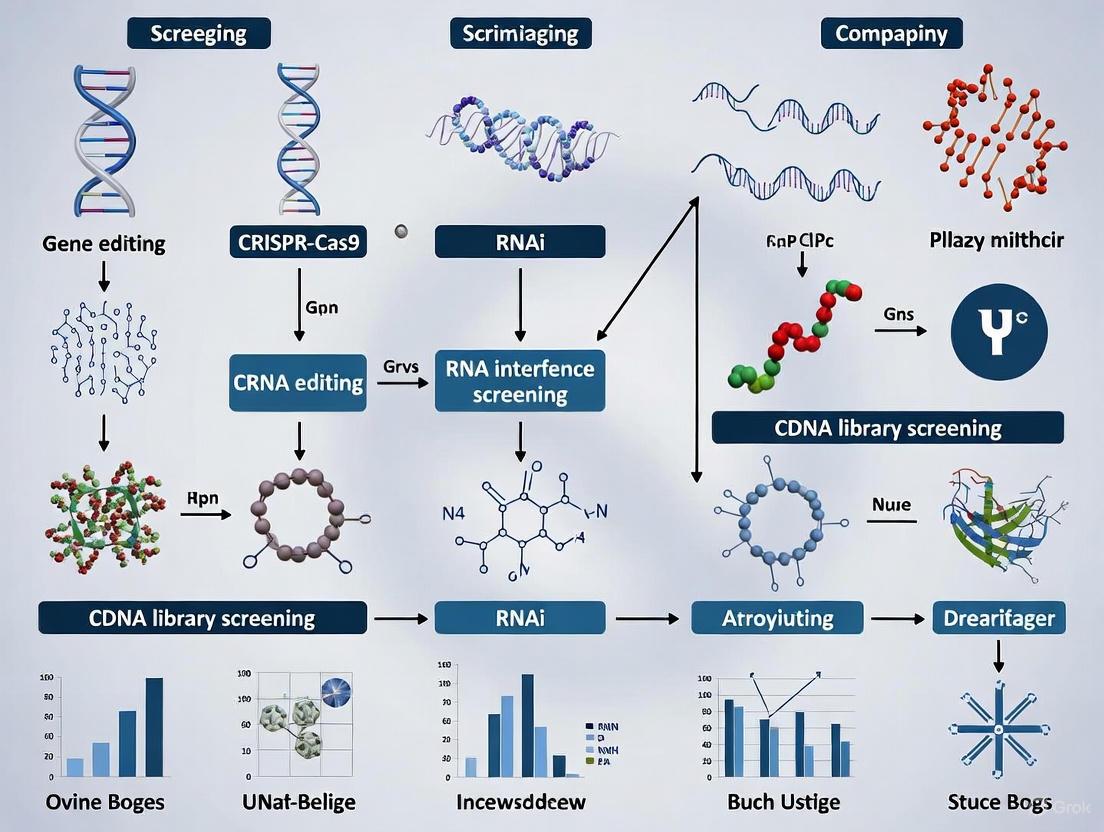
This article provides a comprehensive comparison of modern functional genomics screening strategies, tailored for researchers and drug development professionals.
Functional Genomics Screening Strategies in 2025: A Comparative Guide for Drug Discovery and Biomedical Research
Abstract
This article provides a comprehensive comparison of modern functional genomics screening strategies, tailored for researchers and drug development professionals. It covers foundational principles, core methodologies including CRISPR-based screens and NGS, practical troubleshooting for data and computational challenges, and rigorous validation frameworks. By synthesizing current market trends, technological innovations, and real-world applications, this guide serves as a strategic resource for selecting and optimizing screening approaches to accelerate target identification and therapeutic development.
The Functional Genomics Landscape: Core Principles and Market Drivers
Functional genomics is a field dedicated to bridging the critical gap between genetic information and biological meaning. It leverages data from genomics, transcriptomics, and other biological modalities to understand how genetic variation influences protein functions, gene regulation, and complex cellular processes [1]. The central challenge it addresses is that while generating genomic data has become routine, a substantial proportion of human genes—approximately 30% of the estimated 20,000 protein-coding genes—remain poorly characterized [1]. Furthermore, clinical sequencing often identifies genetic variants of uncertain significance, and genome-wide association studies have revealed that most disease-associated variants lie in non-coding regulatory regions, the functions of which are largely unknown [1]. Functional genomics addresses these gaps by systematically perturbing genes or regulatory elements and analyzing the resulting phenotypic changes, thereby moving beyond mere association to establish causal links between genotypes and phenotypes [2] [1].
Comparison of Functional Genomics Screening Platforms
The evolution of functional genomics has been driven by advances in technologies for targeted gene perturbation. Table 1 provides a detailed comparison of the primary screening platforms used for systematic functional interrogation.
Table 1: Comparison of Functional Genomics Screening Platforms
| Platform | Mechanism of Action | Key Strengths | Primary Limitations | Typical Screening Format | Best Suited For |
|---|---|---|---|---|---|
| RNAi (siRNA/shRNA) | Introduces dsRNA to trigger mRNA degradation and gene silencing [3]. | Well-established; viral vectors enable sustained silencing [3]. | High off-target effects; incomplete knockdown leads to false negatives [2]. | Arrayed or Pooled | Initial, lower-cost loss-of-function studies. |
| CRISPR-KO (Cas9) | Creates double-strand breaks, leading to frameshift indels and gene knockouts [2]. | High precision and efficiency; fewer off-target effects than RNAi; enables complete gene disruption [2]. | Limited to coding genes with reading frames; DNA break toxicity can confound results [2]. | Primarily Pooled | Gold standard for definitive loss-of-function screens. |
| CRISPRi (dCas9-KRAB) | Uses catalytically dead Cas9 fused to a repressor domain to block transcription [2]. | No DNA breaks; targets non-coding RNAs and enhancers; reversible knockdown [2]. | Knockdown is often incomplete (reversible). | Pooled | Essential gene studies; non-coding element screens. |
| CRISPRa (dCas9-Activator) | Uses dCas9 fused to activator domains (e.g., VP64, VPR) to enhance gene transcription [2]. | Enables gain-of-function studies without cDNA overexpression. | Potential for non-physiological overexpression effects. | Pooled | Gain-of-function and gene suppressor screens. |
Benchmarking Screening Performance: CRISPR Library Efficiency
A critical development in CRISPR-based functional genomics is the optimization of guide RNA (gRNA) libraries. Benchmark studies have systematically compared the performance of different genome-wide libraries to enhance screening efficiency and cost-effectiveness [4].
Experimental Protocol for Library Benchmarking
A standard protocol for benchmarking gRNA libraries involves several key steps [4]:
- Library Design: A benchmark library is assembled by compiling gRNA sequences from multiple established libraries (e.g., Brunello, Yusa v3, Toronto v3) targeting a defined set of genes. This set typically includes essential genes (categorized as early, mid, and late) and non-essential genes, as determined from reference databases [4].
- Cell Line Selection & Transduction: The pooled gRNA library is cloned into a viral vector and transduced at a low Multiplicity of Infection (MOI) into Cas9-expressing cell lines (e.g., HCT116, HT-29, A549) to ensure most cells receive only one gRNA.
- Phenotypic Selection: Transduced cells are cultured for multiple population doublings. Cells carrying gRNAs targeting essential genes are depleted over time, while those with non-targeting controls (NTCs) persist.
- Sequencing and Analysis: Genomic DNA is harvested at baseline and subsequent time points. The integrated gRNAs are amplified via PCR and quantified by next-generation sequencing. Depletion or enrichment of each gRNA is calculated as a log-fold change relative to the initial time point. Gene-level fitness effects are often modeled using algorithms like Chronos, which analyzes the time-series data [4].
Key Benchmarking Findings
Recent studies have yielded crucial insights for selecting and designing CRISPR libraries, summarized in Table 2 below.
Table 2: Performance Comparison of CRISPR gRNA Library Designs
| Library Design | Guides per Gene | Performance in Essentiality Screens | Advantages | Considerations |
|---|---|---|---|---|
| Large Libraries (e.g., Yusa v3) | ~6 | Strong depletion of essential genes [4]. | Robust data; well-validated. | Higher cost and sequencing burden [4]. |
| Small, Score-Optimized (e.g., Vienna-single) | 3 (selected by VBC score) | Equal or superior depletion compared to larger libraries [4]. | Cost-effective; enables screens in complex models (e.g., organoids, in vivo) [4]. | Relies on accurate on-target efficiency prediction. |
| Dual-Targeting Libraries | 2 pairs per gene | Stronger depletion of essentials than single-targeting [4]. | Can create definitive deletions; may compensate for less efficient guides. | May trigger a heightened DNA damage response, even in non-essential genes [4]. |
The evidence indicates that smaller, pruned libraries (e.g., 3 guides per gene) selected using advanced on-target efficacy scores like the Vienna Bioactivity CRISPR (VBC) score can perform as well as or better than larger legacy libraries [4]. This finding is critical for increasing the feasibility of screens in complex and physiologically relevant models where material is limited.
The Scientist's Toolkit: Essential Research Reagents
A successful functional genomics screen relies on a suite of key reagents and tools. The following table details the essential components of a modern CRISPR-based screening workflow.
Table 3: Key Research Reagent Solutions for CRISPR Screening
| Reagent / Solution | Function / Description | Key Considerations |
|---|---|---|
| Cas9 Nuclease | Engineered enzyme that induces a double-strand break at a specific DNA site [2]. | Different variants (e.g., SpCas9, HiFi Cas9) offer trade-offs between efficiency, specificity, and PAM requirements [5]. |
| Guide RNA (gRNA) Library | A pooled collection of synthetic RNAs that direct Cas9 to target genomic loci; the core of the screen [2] [6]. | Design (genome-wide vs. focused), size, and gRNA selection algorithm are critical for performance and cost [4]. |
| Viral Delivery Vector | Typically a lentivirus used to deliver the gRNA library stably into the target cell population [3] [2]. | Ensuring high titer and low MOI is essential for uniform library representation and avoiding multiple gRNAs per cell. |
| Cas9-Expressing Cell Line | A stable cell line that constitutively expresses the Cas9 nuclease, enabling efficient gene editing upon gRNA delivery. | Cell line choice must reflect the biological context of the research question (e.g., cancer type, relevant tissue origin). |
| Selection Antibiotics | Used to select for cells that have successfully integrated the viral vector carrying the gRNA library (e.g., puromycin) [2]. | Optimization of selection timing and concentration is required to achieve high representation of transduced cells. |
| Next-Generation Sequencing (NGS) Platform | Essential for the readout of pooled screens by quantifying gRNA abundance before and after selection [2]. | Requires sufficient sequencing depth to cover the entire library with high representation. |
Experimental Workflow of a Pooled CRISPR Screen
The following diagram illustrates the standard workflow for a pooled CRISPR knockout screen, from library design to hit identification.
Diagram: Pooled CRISPR Screen Workflow
Functional genomics has been revolutionized by CRISPR-based tools, which provide an unprecedented ability to systematically map gene function. The ongoing refinement of these tools—including the development of smaller, more efficient gRNA libraries, base editors for single-nucleotide changes, and prime editors for precise insertions and deletions—continues to enhance the precision and scope of functional genomics studies [2] [1]. Furthermore, the integration of single-cell readouts (e.g., Perturb-seq) and the application of screens in more physiologically relevant models like organoids and in vivo systems are paving the way for discoveries that are more directly translatable to human biology and disease treatment [2] [1]. As these technologies mature, they will undoubtedly accelerate the identification and validation of novel therapeutic targets, solidifying functional genomics as a cornerstone of modern biological research and drug discovery.
Article Contents
- Industry Overview and Growth Drivers: Examines the multi-billion dollar market size and key forces propelling the industry forward.
- Comparative Analysis of Screening Technologies: Objectively compares CRISPR, RNAi, and cDNA overexpression technologies using structured data.
- Experimental Protocols in Functional Genomics: Provides detailed methodologies for gain-of-function and loss-of-function screens.
- Essential Research Reagent Solutions: Lists key materials and tools used in functional genomics experiments.
The global genetic testing market, a core sector encompassing functional genomics, is anticipated to reach USD 24.45 billion in 2025, with forecasts projecting a climb to over USD 65 billion by 2034 [7]. This remarkable growth is fueled by sustained research and development (R&D) investment, which drives innovation in sequencing technologies, data analysis, and screening applications. The expansion is not uniform globally; while North America currently holds just over half of the global market share, the Asia-Pacific region is the fastest-growing market, expected to register a compound annual growth rate (CAGR) of 25.7% from 2024 to 2032 [7].
Several key trends and enablers are contributing to this growth trajectory:
- Technological Advancements: Next-generation sequencing (NGS) has become the standard, and long-read sequencing is gaining traction for its ability to identify structural changes and hard-to-detect variants. Furthermore, AI and machine learning are now integral, helping to comb through massive genomic datasets to find non-obvious patterns and links between genes and outcomes [7].
- Shift to Preventive Health: Genetic testing is evolving from a reactive tool to a central component of predictive health. By 2025, it is becoming routine for health systems to use genomic data to predict an individual's likelihood of certain health risks, allowing for early interventions [7].
- Rising Chronic Illness and Awareness: Increased rates of chronic illness and growing awareness of personalized medicine across all age groups are fueling demand for genetic insights [7].
Table: Key Market Growth Metrics
| Metric | Value | Source/Timeframe |
|---|---|---|
| Projected Market Value (2025) | USD 24.45 Billion | 2025 Forecast [7] |
| Projected Market Value (2034) | > USD 65 Billion | 2034 Forecast [7] |
| Fastest Growing Region | Asia-Pacific | 2024-2032 [7] |
| CAGR of Fastest Growing Region | 25.7% | 2024-2032 [7] |
Comparative Analysis of Screening Technologies
Functional genomics relies on several core technologies to systematically probe gene function. The main strategies involve loss-of-function (knockdown/knockout) and gain-of-function (overexpression) experiments [8] [9]. The choice of technology depends on the research question, desired duration of effect, and experimental scale.
CRISPR-Cas9 has revolutionized the field due to its simplicity, cost-effectiveness, and adaptability [5]. Unlike older methods, CRISPR uses a guide RNA (gRNA) to direct the Cas9 nuclease to a specific DNA sequence, making design rapid and straightforward. It is highly scalable and ideal for genome-wide pooled screens to identify essential genes and novel drug targets [5] [10]. However, it can be subject to off-target effects, though improved Cas enzymes are mitigating this risk [5].
RNA interference (RNAi), including siRNA and shRNA, is a well-established method for gene silencing. siRNAs are typically used for transient knockdown in arrayed screens, while shRNAs, especially when delivered via lentiviral vectors, allow for long-term, stable gene silencing [8] [3]. A key consideration is that RNAi acts at the mRNA level and may not achieve complete knockout, potentially leading to incomplete silencing and off-target effects [8].
cDNA Overexpression is used for gain-of-function screens. This approach involves introducing cDNA libraries into cells to ectopically express proteins and observe the resulting phenotypes [3]. While powerful for identifying genes that overcome a biological block or activate a pathway, it can lead to non-physiological artifacts due to supraphysiological expression levels [3].
Table: Comparison of Functional Genomics Screening Technologies
| Feature | CRISPR-Cas9 | RNAi (siRNA/shRNA) | cDNA Overexpression |
|---|---|---|---|
| Mechanism of Action | DNA-level knockout or knock-in via double-strand breaks and cellular repair [5]. | mRNA-level knockdown via degradation of target transcript [3]. | Protein-level overexpression of a gene of interest [3]. |
| Primary Application | Loss-of-function (KO), gain-of-function (CRISPRa), and functional genomics screens [5] [9]. | Transient (siRNA) or stable (shRNA) loss-of-function knockdown screens [8] [3]. | Gain-of-function screens to identify genes that induce a phenotype [3]. |
| Ease of Use & Scalability | Simple gRNA design; highly scalable for high-throughput and pooled screens [5] [10]. | Design is more complex than CRISPR; scalable, but arrayed screens require robotics [8]. | Library construction can be complex; scalable with viral delivery systems [3]. |
| Key Advantages | High efficiency, cost-effective, multiplexing capability, permanent genetic change [5]. | Well-established, effective transient knockdown (siRNA), stable silencing (shRNA) [8]. | Directly identifies genes that confer phenotypes or overcome pathway blocks [3]. |
| Key Limitations/Challenges | Potential for off-target effects; immune responses in therapeutic contexts [5]. | Incomplete knockdown; off-target effects due to miRNA-like activity [3]. | Non-physiological, artifact-prone results from overexpression [3]. |
Experimental Protocols in Functional Genomics
To ensure reproducible and reliable results, standardized experimental protocols are critical. The following sections detail common workflows for gain-of-function and loss-of-function screens.
Gain-of-Function Screening with cDNA Libraries
This protocol identifies genes that, when overexpressed, induce a desired phenotype (e.g., drug resistance, viral resistance) [3].
- Library Construction: Clone a cDNA library (e.g., from a relevant tissue or cell line) into a lentiviral or retroviral expression vector. These systems allow for efficient infection and stable integration into a wide variety of cell types, including non-dividing cells [3].
- Cell Transduction: Transduce the target cell population with the viral cDNA library at a low multiplicity of infection (MOI) to ensure most cells receive only one viral integrant.
- Phenotypic Selection: Apply a selective pressure or assay for the desired phenotype. For example, infect transduced cells with a virus (e.g., HIV-1) if the goal is to find host factors that restrict viral replication [3].
- Selection and Cloning: Isolate cells exhibiting the phenotype (e.g., via FACS sorting for GFP-negative cells if the virus carries a GFP reporter). Expand these resistant cells as clonal populations [3].
- Hit Identification: Recover the integrated cDNA from resistant clones through PCR amplification and sequencing. The identified gene is the "hit" responsible for the phenotype [3].
Loss-of-Function Screening with Pooled CRISPR Libraries
This protocol identifies genes whose knockout results in a change in cell fitness or survival under selective pressure [10].
- Library Selection & Virus Production: Choose a genome-wide or focused pooled CRISPR library consisting of a complex mix of lentiviral vectors, each encoding a specific gRNA. Produce high-titer lentivirus from this library [8] [10].
- Cell Transduction & Selection: Transduce a large population of cells (e.g., Cas9-expressing cells) with the lentiviral library at a low MOI to ensure each cell receives only one gRNA. Apply puromycin or another selective agent to eliminate untransduced cells [10].
- Selection Pressure: Split the cell population and apply a specific selective pressure (e.g., a drug treatment) to the experimental group, while maintaining a control group without selection.
- Genomic DNA Extraction & Sequencing: After a period of growth under selection, extract genomic DNA from both control and experimental cells. Amplify the integrated gRNA sequences by PCR and subject them to next-generation sequencing (NGS).
- Hit Confirmation: Identify gRNAs that are significantly enriched or depleted in the experimental group compared to the control. Genes targeted by these gRNAs are considered hits. These hits must be validated using orthogonal methods, such as individual gRNAs or alternative assays [10].
The following diagram illustrates the logical workflow and key decision points for selecting a functional genomics screening strategy.
Essential Research Reagent Solutions
A successful functional genomics screen depends on high-quality, well-validated reagents. The table below details key materials and their functions.
Table: Research Reagent Solutions for Functional Genomics Screening
| Reagent / Solution | Function in Screening | Key Considerations |
|---|---|---|
| siRNA/shRNA Libraries | Designed for RNAi-mediated gene knockdown. siRNA for transient effects, shRNA for stable silencing [8] [3]. | shRNA libraries are often delivered via lentivirus for stable integration. Multiple siRNAs per gene are needed to confirm on-target effects [8]. |
| CRISPR gRNA Libraries | Designed for CRISPR-Cas9-mediated gene knockout. Guide RNAs direct the Cas nuclease to specific genomic loci [5] [10]. | Available as pooled or arrayed formats. Minimal genome-wide libraries are now available, offering high efficiency with 50% fewer gRNAs [10]. |
| Lentiviral Vectors | A delivery system for stably introducing genetic material (e.g., shRNA, gRNA, cDNA) into a wide variety of cells, including primary and non-dividing cells [8] [3]. | Enables long-term, integrated expression. Production of arrayed lentiviral libraries is costly and technically challenging [8]. |
| cDNA/ORF Libraries | Collections of open reading frames (ORFs) for gain-of-function screens. Used to ectopically express proteins in cells [3]. | Can be delivered via plasmid or viral vectors. Viral delivery (e.g., lentivirus) expands the range of susceptible cell types [3]. |
| High-Content Imaging Systems | Automated microscopy platforms that collect quantitative, multi-parametric data on cellular phenotypes (e.g., morphology, protein localization) [3]. | Provides rich, contextual data beyond simple viability or reporter assays. Essential for complex phenotypic readouts [3]. |
The convergence of rising global chronic disease prevalence and advancements in genomic technologies is fundamentally reshaping the pharmaceutical and biotechnology research landscape. For researchers and drug development professionals, this shift necessitates a critical evaluation of functional genomics screening strategies. These strategies are pivotal for identifying novel therapeutic targets in an era increasingly defined by precision medicine. This guide provides a comparative analysis of key methodologies, focusing on their experimental protocols, data output, and applicability in bridging population health trends with targeted drug discovery. The rising burden of chronic conditions, which now affect a majority of the US adult population, underscores the urgent need for such innovative approaches [11] [12].
The Driving Forces: Data and Market Trends
The Chronic Disease Burden
Recent data reveals a significant and growing prevalence of chronic diseases, which is a primary driver for the personalized medicine sector. The table below summarizes key U.S. statistics from 2023.
Table 1: Prevalence of Chronic Conditions among U.S. Adults (2023) [11] [12]
| Condition or Category | Prevalence (%) | Notes |
|---|---|---|
| ≥1 Chronic condition | 76.4 | Represents ~194 million adults |
| ≥2 Chronic conditions (MCC) | 51.4 | Represents ~130 million adults |
| High cholesterol | 35.3 | |
| High blood pressure | 34.5 | |
| Obesity | 32.7 | |
| Depression | 20.2 | |
| Diabetes | 12.1 | |
| Cancer | 8.0 | |
| Heart disease | 6.5 |
This burden is not static. From 2013 to 2023, the prevalence of at least one chronic condition increased from 72.3% to 76.4%, with the most notable rises observed among young adults (aged 18-34), for whom the rate increased by 7.0 percentage points [11]. This trend indicates a pressing need for earlier therapeutic interventions and more effective, targeted treatments.
The Personalized Medicine Market
In response to these health challenges, the personalized medicine market is experiencing substantial growth, fueled by technological innovation and increased investment.
Table 2: Personalized Medicine Market Overview [13] [14] [15]
| Region / Segment | Market Size / Share | Growth (CAGR) | Timeframe |
|---|---|---|---|
| Global Market | $654.46B (2025) → $1,315.43B (2034) | 8.10% | 2025-2034 |
| U.S. Market | $169.56B (2024) → $307.04B (2033) | 6.82% | 2025-2033 |
| North America | 45% share (2024) | - | - |
| Personalized Genomics Segment | $12.57B (2025) → $52B (2034) | 17.2% | 2025-2034 |
| Oncology Application | 41.96% share (2024) | - | - |
Key drivers include advances in next-generation sequencing (NGS), rising demand for customized treatments, and supportive government policies. The integration of artificial intelligence (AI) and machine learning (ML) is further enhancing precision in diagnostics and treatment selection [13] [14].
Comparative Analysis of Functional Genomics Screening Strategies
A core challenge in oncology drug discovery is identifying tumor vulnerabilities and linking them to specific patient populations. Functional genomics screens, such as the landmark Project Achilles which screened 216 cancer cell lines against 11,000 genes, provide rich data for this purpose [16]. The analytical strategy applied to this data is critical. The following table compares two primary approaches.
Table 3: Comparison of Functional Genomics Screening Strategies [16]
| Feature | Pre-defined Group Analysis | Outlier Analysis |
|---|---|---|
| Core Principle | Compares groups of cell lines pre-defined by known genetic contexts (e.g., KRAS mutant vs. wild-type). | Identifies genes with exceptional sensitivity in subsets of cell lines without prior biological assumptions. |
| Hypothesis Basis | Hypothesis-driven; requires a priori knowledge. | Data-driven; agnostic to prior knowledge. |
| Key Advantage | Directly tests established biological mechanisms. | Unbiased discovery of novel or complex genetic contexts and vulnerabilities. |
| Key Limitation | Limited by completeness of biological knowledge; impractical to query all contexts. | Requires subsequent validation to elucidate the biological mechanism causing the outlier response. |
| Example Discovery | ARID1B as a vulnerability in ARID1A-mutant cancers [16]. | Identification of context-dependent essential genes like tumor suppressors with potential oncogenic roles [16]. |
Experimental Protocols for Outlier Analysis in Functional Genomics
Outlier analysis serves as a powerful, data-driven complement to pre-defined group comparisons. The following protocol is adapted from a study analyzing the Achilles (v2.4.3) ATARiS dataset [16].
This protocol aims to identify genes whose knockdown confers exceptional sensitivity to a subset of cell lines, indicating a potential therapeutic vulnerability. It employs three complementary statistical methods to ensure robust identification of outlier patterns.
Materials and Reagents
Table 4: Research Reagent Solutions for Functional Genomics Screening [16]
| Reagent / Tool | Function in the Experiment |
|---|---|
| Lentiviral shRNA Library | Delivers sequence-specific short hairpin RNAs (shRNAs) for stable gene knockdown in target cell lines. |
| Cancer Cell Line Panel | A diverse set of cell lines (e.g., 216 in Achilles) representing genetic heterogeneity across tumor types. |
| ATARiS Algorithm | Computational method to analyze shRNA data and generate gene-level dependency scores by filtering out off-target effects. |
| PACK (Profile Analysis using Clustering and Kurtosis) Software | Model-based pattern recognition algorithm to discover bimodal distribution in gene dependency profiles. |
| OS (Outlier Sum) Statistic Algorithm | Numerical method to identify genes with values outside a variability-based limit in a subset of samples. |
| GAP (Gap Analysis Procedure) Algorithm | A non-parametric method to identify genes where a group of sensitive lines is separated by a major "gap" from the bulk population. |
Step-by-Step Procedure
Data Acquisition and Pre-processing:
- Obtain gene-level dependency scores (e.g., ATARiS scores) from a genome-scale shRNA screen (e.g., Project Achilles) for a large panel of cancer cell lines.
- Format the data into a matrix where rows represent genes and columns represent cell lines.
Application of Outlier Detection Algorithms (Run in parallel):
- PACK Analysis:
- For each gene, determine the number of clusters in its dependency profile across cell lines.
- Select genes with a bimodal distribution.
- Compute the kurtosis of the two clusters. Focus on genes with positive kurtosis, where one cluster is a small "outlier" subgroup.
- Filter for genes where the outlier subgroup has increased vulnerability (lower ATARiS score).
- Outlier Sum (OS) Analysis:
- For each gene, calculate the OS statistic, which sums the values of cell lines falling outside a pre-determined range based on data variability.
- Assess the statistical significance (FDR ≤ 0.05) of the OS statistic using a permutation-based approach to estimate false discovery rates.
- Gap Analysis Procedure (GAP):
- For each gene, rank cell lines by their dependency score.
- Calculate the "gap-to-range ratio" (Q statistic) to identify genes where a subgroup of sensitive cell lines is separated by a large gap from the rest of the population.
- Determine statistical significance (FDR ≤ 0.05) via permutation testing.
- PACK Analysis:
Data Integration and Filtering:
- Take the union of outlier genes identified by the PACK, OS, and GAP methods.
- Apply a minimum group size filter (e.g., at least 5 cell lines in the outlier group) to avoid spurious hits from single outliers.
- The resulting gene list represents high-confidence vulnerabilities with an exceptional responder pattern.
Workflow Visualization
The following diagram illustrates the logical workflow and data flow for the outlier analysis protocol.
Government Initiatives as a Key Driver
Government agencies are actively creating a supportive ecosystem for precision medicine, directly impacting research directions and resources. A prominent example is the ARPA-H THRIVE (Treating Hereditary Rare Diseases with In Vivo Precision Genetic Medicines) program [17].
- Goal: Develop integrated platform technologies to accelerate the creation of affordable, scalable precision genetic medicines (PGMs) for both rare and common diseases.
- Focus Areas: The program seeks proposals across three modules: 1) platform development for rapid PGM iteration, 2) investigational medicine, and 3) real-world viability pilots and scaling. It specifically focuses on in vivo approaches and excludes gene supplementation therapy [17].
- Research Impact: Such initiatives provide critical funding and a regulatory framework that encourages the development of single-intervention, curative treatments, aligning closely with the goals of identifying high-value targets through functional genomics.
Furthermore, the U.S. Food and Drug Administration (FDA) has developed frameworks to expedite the approval of targeted therapies and companion diagnostics, creating a clearer pathway for discoveries from the lab to reach patients [13].
For the research community, the interplay between chronic disease prevalence, market growth in personalized medicine, and supportive government initiatives defines the current therapeutic development landscape. Within this context, the choice of functional genomics screening strategy is paramount. While pre-defined group analysis tests specific hypotheses, outlier analysis offers a powerful, unbiased strategy for novel target discovery. Its ability to pinpoint exceptional responders in genomic data is essential for realizing the goals of precision medicine—delivering the right treatment to the right patient at the right time. The ongoing growth in chronic diseases, particularly among younger populations, underscores the critical and timely nature of this research approach.
In functional genomics screening, the convergence of Next-Generation Sequencing (NGS), CRISPR-based gene editing, and Artificial Intelligence (AI) is creating a powerful, iterative cycle of discovery. This synergy is transforming how researchers decipher gene function, identify therapeutic targets, and understand disease mechanisms at an unprecedented scale and precision. The foundational relationship between these technologies is one of mutual reinforcement: CRISPR enables precise genetic perturbations, NGS measures the complex molecular outcomes, and AI models discern subtle, high-dimensional patterns from the resulting data, often leading to new, testable biological hypotheses.
The sections below provide a detailed comparison of their roles, supported by experimental data, protocols, and key research reagents.
Core Technologies and Their Synergistic Roles
The following table outlines the primary functions and contributions of each technology within the functional genomics workflow.
| Technology | Core Function in Functional Genomics | Key Input | Key Output | Impact on Workflow |
|---|---|---|---|---|
| CRISPR | Programmable genetic perturbation | Guide RNA (gRNA) designs | Genetically modified cells or organisms; phenotype data | Enables systematic high-throughput screening by creating defined genetic variants [5] [18] |
| NGS | Multiplexed molecular phenotyping | DNA/RNA libraries from CRISPR-edited samples | Genome-wide sequence, expression, and epigenetic data | Provides high-dimensional, unbiased readout of screening outcomes [19] |
| AI/ML | Predictive modeling and pattern recognition | NGS data and experimental parameters | Optimized gRNAs; novel editor designs; functional predictions | Accelerates design and interpretation, uncovering patterns beyond human discernment [20] [21] [22] |
Quantitative Comparison of Functional Genomics Screening Strategies
Different screening strategies leverage these technologies in distinct ways, each with advantages and limitations. The table below compares their performance based on key metrics.
| Screening Strategy | Typical Scale (Number of Perturbations) | Primary Readout | Key Advantages | Key Limitations | Representative AI Tool |
|---|---|---|---|---|---|
| CRISPR Knockout (e.g., CRISPR-Cas9) | Genome-wide (~20,000 gRNAs) | DNA sequencing (indel detection); cell viability | Directly interrogates gene essentiality; well-established | Off-target effects; confounding false positives in viability screens [5] | DeepCRISPR for off-target prediction [19] |
| CRISPR Activation/Inhibition (e.g., CRISPRa/i) | Targeted or genome-wide | RNA sequencing (transcriptomic changes) | Reveals gene overexpression effects; can study non-coding regions | Effects can be indirect and influenced by epigenetic context | R-CRISPR for gRNA design [19] |
| Single-Cell CRISPR Screens (Perturb-seq) | Hundreds to thousands | Single-cell RNA sequencing (scRNA-seq) | Resolves cell-to-cell heterogeneity; links perturbation to full transcriptome | High cost per cell; complex computational analysis | ChromFound for scATAC-seq data analysis [23] |
| AI-Generated Editor Screening (e.g., OpenCRISPR-1) | Custom (novel protein designs) | NGS-based activity & specificity profiling | Access to editors with novel properties (e.g., smaller size, higher fidelity) | Requires extensive functional validation in relevant models [20] | Protein language models (e.g., ProGen2) for de novo design [20] |
Experimental Protocols for an Integrated Workflow
A typical integrated functional genomics screen involves a cyclical process of design, execution, and analysis.
Protocol 1: High-Throughput CRISPR Knockout Screen with NGS Readout
- Step 1: gRNA Library Design and Cloning
- Methodology: A library of single-guide RNAs (sgRNAs) is designed to target every protein-coding gene in the genome (typically 3-5 gRNAs per gene). AI tools like DeepCRISPR or CRISPR-GPT are used to select gRNAs with maximal on-target efficiency and minimal off-target effects [19] [22]. The designed oligonucleotides are synthesized in a pooled format and cloned into a lentiviral Cas9 vector.
- Step 2: Delivery and Selection
- Methodology: The pooled lentiviral library is transduced into a cell line expressing Cas9 at a low multiplicity of infection (MOI ~0.3) to ensure most cells receive only one gRNA. Cells are selected with puromycin for several days to generate a representation of the library [18].
- Step 3: Phenotypic Selection and NGS Preparation
- Methodology: The selected cell population is divided into experimental groups (e.g., drug-treated vs. control) and passaged for 2-3 weeks. Genomic DNA is harvested at the start and end of the experiment. The gRNA sequences are amplified via PCR and prepared for NGS to track their relative abundance over time [18].
- Step 4: NGS and AI-Powered Data Analysis
- Methodology: The prepared libraries are sequenced on an NGS platform (e.g., Illumina). The read counts for each gRNA are compared between the initial and final time points. Depleted gRNAs in the final population indicate essential genes under the experimental condition. AI and machine learning models (e.g., MAGeCK) are used to statistically rank gene essentiality, correct for screen-level biases, and identify significant hits [19].
Protocol 2: In Vivo Functional Validation with AI-Designed Editors
- Step 1: AI-Driven Editor Design
- Methodology: As demonstrated with OpenCRISPR-1, a large language model (e.g., ProGen2) is fine-tuned on a massive dataset of natural CRISPR-Cas sequences (e.g., the CRISPR–Cas Atlas). The model is then prompted or conditioned to generate millions of novel, diverse protein sequences that are predicted to be functional nucleases [20].
- Step 2: In Vitro Activity and Specificity Screening
- Methodology: The genes for the AI-generated editors are synthesized and tested in human cells. Their editing activity and specificity are measured using NGS-based assays (e.g., GUIDE-seq or CRISPResso2) to quantify on-target efficiency and profile off-target sites [20] [19]. Top candidates are selected based on performance relative to benchmarks like SpCas9.
- Step 3: In Vivo Delivery and Efficacy Assessment
- Methodology: The lead candidate (e.g., OpenCRISPR-1) is packaged into delivery vehicles such as Lipid Nanoparticles (LNPs) and administered in vivo. For example, in a mouse model of hereditary transthyretin amyloidosis (hATTR), the editor is delivered systemically via intravenous injection. LNPs naturally accumulate in the liver, where the disease-associated TTR protein is primarily produced [24] [25].
- Step 4: NGS-Based Molecular Validation
Visualizing the Integrated Workflow and AI Architecture
The following diagrams illustrate the core experimental workflow and the underlying AI model architecture that powers modern functional genomics.
Integrated Functional Genomics Screening Workflow
AI Model Architectures in Genomics
The Scientist's Toolkit: Essential Research Reagent Solutions
Successful implementation of these integrated strategies relies on a suite of key reagents and tools.
| Reagent/Tool | Function | Example Product/Model |
|---|---|---|
| CRISPR-Cas9 Nuclease | Induces double-strand breaks in DNA for gene knockout. | Streptococcus pyogenes Cas9 (SpCas9) [18] |
| Base Editor | Enables precise single-nucleotide changes without double-strand breaks. | ABE8e, BE4max [21] |
| AI-Designed Editor | Provides novel editing proteins with optimized properties (size, fidelity). | OpenCRISPR-1 [20] |
| Lipid Nanoparticles (LNPs) | In vivo delivery vehicle for CRISPR components; targets liver. | Acuitas Therapeutics LNP [24] [25] |
| Lentiviral Vector | Efficient delivery of gRNA libraries for high-throughput screens. | pLentiCRISPR v2 [18] |
| NGS Library Prep Kit | Prepares DNA or RNA samples for high-throughput sequencing. | Illumina Nextera XT [19] |
| AI Design Assistant | AI agent for experimental design, gRNA selection, and troubleshooting. | CRISPR-GPT [22] |
| Variant Caller | Uses deep learning to identify genetic variants from NGS data with high accuracy. | DeepVariant [19] |
| Off-Target Analysis Tool | Detects and quantifies genome-wide off-target editing events from NGS data. | CRISPResso2 [19] |
| Single-Cell Foundation Model | Analyzes single-cell chromatin accessibility (scATAC-seq) data. | ChromFound [23] |
Functional genomics screening is a cornerstone of modern biological research and drug discovery, enabling the systematic identification of genes involved in specific biological pathways or disease states [26]. These screens employ forward genetics approaches, where researchers create genetic perturbations and observe resulting phenotypic changes to establish causal gene-phenotype relationships [26]. Over the past decade, the field has undergone significant technological evolution, moving from early models in yeast to RNA interference (RNAi) and now to CRISPR-based screening technologies [27].
The functional genomics market reflects this technological progression, with transcriptomics technologies—focused on studying the complete set of RNA transcripts—emerging as the dominant segment. Current market analysis indicates the global transcriptomics technologies market is poised to grow from USD 7.01 billion in 2024 to USD 12.79 billion by 2034, representing a compound annual growth rate (CAGR) of 6.24% [28]. This growth is largely driven by the expanding applications of transcriptomics in drug discovery, clinical diagnostics, and the development of personalized medicine [29] [28].
Table 1: Global Transcriptomics Technologies Market Overview
| Metric | 2024 Value | 2025 Value | 2034 Projected Value | CAGR (2025-2034) |
|---|---|---|---|---|
| Market Size | USD 7.01 Billion | USD 7.44 Billion | USD 12.79 Billion | 6.24% |
Technology Performance Comparison
The current functional genomics screening ecosystem primarily utilizes four main technological approaches, each with distinct advantages, limitations, and optimal use cases.
Comparative Analysis of Screening Technologies
Table 2: Functional Genomics Screening Technologies Comparison
| Technology | Mechanism of Action | Advantages | Limitations | Genome Coverage | Optimal Applications |
|---|---|---|---|---|---|
| Yeast Screening [27] | PCR-based gene disruption in S. cerevisiae or S. pombe | Well-annotated genome; high-throughput; conserved genes | Limited human homology; tolerates higher toxicant levels | All non-essential yeast genes | Toxicogenomics; conserved pathway analysis |
| RNA Interference (RNAi) [27] [30] | Post-transcriptional gene silencing via mRNA degradation | Applicable to many cell types; extensive library availability | Incomplete knockdown; significant off-target effects | Genome-wide at RNA level | Hypomorphic phenotypes; partial knockdown studies |
| CRISPR-Cas9 [27] [26] | Precise DNA cleavage creating knockout mutations | High specificity; permanent knockout; fewer off-target effects | Requires PAM sequence; potential DNA damage response | Genome-wide at DNA level | Essential gene identification; drug target discovery |
| Haploid Cell Screening [27] | Insertional mutagenesis in KBM7 or HAP1 cells | Extends yeast approach to human context | Limited to specific cell types; genomic integration bias | All human genes except chromosome 8 | Bacterial toxin mechanisms; viral host factors |
CRISPR vs. RNAi: Direct Performance Comparison
A systematic comparison of CRISPR-Cas9 and RNAi screens in the human K562 leukemic cell line provides crucial experimental evidence for technology selection [30]. Both technologies demonstrated high performance in detecting essential genes (AUC > 0.90), with similar precision at a 1% false positive rate (>60% of gold standard essential genes recovered) [30].
However, significant differences emerged in downstream analysis:
- CRISPR screens identified approximately 4,500 genes with growth phenotypes
- RNAi screens identified approximately 3,100 genes with growth phenotypes
- Only ~1,200 genes were identified by both technologies [30]
This discrepancy suggests these technologies provide complementary biological information, with each method uniquely suited to interrogate different biological processes.
Experimental Protocols and Methodologies
Pooled CRISPR Screening Workflow
The pooled CRISPR screening approach enables genome-wide functional interrogation in a single experiment [26]. The standard workflow consists of six key stages that ensure robust, interpretable results.
Detailed Protocol:
Library Design: Select sgRNAs targeting genes of interest. Current benchmarking studies indicate that libraries designed using Vienna Bioactivity CRISPR (VBC) scores outperform others, with the top 3 VBC guides per gene providing optimal efficiency [4]. Dual-targeting libraries (two sgRNAs per gene) show enhanced knockout efficiency but may trigger DNA damage response [4].
Viral Production: Package sgRNA plasmids into lentiviral particles. Proper titer determination is critical for achieving optimal multiplicity of infection (MOI ~0.3) to ensure most cells receive only one sgRNA [26].
Cell Transduction: Incubate target cells with lentiviral particles. Cas9-expressing cells are required; these can be pre-engineered or co-transduced [26].
Selection: Apply selective pressure (e.g., puromycin) for 1-2 weeks to eliminate non-transduced cells and ensure uniform library representation [26].
Phenotype Assay: Expose cells to experimental conditions (e.g., compound treatment, viability pressure). For pooled screens, this must be a binary assay that physically separates cells based on phenotype [26].
Sequencing & Analysis: Extract genomic DNA, amplify integrated sgRNAs, and perform next-generation sequencing. Computational tools like MAGeCK or Chronos analyze sgRNA enrichment/depletion to identify hit genes [4].
Transcriptomics Profiling via RNA-Seq
RNA sequencing has become the gold standard for transcriptome analysis, providing comprehensive gene expression quantification [29] [28]. The standard protocol involves:
Critical Steps and Parameters:
- Sample Collection: Snap-freeze tissues or stabilize cells in RNAlater. Extract total RNA using column-based methods [28].
- Quality Control: Assess RNA integrity number (RIN > 8 recommended) using bioanalyzer or similar systems [28].
- Library Preparation: Select mRNA via poly-A selection or remove ribosomal RNA via ribodepletion. Fragment RNA, synthesize cDNA, and add platform-specific adapters [29].
- Sequencing: Utilize Illumina platforms for high-throughput applications (≥30 million reads/sample for standard differential expression) [28].
- Alignment: Map reads to reference genome using STAR or HISAT2 aligners [31].
- Differential Expression: Employ statistical methods (DESeq2, edgeR) to identify significantly altered genes, followed by pathway enrichment analysis (GO, KEGG) [31].
Market Analysis and Application Segmentation
Transcriptomics Technologies Market Share
The dominance of transcriptomics in the functional genomics landscape is evidenced by its substantial market share and diverse applications across multiple sectors.
Table 3: Transcriptomics Market Segmentation and Forecast (2024-2034)
| Segmentation Category | Dominant Segment | Market Share (2024) | Fastest-Growing Segment | Projected CAGR |
|---|---|---|---|---|
| Technology [28] | Next-Generation Sequencing | Largest share in 2024 | Polymerase Chain Reaction | Significant |
| Application [29] [28] | Drug Discovery & Research | Largest share in 2024 | Clinical Diagnostics | Highest |
| End-User [29] [28] | Pharmaceutical & Biotechnology Companies | Largest share in 2024 | Academic & Government Institutes | Highest |
| Region [29] [28] | North America | Dominant position in 2024 | Asia Pacific | Fastest-growing |
Regional Market Distribution
North America currently dominates the transcriptomics technologies market, benefiting from extensive R&D investments, advanced healthcare infrastructure, and concentration of leading biotechnology and pharmaceutical companies [29] [28]. The Asia Pacific region is projected to be the fastest-growing market during the forecast period, driven by increasing numbers of pharmaceutical and biotechnology companies, rising healthcare expenditures, and growing research investments [29].
Essential Research Reagent Solutions
Successful functional genomics screens require carefully selected reagents and tools. The following table outlines critical components for establishing robust screening platforms.
Table 4: Essential Research Reagents for Functional Genomics Screening
| Reagent Category | Specific Examples | Function & Application |
|---|---|---|
| CRISPR Screening Tools [26] [4] | Brunello, GeCKO v2, Vienna-single libraries | Genome-wide sgRNA collections for systematic gene knockout |
| CRISPR Enzymes [26] | S. pyogenes Cas9, HiFi Cas9, Cas12a | Nucleases for precise DNA cleavage; engineered variants reduce off-target effects |
| Delivery Systems [26] | Lentiviral particles, lipid nanoparticles | Enable efficient sgRNA delivery across diverse cell types |
| Sequencing Platforms [28] [31] | Illumina NovaSeq X, Oxford Nanopore | High-throughput DNA/RNA sequencing for readout and analysis |
| Cell Culture Models [27] | Immortalized lines, iPSCs, primary cells | Biologically relevant systems for phenotypic assessment |
| Analysis Software [28] [31] | MAGeCK, Chronos, DESeq2, DeepVariant | Computational tools for screen deconvolution and data interpretation |
The functional genomics field continues to evolve rapidly, with several emerging technologies shaping its future trajectory:
Single-Cell and Spatial Technologies: Single-cell RNA sequencing and spatial transcriptomics are revolutionizing resolution in transcriptomics, enabling researchers to dissect cellular heterogeneity and map gene expression within tissue architecture [28] [31]. These approaches are particularly valuable in cancer research for identifying resistant subclones and understanding tumor microenvironments [31].
Artificial Intelligence Integration: AI and machine learning are transforming genomic data analysis, with tools like DeepVariant improving variant calling accuracy and AI models enabling better prediction of therapeutic responses from transcriptomic data [28] [31]. The recent $12 million Series A investment in Biostate AI exemplifies the growing recognition of AI's potential in transcriptomics [28].
CRISPR Library Optimization: Ongoing refinement of CRISPR libraries focuses on improved efficiency and reduced size. Recent benchmarking demonstrates that smaller libraries (3 guides/gene) designed using principled criteria like VBC scores perform as well or better than larger libraries, reducing costs and increasing feasibility for complex models [4].
In conclusion, transcriptomics maintains its dominant position in the functional genomics landscape due to its dynamic nature, comprehensive profiling capabilities, and expanding applications in personalized medicine. While CRISPR-based screening has emerged as the preferred method for systematic gene perturbation due to its precision and reliability, the complementary use of multiple technologies provides the most robust approach for identifying and validating gene-disease relationships. As technologies continue to advance and integrate with artificial intelligence, functional genomics screening will play an increasingly pivotal role in accelerating drug discovery and enabling precision medicine approaches.
Core Screening Technologies: From CRISPR to NGS and Multi-Omics Integration
Functional genomics screening with CRISPR-Cas technology has revolutionized systematic gene function analysis, enabling researchers to decipher complex genetic relationships in health and disease. Three primary modalities have emerged as powerful tools in the geneticist's arsenal: CRISPR knockout (CRISPRko), CRISPR interference (CRISPRi), and CRISPR activation (CRISPRa). Each approach offers distinct mechanisms and applications, from complete gene ablation to precise transcriptional control. CRISPRko utilizes the nuclease-active Cas9 to create double-strand breaks in DNA, resulting in permanent gene disruption through error-prone non-homologous end joining (NHEJ) repair. This often produces small insertions or deletions (INDELs) that can cause frameshift mutations and premature stop codons, effectively abolishing gene function [32]. In contrast, CRISPRi employs a nuclease-dead Cas9 (dCas9) fused to transcriptional repressor domains like KRAB to block transcription without altering the DNA sequence, while CRISPRa uses dCas9 fused to transcriptional activators to enhance gene expression [33].
The choice between these modalities depends on the biological question, with CRISPRko providing complete loss-of-function, CRISPRi enabling reversible gene suppression, and CRISPRa facilitating gain-of-function studies. Understanding their relative performances, optimal applications, and technical requirements is essential for researchers designing functional genomics screens. This guide provides a comprehensive comparison of these technologies, supported by experimental data and methodological protocols, to inform screening strategies in biomedical research and drug development.
Technology Comparison: Mechanisms and Applications
Molecular Mechanisms and Genetic Outcomes
The fundamental differences between CRISPR screening modalities stem from their distinct molecular mechanisms and resulting genetic outcomes. CRISPRko operates through DNA cleavage and repair, introducing permanent genetic changes. When a single sgRNA is used, Cas9-induced double-strand breaks are repaired via the error-prone NHEJ pathway, potentially resulting in small insertions or deletions (INDELs). If these INDELs are not multiples of three, they cause frameshift mutations that can lead to non-functional or truncated proteins. When two sgRNAs are employed, large genomic deletions can be achieved, effectively removing entire exons or functional domains [32]. This approach is particularly valuable for studying the function of specific protein domains without completely abolishing gene expression.
CRISPRi and CRISPRa, in contrast, provide reversible, epigenetic control of gene expression without altering the DNA sequence itself. CRISPRi functions through dCas9 fusion proteins that recruit repressive complexes to gene promoters. The most common approach fuses dCas9 to the KRAB (Krüppel-associated box) domain, which promotes heterochromatin formation and effectively silences transcription [33]. CRISPRa systems employ various strategies to recruit transcriptional activation machinery, including direct fusions to activator domains like VP64, protein scaffolds such as the SunTag system, and RNA scaffolds like the Synergistic Activation Mediator (SAM) [33]. These systems enable precise control over endogenous gene expression levels, making them ideal for studying dose-dependent gene effects and for probing genes where complete knockout would be lethal.
Performance Benchmarks and Experimental Comparisons
Recent benchmarking studies have quantitatively compared the performance of different CRISPR screening modalities in various experimental contexts. The development of optimized libraries has significantly enhanced screening performance, with metrics like dAUC (delta area under the curve) providing standardized measures for comparing essential gene detection capabilities.
Table 1: Performance Comparison of CRISPRko Libraries in Negative Selection Screens
| Library Name | sgRNAs per Gene | dAUC Value | ROC-AUC Value | Key Advantages |
|---|---|---|---|---|
| Brunello [34] | 4 | 0.80 | 0.98 | Best overall performance by dAUC metric |
| TKOv3 [34] | 4 | 0.78 | 0.97 | Strong performance in haploid cell lines |
| Avana [34] | 4 | 0.72 | 0.95 | Balanced performance across cell types |
| GeCKOv2 [34] | 6 | 0.58 | 0.94 | Early genome-wide library |
| Yusa v3 [4] | 6 | 0.65 | 0.93 | Good performance with more guides |
In negative selection screens, the optimized CRISPRko library Brunello demonstrated superior performance in distinguishing essential and non-essential genes, achieving a dAUC of 0.80 in A375 melanoma cells, compared to 0.58 for GeCKOv2 [34]. This improvement represents a greater performance leap than the previous transition from RNAi to early CRISPRko libraries. For CRISPRi, the Dolcetto library has been shown to achieve comparable performance to CRISPRko in detecting essential genes, despite using fewer sgRNAs per gene [34].
Dual-targeting strategies, where two sgRNAs target the same gene, have shown enhanced depletion of essential genes compared to single-targeting approaches. However, this benefit comes with a potential cost, as dual-targeting guides also exhibit a fitness reduction even in non-essential genes, possibly due to increased DNA damage response from creating twice the number of double-strand breaks [4]. This suggests that dual-targeting libraries should be used with caution in screens where DNA damage response could confound results.
When comparing CRISPRko to alternative technologies like shRNA, recent analyses of 254 cell lines revealed that shRNA outperforms CRISPR in identifying lowly expressed essential genes, while both platforms perform well for highly expressed essential genes but with limited overlap between hits [35]. This suggests that a combination of both platforms may provide the most comprehensive coverage for highly expressed essential genes.
Experimental Design and Workflow
High-Throughput Screening Protocols
Successful CRISPR screening requires meticulous experimental design and execution. The following protocol outlines a standard workflow for pooled CRISPR knockout screens:
Stage 1: Library Design and Selection
- Select an optimized sgRNA library based on experimental needs (e.g., Brunello for genome-wide knockout, MiniLib for compressed libraries)
- For gene-level screens, aim for 3-6 highly active sgRNAs per gene using prediction algorithms like VBC scores or Rule Set 3 [4]
- Include non-targeting control sgRNAs (minimum 1000) to establish baseline abundance distributions
- For dual-targeting approaches, design sgRNA pairs targeting the same gene with consideration of potential DNA damage response effects
Stage 2: Lentiviral Library Production and Transduction
- Clone the sgRNA library into appropriate lentiviral vectors (e.g., lentiGuide)
- Produce high-titer lentivirus using HEK293T or similar packaging cells
- Transduce target cells at a low MOI (∼0.3-0.5) to ensure most cells receive a single sgRNA
- Maintain minimum 500x coverage to ensure each sgRNA is represented in hundreds of cells
- Apply selection antibiotics (e.g., puromycin) for 3-7 days to remove uninfected cells
Stage 3: Screening Execution and Phenotypic Selection
- For dropout screens, passage cells for 2-3 weeks, maintaining minimum coverage throughout
- For chemical or genetic interaction screens, apply selective pressure (e.g., drug treatment) at appropriate concentrations
- Include untreated control populations cultured in parallel
- Harvest cells at multiple time points for time-series analyses
- Extract genomic DNA from minimum 500 cells per sgRNA to maintain representation
Stage 4: Sequencing and Data Analysis
- PCR-amplify integrated sgRNA cassettes from genomic DNA using barcoded primers
- Sequence amplified products on Illumina platforms to obtain sgRNA counts
- Calculate sgRNA depletion/enrichment using tools like MAGeCK or Chronos
- For gene-level analysis, aggregate scores across multiple sgRNAs targeting the same gene
- Compare experimental conditions to identify significantly altered genes [4] [34]
Specialized Methodologies for CRISPRi/a Screens
CRISPRi and CRISPRa screens follow similar overall workflows but require specific modifications:
Cell Line Engineering
- Stably integrate dCas9-KRAB (for CRISPRi) or dCas9-activator (for CRISPRa) into target cells using lentiviral transduction or other methods
- Select stable pools or clones with consistent dCas9 fusion expression
- For inducible systems, validate tight control of dCas9 expression without leakiness
Library Design Considerations
- Design sgRNAs to target promoter regions proximal to transcription start sites
- For CRISPRa, consider systems with enhanced activation capabilities (e.g., SAM, SunTag) for stronger phenotypes
- Include multiple negative controls (non-targeting sgRNAs) and positive controls (sgRNAs targeting essential genes)
Screen Optimization
- For CRISPRi, determine optimal sgRNA positioning relative to TSS through pilot tests
- For CRISPRa, test multiple activation systems to identify the most effective for your cell type
- Establish appropriate screening duration—typically shorter than CRISPRko screens due to reversible nature of perturbation [33]
dot code for screening workflow
Diagram 1: High-throughput CRISPR screening workflow showing four major stages from library design to data analysis.
Research Reagents and Tools
Essential Research Reagent Solutions
Table 2: Key Research Reagents for CRISPR Screening
| Reagent Category | Specific Examples | Function and Application | Performance Notes |
|---|---|---|---|
| CRISPRko Libraries | Brunello, Avana, TKOv3, Yusa v3, Vienna | Complete gene knockout; varies in sgRNAs per gene and performance | Brunello shows highest dAUC (0.80); Vienna offers compressed design [4] [34] |
| CRISPRi Libraries | Dolcetto | Gene repression via dCas9-KRAB; targets promoters | Performs comparably to CRISPRko in essential gene detection [34] |
| CRISPRa Libraries | Calabrese, SAM | Gene activation via dCas9-activator fusions | Calabrese outperforms SAM in resistance gene identification [34] |
| Cas9 Variants | Wild-type SpCas9, HiFi Cas9 | DNA cleavage for knockout; high-fidelity versions reduce off-targets | HiFi Cas9 improves specificity with minimal efficiency loss [34] |
| dCas9 Effectors | dCas9-KRAB, dCas9-VPR, SunTag-dCas9 | Transcriptional repression/activation without DNA cleavage | KRAB provides strong repression; VPR and SunTag enhance activation [33] |
| Delivery Systems | Lentiviral vectors, Lipid Nanoparticles (LNPs) | Introduce CRISPR components into cells | Lentiviral for stable integration; LNPs for transient delivery [25] |
| sgRNA Design Tools | CHOPCHOP, CRISPOR, FlashFry, GuideScan | Design and evaluate sgRNA efficiency and specificity | Varying computational performance; little consensus between tools [36] |
Computational Tools for Guide RNA Design
The selection of highly active, specific sgRNAs is crucial for successful CRISPR screens, and numerous computational tools have been developed for this purpose. A comprehensive benchmark of 18 design tools revealed wide variation in runtime performance, compute requirements, and guides generated [36]. Only five tools had computational performance that would allow analysis of an entire mammalian genome in reasonable time without exhausting computing resources. Tools also varied in their approach, with some using machine learning models trained on experimental data (e.g., CHOPCHOP, WU-CRISPR, sgRNAScorer2) while others employed procedural rules (e.g., Cas-Designer, CRISPOR) [36].
The most striking finding was the lack of consensus between tools, with different programs often recommending different sgRNAs for the same target. This suggests that improvements in guide design will likely require combining multiple approaches or developing new algorithms that integrate diverse prediction metrics. When designing sgRNAs for screening, researchers should consider using multiple tools and prioritizing sgRNAs with consistent high scores across different platforms.
Advanced Applications and Case Studies
Cell-Type-Specific Essentiality Mapping
Recent advances in CRISPR screening have enabled the mapping of genetic dependencies across diverse cellular contexts. A 2025 study used inducible CRISPRi to compare essentiality of mRNA translation machinery genes in human induced pluripotent stem cells (hiPS cells) and hiPS cell-derived neural and cardiac cells [37]. The screens revealed that while core components of the mRNA translation machinery were broadly essential, the consequences of perturbing translation-coupled quality control factors were highly cell-type dependent. Human stem cells critically depended on pathways that detect and rescue slow or stalled ribosomes, particularly the E3 ligase ZNF598 for resolving ribosome collisions at translation start sites [37].
This study demonstrated the power of comparative CRISPR screening across differentiation states, revealing how essential gene sets can be rewired during cellular specialization. The hiPS cells showed higher sensitivity to mRNA translation perturbations, with 200 of 262 (76%) genes scoring as essential compared to 176 (67%) in HEK293 cells, possibly linked to their exceptionally high global protein synthesis rates [37]. Such cell-type-specific dependencies represent potential therapeutic targets and highlight the importance of screening in relevant cellular contexts.
Therapeutic Target Discovery
CRISPR screens have proven invaluable for identifying new therapeutic targets, particularly in oncology. Genome-wide CRISPRko screens have identified novel dependencies in various cancer types, with hit validation rates significantly higher than previous RNAi-based approaches. For example, a CRISPR surface protein screen identified LRP4 as a key entry receptor for yellow fever virus, with soluble decoy receptors blocking infection in vitro and protecting mice in vivo [38]. Similarly, a CRISPR-Cas9 screen targeting chromatin regulators identified SETDB1 as essential for metastatic uveal melanoma cell survival, with SETDB1 inhibition curtailing tumor growth in vivo [38].
dot code for screening applications
Diagram 2: Diverse applications of CRISPR screening in biomedical research, ranging from basic biology to therapeutic development.
Chemical-Genetic Interaction Mapping
CRISPR screens have dramatically advanced our understanding of how small molecules interact with their cellular targets. Drug-gene interaction screens can identify both the direct targets of compounds and mechanisms of resistance. In a benchmark study, Vienna-single and Vienna-dual libraries showed the strongest resistance log fold changes for validated resistance genes in osimertinib screens in lung adenocarcinoma cells, outperforming the Yusa v3 library [4]. Dual-targeting libraries consistently exhibited the highest effect sizes in both lethality and drug-gene interaction contexts, though with a potential fitness cost even in non-essential genes [4].
These chemical-genetic interaction maps provide insights for drug development, including biomarker identification for patient stratification and combination therapy strategies. For example, genetic screens have identified 19S proteasomal subunit levels as predictive biomarkers for multiple myeloma patient response to the proteasome inhibitor carfilzomib, and revealed synergistic combinations such as PI3Kδ inhibitors with dexamethasone in B-cell precursor malignancies [33].
CRISPR screening technologies have matured significantly, with optimized libraries and protocols now enabling highly sensitive and specific genetic interrogation across diverse biological contexts. The choice between CRISPRko, CRISPRi, and CRISPRa depends on the specific research question, with CRISPRko providing the most complete loss-of-function, CRISPRi offering reversible suppression with fewer off-target effects, and CRISPRa enabling gain-of-function studies. Performance benchmarks demonstrate that well-designed libraries with fewer sgRNAs per gene can outperform larger libraries when guides are selected using principled criteria like VBC scores [4].
Future directions in CRISPR screening include the development of even more compact libraries without sacrificing performance, improved computational tools that combine multiple prediction algorithms for guide design, and the integration of single-cell readouts to capture complex phenotypes. As screening methods continue to evolve, they will further empower researchers to systematically decode gene function and identify novel therapeutic opportunities across human diseases.
Next-Generation Sequencing (NGS) has revolutionized genomics research by enabling the simultaneous sequencing of millions of DNA fragments, providing unprecedented capacity for analyzing genetic variations [39]. This transformative technology has fundamentally shifted approaches from single-gene analysis to comprehensive genomic profiling (CGP), allowing researchers to investigate entire genomes with remarkable speed and precision [40] [31]. Comprehensive Genomic Profiling represents a specific application of NGS that examines large panels of genes—sometimes hundreds—in a single assay, detecting diverse genomic alterations including single nucleotide variants (SNVs), insertions/deletions (indels), copy number variations (CNVs), and structural variants (SVs) [41] [42]. The versatility of NGS platforms has expanded the scope of genomics research, facilitating studies on rare genetic diseases, cancer genomics, microbiome analysis, infectious diseases, and population genetics [39].
The transition from conventional sequencing methods to NGS represents a paradigm shift in genomic analysis. Traditional Sanger sequencing, while highly accurate, processes only one DNA fragment at a time, making it laborious, costly, and time-consuming for large-scale analyses [40]. In contrast, NGS employs massively parallel sequencing architecture, enabling the concurrent analysis of millions of DNA fragments and providing markedly increased sequencing depth and sensitivity [40]. This comprehensive genomic coverage and higher capacity with sample multiplexing make NGS significantly more cost-effective for screening large numbers of samples and reliably detecting genes associated with disease formation and progression [40]. For complex diseases like cancer, which are driven by diverse and interacting genomic alterations, CGP provides clinically actionable molecular insights that guide diagnosis, prognostication, therapeutic selection, and monitoring of treatment response [40] [43].
NGS Technology Platforms and Their Comparative Performance
Major Sequencing Platforms
The NGS landscape is dominated by several major platforms, each with distinct technical approaches and performance characteristics. Illumina sequencing dominates second-generation NGS due to its exceptionally high throughput, low error rates (typically 0.1–0.6%), and attractive cost per base [40]. It uses sequencing-by-synthesis chemistry, enabling millions of DNA fragments to be sequenced in parallel on a flow cell [40]. Short reads (75–300 bp) provide high coverage and precision, making it suitable for genome resequencing, transcriptome profiling, and variant calling [40]. Oxford Nanopore Technologies (ONT) has introduced a distinctive approach with its nanopore sequencing, which involves directly reading single DNA molecules as they traverse a protein nanopore [40]. This method produces ultra-long reads (averaging 10,000–30,000 bp) and enables real-time sequencing, though with higher error rates that can spike up to 15% [39]. Pacific Biosciences (PacBio) employs single-molecule real-time (SMRT) sequencing technology, which uses a specialized SMRT cell containing numerous small wells called zero-mode waveguides (ZMWs) [39]. Individual DNA molecules are immobilized within these wells, emitting light as the polymerase incorporates each nucleotide, allowing real-time measurement of nucleotide incorporation with read lengths averaging 10,000–25,000 bp [39].
Performance Comparison of NGS Platforms
Table 1: Comparison of Major NGS Platforms and Their Performance Characteristics
| Platform | Technology | Read Length | Error Rate | Primary Applications | Key Limitations |
|---|---|---|---|---|---|
| Illumina | Sequencing-by-synthesis | 75-300 bp | 0.1-0.6% | Whole-genome sequencing, transcriptome analysis, targeted sequencing | May contain errors from signal deconvolution in overcrowded flow cells [39] |
| Oxford Nanopore | Nanopore sequencing | 10,000-30,000 bp | Up to 15% | Real-time sequencing, field sequencing, structural variant detection | Higher error rate compared to other platforms [39] |
| PacBio SMRT | Single-molecule real-time sequencing | 10,000-25,000 bp | ~13% (random errors) | De novo genome assembly, full-length transcript sequencing, epigenetic modification detection | Higher cost compared to other platforms [39] |
| Ion Torrent | Semiconductor sequencing | 200-400 bp | ~1% | Targeted sequencing, amplicon sequencing | Homopolymer sequences may lead to loss in signal strength [39] |
Table 2: NGS Platform Throughput and Data Output Comparison
| Platform | Throughput Capacity | Run Time | Maximum Output per Run | Optimal Use Cases |
|---|---|---|---|---|
| Illumina NovaSeq X | Very high | 1-3 days | Up to 16 Tb | Large-scale population studies, whole-genome sequencing projects [31] |
| Oxford Nanopore | Variable (portable to high-throughput) | Minutes to days | Depends on device (2.8 Gb - 100+ Gb) | Real-time analysis, field applications, hybrid sequencing approaches [31] |
| PacBio Sequel II/Revio | High | 0.5-2 days | 15-360 Gb | Complete genome assembly, isoform sequencing, complex variant detection [39] |
The selection of an appropriate NGS platform represents a critical strategic decision that directly influences the feasibility and success of a research project. Second-generation platforms (exemplified by Illumina) and third-generation technologies (including PacBio and Oxford Nanopore) constitute a major advance in sequencing throughput, read length, and analytical resolution compared to earlier methods [40]. Short-read technologies like Illumina provide high accuracy for single-nucleotide variant detection, while long-read platforms from PacBio and Oxford Nanopore excel at resolving complex genomic regions, detecting structural variations, and performing de novo genome assemblies without reference bias [40] [39]. The choice between these technologies depends on the specific research questions, with many advanced genomics laboratories now implementing integrated approaches that leverage the complementary strengths of multiple platforms [40].
Experimental Design and Methodologies for CGP
Comprehensive Genomic Profiling Workflow
Diagram 1: Comprehensive Genomic Profiling Workflow
The CGP workflow begins with sample collection, which can involve either tissue biopsies or liquid biopsies (blood samples) [41]. Tissue biopsy remains the gold standard for genomic testing of solid tumors as it allows analysis of both genomic changes and histological markers directly from the tumor [41]. However, liquid biopsy using circulating tumor DNA (ctDNA) has emerged as a minimally invasive alternative that expands access to patients for whom tissue biopsy may not be feasible and provides additional information about tumor heterogeneity [41]. For reliable results, specimens should contain sufficient tumor content, with most protocols recommending at least 25% tumor nuclei in the selected areas [43]. Following sample collection, nucleic acid extraction isolates DNA and RNA from the specimen, with quality control measures ensuring adequate quantity and purity for downstream applications [44].
Library preparation involves fragmenting the DNA, repairing ends, and ligating platform-specific adapters [44]. This critical step can introduce biases, particularly in PCR-dependent protocols where over-amplification can distort sequence heterogeneity and lead to loss of rare input molecules [44]. Target enrichment strategies, primarily hybridization-based capture or amplicon-based approaches, focus sequencing resources on genomic regions of interest [45]. Hybridization-based capture uses oligonucleotide probes to capture specific regions and offers flexibility in panel design, while amplicon approaches use PCR to amplify targets and generally require less input DNA [45]. The enriched libraries are then sequenced on an appropriate NGS platform, with the choice depending on the required coverage depth, read length, and application [40]. The resulting data undergoes bioinformatic analysis including alignment to a reference genome, variant calling, and annotation, culminating in interpretation and reporting of clinically actionable findings [43].
Key Quality Control Metrics and Performance Optimization
Table 3: Essential Quality Control Metrics for NGS Experiments
| Quality Metric | Definition | Optimal Range | Impact on Data Quality |
|---|---|---|---|
| Depth of Coverage | Number of times a base is sequenced | Varies by application (typically 100-200X for somatic variants) | Higher coverage increases confidence in variant calling, especially for low-frequency variants [45] |
| On-target Rate | Percentage of reads mapping to target regions | >70% for hybrid capture panels | Indicates probe specificity and enrichment efficiency; low rates suggest suboptimal probe design or hybridization [45] |
| Duplicate Rate | Percentage of redundant reads | <20% for whole genomes; <30-50% for exomes | High rates indicate PCR over-amplification or insufficient library complexity; duplicates are removed during analysis [45] |
| GC Bias | Uneven coverage of GC-rich/AT-rich regions | Minimal deviation from expected distribution | High bias can lead to coverage gaps; introduced during library preparation or hybrid capture [45] |
| Fold-80 Base Penalty | Measure of coverage uniformity | Closer to 1 indicates better uniformity | Values >1.5 indicate uneven coverage, requiring more sequencing to cover all targets adequately [45] |
Accurate DNA quantification represents a critical foundational step in NGS library preparation. Traditional methods like UV spectrophotometry (Nanodrop) or fluorometry (Qubit) provide concentration measurements but lack the sensitivity needed for low-input samples [44]. Digital PCR technologies, including droplet digital PCR (ddPCR), have emerged as superior alternatives that enable absolute quantification of DNA molecules without requiring standard curves [44]. In one comprehensive comparison, ddPCR-based quantification demonstrated superior sensitivity and reliability compared to traditional methods, with a strong correlation between expected and observed measurements (R² = 0.9923, p < 0.0001) [44]. The adaptation of universal probe technologies to ddPCR platforms (ddPCR-Tail) further enhanced quantification accuracy by allowing precise measurement without prior knowledge of the intervening sequence between primers [44].
For hybridization-based target enrichment, several parameters require optimization to ensure optimal performance. Probe design must consider GC content, repetitive elements, and specificity to minimize off-target capture [45]. The hybridization conditions including temperature, duration, and buffer composition significantly impact capture efficiency and specificity [45]. Library input amounts must balance sufficient material for robust detection against over-amplification that introduces duplicates and biases [45]. Post-capture PCR cycle numbers should be minimized to preserve library complexity while generating adequate material for sequencing [45]. Systematic monitoring and optimization of these parameters using the quality metrics in Table 3 enables researchers to achieve comprehensive coverage of genomic targets while conserving resources.
Applications in Cancer Genomics and Variant Discovery
Comprehensive Genomic Profiling in Oncology Research
Comprehensive Genomic Profiling has become indispensable in oncology research, where it enables simultaneous detection of diverse genomic alterations across hundreds of cancer-related genes [42]. CGP facilitates the identification of therapeutic biomarkers including actionable mutations (e.g., EGFR, KRAS, ALK), immunotherapy biomarkers (e.g., PD-L1, tumor mutational burden [TMB], microsatellite instability [MSI]), and prognostic markers that inform disease course and treatment response [40] [42]. The comprehensive nature of CGP reveals a greater number of druggable targets compared to limited gene panels—47% versus 14% in one analysis—significantly expanding therapeutic options for patients [43]. In a prospective study of 10,000 patients with advanced cancer across diverse solid tumor types, CGP identified potentially actionable genomic alterations in a substantial proportion of cases, demonstrating its utility in both clinical and research contexts [42].
The application of CGP extends beyond single-disease contexts, spanning hematological malignancies and solid tumors [40]. In non-small cell lung cancer (NSCLC), for example, more than a dozen therapies targeting different mutations across several genes have been developed, making CGP particularly valuable for streamlining clinical investigation [41]. Similarly, in breast cancer, CGP can detect germline mutations in BRCA1 and BRCA2 genes associated with predisposition to aggressive disease subtypes, identifying patients who may benefit from PARP inhibitor therapy [41]. The technology also enables detection of tumor-agnostic biomarkers such as MSI-High, TMB-High, and NTRK fusions that have received pan-cancer approval for targeted therapies, facilitating basket trials and histology-agnostic treatment approaches [43].
Research Findings and Clinical Validation
Table 4: Key Findings from CGP Implementation Studies
| Study Cohort | Alterations Detected | Actionable Findings | Clinical Impact |
|---|---|---|---|
| 1,000 patients (Indian cohort) [43] | 1,747 genomic alterations (mean 1.7/sample); 55+ RNA alterations | 80% with therapeutic/prognostic alterations; 16% with immunotherapy biomarkers; 13.5% with HRR pathway alterations | 43% overall change in therapy; 71% survival at 18-month follow-up after therapy change |
| 10,000 patients (MSK-IMPACT) [42] | Diverse alteration spectrum across solid tumors | 37% with actionable alterations | Informed targeted therapy selection and clinical trial eligibility |
| 339 patients (refractory cancers) [42] | Multiple alteration types across ovarian (18%), breast (16%), sarcoma (13%) cancers | Tier I: 32%; Tier II: 50% | Demonstrated utility in advanced, treatment-resistant malignancies |
Recent large-scale studies have demonstrated the substantial impact of CGP on cancer research and treatment. In an analysis of 1,000 patients with diverse malignancies, CGP revealed a unique genomic landscape with significant implications for therapeutic targeting [43]. The study detected tumor mutational burden (TMB) and microsatellite instability (MSI) in 16% of the cohort, enabling immunotherapy initiation based on these biomarkers [43]. alterations in the homologous recombination repair (HRR) pathway, including somatic BRCA mutations (5.5%), were identified in 13.5% of patients, providing options for treatment with platinum-based chemotherapy or PARP inhibitors [43]. Other significant alterations included those in EGFR, KRAS/BRAF, PIK3CA, cKIT, PDGFRA, and various chromatin remodeling genes (ARID1A, ARID2) [43]. RNA sequencing complemented DNA analysis by detecting 55+ RNA alterations, including clinically relevant fusions (TMPRSS-ERG, EML4-ALK, NTRK) that would have been missed by DNA-only approaches [43].
The research implementation of CGP has demonstrated significant functional outcomes. When results were reviewed in a multidisciplinary molecular tumor board, the treatment regimen was changed for 32% of patients based on genomic findings [43]. At interim analysis with a median follow-up of 18 months after therapy modification, 71% of these patients were alive, establishing the importance of CGP in personalized genomics-driven treatment [43]. The overall change in therapy based on CGP in the clinical cohort was 43%, which was greater in patients enrolled for molecular tumor board review than in those who had not undergone such review [43]. These findings underscore the value of integrating CGP with interpretive expertise to maximize its research and potential clinical utility.
Essential Research Reagent Solutions
Critical Materials for NGS Experimental Workflows
Table 5: Essential Research Reagents for Comprehensive Genomic Profiling
| Reagent Category | Specific Examples | Function in Workflow | Performance Considerations |
|---|---|---|---|
| Nucleic Acid Extraction Kits | QIAamp DNA FFPE Tissue Kit, AllPrep DNA/RNA Kit | Isolation of high-quality DNA and RNA from various sample types | Yield, purity (A260/280 ratio), fragment size distribution, inhibition removal [43] |
| Library Preparation Kits | Illumina DNA Prep, KAPA HyperPrep, NEBNext Ultra II | Fragmentation, end repair, adapter ligation, size selection | Efficiency, bias introduction, hands-on time, compatibility with downstream steps [45] |
| Target Enrichment Panels | Illumina TruSight Oncology 500, FoundationOne CDx, custom panels | Hybridization-based capture of genomic regions of interest | Coverage uniformity, on-target rate, panel comprehensiveness, variant type coverage [42] [43] |
| Quantification Reagents | Qubit dsDNA HS Assay, ddPCR Supermix, Library Quantification Kits | Accurate measurement of DNA concentration before sequencing | Sensitivity, specificity, dynamic range, resistance to inhibitors [44] |
| Sequencing Reagents | Illumina SBS Kits, PacBio SMRTbell Kits, Nanopore Flow Cells | Template amplification and nucleotide incorporation during sequencing | Read length, output, error profiles, run time, cost per base [40] [39] |
The selection of appropriate research reagents represents a critical determinant of success in comprehensive genomic profiling workflows. Nucleic acid extraction methods must be tailored to specific sample types, with formalin-fixed paraffin-embedded (FFPE) tissues requiring specialized approaches to address cross-linking and fragmentation [43]. For library preparation, the choice between PCR-free and PCR-dependent methods involves trade-offs between minimizing amplification biases and obtaining sufficient material from low-input samples [45]. Hybridization-based target capture reagents must demonstrate high specificity and efficiency to ensure adequate coverage of desired genomic regions while minimizing off-target sequencing [45]. Commercial comprehensive genomic profiling tests such as the FoundationOne Liquid CDx (profiling 324 genes), Guardant360 CDx (55 genes), and TruSight Oncology 500 (523 genes) provide standardized solutions that have been analytically validated across multiple sample types [41] [43].
Quality Control and Validation Reagents
Robust quality control throughout the NGS workflow requires specialized reagents and approaches. DNA quantification methods have evolved from traditional spectrophotometry toward more precise digital PCR-based approaches that provide absolute molecule counts without requiring standard curves [44]. Techniques like droplet digital PCR (ddPCR) enable sensitive quantification by analysis of barcode repartition after sequencing of multiplexed samples, with studies demonstrating strong correlation between expected and observed measurements (R² = 0.9999; p < 0.0001) [44]. For library quality assessment, fragment analyzers and bioanalyzers provide size distribution profiles that inform the success of library preparation and the absence of adapter dimers or other artifacts [44]. Hybridization efficiency can be monitored using spike-in controls with known concentrations that enable precise measurement of capture efficiency and identification of potential failures early in the workflow [45]. Implementation of these quality control measures with appropriate reagents ensures the generation of reliable, reproducible genomic data suitable for research and potential clinical applications.
Emerging Trends and Future Directions
The field of comprehensive genomic profiling continues to evolve rapidly, with several emerging trends shaping its future applications in research. Multi-omics integration represents a significant advancement, combining genomic data with transcriptomic, epigenomic, proteomic, and metabolomic information to provide a more comprehensive understanding of biological systems [46] [31]. This integrative approach is particularly valuable for complex diseases like cancer, where genetics alone does not provide a complete picture of disease mechanisms and therapeutic opportunities [31]. The year 2025 is anticipated to mark a revolution in genomics, driven by the power of multiomics and artificial intelligence, with multiomics becoming the new standard for research [46]. By combining genetic, epigenetic, and transcriptomic data, researchers can uncover the full complexity of biological systems, transforming our understanding of health, disease, and potential interventions [46].
Artificial intelligence and machine learning are playing an increasingly important role in genomic data analysis, helping researchers uncover patterns and insights that traditional methods might miss [31]. AI tools like Google's DeepVariant utilize deep learning to identify genetic variants with greater accuracy than traditional methods, while machine learning models analyze polygenic risk scores to predict disease susceptibility and treatment response [31]. The integration of AI with multiomics data has further enhanced its capacity to predict biological outcomes, contributing to advancements in precision medicine [31]. Spatial genomics and transcriptomics represent another frontier, enabling direct sequencing of cells within their native tissue context and empowering a new wave of biological insights [46]. The year 2025 is poised to be a breakthrough year for spatial biology, with new high-throughput sequencing-based technologies enabling large-scale, cost-effective studies that comprehensively assess cellular interactions in the tissue microenvironment [46].
The decreasing costs of sequencing and development of more efficient platforms continue to make comprehensive genomic profiling increasingly accessible. The emergence of the $100 genome is expanding the scope of large-scale genomic studies, while long-read sequencing technologies are overcoming previous limitations in accuracy and throughput [46]. Liquid biopsy approaches are advancing to enable sensitive detection of minimal residual disease and early cancer detection, with technologies now capable of finding the 'needle in a haystack' without added cost [46]. These technological advancements, combined with improved bioinformatics pipelines and growing genomic databases, promise to further establish comprehensive genomic profiling as an indispensable tool for genomic discovery across diverse research applications.
The profound cellular heterogeneity within tissues and organs has long been a central challenge in biomedical research. Traditional bulk sequencing approaches, which average gene expression across thousands to millions of cells, obscure the unique transcriptional states of individual cells and their spatial organization within functional tissue units. The advent of single-cell RNA sequencing (scRNA-seq) marked a revolutionary advancement, enabling researchers to dissect complex tissues at cellular resolution and uncover previously hidden cell subtypes, states, and developmental trajectories [47]. However, a significant limitation remained: the required tissue dissociation process completely destroys crucial spatial information about the original tissue architecture and cellular microenvironments [48]. This spatial context is biologically critical, governing cellular communication, differentiation, and function in processes ranging from embryonic development to cancer progression.
Spatial transcriptomics (ST) has emerged as a transformative solution to this challenge, bridging the gap between high-resolution molecular profiling and anatomical context. By preserving the spatial localization of RNA molecules within intact tissue sections, these technologies enable researchers to map gene expression patterns directly onto tissue morphology, revealing how cellular heterogeneity is organized into functional tissue units [49] [48]. The rapid evolution of both sequencing-based and imaging-based spatial technologies has created an expanding landscape of commercial platforms, each with distinct strengths in resolution, sensitivity, gene throughput, and workflow requirements. This guide provides an objective comparison of these technologies, supported by recent experimental benchmarking data, to equip researchers with the information needed to select optimal strategies for resolving cellular heterogeneity in their specific research contexts.
Spatial transcriptomics technologies can be broadly categorized into two principal approaches: imaging-based and sequencing-based methods. While both aim to localize gene expression within tissue architecture, their underlying biochemical principles, instrumentation requirements, and analytical outputs differ significantly.
Imaging-Based Spatial Transcriptomics
Imaging-based technologies employ variations of single-molecule fluorescence in situ hybridization (smFISH) to visualize and quantify RNA molecules directly within fixed tissues through sequential rounds of hybridization and imaging [50] [48]. These methods typically use gene-specific probes coupled with fluorescent barcodes, allowing for highly sensitive detection at subcellular resolution. The following table summarizes the core technological differences between major commercial imaging-based platforms.
Table 1: Core Technology Comparison of Major Imaging-Based Platforms
| Platform | Core Technology | Probe Design | Signal Amplification | Barcoding Strategy |
|---|---|---|---|---|
| Xenium (10x Genomics) | Hybrid ISS/ISH | Padlock probes (∼8 per gene) | Rolling circle amplification (RCA) | Optical signature (8 rounds) |
| MERFISH/MERSCOPE (Vizgen) | smFISH-based | 30-50 primary probes per gene | No amplification (high probe density) | Binary barcode (presence/absence per round) |
| CosMx (NanoString/Bruker) | smFISH-based | 5 gene-specific primary probes | Branched readout domain | Combinatorial (4 colors × 16 positions) |
| Molecular Cartography (Resolve Biosciences) | smFISH-based | Not specified | Not specified | Not specified |
The Xenium platform utilizes a padlock probe design that undergoes ligation upon target binding, forming circular DNA templates that are then amplified via rolling circle amplification to enhance signal detection. Fluorescently labeled readout probes are hybridized in multiple rounds (typically 8), with each round contributing to a unique optical signature for gene identification [50]. MERFISH employs a different strategy, assigning each gene a unique binary barcode represented by the presence or absence of fluorescence across multiple hybridization rounds. This approach requires 30-50 primary probes per gene but enables error correction through its combinatorial scheme [50]. CosMx combines elements of both approaches, using fewer primary probes (5 per gene) but incorporating a positional dimension in its readout strategy across 16 hybridization rounds, with signal enhancement through branched nucleic acid structures [50] [48].
Sequencing-Based Spatial Transcriptomics
In contrast to imaging-based methods, sequencing-based approaches capture RNA molecules onto spatially barcoded arrays followed by next-generation sequencing (NGS) to decode both gene identity and spatial location [50]. These methods generally offer more unbiased transcriptome coverage but have historically faced limitations in spatial resolution.
Table 2: Core Technology Comparison of Major Sequencing-Based Platforms
| Platform | Spatial Barcoding | Capture Method | Resolution (Spot/Feature Size) | Workflow Options |
|---|---|---|---|---|
| 10x Visium | Spotted oligo-dT probes | mRNA binding to poly(dT) | 55 μm | Fresh frozen & FFPE (with CytAssist) |
| Visium HD | Spotted oligo-dT probes | Probe hybridization & ligation | 2 μm | FFPE-optimized |
| Stereo-seq | DNA nanoball (DNB) arrays | mRNA binding to poly(dT) | 0.5 μm center-to-center | Fresh frozen & FFPE |
| GeoMx DSP | UV-cleavable barcoded probes | ROI selection with UV cleavage | User-defined ROI (∼10-1000 cells) | FFPE & fresh frozen |
The original 10x Visium platform features spatially barcoded RNA-binding probes with oligo-dT sequences attached to a glass slide in 55 μm spots. For Visium HD, the spot size is reduced to 2 μm, significantly enhancing single-cell resolution [50]. Both Visium platforms now support formalin-fixed paraffin-embedded (FFPE) samples through a modified workflow utilizing the CytAssist instrument for probe transfer [50]. Stereo-seq employs DNA nanoball (DNB) technology, where circularized oligonucleotides are amplified into DNBs and patterned into arrays with much higher density (0.5 μm center-to-center distance), enabling nanoscale resolution [50]. The GeoMx Digital Spatial Profiler uses a different approach, allowing researchers to select regions of interest (ROIs) through microscopy followed by UV-cleavage of oligonucleotide barcodes that are collected and sequenced, providing flexibility in resolution but requiring pre-selection of tissue regions [50].
Figure 1: Core Workflows for Spatial Transcriptomics Technologies. Imaging-based methods (red) use cyclic hybridization and imaging, while sequencing-based approaches (blue) rely on spatial barcoding and NGS.
Performance Benchmarking: Experimental Data Comparison
Recent systematic benchmarking studies have provided critical objective data on the performance characteristics of major spatial platforms under controlled conditions using matched tissue samples. These evaluations reveal platform-specific strengths and limitations across key metrics including sensitivity, resolution, and concordance with orthogonal validation methods.
Platform Performance Across Tissue Types
A comprehensive 2025 study compared CosMx (1,000-plex), MERFISH (500-plex), and Xenium (289-plex + 50 custom genes) using formalin-fixed paraffin-embedded (FFPE) surgically resected lung adenocarcinoma and pleural mesothelioma samples in tissue microarrays (TMAs) [49]. The study design enabled direct comparison of transcript detection efficiency, cell segmentation accuracy, and concordance with bulk RNA sequencing and multiplex immunofluorescence data.
Table 3: Performance Metrics Across Imaging-Based Platforms from Controlled Benchmarking [49]
| Performance Metric | CosMx | MERFISH | Xenium (Unimodal) | Xenium (Multimodal) |
|---|---|---|---|---|
| Transcripts/Cell | Highest (p < 2.2e-16) | Lower in older tissues | Intermediate | Lowest (p < 2.2e-16) |
| Unique Genes/Cell | Highest (p < 2.2e-16) | Variable by tissue age | Intermediate | Lowest |
| Negative Control Performance | Some target genes at negative control levels | No negative controls in panel | Excellent (0-2 target genes at control levels) | Excellent |
| Cell Segmentation | Manufacturer algorithm with filtering | Manufacturer algorithm | Manufacturer algorithm (two modalities) | Manufacturer algorithm (two modalities) |
| Tissue Coverage | Limited (545 μm × 545 μm FOVs) | Whole tissue | Whole tissue | Whole tissue |
This evaluation revealed that CosMx detected the highest number of transcripts and uniquely expressed genes per cell across all tissue microarrays, though it showed limitations in tissue coverage due to its field-of-view (FOV) based imaging approach [49]. Notably, the study identified issues with certain target gene probes in the CosMx panel (including important markers like CD3D, CD40LG, and FOXP3) that expressed at levels similar to negative controls, particularly in the more recently collected MESO2 samples (31.9% of target genes) [49]. Xenium demonstrated excellent specificity with minimal target genes expressing at negative control levels, though its unimodal segmentation mode consistently outperformed multimodal segmentation in transcript detection [49].
High-Throughput Platform Comparison
A separate 2025 benchmarking study evaluated four high-throughput platforms with expanded gene panels—Stereo-seq v1.3, Visium HD FFPE, CosMx 6K, and Xenium 5K—using serial sections from human colon adenocarcinoma, hepatocellular carcinoma, and ovarian cancer samples [51]. This study established orthogonal ground truth datasets through CODEX multiplexed protein imaging and scRNA-seq on the same samples, enabling rigorous assessment of sensitivity and specificity.
Table 4: High-Throughput Platform Performance Comparison [51]
| Platform | Technology Type | Gene Panel Size | Resolution | Sensitivity vs. scRNA-seq | Remarks |
|---|---|---|---|---|---|
| Stereo-seq v1.3 | Sequencing-based | Whole transcriptome | 0.5 μm | High correlation | Unbiased transcriptome coverage |
| Visium HD FFPE | Sequencing-based | 18,085 genes | 2 μm | High correlation | Excellent for discovery |
| CosMx 6K | Imaging-based | 6,175 genes | Subcellular | Lower correlation despite high transcripts | Potential systematic bias |
| Xenium 5K | Imaging-based | 5,001 genes | Subcellular | High correlation | Superior sensitivity for marker genes |
This study found that Xenium 5K demonstrated superior sensitivity for multiple marker genes including EPCAM, and showed consistently high correlation with matched scRNA-seq data [51]. While CosMx 6K detected a higher total number of transcripts than Xenium 5K, its gene-wise transcript counts showed substantial deviation from scRNA-seq reference data, a discrepancy that persisted even when analyzing only the 2,522 genes shared between both platforms [51]. Increasing quality control thresholds for CosMx transcript calls did not significantly improve correlation with scRNA-seq, suggesting potential systematic biases rather than low-quality detections [51]. Stereo-seq v1.3 and Visium HD FFPE both showed high correlations with scRNA-seq, highlighting the consistency of sequencing-based approaches in capturing gene expression variation [51].
Experimental Design: Methodologies for Technology Evaluation
The benchmarking studies employed rigorous experimental designs to ensure fair and biologically relevant comparisons between platforms. Understanding these methodologies is crucial for interpreting the resulting performance data and designing future validation experiments.
Sample Preparation and Study Design
Both major benchmarking studies utilized clinically relevant FFPE samples processed using standard pathology protocols, ensuring translational relevance to biobanked specimens [49] [51]. The first study employed serial 5 μm sections of lung adenocarcinoma and pleural mesothelioma samples arranged in tissue microarrays (TMAs), with platforms analyzing adjacent sections to minimize regional variation [49]. Similarly, the second study used serial sections from colon adenocarcinoma, hepatocellular carcinoma, and ovarian cancer samples, with careful attention to uniform tissue processing across all platforms [51].
A critical aspect of these evaluations was the establishment of orthogonal ground truth datasets. This included bulk RNA sequencing from the same specimens, multiplex immunofluorescence (mIF) for protein marker validation, hematoxylin and eosin (H&E) staining for morphological reference, and in the case of the second study, CODEX multiplexed protein imaging and scRNA-seq on matched samples [49] [51]. These reference datasets enabled objective assessment of sensitivity, specificity, and cell type annotation accuracy beyond manufacturer-reported metrics.
Analytical Metrics and Evaluation Criteria
The studies employed comprehensive analytical frameworks to assess multiple dimensions of platform performance:
- Sensitivity and Specificity: Quantified through transcripts per cell, unique genes per cell, and expression of negative control probes [49] [51].
- Cell Segmentation Accuracy: Evaluated by comparing automated segmentation with manual pathological annotation and nuclear staining patterns [49].
- Concordance with Orthogonal Methods: Assessed through correlation with bulk RNA-seq, scRNA-seq, and protein expression data from multiplexed immunofluorescence or CODEX [49] [51].
- Spatial Fidelity: Measured by examining expected expression patterns of marker genes in histologically defined tissue regions [49].
- Tissue Age Effects: Specifically investigated using samples collected across different years (2016-2022) to assess platform performance with archived specimens [49].
The Scientist's Toolkit: Essential Research Reagents and Materials
Successful single-cell and spatial genomics experiments require careful selection of appropriate reagents and materials tailored to specific platform requirements and sample characteristics. The following table summarizes key solutions used in the featured benchmarking studies and their functional significance.
Table 5: Essential Research Reagent Solutions for Spatial Genomics
| Reagent/Material | Function | Application Notes | Platform Compatibility |
|---|---|---|---|
| FFPE Tissue Sections | Preserves tissue architecture with protein cross-linking | Standard 5 μm sections; antigen retrieval critical | Universal; optimization needed |
| Tissue Microarrays (TMAs) | Enables parallel analysis of multiple samples | Reduces technical variability in platform comparisons | CosMx, MERFISH, Xenium, others |
| Gene-Specific Probe Panels | Target RNA detection and identification | Panel design crucial; impacts sensitivity and specificity | Imaging-based platforms |
| Spatially Barcoded Arrays | Capture location-tagged cDNA | Spot size determines resolution | Sequencing-based platforms |
| CytAssist Instrument | Transfers probes from standard slides to Visium slide | Enables FFPE compatibility for Visium | 10x Visium (FFPE workflow) |
| Nuclease-Free Water | Solvent for molecular biology reagents | Prevents RNA degradation | Universal |
| DNAse/RNAse-Free Buffers | Maintain nucleic acid integrity during processing | Critical for preserving RNA quality | Universal |
| Indexing Primers | Incorporate sample-specific barcodes | Enables sample multiplexing | Sequencing-based platforms |
| Fluorescent Reporters | Visualize hybridized probes | Signal intensity affects detection sensitivity | Imaging-based platforms |
| Library Preparation Kits | Prepare sequencing libraries | Impact library complexity and bias | Sequencing-based platforms |
Technology Selection Framework: Matching Platforms to Research Goals
Selecting the optimal spatial transcriptomics platform requires careful consideration of research objectives, sample characteristics, and resource constraints. Based on the benchmarking data, the following decision framework can guide researchers in matching technology capabilities to specific biological questions.
Application-Driven Platform Selection
Different research applications prioritize distinct performance characteristics, making certain platforms particularly suited for specific scenarios:
Discovery Studies and Biomarker Identification: For unbiased transcriptome-wide discovery applications, sequencing-based platforms like Visium HD and Stereo-seq provide comprehensive gene coverage without requiring prior knowledge of gene targets [51] [50]. Their whole transcriptome or expanded panel capabilities enable novel target identification and pathway analysis.
High-Plex Spatial Phenotyping in Complex Tissues: When studying heterogeneous tissues with complex cellular ecosystems, high-plex imaging platforms like CosMx 6K and Xenium 5K offer superior single-cell resolution and accurate cell segmentation for detailed cellular cartography [49] [51]. These platforms excel at resolving rare cell populations and precise cellular neighborhood relationships.
Translational Research and Clinical Biomarker Validation: For translational studies utilizing archived clinical specimens, platforms with proven FFPE compatibility and reliability across variable tissue qualities are essential. Xenium demonstrated excellent performance with FFPE samples in benchmarking studies, while Visium HD's dedicated FFPE workflow also provides robust options [49] [51] [50].
Large Area Screening and Tissue-Wide Mapping: Applications requiring analysis of large tissue areas or entire tissue sections benefit from platforms with comprehensive tissue coverage like MERFISH, Xenium, and Visium HD, which avoid the field-of-view limitations of some imaging systems [49] [50].
Figure 2: Decision Framework for Spatial Transcriptomics Platform Selection. This workflow guides researchers through key considerations when choosing between major platform types based on research requirements.
Practical Implementation Considerations
Beyond technical performance characteristics, successful implementation of spatial genomics technologies requires attention to practical considerations:
- Sample Compatibility: Verify platform-specific requirements for sample preparation, section thickness, and fixation methods, particularly when working with precious archival samples [49] [50].
- Instrumentation Access: Consider availability and scheduling constraints for platform-specific instruments, particularly for service-center shared resources.
- Computational Infrastructure: Assess data storage and analysis requirements, with imaging-based platforms typically generating terabytes of image data and sequencing-based platforms producing large sequencing datasets [52].
- Analytical Expertise: Evaluate available bioinformatics support for platform-specific data processing pipelines, including cell segmentation, transcript alignment, and spatial analysis [53] [54].
- Cost Considerations: Factor in both reagent costs and instrument access fees, with sequencing-based platforms typically having significant sequencing costs in addition to slide and reagent expenses.
Future Directions and Emerging Computational Approaches
The field of spatial genomics is rapidly evolving, with several technological and computational trends shaping future development. Emerging foundation models like Nicheformer are demonstrating remarkable capabilities in predicting spatial context from dissociated single-cell data, potentially enabling researchers to infer spatial organization from existing scRNA-seq datasets [54]. Trained on over 110 million cells from both dissociated and spatially resolved assays, these models learn representations that capture spatial microenvironment influences on cellular states [52] [54].
The integration of artificial intelligence with spatial biology is accelerating, with deep learning approaches improving cell segmentation accuracy, enhancing signal detection sensitivity, and enabling predictive modeling of spatial patterns [52] [55]. Companies are now introducing specialized AI models to automate spatial proteomics and biomarker discovery, potentially increasing throughput and reproducibility [55]. Additionally, the convergence of multi-omic spatial technologies that simultaneously profile transcriptomic and proteomic information from the same tissue section is providing more comprehensive views of cellular states and signaling activities [55] [56].
As these technologies mature, standardization of benchmarking practices and data analysis pipelines will be crucial for ensuring reproducibility and comparability across studies and platforms. Initiatives like the Spatial Protocol Assurance for Transcriptomics and Histology (SPATCH) web server are emerging to provide standardized datasets and evaluation metrics to support these goals [51]. The continued innovation in both wet-lab methodologies and computational approaches promises to further enhance our ability to resolve cellular heterogeneity within its native spatial context, advancing both basic biological understanding and translational applications in disease pathology and therapeutic development.
Multi-omics integration represents a transformative approach in biological research that moves beyond single-layer analysis to combine data from multiple molecular levels, including genomics, transcriptomics, proteomics, and epigenomics. This methodology provides a comprehensive perspective of biological systems by revealing the complete flow of information from genetic blueprint to functional outcome [57]. For researchers and drug development professionals, multi-omics integration has become an indispensable strategy for unraveling complex diseases, identifying novel therapeutic targets, and advancing personalized medicine approaches.
The fundamental premise of multi-omics is that each biological layer provides complementary information. While genomics reveals an organism's DNA sequence and potential genetic variants, it offers a largely static picture. Transcriptomics shows which genes are actively being expressed, proteomics identifies the functional effectors within cells, and epigenomics reveals the regulatory mechanisms that control gene accessibility without altering the DNA sequence itself [57]. Historically, researchers studied these layers in isolation, but integrated analysis now enables the construction of complete biological networks and pathway relationships that more accurately reflect cellular reality.
This guide provides a comparative analysis of multi-omics integration strategies within the context of functional genomics screening, with a specific focus on experimental design, computational methodologies, and practical applications for drug discovery and development.
Comparative Analysis of Omics Technologies
Each omics layer provides distinct insights into biological systems, with varying strengths, technical requirements, and applications in functional genomics. The table below summarizes the core characteristics of the four primary omics technologies.
Table 1: Core Omics Technologies Comparison
| Omics Layer | Biological Focus | Key Technologies | Primary Applications | Technical Challenges |
|---|---|---|---|---|
| Genomics | DNA sequence and structural variations | Next-Generation Sequencing (NGS), Whole Genome Sequencing (WGS) | Identifying inherited disorders, cancer mutations, structural variants | Distinguishing pathogenic from benign variants, incomplete annotation |
| Epigenomics | Heritable gene regulation without DNA sequence changes | Bisulfite Sequencing, ChIP-Seq, ATAC-Seq | Understanding gene silencing, environmental impacts, cellular differentiation | Cell-type specificity, dynamic nature of modifications |
| Transcriptomics | RNA expression and gene activity levels | RNA-Seq, Single-Cell RNA-Seq, Spatial Transcriptomics | Cell state identification, differential expression, alternative splicing | RNA stability, transcript isoform complexity |
| Proteomics | Protein abundance, modifications, and interactions | Mass Spectrometry, LC-MS/MS, Antibody Arrays | Signaling pathway analysis, drug target engagement, biomarker discovery | Dynamic range, post-translational modifications |
Technology-Specific Considerations
Genomics technologies have evolved significantly, with long-read sequencing from platforms like Oxford Nanopore gaining prominence for their ability to identify structural changes and hard-to-detect variants that short-read methods might miss [7]. In transcriptomics, the shift from bulk to single-cell RNA sequencing reveals cellular heterogeneity but introduces analytical complexity due to increased cell numbers and technical noise [58]. Proteomics faces the challenge of immense dynamic range in protein abundance, which can span from millions of copies per cell to just a handful, complicating comprehensive detection [57]. Epigenomics technologies must account for the tissue and cell-type specificity of epigenetic marks, as well as their dynamic nature in response to environmental factors [57].
Multi-Omics Integration Strategies and Computational Approaches
The integration of multi-omics data presents significant computational challenges due to the heterogeneity of data types, formats, and scales. Several strategies have emerged to address these challenges, each with distinct advantages for specific research objectives.
Table 2: Multi-Omics Integration Methods and Applications
| Integration Method | Key Features | Best Suited Applications | Example Tools |
|---|---|---|---|
| Network Integration | Maps multiple omics datasets onto shared biochemical networks | Mechanistic understanding, pathway analysis, target identification | mixOmics (R), INTEGRATE (Python) |
| AI/Machine Learning | Uses algorithms to detect patterns across omics layers | Biomarker discovery, patient stratification, predictive modeling | DeepVariant, Custom Neural Networks |
| Horizontal Integration | Combines same-type data from multiple cohorts or studies | Increasing statistical power, validating findings across populations | Multi-omics factor analysis |
| Vertical Integration | Analyzes multiple omics layers from the same samples | Comprehensive patient profiling, biomarker validation | Canonical correlation analysis |
Practical Implementation Guidelines
Successful multi-omics integration requires careful experimental design and computational execution. Key practices include:
- Start with clear biological questions: The purpose of integration should drive technology selection and analysis methods. A question like "Find prognostic biomarkers of colorectal cancer in response to PD-1/PD-L1 blockade therapy" dictates different data collection than a broader inquiry about cancer biomarkers generally [58].
- Prioritize data quality over quantity: Carefully QC'd data from well-designed studies is more valuable than large volumes of poorly characterized information. Examine methods sections to understand how data was collected and processed [58].
- Standardize and harmonize data comprehensively: Different studies and technologies produce data in varied formats, units, and ontologies. Transformation to common scales, normalization, and mapping to consistent ontologies are essential steps [59] [58].
- Select appropriate integration methods: No one-size-fits-all solution exists. The choice of integration method should align with the biological question, data types, and desired outcomes [58] [60].
Advanced Applications: CRISPR-Based Functional Genomics Screening
CRISPR-based screening has emerged as a powerful approach for functional genomics, enabling systematic analysis of phenotypic changes resulting from targeted gene perturbations. The integration of these "perturbomics" approaches with multi-omics readouts represents a cutting-edge strategy for drug target discovery.
CRISPR Screening Experimental Workflow
The basic workflow for CRISPR-based functional genomics screening involves several key steps:
- Library Design: In silico design of guide RNA (gRNA) libraries targeting either genome-wide gene sets or specific pathways of interest.
- Library Delivery: Viral transduction of gRNA libraries into Cas9-expressing cells.
- Selection Pressure: Application of selective pressures (drug treatments, nutrient deprivation) or fluorescence-activated cell sorting based on phenotypic markers.
- Sequencing and Analysis: Genomic DNA extraction, amplification of gRNAs, and next-generation sequencing to identify enriched or depleted gRNAs.
- Hit Validation: Confirmation of candidate genes through individual knockouts or knockdowns [2].
Diagram 1: CRISPR Screening Workflow
Advanced CRISPR Screening Modalities
Beyond standard knockout screens, several advanced CRISPR screening approaches have been developed:
- CRISPR Interference: Uses nuclease-inactive Cas9 fused to transcriptional repressors to silence genes, enabling study of essential genes and non-coding regions [2].
- CRISPR Activation: Employs dCas9 fused to transcriptional activators to enhance gene expression, facilitating gain-of-function studies [2].
- Base Editing: Allows precise nucleotide changes without creating double-strand breaks, reducing off-target effects [2].
- Single-Cell CRISPR Screening: Combines CRISPR perturbations with single-cell RNA sequencing to assess transcriptomic changes at cellular resolution [2].
Research Reagent Solutions for Multi-Omics Studies
The successful implementation of multi-omics integration studies requires specialized reagents and tools. The following table outlines essential research solutions for conducting comprehensive multi-omics investigations.
Table 3: Essential Research Reagents for Multi-Omics Studies
| Reagent/Tool Category | Specific Examples | Function in Multi-Omics Studies |
|---|---|---|
| Sequencing Platforms | Illumina NovaSeq X, Oxford Nanopore | High-throughput DNA/RNA sequencing, long-read capabilities for structural variant detection |
| CRISPR Screening Tools | Cas9 nucleases, dCas9-effector fusions, gRNA libraries | Targeted gene perturbation, functional genomics studies |
| Single-Cell Analysis | 10X Genomics, CITE-seq reagents | Cell-type resolution analysis, cellular heterogeneity mapping |
| Proteomics Technologies | Mass spectrometry systems, antibody panels | Protein identification and quantification, post-translational modification analysis |
| Spatial Omics Platforms | Visium Spatial Gene Expression, CODEX | Tissue context preservation, spatial mapping of molecular features |
| Bioinformatics Tools | mixOmics, INTEGRATE, DeepVariant | Data integration, pattern recognition, variant calling |
Selection Criteria for Research Reagents
When designing a multi-omics study, researchers should consider several factors in selecting appropriate reagents:
- Compatibility: Ensure reagents and platforms generate data in compatible formats for integration.
- Scalability: Choose tools that can handle the anticipated volume of data and experimental scale.
- Reproducibility: Prioritize established protocols and reagents with demonstrated reproducibility.
- Multi-plexing capability: Select reagents that enable simultaneous measurement of multiple analytes where possible.
Case Study: Multi-Omics Integration in Healthy Cohort Stratification
A 2025 study demonstrated the power of multi-omics integration for stratifying healthy individuals and identifying early disease risk factors. The research analyzed genomics, urine metabolomics, and serum metabolomics/lipoproteomics data from 162 individuals without pathological manifestations.
Experimental Protocol and Methodology
The study employed a comprehensive multi-omics approach with the following methodology:
- Sample Collection: Blood and urine samples collected from 162 healthy participants.
- Genomic Analysis: Whole exome sequencing and genotyping microarray analysis performed to identify genetic variants.
- Metabolomic Profiling: Mass spectrometry-based analysis of urine and serum metabolites.
- Lipoproteomic Analysis: Quantitative profiling of serum lipoproteins.
- Data Integration: Combined analysis of all omics layers using computational integration methods.
- Longitudinal Validation: Subset of 61 individuals followed with additional samples collected at two subsequent timepoints [61].
The integrated analysis identified four distinct subgroups within the apparently healthy cohort, with one subgroup showing accumulation of risk factors associated with dyslipoproteinemias. This finding suggests targeted monitoring could reduce future cardiovascular risks, demonstrating the potential of multi-omics profiling as a framework for precision medicine aimed at early prevention strategies [61].
Diagram 2: Multi-Omics Cohort Study Design
The field of multi-omics integration continues to evolve rapidly, with several emerging trends shaping its future applications in functional genomics and drug discovery. Single-cell multi-omics technologies are overcoming the limitations of bulk tissue analysis by revealing cellular heterogeneity and enabling the linking of genotype to phenotype at unprecedented resolution [57]. Spatial multi-omics adds crucial geographical context by mapping molecular profiles within intact tissue architecture, preserving information about cellular neighborhoods and microenvironments [57]. Advances in AI and machine learning are enabling more sophisticated integration of disparate data types, with algorithms capable of detecting complex patterns across omics layers that would be impossible to identify through manual analysis [62] [31].
For researchers and drug development professionals, multi-omics integration offers a powerful framework for advancing functional genomics screening strategies. By comprehensively mapping the relationships between genetic variation, gene regulation, expression patterns, and protein function, this approach accelerates the identification and validation of novel therapeutic targets. The continuing development of computational methods, experimental protocols, and specialized reagents will further enhance our ability to extract meaningful biological insights from integrated omics datasets, ultimately advancing the goals of personalized medicine and improved patient outcomes.
The integration of Artificial Intelligence (AI) and Machine Learning (ML) into genomics has fundamentally transformed functional genomics screening strategies. This paradigm shift enables researchers to move from mere correlation to powerful predictive modeling, accelerating the interpretation of genetic variants, the annotation of genomic elements, and even the design of novel genomic tools. For researchers and drug development professionals, these technologies are no longer speculative futures but essential components of the modern research toolkit, offering unprecedented accuracy in variant calling, base-precision in genome annotation, and disruptive potential in gene editor design. This guide objectively compares the performance of leading AI-driven genomic tools against traditional alternatives, providing the experimental data and methodologies needed to inform strategic decisions in genomics research.
Performance Comparison of AI-Powered Genomic Tools
AI-Based Variant Callers: Benchmarking Accuracy
Variant calling, the process of identifying genetic variants from sequencing data, has been revolutionized by AI tools that outperform traditional statistical methods, particularly in challenging genomic contexts [63]. The table below summarizes the performance of leading AI-based variant callers based on benchmarking studies.
Table 1: Performance Comparison of AI-Based Variant Calling Tools
| Tool | Underlying Technology | Key Strengths | Limitations | Best For |
|---|---|---|---|---|
| DeepVariant [63] [64] [65] | Deep Convolutional Neural Network (CNN) | High accuracy in SNP/Indel calling; supports multiple sequencing technologies; automatically produces filtered variants. | High computational cost. | Large-scale genomic studies (e.g., UK Biobank WES). |
| DeepTrio [63] | Deep CNN (Extension of DeepVariant) | Enhanced accuracy for family trios; improved performance in challenging regions and lower coverages. | - | Familial genetic analysis, de novo mutation detection. |
| DNAscope [63] | Machine Learning (ML) | High speed & computational efficiency; high SNP/InDel accuracy without manual filtering; reduced memory overhead. | Does not leverage deep learning architectures. | Fast, accurate germline variant calling in production environments. |
| Clair/Clair3 [63] | Deep Learning (CNN) | High performance on long-read sequencing data (e.g., Oxford Nanopore, PacBio); fast runtime. | Earlier versions (Clairvoyante) were inaccurate for multi-allelic variants. | Real-time, accurate variant calling from long-read data. |
The performance of these tools is intrinsically linked to the sequencing platform generating the underlying data. A 2025 study by Google Research compared the variant calling accuracy of DeepVariant when trained on data from three major platforms: Illumina NovaSeq, Element AVITI, and DNBSEQ-T1+ [65]. The results demonstrated that the platform itself is a critical variable, with DNBSEQ-T1+ data, particularly when used with a specially trained DeepVariant model, yielding the highest precision and lowest error rates, especially in difficult-to-sequence homopolymer regions [65].
Table 2: Platform-Dependent Performance of DeepVariant on HG002 Reference Genome
| Performance Metric | Illumina NovaSeq + DV Standard Model | Element AVITI + DV Standard Model | DNBSEQ-T1+ + DV Standard Model | DNBSEQ-T1+ + DV Custom Model |
|---|---|---|---|---|
| SNP Precision | ~0.9935 | ~0.9935 | ~0.9935 | 0.9945 |
| Indel Recall | Baseline | Baseline | Significantly Higher | Highest |
| Indel Precision | Baseline | Baseline | Higher | Highest |
| Total Errors (All Regions) | Baseline | Baseline | Fewer | Fewest |
| Errors in Homopolymer Regions | Highest | - | Fewer | Fewest |
Genome Annotation: SegmentNT's Single-Base Resolution
Beyond identifying variants, interpreting their functional impact requires precise annotation of genomic elements. A novel AI model named SegmentNT has established a new paradigm by framing genome annotation as a multi-label semantic segmentation task, akin to analyzing a one-dimensional image where each base is a pixel [66].
Experimental Protocol & Performance: SegmentNT was built by combining a pre-trained Nucleotide Transformer (NT) foundation model—which provides a deep understanding of DNA sequence context—with a 1D-adapted U-Net segmentation architecture [66]. It was trained to assign 14 different functional element labels (e.g., protein-coding genes, exons, enhancers, promoters) to each base in a sequence.
Researchers rigorously evaluated its performance on a dataset of 14 human genomic elements using the Matthews Correlation Coefficient (MCC), a robust metric for unbalanced data [66]. The results from ablation studies were telling:
- Full SegmentNT model (with pre-trained NT): Achieved an average MCC of 0.37 [66].
- SegmentNT with random-initialized NT: Performance dropped to an MCC of 0.16, proving the critical value of pre-training on vast, unlabeled genomic data [66].
- U-Net alone (without NT): Performance collapsed to an MCC of 0.07, underscoring the necessity of the sophisticated "brain" for understanding sequence context [66].
Furthermore, SegmentNT outperformed other specialized deep learning models like BPNet and SpliceAI (which had an average MCC of 0.27) and showed remarkable cross-species generalization when fine-tuned on multiple species, outperforming the classic tool AUGUSTUS in gene annotation tasks across diverse organisms [66].
AI-Driven Gene Editor Design: The OpenCRISPR-1 Breakthrough
AI's predictive power is now being used not just to interpret genomes but to design the tools that manipulate them. The development of OpenCRISPR-1 exemplifies a paradigm shift from natural discovery to AI-led design of gene editors [67].
Experimental Protocol: The research involved a two-stage process:
- Data Mining & Model Training: A massive dataset of 26.2 Terabytes of microbial genomic and metagenomic data was mined to build the "CRISPR-Cas Atlas," containing over 1.24 million CRISPR operons [67]. A large language model, pre-trained on 500 million protein sequences, was then fine-tuned on this atlas to become a CRISPR "expert" [67].
- AI Generation & Experimental Validation: The AI generated 4 million novel protein sequences. Researchers used the native SpCas9 sequence as a prompt to guide the selection of 209 candidate proteins for synthesis and testing in human cells [67].
Performance Data: The lead candidate, OpenCRISPR-1 (PF-CAS-182), demonstrated performance that rivals or surpasses the naturally derived SpCas9 benchmark [67]:
- Editing Efficiency: Median editing efficiency of 56.4% across 48 tested protein targets, outperforming SpCas9's 47.1% [67].
- Precision (Reduced Off-Target Effects): Exhibited a 95% reduction in off-target editing activity at known SpCas9 off-target sites. SITE-Seq technology confirmed its high specificity, with off-target sites being only a subset of SpCas9's [67].
- Novelty & Safety: The protein sequence differs from SpCas9 by 403 amino acids and shows preliminary evidence of lower immunogenicity, making it a promising candidate for therapeutic development [67].
This data-driven approach proved far more successful than traditional protein design strategies like natural mining, evolutionary methods, or structure-based design, which had lower success rates or yielded inactive sequences [67].
The Scientist's Toolkit: Essential Research Reagent Solutions
The following table details key reagents, tools, and datasets that are foundational to conducting and validating AI-driven genomics research.
Table 3: Key Research Reagents and Resources for AI Genomics
| Item / Resource | Function / Application | Example(s) / Notes |
|---|---|---|
| Reference Standard Genomes | Essential benchmark for validating variant calling accuracy and tool performance. | Genome in a Bottle (GIAB) HG001-HG007; HG002 Q100 [63] [65]. |
| AI-Based Variant Callers | Identify SNPs and Indels from sequenced reads with high accuracy. | DeepVariant, DeepTrio, DNAscope, Clair3 [63]. |
| Pre-trained Foundation Models | Provide deep, context-aware understanding of DNA sequence for downstream prediction tasks. | Nucleotide Transformer (NT), Enformer, Borzoi [68] [66]. |
| Specialized Annotation Models | Deliver base-precision annotation of diverse genomic functional elements. | SegmentNT, SegmentEnformer [66]. |
| CRISPR Knowledge库 | Large-scale datasets for training AI models to design or optimize gene-editing systems. | CRISPR-Cas Atlas (1.24+ million operons) [67]. |
| AI-Designed Editors | Novel, high-performance gene editors with potentially reduced off-target effects. | OpenCRISPR-1 [67]. |
Visualizing Workflows and Signaling Pathways
AI for Genome Annotation Workflow
The diagram below illustrates the conceptual and technical workflow for AI-powered genome annotation as implemented by SegmentNT.
AI-Driven Gene Editor Design Pipeline
This diagram outlines the end-to-end pipeline for designing novel gene editors like OpenCRISPR-1 using large language models.
Overcoming Practical Hurdles: Data, Cost, and Workflow Challenges
The field of functional genomics is defined by data-intensive research strategies, with CRISPR-based screening emerging as a predominant method for elucidating gene function. Modern pooled CRISPR screens routinely generate terabytes of sequencing data, while single-cell CRISPR screens (Perturb-seq) can profile millions of cells per experiment, creating unprecedented computational demands [2]. The management and analysis of these massive datasets present a fundamental challenge, positioning computational infrastructure as a critical determinant of research velocity and experimental scale. The core challenge lies in selecting an infrastructure that balances scalability, cost, computational efficiency, and security, particularly for research organizations operating under budget constraints and compliance requirements such as HIPAA and GDPR [31].
The infrastructure decision primarily revolves around a choice between on-premises high-performance computing (HPC) clusters and cloud-based solutions. This guide provides an objective comparison of these paradigms, focusing on their performance in executing standard functional genomics workflows, total cost of ownership, and suitability for the iterative, data-heavy nature of modern CRISPR screening research.
The table below summarizes the fundamental characteristics of cloud and on-premises infrastructures, highlighting key differentiators relevant to genomics research.
Table 1: Core Characteristics of Cloud vs. On-Premises Infrastructure
| Feature | Cloud Computing | On-Premises Computing |
|---|---|---|
| Infrastructure Ownership | Third-party provider (e.g., AWS, Google Cloud) [69] | Organization-owned and maintained [69] |
| Cost Model | Operational Expenditure (OpEx); pay-as-you-go [69] | Capital Expenditure (CapEx); high upfront investment [69] |
| Scalability | Virtually limitless, scales on-demand [69] | Limited by purchased physical resources [69] |
| Security & Compliance | Shared responsibility model; provider complies with standards like HIPAA [70] [31] | Full internal control; easier to customize for specific compliance needs [69] |
| Performance & Latency | High uptime SLAs; performance can depend on internet connectivity [69] | Lower latency for local operations; performance depends on internal setup [69] |
| Maintenance & Support | Handled by the provider [69] | Responsibility of the internal IT team [69] |
| Time to Deployment | Rapid deployment of new resources [69] | Slower, requires hardware procurement and setup [69] |
Performance Benchmarks for Genomics Workloads
The performance of computational infrastructure is best evaluated in the context of specific, common bioinformatics tasks. The following benchmarks compare processing times for foundational genomics workflows, illustrating the practical implications of choosing cloud versus on-premises systems.
Table 2: Performance Benchmarks for Key Genomics Analysis Tasks
| Analysis Task | Dataset Size | Cloud Configuration (AWS) | On-Premises HPC Configuration | Processing Time | Key Factors Influencing Performance |
|---|---|---|---|---|---|
| Human Genome Alignment & Variant Calling | 100x WGS (∼100 GB) [71] | 64-core EC2 instance (c5.18xlarge) | 64-core node with 256 GB RAM | Cloud: ~2-3 hours [71] | Parallelization efficiency, I/O speed of storage system [72] |
| CRISPR Screen Analysis (Bulk) | 1000 samples [2] | AWS Batch with Spot Instances | 20-node cluster | Cloud: Scalable, highly parallel | Ability to process samples simultaneously (embarrassingly parallel) [70] |
| Single-Cell RNA-seq Analysis | 20,000 cells [31] | AWS HealthOmics | Server with 512 GB RAM | On-Prem: Limited by node memory | Memory capacity for large matrix operations [72] |
| de novo Genome Assembly | Large plant genome (Hexaploid wheat) [72] | AWS X1e instance (4 TB RAM) | SGI UV200 (7 TB shared RAM) | On-Prem: 38 days on 64 CPUs [72] | Total shared memory capacity for assembly graph [72] |
Analysis of Performance Data
The benchmarks reveal that the optimal infrastructure choice is heavily dependent on the specific workload. Cloud computing demonstrates a clear advantage in scalability and parallelization. For example, processing 1,000 samples from a CRISPR screen can be dramatically accelerated on the cloud by running analyses concurrently across hundreds of instances, a task that would be bottlenecked by the fixed number of nodes in a typical on-premises cluster [70]. AWS addresses this with purpose-built services like AWS HealthOmics, which can manage the entire lifecycle of a workflow, automatically allocating compute and retrying failed steps, thereby freeing researchers from infrastructure management [71].
Conversely, on-premises systems can excel in tasks requiring extreme single-node memory or where low-latency access to local data is paramount. The assembly of large, complex genomes (e.g., wheat) was historically only feasible on specialized on-premises shared-memory supercomputers with terabytes of RAM [72]. While cloud providers now offer high-memory instances (e.g., AWS X1e with 4 TB of RAM), the cost of such instances can be prohibitive for sustained use. Furthermore, for labs with consistent, well-understood computational workloads, a dedicated on-premises cluster can provide predictable performance without the potential variability of shared cloud resources.
Cost Analysis: Total Cost of Ownership (TCO)
Understanding the full financial impact of infrastructure requires looking beyond initial price tags to the Total Cost of Ownership (TCO).
Table 3: Total Cost of Ownership (TCO) Breakdown
| Cost Component | Cloud Computing | On-Premises Computing |
|---|---|---|
| Initial Setup | Low / No upfront cost; operational expense (OpEx) [69] | High capital expenditure (CapEx) for hardware/software [69] |
| Ongoing Operational Costs | Recurring fees for compute, storage, and data egress [73] | IT staff salaries, power, cooling, physical space [69] |
| Scaling Costs | Linear, pay-per-use; no cost when idle [69] | Large, incremental capital outlays for new hardware [69] |
| Hidden Costs | Data transfer (egress) fees, API calls, management tools [73] | Hardware repair/replacement, system upgrades, idle capacity [69] |
| Potential Savings | Up to 30-40% TCO reduction for variable workloads [73] | Lower long-term cost for predictable, consistent workloads [69] |
Interpreting the TCO for Genomics
The cloud's OpEx model is highly advantageous for projects with variable or unpredictable computing needs, such as the intermittent nature of large-scale CRISPR screen analyses. It converts large capital outlays into manageable, pay-as-you-go expenses, which can be further optimized using spot instances and automated scaling [71]. Reports indicate that a well-executed cloud migration can reduce TCO by 30-40% [73].
However, for research institutes with stable, continuous workloads (e.g., constant processing of clinical genomic samples), the recurring fees of the cloud can eventually exceed the one-time investment in on-premises hardware. A key financial challenge with cloud resources is "bill shock" from hidden costs, particularly data egress fees, which can be significant when moving large genomic datasets (like 100 TB from the UK Biobank) [72] out of the cloud. A survey by CloudZero found that 6 in 10 organizations report their cloud costs are higher than expected [73].
Technical Implementation and Workflow Orchestration
Experimental Protocol: Scalable Analysis of a CRISPR Screen
The following workflow is a standard protocol for analyzing a pooled CRISPR knockout screen, highlighting how infrastructure choices impact implementation.
Methodology Details:
- Input Data: The process begins with FASTQ files containing sequencing reads from the CRISPR screen pre- and post-selection [2].
- Quality Control: Tools like FastQC assess read quality. This is a lightweight, parallelizable task per file.
- Read Alignment & gRNA Quantification: Sequencing reads are aligned to the reference gRNA library to count the abundance of each gRNA. This is the most computationally intensive step. On the cloud, this is efficiently parallelized across thousands of samples using services like AWS Batch or a purpose-built solution like AWS HealthOmics [71]. On-premises, an HPC scheduler (e.g., SLURM) distributes jobs across cluster nodes. For maximum speed, MPI-based aligners like pBWA can be used on HPC clusters to parallelize even a single sample's alignment across multiple nodes [72].
- Statistical Analysis: Tools like MAGeCK compare gRNA counts between conditions to identify significantly enriched or depleted genes [2]. This step is less CPU-intensive but benefits from cloud-based services that package these tools for immediate use.
- Output: A list of high-confidence "hit" genes whose perturbation influences the screened phenotype.
The Scientist's Toolkit: Essential Research Reagent Solutions
The wet-lab component of a CRISPR screen relies on specific reagents, while the computational analysis depends on specialized software and infrastructure.
Table 4: Essential Reagents and Tools for CRISPR Functional Genomics Screens
| Item Name | Type | Primary Function in Screening |
|---|---|---|
| Pooled Lentiviral gRNA Library | Wet-lab Reagent | Delivers thousands of unique guide RNAs into a population of cells to create a pool of mutant cells for screening [2] [6] |
| Cas9-Expressing Cell Line | Biological Model | Provides the nuclease enzyme required for CRISPR-mediated gene knockout upon gRNA delivery [2] |
| Next-Generation Sequencer | Hardware | Determines the abundance of each gRNA in the population before and after selection pressure [2] |
| CRISPR Analysis Software (e.g., MAGeCK) | Computational Tool | Statistically analyzes gRNA counts from sequencing data to identify phenotype-associated genes [2] |
| Workflow Manager (e.g., Nextflow, Cromwell) | Computational Tool | Orchestrates multi-step bioinformatics pipelines, enabling portability between cloud and on-premises environments [70] [71] |
| High-Performance Compute (HPC) Resources | Infrastructure | Provides the necessary processing power and memory for alignment, quantification, and statistical analysis [72] |
The choice between cloud and on-premises infrastructure is not a binary one but a strategic decision based on research priorities.
- Choose Cloud Computing if: Your projects involve bursty, large-scale analyses (e.g., genome-wide CRISPR screens with single-cell sequencing), require rapid prototyping and deployment of new tools, or your team lacks dedicated IT support for cluster maintenance. The scalability, managed services (like AWS HealthOmics), and cost-control for intermittent use are decisive factors [70] [71] [31].
- Choose On-Premises Computing if: Your workloads are consistent and predictable, you require extremely low latency or specialized hardware configurations, or you operate under strict data governance policies that mandate full physical control over servers. Long-term cost-efficiency for stable workloads is a key advantage [69].
- Adopt a Hybrid Approach if: Your organization has diverse needs. This model uses on-premises infrastructure for day-to-day analysis and sensitive data, while "bursting" to the cloud for massive, one-off projects like reprocessing thousands of genomes. This architecture is increasingly popular as it provides a balance of control, flexibility, and cost-effectiveness [69].
For functional genomics teams, the trend is moving towards cloud-native and hybrid strategies. These approaches best support the collaborative, data-driven, and rapidly evolving nature of modern functional genomics screening, where the ability to quickly scale computational power can directly accelerate the pace of discovery and therapeutic development.
Functional genomic screening represents a powerful forward genetics approach for deciphering the genetic underpinnings of biological systems by analyzing cellular phenotypes resulting from systematic genetic perturbations [26]. These screens methodically modulate gene activity—either through loss-of-function or gain-of-function approaches—to establish causal relationships between genotypes and phenotypes, providing invaluable insights for drug discovery and therapeutic target identification [26]. As the field has evolved, multiple technological platforms have emerged, each with distinct advantages, limitations, and cost implications, creating a complex landscape for researchers operating within budget-constrained environments.
The emergence of CRISPR-Cas9 technology has revolutionized functional genomics, offering a more robust and specific alternative to earlier methods like RNA interference (RNAi) [26]. This guide provides a comprehensive comparison of current screening methodologies, with particular emphasis on their applicability in resource-limited settings. We present experimental data, detailed protocols, and strategic frameworks to enable researchers to maximize scientific output while navigating financial constraints, equipment availability, and technical capacity limitations that often challenge genomic research initiatives.
Comparative Analysis of Screening Platforms
Platform Performance Metrics
Table 1: Comparison of Gene Editing Platforms for Functional Genomics
| Feature | CRISPR-Cas9 | RNAi | ZFNs | TALENs |
|---|---|---|---|---|
| Targeting Mechanism | Guide RNA (gRNA) | siRNA/shRNA | Zinc finger proteins | TALE proteins |
| Precision Level | Moderate to high | Moderate | High | High |
| Ease of Use | Simple gRNA design | Moderate | Complex protein engineering | Complex protein engineering |
| Development Time | Days | Weeks | Months | Months |
| Cost Efficiency | High | Moderate | Low | Low |
| Scalability | Excellent for high-throughput | Moderate | Limited | Limited |
| Off-Target Effects | Subject to off-target editing | High off-target effects | Lower risk | Lower risk |
| Primary Applications | Broad (therapeutics, agriculture, research) | Gene silencing | Niche precision edits | Niche precision edits |
Experimental Validation Data
Table 2: Experimental Performance Metrics in Model Cell Lines
| Platform | Knockout Efficiency (%) | Off-Target Rate (%) | Phenotypic Signal Strength | Experimental Window |
|---|---|---|---|---|
| CRISPR-Cas9 | 80-95 | 5-15 | Strong | Long-term |
| RNAi | 70-90 | 15-50 | Moderate | Short-term |
| ZFNs | 60-80 | 1-5 | Strong | Long-term |
| TALENs | 70-85 | 1-5 | Strong | Long-term |
CRISPR-Cas9 consistently demonstrates superior performance in large-scale functional genomics screens, providing more consistent results with fewer off-target effects compared to RNAi [26]. The permanent nature of CRISPR-mediated gene editing produces a stronger phenotypic signal and allows for a longer analysis window, which is particularly valuable for studying chronic disease models or developmental processes [26]. While ZFNs and TALENs offer high precision, their complex protein engineering requirements and limited scalability render them less suitable for genome-wide screens in resource-constrained environments [5].
CRISPR Screening Formats: Pooled vs. Arrayed Approaches
Methodological Comparison
Table 3: Operational Comparison of Pooled vs. Arrayed CRISPR Screens
| Parameter | Pooled Screening | Arrayed Screening |
|---|---|---|
| Library Delivery | Lentiviral transduction | Transfection/transduction |
| Format | Mixed population in single tube | One gene per well (multiwell plate) |
| Phenotype Assays | Binary assays only | Binary and multiparametric |
| Data Analysis | NGS sequencing + deconvolution | Direct phenotype-genotype linkage |
| Equipment Needs | Cell sorter, NGS platform | High-content imager, automated liquid handler |
| Labor Intensity | Lower post-sorting | Higher throughout |
| Reagent Costs | Lower initial cost | Higher due to plate requirements |
| Theoretical Coverage | Genome-wide coverage practical | Typically focused gene sets |
Experimental Outcomes
Table 4: Performance Metrics of CRISPR Screening Formats
| Metric | Pooled Screening | Arrayed Screening |
|---|---|---|
| Screen Duration | 4-6 weeks | 6-8 weeks |
| Gene Coverage Capacity | 10,000-20,000 genes | 1,000-5,000 genes |
| Phenotypic Resolution | Population-level | Single-cell resolution possible |
| False Positive Rate | 5-15% | 3-10% |
| False Negative Rate | 10-20% | 5-15% |
| Data Complexity | High (requires bioinformatics) | Moderate (direct association) |
| Cost per Gene | $2-5 | $10-20 |
Pooled CRISPR screens introduce a "pool" of sgRNAs into a single cell population via lentiviral delivery, making them ideal for binary assays that physically separate cells based on a phenotype of interest [26]. In contrast, arrayed screens target individual genes across multiwell plates, enabling complex multiparametric assays including high-content imaging and temporal monitoring of cellular processes [26]. The choice between these formats fundamentally depends on the biological question, available infrastructure, and budgetary constraints, with pooled screens generally offering better cost-efficiency for genome-wide applications while arrayed screens provide richer phenotypic data for focused gene sets.
Experimental Protocols for Resource-Limited Settings
Cost-Effective Pooled CRISPR Screen Protocol
Week 1: Library Preparation and Cell Line Optimization
- Day 1-2: Select a validated CRISPR library focusing on core gene sets (5,000-10,000 genes) rather than whole genome to reduce costs. Utilize publicly available library designs from Addgene or similar repositories.
- Day 3-5: Optimize lentiviral transduction parameters in your target cell line using a fluorescent reporter vector. Determine the multiplicity of infection (MOI) that achieves 30-40% transduction efficiency to ensure single-copy integration while minimizing resource waste.
Week 2: Library Transduction and Selection
- Day 1: Perform lentiviral transduction at pre-optimized MOI in technical triplicates. Include non-targeting sgRNA controls representing at least 5% of your library size.
- Day 2-4: Begin puromycin selection (or appropriate antibiotic for your vector) for 72-96 hours. Include untransduced control wells to confirm complete cell death, validating selection efficiency.
Week 3: Phenotypic Assay Implementation
- Day 1-7: Apply the phenotypic selection pressure. For positive selection screens (e.g., drug resistance), maintain treatment throughout. For negative selection (e.g., essential genes), harvest genomic DNA at multiple time points (T0, T7, T14) to monitor dropout dynamics.
Week 4: Genomic DNA Harvest and Sequencing
- Day 1-3: Harvest genomic DNA using cost-effective salt precipitation methods. Ensure minimum yield of 5μg per million cells for adequate sgRNA representation.
- Day 4-7: Amplify integrated sgRNAs with barcoded primers for multiplexing. Pool PCR products and purify for sequencing. Utilize Illumina platforms with shared lane sequencing to reduce costs.
Budget-Conscious Arrayed Screen Protocol
Week 1: Reagent Preparation and Plate Formatting
- Day 1-2: Source individual sgRNAs from consortium repositories rather than commercial libraries. Resuspend in nuclease-free water at 100μM stock concentration.
- Day 3-5: Format 384-well plates with sgRNAs using automated liquid handling systems if available, or manual multi-channel pipettes for smaller screens. Include controls in every plate (non-targeting, essential gene, positive phenotype control).
Week 2: Reverse Transfection and Assay Establishment
- Day 1: Perform reverse transfection with CRISPR ribonucleoprotein (RNP) complexes to maximize editing efficiency while reducing reagent costs compared to plasmid-based approaches.
- Day 2-4: Confirm editing efficiency in control wells using inexpensive T7E1 mismatch assays rather than full sequencing for cost containment.
Week 3-4: Phenotypic Analysis
- Day 1-14: Implement cost-effective phenotypic assays such as:
- Viability assays: Resazurin reduction or ATP-based luminescence
- Morphological analysis: Fixed-cell imaging with basic fluorescent dyes (Hoechst, Phalloidin)
- Functional assays: Plate-based reporter systems amenable to high-throughput format
Visualization of Screening Workflows
CRISPR Screening Decision Workflow: This diagram illustrates the key decision points and experimental pathways when choosing between pooled and arrayed CRISPR screening approaches, highlighting resource-conscious strategies at each step.
The Scientist's Toolkit: Essential Research Reagents
Table 5: Core Reagent Solutions for Budget-Conscious Functional Genomics
| Reagent Category | Specific Products | Function | Cost-Saving Alternatives |
|---|---|---|---|
| CRISPR Nucleases | Wild-type Cas9, HiFi Cas9 | Target gene cleavage | Purified in-house from bacterial expression |
| Delivery Systems | Lentiviral particles, Lipofectamine | Introduce editing components | Chemical transfection, Electroporation |
| Library Resources | Brunello, GeCKO, Human CRISPR libraries | Target gene sets | Sub-libraries focusing on pathways of interest |
| Selection Agents | Puromycin, Blasticidin, Hygromycin | Select successfully modified cells | Fluorescent reporters with FACS sorting |
| Assay Reagents | CellTiter-Glo, Resazurin, Annexin V | Measure phenotypic outcomes | In-house prepared reagents where possible |
| Sequencing Kits | Illumina Nextera, Custom primers | sgRNA amplification and sequencing | Shared sequencing runs, Custom primer pools |
Strategic Implementation in Resource-Limited Settings
Cost Containment Strategies
Successful implementation of functional genomics screens in budget-constrained environments requires strategic planning and resource optimization. Prioritizing shared resources through institutional core facilities or regional collaborations can dramatically reduce capital equipment costs [31]. For sequencing-intensive pooled screens, utilizing shared lane sequencing on next-generation platforms or exploring emerging technologies like Blended Genome Exome (BGE)—which requires ten-fold less sequencing compared to 30x whole genome sequencing—can substantially reduce operational expenses [74].
The integration of cloud computing resources for bioinformatic analysis represents another avenue for cost containment, eliminating the need for local computational infrastructure while providing scalable analysis capabilities [31]. Platforms like Amazon Web Services (AWS) and Google Cloud Genomics offer specialized genomic analysis tools that can process large datasets without significant upfront investment in computing hardware [31] [75].
Experimental Design Considerations
Strategic experimental design can significantly impact the cost-effectiveness of functional genomics screens. Implementing phased screening approaches—starting with focused sub-libraries targeting specific pathways before progressing to genome-wide screens—conserves resources while maximizing biological insights [26]. Additionally, employing modular validation strategies that use orthogonal techniques (e.g., RNAi validation of CRISPR hits) on a subset of candidates increases confidence in results without comprehensive validation of every candidate [26].
For institutions establishing functional genomics capabilities, beginning with arrayed screens of biologically curated gene sets (500-1,000 genes) provides a lower barrier to entry than genome-wide pooled approaches, requiring less specialized equipment while building institutional expertise [26]. This progressive approach to capacity development allows for method optimization and troubleshooting at smaller scales before committing resources to more expansive screening initiatives.
Navigating the high-cost barriers in functional genomics requires informed strategic planning and methodological optimization. CRISPR-based screens have democratized access to functional genomics, but the choice between pooled and arrayed formats, library selection, and experimental design profoundly impacts both scientific outcomes and resource allocation. By implementing the cost-conscious protocols, reagent strategies, and experimental frameworks outlined in this guide, researchers in resource-limited settings can design and execute robust functional genomics screens that generate high-impact data while respecting budgetary constraints. The continued evolution of sequencing technologies, bioinformatic tools, and CRISPR methodologies promises to further reduce these barriers, making functional genomics increasingly accessible to the global research community.
The FAIR Guiding Principles—ensuring that data and metadata are Findable, Accessible, Interoperable, and Reusable—represent a fundamental framework for managing research data in the modern scientific landscape [76]. These principles have become central elements in data management and sharing policies across major institutions, including the National Institutes of Health (NIH), the European Commission, and other global research organizations [76]. In functional genomics screening, where studies generate massive, complex datasets, implementing FAIR principles is particularly crucial for enabling data integration, meta-analyses, and the application of artificial intelligence and machine learning approaches [76].
The concept of FAIR Digital Objects (FDOs) builds upon these foundational principles by creating standardized building blocks that encapsulate data with rich metadata and persistent identifiers [77]. When applied to functional genomics research, these FDOs enable the creation of Data Cohorts—structured packages of FDOs that serve as the primary unit of data availability and exchange [77]. This structured approach to data management helps address the significant interoperability challenges that have traditionally plagued genomic research, facilitating better integration of diverse data types and enabling more robust comparative analyses across studies and platforms.
Comparative Frameworks for Data Standardization
Metadata Standards and Reporting Frameworks
The implementation of FAIR principles relies heavily on standardized approaches to metadata collection and reporting. Several established frameworks provide guidance for documenting experimental data, particularly in functional genomics research.
Table 1: Key Metadata Standards for Functional Genomics Research
| Standard Name | Abbreviation | Primary Focus | Status/Application |
|---|---|---|---|
| Minimum Information about a Sequencing Experiment | MINSEQE | Sequencing experiments | Widely adopted for next-generation sequencing data [76] |
| Minimum Information about a Cellular Assay | MIACA | Cellular assays | Captures cell collection and handling characteristics [76] |
| Minimum Information About a Bioactive Entity | MIABE | Bioactive entities | Relevant for compound screening studies [76] |
| Tox Bio Checklist | TBC | Toxicology biology | Early attempt to capture study designs and biology [76] |
| Investigation-Study-Assay | ISA | General framework | Flexible model for structuring metadata [77] [76] |
The ISA (Investigation-Study-Assay) data model provides a particularly flexible framework for structuring metadata in functional genomics studies [77]. This model breaks down metadata into three components: the investigation file (detailing study goals and methods), the study file (describing sample metadata and characteristics), and the assay file (cataloging quantitative data from measurements) [77]. These files can be nested, with one investigation file covering multiple study components—for instance, genotypic and phenotypic data from a functional genomics screen—each linked to its own assay file [77].
Interoperability Standards and Technical Implementation
Achieving technical interoperability between systems requires standardized protocols and data formats. The healthcare and life sciences domains have developed several key standards for this purpose.
Table 2: Technical Standards for Data Interoperability
| Standard | Type | Key Features | Applications in Research |
|---|---|---|---|
| HL7 FHIR | Data exchange | RESTful APIs, real-time capabilities, granular data access [78] [79] | Clinical data integration, EHR systems [78] |
| SNOMED CT | Terminology | Comprehensive clinical terminology system [78] | Semantic standardization for phenotypic data [78] |
| Crop Ontology | Domain ontology | Defines domain concepts and their relationships [77] | Specific to plant breeding research [77] |
| ART-DECOR | Metadata tooling | Supports development and maintenance of metadata schemas [80] | Used for NFDI4Health metadata schema [80] |
The transition from older standards like HL7 version 2 to modern frameworks like FHIR (Fast Healthcare Interoperability Resources) represents a significant advancement in interoperability capabilities [79]. While HL7 v2 systems face limitations including batch processing delays, complex interface maintenance, and lack of semantic standardization, FHIR with its RESTful APIs offers real-time capabilities and granular data access better suited to contemporary research needs [79]. This evolution is particularly relevant for functional genomics studies that incorporate clinical data.
Experimental Data and Performance Metrics
Implementation Challenges and Adoption Metrics
Real-world implementation of FAIR principles and interoperability standards faces significant challenges, with varying adoption rates across different domains and geographical regions.
Table 3: FAIR Implementation Metrics from Real-World Studies
| Metric Category | Specific Measure | Performance/Adoption Rate | Context/Study |
|---|---|---|---|
| Metadata Quality | Machine-readable metadata | ~18% of datasets [81] | Ugandan health data systems |
| Data Reusability | Dataset reuse | ~22% of available datasets [81] | Ugandan health data systems |
| Policy Implementation | Formal FAIR policies | ~10% of institutions [81] | Ugandan health data systems |
| Ethical Compliance | Documented digital consent | <10% of datasets [81] | Ugandan health data systems |
| Infrastructure | Facilities with privacy frameworks | <30% of healthcare facilities [81] | Ugandan health data systems |
A systematic review of health data systems in Uganda highlighted significant gaps in FAIR implementation, with only approximately 18% of datasets having machine-readable metadata and less than 10% having properly documented digital consent mechanisms [81]. This demonstrates the ongoing challenges in achieving comprehensive FAIR compliance, even in systems that have explicitly adopted these principles. The same study found that DHIS2 (District Health Information Software 2) achieved near-national coverage with approximately 12,000 trained users, showing that technical implementation can outpace FAIR compliance [81].
Functional Genomics Screening Workflows
CRISPR-based functional genomics screening represents a key application area where data standardization is critically important. The experimental workflow follows a structured process that generates multiple data types requiring careful integration and annotation.
Advanced CRISPR screening approaches have evolved beyond simple knockout screens to include more sophisticated perturbation modalities [2]:
CRISPR interference (CRISPRi): Uses nuclease-inactive Cas9 (dCas9) fused to transcriptional repressors like KRAB to silence genes, enabling targeting of lncRNAs and transcriptional enhancer elements [2]
CRISPR activation (CRISPRa): Employs dCas9 fused to activators such as VP64, VPR, or SAM to enable gain-of-function studies [2]
Base editing screens: Utilize base editors tethered to Cas9 for precise nucleotide modifications, enabling functional analysis of genetic variants [2]
Single-cell CRISPR screens: Combine CRISPR perturbations with single-cell RNA sequencing to comprehensively characterize transcriptomic changes after gene perturbation at cellular resolution [2]
Research Reagent Solutions for Functional Genomics
The implementation of robust functional genomics screening strategies requires specialized reagents and tools. The following table outlines key research reagent solutions essential for conducting these experiments.
Table 4: Essential Research Reagents for Functional Genomics Screening
| Reagent/Tool Category | Specific Examples | Function in Experimental Workflow | Technical Considerations |
|---|---|---|---|
| CRISPR Guide RNA Libraries | Genome-wide sgRNA libraries, focused gene set libraries | Direct Cas9 to specific genomic loci for gene perturbation [2] | Library complexity, coverage, off-target potential |
| CRISPR Enzymes | Cas9 nuclease, dCas9-KRAB, dCas9-VPR | Mediate DNA cleavage or transcriptional modulation [2] | Editing efficiency, PAM requirements, specificity |
| Delivery Systems | Lentiviral vectors, AAV vectors | Enable efficient transduction of gRNA libraries into target cells [2] | Transduction efficiency, biosafety considerations |
| Selection Markers | Antibiotic resistance genes, fluorescent markers | Enrich for successfully transduced cells [2] | Selection stringency, impact on cellular physiology |
| Sequencing Reagents | NGS library preparation kits | Enable amplification and sequencing of gRNAs from genomic DNA [2] | Sequencing depth, multiplexing capacity |
More specialized reagents have been developed to support advanced screening approaches. Base editors, which tether enzymatic domains to nuclease-impaired Cas9, allow precise nucleotide modifications through cytidine deaminase (enabling cytosine-to-thymine transitions) or evolved TadA (enabling adenine-to-guanine transitions) [2]. Prime editing systems utilize reverse transcriptase enzymes to induce small-scale insertions, deletions, or substitutions [2]. Continuous evolution platforms like TRACE (T7 polymerase-driven continuous editing) tether base editors to T7 RNA polymerase, facilitating continuous editing of a target locus and overcoming protospacer adjacent motif (PAM) restrictions [2].
Data Integration Challenges and Solutions
Technical and Organizational Barriers
Despite available standards and frameworks, multiple challenges impede seamless data integration in functional genomics research:
Semantic misalignment: Differences in terminology mapping across commonly used healthcare standards such as HL7 FHIR and SNOMED CT create interoperability barriers [78]
Legacy system integration: Traditional interfaces built on legacy standards like HL7 v2 are increasingly burdensome to maintain, with specialized developers commanding premium rates due to scarcity [79]
Metadata incompleteness: Systematic reviews have found that approximately 19% of candidate animal studies fail to adequately characterize exposure, while 34.5% of samples in human smoking datasets lack metadata for sex [76]
Organizational resistance: Data silos persist not just because of technical limitations, but due to organizational structures, competing priorities, and concerns about data ownership [79]
Emerging Solutions and Future Directions
Several promising approaches are addressing these integration challenges:
AI-powered integration tools that automatically map data schemas, suggest integration patterns, and generate code for data transformations [79]
Composable architecture approaches that break down monolithic applications into modular services, naturally promoting better interoperability by design [79]
Enhanced data fabric solutions offering intelligent data discovery, automated governance, and seamless integration capabilities across diverse environments [79]
API-first architectures that enable real-time data exchange and reduce dependency on point-to-point interfaces [79]
The NFDI4Health metadata schema represents a concrete example of addressing domain-specific interoperability needs. This schema comprises 220 metadata items across 5 modules, with core modules covering generic metadata and domain-specific modules addressing areas like nutritional epidemiology, chronic diseases, and record linkage [80]. The implementation of this schema in services like the German Central Health Study Hub demonstrates how tailored metadata approaches can improve the FAIRness of data from clinical, epidemiological, and public health research [80].
The implementation of FAIR principles and interoperability standards in functional genomics screening represents an ongoing challenge with significant implications for research reproducibility and innovation. Current evidence suggests that while technical solutions continue to advance—with improved metadata standards, enhanced data models, and more sophisticated integration platforms—organizational and cultural barriers remain significant obstacles to seamless data exchange.
The comparative analysis presented in this guide indicates that successful data integration strategies must address both technical and human factors, including workforce development, organizational incentives, and ethical considerations around data sharing. As functional genomics continues to evolve toward more complex, multi-modal datasets, the principles of findability, accessibility, interoperability, and reusability will become increasingly central to maximizing the value of research investments and accelerating therapeutic discovery.
Addressing Skilled Labor Shortages in Bioinformatics and Data Science
Functional genomics screening represents a powerful, forward genetics approach for deciphering the complex relationships between genes and observable cellular phenotypes [3] [26]. By systematically perturbing gene function on a large scale, researchers can identify genes involved in specific biological pathways or disease states, providing crucial insights for drug target identification and validation [3] [26]. The field has evolved significantly from early RNA interference (RNAi) technologies to the current widespread adoption of CRISPR-based screening methods, each with distinct advantages and limitations [2] [26] [8]. These high-throughput approaches generate immense, multidimensional datasets that require sophisticated bioinformatic and data science expertise for proper interpretation—a growing challenge given the current skilled labor shortages in these specialized fields [82]. This guide objectively compares the predominant functional genomics screening methodologies, their performance characteristics, and experimental requirements to help research teams optimize their screening strategies while navigating resource constraints.
Technology Platform Comparison: RNAi vs. CRISPR
Functional genomic screening employs two primary technological modalities for genetic perturbation: RNA interference (RNAi) and CRISPR-based systems. The table below provides a quantitative comparison of their key performance characteristics.
Table 1: Comparative Analysis of RNAi and CRISPR Screening Technologies
| Parameter | RNAi (siRNA/shRNA) | CRISPR-Cas9 Knockout | CRISPR Interference (CRISPRi) | CRISPR Activation (CRISPRa) |
|---|---|---|---|---|
| Mechanism of Action | Post-transcriptional mRNA degradation [3] | DNA double-strand breaks leading to frameshift indels [2] [26] | dCas9-KRAB fusion blocks transcription [2] | dCas9-activator (VP64, VPR) enhances transcription [2] |
| Efficiency | Variable; incomplete knockdown common [2] | High; typically complete knockout [26] | High transcriptional repression [2] | Strong transcriptional activation [2] |
| Duration of Effect | Transient (5-7 days in dividing cells) [8] | Permanent; stable knockout [26] | Sustained while dCas9-KRAB is expressed [2] | Sustained while dCas9-activator is expressed [2] |
| Off-Target Effects | Significant due to partial complementarity [2] | Fewer off-target effects than RNAi [26] | Minimal with high-specificity gRNAs [2] | Minimal with high-specificity gRNAs [2] |
| Applicable Genomic Targets | Protein-coding genes [3] | Protein-coding genes with defined reading frames [2] | Protein-coding genes, lncRNAs, enhancers [2] | Protein-coding genes, endogenous promoters [2] |
| Toxicity Concerns | Minimal direct toxicity [3] | DNA damage toxicity; copy number dependent [2] | Low; no DNA damage [2] | Low; no DNA damage [2] |
Experimental Protocols for Core Screening Technologies
Genome-wide CRISPR Knockout Screen Protocol
The foundational protocol for a pooled CRISPR knockout screen involves several critical stages [2] [26]:
- Library Design: Select a genome-wide sgRNA library (e.g., Brunello, GeCKO) with 4-10 sgRNAs per gene and non-targeting control sgRNAs [26].
- Virus Production: Package the sgRNA library into lentiviral particles at low multiplicity of infection (MOI < 0.3) to ensure most cells receive a single sgRNA [2] [26].
- Cell Transduction: Infect Cas9-expressing cells with the lentiviral sgRNA library at a coverage of 500-1000 cells per sgRNA to maintain library representation [2].
- Selection Pressure: Apply phenotypic selection (e.g., drug treatment, nutrient deprivation, FACS sorting based on markers) for 2-3 weeks [2].
- Genomic DNA Extraction & Sequencing: Harvest cells, extract gDNA, amplify integrated sgRNAs via PCR, and perform next-generation sequencing [2] [26].
- Hit Identification: Use specialized algorithms (e.g., MAGeCK, BAGEL) to identify sgRNAs significantly enriched or depleted in selected populations compared to controls [2].
Arrayed RNAi Screen Protocol
Arrayed RNAi screening follows a distinct workflow optimized for multiparametric readouts [8]:
- Library Formatting: Obtain siRNA or shRNA libraries in multiwell plates (96-, 384-, or 1536-well format) with single genes targeted per well [8].
- Reverse Transfection: Plate cells and transfer genetic reagents using automated liquid handling systems; chemically modified siRNAs can be used for difficult-to-transfect cells [8].
- Phenotypic Assessment: After 48-120 hours, measure phenotypes using high-content imaging, plate readers, or other multiplexed assays [3] [8].
- Data Analysis: Normalize data against controls, apply statistical thresholds (e.g., Z-score > 2 or <-2), and prioritize hits based on effect size and reproducibility [8].
- Validation: Confirm hits with orthogonal siRNAs or using alternative perturbation methods (e.g., CRISPR) [3] [26].
Screening Format Selection: Pooled vs. Arrayed Approaches
The choice between pooled and arrayed screening formats represents a critical strategic decision with significant implications for experimental design, required infrastructure, and bioinformatic analysis complexity.
Table 2: Operational Comparison of Pooled vs. Arrayed Screening Formats
| Consideration | Pooled Screening | Arrayed Screening |
|---|---|---|
| Library Delivery | Lentiviral transduction of mixed sgRNA/shRNA pool [26] [8] | Individual well transfection/transduction (siRNA, shRNA, CRISPR) [26] [8] |
| Compatible Assays | Binary assays: viability, FACS sorting based on surface markers [26] | Multiparametric assays: high-content imaging, kinetic measurements, multi-parameter flow cytometry [26] [8] |
| Phenotype-Genotype Linking | Requires NGS deconvolution and statistical analysis [26] | Direct; each well corresponds to a single genetic perturbation [26] |
| Automation Requirements | Low; minimal liquid handling [8] | High; requires robotics for plate processing [8] |
| Primary Cost Drivers | Sequencing depth, library size [26] | Reagent costs, automation infrastructure [8] |
| Best Applications | Negative/positive selection screens, in vivo screens [8] | Complex phenotypic assessment, difficult-to-transfect cells [26] [8] |
Figure 1: Screening format decision workflow. This diagram outlines key considerations when selecting between pooled and arrayed screening approaches.
Advanced Applications & Integrated Workflows
Combinatorial Screening Approaches
Leading research groups increasingly combine functional genomic screening with complementary approaches to strengthen target validation:
- FGS + Cell Panel Screening (CPS): Performing a pooled CRISPR knockout screen followed by profiling hits across a panel of 300+ cancer cell lines validates findings through orthogonal methods and identifies tissue-specific vulnerabilities [83].
- Multi-Platform Cross-Validation: Using RNAi for primary screening followed by CRISPR-Cas9 for hit confirmation leverages the strengths of both technologies while mitigating platform-specific artifacts [26] [8].
- Single-Cell CRISPR Screens: Combining CRISPR perturbations with single-cell RNA sequencing (scRNA-seq) enables deep molecular phenotyping at unprecedented resolution, revealing heterogeneous cellular responses to genetic perturbations [2] [84].
Specialized CRISPR Screening Modalities
Beyond standard knockout screens, specialized CRISPR applications address specific biological questions:
- CRISPRi/CRISPRa Screens: These approaches enable reversible gene suppression or activation without altering DNA sequence, allowing functional assessment of essential genes and non-coding genomic elements [2].
- Base Editing Screens: CRISPR-guided base editors introduce precise point mutations genome-wide, facilitating functional assessment of single-nucleotide variants and cancer mutation signatures [2].
- Epigenetic Editing Screens: dCas9 fused to epigenetic modifiers enables mapping of chromatin-mediated gene regulation without changing underlying DNA sequence [6].
The Scientist's Toolkit: Essential Research Reagents
Successful functional genomics screening requires careful selection and quality control of core reagents. The following table outlines essential materials and their functions.
Table 3: Essential Research Reagents for Functional Genomics Screening
| Reagent Category | Specific Examples | Function & Application |
|---|---|---|
| CRISPR Libraries | Genome-wide knockout (Brunello), CRISPRi, CRISPRa [26] | Designed sgRNA collections for specific screening applications; quality control critical for performance [26] |
| RNAi Libraries | siGENOME SMARTpools, ON-TARGETplus, miRIDIAN microRNA [8] | Pre-designed siRNA/miRNA collections for gene knockdown; chemical modifications enhance specificity [8] |
| Delivery Vehicles | Lentiviral particles, lipid nanoparticles, electroporation systems [8] | Enable efficient nucleic acid delivery across diverse cell types; lentivirus enables stable integration [8] |
| Cell Models | Immortalized lines, primary cells, iPSCs, organoids [2] | Screening context determines physiological relevance; primary cells and organoids enhance translation [2] |
| Selection Agents | Puromycin, blasticidin, hygromycin [26] | Antibiotics for selecting successfully transduced cells; concentration must be optimized for each cell line [26] |
| Assay Reagents | Viability dyes, antibody panels, metabolic indicators [8] | Enable phenotypic readout measurement; compatibility with screening format must be verified [8] |
Functional genomics screening technologies provide powerful tools for deconvoluting complex biological mechanisms and identifying novel therapeutic targets. The choice between RNAi and CRISPR platforms, as well as between pooled and arrayed formats, involves significant trade-offs in specificity, physiological relevance, and infrastructure requirements. CRISPR-based approaches generally offer superior specificity and permanent gene disruption, while RNAi remains valuable for transient knockdown studies and difficult-to-edit cell types [2] [26]. Pooled screens provide cost-effective solutions for simple phenotypic selections, whereas arrayed formats enable complex multiparametric analysis at higher operational cost [26] [8]. As the field advances toward more physiologically relevant model systems and increasingly complex datasets, developing strategic partnerships and cross-training programs will be essential for overcoming the bioinformatic and data science expertise gaps that currently constrain innovation in this rapidly evolving field.
Ethical and Regulatory Considerations in Gene Editing and Data Privacy
Functional genomics screening is a cornerstone of modern biology, enabling researchers to bridge the gap between genetic information and biological function by systematically perturbing genes and analyzing phenotypic outcomes. The field has evolved dramatically from early random mutagenesis approaches to today's highly precise, programmable gene editing technologies. CRISPR-based systems have emerged as the dominant platform for large-scale functional genomics studies, offering unprecedented scalability and precision compared to earlier methods [1]. However, their rapid adoption necessitates careful consideration of both ethical implications and regulatory requirements, particularly regarding data privacy and the handling of sensitive genetic information.
This comparison guide objectively evaluates the performance of current gene-editing platforms for functional genomics screening, with particular emphasis on how ethical and regulatory considerations influence technology selection and experimental design. As researchers and drug development professionals increasingly rely on these tools, understanding their comparative advantages, limitations, and governance frameworks becomes essential for conducting scientifically rigorous and socially responsible research.
Gene Editing Platforms: A Technical Comparison
Traditional Gene Editing Methods
Before the CRISPR era, functional genomics relied on several targeted approaches:
Zinc Finger Nucleases (ZFNs): These engineered proteins use zinc finger domains to bind specific DNA sequences and the FokI nuclease to create double-strand breaks. Each zinc finger recognizes a DNA triplet, requiring assembly of multiple fingers for unique targeting [5]. ZFNs demonstrated high specificity but were expensive and time-consuming to design, limiting their scalability for large studies [5].
Transcription Activator-Like Effector Nucleases (TALENs): Similar to ZFNs in concept, TALENs utilize TALE proteins for DNA recognition, with each repeat corresponding to a single nucleotide [5]. This provided greater design flexibility than ZFNs, though labor-intensive assembly processes still constrained throughput [5].
RNA Interference (RNAi): This earlier approach achieved gene silencing rather than permanent DNA modification but lacked the precision and durability of modern gene-editing techniques [5].
CRISPR-Cas Systems
CRISPR-Cas systems represent a paradigm shift in functional genomics capability:
Mechanism: The core CRISPR-Cas9 system utilizes a guide RNA (gRNA) to direct the Cas9 nuclease to complementary DNA sequences, creating precise double-strand breaks [1]. Cellular repair mechanisms then introduce modifications: Non-Homologous End Joining (NHEJ) typically results in gene knockouts through insertions/deletions, while Homology-Directed Repair (HDR) enables precise knock-ins using a repair template [1].
Screening Applications: CRISPR libraries enable high-throughput screening of entire genomes or specific gene sets by integrating tens of thousands of single-guide RNAs [6]. These libraries now encompass diverse modalities including gene knockout, transcriptional repression, activation, epigenetic editing, and base editing [6].
Performance Comparison
Table 1: Technical comparison of major gene editing platforms for functional genomics screening
| Feature | CRISPR | TALENs | ZFNs |
|---|---|---|---|
| Precision | Moderate to high (subject to off-target effects) [5] | High (better validation reduces risks) [5] | High [5] |
| Ease of Use | Simple gRNA design [5] | Requires extensive protein engineering [5] | Requires extensive protein engineering [5] |
| Cost | Low [5] | High [5] | High [5] |
| Scalability | High (ideal for high-throughput experiments) [5] | Limited [5] | Limited [5] |
| Multiplexing Capacity | High (can edit multiple genes simultaneously) [5] | Limited [5] | Limited [5] |
| Primary Applications in Screening | Broad (therapeutics, agriculture, research) [5] | Niche (e.g., stable cell line generation) [5] | Niche (e.g., small-scale precision edits) [5] |
Table 2: Advanced CRISPR systems for specialized screening applications
| CRISPR Variant | Editing Mechanism | Advantages for Functional Genomics | Common Screening Applications |
|---|---|---|---|
| CRISPR-Cas9 | Creates double-strand breaks, repaired by NHEJ or HDR [1] | High efficiency for gene knockouts | Genome-wide knockout screens [1] |
| Base Editors | Single-nucleotide modifications without double-strand breaks [1] | Reduced off-target effects; precise single-base changes | Modeling point mutations; functional characterization of SNPs [1] |
| Prime Editors | Targeted insertions and deletions without double-strand breaks [1] | High precision for complex edits; minimal collateral damage | Studying specific genetic variants with high accuracy [1] |
| CRISPRi/a | Transcriptional modulation without DNA cleavage [1] | Reversible gene regulation; no DNA damage | Functional dissection of essential genes [1] |
Experimental Design and Methodologies
CRISPR Screening Workflow
The following diagram illustrates a standardized workflow for CRISPR-based functional genomics screening:
Detailed Methodologies for CRISPR Screening
Protocol 1: Genome-wide CRISPR Knockout Screening
Library Design: Employ whole-genome CRISPR libraries (e.g., Brunello, GeCKOv2) containing 4-6 gRNAs per gene plus non-targeting controls. Design gRNAs with optimized on-target efficiency using validated algorithms [1].
Library Delivery: For lentiviral delivery, transduce cells at low MOI (0.3-0.5) to ensure single integration events. Include puromycin selection 24 hours post-transduction, maintaining selection for 5-7 days [1].
Screening Conditions: Culture cells for 14-21 population doublings under experimental conditions (e.g., drug treatment, nutrient stress). Maintain sufficient cell coverage (500-1000 cells per gRNA) throughout to preserve library representation [1].
Sequencing and Analysis: Extract genomic DNA and amplify integrated gRNA sequences. Sequence using 75bp single-end reads on Illumina platforms. Align sequences to reference library and normalize read counts. Identify significantly enriched/depleted gRNAs using specialized algorithms (MAGeCK, DESeq2) [1].
Protocol 2: CRISPR Activation Screening
Library Design: Utilize CRISPRa libraries (e.g., Calabrese, SAM) with gRNAs targeting 200-500bp upstream of transcription start sites. Co-express dCas9-VP64 activators with MS2-P65-HSF1 activation components [1].
Experimental Optimization: Titrate doxycycline concentration for inducible systems to balance activation efficiency with viability. Include non-targeting and intergenic controls to establish background signal [1].
Validation: Confirm screening hits using orthogonal methods—RT-qPCR for mRNA expression, Western blot for protein level changes, and functional assays relevant to the phenotype [1].
Ethical Considerations in Gene Editing Research
Core Ethical Frameworks
Gene editing technologies operate within established ethical frameworks based on four key principles:
Autonomy: Respecting an individual's right to make informed decisions about their participation in research or treatment [85]. This requires comprehensive consent processes that clearly explain the nature, potential risks, and benefits of gene editing technologies.
Beneficence: The obligation to maximize potential benefits while minimizing harm [85]. For stem cell and gene editing therapies, researchers must carefully balance potential therapeutic benefits against risks like tumor formation or immune reactions [85].
Non-maleficence: The principle to "do no harm" [85]. This requires thorough preclinical testing, careful monitoring for adverse events, and transparent communication of potential risks to patients and research participants [85].
Justice: Ensuring fair, equitable, and appropriate distribution of benefits and access to technologies [85]. This addresses concerns that expensive gene treatments could exacerbate existing healthcare disparities [85].
Specific Ethical Challenges in Functional Genomics
Table 3: Ethical considerations in gene editing research
| Ethical Issue | Description | Implications for Functional Genomics |
|---|---|---|
| Safety & Unintended Outcomes | Risk of off-target effects (edits at wrong locations) and on-target effects (unwanted changes at target site) [86] | Requires comprehensive off-target assessment and long-term safety monitoring in screening models |
| Biodiversity | Concerns about reduced genetic diversity through monoculture or genetic homogenization [86] | Consider genetic diversity in cell line selection and model development |
| Access & Justice | Potential for technologies to benefit only wealthy individuals or nations, worsening health disparities [86] | Develop accessible screening tools and promote equitable collaboration frameworks |
| Germline Editing | Heritable changes that affect future generations, raising profound ethical questions [87] | Strict limitation to somatic cell applications in most functional genomics research |
| Genetic Discrimination | Potential for genetic information to be used against individuals in employment or insurance [88] | Implement robust data protection and anonymization protocols |
Regulatory Landscape and Data Privacy Requirements
Evolving Regulatory Frameworks
The regulatory environment for gene editing is rapidly evolving to address both technical and ethical challenges:
FDA Oversight: The U.S. Food and Drug Administration regulates regenerative medicine products through frameworks like the Regenerative Medicine Advanced Therapy (RMAT) designation [85]. Gene therapies are classified as biological products requiring rigorous preclinical safety testing and clinical trial oversight [89].
Human Cells, Tissues, and Cellular and Tissue-Based Products (HCT/Ps): These are regulated under 21 CFR Part 1271, with more stringent requirements for products that undergo more than minimal manipulation or are intended for non-homologous use [85].
Data Privacy and Security Regulations
Recent developments have significantly impacted how genetic data must be handled:
DOJ Bulk Data Rule (Effective April 2025):
- Prohibitions: Restricts access to bulk U.S. sensitive personal data by "covered persons" tied to countries of concern (China, Russia, Iran, North Korea, Cuba, Venezuela) [88] [90].
- Covered Data: Specifically includes human genomic data (>100 U.S. persons), epigenomic/proteomic/transcriptomic data (>1,000 U.S. persons), and personal health data (>10,000 U.S. persons) [90].
- Critical Feature: Applies even to anonymized, pseudonymized, de-identified, or encrypted data—a significant departure from many privacy laws [88] [90].
- Exemptions: Includes allowances for regulatory approval activities and FDA-regulated clinical investigations, but with recordkeeping requirements [90].
State-Level Regulations:
- Indiana HB 1521: Prohibits genetic discrimination based on consumer testing results and imposes strict consent requirements for data sharing [88].
- Texas HB 130: Restricts transfer of genomic data to foreign adversaries [88].
- Florida SB 768: Prohibits use of genetic sequencing software from certain countries including China and Russia [88].
- Montana SB 163: Expands genetic privacy protections to include neurotechnology data [88].
Federal Legislation:
- Don't Sell My DNA Act: Proposed legislation that would restrict sale of genetic data in bankruptcy proceedings without explicit consumer consent [88].
The Scientist's Toolkit: Essential Research Reagents
Table 4: Key research reagents and solutions for functional genomics screening
| Reagent/Solution | Function | Application Notes |
|---|---|---|
| CRISPR Libraries | Collections of gRNAs for targeted genetic perturbation [6] | Available in various formats (knockout, activation, inhibition); select based on screening goal |
| Cas9 Variants | Engineered nucleases with specialized properties (e.g., high-fidelity, enhanced specificity) [1] | HiFi Cas9 reduces off-target effects; dCas9 enables gene regulation without cutting |
| Lentiviral Delivery Systems | Viral vectors for efficient gRNA delivery to target cells [89] | Enable stable integration; essential for long-term screening projects |
| Next-Generation Sequencing Kits | Reagents for preparation and sequencing of gRNA libraries [7] | Critical for quantifying gRNA abundance pre- and post-selection |
| Cell Culture Media | Optimized formulations for specific cell types used in screening [89] | Maintain cell health throughout extended screening duration |
| Selection Antibiotics | Agents for selecting successfully transduced cells (e.g., puromycin, blasticidin) [1] | Concentration must be optimized for each cell type |
| Single-Cell Multi-Omics Platforms | Technologies enabling simultaneous DNA and protein analysis at single-cell resolution [89] | Enable characterization of editing outcomes and functional effects |
The landscape of functional genomics screening continues to evolve rapidly, with CRISPR-based systems maintaining dominance due to their versatility, scalability, and increasing precision. However, researchers must navigate this terrain with careful attention to both ethical imperatives and regulatory requirements.
Future directions point toward more sophisticated editing technologies like base and prime editing, improved delivery systems, and enhanced computational tools for predicting and minimizing off-target effects. Simultaneously, the regulatory environment is becoming more complex, particularly regarding cross-border data sharing and privacy protections for genetic information.
For researchers and drug development professionals, success will require not only technical expertise but also thoughtful engagement with the ethical dimensions of their work and strict adherence to evolving data protection standards. By embracing both the capabilities and responsibilities that come with these powerful technologies, the scientific community can maximize the potential of functional genomics to advance human health while maintaining public trust.
Strategy Selection and Validation: From Model Systems to Clinical Translation
The pursuit of novel therapeutic targets and a deeper understanding of gene function relies heavily on robust functional genomics screening strategies. These strategies enable researchers to systematically perturb genes and assess the resulting phenotypic changes on a massive scale. As the field evolves, a clear understanding of the performance metrics—namely throughput, cost, and accuracy—of the available screening platforms is crucial for selecting the optimal approach for a given research goal. This guide provides an objective comparison of two dominant screening paradigms: high-throughput screening (HTS) of chemical compounds and CRISPR-based functional genomics screens. By synthesizing current market data, experimental methodologies, and performance benchmarks, this analysis aims to equip researchers and drug development professionals with the data needed to inform their experimental designs.
The global market for both HTS and genetic testing, which encompasses CRISPR technologies, is experiencing significant growth, reflecting their entrenched roles in modern bio-discovery.
Table 1: Global Market Outlook for Screening Technologies
| Metric | High Throughput Screening (HTS) Market | Genetic Testing Market |
|---|---|---|
| Estimated 2025 Value | $26.12 - $32.0 Billion [91] [92] | $24.45 Billion [7] |
| Projected 2032/2034 Value | $53.21 Billion [91] | >$65 Billion [7] |
| Forecast CAGR | 10.7% (2025-2032) [91] | Not explicitly stated |
| Fastest-Growing Region | Asia-Pacific [91] | Asia-Pacific [7] |
| Key Application Segment | Drug Discovery (45.6% share) [91] | Preventive Testing & Health Insights [7] |
This growth is fueled by technological advancements, including the integration of artificial intelligence (AI) and machine learning to enhance efficiency, lower costs, and improve the accuracy of data analysis in HTS [91]. Similarly, the genetic testing field is being transformed by next-generation sequencing (NGS) and the rise of long-read sequencing, which provides a deeper view of structural genetic variations [7].
Comparative Analysis of Screening Platforms
This section provides a direct, data-driven comparison of the operational characteristics and best-use cases for HTS and CRISPR screening.
Table 2: Platform Comparison: HTS vs. CRISPR Screening
| Feature | High Throughput Screening (HTS) | CRISPR-Based Screening |
|---|---|---|
| Primary Focus | Screening large libraries of chemical compounds against biological targets [91] | Systematic perturbation of genes to determine function [2] |
| Throughput | Very high; capable of testing millions of compounds [92] | High; enables genome-wide studies [2] |
| Cost | High infrastructure and reagent costs [91] [92] | Low relative to traditional methods; cost-effective design [5] |
| Scalability | Excellent for compound libraries [91] | Highly scalable for gene targets [5] |
| Ease of Use | Requires specialized, automated equipment [91] | Simple guide RNA design simplifies experimentation [5] |
| Key Applications | Primary screening, target identification, toxicology [91] [92] | Target discovery, functional genomics, gene therapy [5] [2] |
| Inherent Advantage | Identifies exogenous chemical modulators of protein function | Directly links gene target to phenotypic outcome |
Analysis of Key Differentiators
- Scope and Output: HTS is designed to find drug-like molecules that affect a specific target or pathway, making it a cornerstone of early-stage drug discovery [91]. In contrast, CRISPR screening is a functional genomics tool that identifies which genes are critical for a particular biological process or disease state, thereby validating new drug targets [2].
- Precision and Accuracy: A significant advantage of CRISPR screening is its high precision in targeting specific DNA sequences. However, it is subject to potential off-target effects, though newer Cas variants are mitigating this risk [5]. HTS, while powerful, can be prone to false positives, which require rigorous validation and assay optimization to manage [92].
- Operational Considerations: Establishing an HTS facility requires a large investment in automation and specialized equipment, which can be a barrier for smaller research institutes [92]. CRISPR screening, with its simpler design and lower cost, has democratized access to large-scale functional genomics, enabling wider adoption across academic and industrial labs [5].
Experimental Protocols and Workflows
A clear understanding of the experimental workflow is essential for planning and executing a successful screening campaign.
High-Throughput Screening (HTS) Workflow
HTS workflows are built on automation and miniaturization to test thousands to millions of compounds efficiently.
Diagram 1: HTS Experimental Workflow
Detailed HTS Methodology:
- Assay Design and Preparation: A biologically relevant assay is developed, often using cell-based assays (which hold a 33.4% market share in HTS technology) to model disease phenotypes or biochemical assays to target specific proteins [91]. The assay is miniaturized into microtiter plates (e.g., 384 or 1536-well formats).
- Compound Handling: Liquid handling robots precisely dispense nanoliter volumes of compounds from large libraries into the assay plates [91].
- Automated Screening and Detection: The plates are processed through automated systems, and signals (e.g., fluorescence, luminescence) are read by detectors and readers. This segment leads the HTS product market with a 49.3% share [91].
- Data Analysis and Hit Identification: Primary data is analyzed to identify "hits"—compounds that produce the desired signal change. AI and machine learning are increasingly used to analyze the massive datasets generated, improving hit identification accuracy [91].
- Hit Validation: Primary hits undergo confirmation and counter-screening to rule out false positives and assess preliminary toxicity [92].
CRISPR Screening Workflow
CRISPR screening enables the systematic functional annotation of genes by observing phenotypic consequences of their perturbation.
Diagram 2: CRISPR Screening Workflow
Detailed CRISPR Screening Methodology [2]:
- sgRNA Library Design: A library of single-guide RNAs (sgRNAs) is designed in silico to target thousands of genes, often in a genome-wide fashion. Each gene is typically targeted by multiple sgRNAs to ensure statistical robustness.
- Viral Library Production: The pooled sgRNA library is cloned into a lentiviral vector and packaged into viral particles to enable efficient delivery into cells.
- Cell Transduction and Selection: A population of cells expressing the Cas9 nuclease (or a derivative) is transduced with the viral library at a low multiplicity of infection (MOI) to ensure most cells receive only one sgRNA. Cells successfully integrating the sgRNA are selected for (e.g., using puromycin resistance).
- Phenotype Application: The transduced cell population is subjected to a selective pressure relevant to the biological question. This can include treatment with a drug, nutrient deprivation, or sorting based on a specific marker via fluorescence-activated cell sorting (FACS).
- Next-Generation Sequencing (NGS) and Analysis: Genomic DNA is extracted from the selected cell population, and the sgRNA sequences are amplified and sequenced via NGS. The enrichment or depletion of specific sgRNAs in the post-selection population compared to the baseline is calculated using specialized computational tools to identify genes that confer a fitness advantage or disadvantage under the selection pressure.
The Scientist's Toolkit: Essential Research Reagents
Successful execution of screening campaigns depends on access to high-quality, specific research reagents.
Table 3: Essential Reagents for Screening Platforms
| Reagent / Solution | Function | Application |
|---|---|---|
| sgRNA Library | A pooled collection of guide RNAs designed to knock out or modulate specific genes. | CRISPR Screening [2] |
| Cas9 Nuclease | An enzyme that creates double-strand breaks in DNA at locations specified by the sgRNA. | CRISPR Knockout Screens [5] [2] |
| dCas9-Effector Fusions | Catalytically "dead" Cas9 fused to transcriptional repressors (KRAB) or activators (VP64). Enables gene silencing (CRISPRi) or activation (CRISPRa). | CRISPRi/a Screens [2] |
| Cell-Based Assay Kits | Reagents and protocols for measuring cellular responses like viability, apoptosis, or signaling pathway activation. | HTS [91] |
| Liquid Handling Systems | Automated instruments for precise dispensing of small volumes of compounds and reagents into multi-well plates. | HTS [91] |
| Lentiviral Packaging System | Plasmids and reagents used to produce lentiviral particles for efficient delivery of sgRNA libraries into target cells. | CRISPR Screening [2] |
The choice between High Throughput Screening and CRISPR screening is not a matter of one being superior to the other, but rather a strategic decision based on the research objective. HTS remains the powerhouse for identifying small molecule therapeutics from vast chemical libraries, leveraging immense throughput and automation. In contrast, CRISPR screening has revolutionized basic research and target discovery by providing a direct, causal link between genes and phenotypes with high precision and scalability. As both platforms continue to advance—with HTS benefiting from AI-driven analytics and CRISPR systems evolving with base editing and prime editing technologies—their synergistic application will undoubtedly accelerate the pace of functional genomics and therapeutic development. Researchers are best served by viewing these platforms as complementary tools in the modern drug discovery arsenal.
Functional genomics aims to elucidate the roles and interactions of genes and genetic elements, moving beyond simple sequence identification to understand their functions in biological processes and disease [2]. In this context, model organisms serve as indispensable experimental platforms for validating gene function, particularly through approaches like "perturbomics"—the systematic analysis of phenotypic changes resulting from targeted gene perturbation [2]. Mice (Mus musculus) and zebrafish (Danio rerio) have emerged as two predominant vertebrate models for functional validation, each offering distinct advantages and limitations. Their complementary use enables researchers to establish causal links between genetic variants and pathological conditions, accelerating drug target discovery and therapeutic development [2] [93].
The selection between murine and zebrafish models represents a critical strategic decision in functional genomics research. This guide provides an objective comparison of their performance characteristics, supported by experimental data and detailed methodologies, to inform evidence-based model selection for functional validation studies.
Comparative Analysis: Key Characteristics of Murine and Zebrafish Models
Table 1: Fundamental characteristics of mouse and zebrafish model organisms
| Characteristic | Mouse (Mus musculus) | Zebrafish (Danio rerio) |
|---|---|---|
| Classification | Mammal (Homeotherm) | Teleost fish (Poikilotherm) |
| Genetic Similarity to Humans | ~85% coding sequence conservation | ~70% gene orthology with humans [93] |
| Generation Time | 8-12 weeks | 3-4 months [94] |
| Embryonic Development | In utero (21 days) | External (24-48 hours post-fertilization) |
| Transparency | Limited | Embryonic and larval stages transparent |
| Husbandry Costs | High | Moderate (10-20% of murine costs) |
| Sample Size Potential | Moderate (n=5-20 typical) | High (n=50-100+ per clutch) |
Table 2: Experimental capabilities for functional genomics applications
| Experimental Application | Mouse Model Capabilities | Zebrafish Model Capabilities |
|---|---|---|
| Forward Genetics | Established ENU mutagenesis screens | Large-scale chemical/insertional mutagenesis screens |
| Reverse Genetics | Embryonic stem cell targeting, CRE-LOX | Morpholinos, CRISPR/Cas9 [93] |
| CRISPR Screening | In vivo and organoid platforms | High-efficiency base editing [94] |
| Imaging Modalities | MRI, micro-CT, bioluminescence | Light sheet microscopy, confocal live imaging |
| Drug Administration | Oral gavage, intravenous, intraperitoneal | Water immersion, microinjection |
| Physiological Monitoring | Telemetry, metabolic cages | Behavioral tracking, heart rate monitoring |
Table 3: Direct comparison of model performance in functional validation studies
| Performance Metric | Mouse Advantages | Zebrafish Advantages |
|---|---|---|
| Physiological Relevance | Mammalian systems, complex organ systems | Conserved signaling pathways despite genetic differences [95] |
| Throughput | Moderate throughput possible | High-throughput screening compatible |
| Phenotypic Analysis | Well-characterized disease phenotypes | Rapid phenotypic assessment (3-5 days) |
| Genetic Conservation | Higher sequence similarity | 84% of human disease-associated genes have zebrafish orthologs |
| Regulatory Element Conservation | Human enhancers show 64% conservation in activity [96] | Human enhancers show varied activity patterns [96] |
| Temporal Resolution | Weeks to months for phenotype development | Days to weeks for phenotype manifestation |
Experimental Designs and Methodologies for Functional Validation
CRISPR-Cas9 Genome Editing Workflows
The CRISPR-Cas9 system has revolutionized functional validation in both model organisms, though implementation details differ significantly. The core system comprises two components: the Cas9 nuclease, which induces double-strand breaks in DNA, and guide RNA (gRNA), which directs Cas9 to specific genomic loci [2].
Mouse CRISPR Protocol Details: For murine models, the typical workflow involves designing single-guide RNAs (sgRNAs) targeting specific genomic regions, which are synthesized as chemically modified oligonucleotides and cloned into viral vectors [2]. The viral sgRNA library is transduced into Cas9-expressing cells or embryos, followed by implantation and gestation. Genomic DNA is extracted from resulting offspring and analyzed using next-generation sequencing to identify successful gene modifications [2]. Positive hits undergo validation through individual knockouts and phenotypic characterization. The complete process from sgRNA design to phenotypic data typically requires 4-6 months, with significant husbandry costs for maintaining mutant lines.
Zebrafish CRISPR Protocol Details: In zebrafish, sgRNAs are designed similarly but are typically microinjected as ribonucleoprotein (RNP) complexes directly into one-cell stage embryos along with Cas9 protein [93]. Injected F0 embryos are reared to maturity, and eight pairs of adult zebrafish are bred to generate F1 generation embryos for analysis [93]. Genomic DNA is obtained from F1 embryos at 24 hours post-fertilization (hpf) using alkaline lysis, followed by PCR amplification and sequencing [93]. Phenotypic analysis can begin as early as 3-5 days post-fertilization, with established mutant lines available within 3-4 months.
Base Editing for Precision Functional Genomics
Base editors represent an advanced CRISPR-derived technology that enables precise single-nucleotide modifications without inducing double-strand breaks, offering advantages for certain functional validation applications [94].
Table 4: Base editing capabilities in mouse versus zebrafish models
| Base Editor Feature | Mouse Applications | Zebrafish Applications |
|---|---|---|
| Cytosine Base Editors | BE3, BE4max systems | Target-AID, AncBE4max systems [94] |
| Adenine Base Editors | ABE7.10, ABE8e variants | ABE7.10, zebrafish-codon optimized ABEs |
| Editing Efficiency | 10-50% in embryos | 9-87% reported efficiencies [94] |
| PAM Flexibility | SpCas9-NG, SpRY variants | "Near PAM-less" CBE4max-SpRY [94] |
| Primary Applications | Disease-associated SNP modeling | Creating stop-gain and missense variants [94] |
In zebrafish, base editing has been successfully applied to model human diseases. For instance, researchers used cytosine base editors to create an oculocutaneous albinism (OCA) disease model, achieving editing efficiencies between 9.25% and 28.57% [94]. The development of AncBE4max system enhanced editing efficiency approximately threefold compared to BE3 systems, with some novel variants achieving efficiencies up to 90% at specific loci [94]. The recent creation of a "near PAM-less" cytidine base editor (CBE4max-SpRY) bypasses typical NGG PAM requirements, enabling targeting of virtually all PAM sequences with efficiencies up to 87% in zebrafish [94].
Case Study: FBN1 Gene Validation for Marfan Syndrome
A direct comparison of functional validation approaches can be illustrated through a recent study investigating a novel FBN1 variant in Marfan syndrome. Researchers identified a novel variant [NM_000138.5; c.7764 C > G: p.(Y2588*)] in the FBN1 gene through whole exome sequencing of affected family members [93].
Zebrafish Validation Protocol: The research team applied CRISPR/Cas9 to generate a similar fbn1 nonsense mutation (fbn1+/−) in zebrafish. They designed three sgRNAs targeting exon 19 of the zebrafish fbn1 gene: CRISPR1: GGGTATCTGTGCTCCTGTCCACGCGG; CRISPR2: GGTATCTGTGCTCCTGTCCACGCGG; CRISPR3: GTATCTGTGCTCCTGTCCACGCGG [93]. A mixture consisting of 1 nl of each sgRNA (concentrated at 80-100 ng/µl) and Cas9 protein was microinjected into F0 embryos. The injected F0 embryos were nurtured to sexual maturity, then bred to generate F1 embryos. Genomic DNA was obtained from F1 embryos at 24 hpf using alkaline lysis, followed by PCR amplification and sequencing for genotyping [93]. The F2 generation fbn1+/− zebrafish exhibited clear Marfan syndrome phenotypes, confirming the pathogenicity of the human variant. Subsequent RNA-seq analysis of mutant zebrafish revealed upregulation of genes related to leptin, suggesting a potential mechanism linking lipid metabolism to Marfan syndrome pathophysiology [93].
This case exemplifies the power of zebrafish for rapid functional validation, with the complete workflow from gene editing to phenotypic and transcriptomic characterization requiring approximately 6-8 months.
Cross-Species Analysis of Gene Function Conservation
A critical consideration in model organism selection is the conservation of gene function between species. Research has demonstrated that while many core biological pathways are conserved, significant differences exist in how identical genetic elements function in mice versus zebrafish.
Enhancer Activity Comparisons
Studies comparing identical human conserved non-coding elements (CNEs) in transgenic mouse and zebrafish embryos reveal substantial differences in enhancer activity. In one investigation of 47 human CNEs, the majority (83%) showed at least one species-specific expression domain, with 36% presenting dramatically different expression patterns between the two species [96]. For example, the human enhancer Hs608 displayed activity in dorsal root ganglia and spinal cord in mouse, but only forebrain expression in zebrafish [96]. Similarly, enhancer Hs278 drove expression to the hindbrain and spinal cord in transgenic mice, while zebrafish transgenics showed only spinal cord expression [96].
These functional differences likely result from evolutionary changes in trans environments—differences in transcription factor expression, activity, or specificity between species [96]. This has practical implications for functional validation studies, as regulatory elements may not perform consistently across model systems.
Transcriptomic Responses to Physiological Challenges
Comparative transcriptomic analyses reveal that mice and zebrafish may activate different genes to regulate similar biological pathways in response to physiological challenges. In a study of high-fat diet responses, zebrafish and mice showed upregulated signaling pathways despite low similarity in specific differentially expressed genes [95]. This indicates that distinct gene sets may be employed to regulate conserved signaling pathways in different species—a phenomenon known as evolutionary convergence [95].
Direct Functional Comparison of Knockout Phenotypes
A rigorous comparison of Mlc1 and Glialcam knockouts in both mice and zebrafish provides valuable insights into conserved protein functions across species. In a study of Megalencephalic Leukoencephalopathy proteins, researchers generated glialcama−/− zebrafish and compared them to existing mouse models [97]. Both zebrafish and mouse knockouts exhibited key disease phenotypes including megalencephaly and increased fluid accumulation [97]. However, important differences emerged: unlike mice, mlc1 protein expression and localization were unaltered in glialcama−/− zebrafish, potentially due to compensatory upregulation of mlc1 mRNA [97]. This finding highlights that identical genetic perturbations may produce different molecular, yet similar physiological, outcomes across model organisms.
In both species, double knockout of glialcama and mlc1 did not exacerbate the single knockout phenotypes, indicating that the two proteins function in a common pathway [97]. This demonstrates how cross-species validation can strengthen conclusions about functional relationships between genes.
Research Reagent Solutions for Functional Validation
Table 5: Essential research reagents and resources for functional genomics in model organisms
| Reagent Type | Specific Examples | Applications | Availability |
|---|---|---|---|
| Genome Editing Tools | CRISPR-Cas9, Base editors (BE3, BE4max, AncBE4max), Prime editors | Targeted gene knockout, nucleotide conversion | Commercially available as plasmids, mRNAs, or proteins |
| Bioinformatics Tools | DIOPT ortholog search, Gene2Function, MARRVEL | Ortholog identification, functional annotation | Online platforms [98] |
| Transgenic Reporters | Tg(kdrl:EGFP), Tg(myl:EGFP) zebrafish | Tissue-specific visualization, lineage tracing | Zebrafish resource centers [93] |
| Sequencing Platforms | DNBSEQ-T7, Illumina platforms | Whole exome sequencing, RNA-seq, genotyping | Commercial sequencing services |
| Viral Delivery Systems | Lentiviral, AAV vectors | Efficient gene delivery in murine systems | Commercial packaging services |
| Genotyping Kits | Alkaline lysis reagents, PCR master mixes | Rapid genotype identification | Multiple commercial suppliers |
The comparative analysis presented herein demonstrates that both murine and zebrafish models offer distinct advantages for functional validation studies. Mouse models provide superior physiological relevance for mammalian-specific processes, particularly in neurobiology, immunology, and complex organ systems. Conversely, zebrafish excel in discovery-phase research requiring high-throughput capability, real-time imaging, and rapid phenotypic assessment.
Strategic model selection should consider study objectives, with murine systems preferred for preclinical validation of therapeutic targets and zebrafish optimized for large-scale genetic screening and initial functional annotation. Emerging approaches increasingly leverage both models sequentially—using zebrafish for initial high-throughput discovery followed by murine validation—to maximize both throughput and physiological relevance. This integrated approach accelerates functional genomics research while providing cross-species validation that strengthens experimental conclusions.
The discovery of novel therapeutic targets is a cornerstone of modern medicine, particularly in complex diseases like cancer and osteoporosis. Historically viewed as distinct fields, recent research underscores a significant pathological overlap between oncology and bone disease, especially in the context of cancer treatment-induced bone loss (CTIBL) [99]. This case study objectively compares two predominant functional genomics screening strategies—genomic-based precision medicine (gPM) and functional precision medicine (fPM)—within this convergent research landscape. We evaluate their performance in identifying novel therapeutic targets, supported by experimental data and detailed methodologies, to inform the workflows of researchers, scientists, and drug development professionals.
The interplay between these diseases is particularly evident in patients undergoing chemotherapy. A recent 2025 multicenter prospective study revealed that 37.0% of chemotherapy-treated cancer patients had osteopenia and 21.0% had osteoporosis in the lumbar spine, compared to just 16.3% and 2.3%, respectively, in matched healthy controls. This represents a 6.8-fold increase in osteoporosis risk for cancer patients, highlighting a critical comorbidity and an urgent need for targeted therapies [99]. This clinical intersection provides a fertile ground for applying advanced functional genomics screening strategies.
Comparison of Functional Genomics Screening Strategies
Functional genomics aims to elucidate the roles and interactions of genes and biological processes by directly perturbing gene function and observing phenotypic outcomes. The following strategies represent the most prominent approaches for therapeutic target discovery.
Genomic-Based Precision Medicine (gPM)
Core Principle: gPM identifies targetable genetic alterations, such as mutations or copy number variations, by sequencing tumor or disease-specific DNA/RNA to match patients with targeted therapies [100].
Experimental Protocol & Workflow:
- Sample Collection: Obtain tumor tissue or bone marrow samples, which are either formalin-fixed and paraffin-embedded (FFPE) or fresh-frozen.
- Nucleic Acid Extraction: Isolate DNA and/or RNA from the samples.
- Sequencing Library Preparation: Create next-generation sequencing (NGS) libraries targeting a comprehensive panel of cancer-associated genes or whole exomes/genomes.
- High-Throughput Sequencing: Sequence the libraries on an NGS platform.
- Bioinformatic Analysis: Align sequences to a reference genome, identify somatic mutations (single-nucleotide variants, indels), copy number alterations, and gene fusions.
- Actionability Assessment: An interdisciplinary tumor board interprets the genetic alterations based on existing clinical evidence and databases (e.g., OncoKB, CIViC) to recommend matched targeted therapies [100].
Functional Precision Medicine (fPM)
Core Principle: Also known as perturbomics, fPM directly tests the sensitivity of living patient-derived cells to a library of therapeutic compounds in a high-throughput manner to identify effective drugs and infer novel targets [2] [100].
Experimental Protocol & Workflow: Two primary fPM platforms are currently in clinical use:
- Image-Based fPM (Pharmacoscopy): Patient-derived cell suspensions are seeded in 384-well plates pre-printed with drugs at varying concentrations. After short-term culture, cells are stained with fluorescent antibodies and DAPI. High-content microscopy captures images, and automated image analysis quantifies cell count, viability, and specific phenotypic changes in response to each drug [100].
- Flow Cytometry-Based fPM: Cells are similarly exposed to drug panels in multi-well plates. After incubation, cells are stained with fluorescent antibodies and analyzed via high-throughput flow cytometry. This platform efficiently measures cell viability, apoptosis markers, and cell lineage-specific responses [100].
The subsequent data analysis involves normalizing viability or phenotypic readouts to untreated control wells, followed by statistical analysis to rank drugs based on their efficacy.
Table 1: Head-to-Head Comparison of gPM and fPM from a Prospective Clinical Trial
| Parameter | Genomic-Based PM (gPM) | Functional PM (fPM) | Context of Comparison |
|---|---|---|---|
| Actionable Target Rate | 65% | 80% (64% microscopy-based, 86% flow cytometry-based) | EXALT-2 trial (NCT04470947) in relapsed/refractory blood cancer patients [100] |
| Median Time to Report | Longer | Shorter | EXALT-2 trial [100] |
| Basis of Recommendation | Inference from genetic alterations | Direct empirical observation of drug effect | Core methodological difference [2] [100] |
| Therapeutic Concordance | Overlapping recommendations in 60% of cases | Overlapping recommendations in 60% of cases | EXALT-2 trial, highlighting complementary insights [100] |
Clinical and Genomic Evidence in Osteoporosis
Clinical Risk Assessment and Bone Biology
Beyond functional screening, clinical and genetic studies provide validated biomarkers and reveal fundamental disease pathways. The modified Glasgow Prognostic Score (mGPS), a simple index based on C-reactive protein (CRP) and albumin levels, has been validated as a cost-effective tool for predicting osteoporosis risk in elderly cancer patients. Patients with an mGPS score of 2 were over six times more likely to have osteoporosis in the lumbar spine compared to those with a score of 0 [101]. This underscores the role of systemic inflammation and nutritional status in bone health.
The biology of bone remodeling involves intricate crosstalk between bone-forming osteoblasts and bone-resorbing osteoclasts, regulated by pathways such as RANKL/RANK/OPG and WNT signaling [102]. Osteocytes, embedded within the bone matrix, act as mechanosensors and key regulators of this process. Dysregulation of these pathways is central to osteoporosis and can be exacerbated by cancer therapies.
Diagram: Simplified Core Signaling Pathways in Bone Remodeling. Key pathways include RANKL/RANK/OPG for osteoclast differentiation and WNT/β-catenin for osteoblast formation. Osteocytes secrete regulators like sclerostin. This network is a therapeutic target in osteoporosis [102].
Genetically Validated Drug Targets for Osteoporosis
Mendelian randomization (MR), a genetic method that strengthens causal inference, has identified several druggable genes for osteoporosis. A 2024 study using cis-expression quantitative trait loci (cis-eQTL) data and two large genome-wide association study (GWAS) datasets (UK Biobank and FinnGen) pinpointed six genes with causal relationships to osteoporosis [103].
Table 2: Genetically Validated Potential Drug Targets for Osteoporosis
| Druggable Gene | Causal Evidence | Expression in Bone Cells | Association with Risk Factors | Validation (qRT-PCR) |
|---|---|---|---|---|
| IL32 | MR (UK Biobank & FinnGen) | Specific cell types | BMI, MMP-9 | Upregulated in osteoporosis patients |
| ST6GAL1 | MR (UK Biobank & FinnGen) | All cell types | ALP, Physical Activity, MMP-9 | Downregulated in osteoporosis patients |
| ACPP | MR (UK Biobank & FinnGen) | Specific cell types | Vitamin D deficiency, COPD | Not specified |
| DNASE1L3 | MR (UK Biobank & FinnGen) | Specific cell types | Physical Activity | Not specified |
| PPOX | MR (UK Biobank & FinnGen) | All cell types | Not specified | Not specified |
| TGM3 | MR (UK Biobank & FinnGen) | Specific cell types | Not specified | Not specified |
The Scientist's Toolkit: Essential Research Reagents and Solutions
The application of gPM and fPM relies on a suite of specialized research reagents and platforms.
Table 3: Key Research Reagent Solutions for Functional Genomics Screening
| Reagent / Solution | Function | Application Context |
|---|---|---|
| CRISPR-Cas9 gRNA Libraries | Designed pools of guide RNAs for targeted gene knockout, activation (CRISPRa), or inhibition (CRISPRi) in pooled or arrayed screens. | Perturbomics screens for unbiased identification of genes essential for cell viability, drug resistance, or other phenotypes [2]. |
| dCas9-Effector Fusions (dCas9-KRAB, dCas9-VPR) | Nuclease-deficient Cas9 fused to transcriptional repressor (KRAB) or activator (VPR) domains for precise modulation of gene expression. | Enables loss-of-function (CRISPRi) and gain-of-function (CRISPRa) screens without altering DNA sequence, expanding target space to non-coding genes [2]. |
| FoundationOneHeme | Comprehensive genomic profiling assay designed to identify actionable mutations, indels, fusions, and copy number alterations across hematologic malignancies. | A commercialized solution for gPM in clinical trials like EXALT-2 [100]. |
| High-Content Microscopy Systems | Automated imaging platforms (e.g., PerkinElmer Opera) for quantifying complex phenotypic changes (cell count, morphology, protein localization) in fixed and live cells. | Essential readout platform for image-based fPM (Pharmacoscopy) [100]. |
| High-Throughput Flow Cytometers | Instruments (e.g., BD Symphony) capable of rapidly analyzing multiple cell surface and intracellular markers in a single sample across 384-well plates. | Core technology for high-throughput flow cytometry-based fPM assays [100]. |
This comparison demonstrates that gPM and fPM are distinct yet complementary strategies for target discovery. gPM provides insights into the molecular "why" a therapy might work, based on genetic alterations, while fPM reveals the empirical "what" works through direct phenotypic observation. The integration of both approaches, alongside genetic validation methods like Mendelian randomization, creates a powerful framework for identifying and prioritizing novel therapeutic targets. This is particularly impactful at the intersection of oncology and osteoporosis, where understanding the shared biology and the detrimental effects of cancer therapies on bone can lead to more effective, targeted treatments that improve the quality of life for a growing population of cancer survivors.
Genome-wide association studies (GWAS) have successfully identified thousands of genetic variants associated with complex traits and diseases. However, a significant challenge persists: over 90% of GWAS-identified single nucleotide polymorphisms (SNPs) reside in non-coding regions, making their functional relevance and causal mechanisms difficult to interpret [104]. This limitation creates a critical bottleneck in translating genetic discoveries into biological insights and therapeutic applications. The transition from statistical association to biological causation requires sophisticated functional validation strategies that can demonstrate how genetic variants influence phenotypic outcomes.
CRISPR-based technologies have emerged as powerful tools for addressing this validation challenge, enabling researchers to move beyond correlation to establish causality. This guide provides a comprehensive comparison of current CRISPR validation methodologies, experimental protocols, and analytical frameworks for characterizing GWAS hits. We examine side-by-side performance metrics of different approaches and provide detailed experimental workflows to guide researchers in selecting optimal strategies for their functional genomics studies.
Computational Prioritization Strategies for GWAS Hits
Before embarking on labor-intensive CRISPR experiments, computational approaches enable prioritization of GWAS hits for functional validation. Two primary strategies have emerged for integrating GWAS data with single-cell transcriptomics to identify trait-relevant cell types, a critical first step in understanding the biological context of genetic associations [105].
Table 1: Comparison of Computational Strategies for GWAS Hit Prioritization
| Strategy | Methodology | Key Metrics | Performance Considerations |
|---|---|---|---|
| SC-to-GWAS | Identifies specifically expressed genes (SEGs) from scRNA-seq, then tests for GWAS enrichment | Cepo, DET, sc-linker | Cepo outperforms in mapping power and FPR control; continuous annotations with minimal baseline yield most robust results |
| GWAS-to-SC | Starts with trait-associated genes from GWAS, computes disease relevance scores per cell | scDRS | mBAT-combo for identifying trait-associated genes provides superior FPR control compared to MAGMA-GBT |
| Integrated Approach | Combines both strategies using Cauchy p-value combination | Combines strengths of both approaches | Maximizes power for detecting trait-cell type associations |
Benchmarking studies reveal that the choice of specifically expressed gene (SEG) metrics significantly impacts performance. While the differential expression T-statistic (DET) effectively ranks gold-standard marker genes, the Cepo metric demonstrates superior performance in actual trait-cell type mapping, controlling false positive rates regardless of whether sLDSC or MAGMA-GSEA enrichment methods are employed [105]. This distinction highlights that optimal metrics for trait-cell type mapping do not necessarily align with those best suited for identifying conventional cell-type markers.
CRISPR Toolbox for Functional Validation
CRISPR-Based Functional Screening Platforms
Multiple CRISPR platforms are available for functionally characterizing GWAS hits, each with distinct mechanisms and applications for establishing causality.
Table 2: Comparison of CRISPR Platforms for GWAS Hit Validation
| Platform | Mechanism | Primary Applications | Advantages | Limitations |
|---|---|---|---|---|
| CRISPR Knockout (CRISPRko) | Creates double-strand breaks, induces indels via NHEJ | Gene disruption, loss-of-function studies | High efficiency, simple design | Off-target effects, unpredictable editing outcomes |
| CRISPR Activation (CRISPRa) | dCas9 fused to transcriptional activators (e.g., VPR) | Gene upregulation, gain-of-function studies | Reversible, quantitative activation without DNA alteration; identifies enhancer function | Lower efficiency for some targets |
| CRISPR Interference (CRISPRi) | dCas9 fused to repressive domains | Gene suppression, enhancer silencing | Reversible repression, minimal off-target effects | Variable repression efficiency |
| Base Editing | Fusion of deactivated Cas9 with deaminase enzymes | Single nucleotide conversions | Precise nucleotide changes without double-strand breaks | Restricted to certain base transitions, off-target editing |
| Prime Editing | Cas9 nickase fused to reverse transcriptase | Targeted insertions, deletions, all base-to-base conversions | Versatile editing without double-strand breaks | Complexity of pegRNA design, variable efficiency |
| CAST Systems | CRISPR-associated transposases | Large DNA insertions without double-strand breaks | Capable of inserting large fragments (up to 30 kb) | Early development stage, low efficiency in mammalian cells |
Case Study: Validating Non-coding SNPs in Chicken Muscle
A recent groundbreaking study demonstrated the power of CRISPRa for validating non-coding GWAS hits associated with nucleotide-related compounds in chicken breast muscle [104]. The research focused on three significant GWAS variants on chromosome 5 situated within cis-regulatory elements in intronic and upstream regions. Using a dCas9-VPR-based CRISPRa system in DF-1 chicken fibroblast cells, researchers activated these non-coding regions containing GWAS SNPs and assessed transcriptomic responses via bulk RNA sequencing.
The experimental workflow proceeded through several critical stages:
- Identification of SNPs overlapping putative regulatory elements using epigenetic profiles
- Design and transfection of guide RNAs targeting each SNP-containing region
- Generation of stable gRNA-expressing cell lines
- Transcriptomic profiling and functional enrichment analysis
This approach demonstrated that activating these non-coding regions resulted in significant transcriptomic changes, with differentially expressed genes enriched in muscle-related pathways including MAPK signaling, cytoskeletal remodeling, and ECM-receptor interactions. Furthermore, the study revealed that one SNP region within an intron of DUSP8 potentially functions as an alternative promoter, driving expression of a shorter transcript that could generate a non-canonical protein isoform [104].
Figure 1: Experimental workflow for CRISPR-based validation of GWAS hits, progressing from genetic association to functional characterization.
Advanced CRISPR Methodologies and Applications
AI-Enhanced CRISPR Design
Recent advances in artificial intelligence have revolutionized CRISPR tool design. Large language models trained on diverse CRISPR-Cas sequences can now generate novel gene editors with optimized properties. One study demonstrated the creation of OpenCRISPR-1, an AI-designed editor that shows comparable or improved activity and specificity relative to SpCas9 while being 400 mutations distant in sequence [20]. These AI-generated editors represent a significant expansion beyond natural diversity, with generated sequences exhibiting 4.8-fold increased diversity compared to natural proteins and average identity of only 56.8% to any natural sequence [20].
Specificity Considerations in Guide RNA Design
Guide RNA specificity remains a critical factor in CRISPR experimental design. Recent evaluations of published CRISPR screens reveal widespread confounding effects of low-specificity gRNAs. In CRISPR knockout screens, gRNAs with low specificity produce strong negative fitness effects even for non-essential genes, likely due to toxicity from numerous non-specific cuts [106]. In CRISPR inhibition screens, a previously unobserved confounding effect emerges: genes identified as hits tend to have significantly higher average gRNA specificity than non-hits, suggesting that genes targeted by low-specificity gRNAs are systematically underrepresented in screen results [106].
Next-generation tools like GuideScan2 address these challenges through memory-efficient, parallelizable construction of high-specificity gRNA databases. GuideScan2 uses a novel algorithm based on the Burrows-Wheeler transform for indexing genomes, achieving 50× improvement in memory efficiency compared to original GuideScan while maintaining accurate off-target enumeration [106]. This approach enables the design of gRNA libraries that minimize off-target effects while maintaining high on-target efficiency.
Clinical Translation and Therapeutic Applications
The progression from GWAS discovery to clinical application is exemplified by recent advances in CRISPR-based therapies. The first FDA-approved CRISPR therapy, Casgevy, treats sickle cell disease and transfusion-dependent beta thalassemia by editing autologous CD34+ hematopoietic stem cells [107]. Additional clinical milestones include:
- Personalized in vivo CRISPR treatment for CPS1 deficiency developed and delivered within six months [25]
- Intellia Therapeutics' phase 3 trial of NTLA-2002 for hereditary angioedema, demonstrating sustained reduction in disease-related protein levels [108]
- CRISPR-engineered CAR-NK cells for cancer immunotherapy, showing enhanced anti-tumor activity [108]
These clinical successes highlight the therapeutic potential of establishing causal relationships between genetic variants and disease processes.
Experimental Protocols for GWAS Hit Validation
CRISPRa Protocol for Enhancer Validation
Based on the successful implementation in chicken GWAS hits [104], the following protocol enables functional validation of non-coding SNPs:
Cell Culture and Transfection:
- Culture DF-1 cells (or relevant cell model) in Dulbecco's Modified Eagle Medium supplemented with 10% fetal bovine serum at 37°C with 5% CO₂
- Design 4 gRNAs targeting each SNP-containing region using specificity-optimized tools like GuideScan2
- Transfect cells with dCas9-VPR plasmid and gRNA constructs using lipid-based transfection reagents
- Select stable integrants using puromycin (2 μg/mL) for 7-10 days
Transcriptomic Analysis:
- Extract total RNA using TRIzol reagent with DNase I treatment
- Prepare RNA-seq libraries using TruSeq Stranded mRNA kit
- Sequence on Illumina platform to obtain minimum 30 million 150bp paired-end reads per sample
- Align reads to reference genome using STAR aligner
- Perform differential expression analysis with DESeq2
- Conduct functional enrichment using GSEA or Enrichr
Functional Assays:
- Validate candidate genes from RNA-seq by qPCR
- Assess phenotypic changes relevant to GWAS trait (e.g., metabolite levels, differentiation assays)
- Confirm regulatory element activity through reporter assays
Specificity-Optimized gRNA Library Design
To minimize confounding effects from low-specificity gRNAs [106]:
- Design gRNAs with GuideScan2 using stringent specificity thresholds
- Include 6 gRNAs per gene to ensure statistical power
- Incorporate safe-harbor-targeting and non-targeting gRNAs as controls
- Validate gRNA efficiency through pilot experiments
- Assess potential off-target effects through targeted sequencing
The Scientist's Toolkit: Essential Research Reagents
Table 3: Key Research Reagents for CRISPR Validation of GWAS Hits
| Reagent Category | Specific Examples | Function and Application |
|---|---|---|
| CRISPR Effectors | dCas9-VPR, Cas9-nuclease, Base editors | Core editing/activation machinery with distinct functional properties |
| Delivery Systems | Lipid nanoparticles (LNPs), AAV vectors, Lentiviruses | Enable efficient intracellular delivery of CRISPR components |
| gRNA Design Tools | GuideScan2, CRISPRscan | Computational design of high-specificity guide RNAs with minimal off-target effects |
| Epigenetic Profiling | H3K27ac, H3K4me1, H3K4me3 antibodies | Chromatin immunoprecipitation to define regulatory elements |
| Cell Models | DF-1 chicken fibroblasts, HEK293T, iPSCs, Primary cells | Biologically relevant systems for functional validation |
| Analytical Tools | DESeq2, MAGMA, sLDSC, Cepo | Bioinformatics analysis of sequencing data and GWAS enrichment |
Integrated Workflow for Comprehensive Validation
Figure 2: Integrated workflow showing the progression from initial GWAS discoveries through computational prioritization to experimental validation and translational application.
The integration of CRISPR technologies with GWAS represents a paradigm shift in functional genomics, enabling researchers to move beyond statistical associations to establish causal mechanisms. As the field advances, several key developments are shaping future research directions:
AI-designed CRISPR systems show remarkable divergence from natural sequences while maintaining or enhancing functionality [20]. These computational approaches promise to expand the CRISPR toolbox beyond natural constraints. Improved delivery systems, particularly biodegradable lipid nanoparticles, are enhancing the efficiency and safety of in vivo CRISPR applications [108]. Multi-omic integration approaches that combine GWAS with single-cell transcriptomics, epigenomics, and proteomics are providing richer biological context for prioritizing variants [105].
The CRISPR therapeutics landscape continues to evolve rapidly, with an expanding repertoire of clinical applications for validated targets [25] [107]. As these technologies mature, establishing standardized frameworks for validating GWAS hits will be essential for accelerating the translation of genetic discoveries into biological insights and therapeutic innovations.
Functional genomics screening has become a cornerstone of modern biological research and therapeutic development, enabling the systematic identification of gene functions and their roles in disease. By perturbing gene activity and observing resulting phenotypic changes, researchers can bridge the critical gap between genotype and phenotype. The field has evolved significantly from early RNA interference (RNAi) techniques to the current CRISPR-dominated landscape, with each methodology offering distinct advantages and limitations. This comparative analysis examines three principal screening approaches—CRISPR-based systems, RNA interference (RNAi), and small molecule screening—evaluating their technical capabilities, applications, and suitability for different research contexts within functional genomics. Understanding these methodologies' comparative strengths and limitations empowers researchers to select optimal strategies for target identification, validation, and therapeutic development [2] [109] [110].
Core Methodological Principles
CRISPR-Based Screening utilizes the CRISPR-Cas9 system, comprising a Cas9 nuclease and a guide RNA (gRNA) that directs the nuclease to specific DNA sequences. Upon binding, Cas9 creates double-strand breaks (DSBs) in DNA, typically repaired by non-homologous end joining (NHEJ), which often introduces insertion or deletion mutations (indels) that disrupt gene function. The system's versatility extends beyond simple knockouts through engineered variants: nuclease-dead Cas9 (dCas9) fused to repressor domains (KRAB) enables CRISPR interference (CRISPRi) for gene silencing, while dCas9 fused to activator domains (VP64, VPR) enables CRISPR activation (CRISPRa) for gene upregulation. More recently, base editors and prime editors allow precise nucleotide changes without creating DSBs, expanding applications to single-nucleotide resolution [2] [1] [111].
RNA Interference (RNAi) screening employs small interfering RNAs (siRNAs) or short hairpin RNAs (shRNAs) to mediate sequence-specific gene silencing at the transcript level. siRNAs are synthetic duplex RNAs that integrate into the RNA-induced silencing complex (RISC), guiding it to complementary mRNA targets for degradation. shRNAs are expressed from DNA vectors and processed into siRNAs by cellular machinery. RNAi achieves transient gene knockdown rather than permanent knockout, with peak silencing typically occurring 48-72 hours post-transfection and diminishing within 5-7 days in dividing cells. Lentiviral delivery of shRNAs enables more stable knockdown through genomic integration [26] [110].
Small Molecule Screening uses libraries of chemical compounds to modulate protein function rather than targeting genes directly. These compounds may inhibit enzymatic activity, disrupt protein-protein interactions, or alter protein stability. Phenotypic screening with small molecules allows interrogation of biological systems without prior knowledge of specific molecular targets, leading to discoveries of novel mechanisms. However, chemogenomics libraries typically interrogate only 1,000-2,000 of the over 20,000 human protein-coding genes, covering a limited fraction of the druggable genome [112].
Comparative Performance Analysis
Table 1: Comprehensive Methodology Comparison
| Feature | CRISPR Screening | RNAi Screening | Small Molecule Screening |
|---|---|---|---|
| Mechanism of Action | DNA-level editing (knockout, activation, interference) | mRNA degradation (transcript knockdown) | Protein-level modulation (inhibition, activation) |
| Precision & Specificity | High specificity; minimal off-target effects with optimized guides | Moderate specificity; potential for off-target effects due to seed sequence homology | Variable specificity; dependent on compound design and target selectivity |
| Permanence of Effect | Permanent gene knockout (CRISPRko); tunable (CRISPRi/a) | Transient (siRNA) or stable (shRNA) knockdown | Transient, dose-dependent effects |
| Throughput & Scalability | High-throughput compatible; pooled and arrayed formats | High-throughput compatible; arrayed and pooled formats | High-throughput compatible; primarily arrayed format |
| Technical Complexity | Moderate to high; requires Cas9 expression and gRNA delivery | Low to moderate; straightforward transfection | Low; direct compound addition to cells |
| Library Coverage | Comprehensive (whole genome, focused sets); coding and non-coding targets | Comprehensive (whole genome); primarily coding transcripts | Limited (~1,000-2,000 targets); biased toward druggable genome |
| Primary Applications | Gene essentiality screens, drug target ID, functional annotation | Gene function studies, drug target ID, pathway analysis | Phenotypic screening, drug discovery, mechanism of action studies |
| Key Limitations | Delivery challenges, immune responses to bacterial Cas9, off-target editing | Transient effects, incomplete knockdown, off-target effects | Limited target coverage, unknown mechanisms of action, compound toxicity |
Table 2: Experimental Design Selection Guide
| Research Objective | Recommended Methodology | Rationale | Optimal Format |
|---|---|---|---|
| Essential Gene Identification | CRISPR knockout (CRISPRko) | Complete, permanent gene disruption reduces false negatives from partial knockdown | Pooled screen with viability readout |
| Gene Function Validation | CRISPRi or siRNA | Complementary approaches confirm phenotype is gene-specific | Arrayed screen with multiparametric assays |
| Drug Target Discovery | CRISPRko/CRISPRi + small molecules | Identify genetic mediators of drug sensitivity/resistance | Pooled or arrayed combination screens |
| Non-coding Region Analysis | CRISPRi/a or dCas9-effectors | Target regulatory elements without altering coding sequence | Arrayed screen with transcriptional readouts |
| Rapid Pathway Screening | siRNA | Transient knockdown suitable for acute phenotype assessment | Arrayed screen with high-content imaging |
| Phenotypic Drug Discovery | Small molecule libraries | Unbiased identification of compounds altering cellular phenotype | Arrayed screen with multiparametric imaging |
Experimental Protocols and Workflows
Pooled CRISPR Screening Workflow
Pooled screening involves introducing a heterogeneous mixture of gRNA-containing vectors into a single population of Cas9-expressing cells, enabling large-scale functional assessment in a single experiment.
Library Design and Construction: Genome-wide libraries typically contain 4-6 gRNAs per gene, with approximately 90,000 total gRNAs. Controls should include non-targeting gRNAs (negative controls) and essential gene-targeting gRNAs (positive controls). gRNAs are designed to target early exons and minimize off-target effects using specificity scores [2] [26].
Viral Production and Transduction: gRNA libraries are cloned into lentiviral vectors and packaged into viral particles. The target cell line is transduced at low multiplicity of infection (MOI ~0.3) to ensure most cells receive a single gRNA. Transduction efficiency is optimized through pilot studies [26].
Selection and Phenotypic Analysis: After sufficient time for gene editing (typically 5-10 population doublings), cells undergo selection pressure relevant to the research question. For negative selection screens (identifying essential genes), cells are harvested after multiple population doublings, with depleted gRNAs indicating essential genes. For positive selection screens (identifying resistance genes), cells are exposed to compounds or environmental stresses, and enriched gRNAs are identified [2] [26].
Sequencing and Hit Identification: Genomic DNA is extracted from pre-selection and post-selection populations. gRNA sequences are amplified and quantified via next-generation sequencing. Bioinformatic tools like MAGeCK or BAGEL analyze gRNA enrichment/depletion to identify significant hits [26].
CRISPR Pooled Screening Workflow
Arrayed Functional Genomics Screening
Arrayed screening involves individual genetic perturbations distributed across multiwell plates, enabling complex phenotypic readouts and compatibility with various perturbation types.
Reagent Preparation: For CRISPR arrayed screens, predesigned gRNA libraries are arrayed in multiwell plates. For RNAi screens, siRNAs are arrayed in similar format. Libraries are typically formatted in 96-, 384-, or 1536-well plates [26] [110].
Cell Seeding and Reverse Transfection: Target cells are seeded into plates containing transfection reagents and genetic perturbations. Reverse transfection approaches often improve efficiency. Controls include non-targeting perturbations, essential gene targets, and known phenotypic effectors [110].
Phenotypic Assessment: After appropriate incubation (typically 3-7 days), phenotypes are quantified using various readouts:
- Viability assays: ATP-based (CellTiter-Glo) or resazurin reduction
- High-content imaging: Multiparametric analysis of morphology, protein localization, and cell counting
- Reporter assays: Fluorescent or luminescent reporters of pathway activity
- Flow cytometry: Surface marker expression or fluorescent protein reporters [26] [110]
Data Analysis: Plate-based normalization controls for inter-plate variability. Z-scores or strictly standardized mean difference (SSMD) quantify effect sizes. Hit selection typically uses statistical thresholds (e.g., p-value < 0.05, fold-change > 2) [110].
Arrayed Screening Workflow
Integrated Screening Approaches
Combining functional genomic screening with cell panel screening creates a powerful framework for target identification and validation. This integrated approach was demonstrated in a PARP inhibitor study where a pooled CRISPR knockout screen identified sensitivity genes (ATM, FANC pathway components, RNaseH2 complex), followed by cell panel screening across 326 cancer cell lines to validate findings and establish context specificity [83].
Essential Research Reagents and Solutions
Table 3: Key Research Reagents and Solutions
| Reagent Category | Specific Examples | Function & Application |
|---|---|---|
| CRISPR Components | Cas9 nucleases (SpCas9, HiFi Cas9), gRNA libraries, base editors (ABE, CBE) | Enable precise genome editing, transcriptional modulation, and single-base changes |
| RNAi Reagents | siRNA libraries, shRNA vectors, lentiviral packaging systems | Mediate transient or stable gene knockdown at transcript level |
| Delivery Systems | Lentiviral vectors, lipid nanoparticles, electroporation systems | Facilitate intracellular delivery of genetic perturbagens |
| Cell Culture Models | Immortalized lines, primary cells, iPSCs, organoids | Provide physiologically relevant screening contexts |
| Detection Assays | CellTiter-Glo, Caspase-Glo, high-content imaging reagents | Enable quantification of phenotypic outcomes |
| Sequencing Tools | Next-generation sequencing platforms, barcoded amplification primers | Allow deconvolution of pooled screens and hit identification |
Technical Considerations and Optimization Strategies
Methodology Selection Guidelines
Choosing between CRISPR and RNAi depends on multiple factors. CRISPR is preferred for complete gene knockout, long-term studies, non-coding regions, and when high specificity is critical. RNAi may be suitable for transient knockdown, rapid screening, studying essential genes where complete knockout is lethal, and when working with difficult-to-transfect cells [110].
The decision between pooled and arrayed formats involves trade-offs. Pooled screens excel for simple readouts (viability, FACS sorting) and large-scale screens, while arrayed formats enable complex phenotypes, multiple readouts, and are compatible with various perturbation types [26].
Mitigation of Technical Limitations
Addressing CRISPR Off-Target Effects: Utilize computational gRNA design tools to minimize off-target potential, employ high-fidelity Cas9 variants (e.g., SpCas9-HF1, eSpCas9), and validate hits with multiple independent gRNAs or complementary approaches (e.g., CRISPRi) [1] [111].
Managing RNAi Off-Target Effects: Implement pooled siRNA designs (multiple siRNAs per gene), use chemical modifications to enhance specificity, and employ orthogonal validation with CRISPR [110].
Small Molecule Library Curation: Expand diversity-oriented synthesis libraries beyond traditional druggable genome focus, incorporate natural product-inspired compounds, and implement hit triage strategies that eliminate promiscuous binders and pan-assay interference compounds [112].
Functional genomics methodologies provide complementary approaches for dissecting gene function and identifying therapeutic targets. CRISPR technologies offer unprecedented precision and versatility for genetic manipulation, while RNAi remains valuable for certain applications due to its simplicity and transient nature. Small molecule screening enables phenotypic discovery without requiring prior target knowledge. The optimal approach depends on specific research questions, experimental constraints, and desired outcomes. Integrating multiple methodologies—such as combining CRISPR screening with cell panel profiling—provides orthogonal validation and enhances confidence in identified targets. As these technologies continue evolving, their strategic application will accelerate therapeutic development and deepen our understanding of biological systems.
Conclusion
The functional genomics screening landscape is defined by the powerful convergence of CRISPR, NGS, and AI, enabling unprecedented scale and precision in linking genotype to phenotype. While challenges in data management, cost, and validation persist, the strategic integration of multi-omics data and continuous technological innovation are paving the way for more efficient drug discovery and personalized therapeutic interventions. Future progress will hinge on developing more accessible tools, standardizing data protocols, and broadening the application of these strategies to complex diseases, ultimately solidifying functional genomics as the cornerstone of modern biomedical research and clinical translation.
References
- 1. CRISPR-based functional genomics tools in vertebrate ... [https://www.nature.com/articles/s12276-025-01514-0]
- 2. Perturbomics: CRISPR–Cas screening-based functional ... [https://www.nature.com/articles/s12276-025-01487-0]
- 3. Functional genomic and high-content screening for target ... [https://pmc.ncbi.nlm.nih.gov/articles/PMC3954969/]
- 4. A benchmark comparison of CRISPRn guide-RNA design ... [https://bmcgenomics.biomedcentral.com/articles/10.1186/s12864-025-11386-3]
- 5. Comparing Gene Editing Platforms: CRISPR vs. Traditional ... [https://blog.crownbio.com/comparing-gene-editing-platforms-crispr-vs-traditional-methods]
- 6. CRISPR libraries: A powerful screening tool for function ... [https://www.sciencedirect.com/science/article/pii/S3050538025000389]
- 7. Genetic Testing in 2025: Trends, Insights & Future Forecasts [https://lifecode.life/genetic-testing-trends-2025/]
- 8. Functional Genomic Screening - Types & Formats of Libraries [https://horizondiscovery.com/en/applications/functional-genomic-screening]
- 9. Functional Genomics Screening [https://www.sigmaaldrich.com/US/en/applications/genomics/functional-genomics-screening?srsltid=AfmBOoqftAonTLlHo_lDqdGTTwipzrW1WAZ_0klEB80vuJ-lSpm_C6Ze]
- 10. A benchmark comparison of CRISPRn guide-RNA design ... [https://pubmed.ncbi.nlm.nih.gov/40011813/]
- 11. Trends in Multiple Chronic Conditions Among US Adults ... [https://www.cdc.gov/pcd/issues/2025/24_0539.htm]
- 12. Chronic Conditions in 2025: Facts and Statistics [https://namg.us/blog/research/chronic-conditions-in-2025-facts-and-statistics/]
- 13. US Personalized Medicine Market Trends and Company ... [https://finance.yahoo.com/news/us-personalized-medicine-market-trends-093200781.html]
- 14. Personalized Medicine and Genomics: Trends, Challenges ... [https://talencio.com/personalized-medicine-and-genomics-trends-challenges-and-strategic-opportunities/]
- 15. Personalized Medicine Market Size to Increase USD ... [https://www.biospace.com/press-releases/personalized-medicine-market-size-to-increase-usd-1-315-43-billion-by-2034]
- 16. Outlier analysis of functional profiles enriches for oncology... genomic [https://bmcgenomics.biomedcentral.com/articles/10.1186/s12864-016-2807-y]
- 17. ARPA-H launches groundbreaking program to develop ... [https://arpa-h.gov/news-and-events/arpa-h-launches-groundbreaking-program-develop-affordable-precision-genetic]
- 18. A Comparative Review of Genetic Modification Tools for ... [https://nhsjs.com/2025/a-comparative-review-of-genetic-modification-tools-for-crop-improvement-efficiency-scalability-and-usability/]
- 19. Integrating Artificial Intelligence in Next-Generation Sequencing [https://pmc.ncbi.nlm.nih.gov/articles/PMC12191491/]
- 20. Design of highly functional genome editors by modelling ... [https://www.nature.com/articles/s41586-025-09298-z]
- 21. Harnessing artificial intelligence to advance CRISPR ... [https://www.nature.com/articles/s41576-025-00907-1]
- 22. AI-powered CRISPR could lead to faster gene therapies ... [https://med.stanford.edu/news/all-news/2025/09/ai-crispr-gene-therapy.html]
- 23. 开创单细胞染色质可及性基础模型新纪元,解码非编码基因组的 ... [https://ai3.fudan.edu.cn/info/1050/2314.htm]
- 24. CRISPR 临床试验:2025 年更新- 创新基因组学研究所(IGI) [https://innovativegenomics.org/zh-CN/%E6%96%B0%E9%97%BB/Crispr-%E4%B8%B4%E5%BA%8A%E8%AF%95%E9%AA%8C-2025/]
- 25. CRISPR Clinical Trials: A 2025 Update [https://innovativegenomics.org/news/crispr-clinical-trials-2025/]
- 26. CRISPR Screens: Approaches, Strategies, and Workflow [https://www.synthego.com/guide/crispr-methods/crispr-screen/]
- 27. Functional Genomic Screening Approaches in Mechanistic ... [https://pmc.ncbi.nlm.nih.gov/articles/PMC4456615/]
- 28. Transcriptomics Technologies Market Soars USD 12.79 ... [https://www.towardshealthcare.com/insights/transcriptomics-technologies-market-sizing]
- 29. Transcriptomics Market Size, Industry Share, Forecast ... [https://www.fortunebusinessinsights.com/industry-reports/transcriptomics-market-101227]
- 30. Systematic comparison of CRISPR-Cas9 and RNAi ... [https://pmc.ncbi.nlm.nih.gov/articles/PMC4900911/]
- 31. 2025 and Beyond: The Future of Genomic Data Analysis ... [https://blog.crownbio.com/2025-and-beyond-the-future-of-genomic-data-analysis-and-innovations-in-genomics-services]
- 32. Two CRISPR/Cas9 Gene Knockout Methods [https://www.zeclinics.com/blog/two-crispr-gene-knockout-methods]
- 33. CRISPRi and CRISPRa screens in mammalian cells for ... [https://pmc.ncbi.nlm.nih.gov/articles/PMC5886776/]
- 34. Optimized libraries for CRISPR-Cas9 genetic screens with ... [https://www.nature.com/articles/s41467-018-07901-8]
- 35. Systematic Comparison of CRISPR and shRNA Screens to ... [https://pmc.ncbi.nlm.nih.gov/articles/PMC11475473/]
- 36. A benchmark of computational CRISPR-Cas9 guide design ... [https://pmc.ncbi.nlm.nih.gov/articles/PMC6738662/]
- 37. Comparative CRISPRi screens reveal a human stem cell ... [https://www.nature.com/articles/s41594-025-01616-3]
- 38. CMN Weekly (31 October 2025) [https://crisprmedicinenews.com/news/cmn-weekly-31-october-2025-your-weekly-crispr-medicine-news/]
- 39. Next-Generation Sequencing Technology: Current Trends ... [https://pmc.ncbi.nlm.nih.gov/articles/PMC10376292/]
- 40. Next-Generation Sequencing: A Review of Its Transformative ... [https://pmc.ncbi.nlm.nih.gov/articles/PMC12523276/]
- 41. An Overview of Comprehensive Genomic Profiling ... - NCBI [https://www.ncbi.nlm.nih.gov/books/NBK603368]
- 42. Comprehensive Genomic Profiling (CGP) | Cancer ... [https://www.illumina.com/areas-of-interest/cancer/ngs-in-oncology/cgp.html]
- 43. Comprehensive genomic profiling reveals a unique ... [https://www.nature.com/articles/s41598-025-94762-z]
- 44. Comparison of DNA Quantification Methods for Next ... [https://www.nature.com/articles/srep24067]
- 45. Making the Most of Your NGS Data: Understanding Metrics ... [https://sequencing.roche.com/us/en/article-listing/metrics-for-target-enriched-ngs.html]
- 46. 2025 Trends: NGS [https://www.genengnews.com/topics/genome-editing/2025-trends-ngs/]
- 47. Advancements in single-cell RNA sequencing and spatial ... [https://www.frontierspartnerships.org/journals/acta-biochimica-polonica/articles/10.3389/abp.2025.13922/full]
- 48. Across the space: applications of spatial transcriptomic ... [https://pmc.ncbi.nlm.nih.gov/articles/PMC12583089/]
- 49. Comparison of imaging based single-cell resolution spatial ... [https://www.nature.com/articles/s41467-025-63414-1]
- 50. A practical guide for choosing an optimal spatial ... [https://bmcgenomics.biomedcentral.com/articles/10.1186/s12864-025-11235-3]
- 51. Systematic benchmarking of high-throughput subcellular ... [https://www.nature.com/articles/s41467-025-64292-3]
- 52. Transformative advances in single-cell omics - PubMed Central [https://pmc.ncbi.nlm.nih.gov/articles/PMC12560279/]
- 53. Comparative benchmarking of single-cell clustering ... [https://genomebiology.biomedcentral.com/articles/10.1186/s13059-025-03719-y]
- 54. Nicheformer: a foundation model for single-cell and spatial ... [https://www.nature.com/articles/s41592-025-02814-z]
- 55. Spatial Proteomics Market 2025 Insights North America ... [https://www.towardshealthcare.com/insights/spatial-proteomics-market-sizing]
- 56. Spatial Biology Market Analysis and Forecast, 2025-2035 [https://finance.yahoo.com/news/spatial-biology-market-analysis-forecast-120800034.html]
- 57. Multi-Omics: Unlocking Life's Complexity 2025 [https://lifebit.ai/blog/multi-omics/]
- 58. 6 practices to begin with multi-omics data integration [https://www.pythiabio.com/post/6-practices-to-begin-with-multi-omics-data-integration]
- 59. Ten quick tips for avoiding pitfalls in multi-omics data ... [https://pmc.ncbi.nlm.nih.gov/articles/PMC10325053/]
- 60. A guide to multi-omics data collection and integration for ... [https://www.sciencedirect.com/science/article/pii/S200103702200544X]
- 61. Multi-omic integration sets the path for early prevention ... [https://www.nature.com/articles/s41525-025-00491-7]
- 62. 2025 Trends: Multiomics [https://www.genengnews.com/topics/omics/2025-trends-multiomics/]
- 63. Artificial intelligence in variant calling: a review [https://www.frontiersin.org/journals/bioinformatics/articles/10.3389/fbinf.2025.1574359/full]
- 64. AI for Genomics: The 2025 Revolution [https://lifebit.ai/blog/ai-for-genomics/]
- 65. 测序平台+AI算法” 精度对比,华大智造T1+领跑 [https://www.zaodx.com/sys-nd/3361.html]
- 66. 基因组注释的新范式:AI以“图像分割”思维实现单碱基精度解码 [https://view.inews.qq.com/a/20251104A04T8S00]
- 67. AI设计的OpenCRISPR-1:基因编辑领域的范式革命 [https://www.cbpfcn.com/news/5709]
- 68. 基因组语言模型的机遇与挑战 - 了尘兰若的小坑 [https://liaochenlanruo.fun/post/f0aa.html]
- 69. Cloud vs. On-Premises: Which IT Infrastructure Fits Best? [https://www.scalecomputing.com/resources/cloud-vs-on-premises]
- 70. Cloud Solutions for Genomics - AWS [https://aws.amazon.com/health/genomics/]
- 71. AWS Genomics Data Storage & Cloud Processing ... [https://hypersense-software.com/blog/2025/04/01/genomics-data-storage-processing-aws/]
- 72. Computational Strategies for Scalable Genomics Analysis [https://pmc.ncbi.nlm.nih.gov/articles/PMC6947637/]
- 73. 90+ Cloud Computing Statistics: A 2025 Market Snapshot [https://www.cloudzero.com/blog/cloud-computing-statistics/]
- 74. Blended Genome Exome (BGE) as a Cost Efficient Alternative ... [https://pubmed.ncbi.nlm.nih.gov/38645052/]
- 75. 2025 Columbia Precision Medicine Initiative Newsletter [https://www.precisionmedicine.columbia.edu/news/2025-columbia-precision-medicine-initiative-newsletter]
- 76. A Case for Accelerating Standards to Achieve the FAIR ... [https://pmc.ncbi.nlm.nih.gov/articles/PMC10289218/]
- 77. Order from entropy: big data from FAIR data cohorts in the ... [https://pmc.ncbi.nlm.nih.gov/articles/PMC12460556/]
- 78. Challenges and strategies in building a foundational digital ... [https://www.frontiersin.org/journals/health-services/articles/10.3389/frhs.2025.1600689/full]
- 79. Navigating the Interoperability Maze: Can 2025 Finally ... [https://www.healthcareittoday.com/2025/02/20/navigating-the-interoperability-maze-can-2025-finally-deliver-seamless-data-exchange/]
- 80. Toward a Domain-Overarching Metadata Schema for Making ... [https://medinform.jmir.org/2025/1/e63906]
- 81. Comparative Effectiveness of DHIS2 and FAIR Data ... [https://www.dovepress.com/comparative-effectiveness-of-dhis2-and-fair-data-approaches-for-privac-peer-reviewed-fulltext-article-CEOR]
- 82. Accurate evaluation and analysis of functional genomics ... [https://pmc.ncbi.nlm.nih.gov/articles/PMC4753770/]
- 83. How to combine functional genomic and cell panel ... [https://www.revvity.com/blog/how-combine-functional-genomic-and-cell-panel-screening-identify-novel-targets]
- 84. Unlocking biological mechanisms with integrative ... [https://www.sciencedirect.com/science/article/pii/S1016847824001171]
- 85. Ethical and Regulatory Considerations Related to ... [https://pmc.ncbi.nlm.nih.gov/articles/PMC12398464/]
- 86. CRISPR & Ethics [https://innovativegenomics.org/crisprpedia/crispr-ethics/]
- 87. ensuring the social responsibility of CRISPR technology [https://www.frontiersin.org/journals/genome-editing/articles/10.3389/fgeed.2025.1593172/full]
- 88. Navigating Privacy Gaps and New Legal Requirements for ... [https://www.orrick.com/en/Insights/2025/08/Navigating-Privacy-Gaps-and-New-Legal-Requirements-for-Companies-Processing-Genetic-Data]
- 89. What are the key ethical and regulatory considerations ... [https://www.pharmasalmanac.com/articles/what-are-the-key-ethical-and-regulatory-considerations-as-gene-editing-technologies-advance-toward-widespread-clinical-use]
- 90. Life Sciences Companies Must Navigate the DOJ Data Rule [https://www.goodwinlaw.com/en/insights/publications/2025/04/alerts-lifesciences-companies-must-navigate-the-doj-data-rule]
- 91. High Throughput Screening Market Forecast, 2025-2032 [https://www.coherentmarketinsights.com/industry-reports/high-throughput-screening-market]
- 92. High Throughput Screening Market [https://www.futuremarketinsights.com/reports/high-throughput-screening-market]
- 93. Identification and functional validation of a novel FBN1 variant ... [https://bmcgenomics.biomedcentral.com/articles/10.1186/s12864-025-11471-7]
- 94. Base editors in zebrafish: a new era for functional ... [https://www.frontiersin.org/journals/genome-editing/articles/10.3389/fgeed.2025.1598887/full]
- 95. Comparison of transcriptomic changes between zebrafish ... [https://www.sciencedirect.com/science/article/pii/S0006291X20314297]
- 96. Differences in enhancer activity in mouse and zebrafish ... [https://pmc.ncbi.nlm.nih.gov/articles/PMC3541358/]
- 97. Comparison of zebrafish and mice knockouts for ... [https://ojrd.biomedcentral.com/articles/10.1186/s13023-019-1248-5]
- 98. Online tools | DRSC/TRiP Functional Genomics Resources ... [https://fgr.hms.harvard.edu/tools]
- 99. A multicenter prospective matched comparative study on ... [https://pubmed.ncbi.nlm.nih.gov/41225034/]
- 100. Comparing functional and genomic‐based precision medicine ... [https://pmc.ncbi.nlm.nih.gov/articles/PMC12020024/]
- 101. Predicting Osteoporosis in Elderly Cancer Patients Using ... [https://pmc.ncbi.nlm.nih.gov/articles/PMC12035053/]
- 102. Targeting strategies for bone diseases: signaling pathways ... [https://www.nature.com/articles/s41392-023-01467-8]
- 103. Potential drug targets for osteoporosis identified [https://pmc.ncbi.nlm.nih.gov/articles/PMC11382026/]
- 104. From GWAS signal to function: targeted CRISPR activation ... [https://www.frontiersin.org/journals/genome-editing/articles/10.3389/fgeed.2025.1662152/full]
- 105. Benchmarking methods integrating GWAS and single-cell ... [https://www.medrxiv.org/content/10.1101/2025.05.24.25328275v1.full-text]
- 106. Genome-wide CRISPR guide RNA design and specificity ... [https://genomebiology.biomedcentral.com/articles/10.1186/s13059-025-03488-8]
- 107. Advancing CRISPR genome editing into gene therapy clinical ... [https://pmc.ncbi.nlm.nih.gov/articles/PMC12094669/]
- 108. The CRISPR therapeutics landscape in 2025 [https://www.kilburnstrode.com/knowledge/european-ip/the-crispr-therapeutics-landscape-in-2025]
- 109. Functional genomics explainer: A strategic opportunity for ... [https://www.bioindustry.org/resource-report/functional-genomics-explainer.html]
- 110. Unlocking biological questions with functional genomics. [https://www.revvity.com/blog/unlocking-biological-questions-functional-genomics]
- 111. Unraveling the future of genomics: CRISPR, single-cell ... [https://www.frontiersin.org/journals/genome-editing/articles/10.3389/fgeed.2025.1565387/full]
- 112. The limitations of small molecule and genetic screening in ... [https://www.sciencedirect.com/science/article/abs/pii/S2451945625003459]