Mastering ChIP-seq: A Complete Guide to Identifying Conserved Regulatory Elements in Disease and Drug Discovery
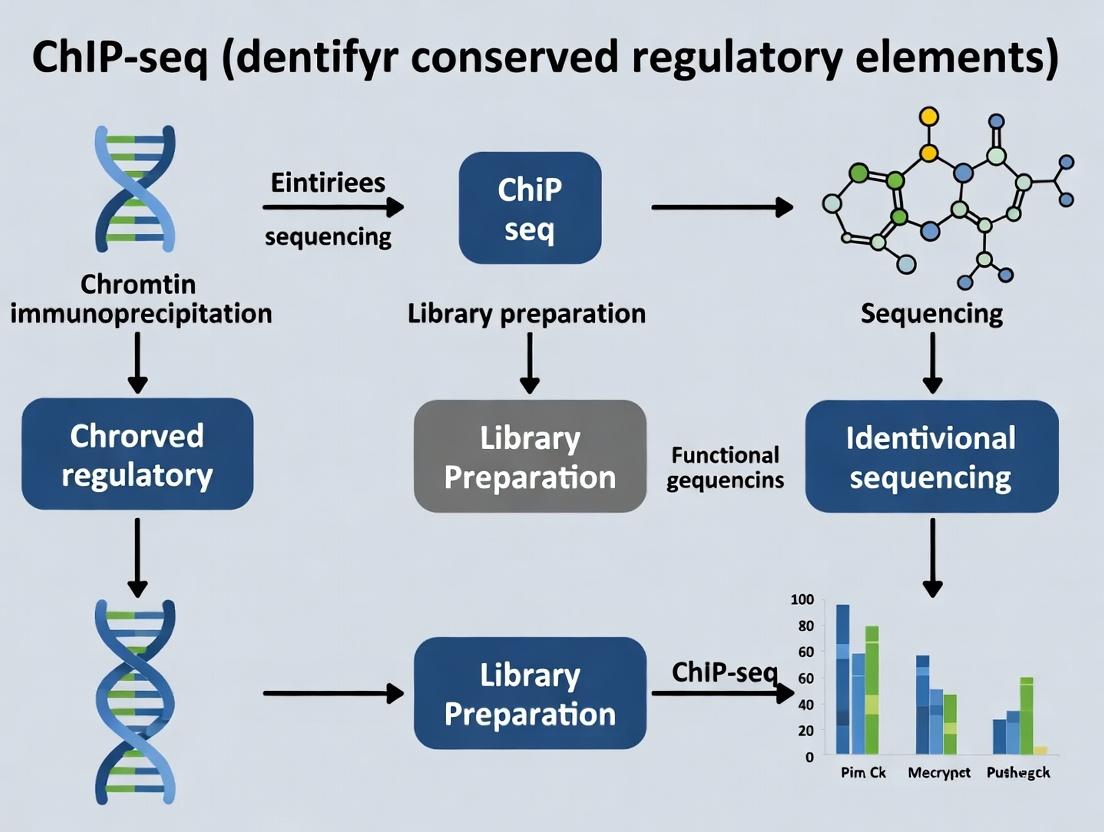
This comprehensive guide provides researchers and drug development professionals with a detailed roadmap for using Chromatin Immunoprecipitation followed by sequencing (ChIP-seq) to identify conserved regulatory elements.
Mastering ChIP-seq: A Complete Guide to Identifying Conserved Regulatory Elements in Disease and Drug Discovery
Abstract
This comprehensive guide provides researchers and drug development professionals with a detailed roadmap for using Chromatin Immunoprecipitation followed by sequencing (ChIP-seq) to identify conserved regulatory elements. We cover foundational principles, from histone modifications and transcription factor binding to the biological significance of evolutionary conservation. The article details modern, optimized methodologies for sample preparation, library construction, and sequencing, alongside advanced bioinformatic pipelines for peak calling and comparative genomics. Practical troubleshooting sections address common pitfalls in antibody specificity, signal-to-noise ratios, and batch effects. Finally, we explore validation strategies through orthogonal assays and benchmark ChIP-seq against emerging techniques like CUT&Tag and ATAC-seq. This resource equips scientists to reliably map functional genomic regions critical for understanding gene regulation, disease mechanisms, and therapeutic target identification.
The Foundation of Gene Control: Understanding Regulatory Elements and the Power of ChIP-seq
1. Introduction: Thesis Context Within the broader thesis investigating the use of ChIP-seq for identifying conserved regulatory elements, this document provides application notes and standardized protocols for defining the core triad: enhancers, promoters, and insulators. The evolutionary conservation of these elements is a critical filter for prioritizing functional, non-coding regions with potential roles in development, disease, and drug target discovery.
2. Quantitative Overview of Conserved Element Features Table 1: Defining Features and Quantitative Markers of Conserved Regulatory Elements
| Element Type | Primary Function | Key Histone Marks (ChIP-seq) | Typical Distance from TSS | Conservation (PhastCons100) | Binding Proteins |
|---|---|---|---|---|---|
| Promoter | Initiate transcription; define TSS | H3K4me3 (sharp peak), H3K9ac | 0 to -1.5 kb | High at core (~70% >0.7 score) | RNA Pol II, TATA-box proteins, General TFs |
| Enhancer | Amplify transcription rate | H3K4me1, H3K27ac (active), H3K27me3 (poised) | Variable, up to 1 Mb+ | Moderate in core, high in TF motifs (~40% >0.5 score) | p300/CBP, Tissue-specific TFs (e.g., OCT4, GATA1) |
| Insulator | Block enhancer-promoter interaction; define TAD boundaries | CTCF (primary), Cohesin (RAD21, SMC3) | Flanking TADs/ Domains | High at CTCF motif sites (~80% >0.7 score) | CTCF, Cohesin complex |
3. Core Experimental Protocols
Protocol 1: ChIP-seq for Active Enhancer & Promoter Profiling (H3K27ac/H3K4me3) Objective: Isolate DNA associated with active regulatory elements for sequencing. Reagents: Crosslinked cells, H3K27ac or H3K4me3 antibody, Protein A/G magnetic beads, ChIP-grade lysis buffers, protease inhibitors, RNase A, Proteinase K. Procedure:
- Crosslink & Sonication: Fix ~10⁷ cells with 1% formaldehyde for 10 min. Quench with 125mM glycine. Lyse cells and sonicate chromatin to 200-500 bp fragments.
- Immunoprecipitation: Incubate cleared lysate with 2-5 µg antibody overnight at 4°C. Add beads for 2-hour capture. Wash sequentially with Low Salt, High Salt, LiCl, and TE buffers.
- Reverse Crosslinks & DNA Cleanup: Elute complexes, add NaCl (200mM final), and reverse crosslinks at 65°C overnight. Treat with RNase A and Proteinase K. Purify DNA using SPRI beads.
- Library Prep & Sequencing: Prepare sequencing library (end-repair, A-tailing, adapter ligation, PCR amplification). Sequence on Illumina platform (≥20 million non-duplicate reads).
Protocol 2: CTCF/Cohesin ChIP-seq for Insulator Mapping Objective: Identify insulator elements and topological domain boundaries. Reagents: Crosslinked cells, validated CTCF or RAD21 antibody, other reagents as in Protocol 1. Procedure:
- Follow steps 1-3 from Protocol 1, using a CTCF-specific antibody.
- Peak Calling & Motif Analysis: Call peaks using MACS2 with a stringent p-value (e.g., 1e-10). The majority of high-confidence peaks should contain the canonical CTCF motif. Overlap with cohesin subunit (RAD21/SMC1) ChIP-seq peaks to define functional insulators.
- Boundary Score Calculation: Process aligned reads to generate insulation scores using tools like
cooltools. TAD boundaries are defined as local minima in the insulation score track.
Protocol 4: In Silico Identification of Conserved Elements Objective: Filter ChIP-seq-identified elements by evolutionary conservation to prioritize functional regions. Reagents: PhastCons or PhyloP conservation scores (from UCSC Genome Browser), Multiple genome alignments. Procedure:
- Data Intersection: Convert ChIP-seq peak BED files to the same genome assembly as conservation tracks (e.g., hg38).
- Score Extraction: Use
bigWigAverageOverBed(UCSC tools) to compute average conservation scores for each peak. - Thresholding: Apply element-specific thresholds (see Table 1). For example, retain enhancer peaks with an average PhastCons score > 0.5 and a conserved core TF motif.
- Comparative Analysis: Use
liftOverand multi-species peak comparisons to identify orthologous regulatory elements.
4. Visualizing Workflows and Interactions
5. The Scientist's Toolkit: Research Reagent Solutions
Table 2: Essential Reagents for Conserved Regulatory Element Research
| Reagent / Material | Function / Purpose | Example Product/Catalog |
|---|---|---|
| Validated ChIP-seq Antibodies | Specific immunoprecipitation of histone modifications or DNA-binding proteins. | Active Motif H3K27ac (39133), Diagenode CTCF (C15410210). |
| Magnetic Protein A/G Beads | Efficient capture and washing of antibody-chromatin complexes. | Dynabeads Protein A/G, Pierce ChIP-Grade. |
| Chromatin Shearing Reagents | Consistent fragmentation of crosslinked chromatin to optimal size. | Covaris microTUBES & Shearing Buffers. |
| ChIP-seq Library Prep Kit | High-efficiency conversion of low-input ChIP DNA to sequencing libraries. | NEBNext Ultra II DNA Library Kit. |
| Phusion High-Fidelity DNA Polymerase | Low-bias, high-fidelity PCR amplification of library fragments. | Thermo Scientific (F530S). |
| SPRI (Solid Phase Reversible Immobilization) Beads | Size-selective cleanup of DNA after crosslink reversal and library prep. | AMPure XP Beads. |
| Multispecies Conservation Tracks (bigWig) | In silico filtering for evolutionary conserved regions. | UCSC Genome Browser PhastCons/PhyloP files. |
| Cell Line or Tissue with Relevant Biology | Biologically relevant source of chromatin for hypothesis testing. | Primary cells, iPSCs, disease-relevant cell lines. |
This application note details protocols for Chromatin Immunoprecipitation followed by sequencing (ChIP-seq) as applied to the identification of conserved regulatory elements. Within the broader thesis, the combinatorial mapping of active histone modifications (H3K4me3, H3K27ac) and lineage-determining transcription factors (TFs) provides a powerful strategy to delineate functional enhancers and promoters across species and cell types. This approach is foundational for understanding disease-associated genetic variants and identifying novel therapeutic targets in drug development.
Key Quantitative Data in ChIP-Seq Analysis
Table 1: Common Histone Modification Profiles at Regulatory Elements
| Regulatory Element | Primary Histone Marks | Typical Genomic Location | Functional Role |
|---|---|---|---|
| Active Promoter | H3K4me3 (high), H3K27ac | Transcription Start Site (TSS) | Initiates transcription; defines gene start. |
| Active Enhancer | H3K27ac (high), H3K4me1 | Distal to TSS (introns, intergenic) | Recruits machinery to boost transcription of target genes. |
| Poised Enhancer | H3K4me1, H3K27me3 | Distal to TSS | Silenced but primed for future activation. |
| Repressed Region | H3K9me3, H3K27me3 | Various | Maintains heterochromatin; silences genes. |
Table 2: Representative ChIP-seq QC Metrics and Benchmarks
| QC Metric | Target Value (Ideal) | Acceptable Range | Explanation |
|---|---|---|---|
| Fraction of Reads in Peaks (FRiP) | > 5% (TF) / > 30% (Histone) | 1-30% (varies by target) | Measure of signal-to-noise. Higher is better. |
| Cross-Correlation (NSC) | > 1.05 | > 1.0 | Normalized strand cross-correlation. |
| Cross-Correlation (RSC) | > 1.0 | > 0.8 | Relative strand cross-correlation. |
| PCR Bottleneck Coefficient (PBC) | > 0.9 | 0.5 - 1.0 | Library complexity. <0.5 indicates severe bottleneck. |
| Estimated Peaks | Variable | Consistent with biology | Number of called peaks; depends on cell type and target. |
Experimental Protocols
Protocol 1: Cross-linked Chromatin Immunoprecipitation (ChIP) for Histone Modifications and TFs
Application: Genome-wide profiling of protein-DNA interactions and epigenetic marks. Principle: Formaldehyde crosslinking captures transient interactions. Chromatin is sheared, and target-specific antibodies immunoprecipitate bound DNA fragments for library construction and sequencing.
Materials:
- Formaldehyde (37%)
- Glycine (2.5 M)
- Cell lysis buffers (LB1, LB2, LB3)
- Sonication device (e.g., Bioruptor, Covaris)
- Magnetic Protein A/G beads
- ChIP-validated antibodies (see Toolkit)
- Elution buffer (1% SDS, 0.1 M NaHCO3)
- Proteinase K
- RNase A
- DNA purification beads (e.g., SPRI beads)
Procedure:
- Crosslinking: For 10 million cells, add formaldehyde to 1% final concentration. Incubate 10 min at RT. Quench with 125 mM glycine for 5 min.
- Cell Lysis: Wash cells twice with cold PBS. Resuspend pellet in 1 mL LB1 + protease inhibitors. Incubate 10 min on ice. Centrifuge, resuspend in 1 mL LB2, incubate 10 min on ice. Centrifuge, resuspend in 300 µL LB3.
- Chromatin Shearing: Sonicate to achieve fragment size of 200–500 bp. For a Covaris S220, use: 140s, 5% Duty Factor, 140 Peak Incident Power, 200 cycles/burst.
- Immunoprecipitation: Clarify sheared lysate. Take 50 µL as "Input" control. Dilute the rest 1:10 in ChIP Dilution Buffer. Add 1–5 µg antibody and incubate overnight at 4°C with rotation. Add pre-blocked magnetic beads for 2 hours.
- Washes: Wash beads sequentially with: Low Salt Wash Buffer (once), High Salt Wash Buffer (once), LiCl Wash Buffer (once), TE Buffer (twice).
- Elution & Reverse Crosslinking: Elute complexes twice with 150 µL Elution Buffer (65°C, 15 min, shaking). Combine eluates with Input sample. Add NaCl to 200 mM and reverse crosslink at 65°C overnight.
- DNA Purification: Add RNase A (30 min, 37°C), then Proteinase K (2 hours, 55°C). Purify DNA using SPRI beads. Elute in 30 µL TE buffer. Quantify by Qubit.
Protocol 2: ChIP-seq Library Preparation for Illumina Sequencing (NEBNext Ultra II)
Application: Preparation of immunoprecipitated DNA for next-generation sequencing.
- End Repair & A-Tailing: Use 10-50 ng ChIP DNA. Perform end repair to generate blunt ends, followed by addition of a single 'A' base to 3' ends.
- Adapter Ligation: Ligate Illumina sequencing adapters with a 'T' overhang.
- Size Selection: Use SPRI beads to select fragments ~200-500 bp (including adapters).
- PCR Enrichment: Amplify the library with indexed primers for 10-15 cycles.
- QC & Sequencing: Validate library size distribution on Bioanalyzer/TapeStation. Quantify by qPCR. Pool libraries and sequence on an Illumina platform (e.g., NovaSeq, 50 bp single-end or paired-end).
Visualizations
Title: ChIP-seq Experimental Workflow
Title: Integrative Identification of Conserved Regulatory Elements
Title: From Signal to Transcription via Histone Modifications
The Scientist's Toolkit: Key Research Reagent Solutions
Table 3: Essential Reagents for ChIP-seq Studies of Regulatory Elements
| Reagent/Material | Supplier Examples | Function in Experiment |
|---|---|---|
| ChIP-Validated Antibodies | Cell Signaling Technology, Abcam, Active Motif, Diagenode | Target-specific immunoprecipitation of histone modifications or transcription factors. Critical for success. |
| Magnetic Protein A/G Beads | Thermo Fisher, MilliporeSigma | Solid support for antibody-antigen complex capture. Enable efficient washing. |
| Covaris Sonicator & Tubes | Covaris, Inc. | Reproducible acoustic shearing of crosslinked chromatin to optimal fragment size. |
| NEBNext Ultra II DNA Library Prep Kit | New England Biolabs (NEB) | Robust, high-yield library preparation from low-input ChIP DNA. |
| SPRIselect Beads | Beckman Coulter | Size selection and purification of DNA fragments during library prep and post-ChIP. |
| QIAGEN MinElute PCR Purification Kit | QIAGEN | Alternative for efficient DNA purification and buffer exchange in small volumes. |
| Illumina Sequencing Indexes & Kits | Illumina, Inc. | Multiplexing of samples and preparation for sequencing on Illumina platforms. |
| Cell Line or Primary Cells | ATCC, commercial vendors | Biologically relevant source material for studying cell-type-specific regulation. |
| PCR & qPCR Reagents (SYBR Green) | Thermo Fisher, Bio-Rad | Quantification of ChIP DNA and library QC prior to sequencing. |
Application Notes: The Role of Conserved Elements in Functional Genomics and Drug Discovery
Evolutionarily conserved non-coding sequences are strong candidates for critical regulatory functions. In biomedical research, particularly in drug development, these regions are prioritized for functional validation as they are likely to be enriched for disease-relevant enhancers, promoters, and other cis-regulatory modules. Their preservation across species indicates purifying selection, suggesting disruption leads to deleterious phenotypic consequences. The integration of cross-species conservation metrics with functional genomics data like ChIP-seq significantly improves the signal-to-noise ratio in regulatory element identification, focusing costly experimental resources on the most promising targets.
Table 1: Key Metrics Linking Conservation Scores to Functional Genomic Annotations
| Conservation Metric (PhyloP/PhastCons) | Associated Genomic Feature (ENCODE) | Odds Ratio for Functional Validation | Typical Use in Target Prioritization |
|---|---|---|---|
| PhyloP > 3.0 (Highly Conserved) | Active Promoter (H3K4me3, H3K27ac) | 12.5 | Tier 1: High-confidence candidate regulatory elements for rare disease variants. |
| PhastCons > 0.95 (Conserved Element) | Enhancer (H3K27ac, p300) | 8.2 | Tier 1: Primary screen for non-coding drivers in cancer and complex traits. |
| PhyloP 1.0 - 3.0 (Moderately Conserved) | Poised Enhancer (H3K4me1, H3K27me3) | 4.1 | Tier 2: Context-specific elements; requires cell-type-specific functional data. |
| Basewise Conservation (<1.0) | Open Chromatin (ATAC-seq/DNase-seq peak) | 2.3 | Tier 3: Lower priority; often lineage-specific regulation. |
Table 2: Success Rates of Functional Assays on Conserved vs. Non-Conserved ChIP-seq Peaks
| ChIP-seq Target (e.g., TF) | % of Peaks in Conserved Elements | MPRA/Luciferase Validation Rate (Conserved) | MPRA/Luciferase Validation Rate (Non-Conserved) |
|---|---|---|---|
| p300 (Enhancer Mark) | 38% | 65% | 22% |
| CTCF (Architectural Protein) | 55% | 85% | 40% |
| Tissue-Specific TF (e.g., NKX2-5) | 25% | 48% | 15% |
| RNA Polymerase II | 42% | 78% | 30% |
Protocols
Protocol 2.1: Integrated Analysis of ChIP-seq Data with Evolutionary Conservation Scores
Objective: To identify and prioritize high-confidence conserved regulatory elements from ChIP-seq experiments. Materials: ChIP-seq alignment files (BAM), reference genome (hg38/ mm10), conservation track files (e.g., PhyloP100way, PhastCons100way from UCSC). Procedure:
- Peak Calling: Call significant peaks from aligned ChIP-seq reads using MACS3 (
macs3 callpeak -t treatment.bam -c control.bam -f BAM -g hs -n output). - Conservation Score Overlap: Use
bigWigAverageOverBed(UCSC tools) to compute average PhyloP/PhastCons scores for each called peak interval.
- Filtering & Prioritization: Filter peaks based on a conservation score threshold (e.g., PhyloP > 1.5). Rank peaks by a combined score incorporating ChIP-seq fold-enrichment, p-value, and conservation score.
- Annotation: Annotate conserved peaks to nearest genes and genomic features (promoter, intron, intergenic) using tools like ChIPseeker in R.
- Visualization: Generate genome browser screenshots (e.g., IGV) overlaying ChIP-seq signal with conservation tracks.
Protocol 2.2: Functional Validation of Conserved Non-Coding Elements via Luciferase Assay
Objective: Experimentally test the enhancer activity of a conserved sequence identified in Protocol 2.1. Materials: pGL4.23[luc2/minP] vector, Q5 High-Fidelity DNA Polymerase, restriction enzymes (KpnI, XhoI), HEK293T or relevant cell line, Lipofectamine 3000, Dual-Luciferase Reporter Assay System. Procedure:
- Cloning: Amplify the conserved genomic region (~300-1000 bp) from human genomic DNA using primers with added KpnI and XhoI sites. Digest PCR product and vector with enzymes, ligate, and transform. Sequence-verify the construct.
- Cell Seeding & Transfection: Seed 2e4 cells/well in a 96-well plate. Co-transfect 100 ng of firefly luciferase reporter construct (test or empty vector control) and 10 ng of Renilla luciferase control plasmid (pRL-SV40) per well using Lipofectamine 3000.
- Luciferase Assay: After 48h, lyse cells and measure firefly and Renilla luminescence sequentially using the Dual-Luciferase Assay Kit on a plate reader.
- Analysis: Normalize firefly luminescence to Renilla luminescence for transfection efficiency. Calculate fold-enhancement over the empty vector control. Perform triplicate experiments; report mean ± SD. Significance is tested via Student's t-test.
Visualizations
Title: ChIP-seq and Conservation Integration Workflow
Title: Conserved Enhancer Mechanism in Gene Activation
The Scientist's Toolkit: Research Reagent Solutions
Table 3: Essential Reagents for Conserved Regulatory Element Research
| Item | Function & Application | Example Product/Catalog |
|---|---|---|
| ChIP-Grade Antibodies | Specific immunoprecipitation of histone modifications (H3K27ac, H3K4me1) or transcription factors for high-quality ChIP-seq libraries. | Anti-H3K27ac (Diagenode C15410196), Anti-CTCF (Cell Signaling 2899S). |
| Dual-Luciferase Reporter Vectors | Backbone for cloning conserved sequences to quantify enhancer/promoter activity in cell-based assays. | pGL4.23[luc2/minP] (Promega E8411). |
| CRISPR Activation/Inhibition Systems | Functional perturbation of conserved non-coding elements to assess impact on endogenous gene expression. | dCas9-VPR (Activation), dCas9-KRAB (Inhibition) kits. |
| High-Fidelity Polymerase | Error-free amplification of conserved genomic regions for cloning into reporter vectors. | Q5 High-Fidelity 2X Master Mix (NEB M0492). |
| PhyloP/PhastCons Tracks | Pre-computed evolutionary conservation scores for aligning with ChIP-seq peaks. | UCSC Genome Browser bigWig files for hg38. |
| Transfection Reagent (Lipid-based) | Efficient delivery of reporter constructs into mammalian cell lines for functional assays. | Lipofectamine 3000 (Invitrogen L3000001). |
| Dual-Luciferase Assay Kit | Sensitive, sequential measurement of firefly and Renilla luciferase activity for normalization. | Dual-Luciferase Reporter Assay System (Promega E1910). |
Within a thesis investigating the identification of evolutionarily conserved regulatory elements, ChIP-seq (Chromatin Immunoprecipitation followed by sequencing) serves as the foundational experimental methodology. It enables the genome-wide mapping of in vivo protein-DNA interactions, such as transcription factor binding sites and histone modification landscapes. The conservation of these elements across species is a powerful indicator of their functional importance in gene regulation, providing critical insights for understanding disease mechanisms and identifying novel therapeutic targets in drug development.
Core Principles and Workflow
The core principle of ChIP-seq is to selectively enrich DNA fragments bound by a protein of interest, followed by high-throughput sequencing to map these binding sites. The workflow integrates molecular biology (ChIP) with genomics (seq).
Title: ChIP-seq Experimental Workflow
Critical Signaling Pathways Studied by ChIP-seq
ChIP-seq is pivotal for dissecting key signaling pathways by mapping transcription factor binding dynamics. For example, in the NF-κB signaling pathway:
Title: ChIP-seq Maps NF-κB Pathway DNA Binding
Detailed Protocols
Protocol A: Crosslinking & Chromatin Preparation from Cultured Cells
Objective: Fix protein-DNA interactions and generate soluble, fragmented chromatin. Reagents: See Section 5. Steps:
- Grow ~1x10^7 mammalian cells to 70-80% confluence.
- Add 37% formaldehyde directly to culture medium to a final concentration of 1%. Incubate for 10 min at room temperature with gentle rocking.
- Quench crosslinking by adding glycine to a final concentration of 0.125 M. Incubate for 5 min at RT.
- Harvest cells by scraping (adherent cells) or centrifugation. Wash cell pellet twice with cold PBS.
- Resuspend cell pellet in 1 mL of Lysis Buffer I. Incubate on ice for 10 min. Pellet nuclei.
- Resuspend nuclei in 1 mL of Lysis Buffer II. Incubate on ice for 10 min.
- Sonicate chromatin to shear DNA to an average fragment size of 200-500 bp. Critical: Optimize sonication conditions (time, power, cycles) for each cell type and sonicator. Validate fragment size by agarose gel electrophoresis.
- Clarify sonicated lysate by centrifugation at 20,000 x g for 10 min at 4°C. Aliquot supernatant (chromatin) and store at -80°C.
Protocol B: Chromatin Immunoprecipitation
Objective: Enrich DNA fragments bound by the target protein. Steps:
- Pre-clear 50-100 µg of chromatin by adding 20 µL of pre-washed Protein A/G Magnetic Beads. Rotate for 1 hour at 4°C.
- Collect supernatant. Take a 10 µL aliquot as "Input" control. Store at 4°C.
- Divide chromatin into two tubes: one for the specific antibody (e.g., anti-H3K27ac), one for species-matched IgG (negative control).
- Add 1-5 µg of antibody to each tube. Rotate overnight at 4°C.
- The next day, add 30 µL of pre-washed Protein A/G Magnetic Beads to each tube. Rotate for 2 hours at 4°C.
- Place tubes on a magnetic rack. Discard supernatant.
- Wash beads sequentially with 1 mL of each wash buffer for 5 min at 4°C with rotation:
- Low Salt Wash Buffer (once)
- High Salt Wash Buffer (once)
- LiCl Wash Buffer (once)
- TE Buffer (twice)
- Proceed to elution or store bead pellet at -20°C.
Protocol C: Library Preparation for Sequencing (Post-IP)
Objective: Generate a sequencing library from immunoprecipitated DNA. Steps:
- Elution & Reverse Crosslinking: Add 100 µL of Elution Buffer to beads and Input sample. Incubate at 65°C for 15 min with shaking. Place on magnet, transfer supernatant to a new tube. Add 5 µL of 5M NaCl and 1 µL of RNase A. Incubate at 65°C overnight.
- DNA Purification: Add 2 µL of Proteinase K and incubate at 55°C for 2 hours. Purify DNA using a SPRI bead-based cleanup system. Elute in 30 µL of TE buffer.
- End Repair & A-tailing: Use a commercial library prep kit. Perform end-repair to generate blunt ends, followed by addition of an 'A' base to the 3' end.
- Adapter Ligation: Ligate indexed sequencing adapters to the 'A'-tailed fragments.
- Size Selection & PCR Enrichment: Perform a double-SPRI bead size selection (e.g., 0.7x and 1.2x ratios) to select fragments ~200-500 bp. Amplify the library with 10-12 cycles of PCR.
- Library QC: Quantify library concentration by qPCR (for molarity) and assess size distribution using a Bioanalyzer or TapeStation.
Data Presentation: Quantitative Benchmarks
Table 1: Key Quantitative Metrics for a Successful ChIP-seq Experiment
| Metric | Ideal Target | Purpose & Interpretation |
|---|---|---|
| DNA Fragment Size Post-Sonication | 200-500 bp (major peak) | Ensures proper resolution for binding site mapping. |
| Amount of Chromatin per IP | 50-100 µg (mammalian cells) | Provides sufficient material for robust enrichment. |
| Antibody Amount per IP | 1-5 µg | Optimizes specificity and yield; must be titrated. |
| Library Concentration (qPCR) | > 2 nM | Ensures sufficient material for cluster generation on sequencer. |
| Library Fragment Size (Bioanalyzer) | Peak ~300 bp (adapter-included) | Confirms successful adapter ligation and size selection. |
| Sequencing Depth (Reads) | 20-40 million reads* | Sufficient for robust peak calling. Histone marks may require less (10-20M), while TFs with diffuse binding may require more. |
| Fraction of Reads in Peaks (FRiP) | > 1% (TF), > 10% (histone mark) | Primary QC metric for enrichment success. Low FRiP indicates poor IP. |
| Non-Redundant Fraction (NRF) | > 0.8 | Indicates low PCR duplication rate from limited starting material. |
*Note: Targets like Pol II or broad histone marks (H3K36me3) may require >50M reads.
Table 2: Bioinformatics Pipeline Output Metrics for Conserved Element Analysis
| Metric | Description | Significance for Thesis on Conservation |
|---|---|---|
| Number of Significant Peaks | Peaks called (FDR < 0.05, e.g., by MACS2). | Defines the candidate regulatory element set. |
| Peak Width at Half Maximum | Measure of peak breadth. | Distinguishes punctate (TF) vs. broad (histone mark) signals. |
| Peak Overlap with Genomic Features | % peaks in promoters, enhancers, introns, etc. | Provides functional context for identified elements. |
| Motif Enrichment (p-value) | Significance of known TF motifs within peaks. | Validates antibody specificity and suggests co-factors. |
| Conservation Score (PhastCons/PhyloP) | Average evolutionary conservation of peak regions. | Directly identifies evolutionarily constrained elements. |
| Cross-species Peak Overlap | % peaks with orthologous region bound in another species. | Empirical measure of functional conservation. |
The Scientist's Toolkit: Key Research Reagent Solutions
Table 3: Essential Materials for ChIP-seq Experiments
| Item | Function | Critical Notes for Success |
|---|---|---|
| High-Affinity, ChIP-Validated Antibody | Specifically binds the target protein/epitope to enrich its associated DNA. | The single most critical reagent. Use ChIP-seq-grade or ChIP-validated antibodies only. |
| Protein A/G Magnetic Beads | Capture antibody-protein-DNA complexes for washing and elution. | Offer easier handling vs. agarose beads. Must be pre-washed/blocked. |
| Formaldehyde (37%) | Crosslinks proteins to DNA to preserve in vivo interactions. | Fresh aliquots recommended. Quenching time must be consistent. |
| Protease & Phosphatase Inhibitors | Preserve protein integrity and modification states during lysis. | Add fresh to all buffers before use. |
| Sonicator (e.g., Covaris, Bioruptor) | Shears crosslinked chromatin to desired fragment size. | Optimization for each cell/type is mandatory. Bioruptor (water bath) minimizes sample heating. |
| SPRI (Solid Phase Reversible Immobilization) Beads | Size-select and purify DNA after elution and during library prep. | Enable efficient, high-throughput cleanups. Ratios for size selection must be optimized. |
| Sequencing Library Prep Kit (e.g., NEB Next, Illumina) | Provides enzymes/buffers for end-prep, adapter ligation, and PCR. | Use kits validated for low-input, ChIP-derived DNA. |
| Dual-Indexed Sequencing Adapters | Allows multiplexing of samples and introduces sequences for cluster generation. | Reduces index hopping compared to single indexes. |
| High-Sensitivity DNA Assay Kit (e.g., Agilent Bioanalyzer) | Accurately assesses DNA fragment size distribution pre- and post-library prep. | Essential QC before sequencing. |
Application Notes
Within the framework of a ChIP-seq thesis focused on conserved regulatory element identification, these applications leverage evolutionary conservation to prioritize functional genomic regions. The identification of conserved transcription factor binding sites (TFBS) and histone modification marks provides a high-confidence dataset for downstream mechanistic and translational research.
Table 1: Quantitative Impact of Conserved Regulatory Element Analysis in Disease Studies
| Application Area | Key Metric | Typical Finding from Conserved Element Analysis | Data Source/Study Example |
|---|---|---|---|
| Unraveling Disease Mechanisms | Enrichment of GWAS variants in conserved cCREs | ~40-60% of disease/trait-associated SNPs lie within conserved, accessible chromatin. | ENCODE Consortium; NIH Roadmap Epigenomics |
| Identifying Non-Coding Variants | Functional validation rate of prioritized variants | Variants in conserved TFBS show >3x higher likelihood of disrupting gene regulation in assays. | (e.g., Lee et al., Nature Genetics, 2023) |
| Pinpointing Drug Targets | Druggable genes linked to conserved enhancers | Analysis of autoimmune disease loci linked ~30% to enhancers regulating druggable kinase or GPCR genes. | (e.g., Farh et al., Nature, 2015) |
| ChIP-seq Specific | Conservation of H3K27ac/H3K4me3 peaks | ~25-35% of active enhancer/promoter marks are evolutionarily conserved across mammals, harboring disproportionate disease risk. | (e.g., Villar et al., Nature, 2015) |
Core Thesis Link: By first mapping H3K27ac or specific TF ChIP-seq signals across multiple species or using computational conservation metrics (e.g., PhastCons), the thesis research creates a filtered set of high-value regulatory elements. This conserved cCRE catalog directly feeds into the three key applications by reducing noise and focusing on functionally pertinent genomic regions.
Experimental Protocols
Protocol 1: ChIP-seq for Conserved Regulatory Element Identification (Thesis Core Protocol)
Objective: To generate high-resolution maps of histone modifications or TF binding in human and model organism (e.g., mouse) cell types relevant to a disease. Steps:
- Cell Cross-linking: Treat cells with 1% formaldehyde for 10 min at room temperature. Quench with 125mM glycine.
- Sonication: Lyse cells and sonicate chromatin to shear DNA to 200-500 bp fragments. Verify fragment size by agarose gel electrophoresis.
- Immunoprecipitation: Incubate chromatin with antibody against target (e.g., H3K27ac, CTCF) or control IgG overnight at 4°C. Use magnetic Protein A/G beads for capture.
- Washing & Elution: Wash beads with low-salt, high-salt, LiCl, and TE buffers. Elute chromatin with freshly prepared elution buffer (1% SDS, 100mM NaHCO3).
- Reverse Cross-linking & Purification: Incubate eluates at 65°C overnight with NaCl to reverse crosslinks. Treat with RNase A and Proteinase K. Purify DNA using SPRI beads.
- Library Preparation & Sequencing: Prepare sequencing libraries using a standard kit (e.g., NEBNext Ultra II). Sequence on an Illumina platform to a depth of 20-40 million reads per sample.
- Cross-Species Alignment & Peak Calling: Map reads to respective genomes (hg38, mm10). Call peaks using MACS2. Use liftOver and reciprocal best-hit methods to identify syntenic (conserved) genomic regions between species.
- Conservation Analysis: Overlap peaks with phylogenetically conserved elements (e.g., from UCSC 100-way PhastCons). Peaks falling within conserved regions constitute the high-confidence set.
Protocol 2: Functional Validation of a Non-Coding Variant in a Conserved Enhancer
Objective: To test if a disease-associated SNP within a conserved enhancer identified via ChIP-seq alters regulatory activity. Steps:
- Cloning: PCR-amplify ~500-1000 bp genomic region encompassing the conserved enhancer, including both the reference and alternate SNP alleles, from patient or synthetic DNA.
- Reporter Vector Insertion: Clone each allele upstream of a minimal promoter driving a luciferase gene (e.g., in pGL4.23 vector).
- Cell Transfection: Transfect reporter constructs into relevant cell lines (e.g., HeLa, primary cells) using lipofectamine. Include a Renilla luciferase control plasmid for normalization.
- Dual-Luciferase Assay: After 48h, lyse cells and measure firefly and Renilla luciferase activity using a dual-luciferase assay kit. Compare normalized luciferase activity between alleles.
- Electrophoretic Mobility Shift Assay (EMSA): Synthesize oligonucleotide probes for both SNP alleles. Label with biotin. Incubate probes with nuclear extract from relevant cells. Run on a non-denaturing gel. A band shift indicates TF binding; differential shift between alleles confirms variant effect.
Protocol 3: CRISPRi Screening for Drug Target Discovery
Objective: To functionally interrogate genes associated with conserved disease-relevant enhancers as potential drug targets. Steps:
- Target Selection: From ChIP-seq/conservation analysis, select genes with promoters that interact (via Hi-C) with conserved disease-associated enhancers, or that are the nearest gene.
- sgRNA Design & Library Cloning: Design 3-5 sgRNAs per target gene to guide a dCas9-KRAB repressor to the promoter. Clone into a lentiviral vector.
- Lentiviral Production & Cell Infection: Produce lentivirus for the sgRNA library. Infect target cells at low MOI to ensure single integration. Select with puromycin.
- Phenotypic Screening: Subject the pooled cell population to a disease-relevant challenge (e.g., cytokine insult, nutrient stress) over multiple generations.
- NGS & Hit Analysis: Extract genomic DNA from pre- and post-selection populations. PCR-amplify sgRNA regions and sequence. Depletion or enrichment of specific sgRNAs identifies genes essential for cell survival or disease phenotype under the selective pressure.
Diagrams
Title: ChIP-seq Conservation Pipeline Drives Key Applications
Title: Mechanism of a Non-Coding Variant Altering Gene Expression
The Scientist's Toolkit
Table 2: Essential Research Reagent Solutions for Conserved Element ChIP-seq Studies
| Item | Function | Example Product/Brand |
|---|---|---|
| Cross-linking Reagent | Fixes protein-DNA interactions in living cells. | Formaldehyde (37%), DSG (Disuccinimidyl glutarate) for distal crosslinking. |
| ChIP-Grade Antibody | Specifically immunoprecipitates the target protein or histone modification. | Anti-H3K27ac (Abcam, C15410196), Anti-CTCF (Millipore, 07-729). |
| Magnetic Beads | Efficient capture of antibody-bound chromatin complexes. | Protein A/G Magnetic Beads (Dynabeads, Pierce). |
| Chromatin Shearing Reagent | Fragments chromatin to optimal size for IP. | Covaris ultrasonicator or focused-ultrasonicator (S220). |
| ChIP-seq Library Prep Kit | Prepares sequencing libraries from low-input, fragmented ChIP DNA. | NEBNext Ultra II DNA Library Prep Kit, KAPA HyperPrep Kit. |
| Conservation Track Files | Computational resource to identify evolutionarily conserved regions. | UCSC Genome Browser PhastCons/PhyloP files (100-way). |
| Reporter Vector | Tests enhancer activity of conserved elements and variants. | pGL4.23[luc2/minP] (Promega). |
| Dual-Luciferase Assay Kit | Quantifies enhancer/promoter activity from reporter constructs. | Dual-Luciferase Reporter Assay System (Promega). |
| CRISPRi Knockdown System | For functional screening of genes linked to conserved enhancers. | dCas9-KRAB lentiviral system, sgRNA library sets. |
From Cell to Data: A Step-by-Step ChIP-seq Protocol for Conserved Element Discovery
Application Notes
This document provides a framework for designing robust Chromatin Immunoprecipitation followed by sequencing (ChIP-seq) experiments within a thesis focused on identifying conserved regulatory elements. Success hinges on three interdependent pillars: appropriate antibody selection, rigorous controls, and sufficient biological replication.
1.1. Antibody Selection: Histone Modifications vs. Transcription Factors The choice of target dictates experimental stringency and interpretation.
- Histone Modifications (e.g., H3K27ac, H3K4me3): These are abundant, stable epigenetic marks defining active enhancers and promoters. ChIP for histones is generally robust, requiring less input material and fewer cells. Antibodies are often highly validated.
- Transformation Factors (TFs): TFs are low-abundance, transient binders. ChIP for TFs is technically demanding, requiring optimized crosslinking, more cells, and highly specific antibodies. Signal-to-noise ratios are lower.
1.2. The Critical Role of Controls Controls are non-negotiable for distinguishing specific enrichment from background.
- Input DNA: Sheared, non-immunoprecipitated chromatin. Serves as the background reference for genome-wide chromatin accessibility and copy number.
- IgG (or Non-specific IgG): Control immunoprecipitation with a non-specific antibody. Accounts for non-specific binding to beads or chromatin. Essential for low-abundance TF targets.
1.3. Biological Replicates Replicates account for biological variability and are mandatory for statistical confidence in peak calling. The number required is target-dependent.
Table 1: Key Experimental Design Parameters for Histone vs. TF ChIP-seq
| Parameter | Histone Modification ChIP-seq | Transcription Factor ChIP-seq |
|---|---|---|
| Cell Number | 0.5 - 1 million cells | 1 - 10 million cells |
| Crosslinking | Often optional (Native ChIP) | Mandatory (X-ChIP), condition-optimized |
| Antibody Specificity | High (many well-characterized) | Critical; requires validation (e.g., knockout) |
| Peak Profile | Broad domains (e.g., H3K27me3) or sharp peaks (e.g., H3K4me3) | Sharp, punctate peaks |
| Primary Control | Input DNA | Input DNA + IgG |
| Minimum Biological Replicates | 2 (3 recommended for robust stats) | 3 (due to higher noise) |
| Recommended Sequencing Depth | ~20 million non-duplicate reads | ~30-50 million non-duplicate reads |
Protocols
Core Crosslinking ChIP-seq Protocol for Cultured Cells
Materials: Phosphate-Buffered Saline (PBS), 37% Formaldehyde, 2.5M Glycine, Cell Scrapers, Lysis Buffers, Sonicator (e.g., Covaris or Bioruptor), Protein A/G Magnetic Beads, Antibody of choice, DNA Clean-up Kit.
Day 1: Crosslinking & Cell Harvest
- For adherent cells, add 1% formaldehyde (final concentration) directly to culture medium. Incubate 10 min at room temperature (RT) with gentle rocking.
- Quench crosslinking by adding 125mM glycine (final concentration). Incubate 5 min at RT.
- Aspirate medium, wash cells twice with cold PBS.
- Scrape cells into cold PBS, pellet at 800 x g for 5 min at 4°C. Flash-freeze pellet or proceed.
Day 1: Chromatin Preparation & Sonication
- Lyse cell pellet in 1 mL Cell Lysis Buffer (10 mM Tris-HCl pH 8.0, 10 mM NaCl, 0.2% NP-40) with protease inhibitors. Incubate 10 min on ice. Pellet nuclei.
- Resuspend nuclei in 1 mL Sonication Buffer (50 mM Tris-HCl pH 8.0, 10 mM EDTA, 1% SDS). Incubate 10 min on ice.
- Sonicate to shear chromatin to 200-500 bp fragments. Optimize for your system.
- Clarify sonicate by centrifugation at 20,000 x g for 10 min at 4°C. Transfer supernatant. Dilute 10-fold in ChIP Dilution Buffer.
Day 2: Immunoprecipitation & Washes
- Take a small aliquot (~1%) as Input control. Store at -20°C.
- Pre-clear chromatin with Protein A/G beads for 1 hour at 4°C.
- Incubate chromatin with specific antibody or IgG control overnight at 4°C with rotation. See Table 2 for amounts.
- Add pre-washed Protein A/G beads. Incubate 2-4 hours at 4°C.
- Pellet beads and perform sequential cold washes:
- Wash Buffer I (Low Salt): 2x, 5 min each.
- Wash Buffer II (High Salt): 1x, 5 min.
- Wash Buffer III (LiCl): 1x, 5 min.
- TE Buffer: 2x, 5 min.
Day 3: Elution & DNA Purification
- Prepare Elution Buffer (1% SDS, 0.1M NaHCO3). Elute complexes from beads (2 x 15 min, 65°C with shaking).
- Combine eluates. Reverse crosslinks by adding NaCl (200 mM final) and incubating overnight at 65°C.
- Treat with RNase A and Proteinase K.
- Purify DNA using a spin column kit. Elute in 20-50 µL TE buffer.
- Quantify DNA by qPCR at known positive and negative genomic loci before library prep.
Protocol for Biological Replicate Design
- Define Biological Unit: The independent biological sample (e.g., separate cell cultures from different passages, independently harvested animal tissues).
- Calculate Replicates: For thesis research, plan for n=3 biological replicates per condition. This allows for statistical testing (e.g., DESeq2, edgeR) if one replicate fails.
- Randomize & Block: Process replicates in a randomized order across experimental days to avoid batch effects. Include all controls (Input, IgG) for each replicate.
Diagrams
ChIP-seq Experimental Design Decision Tree
Three-Day Crosslinking ChIP-seq Core Workflow
The Scientist's Toolkit: Essential Research Reagents & Materials
Table 2: Key Research Reagent Solutions for ChIP-seq
| Item | Function & Rationale | Example/Notes |
|---|---|---|
| High-Specificity Antibody | Binds target antigen (histone mark or TF) with minimal off-target interaction. The most critical reagent. | Use validated ChIP-grade antibodies (from Abcam, Cell Signaling, Diagenode). Check citations. |
| Control IgG | Isotype-matched non-immune antibody for assessing non-specific background. | Essential for TF ChIP. Use same host species as specific antibody. |
| Protein A/G Magnetic Beads | Efficient capture of antibody-antigen complexes; facilitate washing. | Preferred over agarose beads for low background. Choose A, G, or A/G mix based on antibody species/isotype. |
| Ultrasonic Shearing Device | Fragments chromatin to ideal size (200-500 bp) for resolution. | Covaris (focused acoustics) or Bioruptor (sonication bath) provide consistent shearing. |
| Crosslinking Reagent | Fixes protein-DNA interactions in place. | Formaldehyde (1%) is standard. For distal elements/TFs, consider double crosslinking (e.g., with DSG). |
| Chromatin QC Kit | Assess fragment size distribution post-sonication. | Bioanalyzer/TapeStation assays ensure proper shearing before IP. |
| SPRI Beads | Clean and size-select DNA post-IP and for library prep. | Faster and more consistent than column purification for post-IP low-concentration DNA. |
| ChIP-seq Library Prep Kit | Prepares immunoprecipitated DNA for next-generation sequencing. | Use kits optimized for low-input DNA (e.g., NEB Next Ultra II). |
| qPCR Primers | Validate ChIP efficiency at known genomic loci before costly sequencing. | Design primers for a positive control region and a negative control region. |
This protocol details an optimized Chromatin Immunoprecipitation followed by sequencing (ChIP-seq) workflow, contextualized within a thesis focused on identifying evolutionarily conserved transcriptional regulatory elements. The methods outlined herein are critical for generating high-resolution, reproducible maps of transcription factor binding sites and histone modifications, enabling comparative genomics studies to distinguish conserved regulatory architecture from species-specific noise. Adherence to 2024 best practices minimizes artifacts, maximizes signal-to-noise ratio, and ensures compatibility with next-generation sequencing platforms, directly impacting downstream analyses in fundamental research and drug target discovery.
Detailed Experimental Protocols
Optimized Crosslinking & Chromatin Preparation
Objective: To reversibly fix protein-DNA interactions in vivo without over-fixing, which hinders sonication efficiency.
- Cell Harvesting: Grow cells to 70-80% confluency. For adherent cells, rinse with PBS and dissociate using gentle accutase. Quench with complete media.
- Fixation: Resuspend cell pellet in PBS. Add fresh 37% formaldehyde to a final concentration of 1%. Incubate for 10 minutes at room temperature (RT) with gentle rotation.
- Quenching: Add glycine to a final concentration of 0.125 M. Incubate for 5 minutes at RT to quench crosslinking.
- Washing: Pellet cells (500 x g, 4°C, 5 min). Wash twice with ice-cold PBS containing protease inhibitors (e.g., 1 mM PMSF).
- Cell Lysis: Resuspend pellet in Cell Lysis Buffer (10 mM Tris-HCl pH 8.0, 10 mM NaCl, 0.2% NP-40/Igepal) with inhibitors. Incubate on ice for 15 min. Pellet nuclei (2000 x g, 4°C, 5 min).
- Nuclei Lysis: Lyse nuclei in Nuclear Lysis Buffer (50 mM Tris-HCl pH 8.0, 10 mM EDTA, 1% SDS) with inhibitors. Incubate on ice for 10 min. Aliquot and freeze at -80°C or proceed.
Adaptive Focused Acoustics (AFA) Sonication
Objective: Shear crosslinked chromatin to an optimal size range of 200-500 bp using a standardized, non-thermal method.
- Sample Setup: Thaw lysate on ice. Dilute 10-fold in ChIP Dilution Buffer (16.7 mM Tris-HCl pH 8.0, 167 mM NaCl, 1.2 mM EDTA, 1.1% Triton X-100, 0.01% SDS) to reduce SDS concentration.
- Covaris AFA System Setup: Load 130 µL into a microTUBE AFA Fiber Snap-Cap. Use the following validated 2024 program:
- Peak Incident Power: 140 W
- Duty Factor: 10%
- Cycles per Burst: 200
- Treatment Time: 180 seconds
- Temperature: Maintained at 4-6°C using a chiller.
- Post-Sonication: Briefly centrifuge to collect sample. Take a 10 µL aliquot for fragment analysis. Reverse crosslink and run on a 2% agarose gel or Bioanalyzer/TapeStation to verify size distribution.
- Clearing: Centrifuge sonicated chromatin at 20,000 x g for 10 min at 4°C to remove debris. Transfer supernatant to a new tube.
High-Specificity Immunoprecipitation (IP)
Objective: Enrich target protein-DNA complexes with minimal background.
- Pre-clearing (Optional but Recommended): Add 20 µL of protein A/G magnetic beads (pre-washed) per 100 µL chromatin. Rotate for 1 hour at 4°C. Pellet beads on magnet, save supernatant.
- Antibody Incubation: Add validated ChIP-grade antibody to chromatin. Refer to Table 1 for recommended amounts. Incubate with rotation overnight at 4°C.
- Bead Capture: The next day, add 30 µL of pre-washed protein A/G magnetic beads. Incubate for 2 hours at 4°C with rotation.
- Washing: Place tube on magnet, discard supernatant. Perform sequential 5-minute washes with rotation in:
- Low Salt Wash Buffer (20 mM Tris-HCl pH 8.0, 150 mM NaCl, 2 mM EDTA, 1% Triton X-100, 0.1% SDS)
- High Salt Wash Buffer (20 mM Tris-HCl pH 8.0, 500 mM NaCl, 2 mM EDTA, 1% Triton X-100, 0.1% SDS)
- LiCl Wash Buffer (10 mM Tris-HCl pH 8.0, 250 mM LiCl, 1 mM EDTA, 1% NP-40, 1% Na-Deoxycholate)
- Two washes with TE Buffer (10 mM Tris-HCl pH 8.0, 1 mM EDTA)
- Elution: Elute chromatin from beads in 100 µL Fresh Elution Buffer (1% SDS, 0.1 M NaHCO₃) by vortexing for 15 minutes at RT.
Post-IP Processing & Library Prep for Low-Input NGS
Objective: Reverse crosslinks, purify DNA, and prepare sequencing libraries from low-yield IP material.
- Reverse Crosslinking & DNA Recovery: Add NaCl to eluates (and a 10% input control) to 200 mM. Incubate at 65°C overnight. Add RNase A and Proteinase K, incubate at 37°C and 55°C sequentially. Purify DNA using SPRI beads (1.8x ratio).
- Library Preparation (Ultra-low input protocol): Use a commercial kit designed for <10 ng input (e.g., Takara Bio SMARTer-ChIP, NEB Next Ultra II). Key steps:
- End Repair & A-tailing: Per manufacturer's instructions.
- Adapter Ligation: Use unique dual-indexed adapters to enable multiplexing.
- Size Selection: Perform double-sided SPRI bead cleanup (e.g., 0.55x and 1.5x ratios) to select fragments ~250-350 bp.
- PCR Amplification: Use 10-12 cycles of PCR with high-fidelity polymerase.
- Library QC: Quantify library using qPCR (for molarity) and analyze fragment size on a Bioanalyzer. Pool libraries equimolarly for sequencing.
Data Presentation
Table 1: 2024 Quantitative Benchmarks for Key Workflow Steps
| Step | Parameter | Optimal Value/Range (2024 Best Practice) | Impact of Deviation |
|---|---|---|---|
| Crosslinking | Formaldehyde Concentration | 1% | >1%: Over-fixing, poor sonication. <1%: Loss of weak interactions. |
| Fixation Time | 10 min (RT) | Longer times increase background & reduce efficiency. | |
| Sonication | Target Fragment Size | 200-500 bp (peak ~300 bp) | Larger: Poor resolution. Smaller: Loss of epitopes/DNA. |
| (Covaris AFA) | Total Energy Input | ~756 J (140W * 10% DF * 180s) | Excessive: Sample heating/degredation. Low: Incomplete shearing. |
| Immunoprecipitation | Antibody Amount | 1-5 µg per 10⁶ cells | Too high: Increased background. Too low: Poor yield. |
| Bead Incubation Time | 2 hours | Longer can increase non-specific binding. | |
| Library Prep | PCR Cycle Number | 10-12 cycles | Higher cycles: Increased duplicates & bias. |
| Final Library Size | 250-350 bp (post-adapter) | Correct sizing ensures optimal cluster generation on sequencer. |
Table 2: The Scientist's Toolkit: Essential Research Reagent Solutions
| Item | Function & Rationale |
|---|---|
| Ultra-Pure Formaldehyde (Methanol-free) | Crosslinking agent. Methanol-free reduces background. Critical for consistent fixation. |
| Protease/Phosphatase Inhibitor Cocktails | Preserve protein epitopes and phosphorylation states during lysis and IP. |
| ChIP-validated Antibody | Antibody with demonstrated specificity and efficacy in ChIP. The single largest variable. |
| Protein A/G Magnetic Beads | Solid-phase support for antibody capture. Magnetic beads offer low background and ease of washing. |
| SPRI (Solid Phase Reversible Immobilization) Beads | Versatile paramagnetic beads for DNA clean-up and size selection. Replaces column-based purification. |
| Dual-Indexed UMI Adapters | Enable multiplexing of samples and PCR duplicate removal via Unique Molecular Identifiers (UMIs). |
| High-Fidelity PCR Master Mix | Amplifies library fragments with minimal bias and errors for accurate sequencing representation. |
| Covaris microTUBE or Plate | AFA-compatible vessels that ensure consistent acoustic energy transfer for reproducible shearing. |
Visualization of Workflows
ChIP-seq Experimental Workflow from Cells to Sequencing
ChIP-seq Role in Thesis on Conserved Element Discovery
Application Notes
Within the context of a thesis focused on identifying conserved regulatory elements using ChIP-seq, the selection of sequencing parameters is a critical determinant of success. These parameters directly influence the resolution, accuracy, and confidence of peak calling, which is fundamental for downstream comparative genomics and identification of conserved features. This document outlines key considerations and protocols.
1. Impact of Sequencing Depth (Read Count) Sequencing depth is the primary driver for sensitivity and specificity in peak detection. Insufficient depth fails to capture true binding events, especially for factors with broad or weak binding, while excessive depth yields diminishing returns and increased cost.
Table 1: Recommended Sequencing Depth for ChIP-seq Experiments
| Target Factor Type | Minimum Recommended Depth | Optimal Depth for Peak Resolution | Rationale |
|---|---|---|---|
| Sharp, Point-source (e.g., Transcription Start Site factors) | 10-15 million aligned reads | 20-30 million aligned reads | High signal-to-noise allows robust detection at moderate depth. |
| Broad Domains (e.g., H3K27me3, H3K36me3) | 30-40 million aligned reads | 50-60+ million aligned reads | Broad, lower-intensity signals require deeper sequencing for accurate peak shape and boundary definition. |
| Pioneer Factors / Weak Binders | 25-35 million aligned reads | 40-50 million aligned reads | To distinguish true, low-affinity binding from background noise. |
| Input/Control Library | Matched to or greater than IP depth | Matched to IP depth | Essential for accurate normalization and background subtraction during peak calling. |
2. Read Length and Single-End vs. Paired-End Considerations
- Read Length: Modern short-read sequencers typically produce reads of 75-150 bp. Longer reads (150 bp) improve unique mappability in repetitive regions, which is crucial for analyzing conserved elements often found in complex genomic loci.
- Single-End (SE) vs. Paired-End (PE): This choice is pivotal for peak resolution.
- Single-End: Only one end of the DNA fragment is sequenced. The fragment length must be estimated bioinformatically, leading to uncertainty in mapping the precise protein-DNA interaction site. This reduces peak resolution.
- Paired-End: Both ends of the fragment are sequenced, providing an exact measurement of the fragment size. This pins the protein-binding site to a much narrower region, dramatically improving peak resolution and accuracy for identifying transcription factor binding motifs within conserved elements.
Table 2: Comparison of Sequencing Modes for Peak Resolution
| Parameter | Single-End (SE) | Paired-End (PE) |
|---|---|---|
| Peak Resolution | Lower (~200-300 bp uncertainty) | Higher (~<50 bp precision) |
| Cost per Sample | Lower | Higher (approx. 1.7-2x SE) |
| Primary Advantage | Cost-effective for high-throughput screening of known, sharp peaks. | Superior mapping accuracy, essential for de novo motif discovery, complex genomes, and precise boundary detection. |
| Recommended Use Case | Quality control, well-characterized antibodies in model organisms. | Primary research, conserved element identification, broad histone marks, complex or non-model genomes. |
Protocol 1: Library Preparation for High-Resolution Paired-End ChIP-seq
Title: ChIP-seq Library Prep for Paired-End Sequencing
Objective: To convert ChIP-enriched DNA into a sequencing library suitable for high-resolution, paired-end sequencing on platforms such as Illumina NovaSeq or NextSeq.
Materials:
- Purified ChIP DNA (in 50 µL TE buffer)
- NEBNext Ultra II DNA Library Prep Kit for Illumina (or equivalent)
- AMPure XP Beads
- Size Selection Kit (e.g., Pippin Prep, BluePippin) or dual-SPRI bead cleanup
- PCR Thermocycler
- Qubit Fluorometer and dsDNA HS Assay Kit
- TapeStation or Bioanalyzer (High Sensitivity DNA chip)
Procedure:
- End Repair & A-tailing: Perform using the NEBNext Ultra II modules according to the manufacturer's protocol. Incubate samples for 30 minutes at 20°C for end repair, then 30 minutes at 65°C for A-tailing.
- Adapter Ligation: Dilute Illumina TruSeq-style adapters to a working concentration. Ligate adapters to the A-tailed DNA fragments using the provided ligation master mix. Incubate for 15 minutes at 20°C.
- Cleanup: Purify the ligation reaction using 1.0X volume of AMPure XP beads. Elute in 20 µL of 0.1X TE buffer.
- Size Selection (Critical Step): Perform size selection to isolate fragments in the 200-400 bp range (incorporating ~150 bp adapters). This removes adapter dimers and optimizes fragment distribution for cluster generation. Use either a gel-based system (Pippin Prep) or a dual-SPRI bead cleanup (e.g., 0.55X followed by 0.8X bead ratios).
- Library Amplification: Amplify the size-selected library via PCR (typically 8-12 cycles) using index primers. Use a high-fidelity polymerase.
- Final Cleanup: Purify the PCR product with 0.9X volume of AMPure XP beads. Elute in 25 µL of TE buffer.
- Quality Control:
- Quantify using Qubit dsDNA HS Assay.
- Assess size distribution and library integrity using a TapeStation D1000/High Sensitivity screen or Bioanalyzer High Sensitivity DNA chip.
- Validate library concentration for sequencing via qPCR (e.g., Kapa Library Quantification Kit).
Protocol 2: Bioinformatic Peak Calling for Paired-End Data
Title: Peak Calling Workflow for Paired-End ChIP-seq
Objective: To identify regions of significant enrichment (peaks) from paired-end sequencing data, optimizing for high resolution.
Materials (Software):
- FastQC (v0.11.9)
- Trimmomatic (v0.39) or Cutadapt
- Bowtie2 (v2.4.5) or BWA
- SAMtools (v1.13)
- Picard Tools (v2.27)
- MACS2 (v2.2.7.1)
Procedure:
- Quality Control: Run
FastQCon raw FASTQ files to assess per-base quality and adapter contamination. - Adapter Trimming: Use
Trimmomaticto remove adapter sequences and low-quality bases.ILLUMINACLIP:TruSeq3-PE.fa:2:30:10 LEADING:3 TRAILING:3 SLIDINGWINDOW:4:15 MINLEN:36 - Alignment: Map reads to the reference genome using
Bowtie2in paired-end mode.bowtie2 -p 8 -x <genome_index> -1 R1.fastq.gz -2 R2.fastq.gz -S output.sam - Post-Alignment Processing: Convert SAM to BAM, sort, and mark duplicates.
samtools view -bS output.sam | samtools sort -o sorted.bampicard MarkDuplicates I=sorted.bam O=deduplicated.bam M=dup_metrics.txt
- Peak Calling with MACS2 (Key Step): Use the
callpeakfunction in paired-end mode.- For transcription factors:
macs2 callpeak -t deduplicated.bam -c input_control.bam -f BAMPE -g <effective_genome_size> -n <output_prefix> -q 0.05 - Critical Parameter
-f BAMPE: This instructs MACS2 to use the paired-end information explicitly, calculating the fragment size from each read pair. This is the primary method for achieving high-resolution peaks. - For broad marks: Add
--broadand--broad-cutoff 0.1.
- For transcription factors:
The Scientist's Toolkit: Research Reagent Solutions
Table 3: Essential Materials for High-Resolution ChIP-seq
| Item | Function |
|---|---|
| Magnetic Protein A/G Beads | For efficient and low-background immunoprecipitation of chromatin-antibody complexes. |
| NEBNext Ultra II DNA Library Prep Kit | A widely validated, high-efficiency kit for constructing sequencing-ready libraries from low-input ChIP DNA. |
| AMPure XP Beads | For robust and reproducible cleanup and size selection of DNA fragments during library prep. |
| TruSeq DNA Single Indexes | For multiplexing samples, allowing cost-effective sequencing of multiple libraries in a single run. |
| High Sensitivity D1000 ScreenTape (Agilent) | For accurate quantification and size distribution analysis of final libraries prior to sequencing. |
| Kapa Library Quantification Kit (qPCR) | For precise, sequencing-compatible quantification of amplifiable library fragments. |
Visualizations
Diagram Title: High-Resolution Paired-End ChIP-seq Workflow
Diagram Title: Sequencing Strategy Decision Tree for Peak Resolution
Thesis Context: This protocol is a core component of a thesis investigating the use of ChIP-seq to identify deeply conserved, functional regulatory elements across divergent species. The robustness and quality of the initial bioinformatic processing are critical for accurate downstream comparative genomics and element identification.
Read Alignment and Initial Processing
Objective: Map sequenced reads to the appropriate reference genome to generate BAM format alignment files.
Protocol:
- Quality Control of Raw Reads: Use
FastQC(v0.12.1) on raw FASTQ files. Summarize results withMultiQC(v1.21). - Adapter Trimming: Employ
Trim Galore!(v0.6.10) with default parameters to remove adapters and low-quality bases. - Alignment: Align trimmed reads using
Bowtie2(v2.5.1) with sensitive settings for short reads.
- Post-Alignment Processing:
a. Convert SAM to sorted BAM:
samtools view -bS [output.sam] | samtools sort -o [sorted.bam]. b. Remove duplicate reads usingPicard Tools(v2.27.5):java -jar picard.jar MarkDuplicates I=[sorted.bam] O=[dedup.bam] M=[dup_metrics.txt]. c. Index the final BAM file:samtools index [dedup.bam].
Key QC Metric Table (Post-Alignment):
| Metric | Target (TF ChIP-seq) | Target (Histone ChIP-seq) | Tool/Source |
|---|---|---|---|
| Total Reads | > 20 million | > 30 million | samtools idxstats |
| Alignment Rate | > 80% | > 80% | Bowtie2 summary |
| PCR Duplicates | < 30% | < 30% | Picard MarkDuplicates |
| Fraction of Reads in Peaks (FRiP) | > 5% | > 20% | Calculated post-peak calling |
ChIP-seq-Specific Quality Control Metrics
Objective: Assess the quality and signal-to-noise ratio of the immunoprecipitation.
Protocol A: Nucleosome-Free Region (NFR) Assessment
- Generate BigWig: Convert BAM to normalized coverage (RPKM/CPM) using
deepTools bamCoverage(v3.5.4). - Plot Profile: Using
deepTools computeMatrixandplotProfile, generate a metagene plot of read density around transcriptional start sites (TSS). - Interpretation: A high-quality TF ChIP-seq will show a sharp, narrow peak of enrichment flanked by nucleosomal arrays (dips), indicating successful capture of NFR-bound factors.
Protocol B: Cross-Correlation Analysis
- Run SPP/phantompeakqualtools: Use the R package
phantompeakqualtoolsto calculate cross-correlation.
- Extract Metrics: The script outputs the normalized strand cross-correlation coefficient (NSC) and relative strand cross-correlation (RSC).
- Interpretation: High-quality data exhibits a dominant peak at the fragment length and a trough at the read length shift.
QC Metrics Table (ChIP-seq Specific):
| Metric | Excellent | Acceptable | Poor | Interpretation |
|---|---|---|---|---|
| NSC | > 1.1 | 1.05 - 1.1 | < 1.05 | Signal-to-noise ratio. |
| RSC | > 1.2 | 0.8 - 1.2 | < 0.8 | Relative enrichment over background. |
| TSS Enrichment | > 10 | 6 - 10 | < 6 | Specificity of binding profile. |
Peak Calling with MACS2
Objective: Identify genomic regions with statistically significant enrichment of sequencing reads (peaks).
Protocol:
- Call Peaks for TFs: Use
MACS2(v2.2.7.1) with a paired control/Input sample.
Call Broad Peaks for Histones: Use the
--broadflag.Post-Processing: Filter peaks by False Discovery Rate (FDR,
-q value) and annotate with genomic features using tools likeChIPseeker(R/Bioconductor).- Comparative Analysis (Thesis Context): Use
BEDTools(v2.31.0) to intersect peak sets across species, identifying conserved peak regions for downstream analysis.
MACS2 Output Files Table:
| File Extension | Content | Primary Use |
|---|---|---|
_peaks.xls |
Tabular summary of peaks. | Human-readable peak list. |
_peaks.narrowPeak |
BED6+4 format. | Downstream analysis & genome browsing. |
_summits.bed |
Summit positions for each peak. | High-resolution motif discovery. |
_model.r |
R script to visualize shift model. | QC of fragment size estimation. |
The Scientist's Toolkit: Research Reagent Solutions
| Item | Function in Protocol |
|---|---|
| FASTQ Files | Raw sequencing read data; the primary input for the pipeline. |
| Reference Genome (FASTA + Index) | The assembled genomic sequence of the organism; required for read alignment. |
| Adapter Sequence File | Specifies adapter sequences to be trimmed; crucial for data cleanliness. |
| Genome Annotation (GTF/GFF) | File of known gene models; used for TSS plots and peak annotation. |
| Blacklist Region File | Genomic regions with anomalous signals; used to filter false-positive peaks. |
| Control/Input DNA | Non-immunoprecipitated DNA; essential for modeling background noise in MACS2. |
Visualization of the ChIP-seq Bioinformatics Pipeline
Title: ChIP-seq Bioinformatics Workflow from Reads to Conserved Peaks
Application Notes
Within the broader thesis research employing ChIP-seq to identify functional regulatory elements, a critical subsequent step is the discrimination of biologically significant peaks from background noise. Phylogenetic footprinting, leveraged through multi-species alignments from resources like the UCSC Genome Browser and ENSEMBL, provides a powerful framework for this. The core principle is that genomic sequences under purifying selection due to their regulatory function will exhibit evolutionary conservation across related species. This note details the integration of conservation analysis into a ChIP-seq pipeline.
The process typically involves taking ChIP-seq peak coordinates and intersecting them with pre-computed multi-species alignments, such as the UCSC 100-Way or 30-Way Multiz Alignments, or the ENSEMBL EPO/PEPO alignments. The depth and phylogenetic breadth of the alignment directly influence sensitivity. Key quantitative outputs include conservation scores (e.g., PhastCons, PhyloP), the percentage of peaks overlapping conserved elements, and the degree of sequence constraint within peaks compared to flanking regions.
Table 1: Comparison of Primary Multi-Alignment Resources for Phylogenetic Footprinting
| Feature | UCSC Genome Browser | ENSEMBL |
|---|---|---|
| Primary Alignment Method | Multiz/TBA (Threaded Blockset Aligner) | EPO (Enredo-Pecan-Ortheus) & LastZ |
| Typical Vertebrate Alignment | 100-way (mammalian subset: ~30 species) | 100+ species via EPO, 34+ via EPO low coverage |
| Conservation Scores | PhastCons, PhyloP (available for downloads) | GERP, PhyloP (integrated in variant effect predictor) |
| Access Method | Table Browser, bigBed/bigWig files, REST API | BioMart, Perl API, REST API, Direct Downloads |
| Key Table/File | multiz100way, phyloP100way, cons100way |
comparative_genomics database, GERP elements |
| Best For | Direct visualization, integration with UCSC track hubs, fast batch queries. | Complex queries with phenotypic data, integration with variant annotation. |
Table 2: Typical Conservation Metrics Output from a ChIP-seq Peak Set (Hypothetical Data)
| Metric | Promoter-Associated Peaks (n=1,200) | Enhancer-Associated Peaks (n=3,500) | Random Genomic Regions (n=10,000) |
|---|---|---|---|
| Mean PhastCons Score | 0.72 | 0.41 | 0.12 |
| % Overlapping PhastCons Elements | 85% | 52% | 8% |
| Mean Peak Nucleotide Constraint (vs. Flank) | 3.8x | 2.1x | 1.1x |
| Median Branch Length Score (GERP) | 2.45 | 1.78 | 0.22 |
Experimental Protocols
Protocol 1: Intersecting ChIP-seq Peaks with UCSC Conservation Data Using BEDTools
Objective: To identify ChIP-seq peaks that overlap evolutionarily conserved elements defined by UCSC PhastCons.
Materials: High-confidence ChIP-seq peak calls (BED format), UCSC PhastCons conserved elements track (BED format, e.g., conservedElements from multiz100way table), BEDTools suite, Unix/Linux environment.
- Data Acquisition:
- Obtain conserved elements: Using the UCSC Table Browser, select genome (e.g.,
hg38), groupComparative Genomics, trackConservation, tablephastCons100way. Output as BED format and download.
- Obtain conserved elements: Using the UCSC Table Browser, select genome (e.g.,
- Intersection Analysis:
- Use
bedtools intersectto find peaks overlapping conserved elements with a minimum reciprocal overlap (e.g., 50%):
- Use
- Score Extraction (Optional):
- For continuous scores, download the PhastCons bigWig track. Use
bigWigAverageOverBed(from UCSC tools) to compute mean conservation score per peak.
- For continuous scores, download the PhastCons bigWig track. Use
Protocol 2: Retrieving Multi-Species Alignments for Specific Peaks via ENSEMBL REST API
Objective: To extract multiple sequence alignments for a set of peak regions for further analysis (e.g., motif conservation).
Materials: List of genomic regions (chr:start-end), Programming environment (Python), ENSEMBL REST API client (requests library).
- Setup:
Define Regions:
Fetch Alignment:
- The
alignment/region/humanendpoint returns EPO alignments.
- The
Parse Output:
- The JSON output contains the aligned sequences for each species per region, which can be parsed and converted to FASTA or multi-alignment format (e.g., Clustal) for downstream phylogenetic analysis.
Mandatory Visualizations
Title: Bioinformatics Pipeline for Conserved Element Identification
Title: Logical Relationship of Evidence for Functional Elements
The Scientist's Toolkit
Table 3: Key Research Reagent Solutions for Phylogenetic Footprinting Analysis
| Item | Function & Application in Pipeline | Example/Supplier |
|---|---|---|
| UCSC Genome Browser | Primary public portal for visualization, downloading multi-alignments, conservation scores, and liftOver chain files. | genome.ucsc.edu |
| ENSEMBL Compara | Alternative resource for genome alignments, conservation scores, and ortholog/paralog predictions via BioMart and APIs. | ensembl.org/info/genome/compara |
| BEDTools Suite | Indispensable for efficient genomic arithmetic (intersect, merge, shuffle) between peak BED files and conservation tracks. | Quinlan & Hall, Bioinformatics 2010 |
| UCSC Kent Utilities | Command-line tools for manipulating bigWig/bigBed files and converting between genomic data formats. | hgdownload.soe.ucsc.edu |
| PhastCons/PhyloP Scores | Pre-computed probabilistic scores measuring evolutionary conservation (phastCons) or acceleration (phyloP). | Available from UCSC/ENSEMBL |
| GERP++ Scores | Scores of evolutionary constraint based on rejected substitutions. Used to identify constrained elements. | Available from ENSEMBL |
| LiftOver Tool/Chains | Converts genomic coordinates between different genome assemblies (e.g., hg19 to hg38), critical for using older data. | UCSC Genome Browser |
| Bioconductor (GenomicRanges, rtracklayer) | R packages for efficient manipulation, intersection, and import/export of genomic intervals and conservation data. | bioconductor.org |
Solving the Puzzle: Troubleshooting Common ChIP-seq Challenges and Boosting Signal-to-Noise
Within the broader thesis research focused on identifying conserved regulatory elements using ChIP-seq, obtaining a robust and specific signal is paramount. Poor signal-to-noise ratios can derail months of work, leading to inconclusive data and failed validations. This application note details a systematic troubleshooting framework targeting three critical upstream bottlenecks: antibody specificity, fixation efficiency, and chromatin fragmentation. By implementing these protocols, researchers can diagnose and rectify common issues before proceeding to sequencing, ensuring high-quality data for downstream evolutionary conservation analyses relevant to drug target identification.
Antibody Validation: The Primary Specificity Check
A ChIP-grade antibody is non-negotiable. Non-specific binding or low affinity directly results in high background or false-positive peaks, obscuring true conserved regulatory elements.
Protocol: Sequential Antibody Validation for ChIP-seq
Objective: To assess antibody specificity, sensitivity, and suitability for ChIP-seq prior to full-scale experiments.
Materials:
- Target antigen (recombinant protein or peptide)
- Candidate ChIP antibody
- Isotype control IgG
- Positive control (cell line with known high target expression)
- Negative control (cell line with known low/no target expression)
- Western blot apparatus
- qPCR system with primers for a known positive genomic locus.
Method:
- Western Blot Analysis: Perform a standard western blot on whole-cell lysates from positive and negative control cell lines. The antibody should produce a single band at the expected molecular weight in the positive sample only.
- Immunofluorescence (IF): Use IF on fixed positive and negative control cells to confirm the antibody recognizes the target in its native, chromatin-bound state and shows expected sub-nuclear localization (e.g., punctate foci for histone modifications).
- Dot Blot Peptide Competition: Spot the target peptide and a non-specific control peptide onto a membrane. Perform an immunoblot with the antibody pre-incubated with an excess of either peptide. Signal should be abolished only by the target peptide.
- Mini-ChIP-qPCR: Perform a small-scale ChIP (using ~1 million cells) with the candidate antibody and an isotype control on the positive control cell line. Use qPCR to assess enrichment at a bona fide positive genomic locus versus a negative control locus (e.g., gene desert). Calculate % input and fold-enrichment over IgG.
Data Interpretation: An antibody suitable for ChIP-seq should pass all four checks: a clean western blot, correct nuclear IF pattern, specific peptide competition, and >10-fold enrichment at a positive locus over IgG in the mini-ChIP.
Table 1: Quantitative Criteria for Antibody Validation
| Validation Step | Acceptance Criterion | Typical Quantitative Output |
|---|---|---|
| Western Blot | Single band at correct MW | Band intensity ratio (Positive/Negative cell line) > 20 |
| Mini-ChIP-qPCR | Specific enrichment at known site | Fold-enrichment (Ab/IgG) at positive locus ≥ 10 |
| Low background at negative site | Fold-enrichment (Ab/IgG) at negative locus ≤ 2 | |
| Signal-to-Noise | High specific binding | (Positive Locus % Input) / (Negative Locus % Input) > 5 |
Fixation Optimization: Balancing Crosslinking Efficiency and Epitope Masking
Over-fixation can mask antibody epitopes and reduce sonication efficiency, while under-fixation yields poor protein-DNA crosslinking and increased background.
Protocol: Formaldehyde Titration for Optimal Crosslinking
Objective: To determine the ideal formaldehyde concentration and incubation time that maximizes specific signal while maintaining chromatin integrity for sonication.
Materials:
- 37% Formaldehyde solution
- 2.5M Glycine (quenching solution)
- Cell line of interest
- Sonicator
- Agarose gel electrophoresis system.
Method:
- Titration Setup: Culture identical batches of cells (e.g., 1x10^6 per condition). Prepare fixation solutions of 0.5%, 1%, and 2% formaldehyde in serum-free media. Include a 1% fixative condition with varying incubation times (5, 10, 15 minutes).
- Fixation & Quenching: Fix cells at room temperature with gentle agitation. Terminate fixation by adding glycine to a final concentration of 0.125M. Incubate for 5 minutes.
- Cell Lysis & Sonication: Wash cells twice with cold PBS. Lyse cells using a standard ChIP lysis buffer. For each condition, sonicate an equal aliquot of chromatin to achieve fragments between 200-500 bp. Keep sonication parameters constant.
- Reverse Crosslinking & Analysis: Reverse crosslink a portion of each sonicated sample (e.g., 50 µL) overnight at 65°C. Purify DNA and run on a 2% agarose gel.
- Validation by ChIP-qPCR: Perform mini-ChIP with a validated antibody on the remaining chromatin from each condition. Assess enrichment via qPCR at positive and negative control loci.
Data Interpretation: The optimal condition produces a tight distribution of sheared DNA (200-500 bp) on the gel and the highest ChIP-qPCR signal-to-noise ratio. Longer fixation often requires increased sonication, which can damage epitopes.
Table 2: Fixation Optimization Outcomes
| Formaldehyde % | Time (min) | Sonication Ease | Fragment Size Post-Sonic | Relative ChIP Signal | Recommended For |
|---|---|---|---|---|---|
| 0.5% | 10 | Easy | 150-400 bp | Low | Sensitive epitopes, weak crosslinkers |
| 1% | 10 | Optimal | 200-500 bp | High | Standard transcription factors |
| 1% | 15 | Moderate | 300-700 bp | Medium-High | Robust histone marks |
| 2% | 10 | Difficult | 500-1000+ bp | Low-Medium | Not recommended for most targets |
Sonication Efficiency Checks: Achieving Ideal Fragment Size
Fragment size directly impacts ChIP-seq resolution and mapping. Large fragments reduce resolution and increase background, while over-sonication can degrade epitopes.
Protocol: Systematic Sonication Calibration
Objective: To establish a sonication protocol yielding a majority of chromatin fragments between 200-500 bp.
Materials:
- Covaris S2 or Bioruptor Pico sonication system
- 1% formaldehyde-fixed cells (from optimized Protocol 2)
- ChIP lysis buffer
- DNA purification kit
- Bioanalyzer High Sensitivity DNA kit or agarose gel.
Method (for Covaris S2):
- Sample Preparation: Lyse ~1x10^6 fixed cells per condition. Resuspend pellet in 130 µL of shearing buffer. Transfer to a Covaris microTUBE.
- Parameter Sweep: While keeping other parameters constant (Peak Incident Power 105W, Duty Factor 5%, Cycles per Burst 200), vary the sonication time. Test a range (e.g., 45, 90, 180, 360 seconds).
- Analysis: Reverse crosslink and purify DNA from 50 µL of each sheared sample. Analyze fragment size distribution using a Bioanalyzer (preferred) or agarose gel electrophoresis.
- Correlation to ChIP Yield: Use the remaining sheared chromatin from the optimal time point and a sub-optimal one for parallel mini-ChIP-qPCR with a validated antibody to confirm that optimal sonication yields higher signal.
Data Interpretation: The goal is a smooth, symmetrical peak centered at ~300 bp. A broad smear indicates inconsistency; a peak >700 bp indicates under-sonication; a peak <150 bp suggests over-sonication and potential epitope damage.
Table 3: Sonication Parameter Effects (Covaris S2)
| Sonication Time (sec) | Median Fragment Size | Distribution | Effect on ChIP-seq |
|---|---|---|---|
| 45 | 800 bp | Very Broad | Poor resolution, low mapping uniqueness |
| 90 | 450 bp | Broad | Moderate resolution, acceptable |
| 180 | 300 bp | Sharp | Optimal resolution & mapping |
| 360 | 150 bp | Sharp | Risk of epitope loss, lower yield |
The Scientist's Toolkit: Key Research Reagent Solutions
Table 4: Essential Materials for ChIP-seq Troubleshooting
| Item | Function & Rationale |
|---|---|
| ChIP-Validated Antibody | Ensures specificity for the target protein or histone mark. The primary source of signal. |
| Protein A/G Magnetic Beads | Efficient capture of antibody-antigen complexes, reducing non-specific background. |
| Glycine (2.5M Stock) | Quenches formaldehyde to stop crosslinking, preventing over-fixation. |
| Protease/Phosphatase Inhibitor Cocktail | Preserves protein integrity and post-translational modification state during lysis. |
| Micrococcal Nuclease (MNase) | Alternative to sonication; provides precise enzymatic digestion for histone mark ChIP. |
| Covaris microTUBE or Bioruptor Tubes | Specialized tubes for consistent and efficient acoustic shearing of chromatin. |
| DNA High Sensitivity Bioanalyzer Kit | Provides precise, quantitative assessment of chromatin fragment size distribution. |
| SPRI/AMPure XP Beads | For consistent size-selection and clean-up of ChIP DNA libraries, removing adapter dimers. |
| qPCR Primers for Positive/Negative Genomic Loci | Essential controls for quantifying ChIP enrichment and signal-to-noise pre-sequencing. |
| Control Cell Lines (Positive/Negative) | Critical for antibody validation and distinguishing true signal from artifact. |
Visualizations
Title: ChIP-seq Signal Troubleshooting Pathway
Title: Pre-Sequencing ChIP-qPCR Validation Workflow
Within the context of a thesis focused on identifying conserved regulatory elements using ChIP-seq, managing background noise is a fundamental challenge. Non-specific binding of antibodies and off-target DNA-protein interactions generate high background, obscuring true transcription factor binding sites and histone modification marks. This compromises peak specificity, leading to false positives and reduced reproducibility. These issues are particularly detrimental when comparing across species to discern evolutionarily conserved regulatory architecture. The following application notes and protocols detail strategies to mitigate these issues and generate high-fidelity ChIP-seq data.
The table below summarizes primary noise sources and their typical quantitative impact on ChIP-seq data, as established in recent literature.
Table 1: Primary Sources of Background Noise in ChIP-seq and Their Impact
| Noise Source | Description | Typical Quantitative Impact (Metrics) |
|---|---|---|
| Antibody Non-Specificity | Antibody binding to off-target epitopes or protein complexes. | Can lead to >50% of called peaks being false positives in low-quality antibodies (as per ENCODE guidelines). |
| Cross-Linked Protein Aggregates | Non-specific entanglement of chromatin during fixation. | Contributes to "background hump" in coverage; can represent 20-40% of sequenced reads in standard protocols. |
| Genomic DNA Contamination | Presence of unbound or improperly sheared DNA. | Manifests as high read counts in input controls; can reduce signal-to-noise ratio by >30%. |
| Non-Specific Bead Binding | Magnetic/protein A/G beads binding DNA or proteins independent of antibody. | Contributes 5-15% of total pulled-down material, varying by bead type and blocking strategy. |
| PCR Duplicates & Optical Duplicates | Amplification bias during library preparation. | Can constitute over 50% of reads in low-input ChIP, artificially inflating peak height without new information. |
| Sequencing & Mapping Artifacts | Reads from repetitive elements inaccurately aligned. | In mappable genomes, 5-20% of reads may map to multiple locations, complicating peak calling. |
Core Experimental Protocols for Noise Reduction
Protocol 3.1: High-Stringency Chromatin Immunoprecipitation (HiSChIP)
This protocol modifies standard ChIP to maximize specificity.
Materials:
- Cells or tissue of interest.
- Cross-linking Solution: 1% formaldehyde in PBS.
- Quenching Solution: 1.25M Glycine.
- Lysis Buffer I: 50 mM HEPES-KOH (pH 7.5), 140 mM NaCl, 1 mM EDTA, 10% Glycerol, 0.5% NP-40, 0.25% Triton X-100, plus protease inhibitors.
- Lysis Buffer II: 10 mM Tris-HCl (pH 8.0), 200 mM NaCl, 1 mM EDTA, 0.5 mM EGTA, plus protease inhibitors.
- Shearing Buffer: 0.1% SDS, 10 mM EDTA, 50 mM Tris-HCl (pH 8.1).
- High-Salt Rinse Buffer: 50 mM HEPES (pH 7.5), 500 mM NaCl, 1 mM EDTA, 1% Triton X-100, 0.1% Sodium Deoxycholate, 0.1% SDS.
- LiCl Wash Buffer: 10 mM Tris-HCl (pH 8.0), 250 mM LiCl, 1 mM EDTA, 0.5% NP-40, 0.5% Sodium Deoxycholate.
- TE Buffer: 10 mM Tris-HCl (pH 8.0), 1 mM EDTA.
- Primary Antibody (Validated for ChIP-seq).
- Magnetic Protein A/G Beads, pre-blocked.
- Elution Buffer: 1% SDS, 0.1M NaHCO3.
- Reverse Cross-Linking Solution: 200 mM NaCl, plus RNase A.
- Proteinase K.
Method:
- Cross-linking: Fix 1x10^7 cells with 1% formaldehyde for 8-10 minutes at RT. Quench with glycine (final 125 mM) for 5 min.
- Nuclei Isolation & Double Lysis: Pellet cells. Resuspend in 1 mL ice-cold Lysis Buffer I, incubate 10 min on rotator at 4°C. Centrifuge. Resuspend pellet in 1 mL Lysis Buffer II, incubate 10 min on rotator at 4°C. Centrifuge.
- Chromatin Shearing: Resuspend nuclear pellet in 1 mL Shearing Buffer. Sonicate to achieve 200-500 bp fragments (optimized for your sonicator). Centrifuge to clear debris.
- Pre-Clearing: Incubate chromatin supernatant with 50 µL of pre-blocked magnetic beads for 1 hour at 4°C. Discard beads.
- Immunoprecipitation (High Stringency): To pre-cleared chromatin, add 1-10 µg of validated antibody. Incubate overnight at 4°C. Add 60 µL pre-blocked beads, incubate 4 hours.
- Stringent Washes: Pellet beads and wash sequentially for 5 minutes each on rotator at 4°C with:
- 2x with 1 mL Shearing Buffer.
- 1x with 1 mL High-Salt Rinse Buffer.
- 1x with 1 mL LiCl Wash Buffer.
- 2x with 1 mL TE Buffer.
- Elution & Reverse Cross-Link: Elute chromatin from beads twice with 150 µL Elution Buffer, pooling eluates. Add 12 µL of 5M NaCl and reverse cross-link at 65°C overnight. Add RNase A (30 min, 37°C) then Proteinase K (2 hours, 55°C).
- DNA Purification: Purify DNA using silica membrane columns (e.g., PCR purification kit). Proceed to library preparation.
Protocol 3.2: Deduplication and Spike-In Normalization
A bioinformatic protocol to correct for amplification bias and normalize for technical variation.
Materials:
- Paired-end FASTQ files from ChIP and Input control.
- Reference genome files.
- Software:
picard-toolsorsamtools,BWA/Bowtie2,sambamba,phantompeakqualtools. - Spike-in Chromatin (e.g., D. melanogaster chromatin) and corresponding Spike-in Antibody.
Method:
- Spike-in Addition: Prior to immunoprecipitation, add 2-10% (by chromatin mass) of exogenous spike-in chromatin (e.g., D. melanogaster S2 cells) to your experimental samples.
- Alignment: Map sequencing reads from your experimental species and spike-in species to a combined reference genome or separate genomes.
- Duplicate Marking: Use
picard MarkDuplicatesorsambamba markdupto identify and tag PCR/optical duplicates based on exact mapping coordinates of both read pairs. - Filtering: Remove marked duplicate reads (or use only non-duplicate reads for peak calling) to prevent amplification artifacts from being interpreted as signal.
- Spike-in Normalization: Calculate a scaling factor based on the ratio of spike-in reads between your ChIP and Input samples, or between different experimental ChIP samples. Use this factor to normalize your experimental read coverage, correcting for global differences in ChIP efficiency.
Visualizations
Title: Sources of Background Noise in ChIP-seq Workflow
Title: HiSChIP & Normalization Protocol Flow
The Scientist's Toolkit: Research Reagent Solutions
Table 2: Essential Reagents for High-Specificity ChIP-seq
| Reagent / Material | Primary Function & Rationale for Noise Reduction |
|---|---|
| ChIP-seq Validated Antibodies | Antibodies certified by projects like ENCODE to show minimal non-specific binding in ChIP-seq assays, directly targeting the primary noise source. |
| Magnetic Protein A/G Beads (Blocked) | Beads pre-coated with inert carriers (BSA, salmon sperm DNA) to minimize non-specific adsorption of chromatin. Magnetic separation reduces mechanical loss. |
| Chromatin Shearing Reagents (Covaris compatible) | Optimized buffers and tubes for consistent, reproducible acoustic shearing, preventing over/under-shearing that increases background DNA. |
| Spike-in Chromatin & Antibody (e.g., D. melanogaster) | Exogenous chromatin added pre-IP to control for technical variation (e.g., loss during washes) and enable normalized quantification between samples. |
| Ultra-Pure Protease/Phosphatase Inhibitor Cocktails | Prevents degradation/modification of target epitopes and chromatin structure during isolation, preserving true binding profiles. |
| High-Fidelity PCR Kit for Library Prep | Polymerases with low error rates and bias to minimize PCR duplicate generation and chimeric artifacts during library amplification. |
| Size Selection Beads (SPRI) | For clean post-library size selection, removing adapter dimers and large fragments that contribute to non-informative sequencing. |
| Certified Low DNA-Bind Tubes & Tips | Reduces loss of low-abundance immunoprecipitated DNA and prevents sample cross-contamination. |
1. Introduction and Thesis Context Within a broader thesis on ChIP-seq for conserved regulatory element identification, managing technical variability is paramount. Multi-sample studies, essential for comparing regulatory landscapes across conditions, species, or developmental stages, are inevitably confounded by batch effects from reagent lots, personnel, or sequencing runs. This introduces non-biological variance that can obscure true conservation signals and lead to false conclusions. These Application Notes detail protocols for identifying and correcting such artifacts to ensure robust, reproducible biological insight.
2. Key Normalization and Correction Methods: Quantitative Comparison
Table 1: Comparison of Primary Normalization & Batch Effect Correction Methods for ChIP-seq
| Method Name | Core Principle | Use Case in ChIP-seq | Key Assumptions/Limitations |
|---|---|---|---|
| Library Size Scaling | Scales read counts by total mapped reads or a reference sample. | Initial adjustment for differential sequencing depth across samples. | Assumes global signal is similar; fails for global changes (e.g., widespread histone mark differences). |
| DESeq2 Median-of-Ratios | Estimates size factors based on the geometric mean across samples. | Normalizing input or control samples; count-based peak analysis. | Assumes most genomic regions are not differentially bound; suited for count matrices from peak regions. |
| Trimmed Mean of M-values (TMM) | Trims extreme log fold-changes and library sizes before calculating scaling factors. | Cross-sample normalization for broad marks or chromatin accessibility (ATAC-seq). | Robust to a minority of differentially abundant regions. |
| Cyclic Loess | Performs pairwise MA-plot normalization iteratively across all samples. | Normalizing signal intensity profiles across genomic bins (e.g., for signal tracks). | Computationally intensive; best for smaller sets of samples. |
| ComBat-seq (Empirical Bayes) | Uses an empirical Bayes framework to adjust count data for known batch effects. | Correcting strong, discrete batch effects in peak count matrices. | Requires known batch labels; can over-correct if batch is confounded with biology. |
| Remove Unwanted Variation (RUVseq) | Uses control genes/sites (e.g., invariant peaks) to estimate and remove unwanted factors. | Correcting for unknown technical factors in conserved element analysis. | Requires a set of negative control regions assumed non-differential. |
| Peak-Based Quantile Normalization | Aligns the empirical distributions of signal intensities across samples. | Ensuring comparable enrichment scores across samples pre-peak calling. | Forces overall signal distribution to be identical, which may be overly stringent. |
3. Experimental Protocols
Protocol 3.1: Systematic Assessment of Batch Effects in ChIP-seq Data Objective: To diagnose the presence and magnitude of technical batch effects prior to correction. Materials: Aligned BAM files for all samples (IP and matched inputs), sample metadata sheet (with condition, batch, date), high-performance computing cluster. Procedure:
- Generate Read Count Matrices: Using featureCounts or similar, count reads in a consistent set of genomic windows (e.g., 5kb bins) or consensus peak regions across all samples. Create one matrix for IP samples and one for input samples.
- Perform Principal Component Analysis (PCA):
a. For the IP count matrix, apply a variance-stabilizing transformation (e.g.,
vstin DESeq2). b. Run PCA on the transformed matrix. c. Plot PC1 vs. PC2 and color points by biological condition and shape by technical batch. - Interpretation: If samples cluster strongly by batch rather than condition, batch correction is required. Input samples should also be assessed; batch effects here can propagate.
- Hierarchical Clustering: Generate a correlation-based heatmap of all samples to visualize sample-to-sample distances.
Protocol 3.2: Integrated Normalization and Batch Correction Workflow for Conserved Element Discovery
Objective: To process raw ChIP-seq count data to minimize technical variability for downstream comparative analysis.
Materials: Count matrix of reads in consensus peaks (N peaks x M samples), metadata table, R/Bioconductor environment with packages: DESeq2, sva, RUVSeq.
Procedure:
- Initialization: Create a
DESeqDataSetobject from the count matrix, incorporating biological condition as the primary design. - Pre-filtering: Remove peaks with very low counts (e.g., row sum < 10 across all samples).
- Estimate Size Factors: Apply the
median-of-ratiosmethod (estimateSizeFactors) for basic library size normalization. - Variance Stabilizing Transformation (VST): Apply the
vstfunction to the normalized data. This mitigates the mean-variance relationship and prepares data for linear modeling. - Batch Effect Modeling: If batches are known, add
batchto the DESeq2 design formula and re-run the model. Alternatively, use theremoveBatchEffectfunction from thelimmapackage on the VST-transformed data. - For Unknown/Complex Batches: Implement RUVseq.
a. Identify Negative Control Peaks: Use k-means clustering on the VST data to identify a set of peaks with minimal variance across samples, or use peaks from a non-dynamic genomic background.
b. Run RUVg: Execute
RUVgfrom theRUVSeqpackage, specifying the control peaks and the number of unwanted factors (k). Estimate k using thenum.svfunction from thesvapackage. c. Incorporate Factors: Use the estimated W (unwanted factors) as covariates in the DESeq2 model or subtract them from the VST data. - Output: The corrected and normalized count matrix is ready for differential binding analysis and cross-sample conservation scoring.
4. Visualization of Workflows and Relationships
Diagram 1: ChIP-seq Batch Correction Decision Workflow
Diagram 2: Role of Correction in Conservation Thesis
5. The Scientist's Toolkit: Research Reagent Solutions
Table 2: Essential Reagents & Materials for Robust Multi-Sample ChIP-seq Studies
| Item | Function & Rationale |
|---|---|
| Pooled Biological Controls (Spike-ins) | (e.g., Drosophila chromatin, commercial spike-in antibodies). Added to each ChIP reaction to monitor and correct for technical variability in IP efficiency and library prep. |
| Cross-linked Chromatin Shearing Standard | A control chromatin sample used to standardize sonication/shearing efficiency across batches, ensuring consistent fragment size distributions. |
| Magnetic Protein A/G Beads (Multiple Lots) | Perform pilot IPs combining antibodies with beads from different lots to assess and account for lot-to-lot variability in capture efficiency. |
| Commercial Library Preparation Kits (Single Lot) | Use kits from a single manufacturing lot for all samples in a study to minimize protocol and reagent-based batch effects. |
| Unique Dual-Index (UDI) Adapters | Enable high-level multiplexing while eliminating index switching errors, ensuring sample identity integrity across pooled sequencing runs. |
| Phusion High-Fidelity DNA Polymerase | Used for library amplification due to its high fidelity and consistency, reducing PCR bias and duplication artifacts. |
| Automated Nucleic Acid Purification System | (e.g., magnetic bead-based platforms). Standardizes DNA clean-up steps post-IP and library construction, improving reproducibility across users and batches. |
| Validated Reference Antibodies | Antibodies with established ChIP-grade validation for histone marks (e.g., H3K27ac, H3K4me3) used as positive controls across batches. |
Within a broader thesis focused on identifying conserved regulatory elements via ChIP-seq, a major technical hurdle is the analysis of low-input and rare cell populations. This includes primary tissue samples, sorted stem/progenitor cells, circulating tumor cells, and single-cell analyses. Standard ChIP-seq protocols require 10^5-10^7 cells, making studies of rare populations infeasible. This application note details two optimized approaches—Carrier ChIP and Microfluidic ChIP—that enable robust epigenomic profiling from scarce material, thereby expanding the scope of conserved regulatory element discovery.
Table 1: Comparison of Low-Input ChIP Approaches
| Feature | Carrier ChIP | Microfluidic ChIP (High-Throughput) |
|---|---|---|
| Principle | Uses "carrier" chromatin from a different species (e.g., Drosophila) to improve precipitation kinetics and reduce tube adhesion losses. | Uses microfabricated devices to perform ChIP in nanoliter volumes, drastically reducing reagent consumption and improving surface-to-volume ratios. |
| Typical Cell Input | 100 - 10,000 cells | 100 - 10,000 cells (single-cell possible) |
| Key Advantage | Uses standard lab equipment; cost-effective. | Ultra-low reagent use; enables high-resolution, multi-step processing integration. |
| Key Disadvantage | Carrier DNA must be computationally filtered; potential for slight assay interference. | Requires specialized equipment; protocol development can be complex. |
| Typical Yield | 1-10 ng immunoprecipitated DNA | 0.1-1 ng immunoprecipitated DNA |
| Best Suited For | Profiling specific rare populations where carrier DNA background is manageable. | High-resolution mapping from extremely limited samples or single cells. |
| Compatibility with Thesis | Enables element identification from rare, conserved cell types isolated from tissues. | Allows for element discovery with minimal cell perturbation, ideal for in vivo conserved states. |
Table 2: Quantitative Performance Metrics (Representative Data)
| Metric | Standard ChIP-seq | Carrier ChIP (5,000 cells) | Microfluidic ChIP (1,000 cells) |
|---|---|---|---|
| Mapped Reads (Millions) | 30-50 | 15-25 | 10-20 |
| Non-Redundant Fraction of Reads | >0.8 | 0.6-0.75* | >0.8 |
| Peaks Called | 20,000-50,000 | 5,000-15,000 | 3,000-10,000 |
| Signal-to-Noise Ratio | High | Moderate | High |
| Intergenic Enrichment | >5-fold | 3-5 fold | >4-fold |
*Lower due to presence of carrier DNA reads which are filtered out.
Detailed Protocols
Protocol 1: Carrier ChIP for Histone Modifications (H3K27ac) from 5,000 Cells
Objective: To profile active enhancers from a rare cell population using Drosophila S2 chromatin as carrier.
I. Materials & Cell Preparation
- Cells: 5,000 target human cells (e.g., FACS-sorted).
- Carrier Cells: 1 million Drosophila melanogaster S2 cells (cultured in Schneider's medium).
- Fixation: Prepare 1% formaldehyde in PBS. Quenching: 2.5M glycine.
- Lysis Buffers: LB1 (50mM HEPES-KOH pH7.5, 140mM NaCl, 1mM EDTA, 10% Glycerol, 0.5% NP-40, 0.25% Triton X-100). LB2 (10mM Tris-HCl pH8.0, 200mM NaCl, 1mM EDTA, 0.5mM EGTA). LB3 (10mM Tris-HCl pH8.0, 100mM NaCl, 1mM EDTA, 0.5mM EGTA, 0.1% Na-Deoxycholate, 0.5% N-lauroylsarcosine).
- Antibody: Anti-H3K27ac (e.g., ab4729).
- Magnetic Beads: Protein A/G magnetic beads.
- Elution & DNA Cleanup: Elution buffer (50mM Tris-HCl pH8.0, 10mM EDTA, 1% SDS), RNase A, Proteinase K, SPRI beads.
II. Step-by-Step Procedure
- Cross-linking: Combine 5,000 target cells with 1 million fixed S2 carrier cells in a 1.5mL tube. Fix with 1% formaldehyde for 10 min at RT. Quench with glycine.
- Chromatin Preparation: Pellet cells. Resuspend in 50µL LB1 for 10 min on a rotator at 4°C. Pellet, resuspend in 50µL LB2 for 10 min. Pellet, resuspend in 100µL LB3.
- Chromatin Shearing: Sonicate using a focused ultrasonicator (e.g., Covaris) for 10-12 min (peak power 105, Duty Factor 5%, 200 cycles/burst) to achieve 200-500 bp fragments. Keep samples at 4°C.
- Immunoprecipitation: Dilute sheared chromatin in 900µL LB3 + 1% Triton X-100. Add 1-2µg anti-H3K27ac antibody. Incubate overnight at 4°C on a rotator.
- Bead Capture: Add 30µL pre-washed Protein A/G magnetic beads for 2 hours.
- Washes: Wash beads sequentially for 5 min each on a rotator with: a) LB3 + 1% Triton X-100, b) High Salt Buffer (LB3 + 1% Triton X-100, 500mM NaCl), c) LiCl Buffer (10mM Tris-HCl pH8.0, 250mM LiCl, 1mM EDTA, 0.5% NP-40, 0.5% Na-Deoxycholate), d) TE Buffer.
- Elution & Reverse Cross-link: Elute DNA in 100µL elution buffer at 65°C for 15 min with shaking. Add 1µL RNase A, incubate 30 min at 37°C. Add 2µL Proteinase K, incubate 2 hours at 65°C.
- DNA Purification: Purify using SPRI beads (1.8x ratio). Elute in 17µL TE buffer.
- Library Preparation & Sequencing: Use a low-input library prep kit (e.g., ThruPLEX DNA-seq). Sequence on an Illumina platform. Bioinformatics: Align reads to a combined human (hg38) and Drosophila (dm6) genome. Filter out all reads aligning to the carrier genome before peak calling.
Protocol 2: Microfluidic ChIP-seq (MOWChIP) for Transcription Factors from 1,000 Cells
Objective: To map transcription factor (e.g., CTCF) binding sites from 1,000 cells using a valve-based microfluidic platform.
I. Materials & Chip Preparation
- Microfluidic Device: A valve-based PDMS device with an array of 125nL reaction chambers.
- Cells: 1,000 target cells.
- Chip Reagents: Antibody-coated magnetic beads (Dynabeads M-280), wash buffers (as in Protocol 1, but without detergent in final TE wash), precision syringe pumps.
- Lysis & Shearing Buffer: RIPA buffer (10mM Tris-HCl pH8.0, 1mM EDTA, 0.1% SDS, 0.1% Na-Deoxycholate, 1% Triton X-100, protease inhibitors).
II. Step-by-Step Procedure
- Chip Priming: Flush all microfluidic channels with ethanol, then nuclease-free water, then PBS.
- On-Chip Cell Lysis & Chromatin Shearing:
- Load 1,000 fixed cells into the input channel.
- Trap cells in the 125nL reaction chamber.
- Flush with RIPA lysis buffer and incubate for 10 min in situ.
- Perform on-chip sonication by placing the entire device in a cooled cup horn sonicator (e.g., Bioruptor) for 15 cycles (30s ON/30s OFF, High power).
- On-Chip Immunoprecipitation:
- Load antibody-coated magnetic beads into the chamber. Use a magnetic pillar adjacent to the chamber to immobilize beads.
- Flow sheared chromatin through the chamber at a slow rate (50nL/min) for 90 min, allowing antibody-antigen binding.
- On-Chip Washes: Flow wash buffers (as per Protocol 1, steps 6a-6d) through the chamber in sequence, using 20 chamber volumes per wash.
- On-Chip Elution: Flow 50nL of elution buffer (50mM Tris-HCl pH8.0, 10mM EDTA, 1% SDS) through the chamber and collect the eluate into a PCR tube.
- Post-Chip Processing: Reverse cross-links and purify DNA as in Protocol 1, steps 7-9. Proceed to low-input library preparation.
Diagrams
Title: Carrier ChIP-seq Workflow from Sample to Peaks
Title: Microfluidic ChIP-seq Integrated Workflow
The Scientist's Toolkit: Research Reagent Solutions
Table 3: Essential Materials for Low-Input ChIP
| Item | Function & Rationale | Example Product/Catalog |
|---|---|---|
| Drosophila melanogaster S2 Cells | Provides inert carrier chromatin. Genomically distant from human, allowing clean read filtering. | Thermo Fisher Scientific, Cat # R69007 |
| Magnetic Beads, Protein A/G | For antibody capture. High surface area and consistency are critical for low-IP efficiency. | Pierce Anti-HA Magnetic Beads, Cat # 88837 |
| Focused Ultrasonicator | For consistent chromatin shearing of low-volume samples with minimal sample loss. | Covaris S220 or E220 |
| Microfluidic Valve Controller | Precisely controls pressure to operate valves in PDMS chips for reagent routing. | Fluigent MFCS-EZ |
| Low-Input DNA Library Prep Kit | Amplifies picogram amounts of ChIP DNA with minimal bias for sequencing. | Takara Bio ThruPLEX DNA-seq Kit |
| SPRI Size Selection Beads | For post-IP DNA clean-up and size selection. More consistent than column-based methods. | Beckman Coulter AMPure XP |
| High-Sensitivity DNA Assay | Accurately quantifies sub-nanogram DNA concentrations post-IP. | Agilent High Sensitivity DNA Kit (Bioanalyzer) |
| Validated ChIP-Grade Antibody | High specificity and lot-to-lot consistency is paramount for low-input success. | Cell Signaling Technology, Anti-CTCF (D31H2) |
| PDMS Microfluidic Chips | Custom or commercial chips with integrated valves and chambers for automated processing. | Custom design or commercially from Fluidigm (C1 system adapted for ChIP) |
Within a broader thesis on ChIP-seq for conserved regulatory element identification, a critical challenge is the accurate interpretation of enrichment signals. Artifacts from non-specific antibody binding, genomic background noise, and the intrinsic differences between broad histone marks and sharp transcription factor peaks can lead to false positives and misannotation of regulatory elements. This document provides application notes and protocols to address these pitfalls, ensuring robust identification of evolutionarily conserved regulatory regions.
Table 1: Characteristics of True Binding vs. Common Artifacts in ChIP-seq
| Feature | True Binding Site | Common Artifact (e.g., Non-specific Antibody) | Common Artifact (e.g., Open Chromatin Bias) |
|---|---|---|---|
| Peak Shape | Defined, reproducible shape (sharp or broad). | Irregular, diffuse shape. | Peaks correlate strongly with DNaseI/ATAC-seq alone. |
| Signal-to-Noise | High signal in IP, low in control. | Low signal-to-noise ratio. | Moderate signal, but high in input/control. |
| Reproducibility | High between replicates (IDR < 0.01). | Poor reproducibility. | Moderately reproducible. |
| Genomic Context | Enriched at specific regulatory elements. | Random genomic distribution. | Enriched in all open chromatin regions. |
| Conservation | Often evolutionarily constrained. | Neutral sequence conservation. | Variable conservation. |
Table 2: Comparative Analysis of Sharp vs. Broad Peak Domains
| Parameter | Sharp Peaks (e.g., TFs) | Broad Domains (e.g., H3K27me3) | Analysis Pitfall |
|---|---|---|---|
| Typical Width | 100 - 1000 bp | 5,000 - 100,000 bp | Using sharp-peak callers for broad marks misses domains. |
| Peak Caller | MACS2, HOMER | SICER2, SEACR, BroadPeak | Tool misapplication yields fragmented or no calls. |
| Signal Profile | High, punctate enrichment. | Low, broad plateau. | Thresholds for sharp peaks exclude broad, weak regions. |
| Biological Example | PU.1 binding at enhancers. | Polycomb-repressed regions. | Interpreting broad domains as numerous weak TF bindings. |
| Conservation Metric | Peak center/base conservation. | Domain boundary/span conservation. | Assessing only peak summit conservation misses functional domain structure. |
Experimental Protocols
Protocol 1: Rigorous Validation of ChIP-seq Enrichment to Distinguish True Binding
Objective: To confirm that a called peak represents specific protein-DNA interaction and not an artifact.
Materials: See "Scientist's Toolkit" (Section 5). Procedure:
- Independent Antibody Validation: Perform ChIP-qPCR on 3-5 high-confidence peaks and 2-3 negative genomic regions using the ChIP-seq antibody and an IgG control. Calculate %Input for each.
- Orthogonal Assay: For transcription factors, use CUT&RUN/CUT&TAG with a different epitope tag or antibody. For histone marks, consider MNase-based ChIP for nucleosome resolution.
- Competition Assay: Pre-incubate the ChIP antibody with a 10x molar excess of the immunizing peptide antigen (if available) for 1 hour at 4°C before adding to the chromatin. Proceed with standard ChIP. Specific binding should be significantly reduced.
- Cross-link Reversal Assessment: For TFs, perform a no-crosslinking ChIP (native ChIP) protocol. True, direct binders often show enrichment in both crosslinked and native protocols, while some artifacts may be crosslink-dependent.
Protocol 2: Optimized Peak Calling for Broad Domains
Objective: To accurately identify extended regions of enrichment, such as those for H3K27me3 or H3K36me3.
Materials: Processed BAM alignment files (IP and Input), Unix-based system with tools installed. Procedure using SICER2:
- Set Up Environment: Install SICER2 (
pip install sicer2). - Run SICER2 in Broad Peak Mode:
- Post-processing: Merge adjacent significant windows into domains. SICER2 outputs a
.bedfile of identified broad domains. - Visual Validation: Load the called domains and raw BAM coverage tracks into a genome browser (e.g., IGV). Confirm domains visually correspond to broad enrichment plateaus.
Protocol 3: Assessing Evolutionary Conservation of Peak Features
Objective: To determine if called peaks/domains are under evolutionary constraint, supporting functional importance.
Materials: Peak files (BED), PhastCons/PhyloP conservation scores (e.g., from UCSC), BEDTools. Procedure:
- Data Acquisition: Download genome-wide conservation bigWig files for your species and desired clade (e.g., "100 Vertebrates").
- Calculate Average Conservation per Peak:
- Generate Background Distribution: Repeat Step 2 on a set of random genomic regions, matched for GC content and mappability using
bedtools shuffle. - Statistical Comparison: Use a Mann-Whitney U test in R or Python to compare the distribution of mean conservation scores between your peaks and the matched background. A significant p-value (< 0.01) suggests enrichment for evolutionarily constrained sequences.
- For Broad Domains: Analyze conservation at domain boundaries versus flanks or plot aggregate conservation profiles across all domain centers.
Mandatory Visualizations
Title: ChIP-seq Data Analysis Workflow for Conserved Elements
Title: Signal Discrimination in ChIP-seq Analysis
The Scientist's Toolkit: Research Reagent Solutions
Table 3: Essential Materials for Robust ChIP-seq and Validation
| Item | Function & Rationale |
|---|---|
| High-Titer, Validated Antibody | Primary immunoprecipitation reagent. Use antibodies with published ChIP-seq datasets or validated for specificity (e.g., by peptide competition). |
| Magnetic Protein A/G Beads | For efficient antibody-chromatin complex pulldown. Reduce background vs. agarose beads. |
| PCRBuster Reagent (or equivalent) | Additive to mitigate PCR duplication artifacts during library amplification, improving complexity. |
| Spike-in Control Chromatin (e.g., S. cerevisiae) | Added before IP to normalize for technical variation (e.g., sample loss), allowing quantitative comparisons between conditions. |
| Validated Positive Control Primers | For ChIP-qPCR validation of known binding sites (e.g., GAPDH promoter for Pol II). Essential for Protocol 1. |
| Validated Negative Control Primers | For ChIP-qPCR, targeting genomic regions lacking the mark/binder (e.g., gene desert). Essential for Protocol 1. |
| Blocking Peptide Antigen | Synthetic peptide matching the antibody epitope. Used in competition assays (Protocol 1) to confirm binding specificity. |
| Universal DNA Purification Kit | For consistent, high-yield recovery of DNA after ChIP, cross-link reversal, and protease digestion. |
| PhastCons/PhyloP Conservation Data | Pre-computed evolutionary conservation scores. Critical for assessing functional constraint of called peaks (Protocol 3). |
Beyond the Peak: Validating Findings and Comparing ChIP-seq to Modern Epigenomic Tools
Within the context of a thesis on ChIP-seq for conserved regulatory element identification, the discovery of candidate enhancers or promoters is merely the first step. ChIP-seq peaks, even when evolutionarily conserved, require functional validation to confirm their regulatory role on target gene expression. Relying on a single assay can lead to false positives due to experimental artifacts or indirect effects. This article details three orthogonal validation methods—Luciferase Reporter Assays, CRISPR Interference/Activation (CRISPRi/a), and Chromosome Conformation Capture (4C/Hi-C)—that together provide robust, multi-faceted evidence for regulatory function. These techniques assess activity, necessity/sufficiency, and physical looping, respectively, forming a gold-standard validation pipeline.
Application Notes
Luciferase Assays: Testing Enhancer Activity
Luciferase reporter assays measure the potential of a DNA sequence to drive transcription. A candidate conserved element identified via ChIP-seq is cloned upstream of a minimal promoter driving firefly luciferase. Transient transfection into relevant cell lines quantifies transcriptional activation relative to empty vector controls. While powerful for activity screening, this assay is conducted outside the native chromatin context.
CRISPRi/a: Perturbing the Element in its Native Locus
CRISPR interference (CRISPRi) uses a catalytically dead Cas9 (dCas9) fused to a repressive domain (e.g., KRAB) to target and silence the regulatory element in situ. CRISPR activation (CRISPRa) uses dCas9 fused to activators (e.g., VP64, p65AD) to target and hyper-activate the element. Measuring changes in expression of the putative target gene before and after perturbation establishes a direct causal relationship. CRISPRi proves necessity, while CRISPRa proves sufficiency.
4C/Hi-C: Confirming Physical Chromatin Looping
Chromosome Conformation Capture techniques validate the physical DNA looping between the regulatory element and its target gene promoter. 4C (Circular Chromosome Conformation Capture) is a candidate-based method to identify all genomic regions contacting a specific "viewpoint" (e.g., your ChIP-seq peak). Hi-C provides an unbiased, genome-wide interaction map. Detection of a specific loop between the conserved element and a gene promoter provides direct physical evidence for regulatory communication.
Table 1: Comparison of Orthogonal Validation Methods
| Method | What it Tests | Key Readout | Throughput | Native Chromatin Context? | Key Strength |
|---|---|---|---|---|---|
| Luciferase Reporter | Transcriptional activation potential | Relative Luminescence Units (RLU) | High (96/384-well) | No | Quantitative activity screening |
| CRISPRi | Necessity of element for gene expression | qPCR/RNA-seq of target gene | Medium | Yes | Establishes causal necessity in situ |
| CRISPRa | Sufficiency of element to drive expression | qPCR/RNA-seq of target gene | Medium | Yes | Establishes causal sufficiency in situ |
| 4C/Hi-C | Physical DNA looping interaction | Sequencing reads mapping to interactions | Low (4C) to Medium (Hi-C) | Yes | Direct physical evidence of contact |
Detailed Protocols
Protocol 1: Luciferase Reporter Assay for Conserved Elements
Objective: To test the transcriptional enhancer activity of a ChIP-seq-identified conserved element. Materials: Genomic DNA, pGL4.23[luc2/minP] vector, restriction enzymes, DNA ligase, competent cells, relevant cell line, transfection reagent, Dual-Luciferase Reporter Assay System.
- Cloning: Amplify the conserved genomic region (typically 200-1500 bp). Clone into the multiple cloning site of the pGL4.23 vector upstream of the minimal promoter.
- Transfection: Seed cells in a 96-well plate. Co-transfect each well with:
- 50 ng of experimental (or control) firefly luciferase construct.
- 5 ng of Renilla luciferase control vector (e.g., pRL-SV40) for normalization.
- Assay: After 24-48 hours, lyse cells and measure firefly and Renilla luciferase activity sequentially using the Dual-Luciferase Assay reagents on a plate reader.
- Analysis: Calculate the ratio of Firefly/Renilla luminescence for each well. Normalize the experimental construct activity to the empty vector control (set to 1). Report mean ± SD from ≥3 biological replicates.
Protocol 2: CRISPRi/a for Functional Perturbation
Objective: To repress (CRISPRi) or activate (CRISPRa) a conserved element and measure effects on candidate target gene expression. Materials: dCas9-KRAB (for i) or dCas9-VP64 (for a) expressing cell line, sgRNA design/validation tools, lentiviral sgRNA delivery vectors, puromycin, RNA extraction kit, qPCR reagents.
- sgRNA Design: Design 2-3 sgRNAs targeting the core of the conserved ChIP-seq peak. Include a non-targeting control (NTC) sgRNA.
- Stable Cell Line Generation: Package sgRNAs into lentivirus and transduce your dCas9-expressing cell line. Select with puromycin (1-2 µg/mL) for 5-7 days.
- Perturbation & Harvest: Culture selected cells for 7-10 days to allow for stable epigenetic perturbation. Harvest cells for RNA extraction.
- Analysis: Perform RT-qPCR for the putative target gene(s) and housekeeping controls. Calculate ∆∆Ct values relative to the NTC sgRNA condition. Validate with RNA-seq for unbiased discovery.
Protocol 3: 4C-Seq to Detect Specific Chromatin Loops
Objective: To identify all genomic regions interacting with a conserved element ("viewpoint"). Materials: Crosslinked cells, restriction enzymes (primary: e.g., DpnII; secondary: e.g., Csp6I), ligase, DNA purification kits, viewpoint-specific primers, sequencing platform.
- Crosslinking & Digestion: Crosslink chromatin with 2% formaldehyde. Lyse cells and perform primary restriction digest (e.g., DpnII) on crosslinked chromatin.
- Ligation & Reversal: Dilute and perform intra-molecular ligation under dilute conditions to favor ligation of crosslinked fragments. Reverse crosslinks and purify DNA.
- Secondary Digestion & Ligation: Perform a secondary digest (e.g., Csp6I) to reduce fragment size. Perform another round of intra-molecular ligation.
- PCR & Sequencing: Amplify the 4C library using primers specific to your conserved element viewpoint. Sequence on an Illumina platform.
- Analysis: Map reads, filter for valid interactions, and identify significant peaks of interaction (e.g., using r3Cseq or FourCSeq). The putative target gene promoter should appear as a significant interaction peak.
Diagrams
Title: Orthogonal Validation Workflow for ChIP-seq Elements
Title: How Each Method Probes Regulatory Function
The Scientist's Toolkit
Table 2: Key Research Reagent Solutions
| Reagent / Material | Function in Validation | Example Product/Kit |
|---|---|---|
| Dual-Luciferase Reporter Vectors | Provides minimal promoter-driven firefly luciferase for cloning and Renilla control for normalization. | Promega pGL4.23[luc2/minP] & pRL-SV40 |
| Dual-Luciferase Reporter Assay System | Provides sequential, quantitative measurement of firefly and Renilla luciferase activities from single samples. | Promega Dual-Luciferase Reporter (DLR) |
| dCas9-KRAB/dCas9-VP64 Cell Lines | Stable cell lines expressing the effector protein for CRISPRi or CRISPRa, enabling rapid sgRNA testing. | MilliporeSigma Mission TRC dCas9-KRAB/VP64 Lentiviral Particles |
| Lentiviral sgRNA Expression Systems | For efficient delivery and stable integration of sgRNAs into target cells for long-term perturbation. | Addgene lentiGuide-Puro vector |
| Chromatin Conformation Capture Kits | Streamlined, optimized reagents for performing 4C or Hi-C library preparation from crosslinked cells. | Arima-HiC Kit, 4C-seq Kit (Cortijo et al. protocol) |
| Crosslinking Reagents | For fixing protein-DNA and protein-protein interactions to capture chromatin loops. | Ultrapure Formaldehyde (e.g., Thermo Scientific 28906) |
| Next-Generation Sequencing Services | Essential for high-throughput readout of 4C/Hi-C libraries and RNA-seq after CRISPR perturbations. | Illumina NovaSeq, NextSeq platforms |
Application Notes
In the context of a thesis focused on identifying conserved regulatory elements via ChIP-seq, integrating complementary omics datasets is essential. This multi-omics approach moves beyond cataloging transcription factor binding sites or histone modifications to functionally linking them to transcriptional outputs, methylation states, and 3D chromatin architecture. These correlations are critical for drug development, as they can pinpoint master regulatory nodes and epigenetic mechanisms underlying disease states.
Key Integrative Insights:
- ChIP-seq & RNA-seq: Correlating peaks near transcription start sites (TSS) with differential gene expression identifies direct regulatory targets. Enhancer activity can be inferred by correlating enhancer marks (e.g., H3K27ac) with gene expression, often requiring chromatin interaction data for accurate assignment.
- ChIP-seq & WGBS: The relationship between transcription factor binding and DNA methylation is bidirectional. Hypomethylation at regulatory elements often facilitates TF binding, while some TFs (e.g., pioneer factors) can bind methylated DNA and initiate demethylation. Integrating these datasets reveals the epigenetic state of identified conserved elements.
- ChIP-seq & HiChIP: HiChIP (in-situ Hi-C followed by chromatin immunoprecipitation) provides high-resolution 3D contact maps for a specific protein of interest. Overlaying ChIP-seq peaks with HiChIP loops directly links regulatory elements to their target gene promoters, resolving the spatial context of regulation.
Quantitative Data Summary:
Table 1: Expected Correlation Outcomes from Multi-Omics Integration
| Omics Pair | Genomic Region of Interest | Positive Correlation Example | Typical Analysis Metric |
|---|---|---|---|
| ChIP-seq & RNA-seq | Peak within ±50 kb of TSS | Increase in H3K4me3 at promoter & Upregulation of gene | Spearman's ρ ~ 0.4 - 0.7 for direct targets |
| ChIP-seq & WGBS | Peak summit location | TF binding site & Hypomethylation (≤ 20% methylation) | Methylation difference (Δβ) ≥ 0.3 |
| ChIP-seq & HiChIP | Anchor of chromatin loop | Enhancer-mark peak (H3K27ac) & Promoter-mark peak linked via loop | Significant interaction count (FDR < 0.01) |
Experimental Protocols
Protocol 1: Correlating ChIP-seq Peaks with RNA-seq Differential Expression
Objective: To identify direct gene targets of a transcription factor or functional outcomes of a histone modification.
Materials:
- Software:
bedtools,DESeq2/edgeR,RwithChIPpeakAnnoorGREAT. - Input Files: ChIP-seq peak BED file, RNA-seq gene count matrix, genome annotation (GTF).
Method:
- Peak-to-Gene Assignment:
- Annotate peaks to the nearest transcription start site (TSS) using
bedtools closest. - For enhancer analysis, assign peaks to genes within a predefined window (e.g., ±500 kb) or using a probabilistic model.
- Annotate peaks to the nearest transcription start site (TSS) using
- Differential Expression Analysis:
- Normalize RNA-seq count data using
DESeq2(median of ratios method). - Perform differential expression testing between conditions (e.g., knockout vs. wild-type). Genes with adjusted p-value (FDR) < 0.05 and |log2FoldChange| > 1 are considered significant.
- Normalize RNA-seq count data using
- Integration & Enrichment Test:
- Create a contingency table of genes: (i) associated with a ChIP-seq peak, (ii) differentially expressed.
- Perform Fisher's exact test to determine if genes with peaks are significantly enriched among differentially expressed genes.
- Visualize via scatter plot (peak signal vs. gene expression fold-change).
Protocol 2: Integrating ChIP-seq with Whole-Genome Bisulfite Sequencing (WGBS)
Objective: To assess the DNA methylation landscape at conserved regulatory elements identified by ChIP-seq.
Materials:
- Software:
MethylDackel,MethPipe,bedtools,RwithmethylKitorbsseq. - Input Files: ChIP-seq peak BED file, WGBS alignment (BAM) files, reference genome.
Method:
- Methylation Level Calling:
- Extract methylation counts (cytosines in CpG context) using
MethylDackel. - Calculate methylation percentage (beta-value) per CpG: β = #C / (#C + #T).
- Extract methylation counts (cytosines in CpG context) using
- Regional Aggregation:
- Use
bedtools intersectto extract CpG sites within ChIP-seq peak regions. - Compute average methylation level per peak region.
- Use
- Comparative Analysis:
- Compare average methylation at peaks between two conditions (e.g., disease vs. normal) using a paired or unpaired t-test on arcsine-transformed beta-values.
- Define differentially methylated regions (DMRs) overlapping ChIP-seq peaks (e.g., Δβ > 0.2, FDR < 0.05).
Protocol 3: Linking ChIP-seq Peaks to 3D Chromatin Architecture with HiChIP
Objective: To connect distal regulatory elements (enhancers) to target promoters via protein-centric chromatin loops.
Materials:
- Software:
HiC-Pro,hichipper,FitHiChIP,cooler. - Input Files: HiChIP FASTQ files, corresponding ChIP-seq peak BED file (used as "peak anchor" file).
Method:
- HiChIP Processing:
- Process paired-end reads with
HiC-Pro(alignment, filtering, binning) orhichipper(which uses the ChIP-seq peaks as anchors from the start). - Identify significant chromatin loops using
FitHiChIP(strict threshold: FDR < 0.01, binomial p-value < 1e-05).
- Process paired-end reads with
- Loop-Peak-Gene Integration:
- Overlap loop anchors with ChIP-seq peak files using
bedtools intersect. This identifies which peaks are involved in long-range interactions. - Annotate the other anchor of the loop to the nearest gene promoter.
- Triangulate data: A loop linking a distal H3K27ac peak (Anchor 1) to a gene promoter (Anchor 2) where the same gene is differentially expressed in RNA-seq provides strong functional evidence.
- Overlap loop anchors with ChIP-seq peak files using
Visualizations
Diagram 1: Multi-Omics Integration Workflow for Regulatory Element Analysis
Diagram 2: Logical Triangulation to Validate Functional Enhancers
The Scientist's Toolkit: Research Reagent Solutions
Table 2: Essential Reagents and Kits for Multi-Omics Integration Studies
| Reagent/Kits | Provider Examples | Function in Workflow |
|---|---|---|
| Chromatin Immunoprecipitation (ChIP) Grade Antibodies | Cell Signaling Tech, Abcam, Diagenode | Specific immunoprecipitation of target proteins (TFs, histone marks) for ChIP-seq and HiChIP. Critical for data quality. |
| Ultra II DNA Library Prep Kit | New England Biolabs | High-efficiency library preparation for ChIP-seq and WGBS inputs. Essential for low-input samples. |
| NEBNext Single Cell / Low Input RNA Library Prep Kit | New England Biolabs | Library preparation for RNA-seq from limited material, enabling parallel analysis from the same sample source. |
| EZ DNA Methylation-Gold Kit | Zymo Research | Reliable bisulfite conversion of DNA for WGBS, ensuring high conversion rates and DNA recovery. |
| ProNex Size-Selective Purification System | Promega | Precise size selection of DNA fragments post-sonication or enzymatic digestion, crucial for HiChIP and ChIP-seq library construction. |
| AMPure XP Beads | Beckman Coulter | Magnetic beads for clean-up and size selection in nearly all NGS library prep protocols. |
| Dynabeads Protein A/G | Thermo Fisher Scientific | Magnetic beads for efficient antibody capture in ChIP and HiChIP protocols. |
| SPRIselect Beads | Beckman Coulter | Alternative to AMPure with flexible size selection, useful for HiChIP complex library prep. |
Within the broader thesis on utilizing ChIP-seq for identifying evolutionarily conserved regulatory elements in disease models, it is imperative to benchmark this established method against modern, low-input, and high-signal-to-noise techniques. This Application Note provides a comparative analysis and detailed protocols for ChIP-seq, CUT&Tag, ATAC-seq, and DHS-seq, focusing on their application in conserved element discovery for target validation in drug development.
Comparative Analysis Table: Techniques for Regulatory Element Profiling
Table 1: Quantitative and Qualitative Benchmarking of Epigenomic Profiling Techniques
| Feature | ChIP-seq | CUT&Tag | ATAC-seq | DHS-seq |
|---|---|---|---|---|
| Primary Target | Protein-DNA interactions (Histone marks, TFs) | Protein-DNA interactions in situ | Open chromatin (Nucleosome positioning) | Open chromatin (Hypersensitive sites) |
| Starting Cells | 10⁵ - 10⁷ | 10² - 10⁵ | 5×10² - 5×10⁴ | 10⁵ - 10⁷ |
| Typical Timeline | 3-5 days | 1-2 days | 1-2 days | 3-5 days |
| Key Metric: Signal-to-Noise | Moderate to Low (High background) | Very High (Low background) | High | Moderate |
| Resolution | 100-300 bp (based on fragment size) | Single-Nucleotide (based on tagmentation site) | Single-Nucleotide | 100-300 bp |
| Compatibility | Cross-linking (X-ChIP) or Native (N-ChIP) | Live cells / Permeabilized nuclei | Permeabilized nuclei / Live cells | Isolated nuclei |
| Key Limitation for Conservation Studies | High background complicates cross-species alignment; large input required. | Requires specific antibody/proteinA-Tn5 fusion; may miss some heterochromatic elements. | Sequence bias of Tn5; captures nucleosome-free and nucleosomal regions. | Low resolution; requires large cell numbers; technically challenging. |
| Key Strength for Conservation Studies | Gold standard with vast historical data for cross-species comparison. | Excellent for low-abundance samples (e.g., patient biopsies); clean data aids alignment. | Captures chromatin accessibility and TF footprinting in one assay. | Directly maps "classical" DHS; strong historical correlation with function. |
Detailed Experimental Protocols
Protocol A: Native ChIP-seq for Histone Modifications in Conserved Element Identification
Application: Mapping H3K27ac or H3K4me3 marks to identify active promoters/enhancers across species.
- Nuclei Isolation: Homogenize tissue or pellet 1x10⁶ cells. Lyse in Hypotonic Buffer (10mM Tris-Cl pH8.0, 85mM KCl, 0.5% NP-40, with protease inhibitors). Pellet nuclei.
- Micrococcal Nuclease (MNase) Digestion: Resuspend nuclei in MNase Digestion Buffer. Add 2-5 U MNase per 10⁶ nuclei. Incubate 10 min at 37°C. Stop with 10mM EDTA.
- Chromatin Solubilization & Immunoprecipitation: Centrifuge, collect soluble chromatin. Incubate 1-10 µg chromatin with 1-5 µg specific antibody overnight at 4°C with rotation.
- Capture & Wash: Add pre-blocked Protein A/G magnetic beads for 2 hours. Wash beads 5x with RIPA Buffer.
- Elution & Decrosslinking: Elute in Elution Buffer (1% SDS, 0.1M NaHCO₃). Add NaCl to 200mM and incubate at 65°C overnight.
- DNA Purification: Treat with RNase A, then Proteinase K. Purify using SPRI beads. Proceed to library prep.
Protocol B: CUT&Tag for Low-Input TF Profiling
Application: Mapping transcription factor binding sites in rare primary cell populations.
- Cell Permeabilization: Bind 10⁵ cells to Concanavalin A-coated magnetic beads in Wash Buffer (20mM HEPES pH7.5, 150mM NaCl, 0.5mM Spermidine, protease inhibitors). Permeabilize with Digitonin (0.05%).
- Primary Antibody Incubation: Incubate with primary antibody (e.g., anti-CTCF) diluted in Antibody Buffer (Wash Buffer + 0.05% Digitonin + 2mM EDTA) for 2 hours at RT.
- Secondary Antibody Incubation: Wash, then incubate with Guinea Pig anti-Rabbit IgG (if primary is rabbit) in Antibody Buffer for 1 hour at RT.
- Protein A-Tn5 Fusion Binding: Wash, then incubate with pre-assembled Protein A-Tn5 adapter complex in Digitonin-containing buffer for 1 hour at RT.
- Tagmentation: Wash to remove unbound Tn5. Resuspend in Tagmentation Buffer (10mM MgCl₂ in Digitonin-containing buffer). Incubate at 37°C for 1 hour.
- DNA Extraction & PCR: Add SDS + Proteinase K to stop reaction. Incubate at 58°C for 1 hour. Extract DNA with Phenol-Chloroform or SPRI beads. Amplify with indexed primers for 12-15 cycles.
Protocol C: ATAC-seq for Open Chromatin Mapping
Application: Genome-wide profiling of chromatin accessibility and nucleosome positioning.
- Nuclei Preparation: Lyse 50,000 cells in Cold Lysis Buffer (10mM Tris-Cl pH7.4, 10mM NaCl, 3mM MgCl₂, 0.1% IGEPAL CA-630). Immediately pellet nuclei.
- Tagmentation: Resuspend nuclei in 25 µL Transposon Reaction Mix (2x TD Buffer, Tn5 Transposase, PBS, H₂O). Incubate at 37°C for 30 min.
- DNA Purification: Purify tagmented DNA using a MinElute PCR Purification Kit or SPRI beads. Elute in 10-20 µL.
- Library Amplification & Size Selection: Amplify with 1-12 PCR cycles using indexed primers. Perform double-sided SPRI bead cleanup (e.g., 0.5X then 1.5X ratio) to exclude large fragments (>1kb) and primer dimers.
Visualizations
Title: ChIP-seq Workflow for Conserved Element Discovery
Title: Technique Selection Decision Tree
The Scientist's Toolkit: Essential Research Reagents & Materials
Table 2: Key Reagent Solutions for Featured Protocols
| Reagent / Material | Primary Function | Example Protocol |
|---|---|---|
| Protein A/G Magnetic Beads | High-affinity capture of antibody-bound chromatin complexes. | ChIP-seq (Protocol A) |
| MNase (Micrococcal Nuclease) | Digests linker DNA to release mononucleosomes for native ChIP. | Native ChIP-seq (Protocol A) |
| Concanavalin A-coated Magnetic Beads | Binds glycosylated cell surface proteins to immobilize permeabilized cells. | CUT&Tag (Protocol B) |
| Protein A-Tn5 Transposase Fusion | Key engineered enzyme that binds antibody and performs tagmentation in situ. | CUT&Tag (Protocol B) |
| Hyperactive Tn5 Transposase | Engineered transposase that simultaneously fragments and tags DNA with adapters. | ATAC-seq (Protocol C) |
| Digitonin | Mild detergent that permeabilizes the plasma membrane while leaving nuclear envelope intact. | CUT&Tag, ATAC-seq (Protocol B, C) |
| SPRI (Solid Phase Reversible Immobilization) Beads | Magnetic beads for size-selective purification and cleanup of DNA fragments. | All Protocols |
| Indexed PCR Primers (i5/i7) | Adds unique dual indices during library amplification for sample multiplexing. | All Library Preps |
| Specific High-Quality Antibodies (ChIP-seq grade) | Target-specific immunoprecipitation; critical for success and specificity. | ChIP-seq, CUT&Tag (Protocol A, B) |
Within a thesis focused on utilizing ChIP-seq to identify conserved regulatory elements, evolutionary constraint scoring is a critical downstream bioinformatic analysis. Putative enhancers or transcription factor binding sites identified via ChIP-seq require functional validation; a high evolutionary conservation score provides strong evidence that a genomic region is under purifying selection and thus likely functional. This application note compares three principal tools—phastCons, GERP++, and SiPhy—for calculating these scores, detailing their methodologies, applications, and integration into a ChIP-seq analysis pipeline.
Table 1: Core Algorithmic Overview and Input Requirements
| Feature | phastCons | GERP++ | SiPhy |
|---|---|---|---|
| Core Method | Hidden Markov Model (HMM) | Maximum Likelihood / Phylogeny | Substitution rate estimation via Ornstein-Uhlenbeck process |
| Evolutionary Model | Phylogenetic model with conserved & non-conserved states | Neutral evolution model; computes "Rejected Substitutions" (RS) | Context-dependent substitution model accounting for BGC* |
| Primary Output | Probability of being conserved (0-1) | Constraint score (can be >0; higher = more constrained) | Log-odds score (higher = more constrained) |
| Multiple Alignment Format | MAF (Multiple Alignment Format) | MAF or FASTA | MAF |
| Key Reference | Siepel et al., Genome Res, 2005 | Davydov et al., Nucleic Acids Res, 2010 | Garber et al., Nature Methods, 2009 |
| Typical Alignment Source | Multiz / UCSC | Multiz / UCSC | Multiz / UCSC |
*BGC: Background Selection and GC-biased gene conversion.
Table 2: Practical Performance and Typical Use Cases
| Aspect | phastCons | GERP++ | SiPhy |
|---|---|---|---|
| Computational Demand | Moderate | High | Very High |
| Sensitivity to Short Elements | High (HMM smooths scores) | Very High (single-site scores) | High |
| Common Application | Genome-wide conservation tracks (e.g., UCSC Browser) | Fine-scale constraint on specific variants/regions | Detecting constraint, especially in non-coding regions |
| Integration with ChIP-seq | Overlap peaks with phastCons >0.9 regions | Filter peaks by mean GERP++ RS score | Rank peaks by SiPhy omega score |
| Strengths | Probabilistic, interpretable; readily available pre-computed scores | No upper bound, good for comparing highly constrained regions | Accounts for more evolutionary forces, reducing false positives |
| Limitations | Scores are relative, not absolute; sensitive to alignment quality | Computationally intensive; scores can be noisy per base | Extremely resource-intensive; less commonly pre-computed |
Experimental Protocols for Integration with ChIP-seq Analysis
Protocol 1: Identifying Conserved ChIP-seq Peaks Using Pre-computed Scores
This protocol uses publicly available genome-wide conservation tracks.
Materials & Input:
- BED file of ChIP-seq peaks (from MACS2 or similar).
- Pre-computed conservation track (Wiggle or BigWig format) for your organism (e.g., UCSC Genome Browser).
- Bedtools suite.
Procedure:
- Data Acquisition: Download the appropriate conservation track (e.g., phastCons100way for human, mm10.60way.phastCons for mouse).
- Compute Average Conservation per Peak:
- Filter and Prioritize: Sort peaks by descending mean conservation score. Peaks in the top decile (e.g., mean phastCons > 0.7, or mean GERP++ RS > 2) are high-priority candidates for conserved regulatory elements.
- Visualization: Load both ChIP-seq peaks (BED) and conservation track (BigWig) into a genome browser (e.g., IGV) for manual inspection.
Protocol 2:De NovoCalculation of GERP++ Scores on a Peak Region
For targeted analysis or non-model organisms where pre-computed scores are unavailable.
Materials & Input:
- Genomic coordinates of a candidate region (e.g., a super-enhancer from ChIP-seq).
- A multiple sequence alignment (MSA) of the region in MAF format for related species.
- GERP++ software package.
- Phylogenetic tree for the species in the MSA, in Newick format.
Procedure:
- Extract Region Alignment: Use
maf_parseor similar to extract the MSA block for your coordinate. - Run GERP++: Execute the
gerpcolcommand on the MSA file.
- Process Output: The main output file (
*.rates) contains the RS score per alignment column. Map these scores back to the reference genome coordinates. - Analysis: Calculate the average RS score across the ChIP-seq peak. Compare to background distribution (e.g., random genomic regions) to assess significance.
Protocol 3: Workflow for Validating a Conserved Non-Coding Element
A stepwise protocol from ChIP-seq to functional hypothesis.
Procedure:
- Peak Calling: Perform standard ChIP-seq analysis (alignment, peak calling with MACS2) to identify putative regulatory regions.
- Conservation Overlap: Intersect peaks with databases of highly conserved elements (e.g., UCSC Conserved Elements from phastCons) using
bedtools intersect. - Score Calculation: For overlapping peaks, extract quantitative scores from phastCons, GERP++, and/or SiPhy tracks using
bedtools map(Protocol 1). - Motif Analysis: Perform de novo and known motif analysis (HOMER, MEME) within the conserved peaks.
- Variant Overlay: Annotate with known SNPs (e.g., from dbSNP) or disease-associated variants (GWAS catalog). High conservation + disease variant = strong candidate for functional validation.
- Functional Hypothesis: Generate a hypothesis, e.g., "Variant rsXXXX in this conserved, ChIP-seq-identified NF-κB peak disrupts a binding motif and alters gene expression, contributing to Disease Y."
Visualization of Workflows and Relationships
Title: ChIP-seq Conservation Analysis Pipeline
Title: Algorithmic Comparison: phastCons vs GERP++
The Scientist's Toolkit: Research Reagent Solutions
Table 3: Essential Materials and Tools for Conservation Analysis
| Item | Function/Description | Example/Provider |
|---|---|---|
| Multiple Sequence Alignment (MSA) | Foundation for all calculations. Represents evolutionary history across species. | UCSC Multiz alignments (100-way for human), EPO alignments (Ensembl). |
| Pre-computed Conservation Tracks | Ready-to-use genome-wide scores, enabling rapid analysis. | UCSC Genome Browser tracks (phastCons, GERP++ elements), Ensembl Compara. |
| Bedtools Suite | Essential for intersecting, merging, and mapping genomic interval files (BED, BigWig). | Quinlan & Hall, Bioinformatics, 2010. |
| BigWig Tools | Command-line utilities for querying and processing BigWig conservation score files. | bigWigAverageOverBed, bigWigToWig from UCSC. |
| Phylogenetic Tree (Newick format) | Defines evolutionary relationships between species in the MSA; required for model-based tools. | Provided with UCSC/Ensembl alignments or from resources like TimeTree. |
| Genome Browser | Critical for visual integration of ChIP-seq peaks, conservation scores, and annotation. | Integrated Genomics Viewer (IGV), UCSC Genome Browser. |
| Variant Annotation Database | To overlay genetic variation on conserved ChIP-seq peaks for functional insight. | dbSNP, gnomAD, GWAS catalog. |
| High-Performance Computing (HPC) Cluster | Required for de novo calculation of conservation scores, especially for SiPhy or whole-genome GERP++. | Local institutional cluster or cloud computing (AWS, Google Cloud). |
This Application Note provides a detailed workflow within the broader thesis research on utilizing ChIP-seq data for the systematic identification of evolutionarily conserved, functionally active regulatory elements. The case study focuses on discovering a conserved enhancer regulating a promising immuno-oncology drug target, demonstrating a translational pipeline from genomic analysis to functional validation.
The following table summarizes quantitative data from a hypothetical but representative study identifying a conserved enhancer for the gene PD-L1 (CD274), a critical immune checkpoint protein.
Table 1: Genomic and Epigenomic Features of the Identified Conserved Enhancer
| Feature | Measurement / Value | Method / Source | Biological Significance |
|---|---|---|---|
| Genomic Coordinates (hg38) | chr9: 5,450,123-5,451,890 | UCSC Genome Browser | 1.8 kb candidate region |
| PhastCons Conservation Score | 0.92 (Mammalian) | UCSC 100-way alignment | High evolutionary constraint |
| H3K27ac ChIP-seq Signal (Fold Enrichment) | 18.5 vs. IgG control | In-house ChIP-seq in T cells | Active enhancer mark |
| ATAC-seq Signal (Peak Height) | 145 | Public dataset (GEO: GSMXXXXXX) | Open chromatin |
| ChIP-seq TF Binding (p-value) | STAT3: 1e-10; NF-κB: 1e-8 | Re-analysis of ENCODE data | Inflammatory signaling hub |
| eQTL Significance (p-value) | 3.2 x 10^-12 | GTEx Portal (Lung tissue) | Association with PD-L1 expression |
| CRISPRi Repression Impact on PD-L1 mRNA | 67% reduction | RT-qPCR in A549 cells | Functional requirement |
Table 2: Experimental Validation Results
| Assay | Cell Line / Model | Result (Mean ± SD) | Conclusion |
|---|---|---|---|
| Dual-Luciferase Reporter | HEK293T | 25.3 ± 2.1-fold activation | Enhancer drives transcription |
| CRISPRa (dCas9-VPR) | Jurkat (T cell) | 15.7 ± 1.8-fold increase in PD-L1 mRNA | Sufficient for gene activation |
| CRISPRi (dCas9-KRAB) | A549 (Lung cancer) | 67.2% ± 5.1% reduction in PD-L1 protein | Necessary for basal expression |
| ChIP-qPCR (H3K27ac) after IFN-γ | A549 | 3.5 ± 0.4-fold increase | Signal-dependent activity |
| 4C-seq Interaction Frequency | A549 (Viewpoint: PD-L1 Promoter) | Significant peak at enhancer locus | Physical looping to promoter |
Detailed Experimental Protocols
Protocol 3.1: In Silico Identification of Conserved Candidate Enhancers
Objective: To filter ChIP-seq peaks for conserved, non-promoter regulatory elements.
- Data Acquisition: Download H3K27ac or H3K4me1 ChIP-seq BAM files from public repositories (e.g., ENCODE, CistromeDB) for relevant cancer or immune cell lines.
- Peak Calling: Use MACS2 (
macs2 callpeak -t ChIP.bam -c Control.bam -f BAM -g hs -n Output --broad) with a relaxed threshold (p-value 1e-5) to identify broad enhancer regions. - Promoter Exclusion: Subtract genomic regions ±2kb from any transcription start site (TSS) using bedtools (
bedtools subtract). - Conservation Filtering: Intersect the remaining peaks with highly conserved genomic elements (e.g., phastConsElements100way from UCSC) using
bedtools intersect. Retain peaks with >70% overlap. - Motif & TF Analysis: Analyze conserved peaks for transcription factor binding motifs using HOMER (
findMotifsGenome.pl).
Protocol 3.2: Chromatin Immunoprecipitation Sequencing (ChIP-seq)
Objective: To profile histone modifications (H3K27ac) at the candidate enhancer.
- Crosslinking & Lysis: Crosslink 10^7 cells with 1% formaldehyde for 10 min. Quench with 125mM glycine. Lyse cells in SDS Lysis Buffer.
- Chromatin Shearing: Sonicate lysate to achieve 200-500 bp fragments. Verify size on agarose gel.
- Immunoprecipitation: Incubate 50 μg sheared chromatin overnight at 4°C with 5 μg anti-H3K27ac antibody (e.g., Abcam ab4729) coupled to Protein A/G magnetic beads.
- Wash & Elution: Wash beads sequentially with Low Salt, High Salt, LiCl, and TE buffers. Elute complexes in Elution Buffer (1% SDS, 0.1M NaHCO3).
- Reverse Crosslinking & Purification: Incubate eluate at 65°C overnight with 200mM NaCl. Treat with RNase A and Proteinase K. Purify DNA with SPRI beads.
- Library Prep & Sequencing: Prepare sequencing library using a commercial kit (e.g., NEBNext Ultra II DNA). Sequence on Illumina platform (≥20 million reads).
Protocol 3.3: Functional Validation via CRISPRi/a and RT-qPCR
Objective: To test the necessity and sufficiency of the enhancer for target gene expression. A. Lentiviral Delivery of dCas9 Effectors: 1. Clone a guide RNA (gRNA) targeting the enhancer core into a lentiviral vector (e.g., lentiGuide-Puro for CRISPRi/a). 2. Co-transfect HEK293T cells with the gRNA vector, a dCas9-KRAB (for CRISPRi) or dCas9-VPR (for CRISPRa) vector, and packaging plasmids (psPAX2, pMD2.G). 3. Harvest virus-containing supernatant at 48 and 72 hours. 4. Transduce target cells (e.g., A549) with virus + 8μg/mL polybrene. Select with puromycin (1-2μg/mL) for 72 hours.
B. Gene Expression Analysis: 1. Extract total RNA from engineered cells using TRIzol reagent. 2. Synthesize cDNA using a High-Capacity cDNA Reverse Transcription Kit. 3. Perform quantitative PCR (qPCR) with SYBR Green Master Mix and primers for the target gene (PD-L1) and a housekeeping gene (e.g., GAPDH). 4. Calculate fold change using the 2^(-ΔΔCt) method.
Diagrams & Visualizations
Title: Computational-Experimental Enhancer Discovery Workflow
Title: Enhancer-Mediated PD-L1 Regulation by Inflammatory Signals
The Scientist's Toolkit: Research Reagent Solutions
Table 3: Essential Reagents & Kits for Conserved Enhancer Studies
| Item Name | Supplier (Example) | Function in Workflow |
|---|---|---|
| Anti-H3K27ac Antibody | Abcam (ab4729) | Immunoprecipitation of active enhancer marks for ChIP-seq. |
| MACS2 Software | GitHub (https://github.com/macs3-project/MACS) | Peak calling algorithm for NGS data analysis. |
| PhastCons Conservation Data | UCSC Genome Browser | Genomic multiple alignment scores to identify evolutionarily conserved regions. |
| NEBNext Ultra II DNA Library Prep Kit | New England Biolabs | Preparation of high-quality sequencing libraries from ChIP DNA. |
| lentiGuide-Puro & lenti-dCas9-KRAB/VPR | Addgene | CRISPR interference/activation systems for functional validation. |
| Dual-Luciferase Reporter Assay System | Promega | Quantifying enhancer activity in a plasmid-based system. |
| TRIzol Reagent | Thermo Fisher Scientific | Monophasic solution for RNA isolation from cells. |
| Sytso Green PCR Master Mix | Bio-Rad | Fluorescent dye for quantitative PCR to measure gene expression changes. |
| Protein A/G Magnetic Beads | Pierce | Efficient capture of antibody-chromatin complexes during ChIP. |
| 4C-seq Kit | Custom Protocol / Diagenode C kit | Capturing chromatin looping interactions from a specific viewpoint. |
Conclusion
ChIP-seq remains an indispensable, robust technology for mapping conserved regulatory elements, providing a direct link between genomic sequence, epigenetic state, and gene regulatory function. By mastering foundational concepts, implementing optimized and well-controlled methodologies, proactively troubleshooting experimental and analytical challenges, and rigorously validating findings with orthogonal approaches, researchers can generate high-confidence datasets. The integration of ChIP-seq with other genomic and epigenomic technologies, coupled with sophisticated evolutionary analyses, is accelerating the discovery of functionally critical non-coding regions. Future directions include the application of these principles to single-cell epigenomics, spatial chromatin mapping, and the systematic annotation of regulatory variants in complex diseases. For drug development professionals, this pipeline is crucial for de-risking target identification by highlighting evolutionarily conserved, and thus likely essential, regulatory nodes amenable to therapeutic intervention. The continued refinement of ChIP-seq protocols and analytical frameworks promises to further illuminate the regulatory genome's role in health and disease.