Mastering CRISPRi and CRISPRa Screens: A Comprehensive Guide to Experimental Design for Functional Genomics
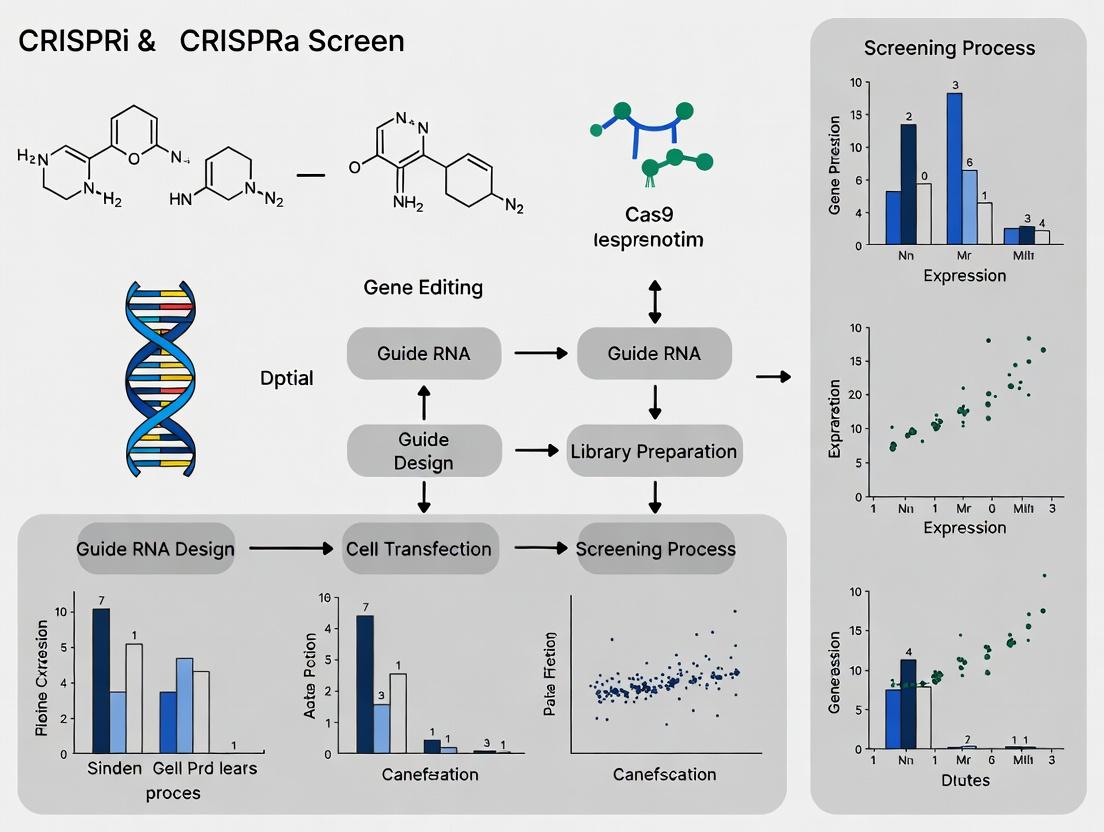
This comprehensive guide details the experimental design principles for CRISPR interference (CRISPRi) and CRISPR activation (CRISPRa) screens.
Mastering CRISPRi and CRISPRa Screens: A Comprehensive Guide to Experimental Design for Functional Genomics
Abstract
This comprehensive guide details the experimental design principles for CRISPR interference (CRISPRi) and CRISPR activation (CRISPRa) screens. It provides researchers and drug development professionals with a complete framework, covering foundational concepts, practical methodological workflows, common troubleshooting and optimization strategies, and comparative validation approaches. By structuring the content around four key intents, this article serves as an essential resource for planning and executing robust, high-quality CRISPR-based functional genomics studies to uncover gene function and identify therapeutic targets.
CRISPRi vs. CRISPRa: Understanding the Core Principles for Precision Genetic Screening
Application Notes
CRISPR interference (CRISPRi) and CRISPR activation (CRISPRa) are engineered derivatives of the CRISPR-Cas9 system designed for precise, programmable gene regulation without altering the underlying DNA sequence. These technologies are fundamental for large-scale functional genomics screens to identify genes involved in specific phenotypes.
CRISPRi utilizes a catalytically "dead" Cas9 (dCas9) fused to a transcriptional repressor domain, such as the Krüppel-associated box (KRAB) from human Kox1. This complex binds to DNA sequences complementary to its guide RNA (gRNA), typically within ~50-100 bp upstream of the transcription start site (TSS), and silences gene expression by inducing heterochromatin formation. It is highly specific, achieving robust knockdown (typically 70-99% reduction) with minimal off-target effects compared to RNAi.
CRISPRa employs dCas9 fused to transcriptional activator domains. Common architectures include the dCas9-VPR fusion (VP64-p65-Rta) or the synergistic activation mediator (SAM) system, where dCas9-VP64 recruits additional activator proteins via engineered RNA aptamers on the gRNA scaffold. CRISPRa is designed to bind within ~200 bp upstream of the TSS to recruit transcriptional machinery and upregulate endogenous gene expression, often achieving 5 to 50-fold induction.
Table 1: Quantitative Comparison of CRISPRi and CRISPRa Systems
| Feature | CRISPRi (dCas9-KRAB) | CRISPRa (dCas9-VPR/SAM) |
|---|---|---|
| Core Component | dCas9 + Repressor (e.g., KRAB) | dCas9 + Activator(s) (e.g., VPR, SAM complex) |
| Primary Function | Gene knockdown/repression | Gene activation/overexpression |
| Typical Efficacy | 70% - 99% mRNA reduction | 5x - 50x mRNA induction |
| Optimal Targeting | -50 to +100 bp relative to TSS | -200 to +1 bp upstream of TSS |
| Key Advantage | High specificity, minimal off-targets | Endogenous, tunable activation |
| Common Screen Readout | Resistance/dropout (negative selection) | Survival/enrichment (positive selection) |
Experimental Protocols
Protocol 1: Design and Cloning of a CRISPRi/a Lentiviral gRNA Library Objective: To construct a pooled gRNA library targeting genes of interest for a genome-wide screen.
- Design: For CRISPRi, design 3-5 gRNAs per gene targeting the region -50 to +100 bp from the TSS. For CRISPRa, design gRNAs targeting -200 to +1 bp upstream of the TSS. Include non-targeting control gRNAs (at least 100).
- Synthesize: Synthesize oligonucleotide pools encoding the gRNA sequences with flanking cloning sites (e.g., for lentiGuide or lentiSAM vectors).
- Clone: Perform pooled cloning via BsmBI restriction sites into the lentiviral gRNA expression backbone. Use electroporation into a high-efficiency E. coli strain (e.g., Endura ElectroCompetent Cells) to ensure >200x library representation.
- Purify: Isolate plasmid DNA using a maxiprep kit. Validate library complexity by next-generation sequencing of the gRNA insert region.
Protocol 2: Performing a Pooled CRISPRi Knockdown Screen for Essential Genes Objective: To identify genes essential for cell proliferation.
- Virus Production: Produce lentivirus for the dCas9-KRAB effector and the gRNA library in separate batches using HEK293T cells. Titre the virus.
- Cell Infection & Selection: Transduce target cells stably expressing dCas9-KRAB with the gRNA library lentivirus at a low MOI (~0.3) to ensure most cells receive one gRNA. Maintain a representation of >500 cells per gRNA. Select with puromycin (2 µg/mL) for 7 days.
- Passaging & Harvest: Passage cells every 2-3 days, maintaining minimum coverage. Harvest genomic DNA from ~50 million cells at the initial time point (T0) and at the end point (T14, or after ~14 population doublings).
- gRNA Amplification & Sequencing: PCR-amplify the integrated gRNA cassettes from genomic DNA using indexing primers for NGS. Purify and sequence the amplicons.
- Analysis: Align sequences to the reference library. Use analysis tools (e.g., MAGeCK) to compare gRNA abundance between T0 and T14. Significantly depleted gRNAs indicate essential genes.
Protocol 3: Targeted Gene Activation Using a CRISPRa System Objective: To activate a specific gene of interest in a cell population for phenotypic assay.
- Cell Line Preparation: Generate a stable cell line expressing the dCas9-activator (e.g., dCas9-VPR) via lentiviral transduction and antibiotic selection.
- gRNA Transfection: Design and clone a gRNA targeting near the TSS of your gene into a delivery vector. Co-transfect the gRNA plasmid into the dCas9-VPR cells using a suitable reagent (e.g., Lipofectamine 3000).
- Validation: Harvest RNA 48-72 hours post-transfection. Validate gene activation via qRT-PCR. Assess protein level changes by western blot 5-7 days post-transfection.
- Phenotypic Assay: Perform relevant functional assays (e.g., proliferation, differentiation, migration) on activated cells versus controls.
Diagrams
Title: Pooled CRISPRi/a Screening Workflow
Title: CRISPRi vs CRISPRa Molecular Mechanism
The Scientist's Toolkit
Table 2: Essential Research Reagents for CRISPRi/a Screens
| Reagent / Material | Function in Experiment |
|---|---|
| dCas9-KRAB Expression Vector | Stable expression of the repressor effector protein (e.g., lenti dCas9-KRAB-puro). |
| dCas9-VPR or SAM System Vectors | Stable expression of the activator effector protein and required components (e.g., MS2-p65-HSF1). |
| Pooled gRNA Library Plasmid | Lentiviral backbone (e.g., lentiGuide-puro) containing the array of target-specific gRNAs. |
| Lentiviral Packaging Plasmids | psPAX2 and pMD2.G for production of VSV-G pseudotyped lentivirus. |
| HEK293T Cells | Standard cell line for high-titer lentivirus production. |
| Puromycin/Appropriate Antibiotics | Selection for cells successfully transduced with the effector and/or gRNA constructs. |
| Next-Generation Sequencing Kit | For preparing and sequencing the amplified gRNA inserts from genomic DNA (e.g., Illumina). |
| gRNA Read Count Analysis Software | Essential bioinformatics tool for analyzing screen data (e.g., MAGeCK, CRISPResso2). |
CRISPR interference (CRISPRi) and CRISPR activation (CRISPRa) represent powerful, programmable transcriptional control tools derived from the CRISPR-Cas9 system. At their core is a catalytically "dead" Cas9 (dCas9), which retains its DNA-binding ability but lacks endonuclease activity. When fused to repressive or activating effector domains, dCas9 can be precisely targeted to specific genomic loci to silence (CRISPRi) or upregulate (CRISPRa) gene expression. These tools are fundamental for functional genomics screens, allowing researchers to probe gene function and identify therapeutic targets at scale.
Molecular Components and Quantitative Comparison
Table 1: Core dCas9 Effector Systems for Transcriptional Modulation
| System | Core Component | Effector Domain(s) | Primary Mechanism | Typical Knockdown/Fold Activation* | Key Applications |
|---|---|---|---|---|---|
| CRISPRi | dCas9 alone | None (steric hindrance) | Blocks RNA polymerase binding/elongation | Up to 1000-fold knockdown (for essential genes) | Essential gene identification, pathway suppression |
| CRISPRi (Enhanced) | dCas9-KRAB | Krüppel-associated box (KRAB) domain | Recruits heterochromatin-forming complexes (e.g., SETDB1, HP1) | ~10-1000 fold knockdown | Strong, consistent repression for screening |
| CRISPRa (SAM) | dCas9-VP64 | VP64 (tetramer of VP16) + MS2-p65-HSF1 (recruited via sgRNA) | Recruits p300/CBP and general transcription machinery | ~2-10 fold activation | Gain-of-function screens, gene overexpression studies |
| CRISPRa (SunTag) | dCas9- scFvGCN4 | Array of GCN4 peptides + scFv-VP64 | Recruits multiple copies of activator domains (VP64) | ~5-100 fold activation | High-level, tunable activation |
| CRISPRa (VPR) | dCas9-VPR | VP64, p65, Rta fusion | Tripartite activator synergistically recruits co-activators | ~5-300 fold activation | Potent activation, useful for difficult-to-activate genes |
*Performance varies based on genomic context, sgRNA design, and cell type.
Protocol 1: Designing and Cloning a CRISPRi/a sgRNA Library for a Genome-Scale Screen
Objective: To construct a pooled lentiviral sgRNA library targeting genes of interest for a CRISPRi or CRISPRa screen.
Materials (Research Reagent Toolkit):
- dCas9 Effector Plasmid: Lentiviral vector expressing dCas9-KRAB (for CRISPRi) or dCas9-VPR (for CRISPRa) with a puromycin resistance marker.
- sgRNA Backbone Plasmid: Lentiviral vector containing the U6 promoter, sgRNA scaffold, and a blasticidin resistance marker.
- Oligo Pool: Synthesized single-stranded DNA oligos encoding target-specific 20nt guides and cloning overhangs.
- Enzymes: BsmBI-v2 (or BbsI), T4 DNA Ligase, T7 Endonuclease I.
- Bacteria: Endura ElectroCompetent Cells or equivalent high-efficiency electrocompetent E. coli.
- Kits: PCR Purification Kit, Gel Extraction Kit, Plasmid Maxiprep Kit.
Methodology:
- sgRNA Design: For CRISPRi, design 3-5 sgRNAs per gene targeting the transcription start site (TSS) -50 to +300 bp. For CRISPRa, target sgRNAs from -400 to -50 bp upstream of the TSS. Include non-targeting control guides.
- Oligo Pool Amplification: Perform a limited-cycle PCR to amplify the oligo pool into double-stranded DNA with full BsmBI overhangs.
- Digestion & Purification: Digest the sgRNA backbone plasmid with BsmBI for 2 hours at 55°C. Gel-purify the linearized vector backbone.
- Golden Gate Assembly: Assemble the PCR-amplified insert and digested vector using a BsmBI Golden Gate reaction (cycled digestion and ligation).
- Electroporation & Library Amplification: Transform the assembly reaction into high-efficiency electrocompetent cells. Plate on large bioassay dishes to ensure >200x library representation. Harvest all colonies for maxiprep.
- Library QC: Validate by next-generation sequencing to confirm guide representation and evenness.
Protocol 2: Executing a Pooled CRISPRi/a Positive Selection Screen
Objective: To identify genes whose repression (CRISPRi) or activation (CRISPRa) confers a selective advantage (e.g., drug resistance, cell survival).
Materials (Research Reagent Toolkit):
- Cell Line: A dividing, lentivirus-transducible cell line (e.g., K562, A549).
- Lentiviral Packaging Mix: psPAX2 and pMD2.G plasmids or commercial packaging system.
- Transfection Reagent: PEI or Lipofectamine 3000.
- Selection Antibiotics: Puromycin, Blasticidin.
- Selective Agent: The drug or condition for the screen (e.g., a chemotherapeutic).
- Reagents for Genomic DNA Extraction: Lysis buffer, Proteinase K, RNase A, Isopropanol.
- PCR & Sequencing Primers: Primers to amplify the integrated sgRNA cassette for NGS.
Methodology:
- Stable dCas9 Cell Line Generation: Transduce target cells with the dCas9-effector lentivirus. Select with puromycin for 7 days.
- Library Transduction: At low MOI (~0.3) to ensure single guide integration, transduce the dCas9 cells with the sgRNA library lentivirus. Select with blasticidin for 7 days. This is the T0 population.
- Selection Pressure: Split the T0 population into control and treatment arms. Apply the selective agent (e.g., drug) to the treatment arm. Maintain cells for 14-21 population doublings.
- Genomic DNA Harvesting: Collect ~1000 cells per guide at T0 and post-selection timepoints. Extract genomic DNA.
- sgRNA Amplification & Sequencing: Perform a two-step PCR to add sequencing adapters and sample barcodes to the sgRNA region. Pool samples and sequence on an Illumina platform.
- Analysis: Align sequences to the reference library. Use MAGeCK or PinAPL-Py algorithms to identify guides and genes significantly enriched or depleted in the treatment vs. control.
Pooled CRISPRi/a Screen Workflow
Mechanism of Action: Key Signaling Pathways
dCas9-KRAB & dCas9-VPR Mechanism
Within the framework of CRISPRi/CRISPRa screen experimental design research, the limitations of CRISPR-Knockout (KO) become evident when investigating essential gene function or studying gain-of-function (GOF) phenotypes. CRISPR-KO, which induces double-strand breaks (DSBs) and frameshift mutations via Cas9 nuclease, is poorly suited for these applications. It is lethal when targeting essential genes, removing them from pooled screening libraries, and cannot create precise, hypermorphic alleles. CRISPR interference (CRISPRi) and CRISPR activation (CRISPRa), which utilize catalytically dead Cas9 (dCas9) fused to repressive or activating effector domains, provide powerful orthogonal solutions.
Application Notes: Essential Genes & Gain-of-Function
Studying Essential Genes: CRISPRi enables the tunable, reversible knockdown of gene expression without altering the genomic DNA sequence. This allows for the study of phenotypic consequences of depleting essential genes without causing cell death at baseline, facilitating the identification of synthetic lethal interactions, vulnerability windows, and mechanistic roles in core cellular processes.
Studying Gain-of-Function: CRISPRa enables the targeted upregulation of endogenous gene expression. This is critical for modeling diseases driven by gene overexpression, identifying oncogenes in a pooled format, screening for genes that confer resistance (e.g., to drugs or pathogens), and activating desirable cellular programs like differentiation or regenerative pathways.
Quantitative Comparison of Core Technologies:
Table 1: Key Characteristics of CRISPR-KO, CRISPRi, and CRISPRa
| Feature | CRISPR-KO (Cas9 Nuclease) | CRISPRi (dCas9-KRAB) | CRISPRa (dCas9-VPR/SAM) |
|---|---|---|---|
| Catalytic Core | Active Cas9 (cleaves DNA) | dCas9 + Repressor (e.g., KRAB) | dCas9 + Activator (e.g., VPR, p65) |
| Primary Effect | Irreversible frameshift indel | Reversible transcriptional repression | Transcriptional activation |
| Impact on Essential Genes | Lethal; confounds screens | Viable; enables hypomorphic study | Viable; can reveal dosage sensitivity |
| Gain-of-Function | Cannot create (loss-of-function only) | Cannot create (loss-of-function) | Primary method for endogenous GOF |
| Typical Knockdown/Upregulation | ~100% loss of function | 70-95% knockdown (tunable) | 2- to 100-fold+ activation (varies) |
| Screen Library Design | Avoids essential genes | Includes all genes, including essentials | Includes all genes for activation |
| Key Applications | Identifying non-essential gene functions, tumor suppressor discovery | Essential gene phenotyping, synthetic lethality, pathway dissection | Oncogene discovery, resistance mechanisms, cellular reprogramming |
Experimental Protocols
Protocol 3.1: Pooled CRISPRi Screen for Essential Gene Dependencies
Objective: Identify synthetic lethal partners of an essential kinase using a genome-wide CRISPRi library.
Materials: See "Research Reagent Solutions" (Section 5).
Method:
- Cell Line Preparation: Generate a stable cell line expressing dCas9-KRAB (or use a pre-engineered line, e.g., K562-dCas9-KRAB). Validate repression efficiency via qPCR for a control gene.
- Library Lentivirus Production: Transfect HEK293T cells with the genome-wide CRISPRi sgRNA plasmid library (e.g., Brunello CRISPRi library, ~77k sgRNAs), psPAX2, and pMD2.G using polyethylenimine (PEI). Harvest virus supernatant at 48h and 72h, concentrate via ultracentrifugation.
- Cell Infection & Selection: Infect dCas9-KRAB cells at a low MOI (0.3-0.4) to ensure most cells receive one sgRNA. Spinfect at 1000 × g for 2h at 32°C. 24h post-infection, begin selection with puromycin (e.g., 2 µg/mL) for 5-7 days.
- Screen Passage & Sampling: Maintain library representation at >500 cells per sgRNA. Split cells as needed. Harvest a genomic DNA (gDNA) sample at Day 7 as the "T0" reference timepoint.
- Experimental Arms: Split the population into Vehicle control and Drug-treated arms. Treat cells with a sub-lethal dose of the kinase inhibitor.
- Endpoint Harvest: Culture cells for ~14-21 population doublings. Harvest cell pellets from both arms for gDNA extraction.
- sgRNA Amplification & Sequencing: Amplify integrated sgRNA sequences from gDNA (≥200µg) via two-step PCR using barcoded primers for NGS. Pool PCR products and sequence on an Illumina NextSeq.
- Data Analysis: Align reads to the sgRNA library reference. Calculate read counts per sgRNA in T0, Control, and Treatment samples. Use Model-based Analysis of Genome-wide CRISPR-Cas9 Knockout (MAGeCK) or MAGeCK-VISPR algorithms to identify sgRNAs significantly depleted in the treatment arm versus control, revealing synthetic lethal gene targets.
Protocol 3.2: Pooled CRISPRa Screen for Drug Resistance Genes
Objective: Identify genes whose overexpression confers resistance to a chemotherapeutic agent.
Method:
- Cell Line Preparation: Use a stable cell line expressing dCas9-VPR (e.g., A375-dCas9-VPR).
- Library Lentivirus Production: As in Protocol 3.1, but using a CRISPRa sgRNA library (e.g., Calabrese genome-wide CRISPRa library, ~3-5 sgRNAs per gene targeting within -200 to +100 bp from TSS).
- Cell Infection & Selection: Infect cells as in Step 3 of Protocol 3.1. Select with appropriate antibiotics.
- Screen Passage & Sampling: Harvest T0 sample. Split cells into Vehicle control and Drug-treated arms. Treat with the chemotherapeutic agent at the established IC70 concentration.
- Endpoint Harvest & Analysis: Culture until control arm shows significant cell death (e.g., 10-14 days). Harvest gDNA from surviving cells in both arms. Process and sequence as in Step 7 of Protocol 3.1.
- Data Analysis: Use MAGeCK to identify sgRNAs significantly enriched in the drug-treated arm versus control. These sgRNAs target genes whose activation promotes survival under drug pressure.
Visualizations
Diagram Title: CRISPR-KO vs CRISPRi/a for Essential Genes
Diagram Title: Pooled CRISPRi/a Screening Workflow
The Scientist's Toolkit
Table 2: Essential Research Reagent Solutions
| Reagent / Material | Function & Description | Example Product/Catalog |
|---|---|---|
| dCas9 Effector Cell Lines | Stable cell lines expressing dCas9 fused to KRAB (CRISPRi) or VPR (CRISPRa). Provides uniform, consistent effector expression for screening. | K562 dCas9-KRAB (Addgene #127237), A375 dCas9-VPR (commercially available) |
| Genome-wide sgRNA Libraries | Pooled lentiviral plasmid libraries targeting all human genes with multiple sgRNAs per gene, optimized for CRISPRi (TSS-proximal) or CRISPRa (specific TSS-proximal regions). | Human Brunello CRISPRi Library (Addgene #73179), Calabrese CRISPRa Library (Addgene #92380) |
| Lentiviral Packaging Plasmids | Third-generation system plasmids (psPAX2, pMD2.G) for producing replication-incompetent lentivirus carrying the sgRNA library. | psPAX2 (Addgene #12260), pMD2.G (Addgene #12259) |
| Next-Generation Sequencing (NGS) Kit | For high-throughput sequencing of amplified sgRNA inserts from genomic DNA to determine sgRNA abundance. | Illumina NextSeq 500/550 High Output Kit v2.5 |
| sgRNA Amplification Primers | Barcoded PCR primers designed to amplify the integrated sgRNA sequence from genomic DNA and add Illumina adapters for sequencing. | Custom primers; see library resource pages (e.g., Addgene) for sequences. |
| Analysis Software (MAGeCK) | Computational tool specifically designed for robust identification of positively and negatively selected sgRNAs/genes in CRISPR screening data. | MAGeCK & MAGeCK-VISPR (open-source) |
| Puromycin Dihydrochloride | Selection antibiotic for cells infected with puromycin-resistant lentiviral sgRNA vectors. Critical for establishing the pooled screening population. | Commercial cell culture-grade puromycin. |
Application Notes
CRISPR interference (CRISPRi) and CRISPR activation (CRISPRa) screens have become indispensable tools for functional genomics, enabling systematic interrogation of gene function at scale. Framed within a broader thesis on experimental design, these technologies facilitate a continuum of discovery from initial target identification to the validation of complex genetic interactions like synthetic lethality.
Target Discovery & Validation: CRISPRi/a screens are foundational for identifying genes essential for specific cellular phenotypes, such as proliferation, differentiation, or response to stimuli. Loss-of-function (CRISPRi) screens pinpoint vulnerabilities, while gain-of-function (CRISPRa) screens identify genes that confer resistance or drive processes. This phase generates high-confidence candidate gene lists for further therapeutic exploration.
Mechanism of Action (MoA) Deconvolution: For novel bioactive compounds, CRISPRi knock-down screens can identify genetic modifiers of drug sensitivity/resistance, revealing the cellular pathways a drug engages and potential resistance mechanisms.
Synthetic Lethality Screens: This is a premier application for identifying precision oncology targets. CRISPRi is used to knock down genes in a genetic background (e.g., a tumor suppressor gene mutation) to find partners whose inhibition selectively kills the mutant cells while sparing wild-type cells. This enables the development of therapies for previously "undruggable" oncogenic mutations.
Functional Enhancer/Regulatory Element Mapping: CRISPRa screens, using targeted activation, can systematically probe non-coding genomic regions like enhancers to link regulatory elements to target genes and phenotypic outcomes.
Key Quantitative Outcomes from Recent Studies (2023-2024):
| Application | Screen Type | Typical Library Size | Hit Rate (Gene Level) | Key Validation Rate | Primary Readout |
|---|---|---|---|---|---|
| Essential Gene Discovery | CRISPRi (Genome-wide) | ~60,000 sgRNAs | 5-15% of genes | 70-90% | Cell fitness (NGS count) |
| Drug MoA | CRISPRi (Sub-genome) | ~5,000-10,000 sgRNAs | 0.5-2% of genes | 50-80% | Fold-change in drug sensitivity |
| Synthetic Lethality | CRISPRi (Focused/Custom) | ~3,000-7,000 sgRNAs | 0.1-1% of genes | 30-70% | Selective fitness defect in mutant context |
| Gene Activation Phenotypes | CRISPRa (Genome-wide) | ~40,000 sgRNAs | 1-5% of genes | 60-85% | Reporter activation, differentiation |
Experimental Protocols
Protocol 1: Genome-wide CRISPRi Screen for Essential Genes
Objective: To identify genes essential for proliferation in a cancer cell line. Workflow:
- Cell Line Preparation: Engineer a doxycycline-inducible dCas9-KRAB (CRISPRi) expressing cell line. Validate knockdown efficiency (>70%) for a control gene via RT-qPCR.
- Library Lentiviral Production: Package the Brunello (or similar) genome-wide CRISPRi sgRNA library (4-6 sgRNAs/gene, ~60,000 sgRNAs total) in HEK293T cells.
- Cell Infection & Selection: Infect target cells at a low MOI (<0.3) to ensure single sgRNA integration. Select with puromycin for 7 days.
- Population Maintenance: Passage cells for ~14-21 population doublings, maintaining a minimum of 500x library representation at each step.
- Genomic DNA Extraction & NGS Prep: Harvest cells at T0 (post-selection) and Tfinal. Extract gDNA, amplify sgRNA regions via PCR, and sequence on an Illumina platform.
- Analysis: Align sequences to the library, count sgRNA reads. Use MAGeCK or pinAPL-Py to identify significantly depleted sgRNAs/genes (FDR < 5%).
Protocol 2: CRISPRi Synthetic Lethality Screen
Objective: To identify genes synthetically lethal with a specific oncogenic mutation (e.g., KRAS G12C). Workflow:
- Isogenic Cell Pair Generation: Use a KRAS G12C mutant cell line and its wild-type KRAS corrected counterpart, both expressing dCas9-KRAB.
- Focused Library Design: Select a custom library targeting DNA repair, metabolic, or signaling pathways (~5,000 sgRNAs).
- Parallel Screening: Conduct Protocol 1 steps 2-5 in parallel for both isogenic cell lines.
- Comparative Analysis: Calculate gene-level fitness scores (e.g., log2 fold-change) for each cell line. Identify genes where sgRNA depletion is significantly greater in the mutant background versus wild-type (synthetic lethal interaction). A commonly used metric is a differential score (β) with p-value < 0.01.
Visualization
CRISPRi Screen Workflow Diagram
Synthetic Lethality Screening Concept
The Scientist's Toolkit
| Research Reagent / Solution | Function in CRISPRi/a Screens |
|---|---|
| Inducible dCas9-KRAB/VP64 Cell Line | Engineered cell line allowing controlled expression of CRISPRi or CRISPRa machinery; essential for fitness screens to avoid developmental effects. |
| Genome-wide sgRNA Library (e.g., Brunello, Dolcetto) | Pooled lentiviral sgRNA library providing high-coverage targeting (4-6 sgRNAs/gene) for unbiased screening. |
| Lentiviral Packaging Plasmids (psPAX2, pMD2.G) | Second-generation packaging system for producing high-titer, replication-incompetent lentivirus for sgRNA delivery. |
| Polybrene (Hexadimethrine Bromide) | A cationic polymer that enhances viral infection efficiency by neutralizing charge repulsion between virus and cell membrane. |
| Puromycin / Appropriate Selection Antibiotic | Selects for cells that have successfully integrated the sgRNA-expressing lentiviral construct. |
| Next-Generation Sequencing (NGS) Kit | For high-throughput sequencing of amplified sgRNA cassettes from genomic DNA to determine sgRNA abundance. |
| Bioinformatics Software (MAGeCK, pinAPL-Py) | Specialized algorithms for analyzing count data, normalizing, and statistically identifying enriched or depleted sgRNAs/genes. |
| Isogenic Cell Line Pair | Critical for synthetic lethality screens; genetically identical except for the mutation of interest to isolate mutation-specific effects. |
Application Notes: CRISPRi/CRISPRa Screening System Selection
The choice between CRISPR interference (CRISPRi) and CRISPR activation (CRISPRa) for a functional genomics screen is a critical initial determinant of experimental success. This decision must be aligned with the specific biological question within the broader framework of perturbing gene expression to map phenotype-genotype relationships.
Table 1: Core Comparative Factors for CRISPRi vs. CRISPRa System Selection
| Factor | CRISPRi (Interference) | CRISPRa (Activation) | Key Consideration |
|---|---|---|---|
| Primary Mechanism | dCas9 fused to repression domain (e.g., KRAB) blocks transcription initiation/elongation. | dCas9 fused to activation domains (e.g., VP64, p65, Rta) recruits transcriptional machinery. | Defines the direction of phenotypic change sought (loss vs. gain of function). |
| Typical Efficacy | 80-99% gene knockdown; highly consistent. | 2-10x gene activation; highly variable and gene-context dependent. | CRISPRi offers more predictable, uniform suppression. CRISPRa outcomes are less certain. |
| Optimal Targeting | Within -50 to +300 bp relative to Transcriptional Start Site (TSS). | Within -200 to -50 bp upstream of the TSS. | Requires precise TSS annotation and gRNA design for the chosen system. |
| Genetic Effect | Loss-of-function (knockdown, not knockout). Partial, reversible. | Gain-of-function. Supra-physiological or induced expression. | CRISPRi mimics heterozygous/hypomorphic states. CRISPRa can reveal effects of oncogene or factor overexpression. |
| Common Applications | Identifying essential genes, vulnerabilities, genes required for a cellular process or drug response. | Identifying genes whose overexpression confers resistance, survival, or a reprogrammed cellular state. | Align with hypothesis: Is the phenotype driven by gene loss or gene activation? |
| Multiplexing | Excellent for dual-gene knockdowns. | Possible but may face synergistic or saturation effects. | CRISPRi is more straightforward for combinatorial synthetic lethality screens. |
| Baseline Expression | Effective across most expression levels. | More effective on low-to-moderately expressed endogenous genes. | Highly expressed genes may show ceiling effects with CRISPRa. |
| Off-target Effects | Primarily due to guide RNA seed sequence binding; similar profile for both systems. | Similar DNA-binding off-targets; additional potential for off-target gene activation via enhancer hijacking. | Use optimized, high-fidelity dCas9 variants and validated guide designs for both. |
Experimental Protocols
Protocol 1: Pre-Screen Validation for CRISPRi/a System and Library Function Objective: To confirm the activity and specificity of the chosen CRISPRi or CRISPRa system and a subset of library guides before embarking on a full-scale screen.
- Cell Line Engineering: Stably transduce your cell line with lentivirus expressing the dCas9-KRAB (CRISPRi) or dCas9-VPR (CRISPRa) protein. Select with appropriate antibiotics (e.g., blasticidin) for 7-10 days.
- Validation Guide Transduction: Co-transduce a validated positive control guide RNA (e.g., targeting a surface receptor like CD46 or CXCR4) and a fluorescent reporter (e.g., GFP) via a lentiviral vector. Include a non-targeting control (NTC) guide.
- Flow Cytometry Analysis: 7 days post-transduction, analyze cells by flow cytometry for the reporter (e.g., CD46 surface expression for knockdown, GFP for activation). Calculate fold-change relative to NTC.
- QC Threshold: A functional system should show >70% knockdown (CRISPRi) or >5-fold activation (CRISPRa) for the positive control guide.
Protocol 2: Pilot Screen for Optimal Screening Parameters Objective: To determine the optimal library coverage (cells per guide) and selection timepoint for the full screen.
- Library Transduction: Transduce the engineered cells from Protocol 1 with the full library at a low MOI (~0.3) to ensure most cells receive one guide. Maintain a representation of >500 cells per guide throughout.
- Harvest Timepoints: Harvest genomic DNA (gDNA) from a minimum of 5e6 cells at Day 3 (post-transduction baseline), Day 7, Day 14, and Day 21.
- Guide Abundance Quantification: Amplify the integrated guide sequences from gDNA via PCR, using barcoded primers for multiplexing. Sequence on an Illumina platform.
- Data Analysis: Calculate guide depletion (for negative selection) or enrichment (for positive selection) relative to Day 3. The optimal selection timepoint is when positive control guides show significant signal and library diversity remains high (>50% of guides detected).
Visualizations
Title: CRISPRi vs CRISPRa Selection Decision Workflow
Title: CRISPRi and CRISPRa Molecular Mechanisms
The Scientist's Toolkit: Key Research Reagent Solutions
Table 2: Essential Materials for CRISPRi/CRISPRa Screening
| Item | Function | Example/Notes |
|---|---|---|
| dCas9 Effector Cell Line | Stable cell line expressing dCas9 fused to KRAB (i) or activator domains (a). | Chemically inducible versions (e.g., dCas9-SunTag) allow temporal control. |
| Validated gRNA Library | Pooled lentiviral library targeting the genome with designed specificity. | Use genome-wide (e.g., Brunello, Calabrese) or focused custom libraries from vendors like Addgene. |
| Lentiviral Packaging Mix | Plasmids (psPAX2, pMD2.G) for producing replication-incompetent lentivirus. | Essential for safe, efficient delivery of gRNA libraries. |
| Selection Antibiotics | For maintaining stable cell lines and selecting transduced cells. | Puromycin for gRNA vector selection; Blasticidin for dCas9 effector selection. |
| Genomic DNA Isolation Kit | For high-yield, high-quality gDNA from large cell populations. | Must handle 1e7 to 1e8 cells. Magnetic bead-based kits recommended for scalability. |
| PCR Amplification Primers | Barcoded primers to amplify integrated gRNA cassettes for NGS. | Critical for multiplexing samples. Include Illumina adapter sequences. |
| Next-Gen Sequencing Service/Kit | For high-throughput sequencing of guide abundance. | Illumina NextSeq or NovaSeq platforms are standard. Plan for 50-100 reads per guide. |
| Analysis Pipeline | Bioinformatics software for guide count normalization and hit identification. | MAGeCK, CRISPResso2, or PinAPL-Py are widely used. |
Step-by-Step Experimental Design: Building Your CRISPRi/CRISPRa Screening Workflow
The design of a CRISPR interference (CRISPRi) or CRISPR activation (CRISPRa) screen hinges on the strategic selection of a guide RNA (gRNA) library. This decision point—opting for a focused (targeted) library versus a genome-wide library—is fundamental to the experimental hypothesis, resource allocation, and interpretability of results within a broader thesis on screen design. Focused libraries interrogate a predefined, smaller set of genes (e.g., a specific pathway, druggable genome, or candidate hits from prior studies), while genome-wide libraries aim for unbiased discovery across all annotated genes. The choice dictates screen scale, depth, statistical power, and downstream validation pathways.
Comparative Analysis: Focused vs. Genome-Wide Libraries
Table 1: Key Parameter Comparison for Library Selection
| Parameter | Focused Library | Genome-Wide Library |
|---|---|---|
| Typical Size | 100 - 10,000 genes | ~18,000 - 20,000 genes |
| gRNA Density | 5-10 gRNAs/gene | 3-10 gRNAs/gene |
| Screen Scale | 10^5 - 10^7 cells | 10^7 - 10^8 cells |
| Primary Cost Driver | Oligo synthesis, sequencing | Viral production, cell culture, sequencing |
| Statistical Power | Higher (more cells/gRNA, more replicates) | Lower (resource-limited coverage) |
| Primary Goal | Hypothesis testing, deep interrogation, mechanistic insight | Unbiased discovery, novel target ID |
| Hit Validation Burden | Lower (pre-selected candidates) | High (requires extensive triaging) |
| Best For | Pathway dissection, chemical genomics, secondary screens | Primary discovery screens, phenotype mining |
Table 2: Quantitative Data from Recent Screen Studies (2022-2024)
| Study (Source) | Library Type | Genes Targeted | gRNAs/Gene | Screening Fold-Coverage | Key Outcome Metric |
|---|---|---|---|---|---|
| Smith et al. 2023 (PMID: 36399521) | Focused (Kinases) | 612 | 10 | 500x | Identified 12 high-confidence modulators (FDR<1%). |
| Jones et al. 2022 (PMID: 35927592) | Genome-Wide (Brunello) | 19,114 | 4 | 200x | Discovered 247 significant hits (FDR<5%). |
| Chen et al. 2024 (PMID: 38355703) | Focused (Chromatin Reg.) | 1,500 | 7 | 1000x | Achieved >99% efficacy for 95% of targets. |
| Genomics of Drug Sens. (DepMap) | Genome-Wide (CRISPRi v2) | 17,186 | 4-6 | Varies | Public resource with fitness effects for >1000 lines. |
Experimental Protocols
Protocol 3.1: Design and Cloning of a Focused CRISPRi/a Library
Objective: To synthesize and clone a custom, focused gRNA library into a lentiviral CRISPRi/a backbone (e.g., pLV hU6-sgRNA hUbC-dCas9-KRAB/TET1).
Materials: See "Scientist's Toolkit" below.
Procedure:
- Gene List Curation: Compile target gene list from databases (e.g., GO, KEGG, DrugBank). Include essential positive/negative control genes (e.g., POLR2A for CRISPRi lethality).
- gRNA Design: Use established algorithms (Doench et al. 2016, Horlbeck et al. 2016). For CRISPRi, select gRNAs targeting -50 to +300 bp relative to TSS. Design 5-10 gRNAs/gene plus 100 non-targeting controls.
- Oligo Pool Synthesis: Order a pooled oligo library containing the gRNA scaffold-compatible sequences with flanking cloning sites (e.g., BsmBI).
- Golden Gate Cloning: a. Digest lentiviral backbone (5 µg) with BsmBI-v2 in CutSmart Buffer at 37°C for 2 hours. Gel-purify the linearized vector. b. Phosphorylate, anneal, and PCR-amplify the oligo pool (5 cycles). c. Perform Golden Gate assembly: 50 ng vector, 2 µL PCR product, T7 Ligase, BsmBI-v2 in thermocycler (37°C 5 min, 16°C 10 min, 25 cycles; then 50°C 5 min, 80°C 5 min). d. Transform assembly into Endura ElectroCompetent cells via electroporation. Plate on large LB+Amp plates to achieve >1000x library representation. e. Pool all colonies, maxiprep plasmid DNA. Verify library representation by NGS (MiSeq).
- Lentivirus Production: Produce lentivirus in HEK293T cells using 3rd-gen packaging system. Titer virus on target cells.
Protocol 3.2: Executing a Genome-Wide CRISPRi/a Screen
Objective: To perform a pooled negative selection (drop-out) screen using a genome-wide library (e.g., Human CRISPRi v2 or Calabrese lib.) to identify genes essential for cell proliferation under a specific condition.
Procedure:
- Cell Line Engineering: Generate a stable cell line expressing dCas9-KRAB (i) or dCas9-VPR (a) via lentiviral transduction and blasticidin selection.
- Library Transduction: Infect cells at a low MOI (0.3-0.4) to ensure most cells receive ≤1 gRNA. Maintain 500x coverage of each gRNA. Include a "T0" control pellet harvested 48h post-puromycin selection.
- Phenotype Selection: Passage cells for 14-21 population doublings under experimental vs. control conditions. Maintain 500x coverage at each passage.
- Genomic DNA Extraction & gRNA Amplification: Harvest ~1e7 cells per replicate/timepoint at endpoint (Te). Extract gDNA (Qiagen Maxi Prep). Perform 2-step PCR to add Illumina adapters and sample barcodes to the integrated gRNA cassette.
- Next-Generation Sequencing (NGS): Pool PCR products and sequence on Illumina NextSeq (75bp single-end). Aim for >500 reads/gRNA.
- Data Analysis: Align reads to library reference. Count gRNA reads per sample. Use MAGeCK (Li et al.) or CRISPhieRmix to calculate robust z-scores or beta scores, identifying gRNAs/genes significantly enriched/depleted between Te and T0/control.
Visualizations
Title: Decision Flowchart for CRISPRi/a Library Selection
Title: Comparative Workflow of Focused vs Genome-Wide Screens
The Scientist's Toolkit
Table 3: Key Research Reagent Solutions for CRISPRi/a Screens
| Reagent / Material | Function & Explanation | Example Product / Vendor |
|---|---|---|
| dCas9 Effector Plasmid | Stable expression of nuclease-dead Cas9 fused to repression (KRAB) or activation (VPR, SAM) domains. Foundation of i/a system. | pLV hU6-sgRNA hUbC-dCas9-KRAB (Addgene #71236) |
| Validated gRNA Library | Pre-designed, cloned libraries ensuring high on-target activity and minimal off-target effects. Critical for screen integrity. | Human CRISPRi v2 (Addgene #83969), Calabrese CRISPRa (Addgene #1000000132) |
| Lentiviral Packaging Mix | 3rd-generation mix for producing high-titer, replication-incompetent lentivirus. Essential for efficient library delivery. | MISSION Lentiviral Packaging Mix (Sigma) or psPAX2/pMD2.G |
| Polybrene (Hexadimethrine Bromide) | A cationic polymer that enhances viral transduction efficiency by neutralizing charge repulsion. | Sigma H9268 |
| Puromycin Dihydrochloride | Selective antibiotic for cells expressing a puromycin resistance gene from the lentiviral vector. Used for stable integrant selection. | Thermo Fisher Scientific A1113803 |
| Next-Gen Sequencing Kit | For high-throughput sequencing of gRNA inserts from genomic DNA to determine enrichment/depletion. | Illumina NextSeq 500/550 High Output Kit v2.5 |
| gRNA Amplification Primers | Custom primers for 2-step PCR to attach Illumina adaptors and sample barcodes to gRNA cassettes prior to NGS. | Integrated DNA Technologies (IDT) |
| Analysis Software | Computational tools for count normalization, statistical testing, and hit calling from NGS read data. | MAGeCK, CRISPhieRmix, PinAPL-Py |
Within the broader thesis on CRISPR interference (CRISPRi) and CRISPR activation (CRISPRa) screen experimental design, the selection and design of single guide RNAs (sgRNAs) is the most critical determinant of screen success. Optimal gRNA design maximizes on-target efficacy while minimizing off-target effects, directly impacting the statistical power and biological validity of high-throughput screens for drug target discovery and functional genomics.
Core Principles for gRNA Design
For CRISPRi (Repression)
CRISPRi utilizes a catalytically dead Cas9 (dCas9) fused to a transcriptional repressor domain (e.g., KRAB) to block transcription initiation or elongation. Design rules prioritize gRNAs that bind within a narrow window relative to the Transcriptional Start Site (TSS).
Key Rules:
- Target Region: -50 to +300 bp relative to the annotated TSS. The most effective window is often -50 to +100 bp.
- Strand Preference: Targeting the non-template (coding) strand is generally more effective for robust repression.
- GC Content: Optimal between 40% and 60%.
- Avoidance Regions: Do not target within nucleosome-occupied regions predicted by chromatin accessibility data.
For CRISPRa (Activation)
CRISPRa uses dCas9 fused to transcriptional activator complexes (e.g., VPR, SAM) to recruit endogenous transcriptional machinery. Effective activation requires gRNAs to bind upstream of the TSS.
Key Rules:
- Target Region: -400 to -50 bp upstream of the TSS. The "sweet spot" is typically -150 to -100 bp upstream.
- Strand Preference: Less critical than for CRISPRi, but some studies suggest the non-template strand may be slightly more effective.
- GC Content: Optimal between 40% and 70%.
- Synergy: Using multiple gRNAs (tiled across the target region) per gene can produce synergistic, stronger activation.
Universal gRNA Design Considerations
- On-Target Efficacy Prediction: Use established algorithms (e.g., Rule Set 2, DeepHF, CRISPRscan) to score and rank gRNAs.
- Minimizing Off-Targets:
- Require 3 or more mismatches in the seed region (PAM-proximal 8-12 bases).
- Use algorithms (e.g., MIT/Broad CRISPR specificity tool) to assess genome-wide off-target potential.
- Prefer gRNAs with unique genomic targets (low homology elsewhere).
- PAM Sequence: Must match the Cas9 variant used (e.g., 5'-NGG-3' for SpCas9).
Table 1: Comparative gRNA Design Parameters for CRISPRi vs. CRISPRa
| Parameter | CRISPRi (dCas9-KRAB) | CRISPRa (dCas9-VPR/SAM) | Universal Consideration |
|---|---|---|---|
| Optimal Target Region | -50 to +100 bp from TSS | -400 to -50 bp from TSS | Must use precise, validated TSS annotation |
| Strand Preference | Strong preference for non-template strand | Mild preference for non-template strand | Design for both strands if unsure |
| Optimal GC Content | 40% - 60% | 40% - 70% | Avoid extremes (<20% or >80%) |
| gRNA Length | 20 nt spacer (standard) | 20 nt spacer (standard) | May vary for engineered Cas variants |
| Key Predictive Feature | Proximity to TSS, chromatin openness | Proximity to TSS, activator complex reach | On-target prediction score (e.g., >50) |
| Typical gRNAs/Gene for Screens | 3-6 | 4-10 (due to tiling for synergy) | More gRNAs increase statistical confidence |
Table 2: gRNA Quality Control Metrics for Library Design
| Metric | Optimal Value/Threshold | Purpose |
|---|---|---|
| On-Target Efficacy Score | > 50 (Rule Set 2 scale) | Predicts strong phenotypic effect |
| Off-Target Score (CFD) | < 0.2 for top off-target site | Minimizes confounding off-target effects |
| Genomic Uniqueness | Perfect match only at intended locus | Ensures target specificity |
| Poly-T Sequence | None (avoids RNA Pol III termination) | Prevents premature gRNA truncation |
| Self-Complementarity | Low (minimizes hairpin formation) | Ensures proper gRNA expression and folding |
Experimental Protocols
Protocol 1: Design and Selection of gRNAs for a CRISPRi/a Screen
Objective: To generate a high-quality, sequence-verified gRNA library for a genome-wide or focused CRISPR screen.
Materials: See "The Scientist's Toolkit" below. Duration: 2-3 weeks.
Procedure:
- Gene List and TSS Definition:
- Compile the official gene symbols for all target genes.
- For each gene, obtain the dominant Transcription Start Site (TSS) from a reliable database (e.g., ENCODE, FANTOM5). Do not rely solely on RefSeq annotations which may list multiple TSSs.
Potential gRNA Identification:
- For CRISPRi: Extract all 20-nt sequences followed by the appropriate PAM (e.g., NGG) within the region from -300 bp to +50 bp relative to the defined TSS.
- For CRISPRa: Extract all 20-nt sequences followed by PAM within the region from -500 bp to -50 bp relative to the TSS.
- Use a script or tool (e.g.,
CRISPRseek) to generate this list.
Filtering and Scoring:
- Filter 1: Remove gRNAs with homopolymer runs (≥4T), low/high GC content (<20% or >80%), or restriction enzyme sites used in your cloning strategy.
- Filter 2: Assess off-targets using the Cutting Frequency Determination (CFD) score. Discard gRNAs with a CFD score > 0.2 for any off-target site with ≤2 mismatches in the seed region.
- Score: Rank remaining gRNAs using an on-target efficacy prediction algorithm (e.g., Rule Set 2 for SpCas9). Select the top 5-10 gRNAs per gene.
Final Selection and Library Synthesis:
- For CRISPRi, select the 3-6 highest-scoring gRNAs per gene from the preferred window (-50 to +100).
- For CRISPRa, select 5-10 gRNAs tiled across the -400 to -50 region, prioritizing high scores.
- Include non-targeting control gRNAs (≥100 unique sequences) and targeting control gRNAs (e.g., for essential genes).
- Order the library as an oligo pool from a trusted vendor.
Protocol 2: Validation of gRNA Efficacy (Bulk Transduction Assay)
Objective: To functionally validate the repression or activation efficiency of selected gRNAs before large-scale screening.
Materials: HEK293T or relevant cell line, lentiviral packaging plasmids, dCas9-effector (KRAB or VPR) expression construct, gRNA cloning vector, qPCR reagents. Duration: 1-2 weeks.
Procedure:
- Construct Generation: Clone 3-5 candidate gRNAs per target gene (and controls) into your lentiviral gRNA expression vector.
- Cell Line Generation: Stably introduce the dCas9-KRAB or dCas9-VPR construct into your target cell line via lentiviral transduction and antibiotic selection.
- gRNA Transduction: Transduce the stable dCas9 cell line with individual gRNA lentiviruses at a low MOI (<0.3) to ensure single copy integration. Include a non-targeting control gRNA.
- Assessment:
- For CRISPRi: After 5-7 days, harvest cells. Isolate RNA, perform cDNA synthesis, and conduct qPCR for the target gene. Calculate fold repression relative to non-targeting control.
- For CRISPRa: After 3-5 days, harvest cells and perform qPCR as above. Calculate fold activation.
- Analysis: Select gRNAs showing >70% repression (CRISPRi) or >5-fold activation (CRISPRa) for inclusion in the final screen library.
Visualizations
Title: CRISPRi gRNA Design Workflow
Title: CRISPRa gRNA Design Workflow
Title: Functional Validation of gRNA Efficacy
The Scientist's Toolkit
Table 3: Essential Research Reagents and Materials
| Item | Function/Application | Example/Notes |
|---|---|---|
| Validated TSS Annotation Source | Provides precise transcription start site data for accurate gRNA targeting. | ENCODE CAGE data, FANTOM5 atlas. Critical for defining the target window. |
| dCas9-Effector Plasmid | Stable expression of the CRISPRi (dCas9-KRAB) or CRISPRa (dCas9-VPR/SAM) machinery. | Addgene #71237 (lenti dCas9-KRAB), #61425 (lenti dCas9-VPR). |
| Lentiviral gRNA Backbone | Vector for cloning and expressing gRNA sequences via U6 promoter. | Addgene #52961 (lentiGuide-Puro), #75112 (lenti sgRNA (MS2)_zeo). |
| On-Target Prediction Tool | Algorithm to rank gRNAs by predicted activity. | Rule Set 2 (for SpCas9), CRISPRscan. Often integrated into design portals. |
| Off-Target Prediction Tool | Identifies potential off-target genomic sites for a given gRNA sequence. | CRISPOR, MIT/Broad CRISPR Design Tool. Uses CFD or MIT scoring. |
| Oligo Pool Synthesis Service | High-fidelity synthesis of thousands of gRNA oligos in a single tube for library construction. | Twist Bioscience, Agilent, Custom Array. Cost-effective for large libraries. |
| Next-Generation Sequencing (NGS) Platform | Essential for quantifying gRNA abundance in genomic DNA pre- and post-screen. | Illumina MiSeq/NovaSeq. Requires customized sequencing primers. |
| Cell Line with High Transduction Efficiency | Model system for validation and screening. | HEK293T, K562, iPSC-derived cells. Must be amenable to lentiviral transduction. |
The generation of stable cell lines expressing catalytically dead Cas9 (dCas9) fused to transcriptional repressors (e.g., KRAB) or activators (e.g., VPR) is a foundational step for systematic, genome-wide CRISPR interference (CRISPRi) and CRISPR activation (CRISPRa) screens. Within a thesis on CRISPRi/a screen experimental design, these engineered cell lines serve as the universal, ready-to-use platform for interrogating gene function. They enable high-throughput, sequence-specific perturbation of transcription without altering the underlying DNA sequence, allowing for the study of gene loss-of-function (via CRISPRi/dCas9-KRAB) or gain-of-function (via CRISPRa/dCas9-VPR) phenotypes in areas like drug target identification, pathway mapping, and genetic interaction studies. Stable integration ensures consistent, homogeneous expression of the large dCas9-effector fusion proteins, which is critical for screen reproducibility and signal-to-noise ratio compared to transient delivery methods.
Key Research Reagent Solutions
| Reagent/Material | Function & Explanation |
|---|---|
| Lentiviral Vector(s) | Delivery vehicle for stable genomic integration. Common all-in-one vectors (e.g., lenti sgRNA(MS2)_Puro) or separate dCas9-effector and sgRNA vectors. |
| dCas9-KRAB Fusion Construct | CRISPRi core: dCas9 (D10A, H840A mutations) fused to the Krüppel-associated box (KRAB) domain from KOX1, mediating transcriptional repression via heterochromatin formation. |
| dCas9-VPR Fusion Construct | CRISPRa core: dCas9 fused to a tripartite activator (VP64-p65-Rta), strongly recruiting transcriptional machinery to upregulate gene expression. |
| HEK293T Cells | Standard packaging cell line for producing high-titer, replication-incompetent lentivirus due to high transfection efficiency and SV40 T-antigen expression. |
| Transfection Reagent (e.g., PEI) | For co-transfection of lentiviral packaging plasmids and transfer vector into HEK293T cells to produce viral particles. |
| Polybrene / Protamine Sulfate | Cationic agents that enhance viral infection efficiency by neutralizing charge repulsion between viral particles and cell membranes. |
| Appropriate Selection Antibiotics | (e.g., Puromycin, Blasticidin). For selecting and maintaining cells that have stably integrated the dCas9-effector construct. |
| Validated sgRNA Controls | Essential for functional validation. Includes positive control sgRNAs targeting known essential genes (for CRISPRi) or easily activatable genes (e.g., IL1RN for CRISPRa), and non-targeting negative controls. |
Table 1: Comparison of dCas9-KRAB (CRISPRi) and dCas9-VPR (CRISPRa) Systems
| Parameter | dCas9-KRAB (CRISPRi) | dCas9-VPR (CRISPRa) | Notes/Source |
|---|---|---|---|
| Primary Function | Transcriptional Repression (Knockdown) | Transcriptional Activation (Overexpression) | |
| Typical Repression/Activation Efficiency | 80-99% knockdown (at promoter) | 10-1000x upregulation (varies by gene) | Efficiency is gene and sgRNA-dependent. |
| Optimal Targeting Region | -50 to +300 bp relative to TSS | -400 to -50 bp upstream of TSS | TSS: Transcription Start Site. |
| Effective Distance from TSS | Up to ~500 bp downstream | Up to ~1-2 kb upstream | |
| Common Selection Marker | Blasticidin S, Puromycin | Blasticidin S, Puromycin | Depends on vector design. |
| Key Validation Assay | qPCR for mRNA reduction (≥80%) | qPCR for mRNA induction (≥10x) | Flow cytometry if targeting surface marker. |
| Typical Time to Phenotype | 3-7 days post-sgRNA transduction | 5-10 days post-sgRNA transduction | Activation can require more time for protein accumulation. |
Table 2: Example Viral Titer and Infection Metrics for Stable Line Generation
| Step | Typical Metric/Value | Goal / Consequence |
|---|---|---|
| Lentivirus Production (HEK293T) | Supernatant volume: 5-10 mL per 10cm dish | Collect at 48 & 72h post-transfection. |
| Viral Titer (Functional) | 1x10^6 - 1x10^7 TU/mL* | *Transducing Units/mL. Affects MOI. |
| Target Cell Infection (MOI) | Multiplicity of Infection (MOI) = 0.3 - 0.5 | Aim for low MOI to ensure single-copy integration per cell. |
| Antibiotic Selection Start | 48-72 hours post-infection | Allows for transgene expression. |
| Selection Duration | 5-7 days (until control cells die) | To establish a polyclonal stable population. |
| Single-Cell Cloning | Isolate 20-30 clones, screen 10-12 | For monoclonal line with uniform expression. |
Detailed Experimental Protocols
Protocol 1: Production of Lentivirus Encoding dCas9-Effector
Objective: Generate high-titer lentivirus for stable integration of dCas9-KRAB or dCas9-VPR.
- Day 0: Seed HEK293T cells in poly-L-lysine coated 10cm dishes at ~3x10^6 cells/dish in DMEM + 10% FBS (no antibiotics). Target 70-90% confluence for next-day transfection.
- Day 1 (Transfection):
- Prepare DNA mix in 500μL serum-free medium (e.g., Opti-MEM):
- Transfer plasmid (dCas9-effector): 7.5 μg
- Packaging plasmids (psPAX2): 5.6 μg
- Envelope plasmid (pMD2.G): 3.0 μg
- Prepare PEI mix: Dilute 40μL of 1 mg/mL PEI (Polyethylenimine) in 500μL serum-free medium.
- Combine DNA and PEI mixes, vortex, incubate 15-20 min at RT.
- Add the 1 mL DNA:PEI complex dropwise to the HEK293T cells. Gently swirl.
- Prepare DNA mix in 500μL serum-free medium (e.g., Opti-MEM):
- Day 2 (Media Change): ~6-8h post-transfection, replace media with 6 mL fresh, pre-warmed complete medium.
- Day 3 & 4 (Virus Harvest): At 48h and 72h post-transfection, carefully collect supernatant, filter through a 0.45μm PES filter to remove cell debris. Aliquot and store at -80°C or use immediately. Titer can be determined via qPCR (Lenti-X Titration) or functional assay.
Protocol 2: Generation of Polyclonal Stable Cell Line
Objective: Create a population of target cells (e.g., HeLa, A549) stably expressing dCas9-effector.
- Day 0: Seed target cells in a 6-well plate at 2x10^5 cells/well in standard growth medium.
- Day 1 (Infection):
- Thaw virus on ice. Prepare infection medium: Growth medium + viral supernatant (volume determined by pilot titering or use 1-2 mL) + 8μg/mL Polybrene.
- Aspirate medium from target cells and add the 2 mL infection medium.
- Day 2: ~24h post-infection, replace infection medium with 2 mL fresh growth medium.
- Day 3 (Start Selection): Begin selection with the appropriate antibiotic (e.g., 2-10 μg/mL Puromycin). Determine killing curve on uninfected cells beforehand.
- Days 4-10: Change selection medium every 2-3 days. Observe until all cells in an uninfected control well are dead. The resistant population is your polyclonal stable line. Expand and cryopreserve.
Protocol 3: Functional Validation of Stable Cell Line
Objective: Confirm dCas9-effector functionality before commencing screens.
- Design Controls: Clone sgRNAs targeting (a) a non-essential gene with a quantifiable product (e.g., CD81 for flow cytometry), (b) a known essential gene (e.g., POLR2A), and (c) a non-targeting control (NTC) into your sgRNA expression vector.
- Transduce Polyclonal Cells: Infect the stable dCas9-effector cell line with lentivirus carrying the validation sgRNAs (MOI~0.3-0.5). Include an NTC.
- Assay for Function:
- For dCas9-KRAB (CRISPRi): After 5-7 days, harvest cells. Perform qPCR on target gene mRNA. Successful repression is ≥80% knockdown relative to NTC. For essential gene targeting, assess growth inhibition via cell viability assay (e.g., CellTiter-Glo) at day 7.
- For dCas9-VPR (CRISPRa): After 7-10 days, harvest cells. Perform qPCR. Successful activation is ≥10-fold induction. For a surface protein, analyze by flow cytometry.
- Analysis: Compare results from positive control sgRNAs to NTC. The stable line is validated if positive controls show strong, significant perturbation.
Visualization Diagrams
Diagram Title: CRISPRi Mechanism: dCas9-KRAB Mediated Repression
Diagram Title: Workflow for Stable dCas9-Effector Cell Line Generation
Within the framework of CRISPR interference and activation (CRISPRi/a) screen experimental design, the execution phase is critical for generating high-quality, interpretable data. This phase encompasses the technical processes of delivering CRISPR ribonucleoproteins (RNPs) into a cell population, selecting successfully modified cells, and inducing the phenotypic readout. Optimal execution minimizes technical noise and maximizes the signal-to-noise ratio for identifying genotype-phenotype relationships. These application notes detail current best practices and protocols for this stage.
Key Parameters & Quantitative Benchmarks
Successful screen execution relies on optimizing several interdependent parameters. The following tables summarize target benchmarks for critical steps.
Table 1: Transduction & Selection Efficiency Benchmarks
| Parameter | Target Benchmark | Consequence of Deviation |
|---|---|---|
| Viral Transduction MOI | 0.3 - 0.5 (for lentiviral sgRNA delivery) | MOI >1 increases multiple sgRNA integration, confounding results. |
| Post-Transduction Viability | >70% | High toxicity can introduce survival biases unrelated to screen phenotype. |
| Selection Efficiency | >90% depletion of non-transduced cells | Incomplete selection increases background noise and dilutes screen signal. |
| sgRNA Library Coverage | >500 cells per sgRNA (minimum) | Lower coverage risks loss of sgRNA representation from stochastic drift. |
| PCR Duplication Rate | <20% | High rates indicate low complexity libraries and biased amplification. |
Table 2: Phenotype Induction Parameters
| Phenotype Type | Typical Induction Period | Key Assay Readout | Notes |
|---|---|---|---|
| Cell Proliferation/Survival | 10-21 days | Cell count, DNA abundance (NGS) | Requires careful passaging control to maintain representation. |
| Fluorescence (FACS) | 3-14 days | Fluorescence Intensity | Timing depends on protein half-life and reporter sensitivity. |
| Drug Resistance | 1-4 treatment cycles | Cell survival count | Dose titration is critical; use IC50-IC90. |
| Cell Morphology | 5-10 days | Imaging-based features | Requires high-content analysis pipelines. |
Detailed Experimental Protocols
Protocol 1: Lentiviral Transduction for Pooled CRISPRi/a Screens
Objective: To deliver the sgRNA library into the target cell population at low multiplicity of infection (MOI) to ensure most cells receive a single sgRNA.
Materials: See "Scientist's Toolkit" below. Procedure:
- Day -1: Seed target cells (e.g., dCas9-KRAB or dCas9-VPR expressing line) in growth medium without antibiotics. Seed at a density to achieve ~30% confluence at the time of transduction.
- Day 0: Transduction a. Thaw library lentivirus aliquot on ice. b. Prepare transduction plates: Dilute virus in complete medium containing polybrene (final concentration 4-8 µg/mL). The volume of virus should achieve the desired MOI (e.g., 0.3-0.5) based on pre-titered functional units. c. Aspirate medium from cells and add the virus-polybrene mixture. d. Centrifuge plates at 800 x g for 30-60 minutes at 32°C (spinoculation). e. Incubate plates at 37°C, 5% CO2 for 6-24 hours.
- Day 1: Aspirate virus-containing medium and replace with fresh complete growth medium.
- Day 2: Begin antibiotic selection (e.g., puromycin) to eliminate non-transduced cells. Determine the minimum kill concentration and duration (typically 3-7 days) in a pilot experiment.
Protocol 2: Phenotype Induction for a Survival/Proliferation Screen
Objective: To allow sufficient time for CRISPRi/a-mediated gene modulation to impact cell fitness, followed by harvest for genomic DNA (gDNA) extraction.
Materials: Cell culture reagents, gDNA extraction kit, PCR reagents. Procedure:
- Post-Selection (Day 0): Upon complete death of non-transduced control cells, harvest a representative sample of the library pool. This is the "T0" time point. Extract gDNA (≥1 µg per 1x10^6 cells). Flash freeze cell pellets for future harvests.
- Maintenance: Passage cells continuously throughout the induction period to maintain sub-confluence (e.g., 80% max). Always seed a sufficient number of cells to maintain >500x coverage of the sgRNA library. Record cell counts at each passage.
- Endpoint Harvest: After the predetermined induction period (e.g., 14-21 population doublings), harvest the final "Tend" cell population. Extract gDNA as in step 1.
- Next-Generation Sequencing Library Preparation: Amplify the integrated sgRNA cassettes from the T0 and Tend gDNA samples via a two-step PCR protocol. a. PCR1 (sgRNA Amplification): Use primers flanking the sgRNA scaffold. Use a minimal number of cycles (≤20). Pool multiple reactions per sample. b. PCR2 (Indexing & Adapter Addition): Add sample-specific barcodes and sequencing adapters using 8-10 cycles. c. Purify PCR product, quantify, and pool equimolar amounts for sequencing on an Illumina platform.
Visualizations
The Scientist's Toolkit: Essential Research Reagents & Materials
| Item | Function & Critical Consideration |
|---|---|
| Stable dCas9 Effector Cell Line | Constitutively expresses nuclease-dead Cas9 (dCas9) fused to a repression (KRAB) or activation (VPR, SAM) domain. Must be validated for uniform expression and functionality. |
| Validated sgRNA Library | Pooled lentiviral library targeting genes of interest with multiple sgRNAs per gene. Includes non-targeting and essential gene controls. Genome-wide or focused. |
| Lentiviral Packaging System | Typically 2nd/3rd generation systems (psPAX2, pMD2.G plasmids) for producing replication-incompetent, high-titer sgRNA library virus. |
| Polybrene (Hexadimethrine Bromide) | Cationic polymer that enhances viral transduction efficiency by neutralizing charge repulsion between virus and cell membrane. |
| Selection Antibiotic | Puromycin, blasticidin, etc., matched to the resistance marker on the sgRNA vector. Must be titrated for 100% kill of non-transduced cells in ≤7 days. |
| High-Efficiency gDNA Extraction Kit | Method must yield high-molecular-weight, PCR-quality gDNA from large cell numbers (e.g., >10^7 cells). Spin-column or magnetic bead-based. |
| High-Fidelity PCR Polymerase | Enzyme with low error rate and high processivity for accurate amplification of sgRNA sequences from genomic DNA during NGS library prep. |
| Dual-Indexed Sequencing Primers | Primers for PCR2 that add unique combinatorial indices (i7/i5) to each sample for multiplexed, demultiplexed sequencing on Illumina platforms. |
| Cell Counter & Viability Analyzer | Automated (e.g., based on trypan blue exclusion) for accurate cell counting during passaging to maintain library representation. |
Within the experimental design framework for CRISPR interference (CRISPRi) and CRISPR activation (CRISPRa) screens, the selection of an appropriate phenotypic enrichment strategy is paramount. The choice between Fluorescence-Activated Cell Sorting (FACS), antibiotic resistance, and proliferation-based screens dictates screen resolution, scalability, and biological applicability. This application note details these core strategies, providing protocols and considerations for their integration into large-scale functional genomics research.
Application Notes
Fluorescence-Activated Cell Sorting (FACS)-Based Screens
FACS enables high-resolution separation of cells based on fluorescent markers linked to a phenotype of interest, such as a reporter gene (GFP, mCherry) or antibody-bound surface protein. In CRISPRi/a screens, this allows for the isolation of discrete populations (e.g., high vs. low gene expression) for downstream sequencing.
Key Advantages: High quantitative resolution, ability to sort on multiple parameters simultaneously, and isolation of viable cells. Key Limitations: Throughput is limited by sort speed, requires specialized equipment, and phenotypes must be linked to fluorescence.
Antibiotic Resistance-Based Screens
This strategy employs survival selection, where cells expressing a CRISPR guide RNA that confers a growth advantage under selective pressure (e.g., puromycin, blasticidin) are enriched. It is commonly used for positive selection screens, such as identifying genes whose repression (CRISPRi) confers drug resistance.
Key Advantages: Technically simple, highly scalable, cost-effective for large libraries. Key Limitations: Limited to survival/death phenotypes, prone to high false-positive rates from multi-copy integration or clonal effects, and offers limited kinetic information.
Proliferation-Based Screens
Proliferation screens monitor changes in cell growth over time without direct selection. Guide representation is tracked via sequencing at multiple time points. Depletion or enrichment of specific guides indicates genes affecting fitness. This is ideal for essential gene identification or synthetic lethality screens with CRISPRi.
Key Advantages: Captures subtle growth phenotypes, requires no specialized equipment post-transduction, and provides kinetic data. Key Limitations: Requires deep sequencing at multiple points, sensitive to PCR amplification biases, and complex analysis to account for population dynamics.
Quantitative Comparison of Selection Strategies
Table 1: Comparative analysis of phenotype selection strategies for CRISPRi/a screens.
| Parameter | FACS-Based | Antibiotic Resistance | Proliferation-Based |
|---|---|---|---|
| Phenotype Resolution | High (Continuous) | Low (Binary) | Moderate (Kinetic) |
| Typical Throughput | Medium (∼10,000 cells/sec) | High (Unlimited) | High (Unlimited) |
| Cost per Sample | High | Low | Medium |
| Optimal Library Size | All sizes | Large (>100k guides) | Large (>100k guides) |
| Key Equipment Need | Flow Cytometer/Sorter | None (besides incubator) | None (besides sequencer) |
| Data Complexity | Medium | Low | High |
| False Positive Control | Gating strategy | Antibiotic titration | Parallel control timepoints |
Detailed Experimental Protocols
Protocol 1: FACS-Based Enrichment for a CRISPRa Reporter Screen
Objective: Isolate cells with top 10% and bottom 10% fluorescence after CRISPRa-mediated gene activation.
Materials: See "Scientist's Toolkit" below.
Procedure:
- Cell Preparation: Transduce target cell line (e.g., K562 expressing dCas9-VPR) with the CRISPRa sgRNA library at a low MOI (<0.3) to ensure single integration. Maintain cells for 7-10 days under puromycin selection to ensure stable expression.
- Harvesting: On day 14 post-transduction, harvest 5x10^7 cells. Wash twice with cold 1x PBS + 1% BSA.
- Staining (if required): For surface markers, resuspend cells in staining buffer with fluorescently conjugated antibody (1:100 dilution) for 30 minutes on ice. Wash twice.
- FACS Sorting: Resuspend cells in PBS + 1% BSA + 1 µg/mL DAPI (viability dye). Filter through a 35 µm cell strainer.
- Using a high-speed sorter, first gate on single, live (DAPI-negative) cells. Create a secondary gate based on the fluorescence channel of interest (e.g., GFP). Collect the top 10% (high) and bottom 10% (low) fluorescent populations into collection tubes containing growth medium.
- Recovery & Genomic DNA (gDNA) Extraction: Sort at least 10 million cells per population (or 500x library representation). Allow sorted cells to recover for 48 hours, then pellet and extract gDNA using a large-scale kit (e.g., Qiagen Blood & Cell Culture DNA Maxi Kit).
- sgRNA Amplification & Sequencing: Amplify sgRNA inserts from gDNA via a two-step PCR protocol (Addgene #1000000056). Purify amplicons and sequence on an Illumina NextSeq platform (≥ 75 bp single-end).
Protocol 2: Antibiotic Resistance Selection Screen
Objective: Identify sgRNAs conferring resistance to a cytotoxic compound via CRISPRi knockdown.
Materials: See "Scientist's Toolkit" below.
Procedure:
- Library Transduction & Selection: Transduce dCas9-KRAB-expressing cells with the CRISPRi library at 200x coverage. Maintain under puromycin selection (2 µg/mL) for 7 days.
- Experimental Arm Setup: Split cells into two arms: Control (DMSO vehicle) and Treated (cytotoxic compound at IC90 concentration). Maintain for 14 days, passaging every 3-4 days while maintaining 200x library coverage.
- Harvest: Pellet 1x10^7 cells from each arm.
- gDNA Extraction & Sequencing: Extract gDNA. Perform a single-step PCR to add sequencing adapters directly from 1 µg of gDNA. Sequence pooled samples.
Protocol 3: Proliferation-Based Fitness Screen
Objective: Identify essential genes via CRISPRi-mediated knockdown over time.
Procedure:
- Initial Transduction & Selection: Transduce and select as in Protocol 2, Step 1. This is Timepoint 0 (T0). Harvest 1x10^7 cells for gDNA.
- Long-Term Passaging: Passage the remaining population every 3-4 days for 28 days, always maintaining >500x library coverage.
- Harvest Timepoints: Harvest 1x10^7 cells at T7, T14, T21, and T28 days post-selection.
- gDNA Extraction & Sequencing: Extract gDNA from all timepoints. Amplify sgRNAs via PCR from each sample using unique barcodes for multiplexing. Pool equimolar amounts for sequencing.
Visualizations
Title: FACS-Based CRISPRa Screen Workflow
Title: Proliferation Screen Time-Course Design
Title: Decision Logic for Selection Strategy
The Scientist's Toolkit
Table 2: Essential research reagents and materials for phenotype selection screens.
| Reagent/Material | Function & Application | Example Product/Catalog |
|---|---|---|
| dCas9 Effector Cell Line | Stable expression of dCas9-KRAB (CRISPRi) or dCas9-VPR (CRISPRa). Foundation for all screens. | Thermo Fisher A35343 (K562 dCas9) |
| Genome-wide sgRNA Library | Pooled lentiviral vectors targeting genes of interest. | Addgene Human CRISPRi v2 (1000000074) |
| Lentiviral Packaging Plasmids | psPAX2 and pMD2.G for production of lentiviral particles. | Addgene #12260, #12259 |
| Polybrene (Hexadimethrine Br) | Enhances viral transduction efficiency. | Sigma-Aldrich H9268 |
| Puromycin Dihydrochloride | Selective antibiotic for cells expressing sgRNA/resistance cassette. | Gibco A1113803 |
| Fluorescent Conjugated Antibody | For FACS-based screens targeting surface protein expression changes. | BioLegend 308806 (CD44-APC) |
| DAPI (4',6-Diamidino-2-Phenylindole) | Viability dye for excluding dead cells during FACS sorting. | Thermo Fisher D1306 |
| gDNA Extraction Kit (Maxi Prep) | High-yield genomic DNA isolation from millions of sorted or bulk cells. | Qiagen 13362 |
| High-Fidelity PCR Master Mix | Accurate amplification of sgRNA sequences from gDNA for NGS library prep. | NEB M0541 |
| Illumina Sequencing Primers | Custom primers containing P5/P7 flow cell adapters and sample indexes for multiplexing. | Integrated DNA Technologies |
NGS Library Prep and Sequencing Depth Requirements for Screen Readout
Within the broader thesis on CRISPRi/CRISPRa screen experimental design research, the transition from pooled cell screening to high-quality sequencing data is a critical determinant of success. The library preparation (library prep) and sequencing depth are not mere technical steps but fundamental design parameters that directly impact the statistical power, sensitivity, and reliability of identifying phenotype-associated genetic elements. Inadequate depth or suboptimal library construction leads to high false-negative rates, confounding results in functional genomics and drug target discovery.
The following tables consolidate current guidelines for CRISPR screen sequencing.
Table 1: Sequencing Depth Requirements by Screen Type and Library Size
| Screen Type / Library Size | Minimum Reads per Sample | Recommended Reads per Sample | Key Rationale |
|---|---|---|---|
| Genome-wide (~70k sgRNAs) | 20-30 million | 50-100 million | Ensures >500 reads/sgRNA for robust dropout/enrichment detection. |
| Sub-library (~10k sgRNAs) | 5-10 million | 20-30 million | Enables high-confidence analysis of finer phenotypic effects. |
| CRISPRi/a (Activation/Repression) | 30-40 million | 75-150 million | Phenotypes can be subtler; increased depth improves dynamic range. |
| Minimum Coverage per sgRNA | 200-300 reads | 500-1000 reads | Based on Poisson distribution to avoid sampling noise. |
Table 2: NGS Library Prep QC Metrics and Specifications
| QC Step | Target Metric | Method/Instrument | Implication for Screen Readout |
|---|---|---|---|
| Post-PCR Library Concentration | > 10 nM | Qubit dsDNA HS Assay | Ensures sufficient material for sequencing. |
| Fragment Size Distribution | Peak ~280-320 bp (various adapters) | Bioanalyzer/TapeStation | Confirms correct adapter ligation and absence of primer dimers. |
| Library Complexity | > 80% non-duplicate reads | Sequencing output analysis | Low complexity indicates PCR over-amplification, biasing representation. |
| sgRNA Representation | > 90% sgRNAs detected at >30x | Pilot sequencing | Critical for screen sensitivity; guides below threshold are lost. |
Detailed Experimental Protocols
Protocol 3.1: High-Complexity NGS Library Preparation from Genomic DNA
Objective: To amplify integrated sgRNA sequences from genomic DNA of screened cells while maintaining proportional representation and minimizing bias.
Materials: See "Scientist's Toolkit" below. Procedure:
- Genomic DNA (gDNA) Isolation: Use a column- or magnetic bead-based kit to isolate high-quality, high-molecular-weight gDNA from pelleted cells. Quantify by fluorometry. Input: ~2-5 µg gDNA per library.
- Primary PCR (1st Round - sgRNA Amplification):
- Set up 100 µL reactions per sample using a high-fidelity PCR master mix.
- Primers: Use forward primers binding the constant region of the lentiviral vector upstream of the sgRNA and reverse primers binding the downstream constant region.
- Cycle Number: Use the minimum number of cycles to produce sufficient product for the second PCR (typically 12-16 cycles). Split reactions into multiple tubes to avoid PCR inhibition.
- Purification: Pool reactions and purify using a 1.8x ratio of magnetic SPRIselect beads. Elute in 25 µL nuclease-free water.
- Secondary PCR (2nd Round - Adapter Indexing):
- Set up 50 µL reactions using the purified Primary PCR product as template (2-5 µL).
- Primers: Use full-length Illumina P5/P7 flow cell adapters with unique dual index (UDI) combinations for sample multiplexing.
- Cycle Number: Minimize (typically 8-12 cycles).
- Purification: Purify with a 0.9x followed by a 1.0x SPRIselect bead clean-up to remove primer dimers and select the correct size range. Elute in 20 µL.
- Library QC and Quantification:
- Assess concentration (Qubit) and size profile (Bioanalyzer).
- Quantify by qPCR using a library quantification kit (KAPA) for accurate sequencing loading.
- Pooling and Sequencing: Pool libraries equimolarly based on qPCR data. Sequence on an Illumina platform (NovaSeq 6000, NextSeq 2000) using a 75-150 bp single-end run, focusing on the sgRNA region.
Protocol 3.2: Determining Optimal Sequencing Depth via Pilot Sequencing
Objective: To empirically determine the required sequencing depth for a full-scale screen by assessing sgRNA representation and evenness. Procedure:
- Prepare the NGS library from a representative sample (e.g., plasmid library or T0 cell pellets) as in Protocol 3.1.
- Sequence the pilot library to a moderate depth (~5-10 million reads).
- Bioinformatic Analysis:
- Align reads to the sgRNA reference library.
- Calculate reads per sgRNA.
- Generate a cumulative distribution plot: X-axis = sgRNAs ranked by read count, Y-axis = cumulative fraction of total reads.
- Interpretation: A shallow curve indicates even representation. The goal is >90% of sgRNAs above a minimum threshold (e.g., 30 reads). If not achieved, increase input gDNA, optimize PCR cycles, or increase sequencing depth for the main run.
Mandatory Visualizations
Title: NGS Library Prep Workflow for CRISPR Screens
Title: Impact of Sequencing Depth on Screen Success
The Scientist's Toolkit: Essential Research Reagent Solutions
| Item | Function in CRISPR Screen NGS Prep |
|---|---|
| Magnetic Bead gDNA Kit (e.g., MagAttract HMW) | Isolates high-molecular-weight, PCR-ready genomic DNA from large cell pellets, critical for maintaining library complexity. |
| High-Fidelity PCR Master Mix (e.g., KAPA HiFi, Q5) | Ensures accurate amplification with low error rates during sgRNA library PCR, minimizing representation bias. |
| SPRIselect Magnetic Beads | Size-selects and purifies PCR products. Dual-size selection (0.9x/1.0x) is key for removing adapter dimers and obtaining clean libraries. |
| Fluorometric DNA Quant Kit (e.g., Qubit dsDNA HS) | Accurately quantifies low-concentration DNA without interference from RNA or salts, essential for library pooling. |
| Library Quantification Kit (e.g., KAPA Library Quant) | qPCR-based assay specifically quantifying amplifiable library fragments with Illumina adapters for precise pool normalization. |
| Dual Indexing Primer Sets (e.g., Illumina UDI) | Allows unique combinatorial indexing of samples, preventing index hopping errors and enabling high-level multiplexing. |
| Bioanalyzer/TapeStation | Provides precise electrophoretic analysis of library fragment size distribution, a key QC metric before sequencing. |
Troubleshooting CRISPRi/CRISPRa Screens: Solving Common Pitfalls and Enhancing Signal
Within the broader thesis on CRISPRi/CRISPRa screen experimental design, a critical troubleshooting step involves diagnosing inefficient target gene modulation. Persistent low knockdown (CRISPRi) or activation (CRISPRa) efficiency often originates from suboptimal expression or function of core system components: the single guide RNA (gRNA) and the catalytically dead Cas9 (dCas9) fusion protein. This application note provides a systematic, experimental framework to quantify and validate these components, ensuring robust screen performance and reliable phenotypic readouts.
Key Quantitative Benchmarks for System Components
Effective troubleshooting requires comparison against established performance benchmarks. The following tables summarize critical quantitative targets.
Table 1: Expected Expression Levels for Core Components
| Component | Assay | Target Benchmark | Notes |
|---|---|---|---|
| dCas9 Fusion Protein | Western Blot | >50% of cells show detectable protein | Use anti-Cas9 or epitope tag antibodies. |
| dCas9-KRAB (CRISPRi) | qPCR (Target Gene) | 70-95% knockdown for top gRNAs | For validation, use a highly effective control gRNA. |
| dCas9-VPR (CRISPRa) | qPCR (Target Gene) | 10-100 fold activation for top gRNAs | Fold-change is highly gene-dependent. |
| gRNA Expression | qPCR (from cDNA) | CT value <28 for robust gRNAs | Relative to polymerase III transcripts (e.g., U6 snRNA). |
| Viral Titer (Lentivirus) | Transduction | MOI of ~0.3-0.5 | To ensure single integration events. |
Table 2: Common Pitfalls and Diagnostic Indicators
| Problem | Potential Cause | Diagnostic Check |
|---|---|---|
| Low Knockdown/Activation | Poor gRNA expression | qPCR for gRNA from genomic DNA & cDNA. |
| No Signal in Any Condition | dCas9 not expressed | Western blot for dCas9 fusion protein. |
| Inconsistent Cell-to-Cell Signal | Variegated dCas9 expression | Flow cytometry for dCas9 (if tagged). |
| High Background Noise | gRNA sequence off-target effects | Include non-targeting gRNA controls. |
| Loss of Effect Over Time | Silencing of viral promoter | Use different promoters for dCas9 and gRNA. |
Experimental Protocols
Protocol 1: Validating dCas9 Fusion Protein Expression
Purpose: To confirm the presence and approximate abundance of the dCas9 repressor (KRAB) or activator (VPR) fusion protein.
Materials:
- Cell pellet from your CRISPRi/a cell line.
- RIPA Lysis Buffer with protease inhibitors.
- Anti-Cas9 antibody (or anti-tag antibody, e.g., FLAG, HA).
- HRP-conjugated secondary antibody.
- Chemiluminescent substrate.
Method:
- Lyse 1-2 million cells in 100 µL of cold RIPA buffer for 30 minutes on ice. Centrifuge at 14,000 x g for 15 min at 4°C.
- Determine protein concentration. Load 20-40 µg of total protein per lane on a 4-12% Bis-Tris protein gel.
- Transfer to a PVDF membrane using standard wet or semi-dry transfer.
- Block membrane in 5% non-fat milk in TBST for 1 hour.
- Incubate with primary antibody (anti-Cas9, 1:1000 dilution) in blocking buffer overnight at 4°C.
- Wash membrane 3x with TBST, then incubate with appropriate HRP-conjugated secondary antibody (1:5000) for 1 hour at RT.
- Develop using chemiluminescent substrate and image. A clear band at ~160 kDa (dCas9) or higher (due to fusion) should be visible. Compare to a positive control (e.g., plasmid-transfected cells).
Protocol 2: Quantifying gRNA Expression by RT-qPCR
Purpose: To measure the relative abundance of expressed gRNA transcripts, distinguishing between genomic integration and successful transcription.
Materials:
- TRIzol reagent or RNA extraction kit.
- DNase I.
- Reverse transcriptase with random hexamers.
- qPCR SYBR Green Master Mix.
- gRNA-specific forward primer and a universal reverse primer targeting the gRNA scaffold.
Method:
- Extract Total RNA: Isolate RNA from ~1 million cells using TRIzol, including a DNase I treatment step to remove genomic DNA.
- Reverse Transcription: Synthesize cDNA using 500 ng of total RNA and a reverse transcriptase kit. Include a no-RT control for each sample.
- Quantitative PCR: Prepare qPCR reactions with SYBR Green mix. Use the following cycling conditions: 95°C for 3 min, followed by 40 cycles of 95°C for 10 sec and 60°C for 30 sec.
- Target: gRNA (use specific F-primer + scaffold R-primer).
- Reference: A stable Pol III transcript (e.g., U6 snRNA or 7SK RNA).
- Analysis: Use the ΔΔCT method to quantify gRNA expression relative to the reference gene and to a control sample (e.g., cells with a known high-expression gRNA). A CT value for the gRNA below 28-30 typically indicates robust expression.
Protocol 3: Functional Validation with Control gRNAs
Purpose: To test the entire system's functionality using validated, high-performance gRNAs before proceeding with a full library screen.
Materials:
- CRISPRi/a stable cell line.
- Lentivirus for positive control gRNAs (targeting a housekeeping gene for knockdown or a readily inducible gene for activation).
- Lentivirus for non-targeting control gRNAs.
- qPCR reagents for target gene expression analysis.
Method:
- Transduce your dCas9-expressing cell line with viruses for (a) a non-targeting control, (b) a positive control gRNA for CRISPRi (e.g., targeting POLR2A), and (c) a positive control for CRISPRa (e.g., targeting the MYOD1 promoter).
- Apply appropriate selection (e.g., puromycin) if the gRNA vector contains a resistance marker.
- After 5-7 days (to allow for turnover of existing protein), harvest cells for RNA extraction.
- Perform RT-qPCR for the target genes of the positive control gRNAs. Normalize expression to housekeeping genes and compare to the non-targeting control.
- Interpretation: A successful CRISPRi system should show >70% knockdown of POLR2A. A successful CRISPRa system should show >10-fold activation of the target gene (e.g., MYOD1). Failure here indicates a problem with the dCas9 fusion, gRNA expression, or cellular context.
Visualizing the Diagnostic Workflow
Title: Diagnostic Flowchart for Low CRISPRi/a Efficiency
The Scientist's Toolkit
Table 3: Essential Research Reagents for CRISPRi/a Validation
| Reagent / Material | Function | Key Considerations |
|---|---|---|
| Anti-Cas9 Antibody | Detects dCas9 fusion protein via Western blot. | Validated for S. pyogenes Cas9; check cross-reactivity. |
| Epitope Tag Antibodies | Alternative method to detect dCas9 fusions (e.g., FLAG, HA). | Requires tagged dCas9 construct. Often higher sensitivity. |
| gRNA Scaffold qPCR Primer | Universal reverse primer for quantifying any gRNA expression. | Must bind conserved scaffold region; validate specificity. |
| U6 snRNA qPCR Assay | Reference gene for normalizing Pol III-driven gRNA levels. | Do not use for normalizing mRNA in RT-qPCR. |
| Validated Control gRNAs | Positive controls for system function (e.g., targeting POLR2A for CRISPRi). | Essential for benchmarking. Obtain from published resources. |
| Polybrene (or Equivalents) | Enhances lentiviral transduction efficiency for stable line generation. | Titrate for optimal cell health and infection rate. |
| Doxycycline-Inducible dCas9 System | Allows controlled dCas9 expression to minimize toxicity. | Enables timing optimization and study of essential genes. |
| Chromatin Modifiers | Compounds (e.g., HDAC inhibitors) to test chromatin barrier impact. | Can reveal if target locus is inaccessible. |
Minimizing Off-Target Effects and Background Noise in Screen Data
Within the broader thesis on CRISPR interference (CRISPRi) and CRISPR activation (CRISPRa) screen experimental design, a paramount challenge is the discrimination of true biological signal from confounding artifacts. Off-target effects, stemming from guide RNA (gRNA) misrecognition, and background noise, originating from technical and biological variability, can severely compromise data interpretation. This application note details current methodologies and protocols designed to maximize signal fidelity in pooled CRISPRi/a screening.
Table 1: Primary Contributors to Noise and Off-Target Effects in CRISPRi/a Screens
| Source | Description | Estimated Impact on Screen Noise (Relative) | Mitigation Strategy |
|---|---|---|---|
| gRNA Off-Target Binding | gRNA hybridization to genomic loci with imperfect complementarity, leading to aberrant gene repression/activation. | High (Can account for >30% of significant hits in poorly designed libraries) | Improved gRNA design algorithms, truncated gRNAs (tru-gRNAs), chemical modifications. |
| Variable gRNA Activity | Differences in gRNA knockdown/activation efficiency due to sequence-specific features (e.g., chromatin state, local GC%). | High (Efficacy variance can exceed 10-fold) | Use of multiple gRNAs per gene, validation of gRNA efficiency, optimized promoter choice (e.g., U6 vs. SNR52). |
| Library Representation Bias | Stochastic drift or PCR amplification bias leading to unequal gRNA abundance pre-infection. | Medium-High | Maintain high library coverage (>500x), use of slow-growth E. coli strains for library amplification, minimal PCR cycles. |
| Biological Heterogeneity | Cell-to-cell variation in proliferation, transfection/transduction efficiency, and state differences. | Medium | Use of high MOI for pooled infection, fluorescence-activated cell sorting (FACS) for selection, large cell numbers (>1000x library size). |
| Technical Sequencing Errors | Errors during next-generation sequencing (NGS) library prep and sequencing runs. | Low-Medium | Inclusion of unique molecular identifiers (UMIs), sequencing with sufficient depth and quality scores. |
| Screen Endpoint Selection | Noise from cell viability assays (e.g., ATP-based luminescence) or FACS sorting gates. | Variable | Normalization to internal controls, use of dual screening endpoints for cross-validation. |
Core Protocols for Noise Reduction
Protocol 2.1: Design and Cloning of a High-Fidelity CRISPRi/a Library
Objective: To construct a pooled gRNA library maximizing on-target specificity and minimizing off-target interactions. Materials:
- Software: CRISPick (Broad Institute), CHOPCHOP, or proprietary algorithms incorporating off-target scoring (e.g., Doench ‘2016 rules, MIT specificity score).
- Template: Human/mouse reference genome (e.g., GRCh38, mm10).
- Cloning System: Lentiviral backbone (e.g., lentiGuide-Puro, pLV hU6-sgRNA hUbC-dCas9-KRAB-T2A-Puro for CRISPRi).
- Oligo Pool: Commercially synthesized oligo library containing selected gRNA sequences with flanking cloning sites. Procedure:
- gRNA Selection: For each target gene, input the genomic target sequence into the design algorithm. Select 3-6 gRNAs with the highest predicted on-target efficiency score and lowest aggregate off-target score. Prioritize gRNAs targeting regions proximal to the transcriptional start site (TSS) for CRISPRa (within 200 bp downstream) and for CRISPRi (from -50 to +300 bp relative to TSS).
- Control gRNAs: Include at least 100 non-targeting control gRNAs (scrambled sequences with no perfect match in the genome) and 100 targeting control gRNAs (e.g., against essential genes for negative selection, or non-essential genes for positive selection).
- Library Synthesis & Cloning: Order the oligo pool. Perform a pooled restriction-ligation cloning (e.g., using BsmBI sites) into the lentiviral backbone according to the manufacturer's protocol. Transform the reaction into electrocompetent E. coli (e.g., Endura Electrocompetent Cells) to ensure large transformation diversity.
- Library Amplification & Validation: Plate bacteria at low density to maintain representation. Harvest plasmid DNA via maxiprep. Validate library complexity by NGS of the gRNA cassette region to ensure all gRNAs are represented at roughly equal abundance.
Protocol 2.2: Performing a Screen with Internal Normalization Controls
Objective: To execute a screen that allows for robust normalization against technical and biological noise. Materials:
- Cell Line: A stable cell line expressing dCas9-KRAB (for CRISPRi) or dCas9-VPR (for CRISPRa) at consistent, moderate levels. Validate lack of toxicity and functional activity prior to screening.
- Viral Production: HEK293T cells, packaging plasmids (psPAX2, pMD2.G), transfection reagent.
- Selection Agents: Puromycin, blasticidin, etc., as required. Procedure:
- Lentivirus Production & Titration: Produce lentivirus for the gRNA library in multiple batches, pool, and titrate. Aim for a low multiplicity of infection (MOI ~0.3-0.4) to ensure most cells receive a single gRNA. Infect dCas9-expressing cells at a coverage of >500 cells per gRNA.
- Selection and Expansion: Apply antibiotic selection for 5-7 days to eliminate uninfected cells. Harvest the initial population (T0) for genomic DNA extraction as a reference.
- Experimental Perturbation & Sampling: Apply the selective pressure (e.g., drug treatment, FACS sorting based on a reporter). Culture cells for an appropriate duration (typically 14-21 population doublings). Harvest the final population (Tf) and intermediate timepoints if performing time-series analysis.
- gRNA Quantification by NGS: Extract genomic DNA (gDNA) using a scalable method (e.g., Qiagen Maxi Prep). Amplify the gRNA region from 50-100 µg of gDNA per sample using a 2-step PCR protocol: i) Add sample-specific barcodes and adapters; ii) Add Illumina flow cell binding sites and indices. Include UMIs in the primer design to correct for PCR duplication bias. Pool libraries and sequence on an Illumina platform to achieve >100 reads per gRNA per sample.
Protocol 2.3: Computational Analysis for Hit Calling with Noise Suppression
Objective: To identify true positive hits by statistically modeling and subtracting background noise. Materials:
- Software: MAGeCK, CRISPhieRmix, or custom R/Python pipelines.
- Input Data: Raw read counts for each gRNA in T0 and Tf samples, mapped to the library design file. Procedure:
- Count Normalization: Normalize read counts using the median ratio method (e.g., DESeq2) or by total count. Align counts from all samples to the T0 sample to control for initial representation bias.
- Control Gene Normalization: Model the distribution of non-targeting control gRNAs to estimate the null hypothesis (no effect). Some algorithms use the assumption that most genes have no phenotype, treating them as a negative control set.
- Statistical Testing: Use a robust ranking algorithm (MAGeCK RRA) or a Bayesian mixture model (CRISPhieRmix) to score genes. These methods are less sensitive to outliers from single, potent gRNAs and instead rely on the consistent performance of multiple gRNAs per gene.
- False Discovery Rate (FDR) Control: Apply Benjamini-Hochberg correction to p-values or posterior probabilities to generate FDR-adjusted q-values. A typical hit threshold is q < 0.05 for the primary screen.
- Noise Filtering: Filter out genes where gRNAs show highly discordant effects (high within-gene variance), which may indicate off-target effects. Correlate gene-level scores with known pathway members to assess biological coherence.
Visualizing Strategies and Workflows
Diagram 1: High-Fidelity CRISPRi/a Screen Workflow
Diagram 2: Sources of Noise in Screen Data
The Scientist's Toolkit: Research Reagent Solutions
Table 2: Essential Reagents for High-Fidelity CRISPRi/a Screens
| Reagent / Material | Function & Rationale | Example Product / Specification |
|---|---|---|
| Algorithmically-Designed gRNA Library | Provides pre-selected gRNAs with maximized on-target and minimized off-target scores, ensuring library-wide fidelity. | Custom library from Synthego, Twist Bioscience, or Agilent. Designed using CRISPick or similar. |
| dCas9 Effector Cell Line | A clonal, stable cell line expressing a consistent level of dCas9-KRAB (i) or dCas9-VPR (a). Reduces variability from transient transfection. | Commercially available (e.g., Horizon Discovery K562 dCas9-KRAB) or generated in-house with FACS sorting for stable, uniform expression. |
| Endura Electrocompetent E. coli | High-efficiency transformation strain for large, complex plasmid libraries, essential for maintaining library diversity during cloning. | Lucigen Endura Electrocompetent Cells (>1e9 transformants/µg). |
| Unique Molecular Identifier (UMI) Adapters | Short random nucleotide sequences added during PCR to tag each original gDNA molecule, allowing computational correction for PCR amplification bias. | Illumina TruSeq UMI Adapters or custom UMI-containing primers. |
| Robust Statistical Analysis Software | Specialized tools that model screen noise and control gRNA distributions to accurately separate signal from noise. | MAGeCK (v0.5.9+), CRISPhieRmix, or PinAPL-Py. |
| Non-Targeting Control gRNA Set | A large set (>100) of scrambled gRNAs that match the library's GC content but target no genomic locus, defining the empirical null distribution. | Should be included in all commercial and custom library designs. |
Optimizing MOI and Viral Titer to Ensure Single-Guide Integration
Within the experimental design of pooled CRISPR interference (CRISPRi) and CRISPR activation (CRISPRa) screens, precise control of viral transduction is paramount. The primary objective is to achieve one successful lentiviral integration event per cell, delivering a single guide RNA (sgRNA). Multiplicity of Infection (MOI) and viral titer are the critical levers for this control. An MOI that is too high increases the probability of multiple integrations, complicating phenotype interpretation due to confounding polyclonality. Conversely, an MOI that is too low results in poor library representation and insufficient screen coverage. This application note provides a detailed framework for optimizing these parameters to ensure single-guide integration, thereby enhancing the reliability and interpretability of CRISPRi/a screens.
Quantitative Parameters and Definitions
Table 1: Key Quantitative Parameters for Viral Transduction Optimization
| Parameter | Definition | Optimal Target for Pooled Screens | Measurement Method |
|---|---|---|---|
| Multiplicity of Infection (MOI) | The average number of viral particles capable of infecting a single cell. | MOI = 0.3 - 0.4 | Calculated from titer and cell count; validated by antibiotic selection survival rate. |
| Viral Titer (TU/mL) | The concentration of functional, transducing viral particles in a stock. | N/A (Highly variable; must be empirically determined). | Determined via transduction of target cells followed by antibiotic selection or flow cytometry for a reporter (e.g., GFP). |
| Transduction Efficiency | The percentage of cells that have been successfully transduced. | ~30-40% at MOI=0.3-0.4 | Measured by percentage of antibiotic-resistant cells or reporter-positive cells (e.g., %GFP+). |
| Infection Rate (Predicted by Poisson) | The theoretical percentage of cells with n integrations. | ~70% untransduced, ~26% single, ~4% double at MOI=0.3. | Calculated using the Poisson distribution: P(n) = (e^-MOI * MOI^n) / n! |
| Survival Rate Post-Selection | The percentage of cells surviving antibiotic selection after transduction. | Ideally 30-50% of the total population. | (Colony count post-selection / cells plated) * 100%. |
Table 2: Poisson Distribution Predictions for MOI Values
| MOI | Cells with 0 Integrations | Cells with 1 Integration | Cells with ≥2 Integrations | Recommended Use |
|---|---|---|---|---|
| 0.1 | 90.5% | 9.0% | 0.5% | Too low; poor library coverage. |
| 0.3 | 74.1% | 22.2% | 3.7% | Ideal Target Range |
| 0.4 | 67.0% | 26.8% | 6.2% | Ideal Target Range |
| 0.8 | 44.9% | 35.9% | 19.1% | High risk of multiple integrations. |
| 1.0 | 36.8% | 36.8% | 26.4% | Unacceptable for pooled screens. |
Experimental Protocols
Protocol 1: Determination of Functional Viral Titer
Objective: To determine the concentration of transducing units per milliliter (TU/mL) of your lentiviral sgRNA library stock. Materials: Target cells (e.g., HEK293T, K562), polybrene (8 µg/mL final), appropriate culture medium, puromycin or blasticidin (concentration predetermined by kill curve), tissue culture plates. Procedure:
- Day -1: Seed target cells in a 12-well plate at 20-30% confluence to ensure they are in log-phase growth the next day.
- Day 0: Prepare serial dilutions of the lentiviral stock in medium containing polybrene (e.g., 1:10, 1:100, 1:1000, 1:10,000).
- Aspirate medium from cells and add 1 mL of each virus dilution to duplicate wells. Include a "no virus" control well with polybrene only.
- Day 1: (~24h post-transduction) replace the virus-containing medium with fresh growth medium.
- Day 2: Begin antibiotic selection. Apply the predetermined selective antibiotic to all wells, including the control.
- Day 5-7: After control cells are fully dead, aspirate medium, stain viable colonies with crystal violet, and count.
- Calculation: Use data from the dilution yielding 10-100 colonies.
TU/mL = (Number of colonies * Dilution Factor) / (Volume of virus in mL)Example: 50 colonies from 0.1 mL of a 1:10,000 dilution gives: (50 * 10,000) / 0.1 = 5 x 10^7 TU/mL.
Protocol 2: Optimizing MOI for Single-Guide Integration
Objective: To perform a test transduction at a calculated MOI to verify a survival rate consistent with single-copy integration. Materials: Viral stock with known titer (from Protocol 1), target cells, polybrene, antibiotic, culture vessels. Procedure:
- Calculate the volume of virus needed for a target MOI (e.g., 0.3) and a given number of cells.
Virus Volume (µL) = (MOI * Number of Cells) / (Viral Titer in TU/mL * 0.001)Example: For 1x10^6 cells, titer of 1x10^8 TU/mL, MOI=0.3: (0.3 * 1e6) / (1e8 * 0.001) = 300 µL. - Day 0: Transduce the calculated number of target cells with the determined virus volume in the presence of polybrene. Set up a "no virus" control.
- Day 1: Change to fresh medium.
- Day 2: Begin antibiotic selection on all cells.
- Day 5-7: After control cells die, trypsinize and count the surviving cell population.
- Analysis: Calculate the survival rate.
Survival Rate = (Cell count post-selection / Cell count at transduction) * 100%. A rate of ~30% is optimal for MOI=0.3. If survival is >40%, recalculate titer (it may be higher than measured) and reduce MOI. If survival is <20%, increase MOI.
Protocol 3: Validation of Single-Copy Integration via PCR (Optional)
Objective: To empirically confirm low rates of multiple integrations in the selected cell population. Materials: Genomic DNA from selected polyclonal pool, primers flanking the sgRNA integration site, PCR reagents, gel electrophoresis system. Procedure:
- Extract genomic DNA from ~1x10^6 selected cells.
- Perform a limiting dilution digital PCR (ddPCR) or quantitative PCR (qPCR) assay targeting the integrated lentiviral backbone and a single-copy endogenous reference gene.
- Calculate the vector copy number (VCN) per cell: VCN = (Quantity of vector amplicon) / (Quantity of reference gene amplicon).
- Interpretation: A VCN close to 1.0 indicates predominantly single-copy integrations. A VCN >1.5 suggests a significant fraction of cells have multiple integrations, necessitating a lower MOI.
Visualizations
Diagram 1: MOI Optimization Workflow for CRISPR Screens
Diagram 2: Poisson Distribution & Transduction Outcomes
The Scientist's Toolkit: Key Research Reagent Solutions
Table 3: Essential Materials for Viral Titer and MOI Optimization
| Reagent / Material | Function & Role in Optimization | Key Considerations |
|---|---|---|
| Lentiviral sgRNA Library | Delivers the genetic perturbation element (sgRNA) and selection marker into the target cell genome. | Use a high-diversity, sequence-verified library. Aliquot and store at -80°C to avoid freeze-thaw cycles. |
| Polybrene (Hexadimethrine Bromide) | A cationic polymer that neutralizes charge repulsion between viral particles and cell membranes, enhancing transduction efficiency. | Typically used at 4-8 µg/mL. Can be toxic to sensitive cells; test beforehand. |
| Protamine Sulfate | Alternative enhancer to polybrene; often preferred for hematopoietic cell lines. | Used at a low concentration (e.g., 5-10 µg/mL). |
| Selection Antibiotic (Puromycin/Blasticidin) | Selects for cells that have successfully integrated the viral construct containing the resistance gene. | Critical: Perform a kill curve on target cells to determine the minimal 100% lethal concentration before the screen. |
| Flow Cytometry Reporter (e.g., GFP) | If the vector contains a fluorescent reporter, it allows rapid assessment of transduction efficiency without selection. | Enables quick titer estimation and MOI adjustment 48-72 hours post-transduction. |
| Validated Target Cell Line | The cellular context for the CRISPRi/a screen. Must be amenable to lentiviral transduction and express Cas9/dCas9 fusion protein (KRAB for i, VPR for a). | Pre-engineer or confirm stable expression of dCas9. Test proliferation and baseline phenotype. |
| qPCR/ddPCR Reagents for VCN | For precise measurement of vector copy number per genome to validate single-copy integration. | Requires primers/probes for the integrated lentiviral sequence and a single-copy host gene (e.g., RPP30). |
Addressing Screen Dynamic Range Issues and Phenotype Penetrance.
In pooled CRISPR interference and activation (CRISPRi/a) screens, two critical factors influencing data quality and biological interpretation are screen dynamic range and phenotype penetrance. Dynamic range refers to the measurable spread between the strongest and weakest phenotypic signals (e.g., log2 fold-change between positive and negative control guides). Phenotype penetrance describes the proportion of cells within a genetically uniform population that exhibits the expected phenotype following genetic perturbation. Limited dynamic range and incomplete penetrance can obscure true hits, inflate false-negative rates, and confound the assessment of gene essentiality or functionality. This Application Note provides protocols and analytical frameworks to diagnose, mitigate, and correct for these issues within the context of CRISPRi/a screen experimental design.
Table 1: Common Factors Affecting Dynamic Range & Penetrance
| Factor | Impact on Dynamic Range | Impact on Penetrance | Typical Measurable Range/Effect | ||
|---|---|---|---|---|---|
| dCas9 Fusion Protein Expression | Low expression reduces maximum silencing/activation. | Heterogeneous expression leads to variable phenotype. | >90% cells via flow cytometry; >5-fold median protein level vs. untransduced. | ||
| sgRNA Transcriptional Efficiency | Weak promoters limit sgRNA abundance. | Stochastic sgRNA expression reduces penetrance. | ~10-100 fold variation in sgRNA reads from RNA Pol III promoters. | ||
| Target Gene Expression Level | High basal expression challenges CRISPRi efficacy. | Highly expressed genes may show lower silencing penetrance. | CRISPRi efficacy inversely correlates with transcription level (R² ~0.4-0.6). | ||
| Chromatin State at Target Locus | Closed chromatin reduces dCas9 binding accessibility. | Leads to bimodal populations (on/off). | Accessibility via ATAC-seq peaks correlates with efficacy (p<0.001). | ||
| Screen Readout Duration | Short duration underestimates growth phenotypes. | Phenotype may manifest asynchronously. | Optimal duration: 5-7 population doublings for growth screens. | ||
| Library Design (Position & Specificity) | Optimal sgRNAs yield larger effect sizes. | Off-target effects dilute penetrance. | Top 5% vs. bottom 5% sgRNAs show ~3-5 fold difference in | log2FC | . |
Table 2: Benchmarking Values for Quality Control
| QC Metric | Acceptable Range | Indicator of Issue | ||
|---|---|---|---|---|
| Negative Control Guide Log2FC Spread | Standard deviation < 0.5 | High technical noise compresses dynamic range. | ||
| Positive Control Guide Signal | log2FC | > 2 (Growth), >1 (Other) | Insufficient perturbation strength. | |
| Correlation between Biological Replicates | Pearson's R > 0.9 | Poor reproducibility often linked to penetrance issues. | ||
| Percent Cells Expressing dCas9 Fusion | > 95% | Low penetrance due to untransduced cells. | ||
| sgRNA Drop-out Rate | < 20% of library lost | High drop-out suggests low-penetrance lethal hits are missed. |
Experimental Protocols
Protocol 1: Pre-Screen Dynamic Range Optimization via Flow Cytometry
Objective: Quantify dCas9 fusion protein expression and homogeneity to predict penetrance.
- Transduce your cell line with the dCas9-KRAB (CRISPRi) or dCas9-VPR (CRISPRa) lentivirus.
- Select with appropriate antibiotics for at least 7 days.
- Harvest 1x10^6 cells and stain with an antibody against the epitope tag (e.g., HA, FLAG) on the dCas9 fusion.
- Analyze by flow cytometry. Gate for live, single cells.
- Calculate the percentage of positive cells and the median fluorescence intensity (MFI) ratio relative to an unmodified parental cell line.
- Acceptance Criterion: >95% positivity and MFI ratio >5. If below, re-optimize transduction or use FACS to sort a high-expression population.
Protocol 2: Tiling sgRNA Assay for Locus-Specific Penetrance Assessment
Objective: Empirically determine the penetrance of gene silencing/activation for a target of interest.
- Design 10-20 sgRNAs tiling across the transcriptional start site (TSS) of your target gene (for CRISPRi, -50 to +300 bp relative to TSS; for CRISPRa, -400 to -50 bp).
- Clone individual sgRNAs into your lentiviral sgRNA backbone.
- Transduce your validated dCas9-expressing cell line (from Protocol 1) in biological triplicate for each sgRNA and a non-targeting control (NTC).
- At 7-10 days post-transduction, harvest cells for two analyses:
- qPCR: Isolate RNA, synthesize cDNA, and perform qPCR for the target gene. Calculate % knockdown/activation relative to NTC.
- Flow Cytometry (if applicable): If the target gene encodes a surface protein, stain and analyze by flow to determine the distribution of protein expression (penetrance).
- Select the 2-3 sgRNAs with the highest median effect size and most unimodal, complete phenotypic shift for inclusion in your library.
Protocol 3: In-Screen Dynamic Range Monitoring with Embedded Controls
Objective: Continuously monitor dynamic range throughout the screen duration.
- Spike-in Controls: Incorporate a set of non-targeting control sgRNAs (NTCs, ~100 sequences) and strong positive control sgRNAs (e.g., targeting essential genes for dropout screens, or strong activators for CRISPRa enrichment screens) into your library at a defined ratio (e.g., 100:1 library:control guide cells).
- Sample Timepoints: Harvest cells at the initial plasmid library (T0), at the post-transduction reference timepoint (T1), and at the final endpoint (Tf). Include an intermediate timepoint (e.g., Tmid) for growth screens.
- Sequencing & Analysis: Amplify and sequence the sgRNA locus. Calculate log2 fold-change (log2FC) for each sgRNA relative to T1.
- QC Calculation: For each timepoint, calculate the robust separation metric: Median(log2FC Positive Controls) - Median(log2FC NTCs). A decline in this separation over time indicates a loss of dynamic range.
The Scientist's Toolkit: Research Reagent Solutions
Table 3: Essential Reagents for Optimizing CRISPRi/a Screens
| Item | Function & Rationale |
|---|---|
| Inducible dCas9 Fusion Constructs | Enables temporal control of perturbation, reducing adaptation/pleiotropy, improving penetrance of lethal phenotypes. |
| Fluorescent Protein-tagged dCas9 Fusions | Allows direct tracking of dCas9 expression and FACS enrichment for high-expressers to maximize penetrance. |
| Kill-Curve Validated Selection Antibiotics | Ensures complete elimination of un-transduced cells, critical for maintaining a uniform, penetrant pool. |
| High-Efficiency Lentiviral Packaging Mix | Produces high-titer virus essential for achieving high MOI with low cytotoxicity, improving transduction uniformity. |
| Commercial CRISPRi/a Optimized sgRNA Libraries | Libraries are designed with pre-validated, high-performance sgRNAs to maximize dynamic range and on-target specificity. |
| Next-Generation Sequencing Spike-in Oligos | Provides internal sequencing controls to normalize read counts across runs, improving accuracy of log2FC calculations. |
| Cell Viability or Reporter Assay Kits | Enables medium-throughput validation of candidate sgRNA penetrance and effect size prior to large-scale screening. |
Visualization
Diagnostic and Mitigation Workflow for Screen Performance Issues.
CRISPRi/a Screen Workflow with Quality Control Checkpoints.
Troubleshooting Poor Library Coverage and Representation in Sequencing Data
In CRISPR interference and activation (CRISPRi/a) screening, poor library coverage and uneven representation in sequencing data directly compromise statistical power and validation of hits. This application note details protocols for diagnosing and resolving these issues, which are critical for robust screen interpretation in drug development research.
Table 1: Key Metrics for Assessing Library Representation
| Metric | Optimal Value | Threshold for Concern | Diagnostic Implication |
|---|---|---|---|
| Reads per Sample | > 10-20M (varies by library size) | < 5M | Insufficient sequencing depth |
| % sgRNA Aligned | > 80% | < 60% | Poor sequencing quality or library prep issue |
| Gini Index | < 0.2 | > 0.3 | High inequality in sgRNA abundance |
| Zero-Count Guides | < 5% of library | > 15% of library | Significant guide dropout |
| Pearson R (Reps) | > 0.9 | < 0.8 | Poor replicate reproducibility |
Table 2: Typical Problem Sources & Frequencies
| Problem Source | Estimated Frequency in Screen Failures | Primary Affected Stage |
|---|---|---|
| Inadequate Cell Coverage (Low MOI) | 35% | Transduction |
| PCR Amplification Bias | 25% | Library Prep / Sequencing |
| Insufficient Sequencing Depth | 20% | Sequencing |
| Poor DNA Quality/Quantity | 15% | Genomic DNA Extraction |
| Cell Clumping/Aggregation | 5% | Cell Culture & Transduction |
Detailed Diagnostic Protocols
Protocol 3.1: Pre-Sequencing Library QC
Objective: Quantify library diversity and integrity prior to sequencing. Materials: Qubit dsDNA HS Assay Kit, Agilent Bioanalyzer High Sensitivity DNA Kit, qPCR reagents for library quantification (e.g., KAPA Library Quant Kit). Procedure:
- Quantify DNA: Use Qubit for accurate mass concentration of the amplified library.
- Assess Size Distribution: Run 1 µL of library on Bioanalyzer HS DNA chip. Expect a single, tight peak at expected amplicon size (~150-200bp for sgRNA region).
- Quantify Effective Library Molecules: Perform qPCR using library-specific primers. Calculate molarity based on standard curve.
- Calculate Diversity: (Effective Library Molecules) / (Total sgRNAs in Library) should be > 1000. A lower ratio indicates potential loss of complexity.
Protocol 3.2: Post-Sequencing Data QC Analysis
Objective: Evaluate raw sequencing data for coverage and uniformity. Materials: FastQ files, standard compute environment (Linux), fastp, Bowtie2, custom Python/R scripts. Procedure:
- Adapter Trimming & QC: Use
fastpwith default parameters to remove adapters and generate quality reports. - sgRNA Alignment: Align reads to library reference file using
Bowtie2in end-to-end sensitive mode (--very-sensitive). - Generate Count Table: Use
samtoolsand custom script to generate raw counts per sgRNA. - Calculate Metrics: Compute Gini Index, percentage of zero-count guides, and correlation between technical replicates from the count table.
Remediation Protocols
Protocol 4.1: Optimizing Cell Transduction for Even Representation
Objective: Achieve low MOI (<0.3) and high cell numbers to ensure each sgRNA is represented in many cells. Materials: HEK293T cells (for lentivirus production), polybrene (8 µg/mL), target cells, puromycin. Procedure:
- Titrate Virus: Perform a viral titration with a small pilot using a GFP-encoding vector to determine volume yielding 20-30% infection.
- Scale Transduction: For the main screen, transduce target cells at a density of 200-400 cells per sgRNA. Use the pre-determined virus volume in the presence of polybrene.
- Selection: Begin puromycin selection (concentration predetermined by kill curve) 24-48 hours post-transduction. Maintain selection for 5-7 days.
- Harvest Baseline Sample: At the end of selection, harvest a sample of cells (~5e6 cells) for gDNA as the "T0" timepoint. This confirms pre-screen library representation.
Protocol 4.2: Minimizing PCR Bias During Library Preparation
Objective: Amplify sgRNA inserts with minimal distortion of abundance. Materials: High-quality gDNA, KAPA HiFi HotStart ReadyMix, staggered forward primer, common reverse primer, AMPure XP beads. Critical Reagent Note: KAPA HiFi polymerase is preferred for its high fidelity and low bias. Procedure:
- First PCR (sgRNA Amplification):
- Set up multiple parallel 50 µL reactions, limiting input gDNA to 1-2 µg per reaction.
- Use a staggered forward primer (e.g., with 0-7 random bases at 5') to improve diversity.
- Cycle: 95°C 3min; [98°C 20s, 60°C 15s, 72°C 30s] x 18-22 cycles; 72°C 1min.
- Pool & Clean: Pool all first-PCR reactions. Cleanup using 0.8x AMPure XP beads.
- Second PCR (Add Sequencing Adaptors & Indices):
- Use 2-5 µL of cleaned first-PCR product as template.
- Cycle: Use the fewest cycles possible (often 8-12) to add full adaptors.
- Final Cleanup: Perform a double-sided size selection (e.g., 0.55x and 0.8x bead ratios) to remove primer dimers and large genomic fragments.
The Scientist's Toolkit: Research Reagent Solutions
Table 3: Essential Materials for Robust CRISPRi/a Library Prep
| Item | Function | Example Product |
|---|---|---|
| High-Fidelity PCR Mix | Minimizes amplification bias during sgRNA library construction. | KAPA HiFi HotStart ReadyMix |
| SPRIselect Beads | For consistent size selection and cleanup of PCR products. | Beckman Coulter AMPure XP |
| Next-Gen Sequencing Kit | Provides sufficient output and read length for sgRNA libraries. | Illumina NextSeq 500/550 High Output Kit v2.5 (75 Cycles) |
| Library Quantification Kit | Accurate qPCR-based quantitation of sequencing-ready libraries. | KAPA Library Quantification Kit for Illumina |
| Cell Dissociation Reagent | Prevents cell clumping to ensure even representation during transduction. | Gibco TrypLE Select Enzyme |
| Polybrene | Enhances viral transduction efficiency. | Hexadimethrine bromide (8 µg/mL working conc.) |
| gDNA Extraction Kit | High-yield, high-quality genomic DNA from large cell pellets. | QIAGEN Blood & Cell Culture DNA Maxi Kit |
Visualization: Workflows and Relationships
Title: CRISPR Screen Library Troubleshooting Workflow
Title: Factors Influencing sgRNA Library Representation
Within the broader thesis on CRISPRi/CRISPRa screen experimental design, the selection and implementation of robust controls is the cornerstone of data integrity and biological interpretation. Non-targeting guides (NTGs) and essential gene sets serve as critical reference points for normalizing screen data, distinguishing true hits from technical noise, and validating screening performance. This application note details contemporary protocols and analytical frameworks for their use.
The Role of Controls in CRISPR Screens
Non-Targeting Guides (NTGs): Synthetic sgRNAs with no perfect match or significant predicted off-target matches to the genome. They model the experimental background, accounting for variables like viral transduction efficiency, cellular fitness impacts from CRISPR machinery expression, and batch effects. NTGs are essential for normalizing read counts and calculating fold-changes.
Essential Gene Sets: A defined collection of genes universally required for cellular proliferation or survival (e.g., ribosomal subunits, core transcription factors). Their consistent depletion (in CRISPR knockout/i screens) or requirement for proliferation (in CRISPRa screens) serves as a positive control for screen efficacy. They benchmark the dynamic range and sensitivity of the assay.
Table 1: Comparison of Common Essential Gene Sets for Human Cell Lines
| Gene Set Name | Source/Curation Method | Typical Gene Count | Primary Application | Key Reference |
|---|---|---|---|---|
| Core Essential Genes (CEGv2) | Meta-analysis of 102+ CRISPR screens in cancer lines. ~1,800 genes. | Benchmarking screen performance; defining essentialome. | Hart et al., G3, 2017 | |
| Gene Essentiality (DepMap) Core | DEMETER2 analysis of 712+ cancer cell lines (Broad/Novartis). ~1,700 genes. | Pan-cancer essentiality reference; gold standard for cancer models. | DepMap Public 24Q2 | |
| Hart et al. Essential | Early genome-wide CRISPR screens in K562 and HL60. ~2,000 genes. | Foundational reference; used in library design. | Hart et al., Nature, 2015 | |
| MERCK Common Essential | Analysis of 84 cancer lines, focusing on highly conserved essentials. ~1,500 genes. | High-confidence essential genes for stringent validation. | Behan et al., Nature, 2019 |
Table 2: Guidelines for Non-Targeting Guide (NTG) Implementation
| Parameter | Recommended Best Practice | Rationale |
|---|---|---|
| Number per Library | 50-1000, distributed throughout library. | Provides robust statistical distribution for normalization. |
| Sequence Design | BLAST against relevant genome; avoid seed regions (bases 4-12) matching. | Minimizes on-target activity and microRNA-like effects. |
| Use in Analysis | Median-centering, Z-score calculation, or as negative control in hit calling (e.g., MAGeCK). | Controls for non-specific cellular responses and technical variation. |
| Validation | Confirm lack of phenotype in pilot assays vs. essential gene targeting. | Verifies screen functionality and control suitability. |
Experimental Protocols
Protocol 1: Validating Screen Performance Using Essential Gene Sets Objective: To confirm the screen has sufficient dynamic range and signal-to-noise ratio prior to full-scale analysis.
- Post-Screen Read Count Processing: After sequencing, align reads to the sgRNA library and generate a count matrix.
- Separate Control Sets: Isolate read counts for sgRNAs targeting the defined Essential Gene Set and the Non-Targeting Guide set.
- Calculate Log2 Fold-Change (LFC): For each sgRNA, compute LFC (e.g., T0 vs. Tfinal for dropout screens). Aggregate by gene (median or mean of sgRNAs).
- Generate Metrics: Calculate the following:
- ESSENTIALITY SIGNAL: Median LFC of all essential genes.
- SEPARATION SCORE: Difference between median LFC of essential genes and non-targeting controls.
- GSS (Gene Set Stability) Score: A metric from the
CERESorMAGeCKtoolkits quantifying the robust depletion of essential genes.
- Interpretation: A successful screen shows strong negative median LFC for essentials (e.g., < -1 for CRISPRi/KO) and clear separation (>2 standard deviations) from the NTG distribution.
Protocol 2: Normalization and Hit Calling Using Non-Targeting Guides Objective: To identify gene-level phenotypes while controlling for experimental variance.
- Data Input: Prepare a raw count matrix for all sgRNAs across all samples (e.g., initial and final timepoints, treatment vs. control).
- Normalization (within-sample): Use the median count of all NTGs in each sample to compute a size factor (e.g., DESeq2 method). Adjust counts to correct for differences in sequencing depth.
- Fold-Change Calculation (between conditions): For each sgRNA, compute log2(fold-change) using normalized counts. The distribution of NTG fold-changes should be centered at zero.
- Gene-level Statistic: Using a tool like MAGeCK or CRISPRcleanR:
- Provide the count matrix and a file specifying NTGs.
- The algorithm models the NTG distribution as the null to calculate p-values and false discovery rates (FDR) for all targeted genes.
- Hit Selection: Select genes that pass a significance threshold (e.g., FDR < 0.05 or 0.1) and a minimum effect size threshold (e.g., LFC > |0.5|).
Mandatory Visualizations
Diagram Title: CRISPR Screen Analysis & Control Integration Workflow
Diagram Title: How Control Distributions Define Hit Calling
The Scientist's Toolkit: Research Reagent Solutions
Table 3: Essential Materials and Reagents
| Item | Function & Critical Feature | Example Vendor/Product |
|---|---|---|
| CRISPRi/a Lentiviral Library | Pooled sgRNA library cloned into dCas9-KRAB (CRISPRi) or dCas9-VPR (CRISPRa) backbone. Includes NTGs. | Addgene (Human CRISPRi/a libraries), Cellecta |
| Validated Essential Gene siRNA/CRISPR Set | Pre-designed set for orthogonal validation of screen hits and positive control. | Dharmacon (siGENOME Essentials), Horizon Discovery |
| Next-Gen Sequencing Kit | For amplifying and barcoding the integrated sgRNA region from genomic DNA. | Illumina (Nextera XT), NEBnext Ultra II |
| Cell Viability/Proliferation Assay | To confirm essential gene depletion phenotype in validation (e.g., ATP-based). | Promega (CellTiter-Glo) |
| Analysis Software | Specialized tools for robust normalization and hit calling using NTGs. | Broad Institute (MAGeCK), UC San Diego (PinAPL-Py) |
| Curated Essential Gene Lists | Bioinformatics reference sets for performance benchmarking. | DepMap Portal, CRISPRAnalyzeR |
Validating Screen Hits and Comparing Technologies: Ensuring Robust Biological Insights
Within a broader thesis on CRISPRi/a screen experimental design, this protocol details the critical step of primary hit validation. Following a pooled genome-wide screen and next-generation sequencing (NGS), researchers must transition from raw FASTQ files to a statistically robust candidate gene list. This process filters out technical noise and identifies genes whose perturbation most consistently and significantly affects the phenotype of interest. Rigorous validation at this stage is foundational for downstream mechanistic studies and drug target discovery.
Application Notes & Quantitative Analysis
Primary validation focuses on confirming that the phenotypic readout is reproducible and statistically significant for candidate genes. Key metrics and thresholds are consolidated below.
Table 1: Key Metrics and Thresholds for Primary Hit Validation
| Metric | Typical Threshold | Function & Rationale | |
|---|---|---|---|
| Log2(Fold Change) | > | 1 or < -1 | Indicates magnitude of phenotypic effect. Positive for CRISPRa (activation), negative for CRISPRi (inhibition). |
| P-value (from MAGeCK/MLE) | < | 0.05 | Statistical significance of gene's effect, adjusted for multiple testing. |
| FDR/BH-adjusted q-value | < | 0.1 - 0.25 | More stringent control for false discovery rate. Common cutoff is 0.1. |
| Gene Essentiality Score (for controls) | N/A | Confirms screen performance by ranking known essential genes highly in negative selection. | |
| sgRNA Consistency | > | 50% | Percentage of a gene's targeting sgRNAs that show a concordant phenotype direction. |
| Rank Consistency (Reproducibility) | High | Candidate gene rank should be stable across independent screen replicates or analysis methods. |
Table 2: Comparison of Common Analysis Tools for CRISPR Screens
| Tool | Primary Method | Key Outputs | Best For |
|---|---|---|---|
| MAGeCK | Robust Rank Aggregation (RRA), MLE | Gene ranks, p-values, scores | Both arrayed and pooled screens; robust to outliers. |
| CRISPResso2 | Alignment & quantification | Indel spectrum, editing efficiency | Validation of editing at target site. |
| PinAPL-Py | Enrichment analysis | Pathway enrichment, hit prioritization | Integrating phenotypic data with pathway info. |
| edgeR / DESeq2 | Generalized linear models | Differential abundance statistics | Flexible modeling of complex designs. |
Experimental Protocols
Protocol 1: From FASTQ to Gene-Level Statistics
Objective: Process raw NGS data to generate a ranked list of candidate genes. Materials: Computing cluster or high-performance workstation, MAGeCK software, FASTQ files from screen, reference sgRNA library file.
- Demultiplexing & Quality Control: Use
fastqcandmultiqcto assess read quality. Demultiplex samples if needed usingbcl2fastqorCutadapt. - sgRNA Quantification: Align reads to the reference sgRNA library using MAGeCK
count:mageck count -l library.csv -n sample_output --sample-label sample1,sample2 --fastq sample1.fastq sample2.fastq. - Gene-Level Analysis: Run MAGeCK's Robust Rank Aggregation (RRA) test to rank genes:
mageck test -k count_table.txt -t treatment_sample -c control_sample -n rra_output. - Modeling (Optional): For complex designs (multiple timepoints/doses), use MAGeCK MLE:
mageck mle --count-table count_table.txt --design-matrix design_matrix.txt --norm-method control. - Hit Identification: Apply thresholds from Table 1 (e.g., FDR < 0.1, log2FC > |1|) to the
gene_summary.txtoutput file to generate the primary candidate list.
Protocol 2: Cross-Method Validation & Rank Consolidation
Objective: Increase confidence by comparing results from independent analysis pipelines. Materials: Outputs from at least two analysis tools (e.g., MAGeCK RRA, edgeR).
- Independent Analysis: Process the same count data through a second tool (e.g., using edgeR in R to perform differential abundance testing).
- Rank Comparison: Create a list of the top N (e.g., 100) hits from each method.
- Calculate Overlap: Determine the number of genes common to both lists. A strong, reproducible hit set typically shows >30-50% overlap.
- Final List Generation: Prioritize genes that appear in the intersection of both lists, or use a rank-aggregation method to generate a consensus list.
Visualizations
Primary Hit Validation Computational Workflow
Cross-Method Validation for Hit Confidence
The Scientist's Toolkit: Research Reagent Solutions
Table 3: Essential Reagents & Resources for Primary Validation
| Item | Function / Purpose |
|---|---|
| Validated sgRNA Library (e.g., Brunello, Dolcetto) | Ensures high-activity sgRNAs with minimal off-target effects for screen integrity. |
| Reference Genomic DNA (gDNA) Extraction Kit | High-yield, pure gDNA is critical for accurate PCR amplification of sgRNA representations prior to NGS. |
| High-Fidelity PCR Master Mix | Minimizes PCR errors during NGS library construction to prevent misrepresentation of sgRNA abundance. |
| Dual-Indexed NGS Library Prep Kit (Illumina-compatible) | Allows multiplexing of multiple screen samples/ replicates in a single sequencing run. |
| MAGeCK Software Suite | Standard, well-supported computational pipeline for count normalization, statistical testing, and hit calling. |
| Positive & Negative Control sgRNA Plasmid Mix | Spiked-in controls to monitor screen dynamic range, transfection efficiency, and assay performance. |
| NGS Platform (e.g., Illumina NextSeq 500/2000) | Provides sufficient sequencing depth (typically 200-500 reads per sgRNA) for quantitative analysis. |
Following a primary genome-wide CRISPRi or CRISPRa screen, secondary validation is critical to confirm hit specificity and mitigate false positives arising from off-target effects or screening noise. This document outlines a two-pronged validation strategy: deconvolution with individual guide RNAs (gRNAs) and orthogonal validation using non-CRISPR methodologies.
Individual gRNA Validation
This step confirms that phenotypes observed in the pooled screen are reproducible using individual gRNAs targeting the hit gene.
Protocol 1.1: Clonal Validation of Individual gRNAs
Objective: To assess the phenotypic effect of single gRNAs delivered via lentivirus to a clonal cell population.
Materials:
- Validated hit gene list from primary screen.
- Individual gRNA sequences (2-3 per gene) from the original library plus 1-2 newly designed gRNAs.
- Lentiviral transfer plasmid (e.g., lentiGuide-Puro for CRISPRi/a).
- HEK293T cells for virus production.
- Target cell line (used in the primary screen).
- Polybrene (8 µg/mL).
- Puromycin (concentration determined by kill curve).
Procedure:
- Clone gRNAs: Clone each individual gRNA sequence into the lentiviral guide RNA plasmid. Verify by Sanger sequencing.
- Produce Lentivirus: Co-transfect HEK293T cells with the gRNA plasmid, psPAX2 (packaging), and pMD2.G (envelope) plasmids using PEI transfection reagent. Harvest supernatant at 48 and 72 hours post-transfection.
- Infect Target Cells: In a 24-well plate, infect target cells at low MOI (<0.3) with virus-containing supernatant and 8 µg/mL Polybrene. Include a non-targeting control (NTC) gRNA.
- Select Transduced Cells: 24 hours post-infection, begin puromycin selection (e.g., 1-3 µg/mL for 3-7 days) to generate stable polyclonal populations.
- Phenotypic Assay: Perform the assay used in the primary screen (e.g., proliferation, FACS, fluorescence). Use cells transduced with NTC gRNA as the baseline control.
- Data Analysis: Normalize phenotypic data to the NTC control (set to 100%). A valid hit should show a consistent phenotype across at least 2 independent gRNAs.
Quantitative Data Summary: Table 1: Example Individual gRNA Validation Data for a Putative Proliferation Gene from a CRISPRi Screen
| Gene Target | gRNA ID | Normalized Cell Count (% of NTC) | p-value (vs NTC) | Validated? |
|---|---|---|---|---|
| NTC | Ctrl-1 | 100.0 ± 5.2 | - | - |
| Gene A | gA-1 | 35.4 ± 3.1 | < 0.001 | Yes |
| gA-2 | 42.1 ± 4.5 | < 0.001 | Yes | |
| gA-3 | 85.2 ± 6.7 | 0.12 | No | |
| Gene B | gB-1 | 92.5 ± 7.3 | 0.31 | No |
| gB-2 | 88.9 ± 5.8 | 0.18 | No |
Orthogonal Validation Using RNAi
Orthogonal validation with RNAi confirms that the observed phenotype is due to loss/gain of gene function and not CRISPR-specific artifacts.
Protocol 2.1: siRNA-Mediated Knockdown Validation
Objective: To replicate the phenotype using siRNA-mediated knockdown of the hit gene.
Materials:
- Validated siRNA pools (e.g., ON-TARGETplus, 3-4 siRNAs per gene).
- Non-targeting siRNA pool (control).
- Lipid-based transfection reagent (e.g., Lipofectamine RNAiMAX).
- Opti-MEM reduced serum media.
Procedure:
- Reverse Transfection: In a 96-well plate, complex 5-10 nM siRNA with transfection reagent in Opti-MEM. Seed target cells directly onto the complexes.
- Incubate: Incubate cells for 72-96 hours to allow for maximal mRNA knockdown.
- Harvest for Validation:
- RT-qPCR: Lyse a portion of cells in TRIzol to confirm mRNA knockdown (see Protocol 3.1).
- Phenotypic Assay: Perform the relevant functional assay on the remaining cells in parallel.
- Data Analysis: Correlate the degree of mRNA knockdown with the magnitude of the phenotypic effect. A strong negative (CRISPRi) or positive (CRISPRa) correlation supports the screen hit.
Orthogonal Validation Using RT-qPCR
RT-qPCR provides quantitative, direct measurement of transcript level changes upon CRISPRi/a perturbation, confirming on-target activity.
Protocol 3.1: RT-qPCR for Transcript Validation
Objective: To quantify changes in target gene mRNA expression following CRISPRi/a or RNAi perturbation.
Materials:
- TRIzol Reagent.
- Chloroform.
- Isopropanol.
- DNase I.
- Reverse Transcription Supermix.
- SYBR Green qPCR Master Mix.
- Validated primer pairs for target genes and housekeeping genes (e.g., GAPDH, ACTB).
Procedure:
- RNA Isolation: Lyse cells in TRIzol. Add chloroform, centrifuge, and transfer aqueous phase. Precipitate RNA with isopropanol, wash with 75% ethanol, and resuspend in nuclease-free water. Treat with DNase I.
- cDNA Synthesis: Use 500 ng - 1 µg of total RNA in a reverse transcription reaction.
- qPCR: Perform SYBR Green qPCR in triplicate for each sample. Use a standard two-step cycling protocol (95°C denaturation, 60°C annealing/extension).
- Data Analysis: Calculate ΔΔCt values relative to NTC/siControl and housekeeping genes.
Quantitative Data Summary: Table 2: Example Orthogonal Validation Data for Candidate Hits
| Gene Target | Validation Method | mRNA Level (% of Control) | Phenotype (% of Control) | Correlation |
|---|---|---|---|---|
| Gene A | CRISPRi (gA-1) | 22.5 ± 5.1 | 35.4 ± 3.1 | Strong |
| siRNA Pool | 18.7 ± 4.3 | 39.8 ± 4.9 | Strong | |
| Gene C | CRISPRa (gC-1) | 310.5 ± 25.7 | 215.2 ± 18.3 | Strong |
| cDNA Overexpression | ~500 | 190.5 ± 15.6 | Strong |
Visualization
Diagram Title: Secondary Validation Strategy Workflow
Diagram Title: Orthogonal Validation Logic
The Scientist's Toolkit
Table 3: Essential Research Reagents for Secondary Validation
| Reagent / Solution | Function in Validation |
|---|---|
| Individual gRNA Plasmids (lentiGuide, pLKO.1) | Enables clonal delivery and testing of single gRNAs/shRNAs outside the pooled library context. |
| Lentiviral Packaging Mix (psPAX2, pMD2.G) | Essential for producing recombinant lentivirus to transduce individual gRNAs into target cells. |
| Validated siRNA/Smartpool | Orthogonal gene knockdown tools using a distinct molecular mechanism (RNAi vs. CRISPR). |
| Lipid-Based Transfection Reagent (e.g., RNAiMAX) | Enables efficient delivery of siRNA into cells for orthogonal knockdown experiments. |
| TRIzol / RNA Lysis Buffer | A monophasic solution for the effective isolation of high-quality total RNA for RT-qPCR. |
| SYBR Green qPCR Master Mix | Contains all components (polymerase, dNTPs, buffer, dye) for sensitive detection of PCR amplicons. |
| Validated qPCR Primers | Gene-specific primers with high amplification efficiency and specificity for accurate transcript quantification. |
Within the framework of a thesis on CRISPRi/CRISPRa screen experimental design, this Application Note provides a comparative analysis of three primary CRISPR-Cas9 screening modalities: CRISPR-Knockout (KO), CRISPR Interference (CRISPRi), and CRISPR Activation (CRISPRa). While CRISPR-KO relies on Cas9 nuclease activity to create disruptive indels, CRISPRi and CRISPRa utilize a catalytically "dead" Cas9 (dCas9) fused to effector domains to repress or activate gene transcription, respectively. This analysis is crucial for selecting the optimal tool for parallel loss-of-function or gain-of-function studies in functional genomics and drug target identification.
Table 1: Core Characteristics of CRISPR-KO, CRISPRi, and CRISPRa
| Feature | CRISPR-Knockout (KO) | CRISPR Interference (CRISPRi) | CRISPR Activation (CRISPRa) |
|---|---|---|---|
| Cas9 Form | Wild-type SpCas9 (Nuclease) | dCas9 (dead Cas9, H840A/D10A) | dCas9 or dCas9-VPR/SunTag |
| Mechanism | DSB → NHEJ → Frameshift Indels | dCas9 binds promoter/TSS → Blocks transcription | dCas9-effector binds promoter → Recruits activators |
| Primary Effect | Permanent gene disruption | Reversible transcriptional repression | Transcriptional overexpression |
| Typical Efficacy | ~80-95% frameshift (pooled) | ~70-90% mRNA knockdown | ~2-10x mRNA activation (varies) |
| Key Effector | N/A | dCas9-KRAB (or similar repressor) | dCas9-VPR, dCas9-SunTag-p65-HSF1 |
| On-Target Specificity | Lower (off-target indels possible) | High (no DNA cleavage) | High (no DNA cleavage) |
| Therapeutic Context | Target validation, essential genes | Gene suppression, mimic inhibitors | Gene enhancement, synthetic rescue |
| Common Library Design | 3-5 gRNAs/gene, targeting early exons | 5-10 gRNAs/gene, targeting TSS (-50 to +300 bp) | 5-10 gRNAs/gene, targeting TSS (up to -400 bp) |
Table 2: Performance Metrics in Parallel Screening Studies
| Metric | CRISPR-KO | CRISPRi | CRISPRa | Notes |
|---|---|---|---|---|
| Screen Dynamic Range | High (strong essential gene signals) | High for essential genes | Moderate to High (depends on gene) | KO/i best for loss-of-function; a for gain-of-function. |
| Reproducibility (gRNA-level) | Moderate (varies with cutting efficiency) | High (consistent repression) | Moderate (context-dependent activation) | CRISPRi gRNAs often show higher consistency. |
| False Positive Rate | Higher (p53 response, DSB toxicity) | Lower | Lower | KO screens can induce DNA damage artifacts. |
| Multiplexing Potential | Yes | Excellent (tandem gRNAs) | Excellent (tandem gRNAs) | i/a allow multi-gene targeting with a single dCas9. |
| Reversibility | No | Yes (inducible systems) | Yes (inducible systems) | Critical for studying essential genes. |
Experimental Protocols
Protocol 1: Parallel Lentiviral Library Production for CRISPR-KO, i, and a Objective: Generate high-titer lentivirus for pooled sgRNA libraries.
- Seed HEK293T cells in 15-cm plates to reach 70-80% confluency at transfection.
- Prepare transfection mix per plate: 20 µg library plasmid (e.g., lentiCRISPRv2 for KO, lenti sgRNA-MS2-P65-HSF1 for a), 15 µg psPAX2 packaging plasmid, 10 µg pMD2.G envelope plasmid in Opti-MEM. Mix with PEI-Max reagent (1:3 DNA:PEI ratio).
- Incubate 20 min, add dropwise to cells with fresh medium.
- Harvest virus at 48h and 72h post-transfection. Pool supernatants, filter through 0.45 µm PVDF filter.
- Concentrate using Lenti-X Concentrator (Takara Bio) per manufacturer's instructions. Aliquot and store at -80°C.
- Titer virus via qPCR (Lenti-X qRT-PCR Titration Kit) or functional titering on target cells.
Protocol 2: Pooled Screen Execution & FACS-Based Enrichment Objective: Conduct a negative selection (e.g., essential gene) screen in parallel.
- Transduce target cells (e.g., A549, HeLa) at a low MOI (~0.3) to ensure single sgRNA integration. Include a non-targeting control sgRNA population.
- Select with Puromycin (1-5 µg/mL, 3-7 days) post-transduction to eliminate untransduced cells.
- Harvest "Day 0" reference sample (at least 500 cells per sgRNA in library).
- Passage remaining cells for ~14-21 population doublings, maintaining >500x library coverage.
- Harvest "Day 21" final sample. For survival-based screens, no sorting is needed. For reporter-based screens, use FACS to isolate top/bottom 10-20% of fluorescent population.
- Extract genomic DNA from all samples (QIAGEN Blood & Cell Culture DNA Maxi Kit).
- Amplify sgRNA inserts via two-step PCR, add Illumina sequencing adapters and barcodes.
- Sequence on an Illumina NextSeq platform. Analyze read counts to determine enriched/depleted sgRNAs (e.g., using MAGeCK-VISPR).
Protocol 3: Validation via Individual gRNA Knockdown/Activation Assay Objective: Validate hits from pooled screens.
- Clone individual hit sgRNAs into appropriate single-guide lentiviral vectors (KO, i, or a).
- Produce virus and transduce target cells in biological triplicate.
- After selection, harvest cells:
- For CRISPRi/a: 5-7 days post-selection, extract RNA, perform RT-qPCR to measure transcript level changes.
- For CRISPR-KO: 7-10 days post-selection, assess phenotype (e.g., viability via CellTiter-Glo, migration/invasion assay).
- Compare to non-targeting sgRNA controls. Statistical analysis via t-test.
Visualizations
Title: CRISPR KO, i, and a Mechanism Comparison
Title: Parallel CRISPR Screen Experimental Workflow
The Scientist's Toolkit: Key Research Reagent Solutions
Table 3: Essential Materials for Parallel CRISPR Screens
| Item | Function & Description | Example Product/Catalog |
|---|---|---|
| dCas9-KRAB Expression Vector | Expresses dead Cas9 fused to the KRAB transcriptional repressor for CRISPRi. | lenti dCAS9-VP64_Blast (Addgene #61425) with KRAB add-on. |
| dCas9-VPR Activation Vector | Expresses dead Cas9 fused to VPR activator (VP64-p65-Rta) for robust CRISPRa. | pHAGE dCAS9-VPR (Addgene #63810). |
| Pooled sgRNA Library | Pre-designed, cloned libraries targeting human/mouse genomes for KO, i, or a. | Brunello (KO), Dolcetto (i), Calabrese (a) from Addgene. |
| Lentiviral Packaging Plasmids | 2nd/3rd generation systems for safe, high-titer virus production. | psPAX2 (packaging), pMD2.G (VSV-G envelope). |
| Lenti-X Concentrator | Chemical reagent for quick, simple concentration of lentiviral supernatants. | Takara Bio #631231. |
| Polybrene (Hexadimethrine Bromide) | Cationic polymer enhancing viral transduction efficiency. | Sigma-Aldrich #H9268. |
| Puromycin Dihydrochloride | Antibiotic for selecting cells successfully transduced with puromycin-resistant vectors. | Thermo Fisher #A1113803. |
| Genomic DNA Extraction Kit | For high-yield, high-quality gDNA from large cell pellets for sgRNA PCR. | QIAGEN #13362. |
| sgRNA Amplification Primers | PCR primers with Illumina adapters for NGS library prep from genomic DNA. | Design per library (e.g., for Brunello). |
| MAGeCK-VISPR Software | Comprehensive computational pipeline for analyzing CRISPR screen NGS data. | https://sourceforge.net/p/mageck. |
Integrating CRISPRi/a Data with Other Omics Datasets (Transcriptomics, Proteomics)
Within a broader thesis on CRISPRi/a screen experimental design, the integration of resulting perturbation data with transcriptomic and proteomic readouts is a critical step for mechanistic discovery. CRISPR interference (CRISPRi) and CRISPR activation (CRISPRa) enable targeted, genome-scale modulation of gene expression. Integrating these causal perturbations with downstream molecular phenotyping (RNA-seq, mass spectrometry) moves beyond correlation to establish functional gene-to-phenotype relationships, elucidating regulatory networks and identifying therapeutic targets.
Key Applications and Data Integration Strategies
2.1 Primary Applications:
- Target Identification & Validation: Prioritize hits from CRISPR screens by correlating perturbation with differential expression of pathway genes or protein abundance.
- Mechanism of Action (MoA) Elucidation: Identify direct transcriptional targets and affected pathways downstream of a perturbed gene.
- Network Biology: Construct causal regulatory networks by overlaying perturbation effects on existing protein-protein interaction (PPI) or co-expression networks.
- Drug Discovery: Match CRISPRi/a signatures to drug-induced molecular profiles to infer drug MoA or identify synergistic targets.
2.2 Integration Workflow & Data Types: Successful integration requires careful experimental design and bioinformatic pairing of complementary datasets.
Table 1: Core Omics Data Types for Integration with CRISPRi/a
| Data Type | Description | Key Measurement | Typical Assay | Integration Role |
|---|---|---|---|---|
| CRISPRi/a Phenotype | Fitness or reporter signal upon gene perturbation. | Log-fold change (LFC), p-value. | FACS, sequencing (NGS). | Provides causal, gene-specific perturbation. |
| Transcriptomics | Genome-wide RNA abundance. | Gene expression LFC, TPM/FPKM. | RNA-seq, single-cell RNA-seq. | Reveals direct/indirect transcriptional consequences. |
| Proteomics | Global protein abundance & modification. | Protein expression LFC, phosphorylation status. | LC-MS/MS (TMT, label-free). | Captures post-transcriptional effects and functional output. |
| Functional Annotations | Prior knowledge of gene function and interactions. | Pathway membership, PPI, GO terms. | Databases (KEGG, Reactome, STRING). | Provides context for interpreting integrated data. |
Table 2: Quantitative Comparison of Integration Approaches
| Integration Method | Typical Tools/Platforms | Statistical Basis | Input Data Required | Primary Output | Key Challenge |
|---|---|---|---|---|---|
| Correlation-based | Pearson/Spearman correlation; MixOmics. | Correlation coefficients between perturbation strength and omics features. | CRISPRi/a LFC + expression matrix (RNA/protein). | Ranked gene/feature lists. | Confounded by indirect effects; requires large n. |
| Differential Analysis | DESeq2, Limma-Voom, edgeR. | Comparing expression in perturbed vs. control populations. | RNA-seq counts/proteomics intensities from sorted cells. | Differential expression signatures. | Needs physical separation of perturbed cells. |
| Pathway/Enrichment | GSEA, Enrichr, fgsea. | Over-representation or rank-based enrichment. | CRISPRi/a hits + differential expression list. | Enriched pathways/GO terms. | Depends on quality of reference databases. |
| Network Inference | CauseNet, CausalPath, NIMMI. | Bayesian or regression models to infer causality. | Paired perturbation and multi-omics profiles. | Causal regulatory networks. | Computationally intensive; requires high-quality prior knowledge. |
Detailed Experimental Protocols
3.1 Protocol A: Integrated CRISPRi/a + Transcriptomics (Bulk RNA-seq) Objective: Obtain gene expression profiles from cells subjected to a pooled CRISPRi/a screen.
Materials & Reagents:
- Pooled CRISPRi/a library (e.g., Calabrese, Dolcetto) in lentiviral vector.
- Target cell line (e.g., K562, A549).
- Transduction/PCR reagents: Polybrene, puromycin, PureLink RNA Kit, cDNA synthesis kit.
- Sequencing: RNA-seq library prep kit (e.g., Illumina Stranded Total RNA), NGS platform.
Procedure:
- Screen & Selection: Transduce cells at low MOI (<0.3) to ensure single-guide integration. Select with puromycin (e.g., 2 µg/mL, 5-7 days).
- Cell Sorting: Based on the screen phenotype (e.g., FACS sort top/bottom 20% of fluorescent reporter distribution or cell size). Collect ≥1e6 cells per population.
- RNA Extraction & Sequencing: Isolate total RNA. For pooled screens, extract genomic DNA for guide abundance quantification and RNA for transcriptomics. Prepare RNA-seq libraries, enriching for polyadenylated RNA. Sequence to a depth of 25-40 million reads per sample.
- Data Processing: Align RNA-seq reads (STAR, HISAT2) and quantify gene expression (featureCounts). Quantify guide abundance from gDNA (via PCR amplification of guide region) to calculate phenotype LFC.
- Integration Analysis: Perform differential expression between sorted populations. Corrogate the phenotype LFC (from gDNA) with gene expression LFC (from RNA) for each gene target.
3.2 Protocol B: Integrated CRISPRi/a + Proteomics (Mass Spectrometry) Objective: Quantify proteomic changes following CRISPRi/a perturbation in a pooled format.
Materials & Reagents:
- Cell line, CRISPR library as in Protocol A.
- Proteomics reagents: Lysis buffer (RIPA), protease inhibitors, BCA assay kit, Trypsin/Lys-C.
- Tandem Mass Tag (TMT) reagents (e.g., 16-plex).
- LC-MS/MS system (e.g., Orbitrap Eclipse).
Procedure:
- Screen & Sorting: Perform Steps 1-2 from Protocol A.
- Protein Preparation: Lyse sorted cell pellets in RIPA buffer. Reduce, alkylate, and digest proteins with Trypsin/Lys-C.
- Multiplexed Labeling: Label peptide digests from different phenotypic populations with unique isobaric TMT tags. Combine labeled samples into a single pool.
- Fractionation & MS: Fractionate the pooled sample via high-pH reverse-phase chromatography. Analyze fractions by LC-MS/MS.
- Data Processing: Identify proteins and quantify TMT reporter ion intensities using software (e.g., MaxQuant, Proteome Discoverer). Normalize across channels.
- Integration Analysis: Calculate protein abundance LFC between populations. Overlap significantly changing proteins with CRISPR screen hits. Use tools like CausalPath to infer upstream regulators.
Visualization of Workflows and Pathways
Integrated CRISPRi-a Multi-Omics Workflow
CRISPRi-a Perturbation to Omics Cascade
The Scientist's Toolkit: Essential Research Reagents & Solutions
Table 3: Key Reagents for CRISPRi/a Multi-Omics Integration
| Reagent/Solution | Supplier Examples | Function in Experiment | Critical Consideration |
|---|---|---|---|
| dCas9-KRAB/VP64 Lentiviral Vector | Addgene (pLV hU6-sgRNA hUbC-dCas9-KRAB), Sigma. | Stable expression of the CRISPRi/a effector protein. | Ensure optimal expression for target cell line; titrate to minimize toxicity. |
| Genome-wide CRISPRi/a sgRNA Library | Addgene (Calabrese, Dolcetto), Custom Array Synthesizers. | Targets multiple genes for repression/activation in a pooled format. | Library coverage (e.g., 5-10 guides/gene) and control guides are essential. |
| Lentiviral Packaging Mix | Thermo Fisher (Virapower), Takara (Lenti-X). | Produces replication-incompetent lentivirus for library delivery. | High titer and low recombination rate are critical for library representation. |
| Cell Sorting Reagents | BioLegend (Antibodies), Thermo Fisher (Vybrant Dyes). | Enrichment of specific phenotypic populations post-screen. | Sorting strategy must be rigorously optimized to minimize noise. |
| RNA-seq Library Prep Kit | Illumina (Stranded mRNA), NEB (NEBNext Ultra II). | Converts extracted RNA into sequencer-ready libraries. | Choose poly-A selection or rRNA depletion based on RNA quality and goals. |
| Tandem Mass Tag (TMT) Kits | Thermo Fisher (TMTpro 16-plex), Proteome Sciences (mTRAQ). | Multiplexes proteomic samples for quantitative LC-MS/MS. | Consider plex capacity, cost, and potential ratio compression effects. |
| NGS & MS Data Analysis Software | Broad Institute (GENE-E, MAGeCK), MaxQuant, Partek Flow. | Processes raw sequencing/spectral data into quantitative gene/protein counts. | Compatibility with your integration pipeline and statistical methods is key. |
Within the context of CRISPR interference (CRISPRi) and CRISPR activation (CRISPRa) screen experimental design, robust benchmarking of performance metrics is paramount. These pooled screening technologies enable genome-wide interrogation of gene function by repressing or activating target gene expression. The reliable identification of true hits depends critically on the sensitivity (true positive rate), specificity (true negative rate), and reproducibility of the screening platform. This document provides detailed application notes and protocols for quantifying these key metrics to ensure rigorous screen design and validation, directly supporting the broader thesis that optimized experimental frameworks are essential for high-confidence discovery in functional genomics and drug target identification.
Core Metrics: Definitions and Quantitative Benchmarks
Table 1: Definitions of Core Benchmarking Metrics for CRISPRi/a Screens
| Metric | Definition | Optimal Range | Impact on Screen Quality |
|---|---|---|---|
| Sensitivity | Proportion of true essential/activatable genes correctly identified as hits. | > 0.8 (High) | High sensitivity minimizes false negatives, ensuring comprehensive discovery of biological mechanisms. |
| Specificity | Proportion of true non-essential/non-activatable genes correctly identified as non-hits. | > 0.9 (High) | High specificity minimizes false positives, reducing costly follow-up on spurious targets. |
| Reproducibility | Consistency of hit identification between technical or biological replicates. | Pearson's r > 0.9 | High reproducibility ensures findings are robust and not artifacts of technical noise. |
| Z'-Factor | Statistical parameter assessing assay robustness and separation between positive/negative controls. | > 0.5 (Excellent) | A high Z' indicates a screen with a wide dynamic range and low variability, suitable for large-scale screening. |
Table 2: Typical Performance Metrics from Recent CRISPRi/a Screen Validation Studies (Live Search Data)
| Study Focus | Screen Type | Reported Sensitivity | Reported Specificity | Reproducibility (Pearson r) | Key Reference (Year) |
|---|---|---|---|---|---|
| Genome-wide Core Essential Genes | CRISPRi (dCas9-KRAB) | 0.85 - 0.95 | 0.90 - 0.98 | 0.92 - 0.98 | Horlbeck et al., Nature Methods (2023) |
| Transcriptional Activation | CRISPRa (dCas9-VPR) | 0.75 - 0.88 | 0.87 - 0.95 | 0.85 - 0.94 | Sanson et al., Cell Reports (2024) |
| Dual CRISPRi/a Benchmarking | Paired Inhibition/Activation | 0.82 (i), 0.79 (a) | 0.93 (i), 0.90 (a) | 0.96 (i), 0.93 (a) | Replogle et al., Science (2023) |
Detailed Experimental Protocols
Protocol 3.1: Establishing Sensitivity and Specificity Using Reference Gene Sets
Objective: To calculate the sensitivity and specificity of a CRISPRi or CRISPRa screen by benchmarking against validated reference gene sets (e.g., core essential genes for CRISPRi, known activatable genes for CRISPRa).
Materials: See "The Scientist's Toolkit" below.
Procedure:
- Screen Execution: Perform your genome-wide CRISPRi or CRISPRa screen in biological triplicate using standard protocols for lentiviral library delivery, selection, and endpoint collection for next-generation sequencing (NGS).
- Data Processing: Process NGS data using a pipeline (e.g., MAGeCK, BAGEL2) to generate log fold changes (LFC) or probability scores for each single guide RNA (sgRNA) and gene.
- Hit Calling: Apply a statistical threshold (e.g., FDR < 5%, LFC < -1 for CRISPRi; LFC > 0.5 for CRISPRa) to define "screen hits."
- Reference Set Definition:
- For CRISPRi Sensitivity: Compile a list of gold-standard "core essential genes" (e.g., from the Database of Essential Genes). These are your Positive Reference Set.
- For CRISPRi Specificity: Compile a list of "non-essential genes" (e.g., genes with no phenotype in multiple cell lines, or safe-targeting controls). These are your Negative Reference Set.
- For CRISPRa, use validated gain-of-function hit lists and corresponding negative sets from prior studies.
- Metric Calculation:
- Sensitivity = TP / (TP + FN)
- TP (True Positive): Genes in the Positive Reference Set called as hits.
- FN (False Negative): Genes in the Positive Reference Set not called as hits.
- Specificity = TN / (TN + FP)
- TN (True Negative): Genes in the Negative Reference Set called as non-hits.
- FP (False Positive): Genes in the Negative Reference Set incorrectly called as hits.
- Sensitivity = TP / (TP + FN)
Protocol 3.2: Quantifying Inter-Replicate Reproducibility
Objective: To assess the consistency of gene-level phenotypes across independent screen replicates.
Procedure:
- Following Protocol 3.1, generate a ranked gene list (e.g., by LFC or p-value) for each biological replicate.
- Correlation Analysis: Calculate the pairwise Pearson correlation coefficient (r) between the normalized LFC values of all genes common to each pair of replicates. Plot a scatter matrix.
- Hit Overlap Analysis: Using the hit calls from each replicate (e.g., FDR < 5%), calculate the overlap using the Jaccard Index: J = (Intersection of Hits) / (Union of Hits). A value > 0.7 indicates strong reproducibility.
- Visualization: Generate a Venn diagram or UpSet plot to visualize the overlap of hit genes across all replicates.
Visualization of Workflows and Relationships
Title: CRISPRi/a Screen Workflow for Performance Benchmarking
Title: Key Metrics and Their Influencing Factors
The Scientist's Toolkit: Research Reagent Solutions
Table 3: Essential Materials for CRISPRi/a Performance Benchmarking Experiments
| Reagent / Material | Supplier Examples | Function in Benchmarking |
|---|---|---|
| Genome-wide CRISPRi/a Libraries (e.g., hCRISPRi-v2, hCRISPRa-v2) | Addgene, Cellecta | Provide the pooled sgRNA reagents targeting all human genes, including positive/negative control sgRNAs essential for metric calculation. |
| Lentiviral Packaging Mix (psPAX2, pMD2.G) | Addgene | Essential for producing recombinant lentivirus to deliver the CRISPR library into target cells. |
| Validated Cell Line with High dCas9 Expression (e.g., K562-dCas9-KRAB, HEK293T-dCas9-VPR) | ATCC, in-house engineering | Consistent, high-performing cellular background is critical for achieving robust on-target effects and reproducible phenotypes. |
| Next-Generation Sequencing Kit (e.g., Illumina NovaSeq) | Illumina | Enables deep sequencing of sgRNA abundances pre- and post-selection for quantitative phenotype measurement. |
| Data Analysis Software (MAGeCK, BAGEL2, PinAPL-Py) | Open Source, Bioconductor | Computational tools specifically designed to calculate sgRNA/gene depletion/enrichment and perform statistical testing for hit identification. |
| Reference Gene Sets (Core Essential Genes, Non-essential Genes) | DEG, DepMap, Achilles Project | Gold-standard lists required as benchmarks to compute sensitivity and specificity. |
| PCR Purification Kits (for sgRNA amplicon cleanup) | Qiagen, Thermo Fisher | For preparing high-quality NGS libraries from harvested genomic DNA. |
Application Note 1: Oncology - Identifying Synthetic Lethal Interactions in KRAS-Mutant Cancers
Background: A central challenge in oncology is targeting undruggable oncogenes like mutant KRAS. CRISPRa (activation) screens offer a strategy to identify genes whose overexpression is synthetically lethal with a specific driver mutation, revealing novel therapeutic targets.
Protocol: CRISPRa Synthetic Lethality Screen in Lung Adenocarcinoma Cell Lines
- Cell Line Preparation: Culture isogenic pairs of KRAS(G12C) mutant and KRAS wild-type human lung adenocarcinoma cells (e.g., A549 vs. corrected isogenic line) in appropriate media.
- Viral Transduction: Transduce cells with a lentiviral dCas9-VPR CRISPRa system at an MOI of 0.3-0.4 to ensure low copy number. Use a genome-wide sgRNA library targeting gene promoters (e.g., SAM library ~3-5 sgRNAs/gene).
- Selection and Expansion: Select transduced cells with puromycin (2 µg/mL) for 7 days. Harvest a pre-selection sample (T0) representing the initial library distribution.
- Phenotypic Selection: Culture the remaining population for 14-21 population doublings. For negative selection (synthetic lethality), cells are passaged normally.
- Genomic DNA Extraction & NGS: Harvest final cells (Tfinal). Isolate genomic DNA from T0 and Tfinal samples (~200 µg each). Perform PCR amplification of the integrated sgRNA cassette using indexed primers for multiplexing. Purify amplicons and sequence on an Illumina platform.
- Bioinformatic Analysis: Align reads to the sgRNA library reference. Using MAGeCK or PinAPL-Py, calculate sgRNA fold-change and gene-level p-values (RRA score). Genes with significantly depleted sgRNAs in the KRAS mutant line compared to the wild-type control are candidate synthetic lethal targets.
Key Quantitative Data:
Table 1: Top Synthetic Lethal Hits from a CRISPRa Screen in KRAS(G12C) Cells
| Gene Target | Biological Function | Log2 Fold Change (Mut/WT) | P-value | Validation Method |
|---|---|---|---|---|
| CDK1 | Cell cycle regulator | -3.75 | 1.2e-07 | shRNA viability assay |
| PLK4 | Centriole duplication | -2.98 | 5.8e-06 | Small molecule inhibitor |
| RCE1 | RAS processing enzyme | -2.41 | 3.4e-05 | CRISPRa individual clone |
Research Reagent Solutions:
- dCas9-VPR Lentiviral System: Stable expression of nuclease-dead Cas9 fused to transcriptional activation domains VPR.
- Genome-wide CRISPRa sgRNA Library (SAM): Library of ~3-5 sgRNAs per gene designed to target transcriptional start sites.
- MAGeCK (Model-based Analysis of Genome-wide CRISPR-Cas9 Knockout): Computational tool for analyzing CRISPR screen data.
- Puromycin Dihydrochloride: Selective antibiotic for cells expressing the resistance gene from the lentiviral construct.
CRISPRa Synthetic Lethality Screen Workflow
Application Note 2: Neuroscience - Mapping Neurodevelopmental Disease Gene Networks
Background: Understanding the genetic networks underlying neurodevelopmental disorders like autism spectrum disorder (ASD) requires functional screening in relevant cellular models. CRISPRi (interference) screens in human neural progenitor cells (hNPCs) can map gene interactions and vulnerabilities.
Protocol: CRISPRi Screen for Proliferation Regulators in hNPCs
- Cell Model Generation: Differentiate human induced pluripotent stem cells (iPSCs) into stable, expandable hNPCs. Validate NPC markers (PAX6, SOX2) and self-renewal capacity.
- CRISPRi Stable Line: Lentivirally transduce hNPCs with dCas9-KRAB (CRISPRi) and select with blasticidin to generate a polyclonal stable line.
- Focused Library Transduction: Transduce the dCas9-KRAB hNPCs with a lentiviral sgRNA library targeting ~500 high-confidence ASD risk genes and controls (10 sgRNAs/gene). Use a low MOI for single integration.
- Proliferation-Based Selection: Split cells regularly over 18 days. The relative abundance of each sgRNA will change based on its impact on NPC proliferation.
- Sample Collection & Sequencing: Collect genomic DNA at Days 0, 7, and 18. Amplify the sgRNA region and perform high-throughput sequencing.
- Analysis & Network Mapping: Calculate essentiality scores (chronos score) for each gene. Perform hierarchical clustering and Gene Ontology enrichment. Use genetic interaction scores from pairwise sgRNA analysis to construct a co-essentiality network.
Key Quantitative Data:
Table 2: Top Genes Affecting hNPC Proliferation from a CRISPRi Screen
| Gene | Known ASD Association | Proliferation Phenotype Score (Day 18) | Essentiality (Chronos) |
|---|---|---|---|
| CHD8 | High-confidence risk gene | -2.34 (Severe depletion) | -1.87 |
| ARID1B | High-confidence risk gene | -1.89 | -1.45 |
| KMT2C | Candidate risk gene | -1.56 | -1.22 |
| Control (NT) | N/A | 0.05 | -0.01 |
Research Reagent Solutions:
- dCas9-KRAB Lentiviral System: Stable expression of dCas9 fused to the KRAB transcriptional repression domain.
- Focused ASD Risk Gene sgRNA Library: Custom library targeting neurodevelopmental disorder-associated loci.
- StemFit Culture Media: Defined, feeder-free medium for consistent hNPC maintenance.
- Accutase: Enzyme solution for gentle dissociation of sensitive hNPCs into single cells.
CRISPRi Mechanism in Neural Progenitor Cells
Application Note 3: Infectious Disease - Discovering Host Factors for SARS-CoV-2 Entry
Background: Identifying host dependency factors for viral pathogens enables the repurposing of existing drugs and reveals novel antiviral strategies. CRISPR knockout (CRISPRn) screens are powerful for unbiased discovery of these factors.
Protocol: Genome-wide CRISPR Knockout Screen for SARS-CoV-2 Host Factors
- Cell Line Engineering: Generate a clonal A549 (lung epithelial) cell line expressing the human ACE2 receptor (A549-ACE2) to permit SARS-CoV-2 infection.
- Library Transduction: Transduce A549-ACE2 cells with the Brunello genome-wide CRISPR knockout library (~4 sgRNAs/gene, 19,114 genes) at an MOI of ~0.3. Select with puromycin.
- Infection Challenge: Split cells into two arms: Infected and Mock-infected. Infect the treated arm with SARS-CoV-2 at a low MOI (0.3-0.5) to allow multiple infection cycles over 7-10 days. The mock arm is treated identically without virus.
- Selection & Sampling: The infection exerts a strong negative selection pressure; cells with knockouts in proviral host factors will be depleted. Harvest genomic DNA from both arms at the endpoint.
- Sequencing & Hit Calling: Sequence the sgRNA locus. Compare sgRNA abundance between infected and mock conditions using MAGeCK-VISPR. Significantly depleted genes are candidate host dependency factors.
- Validation: Top hits (e.g., ACE2, CTSL, RAB7A) are validated via individual gene knockout followed by viral titer quantification (plaque assay) and entry assays (pseudotyped virus).
Key Quantitative Data:
Table 3: Validated Host Dependency Factors for SARS-CoV-2 Entry
| Host Gene | Known Role | Log2 Fold Change (Infected/Mock) | FDR q-value | Validation (Plaque Reduction) |
|---|---|---|---|---|
| ACE2 | Viral receptor | -4.21 | <1e-10 | 99% |
| CTSL | Endosomal protease | -2.87 | 2.3e-08 | 85% |
| RAB7A | Endosomal trafficking | -1.95 | 5.1e-05 | 70% |
| Non-targeting | Control | -0.12 | 0.89 | 5% |
Research Reagent Solutions:
- Brunello CRISPR Knockout Library: A highly specific and validated genome-wide human sgRNA library.
- A549-ACE2 Cell Line: Engineered lung cell line expressing the critical SARS-CoV-2 receptor.
- SARS-CoV-2 (Isolate USA-WA1/2020) or Vesicular Stomatitis Virus (VSV) pseudotyped with SARS-CoV-2 Spike protein for BSL-2 entry assays.
- MAGeCK-VISPR: Comprehensive pipeline for the analysis and visualization of CRISPR screen data.
CRISPR KO Screen for Viral Host Factors
Conclusion
Effective experimental design is the cornerstone of successful CRISPRi and CRISPRa screens. By mastering the foundational principles, implementing a rigorous methodological workflow, proactively troubleshooting common issues, and employing robust validation strategies, researchers can unlock the full potential of these powerful functional genomics tools. These screens offer unparalleled ability to systematically probe gene loss- and gain-of-function phenotypes, driving forward target discovery, pathway elucidation, and therapeutic development. Future directions include the integration of single-cell readouts, in vivo screening applications, and the development of next-generation engineered dCas9 effectors with enhanced specificity and modularity, promising even deeper insights into complex biological systems and disease mechanisms.