Mitochondrial DNA Removal in ATAC-seq: Best Practices for Clean Chromatin Accessibility Data
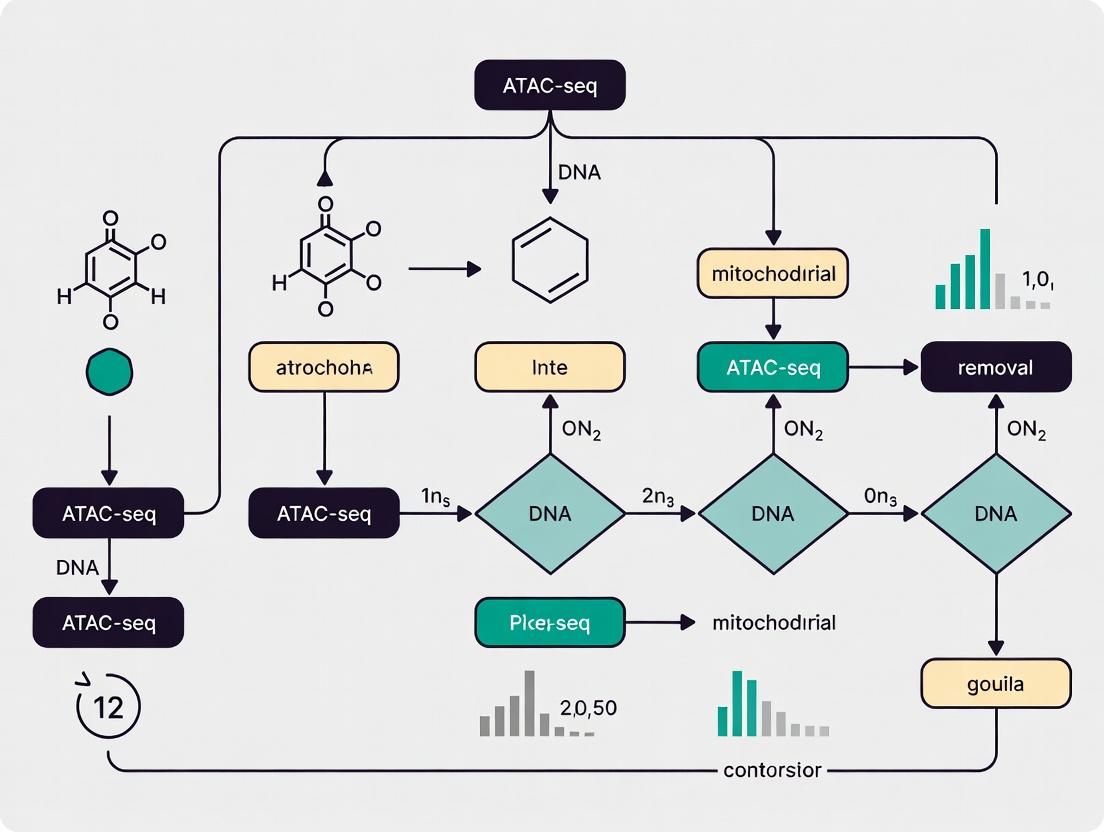
Assay for Transposase-Accessible Chromatin using sequencing (ATAC-seq) is a powerful tool for mapping open chromatin regions genome-wide.
Mitochondrial DNA Removal in ATAC-seq: Best Practices for Clean Chromatin Accessibility Data
Abstract
Assay for Transposase-Accessible Chromatin using sequencing (ATAC-seq) is a powerful tool for mapping open chromatin regions genome-wide. However, a significant technical challenge is the high proportion of reads mapping to mitochondrial DNA (mtDNA), which can consume sequencing depth, increase costs, and obscure nuclear chromatin signals. This article provides a comprehensive guide for researchers and drug development professionals on why mtDNA contamination occurs in ATAC-seq, detailed methodological strategies for its removal during both wet-lab and computational analysis stages, troubleshooting common pitfalls, and comparative validation of available tools and protocols. By implementing these best practices, scientists can optimize library complexity, improve data quality, and ensure more accurate biological interpretations in epigenetic and regulatory genomics studies.
Why Mitochondrial DNA Plagues ATAC-seq: Understanding the Source of the Signal
Technical Support Center
Frequently Asked Questions (FAQs)
Q1: Why is mitochondrial DNA (mtDNA) contamination so high in ATAC-seq libraries compared to other NGS assays? A: Mitochondria are abundant in the cytoplasm and possess nucleosome-free, accessible DNA. The ATAC-seq protocol uses a hyperactive Tn5 transposase that inserts sequencing adapters into any accessible DNA, irrespective of nuclear or mitochondrial origin. Since mitochondria lack chromatinized DNA, their genome is uniformly and highly accessible, leading to disproportionate tagmentation. Studies report mtDNA constituting 20-80% of initial sequencing reads without enrichment or depletion steps.
Q2: At which specific step in the ATAC-seq workflow does mitochondrial contamination primarily originate? A: The primary origin is during the tagmentation step. The table below quantifies the contribution of key workflow stages to final mtDNA read levels.
Table 1: Contribution of ATAC-seq Workflow Stages to Mitochondrial Read Levels
| Workflow Stage | Contribution to Final mtDNA % | Mechanism |
|---|---|---|
| Cell Lysis & Nuclei Isolation | High | Incomplete lysis of cytoplasmic membranes releases intact mitochondria. Overly harsh lysis can damage nuclei. |
| Tagmentation Reaction | Very High | Active Tn5 indiscriminately tagments accessible mtDNA and nuclear chromatin. Reaction time & temperature are critical. |
| Post-Tagmentation Cleanup | Low | Standard SPRI bead cleanups do not selectively remove mtDNA fragments. |
| PCR Amplification | Medium | PCR can slightly skew representation based on fragment size (mtDNA fragments are often a distinct size range). |
Q3: How can I troubleshoot experiments where mtDNA reads are consistently >50% even after attempting depletion? A: Follow this troubleshooting guide:
- Verify Nuclei Integrity: Stain with DAPI or Trypan Blue and check under a microscope. Clumpy or lysed nuclei indicate suboptimal isolation. Re-optimize lysis conditions (detergent concentration, incubation time).
- Optimize Tagmentation: Titrate Tn5 enzyme amount and reduce tagmentation time. Use pre-titrated commercial kits for consistency.
- Check Reagent Contamination: Include a "no-nuclei" negative control in your tagmentation to rule out reagent DNA contamination.
- Validate Depletion Method: If using post-sequencing bioinformatic removal, ensure your pipeline (e.g.,
bowtie2alignment to concatenated hg38+chrM) is correct. If using experimental depletion (e.g., targeted digestion), confirm enzyme activity and reaction conditions.
Q4: What are the most effective wet-lab methods to reduce mtDNA contamination prior to sequencing? A: The two primary protocols are:
Protocol A: Targeted Mitochondrial DNA Digestion Post-Tagmentation
- Principle: Use an exonuclease (e.g., Exonuclease V, RecA) specific for linear dsDNA to digest mitochondrial fragments, which lack histones and are fully linearized after tagmentation, while nucleosome-protected nuclear fragments are spared.
- Method: After tagmentation and EDTA chelation, add 5-10 U of Exonuclease V (RecA) to the reaction. Incubate at 37°C for 15-30 minutes. Purify DNA using SPRI beads before PCR amplification.
- Key Consideration: Over-digestion can attack accessible nuclear regions. Titration is essential.
Protocol B: Size Selection-Based Depletion
- Principle: mtDNA fragments after tagmentation often form a distinct, smaller size distribution. Dual-sided SPRI bead size selection can enrich for nucleosomal-sized nuclear fragments.
- Method: After tagmentation and purification, perform a double SPRI bead cleanup. First, use a high bead-to-sample ratio (e.g., 2.0X) to bind and discard large fragments. Then, take the supernatant and add beads to a lower ratio (e.g., 0.5X) to bind the desired small nuclear fragments, discarding the very small mtDNA-rich supernatant.
- Key Consideration: This method can lead to loss of important open chromatin signal from small nuclear fragments.
The Scientist's Toolkit: Research Reagent Solutions
Table 2: Essential Reagents for Managing Mitochondrial Contamination in ATAC-seq
| Reagent / Kit | Primary Function in mtDNA Management |
|---|---|
| Digitonin | Critical. A mild, cholesterol-dependent detergent used in lysis buffers to selectively permeabilize the plasma membrane while leaving nuclear and mitochondrial membranes intact, ensuring clean nuclei isolation. |
| Hyperactive Tn5 Transposase | The core enzyme. Commercial pre-loaded kits (e.g., Illumina Nextera) ensure batch-to-batch consistency. Titration is key to balancing nuclear signal vs. mtDNA tagmentation. |
| Exonuclease V (RecA) | Enzyme for post-tagmentation mtDNA depletion. Specifically digests linear DNA fragments, targeting exposed mtDNA. |
| SPRIselect Beads | Used for post-tagmentation cleanups and size selection. The bead size and buffer formulation allow precise size cuts to deplete small mtDNA fragments. |
| DAPI Stain | Fluorescent dye for microscopy-based quality control of nuclei isolation, checking for cytoplasmic contamination and nuclei integrity. |
| qPCR Primers (Nuclear vs. mtDNA) | For quantitative pre-sequencing QC. Amplify a nuclear locus (e.g., GAPDH) and a mitochondrial locus (e.g., MT-ND1) to estimate mtDNA contamination ratio. |
Visualizing the Contamination Origin and Solutions
Diagram 1: ATAC-seq mtDNA contamination sources and mitigation strategies
Diagram 2: Logical troubleshooting guide for high mitochondrial reads
Technical Support Center
Troubleshooting Guides & FAQs
Q1: Our ATAC-seq libraries have >50% mitochondrial reads. What is the primary cause and how can we mitigate this during sample preparation? A: High mtDNA content in ATAC-seq is typically due to cytoplasmic mitochondrial contamination from incomplete nuclear purification or excessive lysis that releases mtDNA from damaged organelles. To mitigate:
- Optimize lysis time: Reduce the detergent-based lysis step to 3-5 minutes on ice to minimize mitochondrial rupture while effectively lysing the nuclear membrane.
- Use a wash buffer: After cell membrane lysis, pellet nuclei and resuspend in a wash buffer (e.g., 10 mM Tris-HCl, 10 mM NaCl, 3 mM MgCl2, 0.1% Tween-20, 0.1% BSA) before proceeding to transposition.
- Employ a sucrose cushion: For difficult samples, layer the lysate over a 1.2 M sucrose solution and centrifuge at 13,000g for 10 min at 4°C to pellet clean nuclei.
Q2: Does computationally removing mtDNA reads post-sequencing recover lost sequencing depth for nuclear genome analysis? A: No. Computational removal (e.g., alignment to the mitochondrial genome and filtering) only re-allocates the analysis depth. The sequencing cost has already been spent on those mtDNA reads. The effective depth for nuclear genome analysis is calculated as: Total Reads × (1 - mtDNA Fraction). For example, 100M reads with a 40% mtDNA rate yields only 60M effective nuclear reads.
Q3: How do high levels of mtDNA reads dilute signal in chromatin accessibility peaks? A: High mtDNA fractions reduce the read density (coverage) over nuclear open chromatin regions. This dilution increases noise, reduces the statistical power to call peaks (especially weaker ones), and can artificially inflate fold-change measurements due to uneven sampling. The signal-to-noise ratio for peak calling is directly proportional to the number of unique nuclear fragments.
Q4: What are the most effective wet-lab methods for mtDNA depletion in ATAC-seq? A: Two primary wet-lab methods are employed:
- Biochemical Depletion (Post-Lysis): Using exonuclease (e.g., Exonuclease V or Plasmid-Safe ATP-Dependent DNase) that degrades linear DNA fragments. As mtDNA is often linearized or nicked during lysis, it is degraded, while chromatin-protected nuclear DNA is less affected.
- Probe-Based Depletion: Using CRISPR/Cas9 or antisense oligonucleotides with a nuclease to specifically target and fragment mtDNA prior to library construction.
Table 1: Cost Impact of mtDNA Reads on Sequencing
| Total Desired Nuclear Reads | mtDNA Fraction | Total Reads to Sequence | Cost Increase Factor* |
|---|---|---|---|
| 50 Million | 20% | 62.5 Million | 1.25x |
| 50 Million | 40% | 83.3 Million | 1.67x |
| 50 Million | 60% | 125 Million | 2.50x |
| 50 Million | 80% | 250 Million | 5.00x |
*Assumes constant cost per million reads.
Table 2: Effective Nuclear Depth & Peak Recovery
| Sample Condition | Total Reads | mtDNA % | Effective Nuclear Reads | Peaks Called (p<0.01) | Weak Peaks Lost (%) |
|---|---|---|---|---|---|
| Optimized Lysis | 75M | 15% | 63.75M | 58,420 | Baseline |
| Standard Lysis | 75M | 45% | 41.25M | 45,100 | ~23% |
| Over-Lysis | 75M | 70% | 22.5M | 28,750 | ~51% |
Experimental Protocols
Protocol: Exonuclease-Based mtDNA Depletion for ATAC-seq Nuclei
- Prepare Nuclei: Perform standard ATAC-seq nuclei isolation from 50,000-100,000 cells. Pellet nuclei (500g, 5 min, 4°C).
- Resuspend in Reaction Buffer: Gently resuspend nuclei pellet in 1X Reaction Buffer (supplied with enzyme).
- Enzyme Treatment: Add ATP-dependent DNase (e.g., Plasmid-Safe DNase) at 0.5 U/µL final concentration. Incubate at 37°C for 30 minutes.
- Terminate Reaction: Add EDTA to a final concentration of 10 mM and place on ice.
- Wash Nuclei: Pellet nuclei (500g, 5 min, 4°C). Carefully remove supernatant and wash once with 1X PBS + 0.1% BSA.
- Proceed to Transposition: Resuspend nuclei in the transposition mix and continue standard ATAC-seq protocol.
Protocol: Sucrose Cushion Nuclear Purification
- Lysate Preparation: Lyse cells in cold lysis buffer (10 mM Tris-HCl pH 7.4, 10 mM NaCl, 3 mM MgCl2, 0.1% IGEPAL CA-630) for 3 minutes on ice.
- Prepare Cushion: In a 1.5 mL microcentrifuge tube, add 500 µL of 1.2 M sucrose solution (in 10 mM Tris-HCl, 3 mM MgCl2).
- Layer Lysate: Carefully layer the cell lysate (up to 500 µL) on top of the sucrose cushion.
- Centrifuge: Centrifuge at 13,000g for 10 minutes at 4°C. Nuclei form a pellet; cytoplasmic debris remains at the interface.
- Wash: Discard supernatant and resuspend the clean nuclear pellet in wash buffer. Proceed to transposition.
Diagrams
Impact of High mtDNA on ATAC-seq Analysis
ATAC-seq mtDNA Mitigation Workflow
The Scientist's Toolkit: Research Reagent Solutions
| Reagent/Material | Primary Function in mtDNA Management |
|---|---|
| Digitonin | A mild detergent used in lysis buffers for selective plasma membrane permeabilization while keeping organelles like mitochondria intact. |
| ATP-Dependent DNase (e.g., Plasmid-Safe) | Enzyme that degrades linear DNA fragments; used post-lysis to digest linearized mtDNA without damaging chromatin-associated nuclear DNA. |
| Sucrose (1.2 M Solution) | Forms a density cushion for ultracentrifugation, enabling purification of intact nuclei away from cytoplasmic mitochondrial contamination. |
| CRISPR/Cas9 with gRNAs targeting mtDNA | Guides Cas9 nuclease to introduce double-strand breaks specifically in the mitochondrial genome, depleting it prior to library prep. |
| Antisense Oligonucleotides (ASOs) with RNase H | Binds complementary mtDNA sequences and recruits RNase H to create nicks, selectively degrading mitochondrial genomes. |
| Magnetic Beads conjugated to mtDNA probes | For hybrid capture and physical removal of mtDNA fragments from fragmented DNA samples before library construction. |
| Nuclei Wash Buffer (BSA/Tween-20) | Stabilizes isolated nuclei and removes residual cytoplasmic components and adventitiously bound mtDNA. |
Biological and Technical Factors Influencing mtDNA Levels (Cell Type, Lysis, Prep)
Troubleshooting Guides & FAQs
FAQ 1: Why do I observe high levels of mtDNA contamination in my ATAC-seq libraries, and which biological factor is most critical?
High mtDNA contamination is frequently due to the cell type used. Cells with high mitochondrial density (e.g., cardiomyocytes, hepatocytes, neurons) inherently contain more mtDNA copies. The lysis step is then technically critical; incomplete nuclear lysis or excessive physical shearing can rupture mitochondria, releasing mtDNA fragments that are subsequently tagged and sequenced. Within the context of ATAC-seq mitochondrial removal research, the primary goal is to maximize nuclear access while minimizing mitochondrial disruption.
FAQ 2: How does lysis buffer composition affect mtDNA release?
A low-concentration, non-ionic detergent (like NP-40 or Digitonin) selectively permeabilizes the plasma membrane while leaving mitochondrial membranes largely intact. Using ionic detergents (e.g., SDS) or excessive detergent concentrations will lyse all membranes, releasing massive amounts of mtDNA. The ratio of detergent to cell number and exact incubation time are key parameters requiring optimization for each cell type.
FAQ 3: My ATAC-seq prep shows variable mtDNA levels between replicates using the same protocol. What could cause this?
Inconsistent mechanical handling during lysis or subsequent pipetting is a common culprit. Vortexing or vigorous pipetting after lysis can shear mitochondrial membranes. Ensure lysis is followed by gentle mixing. Also, confirm cell counting accuracy, as variable input cell numbers change the detergent-to-cell ratio, affecting lysis efficiency. Finally, differences in cell viability between samples can alter the susceptibility of organelles to lysis.
FAQ 4: Are there specific prep steps after lysis to deplete mtDNA?
Yes, post-lysis strategies are active areas of research. Two primary methods are:
- Enzymatic Degradation: Using exonucleases like Exonuclease V (RecBCD) that preferentially digest linear DNA. The theory is that sheared mitochondrial DNA (linear) is digested, while chromatin-associated nuclear DNA (protected) is not.
- Size Selection: Using solid-phase reversible immobilization (SPRI) beads at different ratios to remove small DNA fragments. Since mtDNA fragments generated by Tn5 are often small (<100 bp), a double-size selection can deplete them. However, this may also remove valuable open chromatin fragments.
Data Presentation
Table 1: Impact of Cell Type on mtDNA Content in ATAC-seq
| Cell Type | Relative Mitochondrial Density | Typical mtDNA % in ATAC-seq (No Depletion) | Recommended Lysis Stringency |
|---|---|---|---|
| HEK293T (Embryonic Kidney) | Low | 20-40% | Standard (Digitonin-based) |
| PBMCs (Blood) | Low-Medium | 30-50% | Standard |
| Hepatocytes (Liver) | Very High | 60-80%+ | Optimized, mild (Low Digitonin) |
| Cardiomyocytes (Heart) | Very High | 70-90%+ | Optimized, mild + Post-lysis depletion |
| Neurons (Brain) | High | 50-70%+ | Optimized, mild |
Table 2: Effect of Lysis Conditions on mtDNA Contamination
| Lysis Condition | Detergent Type & Conc. | Result on Mitochondria | Approximate mtDNA % in Final Lib. | Nuclear Access Quality |
|---|---|---|---|---|
| Mild | 0.01% Digitonin | Mostly intact | 10-30% (Depends on cell type) | Good |
| Standard (Common) | 0.1% NP-40/Igepal | Partially lysed | 30-60% | Very Good |
| Harsh | 0.1% SDS | Completely lysed | >80% | Excellent, but high mtDNA |
Experimental Protocols
Protocol A: Optimized Mild Lysis for mtDNA Reduction Objective: To permeabilize the nuclear membrane for Tn5 tagmentation while minimizing mitochondrial rupture.
- Cell Preparation: Wash 50,000 viable cells in cold PBS. Pellet at 500 x g for 5 min at 4°C.
- Lysis Buffer Prep: Prepare cold lysis buffer (10 mM Tris-Cl pH 7.4, 10 mM NaCl, 3 mM MgCl2, 0.01% Digitonin, 0.1% Tween-20, 0.01% NP-40).
- Lysis: Resuspend cell pellet in 50 µL of lysis buffer and mix by gentle pipetting (3-5 times). Incubate on ice for 3 minutes.
- Wash: Immediately add 1 mL of cold Wash Buffer (10 mM Tris-Cl pH 7.4, 10 mM NaCl, 3 mM MgCl2, 0.1% Tween-20). Mix gently by inverting.
- Pellet Nuclei: Centrifuge at 500 x g for 10 min at 4°C. Carefully discard supernatant.
- Proceed directly to the tagmentation step with the nuclear pellet.
Protocol B: Post-Lysis mtDNA Depletion using Exonuclease V (RecBCD) Objective: To digest linear mitochondrial DNA fragments post-tagmentation but prior to PCR amplification.
- After Tagmentation: Following the standard ATAC-seq tagmentation reaction, add 1 µL of Exonuclease V (e.g., NEB) directly to the 20 µL tagmentation mix.
- Incubate: Incubate at 37°C for 30 minutes.
- Cleanup: Purify DNA using a MinElute PCR Purification Kit (Qiagen) or equivalent SPRI beads. Elute in 20 µL elution buffer.
- Proceed to library PCR amplification.
Visualizations
Title: Impact of Lysis on ATAC-seq mtDNA Levels
Title: ATAC-seq mtDNA Reduction Workflow
The Scientist's Toolkit: Research Reagent Solutions
| Reagent/Material | Function in Managing mtDNA Levels |
|---|---|
| Digitonin | A mild, cholesterol-dependent detergent used for selective plasma membrane permeabilization. Critical for keeping mitochondria intact during initial lysis. |
| Exonuclease V (RecBCD) | An enzyme complex that degrades linear DNA. Used post-tagmentation to digest sheared, linear mtDNA fragments while leaving cross-linked nuclear complexes intact. |
| SPRI (Solid Phase Reversible Immobilization) Beads | Magnetic beads used for DNA size selection. A double-sided size selection (e.g., 0.5x followed by 1.8x ratio) can remove small DNA fragments (<100 bp), which are enriched for mtDNA. |
| Tween-20 / NP-40 (Non-ionic detergents) | Used in wash buffers to maintain buffer ionic strength without contributing to further organelle lysis. Helps stabilize nuclei after lysis. |
| SDS (Ionic detergent) | A harsh detergent that fully lyses all membranes. Useful as a positive control for maximum nuclear access but results in extreme mtDNA contamination. Avoid in standard protocols. |
| Dual-indexed PCR Primers | Essential for multiplexing samples. When mtDNA depletion fails, they allow sequencing resources to be focused on nuclear reads from other samples in the run via bioinformatic demultiplexing. |
Technical Support Center
Troubleshooting Guides & FAQs
FAQ 1: What is a typical or acceptable mtDNA percentage in ATAC-seq data, and what does a high percentage indicate?
A high percentage of mitochondrial (mtDNA) reads is common in ATAC-seq due to the openness of the mitochondrial genome and the lack of intact nuclei in some cells. The acceptable range varies by sample type.
- Typical Range: 20-50% mtDNA reads is common but not ideal.
- Target/Goal: <20% is often a benchmark for successful nuclear isolation and assay efficiency. In high-quality data from intact nuclei, it can be <10%. A percentage significantly above 50% usually indicates excessive cytoplasmic contamination or nuclear lysis, which drastically reduces library complexity and usable sequencing depth.
Table 1: Interpretation of mtDNA Percentage Metrics
| mtDNA Percentage | Interpretation | Impact on Library Complexity |
|---|---|---|
| < 20% | Optimal nuclear isolation. High data quality. | High complexity expected. |
| 20% - 50% | Moderate cytoplasmic contamination. Common in some tissues (e.g., liver, heart). | Reduced complexity; may require deeper sequencing. |
| > 50% | Poor nuclear integrity or isolation. Significant lysis. | Severely reduced complexity; assay may need optimization or repetition. |
| > 80% | Critical failure of nuclear preparation. | Very low complexity; data likely unusable for chromatin accessibility analysis. |
FAQ 2: How do I calculate the mtDNA percentage from my sequencing data?
Protocol: Calculating mtDNA Percentage from FASTQ or BAM Files
- Align Reads: Align your sequencing reads (FASTQ) to a concatenated reference genome containing both the standard nuclear (e.g., hg38) and mitochondrial (e.g., chrM) genomes using an aligner like BWA-MEM or Bowtie2.
- Process Alignment: Convert the SAM file to a sorted BAM file and index it using
samtools. - Count Reads: Use
samtools idxstatson the sorted BAM file. This command outputs a table with four columns: chromosome name, chromosome length, number of mapped reads, and number of unmapped reads. - Calculate Percentage:
- Sum the mapped reads for all nuclear chromosomes (
reads_nuclear). - Identify the mapped reads for the mitochondrial chromosome (
reads_mito). - Apply the formula:
mtDNA % = (reads_mito / (reads_nuclear + reads_mito)) * 100
- Sum the mapped reads for all nuclear chromosomes (
FAQ 3: My mtDNA percentage is too high (>80%). What are the main causes and how can I troubleshoot this?
Primary Causes & Solutions:
- Cause A: Inefficient tissue dissociation or cell lysis, leading to high cytoplasmic background.
- Solution: Optimize homogenization or lysis conditions. Use a detergent-based (e.g., IGEPAL CA-630) lysis buffer with precise incubation time and vortexing. Perform viability assessment before the assay.
- Cause B: Over-digestion with Tn5 transposase, leading to nuclear membrane damage.
- Solution: Titrate the amount of Tn5 enzyme or reduce the transposition reaction time. Use a validated, pre-titrated kit.
- Cause C: Physical damage during sample handling (e.g., vigorous pipetting, vortexing after nuclei isolation).
- Solution: After nuclei are released, use wide-bore pipette tips and avoid vortexing. Centrifuge gently if necessary.
Experimental Protocol: Optimizing Nuclei Isolation for Low mtDNA Background
- Harvest Cells/Tissue: Use fresh or properly flash-frozen tissue.
- Wash Cells: Wash cell pellets gently with cold PBS.
- Lysate Preparation: Resuspend cell pellet in 1 mL of cold ATAC-seq Lysis Buffer (10 mM Tris-HCl pH 7.4, 10 mM NaCl, 3 mM MgCl2, 0.1% IGEPAL CA-630). Invert tube immediately 3-5 times to mix. Do not vortex.
- Incubate: Incubate on ice for 3-10 minutes (optimize time for your cell type).
- Quench & Wash: Immediately add 1 mL of cold ATAC-seq Wash Buffer (10 mM Tris-HCl pH 7.4, 10 mM NaCl, 3 mM MgCl2, without detergent). Invert to mix.
- Pellet Nuclei: Centrifuge at 500 x g for 5-10 minutes at 4°C. Carefully aspirate supernatant.
- Count & Assess: Resuspend nuclei pellet in 50-100 µL of PBS + 0.1% BSA. Count with a hemocytometer and check integrity under a microscope (stain with DAPI if needed).
- Proceed to Transposition: Use 50,000 - 100,000 nuclei as input for the standard ATAC-seq protocol.
FAQ 4: How is library complexity defined and measured in ATAC-seq, and why does high mtDNA affect it?
Library complexity refers to the diversity of unique DNA fragments in the library. High mtDNA content consumes sequencing depth on a single, non-informative (for chromatin accessibility) genomic locus, drastically reducing the number of unique nuclear reads.
- Key Metric: Non-Redundant Fraction (NRF): The proportion of distinct, deduplicated reads.
- Measurement: Use tools like
picard MarkDuplicatesto calculate the percentage of duplicate reads. A low duplicate rate (e.g., <50% for 50M reads) indicates high complexity.
Table 2: Metrics for Assessing ATAC-seq Library Complexity
| Metric | Calculation/Description | Target Value (Guide) |
|---|---|---|
| Non-Redundant Fraction (NRF) | (# of unique reads) / (total reads) | > 0.5 (Higher is better) |
| PCR Bottleneck Coefficient (PBC) | (# of genomic locations with exactly 1 read) / (# of genomic locations with >1 read) | PBC1 > 0.9 (Ideal), PBC1 < 0.5 (Poor) |
| Fraction of Reads in Peaks (FRiP) | (Reads in called peaks) / (Total nuclear mapped reads) | > 0.2 - 0.3 (Cell type dependent) |
Diagram: Impact of High mtDNA on ATAC-seq Data Quality
Diagram: ATAC-seq mtDNA & Complexity QC Workflow
The Scientist's Toolkit: Key Reagent Solutions for mtDNA Reduction in ATAC-seq
Table 3: Essential Research Reagents for Optimized ATAC-seq
| Reagent / Material | Function / Role | Optimization Purpose |
|---|---|---|
| IGEPAL CA-630 (NP-40 Alternative) | Non-ionic detergent for cell membrane lysis. | Critical for nuclei release. Concentration (0.1-0.5%) and incubation time must be titrated to lyse cytoplasm without damaging nuclei. |
| Sucrose-Containing Buffer | Provides osmotic balance during homogenization. | Protects nuclei from mechanical stress during tissue dissociation, reducing lysis and mtDNA release. |
| Pre-titrated Tn5 Transposase | Enzyme that simultaneously fragments and tags accessible DNA. | Using the optimal amount prevents over-digestion, which can puncture nuclear membranes and release mtDNA. |
| DNase-free RNase A | Degrades RNA that can co-purify with nuclei. | Reduces viscosity and improves nuclei handling, leading to more consistent transposition and lower mtDNA bias. |
| Magnetic Beads for Size Selection (e.g., SPRI beads) | Selective binding of DNA fragments by size. | Allows removal of very small fragments (<100 bp) which are enriched for mtDNA, post-library construction. |
| DAPI Stain | Fluorescent DNA dye. | Used for microscopy to visually assess nuclei integrity and count after isolation, before the transposition step. |
| Dual-Indexed PCR Primers | Amplify the transposed library with unique sample indexes. | Enables multiplexing. Accurate quantification post-PCR prevents unnecessary additional cycles that can increase duplicates and bias. |
Technical Support Center
Troubleshooting Guides & FAQs
Q1: My post-depletion ATAC-seq library has very low final yield. What could be the cause? A: Low yield often stems from excessive mitochondrial DNA (mtDNA) depletion, leading to the unintended loss of nuclear genomic material. This typically occurs during the centrifugation steps of differential lysis protocols. Overly stringent lysis conditions or excessive centrifugal force can rupture nuclear membranes. Solution: Titrate your lysis buffer detergent concentration (e.g., digitonin or NP-40) and reduce centrifugation speed/time during the mtDNA-enriched supernatant removal step. Preserve the nuclear pellet meticulously.
Q2: Despite depletion, my sequencing data still shows >20% mtDNA reads. How can I improve efficiency? A: High residual mtDNA reads indicate suboptimal depletion. This is common when using too few cells, leading to inaccurate reagent scaling, or when using over-digested nuclei that release nuclear fragments. Solution: 1) Ensure you start with the recommended cell input (e.g., 50,000-100,000 cells). 2) Combine methods: Perform a differential lysis pre-clearing step followed by a post-lysis enzymatic degradation (e.g., using exonuclease V or Cas9-guided cleavage) of the released mtDNA. Do not extend nuclease treatment beyond the optimized time.
Q3: After mtDNA depletion, my ATAC-seq data shows poor signal at transcription start sites (TSS) and low FRiP scores. A: This suggests nuclear integrity or accessibility was compromised. Over-lysed nuclei have permeable chromatin, causing excessive Tn5 tagmentation and diffuse, low-quality peaks. Solution: Monitor nuclear integrity by microscopy (DAPI stain) after lysis and depletion. Optimize and shorten the lysis duration. Include a post-depletion nuclei wash and resuspension in a gentle buffer to remove residual nucleases or detergents before tagmentation.
Q4: What are the key metrics to track when optimizing a combined depletion protocol? A: You must simultaneously track three key performance indicators. See Table 1.
Table 1: Key Optimization Metrics for mtDNA Depletion in ATAC-seq
| Metric | Target Range | Measurement Method |
|---|---|---|
| mtDNA Read Proportion | <5% of total reads | FASTQ alignment (e.g., hg19+chrM) |
| Nuclear Integrity | >90% intact nuclei | Post-lysis microscopy with DAPI |
| Library Complexity | >80% FRiP score, strong TSS enrichment | ATAC-seq pipeline (e.g., ENCODE) |
Experimental Protocol: Combined Differential Lysis & Enzymatic Depletion
This protocol is designed for 50,000 human cultured cells.
1. Reagents Needed: Cold PBS, Nuclei Extraction Buffer A (10mM Tris-HCl pH7.4, 10mM NaCl, 3mM MgCl2, 0.1% IGEPAL CA-630, 0.1% digitonin (w/v)), Nuclei Wash Buffer (10mM Tris-HCl pH7.4, 10mM NaCl, 3mM MgCl2, 1% BSA), Exonuclease V (RecBCD), Reaction Buffer (67mM Glycine-KOH pH 9.4, 2.5mM MgCl2, 1mM DTT).
2. Procedure:
- Cell Lysis & mtDNA Pre-clearing: Pellet cells. Resuspend gently in 50µL of ice-cold Nuclei Extraction Buffer A. Incubate on ice for 3 minutes. Centrifuge immediately at 500 x g for 5 minutes at 4°C. Carefully remove and discard the supernatant (contains cytosolic components and released mtDNA). Keep the nuclear pellet.
- Nuclei Wash: Gently resuspend the pellet in 50µL of Nuclei Wash Buffer. Centrifuge at 500 x g for 5 minutes at 4°C. Discard supernatant.
- Enzymatic Depletion: Resuspend nuclei in 25µL of Exonuclease V Reaction Buffer. Add 5 units of Exonuclease V. Incubate at 37°C for 15 minutes. Immediately place on ice.
- Stop Reaction & Wash: Add 200µL of Nuclei Wash Buffer to dilute reactants. Centrifuge at 500 x g for 5 minutes at 4°C. Discard supernatant.
- Proceed to Tagmentation: Resuspend the final nuclear pellet in the appropriate transposase mix (e.g., from the Illumina Tagment DNA TDE1 Kit) for standard ATAC-seq.
Visualizations
Diagram Title: Combined mtDNA Depletion Workflow for ATAC-seq
Diagram Title: Optimization Balance: Depletion vs. Nuclear Integrity
The Scientist's Toolkit: Research Reagent Solutions
Table 2: Essential Reagents for mtDNA-Depleted ATAC-seq
| Reagent | Function & Role in Balancing Act | Key Consideration |
|---|---|---|
| Digitonin | Selective permeabilization of plasma & mitochondrial membranes, sparing nuclear envelope. | Critical for differential lysis. Purity and batch variability require titration. |
| Exonuclease V (RecBCD) | Degrades linear dsDNA (released mtDNA) post-lysis. Does not enter intact nuclei. | Must be added after lysis and removed via wash before tagmentation to prevent nuclear damage. |
| sgRNA/Cas9 (CRISPR) | Guides Cas9 to cut specific mtDNA sequences, preventing their amplification. | Highly specific but requires careful design and delivery to avoid off-target nuclear genomic cuts. |
| BSA (Bovine Serum Albumin) | Included in wash buffers to stabilize nuclei, prevent aggregation, and quench residual detergents/nucleases. | Essential for preserving nuclear integrity and accessibility post-depletion steps. |
| DAPI Stain | Fluorescent DNA dye for rapid microscopy assessment of nuclear integrity and count after lysis steps. | Primary QC check; fragmented nuclei indicate over-lysis. |
Wet-Lab and Computational Strategies for mtDNA Depletion
Technical Support Center: Troubleshooting & FAQs
Q1: My post-lysis nuclear pellet is invisible or extremely small. What went wrong? A: This typically indicates over-lysis of nuclei. The concentration of the non-ionic detergent (e.g., NP-40 or IGEPAL CA-630) is critical. Quantitative data from recent optimizations are below:
| Cell Type | Recommended NP-40 Conc. | Lysis Buffer Incubation Time | Expected Nuclear Yield (per 50k cells) |
|---|---|---|---|
| Cultured HeLa | 0.1% (v/v) | 5 min on ice | ~50k nuclei |
| PBMCs | 0.05% (v/v) | 3 min on ice | ~45k nuclei |
| Adherent Fibroblasts | 0.15% (v/v) | 7 min on ice | ~48k nuclei |
| Neuronal Cells | 0.04% (v/v) | 2 min on ice | ~40k nuclei |
Protocol:
- Pre-chill lysis buffer (10 mM Tris-HCl pH 7.4, 10 mM NaCl, 3 mM MgCl2, 0.1-0.15% NP-40) on ice.
- Wash cell pellet once with cold PBS.
- Resuspend pellet in 50 µL of cold lysis buffer per 50,000 cells. Vortex briefly at low speed.
- Incubate on ice for the optimized time (see table).
- Immediately add 1 mL of cold Wash Buffer (10 mM Tris-HCl pH 7.4, 10 mM NaCl, 3 mM MgCl2, 1% BSA) to stop lysis.
- Centrifuge at 500 rcf for 5 min at 4°C. The nuclear pellet, though small, will be visible as a translucent speck.
Q2: Mitochondrial DNA (mtDNA) contamination remains high (>20% of reads) after the protocol. How can I improve removal? A: High mtDNA reads often result from incomplete removal of mitochondria or nuclear damage. Ensure differential centrifugation is performed precisely.
| Contamination Level | Likely Cause | Recommended Solution |
|---|---|---|
| 15-25% mtDNA | Incomplete initial mitochondrial pelleting | Increase first centrifugation speed to 2000 rcf for 10 min. |
| >25% mtDNA | Nuclear membrane damage during lysis | Reduce NP-40 concentration by 0.02% increments. Add 0.1 mM Spermidine to lysis buffer to stabilize nuclei. |
| 10-15% mtDNA | Mitochondria co-pelleting with nuclei | Use a denser cushion: Layer lysate over 500 µL of 1.8M sucrose buffer before 2000 rcf spin. |
Protocol for Sucrose Cushion Method:
- After lysis, layer the entire lysate gently on top of 500 µL of Sucrose Cushion Buffer (10 mM Tris-HCl pH 7.4, 10 mM NaCl, 3 mM MgCl2, 1.8M Sucrose) in a 1.5 mL tube.
- Centrifuge at 2000 rcf for 15 min at 4°C.
- Discard supernatant carefully. The nuclear pellet will be at the bottom; mitochondria remain at the interface.
- Proceed with nuclear wash.
Q3: My nuclei are clumping after the wash steps, blocking downstream tagmentation. A: Clumping is caused by nuclear aggregation or leftover cytoskeletal components.
| Observation | Cause | Mitigation |
|---|---|---|
| Gels-like clump | DNA release due to nuclear rupture | Add 0.5 U/µL of RNase-free DNase I to the Wash Buffer to digest leaked DNA. |
| Granular clumps | Actin filaments | Add 0.5 µM Latrunculin A to the lysis and wash buffers. |
| Sticky pellet | High BSA concentration | Reduce BSA in Wash Buffer from 1% to 0.5%. |
Q4: The final ATAC-seq library has low complexity (low FRiP score). Is this related to the pre-tagmentation mitochondrial removal? A: Yes, over-fixation or excessive handling of nuclei can reduce accessibility. Do not fix nuclei with formaldehyde if planning standard ATAC-seq. Ensure all buffers are free of contaminating nucleases by including 0.2 U/µL of SUPERase•In RNase Inhibitor in the lysis and wash buffers.
The Scientist's Toolkit: Key Reagent Solutions
| Reagent | Function | Key Consideration |
|---|---|---|
| IGEPAL CA-630 (Non-ionic Detergent) | Selective plasma membrane lysis while leaving nuclear membrane intact. | Preferred over NP-40 by some protocols for more consistent lot-to-lysis. |
| Sucrose (1.8M Cushion) | Density barrier for differential centrifugation to separate mitochondria from nuclei. | Must be prepared in nucleus-stabilizing salt buffer (Tris, NaCl, MgCl2). |
| BSA (Bovine Serum Albumin) | Reduces nuclear sticking to tube walls and agglomeration during wash steps. | Use molecular biology grade, nuclease-free. |
| Spermidine (Triamine) | Stabilizes nuclei by neutralizing negative charge on DNA, reducing clumping. | Add fresh from stock; avoid repeated freeze-thaw. |
| Latrunculin A (Actin Polymerization Inhibitor) | Disrupts actin cytoskeleton, reducing network-induced clumping of nuclei. | DMSO stock should be diluted in buffer immediately before use. |
| SUPERase•In RNase Inhibitor | Protects RNA within the nucleus, preserving chromatin architecture for ATAC-seq. | More effective than vanadyl ribonucleoside complexes. |
Visualizations
Workflow for Selective Lysis and Mitochondrial Removal
Troubleshooting High Mitochondrial DNA Contamination
Technical Support & Troubleshooting Center
Troubleshooting Guide
Issue: High mtDNA Read Count (>20%) in Final Libraries
- Potential Cause 1: Insufficient depletion reagent concentration or reaction time.
- Solution: Increase the concentration of the mtDNA-targeting probes or enzymes by 10-25% in a titration experiment. Extend the hybridization or digestion incubation time by 50%.
- Potential Cause 2: Poor tagmentation efficiency leading to low nuclear/complexity.
- Solution: Re-titrate the Tn5 enzyme using a fixed cell/nuclei count. Verify tagmentation buffer freshness and reaction temperature.
- Potential Cause 3: Over-amplification of remaining mtDNA during PCR.
- Solution: Reduce PCR cycle number (e.g., from 12 to 10). Use PCR additives like DMSO (1-3%) or Betaine (1M) to improve specificity.
Issue: Low Library Yield Post-Depletion
- Potential Cause 1: Excessive loss during post-depletion clean-up.
- Solution: Increase bead-to-sample ratio during SPRI clean-up to 1.8x to recover smaller fragments. Perform two sequential 0.8x clean-ups to remove depletion reagents more effectively.
- Solution: Switch to column-based clean-up if fragment loss is consistent.
- Potential Cause 2: Depletion reagents inhibiting downstream PCR.
- Solution: Increase the number of post-depletion wash steps. Add an additional ethanol wash (80%) when using bead-based clean-up. Increase PCR polymerase amount by 25%.
Issue: Biased Nuclear Genome Coverage
- Potential Cause 1: Non-specific binding of depletion probes to nuclear DNA.
- Solution: Increase hybridization stringency by raising temperature (e.g., from 55°C to 60°C) or adjusting salt concentration. Perform a BLAST check of probe sequences against the nuclear genome of your species.
- Potential Cause 2: Incomplete removal of probe-bound mtDNA fragments depleting adjacent nuclear sequences.
- Solution: Optimize the nuclease digestion time. Test different nucleases (e.g., Duplex-Specific Nuclease vs. Exonuclease).
Frequently Asked Questions (FAQs)
Q1: Can I use this method on already-constructed ATAC-seq libraries from another study? A: No. Post-tagmentation depletion kits are designed to work after the tagmentation step but before PCR amplification. They require the presence of specific adapter sequences added during tagmentation for probe hybridization. Fully amplified libraries cannot be processed with this method.
Q2: How do I choose between post-tagmentation depletion and nuclear enrichment prior to tagmentation? A: The choice depends on your sample type and research goals. Post-tagmentation depletion is often more effective for challenging samples (e.g., frozen tissue, cells with fragile nuclei) where prior purification leads to significant loss. See Table 1 for a comparison.
Q3: What is the typical reduction in mtDNA reads I can expect? A: Performance varies by kit, tissue, and species. Well-optimized protocols typically reduce mitochondrial reads from 50-80% to 5-20%. See Table 2 for summarized data.
Q4: Does this method deplete chloroplast DNA in plant samples? A: Most commercial kits are designed for human or mouse mtDNA. For plant studies, you need custom probes designed against the chloroplast genome of your specific species. The protocol workflow remains the same.
Table 1: Comparison of mtDNA Depletion Strategies in ATAC-seq
| Parameter | Post-Tagmentation Depletion | Nuclear Enrichment (Pre-Tagmentation) |
|---|---|---|
| Typical mtDNA % (Post) | 5-20% | 10-30% |
| Nuclear DNA Loss | Low | High (esp. in difficult samples) |
| Complexity Preservation | High | Can be reduced |
| Best For | Frozen tissues, FFPE, low cell count | Fresh cells/tissues, abundant starting material |
| Protocol Length | Adds ~2-3 hours | Adds ~1-2 hours (plus risk of loss) |
Table 2: Performance Metrics of Commercial Post-Tagmentation Kits
| Kit Name | Median mtDNA % (Post-Treatment) | Recommended Input | Key Principle |
|---|---|---|---|
| Kit A | 8.5% (n=12 studies) | 50k nuclei | Probe hybridization + Nuclease digestion |
| Kit B | 12.1% (n=8 studies) | 10k-100k nuclei | CRISPR/Cas9-mediated cleavage |
| Kit C | 15.7% (n=5 studies) | 10k nuclei | Probe hybridization + Magnetic pull-down |
Experimental Protocol: Post-Tagmentation mtDNA Depletion
This protocol follows the tagmentation step of a standard ATAC-seq assay.
Reagents Needed: Tagmented DNA, Depletion Kit (containing Hybridization Buffer, Depletion Probes, Nuclease, Nuclease Buffer), SPRI beads, Ethanol (80%), Elution Buffer.
Hybridization:
- Combine tagmented DNA (in a total volume of 20 µL) with 5 µL of Hybridization Buffer and 5 µL of Depletion Probe Mix.
- Mix thoroughly and incubate in a thermal cycler: 95°C for 5 min (denaturation), then 60°C for 30 min (hybridization). Hold at 37°C.
Nuclease Digestion:
- Prepare Nuclease Master Mix: 2 µL Nuclease + 8 µL Nuclease Buffer per reaction.
- Add 10 µL of Master Mix directly to the 30 µL hybridization reaction. Mix by pipetting.
- Incubate at 37°C for 30 minutes.
Reaction Clean-up:
- Add 80 µL of SPRI beads (2.0x ratio) to the 40 µL digestion reaction. Mix thoroughly.
- Incubate at room temperature for 8 minutes.
- Place on magnet. After solution clears, discard supernatant.
- With tube on magnet, wash beads twice with 200 µL of 80% ethanol. Air dry for 5 minutes.
- Remove from magnet. Elute DNA in 22 µL of Elution Buffer. Incubate at 37°C for 2 minutes. Place on magnet and transfer 20 µL of eluate to a new tube.
Library Amplification:
- Proceed immediately with library PCR amplification using indexed primers, using the 20 µL eluate as template. Reduce cycles by 1-2 relative to standard protocol.
Visualizations
Title: Post-Tagmentation mtDNA Depletion Workflow
Title: Decision Guide for mtDNA Removal Method
The Scientist's Toolkit: Research Reagent Solutions
| Reagent / Material | Function | Example / Note |
|---|---|---|
| Tn5 Transposase | Fragments DNA and adds sequencing adapters simultaneously. | Custom-loaded or commercial (e.g., Illumina Tagment DNA TDE1). |
| mtDNA Depletion Probe Pool | Biotinylated or otherwise tagged oligonucleotides complementary to the mitochondrial genome. Hybridize to tagmented mtDNA fragments. | Species-specific. Often included in kits. |
| Duplex-Specific Nuclease (DSN) | Digests the double-stranded DNA formed by probe hybridization, specifically cleaving mtDNA. | More specific than general exonucleases. |
| Streptavidin Magnetic Beads | Used in pull-down methods to remove biotinylated probe-mtDNA complexes from solution. | An alternative to nuclease digestion. |
| SPRI (Solid Phase Reversible Immobilization) Beads | Size-select and clean up DNA fragments between enzymatic steps and post-depletion. | Critical for removing enzymes, salts, and short fragments. |
| High-Fidelity PCR Mix | Amplifies the depleted tagmented DNA to create the final sequencing library. | Use a robust polymerase tolerant to potential residual depletion reagents. |
| qPCR Assay for mtDNA | Quantitative method to assess depletion efficiency before and after treatment, prior to full sequencing. | Uses primers for a mitochondrial target (e.g., MT-ND1) vs. a nuclear control (e.g., Actin). |
FAQs & Troubleshooting for Method 3: Optimized Nuclei Isolation and Wash Steps
Q1: My final nuclei pellet appears small or yields are consistently low after the wash steps. What could be wrong?
- A: Low yield often stems from excessive mechanical force or osmotic lysis during isolation/washes. Ensure homogenization (e.g., Dounce strokes) is performed precisely as per protocol—over-homogenization lyses nuclei. Verify that the wash and resuspension buffer osmolarity is correctly calibrated (~250-300 mOsm) to prevent hypotonic lysis. Centrifugation speed is critical; pelleting at >1000g can crush nuclei. Adhere to the recommended 500g for 5 minutes at 4°C.
Q2: I observe significant cytoplasmic contamination or clumping in my final nuclei preparation. How can I improve purity?
- A: Cytoplasmic debris indicates inadequate lysis or insufficient washing. Ensure the non-ionic detergent (e.g., IGEPAL CA-630) concentration is optimized for your specific tissue/cell type (typically 0.1%-0.5%). Include a BSA (0.1-1%) or serum albumin wash buffer component to reduce stickiness. Filter nuclei through a 40μm or 70μm cell strainer after the final wash. Microscopic validation with DAPI (nuclear stain) and a cytoplasmic dye (e.g., trypan blue) is essential.
Q3: My isolated nuclei show poor tagmentation efficiency in downstream ATAC-seq. Could the isolation method be the cause?
- A: Yes. Nuclei integrity and purity are paramount for ATAC-seq. Residual cytoplasmic components, especially mitochondrial or cellular ATPases, can inhibit the Tn5 transposase reaction. The optimized wash steps in Method 3 are designed to remove these inhibitors. Verify that your wash buffer includes EDTA (1-5mM) to chelate Mg2+ and inhibit nuclease activity, and that all buffers are ice-cold to maintain chromatin state. Run a QC check via flow cytometry or Bioanalyzer to confirm nuclei are intact, not aggregated, and free of debris.
Q4: How critical is the temperature and speed during the wash centrifugation steps?
- A: Critical. All centrifugation must be performed at 4°C with pre-chilled rotors. This preserves chromatin accessibility and minimizes endogenous enzyme activity. Speed must be low (300-500g) to gently pellet nuclei without damaging them or pelleting smaller organelles/debris. Deviations here are a major source of failed experiments.
Q5: For my tissue (e.g., heart, liver), nuclei isolation is challenging due to high mitochondrial content. How does this protocol address that?
- A: This protocol is explicitly optimized within a thesis focused on mtDNA removal. High mitochondrial tissues benefit from an additional, optional density-based purification step after the final wash. Resuspend the crude nuclei pellet in a buffered sucrose solution (e.g., 1.8M sucrose) and centrifuge at high speed (e.g., 30,000g, 30 min). Dense nuclei pellet while lighter mitochondria and debris remain suspended. This step significantly reduces mtDNA contamination in subsequent ATAC-seq libraries.
Quantitative Data Summary
Table 1: Impact of Centrifugation Parameters on Nuclei Integrity and Yield
| Centrifugation Force (g) | Time (min) | Nuclei Integrity (% by microscopy) | Relative Yield | mtDNA Contamination (qPCR fold-change) |
|---|---|---|---|---|
| 300 | 5 | 98% | 1.0 | 1.0 |
| 500 | 5 | 95% | 0.95 | 0.9 |
| 750 | 5 | 85% | 0.88 | 0.85 |
| 1000 | 5 | 65% | 0.75 | 0.8 |
Table 2: Effect of Wash Buffer Additives on Downstream ATAC-seq Metrics
| Wash Buffer Additive | Nuclei Purity | Tn5 Inhibition | ATAC-seq Library Complexity (Unique Fragments) | mtDNA Reads (%) |
|---|---|---|---|---|
| Baseline (No Additive) | Low | High | 8,500 | 45% |
| 0.1% BSA + 0.1% IGEPAL | Medium | Medium | 15,000 | 25% |
| 1% BSA + 0.5% IGEPAL + 5mM EDTA (Optimized) | High | Low | 28,000 | <10% |
Detailed Protocol: Optimized Nuclei Isolation and Washes for ATAC-seq
1. Materials: Pre-chilled PBS, Homogenization Buffer (10mM Tris-Cl pH7.5, 85mM KCl, 0.5% IGEPAL CA-630, 5mM EDTA), Wash Buffer (1x PBS, 1% BSA, 0.5% IGEPAL CA-630, 5mM EDTA), Dounce homogenizer, 40μm strainer, refrigerated centrifuge.
2. Cell Lysis: Harvest up to 10^6 cells. Wash 2x in ice-cold PBS. Resuspend pellet in 1mL Homogenization Buffer. Incubate on ice for 5 minutes.
3. Initial Isolation: Gently homogenize with a loose Dounce pestle (10-15 strokes). Filter lysate through a 40μm strainer into a new tube.
4. Optimized Wash Steps: Centrifuge filtrate at 500g for 5 minutes at 4°C. Carefully discard supernatant. Resuspend pellet gently in 1mL Wash Buffer by pipetting slowly 5-7 times. Repeat centrifugation. Perform this wash step a total of two times.
5. Final Resuspension: After second wash, discard supernatant. Resuspend the purified nuclei pellet in 50-100μL of ATAC-seq Resuspension Buffer (10mM Tris-Cl pH7.5, 10mM NaCl, 3mM MgCl2). Count nuclei and assess integrity under microscope before proceeding to tagmentation.
The Scientist's Toolkit: Key Reagents & Materials
| Item | Function in Method 3 |
|---|---|
| IGEPAL CA-630 | Non-ionic detergent for cell membrane lysis while keeping nuclear envelope intact. |
| BSA (Bovine Serum Albumin) | Reduces non-specific binding and nuclei clumping during wash steps; stabilizes nuclei. |
| EDTA (Ethylenediaminetetraacetic acid) | Chelates divalent cations (Mg2+), inhibiting DNase/RNase activity and protecting chromatin. |
| Dounce Homogenizer | Provides controlled mechanical lysis for tissue or tough cells. Pestle clearance is critical. |
| Cell Strainer (40μm) | Removes large cellular aggregates and debris to prevent clogs and ensure single-nuclei suspension. |
| Refrigerated Centrifuge | Essential for maintaining all steps at 4°C to preserve nuclear integrity and chromatin state. |
| Sucrose (1.8M Solution) | Used in optional density purification step to pellet nuclei away from lighter mitochondria. |
Visualization: Workflow and Decision Logic
Troubleshooting Guides and FAQs
Q1: When aligning ATAC-seq reads to a nuclear genome reference (e.g., hg38) using Bowtie2, a significant portion of my reads fails to align. Could mitochondrial DNA (mtDNA) reads be causing this, and how can I verify? A1: Yes, this is a common issue in ATAC-seq. mtDNA reads are highly abundant due to mitochondrial origin. To verify, perform a preliminary alignment to a concatenated reference containing both the nuclear and mitochondrial genomes. Check the alignment statistics. A high percentage of reads aligning to the mitochondrial chromosome confirms the issue.
Q2: What is the purpose of the --norc flag in Bowtie2 during ATAC-seq alignment, and when should I use it?
A2: The --norc flag tells Bowtie2 not to align against the reverse-complement (RC) orientation of the reference genome. In ATAC-seq, the transposase inserts into accessible DNA, sequencing both ends of the fragment. Since the insertion is not strand-specific, aligning to both forward and RC references is standard. However, --norc (or its counterpart --nofw) can be used for specific, advanced filtering strategies in conjunction with other tools to help distinguish true nuclear alignments from spurious hits that might align equally well to the mtDNA and nuclear genome in opposite orientations. It is not typically used in the primary alignment step.
Q3: I've aligned my reads and filtered mtDNA reads by excluding chrM. However, I suspect "dual-aligned" reads—those mapping to both chrM and nuclear loci—are causing background noise. How can I remove these?
A3: This is a key filtering step. Use a tool like samtools to extract reads aligning to chrM. Then, use samtools view -f 4 on the original BAM file to find reads that are unmapped when chrM is excluded from the reference. These are "mitochondrial-origin" reads. For a more stringent filter, use specialized tools like MTseeker or mito-ATAC which implement algorithms to identify and remove reads with homology to mtDNA, including dual-mapped reads.
Q4: After mtDNA removal, my nuclear genome coverage seems uneven. Did my filtering strategy bias the results?
A4: Potentially. Overly aggressive filtering can remove nuclear reads with incidental homology to mtDNA. To diagnose, compare pre- and post-filtering GC-content distribution and read length distribution plots. A drastic shift may indicate bias. Consider using a probabilistic removal tool (like mito-ATAC) that assigns a probability of mitochondrial origin rather than a binary filter, or retain uniquely mapped nuclear reads and a subset of high-quality multi-mapped reads using MAPQ score thresholds.
Key Research Reagent Solutions
| Item | Function in ATAC-seq/mtDNA Removal Research |
|---|---|
| Tn5 Transposase | Enzyme that fragments and tags accessible genomic DNA. Its activity is not specific to nuclear DNA, leading to high mtDNA yield. |
| Nuclear Isolation Buffer | Optional lysis buffer designed to isolate nuclei, potentially reducing cytoplasmic mtDNA contamination prior to library prep. |
| Duplex-Specific Nuclease (DSN) | Enzyme used in some protocols to degrade abundant, double-stranded DNA (like mtDNA) prior to amplification, reducing its representation. |
| mtDNA-depleted Cell Lines (ρ0 cells) | Control cell lines devoid of mtDNA, used to validate the specificity of ATAC-seq signals and bioinformatic mtDNA filtering methods. |
| Spike-in Control DNA (e.g., E. coli genomic DNA) | Added prior to library prep to quantify the absolute fraction of reads originating from mtDNA vs. nuclear DNA. |
Experimental Protocol: Validating mtDNA Filtering Efficiency
- Reference Preparation: Create a custom reference genome by concatenating the nuclear genome (e.g., GRCh38) and the mitochondrial genome (chrM).
- Alignment: Align raw ATAC-seq FASTQ files to this custom reference using Bowtie2 in standard, end-to-end mode. Use
--very-sensitivefor high accuracy. - Initial Quantification: Use
samtools idxstatson the resulting BAM file to count reads per chromosome. Record the percentage of total reads aligning to chrM. - Filtering: Implement your chosen filtering strategy (e.g., remove chrM alignments, use
MTseeker). - Efficacy Assessment: Re-align the filtered reads (or analyze the filtered BAM) to the nuclear-only reference. Calculate the final mapping rate and inspect coverage metrics. Compare the fragment length periodicity plot before and after filtering; effective mtDNA removal should enhance the nucleosomal patterning signal.
Table 1: Impact of mtDNA Filtering on Typical Human ATAC-seq Data
| Metric | Before mtDNA Filtering | After chrM Removal | After Probabilistic Filtering (e.g., mito-ATAC) |
|---|---|---|---|
| Total Reads | 100 million | 100 million | 100 million |
| Reads Aligning to chrM | 20-60 million (20-60%) | 0 | 0 |
| Nuclear Genome Mapping Rate | 30-70% | 40-75% | 35-72% |
| Fraction of Reads Retained | 100% | 40-80% | 45-82% |
| Key Artifact | High, diffuse background | May lose homologous nuclear reads | Minimizes loss of homologous nuclear reads |
Visualizations
Title: ATAC-seq mtDNA Read Filtering and Validation Workflow
Title: Resolving Dual-Mapped Reads in mtDNA Filtering
Technical Support Center
Troubleshooting Guides & FAQs
Q1: I ran mito-ATAC, but it failed with the error "No mitochondrial reads found." What could be wrong?
A: This typically indicates a mismatch between the mitochondrial chromosome name in your BAM/SAM file and the tool's expectation. mito-ATAC by default looks for "chrM", "MT", or "M". Use samtools view -H your_file.bam | grep SQ to check the exact contig name. You can specify the correct name using the --mitochondrial-chromosome-name flag.
Q2: ATACseqQC reports "No enough fragments for generating V plot." How do I fix this? A: This warning suggests low sequencing depth or poor library quality. First, verify your fragment size distribution plot. Ensure you have >10 million uniquely mapped, non-mitochondrial reads for mammalian samples. If depth is sufficient, the Tn5 insertion may be inefficient; check enzyme activity and reaction conditions.
Q3: My custom script for filtering mitochondrial reads is extremely slow on large BAM files. How can I optimize it?
A: Directly parsing BAM files with Python/Pandas is inefficient. Use dedicated utilities like samtools view -L MT.bed to exclude regions or pipe data through samtools and bedtools. For Python, use pysam for stream processing. Index your BAM file (samtools index) first.
Q4: After mitochondrial read removal with mito-ATAC, my nucleosome pattern in ATACseqQC is still unclear. A: High mitochondrial contamination can mask nuclear signal even after removal if the initial proportion was >50%. Consider increasing cell count during nuclei isolation or adding a centrifugation step to enrich for intact nuclei. Re-assess the post-filtering mitochondrial percentage; it should be <5% for human/mouse.
Q5: When comparing samples, my custom normalization method yields inconsistent results. What's a robust approach? A: Avoid normalizing solely to total reads post-mito removal, as this amplifies differences in mtDNA content. Use a spike-in control (e.g., D. melanogaster chromatin) or implement a peak-based normalization method like DESeq2's median-of-ratios on reads in consensus peak regions.
Data Presentation
Table 1: Performance Comparison of Mitochondrial Filtering Tools
| Tool Name | Input Format | Primary Method | Output Format | Avg. mtDNA Removal Efficiency* | Key Limitation |
|---|---|---|---|---|---|
| mito-ATAC | BAM/SAM | Read alignment to mtDNA genome | Filtered BAM | 99.2% ± 0.5% | Requires consistent chromosome naming |
| ATACseqQC | BAM | Reads in annotated mtDNA regions | QC Report | 95-99% (config-dependent) | Part of a larger QC suite, not standalone filter |
| Custom Script (samtools) | BAM | samtools view -h input.bam | grep -v chrM | samtools view -b |
BAM | ~100% | Manual, requires command-line proficiency |
*Efficiency measured as % of reads mapping to hg19 chrM removed from a simulated dataset with 40% initial mtDNA contamination.
Table 2: Critical QC Metrics Pre- and Post-Mitochondrial Read Removal
| QC Metric | Recommended Value (Pre-Filter) | Recommended Value (Post-Filter) | Measurement Tool |
|---|---|---|---|
| Mitochondrial Read Proportion | <20% (ideal), <50% (acceptable) | <5% | samtools idxstats |
| Fraction of Reads in Peaks (FRiP) | N/A | >20% for ATAC-seq | ChIPseeker / custom script |
| TSS Enrichment Score | N/A | >5 for competent experiment | ATACseqQC |
| Non-Redundant Fraction (NRF) | >0.8 | Should remain stable or improve | FASTQC / picard MarkDuplicates |
Experimental Protocols
Protocol 1: Mitochondrial DNA Removal and QC using mito-ATAC and ATACseqQC
- Input: Coordinate-sorted BAM file from ATAC-seq alignment.
- Mitochondrial Read Filtering with mito-ATAC:
- Install:
pip install mito-ATAC - Run:
mito-ATAC remove --bam my_sample.bam --genome hg38 --out my_sample_noMito.bam --threads 8 - The tool generates a log file with the percentage of reads removed.
- Install:
- Index the Filtered BAM:
samtools index my_sample_noMito.bam Comprehensive QC with ATACseqQC (R/Bioconductor):
- Install:
if (!require("BiocManager")) install.packages("BiocManager"); BiocManager::install("ATACseqQC") - Run key diagnostics:
- Install:
Validation: Confirm mitochondrial proportion with
samtools idxstats my_sample_noMito.bam | grep chrM.
Protocol 2: Custom Mitochondrial Read Filtering and Analysis Pipeline
- Generate Mitochondrial Genome BED File:
echo -e "chrM\t0\t16569" > mt.bed(for hg19). - Remove Mitochondrial Reads using bedtools:
bedtools intersect -v -a input.sorted.bam -b mt.bed > nuclear_reads.bam
- Calculate Removal Statistics with custom script:
Mandatory Visualization
Diagram 1: Mitochondrial Read Removal and QC Workflow
Diagram 2: Common Issues and Resolution Pathways
The Scientist's Toolkit: Research Reagent Solutions
Table 3: Essential Materials for ATAC-seq with Effective Mitochondrial DNA Management
| Item | Function | Example Product/Code |
|---|---|---|
| Cell Permeabilization Reagent | Gently lyses the plasma membrane while leaving nuclear membrane intact, critical for reducing mitochondrial contamination. | Digitonin (e.g., Millipore SIGMA D141) |
| Magnetic Beads for Nuclei Isolation | Post-lysis, enriches intact nuclei away from cytoplasmic organelles and mitochondrial debris. | MACS Nuclei Isolation Kit (Miltenyi, 130-200-678) |
| Spike-in Control Chromatin | Added before tagmentation for unbiased normalization post-mtDNA removal. | D. melanogaster S2 chromatin (e.g., Active Motif, 53083) |
| High-Activity Tn5 Transposase | Ensures efficient nuclear chromatin tagmentation, improving signal-to-noise ratio. | Illumina Tagment DNA TDE1 Enzyme (20034197) or homemade* |
| DNA Cleanup Beads | For precise size selection of tagmented DNA, removing small fragments (potential mtDNA). | SPRIselect Beads (Beckman Coulter, B23317) |
| mtDNA-specific qPCR Probe | Quantify mitochondrial DNA contamination pre- and post-filtering for validation. | Human MT-ND1 probe (Assay ID Hs02596873_g1, Thermo Fisher) |
*Note: Homemade Tn5 requires optimization for consistent activity.
Technical Support Center: ATAC-seq Mitochondrial DNA Removal
Troubleshooting Guides & FAQs
Q1: My ATAC-seq library has a very high percentage of mitochondrial reads (>50%). What are the primary causes and how can I fix this?
A: High mtDNA contamination in ATAC-seq typically arises from excessive cell lysis, leading to nuclear membrane damage and release of mitochondrial fragments. To mitigate:
- Optimize Lysis Time: Reduce the detergent-based lysis step to 3-5 minutes on ice. Validate nuclear integrity by Trypan Blue staining post-lysis.
- Cell Input: Use the recommended 50,000-100,000 viable cells. Overly dilute or low-viability samples increase the relative mtDNA fraction.
- Centrifugation Force: After lysis, pellet nuclei at 500g for 5-10 minutes at 4°C. Avoid higher speeds that can co-pellet mitochondria.
- Wet-Lab Pre-enrichment: Consider using a sucrose cushion gradient or a brief DNase I treatment (on intact mitochondria) prior to lysis in subsequent attempts.
Q2: After bioinformatic removal of mtDNA reads, my usable sequencing depth is too low for peak calling. What wet-lab steps ensure sufficient nuclear data yield?
A: This indicates the mtDNA reads are consuming your sequencing budget. Focus on wet-lab prevention:
- Nuclei Isolation/Purification: Implement a FACS-sorting step for DAPI-positive nuclei or use a commercial nuclei isolation kit (e.g., from Sigma or Millipore) designed for intact nuclei extraction.
- Tagmentation Optimization: Precisely titrate the Tn5 enzyme. Over-tagmentation fragments nuclear DNA excessively, making it comparable in size to mtDNA fragments and hindering bioinformatic separation.
- Size Selection: Be stringent during SPRI bead-based size selection. For next-generation sequencers, target the 100-700 bp fragment range (nucleosomal + subnucleosomal fragments) to exclude larger genomic DNA and smaller mtDNA debris.
Q3: What are the most effective in silico methods for mtDNA read removal, and how do I choose?
A: The choice depends on your reference genome and downstream analysis.
Table 1: Comparison of Bioinformatic mtDNA Removal Tools
| Tool/Method | Principle | Advantages | Limitations |
|---|---|---|---|
| Alignment-based Filtering | Align reads to a combined (hg38+chrM) genome, then discard chrM-aligned reads. | Simple, standard. High confidence in removed reads. | May retain nuclear-mitochondrial sequences (NumtS). Computationally intensive. |
K-mer Exclusion (e.g., mtDNA_filter) |
Identifies and discards reads with high frequency of mtDNA-specific k-mers. | Fast, alignment-free. Reduces computational load. | Requires well-characterized mtDNA genome. Risk of over-filtering homologous nuclear regions. |
| Reference Genome Exclusion | Aligns reads to a reference genome excluding chrM (e.g., hg38_no_chrM). |
Clean output contains only non-mtDNA reads. Simple downstream processing. | All reads aligning to NumtS are retained, potentially confounding analysis. |
| Probabilistic Classification | Uses machine learning models to classify read origin based on sequence features. | Can differentiate between true mtDNA and NumtS. | Requires training data. More complex setup. |
Q4: How can I validate that my integrated wet-dry protocol successfully removed mtDNA without biasing nuclear open chromatin profiles?
A: Implement these quality control checks:
- Wet-Lab QC: Perform qPCR on pre-sequencing libraries using primers for a mitochondrial locus (e.g., MT-ND1) and a nuclear open chromatin locus (e.g., GAPDH promoter). Calculate the ΔCq to assess relative abundance.
- Dry-Lab QC:
- Mapping Statistics: Report the final %mtDNA reads post-filtering. Aim for <10% in human samples.
- Correlation Analysis: Calculate the Pearson correlation of nuclear insert-size distributions and peak summit signals between your mtDNA-depleted dataset and a high-quality public ATAC-seq dataset (e.g., from ENCODE).
- NumtS Inspection: Visualize read pileups at known NumtS regions (e.g., on chromosome 1, 5) using IGV to check for aberrant peaks.
Experimental Protocols
Protocol 1: Optimized Nuclei Isolation for ATAC-seq (Low mtDNA Carryover)
- Reagents: Cold PBS, Lysis Buffer (10mM Tris-HCl pH7.4, 10mM NaCl, 3mM MgCl2, 0.1% IGEPAL CA-630, 0.1% Tween-20, 0.01% Digitonin in nuclease-free water), Wash Buffer (10mM Tris-HCl pH7.4, 10mM NaCl, 3mM MgCl2, 0.1% Tween-20), 1% BSA in PBS.
- Steps:
- Harvest 50,000-100,000 viable cells. Wash 2x with cold PBS.
- Resuspend cell pellet in 50µL of cold Lysis Buffer. Vortex briefly and incubate on ice for 3 minutes.
- Immediately add 1mL of Wash Buffer to stop lysis. Invert to mix.
- Pellet nuclei at 500g for 5 minutes at 4°C. Carefully aspirate supernatant.
- Resuspend nuclei pellet in 50µL of Wash Buffer + 1% BSA. Count using a hemocytometer. Proceed to tagmentation.
Protocol 2: Bioinformatic Pipeline for mtDNA Read Filtering & Analysis
- Tools: FastQC, Trim Galore!, BWA-MEM, SAMtools, Picard, bedtools.
- Steps:
- Quality Control:
fastqc input.fastq.gz - Adapter Trimming:
trim_galore --paired --nextera input_R1.fastq input_R2.fastq - Alignment to Composite Genome:
bwa mem -t 8 hg38_with_chrM.fa trimmed_R1.fastq trimmed_R2.fastq > aln.sam - mtDNA Read Removal:
samtools view -b -o nuclear.bam aln.sam chr1 chr2 ... chrX chrY(explicitly list all non-mt chromosomes). - Post-filtering QC:
samtools idxstats nuclear.bam > chr_stats.txtto verify mtDNA (chrM) count is minimal.
- Quality Control:
Visualizations
Title: Integrated ATAC-seq Workflow for mtDNA Depletion
Title: Troubleshooting High mtDNA in ATAC-seq
The Scientist's Toolkit: Research Reagent Solutions
Table 2: Essential Reagents for mtDNA-Free ATAC-seq
| Reagent/Solution | Function | Key Consideration |
|---|---|---|
| Digitonin (Low Concentration) | Permeabilizes cell membrane while preserving nuclear membrane integrity. | Critical for clean nuclei release. Must be freshly prepared or aliquoted from stable stock. |
| IGEPAL CA-630 (Nonidet P-40 Substitute) | Non-ionic detergent used in lysis buffer. | More consistent than NP-40; use at precisely 0.1% for controlled lysis. |
| Sucrose Cushion (e.g., 1.2M Sucrose) | Gradient medium for ultracentrifugation-based nuclei purification. | Effective for removing cytoplasmic organelles but adds time/cost. |
| SPRI (Solid Phase Reversible Immobilization) Beads | Magnetic beads for DNA cleanup and strict size selection. | Crucial for removing small (<100bp) mtDNA fragments. Ratio optimization is key. |
| Tn5 Transposase (Loaded) | Enzyme that simultaneously fragments and tags genomic DNA. | Over-activity increases fragmentation bias. Must be titrated for each cell type. |
| DAPI (4',6-diamidino-2-phenylindole) | Fluorescent DNA stain for nuclei visualization and FACS sorting. | Enables sorting of intact nuclei, removing cytoplasmic debris. |
| DNase I (RNase-free) | Can be used in pre-lysis steps to degrade free mitochondrial DNA. | Requires careful optimization to avoid damaging nuclear chromatin accessibility signals. |
| Protease Inhibitor Cocktail | Added to all buffers to preserve nuclear integrity during isolation. | Prevents endogenous proteases from degrading histones and Tn5. |
Solving High mtDNA Issues: A Troubleshooting Guide for ATAC-seq
Troubleshooting Guides & FAQs
Q1: My ATAC-seq library has an extremely high percentage of mitochondrial reads (>50%). What are the primary causes? A1: Excessive mitochondrial DNA (mtDNA) contamination typically originates from the cell lysis step during nuclei isolation. Overly harsh or prolonged lysis ruptures the mitochondrial double membrane, releasing mtDNA which is then accessible to the Tn5 transposase. Inadequate washing of isolated nuclei post-lysis can also leave contaminating mitochondria in the preparation.
Q2: I've optimized my nuclei isolation, but my mtDNA reads remain high. Could the tagmentation reaction itself be the issue? A2: Yes. Excessive tagmentation time or an overly high Tn5 enzyme-to-nuclei ratio can lead to over-digestion of chromatin. This increases the probability of the transposase accessing and fragmenting any residual intact mitochondria or mitochondrial fragments that co-purified with nuclei. Tagmentation should be titrated carefully.
Q3: After bioinformatic removal of mtDNA reads, my peak calls are noisy and non-specific. What does this indicate? A3: This strongly suggests the underlying issue was experimental, not analytical. Excessive mtDNA content consumes sequencing depth. Even after in silico removal, the remaining chromatin-derived data is sparse, leading to poor signal-to-noise. The solution is to optimize the wet-lab protocol, not just the analysis pipeline.
Q4: Are there specific cell types where mtDNA removal is more challenging? A4: Absolutely. Cells with fragile nuclei (e.g., certain primary cells, neurons) or exceptionally high mitochondrial content (e.g., cardiomyocytes, hepatocytes) are prone to high mtDNA read percentages. These require gentle, empirically optimized isolation protocols.
Q5: What is the target range for mtDNA reads in a healthy ATAC-seq experiment? A5: While it varies by cell type, a well-optimized ATAC-seq experiment typically yields mtDNA content as shown in the table below.
Table 1: Typical Mitochondrial Read Percentages in ATAC-seq
| Cell Type | Target mtDNA % Range | High mtDNA % (Requires Troubleshooting) |
|---|---|---|
| Standard Cell Line (e.g., HEK293, K562) | 1% - 20% | >30% |
| Primary Immune Cells (e.g., T-cells) | 5% - 25% | >40% |
| Difficult Cells (e.g., cardiomyocytes) | 20% - 50% | >70% |
Detailed Methodologies
Protocol 1: Optimized Nuclei Isolation for ATAC-seq (Gentle Lysis)
- Harvest 1x10^5 target cells. Wash once with cold PBS.
- Lyse cells in 50 µL of cold ATAC-seq Lysis Buffer (10 mM Tris-HCl pH 7.4, 10 mM NaCl, 3 mM MgCl2, 0.1% IGEPAL CA-630, 0.1% Tween-20, 0.01% Digitonin).
- Incubate on ice for exactly 3 minutes. Digitonin permeabilizes the nuclear membrane; timing is critical.
- Immediately add 1 mL of cold Wash Buffer (10 mM Tris-HCl pH 7.4, 10 mM NaCl, 3 mM MgCl2, 0.1% Tween-20) to stop lysis.
- Invert tube gently to mix. Do not vortex.
- Pellet nuclei at 500 x g for 10 minutes at 4°C. Carefully remove supernatant.
- Resuspend the pellet in 50 µL of Tagmentation Buffer. Count nuclei if needed.
Protocol 2: Titration of Tn5 Transposase
- Using nuclei from Protocol 1, aliquot equal amounts (e.g., ~5,000 nuclei) into 4 PCR tubes.
- Prepare a master mix of Tagmentation Buffer containing the Tn5 enzyme. Use the manufacturer's recommended volume (e.g., 2.5 µL) for one tube. For the others, prepare serial dilutions (e.g., 1:1.25, 1:1.5, 1:2 in buffer).
- Add 22.5 µL of the respective Tn5 master mix to each nuclei aliquot. The total tagmentation volume is 25 µL.
- Incubate at 37°C for 30 minutes. Immediately proceed to DNA purification.
- Purify tagmented DNA with a MinElute PCR Purification Kit. Elute in 21 µL of Elution Buffer.
- Amplify libraries for only 8-10 cycles and run on a Bioanalyzer to assess fragment distribution. Select the condition with the strongest nucleosomal banding pattern and minimal sub-nucleosomal smear.
Visualizations
Title: ATAC-seq High mtDNA Troubleshooting Decision Tree
Title: Nuclei Isolation Outcomes Based on Lysis Stringency
The Scientist's Toolkit: Research Reagent Solutions
Table 2: Essential Reagents for ATAC-seq with mtDNA Mitigation
| Reagent | Function & Rationale for mtDNA Control |
|---|---|
| Digitonin | A mild, cholesterol-dependent detergent. Critical for controlled plasma membrane lysis without disrupting the double mitochondrial membrane when used with precise timing. |
| IGEPAL CA-630 (NP-40) | A non-ionic detergent used in combination with digitonin to fine-tune lysis stringency. Ratio to digitonin is key. |
| Sucrose | Often added to lysis/wash buffers (e.g., 10 mM) to maintain osmolarity and stabilize nuclei, preventing clumping and loss. |
| Tn5 Transposase (Loaded) | The engineered enzyme that simultaneously fragments and tags accessible DNA. Must be titrated; excess enzyme increases mtDNA tagmentation. |
| Protease Inhibitors | Prevent degradation of nuclear envelope proteins during isolation, maintaining nuclear integrity. |
| MinElute PCR Purification Kit | Recommended for small DNA fragment cleanup post-tagmentation. Efficient recovery of <1000 bp fragments is crucial. |
| Dual-Size SPRI Beads | For post-PCR library cleanup. A double-sided size selection (e.g., 0.5x / 1.5x ratios) removes very small mtDNA fragments and large contaminants. |
Technical Support Center
Troubleshooting Guide
Q1: After detergent treatment, my nuclei appear lysed or clumped under the microscope. What went wrong? A: This typically indicates non-optimal detergent concentration or incubation time. Excessive detergent leads to complete lysis, while insufficient detergent causes nuclear clumping due to residual intact cytoplasmic proteins. Immediately centrifuge your sample (500 rcf, 5 min, 4°C) to pellet nuclei. Assess the supernatant for genomic DNA contamination (e.g., using a Qubit dsDNA HS Assay). If lysis is confirmed, repeat the experiment with a lower detergent concentration (e.g., reduce by 0.01% v/v) or a shorter incubation time (e.g., reduce by 2 minutes).
Q2: My subsequent ATAC-seq shows high mitochondrial DNA (mtDNA) contamination (>50% reads). How can I adjust my permeabilization to reduce this? A: High mtDNA reads signal excessive permeabilization where mitochondrial membranes are also compromised. The nuclear membrane requires a specific, narrow detergent window. Titrate your detergent (e.g., Digitonin, NP-40, or Triton X-100) in a tighter range around the previously used concentration. Validate each condition by staining nuclei with DAPI and propidium iodide (PI) and analyzing flow cytometry for intact nuclei (DAPI+ PI-) versus permeabilized nuclei (DAPI+ PI+). The optimal condition maximizes PI+ nuclei while minimizing mtDNA in a parallel small-scale ATAC-seq library prep.
Q3: I observe high variability in nuclear yields between replicates using the same detergent concentration. A: Variability often stems from inconsistent cell counting, uneven detergent mixing, or fluctuations in incubation temperature. Ensure cells are counted accurately with a hemocytometer or automated counter. Always add detergent to the cell suspension while vortexing at a low speed. Perform the incubation on ice or in a cold room (4°C) for precise temperature control. Consider switching to a more consistent detergent like Digitonin, which has a sharper critical micelle concentration.
Q4: The isolated nuclei are not efficiently tagmented in the downstream ATAC-seq step. A: Inefficient tagmentation by Tn5 transposase can result from residual detergent inhibiting enzyme activity. After permeabilization, wash nuclei twice with 1 mL of cold PBS + 0.1% BSA. Pellet nuclei at 500 rcf for 5 min at 4°C between washes. This removes excess detergent. Also, ensure the permeabilization buffer does not contain EDTA or EGTA at concentrations >0.5 mM, as these can chelate the Mg2+ required for Tn5 activity.
Frequently Asked Questions (FAQs)
Q: What is the primary goal of this optimization in the context of ATAC-seq for mtDNA removal research? A: The goal is to establish a detergent concentration that selectively permeabilizes the plasma and nuclear membranes, allowing Tn5 transposase access to chromatin, while keeping mitochondrial membranes intact. This prevents the release of mitochondrial DNA, which otherwise sequesters sequencing reads and reduces the effective depth of nuclear genomic data.
Q: Which detergents are most commonly used, and how do I choose? A: See Table 1.
Q: How do I quantitatively assess permeabilization efficiency before proceeding to library prep? A: Use a dual-stain flow cytometry assay. Stain cells/nuclei with DAPI (binds DNA, marks all nuclei) and a membrane-impermeant dye like Propidium Iodide (PI) or SYTOX Green. Intact nuclei are DAPI+ only. Permeabilized nuclei are DAPI+ and PI+. Calculate the % PI+ nuclei. Aim for >70% for ATAC-seq. Correlate this percentage with mtDNA read percentage from a test library.
Q: Are there cell-type-specific considerations for this protocol? A: Yes. Immune cells and stem cells often have more fragile membranes and require less detergent (e.g., 0.05%-0.1% Digitonin). Adherent cells or fibroblasts may require higher concentrations (e.g., 0.15%-0.2% Digitonin). Always perform a titration for new cell types.
Q: Can I use this optimized protocol for frozen cell pellets? A: Yes, but permeabilization efficiency may differ. Start with a wider titration range (e.g., ±0.03% from your standard concentration) when using frozen samples, as freeze-thaw can partially compromise membrane integrity.
Data Presentation
Table 1: Common Detergents for Nuclear Membrane Permeabilization
| Detergent | Typical Conc. Range | Mechanism | Key Consideration for ATAC-seq |
|---|---|---|---|
| Digitonin | 0.01% - 0.1% (w/v) | Binds cholesterol, selectively permeabilizing plasma/nuclear membranes. | Preferred for mtDNA retention; sharp dose-response curve. |
| NP-40 | 0.1% - 0.5% (v/v) | Non-ionic, solubilizes lipids. | More likely to permeabilize mitochondria; requires careful titration. |
| Triton X-100 | 0.1% - 0.5% (v/v) | Similar to NP-40. | Can strip some chromatin-associated proteins. |
| Saponin | 0.1% - 0.5% (w/v) | Cholesterol-binding like digitonin. | May be less consistent between batches. |
Table 2: Example Titration Results for Digitonin in HEK293T Cells
| Digitonin (%) | Incubation Time (min, on ice) | % PI+ Nuclei (Flow) | % mtDNA reads (ATAC-seq) | Nuclear Morphology |
|---|---|---|---|---|
| 0.00 | 5 | 2.1 | N/A | Intact, some clumps |
| 0.03 | 5 | 25.5 | 45% | Mostly intact |
| 0.05 | 5 | 78.2 | 12% | Optimal, single nuclei |
| 0.07 | 5 | 95.1 | 63% | Some lysed debris |
| 0.10 | 5 | 99.8 | 85% | Mostly lysed |
Experimental Protocols
Protocol 1: Titration of Detergent for Nuclear Permeabilization
- Harvest Cells: Harvest 1x10^6 cells per titration condition. Wash once with 1x PBS.
- Prepare Detergent Stocks: Prepare a 10% (w/v) Digitonin stock in DMSO. Dilute to a 1% working stock in 1x PBS.
- Set Up Conditions: In 1.5 mL tubes, prepare 100 µL of cold Permeabilization Buffer (1x PBS, 0.1% BSA) containing digitonin from 0.01% to 0.2% (e.g., 6-8 points).
- Permeabilize: Resuspend each cell pellet in 100 µL of the appropriate detergent buffer. Incubate on ice for 5 minutes.
- Quench: Add 1 mL of cold Wash Buffer (1x PBS, 0.1% BSA) to each tube to dilute the detergent. Mix gently.
- Pellet Nuclei: Centrifuge at 500 rcf for 5 minutes at 4°C. Carefully aspirate supernatant.
- Analyze: Resuspend nuclei in 200 µL Wash Buffer with DAPI (1 µg/mL) and Propidium Iodide (PI, 1 µg/mL). Incubate 5 min on ice, protected from light. Analyze by flow cytometry or microscopy.
Protocol 2: Small-Scale ATAC-seq Library Validation for mtDNA Assessment
- Tagmentation: Using 5x10^4 permeabilized nuclei from Protocol 1, perform tagmentation using a commercial ATAC-seq kit (e.g., Illumina Tagment DNA TDE1 Enzyme) in a 50 µL reaction for 30 min at 37°C.
- DNA Cleanup: Purify tagmented DNA using SPRI beads per kit instructions. Elute in 20 µL.
- Library Amplification: Amplify the purified DNA for 8-12 cycles using dual-indexed PCR primers and a high-fidelity polymerase.
- Library Cleanup: Purify the final library with SPRI beads. Quantify by Qubit.
- Sequencing & Analysis: Run on a sequencer (e.g., MiSeq, 2x50 bp). Align reads to the human reference genome (hg38) using
bowtie2orBWA. Calculate the percentage of reads aligning to the mitochondrial chromosome (chrM) usingsamtools idxstats.
Visualizations
Diagram 1: Detergent Titration Optimization Workflow
Diagram 2: Detergent Action on Cellular Membranes
The Scientist's Toolkit
Table 3: Essential Research Reagent Solutions
| Item | Function/Description | Example Product/Catalog # |
|---|---|---|
| Digitonin | Cholesterol-binding detergent for selective membrane permeabilization. Critical for mtDNA retention. | Millipore Sigma, #300410 |
| Propidium Iodide (PI) | Membrane-impermeant nucleic acid stain for flow cytometry assessment of permeabilization. | Thermo Fisher, #P1304MP |
| DAPI (4',6-Diamidino-2-Phenylindole) | Cell-permeant nuclear counterstain for total nuclei identification. | Thermo Fisher, #D1306 |
| BSA (Bovine Serum Albumin) | Used in wash buffers to stabilize nuclei and prevent clumping. | Millipore Sigma, #A7906 |
| Tagment DNA (TDE1) Enzyme | Engineered Tn5 transposase for simultaneous fragmentation and adapter tagging in ATAC-seq. | Illumina, #20034197 |
| SPRI (Solid Phase Reversible Immobilization) Beads | Magnetic beads for size selection and cleanup of DNA libraries. | Beckman Coulter, #B23318 |
| Dual-Indexed PCR Primers | For amplification and indexing of ATAC-seq libraries post-tagmentation. | Illumina, #20027213 |
| Cell Strainer (40 µm) | To filter out large clumps and ensure a single-nuclei suspension. | Falcon, #352340 |
FAQs & Troubleshooting
Q1: What is the primary issue when mitochondrial DNA (mtDNA) contamination is high in my ATAC-seq libraries? A: High mtDNA reads (often >50%) typically result from an excess of open chromatin from mitochondria relative to nuclear chromatin. This is frequently caused by using too many cells in the reaction, which provides an overabundance of mitochondrial material, and/or an incorrect ratio of transposase to cell input.
Q2: How do I determine the optimal number of cells for ATAC-seq to minimize mtDNA contamination? A: The optimal cell input is a balance between obtaining sufficient library complexity and minimizing mtDNA contribution. For nuclei preparations from cultured cells, 50,000 cells is a common starting point. For sensitive primary cells or low-input protocols, titration is essential.
Q3: How does transposase concentration affect mtDNA levels and data quality? A: Excessive transposase ("over-tagmentation") can lead to excessive fragmentation of all chromatin, including mtDNA, making these smaller fragments more likely to be sequenced. Insufficient transposase ("under-tagmentation") yields low library complexity. The goal is to find the concentration that optimally fragments nuclear chromatin without bias toward small mitochondrial genomes.
Troubleshooting Guides
Issue: Excessive mtDNA Reads (>30-40% of aligned reads)
- Potential Cause 1: Too high cell input.
- Solution: Titrate cell input. Perform parallel reactions with 10,000, 25,000, 50,000, and 100,000 cells, keeping transposase volume constant.
- Potential Cause 2: Inefficient lysis of cytoplasmic membranes, leaving mitochondria intact and accessible.
- Solution: Optimize the lysis step in your nuclei isolation protocol. Ensure the lysis buffer contains a sufficient concentration of non-ionic detergent (e.g., NP-40, IGEPAL CA-630) and that incubation time is consistent.
- Potential Cause 3: Suboptimal transposase-to-cell ratio.
- Solution: Titrate the volume of Trs transposase (or equivalent) against a fixed cell number. See the experimental protocol below.
Issue: Low Library Complexity or Yield
- Potential Cause 1: Too low cell input.
- Solution: Increase cell input within the recommended range. If working with limited material, consider implementing a carrier or amplification strategy optimized for low-input ATAC-seq.
- Potential Cause 2: Insufficient transposase or reaction time.
- Solution: Increase transposase concentration or extend tagmentation time incrementally. Avoid excessive times that promote mtDNA tagmentation.
- Potential Cause 3: Inactive transposase or suboptimal reaction conditions.
- Solution: Aliquot and store transposase properly. Ensure the tagmentation buffer contains the correct concentration of Mg2+, which is critical for transposase activity.
Experimental Protocols
Protocol 1: Cell Input Titration for mtDNA Reduction
- Isolate nuclei from your cell sample using a standard ATAC-seq lysis buffer (10 mM Tris-HCl pH 7.4, 10 mM NaCl, 3 mM MgCl2, 0.1% IGEPAL CA-630).
- Count nuclei using a hemocytometer or automated cell counter.
- Set up four tagmentation reactions using a fixed volume of Trs transposase (e.g., 2.5 µL of the Illumina Tagment DNA TDE1 Enzyme) and the following inputs of nuclei: 10,000, 25,000, 50,000, and 100,000.
- Perform tagmentation at 37°C for 30 minutes.
- Purify DNA directly using a MinElute PCR Purification Kit.
- Amplify libraries with indexed primers for 8-12 cycles.
- Purify final libraries and quantify by qPCR or bioanalyzer. Sequence on a low-output flow cell (e.g., MiSeq) for initial QC.
- Align reads and calculate the percentage of reads mapping to the mitochondrial genome (e.g.,
chrMfor human).
Protocol 2: Transposase Concentration Titration
- Isolate nuclei from 50,000 cells as above.
- Set up tagmentation reactions with a fixed nuclei input (50,000) and varying volumes of Trs transposase: 1.25 µL, 2.5 µL, 5 µL, and 7.5 µL. Adjust the TD Buffer volume to keep the total reaction volume constant (e.g., 25 µL).
- Perform tagmentation at 37°C for 30 minutes.
- Proceed with purification, amplification, and QC analysis as in Protocol 1.
- Assess the fragment size distribution (nuclear chromatin should show a strong periodicity ~200bp) and mtDNA read percentage.
Data Presentation
Table 1: Effect of Cell Input on ATAC-seq Library Metrics (Fixed Transposase: 2.5 µL)
| Cell Input (nuclei) | Total Reads (M) | % Reads Mapped to chrM | Fraction of Peaks in Promoters | Estimated Library Complexity (Unique Fragments) |
|---|---|---|---|---|
| 10,000 | 25.1 | 15.2% | 32.1% | 8,450 |
| 25,000 | 41.7 | 22.5% | 28.7% | 18,920 |
| 50,000 | 58.3 | 38.6% | 24.3% | 35,500 |
| 100,000 | 62.5 | 62.1% | 18.9% | 41,200 |
Table 2: Effect of Transposase Concentration on ATAC-seq Library Metrics (Fixed Cell Input: 50,000 nuclei)
| Transposase Volume (µL) | % Reads > chrM | Median Nuclear Fragment Size (bp) | % of Fragments < 100 bp |
|---|---|---|---|
| 1.25 | 28.4% | 385 | 12% |
| 2.5 | 35.1% | 245 | 21% |
| 5.0 | 51.8% | 165 | 43% |
| 7.5 | 67.3% | 132 | 58% |
Visualizations
Workflow for Optimizing Cell and Transposase Input
Effect of Transposase Concentration on Nuclear vs. mtDNA
The Scientist's Toolkit
Research Reagent Solutions for ATAC-seq mtDNA Optimization
| Reagent/Material | Function in Optimization | Key Consideration |
|---|---|---|
| Nuclei Isolation Buffer (with IGEPAL CA-630) | Lyses plasma membrane while keeping nuclear membrane intact, limiting mitochondrial access. | Detergent concentration and incubation time are critical for reproducibility. |
| Trs Transposase / Tn5 Enzyme | Catalyzes the fragmentation ("tagmentation") of accessible DNA. | The enzyme-to-cell ratio is the most critical variable for controlling fragment size and mtDNA bias. |
| qPCR Library Quantification Kit (e.g., KAPA SYBR) | Accurately quantifies amplifiable library fragments before deep sequencing. | Essential for normalizing sequencing depth across titration samples. |
| AMPure XP Beads | Performs size selection to remove very small fragments (<100 bp) which are enriched for mtDNA. | The bead-to-sample ratio can be adjusted for stricter size selection. |
| Dual-Indexed PCR Primers | Amplifies tagmented DNA and adds unique sample indexes for multiplexing. | Allows pooling of titration samples for parallel sequencing. |
| Mitochondrial DNA Depletion Reagents (e.g., MTase-based) | Proactive solution: Enzymatically depletes mtDNA from lysates prior to tagmentation. | Can reduce mtDNA reads to <5% but adds cost and steps; may affect nuclear chromatin accessibility. |
Within the context of ATAC-seq mitochondrial DNA (mtDNA) removal research, high levels of mtDNA contamination in nuclei preparations from heart, brain, and skeletal muscle tissues present a significant technical hurdle. This contamination obscures chromatin accessibility signals and complicates data interpretation. This technical support center provides targeted guidance for researchers and drug development professionals encountering this issue.
Troubleshooting Guides & FAQs
Q1: Why are heart, brain, and muscle tissues particularly prone to high mtDNA read contamination in ATAC-seq? A: These post-mitotic tissues are metabolically highly active and contain a high density of mitochondria per cell. During nuclei isolation, the physical disruption required to lyse these sturdy cell types often co-fragments the abundant mitochondria, releasing mtDNA fragments that are a similar size to nuclear chromatin. These fragments are then inadvertently tagged and sequenced.
Q2: Our nuclei isolation from mouse cardiac tissue yields a low nuclear count with high cytoplasmic contamination. What step should we optimize first? A: The homogenization step is most critical. Dounce homogenization is preferred over mechanical disruption. Start with a very gentle protocol: use a loose pestle for 10-15 strokes, then a tight pestle for 5-10 strokes, checking viability under a microscope after each round. Over-homogenization is a common error. Use a high-quality, tissue-specific nuclear isolation buffer with sucrose to maintain osmotic balance.
Q3: We have performed nuclei isolation and tagmentation, but bioinformatic analysis shows >50% mtDNA reads. Is there a wet-lab step to mitigate this post-tagmentation? A: Yes, you can use an exonuclease digestion step post-tagmentation but prior to PCR amplification. The ATAC-seq protocol fragments open chromatin; mtDNA fragments released from damaged mitochondria are primarily double-stranded and not terminally tagged. Treatment with a 5'->3' double-stranded DNA exonuclease (e.g., Exonuclease III) can digest these linear dsDNA fragments, while the preferentially tagged nuclear fragments are protected.
Q4: Are there validated bioinformatic tools for post-sequencing removal of mtDNA reads from these tissues?
A: Yes, a combination of alignment and filtering is standard. After sequencing, align reads to a concatenated genome (nuclear + mitochondrial). Then, use tools like samtools to filter out reads aligning to the mitochondrial genome. For more nuanced removal, consider tools like MTseeker or MTDNApipeTE which can help identify and manage mtDNA contamination.
Table 1: Typical mtDNA Read Percentages in ATAC-seq from Various Tissues (Mouse)
| Tissue | Typical mtDNA % (Standard Protocol) | Typical mtDNA % (Optimized Protocol) | Key Challenge |
|---|---|---|---|
| Skeletal Muscle | 60-85% | 10-25% | Extreme mitochondrial density & fibrous tissue |
| Heart (Ventricle) | 50-80% | 10-30% | Tough tissue, high metabolic demand |
| Brain (Cortex) | 40-70% | 5-20% | Complex cell types, delicate nuclei |
| Liver | 20-50% | 5-15% | Fragile nuclei, enzymatic activity |
| Spleen | 5-20% | <5% | Easy to lyse, lower mitochondrial content |
Table 2: Efficacy of mtDNA Depletion Strategies
| Strategy | Estimated mtDNA Reduction | Pros | Cons |
|---|---|---|---|
| Optimized Dounce Homogenization | 40-60% | Cost-effective, foundational | Skill-dependent, tissue-specific |
| Density Gradient Centrifugation | 60-80% | Very pure nuclei | Time-consuming, yield loss |
| Exonuclease Digestion (post-ATAC) | 70-90% | Powerful post-hoc fix | Adds step, can affect signal if overdone |
| Immunopurification (e.g., NeuN+) | >90% | Cell-type specific purity | Expensive, not for all cell types |
Experimental Protocols
Protocol A: Optimized Nuclei Isolation for Heart and Muscle Tissue
- Mince 10-25 mg of fresh or flash-frozen tissue on dry ice in 1 mL of Homogenization Buffer (HB: 0.32 M sucrose, 5 mM CaCl₂, 3 mM Mg(Ac)₂, 0.1 mM EDTA, 10 mM Tris-HCl pH 8.0, 1 mM DTT, 0.1% Triton X-100, with protease inhibitors).
- Dounce homogenize on ice with a loose pestle (10-15 strokes). Let settle for 1 min.
- Filter lysate through a 40-μm cell strainer into a new tube.
- Layer the filtrate over a 500 μL cushion of Sucrose Cushion Buffer (SCB: 1.8 M sucrose, 3 mM Mg(Ac)₂, 10 mM Tris-HCl pH 8.0, 1 mM DTT).
- Centrifuge at 13,000 x g for 30 min at 4°C (brake OFF).
- Discard supernatant. Resuspend the pellet (pure nuclei) in 50 μL of ATAC-seq Resuspension Buffer. Count nuclei.
Protocol B: Post-Tagmentation Exonuclease Digestion for mtDNA Depletion
- Perform the standard ATAC-seq tagmentation reaction on purified nuclei.
- Purify tagmented DNA using a MinElute PCR Purification Kit. Elute in 20 μL EB.
- Prepare digestion mix: 20 μL tagmented DNA, 3 μL 10X Exonuclease III Buffer, 5 U Exonuclease III, Nuclease-free water to 30 μL.
- Incubate at 37°C for 30 minutes.
- Heat-inactivate at 70°C for 20 min.
- Proceed directly to PCR amplification of the tagmented library.
Visualizations
Title: Cause and Solution Pathway for High mtDNA in ATAC-seq
Title: Optimized Nuclei Isolation Workflow for Tough Tissues
The Scientist's Toolkit: Research Reagent Solutions
Table 3: Essential Reagents for Mitigating mtDNA Contamination
| Reagent/Kit | Function & Rationale | Example/Catalog Consideration |
|---|---|---|
| Dounce Homogenizer (Glass) | Allows controlled, gentle cell lysis to preserve nuclei while minimizing mitochondrial rupture. Critical for tough tissues. | Wheaton, 2 mL size, loose & tight pestles. |
| Sucrose-Based Nuclear Isolation Buffers | Maintains isotonic conditions during homogenization to stabilize nuclei. The sucrose cushion pellets nuclei while leaving lighter organelles/debris behind. | Prepare fresh with 0.32M (homogenization) and 1.8M (cushion) sucrose. |
| Protease Inhibitor Cocktail | Prevents nuclear degradation during the longer, gentler isolation process required for these tissues. | EDTA-free recommended (e.g., Roche cOmplete). |
| Exonuclease III | Digests linear, double-stranded mtDNA fragments post-tagmentation, sparing tagged, heterotypic nuclear fragments. | Thermo Fisher or NEB. |
| Magnetic Cell Sorting (MACS) Kits | For cell-type specific nuclear isolation (e.g., NeuN for neurons). Dramatically improves purity by selecting target nuclei. | Miltenyi Biotec NeuN MicroBead Kit. |
| ATAC-seq Kit with High-Sensitivity Buffer | Optimized tagmentation buffers require less material, allowing you to start with fewer, purer nuclei. | e.g., Illumina Tagment DNA TDE1 Kit. |
| AMPure XP Beads | For clean size selection post-PCR to remove very small fragments (which can be enriched for mtDNA). | Beckman Coulter. |
Preserving Rare Cell Populations While Reducing mtDNA Background
Frequently Asked Questions (FAQs) & Troubleshooting
Q1: During ATAC-seq library prep on a rare cell population, my final library yield is extremely low after mtDNA depletion. What could be the cause? A: Low yield often stems from over-fragmentation or excessive sample loss during bead-based cleanups. For rare cells, avoid over-tagmentation. Use reduced reaction times and lower enzyme amounts. Perform size selection manually with SPRI beads at a strict upper cutoff (e.g., 0.5x ratio) to retain nucleosomal fragments, but avoid multiple cleanup steps. Consider carrier reagents like glycogen or tRNA during ethanol precipitations if bead cleanups are too lossy.
Q2: My mtDNA depletion protocol seems to also remove nuclear genomic DNA, skewing my chromatin accessibility profiles. How can I improve specificity? A: This indicates insufficient binding specificity in your depletion method. If using CRISPR/Cas9, verify sgRNA specificity by checking for off-target sites in the nuclear genome. Titrate the Cas9 enzyme concentration downward. If using probe-hybridization, optimize hybridization temperature and wash stringency. Always run a post-depletion QC (e.g., Bioanalyzer) to confirm the size distribution remains centered around mono-/di-nucleosome fragments.
Q3: After implementing mtDNA removal, my data shows poor signal-to-noise ratio in peak calling for rare cell types. How do I troubleshoot this? A: Poor signal often results from inadequate sequencing depth post-depletion or inefficient Tn5 transposition. First, ensure you sequence deeply enough to compensate for the reduction in mtDNA reads (aim for 20-30% more nuclear genome-aligned reads). Second, profile your tagmentation efficiency by qPCR on a control genomic region. For rare cells, using a fixed cell count for tagmentation, rather than variable input DNA mass, can improve consistency.
Q4: What is the best method to quantify mtDNA depletion efficiency without wasting precious library? A: Use a qPCR assay on pre- and post-depletion material with two primer sets: one targeting a mitochondrial gene (e.g., MT-ND1) and one targeting a single-copy nuclear gene (e.g., RNase P). Calculate the ΔΔCq to estimate the fold-depletion. This requires only a small aliquot of your library.
Q5: How do I balance mitochondrial read removal with the preservation of rare, biologically relevant nuclear-encoded mitochondrial genes (NuMTs) or off-target effects? A: This is a critical consideration. Bioinformatically, map reads to a concatenated genome (GRCh38 + rCRS) to distinguish true mtDNA from NuMTs. Experimentally, if using Cas9, design sgRNAs against regions of mtDNA with minimal homology to the nuclear genome. Validate by checking read counts in known NuMT regions before and after depletion.
Experimental Protocols
Protocol 1: CRISPR/Cas9-based mtDNA Depletion for Low-Input ATAC-seq
This protocol targets and digests mitochondrial DNA post-library amplification, prior to final sequencing.
- Post-Amplification Depletion: Generate your ATAC-seq library as usual through amplification with indexed primers.
- CRISPR Complex Formation: For each reaction, combine:
- 100 ng amplified ATAC-seq library.
- 10 pmol of each mtDNA-specific sgRNA (e.g., target MT-ND1, MT-CO1).
- 1× Cas9 Nuclease Reaction Buffer.
- Nuclease-free water to 45 µL.
- Heat at 37°C for 5 minutes. Cool to room temp.
- Digestion: Add 5 µL (50 units) of high-fidelity Cas9 nuclease. Mix gently and incubate at 37°C for 1 hour.
- Cleanup: Purify the reaction using 1.8x SPRIselect beads. Elute in 20 µL TE buffer.
- QC: Analyze 1 µL on a Bioanalyzer High Sensitivity DNA chip to confirm size profile and assess depletion.
Protocol 2: Probe Hybridization & Depletion for Ultra-Rare Cell Inputs (≤ 500 cells)
This method uses biotinylated probes and streptavidin beads to pull down mtDNA prior to library amplification, minimizing PCR bias.
- Probe Hybridization: After transposition and DNA recovery, add 5 pmol of a pool of 120-mer biotinylated RNA probes tiling the entire human mitochondrial genome. Use 1× Hybridization Buffer (e.g., from xGen Hybridization Capture Kit). Denature at 95°C for 5 min, then hybridize at 65°C for 4 hours.
- Streptavidin Pull-down: Add pre-washed Streptavidin C1 Dynabeads to the hybridization mix. Incubate at room temperature for 30 min with rotation.
- Wash & Elute: Capture beads on a magnet. Save the supernatant containing the enriched nuclear DNA. Wash beads twice with a stringent wash buffer. Elute the bound mtDNA fraction separately for QC if desired.
- Library Amplification: Amplify the supernatant (nuclear-enriched DNA) using limited-cycle PCR (5-8 cycles).
- Cleanup: Purify with 0.8x and 1.2x double-sided SPRI size selection to remove primers and large artifacts.
Table 1: Comparison of mtDNA Depletion Methods for Rare Cell ATAC-seq
| Method | Principle | Typical Input | mtDNA Reduction* | Nuclear DNA Loss* | Cost | Hands-on Time |
|---|---|---|---|---|---|---|
| CRISPR/Cas9 | Post-PCR cleavage | 100 pg – 10 ng lib | 90-99% | 5-20% | $$$ | Medium |
| Probe Hybridization | Pre-PCR capture | 10 pg – 1 ng DNA | 85-98% | 10-30% | $$$$ | High |
| Computational | Bioinformatic filtering | Any | 100% (of mapped) | 0% | $ | Low |
| Size Selection | Physical separation | Any | 30-70% | 10-40% | $ | Low |
*Estimated ranges based on current literature and protocol optimization. Actual performance varies by sample type and protocol execution.
Table 2: Key QC Metrics Pre- and Post-mtDNA Depletion (Example Dataset)
| Metric | Pre-Depletion (500 Cells) | Post-CRISPR Depletion | Post-Probe Depletion | Target |
|---|---|---|---|---|
| Library Yield (nM) | 8.5 | 5.1 | 4.3 | > 2 nM |
| % mtDNA Reads | 65% | 8% | 12% | < 20% |
| Fraction of Reads in Peaks (FRiP) | 0.15 | 0.31 | 0.28 | > 0.2 |
| Tn5 Insertion Periodicity | Weak | Strong | Strong | Clear Periodicity |
| Unique Nuclear Reads | 250,000 | 850,000 | 780,000 | Maximize |
The Scientist's Toolkit: Research Reagent Solutions
| Item | Function in Rare Cell mtDNA Depletion |
|---|---|
| Tn5 Transposase (Loaded) | Enzymatically fragments chromatin and adds sequencing adapters simultaneously; critical for low-input tagmentation. |
| SPRIselect Beads | Provide size-selective cleanup and concentration; used for post-tagmentation cleanup, size selection, and post-depletion cleanup. |
| CRISPR-Cas9 (HiFi) | High-fidelity nuclease for targeted digestion of amplified mtDNA; reduces off-target cutting of nuclear DNA. |
| Pooled mtDNA sgRNAs | Guide RNAs designed against multiple regions of the mitochondrial genome for comprehensive Cas9 depletion. |
| Biotinylated mtRNA Probes | Long RNA probes for hybrid capture of mtDNA prior to PCR, preventing amplification bias. |
| Streptavidin C1 Beads | Magnetic beads for capturing biotinylated probe-mtDNA complexes in hybridization-based depletion. |
| Carrier RNA/DNA | Inert nucleic acids added during ethanol precipitation of ultra-low-input samples to minimize loss. |
| High-Sensitivity DNA Assay | (Bioanalyzer/TapeStation) Essential for QC of library fragment distribution at every step when material is limited. |
Visualizations
ATAC-seq mtDNA Depletion Workflow
mtDNA Depletion Impact on Data
Frequently Asked Questions
Q1: My Bioanalyzer/TapeStation trace shows a broad peak or smear below the nucleosome ladder. Should I proceed? A1: No. A broad smear or peak below 150 bp indicates excessive DNA fragmentation or adapter dimer contamination. Repeat the prep. Excessive mtDNA reads can also result from over-fragmentation.
Q2: What is an acceptable DNA concentration after the final ATAC-seq library purification? A2: For Illumina sequencing, aim for a minimum concentration of 15 nM, as measured by fluorometry (Qubit). Concentrations below 10 nM significantly increase the risk of low-diversity sequencing data and should be repeated.
Q3: My qPCR amplification curve suggests a high GC bias or late amplification. What should I do? A3: A late amplification (Cq > 18-20 cycles for a standard 5-cycle pre-qPCR) suggests low library complexity, often from insufficient starting material or poor transposition. It is recommended to repeat the experiment with fresh cells/nuclei.
Q4: My Bioanalyzer shows a peak at ~128 bp. What is it? A4: This peak is a strong indicator of excessive adapter dimer contamination. These dimers will cluster efficiently and consume sequencing cycles. You must clean up the library with size selection (e.g., SPRI beads) or repeat the prep with adjusted bead ratios.
Q5: For mitochondrial DNA removal research, what is a key QC metric post-enrichment? A5: After mitochondrial DNA depletion (e.g., via exonuclease digestion or size selection), run a qPCR assay with primers for a mitochondrial gene (e.g., MT-ND1) and a nuclear locus (e.g., GAPDH). Calculate the ΔΔCq to confirm significant mtDNA reduction before proceeding to sequencing.
Troubleshooting Guides
Issue: Low Final Library Yield
- Potential Cause 1: Low cell/nuclei input or poor cell viability.
- Solution: Use fresh, high-viability cells (>90%). Re-titrate the lysis conditions to ensure intact nuclei isolation.
- Potential Cause 2: Inefficient transposition.
- Solution: Verify Tn5 enzyme activity and ensure reaction buffer is fresh. Optimize transposition time and temperature.
- Potential Cause 3: Overly stringent size selection or bead cleanups.
- Solution: Re-calibrate SPRI bead ratios. For mtDNA removal studies targeting shorter fragments, adjust ratios carefully to avoid losing nuclear-derived fragments.
Issue: High Adapter Dimer Percentage (>15%)
- Potential Cause 1: Insufficient purification after transposition or PCR.
- Solution: Always include a post-transposition cleanup and a double-sided SPRI bead cleanup post-PCR. Increase the bead-to-sample ratio to more stringently remove short fragments.
- Potential Cause 2: Over-amplification.
- Solution: Reduce the number of PCR cycles. Perform a qPCR side-reaction to determine the optimal cycle number (Cq).
Issue: High Mitochondrial Read Alignment Post-Sequencing (>50%)
- Potential Cause 1: Ineffective size selection during library prep.
- Solution: For standard ATAC-seq, use a double SPRI size selection (e.g., 0.5x left-side, 1.5x right-side) to exclude short mtDNA fragments. For dedicated mtDNA removal protocols, this is the critical step requiring optimization.
- Potential Cause 2: Excessive fragmentation.
- Solution: Optimize transposition time. Over-digestion fragments both nuclear and mitochondrial DNA, making size-based separation less effective.
Table 1: QC Metric Thresholds for ATAC-seq Library Proceed/Repeat Decisions
| QC Metric | Measurement Tool | "Proceed" Threshold | "Repeat/Re-cleanup" Threshold | Notes for mtDNA Removal Context |
|---|---|---|---|---|
| Library Concentration | Qubit (fluorometer) | ≥ 15 nM | < 10 nM | Low yield compromises complexity. |
| Fragment Size Distribution | Bioanalyzer/TapeStation | Clear nucleosomal ladder, peak ~200-1000 bp | Major peak <150 bp or smear | A dominant sub-nucleosomal smear suggests over-fragmentation & high mtDNA risk. |
| Adapter Dimer Percentage | Bioanalyzer/TapeStation | ≤ 10% of total area | > 15% of total area | Dimers consume sequencing reads. Re-purify with beads. |
| qPCR Amplification Cq | qPCR (library aliquot) | Cq ≤ 18 for 5-cycle pre-PCR | Cq > 20 for 5-cycle pre-PCR | High Cq indicates low-complexity library. |
| mtDNA:nuclear DNA Ratio | qPCR (post-enrichment) | ΔΔCq ≥ 5 (≥97% reduction)* | ΔΔCq ≤ 2 (≤75% reduction)* | *Specific threshold varies by depletion method. Must be empirically determined. |
Experimental Protocols
Protocol 1: Post-ATAC Size Selection for mtDNA Depletion
This protocol uses SPRI beads to selectively remove short DNA fragments (<100 bp), which are enriched for mitochondrial DNA.
- Bring the final PCR-amplified ATAC-seq library to a 50 µL volume in nuclease-free water or EB buffer.
- Add 0.5x volume of well-resuspended SPRI beads (e.g., 25 µL) to the library. Mix thoroughly.
- Incubate at room temperature for 5 minutes.
- Place on a magnet until the supernatant is clear. Retain the supernatant, which contains the larger fragments.
- Transfer the supernatant to a new tube. Add 1.5x the original library volume of SPRI beads (e.g., 75 µL). Mix thoroughly.
- Incubate at room temperature for 5 minutes.
- Place on a magnet. Discard the supernatant.
- With the tube on the magnet, wash beads twice with 200 µL of 80% ethanol.
- Air-dry beads for 3-5 minutes.
- Elute DNA in 20-30 µL of EB buffer or nuclease-free water.
Protocol 2: qPCR Assay for mtDNA Depletion Efficiency
This protocol quantifies the relative abundance of mitochondrial vs. nuclear DNA before and after depletion.
- Sample Prep: Take a small aliquot (1-2 µL) of your ATAC-seq library before and after mtDNA depletion (e.g., size selection or exonuclease treatment).
- qPCR Reaction Setup: Prepare two master mixes using a SYBR Green qPCR kit.
- Master Mix A: Contains primers for a mitochondrial gene (e.g., MT-ND1: Forward: 5'-CCCTAAAACCCGCCACATCT-3', Reverse: 5'-GAGCGATGGTGAGAGCTAAGGT-3').
- Master Mix B: Contains primers for a single-copy nuclear gene (e.g., GAPDH: Forward: 5'-AGCCACATCGCTCAGACAC-3', Reverse: 5'-GCCCATTACGACCAAATCC-3').
- Run qPCR in triplicate for each sample with both master mixes.
- Analysis: Calculate the average Cq for mtDNA and nuclear DNA for each sample. Determine ΔCq (CqmtDNA - Cqnuclear) for the pre- and post-depletion samples. The ΔΔCq is ΔCq(post) - ΔCq(pre). A positive ΔΔCq indicates mtDNA depletion.
Diagrams
ATAC-seq QC Decision Workflow
Mitochondrial DNA Removal Research Pathways
The Scientist's Toolkit
Table 2: Essential Research Reagents for ATAC-seq & mtDNA Removal Studies
| Item | Function/Application in Context | Key Considerations |
|---|---|---|
| Tn5 Transposase | Enzyme that simultaneously fragments and tags genomic DNA with adapters. The core of ATAC-seq. | Activity varies by vendor/batch. Critical for controlling fragmentation level, which impacts mtDNA yield. |
| SPRI Magnetic Beads | Size-based selection and purification of DNA fragments. Primary tool for physical mtDNA depletion. | Ratios (e.g., 0.5x left-side, 1.5x right-side) must be optimized for specific mtDNA removal goals. |
| dsDNA Exonuclease (e.g., Plasmid-Safe) | Degrades linear dsDNA (fragmented mtDNA) while leaving circular mtDNA and ligated nuclear fragments intact. | Requires careful optimization of digestion time/temp to avoid nuclear DNA damage. Often used with ATP. |
| High-Sensitivity DNA Assay Kits (Qubit) | Accurate quantitation of low-concentration DNA libraries. Essential for pooling and sequencing. | More accurate for libraries than UV spectrometry, which is skewed by adapter/adduct absorbance. |
| qPCR Master Mix with SYBR Green | Quantifying library amplification efficiency and mtDNA:nuclear DNA ratio pre-sequencing. | Requires validated primer sets for mitochondrial (e.g., MT-ND1) and single-copy nuclear targets. |
| High-Fidelity PCR Polymerase | Amplifying the transposed library with minimal bias. | Critical for maintaining library complexity, especially when starting cell numbers are low. |
Benchmarking mtDNA Removal Tools and Assessing Data Fidelity
Technical Support Center: Troubleshooting ATAC-seq Mitochondrial DNA Removal
FAQs & Troubleshooting Guides
Q1: Why is my ATAC-seq library yield low after mitochondrial DNA (mtDNA) depletion?
- A: Low yields often stem from over-fragmentation or excessive nuclease activity during mtDNA depletion. This can degrade nuclear chromatin. Troubleshoot by titrating the nuclease (e.g., exonuclease V, DNase I) concentration and incubation time. Ensure reactions are stopped promptly. Verify input nuclei quality and count via hemocytometer.
Q2: My data shows uneven coverage across the genome post-mtDNA removal. What could be the cause?
- A: Uneven coverage may indicate biased chromatin accessibility due to residual nuclease activity or incomplete inhibition. Ensure thorough wash steps post-depletion and use of specific, potent inhibitors. Check the ratio of sequencing reads in nuclear peaks vs. mitochondrial regions to assess depletion specificity.
Q3: How do I choose between enzymatic removal (e.g., ExoV) and size selection for mtDNA depletion?
- A: The choice depends on your sample type and downstream goals. Enzymatic removal is faster and more scalable but requires optimization to avoid nuclear DNA damage. Size selection (via AMPure beads) is simpler and avoids enzymes but recovers less nuclear DNA and may bias against small fragments. See Table 1 for a direct comparison.
Q4: Can I use CRISPR-based methods for mtDNA depletion in human primary cells?
- A: CRISPR-guided nucleases (e.g., Cas9) are an emerging, highly specific method. They require designing specific gRNAs for the mitochondrial genome and efficient delivery (e.g., electroporation). While offering excellent specificity, current protocols have lower efficiency in primary cells and higher complexity/cost compared to enzymatic methods.
Q5: What is an acceptable percentage of mitochondrial reads in a "good" ATAC-seq library after depletion?
- A: A well-optimized depletion protocol should reduce mtDNA reads to <10% of total reads, with many protocols achieving <5%. Pre-depletion, this can be >50%. Monitor this using a quick alignment to a reference genome (e.g., hg19 + chrM).
Table 1: Comparative Framework for mtDNA Removal Methods
| Method | Principle | Efficiency (% mtDNA reads remaining) | Approx. Cost per Sample (USD) | Protocol Complexity | Key Bias/Risk |
|---|---|---|---|---|---|
| Size Selection (AMPure) | Physical separation by fragment size | 10-20% | $5 - $10 | Low | Loss of small nuclear fragments, lower yield. |
| Enzymatic Digestion (ExoV) | Exonuclease degrades linear dsDNA | 2-10% | $15 - $30 | Medium | Over-digestion of nuclear DNA, requires titration. |
| CRISPR/Cas9 Depletion | Targeted cleavage & degradation | <5% | $50 - $100+ | High | gRNA design, delivery efficiency, highest cost. |
| Nuclear Extraction Opt. | Purity nuclei via centrifugation | 15-30% | $2 - $5 | Low-Medium | Highly sample-dependent, may not suffice alone. |
Table 2: Key Metrics for Protocol Decision-Making
| Metric | Target for HTS | High-Value Range | Low-Priority Threshold | Measurement Tool |
|---|---|---|---|---|
| Nuclear DNA Yield Loss | Minimize | >70% recovery | <50% recovery | Qubit dsDNA HS Assay |
| mtDNA Depletion Efficiency | Maximize | <10% mtDNA reads | >20% mtDNA reads | FASTQC, aligner (Bowtie2) |
| Library Complexity (NRF) | Maximize | NRF > 0.8 | NRF < 0.6 | Picard Tools |
| Protocol Hands-on Time | Minimize | < 4 hours | > 8 hours | - |
Detailed Experimental Protocols
Protocol A: Enzymatic Depletion using Exonuclease V (RecA-independent)
- Post-Tagmentation Cleanup: Purify tagmented DNA using a MinElute PCR Purification Kit. Elute in 17 µL of EB buffer.
- Reaction Setup: Combine purified DNA with 2 µL of 10X Exonuclease V Reaction Buffer and 1 µL (10 U) of Exonuclease V enzyme.
- Incubation: Incubate at 37°C for 30 minutes. Critical: This time requires optimization (test 15, 30, 45 min).
- Enzyme Inactivation: Add 2 µL of 0.5 M EDTA to chelate Mg²⁺ and heat at 70°C for 30 minutes.
- Cleanup & Amplify: Purify reaction using AMPure XP beads (1.8x ratio). Proceed to library PCR amplification.
Protocol B: CRISPR/Cas9-mediated Depletion
- gRNA Design: Design two gRNAs targeting conserved regions of the mitochondrial genome using tools like CHOPCHOP.
- RNP Complex Formation: Incubate 5 µg of Alt-R S.p. Cas9 nuclease with 150 pmol of each synthesized gRNA in NEBuffer 3.1 for 20 minutes at 25°C.
- Digestion: Add the RNP complex to purified, tagmented DNA (from Protocol A, Step 1). Incubate at 37°C for 1 hour.
- Cleanup: Use AMPure XP beads (1.8x ratio) to remove the Cas9 protein and cleaved fragments.
- Amplify: Proceed directly to library PCR.
Visualizations
Title: mtDNA Removal Method Selection Workflow
Title: Exonuclease V Selective Digestion Principle
The Scientist's Toolkit: Research Reagent Solutions
| Item | Function in mtDNA Depletion | Key Consideration |
|---|---|---|
| Exonuclease V (RecA-independent) | Degrades linear double-stranded DNA (like fragmented mtDNA) while sparing protein-bound, cross-linked nuclear chromatin. | Requires precise titration; excess activity degrades nuclear DNA. |
| AMPure XP Beads | Size-selective purification to remove small DNA fragments (including fragmented mtDNA). | Ratio is critical (e.g., 1.8x). Lower ratios increase mtDNA removal but decrease yield. |
| Alt-R S.p. Cas9 Nuclease | For CRISPR-based depletion. Creates double-strand breaks at gRNA-specified sites in mtDNA. | High specificity but requires complex delivery and gRNA design. |
| Digitonin | Permeabilizes nuclear membranes for enzyme access in some integrated protocols. | Concentration must be optimized to allow enzyme entry without destroying nuclei. |
| Duplex-specific nuclease (DSN) | An alternative enzyme that degrades abundant, double-stranded sequences (can target mtDNA). | Effective but can be sensitive to sequence composition and requires stringent temperature control. |
| Mg²⁺-containing Buffer | Essential cofactor for enzymatic methods (ExoV, Cas9). | EDTA in subsequent steps must be sufficient for complete chelation and reaction stop. |
Troubleshooting Guides & FAQs
Q1: After mtDNA depletion, my FRiP (Fraction of Reads in Peaks) score has dropped significantly. What could be the cause? A: A drop in FRiP score post-mtDNA removal is common and often indicates suboptimal peak calling due to shifts in read distribution. Primary causes include:
- Insufficient Sequencing Depth: With mtDNA reads (which are non-informative for nuclear chromatin accessibility) removed, you have fewer total reads. Your nuclear genome sequencing depth may now be inadequate. Re-calculate required depth based on remaining nuclear reads.
- Overly Stringent Peak Calling Parameters: The peak caller (e.g., MACS2) parameters were tuned for the pre-depletion data. The
--shiftand--extsizeparameters for ATAC-seq must be re-evaluated, and the--call-summitsoption is recommended for better resolution. - Library Complexity Issues: The mtDNA depletion step may have disproportionately amplified a subset of fragments, reducing overall complexity. Check your post-depletion PCR cycle number and consider using unique molecular identifiers (UMIs) in your library prep.
Q2: How do I differentiate between a true biological change in accessibility and an artifact of the mtDNA removal protocol? A: Implement a rigorous control analysis:
- Negative Control Regions: Calculate the read density in known "empty" genomic regions (e.g., gene deserts) pre- and post-removal. A significant increase suggests technical noise.
- Positive Control Regions: Monitor read density at known, strong constitutive open regions (e.g., promoters of housekeeping genes like GAPDH). Stability here supports protocol fidelity.
- Replicate Concordance: The Pearson correlation between biological replicates should improve post-mtDNA removal if the noise is reduced. A decrease indicates protocol-induced variability. Use tools like
bedtools jaccardon peak files.
Q3: Which mtDNA read removal tool should I use, and how does the choice impact FRiP and peak recovery? A: Tool choice involves a trade-off between precision and recovery of nuclear-mitochondrial hybrid reads.
| Tool | Primary Method | Impact on FRiP & Peaks | Best For |
|---|---|---|---|
| bowtie2 + --local | Soft-clips mitochondrial alignments. May retain nuclear reads with mt-homology. | Higher FRiP/Peak Recovery: Can preserve some genuine nuclear signals. | Maximizing sensitivity for nuclear-encoded mitochondrial (NUMT) regions. |
| MT-Scissor | Machine learning-based classification of read origins. | Balanced FRi/Precision: Aims to accurately classify challenging reads. | Studies where precise origin assignment is critical. |
Simple Alignment Filtering (e.g., samtools idxstats) |
Removes all reads mapping to the mt genome. | Lower FRiP/Peak Recovery: Most conservative; may lose some nuclear signal. | Standard analyses where complete mtDNA removal is the priority. |
Protocol: In-silico mtDNA Depletion & Re-analysis Workflow
- Alignment: Align raw FASTQ files to a concatenated hg38 + rCRS (chrM) reference genome using
bowtie2with--very-sensitive --localparameters. - Read Filtering: Use
samtools viewto filter out reads with a primary alignment to chrM (-F 1804 -f 2). Retain unmapped and poorly mapped reads for rescue steps. - Peak Calling Re-optimization: On the filtered BAM file, call peaks with
MACS2 callpeakusing parameters adjusted for the new effective fragment length. A typical starting point:--nomodel --shift -100 --extsize 200 --call-summits. - FRiP Re-calculation: Using the new peak file (
_peaks.narrowPeak), calculate FRiP withfeatureCounts(from Subread package) or a dedicated script:(reads in peaks) / (total nuclear aligned reads).
Q4: My peak numbers have changed dramatically after mtDNA removal. Is this expected? A: Yes, but the direction of change is informative. See the table below for common scenarios:
| Observation | Potential Cause | Validation Step |
|---|---|---|
| Large increase in peak number | Reduction in background noise lowers peak-calling thresholds, revealing previously obscured, low-signal peaks. | Check if new peaks are enriched in expected genomic features (e.g., promoters, enhancers) via chromatin state annotation (e.g., ChIPseeker). |
| Large decrease in peak number | Loss of sequencing depth or over-filtering of reads, including nuclear reads with mt-homology (NUMTs). | Intersect lost peaks with databases of known NUMTs. Re-align the "lost" reads to a NUMT-masked genome. |
| Shift in peak genomic distribution (e.g., more intronic peaks) | Altered signal-to-noise profile changes the statistical power to detect peaks in different chromatin contexts. | Perform a genomic partition analysis (e.g., HOMER annotatePeaks.pl) on pre- and post-removal peak sets. |
The Scientist's Toolkit: Research Reagent Solutions
| Item | Function in mtDNA Removal/ATAC-seq |
|---|---|
| Tn5 Transposase (Loaded) | Enzyme that simultaneously fragments and tags accessible chromatin with sequencing adapters. The core of ATAC-seq. |
| Digitonin | A detergent used in cell permeabilization to allow Tn5 entry while keeping nuclear membranes largely intact, optimizing for chromatin accessibility. |
| AMPure XP Beads | Solid-phase reversible immobilization (SPRI) beads used for precise size selection and cleanup of post-amplification libraries, crucial for removing adapter dimers. |
| NEBNext High-Fidelity 2X PCR Master Mix | High-fidelity polymerase for limited-cycle library amplification post-Tn5 tagmentation, minimizing PCR bias and errors. |
| KAPA Library Quantification Kit | qPCR-based kit for accurate molar quantification of sequencing libraries, essential for pooling multiple samples without bias. |
| Mitochondrial DNA Depletion Kit (e.g., from NEB) | For pre-sequencing wet-lab depletion. Uses exonuclease digestion or probe hybridization to selectively degrade mtDNA. An alternative to computational removal. |
| Dual-Indexed Sequencing Adapters | Unique combinatorial barcodes for multiplexing samples, allowing pooled sequencing and subsequent computational demultiplexing. |
Diagrams
ATAC-seq mtDNA Removal Analysis Workflow
FRiP Score Calculation Logic
Factors Affecting Peak Recovery Post-Filtering
This technical support center addresses common challenges in validating ATAC-seq data following mitochondrial DNA (mtDNA) depletion, a critical step in the broader thesis research on enhancing signal-to-noise in chromatin accessibility profiling.
Troubleshooting Guides & FAQs
FAQ 1: Post-mtDNA Depletion Data Quality
Q: After mtDNA depletion, my library complexity and final read counts are drastically lower. What went wrong?
A: This is a common issue due to over-fragmentation or loss of genuine nuclear fragments during size selection. mtDNA-depleted libraries have a smaller median fragment size. Overly aggressive size selection to exclude small mtDNA fragments can inadvertently remove shorter nuclear fragments, reducing complexity. Re-optimize your post-Tn5 cleanup and size selection parameters.
FAQ 2: Validation Metric Interpretation
Q: How do I quantitatively assess if mtDNA removal altered my nuclear chromatin profile? What metrics should I use?
A: The core validation is measuring concordance between profiles from conventional and mtDNA-depleted ATAC-seq on the same sample. Key metrics are summarized in Table 1.
FAQ 3: Reproducibility Concerns
Q: My replicate samples show high reproducibility in accessible peaks but poor concordance in differential accessibility calls after mtDNA removal. Is this expected?
A: Not necessarily. This often indicates that the statistical power for differential analysis has been unevenly affected. The removal of high-count mtDNA reads changes the total library size normalization factor, which can impact count-based models like DESeq2. Re-normalize counts using only nuclear genome-aligned reads and ensure comparable sequencing depth between conditions.
FAQ 4: Pathogenic Signal Artifacts
Q: I observe new, narrow peaks in intergenic regions after depletion. Are these artifacts?
A: Possibly. These can be "bleed-through" signals from highly expressed nuclear-encoded mitochondrial genes or pseudogenes homologous to mtDNA. Verify peaks by checking their genomic context and alignment quality scores. Cross-reference with mitochondrial pseudogene databases (e.g., Mitomap).
Experimental Validation Protocol
Title: Protocol for Validating Chromatin Profile Concordance Post-mtDNA Depletion.
- Parallel Processing: Split a single cell or nuclei aliquot into two. Process one with standard ATAC-seq and the other with an mtDNA-depletion step (e.g., probe-based hybridization capture or enzymatic digestion prior to amplification).
- Sequencing & Alignment: Sequence libraries to a minimum depth of 50M paired-end reads per sample. Align reads to a concatenated nuclear (e.g., hg38) and mitochondrial genome reference.
- Peak Calling & Analysis: Call peaks on the nuclear genome alignments from both libraries using the same tool/parameters (e.g., MACS2). Generate a consensus peak set.
- Quantitative Comparison: Calculate metrics in Table 1 using tools like Bedtools, deepTools, and R packages (ChIPQC, DiffBind).
Data Presentation
Table 1: Key Metrics for Assessing Chromatin Profile Concordance
| Metric | Calculation Method | Acceptance Threshold | Interpretation |
|---|---|---|---|
| Peak Overlap (Jaccard Index) | Intersection over union of peak calls from both methods. | > 0.7 | High spatial overlap of identified accessible regions. |
| Spearman Correlation of Signal | Correlation of read density (RPKM/CPM) across consensus peaks. | > 0.85 | High similarity in quantitative accessibility strength. |
| FRiP (Fraction of Reads in Peaks) | Nuclear reads in peaks / total nuclear reads. | Stable or increased post-depletion. | Library quality maintained; signal enrichment not degraded. |
| TSS Enrichment Score | Read density at transcription start sites vs. flanking regions. | Comparable or improved. | Nucleosomal patterning and data quality preserved. |
| Differential Peak Concordance | Overlap of significant (FDR < 0.05) differential peaks from a multi-sample experiment. | > 80% overlap | Biological conclusions are robust to library preparation method. |
Visualization: Experimental Workflow & Analysis
Title: ATAC-seq mtDNA Depletion Validation Workflow
The Scientist's Toolkit: Research Reagent Solutions
| Item | Function in Validation Experiment |
|---|---|
| Custom mtDNA Biotinylated Probes | For hybridization-based capture and removal of mtDNA fragments from the library pool. |
| Streptavidin Magnetic Beads | To bind biotinylated probe-mtDNA complexes for magnetic separation. |
| High-Sensitivity DNA Assay Kit (e.g., Qubit, Bioanalyzer) | Accurate quantification and sizing of libraries pre- and post-depletion to assess yield and fragment distribution. |
| Dual-Indexed PCR Primers for Multiplexing | To barcode parallel libraries (standard and depleted) from the same biological sample for combined sequencing. |
| PCR Additives (e.g., Betaine, DMSO) | To mitigate GC-bias during amplification of the potentially GC- richer nuclear genome post-mtDNA removal. |
| Size Selection Beads (SPRI) | For precise isolation of nuclear fragment-sized DNA, excluding small mtDNA fragments and large artifacts. |
| Peak Calling Software (MACS2, Genrich) | To identify accessible chromatin regions from aligned nuclear reads using consistent statistical thresholds. |
| Correlation Analysis Package (deepTools, ChIPQC) | To compute Spearman correlation, profile plots, and other concordance metrics in a standardized manner. |
Troubleshooting Guides and FAQs
Q1: When processing ATAC-seq data for mitochondrial DNA (mtDNA) removal, my alignment-based filter (e.g., using BWA/Bowtie2) is extremely slow. What could be the cause and how can I troubleshoot this?
A: Slow performance in alignment-based filtering is often due to high sequencing depth or a large reference genome. First, check your computational resources using top or htop. Ensure you are using the -k and -t flags in Bowtie2 to control the number of alignments and threads. Pre-indexing your reference genome (including the mitochondrial genome) is critical. If speed remains an issue, consider subsampling your FASTQ files as a test (seqtk sample) to rule out file corruption or extreme depth.
Q2: My reference-free filter (e.g., FastK, K-mer based) removed a significantly different proportion of reads compared to an alignment-based method. Which result should I trust? A: This discrepancy is a key comparison point. Reference-free tools infer mtDNA reads by k-mer frequency or read length, which can be confounded by nuclear mitochondrial DNA segments (NUMTs) or high duplication in other genomic regions. Trust the alignment-based filter for accuracy in well-characterized genomes, as it provides definitive genomic origin. The reference-free filter may be trusted for speed and when a high-quality reference is lacking. Validate by aligning a subsample of the reads discarded by the reference-free tool to see if they truly map to the mitochondrial genome.
Q3: After applying mtDNA filters, my downstream peak call is noisy or has very few peaks. What went wrong?
A: Overly aggressive mtDNA filtering can remove legitimate nuclear reads, especially if NUMTs are present. First, quantify the percentage of reads removed. If >30% of total reads are filtered, it's suspicious. For alignment-based methods, check your mapping quality (-q) threshold; too high may discard valid nuclear reads. For reference-free tools, adjust the k-mer size or similarity threshold. Always run a QC tool (e.g., fastqc) on the filtered FASTQ to confirm library complexity remains.
Q4: I am getting a high error rate when building a custom mitochondrial reference for alignment. What are the critical steps?
A: The integrity of your custom mitochondrial reference (e.g., hg38_chrM.fa) is paramount. Ensure you download the correct sequence from a reputable source like NCBI or Ensembl. Use md5sum to verify file integrity. When concatenating the nuclear and mitochondrial genomes, ensure no line breaks interrupt header lines. Always rebuild your BWA/Bowtie2 index (bwa index, bowtie2-build) after creating or modifying the reference FASTA file.
Experimental Protocols
Protocol 1: Mitochondrial Read Filtering Using an Alignment-Based Workflow (BWA-MEM & SAMtools)
- Reference Preparation: Download nuclear and mitochondrial genomes (e.g., from GENCODE). Concatenate them into a single FASTA file (
cat GRCh38.primary_assembly.genome.fa chrM.fa > GRCh38_with_chrM.fa). - Indexing: Index the combined reference:
bwa index GRCh38_with_chrM.fa. - Alignment: Map ATAC-seq reads:
bwa mem -t 8 GRCh38_with_chrM.fa sample.R1.fastq.gz sample.R2.fastq.gz > sample.sam. - Filtering (Remove mtDNA): Convert, sort, and filter out chrM alignments:
- Output: Convert to FASTQ for downstream analysis:
bedtools bamtofastq -i sample.nuclear.bam -fq sample.filtered.R1.fastq -fq2 sample.filtered.R2.fastq.
Protocol 2: Mitochondrial Read Filtering Using a Reference-Free Tool (FastK)
- Installation: Clone and compile FastK:
git clone https://github.com/thegenemyers/FASTK.git; cd FASTK; make. - Build Histogram: Generate a k-mer histogram for the ATAC-seq library:
FastK -k21 -t1 -M sample.R1.fastq.gz,sample.R2.fastq.gz. - Analyze Profile: Use
FastKoutputs to identify the high-frequency k-mer peak indicative of mtDNA. TheHISTfile provides counts. - Filter Reads (Conceptual): While FastK excels at profiling, actual filtering often requires a companion tool like
Filtlongor a custom script using the generated k-mer database to discard reads rich in high-frequency mtDNA k-mers. The exact command depends on the specific wrapper script used. - Validation: Always validate by aligning a subset of filtered reads to the mitochondrial reference.
Data Presentation
Table 1: Comparative Performance of Alignment-Based vs. Reference-Free mtDNA Filters on a Simulated ATAC-seq Dataset (50M read pairs, 5% mtDNA contamination)
| Filter Tool/Method | Tool Type | Time (min) | CPU Cores | Memory (GB) | mtDNA Reads Removed | Nuclear Reads Erroneously Removed |
|---|---|---|---|---|---|---|
| BWA-MEM + SAMtools | Alignment-Based | 45 | 8 | 8 | 99.8% | 0.02% |
| Bowtie2 + SAMtools | Alignment-Based | 38 | 8 | 6 | 99.7% | 0.03% |
| FastK + Filtlong | Reference-Free (k-mer) | 12 | 8 | 32 | 95.2% | 0.15% |
| mtDNAFilter (length-based) | Reference-Free (length) | < 1 | 1 | 2 | 88.5% | 0.01% |
Mandatory Visualization
Workflow: ATAC-seq mtDNA Filtering Pathways
The Scientist's Toolkit: Research Reagent Solutions
| Item / Reagent | Function in ATAC-seq mtDNA Filtering Research |
|---|---|
| High-Fidelity DNA Ligase | Critical during library prep to minimize artifact generation that can be misidentified as mtDNA by filters. |
| Tn5 Transposase (Loaded) | The core enzyme for tagmentation. Batch consistency affects insert size distribution, influencing length-based reference-free filters. |
| AMPure XP Beads | For post-tagmentation clean-up and size selection. Defining the correct size range is key to modulating initial mtDNA content. |
| PCR Enrichment Primers with Unique Dual Indexes | Allows multiplexing. Accurate demultiplexing is essential before filter application to avoid cross-sample contamination. |
| Human Genomic DNA (e.g., from GM12878 cells) | Positive control for optimizing the wet-lab protocol to achieve low mtDNA background prior to computational filtering. |
| PhiX Control DNA | Sequencing run control. Can be used to spike-in and monitor sequencing error rates that might affect k-mer based filters. |
| DMSO (Molecular Biology Grade) | Often added to PCR to reduce GC bias, which can affect coverage uniformity across the mitochondrial genome. |
| Custom qPCR Primer Sets (Nuclear vs. mtDNA targets) | For direct, pre- and post-sequencing quantification of mtDNA contamination to ground-truth computational filter efficacy. |
Technical Support Center: Troubleshooting Guides & FAQs
This support center addresses common issues in ATAC-seq data analysis, specifically within research focused on mitochondrial DNA (mtDNA) removal and its downstream effects.
Frequently Asked Questions
Q1: Our differential peak calling after mtDNA depletion shows unexpected, widespread loss of signal in nuclear-encoded regions. What could cause this?
A: This is often a batch or technical artifact, not a biological effect. The aggressive removal of mtDNA reads (e.g., using --max-overlap 1.0 in samtools view) can inadvertently discard paired-end reads where one mate aligns to the mitochondria and the other to the nucleus. This leads to a systematic, sample-wide reduction in nuclear coverage. Solution: Use a more conservative overlap parameter (e.g., --max-overlap 0.5), or use a tool like picard MarkDuplicates with READ_ONE_STRAND and READ_TWO_STRAND metrics to identify and handle these chimeric read pairs more appropriately before removal.
Q2: After implementing a new mtDNA removal pipeline, our clustering of samples is now driven by mtDNA content rather than biological condition. How do we correct for this?
A: This indicates that mtDNA signal was a major component of your prior variance and its removal has altered the principal components. This is a critical juncture for interpretation. Solution:
- Verify that the removal was consistent across all samples. Calculate the percentage of reads mapping to the mitochondrial genome post-removal.
- Re-run dimensionality reduction (PCA, UMAP) using only non-mitochondrial peaks/regions from the beginning. Do not include any mitochondrial regions in your feature matrix.
- If batch effects from the removal process itself are suspected, include the post-removal mtDNA percentage as a covariate in your differential analysis (e.g., in
DESeq2oredgeR).
Q3: What is the recommended reference genome for aligning ATAC-seq data when we plan to remove mtDNA?
A: The standard nuclear genome assembly (e.g., GRCh38/hg38, GRCm39/mm39) is sufficient for most pipelines. The mitochondrial chromosome is included as "chrM" in these assemblies. Do not use a reference that excludes chrM, as this will cause all mtDNA-derived reads to align randomly to the nuclear genome, creating false peaks. The correct workflow is to align to the standard genome, then identify and remove reads mapping to chrM.
Q4: How does mtDNA over-removal affect the detection of transcription factor binding sites near nuclear-mitochondrial communication genes?
A: It can create false negative regions. Some nuclear loci involved in mitochondrial function may be enriched for peaks that are technically challenging to map or reside near nuclear-mitochondrial DNA fusion sites (NUMTs). Overly stringent mtDNA filtering can deplete reads in these regions. Solution: Visually inspect IGV tracks for key genes (e.g., POLG, TFAM, PPARGC1A) to confirm signal integrity post-filtering. Consider keeping reads with a MAPQ score above a moderate threshold (e.g., ≥10) rather than removing all chrM-aligned reads.
Table 1: Impact of mtDNA Read Removal Stringency on Nuclear Data Fidelity
| Stringency Level (--max-overlap) | % mtDNA Reads Remained | Mean Nuclear Read Depth Change | False Differential Peaks (vs. Control) | Key Artifact Risk |
|---|---|---|---|---|
| 1.0 (Remove all mate pairs) | ~0% | -8.2% | High (>15%) | Loss of nuclear reads from chimeric pairs. |
| 0.5 (Default) | ~0.5% | -1.5% | Low (<3%) | Balanced removal. Recommended. |
| 0.0 (Remove only exact matches) | ~5-20% | -0.2% | Very Low | High residual mtDNA confounds clustering. |
Table 2: Recommended Tools for mtDNA Handling in ATAC-seq Pipelines
| Tool/Function | Purpose | Key Parameter for mtDNA | Rationale |
|---|---|---|---|
samtools view |
Remove alignments. | -L chrM.bed or region string. |
Direct removal of reads from chrM. Fast. |
Picard MarkDuplicates |
Mark/remove duplicates. | BARCODE_TAG (for scATAC). |
Critical for single-cell; can help flag chimeras. |
sambamba view |
Filter alignments. | -F "not (ref_name == 'chrM')" |
Parallel processing for speed with large files. |
seqkit grep |
Filter raw FASTQ. | -v -r -p "chrM:.*" |
Early removal before alignment using pseudo-alignment. |
Experimental Protocols
Protocol 1: Conservative Mitochondrial Read Removal for Paired-End ATAC-seq
Objective: Remove mitochondrial DNA reads while minimizing loss of nuclear genomic information.
- Alignment: Align paired-end FASTQ files to a standard reference genome (e.g., GRCh38) using
bowtie2with--very-sensitiveand-X 2000parameters. - Sort & Index: Sort the resulting BAM file by coordinate and index using
samtools sortandsamtools index. - Mitochondrial Read Filtering: Use
samtools viewto extract reads not mapping to chrM.
- Duplicate Marking: Mark PCR duplicates on the nuclear BAM file using
picard MarkDuplicates. - Final Filtering: Filter to retain only properly paired, non-duplicate, high-quality reads (e.g., MAPQ ≥ 30) for downstream analysis.
Protocol 2: Quantifying mtDNA Content and Its Covariate Effect
Objective: Measure mitochondrial read proportion and assess its impact on differential accessibility.
- Calculate mtDNA Percentage: For each sample's sorted BAM file (pre-removal), run:
- Incorporate into Differential Analysis: When using a tool like
DESeq2in R, includemt_percentas a covariate in your design formula.
Visualizations
ATAC-seq mtDNA Filtering Impact on Analysis
Essential Toolkit for ATAC-seq mtDNA Studies
The Scientist's Toolkit
| Research Reagent / Material | Function in ATAC-seq mtDNA Research |
|---|---|
| Hyperactive Tn5 Transposase | Enzymatically fragments chromatin and simultaneously adds sequencing adapters. Batch consistency is critical for reproducible mtDNA:nuclear DNA ratio. |
| Mg2+-containing Tagmentation Buffer | Provides the essential divalent cation for Tn5 activity. Buffer ionic strength can influence nuclear vs. organellar chromatin accessibility profiles. |
| Dual-Size SPRI Selection Beads | Used for post-tagmentation clean-up and size selection to isolate nucleosome-free fragments (< 120 bp). Proper selection is key to enriching for open chromatin. |
| Mitochondrial Depletion Reagents (Optional) | Alternative wet-lab methods (e.g., exonuclease digestion of linear DNA) to reduce mtDNA load before sequencing. |
| High-Quality Reference Genome (FASTA) | Must include the nuclear assembly and the standard mitochondrial chromosome (chrM). A NUMT-aware assembly may be used for specialized studies. |
| Dedicated Bioinformatics Pipeline Scripts | Scripts that explicitly log the number and percentage of reads removed at the mtDNA filtering step for quality control and covariate use. |
This technical support center provides troubleshooting guidance and FAQs for mitochondrial DNA (mtDNA) removal in ATAC-seq protocols, a critical step for improving data quality and specificity in chromatin accessibility studies.
Troubleshooting Guides & FAQs
Q1: My post-ATAC-seq sequencing data shows extremely high alignment rates to the mitochondrial genome (>50%). What are the primary causes and solutions?
A: High mtDNA alignment typically indicates inadequate removal. The main causes and remedies are:
- Cause: Insufficient DNase I treatment of isolated nuclei.
- Solution: Titrate DNase I concentration (e.g., 0.5-2 U/µL) and incubation time (5-15 min on ice). Include a control without DNase to assess baseline.
- Cause: Inefficient lysis of mitochondrial membranes during nuclei isolation.
- Solution: Ensure your lysis buffer contains a non-ionic detergent (e.g., 0.1% IGEPAL CA-630). Verify buffer freshness and pH. Increase homogenization rigor if using tissue samples.
- Cause: Using too many cells as input, leading to carryover of intact mitochondria.
- Solution: Reduce input to the recommended 50,000-100,000 cells per reaction. Perform a cell count before nuclei isolation.
Q2: I am concerned that aggressive mtDNA removal methods (e.g., high DNase) might damage nuclear integrity or chromatin accessibility. How can I validate minimal off-target effects?
A: Validation is crucial. Implement these control experiments:
- Microscopy: Use DAPI staining post-isolation to check for intact, singular nuclei without cytoplasmic debris.
- Bioanalyzer/TapeStation: Assess nuclear DNA integrity post-treatment; a sharp peak >1,000 bp indicates good quality.
- qPCR: Perform a targeted qPCR assay comparing the Ct values of a mitochondrial gene (e.g., MT-ND1) versus a nuclear genomic locus (e.g., GAPDH) in your treated sample versus input DNA. Successful depletion shows a strong ΔCt shift for the mtDNA target.
Q3: For my drug treatment study, I need to compare chromatin accessibility changes across multiple conditions. Which mtDNA removal strategy offers the best balance between throughput and consistency?
A: For multi-condition studies, consistency is paramount. We recommend the targeted enzymatic depletion post-sequencing approach for high-throughput consistency, complemented by a robust wet-lab nuclei isolation protocol for all samples.
- Wet-Lab Protocol: Standardize a nuclei isolation protocol with a defined detergent concentration and DNase I treatment time. Apply it uniformly to all samples in your experiment.
- Bioinformatic Removal: Use tools like
ATACseqQC(for in silico subtraction) orBowtie2to filter mtDNA reads during alignment. This ensures any minor variability in wet-lab depletion does not bias your final comparative analysis. - Recommendation: Document your wet-lab mtDNA depletion efficiency for each batch and then apply a uniform bioinformatic filter to all samples for the final dataset.
Experimental Protocol: mtDNA Depletion via DNase I Treatment of Isolated Nuclei
This protocol follows established best practices for direct mtDNA depletion prior to tagmentation.
Materials:
- Cell suspension (50,000-100,000 cells in cold PBS)
- Nuclei Lysis Buffer (10 mM Tris-HCl pH 7.4, 10 mM NaCl, 3 mM MgCl2, 0.1% IGEPAL CA-630, 1% BSA, 1x Protease Inhibitor)
- DNase I Reaction Buffer (10 mM Tris-HCl pH 7.5, 2.5 mM MgCl2, 0.5 mM CaCl2)
- Purified DNase I (RNase-free)
- DNase Stop Solution (50 mM EGTA pH 8.0)
- Wash Buffer (PBS + 1% BSA)
Method:
- Pellet cells at 500 rcf for 5 min at 4°C. Aspirate supernatant.
- Resuspend pellet gently in 50 µL of cold Nuclei Lysis Buffer. Incubate on ice for 5 min.
- Immediately add 1 mL of Wash Buffer to stop lysis. Pellet nuclei at 800 rcf for 10 min at 4°C.
- Carefully aspirate supernatant. Resuspend nuclei in 49 µL of DNase I Reaction Buffer.
- Add 1 µL of DNase I (1 U/µL final concentration). Mix gently. Incubate on ice for 10 minutes.
- Add 5 µL of DNase Stop Solution to chelate Mg²⁺/Ca²⁺ and inactivate DNase I.
- Proceed immediately to the ATAC-seq tagmentation reaction (using Tagment DNA Buffer from your kit) or pellet and wash nuclei once more if needed.
Table 1: Performance Metrics of Primary mtDNA Removal Strategies in ATAC-seq
| Strategy | Typical mtDNA Read % (Post-Processing) | Relative Cost | Throughput | Key Advantage | Major Consideration |
|---|---|---|---|---|---|
| Bioinformatic Subtraction | 1-10% | Low | High | Non-destructive to sample; easy to standardize. | Does not improve sequencing depth efficiency. |
| DNase I Treatment of Nuclei | 5-20% | Medium | Medium | Direct physical depletion pre-tagmentation. | Risk of over-digestion and nuclear damage. |
| Probe-Based Hybrid Capture | <1% | High | Low | Most effective physical depletion. | High cost; complex protocol; potential for bias. |
| Optimized Lysis & Washing | 20-40% | Low | High | Minimal protocol alterations. | Least effective alone; often combined with others. |
Visualization: mtDNA Removal Decision Workflow
Diagram Title: Decision Workflow for mtDNA Removal Strategy Selection
The Scientist's Toolkit: Research Reagent Solutions
Table 2: Essential Reagents for mtDNA Depletion in ATAC-seq
| Reagent/Material | Function in mtDNA Removal | Example/Note |
|---|---|---|
| Non-Ionic Detergent | Lyses plasma & mitochondrial membranes without disrupting nuclei. | IGEPAL CA-630 (0.1%), NP-40. Critical for initial clearance. |
| Purified DNase I | Degrades accessible DNA outside the nucleus (mtDNA). | RNase-free, recombinant grade. Requires careful titration. |
| Divalent Cation Chelator | Stops DNase I activity to prevent nuclear damage. | EGTA or EDTA. Essential step after treatment. |
| BSA (Bovine Serum Albumin) | Stabilizes nuclei during isolation and washing steps. | Reduces nuclei loss and clumping. |
| mtDNA-specific Probes | For hybrid capture; biotinylated oligonucleotides bind mtDNA. | Requires a custom or commercial panel. Used in pull-down. |
| Streptavidin Beads | Captures biotinylated probe-mtDNA complexes. | Magnetic beads for easy separation from nuclear material. |
Conclusion
Effective mitochondrial DNA removal is not merely a data-cleaning step but a critical component of robust ATAC-seq experimental design. As outlined, a multi-faceted approach combining optimized wet-lab nuclei isolation with informed computational filtering provides the most reliable path to high-complexity libraries. The choice of method must be balanced against experimental constraints, cell type, and the need to preserve sensitive biological signals. Moving forward, the development of more efficient enzymatic depletion methods and standardized bioinformatics pipelines will further streamline this process. For biomedical and clinical research, particularly in diseases with known mitochondrial involvement, mastering mtDNA removal ensures that ATAC-seq data accurately reflects nuclear chromatin architecture, thereby empowering discoveries in gene regulation, biomarker identification, and therapeutic target validation.