Multi-Omics Data Integration: A Comprehensive Guide to Methods, Applications, and Best Practices in Biomedical Research
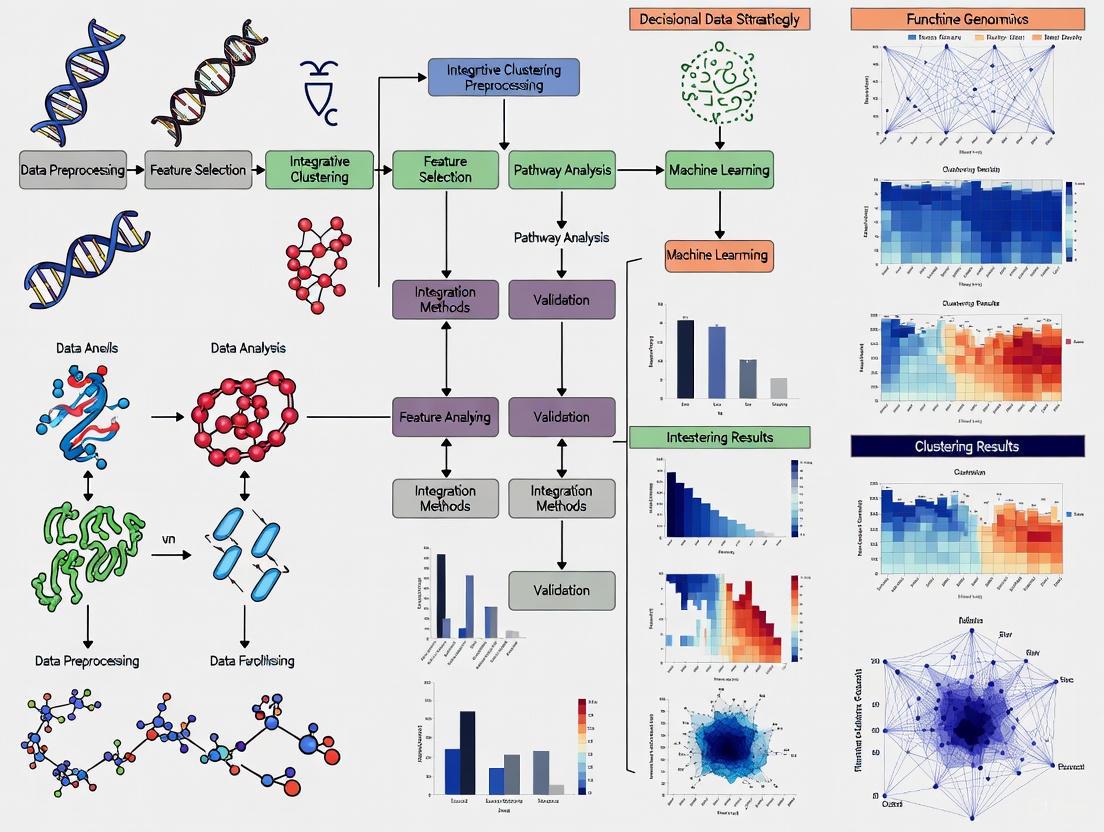
This article provides a comprehensive overview of the rapidly evolving field of multi-omics data integration, a cornerstone of modern precision medicine and systems biology.
Multi-Omics Data Integration: A Comprehensive Guide to Methods, Applications, and Best Practices in Biomedical Research
Abstract
This article provides a comprehensive overview of the rapidly evolving field of multi-omics data integration, a cornerstone of modern precision medicine and systems biology. Tailored for researchers, scientists, and drug development professionals, it systematically explores the foundational principles, diverse computational methodologies, and practical applications of integrating genomic, transcriptomic, proteomic, and epigenomic data. The content spans from core concepts and biological networks to advanced machine learning and graph-based techniques, addressing common analytical pitfalls and performance evaluation. By synthesizing insights from recent literature and tools, this guide aims to empower scientists to effectively leverage multi-omics integration for enhanced disease subtyping, biomarker discovery, and therapeutic development.
Demystifying Multi-Omics: Core Concepts, Data Types, and Biological Networks
Defining Multi-Omics Integration and Its Significance in Systems Biology
Multi-omics integration represents a paradigm shift in biological research, moving beyond single-layer analysis to combine data from various molecular levels—including genomics, transcriptomics, proteomics, and metabolomics—to construct a comprehensive view of biological systems [1] [2]. This approach forms the cornerstone of systems biology, an interdisciplinary field that seeks to understand complex living systems by integrating multiple types of quantitative molecular measurements with sophisticated mathematical models [1]. The fundamental premise is that biological entities exhibit emergent properties that cannot be fully understood by studying individual components in isolation [3].
The significance of multi-omics integration in systems biology lies in its ability to reveal the complex interplay between different molecular layers, thereby bridging the gap from genotype to phenotype [2]. By simultaneously analyzing multiple omics datasets, researchers can uncover novel insights into the molecular mechanisms underlying health and disease, accelerate biomarker discovery, identify new therapeutic targets, and ultimately advance the development of personalized medicine [2] [3] [4]. As technological advancements continue to reduce costs and increase throughput, multi-omics approaches are becoming increasingly accessible and are poised to revolutionize our understanding of biological complexity [1] [5].
Key Integration Methodologies: A Comparative Analysis
Various computational strategies have been developed to tackle the challenge of integrating heterogeneous omics data, each with distinct strengths, limitations, and optimal use cases.
Table 1: Multi-Omics Data Integration Approaches
| Integration Method | Core Principle | Representative Tools | Best Use Cases |
|---|---|---|---|
| Conceptual Integration | Links omics data via shared biological knowledge (e.g., pathways, ontologies) [3]. | OmicsNet, PaintOmics, STATegra [3] [6] | Hypothesis generation; exploratory analysis of associations between omics layers [3]. |
| Statistical Integration | Uses quantitative measures (correlation, clustering) to combine or compare datasets [3]. | mixOmics, MOFA+ [3] [7] | Identifying co-expression patterns; clustering samples based on multi-omics profiles [2] [3]. |
| Model-Based Integration | Employs mathematical models to simulate system behavior [3]. | PK/PD models, Variational Autoencoders (VAEs) [3] [8] | Understanding system dynamics and regulation; predicting drug ADME [3] [8]. |
| Network-Based Integration | Maps omics data onto shared biochemical networks and pathways [3] [5]. | OmicsNet, KnowEnG [3] [6] | Gaining mechanistic understanding; visualizing interactions between different molecular types [2] [3]. |
The choice of integration strategy often depends on whether the data is matched (different omics measured from the same cell/sample) or unmatched (omics from different cells/samples) [7]. Matched data allows for vertical integration, using the cell itself as an anchor, while unmatched data requires more complex diagonal integration methods that project cells into a co-embedded space to find commonality [7]. Emerging deep learning approaches, particularly variational autoencoders (VAEs), are increasingly used for their ability to handle high-dimensionality, heterogeneity, and missing values across data types [9] [8].
Experimental Protocol: A Workflow for Knowledge-Driven Multi-Omics Integration
This protocol outlines a standardized workflow for knowledge-driven integration of transcriptomics and proteomics data using accessible web-based tools, facilitating the interpretation of complex molecular datasets in a biological context.
Materials and Reagents
Table 2: Essential Research Reagents and Computational Tools
| Item | Function/Description |
|---|---|
| High-Quality Biological Samples (e.g., tissue, blood plasma) | Source material for generating multi-omics data. Must be processed and stored appropriately to preserve biomolecule integrity [1]. |
| ExpressAnalyst | Web-based tool for processing and analyzing transcriptomics and proteomics data, identifying significant features [6]. |
| MetaboAnalyst | Web-based platform for metabolomics or lipidomics data analysis [6]. |
| OmicsNet | Web-based tool for knowledge-driven integration, building and visualizing biological networks in 2D or 3D space [6]. |
| Normalized Data Matrices | Processed and normalized omics data files (e.g., from RNA-Seq, proteomics) for input into analysis tools [6]. |
Procedure
Single-Omics Data Analysis
- Transcriptomics/Proteomics with ExpressAnalyst: Upload your normalized gene expression or protein abundance matrix. Perform quality control, differential expression analysis, and functional enrichment to identify lists of significant genes or proteins [6].
- Metabolomics/Lipidomics with MetaboAnalyst: For complementary metabolomic data, use MetaboAnalyst to perform similar preprocessing, statistical analysis, and identification of significant metabolites or lipids [6].
Knowledge-Driven Integration with OmicsNet
- Input Significant Features: Import the lists of significant molecules (e.g., genes, proteins, metabolites) identified in Step 1 into OmicsNet.
- Network Construction: Select relevant biological databases (e.g., KEGG, Reactome) to retrieve known interactions between your input molecules and build an integrated network [6].
- Network Visualization and Analysis: Visually explore the integrated network in 2D or 3D. Identify central nodes (hubs), interconnected modules, and pathways that are significantly enriched with your multi-omics data, which can reveal underlying biological mechanisms [6].
Data-Driven Integration (Optional)
- For an unsupervised, complementary approach, use a tool like OmicsAnalyst. Input the normalized multi-omics data matrices and metadata.
- Perform joint dimensionality reduction (e.g., PCA, t-SNE) to visualize how samples cluster based on the integrated molecular signatures, which can identify novel subtypes or patterns not apparent in single-omics analysis [6].
Workflow Visualization
Knowledge-Driven Multi-Omics Integration Workflow
Essential Computational Tools for Multi-Omics Research
The computational landscape for multi-omics integration is diverse, with tools designed for specific data types, integration strategies, and user expertise levels.
Table 3: Computational Tools for Multi-Omics Integration
| Tool Name | Primary Function | Integration Capacity | Key Features |
|---|---|---|---|
| OmicsFootPrint [9] | Deep Learning / Image-based Classification | mRNA, CNV, Protein, miRNA | Transforms multi-omics data into circular images based on genomic location; uses CNNs for classification; high accuracy in cancer subtyping. |
| MOFA+ [7] | Statistical Integration (Factor Analysis) | mRNA, DNA methylation, Chromatin Accessibility | Unsupervised method to disentangle variation across omics layers; identifies principal sources of heterogeneity. |
| Seurat v5 [7] | Unmatched (Diagonal) Integration | mRNA, Chromatin Accessibility, Protein, DNA methylation | "Bridge integration" for mapping across different datasets/technologies; widely used in single-cell genomics. |
| GLUE [7] | Unmatched Integration (Graph VAE) | Chromatin Accessibility, DNA methylation, mRNA | Uses graph-based variational autoencoders and prior biological knowledge to guide integration of unpaired data. |
| Analyst Suite (ExpressAnalyst, MetaboAnalyst, OmicsNet) [6] | Web-based Analysis & Knowledge-Driven Integration | Transcriptomics, Proteomics, Lipidomics, Metabolomics | User-friendly web interface; workflow covering single-omics analysis to network-based multi-omics integration. |
For researchers without strong programming backgrounds, web-based platforms like the Analyst Suite (ExpressAnalyst, MetaboAnalyst, OmicsNet) provide an accessible entry point, democratizing complex omics analyses [6]. Conversely, command-line tools and packages like MOFA+ and those built on variational autoencoders offer greater flexibility for computational biologists handling large, complex datasets [8] [7].
Visualization of Multi-Omics Network Relationships
Biological networks provide a powerful framework for interpreting multi-omics data, revealing how molecules from different layers interact functionally.
Multi-Omics Network and Phenotype Linkage
This network view illustrates the core objective of multi-omics integration in systems biology: to move beyond correlative lists of molecules and towards causal, mechanistic models that explain how interactions across genomic, transcriptomic, proteomic, and metabolomic layers collectively influence the observable phenotype [2] [3].
The complexity of biological systems necessitates a layered approach to understanding molecular mechanisms. The major omics fields—genomics, transcriptomics, proteomics, and metabolomics—provide complementary insights into these processes, from genetic blueprint to functional phenotype. When integrated, these layers form a powerful multi-omics approach that offers a holistic view of biological systems, enabling researchers to link gene expression to protein activity and metabolic outcomes [10] [11]. This integration is transforming biomedical research, drug discovery, and precision medicine by uncovering intricate molecular interactions not apparent through single-omics approaches [12] [13].
The table below summarizes the core components, analytical focuses, and key technologies for each major omics layer.
Table 1: Overview of the Four Major Omics Layers
| Omics Layer | Core Biomolecule | Analytical Focus | Primary Technologies |
|---|---|---|---|
| Genomics [10] | DNA and Genes | The entirety of an organism's genome and its influence on health and disease. | DNA Sequencing, GWAS, Microarrays |
| Transcriptomics [10] [11] | RNA and Transcripts | The complete set of RNA transcripts in a cell, reflecting active gene expression under specific conditions. | RNA-Seq, Microarrays |
| Proteomics [10] | Proteins and Polypeptides | The entire set of expressed proteins, including their structures, modifications, interactions, and functions. | Mass Spectrometry, 2D-GE, Protein Microarrays |
| Metabolomics [10] [11] | Metabolites | The comprehensive collection of small-molecule metabolites, representing the final product of cellular processes. | Mass Spectrometry (LC-MS, GC-MS), NMR Spectroscopy |
Detailed Methodologies and Experimental Protocols
Genomics Protocols
Objective: To identify genetic variations and mutations associated with disease states or phenotypic outcomes.
Key Workflow Steps:
- Sample Preparation: Extract high-quality genomic DNA from tissue or blood samples.
- Library Preparation: Fragment DNA and attach adapter sequences for sequencing.
- Sequencing: Perform Whole Genome Sequencing (WGS) or Whole Exome Sequencing (WES) on a high-throughput platform (e.g., Illumina).
- Data Analysis:
- Alignment: Map sequence reads to a reference genome.
- Variant Calling: Identify single nucleotide polymorphisms (SNPs), insertions, and deletions (Indels).
- Annotation: Prioritize variants based on genomic location, predicted functional impact, and population frequency.
Transcriptomics Protocols
Objective: To profile global gene expression patterns and identify differentially expressed genes (DEGs).
Key Workflow Steps:
- Sample Preparation: Extract total RNA, ensuring high RNA Integrity Number (RIN).
- Library Preparation: Enrich for messenger RNA (mRNA), reverse transcribe RNA to cDNA, and attach sequencing adapters.
- Sequencing: Perform RNA Sequencing (RNA-Seq) on a high-throughput platform.
- Data Analysis:
- Alignment: Map reads to a reference genome or transcriptome.
- Quantification: Calculate read counts for each gene or transcript.
- Differential Expression: Use statistical models (e.g., in R/Bioconductor packages like DESeq2) to identify DEGs between experimental conditions.
Proteomics Protocols
Objective: To identify and quantify the proteome, including post-translational modifications (PTMs).
Key Workflow Steps:
- Sample Preparation: Lyse cells or tissues and digest proteins into peptides using an enzyme like trypsin.
- Fractionation: Reduce sample complexity via liquid chromatography (LC).
- Mass Spectrometry Analysis:
- Ionization: Introduce peptides into the mass spectrometer via electrospray ionization (ESI).
- Mass Analysis: Measure the mass-to-charge ratio (m/z) of peptides (MS1).
- Fragmentation: Select specific peptides for fragmentation (tandem MS/MS) to generate sequence information.
- Data Analysis: Search MS/MS spectra against protein sequence databases for identification and use MS1 intensity for label-free or isobaric tag-based quantification.
Metabolomics Protocols
Objective: To comprehensively profile small-molecule metabolites to capture a metabolic snapshot.
Key Workflow Steps:
- Sample Preparation: Quench metabolic activity and extract metabolites using appropriate solvents (e.g., methanol/acetonitrile/water).
- Data Acquisition:
- Liquid Chromatography-Mass Spectrometry (LC-MS): Ideal for a broad range of semi-polar and polar metabolites.
- Gas Chromatography-Mass Spectrometry (GC-MS): Excellent for volatile compounds or those made volatile by derivatization.
- Data Processing: Perform peak picking, alignment, and annotation against metabolite databases (e.g., HMDB, METLIN).
Integrated Multi-Omics Workflow and Data Interpretation
Integrating data from the omics layers requires a systematic workflow. The following diagram illustrates the logical flow from experimental design to biological insight.
Data Integration and Analysis Strategies
Correlation Analysis: Identify key regulatory nodes by correlating differentially expressed genes (transcriptomics) with differentially abundant proteins (proteomics) and metabolites (metabolomics) [11].
Pathway Enrichment Analysis: Use tools like MetaboAnalyst and Gene Ontology (GO) to find over-represented biological pathways across omics datasets. Converged pathways, where multiple molecular layers show significant changes, are likely to be critically involved in the biological response [11].
Network Construction: Build molecular interaction networks (e.g., gene-regulatory, protein-protein interaction) to visualize complex relationships and identify central hubs that may serve as key regulators or therapeutic targets.
The Scientist's Toolkit: Essential Research Reagents and Materials
Table 2: Key Research Reagent Solutions for Multi-Omics Studies
| Reagent / Material | Function / Application |
|---|---|
| TriZol / Qiazol Reagent | Simultaneous extraction of high-quality RNA, DNA, and proteins from a single sample, reducing sample-to-sample variation. |
| Trypsin (Sequencing Grade) | Proteomics-grade enzyme for specific and efficient digestion of proteins into peptides for mass spectrometry analysis. |
| Isobaric Tags (e.g., TMT, iTRAQ) | Enable multiplexed quantification of proteins from multiple samples in a single MS run, improving throughput and accuracy. |
| Derivatization Reagents (e.g., MSTFA) | Chemical modification of metabolites for volatility and thermal stability in GC-MS-based metabolomics. |
| Stable Isotope-Labeled Standards | Internal standards for absolute quantification in proteomics and metabolomics, correcting for instrument variability. |
| Solid Phase Extraction (SPE) Kits | Clean-up and fractionation of complex metabolite or peptide samples to reduce matrix effects and enhance detection. |
Application in Experimental Research: A Case Study on Disease Mechanisms
The following diagram visualizes a simplified multi-omics investigation into a disease mechanism, such as hepatic ischemia-reperfusion injury, as cited in the search results [11].
Experimental Workflow from the Case Study:
- Perturbation: Create a hepatocyte-specific gene knockout (e.g., Gp78) mouse model.
- Profiling: Subject liver tissues from knockout and wild-type mice to transcriptomic, proteomic, and metabolomic analysis.
- Integration: Correlate the data to identify a converged pathway. The study found upregulation of lipid metabolism genes (transcriptomics), increased ACSL4 protein (proteomics), and accumulation of oxidized lipids (metabolomics) [11].
- Validation: The integrated data pointed to the ferroptosis cell death pathway. This hypothesis was validated by chemically inhibiting ferroptosis, which abrogated the observed liver injury [11].
The integration of genomics, transcriptomics, proteomics, and metabolomics provides a powerful, multi-dimensional framework for deciphering complex biological systems. By moving beyond single-layer analysis, researchers can construct a more complete picture of disease mechanisms, identify robust biomarkers, and discover novel therapeutic targets, thereby advancing the field of precision medicine [12] [13].
Biological networks provide the fundamental framework for a systems-level understanding of life's processes, serving as critical integrators of multi-omics data. These networks—including protein-protein interaction (PPI) networks, gene regulatory networks (GRNs), and metabolic pathways—transform disparate molecular data into interconnected, functional maps that elucidate physiological and diseased states [14]. The analysis of these networks has revolutionized our approach to complex diseases by shifting the focus from individual molecules to entire interactive systems, revealing that the structure and dynamics of these networks are frequently disrupted in conditions such as cancer and autoimmune disorders [14]. Within multi-omics research, networks provide the essential scaffolding onto which genomic, transcriptomic, proteomic, and metabolomic data can be mapped, enabling researchers to uncover emergent properties that cannot be deduced from studying individual components in isolation. This integrated perspective is vital for advancing precision medicine, as it facilitates the identification of diagnostic biomarkers, therapeutic targets, and pathogenic mechanisms that operate at the system level rather than through isolated molecular events.
Protein-Protein Interaction (PPI) Networks
Structure and Function of PPI Networks
Protein-protein interaction networks represent the physical and functional associations between proteins within a cell, forming a complex infrastructure that governs cellular machinery. These networks exhibit scale-free topologies, meaning most proteins participate in few interactions, while a small subset of highly connected hub proteins engage in numerous interactions [14]. This organization follows a power-law distribution, which confers both robustness against random failures and vulnerability to targeted attacks on hubs [14]. The structure of PPI networks is characterized by several key topological properties that influence their functional behavior and stability, as summarized in Table 1.
Table 1: Key Topological Features of Protein-Protein Interaction Networks
| Topological Feature | Definition | Biological Interpretation |
|---|---|---|
| Degree (k) | Number of connections a node (protein) has | Proteins with high degree (hubs) often perform essential cellular functions |
| Average Path Length (L) | Average number of steps along shortest paths for all possible node pairs | Efficiency of information/signal propagation through the network |
| Clustering Coefficient (C) | Measure of how connected a node's neighbors are to each other | Tendency of proteins to form functional modules or complexes |
| Betweenness Centrality | Number of shortest paths that pass through a node | Identification of bottleneck proteins critical for network connectivity |
| Modules | Groups of nodes with high internal connectivity | Functional units or protein complexes performing specialized tasks |
PPI networks are dynamic structures that change across cellular states and conditions. Integration of gene expression data with static PPI maps has revealed a "just-in-time" assembly model where protein complexes are dynamically activated through the stage-specific expression of key elements [14]. This dynamic modular structure has been observed in both yeast and human protein interaction networks, suggesting a conserved organizational principle across species [14].
Experimental Protocols for PPI Mapping
Protocol 2.2.1: Yeast Two-Hybrid (Y2H) Screening for Binary Interactions
Principle: The Y2H system detects binary protein interactions through reconstitution of a transcription factor. The bait protein is fused to a DNA-binding domain, while the prey protein is fused to a transcription activation domain. Interaction between bait and prey reconstitutes the transcription factor, activating reporter gene expression [14].
Workflow:
- Clone Genes of Interest: Insert bait gene into pGBKT7 (DNA-binding domain vector) and prey gene into pGADT7 (activation domain vector).
- Co-transform Yeast: Co-transform bait and prey plasmids into appropriate yeast strain (e.g., AH109 or Y2HGold).
- Select for Interactions: Plate transformed yeast on selective media lacking leucine, tryptophan, and histidine (-LWH) with optional X-α-Gal for colorimetric detection.
- Validate Interactions: Confirm positive interactions through β-galactosidase assay (qualitative filter lift or quantitative liquid assay).
- Control Experiments: Perform parallel transformations with empty vectors and known non-interacting protein pairs to eliminate false positives.
Critical Considerations:
- Test bait autoactivation by plating on -LWHA (adenine-deficient) media before library screening
- Use multiple reporters (HIS3, ADE2, MEL1, lacZ) to reduce false positives
- Consider membrane protein systems (e.g., split-ubiquitin) for membrane-bound proteins
Protocol 2.2.2: Affinity Purification-Mass Spectrometry (AP-MS) for Complex Identification
Principle: AP-MS identifies protein complexes through immunoaffinity purification of tagged bait proteins followed by mass spectrometric identification of co-purifying proteins [14].
Workflow:
- Cell Line Generation: Create stable cell lines expressing tagged (e.g., FLAG, HA, TAP) bait protein and control tag-only constructs.
- Cell Lysis and Clarification: Lyse cells under non-denaturing conditions (e.g., 0.5% NP-40, 150mM NaCl) with protease/phosphatase inhibitors.
- Affinity Purification: Incubate lysates with affinity resin (e.g., anti-FLAG M2 agarose, streptavidin beads) for 2-4 hours at 4°C.
- Stringent Washes: Wash beads 3-5 times with lysis buffer to remove non-specific interactions.
- Elution and Digestion: Elute complexes with competitive peptide (3xFLAG peptide) or on-bead trypsin digestion.
- Mass Spectrometry Analysis: Analyze peptides by LC-MS/MS and identify specific interactors using statistical frameworks (SAINT, CompPASS).
AP-MS Workflow for PPI Identification
Research Reagent Solutions for PPI Studies
Table 2: Essential Research Reagents for PPI Network Analysis
| Reagent/Method | Application | Key Features |
|---|---|---|
| Yeast Two-Hybrid System | Detection of binary protein interactions | High-throughput capability, in vivo context |
| Co-immunoprecipitation | Validation of protein complexes from native sources | Physiological relevance, requires specific antibodies |
| Bimolecular Fluorescence Complementation (BiFC) | Visualization of protein interactions in living cells | Spatial context, real-time monitoring |
| Proximity Ligation Assay (PLA) | Detection of endogenous protein interactions in fixed cells | Single-molecule sensitivity, in situ validation |
| Tandem Affinity Purification (TAP) Tags | Purification of protein complexes under native conditions | Reduced contamination, two-step purification |
| Cross-linkers (DSS, BS3) | Stabilization of transient interactions for MS analysis | Captures weak/transient interactions |
Gene Regulatory Networks (GRNs)
Architecture and Properties of GRNs
Gene regulatory networks represent the directional relationships between transcription factors, regulatory elements, and their target genes that collectively control transcriptional programs. Recent single-cell multi-omic technologies have revolutionized GRN inference by enabling the mapping of regulatory relationships at unprecedented resolution [15]. GRNs exhibit distinct structural properties that define their functional characteristics, including hierarchical organization, modularity, and sparsity [16]. Analysis of large-scale perturbation data has revealed that only approximately 41% of gene perturbations produce measurable effects on transcriptional networks, highlighting the robustness and redundancy built into regulatory systems [16].
GRNs display asymmetric distributions of in-degree (number of regulators controlling a gene) and out-degree (number of genes regulated by a transcription factor), with out-degree distributions typically being more heavy-tailed due to the presence of master regulators that control numerous targets [16]. Furthermore, GRNs contain extensive feedback loops, with approximately 2.4% of regulatory pairs exhibiting bidirectional effects, creating complex dynamical behaviors that are essential for cellular decision-making processes [16].
Computational Protocols for GRN Inference
Protocol 3.2.1: SCENIC+ Workflow for Single-Cell Multi-omic GRN Inference
Principle: SCENIC+ integrates scRNA-seq and scATAC-seq data to infer transcription factor activity and reconstruct regulatory networks by linking cis-regulatory elements to target genes [15].
Workflow:
- Data Preprocessing: Perform quality control, normalization, and batch correction on both scRNA-seq and scATAC-seq datasets.
- Region-to-Gene Linking: Identify potential regulatory relationships by correlating chromatin accessibility at cis-regulatory elements with gene expression across cells.
- Transcription Factor Motif Analysis: Scan accessible regions for TF binding motifs using position weight matrices (e.g., from JASPAR, CIS-BP).
- TF Activity Inference: Calculate TF activity scores using AUCell or regression-based methods that consider both TF expression and motif accessibility.
- Network Construction: Build the GRN by connecting TFs to target genes through regulatory elements with significant associations.
- Network Refinement: Prune indirect interactions using context-specific perturbation data or statistical methods.
Critical Parameters:
- Distance threshold for enhancer-gene linking (typically 50kb-1Mb from TSS)
- Minimum correlation coefficient for region-to-gene links (r > 0.3)
- Motif similarity threshold (80-95% similarity to reference motif)
Protocol 3.2.2: Dynamical Systems Modeling for GRN Inference from Perturbation Data
Principle: This approach models gene expression dynamics using differential equations to capture the temporal evolution of regulatory relationships following perturbations [15] [16].
Workflow:
- Time-Series Data Collection: Perform scRNA-seq at multiple time points following genetic perturbations (e.g., CRISPR knockout).
- Network Structure Initialization: Generate initial network hypothesis using correlation-based methods or prior knowledge.
- Parameter Estimation: Fit ordinary differential equation parameters to time-series expression data:
dXᵢ/dt = βᵢ + Σⱼ WᵢⱼXⱼ - γᵢXᵢWhere Xᵢ is expression of gene i, βᵢ is basal transcription, Wᵢⱼ is regulatory weight, and γᵢ is degradation rate. - Model Selection: Use information criteria (AIC/BIC) or cross-validation to select optimal network structure.
- Validation: Test predicted regulatory relationships using orthogonal methods (e.g., ChIP-seq, additional perturbations).
GRN Inference from Multi-omic Data
Methodological Foundations for GRN Inference
Table 3: Computational Methods for GRN Inference from Single-Cell Multi-omic Data
| Methodological Approach | Underlying Principle | Advantages | Limitations |
|---|---|---|---|
| Correlation-based | Measures association between TF and target gene expression | Simple implementation, fast computation | Cannot distinguish direct vs. indirect regulation |
| Regression Models | Models gene expression as function of potential regulators | Quantifies effect sizes, handles multiple regulators | Prone to overfitting with many predictors |
| Probabilistic Models | Represents regulatory relationships as probability distributions | Incorporates uncertainty, handles noise | Often assumes specific gene expression distributions |
| Dynamical Systems | Uses differential equations to model expression changes over time | Captures temporal dynamics, models feedback | Requires time-series data, computationally intensive |
| Deep Learning | Neural networks learn complex regulatory patterns from data | Captures non-linear relationships, high accuracy | Requires large datasets, limited interpretability |
Metabolic Networks
Representation and Analysis of Metabolic Networks
Metabolic networks represent the complete set of metabolic and physical processes that determine the physiological and biochemical properties of a cell. These networks can be represented in multiple ways, each offering different insights into metabolic organization and function [17]. The substrate-product network represents metabolites as nodes and biochemical reactions as edges, focusing on the flow of chemical compounds through metabolic pathways [17]. Alternatively, reaction networks represent enzymes or reactions as nodes, highlighting the functional relationships between catalytic activities [17].
A critical consideration in metabolic network analysis is the treatment of ubiquitous metabolites (e.g., ATP, NADH, H₂O), which participate in numerous reactions and can create artificial connections that obscure meaningful metabolic pathways [17]. Advanced network representations address this challenge by considering atomic traces—tracking specific atoms through reactions—to establish biochemically meaningful connections that reflect actual metabolic transformations rather than mere participation in the same reaction [17].
Protocol for Metabolic Network Reconstruction and Analysis
Protocol 4.2.1: Genome-Scale Metabolic Network Reconstruction
Principle: This protocol creates organism-specific metabolic networks by integrating genomic, biochemical, and physiological data to generate comprehensive metabolic models [17].
Workflow:
- Draft Network Generation: Automatically generate initial network from genome annotation using tools like ModelSEED or RAVEN.
- Gap Filling and Curation: Manually curate the network by filling metabolic gaps based on physiological data and literature evidence.
- Stoichiometric Matrix Construction: Build an S-matrix where rows represent metabolites and columns represent reactions.
- Compartmentalization: Assign reactions to appropriate cellular compartments (e.g., cytosol, mitochondria).
- Biomass Reaction Definition: Formulate biomass reaction representing cellular composition based on experimental data.
- Constraint-Based Analysis: Implement flux balance analysis (FBA) to predict metabolic capabilities under different conditions.
Implementation Details:
- Use databases such as KEGG [18] and MetaCyc for reaction and pathway information
- Apply thermodynamic constraints (energy balance) to improve prediction accuracy
- Integrate transcriptomic data to create context-specific models (GIMME, iMAT)
Protocol 4.2.2: Constraint-Based Flux Analysis of Metabolic Networks
Principle: Flux Balance Analysis (FBA) predicts metabolic flux distributions by optimizing an objective function (e.g., biomass production) subject to stoichiometric and capacity constraints [17].
Workflow:
- Stoichiometric Constraints: Define the mass balance constraints for each metabolite: S·v = 0, where S is the stoichiometric matrix and v is the flux vector.
- Capacity Constraints: Set lower and upper bounds for reaction fluxes based on enzyme capacity and thermodynamic feasibility.
- Objective Function: Define biological objective such as biomass maximization, ATP production, or metabolite synthesis.
- Linear Programming Solution: Solve the optimization problem: maximize Z = cᵀv subject to S·v = 0 and vₗ ≤ v ≤ vᵤ.
- Sensitivity Analysis: Perform robustness analysis by varying environmental conditions or gene knockouts.
- Validation: Compare predictions with experimental flux measurements (e.g., ¹³C flux analysis).
Metabolic Network Reconstruction Workflow
Table 4: Key Databases and Tools for Metabolic Network Research
| Resource | Type | Application | Key Features |
|---|---|---|---|
| KEGG PATHWAY [18] | Database | Metabolic pathway visualization and analysis | Manually drawn pathway maps, organism-specific pathways |
| MetaCyc | Database | Non-redundant reference metabolic pathways | Curated experimental data, enzyme information |
| BiGG Models | Database | Genome-scale metabolic models | Standardized models, biochemical data |
| ModelSEED | Tool | Automated metabolic reconstruction | Rapid model generation, gap filling |
| CobraPy | Tool | Constraint-based modeling | FBA, flux variability analysis |
| MINEs | Database | Prediction of novel metabolic reactions | Expanded metabolic space, hypothetical enzymes |
Multi-Omics Integration Through Biological Networks
Network-Based Data Integration Strategies
Biological networks provide the ideal framework for multi-omics data integration, enabling researchers to map diverse molecular measurements onto functional relationships and pathways. The STRING database exemplifies this approach by compiling protein-protein association data from multiple sources—including experimental results, computational predictions, and curated knowledge—to create comprehensive networks that span physical and functional interactions [19]. The latest version of STRING introduces regulatory networks with directionality information, further enhancing its utility for multi-omics integration [19].
Deep generative models, particularly variational autoencoders (VAEs), have emerged as powerful tools for multi-omics integration, addressing challenges such as high-dimensionality, heterogeneity, and missing values across data types [8]. These models can learn latent representations that capture the joint structure of multiple omics layers, enabling data imputation, augmentation, and batch effect correction while facilitating the identification of complex biological patterns relevant to disease mechanisms [8].
Protocol for Multi-Omic Network Integration
Protocol 5.2.1: Multi-Layer Network Analysis for Disease Mechanism Identification
Principle: This approach integrates PPI, GRN, and metabolic networks to create multi-layer networks that capture different aspects of cellular organization, enabling identification of key regulatory points across multiple biological scales.
Workflow:
- Layer-Specific Network Construction: Generate high-quality PPI, GRN, and metabolic networks for the system of interest.
- Node Mapping Across Layers: Establish correspondence between entities across different network types (e.g., transcription factors in GRN that are also proteins in PPI network).
- Cross-Layer Edge Definition: Identify biologically meaningful connections between layers (e.g., transcription factors regulating metabolic enzymes).
- Multi-Layer Community Detection: Identify modules that span multiple network layers using methods like multi-layer Louvain clustering.
- Key Node Identification: Calculate multi-layer centrality measures to identify nodes with important roles across multiple biological processes.
- Functional Enrichment: Perform pathway enrichment analysis on cross-layer modules to interpret their biological significance.
Applications:
- Identification of master regulators that control coordinated changes across multiple cellular functions
- Discovery of network-based biomarkers that span genomic, transcriptomic, and metabolic levels
- Prediction of system-wide effects of therapeutic interventions
Network Pharmacology and Drug Development
Biological networks have transformed drug development by enabling network pharmacology approaches that target disease modules rather than individual proteins. The STRING database supports these applications by providing comprehensive protein networks with directionality information that can illuminate regulatory mechanisms in disease states [19]. Similarly, the KEGG PATHWAY database offers manually drawn pathway maps that represent molecular interaction and reaction networks essential for understanding drug mechanisms and identifying potential side effects [18].
Network-based drug discovery approaches include:
- Network proximity analysis to identify drugs that target disease-associated network neighborhoods
- Disease module identification to pinpoint coherent functional units disrupted in pathology
- Multi-omics signature mapping to connect drug-induced changes across molecular layers
These approaches are particularly valuable for understanding complex diseases where multiple genetic and environmental factors interact through complex network relationships that cannot be adequately addressed by single-target therapies [14].
The advent of high-throughput sequencing technologies has catalyzed the generation of massive multi-omics datasets, fundamentally advancing our understanding of cancer biology [20]. Large-scale public data repositories serve as indispensable resources for researchers investigating tumor heterogeneity, molecular classification, and therapeutic vulnerabilities [21]. These repositories provide comprehensive molecular characterizations across diverse cancer types, enabling systematic exploration of shared and unique oncogenic drivers [20]. The integration of different omics types creates heterogeneous datasets that present both opportunities and analytical challenges due to variations in measurement units, sample numbers, and features [21]. This application note provides a detailed overview of four cornerstone repositories - TCGA, CPTAC, ICGC, and CCLE - with structured comparisons, experimental protocols, and practical guidance for their research application within multi-omics integration frameworks.
Repository Specifications and Comparative Analysis
Table 1: Core Characteristics of Major Cancer Data Repositories
| Repository | Primary Focus | Sample Types | Key Omics Data Types | Scale | Unique Features |
|---|---|---|---|---|---|
| TCGA (The Cancer Genome Atlas) | Molecular characterization of primary tumors | Primary tumor samples, matched normal | Genomic, transcriptomic, epigenomic, proteomic [22] | 33 cancer types, ~11,000 patients [23] | Pan-cancer atlas; standardized processing; multi-institutional consortium |
| CPTAC (Clinical Proteomic Tumor Analysis Consortium) | Proteogenomic integration | Tumor tissues, biofluids | Proteomic, phosphoproteomic, genomic, transcriptomic | 10+ cancer types [21] | Deep proteomic profiling; post-translational modifications; proteogenomic integration |
| ICGC (International Cancer Genome Consortium) | Genomic analysis with clinical annotation | Tumor-normal pairs | Genomic, transcriptomic, clinical data [24] | 100,000 patients, 22 tumor types, 13 countries [24] | International collaboration; detailed clinical annotation; treatment outcomes |
| CCLE (Cancer Cell Line Encyclopedia) | Preclinical model characterization | Cancer cell lines | Genomic, transcriptomic, proteomic, dependency data [25] | 1,000+ cell lines [23] | Functional screening data; drug response; gene dependency maps |
Data Content and Technical Specifications
Table 2: Technical Specifications and Data Availability
| Repository | Genomics | Transcriptomics | Proteomics | Epigenomics | Clinical Data | Specialized Assays |
|---|---|---|---|---|---|---|
| TCGA | WGS, WES, SNP arrays | RNA-Seq, miRNA-Seq | RPPA, mass spectrometry | DNA methylation arrays | Detailed clinical annotations | Pathological images |
| CPTAC | WGS, WES | RNA-Seq | Global proteomics, phosphoproteomics | DNA methylation | Clinical outcomes | Post-translational modifications |
| ICGC | WGS, WES | RNA-Seq | Limited | DNA methylation | Comprehensive clinical, treatment, lifestyle [24] | Family history, environmental exposures [24] |
| CCLE | WES, SNP arrays | RNA-Seq | Reverse-phase protein arrays | DNA methylation | Cell line metadata | CRISPR screens, drug sensitivity [25] |
Repository-Specific Application Protocols
TCGA: Molecular Subtyping and Classification
Protocol: Cancer Subtype Classification Using TCGA Data
Purpose: To classify tumor samples into molecular subtypes using pre-trained classifier models based on TCGA data.
Background: TCGA has defined molecular subtypes for major cancer types based on integrated multi-omics analysis. Recently, a resource of 737 ready-to-use models has been developed to bridge TCGA's data library with clinical implementation [22].
Materials:
- TCGA dataset or novel tumor dataset for classification
- Computational resources (R/Python environment)
- GitHub repository: https://github.com/NCICCGPO/gdan-tmp-models [22]
Procedure:
- Data Preprocessing:
- Normalize gene expression data using TPM (Transcripts Per Million) with log2 transformation (pseudo-count +1) [25]
- Process DNA methylation data using beta values with quality control filtering
- For miRNA data, implement cross-platform normalization if combining datasets
Model Selection:
- Identify appropriate classifier from the repository based on cancer type
- Select data type (gene expression, DNA methylation, miRNA, copy number, mutation calls, or multi-omics)
- Choose from five training algorithms available in the resource
Subtype Assignment:
- Apply the selected model to processed omics data
- Generate classification probabilities for each subtype
- Assign final subtype based on highest probability score
Validation:
- Compare subtype distribution with known clinical features
- Assess survival differences between subtypes using Kaplan-Meier analysis
- Validate biological coherence through pathway enrichment analysis
Troubleshooting:
- For low classification confidence, consider ensemble approaches combining multiple models
- Address batch effects using ComBat or similar methods when integrating multiple datasets
- Verify tumor purity estimates, as this can significantly impact classification accuracy [23]
ICGC ARGO: Clinical Data Integration and Analysis
Protocol: Integrating Genomic and Clinical Data Using ICGC ARGO Framework
Purpose: To harmonize and analyze clinically annotated genomic data using the ICGC ARGO data dictionary and platform.
Background: The ICGC ARGO Data Dictionary provides a standardized framework for collecting clinical data across multiple institutions and countries, enabling robust correlation of genomic findings with clinical outcomes [24].
Materials:
- ICGC ARGO Data Dictionary (https://docs.icgc-argo.org/dictionary) [24]
- ARGO Data Platform access (https://platform.icgc-argo.org/) [26]
- DACO approval for controlled data access [27]
Procedure:
- Data Dictionary Familiarization:
- Access the interactive dictionary viewer at https://docs.icgc-argo.org/dictionary
- Review the entity-relationship model comprising fifteen entities
- Identify core (mandatory) versus extended (optional) fields
- Understand conditional attribute requirements
Data Access and Filtering:
- Navigate the ARGO Data Platform File Repository
- Apply clinical and molecular filters using the Data Discovery tool
- Download selected datasets using authorized client tools
Clinical Data Harmonization:
- Map institutional clinical data to ARGO Data Dictionary specifications
- Implement standardized terminology (NCI Thesaurus, LOINC, UMLS) [24]
- Structure data according to the event-based data model capturing clinical timelines
Integrated Analysis:
- Correlate somatic variants with treatment response data
- Analyze progression-free survival based on molecular subtypes
- Investigate environmental and lifestyle factors in cancer progression [24]
Troubleshooting:
- For missing clinical data, utilize multiple imputation methods with appropriate diagnostics
- When encountering terminology inconsistencies, consult the NCIt thesaurus for mapping guidance
- For longitudinal analysis challenges, leverage the event-based model to reconstruct patient journeys
CCLE: Dependency Map Analysis for Target Discovery
Protocol: Identifying Cancer Dependencies Using CCLE and DepMap Integration
Purpose: To identify and validate cancer-specific dependencies and synthetic lethal interactions using CCLE multi-omics data and CRISPR screening data.
Background: The Cancer Dependency Map (DepMap) provides genome-wide CRISPR-Cas9 knockout screens across hundreds of cancer cell lines, enabling systematic discovery of tumor vulnerabilities [25] [23].
Materials:
- CCLE multi-omics data (genomic, transcriptomic, proteomic) [25]
- DepMap gene dependency data (CERES scores) [23]
- Dependency Marker Association (DMA) analytical pipeline [25]
Procedure:
- Data Integration:
- Download gene dependency data from Broad DepMap Public portal
- Acquire somatic mutation data as binary mutation matrix
- Obtain gene expression data (TPM values, log2 transformed)
- Integrate copy number, methylation, proteomics, and metabolomics data [25]
Dependency Marker Association Analysis:
- Perform linear regression modeling with intrinsic subtype covariates
- Analyze dependencies associated with gain-of-function alterations (addiction)
- Identify dependencies associated with loss-of-function alterations (synthetic lethality)
- Focus on metabolic genes and known cancer-associated genes [25]
Cell Line Stratification:
- Apply non-negative matrix factorization (NMF) to dependency profiles
- Select optimal cluster number using cophenetic correlation and consensus silhouette scores
- Extract cluster-specific dependency signatures
Biological Validation:
- Construct co-dependency networks using correlation analysis
- Perform Gene Set Enrichment Analysis (GSEA) of cluster signatures
- Calculate single-sample GSEA (ssGSEA) scores for pathway activity
Troubleshooting:
- For heterogeneous dependency patterns, apply cluster-specific DMA analysis
- When interpreting synthetic lethality, distinguish between paralog, single pathway, and alternative pathway synthetic lethality [25]
- For translational application, integrate with TCGA data using elastic-net predictive models [23]
Multi-Omics Integration Workflow
Unified Analytical Framework
Protocol: Multi-Omics Study Design and Integration for Cancer Subtyping
Purpose: To provide guidelines for robust multi-omics integration in cancer research, addressing key computational and biological factors.
Background: Multi-omics integration creates heterogeneous datasets presenting challenges in analysis due to variations in measurement units, sample numbers, and features. Evidence-based recommendations can optimize analytical approaches and enhance reliability of results [21].
Materials:
- Multi-omics data from TCGA, ICGC, or CPTAC
- Computational resources for high-dimensional data analysis
- MOI tools (MOGSA, ActivePathways, multiGSEA, iPanda) [21]
Procedure:
- Study Design Considerations:
- Ensure minimum of 26 samples per class for robust clustering
- Select less than 10% of omics features to reduce dimensionality
- Maintain sample balance under 3:1 ratio between classes
- Control noise level below 30% of features [21]
Data Preprocessing:
- Implement platform-specific normalization for each omics type
- Address missing data using appropriate imputation methods
- Perform batch effect correction using ComBat or similar approaches
Feature Selection:
- Apply variance-based filtering to remove uninformative features
- Utilize biological knowledge to prioritize cancer-relevant features
- Employ statistical methods (linear regression, ANOVA) to identify class-discriminatory features
Integration and Analysis:
- Select appropriate integration method based on study objective
- Validate clusters using clinical annotations and survival differences
- Perform biological interpretation through pathway enrichment analysis
Troubleshooting:
- For poor clustering performance, increase sample size and reduce feature selection percentage
- When integrating conflicting signals from different omics layers, utilize methods that weight evidence across data types
- For small sample sizes, employ cross-validation and resampling methods to ensure robustness
Table 3: Key Research Reagents and Computational Tools
| Category | Resource/Tool | Function | Application Context |
|---|---|---|---|
| Data Access | ICGC ARGO Data Dictionary | Standardized clinical data collection | Harmonizing clinical data across institutions [24] |
| Data Access | TCGA Classifier Models | Tumor subtype classification | Assigning molecular subtypes to new samples [22] |
| Analytical Tools | Dependency Map (DepMap) | Gene essentiality scores | Identifying tumor vulnerabilities [23] |
| Analytical Tools | DMA Analysis Pipeline | Dependency-marker association | Linking multi-omics features to gene dependencies [25] |
| Analytical Tools | Elastic-net Regression | Predictive modeling | Translating cell line dependencies to patient tumors [23] |
| Analytical Tools | Non-negative Matrix Factorization | Clustering of dependency profiles | Identifying latent patterns in functional screens [25] |
| Analytical Tools | Contrastive PCA | Dataset alignment | Removing batch effects between cell lines and tumors [23] |
| Standards | MOSD Guidelines | Multi-omics study design | Optimizing experimental design and analysis [21] |
The comprehensive ecosystem of public cancer data repositories, including TCGA, CPTAC, ICGC, and CCLE, provides unprecedented resources for advancing cancer research through multi-omics integration. TCGA offers extensive molecular characterization of primary tumors, while CPTAC adds deep proteomic dimensions. ICGC contributes globally sourced, clinically rich datasets, and CCLE enables functional validation in model systems. The successful utilization of these resources requires careful attention to study design, appropriate application of analytical protocols, and adherence to standardized frameworks for data processing and integration. By leveraging the structured protocols, visualization tools, and reagent resources outlined in this application note, researchers can maximize the translational potential of these cornerstone cancer genomics resources, ultimately accelerating the development of novel diagnostic and therapeutic approaches.
The relationship between genotype and phenotype represents one of the most fundamental paradigms in biological research. Traditionally, biological studies have approached this relationship through single-omics lenses, examining individual molecular layers in isolation. However, the advent of high-throughput technologies has enabled the generation of massive, complex multi-omics datasets, necessitating integrative approaches that can capture the full complexity of biological systems [28] [29].
Multi-omics data integration represents a paradigm shift from reductionist to holistic biological investigation. By simultaneously analyzing data from genomics, transcriptomics, proteomics, and metabolomics, researchers can now construct comprehensive models that bridge the gap between genetic blueprint and observable traits [29]. This approach has proven particularly valuable in precision medicine, where it facilitates the identification of robust biomarkers and the unraveling of complex disease mechanisms that remain opaque when examining individual omics layers [8] [29].
The technical landscape for multi-omics integration has evolved rapidly, with methods now spanning classical statistical approaches, multivariate methods, and advanced machine learning techniques [29]. The implementation of these approaches has been accelerated by the development of specialized software tools that make integrative analyses accessible to researchers without advanced computational expertise [30]. This Application Note provides detailed protocols and frameworks for implementing these powerful integration strategies to advance biomedical research.
Multi-Omics Integration Approaches
Conceptual Framework and Classification
Multi-omics integration strategies can be conceptually categorized into three primary frameworks: statistical and correlation-based methods, multivariate approaches, and machine learning/artificial intelligence techniques [29]. Each framework offers distinct advantages and is suited to addressing specific biological questions.
Statistical and correlation-based methods form the foundation of multi-omics integration, employing measures such as Pearson's or Spearman's correlation coefficients to quantify relationships between omics layers. These approaches are particularly valuable for initial exploratory analysis and for identifying direct pairwise relationships between molecular features across different biological scales [29].
Multivariate methods including Principal Component Analysis (PCA), Multiple Co-Inertia Analysis, and Partial Least Squares (PLS) regression enable the simultaneous projection of multiple omics datasets into shared latent spaces. These techniques are effective for dimensionality reduction and for identifying coordinated patterns of variation across different molecular layers [30] [29].
Machine learning and artificial intelligence techniques, especially deep generative models like Variational Autoencoders (VAEs), represent the cutting edge of multi-omics integration. These approaches excel at capturing non-linear relationships and handling the high-dimensionality and heterogeneity characteristic of multi-omics data [8] [29].
Table 1: Classification of Multi-Omics Integration Methods
| Method Category | Representative Algorithms | Primary Applications | Advantages |
|---|---|---|---|
| Statistical/Correlation-based | Pearson/Spearman correlation, WGCNA, xMWAS | Initial exploratory analysis, Network construction | Simple implementation, Easy interpretation |
| Multivariate Methods | PCA, PLS, Multiple Co-Inertia Analysis | Dimensionality reduction, Pattern identification | Simultaneous multi-omics projection, Latent variable identification |
| Machine Learning/AI | VAEs, Deep Neural Networks, Ensemble Methods | Complex pattern recognition, Predictive modeling | Handles non-linear relationships, Accommodates data heterogeneity |
Network-Based Integration Methods
Network-based approaches have emerged as particularly powerful tools for multi-omics integration, as they naturally represent the complex interdependencies within and between biological layers. Weighted Gene Correlation Network Analysis (WGCNA) identifies modules of highly correlated genes or proteins that can be linked to phenotypic traits [30] [29]. The extension of this approach to multiple omics layers—multi-WGCNA—enables the detection of robust associations across omics datasets while maintaining statistical power through dimensionality reduction [30].
The xMWAS platform implements another network-based approach that performs pairwise association analysis between omics datasets using a combination of PLS components and regression coefficients [29]. This method constructs integrative network graphs where connections represent statistically significant associations between features across different omics layers. Community detection algorithms, such as the multilevel community detection method, can then identify densely connected groups of features that often represent functional biological units [29].
Experimental Protocols
Protocol 1: Multi-Omics Network Analysis Using WGCNA
Objective: To identify coordinated patterns across transcriptomics and proteomics datasets and link them to phenotypic traits using weighted correlation network analysis.
Table 2: Research Reagent Solutions for WGCNA Protocol
| Reagent/Material | Specification | Function/Application |
|---|---|---|
| RNA Extraction Kit | Column-based with DNase treatment | High-quality RNA isolation for transcriptomics |
| Protein Lysis Buffer | RIPA with protease inhibitors | Protein extraction for proteomic analysis |
| Sequencing Platform | Illumina NovaSeq 6000 | RNA sequencing for transcriptome profiling |
| Mass Spectrometer | Q-Exactive HF-X | High-resolution LC-MS/MS for proteome analysis |
| WGCNA R Package | Version 1.72-1 | Network construction and module identification |
Step-by-Step Methodology:
Sample Preparation and Data Generation
- Extract RNA and protein from matched samples (n ≥ 12 recommended for statistical power)
- Process RNA samples for transcriptome sequencing using standard Illumina protocols
- Prepare protein samples for LC-MS/MS analysis using tryptic digestion and TMT labeling
- Generate count matrices for transcriptomics and normalized intensity values for proteomics
Data Preprocessing and Quality Control
- Filter transcripts and proteins with >50% missing values across samples
- Normalize transcriptomics data using TPM (Transcripts Per Million) normalization
- Normalize proteomics data using quantile normalization
- Perform batch effect correction using ComBat if required
Network Construction
- Install and load WGCNA package in R environment
- Choose soft-thresholding power based on scale-free topology criterion (R² > 0.8)
- Construct adjacency matrices for each omics dataset separately
- Convert adjacency matrices to topological overlap matrices (TOM)
- Identify modules of highly correlated features using hierarchical clustering with Dynamic Tree Cut
Module-Trait Association
- Calculate module eigengenes (first principal component of each module)
- Correlate module eigengenes with phenotypic traits of interest
- Identify significant module-trait relationships (p-value < 0.05, |correlation| > 0.5)
Cross-Omics Integration
- Correlate eigengenes from transcriptomics and proteomics modules
- Identify preserved modules across omics layers using module preservation statistics
- Extract features from significant cross-omics modules for functional analysis
Protocol 2: Genotype to Phenotype Mapping for Small Sample Sizes
Objective: To establish associations between genetic variants and phenotypic outcomes in studies with limited sample sizes by integrating genotype and transcriptome data.
Methodology Overview: The GSPLS (Group lasso and SPLS model) method addresses the challenge of small sample sizes by incorporating biological network information to enhance statistical power [31]. This approach clusters genes using protein-protein interaction networks and gene expression data, then selects relevant gene clusters using group lasso regression.
Key Steps:
Data Preprocessing and Integration
- Obtain genotype data (SNP arrays or whole-genome sequencing) and transcriptome data (RNA-seq) from matched samples
- Preprocess genetic variants: filter based on minor allele frequency (MAF > 0.1) and impute missing genotypes
- Normalize gene expression data using appropriate methods (e.g., TMM for RNA-seq)
- Acquire tissue-specific expression quantitative trait locus (eQTL) data from public repositories (e.g., GTEx Portal)
Gene Clustering Using Biological Networks
- Download protein-protein interaction (PPI) network data from curated databases (e.g., PICKLE Meta-database)
- Integrate PPI network with gene expression data to identify functionally coherent gene clusters
- Perform community detection on the integrated network to identify gene modules
Feature Selection Using Group Lasso
- Apply group lasso regression to select gene clusters associated with the phenotype of interest
- Optimize regularization parameters through cross-validation
- Map SNP clusters to selected gene clusters using eQTL information
Three-Layer Network Analysis
- Construct three-layer network blocks connecting SNP clusters, gene clusters, and phenotype
- Apply Sparse Partial Least Squares (SPLS) regression to model associations within each network block
- Generate final prediction by averaging results across all network blocks
Visualization Tools for Multi-Omics Data
The Pathway Tools Cellular Overview provides an interactive web-based environment for visualizing up to four types of omics data simultaneously on organism-scale metabolic network diagrams [32]. This tool automatically generates organism-specific metabolic charts using pathway-specific layout algorithms, ensuring biological relevance and consistency with established pathway drawing conventions.
Visual Channels for Multi-Omics Data:
- Reaction edge color: Typically used for transcriptomics data (e.g., gene expression levels)
- Reaction edge thickness: Often represents proteomics data or reaction fluxes
- Metabolite node color: Suitable for metabolomics data (e.g., metabolite abundances)
- Metabolite node thickness: Can represent additional metabolomics measurements or lipidomics data
Implementation Protocol:
- Data Preparation
- Format each omics dataset as a tab-separated table with identifiers matching those in the Pathway Tools database
- Ensure sample matching across omics datasets
- Normalize data appropriately for each omics type
Visualization Configuration
- Launch Cellular Overview from Pathway Tools
- Load multi-omics dataset files through the data upload interface
- Assign each omics dataset to the appropriate visual channel
- Adjust color and thickness mappings to optimize data representation
Interactive Exploration
- Use semantic zooming to reveal additional detail at higher magnification
- Employ animation features to visualize time-course data
- Generate omics pop-ups to view quantitative data for specific reactions or metabolites
Table 3: Comparison of Multi-Omics Visualization Tools
| Tool Name | Diagram Type | Multi-Omics Capacity | Semantic Zooming | Animation Support |
|---|---|---|---|---|
| PTools Cellular Overview | Pathway-specific algorithm | 4 simultaneous datasets | Yes | Yes |
| KEGG Mapper | Manual uber drawings | Single dataset painting | No | No |
| Escher | Manually created | Multiple datasets | Limited | No |
| PathVisio | Manual drawings | Single dataset | No | No |
| Cytoscape | General layout algorithm | Multiple datasets via plugins | No | Limited |
MiBiOmics for Exploratory Multi-Omics Analysis
MiBiOmics is an interactive web application that facilitates multi-omics data exploration, integration, and analysis through an intuitive interface, making advanced integration techniques accessible to researchers without programming expertise [30].
Key Functionalities:
Data Upload and Preprocessing
- Support for up to three omics datasets with shared samples
- Interactive filtering, normalization, and transformation options
- Outlier detection and removal capabilities
Exploratory Data Analysis
- Dynamic ordination plots (PCA, PCoA) for each omics dataset
- Relative abundance plots for taxonomic data
- Interactive sample coloring based on phenotypic traits
Network-Based Integration
- Weighted Gene Correlation Network Analysis (WGCNA) implementation
- Module-trait association analysis
- OPLS regression for module validation
- Multi-omics hive plots for cross-omics visualization
Applications in Biomedical Research
Precision Medicine and Biomarker Discovery
Multi-omics integration has demonstrated particular value in precision medicine applications, where it enables the identification of molecular subtypes that transcend single-omics classifications. In oncology, integrated analysis of genomics, transcriptomics, and proteomics data has revealed novel cancer subtypes with distinct clinical outcomes and therapeutic vulnerabilities [29].
Case Example: Triple-Negative Breast Cancer Subtyping
- Objective: Identify molecular subtypes of triple-negative breast cancer with distinct therapeutic vulnerabilities
- Approach: Integrated analysis of genomic, transcriptomic, and proteomic data from patient tumors
- Methods: Multi-staged analysis combining differential expression analysis with network-based integration
- Findings: Identification of four novel subtypes with distinct drug sensitivity profiles
- Clinical Impact: Enabled subtype-specific therapeutic recommendations beyond conventional classification
Functional Characterization of Genetic Variants
The integration of genotype data with transcriptomic and proteomic information has proven invaluable for moving beyond statistical associations to functional characterization of disease-associated genetic variants [31]. This approach helps bridge the gap between correlation and causation in complex disease genetics.
Implementation Framework:
- Prioritization of GWAS Hits - Identify significant associations between genetic variants and phenotypic traits
- Functional Annotation - Integrate eQTL and pQTL data to link associated variants with genes and proteins
- Pathway Contextualization - Map variant-gene-protein relationships onto biological pathways
- Experimental Validation - Design targeted experiments based on integrated multi-omics hypotheses
Technical Considerations and Best Practices
Data Quality and Preprocessing
The success of multi-omics integration critically depends on appropriate data preprocessing and quality control measures. Key considerations include:
- Batch Effect Management: Implement batch correction methods such as ComBat or Remove Unwanted Variation (RUV) when integrating datasets generated across different platforms or time points
- Missing Value Handling: Apply appropriate imputation methods tailored to each omics data type (e.g., k-nearest neighbors for proteomics data, missForest for metabolomics data)
- Data Transformation: Utilize variance-stabilizing transformations appropriate for each data type (e.g., log transformation for RNA-seq data, centered log-ratio transformation for compositional metabolomics data)
Method Selection Guidelines
The choice of integration method should be guided by the specific biological question, data characteristics, and analytical goals:
- Hypothesis Generation: Correlation-based networks and exploratory ordination techniques are ideal for initial data exploration and hypothesis generation
- Predictive Modeling: Machine learning approaches, particularly ensemble methods and deep learning, excel at developing predictive models from multi-omics data
- Mechanistic Insight: Network-based integration methods that incorporate prior biological knowledge are most suitable for deriving mechanistic insights
Statistical Power and Sample Size Considerations
While multi-omics integration can enhance biological insight, it also introduces statistical challenges related to high dimensionality and multiple testing:
- Dimensionality Reduction: Employ methods like WGCNA that reduce feature space while preserving biological information [30] [31]
- Cross-Validation: Implement rigorous cross-validation schemes to avoid overfitting, particularly with small sample sizes
- Multiplicity Control: Apply false discovery rate (FDR) correction across hypothesis tests while considering the dependency structure among omics features
The integration of multi-omics data represents a transformative approach for bridging the gap between genotype and phenotype. By simultaneously interrogating multiple molecular layers, researchers can construct more comprehensive models of biological systems and disease processes. The protocols and frameworks presented in this Application Note provide practical guidance for implementing these powerful approaches, from experimental design through computational analysis and biological interpretation.
As multi-omics technologies continue to evolve and become more accessible, these integration strategies will play an increasingly central role in advancing biomedical research, precision medicine, and therapeutic development. The future of multi-omics integration lies in the continued development of methods that can not only handle the computational challenges of large, heterogeneous datasets but also generate biologically actionable insights that ultimately improve human health.
Navigating the Computational Toolbox: From Traditional to AI-Driven Integration Methods
In the field of multi-omics research, the ability to measure different molecular layers (genome, transcriptome, epigenome, proteome) at single-cell resolution has revolutionized our understanding of cellular heterogeneity and biological systems [33]. The strategic integration of these diverse data modalities is paramount for extracting meaningful biological insights that cannot be revealed through single-omics approaches alone. The integration landscape is primarily structured along two key taxonomic classifications: the nature of the biological sample source (Matched vs. Unmatched) and the methodological approach to data combination (Horizontal vs. Vertical Integration) [7]. This application note delineates these taxonomic frameworks, providing structured comparisons, experimental protocols, and practical toolkits to guide researchers in selecting and implementing appropriate integration strategies for their multi-omics studies.
Matched vs. Unmatched Data Integration
Conceptual Definitions and Data Relationships
The distinction between matched and unmatched data is foundational, as it dictates the choice of computational tools and integration algorithms [7].
- Matched Data: Different omics layers (e.g., transcriptome and epigenome) are measured simultaneously from the same individual cell [33]. Technologies enabling this include CITE-seq (RNA and protein), REAP-seq (RNA and protein), scM&T-seq (methylome and transcriptome), and the commercially available 10X Genomics Multiome (snRNA-seq and snATAC-seq) [33] [7]. The cell itself serves as the natural anchor for integration.
- Unmatched Data: Different omics layers are measured from different single-cell experimental samples [33]. This can involve different cells from the same sample, or different samples of the same tissue from different experiments [7]. Due to the lack of a direct cellular anchor, integration requires computational inference to find commonality between cells across modalities, often by projecting them into a co-embedded space [7].
Table 1: Characteristics of Matched vs. Unmatched Single-Cell Multi-Omics Data
| Feature | Matched Integration | Unmatched Integration |
|---|---|---|
| Data Source | Same cell [33] | Different cells [33] |
| Technical Term | Vertical Integration [7] | Diagonal Integration [7] |
| Integration Anchor | The cell itself [7] | Computationally derived co-embedded space or biological prior knowledge [7] |
| Key Challenge | Technical variation between simultaneous assays; sparsity of some modalities (e.g., epigenomics) [33] | Higher source of variation from different cells and experimental setups; batch effects [33] |
| Primary Use Case | Directly studying relationships between different molecular layers within a cell (e.g., gene regulation) [33] | Leveraging vast existing single-modality datasets; studies where matched measurement is technically infeasible [33] |
Experimental Protocol for Generating Matched Multi-Omics Data
Protocol Title: Simultaneous Co-Measurement of Single-Cell Transcriptome and Epigenome using a Commercial Platform.
Objective: To generate a matched, multi-omics dataset from a single cell suspension, allowing for integrated analysis of gene expression and chromatin accessibility.
Materials:
- Fresh or Frozen Viable Cell Suspension: Ensure high cell viability (>90% for fresh, >70% for frozen nuclei).
- 10x Genomics Chromium Next GEM Single Cell Multiome ATAC + Gene Expression Kit [33].
- Magnetic Stand: Suitable for 0.2 mL PCR tubes or 1.5 mL microcentrifuge tubes.
- SPRIselect Reagent Kit (Beckman Coulter) or equivalent.
- PCR Thermocycler.
- Bioanalyzer System (Agilent) or TapeStation for quality control.
- Illumina Sequencer (NovaSeq 6000, NextSeq 2000, etc.).
Method:
- Sample Preparation:
- Prepare a single-cell suspension at a target concentration of 1,000–2,000 cells/μL in cold PBS + 0.04% BSA. Avoid fixation.
- For nuclei isolation (recommended for frozen tissues): Use a lysis buffer to isolate nuclei, followed by washing and resuspension in nuclei buffer [33].
- GEM Generation & Barcoding:
- Load the cell suspension, Master Mix, and Gel Beads onto a 10x Genomics Chromium chip.
- Within the Chip, each cell is co-encapsulated with a Gel Bead in a GEM (Gel Bead-In-Emulsion).
- Inside the GEM, two parallel reactions occur:
- ATAC Library: The transposase enzyme fragments accessible chromatin regions and adds a barcode unique to the cell.
- cDNA Library: Cells are lysed, and poly-adenylated RNA is reverse-transcribed with a cell barcode and a Unique Molecular Identifier (UMI).
- Post GEM-Incubation Cleanup:
- Break the emulsions and pool the post-GEM reaction mixture.
- Use magnetic beads to clean up the reaction products.
- Library Construction:
- ATAC Library: Amplify the transposed DNA fragments via PCR using i5 and i7 sample indexes.
- cDNA Library: Perform cDNA amplification, followed by enzymatic fragmentation, end-repair, A-tailing, and adapter ligation. Finally, amplify the library with PCR using i5 and i7 sample indexes.
- Library QC and Sequencing:
- Quantify both libraries using a Bioanalyzer or TapeStation.
- Pool libraries at an appropriate molar ratio (e.g., 2:1 Gene Expression:ATAC) as per the manufacturer's guide.
- Sequence on an Illumina platform. Standard sequencing configurations are typically Paired-end, Dual Indexing: Gene Expression (28:10:10:90), ATAC (50:8:16:50).
Horizontal vs. Vertical Integration
Strategic Definitions in Multi-Omics
In the context of multi-omics, "Horizontal" and "Vertical" Integration describe the methodological approach to combining data, a distinction separate from the matched/unpaired nature of the samples [7].
- Horizontal Integration: The merging of the same omic type across multiple datasets [7]. While technically a form of integration, it is not considered true multi-omics integration but is a critical step for large-scale meta-analyses. For example, integrating scRNA-seq data from multiple studies or batches to create a unified reference atlas.
- Vertical Integration: The merging of data from different omics within the same set of samples [7]. This is the essence of multi-omics integration and is conceptually equivalent to working with matched data [7]. The goal is to build a cohesive view of the cellular state by combining complementary evidence from different molecular layers [33].
Table 2: Comparison of Horizontal and Vertical Integration Strategies in Multi-Omics
| Feature | Horizontal Integration | Vertical Integration |
|---|---|---|
| Definition | Merging the same omic across datasets [7] | Merging different omics within the same samples [7] |
| Equivalent To | Unmatched integration (when merging data from different cells) [7] | Matched integration [7] |
| Primary Goal | Batch correction; creating unified cell type references; increasing sample size [33] | Relating interactions between omics layers; understanding regulatory networks; comprehensive cell state definition [33] |
| Common Tools | Seurat (CCA, RPCA), Harmony, LIGER, Scanorama [33] [7] | Seurat v4 (WNN), MOFA+, totalVI, scMVAE, GLUE [7] |
Computational Protocol for Vertical Integration of Matched Data
Protocol Title: Integrated Clustering of Matched Single-Cell Multi-Omics Data using a Weighted Nearest Neighbors (WNN) Approach.
Objective: To perform a vertical integration of matched scRNA-seq and scATAC-seq data to identify cell populations that are robustly defined by both transcriptional and chromatin accessibility landscapes.
Materials (Software):
- R (version 4.1 or higher)
- RStudio
- Seurat R package (v4 or v5) [7]
- Signac R package (for ATAC-seq analysis)
- Bioconductor packages (GenomicRanges, EnsDb.Hsapiens.v86, etc.)
Method:
- Data Preprocessing & Initial Analysis:
- RNA Data: Create a Seurat object from the gene expression count matrix. Perform standard QC, normalize data using
SCTransform, and run PCA. - ATAC Data: Create a ChromatinAssay object from the fragment file or peak-barcode matrix. Perform QC, compute TF-IDF normalization, and run Latent Semantic Indexing (LSI) (the analog of PCA for ATAC-seq data).
- RNA Data: Create a Seurat object from the gene expression count matrix. Perform standard QC, normalize data using
- WNN Multi-Modal Integration:
- Identify Matched Modality Neighbors: The algorithm first computes a k-nearest neighbor (KNN) graph within each modality (RNA and ATAC) separately.
- Calculate Modality Weights: For each cell, Seurat calculates a weight for each modality, reflecting the relative strength of that modality's information in defining the cell's neighborhood. A modality with a more consistent neighborhood structure (e.g., clearer separation of cell types) receives a higher weight.
- Construct WNN Graph: A combined graph is built using the neighborhoods from each modality, weighted by the calculated modality weights. This graph fuses information from both omics layers.
- Integrated UMAP and Clustering:
- Generate a UMAP visualization based on the WNN graph to observe cells in a shared, integrated low-dimensional space.
- Perform clustering (e.g., Louvain, Leiden) on the WNN graph to identify multi-omics defined cell populations.
- Downstream Analysis:
- Characterize Clusters: Find differentially expressed genes (DEGs) and differentially accessible peaks (DARs) for each cluster.
- Link cis-Regulatory Elements to Genes: Use the
LinkPeaksfunction in Signac to correlate peak accessibility with gene expression, potentially identifying key gene regulatory networks.
Visualization of Integration Strategies
The following diagrams illustrate the logical relationships and data flow for the key integration taxonomies.
Data Integration Taxonomy
Diagram Title: Multi-omics Integration Strategy Taxonomy
Matched Data Vertical Integration Workflow
Diagram Title: Matched Data Vertical Integration Workflow
The Scientist's Toolkit: Key Research Reagents and Computational Tools
Table 3: Essential Resources for Single-Cell Multi-Omics Integration
| Item Name | Type | Function / Application |
|---|---|---|
| 10x Genomics Chromium Next GEM Single Cell Multiome ATAC + Gene Expression Kit [33] | Wet-lab Reagent | Enables simultaneous profiling of gene expression and chromatin accessibility from the same single cell, generating matched data for vertical integration. |
| CITE-seq Antibody Panel | Wet-lab Reagent | A panel of oligonucleotide-tagged antibodies allows for simultaneous measurement of surface protein abundance and transcriptome in single cells (CITE-seq) [33]. |
| Seurat R Toolkit [7] | Computational Tool | A comprehensive R package for single-cell genomics. Its functions for WNN analysis, canonical correlation analysis (CCA), and reference mapping are industry standards for both horizontal and vertical integration. |
| MOFA+ [7] | Computational Tool | A Bayesian framework for multi-omics data integration using factor analysis. It identifies the principal sources of variation across multiple omics layers in an unsupervised manner, ideal for vertical integration. |
| GLUE (Graph-Linked Unified Embedding) [7] | Computational Tool | A variational autoencoder-based method that uses prior biological knowledge (e.g., pathway databases) to guide the integration of unpaired multi-omics data, excelling at unmatched/diagonal integration. |
| LIGER [7] | Computational Tool | Uses integrative non-negative matrix factorization (iNMF) to align multiple single-cell datasets, effective for horizontal integration of multiple scRNA-seq datasets and unmatched multi-omics data. |
The integration of multi-omics data using network-based approaches has revolutionized our ability to interpret complex biological systems in drug discovery. Biological networks provide an organizational framework that abstracts the interactions among various omics layers—including genomics, transcriptomics, proteomics, and metabolomics—aligning with the fundamental principles of biological organization [34]. These approaches recognize that biomolecules do not function in isolation but rather through complex interactions that form pathways, protein complexes, and regulatory systems [34]. The disruption of these networks, rather than individual molecules, often underlies disease mechanisms, making network-based methods particularly valuable for identifying novel drug targets, predicting drug responses, and facilitating drug repurposing [34].
Network-based multi-omics integration methods effectively address the critical challenges posed by heterogeneous biological datasets, which often contain thousands of variables with limited samples, significant noise, and diverse data types [34]. By incorporating biological network information, these methods can overcome the limitations of single-omics analyses and provide a more holistic perspective of biological processes and cellular functions [35]. This Application Note systematically categorizes these methods into three primary types—network propagation, similarity-based approaches, and network inference models—and provides detailed protocols for their implementation in drug discovery applications.
Method Classifications and Comparative Analysis
Network-based multi-omics integration methods can be categorized based on their underlying algorithmic principles and application domains. The table below summarizes the key characteristics, advantages, and limitations of the three primary method classes discussed in this protocol.
Table 1: Comparative Analysis of Network-Based Multi-Omics Integration Methods
| Method Class | Core Algorithmic Principle | Primary Applications in Drug Discovery | Key Advantages | Major Limitations |
|---|---|---|---|---|
| Network Propagation | Information diffusion across molecular networks using random walks or heat diffusion processes [36] | Disease gene prioritization [36], target identification [34], pathway analysis | Amplifies weak signals from GWAS, identifies functionally related gene modules [36] | Performance depends on network quality and density [36] |
| Similarity-Based Approaches | Integration of heterogeneous data through similarity fusion and graph mining techniques | Drug repurposing [34], drug-target interaction prediction [34], patient stratification | Combines diverse data types, identifies novel relationships beyond immediate connections | Limited ability to infer causal relationships, depends on similarity measure selection |
| Network Inference Models | Reconstruction of regulatory networks from time-series data using dynamical models [35] | Mechanistic understanding of drug action, identification of key regulatory drivers [35] | Captures causal relationships, models cross-omic interactions, incorporates temporal dynamics [35] | Computationally intensive, requires time-series data [35] |
Network Propagation Approaches
Theoretical Foundation and Applications
Network propagation, also referred to as network diffusion, operates on the principle that information can be systematically spread across molecular networks to amplify signals and identify biologically relevant modules [36]. These methods are particularly valuable for genome-wide association studies (GWAS) where individual genetic variants often have modest effect sizes and suffer from statistical power limitations [36]. By leveraging the underlying topology of biological networks—such as protein-protein interaction networks, gene co-expression networks, or metabolic pathways—propagation algorithms can identify disease-associated genes and modules that might otherwise remain undetected through conventional statistical approaches [36].
The application of network propagation in drug discovery spans multiple domains, including the identification of novel drug targets, understanding disease mechanisms, and repositioning existing drugs for new indications [34]. These methods excel at integrating GWAS summary statistics with molecular network information to prioritize candidate genes for therapeutic intervention [36]. The core strength of propagation approaches lies in their ability to consider the polygenic nature of complex diseases, where multiple genetic factors contribute to disease pathogenesis through interconnected biological pathways [36].
Protocol: Network Propagation for GWAS Analysis
This protocol provides a step-by-step methodology for implementing network propagation approaches to analyze GWAS summary statistics for disease gene prioritization.
Table 2: Research Reagent Solutions for Network Propagation
| Reagent/Resource | Function | Example Tools/Databases |
|---|---|---|
| GWAS Summary Statistics | Provides SNP-level association p-values with disease phenotypes [36] | NHGRI-EBI GWAS Catalog, UK Biobank |
| Molecular Network | Serves as the scaffold for information propagation [36] | STRING (protein interactions), HumanNet (functional associations), Reactome (pathways) |
| SNP-to-Gene Mapping Tool | Associates genetic variants with candidate genes [36] | PEGASUS [36], fastBAT [36], chromatin interaction maps |
| Network Propagation Algorithm | Implements the diffusion process across the molecular network [36] | Random walk with restart, heat diffusion, label propagation |
Procedure:
Data Preprocessing and SNP-to-Gene Mapping
- Obtain GWAS summary statistics containing SNP identifiers and their association p-values with the disease of interest [36].
- Map SNPs to genes using one of three primary methods:
- Genomic proximity: Assign SNPs to genes within a specified window (e.g., ±10kb from transcription start/end sites) [36].
- Chromatin interaction mapping: Utilize Hi-C data or topologically associated domains (TADs) to associate SNPs with genes based on 3D genomic structure [36].
- Expression Quantitative Trait Loci (eQTL) mapping: Associate SNPs with genes whose expression they regulate in disease-relevant tissues [36].
- Generate gene-level scores by aggregating SNP-level p-values using methods such as minSNP (lowest p-value), VEGAS2, or PEGASUS [36]. PEGASUS is recommended as it accounts for linkage disequilibrium between SNPs without requiring individual genotype data [36].
Network Selection and Preparation
- Select an appropriate molecular network based on the biological context. Protein-protein interaction networks are commonly used for disease gene prioritization [36].
- Consider network quality, coverage, and relevance to your disease context. Larger, well-annotated networks generally provide better performance [36].
- Format the network into a normalized adjacency matrix where nodes represent genes and edges represent interactions.
Implementation of Propagation Algorithm
Apply a network propagation algorithm such as random walk with restart (RWR) or heat diffusion. The RWR algorithm can be formalized as:
Where F(t) is the gene score vector at iteration t, W is the column-normalized adjacency matrix, α is the restart probability (typically 0.5-0.9), and F(0) is the initial gene score vector based on GWAS p-values [36].
- Iterate until convergence (when the difference between F(t+1) and F(t) falls below a predefined threshold, e.g., 10^(-6)).
Result Interpretation and Validation
- Rank genes based on their propagated scores. Higher scores indicate stronger network-based association with the disease.
- Validate top-ranked genes using independent datasets, functional enrichment analysis, or literature mining.
- Perform sensitivity analysis by testing different network resources and parameter settings to ensure robustness of findings.
Figure 1: Workflow for network propagation analysis of GWAS data
Similarity-Based Integration Approaches
Theoretical Foundation and Applications
Similarity-based approaches integrate multi-omics data by constructing and analyzing heterogeneous networks where nodes represent biological entities (genes, drugs, diseases) and edges represent similarity relationships derived from diverse data sources [34]. These methods are grounded in the premise that similar molecular profiles or network neighborhoods suggest similar functional roles or therapeutic effects [34]. By fusing similarity information across multiple omics layers, these approaches can identify novel drug-target interactions, repurpose existing drugs for new indications, and stratify patients based on molecular profiles [34].
These methods typically employ graph mining techniques, matrix factorization, or random walk algorithms to traverse heterogeneous networks containing multiple node and edge types [34]. For example, a drug-disease-gene network might connect drugs to targets based on chemical similarity or side effect profiles, diseases to genes based on genomic associations, and genes to each other based on protein interactions or pathway co-membership [34]. The integration of these diverse relationships enables the prediction of novel associations that would not be apparent when analyzing any single data type in isolation.
Protocol: Similarity-Based Drug Repurposing
This protocol outlines a methodology for using similarity-based network approaches to identify novel therapeutic indications for existing drugs.
Table 3: Research Reagent Solutions for Similarity-Based Integration
| Reagent/Resource | Function | Example Tools/Databases |
|---|---|---|
| Drug-Target Interaction Database | Provides known drug-protein interactions for network construction | DrugBank, ChEMBL, STITCH |
| Drug Similarity Metrics | Quantifies chemical and therapeutic similarities between drugs | Chemical structure similarity (Tanimoto), side effect similarity, ATC code similarity |
| Disease Similarity Metrics | Quantifies phenotypic and molecular similarities between diseases | Phenotype similarity (HPO), disease gene overlap, comorbidity patterns |
| Graph Analysis Platform | Implements network algorithms on heterogeneous graphs | Neo4j, igraph, NetworkX |
Procedure:
Network Construction
- Create a heterogeneous network with three primary node types: drugs, targets (proteins/genes), and diseases.
- Populate edges between nodes using multiple similarity measures:
- Drug-drug edges: Compute chemical structure similarity using molecular fingerprints or therapeutic similarity using indication profiles.
- Disease-disease edges: Calculate phenotypic similarity based on Human Phenotype Ontology or molecular similarity based on shared genetic associations.
- Target-target edges: Derive from protein-protein interaction networks or functional association databases.
- Include known relationships as additional edges: drug-target interactions (from experimental databases), drug-disease indications (from approved drug labels), and target-disease associations (from genetic studies or pathway databases).
Similarity Fusion and Matrix Formation
- Represent the heterogeneous network as a block adjacency matrix where each block contains the similarity scores between two node types.
- Apply similarity fusion techniques to integrate multiple similarity measures for the same node type, typically using weighted linear combinations or nonlinear fusion methods.
- Normalize the adjacency matrix to ensure comparable scaling across different similarity types.
Prediction of Novel Drug-Disease Associations
- Implement a network propagation algorithm that operates on the heterogeneous network, such as a heterogeneous random walk or matrix factorization approach.
- The algorithm should leverage the principle that drugs with similar network neighborhoods are likely to share therapeutic indications.
- Specifically, the prediction score for a drug-disease pair can be computed based on paths connecting them through intermediate nodes (e.g., drug-target-disease or drug-disease-disease paths).
Validation and Prioritization
- Rank potential drug-disease associations based on their computed similarity scores.
- Validate predictions using independent data sources such as clinical trial databases, electronic health records, or literature mining.
- Apply functional enrichment analysis to the targets of repurposed drugs to identify mechanistic pathways underlying predicted efficacy.
Figure 2: Similarity-based drug repurposing principle
Network Inference Models
Theoretical Foundation and Applications
Network inference models focus on reconstructing regulatory networks from multi-omics data, particularly time-series measurements, to identify causal relationships between molecular entities across different biological layers [35]. These methods address the critical limitation of correlation-based approaches by modeling the directional influences between molecules, thereby providing mechanistic insights into biological processes and drug actions [35]. Unlike propagation and similarity-based approaches that operate on pre-existing network structures, inference models aim to deduce the network topology itself from experimental data [35].
These approaches are particularly valuable for understanding the temporal dynamics of drug responses, identifying key regulatory drivers in disease pathways, and predicting the effects of therapeutic interventions [35]. Methods like MINIE (Multi-omIc Network Inference from timE-series data) exemplify advanced network inference approaches that explicitly model the timescale separation between different molecular layers, such as the rapid dynamics of metabolite concentrations versus the slower dynamics of gene expression [35]. By employing differential-algebraic equation models, these methods can integrate bulk and single-cell measurements while accounting for the vastly different turnover rates of molecular species [35].
Protocol: Multi-Omic Network Inference from Time-Series Data
This protocol provides a detailed methodology for implementing multi-omic network inference from time-series data using a framework inspired by MINIE [35].
Table 4: Research Reagent Solutions for Network Inference
| Reagent/Resource | Function | Example Tools/Databases |
|---|---|---|
| Time-Series Multi-Omics Data | Provides temporal measurements of multiple molecular species | scRNA-seq data (slow layer), bulk metabolomics data (fast layer) [35] |
| Curated Metabolic Reactions Database | Provides prior knowledge for constraining network inference | Human Metabolic Atlas, Recon3D, KEGG METABASE |
| Differential-Algebraic Equation Solver | Numerical solution for stiff system dynamics | SUNDIALS (CVDODE), DAE solvers in MATLAB/Python |
| Bayesian Regression Tool | Statistical inference of network parameters | STAN, PyMC3, BayesianToolbox |
Procedure:
Experimental Design and Data Collection
- Design time-series experiments with sufficient temporal resolution to capture the dynamics of both fast-turnover (e.g., metabolites) and slow-turnover (e.g., transcripts) molecular species [35].
- Collect single-cell transcriptomics data to capture cellular heterogeneity and bulk metabolomics data for comprehensive metabolite profiling [35].
- Ensure proper experimental synchronization and sample collection at predefined time points following perturbations (e.g., drug treatment, environmental change).
Data Preprocessing and Normalization
- Perform quality control on sequencing data including filtering, normalization, and batch effect correction.
- Impute missing values in metabolomics data using appropriate methods (e.g., K-nearest neighbors, random forest).
- Align temporal profiles across different omics layers using experimental time points as anchors.
Model Formulation and Timescale Separation
Formalize the network inference problem using a differential-algebraic equation (DAE) framework to account for timescale separation between molecular layers [35]:
where g represents gene expression levels, m represents metabolite concentrations, f and h are nonlinear functions describing regulatory interactions, b represents external influences, θ represents model parameters, and ρ(g,m)w represents stochastic noise [35].
- Apply quasi-steady-state approximation for fast metabolic dynamics (ṁ ≈ 0) while modeling slow transcriptomic dynamics using differential equations [35].
Network Inference via Bayesian Regression
- Implement a two-step inference procedure:
- Step 1: Transcriptome-metabolome mapping - Infer gene-metabolite interactions (matrix Amg) and metabolite-metabolite interactions (matrix Amm) using sparse regression constrained by prior knowledge of metabolic reactions [35].
- Step 2: Regulatory network inference - Apply Bayesian regression to estimate the parameters θ of the differential equation model, representing the strength of regulatory interactions between all molecular species [35].
- Incorporate curated metabolic network information as prior constraints to reduce the solution space and improve inference accuracy [35].
- Implement a two-step inference procedure:
Model Validation and Interpretation
- Validate inferred networks using held-out time points or experimental validation of predicted interactions.
- Perform robustness analysis through bootstrap sampling or posterior predictive checks.
- Interpret the resulting network in the context of known biological pathways and identify key regulatory hubs as potential therapeutic targets.
Figure 3: MINIE workflow for multi-omic network inference
The integration of multi-omics data represents a core challenge in modern computational biology, crucial for advancing precision medicine. The high-dimensionality, heterogeneity, and inherent noise in datasets such as genomics, transcriptomics, and proteomics necessitate advanced computational methods for effective integration and analysis. Autoencoders (AEs) and Convolutional Neural Networks (CNNs) have emerged as powerful deep learning architectures to address these challenges. AEs excel at non-linear dimensionality reduction and feature learning by learning efficient data encodings in an unsupervised manner [37]. CNNs, with their prowess in capturing spatial hierarchies, are highly effective for tasks like image-based analysis in drug development [38] [39]. This Application Note provides a detailed guide on the application of AEs and CNNs for multi-omics data integration, featuring structured experimental data, step-by-step protocols, and essential resource toolkits for researchers and drug development professionals.
Autoencoders in Multi-Omics Integration
Autoencoders are neural networks designed to learn compressed, meaningful representations of input data. They consist of an encoder that maps input to a latent-space representation, and a decoder that reconstructs the input from this representation [37]. In multi-omics integration, their ability to perform non-linear dimensionality reduction is particularly valuable, overcoming limitations of linear methods like PCA [37] [40].
Recent architectural innovations have tailored AEs for multi-omics data:
- Concatenated Autoencoder (CNC_AE): Simple concatenation of scaled multi-omics sources as input [41].
- X-shaped Autoencoder (X_AE): Processes individual data sources separately before joining them in the model [41].
- Joint and Individual Simultaneous Autoencoder (JISAE): A novel architecture that explicitly defines orthogonal loss between shared and specific embeddings to separate joint (shared) information from data-source-specific information [41].
Convolutional Neural Networks in Drug Discovery
CNNs are a class of deep neural networks most commonly applied to analyzing visual imagery. Their architecture is built with convolutional layers that automatically and adaptively learn spatial hierarchies of features. In drug discovery, CNNs are primarily used for image analysis, molecular structure processing, and predicting physicochemical properties [38] [39]. CNNs can predict ADMET (Absorption, Distribution, Metabolism, Excretion, and Toxicity) properties, a crucial step in early drug screening, using molecular descriptors as input [39].
Table 1: Performance Comparison of Deep Learning Architectures in Healthcare Applications
| Architecture | Application Domain | Reported Performance | Key Advantages | Limitations |
|---|---|---|---|---|
| Hybrid Stacked Sparse Autoencoder (HSSAE) | Type 2 Diabetes Prediction [42] | 89-93% Accuracy | Effective feature selection from sparse data; Integrated L1 & L2 regularization | Requires careful hyperparameter tuning |
| Convolutional Neural Network (CNN) | Diabetic Retinopathy Detection [42] | High Accuracy | Automated feature extraction; Handles image data well | Computationally intensive; Requires large datasets |
| Multi-omics Autoencoder (JISAE) | Cancer Classification [41] | High Classification Accuracy | Explicitly models shared and specific information | Complex architecture; Longer training times |
| Variational Autoencoder (VAE) | De novo Molecular Design [38] | High Compound Validity | Generates novel molecular structures | May generate synthetically inaccessible compounds |
Application Notes and Protocols
Protocol 1: Multi-Omics Data Integration Using JISAE
Objective: To integrate multi-omics data (e.g., gene expression and DNA methylation) for cancer subtype classification using the Joint and Individual Simultaneous Autoencoder (JISAE) with orthogonal constraints.
Materials and Reagents:
- Multi-omics datasets (e.g., from TCGA: gene expression, DNA methylation)
- Python 3.8+
- TensorFlow 2.9+ or PyTorch 1.12+
- Flexynesis toolkit [43]
- High-performance computing resources (GPU recommended)
Procedure:
- Data Preprocessing:
- Download matched multi-omics data from TCGA data portal.
- Perform quantile normalization and log2 transformation for gene expression data (FPKM values).
- Apply Beta-mixture quantile normalization for DNA methylation beta values.
- Remove features with >20% missing values and impute remaining missing values using k-nearest neighbors (k=10).
- Split data into training (70%), validation (15%), and test (15%) sets.
Model Architecture Configuration:
- Implement the JISAE architecture with three input branches: one for each omics data type and one for their concatenation.
- Configure encoder networks with 3 fully-connected layers (512, 256, 128 nodes) with ReLU activation.
- Define separate embedding layers for joint and individual components (latent dimension: 64 nodes).
- Apply orthogonal constraint loss between joint and individual embeddings using Frobenius norm.
- Set reconstruction loss as Mean Squared Error (MSE) between inputs and reconstructed outputs.
Model Training:
- Initialize model with He normal weight initialization.
- Use Adam optimizer with learning rate of 0.001, β1=0.9, β2=0.999.
- Implement batch size of 64 with early stopping (patience=50 epochs) monitoring validation loss.
- Train for maximum 1000 epochs with gradient clipping (threshold=1.0).
- Apply dropout (rate=0.3) and L2 regularization (λ=0.001) to prevent overfitting.
Model Evaluation:
- Extract latent representations from trained model.
- Feed embeddings to a simple classifier (e.g., Random Forest) for cancer subtype prediction.
- Evaluate classification performance on test set using accuracy, precision, recall, F1-score, and AUC-ROC.
- Compare performance against traditional methods (e.g., JIVE) and other AE architectures (CNCAE, XAE).
Troubleshooting Tips:
- If model fails to converge, reduce learning rate or increase batch size.
- If overfitting occurs, increase dropout rate or L2 regularization strength.
- For imbalanced datasets, apply class weights or oversampling techniques (e.g., SMOTE).
Protocol 2: Predictive Modeling for Drug Response Using CNN
Objective: To predict cancer cell line sensitivity to targeted therapies using CNN-based analysis of multi-omics data.
Materials and Reagents:
- Cancer Cell Line Encyclopedia (CCLE) data
- Genomics of Drug Sensitivity in Cancer (GDSC) data
- Python 3.8+ with TensorFlow 2.9+ or PyTorch 1.12+
- Scikit-learn 1.0+
- High-performance computing resources with GPU acceleration
Procedure:
- Data Preparation:
- Download gene expression (RNA-seq) and drug response (IC50) data from CCLE and GDSC.
- Transform gene expression data into 2D matrices organized by biological pathways or chromosomal locations.
- Normalize expression values using z-score normalization per gene.
- Split data into training (80%) and test (20%) sets, ensuring no data leakage between sets.
CNN Architecture Design:
- Implement a 2D CNN with 3 convolutional layers (32, 64, 128 filters) with 3×3 kernel size.
- Add batch normalization after each convolutional layer.
- Use ReLU activation functions and MaxPooling (2×2) for dimensionality reduction.
- Include two fully-connected layers (256, 128 nodes) with dropout (0.5) before the output layer.
- Configure output layer with linear activation for regression (IC50 prediction).
Model Training:
- Use Mean Squared Error (MSE) as loss function.
- Employ Adam optimizer with learning rate of 0.0001.
- Implement learning rate reduction on plateau (factor=0.5, patience=10 epochs).
- Train with batch size of 32 for 200 epochs with early stopping (patience=30 epochs).
- Monitor training and validation loss to detect overfitting.
Model Validation:
- Evaluate model performance on test set using Pearson correlation coefficient, RMSE, and MAE.
- Perform cross-validation on independent GDSC dataset to assess generalizability.
- Compare performance with traditional machine learning methods (Random Forest, SVM).
- Interpret important features using gradient-based attribution methods (e.g., Saliency maps, Grad-CAM).
Troubleshooting Tips:
- If training is unstable, add gradient clipping or reduce learning rate.
- For small datasets, use data augmentation techniques or transfer learning.
- If model underperforms, try different gene arrangement strategies or pathway-based groupings.
Table 2: Research Reagent Solutions for Multi-Omics Integration Experiments
| Reagent/Resource | Function | Example Sources | Application Notes |
|---|---|---|---|
| TCGA Multi-omics Data | Provides matched genomic, transcriptomic, epigenomic, and clinical data | The Cancer Genome Atlas [41] [40] | Includes >20,000 primary cancer samples across 33 cancer types; Requires data processing and normalization |
| CCLE & GDSC Databases | Drug sensitivity data across cancer cell lines | Cancer Cell Line Encyclopedia, Genomics of Drug Sensitivity in Cancer [43] | Enables drug response prediction models; Essential for pre-clinical validation |
| Flexynesis Toolkit | Deep learning framework for multi-omics integration | GitHub Repository [43] | Supports multiple architectures; Enables regression, classification, and survival modeling |
| Python Deep Learning Frameworks | Model implementation and training | TensorFlow, PyTorch, Keras [41] [42] | Provides flexibility for custom architectures; GPU acceleration support |
| High-Performance Computing | Accelerates model training and inference | Institutional HPC, Cloud Computing (AWS, GCP) | Essential for large-scale multi-omics data; Reduces training time from days to hours |
Visual Representations
JISAE Architecture for Multi-Omics Integration
CNN Architecture for Drug Response Prediction
Autoencoders and CNNs provide powerful frameworks for addressing the complex challenges of multi-omics data integration in precision oncology and drug discovery. The protocols and application notes detailed herein offer researchers comprehensive methodologies for implementing these architectures, with JISAE specifically designed to capture both shared and data-source-specific information across omics layers. The integration of these deep learning approaches with multi-omics data holds significant promise for advancing biomarker discovery, patient stratification, and drug response prediction, ultimately contributing to the development of more effective personalized cancer therapies. As the field evolves, continued refinement of these architectures and their application to larger, more diverse datasets will be essential for translating computational insights into clinical practice.
The integration of multi-omics data has emerged as a powerful strategy for unraveling the complex molecular underpinnings of cancer. This approach involves the combined analysis of diverse biological data layers, including genomics, transcriptomics, and epigenomics, to obtain a more comprehensive understanding of tumor biology than any single data type can provide [44]. However, the high dimensionality and inherent heterogeneity of multi-omics data present significant computational challenges for conventional machine learning methods [45] [46].
Graph Neural Networks represent a paradigm shift in computational analysis by directly modeling the complex, structured relationships within and between molecular entities. GNNs are deep learning models specifically designed to process data represented as graphs, where nodes (biological entities) and edges (their relationships) enable the capture of intricate biological networks through message-passing mechanisms [44]. Recent advancements in specific GNN architectures—Graph Convolutional Networks, Graph Attention Networks, and Graph Transformer Networks—have demonstrated remarkable potential for cancer classification tasks by effectively integrating multi-omics data to capture both local and global dependencies within biological systems [45].
Key GNN Architectures for Multi-Omics Integration
Architectural Fundamentals and Mechanisms
Graph Convolutional Networks extend convolutional operations from traditional grid-based data to graph structures, enabling information aggregation from a node's immediate neighbors. GCNs create localized graph representations around nodes, making them particularly effective for tasks where relationships between neighboring nodes are crucial, such as classifying cancer types based on molecular interaction networks [45] [47]. The architecture operates through layer-wise propagation where each node's representation is updated based on its neighbors' features, gradually capturing broader network topology.
Graph Attention Networks enhance GCNs by incorporating attention mechanisms that assign differential importance weights to neighboring nodes. This architecture employs self-attention strategies where the network learns to focus on the most relevant neighboring nodes when updating a node's representation [46]. The multi-head attention mechanism in GATs enables model stability and captures different aspects of the neighbor relationships, allowing for more nuanced representation learning from heterogeneous biological graphs [45] [46].
Graph Transformer Networks adapt transformer architectures to graph-structured data, introducing global attention mechanisms that can capture long-range dependencies across the entire graph. Unlike GCNs and GATs, which primarily operate through localized neighborhood aggregation, GTNs enable each node to attend to all other nodes in the graph, facilitating the modeling of complex global relationships in multi-omics data that might be crucial for identifying subtle cancer subtypes [45].
Comparative Performance in Cancer Classification
Recent empirical evaluations demonstrate the relative performance of these architectures in multi-omics cancer classification. In a comprehensive study analyzing 8,464 samples across 31 cancer types and normal tissue using mRNA, miRNA, and DNA methylation data, LASSO-MOGAT achieved the highest accuracy at 95.9%, outperforming both LASSO-MOGCN and LASSO-MOGTN [45]. The integration of multiple omics data consistently outperformed single-omics approaches across all architectures, with LASSO-MOGAT achieving 95.67% accuracy with mRNA and DNA methylation integration compared to 94.88% using DNA methylation alone [45].
Table 1: Performance Comparison of GNN Architectures in Multi-Omics Cancer Classification
| GNN Architecture | Key Mechanism | Multi-Omics Accuracy | Single-Omics Accuracy | Optimal Graph Structure |
|---|---|---|---|---|
| GCN | Neighborhood convolution | 94.88% (DNA methylation only) | Lower than multi-omics | Correlation-based graphs |
| GAT | Attention-weighted neighbors | 95.90% (all three omics) | 94.88% (DNA methylation only) | Correlation-based graphs |
| GTN | Global self-attention | Not explicitly reported | Not explicitly reported | Correlation-based graphs |
In a separate study predicting axillary lymph node metastasis in early-stage breast cancer using axillary ultrasound and histopathologic data, GCN demonstrated the best performance with an AUC of 0.77, though this application focused on clinical rather than molecular data [47]. The variation in optimal architecture across studies highlights the importance of matching GNN models to specific data types and clinical questions.
Experimental Protocols for Multi-Omics Cancer Classification
Data Preprocessing and Feature Selection
Data Collection and Integration: The foundational step involves assembling multi-omics datasets from relevant sources such as The Cancer Genome Atlas. A typical experimental pipeline incorporates three omics layers: messenger RNA expression, micro-RNA expression, and DNA methylation data [45]. Additional omics types may include long non-coding RNA expression, single nucleotide variations, copy number alterations, and clinical data for more comprehensive models [46].
Feature Selection with LASSO Regression: To address the high dimensionality of omics data, employ Least Absolute Shrinkage and Selection Operator regression for feature selection. This technique identifies the most discriminative molecular features by applying L1 regularization, which shrinks less important feature coefficients to zero [45]. The selection penalty parameter (λ) should be optimized through cross-validation to balance model complexity and predictive performance.
Data Normalization and Standardization: Apply appropriate normalization techniques specific to each omics data type to account for technical variations. For continuous data such as gene expression, use z-score standardization or log-transformation to achieve approximately normal distributions. For categorical or binary omics data, apply suitable encoding schemes to prepare features for graph-based learning [45] [47].
Graph Construction Methodologies
Correlation-Based Graph Construction: Calculate pairwise correlation matrices between samples using Pearson correlation or cosine similarity metrics [45] [47]. Establish edges between nodes (samples) when their correlation exceeds a predetermined threshold (e.g., ≥ 0.95) [47]. This approach enhances the model's ability to identify shared cancer-specific signatures across patients compared to biological network-based graphs [45].
Biological Network-Based Graph Construction: As an alternative approach, construct graphs using established biological interaction networks such as protein-protein interaction networks or gene co-expression networks [45]. In this framework, nodes represent biological entities (genes, proteins), and edges represent known functional interactions curated from databases such as STRING or BioGRID.
Hybrid Graph Construction: For advanced applications, develop integrated graphs that combine both sample similarity and prior biological knowledge. This can be achieved through graph fusion techniques that merge multiple graph structures into a unified representation capturing both data-driven and knowledge-driven relationships [45] [46].
Model Implementation and Training
Architecture Configuration: Implement GNN models using deep learning frameworks such as PyTorch. For GAT models, employ multi-head attention (typically 4-8 heads) to capture different aspects of neighbor relationships [46]. Configure layer sizes based on the complexity of the classification task, with typical hidden layer dimensions ranging from 64 to 256 units.
Training Protocol: Initialize model parameters using appropriate initialization schemes. Utilize the Adam optimizer with a learning rate of 0.0001 and batch size of 32 for stable convergence [47]. Implement early stopping based on validation performance with a patience of 50-100 epochs to prevent overfitting. For loss functions, use cross-entropy loss for multi-class cancer classification tasks [45] [47].
Validation and Testing: Employ k-fold cross-validation (typically k=5) to assess model robustness. Reserve a completely independent test set (20% of samples) for final evaluation [47]. Report performance using multiple metrics including accuracy, F1-score (both macro and weighted), and area under the curve for comprehensive assessment [45] [46].
Diagram 1: Multi-omics cancer classification workflow using GNNs
Table 2: Key Research Reagent Solutions for Multi-Omics GNN Experiments
| Resource Category | Specific Tools/Databases | Primary Function | Application Context |
|---|---|---|---|
| Multi-Omics Data Sources | TCGA, METABRIC | Provide curated multi-omics datasets from patient cohorts | Essential benchmark data for model training and validation |
| Biological Network Databases | PPI networks, Gene co-expression networks | Source of prior biological knowledge for graph construction | Knowledge-driven graph initialization and regularization |
| Feature Selection Tools | LASSO regression, HSIC LASSO | Dimensionality reduction for high-dimensional omics data | Identify discriminative molecular features prior to graph learning |
| Deep Learning Frameworks | PyTorch, Keras | Implementation of GNN architectures and training pipelines | Flexible environment for model development and experimentation |
| Graph Processing Libraries | PyTorch Geometric, DGL | Specialized tools for graph-based deep learning | Efficient implementation of GCN, GAT, and GTN layers |
| Model Evaluation Metrics | Macro-F1 score, Accuracy, AUC | Quantitative assessment of classification performance | Standardized comparison across different architectures and studies |
Advanced Methodological Considerations
Interpretation and Biological Validation
A critical advantage of GNN-based approaches, particularly GAT models, is their inherent interpretability through attention mechanisms. The attention weights in GAT models can be analyzed to identify which neighboring samples (in correlation-based graphs) or which molecular interactions (in biological networks) most strongly influence the classification decision [46]. This capability provides not only improved predictive accuracy but also biological insights into molecular mechanisms driving cancer classification.
For biological validation, integrate the top features and relationships identified by the GNN models with established cancer biomarkers and pathways from literature and databases. This orthogonal validation strengthens the biological relevance of the computational findings and may reveal novel molecular patterns associated with specific cancer types or subtypes [45] [46].
Implementation Best Practices
Hyperparameter Optimization: Systematically optimize key hyperparameters including learning rate, hidden layer dimensions, attention heads (for GAT), and regularization strength. Employ grid search or Bayesian optimization with cross-validation to identify optimal configurations for specific multi-omics classification tasks.
Computational Efficiency: For large-scale omics datasets, implement mini-batch training and neighbor sampling strategies to manage memory requirements. Utilize GPU acceleration to expedite model training, particularly for attention mechanisms and transformer architectures that have higher computational complexity [45].
Reproducibility: Ensure complete reproducibility by documenting all preprocessing steps, random seeds, and software versions. Publicly share code and data processing pipelines where possible to enable community validation and extension of the research [45] [46].
Diagram 2: GNN architecture for multi-omics cancer classification
The application of Graph Neural Networks—specifically GCN, GAT, and GTN architectures—represents a significant advancement in multi-omics data integration for cancer classification. The empirical evidence demonstrates that these approaches, particularly attention-based mechanisms in GAT models, consistently outperform traditional methods and single-omics analyses by effectively capturing the complex relationships within and between molecular data layers. The continued refinement of these architectures, coupled with standardized experimental protocols and comprehensive validation frameworks, promises to further enhance their utility in both basic cancer research and clinical translation. As the field progresses, the integration of additional omics layers and the development of more interpretable architectures will likely expand the impact of GNNs in precision oncology.
The integration of multi-omics data represents a paradigm shift in biomedical research, moving beyond traditional single-omics approaches that focus on isolated molecular layers. Multi-omics combines datasets from genomics, transcriptomics, proteomics, metabolomics, and epigenomics to provide a systems-level understanding of biological processes and disease mechanisms [48]. This holistic perspective is particularly valuable in drug discovery, where it enables researchers to uncover complex molecular interactions that drive disease progression and treatment response [49] [12].
The fundamental strength of multi-omics integration lies in its ability to capture the complex interactions between various biological components. As genes, proteins, and metabolites do not function in isolation but rather in intricate networks, multi-omics approaches allow for the identification of key regulatory hubs and pathway cross-talks that would remain hidden in single-omics studies [49] [48]. This network-centric view aligns with the organizational principles of biological systems, making it particularly powerful for understanding complex diseases and developing targeted therapeutic interventions [49].
Multi-Omics Data Integration Approaches
Effective multi-omics integration requires sophisticated methods to harmonize heterogeneous datasets. These approaches can be categorized into several distinct frameworks, each with unique strengths and applications in drug discovery.
Methodological Frameworks
Table 1: Multi-Omics Data Integration Approaches in Drug Discovery
| Integration Approach | Core Methodology | Primary Applications | Key Advantages |
|---|---|---|---|
| Conceptual Integration | Links omics data via shared biological concepts using existing knowledge bases (e.g., GO terms, KEGG pathways) [3] | Hypothesis generation, exploring associations between omics datasets [3] | Leverages established biological knowledge; intuitive interpretation |
| Statistical Integration | Employs quantitative techniques (correlation, regression, clustering, classification) to combine or compare omics datasets [3] | Identifying co-expressed genes/proteins, modeling gene expression-drug response relationships [3] | Identifies patterns and trends without requiring extensive prior knowledge |
| Model-Based Integration | Uses mathematical/computational models to simulate system behavior based on multi-omics data [3] | Network models of gene-protein interactions, PK/PD modeling of drug ADME processes [3] | Captures system dynamics and regulatory mechanisms |
| Network-Based Integration | Represents biological systems as graphs (nodes and edges) incorporating multiple omics data types [49] [3] | Drug target identification, biomarker discovery, elucidating disease mechanisms [49] | Handles different data granularities; mirrors biological organization |
Network-Based Integration Methods
Network-based approaches have emerged as particularly powerful tools for multi-omics integration. These methods can be further classified based on their algorithmic principles:
- Network Propagation/Diffusion: Utilizes algorithms that simulate flow of information through biological networks to prioritize genes or proteins based on their proximity to known disease-associated molecules [49].
- Similarity-Based Approaches: Measures similarity between molecular profiles across different omics layers to identify conserved patterns associated with disease states or drug response [49].
- Graph Neural Networks: Applies deep learning architectures directly to graph-structured biological data to learn complex patterns and relationships from multi-omics datasets [49].
- Network Inference Models: Constructs causal networks from multi-omics data to infer regulatory relationships and key driver molecules in disease pathways [49].
Application 1: Drug Target Identification
Methodologies and Workflows
Multi-omics approaches significantly enhance drug target identification by providing overlapping evidence across multiple molecular layers, increasing confidence in target selection and reducing false positives [3] [50]. The typical workflow involves identifying differentially expressed molecules across omics layers, constructing molecular networks, and prioritizing targets based on their network centrality and functional relevance [3].
A key application is the identification of epigenetic drug targets, such as histone-modifying enzymes. These include "writer" enzymes (e.g., histone acetyltransferases, methyltransferases), "reader" proteins (e.g., BRD4, PHF19), and "eraser" enzymes (e.g., histone deacetylases, demethylases) that have emerged as promising therapeutic targets in cancer and other diseases [51]. The well-defined catalytic domains of these enzymes and the reversibility of their modifications make them particularly amenable to pharmacological intervention [51].
Case Study: Epigenetic Target Identification in Female Malignancies
In gynecologic and breast cancers, multi-omics approaches have identified several promising epigenetic targets. For example, BRD4 has been shown to sustain estrogen receptor signaling in breast cancer and promote MYC-driven transcriptional programs in ovarian carcinoma, making it a target for BET inhibitors like RO6870810 [51]. Similarly, PHF19, a PHD finger protein, regulates PRC2-mediated repression in endometrial cancer, while BRPF1 overexpression is linked to poor prognosis in hormone-responsive cancers [51].
The integration of proteomics with translatomics provides particularly valuable insights for target identification, as it distinguishes between highly transcribed genes and those actively translated into proteins, highlighting functional regulatory checkpoints with therapeutic potential [12].
Application 2: Drug Response Prediction
Approaches and Techniques
Predicting how patients will respond to specific therapeutics is a critical challenge in drug development. Multi-omics enhances response prediction by characterizing the inter-individual variability that underlies differences in drug efficacy, safety, and resistance [3]. By integrating genetic variants, gene expression levels, protein expression, metabolite levels, and epigenetic modifications, researchers can develop models that predict patient-specific responses to treatments [3].
AI and machine learning algorithms are particularly valuable for this application, as they can detect complex patterns in high-dimensional multi-omics datasets that are beyond human capability to discern [12] [50]. When combined with real-world data from electronic health records, wearable devices, and medical imaging, these models can identify patient subgroups most likely to benefit from specific treatments and track how multi-omics markers evolve over time in dynamic patient populations [12].
Table 2: Multi-Omics Approaches for Drug Response Prediction
| Prediction Aspect | Multi-Omics Data Utilized | Analytical Methods | Outcome Measures |
|---|---|---|---|
| Efficacy Prediction | Genomic variants, transcriptomic profiles, proteomic signatures [3] | Machine learning (SVMs, random forests, neural networks) [3] [12] | Treatment response, disease progression |
| Safety/Toxicity Profile | Metabolomic patterns, proteomic markers, epigenetic modifications [3] | Classification algorithms, network analysis [3] | Adverse effects, toxicity risks |
| Resistance Mechanisms | Temporal omics changes, spatial heterogeneity data [12] [48] | Longitudinal modeling, single-cell analysis [48] | Resistance development, adaptive responses |
| Dosage Optimization | Pharmacogenomic variants, metabolic capacity indicators [3] | PK/PD modeling, regression analysis [3] | Optimal dosing, treatment duration |
Integrating Phenotypic Data
The combination of multi-omics with phenotypic screening represents a powerful approach for drug response prediction. High-content imaging, single-cell technologies, and functional genomics (e.g., Perturb-seq) capture subtle, disease-relevant phenotypes at scale, providing unbiased insights into complex biology [52]. AI platforms like PhenAID integrate cell morphology data with omics layers to identify phenotypic patterns that correlate with mechanism of action, efficacy, or safety [52].
This integrated approach has proven valuable in oncology, where only by combining metabolic flux with immune profiling have researchers uncovered how tumors modify their microenvironment to survive therapy—signals completely missed in genomic-only views [50].
Application 3: Drug Repurposing
Computational Repurposing Frameworks
Drug repurposing offers significant advantages over de novo drug development by leveraging existing compounds with known safety profiles. Multi-omics integration accelerates repurposing by uncovering shared molecular pathways among different diseases and identifying novel therapeutic applications for existing drugs [48]. Computational frameworks for multi-omics drug repurposing typically integrate transcriptomic and proteomic data from disease states with drug-perturbed gene expression profiles to identify compounds with reversing potential [53].
A prominent example is the integration of the Reverse Gene Expression Score (RGES) and Connectivity Map (C-Map) approaches with drug-perturbed gene expression profiles from the Library of Integrated Network-Based Cellular Signatures (LINCS) [53]. This methodology identifies compounds whose expression signatures inversely correlate with disease signatures, suggesting potential therapeutic effects.
Case Study: Alzheimer's Disease Drug Repurposing
A comprehensive multi-omics study for Alzheimer's disease (AD) repurposing exemplifies this approach. Researchers utilized transcriptomic and proteomic data from AD patients to identify differentially expressed genes and then screened for compounds with opposing expression patterns [53]. This workflow identified TNP-470 and Terreic acid as promising repurposing candidates for AD [53].
Network pharmacology analysis revealed that potential targets of TNP-470 for AD treatment were significantly enriched in neuroactive ligand-receptor interaction, TNF signaling, and AD-related pathways, while targets of Terreic acid primarily involved calcium signaling, AD pathway, and cAMP signaling [53]. In vitro validation using Okadaic acid-induced SH-SY5Y and Lipopolysaccharide-induced BV2 cell models demonstrated that both candidates significantly enhanced cell viability and reduced inflammatory markers, confirming their anti-AD potential [53].
Experimental Protocols
Protocol 1: Multi-Omics Drug Repurposing Workflow
This protocol outlines a comprehensive approach for drug repurposing using multi-omics data integration, based on the methodology successfully applied to Alzheimer's disease [53].
Materials:
- Disease and control samples (tissue, blood, or cell lines)
- RNA/DNA extraction kits
- Sequencing platform (e.g., Illumina) or proteomics platform (e.g., mass spectrometry)
- Computational resources for bioinformatics analysis
- Cell culture models for validation (e.g., SH-SY5Y, BV2)
- Cell viability assay kits (e.g., MTT, CellTiter-Glo)
- Nitric oxide detection assays
Procedure:
- Sample Preparation and Multi-Omics Profiling
- Extract RNA/DNA and proteins from disease and control samples
- Perform transcriptomic profiling using RNA sequencing
- Conduct proteomic analysis using mass spectrometry
- Process raw data through quality control and normalization pipelines
Computational Drug Screening
- Identify differentially expressed genes (DEGs) and proteins between disease and control groups (e.g., using DESeq2 for transcriptomics, Limma for proteomics)
- Calculate Reverse Gene Expression Scores (RGES) for compounds in the LINCS database
- Integrate Connectivity Map (C-Map) analysis to identify compounds with expression signatures inverse to disease signatures
- Apply blood-brain barrier permeability prediction filters for CNS diseases
- Perform structural similarity analysis and literature/patent review
Network Pharmacology Analysis
- Construct drug-disease networks using interaction databases
- Perform Gene Ontology (GO) and KEGG pathway enrichment analyses
- Conduct network proximity analysis to evaluate significance of drug-disease associations
In Vitro Validation
- Establish disease-relevant cell models (e.g., Okadaic acid-induced SH-SY5Y for neuronal injury, LPS-induced BV2 for neuroinflammation)
- Treat with candidate compounds across concentration ranges
- Assess cell viability using MTT or similar assays
- Measure inflammatory markers (e.g., nitric oxide production)
- Perform statistical analysis (e.g., ANOVA with post-hoc tests) to determine significance
Protocol 2: Network-Based Multi-Omics Integration for Target Identification
This protocol describes a network-based approach for identifying therapeutic targets from multi-omics data [49] [3].
Materials:
- Multi-omics datasets (genomics, transcriptomics, proteomics, epigenomics)
- Biological network databases (e.g., STRING for PPI, KEGG for pathways)
- Network analysis software (e.g., Cytoscape) or programming environments (e.g., R, Python with network libraries)
- Functional annotation databases (e.g., GO, Reactome)
Procedure:
- Data Preprocessing and Normalization
- Perform quality control on each omics dataset
- Normalize data to account for technical variability
- Impute missing values using appropriate methods
Biological Network Construction
- Select appropriate network type based on research question (PPI, co-expression, regulatory)
- Import prior knowledge networks from databases
- Integrate multi-omics data as node attributes or as separate node types
- Filter networks based on confidence scores or experimental evidence
Network Analysis and Target Prioritization
- Calculate network centrality measures (degree, betweenness, closeness)
- Identify network modules or communities using clustering algorithms
- Perform functional enrichment analysis on key modules
- Prioritize targets based on integration of network position and multi-omics alterations
Experimental Validation
- Select top candidate targets based on prioritization scores
- Design experiments for functional validation (e.g., knockdown, overexpression)
- Assess impact on disease-relevant phenotypes
- Evaluate potential for pharmacological intervention
The Scientist's Toolkit
Research Reagent Solutions
Table 3: Essential Research Reagents and Resources for Multi-Omics Drug Discovery
| Resource Category | Specific Examples | Function and Application |
|---|---|---|
| Omics Databases | LINCS, GenBank, Sequence Read Archive (SRA), UniProt, KEGG [53] [54] | Provide reference data for comparative analysis and drug screening |
| Network Databases | STRING, BioGRID, GeneMANIA, Reactome [49] [3] | Offer prior knowledge on molecular interactions for network construction |
| Computational Tools | Cytoscape, Graphia, OmicsIntegrator, DeepGraph [49] [48] | Enable network visualization, analysis, and multi-omics data integration |
| Cell Line Models | SH-SY5Y, BV2, patient-derived organoids, primary cells [53] | Provide biologically relevant systems for experimental validation |
| Screening Assays | Cell viability assays (MTT, CellTiter-Glo), nitric oxide detection, high-content imaging [53] [52] | Enable functional assessment of candidate drugs/targets |
| AI/Ml Platforms | PhenAID, IntelliGenes, ExPDrug, Archetype AI [52] [50] | Facilitate pattern recognition and predictive modeling from complex data |
Multi-omics integration represents a transformative approach in modern drug discovery, enabling more accurate target identification, improved drug response prediction, and accelerated drug repurposing. By moving beyond single-omics perspectives to a systems-level understanding of biology, researchers can capture the complex interactions between molecular layers that underlie disease mechanisms and therapeutic effects [49] [48].
The convergence of multi-omics technologies with advanced computational methods—particularly network-based approaches and artificial intelligence—is creating unprecedented opportunities to streamline drug development pipelines and deliver more effective, personalized therapies [12] [50]. While challenges remain in data integration, interpretation, and scalability, ongoing advancements in single-cell technologies, spatial omics, and AI-driven analytics promise to further enhance the precision and predictive power of multi-omics approaches in pharmaceutical research [12] [48].
As these methodologies continue to mature, multi-omics integration is poised to become an indispensable component of drug discovery, ultimately accelerating the development of novel therapeutics and advancing the realization of precision medicine.
Avoiding Common Pitfalls: A Practical Guide to Robust Multi-Omics Analysis
In multi-omics studies, which integrate diverse data types such as genomics, transcriptomics, proteomics, and metabolomics, preprocessing represents a foundational step that directly determines the reliability and biological validity of all subsequent analyses. These technical procedures are crucial for transforming raw, heterogeneous instrument readouts into biologically meaningful data suitable for integration and interpretation. Technical variations introduced during sample collection, preparation, storage, and measurement can create systematic biases known as batch effects, which may obscure biological signals and lead to misleading conclusions if not properly addressed [55].
The fundamental challenge stems from the assumption in quantitative omics profiling that instrument intensity (I) maintains a fixed relationship with analyte concentration (C). In practice, this relationship fluctuates due to variations in experimental conditions, leading to inevitable batch effects across different datasets [55]. This review provides a comprehensive overview of current methodologies, protocols, and practical solutions for standardization, normalization, and batch effect correction, with specific application notes for researchers working with multi-omics data.
Standardization and Normalization
Theoretical Foundations
Standardization and normalization techniques aim to remove unwanted technical variations while preserving biological signals. These procedures adjust for differences in data distributions, scales, and measurement units across diverse omics platforms, enabling meaningful cross-dataset comparisons [56]. In mass spectrometry-based proteomics, for instance, protein quantities are inferred from precursor- and peptide-level intensities through quantification methods like MaxLFQ, TopPep3, and iBAQ [57].
The selection of appropriate normalization strategies must account for the specific characteristics of each omics data type. Genomic data typically consists of discrete variants, gene expression data involves continuous values, protein measurements can span multiple orders of magnitude, and metabolomic profiles exhibit complex chemical diversity [56]. Successful integration requires sophisticated normalization strategies that preserve biological signals while enabling cross-omics comparisons.
Normalization Methodologies
Table 1: Common Normalization Methods in Multi-Omics Studies
| Method Category | Specific Methods | Applicable Data Types | Key Characteristics |
|---|---|---|---|
| Mass Spectrometry-Based | Total Ion Count (TIC), Median Normalization, Internal Standard (IS) Normalization | Proteomics, Metabolomics, MS-based techniques | Platform-specific; accounts for technical variation in MS signal intensity [58] |
| Scale Adjustment | Z-score Standardization, Quantile Normalization, Rank-based Transformations | All omics types | Brings different datasets to common scale and distribution; handles data heterogeneity [56] |
| Reference-Based | Ratio Method, Quality Control Standard (QCS) Approaches | All omics types | Uses reference materials or controls to adjust experimental samples; enhances cross-batch comparability [57] [58] |
Batch Effect Correction
Batch effects are technical variations systematically affecting groups of samples processed together, introduced through differences in reagents, instruments, personnel, processing time, or laboratory conditions [55]. These effects can emerge at every step of high-throughput studies, from sample collection and preparation to data acquisition and analysis.
The negative impacts of batch effects are profound. In benign cases, they increase variability and decrease statistical power for detecting true biological signals. When confounded with biological outcomes, they can lead to false discoveries in differential expression analysis and erroneous predictions [55]. In clinical settings, such artifacts have resulted in incorrect patient classifications and inappropriate treatment recommendations [55]. Batch effects are also considered a paramount factor contributing to the reproducibility crisis in scientific research [55].
Batch Effect Correction Algorithms (BECAs)
Multiple computational approaches have been developed to address batch effects in omics data. These include:
- Location-scale methods (e.g., ComBat): Adjust for mean and variance shifts across batches using empirical Bayesian frameworks [57] [59]
- Ratio-based methods: Calculate ratios of study sample intensities to concurrently profiled reference materials on a feature-by-feature basis [57]
- Matrix factorization methods (e.g., RUV-III-C, WaveICA2.0): Employ linear regression models or multi-scale decomposition to estimate and remove unwanted variation [57]
- Deep learning approaches (e.g., NormAE): Correct non-linear batch-effect factors learned from neural networks [57]
- Reference-based frameworks (e.g., BERT): Utilize quality control standards or internal references to guide correction [59] [58]
Table 2: Performance Comparison of Batch Effect Correction Algorithms
| Algorithm | Underlying Principle | Strengths | Limitations |
|---|---|---|---|
| ComBat | Empirical Bayesian framework | Effective for mean and variance adjustment; can incorporate covariates [59] | Assumes parametric distributions; risk of over-correction [60] |
| Harmony | Iterative clustering with PCA | Originally for scRNA-seq; effective for confounded designs [57] | May oversmooth subtle biological variations |
| WaveICA2.0 | Multi-scale decomposition | Removes signal drifts correlated with injection order [57] | Requires injection order information |
| Ratio-based Methods | Reference sample scaling | Universally effective, especially for confounded batches [57] | Requires high-quality reference materials |
| NormAE | Deep neural networks | Captures non-linear batch effects; no distribution assumptions [57] | Computationally intensive; requires m/z and RT for MS data [57] |
| BERT | Tree-based data integration | Handles incomplete data; retains more numeric values [59] | Complex implementation for large datasets |
Optimal Correction Levels in MS-Based Proteomics
A critical consideration in MS-based proteomics is determining the optimal data level for batch effect correction. Bottom-up proteomics infers protein-expression quantities from extracted ion current intensities of multiple peptides, which themselves are derived from precursors defined by specific charge states or modifications [57].
Benchmarking studies using reference materials have demonstrated that protein-level batch-effect correction represents the most robust strategy across balanced and confounded scenarios [57]. This approach, performed after protein quantification, outperforms corrections at earlier stages (precursor or peptide-level) when combined with various quantification methods and correction algorithms.
The following workflow diagram illustrates the optimal stage for batch effect correction in MS-based proteomics:
Experimental Protocols
Protocol: Protein-Level Batch Effect Correction for MS-Based Proteomics
Application: Correcting batch effects in large-scale proteomics cohort studies [57]
Materials:
- Multi-batch LC-MS/MS raw data files
- Protein quantification software (MaxQuant, Proteome Discoverer, or similar)
- Statistical computing environment (R, Python)
Procedure:
- Protein Quantification: Process raw MS files using a standardized quantification method (MaxLFQ recommended for optimal performance)
- Data Matrix Construction: Create a protein-by-sample intensity matrix, log-transforming if necessary
- Batch Annotation: Document batch membership for each sample (including laboratory, instrument, date, etc.)
- Algorithm Selection: Choose an appropriate BECA based on study design:
- For balanced designs: Combat, Harmony, or RUV-III-C
- For confounded designs: Ratio-based methods
- Parameter Optimization: Adjust algorithm-specific parameters using quality control metrics
- Correction Implementation: Apply selected BECA to the protein-level data matrix
- Quality Assessment: Evaluate correction efficiency using:
- Principal Variance Component Analysis (PVCA) to quantify batch contribution
- Signal-to-noise ratio (SNR) for biological group discrimination
- Coefficient of variation (CV) within technical replicates
Validation: Confirm preservation of biological signals using known sample groups or reference materials
Protocol: Quality Control Standard Implementation for MALDI-MSI
Application: Monitoring and correcting batch effects in mass spectrometry imaging experiments [58]
Materials:
- Tissue-mimicking quality control standard (QCS): Propranolol in gelatin matrix (1-8% w/v%)
- ITO-coated glass slides
- MALDI mass spectrometer with imaging capability
- Homogenized tissue controls (optional)
Procedure:
- QCS Preparation:
- Prepare 15% gelatin solution in water
- Dissolve propranolol in water to 10 mM concentration
- Mix propranolol solution with gelatin solution in 1:20 ratio
- Spot QCS solution onto ITO slides alongside experimental samples
Sample Processing:
- Process QCS and experimental samples identically through all preparation steps
- Include QCS on every slide within and across batches
- Acquire MALDI-MSI data using consistent instrument parameters
Batch Effect Assessment:
- Extract propranolol intensity values from QCS regions across all batches
- Calculate coefficient of variation for QCS intensities between batches
- Perform PCA to visualize batch clustering using QCS data
Batch Effect Correction:
- Apply selected correction algorithms (ComBat, WaveICA, or NormAE) to experimental data
- Use QCS intensities to guide parameter optimization
- Verify that post-correction QCS variation is minimized
Validation:
- Confirm that biological sample clustering improves after correction
- Verify that known biological structures remain intact in corrected images
The Scientist's Toolkit
Research Reagent Solutions
Table 3: Essential Research Reagents for Multi-Omics Quality Control
| Reagent/Resource | Composition/Type | Function in Preprocessing | Application Context |
|---|---|---|---|
| Quartet Reference Materials | Four grouped reference materials (D5, D6, F7, M8) | Provides benchmark datasets for assessing batch effect correction performance [57] | MS-based proteomics; method validation |
| Tissue-Mimicking QCS | Propranolol in gelatin matrix (1-8% w/v%) | Monitors technical variation across sample preparation and instrument performance [58] | MALDI mass spectrometry imaging |
| Internal Standards | Stable isotope-labeled compounds (e.g., propranolol-d7) | Normalizes for ionization efficiency and matrix effects [58] | LC-MS/MS-based proteomics and metabolomics |
| Universal Reference | Pooled biological samples aliquoted across batches | Estimates technical variation and evaluates correction efficiency [57] | Multi-omics integration studies |
Computational Tools and Platforms
The following workflow illustrates the comprehensive data integration process for incomplete multi-omics datasets:
Effective standardization, normalization, and batch effect correction are indispensable preprocessing steps that determine the success of multi-omics data integration. The protocols and methodologies outlined in this application note provide researchers with practical frameworks for addressing technical variations while preserving biological signals. As multi-omics technologies continue to evolve, maintaining rigor in these foundational preprocessing steps will remain essential for generating biologically meaningful and clinically actionable insights.
Addressing Data Heterogeneity, Noise, and Dimensionality Challenges
The integration of multi-omics data represents a paradigm shift in biological research, enabling a systems-level understanding of complex disease mechanisms. However, this integration faces three fundamental computational challenges that hinder its full potential: data heterogeneity, arising from different technologies, scales, and distributions across omics modalities; technical and biological noise, which obscures true biological signals; and the high-dimensionality of data, where the number of features (e.g., genes, proteins) vastly exceeds the number of samples, increasing the risk of model overfitting and spurious discoveries [61] [62]. These challenges are compounded by frequent missing values and batch effects across datasets [8]. Effectively addressing this triad of challenges is not merely a preprocessing concern but a prerequisite for generating biologically meaningful and reproducible insights from multi-omics studies, particularly in precision oncology and therapeutic development [5] [43].
Quantitative Guidelines for Robust Study Design
Evidence-based benchmarking studies provide specific, quantitative thresholds for designing multi-omics studies that are robust to noise and dimensionality challenges. Adherence to these parameters significantly enhances the reliability of integration outcomes.
Table 1: Evidence-Based Guidelines for Multi-Omics Study Design (MOSD)
| Factor | Recommended Threshold | Impact on Analysis |
|---|---|---|
| Sample Size | ≥ 26 samples per class [62] | Mitigates the curse of dimensionality and improves statistical power for robust clustering. |
| Feature Selection | Select < 10% of omics features [62] | Improves clustering performance by up to 34% by reducing noise and computational complexity. |
| Class Balance | Maintain a sample balance under a 3:1 ratio between classes [62] | Prevents model bias toward the majority class and ensures equitable representation. |
| Noise Level | Keep noise level below 30% [62] | Ensures that the biological signal is not overwhelmed by technical artifacts. |
These guidelines provide a foundational framework for researchers to optimize their analytical approaches before embarking on complex computational integration [62].
Computational Methodologies and Integration Strategies
A diverse arsenal of computational methods has been developed to tackle data heterogeneity, noise, and dimensionality. These can be categorized by their underlying approach and the stage at which integration occurs.
Categories of Integration Approaches
- Statistical & Correlation-Based Methods: These include simple correlation analysis (Pearson, Spearman), correlation networks, and Weighted Gene Correlation Network Analysis (WGCNA). They are straightforward and interpretable but often assume linear relationships, which may not capture complex biological interactions [29].
- Multivariate Methods: Techniques like Multi-Omics Factor Analysis (MOFA) use dimensionality reduction to identify latent factors that represent shared and specific variations across omics layers. These are powerful for exploratory analysis [7].
- Machine Learning (ML) & Deep Learning (DL): This category encompasses a wide range of methods, from classical ML models like Random Forests to advanced deep generative models such as Variational Autoencoders (VAEs) and Graph Neural Networks (GNNs). These methods excel at capturing non-linear relationships and are highly adaptable to various tasks like classification, regression, and survival analysis [8] [29] [43].
Vertical Data Integration Strategies
The strategy for integrating data from different omics layers (vertical integration) is critical. The choice depends on the specific trade-off between biological granularity and computational complexity.
Table 2: Vertical Data Integration Strategies for Machine Learning
| Integration Strategy | Description | Advantages | Limitations |
|---|---|---|---|
| Early Integration | Concatenating all omics datasets into a single matrix before analysis [61]. | Simple to implement. | Creates a high-dimensional, noisy matrix that discounts data distribution differences [61]. |
| Mixed Integration | Separately transforming each dataset into a new representation before combining them [61]. | Reduces noise, dimensionality, and dataset heterogeneities. | Requires careful tuning of transformation methods. |
| Intermediate Integration | Simultaneously integrating datasets to output common and omics-specific representations [61]. | Captures inter-omics interactions effectively. | Often requires robust pre-processing to handle data heterogeneity [61]. |
| Late Integration | Analyzing each omics dataset separately and combining the final predictions [61]. | Circumvents challenges of assembling different datasets. | Fails to capture inter-omics interactions during analysis [61]. |
| Hierarchical Integration | Incorporates prior knowledge of regulatory relationships between omics layers [61]. | Truly embodies the intent of trans-omics analysis. | A nascent field; methods are often less generalizable [61]. |
Diagram 1: Workflow of vertical data integration strategies, illustrating the stage at which different omics datasets are combined.
Detailed Experimental Protocols
Protocol for Multi-Omics Data Integration
This protocol provides a step-by-step guide for integrating multi-omics data, from problem formulation to biological interpretation [63].
- Problem Formulation and Data Collection: Define the biological question and assemble the multi-omics datasets measured on the same set of biological samples. Common data types include genomics, transcriptomics, proteomics, and metabolomics [63].
- Preprocessing and Quality Control: This critical step addresses noise and initial heterogeneity.
- Normalization: Apply modality-specific normalization (e.g., for transcriptomics and epigenomics data) to account for technical variations [61].
- Missing Value Imputation: Use algorithms to infer missing values in incomplete datasets before statistical analysis [61].
- Feature Selection: Filter to less than 10% of omics features to reduce dimensionality and noise. This can be based on variance or relevance to the trait of interest [62].
- Integration Method Selection and Execution: Choose an integration strategy (see Table 2) and corresponding tool based on the data and research goal.
- Example: Using a Deep Learning Toolkit (Flexynesis): For a classification task like predicting cancer subtypes, Flexynesis can be configured to ingest multiple omics matrices (e.g., gene expression and methylation). The toolkit streamlines data processing, feature selection, and hyperparameter tuning to build a model that generates a joint representation and a prediction [43].
- Example: Using a Graph-Based Method (MoRE-GNN): For single-cell multi-omics data, construct a relational graph where nodes are cells and edges are built from data-driven similarity within each omics modality. A graph autoencoder then learns a integrated cell embedding that captures complex, non-linear relationships [64].
- Validation and Biological Interpretation: Validate the integration results using internal metrics (e.g., clustering quality) and external biological knowledge (e.g., enrichment of known pathways). Use the integrated model for downstream tasks like biomarker discovery or patient stratification [63] [43].
Workflow for a Feature Grouping Integration Method (scMFG)
The scMFG method provides a robust protocol for single-cell multi-omics integration that explicitly handles noise and enhances interpretability [65].
Diagram 2: The scMFG workflow for single-cell multi-omics integration using feature grouping to reduce noise.
- Feature Grouping within each Omics Layer: Use the Latent Dirichlet Allocation (LDA) model to group features (e.g., genes, peaks) with similar expression patterns into a defined number of groups (T). This reduces dimensionality and isolates noise [65].
- Analyze Shared Patterns within Groups: Model the shared biological patterns within each feature group to summarize the group's activity.
- Identify Similar Groups Across Omics: Correlate feature groups from different omics layers (e.g., a transcriptome group with a proteome group) based on their expression patterns.
- Integrate Similar Groups: Employ an integration component (based on MOFA+) to merge the most similar groups across omics modalities, producing a final, interpretable joint embedding of cells [65].
The Scientist's Toolkit: Research Reagent Solutions
Selecting the appropriate computational tools is as critical as choosing laboratory reagents. The following table details key software solutions for addressing multi-omics integration challenges.
Table 3: Key Computational Tools for Multi-Omics Integration
| Tool Name | Category/Methodology | Primary Function | Application Context |
|---|---|---|---|
| Flexynesis [43] | Deep Learning Toolkit (PyPi, Bioconda) | Accessible pipeline for multi-omics classification, regression, and survival analysis. | Bulk multi-omics data; precision oncology. |
| MoRE-GNN [64] | Graph Neural Network (GNN) | Dynamically constructs relational graphs from data for integration without predefined priors. | Single-cell multi-omics data. |
| scMFG [65] | Feature Grouping & Matrix Factorization | Groups features to reduce noise, then integrates for interpretable cell type identification. | Single-cell multi-omics data. |
| MOFA+ [7] | Multivariate Method (Factor Analysis) | Discovers latent factors representing shared and specific sources of variation across omics. | Both bulk and single-cell matched data. |
| WGCNA [29] | Statistical / Correlation Network | Identifies modules of highly correlated features and relates them to clinical traits. | Bulk omics data; biomarker discovery. |
| GLUE [7] | Graph Variational Autoencoder | Uses prior biological knowledge to guide the integration of unpaired multi-omics data. | Single-cell diagonal integration. |
Successfully addressing the intertwined challenges of heterogeneity, noise, and dimensionality is fundamental to unlocking the transformative potential of multi-omics research. As evidenced by the quantitative guidelines, sophisticated methodologies, and specialized tools outlined in this protocol, the field is moving toward more robust, interpretable, and accessible integration strategies. The continued development of AI-driven methods, coupled with standardized protocols and collaborative efforts to establish best practices, will be crucial for advancing personalized medicine and deepening our understanding of complex biological systems [5] [43].
The advent of high-throughput technologies has revolutionized biology and medicine by generating massive amounts of data at multiple molecular levels, collectively known as "multi-omics" data [2]. Comprehensive understanding of human health and diseases requires interpreting molecular complexity across genome, epigenome, transcriptome, proteome, and metabolome levels [2]. While multi-omics integration holds tremendous promise for revealing new biological insights, significant challenges remain in creating resources that effectively serve researcher needs. The complexity of biological systems, where information flows from DNA to RNA to protein across multiple regulatory layers, necessitates integrative approaches that can capture these relationships [29]. This application note addresses the critical gap between multi-omics data availability and researcher usability by proposing a framework for designing integrated resources centered on end-user needs, workflows, and cognitive processes.
Foundational Principles for User-Centered Design
Cognitive Design Principles
Effective multi-omics resources must address the significant cognitive load researchers face when navigating complex, multidimensional datasets. Visualization design should implement pattern recognition principles through consistent visual encodings that leverage pre-attentive processing capabilities. Resources should present information hierarchically, enabling users to drill down from high-level patterns to fine-grained details without losing context. Furthermore, interface design must support the analytical reasoning process by maintaining clear connections between data sources, analytical steps, and results, thereby creating an interpretable analytical narrative.
Accessibility and Inclusive Design
Data visualization must be accessible to users with diverse visual abilities, which requires moving beyond color as the sole means of conveying information [66] [67]. The Web Content Accessibility Guidelines (WCAG) mandate a minimum contrast ratio of 3:1 for graphics and user interface components [67]. For users with color vision deficiencies, incorporating multiple visual channels such as shape, pattern, and texture ensures critical information remains distinguishable [66]. Additionally, providing data in multiple formats (tables, text descriptions) accommodates different learning preferences and enables access for users relying on screen readers [67].
Table 1: Accessibility Standards for Data Visualization Components
| Component | Contrast Requirement | Additional Requirements | Implementation Examples |
|---|---|---|---|
| Line Charts | 3:1 between lines and background | Distinct node shapes (circle, triangle, square); direct labeling | Black lines with white/black alternating node shapes [66] |
| Bar Charts | 3:1 between adjacent bars | Patterns (diagonal lines, dots) or borders between segments | Diagonal line pattern, dot pattern, solid black fill alternation [66] |
| Text Labels | 4.5:1 against background | Direct positioning adjacent to data points | Axis labels, legend entries, direct data point labels [67] |
| Interactive Elements | 3:1 for focus indicators | Keyboard navigation, screen reader announcements | Focus rings, ARIA labels, keyboard-operable controls [67] |
Integrated Multi-Omics Framework: A Conceptual Workflow
The following diagram illustrates the core user journey when interacting with integrated multi-omics resources, highlighting critical decision points and feedback mechanisms that ensure alignment with research goals.
Multi-Omics Resource User Workflow
Essential Multi-Omics Data Repositories
User-centered design begins with understanding the data landscape researchers must navigate. Several established repositories provide multi-omics data, each with particular strengths and access considerations.
Table 2: Essential Multi-Omics Data Repositories
| Repository | Primary Focus | Data Types | User Access Considerations |
|---|---|---|---|
| The Cancer Genome Atlas (TCGA) | Pan-cancer analysis | RNA-Seq, DNA-Seq, miRNA-Seq, SNV, CNV, DNA methylation, RPPA | Standardized data formats; large sample size (>20,000 tumors) [2] |
| International Cancer Genomics Consortium (ICGC) | International cancer genomics | Whole genome sequencing, somatic and germline mutations | Open and restricted access tiers; international data sharing [2] |
| Clinical Proteomic Tumor Analysis Consortium (CPTAC) | Cancer proteomics | Proteomics data corresponding to TCGA cohorts | Mass spectrometry data linked to genomic profiles [2] |
| Cancer Cell Line Encyclopedia (CCLE) | Cancer cell lines | Gene expression, copy number, sequencing, drug response | Pharmacological profiles for 24 drugs across 479 cell lines [2] |
| Quartet Project | Reference materials | Multi-omics reference data from family quartet | Built-in ground truth for quality control [68] |
| Omics Discovery Index (OmicsDI) | Consolidated multi-omics | Unified framework across 11 repositories | Cross-repository search; standardized metadata [2] |
Experimental Protocol: Ratio-Based Multi-Omics Profiling Using Reference Materials
Background and Principle
A fundamental challenge in multi-omics integration is the lack of ground truth for validation [68]. The Quartet Project approach uses ratio-based profiling with reference materials derived from immortalized cell lines from a family quartet (parents and monozygotic twin daughters) [68]. This design provides built-in biological truth defined by genetic relationships and central dogma information flow, enabling robust quality assessment and normalization.
Materials and Equipment
Table 3: Research Reagent Solutions for Ratio-Based Multi-Omics Profiling
| Reagent/Material | Function | Specifications | Quartet Example |
|---|---|---|---|
| Reference Material Suites | Ground truth for QC and normalization | Matched DNA, RNA, protein, metabolites from same source | Quartet family B-lymphoblastoid cell lines [68] |
| DNA Sequencing Platforms | Genomic variant calling | Various technologies for comprehensive coverage | 7 different platforms for cross-validation [68] |
| RNA Sequencing Platforms | Transcriptome quantification | mRNA and miRNA sequencing capabilities | 2 RNA-seq and 2 miRNA-seq platforms [68] |
| LC-MS/MS Systems | Proteome and metabolome profiling | Quantitative mass spectrometry | 9 proteomics and 5 metabolomics platforms [68] |
| Quality Control Metrics | Performance assessment | Precision, recall, correlation coefficients | Mendelian concordance, signal-to-noise ratio [68] |
Step-by-Step Procedure
Experimental Design
- Include Quartet reference materials in each batch of study samples
- Ensure technical replicates (minimum n=3) for each reference material
- Process reference materials and study samples simultaneously using identical protocols
Data Generation
- Apply appropriate platform-specific protocols for each omics layer
- Generate raw data files in standardized formats
- Record all metadata following FAIR principles
Ratio-Based Data Transformation
- For each feature (gene, protein, metabolite), calculate ratios relative to the common reference sample
- Use the formula: RatioStudy = ValueStudy / ValueReference
- Apply logarithmic transformation when appropriate: LogRatio = log2(RatioStudy)
Quality Assessment Using Built-in Truth
- Calculate Mendelian concordance rates for genomic variants
- Compute signal-to-noise ratios (SNR) for quantitative omics data
- Assess sample classification accuracy using genetic relationships
Data Integration and Analysis
- Apply horizontal integration methods to combine datasets of the same omics type
- Implement vertical integration to combine multiple omics modalities
- Validate integration using central dogma relationships (DNA→RNA→protein)
Troubleshooting and Quality Control
- Low Mendelian concordance: Review variant calling parameters and sequencing depth
- Poor signal-to-noise ratio: Examine sample preparation and instrument calibration
- Inconsistent classification: Assess batch effects and implement correction methods
- Weak cross-omics correlations: Evaluate sample matching and technical variability
Multi-Omics Integration Methodologies: A Computational Toolkit
User-centered resource design must accommodate diverse analytical approaches matched to specific research questions and data characteristics.
Table 4: Multi-Omics Integration Tools and Applications
| Tool/Method | Integration Type | Methodology | User Application Context |
|---|---|---|---|
| MOFA+ | Matched/Vertical | Factor analysis | Identifying latent factors driving variation across omics layers [7] |
| Seurat v4/v5 | Matched & Unmatched | Weighted nearest neighbors; bridge integration | Single-cell multi-omics; integrating across platforms [7] |
| GLUE | Unmatched/Diagonal | Graph-linked unified embedding | Triple-omics integration using prior biological knowledge [7] |
| WGCNA | Correlation-based | Weighted correlation network analysis | Identifying co-expression modules across omics layers [29] |
| xMWAS | Correlation networks | Multivariate association analysis | Visualizing interconnected omics features [29] |
| Ratio-based Profiling | Quantitative integration | Scaling to common reference materials | Cross-platform, cross-laboratory data harmonization [68] |
Visualization Framework for Multi-Omics Data Interpretation
The following diagram illustrates an accessible visualization system that implements the principles of user-centered design through multiple complementary representation strategies.
Accessible Multi-Omics Visualization System
Implementation Considerations for Resource Developers
Technical Infrastructure
Developing user-centered multi-omics resources requires robust technical infrastructure that balances computational demands with accessibility. Cloud-native architectures enable scalable analysis while containerization (Docker, Singularity) ensures computational reproducibility. Implement standardized APIs (e.g., GA4GH, OME-NGFF) for programmatic access and interoperability between resources. For performance optimization, consider lazy loading for large datasets and precomputed aggregates for common queries.
Usability Testing Framework
Regular usability testing with researcher stakeholders is critical for resource improvement. Implement iterative feedback cycles collecting both quantitative metrics (task completion time, error rates) and qualitative insights (cognitive walkthroughs, think-aloud protocols). Establish continuous monitoring of usage patterns to identify pain points and optimize workflows. Engage diverse user personas including experimental biologists, computational researchers, and clinical investigators to ensure broad applicability.
User-centered design of integrated multi-omics resources requires thoughtful consideration of researcher workflows, cognitive limitations, and diverse analytical needs. By implementing the principles and protocols outlined in this application note—including ratio-based profiling with reference materials, accessible visualization strategies, and appropriate computational tools—resource developers can create systems that genuinely empower researchers to derive meaningful biological insights from complex multi-dimensional data. The future of multi-omics research depends not only on technological advances in data generation but equally on innovations in resource design that bridge the gap between data availability and scientific discovery.
Strategies for Handling Missing Data and Modality Sensitivity
Multi-omics data integration represents a powerful paradigm for advancing biomedical research, yet two fundamental challenges consistently hinder its effective application: the pervasive nature of missing data and inherent modality sensitivity. Missing data occurs when portions of omics measurements are absent from specific samples, while modality sensitivity refers to the varying predictive value and noise characteristics across different omics layers [69]. These issues are particularly pronounced in real-world clinical settings where complete data acquisition is often hampered by cost constraints, technical limitations, and biological complexity [70]. The integration of heterogeneous omics data—including genomics, transcriptomics, epigenomics, proteomics, and metabolomics—creates analytical challenges due to variations in measurement units, feature dimensions, and statistical distributions [21]. This application note provides a comprehensive framework of strategies and protocols to address these challenges, enabling more robust and reliable multi-omics analyses for researchers, scientists, and drug development professionals.
Understanding the Challenges
Classification of Missing Data Mechanisms
Proper handling of missing data begins with understanding its underlying mechanisms, which fall into three primary categories [69]:
- Missing Completely at Random (MCAR): The missingness occurs purely by chance and is independent of both observed and unobserved data. This represents the simplest scenario for handling missing data.
- Missing at Random (MAR): The probability of missingness depends on observed variables but not on unobserved measurements. Methods designed for MCAR can typically be applied to MAR data.
- Missing Not at Random (MNAR): The missingness depends on unobserved measurements or the missing values themselves. This presents the most challenging scenario commonly encountered in biological data, such as when low-abundance proteins are undetectable by mass spectrometry [69].
In multi-omics datasets, missing data often manifests as block-wise missingness, where entire omics modalities are absent for specific sample subsets. For instance, in TCGA projects, RNA-seq samples far exceed those from other omics like whole genome sequencing, creating significant data blocks missing specific modalities [71].
Modality Sensitivity and Contribution Imbalance
Different omics modalities exhibit varying levels of informativeness for specific biological questions—a phenomenon termed modality sensitivity. Current multimodal learning approaches often assume equal contribution from each modality, overlooking inherent biases where certain modalities provide more reliable signals for downstream tasks [72]. For example, in predicting burn wound recovery, clinical variables like wound size show direct correlation with outcomes, while protein data from burn tissues may offer less direct relevance [72]. Failure to address this imbalance causes less informative modalities to introduce noise into joint representations, compromising classification performance.
Computational Strategies and Frameworks
Handling Block-Wise Missing Data
Table 1: Computational Methods for Handling Missing Data in Multi-Omics Integration
| Method | Approach | Key Features | Best Suited For |
|---|---|---|---|
| Two-Step Optimization Algorithm [71] | Available-case analysis using data profiles | Groups samples by missing patterns; learns shared parameters across profiles; no imputation required | Block-wise missingness; regression/classification tasks |
| MKDR Framework [70] | VAE-based modality completion with knowledge distillation | Transfers knowledge from complete to incomplete samples; maintains performance with 40% missingness | Drug response prediction; clinical settings with partial data |
| Available-Case Approach [71] | Profile-based data partitioning | Forms complete data blocks from source-compatible samples; preserves all available information | High missingness rates; non-random missing patterns |
| Traditional Imputation [69] | Statistical or ML-based value estimation | Infers missing values based on observed data patterns; multiple algorithm options | Low to moderate missingness; MCAR/MAR mechanisms |
For block-wise missing data, a two-step optimization algorithm has demonstrated effectiveness by organizing samples into profiles based on their data availability patterns [71]. This approach defines a binary indicator vector for each observation:
[I[1,\cdots,S] = [I(1),\cdots,I(S)] \quad \text{where} \quad I(i) = \begin{cases} 1, & \text{i-th data source is available} \ 0, & \text{otherwise} \end{cases}]
These profiles enable the creation of complete data blocks from source-compatible samples, allowing the model to learn shared parameters across different missingness patterns. The algorithm employs regularization techniques to prevent overfitting while handling high-dimensional omics data [71].
Addressing Modality Sensitivity
Table 2: Approaches for Managing Modality Sensitivity in Multi-Omics Integration
| Technique | Principle | Advantages | Implementation Considerations |
|---|---|---|---|
| Modality Contribution Confidence (MCC) [72] | Gaussian Process classifiers estimate predictive reliability | Uncertainty quantification; adaptive modality weighting | Requires small training subset; computational intensity |
| Knowledge Distillation [70] | Teacher-student framework transfers knowledge from complete to partial data | Maintains performance with missing modalities; 23% MSE increase when removed | Needs complete training data subset; model complexity |
| KL Divergence Regularization [72] | Aligns latent distributions across modalities | Encourages consistent feature representations; improves cross-modality alignment | Hyperparameter tuning; architectural constraints |
| Adversarial Alignment [73] | GAN-based distribution matching | Handles complex nonlinear distributions; effective for single-cell data | Training instability; computational demands |
The Modality Contribution Confidence (MCC) framework addresses modality sensitivity by quantifying each modality's predictive reliability using Gaussian Process Classifiers (GPC) on training data subsets [72]. The resulting MCC scores serve as weighting factors for modality-specific representations, creating a more robust joint representation. This approach is particularly valuable for small-sample omics datasets where overconfident errors are common with standard deep models.
Complementing MCC, Kullback-Leibler (KL) divergence regularization aligns latent feature distributions across modalities, preventing any single modality from dominating due to distributional imbalances in scale or variance [72].
Experimental Protocols
Protocol 1: Handling Block-Wise Missingness with Profile-Based Analysis
Purpose: To effectively analyze multi-omics datasets with block-wise missing data without imputation.
Materials:
- Multi-omics dataset with missing blocks
- R package 'bwm' (extended for multi-class classification) [71]
- Computational environment with R and necessary dependencies
Procedure:
- Data Preparation and Profile Identification:
- Format omics data into matrices (X1, X2, ..., X_S) for S data sources
- Create binary indicator vectors for each sample's data availability
- Convert binary vectors to decimal profile numbers (e.g., profile 6 for sources 1-2 available but 3 missing) [71]
Profile Grouping and Block Formation:
- Group samples by their profile identifiers
- Identify source-compatible profiles that can form complete data blocks
- Arrange samples in matrices with box structure where missing blocks are explicitly represented as zeros [71]
Model Training with Two-Step Optimization:
- Initialize parameters (\beta = (\beta1, ..., \betaS)) and (\alpha = (\alpha1, ..., \alphaS))
- Apply regularization constraints to prevent overfitting
- Optimize using profile-specific complete data blocks while sharing (\beta) parameters across profiles
- Learn profile-specific (\alpha) weights to combine modality contributions [71]
Validation and Performance Assessment:
- Evaluate using cross-validation across different missingness patterns
- Compare against traditional imputation approaches
- Assess performance metrics (accuracy, correlation) under various missing data scenarios
Expected Outcomes: This protocol achieves 73-81% accuracy in breast cancer subtype classification under various block-wise missing data scenarios and maintains 75% correlation between true and predicted responses in exposome datasets [71].
Protocol 2: Modality Confidence-Enhanced Integration
Purpose: To create robust multi-omics integration models that account for varying modality reliability.
Materials:
- Multi-omics dataset with complete subset for training
- Deep learning framework (PyTorch/TensorFlow)
- Gaussian Process implementation
Procedure:
- MCC Score Calculation:
- Select a representative subset of training data with all modalities
- Train Gaussian Process Classifiers (GPC) for each modality independently
- Calculate average predictive confidence for each modality across validation set
- Normalize confidence scores to obtain MCC weights [72]
Confidence-Weighted Architecture Design:
- Implement modality-specific encoders for feature extraction
- Incorporate MCC weights into fusion layer using weighted combination
- Add KL divergence regularization term to align latent distributions
- Include classification/regression head for downstream task [72]
Model Training with Robust Objectives:
- Initialize with pre-trained modality-specific encoders if available
- Jointly optimize cross-entropy loss and KL divergence terms
- Optionally fine-tune MCC weights during training
- Apply early stopping based on validation performance
Validation and Interpretation:
- Assess performance on complete and incomplete test data
- Compare against uniform weighting baseline
- Analyze modality contributions using post-hoc explainability methods
Expected Outcomes: This protocol demonstrates improved classification performance across four multi-omics datasets, with practical interpretability for identifying informative biomarkers in real-world biomedical settings [72].
Figure 1: Workflow for handling missing data and modality sensitivity in multi-omics integration.
The Scientist's Toolkit
Table 3: Essential Research Reagents and Computational Tools
| Tool/Resource | Type | Function | Application Context |
|---|---|---|---|
| bwm R Package [71] | Software Tool | Handles block-wise missing data using profile-based analysis | Regression and classification with missing omics blocks |
| MKDR Framework [70] | Deep Learning Framework | VAE-based modality completion with knowledge distillation | Drug response prediction with incomplete clinical data |
| Flexynesis [43] | Deep Learning Toolkit | Modular multi-omics integration with automated hyperparameter tuning | Precision oncology; classification, regression, survival |
| scMODAL [73] | Deep Learning Framework | Single-cell multi-omics alignment using feature links | Single-cell data integration; weak feature relationships |
| TCGA/CCLE Data [21] [43] | Reference Datasets | Standardized multi-omics data for benchmarking | Method validation; controlled experiments |
| Gaussian Process Classifiers [72] | Statistical Method | Quantifies modality contribution confidence | Modality sensitivity assessment; uncertainty estimation |
Effective handling of missing data and modality sensitivity is crucial for advancing multi-omics research and its translational applications. The strategies outlined in this application note—including profile-based analysis for block-wise missingness, modality contribution confidence estimation, and knowledge distillation frameworks—provide researchers with robust methodologies to overcome these persistent challenges. Implementation of these protocols enables more reliable biomarker discovery, accurate predictive modeling, and ultimately, enhanced clinical decision-making in precision oncology and beyond. As multi-omics technologies continue to evolve, these computational strategies will play an increasingly vital role in extracting meaningful biological insights from complex, heterogeneous datasets.
Ensuring Biological Interpretability in Complex Computational Models
Integrating multi-omics data is essential for a holistic understanding of complex biological systems, from cellular functions to disease mechanisms [2]. While computational models, particularly deep learning, show great promise in this integration, their frequent "black-box" nature poses a significant barrier to extracting meaningful biological insights [74]. Therefore, ensuring biological interpretability is not an optional enhancement but a fundamental requirement for the adoption of these models in biomedical research and drug development. This document outlines application notes and protocols for constructing and validating biologically interpretable computational models, focusing on the use of visible neural networks and related frameworks for multi-omics data integration.
Key Interpretable Model Architectures and Performance
Visible Neural Networks for Multi-Omics Data
Visible neural networks (VNNs) address the interpretability challenge by embedding established biological knowledge directly into the model's architecture [74]. This approach structures the network layers to reflect biological hierarchies, such as genes and pathways, thereby making the model's decision-making process transparent.
Network Design Principles: The foundational design involves mapping input features from multi-omics data to biological entities. For instance, in a model integrating genome-wide RNA expression and CpG methylation data, individual CpG sites are first mapped to their corresponding genes based on genomic location [74]. These gene-level representations from methylation and expression data are then integrated. Subsequent layers can group genes into functional pathways using databases like KEGG, creating a hierarchical model that mirrors biological organization [74]. This architecture allows researchers to trace a prediction back to the specific pathways and genes that contributed to it.
Quantitative Performance of Interpretable Models
The performance of interpretable models has been rigorously tested on various prediction tasks. The table below summarizes the performance of a visible neural network on three distinct phenotypes using multi-omics data from the BIOS consortium (N~2940) [74].
Table 1: Performance of a visible neural network for phenotype prediction on multi-omics data.
| Phenotype | Model Type | Performance Metric | Result (95% CI) | Key Biologically Interpreted Features |
|---|---|---|---|---|
| Smoking Status | Classification (ME + GE Network) | Mean AUC | 0.95 (0.90 – 1.00) | AHRR, GPR15, LRRN3 |
| Subject Age | Regression (ME + GE Network) | Mean Error | 5.16 (3.97 – 6.35) years | COL11A2, AFAP1, OTUD7A, PTPRN2, ADARB2, CD34 |
| LDL Levels | Regression (ME + GE Network) | R² | 0.07 (0.05 – 0.08) *[Note: Generalization in a single cohort] |
The data demonstrates that VNNs can achieve high predictive accuracy while simultaneously identifying biologically relevant features. For example, the genes identified for smoking status (AHRR, GPR15) are well-established in the literature, validating the model's interpretability [74]. Furthermore, the study found that multi-omics networks generally offered improved performance, stability, and generalizability compared to models using only a single type of omics data [74].
Experimental Protocols for Model Implementation and Validation
Protocol 1: Constructing a Visible Neural Network for Multi-Omics Integration
This protocol details the steps for building a biologically interpretable neural network to predict a phenotype from transcriptomics and methylomics data.
1. Preprocessing and Input Layer Configuration
- Data Preparation: Begin with normalized gene expression (e.g., RNA-Seq) and DNA methylation (e.g., CpG site beta-values) matrices from the same patient samples. Standardize continuous variables and encode categorical phenotypes.
- Input Layer 1 - Methylation (CpG) Sites: Create an input node for each of the ~480,000 CpG sites.
- Input Layer 2 - Gene Expression: Create a separate input node for each of the ~14,000 measured genes.
2. Gene-Level Layer Construction via Biological Annotation
- Annotate CpGs to Genes: Use a genomic annotation tool like GREAT [74] to map each CpG site to its closest gene based on genomic distance. This creates a gene-centric grouping of CpG features.
- Create Gene Methylation Neurons: Construct a fully connected layer where each "gene" neuron is connected only to the CpG sites annotated to it. This layer reduces the ~480,000 CpG inputs to one neuron per gene, representing its aggregated methylation state.
- Integrate Gene Expression: Concatenate the preprocessed gene expression data with the output of the gene methylation layer. This creates a unified gene-level representation containing both expression and methylation information.
3. Pathway and Output Layer Configuration
- Annotate Genes to Pathways: Map the integrated gene layer to biological pathways using a database such as KEGG via ConsensusPathDB [74].
- Build Hierarchical Pathway Layers: Construct subsequent neural network layers based on this pathway hierarchy. For example:
- Layer 1: 321 neurons, each representing a specific KEGG functional pathway (e.g., "PPAR signaling pathway").
- Layer 2: 44 neurons, representing broader pathway groups (e.g., "Endocrine system").
- Layer 3: 6 neurons, representing global systems (e.g., "Organismal Systems").
- Incorporate Skip Connections: To ensure all genes contribute to the output, add direct connections from the integrated gene layer to the output node for genes not annotated to any pathway [74].
- Output Layer: Use a single neuron with an activation function appropriate to the task (e.g., sigmoid for classification, ReLU for regression).
4. Model Training and Interpretation
- Training: Train the model using a cohort-wise cross-validation approach to assess generalizability. Initialize the output neuron's bias to the mean of the training set's outcome to improve convergence [74].
- Interpretation: Analyze the learned weights of the connections between layers (e.g., from genes to pathways) to quantify the importance of each biological entity for the prediction.
Diagram 1: VNN architecture for multi-omics integration.
Protocol 2: Unsupervised Integration and Clustering with GAUDI
For unsupervised tasks like patient subtyping, the GAUDI (Group Aggregation via UMAP Data Integration) method provides a non-linear, interpretable approach to multi-omics integration [75].
1. Data Preprocessing and Independent UMAP Embedding
- Data Preparation: Collect and normalize each omics dataset (e.g., gene expression, DNA methylation, miRNA expression) separately.
- Independent Dimension Reduction: Apply UMAP to each preprocessed omics dataset independently to create lower-dimensional embeddings (e.g., 10-50 dimensions). This preserves the unique, non-linear structure of each data type [75].
2. Data Concatenation and Final UMAP Embedding
- Embedding Concatenation: Horizontally concatenate the individual UMAP embeddings from each omics dataset to form a unified multi-omics matrix.
- Final Integration: Apply UMAP a second time to this concatenated matrix to generate a final, low-dimensional (2-3 dimensions) embedding that represents the integrated multi-omics profile of each sample [75].
3. Density-Based Clustering and Biomarker Identification
- Cluster Identification: Apply the HDBSCAN algorithm to the final UMAP embedding to identify sample clusters without assuming a predefined number of groups. HDBSCAN is robust to noise and effectively identifies clusters of varying densities [75].
- Metagene Calculation for Interpretation:
- Train an XGBoost model to predict each sample's coordinates in the final UMAP embedding based on the original molecular features (e.g., gene expression levels).
- Use SHapley Additive exPlanations (SHAP) values from the trained XGBoost model to compute feature importance [75].
- The top-contributing features to the embedding are identified as "metagenes" or latent factors, providing a biologically interpretable signature for each cluster.
Diagram 2: GAUDI workflow for multi-omics clustering.
Successful implementation of interpretable multi-omics models relies on a suite of computational tools, software, and data resources. The following table details key components of the research toolkit.
Table 2: Essential resources for interpretable multi-omics analysis.
| Category | Item / Software / Database | Function and Application in Protocol |
|---|---|---|
| Public Data Repositories | The Cancer Genome Atlas (TCGA) [2] | Source of curated, clinical-annotated multi-omics data for model training and validation. |
| International Cancer Genomics Consortium (ICGC) [2] | Provides whole genome sequencing and genomic variation data across cancer types. | |
| Cancer Cell Line Encyclopedia (CCLE) [2] | Resource for multi-omics and drug response data from cancer cell lines. | |
| Biological Knowledge Databases | KEGG Pathways [74] | Provides hierarchical pathway annotations for structuring layers in visible neural networks (Protocol 1). |
| ConsensusPathDB [74] | Integrates multiple pathway and interaction databases for gene annotation. | |
| Genomic Regions Enrichment Tool (GREAT) [74] | Annotates non-coding genomic regions (e.g., CpG sites) to nearby genes (Protocol 1). | |
| Computational Tools & Software | MOFA+ [7] | Factor analysis-based tool for unsupervised integration of multiple omics views. |
| intNMF [75] | Non-negative matrix factorization method for multi-omics clustering. | |
| Seurat (v4/v5) [7] | Toolkit for single-cell and multi-omics data analysis, including matched integration. | |
| GLUE (Graph-Linked Unified Embedding) [7] | Variational autoencoder-based tool for integrating unmatched multi-omics data. | |
| Method Implementation | GenNet Framework [74] | Framework for building visible neural networks using biological prior knowledge. |
| GAUDI [75] | Implementation of the UMAP and HDBSCAN-based integration method (Protocol 2). |
Benchmarking Success: Evaluating Model Performance and Clinical Applicability
Establishing Standardized Evaluation Frameworks and Metrics
Multi-omics data integration represents a paradigm shift in biomedical research, enabling a holistic understanding of complex biological systems by combining genomic, transcriptomic, epigenomic, proteomic, and metabolomic datasets. However, the field faces significant challenges due to the high-dimensionality, heterogeneity, and technical variability inherent in these diverse data types [8] [62]. Establishing standardized evaluation frameworks and metrics is therefore paramount for ensuring robust, reproducible, and biologically meaningful findings. This application note provides detailed protocols and a structured framework for the rigorous evaluation of multi-omics integration methods, with a specific focus on clustering applications for disease subtyping. The proposed standards synthesize recent evidence-based guidelines and benchmark studies to empower researchers in the design, execution, and validation of multi-omics studies.
Multi-Omics Study Design (MOSD) Framework
Critical Factors for Study Design
Through comprehensive literature review and systematic benchmarking, researchers have identified nine critical factors that fundamentally influence multi-omics integration outcomes [62]. These factors are categorized into computational and biological domains, providing a structured framework for experimental design and evaluation.
Table 1: Critical Factors in Multi-Omics Study Design
| Domain | Factor | Description | Evidence-Based Recommendation |
|---|---|---|---|
| Computational | Sample Size | Number of biological replicates per group | Minimum 26 samples per class for robust clustering [62] |
| Feature Selection | Process of selecting informative molecular features | Select <10% of omics features; improves performance by 34% [62] | |
| Preprocessing Strategy | Normalization and transformation methods | Dependent on data distribution (e.g., binomial for transcript expression, bimodal for methylation) [62] | |
| Noise Characterization | Level of technical and biological noise | Maintain noise level below 30% for reliable results [62] | |
| Class Balance | Ratio of sample sizes between classes | Maintain balance under 3:1 ratio [62] | |
| Number of Classes | Distinct groups in the dataset | Consider biological relevance and statistical power [62] | |
| Biological | Cancer Subtype Combination | Molecular subtypes included | Evaluate subtype-specific biological coherence [62] |
| Omics Combination | Types of omics data integrated | Test different combinations (e.g., GE, ME, MI, CNV) for optimal biological insight [62] | |
| Clinical Feature Correlation | Association with clinical variables | Integrate molecular subtypes, gender, pathological stage, and age for validation [62] |
Quantitative Benchmarking Standards
Recent large-scale benchmarking studies have established quantitative thresholds for key parameters in multi-omics study design. These thresholds ensure analytical robustness and reproducibility across different biological contexts.
Table 2: Quantitative Benchmarks for Multi-Omics Analysis
| Parameter | Minimum Standard | Enhanced Standard | Impact on Performance |
|---|---|---|---|
| Samples per Class | 26 samples | ≥50 samples | Directly impacts clustering stability and reproducibility [62] |
| Feature Selection | <10% of features | 1-5% of most variable features | 34% improvement in clustering performance [62] |
| Class Balance Ratio | 3:1 | 2:1 | Prevents bias toward majority class [62] |
| Noise Threshold | <30% | <15% | Maintains signal integrity [62] |
| Omic Combinations | 2-3 types | 4+ types | Enhances biological resolution but increases complexity [62] |
Experimental Protocols
Protocol 1: Multi-Omics Integrative Clustering for Disease Subtyping
This protocol outlines a standardized workflow for molecular subtyping using multi-omics data integration, adapted from established frameworks in glioma research [76] and benchmark studies [62].
Materials and Reagents
Research Reagent Solutions:
- MOVICS R Package: An open-source multi-omics integration tool providing a unified interface for 10 clustering algorithms [76]
- TCGA Data Portal: Source of standardized multi-omics data with clinical annotations [62] [76]
- ComBat Function: Batch effect correction tool in R sva package [76]
- CIBERSORT: Computational tool for immune cell deconvolution [76]
- maftools: For somatic mutation analysis and visualization [76]
Procedure
Data Acquisition and Curation
- Download multi-omics data from curated sources (e.g., TCGA, ICGC, CPTAC)
- Collect transcriptome profiles (mRNA, lncRNA, miRNA), DNA methylation arrays, somatic mutations, and clinical annotations
- Apply ComBat batch correction to minimize non-biological variance [76]
Data Preprocessing and Feature Selection
- For expression data: Use log₂-transformed TPM values
- Select top 1,500 mRNAs, 1,500 lncRNAs, and 200 miRNAs with highest median absolute deviation (MAD)
- For methylation data: Restrict to promoter-associated CpG islands; retain top 1,500 variable loci
- For mutation data: Binarize (mutated = 1) and filter to top 5% of genes with highest mutation frequency
- Apply univariate Cox regression (P < 0.05) to identify prognostically significant features [76]
Integrative Clustering
- Determine optimal cluster number (k) using getClustNum() with Clustering Prediction Index, Gap Statistics, and Silhouette scores
- Perform integrative consensus clustering with multiple algorithms (iClusterBayes, CIMLR, SNF, IntNMF)
- Derive final subtype labels using getConsensusMOIC() function [76]
Biological Validation
- Conduct Gene Set Variation Analysis (GSVA) for pathway enrichment
- Perform immune microenvironment analysis using ESTIMATE and CIBERSORT
- Evaluate somatic variant patterns with maftools
- Assess prognostic significance through survival analysis [76]
Protocol 2: Machine Learning-Based Prognostic Modeling
This protocol details the construction of robust prognostic models from multi-omics data using the MIME framework, as implemented in glioma subtyping research [76].
Materials and Reagents
Research Reagent Solutions:
- MIME Framework: Machine learning platform integrating 10 algorithms for survival analysis [76]
- MOVICS R Package: For multi-omics consensus clustering [76]
- CGGA Validation Cohort: External dataset for model validation [76]
- pVACseq: Neo-antigen prediction pipeline [76]
- RTN Package: For transcriptional network reconstruction [76]
Procedure
Feature Preparation
- Standardize gene expression data using Z-score normalization across all cohorts
- Select transcriptomic features significantly associated with overall survival (P < 0.01) in univariate Cox regression
- Create input feature matrix with standardized expression values
Machine Learning Benchmarking
- Utilize MIME's integrated algorithms: Lasso, Elastic Net, Random Forest, CoxBoost, SuperPC, and others
- Perform tenfold cross-validation within the training cohort (e.g., TCGA)
- Automatically tune hyperparameters using MIME's internal grid-search engine
- Evaluate performance using Harrell's concordance index (C-index) and time-dependent ROC curves
Model Selection and Validation
- Select optimal model based on highest predictive accuracy (e.g., Lasso + SuperPC ensemble)
- Apply model to external validation cohorts (e.g., CGGA, GEO)
- Compare performance against existing prognostic signatures (e.g., 95 published models)
- Calculate risk scores and stratify patients into high-risk and low-risk groups [76]
Therapeutic Implications
- Perform TME deconvolution to characterize immune cell composition
- Conduct TIDE analysis for immunotherapy response prediction
- Screen connectivity maps for candidate therapeutic compounds (e.g., CTRP/PRISM databases)
- Nominate subtype-specific therapeutic strategies [76]
Evaluation Metrics and Validation Standards
Clustering Performance Metrics
The evaluation of multi-omics clustering requires multiple complementary metrics to assess different aspects of performance:
Table 3: Standardized Evaluation Metrics for Multi-Omics Clustering
| Metric Category | Specific Metrics | Interpretation | Optimal Range |
|---|---|---|---|
| Cluster Quality | Silhouette Width | Measures cohesion and separation | 0.5-1.0 (good to excellent) |
| Davies-Bouldin Index | Lower values indicate better separation | <1.0 (optimal) | |
| Gap Statistics | Compares within-cluster dispersion to null reference | Maximum value indicates optimal k | |
| Stability | Clustering Prediction Index | Assesses robustness to perturbations | Higher values indicate greater stability |
| Consensus Matrix | Measures reproducibility across algorithms | Clear block structure indicates stability | |
| Biological Relevance | Adjusted Rand Index | Agreement with known biological classes | 0-1 (1 = perfect agreement) |
| Survival Differences | Log-rank test p-value for subtype survival | P < 0.05 indicates prognostic significance | |
| Clinical Correlation | Chi-square tests for clinical feature association | P < 0.05 indicates clinical relevance |
Validation Frameworks
Robust validation requires multiple complementary approaches:
Internal Validation: Cross-validation within the discovery cohort using bootstrapping or resampling methods [62]
External Validation: Application to independent cohorts from different institutions or platforms (e.g., TCGA to CGGA validation) [76]
Biological Validation: Experimental confirmation of subtype characteristics through in vitro or in vivo models [76]
Clinical Validation: Assessment of prognostic and predictive value in clinical settings [77]
Application in Precision Medicine
Case Study: Glioma Molecular Subtyping
The implementation of this standardized framework in glioma research demonstrates its practical utility. Through multi-omics integration of 575 TCGA patients, researchers identified three molecular subtypes with distinct biological characteristics and clinical outcomes [76]:
- CS1 (Astrocyte-like): Characterized by glial lineage features, immune-regulatory signaling, and relatively favorable prognosis
- CS2 (Basal-like/Mesenchymal): Shows epithelial-mesenchymal transition, stromal activation, high immune infiltration including PD-L1 expression, and worst overall survival
- CS3 (Proneural-like/IDH-mut Metabolic): Exhibits metabolic reprogramming (OXPHOS, hypoxia) and immunologically cold tumor microenvironment
The resulting eight-gene GloMICS prognostic score outperformed 95 published prognostic models (C-index 0.74-0.66 across validation cohorts), demonstrating the power of standardized multi-omics evaluation [76].
Extension to Healthy Population Stratification
This framework also shows promise in preventive medicine. A study of 162 healthy individuals using multi-omic profiling identified subgroups with distinct molecular profiles, enabling early risk stratification for conditions like cardiovascular disease [77]. Longitudinal validation confirmed temporal stability of these molecular profiles, supporting their potential for targeted monitoring and early intervention strategies [77].
The establishment of standardized evaluation frameworks and metrics for multi-omics data integration represents a critical advancement toward reproducible precision medicine. The protocols and standards outlined herein provide researchers with evidence-based guidelines for study design, methodological execution, and rigorous validation. By adopting these standardized approaches, the research community can enhance the reliability, comparability, and clinical translatability of multi-omics findings, ultimately accelerating the development of biomarker-guided therapeutic strategies across diverse disease contexts.
Comparative Analysis of Method Performance Across Drug Discovery Tasks
Multi-omics data integration has become a cornerstone of modern drug discovery, enabling a systems-level understanding of disease mechanisms and therapeutic interventions. This Application Note provides a structured comparison of prevalent methodological approaches, detailing their performance across key drug discovery tasks. We present standardized experimental protocols and resource toolkits to facilitate robust implementation and cross-study validation, with an emphasis on network-based and artificial intelligence (AI)-driven integration techniques that are increasingly central to pharmaceutical research and development [49] [48].
Table 1: Method Performance Across Primary Drug Discovery Applications
| Method Category | Target Identification | Drug Repurposing | Response Prediction | Key Advantages | Major Limitations |
|---|---|---|---|---|---|
| Network Propagation | High | High | Medium | Captures pathway-level perturbations; Robust to noise | Limited scalability to massive datasets |
| Similarity-Based | Medium | High | Medium | Intuitive; Works with incomplete data | May miss novel biology |
| Graph Neural Networks | High | High | High | Learns complex network patterns; High accuracy | "Black box"; Requires large training datasets |
| Network Inference | High | Medium | High | Discovers novel interactions and targets | Computationally intensive; Inference errors possible |
| Topology-Based Pathway Analysis | High | Medium | High | Biologically interpretable; Uses established pathways | Depends on completeness of pathway databases |
Table 2: Quantitative Performance Metrics for Multi-Omics Integration Methods
| Method | Accuracy (Target ID) | Scalability (Large N) | Interpretability | Data Heterogeneity Handling | Key Applications |
|---|---|---|---|---|---|
| SPIA | 0.89 | Medium | High | Medium | Pathway dysregulation, Drug ranking |
| DIABLO | 0.85 | High | Medium | High | Patient stratification, Biomarker discovery |
| Graph Neural Networks | 0.92 | Medium | Low | High | Drug-target interaction prediction |
| iPANDA | 0.87 | High | High | Medium | Pathway activation, Biomarker discovery |
| Quartet Ratio-Based | N/A | High | High | Very High | Data QC, Batch correction |
Experimental Protocols
Protocol 1: Topology-Based Pathway Activation and Drug Ranking
This protocol uses Signaling Pathway Impact Analysis (SPIA) and Drug Efficiency Index (DEI) for multi-omics integration to evaluate pathway dysregulation and rank potential therapeutics [78].
Procedure
Step 1: Data Collection and Preprocessing
- Collect matched multi-omics datasets: DNA methylome, protein-coding mRNA, microRNA (miRNA), and long non-coding RNA (lncRNA)/antisense RNA from case and control samples.
- Perform standard normalization and quality control for each datatype.
- Identify differentially expressed genes (DEGs) and differentially methylated regions for the case samples compared to the control pool.
Step 2: Multi-Omics Data Integration into Pathway Topology
- Obtain pathway topology data from a curated database such as OncoboxPD (contains 51,672 uniformly processed human molecular pathways) [78].
- For mRNA data: Calculate the Pathway-Express (PE) score using the formula:
PE(K) = -log10(PNDE(K)) + PF(K)wherePNDEis the p-value from hypergeometric distribution for DEGs in pathway K, andPFis the perturbation factor summed over all genes in the pathway [78]. - For inhibitory omics layers (methylation, miRNA, lncRNA): Calculate SPIA scores as
SPIA_inhibitory = -SPIA_mRNAto account for their negative regulatory impact on gene expression [78].
Step 3: Drug Efficiency Index (DEI) Calculation
- For a given drug, identify its known molecular targets and the pathways they modulate.
- Calculate the DEI based on the drug's ability to reverse the observed pathway activation signatures in the diseased sample towards the normal state.
- Rank drugs based on their DEI scores; higher scores indicate a greater predicted efficacy for normalizing the disease-specific multi-omics profile [78].
Visualization of Multi-Omics Pathway Activation Workflow
Figure 1: Multi-omics pathway activation and drug ranking workflow.
Protocol 2: Ratio-Based Multi-Omics Profiling for Data Integration
This protocol employs a ratio-based approach using reference materials to enable robust integration of multi-omics data across platforms and batches, addressing key challenges in reproducibility [68].
Procedure
Step 1: Establish Reference Materials
- Utilize standardized reference material suites (e.g., Quartet reference materials) derived from matched DNA, RNA, protein, and metabolites from stable cell lines (e.g., B-lymphoblastoid cell lines) [68].
- For a family quartet design (parents, monozygotic twins), this provides built-in genetic truth for validation.
Step 2: Sample Processing and Data Generation
- Process test samples and reference materials concurrently using the same experimental batch.
- Generate absolute quantification data for all omics layers (genomics, transcriptomics, proteomics, metabolomics) from the same set of biological samples.
Step 3: Ratio-Based Data Transformation
- For each feature (e.g., gene expression, protein abundance), calculate a ratio by scaling the absolute value of the study sample relative to the value from the concurrently measured common reference sample [68].
- Formula:
Ratio_sample = Absolute_value_sample / Absolute_value_reference
Step 4: Data Integration and QC
- Integrate ratio-based data across omics layers using appropriate statistical or machine learning models.
- Perform quality control using built-in metrics:
- Horizontal Integration (within-omics): Assess reproducibility using Signal-to-Noise Ratio (SNR).
- Vertical Integration (cross-omics): Evaluate sample classification accuracy and central dogma consistency (DNA→RNA→protein relationships) [68].
Protocol 3: AI-Driven Phenotypic Screening with Multi-Omics Integration
This protocol integrates high-content phenotypic screening with multi-omics data using AI to uncover novel drug targets and mechanisms without pre-supposed targets [52].
Procedure
Step 1: High-Content Phenotypic Screening
- Treat disease-relevant cell models (e.g., patient-derived cells) with compound libraries or genetic perturbations.
- Acquire high-dimensional phenotypic data using high-content imaging (e.g., Cell Painting assay) or single-cell technologies (e.g., Perturb-seq) [52].
Step 2: Multi-Omics Profiling
- From the same biological system, collect transcriptomic, proteomic, epigenomic, and metabolomic data.
- Process each omics dataset through standardized bioinformatic pipelines.
Step 3: AI-Based Data Integration and Model Training
- Use deep learning models to fuse heterogeneous data sources (phenotypic images, multi-omics, clinical data).
- Train models to predict phenotypic outcomes from molecular profiles or to identify molecular features driving phenotypic changes.
- Apply interpretable AI methods to extract biologically meaningful insights from integrated models.
Step 4: Target Hypothesis Generation and Validation
- Use AI models to backtrack from desired phenotypic outcomes to potential molecular targets or mechanisms.
- Generate ranked lists of candidate drug targets or repurposing opportunities.
- Validate top candidates in secondary assays.
Visualization of AI-Powered Phenotypic Screening
Figure 2: AI-powered phenotypic screening with multi-omics integration.
The Scientist's Toolkit: Essential Research Reagents and Platforms
Table 3: Key Research Reagent Solutions for Multi-Omics Studies
| Reagent/Platform | Function | Application in Protocol |
|---|---|---|
| Quartet Reference Materials | Multi-omics ground truth for DNA, RNA, protein, metabolites | Ratio-based profiling data normalization and QC [68] |
| OncoboxPD Pathway Database | Curated knowledgebase of 51,672 human molecular pathways | Topology-based pathway activation analysis [78] |
| Cell Painting Assay Kits | Fluorescent dyes for high-content imaging of cell morphology | Phenotypic screening for AI-driven discovery [52] |
| Metal-Labeled Antibodies (CyTOF) | High-parameter single-cell protein detection | Mass cytometry for deep immune profiling in clinical trials [79] |
| Single-Cell Multi-Omics Kits | Simultaneous measurement of DNA, RNA, protein from single cells | Resolving cellular heterogeneity in drug response studies [79] |
This comparative analysis demonstrates that method selection for multi-omics data integration must be guided by the specific drug discovery task, available data types, and required levels of interpretability. Topology-based methods like SPIA provide high biological interpretability for target identification and drug ranking, while AI-driven approaches excel at predicting drug response from complex, high-dimensional data. Ratio-based profiling with standardized reference materials addresses critical reproducibility challenges, enabling more robust cross-study comparisons. The provided protocols and toolkit offer a foundation for implementing these advanced integration strategies, with the potential to significantly accelerate therapeutic development.
The integration of multi-omics data has emerged as a powerful strategy for unraveling the complex biological underpinnings of cancer, enabling enhanced molecular subtype classification, prognosis prediction, and biomarker discovery [80] [81]. However, the high dimensionality, heterogeneity, and complex interrelationships across different biological layers present significant computational challenges [45] [82]. Graph Neural Networks (GNNs) offer an effective framework for modeling the relational structure of biological systems, with architectures like Graph Convolutional Networks (GCNs), Graph Attention Networks (GATs), and Graph Transformer Networks (GTNs) demonstrating particular promise for multi-omics integration [45] [81].
This case study examines the performance of these GNN architectures for cancer classification, with a specific focus on the recently developed LASSO-Multi-Omics Graph Attention Network (LASSO-MOGAT) framework. We present a structured comparison of model performances, detailed experimental protocols, and visualization of key workflows to provide researchers with practical insights for implementing these advanced computational approaches.
Comparative Performance of GNN Architectures
Recent empirical evaluations consistently demonstrate that GAT-based models, particularly LASSO-MOGAT, achieve state-of-the-art performance in cancer classification and subtype prediction tasks. The attention mechanism in GATs allows the model to assign differential importance to neighboring nodes, enabling more nuanced integration of multi-omics relationships compared to GCNs and GTNs [45] [80].
Table 1: Performance Comparison of GNN Architectures on Multi-Omics Cancer Classification
| Model | Omics Data Types | Cancer Types | Key Metric | Performance | Reference |
|---|---|---|---|---|---|
| LASSO-MOGAT | mRNA, miRNA, DNA methylation | 31 cancer types + normal | Accuracy | 95.9% | [45] |
| LASSO-MOGAT | mRNA, miRNA, DNA methylation | 31 cancer types + normal | Macro-F1 | 0.804 (avg) | [80] [46] |
| LASSO-MOGCN | mRNA, miRNA, DNA methylation | 31 cancer types + normal | Accuracy | 94.7% | [45] |
| LASSO-MOGTN | mRNA, miRNA, DNA methylation | 31 cancer types + normal | Accuracy | 94.5% | [45] |
| MOGONET | Gene expression, DNA methylation, miRNA | Breast, brain, kidney | Macro-F1 | 0.550 (avg) | [80] [46] |
| SUPREME | 7 data types incl. clinical | Breast cancer | Macro-F1 | 0.732 (avg) | [80] [46] |
The superior performance of LASSO-MOGAT is further evidenced by its significant improvements over existing frameworks, outperforming MOGONET by 32-46% and SUPREME by 2-16% in cancer subtype prediction across different scenarios and omics combinations [80]. Additionally, models integrating multiple omics data consistently outperformed single-omics approaches, with LASSO-MOGAT achieving 94.88% accuracy with DNA methylation alone, 95.67% with mRNA and DNA methylation integration, and 95.90% with all three omics types [45].
LASSO-MOGAT Framework and Methodology
The LASSO-MOGAT framework integrates messenger RNA (mRNA), microRNA (miRNA), and DNA methylation data to classify cancer types by leveraging Graph Attention Networks (GATs) and incorporating protein-protein interaction (PPI) networks [45] [83]. The model utilizes differential gene expression analysis with LIMMA (Linear Models for Microarray Data) and LASSO (Least Absolute Shrinkage and Selection Operator) regression for feature selection, addressing the high dimensionality of multi-omics data [83] [84].
Table 2: Core Components of the LASSO-MOGAT Framework
| Component | Function | Implementation Details |
|---|---|---|
| Feature Selection | Reduces dimensionality and selects informative features | Differential expression with LIMMA + LASSO regression |
| Graph Construction | Represents biological relationships | Protein-protein interaction (PPI) networks |
| Graph Attention Network | Learns from graph-structured data | Multi-head attention mechanism weighing neighbor importance |
| Classification | Predicts cancer types | Final layer with softmax activation for 31 cancer types + normal |
Experimental Protocol
Data Preprocessing and Feature Selection
- Data Collection: Acquire multi-omics data including mRNA expression (RNA-Seq), miRNA expression, and DNA methylation data from relevant databases such as The Cancer Genome Atlas (TCGA). The dataset should comprise a substantial number of samples (e.g., 8,464 samples across 31 cancer types and normal tissue) [45].
- Quality Control: Remove samples with excessive missing data and impute remaining missing values using appropriate methods (e.g., k-nearest neighbors imputation).
- Normalization: Apply suitable normalization techniques for each omics data type to account for technical variations (e.g., TPM normalization for RNA-Seq data, beta-value normalization for methylation data).
- Differential Expression Analysis: Perform differential expression analysis using the LIMMA package to identify genes, miRNAs, and methylation sites significantly different between cancer types [84].
- LASSO Regression: Apply LASSO regression for further feature selection by penalizing the absolute size of regression coefficients, encouraging sparsity and selecting the most relevant features for classification [83] [84].
Graph Structure Construction
- PPI Network Integration: Download a comprehensive PPI network from databases such as STRING or BioGRID.
- Node Representation: Represent each gene/protein in the PPI network as a node, with molecular features from multi-omics data as node features.
- Edge Definition: Define edges based on known protein-protein interactions with confidence scores.
- Alternative Graph Structures: For comparison, construct correlation-based graph structures using sample correlation matrices as an alternative to PPI networks [45].
Model Training and Validation
- Data Partitioning: Implement five-fold cross-validation, dividing the dataset into five subsets while maintaining class balance across folds.
- Model Configuration: Configure the GAT architecture with multiple attention heads (typically 4-8) and multiple layers (2-3) to capture hierarchical relationships.
- Hyperparameter Tuning: Optimize hyperparameters including learning rate, hidden layer dimensions, attention dropout, and L2 regularization using a validation set.
- Training: Train the model using backpropagation with an appropriate optimizer (e.g., Adam) and categorical cross-entropy loss function.
- Validation: Evaluate model performance on held-out test sets using accuracy, macro-F1 score, precision, and recall metrics.
Workflow Visualization
Diagram 1: LASSO-MOGAT Experimental Workflow
The Scientist's Toolkit: Research Reagent Solutions
Table 3: Essential Resources for Multi-Omics Cancer Classification Studies
| Resource Type | Specific Examples | Function/Application |
|---|---|---|
| Data Sources | The Cancer Genome Atlas (TCGA), METABRIC | Provide multi-omics datasets with clinical annotations |
| Biological Networks | STRING, BioGRID PPI networks, Pathway Commons | Offer prior knowledge for graph construction |
| Feature Selection Tools | LIMMA, LASSO regression, HSIC LASSO | Identify informative molecular features from high-dimensional data |
| GNN Frameworks | PyTorch Geometric, Deep Graph Library (DGL) | Implement graph neural network architectures |
| Similarity Network Tools | Similarity Network Fusion (SNF) | Construct patient similarity networks for alternative graph structures |
| Evaluation Metrics | Macro-F1 score, Accuracy, Weighted-F1 score | Quantify model performance, particularly important for imbalanced datasets |
Advanced Methodological Considerations
Graph Structure Optimization
The construction of graph structures significantly impacts model performance. Research indicates that correlation-based graph structures can enhance the identification of shared cancer-specific signatures across patients compared to PPI networks [45]. Alternative approaches include:
- Patient Similarity Networks: Constructed using algorithms like Similarity Network Fusion (SNF) to integrate multiple omics data types into a unified graph structure [82].
- Gene Regulatory Networks (GRNs): Incorporating patient-specific GRNs that represent interactions between regulators and their target genes can enhance survival predictions in cancer [85].
- Adaptive Adjacency Matrices: Techniques that dynamically adjust edge weights based on actual correlation strength to enhance biomarker sensitivity and mitigate over-smoothing [86].
Multi-Omics Integration Strategies
Effective integration of diverse omics layers requires specialized architectural considerations:
- Cross-Omics Interaction Mechanisms: Designing intentional mechanisms for information flow across different omics layers, rather than treating them as isolated streams [86].
- Multi-View Graph Architectures: Frameworks like Multiview-Cooperated Graph Neural Network (MCgnn) that employ attention mechanisms to capture both intra-omics and inter-omics relationships [86].
- Handling Data Incompleteness: Developing approaches that can incorporate samples with incomplete omics measurements to maximize statistical power [87].
Comparative Framework Visualization
Diagram 2: GNN Architecture Comparison for Multi-Omics Integration
The LASSO-MOGAT framework represents a significant advancement in GNN architectures for cancer classification through multi-omics integration. Its superior performance stems from the effective combination of robust feature selection (LIMMA and LASSO regression) with the expressive capability of graph attention networks to model complex biological relationships. The attention mechanism's ability to dynamically weight the importance of neighboring nodes in biological networks enables more nuanced integration of multi-omics data compared to other GNN approaches.
Future directions in this field include developing more interpretable GNN models to identify biomarkers, incorporating additional omics layers such as long non-coding RNA expression [80], and creating patient-specific graph structures for personalized predictions [85]. As multi-omics technologies continue to advance, GAT-based frameworks like LASSO-MOGAT will play an increasingly crucial role in translating complex molecular profiles into clinically actionable insights for precision oncology.
The advent of high-throughput technologies has revolutionized biomedical research by generating vast amounts of molecular data across multiple layers of biological organization, collectively known as "multi-omics" data [2]. These data encompass information from the genome, epigenome, transcriptome, proteome, and metabolome, providing unprecedented opportunities for understanding complex biological systems and disease mechanisms [2]. Multi-omics integration aims to combine these diverse data types to obtain a more holistic and systematic understanding of biology, bridging the gap from genotype to phenotype [2].
A critical challenge in multi-omics research lies in distinguishing meaningful biological relationships from mere statistical associations. While computational analyses can identify numerous correlations between molecular features and disease states, these statistical relationships alone do not demonstrate mechanistic causality [88]. The transformation of correlational findings into validated mechanistic understanding requires a rigorous multi-stage validation pipeline that integrates computational biology with experimental follow-up [89] [90] [91]. This application note provides a comprehensive framework for establishing biological insight through integrated multi-omics analysis and experimental validation, with specific protocols designed for researchers and drug development professionals.
From Correlation to Causation: Conceptual Framework and Pitfalls
The Limitation of Correlation
Correlation analysis measures the strength and direction of linear relationships between variables but does not explain the nature of these relationships [88]. The correlation coefficient, which ranges from -1 to +1, quantifies this association but reveals nothing about underlying biological mechanisms. A fundamental principle in statistics is that "correlation does not equal causation" – two factors may show a relationship not because they influence each other but because both are influenced by the same hidden factor [88].
Common misinterpretations of correlation include the ecological fallacy, where conclusions about individuals are drawn from group-level data, and assuming that correlation implies causality without additional evidence [88]. These pitfalls are particularly problematic in multi-omics studies, where high-dimensional data can produce numerous spurious correlations. For example, a published study once claimed a correlation between chocolate consumption and Nobel laureates, mistakenly attributing cognitive benefits to chocolate while ignoring confounding factors like national wealth and educational investment [88].
Establishing Causal Relationships
To justify causal inferences from observational data, Austin Bradford Hill proposed criteria that remain relevant today, including strength of association, consistency, specificity, temporality, biological gradient, plausibility, coherence, experiment, and analogy [88]. More recently, statistical frameworks have been developed to draw causal inference from non-experimental data, such as those introduced by Judea Pearl and James Robins, which can convert nonexperimental data into data resembling randomized controlled trials [88].
In multi-omics research, establishing causality requires moving beyond statistical models to mechanistic models. Mechanistic models are hypothesized relationships between variables where the nature of the relationship is specified in terms of the biological processes thought to have generated the data, with parameters that have biological definitions measurable independently of the dataset [92]. In contrast, phenomenological/statistical models seek only to describe relationships without explaining why variables interact as they do [92]. While statistical models may provide better fit to existing data, mechanistic models offer greater predictive power when extrapolating beyond observed conditions and provide genuine biological insight [92].
Multi-Omics Data Integration Approaches
Data Types and Repositories
Multi-omics analyses leverage diverse data types that capture different aspects of biological systems. The table below summarizes major omics data types and their biological significance.
Table 1: Multi-Omics Data Types and Significance
| Omics Data Type | Biological Significance | Common Technologies |
|---|---|---|
| Genomics | DNA sequence and structural variation | DNA-Seq, WES, SNP arrays |
| Epigenomics | Regulatory modifications without DNA sequence change | ChIP-Seq, DNA methylation profiling |
| Transcriptomics | Gene expression patterns | RNA-Seq, microarrays |
| Proteomics | Protein expression and modifications | Mass spectrometry, RPPA |
| Metabolomics | Metabolic pathway activity | Mass spectrometry, NMR |
Several publicly available repositories house multi-omics data from large-scale studies, providing valuable resources for researchers.
Table 2: Major Public Multi-Omics Data Repositories
| Repository | Disease Focus | Data Types Available | URL |
|---|---|---|---|
| The Cancer Genome Atlas (TCGA) | Cancer | RNA-Seq, DNA-Seq, miRNA-Seq, SNV, CNV, DNA methylation, RPPA | https://cancergenome.nih.gov/ |
| International Cancer Genomics Consortium (ICGC) | Cancer | Whole genome sequencing, somatic and germline mutations | https://icgc.org/ |
| Clinical Proteomic Tumor Analysis Consortium (CPTAC) | Cancer | Proteomics data corresponding to TCGA cohorts | https://cptac-data-portal.georgetown.edu/ |
| Cancer Cell Line Encyclopedia (CCLE) | Cancer cell lines | Gene expression, copy number, sequencing, drug response | https://portals.broadinstitute.org/ccle |
| Gene Expression Omnibus (GEO) | Various diseases | Gene expression, epigenomics, transcriptomics | https://www.ncbi.nlm.nih.gov/geo/ |
Integration Methodologies
Multi-omics data integration methods can be broadly categorized into sequential, simultaneous, and model-based approaches [2]. Sequential integration analyzes omics data in a step-wise manner, where results from one analysis inform subsequent analyses. Simultaneous integration analyzes multiple data types in parallel, often using multivariate statistical methods or machine learning. Model-based approaches incorporate prior biological knowledge to guide integration.
With the increasing complexity and dimensionality of multi-omics data, machine learning and deep learning approaches have become particularly valuable [8]. Deep generative models, such as variational autoencoders (VAEs), have shown promise for handling high-dimensionality, heterogeneity, and missing values across data types [8]. These methods can uncover complex biological patterns that improve our understanding of disease mechanisms and facilitate precision medicine applications [8].
Application Note: A Comprehensive Validation Workflow
To illustrate the complete pathway from correlation to mechanistic understanding, we present a case study on identifying key biomarkers for diabetic retinopathy (DR), a prevalent microvascular complication of diabetes that contributes to vision impairment [89]. This study integrated transcriptomics, single-cell sequencing data, and experimental validation to identify cellular senescence biomarkers MYC and LOX as key drivers of DR pathogenesis [89].
The following workflow diagram illustrates the comprehensive multi-omics integration and validation pipeline used in this study:
Diagram 1: Multi-omics validation workflow for diabetic retinopathy study. CSRGs: Cellular Senescence-Related Genes; DEGs: Differentially Expressed Genes; PPI: Protein-Protein Interaction.
Computational Analysis Protocols
Protocol 1: Differential Expression Analysis
Purpose: Identify genes significantly differentially expressed between disease and control conditions.
Materials:
- R statistical environment (v4.4.3 or higher)
- limma package (v3.56.2)
- Normalized gene expression matrix
- Sample metadata with disease/control labels
Procedure:
- Load normalized expression data and sample metadata
- Create design matrix specifying disease/control groups
- Apply lmFit() function to fit linear models
- Compute empirical Bayes moderated t-statistics using eBayes()
- Extract significantly differentially expressed genes using topTable() with thresholds: adjusted p-value < 0.05 and |logFC| ≥ 1
- Visualize results using ggplot2 for volcano plots and pheatmap for heatmaps
Validation: Check data distribution with boxplots before and after batch effect correction using ComBat from SVA package [89].
Protocol 2: Weighted Gene Co-expression Network Analysis (WGCNA)
Purpose: Identify modules of co-expressed genes and associate them with clinical traits of interest.
Materials:
- R package WGCNA (v1.72-5)
- Normalized gene expression matrix
- Clinical trait data
Procedure:
- Filter out low-variance genes, retaining top 10,000 most variable genes
- Choose soft-thresholding power (β) using pickSoftThreshold() to achieve scale-free topology
- Construct adjacency matrix and transform to topological overlap matrix (TOM)
- Perform hierarchical clustering with dynamic tree cutting (minModuleSize = 30, mergeCutHeight = 0.25, deepSplit = 3)
- Calculate module eigengenes and correlate with clinical traits
- Extract genes from significant modules (Module Membership > 0.6) for further analysis [89]
Protocol 3: Multi-Omics Data Integration and Machine Learning
Purpose: Integrate multiple data types and select robust biomarkers using machine learning.
Materials:
- Differentially expressed genes
- WGCNA module genes
- Disease-related gene sets (e.g., cellular senescence-related genes from CellAge)
- R packages: glmnet, randomForest, e1071, xgboost
Procedure:
- Intersect DEGs, WGCNA module genes, and disease-related gene sets to identify candidate genes
- Construct protein-protein interaction network using STRING database (confidence score > 0.4) and visualize in Cytoscape
- Apply multiple machine learning algorithms:
- LASSO regression using glmnet with 10-fold cross-validation
- Support Vector Machine-Recursive Feature Elimination (SVM-RFE)
- Random Forest with feature importance scoring
- XGBoost for capturing complex interactions
- Identify consensus features selected by multiple algorithms
- Validate selected features using external datasets and ROC analysis (AUC > 0.7 considered acceptable) [89] [91]
Experimental Validation Protocols
Protocol 4: In Vivo Validation Using Animal Models
Purpose: Validate candidate biomarkers in biologically relevant systems.
Materials:
- Wistar rats (250-300g) for Middle Cerebral Artery Occlusion (MCAO) model [91]
- DR animal model (e.g., streptozotocin-induced diabetic mice) [89]
- RNA extraction kit (TRIzol reagent)
- cDNA synthesis kit
- Quantitative PCR system and reagents
- Primary antibodies for immunohistochemistry
- Confocal microscope
Procedure:
- Animal model establishment:
- For DR model: Induce diabetes with streptozotocin injection (55mg/kg for 5 consecutive days) [89]
- Monitor blood glucose levels (>300mg/dL indicates successful induction)
- Maintain animals for 3-6 months to develop retinopathy
Tissue collection and processing:
- Euthanize animals at experimental endpoint
- Enucleate eyes and isolate retinas
- For molecular analysis: snap-freeze in liquid nitrogen
- For histology: fix in 4% paraformaldehyde for 24h
Gene expression validation:
- Extract total RNA using TRIzol method
- Synthesize cDNA using reverse transcriptase
- Perform quantitative PCR with gene-specific primers for candidate biomarkers (MYC, LOX)
- Use GAPDH or β-actin as reference genes
- Calculate relative expression using 2^(-ΔΔCt) method [89]
Protein level validation:
- Perform immunohistochemistry on retinal sections
- Use primary antibodies against target proteins (MYC, LOX)
- Apply fluorescent-conjugated secondary antibodies
- Image using confocal microscopy and quantify fluorescence intensity
Statistical Analysis: Compare expression levels between DR and control groups using Student's t-test (P < 0.05 considered statistically significant) [89].
Research Reagent Solutions
The following table details essential research reagents and resources for implementing multi-omics validation pipelines.
Table 3: Research Reagent Solutions for Multi-Omics Validation
| Category | Specific Reagent/Resource | Function/Application | Example Sources |
|---|---|---|---|
| Data Resources | GEO, TCGA, ICGC | Source of multi-omics datasets | NCBI, cancergenome.nih.gov |
| Gene Databases | CellAge, GeneCards | Disease-specific gene sets | genomics.senescence.info/cells/, genecards.org |
| Analysis Tools | limma, WGCNA, clusterProfiler | Differential expression, network analysis, enrichment | Bioconductor |
| ML Libraries | glmnet, randomForest, xgboost | Feature selection, classification | CRAN, GitHub |
| Interaction DBs | STRING, Cytoscape | Protein-protein interaction networks | string-db.org |
| Animal Models | STZ-induced diabetic mice, MCAO rats | In vivo validation of biomarkers | Jackson Laboratory, Charles River |
| Molecular Assays | qPCR reagents, antibodies, IHC kits | Experimental validation of expression | Thermo Fisher, Abcam, Cell Signaling |
Interpretation and Mechanistic Insight
Pathway and Functional Analysis
Following identification and validation of candidate biomarkers, functional analysis reveals their biological context and potential mechanisms. In the diabetic retinopathy case study, enrichment analysis highlighted the importance of cellular senescence pathways and the AGE-RAGE signaling pathway in diabetic complications [89]. Single-cell RNA sequencing further localized MYC and LOX expression to specific retinal cell types, providing cellular context for their functions [89].
The signaling pathway diagram below illustrates the mechanistic relationship between high glucose environment, cellular senescence, and diabetic retinopathy progression:
Diagram 2: Mechanistic pathway linking high glucose to diabetic retinopathy via cellular senescence. AGE: Advanced Glycation Endproducts; RAGE: Receptor for AGE; SASP: Senescence-Associated Secretory Phenotype; ROS: Reactive Oxygen Species.
Clinical Translation and Therapeutic Targeting
The ultimate goal of multi-omics validation is to translate findings into clinical applications. In the DR study, identification of MYC and LOX as key cellular senescence biomarkers provided potential therapeutic targets for intervention [89]. Similarly, in ischemic stroke research, multi-omics analysis identified GPX7 as a key oxidative stress-related gene, and molecular docking analysis identified glutathione as a potential therapeutic agent [91].
For non-small cell lung cancer, multi-omics clustering stratified patients into four subclusters with varying recurrence risk, enabling personalized prognostic assessment and identification of subcluster-specific therapeutic vulnerabilities [90]. These examples demonstrate how rigorous validation of multi-omics findings can bridge the gap from statistical correlation to mechanistic understanding with clinical relevance.
Moving from statistical correlation to mechanistic understanding requires a comprehensive approach that integrates computational multi-omics analysis with experimental validation. The protocols outlined in this application note provide a systematic framework for researchers to identify robust biomarkers, validate them in biologically relevant systems, and elucidate their functional mechanisms. By adopting this rigorous approach, drug development professionals can prioritize the most promising targets and accelerate the translation of multi-omics discoveries into clinical applications.
Multi-omics data integration represents a pivotal frontier in biomedical research, enabling a more holistic understanding of complex biological systems and disease mechanisms. The ability to simultaneously analyze genomic, transcriptomic, epigenomic, proteomic, and metabolomic data layers has transformed our capacity to identify novel biomarkers, delineate disease subtypes, and uncover regulatory networks. However, the high-dimensionality, heterogeneity, and distinct feature spaces characteristic of multi-omics datasets present significant computational challenges [93] [8].
Within this landscape, four powerful computational frameworks have emerged as cornerstone tools: MOFA+ (Multi-Omics Factor Analysis), MOGONET (Multi-Omics Graph Convolutional NETworks), Seurat, and GLUE (Graph-Linked Unified Embedding). Each employs distinct statistical paradigms and algorithmic strategies, making them differentially suited to specific biological questions and data modalities. This review provides a structured comparison of these tools, offering practical guidance for researchers navigating the complex terrain of multi-omics integration.
Table 1: Core Characteristics of Multi-omics Integration Tools
| Tool | Integration Approach | Learning Type | Key Methodology | Optimal Use Cases |
|---|---|---|---|---|
| MOFA+ | Model-ensemble | Unsupervised | Bayesian factor analysis with variational inference | Identifying latent factors driving variation across omics layers |
| MOGONET | Data-ensemble | Supervised | Graph convolutional networks with cross-omics correlation learning | Patient classification and biomarker identification |
| Seurat | Data-ensemble | Unsupervised & Supervised | Canonical Correlation Analysis (CCA) & Weighted Nearest Neighbors (WNN) | Single-cell multi-modal data integration and cell type identification |
| GLUE | Model-ensemble | Unsupervised | Graph-linked variational autoencoders with adversarial alignment | Heterogeneous single-cell multi-omics integration with regulatory inference |
Table 2: Technical Specifications and Data Requirements
| Tool | Omics Modalities Supported | Sample Size Considerations | Key Outputs | Programming Environment |
|---|---|---|---|---|
| MOFA+ | Genome, epigenome, transcriptome, proteome, metabolome | Robust with small sample sizes; handles missing data | Latent factors, feature loadings, variance decomposition | R, Python |
| MOGONET | mRNA expression, DNA methylation, miRNA expression | Requires sufficient samples for training; benefits from larger datasets | Classification labels, biomarker importance scores | Python |
| Seurat | scRNA-seq, scATAC-seq, CITE-seq, spatial transcriptomics | Scalable from thousands to millions of cells | Cell clusters, differential expression, visualizations | R |
| GLUE | scRNA-seq, scATAC-seq, DNA methylation (any unpaired modalities) | Optimal >2,000 cells; performance decreases with <1,000 cells | Unified cell embeddings, regulatory interactions, feature embeddings | Python |
Methodological Deep Dive
MOFA+: Bayesian Framework for Latent Factor Discovery
MOFA+ employs a Bayesian probabilistic framework that models observed multi-omics data as being generated from a small number of latent factors with feature-specific weights plus noise [94]. The mathematical foundation follows:
The model uses variational inference to approximate the true posterior distribution, maximizing the Evidence Lower Bound (ELBO) to balance data fit with model complexity [94]. This approach naturally handles sparse and missing data while quantifying uncertainty in parameter estimates.
Experimental Protocol for MOFA+ Application:
- Data Preparation: Format each omics dataset as a features × samples matrix
- Model Training: Run MOFA+ with default parameters initially:
model <- run_mofa(data) - Factor Interpretation: Examine factor values across samples and weight magnitudes across features
- Variance Decomposition: Quantify variance explained by each factor per omics layer
- Biological Validation: Correlate factors with known covariates and perform pathway enrichment on high-weight features
MOGONET: Graph-Based Supervised Integration
MOGONET integrates multi-omics data through omics-specific graph convolutional networks (GCNs) followed by cross-omics correlation learning [95] [45]. Each omics type first undergoes individual analysis using GCNs that incorporate both molecular features and sample similarity networks. The initial predictions are then integrated using a View Correlation Discovery Network (VCDN) that exploits label-level correlations across omics types [95].
Experimental Protocol for MOGONET Implementation:
- Data Preprocessing: Perform feature preselection for each omics type to remove noise
- Similarity Network Construction: Create weighted sample similarity networks using cosine similarity
- GCN Training: Train omics-specific Graph Convolutional Networks using both features and similarity networks
- Cross-Omics Integration: Apply VCDN to learn correlations across omics-specific predictions
- Classification & Biomarker Identification: Generate final predictions and identify important features through backpropagation
Seurat: Single-Cell Multi-Modal Integration
Seurat provides a comprehensive toolkit for single-cell multi-omics analysis, with particular strengths in integrating paired multi-modal measurements such as CITE-seq (cellular indexing of transcriptomes and epitopes) or 10x Multiome (RNA+ATAC) [96] [97]. The framework employs Canonical Correlation Analysis (CCA) and mutual nearest neighbors (MNN) to align datasets, with recent versions introducing Weighted Nearest Neighbors (WNN) for integrated analysis of multiple modalities [97].
Experimental Protocol for Seurat Workflow:
- Quality Control: Filter cells based on unique feature counts, total molecules, and mitochondrial percentage
- Normalization & Scaling: Apply
NormalizeData()andScaleData()functions - Feature Selection: Identify highly variable features using
FindVariableFeatures() - Dimensionality Reduction: Perform PCA on scaled data
- Integration & Clustering: Apply integration methods (CCA, RPCA) followed by graph-based clustering and UMAP visualization
GLUE: Graph-Guided Unpaired Multi-Omics Integration
GLUE addresses the challenge of integrating unpaired single-cell multi-omics data by using a knowledge-based guidance graph that explicitly models regulatory interactions across omics layers [98]. The framework employs modality-specific variational autoencoders with graph-coupled feature embeddings, using adversarial alignment to harmonize cell states across modalities while preserving biological specificity.
Experimental Protocol for GLUE Application:
- Guidance Graph Construction: Build bipartite graph connecting features across omics layers using prior knowledge (e.g., gene-peak links)
- Model Configuration: Set up modality-specific autoencoders with appropriate probabilistic models
- Iterative Alignment: Train model with adversarial alignment between modalities
- Integration Assessment: Evaluate alignment quality using integration consistency scores
- Regulatory Inference: Extract refined regulatory interactions from the trained model
Workflow Visualization
Research Reagent Solutions
Table 3: Essential Computational Resources for Multi-omics Integration
| Resource Category | Specific Tools/Databases | Function in Multi-omics Research | Application Context |
|---|---|---|---|
| Prior Knowledge Databases | DoRiNA, KEGG, Reactome, STRING | Provide regulatory interactions and pathway context for biologically-informed integration | Essential for GLUE guidance graphs; helpful for interpreting MOFA+ factors and MOGONET biomarkers |
| Omics Data Repositories | TCGA, ICGC, GTEx, AMP-AD | Source of validated multi-omics datasets for method validation and comparative analysis | Used in MOGONET validation (ROS/MAP, TCGA); benchmark datasets for all tools |
| Feature Selection Tools | LASSO regression, high-variance feature detection | Reduce dimensionality and focus analysis on biologically relevant features | LASSO used in graph-based methods; Seurat employs high-variance feature detection |
| Similarity Metrics | Cosine similarity, mutual nearest neighbors | Quantify relationships between samples for graph-based methods and integration anchors | Cosine similarity in MOGONET; mutual nearest neighbors in Seurat integration |
| Visualization Frameworks | UMAP, t-SNE, ggplot2, matplotlib | Visualize integrated spaces, clusters, and relationships for interpretation | Standard across all tools for exploring latent spaces, clusters, and integrated embeddings |
Application Notes and Protocols
Case Study: Alzheimer's Disease Classification with MOGONET
In applying MOGONET to Alzheimer's disease classification using the ROSMAP dataset, researchers achieved superior performance (accuracy, F1 score, AUC) compared to other supervised methods by integrating mRNA expression, DNA methylation, and miRNA expression data [95]. The protocol emphasized rigorous feature preselection to remove noise redundant features, with the resulting model identifying important biomarkers across omics types related to AD pathology.
Case Study: Triple-Omics Integration with GLUE
GLUE demonstrated exceptional capability in integrating three unpaired omics layers (gene expression, chromatin accessibility, and DNA methylation) from mouse cortical neurons [98]. The framework successfully handled opposing regulatory relationships (positive for accessibility-gene links, negative for methylation-gene links) without requiring data inversion, yielding a unified manifold that revealed novel cell subtypes and refined existing annotations.
Performance Considerations and Scalability
- Large-scale Applications: Seurat v5 introduces "sketch"-based analysis for massive datasets exceeding 200,000 cells, while GLUE scales to millions of cells through efficient mini-batch training [98] [97]
- Robustness to Imperfect Prior Knowledge: GLUE maintains strong performance even with 90% corruption in regulatory interactions, highlighting robustness to noisy biological knowledge [98]
- Missing Data Handling: MOFA+ explicitly models missing values through its probabilistic framework, making it ideal for datasets with incomplete measurements across modalities [94]
The selection of an appropriate multi-omics integration tool depends critically on the biological question, data structure, and analytical objectives. MOFA+ excels in unsupervised discovery of latent biological programs; MOGONET provides powerful supervised classification capabilities; Seurat offers comprehensive solutions for single-cell multi-modal data; and GLUE enables innovative integration of unpaired single-cell omics with simultaneous regulatory inference. As multi-omics technologies continue to advance, these computational frameworks will play increasingly vital roles in extracting mechanistic insights from complex biological systems, ultimately accelerating therapeutic development and precision medicine initiatives.
Conclusion
Multi-omics data integration has fundamentally transformed biomedical research, providing an unprecedented, systems-level view of biological complexity and disease mechanisms. The synthesis of insights from foundational concepts, diverse methodologies, practical troubleshooting, and rigorous validation reveals a clear trajectory: the future of the field lies in developing more interpretable, scalable, and biologically-grounded computational models. As graph neural networks and other AI-driven approaches continue to mature, their integration with prior biological knowledge will be crucial for unlocking clinically actionable insights. Future efforts must focus on incorporating temporal and spatial dynamics, improving computational scalability for large-scale datasets, and establishing robust, standardized frameworks for clinical translation. Ultimately, the continued refinement of multi-omics integration strategies promises to accelerate the pace of discovery in precision oncology, therapeutic development, and personalized medicine, bridging the critical gap from genomic data to patient-specific treatment strategies.
References
- 1. Systems Biology and Multi-Omics Integration - PubMed Central [https://pmc.ncbi.nlm.nih.gov/articles/PMC6523452/]
- 2. Multi-omics Data Integration, Interpretation, and Its Application [https://pmc.ncbi.nlm.nih.gov/articles/PMC7003173/]
- 3. Multi-Omics Integration for the Design of Novel Therapies and ... [https://pmc.ncbi.nlm.nih.gov/articles/PMC10594525/]
- 4. Emerging trends and hot topics in the application of multi ... [https://www.sciencedirect.com/science/article/pii/S1573412924000021]
- 5. 2025 Trends: Multiomics [https://www.genengnews.com/topics/omics/2025-trends-multiomics/]
- 6. Web-based multi-omics integration using the Analyst ... [https://www.nature.com/articles/s41596-023-00950-4]
- 7. A Guide to Multi-omics Integration Strategies [https://frontlinegenomics.com/a-guide-to-multi-omics-integration-strategies/]
- 8. A technical review of multi-omics data integration methods [https://pubmed.ncbi.nlm.nih.gov/40748323/]
- 9. OmicsFootPrint: a framework to integrate and interpret multi ... [https://pmc.ncbi.nlm.nih.gov/articles/PMC11602161/]
- 10. The Big 'Omics: Genomics, Transcriptomics, Proteomics, & ... [https://www.medreport.foundation/post/the-big-omics-genomics-transcriptomics-proteomics-metabolomics]
- 11. Transcriptomics + Proteomics + Metabolomics [https://www.metwarebio.com/transcriptomics-proteomics-metabolomics/]
- 12. Advancing drug discovery through multiomics [https://www.ddw-online.com/advancing-drug-discovery-through-multiomics-37448-202510/]
- 13. transforming the landscape of natural product isolation [https://pubmed.ncbi.nlm.nih.gov/40537580/]
- 14. Protein-protein interaction networks (PPI) and complex diseases [https://pmc.ncbi.nlm.nih.gov/articles/PMC4017556/]
- 15. harnessing the power of single-cell multi-omic data [https://www.nature.com/articles/s41540-023-00312-6]
- 16. Gene regulatory network structure informs the distribution of ... [https://journals.plos.org/ploscompbiol/article?id=10.1371/journal.pcbi.1013387]
- 17. Current Understanding of the Formation and Adaptation of ... [https://pmc.ncbi.nlm.nih.gov/articles/PMC3901219/]
- 18. KEGG PATHWAY Database [https://www.genome.jp/kegg/pathway.html]
- 19. The STRING database in 2025: protein networks with ... [https://pubmed.ncbi.nlm.nih.gov/39558183/]
- 20. Computational models for pan-cancer classification based on ... [https://pmc.ncbi.nlm.nih.gov/articles/PMC12599994/]
- 21. A review on multi-omics integration for aiding study design of ... [https://bmcgenomics.biomedcentral.com/articles/10.1186/s12864-025-11925-y]
- 22. New resource available to help scientists better classify ... [https://www.vai.org/article/new-resource-available-to-help-scientists-better-classify-cancer-subtypes/]
- 23. Building a translational cancer dependency map for The ... [https://www.nature.com/articles/s43018-024-00789-y]
- 24. The ICGC ARGO data dictionary for standardizing global ... [https://www.nature.com/articles/s41597-025-06068-4]
- 25. Comprehensive investigation of the molecular basis ... [https://www.cancerbiomed.org/content/early/2025/10/23/j.issn.2095-3941.2025.0290]
- 26. ICGC ARGO | Homepage [https://platform.icgc-argo.org/]
- 27. Data Releases | ICGC ARGO Docs [https://docs.icgc-argo.org/docs/release-notes/data-releases]
- 28. Recent insights into the genotype–phenotype relationship ... [https://pmc.ncbi.nlm.nih.gov/articles/PMC6752143/]
- 29. Algorithms and tools for data-driven omics integration to ... [https://translational-medicine.biomedcentral.com/articles/10.1186/s12967-025-06446-x]
- 30. MiBiOmics: an interactive web application for multi-omics data ... [https://bmcbioinformatics.biomedcentral.com/articles/10.1186/s12859-020-03921-8]
- 31. Linking genotype to phenotype in multi-omics data of small ... [https://bmcgenomics.biomedcentral.com/articles/10.1186/s12864-021-07867-w]
- 32. Visual analysis of multi-omics data [https://www.frontiersin.org/journals/bioinformatics/articles/10.3389/fbinf.2024.1395981/full]
- 33. Computational strategies for single-cell multi-omics ... [https://pmc.ncbi.nlm.nih.gov/articles/PMC8114078/]
- 34. Network-based multi-omics integrative analysis methods in ... [https://biodatamining.biomedcentral.com/articles/10.1186/s13040-025-00442-z]
- 35. Multi-omic network inference from time-series data [https://www.nature.com/articles/s41540-025-00591-1]
- 36. Network propagation for GWAS analysis: a practical guide to ... [https://pmc.ncbi.nlm.nih.gov/articles/PMC10858647/]
- 37. Autoencoders and their applications in machine learning [https://link.springer.com/article/10.1007/s10462-023-10662-6]
- 38. Integrating artificial intelligence into small molecule ... [https://www.nature.com/articles/s44386-025-00029-y]
- 39. Artificial intelligence in drug discovery and development - PMC [https://pmc.ncbi.nlm.nih.gov/articles/PMC7577280/]
- 40. A technical review of multi-omics data integration methods [https://pmc.ncbi.nlm.nih.gov/articles/PMC12315550/]
- 41. Autoencoders with shared and specific embeddings for multi ... [https://bmcbioinformatics.biomedcentral.com/articles/10.1186/s12859-025-06245-7]
- 42. A deep learning framework with hybrid stacked sparse ... [https://www.nature.com/articles/s41598-025-20534-4]
- 43. Flexynesis: A deep learning toolkit for bulk multi-omics data ... [https://www.nature.com/articles/s41467-025-63688-5]
- 44. Graph Neural Networks in Multi-Omics Cancer Research [https://arxiv.org/html/2506.17234v1]
- 45. Comparative Analysis of Multi-Omics Integration Using ... [https://pmc.ncbi.nlm.nih.gov/articles/PMC11928009/]
- 46. MOGAT: A Multi-Omics Integration Framework Using Graph ... [https://www.mdpi.com/1422-0067/25/5/2788]
- 47. A comparative analysis of three graph neural network ... [https://www.nature.com/articles/s41598-025-97257-z]
- 48. Multi-Omics Approach in Research and Drug Discovery [https://lifesciences.danaher.com/us/en/library/multi-omics-approach-research-drug-discovery.html]
- 49. Network-based multi-omics integrative analysis methods in ... [https://pmc.ncbi.nlm.nih.gov/articles/PMC11954193/]
- 50. Making Data Work: How AI and Multi-Omics Integration Are ... [https://ai.northeastern.edu/news/making-data-work]
- 51. Multi-omics based and AI-driven drug repositioning for ... [https://translational-medicine.biomedcentral.com/articles/10.1186/s12967-025-06856-x]
- 52. The Future of Drug Discovery: Integrating Phenotypic Data ... [https://ardigen.com/the-future-of-drug-discovery-integrating-phenotypic-data-with-omics-and-ai/]
- 53. Integrative multi-omics approach for drug repositioning in ... [https://www.sciencedirect.com/science/article/pii/S2950523225000363]
- 54. Multi-Omics Data Integration in Drug Discovery [https://www.pharmalex.com/thought-leadership/blogs/multi-omics-data-integration-in-drug-discovery/]
- 55. Assessing and mitigating batch effects in large-scale omics ... [https://genomebiology.biomedcentral.com/articles/10.1186/s13059-024-03401-9]
- 56. Multi-Omics Biomarker Integration: A Systems Approach [https://www.motif.bio/blog/multi-omics-biomarker-integration-2025]
- 57. Protein-level batch-effect correction enhances robustness ... [https://pmc.ncbi.nlm.nih.gov/articles/PMC12586625/]
- 58. Quality Control Standards for Batch Effect Evaluation ... - PMC [https://pmc.ncbi.nlm.nih.gov/articles/PMC12120824/]
- 59. High performance data integration for large-scale analyses ... [https://www.nature.com/articles/s41467-025-62237-4]
- 60. Stop Wasting Time: Correcting Batch Effects in Multi-Omics ... [https://pluto.bio/resources/Learning%20Series/batch-effects-multi-omics-data-analysis]
- 61. Challenges in multi-omics data integration [https://www.mindwalkai.com/blog/challenges-in-multi-omics-data-integration]
- 62. A review on multi-omics integration for aiding study design ... [https://pmc.ncbi.nlm.nih.gov/articles/PMC12372284/]
- 63. A Comprehensive Protocol and Step-by-Step Guide for ... [https://pubmed.ncbi.nlm.nih.gov/40853860/]
- 64. Multi-omics Data Integration with a Heterogeneous Graph ... [https://arxiv.org/html/2510.06880v1]
- 65. scMFG: a single-cell multi-omics integration method based on ... [https://bmcgenomics.biomedcentral.com/articles/10.1186/s12864-025-11319-0]
- 66. Visually Accessible Data Visualization - Plaid Design [https://medium.com/plaid-design/visually-accessible-data-visualization-ff884121479b]
- 67. Data Visualizations, Charts, and Graphs - Digital Accessibility [https://accessibility.huit.harvard.edu/data-viz-charts-graphs]
- 68. Multi-omics data integration using ratio-based quantitative ... [https://www.nature.com/articles/s41587-023-01934-1]
- 69. Missing data in multi-omics integration: Recent advances ... [https://www.frontiersin.org/journals/artificial-intelligence/articles/10.3389/frai.2023.1098308/full]
- 70. Multi-omics modality completion and knowledge distillation ... [https://www.frontiersin.org/journals/oncology/articles/10.3389/fonc.2025.1622600/full]
- 71. A Two-Step Algorithm for Handling Block-Wise Missing ... [https://www.mdpi.com/2076-3417/15/7/3650]
- 72. A novel modality contribution confidence-enhanced ... [https://bmcbioinformatics.biomedcentral.com/articles/10.1186/s12859-025-06219-9]
- 73. scMODAL: a general deep learning framework for ... [https://www.nature.com/articles/s41467-025-60333-z]
- 74. Phenotype prediction using biologically interpretable ... [https://www.nature.com/articles/s41540-024-00405-w]
- 75. GAUDI: interpretable multi-omics integration with UMAP ... [https://www.nature.com/articles/s41467-025-60822-1]
- 76. Comprehensive multi-omics and machine learning ... [https://www.nature.com/articles/s41598-025-09742-0]
- 77. Multi-omic integration sets the path for early prevention ... [https://www.nature.com/articles/s41525-025-00491-7]
- 78. Multi-omics data integration for topology-based pathway ... [https://pubs.rsc.org/en/content/articlehtml/2025/mo/d5mo00151j]
- 79. High Throughput Multi-Omics Approaches for Clinical Trial ... [https://www.frontiersin.org/journals/immunology/articles/10.3389/fimmu.2021.590742/full]
- 80. MOGAT: A Multi-Omics Integration Framework Using Graph ... [https://pmc.ncbi.nlm.nih.gov/articles/PMC10932030/]
- 81. Graph Neural Networks in Multi-Omics Cancer Research [https://arxiv.org/abs/2506.17234]
- 82. DeepMoIC: multi-omics data integration via deep graph ... [https://bmcgenomics.biomedcentral.com/articles/10.1186/s12864-024-11112-5]
- 83. LASSO-MOGAT: A Multi-Omics Graph Attention Framework ... [https://arxiv.org/abs/2408.17384]
- 84. LASSO–MOGAT: a multi-omics graph attention framework ... [https://www.academia.edu/2837-4010/2/3/10.20935/AcadBiol7325]
- 85. Gene regulatory network integration with multi-omics data ... [https://pubmed.ncbi.nlm.nih.gov/40619810/]
- 86. Multiview-cooperated graph neural network enables novel ... [https://www.sciencedirect.com/science/article/abs/pii/S1476927125003263]
- 87. Effective integration of multi-omics with prior knowledge to ... [https://www.nature.com/articles/s41540-025-00519-9]
- 88. What Everyone Should Know about Statistical Correlation [https://www.americanscientist.org/article/what-everyone-should-know-about-statistical-correlation]
- 89. Multi-omics and experimental validation studies reveal key ... [https://pmc.ncbi.nlm.nih.gov/articles/PMC12341235/]
- 90. Multi-omics analyses reveal biological and clinical insights ... [https://www.nature.com/articles/s41467-024-55068-2]
- 91. Multi-Omics and Experimental Validation Identify GPX7 ... [https://www.mdpi.com/2076-3921/14/6/665]
- 92. Mechanistic models: what is the value of understanding? [https://theartofmodelling.wordpress.com/2012/02/19/mechanistic-models-what-is-the-value-of-understanding/]
- 93. Unsupervised Multi - Omics ... Data Integration Methods [https://pmc.ncbi.nlm.nih.gov/articles/PMC8981526/]
- 94. - Multi Strategy and Deep Diving into... Omics Integration [https://divingintogeneticsandgenomics.com/post/multiomics-mofa2/]
- 95. MOGONET integrates multi-omics data using graph ... [https://www.nature.com/articles/s41467-021-23774-w]
- 96. Seurat - Guided Clustering Tutorial [https://satijalab.org/seurat/articles/pbmc3k_tutorial.html]
- 97. Getting Started with Seurat v4 [https://satijalab.org/seurat/articles/get_started.html]
- 98. Multi-omics single-cell data integration and regulatory ... [https://www.nature.com/articles/s41587-022-01284-4]