Multi-Omics Integration: A Comprehensive Guide to Methods, Applications, and Best Practices for Biomedical Research
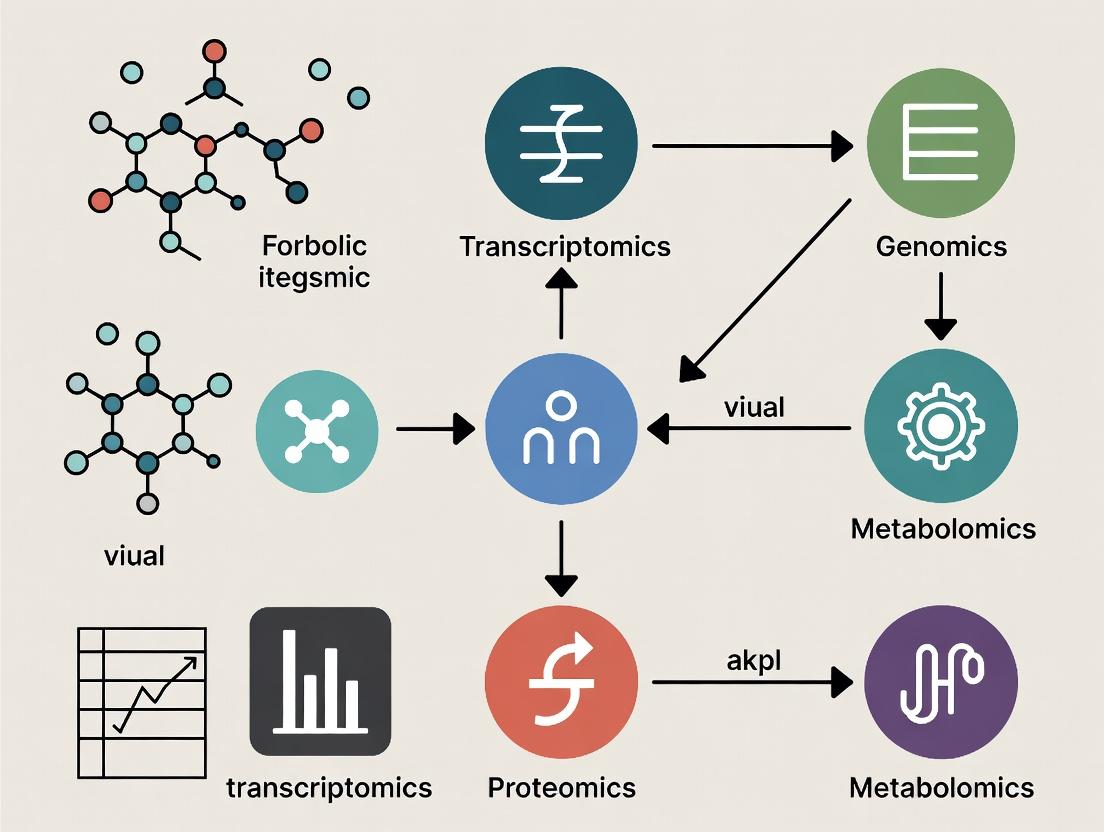
This article provides a comprehensive overview of multi-omics integration methods, tailored for researchers, scientists, and drug development professionals.
Multi-Omics Integration: A Comprehensive Guide to Methods, Applications, and Best Practices for Biomedical Research
Abstract
This article provides a comprehensive overview of multi-omics integration methods, tailored for researchers, scientists, and drug development professionals. We begin by establishing the foundational principles of genomics, transcriptomics, proteomics, and metabolomics, exploring the core rationale for their integration. We then delve into key methodological approaches, from early to late integration and AI-driven techniques, with concrete applications in disease subtyping and biomarker discovery. Practical guidance is offered for navigating common challenges like batch effects, missing data, and computational demands. The guide concludes with a critical evaluation of method validation, benchmarking strategies, and comparative analysis of popular tools, synthesizing key takeaways and future directions for clinical translation.
Multi-Omics 101: Unlocking the Why and What of Genomic, Transcriptomic, Proteomic, and Metabolomic Data Fusion
This whitepaper provides an in-depth technical guide to the core omics disciplines, framing their individual and integrated roles within the broader thesis of multi-omics integration methods research. Understanding each layer—from the static genome to the dynamic metabolome—is foundational for developing robust integration strategies that accelerate biomedical discovery and therapeutic development.
The Hierarchical Omics Cascade
Biological information flows from the genetic blueprint through functional and phenotypic layers. Each omics tier captures a distinct dimension of this complexity.
Table 1: The Core Omics Tiers: Scope, Measurement Technologies, and Output
| Omics Tier | Definition & Scope | Key Technologies | Primary Output |
|---|---|---|---|
| Genomics | Study of the complete DNA sequence, including genes, non-coding regions, and structural variants. | Next-Generation Sequencing (NGS), Whole-Genome Sequencing, SNP arrays. | DNA sequence, genetic variants, structural alterations. |
| Epigenomics | Study of heritable chemical modifications to DNA and histones that regulate gene expression without altering sequence. | Bisulfite Sequencing (WGBS), ChIP-Seq, ATAC-Seq. | DNA methylation patterns, histone marks, chromatin accessibility maps. |
| Transcriptomics | Study of the complete set of RNA transcripts produced by the genome under specific conditions. | RNA-Seq, single-cell RNA-Seq, microarrays. | Gene expression levels, splice variants, non-coding RNA profiles. |
| Proteomics | Study of the full complement of proteins, including their structures, modifications, and abundances. | Mass Spectrometry (LC-MS/MS), affinity proteomics (antibody arrays). | Protein identification, quantification, post-translational modifications (PTMs). |
| Metabolomics | Study of the complete set of small-molecule metabolites within a biological system. | Mass Spectrometry (GC-MS, LC-MS), Nuclear Magnetic Resonance (NMR). | Metabolite identification and concentration, metabolic pathway activity. |
Detailed Experimental Methodologies
Whole-Genome Sequencing (WGS) for Genomics
Objective: To determine the complete DNA sequence of an organism's genome. Protocol Summary:
- DNA Extraction & QC: Isolate high-molecular-weight genomic DNA (e.g., using phenol-chloroform or kit-based methods). Assess purity (A260/A280 ~1.8) and integrity (e.g., via gel electrophoresis).
- Library Preparation: Fragment DNA via acoustic shearing or enzymatic digestion. End-repair, A-tail fragments, and ligate with platform-specific sequencing adapters. Size-select fragments (typically 300-500 bp).
- Cluster Amplification & Sequencing: Denature library and load onto flow cell (Illumina) or bead (Ion Torrent). Perform bridge amplification or emulsion PCR to generate clonal clusters. Sequence-by-synthesis (Illumina) or semiconductor sequencing (Ion Torrent) is performed.
- Data Analysis: Base calling, read alignment to a reference genome (e.g., using BWA-MEM), variant calling (e.g., using GATK), and annotation.
LC-MS/MS-Based Shotgun Proteomics
Objective: To identify and quantify the proteome of a complex biological sample. Protocol Summary:
- Protein Extraction & Digestion: Lyse cells/tissue in strong denaturing buffer (e.g., 8M urea). Reduce disulfide bonds (DTT) and alkylate cysteines (iodoacetamide). Digest proteins into peptides using trypsin (overnight, 37°C).
- Peptide Cleanup & Fractionation: Desalt peptides using C18 solid-phase extraction tips or columns. For deep profiling, fractionate peptides via high-pH reverse-phase chromatography or SCX.
- LC-MS/MS Analysis: Separate peptides on a nano-flow C18 column with a gradient of acetonitrile. Eluting peptides are ionized (ESI) and analyzed on a high-resolution tandem mass spectrometer (e.g., Q-Exactive). Perform data-dependent acquisition (DDA): survey MS1 scan followed by MS2 fragmentation of top N ions.
- Data Processing: Search MS2 spectra against a protein sequence database using engines (e.g., Sequest, MaxQuant). Apply false discovery rate (FDR) thresholds. Quantify via label-free (peak area) or labeled (TMT, SILAC) methods.
Untargeted Metabolomics via LC-MS
Objective: To comprehensively profile small-molecule metabolites in a biological sample. Protocol Summary:
- Metabolite Extraction: Quench metabolism rapidly (liquid nitrogen). Extract metabolites using a biphasic solvent system (e.g., cold methanol/water/chloroform) to recover polar and non-polar species.
- Chromatographic Separation: Inject extract onto orthogonal LC columns. Common modes: Reversed-Phase (C18): For hydrophobic metabolites (lipids). Hydrophilic Interaction Liquid Chromatography (HILIC): For polar metabolites (sugars, amino acids).
- Mass Spectrometry: Use high-resolution mass spectrometer (e.g., TOF, Orbitrap) in both positive and negative electrospray ionization modes. Acquire data in full-scan MS mode (m/z 50-1500) to detect all ions.
- Data Processing & Annotation: Perform peak picking, alignment, and deconvolution using software (XCMS, MS-DIAL). Annotate metabolites by matching m/z, retention time, and MS/MS fragmentation spectra to authentic standards in databases (e.g., HMDB, METLIN).
Visualizing Omics Relationships and Workflows
Title: The Omics Cascade from Genome to Phenotype
Title: Multi-Omic Data Generation and Integration Workflow
The Scientist's Toolkit: Key Research Reagent Solutions
Table 2: Essential Reagents and Kits for Core Omics Experiments
| Item Name (Example) | Omics Field | Function & Application |
|---|---|---|
| KAPA HyperPrep Kit | Genomics/Transcriptomics | For construction of high-quality, Illumina-compatible sequencing libraries from DNA or RNA. |
| NEBNext Enzymatic Methyl-seq Kit | Epigenomics | Provides a workflow for enzymatic conversion of unmethylated cytosines for bisulfite-free DNA methylation sequencing. |
| Trypsin, Sequencing Grade | Proteomics | Protease that cleaves specifically at the C-terminal side of lysine and arginine residues, generating peptides for LC-MS/MS analysis. |
| TMTpro 16plex Isobaric Label Reagent Set | Proteomics | Enables multiplexed quantification of proteins from up to 16 samples simultaneously by MS/MS, increasing throughput. |
| BioGenesis LC-MS Acclaim Column (C18) | Metabolomics/Proteomics | High-performance UHPLC column for robust separation of complex mixtures of peptides or metabolites prior to MS. |
| Preeclampsia Metabolomics Standard | Metabolomics | A curated mix of deuterated internal standards for quantifying key metabolites in relevant biological pathways, ensuring accurate MS quantification. |
| Multi-omics QC Reference Material (e.g., HeLa) | Multi-omics | A standardized cell line extract used as a quality control material across genomic, proteomic, and metabolomic platforms to assess batch effects and technical variation. |
The Central Dogma of molecular biology describes the unidirectional flow of information from DNA to RNA to protein. This framework has historically structured biological research, leading to the development of siloed omics disciplines: genomics, transcriptomics, proteomics, and metabolomics. However, this linear, compartmentalized view is insufficient for understanding complex phenotypic outcomes. Within the broader thesis of multi-omics integration research, this guide argues that only through concurrent analysis and integration of these layers can we decipher the non-linear, regulatory networks that govern health and disease.
The Limitations of Siloed Omics
Single-omics studies provide a limited snapshot. Genomic variants may not predict transcript abundance due to epigenetic regulation; mRNA levels often correlate poorly with protein abundance due to post-transcriptional and translational control; and protein activity is further modulated by post-translational modifications and metabolite availability.
Table 1: Discordance Between Omics Layers in a Hypothetical Cancer Study
| Omics Layer | Measured Entity | Key Finding in Siloed Analysis | Limitation Revealed by Multi-Omics |
|---|---|---|---|
| Genomics | Somatic Mutations | Oncogene EGFR amplified. | Does not inform on functional protein output or activation state. |
| Transcriptomics | mRNA levels | EGFR transcript is elevated 5-fold. | Poor correlation (R~0.4-0.5) with actual protein abundance. |
| Proteomics & Phosphoproteomics | Protein & Phospho-protein | Total EGFR protein elevated 2-fold; p-EGFR (Y1068) elevated 10-fold. | Reveals hyper-activation not predictable from genomics/transcriptomics. |
| Metabolomics | Metabolites | Lactate, succinate levels highly elevated. | Indicates downstream Warburg effect and potential oncometabolite activity. |
Foundational Multi-Omics Experimental Protocol
Protocol: Integrated Multi-Omics Sample Preparation from a Tissue Biopsy Objective: To extract high-quality DNA, RNA, proteins, and metabolites from a single, limited tissue sample for coordinated multi-omics profiling.
- Tissue Lysis & Homogenization: Flash-frozen tissue (e.g., 20-30 mg) is cryo-pulverized. Powder is suspended in a tri-phasic monophasic lysis buffer (e.g., Phenol/Guanidine Thiocyanate). This simultaneously denatures nucleases and proteases.
- Phase Separation: Add chloroform and centrifuge. The mixture separates into: an upper aqueous phase (RNA), an interphase (DNA and proteins), and a lower organic phase (lipids, small non-polar molecules).
- RNA Recovery: The aqueous phase is recovered. RNA is precipitated with isopropanol, washed with ethanol, and eluted. Used for RNA-seq.
- DNA & Protein Recovery from Interphase: The interphase and organic phase are treated with ethanol to precipitate DNA, which is pelleted. The subsequent supernatant is mixed with isopropanol to precipitate proteins. The protein pellet is washed and solubilized in an SDS-based buffer for proteomics (e.g., LC-MS/MS). The DNA pellet is processed for WES or WGS.
- Metabolite Extraction (Parallel): A separate aliquot of tissue powder is quenched with cold methanol/acetonitrile/water mixture, vortexed, and centrifuged. The supernatant is dried and reconstituted for LC-MS metabolomics.
Diagram Title: Multi-Omics Sample Prep Workflow
Key Signaling Pathway in Multi-Omics Context
A canonical pathway like PI3K-AKT-mTOR demonstrates the need for integration. A genomic variant in PIK3CA (encoding PI3K) may be identified, but its functional consequence requires measuring phosphorylated AKT (p-AKT) and p-S6K in phosphoproteomics, and downstream metabolic shifts like increased glycolytic intermediates in metabolomics.
Diagram Title: PI3K Pathway Multi-Omics Regulation
The Scientist's Toolkit: Key Research Reagent Solutions
Table 2: Essential Reagents for Multi-Omics Integration Studies
| Item | Function in Multi-Omics |
|---|---|
| Tri-Reagent (Monophasic Lysis Buffer) | Enables simultaneous isolation of RNA, DNA, and protein from a single sample, critical for matched multi-omics. |
| Stable Isotope Labeling by Amino Acids in Cell Culture (SILAC) | Mass spectrometry-based proteomics method using heavy amino acids to provide accurate, quantitative protein and phosphorylation data across conditions. |
| Single-Cell Multi-Omics Kits (e.g., CITE-seq/REAP-seq) | Allow simultaneous measurement of transcriptomics and surface proteinomics from single cells, linking gene expression to phenotypic markers. |
| Next-Generation Sequencing (NGS) Kits | For whole genome, exome, and transcriptome library preparation. Paired sequencing of DNA and RNA from the same sample is standard for integration. |
| Liquid Chromatography-Tandem Mass Spectrometry (LC-MS/MS) Columns | Core hardware for separating and identifying complex mixtures of peptides (proteomics) or metabolites (metabolomics). |
| Multi-Omics Data Integration Software (e.g., MOFA, mixOmics) | Statistical and machine learning frameworks designed specifically for the joint analysis of multiple omics datasets. |
Moving beyond the linear Central Dogma requires a paradigm shift towards multi-omics integration. Siloed analyses miss the emergent properties arising from interactions across molecular layers. By employing robust, matched sample protocols, leveraging complementary reagent solutions, and utilizing integrative computational frameworks, researchers can construct a more holistic, causal, and actionable understanding of biological systems, accelerating biomarker discovery and therapeutic development.
Within the broader thesis on Introduction to Multi-Omics Integration Methods Research, this technical guide elucidates the core objectives driving the integration of disparate biological data layers. The transition from descriptive systems biology to predictive, mechanistic modeling represents a paradigm shift in biomedical research and therapeutic development. This document outlines the key goals, technical methodologies, and practical resources essential for this endeavor.
Core Goals of Multi-Omics Integration
The integration of genomics, transcriptomics, proteomics, metabolomics, and epigenomics data is pursued with several interconnected, high-level goals.
- Holistic System Characterization: To move beyond single-molecule or single-pathway analyses and construct a comprehensive, multi-scale view of biological systems, from cells to tissues.
- Mechanistic Insight Discovery: To infer and validate causal regulatory relationships and signaling cascades that link genetic variation to phenotypic outcomes.
- Biomarker Identification & Validation: To discover robust, composite biomarkers (e.g., multi-omic signatures) with superior diagnostic, prognostic, or predictive power compared to single-omics markers.
- Predictive Model Construction: To build in silico models capable of simulating system perturbations (e.g., drug treatment, gene knockout) and predicting phenotypic responses.
- Clinical Translation & Personalization: To stratify patient populations, identify novel therapeutic targets, and inform personalized treatment strategies based on integrated molecular profiles.
Quantitative Landscape of Multi-Omics Studies
The scale and complexity of integrated studies are reflected in the following quantitative summaries.
Table 1: Typical Data Scale in Multi-Omics Studies
| Omics Layer | Typical Features per Sample | Common Sequencing/Assay Depth | Primary Technology Platform |
|---|---|---|---|
| Genomics (WGS) | ~5M variants (SNVs/Indels) | 30-60x coverage | Illumina NovaSeq, PacBio HiFi |
| Transcriptomics (RNA-seq) | 20,000-60,000 transcripts | 20-50M reads per sample | Illumina NextSeq, scRNA-seq |
| Proteomics (Mass Spec) | 5,000-10,000 proteins | ~120min LC-MS/MS gradient | Thermo Orbitrap Exploris, TMT labeling |
| Metabolomics | 500-2,000 metabolites | MS1 & MS/MS acquisition | Agilent Q-TOF, Waters ACQUITY |
| Epigenomics (ATAC-seq) | 50,000-150,000 peaks | 50-100M reads per sample | Illumina NextSeq, Assay for Transposase-Accessible Chromatin |
Table 2: Performance Metrics of Common Integration Methods
| Integration Method Class | Example Algorithm | Key Strength | Typical Computation Time* (for n=1000, p=5000) | Primary Goal Addressed |
|---|---|---|---|---|
| Concatenation-Based | MOFA+ | Handles missing data, extracts latent factors | 30-60 minutes | 1, 2 |
| Similarity-Based | Similarity Network Fusion (SNF) | Preserves data-specific structures, good for clustering | 15-30 minutes | 1, 3 |
| Manifold Alignment | MMD-MA | Aligns heterogeneous data in common low-dim space | 2-4 hours | 1, 4 |
| Deep Learning (DL) | Autoencoder-based | Captures non-linear relationships, powerful for prediction | 4-8 hours (GPU-dependent) | 2, 4, 5 |
| Bayesian Networks | Multi-omics Bayesian Network (MOBN) | Infers directed, causal relationships | 8-12 hours | 2, 4 |
| Computation time is indicative and varies based on hardware, data sparsity, and parameter tuning. |
Detailed Experimental Protocol: A Multi-Omics Workflow for Drug Response Prediction
This protocol details a representative study integrating transcriptomics and proteomics to model cancer cell line response to a kinase inhibitor.
1. Experimental Design & Sample Preparation
- Cell Lines: Use a panel of 50 genetically diverse cancer cell lines (e.g., from NCI-60 or CCLE).
- Treatment: Treat each cell line with a targeted kinase inhibitor (e.g., Trametinib, a MEK inhibitor) at its IC50 concentration and a DMSO vehicle control for 24 hours.
- Replicates: Perform three biological replicates per condition.
2. Multi-Omics Data Generation
- Transcriptomics (RNA-seq):
- Lysis & Extraction: Lyse cells in TRIzol. Isolate total RNA using silica-membrane columns. Assess integrity (RIN > 8.5, Agilent Bioanalyzer).
- Library Prep: Deplete ribosomal RNA. Prepare stranded cDNA libraries using a kit (e.g., Illumina Stranded Total RNA Prep).
- Sequencing: Pool libraries and sequence on an Illumina NextSeq 2000 platform to a depth of 30 million 150bp paired-end reads per sample.
- Proteomics (LC-MS/MS):
- Lysis & Digestion: Lyse cell pellets in RIPA buffer with protease inhibitors. Reduce, alkylate, and digest proteins with trypsin (1:50 enzyme-to-protein ratio, 37°C, overnight).
- Peptide Labeling (Optional): Use TMTpro 16plex kits to multiplex samples, reducing batch effects.
- LC-MS/MS: Fractionate peptides via high-pH reversed-phase chromatography. Analyze fractions on a Thermo Orbitrap Exploris 480 coupled to a nanoLC system (120min gradient). Use data-dependent acquisition (DDA) with MS1 resolution 120,000 and MS2 45,000.
3. Data Processing & Bioinformatics
- RNA-seq Analysis:
- Alignment & Quantification: Align reads to the human reference genome (GRCh38) using STAR aligner. Quantify gene-level counts with featureCounts.
- Differential Expression: Using the
DESeq2R package, normalize counts (median-of-ratios) and identify differentially expressed genes (DEGs) between treatment and control (FDR-adjusted p-value < 0.05, |log2FC| > 1).
- Proteomics Analysis:
- Identification & Quantification: Process raw files with MaxQuant or FragPipe. Search against the UniProt human database. Use a 1% FDR cutoff at peptide and protein levels.
- Differential Abundance: Perform statistical testing (e.g., LIMMA in R) on log2-transformed protein intensities to find differentially abundant proteins (DAPs) (FDR < 0.05).
4. Data Integration & Modeling
- Pre-integration: Match gene and protein identifiers. Impute missing protein values (if any) using k-nearest neighbors. Scale and center all features.
- Integration & Feature Reduction: Apply Multi-Omics Factor Analysis (MOFA+) to the combined matrix of DEGs and DAPs. This extracts a set of latent factors that capture shared and specific variance across the two omics layers.
- Predictive Model Training: Use the latent factors from MOFA+ as input features (X). The output variable (Y) is the continuous drug response metric (e.g., -log10(IC50)) from public pharmacogenomics databases (e.g., GDSC). Train a regression model (e.g., Elastic Net, Random Forest, or XGBoost) using 70% of cell lines. Tune hyperparameters via 5-fold cross-validation.
- Validation: Evaluate the model on the held-out 30% test set. Calculate performance metrics: Root Mean Square Error (RMSE), Mean Absolute Error (MAE), and R-squared.
Pathway and Workflow Visualizations
Diagram 1: MAPK Pathway & Multi-Omics Measurement
Diagram 2: Predictive Multi-Omics Integration Workflow
The Scientist's Toolkit: Research Reagent Solutions
Table 3: Essential Materials for a Multi-Omics Study
| Category | Item | Function & Brief Explanation |
|---|---|---|
| Sample Prep | TRIzol Reagent | A mono-phasic solution of phenol and guanidine isothiocyanate for simultaneous disruption of cells and denaturation of proteins, ideal for co-extracting RNA, DNA, and proteins. |
| Sample Prep | RIPA Lysis Buffer | A radioimmunoprecipitation assay buffer for efficient cell lysis and extraction of total cellular proteins, compatible with downstream proteomic digestion. |
| Sample Prep | Trypsin, Sequencing Grade | A protease that cleaves peptide chains at the carboxyl side of lysine and arginine residues, generating peptides suitable for LC-MS/MS analysis. |
| Transcriptomics | Illumina Stranded Total RNA Prep | A library preparation kit that includes ribosomal RNA depletion and strand-specific cDNA synthesis for high-quality RNA-seq libraries. |
| Proteomics | TMTpro 16plex Isobaric Label Reagent Set | Chemical tags for multiplexing up to 16 samples in a single LC-MS/MS run, enabling quantitative comparison and reducing instrumental run time. |
| Proteomics | C18 StageTips (or Columns) | Microcolumns packed with reversed-phase C18 material for desalting and concentrating peptide samples prior to LC-MS/MS injection. |
| Bioinformatics | R/Bioconductor Packages (DESeq2, LIMMA, MOFA2) | Open-source software tools for statistical analysis of differential expression, differential abundance, and multi-omics factor integration. |
| Data Storage | High-Performance Computing (HPC) Cluster or Cloud (AWS/GCP) | Essential for storing large sequencing files (~TB scale) and performing computationally intensive integration and modeling tasks. |
Within the framework of multi-omics integration research, a fundamental prerequisite is a deep understanding of the distinct core data types generated by each major omics layer. Each layer provides a unique, high-dimensional snapshot of biological activity, from the static genomic blueprint to the dynamic metabolomic state. This technical overview delineates the nature of the primary data, the key technologies for their generation, their inherent analytical challenges, and the implications for their integration, serving as a foundation for methodological development in systems biology and precision medicine.
The Major Omics Layers: Data Types and Characteristics
Genomics
Genomics concerns the complete set of DNA within an organism, including all genes and non-coding sequences. It represents the foundational, largely static blueprint.
Core Data Type: DNA sequences (strings of A, T, C, G nucleotides). Primary outputs include reference-aligned reads (BAM files), variant calls (VCF files), and assembled genomes (FASTA).
Key Technologies: Next-Generation Sequencing (NGS), including Whole Genome Sequencing (WGS) and Targeted Panels; Third-Generation Sequencing (e.g., PacBio, Oxford Nanopore) for long reads.
Unique Challenges:
- Data Scale: A single human WGS run generates ~100-150 GB of raw data.
- Variant Interpretation: Distinguishing pathogenic mutations from benign polymorphisms is non-trivial.
- Structural Variants: Detection of large insertions, deletions, and rearrangements remains challenging with short-read technologies.
Transcriptomics
Transcriptomics profiles the complete set of RNA transcripts (the transcriptome) produced in a cell or population at a specific time point, reflecting active gene expression.
Core Data Type: RNA sequence reads (RNA-seq) or probe intensity values (microarrays). Key outputs are read counts or normalized expression values (e.g., TPM, FPKM) per gene/transcript.
Key Technologies: Bulk RNA-seq, Single-Cell RNA-seq (scRNA-seq), Spatial Transcriptomics.
Unique Challenges:
- Dynamic Range: Expression levels can span several orders of magnitude.
- Transcript Isoforms: Accurate quantification of alternative splicing events requires specialized library prep and analysis.
- Single-Cell Sparsity: scRNA-seq data is characterized by high technical noise and "dropout" events (zero counts for expressed genes).
Proteomics
Proteomics identifies and quantifies the complete set of proteins (the proteome), which are the functional effectors of cellular processes.
Core Data Type: Mass-to-charge (m/z) ratios and intensity spectra from mass spectrometers. Outputs are peptide/protein identification and abundance values.
Key Technologies: Liquid Chromatography with Tandem Mass Spectrometry (LC-MS/MS), Data-Independent Acquisition (DIA), Antibody-based arrays (e.g., Olink).
Unique Challenges:
- Dynamic Range & Detection: The proteome's dynamic range exceeds 10^10, making low-abundance proteins difficult to detect.
- Post-Translational Modifications (PTMs): Comprehensive profiling of PTMs (e.g., phosphorylation) requires specific enrichment techniques.
- No Direct Amplification: Unlike DNA/RNA, proteins cannot be amplified, limiting sensitivity.
Metabolomics
Metabolomics measures the collection of small-molecule metabolites (e.g., sugars, lipids, amino acids) within a biological system, representing the downstream functional readout of cellular processes.
Core Data Type: Spectra from Nuclear Magnetic Resonance (NMR) or m/z spectra from Mass Spectrometry (MS). Outputs are metabolite identification and relative/absolute concentrations.
Key Technologies: LC-MS, Gas Chromatography-MS (GC-MS), NMR Spectroscopy.
Unique Challenges:
- Chemical Diversity: Metabolites are highly diverse in structure and chemical properties, requiring multiple analytical platforms.
- Rapid Turnover: Metabolites can change on a sub-second timescale, demanding careful sample quenching.
- Annotation & Identification: A large proportion of detected spectral features remain unknown or unannotated.
Epigenomics
Epigenomics studies heritable changes in gene function that do not involve changes in the DNA sequence itself, such as DNA methylation and histone modifications.
Core Data Type: Sequencing reads from enriched DNA fragments (ChIP-seq) or bisulfite-converted DNA (WGBS). Outputs include peak calls for protein binding sites or methylation ratios at cytosine bases.
Key Technologies: Chromatin Immunoprecipitation Sequencing (ChIP-seq), Assay for Transposase-Accessible Chromatin (ATAC-seq), Whole-Genome Bisulfite Sequencing (WGBS).
Unique Challenges:
- Cell-Type Specificity: Epigenetic marks are highly cell-type specific, complicating bulk tissue analysis.
- Bisulfite Conversion Artifacts: WGBS can suffer from DNA degradation and incomplete conversion.
- Data Integration: Relating histone marks or chromatin accessibility to gene expression is complex.
Table 1: Quantitative and qualitative comparison of core omics data types.
| Omics Layer | Core Molecule | Typical Data Volume per Sample | Temporal Dynamics | Primary Technological Platform | Key File Formats |
|---|---|---|---|---|---|
| Genomics | DNA | 100-150 GB (WGS) | Static (mostly) | NGS (Illumina), Long-Read Seq | FASTQ, BAM, VCF, FASTA |
| Transcriptomics | RNA | 5-50 GB (RNA-seq) | High (minutes-hours) | RNA-seq (Illumina) | FASTQ, BAM, TXT/CSV (count matrix) |
| Proteomics | Proteins | 1-10 GB (LC-MS/MS) | Moderate (hours) | LC-MS/MS | .raw (vendor), mzML, mzIdentML |
| Metabolomics | Metabolites | 0.5-5 GB (LC-MS) | Very High (seconds-minutes) | LC-MS, GC-MS, NMR | .raw (vendor), mzML, CDF |
| Epigenomics | DNA/Histones | 20-100 GB (ChIP-seq/WGBS) | Moderate to High | NGS (Illumina) | FASTQ, BAM, BED, bigWig |
Protocol 1: Bulk RNA-Sequencing (Standard Poly-A Selection)
Objective: To profile the polyadenylated transcriptome in a bulk tissue or cell population.
- RNA Extraction & QC: Isolate total RNA using a guanidinium thiocyanate-phenol-chloroform method (e.g., TRIzol). Assess integrity via RIN (RNA Integrity Number) on a Bioanalyzer.
- Poly-A Selection: Use oligo(dT) magnetic beads to enrich for messenger RNA (mRNA).
- Library Preparation: Fragment mRNA, synthesize cDNA, add sequencing adapters, and perform PCR amplification. Barcode samples for multiplexing.
- Sequencing: Pool libraries and sequence on an Illumina platform (e.g., NovaSeq) to generate 50-150 bp paired-end reads.
- Primary Analysis: Align reads to a reference genome (e.g., STAR aligner) and quantify gene-level counts (e.g., featureCounts).
Protocol 2: Data-Independent Acquisition (DIA) Proteomics
Objective: To achieve reproducible, comprehensive protein quantification.
- Sample Lysis & Digestion: Lyse cells/tissue in a denaturing buffer (e.g., 8M Urea). Reduce disulfide bonds (DTT), alkylate cysteines (IAA), and digest proteins with trypsin (1:50 enzyme-to-protein ratio, 37°C, overnight).
- Peptide Desalting: Desalt peptides using C18 solid-phase extraction tips or columns.
- LC-MS/MS Analysis:
- Chromatography: Separate peptides on a C18 reversed-phase nanoLC column with a 60-180 minute gradient.
- Mass Spectrometry (DIA Mode): Operate the mass spectrometer (e.g., Orbitrap) in cycles of one full MS1 scan followed by ~20-40 sequential MS2 scans across predefined, wide m/z isolation windows (e.g., 25 Da each) covering the entire mass range of interest.
- Data Analysis: Use spectral library-based (e.g., Spectronaut, DIA-NN) or library-free tools to deconvolute the multiplexed DIA MS2 spectra and quantify peptides/proteins.
Protocol 3: Whole-Genome Bisulfite Sequencing (WGBS)
Objective: To generate single-base-pair resolution maps of DNA methylation (5-methylcytosine).
- DNA Extraction & Fragmentation: Isolate high-molecular-weight genomic DNA and fragment it via sonication (200-300 bp).
- Bisulfite Conversion: Treat DNA with sodium bisulfite, which deaminates unmethylated cytosines to uracil, while methylated cytosines remain unchanged.
- Library Preparation: Repair ends, add adapters to bisulfite-converted DNA, and perform PCR amplification. Note: Adapters must be added after conversion to avoid their degradation.
- Sequencing & Analysis: Sequence on an Illumina platform. Align reads using bisulfite-aware aligners (e.g., Bismark, BWA-meth). Calculate methylation percentage as (C reads / (C + T reads)) at each cytosine position in the reference.
Visualizing Omics Workflows and Relationships
Diagram 1: Central Dogma & Omics Layers Relationship
Diagram 2: Generalized Multi-Omics Experimental & Computational Workflow
The Scientist's Toolkit: Essential Research Reagents & Materials
Table 2: Key reagents and materials for core omics experiments.
| Category / Item | Specific Example(s) | Primary Function in Omics Workflow |
|---|---|---|
| Nucleic Acid Isolation | TRIzol Reagent, Qiagen DNeasy/ RNeasy Kits, Magnetic Beads (SPRI) | Lyse cells and separate/purify DNA or RNA based on chemical or physical properties. |
| Protein Digestion | Trypsin (Sequencing Grade), Lys-C, RapiGest SF Surfactant | Enzymatically cleave proteins into peptides for LC-MS/MS analysis. |
| Bisulfite Conversion | EZ DNA Methylation Kit (Zymo), Sodium Bisulfite Solution | Chemically convert unmethylated cytosine to uracil for methylation sequencing. |
| Chromatin Immunoprecipitation | Protein A/G Magnetic Beads, ChIP-Validated Antibodies (e.g., H3K27ac), Formaldehyde | Cross-link and immuno-enrich specific protein-DNA complexes for sequencing. |
| Metabolite Extraction | Methanol, Acetonitrile, Methyl-tert-butyl ether (MTBE) | Precipitate proteins and extract a broad range of polar and non-polar metabolites. |
| Mass Spec Standards | iRT Kit (Biognosys), Stable Isotope Labeled Amino Acids (SILAC), Heavy Labeled Metabolites | Provide internal retention time and quantification standards for LC-MS calibration. |
| Sequencing Library Prep | Illumina TruSeq Kits, NEBNext Ultra II DNA Library Kit, SMARTer cDNA Synthesis Kit | Prepare fragmented, adapter-ligated DNA/RNA libraries compatible with NGS platforms. |
| Single-Cell Isolation | Chromium Controller & Chips (10x Genomics), FACS Sorter | Partition individual cells or nuclei into droplets or wells for barcoding. |
Within the broader thesis on Introduction to multi-omics integration methods research, a robust foundation in bioinformatics and statistics is not merely beneficial—it is indispensable. Multi-omics integration aims to synthesize data from genomics, transcriptomics, proteomics, metabolomics, and other layers to construct a holistic model of biological systems. This endeavor is foundational for modern drug discovery and systems biology. This guide details the core knowledge and practical methodologies required to embark on this research journey.
Foundational Statistical Knowledge
A deep understanding of statistical concepts is critical for experimental design, data preprocessing, and inferential analysis in multi-omics studies.
Core Statistical Concepts
The following table summarizes the essential statistical areas and their application in multi-omics research.
Table 1: Core Statistical Prerequisites for Multi-Omics Research
| Statistical Domain | Key Concepts | Application in Multi-Omics |
|---|---|---|
| Probability & Distributions | Bayes' Theorem, Binomial, Poisson, Gaussian, Gamma, Beta distributions. | Modeling read counts (Negative Binomial for RNA-seq), prior knowledge integration in Bayesian models. |
| Hypothesis Testing & Correction | p-values, Type I/II error, False Discovery Rate (FDR), Bonferroni correction. | Differential expression/abundance analysis across thousands of features. |
| Multivariate Statistics | Principal Component Analysis (PCA), Multidimensional Scaling (MDS), Canonical Correlation Analysis (CCA). | Dimensionality reduction, visualization, and initial data integration. |
| Regression & Modeling | Linear/Generalized Linear Models (GLM), Logistic Regression, Regularization (LASSO, Ridge). | Modeling relationships between omics layers and phenotypic outcomes. |
| Machine Learning Fundamentals | Supervised (Random Forest, SVM) vs. Unsupervised (Clustering, k-means) learning; Cross-validation; Overfitting. | Predictive model building for patient stratification or clinical outcome prediction. |
Experimental Protocol: Differential Expression Analysis (RNA-seq)
A canonical application of statistical inference in omics.
Protocol: DESeq2 Workflow for Differential Gene Expression
- Data Input: Raw count matrix (genes x samples) and sample metadata (e.g., condition, batch).
- Normalization: DESeq2 performs median-of-ratios normalization to correct for library size and RNA composition bias.
- Model Fitting: A Negative Binomial GLM is fitted to the count data:
Count ~ Condition + Batch. - Dispersion Estimation: Gene-wise dispersion estimates are shrunk towards a trended mean to improve stability.
- Hypothesis Testing: The Wald test or Likelihood Ratio Test (LRT) is applied to coefficients of interest (e.g., Condition B vs. A). p-values are generated.
- Multiple Testing Correction: The Benjamini-Hochberg procedure is applied to control the False Discovery Rate (FDR). Genes with an adjusted p-value (padj) < 0.05 are typically considered significant.
- Output: A results table with log2 fold changes, standard errors, test statistics, p-values, and adjusted p-values.
Diagram 1: DESeq2 differential expression analysis workflow.
Foundational Bioinformatics Knowledge
Bioinformatics provides the computational frameworks and biological context to process and interpret omics data.
Core Bioinformatics Competencies
Table 2: Essential Bioinformatics Competencies
| Competency Area | Specific Skills & Knowledge | Relevance to Multi-Omics |
|---|---|---|
| Molecular Biology | Central Dogma, gene regulation, epigenetics, pathway biology (e.g., KEGG, Reactome). | Provides biological meaning to integrated data; essential for interpreting results. |
| Programming | Proficiency in R and/or Python; bash/shell scripting for pipeline management. | Data manipulation, statistical analysis, and custom tool development. |
| Data Structures & Formats | FASTQ, SAM/BAM, VCF, GTF/GFF, mx, HDF5. FASTA/FASTQ parsing, sequence alignment principles. | Handling raw and processed data from diverse omics technologies. |
| Databases & Resources | NCBI, EBI, UCSC Genome Browser, UniProt, STRING, TCGA, GTEx, Human Protein Atlas. | Accessing reference genomes, annotations, and public datasets for validation. |
| Pipeline & Workflow Tools | Snakemake, Nextflow, WDL, Docker/Singularity. | Ensuring reproducibility and scalability of analyses. |
Experimental Protocol: Read Alignment and Quantification
A fundamental upstream bioinformatics step for sequencing-based omics (genomics, transcriptomics).
Protocol: RNA-seq Read Alignment and Gene Quantification using STAR
- Prerequisite: Generate a genome index.
STAR --runMode genomeGenerate --genomeDir /path/to/index --genomeFastaFiles genome.fa --sjdbGTFfile annotation.gtf --sjdbOverhang 100 - Alignment: Map reads to the reference genome.
STAR --genomeDir /path/to/index --readFilesIn sample_R1.fastq.gz sample_R2.fastq.gz --readFilesCommand zcat --runThreadN 8 --outSAMtype BAM SortedByCoordinate --outFileNamePrefix sample_ - Quantification: Generate read counts per gene. Use the
--quantMode GeneCountsflag during alignment or a tool likefeatureCounts(from Subread package) on the aligned BAM file.featureCounts -T 8 -p -a annotation.gtf -o counts.txt sample_Aligned.sortedByCoord.out.bam - Output: A counts matrix ready for statistical analysis (as in Section 2.2).
Diagram 2: RNA-seq alignment and quantification workflow.
The Multi-Omics Integration Mindset
Integration itself requires specialized conceptual and methodological bridges between statistics and bioinformatics.
Integration Approaches & Statistical Frameworks
Table 3: Common Multi-Omics Integration Methods
| Integration Approach | Description | Key Statistical/Bioinformatics Methods |
|---|---|---|
| Concatenation (Early) | Datasets merged at the feature level before analysis. | PCA on scaled data; Multi-block PLS; Deep Autoencoders. |
| Network-Based | Relationships between omics features modeled as a graph. | Correlation networks (WGCNA), Bayesian networks, Knowledge-graphs. |
| Matrix Factorization | Joint decomposition of multiple data matrices into lower-dimensional factors. | Joint Non-negative Matrix Factorization (jNMF), Multi-Omics Factor Analysis (MOFA). |
| Similarity-Based (Late) | Analyses performed separately, then results integrated. | Kernel fusion, Similarity Network Fusion (SNF). |
Diagram 3: Conceptual approaches to multi-omics data integration.
The Scientist's Toolkit
Table 4: Research Reagent Solutions & Essential Tools
| Item / Tool | Category | Function in Multi-Omics Research |
|---|---|---|
| RStudio / Posit | Software Environment | Integrated development environment for R, essential for statistical analysis and visualization (ggplot2). |
| Jupyter Notebook / Lab | Software Environment | Interactive development for Python, enabling literate programming and sharing of analysis narratives. |
| Bioconductor | Software Repository | Vast collection of R packages for the analysis and comprehension of high-throughput genomic data (e.g., DESeq2, limma). |
| Conda / Bioconda | Package Manager | Manages isolated software environments and provides thousands of bioinformatics tools, ensuring reproducibility. |
| Docker / Singularity | Containerization | Packages an entire analysis pipeline (OS, code, data) into a portable, reproducible container. |
| STAR | Bioinformatics Tool | Spliced-aware ultrafast aligner for RNA-seq reads, a standard for alignment. |
| MOFA+ | Bioinformatics Tool | Statistical framework for multi-omics integration via factor analysis to uncover latent biological processes. |
| STRING API | Database Resource | Programmatic access to protein-protein interaction networks, providing functional context for proteomics/genomics lists. |
| KEGG REST API | Database Resource | Allows retrieval of pathway maps and gene annotation data for enrichment analysis. |
| MultiQC | Quality Control Tool | Aggregates results from bioinformatics analyses across many samples into a single interactive report. |
From Theory to Bench: A Practical Guide to Multi-Omics Integration Techniques and Real-World Use Cases
This whitepaper presents an in-depth technical guide to multi-omics data integration frameworks, contextualized within the broader research thesis on Introduction to multi-omics integration methods. The convergence of genomics, transcriptomics, proteomics, and metabolomics promises transformative insights into complex biological systems and disease mechanisms. The selection of an integration strategy—early, intermediate, or late—is a fundamental decision that dictates downstream analytical power, interpretability, and success in applications like biomarker discovery and drug development.
Core Integration Frameworks: A Technical Synopsis
Integration strategies are primarily classified by the stage at which disparate omics datasets are combined.
Early Integration (Data-Level): Raw or pre-processed data from multiple omics platforms are concatenated into a single composite matrix before model construction. This approach feeds all features into a multivariate model, such as a deep neural network or multi-kernel learning algorithm, allowing for the detection of complex, non-linear interactions across molecular layers from the outset.
Intermediate Integration (Feature-Level): This framework involves transforming individual omics datasets into lower-dimensional spaces or similarity matrices (kernels) before integration. Methods like Multiple Kernel Learning (MKL) or Statistically Inspired Modification of PLS (SIMCA) model each omics layer separately and then fuse the transformed representations. It balances flexibility with the preservation of data-type-specific structures.
Late Integration (Decision-Level): Models are built independently on each omics dataset. Their outputs—such as predicted labels, risk scores, or selected features—are combined in a final meta-analysis (e.g., via ensemble voting or rank aggregation). This strategy is highly modular and leverages the strengths of domain-specific models but cannot model cross-omic interactions directly.
Quantitative Comparison of Integration Frameworks
The choice of framework entails critical trade-offs in performance, interpretability, and computational demand. The following table synthesizes quantitative findings from recent benchmark studies (2023-2024).
Table 1: Comparative Analysis of Multi-Omics Integration Strategies
| Characteristic | Early Integration | Intermediate Integration | Late Integration |
|---|---|---|---|
| Typical Model Architecture | Deep Autoencoders, Concatenated->DNN | Multiple Kernel Learning (MKL), iCluster, MOFA | Ensemble of single-omics models (Random Forest, SVM) |
| Ability to Model Cross-Omic Interactions | High (Directly models interactions) | Moderate (Through shared latent space) | None (Models are independent) |
| Interpretability Challenge | Very High (Black-box nature) | Moderate (Latent factors can be analyzed) | Low (Relies on interpretable base models) |
| Handling of High Dimensionality | Requires robust feature selection/regularization | Good (Kernel methods reduce dimension) | Excellent (Performed per dataset) |
| Tolerance to Noise & Batch Effects | Low (Sensitive to data quality) | Moderate-High (Can model batch as covariate) | High (Issues confined per dataset) |
| Typical Computational Cost | High (Large, complex models) | Moderate-High (Depends on kernel computations) | Low-Moderate (Parallelizable) |
| Reported Avg. AUC Increase* (vs. best single-omics) | 8-15% | 6-12% | 4-8% |
| Dominant Use Case | Holistic pattern discovery in large cohorts | Identifying co-varying factors across omics | Leveraging validated, domain-specific predictors |
*Range aggregated from benchmark studies on cancer subtyping and clinical outcome prediction (Pan-omics, 2023; Nature Methods, 2024).
Experimental Protocols for Key Integration Methods
Protocol 1: Early Integration Using a Deep Learning Autoencoder Framework
Objective: To integrate RNA-Seq (transcriptomics) and RPPA (proteomics) data for unsupervised patient stratification.
Materials: Normalized count matrix (RNA-Seq), normalized protein abundance matrix (RPPA), Python with PyTorch/TensorFlow, scikit-learn.
Method:
1. Pre-processing & Concatenation: Perform min-max scaling per feature across each omics dataset. Horizontally concatenate the scaled matrices by sample ID to create a unified matrix X_multi of dimensions [Nsamples x (NRNAFeatures + NProtein_Features)].
2. Model Architecture: Construct a symmetric denoising autoencoder.
* Encoder: Input Layer -> Dense(512, ReLU) -> Dropout(0.3) -> Dense(128, ReLU) -> Dense(32, ReLU) -> Latent Space (8 units).
* Decoder: Latent Space -> Dense(32, ReLU) -> Dense(128, ReLU) -> Dense(512, ReLU) -> Output Layer (Linear activation).
3. Training: Use Mean Squared Error (MSE) reconstruction loss. Train for 200 epochs with a batch size of 32, Adam optimizer (lr=1e-4), with 15% Gaussian noise added to inputs for denoising.
4. Clustering: Extract the 8-dimensional latent vectors for all samples. Apply k-means clustering (k determined by silhouette score) to stratify patients.
5. Validation: Perform survival analysis (Kaplan-Meier log-rank test) and differential expression analysis between clusters to assess biological relevance.
Protocol 2: Intermediate Integration using Multiple Kernel Learning (MKL)
Objective: To integrate methylation, transcriptomics, and clinical data for supervised classification of disease status.
Materials: Methylation beta-values matrix, Gene expression matrix, Clinical covariates table, R package MixKernel or Python library scikit-learn.
Method:
1. Kernel Construction: For each omics dataset and the clinical data table, compute a similarity matrix (kernel).
* For continuous data (expression): Use a linear kernel K_lin = X * X^T or an RBF kernel.
* For methylation data: Use a Gaussian kernel on top-5k most variable CpG sites.
* For categorical clinical data: Use a Jaccard similarity kernel.
2. Kernel Combination: Combine kernels K1, K2, K3 using a weighted sum: K_combined = μ1*K1 + μ2*K2 + μ3*K3, where weights μ are optimized during model training (e.g., via centered-kernel alignment or gradient descent).
3. Model Training: Train a kernel-based classifier (e.g., Support Vector Machine) or a Cox regression model (for survival) on the combined kernel K_combined.
4. Interpretation: Analyze the optimized kernel weights (μ) to infer the relative contribution of each data type. Project samples using the combined kernel for visualization.
Visualization of Workflows and Relationships
Title: Conceptual Workflow of Three Core Multi-Omics Integration Strategies
Title: Intermediate Integration via Multiple Kernel Learning (MKL) Pipeline
The Scientist's Toolkit: Research Reagent & Software Solutions
Table 2: Essential Materials and Tools for Multi-Omics Integration Research
| Item / Solution | Provider / Example | Function in Integration Research |
|---|---|---|
| Total Multi-Omics Profiling Kits | Qiagen (QIAseq Multimodal Panels), 10x Genomics (Chromium Single Cell Multiome) | Generate matched genomic, transcriptomic, and epigenomic data from a single sample input, ensuring sample identity alignment for integration. |
| Cross-Linking Mass Spectrometry (XL-MS) Reagents | DSSO, BS3 crosslinkers (Thermo Fisher) | Capture protein-protein interactions (PPI), providing structural proteomics data to integrate with transcriptional networks. |
| Nucleic Acid & Protein Co-isolation Kits | AllPrep (Qiagen), TRIzol (Thermo Fisher) | Isolve DNA, RNA, and protein simultaneously from a single tissue or cell sample, minimizing biological variation between omes. |
| Multi-Omic Data Analysis Software | R/Bioconductor: (mixOmics, MOFA2, iClusterPlus). Python: (muon, scikit-learn, PyTorch). |
Provide specialized, validated algorithms and pipelines for implementing early, intermediate, and late integration frameworks. |
| Cloud Computing Platforms with Omics Workflows | Terra (Broad/Verily), Seven Bridges, Google Cloud Life Sciences | Offer scalable computational environments, pre-configured workflow DSLs (WDL/CWL), and secure data hubs for large-scale multi-omics integration. |
| Knowledge Graph Databases | STRING, Reactome, Hetionet | Provide prior biological network information (e.g., PPI, pathways) to constrain and interpret integrated models, enhancing biological plausibility. |
The strategic selection of an integration framework—early, intermediate, or late—is paramount and must be guided by the specific biological question, data characteristics, and desired outcome. Early integration seeks a holistic view at the cost of interpretability, intermediate integration balances joint learning with structural preservation, and late integration prioritizes robustness and modularity. As multi-omics becomes central to systems biology and precision medicine, mastering these foundational strategies, along with their associated experimental and computational protocols, is essential for researchers and drug development professionals aiming to decode complex disease etiologies and identify novel therapeutic targets.
The analysis of high-dimensional multi-omics data—spanning genomics, transcriptomics, proteomics, and metabolomics—presents a fundamental challenge in modern systems biology. The primary goal is to extract biologically meaningful signals by integrating these diverse data modalities to uncover novel disease mechanisms, biomarkers, and therapeutic targets. Statistical and matrix-based dimensionality reduction techniques, including Principal Component Analysis (PCA), Canonical Correlation Analysis (CCA), and Non-negative Matrix Factorization (NMF), form a critical cornerstone for this integration. This technical guide details their core principles, applications, and experimental protocols within multi-omics research, providing a framework for their effective implementation in translational and drug development contexts.
Core Methodologies: Principles and Applications
Principal Component Analysis (PCA)
Principle: PCA is an unsupervised linear transformation method that identifies orthogonal axes (principal components) of maximum variance in a high-dimensional dataset. It reduces dimensionality by projecting data onto a lower-dimensional subspace defined by the top k eigenvectors of the covariance matrix.
Multi-Omics Application: Commonly used for initial data exploration, batch effect correction, visualization, and noise reduction within a single omics layer. For integration, it can be applied to concatenated multi-omics datasets or used in frameworks like Multi-Omics Factor Analysis (MOFA+).
Canonical Correlation Analysis (CCA)
Principle: CCA finds linear combinations of variables from two datasets that are maximally correlated with each other. It identifies pairs of canonical variates (latent vectors) by solving a generalized eigenvalue problem derived from the cross-covariance matrix.
Multi-Omics Application: Directly models relationships between two omics data types (e.g., mRNA and miRNA expression). Sparse CCA (sCCA) extensions incorporate L1 regularization to select relevant features, crucial for identifying key drivers of correlation from thousands of molecular entities.
Non-negative Matrix Factorization (NMF)
Principle: NMF factorizes a non-negative data matrix V (n x m) into two lower-rank, non-negative matrices W (n x k) and H (k x m), such that V ≈ WH. It is a parts-based decomposition that often yields more interpretable latent factors.
Multi-Omics Application: Ideal for decomposing count-based data (e.g., gene expression, microbiome reads) into metagenes or molecular patterns (H) and their sample-specific weights (W). Integrative NMF jointly factorizes multiple omics matrices, sharing a common H matrix to reveal coherent multi-omic molecular subtypes.
Quantitative Comparison of Methods
Table 1: Comparative Analysis of PCA, CCA, and NMF in Multi-Omics Integration
| Feature | Principal Component Analysis (PCA) | Canonical Correlation Analysis (CCA) | Non-negative Matrix Factorization (NMF) |
|---|---|---|---|
| Core Objective | Maximize variance within a single dataset. | Maximize correlation between two datasets. | Approximate data with additive, parts-based components. |
| Data Assumptions | Linear relationships, centered data. | Linear relationships, paired samples. | Non-negative input data. |
| Dimensionality Output | Orthogonal principal components (PCs). | Pairs of correlated canonical variates. | Non-orthogonal basis and coefficient matrices. |
| Interpretability | Global structure; components can have mixed signs. | Relationships between two views; can be abstract. | Often higher; yields additive, sparse representations. |
| Key Multi-Omics Use | Exploratory analysis, visualization, batch correction. | Identifying correlated features across two omics layers. | Discovering molecular patterns and patient clusters/subtypes. |
| Sparsity & Regulation | Requires extensions (e.g., sparse PCA). | Often used with L1 regularization (sCCA). | Inherently promotes sparsity; can be explicitly regularized. |
| Handling >2 Datasets | Via concatenation or generalized PCA. | Requires extensions (Multi-view CCA). | Naturally extensible (Joint NMF, iNMF). |
| Computational Scale | Efficient for large n, moderate p. | Challenging for very high p; requires regularization. | Iterative optimization; scalable with efficient solvers. |
Table 2: Recent Benchmark Performance Metrics on TCGA Data (Simulated Summary)
| Method & Tool | Avg. Cluster Purity (Subtyping) | Avg. Feature Selection AUC | Runtime on 500x10k Matrix | Key Citation (Example) |
|---|---|---|---|---|
| PCA (scikit-learn) | 0.72 | 0.65 | <10 sec | Ringnér, 2008 |
| Sparse CCA (PMA R package) | 0.81 | 0.89 | ~2 min | Witten et al., 2009 |
| Integrative NMF (jNMF) | 0.85 | 0.78 | ~5 min | Yang & Michailidis, 2016 |
Experimental Protocols for Multi-Omics Integration
Protocol: Integrative Subtyping using Joint NMF
Objective: To identify patient subtypes by jointly decomposing mRNA expression and DNA methylation data.
Data Preprocessing:
- mRNA (RNA-Seq): Obtain raw read counts. Apply variance-stabilizing transformation (e.g., DESeq2) or log2(CPM+1). Standardize features (mean=0, variance=1).
- DNA Methylation (Array): Obtain beta values. Perform probe filtering (remove cross-reactive probes, SNPs). Use M-values for analysis. Standardize features.
- Sample Matching: Ensure paired samples across assays. Handle missing data via complete-case analysis or imputation.
Matrix Factorization:
- Form matrices X1 (mRNA, nsamples x pgenes) and X2 (methylation, nsamples qprobes).
- Apply Joint NMF optimization: Minimize ||X1 - W1 H||² + ||X2 - W2 H||² + λ(||W1||² + ||W2||² + ||H||²).
- Tool: Use
nmfpackage in R ornimfain Python. Set factorization rank k via consensus clustering or cophenetic coefficient stability.
Interpretation & Validation:
- Use shared matrix H (k x (p+q)) to define multi-omic patterns.
- Cluster patients using W1 or W2 coefficients via k-means.
- Validate subtypes via survival analysis (log-rank test) and differential pathway enrichment (GSEA) against known subtypes.
Protocol: Identifying Cross-Omic Drivers with Sparse CCA
Objective: To find a small set of correlated genes and proteins from paired transcriptomics and proteomics data.
Data Preparation:
- Generate normalized, paired matrices Z1 (gene expression) and Z2 (protein abundance) of dimensions (n x p) and (n x q).
- Center and scale each column.
Sparse CCA Implementation:
- Solve using Penalized Matrix Analysis (PMA): argmax_(u,v) u'Z1'Z2v subject to ||u||²≤1, ||v||²≤1, ||u||₁ ≤ c1, ||v||₁ ≤ c2.
- Tool: Use
PMA::CCAin R. Determine sparsity parameters c1 and c2 via permutation testing or cross-validation to maximize correlation.
Downstream Analysis:
- Extract the first pair of sparse canonical vectors u1, v1 (listing selected genes/proteins).
- Compute canonical scores for each sample: score1 = Z1 * u1, score2 = Z2 * v1.
- Correlate scores with clinical phenotypes. Validate selected features using independent cohorts or functional databases.
Visualization of Workflows and Relationships
Title: PCA Dimensionality Reduction Workflow
Title: CCA Maximizes Correlation Between Datasets
Title: Integrative NMF for Multi-Omics Data
The Scientist's Toolkit: Research Reagent Solutions
Table 3: Essential Computational Tools & Resources for Matrix-Based Multi-Omics Analysis
| Item / Resource | Function in Analysis | Example / Source |
|---|---|---|
| Normalization Packages | Preprocess raw omics data to remove technical artifacts. | DESeq2 (RNA-Seq), limma (microarrays), minfi (methylation). |
| PCA Implementation | Perform efficient singular value decomposition (SVD). | scikit-learn.decomposition.PCA (Python), prcomp (R base). |
| Sparse CCA Solver | Apply regularization for feature selection in CCA. | PMA (R), scca (Python), mixOmics (R). |
| NMF Solver | Factorize non-negative matrices with various algorithms. | NMF (R), nimfa (Python), MATLAB Toolbox for NMF. |
| Multi-Omics Integration Suite | Unified framework for applying PCA/CCA/NMF. | MOFA+ (Python/R), omicade4 (R), IntNMF (R). |
| Consensus Clustering Tool | Determine stable clusters and optimal factorization rank. | ConsensusClusterPlus (R), sklearn.cluster.KMeans. |
| Pathway Analysis Database | Annotate derived molecular patterns with biological function. | MSigDB, KEGG, Reactome, Gene Ontology (GO). |
| High-Performance Computing (HPC) | Enable factorization of large-scale matrices (n, p > 10k). | Cloud platforms (AWS, GCP), SLURM cluster managers. |
The field of multi-omics integration aims to synthesize data from genomic, transcriptomic, proteomic, metabolomic, and epigenomic layers to construct a comprehensive model of biological systems. This is critical for elucidating disease mechanisms and identifying therapeutic targets. Traditional statistical methods often struggle with the high dimensionality, noise, and complex non-linear interactions inherent in such data. Machine Learning (ML) and Artificial Intelligence (AI), particularly neural networks and ensemble models, provide a powerful framework to address these challenges, enabling the discovery of novel biomarkers and biological pathways.
Core Methodologies: Neural Networks and Ensembles
Neural Networks for Multi-Omics
Neural networks, especially deep learning architectures, excel at learning hierarchical representations from complex data.
- Autoencoders (AEs): Used for non-linear dimensionality reduction and feature learning. A bottleneck layer forces the network to learn a compressed, informative representation of the input omics data.
- Multi-Modal Deep Neural Networks: Architectures with dedicated input branches for each omics type, whose learned features are fused in deeper layers for integrated prediction (e.g., clinical outcome).
- Graph Neural Networks (GNNs): Applied when omics data can be structured as a graph (e.g., protein-protein interaction networks with node features from genomics). GNNs propagate information across the graph to capture topological relationships.
Ensemble Models for Robust Integration
Ensemble methods combine predictions from multiple base models to improve accuracy, robustness, and generalizability.
- Stacking: Uses predictions from diverse base models (e.g., SVM, Random Forest, a neural network) trained on different omics views as input to a final "meta-learner" model.
- Supervised Ensemble Integration: Methods like mixOmics (DIABLO framework) identify correlated features across multiple omics datasets that discriminate between sample classes.
Experimental Protocols & Data Presentation
Protocol: A Standard Stacked Ensemble for Patient Stratification
Objective: Integrate mRNA expression, DNA methylation, and microRNA data to classify disease subtypes.
- Data Preprocessing: Each omics dataset is independently normalized, batch-corrected, and subjected to variance-based filtering.
- Base Learner Training:
- Train a Random Forest on the top 1000 most variable mRNA features.
- Train a Lasso Regression on the top 5000 most variable methylation probes.
- Train a 1D Convolutional Neural Network on the full microRNA count data, using 1D convolutions to learn local patterns.
- Perform 5-fold cross-validation on the training set for each model; collect out-of-fold predictions for each sample.
- Meta-Learning: Concatenate the three sets of out-of-fold predictions (probabilities) into a new feature matrix. Train a logistic regression model (the meta-learner) on this matrix using the true labels.
- Validation: Apply base models to the held-out test set, generate predictions, and feed them into the trained meta-learner for final classification. Evaluate using AUC-ROC and balanced accuracy.
Protocol: Multi-Modal Autoencoder for Feature Extraction
Objective: Learn a shared, low-dimensional latent representation from paired RNA-Seq and proteomics data.
- Architecture: Construct a dual-input autoencoder. The encoder has two separate branches (fully connected networks) for each data type, which are concatenated and fed into a final encoder layer.
- Training: The model is trained to simultaneously reconstruct both original inputs from the central latent vector. Loss is a weighted sum of Mean Squared Error (MSE) for both reconstructions.
- Downstream Application: Use the trained encoder to generate the latent vectors for all samples. These integrated features are then used as input to a simpler classifier (e.g., SVM) for survival analysis.
Table 1: Performance Comparison of ML Models on TCGA Pan-Cancer Multi-Omics Classification
| Model Type | Specific Architecture | Avg. AUC-ROC (5 cancers) | Avg. F1-Score | Key Advantage |
|---|---|---|---|---|
| Traditional ML | Random Forest | 0.78 | 0.72 | Interpretability, feature importance |
| Neural Network | Multi-Modal DNN | 0.85 | 0.79 | Captures complex non-linear interactions |
| Ensemble Model | Stacked Generalization | 0.88 | 0.82 | Highest robustness and accuracy |
| Reference Method | PCA + SVM | 0.71 | 0.65 | Linear baseline |
Table 2: Common Software/Packages for Multi-Omics ML
| Tool/Package | Primary Use | Key Algorithm/Model |
|---|---|---|
| PyTorch / TensorFlow | Building custom neural network architectures | Deep Neural Networks, Autoencoders, GNNs |
| Scikit-learn | Implementing base learners and meta-learners | SVM, RF, Logistic Regression, Stacking |
| mixOmics (R) | Supervised multi-omics integration | DIABLO (sPLS-DA), Sparse PCA |
| MOGONET | End-to-end multi-omics integration & classification | Graph Convolutional Networks |
| DeepProteomics | Proteomics-specific deep learning | CNNs for spectrum prediction |
Visualizations
Title: Stacked Ensemble Model Workflow for Multi-Omics
Title: Multi-Modal Autoencoder for Omics Integration
The Scientist's Toolkit: Research Reagent Solutions
Table 3: Essential Materials for Multi-Omics ML-Driven Research
| Item / Reagent | Function in the Context of ML & Multi-Omics |
|---|---|
| High-Throughput Sequencing Kits (e.g., RNA-Seq, WES) | Generate the primary genomic/transcriptomic digital data that forms the input feature matrices for ML models. |
| Mass Spectrometry-Grade Solvents & Columns | Essential for reproducible proteomic and metabolomic LC-MS/MS runs, the data from which are used for integration. |
| Multiplex Immunoassay Panels (e.g., Olink, SomaScan) | Provide high-throughput, validated protein quantification data, a key omics layer for clinical ML models. |
| Single-Cell Multi-Omic Kits (e.g., CITE-seq, ATAC-seq) | Enable the generation of paired multi-omics data at single-cell resolution, the complex analysis of which demands advanced AI. |
| Cloud Computing Credits (AWS, GCP, Azure) | Provide the scalable compute resources (GPUs/TPUs) necessary for training large neural networks on high-dimensional omics data. |
| Containerization Software (Docker, Singularity) | Ensure reproducibility of the ML/AI analysis pipeline by encapsulating the exact software environment, including library versions. |
Network-based integration is a core computational methodology within the multi-omics toolkit, enabling the synthesis of disparate data types—genomics, transcriptomics, proteomics, metabolomics—into unified biological interaction graphs. This approach moves beyond simple correlation, modeling the complex, often non-linear, relationships between molecular entities as nodes and edges. By constructing these graphs, researchers can contextualize omics-derived lists, identify key regulatory hubs, and uncover emergent system properties that are not apparent from single-layer analyses. This guide details the technical pipeline for building and interpreting these networks, providing a critical framework for hypothesis generation in systems biology and drug discovery.
Foundational Concepts & Data Types
Biological interaction graphs are mathematical representations (G = (V, E)) where vertices (V) represent biological entities (genes, proteins, metabolites), and edges (E) represent interactions or associations. The nature of edges defines the network type.
| Network Type | Node Examples | Edge Representation | Primary Data Sources |
|---|---|---|---|
| Protein-Protein Interaction (PPI) | Proteins | Physical binding or functional association | Yeast-two-hybrid, AP-MS, curated databases (BioGRID, STRING) |
| Gene Regulatory (GRN) | Transcription Factors, Target Genes | Transcriptional regulation | ChIP-seq, motif analysis, inference from expression (GENIE3) |
| Gene Co-expression | Genes | Similar expression profiles across conditions | RNA-seq, microarrays (Pearson/Spearman correlation) |
| Metabolic | Metabolites, Enzymes | Biochemical reactions | Genome-scale metabolic models (Recon), KEGG pathways |
| Integrated Multi-Omics | Multi-entity types | Heterogeneous relationships (e.g., eQTLs, protein-metabolite) | Multi-assay experimental data, prior knowledge fusion |
Core Construction Methodologies
Data Acquisition and Preprocessing
- Primary Experimental Data: Generate or acquire omics matrices (e.g., gene expression counts, protein abundance).
- Reference Knowledge Bases: Integrate prior knowledge from public repositories. Current (2024-2025) canonical sources include:
- STRING: Known and predicted protein-protein interactions (physical and functional).
- BioGRID: Curated physical and genetic interactions.
- TRRUST/KEGG: Transcriptional regulatory and pathway relationships.
- HumanBase/DepMap: Tissue-specific and context-aware networks.
- Normalization: Apply appropriate normalization (e.g., TPM for RNA-seq, variance-stabilizing transformation) to make datasets comparable.
Network Inference Protocols
Protocol A: Correlation-Based Co-expression Network (Weighted Gene Co-expression Network Analysis - WGCNA)
- Input: Normalized gene expression matrix (n samples x m genes).
- Similarity Matrix: Calculate pairwise correlations (e.g., Pearson) between all genes, resulting in an m x m matrix.
- Adjacency Matrix: Transform similarity to adjacency using a signed or unsigned power function (soft thresholding, β typically 6-12) to emphasize strong correlations and satisfy scale-free topology.
- Topological Overlap Matrix (TOM): Compute TOM from adjacency to measure network interconnectedness, reducing noise and spurious connections.
- Module Detection: Perform hierarchical clustering on TOM-based dissimilarity (1-TOM). Dynamically cut branches to identify modules (clusters) of highly co-expressed genes.
- Module Trait Association: Correlate module eigengenes (first principal component of module expression) with phenotypic traits to identify relevant modules.
Protocol B: Bayesian Network Inference for Regulatory Relationships
- Input: Expression data for potential regulators (TFs) and targets, alongside prior knowledge (e.g., ChIP-seq binding motifs).
- Structure Learning: Use algorithms (e.g., constraint-based PC, score-based greedy search) to learn a directed acyclic graph (DAG) representing probabilistic dependencies.
- Parameter Learning: Estimate conditional probability distributions for each node given its parents (e.g., using maximum likelihood).
- Integration of Priors: Incorporate known TF-target links as prior probabilities to guide and improve inference accuracy.
- Validation: Use bootstrap resampling to assess edge confidence and compare predictions to held-out validation data or perturbation experiments.
Multi-Layer Network Integration
Protocol C: Heterogeneous Network Construction via Matrix Factorization
- Define Layers: Construct individual adjacency matrices for each omics layer (e.g., PPI, co-expression, metabolite-protein interactions).
- Create Inter-Layer Links: Define bipartite edges connecting nodes across layers (e.g., gene-protein identity, enzyme-metabolite reactions).
- Construct Supra-Adjacency Matrix: Assemble a block-structured matrix where diagonal blocks are intra-layer networks and off-diagonals are inter-layer connections.
- Joint Factorization: Apply non-negative matrix tri-factorization (NMTF) or similar to decompose the supra-adjacency matrix into low-dimensional, shared feature matrices for nodes and layers.
- Analysis: Use the latent features for downstream tasks like node classification (e.g., disease gene prediction) or cluster detection across omics types.
Analytical Workflow & Interpretation
Network Construction and Analysis Workflow
Topological Analysis
Key metrics identify structurally and potentially functionally important nodes.
| Metric | Calculation | Biological Interpretation |
|---|---|---|
| Degree (k) | Number of edges incident to a node. | Local connectivity; high-degree nodes are "hubs". |
| Betweenness Centrality | Fraction of shortest paths passing through a node. | Control over information flow; bridge between modules. |
| Closeness Centrality | Reciprocal of the sum of shortest path distances to all other nodes. | Efficiency of information propagation. |
| Eigenvector Centrality | Measure of influence based on connections to high-scoring nodes. | Importance within the network's core structure. |
| Clustering Coefficient | Proportion of a node's neighbors that are connected to each other. | Tendency to form local, dense clusters (protein complexes). |
Functional Module Detection & Enrichment
- Community Detection: Apply algorithms (e.g., Louvain, Leiden, Infomap) to partition the network into densely connected subgraphs (modules).
- Module Eigengene: Calculate the first principal component of the module's expression profile as its representative signal.
- Enrichment Analysis: For each module's gene set, perform over-representation analysis (ORA) or gene set enrichment analysis (GSEA) against databases (GO, KEGG, Reactome) using hypergeometric tests. Correct p-values for multiple testing (FDR).
- Annotation: Assign biological functions (e.g., "Mitochondrial Electron Transport") to modules based on top enriched terms.
Example Network with Functional Modules and Hub
The Scientist's Toolkit: Research Reagent Solutions
| Reagent / Tool Category | Specific Examples | Function in Network Validation |
|---|---|---|
| CRISPR-Cas9 Systems | sgRNA libraries, Cas9-expressing cell lines. | Enable knockout/knockdown of predicted hub genes to validate their functional importance via phenotypic assays. |
| Proximity-Dependent Labeling Reagents | BioID2/TurboID enzymes, biotin. | Experimentally map novel protein-protein interactions in living cells to confirm edges in a predicted PPI subnetwork. |
| Antibodies for Protein Detection | Phospho-specific antibodies, validated ChIP-grade antibodies. | Validate regulatory edges (e.g., phosphorylated protein levels post-perturbation) or TF binding at predicted target promoters. |
| Luciferase Reporter Assay Kits | Dual-luciferase vectors, substrate kits. | Test predicted transcriptional regulatory edges by cloning putative promoter regions upstream of luciferase and co-expressing the TF. |
| Small Molecule Inhibitors/Agonists | Kinase inhibitors (e.g., SBI-0206965 for ULK1), receptor agonists. | Pharmacologically perturb predicted network hubs to observe cascading effects on downstream nodes and network state. |
| Multiplexed Immunoassay Kits | Luminex xMAP, Olink, MSD. | Quantify dozens of proteins/phosphoproteins from limited sample to measure network-level changes after perturbation. |
Applications in Drug Development
Network-based integration directly informs target discovery and drug mechanism. It identifies:
- Disease Modules: Subnetworks dysregulated in pathology, offering polypharmacology targets.
- Essential Hubs: High-centrality nodes whose perturbation maximally disrupts disease networks.
- Mechanism of Action: By comparing drug-induced network signatures to disease-reversed signatures.
- Side Effect Prediction: Analyzing the proximity of a drug target subnetwork to subnetworks associated with adverse outcomes.
Network-Based Drug Target Identification
This whitepaper serves as a core chapter in a broader thesis on Introduction to multi-omics integration methods research. It demonstrates the transformative power of integrating genomic, transcriptomic, proteomic, and metabolomic data to solve real-world biomedical challenges. The following case studies exemplify how multi-omics moves beyond single-layer analysis to provide a systems-level understanding of disease mechanisms, patient stratification, and therapeutic intervention.
Case Study 1: Integrative Subtyping in Breast Cancer
Breast cancer is a heterogeneous disease. Multi-omics integration has been pivotal in moving beyond traditional histopathological classifications to define molecular subtypes with prognostic and therapeutic implications.
Experimental Protocol: Multi-Omics Subtyping Workflow
- Cohort & Sample Collection: Collect matched tumor and normal adjacent tissue from 500 patients (TCGA-BRCA cohort). Preserve samples for DNA, RNA, protein, and metabolite extraction.
- Data Generation:
- Genomics (DNA-seq): Identify somatic mutations (SNVs, indels), copy number variations (CNVs), and structural variants.
- Transcriptomics (RNA-seq): Quantify gene expression (mRNA, lncRNA) and perform fusion gene detection.
- Proteomics & Phosphoproteomics (LC-MS/MS): Quantify protein abundance and phosphorylation status.
- Metabolomics (LC-MS/GC-MS): Profile polar and non-polar metabolites.
- Data Preprocessing & Normalization: Use platform-specific tools (e.g., GATK for DNA-seq, DESeq2 for RNA-seq, MaxQuant for proteomics) for quality control, alignment, and quantification.
- Integrative Clustering: Apply similarity network fusion (SNF) or iCluster+ algorithms to concatenated and normalized multi-omic data matrices to identify patient clusters.
- Subtype Characterization: Perform differential analysis (omic-by-omic) between clusters to define driver mutations, activated pathways, and key biomarkers. Validate subtypes against clinical outcomes (survival, drug response).
Table 1: Characteristics of Multi-Omics Breast Cancer Subtypes
| Subtype Designation | Core Genomic Alteration | Pathway Activation (Proteo/Phospho) | Metabolic Hallmark | Clinical Association |
|---|---|---|---|---|
| Immune-Inflamed | High tumor mutational burden (TMB) | PD-L1 expression, JAK/STAT signaling | Increased glycolytic flux | Response to immunotherapy |
| Metabolic | PIK3CA mutations (40%) | PI3K/AKT/mTOR, high acetyl-CoA carboxylase | Dysregulated lipid synthesis | Poor prognosis, resistant to standard chemo |
| Luminal Receptor-Driven | ESR1 amplifications, GATA3 mutations | High ER/PR protein, ERBB2 signaling | Variable | Good response to endocrine therapy |
| Basal-Like/Mesenchymal | TP53 mutations (80%), RB1 loss | Epithelial-mesenchymal transition (EMT) pathways | Increased glutaminolysis | Aggressive, high-grade tumors |
Visualizing the Integrative Workflow
Diagram 1: Multi-omics integration workflow for cancer subtyping.
Case Study 2: Target Identification in Drug Discovery for Alzheimer's Disease
Drug discovery for complex neurological diseases like Alzheimer's (AD) benefits from multi-omics to identify novel targets and understand drug mechanisms of action (MoA).
Experimental Protocol: Multi-Omic Profiling for Target Discovery
- Model Systems: Utilize post-mortem human brain tissue (from biobanks), induced pluripotent stem cell (iPSC)-derived neurons, and relevant animal models (e.g., 5xFAD mice).
- Perturbation & Profiling: Treat model systems with a candidate therapeutic compound vs. vehicle control.
- Multi-Omic Data Generation:
- Transcriptomics (single-nuclei RNA-seq): Capture cell-type-specific responses.
- Proteomics (TMT-labeled LC-MS/MS): Measure global protein expression and post-translational modifications (e.g., phosphorylation).
- Metabolomics & Lipidomics: Assess changes in central carbon metabolism and lipid species.
- Data Integration & Network Analysis: Use weighted gene co-expression network analysis (WGCNA) or MOFA+ to identify modules of correlated features across omics layers that change with treatment.
- Target Prioritization: Intersect treatment-responsive modules with genetic (GWAS) and proteomic (Mendelian randomization) evidence from human AD studies. Validate top candidates using CRISPRi/qPCR in iPSC-neurons.
Table 2: Multi-Omic Signatures of a Candidate Neuroprotective Compound
| Omics Layer | Key Altered Features | Pathway Enrichment (FDR < 0.05) | Proposed Role in MoA |
|---|---|---|---|
| snRNA-seq | ↑ in Neurons: SYT1, ATP2B1; ↓ in Microglia: APOE, C1QB | Synaptic vesicle cycle, Complement activation | Restores neuronal communication, dampens neuroinflammation |
| Proteomics | ↑ PSD-95, VGLUT1; ↓ p-Tau (S396) | Postsynaptic density assembly, Axon guidance | Stabilizes synapses, reduces pathological tau |
| Metabolomics | ↑ NAD+, Glutathione; ↓ Lactate, Arachidonic acid | NAD salvage pathway, Oxidative stress response | Boosts mitochondrial resilience, reduces oxidative damage |
Visualizing the Target Discovery Network
Diagram 2: Network-based target identification from multi-omics perturbation.
Case Study 3: Biomarker Identification for Cardiovascular-Kidney-Metabolic (CKM) Syndrome
CKM syndrome requires biomarkers that capture interplay across organs. Multi-omics is ideal for discovering panels of biomarkers.
Experimental Protocol: Longitudinal Multi-Omics for Biomarker Discovery
- Study Design: Nested case-control study within a large prospective cohort (e.g., Framingham). Select individuals who develop severe CKM events (cases) and matched controls who remain event-free.
- Sample Profiling: Analyze baseline plasma/serum samples using:
- Proteomics: Olink Explore or SomaScan platforms (≈7000 proteins).
- Metabolomics: Broad-spectrum NMR or HDMS.
- Data Integration & Machine Learning: Use penalized regression (LASSO) or random forests on concatenated protein and metabolite features to predict case/control status. Perform stability selection.
- Validation: Validate the top multi-omic biomarker panel in an independent cohort using targeted assays (e.g., LC-MS/MS for metabolites, immunoassays for proteins).
- Functional Insight: Map biomarkers to pathways via over-representation analysis using integrated knowledge graphs (e.g., Reactome).
Table 3: Top Multi-Omic Biomarker Panel for CKM Syndrome Progression
| Biomarker | Omics Layer | Association (Hazard Ratio, 95% CI) | Putative Biological Role |
|---|---|---|---|
| FGF-23 | Proteomics | 2.1 [1.6–2.8] | Phosphate metabolism, cardiac stress |
| Kynurenine | Metabolomics | 1.8 [1.4–2.3] | Immune modulation, endothelial dysfunction |
| GDF-15 | Proteomics | 2.5 [1.9–3.3] | Cellular stress response, inflammation |
| Phenylacetylglutamine | Metabolomics | 2.0 [1.5–2.6] | Gut microbiota-derived, promotes thrombosis |
| NT-proBNP | Proteomics | 3.0 [2.2–4.1] | Myocardial wall stress (established) |
Visualizing the Biomarker Discovery Pipeline
Diagram 3: Pipeline for multi-omic biomarker discovery and validation.
The Scientist's Toolkit: Research Reagent Solutions
Table 4: Essential Reagents & Platforms for Multi-Omics Integration Studies
| Item/Category | Function in Multi-Omics Workflow | Example Product/Platform |
|---|---|---|
| Single-Cell/Nuclei Isolation Kits | Enables cell-type-specific resolution in transcriptomic/proteomic studies from complex tissues. | 10x Genomics Chromium, Parse Biosciences kits. |
| Isobaric Mass Tag Reagents | Allows multiplexed, quantitative proteomics by pooling samples, reducing run-time and variability. | TMT (Thermo), iTRAQ. |
| Methylation Arrays | Provides genome-wide profiling of epigenetic modifications (methylomics). | Illumina Infinium MethylationEPIC. |
| Olink/SomaScan Panels | Enables high-throughput, highly specific quantification of thousands of proteins from minimal sample volume. | Olink Explore, SomaScan 7k. |
| Stable Isotope Tracers | Used in fluxomics to track nutrient utilization through metabolic pathways. | ¹³C-Glucose, ¹⁵N-Glutamine. |
| CRISPR Screening Libraries | Functional validation of multi-omics-derived targets via high-throughput genetic perturbation. | Brunello whole-genome KO library (Addgene). |
| Multi-Omic Data Integration Software | Statistical and ML frameworks for joint analysis of heterogeneous data types. | MOFA+, mixOmics, OmicsNet. |
Navigating the Pitfalls: Solutions for Batch Effects, Missing Data, and Computational Challenges in Multi-Omics Studies
In multi-omics integration research, the goal is to synthesize data from diverse molecular layers (genomics, transcriptomics, proteomics, metabolomics) to build a comprehensive model of biological systems. A fundamental obstacle to achieving this synthesis is technical variability introduced during experimental processing, known as batch effects. These are systematic non-biological differences between batches of samples that can arise from differences in reagent lots, instrumentation, personnel, or processing time. If unaddressed, batch effects can obscure true biological signals, lead to false conclusions, and severely compromise the integration of datasets from different studies or platforms. This guide provides an in-depth technical examination of batch effect identification and correction, framed as a critical preprocessing step for robust multi-omics integration.
Quantifying the Impact of Batch Effects
Empirical studies consistently demonstrate the pervasive and potent impact of batch effects. The following table summarizes key quantitative findings from recent literature:
Table 1: Quantified Impact of Batch Effects Across Omics Technologies
| Omics Platform | Study Description | Key Finding on Batch Effect Strength | Correction Benefit |
|---|---|---|---|
| Microarray & RNA-Seq | Leek et al., 2010; Multi-lab expression analysis | Batch effects accounted for up to 70% of total data variance, often exceeding biological signal. | Correction increased replication success between labs. |
| Proteomics (LC-MS) | Geyer et al., 2017; Multi-run mass spectrometry | Technical variance (~30-40%) was comparable to biological variance in deep profiling. | Normalization essential for quantifying differential abundance. |
| Metabolomics (NMR/MS) | Silva et al., 2019; Inter-laboratory comparison | Batch/cluster explained >50% of variance for numerous metabolites. | Standardized protocols and statistical correction improved cross-study alignment. |
| Single-Cell RNA-Seq | Tung et al., 2017; Multiplexed experimental design | Batch effects formed distinct clusters in PCA space, confounding cell type identification. | Integration methods enabled joint analysis across batches. |
| Multi-Omics Integration | Rappoport & Shamir, 2018; Analysis of TCGA data | Uncorrected batch effects led to false multi-omics correlations driven by sample processing date. | Batch correction was a prerequisite for identifying true cross-omics relationships. |
Identification and Diagnostic Workflows
Before correction, batch effects must be confidently identified. The standard diagnostic workflow involves unsupervised visualization and quantitative metrics.
Experimental Protocol 3.1: Diagnostic Principal Component Analysis (PCA)
- Input: Normalized but uncorrected data matrix (features x samples).
- Annotation: Sample metadata must include a suspected batch variable (e.g., processing date, lane, kit lot) and a primary biological variable of interest (e.g., disease state, treatment).
- Execution: Perform PCA on the data matrix. The top N principal components (PCs, typically 2-10) that capture the most variance are retained.
- Visualization: Generate scatter plots of samples in the space of PC1 vs. PC2, PC2 vs. PC3, etc. Color points by batch variable and shape by biological variable.
- Interpretation: If samples cluster strongly by batch in any PC plot, a significant batch effect is present. The ideal result is clustering by biological condition, with batches intermixed.
Experimental Protocol 3.2: Quantitative Assessment with Percent Variance Explained (PVE)
- Model: Fit a linear model for each feature (e.g., gene expression):
Feature ~ Batch + Condition. - Calculation: For each model, calculate the sum of squares (SS) attributed to the Batch term and the total SS.
- Aggregation: Compute the median PVE by batch across all features:
PVE_batch = median( SS_batch / SS_total ). - Benchmarking: A high median PVEbatch (e.g., >10%) indicates a dominant batch effect requiring correction. Compare PVEbatch to PVE_condition.
Diagram Title: Batch Effect Combatting Workflow for Multi-Omics
Correction Methodologies and Protocols
Correction methods assume batch effects are additive or multiplicative technical biases. The choice depends on study design.
Experimental Protocol 4.1: ComBat (Empirical Bayes) for Known Batch Designs
- Principle: Uses an empirical Bayes framework to estimate and remove location (additive) and scale (multiplicative) batch effects, while preserving biological variance associated with known conditions.
- Detailed Steps:
- Standardization: For each feature in a batch, standardize to mean 0 and variance 1.
- Prior Estimation: Estimate hyperparameters (mean and variance) for the batch effect distributions across all features using empirical Bayes.
- Bayesian Adjustment: Shrink the estimated batch effects for each feature towards the overall mean, based on the hyperparameters. This shrinkage stabilizes estimates for low-variance features.
- Adjustment: Subtract the shrunken additive effect and divide by the shrunken multiplicative effect for each feature in each batch.
- Reconstruction: Transform the adjusted, standardized data back to the original scale.
- Input: A normalized matrix, batch labels, and optional biological covariates.
- Software:
svaR package (ComBatfunction).
Experimental Protocol 4.2: Surrogate Variable Analysis (SVA) for Unknown Confounders
- Principle: Identifies and estimates "surrogate variables" (SVs) that capture unmodeled sources of variation, including unknown batch effects and latent biological factors.
- Detailed Steps:
- Residual Matrix: Compute a residual matrix by removing the effect of known biological variables of interest (e.g., disease state).
- SV Identification: Perform a singular value decomposition (SVD) on the residual matrix to identify orthogonal vectors of maximum unexplained variance.
- Number of SVs: Estimate the number of significant SVs using a permutation-based procedure.
- Iterative Estimation: Refine the estimate of SVs while ensuring they are orthogonal to the known biological variables.
- Incorporate in Model: Include the estimated SVs as covariates in downstream linear models (e.g., for differential expression).
- Use Case: Ideal for meta-analysis where batch metadata is incomplete.
- Software:
svaR package (svaseqfunction).
Diagram Title: Statistical Model for Batch Effects (ComBat Framework)
The Scientist's Toolkit: Key Research Reagent Solutions
Table 2: Essential Materials and Tools for Batch Effect Management
| Item | Function in Combatting Batch Effects | Example/Note |
|---|---|---|
| Reference/Spike-In Controls | Added in constant amounts across samples to track technical variation. Used for normalization. | ERCC RNA Spike-In Mix (Thermo Fisher) for RNA-Seq; UPS2 Proteomic Standard (Sigma) for MS. |
| Pooled Quality Control (QC) Samples | A representative sample aliquoted and run in every batch. Monitors inter-batch drift and signals the need for correction. | Created in-house from a pool of experimental samples. |
| Multiplexing Kits | Allows pooling of multiple samples with unique barcodes prior to library preparation or analysis, ensuring identical processing. | 10x Genomics Single-Cell Kits; TMT/Isobaric Tags for Proteomics (Thermo Fisher). |
| Automated Nucleic Acid/Protein Extraction Systems | Reduces variability introduced by manual handling differences between technicians and batches. | QIAsymphony (QIAGEN), KingFisher (Thermo Fisher). |
| Standardized Commercial Kits | Uses identical, optimized reagent formulations across batches to minimize lot-to-lot variability. | KAPA HyperPrep (Roche), Nextera Flex (Illumina). |
| Benchmarking Datasets | Public datasets with known, severe batch effects used to validate and compare correction algorithms. | SEQC/MAQC-III, BLUEPRINT Epigenome Project data. |
| Specialized Software/Packages | Implements statistical algorithms for diagnosis, correction, and integration of batch-affected data. | R: sva, limma, harmony, Seurat. Python: scanpy, bbknn. |
In multi-omics integration research, datasets from genomics, transcriptomics, proteomics, and metabolomics are combined to achieve a holistic view of biological systems. A core challenge in this integration is the pre-processing of raw data, which is consistently plagued by two major issues: missing data and heterogeneous measurement scales. These issues, if not addressed with rigorous statistical and computational methods, can introduce severe biases, reduce statistical power, and lead to erroneous biological conclusions. This whitepaper serves as an in-depth technical guide to established and emerging best practices for data imputation and normalization, framed as a critical component of any robust multi-omics analytical pipeline.
The Challenge of Missing Data in Multi-Omics
Missing data arises from various technical and biological sources, including:
- Below-detection-limit signals in mass spectrometry-based proteomics and metabolomics.
- Dropouts in single-cell RNA sequencing (scRNA-seq).
- Technical artifacts and experimental batch effects.
- Biological absences of molecules in specific samples.
The mechanism of missingness, categorized as Missing Completely at Random (MCAR), Missing at Random (MAR), or Missing Not at Random (MNAR), must be considered when choosing an imputation strategy.
Imputation Methodologies: A Comparative Guide
Table 1: Summary of Common Imputation Methods for Multi-Omics Data
| Method Category | Example Algorithm | Suited For Omics Type | Key Principle | Advantages | Limitations |
|---|---|---|---|---|---|
| Single-Value Imputation | Mean/Median Imputation | All, as baseline | Replaces missing values with feature mean/median. | Simple, fast. | Distorts distribution, underestimates variance. |
| Model-Based | K-Nearest Neighbors (KNN) | Transcriptomics, Proteomics | Uses values from 'k' most similar samples. | Leverages dataset structure. | Computationally heavy; poor with high missingness. |
| Matrix Factorization | Singular Value Decomposition (SVD) | All, especially large datasets | Approximates data matrix via low-rank factorization. | Captures global structure. | Sensitive to initialization and hyperparameters. |
| Deep Learning | Autoencoders (e.g., scVI for scRNA-seq) | High-dimensional omics | Neural network learns non-linear latent representation. | Powerful for complex patterns. | High computational cost; requires large data. |
| Omics-Specific | Missing Value Imputation (MVI) for Metabolomics | Metabolomics, Proteomics | Leverages correlations along rows (features) and columns (samples). | Incorporates data-specific patterns. | Algorithm-specific parameter tuning needed. |
Detailed Experimental Protocol: K-Nearest Neighbors (KNN) Imputation
- Input: A data matrix ( M ) (samples x features) with missing values.
- Step 1 – Distance Calculation: For each sample
iwith missing data, compute its distance to all other samples using a metric (e.g., Euclidean, Pearson correlation) based on the non-missing features shared between them. - Step 2 – Neighbor Identification: Identify the
ksamples with the smallest distances to samplei. - Step 3 – Value Imputation: For each missing entry in sample
i, calculate the weighted average (by inverse distance) of the corresponding feature values from thekneighbors. - Step 4 – Iteration: Repeat Steps 1-3 until all missing values are filled or convergence is reached.
- Validation: A common practice is to artificially introduce missingness ("mask") into a complete subset of data, perform imputation, and compare imputed values to the known truth using metrics like Normalized Root Mean Square Error (NRMSE).
Normalization for Heterogeneous Scales
Multi-omics data types are generated on inherently different scales (e.g., read counts, intensity values, peak areas). Normalization transforms datasets to a comparable range or distribution, which is essential for downstream integration and modeling.
Table 2: Normalization Techniques Across Omics Layers
| Omics Layer | Common Normalization Technique | Purpose | Key Formula / Method |
|---|---|---|---|
| Transcriptomics (bulk RNA-seq) | DESeq2's Median of Ratios | Corrects for library size and RNA composition bias. | ( \text{SF}i = \text{median}{j: K{jg} > 0} \frac{K{ij}}{(\prod{v=1}^{m} K{vj})^{1/m}} ) where ( SF_i ) is the size factor for sample i. |
| Transcriptomics (scRNA-seq) | SCTransform (Regularized Negative Binomial) | Removes technical variation, stabilizes variance. | Regularized GLM modeling of the mean-variance relationship. |
| Proteomics (Label-Free) | Quantile Normalization | Makes intensity distributions identical across samples. | Aligns the quantiles of all sample distributions to a reference average quantile distribution. |
| Metabolomics | Probabilistic Quotient Normalization (PQN) | Corrects for dilution/concentration differences. | Sample normalization factor derived from the median of metabolite concentration ratios against a reference sample (e.g., median sample). |
| Cross-Omics Integration | Z-Score (Standardization) | Puts all features on a common scale with mean=0, std=1. | ( Z = \frac{X - \mu}{\sigma} ) Applied per feature across samples. |
Detailed Experimental Protocol: Quantile Normalization for Proteomics Data
- Input: A data matrix ( D ) of protein intensity values (samples x proteins).
- Step 1 – Sort: Sort the intensity values in each sample (column) independently in ascending order.
- Step 2 – Compute Reference: Calculate the average value for each row (rank position) across all sorted samples.
- Step 3 – Replace: Replace each value in the sorted sample columns with the corresponding row average from the reference vector.
- Step 4 – Reorder: Map the now-transformed values back to their original positions in each sample.
- Output: A normalized matrix where the empirical distribution of intensities is identical for every sample.
Visualizing the Integrated Workflow
Multi-Omics Data Preprocessing Pipeline
The Scientist's Toolkit: Research Reagent Solutions
Table 3: Essential Reagents & Kits for Multi-Omics Sample Preparation
| Item Name | Vendor Examples (Current) | Primary Function in Multi-Omics Workflow |
|---|---|---|
| PAXgene Blood ccfDNA Tube | Qiagen, BD | Stabilizes blood samples for concurrent isolation of cellular RNA, genomic DNA, and circulating cell-free DNA (ccfDNA) for integrated genomics/epigenomics. |
| AllPrep DNA/RNA/Protein Mini Kit | Qiagen | Simultaneously purifies genomic DNA, total RNA, and proteins from a single tissue or cell lysate, preserving molecular relationships for multi-omics studies. |
| TMTpro 16plex Isobaric Label Reagents | Thermo Fisher Scientific | Allows multiplexed quantitative analysis of up to 16 proteomics samples in a single LC-MS run, reducing technical variation and enabling large cohort studies. |
| Chromium Next GEM Single Cell Multiome ATAC + Gene Expression | 10x Genomics | Enables concurrent profiling of chromatin accessibility (ATAC-seq) and gene expression (RNA-seq) from the same single nucleus, for integrated epigenomic-transcriptomic analysis. |
| Sequant ZIC-pHILIC HPLC Column | Merck Millipore | Liquid chromatography column specifically optimized for polar metabolite separation in metabolomics, crucial for generating high-quality data for integration. |
| SP3 Paramagnetic Beads | Novogene, Thermo Fisher | A universal clean-up and digestion bead-based method for proteomics that is robust, scalable, and compatible with automation, improving reproducibility. |
The integration of multi-omics data (genomics, transcriptomics, proteomics, metabolomics) is a cornerstone of modern systems biology and precision medicine. A central challenge in this field is the "curse of dimensionality," where datasets with thousands to millions of features (e.g., gene expression levels, single nucleotide polymorphisms, protein abundances) are derived from a relatively small number of biological samples (n << p). This high-dimensional space is sparse, increases computational cost, raises the risk of overfitting statistical models, and obscures meaningful biological signals with noise. Dimensionality reduction (DR) and feature selection (FS) are thus not merely preprocessing steps but essential statistical and computational frameworks for robust data integration, interpretation, and biomarker discovery in therapeutic development.
Core Concepts: Dimensionality Reduction vs. Feature Selection
Dimensionality Reduction transforms the original high-dimensional data into a lower-dimensional representation, often creating new, latent variables (components). It can be linear or non-linear. Feature Selection identifies and retains a subset of the most informative original features, removing irrelevant or redundant ones. It enhances interpretability by preserving biological meaning.
Table 1: Comparison of Dimensionality Reduction and Feature Selection Approaches
| Method Category | Specific Method | Key Principle | Output | Preserves Original Features? | Common Use in Multi-Omics |
|---|---|---|---|---|---|
| Linear DR | PCA (Principal Component Analysis) | Orthogonal linear transformation to uncorrelated components maximizing variance. | Latent components (PCs) | No | Bulk data exploration, batch correction. |
| Linear DR | ICA (Independent Component Analysis) | Linear transformation to statistically independent components. | Latent components (ICs) | No | Deconvolving mixed signals (e.g., cell types). |
| Non-Linear DR | t-SNE (t-Distributed Stochastic Neighbor Embedding) | Models pairwise similarities to preserve local structure in 2D/3D. | Low-dimension embedding | No | Single-cell omics visualization. |
| Non-Linear DR | UMAP (Uniform Manifold Approximation and Projection) | Assumes data is uniformly distributed on a manifold; preserves local/global structure. | Low-dimension embedding | No | Trajectory analysis in single-cell data. |
| Filter FS | Variance Threshold | Removes features with variance below a threshold. | Subset of features | Yes | Initial noise removal. |
| Filter FS | Correlation-based | Removes highly correlated features. | Subset of features | Yes | Reducing redundancy before modeling. |
| Wrapper FS | Recursive Feature Elimination (RFE) | Iteratively builds a model and removes the weakest features. | Ranked feature subset | Yes | Identifying biomarker panels. |
| Embedded FS | LASSO (L1 Regularization) | Penalizes the absolute size of regression coefficients, driving some to zero. | Model with selected features | Yes | Building predictive models for clinical outcomes. |
| Embedded FS | Random Forest Feature Importance | Uses impurity decrease or permutation importance to rank features. | Feature importance scores | Yes | Integrative analysis of heterogeneous features. |
Experimental Protocols for Key Methodologies
Protocol: Principal Component Analysis (PCA) for Multi-Omics Data Integration
Objective: To reduce dimensionality, visualize sample clustering, and identify major sources of variation in a combined transcriptomics and metabolomics dataset.
- Data Preprocessing: Log-transform RNA-seq count data (e.g., using log2(CPM+1)). For metabolomics, apply autoscaling (mean-centered and divided by standard deviation for each feature).
- Data Merging: Horizontally concatenate the preprocessed transcriptomic (T x N) and metabolomic (M x N) matrices to create a unified matrix of dimensions ((T+M) x N), where N is the number of samples.
- Covariance Matrix: Compute the covariance matrix of the unified, scaled data.
- Eigendecomposition: Perform eigendecomposition on the covariance matrix to obtain eigenvectors (principal components, PCs) and eigenvalues (variance explained by each PC).
- Projection: Project the original data onto the top K PCs (e.g., K=50) to create a reduced matrix of dimensions (N x K).
- Visualization: Plot samples in the coordinate system defined by PC1 and PC2. Color points by known biological conditions (e.g., disease vs. control).
Protocol: LASSO Regression for Feature Selection in Biomarker Discovery
Objective: To select a sparse set of proteomic features predictive of drug response (IC50 values).
- Data Preparation: Standardize all proteomic abundance features (mean=0, variance=1). The response variable is the continuous log(IC50) value.
- Model Definition: Define the linear regression model with L1 regularization: minimize ||y - Xβ||² + λ||β||₁, where β are coefficients and λ is the regularization parameter.
- Parameter Tuning: Perform k-fold cross-validation (e.g., 10-fold) across a grid of λ values. For each λ, fit the model on training folds and calculate the mean squared error (MSE) on the validation fold.
- Model Selection: Identify the λ value that gives the minimum cross-validation MSE (or within one standard error of the minimum for a sparser model).
- Feature Selection: Fit the final model on the entire dataset using the chosen λ. Features with non-zero coefficients constitute the selected biomarker panel.
- Validation: Assess the performance (e.g., R², RMSE) of the model with selected features on a held-out independent test set.
Visualizing Methodologies and Relationships
Title: Multi-Omics Analysis Workflow with DR & FS
Title: Taxonomy of DR & FS Methods
The Scientist's Toolkit: Research Reagent Solutions
Table 2: Essential Tools & Packages for DR/FS in Multi-Omics
| Tool/Reagent | Provider/Platform | Primary Function | Application in Multi-Omics |
|---|---|---|---|
| scikit-learn | Open Source (Python) | Unified library for machine learning, includes PCA, ICA, RFE, LASSO, RF. | Primary workhorse for implementing DR & FS algorithms on integrated data matrices. |
| MOFA2 | Bioconductor (R) / Python | Multi-Omics Factor Analysis, a Bayesian framework for DR on multiple assays. | Unsupervised discovery of latent factors driving variation across omics layers. |
| mixOmics | Bioconductor (R) | Toolkit for multivariate analysis, includes sPLS-DA, DIABLO for integrative FS. | Supervised multi-omics integration and biomarker selection for classification. |
| Scanpy | Open Source (Python) | Single-cell analysis toolkit, integrates UMAP, t-SNE, and graph-based methods. | Dimensionality reduction and visualization for high-dimensional single-cell multi-omics. |
| LIMMA | Bioconductor (R) | Linear Models for Microarray (and RNA-seq) Data, includes empirical Bayes statistics. | Differential expression analysis, a form of univariate filter-based feature ranking. |
| 10x Genomics Cell Ranger | 10x Genomics | Proprietary pipeline for processing single-cell RNA-seq data. | Initial feature-barcode matrix generation, the starting point for downstream DR. |
| ComBat/sva | Bioconductor (R) | Algorithms for batch effect correction using empirical Bayes methods. | Critical preprocessing to ensure technical variance doesn't dominate DR components. |
| TensorFlow/PyTorch | Google / Meta | Deep learning frameworks enabling autoencoders for non-linear DR. | Building custom deep learning models for complex, non-linear integrative DR. |
The integration of multi-omics data (genomics, transcriptomics, proteomics, metabolomics) presents a monumental computational challenge, forming a core pillar of modern systems biology research. This technical guide examines the infrastructure necessary to support these workflows, framed within a broader thesis on Introduction to multi-omics integration methods research. The choice between local high-performance computing (HPC) clusters and cloud platforms is critical, impacting scalability, cost, reproducibility, and ultimately, the pace of discovery in therapeutic development.
Core Computational Workloads in Multi-Omics Integration
Multi-omics integration pipelines demand heterogeneous resources. The primary stages include:
- Data Preprocessing & QC: Requires high I/O throughput for large sequencing files (FASTQ, BAM) and parallel processing for alignment and normalization.
- Individual Omics Analysis: Genomics variant calling (CPU-intensive), transcriptomics differential expression (memory-intensive), and proteomics spectrum analysis (bursty, high CPU).
- Integrated Modeling: Employing methods like Multi-Kernel Learning, Neural Networks, or Bayesian models. These are often memory-bound and may require accelerators (GPUs) for deep learning approaches.
- Visualization & Interpretation: Interactive sessions for exploring high-dimensional results, benefiting from moderate GPUs and responsive storage.
Infrastructure Options: Quantitative Comparison
The following tables summarize key metrics for local and cloud infrastructure.
Table 1: Core Performance & Scalability Metrics
| Metric | Local HPC Cluster | Cloud Platform (e.g., AWS, GCP, Azure) |
|---|---|---|
| Time to Provision | Weeks to months (procurement, setup) | Minutes to hours (API/console) |
| Maximum Core Count | Fixed by physical hardware (e.g., 10,000 cores) | Effectively unlimited (elastic scaling) |
| Peak I/O Throughput | Very high (local parallel file system, e.g., Lustre) | High (scalable object storage, e.g., S3) |
| GPU Availability | Fixed, shared inventory | Broad, on-demand selection (V100, A100, H100) |
| Data Egress Cost | None (internal network) | Can be significant for large result downloads |
Table 2: Cost & Management Profile
| Factor | Local HPC Cluster | Cloud Platform |
|---|---|---|
| Capital Expenditure (CapEx) | Very High (hardware purchase) | None |
| Operational Expenditure (OpEx) | Moderate (power, cooling, admin) | Pay-as-you-go (per CPU/hour, storage GB/month) |
| Cost Predictability | High (fixed after purchase) | Variable (requires careful monitoring & budgeting) |
| Administrative Overhead | High (hardware, OS, scheduler maintenance) | Lower (managed services, provider handles hardware) |
| Sustainability | Can be optimized with local green energy | Leverages provider's large-scale efficiency |
Experimental Protocol: A Reproducible Cloud-Based Multi-Omics Pipeline
This protocol outlines a scalable, reproducible analysis of paired RNA-Seq and Proteomics data for biomarker identification.
Title: Cloud-Native Integrated Transcriptomic & Proteomic Analysis.
Objective: Identify concordantly differentially expressed genes and proteins from matched tumor/normal samples using a fully containerized, reproducible workflow.
Infrastructure Setup (AWS Example):
- Storage: Create an S3 bucket named
project-multiomics-[id]with folders:/raw-data,/processed-data,/results. - Compute Environment: Launch an EC2 instance (e.g.,
r6i.8xlarge- 32 cores, 256GB RAM) or configure a AWS Batch job definition with equivalent resources. - Containerization: Pull a pre-configured Docker image from Amazon ECR containing all necessary tools (e.g.,
STAR,Salmon,MaxQuant,LIMMA,IntegrativeNMFin R/Python).
Step-by-Step Workflow:
- Data Transfer: Upload raw FASTQ and
.rawmass spectrometry files to S3/raw-data. - Provisioning: Compute cluster autoscales based on workload via AWS Batch.
- Preprocessing (Parallel Execution):
- RNA-Seq: On 16 cores, run
STARalignment followed bySalmonquantification. Output transcript per million (TPM) matrices. - Proteomics: On 8 cores, run
MaxQuantwith standard parameters for identification/label-free quantification (LFQ). Output protein intensity matrices.
- RNA-Seq: On 16 cores, run
- Quality Control: Run
MultiQCon all intermediate logs, output HTML to S3/results. - Differential Analysis (R Environment):
- Load TPM and LFQ matrices. Normalize using
voom(RNA) andmedian centering(proteins). - Apply
LIMMAlinear models for case/control contrast on each dataset independently. Filter for adjusted p-value < 0.05 and |log2FC| > 1.
- Load TPM and LFQ matrices. Normalize using
- Integration: Apply Non-negative Matrix Factorization (NMF) via the
IntegrativeNMFpackage to the combined significant features list to identify multi-omics molecular patterns. - Persistence: Save all result tables, plots (PDF/PNG), and the final R workspace to S3
/results. - Termination: Compute nodes automatically shut down upon workflow completion.
Infrastructure Decision & Data Flow Diagram
Title: Multi-Omics Infrastructure Decision & Cloud Data Flow
The Scientist's Toolkit: Essential Research Reagent Solutions
Table 3: Key Computational "Reagents" for Multi-Omics
| Item (Software/Service) | Category | Function in Multi-Omics Workflow |
|---|---|---|
| Nextflow / Snakemake | Workflow Orchestration | Defines, manages, and executes complex, reproducible computational pipelines across different infrastructures. |
| Docker / Singularity | Containerization | Packages software, libraries, and environment into a portable, isolated unit ensuring reproducibility. |
| Conda / Bioconda | Package Management | Installs and manages specific versions of bioinformatics tools and their dependencies. |
| R / Python (SciPy) | Statistical Computing | Primary languages for statistical analysis, machine learning, and visualization (e.g., ggplot2, seaborn). |
| Jupyter / RStudio Server | Interactive Development | Web-based interfaces for exploratory data analysis, prototyping, and sharing live results. |
| MultiQC | Quality Control | Aggregates results from various omics tools (FastQC, STAR, etc.) into a single interactive QC report. |
| AWS Batch / Google Cloud Life Sciences | Cloud Compute Orchestration | Managed services for running batch computing jobs at scale without managing clusters. |
| Elasticsearch / Kibana | Results Indexing & Dashboarding | Enables fast searching, exploration, and visualization of large-scale results (e.g., variant databases). |
Multi-omics integration seeks to combine data from genomic, transcriptomic, proteomic, and metabolomic layers to construct a comprehensive biological model. This integration pipeline is foundational for research in systems biology, precision medicine, and targeted drug development, enabling the transition from correlation to mechanistic insight.
A Step-by-Step Checklist for a Robust Integration Pipeline
Step 1: Project Scoping & Data Acquisition
- Define Biological Question: Clearly articulate the hypothesis.
- Select Omics Layers: Choose relevant modalities (e.g., WGS, RNA-seq, LC-MS Proteomics, NMR Metabolomics).
- Establish Cohort & Controls: Define sample size, matched controls, and replicate strategy.
- Acquire Metadata: Systematically collect phenotypic, clinical, and experimental batch data.
Step 2: Preprocessing & Quality Control (Per Layer)
- Raw Data Processing: Use standardized tools (e.g.,
fastpfor sequencing,MaxQuantfor proteomics). - Quality Assessment: Generate per-sample QC metrics.
- Normalization & Transformation: Apply appropriate methods to reduce technical variance.
Step 3: Exploratory Data Analysis (EDA) & Batch Correction
- Perform Univariate Analysis: Identify outliers and major trends within each dataset.
- Visualize Inter-Sample Relationships: Use PCA or t-SNE plots per assay.
- Assess & Correct for Batch Effects: Use tools like ComBat or limma.
Step 4: Core Integration Analysis
- Select Integration Strategy: Choose method based on data structure and goal.
- Execute Integration: Run chosen algorithm(s).
- Validate Integration: Assess alignment of samples across modalities and biological coherence.
Step 5: Interpretation & Validation
- Functional Enrichment Analysis: Perform pathway analysis on derived features.
- Generate Testable Hypotheses: Prioritize key candidate drivers or biomarkers.
- In Vitro/In Vivo Validation: Design orthogonal experiments (e.g., siRNA knock-down, targeted assay).
Step 6: Reporting & Reproducibility
- Document All Parameters & Versions.
- Archive Code & Processing Outputs in a repository (e.g., GitHub, Zenodo).
- Share Results via publication, dashboard, or comprehensive report.
The choice of integration method is critical and depends on the research question—whether seeking a predictive model, a common latent space, or a network relationship. Based on current literature, the following table compares prominent approaches.
Diagram: Integration Analysis Core Flow
Diagram: Three Primary Multi-Omis Integration Paradigms
| Category | Method Name | Key Principle | Best For | Typical Output |
|---|---|---|---|---|
| Matrix Factorization | MOFA/MOFA+ | Discovers latent factors driving variation across omics. | Unsupervised discovery of co-variation. | Factor scores & loadings. |
| Multiple Kernel Learning | mixKernel, MKL | Combines kernel matrices from each omics layer. | Supervised prediction tasks. | Classification model. |
| Network-Based | WGCNA (extended), SMTP | Constructs consensus or multi-layered networks. | Identifying hub genes/proteins. | Integrated interaction network. |
| Similarity-Based | DIABLO (mixOmics) | Maximizes covariance between datasets via PLS. | Supervised biomarker discovery. | Component weights & scores. |
| Bayesian Approaches | MultiAssayExperiment | Flexible framework for modeling joint probability. | Complex, heterogeneous data fusion. | Probabilistic relationships. |
Detailed Experimental Protocol: A Standardized Multi-Omis Workflow for Cell Line Profiling
Objective: To identify molecular drivers of a drug response by integrating transcriptomic and proteomic data from treated vs. untreated cancer cell lines.
Materials:
- Cell Line: (e.g., A549 lung adenocarcinoma).
- Compound: Drug of interest and vehicle control.
- Reagents: TRIzol (RNA isolation), RIPA buffer (protein extraction), sequencing & mass spec kits.
Procedure:
1. Experimental Design & Harvesting: * Plate cells in triplicate for each condition (Control, Treated). * Apply compound at predetermined IC50 for 24 hours. * Harvest cells: Wash with PBS, split pellet for RNA and protein.
2. Multi-Omic Data Generation: * RNA-seq: Extract total RNA with TRIzol. Assess quality (RIN > 8.5). Prepare library (e.g., Illumina TruSeq). Sequence on NovaSeq (2x150 bp, 30M reads/sample). * Proteomics: Lyse cells in RIPA buffer. Digest with trypsin. Desalt peptides. Analyze by LC-MS/MS on a Q Exactive HF (120min gradient). Process raw files with MaxQuant (v2.1.x) against human UniProt database.
3. Data Preprocessing: * RNA-seq: Align reads with STAR to GRCh38. Generate gene counts with featureCounts. Normalize using DESeq2's median of ratios. * Proteomics: Filter for 1% FDR, >2 unique peptides. Normalize label-free quantitation (LFQ) intensities using the MaxQuant output and median normalization.
4. Integration with DIABLO (via mixOmics R package):
* Install and load mixOmics.
* Prepare matrices: X_list = list(transcriptomics = rna_matrix, proteomics = proteomics_matrix), Y = factor(sample_condition).
* Tune the number of components and number of features per dataset using tune.block.splsda.
* Run final block.splsda model.
* Visualize sample plots and selected variable correlations.
5. Downstream Analysis & Validation:
* Extract top-weighted features from each omics layer for the first component.
* Perform pathway over-representation analysis (e.g., with clusterProfiler on common KEGG pathways).
* Select top candidate (e.g., a key phosphorylated kinase) for orthogonal validation via western blot.
The Scientist's Toolkit: Essential Research Reagent Solutions
| Item | Function in Multi-Omis Pipeline |
|---|---|
| TRIzol/Chloroform | Simultaneous isolation of high-quality RNA, DNA, and protein from a single sample, crucial for matched multi-omic profiling. |
| Phase Lock Gel Tubes | Facilitates clean phase separation during nucleic acid extraction, improving yield and purity for downstream sequencing. |
| RIPA Lysis Buffer | Effective buffer for complete cell lysis and extraction of total cellular proteins for subsequent proteomic analysis. |
| Trypsin, MS-Grade | Protease used for specific digestion of proteins into peptides, a mandatory step for bottom-up LC-MS/MS proteomics. |
| Barcoded Illumina Adapters | Enable multiplexed pooling of multiple RNA/DNA libraries for cost-efficient high-throughput sequencing. |
| Tandem Mass Tag (TMT) Kits | Isobaric labeling reagents for multiplexed quantitative proteomics, allowing parallel analysis of up to 16 samples in one MS run. |
| SP3 Beads | Magnetic beads for clean-up and preparation of protein digests for MS, enhancing recovery and reducing handling loss. |
| ERCC RNA Spike-In Mix | Synthetic RNA controls added prior to RNA-seq library prep to assess technical variation and normalize across batches. |
Benchmarking Multi-Omics Tools: How to Validate, Compare, and Select the Right Integration Method for Your Research
Within the rapidly evolving field of multi-omics integration research, robust validation is the cornerstone of credible scientific discovery. As researchers combine genomics, transcriptomics, proteomics, and metabolomics to construct predictive models and identify biomarkers, the risk of overfitting and false discovery increases exponentially. This whitepaper details three indispensable validation pillars—statistical cross-validation, independent cohort validation, and biological replication—framed within the context of developing and translating multi-omics signatures for clinical and drug development applications.
The Validation Imperative in Multi-Omics Integration
Multi-omics integration seeks to provide a systems-level understanding of biological processes and disease states. However, high-dimensional omics data, where the number of features (e.g., genes, proteins) vastly exceeds the number of samples, creates a perfect storm for spurious correlations. A model may appear highly accurate on the data used to train it but fail completely on new data. Robust validation protocols are therefore non-negotiable for distinguishing true biological signal from statistical noise and ensuring findings are reproducible and translatable.
Pillar I: Statistical Cross-Validation
Core Concept: Cross-validation (CV) is a resampling technique used to assess how the results of a predictive model will generalize to an independent dataset. It is primarily used during model training and tuning to prevent overfitting and estimate model performance.
Detailed Methodologies
k-Fold Cross-Validation:
- Randomly partition the initial discovery cohort (N samples) into k equal-sized subsets (folds).
- Hold out one fold as a temporary validation set. Train the model on the remaining k-1 folds.
- Apply the trained model to the held-out fold to compute performance metrics (e.g., accuracy, AUC).
- Repeat steps 2-3 k times, using each fold exactly once as the validation set.
- Aggregate the k performance metrics to produce a single, more robust estimate (e.g., mean ± SD).
Nested Cross-Validation: Essential for unbiased performance estimation when also tuning hyperparameters.
- Define an outer loop (e.g., 5-fold CV) for performance estimation.
- For each outer training set, run an inner loop (e.g., 3-fold CV) to optimize model hyperparameters without using the outer test fold.
- Train a final model on the outer training set with the best hyperparameters and evaluate it on the outer test fold.
- Repeat for all outer folds. The outer loop scores provide the unbiased performance estimate.
Leave-One-Out Cross-Validation (LOOCV): A special case where k = N. While computationally expensive, it is useful for very small sample sizes.
Table 1: Comparison of Common Cross-Validation Strategies
| Method | k Value | Bias | Variance | Best Use Case |
|---|---|---|---|---|
| LOOCV | k = N | Low | High | Very small datasets (<50 samples) |
| 5-Fold CV | k = 5 | Moderate | Moderate | Medium-sized datasets (default) |
| 10-Fold CV | k = 10 | Lower | Higher | Larger datasets (>1000 samples) |
| Nested CV | Varies | Very Low | Controlled | Any study requiring hyperparameter tuning |
Diagram Title: Nested Cross-Validation Workflow for Unbiased Estimation
Pillar II: Independent Cohort Validation
Core Concept: This involves testing the final, locked model on data from a completely separate set of samples, often collected by a different team, at a different site, or using slightly different protocols. It is the gold standard for assessing real-world generalizability.
Experimental Protocol for Multi-Omics Signature Validation
Prerequisites:
- A fully specified model (features, algorithms, preprocessing steps, weights) locked based on the discovery cohort.
- An independent cohort with matching omics data and phenotypes, but never used in model development.
Validation Workflow:
- Cohort Acquisition & QC: Procure raw or processed data for the independent cohort. Apply the exact same quality control filters and batch correction methods established in the discovery phase.
- Data Preprocessing: Apply the identical preprocessing pipeline (normalization, transformation, scaling) using parameters derived only from the discovery cohort (e.g., use the discovery cohort's mean and standard deviation for scaling the validation data).
- Feature Matching: Match the features required by the model. If a specific transcript or protein is missing, document it as "missing" – do not impute with a substitute unless defined in the pre-registered analysis plan.
- Blinded Prediction: Apply the locked model to the preprocessed validation data to generate predictions (e.g., disease risk scores, molecular subtypes).
- Statistical Assessment: Compare predictions to the ground-truth phenotypes of the validation cohort. Calculate performance metrics (AUC, accuracy, hazard ratio) and compare them to the cross-validation estimates from the discovery cohort. A significant drop in performance indicates potential overfitting or cohort-specific biases.
- Clinical Utility (If applicable): Perform decision curve analysis or evaluate net reclassification improvement to assess clinical impact.
Table 2: Key Considerations for Independent Cohort Validation
| Aspect | Discovery Cohort | Independent Validation Cohort |
|---|---|---|
| Primary Role | Model development & training | Assessment of generalizability |
| Sample Size | Should be adequate for CV | Must be powered for target effect size |
| Data Processing | Pipeline is defined and optimized | Pipeline is fixed and applied |
| Batch Effects | Can be corrected during analysis | Must be evaluated; correction risky |
| Outcome | Optimistic performance estimate | Real-world performance estimate |
Diagram Title: From Discovery to Independent Validation Workflow
Pillar III: Biological Replication
Core Concept: Biological replication seeks to confirm that a finding is not an artifact of a specific genetic background, environmental condition, or technical platform. It involves verifying results in:
- Different biological systems: From cell lines to mouse models to non-human primates.
- Different experimental modalities: Using an orthogonal assay (e.g., validating an mRNA-based signature with immunohistochemistry or Western blot at the protein level).
- Perturbation studies: Experimentally manipulating a predicted key driver (e.g., via CRISPR knockout or drug inhibition) to observe the expected phenotypic change.
Protocol for Orthogonal Validation of a Multi-Omics Biomarker
Scenario: Validating a prognostic gene-expression signature identified via integrated RNA-Seq and DNA methylation analysis.
- In Silico Replication: Use public repositories (e.g., GEO, TCGA) to test the signature's association with outcome in diverse, unrelated patient populations.
- Orthogonal Measurement at Transcript Level:
- Assay: Nanostring nCounter or RT-qPCR.
- Protocol: Design probes/primers for signature genes. Using RNA from the original cohort (if available) or a new set of banked samples, run the assay according to manufacturer protocols. Correlate expression levels with original RNA-Seq data and reassess prognostic performance.
- Validation at Protein Level:
- Assay: Immunohistochemistry (IHC) on tissue microarrays or multiplexed immunofluorescence.
- Protocol: Select 2-3 key protein targets from the signature. Perform IHC on serial sections from patient samples. Score protein expression (H-score or digital pathology). Test if protein expression recapitulates the prognostic association of the mRNA signature.
- Functional Validation in Model Systems:
- Assay: CRISPR-Cas9 knockout in a relevant cell line or patient-derived organoid.
- Protocol: Knock out the top-ranked candidate gene from the signature in a model system. Perform functional assays (e.g., proliferation, invasion, drug response) to confirm the gene's role in the predicted phenotype.
The Scientist's Toolkit: Research Reagent Solutions
Table 3: Essential Reagents & Platforms for Multi-Omics Validation
| Item | Category | Function in Validation | Example Products/Platforms |
|---|---|---|---|
| Nucleic Acid Isolation Kits | Sample Prep | High-purity DNA/RNA extraction from diverse biospecimens for orthogonal assays. | Qiagen AllPrep, TRIzol, Maxwell RSC kits |
| Multiplexed Gene Expression Panels | Orthogonal Assay | Target-specific, highly quantitative measurement of signature transcripts without sequencing bias. | Nanostring nCounter, Fluidigm Biomark HD, TaqMan arrays |
| Antibody Panels | Protein Validation | Detect and quantify protein-level expression of signature targets in tissue or cells. | Cell Signaling Technology, Abcam, multiplex IHC (Akoya Phenocycler) |
| CRISPR-Cas9 Systems | Functional Validation | Genetically perturb predicted key driver genes to establish causal roles. | Synthego sgRNA, Invitrogen TrueCut Cas9 Protein |
| Reference Standards | Quality Control | Ensure consistency and reproducibility across batches and platforms. | Seraseq Omics Mix, Horizon Multi-omics Reference Materials |
| Bioinformatics Pipelines | Data Analysis | Standardized, version-controlled pipelines for reproducible data processing. | nf-core (Nextflow), Snakemake workflows, Docker/Singularity containers |
In multi-omics integration research, sophisticated models are only as valuable as their validated robustness. Cross-validation provides an initial, essential guard against overfitting during development. Independent cohort validation is the critical, non-negotiable test of real-world generalizability. Finally, biological replication through orthogonal assays and experimental perturbation bridges statistical association with biological causality, building a foundational case for translation into drug discovery and clinical development. Adherence to this tripartite framework is what separates tentative observations from validated scientific knowledge.
Benchmarking Frameworks and Gold-Standard Datasets for Fair Comparison
The integration of multi-omics data (genomics, transcriptomics, proteomics, metabolomics) promises transformative insights into complex biological systems and disease mechanisms. However, the field is characterized by a proliferation of novel computational methods, each claiming superior performance. This diversity creates a critical need for rigorous, standardized benchmarking frameworks and consensual gold-standard datasets to enable fair comparison, guide tool selection, and foster reproducible science in drug development and basic research.
The Imperative for Standardized Benchmarking
Without standardized evaluation, method comparisons are often biased, relying on custom datasets, non-standardized preprocessing, or favorable evaluation metrics. This hinders scientific progress. A robust benchmarking framework must:
- Isolate algorithmic performance from data-specific artifacts.
- Use unbiased evaluation metrics relevant to biological discovery.
- Employ statistically sound comparison protocols.
- Ensure full reproducibility of the benchmarking pipeline.
Gold-Standard Datasets for Multi-Omics Integration
Gold-standard datasets provide ground-truth biological knowledge against which integration algorithms can be tested. They fall into two primary categories, summarized in Table 1.
Table 1: Categories of Gold-Standard Datasets for Benchmarking
| Category | Description | Example Datasets/Sources | Primary Use Case |
|---|---|---|---|
| Real Biological Datasets with Validated Ground Truth | Data from well-studied biological systems where expected associations or clusters are known from prior literature and experimental validation. | TCGA (The Cancer Genome Atlas) cancer subtypes; Cell line perturbation data (LINCS L1000); Yeast omics datasets. | Evaluating an algorithm's ability to recover known biology (e.g., patient stratification, pathway activity). |
| Simulated (In Silico) Datasets | Computer-generated data where the underlying structure, noise, and missing values are precisely controlled by the researcher. | Created using tools like MultiSim or InterSIM. Parameters mimic real data (e.g., correlation structures, batch effects). |
Isolating performance on specific challenges (noise robustness, scalability, missing value imputation) in a controlled setting. |
Core Components of a Benchmarking Framework
A comprehensive framework involves multiple, interdependent steps.
Diagram 1: High-Level Benchmarking Framework Architecture
4.1 Experimental Protocol for a Benchmarking Study A detailed, reproducible protocol is essential.
- Problem Definition & Method Selection: Define the specific integration task (e.g., subtyping, dimension reduction, network inference). Select a representative panel of state-of-the-art and baseline methods for comparison.
- Data Curation & Preprocessing: For real datasets, apply a strict, uniform preprocessing pipeline to all data (normalization, missing value handling, feature selection). Document all parameters. For simulated data, generate multiple replicates under varying conditions (e.g., signal-to-noise ratio, sample size).
- Containerized Execution: Package each method and the benchmarking pipeline itself using Docker or Singularity containers. This ensures identical software environments, dependency versions, and OS settings across all runs.
- Systematic Evaluation: Run all selected methods on all curated datasets. For each run, compute a predefined suite of evaluation metrics (see Table 2).
- Statistical Comparison & Visualization: Aggregate results. Use statistical tests (e.g., paired t-tests, Friedman test with post-hoc analysis) to rank methods. Generate standard visualizations (box plots, scatter plots, bar charts) for comparison.
- Sensitivity & Robustness Analysis: Test method performance under varying parameters, levels of added noise, or increasing rates of missing data.
Table 2: Key Evaluation Metrics for Multi-Omics Integration
| Task | Metric | Formula / Principle | Interpretation |
|---|---|---|---|
| Clustering (Subtyping) | Adjusted Rand Index (ARI) | (ARI = \frac{\text{Index} - \text{Expected Index}}{\text{Max Index} - \text{Expected Index}}) | Measures similarity between predicted and true clusters (1=perfect, 0=random). |
| Dimension Reduction | Reconstruction Error | ( \text{MSE} = \frac{1}{n} \sum{i=1}^{n} (Xi - \hat{X}_i)^2 ) | Measures how well the low-dimensional representation can reconstruct the original data. |
| Feature/Node Ranking | Area Under Precision-Recall Curve (AUPRC) | Area under the curve plotting Precision vs. Recall at different thresholds. | Superior to ROC for imbalanced datasets (common in biology). Evaluates ranking of known true positives. |
| Runtime & Scalability | Wall-clock Time & Memory Usage | Measured empirically on standardized hardware. | Practical feasibility for large-scale datasets. |
| Biological Relevance | Enrichment of Known Pathways | Hypergeometric test or Gene Set Enrichment Analysis (GSEA) p-value. | Assesses whether features from the integrated result are enriched in biologically meaningful pathways. |
Table 3: Key Research Reagent Solutions for Benchmarking
| Item / Resource | Function / Purpose | Example / Provider |
|---|---|---|
| Reference Cell Lines | Provide biologically consistent, renewable source of multi-omics data with partially known molecular relationships. | NCI-60 panel, HapMap lymphoblastoid cell lines. |
| Synthetic Biology Standards | Spiked-in controls (e.g., Sequins for genomics, UPS2 for proteomics) to assess technical accuracy and cross-platform consistency. | External RNA Controls Consortium (ERCC) spikes. |
| Containerization Software | Creates reproducible, portable computational environments for method execution. | Docker, Singularity (Apptainer). |
| Workflow Management Systems | Automates execution of multi-step benchmarking pipelines across datasets and methods. | Nextflow, Snakemake, Common Workflow Language (CWL). |
| Benchmarking Platforms | Public platforms that host datasets, methods, and standardized evaluation pipelines. | OpenML, Synapse Challenges, EBI's RAI. |
| Reference Knowledge Graphs | Provide prior biological network information to validate inferred interactions from integration methods. | STRING, KEGG, Reactome, HumanNet. |
Diagram 2: Step-by-Step Benchmarking Workflow
Current Initiatives and Future Directions
Several community-driven projects are establishing benchmarks:
- The Multi-Omics Integration Benchmarking (MOIB) Initiative: An emerging effort to create a living benchmark for common integration tasks.
- DREAM Challenges: Host community-based competitions using gold-standard datasets and blinded evaluation.
- Benchmarking in Published Reviews: Increasingly, review articles perform systematic, head-to-head comparisons of tools.
Future frameworks must address:
- Dynamic, time-series multi-omics data.
- Integration of single-cell multi-omics modalities.
- Standardized assessment of computational efficiency and scalability.
For multi-omics integration research to mature and reliably inform drug discovery, the adoption of rigorous, community-vetted benchmarking frameworks is non-negotiable. By leveraging gold-standard datasets, containerized execution, and comprehensive evaluation metrics, researchers can move beyond anecdotal evidence towards objective, fair comparisons that truly drive methodological innovation and robust biological discovery.
1. Introduction This technical guide provides an in-depth analysis of prominent software tools for multi-omics data integration, framed within a broader thesis on introductory methodologies for multi-omics integration research. Effective integration of diverse data layers—genomics, transcriptomics, proteomics, metabolomics—is critical for advancing systems biology and precision drug development. This whitepaper compares the computational frameworks, statistical foundations, and practical applications of leading tools.
2. Core Methodologies & Tool Overview
2.1 MOFA+ (Multi-Omics Factor Analysis) MOFA+ is a Bayesian framework for unsupervised integration of multiple omics assays. It uses a factor model to disentangle shared and specific sources of variation across data types.
- Core Algorithm: Probabilistic matrix factorization based on variational inference.
- Key Experiment Protocol:
- Input: Multiple centered and scaled matrices (e.g., RNA-seq, methylation, proteomics) for the same samples.
- Model Training: Specify the number of factors (or use automatic relevance determination). Run the inference to decompose data: Y = ZW^T + ε.
- Interpretation: Analyze factor weights (W) per view to identify driving features, and factor scores (Z) for sample patterns.
- Downstream: Correlate factors with clinical annotations, perform pathway enrichment on high-weight features.
2.2 mixOmics mixOmics offers a suite of multivariate statistical methods for exploratory integration and biomarker identification.
- Core Methods: Includes Projection to Latent Structures (PLS), sparse PLS Discriminant Analysis (sPLS-DA), and DIABLO for multi-class, multi-omics classification.
- Key Experiment Protocol (DIABLO):
- Input: Multiple omics datasets and a categorical outcome vector.
- Design: Define a between-omics correlation design matrix (usually
1for full integration). - Tuning: Use
tune.block.splsda()to optimize the number of components and number of features to select per dataset via cross-validation. - Model Fitting: Run
block.splsda()to build an integrative classifier. - Validation: Assess performance via
perf()and visualize selected features in correlation circle plots or relevance networks.
2.3 IGNITE (Integrative Genomics and Transcriptomics Analysis Framework) IGNITE is a supervised, network-based method that integrates genomic variants (e.g., SNPs) and gene expression to identify candidate causal genes and pathways.
- Core Algorithm: Leverages a guided random walk approach on a multi-layered network incorporating protein-protein interaction (PPI) data.
- Key Experiment Protocol:
- Input: GWAS summary statistics and gene expression data (e.g., eQTL data) for the relevant tissue.
- Network Construction: Build a multi-omics network with nodes representing genes/SNPs. Edges connect SNPs to genes (based on physical proximity/eQTLs) and genes to each other (based on PPI).
- Seed Prioritization: Use GWAS p-values to weight seed nodes (SNPs/genes).
- Random Walk: Execute a network propagation algorithm to diffuse signal and rank genes.
- Output: A prioritized list of candidate causal genes and enriched pathways.
2.4 Other Notable Tools
- Samba (Sparse and Modular Bi-clustering Analysis): Unsupervised tool for identifying modular patterns across omics data types via sparse bi-clustering.
- OmicsPLS: A statistically rigorous implementation of O2-PLS for bidirectional integration, separating joint and specific variation.
- MCIA (Multiple Co-Inertia Analysis): Geometric, unsupervised method that projects multiple datasets into a common space to maximize co-inertia (covariance).
3. Comparative Analysis Tables
Table 1: Core Algorithmic & Functional Comparison
| Tool | Primary Approach | Integration Type | Key Strength | Typical Output |
|---|---|---|---|---|
| MOFA+ | Bayesian Factor Analysis | Unsupervised | Decomposes variation into shared/ specific factors | Latent factors, feature weights, variance decomposition |
| mixOmics | Multivariate Projection (PLS) | Supervised/ Unsupervised | Versatile, excellent for classification & biomarker ID | Component plots, selected features, classifier performance |
| IGNITE | Network Propagation | Supervised (GWAS-driven) | Identifies mechanistic links from variants to function | Prioritized gene lists, network modules, pathway enrichment |
| Samba | Sparse Bi-clustering | Unsupervised | Identifies co-regulated sample subgroups & feature modules | Sample clusters, feature modules, module characterisation |
| OmicsPLS | O2-PLS Regression | Bidirectional | Statistically separates joint vs. unique variation | Joint & specific loadings/scores, prediction models |
Table 2: Practical Implementation & Performance Metrics
| Tool | Language | Critical Hyperparameter | Scalability (Samples/Features) | Computation Time (Typical Dataset) |
|---|---|---|---|---|
| MOFA+ | Python (R wrapper) | Number of Factors (K) | High (1000s, 10,000s) | Moderate (Minutes to ~1 hour) |
| mixOmics | R | keepX (features/comp) |
Moderate (100s, 1000s) | Fast (Seconds to minutes) |
| IGNITE | R/Java | Random Walk Restart Probability | Network-dependent | Fast-Moderate (Depends on network size) |
| Samba | R | Sparsity parameters (λ1, λ2) | Moderate | Fast (Minutes) |
| OmicsPLS | R | Number of joint/specific components | Moderate-High | Fast (Seconds to minutes) |
4. Visualized Workflows & Relationships
Diagram 1: Multi-Omics Integration Method Taxonomy
Diagram 2: Generalized Multi-Omics Analysis Workflow
Diagram 3: MOFA+ Model Schematic
5. The Scientist's Toolkit: Essential Research Reagents & Solutions This table details key resources and materials essential for conducting and validating multi-omics integration studies.
| Item | Function & Relevance | Example/Supplier |
|---|---|---|
| Reference Genomes & Annotations | Essential for aligning sequencing reads and annotating features (genes, transcripts, CpG sites). | GRCh38 (human), GRCm39 (mouse) from Ensembl/GENCODE. |
| High-Quality Multi-Omics Datasets | Benchmarking, method development, and positive controls. | TCGA, GTEx, CPTAC, Celligner, curated in repositories like GEO, PRIDE, MetaboLights. |
| Bioconductor/R Packages | Core ecosystem for preprocessing raw omics data (e.g., normalization, batch correction). | limma, DESeq2, sva, MetaboAnalystR, minfi. |
| Pathway & Interaction Databases | Critical for biological interpretation of integrated results. | KEGG, Reactome, STRING (PPI), MSigDB for gene sets. |
| High-Performance Computing (HPC) Resources | Necessary for large-scale data processing, model tuning, and complex network analyses. | Local clusters, cloud computing (AWS, GCP), with parallelization support. |
| Containerization Software | Ensures reproducibility of complex analysis pipelines across computing environments. | Docker, Singularity, with pre-built images from BioContainers. |
| Interactive Visualization Suites | Enables exploration of high-dimensional results (factors, networks, clusters). | RShiny, Plotly, Cytoscape for network visualization. |
Within the burgeoning field of multi-omics integration methods research, the primary goal is to synthesize data from genomics, transcriptomics, proteomics, and metabolomics to derive a holistic understanding of biological systems and disease mechanisms. However, the true value of any integrated model or analytical output is not inherent in its complexity but in its demonstrable utility. This guide establishes a rigorous framework for evaluating such outputs, focusing on three pillars: Biological Relevance, Predictive Power, and Stability. These criteria are essential for translating computational findings into actionable biological insights and robust biomarkers for drug development.
Core Evaluation Pillars: Definitions and Metrics
Biological Relevance
This assesses whether the model's output (e.g., identified biomarkers, molecular subtypes, or pathways) aligns with established or novel, but plausible, biological knowledge.
Key Evaluation Methods:
- Functional Enrichment Analysis: Using tools like g:Profiler, Enrichr, or GSEA to test if gene/protein sets are over-represented in known biological pathways (GO, KEGG, Reactome).
- Literature Validation: Systematic review of existing scientific literature for supporting evidence.
- Experimental Cross-Validation: Correlating computational findings with orthogonal experimental data (e.g., immunohistochemistry, in vitro functional assays).
Table 1: Quantitative Metrics for Biological Relevance Assessment
| Metric | Description | Typical Threshold/Interpretation |
|---|---|---|
| Enrichment p-value | Statistical significance of pathway over-representation. | p < 0.05 (Adjusted, e.g., Benjamini-Hochberg) |
| Normalized Enrichment Score (NES) | For GSEA; indicates the strength and direction of enrichment. | |NES| > 1.5 suggests strong enrichment. |
| Jaccard Index | Measures overlap between predicted gene set and a gold-standard set. | Range 0-1; >0.3 indicates meaningful overlap. |
Predictive Power
This measures the ability of a model derived from integrated omics data to accurately predict a phenotype, clinical outcome, or molecular state on independent, unseen data.
Key Evaluation Methods:
- Stratified Cross-Validation: Using k-fold (k=5 or 10) cross-validation within the discovery cohort, ensuring class balance in splits.
- Hold-Out Validation: Testing on a completely separate cohort from a different study or institution.
- Time-to-Event Analysis: For survival outcomes, using Cox proportional hazards models and evaluating with concordance index (C-index).
Table 2: Quantitative Metrics for Predictive Power Assessment
| Metric | Use Case | Interpretation Guideline |
|---|---|---|
| Area Under the ROC Curve (AUC-ROC) | Binary classification (e.g., disease vs. healthy). | 0.9-1.0: Excellent; 0.7-0.9: Acceptable; <0.7: Poor. |
| Concordance Index (C-index) | Survival/Time-to-event prediction. | Similar interpretation to AUC. 0.5 is random, 1.0 is perfect. |
| Root Mean Square Error (RMSE) | Continuous value prediction (e.g., drug response score). | Lower is better. Must be compared to baseline/null model. |
Stability
This evaluates the robustness of the model's output to perturbations in the input data, algorithm parameters, or omics data sampling. An unstable model is less likely to generalize.
Key Evaluation Methods:
- Bootstrap Resampling: Repeatedly sampling data with replacement and re-running the analysis to measure the variance in selected features (e.g., genes) or predicted outcomes.
- Subset Stability: Measuring the consistency of results across biologically defined subsets (e.g., different clinical centers, ethnicities).
- Algorithmic Parameter Sensitivity: Varying key model parameters within a plausible range and assessing output changes.
Table 3: Quantitative Metrics for Stability Assessment
| Metric | Description | Interpretation |
|---|---|---|
| Selection Frequency (SF) | Percentage of bootstrap iterations where a specific feature is selected. | SF > 80% indicates a highly stable feature. |
| Jaccard Stability Index (JSI) | Average pairwise Jaccard Index between feature sets from multiple bootstrap runs. | Range 0-1; >0.5 suggests reasonable stability. |
| Intra-class Correlation (ICC) | For continuous outputs; measures consistency across subsets/perturbations. | ICC > 0.75 indicates good consistency. |
Detailed Experimental Protocols for Evaluation
Protocol 1: Comprehensive Cross-Validation for Predictive Power
- Data Partitioning: For a dataset with N samples, create a stratified 70/30 split into a Training/Discovery Set and a locked Hold-Out Test Set.
- Inner Loop - Parameter Tuning: On the training set, perform 5-fold stratified cross-validation. For each fold, train the multi-omics integration model (e.g., MOFA+, DIABLO) across a grid of hyperparameters (e.g., sparsity penalties, number of factors).
- Model Selection: Choose the hyperparameter set yielding the highest average cross-validation performance (e.g., AUC) across the 5 inner folds.
- Outer Loop - Performance Estimation: Retrain the model with the selected hyperparameters on the entire training set. Apply the final model to the locked Hold-Out Test Set to compute the final reported performance metrics (AUC, C-index, etc.).
Protocol 2: Bootstrap Stability Analysis for Feature Selection
- Bootstrap Generation: Generate B (e.g., B=1000) bootstrap samples by randomly drawing N samples from the full dataset with replacement.
- Feature Selection on Each Bootstrap: Apply the chosen multi-omics integration and feature selection pipeline to each bootstrap sample. Record the set of selected features (e.g., top 50 genes) from each run.
- Calculate Stability Metrics:
- For each individual feature, compute its Selection Frequency (SF) = (Number of runs where feature is selected) / B.
- Compute the Jaccard Stability Index (JSI) as the average of all pairwise Jaccard Indices between the selected feature sets from each bootstrap run.
- Report: Generate a list of features ranked by SF. Features with high SF (>80%) are considered stable and prioritized for biological validation.
Visualizing the Evaluation Workflow and Concepts
Diagram 1: Three Pillar Evaluation of Multi Omics Output
The Scientist's Toolkit: Key Research Reagent Solutions
Table 4: Essential Reagents and Materials for Experimental Validation
| Item / Solution | Function in Validation | Example Vendor/Product |
|---|---|---|
| Polyclonal/Monoclonal Antibodies | Target protein detection via Western Blot, IHC, or flow cytometry to confirm proteomic predictions. | Cell Signaling Technology, Abcam. |
| CRISPR/Cas9 Knockout Kits | Functional validation of candidate genes by observing phenotypic changes upon gene ablation. | Synthego, Horizon Discovery. |
| siRNA/shRNA Libraries | Transient or stable gene knockdown for functional follow-up of transcriptomic hits. | Dharmacon (Horizon), Sigma-Aldrich. |
| ELISA/Multiplex Immunoassay Kits | Quantification of soluble protein biomarkers (cytokines, shed receptors) predicted from integration. | R&D Systems, Meso Scale Discovery. |
| Metabolite Standards & LC-MS Kits | Absolute quantification of predicted dysregulated metabolites from integrated models. | Agilent, Biocrates. |
| Organoid or 3D Cell Culture Systems | More physiologically relevant models for in vitro functional testing of multi-omics predictions. | STEMCELL Technologies, Corning. |
| Patient-Derived Xenograft (PDX) Models | In vivo validation of biomarkers or therapeutic targets in a human-relevant microenvironment. | The Jackson Laboratory, Champions Oncology. |
Within the broader thesis of Introduction to Multi-Omics Integration Methods Research, a critical challenge is the selection of an appropriate analytical strategy. The proliferation of high-throughput technologies—genomics, transcriptomics, proteomics, metabolomics—generates complex, heterogeneous data. The choice of integration method is not arbitrary; it must be precisely guided by the study's design, the types of data in hand, and the specific biological or clinical question. This guide provides a structured decision framework, equipping researchers and drug development professionals with the principles to navigate this complex landscape.
Core Decision Framework: Aligning Method with Objective
The primary axes for decision-making are the study design/timing of data generation and the overarching research question.
Diagram 1: Multi-Omics Method Selection Flow
Method Classification by Integration Stage and Data Type
Integration methods are categorized by when data fusion occurs in the analytical pipeline. The compatibility with data types (continuous, categorical, count data) is a key constraint.
Table 1: Multi-Omics Integration Method Taxonomy
| Integration Stage | Description | Typical Methods | Suitable Data Types | Best for Question Type |
|---|---|---|---|---|
| Early (Data-Level) | Raw or pre-processed data concatenated before analysis. | Multiple Kernel Learning (MKL), Deep Autoencoders. | Continuous, normalized data. | Predictive modeling, Supervised learning. |
| Intermediate (Model-Level) | Joint dimensionality reduction or decomposition on multiple datasets. | MOFA+, DIABLO (sPLS), iCluster, Integrative NMF. | Mixed (continuous, count, binary). | Unsupervised discovery, Latent factor identification, Biomarker detection. |
| Late (Result-Level) | Separate analyses per omic layer, followed by result comparison/synthesis. | Fisher's method, P-value pooling, Pathway enrichment meta-analysis. | Any (handles heterogeneous processing). | Validation across studies, Meta-analysis, Hypothesis triage. |
Experimental Protocols for Key Integration Workflows
Protocol 1: Intermediate Integration with MOFA+ for Latent Factor Discovery Objective: To identify common sources of variation across transcriptomic and proteomic data from the same tumor samples.
- Data Preprocessing: Independently normalize RNA-seq (counts to TPM) and proteomics (MS intensity log2-transform). Filter features (genes/proteins) with low variance (>5% lowest removed).
- Model Training: Create a
MultiAssayExperimentobject. Use thecreate_mofa()function specifying both assays. Train the model with default options (automatic rank determination, 10% variance explained threshold). - Variance Decomposition: Inspect
plot_variance_explainedto assess the proportion of variance per view explained by each Factor. - Factor Interpretation: Correlate Factor values with clinical metadata (e.g., tumor stage). Perform gene set enrichment analysis on the loadings of highly weighted features for each Factor.
- Downstream Analysis: Use the latent Factors as continuous covariates in survival analysis or as inputs for clustering patient subgroups.
Protocol 2: Supervised Early Integration with Multiple Kernel Learning (MKL) Objective: To predict patient drug response (Responder/Non-Responder) using genomic mutations, gene expression, and metabolomic profiles.
- Kernel Matrix Construction: For each omics dataset, construct a kernel (similarity) matrix between all patient samples. Use a linear kernel for gene expression, a polynomial kernel for mutations, and an RBF kernel for metabolomics.
- Kernel Combination: Combine the pre-computed kernel matrices (K1, K2, K3) into a single weighted kernel: (K{combined} = \sum{m=1}^{3} \betam Km), where (\betam) are non-negative weights learned by the model.
- Model Training: Input the combined kernel and response labels into an MKL-support vector machine (SVM) algorithm (e.g., via
kernlaborMKLR packages). Optimize kernel weights and SVM hyperparameters via nested cross-validation. - Validation: Assess model performance using held-out test set metrics (AUC-ROC, accuracy). Perform permutation testing to establish significance.
Diagram 2: MKL Experimental Workflow
The Scientist's Toolkit: Key Research Reagent Solutions
Table 2: Essential Materials for Multi-Omics Integration Studies
| Reagent / Material | Vendor Examples | Function in Multi-Omics Workflow |
|---|---|---|
| PAXgene Blood RNA Tubes | Qiagen, BD | Stabilizes intracellular RNA & DNA from whole blood for paired transcriptomic/genomic analysis from a single sample. |
| TMTpro 16plex | Thermo Fisher Scientific | Tandem mass tag reagents enabling multiplexed quantitative proteomic analysis of up to 16 samples simultaneously, crucial for cohort studies. |
| CellenONE | Cellenion | Automated single-cell dispenser for isolating individual cells into plates for coordinated scRNA-seq and subsequent proteomic/metabolomic analysis. |
| NucleoSpin Total RNA & Protein Kit | Macherey-Nagel | Co-purifies high-quality total RNA and native protein from a single biological sample, enabling paired transcriptomic and proteomic profiling. |
| SureSelect XT HS2 | Agilent Technologies | Target enrichment system for high-coverage exome or custom genomic regions, providing consistent input for integrated genotype-to-phenotype studies. |
| Seahorse XF Cell Mito Stress Test Kit | Agilent Technologies | Measures live-cell metabolic function (glycolysis, OXPHOS), providing functional metabolomic data to integrate with molecular profiles. |
Conclusion
Multi-omics integration represents a paradigm shift in biomedical research, moving beyond single-layer analysis to a holistic, systems-level understanding of biology and disease. This guide has walked through the foundational rationale, core methodologies, practical troubleshooting, and critical validation needed for successful implementation. The key takeaway is that there is no one-size-fits-all method; the choice depends intricately on the biological question, data quality, and available resources. As single-cell and spatial omics technologies mature, and AI models become more sophisticated, the future points towards dynamic, context-aware integration capable of powering truly personalized medicine and uncovering novel therapeutic targets. The ongoing challenge lies in standardizing practices, improving interoperability, and most importantly, translating these powerful computational insights into actionable clinical diagnostics and interventions.