Optimizing sgRNA Design: Strategies to Maximize Efficiency and Minimize Off-Target Effects in CRISPR Applications
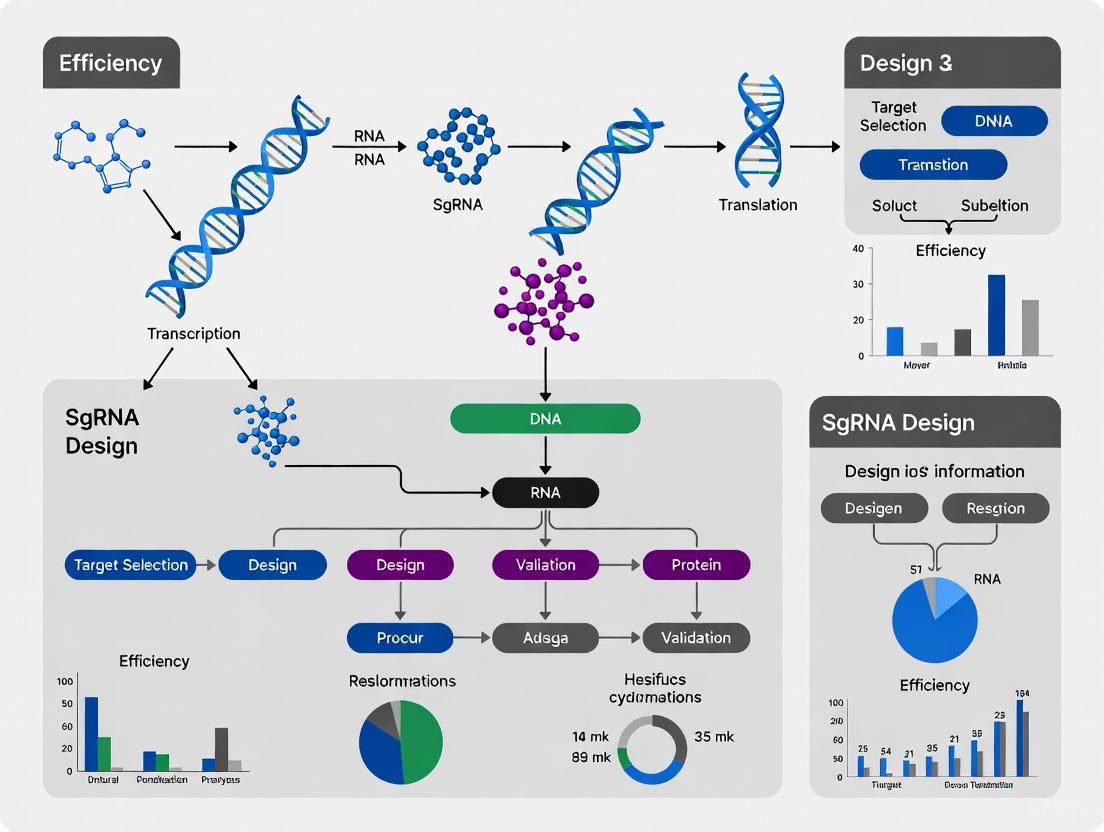
This article provides a comprehensive guide for researchers and drug development professionals on optimizing single-guide RNA (sgRNA) for CRISPR-Cas9 genome editing.
Optimizing sgRNA Design: Strategies to Maximize Efficiency and Minimize Off-Target Effects in CRISPR Applications
Abstract
This article provides a comprehensive guide for researchers and drug development professionals on optimizing single-guide RNA (sgRNA) for CRISPR-Cas9 genome editing. It covers foundational principles of sgRNA structure and function, advanced methodological design strategies, practical troubleshooting for common pitfalls, and rigorous validation techniques. By synthesizing current research and empirical data, this resource aims to equip scientists with the knowledge to enhance editing efficiency, improve specificity, and accelerate the translation of CRISPR technologies into therapeutic applications.
The sgRNA Blueprint: Understanding Core Components and Their Role in CRISPR-Cas9 Function
Core Biology: What are the fundamental roles of crRNA and tracrRNA in the CRISPR-Cas9 system?
In the native Type II CRISPR-Cas immune system from bacteria, the guide RNA exists as a duplex of two separate RNA molecules: the crRNA (CRISPR RNA) and the tracrRNA (trans-activating CRISPR RNA). Each has a distinct and critical function [1] [2].
- crRNA (CRISPR RNA): This molecule provides the targeting specificity for the Cas9 nuclease. It contains a custom-designed, ~20-nucleotide spacer sequence that is complementary to a specific target DNA sequence (the protospacer) in the genome. This spacer is flanked by a portion of the CRISPR repeat sequence [3] [2].
- tracrRNA (trans-activating CRISPR RNA): This molecule serves as a scaffold for Cas9 binding. It is partially complementary to the repeat-derived portion of the crRNA. The tracrRNA is essential for the processing of the precursor crRNA (pre-crRNA) into its mature form by the endoribonuclease RNase III and facilitates the formation of the active Cas9 ribonucleoprotein complex [2].
In laboratory applications, these two molecules are often fused into a single chimeric molecule called a single guide RNA (sgRNA) via a synthetic tetraloop linker. This sgRNA combines the targeting function of the crRNA with the Cas9-binding function of the tracrRNA, simplifying delivery and use [3] [4].
Experimental Troubleshooting: Why might my CRISPR editing efficiency be low, and how can I address it?
Low editing efficiency is a common challenge. The choice between using a two-part guide RNA system (crRNA + tracrRNA) or a single guide RNA (sgRNA) can be a significant factor [1].
Table 1: Troubleshooting Low Editing Efficiency
| Problem Area | Possible Cause | Recommended Solution |
|---|---|---|
| Guide RNA Format | The chosen guide RNA format (two-part vs. single) is suboptimal for your specific target site [1]. | Test the alternative format; for 255 target sites, two-part performed better for 26.7%, sgRNA for 16.9%, and 56.4% worked equally well [1]. |
| Guide RNA Stability | Degradation of the guide RNA by cellular nucleases, especially in environments with high nuclease activity [1]. | Use chemically synthesized, modified sgRNAs or Alt-R CRISPR-Cas9 crRNA XT for enhanced stability [1]. |
| Cas9 Delivery Method | The guide RNA format is not optimal for the chosen Cas9 delivery method [1]. | Use a two-part guide RNA or sgRNA for direct RNP delivery. For indirect delivery (mRNA/plasmid), use sgRNAs for longer stability in the cell [1]. |
| sgRNA Scaffold | Use of a non-optimized, original sgRNA scaffold [4]. | Use an efficiency-enhanced scaffold variant (e.g., Flip+Extension, optimized sgRNA) instead of the original canonical scaffold [4]. |
| Spacer Sequence | The specific 20-nt spacer sequence has low intrinsic activity [5]. | Design and test 3-4 different sgRNAs per gene to account for unpredictable performance variability [5]. |
Reagent Solutions: What key reagents are essential for working with crRNA and tracrRNA?
Table 2: Research Reagent Solutions for crRNA/tracrRNA Experiments
| Reagent / Material | Function & Application |
|---|---|
| Chemically Modified crRNA/tracrRNA (e.g., Alt-R CRISPR-Cas9 crRNA XT) | Increases resistance to nucleases, improving editing efficiency and consistency, especially in sensitive cells or for RNP delivery [1]. |
| Synthetic sgRNA | High-purity, chemically synthesized guides that offer high editing efficiency and reduced labor compared to in vitro transcription (IVT) [3]. |
| In Vitro Transcription (IVT) Kit (e.g., Guide-it sgRNA In Vitro Transcription Kit) | Allows lab production of sgRNAs from a DNA template; requires purification and quality control [6]. |
| RNase Inhibitor | Protects RNA transcripts (like IVT sgRNAs) from degradation during synthesis and handling [3]. |
| Lipid Nanoparticles (LNPs) | A delivery vehicle for in vivo CRISPR therapy, enabling systemic delivery and even re-dosing of editing components [7]. |
Experimental Protocols: How do I set up key experiments comparing two-part and single guide RNAs?
Protocol: Direct Comparison of crRNA/tracrRNA vs. sgRNA Editing Efficiency
This protocol is adapted from large-scale comparisons that empirically determine the most effective guide RNA format for a given target site [1].
Design and Synthesis:
- For your target genomic locus, design a single 20-nucleotide spacer sequence.
- Synthesize this sequence in two formats:
- Two-part system: As a separate crRNA molecule and a universal tracrRNA molecule.
- Single-guide system: As an sgRNA, where the same spacer is fused to the tracrRNA scaffold via a tetraloop.
- For highest efficiency and stability, use chemically synthesized RNAs with proprietary modifications.
Ribonucleoprotein (RNP) Complex Formation:
- For the two-part system: Pre-complex the crRNA and tracrRNA at equimolar ratios to form the guide RNA duplex.
- For the sgRNA system: Use the sgRNA directly.
- Incubate the respective guide RNA(s) with purified Cas9 protein to form the active RNP complex.
Cell Delivery and Culture:
- Deliver the pre-formed RNP complexes into your target cells (e.g., Jurkat cells) using an appropriate method such as electroporation.
- Culture the cells for a sufficient period (e.g., 3-7 days) to allow for genome editing and expression of the phenotype.
Efficiency Analysis:
- Harvest genomic DNA from the edited cell population.
- Amplify the target region by PCR and analyze editing efficiency using next-generation sequencing (NGS) or the T7E1 assay.
- Quantify the percentage of indels at the target site for each guide RNA format.
Protocol: Validating sgRNA Efficiency Prior to Cell Transduction
This protocol uses an in vitro cleavage assay to pre-screen multiple sgRNAs, saving time and resources [6].
sgRNA Design and In Vitro Transcription:
- Design 3-4 different sgRNAs targeting different regions of your gene of interest.
- Generate the sgRNAs using an in vitro transcription (IVT) kit (e.g., Guide-it sgRNA In Vitro Transcription Kit), which uses a PCR-amplified DNA template with a T7 promoter.
In Vitro Cleavage Assay:
- Purify the synthesized sgRNAs to remove reaction byproducts.
- Incubate each sgRNA with Cas9 nuclease and a purified DNA substrate containing the target site.
- Run the reaction products on a gel to separate cleaved from uncleaved DNA.
Analysis and Selection:
- Quantify the cleavage efficiency for each sgRNA. The sgRNA that leads to the most complete cleavage of the target substrate is the most effective.
- Proceed with the top-performing sgRNA for your cell-based experiments.
FAQ: Addressing Common Technical Questions
Q1: In a CRISPR screen, why do different sgRNAs targeting the same gene perform differently? Gene editing efficiency is highly influenced by the intrinsic properties of each unique sgRNA spacer sequence, such as local chromatin accessibility and sequence-specific factors. Therefore, different sgRNAs for the same gene often show variable activity. It is recommended to design at least 3-4 sgRNAs per gene to ensure robust results [5].
Q2: When should I choose a two-part guide RNA system over a single guide RNA? Consider a two-part system (crRNA + tracrRNA) when [1]:
- You are working with a limited budget, as shorter oligos are less expensive to synthesize.
- You are delivering CRISPR components as a pre-formed RNP complex.
- You have encountered low editing efficiency with an sgRNA and want to test an alternative.
Q3: What is the most critical part of the sgRNA for determining its target? The ~20-nucleotide spacer sequence at the 5' end of the sgRNA (derived from the crRNA) is solely responsible for target specificity. This sequence must be complementary to your target DNA site, which must be located immediately 5' of a Protospacer Adjacent Motif (PAM) sequence [8] [6].
Q4: How can I improve the stability of my guide RNAs? Use chemically synthesized guide RNAs with backbone modifications. These modifications protect against degradation by endogenous exo- and endonucleases, leading to higher editing efficiency, especially in challenging cell types or for in vivo applications [1] [3].
Frequently Asked Questions (FAQs)
Q1: What are the core components of the CRISPR-Cas9 system, and what is the specific function of sgRNA?
The CRISPR-Cas9 system requires two core components: the Cas9 nuclease and a guide RNA (gRNA) [3] [8]. The single guide RNA (sgRNA) is a synthetic fusion of two naturally occurring RNA molecules: the crispr RNA (crRNA) and the trans-activating crRNA (tracrRNA) [3]. The sgRNA's function is to direct the Cas9 nuclease to a specific DNA locus. Its 5' end contains a customizable ~20-nucleotide spacer sequence (derived from crRNA) that is complementary to the target DNA site. Its 3' end forms a scaffold structure (derived from tracrRNA) that is essential for binding to the Cas9 protein [3] [9]. In summary, the sgRNA acts as a homing device, providing the system with its remarkable programmability.
Q2: What are the key sequence requirements in the DNA for a successful sgRNA-guided Cas9 cut?
For Cas9 to recognize and cleave a DNA sequence, two key conditions must be met [8]:
- Protospacer Adjacent Motif (PAM): The target DNA must contain a short, specific sequence immediately adjacent to the region complementary to the sgRNA's spacer. For the most commonly used Cas9 from Streptococcus pyogenes (SpCas9), the PAM sequence is 5'-NGG-3', where "N" can be any nucleotide [3] [8].
- Complementary Target Sequence: The ~20 nucleotides upstream of the PAM must be complementary to the 5' end of the sgRNA [9]. The Cas9-sgRNA complex will not bind or cleave efficiently if the homology is insufficient.
Q3: Why does my CRISPR experiment have low editing efficiency, and how can I improve it?
Low editing efficiency can stem from several factors. The table below outlines common causes and their solutions.
| Problem Area | Possible Cause | Recommended Solution |
|---|---|---|
| sgRNA Design | Low sequence accessibility or misfolded sgRNA [10] | Use design tools to check folding kinetics; select sgRNAs with low folding energy barriers (<10 kcal/mol) [10]. |
| Suboptimal spacer sequence [11] | Select sgRNAs with high predicted on-target activity scores (e.g., >0.6 using models like Doench 2016) [11]. | |
| Delivery & Expression | Inefficient delivery into cells [12] | Optimize transfection method (e.g., electroporation, lipofection) for your specific cell type [12]. |
| Weak promoter driving expression [12] | Use a strong, cell-type-appropriate promoter for expressing Cas9 and sgRNA. | |
| Biological Context | Target site buried in chromatin | Consider using Cas9 variants with enhanced activity. The PAM requirement may also limit targetable sites [8]. |
Q4: How can I minimize off-target effects in my experiments?
Off-target effects, where Cas9 cuts at unintended genomic sites, are a major concern [13]. You can employ a multi-pronged strategy to minimize them:
- Optimize sgRNA Design: Design sgRNAs with high specificity. Use bioinformatics tools (e.g., CHOPCHOP, Synthego's tool) to select sgRNAs with minimal homology to other genomic regions, especially in the "seed sequence" near the PAM [3] [8]. Aim for a high specificity score [11].
- Use High-Fidelity Cas9 Variants: Replace wild-type Cas9 with engineered, high-fidelity versions such as eSpCas9(1.1), SpCas9-HF1, or HypaCas9. These mutants reduce off-target cleavage by weakening non-specific interactions with DNA [8].
- Modify Experimental Conditions: Using Cas9 ribonucleoprotein (RNP) complexes (pre-assembled Cas9 protein and sgRNA) instead of plasmid DNA can reduce the time the nuclease is active in the cell, thereby limiting off-target opportunities [14].
- Utilize Paired Nickases: Use a Cas9 nickase (Cas9n) that only cuts one DNA strand. By delivering two sgRNAs that target opposite strands and adjacent sites, you can create a double-strand break only at the intended locus, dramatically increasing specificity [8] [11].
Troubleshooting Guides
Problem: Persistent Off-Target Activity
Despite a well-designed sgRNA, off-target edits are detected in your validation assays.
Investigation and Resolution Protocol:
- Confirm Off-Targets: Use targeted sequencing or mismatch detection assays (e.g., T7 Endonuclease I) on the predicted off-target sites from design tools [13].
- Switch Cas9 Variant: If off-targets are confirmed, switch to a high-fidelity Cas9 like eSpCas9(1.1) or HypaCas9 [8].
- Use RNP Delivery: Deliver CRISPR components as pre-assembled ribonucleoprotein (RNP) complexes. This shortens the exposure time of the genome to the nuclease and has been shown to reduce off-target effects [14].
- Validate with a Negative Control: Always include a control treated with a non-targeting sgRNA to distinguish specific edits from background noise [12].
Problem: Inefficient Homology-Directed Repair (HDR)
While non-homologous end joining (NHEJ) works well, you are struggling to introduce precise edits via HDR using a donor DNA template.
Investigation and Resolution Protocol:
- Optimize Template Delivery: Ensure your donor template (single-stranded oligodeoxynucleotide or double-stranded DNA) is delivered in high molar excess relative to the Cas9-sgRNA RNP complex.
- Synchronize Cell Cycle: HDR is most active in the S and G2 phases of the cell cycle [9]. Use chemicals to synchronize your cell population at these phases to boost HDR efficiency.
- Modulate Repair Pathways: Consider using small molecule inhibitors of key NHEJ proteins (e.g., KU70) to tilt the balance of DNA repair toward the HDR pathway [14].
- Adjust sgRNA Positioning: Design the sgRNA so that the Cas9 cut site is as close as possible to the desired edit. HDR efficiency drops significantly as the distance from the break increases.
Key Experimental Protocols
Protocol 1: Assessing On- and Off-Target Editing Efficiency
This protocol uses next-generation sequencing (NGS) to quantitatively measure editing success and specificity [13].
Materials:
- Genomic DNA extraction kit
- PCR reagents and high-fidelity DNA polymerase
- NGS library preparation kit
- Bioinformatics pipeline for indel analysis
Method:
- Harvest Genomic DNA: Extract genomic DNA from CRISPR-treated cells and a negative control population.
- Amplify Target Loci: Design PCR primers to amplify the on-target locus and the top ~10-20 predicted off-target loci. Include Illumina adapter sequences in the primers.
- Prepare NGS Library: Purify the PCR amplicons and prepare them for sequencing according to your NGS kit's instructions.
- Sequence and Analyze: Run the samples on a sequencer. Use a bioinformatics tool to align reads to the reference genome and calculate the percentage of reads with insertions or deletions (indels) at each site.
- Interpret Results: High indel frequency at the on-target site indicates good efficiency. Indels at other sites are off-target events. Compare treated and control samples to filter out background noise.
Protocol 2: Testing sgRNA Efficacy Using a T7 Endonuclease I Assay
This is a cost-effective, gel-based method to quickly confirm genome editing before moving to NGS [15].
Materials:
- T7 Endonuclease I enzyme
- PCR reagents
- Gel electrophoresis equipment
Method:
- Amplify Target Site: PCR-amplify a ~500-800 bp region surrounding the sgRNA target site from treated and control cell DNA.
- Denature and Reanneal: Purify the PCR product. Heat-denature it and then slowly reanneal it. This allows strands from differently edited alleles to form heteroduplexes with mismatches at the indel sites.
- Digest with T7 Endonuclease I: Incubate the reannealed DNA with the T7 Endonuclease I, which recognizes and cleaves the heteroduplex mismatches.
- Visualize and Quantify: Run the digested products on a gel. Cleaved bands indicate successful editing. The efficiency can be estimated from the band intensities using specialized formulas [15].
sgRNA Directed Cas9 Mechanism
Research Reagent Solutions
The following table details key materials and reagents essential for conducting CRISPR-Cas9 experiments focused on sgRNA mechanism and efficiency.
| Item | Function/Description | Application Note |
|---|---|---|
| High-Fidelity Cas9 Variants (eSpCas9, SpCas9-HF1) | Engineered Cas9 proteins with reduced off-target effects [8]. | Critical for applications requiring high specificity, such as therapeutic development. |
| Synthetic sgRNA | Chemically synthesized, high-purity single-guide RNA [3]. | Offers higher consistency and editing efficiency compared to plasmid-based expression; ideal for RNP delivery [3]. |
| Cas9 Nickase (Cas9n-D10A) | Mutant Cas9 that cuts only one DNA strand [8]. | Used with paired sgRNAs to create targeted double-strand breaks with minimal off-target effects [8] [11]. |
| T7 Endonuclease I | Enzyme that detects base pair mismatches in heteroduplex DNA [15]. | A fast and cost-effective method for initial validation of editing efficiency. |
| Surveyor Nuclease | Another mismatch-specific endonuclease used for indel detection [13]. | An alternative to T7 Endonuclease I for confirming genome edits. |
| dCas9 (Catalytically Inactive Cas9) | Mutant Cas9 (D10A, H840A) that binds DNA without cutting [8]. | Used for CRISPR interference (CRISPRi) and activation (CRISPRa) for transcriptional control [8] [13]. |
The Role of the PAM in CRISPR-Cas Systems
What is a PAM and why is it indispensable for CRISPR editing?
The protospacer adjacent motif (PAM) is a short, specific DNA sequence (typically 2-6 base pairs) that follows immediately after the DNA region targeted for cleavage by the CRISPR-Cas system [16]. This sequence is an absolute requirement for most Cas nucleases to recognize and cut target DNA [17]. The PAM sequence is not part of the guide RNA but must be present in the genomic DNA immediately downstream of the target site [17].
In bacterial adaptive immunity - the natural origin of CRISPR systems - the PAM serves a crucial protective function: it enables Cas proteins to distinguish between foreign viral DNA (which contains PAM sequences) and the bacterium's own DNA (which lacks PAM sequences adjacent to stored viral fragments in the CRISPR array) [16]. This self versus non-self discrimination prevents bacteria from targeting and destroying their own genome [16].
What is the molecular mechanism of PAM-dependent cleavage?
When a Cas nuclease searches for potential target sites, it first scans DNA for PAM sequences [16]. Upon identifying a valid PAM, the enzyme partially unwinds the DNA duplex, allowing the guide RNA to attempt pairing with the target DNA strand [8]. If sufficient complementarity exists between the guide RNA and target DNA - particularly in the critical "seed sequence" near the PAM - the Cas nuclease becomes activated and creates a double-strand break approximately 3-4 nucleotides upstream of the PAM sequence [16] [8].
The following diagram illustrates this fundamental relationship and workflow:
PAM Requirements for Different CRISPR Systems
What are the PAM sequences for commonly used Cas nucleases?
Different Cas nucleases isolated from various bacterial species recognize distinct PAM sequences [16]. The table below summarizes PAM requirements for commonly used CRISPR nucleases:
Table 1: PAM Sequences for Commonly Used Cas Nucleases
| CRISPR Nuclease | Organism Source | PAM Sequence (5' to 3') | Notes |
|---|---|---|---|
| SpCas9 | Streptococcus pyogenes | NGG (where N is any base) [16] [17] [8] | Most widely used nuclease; abundant PAM sites |
| SpCas9-NG | Engineered from SpCas9 | NG [8] | Expanded PAM flexibility |
| SpRY | Engineered from SpCas9 | NRN > NYN (R = A/G; Y = C/T) [8] | Near PAM-less activity |
| SaCas9 | Staphylococcus aureus | NNGRRT or NNGRRN [16] | Smaller size for viral delivery |
| NmeCas9 | Neisseria meningitidis | NNNNGATT [16] | High specificity; longer PAM |
| CjCas9 | Campylobacter jejuni | NNNNRYAC (R = A/G; Y = C/T) [16] | Compact size |
| Cas12a (Cpf1) | Lachnospiraceae bacterium | TTTV (V = A/C/G) [16] | Creates staggered cuts; no tracrRNA needed |
| Cas12b | Alicyclobacillus acidiphilus | TTN [16] | Thermostable variant available |
| hfCas12Max | Engineered from Cas12i | TN and/or TNN [16] | High-fidelity variant |
| xCas-3.7 | Engineered from SpCas9 | NG, GAA, GAT [8] | Broad PAM recognition |
How do engineered Cas variants expand PAM compatibility?
Protein engineering has created Cas variants with altered PAM specificities to overcome the targeting limitations of wild-type nucleases [8]. These "PAM-flexible" or "PAM-less" Cas enzymes include:
- xCas9: Recognizes NG, GAA, and GAT PAMs with increased fidelity [8]
- SpCas9-NG: Engineered to recognize NG PAMs instead of NGG [8]
- SpG: Recognizes NGN PAMs with improved activity [8]
- SpRY: Recognizes NRN and NYN PAMs, approaching PAM-less behavior [8]
These engineered variants significantly expand the targeting range of CRISPR systems, enabling editing of previously inaccessible genomic regions [8].
Troubleshooting PAM-Related Experimental Failures
Why does my CRISPR experiment show no editing activity?
Problem: No cleavage activity despite proper gRNA design and expression.
Potential causes and solutions:
- Incorrect PAM identification: Verify your target sequence includes the correct PAM for your specific Cas nuclease immediately following the target site [16] [17]. Use PAM prediction tools during gRNA design.
- PAM sequence not present: Confirm the genomic locus contains the required PAM sequence. If not, consider alternative Cas proteins with different PAM requirements [16].
- PAM accessibility issues: Chromatin structure or DNA methylation may occlude PAM recognition. Test multiple gRNAs targeting different regions near your desired edit [16].
- Wrong nuclease selection: Ensure you're using the Cas protein matching your experimental PAM requirements. For example, don't use SpCas9 (requires NGG) for targets with only TTTV PAMs [16].
Why is my editing efficiency low even with a valid PAM?
Problem: Weak editing efficiency despite confirmed PAM presence.
Potential causes and solutions:
- Suboptimal PAM context: Not all PAM sequences work equally well. For SpCas9, NGG is optimal, but NAG and NGA show reduced efficiency [18]. If possible, choose targets with optimal PAMs.
- Spacer sequence effects: The spacer sequence itself can influence PAM preference and cleavage efficiency [18]. Design multiple gRNAs with different spacers but identical PAMs.
- PAM-distal mismatches: While Cas9 tolerates mismatches farther from the PAM, they can still reduce efficiency [8]. Ensure full complementarity in the seed region (8-10 bases proximal to PAM) [8].
- Cellular environment factors: DNA repair pathway activity, chromatin state, and nuclear delivery efficiency can all impact observed editing outcomes [19].
Advanced PAM Identification and Characterization Methods
How can I identify functional PAM sequences for novel Cas proteins?
The PAM-DOSE (PAM Definition by Observable Sequence Excision) system provides a robust method for empirically determining functional PAM requirements directly in human cells [18]. This method uses a dual-fluorescence reporter system where successful CRISPR cleavage excises a tdTomato cassette, allowing EGFP expression [18].
Table 2: PAM-DOSE Experimental Workflow
| Step | Procedure | Key Considerations |
|---|---|---|
| 1. Library Construction | Clone randomized PAM library (e.g., NNNN) downstream of fixed target site in reporter plasmid [18] | Ensure complete randomization; verify library complexity |
| 2. Cell Transfection | Co-transfect reporter library with Cas nuclease and targeting gRNA expression vectors [18] | Include appropriate controls (empty vector, non-targeting gRNA) |
| 3. Fluorescence Screening | Isolate EGFP-positive cells via FACS 48-72 hours post-transfection [18] | Gate strictly for high EGFP, low tdTomato populations |
| 4. Sequence Analysis | Amplify and sequence integrated PAM regions from sorted cells via NGS [18] | Sequence sufficient reads for statistical power (≥10^5 recommended) |
| 5. Validation | Test individual high-frequency PAM sequences in validation assays [18] | Confirm functionality across multiple target sites |
The experimental workflow for PAM identification using this system follows this process:
What research reagent solutions are available for PAM studies?
Table 3: Essential Research Reagents for PAM Characterization
| Reagent / Tool | Function | Example Application |
|---|---|---|
| Dual-Fluorescence Reporters | Empirical PAM identification in living cells [18] | PAM-DOSE system for determining functional PAM requirements |
| PAM Library Plasmids | Randomized PAM sequences for systematic screening [18] | High-throughput determination of PAM preferences |
| Multiple Cas Expression Vectors | Source of different Cas nucleases with varying PAM needs [16] | Comparison of PAM requirements across Cas proteins |
| Flow Cytometry | Quantification of editing efficiency via fluorescent markers [18] | Sorting successfully edited cells for downstream analysis |
| Next-Generation Sequencing | Comprehensive analysis of PAM sequences from edited cells [18] | Identification of functional PAM enrichment patterns |
| High-Fidelity Cas Variants | Engineered nucleases with altered PAM specificities [16] [8] | Targeting genomic regions inaccessible to wild-type Cas |
Emerging Technologies and Future Directions
How are AI and machine learning transforming PAM prediction and nuclease design?
Recent advances in artificial intelligence are revolutionizing CRISPR nuclease design, including PAM prediction and optimization:
- CRISPR-GPT: An AI tool that assists researchers in designing CRISPR experiments, including PAM-aware gRNA selection and troubleshooting [20]. The system uses 11 years of published CRISPR data to recommend optimal experimental designs [20].
- Protein Language Models: AI models trained on biological diversity can generate novel Cas proteins with customized properties, including PAM specificities [21]. These models have successfully created functional editors like OpenCRISPR-1 that diverge significantly from natural sequences [21].
- Off-Target Prediction: Advanced algorithms like CCLMoff use deep learning and RNA language models to predict off-target effects with improved accuracy, considering both gRNA sequence and PAM context [22].
What novel approaches address PAM limitations in advanced editing applications?
Prime editing with prolonged editing window (proPE) represents a significant advancement that partially alleviates PAM constraints for precise editing [19]. This system uses two distinct sgRNAs:
- Essential nicking guide RNA (engRNA): Conventional sgRNA that directs Cas9 to nick the target DNA [19]
- Template providing guide RNA (tpgRNA): Contains PBS and RTT sequences with truncated spacer that binds DNA without cleavage [19]
This separation of nicking and template functions extends the editing window and enhances efficiency for modifications beyond the typical PE range [19]. The proPE system demonstrates 6.2-fold increased editing efficiency for low-performing edits (<5% with standard PE) [19].
Frequently Asked Questions (FAQs)
Is the PAM sequence included in the guide RNA design?
No, the PAM sequence is not part of the guide RNA [16] [17]. When designing gRNAs for CRISPR experiments, researchers should only include the ~20 nucleotide spacer sequence that is complementary to the target DNA [16]. The PAM must be present in the genomic DNA immediately downstream of the target site but is excluded from gRNA construction [16] [17].
Can I modify the PAM requirement of my Cas nuclease?
Yes, protein engineering approaches including directed evolution and structure-guided mutagenesis have successfully created Cas variants with altered PAM specificities [16] [8]. Examples include xCas9 and SpCas9-NG, which recognize NG instead of NGG PAMs [8]. However, these engineered variants often trade off some editing efficiency for PAM flexibility [19].
Why does my experiment fail even when a PAM is present?
PAM recognition is necessary but not always sufficient for efficient cleavage [16] [18]. Additional factors affecting efficiency include:
- Local chromatin accessibility and DNA methylation status [16]
- gRNA secondary structure that affects Cas9 binding [8]
- Specific nucleotide context around the PAM [18]
- Cellular delivery efficiency of CRISPR components [7]
- Competing DNA repair pathways in the target cells [8]
Are there truly "PAM-less" CRISPR systems available?
While no naturally occurring Cas nuclease is completely PAM-less, engineered variants like SpRY approach this ideal by recognizing extremely relaxed PAM sequences (NRN/NYN, where R is A/G and Y is C/T) [8]. Additionally, CRISPR-associated transposon (CAST) systems and some Cas14 variants show reduced or alternative PAM requirements [16]. However, these systems often come with trade-offs in editing efficiency or specificity [16] [19].
FAQs on Double-Stand Break and Repair
Q1: What are the primary DNA repair pathways that process Cas9-induced double-strand breaks, and how do they influence editing outcomes?
When Cas9 creates a double-strand break (DSB), the cell deploys several repair pathways, leading to different outcomes [23]. The table below summarizes the key characteristics of these pathways.
Table 1: Major DNA Double-Strand Break Repair Pathways in CRISPR-Cas9 Editing
| Repair Pathway | Mechanism | Template Required? | Fidelity | Typical Editing Outcome |
|---|---|---|---|---|
| Classical Non-Homologous End Joining (cNHEJ) | Direct ligation of broken ends | No | Error-prone | Small insertions or deletions (indels); gene knockout [23] |
| Microhomology-Mediated End Joining (MMEJ) | Uses microhomologous sequences (5-25 bp) for alignment and repair | No | Error-prone | Larger deletions [23] [24] |
| Homologous Recombination (HR) | Uses a homologous DNA template (e.g., sister chromatid) for repair | Yes | High-fidelity | Precise edits; gene correction or knock-in [23] |
| Single-Strand Annealing (SSA) | Uses longer homologous repeats (>25 bp) flanking the break | No | Error-prone | Large deletions [23] |
The competition between these pathways determines the final result. For example, in dividing cells like iPSCs, MMEJ often dominates, creating larger deletions. In contrast, postmitotic cells like neurons rely more heavily on cNHEJ, resulting in a narrower distribution of small indels [24].
Q2: Why does my editing efficiency vary between different cell types, and how can I improve it?
Editing efficiency is highly dependent on cell type due to differences in cell state (dividing vs. nondividing), transfection efficiency, and innate DNA repair machinery [24].
- Dividing vs. Nondividing Cells: Homology-Directed Repair (HDR) is largely restricted to the S and G2 phases of the cell cycle, making it inefficient in nondividing cells [23] [24]. Furthermore, a 2025 study revealed that Cas9-induced indels accumulate much more slowly in postmitotic neurons and cardiomyocytes, taking up to two weeks to plateau, compared to just a few days in isogenic induced Pluripotent Stem Cells (iPSCs) [24].
- Delivery Method: The choice of delivery method (e.g., electroporation, lipofection, viral vectors, Virus-Like Particles (VLPs)) must be optimized for your specific cell type. For hard-to-transfect cells like neurons, VLPs have been shown to achieve up to 97% delivery efficiency [24].
- Strategies for Improvement:
- For Knockouts in Difficult Cells: Use an inducible Cas9 system. One study in human pluripotent stem cells (hPSCs) achieved stable INDEL efficiencies of 82–93% for single-gene knockouts by optimizing parameters like nucleofection frequency and cell-to-sgRNA ratio [25].
- For Knock-ins in Non-Dividing Cells: Consider using base editors or prime editors, which can efficiently create precise single-base changes without requiring a DSB or an active HDR pathway [24].
- Chemical/Genetic Perturbation: Manipulating the DNA repair response with small molecules or by genetically knocking down specific repair factors can help direct repairs toward your desired outcome [24].
Q3: My sgRNA has high on-target scores in silico, but editing fails. What are common reasons for this, and how can I troubleshoot?
High computational scores don't guarantee success due to biological and experimental factors.
- Chromatin Inaccessibility: If the target DNA is tightly packed into heterochromatin, the Cas9-sgRNA complex may not be able to bind. Consider using chromatin-modifying agents or selecting target sites in open chromatin regions confirmed by ATAC-seq or similar assays [26] [27].
- Ineffective sgRNA: Some sgRNAs can induce high INDEL rates but fail to eliminate protein expression if the edits do not cause a frameshift or target a non-essential protein domain. A 2025 study identified an sgRNA targeting exon 2 of ACE2 that produced 80% INDELs but did not abolish ACE2 protein expression [25].
- Troubleshooting Steps:
- Verify Protein Loss: Always confirm knockout experiments at the protein level (e.g., via Western blot) in addition to genomic sequencing [25].
- Check Cas9/sgRNA Expression: Confirm that both Cas9 and the sgRNA are being expressed at high enough levels in your cells [12].
- Use Multiple sgRNAs: Employing two or more sgRNAs against the same gene can dramatically increase the chance of a successful knockout [28].
- Validate with Synthetic sgRNA: If using plasmid-based sgRNA expression, try switching to chemically synthesized and modified sgRNAs (CSM-sgRNA), which have enhanced stability and can reduce toxicity, potentially improving efficiency [25].
Q4: What is the difference between CRISPR-Cas9 and CRISPR interference (CRISPRi), and when should I use each?
CRISPR-Cas9 and CRISPRi are distinct tools for different experimental goals.
- CRISPR-Cas9 (Nuclease-Active): This system uses a catalytically active Cas9 to create a DSB, leading to permanent changes in the DNA sequence via the repair pathways in Table 1. It is best for creating permanent gene knockouts [26] [27].
- CRISPRi (Interference): This system uses a catalytically "dead" Cas9 (dCas9) that cannot cut DNA. The dCas9-sgRNA complex binds to the target site and acts as a steric block, physically preventing transcription by RNA polymerase. When fused to repressor domains like KRAB, it can robustly silence gene expression. The effect is reversible and does not alter the DNA sequence [26] [27] [29].
Table 2: CRISPR-Cas9 vs. CRISPRi Key Comparisons
| Feature | CRISPR-Cas9 (Knockout) | CRISPRi (Interference) |
|---|---|---|
| Cas9 Type | Catalytically active | Catalytically dead (dCas9) |
| DNA Break | Yes (Double-strand break) | No |
| Permanence | Permanent mutation | Reversible knockdown |
| Key Application | Complete loss-of-function studies | Studying essential genes; mimicking drug action; tunable knockdown [27] |
| Key Advantage | Permanent effect | Avoids DSB-related toxicity and off-target mutations [29] |
CRISPRi is particularly valuable for studying essential genes, as complete knockout would be lethal to the cell. It also better mimics the partial reduction of gene expression seen with many pharmaceutical treatments [27].
Troubleshooting Common Experimental Problems
Problem: Low Knock-in (HDR) Efficiency
- Cause: HDR is a low-efficiency pathway that competes with the more dominant and error-prone NHEJ and MMEJ pathways, especially in non-dividing cells [23] [24].
- Solutions:
- Use NHEJ Inhibitors: Treat cells with small molecule inhibitors of key NHEJ proteins (e.g., DNA-PKcs inhibitor) to tilt the balance toward HDR [24].
- Cell Cycle Synchronization: Since HDR is most active in S/G2 phases, synchronizing your cells or delivering CRISPR components during this window can boost HDR efficiency.
- Optimize Donor Template Design: For single-base edits, using single-stranded oligodeoxynucleotides (ssODNs) as a donor template with symmetric homology arms can be effective. To prevent re-cleavage of the edited allele, design the edit to disrupt the Protospacer Adjacent Motif (PAM) sequence [25].
Problem: High Off-Target Activity
- Cause: The sgRNA may bind and cleave at genomic sites with sequences similar to the on-target site, especially if there are mismatches in the PAM-distal region [23].
- Solutions:
- Use High-Fidelity Cas9 Variants: Engineered Cas9 proteins (e.g., eSpCas9, SpCas9-HF1) have reduced off-target activity while maintaining strong on-target cleavage [12].
- Optimize sgRNA Design: Select sgRNAs with a minimal number of potential off-target sites. Use design tools that account for off-targets and avoid sgRNAs with seed regions that have many near-matches in the genome [26] [30] [28].
- RNP Delivery: Delivering preassembled Cas9 protein and sgRNA as a Ribonucleoprotein (RNP) complex reduces the time the nucleus is exposed to active Cas9, which can lower off-target effects [24].
Problem: Cell Toxicity or Death
- Cause: High levels of DSBs can trigger p53-mediated cell cycle arrest and apoptosis. Overexpression of Cas9 and prolonged nuclease activity can also be toxic [29].
- Solutions:
- Use CRISPRi: For gene silencing applications, switch to the DNA break-free CRISPRi system to avoid toxicity associated with DSBs [29].
- Titrate Component Amounts: Use the lowest effective concentration of Cas9 and sgRNA. Start with lower doses and titrate upwards to find a balance between editing and cell viability [12].
- Use Inducible Systems: A doxycycline-inducible Cas9 system allows for transient, controlled expression of Cas9, reducing long-term toxicity and improving editing efficiency in sensitive cells like hPSCs [25].
Table 3: Key Research Reagent Solutions for CRISPR Experiments
| Reagent / Tool | Function / Description | Application Example |
|---|---|---|
| dCas9-KRAB | Catalytically dead Cas9 fused to the KRAB repressor domain. Provides robust transcriptional repression for CRISPRi [27]. | Reversible gene knockdown without altering DNA sequence. |
| High-Fidelity Cas9 | Engineered Cas9 variants (e.g., eSpCas9) with reduced off-target effects. | Experiments where specificity is critical, such as potential therapeutic applications [12]. |
| Virus-Like Particles (VLPs) | Engineered particles for delivering protein cargo (e.g., Cas9 RNP). Effective for hard-to-transfect cells [24]. | Delivering Cas9 RNP to postmitotic neurons with high efficiency (>95%) [24]. |
| Chemically Modified sgRNA | sgRNAs synthesized with chemical modifications (e.g., 2'-O-methyl-3'-thiophosphonoacetate) to enhance stability [25]. | Increases sgRNA half-life, improving editing efficiency and reducing required dosage. |
| Inducible Cas9 System | Cas9 expression is controlled by an inducer (e.g., Doxycycline). Allows precise temporal control [25]. | Achieving high knockout efficiency in hPSCs while minimizing continuous Cas9 expression toxicity. |
| NHEJ Inhibitors | Small molecules that chemically inhibit key components of the classical NHEJ pathway. | Shifting repair balance toward HDR to improve knock-in efficiency [24]. |
Visualizing Key Concepts
Diagram 1: Competition Between DSB Repair Pathways
This diagram illustrates how a single Cas9-induced double-strand break can be processed by different cellular repair pathways, leading to a variety of mutational outcomes.
Diagram 2: Experimental Workflow for High-Efficiency Knockout in hPSCs
This workflow outlines an optimized protocol for achieving high knockout efficiency in human pluripotent stem cells using an inducible Cas9 system, based on a 2025 study [25].
Strategic sgRNA Design: Practical Guidelines and Advanced Engineering for Enhanced Performance
Troubleshooting Guides
Guide 1: Addressing Low On-Target Editing Efficiency
Q: My CRISPR experiment is showing very low rates of on-target editing. What target sequence factors should I investigate to improve this?
Low on-target efficiency often stems from suboptimal sgRNA sequence selection. The following factors are critical to troubleshoot:
Problem: The sgRNA spacer length is not optimal.
- Solution: Ensure your sgRNA spacer (the target-specific region) is within the 17-23 nucleotide range. [31] While a 20-nucleotide length is standard, [32] explored extensions up to 40 bp and 53 bp and found that for some target sites (PAM3), longer sgRNAs could improve specificity. However, for general use, a 20 bp spacer is recommended for SpCas9. [33]
Problem: The GC content of the sgRNA is outside the ideal range.
Problem: The target sequence is not unique in the genome.
Problem: The sgRNA sequence contains problematic nucleotide patterns.
- Solution: Avoid consecutive stretches of a single nucleotide (e.g., poly-T or poly-G tracts), as these can interfere with transcription and sgRNA stability. [31]
Experimental Protocol: Validating sgRNA On-Target Efficiency
- Design: Use computational tools (e.g., CRISPick, GenScript's tool) to select 3-5 candidate sgRNAs with high predicted on-target scores. [33] [34]
- Deliver: Transfert your cells with your chosen Cas9/sgRNA system (e.g., as a ribonucleoprotein complex or plasmid). [31]
- Harvest: Extract genomic DNA from the cells 48-72 hours post-transfection.
- Analyze: Amplify the target region by PCR and quantify the indel frequency using T7 Endonuclease I (T7E1) or TIDE assays, or by next-generation sequencing for the most accurate results. [31]
Guide 2: Mitigating High Off-Target Effects
Q: My sequencing data reveals unintended edits at off-target sites. How can I adjust my target sequence selection to improve specificity?
Off-target effects occur when the Cas9-sgRNA complex binds and cleaves DNA at sites similar to the intended target. To mitigate this:
Problem: The sgRNA has high homology to multiple genomic loci.
- Solution: Use off-target prediction algorithms (e.g., CFD score, MIT score) during the design phase. [34] Prioritize sgRNAs with a high off-target score, indicating low potential for off-target activity. [33] Tools like CRISOT use advanced molecular dynamics simulations to predict and optimize specificity. [35]
Problem: Mismatches in certain regions of the target sequence are tolerated.
- Solution: Be aware that mismatches between the sgRNA and DNA target in the "seed sequence" (the 8-12 nucleotides proximal to the PAM) are less tolerated and reduce off-target cleavage. In contrast, mismatches in the distal region are more easily tolerated. [8] Selecting a target with unique sequences in the seed region is crucial.
Problem: The standard 20 bp sgRNA is not specific enough for your target.
- Solution: Consider using truncated sgRNAs (shorter than 20 nt) or elongated sgRNAs (longer than 20 nt). Research has shown that extending sgRNA length can, in some cases, improve specificity for the target gene and reduce off-target DNA cleavage. [32]
Problem: The chosen Cas9 nuclease has relaxed specificity.
- Solution: Switch to a high-fidelity Cas9 variant, such as eSpCas9(1.1), SpCas9-HF1, or HypaCas9. [8] These engineered proteins have mutations that reduce off-target editing while maintaining robust on-target activity.
Experimental Protocol: Assessing Genome-Wide Off-Target Effects
- Predict: Input your sgRNA sequence into an off-target prediction tool like CAS-OFFinder or the one integrated into CRISPOR to generate a list of potential off-target sites. [32] [34]
- Validate: Use targeted amplicon sequencing to deeply sequence the top predicted off-target sites (e.g., sites with ≤3 mismatches).
- Discover (Advanced): For a unbiased genome-wide profile, use methods like GUIDE-seq or Circle-seq. These techniques experimentally identify off-target sites by capturing double-strand breaks across the entire genome. [35]
Frequently Asked Questions (FAQs)
Q: What is the optimal length for an sgRNA target sequence for SpCas9? The optimal protospacer length for SpCas9 is 20 nucleotides immediately upstream of the PAM site. [33] While variations from 17-23 nt are used, a 20 nt length provides a standard balance of high activity and specificity. [31]
Q: How close does the target sequence need to be to the PAM site? The target sequence must be located immediately adjacent (5') to the PAM sequence. The Cas9 enzyme cuts approximately 3-4 nucleotides upstream of the PAM. [8] The PAM sequence itself (e.g., "NGG" for SpCas9) is not part of the sgRNA but must be present in the genomic DNA for recognition and cleavage. [33] [31]
Q: Does the position of the cut site within a gene affect the knockout efficiency? Yes. To maximize the probability of a gene knockout, design your sgRNA to target a region within the 5' front of the coding sequence (CDS) of the gene. [34] An edit here is more likely to cause frameshift mutations that lead to premature stop codons and a complete loss of function.
Q: What are the key sequence features of an ideal sgRNA? An ideal sgRNA has:
- A 20-nucleotide spacer sequence. [33]
- 40-60% GC content. [3] [31]
- A unique sequence with no homology to other genomic sites, especially with fewer than 3 mismatches. [34]
- No consecutive stretches of identical nucleotides (e.g., no poly-T tracts, which can terminate RNA Polymerase III transcription). [31]
Table 1: Impact of sgRNA Spacer Length on Cleavage Specificity (Based on in vitro assays)
| sgRNA Length (bp) | Impact on Native Template Cleavage | Impact on Off-target Cleavage | Recommendation |
|---|---|---|---|
| 20 (Standard) | High efficiency | Variable, can be high | Good starting point for most experiments |
| 30 | Maintained high efficiency | Reduced for some PAM sites ( [32]) | Consider for targets with known off-target issues |
| 40 | Maintained high efficiency | Further reduced for some PAM sites ( [32]) | Useful for high-specificity requirements |
| 53 | Maintained high efficiency | Highest observed specificity at one PAM site ( [32]) | Specialist application for maximum specificity |
Table 2: Key Parameters for Optimal sgRNA Design
| Parameter | Optimal Range | Rationale & Consequences of Deviation |
|---|---|---|
| Spacer Length | 17-23 nt (20 nt standard) | Shorter: Reduced on-target efficiency. Longer: Can increase specificity but requires validation. [32] [31] |
| GC Content | 40% - 60% | Low GC: Unstable binding. High GC: sgRNA misfolding and increased off-target risk. [3] [31] |
| PAM Proximity | Immediately 5' to the PAM | The target sequence must be adjacent for Cas9 recognition. The PAM is not part of the sgRNA. [33] [8] |
| Seed Sequence | No mismatches | The 8-12 bases proximal to the PAM are critical; mismatches here greatly reduce cleavage. [8] |
Experimental Workflow and Optimization Logic
sgRNA Design and Validation Workflow
Strategies to Improve sgRNA Specificity
The Scientist's Toolkit: Research Reagent Solutions
Table 3: Essential Reagents for sgRNA Design and Validation Experiments
| Reagent / Tool | Function / Description | Example Use Case |
|---|---|---|
| Synthetic sgRNA | Chemically synthesized, high-purity sgRNA; allows for chemical modifications to enhance stability. [3] | RNP delivery for rapid editing with minimal off-target effects. [31] |
| Alt-R CRISPR-Cas9 sgRNA (IDT) | A synthetic, 100-nt RNA molecule combining crRNA and tracrRNA. [33] | Standardized, pre-designed sgRNAs for consistent experimental results. |
| High-Fidelity Cas9 (e.g., eSpCas9, SpCas9-HF1) | Engineered Cas9 variants with mutations that reduce off-target editing. [8] | Experiments where specificity is critical, such as therapeutic development. |
| CRISOT Software Suite | Computational tool using RNA-DNA interaction fingerprints from MD simulations to predict and optimize sgRNA. [35] | Genome-wide off-target prediction and sgRNA optimization for improved specificity. |
| U6 Promoter Plasmids | Vectors for expressing sgRNA within cells; the U6 promoter ensures high transcription levels. [31] | Long-term expression of sgRNA for stable cell line generation. |
| T7 Endonuclease I | Enzyme that detects and cleaves mismatched DNA in heteroduplexes. | Quick and cost-effective validation of indel formation at the target site. |
| Guide-it Screening Kit (Takara Bio) | A commercial kit for in vitro transcription and testing of sgRNA cleavage efficiency. [32] | Validating sgRNA function and RNP complex formation before cell experiments. |
The success of CRISPR-Cas9 genome editing experiments hinges on the precise design of your single guide RNA (sgRNA). Among the critical design parameters, GC content—the percentage of nucleotides in the 20-nucleotide guide sequence that are either guanine (G) or cytosine (C)—stands out as a pivotal factor influencing both on-target efficiency and specificity. An optimal GC content, typically between 40% and 60%, facilitates stable binding between the sgRNA and its target DNA site without promoting excessive rigidity or off-target effects [36] [31]. This guide provides troubleshooting and best practices to help you master GC content balance in your sgRNA designs, thereby enhancing the reliability and reproducibility of your CRISPR experiments.
Troubleshooting Guide: Common GC Content-Related Issues
This section addresses frequent problems, their underlying causes, and actionable solutions.
Problem: Consistently Low Editing Efficiency
- Symptoms: Low indel frequency, poor knockout efficiency despite confirmed delivery of CRISPR components.
- Potential Cause & Solution:
- GC Content Too Low (<40%): Insufficient G-C bonds can lead to weak sgRNA-target DNA binding and unstable complex formation [31]. Redesign sgRNAs to include more G or C bases while staying within the optimal range.
- GC Content Too High (>80%): Excessively high GC can cause sgRNA rigidity, misfolding, and hinder Cas9 activation [36] [31]. It is also strongly correlated with highly stable secondary structures in the target DNA, making it inaccessible [37] [38]. Redesign sgRNAs to lower the GC content and use tools to predict target site accessibility.
Problem: High Rate of Off-Target Effects
- Symptoms: Unintended edits at genomic sites with sequence similarity to the target.
- Potential Cause & Solution:
- Suboptimal GC Content & Specificity: sgRNAs with very high GC content can tolerate mismatches better due to overly stable binding, increasing off-target potential [31]. Furthermore, low-specificity gRNAs can cause confounding effects like strong negative fitness effects even in non-essential genes [39]. Use advanced design software like GuideScan2 to analyze off-targets and ensure your sgRNA has high specificity in addition to optimal GC content [39].
Problem: Inefficient Editing in Polyploid Organisms
- Symptoms: Successful editing in one genomic copy but not in others (e.g., in hexaploid wheat).
- Potential Cause & Solution:
- Lack of Specificity Across Genomes: In complex genomes, a high-quality sgRNA must be unique to the target gene and have minimal off-targets across all sub-genomes [40]. Use specialized tools like WheatCRISPR for polyploid crops and perform a comprehensive BLAST analysis against the entire pan-genome to ensure the designed sgRNA, with its specific GC content, targets all desired homologs uniquely [40] [41].
Problem: sgRNA Instability
- Symptoms: Rapid degradation of sgRNA, leading to low intracellular concentration and transient activity.
- Potential Cause & Solution:
- Inherent Instability of Linear RNA: Standard linear sgRNAs have a short half-life, which can limit editing efficiency, especially over time [42]. Consider using engineered circular guide RNAs (cgRNAs), which offer enhanced protection from exonuclease degradation and significantly higher stability and durability in cells, as demonstrated in Cas12f systems [42].
Essential Tools and Reagents for sgRNA Design and Validation
The table below lists key resources for implementing the protocols and strategies discussed in this guide.
| Item Name | Function/Application |
|---|---|
| GuideScan2 Software [39] | Genome-wide design and specificity analysis of gRNAs; identifies off-targets with high accuracy. |
| WheatCRISPR Software [40] [41] | Specialized tool for designing gRNAs in the complex, polyploid wheat genome. |
| Wheat PanGenome Database [40] [41] | Enables cultivar-specific gRNA design by providing genomic data across multiple wheat varieties. |
| U6 Promoter Plasmids [31] | A standard vector for high-level expression of sgRNA transcripts in mammalian cells. |
| Circular gRNA (cgRNA) Scaffold [42] | An engineered gRNA format with a covalently closed loop structure that confers high stability and prolonged activity. |
| Synthetic sgRNA with Chemical Modifications [31] | In vitro transcribed and chemically modified sgRNAs that enhance stability and reduce immune response. |
Experimental Protocol: Validating sgRNA Efficiency
A robust workflow for validating your designed sgRNAs is crucial. The diagram below outlines the key steps from design to final assessment.
Step-by-Step Methodology:
Target Identification and sgRNA Design:
- Identify your target genomic region and the adjacent Protospacer Adjacent Motif (PAM) sequence appropriate for your Cas nuclease (e.g., 5'-NGG-3' for SpCas9) [31].
- Using a design tool (e.g., GuideScan2, WheatCRISPR), generate a list of potential sgRNA sequences targeting your site of interest [39] [40].
- GC Content Check: Calculate and note the GC content for each candidate. Prioritize those falling within the 40-60% range [36] [31].
Specificity Analysis and Candidate Filtering:
- Input the candidate sgRNA sequences into a specificity analysis tool like GuideScan2. This software uses advanced algorithms to enumerate all potential off-target sites in the genome, accounting for mismatches [39].
- Filter your list to retain sgRNAs with high predicted on-target activity and a high specificity score (i.e., few or no predicted off-targets with high similarity) [39] [36].
Cloning and Delivery:
- Clone the final selected sgRNA sequence(s) into an appropriate expression vector, such as one containing the U6 promoter for high transcription levels in mammalian cells [31].
- Deliver the CRISPR components (Cas9 and sgRNA) into your target cells using your preferred method (e.g., plasmid transfection, Ribonucleoprotein (RNP) complexes, or viral vectors) [31].
Efficiency Assessment and Phenotypic Validation:
- Genotypic Analysis: 3-5 days post-delivery, harvest genomic DNA. Quantify editing efficiency (indel frequency) using next-generation sequencing (NGS), which provides the most accurate data, or alternative methods like the T7 Endonuclease I (T7E1) assay [31].
- Phenotypic Confirmation: If performing a knockout, confirm the loss of protein expression via Western blot or immunofluorescence. For knock-ins, validate correct integration via PCR and sequencing.
Frequently Asked Questions (FAQs)
Q1: Why is high GC content (>80%) detrimental, given that G-C bonds are stronger? A: While G-C bonds provide stability, an overabundance leads to several issues. First, it can cause the sgRNA itself to form stable, rigid secondary structures that may impede its proper binding to Cas9 or the target DNA [31]. Second, and more importantly, DNA regions with high GC content are more prone to form stable local secondary structures, making the target site less accessible for the Cas9-sgRNA complex to bind, thereby reducing cleavage efficiency [37] [38].
Q2: My sgRNA has a GC content of 45% but still performs poorly. What else should I check? A: GC content is one of several critical features. You should also investigate:
- Position-Specific Nucleotides: Certain nucleotides at specific positions are associated with higher efficiency (e.g., a G in position 20, an A in the middle of the sequence) or lower efficiency (e.g., a T in the PAM, poly-N sequences like GGGG) [36].
- Target Site Accessibility: Use RNA/DNA folding tools (e.g., ViennaRNA) to predict the secondary structure of your target genomic region. An inaccessible site, regardless of GC content, will hinder editing [37].
- sgRNA Secondary Structure: Check if the sgRNA itself is folding in a way that sequesters its seed region.
Q3: Are there new technologies to overcome the limitations of traditional sgRNAs? A: Yes, recent advances include the development of circular guide RNAs (cgRNAs). These are engineered to have a covalently closed loop structure, which makes them significantly more stable than linear sgRNAs because they are protected from exonuclease degradation. Studies show cgRNAs can enhance activation efficiency and increase the durability of editing effects over time [42].
Q4: How does GC content affect systems other than standard SpCas9? A: The principle of balancing stability and specificity via GC content is fundamental to nucleic acid hybridization and applies broadly. For instance, in RNAi (a technology that also uses a guide strand for target recognition), high siRNA GC-content negatively correlates with efficiency, primarily due to poor target site accessibility [37] [38]. When working with smaller Cas proteins like Cas12f, optimizing GC content and gRNA structure remains critical for achieving high activity [42]. Always consult literature and design tools specific to the nuclease you are using.
In CRISPR-Cas9 genome editing, the single-guide RNA (sgRNA) serves as the molecular GPS that directs the Cas9 nuclease to its specific DNA target. While the sequence of the sgRNA's spacer region determines target specificity, the structural architecture of the sgRNA itself profoundly influences editing efficiency. Research has demonstrated that two specific structural modifications—extending the duplex region and mutating poly-T tracts—can significantly enhance CRISPR-Cas9 performance. These optimizations address inherent limitations in the original sgRNA design, which featured a shortened duplex compared to the native bacterial crRNA-tracrRNA complex and contained a continuous sequence of thymines that can prematurely terminate transcription by RNA polymerase III. This technical guide explores the experimental evidence, implementation protocols, and troubleshooting strategies for maximizing CRISPR efficiency through sgRNA structural optimization.
▍Troubleshooting Guide: Frequently Asked Questions
Q1: Why would extending the sgRNA duplex improve CRISPR knockout efficiency?
The original sgRNA design implemented for CRISPR-Cas9 systems features a shortened duplex region compared to the native crRNA-tracrRNA complex found in bacterial immune systems. Systematic investigation revealed that extending this duplex by approximately 5 base pairs significantly improves knockout efficiency, likely through enhanced complex stability. Research demonstrates that this extension increases gene knockout efficiency across multiple sgRNAs and cell types, with some targets showing dramatic improvements [43].
Q2: What is the functional consequence of the continuous TTTT sequence in sgRNAs?
The continuous sequence of thymines (TTTT) in conventional sgRNA designs acts as a pause signal for RNA polymerase III, potentially reducing transcription efficiency and subsequent sgRNA abundance. Mutational analysis has confirmed that disrupting this sequence, particularly at position 4 (where T→C or T→G substitutions prove most effective), significantly boosts knockout efficiency without compromising sgRNA functionality [43].
Q3: What specific structural modifications yield optimal editing efficiency?
The optimal sgRNA structure combines both duplex extension and poly-T tract mutation:
- Duplex extension: Adding approximately 5 bp to the duplex region
- Poly-T mutation: Changing the fourth thymine in the TTTT sequence to cytosine or guanine
This combined approach demonstrates significant, sometimes dramatic, improvements in knockout efficiency compared to the original structure across 15 of 16 tested sgRNAs [43]. The enhanced structure also dramatically improves the efficiency of challenging genome editing procedures such as gene deletion, with efficiency improvements of approximately 10-fold reported in multiple experiments [43].
Q4: How does optimized sgRNA structure benefit complex editing applications?
The efficiency gains from structural optimization prove particularly valuable for complex genome editing procedures that typically show low success rates with conventional sgRNAs. For gene deletion applications requiring dual cutting and fragment excision, optimized sgRNA structures increased efficiency from 1.6-6.3% to 17.7-55.9%, making such experiments practically feasible without requiring the screening of hundreds of colonies [43].
▍Quantitative Data on Structural Optimization
Table 1: Efficiency Improvements from Duplex Extension
| Duplex Extension Length | Knockout Efficiency Improvement | Optimal Context |
|---|---|---|
| +1 bp | Significant increase | Multiple sgRNAs |
| +3 bp | Significant increase | Multiple sgRNAs |
| +5 bp | Peak efficiency | Most sgRNAs |
| +8 bp | Increased but suboptimal | Some sgRNAs |
| +10 bp | Increased but suboptimal | Few sgRNAs |
Table 2: Poly-T Tract Mutation Efficiency Comparison
| Mutation Position | Mutation Type | Relative Efficiency | Recommendation |
|---|---|---|---|
| Position 1 | T→C | High | Good alternative |
| Position 2 | T→C/G | Moderate | Secondary option |
| Position 3 | T→C/G | Moderate | Secondary option |
| Position 4 | T→C | Highest | Most effective |
| Position 4 | T→G | Very High | Excellent alternative |
| Position 4 | T→A | High | Less effective than C/G |
Table 3: Combined Optimization Impact on Different Applications
| Application Type | Original Efficiency | Optimized Efficiency | Fold Improvement |
|---|---|---|---|
| CCR5 gene knockout (sp1) | ~40% | ~65% | 1.6x |
| CCR5 gene knockout (sp10) | ~5% | ~55% | 11x |
| CCR5 gene knockout (sp14) | ~15% | ~65% | 4.3x |
| Gene deletion (Pair A) | 6.3% | 55.9% | ~8.9x |
| Gene deletion (Pair B) | 2.3% | 31.7% | ~13.8x |
| Gene deletion (Pair C) | 1.6% | 17.7% | ~11.1x |
▍Experimental Protocols
Protocol 1: Designing Optimized sgRNA Structures
Materials Needed:
- Target DNA sequence
- sgRNA design software (e.g., WheatCRISPR for plants [40])
- Molecular biology reagents for synthesis
Procedure:
- Identify target site: Select a 20-nucleotide target sequence adjacent to a PAM (NGG for SpCas9) using specialized software [40].
- Design extended duplex: Modify the standard sgRNA scaffold to extend the duplex region by 5 base pairs. The specific extension should complement the tracrRNA region.
- Mutate poly-T tract: Implement a T→C or T→G mutation at the fourth position of the continuous TTTT sequence in the sgRNA scaffold.
- Verify specificity: Conduct BLAST analysis against the relevant genome to ensure minimal off-target effects [44] [40].
- Validate structural stability: Use RNA structure prediction tools (e.g., RNAfold, RNAstructure) to calculate minimum free energy and ensure proper stem-loop formation [44].
Technical Notes:
- The beneficial effect of duplex extension typically peaks at approximately 5 bp, with 4 bp or 6 bp extensions showing similar efficiency in most cases [43].
- T→C mutations at position 4 sometimes show higher efficiency than T→G mutations for specific targets [43].
Protocol 2: Experimental Validation of Optimization Efficiency
Materials Needed:
- Cells (e.g., TZM-bl, Jurkat, or cell line relevant to your research)
- Plasmid constructs encoding Cas9 and sgRNAs
- Transfection reagents
- FACS analysis equipment or sequencing capabilities
Procedure:
- Clone sgRNA variants: Prepare both standard and optimized sgRNA constructs in appropriate expression vectors.
- Transfert cells: Deliver Cas9 and sgRNA constructs to target cells using appropriate methods (e.g., lipofection, electroporation).
- Quantify editing efficiency:
- For knockout experiments: Analyze protein disruption by FACS 72-96 hours post-transfection [43]
- For precise editing: Extract genomic DNA and perform deep sequencing of target loci
- Compare performance: Calculate the percentage of edited cells and compare efficiency between standard and optimized sgRNA designs.
- Evaluate statistical significance: Perform replicate experiments (n≥3) and use appropriate statistical tests to validate improvements.
▍Research Reagent Solutions
Table 4: Essential Reagents for sgRNA Structural Optimization
| Reagent/Category | Specific Examples | Function/Application |
|---|---|---|
| sgRNA Design Tools | WheatCRISPR [40], CRISPRon [45] | Target selection, efficiency prediction, off-target assessment |
| Specificity Validation | BLAST [44] [40], Clustal Omega [44] [40] | Off-target analysis, sequence alignment |
| Structural Analysis | RNAstructure [44], RNAfold | Secondary structure prediction, stability assessment |
| Efficiency Prediction | DeepSpCas9 [45], Rule Set 2/3 [45] | AI-guided on-target activity forecasting |
| Validation Methods | Deep sequencing [43], FACS analysis [43] | Quantitative efficiency measurement |
▍Workflow Visualization
Optimization Workflow: This diagram illustrates the systematic approach to identifying common sgRNA efficiency problems and implementing structural solutions followed by comprehensive validation.
The strategic optimization of sgRNA structure through duplex extension and poly-T tract mutation represents a straightforward yet powerful method to enhance CRISPR-Cas9 editing efficiency. The experimental evidence demonstrates that these modifications can yield substantial improvements across diverse applications, from simple knockouts to complex gene deletions. As CRISPR technology continues to evolve, integrating these structural optimizations with emerging advances such as prime editing [46] and artificial intelligence-guided design [45] will further accelerate the development of precise genome editing tools. The troubleshooting guidelines and experimental protocols provided here offer researchers a practical framework for implementing these enhancements in their own genome engineering workflows.
The success of CRISPR-based genome editing experiments hinges on the precise design of single guide RNAs (sgRNAs). Computational tools and algorithms for sgRNA design have become indispensable for researchers aiming to maximize on-target efficiency while minimizing off-target effects. This review synthesizes current sgRNA design platforms within the broader thesis that sophisticated computational design is fundamental to advancing genome editing research and therapeutic development. We provide a technical support framework to help scientists navigate common experimental challenges.
The selection of an sgRNA design algorithm can significantly impact screening outcomes. Benchmarking studies have evaluated these tools based on their performance in essentiality screens.
Table 1: Benchmark Comparison of Genome-wide sgRNA Libraries and Design Algorithms [47] [48]
| Library/Algorithm Name | Guides per Gene (Avg.) | Reported Performance in Essentiality Screens | Key Features / Notes |
|---|---|---|---|
| Vienna (top3-VBC) | 3 | Strongest depletion of essential genes | Guides selected using Vienna Bioactivity (VBC) scores; performance matches or exceeds larger libraries. |
| MinLib-Cas9 (MinLib) | 2 | Strong average depletion of essential genes | Highly compact library; incomplete overlap in benchmark study. |
| Yusa v3 | 6 | Good performance | One of the better-performing pre-existing larger libraries. |
| Croatan | 10 | Good performance | Dual-targeting library; shows strong performance. |
| Brunello | 4 | Intermediate performance | Commonly used library. |
| Toronto v3 | 4 | Intermediate performance | Commonly used library. |
| Gecko V2 | 4 | Intermediate performance | Commonly used library. |
| Gattinara | 4 | Intermediate performance | - |
| Vienna (bottom3-VBC) | 3 | Weakest depletion of essential genes | Demonstrates importance of principled guide selection. |
A Standardized Experimental Protocol for sgRNA Design and Validation
Following a rigorous, multi-phase protocol is crucial for designing highly functional sgRNAs, especially for complex genomes. The workflow below outlines a comprehensive methodology adapted from established practices [40].
Diagram Title: sgRNA Design and Validation Workflow
Detailed Methodology [40]:
Gene Verification:
- Gene Identification: Select a promising target gene, preferably a known negative regulator for knock-out (SDN-1) studies. This identification should be based on an extensive review of literature, including prior genome editing, RNA interference (RNAi), or TILLING studies.
- Sequence and Location Retrieval: Use databases like Ensembl Plants and tools like KnetMiner to obtain the full gene sequence, chromosomal location, and identify all homologs.
- Conservation Analysis: Use Clustal Omega software to perform a multiple sequence alignment to assess the degree of similarity across the three wheat sub-genomes (A, B, D) and with genes in other species. This helps in designing gRNAs that target all desired homologs.
- Variant Checking: Consult the Wheat PanGenome database to check for presence-absence variations and structural variants across different cultivars, enabling cultivar-specific gRNA design.
gRNA Designing:
- Tool Selection: Use a species-appropriate design tool. For wheat, WheatCRISPR is tailored to handle its complex hexaploid genome [40]. For other systems, tools like CRISPOR, CHOPCHOP, or Benchling are widely used [49] [50].
- Parameter Setting: Select candidate gRNAs based on key parameters:
- GC Content: Ideal range is typically between 40% and 80%.
- Off-target Count: Use BLAST analysis against the entire genome to identify and minimize potential off-target sites.
- Target Location: Prioritize gRNAs that target exonic regions near the 5' end of the coding sequence or specific functional protein domains.
gRNA Analysis:
- Structural Validation: Predict and validate the gRNA's secondary structure and its Gibbs free energy. A stable structure with favorable energy is crucial for functionality.
- Self-complementarity Check: Analyze the gRNA sequence for any propensity to base pair within itself, which could lead to hairpin formation and impair its function.
- Vector Homology Check: Ensure the gRNA sequence has no significant similarity to the binary vector used for cloning, which could interfere with the experimental process.
The Rise of AI in Designing Genome Editors and sgRNAs
Artificial intelligence (AI) is revolutionizing the field by moving beyond the selection of sgRNAs to the de novo design of novel genome editors and highly functional guides.
AI-Generated Genome Editors: Large language models (LLMs) trained on vast biological datasets, such as the CRISPR–Cas Atlas (comprising over 1 million CRISPR operons), can now generate entirely new CRISPR-Cas proteins [51] [21]. These AI-designed editors, like OpenCRISPR-1, are highly divergent from any known natural sequence (∼57% identity to nearest natural Cas9) but remain functional in human cells, exhibiting comparable or improved activity and specificity [21]. This approach can expand the diversity of known Cas families by 4.8-fold, providing a vast new toolkit for editing [21].
AI for sgRNA Design: Machine learning models are critical for predicting sgRNA efficacy. Algorithms are trained on large-scale screening data to learn sequence features that correlate with high on-target activity. For example:
- VBC Scores: The Vienna Bioactivity (VBC) score is a genome-wide metric that effectively predicts sgRNA efficacy. Guides with high VBC scores show significantly stronger depletion of essential genes in knockout screens [47].
- Rule Set 3: This is another advanced scoring algorithm that correlates negatively with log-fold changes of guides targeting essential genes, indicating its predictive power for sgRNA efficiency [47].
Essential Research Reagent Solutions
Table 2: Key Reagents for CRISPR Genome Editing Experiments
| Reagent / Solution | Function and Importance | Key Considerations |
|---|---|---|
| GMP-grade sgRNA | Ensures purity, safety, and efficacy for therapeutic applications. Critical for clinical trials. | Must be true GMP-grade, not "GMP-like"; timely procurement is a common challenge [52]. |
| Cas Nuclease (SpCas9, etc.) | The engine of the CRISPR system that performs the DNA cleavage. | Available as wild-type or high-fidelity (HiFi) variants; GMP-grade is required for clinical use [52]. |
| Base Editors (CBE, ABE) | Enables precise chemical conversion of a single DNA base without double-strand breaks. | Requires specialized gRNA design tools (e.g., BE-Designer, BE-Hive) [51] [50]. |
| Prime Editors (PE) | Allows for search-and-replace editing for small insertions, deletions, and all base-to-base conversions. | Newer systems like vPE demonstrate dramatically lower error rates [53]. |
| Delivery Vectors | Plasmids or viruses (AAV, Lentivirus) used to deliver CRISPR components into cells. | Choice affects efficiency, tropism, and persistence of edit; must be compatible with gRNA/Cas system size. |
Technical Support Center: FAQs and Troubleshooting
FAQ 1: How do I choose between a single-targeting and a dual-targeting sgRNA library for my knockout screen?
- Answer: The choice depends on your specific needs for efficiency, library size, and sensitivity to DNA damage. Our benchmarking data shows that dual-targeting libraries (where two sgRNAs against the same gene are paired) can provide stronger depletion of essential genes and reduce false positives in resistance screens [47]. However, they also exhibit a modest fitness reduction even when targeting non-essential genes, potentially due to an heightened DNA damage response from creating two double-strand breaks [47]. For most applications where library size and cost are concerns, a minimal 3-guide-per-gene single-targeting library (e.g., selected using VBC scores) performs as well or better than larger historical libraries [47]. Reserve dual-targeting for cases where maximum knockout efficiency is critical and potential DNA damage response is not a primary concern.
FAQ 2: My sgRNAs are highly efficient in a diploid cell line but fail in a polyploid organism. What is the cause and solution?
- Answer: This is a common issue in polyploid crops like wheat, which has a large, repetitive genome with high sequence similarity between sub-genomes (A, B, and D) [40]. Failure is often due to the gRNA not being designed to account for all homologous copies (homeologs) or having excessive off-target sites.
- Troubleshooting Steps:
- Verify Target Conservation: Use multiple sequence alignment (e.g., with Clustal Omega) to confirm your gRNA sequence is perfectly complementary to all target homeologs. Even a single mismatch can drastically reduce efficiency [40].
- Re-run Off-Target Prediction: Use a specialized tool like WheatCRISPR [40] or CRISPOR [49] to perform a BLAST search against the entire polyploid genome. This identifies potential off-target sites with higher fidelity.
- Check for Repetitive Regions: Avoid designing gRNAs in genomic areas with high repetitiveness. Target unique exonic sequences where possible.
- Consult Pan-Genome Databases: Use resources like the Wheat PanGenome database to check for cultivar-specific presence-absence variations that might explain editing failure in a particular strain [40].
FAQ 3: How can I control for off-target effects in my sensitive therapeutic application?
- Answer: Multiple strategies can be employed to enhance specificity:
- Use High-Fidelity Cas Variants: Engineered Cas9 nucleases (e.g., eSpOT-ON, hfCas12Max) have stricter binding requirements, significantly reducing off-target cleavage [50].
- Employ Advanced sgRNA Designs: Technologies like CRISPRoff use photosensitive sgRNAs (DBsgRNA) that can be fragmented with light, allowing you to halt editing activity at a precise time point. Since on-target editing typically occurs faster than off-target editing, early light exposure can improve the on-to-off-target ratio [54].
- Utilize Prime Editing: Prime editing systems do not require double-strand breaks and have inherently lower off-target profiles. The latest versions, like vPE, have achieved error rates as low as 1 in 543 edits [53].
- Leverage AI-Designed Editors: Newly developed editors, such as OpenCRISPR-1, are computationally designed for high specificity and show improved performance over SpCas9 [21].
FAQ 4: What are the critical regulatory and manufacturing hurdles for translating a research-grade sgRNA into a clinical therapeutic?
- Answer: The path from bench to clinic requires meticulous planning and adherence to strict regulations.
- GMP-Grade Reagents: All components, including sgRNA and Cas nuclease, must be true Current Good Manufacturing Practice (cGMP) grade to ensure purity, safety, and potency. "GMP-like" is insufficient for clinical trials [52].
- Standardization and Consistency: Changing vendors between research and clinical stages can introduce variability, risking patient safety and efficacy. Stick with the same vendor that can provide consistent, quality materials from research through commercialization [52].
- Comprehensive Documentation: Regulatory submissions require extensive documentation covering the manufacturing process, quality control testing, and validation of editing efficiency and specificity.
- Expertise: The complexity of CRISPR therapies necessitates a multidisciplinary team, including specialists in regulatory affairs, quality control, and clinical trial management, which can be in short supply [52].
Troubleshooting Common sgRNA Experimental Challenges
Q1: I am experiencing low knockout efficiency in my CRISPR experiments. What are the primary causes and solutions?
Low knockout efficiency is a common challenge in CRISPR workflows, often stemming from suboptimal sgRNA design, delivery issues, or cell-specific factors [55]. The table below summarizes the common causes and recommended solutions.
| Problem Area | Specific Issue | Recommended Solution |
|---|---|---|
| sgRNA Design | Suboptimal sequence with low activity or specificity [55] | Use bioinformatics tools (e.g., CHOPCHOP, Synthego design tool) to select sgRNAs with high predicted efficiency. Test 3-5 different sgRNAs per gene to identify the best performer [55] [3]. |
| Delivery Efficiency | Low transfection/transduction efficiency of CRISPR components [55] | Use high-performance transfection reagents (e.g., DharmaFECT, Lipofectamine) or electroporation. For hard-to-transfect cells, use synthetic sgRNA complexed with Cas9 protein as a ribonucleoprotein (RNP) complex [55] [56]. |
| Reagent Quality | Use of unmodified or low-purity sgRNA susceptible to degradation [57] [58] | Switch to synthetic, chemically modified sgRNA (e.g., with 2'-O-methyl and phosphorothioate modifications) to enhance stability and editing efficiency [59] [57] [56]. |
| Biological Context | High nuclease activity or robust DNA repair in certain cell lines [55] | Utilize stably expressing Cas9 cell lines to ensure consistent nuclease presence and improve reproducibility [55]. |
Q2: How do chemical modifications in synthetic sgRNAs improve CRISPR editing efficiency?
Chemical modifications enhance CRISPR editing by directly increasing the stability of the sgRNA molecule. Unmodified RNA is rapidly degraded by nucleases present in cells and serum. Specific chemical alterations, such as 2'-O-methyl (M) and 3' phosphorothioate (PS) linkages, particularly in a combined MS or MSP format at the sgRNA termini, protect it from this degradation [57] [58]. This results in a longer half-life, giving the sgRNA-Cas9 complex more time to find and cleave its target DNA, thereby significantly boosting on-target editing rates in both cell lines and challenging primary cells like T-cells and hematopoietic stem cells [57].
Q3: What are the key differences between synthetic sgRNA and other formats like in vitro transcribed (IVT) or plasmid-derived sgRNA?
The choice of sgRNA format significantly impacts experimental outcomes. Synthetic sgRNA offers several distinct advantages over plasmid-based expression and in vitro transcription (IVT) [3] [56].
- DNA-free and safer: Unlike plasmids, synthetic sgRNA does not carry the risk of unintended genomic integration of foreign DNA [56].
- Rapid and consistent: Synthetic guides are manufactured with high purity and consistency, avoiding the batch-to-batch variability and 5'-triphosphate impurities associated with IVT that can trigger unwanted innate immune responses and cytotoxicity [56].
- High efficiency with control: Editing occurs rapidly after delivery as no transcription is needed. The transient nature of synthetic RNP complexes reduces off-target effects compared to prolonged expression from plasmids [56].
- Customizable: Chemical modifications can be incorporated at specific sites during synthesis to enhance stability and performance, which is not feasible with IVT [59] [57].
Q4: Can using chemically modified sgRNAs lead to increased off-target effects?
Research indicates that while chemically modified sgRNAs are designed primarily to boost on-target efficiency, their impact on off-target activity is nuanced. In many cases, the specificity is retained or even improved relative to the efficiency gain [57]. However, the effect can be sequence- and context-dependent. Some studies have observed variable changes in off-target ratios at different genomic sites [57]. Therefore, it is a best practice to empirically assess off-target activity for your specific modified sgRNA using deep sequencing or other methods, especially for therapeutic applications [57].
Experimental Protocols for Enhanced sgRNA Workflows
Protocol 1: Achieving High-Efficiency Editing in Primary Cells Using Chemically Modified Synthetic sgRNA and RNP Delivery
This protocol is optimized for difficult-to-transfect primary cells, such as T cells and hematopoietic stem and progenitor cells (HSPCs), based on established methodologies [60] [57].
Key Reagent Solutions:
- Synthetic sgRNA: Chemically modified with 2'-O-methyl and phosphorothioate at the three terminal nucleotides of both the 5' and 3' ends (MS or MSP format) [57] [58].
- Cas9 Protein: High-purity, recombinant Cas9 nuclease.
- Delivery Method: Electroporation for primary cells.
Step-by-Step Workflow:
- Complex Formation: Combine 10 µg of chemically modified synthetic sgRNA with 20 µg of Cas9 protein in a suitable buffer. Incubate at room temperature for 10-20 minutes to form the RNP complex.
- Cell Preparation: Isolate and wash the primary cells (e.g., human T cells). Resuspend the cells in an electroporation buffer at a concentration of 10-20 million cells per 100 µL.
- Electroporation: Add the pre-formed RNP complex to the cell suspension. Transfer the mixture to an electroporation cuvette and nucleofect using a device-specific program optimized for the target cell type (e.g., pulse code EH-100 for NK cells) [60].
- Recovery and Culture: Immediately after electroporation, transfer the cells to pre-warmed culture medium containing appropriate cytokines (e.g., IL-2 for NK or T cells) [60].
- Validation: Assess editing efficiency 48-72 hours post-delivery. Genomic DNA can be extracted from an aliquot of cells, and the target locus amplified by PCR and analyzed by next-generation sequencing (NGS) or T7E1 assay to determine indel percentage [57].
The following diagram illustrates the core workflow and the critical stability advantage provided by chemical modifications.
Protocol 2: Comparative Analysis of Different sgRNA Modifications
This protocol allows researchers to directly compare the performance of different sgRNA modification types for a given target.
Methodology:
- sgRNA Preparation: Acquire synthetic sgRNAs targeting the same locus (e.g., IL2RG, HBB, CCR5) with different modification profiles: unmodified, M-modified (2'-O-methyl), MS-modified (2'-O-methyl 3' phosphorothioate), and MSP-modified (2'-O-methyl 3' thioPACE) [57].
- Cell Transfection: Use a consistent delivery method (e.g., nucleofection) to co-deliver each sgRNA type with a fixed amount of Cas9 (as mRNA or protein) into your target cell line (e.g., K562 cells).
- Quantification: After 72 hours, harvest cells and extract genomic DNA. Measure the indel frequency at the target locus using next-generation sequencing. The table below summarizes typical results you can expect based on published data [57].
Table: Expected Indel Frequencies from Different sgRNA Modifications in K562 Cells
| sgRNA Modification Type | Target Locus | Expected Indel Frequency (1 µg sgRNA) | Expected Indel Frequency (20 µg sgRNA) |
|---|---|---|---|
| Unmodified | IL2RG | ~2.4% | ~40% |
| M-modified (2'-O-methyl) | IL2RG | ~13.5% | ~65% |
| MS-modified (2'-O-methyl 3' phosphorothioate) | IL2RG | ~68.0% | ~75.3% |
| MSP-modified (2'-O-methyl 3' thioPACE) | IL2RG | ~75.7% | ~83.3% |
The Scientist's Toolkit: Essential Reagents for sgRNA Research
This table catalogs key reagents and their functions for researchers implementing advanced sgRNA workflows.
| Item | Function & Role in Experiment | Key Specifications |
|---|---|---|
| Synthetic sgRNA (Chemically Modified) | Guides Cas nuclease to specific genomic target; Chemical modifications enhance nuclease resistance and half-life [57] [56]. | MS or MSP modifications; Length: 97-103 nt; Purity: >90% (HPLC grade recommended) [56]. |
| Cas9 Nuclease | Creates double-strand breaks in target DNA. The engine of the editing system [59] [3]. | Format: Recombinant protein or mRNA. For RNP delivery, use NLS-tagged protein [57] [56]. |
| Electroporation System | Physically delivers RNP complexes or nucleic acids into cells via electrical pulses, essential for primary cells [60]. | Programs optimized for specific cell types (e.g., primary T cells, NK cells, HSPCs). |
| Stably Expressing Cas9 Cell Line | Provides consistent, endogenous expression of Cas9, eliminating delivery variability and improving reproducibility for knockout screens [55]. | Validated Cas9 activity and functionality. |
| Bioinformatics Design Tools | In silico selection of optimal sgRNA sequences to maximize on-target efficiency and minimize predicted off-target effects [3]. | Tools include CHOPCHOP, Benchling, Synthego Design Tool, Cas-OFFinder [55] [3]. |
Overcoming Experimental Hurdles: Mitigating Off-Target Effects and Boosting Editing Efficiency
The Scientist's Toolkit: Research Reagent Solutions
Reagent/Tool Primary Function High-Fidelity Cas9 Variants (e.g., eSpCas9, SpCas9-HF1) Engineered Cas9 proteins with reduced tolerance for sgRNA:DNA mismatches, lowering off-target cleavage [61] [62]. Chemically Modified sgRNAs (e.g., with 2'-O-Me and PS bonds) Synthetic guide RNAs with enhanced stability and reduced off-target activity while maintaining on-target efficiency [62]. Cas9 Nickase (nCas9) A Cas9 variant that creates single-strand breaks (nicks); using a pair of nickases (dual-guide approach) can significantly reduce off-target effects [62]. dCas9 (Catalytically Dead Cas9) A Cas9 that binds DNA without cutting; useful for epigenetic editing and as a control for binding studies, though off-target binding remains a concern [61] [62]. In Silico Prediction Tools (e.g., Cas-OFFinder, CRISPOR) Software to nominate potential off-target sites based on sequence similarity to the sgRNA, informing guide selection and experimental design [61] [62]. Empirical Detection Kits (e.g., GUIDE-seq, CIRCLE-seq) Commercial or established laboratory methods for unbiased, genome-wide profiling of off-target cleavage sites [61] [63].
Frequently Asked Questions
Q1: What are the primary molecular sources of CRISPR off-target effects?
The predominant source is sgRNA-dependent off-target activity, where the Cas9 nuclease cleaves genomic sites that are highly similar, but not identical, to the intended on-target sequence. This occurs due to the inherent tolerance of the Cas9-sgRNA complex for mismatches (non-complementary base pairs) and bulges (insertions or deletions) between the sgRNA and genomic DNA. The widely used Streptococcus pyogenes Cas9 (SpCas9) can tolerate between three and five mismatches, depending on their position and distribution [61] [62]. The location of the mismatch is critical; mismatches in the PAM-distal region of the sgRNA are generally tolerated more than those in the seed region (PAM-proximal) [61]. While less common, sgRNA-independent off-target effects also exist, where Cas9 can exhibit non-specific nuclease activity unrelated to the guide RNA sequence [61].
Q2: How does sgRNA homology lead to unintended editing events?
The Cas9-sgRNA complex continuously scans the genome, and its binding is stabilized by complementary base pairing. When a genomic site has sufficient sequence homology to the sgRNA and is adjacent to a valid Protospacer Adjacent Motif (PAM), it can form a stable-enough duplex to trigger Cas9 cleavage, even with imperfect pairing [61] [62]. The risk is heightened for off-target sites with a small number of mismatches, particularly if those mismatches are not located in the seed sequence. Furthermore, the use of multiple sgRNAs can increase the overall frequency of double-strand breaks (DSBs) at a target locus, which, while potentially boosting on-target editing, also raises the probability of homologous but unintended sites being cleaved [64].
Q3: What are the key sequence features of an sgRNA that influence its potential for off-target effects?
Several sequence-based factors determine off-target risk, summarized in the table below.
Key sgRNA Sequence Features Influencing Off-Target Risk
Feature Description Impact on Off-Target Risk Number of Mismatches Count of non-complementary bases between sgRNA and a potential off-target site. Risk decreases as the number of mismatches increases, though it is highly position-dependent [61]. Mismatch Position The location of a mismatch within the sgRNA:DNA duplex. Mismatches in the PAM-proximal "seed" region (≈10-12 bases) reduce off-target activity more significantly than PAM-distal mismatches [61]. GC Content The proportion of guanine and cytosine bases in the sgRNA spacer sequence. Higher GC content stabilizes the DNA:RNA duplex, which can increase on-target efficiency but may also increase binding to off-target sites with high homology [62]. sgRNA Length The number of nucleotides in the guide spacer. Shorter guides (e.g., 17-18 nt instead of 20 nt) can reduce off-target activity by decreasing tolerance for mismatches, but may also compromise on-target efficiency [62].
Q4: My experiments require high-fidelity editing. What are the first steps I should take to minimize off-target risks?
A robust strategy involves multiple layers of optimization:
- Careful sgRNA Design: Use multiple in silico tools (e.g., CRISPOR, Cas-OFFinder) to select guides with high specificity scores and minimal homology to other genomic sites. Prioritize sgRNAs with higher predicted on-target to off-target activity ratios [61] [62].
- Choose the Right Editor: For applications requiring DSBs, opt for high-fidelity Cas9 variants (e.g., eSpCas9, SpCas9-HF1) that have been engineered for greater specificity. Alternatively, consider Cas9 nickase in a dual-guide strategy or DNA base editors/prime editors that do not rely on DSBs, thereby substantially reducing off-target effects [61] [62].
- Optimize Delivery and Expression: Use delivery methods that enable transient expression of CRISPR components (e.g., Cas9 protein/sgRNA ribonucleoprotein complexes, or RNPs) rather than long-term plasmid-based expression. This limits the window of opportunity for off-target cleavage [62].
Troubleshooting Guides
Problem: Persistent Off-Target Editing Despite Careful sgRNA Selection
Background: Even with in silico prediction, validated off-target edits are observed, confounding experimental results and raising safety concerns for therapeutic applications.
Investigation and Analysis: This issue necessitates a shift from purely computational prediction to empirical, experimental detection of off-target sites. The choice of method depends on your experimental system and needs. The workflow below outlines the logical progression from prediction to experimental validation.
Solution: Based on the investigation, implement a targeted solution.
- If sgRNA homology is the cause: Redesign the sgRNA to have less homology to the validated off-target site(s), or switch to a more specific high-fidelity Cas nuclease.
- If prolonged nuclease expression is the cause: Change the delivery method to RNPs for transient activity.
- If the application allows: Transition to a DSB-free editing platform like base editing or prime editing.
Problem: Low On-Target Efficiency After Implementing High-Fidelity Cas9 Variants
Background: High-fidelity Cas9 mutants often trade off some on-target activity for improved specificity, which can be detrimental to experimental outcomes.
Investigation and Analysis: Systematically test and optimize the components of your editing system. The following protocol provides a framework for this optimization.
Experimental Protocol: Balancing On-Target Efficiency and Specificity
Objective: To evaluate and optimize the performance of a high-fidelity Cas9 nuclease.
Step Procedure Key Parameters & Notes 1. sgRNA Design Design multiple sgRNAs for the same target locus using a specialized tool (e.g., CRISPOR). Select 3-5 top-ranked guides based on both on-target and off-target prediction scores. Note: The top in silico guide may not perform best experimentally [62]. 2. gRNA Modification Synthesize sgRNAs with chemical modifications (e.g., 2'-O-methyl analogs and 3' phosphorothioate bonds). These modifications enhance gRNA stability and can improve on-target efficiency while reducing off-target effects [62]. 3. Co-Delivery Co-transfect cells with the high-fidelity Cas9 nuclease and the candidate sgRNAs. Use a consistent delivery method (e.g., RNP electroporation). Include the wild-type SpCas9 as a positive control for maximum on-target activity. 4. Efficiency Assessment Harvest cells 48-72 hours post-transfection. Analyze on-target editing efficiency. Use the T7 Endonuclease I assay or targeted NGS to quantify insertion/deletion (indel) frequencies at the on-target site [64]. 5. Specificity Validation Perform off-target analysis on the best-performing sgRNA(s). Use a targeted method (e.g., amplicon sequencing of top in silico predicted sites) or an unbiased method like GUIDE-seq for a comprehensive view [61] [63]. 6. Clone Selection If creating a stable cell line, isolate single-cell clones and expand them. Screen clones for the desired edit using PCR and sequencing. For ex vivo therapies, select clones with the correct edit and without detrimental off-target mutations [62].
Solution:
- Test Multiple Guides: Do not rely on a single sgRNA. Empirically test several high-scoring guides, as their actual performance can vary significantly from predictions [62] [64].
- Use Modified sgRNAs: Incorporate synthetic sgRNAs with chemical modifications, which have been shown to boost on-target efficiency and reduce off-target activity [62].
- Tune Expression Levels: Optimize the ratio and amount of Cas9 and sgRNA delivered. Moderate expression levels can maximize on-target editing while minimizing off-targets by avoiding supersaturating the cellular machinery.
Advanced Concepts: The Role of AI and Multiple sgRNAs
Artificial Intelligence in gRNA Design: Recent advances (2020-2025) demonstrate that deep learning models can markedly improve the prediction of gRNA on-target activity and identification of off-target risks. These AI models, such as DeepCRISPR, consider both sequence and epigenetic features (e.g., chromatin accessibility), moving beyond simple alignment-based algorithms to provide more accurate specificity scores [61] [51] [65]. Explainable AI (XAI) techniques are further illuminating the "black box" nature of these models, offering researchers insights into the sequence features that drive Cas9 performance [65].
The Dual Nature of Multiple sgRNAs: Using multiple sgRNAs against a single locus is a common strategy to improve editing efficiency, for instance, to create larger deletions or enhance homology-directed repair (HDR). Research shows that increasing sgRNA copy number can elevate both DSB frequency and GT efficiency [64]. However, this strategy has a critical trade-off: it does not always enhance GT efficiency and can potentially increase the total number of off-target sites across the genome by activating more DSBs [64]. Therefore, each sgRNA in a multi-guide system must be rigorously evaluated for its own off-target profile.
Troubleshooting Guides & FAQs
Common Problem 1: High Off-Target Effects
Issue: The Cas9 nuclease cuts at unintended sites in the genome with imperfect complementarity to your sgRNA, leading to unwanted mutations and confounding experimental results [66] [12] [67].
Solutions:
- Use High-Fidelity Variants: Replace wild-type SpCas9 with engineered, high-fidelity variants like eSpCas9(1.1), SpCas9-HF1, or HypaCas9. These mutants are designed to weaken non-specific interactions with the DNA backbone or destabilize imperfect DNA-RNA hybrids, thereby increasing specificity [66] [67] [68].
- Select the Right Variant: No single high-fidelity nuclease is superior for all targets. For applications where off-target effects are a major concern, test multiple variants (eSpCas9, SpCas9-HF1) to identify the best match for your specific target site [66].
- AI-Designed Editors: For the most advanced applications, consider novel editors designed with artificial intelligence, such as OpenCRISPR-1, which demonstrate comparable or improved activity and specificity relative to SpCas9 [21].
Common Problem 2: Low On-Target Editing Efficiency
Issue: Despite a well-designed sgRNA, the desired genetic modification occurs at a low frequency in the target cell population [55].
Solutions:
- Verify sgRNA Design: Ensure your sgRNA is highly specific and has optimal GC content (typically 40-60%). Use bioinformatics tools (e.g., CRISPR Design Tool, Benchling) to predict and select the best sgRNA candidates [55].
- Check sgRNA Length and Compatibility:
- Critical Note: High-fidelity nucleases (eSpCas9, SpCas9-HF1) are generally incompatible with commonly modified sgRNAs. They perform best with perfectly matching 20-nucleotide-long spacers [66].
- Avoid 5' G extensions (often added for U6 promoter transcription), altering the 5' non-G nucleotide to a G, or using truncated guides (17-19 nt), as these significantly diminish the activity of high-fidelity nucleases [66].
- Optimize Delivery and Expression: Use effective delivery methods (electroporation, lipofection) suitable for your cell type. Consider using stably expressing Cas9 cell lines to ensure consistent nuclease expression and improve reproducibility [55].
Common Problem 3: Cell Toxicity or Low Survival Post-Editing
Issue: Introduction of CRISPR-Cas9 components leads to high levels of cell death, reducing the yield of edited cells [12] [69].
Solutions:
- Titrate Component Concentration: High concentrations of Cas9-gRNA ribonucleoprotein (RNP) complexes can be toxic. Start with lower doses and titrate upwards to find a balance between editing efficiency and cell viability [12].
- Use High-Fidelity Variants: The same high-fidelity variants that reduce off-target effects can also mitigate cell toxicity associated with prolonged Cas9 activity [67].
- Employ Advanced Optimization: Perform systematic optimization of transfection parameters. Testing numerous conditions (e.g., voltage, pulse length for electroporation) can identify settings that maximize editing while maintaining cell health [69].
The Scientist's Toolkit: Research Reagent Solutions
| Reagent / Tool | Function & Application |
|---|---|
| eSpCas9(1.1) | An "enhanced specificity" Cas9 variant with mutations (K848A/K1003A/R1060A) that destabilize non-target DNA strand binding, reducing off-target effects [66] [67]. |
| SpCas9-HF1 | A "High-Fidelity" variant with mutations (N497A/R661A/Q695A/Q926A) that weaken Cas9's interaction with the target DNA phosphate backbone, increasing specificity [66] [67] [68]. |
| HypaCas9 | A hyper-accurate Cas9 variant (N692A/M694A/Q695A/H698A) engineered based on structural insights to have enhanced proofreading capability [67]. |
| OpenCRISPR-1 | A novel, highly functional gene editor designed de novo using artificial intelligence, exhibiting high specificity and compatibility with base editing [21]. |
| HeFSpCas9s | "Highly enhanced Fidelity" variants combining mutations from both eSpCas9 and SpCas9-HF1, developed to address targets with high off-target propensity in earlier variants [66]. |
| U6-sgRNA Expression Vector | A standard plasmid for expressing sgRNAs in mammalian cells. Requires a G nucleotide at the transcription start site, which can complicate guide design [66]. |
Performance Data & Experimental Protocols
Quantitative Comparison of Wild-Type vs. High-Fidelity SpCas9 Variants
Table 1. Summary of key characteristics and performance metrics of widely used high-fidelity Cas9 variants.
| Feature | Wild-Type SpCas9 | eSpCas9(1.1) | SpCas9-HF1 | HypaCas9 |
|---|---|---|---|---|
| Key Mutations | - | K848A, K1003A, R1060A | N497A, R661A, Q695A, Q926A | N692A, M694A, Q695A, H698A |
| Design Rationale | - | Weaken non-target strand binding | Weaken target strand backbone interactions | Stabilize inactive conformation for enhanced proofreading |
| Reported On-Target Efficiency | Baseline | Comparable to WT [67] | Comparable to WT [67] | Comparable to WT and other high-fidelity variants [67] |
| Specificity Improvement | Baseline | Greatly reduced off-target effects, especially at sites with multiple mismatches [66] [67] | Greatly reduced genome-wide off-target effects [66] [67] | Similar or improved compared to eSpCas9 and SpCas9-HF1 [67] |
| Compatibility with 20-nt Guides | Good | Requires perfectly matching 20-nt guides for routine application [66] | Requires perfectly matching 20-nt guides for routine application [66] | Good |
| HDR Efficiency | Baseline | Can be decreased in certain applications [68] | Can be maintained or increased in cell cycle-editing systems [68] | Information not specified in search results |
Table 2. The detrimental impact of non-ideal sgRNA formats on the activity of high-fidelity Cas9 nucleases. Relative activities are based on EGFP disruption assays in N2a cells [66].
| sgRNA Format | Description | Effect on eSpCas9/SpCas9-HF1/HeFSpCas9 Activity |
|---|---|---|
| 21-nt with matching 5' G | Adding a matching G nucleotide to the 5' end of a 20-nt spacer | Severely detrimental |
| 21-nt with mismatching 5' G | Adding a non-matching G nucleotide to the 5' end | Detrimental, but less so than a matching G |
| 5' non-G nucleotide | Using the native, non-G 5' nucleotide with the U6 promoter | Diminished activity |
| Truncated guide (17-19 nt) | Truncating the guide from the 5' end until a G is found | Diminished activity |
Experimental Protocol 1: Specificity Validation for New sgRNAs
This protocol outlines steps to validate the specificity of a newly designed sgRNA when using high-fidelity Cas9 variants.
- Design and Cloning: Design a 20-nucleotide sgRNA with a perfectly matching 5' end. Clone it into an appropriate expression vector (e.g., a U6-sgRNA plasmid). If the native 5' nucleotide is not a G, alternative promoters that do not require a G-start should be considered to maintain activity [66].
- Nuclease Co-transfection: Co-transfect the sgRNA plasmid along with a plasmid encoding your chosen high-fidelity Cas9 variant (e.g., eSpCas9 or SpCas9-HF1) into your target cell line (e.g., HEK293T cells).
- On-Target Assessment: After 48-72 hours, harvest genomic DNA. Assess on-target editing efficiency at the target locus using the T7 Endonuclease I assay or by sequencing (e.g., TIDE analysis) [66] [55].
- Off-Target Analysis: Use an unbiased genome-wide method like GUIDE-seq or BLESS to identify and quantify potential off-target sites. Compare the off-target profile to that of wild-type SpCas9 to confirm improved specificity [66] [67].
Experimental Protocol 2: Systematic Optimization of Delivery Conditions
This protocol is crucial for challenging cell lines to maximize editing efficiency and cell viability [69].
- Select a Positive Control: Choose a well-characterized sgRNA (e.g., targeting a safe-harbor locus like AAVS1) and a corresponding high-fidelity Cas9 variant.
- Systematic Parameter Testing: Using an automated platform or manual titration, test a wide range of delivery conditions. For electroporation, this includes varying voltage, pulse length, and Cas9-gRNA RNP complex concentration. Aim for a large number of conditions (e.g., up to 200) for comprehensive coverage [69].
- Genotype and Analyze: For each condition, extract genomic DNA and genotype the target locus using a next-generation sequencing (NGS) assay to precisely quantify editing efficiency.
- Viability Check: In parallel, assess cell viability for each condition (e.g., using flow cytometry or a metabolic activity assay).
- Identify Optimal Balance: Select the transfection condition that provides the best balance of high editing efficiency and acceptable cell viability for subsequent experiments [69].
Workflow and Conceptual Diagrams
Diagram 1: High-Fi Cas9 Variant Mechanism
Diagram 2: Optimal sgRNA Selection
Troubleshooting Guides
Q: How do low GC content and secondary structures specifically impact my sgRNA's performance?
A: Both factors critically influence how well your sgRNA can bind to its target DNA site.
- Low GC Content (<40%): An sgRNA sequence with low GC content has weaker binding affinity to the target DNA. The GC bonds are the primary stabilizing force in the DNA-RNA hybrid. An insufficient number of these bonds results in an unstable interaction, causing the Cas9 nuclease to fall off before making a cut, thereby reducing on-target editing efficiency [55] [3].
- Secondary Structures: The sgRNA molecule itself can fold into internal structures, such as hairpins. If the region that is supposed to be free to bind to the target DNA (the spacer sequence) is involved in such a structure, it becomes physically blocked. This prevents the necessary base-pairing with the genomic DNA, leading to complete or partial failure of the editing process [55].
Q: What is the optimal GC content range for designing an effective sgRNA?
A: For reliable performance, aim for a GC content between 40% and 80% [3]. sgRNAs falling within this range tend to have a better balance of stability and specificity. The table below summarizes the design principles to follow and to avoid.
| Design Parameter | Recommended Practice | Rationale |
|---|---|---|
| GC Content | 40% - 80% [3] | Ensures sufficient binding stability without increasing off-target risk. |
| sgRNA Length | 17-23 nucleotides [3] | Balances specificity and efficiency. |
| Avoid | Low GC content (<40%) | Leads to unstable DNA-RNA binding and poor cleavage efficiency [55] [3]. |
| Avoid | High GC content (>80%) | May increase the likelihood of off-target effects. |
Q: What are the step-by-step protocols to diagnose and resolve these issues?
A: Follow this two-stage experimental protocol to systematically identify and correct suboptimal sgRNA designs.
Stage 1: In-silico Design and Analysis
This computational stage is crucial for predicting problems before you begin lab work.
- Design Multiple sgRNAs: Use bioinformatics tools to generate 3-5 candidate sgRNAs for your target gene. This increases the probability that at least one will be highly efficient [55].
- Check GC Content: The design tool will typically calculate and display the GC percentage for each candidate. Immediately discard any sgRNA with a GC content below 40% [3].
- Predict Secondary Structures: Use tools like CHOPCHOP or Benchling, which can simulate the folding of your sgRNA sequence. Visually inspect the predictions to ensure the 5' end (seed region) of the sgRNA is not involved in base-pairing within the molecule [55] [49].
- Scan for Off-Targets: Use specialized tools like Cas-OFFinder or the built-in off-target scoring in platforms like CRISPOR to identify and eliminate sgRNA candidates with a high risk of cutting at unintended genomic sites [55] [49].
The following workflow diagram outlines the key steps for designing and validating sgRNA:
Stage 2: Experimental Validation and Optimization
If computational design fails to yield a good candidate, or to confirm the performance of your designed sgRNA, proceed with these experimental steps.
- Test Candidate sgRNAs: Transfert your cells with Cas9 and each of your pre-validated sgRNA candidates. Using a delivery method like Cas9-sgRNA ribonucleoprotein (RNP) complexes can minimize variability and off-target effects associated with long-term expression from plasmids [55] [3].
- Measure Knockout Efficiency: 3-5 days post-transfection, harvest cells and extract genomic DNA. Use next-generation sequencing (NGS) to precisely quantify the percentage of insertions or deletions (indels) at the target site for a definitive measure of knockout efficiency [55].
- Validate Protein Knockdown: For gene knockout experiments, confirm the loss of the target protein using Western blotting. This functional validation ensures that the DNA edits are resulting in the expected phenotypic outcome [55].
- Utilize Small Molecules (If applicable): If efficiency remains low, consider using small molecules to modulate cellular pathways. For example, the small molecule Repsox was shown to enhance CRISPR-mediated non-homologous end joining (NHEJ) gene editing by 3.16-fold in a RNP delivery system. It acts by inhibiting the TGF-β pathway, which can interfere with the editing process [70].
The table below quantifies the effects of various small molecules on editing efficiency from a recent study.
Table: Enhancement of CRISPR/Cas9 NHEJ Editing by Small Molecules [70]
| Small Molecule | Fold Increase in Editing Efficiency (RNP Delivery) | Proposed Mechanism of Action |
|---|---|---|
| Repsox | 3.16-fold | Inhibits TGF-β signaling pathway [70]. |
| Zidovudine | 1.17-fold | Chain terminator; inhibits DNA synthesis. |
| GSK-J4 | 1.16-fold | Demethylase inhibitor. |
| IOX1 | 1.12-fold | 2-oxoglutarate oxygenase inhibitor. |
Q: What advanced AI and computational tools can help overcome these challenges?
A: Artificial Intelligence (AI) and machine learning models have revolutionized sgRNA design by moving beyond simple rules to predict complex interactions.
- Deep Learning for Efficiency Prediction: Advanced models like CRISPRon integrate the sgRNA sequence with epigenetic data (e.g., chromatin accessibility) to provide a more accurate prediction of on-target knockout efficiency than earlier tools [71].
- Predicting Editing Outcomes: Tools are now expanding beyond simple cleavage efficiency. For example, Croton is a deep learning pipeline that predicts the spectrum of specific insertions and deletions (indels) that will result from a Cas9 cut, helping researchers select sgRNAs that produce the desired mutational outcome [71].
- Multitask Models for Safety: Newer AI frameworks are trained to jointly predict on-target activity and off-target risk. This allows for the holistic design of sgRNAs that are not only efficient but also highly specific, minimizing unintended genomic damage [71].
Frequently Asked Questions (FAQs)
Q: My sgRNA has a GC content of 35%. Can I still use it if it's the only option for my target site?
A: It is not recommended. An sgRNA with 35% GC content has a high probability of failure due to unstable binding. Your efforts and resources are better spent exploring alternative strategies, such as:
- Using a different Cas nuclease variant (e.g., SpCas9-NG) that recognizes a different PAM sequence, thereby opening up new potential target sites nearby with more favorable GC content [71].
- Investigating base editing or prime editing systems, which can sometimes access target sites that are challenging for standard Cas9 knockout and may have different design constraints [51].
Q: Are synthetic sgRNAs better than plasmid-expressed ones for avoiding secondary structures?
A: Yes, synthetic sgRNAs offer several key advantages in this regard.
- Precision and Control: Synthetic sgRNAs are manufactured using solid-phase chemical synthesis, which produces a highly pure and consistent product. This avoids the heterogeneity that can occur with in-vivo transcription from a plasmid [3].
- Reduced Cellular Burden: Transfecting pre-made synthetic sgRNAs, especially as part of a RNP complex, leads to a rapid, high-intensity burst of editing activity that diminishes quickly. This short window limits the time available for the sgRNA to form problematic secondary structures inside the cell and significantly reduces off-target effects compared to plasmids, which can express the sgRNA continuously for days [55] [3].
Q: Beyond sequence, what other factors can lead to poor editing efficiency?
A: sgRNA design is paramount, but other critical factors include:
- Low Transfection Efficiency: If the CRISPR components are not successfully delivered into most of your cells, your observed editing efficiency will be low. Optimize your delivery method (e.g., use electroporation for hard-to-transfect cells) and consider using stably expressing Cas9 cell lines to ensure every cell has the editing machinery [55].
- Cell Line Specificity: Some cell lines, such as HeLa cells, have highly active DNA repair mechanisms that can rapidly fix the Cas9-induced double-strand breaks, reducing the apparent knockout efficiency. Using small molecules like Repsox can help counteract this in some contexts [55] [70].
- Delivery Vehicle Toxicity: Standard lipid nanoparticles (LNPs) can get trapped in cellular compartments (endosomes) and have limited efficiency. Emerging delivery technologies, such as lipid nanoparticle spherical nucleic acids (LNP-SNAs), have been shown to triple gene-editing success rates and dramatically reduce toxicity compared to current methods by facilitating better cellular uptake and endosomal escape [72].
The Scientist's Toolkit: Research Reagent Solutions
| Tool or Reagent | Function in Experiment | Key Consideration |
|---|---|---|
| Bioinformatics Tools (e.g., CHOPCHOP, CRISPOR) | Designs sgRNAs and predicts their GC content, secondary structure, and off-target effects [55] [49]. | Essential for in-silico screening before any wet-lab work. |
| Synthetic sgRNA | Provides a highly pure and consistent guide RNA molecule [3]. | Reduces variability and off-target effects compared to plasmid-based expression. |
| Cas9-sgRNA RNP Complex | A pre-assembled complex of Cas9 protein and sgRNA delivered directly into cells. | Faster editing, higher efficiency, and improved specificity by minimizing the enzyme's active time in the cell [55] [70]. |
| Next-Generation Sequencing (NGS) | The gold-standard method for precisely quantifying the percentage of indels at the target locus. | Provides a definitive, quantitative measure of on-target knockout efficiency. |
| Repsox (Small Molecule) | A TGF-β pathway inhibitor that can enhance CRISPR-mediated NHEJ editing efficiency [70]. | Most effective in RNP delivery systems; requires concentration optimization for your cell type. |
| Stably Expressing Cas9 Cell Lines | Cell lines engineered to continuously produce the Cas9 nuclease. | Removes transfection variability and improves experimental reproducibility [55]. |
Pathway and Mechanism Diagrams
The following diagram illustrates how the small molecule Repsox enhances gene editing efficiency by modulating a key cellular pathway.
The efficacy of a CRISPR-Cas9 experiment is profoundly influenced by the form in which its components are delivered into the cell. The sgRNA's ability to guide the Cas nuclease to the correct genomic target can be enhanced or hindered by the chosen delivery method. The three primary cargo types are plasmid DNA, messenger RNA (mRNA), and Ribonucleoprotein (RNP) complexes, each with distinct implications for sgRNA performance, editing efficiency, and specificity [73] [74] [75]. Selecting the appropriate cargo is a critical first step in optimizing genome editing outcomes.
The table below summarizes the core characteristics, advantages, and disadvantages of each cargo type.
Table 1: Comparison of CRISPR-Cas9 Delivery Cargo Types
| Cargo Type | Description | Key Advantages | Key Disadvantages & Impact on sgRNA Efficacy |
|---|---|---|---|
| Plasmid DNA (pDNA) | A DNA plasmid encoding both the Cas9 protein and the sgRNA sequence [73]. | Simple design, cost-effective, stable for long-term storage [75]. | Cytotoxicity can lead to cell death [76]. Prolonged expression of Cas9/sgRNA increases off-target effects [74] [76]. Unpredictable timing and expression levels can complicate experiments [76]. |
| mRNA & sgRNA | Cas9 mRNA for translation by the cell, co-delivered with a separate, synthetic sgRNA [74]. | Faster editing than pDNA, reduced off-target risk compared to pDNA, no risk of genomic integration [77]. | mRNA is inherently unstable and prone to degradation [77]. Can trigger immune responses [77]. Timing is still dependent on cellular translation machinery [76]. |
| Ribonucleoprotein (RNP) | Pre-assembled complex of purified Cas9 protein and synthetic sgRNA [74] [78]. | Fastest editing activity (immediately active) [74]. Highest specificity and lowest off-target effects due to rapid degradation [78] [76]. Low cytotoxicity [78]. | More expensive to produce [77]. Challenges with in vivo delivery efficiency [77]. Not all Cas enzyme variants function efficiently in RNP format [76]. |
FAQs and Troubleshooting Guides
FAQ 1: Why is my plasmid-based CRISPR editing causing high cell death, and how can I address this?
High cytotoxicity is a common issue with plasmid transfections. The toxicity can stem from the plasmid DNA itself or from the transfection reagents (e.g., lipids) used to deliver it [76].
- Potential Cause 1: Innate cellular response to foreign DNA. Transfecting some cell types, such as primary cells or stem cells, with any plasmid can induce cell death [76].
- Solution: Switch to a non-DNA-based delivery method. RNP delivery via electroporation is highly recommended for sensitive cells. A 2024 study demonstrated that RNP delivery in mesenchymal stem cells (MSCs) achieved up to 85.1% knockout efficiency while maintaining cell viability above 90%, whereas plasmid delivery showed significant cell death [78].
- Potential Cause 2: Prolonged Cas9/sgRNA expression from the plasmid leads to excessive DNA damage and cellular stress [76].
- Solution: If switching from RNP is not feasible, ensure you are using the minimal effective amount of plasmid DNA and optimize your transfection protocol for your specific cell line.
FAQ 2: I am getting unacceptable off-target effects. Which delivery strategy is best for improving specificity?
Off-target effects (OTEs) occur when the Cas9-sgRNA complex cleaves DNA at sites similar to, but not identical to, the intended target. The duration that the Cas9 and sgRNA remain active in the cell is a major factor.
- Root Cause: Delivery methods that result in long-term persistence of CRISPR components (like plasmids and some viral vectors) significantly increase the chance of OTEs [76].
- Recommended Solution: Adopt an RNP-based delivery approach. The pre-assembled RNP complex is active immediately upon delivery but has a short half-life as cellular machinery rapidly degrades the protein and RNA. This transient activity provides a narrow window for editing, drastically reducing the opportunity for off-target cleavage [78] [76]. One study confirmed that RNP-mediated editing resulted in no detectable mutations at predicted off-target sites, underscoring its high specificity [78].
FAQ 3: How do viral vectors impact sgRNA efficacy, and what are their key limitations?
Viral vectors, such as Adeno-Associated Viruses (AAVs), are efficient at delivering CRISPR components but present unique challenges for sgRNA efficacy.
- Limitation 1: Cargo Size. AAVs have a very limited packaging capacity (~4.7 kb). The commonly used SpCas9 gene alone is about 4.2 kb, leaving little room for regulatory elements and the sgRNA sequence [74] [77]. This often makes it impossible to deliver all components in a single vector.
- Impact on sgRNA: This size constraint can force researchers to use dual-AAV systems or smaller Cas9 orthologs, which can complicate production and potentially reduce editing efficiency [74] [77].
- Limitation 2: Persistent Expression. Both AAVs and Lentiviral Vectors (LVs) can lead to long-term expression of Cas9 and sgRNA, exacerbating off-target effects [77]. LVs also carry the risk of integrating into the host genome, creating permanent genetic alterations and potential safety hazards [74] [77].
- Solution: Consider the therapeutic goal. For transient editing, non-viral methods like RNP are superior. For applications requiring sustained expression, use high-fidelity Cas9 variants and carefully designed sgRNAs to minimize OTEs.
The following diagram illustrates the decision-making workflow for selecting a delivery method based on experimental goals and common challenges.
Experimental Protocol: RNP Delivery via Electroporation for High-Efficiency Editing
This protocol is adapted from a 2024 study that successfully generated B2M-knockout Mesenchymal Stem Cells (MSCs) with 85.1% indel frequency and low cytotoxicity, showcasing the power of RNP delivery [78].
Objective: To achieve high-efficiency, specific gene knockout in hard-to-transfect cells using Cas9 RNP electroporation.
Materials & Reagents:
- Cells: Early-passage human Mesenchymal Stem Cells (MSCs) or other target cell line.
- Nucleofector Device (e.g., 4D-Nucleofector system) [78].
- Nucleofection Kit with appropriate cell-type specific solution.
- Recombinant Cas9 Protein: High-quality, endotoxin-free (e.g., Alt-R S.p. Cas9 V3) [76].
- Synthetic sgRNA: Chemically modified for enhanced stability and reduced immunogenicity (e.g., Alt-R CRISPR-Cas9 sgRNA) [3] [76].
- Cell Culture Media and standard lab equipment.
Step-by-Step Procedure:
RNP Complex Assembly:
- Resuspend the synthetic sgRNA in nuclease-free buffer to a stock concentration of 160 µM.
- In a sterile microcentrifuge tube, combine purified Cas9 protein and sgRNA at a molar ratio of 1:2 (e.g., 10 µg Cas9 protein with 2.5 µg crRNA and 2.5 µg tracrRNA, or as optimized for your system) [78].
- Mix gently and incubate at room temperature for 10-20 minutes to allow the RNP complex to form.
Cell Preparation:
- Harvest and count the target cells. For each nucleofection reaction, use ( 1 \times 10^5 ) to ( 2 \times 10^5 ) cells.
- Centrifuge the cells and carefully aspirate the supernatant.
Nucleofection:
- Resuspend the cell pellet in the provided nucleofection solution (e.g., 100 µl per reaction).
- Add the pre-assembled RNP complex directly to the cell suspension and mix gently.
- Transfer the entire cell-RNP mixture into a nucleofection cuvette.
- Select the appropriate nucleofection program for your cell type. The cited study used the "Neon transfection system" with protocol 1,200 V, 20 ms, 2 pulses for MSCs [78].
Post-Transfection Recovery:
- Immediately after electroporation, add pre-warmed culture media to the cuvette.
- Gently transfer the cells to a culture plate coated with the appropriate extracellular matrix.
- Incubate the cells at 37°C with 5% CO₂.
Analysis of Editing Efficiency:
- After 48-72 hours, harvest a subset of cells for genomic DNA extraction.
- Analyze the indel frequency at the target locus using targeted deep sequencing (e.g., Illumina MiSeq) or T7 Endonuclease I assay.
Table 2: Key Reagent Solutions for RNP-Based Genome Editing
| Research Reagent | Function / Explanation | Example Product / Note |
|---|---|---|
| Synthetic sgRNA | Chemically synthesized single guide RNA; chemical modifications increase nuclease resistance and reduce immune activation [3] [76]. | Alt-R CRISPR-Cas9 sgRNA [76]. |
| High-Fidelity Cas9 Nuclease | Recombinant Cas9 protein engineered for reduced off-target effects while maintaining high on-target activity, crucial for RNP work [76]. | Alt-R S.p. HiFi Cas9 [76]. |
| Nucleofection System | An optimized electroporation technology designed to directly introduce molecules like RNPs into the nucleus of hard-to-transfect cells [78]. | 4D-Nucleofector System (Lonza). |
| Cell-Specific Nucleofector Kit | A optimized solution and reagent kit tailored to maintain high viability and editing efficiency for specific cell types [78]. | SF Cell Line 4D-Nucleofector X Kit (for common cell lines). |
Frequently Asked Questions (FAQs)
Q1: How does temperature affect CRISPR-Cas9 editing efficiency? Temperature can significantly influence the activity of CRISPR nucleases, thereby impacting editing efficiency. The optimal growth temperature for the bacterium Streptococcus pyogenes, from which the commonly used SpCas9 is derived, is 40°C [79]. Research in plants has demonstrated that increasing tissue culture temperature can boost mutation frequency. For instance, in wheat, elevated temperatures increased editing efficiency when Cas9 was driven by the ZmUbi promoter [79]. Similarly, in rice, Cas9 activity increased significantly at 32°C compared to 22°C [79]. The effect can also be promoter-dependent, as the same study found increased temperature did not improve editing when Cas9 was driven by the OsActin promoter [79].
Q2: Does the required editing time differ between cell types? Yes, the time course for CRISPR edits to accumulate can differ dramatically between dividing and nondividing cells. In dividing cells, such as induced pluripotent stem cells (iPSCs), indels typically plateau within a few days after Cas9 delivery [24]. In contrast, postmitotic cells like neurons and cardiomyocytes exhibit a much slower timeline, with indels continuing to accumulate for up to two weeks or more after transient Cas9 RNP delivery [24]. This prolonged timeline is not due to a delivery deficit, as base editing occurs efficiently in neurons within three days, but rather appears linked to the unique DNA repair mechanisms of nondividing cells [24].
Q3: Can temperature be used to control nuclease activity? Yes, temperature can be exploited to create inducible CRISPR systems. The Cas12a nuclease, in particular, exhibits temperature-dependent activity. It shows reduced or nonexistent activity at lower temperatures but becomes active at higher temperatures [80]. This property has been used to develop a temperature-sensitive precision-guided Sterile Insect Technique (pgSIT) system in Drosophila melanogaster. A single strain containing both Cas12a and gRNAs can be maintained at 18°C with the nuclease inactive. Shifting the insects to 29°C activates Cas12a, producing sterile males in a single generation without the need for complex genetic crosses [80].
Q4: What is a key first step if my CRISPR editing efficiency is low? A fundamental first step is to verify the concentration of your guide RNAs to ensure you are delivering an appropriate dose [81]. Furthermore, using chemically synthesized, modified guide RNAs, rather than in vitro transcribed (IVT) guides, can improve stability and editing efficiency by reducing vulnerability to cellular RNases [81].
Q5: Does the delivery method impact editing kinetics and efficiency? Absolutely. The delivery method influences how quickly the CRISPR components become active in the cell. Using preassembled Ribonucleoproteins (RNPs)—where the Cas protein is complexed with the guide RNA before delivery—can lead to high editing efficiency, reduce off-target effects, and facilitate faster editing because the complex is active immediately upon entering the cell, unlike plasmid DNA which must be transcribed and translated [81].
The following tables summarize quantitative findings from research on the influence of time and temperature on CRISPR editing outcomes.
Table 1: Impact of Elevated Temperature on Editing Efficiency in Various Organisms
| Organism | Temperature Condition | Effect on Editing Efficiency | Cas Nuclease & Promoter |
|---|---|---|---|
| Wheat [79] | Increased during tissue culture | Significantly increased mutation frequency | SpCas9 (ZmUbi promoter) |
| Wheat [79] | Increased during tissue culture | No increase in mutation frequency | SpCas9 (OsActin promoter) |
| Rice [79] | 32°C vs. 22°C | Significant increase in Cas9 activity | SpCas9 |
| Arabidopsis and Citrus [79] | 37°C vs. 22°C | Up to 100-fold increase in editing | SpCas9 |
| Drosophila [80] | 29°C (Active) vs. 18°C (Inactive) | Activated Cas12a for sterile male production | Cas12a |
Table 2: Kinetics of Indel Accumulation in Different Human Cell Types
| Cell Type | Proliferation Status | Time to Indel Plateau | Key Experimental Finding |
|---|---|---|---|
| iPSCs [24] | Dividing | A few days | DSB repair follows expected fast kinetics for cycling cells. |
| iPSC-derived Neurons [24] | Postmitotic | Up to 16 days | Neurons resolve Cas9-induced DSBs over a much longer time scale. |
| iPSC-derived Cardiomyocytes [24] | Postmitotic | Several weeks | Similar to neurons, editing outcomes accumulate slowly. |
| Primary T cells (Activated) [24] | Dividing | Information missing | Used as a comparable dividing cell model to neurons. |
| Primary T cells (Resting) [24] | Nondividing | Information missing | Used as a comparable nondividing cell model to neurons. |
Detailed Experimental Protocols
Protocol 1: Testing the Effect of Temperature on Editing Efficiency in Plants
This protocol is adapted from studies in wheat [79].
- Construct Design: Clone your sgRNA and Cas9 nuclease into an appropriate transformation vector. Take note of the promoter driving Cas9 expression, as the effect may be promoter-dependent (e.g., ZmUbi vs. OsActin) [79].
- Plant Transformation & Growth: Transform the construct into your plant material (e.g., wheat embryos using Agrobacterium tumefaciens).
- Temperature Treatment: Divide the transformed explants into two groups:
- Control Group: Culture at standard temperatures (e.g., 28.5/25.5°C day/night for callus induction).
- Test Group: Culture at an elevated temperature regime during the callusing phase of selection.
- Regeneration and Analysis: Regenerate individual plantlets from the calli under their respective temperature conditions. After hardening, grow plants to a suitable stage.
- Genotyping: Extract genomic DNA from treated and control plants. Amplify the target region by PCR and sequence using Sanger or Next-Generation Sequencing (NGS). Analyze the sequences to quantify the mutation frequency and types of indels in each group.
Protocol 2: Analyzing Editing Kinetics in Non-Dividing Human Cells
This protocol is used to compare the rate of indel accumulation in neurons versus dividing cells [24].
- Cell Differentiation: Generate postmitotic human neurons, for example, by differentiating induced pluripotent stem cells (iPSCs). Confirm the postmitotic state (e.g., >99% Ki67-negative) and neuronal purity (e.g., ~95% NeuN-positive) via immunocytochemistry [24].
- CRISPR Delivery: Use Virus-Like Particles (VLPs) to deliver a controlled dose of Cas9 ribonucleoprotein (RNP) into the neurons and their genetically identical iPSC counterparts. Optimize VLP pseudotyping (e.g., using VSVG/BRL-co-pseudotyped FMLV VLPs) for high transduction efficiency in neurons [24].
- Time-Course Sampling: After VLP transduction, collect cell samples at multiple time points post-delivery (e.g., day 1, 3, 7, 14, and 21).
- DNA Extraction and Amplicon Sequencing: At each time point, extract genomic DNA. Amplify the target locus from each sample and prepare libraries for deep sequencing.
- Data Analysis: Quantify the percentage of sequencing reads containing indels at each time point for both neurons and iPSCs. Plot the indel frequency over time to visualize and compare the kinetics of editing accumulation.
Signaling Pathways and Workflows
Temperature-Dependent CRISPR Workflow
DNA Repair in Dividing vs. Non-Dividing Cells
The Scientist's Toolkit: Key Research Reagents
Table 3: Essential Reagents for Optimizing Cellular Conditions in CRISPR Experiments
| Reagent / Tool | Function / Description | Relevance to Time & Temperature Optimization |
|---|---|---|
| Temperature-Sensitive Cas12a [80] | A Cas12a nuclease variant with low activity at cool temperatures and high activity at elevated temperatures. | Enables external, non-chemical control of editing; allows maintenance of stock lines without editing. |
| Virus-Like Particles (VLPs) [24] | Engineered particles that deliver Cas9 protein as a precomplexed Ribonucleoprotein (RNP), not DNA. | Enables efficient, transient delivery of CRISPR components to hard-to-transfect cells like neurons for kinetic studies. |
| Chemically Modified Synthetic sgRNA [81] | Guide RNAs synthesized with stabilizing modifications (e.g., 2'-O-methyl). | Improves RNA stability and editing efficiency, reducing experimental variability, especially under suboptimal conditions. |
| Specific Promoters (e.g., ZmUbi) [79] | Regulatory DNA sequences that drive the expression of the Cas nuclease. | Editing efficiency gains from elevated temperature can be promoter-dependent; critical for experimental design. |
| Precision-Guided SIT (pgSIT) System [80] | A multi-component CRISPR system targeting genes for female lethality/sterility and male sterility. | Serves as a model system for testing the efficacy of temperature-controlled gene drives and population control. |
Measuring Success: Robust Assessment and Benchmarking of sgRNA Performance
Accurately measuring CRISPR experiment outcomes is fundamental to improving sgRNA efficiency and design. The table below summarizes the purpose and key applications of the primary metrics and the methods used to analyze them.
| Metric | Purpose of Measurement | Primary Analysis Methods |
|---|---|---|
| Overall Editing Efficiency | Measures the total percentage of cells in a population with any edit at the target site. [82] | T7E1 Assay, Inference of CRISPR Edits (ICE), Tracking of Indels by Decomposition (TIDE). [82] |
| Indel Frequency | Quantifies the specific spectrum and proportion of insertion/deletion mutations caused by NHEJ repair. [82] | Next-Generation Sequencing (NGS), ICE, TIDE. [82] |
| On-target Cleavage | Confirms that the Cas9 nuclease has successfully cut the intended genomic target. [83] | Gel electrophoresis after PCR (T7E1), Genomic Cleavage Detection Kit, NGS. [83] [82] |
Frequently Asked Questions (FAQs)
How do I choose the right method to analyze my CRISPR experiment?
The choice depends on your budget, time, and the level of detail you require. The flowchart below outlines a decision-making workflow to help you select the appropriate analysis method.
My experiment shows low on-target cleavage efficiency. What could be wrong?
Low cleavage efficiency is a common issue. The table below lists potential causes and recommended solutions.
| Problem | Possible Cause | Troubleshooting Solution |
|---|---|---|
| Low Transfection Efficiency | CRISPR components not entering cells effectively. [83] | Optimize transfection protocol; use a different transfection reagent; employ electroporation. [83] |
| Poor sgRNA Design | sgRNA has low activity or targets a region with poor chromatin accessibility. [84] [62] | Redesign sgRNA with high predicted on-target score; consider GC content (40-60% is optimal). [84] [62] |
| Inefficient Cas9 Expression | Cas9 protein not expressed at sufficient levels. | Use a different delivery vector (e.g., high-expression promoter); confirm Cas9 expression with a functional assay. |
| Cell Line-Dependent Effects | Certain cell lines are inherently difficult to edit. [83] | Use a positive control sgRNA (e.g., target a known, easy-to-edit locus) to establish baseline efficiency. [83] |
How can I confirm that my observed phenotype is due to the on-target edit and not an off-target effect?
This is a critical consideration for functional genomics. To address this, you should:
- Use Multiple sgRNAs: If several independent sgRNAs against the same target gene produce the same phenotype, it is strong evidence for an on-target effect. [62]
- Employ High-Fidelity Cas9 Variants: Use engineered Cas9 proteins (e.g., eSpCas9, SpCas9-HF1) that are less tolerant of mismatches, thereby reducing off-target activity. [85] [84] [62]
- Predict and Screen Off-Target Sites: Use computational tools (e.g., CRISPOR) to predict potential off-target sites. Sequence the top candidate sites in your edited cells to confirm the absence of mutations. [62] [86]
- Perform Rescue Experiments: Re-introduce the wild-type gene into the edited cells. If the phenotype is reversed, it confirms the phenotype was due to the targeted gene knockout. [62]
The editing efficiency from my bulk sequencing data seems high, but my functional assay is negative. Why?
A discrepancy between high indel frequency and a negative functional readout can occur for several reasons:
- Ineffective Indels: The majority of the indels may be in-frame, resulting in a partially functional protein rather than a complete knockout. [82] Deep sequencing analysis with a tool like ICE can reveal the spectrum of edits and the proportion of frameshift mutations (Knockout Score). [82]
- Heterozygous Editing: In a polyclonal population, if not all alleles are edited, the functional output of the unedited alleles can mask the knockout effect. [87] Moving to a clonal cell line can resolve this.
- Genetic Redundancy: Another gene or pathway may be compensating for the loss of your target gene's function.
Experimental Protocols for Key Metrics
Protocol 1: Assessing Editing Efficiency via the T7E1 Assay
The T7E1 assay is a quick, non-sequencing method to confirm that editing has occurred. The workflow is as follows:
Troubleshooting Common T7E1 Problems:
- Smear on Gel: The PCR lysate may be too concentrated. Dilute the lysate 2- to 4-fold and repeat the PCR. [83]
- Faint or No Bands: The PCR lysate may be too dilute or may inhibit the PCR. Double the amount of lysate in the PCR reaction (do not exceed 4 µL). [83]
- No PCR Product: This could be due to poor primer design or a GC-rich region. Redesign primers to be 18-22 bp with 45-60% GC content. For GC-rich regions, add a GC enhancer to the PCR reaction. [83]
Protocol 2: Precisely Quantifying Indel Frequency with the ICE Tool
For a cost-effective method that provides NGS-like detail from Sanger sequencing, use the ICE tool. [82]
- Editing: Perform your CRISPR experiment on your cells.
- DNA Extraction & PCR: Isolate genomic DNA and PCR amplify the target region from both edited and unedited (control) cells.
- Sanger Sequencing: Submit the PCR products for Sanger sequencing.
- Data Analysis:
- Go to the ICE tool website (Synthego).
- Upload the unedited sample's Sanger sequence file (.ab1) and the corresponding sgRNA target sequence.
- Upload the Sanger sequence file(s) from your edited sample(s).
- The tool will generate an ICE score (correlates with indel frequency), a Knockout Score, and a detailed breakdown of the specific indel sequences and their proportions. [82]
The Scientist's Toolkit: Research Reagent Solutions
| Reagent / Tool | Function | Example Use Case |
|---|---|---|
| High-Fidelity Cas9 Variants (eSpCas9, SpCas9-HF1) [85] | Engineered Cas9 proteins with reduced off-target activity while maintaining high on-target cleavage. [85] | Critical for experiments where specificity is a primary concern, such as in therapeutic development. [85] [62] |
| Chemically Modified sgRNAs (2'-O-Me, PS modifications) [85] [62] | Synthetic guide RNAs with modified backbones to increase stability and reduce off-target effects. [85] [62] | Improving editing efficiency and specificity, especially in sensitive applications like in vivo editing. [62] |
| Genomic Cleavage Detection Kit | A commercial kit to simplify the detection of CRISPR-induced double-strand breaks. [83] | A standardized and robust protocol for verifying on-target cleavage, useful for researchers new to CRISPR. [83] |
| Inference of CRISPR Edits (ICE) Tool | A free, online software for analyzing Sanger sequencing data to quantify editing outcomes. [82] [62] | An accessible method for labs to obtain detailed, quantitative data on indel frequency without the cost of NGS. [82] |
| Lipid Nanoparticles (LNPs) | Non-viral delivery vehicles for in vivo delivery of CRISPR components. [7] [72] | Enables systemic administration of CRISPR therapies; shown to be effective for liver-targeted editing. [7] |
The success of CRISPR-Cas9 gene editing hinges not only on the careful design of single guide RNAs (sgRNAs) but equally on the accurate validation of editing outcomes. Inefficient or inaccurate validation can lead to misinterpretation of experimental results, failed experiments, and costly delays in research and drug development pipelines. This technical support center addresses the specific challenges researchers face when validating CRISPR experiments, providing troubleshooting guidance for three cornerstone techniques: the T7 Endonuclease I (T7EI) assay, Next-Generation Sequencing (NGS), and Fluorescent Reporter Systems. Within the broader context of improving sgRNA efficiency and design, robust validation is the final, non-negotiable step that confirms computational predictions and functional designs. The following FAQs, data comparisons, and protocols are designed to help you select the right validation method, troubleshoot common issues, and confidently interpret your results.
Assay Comparison and Selection Guide
Q: What are the key differences between the main CRISPR validation assays, and how do I choose the right one for my experiment?
A: The choice of validation assay depends on your required sensitivity, throughput, budget, and the specific qualitative or quantitative data you need. The table below summarizes the core characteristics of T7E1, NGS, and Fluorescent Reporter assays to aid in your selection.
Table 1: Comparison of Key CRISPR Validation Assays
| Assay | Optimal Use Case | Throughput | Sensitivity | Key Advantages | Key Limitations |
|---|---|---|---|---|---|
| T7 Endonuclease I (T7E1) | Rapid, low-cost initial screening of sgRNA activity. | Medium | Low (Detects >1-5% indels) [88] | Cost-effective; technically simple; no specialized equipment needed [88]. | Low dynamic range; inaccurate for high (>30%) or low (<10%) editing efficiencies; requires heteroduplex formation [88]. |
| Next-Generation Sequencing (NGS) | Gold-standard for precise quantification of indel identity, frequency, and off-target analysis [89]. | High (Up to 10,000 samples/run) [90] | Very High (<1% allele frequency) [90] | Highly sensitive & quantitative; provides full indel sequence resolution; enables genome-wide off-target profiling [89] [90]. | Higher cost and data analysis complexity; requires bioinformatics expertise [89]. |
| Fluorescent Reporter Systems | Functional, real-time assessment of editing efficiency and enrichment of edited cell populations. | High | Moderate | Allows for live-cell tracking and sorting of edited cells (FACS); functional readout. | Requires specialized reporter construct; signal can be influenced by factors beyond editing (e.g., promoter strength) [91]. |
The following decision pathway can help you select the appropriate validation workflow:
Troubleshooting FAQs and Protocols
T7 Endonuclease I (T7E1) Assay
Q: My T7E1 assay shows faint or no cleavage bands, even though my sgRNA was predicted to be efficient. What are the potential causes and solutions?
A: This is a common issue often stemming from the assay's inherent limitations or suboptimal reaction conditions.
Cause 1: Low Editing Efficiency. The T7E1 assay is notoriously insensitive to low editing frequencies. If the indel frequency in your cell pool is below 5-10%, it may be undetectable by T7E1 [88].
- Solution: Validate using a more sensitive method like NGS. One study found that sgRNAs with less than 10% editing efficiency by NGS appeared entirely inactive by T7E1 [88].
Cause 2: High Editing Efficiency. Paradoxically, very high editing efficiency (>90%) can also compromise the T7E1 assay. The assay relies on the formation of heteroduplexes between wild-type and mutant DNA strands. In a highly edited population, most amplicons are mutant-mutant homoduplexes, which T7E1 cannot cleave [88].
- Solution: Mix your PCR product with a known wild-type PCR product before the denaturation/renaturation step to ensure heteroduplex formation.
Cause 3: Suboptimal Heteroduplex Formation.
- Solution: Ensure the denaturation and renaturation steps are performed correctly. A typical protocol involves denaturing at 95°C for 5-10 minutes, then renaturing by ramping down to 85°C at -2°C/sec, then from 85°C to 25°C at -0.1°C/sec.
Experimental Protocol: Standard T7E1 Assay
- PCR Amplification: Amplify the target region from purified genomic DNA (200-500 bp amplicon ideal).
- Heteroduplex Formation: Purify the PCR product. Denature and reanneal in a thermal cycler using a slow ramp-down program (see above).
- T7E1 Digestion: Incubate 200-500 ng of the reannealed PCR product with 5-10 units of T7 Endonuclease I in the supplied buffer for 15-60 minutes at 37°C.
- Analysis: Run the digested products on a 2-3% agarose gel. Cleavage bands indicate the presence of indels. Editing frequency can be estimated using densitometry software with the formula: % Indels = 100 × (1 - [1 - (a + b)/(a + b + c)]^1/2), where c is the intensity of the parent band and a + b are the intensities of the cleavage products.
Next-Generation Sequencing (NGS)
Q: What NGS methods are available for CRISPR validation, and how do I choose between them for on-target versus off-target analysis?
A: NGS encompasses several approaches tailored for different validation objectives [89].
Table 2: NGS Methods for CRISPR Validation
| NGS Method | Description | Primary Application |
|---|---|---|
| Targeted Amplicon Sequencing | High-depth sequencing of PCR-amplified CRISPR target sites. | On-target efficiency analysis. Highly sensitive for quantifying indel percentages and profiles at the specific target locus [89]. |
| Whole Genome Sequencing (WGS) | Sequencing of the entire genome. | Comprehensive off-target discovery. Identifies unintended edits across the genome but is costlier and requires greater sequencing depth [89]. |
| Off-Target Assays (e.g., Digenome-Seq, GUIDE-seq) | Biochemical or cell-based methods to enrich or tag potential off-target sites for sequencing. | Specific off-target profiling. More efficient than WGS for focused off-target assessment. Digenome-seq is an in vitro method, while GUIDE-seq is a cell-based method [89]. |
Experimental Protocol: Targeted Amplicon Sequencing for On-Target Validation This is a widely used two-step PCR protocol for preparing NGS libraries [89].
- Primary PCR: Amplify the genomic target region using primers that have partial, overhanging Illumina adapter sequences.
- Secondary Indexing PCR: Using the primary PCR product as template, amplify with primers that contain the full Illumina adapters, including unique dual indices (UDIs) to multiplex samples.
- Sequencing: Pool the purified PCR products and sequence on an Illumina platform (e.g., MiSeq).
- Data Analysis: Use specialized software (e.g., CRISPResso2) to align sequences to a reference and precisely quantify the types and frequencies of insertions and deletions (indels).
Fluorescent Reporter Systems
Q: The fluorescence in my reporter system is dim or undetectable. What are the main troubleshooting steps?
A: Weak fluorescence typically stems from low expression of the fluorescent protein (FP), not necessarily low editing efficiency [91].
Cause 1: Weak Promoter.
- Solution: Use a strong, ubiquitous promoter (e.g., EF1α, CAG) to drive FP expression. Tissue-specific or weak promoters (e.g., UBC) may not produce sufficient FP for bright detection [91].
Cause 2: FP Gene Position in a Polycistron.
- Solution: If the FP is downstream of an Internal Ribosome Entry Site (IRES), its expression can be 10-20% of the upstream gene. Consider using a self-cleaving 2A peptide linker instead, which typically provides more balanced co-expression [91].
Cause 3: Inherently Dim Fluorescent Protein.
- Solution: Choose a brighter FP variant (e.g., use TurboGFP instead of EGFP, or TagBFP instead of EBFP) [91].
Cause 4: Fusion Protein Issues.
- Solution: If the FP is part of a fusion protein, the fusion partner can quench fluorescence or cause misfolding. Express the FP in an unfused form, or experiment with different linkers between the FP and your gene of interest [91].
Experimental Protocol: Validating with a Fluorescent Reporter System
- Design: Clone your sgRNA expression cassette into a plasmid containing a Fluorescent Protein (FP) gene (e.g., GFP) that is disrupted by the target sequence, with a PAM site. Successful CRISPR cutting and repair via NHEJ can disrupt the stop codon or restore the FP reading frame, leading to fluorescence.
- Co-transfection: Co-transfect the reporter plasmid along with your Cas9 and sgRNA constructs (if separate) into your target cells.
- Analysis & Sorting: After 48-72 hours, analyze cells by flow cytometry. The percentage of fluorescent cells is a proxy for editing efficiency. Use Fluorescence-Activated Cell Sorting (FACS) to enrich the fluorescent (edited) cell population for downstream experiments.
The Scientist's Toolkit: Essential Research Reagents
Table 3: Key Reagents for CRISPR Validation Experiments
| Reagent / Tool | Function | Example Use Case |
|---|---|---|
| T7 Endonuclease I | Cleaves mismatched DNA in heteroduplexes. | Detecting presence of indels in a mixed cell population [88]. |
| Illumina MiSeq / iSeq | Benchtop sequencer for targeted amplicon sequencing. | High-sensitivity quantification of on-target editing efficiency and indel profiles [89] [88]. |
| CRISPResso2 | Software for analyzing NGS data from CRISPR experiments. | Quantifying the precise spectrum of indels from targeted amplicon sequencing data [89]. |
| Lipid Nanoparticles (LNPs) | Delivery vehicle for in vivo CRISPR components. | Used in clinical trials (e.g., for hATTR) to deliver Cas9-gRNA ribonucleoproteins systemically, particularly to the liver [7] [92]. |
| Fluorescent Proteins (e.g., EGFP, TurboGFP) | Visual reporter for successful gene editing. | Building reporter constructs to track editing efficiency in live cells and for FACS enrichment [91]. |
| Deep Learning Predictors (e.g., CRISPRon) | Computationally predicts sgRNA on-target activity. | Improving initial sgRNA design to increase the probability of high editing efficiency before experimental validation [93]. |
The following diagram illustrates the workflow for a high-throughput NGS validation method, which integrates many of these key tools:
In CRISPR-Cas9 genome editing, the selection of an effective single guide RNA (sgRNA) is a critical determinant of experimental success. The sgRNA directs the Cas9 nuclease to a specific DNA sequence, where it creates a double-strand break. However, not all sgRNAs perform equally well; their efficiency varies significantly based on specific sequence features. This guide provides a structured framework for the comparative analysis of multiple sgRNA candidates, enabling researchers to systematically identify the most effective guides for their specific applications, from basic research to therapeutic development [31].
Key Design Parameters for sgRNA Comparison
When designing a panel of sgRNA candidates for testing, several key parameters must be considered to optimize on-target efficiency and minimize off-target effects. The table below summarizes the critical factors and their optimal ranges.
Table 1: Key sgRNA Design Parameters for Comparative Analysis
| Parameter | Optimal Range/Guideline | Impact on Efficiency |
|---|---|---|
| Target Length | 17-23 nucleotides [31] | Longer sequences may increase off-target effects; shorter sequences compromise specificity. |
| GC Content | 40%-60% [31] | Content that is too low reduces binding stability; excessively high GC content can cause sgRNA rigidity and misfolding. |
| PAM Proximity | Immediately adjacent to 5'-NGG-3' motif (for SpCas9) [31] [94] | Essential for Cas9 recognition and binding. The PAM is not part of the sgRNA sequence itself. |
| Sequence Homology | Avoids homology with multiple genomic sites [31] | Minimizes the likelihood of off-target editing at unintended genomic locations. |
| Specific Sequences | Avoids poly-sequences (e.g., GGGGG) [31] | Prevents sgRNA misfolding, which can severely reduce editing efficiency. |
Experimental Workflow for Testing sgRNA Candidates
The following diagram outlines a comprehensive workflow for the systematic testing and validation of multiple sgRNA candidates.
Detailed Experimental Protocols
Step 1: In Silico sgRNA Design and Selection
- Objective: To generate a panel of 3-5 candidate sgRNAs per target locus using specialized software tools.
- Protocol:
- Input the genomic sequence of your target gene into a reputable sgRNA design tool (e.g., those from CRISPR Medicine News or other platforms).
- Filter the generated sgRNAs based on the parameters in Table 1, prioritizing those with high predicted on-target scores.
- Perform a BLAST search against the relevant genome to exclude sgRNAs with significant homology to multiple genomic sites, which increases off-target potential [31].
- Deliverable: A shortlist of candidate sgRNA sequences for experimental testing.
Step 2: Delivery of CRISPR Components
- Objective: To introduce the sgRNA and Cas9 components into your target cells.
- Protocol: Choose one of the following common delivery methods:
- Ribonucleoprotein (RNP) Complexes: Pre-complexe purified Cas9 protein with in vitro-transcribed or synthetic sgRNA. This method offers rapid editing with minimal off-target effects and is suitable for primary cells like B cells [31] [94].
- Plasmid Vectors: Clone the sgRNA sequence into a plasmid vector under a U6 promoter for high transcription levels [31].
- Viral Vectors: Use lentivirus or Adeno-Associated Virus (AAV) for stable expression, particularly in hard-to-transfect cells.
- Note: The choice of delivery method can significantly impact editing efficiency and should be optimized for your specific cell type.
Step 3: Assessing On-Target Editing Efficiency
- Objective: To quantify the success of gene editing at the intended target site.
- Protocol:
- Harvest Genomic DNA: Collect cells 48-72 hours after CRISPR delivery.
- Amplify Target Locus: Use PCR to amplify the genomic region surrounding the target site.
- Quantify Indel Frequency: Use one of the following methods:
- T7 Endonuclease I or Surveyor Assay: Detects mismatches in heteroduplex DNA caused by indels.
- Sanger Sequencing with TIDE Analysis: A quantitative method for estimating indel frequencies from sequencing chromatograms.
- Next-Generation Sequencing (NGS): Provides the most accurate and comprehensive analysis of editing outcomes, including precise indel characterization [31].
- Key Metric: The indel frequency is the primary metric for comparing the knockout efficiency of different sgRNA candidates [31].
Troubleshooting Common sgRNA Issues
FAQ 1: Why is my sgRNA showing low editing efficiency despite good in silico predictions?
Potential Causes and Solutions:
- Suboptimal GC Content: Verify that the GC content of your sgRNA is between 40% and 60%. Sequences outside this range can disrupt Cas9 activation and binding [31].
- sgRNA Secondary Structure: Check for and avoid consecutive nucleotide repeats (e.g., poly-T or poly-G tracts), which can cause the sgRNA to misfold and lose functionality [31].
- Delivery Method Inefficiency: If using plasmid-based delivery, ensure robust sgRNA expression by using strong promoters like U6 and avoiding sequences (like "TTTT") that can prematurely terminate transcription [31]. Consider switching to RNP delivery for more immediate activity.
- Cell-Type Specific Challenges: Certain cell types, like primary B cells, can be difficult to edit due to low transfection efficiency or a preference for the NHEJ DNA repair pathway over HDR. Optimization of electroporation parameters and the use of HDR-enhancing molecules (e.g., small molecule inhibitors of NHEJ) may be necessary [94].
FAQ 2: How can I confirm that my chosen sgRNA is not creating off-target edits?
Strategies for Off-Target Assessment:
- In Silico Prediction Tools: Use bioinformatics tools to predict the top potential off-target sites for your sgRNA candidate based on sequence similarity. These are the first sites to investigate [31].
- Targeted Sequencing: Design PCR primers to amplify the top 5-10 predicted off-target sites and sequence them using NGS to detect any unintended mutations [31].
- Whole-Genome Sequencing (WGS): For therapeutic applications or critical studies, WGS provides the most comprehensive survey of the genome for off-target effects, though it is more costly and data-intensive [95].
- Strategies for Mitigation: If off-target effects are detected, consider using high-fidelity Cas9 variants (e.g., Cas9-HF1) [31] or modifying the sgRNA scaffold with hairpin structures to prevent misfolding [31].
Factors Influencing sgRNA Efficiency
The efficiency of an sgRNA is governed by a complex interplay of factors, from its initial design to its final activity within the cell. The following diagram maps these key relationships.
The Scientist's Toolkit: Essential Reagent Solutions
Successful CRISPR screening requires high-quality reagents and tools. The table below details essential components for a successful sgRNA comparison experiment.
Table 2: Key Research Reagent Solutions for sgRNA Testing
| Reagent/Tool | Function | Considerations for Selection |
|---|---|---|
| GMP-grade sgRNA | Ensures purity, safety, and efficacy for preclinical and clinical therapeutic development [52]. | Critical for transitioning from research to clinical trials. "GMP-like" may not suffice for regulatory approval. |
| Synthetic sgRNA | Chemically synthesized sgRNA that can be modified to enhance stability and protect from exonuclease degradation [31]. | Offers consistency and can be chemically modified for improved performance. |
| High-Fidelity Cas9 | Engineered Cas9 variants (e.g., Cas9-HF1) designed to reduce off-target effects by requiring more perfect sgRNA:DNA pairing [31]. | Essential for applications where specificity is paramount, such as gene therapy. |
| HDR Enhancers | Small molecules or reagents that shift the DNA repair balance from error-prone NHEJ toward precise HDR [94]. | Crucial for improving knock-in efficiency in homologous recombination-dependent experiments. |
| AI Design Tools (e.g., CRISPR-GPT) | AI-powered platforms that analyze years of experimental data to suggest optimal sgRNA designs and predict potential off-target effects [20]. | Can significantly accelerate experimental design, especially for novice users. |
A systematic approach to comparing multiple sgRNA candidates is fundamental to successful CRISPR genome editing. By rigorously applying the principles of rational sgRNA design, employing a structured experimental workflow, and utilizing the appropriate tools and reagents, researchers can reliably identify high-performing guides. This process not only enhances the efficiency of basic research but is also a critical step in the development of safe and effective CRISPR-based therapeutics. As the field evolves, leveraging new technologies like AI-assisted design will further streamline this critical comparative process.
This guide provides technical support for researchers and drug development professionals by addressing common experimental challenges and questions related to CRISPR off-target profiling, framed within the broader goal of improving sgRNA efficiency and design.
FAQs: Troubleshooting Off-Target Profiling Experiments
1. My biochemical off-target assay (e.g., CIRCLE-seq) identifies numerous potential sites, but my cellular validation finds very few. Are the biochemical results irrelevant?
No, the discrepancy is expected and stems from the fundamental difference between the assays. Biochemical methods like CIRCLE-seq and CHANGE-seq use purified genomic DNA, removing the protective effects of chromatin structure and cellular repair mechanisms [96] [97]. Consequently, they are ultra-sensitive and can reveal a broad spectrum of potential cleavage sites, providing a crucial worst-case scenario for risk assessment [97]. Cellular methods like GUIDE-seq and DISCOVER-seq operate in a biologically relevant context where chromatin accessibility and DNA repair pathways influence the outcome [96] [97]. You should use biochemical assays for broad discovery and cellular assays to validate which of those sites are biologically relevant in your specific experimental system [97].
2. I am working on a therapy involving primary human hematopoietic stem cells. Which off-target assay is most appropriate for my pre-clinical studies?
For clinically relevant data, a cellular assay performed in the target cell type (or a very close proxy) is highly recommended. The FDA has emphasized the importance of using physiologically relevant cells during pre-clinical studies [97]. While biochemical assays are excellent for initial screening, assays like GUIDE-seq or DISCOVER-seq conducted in primary human hematopoietic stem cells will capture the impact of the unique chromatin landscape and DNA repair machinery of those specific cells [97]. Furthermore, ensure that the reference genomes used for analysis adequately represent the genetic diversity of your target patient population, a concern raised during the review of the first CRISPR therapy [97].
3. My NGS-based off-target data is complex. What analytical tools can I use to quantify editing efficiencies and identify off-target events?
For discovery-stage research, the Inference of CRISPR Edits (ICE) tool is a widely adopted and robust solution. It can analyze Sanger sequencing data to assess overall editing efficiencies and is compatible with any species [62]. For the analysis of larger structural variants, such as chromosomal translocations, CAST-seq is a method specifically designed for their identification and quantification [62]. When predicting potential off-target sites during guide design, tools like CRISPOR, CCTop, and the newer deep learning model CCLMoff can be used to rank guides based on their predicted on-target to off-target activity [96] [62] [98].
Comparison of Key Off-Target Profiling Methodologies
Table 1: Summary of Genome-Wide, Unbiased Off-Target Detection Assays
| Assay Name | Approach | Input Material | Key Principle | Strengths | Key Limitations |
|---|---|---|---|---|---|
| GUIDE-seq [97] | Cellular | Living cells | Incorporates a double-stranded oligo into DSBs, followed by sequencing. | High sensitivity; detects biologically relevant edits in native chromatin. | Requires efficient delivery of an additional double-stranded oligo. |
| DISCOVER-seq [96] [97] | Cellular | Living cells | ChIP-seq of MRE11, a DNA repair protein recruited to cleavage sites. | Captures real-time nuclease activity in a native cellular environment. | Lower sensitivity than biochemical methods; may miss rare sites. |
| CIRCLE-seq [96] [97] | Biochemical | Purified genomic DNA | Circularized DNA is digested with Cas9/sgRNA; exonuclease removes linear DNA, enriching cleavage products. | Ultra-sensitive; comprehensive; requires low DNA input. | Lacks biological context; may overestimate cleavage. |
| CHANGE-seq [97] | Biochemical | Purified genomic DNA | Improved CIRCLE-seq with tagmentation-based library prep. | Very high sensitivity; reduced false negatives and library prep bias. | Lacks biological context; may overestimate cleavage. |
| Digenome-seq [96] | Biochemical | Purified genomic DNA | Whole genome sequencing of Cas9-digested genomic DNA. | Suitable for genome-wide detection; no a priori knowledge needed. | Requires deep sequencing; moderate sensitivity. |
| BLESS/BLISS [96] | In Situ | Fixed cells/permeabilized nuclei | In situ labeling of DSB ends with biotin linkers, followed by capture and sequencing. | Preserves genome architecture; captures breaks in their native location. | Technically complex; lower throughput; variable sensitivity. |
Table 2: Key Computational Tools for Off-Target Prediction and Analysis
| Tool Name | Type | Underlying Principle | Primary Function | Key Feature |
|---|---|---|---|---|
| Cas-OFFinder [96] [98] | Alignment-based | Scans a reference genome for sites with sequence similarity to the sgRNA. | Genome-wide identification of potential off-target sites. | Fast scanning; allows for mismatches and bulges. |
| CRISPOR [62] | Formula-based | Assigns different weights to mismatches based on their position (PAM-distal vs. PAM-proximal). | sgRNA design and off-target prediction. | Provides an intuitive off-target score for guide ranking. |
| CCLMoff [98] | Learning-based (AI) | A deep learning framework incorporating a pre-trained RNA language model. | Accurate off-target identification and prediction. | Strong generalization across diverse datasets; captures seed region importance. |
| Inference of CRISPR Edits (ICE) [62] | Analysis Tool | Deconvolutes Sanger sequencing data. | Quantifies editing efficiency and identifies edits from sequencing data. | Free, fast, and robust; generates publication-quality figures. |
Experimental Protocols for Key Off-Target Assays
Protocol 1: GUIDE-seq (Genome-wide, Unbiased Identification of DSBs Enabled by Sequencing)
Principle: This cellular method introduces a short, double-stranded oligodeoxynucleotide ("GUIDE-seq tag") into DSBs generated by the CRISPR-Cas9 system during the cellular repair process. These tagged sites are then enriched and sequenced to map off-target locations genome-wide [97].
Detailed Methodology:
- Cell Transfection: Co-transfect your target cells with plasmids or ribonucleoproteins (RNPs) encoding the Cas9 nuclease and your sgRNA of interest, along with the double-stranded GUIDE-seq oligo [97].
- Genomic DNA Extraction: Harvest cells approximately 72 hours post-transfection and extract high-quality, high-molecular-weight genomic DNA.
- Library Preparation and Sequencing:
- Fragment the genomic DNA (e.g., via sonication) to an appropriate size for sequencing.
- Use a biotinylated PCR primer that is specific to the integrated GUIDE-seq tag to enrich for DNA fragments that contain the tag.
- Bind the PCR products to streptavidin-coated magnetic beads for purification.
- Construct sequencing libraries from the purified fragments for high-throughput sequencing [97].
- Bioinformatic Analysis: Map the sequenced reads to the reference genome. Clusters of reads containing the GUIDE-seq tag sequence identify the locations of Cas9-induced double-strand breaks, both on-target and off-target.
The workflow below visualizes the key steps of the GUIDE-seq protocol.
Protocol 2: CIRCLE-seq (Circularization for In vitro Reporting of Cleavage Effects by Sequencing)
Principle: This biochemical method uses purified genomic DNA that is circularized and then treated with Cas9-sgRNA complexes. Subsequent exonuclease digestion degrades linear DNA, enriching for circularized molecules that contain off-target cleavage sites, which are then sequenced [96] [97].
Detailed Methodology:
- Genomic DNA Preparation: Extract and purify genomic DNA from your cell type of interest.
- DNA Circularization: Fragment the genomic DNA and use DNA ligase to circularize the fragments.
- In Vitro Cleavage: Incubate the circularized DNA with pre-assembled Cas9-sgRNA ribonucleoproteins (sgRNPs).
- Exonuclease Enrichment: Treat the reaction with an exonuclease that specifically degrades linear DNA. The Cas9-cleaved fragments, which become linearized, are protected within the RNP complex and are not degraded. After RNP removal, these linear fragments are released.
- Library Preparation and Sequencing: Convert the enriched, linearized DNA fragments into a sequencing library and perform next-generation sequencing.
- Data Analysis: Map the sequencing reads to the reference genome. The 5' ends of the reads correspond to the Cas9 cleavage sites, allowing for a comprehensive, genome-wide profile of potential off-target activity without cellular constraints [96] [97].
The Scientist's Toolkit: Research Reagent Solutions
Table 3: Essential Reagents and Materials for Off-Target Profiling
| Item | Function/Description | Example Use Case |
|---|---|---|
| High-Fidelity Cas9 Variants (e.g., eSpCas9, SpCas9-HF1) | Engineered Cas9 proteins with reduced tolerance for sgRNA-DNA mismatches, lowering off-target activity while maintaining on-target efficiency [96] [62]. | Critical for therapeutic development to minimize off-risk risk. |
| Chemically Modified sgRNAs | Synthetic guide RNAs with modifications (e.g., 2'-O-methyl analogs) that increase stability and can reduce off-target editing by improving the specificity of the DNA:RNA interaction [62]. | Used in both research and clinical-grade therapies to enhance performance. |
| Lipid Nanoparticles (LNPs) | A delivery vehicle for in vivo CRISPR therapy. LNPs encapsulate CRISPR machinery and can be targeted to specific organs, such as the liver [7]. | Enables systemic, in vivo administration of CRISPR components for gene therapy. |
| Spherical Nucleic Acid (SNA) Nanoparticles | An advanced nanostructure that wraps CRISPR tools in a dense shell of DNA, improving cellular uptake, editing efficiency, and reducing toxicity compared to standard LNPs [72]. | A next-generation delivery system to supercharge CRISPR delivery into difficult-to-transfect cells. |
| dsODN Tag (for GUIDE-seq) | A short, double-stranded oligodeoxynucleotide that is incorporated into DNA double-strand breaks during repair, serving as a molecular barcode for later enrichment and sequencing [97]. | The essential tag required to perform the GUIDE-seq assay. |
| MRE11 Antibody (for DISCOVER-seq) | An antibody used for chromatin immunoprecipitation (ChIP) that targets the MRE11 DNA repair protein, which is recruited to the sites of Cas9-induced breaks [96] [97]. | The key reagent for pulling down Cas9-cleaved genomic regions in DISCOVER-seq. |
Troubleshooting Guides
FAQ: Addressing Key Challenges in sgRNA Design and Analysis
Why is my sgRNA showing high predicted on-target efficiency but low knockout efficiency in the lab?
This common issue can arise from several factors. First, the predictive algorithm itself may be unreliable. A 2025 study that empirically evaluated widely used scoring tools found that Benchling provided the most accurate predictions, while others showed significant discrepancies between predicted and actual cleavage activity [25]. Second, even with high INDEL rates, the sgRNA can be "ineffective" if its cutting does not abolish protein expression. Researchers identified an sgRNA targeting exon 2 of ACE2 that produced 80% INDELs but failed to knock out the ACE2 protein [25]. Finally, experimental parameters are critical; an optimized system achieved 82-93% INDEL efficiency by refining cell tolerance, nucleofection frequency, and the cell-to-sgRNA ratio [25].
Troubleshooting Steps:
- Verify Algorithm Choice: Use a platform with empirically validated accuracy, such as Benchling [25].
- Check sgRNA Location: Ensure the sgRNA targets an early, critical exon essential for the protein's function.
- Validate Experimentally: Use the optimized knockout protocol with careful control of nucleofection parameters [25].
- Confirm Knockout: Always perform Western blotting to confirm the absence of the target protein, not just genomic PCR or INDEL analysis [25].
How can I reliably predict and minimize CRISPR off-target effects?
Off-target effects remain a major hurdle for reliable CRISPR application. The field is increasingly addressing this by integrating machine learning (ML) and explainable AI (XAI) models. State-of-the-art deep learning models are now capable of markedly improving the identification of off-target risks [65]. For a robust analysis, a 2025 study proposed a dual-layered computational framework that uses similarity metrics (with cosine distance being the most effective) to identify optimal source datasets for transfer learning. This approach, combined with machine learning architectures like RNN-GRU and 5-layer feedforward neural networks, significantly improves off-target prediction accuracy [99].
Troubleshooting Steps:
- In Silico Prediction: Use modern AI-powered tools that leverage deep learning for off-target assessment [65].
- Leverage Multiple Algorithms: Consider a framework that employs multiple distance metrics and ML models for a more robust prediction [99].
- Experimental Validation: For critical applications, validate computationally predicted off-target sites using methods like amplicon sequencing.
- Explore Novel Cas Proteins: Consider using high-fidelity Cas9 variants or alternative Cas proteins with inherently different off-target profiles [100].
My bioinformatics prediction for sgRNA efficiency seems unreliable. How can I quantify its performance?
The reliability of a bioinformatics predictor is intrinsically linked to the amount and quality of data upon which it is built. A method known as Fragmented Prediction Performance Plots (FPPP) can determine if a prediction algorithm's performance is stable or if it will fluctuate as more data becomes available [101]. This involves testing the predictor's reliability (e.g., its precision or sensitivity) on progressively larger subsets of the learning data. If the reliability score plateaus, the predictor has likely reached its intrinsic performance limit. If the score keeps changing, the predictor's performance is not yet stable, and its current outputs should be treated with caution [101].
Troubleshooting Steps:
- Implement FPPP: If possible, test the predictor's reliability against data subsets of increasing size [101].
- Check for a Plateau: A reliable predictor will show a stability in its performance metrics once a sufficient data threshold is reached [101].
- Use Established Tools: Prefer tools that are transparent about their training data and have been objectively evaluated in peer-reviewed literature [25].
Table 1: Experimentally Determined Knocking Out Efficiencies in an Optimized iCas9-hPSC System [25]
| Editing Type | Target Gene/Genes | Key Optimized Parameter(s) | Achieved INDEL Efficiency |
|---|---|---|---|
| Single-Gene Knockout | Not Specified | Cell-to-sgRNA ratio, Nucleofection frequency | 82% - 93% |
| Double-Gene Knockout | Two genes simultaneously | Co-delivery of two sgRNAs | > 80% |
| Large Fragment Deletion | Not Specified | Use of two distal sgRNAs | Up to 37.5% (Homozygous) |
Table 2: Comparison of sgRNA Design and Analysis Algorithms [25] [65] [99]
| Algorithm/Tool Type | Example(s) | Key Features / Purpose | Empirical Performance / Notes |
|---|---|---|---|
| sgRNA Scoring Algorithm | CCTop, Benchling | Predicts sgRNA on-target cleavage efficiency | Benchling found most accurate in independent evaluation [25] |
| AI/Deep Learning Model | RNN-GRU, 5-layer FNN | Improves on-target and off-target prediction accuracy | Part of a framework that streamlines transfer learning [99] |
| Explainable AI (XAI) | Emerging Models | Illuminates "black-box" models; reveals sequence features driving efficiency | Enhances interpretability and trust in AI predictions [65] |
| Editing Outcome Analysis | ICE (Synthego), TIDE | Analyzes Sanger sequencing data to quantify editing efficiency (INDEL%) | ICE validated against data from single-cell clones [25] |
Experimental Protocols
Protocol 1: Rapid Evaluation of sgRNA Efficacy using an Optimized iCas9-hPSC System
This protocol is adapted from a 2025 study for rapidly testing and validating sgRNA performance in human pluripotent stem cells (hPSCs) with inducible Cas9 (iCas9), enabling high-efficiency knockout and rapid detection of ineffective sgRNAs [25].
Key Research Reagent Solutions:
- hPSCs-iCas9 Cell Line: Contains a doxycycline-inducible spCas9 stably integrated into the AAVS1 safe harbor locus [25].
- Chemically Synthesized and Modified sgRNA (CSM-sgRNA): sgRNA with 2’-O-methyl-3'-thiophosphonoacetate modifications at both ends to enhance intracellular stability [25].
- Cell Culture Medium: PGM1 medium for maintaining hPSC pluripotency.
- Nucleofection System: 4D-Nucleofector with P3 Primary Cell kit and program CA-137.
Methodology:
- Cell Preparation: Culture hPSCs-iCas9 in PGM1 medium. Prior to nucleofection, dissociate cells using 0.5 mM EDTA and pellet by centrifugation.
- Doxycycline Induction: Add doxycycline to the culture medium to induce Cas9 expression before nucleofection (specific timing and concentration should be optimized as per the cell line).
- Nucleofection: Resuspend the cell pellet in nucleofection buffer. Combine with 5 µg of CSM-sgRNA and electroporate using the CA-137 program.
- Repeated Nucleofection (For Higher Efficiency): Three days after the first nucleofection, repeat the process using the same procedure to transfect the remaining population.
- Harvest and Analysis: Harvest cells 3-5 days after the final nucleofection.
- Genomic DNA Analysis: Extract genomic DNA. Amplify the target region by PCR and submit for Sanger sequencing. Quantify INDEL efficiency using the ICE or TIDE algorithm [25].
- Protein Analysis: Perform Western blotting on cell lysates to confirm loss of target protein expression. This is critical for identifying sgRNAs that cause INDELs but do not ablate protein function.
Protocol 2: A Computational Workflow for Reliable sgRNA Selection
This protocol outlines a bioinformatics and machine learning-guided workflow for selecting high-efficacy sgRNAs with minimal off-target risk.
Key Research Reagent Solutions:
- AI Design Tool (e.g., CRISPR-GPT): An AI agent trained on years of published data to help generate experimental designs, predict off-targets, and troubleshoot flaws [20].
- Off-Target Prediction Framework: A tool that may employ multiple machine learning architectures (e.g., RNN-GRU) and similarity metrics (e.g., cosine distance) for accurate off-target profiling [99].
- Fragmented Prediction Performance Plot (FPPP): A custom script or tool to evaluate the stability and intrinsic reliability of a given prediction algorithm [101].
Methodology:
- Initial sgRNA Design: Input your target gene sequence into a reliable, AI-powered design platform (e.g., CRISPR-GPT or a tool leveraging deep learning models) [20] [65].
- On-target and Off-target Ranking: Generate a list of candidate sgRNAs. Use a state-of-the-art off-target prediction framework that utilizes transfer learning and multiple ML models to rank candidates based on a combined score of predicted on-target efficiency and off-target risk [99].
- Algorithm Reliability Check (Optional but Recommended): For the chosen prediction tool, if possible, perform an FPPP analysis to ensure its performance metrics are stable and not dependent on increasing dataset sizes [101].
- Experimental Validation: Take the top 2-3 bioinformatically-ranked sgRNAs and test them empirically using the wet-lab protocol described in Protocol 1.
Visualization of Workflows and Pathways
AI-Guided sgRNA Design and Validation Workflow
Data Analysis for sgRNA Performance
Conclusion
Optimizing sgRNA design is a multi-faceted process that integrates foundational knowledge, strategic design, proactive troubleshooting, and rigorous validation. By adhering to established principles—such as maintaining optimal GC content, leveraging structural optimizations, and employing high-specificity Cas variants—researchers can significantly enhance CRISPR editing efficiency while minimizing off-target effects. The future of sgRNA design lies in the continued development of more sophisticated computational prediction tools, the expansion of PAM recognition with novel Cas proteins, and the refinement of delivery systems for therapeutic applications. These advances will be crucial for unlocking the full potential of CRISPR technology in biomedical research and clinical interventions, paving the way for more precise and effective genetic therapies.
References
- 1. Difference between crRNA and sgRNA [https://eu.idtdna.com/page/support-and-education/decoded-plus/a-high-degree-of-similarity-in-crispr-cas9-editing-efficiency-is-found-between-2-part-guide-rnas-and-single-guide-rnas/]
- 2. The tracrRNA in CRISPR biology and technologies - PMC [https://pmc.ncbi.nlm.nih.gov/articles/PMC7614092/]
- 3. The Complete Guide to Understanding CRISPR sgRNA [https://www.synthego.com/guide/how-to-use-crispr/sgrna/]
- 4. An Overview of SpCas9 sgRNA Scaffold Variants and ... [https://www.mdpi.com/2674-0583/3/4/19]
- 5. CRISPR Screen Analysis: Expert Troubleshooting Q&A [https://www.ubigene.us/application/crispr-screening-data-analytics-faq.html]
- 6. How to design sgRNA sequences [https://www.takarabio.com/learning-centers/gene-function/gene-editing/gene-editing-tools-and-information/how-to-design-sgrna-sequences?srsltid=AfmBOorpXTeDRWJ8XSBveo_ZG1iL25JN_NImhnyzyRn3hK8GTDC4wvIR]
- 7. CRISPR Clinical Trials: A 2025 Update [https://innovativegenomics.org/news/crispr-clinical-trials-2025/]
- 8. CRISPR Guide [https://www.addgene.org/guides/crispr/]
- 9. Mechanism and Applications of CRISPR/Cas-9-Mediated ... [https://pmc.ncbi.nlm.nih.gov/articles/PMC8388126/]
- 10. Guide RNA structure design enables combinatorial ... [https://www.nature.com/articles/s41467-024-50528-1]
- 11. Finding CRISPR Sites [https://www.geneious.com/tutorials/finding-crispr-sites]
- 12. Troubleshooting Guide for Common CRISPR-Cas9 Editing ... [https://synapse.patsnap.com/article/troubleshooting-guide-for-common-crispr-cas9-editing-problems]
- 13. Target specificity of the CRISPR-Cas9 system - PMC [https://pmc.ncbi.nlm.nih.gov/articles/PMC4338555/]
- 14. Optimization of the Genome Editing CRISPR-Cas9 ... [https://pubmed.ncbi.nlm.nih.gov/41023259/]
- 15. CRISPR-Based Genome Editing Support—Troubleshooting [https://www.thermofisher.com/us/en/home/technical-resources/technical-reference-library/genome-editing-support-center/crispr-based-genome-editing-support/crispr-based-genome-editing-support-troubleshooting.html]
- 16. Importance of the PAM Sequence in CRISPR Experiments [https://www.synthego.com/guide/how-to-use-crispr/pam-sequence/]
- 17. What Is the PAM Sequence for CRISPR and Where Is It? | IDT [https://www.idtdna.com/pages/support/faqs/what-is-a-pam-sequence-and-where-is-it-located]
- 18. Efficient cleavage resolves PAM preferences of CRISPR- ... [https://pmc.ncbi.nlm.nih.gov/articles/PMC6833347/]
- 19. ProPE expands the prime editing window and enhances ... [https://www.nature.com/articles/s41929-025-01406-6]
- 20. AI-powered CRISPR could lead to faster gene therapies ... [https://med.stanford.edu/news/all-news/2025/09/ai-crispr-gene-therapy.html]
- 21. Design of highly functional genome editors by modelling ... [https://www.nature.com/articles/s41586-025-09298-z]
- 22. CMN Weekly (13 June 2025) - Your ... [https://crisprmedicinenews.com/news/cmn-weekly-13-june-2025-your-weekly-crispr-medicine-news/]
- 23. DNA repair pathway choices in CRISPR-Cas9 mediated ... [https://pmc.ncbi.nlm.nih.gov/articles/PMC8187289/]
- 24. Characterizing and controlling CRISPR repair outcomes in ... [https://www.nature.com/articles/s41467-025-66058-3]
- 25. Optimization of gene knockout approaches and sgRNA ... [https://www.nature.com/articles/s41598-025-24184-4]
- 26. CRISPR interference (CRISPRi) for sequence-specific ... [https://pmc.ncbi.nlm.nih.gov/articles/PMC3922765/]
- 27. CRISPRa and CRISPRi [https://www.synthego.com/guide/crispr-methods/crispri-crispra/]
- 28. How To Design Guide RNA for CRISPR [https://www.synthego.com/guide/how-to-use-crispr/design-grna-crispr/]
- 29. DNA double-strand break-free CRISPR interference delays ... [https://www.nature.com/articles/s42003-023-04829-8]
- 30. CRISPR guide RNA design for research applications - PMC [https://pmc.ncbi.nlm.nih.gov/articles/PMC5014588/]
- 31. Optimizing sgRNA Design for CRISPR-Cas9 Gene Editing [https://lifesciences.danaher.com/us/en/library/sgrna-crispr-design.html]
- 32. Optimizing sgRNA length to improve target specificity and ... [https://pmc.ncbi.nlm.nih.gov/articles/PMC6903732/]
- 33. How to design sgRNA sequences | IDT [https://www.idtdna.com/page/support-and-education/decoded-plus/how-to-design-sgrna-sequences/]
- 34. A Guide to Efficient CRISPR gRNA Design: Principles and ... [https://www.genscript.com/a-guide-to-efficient-crispr-grna-design-principles-and-design-tools.html]
- 35. Genome-wide CRISPR off-target prediction and ... [https://www.nature.com/articles/s41467-023-42695-4]
- 36. CRISPR–Cas9 gRNA efficiency prediction: an overview of ... [https://pmc.ncbi.nlm.nih.gov/articles/PMC9023298/]
- 37. A structural interpretation of the effect of GC-content on ... [https://bmcbioinformatics.biomedcentral.com/articles/10.1186/1471-2105-10-S1-S33]
- 38. A structural interpretation of the effect of GC-content on ... [https://pmc.ncbi.nlm.nih.gov/articles/PMC2648742/]
- 39. Genome-wide CRISPR guide RNA design and specificity ... [https://genomebiology.biomedcentral.com/articles/10.1186/s13059-025-03488-8]
- 40. Comprehensive approaches to design efficient gRNA for ... [https://pmc.ncbi.nlm.nih.gov/articles/PMC12259558/]
- 41. Comprehensive approaches to design efficient gRNA for ... [https://www.frontiersin.org/journals/genome-editing/articles/10.3389/fgeed.2025.1579165/full]
- 42. Engineered circular guide RNAs enhance miniature ... [https://www.nature.com/articles/s41467-025-58367-4]
- 43. Optimizing sgRNA structure to improve CRISPR-Cas9 ... [https://genomebiology.biomedcentral.com/articles/10.1186/s13059-015-0846-3]
- 44. gRNA Design Process - | Stony-Brook - iGEM 2025 [https://2025.igem.wiki/stony-brook/grna-design]
- 45. Revolutionizing CRISPR technology with artificial intelligence [https://www.nature.com/articles/s12276-025-01462-9]
- 46. Systematic optimization of prime editing for the efficient ... [https://www.nature.com/articles/s41551-024-01233-3]
- 47. A benchmark comparison of CRISPRn guide-RNA design ... [https://bmcgenomics.biomedcentral.com/articles/10.1186/s12864-025-11386-3]
- 48. A benchmark comparison of CRISPRn guide-RNA design ... [https://pubmed.ncbi.nlm.nih.gov/40011813/]
- 49. Unlocking the potential of CRISPR tools and databases for ... [https://www.frontiersin.org/journals/plant-science/articles/10.3389/fpls.2025.1563711/full]
- 50. CRISPR Design Tools [https://www.synthego.com/crispr-design-tools/]
- 51. Harnessing artificial intelligence to advance CRISPR ... [https://www.nature.com/articles/s41576-025-00907-1]
- 52. CRISPR Cell and Gene Therapies: Key Challenges in ... [https://www.synthego.com/blog/crispr-cell-gene-therapy-obstacles/]
- 53. A more precise way to edit the genome [https://news.mit.edu/2025/more-precise-way-edit-genome-0917]
- 54. A New Technique for Light-Controlled CRISPR Gene Editing [https://www.synthego.com/blog/crispr-off-control-gene-editing/]
- 55. Troubleshooting Low Knockout Efficiency in CRISPR ... [https://www.biosynsis.com/blog/troubleshooting-low-knockout-efficiency-in-crispr-experiments/]
- 56. CRISPR Synthetic Cas9 sgRNA Solutions [https://www.genscript.com/crispr-synthetic-sgrna.html]
- 57. Chemically modified guide RNAs enhance CRISPR-Cas ... [https://pmc.ncbi.nlm.nih.gov/articles/PMC4729442/]
- 58. Chemical Modifications Enhance CRISPR-Cas9 Editing ... [https://www.trilinkbiotech.com/chemical-modifications-enhance-crispr-cas9-editing-efficiency]
- 59. CRISPR sgRNA for Successful Gene Editing: Discovery to ... [https://www.synthego.com/blog/crispr-gmp-sgrna/]
- 60. Genome-wide CRISPR screens identify critical targets to ... [https://pmc.ncbi.nlm.nih.gov/articles/PMC12396527/]
- 61. Off-target effects in CRISPR/Cas9 gene editing - PMC [https://pmc.ncbi.nlm.nih.gov/articles/PMC10034092/]
- 62. CRISPR Off-Target Editing: Prediction, Analysis, and More [https://www.synthego.com/blog/crispr-off-target-editing/]
- 63. Identifying CRISPR editing off-target sites | IDT [https://www.idtdna.com/pages/support/faqs/how-do-i-identify-crispr-editing-off-target-sites]
- 64. Application of multiple sgRNAs boosts efficiency ... [https://pmc.ncbi.nlm.nih.gov/articles/PMC10795408/]
- 65. Artificial Intelligence for CRISPR Guide RNA Design [https://arxiv.org/abs/2508.20130]
- 66. Crossing enhanced and high fidelity SpCas9 nucleases to ... [https://pmc.ncbi.nlm.nih.gov/articles/PMC6389135/]
- 67. Enhancing CRISPR Targeting Specificity with eSpCas9 ... [https://blog.addgene.org/enhancing-crispr-targeting-specificity-with-espcas9-and-spcas9-hf1]
- 68. SpCas9-HF1 enhances accuracy of cell cycle-dependent ... [https://www.sciencedirect.com/science/article/pii/S2162253124000118]
- 69. Optimize Your CRISPR Experiments Like a Pro [https://www.synthego.com/blog/crispr-optimization]
- 70. Improving the Efficiency of CRISPR/Cas9-Mediated Non ... [https://pubmed.ncbi.nlm.nih.gov/40867578/]
- 71. Artificial Intelligence for CRISPR Guide RNA Design [https://arxiv.org/html/2508.20130v1]
- 72. Scientists just made CRISPR three times more effective [https://www.sciencedaily.com/releases/2025/09/250907024543.htm]
- 73. Delivery Strategies of the CRISPR-Cas9 Gene-Editing ... [https://pmc.ncbi.nlm.nih.gov/articles/PMC5723556/]
- 74. CRISPR Delivery Methods: Cargo, Vehicles, and Challenges [https://www.synthego.com/blog/delivery-crispr-cas9/]
- 75. CRISPR/Cas9 Delivery Systems to Enhance Gene Editing ... [https://www.mdpi.com/1422-0067/26/9/4420]
- 76. Ribonucleoprotein: Maximize Genome Editing Success | IDT [https://www.idtdna.com/page/support-and-education/decoded-plus/are-you-still-using-crispr-plasmids-consider-ribonucleoprotein-rnp-instead/]
- 77. Unlocking mRNA-driven CRISPR-Cas9 gene therapy via ... [https://pmc.ncbi.nlm.nih.gov/articles/PMC12594903/]
- 78. Highly efficient genome editing via CRISPR-Cas9 ... [https://pmc.ncbi.nlm.nih.gov/articles/PMC10828435/]
- 79. Increased Temperature Can Improve the Editing Efficiency ... [https://pmc.ncbi.nlm.nih.gov/articles/PMC7726164/]
- 80. A temperature-sensitive CRISPR-Cas12a system for sterile ... [https://www.nature.com/articles/s41467-025-64685-4]
- 81. 5 tips when starting a CRISPR-Cas9 experiment | IDT [https://www.idtdna.com/page/support-and-education/decoded-plus/quick-tips-when-starting-a-crispr-experiment/]
- 82. How to Pick the Best CRISPR Data Analysis Method for ... [https://www.synthego.com/guide/how-to-use-crispr/analysis-methods/]
- 83. CRISPR-Based Genome Editing Support—Troubleshooting [https://www.thermofisher.com/ht/en/home/technical-resources/technical-reference-library/genome-editing-support-center/crispr-based-genome-editing-support/crispr-based-genome-editing-support-troubleshooting.html]
- 84. CRISPR Off-Target Effects: Mechanisms and Solutions [https://lifesciences.danaher.com/us/en/library/crispr-off-target-effects.html]
- 85. Recent Advancements in Reducing the Off-Target Effect of ... [https://pmc.ncbi.nlm.nih.gov/articles/PMC10802171/]
- 86. Methods for Optimizing CRISPR-Cas9 Genome Editing ... [https://pmc.ncbi.nlm.nih.gov/articles/PMC4976696/]
- 87. Precise measurement of CRISPR genome editing ... [https://www.sciencedirect.com/science/article/pii/S2329050125000440]
- 88. A Survey of Validation Strategies for CRISPR-Cas9 Editing [https://www.nature.com/articles/s41598-018-19441-8]
- 89. Next Generation Sequencing Validating Your CRISPR ... [https://www.cd-genomics.com/next-generation-sequencing-validating-your-crispr-cas9-edit.html]
- 90. High-Throughput Genotyping | CRISPR Validation [https://www.genewiz.com/public/services/next-generation-sequencing/high-throughput-genotyping]
- 91. Troubleshooting Low Fluorescent Protein Expression [https://en.vectorbuilder.com/resources/faq/dim-fluor.html]
- 92. The CRISPR therapeutics landscape in 2025 [https://www.kilburnstrode.com/knowledge/european-ip/the-crispr-therapeutics-landscape-in-2025]
- 93. Enhancing CRISPR-Cas9 gRNA efficiency prediction by ... [https://www.nature.com/articles/s41467-021-23576-0]
- 94. Frontiers | Strategies for CRISPR -based knock-ins in primary human... [https://www.frontiersin.org/journals/immunology/articles/10.3389/fimmu.2025.1589729/full]
- 95. to Improve Optimizing /Cas9 Knockout sgRNA ... CRISPR Efficiency [https://pubmed.ncbi.nlm.nih.gov/34869290/]
- 96. Methods for detecting off-target effects of CRISPR/Cas9 [https://www.sciencedirect.com/science/article/abs/pii/S0734975025002368]
- 97. BLOG: Selecting the Right Gene Editing Off-Target Assay [https://seqwell.com/guide-to-selecting-right-gene-editing-off-target-assay/]
- 98. A versatile CRISPR/Cas9 system off-target prediction tool ... [https://www.nature.com/articles/s42003-025-08275-6]
- 99. CMN Weekly (31 October 2025) [https://crisprmedicinenews.com/news/cmn-weekly-31-october-2025-your-weekly-crispr-medicine-news/]
- 100. Challenges and Opportunities in the Application of CRISPR ... [https://pmc.ncbi.nlm.nih.gov/articles/PMC12503735/]
- 101. Detailed estimation of bioinformatics prediction reliability ... [https://pmc.ncbi.nlm.nih.gov/articles/PMC2148069/]