Structural Genomics vs Functional Genomics: A Comprehensive Guide for Research and Drug Development
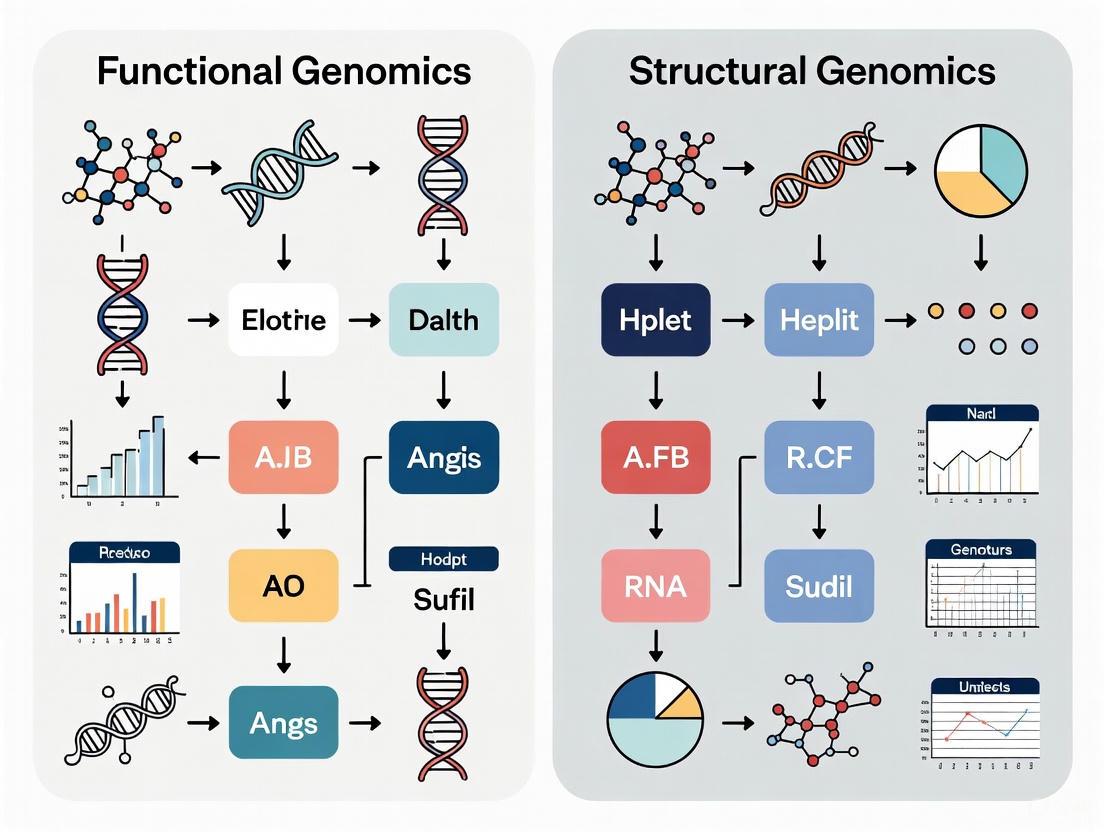
This article provides a detailed comparison for researchers and drug development professionals between structural genomics, which focuses on determining the three-dimensional structures of every protein encoded by a genome, and...
Structural Genomics vs Functional Genomics: A Comprehensive Guide for Research and Drug Development
Abstract
This article provides a detailed comparison for researchers and drug development professionals between structural genomics, which focuses on determining the three-dimensional structures of every protein encoded by a genome, and functional genomics, which investigates the dynamic functions and interactions of genes and their products. We explore the foundational principles, high-throughput methodologies, key applications in biomedicine and agriculture, and common challenges associated with each field. By synthesizing insights from current research and initiatives like the Protein Structure Initiative and the ENCODE project, this guide offers a strategic framework for selecting and optimizing genomic approaches to accelerate target discovery, personalized medicine, and therapeutic development.
Core Concepts: Defining Structural and Functional Genomics
What is Structural Genomics? From Genome Sequencing to 3D Protein Structures
Structural genomics is a genome-based approach to determine the three-dimensional structure of every protein encoded by a genome [1] [2]. This field represents a fundamental shift from traditional structural biology, which typically focuses on individual proteins, by employing high-throughput methods to solve protein structures on a proteome-wide scale [1] [3]. The primary goal is to create a comprehensive structural map of all proteins, which provides deep insights into molecular function and dramatically accelerates drug discovery [1] [4].
Defining the Genomic Landscape: Structural vs. Functional Genomics
Genomics is broadly divided into structural and functional domains, which offer complementary views of biological systems. The table below contrasts their core focuses and methodologies.
| Feature | Structural Genomics | Functional Genomics |
|---|---|---|
| Core Focus | Studies the static, physical nature and organization of genomes; aims to define the 3D structure of every protein in a genome [5] [3]. | Studies the dynamic aspects of gene expression and function, including transcription, translation, and protein-protein interactions [5] [6]. |
| Primary Goal | To construct physical maps, sequence genomes, and characterize the structure of all encoded proteins [5]. | To understand the relationship between an organism's genome and its phenotype [6]. |
| Central Questions | What is the physical structure of the genome and the proteins it encodes? [5] | How do genes and their products function and interact? [6] |
| Key Methods | Genome mapping, DNA sequencing, X-ray crystallography, NMR, computational modeling (e.g., ab initio, threading) [1] [5]. | Microarrays, RNA sequencing (RNA-seq), genetic interaction mapping (e.g., CRISPR screens), proteomics [5] [7] [8]. |
The Structural Genomics Pipeline: From Sequence to Structure
The process of structural genomics involves a multi-step pipeline to efficiently convert genomic information into protein structures.
Experimental Structure Determination
The primary experimental path involves expressing and purifying proteins for structure determination [1] [4].
- Cloning and Expression: Completed genome sequences allow every Open Reading Frame (ORF) to be cloned into expression vectors and produced in systems like E. coli [1]. The genome sequence provides the information to design primers for amplifying all ORFs [1].
- Purification and Crystallization: Expressed proteins are purified and then crystallized. This step is a major bottleneck, as not all proteins will crystallize readily [4].
- Structure Determination: The main experimental methods are:
- X-ray Crystallography: The most common method in structural genomics, it involves analyzing diffraction patterns from protein crystals [4].
- Nuclear Magnetic Resonance (NMR) Spectroscopy: Suitable for smaller, soluble proteins and provides dynamic information in solution [1] [4].
- Cryo-Electron Microscopy (Cryo-EM): Increasingly used for large complexes and membrane proteins that are difficult to crystallize [4].
Computational Modeling Approaches
When experimental methods are not feasible, computational approaches predict protein structures [1].
- Ab Initio Modeling: This method predicts the 3D structure from amino acid sequence data and physical-chemical principles alone, without relying on known homologs. It is essential for identifying novel protein folds. Tools like Rosetta are widely used for this purpose [1].
- Sequence-Based Modeling (Homology Modeling): This approach compares the gene sequence of an unknown protein with sequences of proteins with known structures [1] [2]. Model accuracy is highly dependent on sequence identity [1]:
- >50% identity: Highly accurate model.
- 30-50% identity: Model of intermediate accuracy.
- <30% identity: Low-accuracy model.
- Threading (Fold Recognition): This technique bases structural modeling on fold similarities rather than sequence identity, which can help identify distantly related proteins [1].
A groundbreaking method, EVfold_membrane, uses evolutionary co-variation—patterns of amino acid pairs that change together—extracted from multiple sequence alignments to predict 3D structures of proteins, including challenging membrane proteins, with remarkable accuracy [9].
Key Research Tools and Reagents
The following table details essential reagents and resources used in a typical structural genomics pipeline.
| Research Reagent / Resource | Function in Structural Genomics |
|---|---|
| Expression Vectors | Plasmids used to clone and express the target Open Reading Frames (ORFs) in a host organism like E. coli [1]. |
| Cloned ORFs | The fundamental starting materials for protein production; often shared as a community resource [1]. |
| Crystallization Kits | Pre-formulated solutions to screen optimal conditions for growing protein crystals [4]. |
| Protein Data Bank (PDB) | The single worldwide repository for the 3D structural data of proteins and nucleic acids [1]. |
| UniProt | A comprehensive resource for protein sequence and functional information, crucial for target selection and annotation [1]. |
Applications and Impact: From Basic Science to Drug Discovery
Structural genomics has proven its value in both basic research and applied medicine.
Case Studies in Structural Genomics
Consortia have been formed to solve structures on a genomic scale for specific organisms.
| Project / Organism | Genome Size (genes) | Key Rationale | Structures Determined (Examples) | Impact / Application |
|---|---|---|---|---|
| Thermotoga maritima [1] | 1,877 | Thermophilic proteins are hypothesized to be more stable and easier to crystallize. | Structure of TM0449, a protein with a novel fold [1]. | Identification of novel protein folds and functional insights. |
| Mycobacterium tuberculosis [1] [4] | ~4,000 | To identify novel drug targets for a major human pathogen with multi-drug resistant strains. | 708 protein structures (e.g., potential drug targets) [1]. | Foundation for structure-based drug discovery against tuberculosis [4]. |
Driving Drug Discovery and Functional Annotation
The outputs of structural genomics are critical for:
- Drug Discovery: Knowing the 3D structure of a protein, especially a drug target, facilitates rational drug design [1] [4]. Nearly half of all drug targets are membrane proteins, making them a high priority [9].
- Functional Annotation: For proteins of unknown function, the 3D structure can provide the first clues about their molecular role by revealing similarities to other folds and locating potential active sites [1].
- Understanding Conformational Change: Structures can provide snapshots of different functional states, helping to elucidate mechanisms like allostery and signaling [9].
The Future of Structural Genomics
The field is being transformed by new technologies that increase the scale and integration of structural data.
- Artificial Intelligence (AI) and Machine Learning: AI models like DeepVariant are improving the accuracy of variant calling, and deep learning systems such as AlphaFold are revolutionizing structure prediction, effectively realizing a key goal of structural genomics [7].
- Open Science Initiatives: Groups like the Structural Genomics Consortium (SGC) are pioneering open-access approaches, making all structural data and reagents immediately available to the scientific community [1] [10]. New initiatives are now focusing on generating open-source protein-ligand data to train the next generation of computational drug discovery tools [10].
- Integration with Multi-Omics: The combination of genomics with other data layers—such as transcriptomics, proteomics, and metabolomics—provides a more comprehensive view of biological systems and disease mechanisms [7] [8].
Structural genomics provides the essential physical framework for understanding the entire protein repertoire of an organism. By moving from genome sequencing to high-throughput 3D structure determination, it delivers indispensable insights into protein function, evolution, and mechanism. When integrated with the dynamic data from functional genomics, it forms a powerful, holistic approach to biological inquiry. For researchers and drug development professionals, structural genomics is not just an academic exercise; it is a foundational discipline that continues to underpin advances in molecular medicine and therapeutic innovation.
What is Functional Genomics? From Static Sequence to Dynamic Gene Activity
Functional genomics represents a fundamental shift in biological research, moving beyond the static DNA sequence to explore the dynamic functions of genes and their complex interactions on a genome-wide scale. While structural genomics focuses on mapping and sequencing genes to understand their physical structure, functional genomics investigates how genes operate, regulate biological processes, and respond to environmental stimuli to produce observable traits (phenotypes) [11]. This transformative approach integrates high-throughput technologies and computational analysis to unravel how genetic information flows through biological systems to drive cellular processes and phenotypic outcomes [11].
Core Principles and Objectives
Functional genomics is guided by several core principles that distinguish it from structural approaches. It examines the entire Central Dogma flow—from DNA to RNA to protein—as a dynamic, regulated process rather than a simple sequence [11]. This includes investigating transcriptional regulation through genome-wide RNA expression profiling, translational dynamics of protein synthesis, and feedback mechanisms involving epigenetic modifications that influence DNA accessibility [11].
Key Objectives of Functional Genomics Research:
- Decoding Gene Function: Systematically determining the functional roles of genes, including characterizing non-coding elements like enhancers and miRNAs through advanced techniques such as CRISPR interference [11].
- Bridging Genotype to Phenotype: Correlating genomic variants with molecular phenotypes to clarify mechanisms behind traits like drug resistance or developmental disorders [11].
- Advancing Precision Medicine: Identifying therapeutic targets through high-throughput screens and stratifying patients based on molecular subtypes for more targeted treatments [11].
Key Technological Methods and Platforms
The advancement of functional genomics has been driven by revolutionary technologies that enable high-throughput analysis of gene function. The table below summarizes the primary methodologies used in this field.
Table: Core Functional Genomics Technologies and Applications
| Technology Category | Key Methods | Primary Applications | Advantages |
|---|---|---|---|
| Sequencing Technologies | Next-Generation Sequencing (NGS), Third-Generation Sequencing (PacBio, Oxford Nanopore) [7] [11] | Whole genome sequencing, exome sequencing, targeted sequencing, structural variant detection [11] | High-throughput, comprehensive variant detection, long-read capabilities for complex regions [11] |
| Genome Editing | CRISPR-Cas9, RNA interference (RNAi) [7] [11] | Functional genomics screens, disease modeling, therapeutic development [11] | Precise gene editing, high-throughput screening capability, programmable targeting [11] |
| Transcriptomic Analysis | RNA-Seq, single-cell RNA-Seq, spatial transcriptomics [11] [12] | Gene expression quantification, alternative splicing analysis, cellular heterogeneity mapping [11] | Detection of known and novel transcripts, broad dynamic range, single-cell resolution [11] [12] |
| Epigenomic Analysis | ChIP-Seq, ATAC-Seq, bisulfite sequencing [11] [13] | Transcription factor binding site mapping, open chromatin identification, DNA methylation analysis [11] | Genome-wide profiling of regulatory elements, high-resolution mapping [11] |
| Chromatin Interaction Mapping | ChIA-PET, 5C technology, Hi-C [14] [15] | 3D genome architecture analysis, enhancer-promoter interaction mapping [14] | High-resolution spatial organization, identification of long-range regulatory elements [14] |
Experimental Workflow: From Sample to Insight
The following diagram illustrates a generalized functional genomics workflow that integrates multiple technologies to bridge genetic sequence with biological function:
Detailed Experimental Protocols in Functional Genomics
Chromatin Interaction Analysis (ChIA-PET)
Chromatin interaction mapping provides critical insights into how three-dimensional genome organization influences gene regulation. The ChIA-PET (Chromatin Interaction Analysis by Paired-End Tag Sequencing) method offers high-resolution mapping of chromatin interactions associated with specific proteins or histone marks [14] [15].
Table: Key Research Reagents for ChIA-PET Experiments
| Reagent/Equipment | Function | Specific Examples/Considerations |
|---|---|---|
| Formaldehyde | Cross-linking agent to capture protein-DNA interactions | Typically used at 1% final concentration for 10 minutes; cross-linking is stopped with glycine [15] |
| Restriction Enzyme | Fragments cross-linked DNA | Selection critical; should not have significant star activity or be sensitive to DNA methylation [15] |
| Specific Antibodies | Immunoprecipitation of target protein-DNA complexes | RNA Polymerase II or H3K4me3 antibodies commonly used [14] |
| T4 DNA Ligase | Proximity-based ligation of cross-linked fragments | Performed under diluted conditions to favor intramolecular ligation [15] |
| Proteinase K | Reverses cross-links | Incubated at 55°C after ligation [15] |
| Next-Generation Sequencer | High-throughput sequencing of interaction products | Illumina platforms commonly used for sequencing [7] [15] |
Protocol Steps:
- Cross-linking: Cells are cross-linked with formaldehyde (typically 1% final concentration) for 10 minutes to capture protein-DNA interactions, followed by quenching with glycine [15].
- Cell Lysis: Cells are resuspended in a hypotonic buffer containing 0.2% NP-40 with protease inhibitors and dounce-homogenized [15].
- Chromatin Digestion: Fixed chromatin is solubilized with SDS, followed by Triton X-100 addition to quench excess SDS. Restriction enzyme digestion is performed overnight [15].
- Proximity Ligation: Diluted ligation with T4 DNA ligase is performed at 16°C for 2-4 hours to join cross-linked fragments [15].
- Reverse Cross-linking and Purification: Treatment with Proteinase K at 55°C reverses cross-links, followed by DNA purification via phenol-chloroform extraction [15].
- Library Preparation and Sequencing: Specific to ChIA-PET, incorporating barcodes for high-throughput sequencing [14].
CRISPR-Based Functional Screens
CRISPR-Cas9 genome editing has revolutionized functional genomics by enabling precise, high-throughput interrogation of gene function [7] [11].
Protocol Steps:
- Guide RNA Library Design: Computational design of sgRNAs targeting genes of interest, typically with multiple guides per gene to control for off-target effects [11].
- Library Delivery: Lentiviral transduction of sgRNA libraries into cells expressing Cas9 at optimized multiplicity of infection to ensure single integration events [11].
- Selection Pressure: Application of relevant selective pressures (e.g., drug treatment, nutrient deprivation, or time-course analysis) to identify genes affecting specific phenotypes [11].
- Sequencing and Analysis: Extraction of genomic DNA followed by PCR amplification of sgRNA regions and next-generation sequencing to quantify guide abundance under selection conditions [11].
Data Analytics and Computational Approaches
Functional genomics generates massive datasets that require advanced computational tools for interpretation. The integration of artificial intelligence and machine learning has become indispensable for uncovering patterns and insights from these complex datasets [7] [16].
Key Analytical Approaches:
- Differential Expression Analysis: Identification of genes with statistically significant expression changes across conditions using tools like DESeq2 and edgeR [11].
- Variant Calling and Interpretation: AI-powered tools like Google's DeepVariant utilize deep learning to identify genetic variants with greater accuracy than traditional methods [7].
- Multi-Omics Data Integration: Combining genomic, transcriptomic, proteomic, and epigenomic data to build comprehensive models of biological systems [7] [16].
- Network Analysis: Construction of gene regulatory networks and protein-protein interaction maps to understand functional relationships [11].
The Multi-Omics Integration Framework
The following diagram illustrates how different data types are integrated in functional genomics studies to bridge genotype and phenotype:
Applications and Impact on Biomedical Research
Drug Discovery and Target Validation
Functional genomics has transformed drug discovery by enabling more precise target identification and validation. Drugs developed with genetic evidence are twice as likely to achieve market approval, representing a significant improvement in a sector where nearly 90% of drug candidates traditionally fail [17]. Companies are leveraging functional genomics to de-risk target discovery and improve drug development outcomes [17].
Understanding Complex Disease Mechanisms
By mapping how genetic variations in coding and non-coding regions influence gene regulation, functional genomics provides insights into complex diseases. For example, in breast cancer, functional studies revealed HER2 gene overexpression mechanisms, leading to targeted therapies like trastuzumab [17]. Similarly, functional genomics approaches are being applied to unravel the complex pathways involved in neurodegenerative conditions like Parkinson's and Alzheimer's [7].
Agricultural and Environmental Applications
Beyond human health, functional genomics is revolutionizing agriculture by improving crop yields, disease resistance, and environmental adaptability [7]. Research in maize has utilized chromatin interaction maps to understand how three-dimensional genome organization influences important agronomic traits [14].
Future Directions and Emerging Trends
The future of functional genomics is being shaped by several emerging trends. Single-cell and spatial genomics technologies are providing unprecedented resolution in understanding cellular heterogeneity and tissue organization [7] [18]. Long-read sequencing technologies are improving genome assembly and enabling more comprehensive analysis of complex genomic regions [11]. The integration of artificial intelligence and machine learning continues to enhance our ability to interpret complex genomic datasets and predict gene function [7] [16].
As the field evolves, functional genomics is poised to become increasingly central to biological research and therapeutic development, ultimately fulfilling the promise of the genomic era by moving beyond sequence to truly understand function.
Structural genomics and functional genomics represent two fundamental, complementary philosophies in the post-genome era. While structural genomics characterizes the physical nature of whole genomes and describes the three-dimensional structure of every protein encoded by a given genome, functional genomics attempts to make use of the vast wealth of data from genomic and transcriptomic projects to describe gene and protein functions and interactions [6]. The core distinction lies in their focus: structural genomics concerns itself with the static aspects of genomic information, such as DNA sequence or structures, while functional genomics focuses on dynamic aspects such as gene transcription, translation, and regulation of gene expression [6]. This overview provides a technical comparison of their core objectives, philosophical approaches, and methodologies, framed within the context of a broader thesis on genomic research.
Core Objectives and Philosophical Approaches
The fundamental difference between these fields is anchored in their primary goals and the philosophical questions they seek to answer.
Philosophical Underpinnings
Structural Genomics operates on the principle that structure directs function. It is a gene-driven approach that relies on genomic information to identify, clone, and express genes, characterizing them at the molecular level [19] [6]. The field is predicated on the economy of scale, pursuing structures of proteins on a genome-wide scale through large-scale cloning, expression, and purification [6].
Functional Genomics is fundamentally concerned with understanding the relationship between an organism's genome and its phenotype [6]. It employs both gene-driven and phenotype-driven approaches, the latter relying on phenotypes from random mutation screens or naturally occurring gene variants to identify and clone responsible genes without prior knowledge of underlying molecular mechanisms [19]. This field prioritizes understanding dynamic biological processes over static structural information.
Primary Objectives
Table 1: Core Objectives of Structural and Functional Genomics
| Aspect | Structural Genomics | Functional Genomics |
|---|---|---|
| Primary Goal | Determine 3D structure of every protein encoded by a genome; construct complete genetic, physical, and transcript maps [6] [20] | Understand gene/protein functions and interactions; link genomic data to biological function [6] [21] |
| Scope of Inquiry | Static genomic architecture [6] | Dynamic gene expression and regulation [6] |
| Analytical Scale | Global structural analysis on a genome-wide scale [20] | Genome-wide assessment of functional elements [19] |
| Ultimate Aim | Inform knowledge of protein function; identify novel protein folds; discover drug targets [6] | Synthesize genomic knowledge into understanding dynamic properties of organisms [6] |
Key Methodologies and Experimental Protocols
The philosophical differences between these fields manifest distinctly in their methodological approaches.
Structural Genomics Workflows and Techniques
Structural genomics employs a systematic, high-throughput pipeline for protein structure determination.
Protocol 1: High-Throughput Protein Structure Determination
- Gene Identification: All open reading frames (ORFs) are identified from completed genome sequences [6].
- Cloning: ORFs are amplified using specific primers and cloned into expression vectors [6].
- Protein Expression: Cloned ORFs are expressed in host systems (e.g., E. coli) [6].
- Protein Purification: Expressed proteins undergo purification [6].
- Crystallization: Purified proteins are crystallized for analysis [6].
- Structure Determination: Crystallized proteins undergo structure determination via:
- X-ray crystallography
- Nuclear magnetic resonance (NMR) spectroscopy [6]
Computational Modeling Approaches:
- Sequence-Based Modeling: Compares gene sequence of unknown protein with sequences of proteins with known structures. Highly accurate modeling requires ≥50% amino acid sequence identity [6].
- Threading: Bases structural modeling on fold similarities rather than sequence identity, helping identify distantly related proteins [6].
- Ab Initio Modeling: Uses protein sequence data and physicochemical interactions of encoded amino acids to predict 3D structures with no homology to solved structures (e.g., Rosetta program) [6].
Diagram 1: Structural genomics workflow.
Functional Genomics Experimental Approaches
Functional genomics utilizes multiplex techniques to measure the abundance of many or all gene products within biological samples, focusing on genome-wide analysis of gene expression [19] [6].
Protocol 2: Genome-Wide Functional Analysis
- Experimental Design: Define biological conditions, treatments, or time points for comparison.
- Sample Preparation: Extract nucleic acids or proteins under appropriate conditions.
- Genome-Wide Profiling using:
- Microarrays: Measure mRNA abundance through hybridization of fluorescently labeled target mRNA to immobilized probe sequences [6].
- RNA Sequencing: Most efficient method to study transcription and gene expression, typically by next-generation sequencing [6].
- Serial Analysis of Gene Expression (SAGE): Sequences 10-17 base pair tags unique to each gene, providing unbiased measurement of transcript number per cell [6].
- Data Integration: Combine with other functional data (proteomic, metabolomic) for systems-level analysis.
Advanced Single-Cell Methods: Recent advances like single-cell DNA-RNA sequencing (SDR-seq) enable simultaneous profiling of up to 480 genomic DNA loci and genes in thousands of single cells, allowing accurate determination of coding and noncoding variant zygosity alongside associated gene expression changes [22]. This method combines in situ reverse transcription of fixed cells with multiplexed PCR in droplets, enabling high-throughput linkage of genotypes to gene expression at single-cell resolution [22].
Diagram 2: Functional genomics workflow.
Comparative Analysis: Technical Specifications and Outputs
The methodological differences between structural and functional genomics yield distinct data types and applications.
Table 2: Methodological Comparison Between Structural and Functional Genomics
| Parameter | Structural Genomics | Functional Genomics |
|---|---|---|
| Primary Data Generated | Protein structures; genetic, physical, and transcript maps [6] [20] | Gene expression patterns; protein-protein interactions; regulatory networks [6] |
| Key Technologies | X-ray crystallography; NMR; computational modeling (Rosetta) [6] | Microarrays; RNA-seq; SAGE; CRISPR screens; single-cell multi-omics [6] [22] |
| Scale of Analysis | Genome-wide protein structure determination [6] | Genome-wide assessment of gene expression and function [19] |
| Typical Output | 3D protein coordinates; structural annotations | Expression matrices; differential expression lists; functional annotations |
| Time Dimension | Static snapshots of molecular structures | Dynamic monitoring of molecular changes over time/conditions |
The Scientist's Toolkit: Essential Research Reagents and Materials
Successful execution of genomic research requires specialized reagents and tools tailored to each field's objectives.
Table 3: Essential Research Reagent Solutions in Genomics
| Reagent/Tool | Function | Application Context |
|---|---|---|
| Expression Vectors | Clone and express ORFs in host systems | Structural genomics protein production pipeline [6] |
| Crystallization Reagents | Facilitate protein crystallization for structure determination | Structural genomics X-ray crystallography [6] |
| Polymerase Chain Reaction (PCR) | Amplify DNA fragments for cloning or analysis | Both fields; fundamental to molecular biology techniques [19] |
| Next-Generation Sequencing (NGS) | High-throughput DNA/RNA sequencing | Functional genomics transcriptomics; structural genomics sequence verification [7] |
| CRISPR-Cas Systems | Precise gene editing and functional perturbation | Functional genomics loss-of-function and activation screens [7] |
| Fixed Cells (PFA/Glyoxal) | Preserve cellular contents for downstream analysis | Functional genomics single-cell methods like SDR-seq [22] |
| Guide RNA Libraries | Target specific genomic loci for editing | Functional genomics CRISPR screens [7] |
| Unique Molecular Identifiers (UMIs) | Tag individual molecules to eliminate PCR biases | Functional genomics single-cell sequencing [22] |
Applications in Disease Research and Therapeutic Development
Both fields contribute substantially to biomedical research but through different mechanistic insights.
Structural Genomics Applications
- Drug Target Identification: Determining protein structures reveals novel binding sites for therapeutic development [6].
- TB Structural Genomics Consortium: Determined structures of 708 potential drug targets in Mycobacterium tuberculosis to address multi-drug-resistant tuberculosis [6].
- Novel Fold Discovery: Identification of previously unknown protein structural motifs, such as TM0449 protein in Thermotogo maritima with novel fold [6].
Functional Genomics Applications
- Disease Mechanism Elucidation: Linking genetic variants to gene expression changes in diseases like B cell lymphoma, where cells with higher mutational burden exhibit elevated B cell receptor signaling and tumorigenic gene expression [22].
- Host-Pathogen Interactions: Understanding virulence factors and survival mechanisms, such as Mycobacterium tuberculosis LipB protein critical for bacterial survival [19].
- Gene Regulatory Network Mapping: Identifying transcriptional regulators for traits like drought tolerance in bioenergy crops (poplar trees) or silica biomineralization in diatoms [21].
Integration in Modern Research: Converging Paths
Contemporary research increasingly integrates structural and functional genomic approaches. The ENCODE (Encyclopedia of DNA Elements) project represents this integration, aiming to identify all functional elements of genomic DNA in both coding and noncoding regions through comprehensive analysis [6]. Similarly, single-cell multi-omics technologies like SDR-seq bridge this divide by simultaneously assessing genomic variants and their functional consequences on gene expression in the same cell [22].
Functional genomics has evolved to include diverse "omics" technologies that provide complementary insights: transcriptomics (gene expression), proteomics (protein production), metabolomics (metabolic pathways), and epigenomics (epigenetic modifications) [7] [6]. This multi-omics integration provides a comprehensive view of biological systems, linking genetic information with molecular function and phenotypic outcomes [7].
Structural and functional genomics represent complementary philosophical and technical approaches to deciphering the biological information encoded in genomes. Structural genomics takes a static, architecture-focused approach to map the three-dimensional landscape of genomes and their protein products. In contrast, functional genomics embraces dynamism, seeking to understand how genomic elements operate and interact within living systems. While their methodologies and immediate objectives differ, their integration provides a more complete understanding of biological systems than either approach could achieve independently, ultimately advancing applications in drug discovery, personalized medicine, and bioengineering. The continuing convergence of these fields through multi-omics approaches and advanced computational methods promises to further accelerate the translation of genomic information into biological insight and therapeutic innovation.
The central dogma of molecular biology establishes the fundamental framework for genetic information flow, providing the critical theoretical foundation that bridges structural and functional genomics. This whitepaper examines how DNA → RNA → protein transmission principles inform both genomic disciplines, enabling researchers to systematically progress from genetic blueprint mapping to functional characterization. By exploring established and emerging technologies within this paradigm, we demonstrate how information flow understanding accelerates drug target identification and therapeutic development, with particular emphasis on experimental design considerations that ensure data reliability and translational relevance for scientific and drug development professionals.
The central dogma of molecular biology represents a theory stating that genetic information flows only in one direction, from DNA, to RNA, to protein, or RNA directly to protein [23]. First proposed by Francis Crick in 1958, this principle establishes the conceptual framework governing how biological information is transferred, stored, and expressed within cellular systems [24]. While often simplified as "DNA → RNA → protein," the original formulation specifically emphasized that sequence information cannot flow back from proteins to nucleic acids [24].
This directional information flow provides the foundational logic that connects structural genomics—concerned with characterizing and mapping biological structures—with functional genomics, which aims to elucidate the roles and regulatory dynamics of genes in shaping biological functions at the molecular level [25]. The central dogma thus creates a natural pipeline from structural characterization to functional analysis, enabling researchers to systematically progress from genetic blueprint mapping to understanding the physiological consequences of genetic variation.
Structural Genomics: Mapping the Biological Blueprint
Structural genomics focuses on the physical properties of genomes, including sequencing, mapping, and cataloging genetic elements without immediate emphasis on their functional roles [25]. This discipline establishes the fundamental "parts list" of biological systems, providing the reference frameworks upon which functional analyses are built.
Core Methodologies in Structural Genomics
Table 1: Primary Structural Genomics Approaches
| Methodology | Key Objective | Information Flow Stage | Typical Output |
|---|---|---|---|
| Whole Genome Sequencing | Determine complete DNA sequence of an organism | DNA → DNA (replication) | Reference genome assembly |
| Exome Sequencing | Target protein-coding regions only | DNA → DNA (replication) | Catalog of exonic variants |
| Sanger Sequencing | High-accuracy validation of specific regions | DNA → DNA (replication) | Confirmed sequence for critical regions |
| Epigenomic Mapping | Characterize DNA methylation and histone modifications | DNA structure modulation | Epigenetic landscape maps |
| 3D Genome Architecture | Map spatial organization of chromatin | DNA higher-order structure | Chromatin interaction maps |
Structural genomics technologies have evolved substantially, with Next-Generation Sequencing (NGS) platforms revolutionizing the field by making large-scale DNA sequencing faster, cheaper, and more accessible [7]. Unlike traditional Sanger sequencing, which was time-intensive and costly, NGS enables simultaneous sequencing of millions of DNA fragments, democratizing genomic research and enabling ambitious projects like the 1000 Genomes Project and UK Biobank [7].
Experimental Design Considerations for Structural Genomics
Robust experimental design in structural genomics requires careful consideration of several key factors. For sequencing applications, the number of biological replicates is critical—for RNA-Seq, a minimum of 3 replicates is absolute, with 4 being optimal [26]. Sample processing consistency is equally vital; RNA extractions should be performed simultaneously whenever possible to minimize batch effects [26].
For variant detection applications, specific sequencing depth requirements ensure reliable results. In tumor/normal paired samples, mean target depth should be ≥100X for tumor samples and ≥50X for germline samples [26]. When structural variation or copy number alteration detection are objectives, whole genome sequencing is strongly recommended over exome sequencing due to its superior coverage uniformity and accuracy [26].
Functional Genomics: From Sequence to Biological Consequence
Functional genomics extends beyond the study of individual genes to investigate the complex relationships between genes and the phenotypic traits they influence [25]. This field aims to close the gap between genetic information and biological function, facilitating a deeper understanding of gene roles and their implications in health and disease.
Technologies for Functional Analysis
Table 2: Key Functional Genomics Technologies
| Technology Platform | Analytical Focus | Information Flow Stage | Primary Applications |
|---|---|---|---|
| CRISPR-Cas9 Screening | Gene editing and silencing | DNA → Function | High-throughput functional validation |
| RNA Sequencing | Transcriptome profiling | DNA → RNA | Gene expression quantification, alternative splicing |
| Single-Cell RNA Sequencing | Cell-to-cell variation | DNA → RNA (at single-cell resolution) | Cellular heterogeneity, rare cell identification |
| Spatial Transcriptomics | Tissue context of gene expression | DNA → RNA (with spatial coordinates) | Tissue microenvironment mapping |
| Proteomics Platforms | Protein expression and modification | RNA → Protein | Protein abundance, post-translational modifications |
| Chromatin Immunoprecipitation (ChIP-Seq) | Protein-DNA interactions | DNA structure-function relationships | Transcription factor binding, histone modification mapping |
Functional genomics leverages the central dogma's framework to systematically probe how genetic elements contribute to cellular and organismal phenotypes. By assigning functions to genes and non-coding regions, this field enables identification of molecular pathways and networks underlying disease mechanisms, facilitating discovery of novel biomarkers and therapeutic targets [25].
Experimental Design for Functional Genomics
Proper experimental design is particularly crucial in functional genomics due to the dynamic nature of transcriptional and translational regulation. The types of biological inferences that can be drawn from functional genomic experiments are fundamentally dependent on experimental design, which must reflect the research question, limitations of the experimental system, and analytical methods [27].
Functional genomics experiments can be categorized into distinct types, each with specific design requirements [27]:
- Class discovery: Identifies unexpected patterns in data using unsupervised methods
- Class comparison: Compares different phenotypic groups to find distinguishing features
- Class prediction: Develops models to predict biological effects based on patterns
For ChIP-Seq experiments, biological replicates are essential—2 replicates represent an absolute minimum, with 3 recommended where possible [26]. Antibody quality is particularly critical, with "ChIP-seq grade" antibodies recommended and validation essential for unreviewed antibodies [26].
Integrated Experimental Workflows
The connection between structural and functional genomics is most evident in integrated experimental workflows that systematically progress from genetic characterization to functional validation.
From Variant to Function: An Integrated Pipeline
Multi-Omics Integration: Beyond the Genome
While genomics provides valuable insights into DNA sequences, it represents only one component of the biological information flow. Multi-omics approaches combine genomics with additional layers of biological information to create a comprehensive view of biological systems [7]:
- Transcriptomics: RNA expression levels connecting DNA to RNA stage
- Proteomics: Protein abundance and interactions fulfilling RNA → protein translation
- Metabolomics: Metabolic pathways and compounds representing functional outputs
- Epigenomics: Epigenetic modifications regulating DNA → RNA transcription
This integrative approach provides a holistic view of biological systems, linking genetic information with molecular function and phenotypic outcomes, and has proven particularly valuable in complex areas like cancer research, cardiovascular diseases, and neurodegenerative disorders [7].
The Scientist's Toolkit: Essential Research Reagents and Materials
Table 3: Essential Research Reagents for Genomics Investigations
| Reagent/Material | Function/Purpose | Application Context |
|---|---|---|
| High-Fidelity DNA Polymerase | Accurate DNA amplification with minimal error rate | Structural genomics: target amplification for sequencing |
| Reverse Transcriptase | Synthesizes cDNA from RNA templates | Functional genomics: transcriptome analysis |
| CRISPR-Cas9 System | Precise gene editing via RNA-guided DNA cleavage | Functional genomics: gene knockout/knockin studies |
| ChIP-Grade Antibodies | High-specificity antibodies for chromatin immunoprecipitation | Functional genomics: protein-DNA interaction mapping |
| Next-Generation Sequencing Kits | Library preparation for high-throughput sequencing | Structural genomics: whole genome/exome/transcriptome sequencing |
| dNTPs/ddNTPs | Nucleotides for DNA synthesis/chain termination | Structural genomics: Sanger sequencing |
| RNA-Seq Library Prep Kits | Convert RNA to sequencing-ready libraries | Functional genomics: transcriptome quantification |
| Bisulfite Conversion Reagents | Detect DNA methylation patterns through C→U conversion | Functional genomics: epigenomic analysis |
| Single-Cell Barcoding Reagents | Index individual cells for single-cell analysis | Functional genomics: cellular heterogeneity studies |
| Protease K | Protein digestion for nucleic acid purification | Structural genomics: sample preparation for DNA/RNA isolation |
Information Flow in Drug Development Applications
The directional information flow established by the central dogma provides a logical framework for therapeutic development, particularly in precision medicine approaches that tailor treatments based on an individual's genetic profile [7].
Translational Workflows in Precision Medicine
Drug Development Applications
The connection between structural and functional genomics enables several critical applications in pharmaceutical development:
- Pharmacogenomics: Predicting how genetic variations influence drug metabolism to optimize dosage and minimize side effects by understanding DNA → RNA → protein cascades [7]
- Targeted Cancer Therapies: Genomic profiling identifies actionable mutations, guiding use of treatments like EGFR inhibitors in lung cancer through DNA → RNA → protein pathway analysis [7]
- Biomarker Discovery: Multi-omics approaches combine genomics with transcriptomics and proteomics to identify diagnostic, prognostic, and predictive biomarkers [7]
- Functional Validation: CRISPR-based screens identify critical genes for specific diseases, enabling prioritization of therapeutic targets [7]
Emerging Technologies and Future Directions
The field of genomics continues to evolve rapidly, with new technologies enhancing our ability to interrogate information flow at increasingly refined resolution:
Single-Cell Multi-Omics: Technologies that simultaneously measure multiple molecular layers (genome, epigenome, transcriptome, proteome) from individual cells are revealing previously unappreciated cellular heterogeneity and enabling reconstruction of lineage relationships [7] [25].
Spatial Transcriptomics: This functional genomics tool maps gene expression within the spatial context of tissues, identifying where specific transcripts are located while preserving tissue architecture [25]. The process involves tissue preparation on barcoded slides, mRNA capture with spatial barcodes, reverse transcription and sequencing, and computational mapping to generate spatially resolved transcriptomic maps [25].
Artificial Intelligence in Genomics: AI and machine learning algorithms have become indispensable for analyzing genomic datasets, uncovering patterns and insights that traditional methods might miss [7]. Applications include variant calling with tools like Google's DeepVariant, disease risk prediction using polygenic risk scores, and drug discovery by identifying novel targets [7].
Long-Read Sequencing: Platforms from Oxford Nanopore Technologies and others have expanded boundaries of read length, enabling real-time, portable sequencing and improved resolution of structurally complex genomic regions [7].
These technological advances are deepening our understanding of information flow biological systems and accelerating the translation of genomic discoveries into clinical applications, particularly in precision medicine approaches that leverage individual genetic profiles to guide therapeutic decisions [7] [25].
The completion of the Human Genome Project (HGP) in 2003 marked a transformative moment for biological sciences, providing the first reference map of human DNA. This monumental achievement laid the foundation for two powerful, complementary fields of research: structural genomics, which aims to characterize the three-dimensional structures of all proteins encoded by a genome, and functional genomics, which investigates the dynamic functions and interactions of genes and their products [28] [1]. The subsequent development of CRISPR-Cas9 technology a decade later catalyzed a second revolution, providing a precise and programmable toolkit for interrogating and manipulating genomic sequences. This whitepaper details the key historical milestones connecting the HGP to CRISPR, framing them within the context of structural and functional genomics research and their collective impact on drug discovery and therapeutic development.
Historical Timeline: From Sequencing to Editing
The table below summarizes the major milestones in genomics, highlighting the parallel and often interconnected development of structural and functional genomics approaches.
Table 1: Key Historical Milestones in Genomics and Genome Editing
| Year | Milestone | Field | Significance |
|---|---|---|---|
| 1990 | Launch of the Human Genome Project | Foundational | Initiated the international effort to sequence the entire human genome [29]. |
| 1998 | Mycobacterium tuberculosis genome sequenced | Structural Genomics | Provided a comprehensive set of potential drug targets for a major pathogen, guiding structural genomics consortia [30]. |
| 2001 | First drafts of the human genome published | Foundational | Provided the first reference maps of the human genome, enabling systematic genetics research [29]. |
| 2003 | Human Genome Project completed | Foundational | Offered a "nearly complete" human genome sequence, accelerating the search for disease genes [29]. |
| 2005-2006 | Early Structural Genomics Consortia established (e.g., TBSGC) | Structural Genomics | Pioneered high-throughput pipelines for determining protein structures on a genomic scale [1] [30]. |
| 2009 | Widespread adoption of RNA-Seq | Functional Genomics | Enabled precise, high-throughput measurement of transcriptomes, largely replacing microarrays [28]. |
| 2012 | CRISPR-Cas9 adapted for genome editing | Foundational / Functional Genomics | Demonstrated programmable DNA cleavage by CRISPR-Cas9, revolutionizing genetic engineering [31] [32]. |
| 2015-2017 | Advanced CRISPR tools (Base/Prime Editing, CRISPRi/a) developed | Functional Genomics | Expanded the CRISPR toolkit beyond simple knockouts to include precise editing and transcriptional control [32]. |
| 2017-Present | Integration of CRISPR with single-cell multi-omics (e.g., Perturb-seq) | Functional Genomics | Enabled large-scale mapping of gene function and regulatory networks at single-cell resolution [28] [32]. |
| 2022 | First complete telomere-to-telomere (T2T) human genome | Foundational | Closed the last gaps in the human genome sequence, revealing complex, repetitive regions [29]. |
| 2023 | Draft human pangenome released | Foundational | Incorporated sequences from 47 diverse individuals, capturing more global genetic variation [29]. |
| 2025 | AI-designed CRISPR editors (e.g., OpenCRISPR-1) and expanded pangenome | Foundational / Functional Genomics | Used large language models to generate novel, highly functional Cas proteins; expanded the pangenome to 65 individuals for greater diversity [33] [29]. |
Core Concepts: Structural vs. Functional Genomics
Structural Genomics
Structural genomics is a high-throughput endeavor to determine the three-dimensional (3D) structures of all proteins encoded by a genome. Its primary goal is to provide a complete structural landscape of the proteome, which can reveal novel protein folds, inform understanding of protein function, and serve as a foundation for drug discovery [1] [30].
- Key Goals and Methods: The field employs both experimental and computational modeling approaches. Experimental methods include high-throughput X-ray crystallography and nuclear magnetic resonance (NMR) on proteins produced from cloned open reading frames (ORFs) [1]. Modeling-based methods include:
- Ab initio modeling: Predicts protein structure from sequence based on physical and chemical principles [1].
- Sequence-based homology modeling: Leverages structures of evolutionarily related proteins as templates [1] [34].
- Threading: Identifies the best fold from a library of known structures for a given sequence, useful for detecting distant evolutionary relationships [1].
- Applications in Drug Discovery: Initiatives like the Tuberculosis Structural Genomics Consortium (TBSGC) have solved structures of hundreds of proteins from Mycobacterium tuberculosis, identifying novel drug targets and enabling structure-based drug design for new antibiotics [30].
Functional Genomics
Functional genomics is the genome-wide study of how genes and intergenic regions contribute to biological processes. It focuses on the dynamic aspects of the genome, such as gene transcription, translation, and protein-protein interactions, to understand how genotype influences phenotype [28] [35].
- Key Goals and Methodologies: The goal is to understand the function of genes and the interplay between genomic components in a biological context. It employs multiplexed, high-throughput assays across different molecular layers [28] [36]:
- At the DNA level: Techniques include ChIP-seq to map DNA-protein interactions and ATAC-seq to identify regions of accessible chromatin.
- At the RNA level: Methods like RNA-Seq and single-cell RNA-Seq (scRNA-seq) measure the transcriptome, while Massively Parallel Reporter Assays (MPRAs) test regulatory element activity.
- At the protein level: Yeast two-hybrid (Y2H) screening and affinity purification mass spectrometry (AP/MS) identify protein-protein interactions.
- The Role of CRISPR: CRISPR-Cas9 is a quintessential functional genomics tool. By enabling targeted gene knockouts (via NHEJ), precise edits (via HDR), or transcriptional modulation (via CRISPRi/a), it allows for direct functional assessment of genetic elements in their native context [31] [32]. Large-scale CRISPR screens systematically link genes to phenotypes.
The following diagram illustrates the core focus and high-throughput methodologies that distinguish these two fields.
Experimental Protocols in the CRISPR Era
A Standard Workflow for CRISPR-Cas9 Functional Genomic Screening
The following protocol outlines a typical loss-of-function screen using CRISPR-Cas9 knockouts, a cornerstone of modern functional genomics [31] [32].
- sgRNA Library Design: A library of target-specific single-guide RNAs (sgRNAs) is designed. For a genome-wide screen, this typically involves 4-6 sgRNAs per gene, plus non-targeting control sgRNAs. Libraries are often cloned into lentiviral vectors for delivery.
- Delivery and Stable Cell Line Generation: The sgRNA library is packaged into lentiviral particles and used to transduce a population of cells expressing Cas9 at a low Multiplicity of Infection (MOI) to ensure most cells receive only one sgRNA. Cells are then selected with antibiotics (e.g., Puromycin) to generate a stable, representation of the library.
- Perturbation and Selection: The pooled cell population is subjected to a selective pressure relevant to the biological question (e.g., a chemotherapeutic drug for cancer resistance studies, or a specific growth factor for survival screens). This population is passaged for multiple cell doublings.
- Genomic DNA Extraction and Sequencing: Genomic DNA is harvested from the cell population both before and after selection. The integrated sgRNA sequences are amplified by PCR and prepared for next-generation sequencing.
- Bioinformatic Analysis: Sequencing reads are mapped back to the original sgRNA library. The enrichment or depletion of specific sgRNAs in the post-selection population compared to the starting population is calculated. Statistically significant hits identify genes whose knockout confers a fitness advantage or disadvantage under the selection condition.
Protocol: Perturb-seq Integrating CRISPR with Single-Cell RNA-Seq
Perturb-seq is a powerful method that couples CRISPR-mediated genetic perturbations with single-cell RNA sequencing to assess functional outcomes at a granular level [28] [32].
- Perturbation Introduction: A pooled CRISPR screen (as in protocol 4.1) is performed in a population of cells. Alternatively, cells can be transfected with CRISPR reagents in a pooled format.
- Single-Cell Partitioning and Barcoding: After a suitable period for gene expression changes to occur, the entire pooled population of perturbed cells is loaded onto a single-cell RNA-Seq platform (e.g., 10x Genomics). This platform partitions thousands of individual cells into droplets, each containing a unique barcode.
- Library Preparation and Sequencing: Within each droplet, the mRNA from a single cell is reverse-transcribed into cDNA, which is tagged with the cell's unique barcode. The sgRNA sequence is also captured and barcoded, linking each perturbation to the transcriptional profile of the cell in which it occurred. The pooled libraries are sequenced.
- Computational Deconvolution and Analysis: Bioinformatic pipelines are used to demultiplex the data, assigning all sequenced transcripts and the corresponding sgRNA to their cell of origin. Differential expression analysis is then performed, comparing transcriptional profiles of cells containing a target gene sgRNA to cells containing control sgRNAs. This reveals the direct and indirect effects of a genetic perturbation on the entire transcriptome.
The logical flow of this integrated experimental and analytical approach is depicted below.
The Scientist's Toolkit: Essential Research Reagents
Successful execution of the protocols above relies on a suite of specialized reagents and tools. The following table details key components of the functional genomics toolkit.
Table 2: Essential Research Reagents for Functional Genomics Studies
| Reagent / Solution | Function | Example Use-Case |
|---|---|---|
| Lentiviral sgRNA Library | Enables high-efficiency, stable delivery of guide RNAs into a wide variety of cell types, including primary and non-dividing cells. | Delivering a genome-wide CRISPR knockout library to a population of Cas9-expressing cells for a positive selection screen [32]. |
| Cas9 Nuclease and Variants | The effector protein that creates a double-strand break in DNA at the location specified by the sgRNA. High-fidelity (HiFi) variants reduce off-target effects. | SpCas9 is the prototype; engineered variants like xCas9 expand targeting range and improve specificity [31] [32]. |
| Nuclease-Deficient Cas9 (dCas9) | A catalytically "dead" Cas9 that binds DNA without cutting it. Serves as a programmable platform for recruiting effector domains. | Fused to transcriptional repressor (KRAB) or activator (VP64) domains for CRISPR interference (CRISPRi) or activation (CRISPRa) [32]. |
| Base/Prime Editors | Fusion proteins (dCas9 or nickase Cas9 with a deaminase enzyme) that enable precise, single-nucleotide changes without creating double-strand breaks. | Correcting a point mutation associated with a genetic disorder in a research model, with reduced risk of indels [33] [32]. |
| Single-Cell Barcoding Kits | Reagents for partitioning single cells and labeling their RNA with unique molecular identifiers (UMIs) and cell barcodes. | Preparing a library from a pooled CRISPR screen for analysis on a platform like 10x Genomics' Chromium for Perturb-seq [32]. |
| Selection Antibiotics (e.g., Puromycin) | Used to select for cells that have successfully integrated a vector containing a resistance gene, ensuring a pure population of edited cells. | Selecting transduced cells 48-72 hours after lentiviral delivery of a CRISPR vector containing a puromycin-resistance gene [31]. |
Quantitative Data and Comparisons
The Evolution of Genome Sequencing Completeness
The journey from the first draft to a truly complete and diverse human genome reference is quantified in the table below, highlighting major advances in sequencing technology and inclusivity.
Table 3: Quantitative Evolution of the Human Genome Reference
| Reference Version | Publication Year | Number of Individuals | Ancestries Represented | Key Quantitative Metric |
|---|---|---|---|---|
| Initial HGP Draft | 2001 | 1 (+ several donors) | Limited | Covered ~92% of the euchromatic genome; ~150,000 gaps [29]. |
| HGP "Complete" Sequence | 2003 | 1 (+ several donors) | Limited | Covered ~99% of the gene-containing euchromatic genome [29]. |
| Draft Human Pangenome | 2023 | 47 | Diverse, but limited | A draft reference capturing major haplotypes from multiple ancestries [29]. |
| Expanded Pangenome | 2025 | 65 | Broadly diverse | Closed 92% of remaining gaps from 2023 draft; resolved 1,852 complex structural variants and 1,246 centromeres [29]. |
Comparing Gene Editing Platforms
The advent of CRISPR-Cas9 represented a paradigm shift in gene editing technology. The table below contrasts its key characteristics with those of earlier programmable nucleases.
Table 4: Comparison of Major Programmable Gene Editing Platforms
| Feature | CRISPR-Cas9 | TALENs | ZFNs |
|---|---|---|---|
| Targeting Molecule | RNA (Guide RNA) | Protein (TALE domains) | Protein (Zinc Finger domains) |
| Ease of Design & Cost | Simple, fast, and low-cost [31] | Labor-intensive protein engineering; moderate cost [31] | Complex protein engineering; very high cost [31] |
| Scalability | High (ideal for high-throughput screens) [31] | Limited | Limited |
| Precision & Off-Target Effects | Moderate to high; subject to off-target effects, but improved by HiFi variants [31] | High specificity; lower off-target risk due to protein-based targeting [31] | High specificity; lower off-target risk [31] |
| Multiplexing Ability | High (can target multiple genes simultaneously with different gRNAs) [31] | Difficult and costly | Difficult and costly |
| Primary Applications | Broad (functional genomics, therapeutics, agriculture) [31] [32] | Niche applications requiring high precision (e.g., stable cell line generation) [31] | Niche therapeutic applications (e.g., clinical-grade edits for HIV) [31] |
The trajectory from the Human Genome Project to the current era of CRISPR-driven research demonstrates a powerful synergy between structural and functional genomics. The HGP provided the essential parts list, structural genomics has worked to define the 3D shapes of those parts, and functional genomics, supercharged by CRISPR, reveals how these parts work together dynamically in health and disease.
The future of the field is being shaped by several key trends. First, the rise of AI and machine learning is now being used to design novel genome editors from scratch, as demonstrated by the creation of the OpenCRISPR-1 protein, which is highly functional yet 400 mutations away from any natural Cas9 [33]. Second, the push for greater inclusivity and completeness in genomic references, exemplified by the expanded 2025 pangenome, is critical for ensuring the equitable application of genomic medicine [29]. Finally, the continued integration of multi-omic technologies—especially single-cell and spatial methods—with CRISPR screening will provide an increasingly resolved picture of the intricate molecular networks that underlie biology, accelerating therapeutic discovery for the most challenging human diseases.
Techniques and Real-World Impact: From Bench to Bedside
Structural genomics represents a foundational pillar of modern biological research, dedicated to the large-scale determination of three-dimensional protein structures encoded by entire genomes. Unlike traditional structural biology that focuses on individual proteins, structural genomics employs high-throughput approaches to characterize protein structures on a genome-wide scale [6]. This methodology encompasses the systematic cloning, expression, and purification of every open reading frame (ORF) within a genome, followed by structure determination using complementary biophysical techniques [6]. The field operates under the principle that complete structural characterization of all proteins within an organism will dramatically accelerate our understanding of biological function, enable the identification of novel protein folds, and provide critical insights for drug discovery initiatives [6].
Within the broader context of genomic research, structural genomics focuses on the static aspects of genomic information—specifically DNA sequences and protein structures—while functional genomics addresses the dynamic aspects such as gene transcription, translation, and regulation of gene expression [6]. This complementary relationship allows researchers to bridge the gap between genetic blueprint and biological activity. By determining the three-dimensional architecture of proteins, structural genomics provides the physical framework necessary to interpret the molecular mechanisms underlying cellular processes, thereby creating essential infrastructure for both basic research and applied pharmaceutical development [5] [6].
Methodological Approaches in Structural Genomics
Structural genomics employs multiple complementary experimental techniques for protein structure determination, each with distinct advantages and limitations. The primary methodologies include X-ray crystallography, nuclear magnetic resonance (NMR) spectroscopy, and cryo-electron microscopy (cryo-EM). The selection of appropriate technique depends on the protein characteristics, desired structural resolution, and specific research objectives.
X-ray Crystallography
X-ray crystallography remains the workhorse of structural genomics, providing high-resolution structures through the analysis of protein crystals. The experimental workflow begins with cloning target genes into expression vectors, followed by protein expression and purification [6]. The purified proteins are then subjected to crystallization trials to obtain well-ordered three-dimensional crystals. These crystals are exposed to X-ray radiation, and the resulting diffraction patterns are collected and processed to determine the electron density map, from which atomic coordinates are derived [6].
The significant advantage of X-ray crystallography lies in its ability to provide atomic-resolution structures (typically 1-3 Å), allowing precise visualization of ligand-binding sites and catalytic centers. However, the technique faces challenges with membrane proteins and complex macromolecular assemblies that prove difficult to crystallize. In structural genomics pipelines, X-ray crystallography has been successfully applied to determine thousands of protein structures, exemplified by the TB Structural Genomics Consortium which has determined structures for 708 proteins from Mycobacterium tuberculosis to identify potential drug targets for tuberculosis treatment [6].
Nuclear Magnetic Resonance (NMR) Spectroscopy
NMR spectroscopy offers a solution-based method for structure determination that preserves proteins in their native conformational dynamics. This technique utilizes the magnetic properties of atomic nuclei (typically ^1H, ^13C, ^15N) to obtain information about interatomic distances and dihedral angles through chemical shift analysis, NOE measurements, and J-coupling constants [6]. Unlike crystallography, NMR does not require protein crystallization and can probe protein flexibility and folding under physiological conditions.
The methodology is particularly valuable for studying intrinsically disordered proteins, protein-ligand interactions, and conformational changes. The main limitations include protein size constraints (typically < 50 kDa) and the requirement for isotope labeling. In structural genomics initiatives, NMR serves as a complementary approach to crystallography, especially for proteins resistant to crystallization or when studying transient molecular interactions relevant to drug design.
Cryo-Electron Microscopy (Cryo-EM)
Cryo-EM has emerged as a transformative technique in structural biology, enabling the visualization of biological macromolecules at near-atomic resolution without crystallization requirements [37]. The method involves rapidly freezing protein samples in vitreous ice to preserve native structure, followed by imaging using an electron microscope. Computational processing of thousands of particle images allows three-dimensional reconstruction through single-particle analysis [37].
Cryo-EM encompasses several modalities including single-particle analysis (SPA), cryo-electron tomography (cryo-ET), and MicroED [37]. The technological breakthroughs in direct electron detectors and advanced image processing algorithms have propelled cryo-EM to the forefront of structural biology, particularly for large complexes like ribosomes, viral capsids, and membrane proteins. The Joint Center for Structural Genomics has utilized cryo-EM approaches in its high-throughput pipeline, expanding the structural coverage of previously challenging targets [37].
Comparative Analysis of Structural Methods
Table 1: Technical comparison of major structural determination methods
| Parameter | X-ray Crystallography | NMR Spectroscopy | Cryo-EM |
|---|---|---|---|
| Sample Requirement | High-quality crystals | Isotope-labeled solution sample | Vitrified solution (no crystals) |
| Typical Resolution | 1-3 Å | 1-3 Å (small proteins) | 2-5 Å (varies with size) |
| Size Limitations | Essentially none | < 50 kDa (typically) | Optimal for > 100 kDa |
| Throughput Potential | High (with crystallization) | Medium | Increasingly high |
| Sample Environment | Crystal lattice | Solution near-native | Vitreous ice near-native |
| Key Applications | Atomic detail, ligands | Dynamics, interactions | Large complexes, membranes |
| Key Limitations | Crystallization required | Size limitation, complexity | Resolution variability |
Table 2: Applications in structural genomics initiatives
| Method | Notable Structural Genomics Projects | Structures Determined | Special Contributions |
|---|---|---|---|
| X-ray Crystallography | TB Structural Genomics Consortium, Joint Center for Structural Genomics | 708 M. tuberculosis proteins [6] | Novel drug targets, unknown functions |
| NMR Spectroscopy | Various protein structure initiatives | Hundreds of small proteins/metabolites | Dynamic information, folding studies |
| Cryo-EM | 4D Nucleome Project, various virus studies | Ribosomes, viral complexes, large assemblies | Native-state visualization, cellular context |
Computational Modeling in Structural Genomics
Structural genomics integrates experimental approaches with computational modeling to maximize structural coverage and functional insights. These methods leverage the growing repository of experimentally determined structures to predict unknown protein architectures through bioinformatic approaches.
Sequence-Based Modeling
Homology modeling relies on evolutionary relationships between proteins, where the structure of an unknown protein is predicted based on its sequence similarity to proteins with experimentally determined structures [6]. This approach requires sequence alignment to identify homologous templates, followed by model building and refinement. The accuracy of homology models correlates strongly with sequence identity: models with >50% identity to templates are considered highly accurate, 30-50% identity yields intermediate accuracy, and <30% identity produces low-accuracy models [6]. The objective of structural genomics is to determine enough representative structures so that any unknown protein can be accurately modeled through homology, with estimates suggesting approximately 16,000 distinct protein folds need to be characterized to achieve this goal [6].
Ab Initio and Threading Approaches
For proteins without identifiable homologs of known structure, ab initio modeling predicts protein structure based solely on physical principles and amino acid sequence. The Rosetta program exemplifies this approach by dividing proteins into short segments, arranging polypeptide chains into low-energy local conformations, and assembling these into complete structures [6]. An alternative strategy, threading, bases structural predictions on fold similarities rather than sequence identity, helping identify distantly related proteins and infer molecular functions [6]. These computational methods expand the structural coverage beyond what experimental approaches can practically achieve alone.
Experimental Workflows and Visualization
The structural genomics pipeline integrates multiple experimental and computational steps in a coordinated workflow. The following diagrams illustrate key processes in structural determination.
Diagram 1: X-ray crystallography workflow
Diagram 2: Cryo-EM single particle analysis workflow
Diagram 3: Computational structure prediction approaches
Research Reagent Solutions
Table 3: Essential research reagents and materials for structural genomics
| Reagent/Material | Function in Structural Genomics | Specific Applications |
|---|---|---|
| Expression Vectors | High-throughput cloning of ORFs | Protein production in bacterial systems |
| Affinity Tags | Protein purification | His-tag, GST-tag for purification |
| Crystallization Kits | Sparse matrix screening | Identification of initial crystallization conditions |
| Cryo-EM Grids | Sample support for EM | UltrAuFoil, Quantifoil grids |
| Detergents | Membrane protein solubilization | DDM, LMNG for stability studies |
| Isotope-labeled Media | NMR sample preparation | ^15N, ^13C labeling for resonance assignment |
Structural genomics represents a paradigm shift in structural biology, transitioning from single-protein investigations to systematic, genome-wide structure determination. The integration of X-ray crystallography, NMR spectroscopy, and cryo-EM within coordinated research initiatives has dramatically expanded our structural knowledge of the protein universe. These complementary techniques, coupled with advanced computational modeling, provide powerful tools for elucidating protein function, understanding evolutionary relationships, and identifying novel therapeutic targets. As structural genomics continues to mature, the comprehensive structural annotation of entire genomes will increasingly illuminate the molecular mechanisms underlying biological processes and disease pathogenesis, ultimately accelerating drug discovery and precision medicine initiatives.
Structural genomics is a field of science that focuses on the study of an organism's entire set of genetic material, with the goal of determining the three-dimensional structures of proteins on a genomic scale [5]. This high-throughput approach to structure determination represents a shift from traditional hypothesis-driven structural biology toward systematic mapping of protein structure space [34]. The fundamental premise of structural genomics is that protein structure is more conserved than sequence, enabling computational approaches to predict structures for uncharacterized proteins based on their relationship to experimentally solved templates [34].
Computational modeling serves as the bridge between the immense volume of genomic sequence data and the practical understanding of biological function. Two primary computational approaches have emerged: homology modeling (also called comparative modeling), which predicts structures based on evolutionary relationships to known templates, and ab initio (or de novo) modeling, which predicts structures from physical principles without relying on structural templates [38]. These methodologies are particularly valuable given that experimental structure determination methods like X-ray crystallography and NMR remain complex and expensive endeavors [38].
The relationship between structural genomics and functional genomics is synergistic yet distinct. While structural genomics focuses on the physical properties and three-dimensional architectures of genomes, functional genomics investigates gene functions and interactions at a whole-genome level [5] [25]. Structural genomics provides the foundational framework upon which functional genomics can build to understand how molecular structures dictate biological functions, cellular processes, and disease mechanisms [25].
Theoretical Foundations: Principles of Protein Structure and Prediction
Protein Structure Organization
Proteins exhibit a hierarchical organization across four distinct structural levels [38]:
- Primary structure: The linear sequence of amino acids forming polypeptide chains.
- Secondary structure: Local folding patterns including α-helices, β-sheets, and turns stabilized by hydrogen bonding.
- Tertiary structure: The overall three-dimensional conformation of a single polypeptide chain.
- Quaternary structure: The spatial arrangement of multiple polypeptide chains in multimeric protein complexes.
This structural hierarchy is determined by the protein's amino acid sequence, as articulated by Anfinsen's dogma, which states that all information required for proper folding is encoded in the primary structure. Computational modeling approaches aim to decipher this code to predict three-dimensional structures from sequence information alone.
The Template-Based versus Template-Free Spectrum
The choice between homology modeling and ab initio approaches depends largely on the availability of suitable structural templates, which is determined by measuring evolutionary relationships through sequence identity and coverage (Figure 1).
Figure 1. Decision workflow for selecting computational modeling approaches based on template availability and sequence identity thresholds.
Homology Modeling: Methodology and Protocols
Theoretical Basis and Key Assumptions
Homology modeling operates on the fundamental principle that protein structure is more conserved than sequence during evolution. Even when sequences diverge significantly, related proteins often maintain similar structural cores and folding patterns. This conservation enables the prediction of unknown structures based on their relationship to experimentally characterized templates [38]. The method relies on several key assumptions:
- Structure conservation exceeds sequence conservation in evolution
- The accuracy of modeling correlates with sequence identity between target and template
- Local structural environments are conserved among homologous proteins
Step-by-Step Computational Protocol
Step 1: Template Identification and Selection
The initial and most critical step involves identifying suitable template structures through database searching. The protocol involves:
- Sequence Database Search: Query the target sequence against protein structure databases (primarily PDB) using tools like BLAST or HHblits to identify potential templates [34].
- Template Evaluation Criteria: Assess potential templates using multiple parameters:
- Sequence Identity: Higher identity generally yields better models, with >30% considered usable and >50% producing high-quality models [38].
- Resolution: For crystallographic structures, lower values indicate higher quality (preferably <2.0 Å) [38].
- Coverage Percentage: The alignment should cover >90% of the target sequence for optimal results [38].
- Gap Analysis: Fewer and smaller gaps in the alignment produce more reliable models [38].
Step 2: Target-Template Alignment
- Perform precise sequence-structure alignment using algorithms like Clustal Omega, MUSCLE, or T-Coffee [39].
- Account for insertions and deletions, placing them preferentially in loop regions where they cause minimal structural disruption.
Step 3: Model Building
Backbone generation and side-chain placement constitute the core modeling process:
- Backbone Construction: Transfer coordinates from conserved regions of the template to the target protein. The structural carbons of the target protein are aligned with those of the template based on amino acid alignments [38].
- Loop Modeling: Model insertions and deletions using:
- Database searching for known loop conformations
- Ab initio loop construction for novel conformations
- Side-Chain Placement:
- Copy conserved side-chain conformations directly from templates
- Use rotamer libraries for non-conserved residues to select statistically favored conformations
Step 4: Model Refinement and Optimization
Structural refinement improves stereochemical quality through:
- Energy Minimization: Tools like YASARA and CHIRON optimize atomic coordinates to avoid steric clashes and reduce potential energy [38].
- Molecular Dynamics (MD): Simulations of 5-10 nanoseconds using GROMACS or NAMD optimize and validate models by sampling conformational space [38].
Step 5: Model Validation
Comprehensive validation ensures model reliability through multiple quality metrics:
- Stereochemical Quality: Assess phi/psi angles using Ramachandran plots, where high-quality models have >90% of residues in favored regions [38].
- Energy Profiles: Calculate Z-scores using ProSA-web to compare the model's energy against known structures [38].
- Atomic Interactions: Check for appropriate bond lengths, angles, and absence of steric clashes.
Table 1: Validation Metrics for Homology Models
| Validation Method | Quality Threshold | Interpretation | Common Tools |
|---|---|---|---|
| Ramachandran Plot | >90% in favored regions | High stereochemical quality | MolProbity, RAMPAGE |
| ProSA Z-score | Within range of native structures | Native-like energy profile | ProSA-web |
| Root Mean Square Deviation (RMSD) | <2.0 Å (for >30% identity) | High structural accuracy | MODELLER, SWISS-MODEL |
| Energy Minimization | Negative energy values | Stable conformation | YASARA, CHIRON |
Case Study: Human Serotonin Transporter (SERT) Modeling
A practical application demonstrates homology modeling efficacy. Researchers modeled SERT using the bacterial homolog LeuT as a template (∼40% sequence identity) [38]. The protocol included:
- Using MODELLER to generate multiple homology models
- Validation showing >90% of residues in favored Ramachandran regions
- Favorable ProSA-web Z-scores confirming stability
- Successful molecular docking studies with serotonin reuptake inhibitors, yielding results consistent with experimental data
Ab Initio Protein Structure Prediction
Theoretical Principles and Challenges
Ab initio (de novo) protein structure prediction aims to model protein structures purely from physical principles and amino acid sequences, without relying on evolutionary relationships or structural templates [38]. This approach addresses the fundamental protein folding problem: how a linear polypeptide chain spontaneously folds into its unique native three-dimensional structure based solely on its amino acid sequence. The key challenges in ab initio prediction include:
- The immense conformational space available to polypeptide chains
- The delicate balance of molecular forces governing folding (hydrophobic effect, hydrogen bonding, electrostatics)
- The accurate representation of energy landscapes with minimal frustration
Deep Learning-Enhanced Ab Initio Protocols
Modern ab initio methods have been revolutionized by integrating deep learning with physical principles. The DeepFold pipeline exemplifies this advanced approach (Figure 2) [40].
Figure 2. Workflow of DeepFold ab initio prediction integrating deep learning potentials with physical simulations.
Step 1: Multiple Sequence Alignment Generation
- Use DeepMSA2 to search whole-genome and metagenomic databases, constructing informative MSAs that capture evolutionary constraints [40].
Step 2: Spatial Restraint Prediction with Deep Learning
- Process MSA-derived co-evolutionary coupling matrices through deep residual neural networks (DeepPotential) to predict:
- Distance Maps: Inter-residue distances providing precise spatial constraints
- Contact Maps: Binary matrices indicating residue proximity (<8Å for Cβ atoms)
- Orientation Restraints: Dihedral angles between residues defining geometric relationships
- Torsion Angles: Backbone and side-chain rotational preferences
Step 3: Energy Function Formulation
Combine knowledge-based potentials with deep learning restraints:
- General Statistical Potential: Base energy function capturing physicochemical preferences
- Deep Learning Potential: Spatial restraints converted into energetic terms weighted by prediction confidence
Step 4: Conformational Sampling with L-BFGS
- Employ gradient-based L-BFGS (Limited-memory Broyden-Fletcher-Goldfarb-Shanno) optimization to efficiently navigate the smoothed energy landscape
- Generate full-length models satisfying the ensemble of predicted spatial restraints
Impact of Restraint Types on Prediction Accuracy
The accuracy of ab initio prediction depends significantly on the type and quality of spatial restraints incorporated (Table 2). Benchmark studies on 221 non-redundant test proteins revealed that increasing restraint detail dramatically improves modeling success [40].
Table 2: Performance of Ab Initio Modeling with Different Restraint Types
| Restraint Type | Average TM-score | Proteins Correctly Folded (TM-score ≥0.5) | Key Applications |
|---|---|---|---|
| General Physical Potential Only | 0.184 | 0% | Baseline reference |
| + Contact Restraints | 0.263 | 1.8% | Low-accuracy initial models |
| + Distance Restraints | 0.677 | 76.0% | High-accuracy global fold |
| + Orientation Restraints | 0.751 | 92.3% | Highest accuracy, especially for β-proteins |
Deep learning-based ab initio methods demonstrate remarkable performance advantages, with DeepFold achieving 262-fold faster simulations than traditional fragment assembly approaches while significantly improving accuracy, particularly for difficult targets with few homologous sequences [40].
Comparative Analysis: Applications and Limitations
Performance Metrics and Accuracy Standards
Both homology modeling and ab initio approaches have distinct strengths and limitations, making them suitable for different scenarios in structural genomics pipelines (Table 3).
Table 3: Comparative Analysis of Computational Modeling Approaches
| Parameter | Homology Modeling | Ab Initio Modeling |
|---|---|---|
| Template Requirement | Requires detectable homolog (>25% identity) | No template required |
| Accuracy Range | RMSD 1-2 Å (high identity) to 4-6 Å (low identity) | TM-score 0.75 (advanced methods) to 0.18 (physical potential only) |
| Computational Cost | Moderate (minutes to hours) | High (hours to days) |
| Key Limitations | Template availability, alignment errors | Conformational sampling, force field accuracy |
| Optimal Application Domain | Proteins with clear homologs in PDB | Novel folds without detectable homologs |
| Representative Tools | MODELLER, SWISS-MODEL, I-TASSER | DeepFold, trRosetta, AlphaFold |
Practical Applications in Drug Discovery
Computational structure models serve numerous practical applications in biomedical research and drug development:
- Drug Target Identification: Structural models facilitate the identification and characterization of potential drug targets, including their active sites and functional regions [38].
- Virtual Screening: Homology models enable high-throughput in silico screening of compound libraries against target proteins [38].
- Binding Site Analysis: Models reveal details of catalytic and allosteric binding sites, guiding rational drug design [38].
- Mechanistic Studies: Computational models help elucidate molecular mechanisms of action and structure-function relationships [38].
The case of SERT modeling demonstrates how homology models can successfully guide drug discovery efforts for psychiatric medications, producing results consistent with experimental data [38].
Limitations and Validation Requirements
Despite significant advances, computational modeling approaches face several important limitations:
- Template Dependence: Homology modeling accuracy is limited by template quality and relevance [38].
- Alignment Errors: Sequence misalignments propagate structural errors in homology models [38].
- Dynamic Effects: Static models may not capture conformational flexibility and allosteric transitions [38].
- Experimental Validation: Computational predictions cannot fully replace empirical validation, though they provide powerful hypotheses for experimental testing [38].
Successful implementation of computational modeling requires leveraging specialized databases, software tools, and computational resources (Table 4).
Table 4: Essential Research Reagents and Resources for Computational Modeling
| Resource Category | Specific Tools/Databases | Primary Function | Key Features |
|---|---|---|---|
| Structure Databases | PDB, PMDB, SWISS-MODEL Repository | Experimental and theoretical structure archives | Standardized formats, validation data, annotations [39] [38] |
| Modeling Software | MODELLER, SWISS-MODEL, I-TASSER | Homology model construction | Automated pipelines, template detection, model building [38] |
| Ab Initio Platforms | DeepFold, trRosetta, AlphaFold | Template-free structure prediction | Deep learning restraints, efficient optimization [40] |
| Validation Tools | MolProbity, ProSA-web, RAMPAGE | Model quality assessment | Stereochemical analysis, energy profiling, clash detection [38] |
| Refinement Tools | GROMACS, NAMD, YASARA | Structure optimization | Energy minimization, molecular dynamics simulations [38] |
| Sequence Resources | UniProt, DeepMSA2, MMseqs2 | Sequence analysis and alignment | Homology detection, MSA generation, clustering [40] [39] |
Computational modeling approaches have transformed structural genomics by enabling rapid, cost-effective protein structure prediction at genomic scales. Homology modeling provides accurate structures for targets with detectable templates, while ab initio methods continue to advance for novel fold prediction. The integration of deep learning with physical principles represents a paradigm shift, dramatically improving both accuracy and efficiency in structure prediction.
As computational power grows and algorithms evolve, theoretical models will play an increasingly vital role in biological and biotechnological research. These advances will further bridge the gap between structural genomics and functional genomics, enabling deeper understanding of how molecular structures dictate biological function in health and disease. The continuing synergy between computational prediction and experimental validation will accelerate discoveries across basic science, drug development, and personalized medicine.
Genomics, the large-scale study of an organism's complete set of genetic material (the genome), is broadly divided into structural genomics and functional genomics [3]. Structural genomics focuses on the physical architecture of the genome—constructing genome maps, determining DNA sequences, and annotating gene features [5]. It characterizes the static, physical nature of the entire genome, essentially answering "what and where" in the genetic blueprint [6].
In contrast, functional genomics deals with the dynamic aspects of the genome, attempting to understand the function and interactions of genes and their products on a genome-wide scale [5] [6]. It focuses on questions of "how, when, and why" genes are expressed, how they are regulated, and how they interact to produce phenotypic outcomes [5]. While structural genomics provides the essential parts list, functional genomics seeks to understand the operational instructions and relationships between these parts. This field has been revolutionized by high-throughput technologies that enable researchers to move beyond traditional "gene-by-gene" approaches to a more holistic, systems-level understanding [6]. The long-term goal is to understand the relationship between an organism's genome and its phenotype, integrating genomic knowledge into an understanding of an organism's dynamic properties [6].
This technical guide focuses on three cornerstone methodologies in functional genomics: microarrays, RNA-Seq, and CRISPR-Cas9 screens, providing researchers with a comprehensive comparison of their principles, protocols, and applications.
Foundational Functional Genomics Techniques
Microarrays
Principles and Workflow: Microarray technology is a well-established method for global gene expression profiling [5]. A microarray is a chip containing a high-density array of immobilized DNA oligomers or complementary DNAs (cDNAs) that serve as probes [5]. In a typical experiment, mRNA is isolated from biological samples, converted to cDNA, and fluorescently labeled. The labeled cDNA is then allowed to hybridize with the probes on the chip [5]. The fundamental principle is the sequence-specific hybridization between the immobilized probes and the complementary cDNA targets in the sample. The fluorescence intensity at each spot on the array is measured using a specialized scanner, and this intensity is proportional to the abundance of that specific mRNA sequence in the original sample [5] [6]. This allows for the simultaneous measurement of the expression levels of thousands of genes.
Experimental Protocol:
- Probe Design and Array Fabrication: Design and synthesize gene-specific oligonucleotide probes, which are then robotically printed or synthesized in situ on a solid surface (e.g., glass or silicon) [5].
- Sample Preparation and Labeling: Extract total RNA from experimental and reference samples. Convert purified mRNA to cDNA and label with different fluorescent dyes (e.g., Cy3 for reference, Cy5 for experimental) [5].
- Hybridization: Mix the labeled cDNA samples and apply them to the microarray surface under controlled conditions to allow for specific hybridization between target sequences and immobilized probes [5].
- Washing and Scanning: Wash the array to remove non-specifically bound cDNA, then scan using a confocal laser scanner to detect fluorescence signals at each probe location [5].
- Data Analysis: Process the scanned images to quantify fluorescence intensities, normalize data to account for technical variations, and perform statistical analyses to identify differentially expressed genes [5].
RNA Sequencing (RNA-Seq)
Principles and Workflow: RNA Sequencing (RNA-Seq) leverages next-generation sequencing (NGS) technologies to provide a comprehensive, quantitative profile of the transcriptome [6]. Unlike microarrays, which rely on pre-designed probes and hybridization, RNA-Seq directly determines the nucleotide sequence of virtually all RNAs in a sample. This sequence-based approach allows for the discovery of novel transcripts, the identification of splicing isoforms, and the detection of sequence variations like single nucleotide polymorphisms (SNPs) without prior knowledge of the genome [6]. The basic workflow involves converting a population of RNA into a library of cDNA fragments, sequencing these fragments in a high-throughput manner, and then aligning the resulting short sequences (reads) to a reference genome or transcriptome for quantification [6].
Experimental Protocol:
- RNA Extraction and Quality Control: Isolate total RNA and assess its integrity using methods such as bioanalyzer analysis. Enrich for poly-A tailed mRNA or deplete ribosomal RNA depending on the research focus.
- Library Preparation: Fragment the RNA molecules, reverse-transcribe them into double-stranded cDNA, and ligate sequencing adapters to the ends of the fragments. The library is often amplified by PCR.
- High-Throughput Sequencing: Load the cDNA library onto an NGS platform (e.g., Illumina, PacBio). The platform performs massive parallel sequencing, generating millions to billions of short sequence reads.
- Bioinformatic Analysis: Quality-filter the raw sequencing reads, then map (align) them to a reference genome or assemble them de novo without a reference. Use the mapped reads to quantify gene or transcript abundance, typically reported as counts of reads mapping to each feature. Perform downstream analyses for differential expression, variant calling, or isoform discovery.
Advanced Functional Genomics: CRISPR-Cas9 Screening
Principles and Applications
CRISPR-Cas9 screening represents a paradigm shift in functional genomics, enabling unbiased, genome-wide interrogation of gene function. This technology moves beyond correlation (as in expression studies) to direct causation by perturbing genes and observing phenotypic consequences [41]. In a pooled CRISPR screen, a library of single guide RNAs (sgRNAs) is designed to target thousands of genes simultaneously. This library is delivered into a population of cells expressing the Cas9 nuclease, creating a pool of cells with diverse knockout mutations [42] [41]. The targeted cells are then subjected to a biological challenge, such as drug treatment, viral infection, or simply cell competition over time. The relative abundance of each sgRNA—and thus each genetic perturbation—in the population before and after the challenge is determined by next-generation sequencing [41]. sgRNAs that become enriched or depleted under the selective pressure identify genes that confer resistance or sensitivity to the challenge, respectively [41].
A key comparative study highlighted that CRISPR-Cas9 and older RNAi screening technologies can identify distinct biological processes and have low correlation in their results, suggesting they provide complementary information [42]. Combining data from both screens improves performance in identifying essential genes, indicating that multiple perturbation technologies can offer a more robust determination of gene function [42].
Detailed Screening Protocol
1. sgRNA Library Design and Cloning:
- Design: Select 4-10 sgRNAs per gene to ensure robust coverage and account for variable efficiency. Designs are optimized using specialized software (e.g., from the Broad Institute) to maximize on-target activity and minimize off-target effects [41]. A typical genome-wide human CRISPR knockout library contains ~70,000 sgRNAs targeting ~18,000 genes.
- Cloning: Synthesize the pooled sgRNA oligonucleotide library and clone it into a lentiviral vector backbone suitable for delivery into mammalian cells.
2. Lentiviral Production and Transduction:
- Virus Production: Transfer the sgRNA plasmid library into packaging cells (e.g., HEK293T) to produce lentiviral particles.
- Cell Transduction: Infect the target cell population (expressing Cas9 nuclease) with the lentiviral library at a low Multiplicity of Infection (MOI ~0.3-0.5). This ensures most cells receive only one sgRNA, creating a traceable genotype-phenotype link.
- Selection: Use antibiotic selection (e.g., Puromycin) for several days to eliminate uninfected cells, creating a stable and representative mutant cell pool.
3. Screening and Phenotypic Selection:
- Baseline Sample: Harvest a representative sample of cells (~500-1000 cells per sgRNA) immediately after selection. This serves as the T0 reference.
- Phenotypic Challenge: Split the remaining cells into experimental arms (e.g., drug-treated vs. control) and allow them to proliferate for 14-21 days, or apply another relevant selective pressure.
- Endpoint Sample: Harvest cells from each arm after the selection period.
4. Sequencing and Data Analysis:
- Amplification and Sequencing: Extract genomic DNA from all cell samples (Baseline and Endpoint). Amplify the integrated sgRNA sequences by PCR and subject them to high-throughput sequencing.
- Bioinformatic Analysis: Count the reads for each sgRNA in each sample. Normalize counts and use specialized algorithms (e.g., MAGeCK, casTLE) to compare sgRNA abundance between the Baseline and Endpoint samples. This statistical analysis identifies genes for which targeting sgRNAs are significantly enriched or depleted, revealing hits that affect the screened phenotype [42] [41].
Integrated Comparison of Techniques
Table 1: Technical comparison of core functional genomics methods.
| Feature | Microarray | RNA-Seq | CRISPR-Cas9 Screen |
|---|---|---|---|
| Fundamental Principle | Hybridization to pre-defined probes | High-throughput cDNA sequencing | Programmable gene knockout & phenotypic selection |
| Type of Data | Relative mRNA abundance | Absolute transcript counts & sequences | Gene fitness scores under selection |
| Genome Coverage | Limited to known/designed probes | Comprehensive, can discover novel features | Genome-wide, targeted by sgRNA library design |
| Throughput | High | High | Very High (pooled) |
| Dynamic Range | Limited (~3-4 orders of magnitude) | Wide (>5 orders of magnitude) | N/A (measures relative abundance) |
| Key Applications | Differential gene expression, SNP detection | Differential expression, splice variants, novel RNAs, mutations | Identification of essential genes, drug resistance mechanisms, gene-disease links |
| Primary Limitations | Background noise, cross-hybridization, limited dynamic range | Higher cost, complex data analysis | Off-target effects, heterogeneity in knockout efficiency, complex to establish |
Table 2: Quantitative performance comparison based on a systematic study in K562 cells [42].
| Performance Metric | shRNA Screen | CRISPR-Cas9 Screen | Combined Analysis (casTLE) |
|---|---|---|---|
| Area Under Curve (AUC) | > 0.90 | > 0.90 | 0.98 |
| True Positive Rate (at ~1% FPR) | > 60% | > 60% | > 85% |
| Number of Genes Identified (at 10% FPR) | ~3,100 | ~4,500 | ~4,500 (with stronger evidence) |
| Correlation Between Technologies | Low correlation, identifying distinct biological processes | ||
| Technical Reproducibility | High | High | N/A |
The Scientist's Toolkit: Essential Research Reagents
Table 3: Key research reagents and solutions for functional genomics experiments.
| Reagent / Solution | Function / Description | Example Use Cases |
|---|---|---|
| sgRNA Library | A pooled collection of guide RNA sequences cloned into a delivery vector, designed to target genes across the genome. | Genome-wide loss-of-function screens, focused pathway screens [41]. |
| Lentiviral Vectors | Engineered viral particles used for efficient and stable delivery of genetic constructs (e.g., sgRNAs, Cas9) into cells. | Creating stable cell lines for CRISPR screens, introducing shRNA for RNAi [42]. |
| Cas9 Nuclease | The CRISPR-associated protein that creates double-strand breaks in DNA at locations specified by the sgRNA. | Generating gene knockouts in CRISPR-Cas9 editing [43]. |
| Poly(dT) Primers | Oligonucleotides with a sequence of deoxythymidines that bind to the poly-A tail of mRNA for reverse transcription. | cDNA synthesis in RNA-Seq library prep, targeted RNA sequencing [22]. |
| Unique Molecular Identifiers (UMIs) | Random nucleotide sequences added to each mRNA molecule during reverse transcription to tag it uniquely. | Correcting for PCR amplification bias and enabling absolute quantification in RNA-Seq [22]. |
| Tapestri Technology | A commercial platform (Mission Bio) enabling targeted DNA and RNA amplification from thousands of single cells in droplets. | High-throughput single-cell multi-omics, linking genotype to phenotype [22]. |
The progression from microarrays to RNA-Seq and CRISPR-Cas9 screens marks the evolution of functional genomics from observational to interventional biology. Microarrays provided the first high-throughput snapshot of gene expression, while RNA-Seq offered unprecedented depth and discovery power for the transcriptome. CRISPR-Cas9 screening has fundamentally changed the landscape by enabling systematic, causal inference of gene function at scale. As the field advances, the integration of these techniques, such as combining single-cell RNA-Seq with CRISPR screening readouts, is providing even deeper insights into the functional organization of the genome [22]. For researchers in drug development, these tools are indispensable for target identification, validation, and understanding mechanism of action, ultimately accelerating the translation of genomic information into therapeutic breakthroughs.
Genomics research is broadly divided into two complementary fields: structural genomics, which focuses on sequencing genomes and mapping their physical architecture, and functional genomics, which aims to understand how genes and genomic elements work together to direct biological processes [5] [3]. While structural genomics provides a static blueprint of an organism's DNA, functional genomics investigates the dynamic and context-dependent functions of this blueprint, exploring gene expression, regulation, and interaction under various conditions [5] [25].
Epigenomic profiling technologies are quintessential tools of functional genomics. They bridge the gap between the static DNA sequence and its dynamic functional output by mapping chemical modifications and chromatin structure that regulate gene activity without altering the underlying genetic code [44] [25]. Among these, Chromatin Immunoprecipitation followed by Sequencing (ChIP-seq) and the Assay for Transposase-Accessible Chromatin with sequencing (ATAC-seq) have become indispensable for precisely mapping regulatory elements such as enhancers, promoters, and transcription factor binding sites, thereby revealing the genomic "control system" that dictates cellular identity and function [44] [45] [46].
Core Technologies and Methodologies
Chromatin Immunoprecipitation Sequencing (ChIP-seq)
ChIP-seq is a powerful method for identifying genome-wide binding sites for specific proteins, such as transcription factors or histone modifications [44] [45].
Conventional ChIP-seq Protocol
The standard ChIP-seq workflow involves several key steps [44] [45]:
- Crosslinking: Cells are treated with formaldehyde to covalently crosslink proteins to DNA, preserving in vivo protein-DNA interactions.
- Chromatin Fragmentation: The crosslinked chromatin is sheared into small fragments (200–600 bp) typically via sonication.
- Immunoprecipitation (IP): An antibody specific to the protein or histone modification of interest is used to pull down the protein-DNA complexes.
- Reverse Crosslinking and Purification: The immunoprecipitated complexes are heated to reverse the crosslinks, and the associated DNA is purified.
- Library Preparation and Sequencing: The purified DNA fragments undergo end repair, adapter ligation, and PCR amplification to create a sequencing library, which is then subjected to high-throughput sequencing.
Advanced and Low-Input ChIP-seq Methods
A major limitation of conventional ChIP-seq is its requirement for a large number of cells (10^5 to 10^7). Several advanced methods have been developed to overcome this, enabling profiling of rare cell populations [44] [45]:
- ChIPmentation: This method combines chromatin immunoprecipitation with library preparation using Tn5 transposase, allowing for histone ChIP-seq with as few as 10,000 cells [44].
- CUT&RUN (Cleavage Under Targets and Release Using Nuclease): This technique uses Protein A/G-fused Micrococcal Nuclease (MNase) to cut and release target DNA fragments in situ. It does not require crosslinking or sonication, significantly increases the signal-to-noise ratio, and can be applied to 100–1000 cells [44].
- CUT&Tag (Cleavage Under Targets and Tagmentation): An evolution of CUT&RUN, CUT&Tag uses Protein A/G-fused Tn5 transposase (pA/G-Tn5) to simultaneously cleave and tag the target DNA with sequencing adapters. It is highly sensitive and can be used for low-cell-input or even single-cell experiments [44].
The following diagram illustrates the core workflows and key differentiators of these ChIP-based methods:
Assay for Transposase-Accessible Chromatin with Sequencing (ATAC-seq)
ATAC-seq is a rapid and sensitive method for mapping genome-wide chromatin accessibility, which is a key indicator of regulatory activity [45].
ATAC-seq Protocol
The ATAC-seq protocol is notably straightforward and requires fewer steps than ChIP-seq [45]:
- Nuclei Isolation: Cells are collected and lysed to isolate intact nuclei.
- Tagmentation: The isolated nuclei are incubated with the Tn5 transposase enzyme. This enzyme simultaneously fragments DNA and inserts sequencing adapters into "open" regions of chromatin that are nucleosome-free and accessible to protein binding.
- Purification and Amplification: The tagmented DNA is purified and then amplified via PCR to create the final sequencing library.
The fundamental principle is that Tn5 transposase can only access and cut DNA in open chromatin regions, while tightly packed, nucleosome-bound DNA is inaccessible. The resulting sequenced fragments thus provide a direct map of the cell's regulatory landscape [45].
Comparative Analysis: ChIP-seq vs. ATAC-seq
While both ChIP-seq and ATAC-seq are used to map regulatory elements, they provide distinct and complementary information. The table below summarizes their key characteristics:
Table 1: Comparative analysis of ChIP-seq and ATAC-seq technologies
| Feature | ChIP-seq | ATAC-seq |
|---|---|---|
| Primary Application | Mapping specific protein-DNA interactions (Transcription Factors, Histone Modifications) [44] [45] | Mapping genome-wide chromatin accessibility and nucleosome positioning [45] |
| Key Output | Binding sites for a protein of interest; genomic distribution of histone marks [5] [45] | Open chromatin regions; inferred regulatory elements (enhancers, promoters) [45] |
| Method Principle | Antibody-based immunoprecipitation of crosslinked protein-DNA complexes [44] [45] | Transposase-mediated fragmentation and tagging of accessible DNA [45] |
| Typical Resolution | High (determined by antibody specificity and sequencing depth) [44] | High (single-nucleotide level for footprinting) [44] |
| Sample Input | Conventional: 10^5–10^7 cells; Advanced (CUT&RUN/Tag): 100–1000 cells [44] [45] | 500–5,000 cells [45] |
| Protocol Duration | Multi-day (due to crosslinking and IP steps) [44] [45] | Can be completed in one day [45] |
| Key Advantages | Direct, specific identification of protein binding and histone modifications [45] | Fast, simple protocol; low cell input; provides a broad view of the regulatory landscape [45] |
| Key Limitations | Antibody-dependent (quality and specificity are critical); higher input for conventional protocol [44] [45] | Cannot directly identify bound proteins; inferred TF binding requires motif analysis [45] |
Synergistic Integration of ChIP-seq and ATAC-seq
The combination of ChIP-seq and ATAC-seq is particularly powerful. While ATAC-seq provides a high-resolution, high signal-to-noise ratio map of all potentially active regulatory sequences, ChIP-seq can directly confirm which specific transcription factors or histone modifications are present at those sites [45]. This integration is crucial because:
- Not all open chromatin regions are bound by a transcription factor, and not all binding events are functional.
- Some chromatin regulators, like remodeling proteins, lack specific DNA binding motifs and cannot be inferred from ATAC-seq data alone [45].
- Combining these datasets simplifies the identification of functionally significant regulatory peaks and helps build a more accurate model of the gene regulatory network.
Applications in Research and Drug Discovery
Epigenomic profiling has become a cornerstone of modern biological research, with applications spanning from basic biology to clinical translation.
Characterizing Regulatory Landscapes in Development and Disease
These techniques are extensively used to decipher the dynamic regulatory programs that govern cell fate. For instance, a 2023 study used an advanced multi-omics method (3DRAM-seq) that incorporates principles of ATAC-seq and ChIP-seq to profile the epigenome of human cortical organoids. The research revealed cell-type-specific enhancers and transcription factors driving the differentiation of radial glial cells into intermediate progenitor cells, providing unprecedented insight into human brain development [47]. Similarly, a 2025 study on pepper (Capsicum annuum) integrated ATAC-seq, ChIP-seq for histone marks, and DNA methylation data to comprehensively profile promoters and enhancers involved in development and stress response, creating a foundational resource for crop improvement [46].
Advancing Functional Genomics and Personalized Medicine
The global functional genomics market, driven by technologies like NGS, CRISPR, and epigenomic profiling, is projected to grow from USD 11.34 billion in 2025 to USD 28.55 billion by 2032, underscoring the field's economic and scientific impact [48]. In drug discovery, identifying non-coding regulatory elements is essential for understanding disease mechanisms and identifying novel therapeutic targets. Epigenomic profiling enables:
- Biomarker Discovery: Identifying characteristic chromatin signatures for disease diagnosis and prognosis.
- Target Validation: Confirming the functional role of regulatory elements in disease pathways using CRISPR screening tools [49].
- Pharmacogenomics: Understanding how genetic variation in regulatory regions influences individual responses to drugs [5] [25].
The Scientist's Toolkit: Essential Research Reagents
Successful execution of ChIP-seq and ATAC-seq experiments relies on a suite of specialized reagents and tools. The following table details key components:
Table 2: Essential research reagents and tools for ChIP-seq and ATAC-seq
| Reagent / Tool | Function | Key Considerations |
|---|---|---|
| Specific Antibodies | Immunoprecipitation of target protein or histone modification in ChIP-seq [44] | Specificity and quality are paramount; requires validation to avoid false positives/negatives [44] |
| Tn5 Transposase | Enzyme that fragments and tags accessible DNA in ATAC-seq [45] | Sequence-dependent binding bias exists; commercial high-activity preparations are available [45] |
| Chromatin Shearing Reagents | Enzymatic or mechanical shearing of crosslinked chromatin for ChIP-seq | Efficiency and fragment size distribution are critical for resolution and library complexity |
| Library Prep Kits | Preparation of sequencing libraries from immunoprecipitated or tagmented DNA [48] | Kits optimized for low-input or single-cell applications are increasingly important [48] |
| Cell Sorting/Isolation Tools | Isolation of specific cell populations for profiling (e.g., FACS) [47] | Essential for resolving cell-type-specific signals from heterogeneous tissues [47] |
| Bioinformatics Pipelines | Data analysis: read alignment, peak calling, motif analysis, visualization [5] | Critical for interpreting complex datasets; tools like HOMER, MACS2, Seurat are widely used |
ChIP-seq and ATAC-seq are powerful pillars of functional genomics that move beyond the static DNA sequence provided by structural genomics. They enable researchers to dynamically map the regulatory circuits that control gene expression in development, health, and disease. While ChIP-seq offers direct, targeted interrogation of specific protein-DNA interactions, ATAC-seq provides a rapid, global survey of chromatin accessibility. Their combined application, especially with the ongoing development of low-input and single-cell protocols, is providing an increasingly refined and cellularly resolved view of the epigenome. This continues to accelerate discovery in basic research and fuels the development of novel diagnostics and therapeutics in precision medicine.
The fields of functional genomics and structural genomics provide the foundational context for modern drug discovery. Functional genomics aims to understand the relationship between gene function and phenotype, often through large-scale, data-driven approaches that identify genes and pathways critical to disease states. Structural genomics, in contrast, focuses on determining the three-dimensional structures of gene products, providing atomic-level blueprints of potential drug targets. The convergence of these disciplines has created a powerful paradigm for therapeutic development: functional genomics identifies what to target in disease processes, while structural genomics reveals how to target these molecules with precision therapeutics. This whitepaper examines how target identification and structure-based drug design (SBDD) applications bridge these genomic sciences to create effective therapeutic strategies.
The integration of these approaches has become increasingly sophisticated with advances in artificial intelligence (AI), high-throughput sequencing, and structural biology. Where traditional drug discovery often relied on serendipity or broad screening approaches, modern strategies leverage genomic insights to systematically identify and validate targets before employing structural information for rational drug design. This methodological shift has accelerated the discovery timeline while improving the specificity and success rates of therapeutic candidates.
Target Identification: From Genomic Insights to Therapeutic Targets
Target identification represents the critical first step in drug discovery, where researchers pinpoint specific biomolecules (typically proteins or nucleic acids) whose modulation would produce a therapeutic effect in a given disease. This process has been revolutionized by genomic technologies that enable systematic exploration of the molecular basis of disease.
Genomic and Multi-Omics Approaches
Next-generation sequencing (NGS) technologies have democratized access to comprehensive genomic information, enabling large-scale projects like the 1000 Genomes Project and UK Biobank that map genetic variation across populations [7]. These resources facilitate the identification of disease-associated genes through:
- Rare Genetic Disorder Diagnosis: Rapid whole-genome sequencing (WGS) enables diagnosis of previously undiagnosed genetic conditions, especially in neonatal care [7].
- Cancer Genomics: NGS facilitates identification of somatic mutations, structural variations, and gene fusions in tumors, paving the way for personalized oncology [7].
- Polygenic Risk Scores (PRS): AI models analyze polygenic risk scores to predict an individual's susceptibility to complex diseases such as diabetes, Alzheimer's, and cardiovascular diseases [7] [50].
The power of genomic analysis is greatly enhanced through multi-omics integration, which combines genomics with other layers of biological information including transcriptomics (RNA expression), proteomics (protein abundance and interactions), metabolomics (metabolic pathways), and epigenomics (epigenetic modifications) [7]. This integrative approach provides a comprehensive view of biological systems, linking genetic information with molecular function and phenotypic outcomes, particularly valuable for understanding complex diseases where genetics alone provides an incomplete picture.
Experimental Target Identification Methods
While genomic approaches identify candidate targets, experimental validation is essential to confirm their therapeutic relevance. The main experimental strategies for target identification fall into two broad categories: affinity-based pull-down methods and label-free techniques [51].
Table 1: Comparison of Major Target Identification Approaches
| Method | Principle | Advantages | Limitations |
|---|---|---|---|
| On-Bead Affinity Matrix | Small molecule attached to solid support via linker; binds target proteins from cell lysate [51] | Maintains molecule's original activity; specific binding | Requires chemical modification; may affect cell permeability |
| Biotin-Tagged Approach | Biotin-tagged small molecule binds targets; captured with streptavidin beads [51] | Low cost; simple purification | Harsh elution conditions may denature proteins; reduced cell permeability |
| Photoaffinity Tagged Approach | Photoreactive group forms covalent bond with target upon light exposure [51] | High specificity; sensitive detection; eliminates false positives | Complex probe design; potential nonspecific background |
| Cellular Thermal Shift Assay (CETSA) | Measures drug-target engagement by thermal stability shifts in intact cells [52] [53] | Physiologically relevant context; quantitative validation | Requires specific instrumentation; may miss low-abundance targets |
These approaches can be implemented through two fundamental philosophical frameworks:
- Reverse Chemical Genetics (Target-Based): Begins with a validated protein target that is purified and screened against small molecules, presuming that binders or inhibitors will affect the desired biological process [54].
- Forward Chemical Genetics (Phenotype-Based): Tests small molecules directly for impact on biological processes in cells or animals, then identifies the protein targets responsible for observed phenotypes [54].
The forward approach "prevalidates" the small molecule and its target in a disease-relevant context but requires subsequent target deconvolution, which can be complex as phenotypes may result from effects on multiple targets [54].
Figure 1: Integrated Workflow for Target Identification and Validation Bridging Functional Genomics and Experimental Approaches
The Role of AI and Machine Learning in Target Identification
Artificial intelligence has transformed target identification by providing advanced tools to analyze vast and complex datasets. AI algorithms, particularly machine learning (ML) models, can identify patterns, predict genetic variations, and accelerate the discovery of disease associations [7]. Key applications include:
- Variant Calling: Tools like Google's DeepVariant utilize deep learning to identify genetic variants with greater accuracy than traditional methods [7].
- Target Hypothesis Generation: Computational inference uses pattern recognition to compare small-molecule effects to those of known reference molecules or genetic perturbations, generating mechanistic hypotheses for new compounds [54].
- Knowledge Graph Analysis: AI platforms like BenevolentAI use knowledge graphs that integrate diverse biomedical data to identify novel target-disease relationships [55].
Leading AI-driven drug discovery companies have demonstrated remarkable efficiency gains. For example, Exscientia's platform reportedly achieves design cycles approximately 70% faster and requires 10× fewer synthesized compounds than industry norms [55]. Similarly, Insilico Medicine's generative-AI-designed idiopathic pulmonary fibrosis (IPF) drug progressed from target discovery to Phase I trials in just 18 months, significantly faster than the typical 5-year timeline for traditional discovery and preclinical work [55].
Structure-Based Drug Design: From Atomic Structures to Therapeutic Candidates
Structure-based drug design (SBDD) utilizes three-dimensional structural information about biological targets to guide the design and optimization of therapeutic compounds. This approach has become a cornerstone of modern drug discovery due to its ability to provide atomic-level insights into molecular recognition events.
Fundamental Principles of SBDD
SBDD is a cyclic process that begins with obtaining the three-dimensional structure of a target macromolecule, typically through X-ray crystallography, nuclear magnetic resonance (NMR) spectroscopy, or cryo-electron microscopy (cryo-EM) [56]. The key steps in SBDD include:
- Target Structure Determination: Experimental structure determination or computational homology modeling when experimental structures are unavailable [57] [56].
- Binding Site Analysis: Careful examination of binding site topology, including clefts, cavities, sub-pockets, and electrostatic properties [56].
- Ligand Design and Docking: Design or identification of ligands with complementary stereochemical and electronic features for high-affinity binding [56].
- Synthesis and Experimental Testing: Synthesis of promising compounds followed by evaluation of biological activity [56].
- Structure-Activity Relationship (SAR) Analysis: Correlation of biological activity data with structural information to guide further optimization [56].
This iterative process continues until compounds with desired potency, selectivity, and drug-like properties are obtained.
Molecular Docking Methodologies
Molecular docking is a central technique in SBDD that predicts the preferred orientation of a small molecule (ligand) when bound to its macromolecular target (receptor) [56]. Docking algorithms perform two essential tasks:
- Conformational Search: Exploration of various possible binding modes by modifying ligand structural parameters including torsional, translational, and rotational degrees of freedom [56].
- Scoring Function Application: Evaluation of interaction energy for each predicted binding conformation to rank compounds based on predicted binding affinity [56].
Table 2: Classification of Molecular Docking Algorithms by Search Methodology
| Systematic Search Methods | Stochastic/Random Search Methods |
|---|---|
| eHiTS [56] | AutoDock [56] |
| FRED [56] | Gold [56] |
| Surflex-Dock [56] | PRO_LEADS [56] |
| DOCK [56] | EADock [56] |
| GLIDE [56] | ICM [56] |
| EUDOC [56] | LigandFit [56] |
| FlexX [56] | Molegro Virtual Docker [56] |
Docking programs employ various strategies to manage computational complexity. Systematic search methods like incremental construction (used in FRED, Surflex, and DOCK) break ligands into fragments that are sequentially built within the binding site, reducing the degrees of freedom to be explored [56]. Stochastic methods like genetic algorithms (used in AutoDock and Gold) apply concepts from evolutionary theory to efficiently explore conformational space by generating populations of ligand conformations that evolve toward optimal solutions [56].
Advanced SBDD Applications
Recent advances have expanded the capabilities of SBDD beyond traditional small-molecule design:
- AI-Enhanced Virtual Screening: Machine learning classifiers can refine virtual screening hits based on chemical descriptor properties to differentiate between active and inactive molecules [57]. In one study, screening of 89,399 natural compounds followed by ML classification identified four promising inhibitors of drug-resistant αβIII-tubulin isotype [57].
- Molecular Dynamics Simulations: MD simulations provide insights into protein-ligand complex stability and dynamics under physiologically relevant conditions [57]. Parameters such as RMSD (root mean square deviation), RMSF (root mean square fluctuation), Rg (radius of gyration), and SASA (solvent accessible surface area) help evaluate how ligands influence target structure and stability [57].
- Resistance Mitigation: SBDD addresses drug resistance by designing compounds against specific resistant targets. For example, the βIII-tubulin isotype overexpressed in various cancers confers resistance to taxane-based chemotherapy, prompting structure-based approaches to develop specific inhibitors [57].
Figure 2: Structure-Based Drug Design Workflow Illustrating the Iterative Cycle of Design, Synthesis, and Testing
Integrated Approaches: Bridging Functional and Structural Genomics
The most effective drug discovery pipelines integrate both functional and structural genomic approaches, creating a virtuous cycle where functional genomics identifies and validates targets while structural genomics enables precise therapeutic intervention.
Synergistic Workflows
Integrated approaches leverage the strengths of both fields through:
- Functional → Structural Pipeline: Findings from genome-wide association studies (GWAS) and functional genomic screens inform target selection for structural biology efforts, prioritizing targets with strong disease relevance [7] [29].
- Structural → Functional Pipeline: Structural insights into protein families and conserved domains can guide functional studies by highlighting critical residues and domains for experimental mutagenesis [29] [56].
- AI-Powered Integration: Modern AI platforms combine functional genomic data with structural information to predict both target-disease associations and compound-target interactions [55]. For example, Schrödinger's platform combines physics-based computational methods with machine learning for accelerated drug discovery [55].
Case Study: Cardiovascular Disease Risk Prediction and Management
The application of polygenic risk scores (PRS) for cardiovascular disease demonstrates how functional genomics insights can translate into clinical applications. Recent research presented at the American Heart Association Conference 2025 showed that adding polygenic risk scores to the PREVENT cardiovascular risk prediction tool improved predictive accuracy across all studied groups and ancestries [50]. The study found:
- Improved Risk Stratification: Combining PRS with the PREVENT score improved the ability to detect those most likely to develop atherosclerotic cardiovascular disease (Net Reclassification Improvement = 6%) [50].
- Clinical Utility: Among those with PREVENT scores of 5-7.5% (just below the current risk threshold for statin prescription), individuals with high PRS were almost twice as likely to develop ASCVD over the subsequent decade than those with low PRS (odds ratio 1.9) [50].
- Population Health Impact: Researchers estimated that over 3 million people aged 40-70 in the U.S. are at high risk of CVD but not identified by current tools that ignore genetics [50].
This functional genomics application directly enables targeted therapeutic interventions, as statins are even more effective than average for people with high polygenic risk [50]. Implementing PRS-based risk assessment could prevent approximately 100,000 CVD-related complications over ten years through targeted statin treatment [50].
Experimental Protocols and Methodologies
Protocol: Photoaffinity Pull-Down for Target Identification
Photoaffinity pull-down combines the specificity of affinity purification with covalent cross-linking for capturing low-abundance targets or weak interactions [51].
Materials and Reagents:
- Photoreactive group (e.g., phenylazides, phenyldiazirines, benzophenones)
- Linker molecule (e.g., polyethylene glycol)
- Affinity tag (biotin or fluorescent tag)
- UV light source (specific wavelength, typically 300-365 nm)
- Streptavidin-coated beads (for biotinylated probes)
- Cell lysis buffer (with protease inhibitors)
- Mass spectrometry-compatible staining and processing reagents
Procedure:
- Probe Design: Incorporate photoreactive group, linker, and affinity tag into small molecule without disrupting biological activity [51].
- Cell Treatment: Incubate cells with photoaffinity probe (typically 1-10 µM concentration) for predetermined time.
- Photo-Cross-Linking: Expose cells to UV light at specific wavelength to activate photoreactive group and form covalent bonds with interacting proteins [51].
- Cell Lysis: Lyse cells using appropriate detergent-based buffer while preserving protein complexes.
- Affinity Purification: Incubate lysate with streptavidin beads (for biotinylated probes) to capture probe-protein complexes.
- Stringent Washing: Wash beads with high-salt buffers (e.g., 1M NaCl) and detergent-containing buffers to remove nonspecific interactions.
- Protein Elution: Elute bound proteins using Laemmli buffer with heating (95°C, 5 minutes) or competitive elution with excess non-tagged compound.
- Protein Identification: Separate proteins by SDS-PAGE, followed by in-gel digestion and liquid chromatography-tandem mass spectrometry (LC-MS/MS) analysis [51].
Validation: Confirm specific interactions through competitive experiments with non-tagged parent compound and functional assays to establish biological relevance.
Protocol: Structure-Based Virtual Screening Workflow
This protocol outlines a computational approach for identifying potential lead compounds through virtual screening [57] [56].
Materials and Software:
- Target protein structure (experimental or homology model)
- Compound library in appropriate format (e.g., SDF, MOL2)
- Molecular docking software (AutoDock Vina, GLIDE, GOLD, etc.)
- Structure preparation tools (OpenBabel, PyMOL, Maestro)
- Machine learning classifiers (if implementing AI-enhanced screening)
- Molecular dynamics simulation packages (AMBER, GROMACS, Desmond)
Procedure:
- Target Preparation:
- Obtain protein structure from PDB or generate through homology modeling
- Remove native ligands and water molecules (except structural waters)
- Add hydrogen atoms and optimize hydrogen bonding network
- Assign partial charges and atom types
- Define binding site coordinates based on known ligand or structural analysis
Ligand Library Preparation:
- Retrieve compounds from databases (ZINC, ChEMBL, in-house collections)
- Convert structures to uniform format (PDBQT for AutoDock Vina)
- Generate 3D conformations and optimize geometry
- Add hydrogen atoms and calculate partial charges
Virtual Screening:
- Configure docking parameters (grid box size, position, exhaustiveness)
- Execute docking runs for entire compound library
- Rank compounds based on docking scores (binding affinity predictions)
- Cluster results to prioritize diverse chemotypes
Post-Docking Analysis:
- Visually inspect top-ranking poses for sensible binding interactions
- Analyze key molecular interactions (hydrogen bonds, hydrophobic contacts, π-stacking)
- Apply machine learning classifiers to further prioritize candidates [57]
- Evaluate drug-like properties (Lipinski's Rule of Five, synthetic accessibility)
Molecular Dynamics Validation:
- Solvate top complexes in appropriate water model
- Add counterions to neutralize system
- Energy minimization and equilibration
- Production MD run (typically 50-100 ns)
- Analyze stability metrics (RMSD, RMSF, Rg, SASA) [57]
Experimental Validation:
- Procure or synthesize top-ranked compounds
- Test in biochemical and cell-based assays
- Determine IC50 values for active compounds
- Initiate structure-activity relationship studies based on structural insights
Research Reagent Solutions
Table 3: Essential Research Reagents for Target Identification and SBDD Applications
| Reagent/Category | Specific Examples | Research Application |
|---|---|---|
| Affinity Purification Tags | Biotin, Streptavidin beads, FLAG-tag, His-tag | Selective isolation of target proteins and complexes from biological samples [51] |
| Photoaffinity Probes | Benzophenones, arylazides, diazirines | Covalent capture of protein-ligand interactions upon UV irradiation [51] |
| Structural Biology Reagents | Crystallization screens, cryo-EM grids, NMR isotopes | Determining 3D structures of potential drug targets and complexes [56] |
| Cellular Target Engagement Assays | CETSA (Cellular Thermal Shift Assay) | Confirming drug-target interactions in physiologically relevant cellular environments [52] [53] |
| AI/ML-Enhanced Discovery Platforms | Exscientia, Insilico Medicine, Schrödinger | Accelerating target identification and compound optimization through machine learning [55] |
| Genomic Editing Tools | CRISPR-Cas9 systems, RNAi libraries | Functional validation of putative drug targets through genetic perturbation [7] [53] |
| Multi-Omics Analysis Platforms | NGS systems, mass spectrometers, bioinformatics pipelines | Integrated analysis of genomic, transcriptomic, proteomic, and metabolomic data [7] |
Target identification and structure-based drug design represent complementary pillars of modern drug discovery that effectively bridge functional and structural genomics. Functional genomics provides the disease context and validation for therapeutic targets, while structural genomics enables precise targeting through atomic-level understanding of molecular recognition. The integration of these approaches, accelerated by artificial intelligence and high-throughput technologies, has created a powerful paradigm for therapeutic development.
The continuing evolution of these fields promises to further enhance the efficiency and success rate of drug discovery. Advances in structural genomics, particularly in resolving challenging membrane proteins and protein complexes, will expand the druggable genome. Improvements in functional genomics, including single-cell multi-omics and spatial transcriptomics, will provide unprecedented resolution for understanding disease mechanisms. Meanwhile, the growing sophistication of AI platforms will increasingly integrate functional and structural data to predict both novel therapeutic targets and optimized drug candidates.
For researchers and drug development professionals, mastery of both target identification and structure-based design approaches—and their integration—has become essential for success in the evolving landscape of therapeutic development. Those who effectively leverage the synergies between functional and structural genomics will be best positioned to deliver the next generation of precision medicines.
The completion of the Human Genome Project marked a pivotal transition in genetic research, moving from the static cataloging of DNA sequences to the dynamic investigation of how these sequences function within biological systems. This transition defines the distinction between structural genomics and functional genomics. Structural genomics focuses on characterizing the physical structure of the genome—the three billion base pairs that constitute our DNA, including gene locations, sequences, and organization. In contrast, functional genomics investigates how genes and intergenic regions interact, are regulated, and function across different biological contexts to influence health and disease [58].
This technical guide explores how functional genomics serves as the critical bridge between static genetic information and its dynamic application in personalized medicine. By employing technologies that assess gene expression, protein function, and epigenetic modifications, functional genomics enables the discovery of biomarkers that predict disease susceptibility, progression, and treatment response. These biomarkers subsequently inform the development and selection of targeted therapies tailored to an individual's genetic profile, moving clinical practice beyond the traditional one-size-fits-all approach [7] [59].
Technological Foundations for Functional Genomic Analysis
Advanced Sequencing Technologies
Next-generation sequencing (NGS) has revolutionized genomic analysis by making large-scale DNA and RNA sequencing faster, cheaper, and more accessible. Unlike traditional Sanger sequencing, NGS enables simultaneous sequencing of millions of DNA fragments, democratizing genomic research and enabling high-impact projects like the 1000 Genomes Project and UK Biobank [7]. The continuous evolution of NGS platforms has delivered remarkable improvements in speed, accuracy, and affordability:
- Illumina's NovaSeq X has redefined high-throughput sequencing, offering unmatched speed and data output for large-scale projects [7].
- Oxford Nanopore Technologies has expanded the boundaries of read length, enabling real-time, portable sequencing [7].
- Roche's Sequencing by Expansion (SBX) technology, introduced in February 2025, represents a major advancement in NGS, using expanded synthetic molecules and a high-throughput sensor to deliver ultra-rapid, scalable sequencing, reducing the time from sample to genome [48].
Third-generation sequencing technologies have emerged with the ability to sequence single DNA molecules without amplification, producing much longer reads than NGS—ranging from several to hundreds of kilobase pairs [58]. Long-read sequencing (LRS) technologies were critical to the completion of the first human genome and significantly increase sensitivity for detecting structural variants (SVs) [60]. A landmark 2025 study published in Nature sequenced 65 diverse human genomes and built 130 haplotype-resolved assemblies, closing 92% of all previous assembly gaps and reaching telomere-to-telomere (T2T) status for 39% of the chromosomes [60]. This approach completely resolved 1,852 complex structural variants and assembled 1,246 human centromeres, providing unprecedented resources for variant discovery [60].
Single-Cell and Spatial Resolution Technologies
Single-cell genomics reveals the heterogeneity of cells within a tissue, while spatial transcriptomics maps gene expression in the context of tissue structure [7]. These technologies provide unprecedented resolution in understanding cellular heterogeneity and tissue architecture, which is critical for diseases like cancer and neurodegeneration [59].
A 2025 technique called MCC ultra, developed by Oxford scientists, achieved the most detailed view yet of how DNA folds and functions inside living cells, mapping the human genome down to a single base pair [61]. This breakthrough reveals how the genome's control switches are physically arranged inside cells, providing a powerful new way to understand how genetic differences lead to disease and opening fresh routes for drug discovery [61]. The researchers proposed a new model of gene regulation in which cells use electromagnetic forces to bring DNA control sequences to the surface, where they cluster into "islands" of gene activity [61].
The Research Toolkit: Essential Reagents and Platforms
Table 1: Key Research Reagent Solutions for Functional Genomics
| Category | Specific Products/Platforms | Primary Function | Key Applications |
|---|---|---|---|
| Sequencing Platforms | Illumina NovaSeq X, Oxford Nanopore, PacBio HiFi, ONT ultra-long | High-throughput DNA/RNA sequencing | Whole genome sequencing, transcriptomics, variant detection [7] [60] |
| Gene Editing Tools | CRISPR/Cas9, base editing, prime editing | Precise gene modification | Functional validation, gene screens, gene therapy [7] [58] |
| Kits & Reagents | Sample preparation kits, nucleic acid extraction reagents | Sample processing and preparation | Library preparation, nucleic acid purification [48] |
| Bioinformatics Tools | DeepVariant, PAV, Verkko, hifiasm | Data analysis and interpretation | Variant calling, genome assembly, multi-omics integration [7] [60] |
| Cell Culture Models | Village in a dish models, organoids | Cellular modeling of disease | Functional phenotyping, pharmacogenomics, disease modeling [18] |
Kits and reagents dominate the functional genomics product landscape, accounting for an estimated 68.1% share in 2025 [48]. Their critical importance stems from contributions to simplifying complex experimental workflows and providing reliable data. High-quality, ready-to-use kits and reagents are essential for reducing protocol variability, accelerating research timelines, and ensuring consistency across laboratories [48]. For example, sample preparation kits ensure uniform extraction and purification of nucleic acids—a crucial first step that directly influences the accuracy of downstream analyses like PCR and sequencing [48].
Biomarker Discovery: Methodologies and Workflows
Multi-Omics Integration Approaches
While genomics provides valuable insights into DNA sequences, it is only one piece of the puzzle. Multi-omics approaches combine genomics with other layers of biological information, including transcriptomics (RNA expression levels), proteomics (protein abundance and interactions), metabolomics (metabolic pathways and compounds), and epigenomics (epigenetic modifications such as DNA methylation) [7]. This integrative approach provides a comprehensive view of biological systems, linking genetic information with molecular function and phenotypic outcomes [7].
A 2025 session at the American Society for Human Genetics (ASHG) conference highlighted how multi-omics approaches are transforming the study of Inflammatory Bowel Disease (IBD), including insights from GWAS, eQTL, protein QTL, CRISPR screens, microbiome profiling, and long-read sequencing [18]. Recent discoveries using these techniques link genetic variants to disease mechanisms through cell-type-specific regulation, host-microbiome interactions, and chromatin state, with subsequent implications for therapeutic target discovery [18].
Table 2: Quantitative Market Data Reflecting Technology Adoption (2025-2033)
| Market Segment | 2025 Market Size | Projected 2033 Size | CAGR | Key Growth Drivers |
|---|---|---|---|---|
| Functional Genomics | USD 11.34 Bn [48] | USD 28.55 Bn [48] | 14.1% [48] | NGS adoption, personalized medicine demand [48] |
| Personalized Medicine | USD 654 Bn [59] | USD 1.3 Tn [59] | 8.1% [59] | Precision therapies, genomic testing [59] |
| Personalized Genomics | USD 12.57 Bn [59] | USD 52 Bn [59] | 17.2% [59] | Declining sequencing costs, precision therapies [59] |
| Genomic Biomarkers | USD 7.1 Bn (2023) [62] | USD 17.0 Bn [62] | 9.1% [62] | Precision medicine shift, chronic disease rise [62] |
Artificial Intelligence and Machine Learning
The massive scale and complexity of genomic datasets demand advanced computational tools for interpretation. Artificial Intelligence (AI) and Machine Learning (ML) algorithms have emerged as indispensable in genomic data analysis, uncovering patterns and insights that traditional methods might miss [7]. Applications include:
- Variant Calling: Tools like Google's DeepVariant utilize deep learning to identify genetic variants with greater accuracy than traditional methods [7].
- Disease Risk Prediction: AI models analyze polygenic risk scores to predict an individual's susceptibility to complex diseases such as diabetes and Alzheimer's [7].
- Drug Discovery: By analyzing genomic data, AI helps identify new drug targets and streamline the drug development pipeline [7].
AI's integration with multi-omics data has further enhanced its capacity to predict biological outcomes, contributing to advancements in precision medicine [7]. In 2025, Chinese biotech firm BGI-Research and Zhejiang Lab launched the "Genos" AI model, described as the world's first deployable genomic foundation model with 10 billion parameters [48]. Designed to analyze up to one million base pairs at single-base resolution, Genos aims to accelerate understanding of the human genome [48].
Experimental Workflow for Biomarker Discovery
The following diagram illustrates a comprehensive functional genomics workflow for biomarker discovery:
Diagram 1: Functional Genomics Biomarker Discovery Workflow (Title: Biomarker Discovery Workflow)
Functional Validation Using CRISPR and Cell Models
CRISPR is transforming functional genomics by enabling precise editing and interrogation of genes to understand their roles in health and disease [7]. Key innovations include:
- CRISPR Screens: High-throughput screens identify critical genes for specific diseases [7].
- Base Editing and Prime Editing: These refined CRISPR tools allow for even more precise gene modifications [7].
Cell village models, or "village in a dish" models, represent an innovative experimental platform produced by co-culturing genetically diverse cell lines in a shared in vitro environment [18]. These models enable investigation of genetic, molecular, and phenotypic heterogeneity under baseline conditions and in response to external stimuli like stress and toxicity [18]. This approach not only streamlines the process from variant identification to mechanistic insight but also promises to clarify relationships between genotype and phenotype in QTL mapping, pharmacogenomics, and functional phenotyping [18].
In April 2023, Function Oncology, a precision medicine company based in San Diego, launched with the goal of revolutionizing cancer treatment [48]. The company developed a CRISPR-powered personalized functional genomics platform focusing on measuring gene function at the patient level [48].
Therapy Selection: Translating Biomarkers to Clinical Applications
Pharmacogenomics and Targeted Therapies
Pharmacogenomics predicts how genetic variations influence drug metabolism to optimize dosage and minimize side effects [7]. This approach personalizes drug dosing, reducing adverse effects and improving efficacy [59]. For example, in precision medicine, physicians can choose different medications to help patients quit smoking by examining the patient's speed of nicotine metabolization [58].
Targeted cancer therapies represent one of the most successful applications of functional genomics in therapy selection. Genomic profiling identifies actionable mutations, guiding the use of treatments like EGFR inhibitors in lung cancer [7]. Genomically guided therapies have demonstrated response rates up to 85% in certain cancers, significantly improving progression-free survival and reducing side effects compared to conventional treatments [59].
Molecular tumor boards and standardized genetic testing protocols are increasingly integral to personalized care [59]. For prostate cancer, genetic testing—especially in metastatic patients—reveals up to 15% of germline mutations [58]. Pre-test counseling covers inherited risk, diagnostic scope, results, and management options, enhancing personalized care with precision medicine [58].
Gene and RNA-Based Therapies
Gene therapy represents the most direct application of functional genomics, with CRISPR and other gene-editing tools being used to correct genetic mutations responsible for inherited disorders [7]. Emerging therapies such as CRISPR/Cas-based genome editing and adeno-associated viral vectors showcase the potential of gene therapy in addressing complex diseases, including rare genetic disorders [58].
In cardiovascular diseases, gene therapy is gaining attention, particularly for monogenic cardiovascular conditions [58]. Adeno-associated viral vectors help introduce therapeutic genes in the heart [58]. Sarcoplasmic reticulum Ca2+ ATPase protein delivery has shown promising results in phase 1 trials to improve cardiac function in heart failure [58]. The ultrasound targeted micro-bubble (UTM) strategy has gained recognition, with lipid micro-bubbles carrying VEGF and stem cell factor showing improvement in myocardial perfusion [58].
RNA-based therapeutics represent another growing category, with the potential to target previously undruggable pathways [63]. These approaches leverage insights from transcriptomic studies to develop targeted interventions that modulate gene expression at the RNA level.
Clinical Decision Support and Data Integration
The following diagram illustrates how functional genomics data informs clinical decision-making:
Diagram 2: Clinical Translation of Genomic Findings (Title: Genomics Clinical Decision Pathway)
Market Landscape and Regional Adoption Patterns
The functional genomics market is experiencing robust growth, with the global market estimated to be valued at USD 11.34 billion in 2025 and expected to reach USD 28.55 billion by 2032, exhibiting a compound annual growth rate (CAGR) of 14.1% [48]. This significant growth is driven by increasing investments in genomics research, advancements in sequencing technologies, and rising demand for personalized medicine [48].
Table 3: Regional Market Distribution and Growth Centers (2025)
| Region | Market Share (2025) | Growth Rate | Key Initiatives | Leading Players/Institutions |
|---|---|---|---|---|
| North America | 39.6% [48] | Steady | NIH funding, personalized medicine adoption [48] | Illumina, Thermo Fisher Scientific, Pacific Biosciences [48] |
| Asia Pacific | 23.5% [48] | Highest (Fastest-growing) [48] | Made in China 2025, India's Biotechnology Vision 2025 [48] | BGI (China), MGI Tech, Strand Life Sciences (India) [48] |
| Europe | Significant presence | Moderate | EU genomics initiatives, research funding | Eurofins Scientific, Roche, Sophia Genetics [48] [62] |
North America maintains its leading position due to a well-established market ecosystem comprising advanced research infrastructure, strong financial support, and concentration of top biotechnology and pharmaceutical companies [48]. The U.S., in particular, benefits from extensive governmental support for genomics research through the National Institutes of Health (NIH) and the National Human Genome Research Institute (NHGRI) [48].
The Asia Pacific region is expected to experience the fastest growth, driven by expanding healthcare infrastructure, increased government investments in genomics research, and a large untapped patient population that supports disease-specific studies [48]. Countries such as China, Japan, India, and South Korea are rapidly developing biotechnology hubs, supported by policy initiatives aimed at promoting innovation in life sciences [48].
Challenges and Future Directions
Technical and Implementation Challenges
Despite remarkable progress, several significant challenges impede the full integration of functional genomics into routine clinical practice:
- Data Interpretation Complexities: The massive volume and complexity of genomic datasets present substantial interpretation challenges [59] [58]. Healthcare systems require robust IT infrastructure and standardized protocols to incorporate genomic data effectively [59].
- Workforce Expertise Shortages: A critical shortage of clinicians trained in genomics and bioinformatics impedes clinical application [59] [58]. There is a limited supply of trained geneticists and bioinformaticians, and many healthcare systems lack the expertise needed for genomic testing [62].
- Cost and Reimbursement Barriers: High upfront costs for genomic testing and targeted therapies, coupled with inconsistent reimbursement policies, limit accessibility [59] [58]. The cost of genomic testing remains high due to advanced sequencing tools and skilled personnel requirements [62].
- Data Privacy and Ethical Concerns: Genomic information is highly sensitive and requires strict protection [62]. Strong privacy rules affect how data can be collected and shared, and researchers must follow detailed consent procedures [62]. Ethical concerns regarding potential misuse of genetic information also increase operational complexity [7] [62].
Emerging Trends and Future Outlook
Several emerging trends are poised to shape the future of functional genomics in personalized medicine:
- Cloud Computing and Data Sharing: Cloud computing has emerged as a solution for managing the staggering volume of genomic data, providing scalable infrastructure to store, process, and analyze data efficiently [7]. Platforms like Amazon Web Services (AWS) and Google Cloud Genomics can handle vast datasets with ease, enabling global collaboration among researchers from different institutions [7].
- Pangenome References: The construction of diverse, complete human genome references represents a fundamental shift in genomic medicine [60]. Combining data from the 2025 Nature study with the draft pangenome reference significantly enhanced genotyping accuracy from short-read data, enabling whole-genome inference to a median quality value of 45 [60]. This approach detected 26,115 structural variants per individual, substantially increasing the number of structural variants amenable to downstream disease association studies [60].
- AI-Enhanced Discovery: The deployment of AI-driven analytics will continue to enhance biomarker discovery, optimize treatment selection, and streamline genomic data processing [59]. In collaboration with major pharmaceuticals, companies like Insilico Medicine and Exscientia are pioneering AI-driven drug discovery and personalized medicine development [59].
- Value-Based Care Models: The healthcare industry is shifting toward value-based care models that align incentives around improved outcomes and cost-effectiveness [59]. This shift supports the adoption of genomic approaches that demonstrate clear clinical utility and economic value.
Functional genomics has emerged as the critical bridge between static genetic information and dynamic clinical application. By enabling comprehensive analysis of how genes function and interact across different biological contexts, functional genomics provides the necessary foundation for personalized medicine—transforming biomarker discovery and therapy selection from population-based averages to individually tailored interventions.
The integration of cutting-edge technologies—including advanced sequencing platforms, single-cell and spatial omics, CRISPR-based functional validation, and AI-driven data analysis—has accelerated our ability to identify clinically actionable biomarkers and develop targeted therapies. These advances are reflected in the robust market growth across functional genomics, personalized medicine, and genomic biomarkers sectors.
Despite substantial challenges related to data interpretation, workforce expertise, cost barriers, and ethical considerations, the future of functional genomics in personalized medicine remains promising. Continued innovation in sequencing technologies, computational approaches, and clinical implementation frameworks will further enhance our ability to translate genomic insights into improved patient outcomes across diverse disease areas. As functional genomics continues to evolve, it will undoubtedly reshape the healthcare landscape, ushering in an era of truly personalized, predictive, and preventive medicine.
The field of agricultural biotechnology has evolved from traditional breeding methods to a sophisticated discipline grounded in genomic science. This transformation is built upon two complementary approaches: structural genomics, which deals with the physical architecture of genomes, and functional genomics, which investigates the dynamic roles and interactions of genes [5] [3]. Structural genomics provides the essential map of an organism's genetic material through sequencing and mapping, while functional genomics interprets this map to understand how genes function individually and in networks to influence traits [5]. Together, these approaches enable the precise engineering of crops for enhanced resilience and productivity, addressing pressing global challenges such as climate change, population growth, and food security [64].
The integration of these genomic strategies has revolutionized how researchers approach crop improvement. Where traditional breeding relied on observable traits and lengthy selection processes, modern biotechnology leverages genomic information to make precise genetic modifications [64]. This paradigm shift has accelerated the development of crops with improved yield, nutritional quality, and tolerance to biotic and abiotic stresses, ultimately supporting a more sustainable and secure agricultural system [65].
Structural vs. Functional Genomics: Core Concepts and Methodologies
Fundamental Distinctions
Structural genomics focuses on characterizing the physical structure and organization of genomes. It aims to construct comprehensive maps of genetic material, identifying the location and sequence of genes along chromosomes [5] [3]. This field provides the fundamental framework upon which functional analyses are built, serving as the reference for all subsequent genomic investigations. Key outputs of structural genomics include complete genome sequences, physical maps, and annotated gene catalogs that document the basic components of an organism's genetic blueprint [5].
In contrast, functional genomics investigates how genes and genomic elements operate within biological systems. This approach examines the expression, regulation, and function of genes, focusing on their roles in physiological processes and their responses to environmental cues [5] [25]. Where structural genomics asks "what and where," functional genomics asks "how and why" – exploring the dynamic activities of genomic elements rather than merely their positions [3]. This distinction is crucial for agricultural biotechnology, as most important crop traits – from drought tolerance to disease resistance – emerge from the functional operations of genetic networks rather than from static DNA sequences alone [25].
Technical Approaches and Workflows
The methodologies employed in structural and functional genomics reflect their distinct objectives. Structural genomics relies heavily on DNA sequencing technologies, genome mapping, and sequence assembly algorithms [5]. Next-Generation Sequencing (NGS) platforms have revolutionized this field by enabling rapid, cost-effective determination of complete genome sequences [7]. The process typically involves fragmenting the genome, sequencing the fragments, and then computationally reassembling them into contiguous sequences (contigs) based on overlapping regions [5]. Genome annotation then identifies genetic elements within these sequences, predicting gene locations and structures through computational tools and homology searches [5].
Functional genomics employs a different toolkit focused on measuring genomic activities. Key technologies include microarrays and RNA sequencing for transcriptome analysis, CRISPR-based screens for functional gene characterization, and various epigenomic tools for studying regulatory modifications [5] [25]. A prominent functional genomics approach involves perturbing gene function (through knockout, knockdown, or overexpression) and observing the resulting phenotypic consequences [5] [25]. This enables researchers to connect specific genes to particular traits – a critical step for designing improved crops.
Table 1: Core Methodologies in Structural and Functional Genomics
| Aspect | Structural Genomics | Functional Genomics |
|---|---|---|
| Primary Focus | Genome structure and organization [5] | Gene function and expression [5] |
| Key Methods | Genome sequencing, physical mapping, sequence assembly [5] | Microarrays, RNA-seq, CRISPR screens, genetic interaction mapping [5] [25] |
| Main Outputs | Genome sequences, physical maps, annotated genes [5] | Gene expression profiles, functional annotations, regulatory networks [5] [25] |
| Technological Tools | Sanger sequencing, Next-Generation Sequencing, Phred/Phrap for assembly [5] | RNA-seq, ChIP-seq, CRISPR-Cas9, yeast two-hybrid systems [5] [25] |
| Applications in Crop Science | Reference genomes, marker discovery, comparative genomics [5] [64] | Trait gene validation, pathway analysis, transcriptional networks [21] [25] |
Diagram 1: Relationship between structural and functional genomics in crop improvement.
Experimental Protocols in Modern Crop Genomics
Genome-Wide Association Studies (GWAS) for Trait Discovery
Protocol Objective: Identify genetic variants associated with agronomically important traits in crop populations [65].
Methodology Details:
- Population Selection: Assemble a diverse association mapping panel comprising 200-500 inbred lines or accessions representing the genetic diversity of the crop species [65].
- Phenotyping: Evaluate traits of interest (e.g., drought tolerance, disease resistance, yield components) across multiple environments and replicates to ensure data reliability [65].
- Genotyping: Utilize high-density SNP arrays or whole-genome resequencing to obtain comprehensive genotype data for each accession [65].
- Association Analysis: Employ mixed linear models that account for population structure and kinship to test for significant associations between genetic markers and trait values [65].
- Validation: Confirm identified loci through linkage mapping in biparental populations or functional validation using near-isogenic lines [65].
Applications: This approach has successfully identified quantitative trait nucleotides (QTNs) for Fusarium head blight resistance in wheat [65], pre-harvest sprouting resistance [65], and flood tolerance mechanisms in rice through analysis of the OsTPP7 gene [65].
CRISPR-Cas9 Genome Editing for Trait Validation
Protocol Objective: Precisely modify target genes to confirm their function in stress response pathways [64] [65].
Methodology Details:
- Target Selection: Identify candidate genes based on transcriptomic data, homology to known stress-response genes, or prior association studies [65].
- Guide RNA Design: Design and synthesize 2-3 guide RNAs targeting conserved domains or functional regions of the candidate gene [64].
- Vector Construction: Clone guide RNA sequences into appropriate CRISPR-Cas9 binary vectors suitable for plant transformation [65].
- Plant Transformation: Introduce constructs into crop cells using Agrobacterium-mediated transformation or biolistics [65].
- Mutant Screening: Identify successful editing events through PCR amplification and sequencing of target loci [65].
- Phenotypic Analysis: Evaluate edited lines for altered stress responses under controlled and field conditions [65].
Applications: CRISPR has been used to develop drought-tolerant maize by editing the ARGOS8 gene [64], salt-tolerant rice through modifications to multiple genes including DST and NAC041 [64], and powdery mildew-resistant cucumber by knocking out the CsaMLO8 gene [65].
Transcriptomic Profiling for Gene Expression Analysis
Protocol Objective: Characterize global gene expression patterns in response to environmental stresses [5] [25].
Methodology Details:
- Experimental Design: Establish treatment and control conditions with appropriate biological replicates (minimum n=3) [5].
- RNA Extraction: Isolve high-quality total RNA from tissue of interest using protocols that preserve RNA integrity [5].
- Library Preparation: Convert RNA to sequencing libraries using strand-specific protocols that enable detection of sense and antisense transcription [25].
- Sequencing: Conduct high-throughput sequencing on Illumina or other NGS platforms to obtain sufficient coverage (typically 20-30 million reads per sample) [7].
- Bioinformatic Analysis: Process raw data through quality control, read alignment, differential expression analysis, and pathway enrichment using tools such as DESeq2 or edgeR [25].
Applications: RNA sequencing revealed drought-responsive genes in sugar maple [65], identified key regulators of leaf aging in poplar trees [21], and uncovered mechanisms of acid tolerance in Lactobacillus casei for agricultural applications [66].
Table 2: Key Research Reagents and Solutions for Genomic Studies
| Reagent/Solution | Function | Application Examples |
|---|---|---|
| Next-Generation Sequencing Kits | High-throughput DNA/RNA sequencing | Whole genome sequencing, transcriptome analysis [7] |
| CRISPR-Cas9 Components | Precise gene editing | Gene knockout, targeted mutagenesis [64] [65] |
| Microarray Chips | Parallel gene expression profiling | Expression quantitative trait loci (eQTL) mapping [5] |
| RNA Library Prep Kits | Preparation of sequencing libraries | RNA-seq, differential expression studies [25] |
| Bisulfite Conversion Reagents | Detection of methylated cytosine residues | Epigenomic studies of DNA methylation [25] |
| ChIP-Seq Kits | Genome-wide mapping of protein-DNA interactions | Transcription factor binding studies [25] |
Current Applications and Emerging Trends
Engineering Climate-Resilient Crops
Agricultural biotechnology is increasingly focused on developing crops resilient to climate-induced stresses. Structural genomics provides the reference genomes needed to identify candidate genes, while functional genomics validates their roles in stress response pathways [64]. For example, researchers at Auburn University are mapping transcriptional regulatory networks in poplar trees to enhance drought tolerance while maintaining wood formation – a key trait for bioenergy crops [21]. Similarly, projects focused on switchgrass are examining how root exudates and soil microbes interact to optimize biofuel yields under different environmental conditions [21].
The integration of multi-omics approaches has accelerated these efforts. By combining genomic, transcriptomic, proteomic, and metabolomic data, researchers can construct comprehensive models of how plants respond to abiotic stresses [64] [7]. For instance, studies in sugar maple have combined RNA sequencing with physiological and biochemical characterization to identify molecular mechanisms underlying drought tolerance [65]. These integrated approaches reveal not just individual genes, but entire networks that can be targeted for crop improvement.
AI-Driven Genomics and Predictive Breeding
Artificial intelligence is revolutionizing both structural and functional genomics by enabling the analysis of massive datasets that exceed human analytical capacity [64] [7]. Machine learning algorithms can predict gene function from sequence data, identify expression patterns indicative of stress tolerance, and optimize guide RNA designs for CRISPR experiments [7]. At the University of California, Santa Barbara, researchers are using machine learning to predict the function of rhodopsin protein variants in cyanobacteria, enabling the design of microbes optimized for specific light wavelengths in bioenergy applications [21].
AI approaches are particularly valuable for predicting complex traits influenced by multiple genes and environmental factors. For example, landmark studies coupling machine learning with phenomics data from rice, wheat, and maize have successfully predicted crop yield across diverse climatic conditions [64]. These predictive models allow breeders to select optimal genotypes for target environments without years of field testing, dramatically accelerating the breeding cycle.
Diagram 2: Integrated genomics approach to addressing climate stress in crops.
Enhanced Nutritional Quality and Disease Resistance
Beyond abiotic stress tolerance, genomic approaches are being deployed to improve nutritional content and disease resistance in crops. Functional genomics has been particularly valuable for identifying genes involved in biosynthetic pathways for vitamins, minerals, and other health-promoting compounds [65]. In maize, CRISPR editing of the PAP1 gene has enhanced flavone content, while editing of the ARGOS8 gene improved drought tolerance [64]. Similarly, transgenic approaches in rice have successfully stacked multiple stress-responsive genes to confer tolerance to moisture stress, salinity, and temperature extremes [65].
For disease resistance, functional genomics enables the identification of resistance genes and their corresponding pathways. For example, researchers have used GWAS to identify quantitative trait nucleotides associated with Fusarium head blight resistance in wheat [65]. In legumes, integrated omics approaches are being used to develop disease-resistant varieties by exploring naturally resistant genotypes within germplasm collections [65]. These efforts demonstrate how structural genomics identifies candidate genes, while functional genomics validates their roles in disease resistance pathways.
The integration of structural and functional genomics has transformed agricultural biotechnology from a largely descriptive discipline to a predictive, engineering-oriented science. Structural genomics provides the essential parts list – the genes, markers, and maps – while functional genomics reveals how these components operate within biological systems to determine crop traits [5] [3] [25]. This powerful combination enables researchers to move from observing natural variation to actively designing crops with enhanced resilience, productivity, and nutritional value [64] [65].
Looking forward, the convergence of genomic technologies with artificial intelligence, advanced phenotyping, and genome editing will further accelerate crop improvement [7]. As reference genomes become more complete and functional annotation more comprehensive, we can expect increasingly precise modifications that optimize crop performance while minimizing unintended consequences [29]. These advances promise to deliver a new generation of climate-resilient, high-yielding crops essential for global food security in a changing climate [64]. The ongoing challenge lies not only in technological innovation but also in ensuring these solutions reach farmers worldwide and are integrated into sustainable agricultural systems.
Navigating Challenges in High-Throughput Genomic Research
Overcoming Hurdles in Protein Expression and Crystallization
In the evolving landscape of biological research, functional genomics and structural genomics represent two powerful, complementary approaches for understanding biological systems and accelerating drug discovery. Functional genomics aims to elucidate the relationship between genotype and phenotype by systematically analyzing gene function on a genome-wide scale, often utilizing large-scale mutagenesis and screening approaches to understand biological interplay [67]. In contrast, structural genomics focuses on high-throughput determination of three-dimensional protein structures to bridge the gap between genetic information and biological mechanism, providing the physical framework for understanding function at the atomic level [68].
At the intersection of these fields lies a critical bottleneck: the ability to reliably produce and crystallize proteins for structural and functional analysis. Success in these areas is fundamental to structure-based drug design, yet researchers consistently face formidable challenges with difficult-to-express proteins (DTEPs) and the subsequent hurdles of growing diffraction-quality crystals. This guide examines these challenges in depth and provides detailed methodologies to overcome them, enabling researchers to advance both functional characterization and structural determination in an integrated framework.
Challenges in Protein Expression
The production of recombinant proteins, particularly DTEPs, represents a major obstacle in biomedical research. More than 50% of recombinant protein production processes fail at the expression stage, creating a significant bottleneck for structural and functional studies [69]. These challenges manifest across several critical dimensions, as outlined in the table below.
Table 1: Key Challenges in Protein Expression and Their Research Implications
| Challenge Category | Specific Obstacles | Impact on Research |
|---|---|---|
| Protein Folding & Misfolding | Complex topological structures; prolonged chaperone requirement; aggregation | Production of inactive proteins; cellular toxicity; reduced yields [69] |
| Post-Translational Modifications (PTMs) | Glycosylation, phosphorylation, ubiquitination patterns; host system limitations | Altered protein function, stability, and immunogenicity; structural heterogeneity [69] |
| Multi-Subunit Complex Assembly | Incorrect stoichiometry; obligatory vs. non-obligatory interactions; homomeric/heteromeric complexity | Formation of inactive monomers or incorrectly assembled oligomers [69] |
| Solubility Issues | Hydrophobic transmembrane domains; inclusion body formation; exposed hydrophobic patches | Protein aggregation; difficulties in purification and functional analysis [69] |
| Cellular Toxicity | Hijacking cellular machinery; enzymatic activity incompatible with host | Impaired host physiology; reduced cell growth and protein yield [69] |
These challenges are particularly acute for membrane proteins, which constitute over 50% of drug targets but remain notoriously difficult to produce. Their amphipathic nature—containing both hydrophobic and hydrophilic regions—complicates their extraction from lipid bilayers and stabilization in aqueous solutions [70]. Furthermore, membrane proteins often exist in low natural abundance, necessitating optimized expression systems to achieve sufficient yields for structural studies [71].
Strategies for Overcoming Expression Hurdles
Expression System Selection
Choosing the appropriate expression host is the foundational decision for successful protein production. Each system offers distinct advantages and limitations for handling DTEPs:
- Escherichia coli: Despite limitations in performing mammalian PTMs, bacterial systems remain valuable for their simplicity, low cost, and high yield potential for less complex proteins. T7 promoter-driven pET vectors and arabinose-induced pBAD vectors are widely used [72].
- Pichia pastoris: This yeast system provides higher cellular complexity than bacteria while maintaining relatively simple cultivation, making it suitable for some eukaryotic proteins requiring basic PTMs [72].
- Insect Cells (Sf9): Utilizing baculovirus expression vectors, insect cells offer improved folding environments and more advanced PTM capabilities compared to microbial systems [72].
- Mammalian Cells (HEK293): For proteins requiring complex, human-like PTMs or proper folding in a near-native environment, mammalian systems represent the gold standard, despite higher costs and technical challenges [72].
The following decision framework illustrates the strategic selection process for expression systems:
Advanced Molecular Solutions
Beyond host selection, several molecular strategies can enhance expression success:
Fusion Tags and Partner Proteins: Adding fusion partners such as maltose-binding protein (MBP), glutathione-S-transferase (GST), or specialized signal sequences like PelB can dramatically improve solubility and expression levels for challenging targets [72]. These tags facilitate both folding and purification while potentially protecting the protein of interest from proteolytic degradation.
Vector Engineering: Modern expression vectors incorporate cleavable poly-histidine tags for efficient purification via immobilized metal-affinity chromatography (IMAC) [72]. For DNA-based expression systems, technologies such as minicircle vectors—which eliminate the bacterial backbone—have demonstrated prolonged and sustained transgene expression compared to traditional plasmids [71].
Chaperone Co-expression: Co-expressing molecular chaperones like GroEL-GroES or DnaK-DnaJ can mitigate folding challenges by providing a supportive environment for proper protein folding, particularly for complex multi-domain proteins [69].
Protein Crystallization Methodologies
Fundamental Principles and Challenges
Protein crystallography provides atomic-resolution structures that are indispensable for understanding biological function, mechanism, and interactions with substrates, DNA, RNA, cofactors, and other proteins [72]. However, the crystallization process represents a major bottleneck, particularly for membrane proteins, which require extraction from lipid membranes using mild detergents and purification to a stable, homogeneous state before crystallization attempts can begin [72].
The foundation of successful crystallization lies in achieving a pure, homogeneous, and stable protein solution. Empirical criteria for success include:
- >98% purity based on electrophoretic analysis
- >95% homogeneity as assessed by size-exclusion chromatography
- >95% stability when stored unconcentrated at 4°C for two weeks or at crystallization concentration for one week [72]
The crystallization process follows defined phases of supersaturation, nucleation, and crystal growth, as illustrated below:
For membrane proteins, the detergent screening process is particularly critical, as the choice of detergent profoundly impacts protein stability and crystal lattice formation. The protocol involves systematic testing of detergents such as n-Octyl-β-D-glucoside (OG), n-Dodecyl-β-D-maltoside (DDM), Laurydimethylamine-oxide (LDAO), and 3-[(3-Cholamidopropyl)dimethylammonio]-1-propanesulfonate (CHAPS) to identify optimal conditions that maintain protein stability while allowing for crystal contacts [72].
Classical and Advanced Crystallization Techniques
Several established crystallization methods form the foundation of protein crystallization efforts:
- Evaporation: The protein is dissolved in solvent near its solubility limit in an open container, allowing slow solvent evaporation to increase concentration gradually until supersaturation is achieved [73].
- Thermal Control: A saturated protein solution is heated until fully dissolved, then cooled slowly in a controlled manner to induce nucleation and crystal growth [73].
- Liquid-Liquid Diffusion: A protein solution is carefully layered with an anti-solvent, which slowly diffuses into the protein solution to gradually reduce solubility [73].
- Vapor Diffusion (sitting-drop or hanging-drop): A drop containing protein and precipitant solution is equilibrated against a larger reservoir of precipitant solution, slowly increasing concentration through vapor diffusion.
For particularly challenging targets, advanced methods have emerged:
- Lipidic Cubic Phase (LCP) Crystallization: Especially valuable for membrane proteins like G protein-coupled receptors (GPCRs), LCP provides a lipid-rich environment that mimics the native membrane bilayer.
- Microbatch Under-Oil: Small-scale crystallization trials are set up under oil to prevent evaporation, allowing for high-throughput screening with minimal sample consumption [73].
- Encapsulated Nanodroplet Crystallization (ENaCt): This approach uses nanoliter-sized droplets encapsulated in oil for high-throughput screening, particularly beneficial for scarce protein samples [73].
Specialized Considerations for Membrane Proteins
Membrane protein crystallization requires additional specialized handling throughout the process. A generalized workflow for their crystallization is outlined below:
Essential Reagents and Tools
Successful navigation of the protein expression and crystallization pipeline requires access to specialized reagents and tools. The following table catalogues essential resources for researchers in this field.
Table 2: Key Research Reagent Solutions for Protein Expression and Crystallization
| Reagent/Tool Category | Specific Examples | Function and Application |
|---|---|---|
| Expression Vectors | pET (T7-driven), pBAD (arabinose-induced) vectors [72] | Controlled protein expression in prokaryotic systems with various selection markers |
| Affinity Tags | Poly-histidine tag (cleavable), maltose-binding protein (MBP) [72] | Facilitation of protein purification through immobilized metal-affinity chromatography (IMAC) |
| Detergents | n-Dodecyl-β-D-maltoside (DDM), Laurydimethylamine-oxide (LDAO) [72] | Solubilization and stabilization of membrane proteins while maintaining structural integrity |
| Crystallization Screens | Commercial sparse matrix screens, PEG-ion screens, membrane protein screens | Systematic identification of initial crystallization conditions through high-throughput testing |
| Analysis Software | COSMO-RS, GROMACS [74] | In-silico prediction of solvent systems and simulation of protein behavior in solution |
Integrated Workflows: From Gene to Structure
The complete pathway from gene identification to high-resolution structure is inherently iterative, with continual optimization at each stage based on results from subsequent steps. For membrane proteins specifically, this process can be particularly protracted, requiring weeks to months or even years in some cases to obtain diffraction-quality crystals [72]. The integration of functional genomic data can significantly inform this process by identifying stable protein domains, interaction partners, and biochemical requirements that enhance the probability of structural determination success.
Recent technological advances are steadily overcoming historical bottlenecks in this pipeline. In genomics, complete genome sequencing now captures 95% or more of all structural variants in each genome sequenced and analyzed, providing a more comprehensive view of genetic diversity and its impact on protein structure and function [29]. In crystallization methodology, high-throughput approaches such as encapsulated nanodroplet crystallization (ENaCt) and microbatch under-oil techniques have dramatically reduced sample requirements while increasing screening efficiency [73].
The continuing integration of functional and structural genomic approaches, powered by these advancing methodologies, promises to accelerate the elucidation of biological mechanisms and provide the foundation for next-generation therapeutics across a broad spectrum of human diseases.
The fields of functional and structural genomics are driving a revolution in biological understanding, but this progress comes with an immense computational challenge. Functional genomics focuses on understanding the dynamic aspects of gene function and regulation—how genes are expressed, how they interact, and what roles they play in biological processes. In contrast, structural genomics aims to characterize the three-dimensional structures of biological macromolecules, providing a static snapshot of the molecular machinery of life. Both disciplines are generating data at an unprecedented scale, with global genomic data volumes projected to reach a staggering 63 zettabytes by 2025 [75]. This "data deluge" represents one of the most significant challenges in modern biology, requiring sophisticated strategies for storage, management, and analysis to translate raw data into biological insights.
The drive for this data explosion comes from technological advances. Next-Generation Sequencing (NGS) platforms have dramatically reduced the cost and increased the speed of genomic sequencing, making large-scale projects routine [7]. Concurrently, emerging techniques in both functional and structural genomics are generating increasingly complex datasets. Functional genomics employs methods like CRISPR screens, RNA sequencing, and DAP-seq to probe gene function, while structural genomics utilizes cryo-electron microscopy and AI-powered structure prediction tools like AlphaFold to map protein architectures [21] [76]. The convergence of these fields through multi-omics integration creates even richer datasets that demand advanced computational infrastructure and analytical approaches to unravel the complexities of biological systems.
Understanding the Scale: The Genomic Data Challenge
The volume of data generated by modern genomic technologies presents unprecedented storage and processing challenges. Individual human genome sequencing can produce 100-500 gigabytes of raw data, with a single biotech startup specializing in personalized cell therapies reporting expectations of over 400 terabytes of data by 2025 [77]. At a global scale, this aggregates to exabytes and zettabytes of genomic information, creating a "high-class problem" of how to extract meaningful insights from these massive datasets [78].
Several key technological drivers are fueling this data explosion. Next-Generation Sequencing (NGS) platforms from companies like Illumina and Oxford Nanopore have become workhorses of genomic research, enabling parallel sequencing of millions of DNA fragments [7]. The integration of multi-omics approaches that combine genomics with transcriptomics, proteomics, and metabolomics multiplies data complexity [7]. Additionally, advances in single-cell genomics and spatial transcriptomics provide unprecedented resolution but generate enormous datasets as they characterize individual cells within tissues [7]. These technologies have transformed genomics from a data-scarce to a data-rich science, necessitating a fundamental shift in how we manage and analyze biological information.
Table: Characteristics of Modern Genomic Data Sources
| Data Source | Typical Data Volume | Key Technologies | Primary Challenges |
|---|---|---|---|
| Whole Genome Sequencing | 100-500 GB per genome | Illumina NovaSeq X, Oxford Nanopore | Storage costs, variant calling accuracy, data transfer |
| Single-Cell Genomics | 1-10 TB per experiment | Single-cell RNA sequencing | Cellular heterogeneity analysis, data integration, computational scaling |
| Spatial Transcriptomics | 500 GB - 2 TB per sample | Spatial barcoding, imaging | Image processing, spatial mapping, multi-modal integration |
| Multi-Omics Integration | 1-100 TB per project | Combined genomic, proteomic, metabolomic platforms | Data harmonization, cross-platform normalization, interdisciplinary analysis |
Strategic Framework for Genomic Data Management
Cloud Computing and Hybrid Infrastructures
Modern genomic research requires flexible, scalable infrastructure that can accommodate petabyte-scale datasets. Traditional servers and storage systems are increasingly inadequate for these demands, leading to widespread adoption of hybrid cloud platforms that provide elastic storage capacity [79]. These solutions allow research institutions to scale resources up or down based on current needs, reducing overhead costs while ensuring computational capacity keeps pace with data generation. Major cloud providers like Amazon Web Services (AWS), Google Cloud Genomics, and Microsoft Azure offer specialized genomic data services that provide not just storage but also analytical capabilities [7]. This infrastructure is particularly valuable for smaller laboratories that can access advanced computational tools without significant capital investment in physical infrastructure.
A key innovation in cloud-based genomic analysis is the "compute-to-the-data" paradigm, which addresses both technical and privacy concerns. As implemented by the Global Alliance for Genomics and Health (GA4GH), this approach uses standardized application programming interfaces (APIs) like the Data Repository Service (DRS) and Workflow Execution Service (WES) to enable researchers to execute analyses remotely without moving massive datasets [80]. This framework allows sensitive genomic data to remain in its protected environment while permitting authorized computation, thus maintaining privacy and compliance with regional data protection regulations while facilitating large-scale collaborative research.
Data Standardization and FAIR Principles
Effective data management in genomics requires robust standardization to ensure that datasets are Findable, Accessible, Interoperable, and Reusable (FAIR). The FAIR principles provide essential guidelines for maximizing the value and utility of research data [77]. Findability requires rich metadata and persistent identifiers; Accessibility ensures data can be retrieved using standard protocols; Interoperability demands integration with other datasets; and Reusability requires complete metadata and clear usage licenses.
Implementation of FAIR principles often involves unified informatics platforms that integrate Laboratory Information Management Systems (LIMS), Electronic Lab Notebooks (ELN), and Scientific Data Management Systems (SDMS) [77]. These systems work together to capture experimental protocols, manage sample lifecycle traceability, and provide secure long-term data storage. Common metadata protocols established by organizations like GA4GH ensure that datasets from different sources can be easily compared, merged, and shared, supporting reproducibility and enabling cross-disciplinary collaborations that are essential for advancing both functional and structural genomics research [79].
Advanced Analytical Approaches
The complexity and scale of genomic datasets demand sophisticated analytical approaches that go beyond traditional statistical methods. Artificial intelligence (AI) and machine learning (ML) algorithms have become indispensable for uncovering patterns and insights within genomic data [7]. Deep learning tools like Google's DeepVariant demonstrate superior accuracy in identifying genetic variants compared to traditional methods [7]. AI models also enable polygenic risk scoring for disease susceptibility prediction and accelerate drug discovery by identifying novel therapeutic targets from genomic data.
High-Performance Computing (HPC) infrastructure plays a critical role in genomic data analysis, accelerating complex statistical analyses and pattern recognition tasks [79]. When combined with machine learning models, HPC enables researchers to identify meaningful trends, correlations, and anomalies in massive datasets without constant manual intervention. For functional genomics, this might involve predicting gene regulatory networks; for structural genomics, it could mean identifying structure-function relationships across protein families. These automated analytical workflows are transforming genomic data interpretation from a manual, hypothesis-driven process to an automated, discovery-oriented science that can generate novel biological insights at unprecedented scale.
Experimental Protocols and Methodologies
Functional Genomics Workflows
Functional genomics employs diverse experimental approaches to determine gene function and regulation. A typical workflow begins with experimental perturbation followed by high-throughput measurement and computational analysis.
CRISPR-Based Functional Genomics Screens provide a powerful method for systematically probing gene function. The experimental protocol involves: (1) Designing a guide RNA (gRNA) library targeting genes of interest; (2) Delivering the gRNA library to cells using lentiviral transduction; (3) Applying selective pressure (e.g., drug treatment, nutrient deprivation); (4) Harvesting genomic DNA from surviving cells; (5) Amplifying and sequencing integrated gRNA sequences; (6) Computational analysis to identify gRNAs enriched or depleted under selection, revealing genes essential for survival under the test conditions [7] [81].
DAP-Seq (DNA Affinity Purification Sequencing) is another functional genomics method used to map transcription factor binding sites. The protocol involves: (1) Expressing and purifying transcription factors; (2) Incubating with genomic DNA libraries; (3) Immunoprecipitating protein-DNA complexes; (4) Sequencing bound DNA fragments; (5) Bioinformatic analysis to identify binding motifs and genomic targets [21]. This approach was utilized in a 2025 DOE JGI project to map transcriptional regulatory networks for drought tolerance in poplar trees, demonstrating the application of functional genomics to bioenergy crop development [21].
Diagram: Functional Genomics Workflow
Structural Genomics Approaches
Structural genomics aims to characterize the three-dimensional structures of biological macromolecules at high throughput. Key methodologies include:
AI-Driven Structure Prediction has been revolutionized by tools like AlphaFold, which use deep learning to predict protein structures from amino acid sequences [76]. The workflow involves: (1) Multiple sequence alignment of homologous sequences; (2) Template identification from known structures; (3) Neural network inference to predict residue-residue distances and angles; (4) Structure generation using the predicted constraints; (5) Model validation using geometric and statistical quality measures. This approach was highlighted at ISMB/ECCB 2025, where researchers presented work on "Mapping protein structure space to function: towards better structure-based function prediction" [76].
High-Throughput Experimental Structure Determination employs methods like X-ray crystallography and cryo-EM in a pipeline approach: (1) Target selection and gene cloning; (2) Protein expression and purification; (3) Crystallization or sample preparation; (4) Data collection using synchrotron sources or electron microscopes; (5) Structure solution and refinement; (6) Functional annotation based on structural features. These approaches generate massive datasets, particularly with advances in cryo-EM that produce thousands of micrographs requiring sophisticated image processing.
The Scientist's Toolkit: Essential Research Reagents and Platforms
Successful navigation of the genomic data deluge requires both wet-lab reagents and computational tools. The table below outlines key resources for functional and structural genomics research.
Table: Research Reagent Solutions for Genomic Studies
| Category | Specific Tools/Reagents | Function/Application | Examples from Search Results |
|---|---|---|---|
| Sequencing Platforms | Illumina NovaSeq X, Oxford Nanopore | High-throughput DNA/RNA sequencing | NovaSeq X enables large-scale projects; Nanopore provides long reads [7] |
| Genome Engineering | CRISPR-Cas9, base editing, prime editing | Targeted gene perturbation | High-throughput CRISPR screens identify disease genes [7] [81] |
| Synthetic Biology | Twist Bioscience synthetic DNA | Custom DNA synthesis | Manufactures synthetic DNA for research and development [78] |
| AI/ML Tools | DeepVariant, AlphaFold | Variant calling, structure prediction | DeepVariant improves variant calling accuracy; AlphaFold predicts structures [7] [76] |
| Cloud Analysis Platforms | GA4GH APIs, AWS Genomics | Scalable data analysis | GA4GH Cloud standards enable portable workflows across environments [80] |
| Data Management Systems | LIMS, ELN, SDMS | Laboratory workflow and data management | Unified platforms integrate sample tracking with data analysis [77] |
Data Integration and Multi-Omics Analysis
The integration of multiple data types represents both a major opportunity and challenge in genomic research. Multi-omics approaches combine genomics with transcriptomics, proteomics, metabolomics, and epigenomics to provide a comprehensive view of biological systems [7]. This integration is particularly powerful for connecting genetic variation to molecular function and phenotypic outcomes, bridging the gap between functional and structural genomics.
Methodologies for multi-omics integration include:
Cross-Omics Correlation Analysis identifies relationships between different molecular layers. The protocol involves: (1) Data generation from multiple platforms (e.g., RNA-seq, mass spectrometry); (2) Data preprocessing and normalization; (3) Dimension reduction using methods like PCA or autoencoders; (4) Canonical correlation analysis to identify relationships between omics datasets; (5) Network construction to model cross-omics interactions.
Pathway-Centric Integration maps multiple data types onto biological pathways: (1) Individual omics analysis to generate gene lists, expression changes, or metabolite abundances; (2) Pathway database mapping using resources like KEGG or Reactome; (3) Enrichment analysis to identify pathways significantly represented across omics layers; (4) Visualization of multi-omics data on pathway maps.
These approaches are being applied in diverse research contexts, including cancer research where multi-omics helps dissect the tumor microenvironment, and neurodegenerative disease studies that unravel complex pathways involved in conditions like Alzheimer's disease [7].
Diagram: Multi-Omics Data Integration
Future Directions and Emerging Solutions
The genomic data landscape continues to evolve, with several emerging technologies and approaches poised to address current limitations. AI and machine learning are expected to play an increasingly prominent role, not just in data analysis but also in optimizing data management itself through automated metadata tagging, quality control, and storage tiering [79] [77]. Blockchain technology is being explored for enhancing genomic data security and tracking data provenance, potentially addressing privacy concerns that have hampered data sharing [7].
The field is also moving toward more federated analysis approaches that enable collaborative research without centralizing sensitive data. The GA4GH "compute-to-the-data" model represents an early implementation of this paradigm, allowing researchers to analyze distributed datasets while complying with local data protection regulations [80]. This is particularly important as genomic medicine expands into clinical applications, where patient privacy must be balanced with research utility.
Finally, there is growing recognition of the need for sustainable data management practices that consider the environmental impact of large-scale computing. Energy-efficient data centers, advanced compression algorithms, and intelligent data lifecycle management are becoming priorities as the field grapples with the carbon footprint of storing and processing exabyte-scale genomic datasets [79]. These innovations will be essential for ensuring that genomic research can continue to expand while remaining environmentally and economically sustainable.
The management and analysis of large-scale genomic datasets represents one of the most significant challenges in modern biology, but also one of the most promising opportunities. As functional genomics continues to reveal the dynamic aspects of gene function and structural genomics provides detailed molecular blueprints, the integration of these fields through sophisticated data management strategies will drive advances in basic research, therapeutic development, and precision medicine. The solutions outlined in this technical guide—from cloud infrastructures and FAIR data principles to AI-powered analytics and multi-omics integration—provide a roadmap for researchers navigating the genomic data deluge. By adopting these strategies and contributing to the development of new approaches, the scientific community can transform the challenge of big data into unprecedented insights into the fundamental mechanisms of life.
Addressing Functional Annotation Gaps for Proteins of Unknown Function
The completion of the Human Genome Project marked a transition from structural genomics, which focuses on sequencing and mapping genomes, to functional genomics, which investigates the complex relationships between genes and their phenotypic outcomes [25] [82]. While structural genomics provides the essential blueprint of an organism's DNA sequence, functional genomics aims to decipher the dynamic roles of gene products within biological systems. This distinction is particularly crucial when addressing the significant challenge of the "dark proteome"—the vast set of proteins whose functions remain unknown [83]. In humans, approximately 10-20% of proteins lack functional annotation, but this percentage increases dramatically in non-model organisms, where over half of all proteins may have unknown functions [83]. This annotation gap represents a critical bottleneck in biomedical research, drug discovery, and our fundamental understanding of biology.
The UniProt database exemplifies this challenge, with its Swiss-Prot section containing over 570,000 proteins with high-quality, manually curated annotations, while the TrEMBL section contains over 250 million proteins with automated annotations that often lack depth and accuracy [84]. Strikingly, fewer than 0.1% of proteins in UniProt have experimental functional annotations, highlighting the urgent need for scalable and accurate computational methods to bridge this annotation gap [84]. This whitepaper comprehensively reviews current methodologies, experimental protocols, and emerging technologies that are addressing these functional annotation challenges, providing researchers with practical guidance for illuminating the dark proteome.
Computational Approaches for Protein Function Prediction
AI-Driven Function Prediction Tools
Recent advances in artificial intelligence have revolutionized protein function prediction, enabling researchers to move beyond traditional homology-based methods. The table below summarizes four cutting-edge computational tools that address different aspects of the function annotation challenge.
Table 1: AI-Based Protein Function Prediction Tools
| Tool Name | Underlying Methodology | Key Capabilities | Performance |
|---|---|---|---|
| FANTASIA [83] | Protein language models | Predicts functions directly from genomic sequences without homology search; assigns Gene Ontology (GO) terms | Annotated 24 million genes with close to 100% accuracy; processes complete animal genome in hours |
| GOAnnotator [84] | Hybrid literature retrieval (PubRetriever) + enhanced function annotation (GORetriever+) | Automated protein function annotation via literature mining; independent of manual curation | Surpasses GORetriever in realistic scenarios with limited curated literature |
| ESMBind [85] | Combined ESM-2 and ESM-IF foundation models | Predicts 3D protein structures and metal-binding functions; identifies interaction sites | Outperforms other AI models in predicting 3D structures and metal-binding functions |
| DeepVariant [7] | Deep learning variant caller | Identifies genetic variants with greater accuracy than traditional methods | Higher accuracy in variant calling compared to traditional methods |
Experimental Validation Workflows
AI predictions require experimental validation to confirm putative functions. The following workflow diagram illustrates a comprehensive pipeline from computational prediction to experimental verification:
Diagram 1: Function Annotation Workflow
Multi-Omics Integration for Functional Annotation
Integrative Omics Approaches
Multi-omics integration combines data from various molecular levels to provide a comprehensive view of protein function. This approach is particularly powerful for elucidating complex biological mechanisms that are not apparent from single-omics studies [7] [86]. A prime example comes from plant biology, where integrated transcriptomics and proteomics revealed how carbon-based nanomaterials enhance salt tolerance in tomato plants by identifying 86 upregulated and 58 downregulated features showing the same expression trend at both omics levels [86]. This integration provided mechanistic insights into the activation of MAPK and inositol signaling pathways, enhanced ROS clearance, and stimulation of hormonal metabolism.
The power of multi-omics extends to medical research, where databases such as dbPTM have integrated proteomic data from 13 cancer types, with particular focus on phosphoproteomic data and kinase activity profiles [87]. This resource, which contains over 2.79 million PTM sites (2.243 million experimentally validated), enables researchers to explore personalized phosphorylation patterns in tumor samples and map detailed PTM regulatory networks [87]. Such integrated approaches are transforming our ability to connect genetic variation to functional outcomes through systematic analysis across multiple biological layers.
Post-Translational Modification Analysis
Post-translational modifications represent a critical dimension of protein function that is invisible to genomic analysis alone. The dbPTM 2025 update has significantly expanded our ability to study these modifications by integrating data from 48 databases and over 80,000 research articles [87]. The platform now offers advanced search capabilities, interactive visualization tools, and streamlined data downloads, enabling researchers to efficiently query PTM data across species, modification types, and modified residues. This comprehensive resource is particularly valuable for cancer research, as it illuminates how PTMs regulate protein stability, activity, and signaling processes in disease contexts [87].
Experimental Methodologies for Functional Validation
Research Reagent Solutions
The following table outlines essential research reagents and their applications in functional genomics studies:
Table 2: Key Research Reagents for Functional Genomics
| Reagent/Resource | Function/Application | Example Use Case |
|---|---|---|
| CRISPR-Cas9 [7] [25] | Gene editing and silencing | Functional validation through precise gene knockout or modification |
| Oxford Nanopore Technologies [7] [88] | Long-read sequencing | Structural variant discovery; full-length transcript sequencing |
| Chromatin Immunoprecipitation [25] | Protein-DNA interaction analysis | Mapping transcription factor binding sites |
| Single-cell RNA sequencing [25] | Gene expression at single-cell resolution | Identifying rare cell types; cellular heterogeneity analysis |
| Spatial Transcriptomics [25] | Mapping gene expression in tissue context | Preserving spatial organization in tissue samples |
| PubTator [84] | Biomedical literature text mining | Automated retrieval of protein-related literature |
Detailed Protocol for Integrated Function Annotation
The following workflow illustrates a comprehensive protocol for integrating literature mining with experimental validation:
Diagram 2: Integrated Function Annotation
Step-by-Step Protocol:
Literature Retrieval Phase:
- Input protein sequence identifiers (UniProt ID) or sequence data into PubRetriever [84]
- Execute hybrid BM25-based sparse retrieval followed by downstream-aligned re-ranking
- Generate ranked list of relevant MEDLINE articles with relevance scores
Function Annotation Phase:
- Process retrieved literature through GORetriever+ module [84]
- Identify candidate GO terms from Molecular Function Ontology (MFO), Biological Process Ontology (BPO), and Cellular Component Ontology (CCO)
- Generate confidence scores for each GO term assignment
Experimental Validation Phase:
- Design CRISPR guides for gene editing based on predicted functions [7] [25]
- Transfer edited cells to appropriate selection media and isolate clones
- Analyze phenotypic consequences using transcriptomic and proteomic approaches [86]
- Confirm specific molecular interactions through protein-binding assays [85]
Emerging Technologies and Future Directions
Single-Cell and Spatial Technologies
Single-cell genomics has emerged as a transformative technology that reveals cellular heterogeneity previously obscured by bulk sequencing approaches [25]. When combined with spatial transcriptomics, which maps gene expression within the architectural context of tissues, researchers can now understand protein function in precise physiological contexts [25]. The experimental workflow for spatial transcriptomics involves four key steps: (1) tissue preparation and mounting on specially designed slides, (2) barcode capture of mRNA from specific locations, (3) reverse transcription and sequencing with spatial mapping, and (4) integration of gene expression data with histological images [25]. These technologies are particularly valuable for understanding cell-type-specific protein functions in complex tissues like the brain or tumor microenvironments.
Structural Genomics and AI Integration
The integration of structural genomics with functional assessment is advancing through AI approaches that predict how protein structures determine function. Tools like ESMBind demonstrate how foundation models can be refined to predict specific functional attributes, such as metal-binding sites, directly from sequence data [85]. This approach is particularly valuable for engineering applications, such as designing proteins that can extract critical minerals from industrial waste sources, supporting sustainable supply chains [85]. As these structural prediction tools improve, they will increasingly enable researchers to infer functions for completely uncharacterized proteins based on structural similarities to known protein families, even in the absence of sequence homology.
The integration of computational prediction, multi-omics data integration, and targeted experimental validation provides a powerful framework for addressing the critical challenge of protein function annotation. As AI tools become more sophisticated and multi-omics technologies more accessible, the research community is poised to significantly illuminate the "dark proteome" that has limited our understanding of biological systems. The methodologies outlined in this technical guide provide researchers with a comprehensive toolkit for advancing functional annotation, ultimately accelerating discoveries in basic biology, drug development, and precision medicine. By systematically applying these approaches, the scientific community can transform functional genomics from a descriptive science to a predictive, engineering-oriented discipline capable of programming biological systems for therapeutic and biotechnological applications.
Ensuring Reproducibility and Robustness in Genome-Wide Screens
In genomic research, the distinction between structural and functional genomics defines the approach to reproducibility. Structural genomics aims to characterize the physical structure of genomic elements, such as DNA sequences and chromosomal architectures. In contrast, functional genomics seeks to understand the dynamic functions of these elements, including gene expression, regulation, and protein interactions, typically through high-throughput assays like genome-wide screens [89].
Reproducibility is a cornerstone of the scientific method, but its implementation faces unique challenges in genomics. In this context, genomic reproducibility is defined as the ability of bioinformatics tools to maintain consistent results when analyzing genomic data derived from different technical replicates—different sequencing runs or library preparations from the same biological sample [90]. Ensuring this reproducibility is critical for advancing scientific knowledge and translating findings into medical applications, such as precision medicine and drug development.
Foundational Concepts and Challenges
Defining Reproducibility and Replicates
A clear understanding of key concepts is vital for designing robust screens.
- Reproducibility vs. Replicability: In computational research, reproducibility (sometimes termed methods reproducibility) is achieved when the same data and tools yield identical results. Replicability (or results reproducibility) is the ability to affirm a study's findings using new data collected with similar procedures [90].
- Technical vs. Biological Replicates:
- Technical Replicates are multiple measurements from the same biological sample. They are used to assess variability introduced by the experimental process itself, such as sample handling, library preparation, and instrument performance [90].
- Biological Replicates are measurements from different biological samples under identical conditions. They quantify the inherent biological variation within a population [90].
For genome-wide screens, assessing genomic reproducibility across technical replicates is essential to ensure that observed phenotypes are driven by biological phenomena and not technical artifacts.
Genomic reproducibility is challenged by variability at multiple stages:
- Pre-sequencing and Sequencing: Variability can arise from the use of diverse sequencing platforms, differences between individual flow cells, random sampling variance of the sequencing process, and inconsistencies in library preparation [90].
- Computational Analysis: Bioinformatics tools, while designed to reduce errors, can introduce both deterministic and stochastic variations.
- Deterministic variations include algorithmic biases, such as reference biases in alignment tools like BWA, where sequences containing reference alleles are favored [90].
- Stochastic variations stem from the intrinsic randomness of certain computational processes, such as Markov Chain Monte Carlo algorithms, which can produce divergent outcomes even with identical inputs [90].
A Framework for Reproducible Genome-Wide Screens
The following diagram outlines a comprehensive workflow for planning, executing, and validating a reproducible genome-wide screen, integrating both experimental and computational best practices.
Diagram 1: A comprehensive workflow for ensuring reproducibility in genome-wide screens, from project scoping to data dissemination.
Experimental Protocols for Robust Screen Execution
Replicate Strategy and Quality Control
A robust experimental design is the first line of defense against irreproducible results.
- Replicate Strategy: Incorporate both biological and technical replicates. Biological replicates account for population-level variation, while technical replicates help quantify and control for noise introduced during library preparation and sequencing [90]. The exact numbers should be determined by power analysis where feasible.
- Control Design: Include positive and negative controls within each experimental batch. Positive controls (e.g., known essential genes in a CRISPR knockout screen) confirm the assay is working, while negative controls (e.g., non-targeting guides) help estimate background noise and false discovery rates.
- Batch Effect Mitigation: Randomize samples across sequencing lanes and processing batches to avoid confounding technical effects with biological signals.
Data Generation and Metadata Reporting
Consistent data production is critical. Adhere to community standards for metadata reporting to ensure data can be understood and reused.
- Standardized Protocols: Use consistent, documented protocols for sample preparation, library construction, and sequencing across all replicates.
- Comprehensive Metadata: Record all experimental conditions and parameters. Initiatives like the Genome in a Bottle (GIAB) consortium and the FDA-led SEQC project provide frameworks for improving sequencing technologies and applications [90]. Furthermore, journals often mandate data deposition in public repositories, requiring detailed data availability statements that describe access to the "minimum dataset" necessary to interpret and verify the research [91].
Computational Best Practices for Reproducible Analysis
Tool Selection and Parameter Tracking
The choice of bioinformatics tools and how they are used directly impacts genomic reproducibility.
- Select for Reproducibility: Choose tools known for consistent performance. For example, some aligners like Bowtie2 produce consistent results irrespective of read order, while others like BWA-MEM can show variability under specific conditions, such as when reads are shuffled and processed independently [90]. Similarly, structural variant callers can produce significantly different results based on the aligner used [90].
- Record All Parameters: The exact software version and all parameters used in the analysis must be meticulously documented. Even small changes can alter results. Using tools that allow a user-set seed for pseudo-random generators can restore reproducibility for stochastic algorithms [90].
- Containerization: Use container platforms like Docker or Singularity to package the entire software environment, including dependencies, ensuring the analysis can be run identically on different systems.
Data and Code Availability
For results to be reproducible, the underlying data and code must be accessible.
- Data Deposition: Submit raw and processed data to appropriate public repositories as mandated by community standards and journals. This includes deposition in resources like the NCBI Sequence Read Archive (SRA) for sequencing data and dbGaP or the European Genome-phenome Archive (EGA) for linked genotype and phenotype data [91].
- Code Sharing: Publish analysis scripts in version-controlled repositories (e.g., GitHub) with clear documentation. This allows others to exactly replicate the computational workflow.
Validation and Reporting Standards
Assessing Genomic Reproducibility
Validation involves quantifying the consistency of results across replicates.
- Utilize Technical Replicates: The performance of bioinformatics tools in terms of genomic reproducibility should be evaluated using technical replicates that capture variations among sequencing runs and library preparations [90]. This assessment does not rely on a gold standard but focuses on the tool's capacity to maintain consistent results.
- Consistency Metrics: For a typical CRISPR screen, key metrics include calculating the correlation of gene-level scores (e.g., log-fold changes or p-values) between independent technical replicates. A high correlation coefficient (e.g., Pearson's r > 0.9) indicates strong reproducibility.
The following workflow details the key steps for this essential validation process.
Diagram 2: A workflow for assessing genomic reproducibility by comparing results from technical replicates.
Adherence to Reporting Guidelines
Transparent reporting is non-negotiable. Follow standardized guidelines to ensure all critical methodological information is communicated.
- Data Availability Statements: Manuscripts must include a statement detailing how the primary dataset can be accessed. This is a mandatory requirement for journals like those in the Nature Portfolio [91].
- Materials and Code Availability: Clearly state how custom code, algorithms, and unique research materials can be obtained. Any restrictions must be disclosed at the time of submission [91].
- Community Standards: Engage with broader initiatives like the Global Alliance for Genomics and Health (GA4GH). Their Genomic Knowledge Standards (GKS) Work Stream, for example, designs standards for exchanging genomic knowledge, which enables interoperability between diagnostic laboratories, electronic health records, and researchers [92].
Table 1: Key research reagents and resources for reproducible genome-wide screens.
| Item/Resource | Function/Purpose | Examples & Considerations |
|---|---|---|
| Reference Materials | Provides a benchmark for assessing sequencing and analysis reproducibility. | Genome in a Bottle (GIAB) reference cell lines and characterized genomes [90]. |
| Curated Knowledgebases | Provides prior functional evidence for gene-phenotype associations, aiding in validation. | Functional relationship networks that integrate diverse genomic data [89]. |
| Public Data Repositories | Mandatory deposition of data for independent verification and reuse. | SRA (sequence data), GEO (gene expression), dbGaP (genotype/phenotype) [91]. |
| Bioinformatics Tools | Tools for alignment, variant calling, and functional enrichment analysis. | Select tools with high genomic reproducibility; document versions and parameters meticulously [90]. |
| Containerization Software | Packages the entire software environment to guarantee identical analysis runs. | Docker, Singularity. |
| Reporting Standards | Guidelines for transparent communication of methods, data, and results. | Nature Portfolio reporting summaries, MIAME compliance for microarray data [91]. |
Ensuring reproducibility and robustness in genome-wide screens is not a single step but an integrated practice spanning experimental design, computational analysis, and rigorous validation. As the field moves towards more complex functional genomics assays and clinical applications, the principles of genomic reproducibility—using technical replicates to evaluate tool consistency, standardizing protocols, and embracing open data and code—become ever more critical. By adhering to the frameworks and best practices outlined in this guide, researchers can fortify the reliability of their findings, thereby accelerating the translation of genomic knowledge into meaningful biological insights and therapeutic breakthroughs.
Genomics research is broadly divided into two complementary fields: structural genomics, which aims to characterize the physical nature of entire genomes and the three-dimensional structures of all proteins they encode, and functional genomics, which investigates the dynamic aspects of gene expression, protein function, and interactions within a genome [6] [5]. Structural genomics provides the static architectural blueprint, while functional genomics explores the dynamic operations of biological systems. The consortium model has emerged as a powerful framework for integrating these approaches, particularly in complex biomedical challenges. The TB Structural Genomics Consortium (TBSGC) exemplifies this model, operating as a worldwide organization with a mission to comprehensively determine and analyze Mycobacterium tuberculosis (Mtb) protein structures to advance tuberculosis diagnosis and treatment [93]. By leveraging international collaboration and high-throughput technologies, the TBSGC has established pipelines that efficiently bridge structural determination with functional annotation, demonstrating how coordinated efforts can accelerate scientific discovery.
Table 1: Core Objectives and Outputs of the TBSGC
| Aspect | Description |
|---|---|
| Primary Mission | Comprehensive structural determination and analysis of Mtb proteins to aid in TB diagnosis and treatment [93]. |
| Consortium Scale | 460 members from 93 research centers across 15 countries [93]. |
| Structural Output | Determination of approximately 250 Mtb protein structures, representing over one-third of Mtb structures in the PDB [93]. |
| Integrated Approach | Combines structural biology with bioinformatics resources for data mining and functional assessment [93]. |
The TBSGC Operational Pipeline: A Collaborative Workflow
The TBSGC has established a highly automated, integrated pipeline to streamline the process from gene selection to structure determination. This workflow leverages specialized facilities and robotics to maximize throughput and efficiency, embodying the practical application of the consortium model.
Gene Cloning and Expression Screening
The pipeline begins at the Texas A&M University (TAMU) cloning facility, which has constructed a proteome library containing nearly all open reading frames from the Mtb H37Rv genome. Approximately 3,600 genes have been cloned into the pDONR/zeo entry vector using the Gateway recombinant cloning method [93]. Each clone features a Tobacco Etch Virus (TEV) cleavage site for facile tag removal during purification. Targeted genes are subsequently transferred to expression vectors and subjected to small-scale expression and solubility tests. From the "Target 600" and "Top 100" priority gene sets, 318 candidates (265 + 53) showed satisfactory soluble expression, with 56 selected for large-scale production [93].
Protein Production and Crystallization
The Los Alamos National Laboratory (LANL) protein production facility purifies proteins to levels suitable for crystallography. To overcome common bottlenecks, the facility employs surface entropy reduction (SER) and high-throughput ligand analysis to improve crystallizability [93]. In one proof-of-concept experiment, two of six previously non-crystallizing targets yielded diffracting crystals after SER engineering. Similarly, of 32 Mtb proteins identified as potential nucleoside/nucleotide-binders, nine showed improved crystals using ligand-affinity chromatography, leading to five previously stalled structures being determined [93].
The Lawrence Berkeley National Laboratory (LBNL) facility handles high-throughput crystallization and data collection, leveraging proximity to the Advanced Light Source synchrotron. Through miniaturization, crystallization experiments now require only 150 nL droplets, a three-fold reduction in protein consumption [93]. The facility has incorporated Small Angle X-ray Scattering (SAXS) to assess solution-state protein quality and obtain low-resolution electron density envelopes, providing information more relevant to biological states [93].
Table 2: TBSGC Pipeline Performance Metrics (2007-Onwards)
| Pipeline Stage | Key Metrics | Outcomes |
|---|---|---|
| Cloning (TAMU) | ~3,600 genes cloned; 318 targets with soluble expression from priority sets [93]. | Foundation for entire Mtb H37Rv proteome structural biology [93]. |
| Production (LANL) | >150 targets processed; 64 successfully produced; 102 samples shipped [93]. | Successful application of SER and ligand analysis to salvage stalled targets [93]. |
| Crystallization & Data Collection (LBNL) | 21 targets crystallized; data for 16 de novo structures and >30 protein-ligand complexes [93]. | Miniaturized crystallization (150 nL); integration of SAXS for solution-state analysis [93]. |
Experimental Methodologies in Structural and Functional Genomics
The TBSGC employs a suite of sophisticated methodologies to determine protein structures and elucidate their functions. These protocols form the technical backbone of structural genomics consortia.
Structural Determination Workflow
The primary workflow for structural determination in the TBSGC pipeline involves sequential, specialized steps from gene selection to final structure deposition, with multiple quality control checkpoints.
Gene Selection and Cloning: Target genes are selected based on criteria such as essentiality for bacterial survival and representation of unexplored sequence space [93]. The protocol involves:
- PCR Amplification: Primers are designed for the entire open reading frame (ORF) using the complete genome sequence as a reference [6].
- Gateway Recombination: The PCR product is cloned into the pDONR/zeo entry vector via BP recombination, creating an ORF with attB1-TEV-ORF-attB2 architecture [93].
- Entry Clone Verification: The sequence-verified entry clone serves as the source for transferring the ORF into various destination expression vectors (e.g., His-MBP-TEV, GST-tag) using LR recombination [93].
Protein Expression and Purification: This protocol is implemented at both small (screening) and large (production) scales:
- Small-Scale Test Expression: Expression vectors are transformed into E. coli, and cultures are induced with IPTG. Solubility is assessed by comparing total and soluble protein fractions via SDS-PAGE [93].
- Large-Scale Expression and Purification: For soluble candidates, large cultures (1-10 L) are induced. Cells are lysed, and the tagged protein is purified using affinity chromatography (e.g., Ni-NTA for His-tag, amylose resin for MBP-tag) [93].
- Tag Cleavage and Final Purification: The tag is removed by incubation with TEV protease, followed by a second affinity step to capture the cleaved tag and any uncleaved protein. The flow-through containing the pure, untagged protein is collected and subjected to buffer exchange and concentration [93].
Crystallization, Data Collection, and Structure Determination:
- High-Throughput Crystallization: Purified protein is dispensed in 150 nL droplets using robotics and mixed with an equal volume of crystallization solution from sparse matrix screens. Plates are monitored for crystal growth [93].
- X-ray Data Collection: Crystals are cryo-cooled and exposed to X-rays at a synchrotron source (e.g., Advanced Light Source). Diffraction data (intensities) are collected and processed to generate an electron density map [93] [6].
- Phase Problem and Model Building: The "phase problem" is solved by Molecular Replacement (using a homologous structure as a search model) or Experimental Phasing (using anomalous scatterers like Se-Met). An atomic model is built into the electron density and iteratively refined against the diffraction data [93].
Functional Linkage and Annotation
The TBSGC complements structural work with functional genomics tools to assign biological meaning to structures, especially those of unknown function. Key resources include:
- Gene Expression Correlation Grid (gecGrid): This server compiles data from 553 Mtb gene expression experiments to infer approximately 7.7 million pairwise coexpression relationships, helping to identify genes that function in related biological processes [93].
- Prolinks Database: This resource combines four algorithms—phylogenetic profile, Rosetta Stone, gene neighbor, and gene cluster—to predict functional linkages between proteins. It generates high-confidence functional networks for Mtb based on genomic context [93].
- ProKnow (Protein Knowledgebase): ProKnow integrates protein features (3D fold, sequence, motif) with functional linkages to assign Gene Ontology terms. It has assigned approximately 50% of genes in the Mtb genome with high-confidence functional annotations [93].
The efficient operation of a structural genomics consortium relies on a standardized set of reagents, vectors, and computational tools.
Table 3: Key Research Reagent Solutions in the TBSGC Pipeline
| Reagent/Resource | Function/Description | Application in TBSGC |
|---|---|---|
| Gateway Cloning System | A universal, high-throughput recombination-based cloning system [93]. | Foundation for cloning ~3,600 Mtb ORFs into multiple expression vectors [93]. |
| pDONR/zeo Entry Vector | Entry vector for Gateway system; contains zeocin resistance gene [93]. | Central repository for the entire TBSGC Mtb ORFeome [93]. |
| TEV Protease Cleavage Site | A highly specific protease recognition site engineered between the affinity tag and the target protein [93]. | Allows for tag removal after purification to obtain native protein for crystallization [93]. |
| His-MBP-TEV Tag Vector | Destination vector expressing a fusion of Hexahistidine (His) and Maltose-Binding Protein (MBP) tags, followed by a TEV site [93]. | Enhances solubility and provides a dual-affinity purification handle for difficult-to-express Mtb proteins [93]. |
| Cibacron Blue Dye | A dye molecule that mimics nucleotides, used in affinity chromatography [93]. | Identified 32 potential nucleotide-binding Mtb proteins; helped crystallize 9 of them [93]. |
| Surface Entropy Reduction (SER) Mutagenesis | A rational mutagenesis strategy where surface-exposed clusters of high-entropy amino acids (e.g., Lys, Glu) are mutated to Ala [93]. | Successfully applied to salvage two previously non-crystallizing Mtb targets [93]. |
The TB Structural Genomics Consortium exemplifies how the consortium model effectively leverages collaboration to bridge structural and functional genomics. By integrating high-throughput structure determination with bioinformatics and functional analysis, the TBSGC has created a powerful knowledge base that illuminates Mtb biology. The open-access sharing of all structural data, reagents, and methodologies maximizes the impact of this research, providing the global scientific community with resources to accelerate drug discovery. The consortium's success demonstrates that coordinated, large-scale collaborative science is a powerful paradigm for tackling complex biological problems and advancing structure-based therapeutic design against global health threats like tuberculosis.
Strategic Integration: Choosing the Right Genomic Tool for Your Research Goal
In the field of modern genomics, research is broadly divided into two complementary disciplines: structural genomics and functional genomics. Structural genomics focuses on deciphering the architecture and sequence of genomes, constructing physical maps, and annotating genetic features. In essence, it aims to answer the question, "What is there?" by characterizing the physical nature of the entire genome [94] [5]. Conversely, functional genomics is concerned with the dynamic aspects of genetic information, seeking to understand how genes and their products operate and interact within biological systems. It addresses the question, "How does it work?" by studying gene expression, regulation, and function on a genome-wide scale [94] [95]. Together, these fields form the cornerstone of contemporary biological research, enabling scientists to move from a static list of genetic parts to a dynamic understanding of their roles in health, disease, and evolution. This whitepaper provides a direct, side-by-side technical comparison of their data types, methodological approaches, and primary goals, framed within the broader thesis that integrative approaches are essential for a complete understanding of genomic function.
Core Attributes at a Glance
The fundamental differences between structural and functional genomics can be categorized by their core attributes, as summarized in the table below.
Table 1: Core Attribute Comparison of Structural and Functional Genomics
| Attribute | Structural Genomics | Functional Genomics |
|---|---|---|
| Primary Data Types | DNA sequence, genome maps, protein structures, gene locations [95]. | Gene expression levels (mRNA), protein-protein interactions, protein localization [95]. |
| Central Focus | Study of the structure and organization of genome sequences [94] [5]. | Study of gene function and its relationship to phenotype [95]. |
| Key Goals | To construct physical maps, sequence genomes, and determine the 3D structures of all proteins encoded by a genome [94] [6]. | To understand how genes work, their functional roles, and their impact on biological processes and diseases [95]. |
| Primary Applications | Genome assembly and annotation, reference genome creation, evolutionary studies, protein structure prediction for drug design [94] [6]. | Drug discovery, disease diagnosis and mechanism elucidation, personalized medicine, biomarker identification [94] [95]. |
Methodological Approaches: A Technical Deep Dive
The distinct goals of structural and functional genomics necessitate specialized methodological toolkits. The following workflows diagram the core processes in each field.
Structural Genomics Workflow
Functional Genomics Workflow
Detailed Experimental Protocols
3.2.1 Structural Genomics: Hierarchical Genome Sequencing
This method, also known as clone-by-clone sequencing, involves a systematic approach to sequencing large genomes [94] [5].
- Library Construction: Large fragments of genomic DNA (100-200 kb) are cloned into Bacterial Artificial Chromosomes (BACs) to create a library.
- Physical Mapping: BAC clones are fingerprinted and arranged into a tiling path that represents the minimal set of clones covering the entire genome without overlap.
- BAC Subcloning: Each selected BAC clone is fragmented into smaller, sequence-ready pieces (2-4 kb) and subcloned into plasmids.
- Template Preparation & Sequencing: Plasmid DNA is purified and subjected to Sanger sequencing using fluorescently labeled dideoxy nucleotides. The reactions are run on capillary electrophoresis instruments.
- Sequence Assembly: The short sequence reads from each BAC subclone are assembled into a contiguous sequence (contig) using software like Phrap or TIGR Assembler. The BAC-level contigs are then ordered and merged based on the physical map.
- Genome Annotation: The final assembled sequence is analyzed computationally to identify genes (e.g., through homology searches with BLAST), predict their structures, and annotate other functional elements before deposition into databases like GenBank [94] [5].
3.2.2 Functional Genomics: CRISPR-Cas9 Knockout Screen
This protocol enables the systematic investigation of gene function on a genome-wide scale [7] [11].
- sgRNA Library Design: A library of single-guide RNAs (sgRNAs) is designed to target every protein-coding gene in the genome, typically with multiple sgRNAs per gene to ensure statistical robustness.
- Viral Library Production: The sgRNA sequences are cloned into a lentiviral vector backbone. This plasmid library is then transfected into packaging cells (e.g., HEK 293T) to produce lentiviral particles carrying the sgRNA library.
- Cell Infection and Selection: The target cells (e.g., a cancer cell line of interest) are infected with the lentiviral library at a low Multiplicity of Infection (MOI) to ensure most cells receive only one sgRNA. Cells that have successfully integrated the sgRNA are selected using a resistance marker like puromycin.
- Phenotypic Selection: The population of sgRNA-expressing cells is divided and subjected to a selective pressure (e.g., treatment with a chemotherapeutic drug, nutrient starvation, or simply passaged over time). A control population is maintained under standard conditions.
- Genomic DNA Extraction and Sequencing: After the selection period, genomic DNA is extracted from both the selected and control cell populations. The sgRNA sequences are amplified via PCR and prepared for next-generation sequencing.
- Data Analysis: The abundance of each sgRNA in the selected vs. control samples is quantified using sequencing read counts. Statistical algorithms (e.g., MAGeCK or DESeq2) identify sgRNAs, and consequently genes, that are enriched or depleted following selection. Depleted sgRNAs indicate genes essential for survival under the selective condition [11].
The Scientist's Toolkit: Essential Research Reagents
Executing the methodologies in structural and functional genomics requires a suite of specialized reagents and tools.
Table 2: Essential Research Reagent Solutions
| Research Reagent / Tool | Function / Explanation | Primary Field |
|---|---|---|
| Bacterial Artificial Chromosomes (BACs) | High-capacity cloning vectors that can stably maintain large (100-200kb) inserts of foreign DNA, essential for hierarchical genome sequencing projects [94]. | Structural Genomics |
| Phred/Phrap/Consed | A suite of software tools that processes raw sequencing data (Phred), assembles sequences into contigs (Phrap), and provides a graphical interface for viewing and editing assemblies (Consed) [94] [5]. | Structural Genomics |
| BLAST (Basic Local Alignment Search Tool) | A fundamental algorithm for comparing primary biological sequence information, used extensively in genome annotation to assign putative functions to genes based on homology [94] [5]. | Structural Genomics |
| CRISPR-Cas9 sgRNA Library | A pooled collection of vectors encoding single-guide RNAs (sgRNAs) designed to target thousands of genes for knockout, activation, or repression in a single, high-throughput experiment [7] [11]. | Functional Genomics |
| Next-Generation Sequencer (e.g., Illumina) | Platform for high-throughput, massively parallel DNA and RNA sequencing. Crucial for RNA-seq, ChIP-seq, and variant calling in functional genomic studies [7] [11]. | Functional Genomics |
| DESeq2 / edgeR | Statistical software packages implemented in R for analyzing RNA-seq data and identifying differentially expressed genes between experimental conditions [11]. | Functional Genomics |
Integration and Future Directions
The distinction between structural and functional genomics is becoming increasingly blurred as the field moves toward an integrated, multi-omics future. The ultimate goal of genomics is to bridge the genotype-to-phenotype gap, a feat that can only be achieved by combining structural data with functional insights [11]. For instance, identifying a non-coding genetic variant linked to a disease through a structural GWAS is merely the first step; functional genomics tools like ChIP-seq and CRISPR are required to identify which gene it regulates and how its disruption leads to pathology [81].
Emerging trends highlight this synergy. The drive to create a human pangenome reference—a collection of diverse genome sequences that better represents global genetic variation—is a structural genomics endeavor that will dramatically improve the accuracy of functional variant discovery in diverse populations [96]. Furthermore, the integration of artificial intelligence and machine learning with multi-omics data is creating predictive models of gene function and regulatory networks, accelerating the translation of genomic information into biologically and clinically actionable knowledge [7] [11]. For drug development professionals, this convergence is critical, as it enables the identification of novel, genetically validated targets and the stratification of patient populations for clinical trials, paving the way for truly personalized medicine.
Structural genomics and functional genomics represent two foundational pillars of modern biological research. Structural genomics is concerned with the high-throughput determination of three-dimensional protein structures, aiming to map the full repertoire of protein folds encoded by genomes [97]. This field has historically focused on solving experimental structures first, with function assignment often following structure determination. In contrast, functional genomics investigates the biological roles of genes and their products on a genomic scale, seeking to understand when, where, and how genes are expressed and what functions they perform in cellular processes [98]. While these fields may appear distinct in their immediate objectives, they exist in a deeply synergistic relationship where structural information provides critical insights into molecular function, and functional studies guide structural analysis toward biologically relevant targets.
The convergence of these disciplines is revolutionizing our capacity to interpret genomic information. Where structural genomics provides the static blueprint of biological molecules, functional genomics brings these blueprints to life by revealing their dynamic roles within cellular systems. This synergy enables researchers to move beyond mere correlation to establish causative relationships between genetic variation, molecular structure, and phenotypic outcomes. The integration of these fields has become particularly powerful with advances in genome engineering technologies, multi-omics approaches, and artificial intelligence, creating unprecedented opportunities to bridge the gap between sequence, structure, and function in diverse contexts from basic research to therapeutic development [99] [98].
Core Concepts and Technological Foundations
Structural Genomics: From Sequence to Structure
Structural genomics initiatives aim to characterize the complete set of protein structures encoded by genomes through high-throughput methods. The fundamental premise is that protein structure is more conserved than sequence, meaning that structural information can reveal evolutionary relationships and biological functions even when sequence similarity is low [97]. This approach represents a conceptual shift from traditional structural biology, where structures are determined for proteins with known functions, to a paradigm where structure determination precedes functional assignment.
Key methodologies in structural genomics include:
- X-ray crystallography for high-resolution structure determination
- Nuclear Magnetic Resonance (NMR) spectroscopy for studying protein dynamics and solution structures [100]
- Cryo-electron microscopy (cryo-EM) for large complexes and membrane proteins
- Computational structure prediction using tools like AlphaFold and Rosetta [99]
The application of structural genomics has been particularly valuable for characterizing proteins of unknown function, where analysis of the three-dimensional structure can reveal binding pockets, active sites, and structural motifs that provide clues to biological role. Structural information enables function prediction through methods such as active site matching, where a protein's structure is scanned for compatibility with known catalytic sites or binding geometries [97].
Functional Genomics: From Sequence to Function
Functional genomics employs systematic approaches to analyze gene function on a genome-wide scale, focusing on the dynamic aspects of gene expression, regulation, and interaction. Where structural genomics provides the static components of biological systems, functional genomics reveals how these components work together in living cells and organisms.
Key approaches in functional genomics include:
- Gene expression profiling using microarrays and RNA sequencing
- Functional screens using RNA interference (RNAi) and CRISPR-based perturbations [98]
- Epigenomic mapping of DNA methylation and histone modifications
- Protein-DNA and protein-protein interaction mapping
- Single-cell genomics to resolve cellular heterogeneity [22]
Functional genomics has been revolutionized by genome engineering technologies, particularly CRISPR-Cas systems, which enable precise manipulation of genomic sequences and regulatory elements to determine their functional consequences [98]. The development of base editing, prime editing, and epigenome editing tools has further expanded the functional genomics toolkit, allowing researchers to move beyond simple gene knockout to more subtle manipulation of gene function and regulation [99].
The Synergistic Workflow: How Structural and Functional Genomics Inform Each Other
The relationship between structural and functional genomics is fundamentally reciprocal, with each field providing essential insights that guide and enhance the other. This synergistic cycle begins with genomic sequences and progresses through an iterative process of structural characterization and functional validation. The workflow can be visualized as a continuous cycle of discovery where structural predictions inform functional experiments, and functional findings prioritize structural analyses.
Figure 1: The synergistic cycle between structural and functional genomics. Structural models derived from genomic sequences generate functional hypotheses that are tested through functional genomics experiments, ultimately revealing disease mechanisms and therapeutic targets while refining structural models.
From Structure to Function: Predicting Biological Role
Structural genomics provides the foundational framework for generating hypotheses about gene function. Several strategic approaches leverage structural information for functional prediction:
Active Site Matching and Functional Inference
- Low-resolution structures from prediction methods can identify potential active sites through geometric and chemical complementarity to known functional sites [97]
- Structure-based classification places proteins within functional families even with minimal sequence similarity
- Conservation of structural motifs across phylogeny reveals functionally important regions
Variant Impact Assessment
- Structural data enables interpretation of disease-associated genetic variants by mapping them to three-dimensional contexts
- Missense mutations can be evaluated based on their location in protein structures (e.g., active sites, interaction interfaces, structural cores)
- Spatial clustering of mutations from population genomics or cancer sequencing reveals functionally important protein regions [101]
Drug Target Identification
- Structural characterization of binding pockets enables rational drug design
- Identification of allosteric sites through structural analysis reveals regulatory mechanisms
- Structural differences between orthologs facilitate species-specific targeting
From Function to Structure: Prioritizing Structural Analysis
The flow of information from functional genomics to structural genomics is equally important for prioritizing targets and interpreting structural data:
Functional Prioritization of Structural Targets
- Gene expression patterns, essentiality screens, and disease association studies identify biologically relevant targets for structural characterization
- Functional modules identified through genetic interactions guide structural studies of complexes
- Transcriptional regulation data highlight condition-specific conformations worth capturing
Context for Structural Interpretation
- Functional genomics data provide biological context for interpreting structural features
- Expression quantitative trait loci (eQTL) mapping links structural variants to gene expression changes
- Chromatin interaction data (Hi-C) reveal how structural variants affect three-dimensional genome organization and gene regulation [101]
Validation of Computational Predictions
- Functional data validate structure-based functional predictions
- High-throughput mutational scanning tests the functional importance of structurally identified regions
- Mass spectrometry approaches verify predicted protein interactions
Advanced Applications and Methodologies
Single-Cell Multiomics: Connecting Genotype to Phenotype
Recent technological advances have enabled unprecedented resolution in linking genetic variation to functional consequences. Single-cell DNA-RNA sequencing (SDR-seq) represents a breakthrough methodology that simultaneously profiles genomic DNA and messenger RNA in thousands of individual cells, enabling direct correlation of genotypes with transcriptional phenotypes [22].
Table 1: Key Features of SDR-seq Technology
| Feature | Description | Application in Structural-Functional Synergy |
|---|---|---|
| Multiplexed PCR Target Capture | Amplification of up to 480 genomic DNA and RNA targets | Enables parallel assessment of coding and noncoding variants |
| Droplet-Based Partitioning | Single-cell compartmentalization using microfluidics | Maintains genotype-phenotype linkage while processing thousands of cells |
| Dual Fixation Compatibility | Works with both PFA and glyoxal fixation | Balances nucleic acid crosslinking requirements for DNA and RNA recovery |
| Low Allelic Dropout | <4% allelic dropout rate compared to >96% in other methods | Enables accurate determination of variant zygosity at single-cell level |
| Cross-Contamination Control | Sample barcoding during reverse transcription | Minimizes ambient RNA contamination between cells |
SDR-seq allows researchers to directly observe how specific genetic variants (including both coding and noncoding changes) impact gene expression patterns in individual cells, providing a powerful tool for functionally characterizing structural variants. This technology is particularly valuable for:
- Assessing the functional impact of noncoding variants in their endogenous genomic context
- Mapping how mutational burden influences transcriptional programs in cancer [22]
- Determining the penetrance of genetic variants across heterogeneous cell populations
- Validating the functional consequences of structural variants identified through sequencing
CRISPR-Based Functional Genomics
CRISPR-based genome engineering has dramatically accelerated the synergy between structural and functional genomics by enabling precise manipulation of genomic elements followed by functional assessment [98]. The integration of artificial intelligence with CRISPR technologies has further enhanced this synergy by improving the efficiency and specificity of genomic perturbations [99].
Table 2: CRISPR-Based Technologies for Structural-Functional Integration
| Technology | Mechanism | Application in Structural-Functional Synergy |
|---|---|---|
| CRISPR Nucleases | Creates double-strand breaks at specific genomic loci | Links structural genomic elements to functional outcomes through targeted disruption |
| Base Editing | Direct chemical conversion of one DNA base to another | Enables functional assessment of specific nucleotide variants without double-strand breaks |
| Prime Editing | Search-and-replace editing without double-strand breaks | Allows introduction of precise structural variants to study their functional consequences |
| Epigenome Editing | Targeted modification of epigenetic marks | Connects chromatin structure to gene regulation by writing specific epigenetic signatures |
| CRISPR Screening | High-throughput functional assessment of genomic elements | Systematically links structural features (promoters, enhancers) to functional outputs |
AI-powered tools are enhancing CRISPR-based functional genomics in several key areas:
- Guide RNA Design: Machine learning models predict gRNA efficiency and specificity [99]
- Variant Effect Prediction: Deep learning models interpret the functional impact of structural variants
- Protein Engineering: AI-driven optimization of CRISPR enzymes for improved properties [99]
- Outcome Prediction: Neural networks predict editing outcomes and functional consequences
Structural Variant Detection and Functional Interpretation
Structural variants (SVs)—including translocations, inversions, insertions, deletions, and duplications—account for most genetic variation between human haplotypes and contribute significantly to disease susceptibility [101]. The synergy between structural and functional genomics is essential for interpreting the impact of these variants.
Advanced technologies like Arima Hi-C enable genome-wide detection of structural variants in both coding and non-coding regions by capturing three-dimensional genomic architecture [101]. This structural information becomes functionally meaningful when integrated with complementary datasets:
- Neo-TAD Formation: Structural variants can create novel topologically associating domains (neo-TADs) that alter gene regulatory landscapes, potentially activating oncogene expression [101]
- Enhancer Hijacking: Chromosomal rearrangements can reposition enhancers to drive aberrant expression of developmental genes in cancer
- Gene Fusions: Balanced translocations can create novel fusion genes with oncogenic properties, as seen in NTRK3-ETV6 fusions in fibrosarcoma [101]
The functional impact of these structural changes can be validated through CRISPR genome engineering, where specific rearrangements are introduced into model systems to assess their phenotypic consequences [98].
Experimental Protocols: Integrated Structural-Functional Analysis
Protocol 1: Single-Cell DNA-RNA Sequencing for Variant Functionalization
SDR-seq provides a comprehensive methodology for linking structural genomic variants to transcriptional outcomes at single-cell resolution [22].
Sample Preparation
- Cell Fixation: Dissociate cells into single-cell suspension and fix with either paraformaldehyde (PFA) or glyoxal
- In Situ Reverse Transcription: Perform reverse transcription in fixed cells using custom poly(dT) primers containing unique molecular identifiers (UMIs), sample barcodes, and capture sequences
- Single-Cell Partitioning: Load fixed cells onto microfluidic platform (Tapestri) for droplet generation
Library Preparation
- Cell Lysis: Lyse cells within droplets using proteinase K treatment
- Multiplexed PCR Amplification: Amplify both gDNA and RNA targets using:
- Target-specific reverse primers
- Forward primers with capture sequence overhangs
- Cell barcoding beads with complementary capture sequences
- Library Separation: Use distinct overhangs on reverse primers (R2N for gDNA, R2 for RNA) to separate sequencing libraries
Data Analysis
- Demultiplexing: Assign reads to individual cells based on cell barcodes
- Variant Calling: Identify genetic variants from gDNA sequencing data
- Expression Quantification: Calculate gene expression levels from RNA sequencing data
- Integration: Correlate variant genotypes with expression phenotypes in the same cells
Protocol 2: Hi-C for Structural Variant Detection and Functional Annotation
Hi-C technology enables genome-wide mapping of chromatin interactions, providing structural information that can be functionally annotated [101].
Sample Processing
- Crosslinking: Fix chromatin organization with formaldehyde
- Digestion: Restriction enzyme digestion of crosslinked DNA
- Marking Junction Sites: Fill restriction fragment ends with biotin-labeled nucleotides
- Proximity Ligation: Ligate crosslinked DNA fragments under dilute conditions
- DNA Purification: Reverse crosslinks and purify DNA
Library Preparation and Sequencing
- Shearing and Size Selection: Fragment DNA and select appropriate size range
- Biotin Pulldown: Enrich for ligation junctions using streptavidin beads
- Library Preparation: Prepare sequencing libraries using standard methods
- High-Throughput Sequencing: Sequence on Illumina platform
Data Analysis and Functional Integration
- Interaction Map Generation: Process sequencing data to generate genome-wide contact matrices
- Structural Variant Calling: Identify structural variants from abnormal interaction patterns
- Multiomics Integration: Correlate structural variants with:
- H3K27ac ChIP-seq data for active enhancer marking
- RNA-seq data for gene expression changes
- ATAC-seq data for chromatin accessibility
- Functional Validation: Use CRISPR-based genome engineering to validate candidate causal variants
The Scientist's Toolkit: Essential Research Reagents and Platforms
Table 3: Essential Research Tools for Integrated Structural-Functional Genomics
| Tool/Reagent | Function | Application Context |
|---|---|---|
| Arima Hi-C Kit | Genome-wide chromatin conformation capture | Detection of structural variants and 3D genome organization [101] |
| SDR-seq Platform | Simultaneous single-cell DNA and RNA sequencing | Linking genetic variants to gene expression in individual cells [22] |
| CRISPR-Cas9 Systems | Targeted genome editing | Functional validation of structural variants and regulatory elements [98] |
| Oxford Nanopore Technologies | Long-read sequencing | Resolution of complex structural variants and haplotype phasing [7] |
| AlphaFold2/3 | Protein structure prediction | Computational modeling of variant effects on protein structure [99] |
| Tapestri Platform | Targeted single-cell DNA+RNA sequencing | High-throughput genotype-phenotype linkage [22] |
| Base Editors | Precision genome editing without double-strand breaks | Functional assessment of specific nucleotide variants [99] |
| DeepVariant | AI-based variant calling | Accurate identification of genetic variants from sequencing data [7] |
The synergy between structural and functional genomics continues to accelerate, driven by technological advances in single-cell multiomics, genome engineering, and artificial intelligence. The integration of these fields is transforming our understanding of genome biology and creating new opportunities for therapeutic intervention. Emerging approaches, such as AI-powered virtual cell models that can predict the functional outcomes of genome editing, represent the next frontier in structural-functional integration [99]. As these technologies mature, they will enable increasingly accurate predictions of how structural variants impact biological function across diverse cellular contexts and genetic backgrounds. This integrated perspective is essential for unraveling the complexity of genome function and harnessing this knowledge to address human disease.
The pursuit of novel drug targets for Mycobacterium tuberculosis (Mtb) represents one of the most pressing challenges in infectious disease research. With tuberculosis (TB) causing approximately 1.25 million deaths annually and the rising threat of multidrug-resistant (MDR) and extensively drug-resistant (XDR) strains, innovative approaches to target validation are urgently needed [102]. This challenge unfolds at the intersection of two complementary genomic disciplines: structural genomics, which characterizes the three-dimensional architecture of biological macromolecules, and functional genomics, which elucidates the biological roles of genes and their products through large-scale experimental approaches [103] [21].
Structural genomics provides the static blueprint of potential drug targets—revealing binding pockets, active sites, and molecular surfaces that can be exploited therapeutically. Functional genomics, in contrast, reveals the dynamic consequences of gene manipulation—identifying essential genes, characterizing pathways, and validating targets in biologically relevant contexts. The integration of these approaches creates a powerful framework for tuberculosis drug discovery, enabling researchers to move systematically from gene identification to validated target [104].
This case study examines the strategic integration of structural and functional genomic technologies for TB drug target validation, focusing on practical methodologies, experimental workflows, and the translation of genomic data into therapeutic insights.
Current Landscape of Tuberculosis Drug Targets
The Urgent Need for Novel Therapeutic Approaches
The standard six-month regimen for drug-sensitive TB combines four first-line drugs (isoniazid, rifampicin, pyrazinamide, and ethambutol), while drug-resistant forms require longer, more toxic, and less effective regimens with second-line drugs [105] [102]. The emergence of MDR-TB (resistant to both isoniazid and rifampicin) and XDR-TB (additionally resistant to fluoroquinolones and injectable agents) has created a grave public health crisis, with only approximately 50% of MDR-TB cases responding to treatment [105]. This dire situation is compounded by several key challenges in TB drug discovery:
- Limited target space: Current therapeutic regimens target less than 0.5% of bacterial proteins [104]
- Bacterial persistence: Mtb's ability to enter a latent, metabolically dormant state confers tolerance to conventional antibiotics [104]
- Impermeable cell wall: The complex, lipid-rich mycobacterial cell wall restricts drug penetration [102] [104]
- Efflux pumps: Multiple efflux systems actively remove drugs from bacterial cells [104]
Established and Emerging Target Classes
Table 1: Key Tuberculosis Drug Targets and Their Characteristics
| Target Category | Molecular Target | Current Drugs | Resistance Mechanisms | Emerging Targets |
|---|---|---|---|---|
| Cell Wall Synthesis | InhA (enoyl-ACP reductase), EmbB (arabinosyltransferase) | Isoniazid, Ethambutol | katG mutations (inhA activation), embB mutations | Rv3806c (PRTase), Mur ligases, Pks13 |
| Nucleic Acid Metabolism | RNA polymerase (rpoB), DNA gyrase (gyrA) | Rifampicin, Fluoroquinolones | rpoB mutations (S531L, H526D), gyrA mutations (A90V, D94G) | Topoisomerase I, Primase |
| Energy Metabolism | ATP synthase | Bedaquiline | atpE mutations | Cytochrome bc1 complex, NADH dehydrogenases |
| Novel Mechanisms | - | - | - | Ferroptosis pathways, Metal cofactor biosynthesis |
The most successfully exploited targets in Mtb remain those involved in cell wall biosynthesis and nucleic acid metabolism [102]. However, emerging targets in energy metabolism and novel biological processes offer promising avenues for drug development. For instance, the phosphoribosyltransferase Rv3806c, essential for arabinogalactan biosynthesis, represents a validated target without approved therapeutics [102]. Similarly, the discovery of ferroptosis-like death pathways in mycobacteria opens entirely new mechanistic possibilities for anti-TB drugs [102].
Integrated Methodologies for Target Validation
Functional Genomics Approaches
Functional genomics employs systematic, genome-scale approaches to elucidate gene function and identify essential processes. In Mtb research, several key methodologies have proven particularly valuable:
CRISPR-based Functional Screens CRISPR interference (CRISPRi) enables genome-wide knockdown studies to identify essential genes under various physiological conditions. The methodology involves:
- Library Construction: Design and clone guide RNA (gRNA) libraries targeting all putative Mtb open reading frames, typically using the Mycobacterium-optimized dCas9 system [81]
- Transformation: Introduce the gRNA library into Mtb strains expressing dCas9 under an inducible promoter
- Conditional Essentiality Testing: Culture pools of transformants under relevant conditions (e.g., nutrient starvation, low pH, hypoxia) to model different host environments
- Deep Sequencing: Monitor gRNA abundance changes over time to identify genes essential for survival under specific conditions
- Hit Validation: Confirm essentiality through individual knockdown strains and complementation assays
This approach has revealed context-dependent essential genes, including those required for persistence during hypoxia and nutrient limitation—conditions relevant to the host environment during latent infection [81].
Transposon Mutagenesis (Tn-Seq) Traditional transposon mutagenesis, coupled with high-throughput sequencing, provides complementary essentiality data:
- Saturation mutagenesis: Generate comprehensive transposon libraries with insertions throughout the genome
- Pooled fitness assays: Monitor mutant abundance during in vitro growth or in infection models
- Statistical analysis: Identify genes where transposon insertions are significantly depleted, indicating essentiality
While Tn-seq requires viable knockout mutants, making it unsuitable for essential gene identification in single conditions, it excels at revealing genetic requirements across diverse environments and genetic backgrounds [105].
Transcriptomics and Proteomics High-throughput omics technologies provide complementary functional insights:
- RNA sequencing: Reveals transcriptional adaptations to drug treatment, stress conditions, and during infection
- Proteomic profiling: Identifies protein abundance changes and post-translational modifications
- Metabolomic analysis: Maps metabolic rewiring in response to genetic perturbations or drug exposure
Integrated analysis of multi-omics datasets can reconstruct Mtb's functional state under clinically relevant conditions, highlighting vulnerable pathways for therapeutic intervention [105] [106].
Structural Genomics Approaches
Structural genomics provides the physical basis for rational drug design by characterizing the atomic-level architecture of potential drug targets.
Experimental Structure Determination
- X-ray crystallography: Remains the workhorse for high-resolution (typically 1.5-3.0 Å) structure determination of Mtb proteins, enabling visualization of active sites and binding pockets
- Cryo-electron microscopy: Particularly valuable for large complexes and membrane proteins refractory to crystallization, such as the mycobacterial respiratory complexes
- Microcrystallography: Enables structure determination from smaller crystals, expanding the range of tractable targets
These experimental approaches have generated hundreds of Mtb protein structures in the Protein Data Bank, providing critical templates for drug discovery [103].
Computational Structure Prediction The revolutionary advances in protein structure prediction, particularly through AlphaFold2, have dramatically expanded the structural coverage of the Mtb proteome:
- The AlphaFold Protein Structure Database now contains over 214 million predicted structures, including highly accurate models for nearly all Mtb proteins
- These predictions enable structure-based drug discovery for targets without experimental structures
- Molecular dynamics simulations build upon static structures to model conformational flexibility and identify cryptic binding pockets [103]
Table 2: Structural Coverage of Key Mycobacterium tuberculosis Drug Targets
| Target Protein | PDB ID (Experimental) | AlphaFold Model Quality | Key Structural Features | Druggability Assessment |
|---|---|---|---|---|
| InhA | 4TZK (1.4 Å) | N/A (high-quality experimental structure) | Rossmann fold, substrate-binding tunnel, NADH-binding site | High: deep hydrophobic pocket, well-defined active site |
| Rv3806c | 6CP9 (2.3 Å) | High confidence (pLDDT >90) | Membrane-associated, PRTase domain, flexible loops | Moderate: requires strategies to target membrane-associated regions |
| Pks13 | 6V3R (2.8 Å) | High confidence (pLDDT >85) | Multi-domain, substrate channels, acyl carrier protein interfaces | Challenging: large protein-protein interfaces but allosteric sites identified |
| ATP synthase | 6RA1 (3.9 Å cryo-EM) | N/A (experimental structure available) | Multi-subunit membrane complex, rotary mechanism, lipid interactions | High: small-molecule binding sites identified for bedaquiline |
Structure-Based Druggability Assessment Computational analysis of protein structures evaluates key druggability parameters:
- Binding site characterization: Identification and characterization of pockets with suitable volume, geometry, and physicochemical properties for small-molecule binding
- Target flexibility: Assessment of conformational dynamics through molecular dynamics simulations
- Cryptic pocket prediction: Identification of transient pockets that emerge during structural dynamics [103]
The Relaxed Complex Method represents a powerful approach that combines molecular dynamics simulations with docking studies to account for target flexibility in drug design [103].
Integrated Workflow for Target Validation
The strategic integration of functional and structural genomic data creates a powerful pipeline for target validation, as visualized in the following workflow:
Target Identification and Prioritization
The initial phase integrates diverse datasets to identify and prioritize potential drug targets:
Genomic Essentiality Analysis
- Core essential genes: Identify genes required for in vitro growth through CRISPRi and Tn-seq
- Context-dependent essentiality: Determine genes required under infection-relevant conditions (hypoxia, nutrient limitation, acidic pH)
- Genetic vulnerability: Assess which essential genes are least tolerant to mutation, reducing resistance potential
Structural Druggability Assessment
- Pocket identification: Locate well-defined binding pockets with suitable properties for small-molecule binding
- Conservation analysis: Evaluate binding site conservation to predict spectrum of activity and resistance potential
- Ligandability screening: Computationally assess the potential for high-affinity small-molecule binding
Integrative Prioritization
- Combine functional essentiality data with structural druggability metrics
- Prioritize targets with both strong essentiality signatures and favorable binding properties
- Exclude targets with human homologs to minimize potential toxicity
Experimental Validation of Integrated Targets
Functional Validation
- Conditional knockdown: Use titratable CRISPRi to validate essentiality and determine the relationship between target depletion and bacterial killing
- Phenotypic characterization: Assess the morphological, metabolic, and transcriptional consequences of target depletion
- Mode-of-action studies: Determine the specific cellular processes disrupted by target inhibition
Structural Validation
- Ligand binding studies: Use crystallography or cryo-EM to characterize compound-target interactions
- Structure-activity relationships: Guide lead optimization through iterative structural biology
- Mechanistic insights: Elucidate the structural basis of inhibition to inform further compound design
Case Study: Validating Rv3806c as an Anti-Tuberculosis Target
The phosphoribosyltransferase Rv3806c exemplifies the power of integrated structural and functional approaches in TB target validation. This essential enzyme catalyzes a critical step in arabinogalactan biosynthesis, transferring the pentose phosphate group from phosphoribosyl pyrophosphate to decaprenyl phosphate [102].
Functional Genomic Evidence
Functional genomics established Rv3806c as a compelling drug target through multiple lines of evidence:
- Essentiality profiling: CRISPRi screens identified Rv3806c as essential for in vitro growth with strong depletion phenotypes [102]
- Metabolic mapping: Isotopic tracing and metabolomics confirmed its role in the arabinogalactan biosynthesis pathway
- Conditional vulnerability: The target remained essential under hypoxic conditions modeling persistence
- Genetic validation: Conditional knockdown strains demonstrated bactericidal phenotypes upon target depletion
Structural Genomic Insights
Structural studies provided the foundation for rational inhibitor design:
- Crystal structure determination: The 2.3 Å resolution crystal structure (PDB: 6CP9) revealed the enzyme's overall fold and active site architecture [102]
- Mechanistic insights: Structures with substrates and analogs illuminated the catalytic mechanism and key residues
- Druggability assessment: The active site presented a well-defined, hydrophobic pocket suitable for small-molecule inhibition
- Species selectivity: Structural comparisons with human PRTases highlighted differences exploitable for selective inhibition
The following diagram illustrates the integrated validation pathway for Rv3806c:
Chemical Probe Development
The integrated structural and functional understanding of Rv3806c enabled the development of targeted chemical probes:
- Virtual screening: Docking millions of compounds against the crystal structure identified initial hits
- Medicinal chemistry optimization: Structure-based design improved potency and physicochemical properties
- Mechanistic validation: Co-crystal structures confirmed the predicted binding mode
- Cellular activity: Optimized compounds demonstrated on-target activity in whole-cell assays
This case exemplifies how the integration of functional and structural genomics de-risks target validation and accelerates the drug discovery process.
The Scientist's Toolkit: Essential Research Reagents and Methodologies
Table 3: Key Research Reagents and Methodologies for Integrated Target Validation
| Category | Specific Reagent/Method | Key Application | Technical Considerations |
|---|---|---|---|
| Functional Genomics Tools | CRISPRi/dCas9 system | Targeted gene knockdown | Optimized for mycobacterial codon usage, inducible expression systems preferred |
| Transposon mutant libraries | Genome-wide essentiality mapping | High-density insertion libraries required for comprehensive coverage | |
| RNA sequencing | Transcriptional profiling | Requires specialized protocols for mycobacterial RNA extraction | |
| Structural Genomics Resources | AlphaFold predictions | Structural models for undetermined targets | Quality varies; assess with pLDDT and predicted aligned error metrics |
| Molecular dynamics software | Conformational sampling and cryptic pocket identification | Computationally intensive; requires HPC resources | |
| X-ray crystallography | High-resolution structure determination | May require truncation constructs for difficult targets | |
| Integrated Validation Platforms | Thermal shift assays | Ligand binding detection | False positives/negatives possible; use orthogonal validation |
| Surface plasmon resonance | Binding kinetics measurement | Requires purified, stable protein targets | |
| Cryo-electron microscopy | Large complex structure determination | Rapidly advancing resolution limits; ideal for membrane proteins |
The integration of structural and functional genomic approaches represents a paradigm shift in tuberculosis drug target validation. This synergistic framework enables the systematic identification and prioritization of targets with both biological essentiality and structural druggability—key attributes for successful drug discovery. The case of Rv3806c illustrates how this integrated approach de-risks the early stages of TB drug discovery and provides a clear path toward therapeutic development.
Looking forward, several emerging technologies promise to enhance this integrative approach:
- Single-cell functional genomics will reveal heterogeneous responses to target perturbation within bacterial populations
- Time-resolved structural biology will capture the dynamics of drug-target interactions
- Artificial intelligence and machine learning will improve the prediction of essential genes, protein structures, and compound-target interactions [106]
- Advanced infection models including organoids and humanized mice will provide more physiologically relevant contexts for target validation
As these technologies mature, the integration of structural and functional genomics will become increasingly seamless, accelerating the development of novel therapeutic regimens to combat the global tuberculosis epidemic.
In the realm of genomics research, structural genomics and functional genomics represent two complementary approaches with distinct objectives and output metrics. Structural genomics focuses on the high-throughput determination of three-dimensional macromolecular structures, primarily proteins and nucleic acids, to expand our knowledge of the protein structure universe [107] [108]. This approach aims to provide a complete catalog of protein folds and structural motifs, with approximately 12,000 structures determined by structural genomics programs constituting nearly 14% of Protein Data Bank (PDB) deposits [108]. In contrast, functional genomics investigates the dynamic aspects of gene function and regulation, seeking to understand how genes and their products interact within biological systems to influence phenotype, cellular processes, and disease states [109]. While structural genomics provides the static architectural blueprint of biological macromolecules, functional genomics explores the dynamic operations that occur within this architectural framework, with both domains playing critical roles in accelerating drug discovery and advancing our understanding of disease mechanisms [110] [111].
The evaluation of success in these complementary fields requires specialized metrics and assessment frameworks tailored to their distinct outputs and research objectives. For structural genomics, quality assessment focuses on the accuracy and reliability of atomic models derived from experimental data [108]. For functional genomics, evaluation encompasses the validity, reproducibility, and biological significance of assigned gene functions and regulatory relationships [109]. This technical guide provides researchers with comprehensive metrics and methodologies for rigorously assessing output across both structural and functional genomics projects, with particular emphasis on their applications in pharmaceutical development and therapeutic target validation [110] [111].
Core Metrics for Structural Genomics Projects
Data Quality and Model Accuracy Metrics
Table 1: Key Validation Metrics for Structural Genomics Output
| Metric Category | Specific Parameters | Optimal Range | Interpretation |
|---|---|---|---|
| Experimental Data Quality | Resolution (Å) | <2.0 (High), 2.0-3.0 (Medium), >3.0 (Low) | Determines atomic detail level |
| Completeness (%) | >90% | Proportion of measured reflections | |
| I/σ(I) (Highest resolution shell) | >2.0 | Signal-to-noise ratio in diffraction data | |
| Rmerge/Rmeas | <10% | Redundancy measurement precision | |
| Model Quality | Rwork/Rfree | <20%/≤5% difference | Agreement between model and experimental data |
| Ramachandran outliers | <1% | Stereo-chemical backbone合理性 | |
| Rotamer outliers | <1% | Side-chain conformation quality | |
| Clashscore (MolProbity) | <10 | Atomic steric overlaps | |
| RSRZ outliers | <5% | Real-space agreement with density | |
| Geometry Validation | Bond length RMSD (Å) | <0.01-0.02 | Deviation from ideal covalent geometry |
| Bond angle RMSD (°) | <1.5-2.0 | Angular geometry deviation |
The quality of structural genomics output depends heavily on multiple interdependent validation metrics that assess both experimental data and atomic model quality [108]. Resolution remains the primary indicator of structural detail, with higher resolution (lower Å values) enabling more precise atomic positioning. However, resolution alone is insufficient for comprehensive quality assessment, as it must be interpreted alongside data completeness and signal-to-noise ratios [108]. The Rwork and Rfree factors measure agreement between the atomic model and experimental data, with Rfree calculated against a subset of reflections excluded from refinement serving as a crucial safeguard against overfitting [108].
Stereo-chemical validation parameters including Ramachandran distribution, rotamer statistics, and clashscores provide essential quality indicators for molecular geometry [108]. Structures determined by structural genomics centers generally demonstrate higher average quality compared to traditional structural biology laboratories, attributable to advanced technology platforms, automated validation pipelines, and greater depositor experience [108]. This enhanced quality is particularly valuable for data mining applications and drug discovery research, where structural models guide virtual screening and lead optimization [108].
Experimental Methodologies for Structural Validation
Protocol 1: Structure Refinement and Validation Workflow
The standard pipeline for structural genomics validation encompasses multiple stages of quality control:
Data Quality Assessment: Begin by evaluating the completeness and quality of experimental diffraction data. Analyze resolution limits based on I/σ(I) thresholds in the highest resolution shell, with special attention to potential over-estimation of useful resolution [108].
Molecular Replacement and Refinement: For structures solved by molecular replacement, utilize NMR structures or computational models as search models. Employ iterative cycles of manual rebuilding in programs like Coot followed by computational refinement using REFMAC or Phenix.
Comprehensive Validation: Run automated validation pipelines through the PDB validation server or standalone MolProbity installation. Assess global and local geometry, electron density fit, and stereo-chemical parameters.
Addressing Problem Areas: Identify regions with poor electron density or geometry outliers. For weakly defined regions, consider alternate modeling strategies including reduced occupancy atoms, partial residues, or complete omission from coordinates, with appropriate annotation of modeling decisions [108].
Ligand Validation: For structures containing small molecules or ligands, specifically validate ligand geometry, electron density fit, and non-covalent interactions. This step is particularly critical for drug discovery applications where accurate molecular recognition details are essential [108].
Deposition and Annotation: Prepare comprehensive deposition including structure factors and detailed experimental metadata. Ensure accurate annotation of all processing steps, refinement parameters, and potential limitations for future data mining applications [108].
Figure 1: Structural Genomics Validation Workflow. This diagram illustrates the iterative process of structural determination, refinement, and validation, highlighting feedback loops for addressing identified quality issues.
Core Metrics for Functional Genomics Projects
Experimental Design and Statistical Power
Table 2: Key Evaluation Metrics for Functional Genomics Output
| Metric Category | Specific Parameters | Optimal Range | Application Context |
|---|---|---|---|
| Experimental Design | Biological replicates | ≥3 (ideal >6) | Power to detect true effects |
| Technical replicates | 2-3 | Measurement precision | |
| Sequencing depth | 10-50 million reads (RNA-seq) | Feature detection sensitivity | |
| Confounding control | Randomized blocks, covariates | Bias reduction | |
| Data Quality | Mapping rate | >70-80% | Data usability |
| Library complexity | Non-redundant read count | Sample quality | |
| Batch effect | PCA visualization | Technical artifact detection | |
| Statistical Analysis | False Discovery Rate (FDR) | <5% | Multiple testing correction |
| Effect size | Log2FC >1 (or biological relevance) | Biological significance | |
| Statistical power | >80% | Probability of detecting true effects |
Functional genomics success metrics begin with rigorous experimental design that prioritizes appropriate replication and bias control [112]. A critical distinction must be made between biological replicates (independent biological samples) and technical replicates (repeated measurements of the same sample), with the former being essential for statistical inference about populations [112]. The misconception that large feature spaces (e.g., thousands of measured genes) compensate for low sample size represents a fundamental flaw in experimental design; statistical power derives primarily from biological replication rather than feature quantity [112].
Power analysis provides a systematic approach for optimizing sample size by defining five inter-related parameters: sample size, expected effect size, within-group variance, false discovery rate, and statistical power [112]. When planning experiments, researchers should define minimum biologically relevant effect sizes based on pilot data, literature values, or theoretical considerations, then calculate the sample size needed to detect such effects with sufficient probability (typically ≥80% power) [112]. For example, transcriptomics studies might define a minimum 2-fold change as biologically meaningful based on known stochastic fluctuation limits in similar systems [112].
Addressing Evaluation Biases in Functional Analysis
Functional genomics faces unique challenges in evaluation due to several inherent biases that can distort performance assessment [109]:
Process bias: Occurs when easily predictable biological processes dominate evaluation sets. For example, ribosome-related genes are highly expressed and easily detected in expression studies, potentially inflating apparent performance metrics. Mitigation requires evaluating functional categories separately and reporting results with and without outlier processes [109].
Term bias: Arises from correlation between evaluation standards and other factors, including contamination between training and testing datasets. Temporal holdout validation, where functional annotations after a fixed date are used for evaluation, helps address this bias by simulating real-world prediction scenarios [109].
Standard bias: Stems from non-random selection of genes for biological study in literature, creating skewed gold standard datasets that over-represent certain gene categories. Blinded literature assessment can help identify this bias [109].
Annotation distribution bias: Results from uneven annotation density across biological functions, with broad terms being easier to predict accurately by chance alone. This necessitates metrics that account for prediction specificity rather than merely accuracy [109].
Experimental Methodologies for Functional Validation
Protocol 2: Functional Genomics Experimental Design and Validation
A robust functional genomics workflow incorporates multiple safeguards against bias and confounding:
Power Analysis and Sample Size Determination: Conduct prospective power analysis using pilot data or literature-derived effect size and variance estimates. For novel systems with no prior information, conduct small-scale pilot experiments specifically for parameter estimation [112].
Randomization and Blocking: Implement complete randomization of treatment assignments across biological replicates. When batch effects are unavoidable, employ blocking designs that distribute technical confounds evenly across experimental groups [112].
Control Selection: Include appropriate positive controls (known functional effects) and negative controls (non-targeting or empty vector) to establish assay sensitivity and specificity. For CRISPR screens, include essential genes as positive controls and non-targeting guides as negative controls [112].
Replication Strategy: Prioritize biological replication over technical replication or deep sequencing. Allocate resources to maximize the number of independent biological replicates, as power gains from increased sequencing depth plateau after moderate coverage [112].
Blinded Analysis: When feasible, implement blinded assessment of experimental outcomes to prevent confirmation bias. This is particularly valuable in phenotype assessment where subjective interpretation may influence results [109].
Multi-method Validation: Employ orthogonal experimental approaches to confirm key findings. For example, validate CRISPR screening hits with RNAi or small molecule inhibition; confirm transcriptomics results with qPCR or proteomics [109].
Figure 2: Functional Genomics Experimental Workflow. This diagram outlines the sequential stages of functional genomics investigation, emphasizing the cyclical nature of hypothesis generation and testing through orthogonal validation.
Integrated Applications in Drug Discovery and Development
Therapeutic Target Validation Metrics
The integration of structural and functional genomics approaches provides powerful synergies for drug discovery pipeline advancement [110] [111]. Genetic evidence supporting drug targets approximately doubles the likelihood of regulatory approval, with targets having Mendelian disease support showing 6-7 times higher approval rates [110]. Genome-wide association studies (GWAS) have become particularly valuable for target validation, with drugs having GWAS support being at least twice as likely to achieve approval [110].
Table 3: Genomics-Driven Drug Discovery Success Metrics
| Validation Approach | Key Metrics | Impact on Development Success |
|---|---|---|
| Genetic Evidence | Mendelian mutation support | 6-7x higher approval odds [110] |
| GWAS association support | 2x higher approval odds [110] | |
| Protective allele effect size | Clinical trial design parameters | |
| Structural Support | Druggable binding site | Lead compound feasibility |
| Protein-ligand complex resolution | Rational drug design precision | |
| Crystallographic Rfree | Model reliability for docking | |
| Functional Evidence | Phenotype effect size | Therapeutic potential estimation |
| Pathway centrality | Network perturbation impact | |
| Expression in target tissue | Relevance to disease pathophysiology |
The growth of large-scale biobanks and direct-to-consumer genetic databases has dramatically accelerated genomics-driven drug discovery by enabling GWAS with unprecedented statistical power [110]. Studies in millions of individuals have identified numerous genetic associations with complex diseases, providing novel therapeutic hypotheses [110]. For example, PCSK9 inhibitors for cholesterol management were developed based on human genetic evidence linking PCSK9 loss-of-function mutations to reduced coronary heart disease risk, with the first drug approved just 12 years after initial genetic discovery [111].
The Scientist's Toolkit: Essential Research Reagents and Platforms
Table 4: Key Research Reagent Solutions for Genomic Studies
| Reagent/Platform | Application | Function in Evaluation |
|---|---|---|
| DNA Synthesis Platforms | Synthetic biology, pathway engineering | Enables testing of genetic variants and synthetic pathways for bioenergy and biomaterial production [21] |
| CRISPR Libraries | Genome-wide screening | Identifies genes essential for specific biological processes or disease states [7] |
| DAP-seq | Transcriptional network mapping | Maps transcription factor binding sites to understand gene regulatory networks [21] |
| Single-cell RNA-seq | Cellular heterogeneity analysis | Resolves cell-to-cell variation in gene expression patterns [7] |
| Oxford Nanopore | Long-read sequencing | Enables real-time, portable sequencing with advantages for structural variant detection [7] |
| Illumina NovaSeq X | High-throughput sequencing | Provides massive sequencing capacity for large-scale genomic projects [7] |
| Patient-derived organoids | Disease modeling | Recapitulates human disease pathophysiology for functional studies [81] |
| AlphaFold2 | Protein structure prediction | Generates computational structural models for drug target identification [111] |
Advanced research platforms and reagents enable comprehensive structural and functional genomics investigation [21] [7]. DNA synthesis capabilities allow researchers to test synthetic genetic pathways and optimize biological systems for desired functions, supporting applications in bioenergy crop development, microbial engineering, and biomaterial production [21]. CRISPR-based functional genomics provides powerful tools for gene function interrogation through targeted perturbations, with base editing and prime editing technologies enabling more precise genetic modifications [7].
Emerging technologies including single-cell genomics and spatial transcriptomics resolve biological complexity at cellular resolution, revealing heterogeneity within tissues and mapping gene expression patterns within morphological context [7]. These approaches are particularly valuable for understanding complex biological systems like brain development and tumor microenvironments, where cellular heterogeneity significantly impacts function [81]. The integration of these advanced tools with structural biology approaches creates powerful pipelines for translating genetic associations into mechanistic insights and therapeutic opportunities [111].
The rigorous evaluation of structural and functional genomics outputs requires specialized metrics and methodologies tailored to their distinct research objectives. Structural genomics assessment prioritizes atomic model accuracy through crystallographic validation metrics including resolution, R-factors, and stereo-chemical parameters [108]. Functional genomics evaluation focuses on statistical power, experimental design, and bias mitigation to ensure biological validity [109] [112]. Both domains increasingly leverage advanced computational approaches including artificial intelligence and machine learning to enhance prediction accuracy and extract meaningful patterns from complex datasets [7] [113].
The integration of structural and functional genomics perspectives creates a powerful framework for advancing biomedical research and therapeutic development. Genetic evidence supporting drug targets significantly increases clinical success rates, with structural biology providing the architectural blueprint for rational drug design [110] [111]. As genomic technologies continue to evolve, maintaining rigorous standards for output assessment will be essential for translating genomic discoveries into clinical applications that improve human health [7]. The metrics and methodologies outlined in this technical guide provide researchers with comprehensive frameworks for evaluating success across both structural and functional genomics projects, enabling continued advancement of these complementary fields.
The field of genomics has traditionally been divided into two complementary domains: structural genomics, which focuses on determining the physical structure of genomes through sequencing, mapping, and annotation; and functional genomics, which investigates the dynamic aspects of gene expression, function, and regulation across the entire genome [5] [3]. While structural genomics provides the essential blueprint of an organism, functional genomics seeks to understand how this blueprint operates in practice. Recent technological revolutions are now blurring the boundaries between these domains, creating new paradigms for biological discovery.
The convergence of artificial intelligence (AI), single-cell technologies, and multi-omics integration represents a fundamental shift in genomic research capabilities [82] [114]. Where traditional approaches averaged signals across millions of cells, modern techniques preserve cellular heterogeneity, and where previous analytical methods struggled with complexity, AI algorithms now identify patterns beyond human perception [115] [7]. This transformation is moving genomics from descriptive biology toward programmable biological engineering, with profound implications for precision medicine, therapeutic development, and understanding of biological systems [82].
The Single-Cell Revolution: Resolving Biological Complexity
Technological Foundations and Workflows
Single-cell genomics employs high-throughput sequencing technologies to delineate the genome, transcriptome, epigenome, and proteome of individual cells, effectively bypassing the averaging effect of traditional bulk analyses [116]. The core innovation enabling this approach is cellular barcoding, where individual cells are isolated in microchambers (wells or droplets) and their molecular contents tagged with unique nucleotide sequences (cellular barcodes) that allow tracing every sequencing read back to its cell-of-origin [115].
The standard workflow involves: (1) tissue dissociation into single cells or nuclei; (2) cell capture and barcoding using microfluidic systems; (3) library preparation and sequencing; and (4) computational analysis [115] [116]. High-throughput methods can now process thousands to millions of cells simultaneously, with droplet-based systems offering superior scalability and well-based methods providing more customization options [115].
Figure 1: Single-Cell Genomics Workflow. The process begins with tissue dissociation and progresses through cell capture, barcoding, and sequencing to data analysis [115] [116].
Key Single-Cell Modalities and Applications
Single-cell technologies have expanded to encompass multiple molecular layers, each providing unique insights into cellular function and heterogeneity:
Single-Cell RNA Sequencing (scRNA-Seq) profiles transcriptomes of individual cells, enabling identification of gene expression patterns and rare cell types within populations [116]. This has proven particularly valuable in cancer research, where it characterizes diverse cellular components within tumors and identifies cancer-promoting subpopulations [116].
Single-Cell DNA Sequencing (scDNA-seq) analyzes genomic information from individual cells, including mutations, copy number variations (CNVs), and chromosomal structural variations [116]. This provides high-resolution data on genetic background at cellular level, essential for studying tumor heterogeneity and genetic diseases.
Single-Cell Epigenome Sequencing includes methods like scATAC-seq, which analyzes chromatin accessibility in individual cells and reveals the open state of gene regulatory regions [116]. This technology helps identify transcription factors and regulatory pathways associated with specific diseases.
Spatial Transcriptomics integrates single-cell resolution gene expression data with spatial coordinates in tissue slices, preserving the architectural context of cells [116]. This reveals cellular location and functional relationships within native tissue environments.
Experimental Considerations and Protocols
Implementing single-cell genomics requires careful consideration of technical challenges. The table below outlines key isolation methods and their applications:
Table 1: Single-Cell Isolation Techniques and Applications
| Technology | Advantages | Disadvantages | Primary Applications |
|---|---|---|---|
| Microfluidic Technology | High throughput, automation, low cross-contamination | Requires external driving equipment, high cost | High-throughput single-cell sequencing, droplet-based assays [116] |
| Laser Capture Microdissection (LCM) | High precision, preserves cell integrity | Complex operation, high cost, requires skilled operators | Rare cell population isolation (e.g., parvalbumin interneurons in schizophrenia research) [117] |
| Fluorescence-Activated Cell Sorting (FACS) | High throughput, high purity, multi-parameter analysis | Expensive equipment, complex operation | Immune cell sorting, cancer subpopulation isolation [116] |
Critical experimental challenges include cell capture efficiency, amplification bias, allelic dropout, and technical noise [116]. For RNA sequencing, the limited starting material (approximately 10pg of RNA per cell) requires amplification steps that can introduce bias, while the biological heterogeneity of individual cells adds complexity to data interpretation [116]. Computational methods have been developed to address these issues, including batch correction methods, low-dimensional embedding techniques (t-SNE, UMAP), and machine learning algorithms for processing high-dimensional data [116].
Artificial Intelligence: The Analytical Engine for Genomic Data
AI Methodologies in Genomics
Artificial intelligence, particularly machine learning (ML) and deep learning (DL), has become indispensable for interpreting complex genomic datasets [114]. Unlike traditional bioinformatics tools, AI algorithms can learn from data without explicit programming, adapting to new challenges and datasets [114]. Key AI approaches in genomics include:
Convolutional Neural Networks (CNNs) excel at identifying spatial patterns in genomic sequences, making them particularly valuable for tasks like variant calling, promoter identification, and epigenetic mark detection [114].
Recurrent Neural Networks (RNNs) and their advanced variants like Long Short-Term Memory (LSTM) networks process sequential data effectively, enabling analysis of temporal gene expression patterns and DNA sequence dependencies [114].
Generative Adversarial Networks (GANs) can synthesize realistic genomic data for augmentation, address class imbalance issues in training sets, and help identify underlying data distributions [114].
Random Forests and Gradient Boosting Machines provide robust performance for classification tasks such as variant pathogenicity prediction and disease risk assessment, often with greater interpretability than deep learning models [114].
AI Applications in Functional Genomics
AI is transforming multiple domains within functional genomics through several key applications:
Variant Calling and Interpretation: Tools like Google's DeepVariant employ deep learning to identify genetic variants with greater accuracy than traditional methods, effectively transforming variant calling into an image classification problem [7] [114]. These approaches significantly reduce error rates, particularly in complex genomic regions.
Functional Element Prediction: AI models can predict the functional impact of non-coding variants by learning patterns from epigenomic annotations, chromatin accessibility data, and conservation metrics [115] [114]. This capability is crucial for interpreting the >98% of the genome that does not code for proteins.
Gene Expression Modeling: ML algorithms can predict transcript abundance from DNA sequence features, transcription factor binding patterns, and chromatin states, helping to bridge the gap between genetic variation and phenotypic expression [114].
Single-Cell Data Analysis: AI is particularly valuable for analyzing high-dimensional single-cell data, enabling cell type identification, trajectory inference, and gene regulatory network reconstruction [82] [114]. These applications help extract meaningful biological insights from the sparse and noisy data typical of single-cell experiments.
Implementation Framework for AI in Genomics
Successful implementation of AI in genomic research requires careful consideration of several components:
Table 2: AI Framework Components for Genomic Analysis
| Component | Description | Examples/Tools |
|---|---|---|
| Data Preprocessing | Handling missing data, normalization, feature selection | Imputation methods, batch effect correction, quality control metrics [116] [114] |
| Model Selection | Choosing appropriate algorithm based on data characteristics and research question | CNNs for sequence data, RNNs for time series, ensemble methods for structured data [114] |
| Training Strategy | Optimizing model parameters while avoiding overfitting | Cross-validation, regularization, transfer learning [114] |
| Interpretability | Extracting biological insights from complex models | SHAP, LIME, attention mechanisms, feature importance [114] |
| Validation | Ensuring model robustness and generalizability | Independent test sets, experimental validation, benchmarking [114] |
Multi-Omics Integration: Constructing Unified Biological Models
Data Integration Approaches and Strategies
Multi-omics integration combines data from various molecular layers—including genome, epigenome, transcriptome, proteome, and metabolome—to provide a comprehensive view of biological systems [118]. This integrative approach helps bridge the gap from genotype to phenotype by assessing the flow of information across omics levels [118]. Three primary computational strategies have emerged:
Horizontal integration combines the same type of omics data from multiple studies or conditions, enabling the identification of consistent patterns across datasets while accounting for batch effects and technical variations [118].
Vertical integration simultaneously analyzes different omics modalities from the same samples, aiming to reconstruct mechanistic pathways from genetic variation to molecular and phenotypic outcomes [118].
Diagonal integration employs advanced statistical learning methods to combine heterogeneous datasets with partial sample overlap, maximizing the utility of available data while addressing missing data challenges [118].
Several large-scale consortium efforts have created rich, publicly available multi-omics datasets that serve as invaluable resources for the research community:
Table 3: Major Public Multi-Omics Data Repositories
| Resource | Primary Focus | Data Types Available | Key Features |
|---|---|---|---|
| The Cancer Genome Atlas (TCGA) | Cancer genomics | RNA-Seq, DNA-Seq, miRNA-Seq, SNV, CNV, DNA methylation, RPPA | Comprehensive molecular profiles for 33+ cancer types from 20,000+ tumor samples [118] |
| International Cancer Genomics Consortium (ICGC) | International cancer genomics | Whole genome sequencing, somatic and germline mutations | Data from 76 cancer projects across 21 primary sites; includes Pan-Cancer Analysis of Whole Genomes (PCAWG) [118] |
| Cancer Cell Line Encyclopedia (CCLE) | Cancer cell lines | Gene expression, copy number, sequencing, pharmacological profiles | 947 human cell lines across 36 tumor types; enables drug response studies [118] |
| UK Biobank | Population health | Genomic, health record, imaging, biomarker data | 500,000 participants; supports population-scale genetic discoveries and AI model training [119] |
Applications in Drug Discovery and Therapeutic Development
Multi-omics approaches are transforming drug discovery across the entire development pipeline, from target identification to post-marketing monitoring [117]. Key applications include:
Target Identification and Validation: Multi-omics helps prioritize therapeutic targets by establishing causal relationships between genetic variants, pathway activities, and disease phenotypes [117]. For example, in schizophrenia research, laser-capture microdissection combined with RNA-seq identified GluN2D as a potential drug target in rare parvalbumin interneurons [117].
Biomarker Discovery: Integrated analysis of genomic, transcriptomic, and proteomic data identifies predictive biomarkers for patient stratification and treatment response [117]. Single-cell omics is particularly valuable for characterizing complex biomarkers, such as identifying T-cell clones that respond to antigen exposure in immunology studies [117].
Mechanism of Action Elucidation: Multi-omics profiling reveals how interventions perturb biological systems, providing insights into therapeutic mechanisms and potential side effects [117]. This approach was used to assess the genotoxicity of adeno-associated virus (AAV) vectors in gene therapy, showing random integration patterns without cancer-associated hotspots [117].
Pharmacogenomics: Integration of genomic data with clinical outcomes helps predict individual variations in drug metabolism and efficacy, enabling personalized treatment strategies [5] [7].
Integrated Experimental Design: A Protocol for Combined Single-Cell Multi-Omics
Comprehensive Workflow for Multi-Modal Single-Cell Analysis
The most powerful applications combine single-cell technologies with multi-omics measurements and AI-driven analysis. The following protocol outlines an integrated approach for characterizing heterogeneous tissues:
Step 1: Experimental Design and Sample Preparation
- Define biological question and select appropriate single-cell modalities (transcriptome, epigenome, proteome)
- Plan for adequate replication and controls, including reference samples for batch correction
- Process tissue samples using optimized dissociation protocols that preserve cell viability and molecular integrity [115] [116]
Step 2: Single-Cell Partitioning and Library Preparation
- Select appropriate isolation method based on throughput needs and sample characteristics (microfluidic, FACS, or LCM)
- Implement cellular barcoding strategies that enable multi-ome measurements (e.g., simultaneous RNA and protein analysis)
- Prepare sequencing libraries using protocols that maintain molecular integrity while introducing necessary adapters and barcodes [115] [116]
Step 3: Multi-Omics Data Generation
- Sequence libraries using appropriate NGS platforms (Illumina, Nanopore) with sufficient depth to capture biological variation
- For spatial context, integrate spatial transcriptomics or imaging technologies
- Process raw data through standardized pipelines for base calling, demultiplexing, and quality control [115] [7]
Step 4: Computational Integration and AI-Driven Analysis
- Preprocess individual omics data layers (normalization, quality control, feature selection)
- Apply integration algorithms to combine modalities (e.g., canonical correlation analysis, mutual nearest neighbors)
- Utilize unsupervised ML approaches (clustering, dimensionality reduction) to identify cell states and transitions
- Employ supervised ML for classification tasks (cell type identification, disease state prediction)
- Implement network inference methods to reconstruct regulatory relationships [118] [114]
Step 5: Biological Validation and Interpretation
- Validate computational predictions using orthogonal methods (e.g., FISH, flow cytometry, functional assays)
- Contextualize findings within existing biological knowledge and public datasets
- Generate testable hypotheses for mechanistic follow-up studies [117]
Essential Research Reagents and Platforms
Table 4: Key Research Reagents and Platforms for Advanced Genomics
| Category | Specific Examples | Function/Application |
|---|---|---|
| Single-Cell Isolation Systems | 10x Genomics Chromium, Bio-Rad ddSEQ, Namocell Waver | Microfluidic partitioning of single cells with barcoding [116] |
| Sequencing Platforms | Illumina NovaSeq X, Oxford Nanopore PromethION | High-throughput sequencing; long-read, real-time sequencing [7] |
| Spatial Biology Platforms | 10x Visium, NanoString GeoMx, Vizgen MERSCOPE | Preservation of spatial context in transcriptomic analysis [116] |
| AI/ML Frameworks | TensorFlow, PyTorch, Google DeepVariant, Clair3 | Deep learning model development; AI-powered variant calling [7] [114] |
| Multi-Omics Integration Tools | MOFA+, Seurat, Scanpy, Arboreto | Integration of multiple omics data types; single-cell RNA-seq analysis; gene regulatory network inference [118] |
| Cell Editing Systems | CRISPR-Cas9, base editors, prime editors | Functional validation through targeted genetic perturbation [82] |
Signaling Pathways and Biological Networks in Integrated Genomics
The true power of integrated approaches emerges when they illuminate functional biological pathways. The diagram below illustrates how multi-omics data layers converge to elucidate signaling pathways in a disease context:
Figure 2: Multi-Omics Integration for Pathway Elucidation. The flow of information from genetic variation to cellular phenotype, showing how AI and integrated data analysis build mechanistic models of biological function [118] [82] [114].
The convergence of AI, single-cell technologies, and multi-omics integration represents a fundamental transformation in functional genomics research. These technologies are bridging the historical divide between structural genomics (focused on the static architecture of genomes) and functional genomics (concerned with dynamic gene activity) by providing comprehensive tools to connect sequence elements with biological functions at unprecedented resolution [5] [3].
Looking forward, several key trends will shape the future of this field: the continued development of spatially-resolved multi-omics will preserve architectural context while capturing molecular complexity; AI-driven predictive modeling will advance from correlative associations to causal inference; and functional validation technologies like CRISPR screening will provide efficient experimental confirmation of computational predictions [82] [119]. Additionally, the increasing application of these approaches in clinical diagnostics and therapeutic development promises to accelerate the translation of genomic discoveries into personalized treatments [119] [117].
As these technologies mature, they will inevitably raise new challenges in data privacy, algorithmic bias, and equitable access [7] [114]. Addressing these concerns through ethical frameworks and inclusive study designs will be essential for realizing the full potential of integrated genomic approaches. Ultimately, the synergistic combination of single-cell resolution, multi-omic comprehensiveness, and AI-powered analysis is transforming genomics from a descriptive science into a predictive, quantitative discipline capable of programming biological function and revolutionizing precision medicine.
Conclusion
Structural and functional genomics, while distinct in their immediate objectives, are fundamentally complementary disciplines essential for a holistic understanding of biological systems. Structural genomics provides the essential physical blueprint of proteins, enabling rational drug design and revealing novel folds, while functional genomics illuminates the dynamic interplay of these molecules within living systems, directly linking genetic variation to phenotype and disease. For researchers and drug developers, the strategic integration of both approaches is paramount. The future of biomedical research lies in leveraging the synergies between these fields, enhanced by emerging technologies like single-cell analysis, spatial transcriptomics, and AI-driven predictive modeling. This powerful combination will continue to accelerate the development of personalized therapies, novel antibiotics, and engineered crops, ultimately translating genomic data into tangible clinical and biotechnological breakthroughs.
References
- 1. Structural genomics [https://en.wikipedia.org/wiki/Structural_genomics]
- 2. What is Structural Genomics? [https://www.news-medical.net/life-sciences/What-is-Structural-Genomics.aspx]
- 3. genomics | Learn Science at Scitable [https://www.nature.com/scitable/definition/genomics-126/]
- 4. Structural Genomics - an overview [https://www.sciencedirect.com/topics/neuroscience/structural-genomics]
- 5. Genomics (Structural and Functional): Methods, Uses [https://microbenotes.com/genomics/]
- 6. STRUCTURAL GENOMICS, FUNCTIONAL ... [https://www.slideshare.net/slideshow/structural-genomics-functional-genomics-comparative-genomics/176815115]
- 7. 2025 and Beyond: The Future of Genomic Data Analysis ... [https://blog.crownbio.com/2025-and-beyond-the-future-of-genomic-data-analysis-and-innovations-in-genomics-services]
- 8. Breakthroughs in Genomic Medicine: What's New in 2025? [https://dromicslabs.com/breakthroughs-in-genomic-medicine-whats-new-in-2025/]
- 9. 3D structures of membrane proteins from genomic sequencing [https://pmc.ncbi.nlm.nih.gov/articles/PMC3641781/]
- 10. SGC Launches a Program to Advance Data Science ... [https://www.thesgc.org/news/sgc-launches-program-advance-data-science-drug-discovery]
- 11. Functional Genomics and Bioinformatics: A Full Guide to ... [https://www.biostatistics.ca/functional-genomics-and-bioinformatics-a-full-guide-to-techniques-applications-and-approaches/]
- 12. Gene expression analysis | Profiling methods & how-tos [https://www.illumina.com/techniques/multiomics/transcriptomics/gene-expression-analysis.html]
- 13. The most common technologies and tools for functional ... [https://pmc.ncbi.nlm.nih.gov/articles/PMC5467957/]
- 14. Chromatin interaction maps reveal genetic regulation for ... [https://www.nature.com/articles/s41467-019-10602-5]
- 15. Mapping chromatin interactions with 5C technology [https://pmc.ncbi.nlm.nih.gov/articles/PMC3874844/]
- 16. A Primer on Data Analytics in Functional Genomics [https://pmc.ncbi.nlm.nih.gov/articles/PMC6318833/]
- 17. Functional genomics explainer: A strategic opportunity for ... [https://www.bioindustry.org/resource-report/functional-genomics-explainer.html]
- 18. Our top picks of ASHG 2025 [https://www.biotechniques.com/molecular-biology/our-top-picks-of-ashg-2025/]
- 19. Functional Genomics - an overview [https://www.sciencedirect.com/topics/medicine-and-dentistry/functional-genomics]
- 20. Genomics MeSH Descriptor Data 2025 [https://meshb.nlm.nih.gov/record/ui?ui=D023281]
- 21. JGI announces 2025 Functional Genomics awardees [https://jgi.doe.gov/user-science/science-stories/jgi-announces-2025-functional-genomics-awardees]
- 22. Functional phenotyping of genomic variants using joint ... [https://www.nature.com/articles/s41592-025-02805-0]
- 23. Central Dogma [https://www.genome.gov/genetics-glossary/Central-Dogma]
- 24. Central dogma of molecular biology [https://en.wikipedia.org/wiki/Central_dogma_of_molecular_biology]
- 25. What is functional genomics? [https://biomodal.com/blog/what-is-functional-genomics/]
- 26. Experimental Design: Best Practices - Bioinformatics [https://bioinformatics.ccr.cancer.gov/ccbr/project-support/experimental-design-best-practices/]
- 27. Experimental Design and Data Analysis - NCBI - NIH [https://www.ncbi.nlm.nih.gov/books/NBK10221/]
- 28. Functional genomics [https://en.wikipedia.org/wiki/Functional_genomics]
- 29. The most complete view of the human genome yet sets ... [https://www.jax.org/news-and-insights/2025/july/the-most-complete-view-of-the-human-genome-yet-sets-new-standard-for-use-in-precision-medicine]
- 30. Structural Genomics - an overview [https://www.sciencedirect.com/topics/biochemistry-genetics-and-molecular-biology/structural-genomics]
- 31. Comparing Gene Editing Platforms: CRISPR vs. Traditional ... [https://blog.crownbio.com/comparing-gene-editing-platforms-crispr-vs-traditional-methods]
- 32. Unraveling the future of genomics: CRISPR, single-cell omics ... [https://pmc.ncbi.nlm.nih.gov/articles/PMC12021818/]
- 33. Design of highly functional genome editors by modelling ... [https://www.nature.com/articles/s41586-025-09298-z]
- 34. Structural genomics: Computational methods for ... - PMC [https://pmc.ncbi.nlm.nih.gov/articles/PMC2323979/]
- 35. What is functional genomics? [https://www.ebi.ac.uk/training/online/courses/functional-genomics-i-introduction-and-design/what-is-functional-genomics/]
- 36. Clinical Functional Genomics - PMC [https://pmc.ncbi.nlm.nih.gov/articles/PMC8465855/]
- 37. CryoEM milestones and future directions - PMC [https://pmc.ncbi.nlm.nih.gov/articles/PMC12585528/]
- 38. Protein structure prediction by computational homology ... [https://medcraveonline.com/IJMBOA/protein-structure-prediction-by-computational-homology-modeling-a-brief-explanation.html]
- 39. Ten rules for a structural bioinformatic analysis [https://journals.plos.org/ploscompbiol/article?id=10.1371/journal.pcbi.1013094]
- 40. Fast and accurate Ab Initio Protein structure prediction using ... [https://pmc.ncbi.nlm.nih.gov/articles/PMC9518900/]
- 41. High-content CRISPR screening [https://www.nature.com/articles/s43586-021-00093-4]
- 42. Systematic comparison of CRISPR-Cas9 and RNAi ... [https://pmc.ncbi.nlm.nih.gov/articles/PMC4900911/]
- 43. RNAi vs. CRISPR: Guide to Selecting the Best Gene ... [https://www.synthego.com/blog/rnai-vs-crispr-guide/]
- 44. insights into the development of ChIP-seq and ATAC-seq [https://pmc.ncbi.nlm.nih.gov/articles/PMC7546943/]
- 45. ChIP-seq vs. ATAC-seq [https://www.cd-genomics.com/resource-chip-seq-vs-atac-seq.html]
- 46. Epigenome profiling reveals distinctive regulatory features ... [https://genomebiology.biomedcentral.com/articles/10.1186/s13059-025-03595-6]
- 47. Joint epigenome profiling reveals cell-type-specific gene ... [https://www.nature.com/articles/s41556-023-01296-5]
- 48. Functional Genomics Market Share & Opportunities 2025- ... [https://www.coherentmarketinsights.com/industry-reports/functional-genomics-market]
- 49. CRISPR-based functional genomics tools in vertebrate ... [https://www.nature.com/articles/s12276-025-01514-0]
- 50. AHA 2025: New study from Genomics shows polygenic risk ... [https://www.genomics.com/newsroom/aha-2025-new-study-from-genomics-shows-polygenic-risk-scores-improve-the-accuracy-of-cardiovascular-disease-risk-prediction]
- 51. Target identification of small molecules: an overview of the ... [https://bmcbiotechnol.biomedcentral.com/articles/10.1186/s12896-023-00815-4]
- 52. Top 5 Drug Discovery Trends 2025 Driving Breakthroughs [https://www.pelagobio.com/cetsa-drug-discovery-resources/blog/drug-discovery-trends-2025/]
- 53. Importance of Target Identification & Validation in Drug ... [https://lifesciences.danaher.com/us/en/library/target-identification-validation-drug-discovery.html]
- 54. Target identification and mechanism of action in chemical ... [https://pmc.ncbi.nlm.nih.gov/articles/PMC5543995/]
- 55. Leading AI-Driven Drug Discovery Platforms [https://www.sciencedirect.com/science/article/abs/pii/S0031699725075118]
- 56. Molecular Docking and Structure-Based Drug Design ... [https://pmc.ncbi.nlm.nih.gov/articles/PMC6332083/]
- 57. Structure based drug design and machine learning ... [https://www.nature.com/articles/s41598-025-17708-5]
- 58. Genomic medicine and personalized treatment: a narrative ... [https://pmc.ncbi.nlm.nih.gov/articles/PMC11981433/]
- 59. Personalized Medicine and Genomics: Trends, Challenges ... [https://talencio.com/personalized-medicine-and-genomics-trends-challenges-and-strategic-opportunities/]
- 60. Complex genetic variation in nearly complete human ... [https://www.nature.com/articles/s41586-025-09140-6]
- 61. Oxford scientists capture genome's structure in ... [https://www.ox.ac.uk/news/2025-11-06-oxford-scientists-capture-genome-s-structure-unprecedented-detail]
- 62. Genomic Biomarkers Market Surges Toward USD 17B by ... [https://media.market.us/genomic-biomarkers-market-news-2025/]
- 63. Hyper-Personalized Medicine Market Report 2025-2029 ... [https://finance.yahoo.com/news/hyper-personalized-medicine-market-report-150900035.html]
- 64. Evolution of agricultural biotechnology is the paradigm shift ... [https://pmc.ncbi.nlm.nih.gov/articles/PMC12222179/]
- 65. Editorial: Characterizing and improving traits for resilient ... [https://www.frontiersin.org/journals/plant-science/articles/10.3389/fpls.2023.1307327/full]
- 66. Functional Genomics in Nature | National Agricultural Library [https://www.nal.usda.gov/research-tools/food-safety-research-projects/functional-genomics-nature]
- 67. Applications of Functional Genomics for Drug Discovery [https://www.sciencedirect.com/science/article/pii/S2472555222066205]
- 68. bridging functional genomics and structure-based drug ... [https://pubmed.ncbi.nlm.nih.gov/12058612/]
- 69. Understanding Difficult-to-Express Proteins [https://futurefields.io/blogs/flylab/understanding-difficult-to-express-proteins?srsltid=AfmBOor3o0scG25lS4BfzeVRMXBsH02LRoIeTFXCKFlQ9q_5b6GOE3Ul]
- 70. Overcoming the Challenges in Purifying Membrane Proteins [https://www.betalifesci.com/blogs/articles/overcoming-the-challenges-in-purifying-membrane-proteins-strategies-and-innovations?srsltid=AfmBOoow5pyVPqDJ-KmMn--jUUr-xXqq21KgRZJHNN_IUrPgfEhGwDrB]
- 71. Overcoming gene delivery hurdles: physiological ... [https://pmc.ncbi.nlm.nih.gov/articles/PMC5800990/]
- 72. A general protocol for the crystallization of membrane ... [https://pmc.ncbi.nlm.nih.gov/articles/PMC4075773/]
- 73. Advanced crystallisation methods for small organic molecules [https://pubs.rsc.org/en/content/articlehtml/2023/cs/d2cs00697a]
- 74. Peptide Crystallization: Techniques, Challenges, and Solutions [https://approcess.com/blog/peptide-crystallization-techniques-challenges-and-solutions]
- 75. Navigating the data deluge in genomics [report] [https://sanogenetics.com/resources/blog/navigating-the-data-deluge-in-genomics-report]
- 76. Sano's Structural and Functional Genomics Group on the ... [https://sano.science/sanos-structural-and-functional-genomics-group-on-the-global-stage/]
- 77. Why Lab Data Management Matters (Guest Blog) [https://www.csolsinc.com/resources/taming-the-data-deluge-why-lab-data-management-matters]
- 78. The Genomic Data Deluge: From Sequencing to ... [https://www.etftrends.com/disruptive-technology-channel/genomic-data-deluge-sequencing-actionable-insights/]
- 79. Managing the Data Deluge: 2025's Breakthroughs in Lab ... [https://labhorizons.co.uk/2024/12/managing-the-data-deluge-2025s-breakthroughs-in-lab-data-storage-and-analysis/]
- 80. The GA4GH Cloud Work Stream facilitates large-scale ... [https://www.ga4gh.org/news_item/the-ga4gh-cloud-work-stream-facilitates-large-scale-genomic-data-analysis-by-bringing-compute-to-the-data/]
- 81. 2025 Functional Genomics of Human Brain Development ... [https://www.grc.org/functional-genomics-of-human-brain-development-and-disease-conference/2025/]
- 82. Breakthroughs in genetics and genomics research in the ... [https://link.springer.com/article/10.1007/s13237-025-00620-8]
- 83. An AI-based tool can predict unknown functions of any protein [https://www.ibe.upf-csic.es/news/-/asset_publisher/PXTgqZXxlocA/content/an-ai-based-tool-can-predict-unknown-functions-of-any-protein/maximized]
- 84. GOAnnotator: accurate protein function annotation using ... [https://pmc.ncbi.nlm.nih.gov/articles/PMC12261426/]
- 85. Scientists Use AI to Predict Protein Structure and Function [https://www.bnl.gov/newsroom/news.php?a=222590]
- 86. Integration of transcriptomics and proteomics data for ... [https://pubs.rsc.org/en/content/articlehtml/2025/en/d5en00327j]
- 87. dbPTM 2025 update: comprehensive integration of PTMs ... [https://pubmed.ncbi.nlm.nih.gov/39526378/]
- 88. Structural variation in 1019 diverse humans based on long- ... [https://www.nature.com/articles/s41586-025-09290-7]
- 89. Functional Genomics Complements Quantitative Genetics ... [https://pmc.ncbi.nlm.nih.gov/articles/PMC2978695/]
- 90. Genomic reproducibility in the bioinformatics era - PMC [https://pmc.ncbi.nlm.nih.gov/articles/PMC11312195/]
- 91. Reporting standards and availability of data, materials ... [https://www.nature.com/npjgenmed/editorial-policies/reporting-standards]
- 92. Genomic Knowledge Standards (GKS) Work Stream [https://www.ga4gh.org/work_stream/genomic-knowledge-standards/]
- 93. The TB Structural Genomics Consortium: A decade of progress [https://pmc.ncbi.nlm.nih.gov/articles/PMC3310434/]
- 94. ( Genomics and Structural ): Functional , Mechanisms, and... Methods [https://www.doctor-dr.com/2025/10/genomics-structural-and-functional.html]
- 95. vs. Functional ... | This vs. That Genomics Structural Genomics [https://thisvsthat.io/functional-genomics-vs-structural-genomics]
- 96. Human Genomic Variation [https://www.genome.gov/about-genomics/educational-resources/fact-sheets/human-genomic-variation]
- 97. Structural genomics and its importance for gene function analysis | Nature Biotechnology [https://www.nature.com/articles/nbt0300_283]
- 98. Enabling functional genomics with genome engineering - PMC [https://pmc.ncbi.nlm.nih.gov/articles/PMC4579329/]
- 99. Harnessing artificial intelligence to advance CRISPR ... [https://www.nature.com/articles/s41576-025-00907-1]
- 100. synergy between NMR and structural genomics - PubMed - NIH [https://pubmed.ncbi.nlm.nih.gov/11885976/]
- 101. Structural Genomics [https://arimagenomics.com/applications/structural-genomics/]
- 102. Progress of anti-tuberculosis drug targets and novel ... [https://pmc.ncbi.nlm.nih.gov/articles/PMC12446298/]
- 103. Structure and dynamics in drug discovery [https://www.nature.com/articles/s44386-024-00001-2]
- 104. Target Identification in Anti-Tuberculosis Drug Discovery [https://www.mdpi.com/1422-0067/24/13/10482]
- 105. State-of-the-art strategies to prioritize Mycobacterium ... [https://www.frontiersin.org/journals/drug-discovery/articles/10.3389/fddsv.2023.1254656/full]
- 106. Integrating artificial intelligence in drug discovery and early ... [https://pmc.ncbi.nlm.nih.gov/articles/PMC11909971/]
- 107. Structural and Functional Genomics [https://moorescancercenter.ucsd.edu/research-programs/structural-functional-genomics/index.html]
- 108. The Quality and Validation of Structures from ... [https://pmc.ncbi.nlm.nih.gov/articles/PMC4081469/]
- 109. Accurate evaluation and analysis of functional genomics ... [https://pmc.ncbi.nlm.nih.gov/articles/PMC4753770/]
- 110. Advancing drug discovery using the power of the human ... [https://pmc.ncbi.nlm.nih.gov/articles/PMC8251523/]
- 111. The State Of: Genomics in Drug Discovery [https://frontlinegenomics.com/the-state-of-genomics-in-drug-discovery/]
- 112. How thoughtful experimental design can empower ... [https://www.nature.com/articles/s41467-025-62616-x]
- 113. Genomics-based tools for drug discovery and development [https://www.sciencedirect.com/science/article/pii/S2707368823001061]
- 114. The transformative role of Artificial Intelligence in genomics [https://www.sciencedirect.com/science/article/abs/pii/S2452014425001876]
- 115. The role of single-cell genomics in human genetics - PMC [https://pmc.ncbi.nlm.nih.gov/articles/PMC9411920/]
- 116. An Overview of Single-Cell Genomics:Introduction, Key ... [https://www.cd-genomics.com/resource-overview-single-cell-genomics-introduction-key-technologies-challenges.html]
- 117. Exemplar uses of multi-omics in drug discovery [https://frontlinegenomics.com/exemplar-uses-of-multi-omics-in-drug-discovery/]
- 118. Multi-omics Data Integration, Interpretation, and Its Application [https://pmc.ncbi.nlm.nih.gov/articles/PMC7003173/]
- 119. Top five scientific trends shaping precision medicine in 2025 [https://sanogenetics.com/resources/blog/top-five-scientific-trends-shaping-precision-medicine-in-2025]